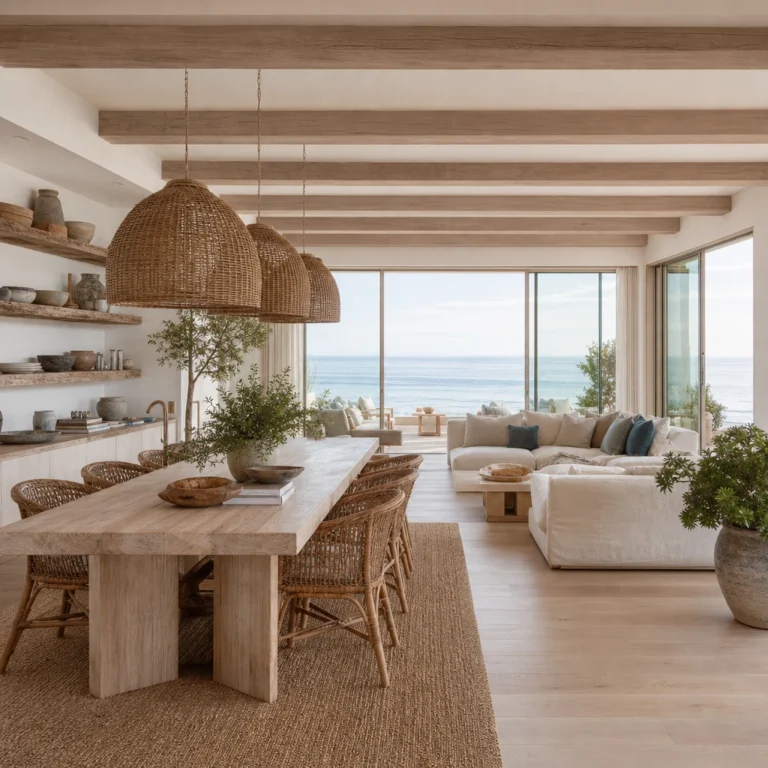
I’ve always been drawn to the way Japanese coastal interiors hold two feelings at once: the stillness of a Zen room and the openness of a home that faces the sea. What I love most is how a few honest choices, like a platform bed kept low to the floor, a shoji screen diffusing soft morning light, or a kitchen in warm wood and white, can completely change the way a room feels to be in. Every look in this piece is one you can bring home, whatever your space looks like right now.
Where Japandi Meets the Coast in a Living Room
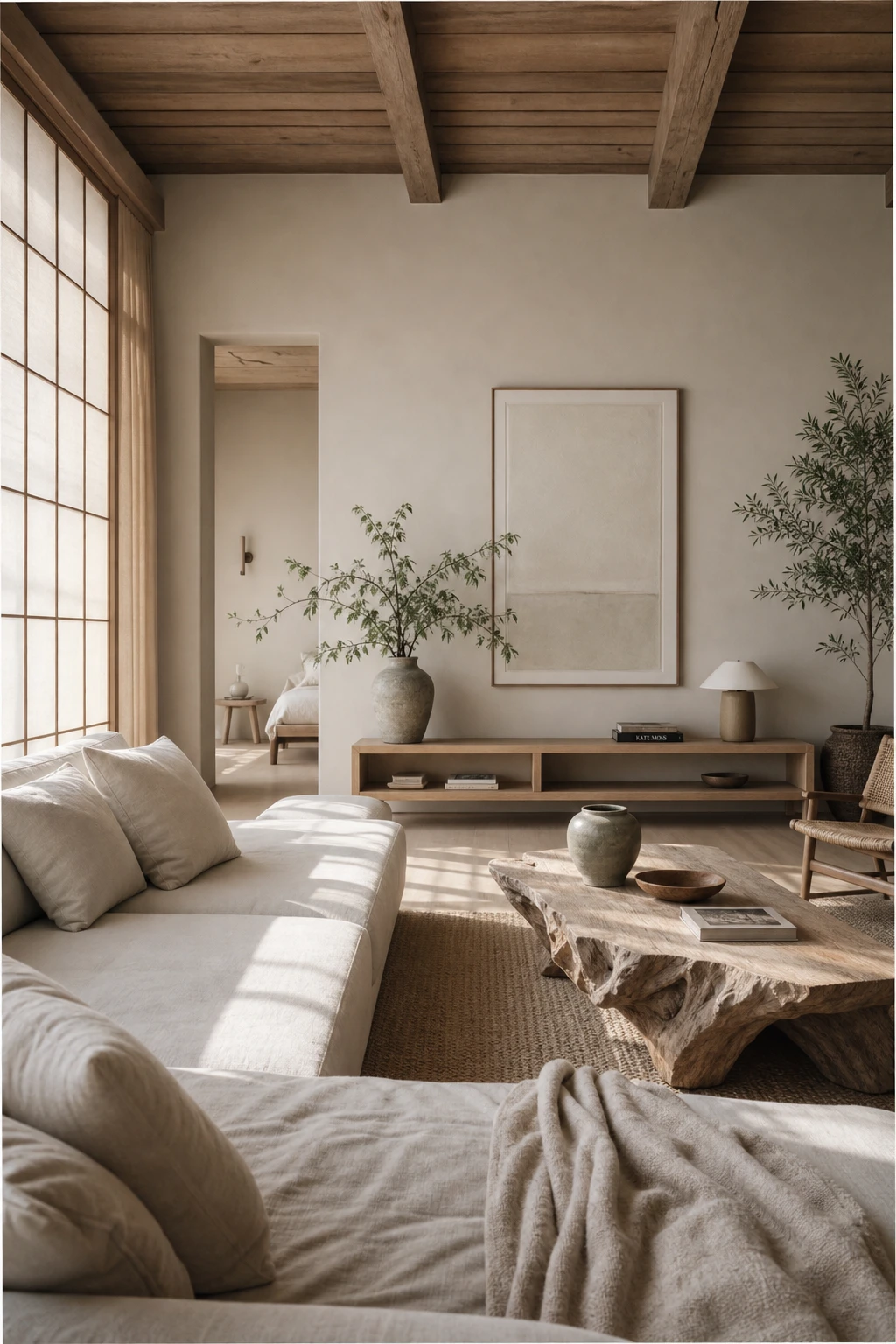
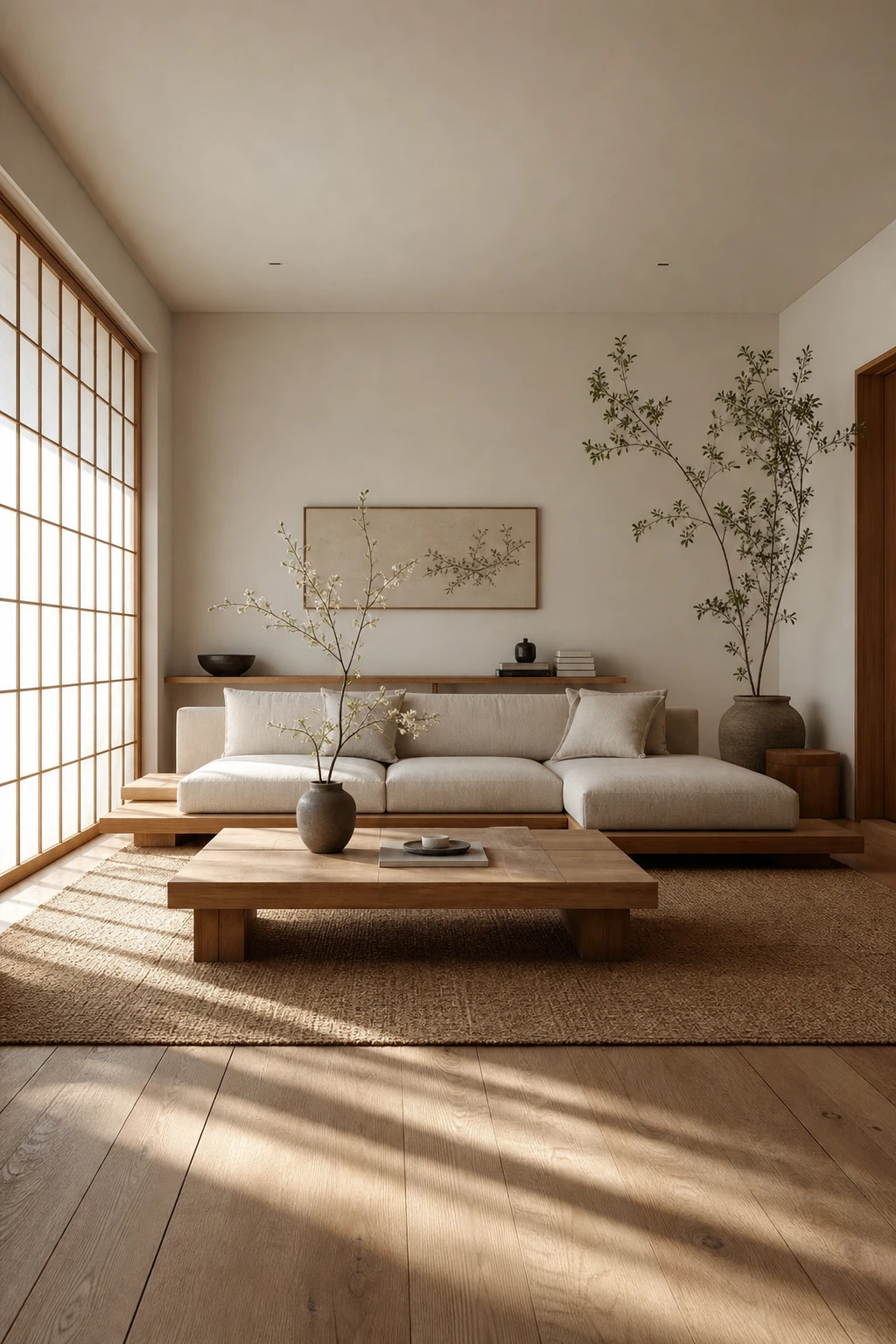
Marrying Japandi and coastal in a living room is one of my favourite briefs because both aesthetics already want the same thing: quiet, air, and nothing unnecessary. You get a low profile linen sofa sitting close to the ground the way Japanese furniture always does, and the coastal palette of pale sand and washed grey slides in without any argument. What wins me over every time is how the raw driftwood coffee table does the work of two styles at once, feeling oceanic and wabi sabi in the same breath. Layer a woven jute rug underneath and you will notice the whole room starts to breathe.
The Key Details
Low profile linen sofa
Shoji inspired sliding screens
Raw driftwood coffee table
Hand thrown ceramic vessel
Woven jute area rug
Pro TipPull your textures from a single tonal family, linen, jute, unglazed ceramic, so each layer reads as calm variation rather than competing noise.
AvoidPulling in a chunky farmhouse piece or a curved maximalist chair because it feels coastal breaks the low, spare silhouette that holds both aesthetics together.
How to Make a Japandi Living Room Feel Genuinely Warm
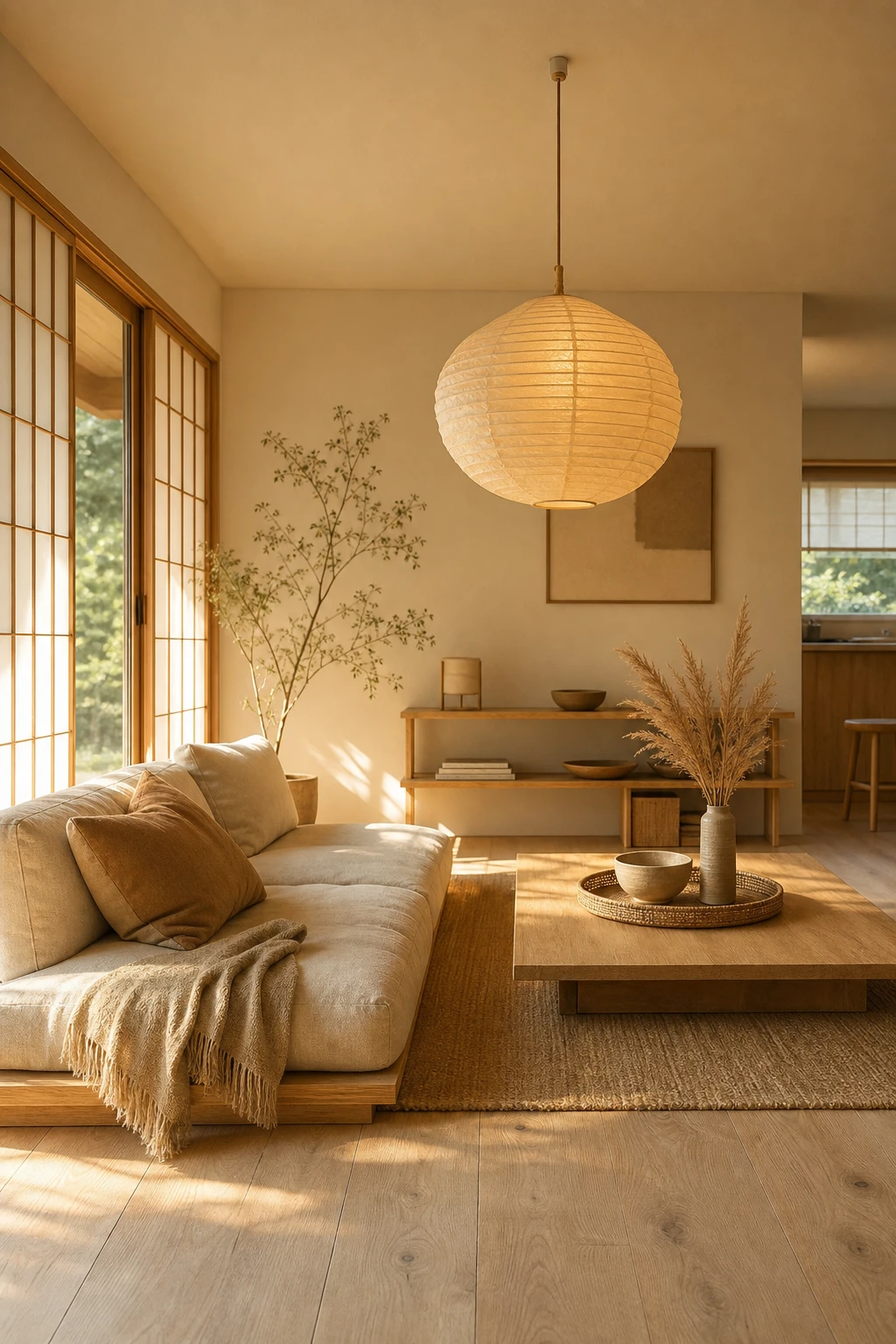
Warm neutrals are the quiet secret behind every Japandi room that actually feels liveable. The sand, oat and driftwood tones you see here pull the eye into the space rather than pushing it away, so the minimal bones never read as cold. I always tell clients: restraint in furniture does not mean restraint in warmth. Layer those tones through linen, pale oak and soft ceramics and you get calm without chill.
The Key Details
Low platform linen sofa
Washi paper pendant light
Wide plank white oak flooring
Shoji style sliding panels
Rattan tray with ceramic tea bowl
Pro TipChoose one boucle throw in a toasted oat shade and drape it over the sofa arm rather than folding it flat, because the loose texture catches the light and adds warmth without taking up visual space.
AvoidStripping every surface bare in the name of minimalism leaves the room feeling like a showroom at closing time rather than a home anyone wants to sit in.
A Modern Japanese Living Room That Still Feels Like Home
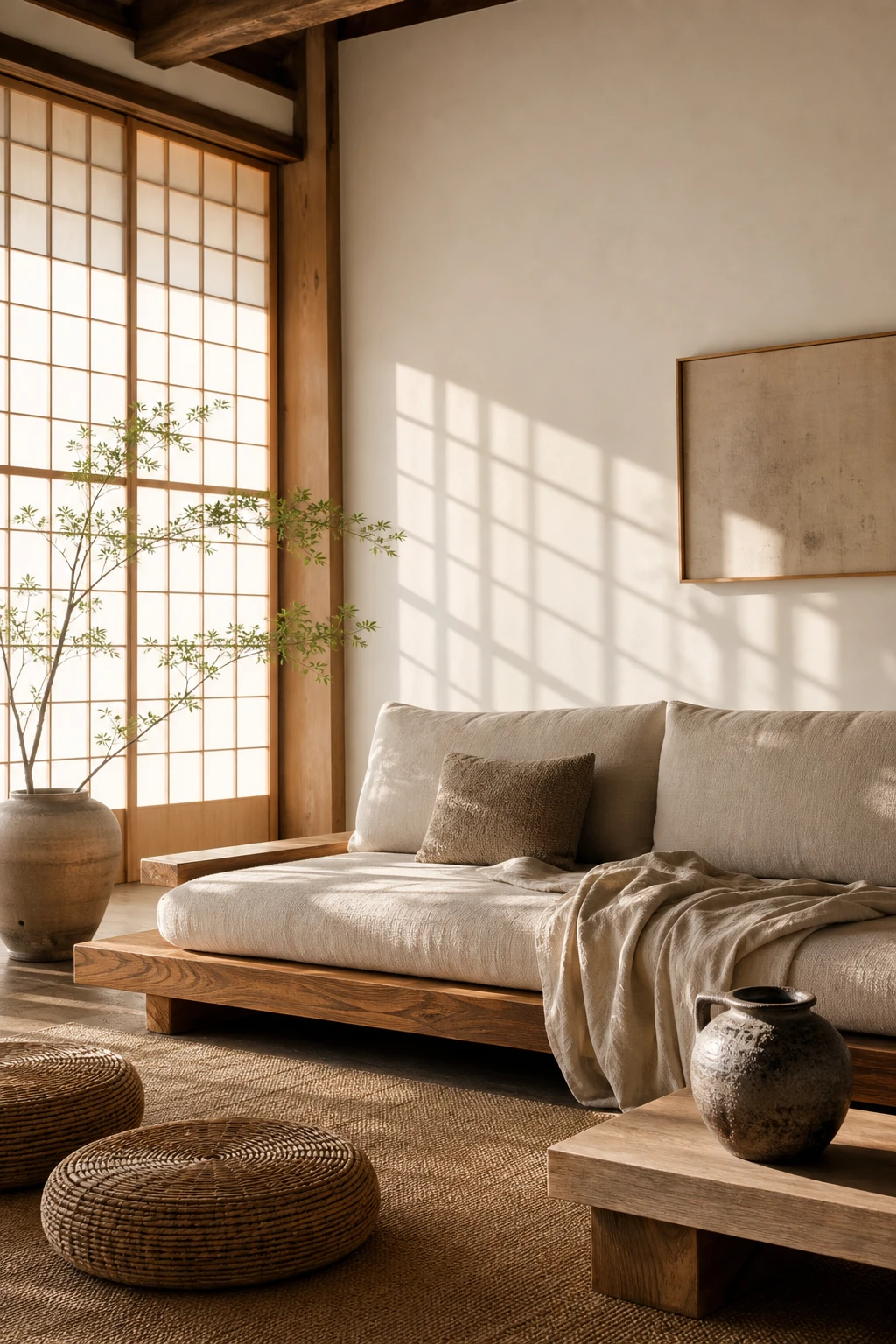
Modern Japanese rooms can tip into cold territory fast, and what saves this one is the layering of textures that ask to be touched. The low timber sofa frame pulls your eye down and slows the room, which I find instantly makes a space feel calmer. You still get clean lines, but the rattan cushions and fine linen throw add just enough warmth to stop it reading like a showroom. The shoji screen and that ceramic vase do the decorative work quietly, so nothing shouts and nothing feels bare.
The Key Details
Low slung solid timber sofa frame
Shoji screen room divider
Woven rattan floor cushions
Sculptural ceramic vase on zelkova side table
Fine linen throw
Pro TipAnchor the whole room around one low statement piece, like a solid timber sofa frame set close to the floor, before you add anything else.
AvoidChasing pure minimalism by removing every decorative layer leaves nothing for the eye to rest on, and the room ends up feeling clinical rather than calm.
The Quiet Moves That Give a Living Room a Zen Feeling
A room arranged for stillness gives your eye somewhere to rest, and that single idea drives every choice here. The low platform sofa keeps the sightline open across the whole space, while the shoji screen filters light rather than blocking it, so you get warmth without glare. What I love most is how the empty floor around the jute rug becomes part of the composition, a pause that makes the ceramic vessel and oak table feel intentional rather than placed by accident.
The Key Details
Low platform sofa in undyed linen
Full height shoji screen
Hand knotted jute rug
Solid oak coffee table
Ceramic vessel with branch arrangement
Pro TipTreat the gap between your sofa and coffee table as a feature, not wasted space, and resist filling it with a tray or stack of books.
AvoidGrouping too many objects on a surface in the name of styling breaks the calm the room is working hard to build and undoes the whole effect in seconds.
A Japanese Minimalist Bedroom That Helps You Actually Sleep
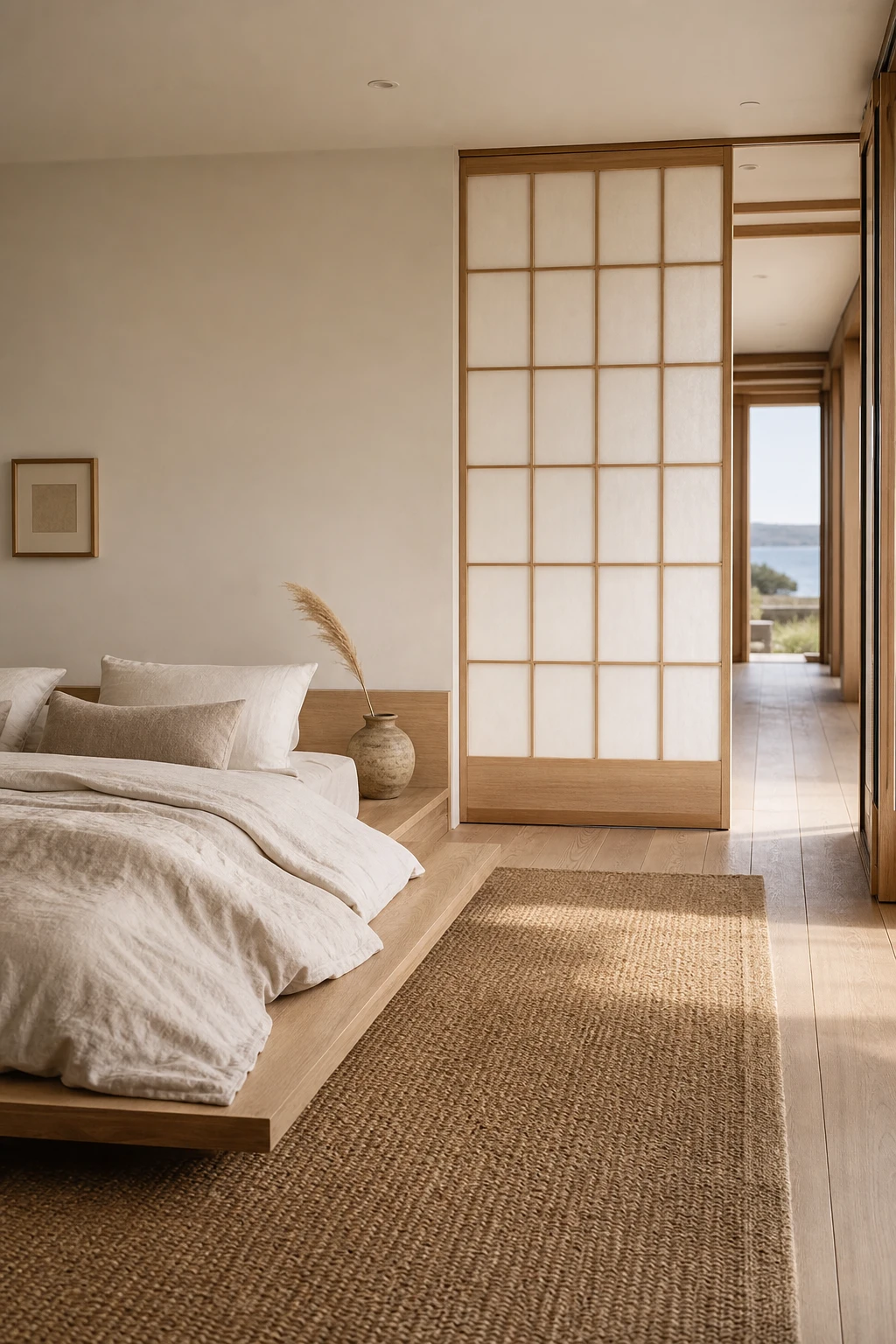
A bedroom stripped to its essentials is one of my favourite briefs, because every piece left standing has to justify itself. What you get is a room where the eye finds nowhere to snag and the mind follows, quieting down almost on its own. The low oak frame keeps the ceiling feeling generous, the undyed linen holds the coastal softness, and the rice paper panels diffuse morning light into something almost liquid. You will notice how calm reads as considered, not empty.
The Key Details
Low platform oak bed frame
Undyed linen bedding
Shoji rice paper screen panels
Woven seagrass floor mat
Hand thrown ceramic bedside vessel
Pro TipRun floor to ceiling built in storage behind shoji style sliding panels so your belongings disappear completely and the floor stays clear, which is where most of the calm actually comes from.
AvoidStripping out furniture without adding considered texture and warmth leaves a room that feels cold and unfinished rather than calm and intentional.
Traditional Japanese Bedroom Details Worth Borrowing Today
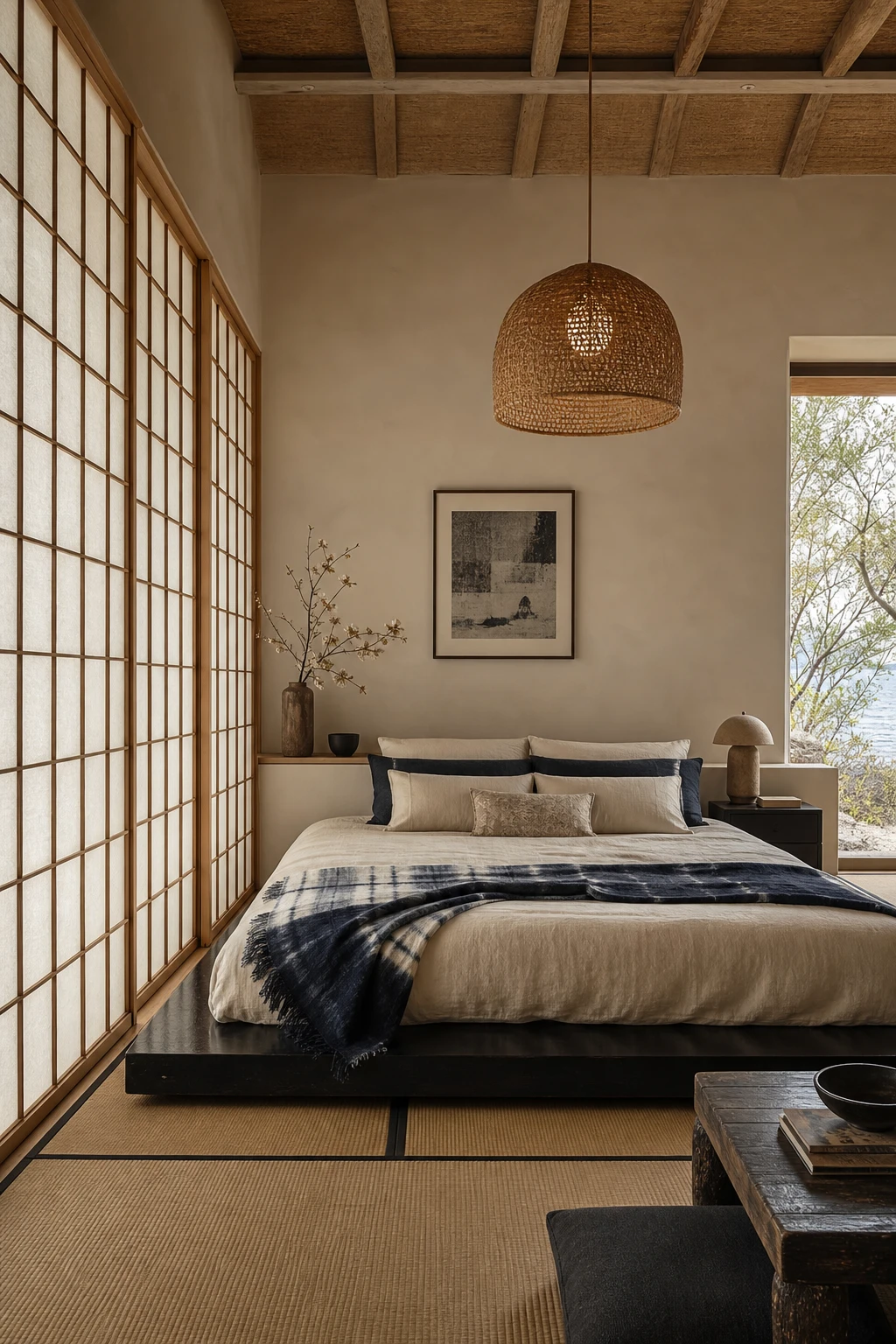
Borrowing from Japanese heritage works best when you treat each detail as a feeling rather than a prop. A low lacquered bed pulls the eye downward and makes the whole room feel calmer and more grounded. Shoji screens filter light into something almost liquid, and woven tatami underfoot adds a quiet texture that ties every piece together. What I love most is how these elements age alongside a contemporary home, growing richer rather than looking dated.
The Key Details
Shoji Rice Paper Screen
Low Lacquered Platform Bed
Woven Tatami Mat Flooring
Organic Rattan Pendant Light
Shibori Dyed Textile Throw
Pro TipHunt for genuine shibori throws and small lacquered trays at Japanese import stores or estate sales before turning to mass retailers, as even one authentic piece anchors the whole room.
AvoidPlacing too many heritage objects at once turns a thoughtful room into a themed display, and the calm you were chasing disappears completely.
Why a Japanese Platform Bed Changes the Whole Feel of a Room
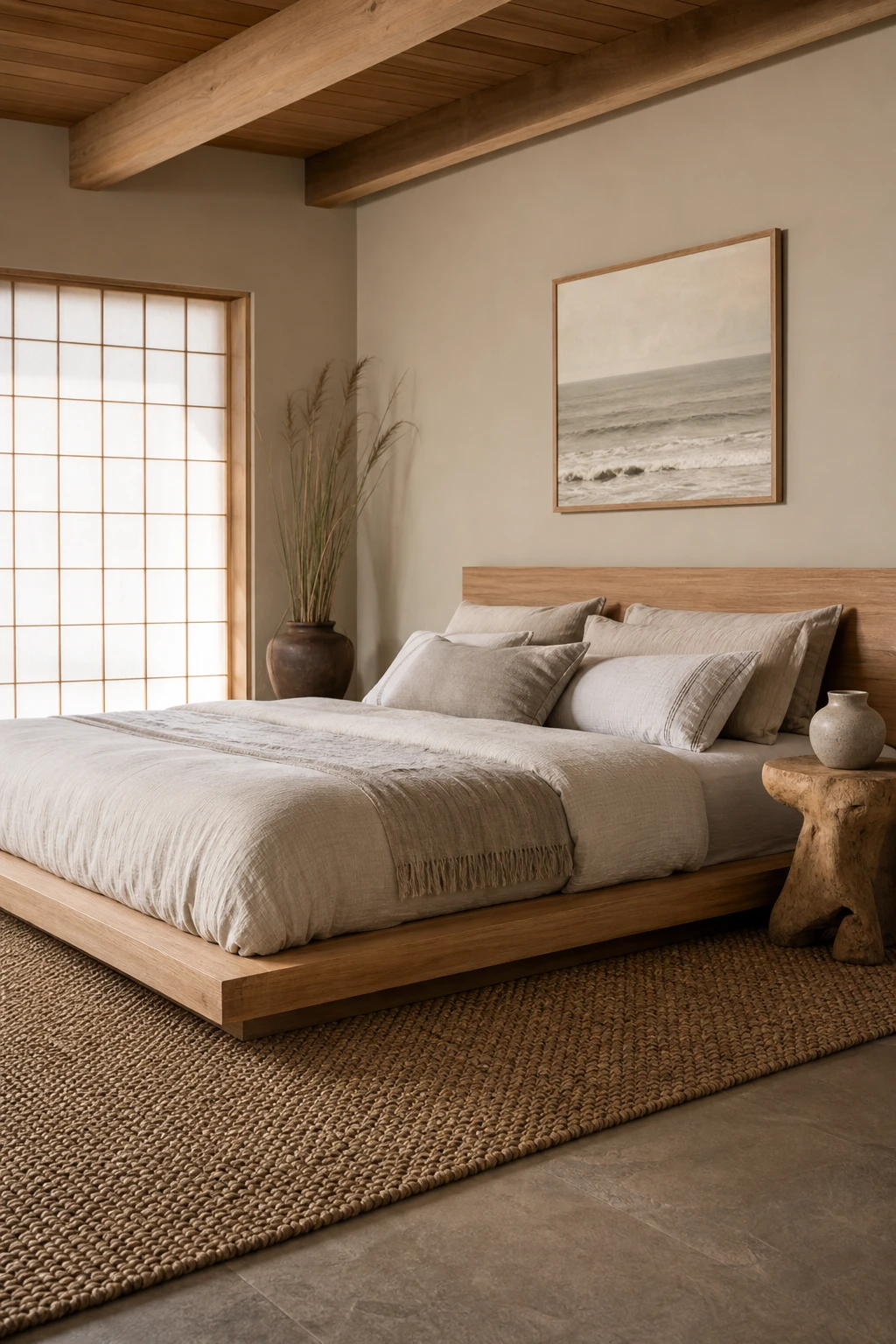
Dropping the bed to floor level is one of my favourite moves in a Japanese coastal room because it pulls the room’s visual weight down and suddenly everything feels calmer and more grounded. The ceiling reads taller the moment you walk in, the walls breathe, and the whole space stops competing with the furniture. That low horizontal line echoes the flatness of a sea horizon, so the coastal mood lands without a single shell in sight, and I find that effortlessness is exactly what clients fall in love with.
The Key Details
Low raw oak platform bed frame
Translucent shoji rice paper screen
Woven seagrass floor rug
Sculptural driftwood side table
Brushed stone tile floor
Pro TipChoose a mattress no deeper than 25 cm on a platform frame, because a thick pillow top mattress adds so much height it defeats the low, grounded look entirely.
AvoidPushing a platform bed flat against a wall with no breathing room on the sides traps the eye and makes the bed feel like a shelf rather than a calm, centred anchor for the room.
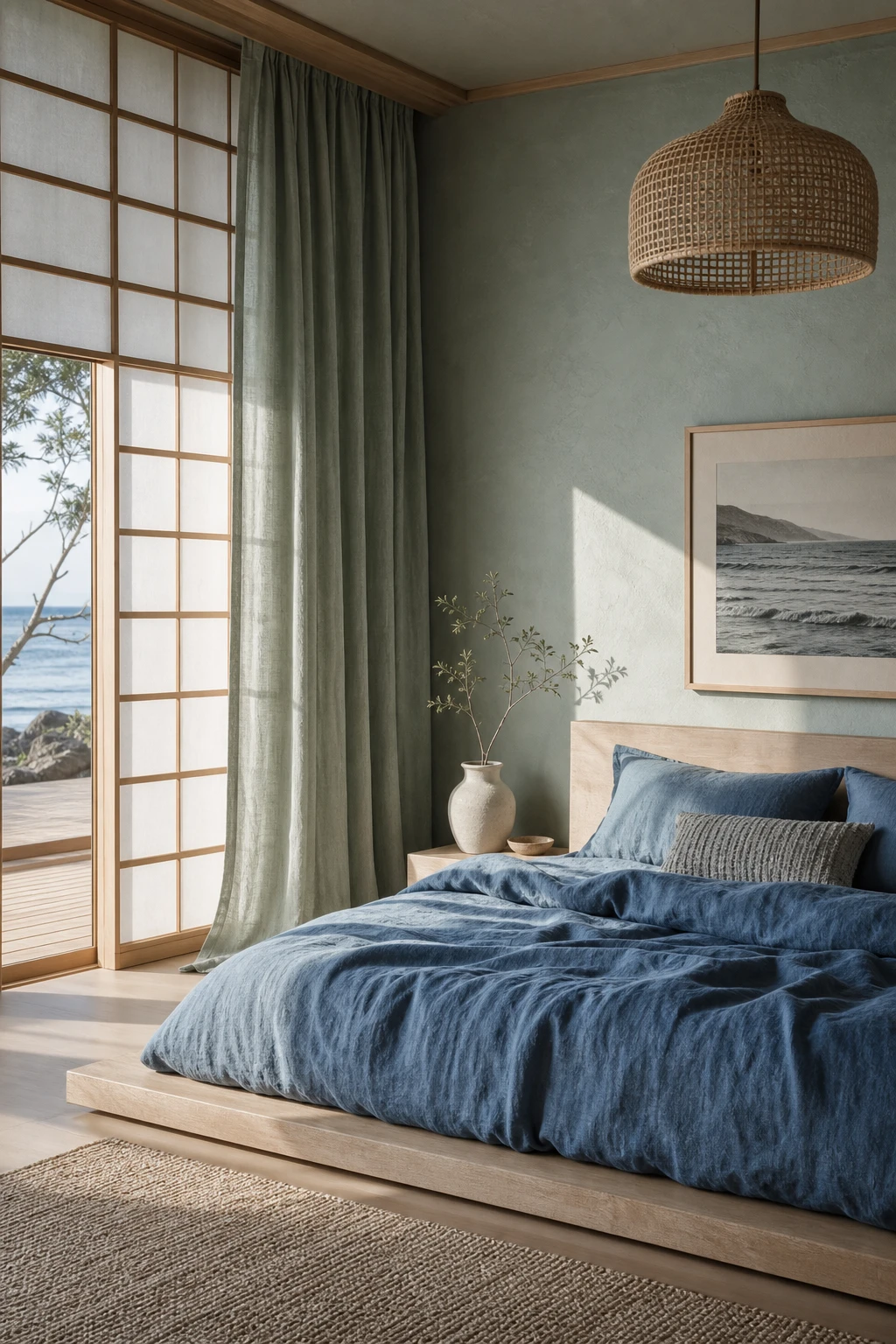
A Blue and Sage Bedroom That Feels Like a Coastal Retreat
Blue and sage share the same quiet energy, and that is exactly what makes them so good together in a bedroom. What I love about this pairing is how each colour holds back just enough to let the other breathe, so you never feel pulled in two directions. You get a palette that reads as one calm whole rather than two competing choices, which is the whole point when a room is asking you to rest.
The Key Details
Low platform bleached oak bed frame
Woven rattan pendant light
Shoji screen panel room divider
Ocean blue linen bedding with muted sage throw
Matte ceramic bedside vessel
Pro TipGive one colour roughly two thirds of the space and let the second appear in smaller touches like a throw or a single cushion, so the eye settles rather than bounces.
AvoidReaching for a bright or heavily saturated version of either shade will push the room into bold territory and undo the restful quality you are working toward.
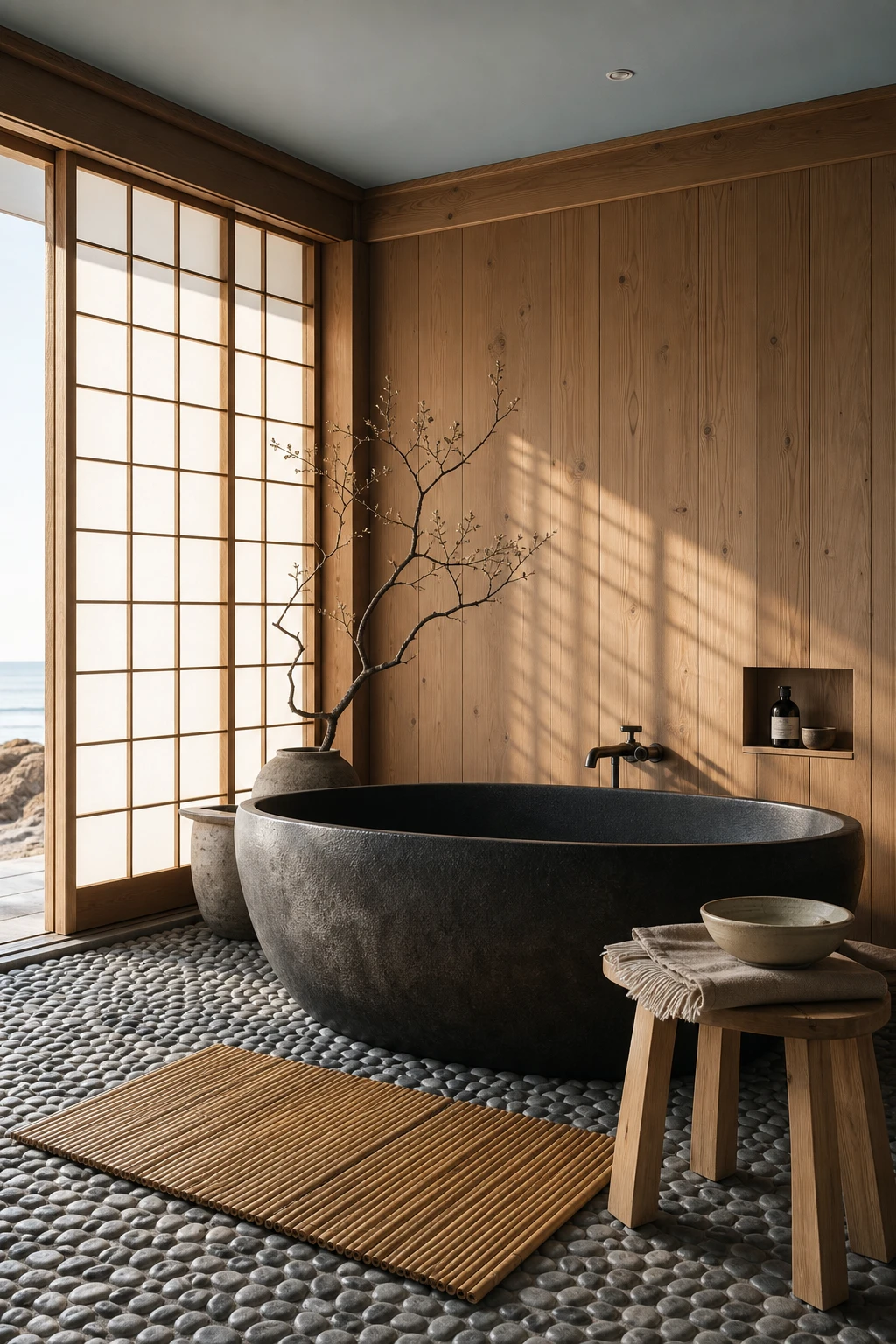
How Japanese Bathroom Design Turns a Small Space Into a Ritual
The Japanese bathroom is the one room where ritual completely outranks function, and that shift changes every decision you make. What I love is how the ofuro tub becomes the whole point of the space, not an afterthought tucked beside a vanity. You get warm hinoki timber drawing steam and scent into the air, river pebbles underfoot that feel deliberate and grounding, and a shoji screen filtering light into something almost meditative. Every element earns its place by adding to the experience.
The Key Details
Cast iron ofuro soaking tub
Hinoki timber wall cladding
River pebble floor
Full height shoji screen
Sculptural branch arrangement in stone vessel
Pro TipDesign the floor and walls as a continuous wet room so water flows freely and the whole space becomes the shower, which makes the room feel far larger and the ritual feel completely uninterrupted.
AvoidLeaving skincare and product bottles out on the vanity surface breaks the calm immediately, turning a considered space into a cluttered shelf that undoes every careful material choice around it.
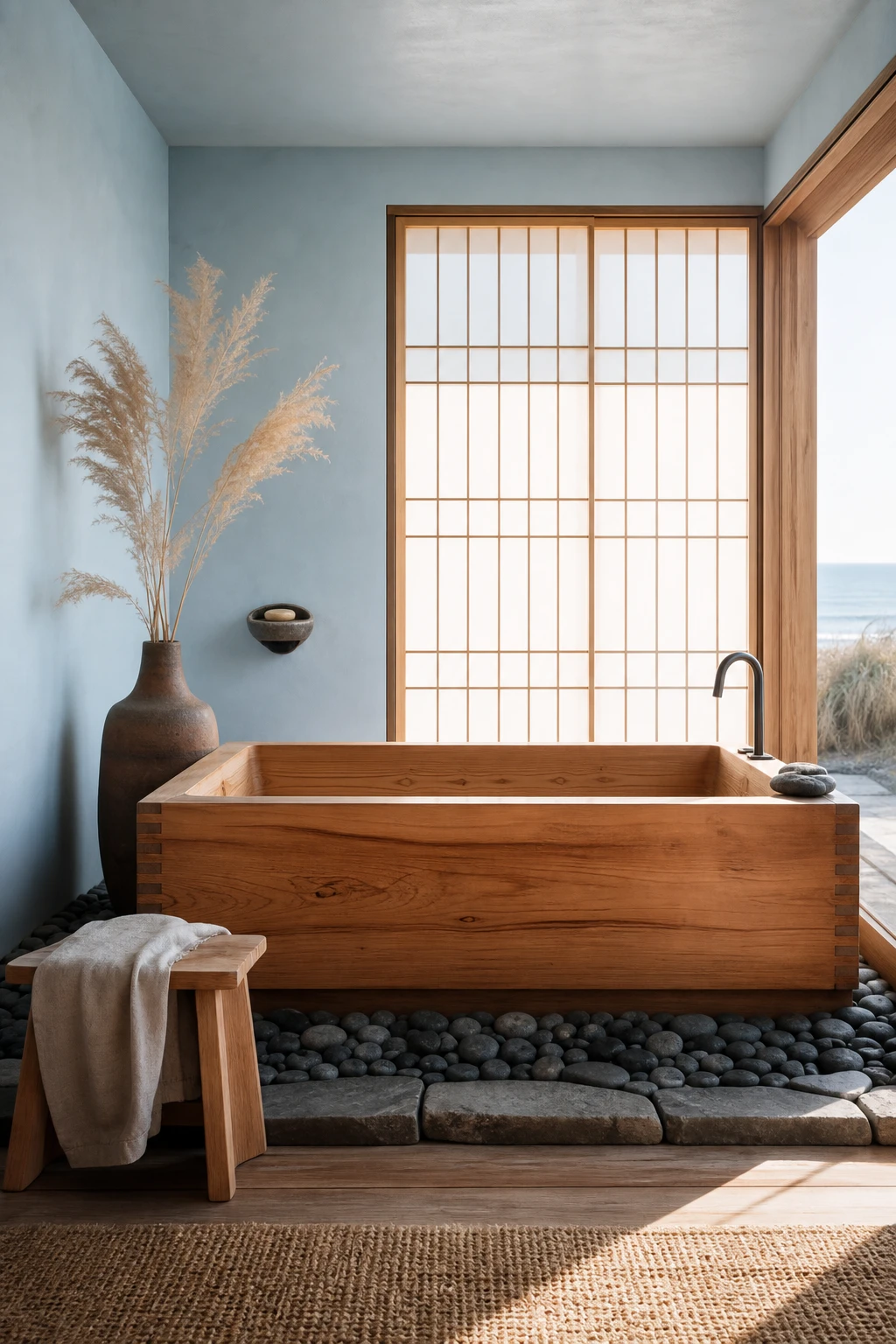
The Japanese Soaking Tub Detail Every Calm Bathroom Needs
A deep soaking tub earns its place the moment you let it own the room. What I love about this setup is the cedar grain pulling your eye straight to the tub before anything else registers. You get that Japanese ofuro sense of ritual, where bathing feels like a considered act rather than a routine. Keep everything else low and quiet and the tub holds its ground beautifully.
The Key Details
Cedar soaking tub with timber grain platform
Translucent shoji screen wall panel
River stone tub surround
Low timber bath stool with folded linen towel
Raku ceramic wall mounted soap dish
Pro TipA corner placement with a slim timber platform beneath the tub gives you the deep soak experience without sacrificing floor space in a smaller bathroom.
AvoidFilling the space around a soaking tub with candles, shelves, and hanging plants pulls focus in too many directions and the tub loses the quiet authority that makes it special.
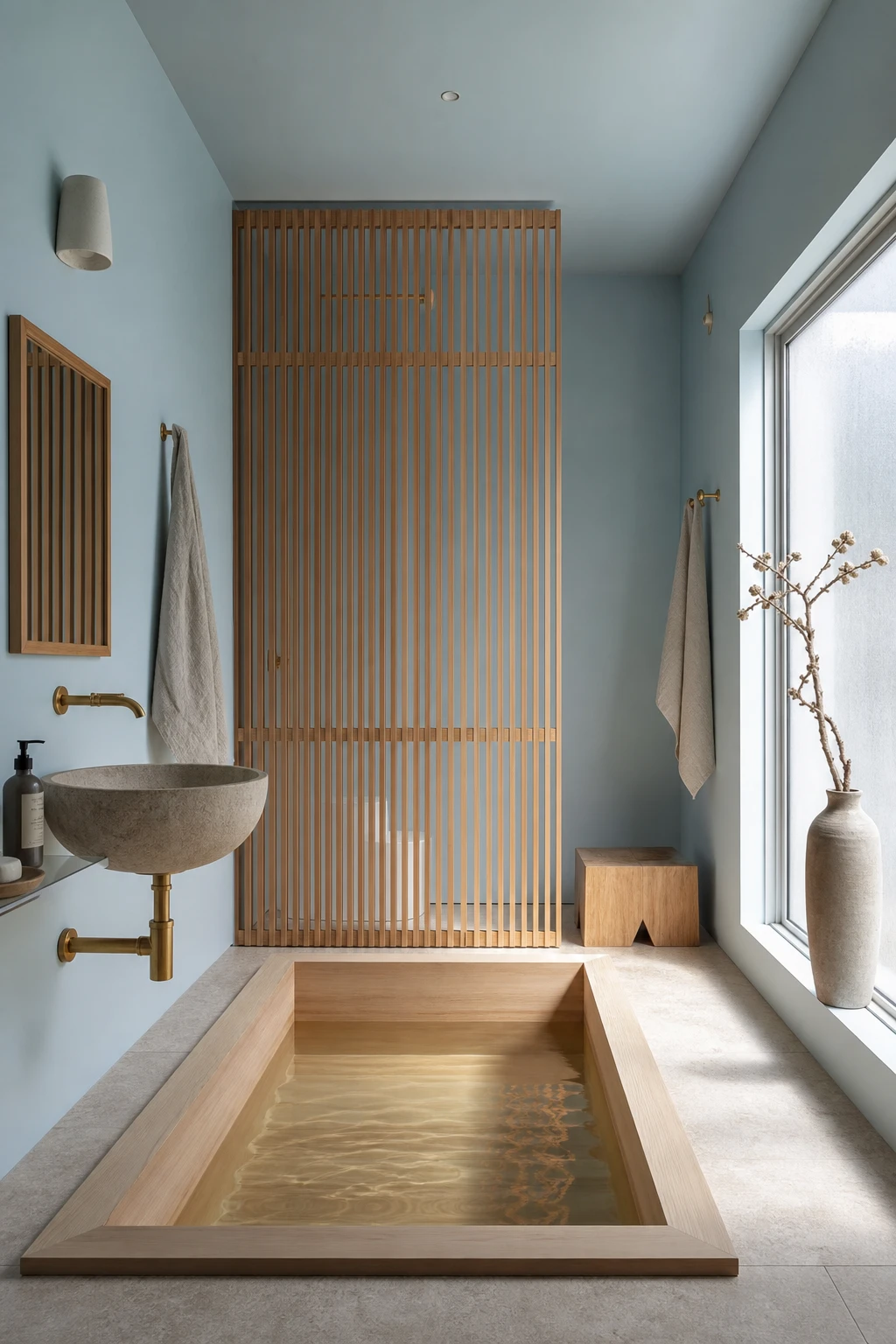
Small Japanese Bathroom Tricks That Make the Room Feel Twice as Big
Tight bathrooms breathe when you strip them back to almost nothing, and that restraint is the whole Japanese approach. What I love here is how every element earns its place: the wall hung vanity lifts the floor visually, the full height timber screen draws the eye upward, and you get a room that feels considered rather than cramped. Watch how fewer things, placed with care, do far more work than a packed space ever could.
The Key Details
Recessed hinoki style soaking tub
Wall mounted stone vessel basin with brass tap
Full height slatted timber screen
Frosted clerestory window
Low square wooden bath stool
Pro TipChoose large format tiles in a single tone for both floor and walls, so the grout lines almost disappear and the surfaces read as one unbroken plane.
AvoidLoading every wall with open shelving breaks the surface into dozens of small pieces, and that visual noise is exactly what shrinks a small bathroom.
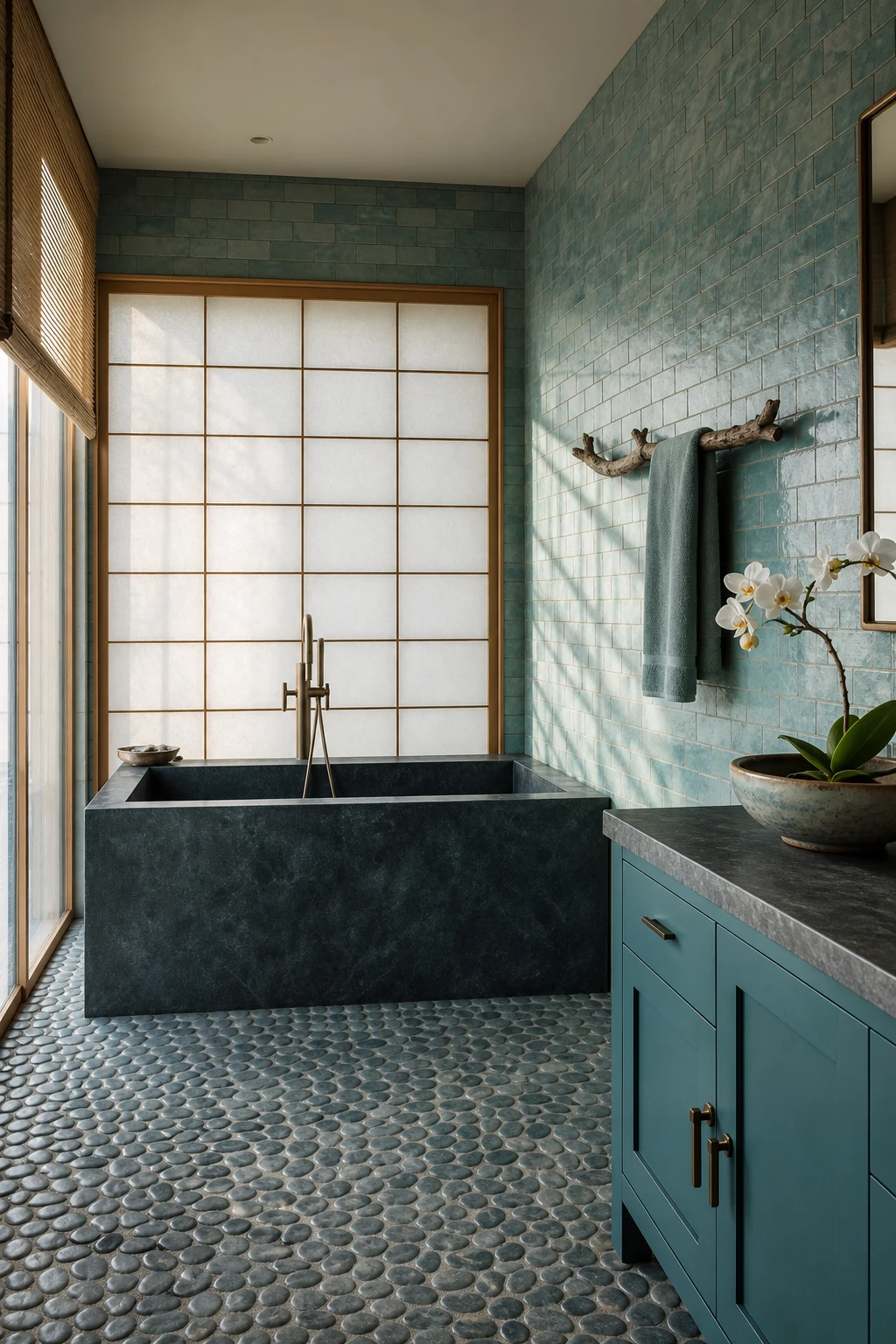
Aqua is one of those colours that does all the heavy lifting the moment you commit to it fully. What I love here is how a single watery tone wraps the whole room and your eye has nowhere to land except inside that calm, and you feel the ocean without a single shell in sight. The graduated tiles deepen it beautifully, shifting from pale at the top to richer at the waterline, which is exactly the layering I reach for when one colour needs to carry a whole scheme.
The Key Details
Ofuro deep soaking tub
Graduated aqua ceramic subway tiles
River pebble floor mosaic
Frosted shoji screen panel
Driftwood branch towel rail
Pro TipLay warm sandstone or creamy travertine on the floor to stop aqua walls from reading cold and pull the whole room toward something that feels more like a natural rock pool than a clinic.
AvoidDropping in coral, navy, and brass all at once fractures the stillness that makes an aqua bathroom worth having in the first place.
A Japanese Entryway That Sets the Mood Before You Step Inside
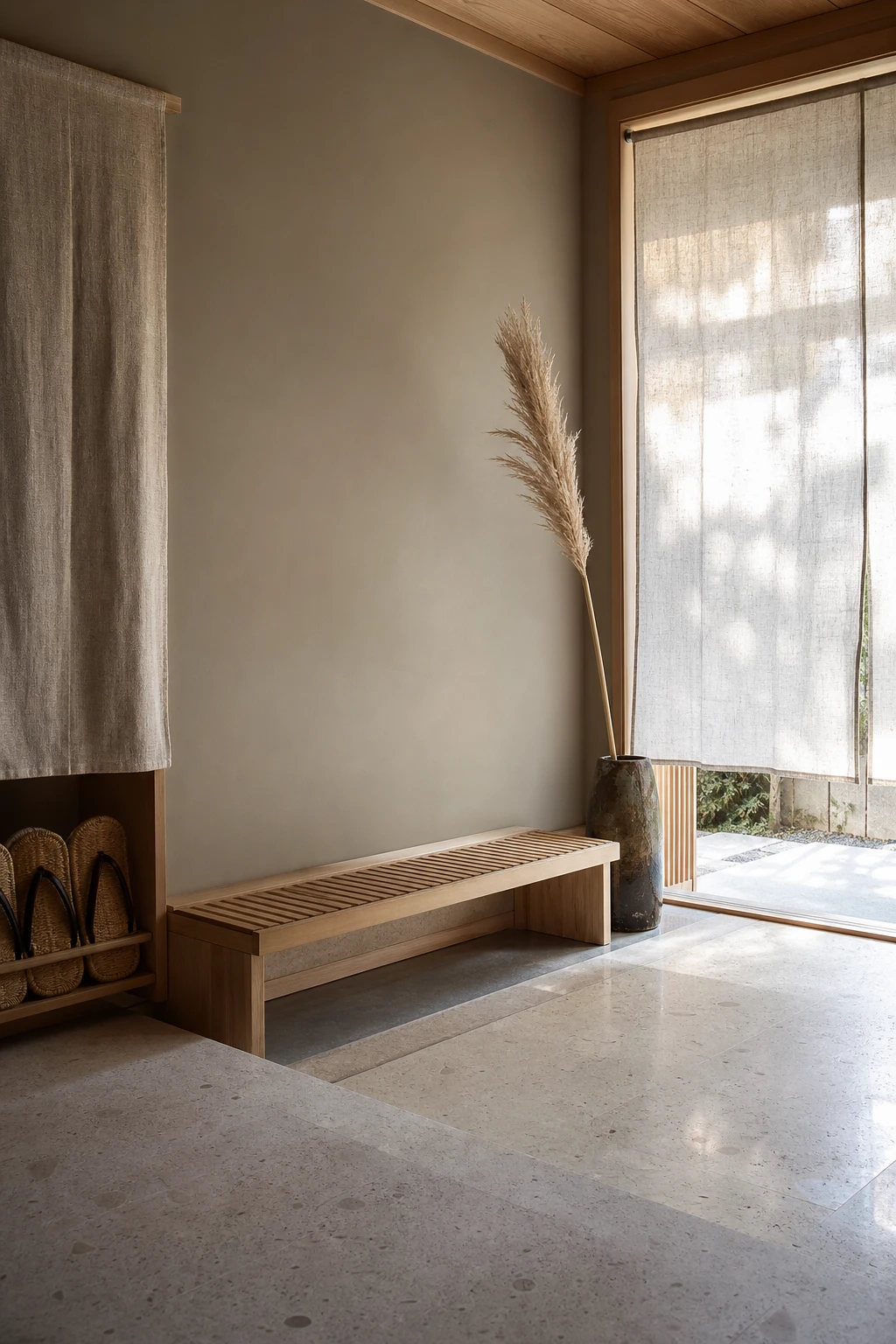
A genkan does something no other room can: it asks you to pause before you enter. That single act of removing shoes and stepping up resets the mind, and what I love is how the whole space communicates calm before a word is spoken. The low hinoki bench, the pale limestone threshold, the quiet noren panel, all of it signals that the world outside stays outside. You feel the shift instantly.
The Key Details
Low slatted hinoki genkan bench
Narrow raku ceramic vessel with dried pampas branch
Linen noren panel at doorway
Woven rush sandal rack
Polished pale limestone threshold floor
Pro TipBuild the shoe removal zone with a bench low enough to sit on comfortably and a recessed step so the transition from outside to inside feels deliberate, not accidental.
AvoidLetting bags, post, and coats pile up on the bench turns the genkan into a bottleneck and undoes the entire psychological cue the space is meant to create.
How to Bring the Beauty of a Tatami Room Into a Western Home
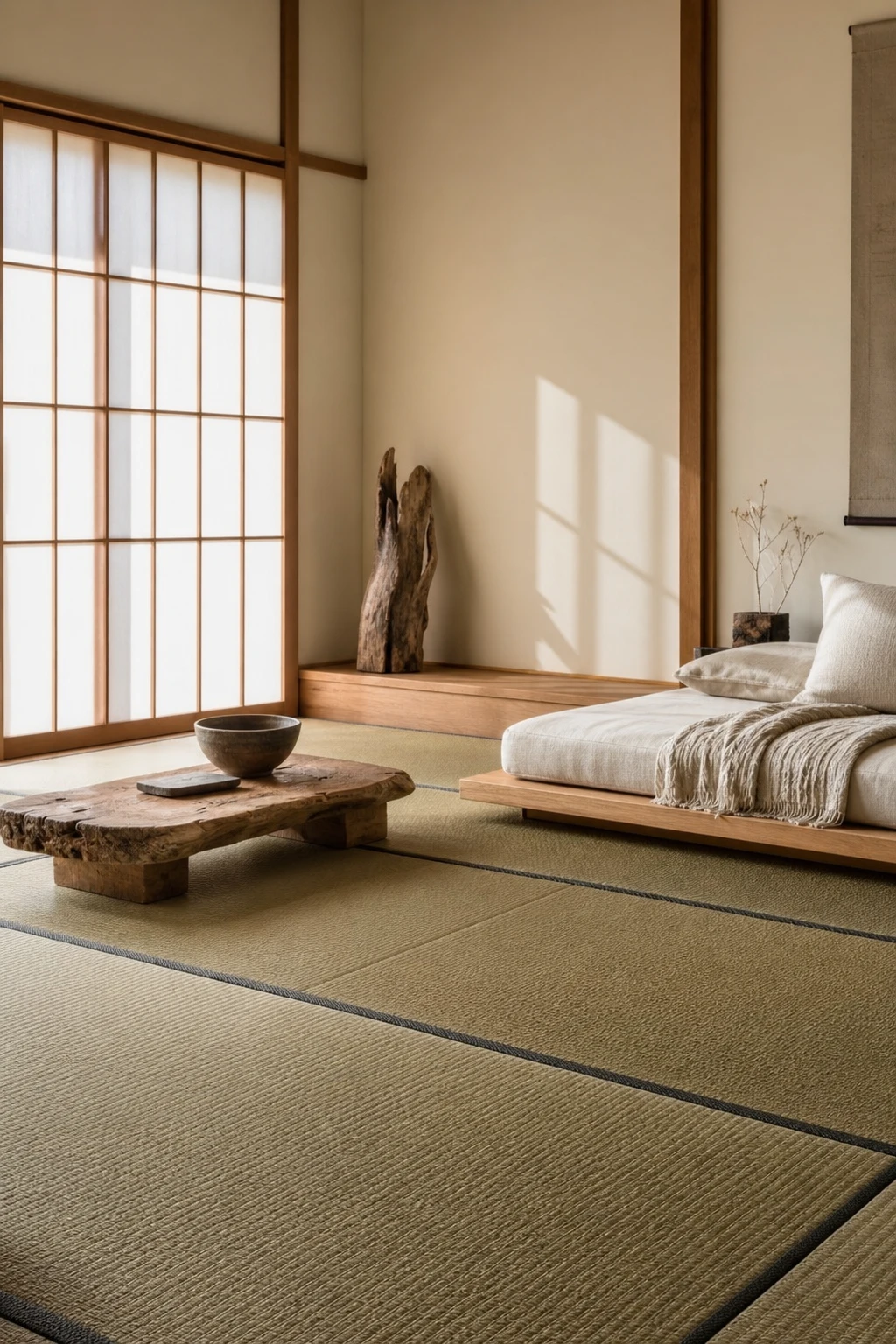
A tatami room earns its calm the moment you step onto it, and that softness underfoot is exactly what I reach for when a bedroom feels too hard and cool. The woven igusa grid pulls the eye low, anchoring the whole space so everything above it, the daybed, the shoji panels, the driftwood corner piece, reads as light and lifted. You get a room that feels grounded without feeling heavy, which is the whole lesson here: the floor does the work so nothing else has to.
The Key Details
Woven igusa tatami mat flooring in grid formation
Shoji paper screen panels
Low platform daybed frame in white oak
Sculptural driftwood corner accent
Raw timber tray side table
Pro TipLay a hardwood border strip, just one plank wide, around the tatami zone so the transition from mat to bare floor reads as a considered design choice rather than an unfinished edge.
AvoidChoosing synthetic tatami tiles because they are cheaper will strip out the faint grassy scent and the slight give of real igusa, and both of those qualities are what make a tatami room feel genuinely restorative rather than merely decorative.
The Shoji Screen Trick That Solves More Problems Than You Expect
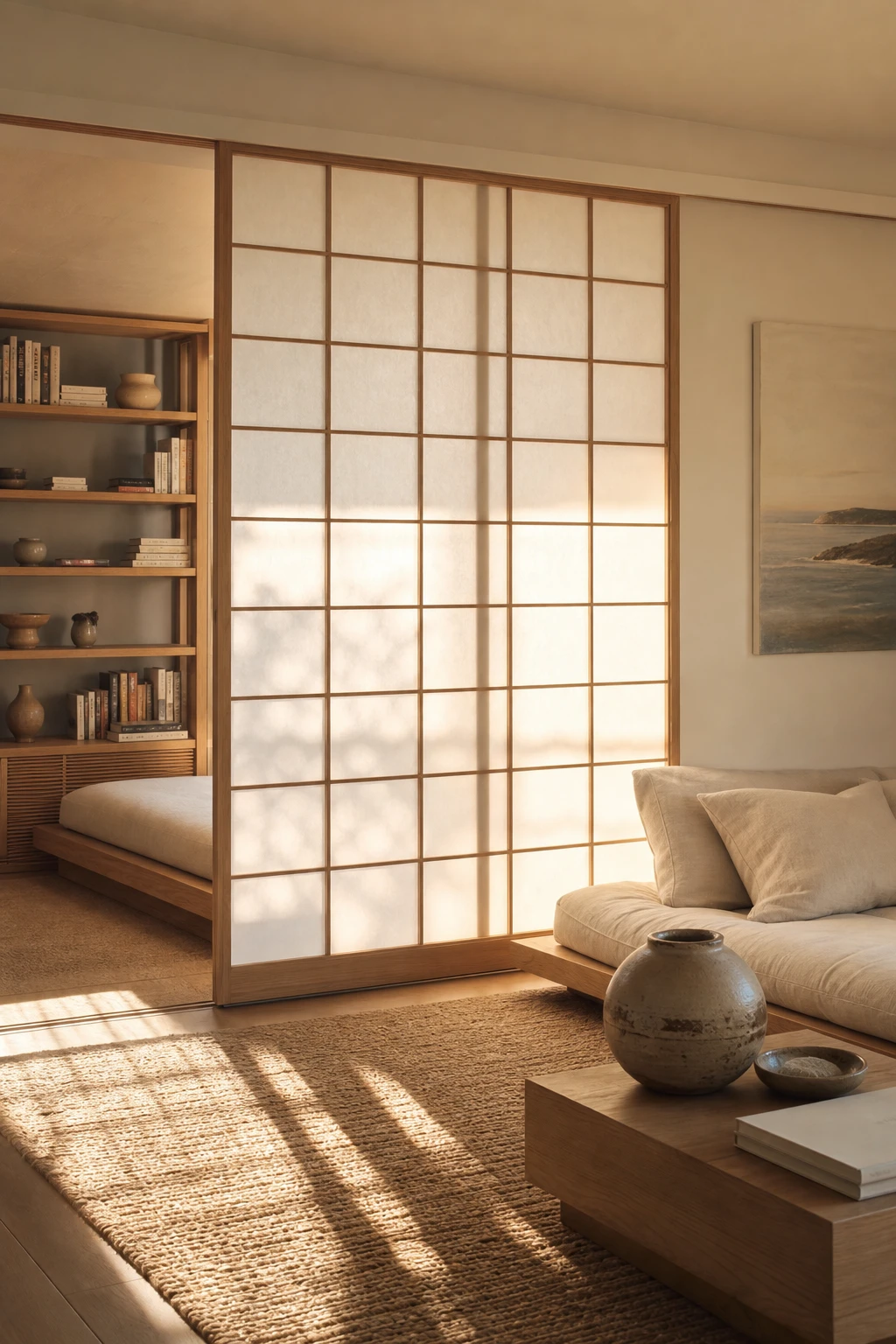
A shoji screen is the quiet workhorse of this whole look, and what wins me over every time is how it solves two problems in one move. You get a soft division between zones without a wall closing the room down, and the light that filters through the lattice turns flat afternoon sun into something warm and layered. Watch how the white oak frame holds the coastal palette without fighting it.
The Key Details
Full height shoji screen with white oak lattice frame
Low platform daybed with linen cushions
Woven sea grass floor matting
Solid oak low coffee table
Unglazed ceramic coastal vessel
Pro TipMount your shoji on a ceiling fixed sliding track and you keep every inch of floor clear, which matters enormously in a room that needs to feel open and calm.
AvoidStandard paper screens pull moisture from the air in coastal rooms and warp or blister within a season, so always check that your screen uses a humidity resistant panel material before you buy.
The Engawa Idea That Makes Indoor and Outdoor Feel Seamless
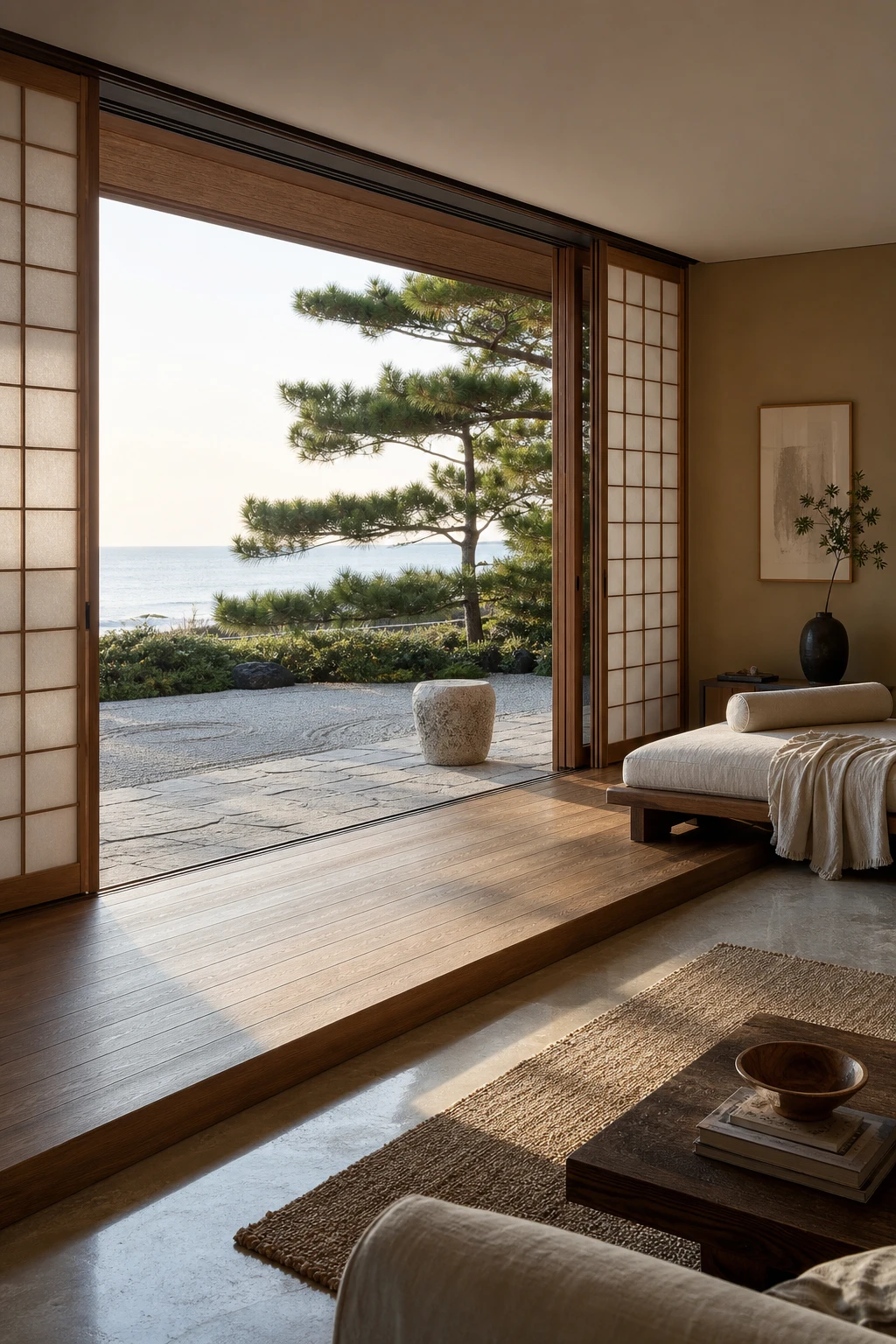
The engawa is a narrow raised walkway that sits between the interior and the garden, and it is one of my favourite ideas to borrow for coastal homes. You get a defined landing point that is neither fully inside nor outside, and that ambiguity is exactly what makes the boundary feel soft. What wins me over every time is how the continuous floor level pulls your eye straight through to the water or the garden beyond, so the room feels twice as generous as it actually is.
The Key Details
Raised oiled hardwood engawa threshold strip
Folded sliding shoji screen panels
Low platform daybed at the threshold
Woven seagrass floor matting
Ceramic garden stool on stone terrace
Pro TipRun your interior floor material right to the edge of the glazed opening before stepping down to the engawa board, so the eye reads it as one unbroken plane rather than two separate zones.
AvoidHeavy curtains hung across a glazed engawa edge cut the sightline dead and undo every bit of work the transition is trying to do, leaving the space feeling boxed in rather than open.
How to Carve Out a Meditation Space in a Room You Already Have
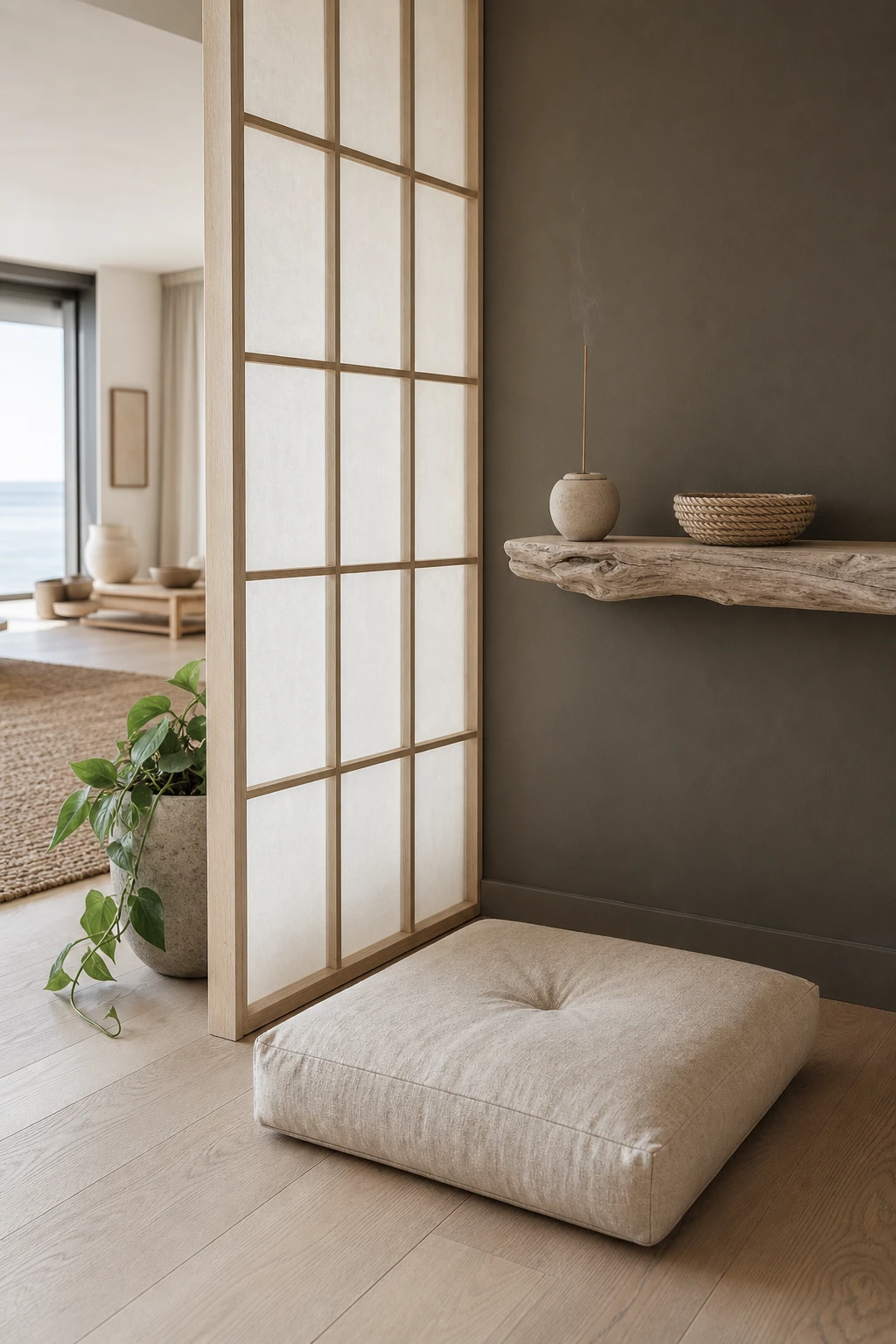
Carving a meditation corner from a room you already have is one of my favourite small moves because you are not building anything, you are simply telling a part of the room what it is for. A low platform and one sculptural plant do that quietly but clearly, and you get an instant sense of arrival the moment you step onto it. What I find most surprising every time is how little it takes: the boundary feels entirely real without a single wall to define it.
The Key Details
Square zafu floor cushion in undyed linen
Shoji rice paper panel screen
Low driftwood floating shelf
Matte stoneware incense holder and rope bowl
Bleached oak plank flooring
Pro TipSet a low timber platform, even two stacked tatami tiles, then place one tall floor plant just behind the left corner so the zone reads as its own world without any screening.
AvoidAdding too many objects to a stillness space crowds the very quality you built it to hold, and the corner stops feeling like a refuge the moment it starts feeling like a shelf display.
A Japanese Inspired Kitchen Where Every Detail Earns Its Place
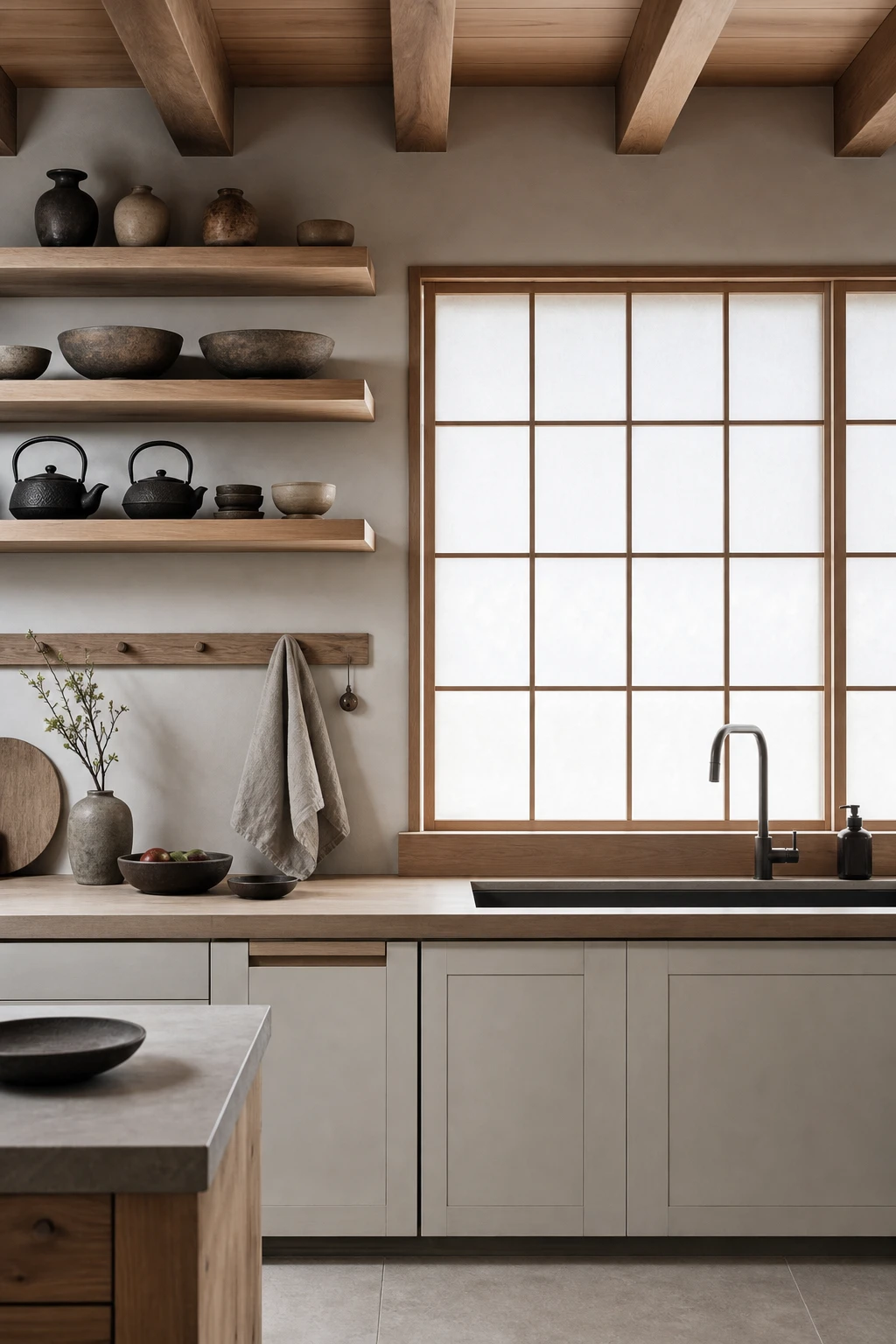
A Japanese kitchen asks every object to justify its presence, and that discipline is what I find so quietly powerful about it. You get surfaces that breathe, a rhythm of natural textures, and a calm that most kitchens never quite reach. Watch how the wire brushed oak, the deep basin, and those hand thrown vessels each pull their weight without competing. The whole room earns its stillness one considered choice at a time.
The Key Details
Wire brushed oak open shelving
Shoji screened windows
Deep single basin sink
Hand thrown stoneware and iron vessels
Wooden peg rail with linen towel
Pro TipTuck your fridge, oven, and microwave behind flush cabinet fronts that match the rest of the cabinetry, and the kitchen reads as one clean, unbroken surface rather than a collection of appliances.
AvoidOpen shelving sounds serene in theory, but a single cluttered row of mismatched jars and stacked lids will pull every eye straight to the mess and undo the whole composition.
White and Wood Kitchen Combinations That Feel Coastal and Calm
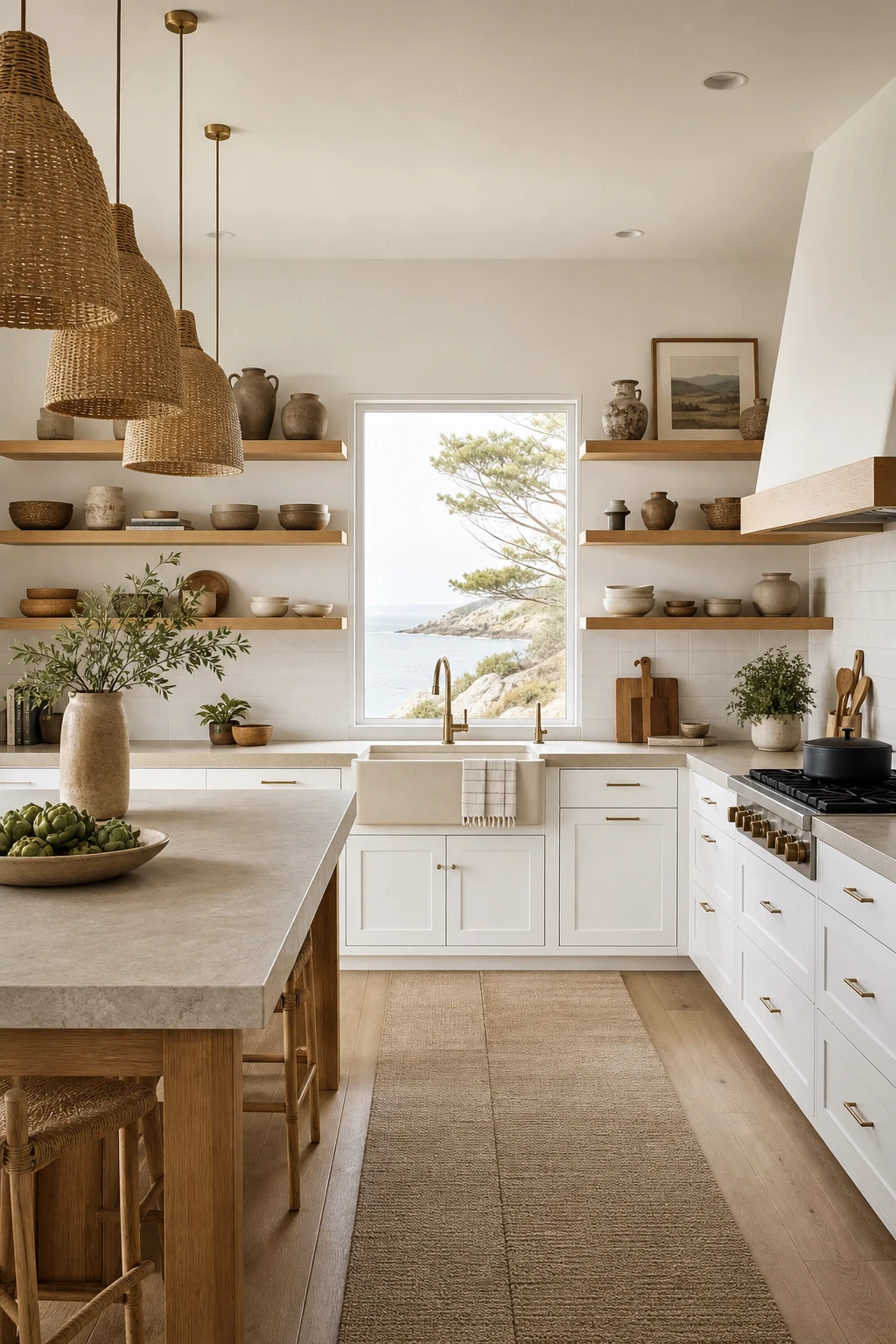
White and warm wood is a pairing I reach for again and again in coastal kitchens, because the two materials do something quietly brilliant together. The white keeps everything open and airy, and you get that feeling of light bouncing around the room even on a grey morning. What wins me over here is the honey oak shelving pulling the eye upward while the honed stone countertop holds everything steady at bench height. The whole room feels calm without feeling cold.
The Key Details
Honey oak open shelving
Woven rattan pendant lights
Honed stone countertop
Deep ceramic farmhouse sink
Handthrown pottery vessels
Pro TipChoose a wood with a fine, straight grain rather than a heavy knot pattern, so the texture reads as gentle movement rather than visual noise.
AvoidSelecting a wood with strong orange or red undertones will fight the white cabinetry and make the kitchen feel warmer and murkier than you intended.
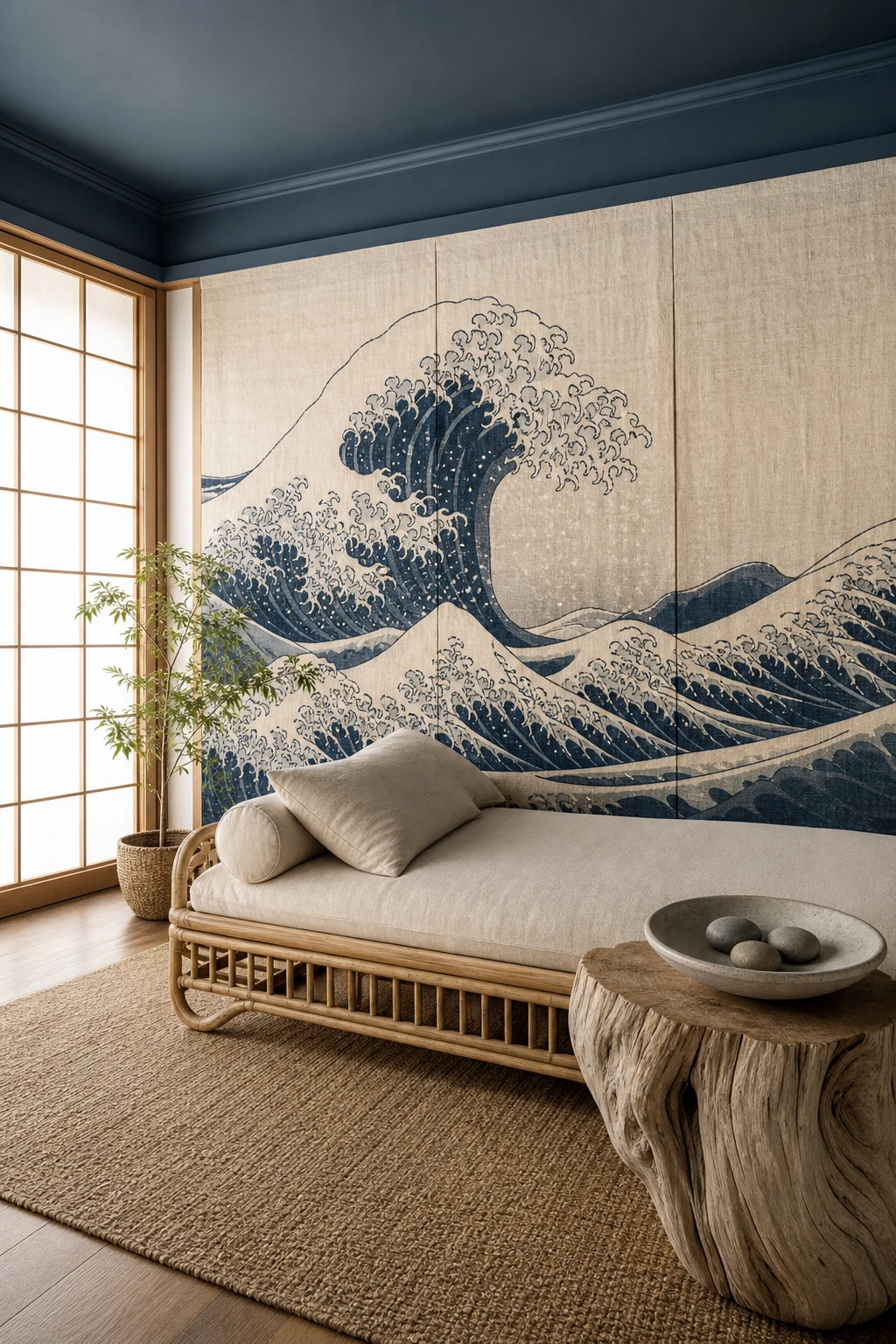
How Japanese Wave Patterns Bring Movement to a Still Room
A wave motif does something clever: it carries energy into a room without disturbing the quiet. Hokusai inspired pattern works because the eye follows those curves instinctively, so you feel movement while the space itself stays completely still. I always say one surface is all you need, and watch how the rest of the room settles around it, calm and unhurried, the way a shoreline settles after a wave pulls back.
The Key Details
Hand blocked linen wave panel
Low slung rattan daybed
Shoji screen room divider
Bleached driftwood side table
Unglazed ceramic bowl with river stones
Pro TipScale the wave repeat to match your wall area, so a small room gets a tighter, smaller pattern and a generous wall can carry a bold, sweeping one.
AvoidPutting the wave pattern on two surfaces at once flattens the rhythm and turns a beautiful focal point into visual noise that exhausts the eye.
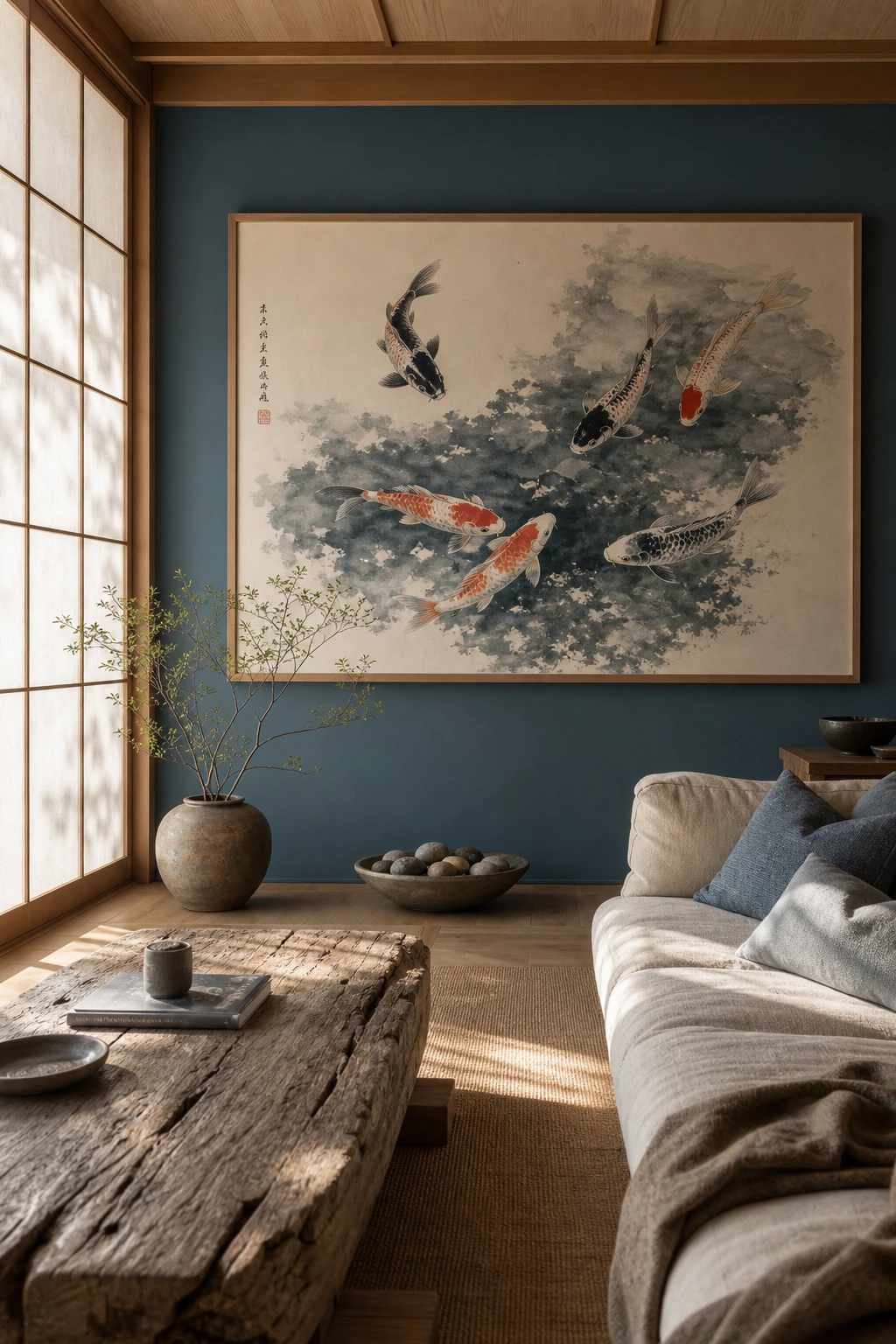
Koi Fish Art That Adds Life to a Coastal Japanese Room
A single large koi painting stops a room the way nothing else can, and that is exactly the point. What I love about anchoring a Japanese coastal space with one piece of nature inspired art is the quiet confidence it gives the whole room. You get movement, colour, and story without clutter. The koi carries the organic energy of water and living things, so every calm linen and pale wood surface around it feels intentional rather than empty.
The Key Details
Large framed koi ink and watercolour painting
Low linen sofa
Weathered driftwood coffee table
Translucent shoji screen panel
Ceramic bowl with river stones
Pro TipChoose one large single panel koi print hung at eye level rather than grouping smaller prints, because the scale lets the painting breathe and hold the wall on its own terms.
AvoidPlacing koi art alongside unrelated botanical prints splits the room’s focus and the two motifs compete rather than settle into the same calm world.
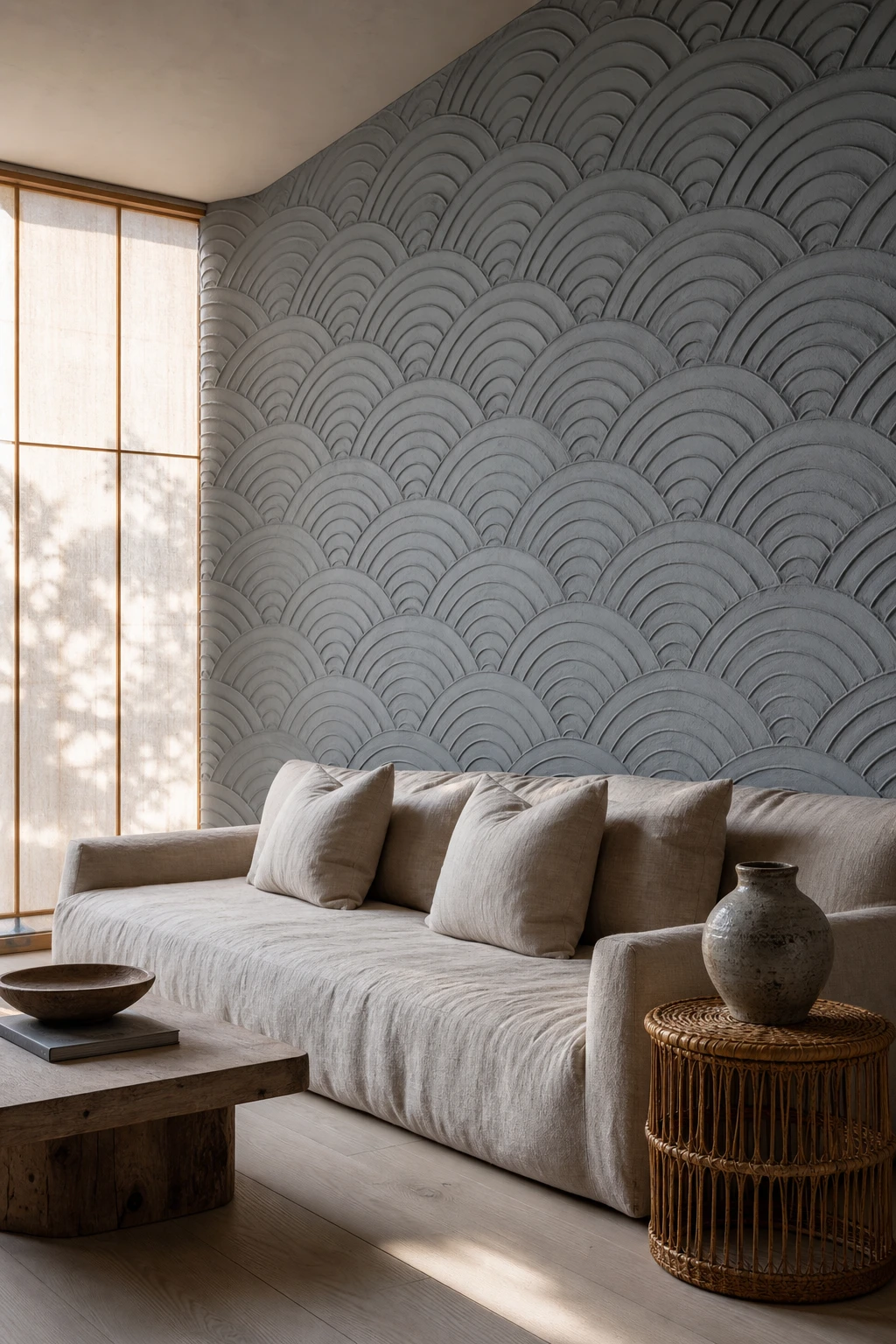
The Wave Pattern Detail That Works on Almost Any Surface
The seigaiha wave is one of those patterns I keep coming back to because it carries centuries of meaning without needing to shout. Carved into a plaster wall as a low relief, texture and pattern arrive in a single move, and the shadowing it catches across the day does quiet, beautiful work. The rounded scales read as softly coastal rather than rigidly graphic, which is what keeps the room warm rather than austere. Pair it with linen, rattan and whitewashed oak and the wave anchors everything without raising its voice once.
The Key Details
Carved Seigaiha wave relief plaster wall
Low slung natural linen sofa
Woven rattan side table
Sheer washi paper panel curtains
Whitewashed oak plank flooring
Pro TipRun a wave stamped grout joint across plain subway tiles and you get the seigaiha gesture at a fraction of the cost, with none of the installation drama.
AvoidScaling the wave pattern up too large pulls all the eye to the wall and leaves your furniture looking like an afterthought in its own room.
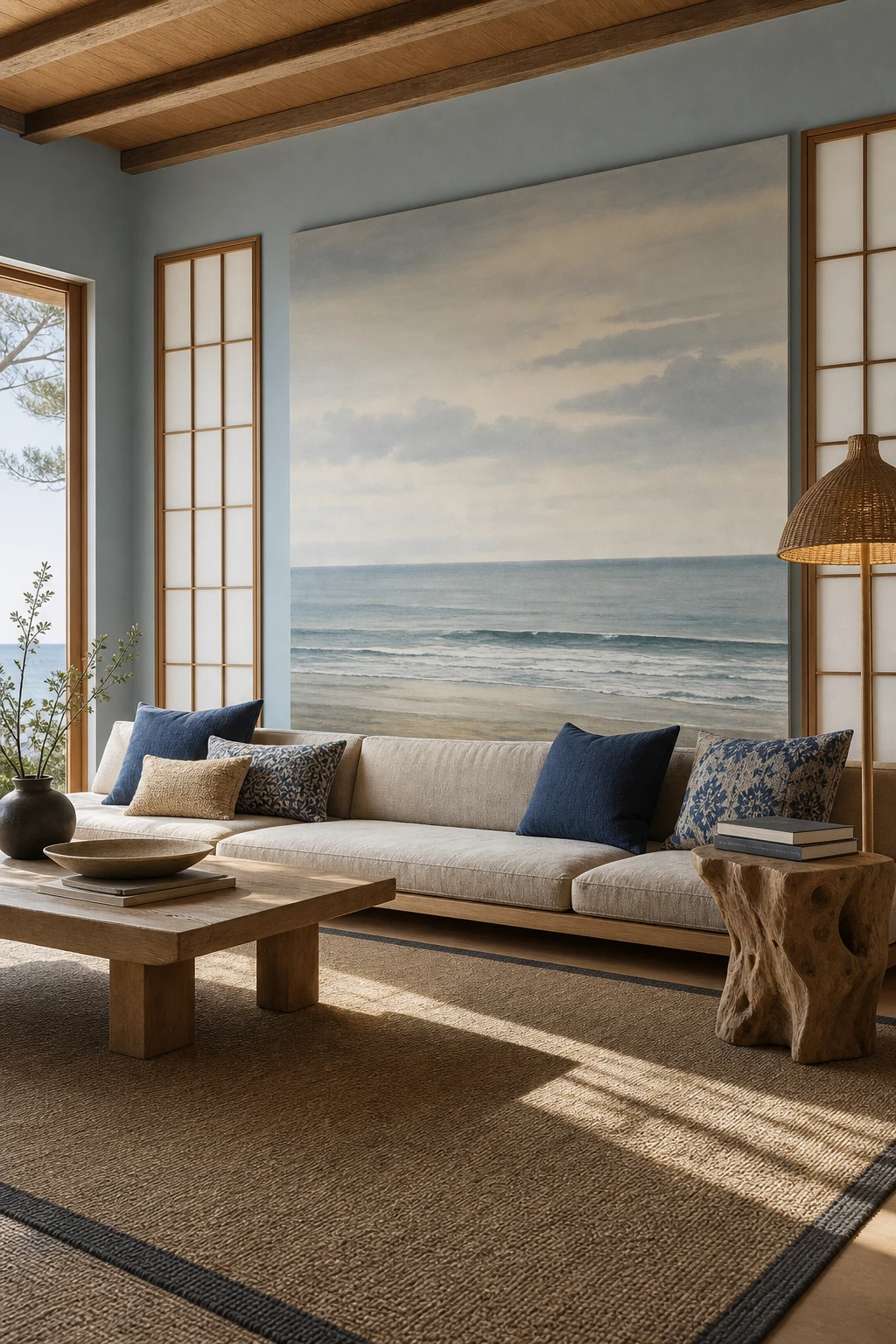
Bringing an Ocean Landscape Into a Room Without a Sea View
A wide ocean landscape hung at eye level tricks the room into feeling like it opens outward, and that sense of horizon is everything in this style. What I love about this move is how it gives a landlocked wall the same breathing room as a real sea view. You get that calm, expansive feeling without a single window change, and the watercolour softness of a Japanese coastal print keeps the mood quiet rather than decorative.
The Key Details
Floor to ceiling ocean landscape canvas
Shoji screen panels with rice paper inserts
Low platform linen sofa
Sculptural driftwood side table
Tatami inspired woven area rug
Pro TipHang your landscape so the horizon line in the artwork sits exactly at your own eye level when standing, which pulls the gaze straight through the wall as if the view were real.
AvoidA thick, dark timber or ornate frame closes the image in and kills the open feeling you are trying to build, making the print look like a picture rather than a window.
How Navy Blue Grounds a Japandi Room Without Weighing It Down
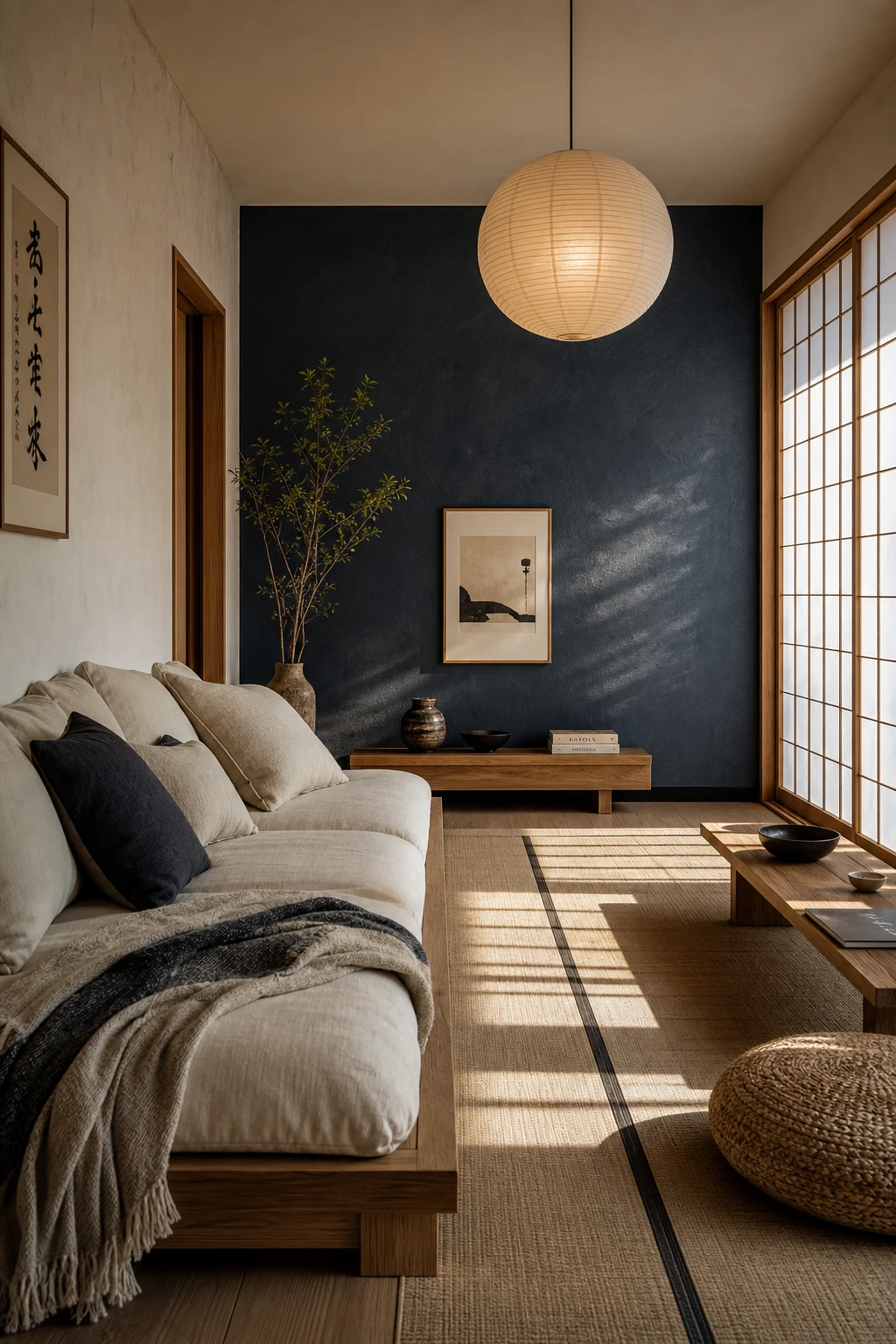
Navy as an anchor rather than a wall to wall statement is one of my favourite moves in Japandi rooms. You get the depth and calm of a deep colour without the heaviness, because the pale timber, raw linen, and washi paper around it are doing so much of the breathing. What wins me over every time is how the navy reads almost like a shadow, grounding the low platform sofa so your eye settles and rests.
The Key Details
Low platform timber sofa
Washi paper globe pendant
Sliding shoji screen panel
Tatami weave area rug
Undyed linen and wool cushions
Pro TipKeep navy to one upholstered surface only, then let every other material stay undyed or natural so the colour holds its quiet authority without competing.
AvoidPairing navy with black hardware or dark charcoal accents pulls the room into shadow and loses the airy coastal quality that makes this palette feel so restorative.
Earthy Japandi Tones That Make a Coastal Room Feel Grounded
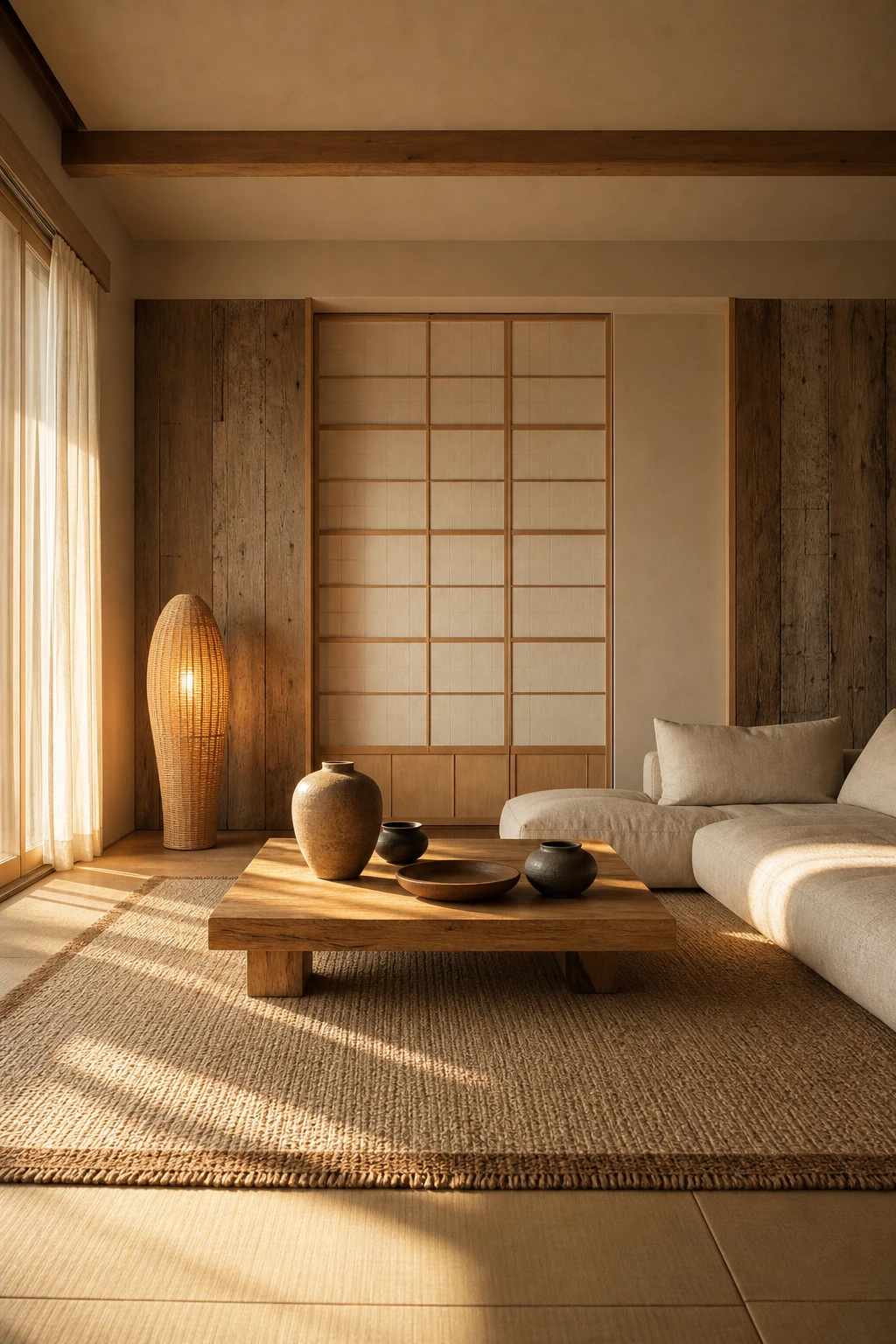
Rooting a light coastal palette with raw earthy accents is something I find myself doing again and again in Japanese coastal rooms. The oat linen sofa and pale walls handle all the airy, open work, and then ochre ceramics and iron glazed vessels pull the eye down and give the room real weight. The feeling is like standing on a shoreline where the sand is still cold and dense beneath your feet. The jute rug and driftwood panels stitch the whole thing together without a single fussy detail demanding attention.
The Key Details
Low profile linen sofa in undyed oat fabric
Hand thrown ceramic vessels in ochre and iron slip glazes
Tall woven rattan floor lamp
Jute area rug with banded border
Shoji inspired sliding screen with weathered driftwood wall panels
Pro TipPlace a cluster of hand thrown clay pots at different heights on a low shelf or windowsill so they read as one grounded moment rather than scattered decoration.
AvoidPulling in too many dark ochre and brown pieces at once flattens the contrast and turns what should feel like wet sand into something that just reads as dim.
The Japandi Colour Palette That Works in Every Room of the House
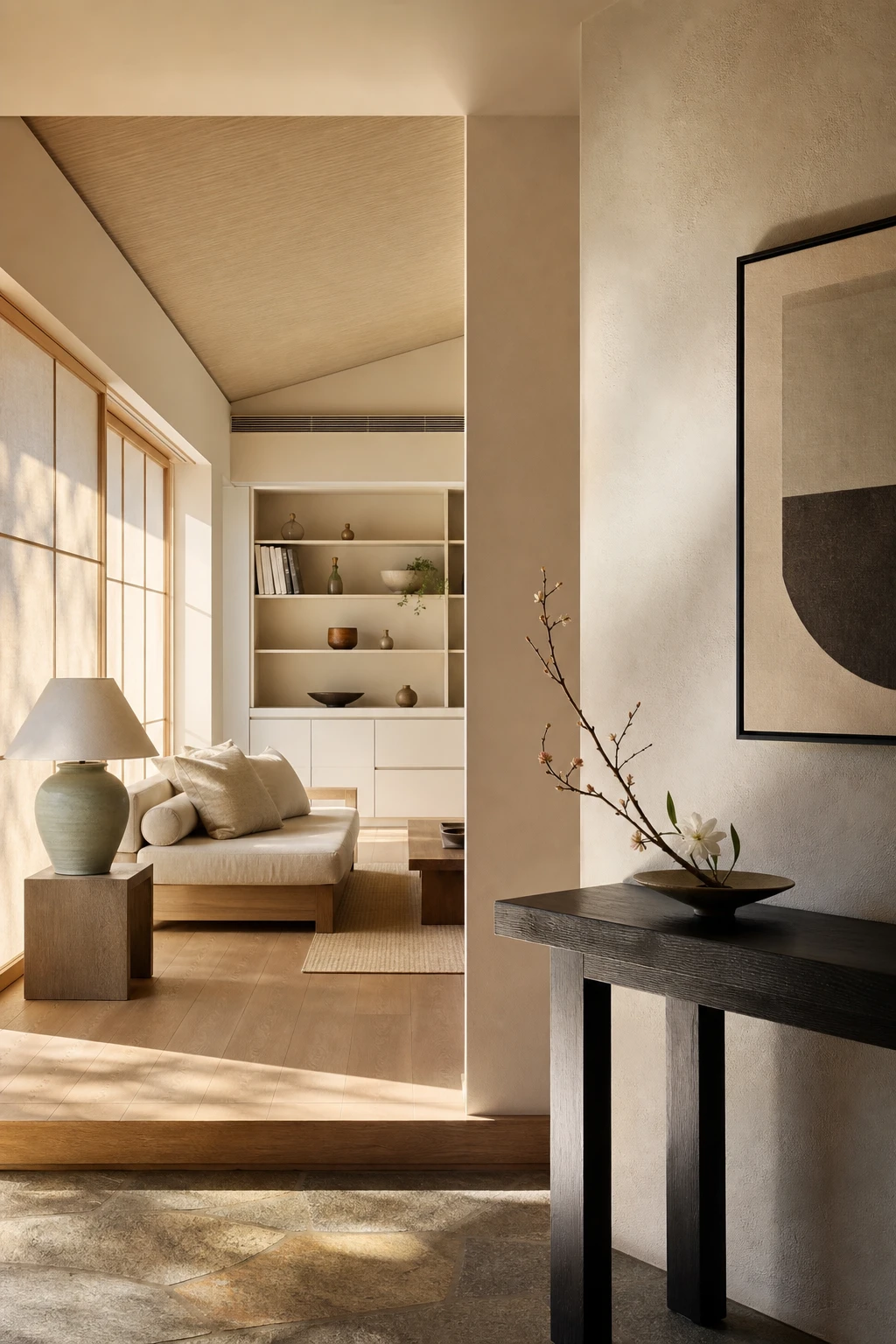
A Japandi palette works because it is built from restraint: warm stone, driftwood grey, soft sage and off white move through a home without fighting each other. What I love is how three or four tones, repeated in different textures across every room, create a quiet rhythm that reads as one considered whole. You will notice the calm comes not from matching everything but from letting the same undertone run like a thread through the oak, the linen and the walls.
The Key Details
Low slung oak daybed
Undyed linen cushions
Washi paper sliding panels
Celadon ceramic floor lamp
Blackened timber entry console
Pro TipChoose one wall colour and run it through your hallway and at least two connecting rooms so the eye travels without interruption.
AvoidChoosing a completely different colour story for each room breaks the thread and the house feels like a series of unconnected spaces rather than one calm home.
Warm Wood Details That Give a Japanese Coastal Room Its Soul
Warm wood is what gives a Japanese coastal room its quiet pulse, and the species you choose matters more than most people realise. Oak and ash with an oiled finish stay soft and slightly matte, so the grain reads as natural texture rather than a hard surface. You get that driftwood warmth without anything feeling lacquered or beachy in a obvious way. The whole room settles into itself when the wood feels honest.
The Key Details
Low oak platform bench
Shoji screen panels
Rattan arc floor lamp
Driftwood branch in ceramic vessel
Linen floor cushion
Pro TipOil your wood rather than varnishing it, because an oiled finish stays breathable, absorbs the coastal humidity without warping, and keeps that pale, chalky grain you want in a Japanese coastal scheme.
AvoidUsing three or four different wood tones across the furniture, floor, and joinery pulls the eye in too many directions and loses the calm, unified feeling that makes this style work.
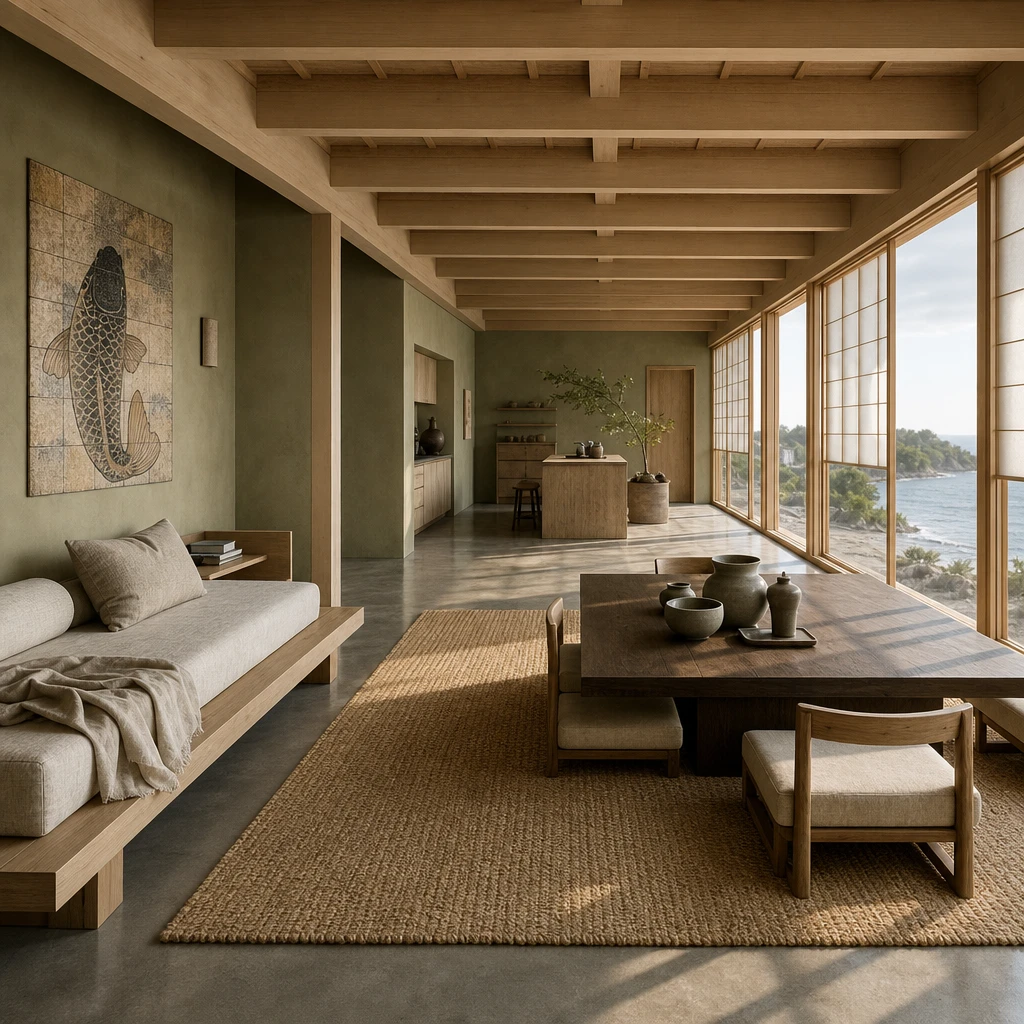
Polished Concrete Surfaces That Feel Soft in a Japanese Coastal Home
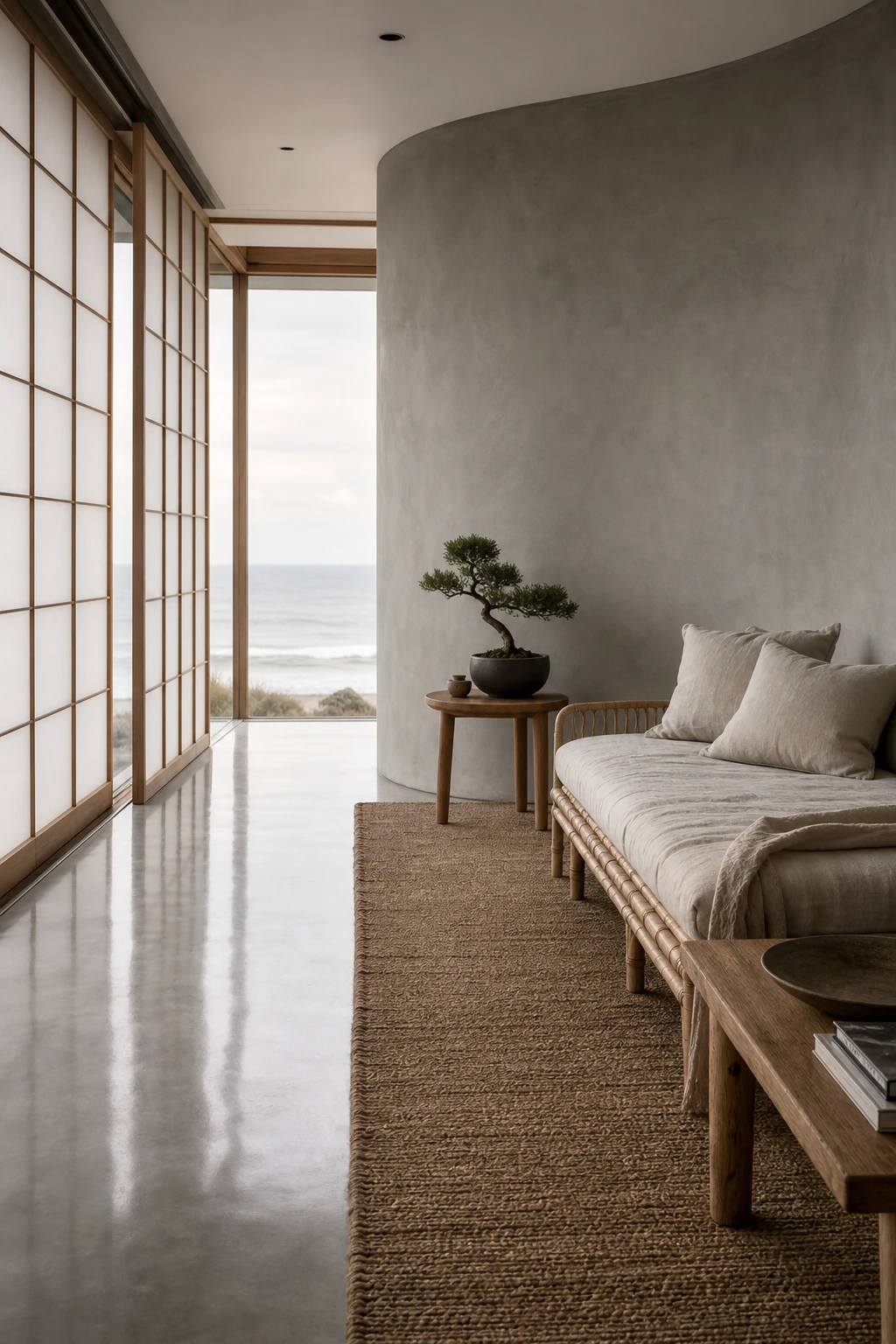
Polished concrete is one of those materials that can go either way, and what I love about the Japanese coastal version is how deliberately soft everything around it becomes. The low sheen finish keeps the floor calm rather than flashy, and you will notice how the rattan, linen and sea grass pull warmth straight back into the space. That layering is the whole move: one cool industrial surface, surrounded by materials that breathe and give.
The Key Details
Polished concrete floor with low sheen finish
Shoji screen room dividers
Low rattan daybed with undyed linen cushions
Sea grass woven runner
Hand thrown stoneware bonsai vessel on oak side table
Pro TipLay a chunky wool rug over the concrete in the seating zone so bare feet never meet a cold floor on winter mornings.
AvoidFinishing every wall, floor and worktop in raw concrete leaves the room feeling like a car park, no matter how beautiful the furniture is.
Alan launched Edward George London in 2017. Since completing his masters in Town & Regional Planning (MPlan) he has combined the skills he learned at the University of Sheffield with his passion for design, to help create a foundation for those looking to create a beautiful home.