Newsletter Subscribe
Enter your email address below and subscribe to our newsletter

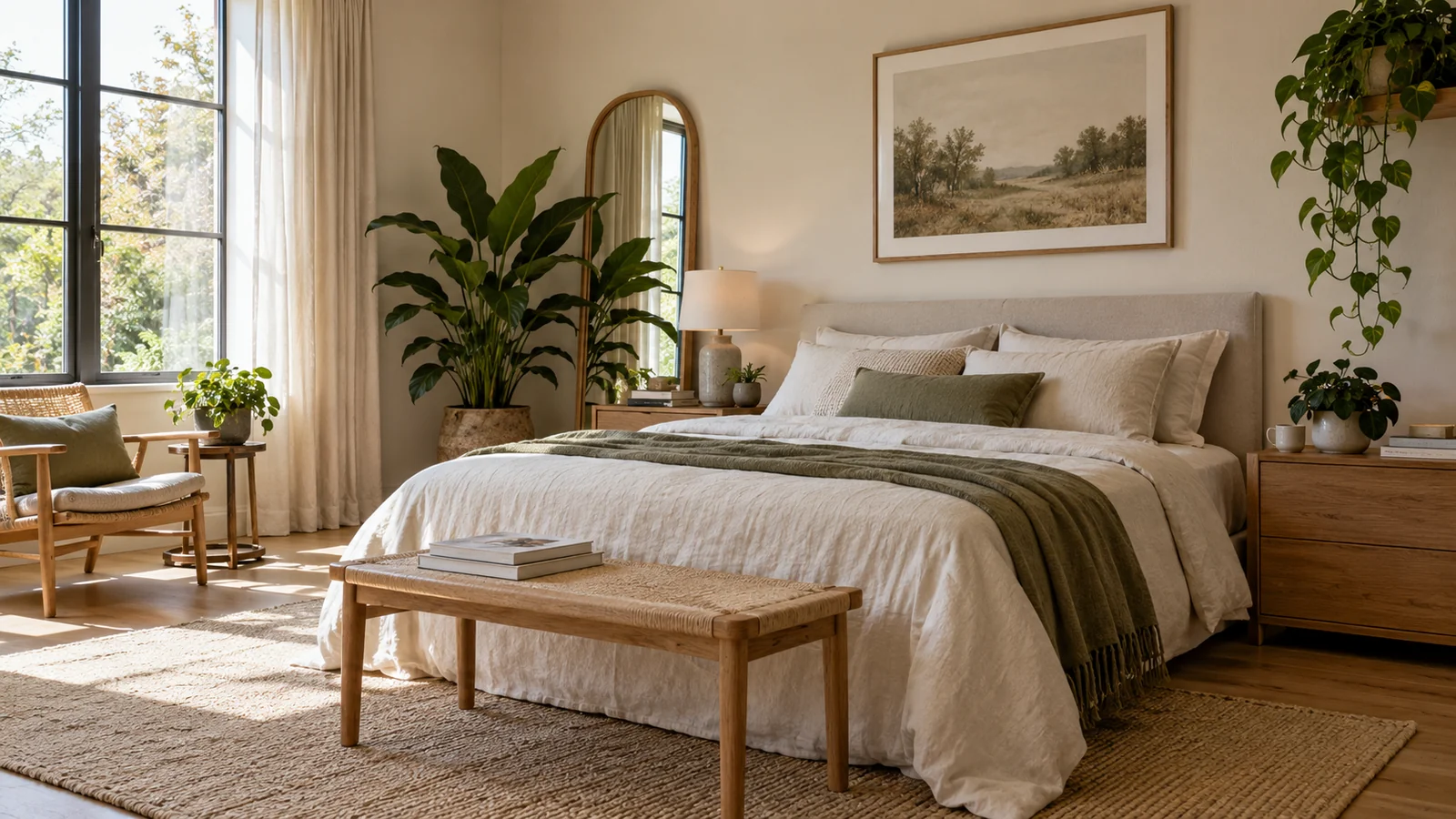
When an indoor plant collection outgrows the windowsill, I would choose the next bedroom plants and planters together, using the conditions and space you actually have. A compact plant still needs the right light, and a beautiful pot still needs a workable way to drain, lift and protect the surface beneath it. Here is how I would turn a finished placement plan into specific plant, container and stand choices, then keep the display useful as the leaves grow and the seasons change.
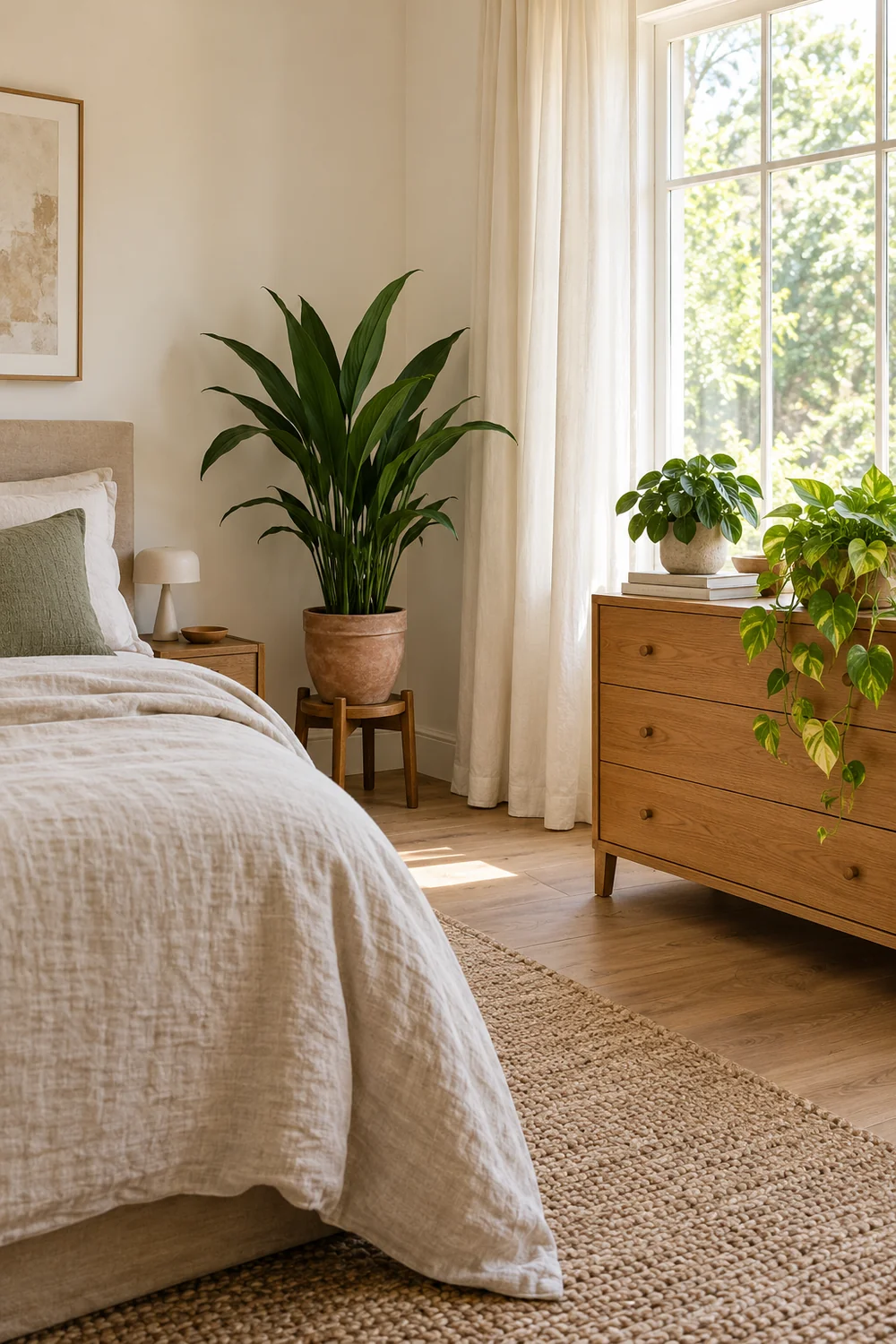
I would start with the position, not a photograph of the plant I want to buy. Your notes should describe the daylight reaching the leaves, any direct sun, the nearby heat source and the space the foliage can occupy. Check that these are observations of the actual display position rather than the window across the room. A plant's label and reliable species guidance are more useful than a general promise that it is perfect for bedrooms.
If you have not decided those positions yet, return to the bedroom plant decor plan first. I would use it to assign light, watering access and growing space to the collection you already own. This guide begins at the next decision: comparing particular plants and the pieces that hold them. Keeping those decisions in that order helps you avoid buying a small plant for a location that cannot support it.
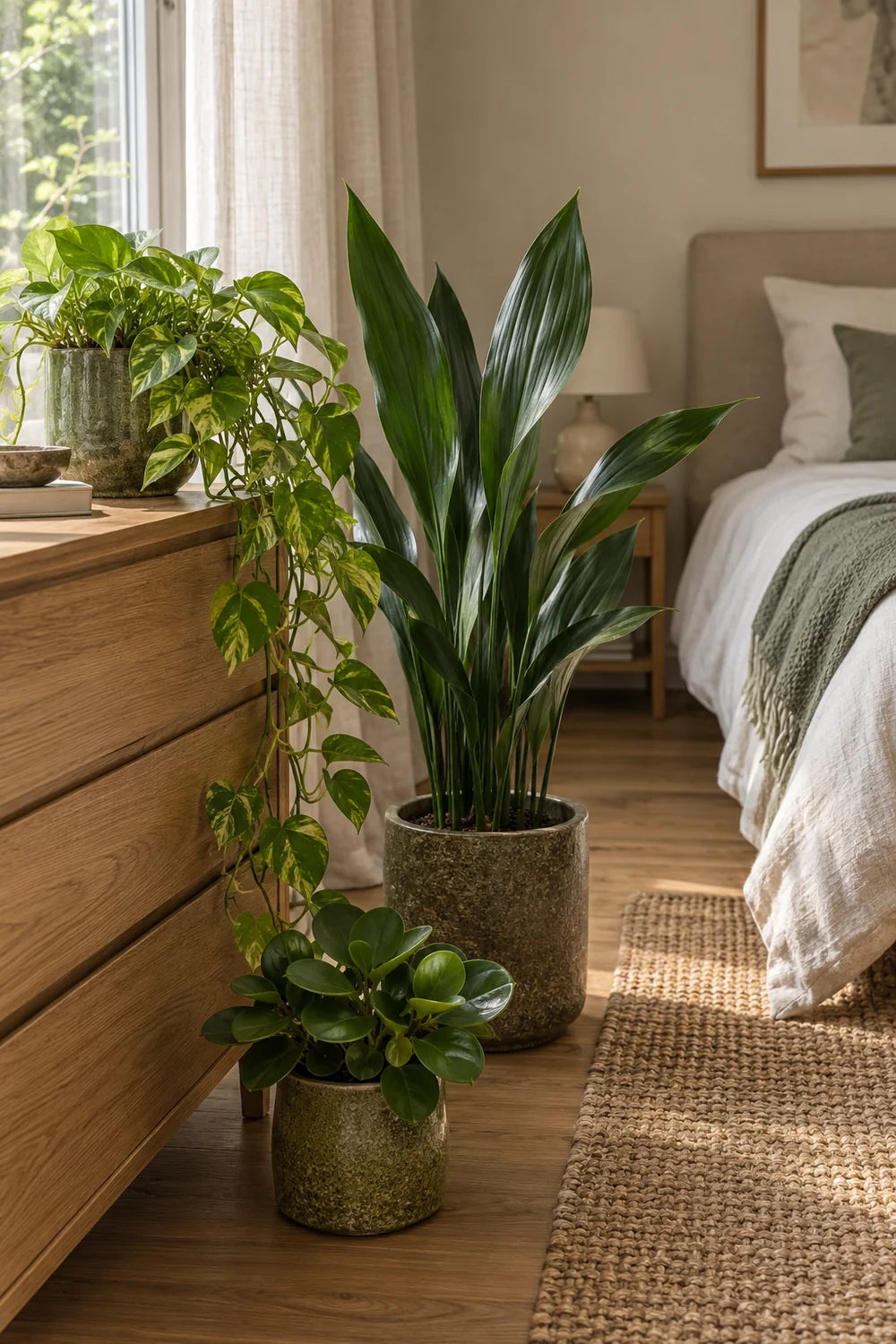
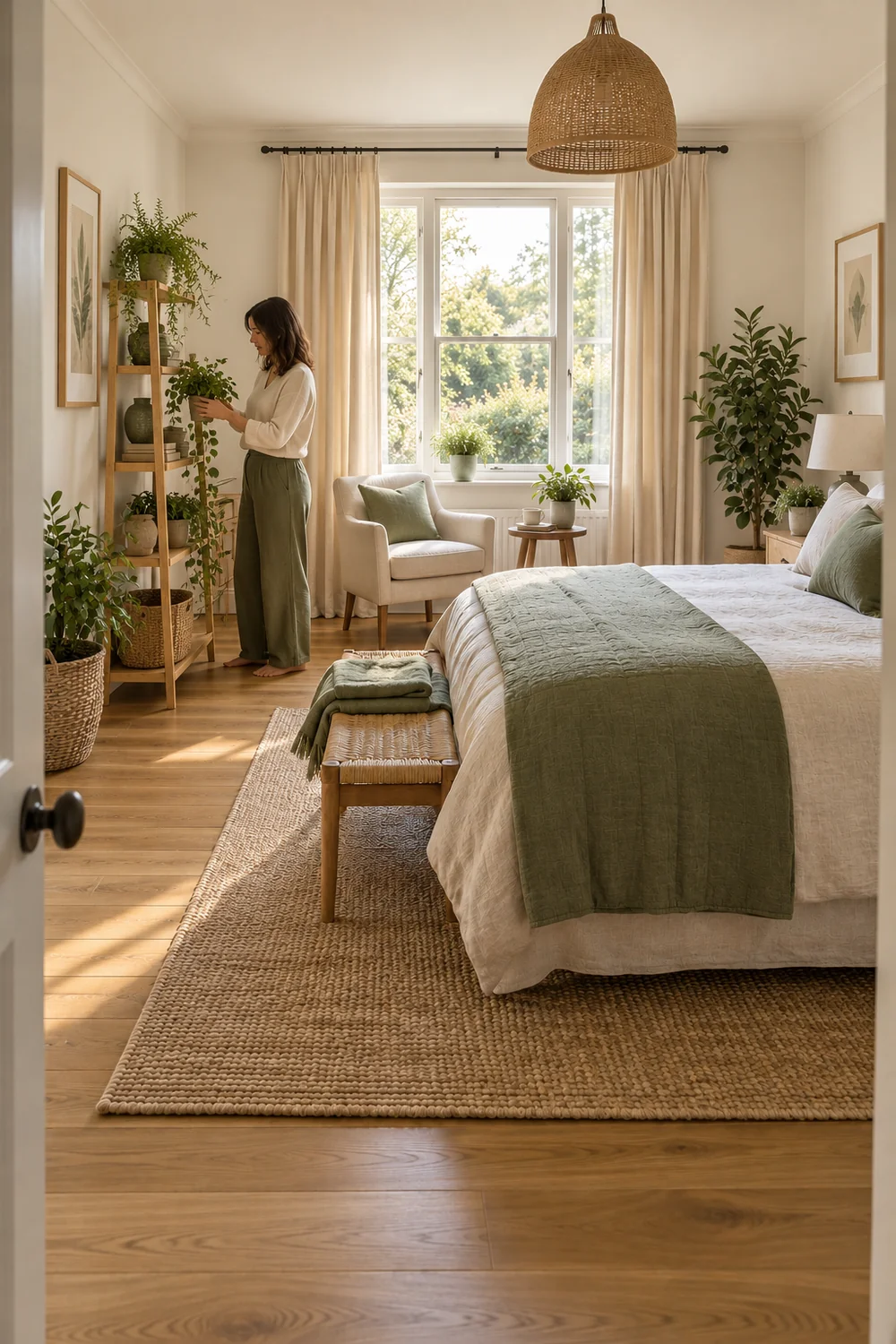
For a trailing shape near suitable filtered daylight, I would consider golden pothos, commonly sold as Epipremnum aureum. The Royal Horticultural Society describes epipremnum as a houseplant suited to bright indirect light and warm indoor conditions. I would keep the stem within the display area rather than allow it to travel across a curtain or behind furniture. The choice is useful when you want a controlled trailing shape and can reach the container for care.
For a broad upright shape in a more shaded position, I would compare a green leaved cast iron plant, Aspidistra elatior. Its foliage can give a collection a strong shape without needing an intricate support. Read the guidance for the particular plant you are considering and allow for its eventual spread. A shaded position still needs suitable daylight; I would not turn a completely dark corner into a plant location simply because this species tolerates shade.
For a smaller rounded shape on an accessible chest or shelf, I would consider a suitable peperomia. Peperomia obtusifolia is one option to research, with compact rounded leaves that look distinct beside a larger upright plant. Check its light and watering requirements rather than treating every peperomia as identical. I would choose the particular specimen only after comparing its present size, expected growth and care with the space you have assigned.
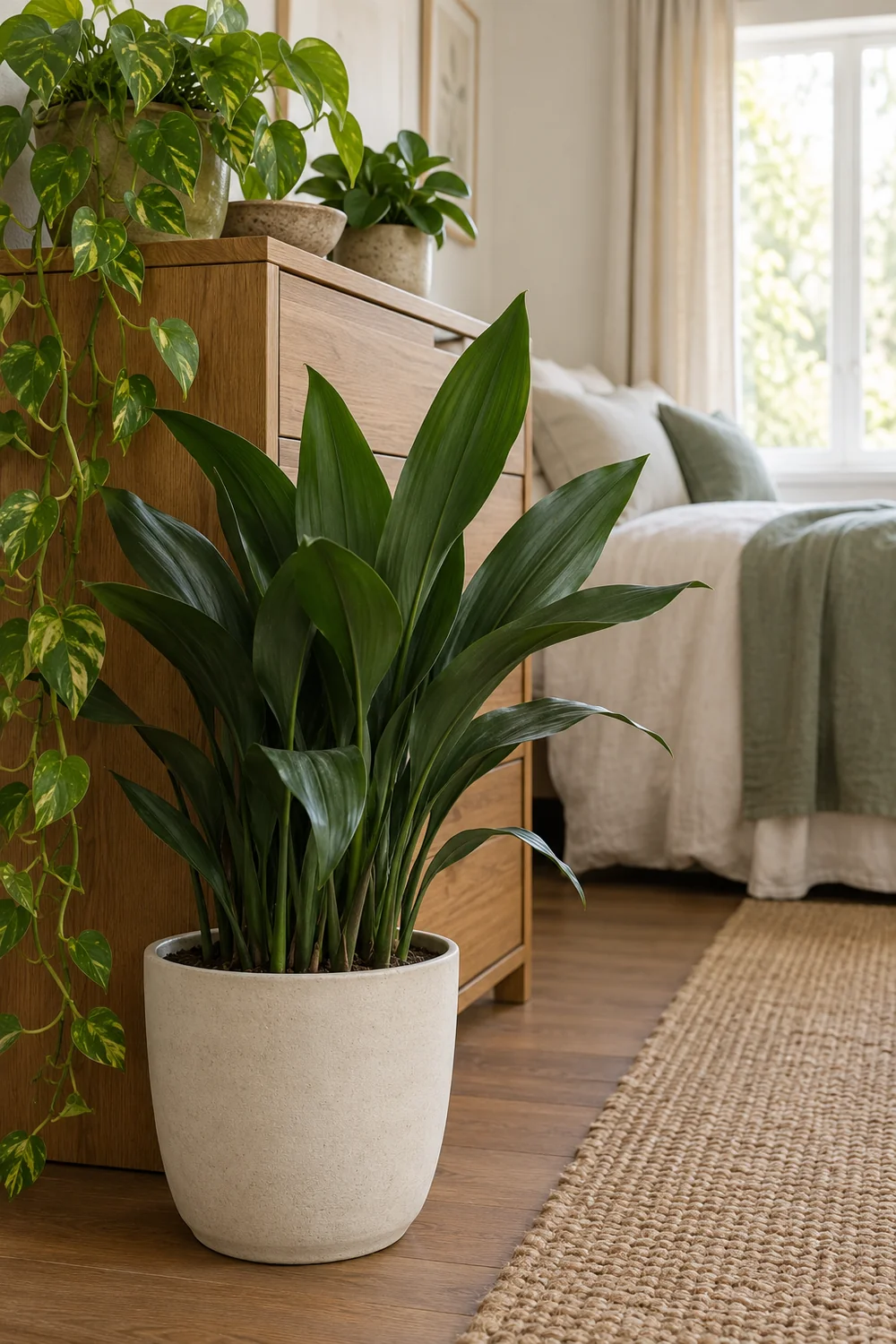
Use these options as a shortlist, not a collection you must purchase. The plants already in your home may supply all three shapes. When keeping or buying a particular species, check its identity, growing needs and any household restrictions that apply to you. If children or animals can reach the display, verify suitability for that household before selecting it. A container placed higher up is not a substitute for understanding the plant you are bringing into the room.
| Display job | Option I would investigate | What must match before I choose it | Reason to choose another option |
|---|---|---|---|
| Controlled trailing foliage | Golden pothos | Suitable indirect light, warmth and removable pot access | Stems would obstruct curtains or the container would be trapped |
| Broad upright foliage | Green leaved cast iron plant | Suitable shaded daylight and space for the leaf spread | The position is dark or the foliage consumes the walking route |
| Compact rounded foliage | A suitable peperomia | Species specific light, watering and available growing space | A cramped shelf prevents lifting or leaves press against the next shelf |
I would inspect the actual plant before taking it home. Look for damage, signs of pests and a container you can remove without tearing roots or foliage. Compare the widest leaves with your plan rather than judging only the nursery pot diameter. A label photograph shows a species; the specimen in front of you is the one that must fit your room. If an existing plant is struggling, identify the cause before disguising it with a new outer pot.
I would distinguish the growing pot from the decorative outer container. A nursery pot with drainage can sit inside a suitable cover pot, provided you can remove it and manage excess water. The outer vessel gives the room its material and colour; it does not need to become the growing container. Keeping those jobs separate often makes it easier to care for a small bedroom collection and to change the display without disturbing the roots.
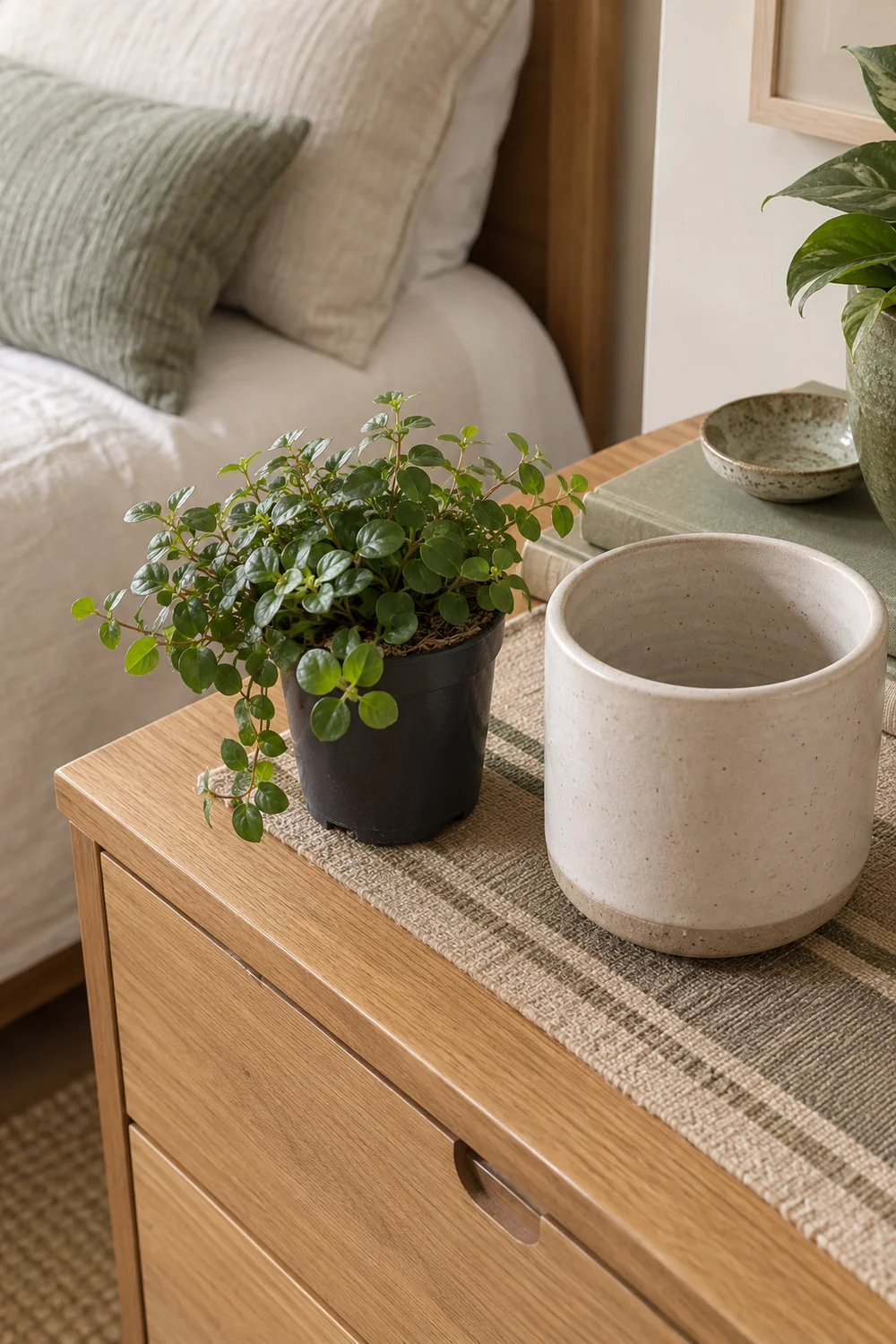
Measure the nursery pot at its widest point, including its rim, and measure its height. Then check the usable internal opening and depth of the outer vessel. Product descriptions often give exterior dimensions, which do not tell you whether the inner pot fits through the neck. I would also check whether your fingers can grip and lift the nursery pot once it is inside. A tight fit may look neat while making ordinary watering needlessly difficult.
As an example of the measurement method, a nursery pot with a 14 centimetre rim needs an outer container whose actual opening accepts that rim and leaves useful lifting access. A cover pot advertised as 16 centimetres wide may have a smaller mouth or thick walls. Those figures are an example to measure, not a recommended allowance for every pot. Test the actual combination before accepting it, especially when buying an unusually shaped vessel.
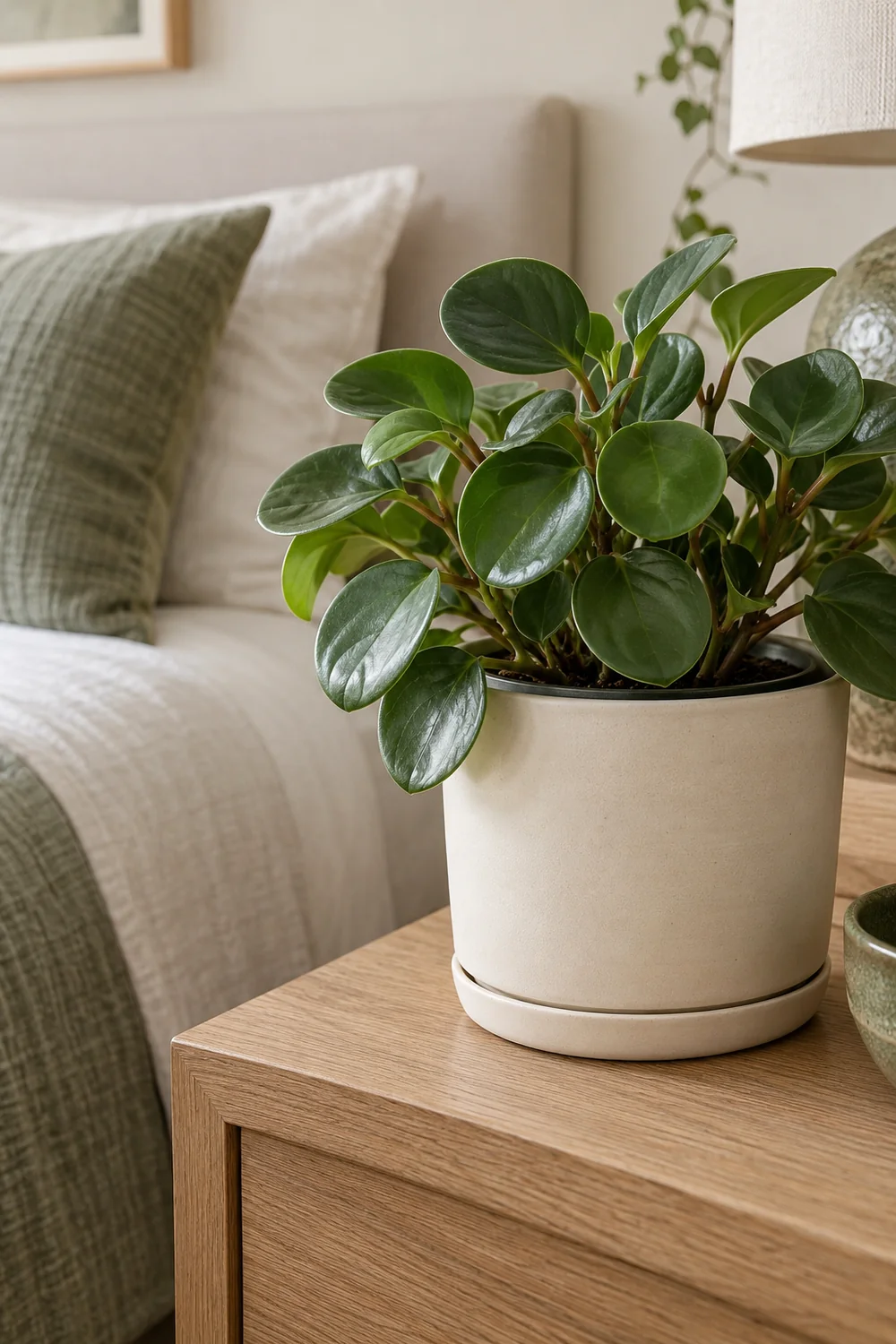
Drainage is the next check. The Royal Horticultural Society's general houseplant guidance advises using containers that allow excess water to escape. I would follow the growing guidance for your particular plant, water where drainage can be managed and remove the excess before returning the pot to the display. Putting stones inside a decorative vessel does not create an outlet in a container that has none. Do not let a pleasing silhouette replace a workable growing arrangement.
For the decorative surface, I would use clay, cream ceramic or a muted mineral glaze within the earthy bedroom direction. Choose these for their appearance and relationship to the room, then check how the actual vessel handles water. An unglazed pot, a basket and a glazed cover pot are different constructions. A decorative basket needs a suitable container inside it; the woven surface should not be asked to contain water.
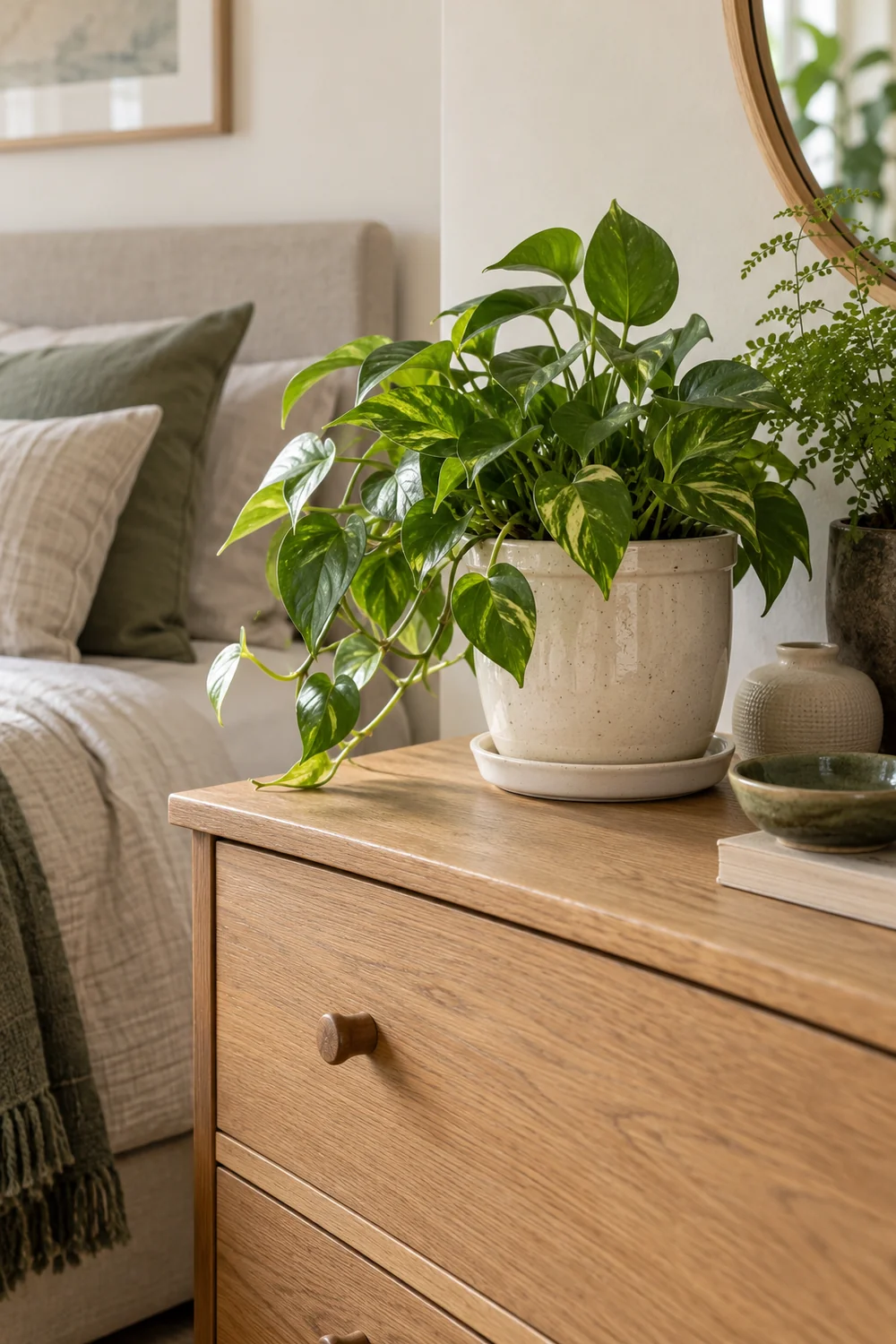
Protect the furniture with a suitable watertight arrangement rather than relying on a pot that looks dry from the outside. Check the saucer or liner, the base of the outer pot and the surface beneath it after watering. Lift the display periodically so hidden moisture is visible. I would follow the furniture maker's care guidance for any protection placed on the timber. A mat cannot make a leaking or persistently wet container acceptable.
I would keep the most awkward container combinations out of daily use. A heavy narrow necked vessel that traps the nursery pot may belong elsewhere as a decorative object. A small accessible cover pot can give a favourite plant more pleasure and less work. Before buying, rehearse lifting the inner pot, seeing the excess water and returning it without catching the leaves. If that sequence fails, choose another container rather than changing your whole watering routine to accommodate it.
I would compare the stand's occupied footprint with the area assigned in your plan. Include projecting feet, the edge of the pot and the foliage around it. A stand's top diameter is only one measurement. An attractive narrow top can sit above legs that consume much more floor space. Put the intended dimensions onto your plan and check the route with the bed, drawers and curtains in their ordinary working positions.
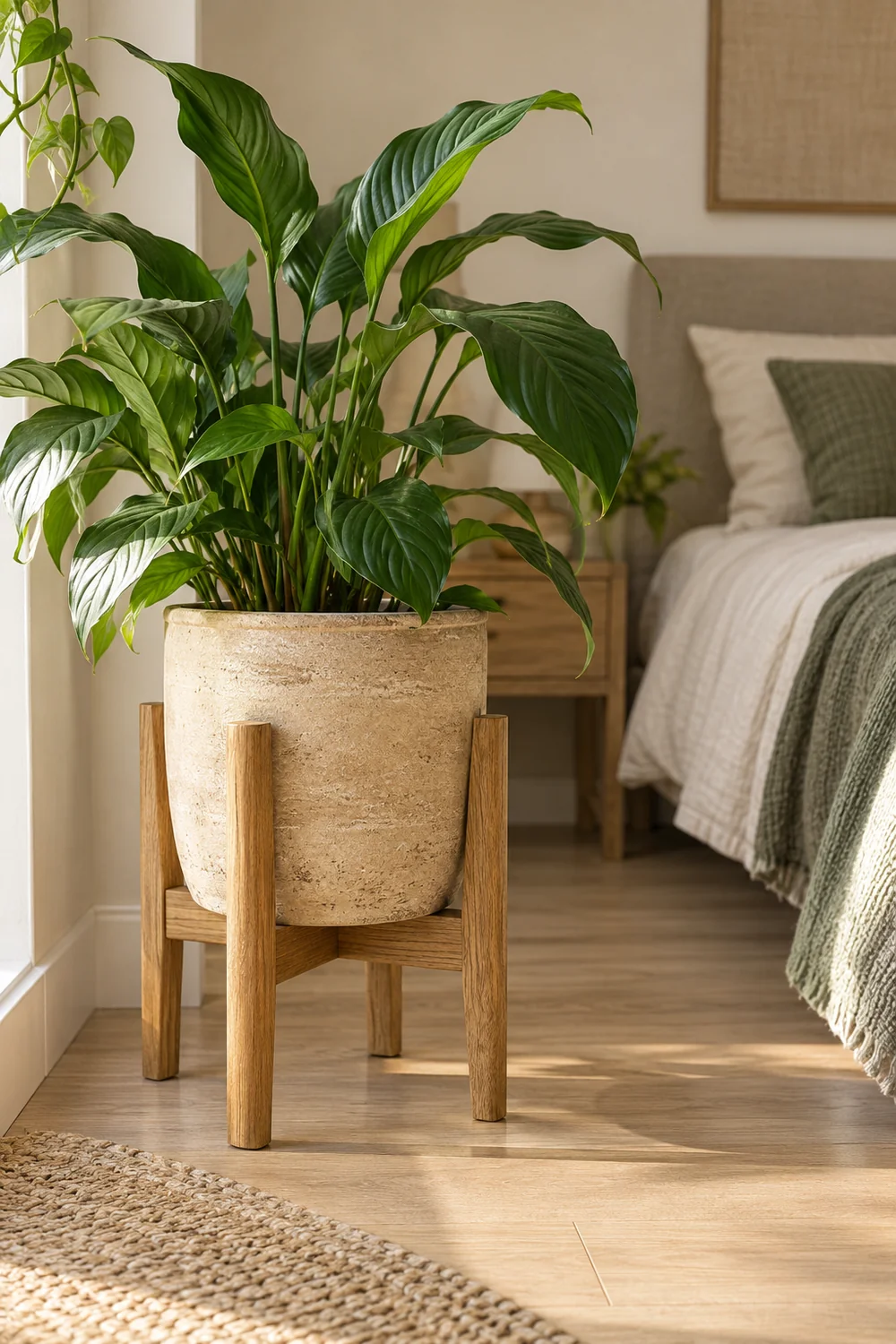
The placement plan is the useful reference when a shortlisted stand changes those relationships. I would revise the placement before treating the product as a commitment. This is especially important when a new leaf shape spreads wider than the plant currently on the windowsill. The stand should serve the growing collection and the bedroom, not force the collection into a location you have already rejected.
Check how the pot sits on the stand. It should have the supported contact area intended by the manufacturer and should not wobble or perch on a narrow rim. Follow any requirements for assembly, securing and indoor use. If the stand is described with a maximum load, compare it with the combined wet plant, growing medium and containers, not the empty decorative pot alone. If the seller does not provide the information you need, I would choose a clearer specification.
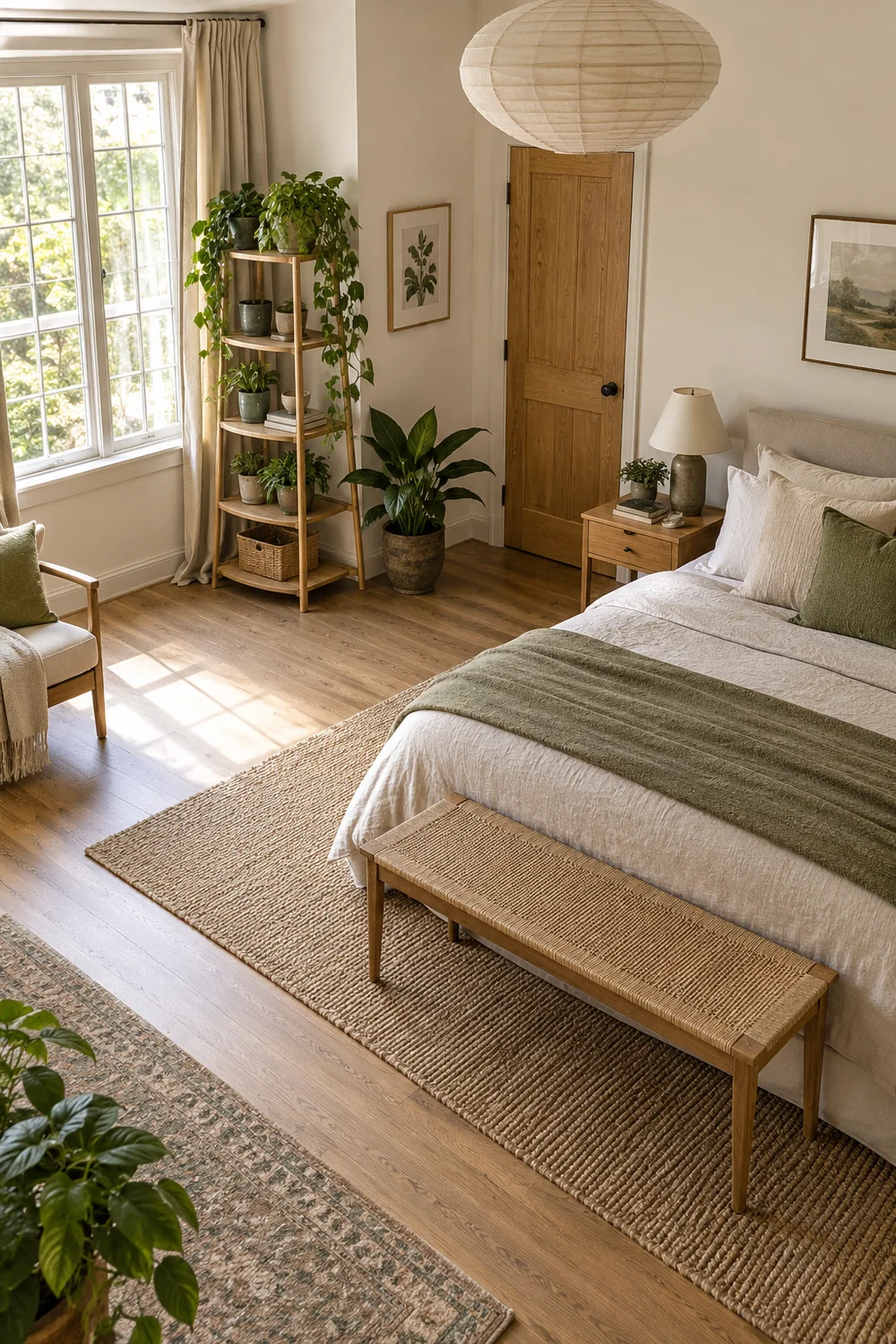
For a heavier collection piece, lower placement may be easier to care for than a tall stand. That is a choice to test with your own reach and the actual pot weight. A floor position needs a stable support and suitable surface protection just as a shelf does. I would not place a heavy pot high merely to create staggered heights. You can make visual variation with leaf shape and furniture position while keeping care movements manageable.
Measure the vertical space as well. There must be room for the plant's present foliage, its expected growth and the movements needed to remove the pot. A shelf that clears the leaves by a small amount today can become a poor position as the collection develops. A trailing plant also needs a route for its stems that does not bind it to the furniture or block another plant. Keep the foliage within an area you can maintain.
| Check | What I would compare | A useful acceptance test |
|---|---|---|
| Footprint | Stand legs, pot and leaf spread versus the assigned position | Everyday route remains usable with the plant present |
| Support | Pot base and stand contact area versus maker guidance | Pot sits as intended without rocking or overhanging unsupported |
| Load | Wet plant and all containers versus stated capacity | The specified use accommodates the whole supported load |
| Height | Shelf space, growing leaves and removal movement | Pot can be lifted out without catching the next surface |
| Care access | Saucer position and normal watering method | Excess water can be seen and removed without dismantling the display |
I would avoid turning an ordinary decorative shelf into a structural experiment. Use a product intended for the load and follow its installation requirements. If your room cannot accommodate that safely and practically, a freestanding arrangement or fewer plants may be the better result. The purpose of this selection is a collection you can enjoy and maintain. It does not depend on hanging pots above the bed or filling every wall with plants.
With the practical shortlist complete, I would lay out the container materials beside a sample of the bedding and a photograph of the timber furniture. The living foliage already supplies strong green shapes. The planters can support those shapes with quieter colours, rather than compete for attention. Warm cream, clay and restrained moss glaze work within this earthy direction, but choose the combination that sits with the actual room you are keeping.
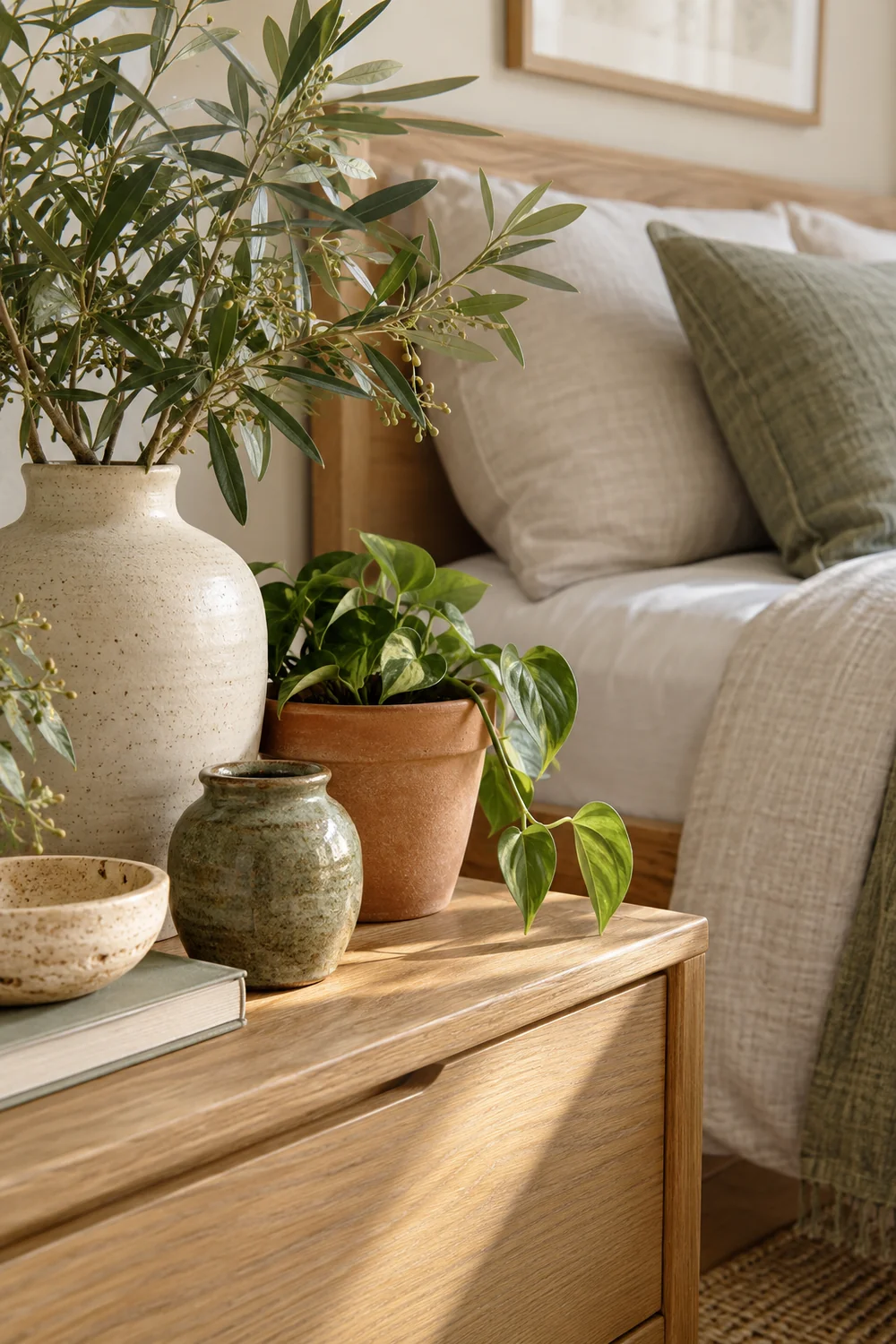
I would repeat a family of finishes without buying a complete matching set. Two clay pots at different sizes can connect a grouping, while a cream glazed vessel gives a smaller plant a lighter edge. Let an unusual existing pot become one deliberate accent if it passes the fit and care checks. Repetition helps the collection feel considered; identical containers are not required for every species or every position.
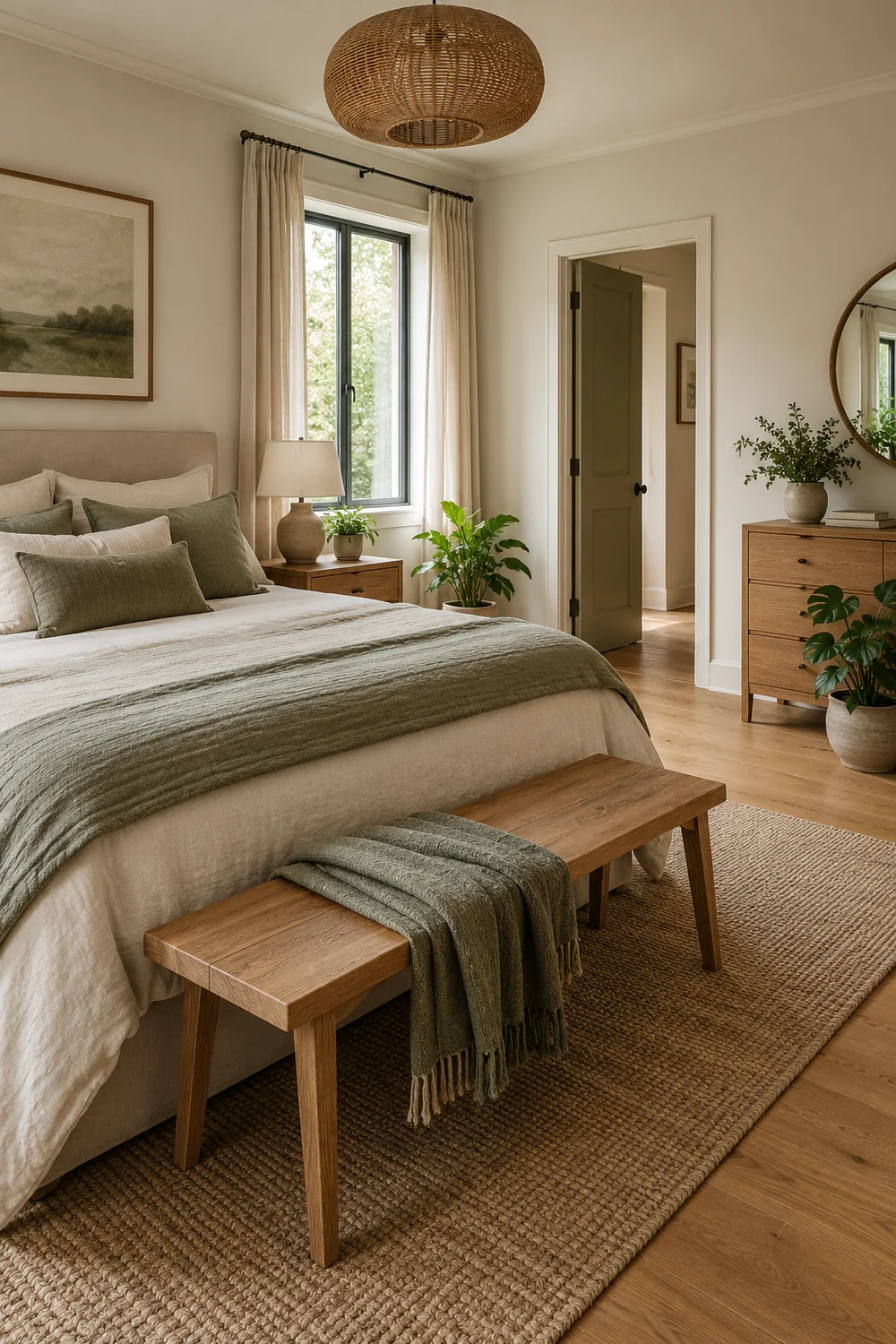
If sage textiles already belong in your bedroom, my sage green bedroom reference provides a useful colour and material branch. I would borrow its relationships between pale greens, light bedding and timber while retaining the plant and container checks here. A sage room does not require painting every planter green. Clay or cream can give the foliage enough separation to remain the main feature.
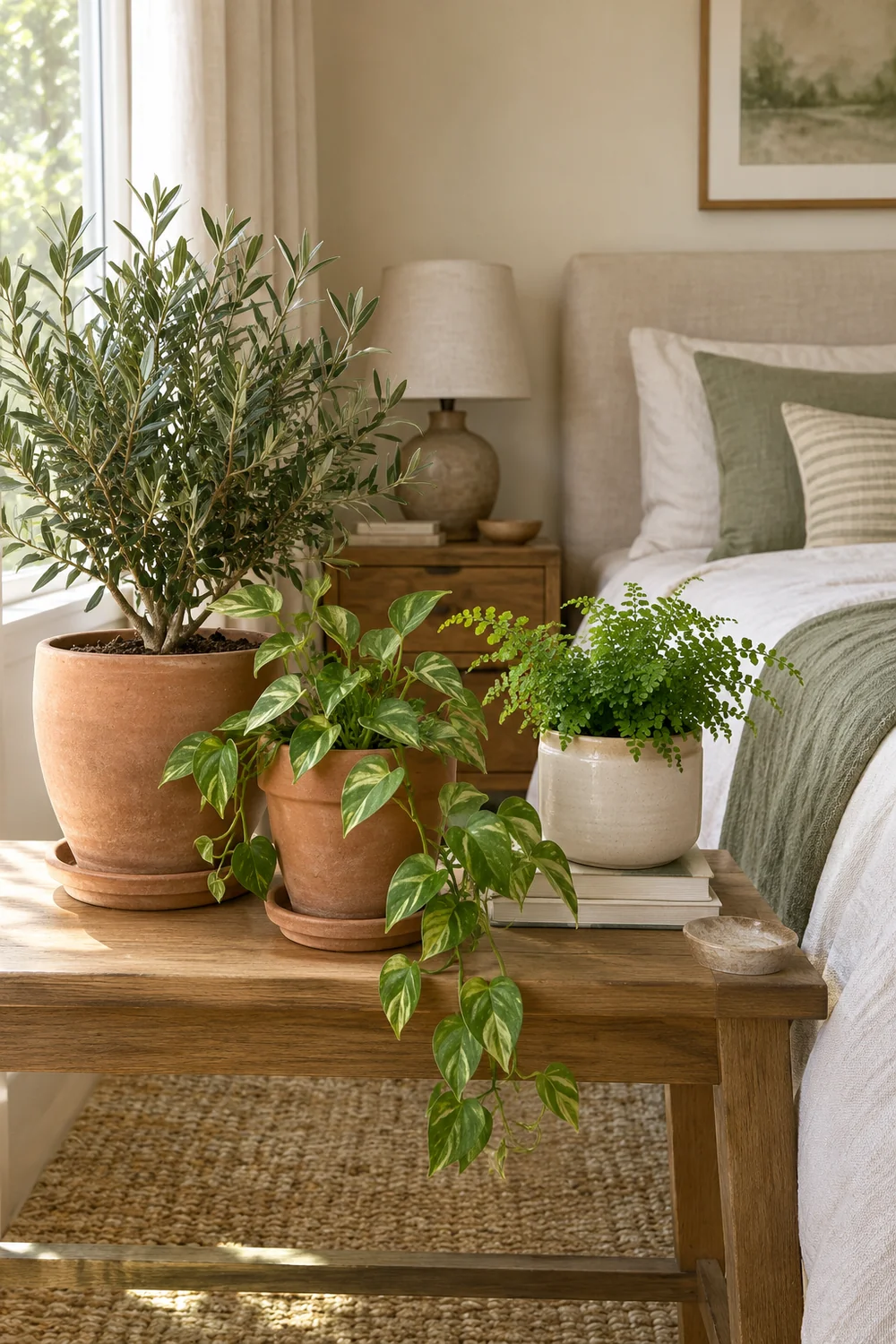
Look at how the container changes the apparent size of the plant. A tall outer vessel can make a small plant feel isolated at its top, while a low wide vessel may make a compact specimen look more substantial. Choose a proportion that supports the foliage without trapping the nursery pot. I would compare the combination from the bed and doorway, then repeat the lifting test. Appearance and access need to succeed in the same piece.
Keep patterned pots away from the busiest part of the collection unless the pattern has a clear role. Variegated leaves already contain visual detail. A heavily patterned vessel underneath them may make both harder to appreciate. I would let one carry the detail and keep the other quieter. Beside a plain upright plant, a modest patterned pot can be easier to read, provided it sits comfortably with the bedding and nearby materials.
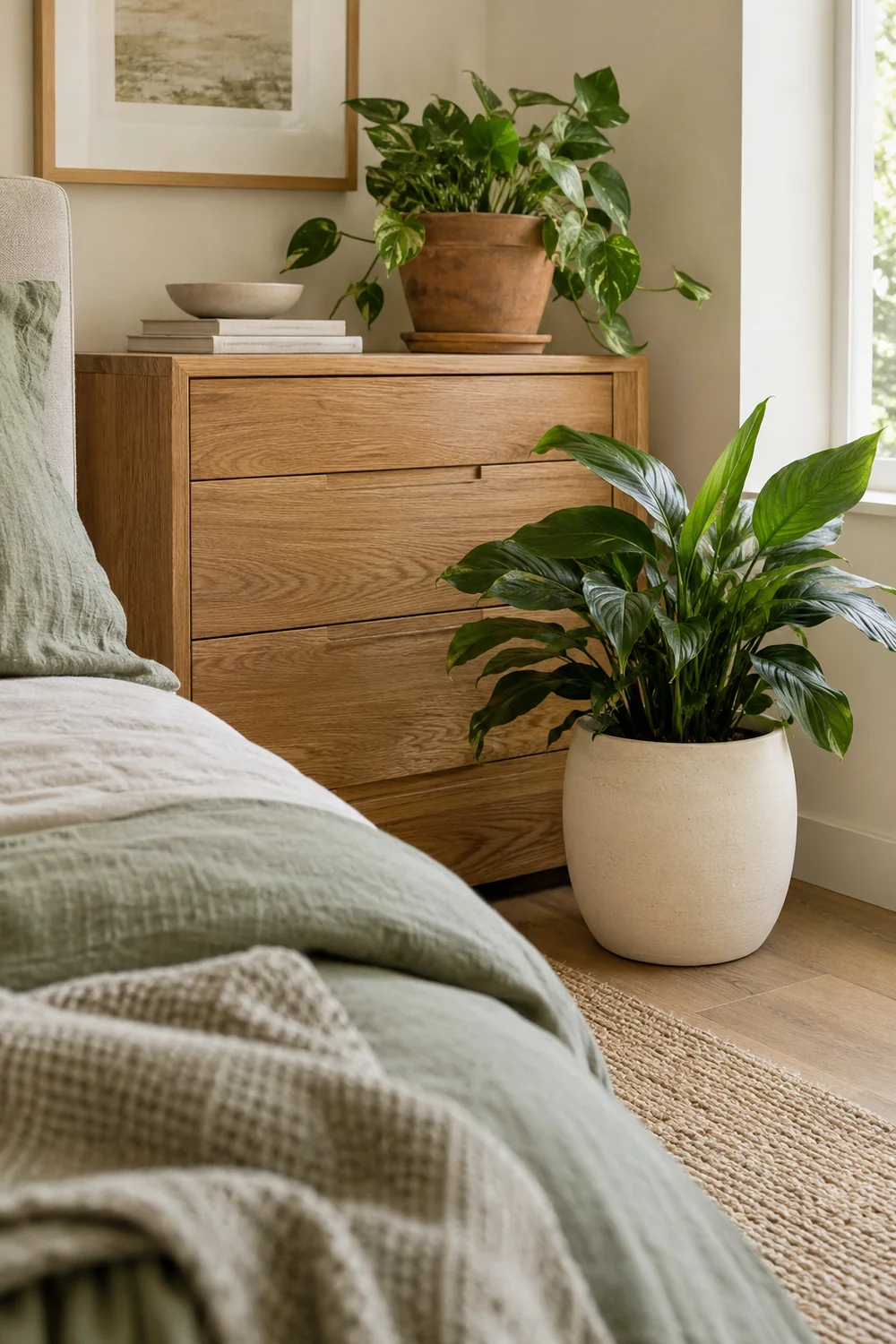
I would test the finished containers in their actual positions before replacing every vessel. Put the main grouping into place, leave the companion group simple and see whether the room already feels coherent. If it does, stop there. The selection is complete when the pieces do their jobs, not when all the old pots have been replaced. A collected bedroom can keep useful objects with different histories as long as their proportions and materials work together.
I would give the finished collection a repeatable reset after watering. Return each drained growing pot to its intended container, check for moisture beneath it and place stems back within the display area. Make sure the nearby curtain and bedside surface still work. The reset should return the room to its normal use rather than leave a temporary row of wet plants across the floor. If the routine becomes cumbersome, reconsider the display before buying more containers.
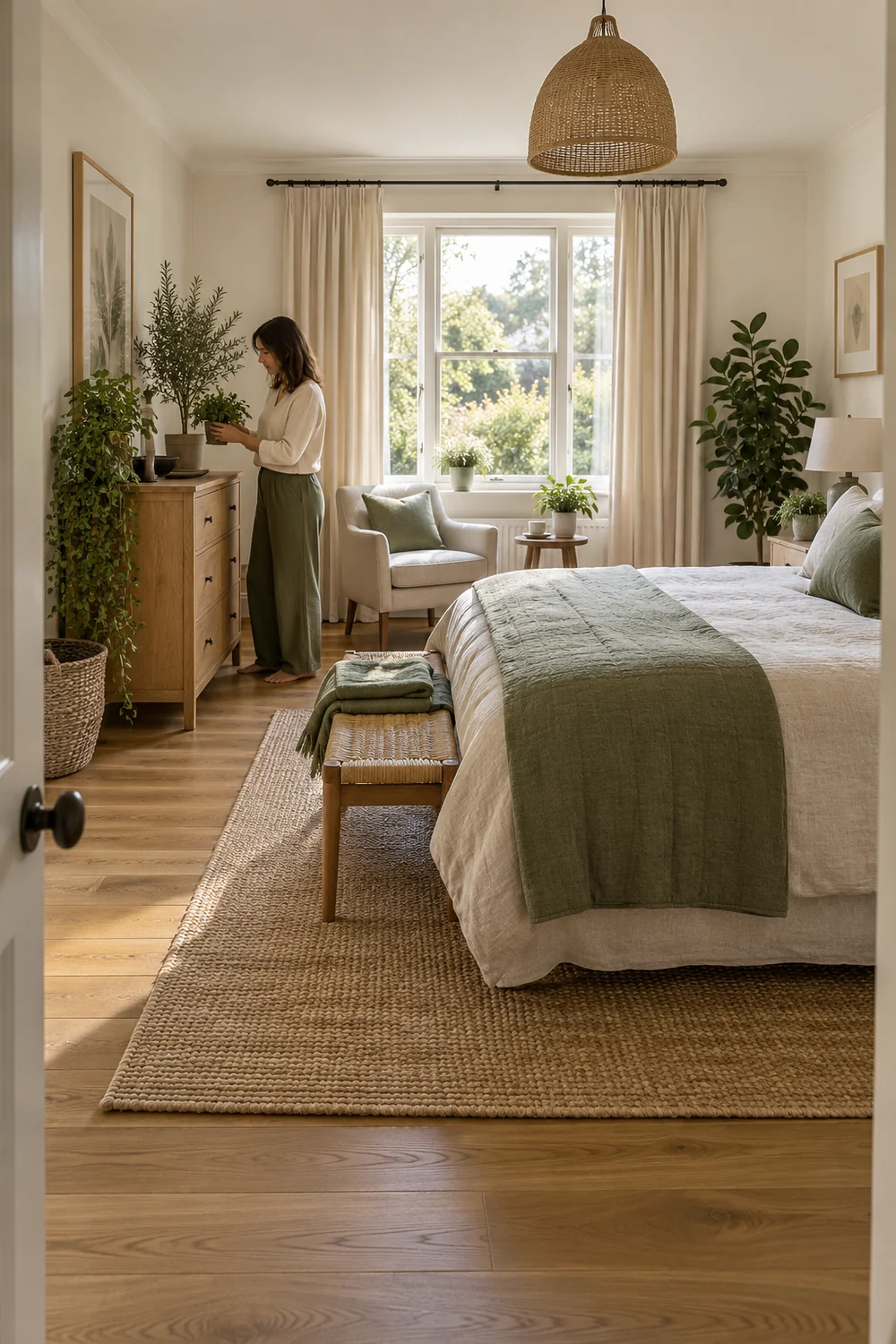
Give each plant the care its species and conditions need. I would not water the entire bedroom collection on an identical calendar simply because the pots look alike. Check the growing medium and the plant's guidance, and pay attention to the different rates at which containers and locations dry. A practical collection is easier to manage when you can see and reach every plant rather than relying on the most visible one to represent the others.
My home bedroom refresh reference has separate care and storage ideas when you want to fold the plant reset into a wider room routine. Here, I would keep the task specific: accessible plants, dry protected display surfaces, usable furniture and clear routes. A new leaf should be something you can enjoy, not a reason to stop using a drawer or keep a curtain permanently caught on a stem.
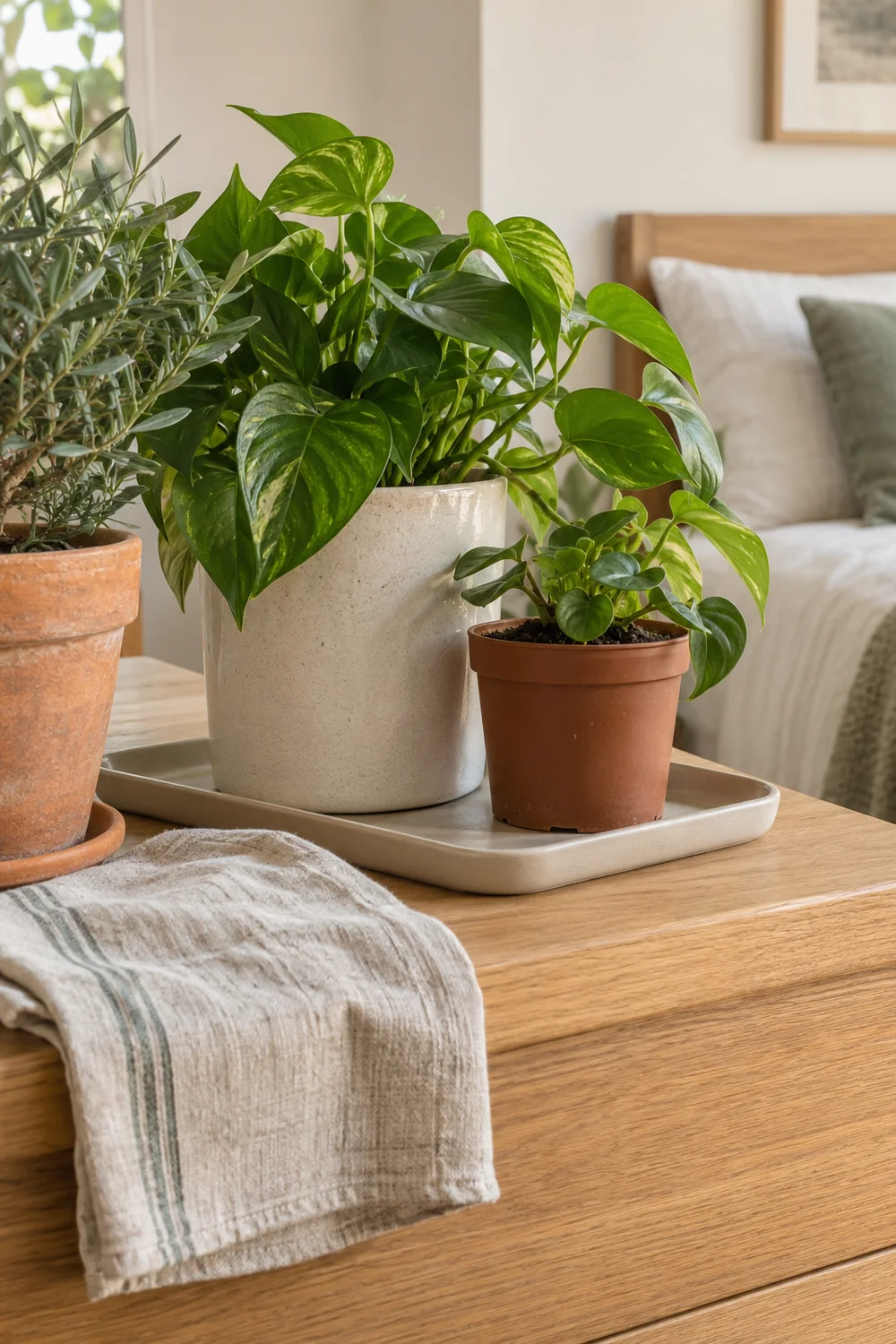
Check foliage and the surrounding surfaces regularly enough to notice change. Dust leaves in a way appropriate to the species, inspect for pests and keep the growing containers accessible. Follow reliable guidance if a plant develops a problem rather than treating a decorative rearrangement as a cure. I would also isolate a newly acquired or affected plant as advised by its care guidance before adding it closely to an established collection.
Seasonal light changes can alter the suitability of a position. Recheck the actual daylight as days shorten or stronger sun reaches the window, and compare it with the selected plants' requirements. The room may need a smaller display for part of the year. I would move a plant to a better location elsewhere rather than insist that the bedroom composition remains fixed. The collection's wellbeing and the room's everyday use both belong in the review.
Growth creates a second reason to revisit the selection. If roots need a larger growing pot according to the plant's care guidance, check the outer container and supported load again. If foliage now obstructs the route, revise the bedroom plant decor plan before buying a taller stand. Keep a note of what has changed and which measurement no longer fits. That turns an untidy corner into a specific decision you can resolve.
You have finished when each chosen plant has an appropriate location, each pot can be lifted and drained as intended and each support fits the full occupied display. The containers should sit with the earthy room, while the care routine restores access after use. I would keep that useful balance as the collection develops. It leaves space to enjoy your plants without asking the bedroom to become somewhere you merely store them.