Newsletter Subscribe
Enter your email address below and subscribe to our newsletter

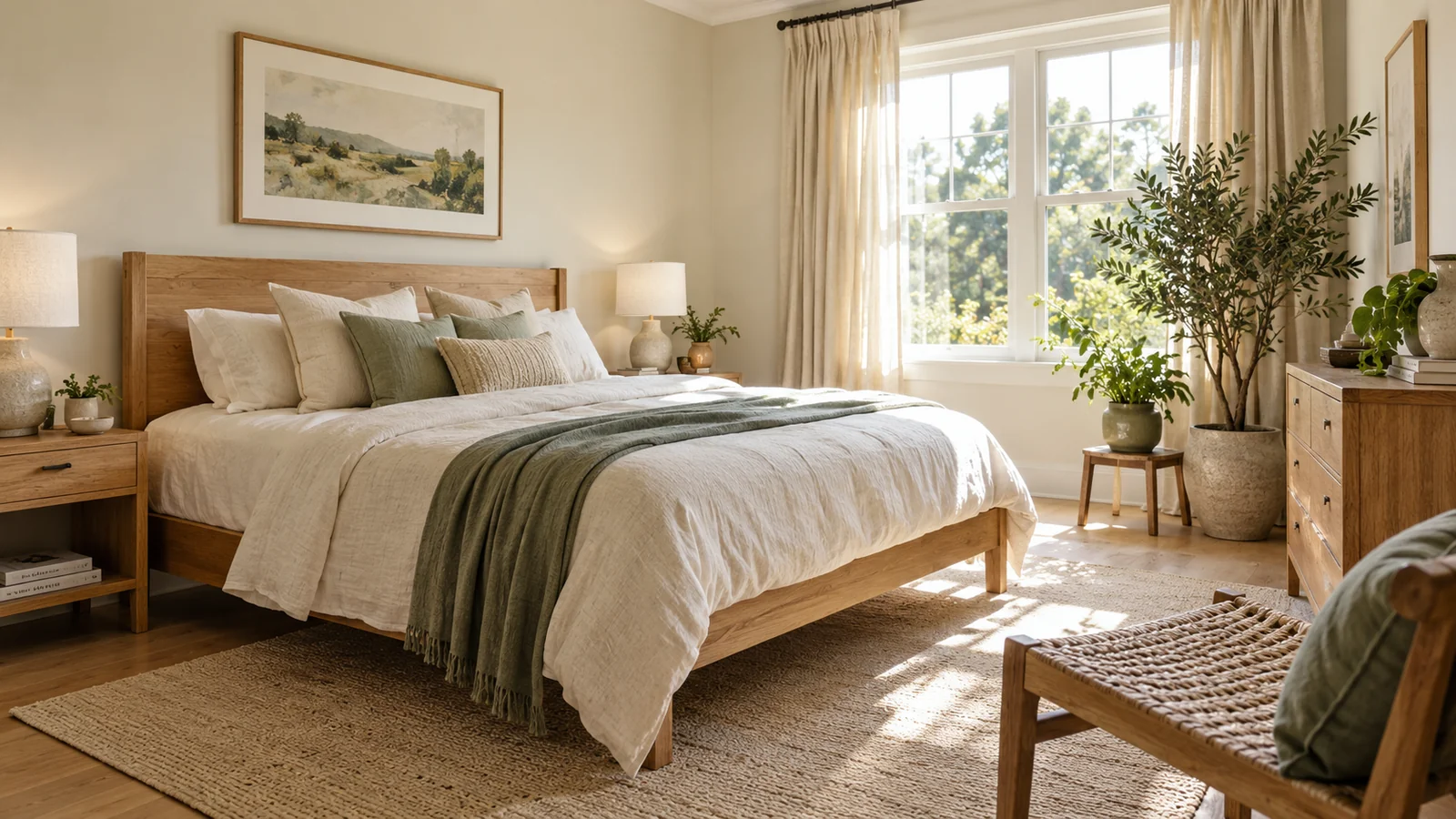
If you love keeping indoor plants, the bedroom can become the place where every new pot lands before you have decided what to do with it. I would arrange your bedroom plants by starting with the collection you already enjoy, the daylight it actually receives and the ways you use the room. The aim is a warm earthy bedroom where foliage has space to grow, curtains still move freely and watering does not become an obstacle course. Here is the placement plan I would finish before buying another stand or bringing home another plant.
I would begin by taking the plants out of their decorative positions and making a short inventory. Record the name where you know it, the nursery pot size, the widest spread of the leaves and how you normally water it. Include the little cuttings and pots tucked behind larger ones. They occupy real space even when they disappear from the doorway view. A photograph of the whole collection together often makes the problem easier to understand than buying another shelf to hold whatever is left over.
Next, I would separate the plants you particularly want to enjoy in the bedroom from those that happen to be there. Perhaps you like the upright leaves beside a timber chest, or a trailing plant makes a favourite corner feel alive. Give each retained plant a reason to belong. Another room with better conditions is a useful home for the others. You are editing an arrangement, not judging whether a treasured plant deserves to be kept.
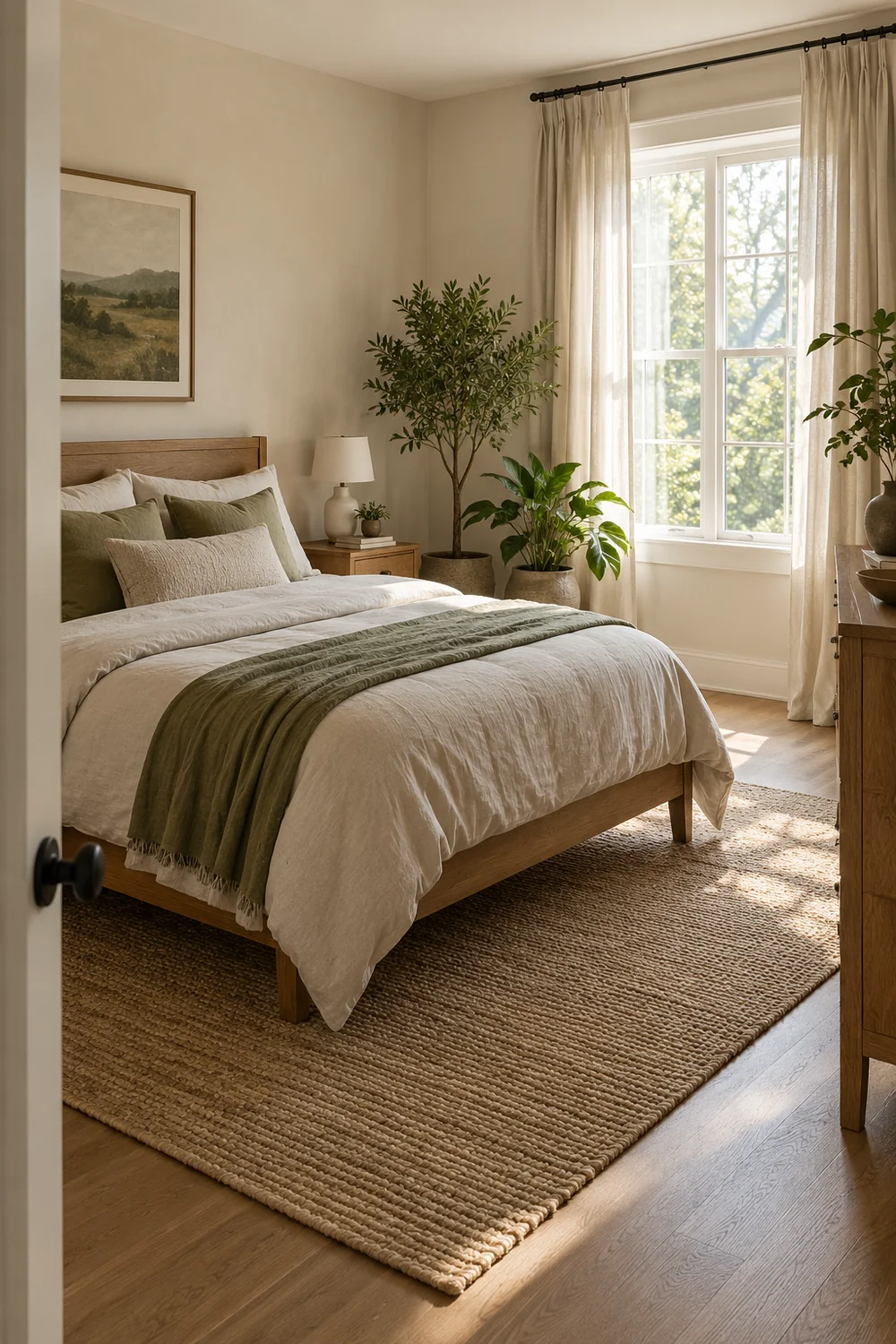
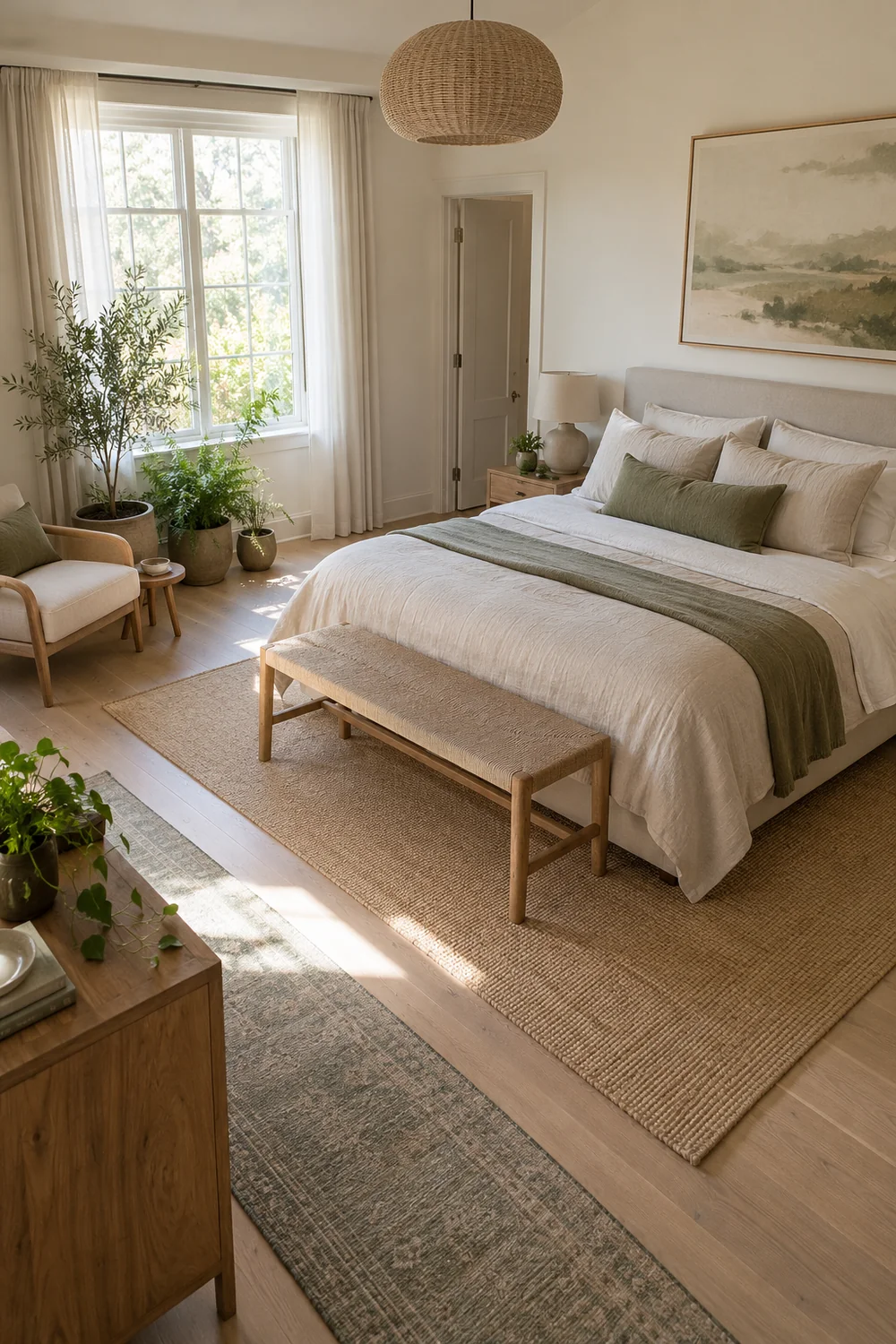
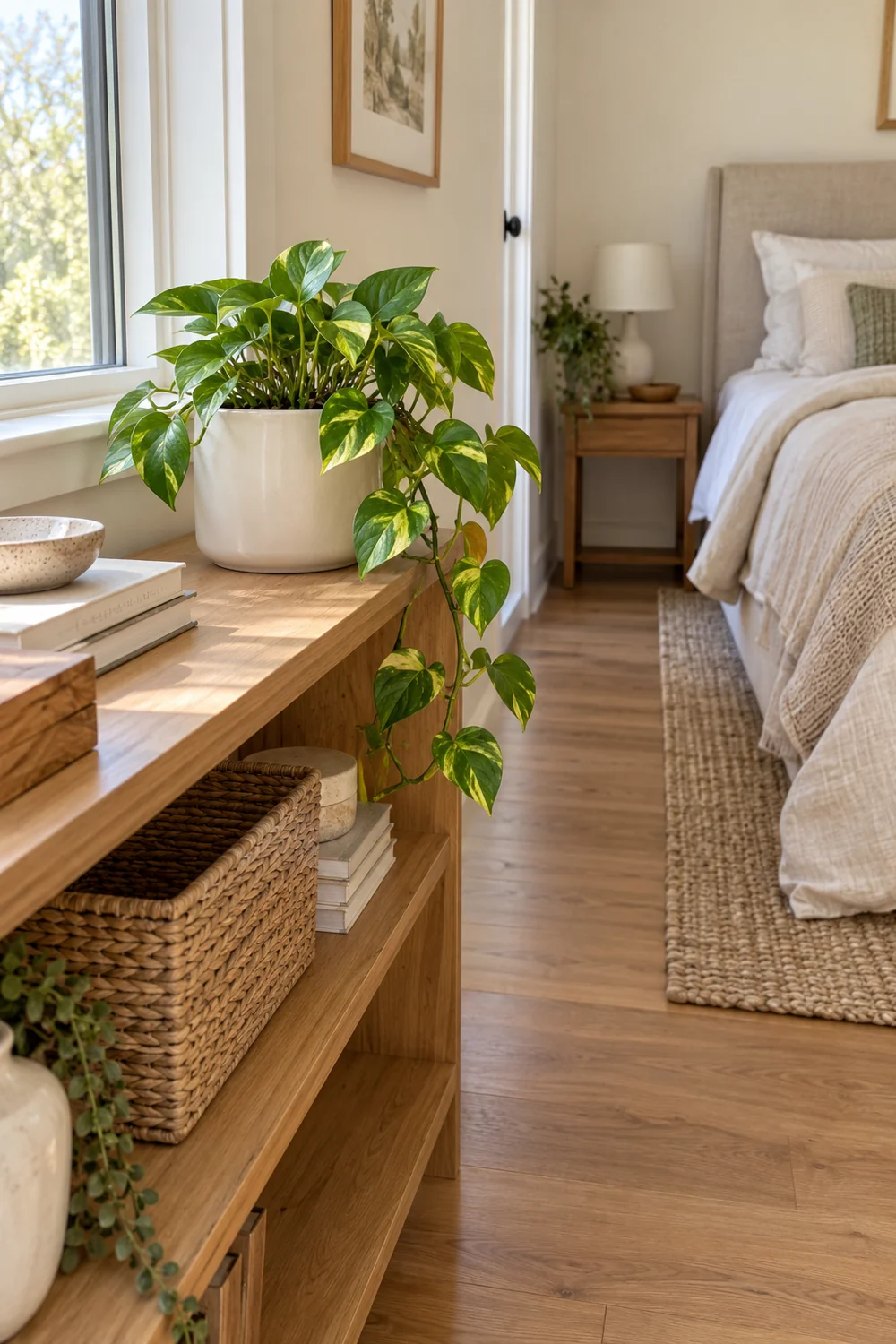
For this room, I would let the living greens provide most of the colour. Warm chalk walls, oatmeal linen and honey toned timber give the leaves a quiet background without making every pot identical. My earthy bedroom inspiration shows the natural materials, textured bedding and grounded furniture I would use to establish that direction. Choose the elements you already own before deciding that the collection needs a completely new room around it.
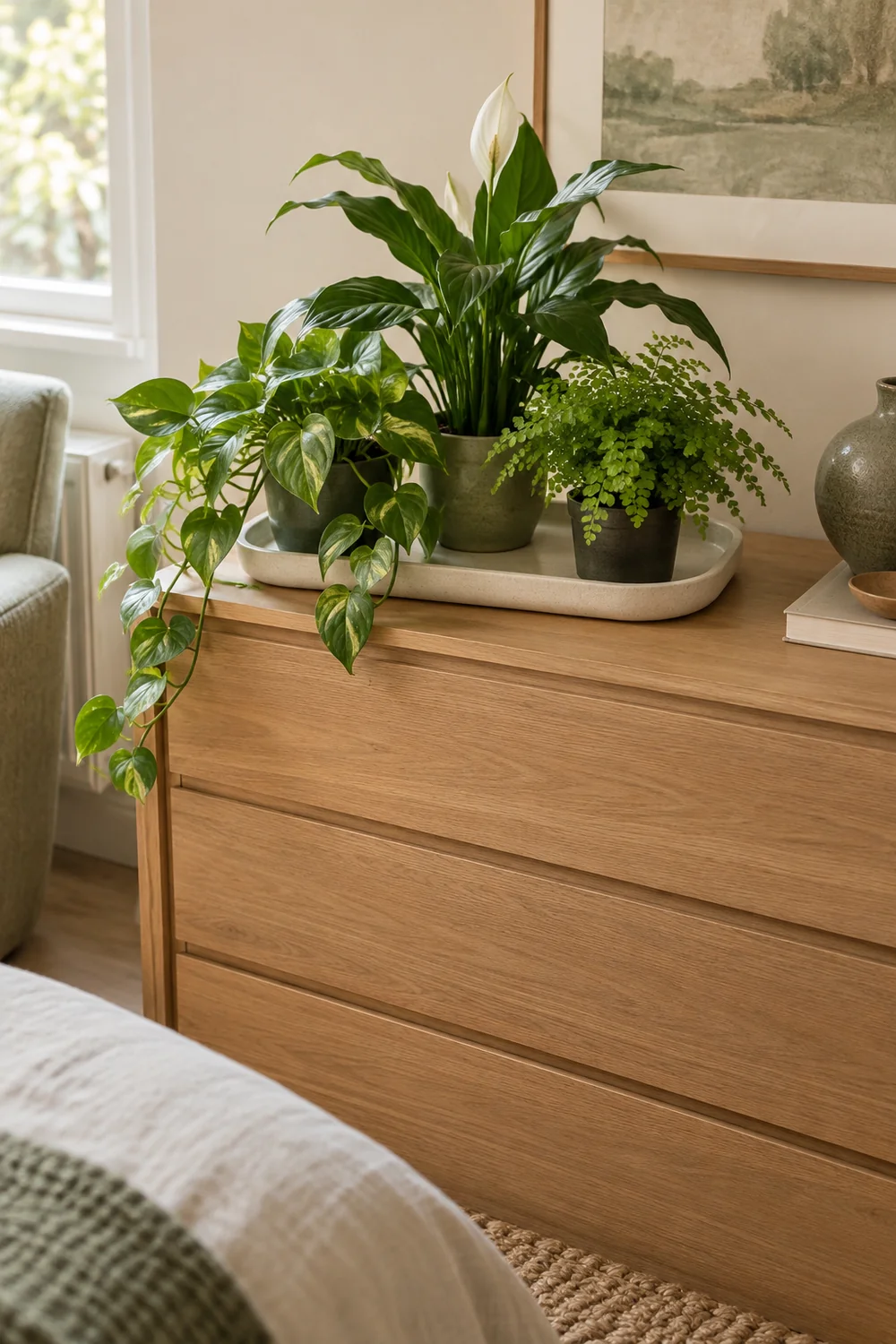
I would choose one main plant grouping and one smaller companion grouping. These are positions to test, rather than a fixed number of plants you must buy. A larger upright plant could provide the main shape near the window; two smaller pots might make a useful secondary group on a chest. If every surface carries an equally busy cluster, the collection loses its hierarchy and the room starts to feel like temporary storage. Leave some furniture completely free of pots.
Use the shapes already in your collection to create variation. Broad upright leaves, a compact rounded plant and a controlled trailing stem make different silhouettes. The contrast can come from the foliage rather than a different decorative vessel for every plant. I would repeat a small family of materials, such as clay, cream ceramic and natural timber, while allowing the plants to look individual. The useful question is whether the grouping reads clearly from the doorway and from the bed.
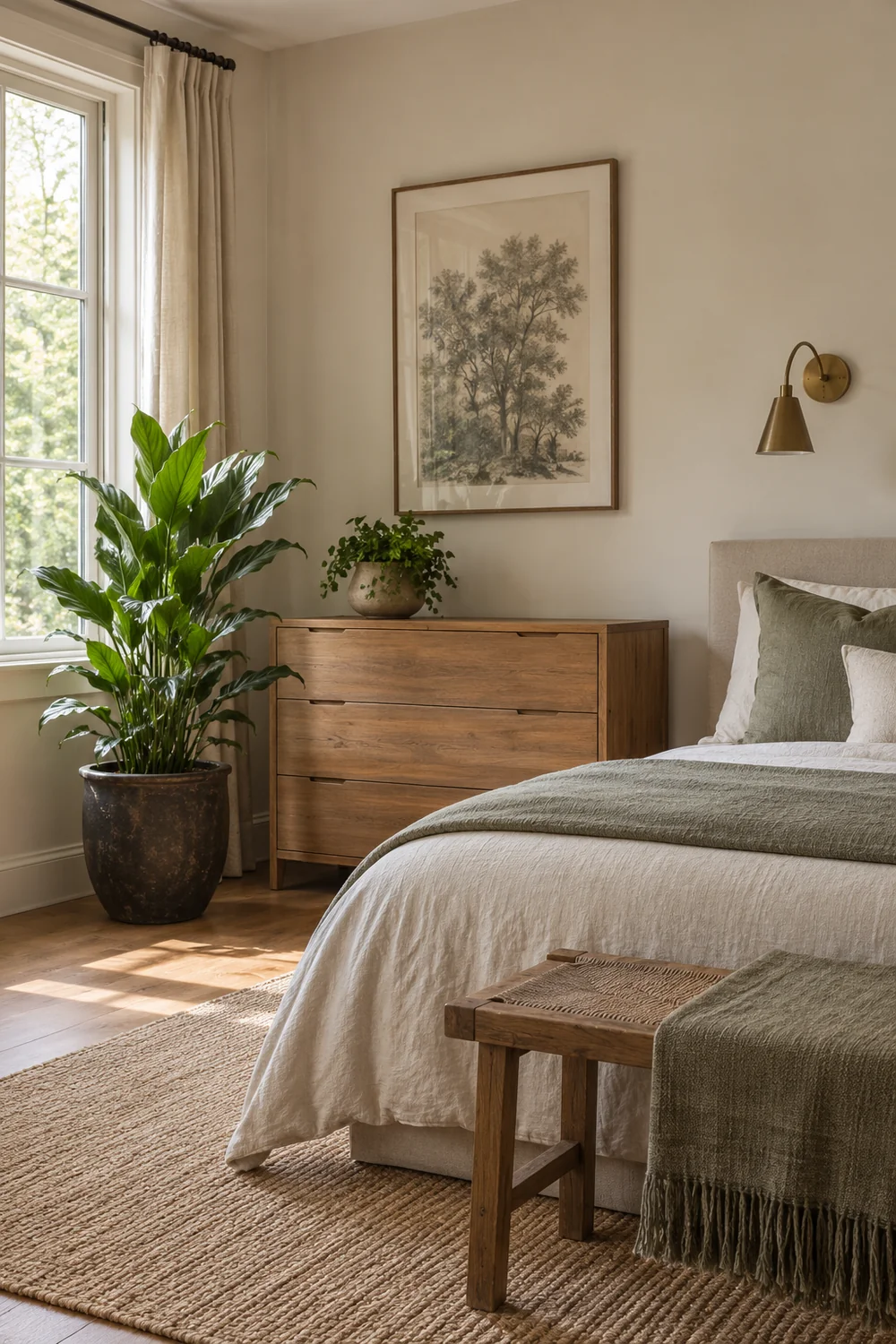
I would also decide how much of the collection you want to see when lying down. A bedroom does not need a wall of leaves at every angle to feel botanical. Try keeping one view relatively open and allowing a more generous grouping in another. If you enjoy looking closely at new growth, put that favourite plant where you can actually inspect it. A striking plant hidden behind a curtain may photograph beautifully once but give you little everyday pleasure.
Finish this first decision with a simple brief: the plants staying in the room, the two grouping positions to test, the materials you will repeat and the furniture surfaces that will remain clear. Keep that brief beside your inventory. It gives the collection a direction while leaving room to change a position when the daylight or watering test shows that the first idea was impractical.
I would check daylight at the leaves, rather than judging the room from its brightest photograph. Look at the proposed locations in the morning, around the middle of the day and later on. Notice direct sun, filtered daylight and areas that become shaded once curtains or neighbouring buildings interrupt the window. Repeat the observation on an ordinary dull day if you can. Window direction helps explain the conditions, but it does not describe every obstacle between that window and a plant.
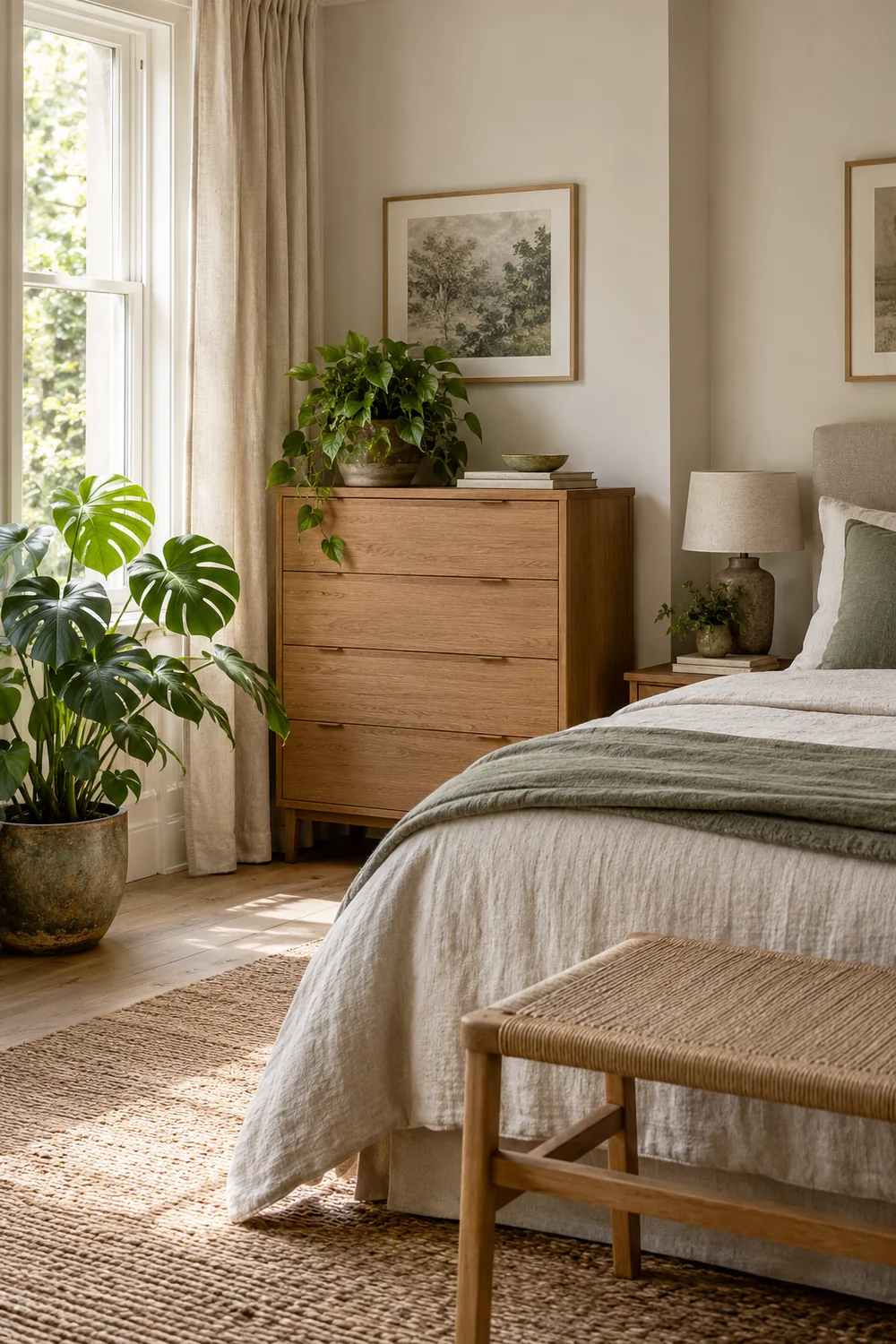
For each location, make a note of what you actually observed. A windowsill with several hours of direct sun is a different prospect from a chest beside the same window. A shelf farther into the room may look bright to your eyes while offering much less useful light to the leaves. I would resist placing a living plant in a dark corner simply because it balances the composition. Low light tolerance is not permission to ignore the conditions a particular species needs.
Then compare those observations with the requirements of your existing plants. The Royal Horticultural Society identifies light, humidity and temperature as important parts of houseplant selection. I would use the plant label and reliable species guidance to check the match, including the changes you can expect as the seasons turn. My guide to bedroom plants covers the separate choice of plants and containers once these room conditions are clear.
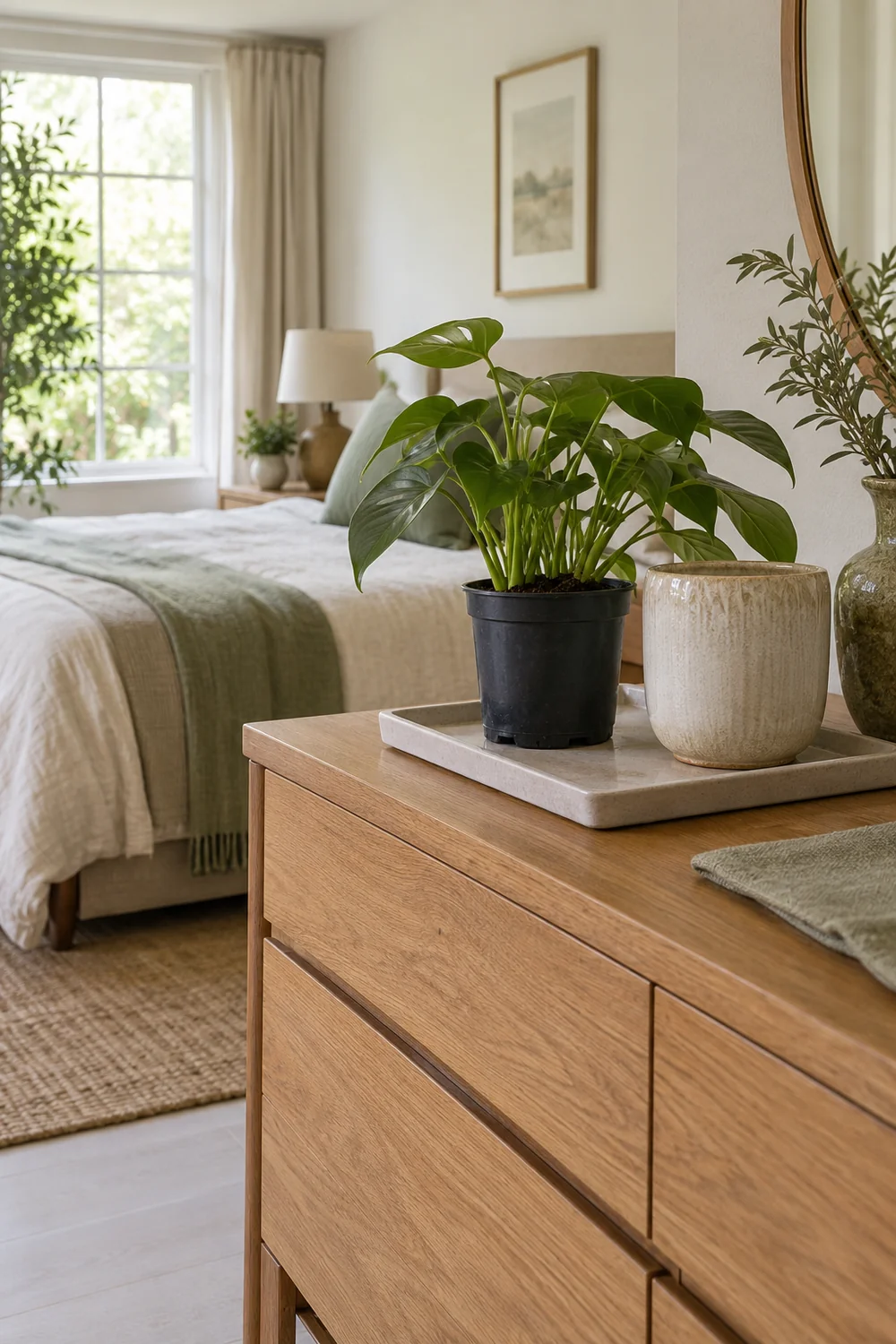
Watering access deserves its own test. Lift each pot as you normally would, take it to the place where you water it and return it to the proposed display. Check whether you can remove the inner pot without catching a shelf, trailing stem or curtain. If you water a heavy plant in position, make sure you can see and reach the container that catches excess water. A plant that fits a shelf when untouched may not fit the movements needed to care for it.
I would plan the carrying route before adding more height. A little plant on a chest may be easy to take to the sink; a large floor pot may need a different routine. Keep both approaches honest. A stool or tall stand should not make lifting a wet pot awkward, and a trailing stem should not bind the container to another object. If an arrangement requires moving three plants to reach one, I would simplify it or move that plant to a more accessible position.
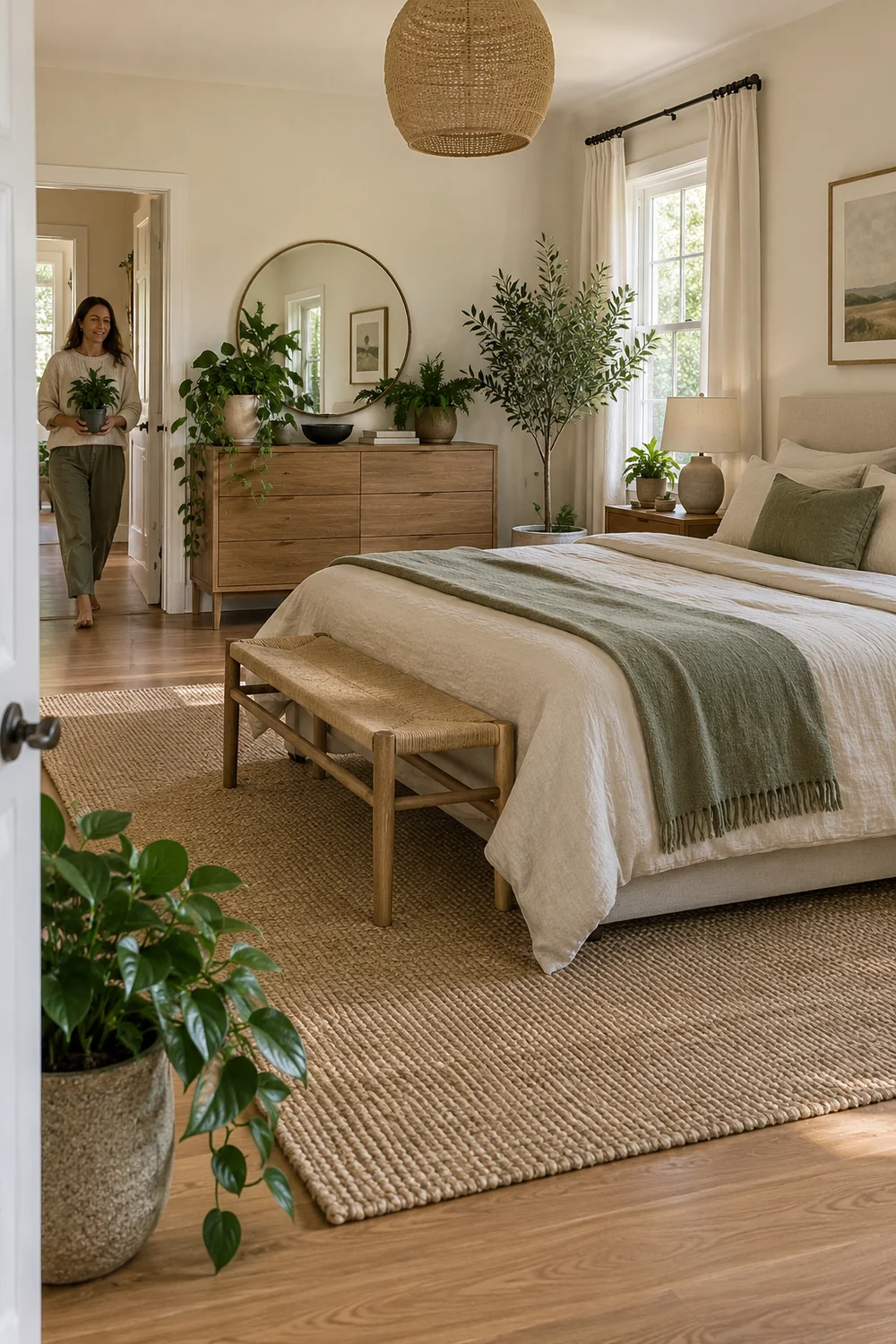
The following worksheet is a planning example, not a claim about your room or a universal growing rule. Replace every entry with your own observations and the requirements of the plant you intend to place there. The last column matters as much as the daylight description because it asks whether the location works during ordinary care.
| Proposed position | What I would record | Care movement to test | Reason to reject the position |
|---|---|---|---|
| Beside the window | Actual sun and filtered daylight across the day | Lift the inner pot and open the curtain | Leaves or pot obstruct the curtain |
| On the timber chest | Light reaching the leaves and radiator proximity | Carry the pot away and protect the surface | Water cannot be contained or removed |
| On a freestanding shelf | Light at each shelf and the plant's growing spread | Remove the pot without moving its neighbours | The next shelf traps the foliage |
| On the floor near the bed | Leaf spread, usable route and temperature changes | Reach the saucer without kneeling in the route | Care access conflicts with everyday movement |
Before settling the pots into place, I would use the room as you normally do. Open the curtains fully, get into bed from your usual side, reach the bedside drawer and turn on the reading lamp. Then make the bed and carry a laundry basket through the route. These ordinary movements reveal conflicts that an empty room photograph cannot. The plant display should work while you live around it, not only when everything else is temporarily cleared away.
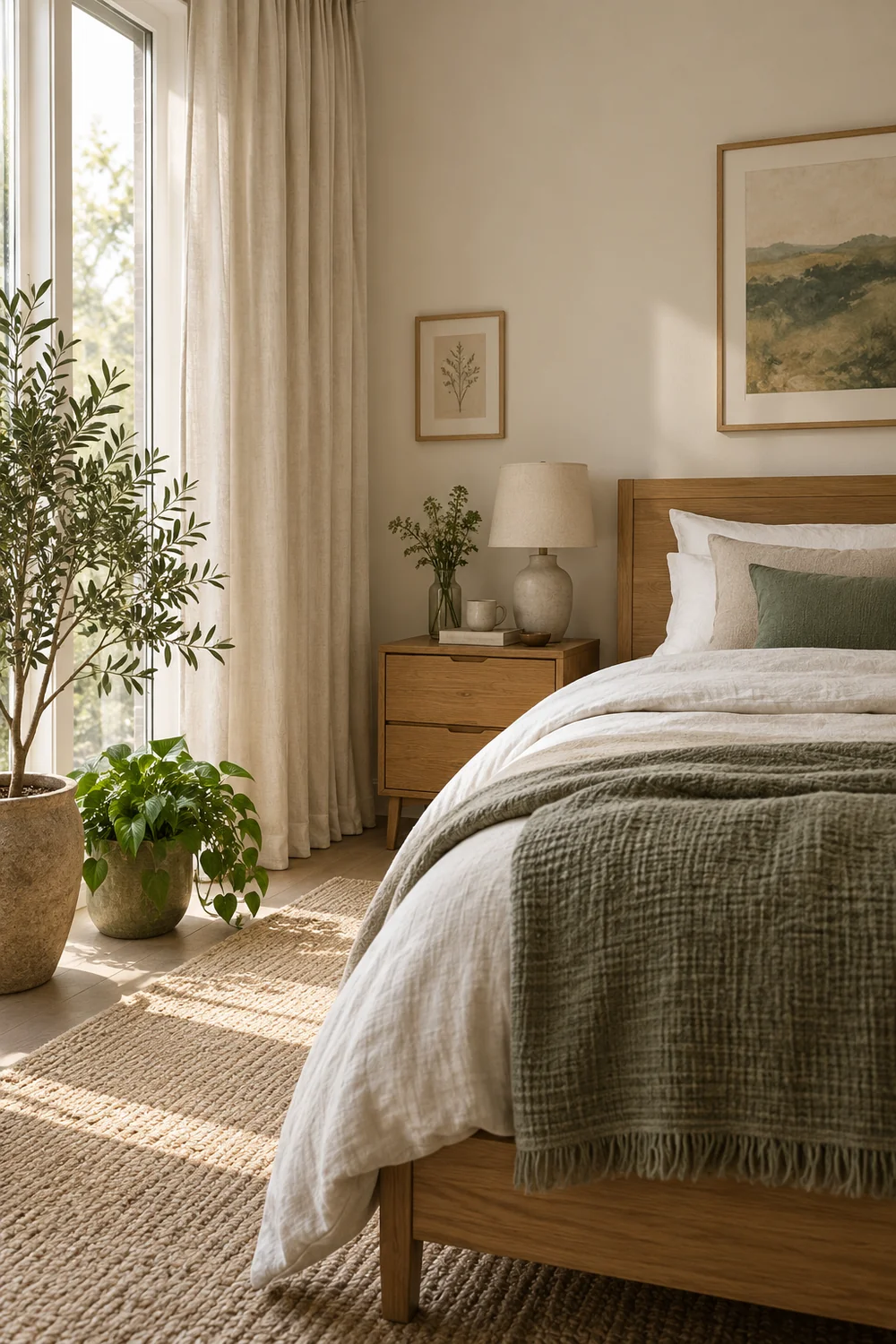
I would keep the part of the bedside surface you actually use available for the objects you reach for. If your book, glasses or water already occupy it, a plant needs another home rather than a promise that you will suddenly become tidier. A narrow floor position beside the furniture can sometimes work better, but test the leaves as well as the pot. Broad foliage can reach across the space even when the container looks compact.
Curtains need room in both their open and closed positions. I would check whether the fabric brushes leaves, catches a trailing stem or prevents you seeing a saucer. Avoid designing the collection around curtains that must remain partly open to accommodate it. The window arrangement belongs to both the room and the plants. Moving a pot a little to one side, shortening the display or choosing another location can protect the daily curtain movement without losing the greenery.
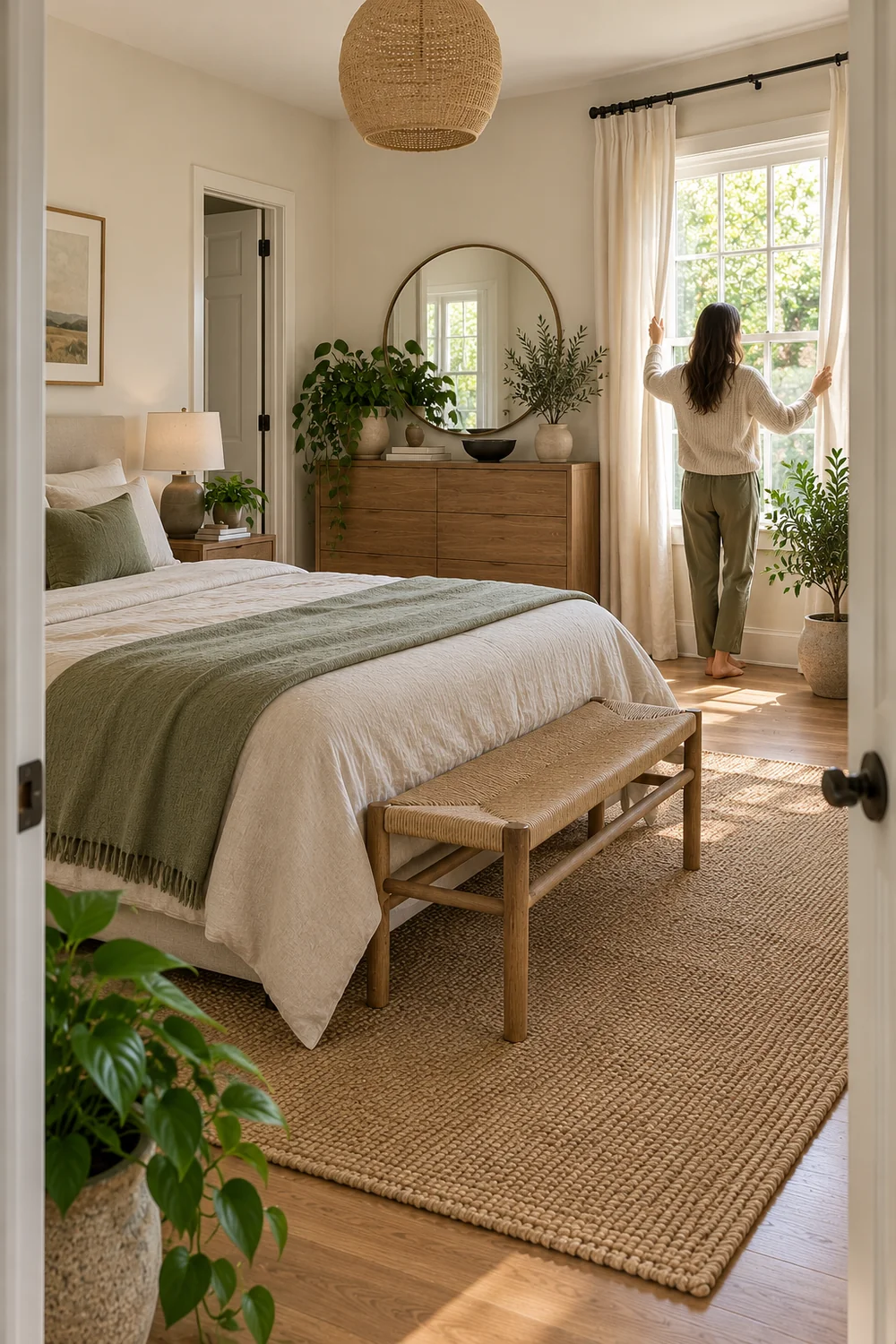
If the plant collection has exposed a wider furniture problem, address that problem directly. My home bedroom refresh guide has separate ideas for storage, textiles and lighting that can help you decide what deserves a small change. I would keep the plant plan focused on placement while using that broader reference when a crowded bedside drawer or poorly positioned furniture is making the whole room harder to use.
Give heaters and opening windows their own attention. Record where warmth, cold air or an opening sash reaches the proposed plant. Do not assume a pretty space beside a radiator offers the same conditions as the rest of the bedroom. Look up the chosen species before committing to that location. Likewise, a leaf should not need to be folded out of the way each time you open a window. I would preserve the room's useful functions before treating any gap as plant storage.
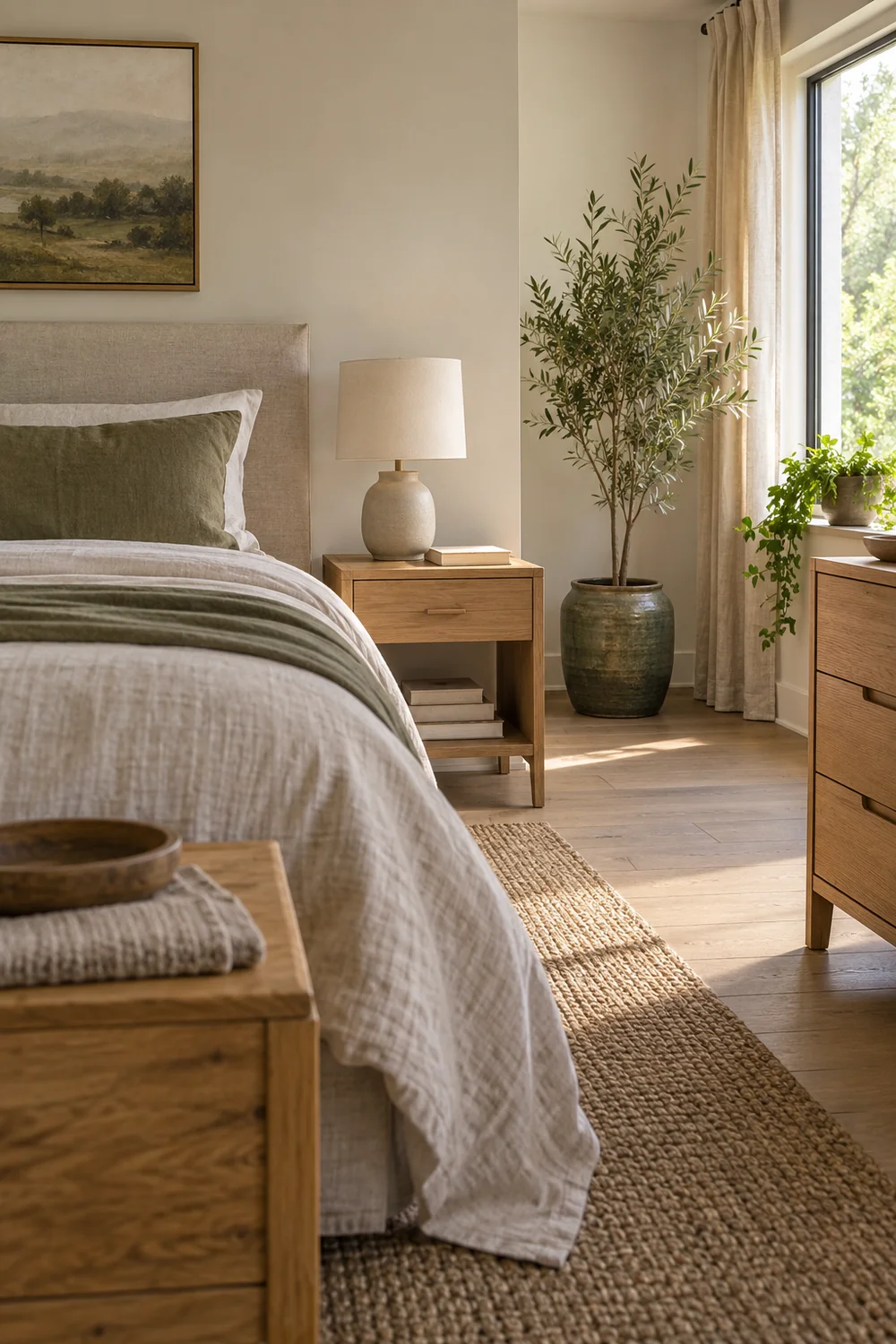
I would place freestanding pots and stands where they remain stable during these tests. Do not let a trailing stem run through the route or arrange a heavy pot where bedding repeatedly catches it. A shelf above the bed is an especially poor place to discover that watering or lifting is inconvenient. This project can use the chest, window area and floor positions without requiring a suspended display over the sleeping space.
When a layout feels close but not quite right, try a temporary footprint before buying furniture. Use a plain cardboard shape to represent the proposed stand, and place the existing pot safely nearby while you assess the occupied area. Check the intended product dimensions later, including any legs that project beyond the top. A temporary test does not prove a stand's strength, but it can stop you choosing one that consumes a route you need every day.
Once the locations pass the practical checks, I would return to the doorway and look at the collection as part of the room. Notice the timber furniture, bedding and wall colour first. Those larger surfaces establish the visual background. If they already work together, keep them and use the pots to connect the plant groupings. Replacing furniture simply to match a few new containers usually makes this small project much larger than it needs to be.
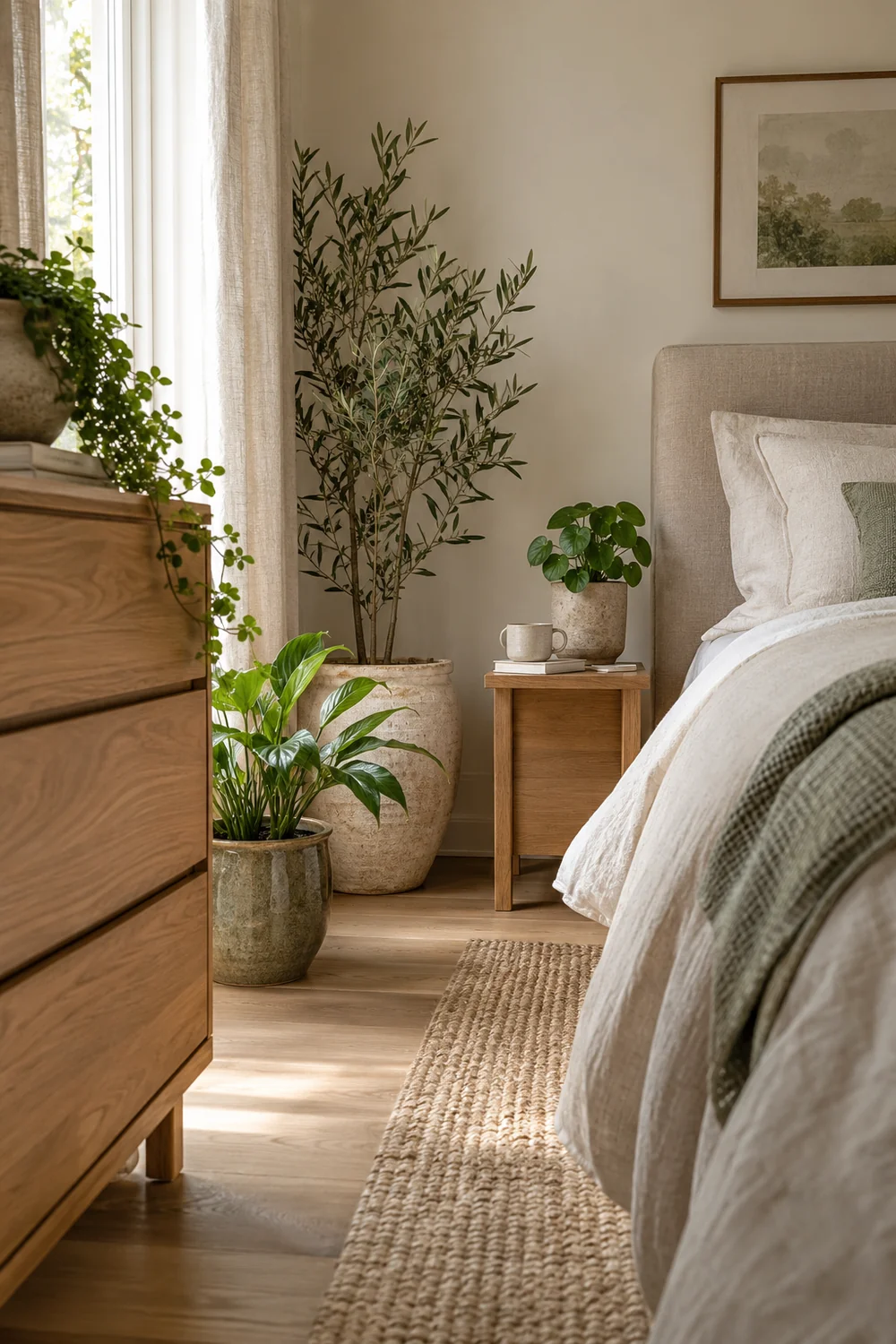
I would repeat one material between the main grouping and the smaller companion group. A clay pot near the floor and another modest clay vessel on the chest can create a connection without matching their sizes. A cream ceramic pot may help a smaller plant sit comfortably against pale bedding. Keep the strongest pattern or most unusual vessel for one position where you will enjoy it. Several competing statement pots can make the leaves look like accessories to the containers.
Existing brown furniture and pale walls can be a particularly useful backdrop. My white and brown bedroom reference shows how timber, light textiles and greenery sit together. I would borrow the material relationships that suit your room while leaving the actual plant positions to your daylight and access plan. The reference helps with the room's visual balance; it is not a substitute for checking growing conditions.
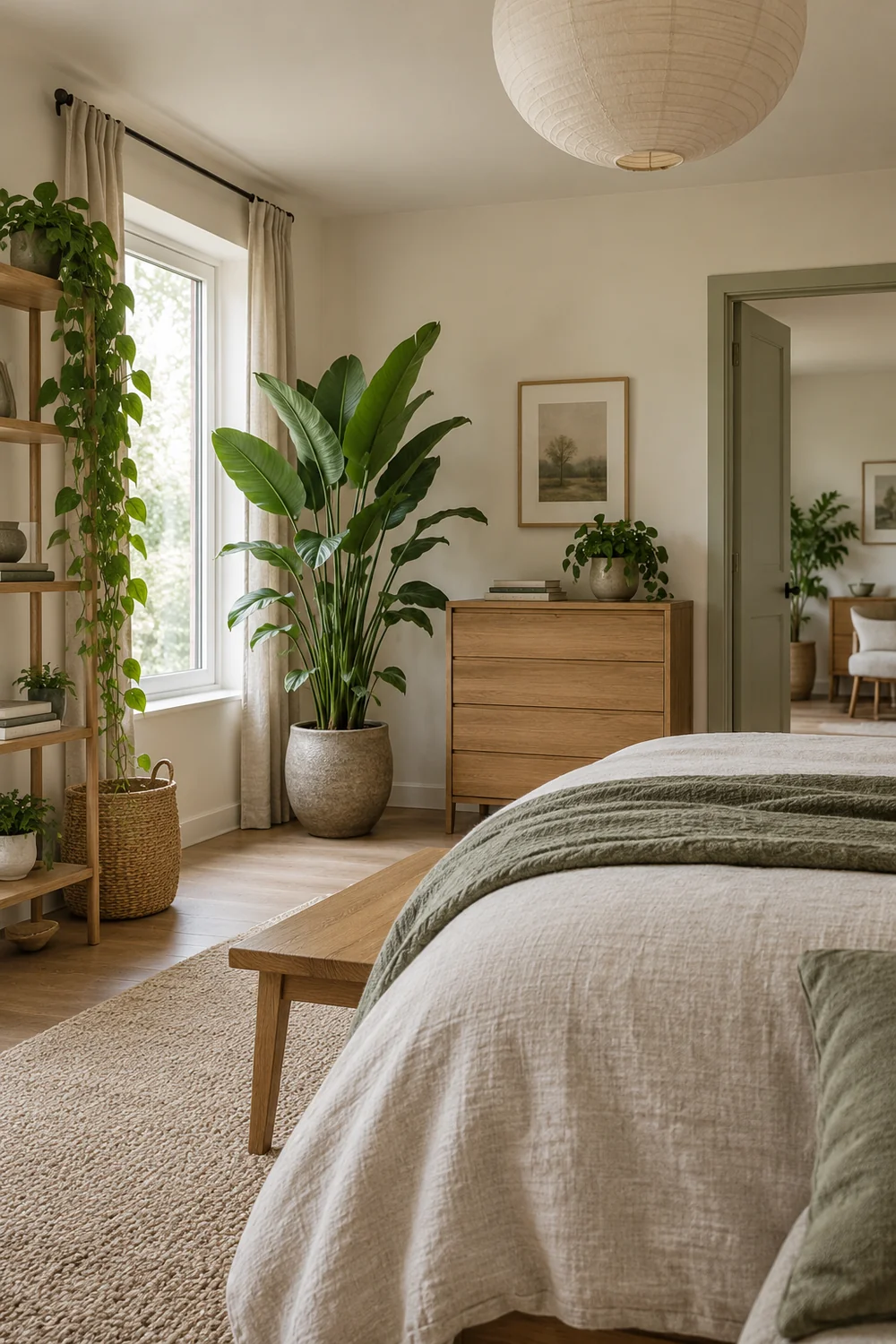
Staggered height can make a collection easier to read, but I would not arrange every plant at a different level merely to achieve it. Begin with the stable surfaces you have. An upright floor plant, a compact plant on the chest and one controlled trailing plant provide height and shape without turning the whole bedroom into a ladder of pots. Keep taller leaves from screening the smaller plants completely, especially if that also deprives them of useful light.
Look at the spaces between the leaves. A group of pots may seem nicely ordered from above while the foliage overlaps into one dense mass at eye level. Give plants enough room to retain their individual shapes and allow for the growth described in their care guidance. I would prefer a slightly looser grouping now to an arrangement that demands rearranging as soon as a new leaf opens. Empty space makes the collection legible and leaves room for useful growth.
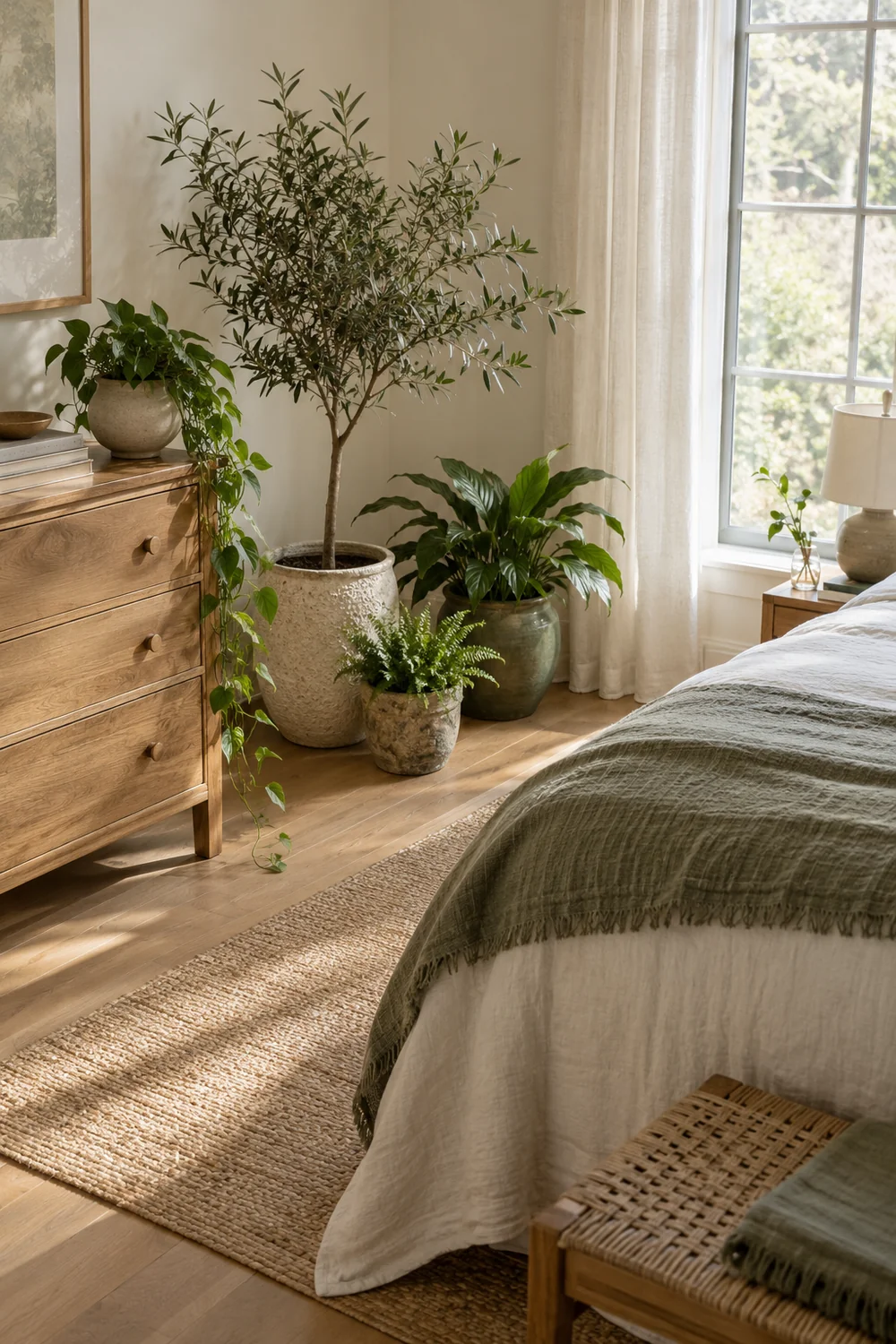
I would also distinguish plant storage from decorative storage. The bedroom does not need your bags of compost, spare nursery pots and every propagation vessel on view. Give those items a suitable home elsewhere or in storage that remains clean and practical. Keep a small watering tool nearby only if it helps your real routine. The finished display should show the living collection you enjoy rather than all the equipment associated with the hobby.
Finally, check the arrangement from the bed, the doorway and the chest. A grouping can feel balanced in one view and obstructive in another. Make small changes to pot spacing or height before adding another object. If the collection still feels too busy, reduce the number of plants in this room rather than trying to unify an unsuitable number with more matching containers. Visual coherence starts with a workable edit.
I would finish with a one page plan that names every retained plant, its intended position, the observed light and the care movement it needs. Add the pot and foliage dimensions you have measured, plus the growing spread you still need to check. Record which surfaces remain clear and which routes must stay usable. This is the document to use when a new stand or attractive plant tempts you, because it makes the room's remaining capacity visible.
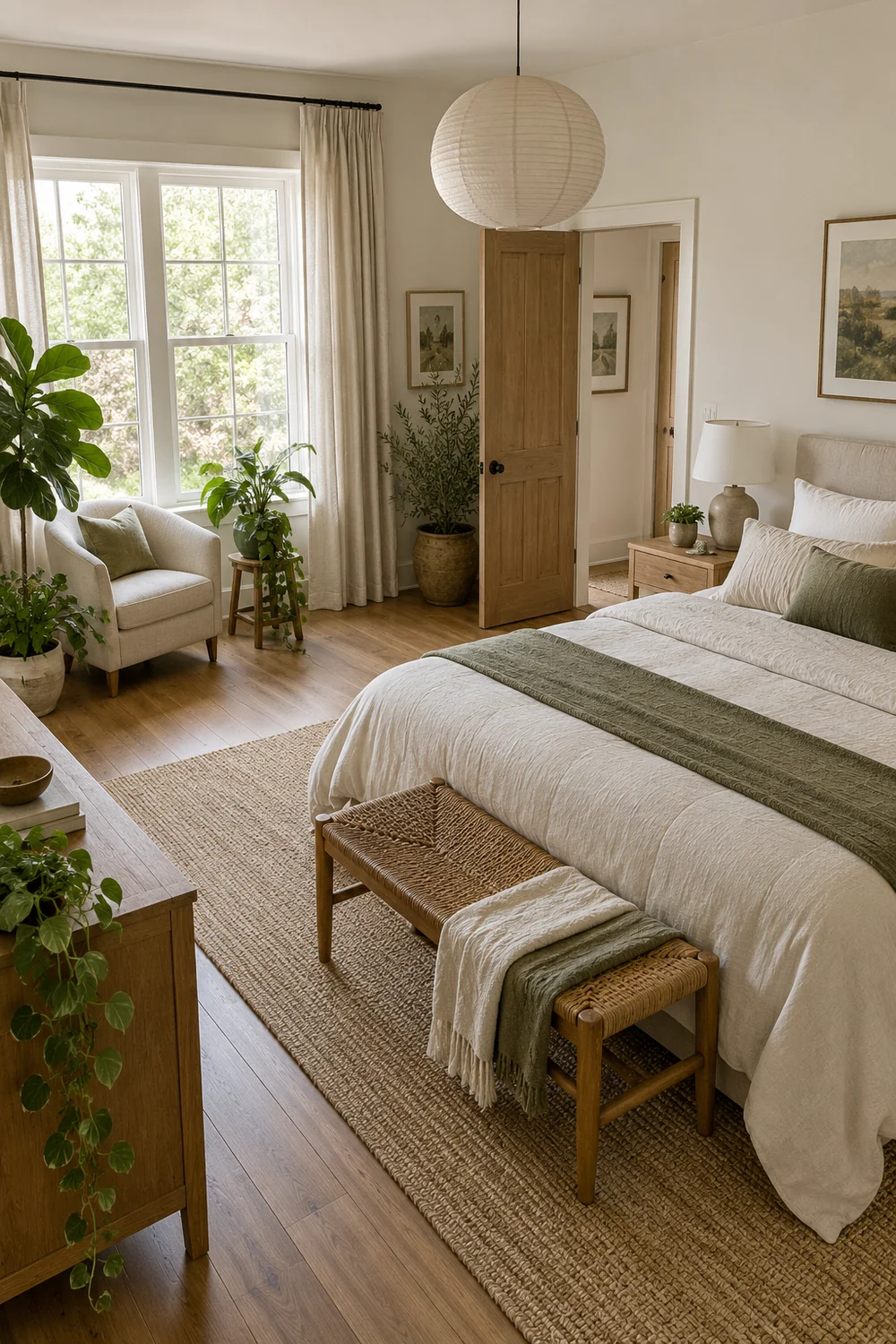
If the windowsill is crowded, compare two arrangements instead of gradually moving the overflow into every available corner. In the first, keep only the plants best suited to that window and move the rest to suitable positions elsewhere. In the second, test a freestanding display near the window while leaving the curtain and carrying route clear. Choose the arrangement that works for the plants and the room together. Neither option requires keeping the whole collection in the bedroom.
For a worked planning example, imagine you want to retain one upright plant, a small rounded plant and a trailing plant. The floor position passes the daylight and route checks for the upright plant. The chest supports the smaller plant with a removable pot and a protected surface. The proposed shelf leaves insufficient room to lift the trailing plant out. I would revise that third position rather than assume a more decorative shelf will solve the care problem.
The next decision is specific selection. Once the positions and constraints are written down, my guide to bedroom plants helps you compare suitable foliage, nursery pots, outer containers and stands. That is where I would check the actual pieces against the plan. The placement work here remains useful whether you buy something new or simply give an existing plant a better position.
I would mark unresolved questions plainly. An unidentified plant needs identifying before you assign its growing conditions. A proposed shelf needs its intended load and installation requirements checking. A dark location needs a different choice, a suitable grow light arrangement or no living plant. You do not need to solve each uncertainty by buying a product. Leaving a position empty is a complete decision when it preserves the room and avoids a poor growing match.
After a short period of ordinary use, repeat the curtain, bedside and watering tests. Notice what you keep moving, what you cannot reach comfortably and where water collects. A plant can appear settled while its care remains awkward. Adjust the position before accepting that inconvenience as part of having a collection. I would also revisit the daylight observations as the season changes rather than assume the summer arrangement will work indefinitely.
The finished plan should leave you able to name why each plant is there, how you will care for it and what part of the room it must not obstruct. That is the difference between a collection that merely fits into a photograph and one that belongs in your bedroom. Once those answers are clear, a new pot or stand becomes a measured choice rather than another attempt to make an unresolved corner look finished.