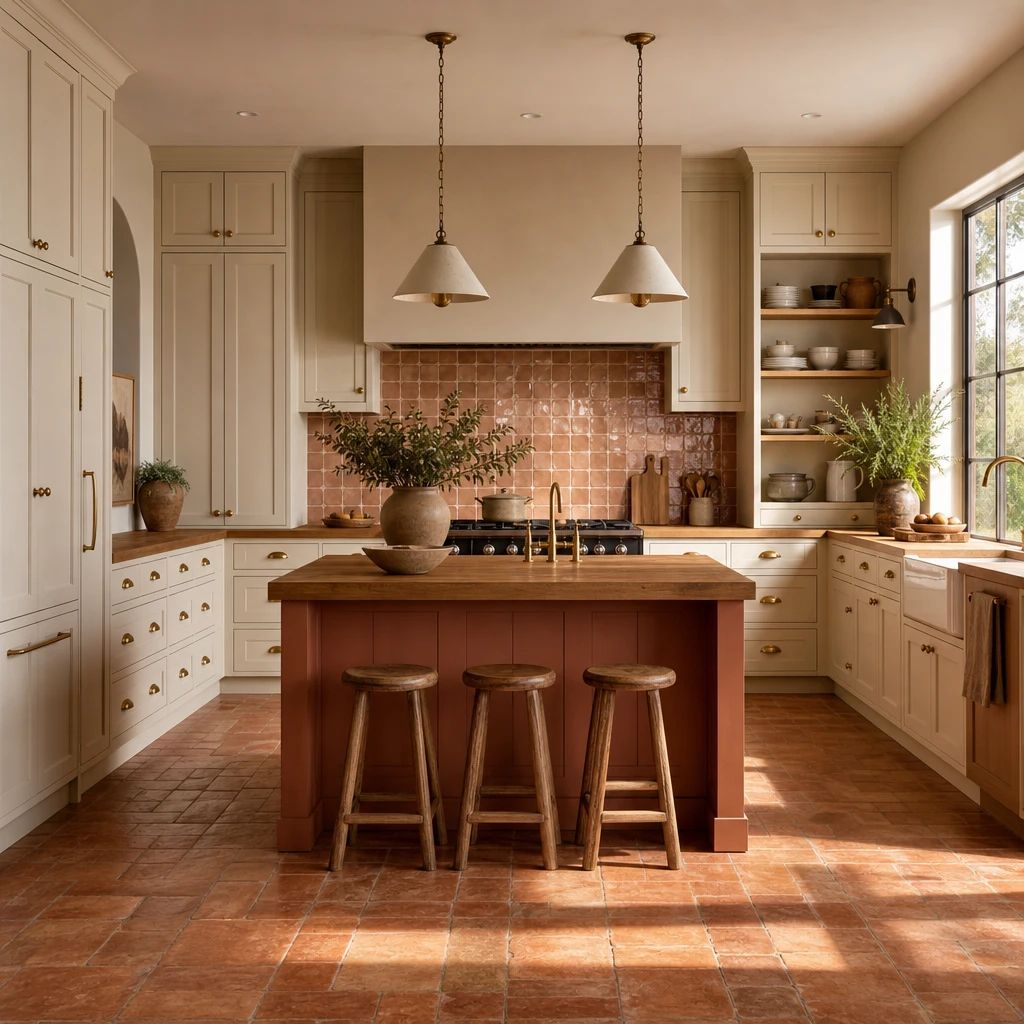
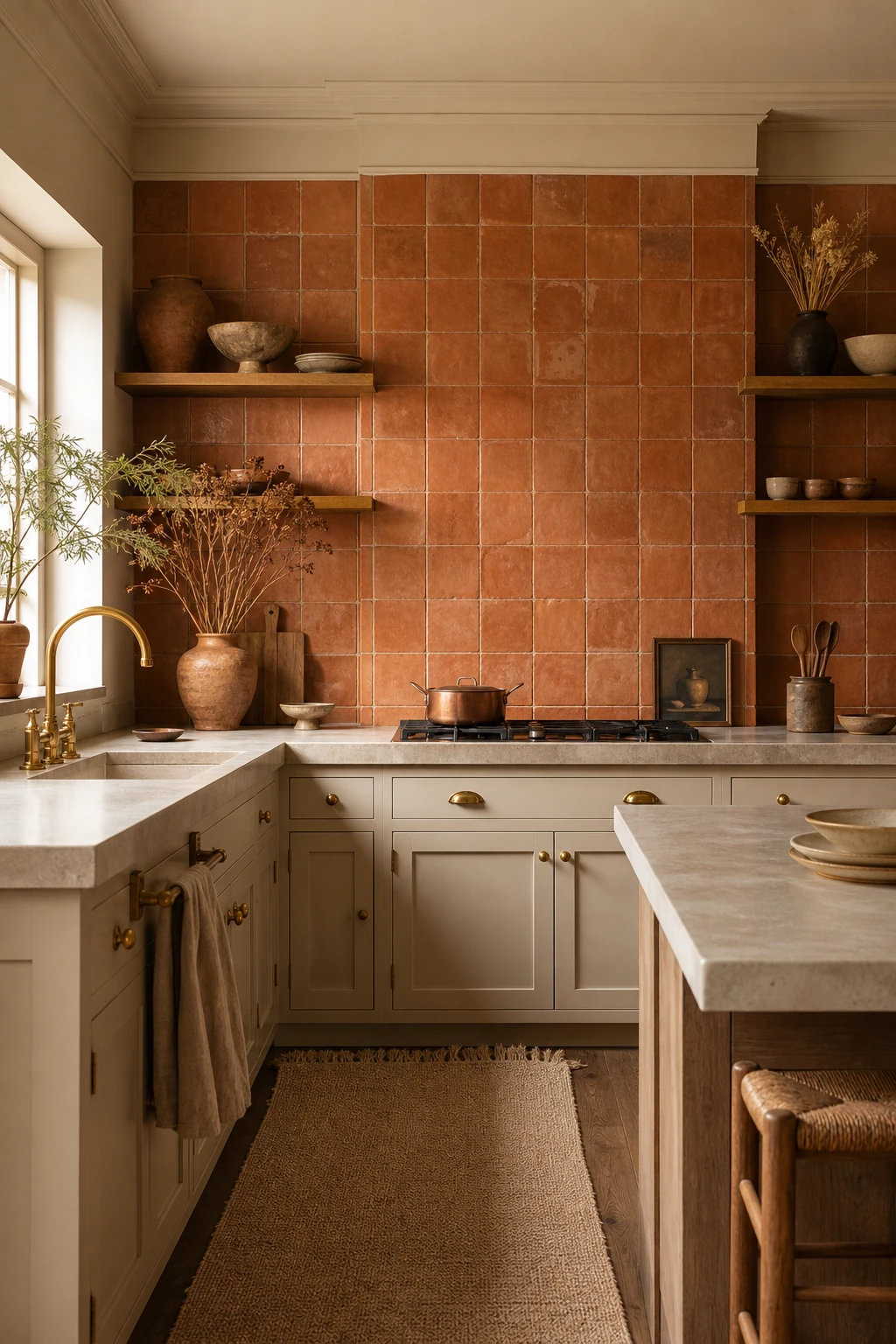
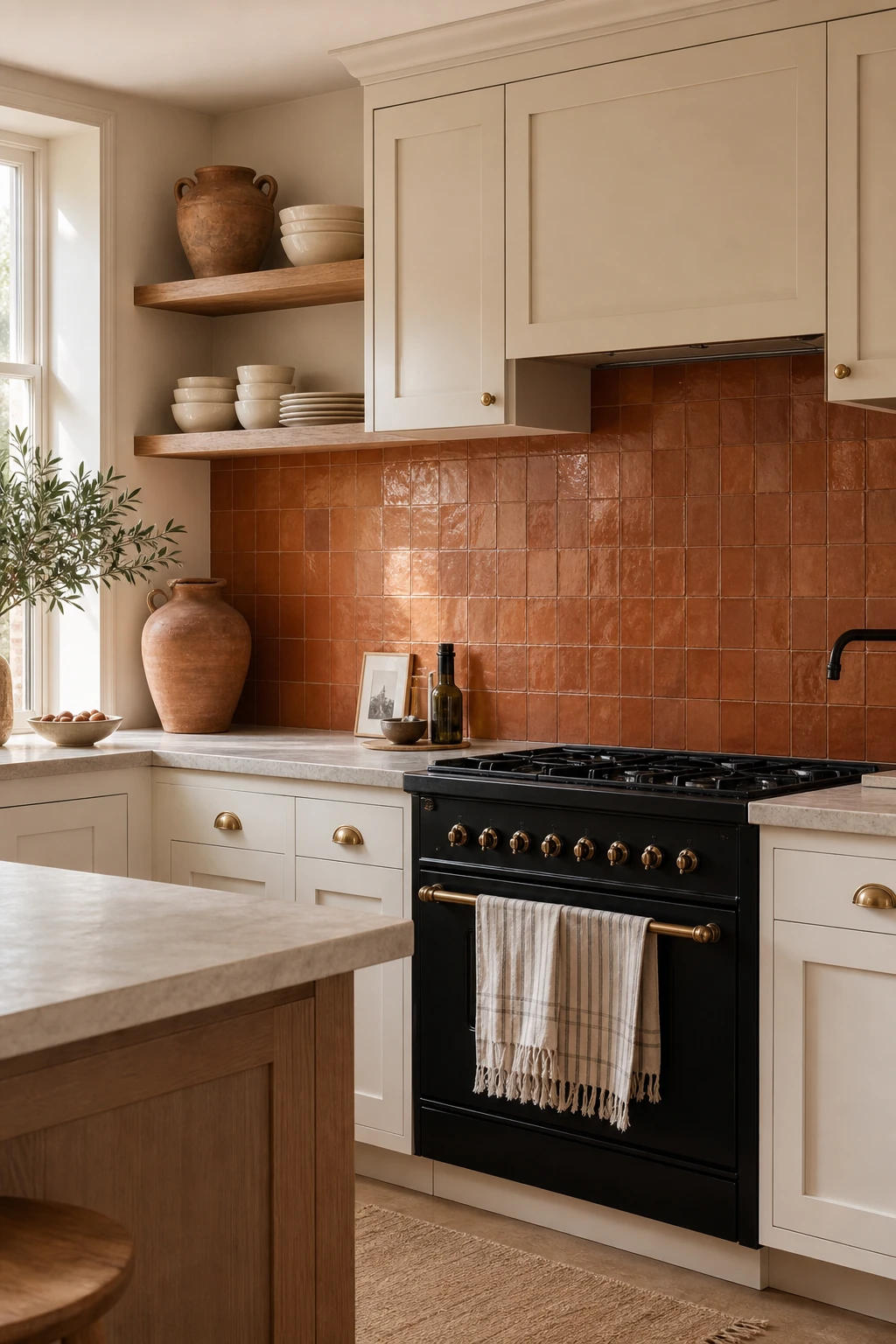
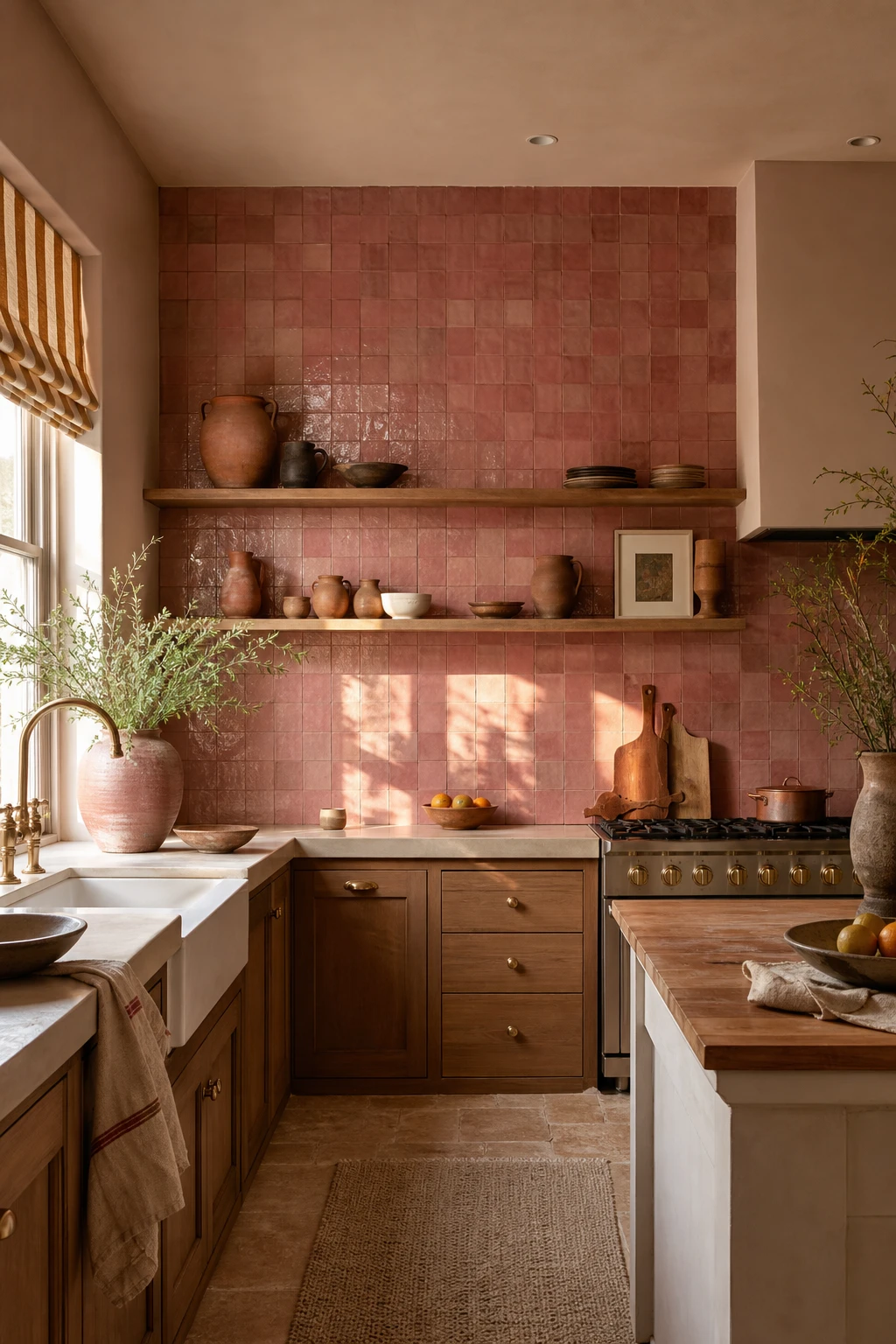
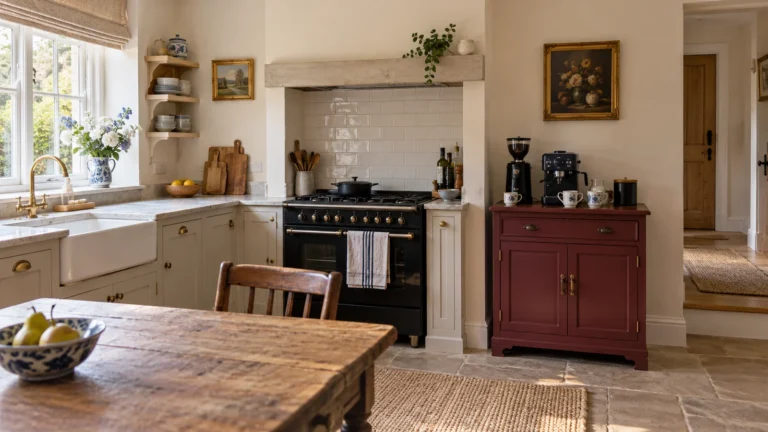
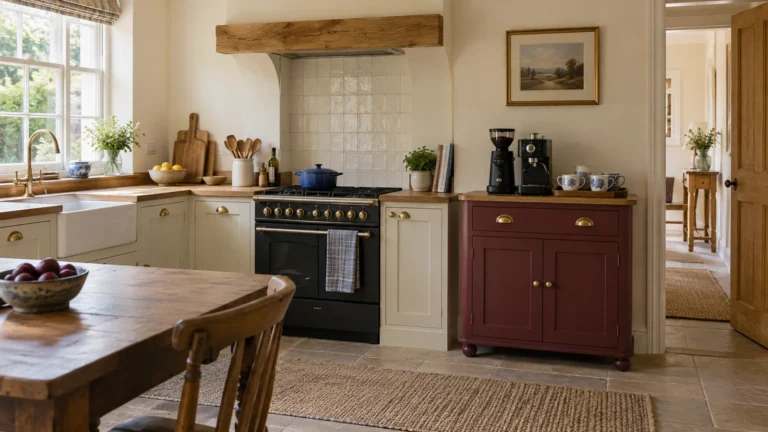
I’ve always thought cream and terracotta is one of those pairings that feels like it was made for kitchens. There’s something about that warm clay tone against a soft creamy white that makes a kitchen feel genuinely alive. In this piece I look at everything from handmade backsplash tiles and worn quarry floors to butcher block islands and brushed brass cup handles, and show you exactly how to bring the look into your own space.
Why a Terracotta Tile Backsplash Is the Heart of a Cream And Terracotta Kitchen
Anchoring all the colour in the backsplash is one of my favourite moves in a cream kitchen, because it keeps the cabinets calm while giving the eye a single warm focal point to land on. You get that rich terracotta depth without the room ever feeling heavy. What I love most is how the handmade tiles carry just enough natural variation to look lived in and real, and the cream around them lets every shade sing.
The Key Details
Handmade terracotta ceramic wall tiles
Cream shaker cabinets
Honed limestone countertop
Aged brass tap and cabinet hardware
Open oak timber shelving
Pro TipSeal unglazed terracotta tiles with a penetrating stone sealer at least 24 hours before you grout, or the grout will stain the surface and you will never quite get it clean.
AvoidTiles that are perfectly uniform in tone flatten the whole wall into something that looks more like wallpaper than clay, and you lose the handmade warmth that makes terracotta worth choosing in the first place.
How White Cabinets Let a Terracotta Backsplash Truly Shine
White cabinetry is the quietest decision you can make in a terracotta kitchen, and that restraint is what wins me over. The units step back completely, and suddenly the handmade tiles carry every bit of the warmth without having to fight for attention. You get drama without overwhelm because the white creates genuine breathing room around the terracotta, keeping the space feeling open while the colour does all the talking. That balance is the whole game.
The Key Details
Handmade terracotta zellige tile backsplash
Shaker profile white lower cabinets
Aged brass cup pull hardware
Honed limestone countertop
Open solid oak display shelving
Pro TipChoose a white with a cream or yellow undertone, such as Farrow and Ball’s ‘All White’ or ‘Pointing’, so the cabinet finish echoes the warmth of the terracotta rather than pulling against it.
AvoidReaching for a brilliant, blue toned white sets up a colour clash where the cool cabinets and warm tiles compete for attention, and the whole kitchen ends up feeling unsettled rather than considered.
The Soft Glow That Pink Zellige Tiles Add to a Cream And Terracotta Kitchen
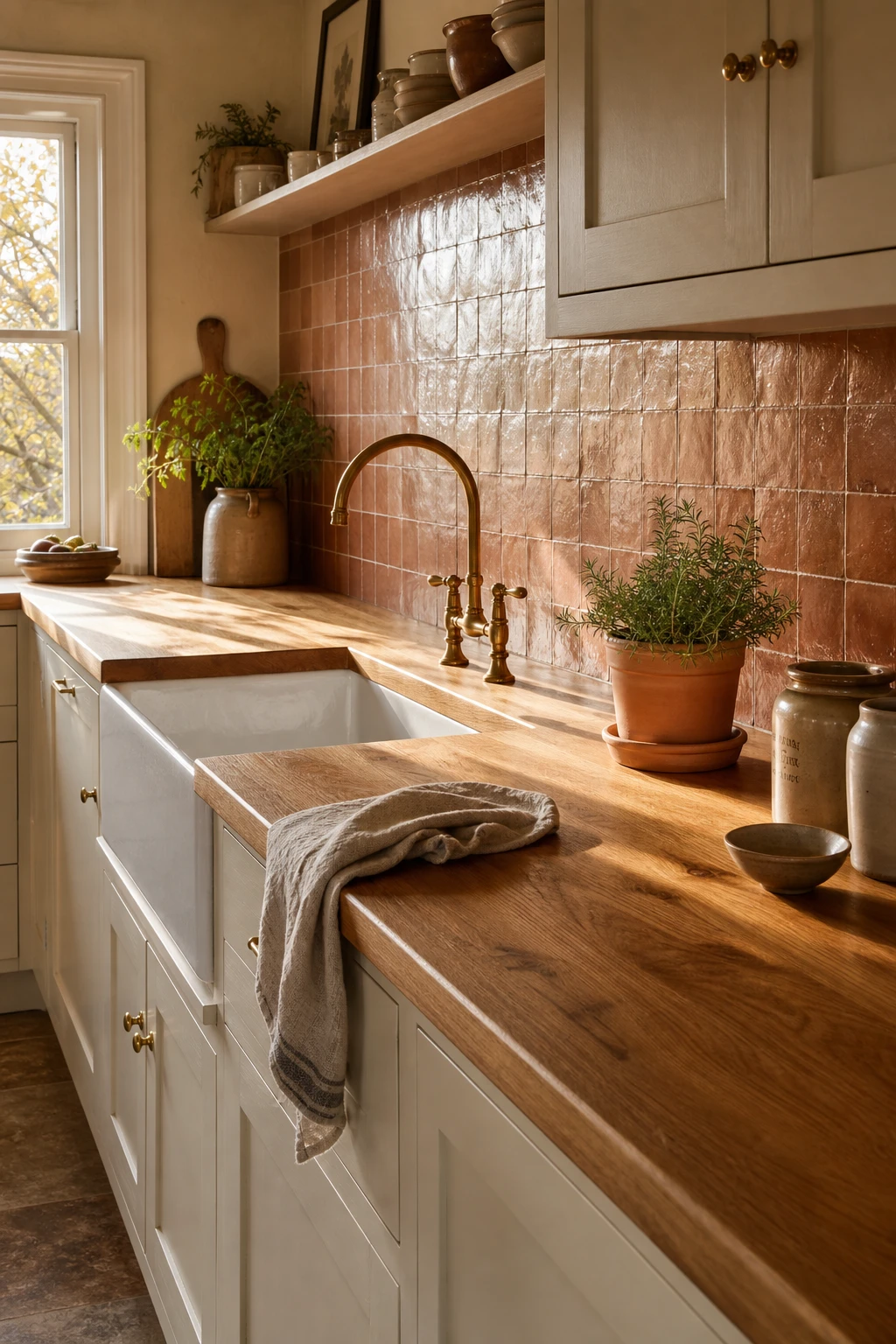
Pink zellige tiles catch light in a way no flat ceramic ever could, and that is the whole point. Each handmade tile sits at a slightly different angle, so the wall ripples with soft colour as the light moves through the day. What I love most is how the blush tone bridges the cream cabinetry and the terracotta accents without forcing them together. You get warmth and depth from a single material doing quiet, beautiful work.
The Key Details
Pink zellige tile backsplash
Open oiled oak shelving
Unlacquered brass faucet
Terracotta ceramic vessels
Ochre stripe linen Roman blind
Pro TipOrder a few extra tiles and pin them to the wall at different times of day before you commit, because the variation in glaze looks completely different under morning light versus evening lamplight.
AvoidPacking the grout lines too full buries the bevelled edges and kills the luminous, rippling effect that makes zellige worth every penny.
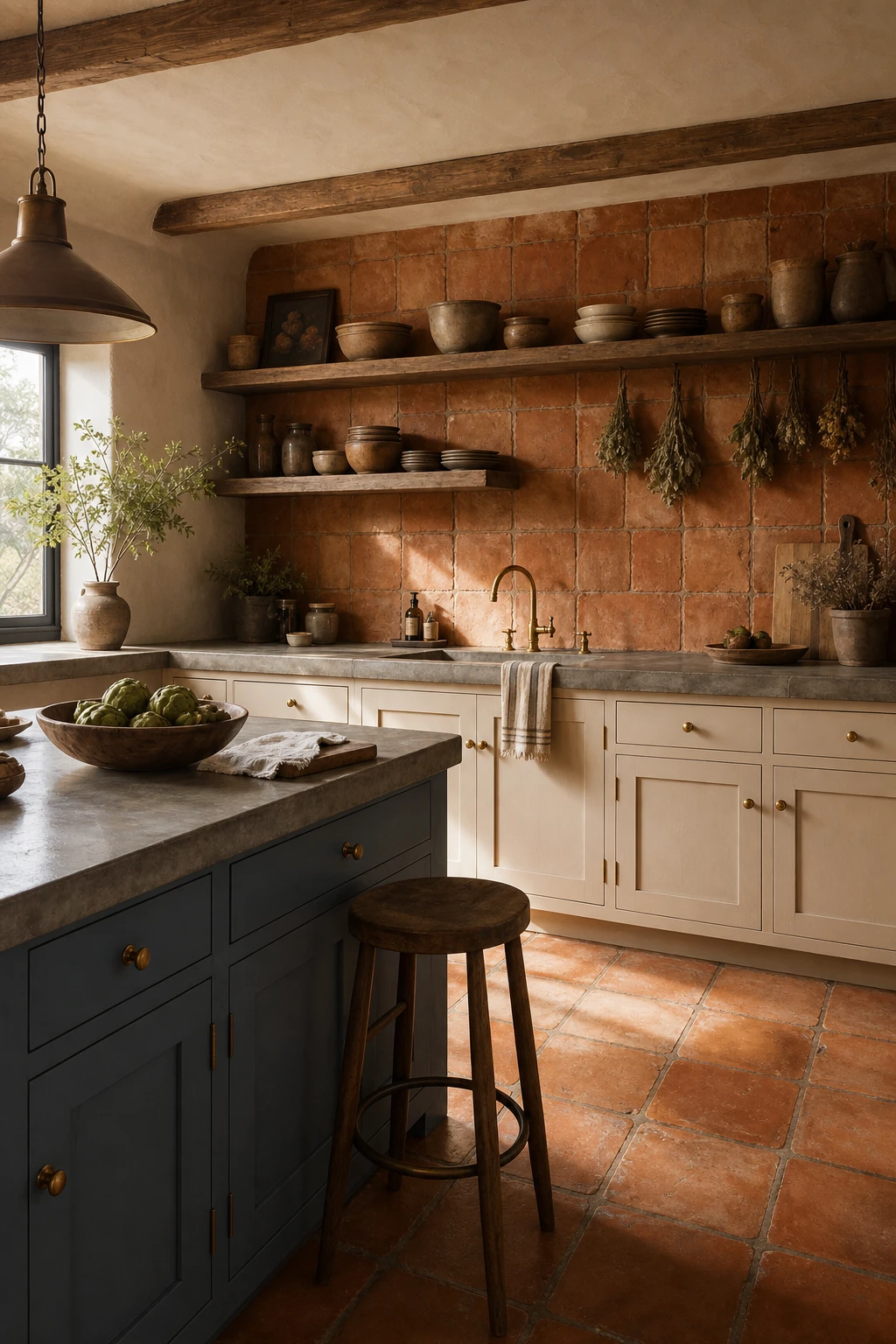
Saltillo Tiles on the Backsplash Give a Cream And Terracotta Kitchen Real Soul
Saltillo tile is one of those materials that no factory finish can replicate, and that imperfection is exactly the point. Each tile carries its own slight variation in colour, from deep amber to pale blush, so the backsplash reads as something built over time rather than installed on a Tuesday. What I love is how that handmade texture softens a cream kitchen that might otherwise feel too polished, giving you warmth you can actually feel from across the room.
The Key Details
Handmade Saltillo tile backsplash
Open timber shelving
Poured concrete countertop
Unlacquered brass tap and hardware
Stacked earthenware bowls and dried herb bundles
Pro TipSeal your Saltillo tiles with a penetrating sealer before grouting, then buff a thin coat of linseed or tung oil over the cured surface to deepen the amber tones and bring out the natural variation in each tile.
AvoidPairing Saltillo with sleek stainless steel or chrome hardware pulls the tile’s earthy warmth into an awkward fight with cold modern surfaces, and neither side wins.
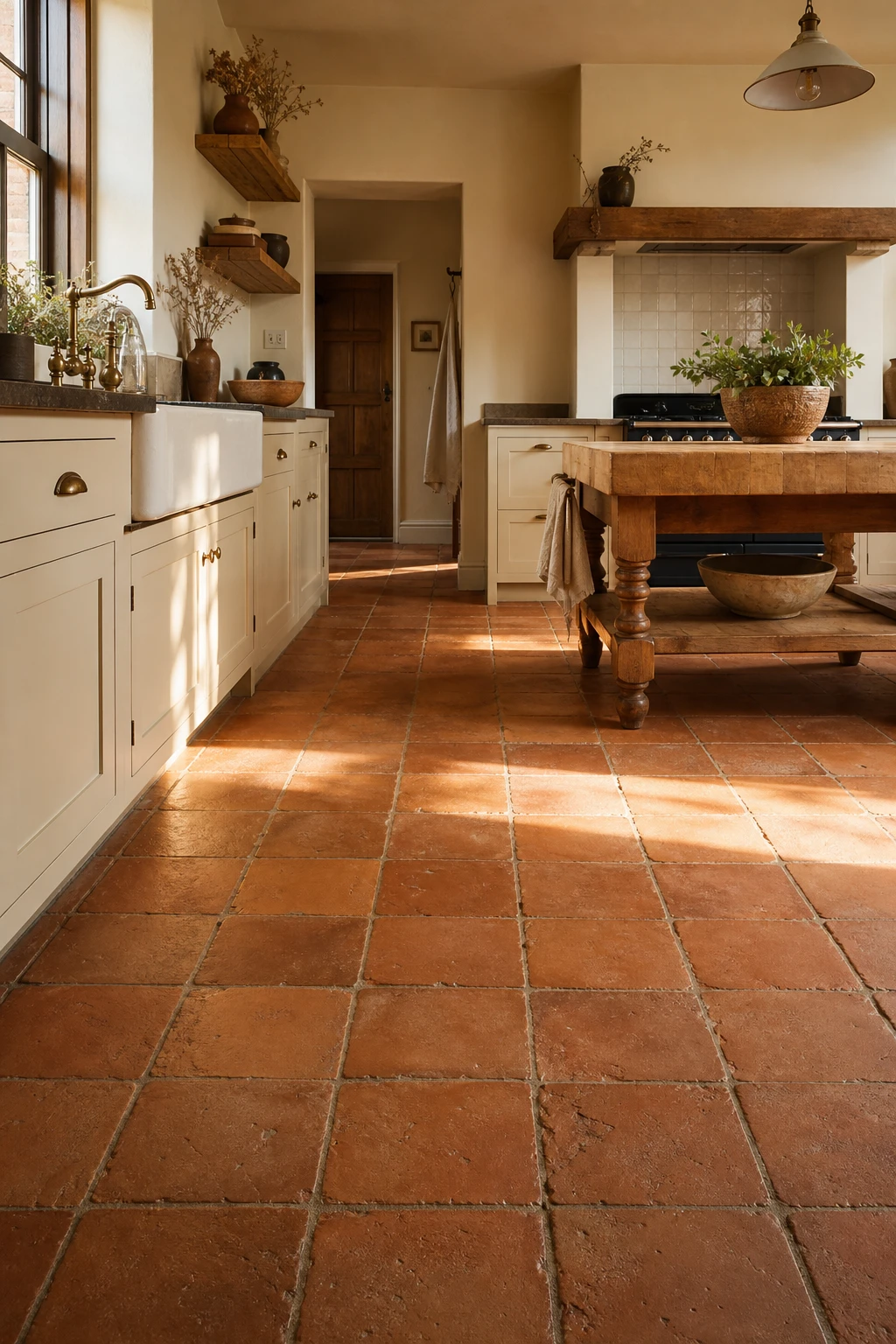
A Terracotta Floor Grounds the Whole Cream And Terracotta Kitchen Palette
The colour story in a cream and terracotta kitchen makes most sense when it starts underfoot. Warmth radiates upward from the floor and pulls every other element into its orbit, and handmade unglazed tiles are perfect for this because the slight variation in tone across the surface keeps the floor feeling alive rather than flat. I always point clients toward the ceiling at this moment, because watch what happens: the cream cabinetry above looks softer and richer simply because the floor is doing the heavy lifting beneath it.
The Key Details
Handmade unglazed terracotta floor tiles
Cream shaker cabinetry
Brass bridge faucet and farmhouse ceramic sink
Open timber shelving with earthenware vessels
Butcher block island with turned legs
Pro TipChoose large format terracotta tiles, ideally 40cm or bigger, and you will be surprised how much more open even a compact kitchen reads.
AvoidUsing a pale grey or white grout cuts the warm flow of the tiles into a grid and fights the whole cream and terracotta palette you have worked so hard to build.
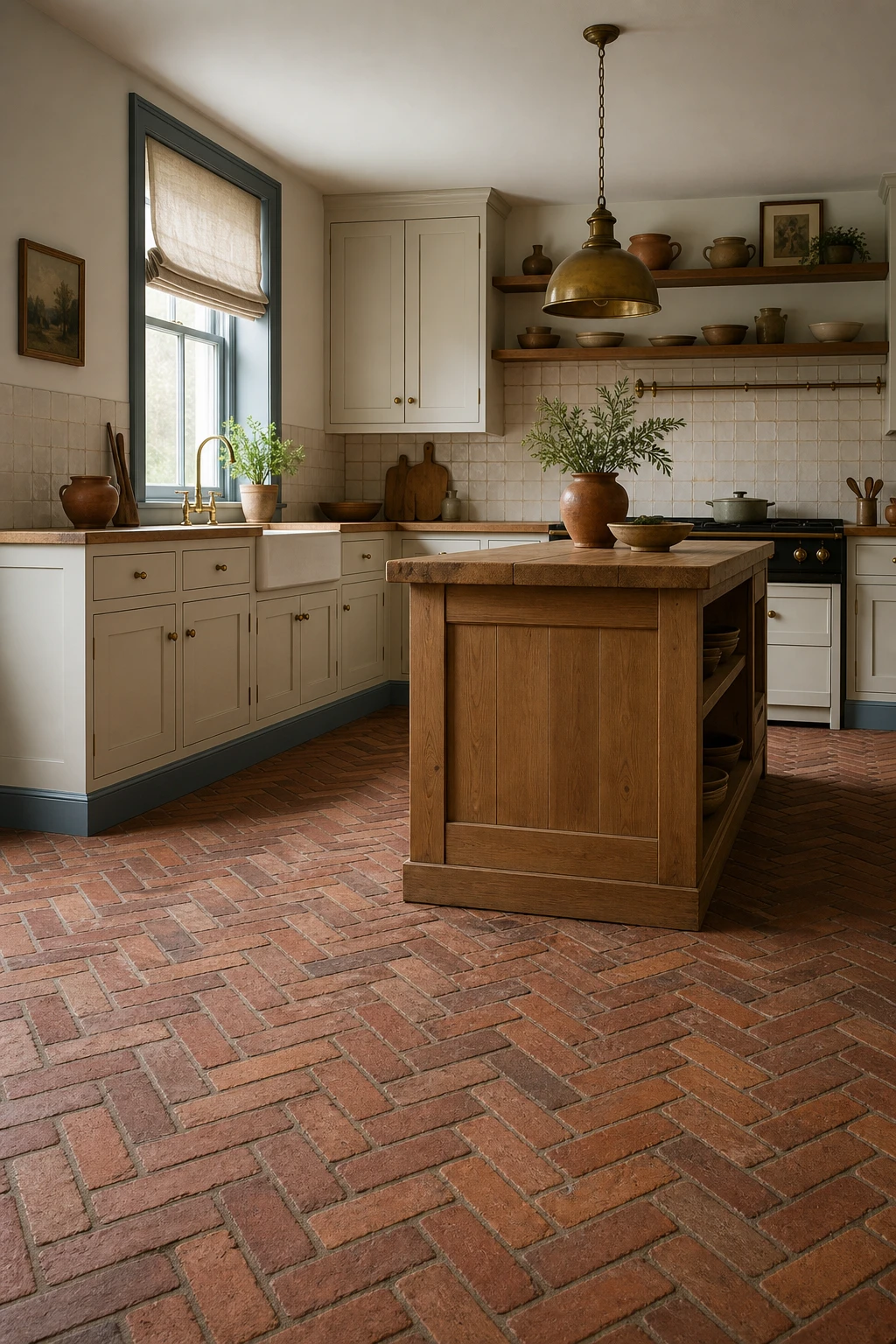
Red Brick Floors Bring Earthy Texture to a Cream And Terracotta Kitchen
A brick floor does something no wall colour can quite match: it layers pattern and warmth under your feet without touching a single vertical surface. What I love is how the red and amber tones in the bricks pick up the terracotta accents above and pull the whole room into one grounded palette. You get texture, tone, and movement all at once, and the cream cabinetry sits above it looking calm and clean by contrast.
The Key Details
Red brick herringbone floor tiles
Cream shaker cabinetry
Open timber shelving with stoneware
Brass pendant lamp
Linen roman blind at sash window
Pro TipLay the bricks in a herringbone pattern rather than straight rows and you immediately double the visual richness of the floor without adding a single extra colour.
AvoidLeaving brick pavers unsealed in a kitchen means every splash of oil or coffee soaks straight in, and the staining becomes permanent within weeks.
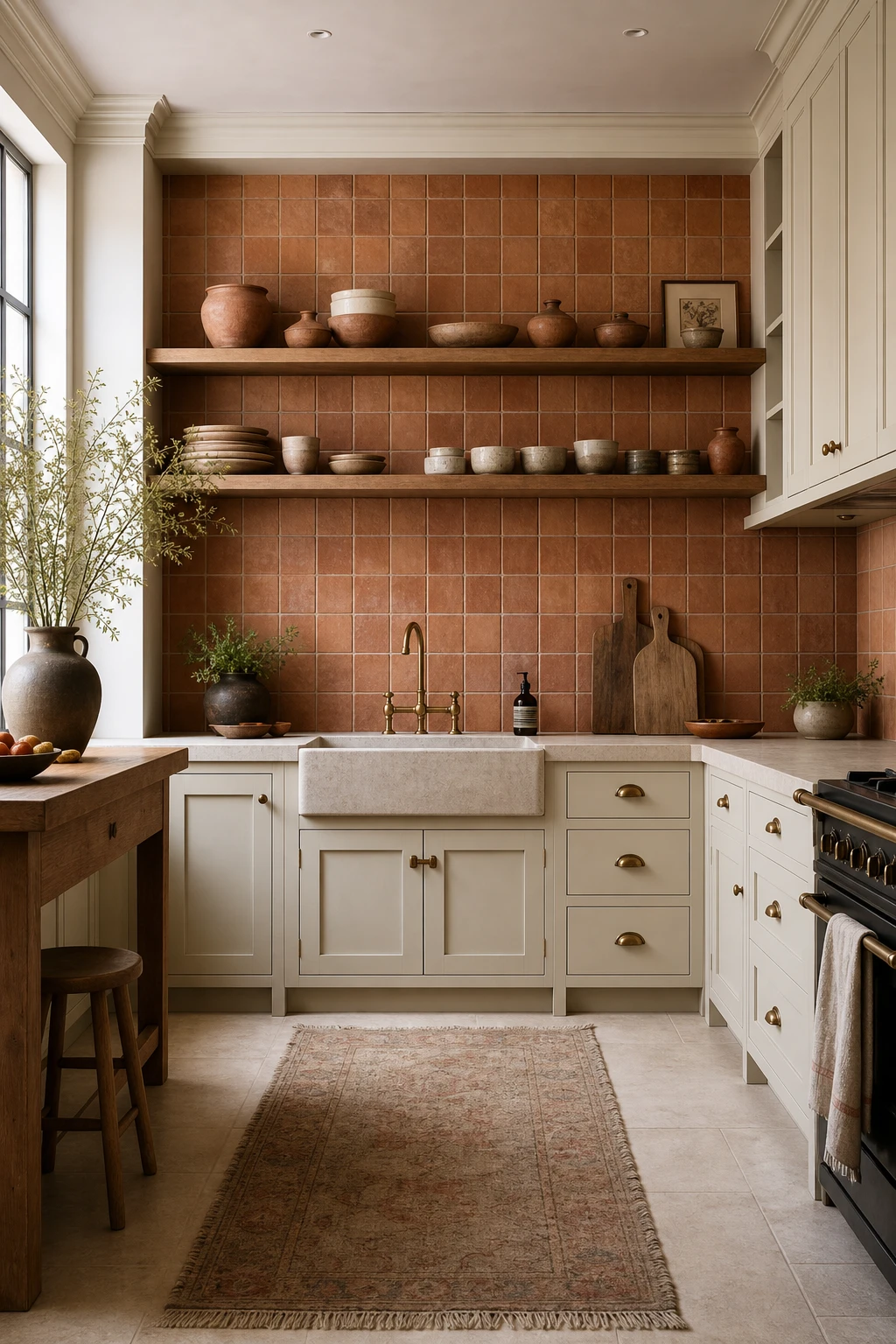
Square Terracotta Tiles Keep a Cream And Terracotta Kitchen Beautifully Simple
Square tiles are one of my favourite quiet decisions: the format disappears and lets the terracotta colour carry all the weight. You get a calm, grid like rhythm on the wall that feels honest and unfussy, which is exactly what cream cabinetry needs beside it. What wins me over every time is how a simple format stops the eye from working too hard, so the warmth of the clay tone lands cleanly.
The Key Details
Hand pressed square terracotta tile backsplash
Cream shaker cabinetry
Open timber shelving with ceramic vessels
Aged brass tap and hardware
Pale limestone floor tiles
Pro TipPair a matte terracotta tile on the wall with a very lightly satin glazed version on a feature run, and you get a gentle depth that reads as texture rather than contrast.
AvoidRotating square tiles to a diagonal in a kitchen that already has strong colour and open shelving creates visual noise that fights everything else in the room.
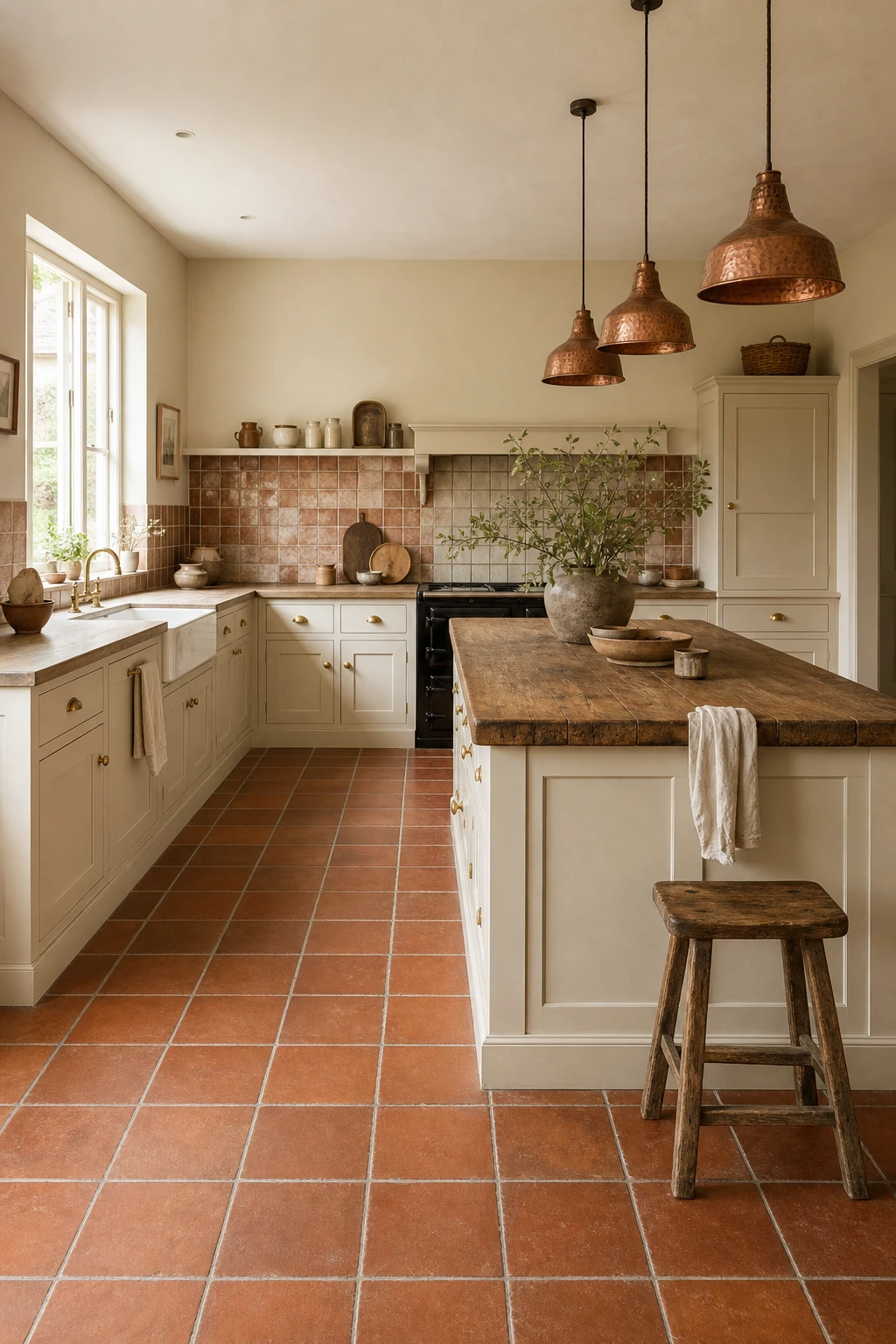
Quarry Tile Floors Give a Cream And Terracotta Kitchen Its Timeless Feeling
Quarry tiles age better than almost anything modern, and that slow, graceful wear is what wins me over. The burnt sienna grid grounds the whole room without trying too hard, giving you that satisfying sense that the floor has earned its place. What I love is how the natural matt surface drinks in the light rather than bouncing it back, so the warmth reads as genuine rather than applied. You feel the heritage of it, and that feeling is very difficult to fake.
The Key Details
Unglazed quarry tile floor in burnt sienna grid pattern
Cream shaker cabinetry
Handmade mottled ceramic tile backsplash
Hammered copper pendant lights
Solid timber butcher block island worktop
Pro TipPair your quarry tiles with cream painted shaker cabinetry and the two neutrals will pull the terracotta tones together into one cohesive, settled room.
AvoidSealing quarry tiles with a high gloss finish strips away the natural matt surface that gives them all their character, leaving you with something that looks closer to cheap ceramic than honest heritage stone.
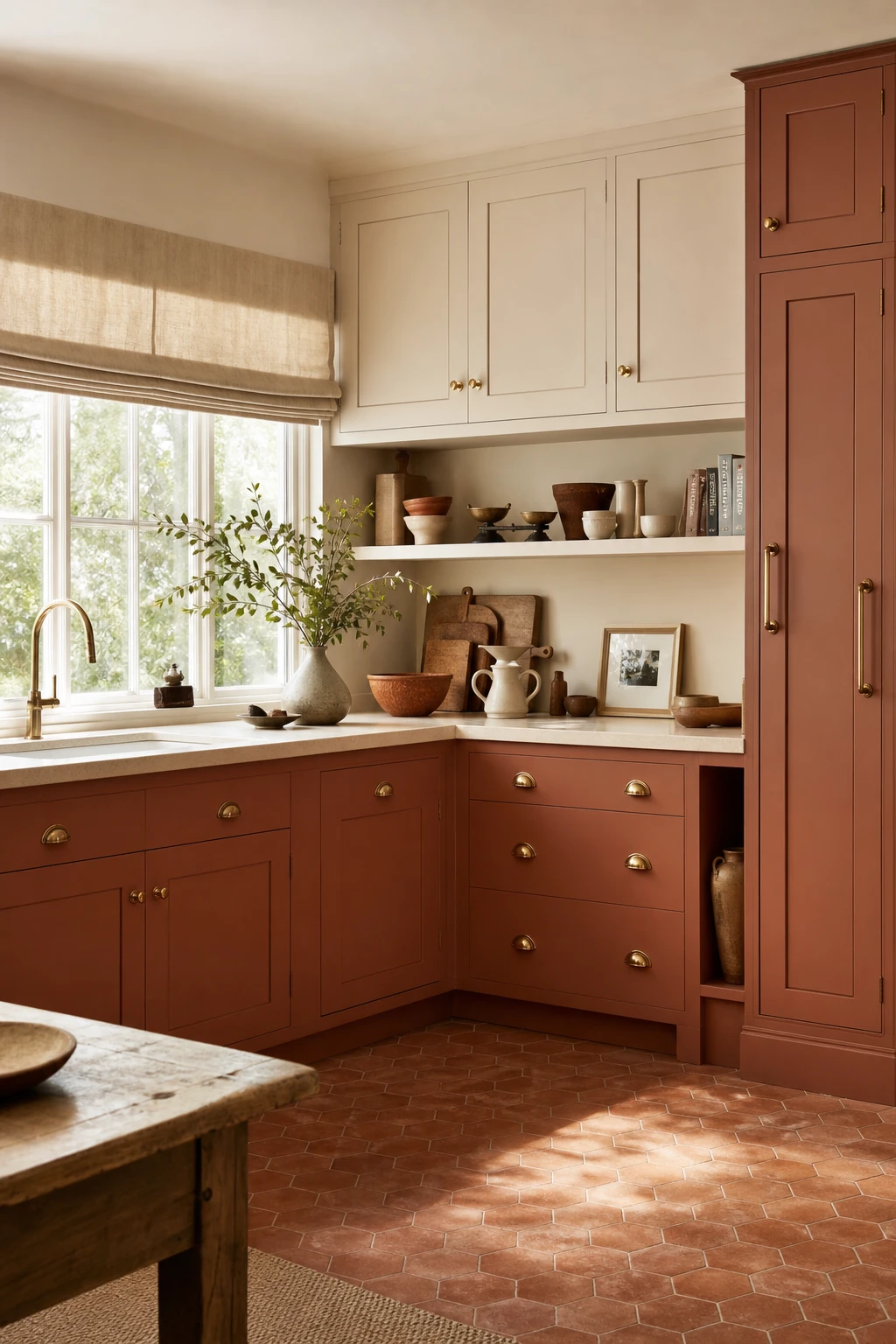
Terracotta Painted Cabinets Make the Boldest Statement in a Cream And Terracotta Kitchen
Terracotta cabinets are the move I keep coming back to when a client wants a kitchen that feels genuinely considered rather than just on trend. Committing to colour at cabinet level grounds the whole room, and you get that warm, earthy confidence that cream walls alone can never quite deliver. What wins me over every time is choosing a tone that sits closer to fired clay than to orange, because that depth is what makes the colour read as a material choice rather than a paint choice.
The Key Details
Floor to ceiling terracotta larder cabinets
Cream upper wall cabinets
Unlacquered brass cup pulls and bar handles
Honed cream stone worktop
Terracotta hexagonal floor tiles
Pro TipPaint only the lower cabinets terracotta and keep the uppers cream so the room stays light while the colour still makes its full impact at eye level.
AvoidPicking a terracotta that leans too bright or too orange means the cabinets read as a paint colour rather than a material, and the whole earthy mood you are after falls apart.
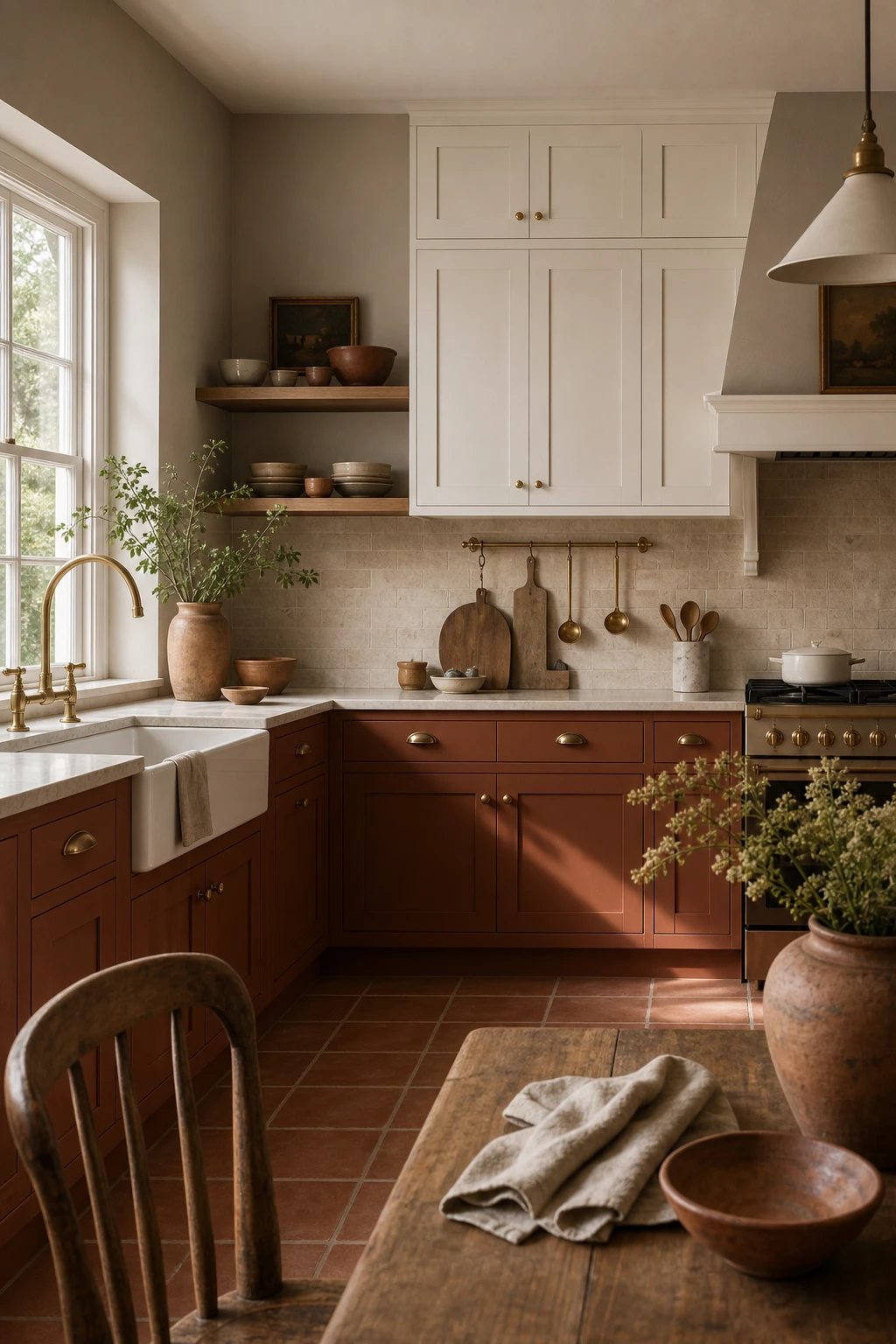
Getting the Balance of White and Terracotta Right in Your Kitchen
Splitting white above and terracotta below is one of my favourite moves in a kitchen because your eye reads the room as light and open first, then warm and grounded second. You get contrast without conflict, which is the whole goal. The travertine backsplash sits between the two tones and does the quiet work of tying them together, and the encaustic floor anchors the terracotta so it feels intentional rather than scattered.
The Key Details
White shaker upper cabinets
Terracotta lower cabinets
Travertine tile backsplash
Encaustic terracotta floor tiles
Open timber shelving with ceramic bowls
Pro TipTreat white as your 60 percent base, terracotta as your 30 percent mid layer across lower cabinets and floor, and save the final 10 percent for small ceramic and timber accents so the balance holds without you having to second guess every choice.
AvoidDotting terracotta in too many unconnected spots, a tea towel here, a pot there, a blind somewhere else, makes the whole scheme read as an accident rather than a decision.
White Cabinets Over a Terracotta Tile Floor Is the Calmest Look in the Palette
White cabinets over a terracotta floor is one of those pairings I come back to again and again, because the contrast does all the heavy lifting without making a noise about it. The light upper half lifts the room while the warm tiles anchor it below, and you get that feeling of calm without any one element competing for attention. What I love is how the eye moves easily from floor to cabinet and never snags on a harsh line, which is exactly the kind of effortless reading a kitchen should have.
The Key Details
White shaker cabinetry
Handmade terracotta floor tiles
Unlacquered brass cabinet pulls
Open timber floating shelves
Deep ceramic farmhouse sink
Pro TipPaint your toe kick in a soft cream rather than matching the cabinet white, and it acts as a gentle step between the cool cabinet and the warm floor so neither colour looks out of place.
AvoidA high gloss white cabinet face will throw a hard, cold reflection against the terracotta and make the floor look muddy rather than warm.
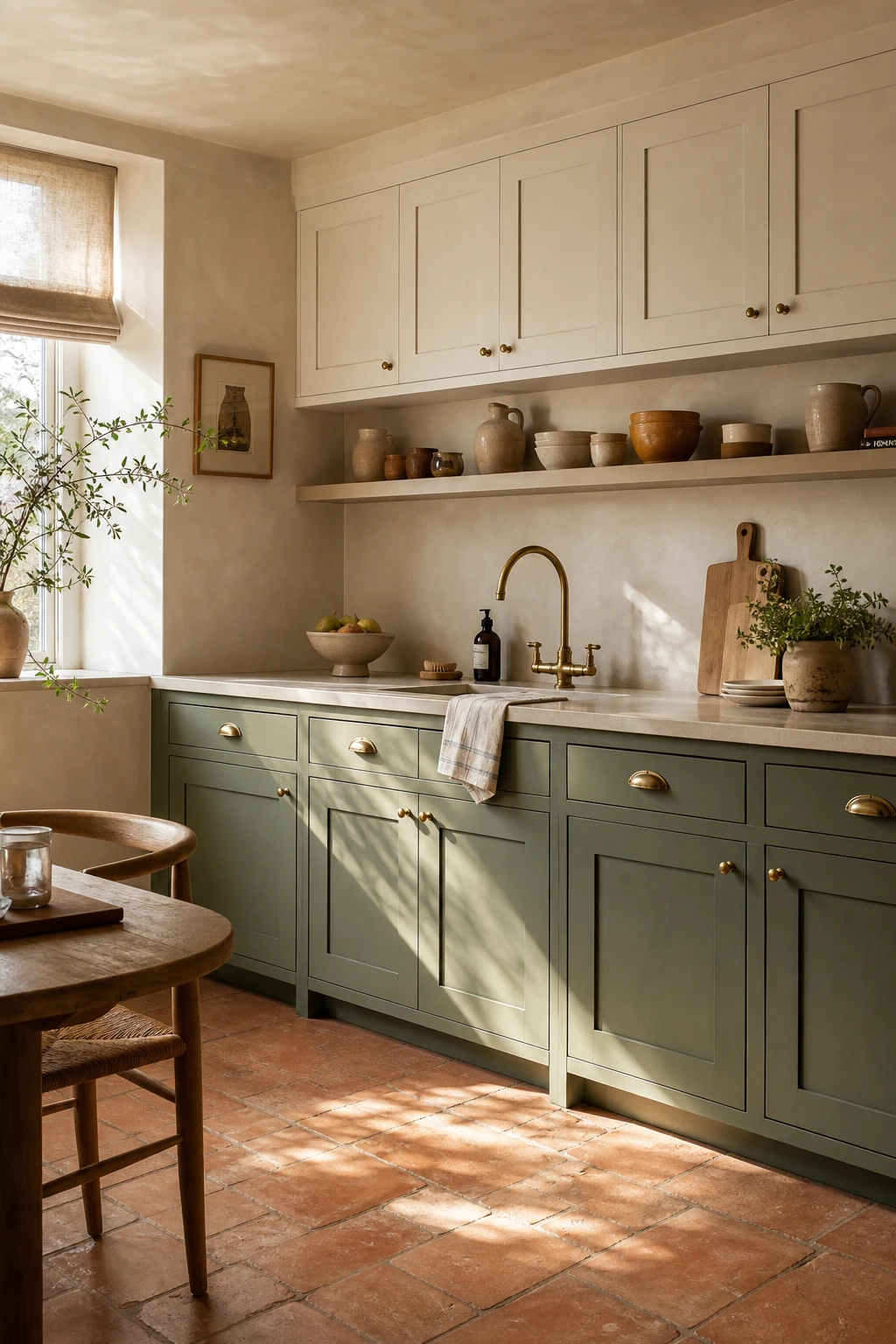
Sage Green Cabinets on a Terracotta Floor Turn a Cream And Terracotta Kitchen Into Something Special
Sage green is the secret third earthy tone that lifts a cream and terracotta kitchen from pretty to genuinely warm and alive. What I love about it is the way those soft green grey cabinets sit between the rusty floor and the pale cream walls, bridging the two without competing with either. You get a palette that feels collected and grounded, and the terracotta tiles actually glow warmer against it.
The Key Details
Shaker cabinet doors
Handmade terracotta floor tiles
Unlacquered brass cup handles
Honed limestone countertop
Open upper display shelf with stoneware vessels
Pro TipPaint the walls in a warm off white with a yellow undertone, not a cool white, so the sage cabinets and terracotta floor stay in the same earthy family.
AvoidChoosing a sage with a blue or grey base pulls the colour into cool territory and drains the warmth right out of the terracotta tiles beneath it.
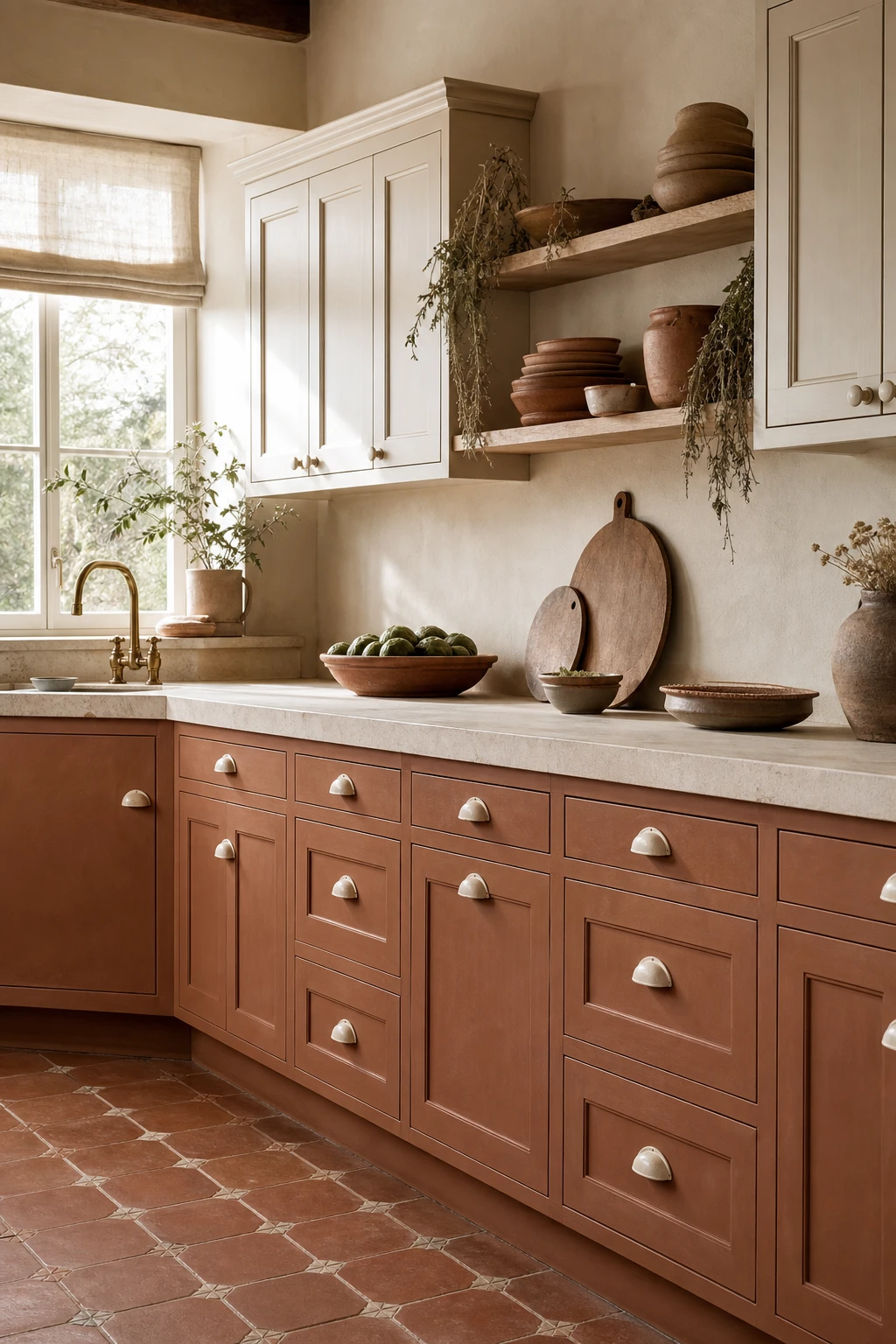
Two Tone Cabinets Give a Cream And Terracotta Kitchen Its Most Interesting Layer
Splitting your cabinets into two colours is one of my favourite moves in a terracotta kitchen because it does the work of a whole renovation with just paint. Cream uppers keep the eye travelling high and the room feeling airy, while terracotta lowers ground everything with warmth you can actually feel. What I love is how the countertop sits between them like a natural pause, giving the whole scheme a calm, considered rhythm. You get genuine layering rather than a busy clash, and clients are always surprised at how much one paint decision shifts the feel of the room.
The Key Details
Two tone shaker cabinets
Honed limestone countertop
Dimpled ceramic cup pulls
Encaustic terracotta floor tiles
Open upper display shelves
Pro TipAlways put the lighter cream on the upper cabinets so the ceiling reads taller and the kitchen stays bright even on overcast days.
AvoidPicking two tones that sit too close together on the colour wheel means the split just looks like mismatched units rather than a deliberate design choice.
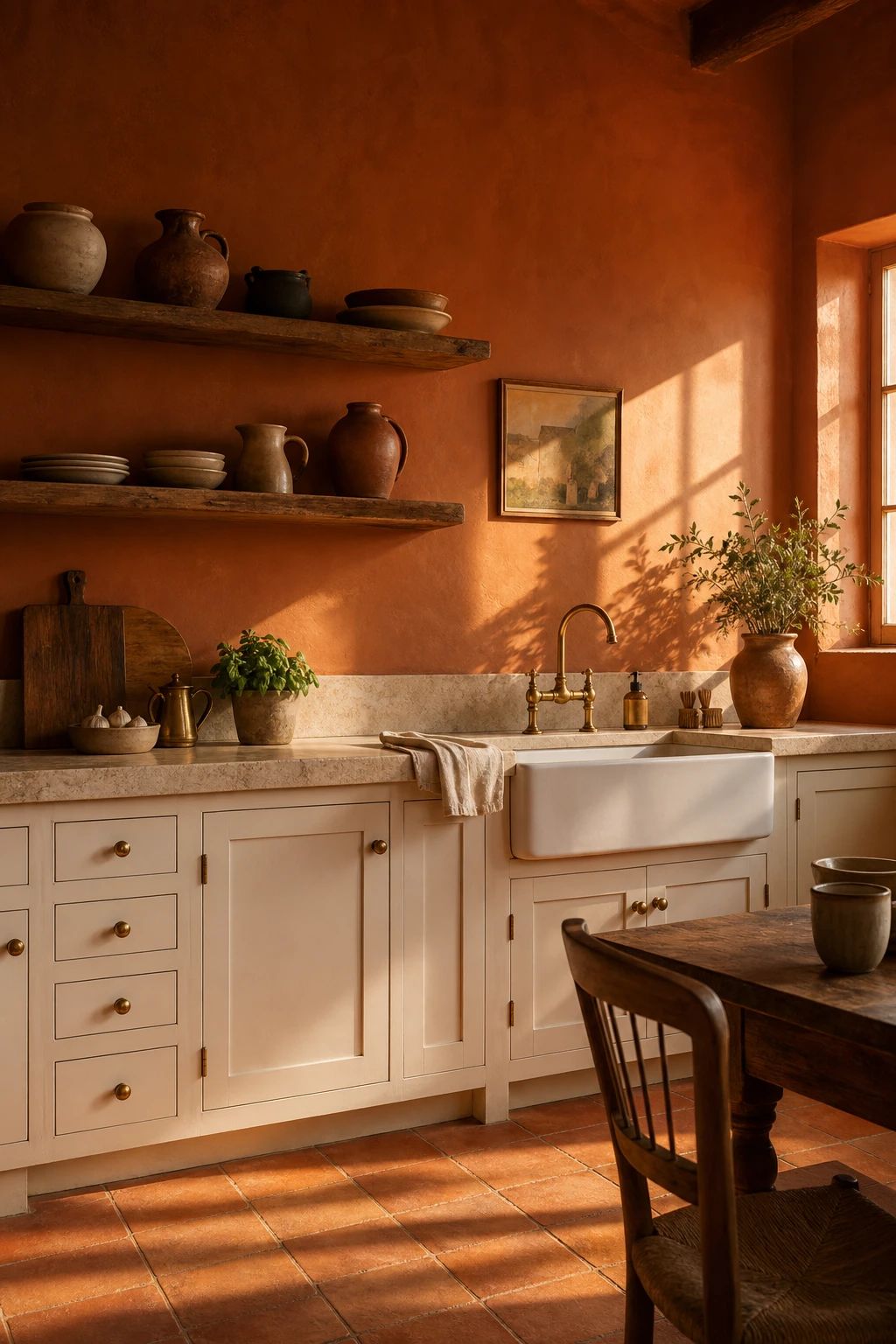
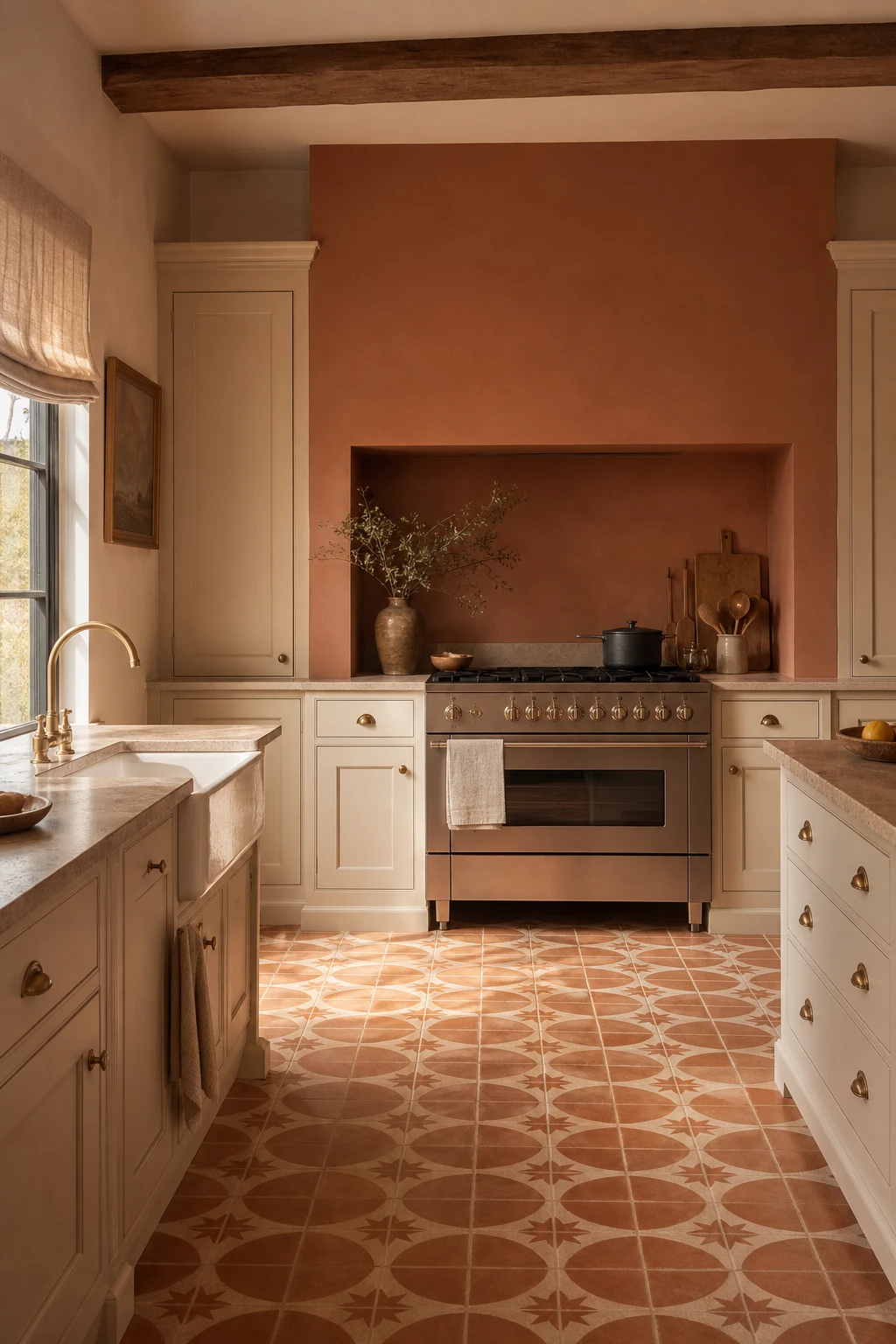
Painting the Walls Terracotta Wraps a Cream And Terracotta Kitchen in Warmth
Wall colour sets the emotional temperature of a room before a single piece of furniture does, and terracotta here does that job beautifully. What I love is how the warm clay tone folds around cream cabinetry and pulls it forward, so you get this lovely contrast where the units feel bright without ever looking cold. Watch how the colour shifts from a soft amber in morning light to something richer and more burnished by evening, which keeps the kitchen feeling alive at every hour of the day.
The Key Details
Cream shaker cabinetry
Honed limestone countertop
Open timber shelving
Terracotta square tile floor
Aged brass butler sink taps
Pro TipPaint a single A3 sheet of lining paper in your chosen terracotta, pin it to the wall, and check it at 7am and again at 7pm before you commit to a full tin.
AvoidPainting all four walls at full saturation closes the room in and makes the ceiling feel lower than it is, so consider one or two feature walls at full depth and carry a diluted version or a lighter tone to the remaining walls.
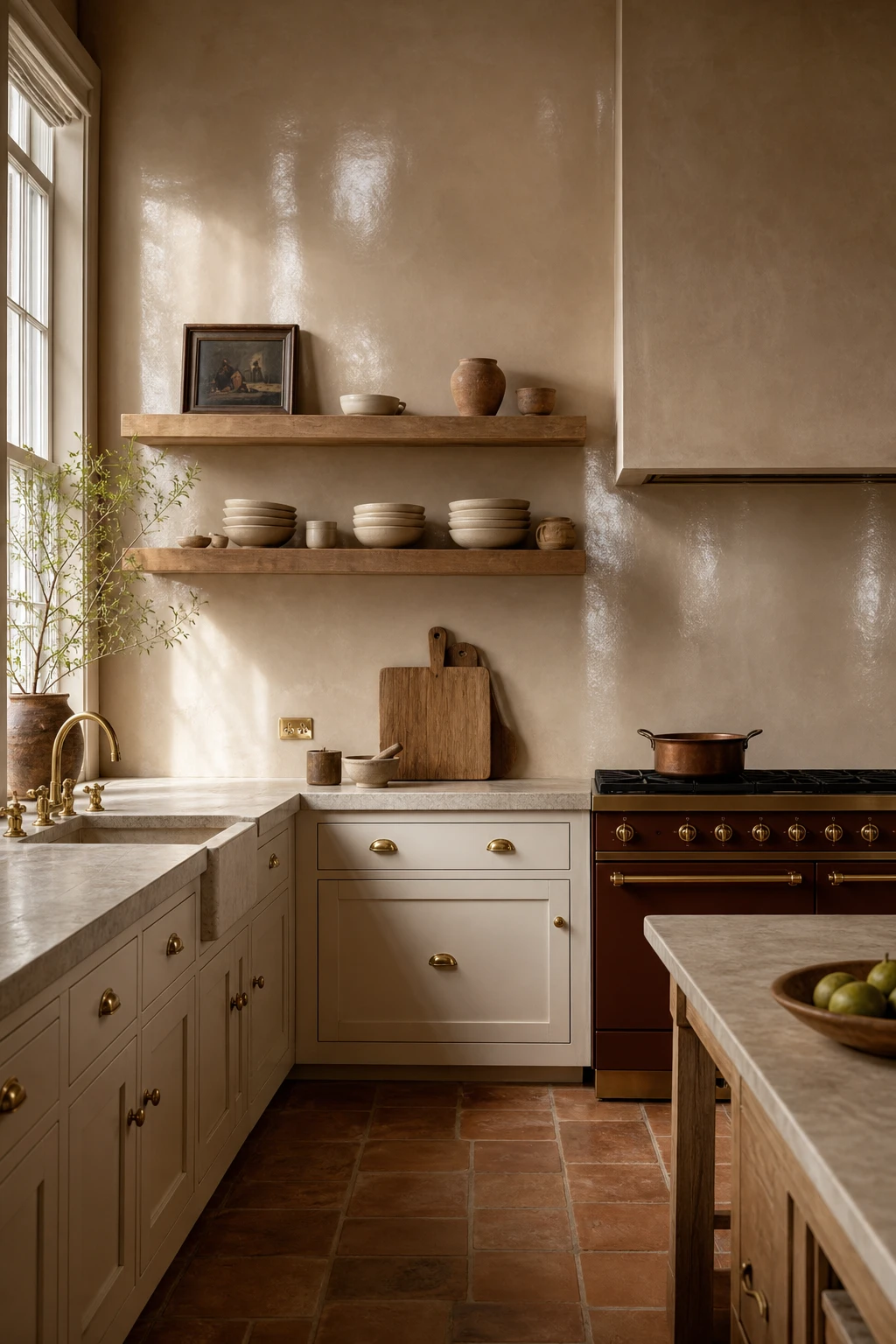
A Glazed Wall Finish Adds a Quiet Lustre to a Cream And Terracotta Kitchen
A glazed wall finish is one of my favourite quiet upgrades in a warm kitchen. Where flat paint just sits there, a glaze catches the light and shifts slightly as you move around the room. You get this soft depth that makes the cream and terracotta tones feel richer without adding more colour. It is a small change that genuinely lifts the whole space.
The Key Details
Glazed reflective wall plaster finish
Cream shaker cabinetry with aged brass hardware
Terracotta range cooker
Open reclaimed oak floating shelves
Handmade terracotta floor tiles
Pro TipBrush a tinted terracotta glaze over a fully dried cream base coat and work in loose, overlapping strokes so the colour pools gently rather than sitting flat.
AvoidChoosing a high sheen glaze in a busy kitchen means fingerprints, grease spots and steam marks will show up constantly and undermine the whole effect.
Choosing the Right Terracotta Paint Shade Makes All the Difference in a Cream Kitchen
Terracotta paint shades sit on a wide spectrum, from warm brown red to nearly coral, and the one that sings in your kitchen is always the one that mirrors the specific clay in your floor or tiles. What I love about pulling that warm brown red out of a handmade encaustic tile and echoing it on the chimney breast wall is that the room stops looking assembled and starts looking considered. You get a quiet depth, not a loud statement, and the cream cabinetry glows warmer beside it.
The Key Details
Handmade encaustic terracotta floor tiles
Cream shaker cabinetry
Chimney breast range alcove
Raw linen roman blind
Ceramic farmhouse sink with aged brass tap
Pro TipHold a sample card flat against the tile surface rather than pinning it to the wall, because this is where the two will actually meet and the undertone comparison is far more honest.
AvoidBuying a paint purely because the name says terracotta is a common trap, because many of those shades dry noticeably pinker or peachier than the pot suggests, pulling the whole room away from the earthy warmth you were after.
Terracotta Toned Countertops Tie Together Every Surface in the Kitchen
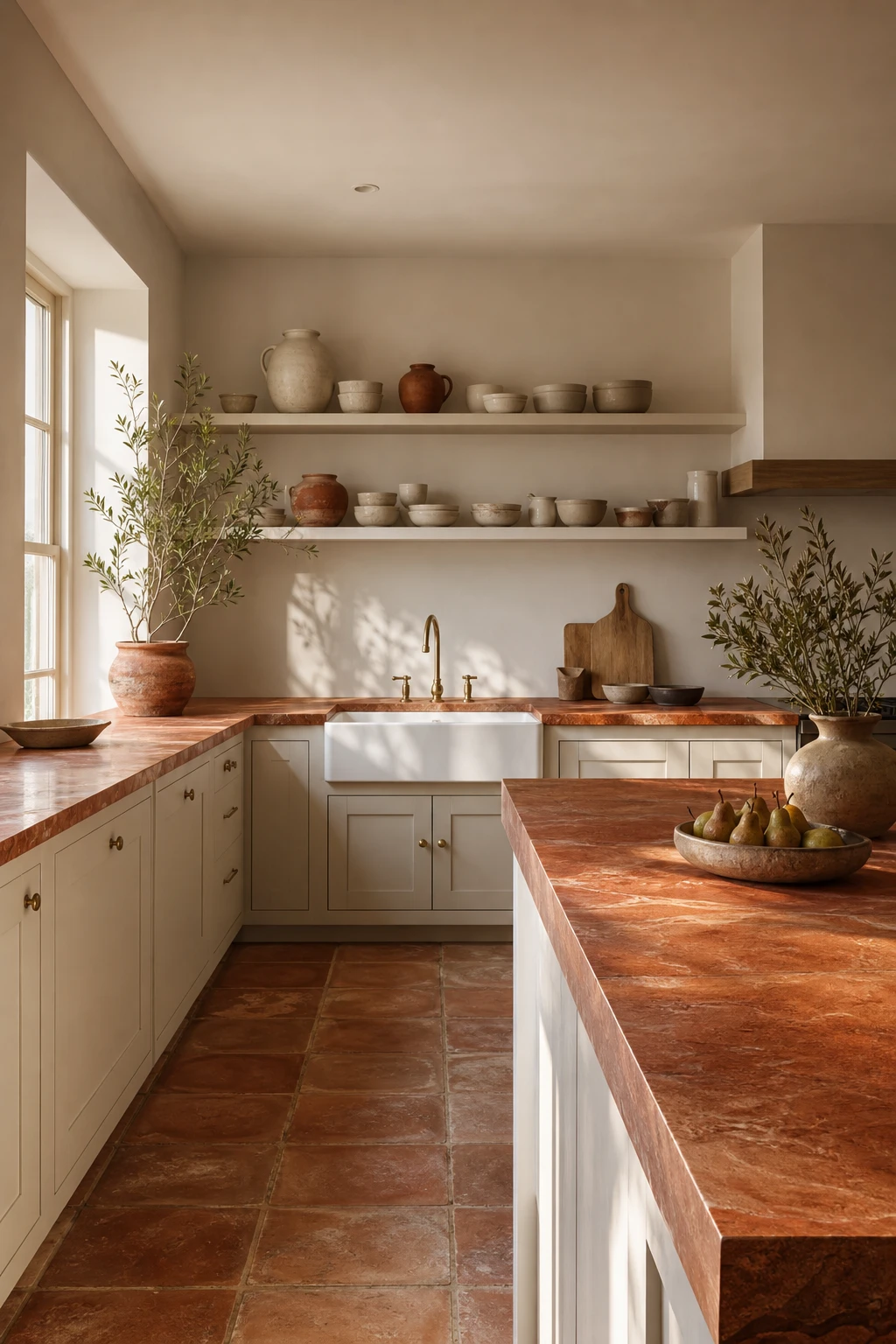
Carrying the terracotta tone all the way into the worktop is something I recommend more than almost any other single move, because it stops the eye bouncing between disconnected surfaces. You get a scheme that feels finished and considered rather than pieced together. The countertop acts as a quiet anchor, pulling the floor tiles, the cabinetry and the walls into a single conversation, and I love how that continuity makes the room read as something that was always meant to be this way.
The Key Details
Honed terracotta stone worktop
Shaker cabinetry
Fireclay farmhouse sink
Open timber shelving with ceramic vessels
Unglazed terracotta floor tiles
Pro TipChoose a honed stone finish over polished for a worktop like this, because the matte surface holds the warmth of the terracotta rather than bouncing light off it and reading as cold.
AvoidPicking a countertop tone that sits too close to your backsplash flattens both surfaces into one muddy band and the layering you worked so hard to build simply vanishes.
A Butcher Block Island Countertop Softens a Cream And Terracotta Kitchen Beautifully
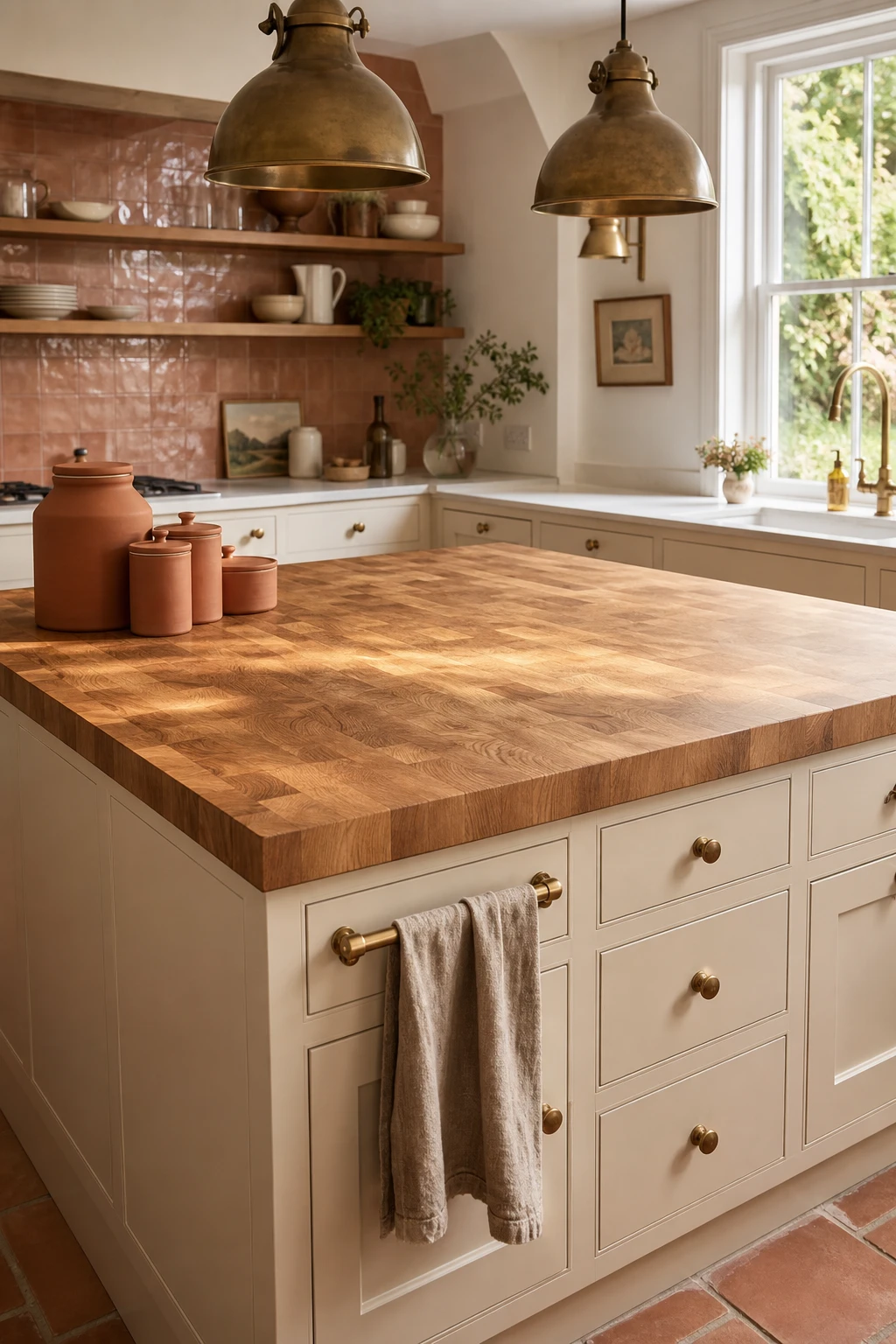
Butcher block is one of those materials that earns its place the moment you bring it into a room. What I love here is how the honey toned grain cuts through the harder surfaces, the painted cabinetry, the stone, the tile, and gives your eye somewhere warm and natural to land. You get that quiet contrast that stops a kitchen feeling too polished or too cold, and the wood actually pulls the terracotta tones together rather than competing with them.
The Key Details
Butcher block end grain maple island countertop
Zellige terracotta tile backsplash
Aged brass pendant lights
Open timber upper shelving
Honed terracotta floor tiles
Pro TipOil your butcher block every two to three months with food safe mineral oil to keep that warm honey colour from drying out and going grey.
AvoidChoosing a timber that reads either bleached white or very dark brown will sit at odds with terracotta, making the island feel like it belongs in a different kitchen entirely.
Wooden Worktops Add the One Organic Touch a Cream And Terracotta Kitchen Needs
A wooden worktop is the move I always reach for when a cream and terracotta scheme needs its final piece of grounding. The natural grain pulls the warmth from both the terracotta tiles and the cream paint into one surface, and the kitchen stops feeling assembled and starts feeling settled. What I love is how the wood softens the hard edges of the splashback and gives your eye somewhere quiet to rest, which is something no painted surface can quite replicate.
The Key Details
Butcher block oak worktop
Terracotta zellige splashback tiles
Cream shaker cabinets
Brushed brass cabinet hardware
Ceramic butler sink
Pro TipMatch your oak worktop to the warmest undertone in your cream cabinet paint and the whole kitchen will glow as one continuous palette.
AvoidTreating the worktop as a standalone feature and ignoring how its grain direction reads against the tile pattern on the floor means you end up with two competing rhythms that make the kitchen feel restless rather than calm.
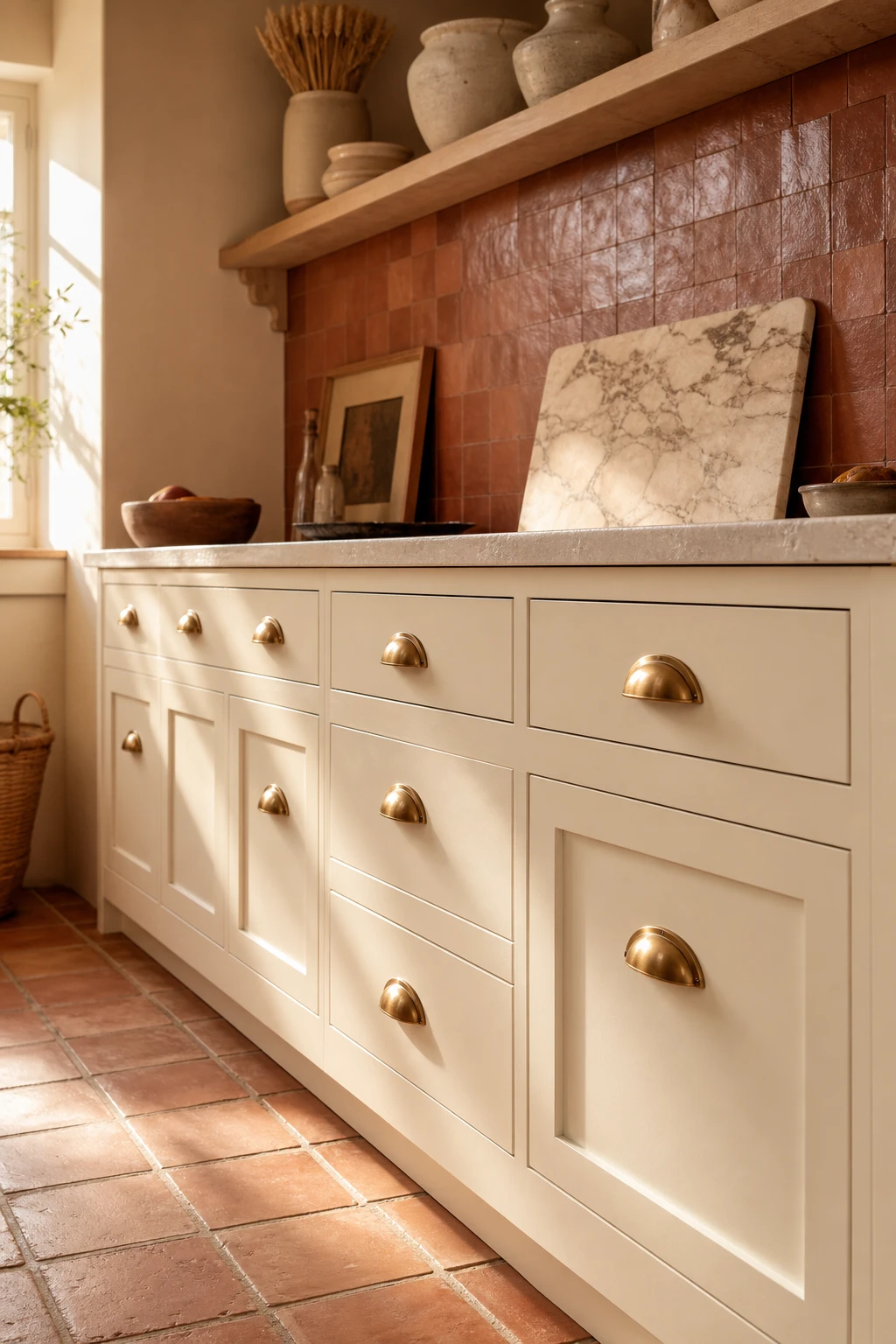
Brushed Brass Cup Handles Are the Small Detail That Elevates a Cream And Terracotta Kitchen
Brushed brass cup handles are the quiet detail that pulls a cream and terracotta palette into one warm, considered whole. What I love is how that soft gold tone sits right between the two colours, picking up the honey in the cream and echoing the burnt warmth of the terracotta without competing with either. You get a rounded, tactile shape that feels handmade and relaxed rather than sharp or modern, and every time someone reaches for a cabinet door the whole kitchen feels a little more deliberate.
The Key Details
Brushed brass cup handles on shaker cabinet doors and drawers
Cream shaker style base cabinets in painted timber
Zellige terracotta ceramic splashback tiles
Hand painted terracotta ceramic floor tiles in classic grid
Honed marble pastry slab countertop surface
Pro TipChoose cup handles over straight bar handles throughout, because the curved bowl shape keeps the mood soft and rounds off the geometry of shaker style doors rather than cutting across them.
AvoidFitting chrome taps or a stainless steel sink alongside brushed brass hardware splits the warmth right down the middle, leaving the kitchen feeling neither one thing nor the other.
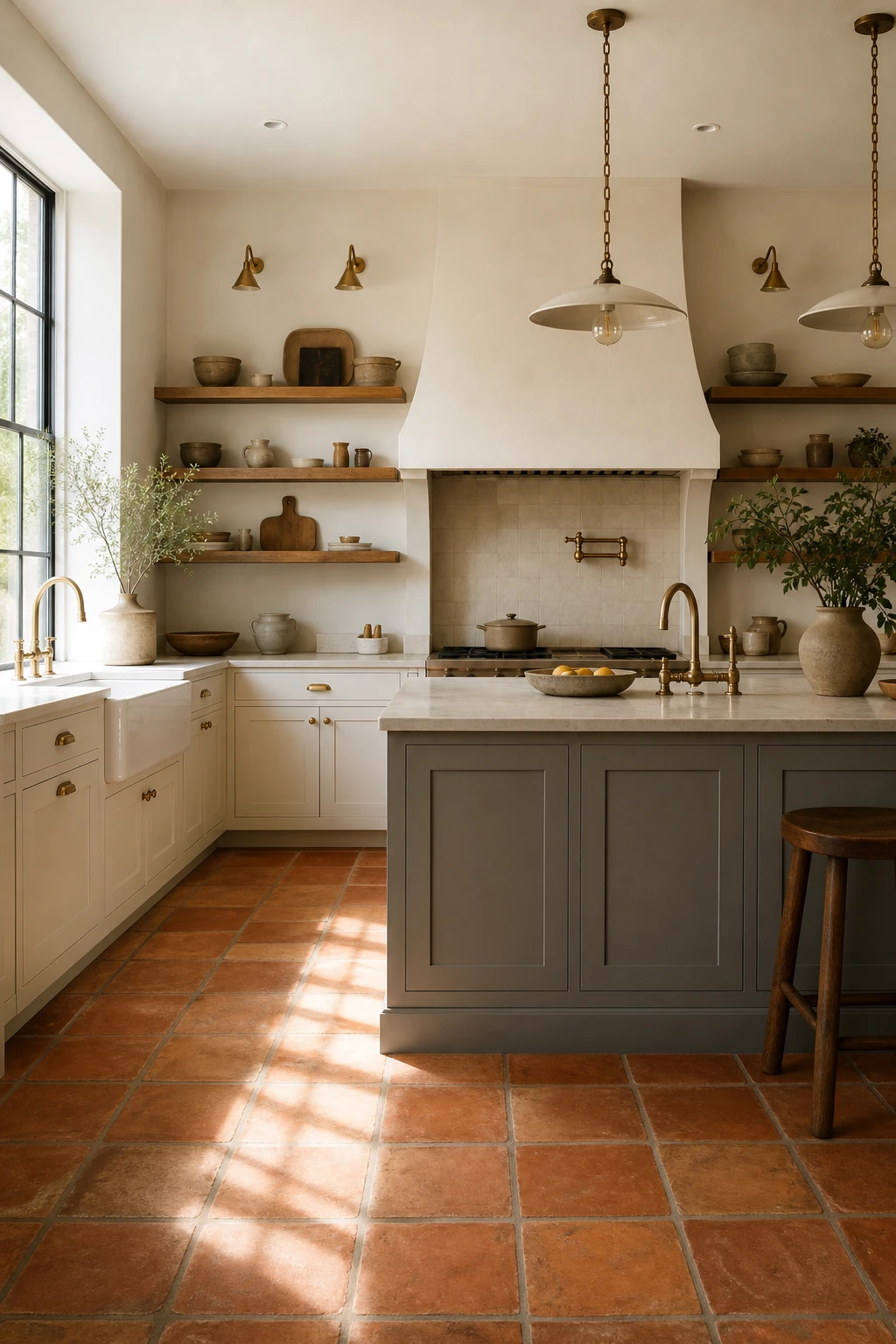
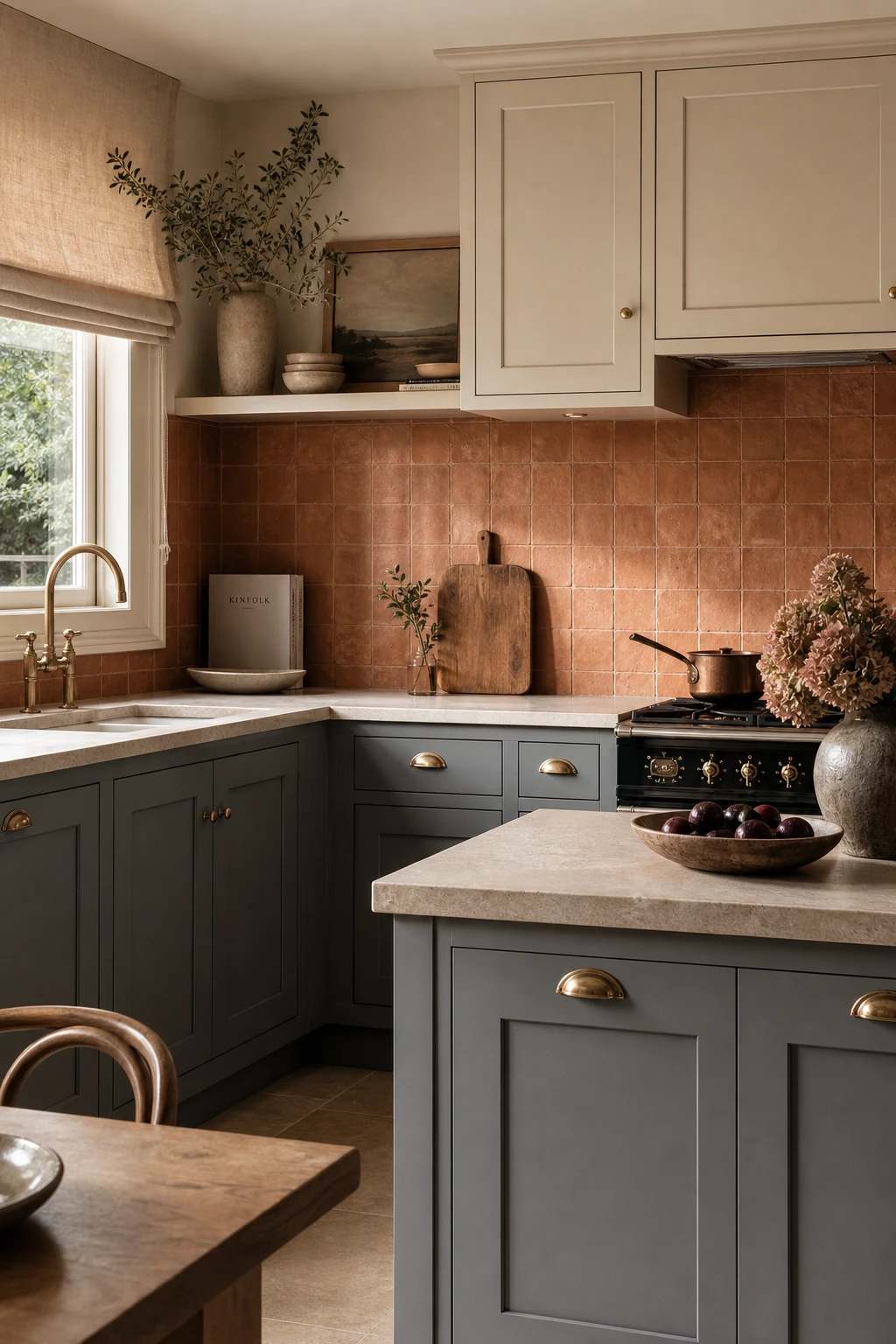
How Grey Cools and Sharpens a Cream And Terracotta Kitchen Without Dulling It
Dropping a cool grey into a warm terracotta and cream kitchen is one of my favourite balancing moves. What I love is how the grey quietly absorbs some of the heat so the room breathes without losing its earthy soul. You get the best of both worlds: the richness stays, but the eye gets a place to rest. Watch how that single cooler note makes the terracotta tiles and cream uppers look even richer by contrast.
The Key Details
Grey painted lower cabinetry
Terracotta splashback tiles
Unlacquered brass cup handles
Honed limestone countertop
Linen Roman blind
Pro TipKeep the grey to your lower cabinets or island only, so the cooler tone grounds the room without competing with the warm cream and terracotta above eye level.
AvoidReaching for a blue grey pulls the whole palette into cooler, coastal territory and the earthy warmth you built with terracotta and cream simply drains away.
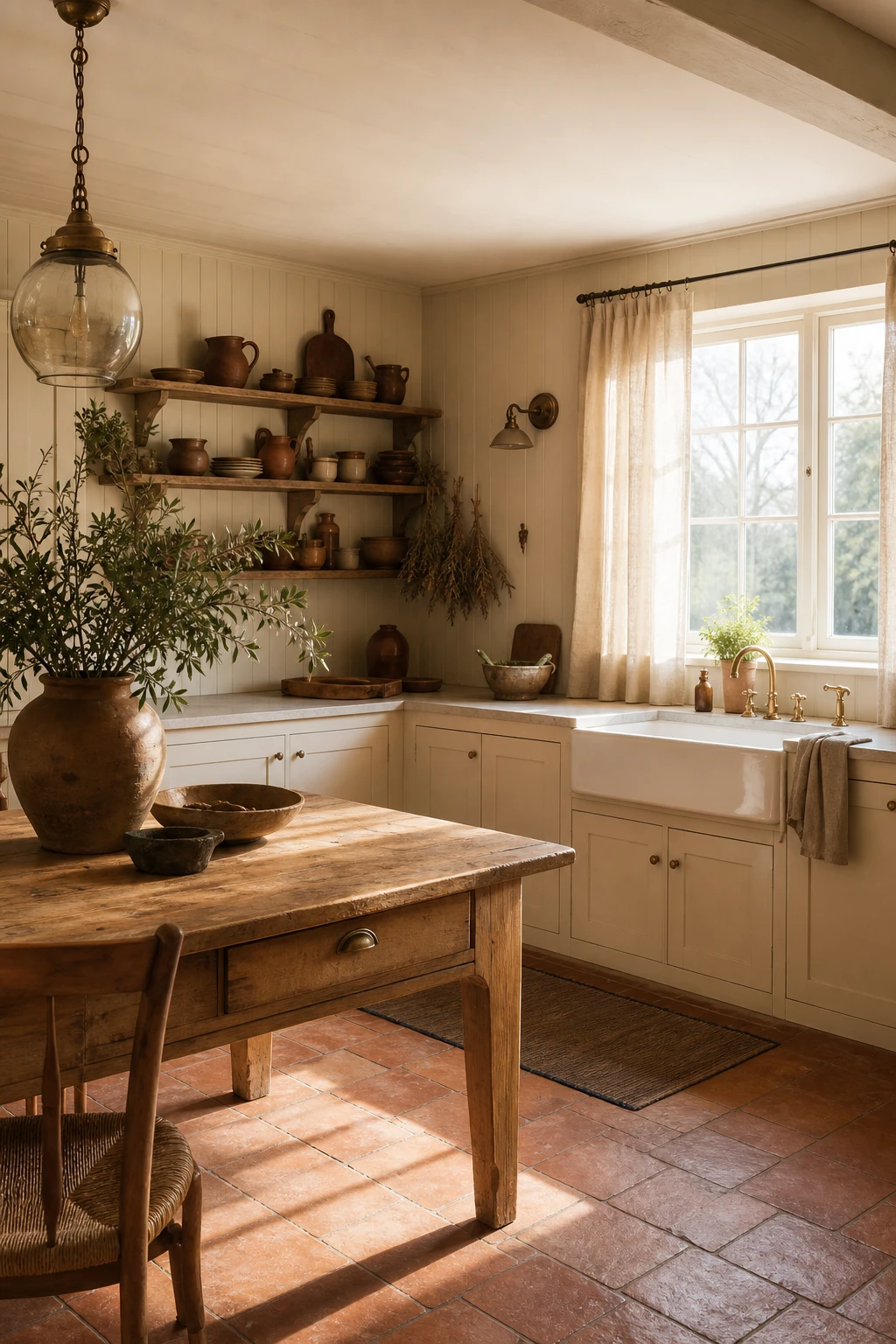
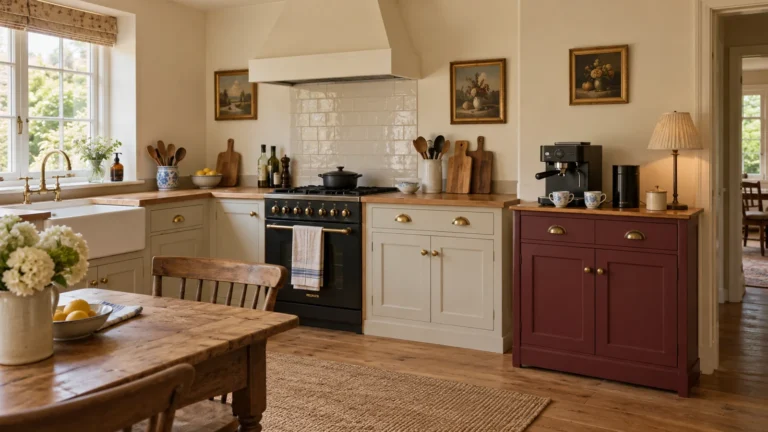
A Farmhouse Kitchen With a Terracotta Floor Feels Like Home From the First Step In
Farmhouse kitchens earn their warmth by layering things that feel used and loved, and terracotta underfoot does most of the heavy lifting before you even reach the cabinets. The handmade tiles carry that gentle variation in tone you simply cannot fake, and paired with shaker fronts and a deep butler sink, you get a room that reads as settled rather than styled. What wins me over every time is how the open timber shelving and linen at the sash window soften the whole space, so you feel the history of the room even on day one.
The Key Details
Handmade terracotta floor tiles
Shaker cabinet fronts
Deep butler sink
Open timber shelving with earthenware
Linen dressed sash window
Pro TipStack your open shelves with a relaxed mix of earthenware pitchers, stacked bowls, and a few taller pieces at the back so the eye travels up and the shelf reads as gathered over time, not arranged.
AvoidBuying a matching set of accessories in the same clay tone pulls all the life out of a farmhouse kitchen, leaving it looking like a catalogue page rather than a room someone actually cooks in.
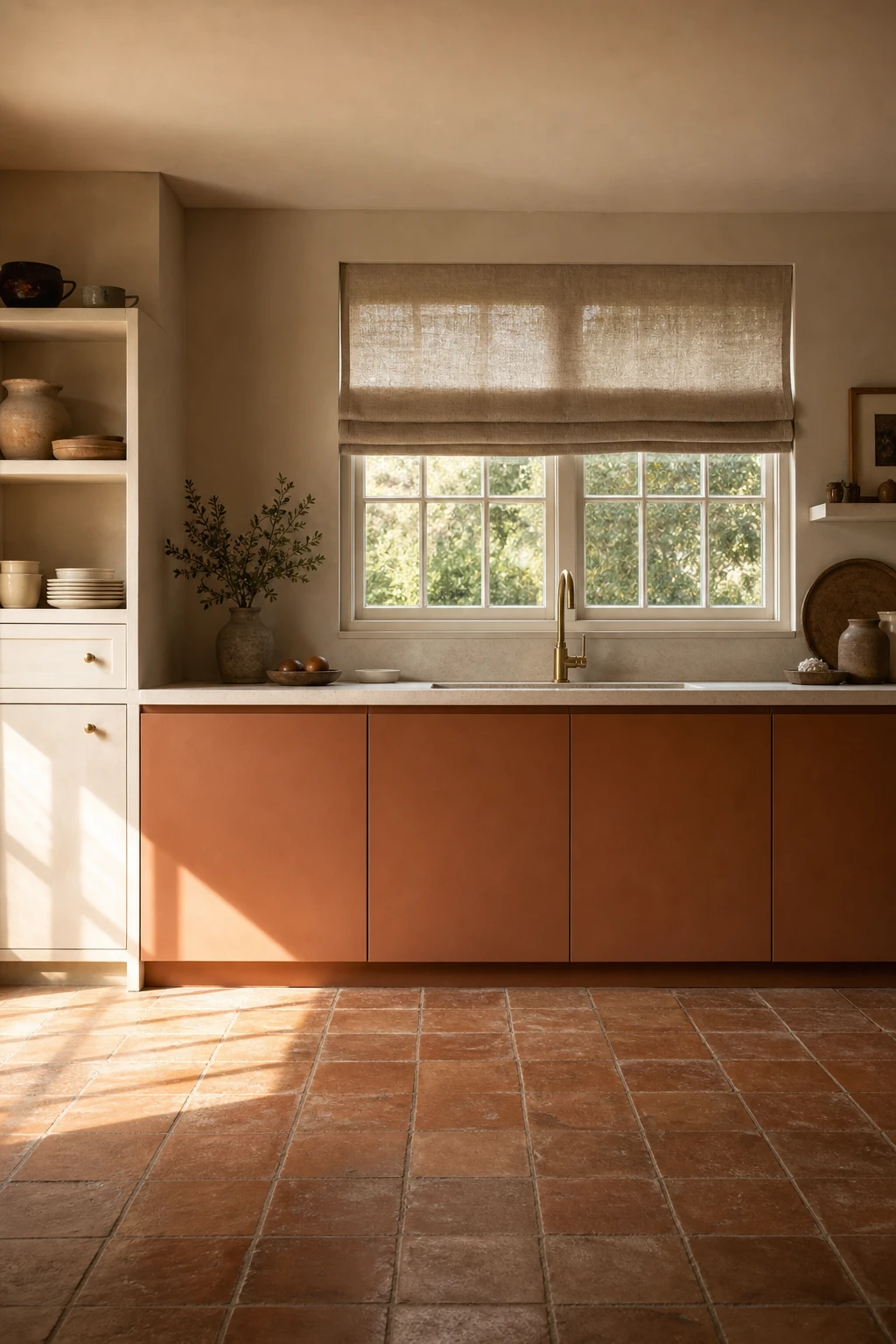
Modern Cabinetry on a Terracotta Floor Proves This Palette Works in Any Era
Flat front cabinetry and handmade terracotta tiles feel like they belong together, and that surprises people every time. What I love is how the rawness of the floor softens those clean contemporary lines just enough, so you get the crispness of a modern kitchen without the coldness. The honed stone and aged brass pull the warmth upward, and you will notice the whole room feels grounded rather than stark.
The Key Details
Handleless flat front cabinetry
Handmade terracotta floor tiles
Honed stone countertop
Aged brass tap
Raw linen Roman blind
Pro TipChoose handleless doors in a cream or warm white rather than a cool grey so the cabinetry reads as soft and welcoming beside those earthy floor tiles.
AvoidStripping out every soft texture in pursuit of a minimal look leaves terracotta looking like a floor in a utility room rather than the heart of the design.
Mediterranean Touches Give a Cream And Terracotta Kitchen Its Most Romantic Mood
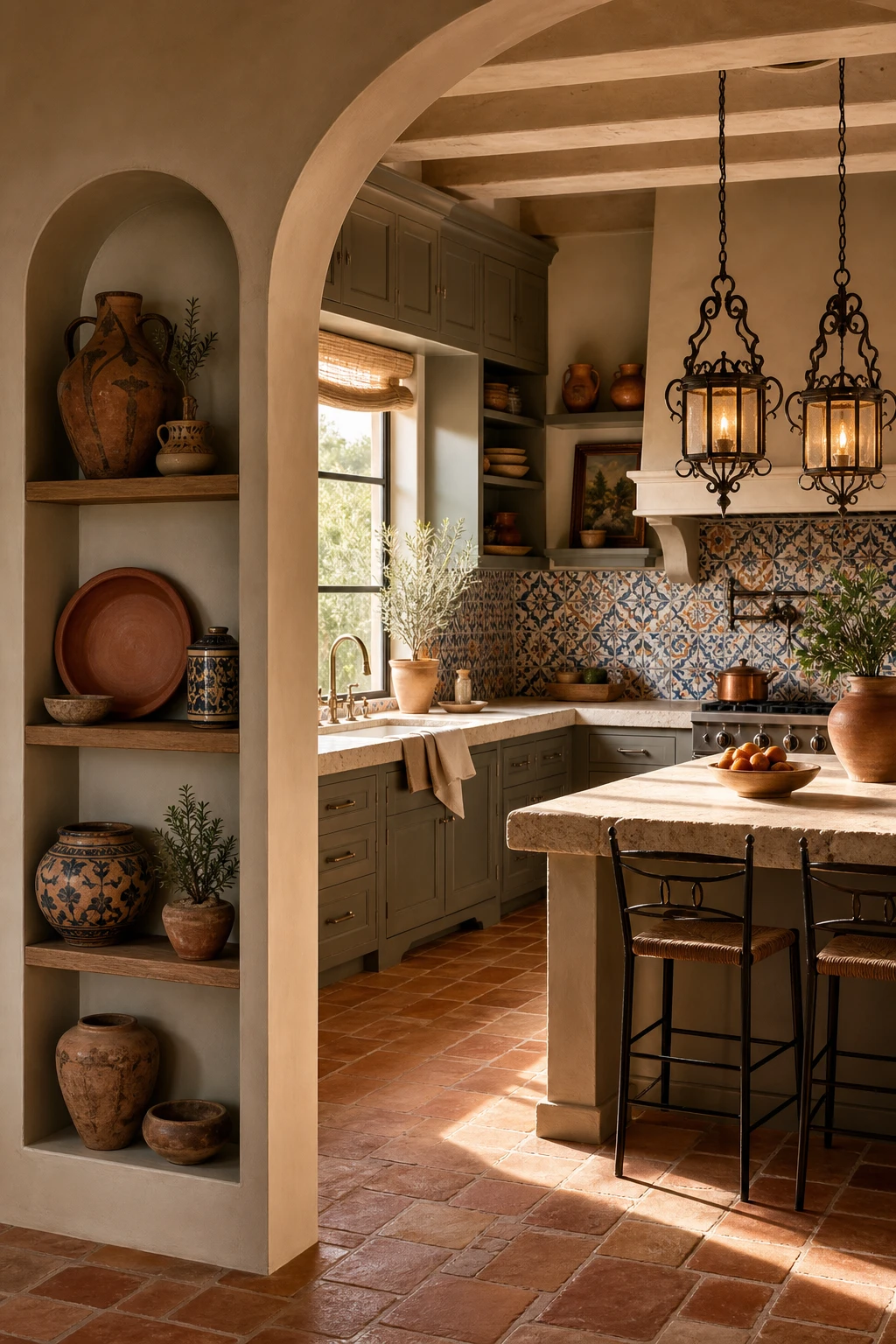
Evoking a place through material and colour is one of my favourite design challenges, and the Mediterranean does it so naturally. Rough limestone, hand painted tile, and warm terracotta floor bricks each carry a sensory memory of heat and light, so you feel the region before you consciously name it. What wins me over every time is how those textures do the storytelling quietly, letting cream hold everything together without the room tipping into costume.
The Key Details
Rounded arched alcove with open shelving
Hand painted Moorish mosaic tile backsplash
Offset terracotta floor tiles
Wrought iron pendant lights
Rough hewn limestone countertop
Pro TipIntroduce one deep cobalt blue ceramic piece, a bowl, a tile insert, or a single shelf of pottery, and you will instantly anchor the palette to the coast without painting the whole room seaside.
AvoidLayering Moorish mosaic, patterned floor tiles, and printed textiles all at once pushes the room from atmospheric into theme park territory, and the timeless quality you were chasing disappears.
Mexican Inspired Details Bring the Most Joyful Energy to a Cream And Terracotta Kitchen
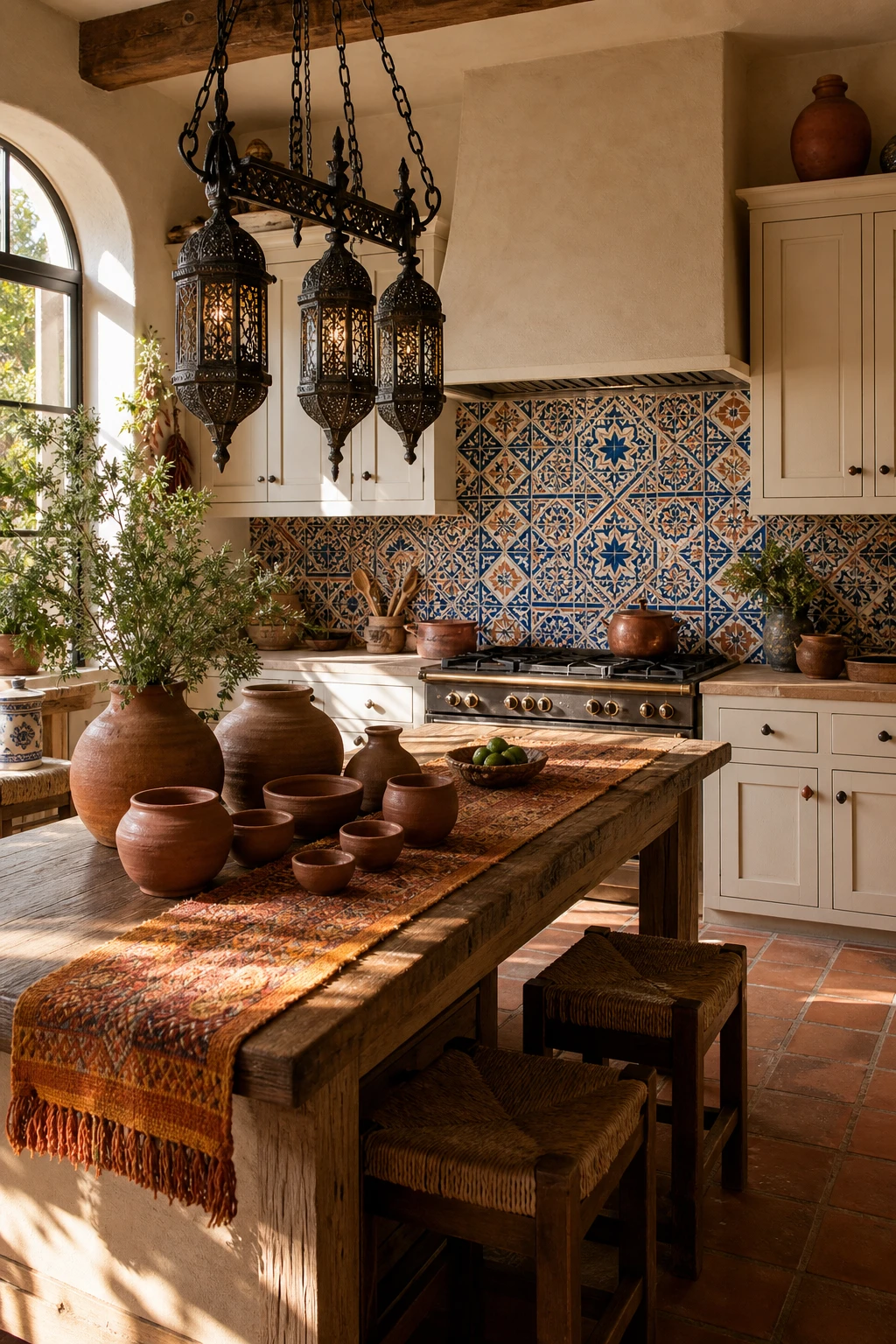
Mexican craft tradition hands you a full palette of personality in one move, and what I love is how naturally it lands in a cream and terracotta kitchen. The hand painted blues and yellows of a Talavera tile panel sing against warm cream walls without competing, and the saltillo floor ties it back to earth so nothing floats away. You get a scheme that feels genuinely gathered rather than decorated, which is exactly the difference between a kitchen with soul and one that just looks styled.
The Key Details
Talavera tile backsplash
Wrought iron pendant cluster
Saltillo terracotta floor tiles
Hand thrown ceramic pottery
Woven textile counter runner
Pro TipPlace a single Talavera panel directly behind the hob as a contained focal point so the pattern reads as art rather than wallpaper.
AvoidLayering a Talavera backsplash, painted cabinetry, and multiple woven textiles all at once dilutes each piece until none of them hold your eye.
A Mid Century Backsplash Gives a Cream And Terracotta Kitchen Its Most Unexpected Edge
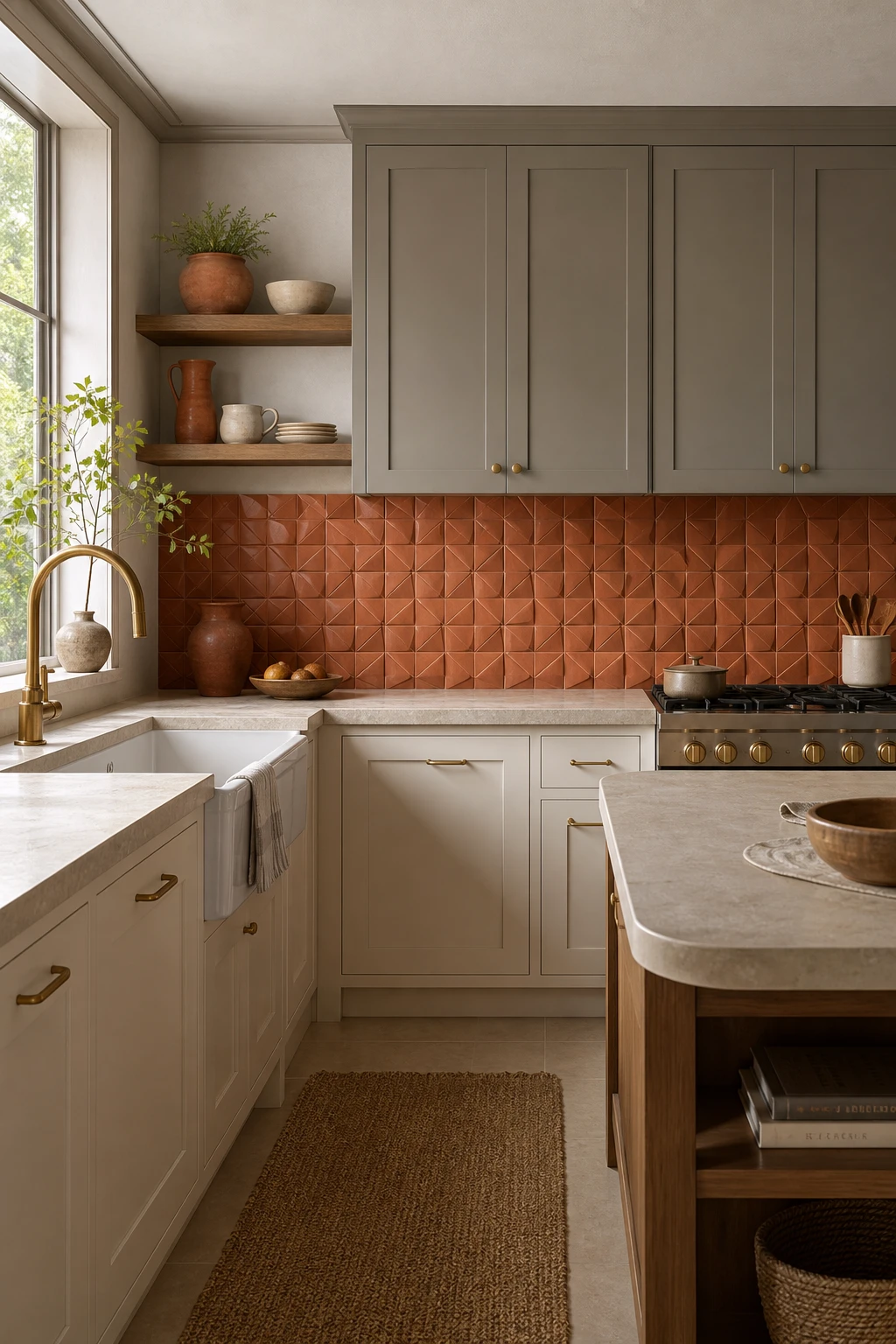
Borrowing a retro tile shape is one of my favourite ways to pull a warm palette out of the ordinary, and a mid century backsplash does exactly that. The angled geometry creates a linear rhythm your eye follows across the wall, so the cream and terracotta stop feeling soft and start feeling sharp. You get warmth and edge in the same breath, which is a harder balance to land than most people expect.
The Key Details
Angled bowtie terracotta tile backsplash
Cream shaker lower cabinets
Honed limestone countertop
Brushed brass range tap
Oiled oak open shelving
Pro TipRun a staggered subway or split face tile horizontally rather than in a straight stack, because the offset joints echo that vintage linear rhythm and give the whole backsplash a quiet sense of movement.
AvoidReaching for a classic mid century avocado or mustard tile colour pulls the eye away from the terracotta family and splits the palette into two competing stories rather than one.
Boho Layering Is the Easiest Way to Make a Cream And Terracotta Kitchen Feel Deeply Cosy
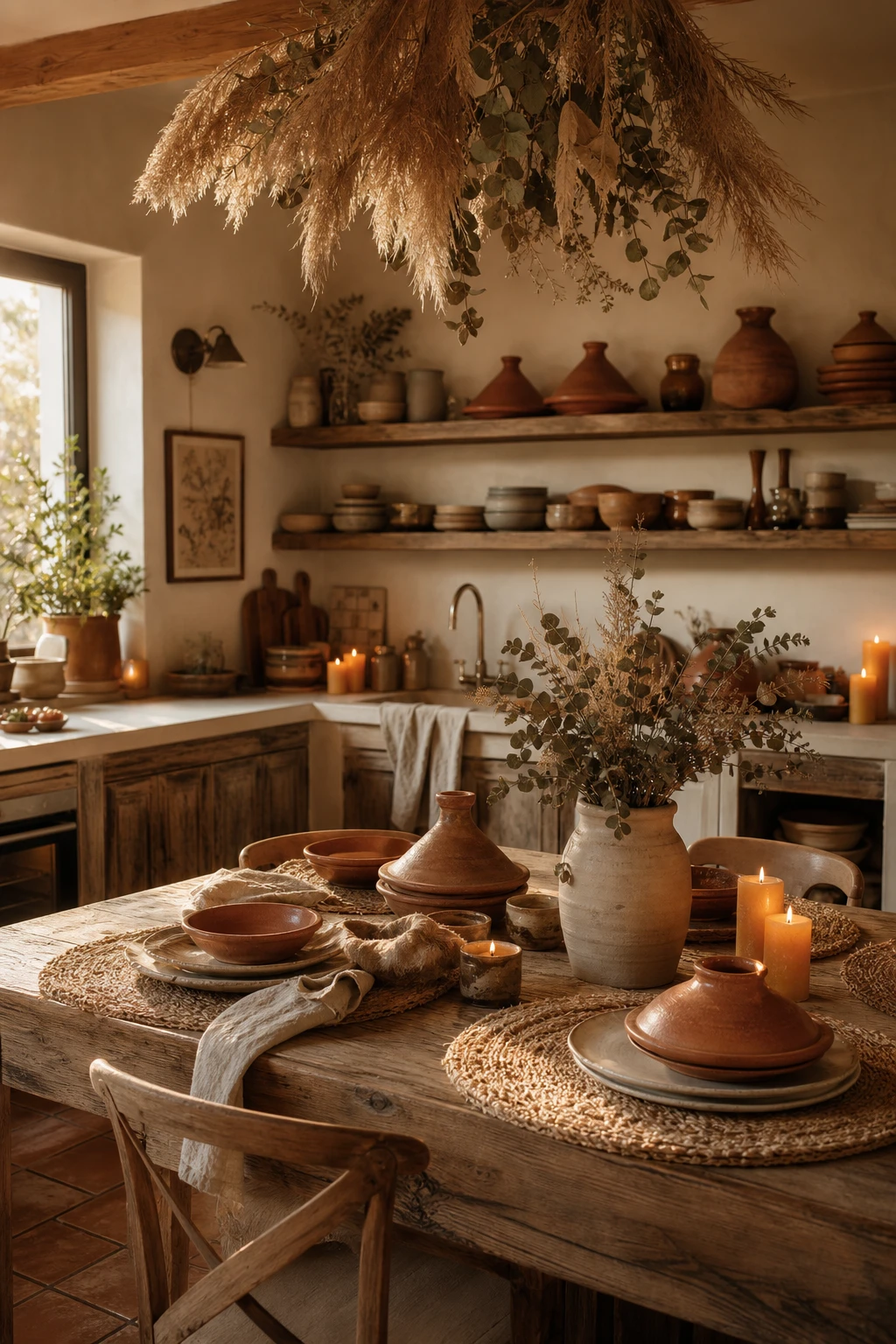
Boho layering wins me over every time in a cream and terracotta kitchen because the warmth sneaks up on you. Knotted jute over linen, stacked stoneware beside dried stems, candlelight pooling on reclaimed timber, you are building a feeling, not just filling a room. What I love is how each piece looks collected rather than bought as a set, and that small distinction is everything. You get a kitchen that feels genuinely lived in and deeply cosy without a single expensive move.
The Key Details
Knotted jute placemats overlapping linen napkins
Stacked hand thrown stoneware and terracotta tagines on open shelving
Dried pampas grass and eucalyptus bundle hanging from ceiling beam
Clustered beeswax pillar candles on countertop
Scrubbed reclaimed timber dining table
Pro TipHang a woven rattan pendant low over the island so the warm glow it casts becomes the anchor the whole layered look reads from.
AvoidPiling in too many loose textures without a home for each one turns a cosy layered kitchen into a cluttered surface that is genuinely hard to wipe down.
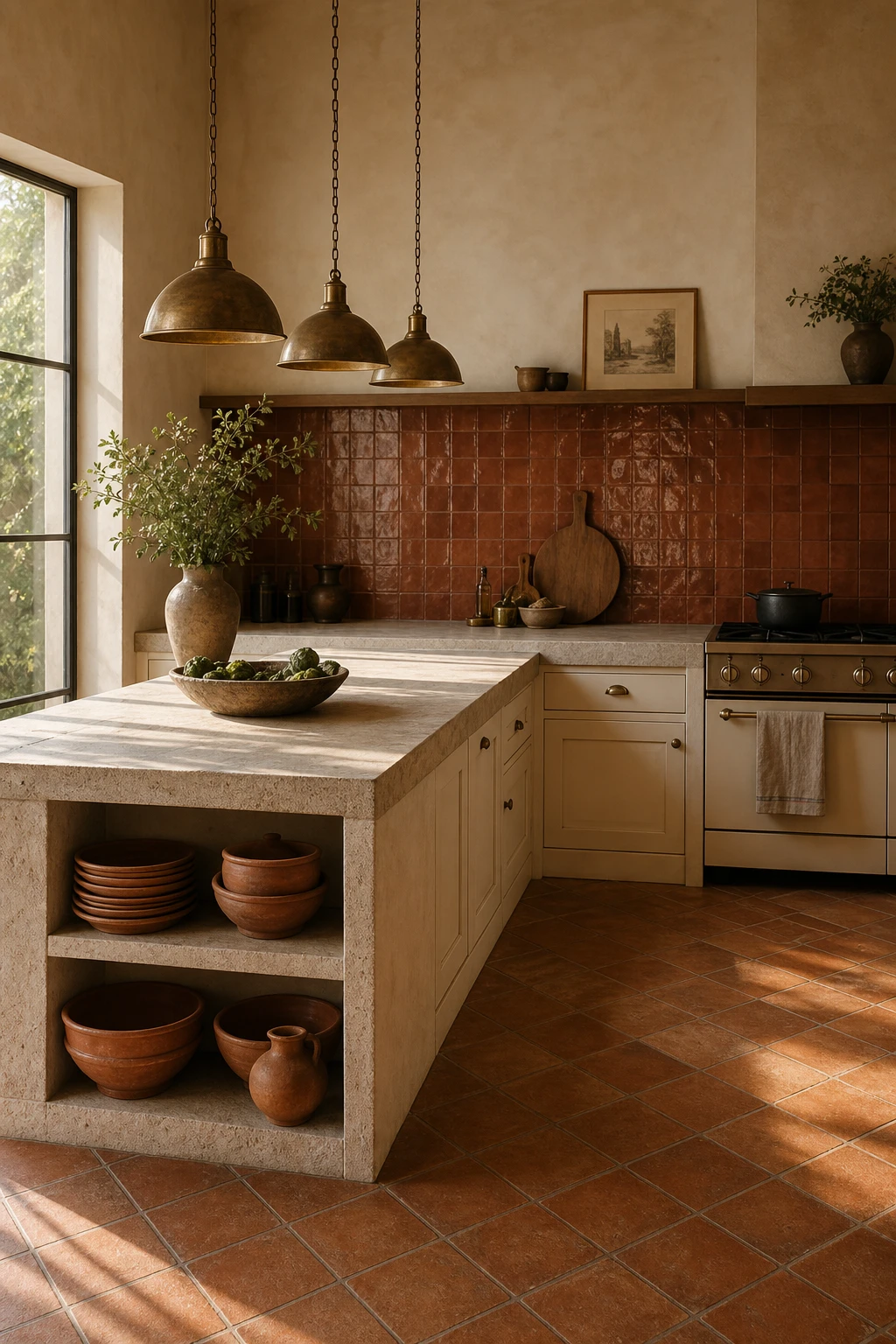
An L Shaped Kitchen With a Peninsula Is the Layout That Shows Off a Cream And Terracotta Kitchen Best
Bending the kitchen into an L with a peninsula is one of my favourite moves for a cream and terracotta scheme, because the shape hands you ready made zones to play with. You get a natural break point where cream cabinetry can give way to a terracotta tiled peninsula side, so the colour does real work rather than just sitting there. Watch how the diagonal floor tiles pull the eye across both legs and tie it all together without any effort from you.
The Key Details
Honed stone peninsula countertop
Diagonal terracotta floor tiles
Aged brass pendant lights
Zellige terracotta splashback tiles
Open lower peninsula shelving with earthenware
Pro TipTile the outward facing side of the peninsula in zellige terracotta rather than matching the cabinet finish, and it instantly becomes the focal point the whole room reads from.
AvoidRunning the same surface material around every leg of the L gives the layout nowhere to breathe, and the peninsula ends up looking like an afterthought rather than a considered moment in the room.
Alan launched Edward George London in 2017. Since completing his masters in Town & Regional Planning (MPlan) he has combined the skills he learned at the University of Sheffield with his passion for design, to help create a foundation for those looking to create a beautiful home.