Newsletter Subscribe
Enter your email address below and subscribe to our newsletter

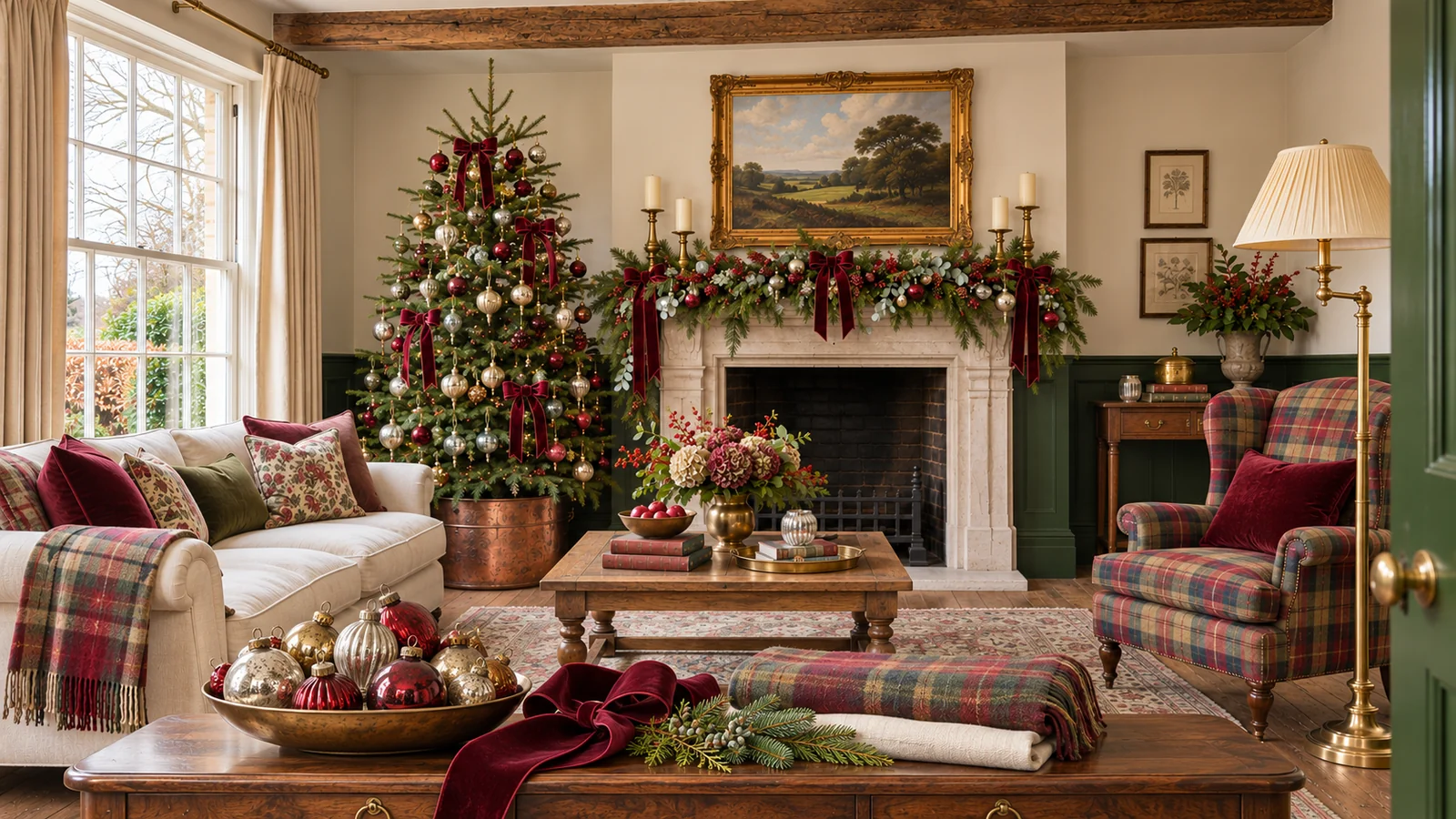
The English country Christmas decor I would choose starts with the pieces you already love. An old glass bauble, a silver bell or a painted wooden ornament can sit beautifully beside new velvet ribbon and generous greenery. I would select the additions by their colour, surface and scale, giving the family collection a clear setting without making every decoration match.
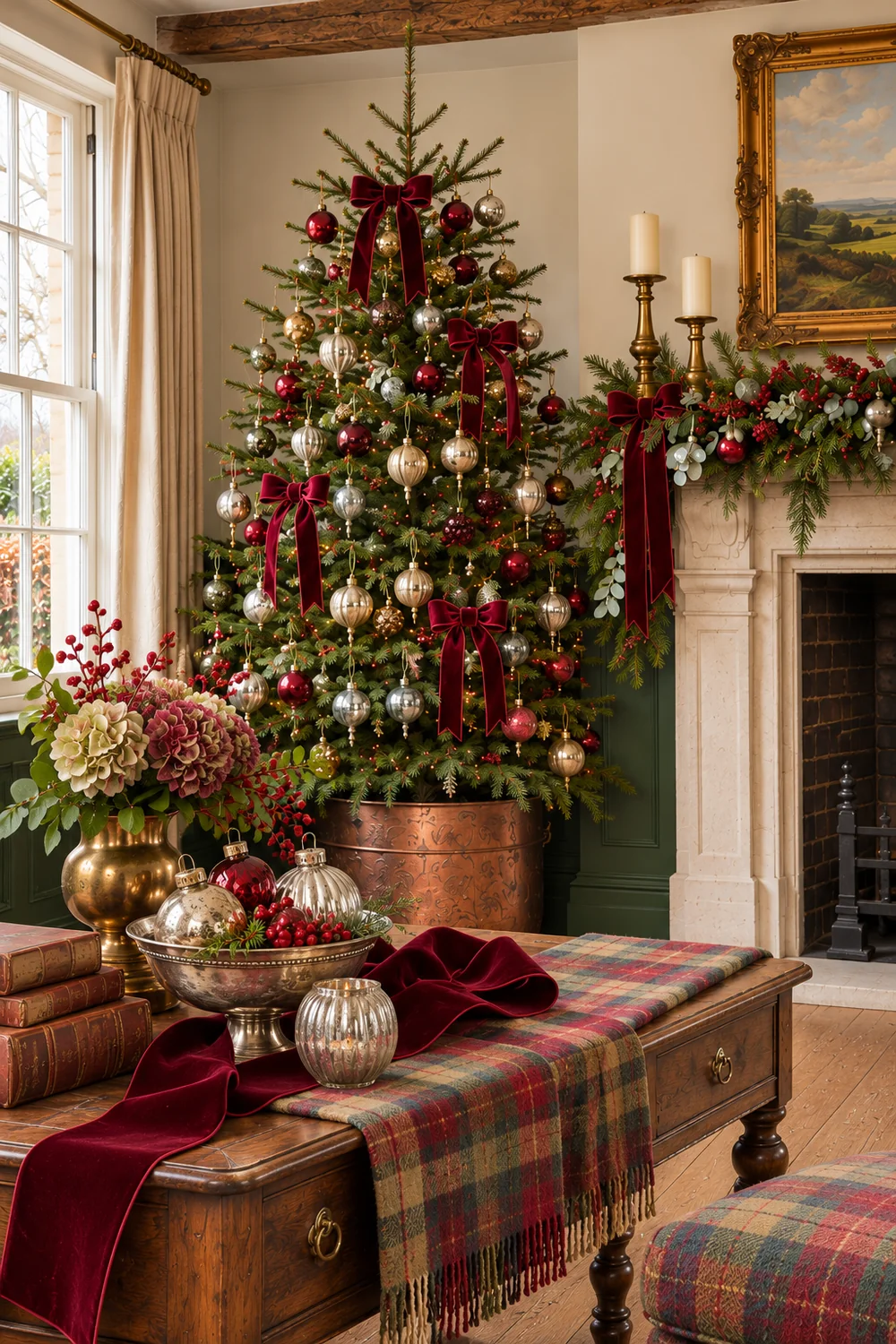
I would bring the actual ornaments together before ordering ribbon or fabric. Choose a handful that will be clearly visible in the room and place them beside your proposed additions. Include the awkward favourite as well as the easy matches. The test is whether the new material helps the collection feel intentional, rather than whether every piece belongs to a perfectly limited colour chart.
For this scheme, I would start with burgundy velvet, muted red and green tartan, warm cream linen, evergreen foliage and aged brass. The family glass can introduce faded silver, soft gold and little variations of red. Those differences are part of its appeal. A shiny new finish needs to earn its place beside them, especially if it becomes the brightest thing in the group.

The English country Christmas room plan should establish where those materials belong. I would use this article to make the specific selections: the ribbon’s width, the scale of the check, the type of greenery and the ornament combinations. If a proposed material needs a new colour story or a different room arrangement to work, return to the plan before buying it.
You can make this decision with small samples. Put a length of ribbon beside a bauble, lay the tartan against the existing upholstery and view the group near the window. Turn the materials towards the darker part of the room as well. A colour that looks promising on a bright screen may become dull or harsh beside the objects it is supposed to complement.
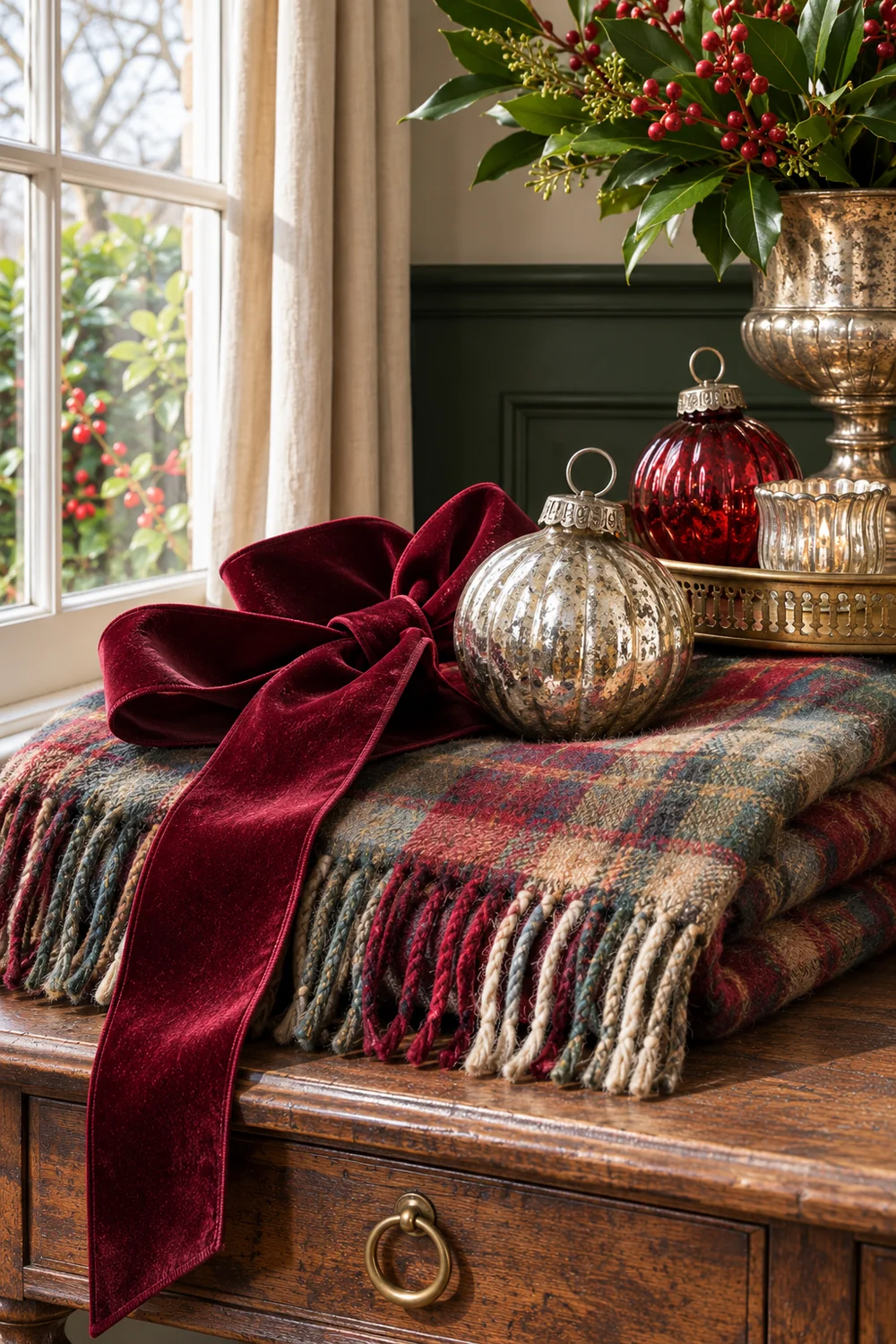
I would keep a useful distinction between a repeated material and a matching object. Repeating burgundy velvet on the tree and wreath can connect them. Buying identical ornaments for every surface may flatten the collection instead. Choose additions that provide a thread through the room while allowing the older pieces to remain visibly different.
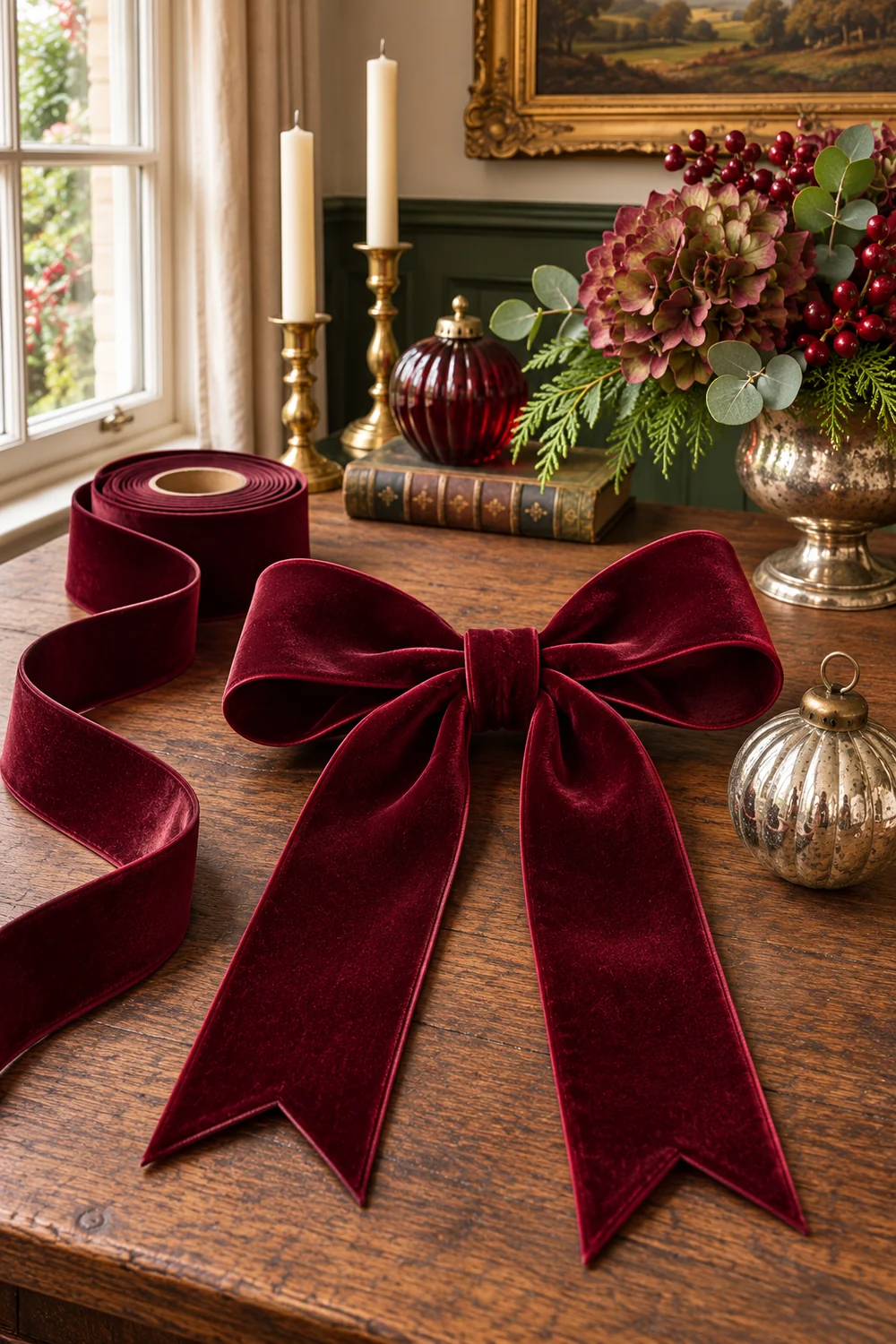
Ribbon is one of the simplest ways to give mixed ornaments a common language. I would choose its colour first, then compare widths against the actual branches and baubles. A narrow velvet tie can feel delicate around a small glass ornament. A broader bow can provide a more visible accent on the tree, but it should not cover the ornaments you want to see.
As an illustrative starting comparison, put a 10 mm ribbon and a 25 mm ribbon beside the same medium glass bauble. Neither width is automatically correct. The narrow ribbon may be enough when the ornament already has an elaborate surface; the broader one may work where a darker branch needs a legible accent. Judge the pair from the room as well as at arm’s length.
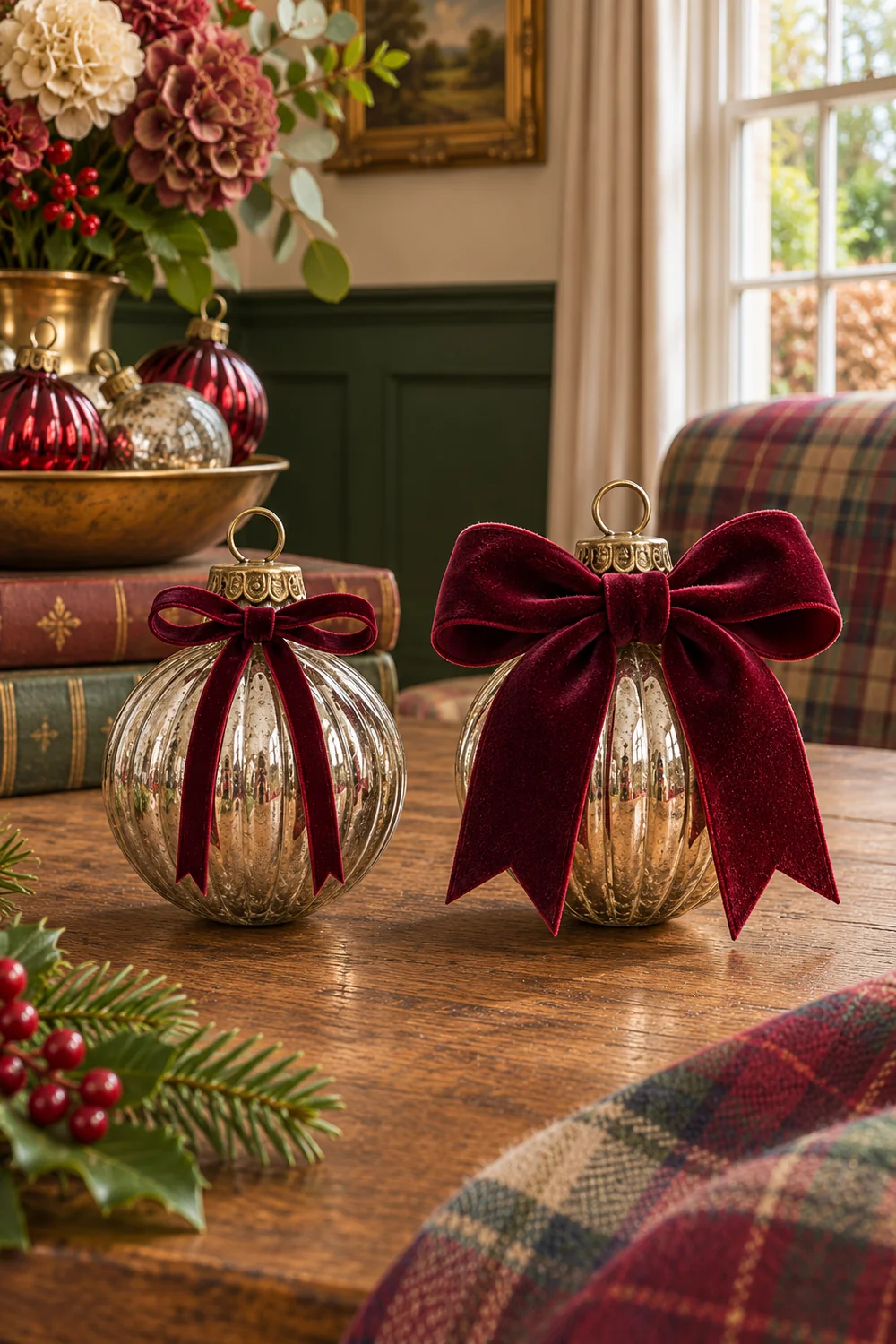
For quantities, tie one complete trial bow before cutting the rest. If that bow uses 65 cm and you want eight, the bows require 5.2 metres of ribbon. Add the separately measured lengths for a wreath or other tails, then allow for the mistakes your trial actually revealed. This is a worked example, not a standard allowance for every ribbon or tree.
The English country Christmas ideas collection shows how personal ornaments can remain part of a traditional scheme. I would use the new ribbon to connect those pieces, without tying a substantial bow to every one. Leave some ornaments with their existing sound hangers. That variation gives the tree a lighter rhythm than a repeated bow at every branch tip.
Make one bow before calculating a whole tree. Use the knot, loop size and tails you actually want, then untie it and measure the length of ribbon consumed. If your trial bow uses 70 cm and you want six identical bows, the bow requirement is 4.2 metres. Add the ribbon needed for your separate trial, wreath or other uses rather than assuming the roll will somehow cover them too.
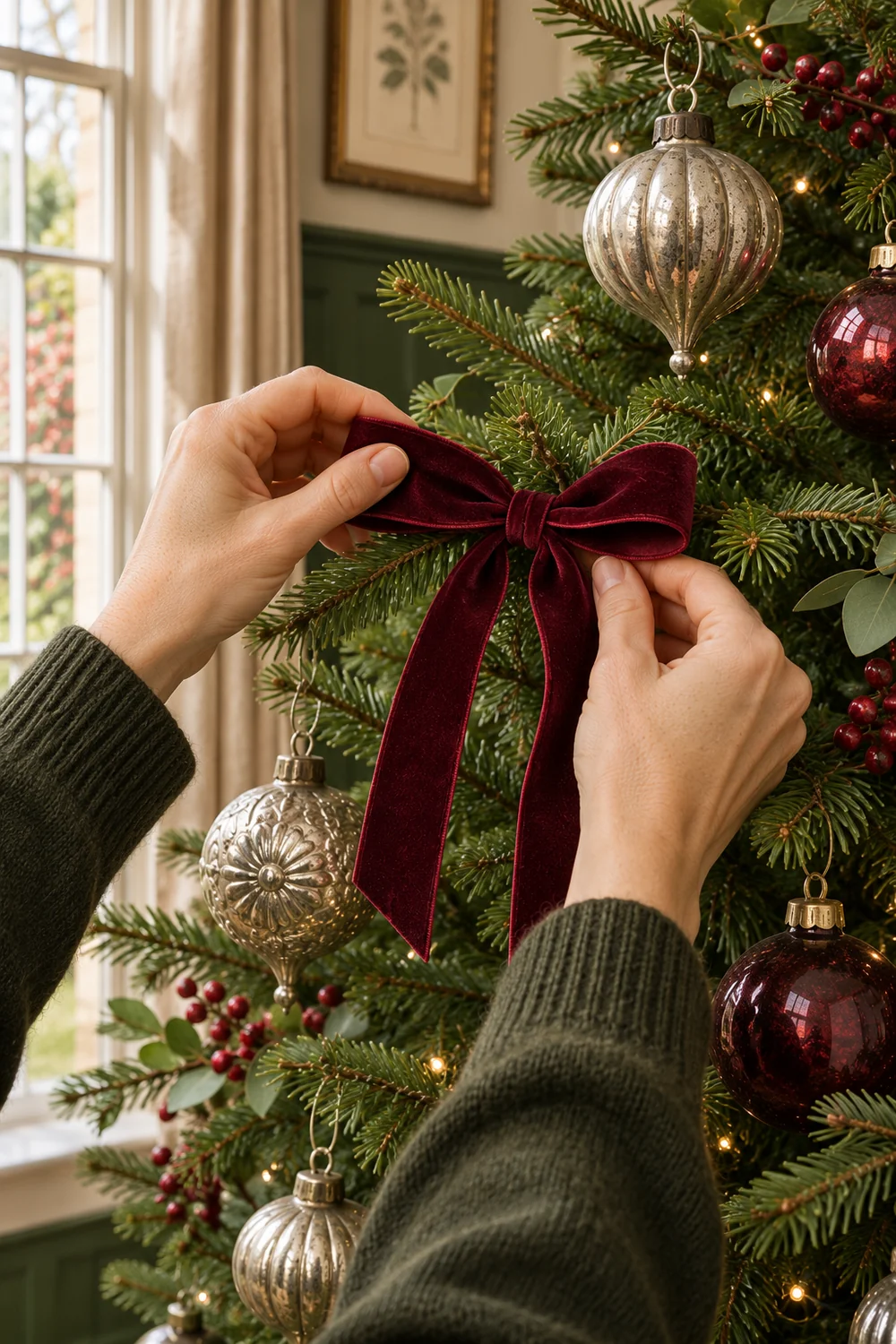
I would record the length used by each bow style if the tree and wreath need different proportions. A large wreath bow should not quietly become the template for every branch. Keep the cut ends, attachment method and the weight of the ribbon in mind when testing it. Wired and unwired ribbons behave differently, so compare the actual product rather than relying only on its width.
Set aside a short piece as a reference after cutting the final lengths. You can check a later purchase against it, or identify the colour next year without relying on a label that may no longer exist. I would buy an additional roll only when the measurements show a reason, rather than using extra ribbon as a substitute for deciding where the bows belong.
I would choose greenery for its outline as well as its colour. A dense garland creates a broad, continuous shape. A looser arrangement of branches gives the ornaments and architecture more room. Put that choice against the mantel, console or tree in the plan. More foliage is not automatically more convincing if the surface underneath is too slight to support its visual weight.
For a mantel, measure the surface and decide where the greenery should stop before choosing a length. If you want a drop at one end, include that actual path in the measurement. A straight 150 cm shelf and a garland intended to descend beyond it do not have the same requirement. Use a flexible tape along the planned route, then check what the supplied garland length actually includes.
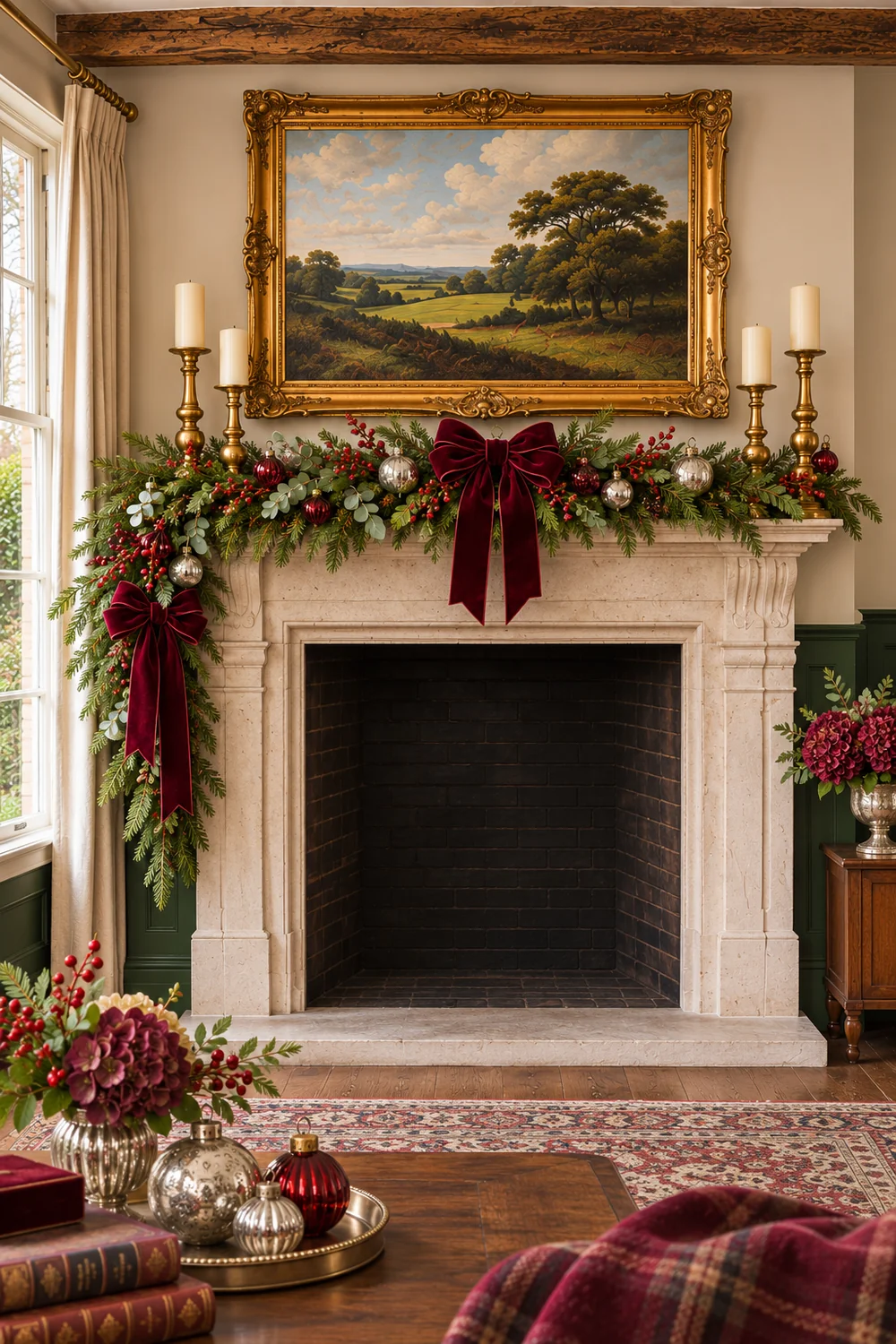
The Christmas fireplace examples can help you compare different proportions. In this scheme, the stone fireplace is unused and the hearth is empty. For a working fire or stove, I would follow the appliance instructions and keep combustible decorations outside the required clearances. London Fire Brigade also advises keeping decorations away from heat and naked flames. A separate console is the better decorative surface when the intended arrangement cannot meet those requirements.
Fresh and artificial greenery create different tasks. With fresh branches, you need a way to protect the supporting surface and inspect their condition. With artificial greenery, examine the construction, visible joins and the amount of adjustment needed to obtain the shape shown in the product photograph. I would choose on the basis of the actual arrangement and the care you can give it, rather than calling either option universally better.
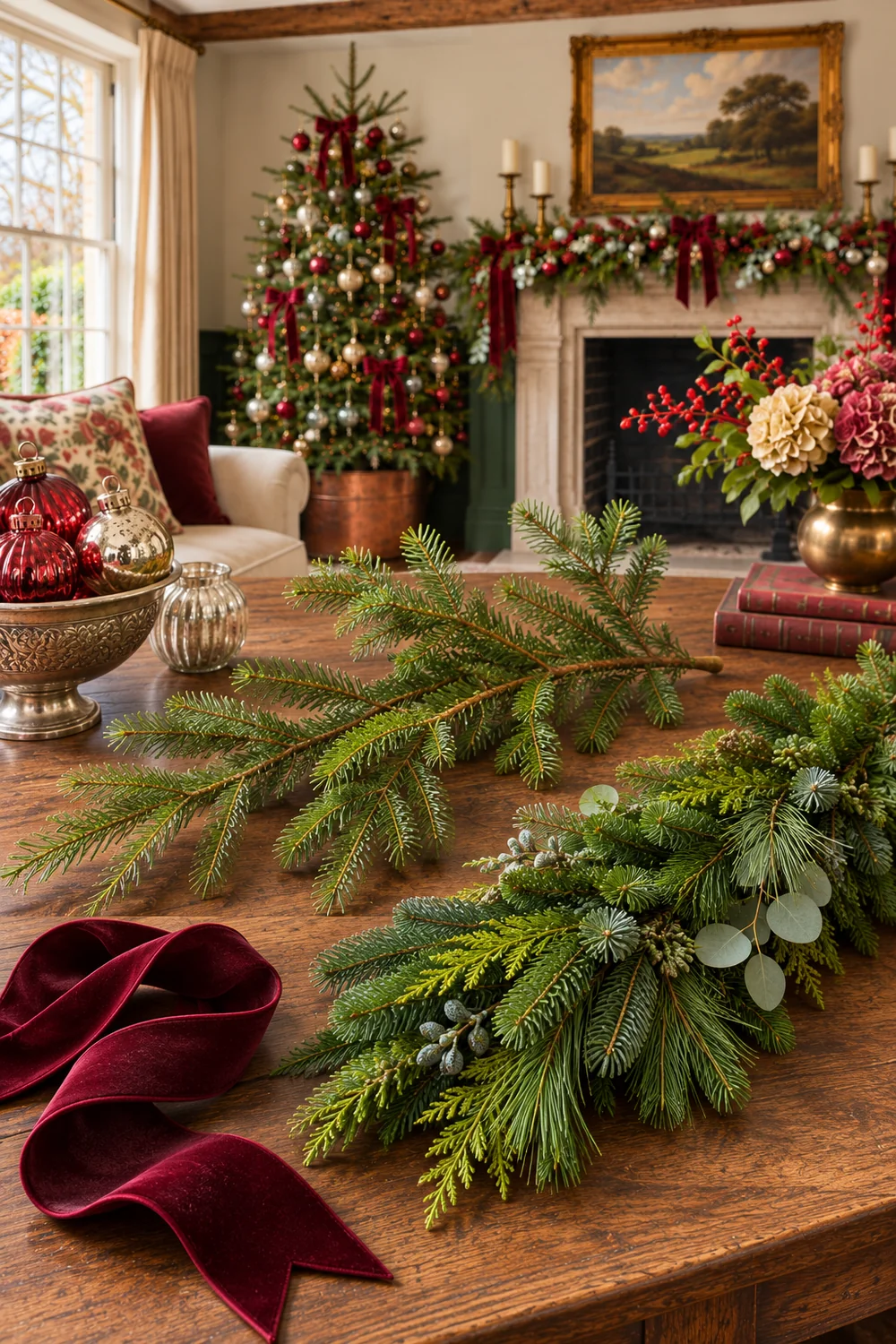
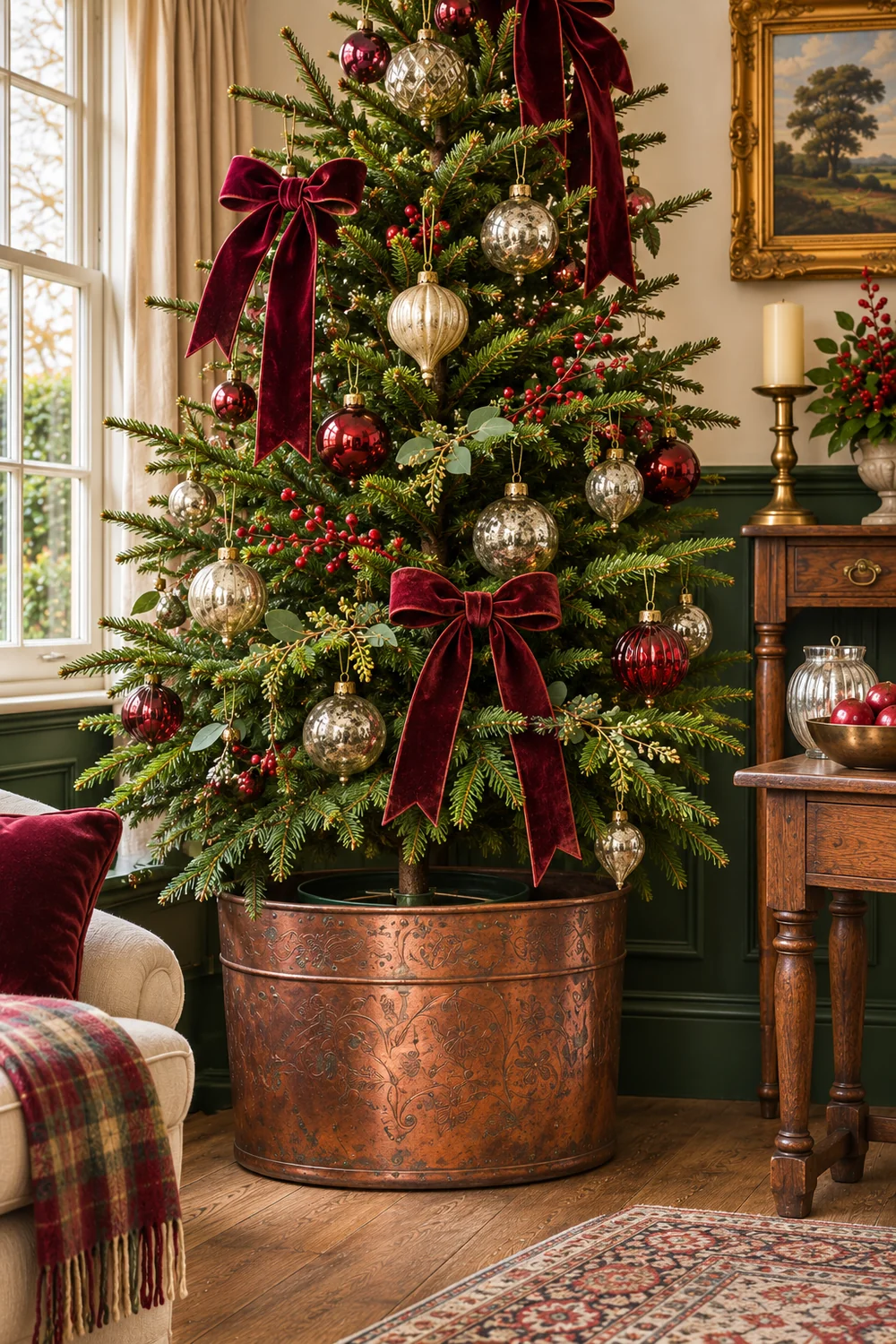
A fresh tree needs its own care plan. The Royal Horticultural Society advises keeping the stand supplied with water and avoiding a position close to heat, since drying encourages needle loss. Keep access to the reservoir when arranging the lower branches and ornaments. The decorative layer should not make an ordinary care task difficult to carry out.
I would test a small section of greenery with the ribbon before committing to the full arrangement. A deep green branch can make burgundy appear almost black; a slightly lighter, more open branch may let the same ribbon read clearly. Check that the finished shape has a defined place for the ornaments instead of adding them wherever an accidental gap remains.
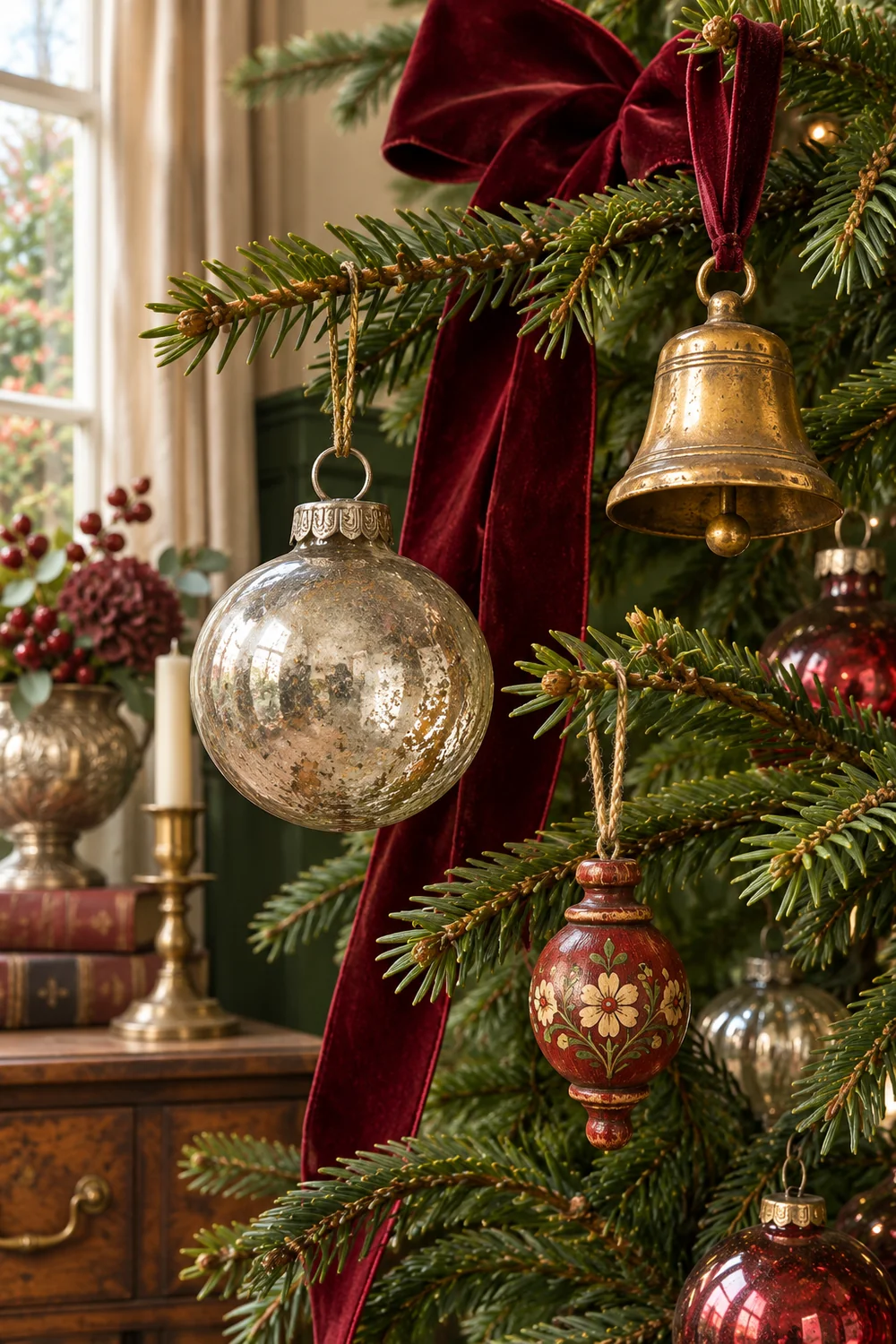
An older ornament often has an uneven surface: a little tarnish, a faded colour or a reflective patch that catches the light differently. I would let those qualities remain visible. New ornaments can support them through related colours and varied shapes, without imitating age so aggressively that every surface looks deliberately distressed.
Begin with a few distinct pairings. A faded silver bauble can sit near burgundy velvet and clear glass. A painted red ornament can relate to the red thread in the tartan. A warm gold bell can sit beside aged brass elsewhere in the room. These are visual relationships rather than a rule that every material must be repeated in the exact same form.
The rustic Christmas colors reference offers further combinations of green, cream, muted red and metal. I would borrow a colour relationship that supports the existing pieces, then stop expanding the palette. The family ornaments may already provide all the small variations the room needs. A new packet of contrasting baubles can easily add a second story where the first one was working.
Place the most delicate pieces only where their condition and the support allow. Check the existing cap, loop and branch before hanging an old glass ornament. If its attachment is questionable, I would not improvise a load bearing repair to preserve the photograph. A padded, stable display on a suitable surface can give a treasured piece prominence without asking a weak hanger to support it.
I would also separate visual variety from quantity. A handful of meaningful ornaments shown clearly can be more effective than a dense layer that conceals their individual shapes. Hang some farther into the tree where they remain visible and place others towards the ends of suitable branches. Step back regularly to check the balance of colour and shine across the whole outline.
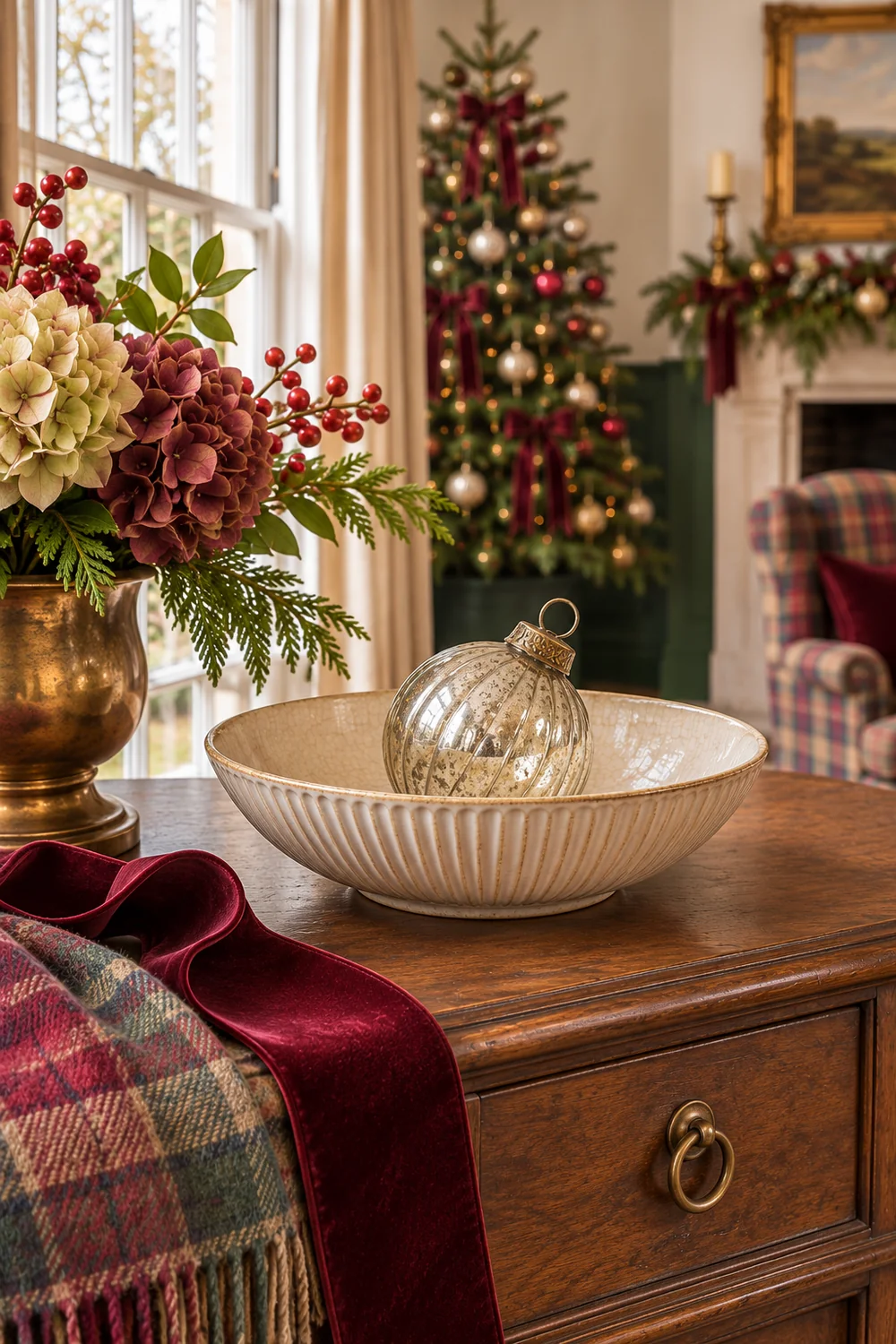
The object is a personal tree with a coherent setting. It does not need to pass as a museum display, a retail window or a perfectly symmetrical photograph. Let a small handmade ornament remain a small handmade ornament. Its familiar place among the glass and ribbon can be the detail that makes the entire arrangement feel like yours.
I would compare the tartan at the size it will occupy in the room. A tiny sample can hide how large the repeat becomes across a cushion or throw. If possible, unfold enough fabric to see the pattern properly, then hold it beside the existing upholstery. The check should contribute to the scheme without making every seat look like part of a newly purchased set.
Where a tartan armchair already supplies the pattern, I would introduce plain cream linen and a restrained velvet accent nearby. If the seating is plain, a tartan throw can provide the same connection on a smaller scale. Choose the amount of check for the room’s existing pattern, rather than treating tartan cushions, tartan curtains and tartan ribbon as a required package.
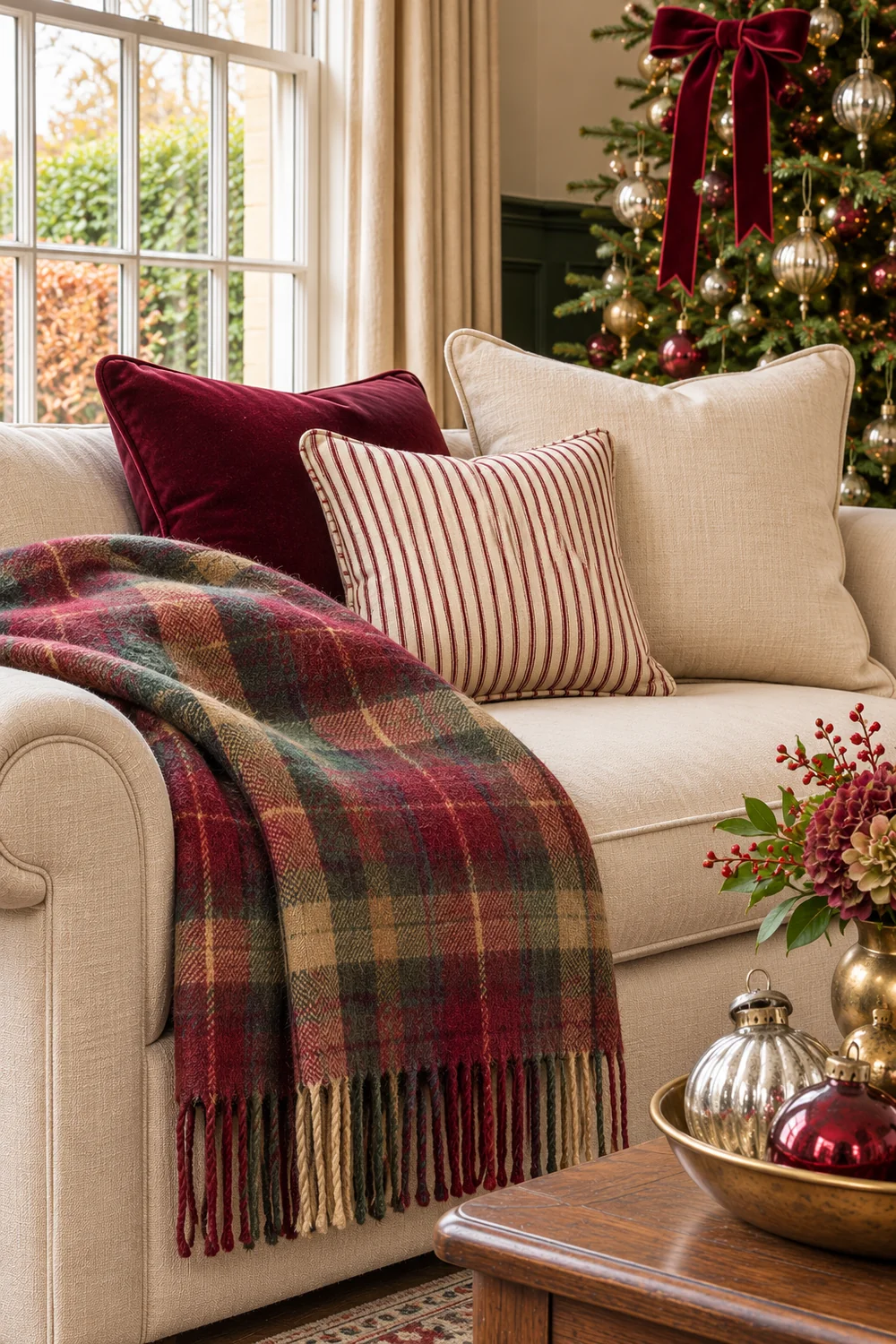
The English countryside colors guide can help you compare the quieter colours running through the fabric. A cream thread may connect to the sofa more successfully than the brightest red. A dark green can repeat in foliage. I would look for those small links before buying an additional accessory to introduce another shade.
For example, I would put a broad tartan throw beside a fine cream and red ticking stripe, with plain cream linen providing a pause between the patterns. Keep the smaller stripe visibly quieter than the check, rather than choosing two patterns that compete at the same scale.
Metal finishes need a similar hierarchy. In this room, aged brass provides the substantial metal note through a lamp or familiar decorative piece. Antique silver glass is the smaller, sparkling layer on the tree. They can sit together because they do different jobs. I would avoid adding several equally prominent new metallic finishes simply to make every object appear festive.
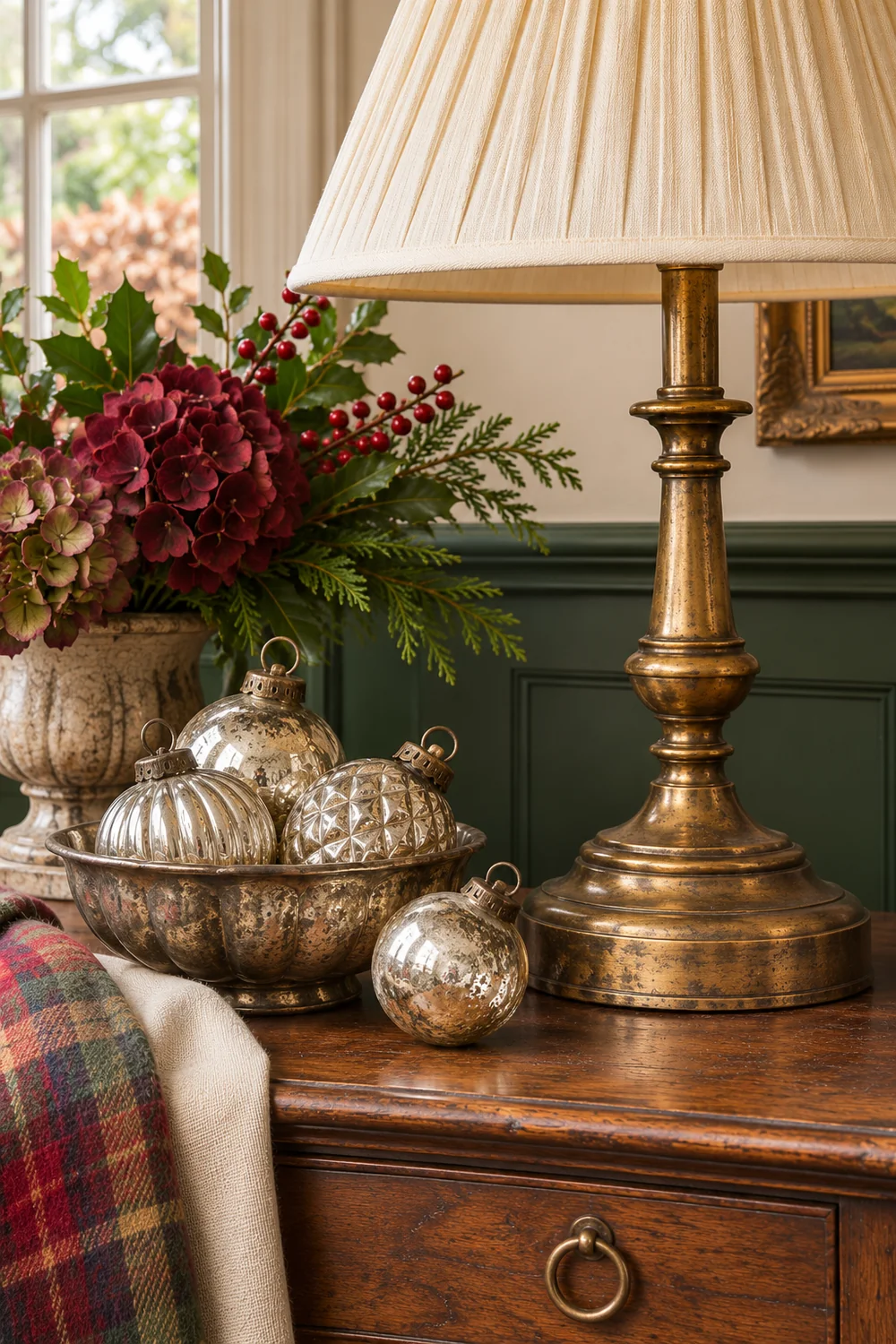
Check the group beside the timber as well. Warm oak or walnut can already provide much of the room’s richness. Cream linen gives it relief, while velvet and tartan add a concentrated seasonal layer. If the material selection feels heavy, I would first increase the quiet space around it or remove one competing pattern. A different texture is often more useful than a completely new colour.
Before ordering the full quantities, gather the actual ribbon sample, fabric and representative ornaments together once more. Confirm the surface, width, pattern scale, care instructions and intended location of each addition. Keep the completed selection list short enough that every item has a clear purpose in the room.
I would make the final record while the room is complete. Take one photograph from the doorway, one from the main seating position and a few closer views of the combinations you want to repeat. The wide views preserve the arrangement; the closeups preserve the material decisions. Neither needs to become a formal styling document.
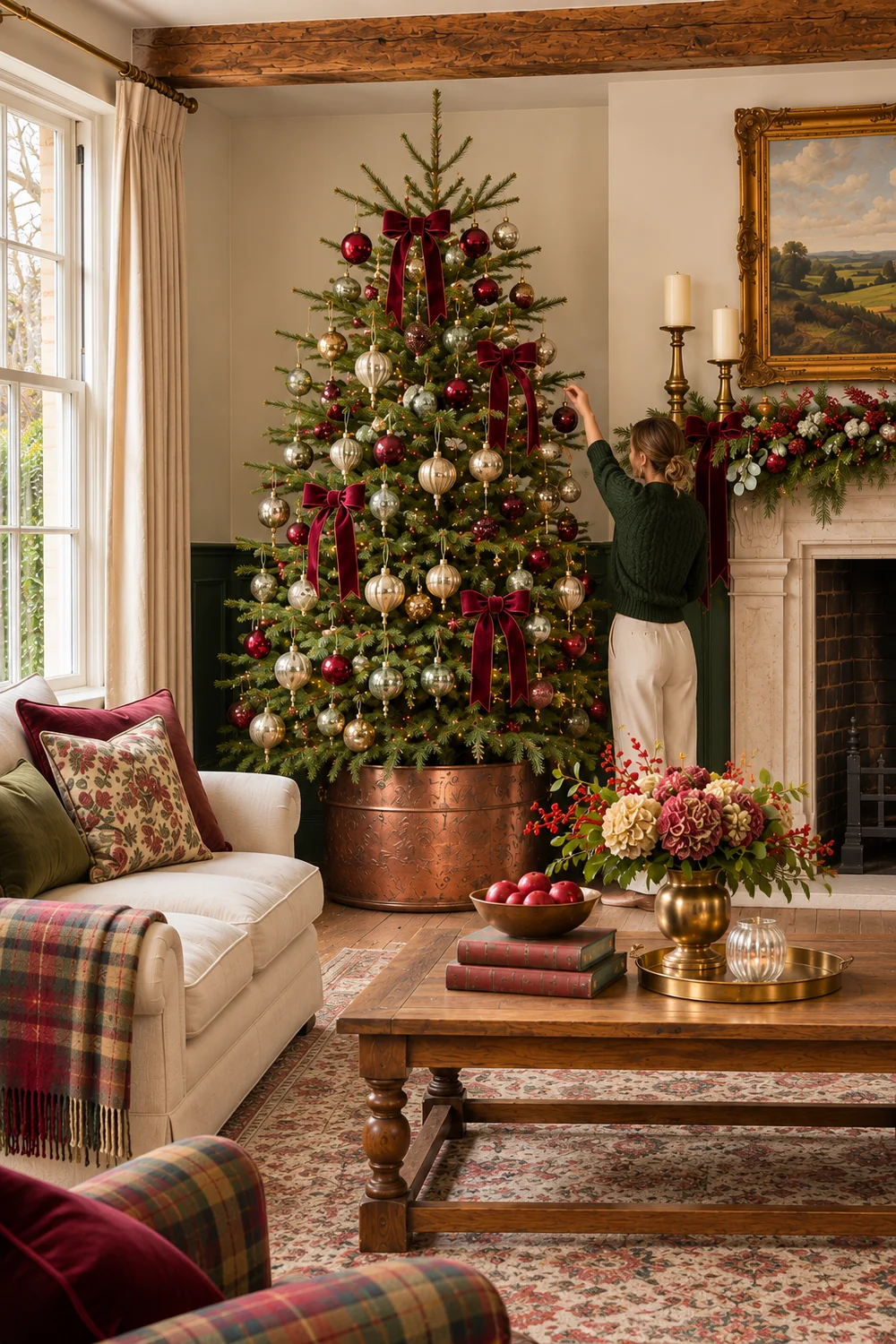
Keep a short materials note with those photographs. Record the ribbon colour and width, the measured length used for each bow type, the garland length and the places where new ornaments were added. Distinguish what you already owned from what you bought. That makes next year’s first decision much easier: what is still useful, and what actually needs replacing?
I would keep a small clean offcut of the ribbon and tartan with the notes, rather than trying to remember the exact shade from a picture. For the decorations themselves, follow the maker’s care instructions where available, and take particular care with fragile or deteriorating finishes. Do not wet clean or polish an unfamiliar old ornament simply to make it match the newer pieces. Seek appropriate conservation advice for a valuable or damaged object.
Pack pieces so they cannot knock against each other, and keep the material record somewhere you can find without unpacking every box. If the existing storage method has already protected the collection well, I would preserve it and improve the labelling rather than inventing a more complicated system. The aim is to bring the familiar pieces out again in good condition.
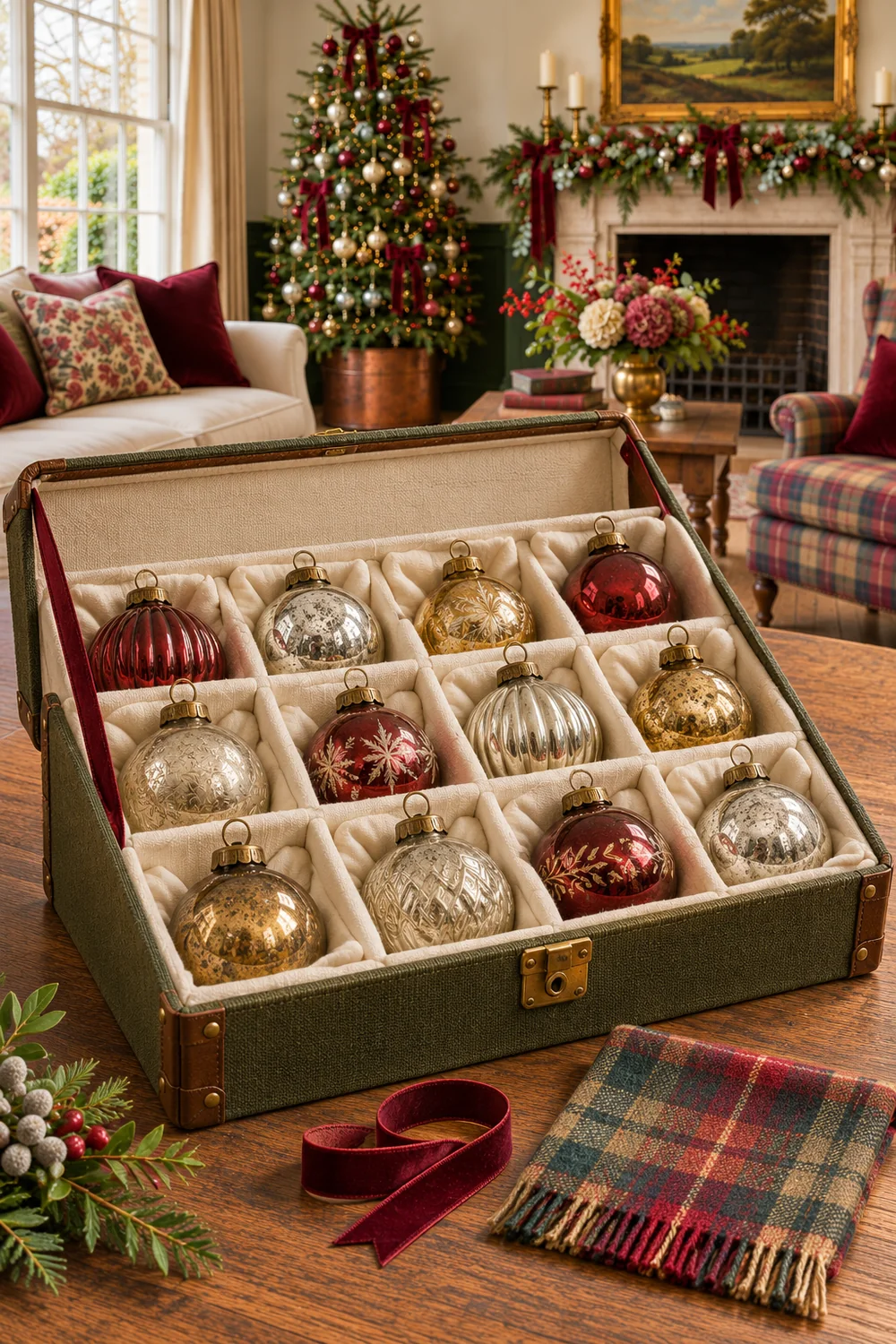
Return to the English country Christmas living room plan when the next season arrives, especially if the furniture or curtains have changed. Keep the successful material relationships and adjust the composition around the room as it is now. A personal Christmas scheme can evolve without replacing the collection that gives it meaning.
I would consider the selections finished when each new piece has a place, the quantities come from real measurements and the family ornaments remain recognisable. Burgundy velvet, tartan, greenery and aged metal are the supporting cast. The best additions help the old pieces look as though they have always belonged together.