I’ve always thought industrial gardens are the most honest kind, because they celebrate the beauty that was already there in old pipes, rusted metal and worn concrete. What I love most is how a single piece of scrap art or a black greenhouse can anchor an entire outdoor space and make it feel like something. In this piece I’m sharing ideas across water features, sculpture, planters, trellises and lighting, and every single one is a look you can make your own.
How a Steampunk Garden Brings the Whole Industrial Look Together
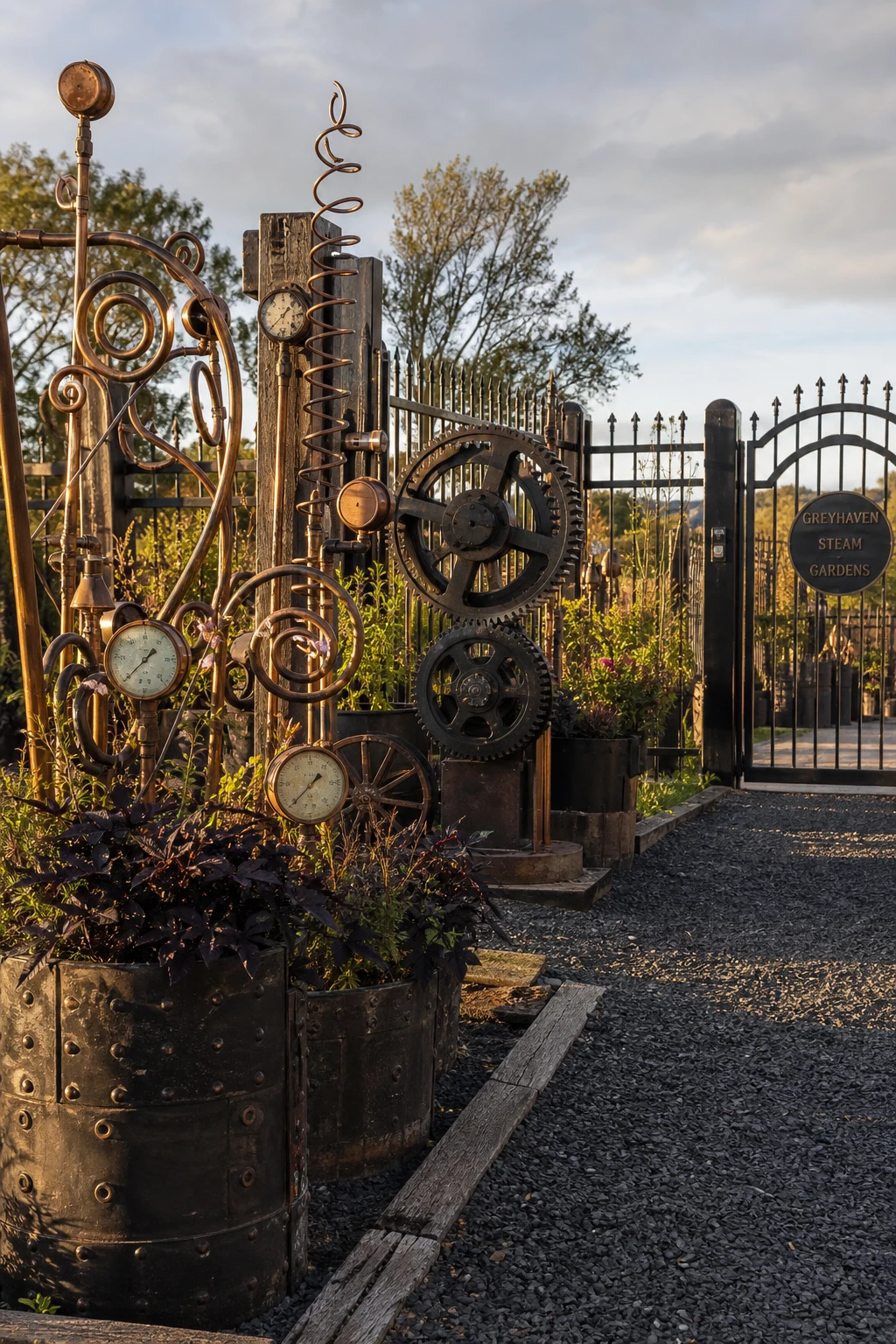
Steampunk styling wins me over because every element tells the same story. Copper pipes, cast iron, brass gauges and reclaimed timber all belong to the same industrial era, so the eye reads them as a single curated world rather than a jumble of props. You get that rare feeling of a garden with real personality. The trick I always check is whether each piece could plausibly share a workshop with the next, and when they can, the whole space clicks into place.
The Key Details
Copper pipe botanical sculptures
Riveted cast iron planters
Brass pressure gauge wall mounts
Cog and gear garden installation
Reclaimed railway sleeper path edging
Pro TipAnchor the scheme with one large centrepiece, such as a cog installation or a tall copper sculpture, before you add anything else, so every smaller piece has something to orbit.
AvoidMixing too many unrelated mechanical props without a common material or finish dilutes the narrative and the garden ends up feeling more like a salvage yard than a designed space.
Gothic Garden Design and the Moody Magic It Creates Outdoors
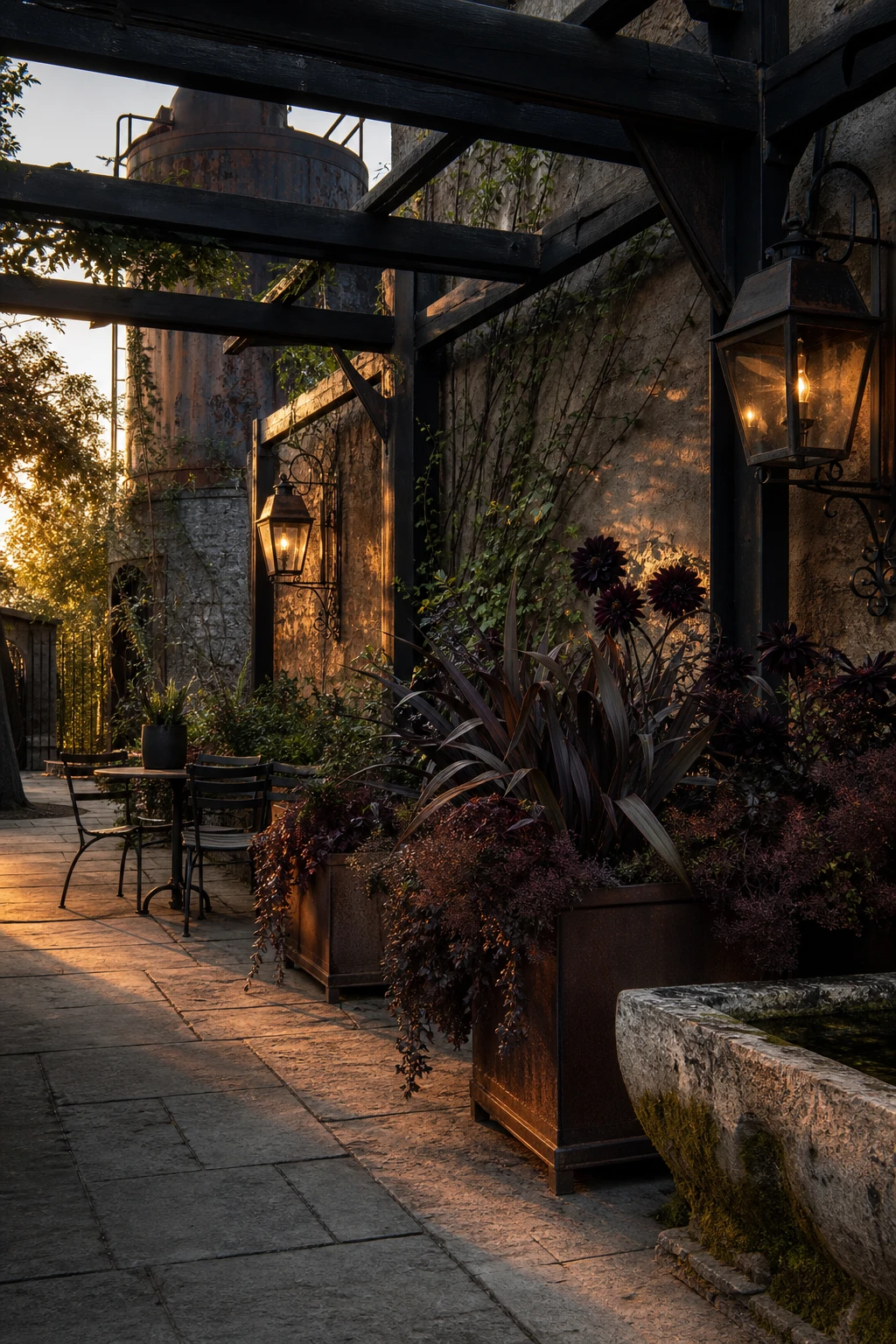
Dark drama in a garden works because shadow creates depth the way nothing else can. What I love here is how the rusted iron, aged limestone and brooding foliage all pull in the same direction without feeling heavy, because the living green cuts through and keeps it breathing. You get atmosphere rather than gloom, and that difference comes down to layering tones that feel earned rather than painted on.
The Key Details
Timber and steel pergola
Rusted iron planters
Wrought iron wall lanterns
Aged limestone paving slabs
Dark statement foliage planting
Pro TipAnchor every dark corner with at least one large leafed plant in a vivid green so the eye always has somewhere alive to land.
AvoidChoosing only near black planting throughout strips the space of contrast and leaves it feeling oppressive rather than dramatic.
Why a Concrete Garden Feels Far Warmer Than You Would Expect
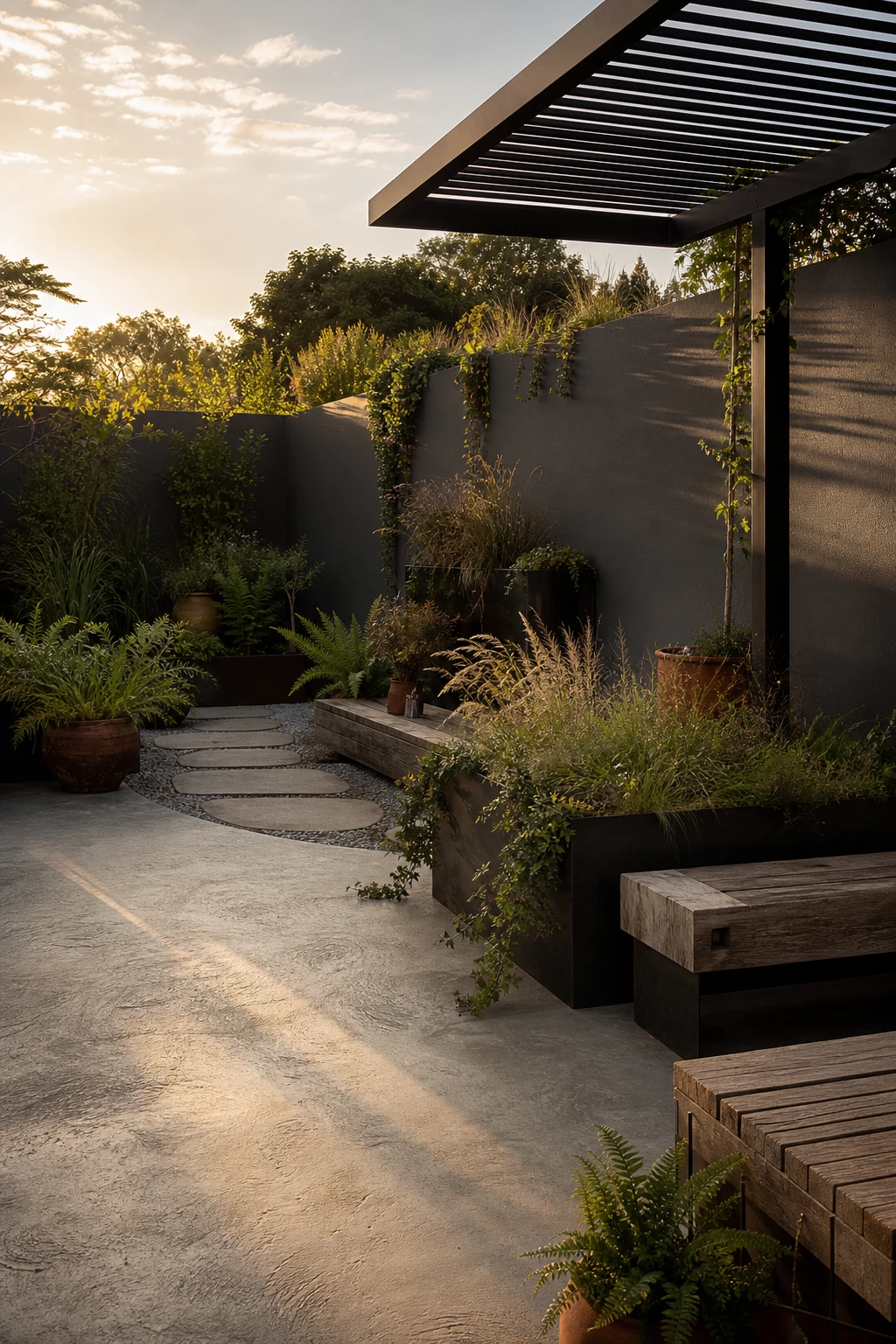
Concrete gets a bad reputation for feeling cold, and I understand why, but watch what happens when you layer it with rough texture and generous planting. The raw tactile finish on the terrace gives your eye something to settle into, and the grasses and timber push back against all that grey in the best way. You end up with a surface that feels grounded and calm rather than harsh.
The Key Details
Poured concrete terrace with raw tactile finish
Blackened mild steel oversized planters
Reclaimed timber low benches
Slatted steel pergola with geometric shadow detail
Aggregate stepping stone path edged with ornamental grasses
Pro TipMix a smooth poured finish with a rougher aggregate path nearby so the concrete reads as considered rather than accidental.
AvoidKeeping every surface the same shade of grey strips the space of depth and makes the whole garden feel like a car park rather than a retreat.
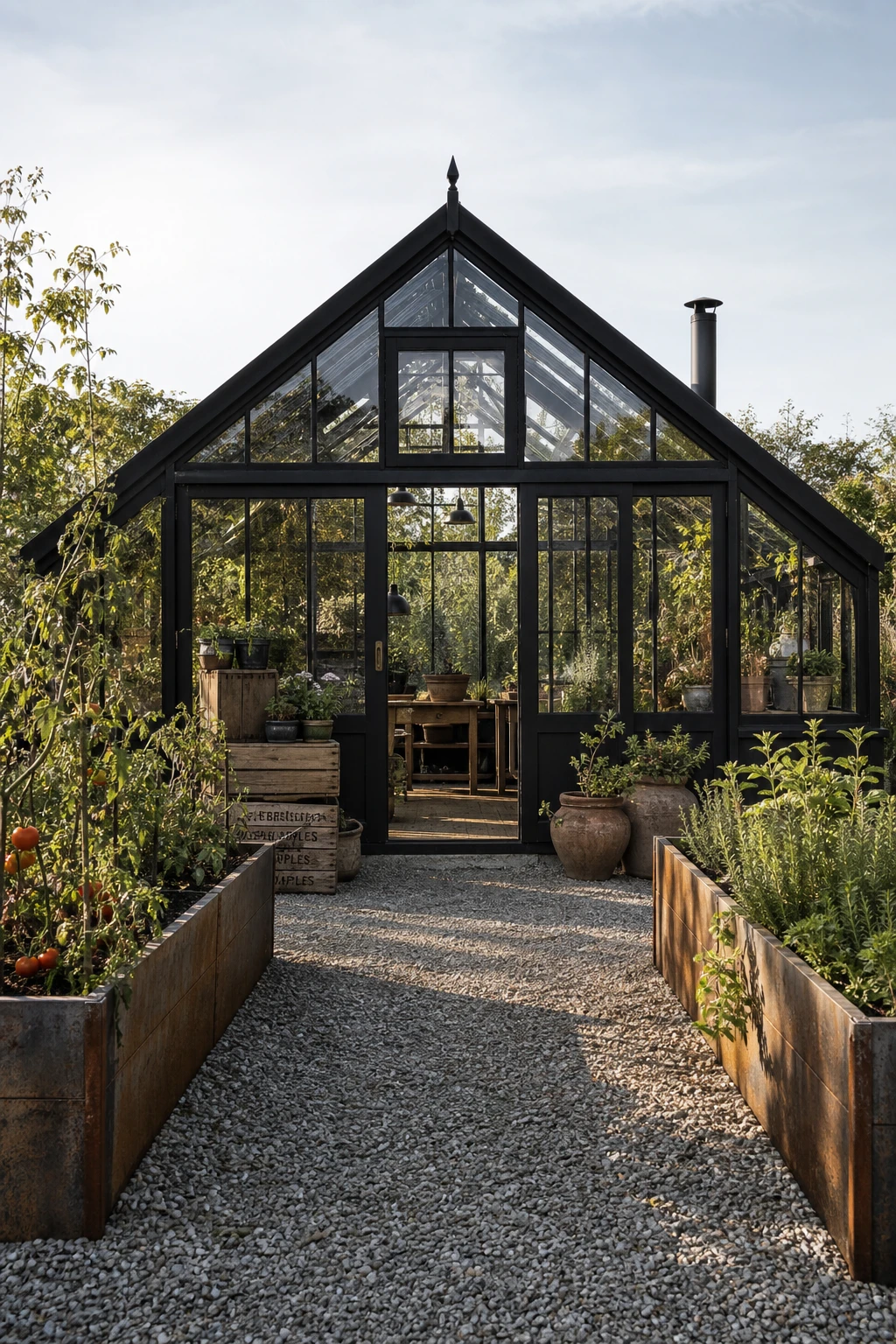
A Black Wood Greenhouse and the Statement It Makes in Any Garden
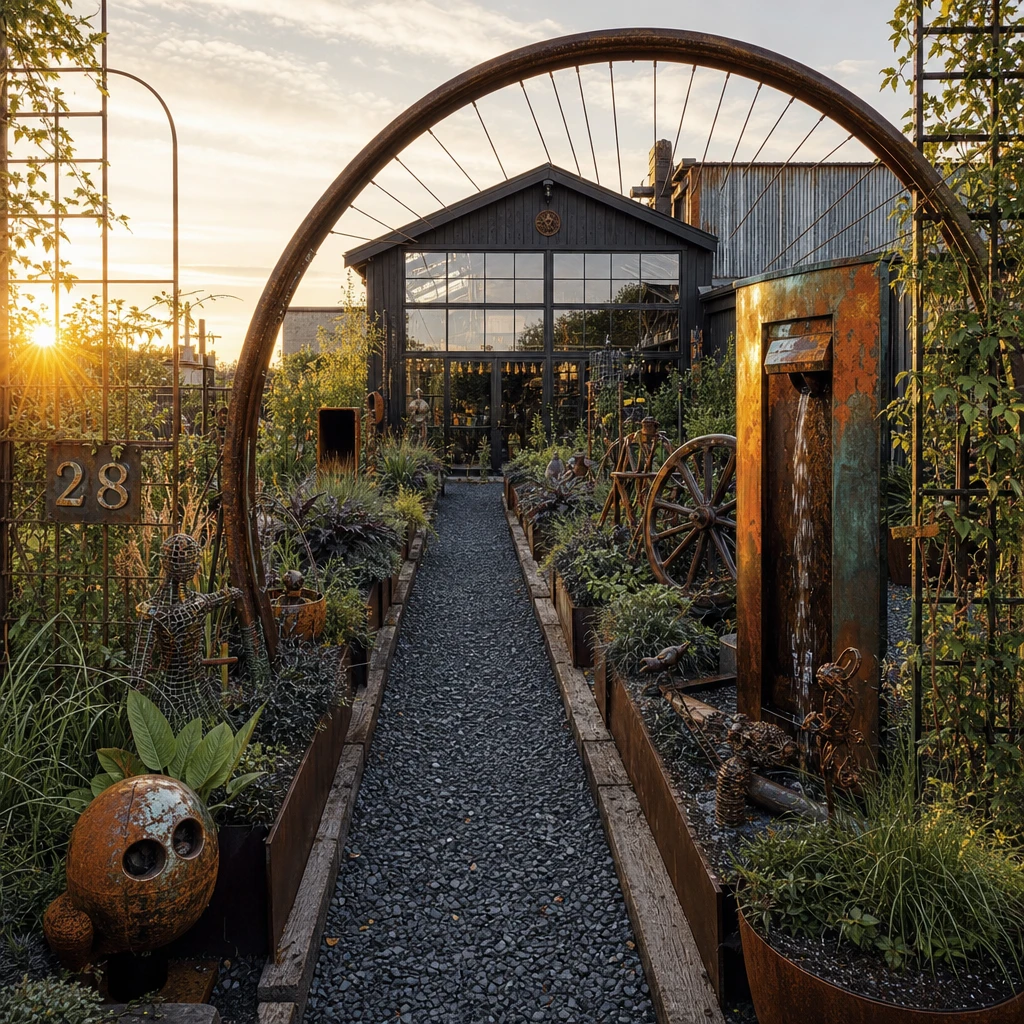
A black wood greenhouse stops you in your tracks, and that is exactly the point. What I love here is how the dark frame reads as sculpture first and function second, pulling every sightline toward it the moment you step outside. You get that lovely tension between the raw timber and the glass panels, soft light trapped inside a strong, graphic outline. It is the kind of move that gives a garden a real anchor instead of leaving it feeling like a collection of nice bits.
The Key Details
Black timber greenhouse frame
Raw corten steel raised planters
Crushed gravel pathway
Textured glass greenhouse panels
Weathered terracotta pots
Pro TipTrain a climbing rose or hop plant up one side of the frame so the soft green growth plays directly against the black timber and the contrast does half the decorating work for you.
AvoidScaling the greenhouse to fill the plot leaves no breathing room around it, and what should feel like a centrepiece ends up feeling like a shed that took over.
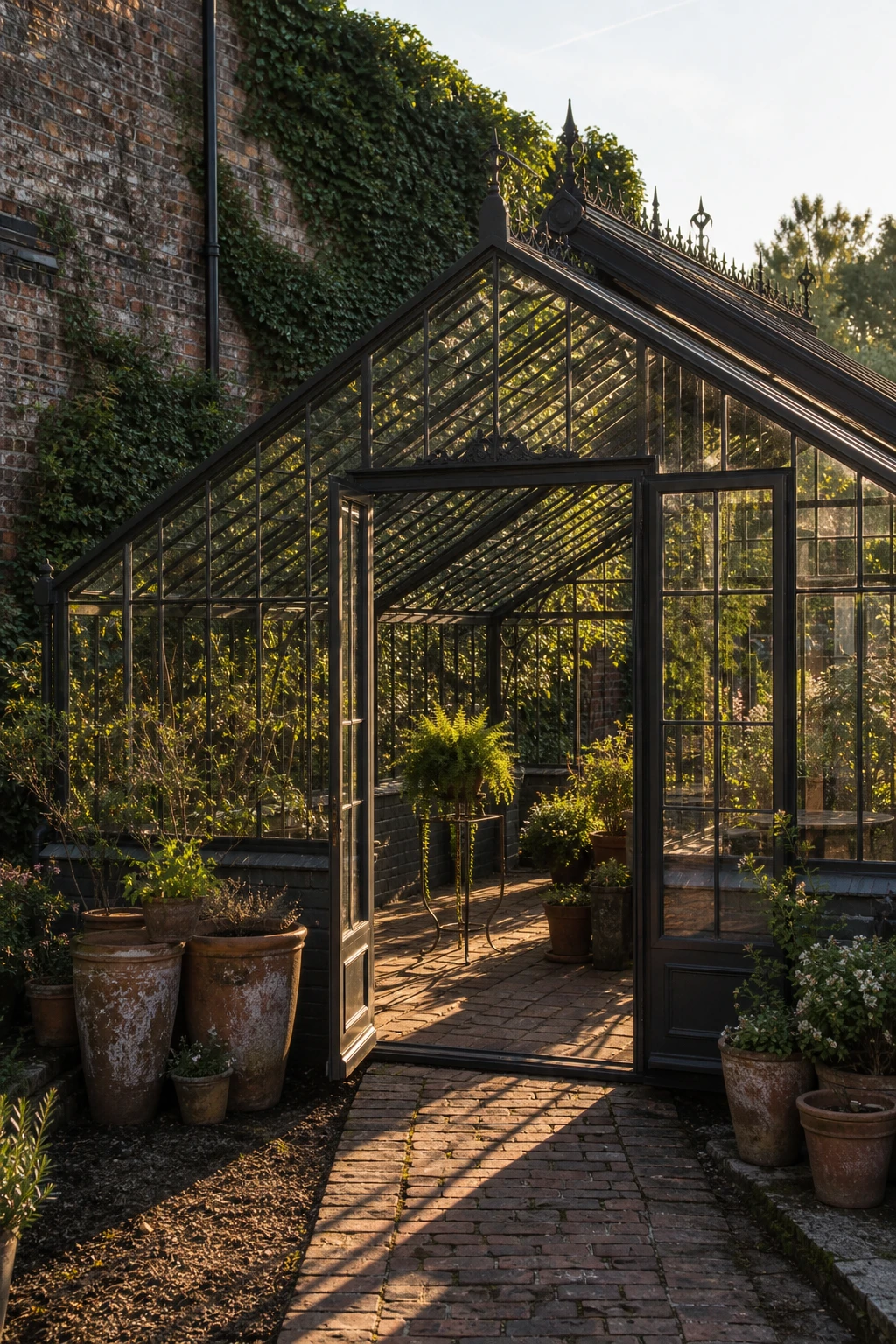
Old Victorian Greenhouse Charm and How to Get It on Any Budget
A Victorian glasshouse carries that particular magic of glass and aged iron working together, and you get all of it without owning a country estate. What wins me over every time is the patina, the soft rust bloom on the glazing bars, the uneven brick path, the way nothing matches perfectly yet everything belongs. You will notice how those imperfections are actually the point, and borrowing just two or three of these heritage details is enough to pull the whole feeling through.
The Key Details
Cast iron glazing bar framework
Pitched ridge lantern roof
Reclaimed brick path
Aged terracotta long tom pots
Wrought iron plant stand
Pro TipSearch salvage yards and architectural reclaim sites for original cast iron glazing bars, as even a small run of them used as a wall trellis reads as genuinely Victorian rather than a modern imitation.
AvoidSandblasting and repainting every metal detail to a factory finish strips out the patina that gives Victorian ironwork its soul, leaving you with something that looks like a garden centre display rather than a piece of history.
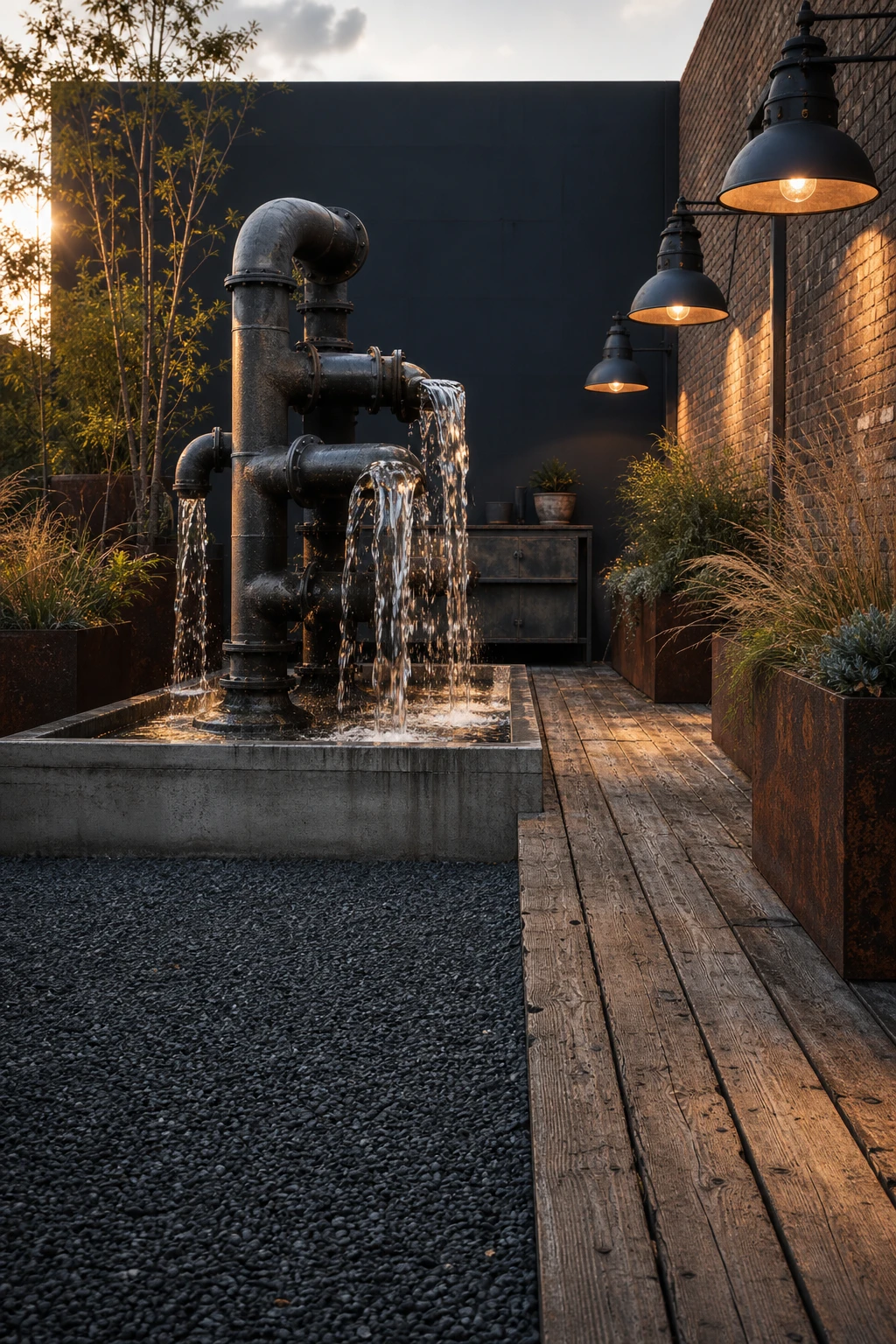
Industrial Water Fountain Ideas That Add Sound and Soul to the Garden
Moving water is what separates a hard industrial garden from one that actually breathes. What I love about a cast iron pipe fountain over a raw concrete basin is that the sound does half the work, pulling you across the space before you even register the visual. You get that contrast of rough, heavy materials softened the moment water starts moving, and watch how it makes the whole scheme feel alive rather than just styled.
The Key Details
Cast iron pipe fountain
Raw concrete basin
Corten steel planters
Reclaimed timber decking
Overscale industrial wall lanterns
Pro TipSlide the pump inside a short length of reclaimed iron pipe before dropping it into the basin, and you hide all the mechanics while adding one more industrial detail.
AvoidPlacing the fountain in an exposed, windy spot means the spray scatters sideways, soaks everything nearby, and the basin slowly empties, burning out the pump.
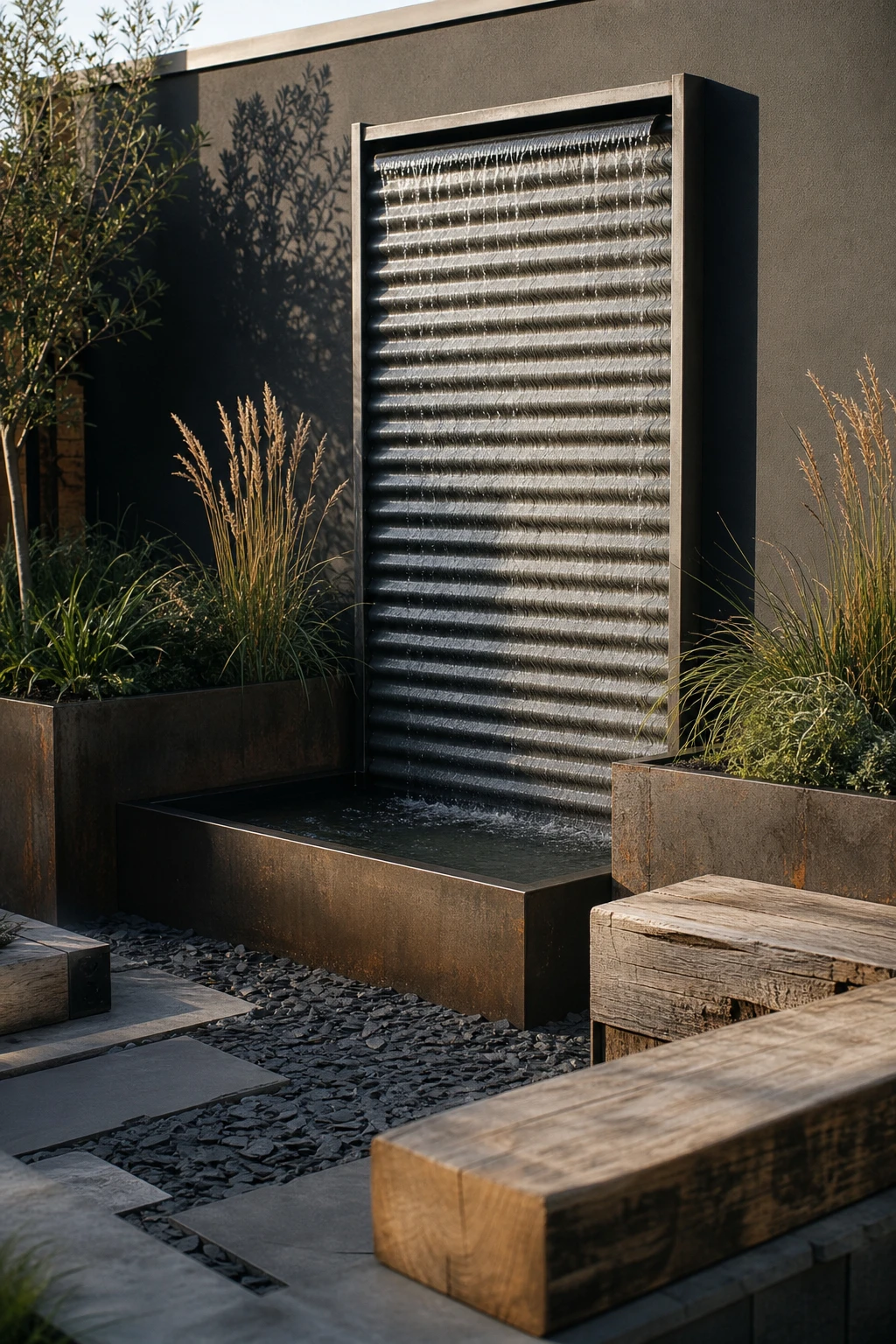
Corrugated Metal Water Features That Look Like They Belong in the Garden
Corrugated sheeting is one of those materials that spends decades being purely functional, and then one day you lean it against a stone wall with water running down its face and suddenly it becomes the most arresting thing in the garden. What I love is the contrast it creates: rigid, industrial ridges against the softness of moving water. You get texture, sound, and a focal point all in one piece. The utilitarian origin is exactly what makes it feel so honest and grounded outdoors.
The Key Details
Corrugated galvanised steel trough
Dark steel basin reservoir
Weathered steel planters with ornamental grasses
Reclaimed timber sleeper bench seating
Crushed slate pathway edging
Pro TipBrush a clear exterior sealant over the cut panels before installation to slow the rusting process down to a pace you can actually control.
AvoidLeaving freshly cut panel edges exposed near a pathway means anyone brushing past risks a nasty cut, so always file or cap raw metal edges before the feature goes in.
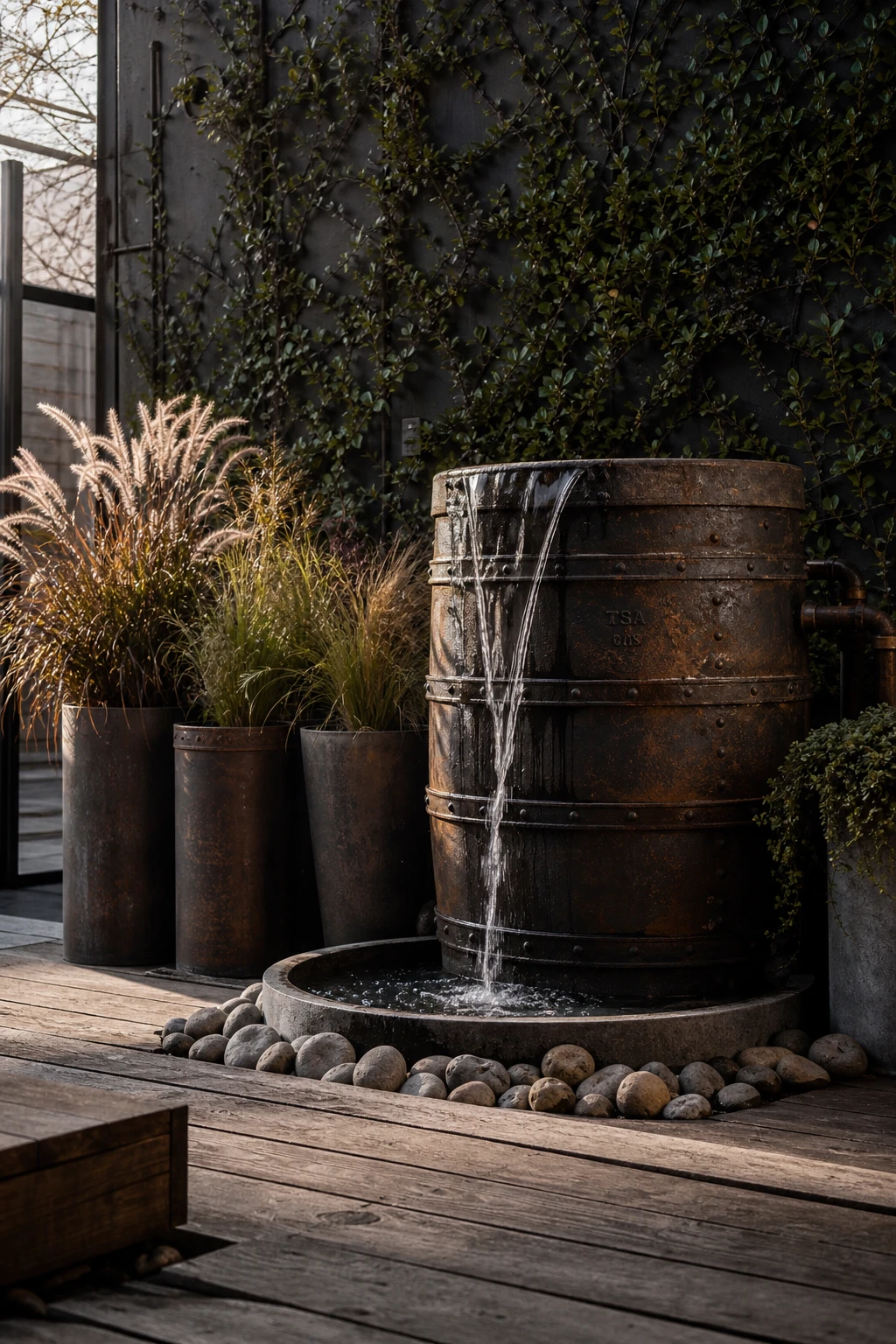
Metal Barrel Fountains and the Rustic Touch They Bring to Any Corner
A salvaged barrel sitting in a corner, trickling water over its lip, is one of those details that stops people in their tracks. What I love is how the aged metal and the moving water pull against each other, rough texture meeting something quiet and alive. You get that same worn, honest character you find in a great industrial space, but softened just enough to feel like a garden.
The Key Details
Salvaged metal barrel fountain
Aged steel planters with ornamental grasses
Reclaimed timber decking
Climbing ivy wall cover
River stone basin surround
Pro TipStack two barrels at different heights and run a small pump between them so the water cascades from the upper vessel into the lower one, giving you movement and sound from a very small footprint.
AvoidSkipping an internal liner means the timber or metal seams will weep slowly over time, leaving a damp patch and a fountain that empties itself between visits.
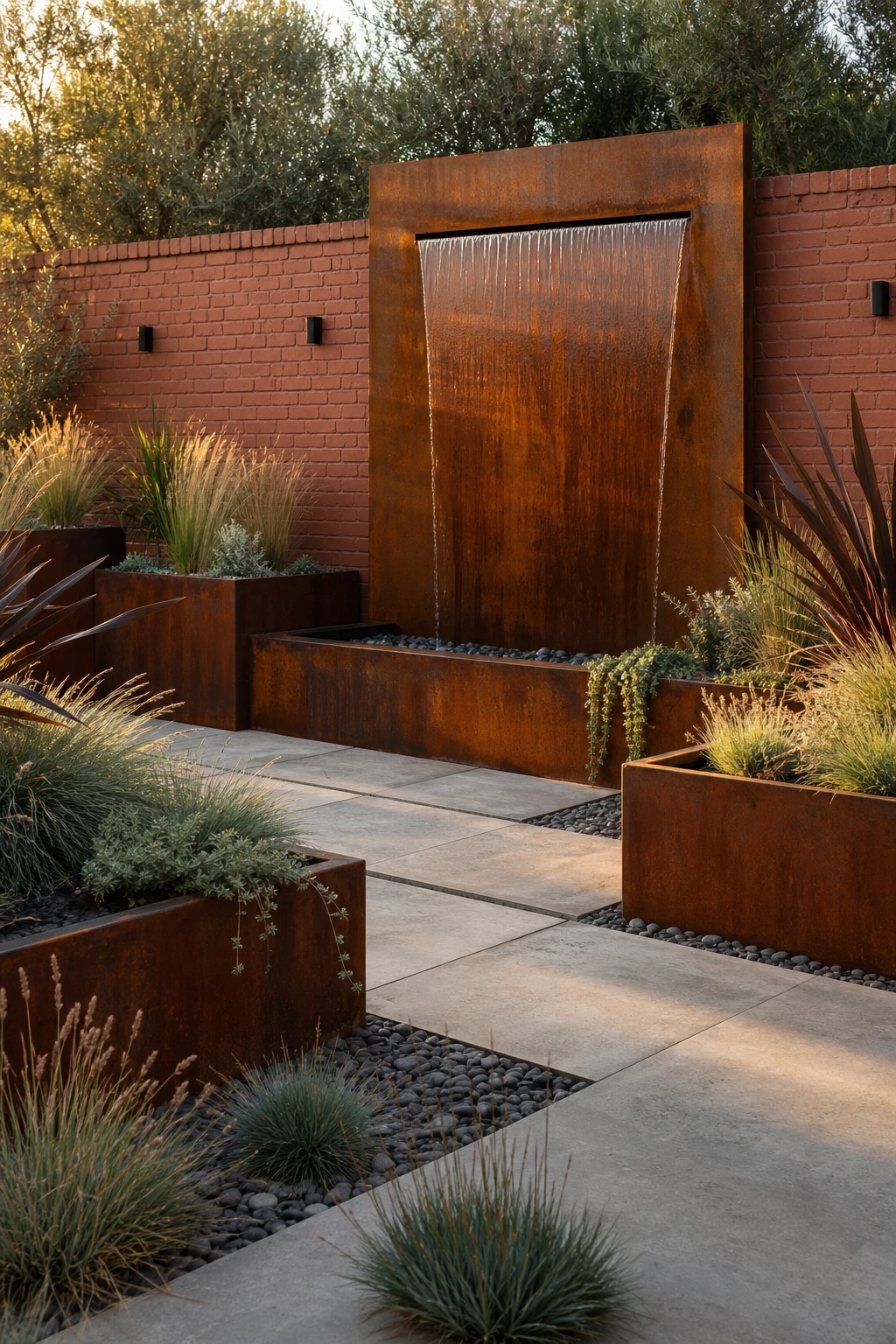
Rusted Metal Water Features and the Colour Story Rust Tells Best
Rust is not neglect, and that distinction wins me over every single time I use corten steel in a garden. You get this slow, living palette of amber, copper and deep ochre that no paint can fake, and it only deepens with age. What I love most is how the warm tones pull the whole planting together, making dark phormium leaves and silver ornamental grasses look intentional rather than accidental.
The Key Details
Corten steel water blade wall fountain
Aged steel trough planters
Staggered brushed concrete paving slabs
Ornamental grasses and dark leafed phormiums
Matte black ironwork bed edging
Pro TipOnce the surface rust settles into that rich, even amber tone you want, brush on a clear exterior sealant to lock the colour and stop the oxidisation going any further.
AvoidUnsealed corten steel sitting directly above pale or light coloured paving will bleed rust streaks into the stone within a single wet season, and those stains are almost impossible to lift cleanly.
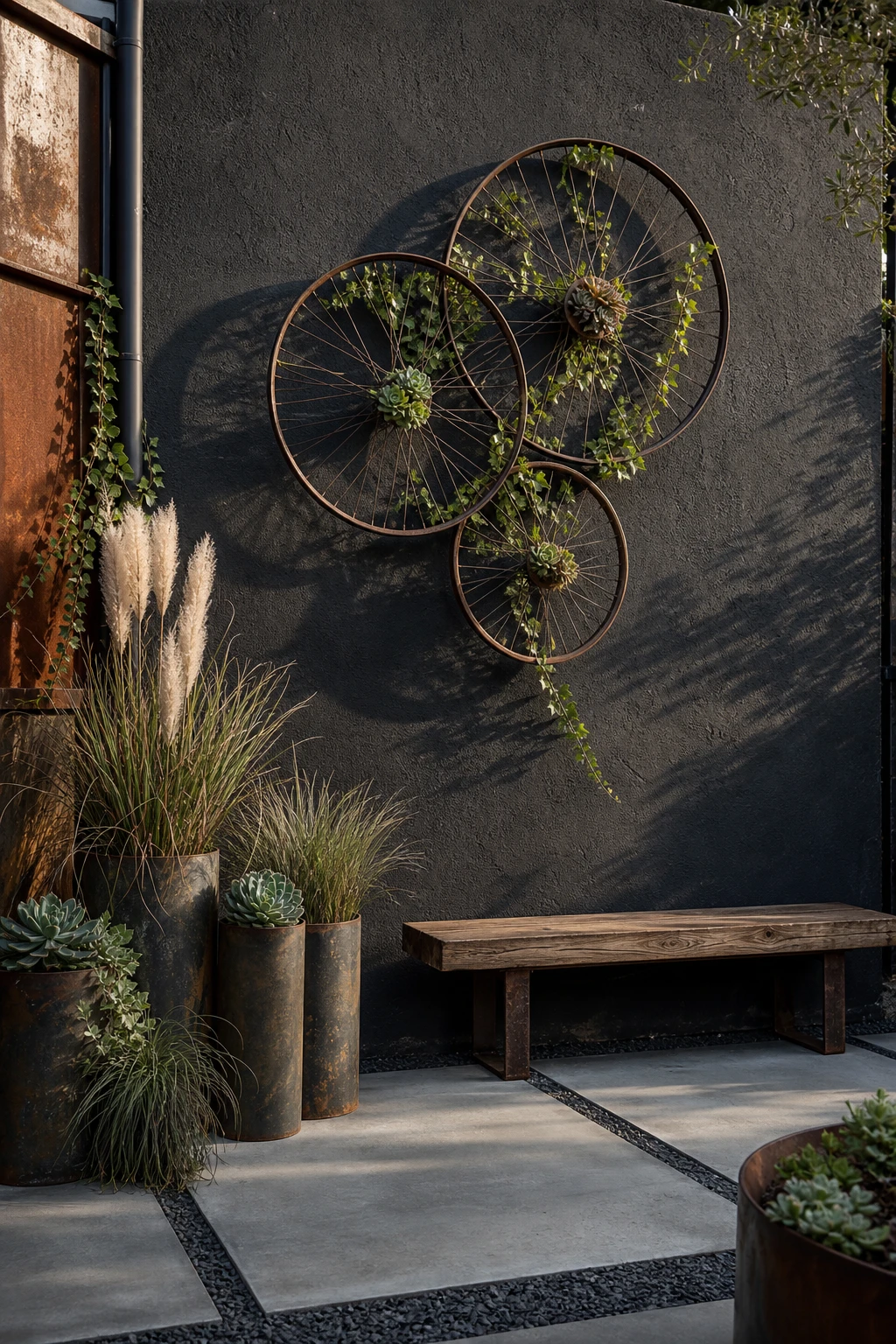
Bicycle Wheel Garden Art That Turns Old Spokes Into Something Lovely
A bicycle wheel hung at eye level becomes instant sculpture, and what I love is that the spokes draw the eye outward in every direction, creating movement in a space that might otherwise sit flat. You get all that industrial character for almost nothing, because the object already has beauty built into its bones. The patina, the geometry, the raw metal edge, it all does the work for you.
The Key Details
Vintage bicycle wheel wall cluster
Salvaged steel pipe planters
Ornamental pampas grass
Reclaimed timber and iron bench
Chunky concrete paving slabs with dark gravel edging
Pro TipGive the rim a coat of matte black or deep forest green spray paint so it reads as a deliberate design choice rather than something you just found in a skip.
AvoidPositioning the wheel below fence height means planting swallows it by midsummer and all that lovely structure quietly disappears.
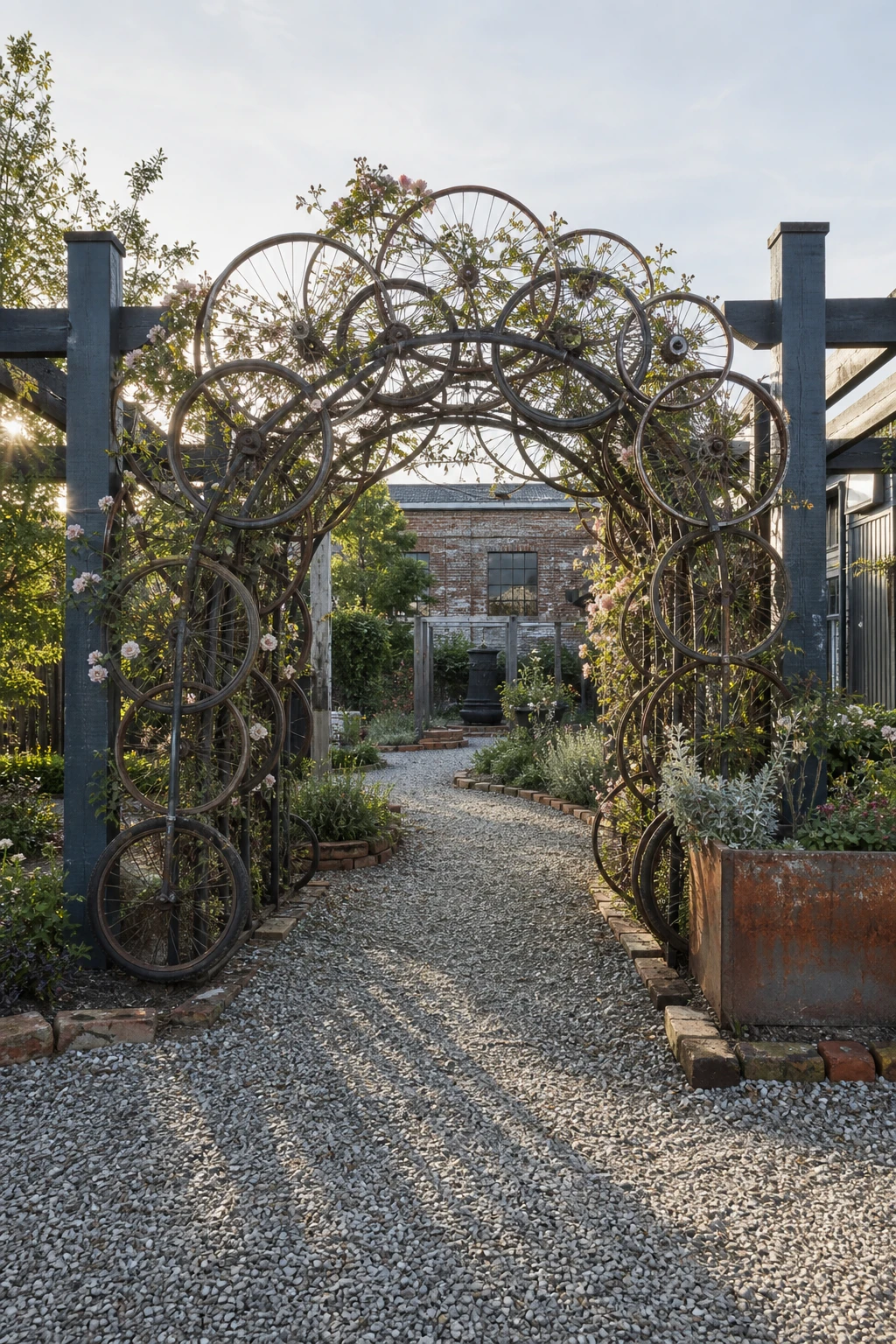
A Garden Arch Made With Bicycle Wheels and Why It Works So Well
Bicycle wheels stacked into an arch is one of my favourite moves for adding vertical drama without buying anything new. The circular frames repeat in a rhythm that pulls your eye straight down the path, and the spokes give climbing plants a natural trellis to grip. You get real structure and a talking point, all from materials that would otherwise rust in a skip.
The Key Details
Welded bicycle wheel tunnel arch
Climbing roses threaded through wheel spokes
Crushed gravel courtyard path
Reclaimed brick path edging
Weathered steel raised planter
Pro TipThread climbing rose canes through every other spoke as the plant grows, so the blooms sit evenly across the arch rather than bunching at one side.
AvoidMixing wheels of noticeably different diameters makes the arch look like it is leaning or collapsing, which kills the clean industrial silhouette you are going for.
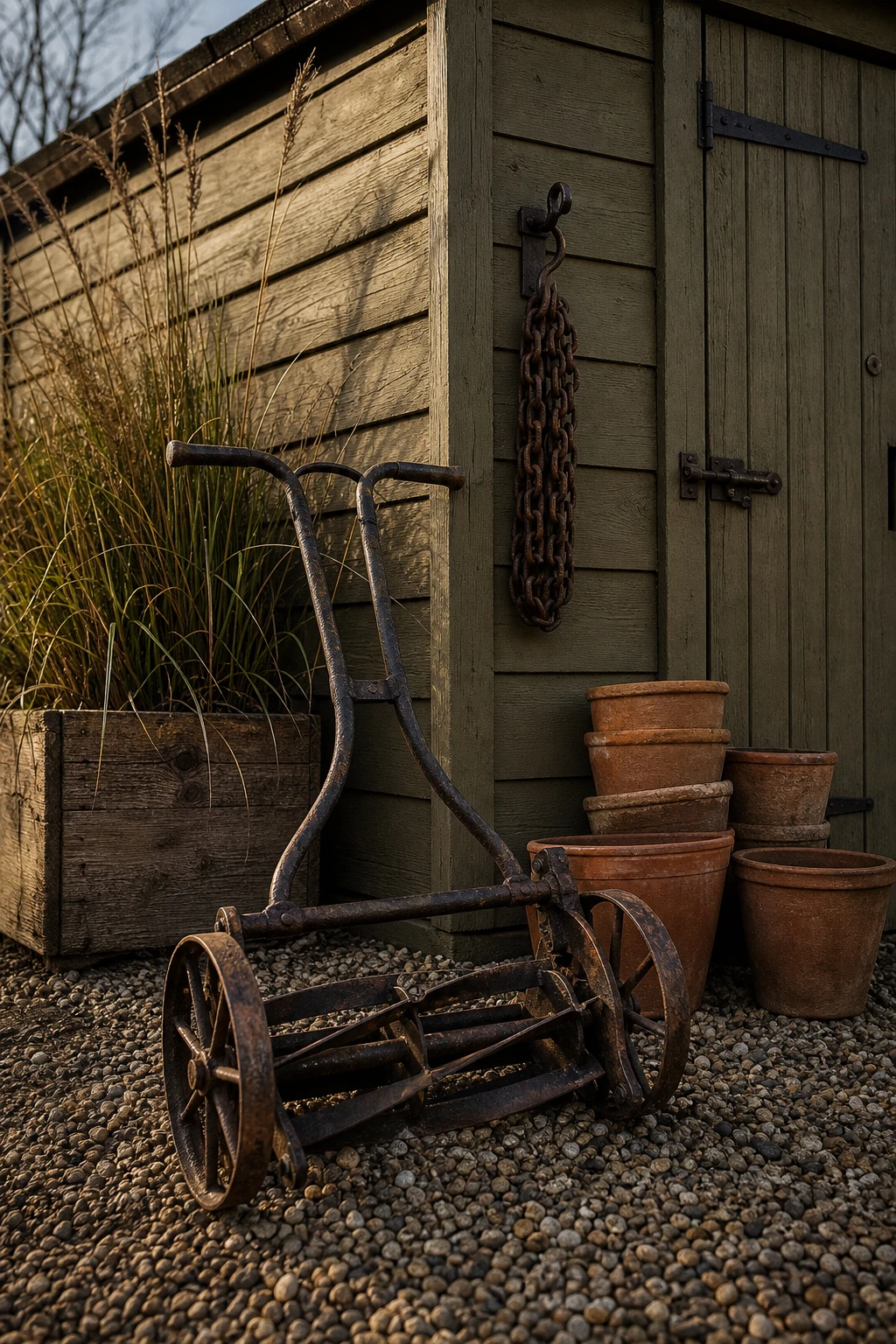
An Old Push Mower as Garden Decor and the Nostalgic Charm It Carries
An old push mower stopped mid lawn does something a pot plant simply cannot: it tells a story. What I love about staging vintage tools this way is that the mower stops being a broken object and becomes a sculpture with history baked into every rusty bolt. You get those gorgeous spoked reel wheels drawing the eye, and the whole scene reads as considered rather than cluttered.
The Key Details
Cast iron antique push mower
Spoked reel wheels
Reclaimed wood planter box
Terracotta pot cluster
Coiled iron chain wall hook
Pro TipTuck trailing thyme or cascading nasturtiums into the grass catcher basket so the mower looks genuinely alive rather than just parked.
AvoidResting bare metal legs directly in damp soil pulls moisture into the iron constantly, and the piece will rot from the bottom up faster than you expect.
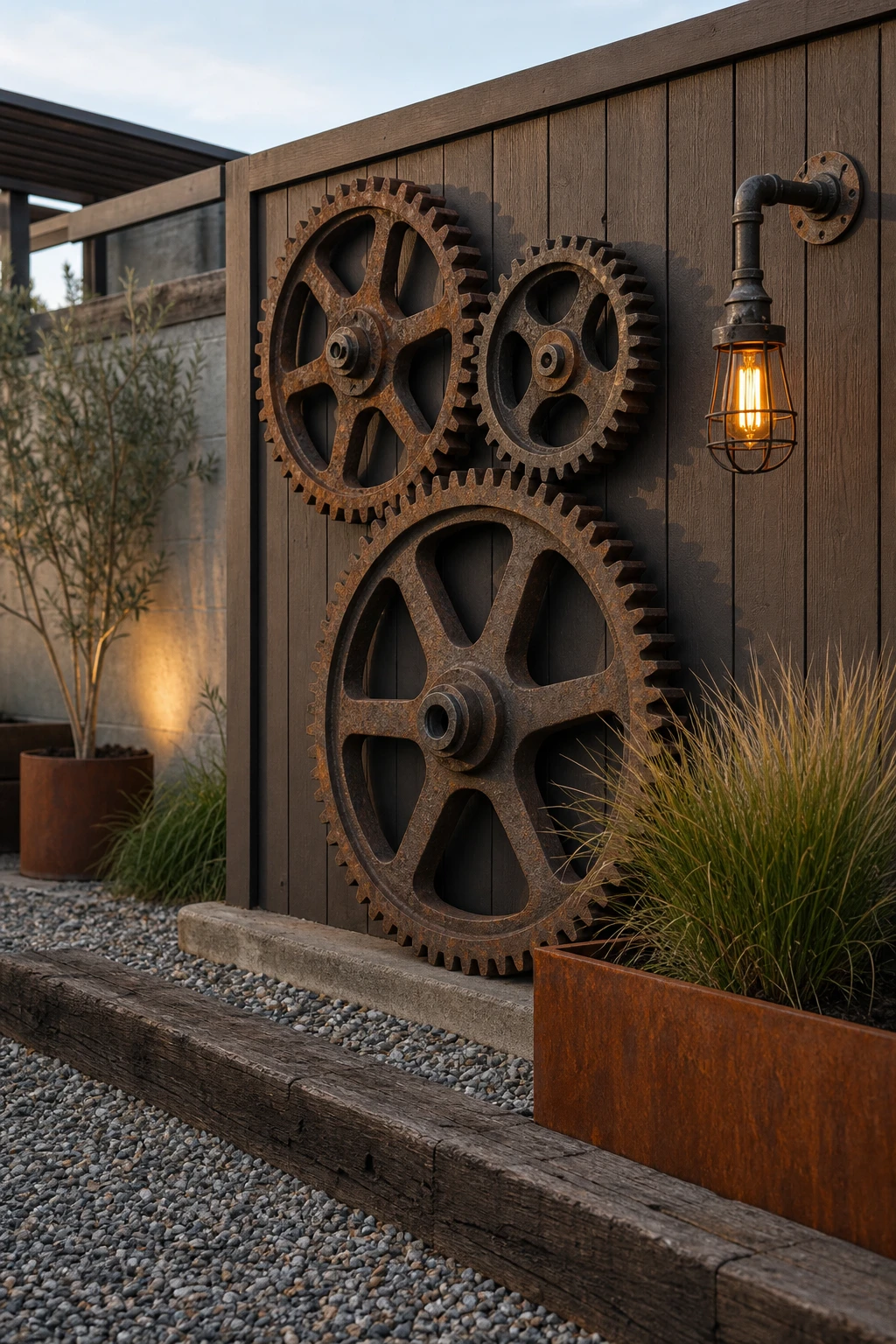
Rusty Mechanical Gears in the Garden and the Story They Start to Tell
Grouping gears together is one of my favourite moves because the eye reads them as a single composed object rather than a pile of old metal. You get this satisfying sense of a machine caught mid turn, and the varying sizes create rhythm without you needing to do much else. What wins me over every time is how rust becomes the colour palette, warm amber and deep brown tones that look deliberate and rich against green planting.
The Key Details
Cast iron wall mounted gears
Corten steel planter box
Reclaimed railway sleeper edging
Salvaged iron pipe lantern bracket
Ornamental grasses
Pro TipStagger gears at three different depths, one flush to a wall, one raised on a block, one leaning forward, so the arrangement has shadow and dimension rather than sitting flat.
AvoidSpreading gears across the garden as individual accents breaks the storytelling completely, and each piece ends up looking like something you forgot to put away.
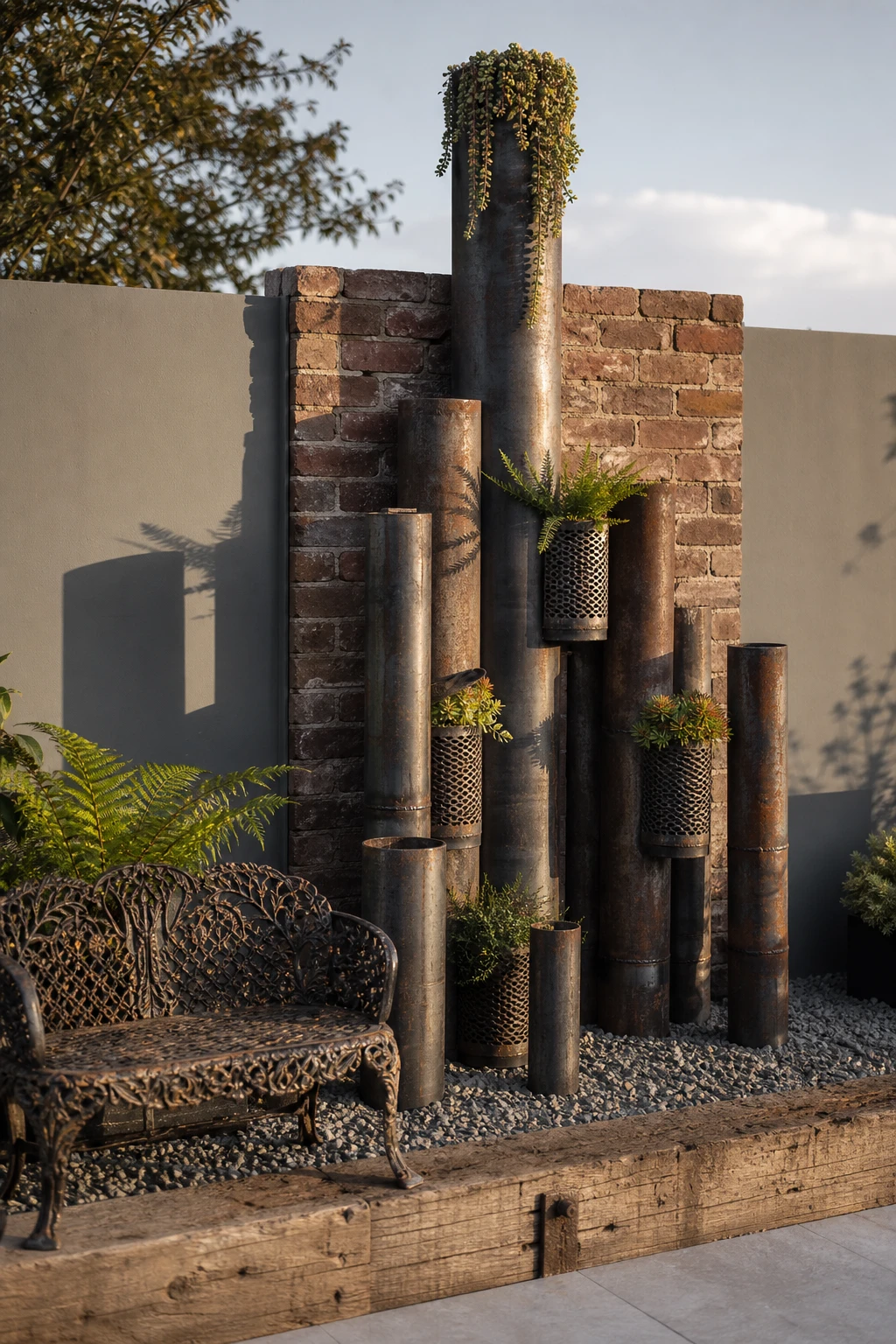
Metal Pipe Stacks as Garden Features and the Height They Add for Free
A cluster of salvaged steel pipes at mixed heights does something a trellis or obelisk never quite manages: it reads as sculpture first and planter second, which is exactly the trick. What I love is how the varying heights pull your eye upward without spending a penny on new materials. You get that raw, industrial verticality from something that would otherwise go to a skip, and the hollow tops become the best surprise of all once small succulents settle in.
The Key Details
Salvaged steel pipe cluster of varying heights
Steel mesh planting baskets fitted to pipe ends
Cast iron garden bench
Railway sleeper border edging
Crushed granite gravel ground cover
Pro TipCap each pipe with a snug rubber bung, fill the top inch with gritty compost, and plant a single echeveria so every pipe becomes its own tiny rooftop garden.
AvoidPipes left loose in gravel or soil will shift and lean over time, and a heavy cluster catching a gust can come down hard on a child or a pet.
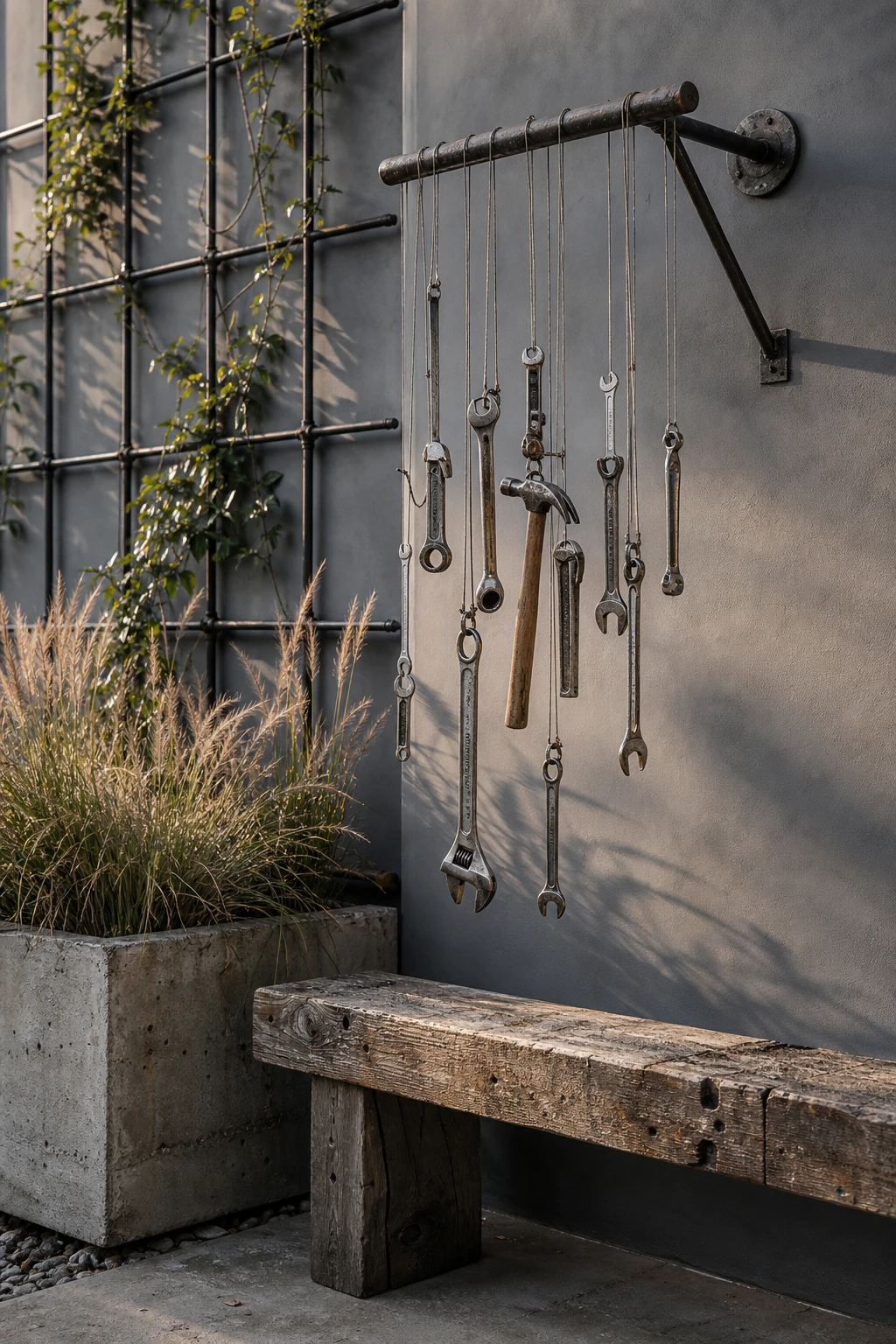
Hammer and Wrench Wind Chimes That Turn Garden Sound Into Art
Hanging old hammers and wrenches from a steel pipe bracket is one of my favourite ways to bring sound into the garden, because it gives the space a sensory layer most people never think to add. You get that low, resonant clang when the breeze moves through, which feels completely at home in an industrial setting. What I love is how the tools themselves become the art, raw and honest, rather than anything decorative or fussy.
The Key Details
Vintage tool wind chime hung from steel pipe bracket
Reclaimed timber bench
Raw concrete planter with ornamental grasses
Black metal conduit trellis grid
Galvanized wire suspension rigging
Pro TipHang each tool at a slightly different length so the pitches stagger and you get a proper musical range rather than one flat clunk.
AvoidChoosing tools that are too heavy for the cord causes the line to snap under load and the whole chime comes crashing down, which is a safety risk as much as a design failure.
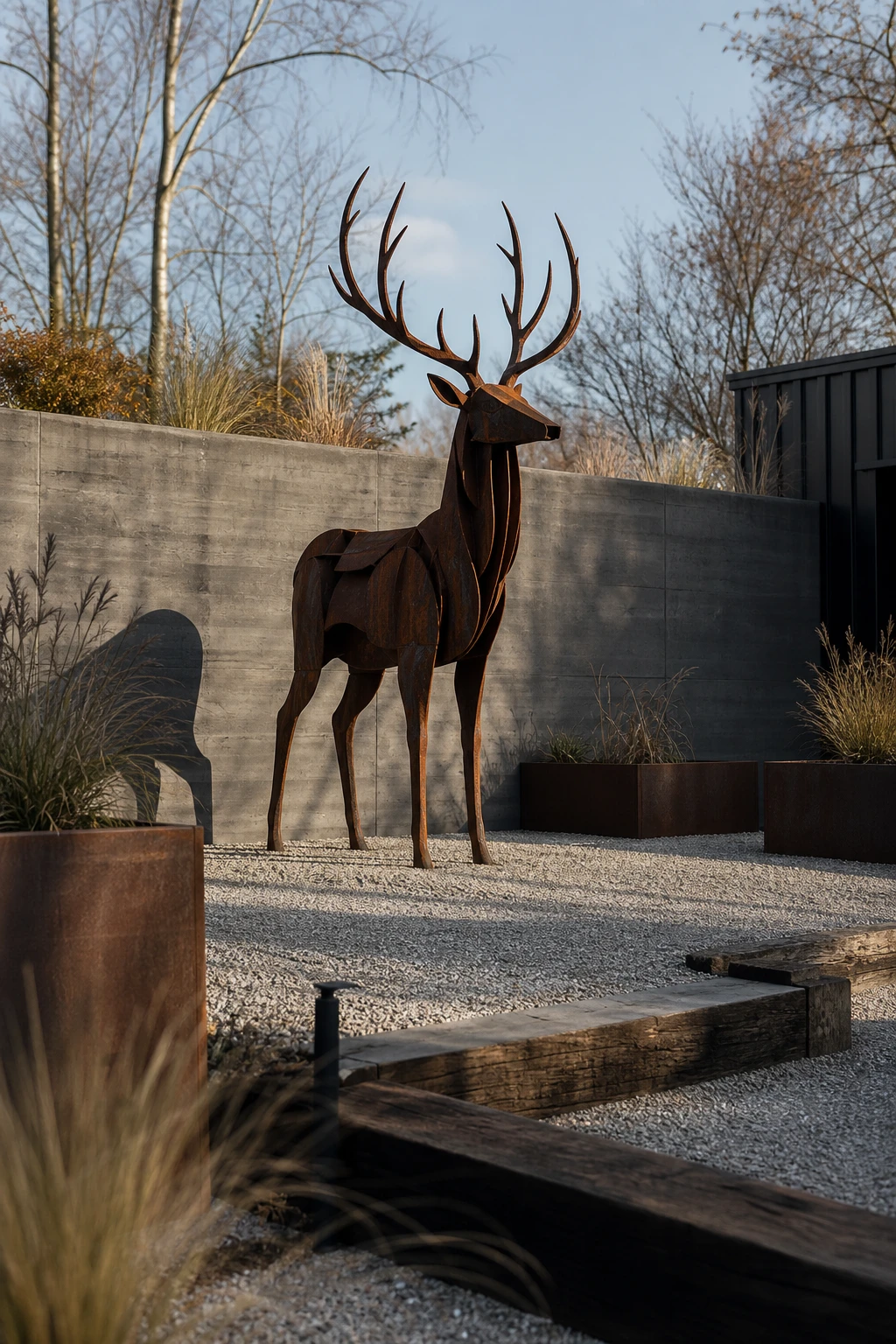
Metal Deer Sculptures and the Life They Bring to a Still Garden
A metal deer paused at the edge of a planting bed does something no pot or lantern can: it makes you feel the garden is alive with something beyond you. What I love about figurative sculpture is the story it tells without a single word. You get a sense of movement, of a creature caught mid step, and suddenly a still space has breath in it. The raw corten finish ties the piece to the industrial palette while keeping it rooted in the natural world.
The Key Details
Corten Steel Deer Sculpture
Rectangular Steel Planters
Ornamental Grasses
Raked Gravel Bed
Railway Sleeper Edging
Pro TipSet the deer so its nose points into the planting bed rather than facing outward, which reads as a genuinely wild moment rather than a showroom display.
AvoidSitting a heavy steel sculpture on loose gravel or soft soil means ground frost will tilt it over winter, and a leaning deer loses every bit of the poise that made it work.
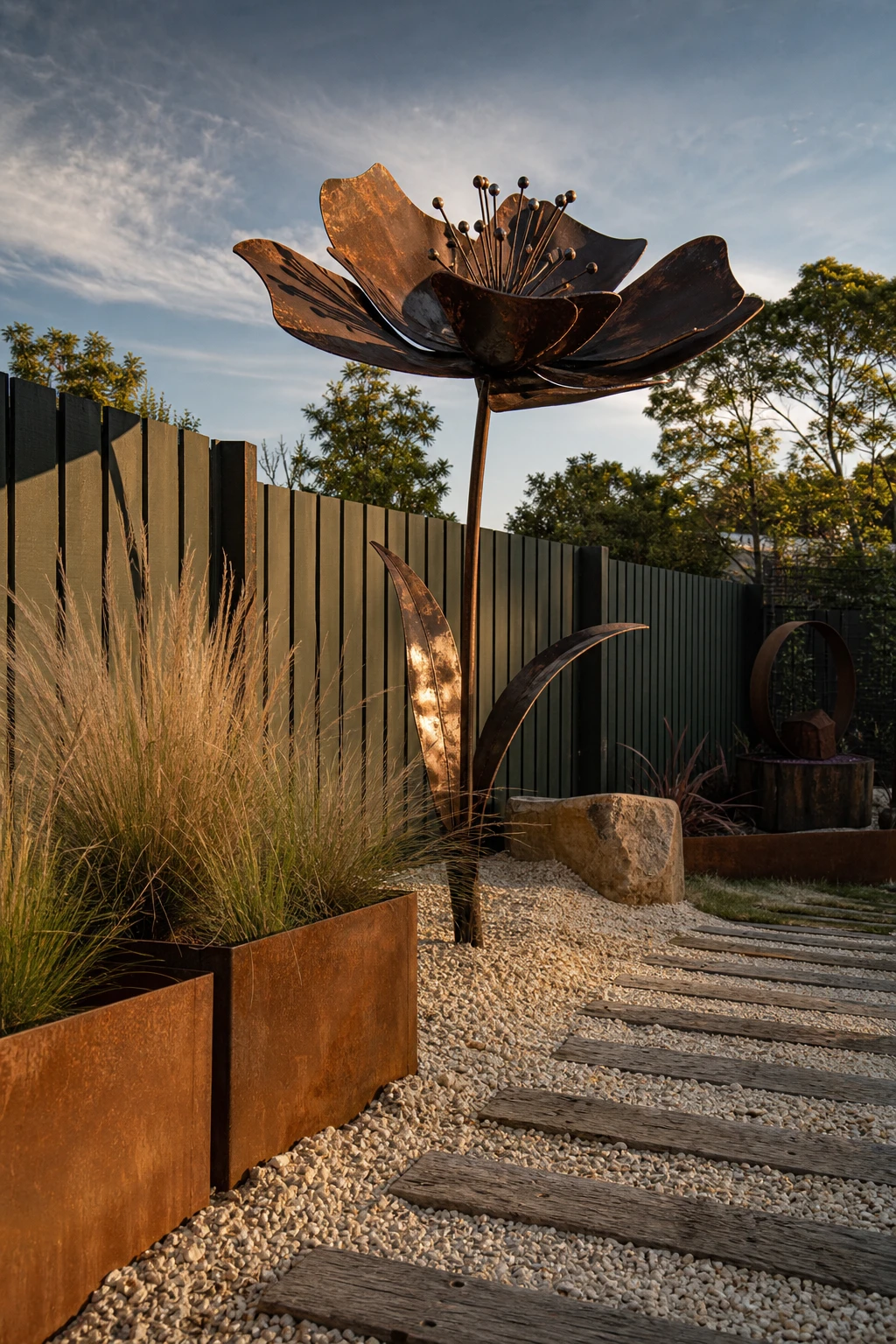
Outdoor Metal Floral Sculptures That Bloom Whatever the Season
A welded steel bloom planted among gravel and sleepers gives you something living plants simply cannot: colour and form on the greyest January morning. What I love about this is the permanence, you set it once and it holds the composition together all year. Watch how the sculptural petals catch low winter light in a way that softer planting never does, and you start to see why I reach for pieces like this when a bed risks going flat between seasons.
The Key Details
Oversized welded steel bloom sculpture
Corten steel rectangular planters
Reclaimed railway sleeper path
Limestone gravel ground cover
Solid timber vertical board fence
Pro TipChoose powder coated blooms over painted ones, the finish bonds to the metal and resists chipping through frost and UV far better than a brushed coat ever will.
AvoidA sculpture that is too small for the bed simply vanishes among gravel and low planting, and the whole point of having a permanent focal point is lost.
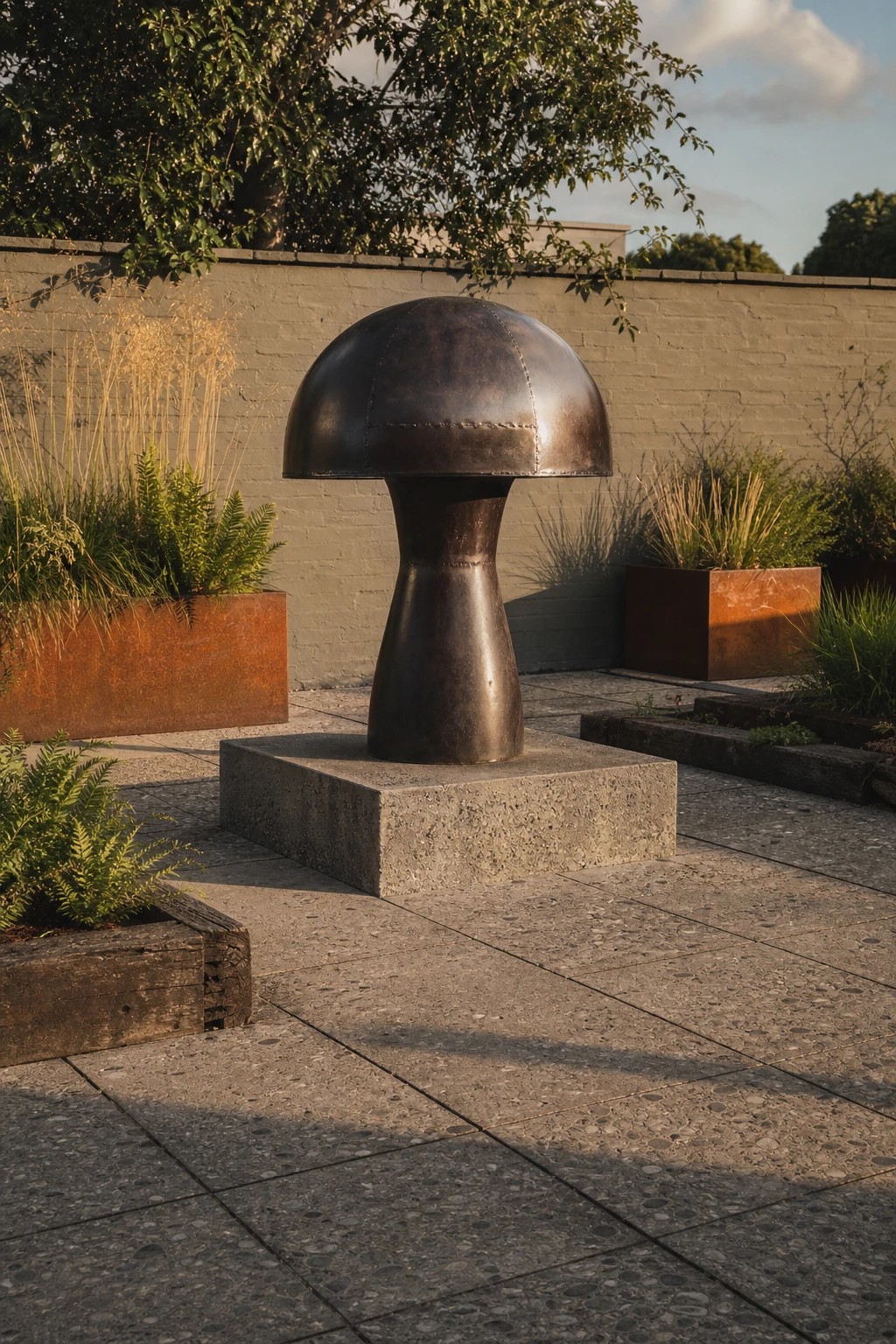
Outdoor Mushroom Sculptures and the Whimsical Side of Industrial Style
Welded steel mushrooms on a concrete plinth are one of my favourite ways to soften an industrial garden without losing its edge. You get that hard, raw material quality but the organic mushroom form pulls the eye in a completely different direction, and the contrast is what makes it work. What I love is how a small sculptural cluster gives the whole space a sense of personality, something that says this garden was curated, not just planted.
The Key Details
Welded steel mushroom sculpture on concrete plinth
Corten steel planters with structural grasses
Reclaimed railway sleeper bed edging
Aged concrete paver grid
Rendered boundary wall
Pro TipGroup mushroom sculptures in threes or fives so they read as a natural drift rather than a formal arrangement.
AvoidA single oversized mushroom sculpture sitting alone will compete with your planting rather than complement it, throwing the whole composition off balance.
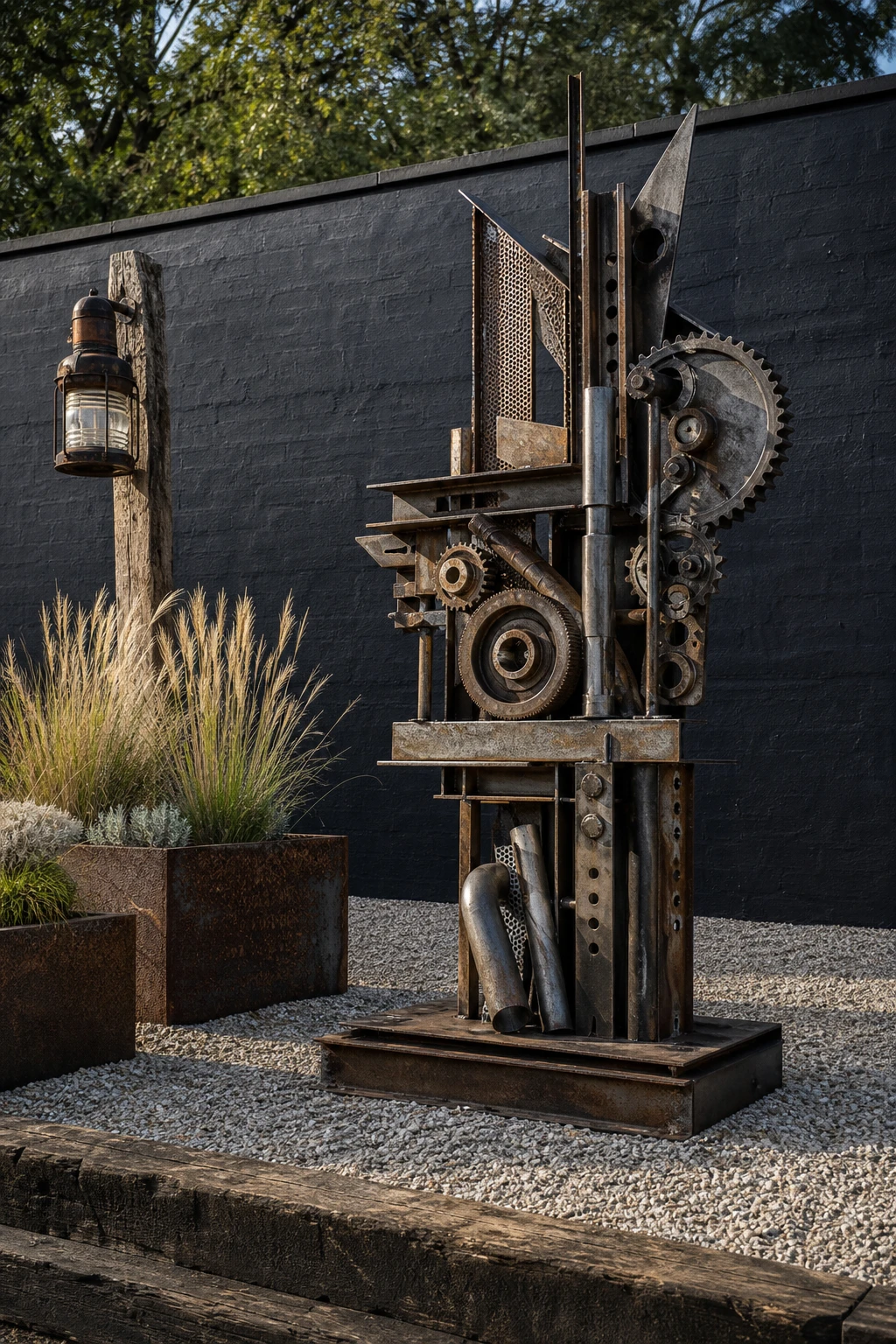
Scrap Metal Yard Art You Can Actually Weld Yourself at the Weekend
Welding your own scrap metal art is one of those weekend projects that pays back far more than the hours you put in. You get a piece that is completely yours, sized and shaped for your exact spot, and carrying that quiet confidence of something made by hand. What I love most is how the raw weld seams and mismatched offcuts read as texture rather than imperfection outdoors, especially once the piece settles into its surroundings.
The Key Details
Welded scrap metal freestanding sculpture
Weathered steel planter boxes with ornamental grasses
Salvaged iron lantern on timber post
Reclaimed railway sleeper edging
Compacted granite gravel courtyard floor
Pro TipCut your silhouette from a single flat sheet first, get happy with the proportions, then layer rods and offcuts over it to add depth and character.
AvoidSkipping a weatherproof sealant over the weld seams lets moisture sit in the joins, which causes uneven rust patches that look accidental rather than intentional.
Metal Trellis Fencing That Does the Work of a Wall Without Blocking the Light
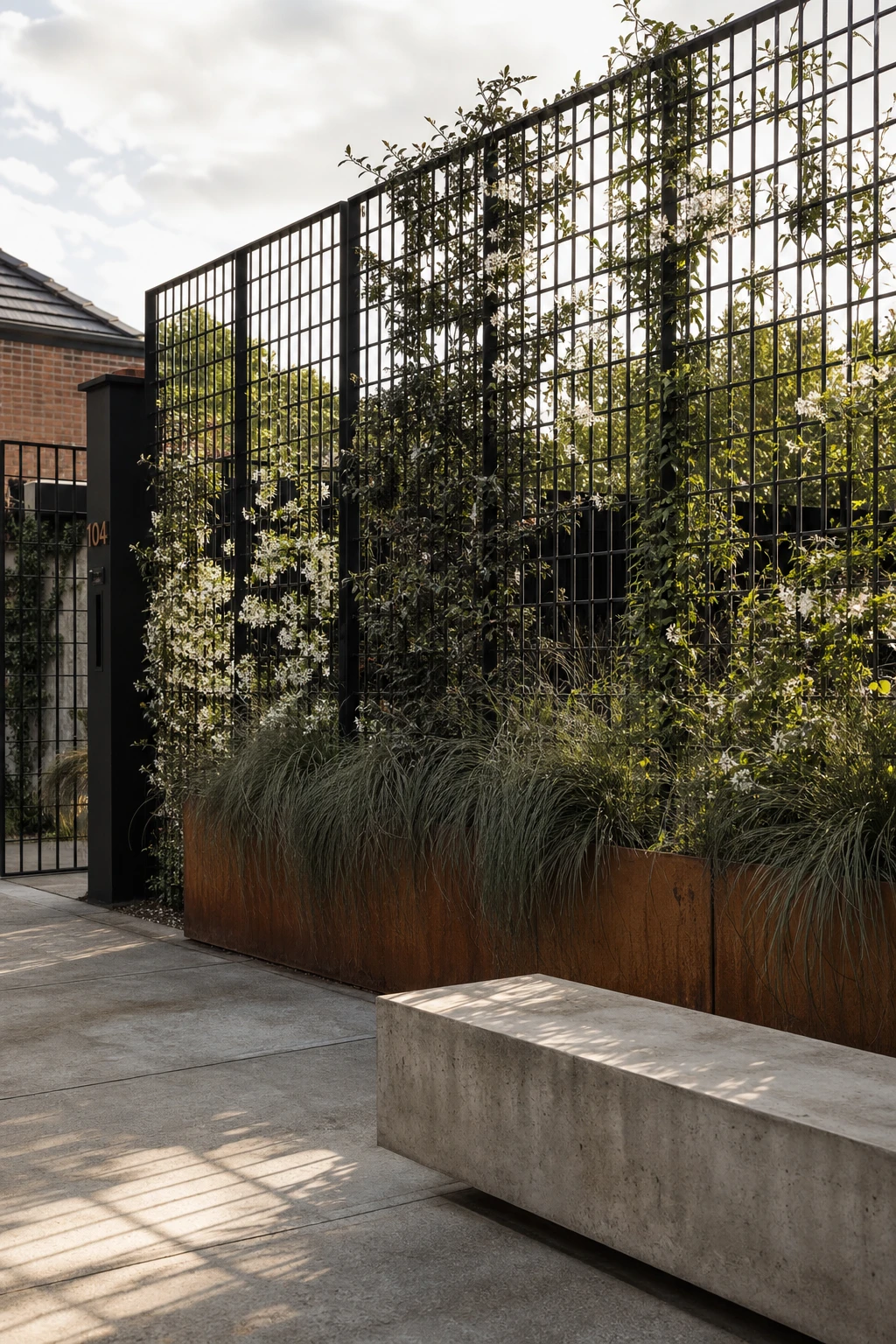
A metal trellis fence is one of my favourite ways to say ‘the garden ends here’ without making anyone feel penned in. You get the structure and the privacy without losing the borrowed sky above the neighbour’s roofline. What wins me over every time is how the grid catches the light, throwing crisp shadows across the paving as the sun moves, so the boundary itself becomes part of the planting scheme once the climbers fill in.
The Key Details
Powder coated steel trellis panels
Corten steel planter boxes
Raw concrete paving slabs
Climbing jasmine and ivy
Poured concrete bench
Pro TipIf you weld your own panels, keep the grid to a square no larger than 15 cm so jasmine and ivy can thread through and grip without needing extra fixing.
AvoidSetting the bars too far apart leaves climbers with nothing to hold, so they sag and gap rather than knitting into the solid living wall you planned for.
Rebar Mesh Trellis Ideas That Are Cheaper Than You Think
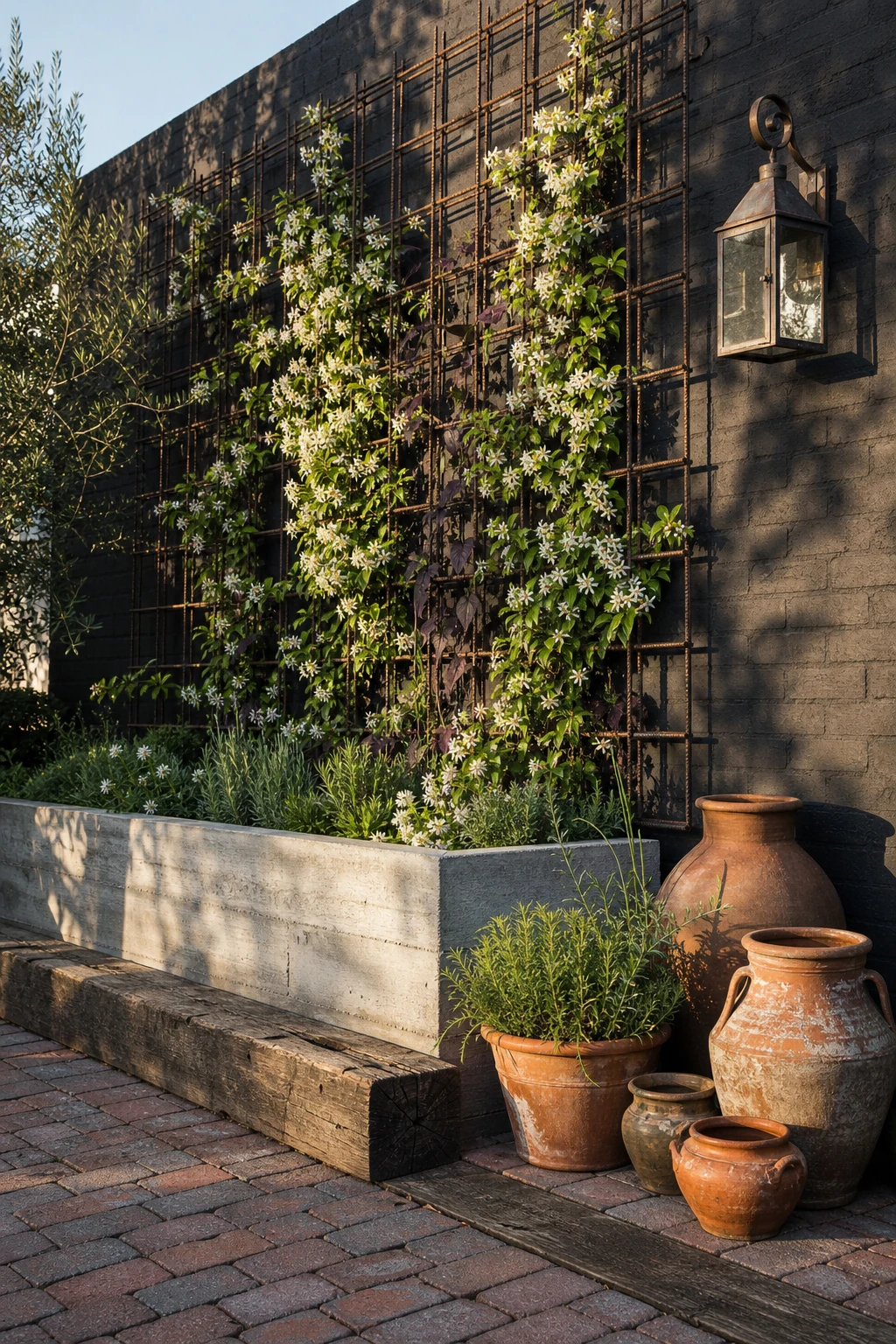
Rebar from a builders merchant costs a fraction of what a garden centre charges for a decorative trellis, and that gap in price is what wins me over every time. You get the same raw, gridded silhouette as expensive steel panel fencing but with the satisfaction of sourcing it yourself. Watch how climbing plants soften the metal over a single season, leaving something that looks considered and genuinely industrial rather than off the shelf.
The Key Details
Raw steel rebar mesh trellis panel
Poured concrete raised planting bed
Reclaimed railway sleeper border edging
Cast iron wall bracket lantern
Aged terracotta pots cluster
Pro TipAsk the merchant to cut lengths for you on site, then use a pipe bender to curve the top third of each panel into a gentle arch before you fix it in position.
AvoidCut rebar ends left raw and sharp at head height are a real safety hazard, so cap every exposed tip with a rubber bung or a short length of garden hose before the trellis goes up.
Vertical Garden Walls That Make Every Fence a Living Feature
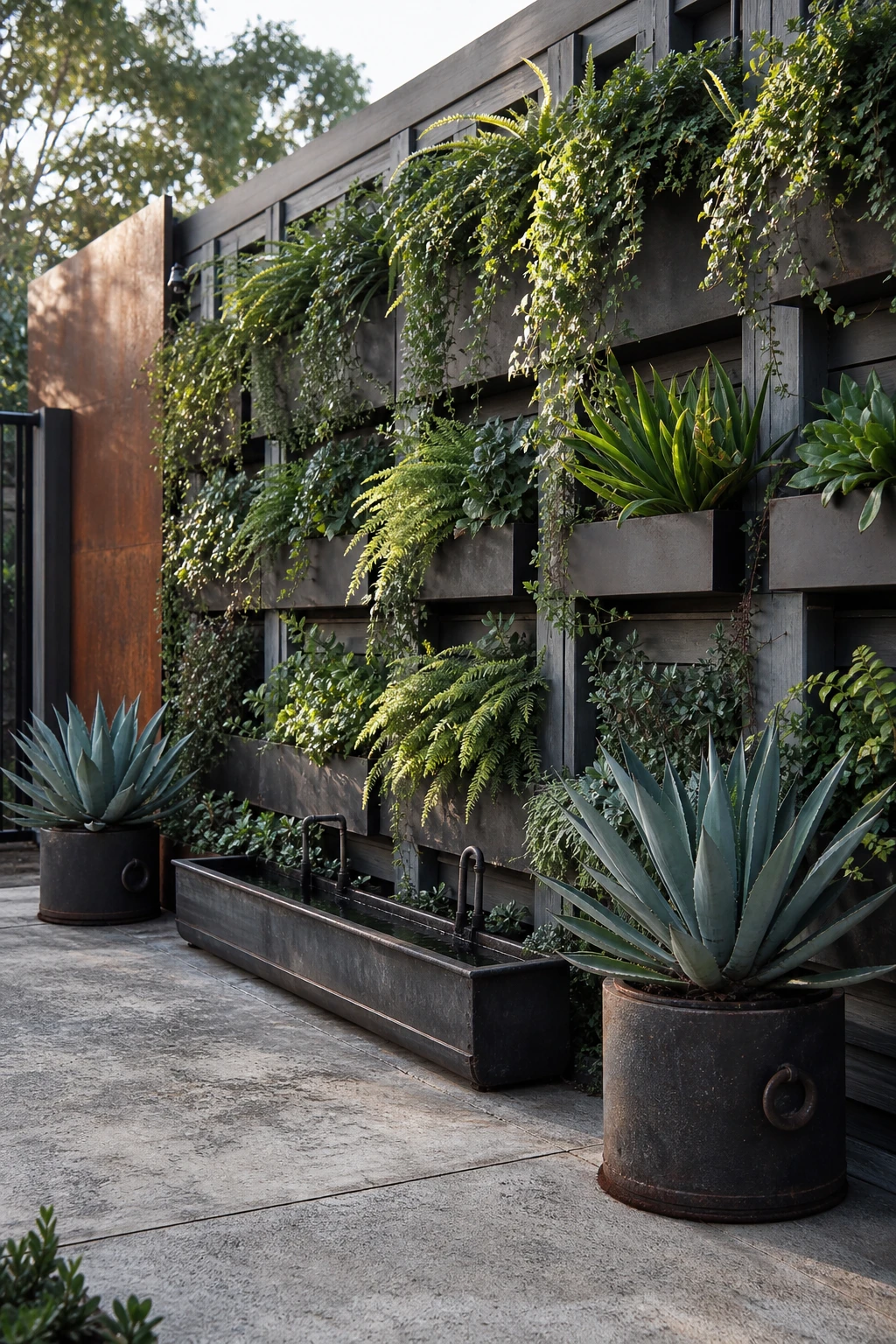
A bare fence is wasted real estate, and turning it into a planted wall is one of the moves I find most satisfying in a small industrial garden. Raw steel pockets against a dark timber batten frame give you that factory meets garden tension straight away, and once the planting fills in, the wall stops being a boundary and becomes the thing everyone looks at first. You multiply your growing space without giving up a single square metre of ground, which in a tight courtyard is the closest thing to magic I know.
The Key Details
Modular steel pocket planters
Reclaimed timber batten framework
Raw concrete patio
Blackened steel watering trough
Cast iron floor pots
Pro TipChoose metal pocket frames with removable inserts so you can pull out faded summer plants and slot in evergreen ferns or trailing ivy for winter without disturbing the whole structure.
AvoidLetting water pool inside the pockets without adequate drainage will seep behind the frame, rot any timber battens and eventually push fixings out of the fence.
Metal Horse Trough Planters and the Generous Scale That Makes Them Shine
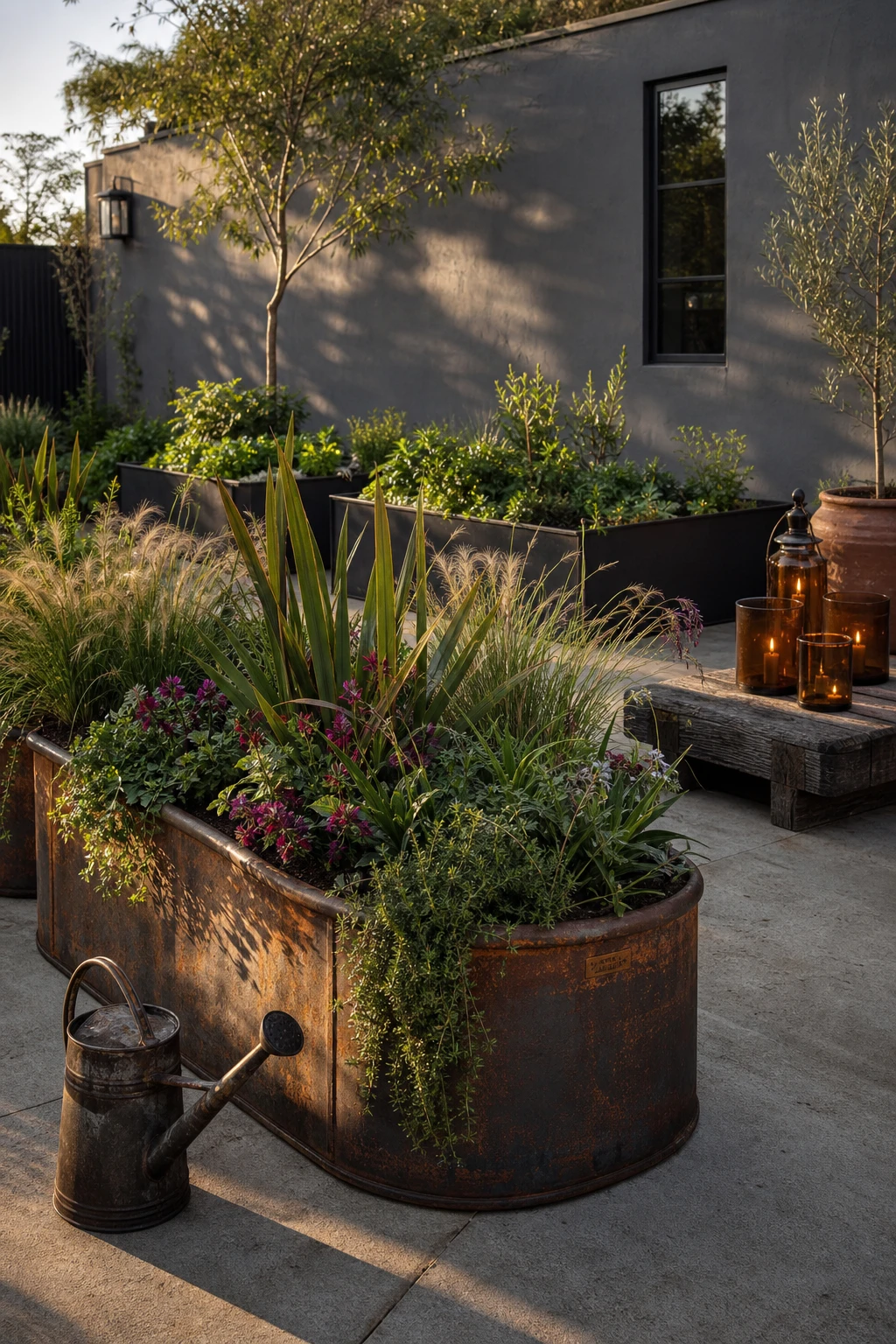
Scale does something in a garden that a row of small pots simply cannot replicate, and a horse trough gives you that in one move. The long, oxidised steel body reads as intentional the moment it lands, and that weathered surface is exactly the raw quality I reach for in an industrial scheme. Plant it with real volume, and watch a single trough turn a bare courtyard from an afterthought into a place worth spending time in.
The Key Details
Rectangular oxidised steel horse trough planters
Aged concrete paving slabs
Black steel raised beds
Reclaimed timber bench
Amber glass lanterns
Pro TipDrill at least five drainage holes along the base before you add any soil, because metal holds water and roots will rot fast without a clear escape route.
AvoidFilling the whole trough with one species leaves it looking sparse and flat, so layer tall structural plants with trailing and mid height varieties to get the density these big containers are built for.
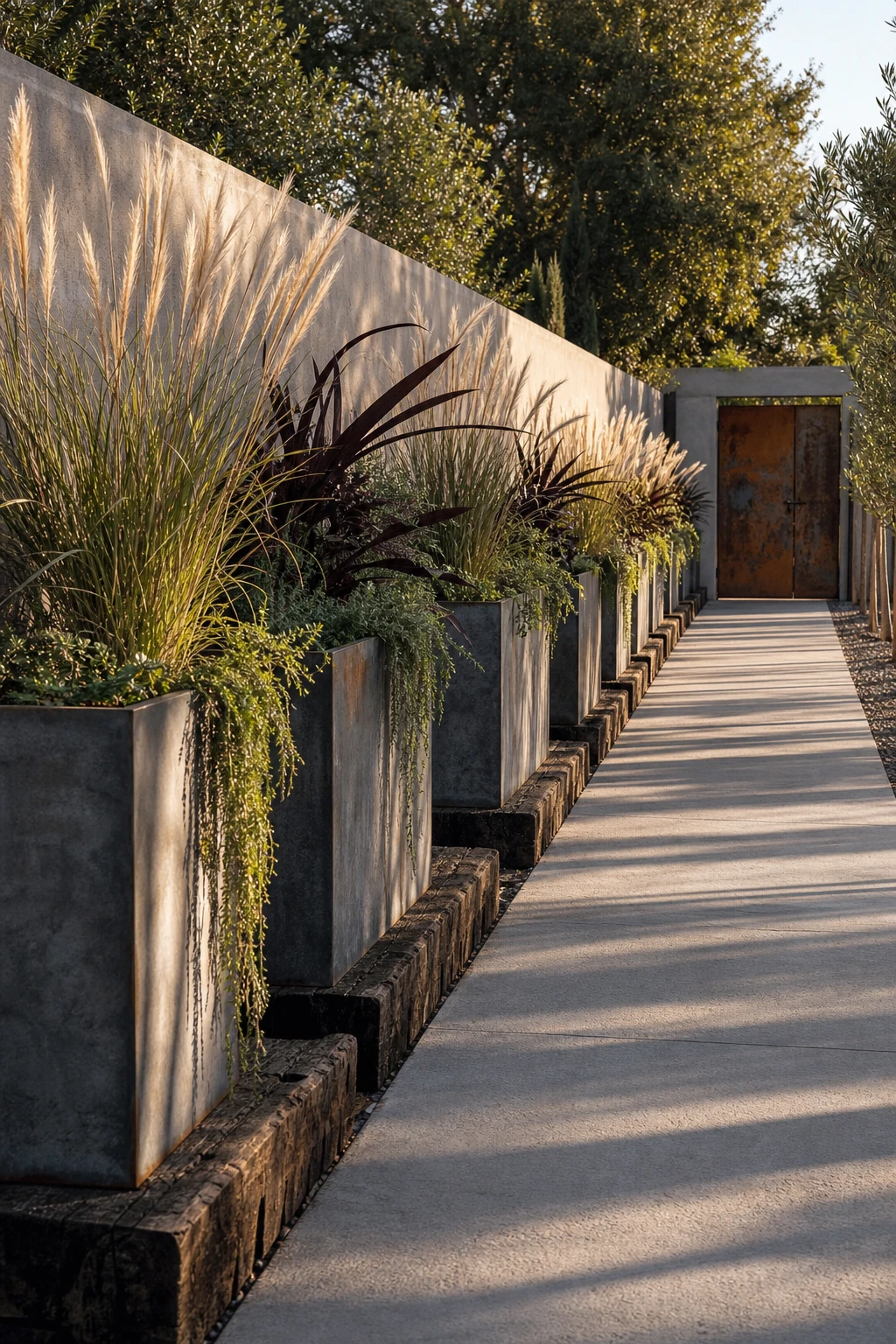
Metal Planter Boxes That Line a Path and Make It Feel Like an Entrance
Repetition is one of the quietest tricks in design, and lining identical metal boxes along a path is a perfect example of it doing its job. What I love here is how the eye moves from box to box and suddenly the path feels intentional, almost ceremonial, like it is leading somewhere worth arriving at. You get that sense of arrival before you even reach the door.
The Key Details
Corten steel planter boxes
Ornamental grasses and trailing herbs
Reclaimed railway sleeper edging
Flush concrete paving
Aged steel garden gate
Pro TipLine each box with a layer of hessian before you add compost, because it buffers the roots from the heat metal absorbs on sunny days and keeps plants looking good well into summer.
AvoidUneven gaps between boxes make the whole line read as careless rather than considered, which loses the rhythm effect entirely.
Courtyard Fairy Lights Strung Between Old Pipes and Why It Works
Stringing warm bulbs across salvaged pipework is one of my favourite moves for a courtyard because you get a ceiling of light without a single hard fixture. Watch how the glow bounces off aged brick and weathers steel into something almost golden. The canopy lifts the eye upward and suddenly the space feels complete after dark, not just an afterthought once the sun drops.
The Key Details
Salvaged cast iron pipe overhead framework
Weathered steel dining table and metal chairs
Oversized concrete planters with trailing ivy
Reclaimed timber bar ledge
Aged brick courtyard walls
Pro TipThread your cable through the hollow bore of the pipe framework so the wire disappears completely and all you see is the bulb run.
AvoidCool white bulbs strip the warmth straight out of the metal and brick, turning a moody courtyard into something that looks more like a car park.
Lighting Outdoor Sculptures So the Best Detail Shows After Dark
Sculpture uplighting is one of those moves that completely changes a garden after dark, and what wins me over every time is how crossed light sources pull texture out of raw steel in a way a single beam never could. You get shadow playing against shadow, and suddenly every weld mark and surface irregularity reads as deliberate detail rather than rough finishing. I always check that the two fixtures sit at slightly different heights so the light directions feel natural rather than staged.
The Key Details
Raw steel abstract sculpture
Recessed ground spike uplights
Corten steel planter bed
Polished concrete paving grid
Rendered boundary wall
Pro TipAngle one small spotlight from the left and a second from the right at roughly 45 degrees each, so the crossing beams carve out depth and stop the sculpture reading as a flat silhouette.
AvoidA single bright uplight aimed straight at the centre flattens every surface it hits, stripping the texture and form you are trying to celebrate and leaving the piece looking washed out rather than sculptural.
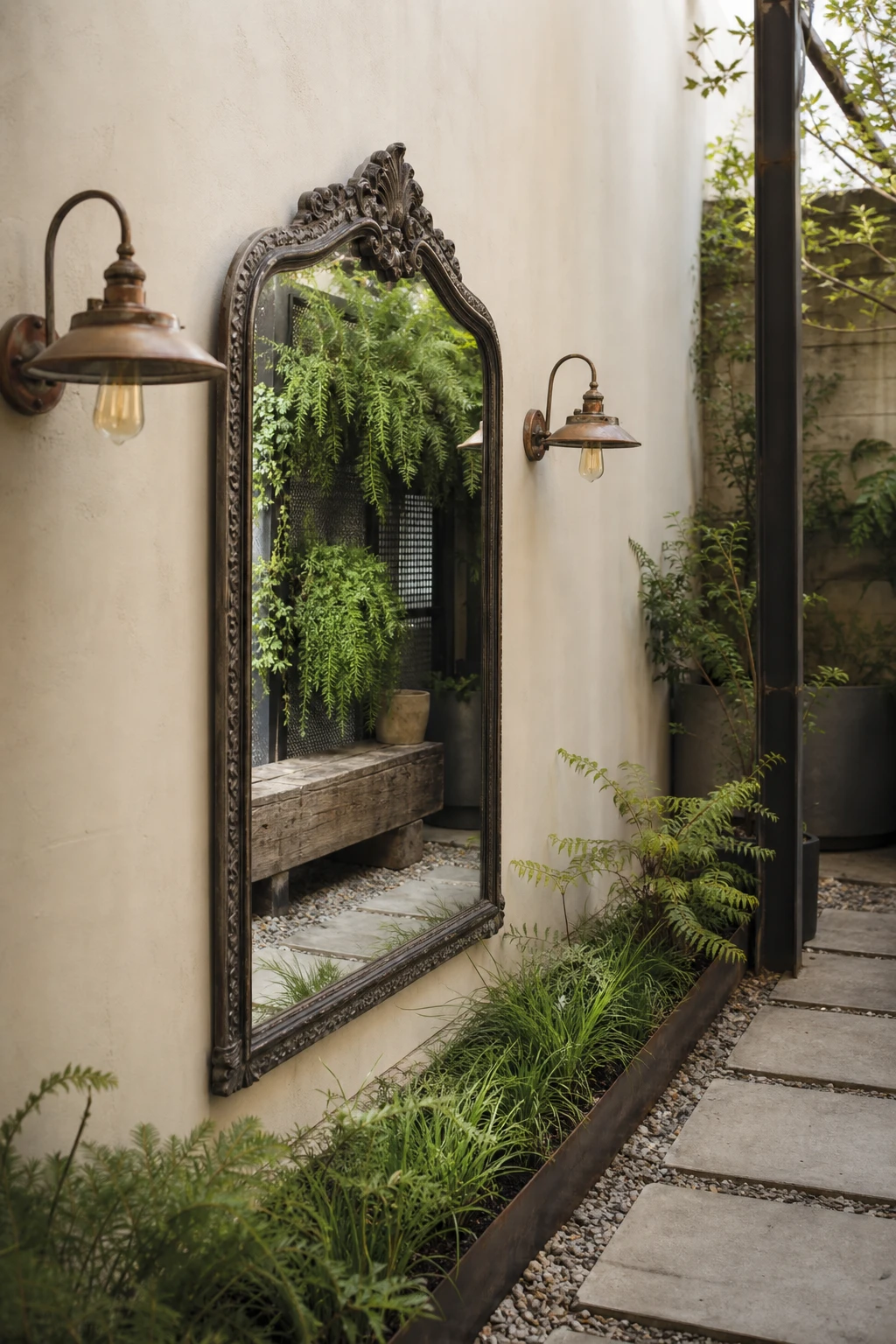
An Antique Garden Mirror and the Depth It Adds to a Small Outdoor Space
Hanging an antique mirror in a compact garden is one of my favourite tricks for buying space you do not actually have. What I love here is that the weathered cast iron frame looks like it was salvaged from an old workshop, so it earns its place in an industrial scheme rather than feeling decorative for its own sake. You get a reflected layer of planting and sky that genuinely fools the eye into reading the garden as twice the size.
The Key Details
Ornate weathered cast iron mirror frame
Blackened steel pipe path edging
Steel mesh wall planters with trailing ferns
Patinated copper wall sconces
Chunky concrete paver flooring
Pro TipTrain a climbing plant like ivy or black eyed Susan up either side of the frame so the mirror reads as a window into a secret garden beyond.
AvoidPositioning the mirror so it faces a bare fence means the reflection works against you, doubling the ugliest part of the space and making the garden feel more closed in rather than open.
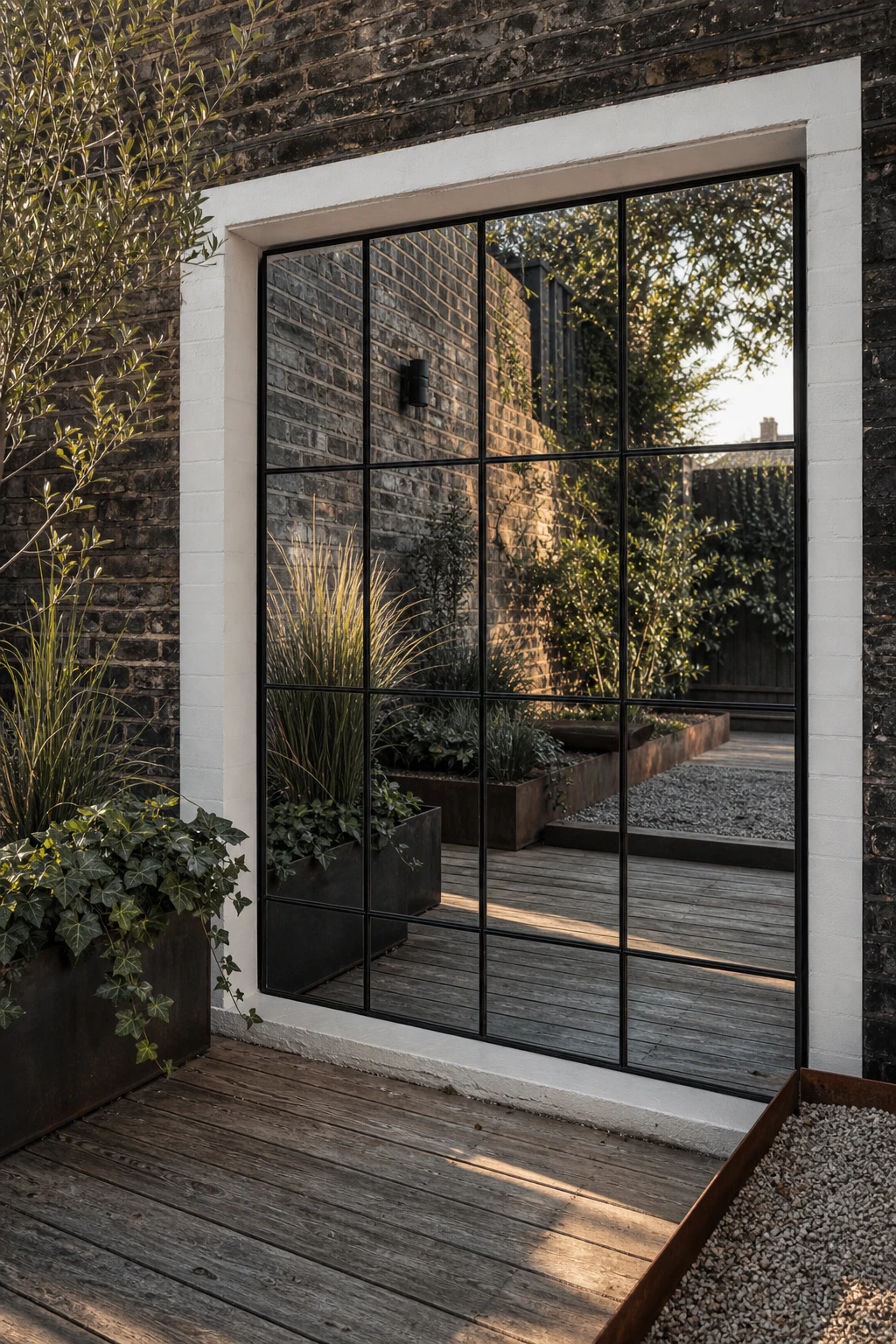
Large Panelled Garden Mirrors That Fool the Eye in the Best Way
When you scale a mirror up to full panel size the illusion stops feeling like a trick and starts feeling like a genuine discovery. The boundary wall appears to dissolve, and I love how that fools the eye into reading the whole space as far larger than it is. The steel grid frame keeps it honest within an industrial palette, grounding what could easily feel decorative in something structural and considered. It is one of the quietest ways I know to make a compact garden feel generous.
The Key Details
Black steel grid mirror frame
Weathered dark brick boundary wall
Raw steel trough planters
Reclaimed timber decking
Corten steel border edging
Pro TipChoose a steel frame with a welded grid pattern across the panels so the structure itself becomes part of the visual, echoing any metal planters or edging already in the space.
AvoidFixing a heavy panelled mirror to a wall that has not been assessed for the load will eventually pull fixings free, and the result is both dangerous and costly to put right.
Alan launched Edward George London in 2017. Since completing his masters in Town & Regional Planning (MPlan) he has combined the skills he learned at the University of Sheffield with his passion for design, to help create a foundation for those looking to create a beautiful home.