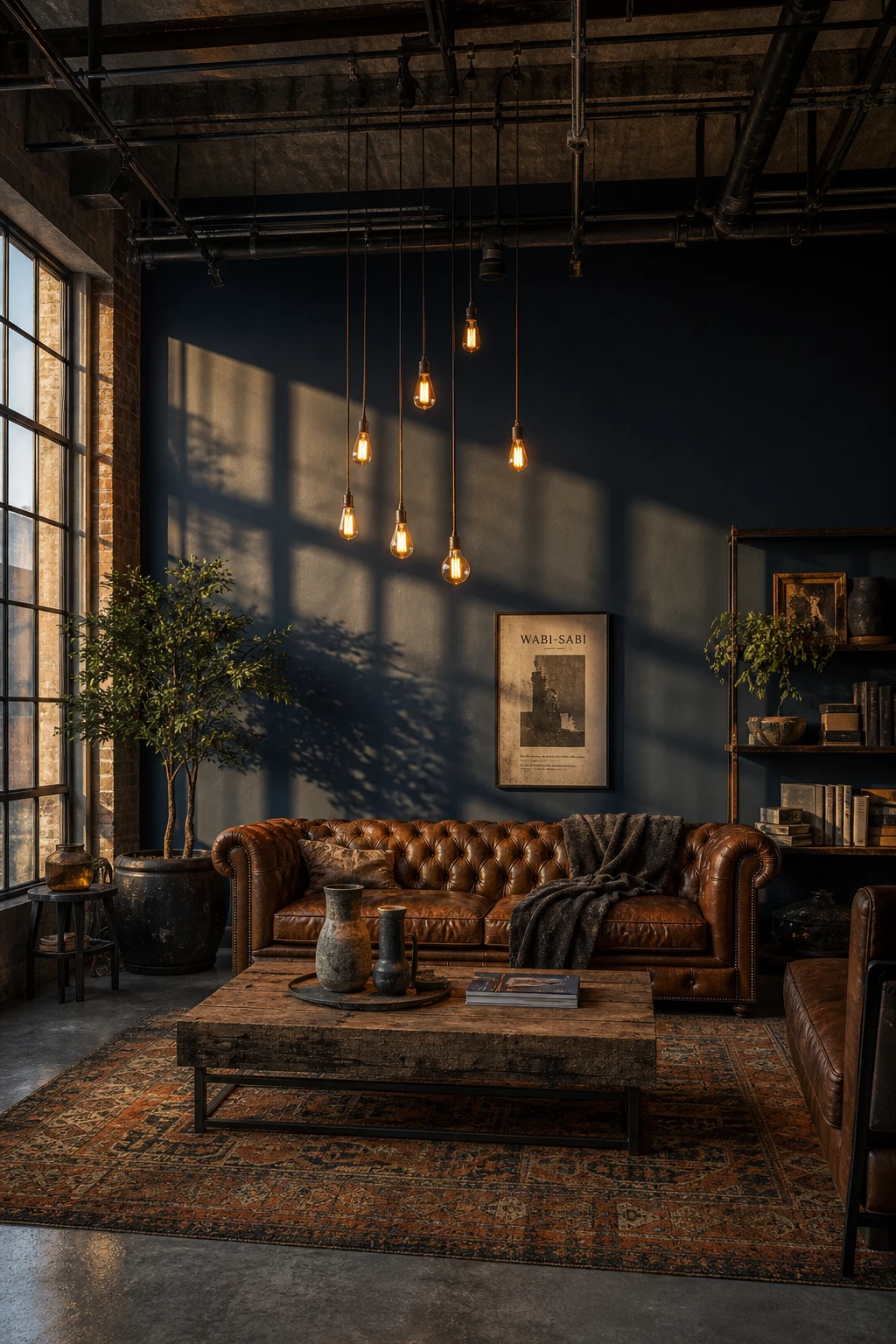
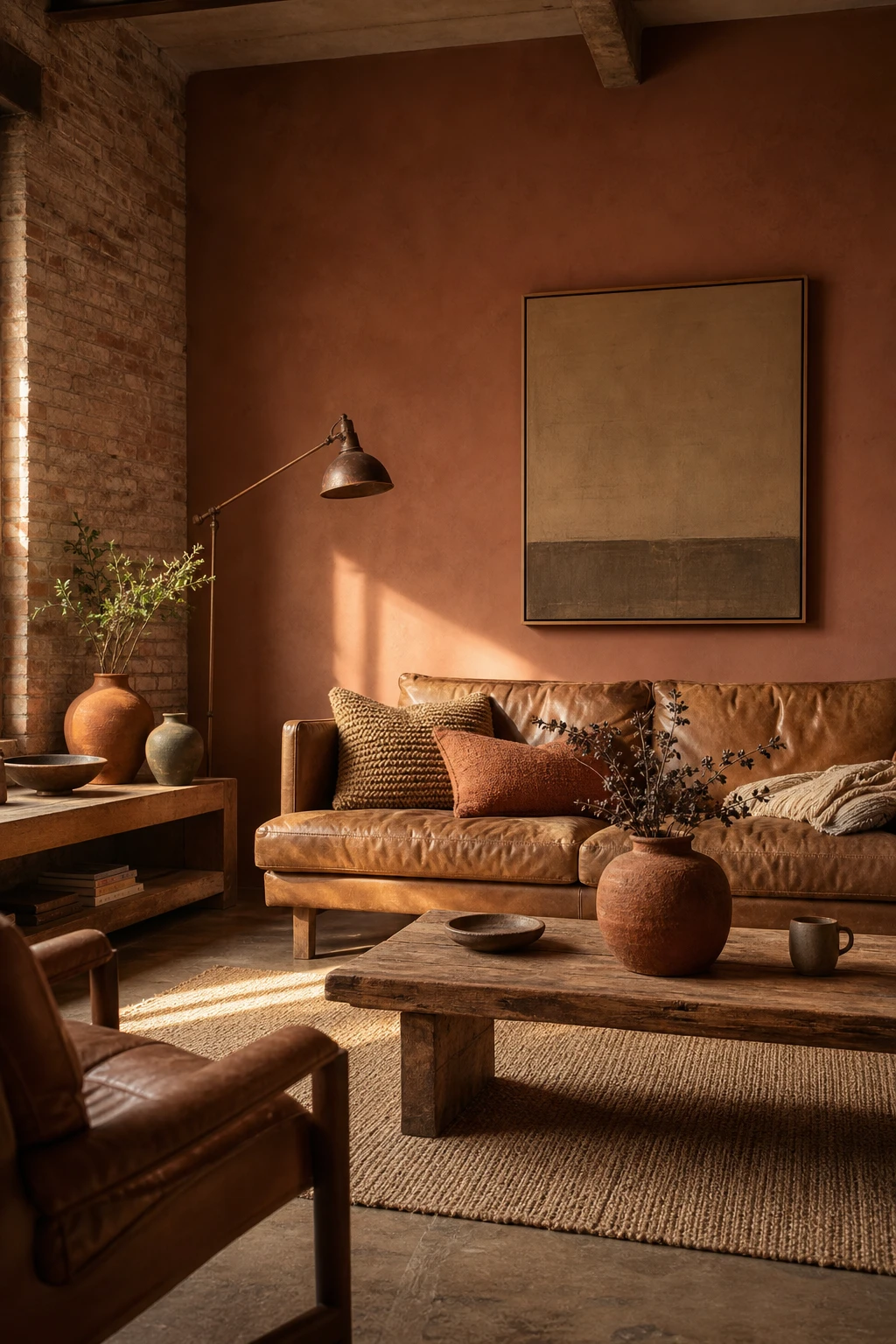
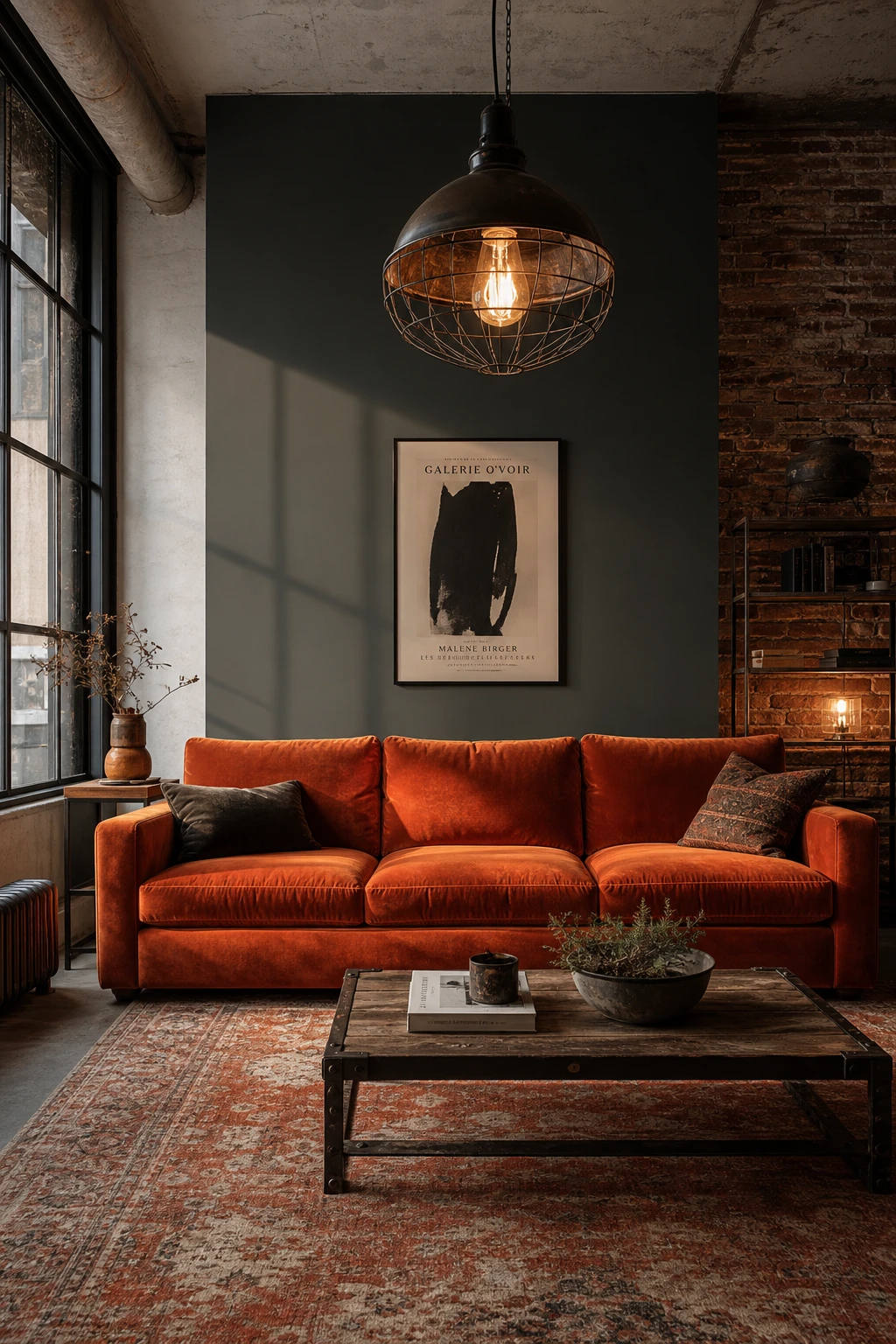
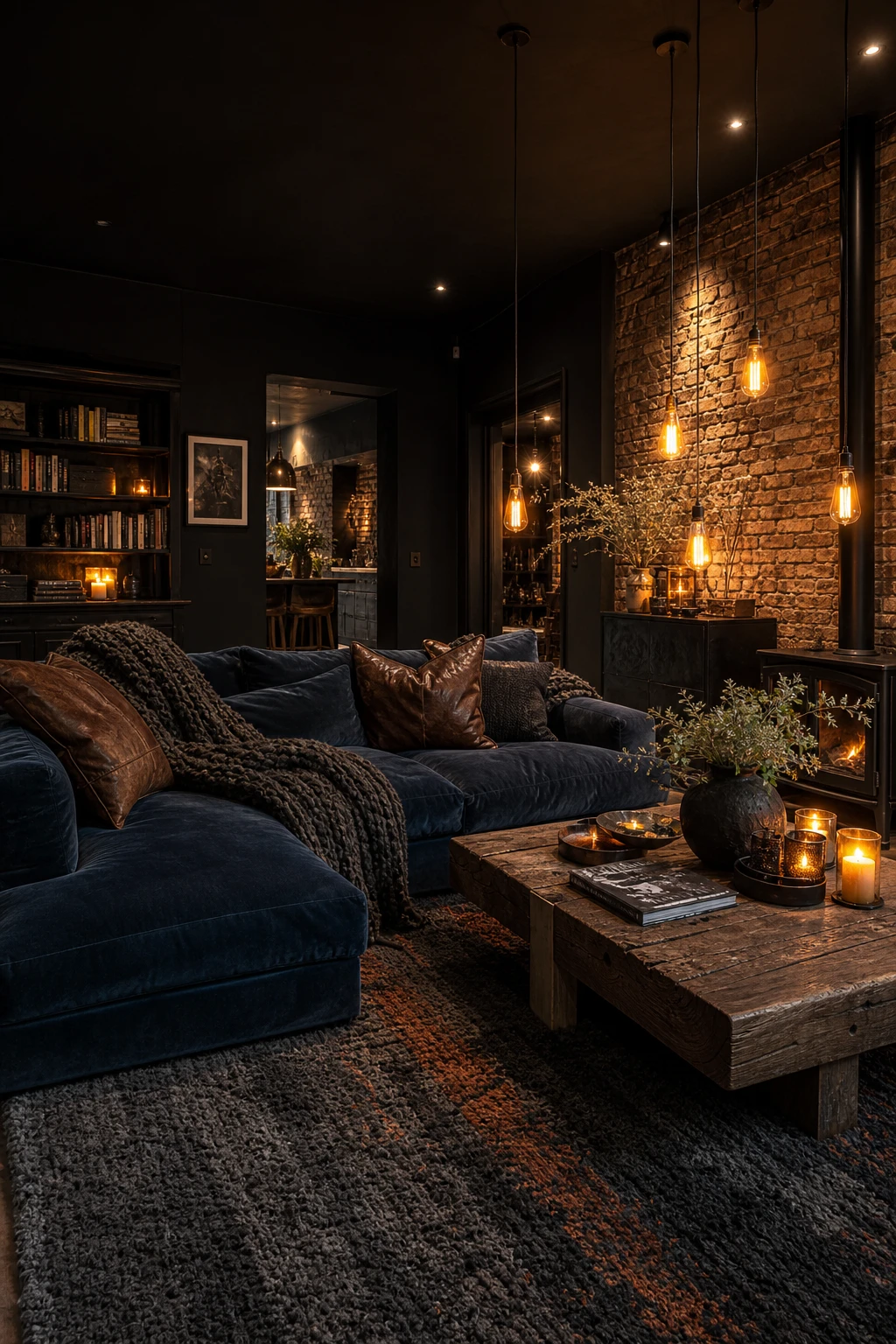
I have always thought the industrial style gets a bad reputation for feeling cold and unfinished, but the cosiest versions prove that completely wrong. What I love about a cozy industrial living room is how raw texture like exposed brick, reclaimed wood, and warm metal lighting does all the heavy lifting. In this piece I walk through the looks I find most inspiring, from moody dark palettes to sun warmed earth tones and lush greenery, and every single one is a look you can steal for your own space.
Why Rustic Materials Make Industrial Feel Like Home
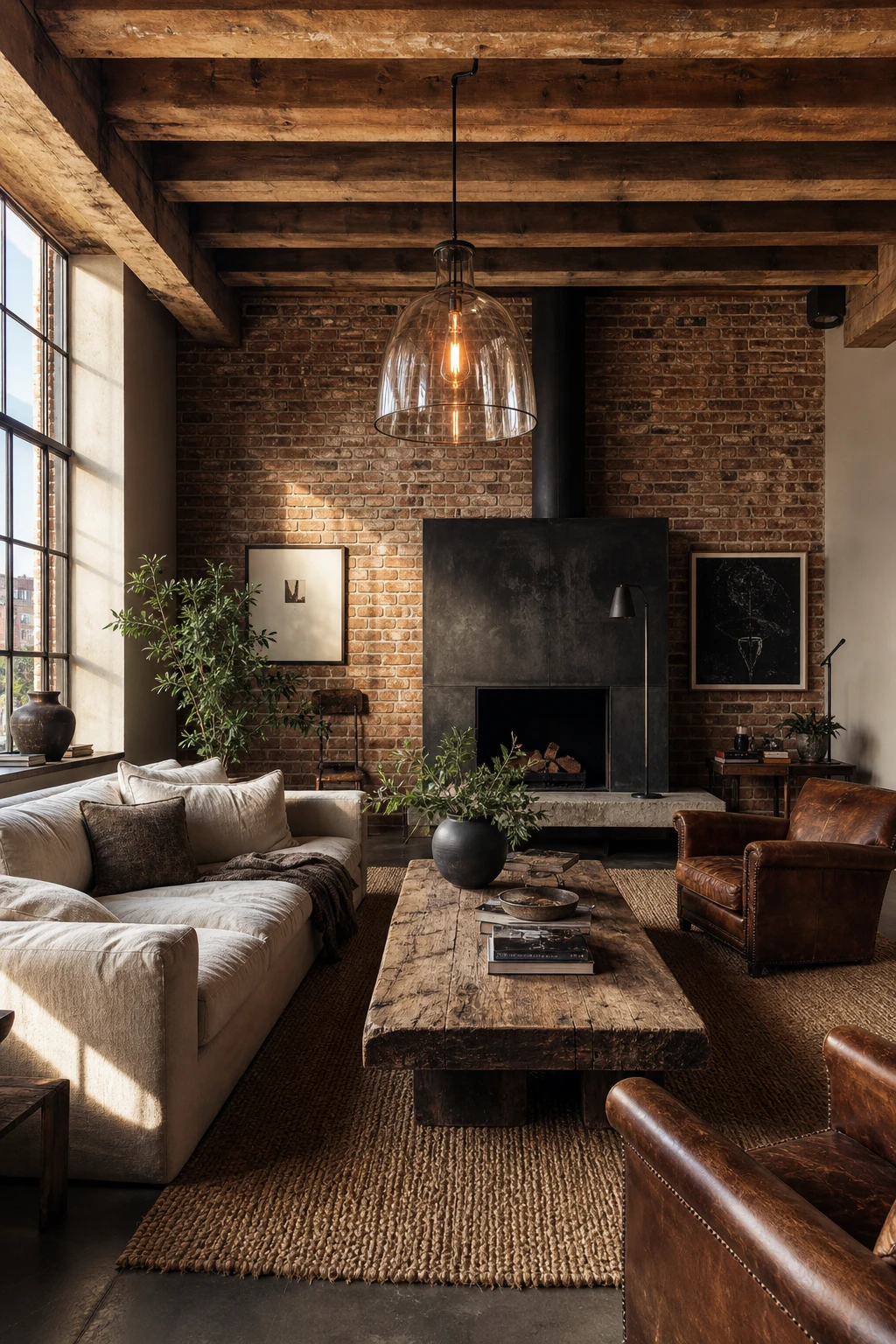
Exposed brick, reclaimed beams, and live edge oak all carry their own history, and when you layer them together they soften the hard edges of an industrial shell into something that actually feels lived in. The blackened steel fireplace keeps the room honest and grounded, while that warm timber overhead pulls the eye up and adds the kind of quiet weight money struggles to buy. Watch how each surface reads slightly differently, rough brick against smooth steel, and you get depth without any single material shouting.
The Key Details
Exposed brick accent wall
Reclaimed timber ceiling beams
Live edge oak coffee table
Blackened steel fireplace surround
Oversized Edison bulb pendant light
Pro TipPair one polished or lacquered surface, a glazed ceramic lamp base or a high sheen side table, among the raw materials so the textures each have something to push against.
Avoid sourcing every piece from the same reclaimed wood collection, because when the grain, tone, and finish all match perfectly the room reads like a film set rather than a real home.
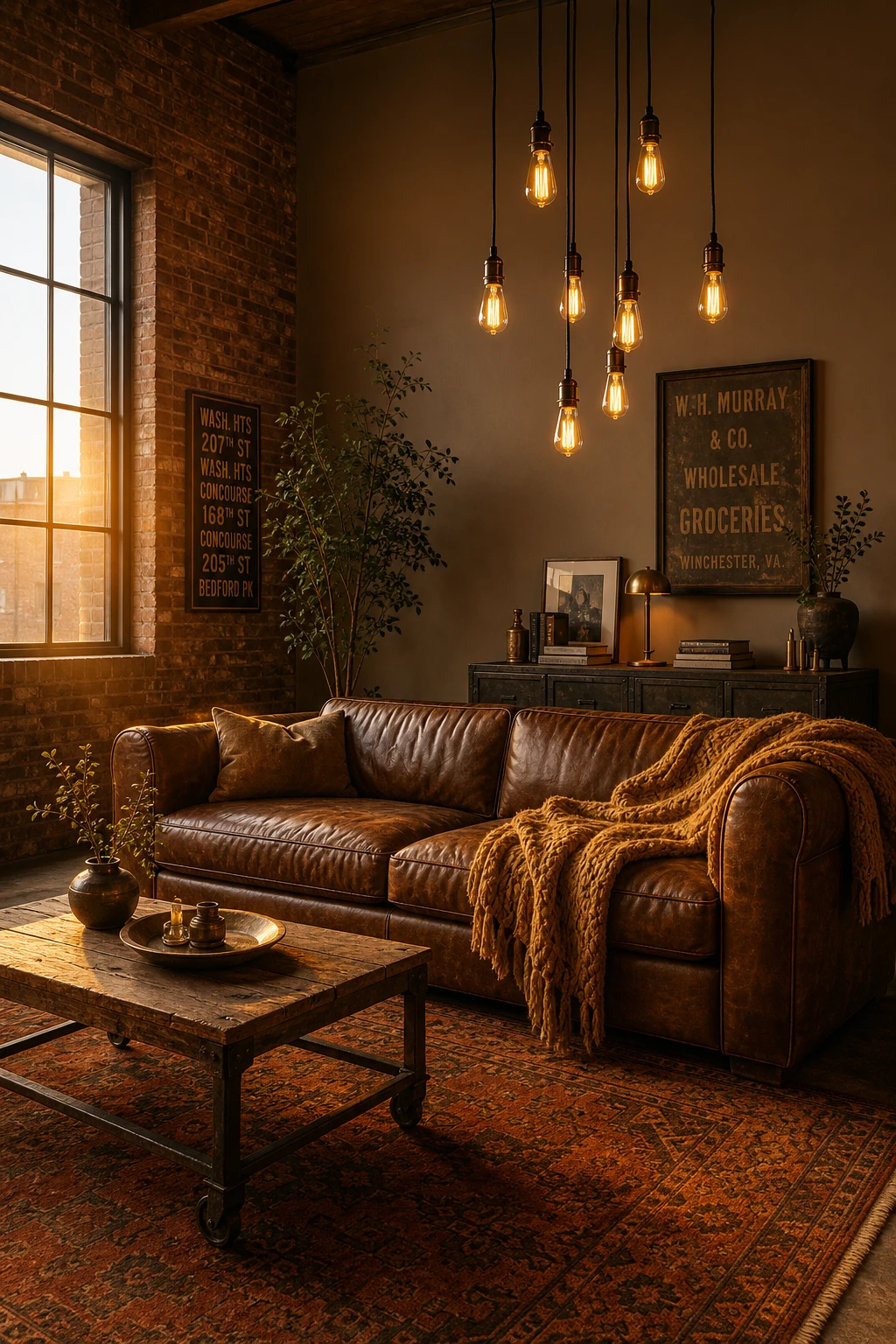
Amber tones do the heavy lifting in a room full of concrete, steel and bare brick. What I love about this approach is how the warm glow almost tricks the eye into reading those cool grey surfaces as softer than they are. You get that golden cognac leather pulling colour down to floor level, the ochre and sienna in the rug stitching it all together, and the Edison cluster overhead washing everything in honeyed light. The whole room shifts from cold workshop to somewhere you actually want to curl up.
The Key Details
Cognac leather sofa
Edison bulb pendant cluster
Exposed brick wall
Vintage Persian rug in ochre and sienna
Steel framed window
Pro TipReach for bulbs rated 2200K to 2700K rather than anything above 3000K, as that extra warmth is what makes grey walls glow rather than look flat.
AvoidCool white bulbs at 4000K or above will strip every last bit of warmth out of your leather and rug and leave the room feeling like a car park.
How to Blend Farmhouse Comfort With an Industrial Backbone
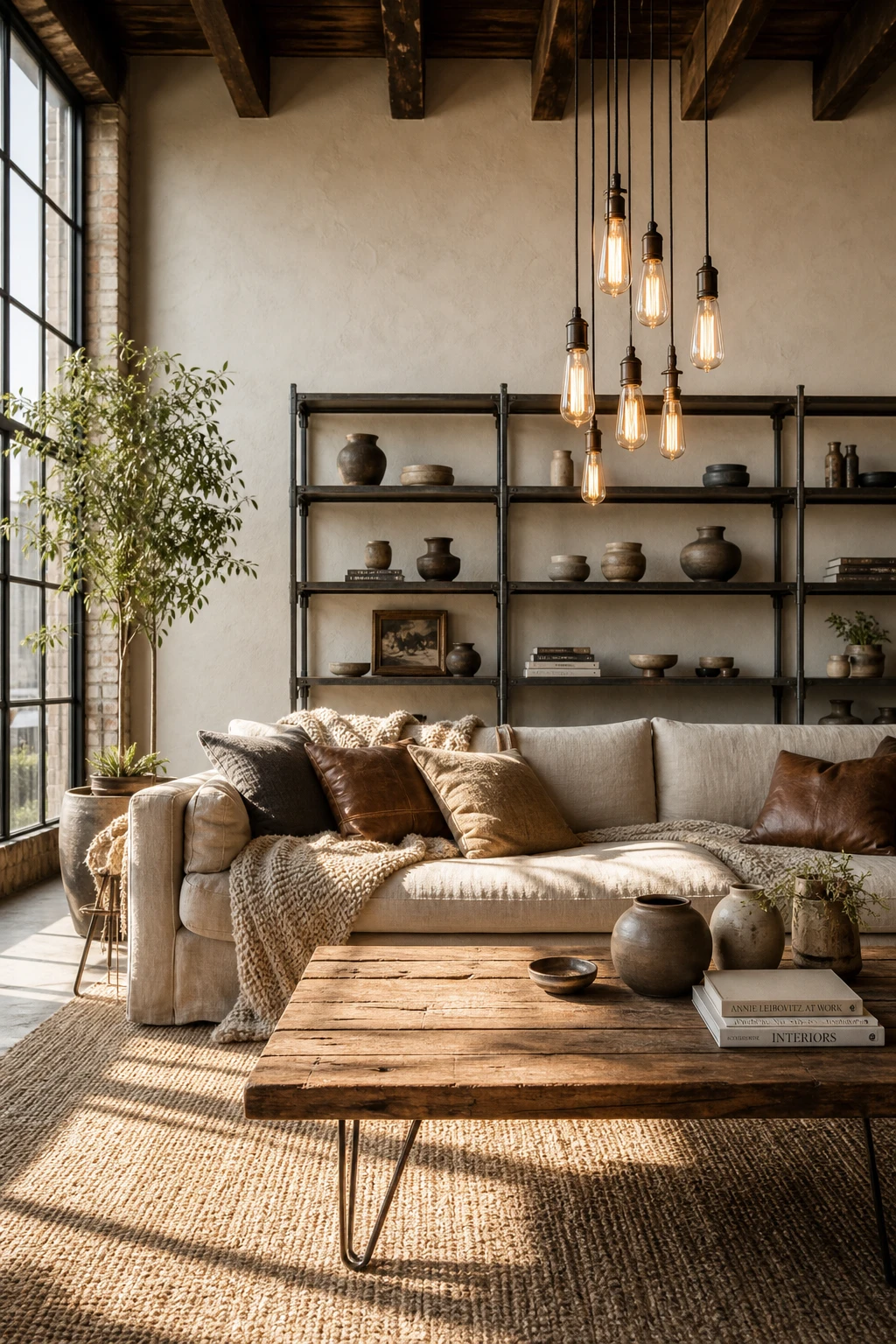
Farmhouse and industrial feel like opposites until you put them in the same room, and then something clicks. The rough steel and bare concrete give the space its spine, and the linen, worn leather, and chunky knit throws are what make you want to sit down and stay. What I love is how each material does a specific job: the hard finishes hold the room together visually, and the soft textiles pull all the warmth back in. You get a room that feels both honest and genuinely comfortable.
The Key Details
Chunky knit throw and worn leather cushions on linen sofa
Raw steel open shelving with ceramic vessels
Reclaimed wood coffee table with iron hairpin legs
Edison filament pendant cluster on exposed dark timber beams
Factory style gridded windows over jute area rug
Pro TipDrape a loose linen or woven cotton throw over one arm of your sofa rather than folding it neatly, so the softness reads immediately against any metal or concrete nearby.
Avoid tipping too far into one style by doing a quick count: if you have more than three industrial elements in one corner with no soft textile or natural wood to answer them, the room will feel cold rather than cosy.
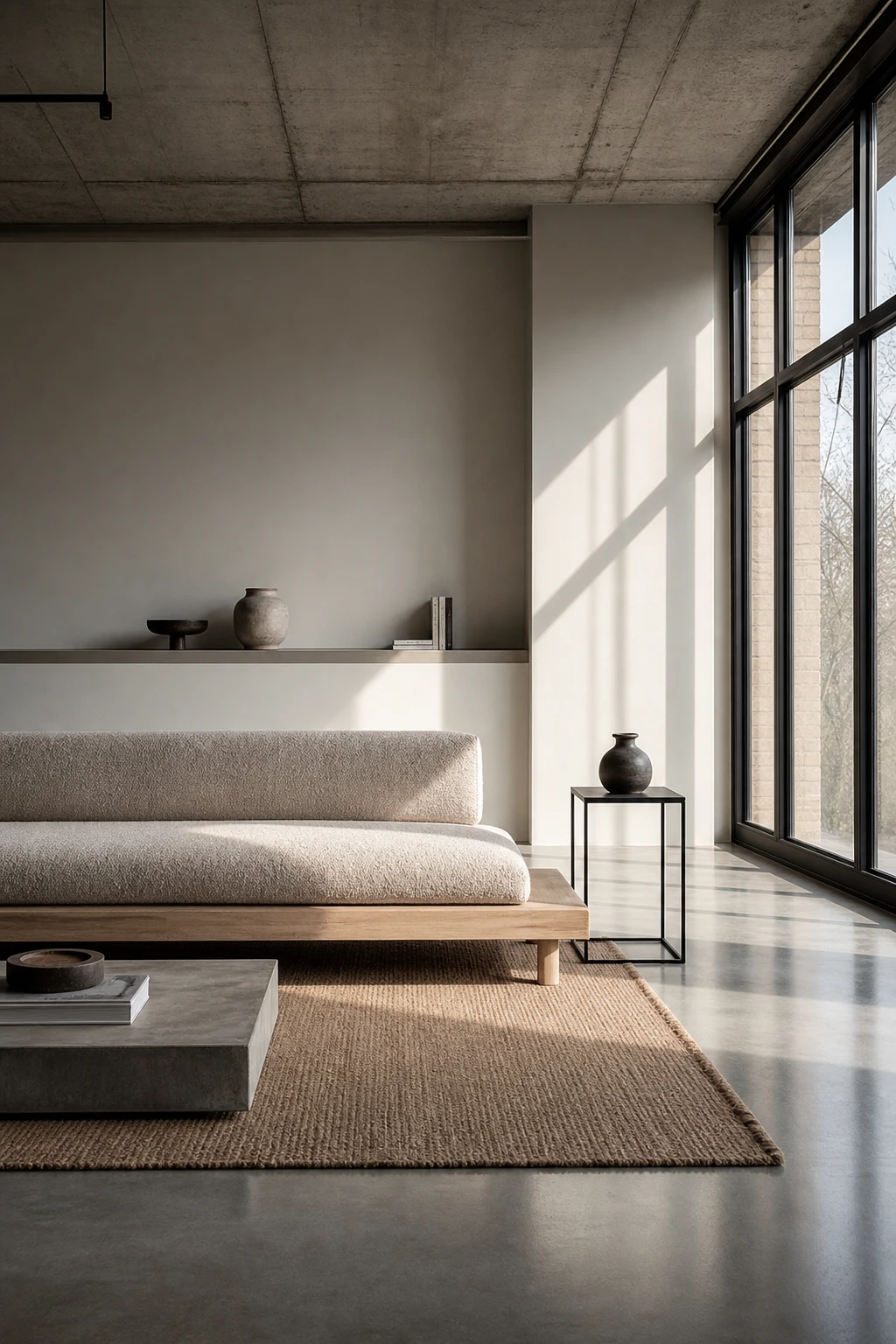
Scandustrial Style and Why Less Really Is More Here
Scandustrial is the edit I reach for when a room has strong bones and you want those bones to do the talking. Keeping the palette pale and the furniture low lets the concrete and steel read as intentional rather than unfinished. You get breathing room between each raw element, so the blackened steel and the ash timber each earn their moment. That restraint wins me over every time, and the whole point of this style is trusting it.
The Key Details
Low slung pale ash timber sofa frame
Blackened steel side table
Exposed concrete ceiling panels
Steel framed floor to ceiling windows
Jute area rug on polished concrete floor
Pro TipChoose a sofa or sideboard with exposed legs rather than a solid plinth base, so the floor stays visible and the heavy materials above feel grounded rather than crushing.
AvoidAdding more than two or three accent pieces breaks the spell entirely, because Scandustrial only works when each object has clear space around it to be noticed.
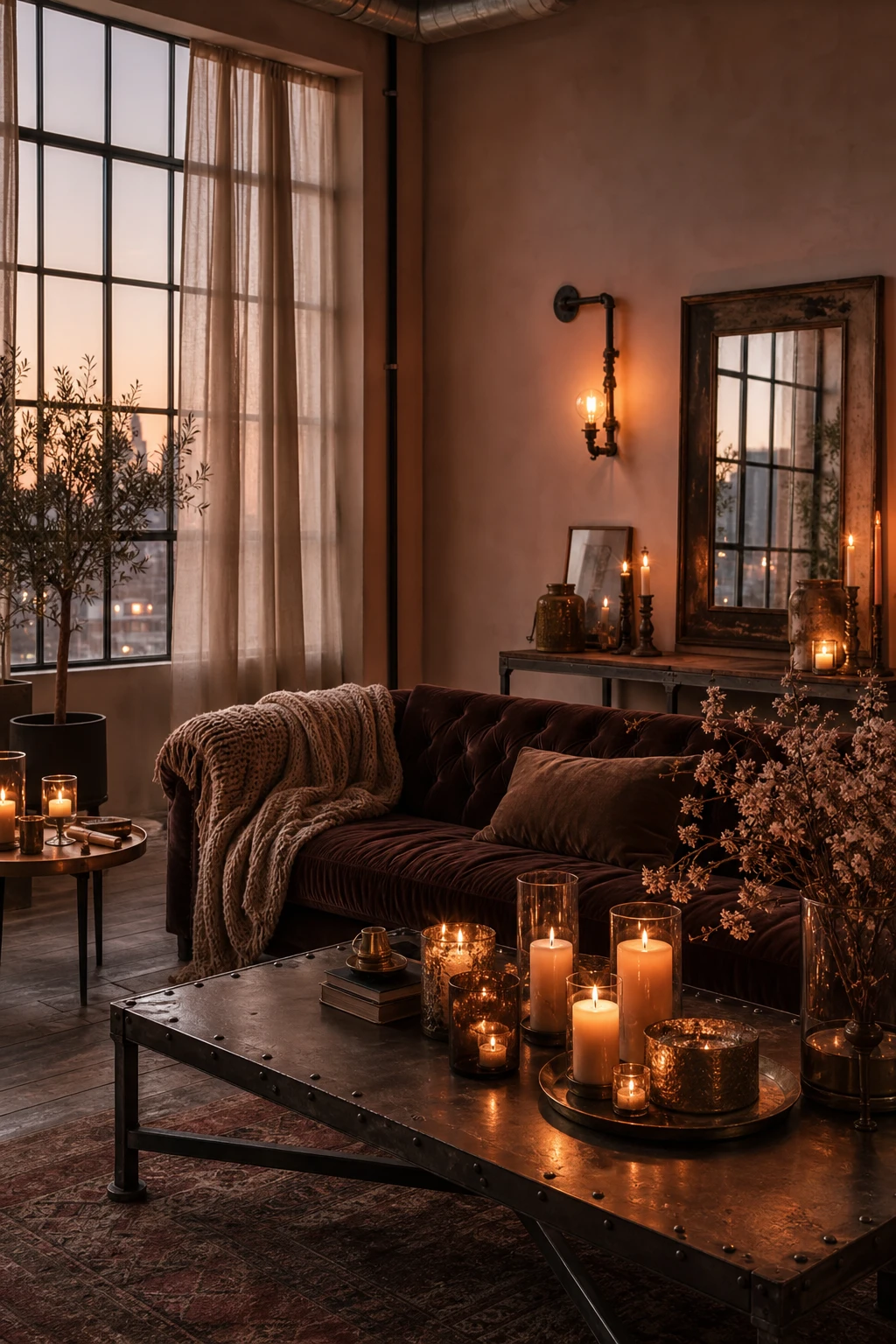
Soft Candlelight and Steel: the Romantic Side of Industrial
Candlelight is the secret weapon I reach for when industrial rooms feel too hard edged. The warm flicker softens exposed steel and raw brick in a way that no overhead light can match, and you get this moody, almost cinematic glow that feels genuinely inviting. The contrast is what does it: velvet and knit against iron and glass, warmth sitting right up against cool. Watch how quickly the whole room shifts from workshop to somewhere you actually want to curl up and stay.
The Key Details
Tufted velvet sofa
Chunky knit throw
Pillar candle and glass votive cluster
Exposed iron pipe wall sconce
Steel framed windows with sheer linen curtains
Pro TipCluster pillar candles and glass votives directly on the floor or a low coffee table so the glow travels upward across textured surfaces rather than disappearing into the ceiling.
AvoidSkipping soft furnishings like throws and cushions entirely will leave the candlelight feeling eerie rather than romantic, because there is nothing warm and tactile for the eye to land on.
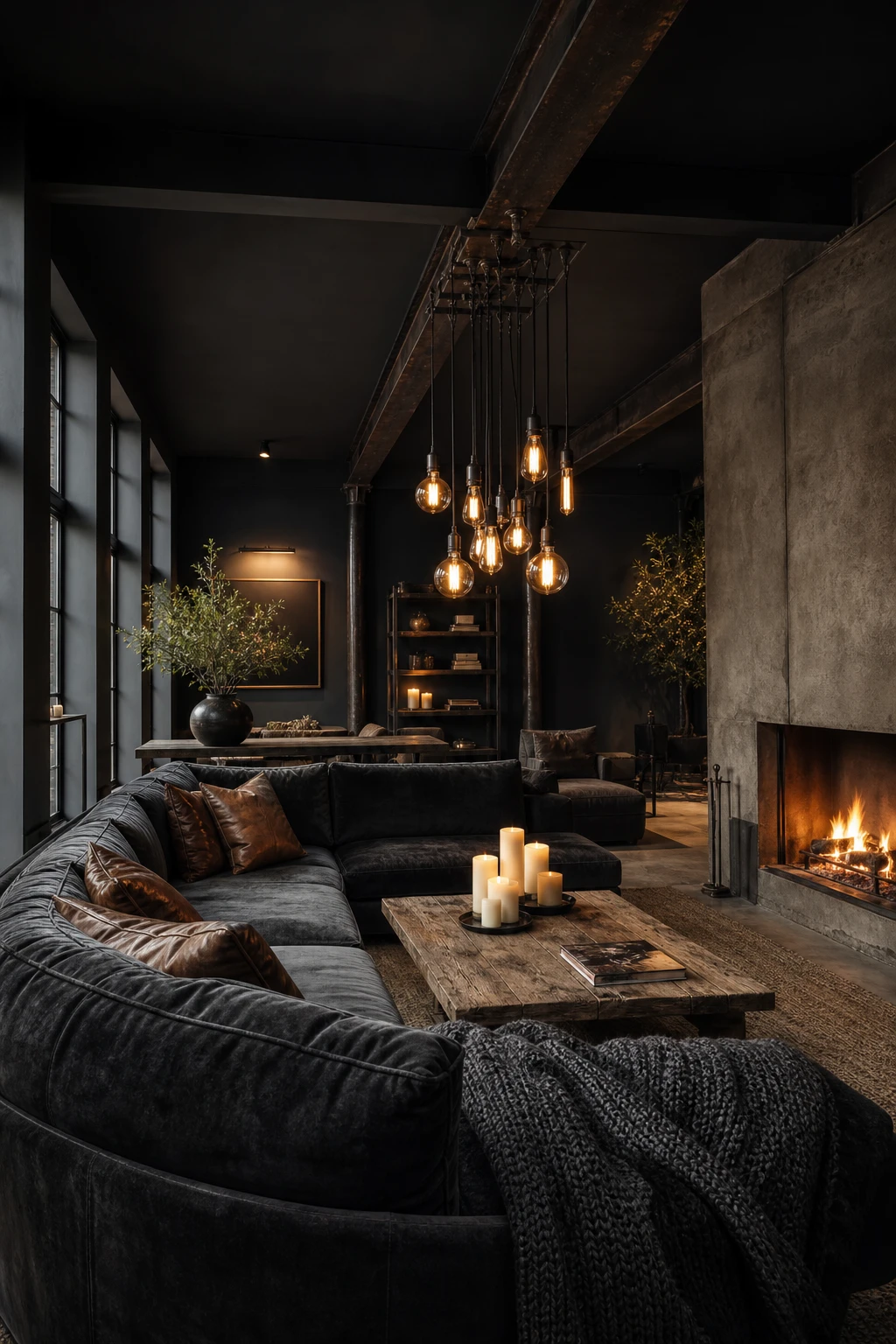
Going Dark: How a Moody Palette Makes Industrial Feel Cosy
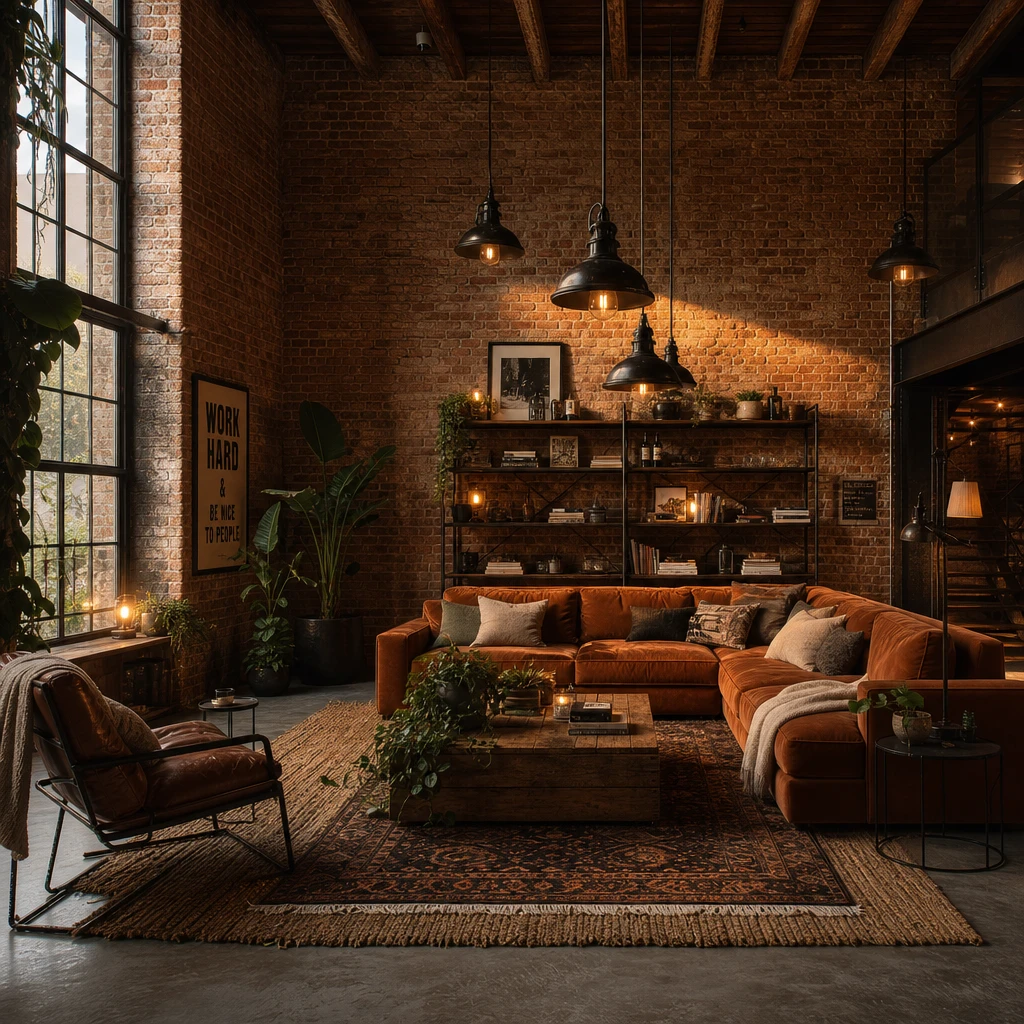
Dark walls in a big industrial space do something I find endlessly satisfying: they pull the room in, giving all that raw concrete and exposed steel a warmth it never had before. You get a sense of shelter that open plan rooms usually fight against. The deep colour also makes your lighting work harder, so every Edison bulb feels like a candle rather than a fitting. Watch how the whole room shifts from warehouse to den.
The Key Details
Velvet sectional sofa
Edison bulb pendant cluster
Raw concrete fireplace surround
Exposed steel ceiling beam
Weathered oak coffee table
Pro TipPaint the ceiling the exact same dark shade as the walls so the room wraps around you like a cocoon rather than feeling like a painted box with a plain lid.
Avoid using a single dark tone across every surface with no texture or contrast, because without the variation of velvet, raw wood, or aged metal the room will feel flat and heavy rather than moody and rich.
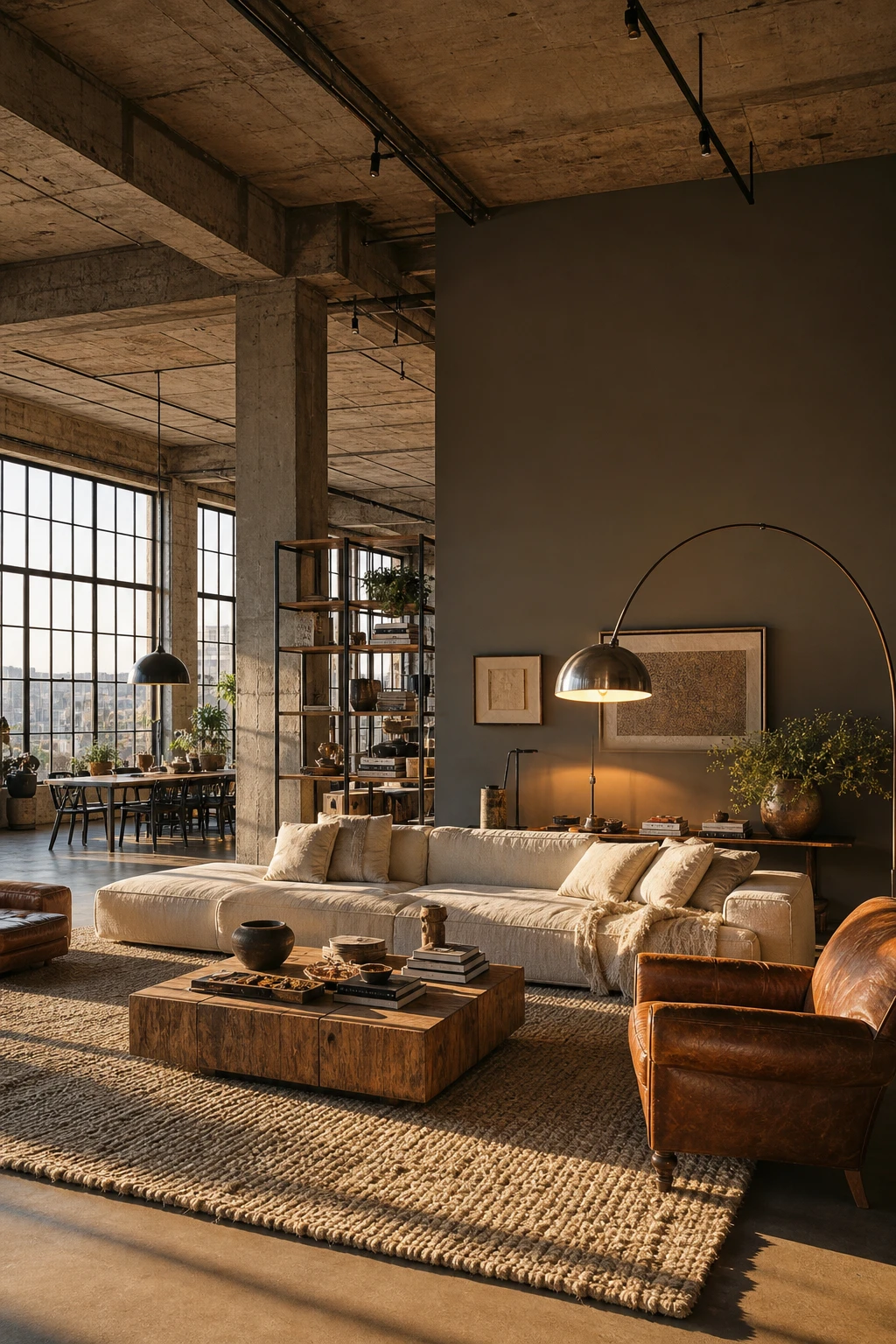
Zoning an Open Loft Living Room So It Actually Feels Cosy
Open lofts are generous and full of light, and that is exactly what makes them tricky. What I love about zoning with rugs and low furniture is that you carve out a room within a room, and suddenly the space stops feeling like a corridor. Watch how a low slung sectional pulled inward and a big wool rug underneath it create a gravitational pull, drawing you in rather than leaving you stranded in the middle of all that floor.
The Key Details
Low slung sectional sofa
Hand knotted wool area rug
Exposed structural columns
Oversized arc floor lamp
Steel framed industrial windows
Pro TipPlace your area rug so all four legs of the sectional sit fully on it, which locks the seating zone in place and keeps it from drifting toward the kitchen end of the loft.
AvoidLeaving the entire floor open with furniture pushed to the walls makes a loft feel like a waiting room, and no amount of warm accessories will fix the emptiness that creates.
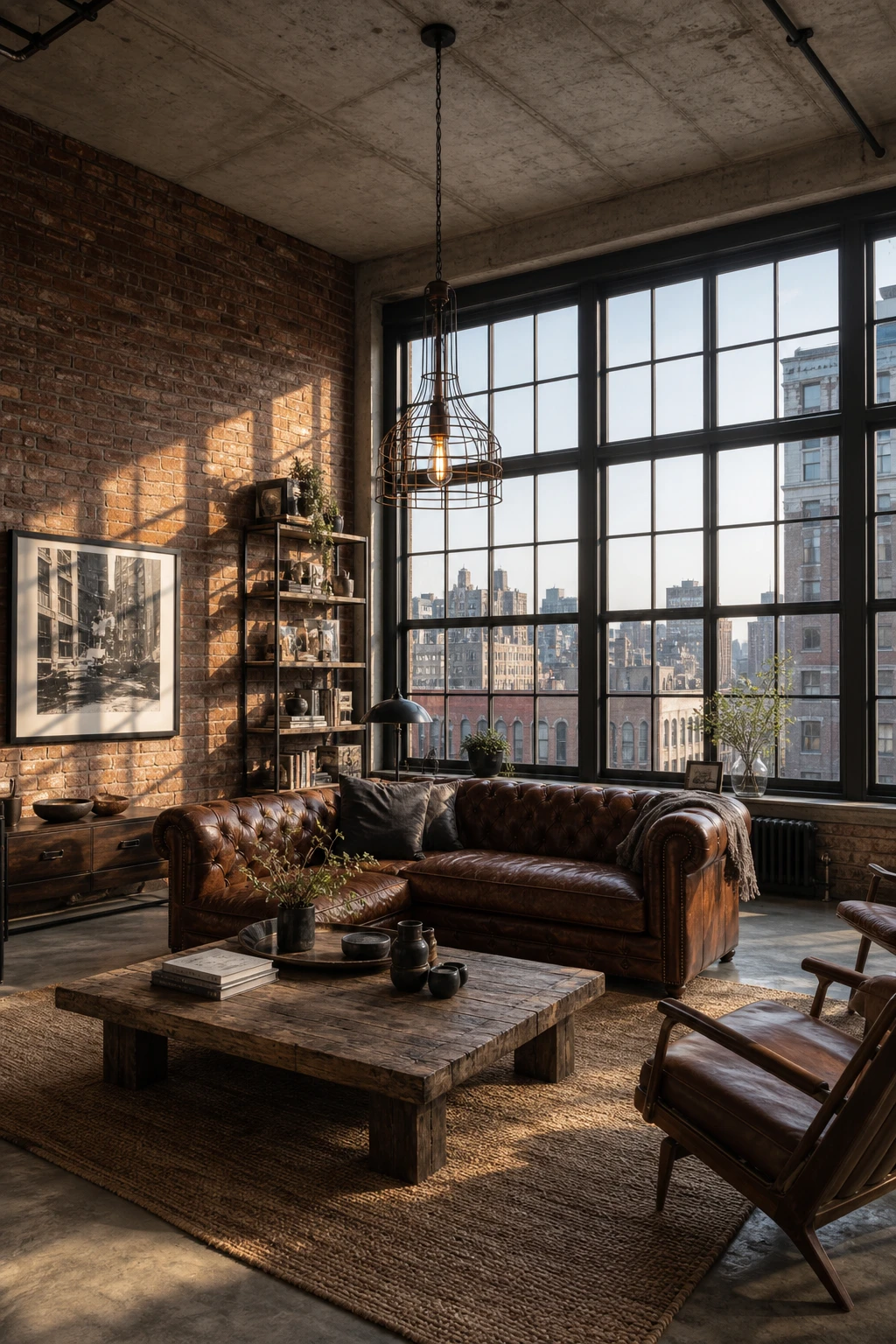
Steal the New York Loft Look Without Moving to Manhattan
Salvaged brick, factory steel, and worn leather earn their place here because they carry real age, and age is the whole point. What I love is how those layers of grit give a room genuine weight that you simply cannot fake with new things. You get texture fighting texture, and the result feels lived in and honest rather than dressed up. The reclaimed timber and cage pendants seal it by pulling every rough edge into one mood.
The Key Details
Salvaged exposed brick wall
Factory steel frame window grid
Worn leather Chesterfield sofa
Cage filament pendant light
Reclaimed timber coffee table
Pro TipSpend a Saturday at a local salvage yard and look for cast iron brackets, steel pipe offcuts, or old factory window catches, because one genuine find grounds the whole room in a way that no shop shelf ever will.
AvoidResist the urge to buy shiny new “industrial” props from a catalogue, because that factory fresh finish is exactly what kills the gritty city loft feeling you are working so hard to build.
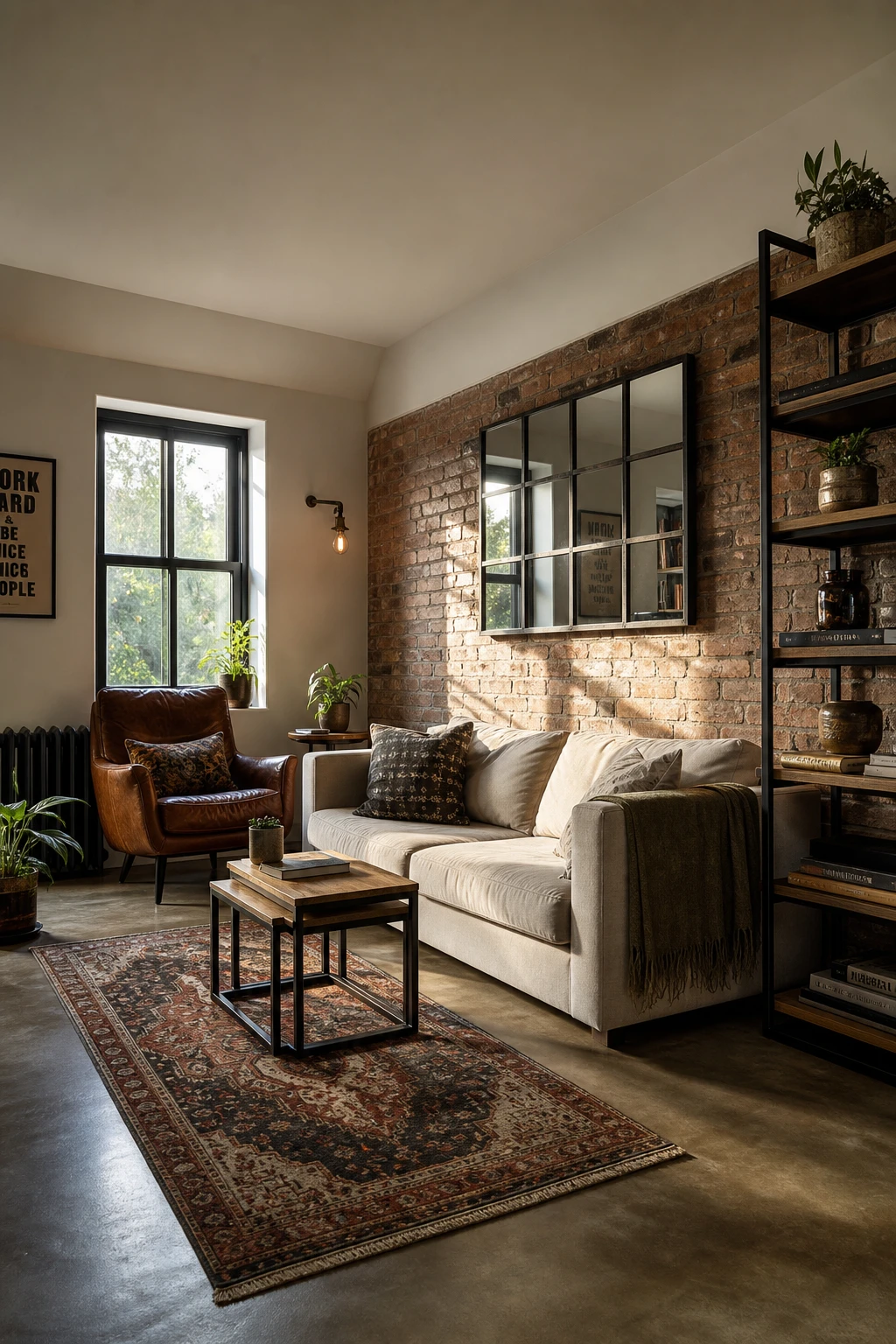
Small Space, Big Industrial Character: How to Pull It Off
Scaling industrial down is one of my favourite puzzles to solve, and a small room actually rewards the edit. You get sharper focus when every piece earns its place, and the raw materials, steel, worn wood, aged iron, read with more presence when they have breathing room around them. A vertical slim shelf pulling the eye upward keeps the floor clear, and a low grid mirror bouncing light across the whole space does more for the room than doubling the square footage ever could.
The Key Details
Vertical slim steel open shelving
Nesting raw oak and iron side tables
Steel framed grid mirror
Wall mounted Edison bulb sconce
Worn Persian runner on sealed concrete
Pro TipChoose one true statement piece, a chunky steel framed mirror or a solid iron shelving unit, and keep everything else slim and quiet so that one piece gets all the attention it deserves.
Avoid dragging full size industrial furniture into a small room, because an oversized factory style sofa or a wide reclaimed dining table will eat the floor plan and make the whole space feel like a cluttered warehouse rather than a curated home.
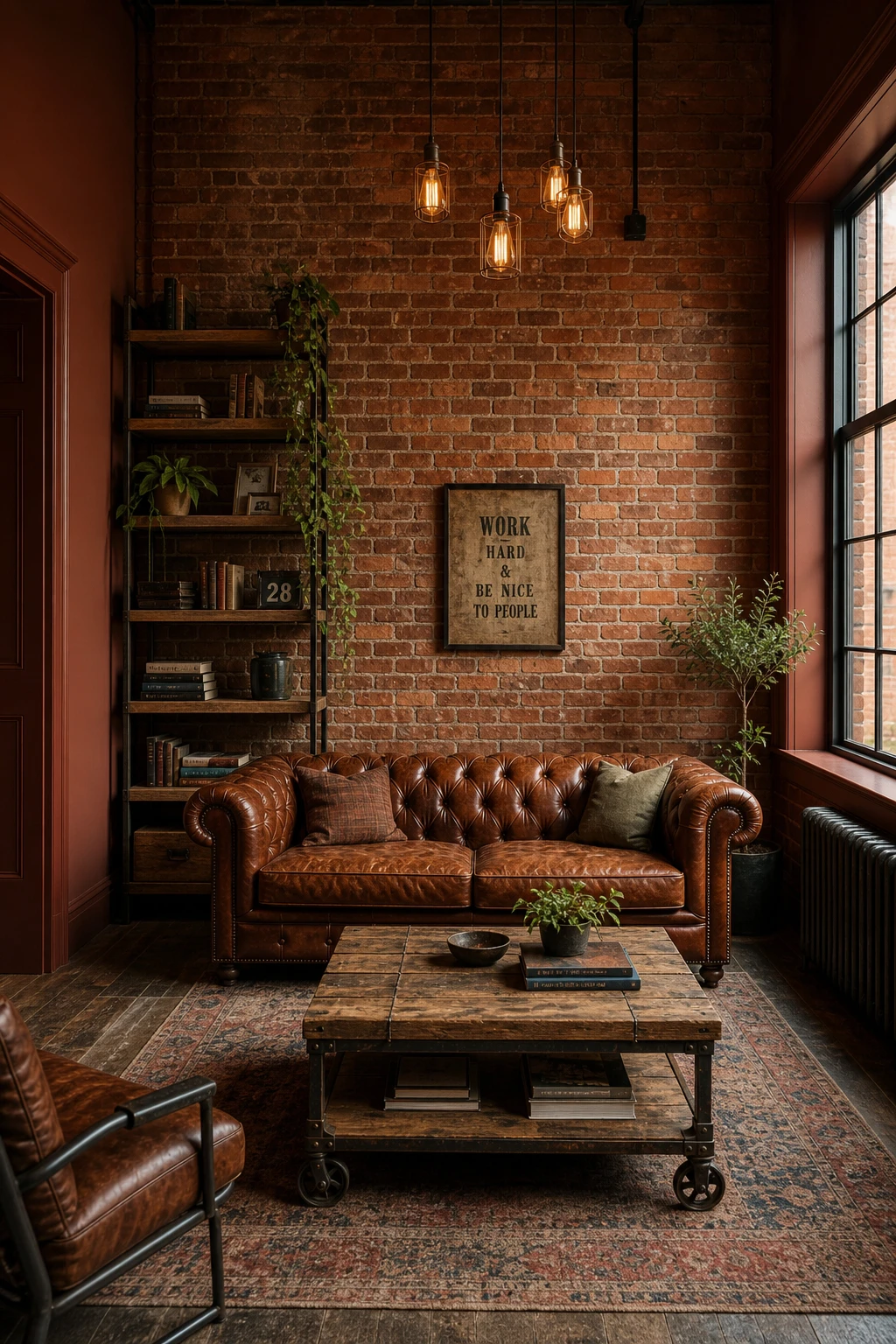
Exposed Brick Is the One Wall Every Cozy Industrial Room Wants
Exposed brick brings something no paint colour or wallpaper can fake: real texture with actual warmth baked into it. What I love about using it as a focal point is the way it pulls every other material in the room toward it, the leather sofa, the reclaimed wood, the steel window frame all suddenly feel like they belong together. You get that lived in depth without trying hard.
The Key Details
Exposed brick feature wall
Cognac leather Chesterfield sofa
Reclaimed wood open shelving
Edison bulb pendant cluster
Steel framed window
Pro TipApply a matte brick sealer in a single thin coat to lock in the natural colour and stop dust without leaving any shine.
AvoidPainting over original brick is one of those decisions you cannot easily undo, and you lose the warmth and texture that made the whole room worth designing around.
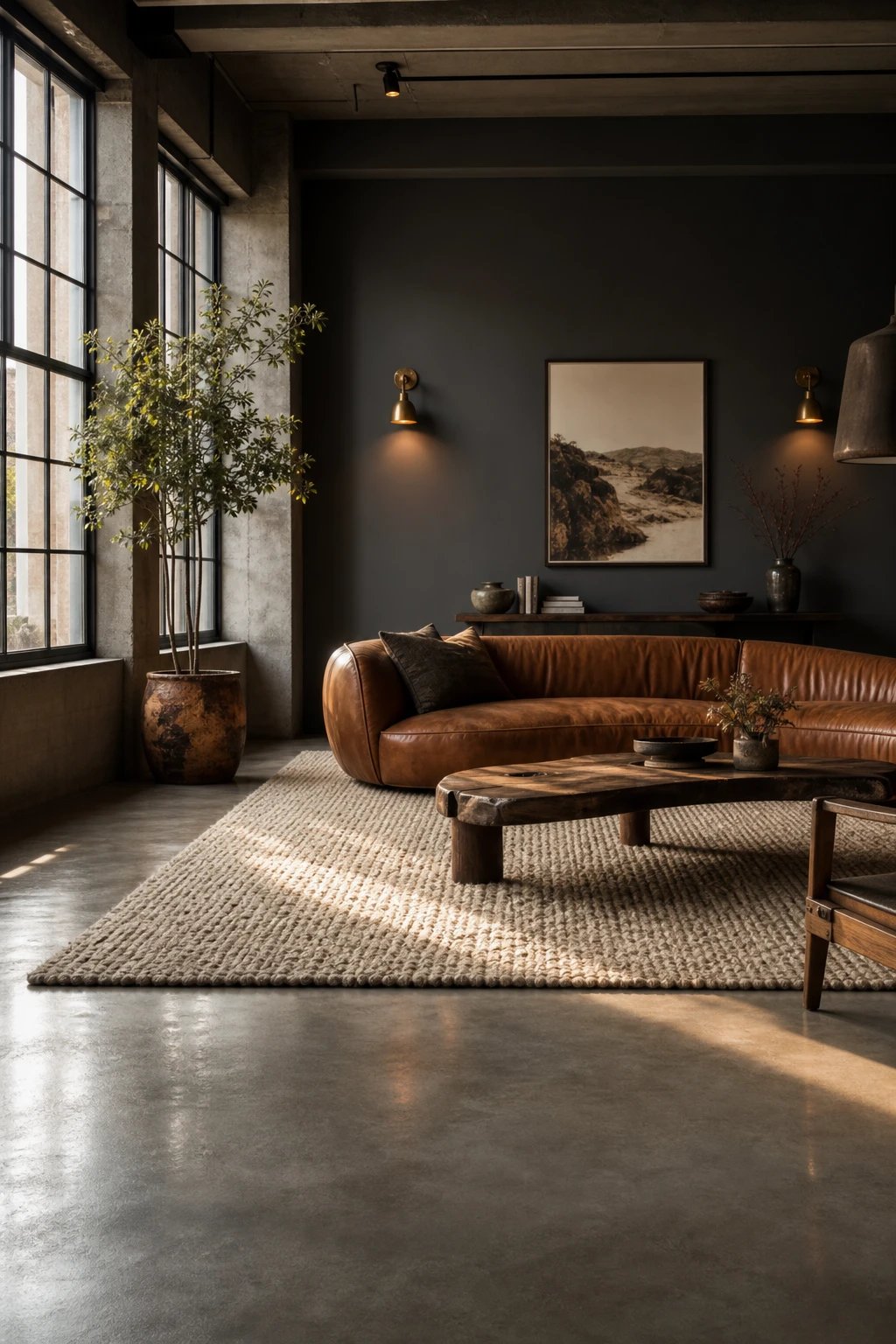
Concrete floors win me over every time when they are paired with something genuinely soft, because the contrast is the whole point. What I love is how a chunky oatmeal wool rug dropped straight onto polished concrete immediately pulls the chill out of the room, both literally and visually. You get this quiet push and pull between hard and yielding that makes the space feel considered rather than cold. Curved leather, live edge wood, and warm brass do the rest, and suddenly that grey floor reads as a calm backdrop rather than a building site.
The Key Details
Chunky oversized wool rug in oatmeal
Curved low profile leather sofa
Live edge walnut coffee table
Aged brass wall sconces
Steel framed windows
Pro TipLayer a sheepskin flat over the top of your wool rug in the spot where feet land most, right in front of the sofa, for a hit of warmth that costs very little.
AvoidLeaving concrete as the only surface texture in the room turns the whole space cold and echoey, so always plan at least three soft or organic materials before the floor goes down.
Exposed Wood Beams and the Height They Give a Living Room
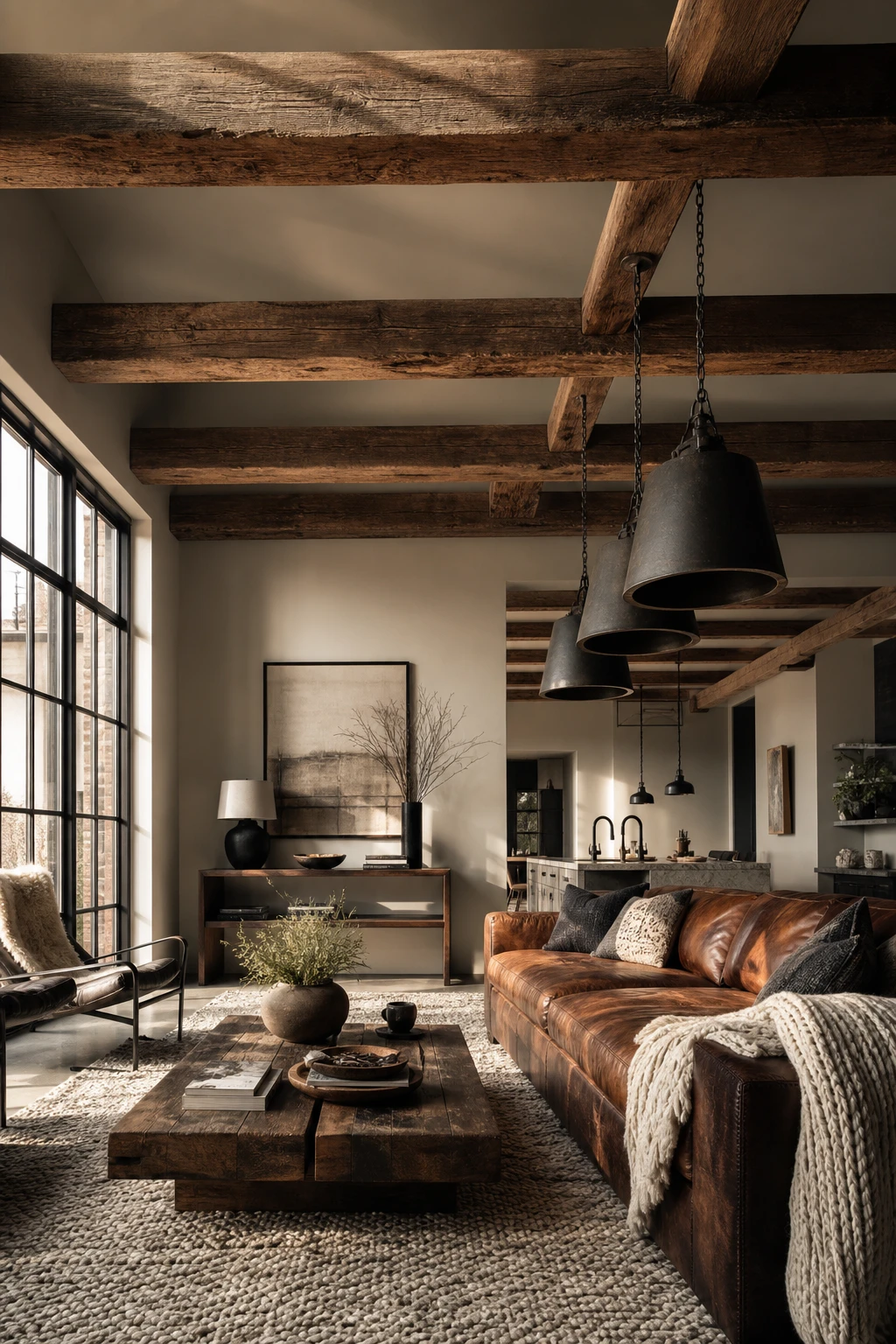
Overhead beams do something a tall lamp or a gallery wall simply cannot: they pull every eye straight up and make the ceiling feel like part of the room. What I love about rough sawn timber here is the texture it adds at height, so the industrial bones feel earned rather than dressed up. You get that sense of grandeur without a single extra piece of furniture, and the warm wood grain keeps it cozy rather than cold.
The Key Details
Rough sawn timber ceiling beams
Aged iron pendant cluster
Cognac leather sofa with knit throw
Reclaimed wood coffee table
Steel framed windows
Pro TipOil your beams with a clear or lightly tinted finish to let the natural grain breathe, because the warmth of raw timber does far more work than a heavy dark stain ever could.
Avoid hollow decorative beams fixed flush to a flat ceiling as they cast no shadow, sit there looking flat, and the eye reads them as fake almost instantly.
A Wood Slat Wall Is the Quickest Way to Add Warmth to Any Industrial Room
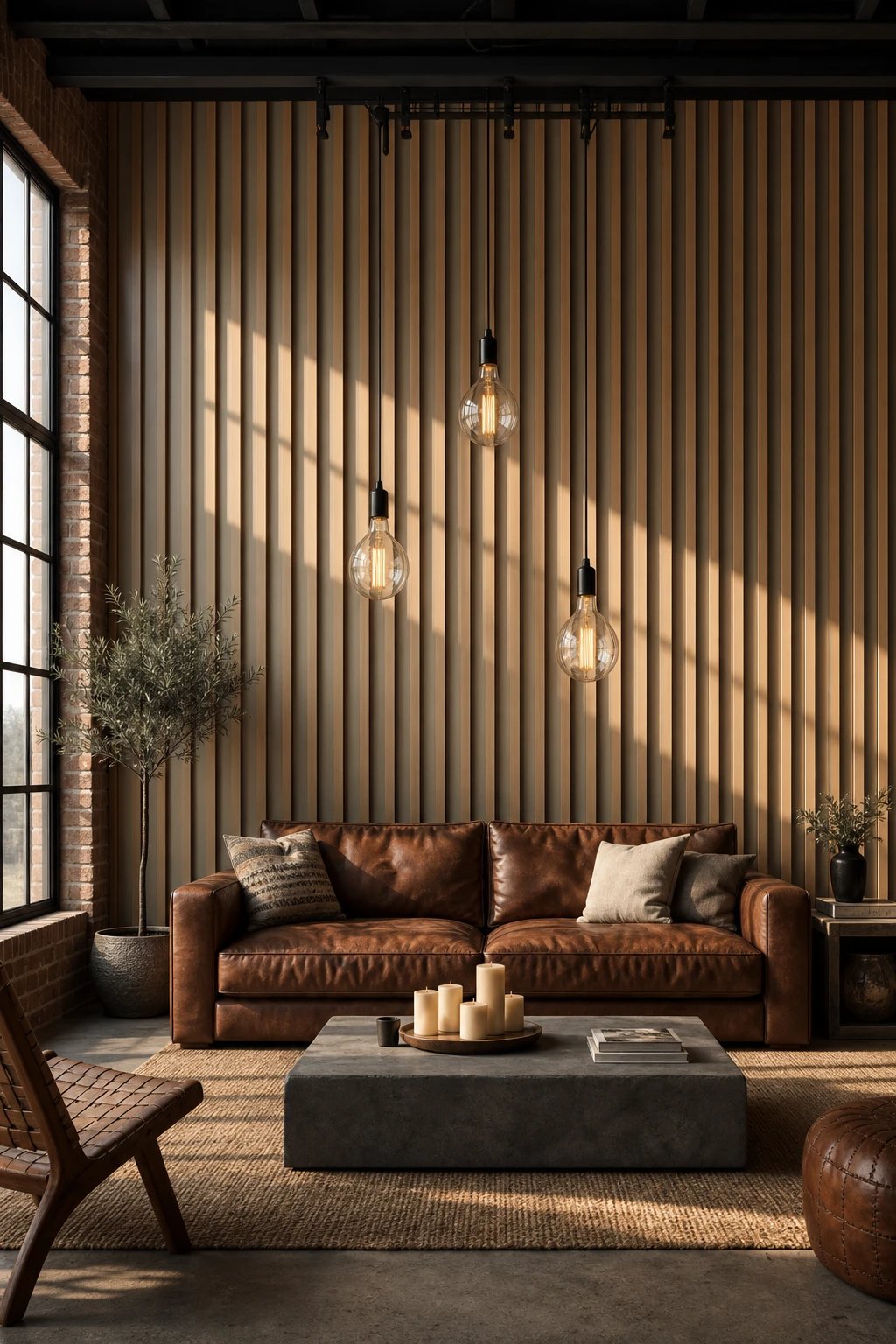
A slat wall brings rhythm to a flat surface without adding visual weight, and that is exactly why I keep coming back to it. You get that lovely interplay of light and shadow falling across the vertical battens, and the oak tone softens all that raw concrete and metal sitting in front of it. What I love most is how one wall does the heavy lifting, giving the whole room a focal point that feels built in and considered rather than hung on at the last minute.
The Key Details
Vertical oak batten slat wall
Cognac leather sofa
Raw concrete slab coffee table
Staggered Edison bulb pendant lights
Woven jute area rug
Pro TipVary your slat spacing by a centimetre or two in places so the finished wall reads as crafted by hand rather than factory fitted.
Avoid running slats around every wall in the room, as the continuous pattern will close the space in and kill the breathing room that makes industrial style feel expansive.
One Reclaimed Wood Coffee Table Changes the Whole Feel of the Room
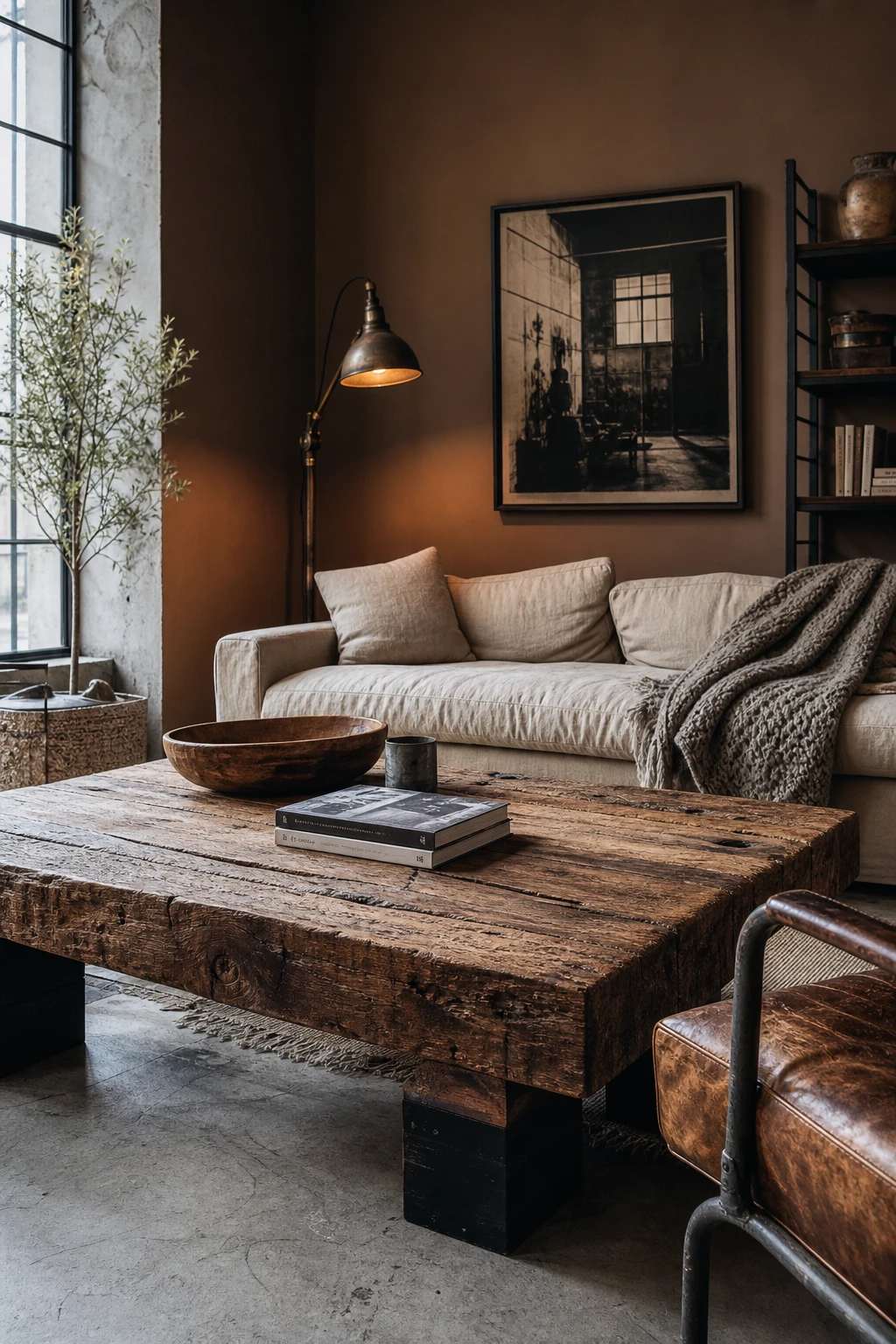
A reclaimed wood coffee table earns its place the moment it lands in a room. The grain, knots, and old saw marks tell a story no new piece ever could, and I find that kind of honest age impossible to fake with something factory fresh. You get instant warmth without trying, which is exactly what a cozy industrial space needs. Every scar and split in the wood pulls the room together and gives it a reason to exist.
The Key Details
Reclaimed wood coffee table with exposed grain and knots
Low slung linen sofa with chunky wool throw
Vintage metal floor lamp with Edison bulb
Aged leather armchair
Steel framed windows
Pro TipWhen you are choosing a slab, run your hand across it and look for deep knots, live edges, and colour variation, because those are the marks that give the table its personality.
AvoidResist loading the surface with trays, books, candles, and objects, because a reclaimed table this beautiful needs breathing room to do its job.
Deep Green Walls Give an Industrial Living Room Its Richest Look
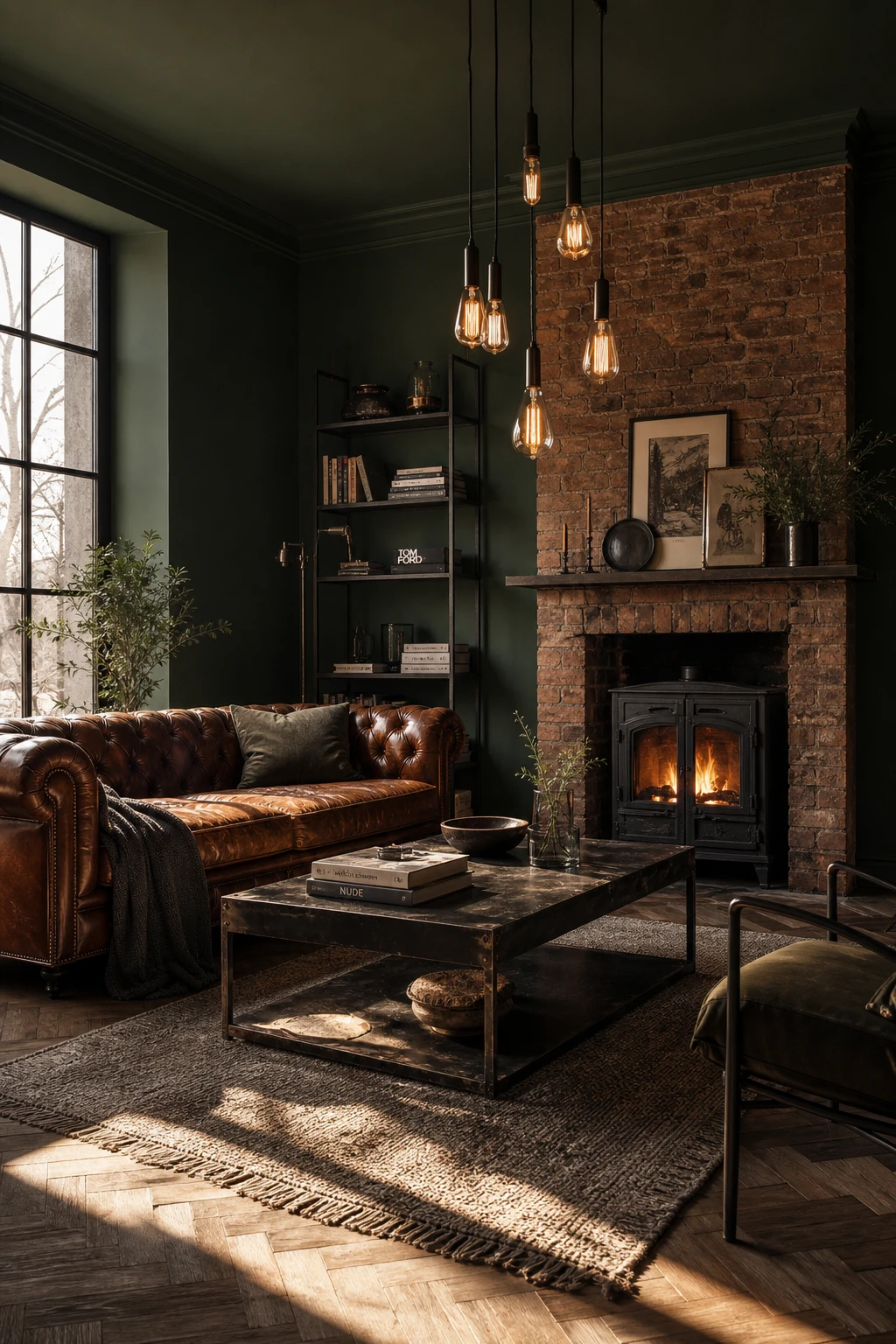
Deep green is the secret weapon in a cozy industrial room, and the moment I layer it behind metal and leather I can see why it works so well. The richness of the tone pulls the warm cognac in the leather forward and makes the blackened steel feel grounded rather than cold. You get this quiet depth that no neutral wall can give you, and every raw material in the room suddenly looks more considered.
The Key Details
Cognac leather Chesterfield sofa
Blackened steel coffee table
Exposed brick chimney breast
Edison bulb pendant cluster
Herringbone parquet floor
Pro TipHang aged brass hooks or switch plates against the green wall, because that warm gold contrast is the single quickest way to make the whole scheme feel intentional.
AvoidAlways test your green under the exact bulbs you plan to use, because a warm green chosen in daylight can shift noticeably blue under cool LED light and fight every warm tone in the room.
Blue in an Industrial Room: How to Keep It Warm Rather Than Cold
Blue in an industrial room lives or dies by the shade you pick, and what wins me over every time is a blue that leans slate or ink rather than sky. You get a colour that reads as deep and grounded, so the cognac leather and warm Edison light pull it further into warmth rather than fighting it. Watch how the rust in the Persian rug stitches the whole thing together, giving the blue somewhere to land.
The Key Details
Cognac leather Chesterfield sofa
Amber Edison bulb pendant cluster
Reclaimed oak coffee table
Rust and gold Persian rug
Steel framed tall windows
Pro TipAdd at least two tan or rust leather pieces, a sofa and a couple of cushions, so the warmth in the room outnumbers the cool of the blue and tips the balance in your favour.
Avoid any blue with a strong grey white base, because that icy edge will drain every warm tone out of your leather, wood, and Edison bulbs and leave the room feeling clinical rather than cosy.
Earth Tones Are the Secret Ingredient in a Cosy Industrial Palette
Earthy ochres, taupes, and terracottas hold an industrial room together without any one piece having to work too hard, and that quiet cohesion is something I find endlessly satisfying to build. You get that warm, grounded feeling because every shade is pulling from the same sun baked family of colours. The worn tan leather, the amber cushions, the rust on the lamp all speak the same quiet language, and the room just breathes. No single piece is doing anything clever; the whole palette does the work.
The Key Details
Worn tan leather sofa
Chunky knit cushions in amber and clay
Raw timber low console
Aged iron floor lamp with rust patina
Jute area rug
Pro TipPick your favourite earth tone textile first, hold it against your walls and floors, then pull every other colour in the room directly from shades already living inside that one piece.
AvoidReaching for four or five earthy shades that sit too close in tone and warmth will flatten the whole palette into a murky sameness, so always include one slightly cooler neutral like a soft taupe to give the warmer shades room to glow.
A Burnt Orange Sofa Is the Bravest and Best Move in an Industrial Room
Dropping a burnt orange sofa into a raw industrial room gives the whole space a pulse, and that is something I find endlessly satisfying to watch happen. The steel, the brick, the bare concrete all sit there waiting for warmth, and the orange delivers it in one decisive move. What I love is that the colour does not fight the industrial bones, it actually flatters them, the way firelight flatters a stone wall. You get a room that feels both gutsy and genuinely inviting.
The Key Details
Velvet burnt orange three seater sofa
Exposed brick side wall
Blackened steel and reclaimed wood coffee table
Edison bulb cage pendant light
Rust and cream Persian style wool rug
Pro TipLay a deep charcoal or slate rug under the sofa to anchor it visually and stop the orange from floating loose in the room.
AvoidResist adding teal cushions, mustard throws, and burgundy accents all at once, because too many competing colours steal the spotlight from the orange and the room loses its confident focal point.
How Dark and Cosy Become the Same Thing in an Industrial Room
Dark rooms get a bad reputation, but cocooning is exactly the point here and I think industrial spaces pull it off better than almost any other style. The raw brick, aged timber and low pendants all absorb light in a way that feels deliberate and sheltering rather than gloomy. You get a room that wraps around you, and that velvet sofa sitting low to the ground only deepens that sense of being held inside something warm.
The Key Details
Low slung velvet sofa
Edison filament pendant cluster
Exposed aged brick wall
Reclaimed timber coffee table
Chunky knit and leather cushions
Pro TipPlace three or four low lamps at different heights around the room so light pools at eye level and every corner stays soft and inviting rather than swallowed by shadow.
AvoidAdding a bright overhead light to lift the room will strip out the cocooning atmosphere you built and leave the space feeling flat and ordinary.
Plants Against Steel: the Pairing That Makes Industrial Feel Alive
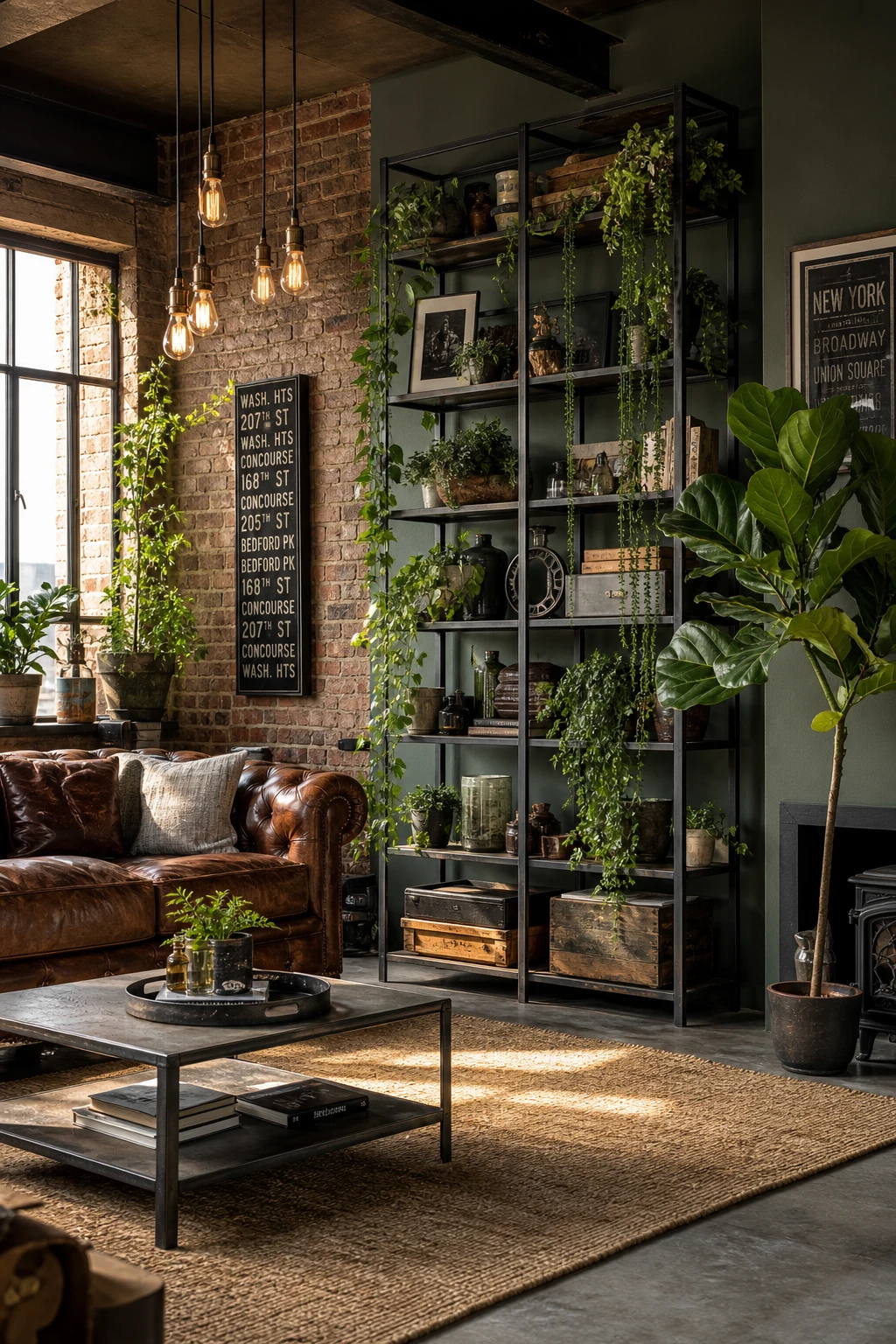
Trailing pothos spilling over steel shelving is one of my favourite moves in an industrial room because the contrast is immediate and honest. The softness of the leaves pushes back against all that hard metal, and you get a space that breathes rather than clanks. What wins me over is how a single structural plant, something with big bold leaves, anchors the whole scheme and gives the eye a natural resting point that no light fitting or artwork can quite replicate.
The Key Details
Open steel shelving unit with trailing pothos and string of pearls
Structural fiddle leaf fig in cast iron planter
Worn leather Chesterfield sofa
Edison bulb pendant cluster
Steel framed window with reclaimed timber sill
Pro TipPosition a tall monstera or fiddle leaf fig directly beside the most prominent exposed pipe or column so the organic shape reads clearly against the metal edge.
Avoid dotting tiny succulents around the room, because they simply vanish against the scale of industrial architecture and do nothing to soften it.
Build a TV Wall That Looks Like a Feature Rather Than an Afterthought
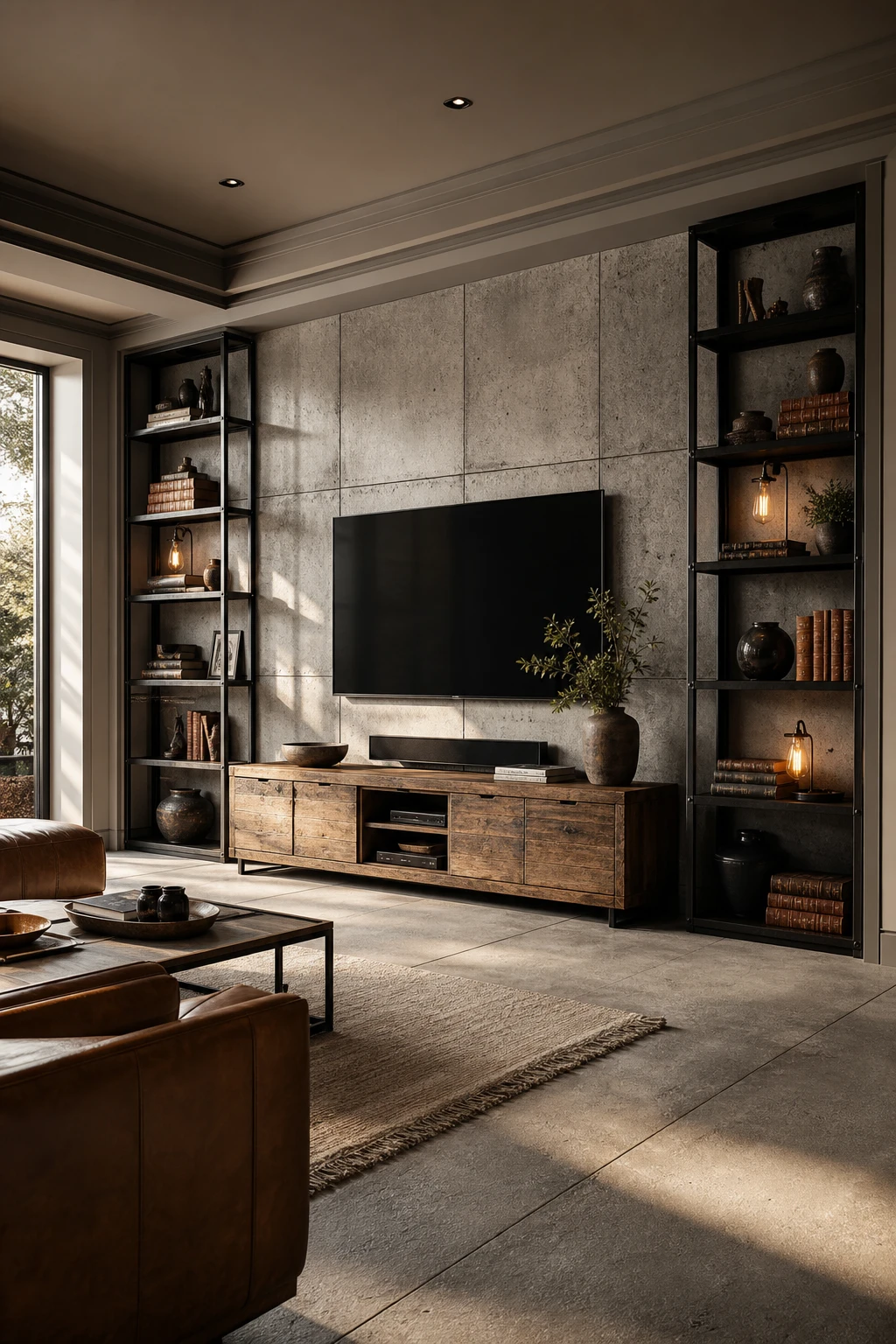
A TV floating on a bare painted wall is the one thing I always try to talk clients out of. When you treat the whole wall as a composition, layering raw concrete panels behind the screen, flanking it with blackened steel shelves, and grounding everything with a reclaimed oak console below, you get a focal point that feels considered rather than stuck on. The mix of textures is what wins me over every time: rough, smooth, warm, and dark all pulling together so your eye reads the wall as one deliberate thing.
The Key Details
Blackened steel open shelving units
Raw concrete textured wall panels
Reclaimed oak media console
Edison bulb task lights
Large format concrete tile floor
Pro TipRun your HDMI and power cables inside a channel cut behind the slat or concrete panel before you fix it to the wall, so the finished surface stays completely clean.
AvoidMounting the TV on a plain painted wall with nothing above, below, or beside it leaves it looking like a screen that got forgotten rather than a feature you meant to build.
Floating Shelves in an Industrial Room: What to Put on Them
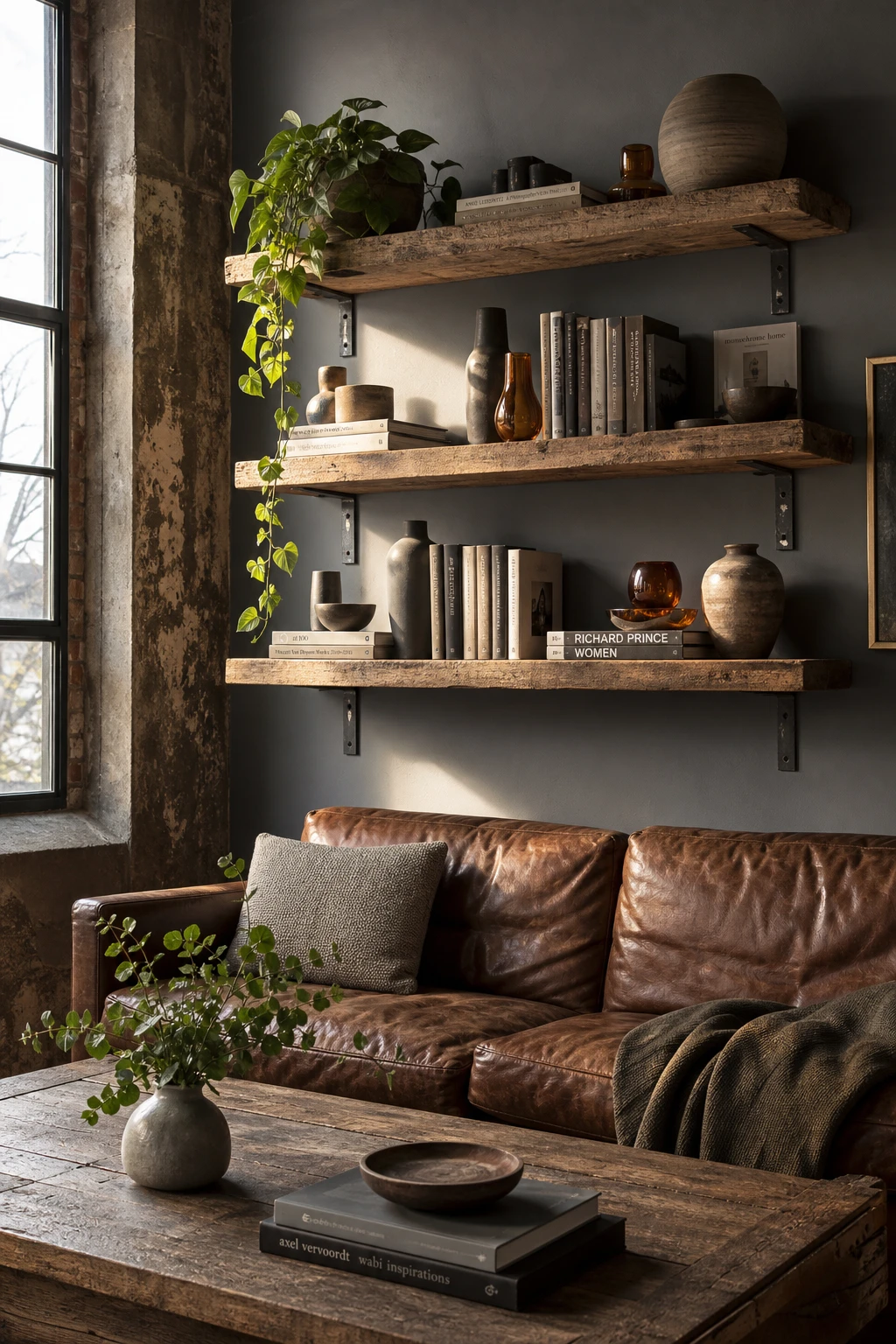
Floating shelves in an industrial room win me over when they feel like a snapshot of someone’s life rather than a shop display. What I love is the contrast you get between raw steel brackets and worn wood boards, because that tension is already doing visual work before a single object goes up. You will notice the best looking shelves always have open gaps between clusters, so your eye gets a moment to rest. Layer in a few books lying flat under a small object and the whole thing reads as curated and calm.
The Key Details
Reclaimed oak floating shelf boards
Raw steel wall brackets
Worn leather sofa
Reclaimed timber coffee table
Steel framed window
Pro TipStand books upright in a short stack, then lean one object against them at a slightly different height so every shelf has a gentle rise and fall rather than one flat line.
AvoidFilling every inch of shelf space removes all the breathing room and turns a curated display into visual noise that makes the whole wall feel busy and stressful.
Floor to Ceiling Windows and How to Keep the Room Feeling Cosy Around Them
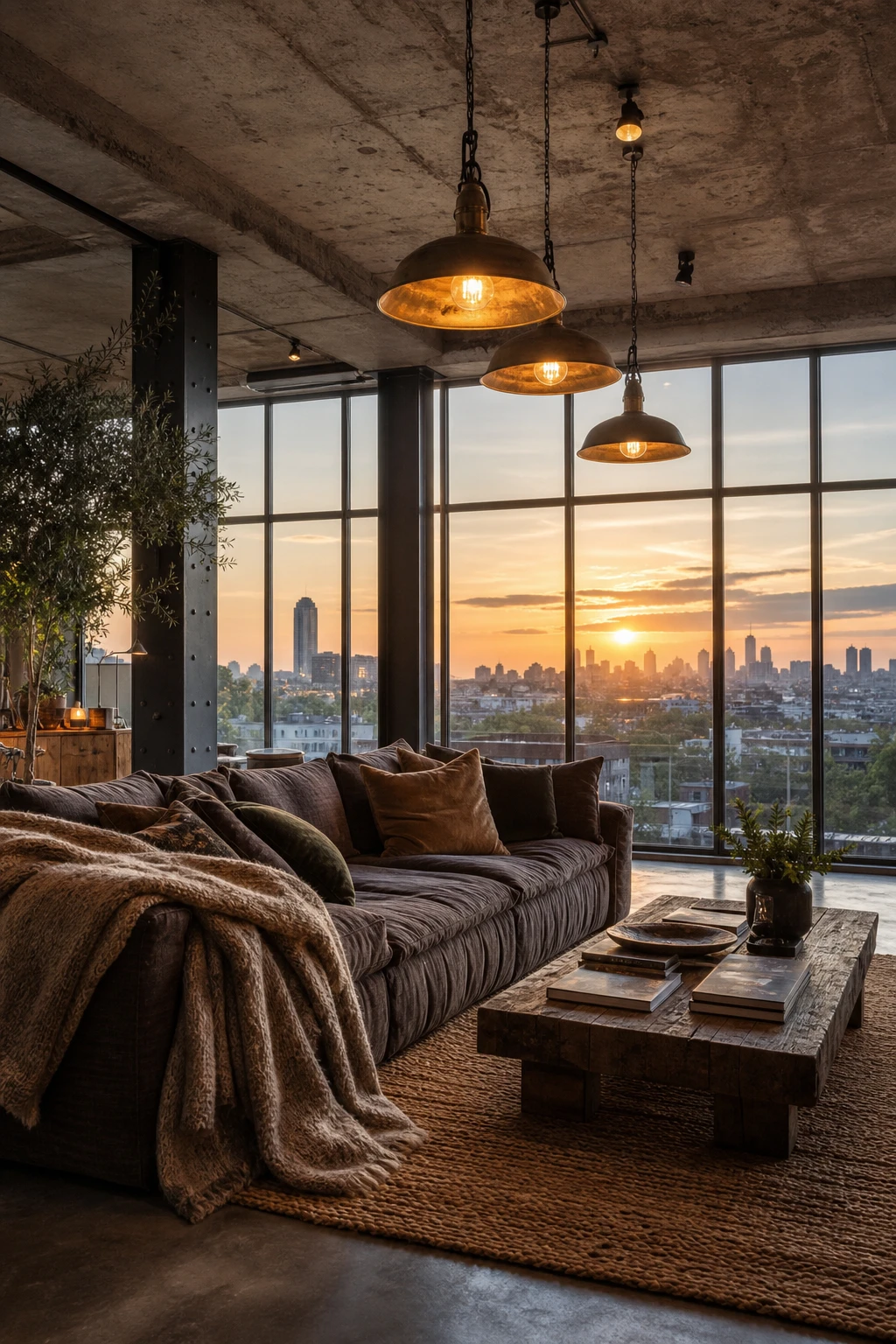
Floor to ceiling glass is one of those features that can make or break a room, and what wins me over here is the way the warm layers push back against all that openness. You get the drama of the exposed steel columns and the flood of light, but the chunky wool throws and jute rug stop the space from feeling like a showroom. The reclaimed timber and aged brass pull the eye inward so the room feels lived in, not just looked at.
The Key Details
Exposed steel window columns
Oversized chunky sofa with wool throws
Reclaimed timber coffee table
Woven jute area rug
Aged brass Edison pendant lights
Pro TipHang your curtain pole as close to the ceiling as possible and let the fabric pool slightly on the floor, because even a standard window reads as grand and generous when the drop is long.
AvoidLeaving floor to ceiling windows completely bare at night turns all that beautiful glass into a dark, cold mirror that drains every bit of warmth from the room.
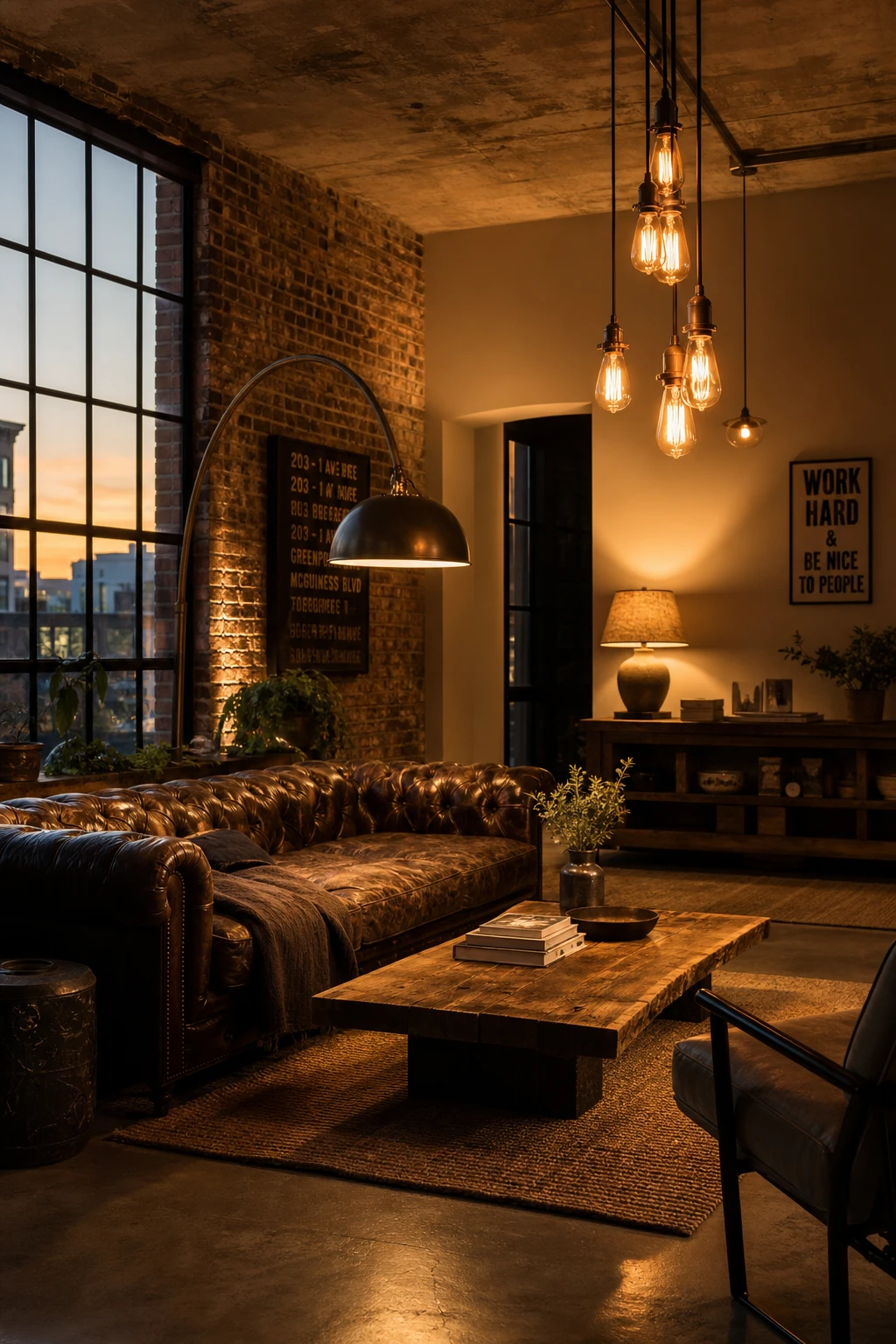
Layered Lighting Is What Separates a Cosy Industrial Room From a Showroom
Layered ambient light is what turns a room from a space you walk through into one you want to stay in. What I love here is that no single source is doing all the work: the arc lamp pulls a warm pool down over the sofa, the Edison cluster adds a mid height glow, and the whole thing stacks into something that feels genuinely lived in. You get depth, you get shadow, and that contrast is exactly what makes the raw materials around it look their best at night.
The Key Details
Arc floor lamp with black iron stem
Cluster of Edison filament pendant lights
Worn leather Chesterfield sofa
Raw edge timber coffee table
Woven jute area rug
Pro TipPlug in wall sconces are your best friend here because you can position them exactly where you want the light to fall without touching a single wire.
AvoidLeaving a bare overhead bulb as your only source will flatten every texture in the room and kill the cosy atmosphere completely, no matter how good the furniture is.
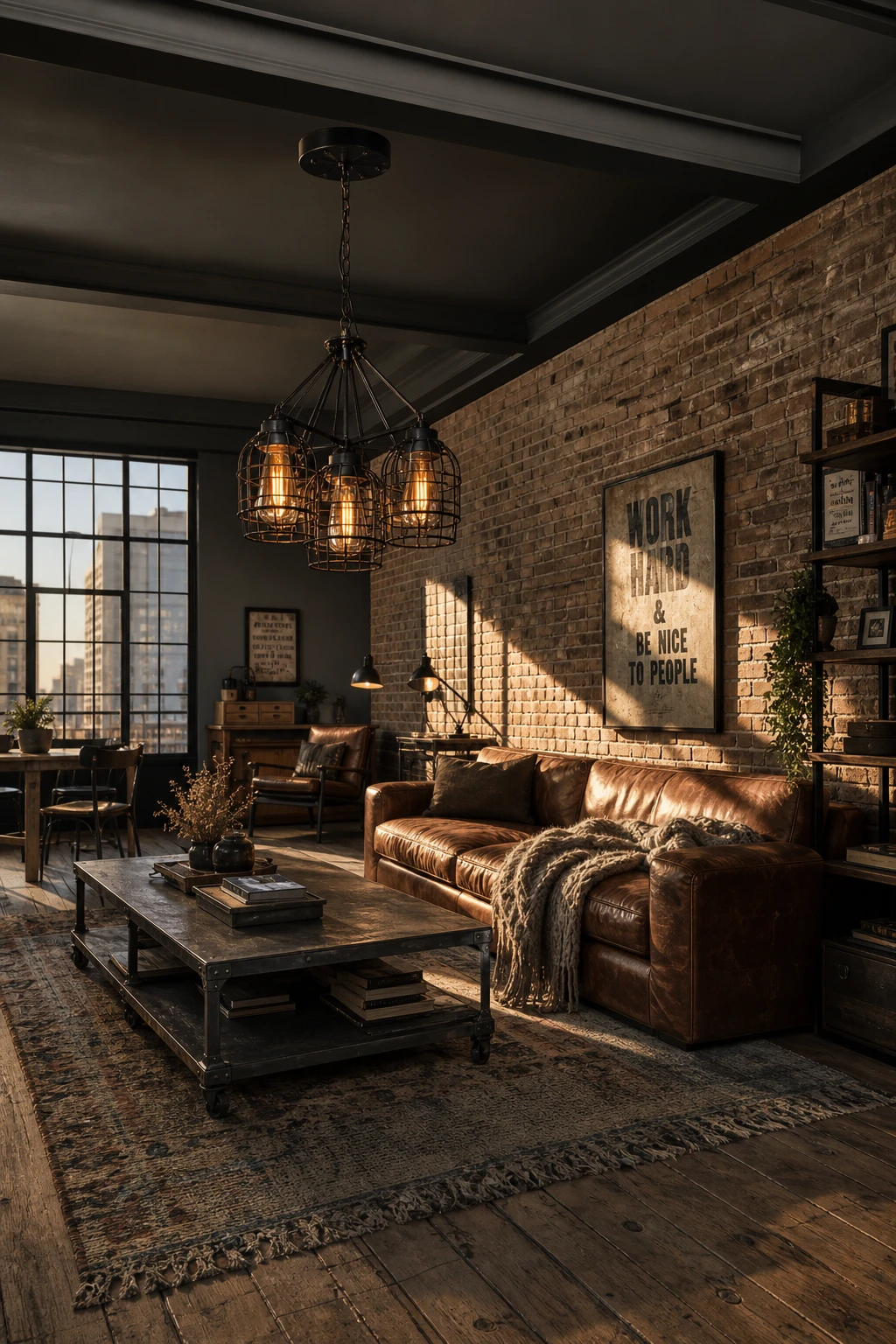
The Right Industrial Light Fixture Does More Work Than Any Piece of Furniture
A great industrial pendant does something no sofa or rug can: it commands the room from above and sets the whole mood before you touch anything else. What I love about a blackened steel cage cluster is the way it pulls the eye up, then draws it back down through cognac leather, raw steel, and worn oak in one clean visual line. You get that rare feeling of a room that was designed rather than decorated.
The Key Details
Blackened steel cage cluster pendant
Cognac leather sofa with chunky wool throw
Exposed full length brick wall
Raw steel coffee table
Worn oak floorboards with distressed wool rug
Pro TipSize your pendant cluster so the overall spread reaches at least half the width of your sofa, because anything smaller simply disappears at room scale.
Avoid hanging a single small cage fixture above a large seating area, as it will read as a forgotten afterthought rather than the bold focal point the room needs.
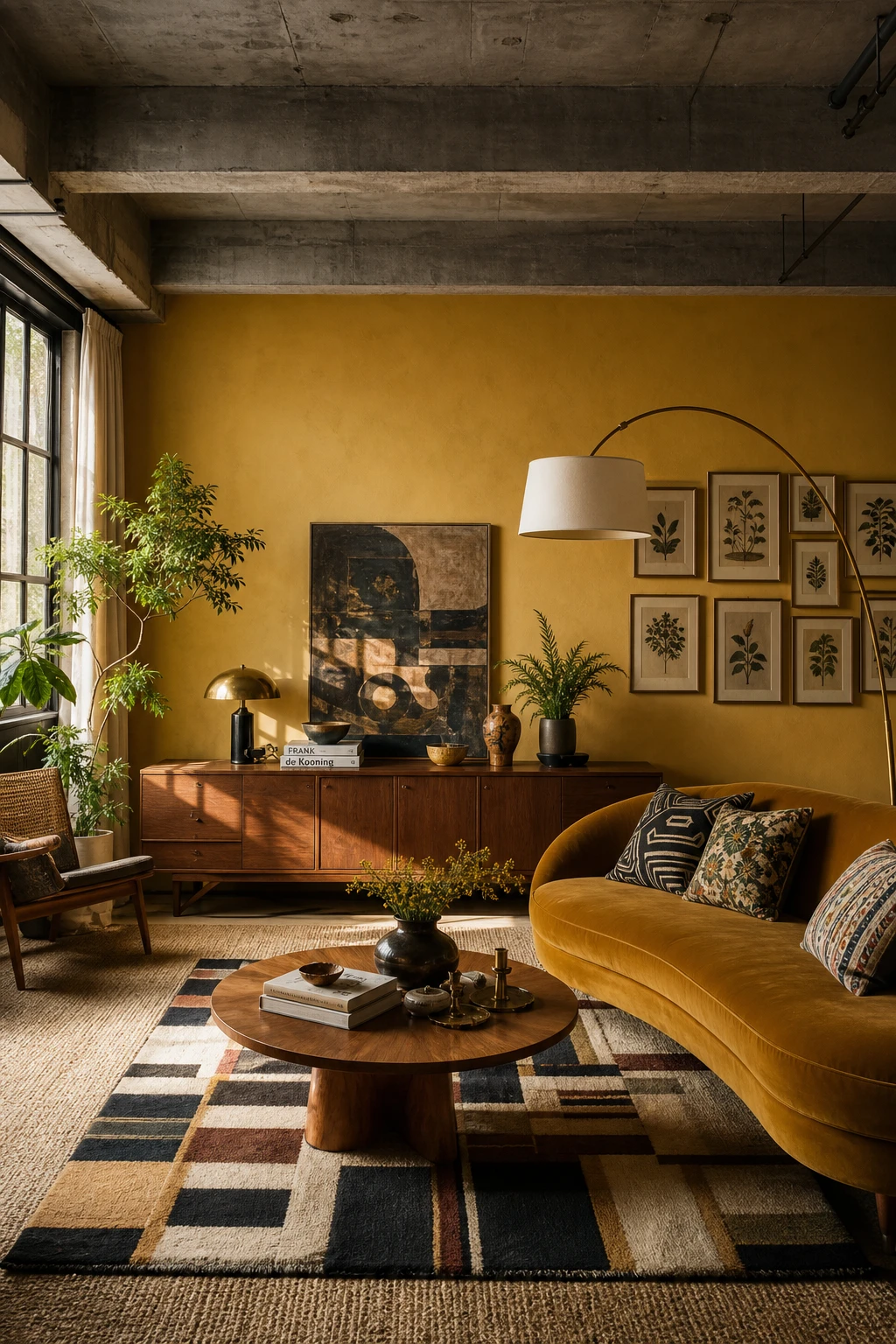
How Mid Century Maximalism Adds Soul to an Industrial Living Room
Mid century maximalism wins me over every time in an industrial room because the warmth of teak and velvet pushes back against cold concrete and steel in the best way. You get personality and history without losing that raw, pared back edge. What I love most is how layering geometric rugs, bold botanical prints, and a curved sofa silhouette builds a visual story that feels collected over time, never decorated in a single weekend.
The Key Details
Low slung teak credenza
Curved velvet sofa
Layered geometric wool and jute rugs
Arc floor lamp with drum shade
Clustered botanical print gallery wall
Pro TipAnchor the whole maximalist layer with one strong curved sofa first, then build every other piece outward from that shape so the room reads as intentional rather than busy.
AvoidPulling in pieces from too many eras at once muddles the story, so pick mid century as your clear backbone and treat everything else as a supporting note rather than a second lead.
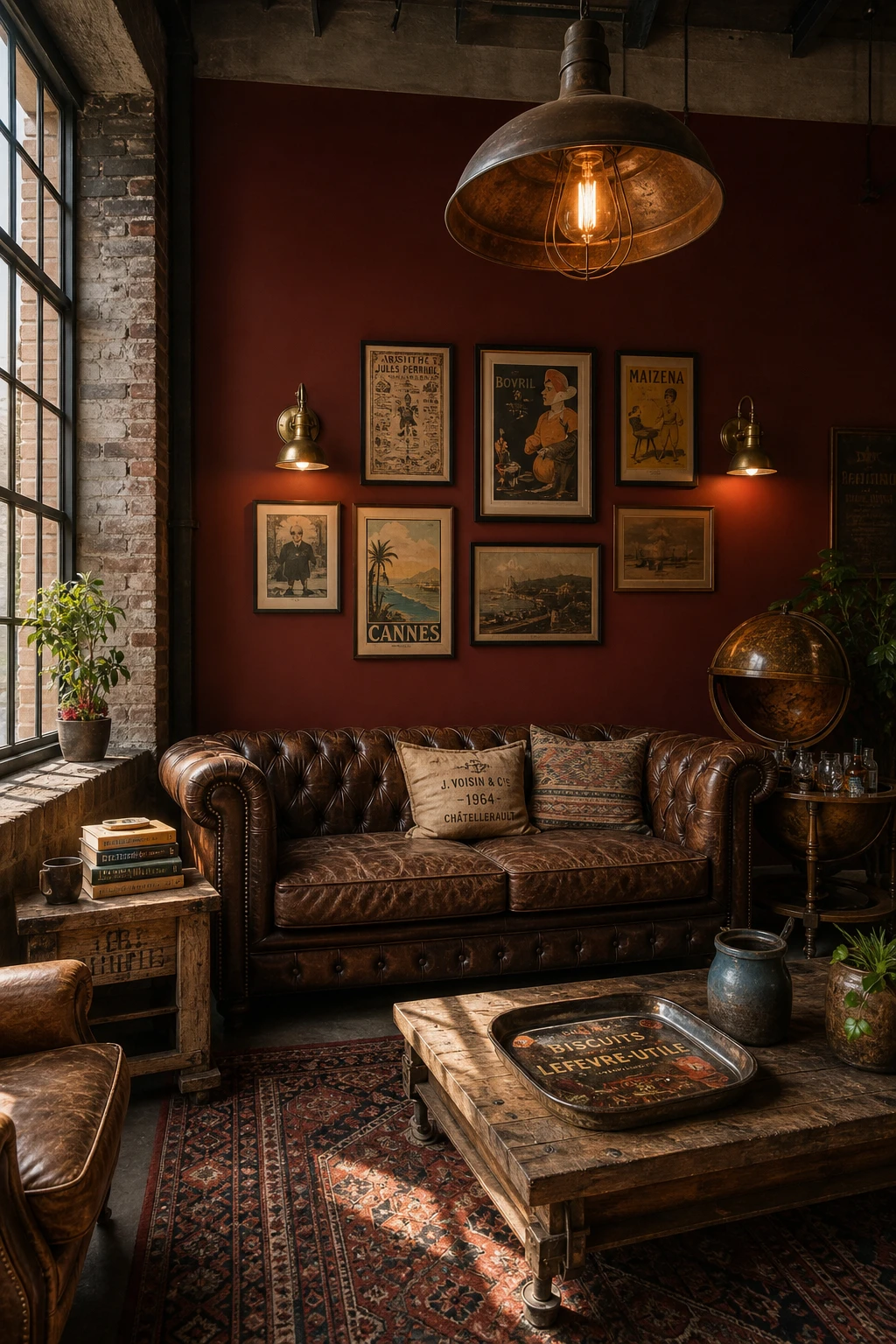
Retro Touches That Make an Industrial Room Feel Warm and Full of Stories
Retro objects do something reproduction pieces simply cannot: they carry actual time in them, and you feel it the moment you walk in. What I love about a worn Chesterfield beside a factory pendant and a globe drinks cabinet is that no single piece shouts for attention. The patina on the brass, the fade on the Persian rug, the gallery wall of old posters all whisper at different frequencies, and you get a room that feels genuinely collected rather than assembled.
The Key Details
Worn leather Chesterfield sofa
Antique factory filament pendant light
Globe drinks cabinet with patinated brass
Distressed Persian area rug
Framed vintage poster gallery wall
Pro TipAt estate sales, turn pieces over and look for honest wear on the underside, because real age marks the parts nobody polished for show.
Avoid anchoring the whole room to one era or theme, such as all 1950s diner or all Victorian factory, because the moment a story becomes a costume the warmth disappears.
Alan launched Edward George London in 2017. Since completing his masters in Town & Regional Planning (MPlan) he has combined the skills he learned at the University of Sheffield with his passion for design, to help create a foundation for those looking to create a beautiful home.