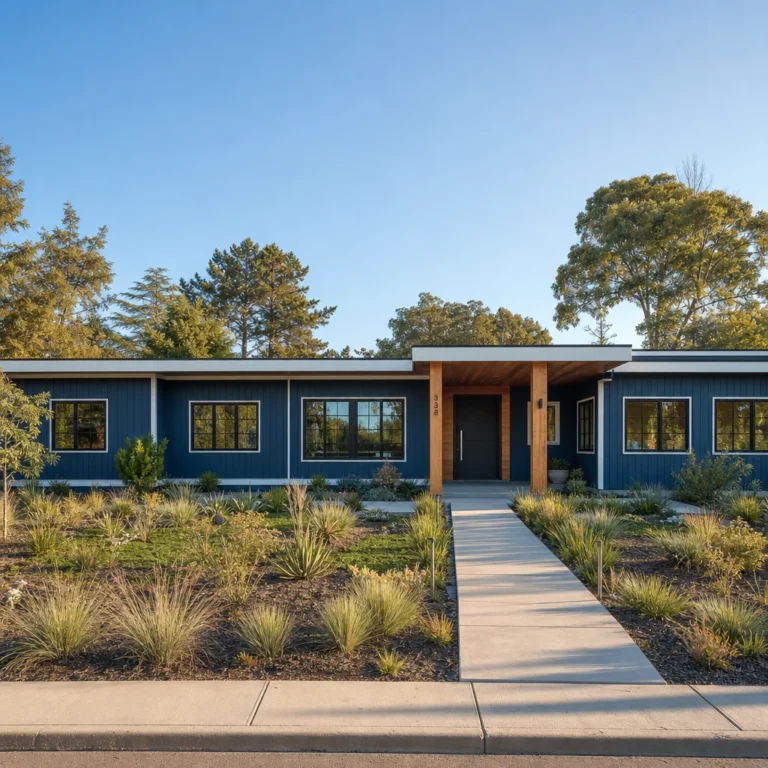
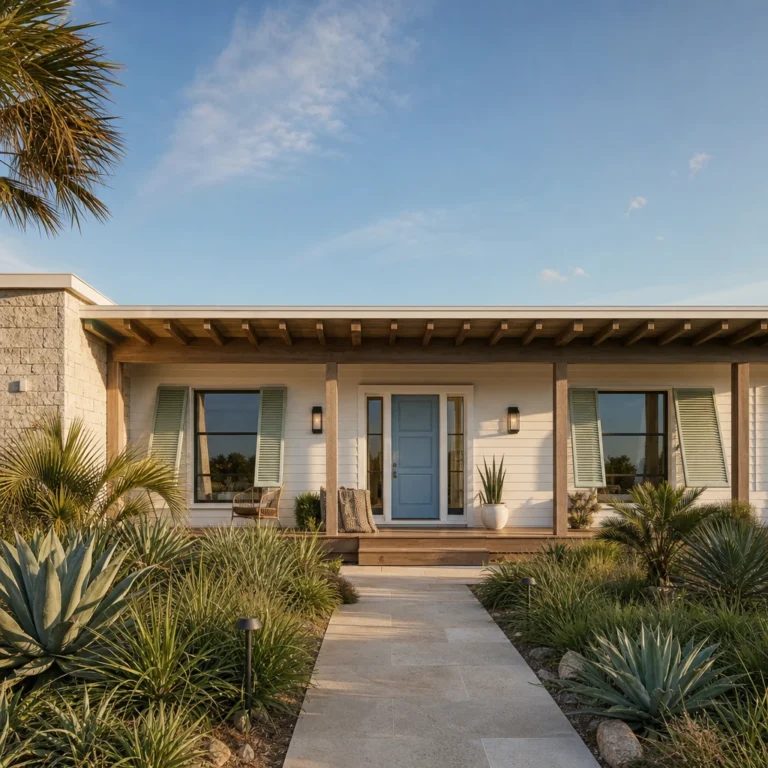
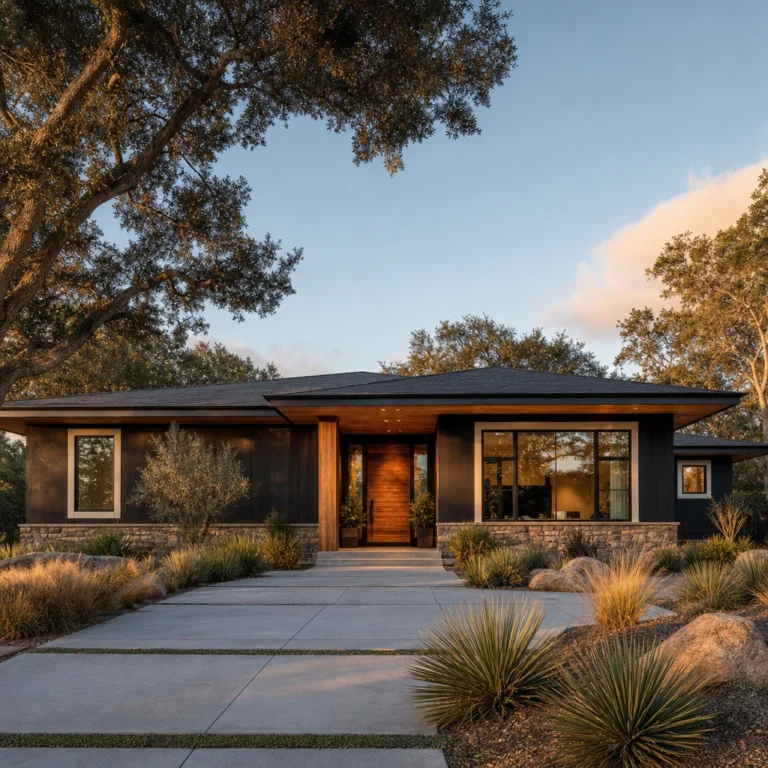
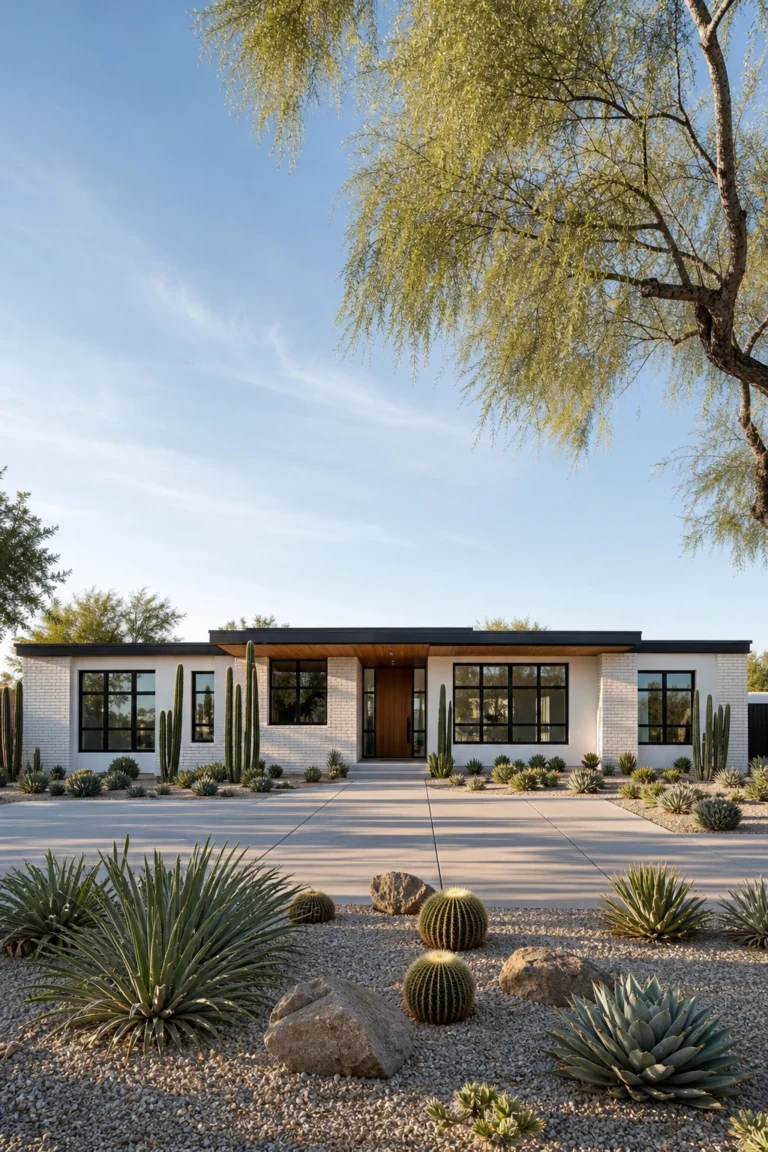
I’ve always found something deeply satisfying about a home that feels like it grew out of the hillside rather than was plonked onto it. A Mountain Modern Ranch Exterior does exactly that, drawing on raw stone, weathered wood, big glass and bold rooflines to feel both grounded and genuinely striking. In this piece I walk through looks built around features like gable end fireplaces, limestone cladding and forest landscaping. Every one of them is a combination you can borrow for your own build or refresh.
How Stone and Wood Cladding Work Together on a Ranch Exterior
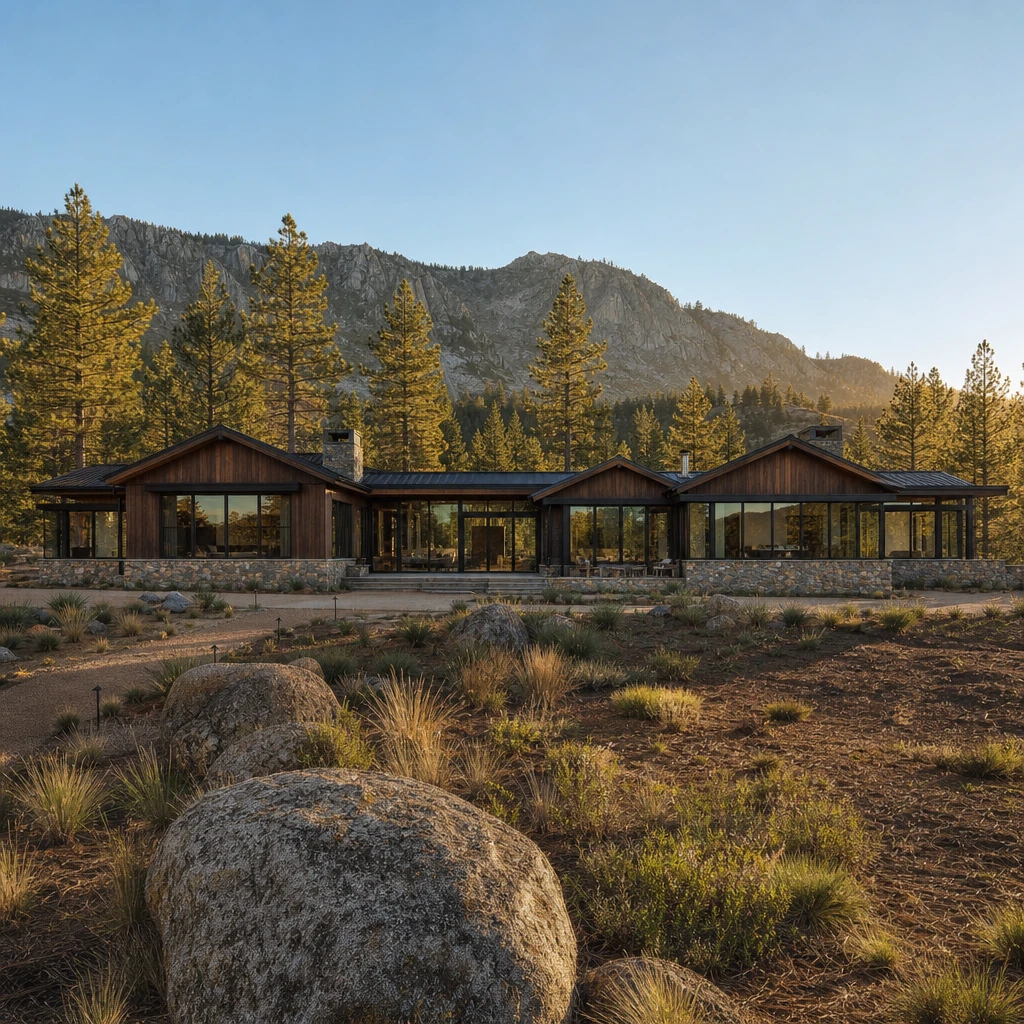
Bending stone and wood across a ranch facade is one of my favourite moves because each material does a different job. Stone anchors the base with weight and permanence, while cedar boards carry the eye horizontally and keep things feeling open. What I love is how the contrast between rough texture and smooth grain gives you depth you can actually see from the street, without any fuss or extra decoration.
The Key Details
Stacked dry ledger stone base
Horizontal cedar board cladding
Broad overhanging cedar soffit
Blackened steel window frames
Recessed timber entry door
Pro TipRun the stone cladding only up to window sill height so the cedar takes over above it, giving the facade a clear visual ground line that feels intentional rather than accidental.
AvoidChoosing a cedar tone that is too close to your stone colour collapses the contrast and leaves the facade looking flat and one dimensional.
Going Dark on a Mountain Ranch and Making It Look Intentional
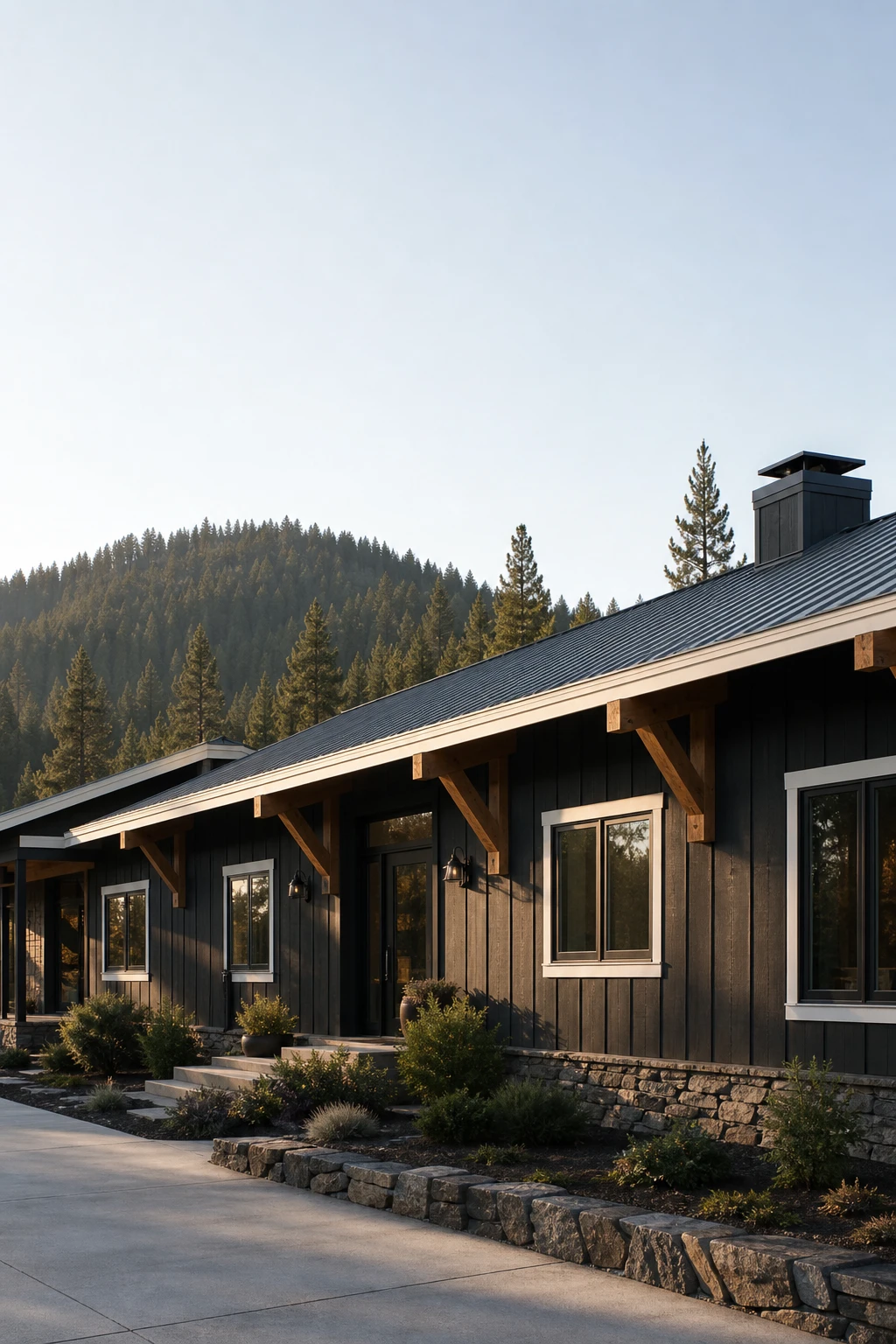
Dark cladding on a mountain ranch works because the landscape gives it permission. Charcoal boards read as bold and rooted, and then you get that crisp white fascia cutting a clean line around every edge, which stops the whole thing from sinking into shadow. That restraint wins me over every time, and the stone plinth and pewter roof hold the palette together so the darkness feels chosen, not accidental.
The Key Details
Vertical charcoal timber board cladding
Dry stacked fieldstone plinth
Standing seam pewter steel roof
Rough sawn timber eave brackets
Crisp white painted fascia and window trim
Pro TipPaint your soffits a warm off white rather than matching the dark cladding, so the underside of the eaves stays bright and the roofline lifts rather than bears down on the facade.
AvoidCladding the plinth, walls, and eaves all in the same dark tone removes every point of contrast and leaves the house looking flat and heavy rather than dramatic.
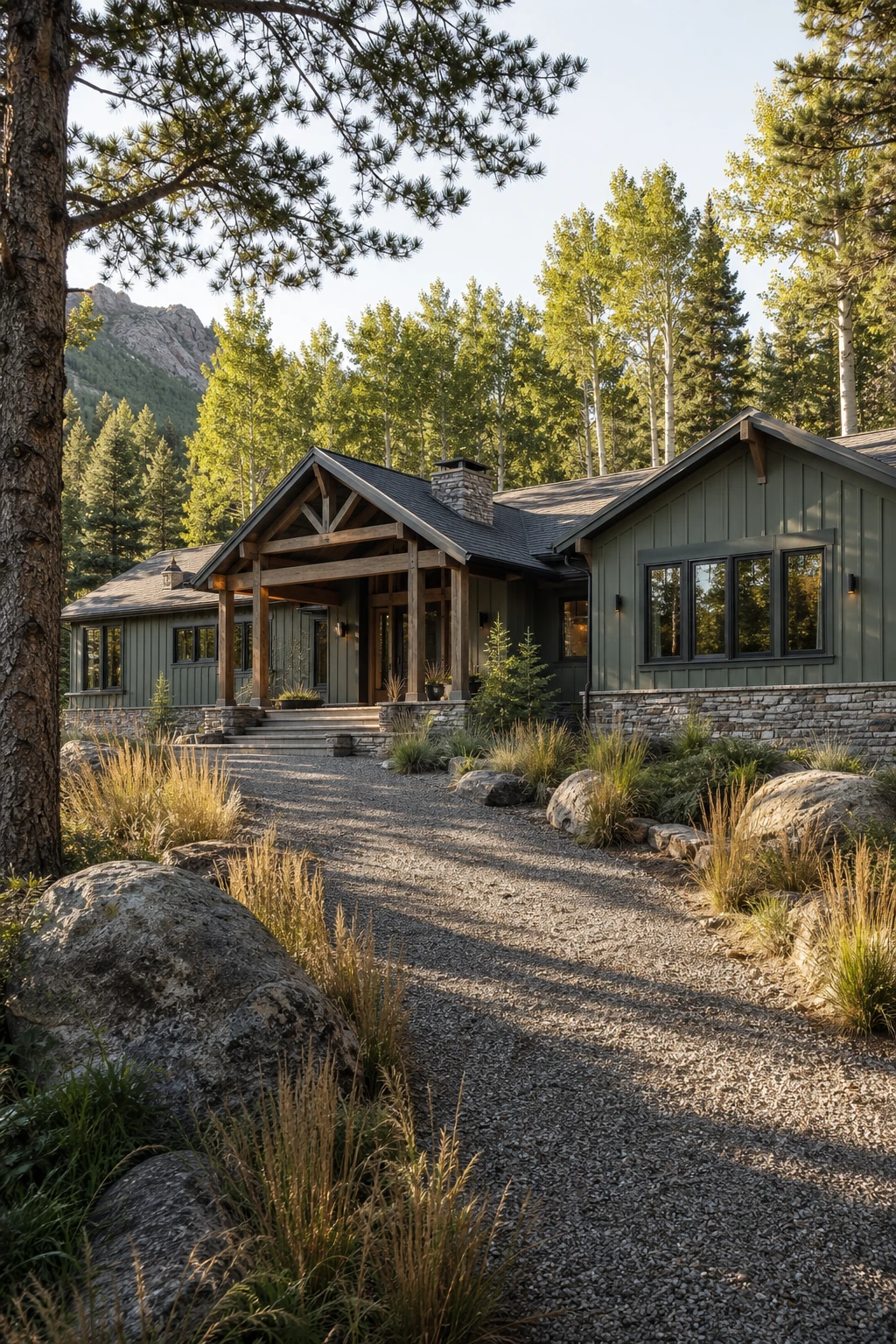
Muted green is one of my favourite choices for a mountain ranch because it lets the house settle into the landscape rather than compete with it. You get this quiet harmony where the siding, the treeline, and the grassy surround all read as one continuous scene. What wins me over every time is how a grey green or sage tone picks up the cooler light at elevation, so the colour shifts beautifully through the day.
The Key Details
Board and batten cedar siding
Dry stacked fieldstone foundation
Exposed rough sawn timber porch beams
Matte black window frames
Gravel entry path with ornamental grasses
Pro TipPull a grey green or eucalyptus tone with a cool blue undertone rather than a warm yellow one, as cool greens hold their composure against mountain foliage without going muddy.
AvoidChoosing a bright or saturated green creates a jarring contrast with the softer, dusty tones of natural foliage and makes the house look planted there rather than grown from it.
The Magic a Mountain Ranch Exterior Has After the Sun Goes Down
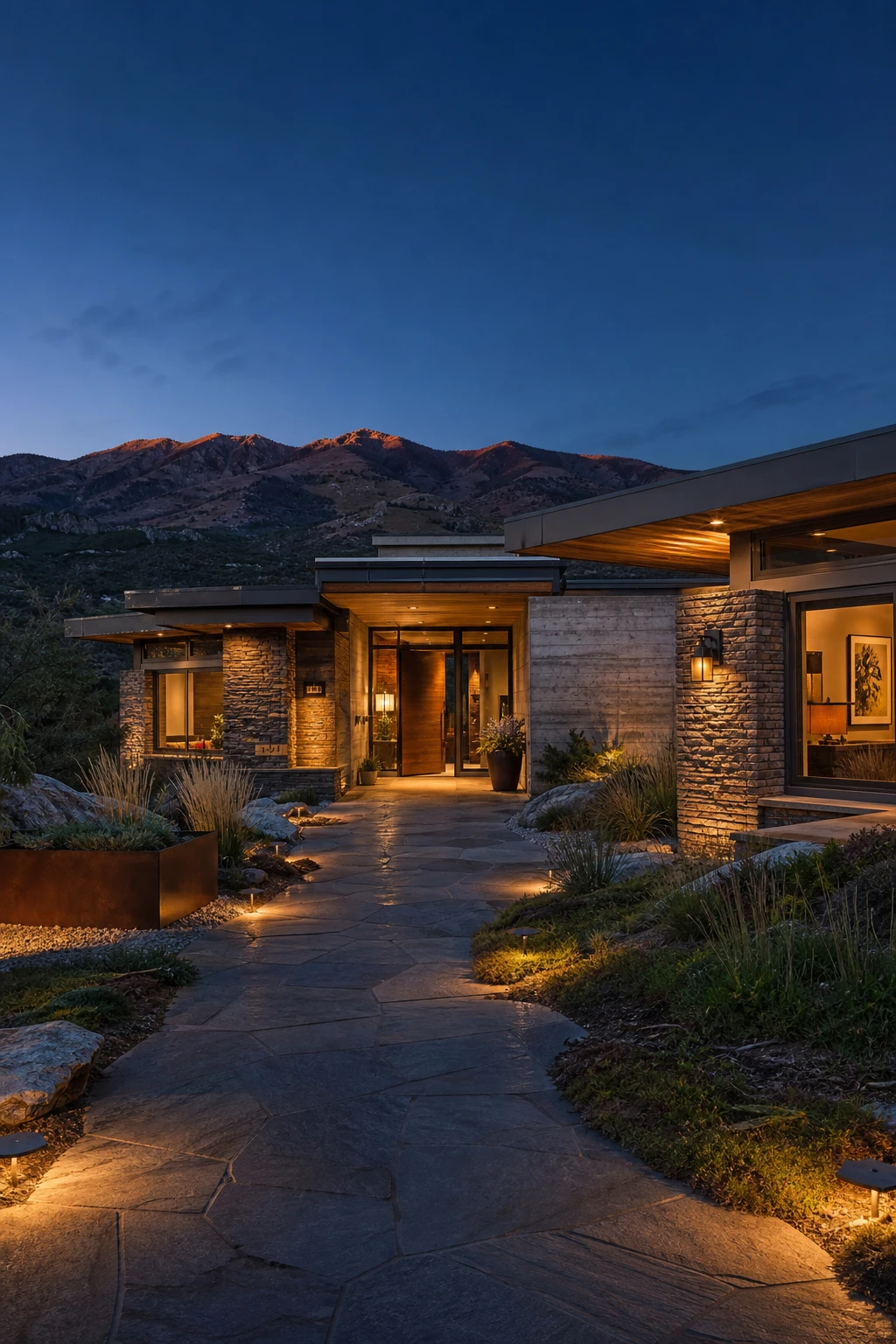
Dusk is when a mountain ranch really earns its keep, and what I love most is how targeted light sources pull the architecture forward rather than flattening it. Ground uplights graze the dry stack stone so every ledge and shadow reads clearly, while the warm interior glow from those deep picture windows layers in a sense of life and warmth. You get a facade that actually looks richer at night than it does at noon.
The Key Details
Recessed ground uplights along flagstone path
Broad brimmed wall lantern sconces
Oversized picture windows with lit interior glow
Board formed concrete and dry stack ledger stone facade
Douglas fir soffit planks under extended roofline
Pro TipLayer three light levels: low ground uplights for texture, wall sconces at eye level for welcome, and a soft path glow to draw the eye from the street to the front door.
AvoidBlasting the whole facade with a single floodlight kills every shadow and texture you spent good money building into that stone and board formed concrete.
Borrowing the Chalet Roofline for a Mountain Modern Ranch
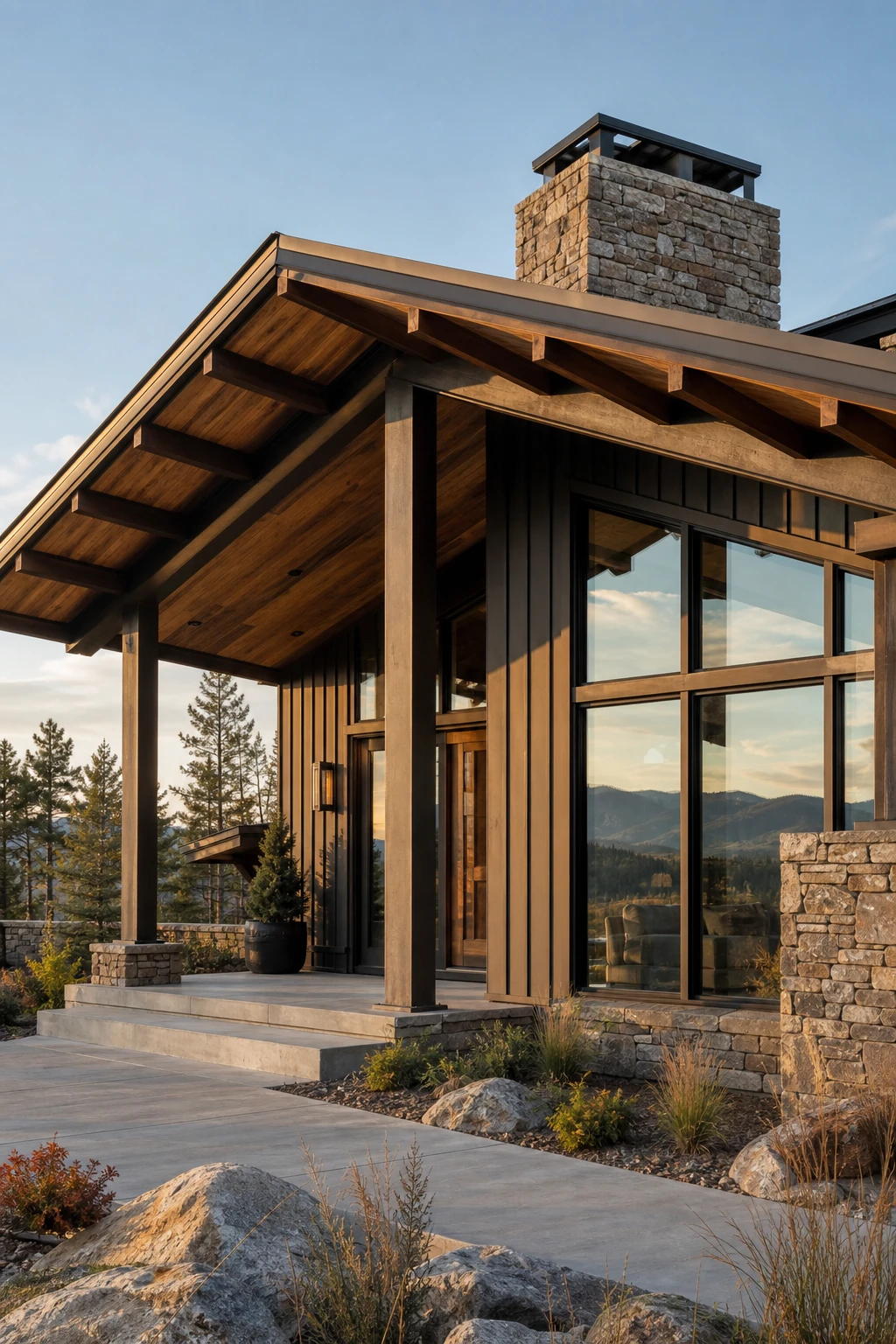
Deep overhanging eaves are the move I keep coming back to on a mountain modern ranch. Those projecting soffits do two things at once: they shield the cladding and windows from heavy snow and driving rain, and they act like a picture frame, directing your eye straight out to the peaks beyond. You get a facade that feels rooted and sheltered rather than exposed, and I find the exposed rafter tails add just enough raw texture to keep it honest.
The Key Details
Deep overhanging eaves with exposed rafter tails
Board and batten timber siding
Oversized fixed glass panels
Rough quarried fieldstone chimney stack
Raw steel porch columns
Pro TipSize your eave projection to at least 24 inches past the window head so rain clears the glass cleanly while the overhang stays shallow enough to let low winter sun reach inside.
AvoidCutting the eave depth back to save on materials leaves the cladding fully exposed to freeze thaw cycles, and you will be repainting or re sealing every couple of years as a result.
What an A Frame Silhouette Adds to a Mountain Ranch Exterior
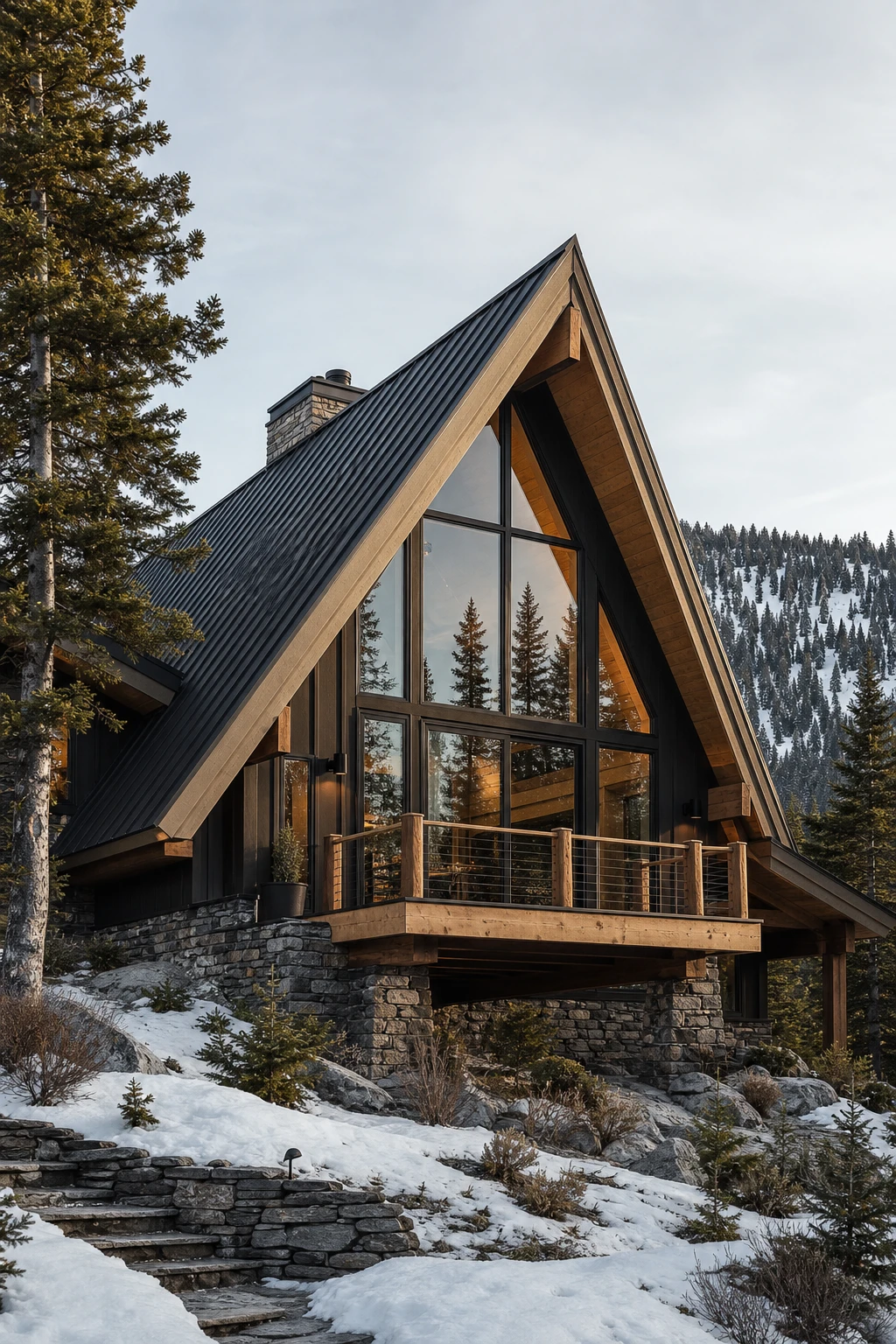
A true A frame pitch gives you a silhouette that reads instantly from the road, that sharp triangular spine cutting against the ridgeline with real confidence. I am always drawn to the floor to ceiling glazed gable wall, which floods the interior with light while giving the facade a focal point that earns its drama. The dry stacked stone plinth anchors the whole thing, so the form feels grown from the ground rather than dropped onto it.
The Key Details
Steep A frame roofline
Floor to ceiling glazed gable wall
Cantilevered timber entry deck
Dry stacked stone plinth base
Charcoal board and batten cladding
Pro TipRun two or three horizontal bands of lighter timber across the cladding at mid height to break the vertical climb of the pitch and give the eye a natural resting point.
AvoidLeaving the triangular gable end as a flat unbroken panel of cladding makes the whole elevation feel unfinished and wastes the most dramatic surface the form gives you.
Using Multiple Gables to Give a Ranch Exterior Real Character
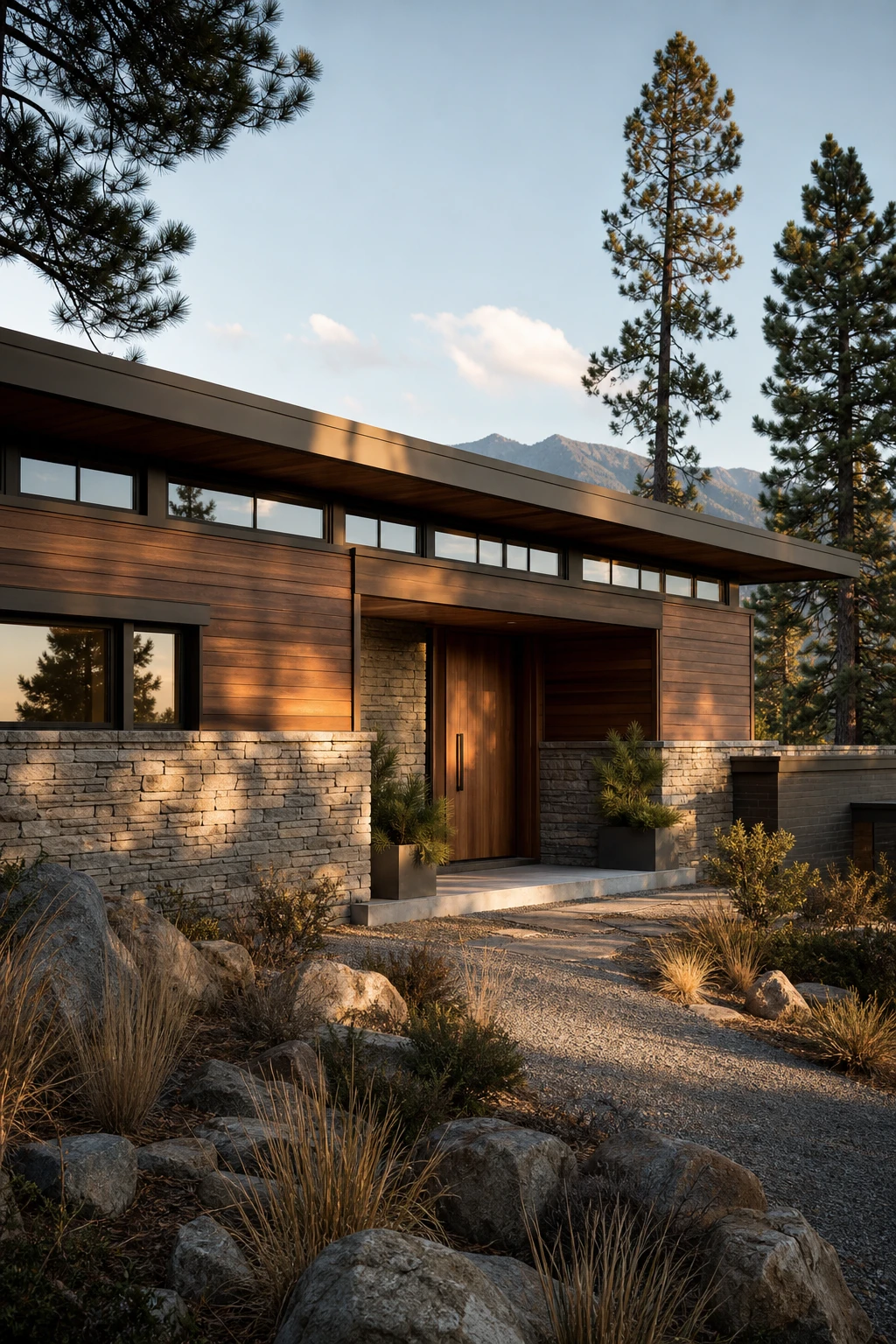
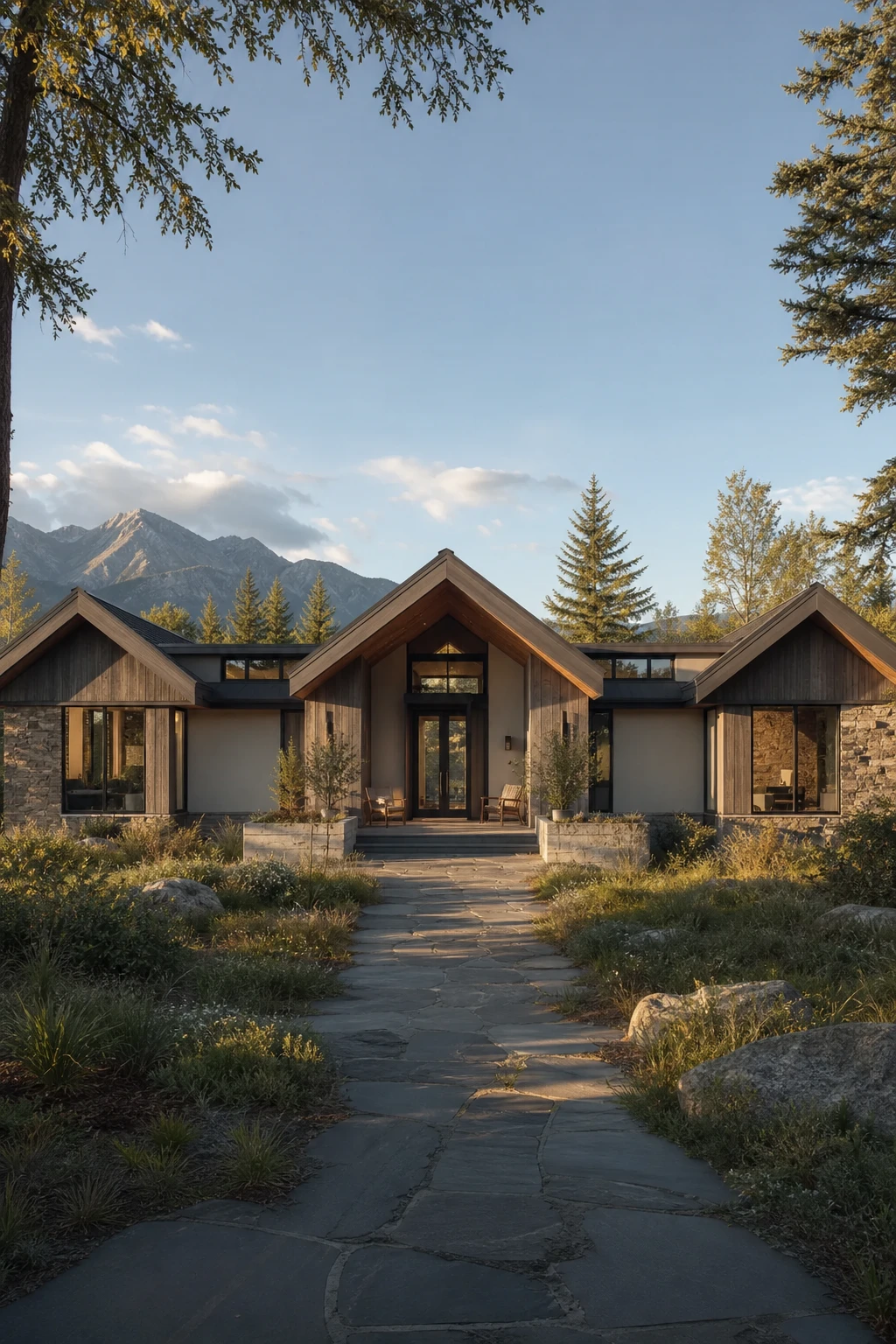
A long ranch roofline can feel like a stretched horizon, and repeating gable peaks is the thing that gives it real rhythm. You get a roofline that rises and falls almost like a heartbeat, and I love how each peak becomes a natural anchor point so the whole elevation feels composed rather than just wide. The trick is spacing, and when you get it right the facade stops looking accidental and starts looking considered.
The Key Details
Triple gable roofline
Cedar clad soffits
Dry stack fieldstone planters
Clerestory window ribbon
Flat stone entry pathway
Pro TipSpace each gable so its peak sits directly above the window below it, because that vertical alignment ties roof and wall together into one clean composition.
AvoidMixing gable widths randomly across the roofline makes each peak look like an afterthought, and the whole facade loses the sense of order that gives this style its confidence.
Letting Glass Do the Heavy Lifting Alongside Raw Wood
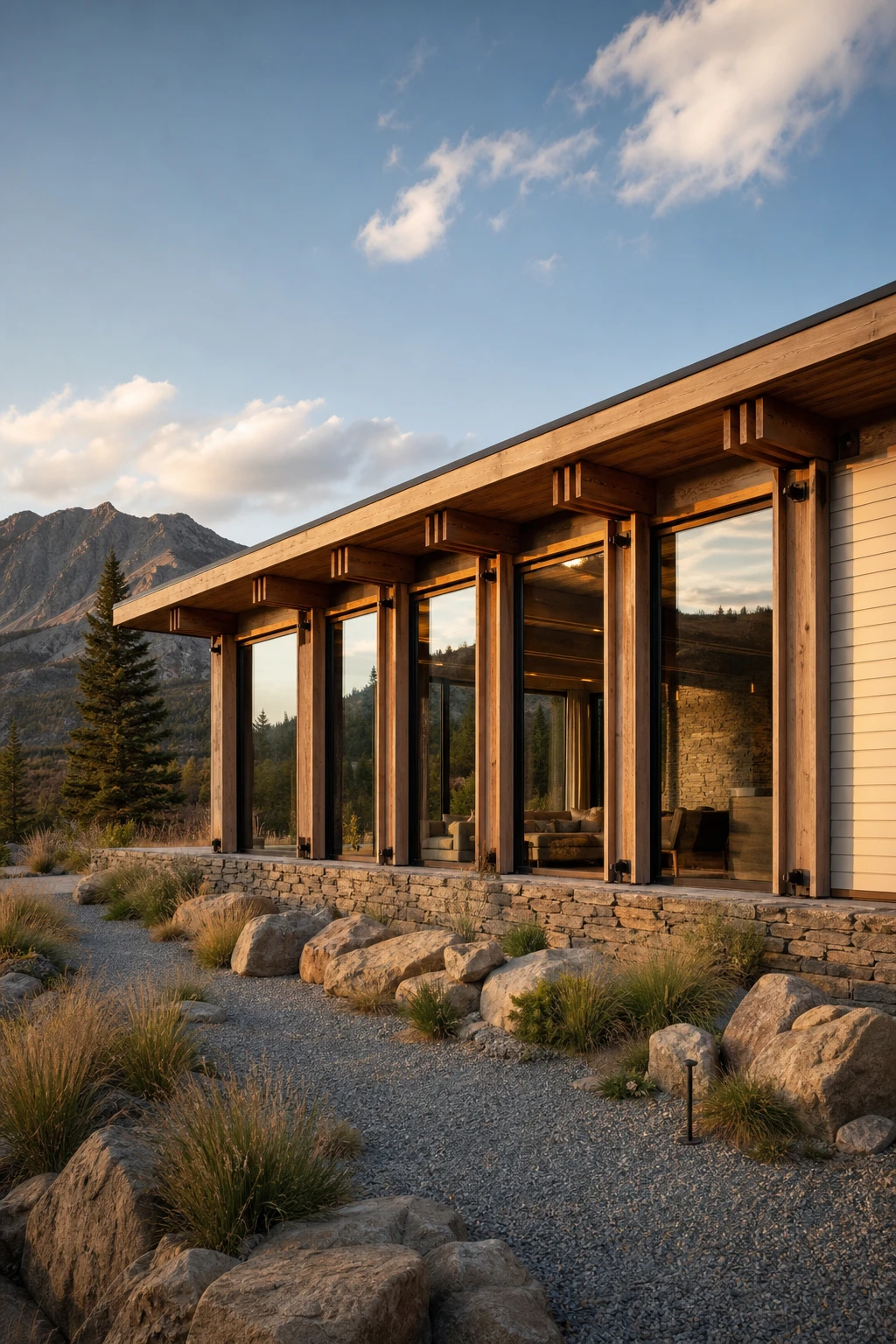
Stretching glass from floor to ceiling between rough sawn timber uprights is a pairing that keeps surprising me. The frame does the structural work and the glazing simply disappears, so you get an unbroken read of the view from inside and out. Raw warmth against cool transparency, and the mountain sits right there as part of the room. That push and pull between the two materials is what makes the whole wall feel alive.
The Key Details
Floor to ceiling structural glazing panels
Rough sawn vertical timber uprights
Cantilevered timber roof overhang
Dry stacked stone plinth
Horizontal cedar cladding flanking bays
Pro TipSize each glass panel to match your structural post spacing exactly, so the glazing slots in flush with no filler strips or awkward trims breaking the rhythm.
AvoidScattering small individual windows across that elevation cuts the view into fragments and turns what should feel like a grand sweep of mountain into a series of postcards.
Landscaping That Makes a Mountain Ranch Feel Like It Always Belonged There
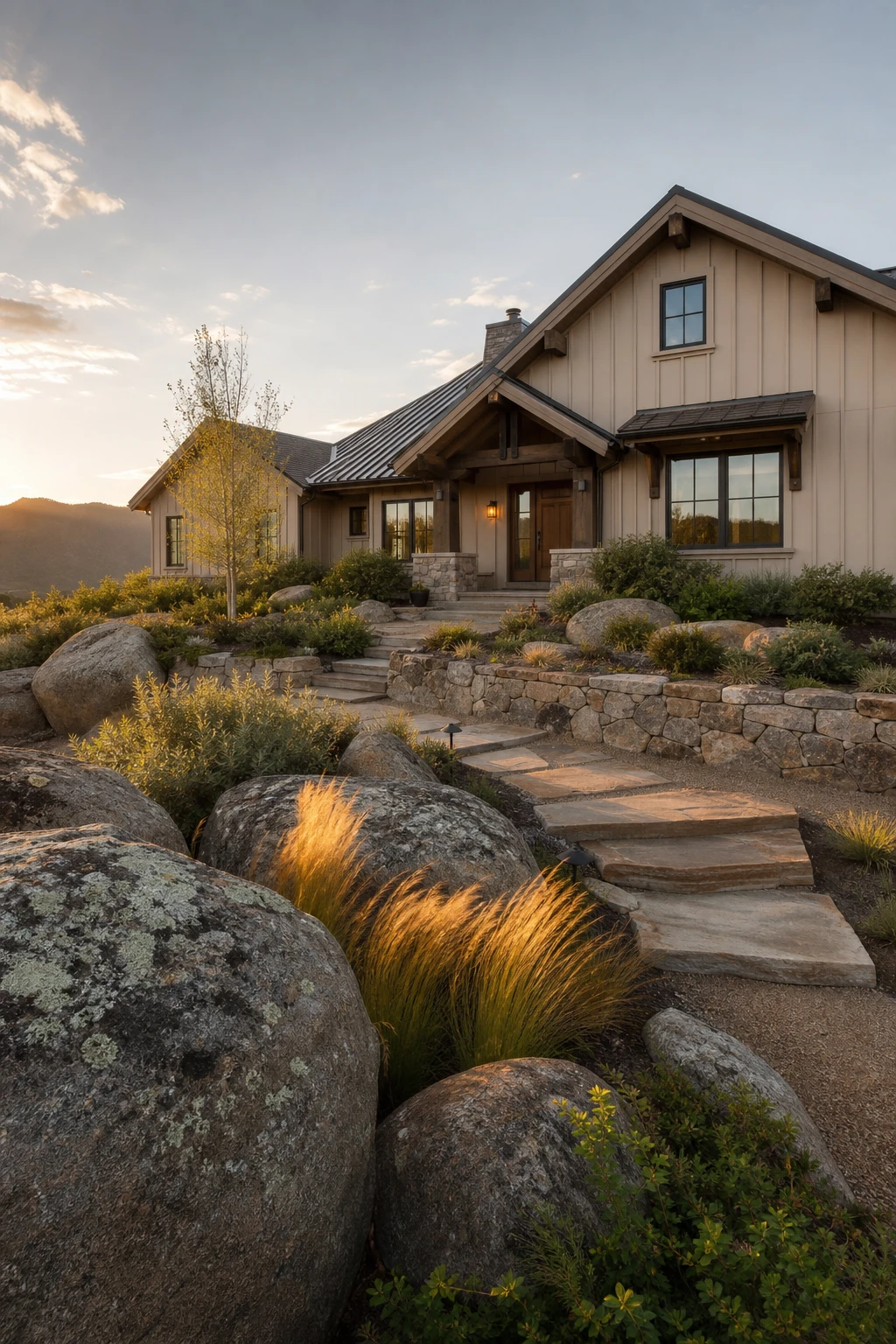
The best mountain ranch landscaping looks like it was always there, and boulders at the foundation are the fastest way to earn that quality. Lichen covered granite reads as something the site produced rather than something you ordered, and I love how that settled, rooted character is impossible to fake with planting alone. Pair those anchoring stones with ornamental grasses and flagstone steppers and the whole yard stops looking designed and starts looking discovered.
The Key Details
Lichen covered granite boulders
Ornamental grasses
Dry stacked stone retaining wall
Cedar board and batten siding
Flagstone steppers
Pro TipCut level planting terraces into a sloped yard before you place a single boulder, so water drains away from the foundation and your grasses actually establish instead of washing out.
AvoidPlanting ornamental species that belong in a suburban garden will immediately read as wrong against a mountain backdrop, and that tension undercuts every good material choice on the house itself.
Building a Forest House Aesthetic Around Your Mountain Ranch
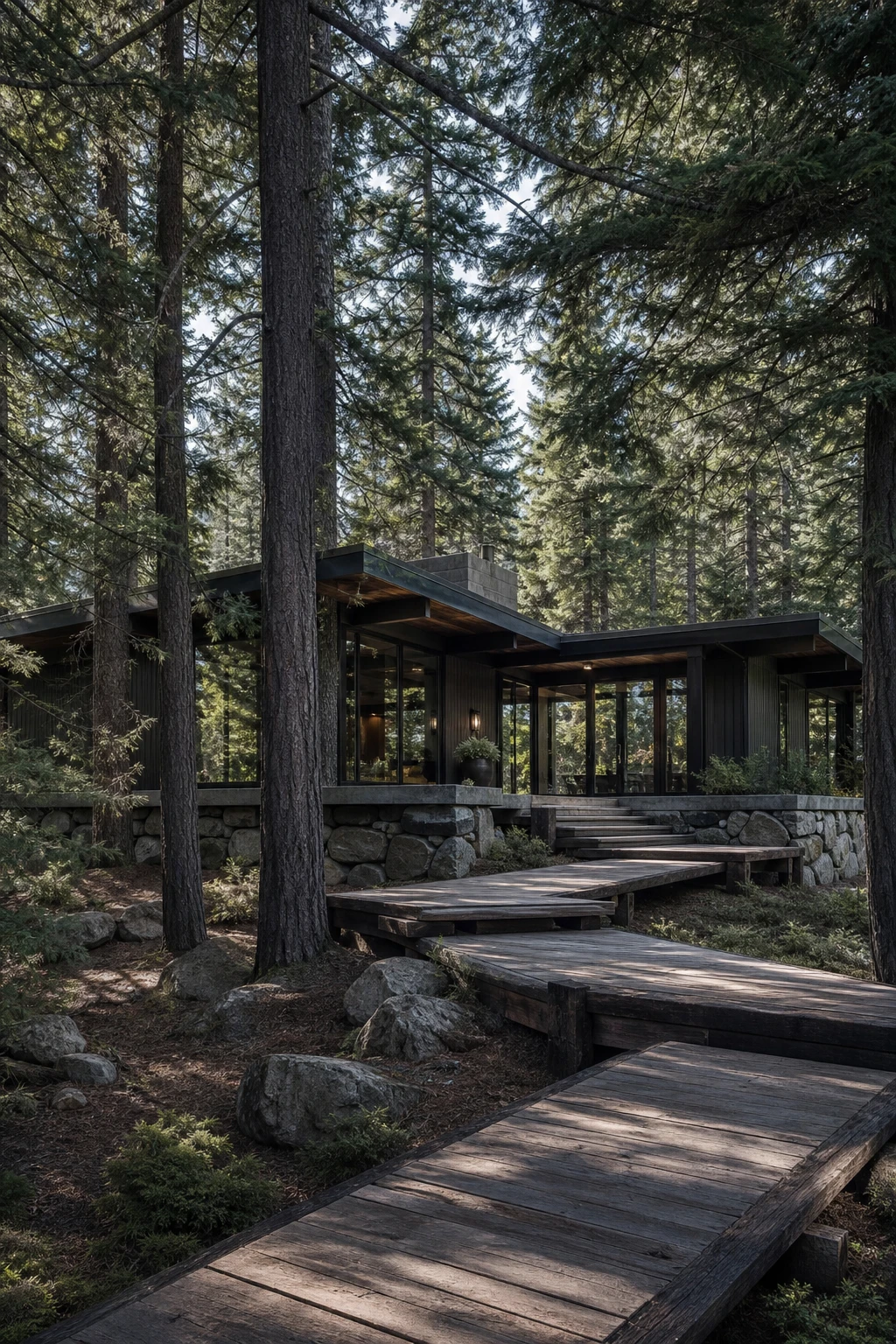
On a forested site the shadows of the canopy do half the design work for you, and a dark palette is how you let them. Charcoal or deep brown cladding reads as a continuation of the tree trunks rather than a wall sitting in front of them, and you get this sense that the house has always been there, growing quietly among the pines. That sheltered, unhurried feeling is exactly what I am after when a client asks for the mountain ranch look.
The Key Details
Dry stacked boulder base
Rough sawn vertical timber cladding
Broad overhanging eaves
Floor to ceiling glass panels
Timber decked entry path
Pro TipChoose thermally modified wood cladding and leave it uncoated, because the surface weathers to a soft silvery grey that matches aged timber and lichen covered bark perfectly.
AvoidClearing trees to open up the view pulls the canopy back from the walls and leaves the house exposed, stripping away the very shadow and shelter that make the forest aesthetic feel real.
How the Best Mountain Side Homes Work With the Slope Not Against It
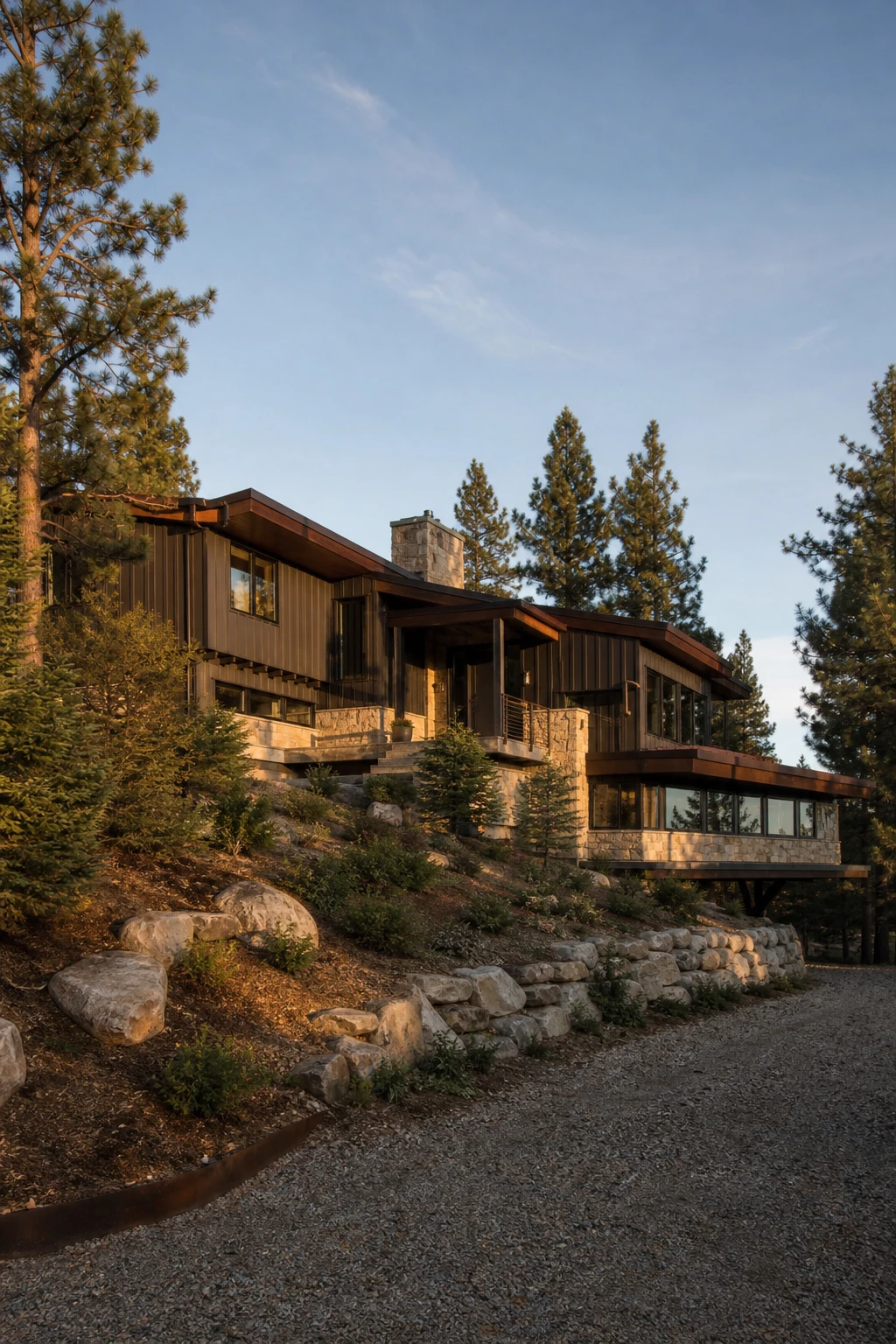
Stepping a home down a hillside rather than fighting it is the approach that keeps rewarding you. You get a natural split level that reads as a series of linked volumes, and the grade does the work of creating drama without a single massive retaining wall. I always point clients to how the cantilevered lower wing floats over the slope, the fieldstone base anchoring it while the upper volume stays light with board and batten. The whole composition feels grown from the site rather than imposed on it.
The Key Details
Cantilevered lower wing over grade change
Dry stacked fieldstone base and landscape boulders
Horizontal ribbon windows spanning lower floor plate
Recessed upper level entry deck
Board and batten timber cladding upper volume
Pro TipPlace your main entry at the uphill end of the plan so guests step straight in at grade, with the house unfolding below them rather than requiring a long climb.
AvoidCutting a flat pad into a steep hillside forces enormous volumes of fill on the downhill side, and that disturbed earth shifts and settles for years, taking your foundation with it.
An Entry That Sets the Whole Tone of a Mountain Modern Ranch
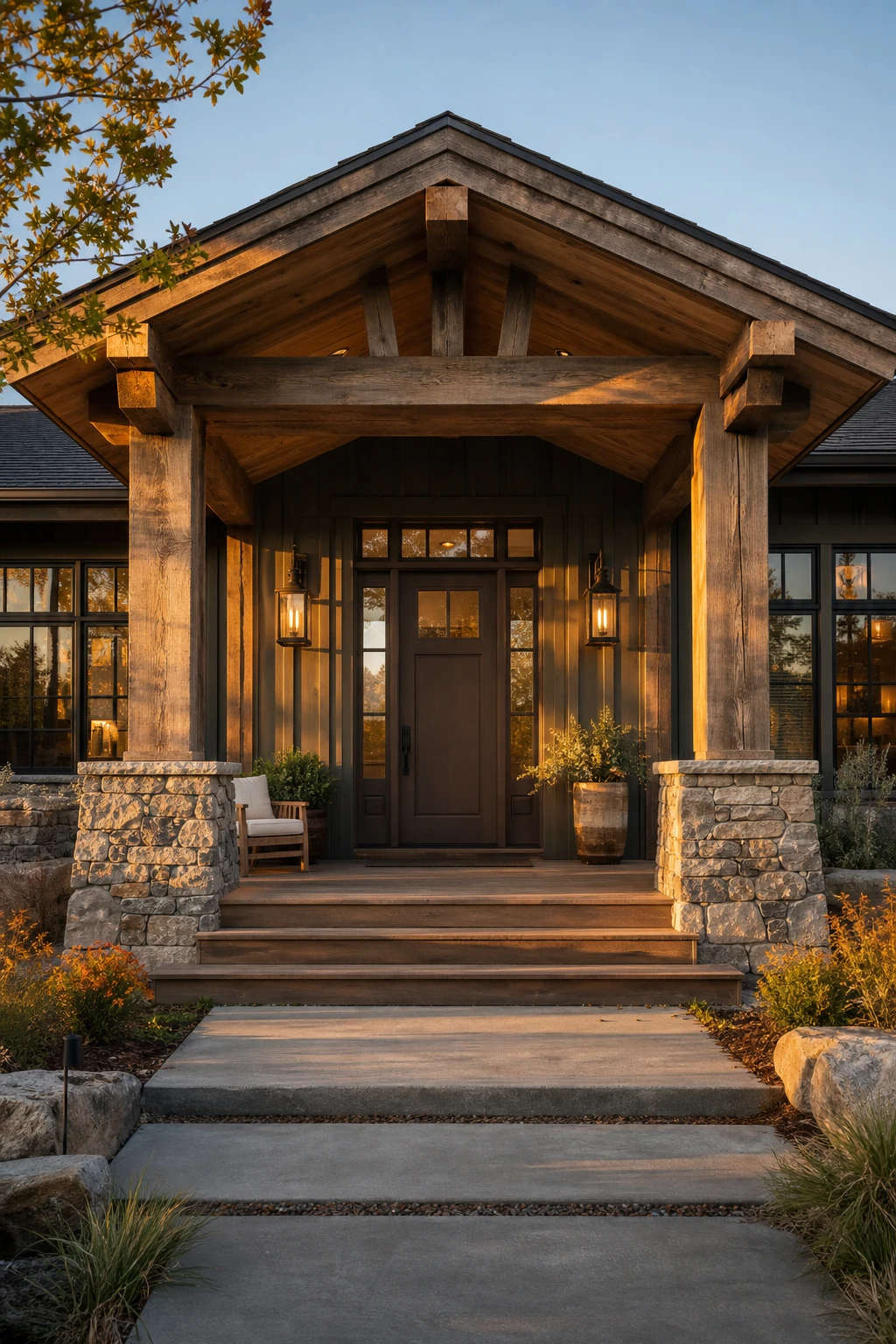
A covered entry with proper framing does something quietly powerful: it gives the whole facade a human scale before anyone even reaches the door. What I love here is how the timber columns and stone bases pull the eye down and in, so the front door feels like a destination rather than a detail lost in a wide wall. You get that instant read of warmth, shelter, and craft that mountain modern lives and dies by.
The Key Details
Hand hewn timber porch columns
Stacked natural stone column bases
Tongue and groove pine porch ceiling
Oversized black iron lantern sconces
Board and batten cedar siding
Pro TipSize your porch columns so their total height sits at roughly two thirds of the roofline above them, any shorter and they read as afterthoughts against a tall gable.
AvoidA front door centred on a broad facade with no overhead cover or framing element becomes invisible, and visitors arrive feeling like they are knocking on a wall rather than being welcomed in.
Texas Limestone as the Star Material on a Mountain Modern Ranch
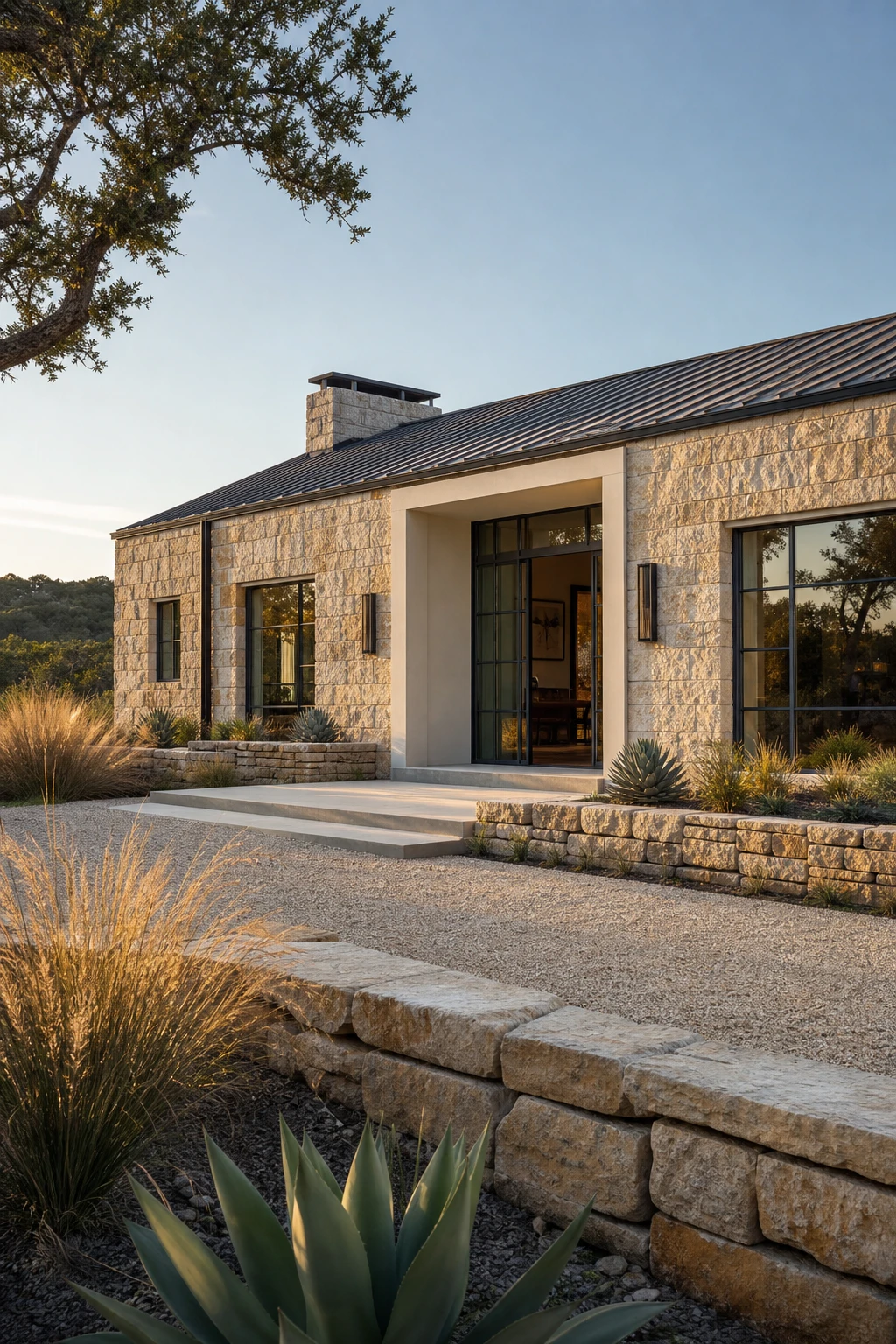
Rough cut Texas limestone is one of those materials that does the heavy lifting quietly. What I love is the way light moves across that uneven face through the day, picking up warm honey tones in the morning and settling into cool grey by evening. You get a surface that reads as genuinely luxurious without announcing itself, and at ranch scale that restraint wins every time.
The Key Details
Rough cut Texas limestone facade panels
Standing seam charcoal metal roof
Oversized steel casement windows
Dry laid limestone retaining wall
Native gravel forecourt with ornamental grasses and agave
Pro TipRun your limestone courses in long horizontal bands rather than random patterns, because that rhythm pulls the eye sideways and makes the whole facade feel lower and more grounded.
AvoidPairing limestone with brick on the same elevation flattens both materials, robbing the limestone of its natural warmth and leaving the whole facade looking undecided.
A Gable End Fireplace That Turns a Wall Into a Landmark
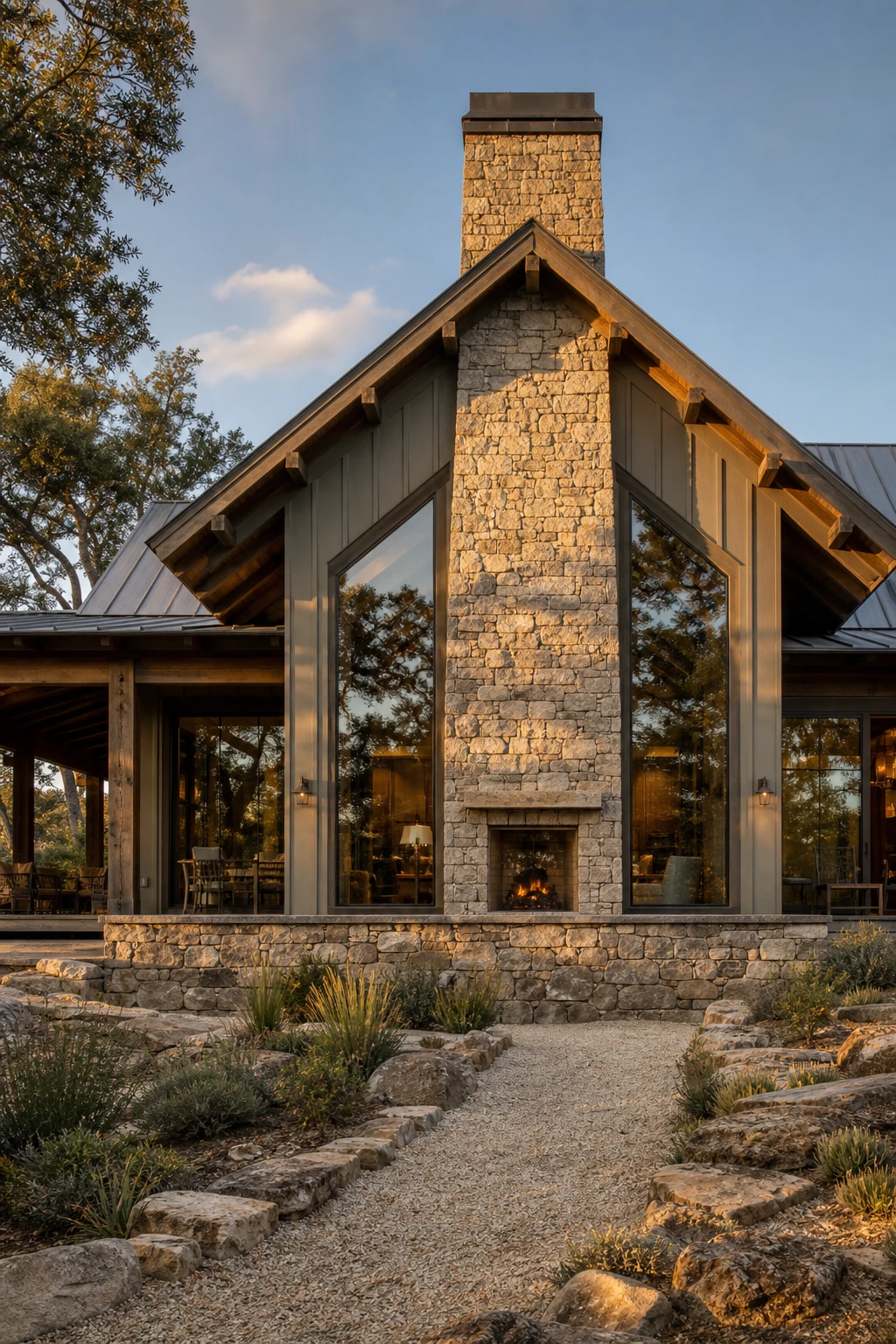
A chimney stack built into the gable end does something a flat facade simply cannot: it gives the eye a vertical anchor to rest on. What I love is how the hand laid fieldstone reads as weight and permanence, so the whole roofline feels earned rather than thin. You get that landmark quality without adding a separate structure, because the gable already frames it perfectly.
The Key Details
Hand laid fieldstone chimney stack
Standing seam metal roof with steel flashing
Exposed rough sawn timber rafter tails
Floor to ceiling fixed gable glazing
Board and batten gable wall cladding
Pro TipRun the chimney stack at least two feet above the ridge so it draws properly and reads as a deliberate architectural gesture rather than an afterthought.
AvoidFinishing a fieldstone chimney with a poured concrete cap cuts the material story dead and makes an otherwise handsome stack look like a site fix rather than a design decision.
What the Barndominium Silhouette Brings to a Mountain Modern Ranch
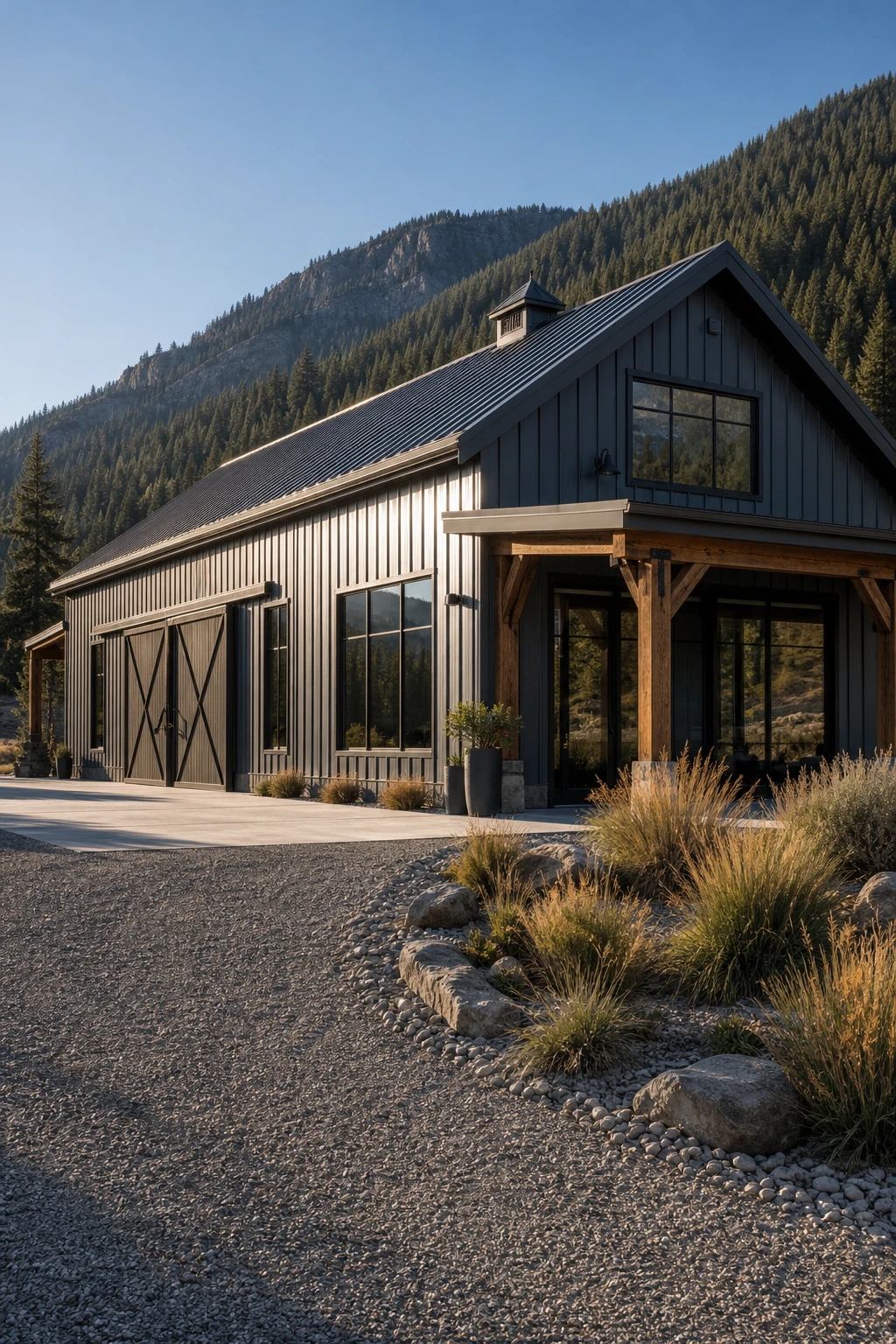
The barn form earns its place on a mountain site because you get enormous volume for the money and that steep gable reads as completely at home against a ridgeline. Standing seam metal skin keeps the silhouette clean and sharp, and I love how those oversized picture windows break the wall just enough to let the scale feel intentional rather than industrial. The wide sliding doors and timber entry posts are what pull it back toward home, and that is the detail I always push clients to get right.
The Key Details
Standing seam metal cladding
Steep gabled roofline
Exposed timber entry posts
Oversized black framed picture windows
Wide sliding barn doors
Pro TipBreak a large barn volume into two or three linked sections of slightly different heights so the overall form reads as a compound rather than a single overwhelming shed.
AvoidLeaving the metal facade completely unbroken from corner to corner strips away every residential cue and leaves a building that reads as a warehouse rather than a home.
Alan launched Edward George London in 2017. Since completing his masters in Town & Regional Planning (MPlan) he has combined the skills he learned at the University of Sheffield with his passion for design, to help create a foundation for those looking to create a beautiful home.