Newsletter Subscribe
Enter your email address below and subscribe to our newsletter

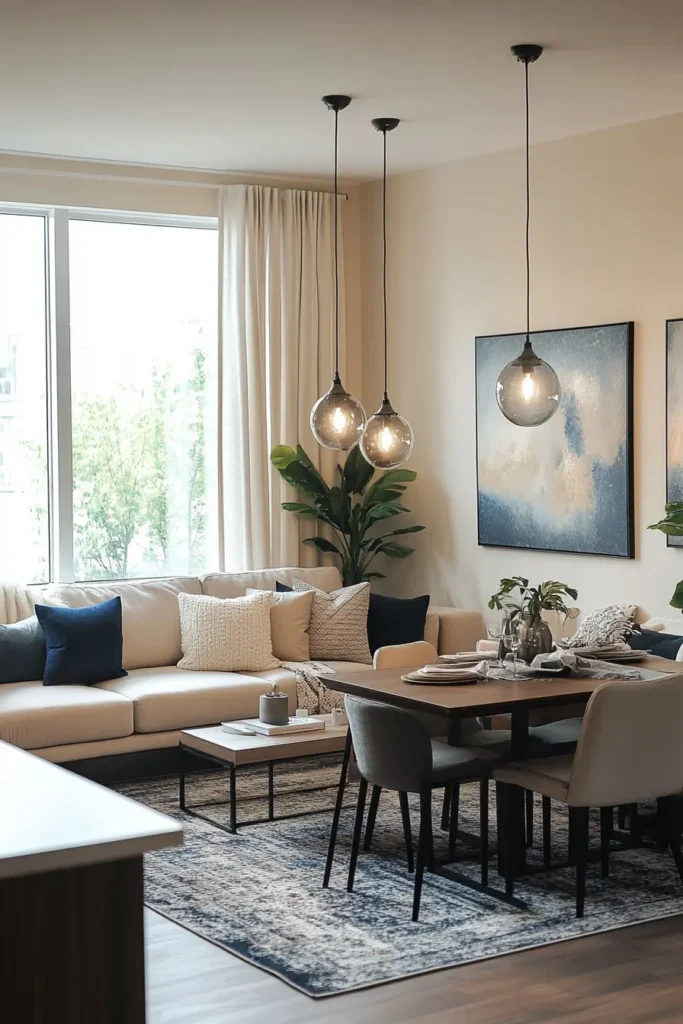
Your sofa has a place, but your dining table still needs one. In a small apartment living room, the table can look perfectly sensible until someone pulls out a chair and blocks the way to the kitchen. The answer is to test the room with people seated, not just with furniture pushed in. This guide compares three table positions around an existing sofa, then gives you a simple floor test before you buy or move anything heavy.
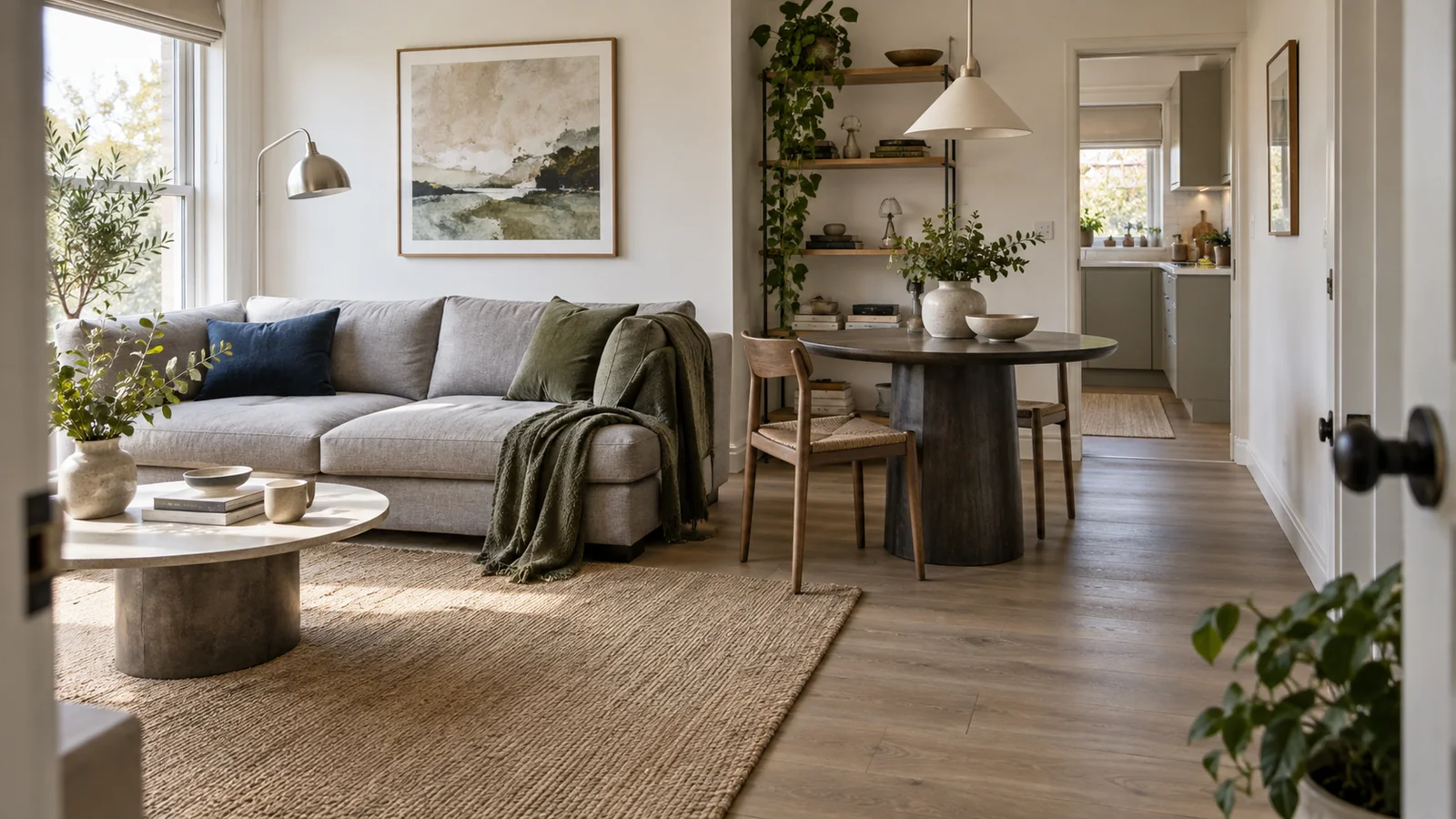
Draw the walls, door swings, windows and the sofa as they actually stand. Mark the route you take most often, perhaps from the entrance to the kitchen or from the sofa to the bathroom. If the sofa really cannot move, leave it fixed on the drawing. That single decision makes the remaining choices honest.
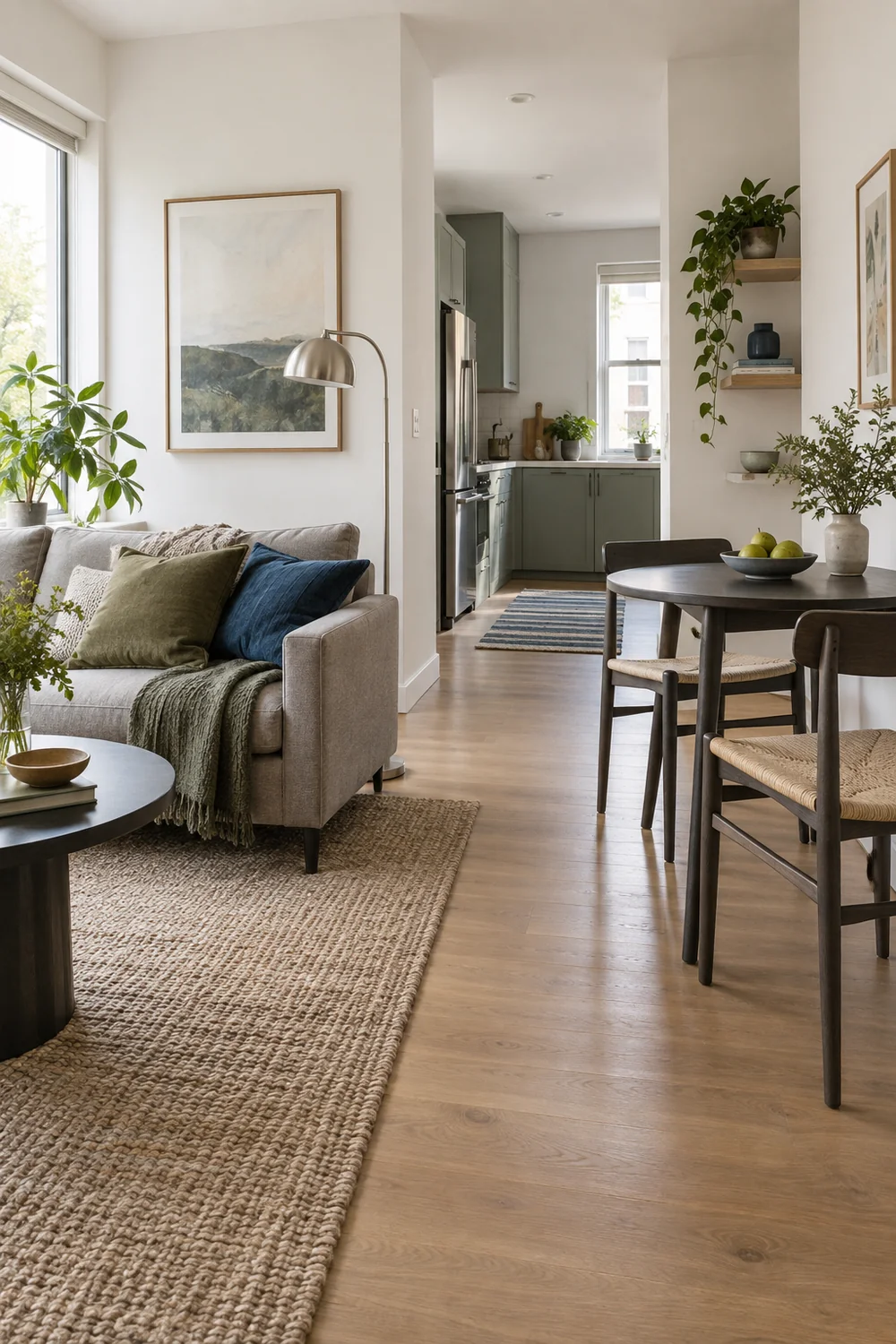
Now add the dining table in its everyday size, followed by the chairs in their occupied positions. A tucked chair is not a useful measure of a meal. Sit in each place, push the chair back as you would to stand, and walk the route again. The clear space you need depends on the people and the room, so measure the actual movement instead of borrowing a universal number from a showroom.
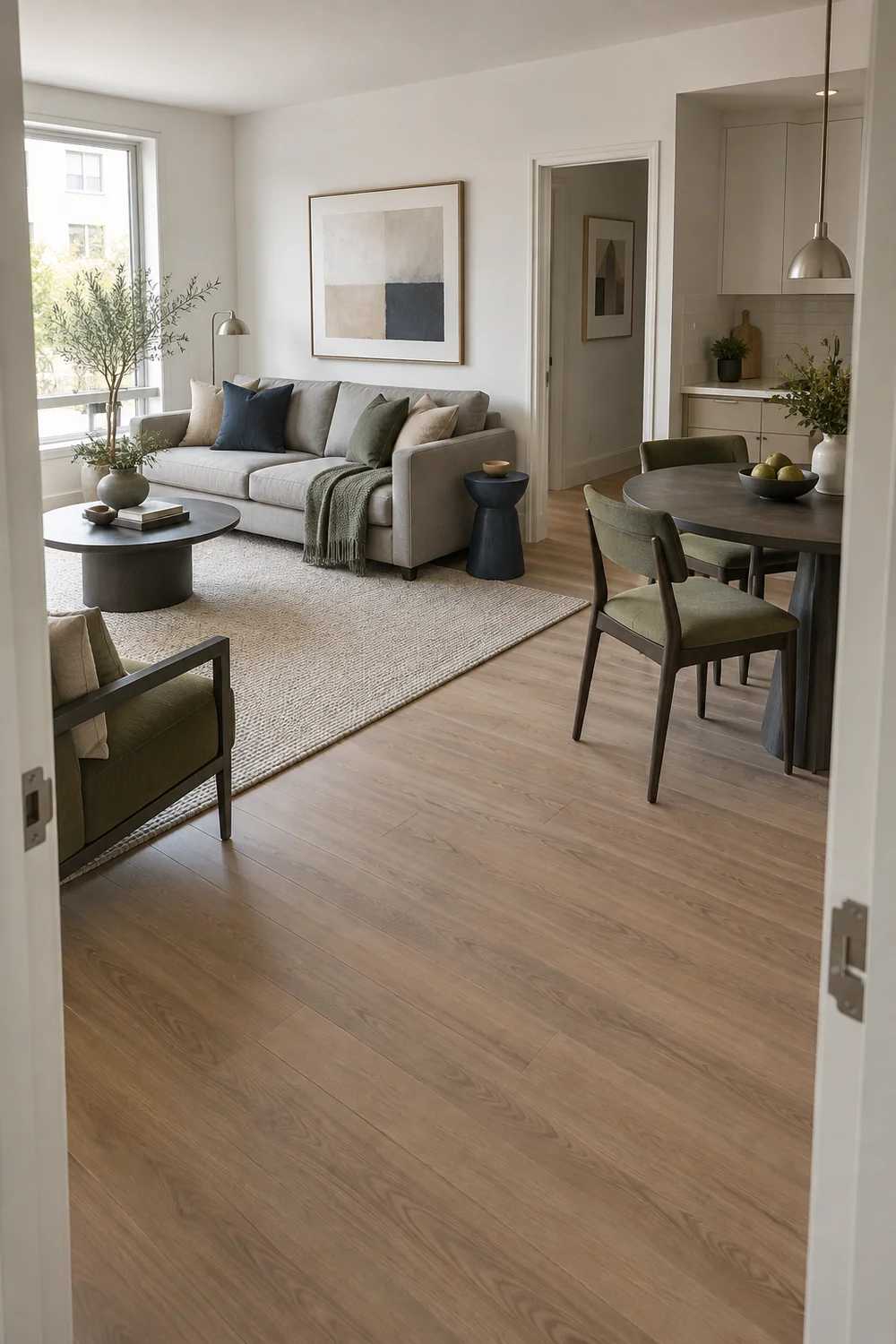
The broad living dining room combo guide is useful for seeing possible zones and finishes. Here the narrower question is where the table can live every day without asking the sofa or the walkway to disappear.
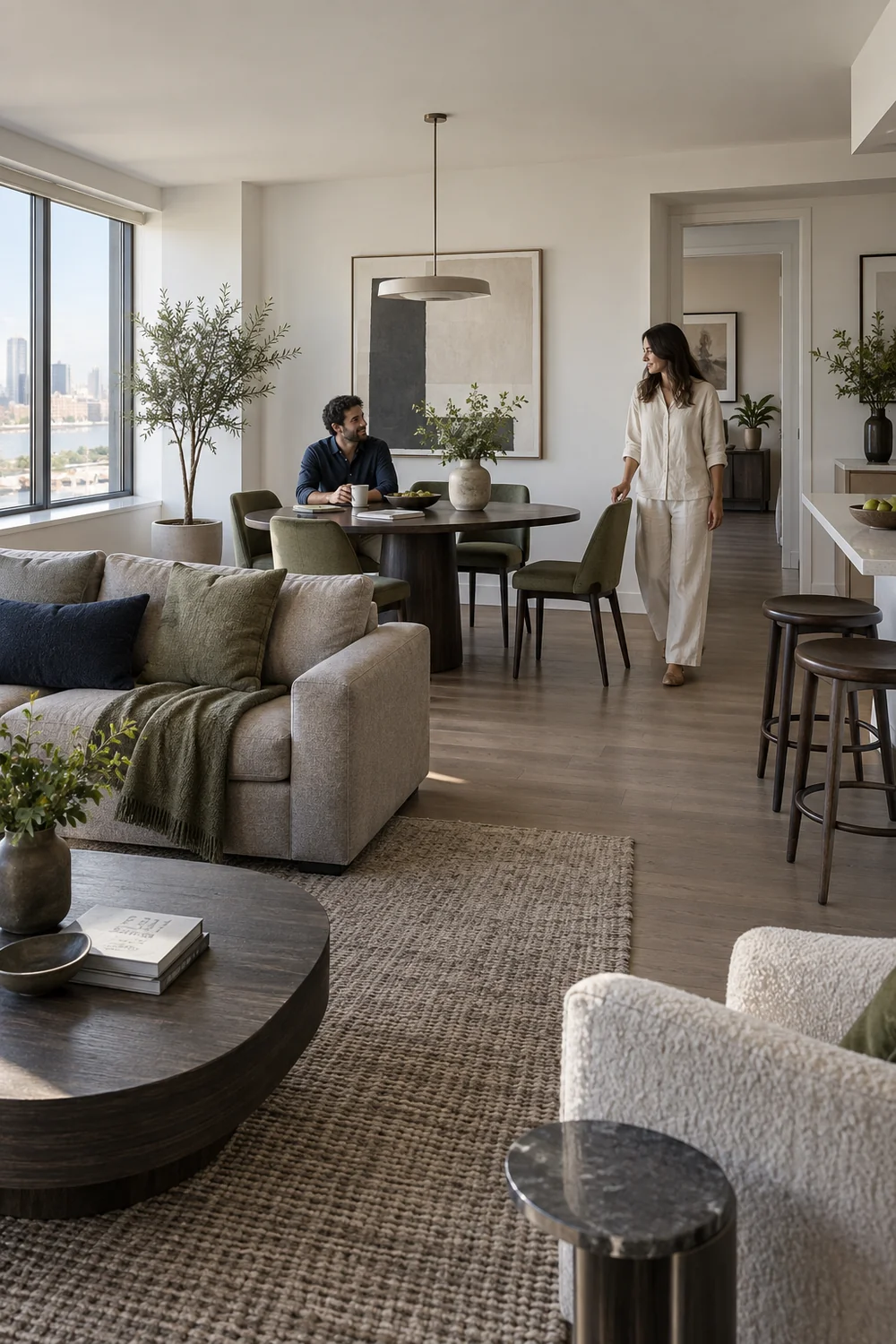
Before considering a new table, make a short list of what the room must still do when dining is in use. The sofa should remain comfortable, a door should open fully, and a person should be able to carry a plate through the main route. If one of those fails, that position fails even if the photograph looks spacious.
Include the furniture you are tempted to ignore. A floor lamp, plant stand or narrow side table can occupy exactly the space a dining chair needs. Mark these on the drawing in a different colour from the sofa. They are easier to move, which makes them useful variables rather than fixed obstacles. Keep the sofa in place and see what opening appears when one small object leaves.
The first option is along a window wall. It can give daily meals natural light and leave the centre of the room open. Place the table parallel to the wall and test whether the window, radiator and curtains still work. A chair at the outer edge may take space from the main route, so check that occupied position first. A window is an advantage only if sitting there does not turn the room into an obstacle course.
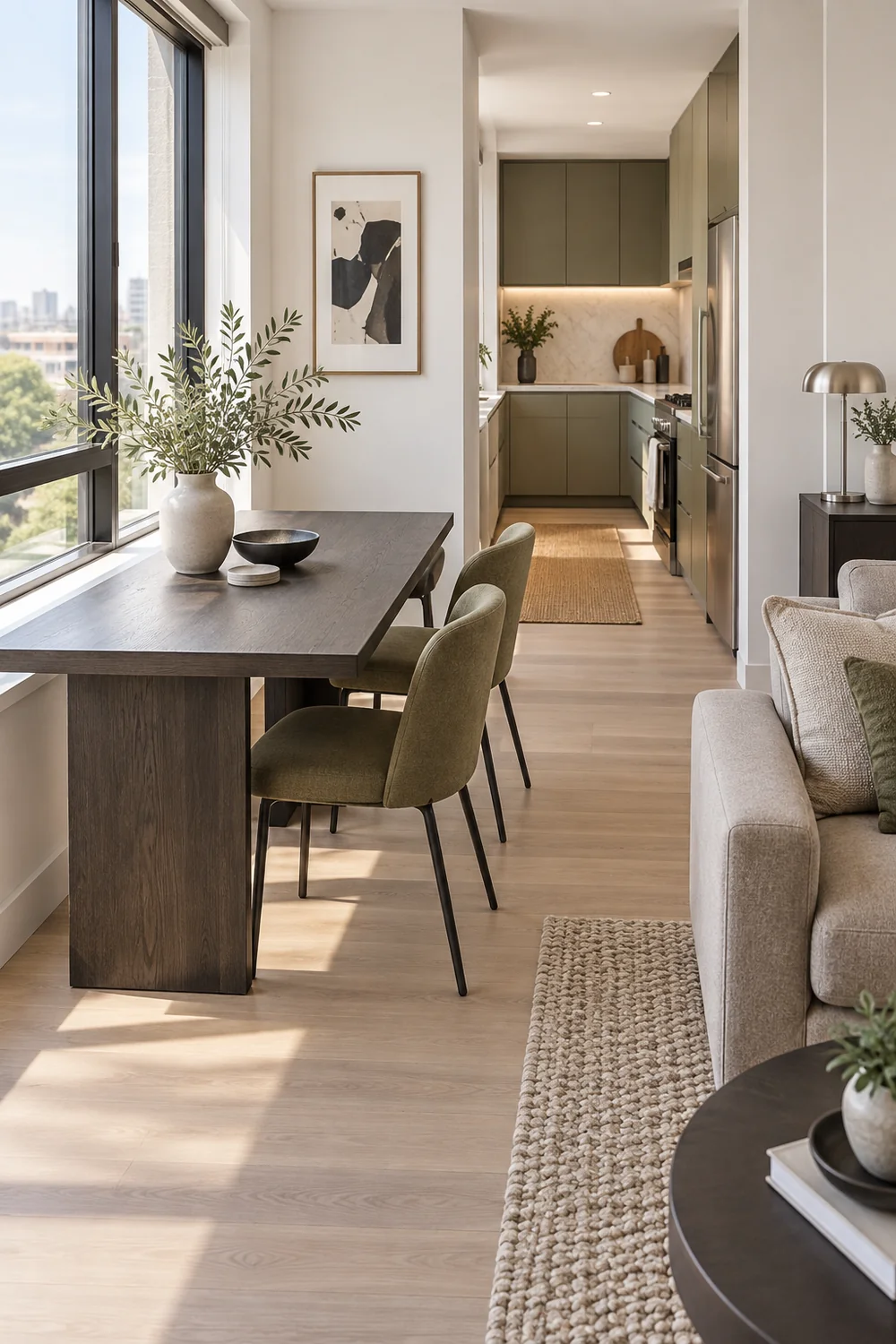
The second option is behind the sofa. The sofa back can form a natural boundary between sitting and eating without adding a screen or shelf. It works best when there is enough depth for the sofa, a usable table and chairs that can move. If a seated person would press against the sofa back, or if you must squeeze sideways to reach the kitchen, reject this arrangement. A slim console cannot make the missing floor space appear.
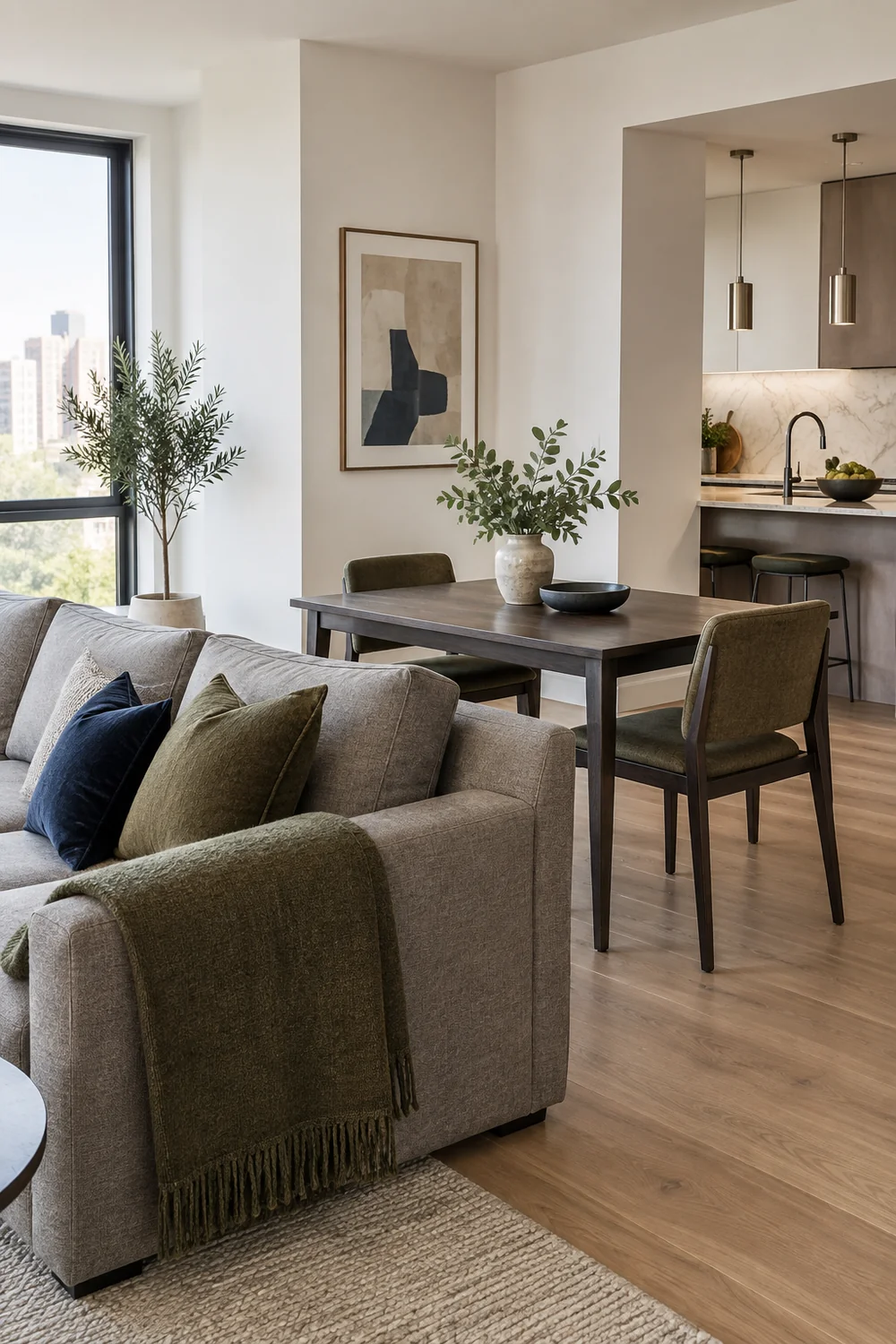
The third option is a corner near the kitchen side of the room. It can shorten the route when serving food and protect the sofa side from dining clutter. The risk is a table that traps one chair against a wall or blocks a door. Try a small table and two chairs in that corner before assuming four places are possible. A quiet two seat arrangement that works daily is more useful than four theoretical seats that cannot be reached.
Write the three candidates on the same plan rather than remembering them from separate photographs. For each, mark where a chair stops when someone is seated, where it stops when that person stands, and whether the kitchen route still exists. Also check what the table looks like from the sofa. A position can pass the walking test yet place a chair directly in front of the television or the only daylight. This comparison makes the tradeoff visible before you buy a table to suit the wrong corner.
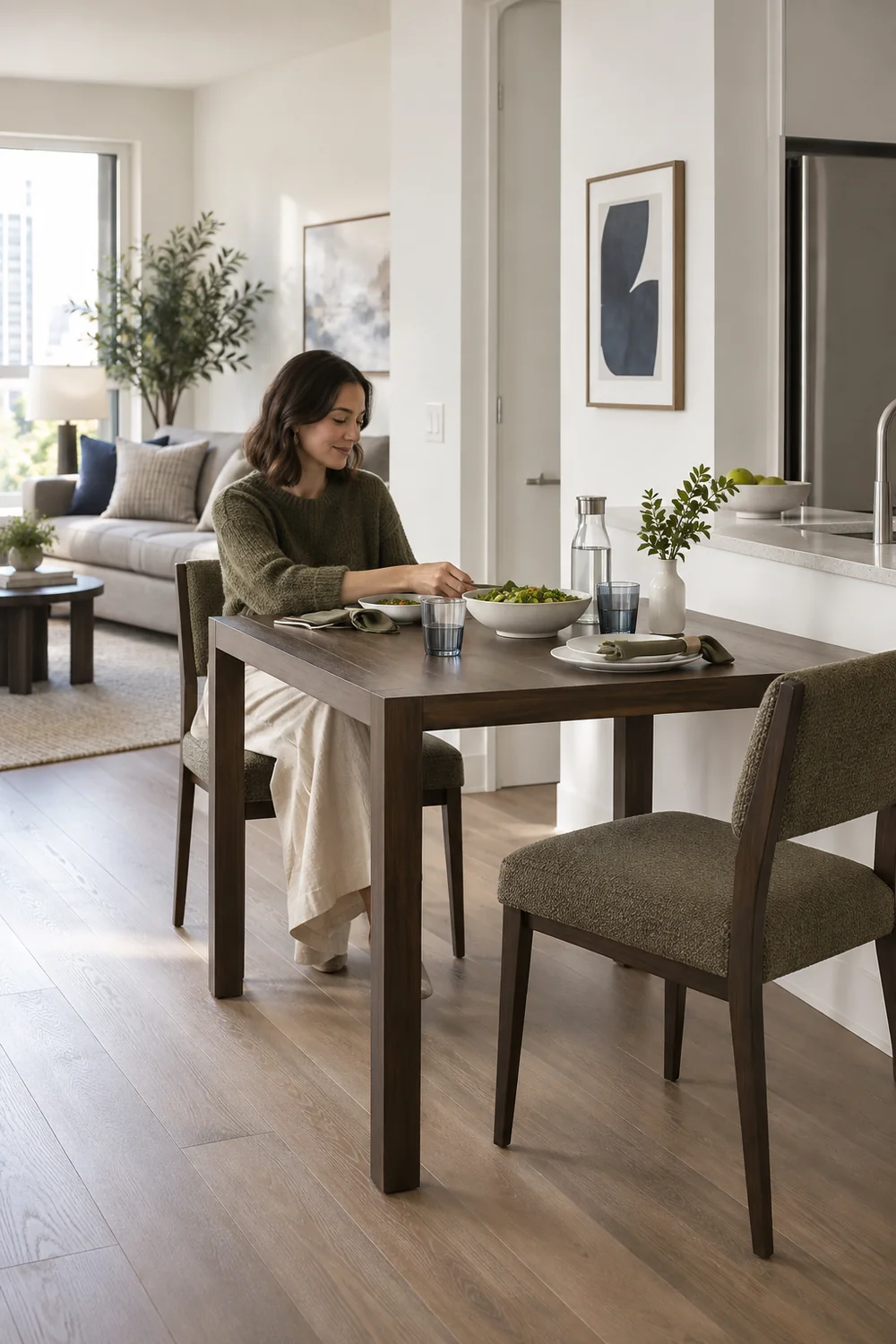
If none of these positions passes the occupied chair test, change the footprint before changing the room style. A smaller table, a different chair profile or fewer permanent seats may solve the actual problem. The living room furniture guide can help you compare the scale and function of the sofa and other large pieces, but the room test should decide which piece deserves space.
The broad ideas can help you imagine the room once a position survives. They cannot tell you whether your particular door swing clears a chair. Keep the inspiration and the physical decision in that order.
A round table can make it easier to move around a tight corner, but its diameter still has to fit alongside occupied chairs. A rectangular table can sit close to a wall and offer useful surface area, yet its corners may intrude into the route. A pedestal base may free knee space while a broad base may catch feet. Look at the base, chair legs and actual movement together instead of treating the tabletop outline as the whole footprint.
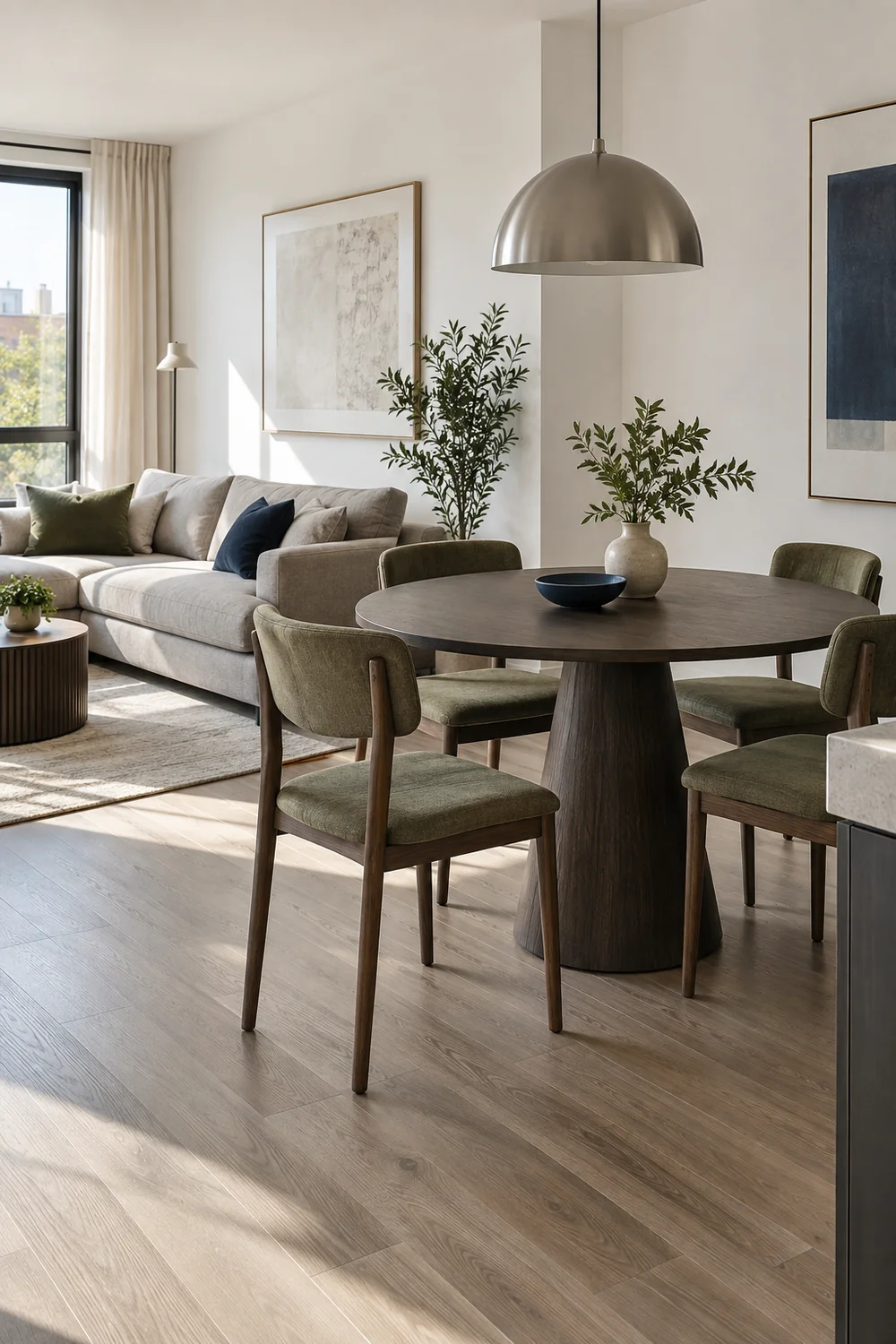
An extendable table makes sense only if you can open it and seat people without dismantling the sofa zone. Measure the closed and open versions in the exact proposed position. If the leaf can open only when the sofa moves, decide whether that is a rare acceptable change or an everyday frustration. Do not pay for extra capacity that the room cannot use.
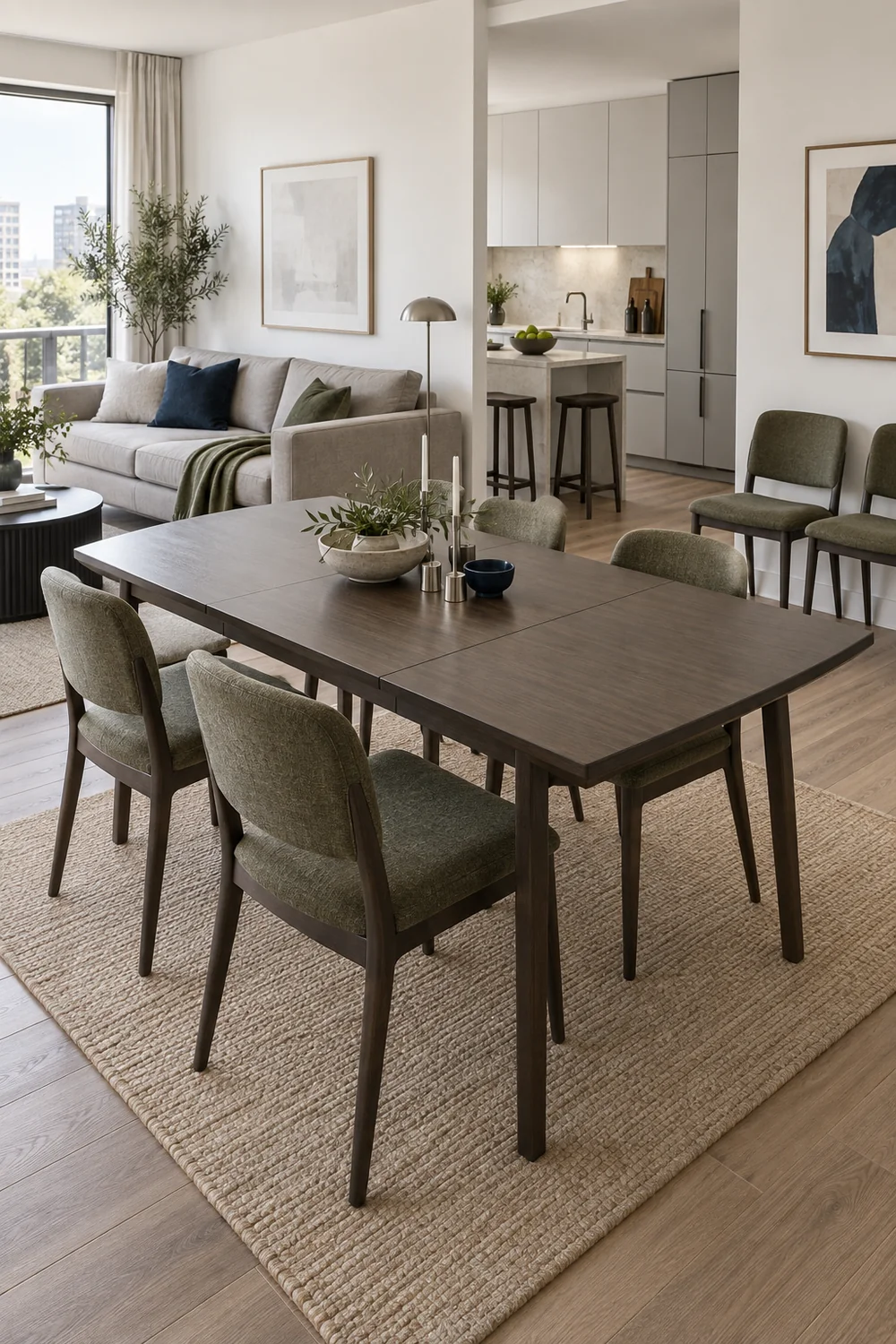
Chairs matter just as much. An armless chair may fit beneath a table that rejects a wide armchair. A folding chair is useful if it has a real storage place. A bench along a wall can keep one side clear, but test whether the person nearest the wall can get in and out comfortably. The best combination is the one you can use without a small furniture performance at every meal.
Imagine the sofa is already against the long wall and the table has to use the short wall near the kitchen. A narrow rectangular table may preserve the centre route when pushed back, but the outer chair still needs room to leave the table. A round table may soften the path past its edge while taking more depth at the centre. Neither shape wins on paper. Mark both outlines, place a real chair at the outer seat and choose the shape that works when somebody is sitting there.
If the table doubles as a work surface, check that use as well. A laptop, notebook or project spread may be easy to move once a week and exhausting to clear three times a day. Give those items a real shelf or tray before selecting a table that looks tidy only when empty. The living dining room combo guide explores broader storage ideas after this basic footprint decision.
Tape the proposed table outline on the floor or lay down sheets of paper cut to its size. Place your current chairs, or similarly sized substitutes, where people would sit. If you are shopping, check the manufacturer's complete measurements, including the base and the extended size. Test the room with a door open, a chair pulled back and someone walking past at the same time.
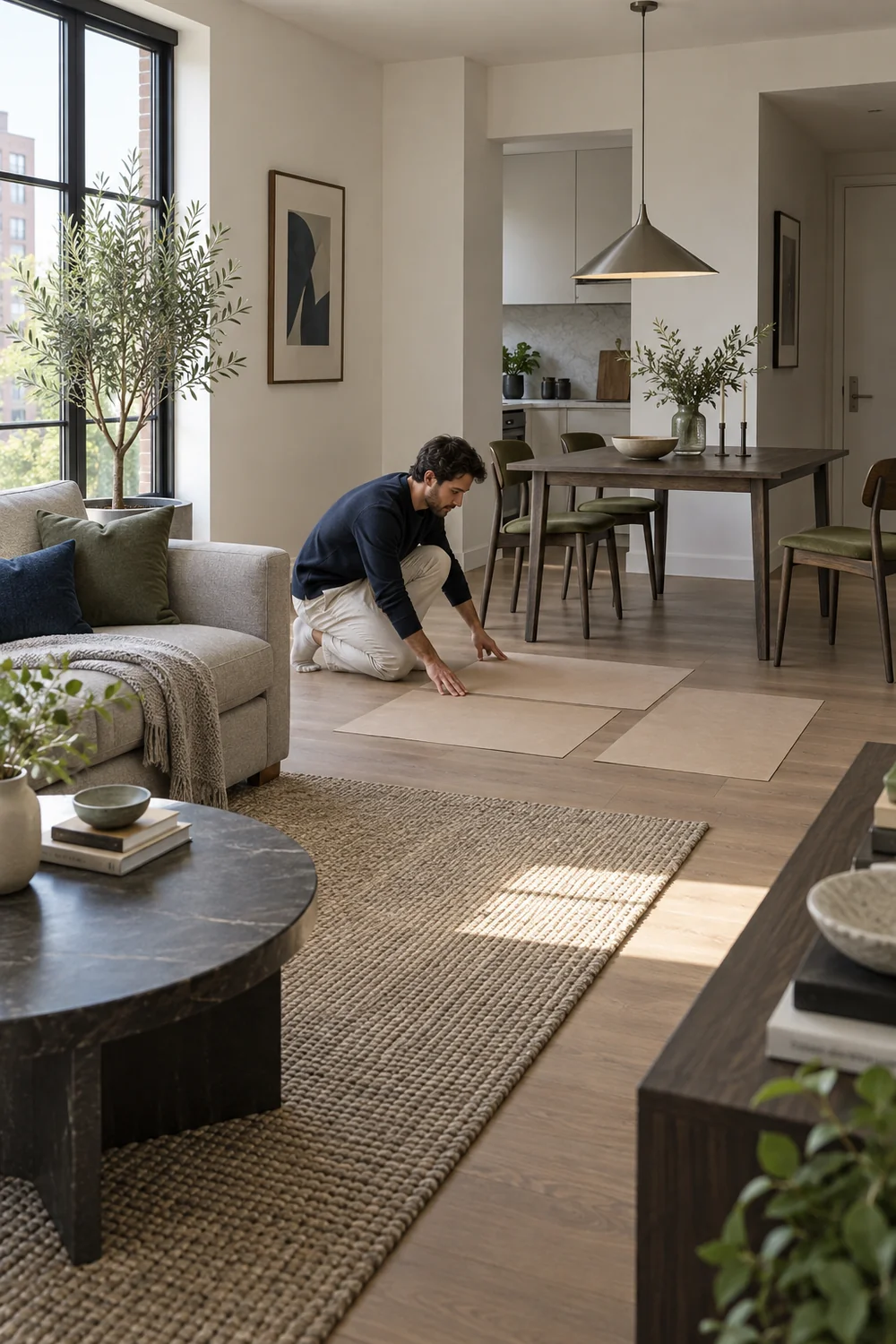
Try the everyday sequence: bring a plate from the kitchen, sit down, get up for water, return to the sofa, and pass through the room while another person remains seated. The route should feel natural without turning shoulders or asking the seated person to move. If you live alone, repeat the test with a chair occupied by a bag or cushion so you do not accidentally measure only the empty room.
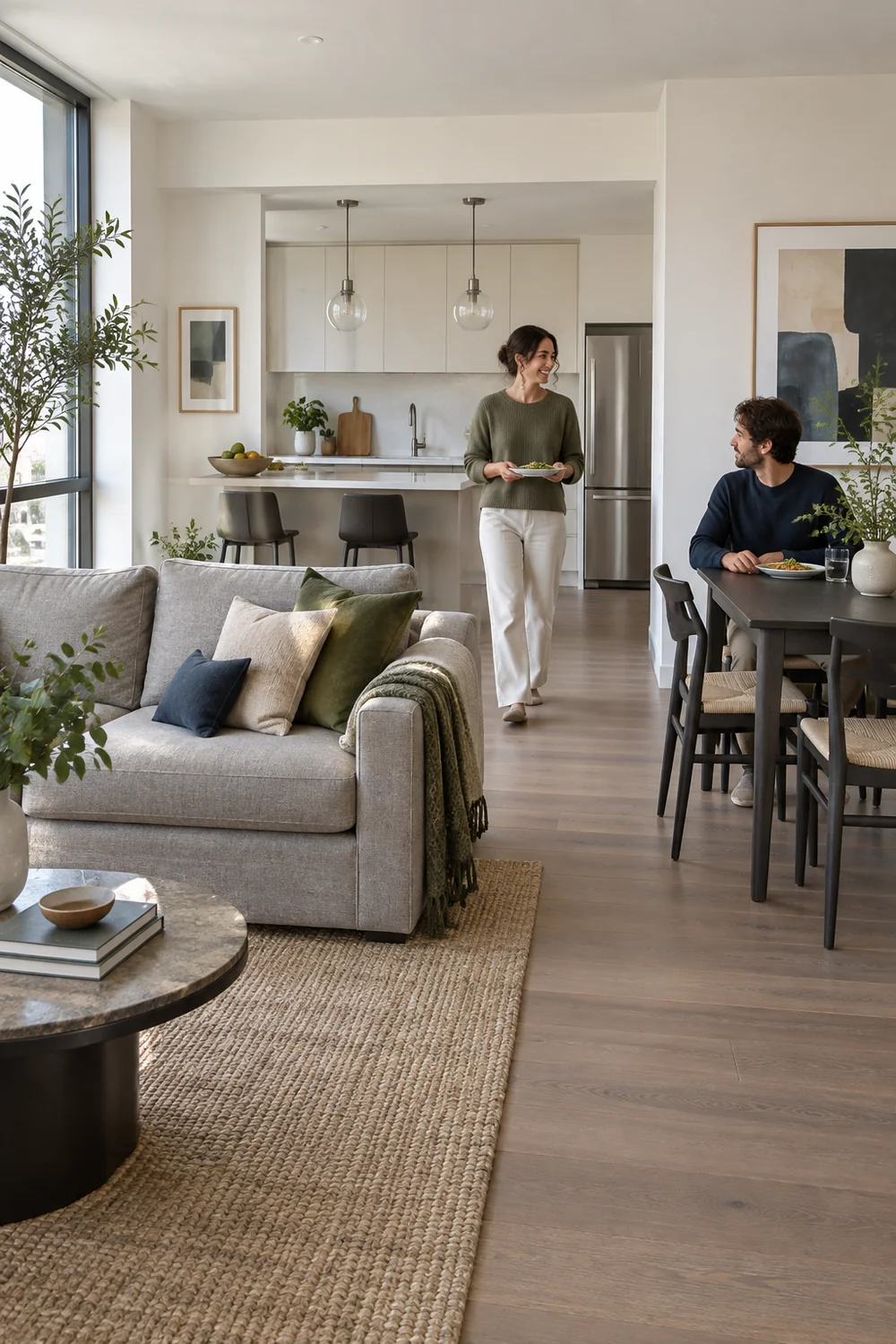
Compare two viable options in the same way. Write down what each gives and costs: daylight, serving route, sofa comfort, chair access and visible floor. If one position improves photographs but fails movement, keep the less photogenic sketch and improve its styling later. This is the decision point for a dining table in the living room, not a shopping list.
Use a normal meal as the final trial. Put plates and glasses on the temporary footprint, sit for a few minutes, then clear it as you usually would. Does the person at the inner seat have to ask someone else to stand? Do you put a serving dish on the sofa arm because the table is too small? Does the room still feel comfortable when the dining chair remains out for an hour? Those answers are more useful than a single measurement taken in an empty room.
If the sofa blocks every workable table position, compare the sofa's depth and the other large pieces against the living room furniture guide. This is a deliberate last step, not permission to replace a comfortable sofa before testing simpler changes.
Once the table has a dependable place, make living and dining read as one room. Repeat one timber tone or one restrained colour between the table area and the sofa. A small lamp near the table can make meals comfortable without demanding a ceiling change. Keep enough light on the tabletop to see food and enough softer light by the sofa to settle afterwards.
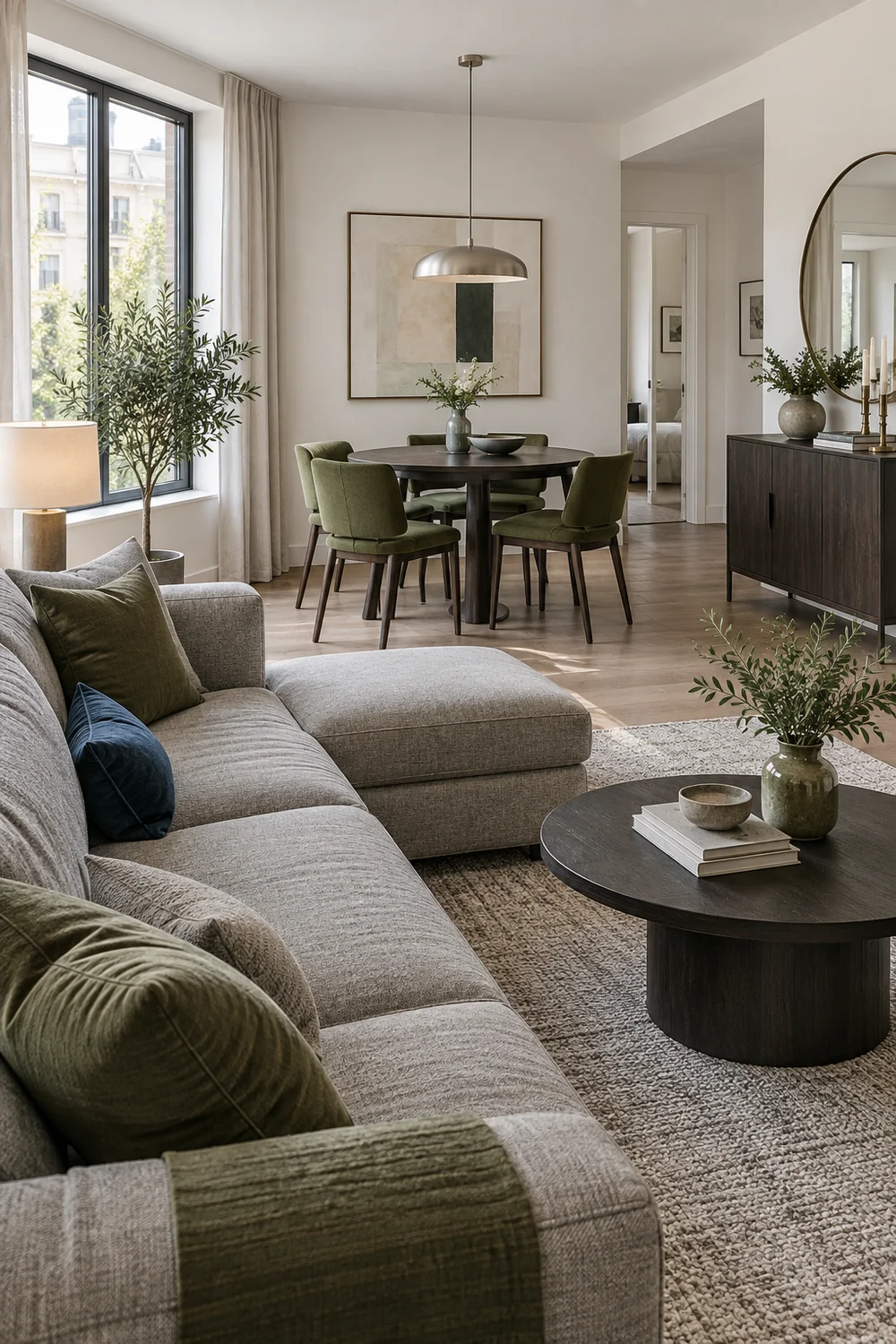
Avoid adding a large divider just to prove there are two zones. The sofa back, a change in light and the daily table setting may already do that job. If you prefer a spare visual language, the Japandi apartment examples offer a style branch after the positions are settled. Choose their low visual weight only when the furniture also supports your real route.
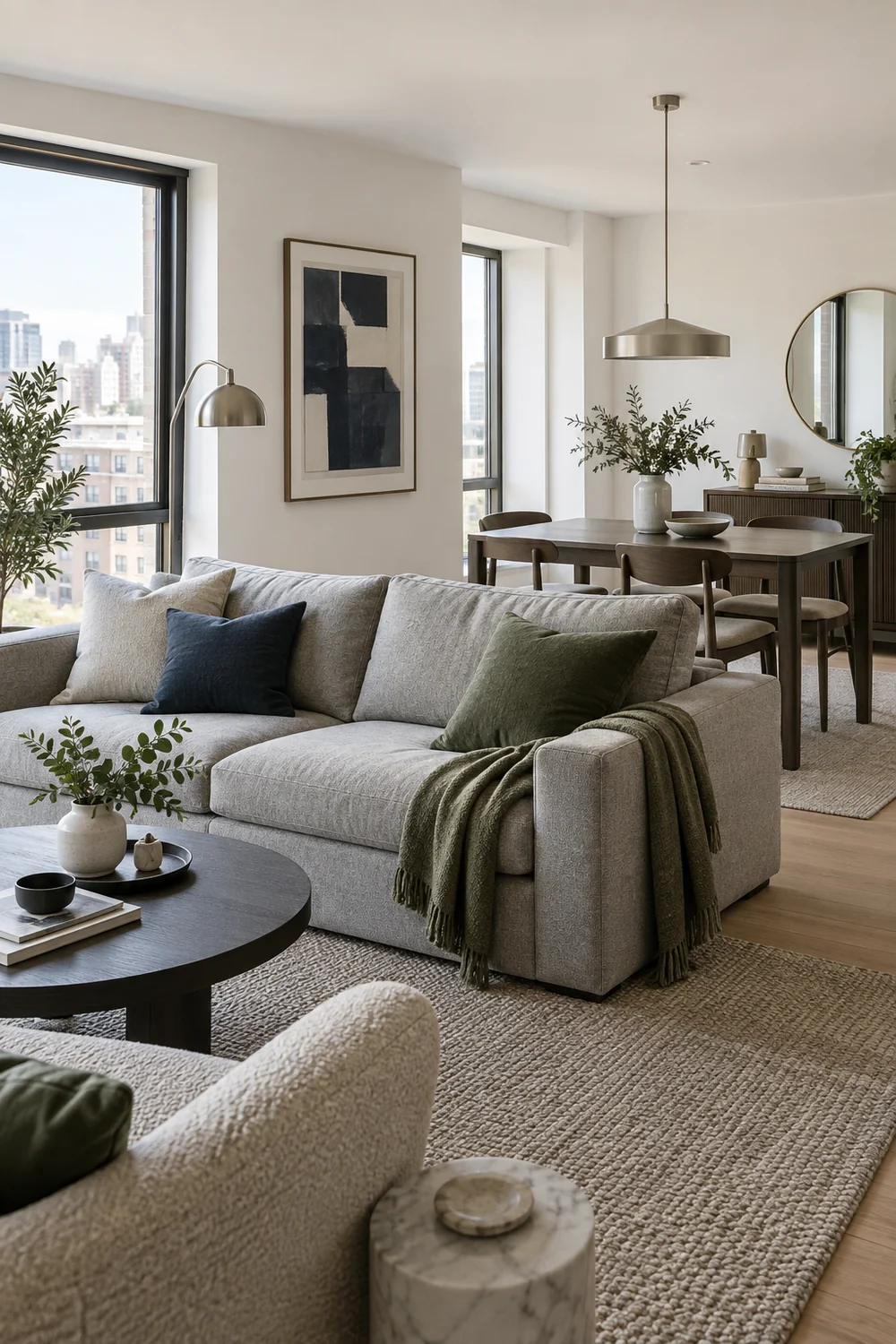
The room should still feel pleasant from the sofa. A table placed in the only open view can make the living side seem crowded even when circulation passes. Sit down and check the view, then remove or lower a nearby storage piece before abandoning a working dining position. For a softer finish once the layout functions, the cozy living room ideas guide can help with texture and light without changing the tested footprint.
Notice where small daily objects collect. If keys, post and charging cables gather on the dining surface, the issue may be a missing landing place near the entrance rather than too little dining space. Give those objects a narrow tray or closed drawer outside the meal zone. Keep the dining table available for eating so the room does not need to be reset before every meal.
If a friend sometimes joins you, test that extra chair in the actual room. Where will it come from, and can the kitchen route survive while everyone is seated? If adding one guest already blocks the door, keep the everyday arrangement and plan a different way to host. A room should not be difficult for hundreds of ordinary meals just to look ready for one uncommon evening.
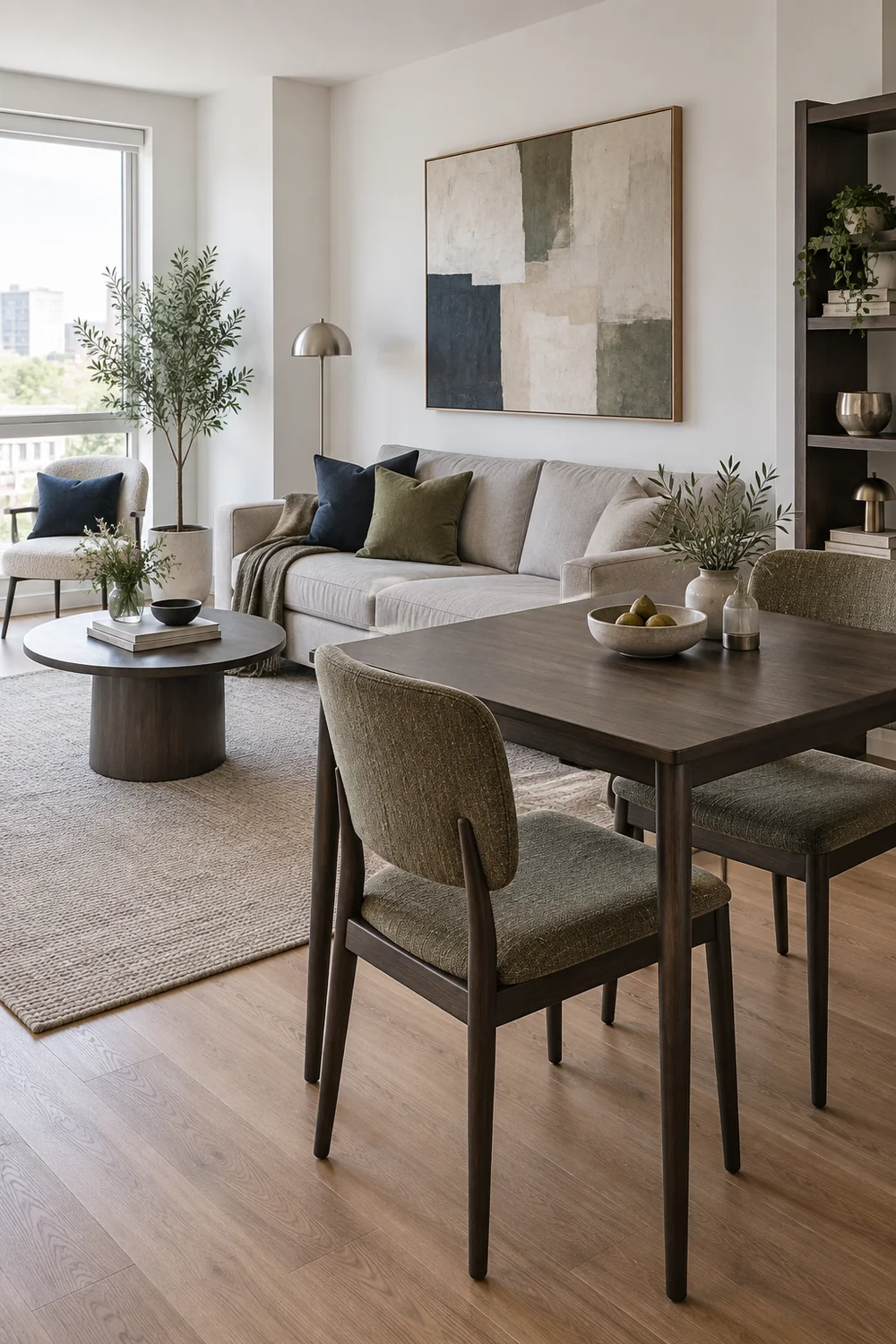
If seating six is a real and recurring part of your life, the small dining room guide works through closed and extended table footprints and where the extra chairs live. Treat that as a separate hosting branch. The apartment room still needs to pass its daily test before a larger occasion can be considered.
For a less frequent visit, decide in advance where the extra chair rests on ordinary days. It might be a usable seat by the window rather than a folding chair that lives in a corridor. On the day, move only the pieces you planned to move. If the plan requires carrying the sofa across the room, scale back the guest setup. Hosting should be a temporary version of a working home, not a complete reconstruction.
Live with the chosen arrangement for a week before declaring it finished. Notice when a chair stays out, where bags land, whether a table edge catches the usual walking line and which light you turn on for dinner. These observations are more useful than asking whether the room matches an inspiration image. The point of a small apartment dining area is a repeatable routine.
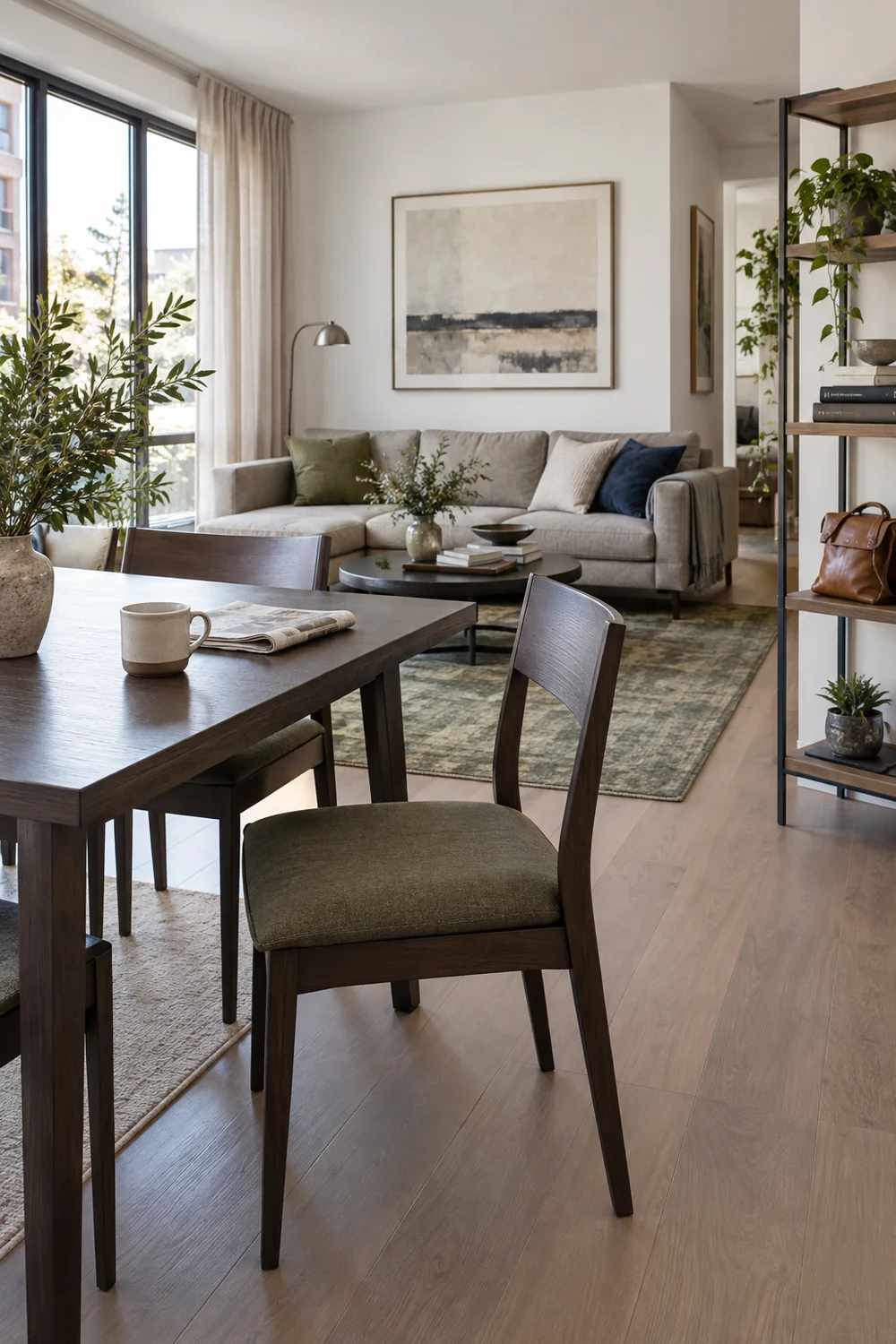
Change one thing at a time. Move the table a little before replacing it. Remove one permanent chair before buying a narrower one. Shift a side table if it steals the path the dining chair needs. Then rerun the occupied chair and plate carrying test. A small adjustment can make the difference between a room that merely fits and a room that works.
Take a photograph from the doorway and another from the sofa after the first week. The doorway view reveals whether the room still has a clear route; the sofa view reveals whether the dining area feels visually heavy. Compare those views with the notes from your physical test. Keep the arrangement that works in daily life, even if a different angle produces a prettier photograph.
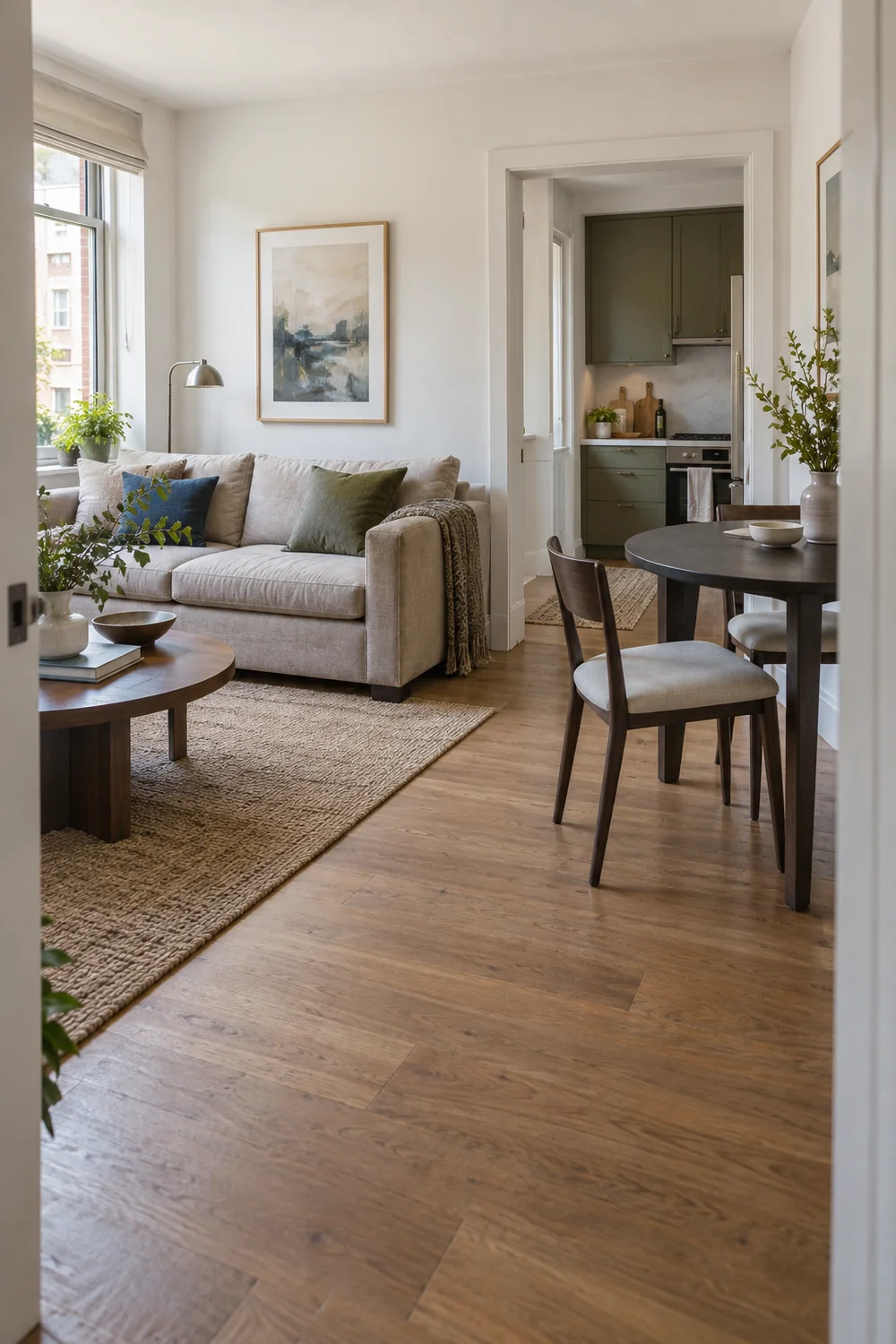
If the same collision keeps returning, revisit the sofa and dining table in one room comparison rather than adding another storage piece or decorative divider. The successful plan lets you sit, eat and move through the apartment without asking one activity to make way for the other each day.