Newsletter Subscribe
Enter your email address below and subscribe to our newsletter

Christmas bathroom decor has to earn its place in a small downstairs toilet. When guests are coming, I would start with a good hand towel, soap they can find and one festive detail that leaves the basin usable. Here is how I would choose that detail, arrange the essentials and keep the room ready between visits.
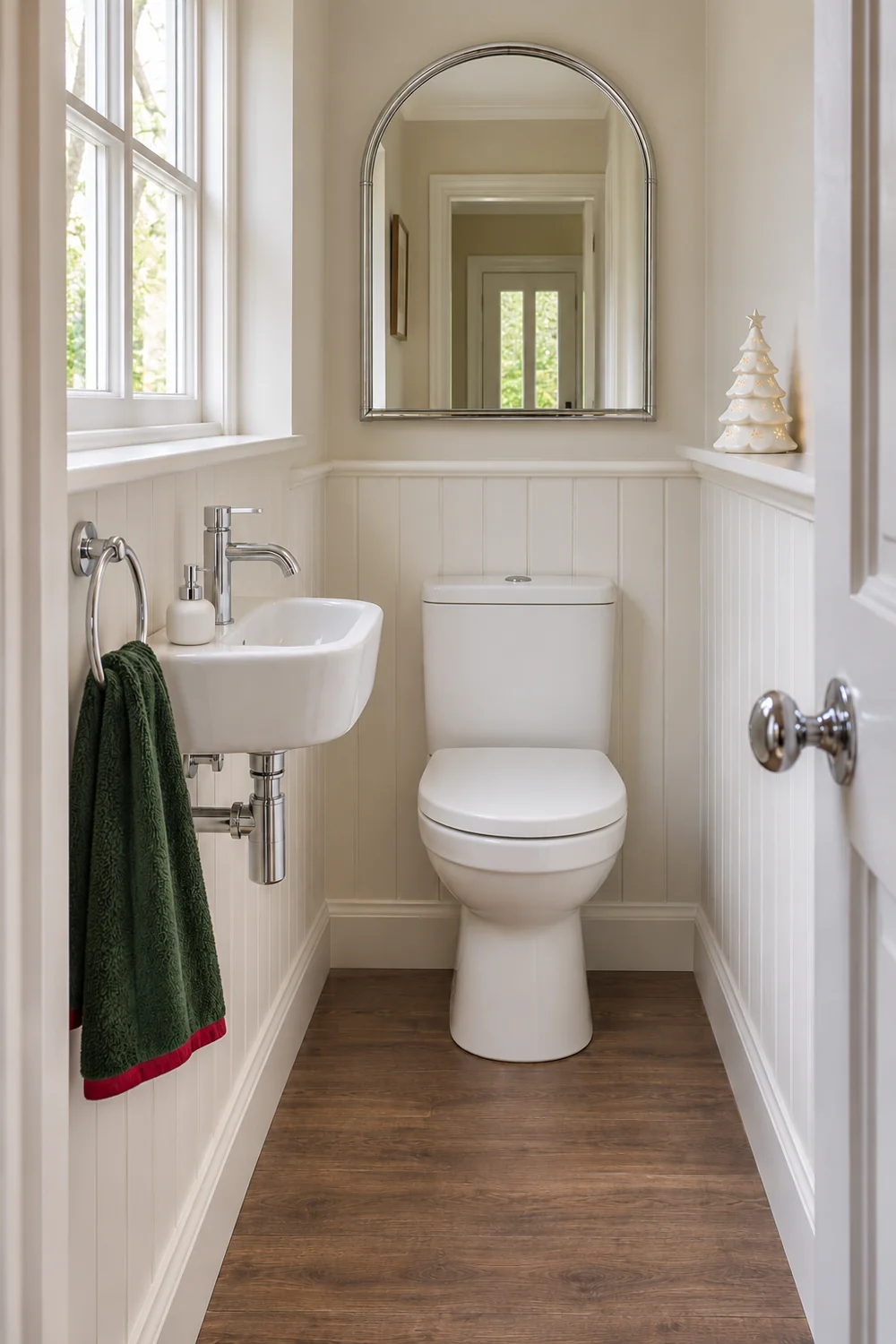
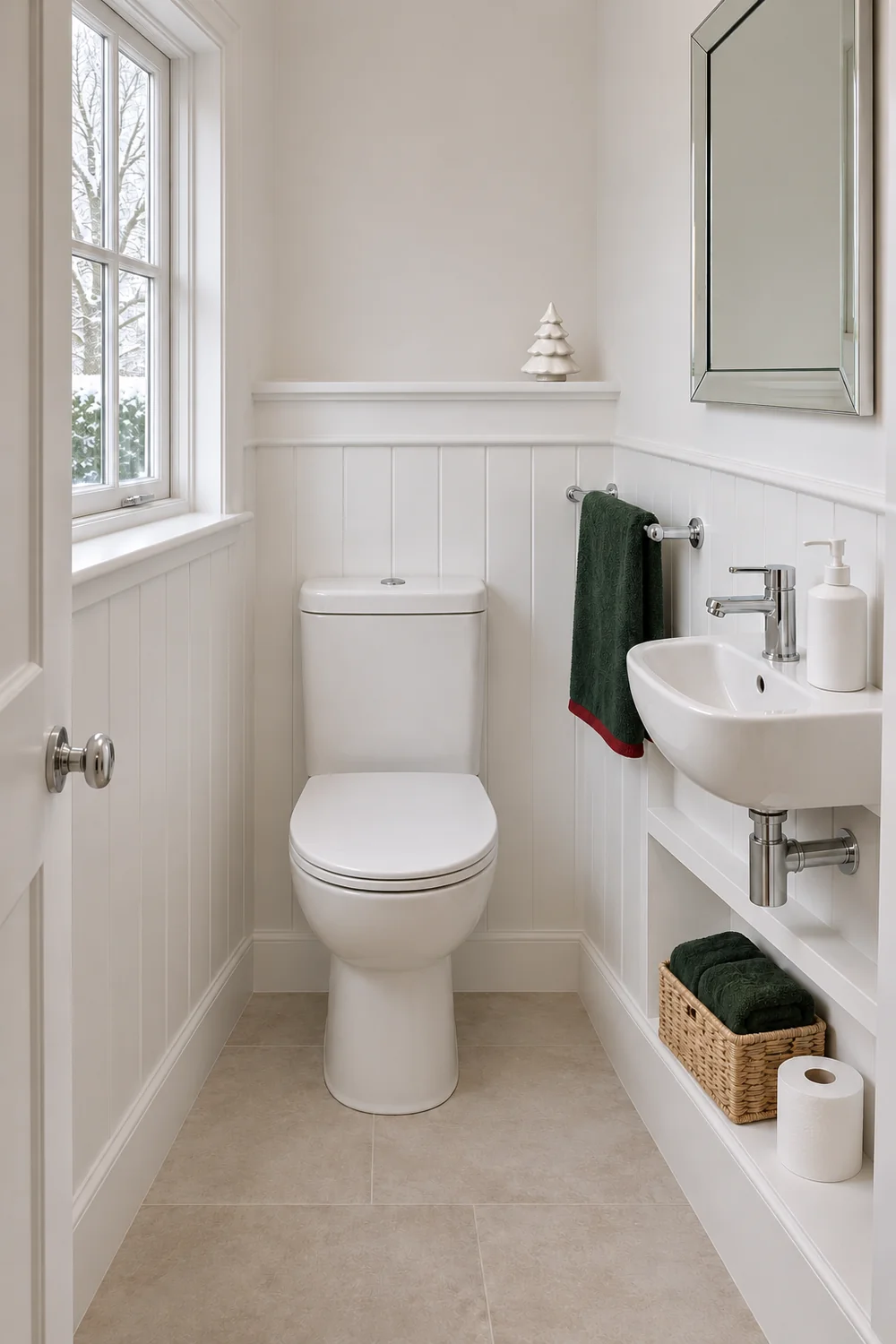
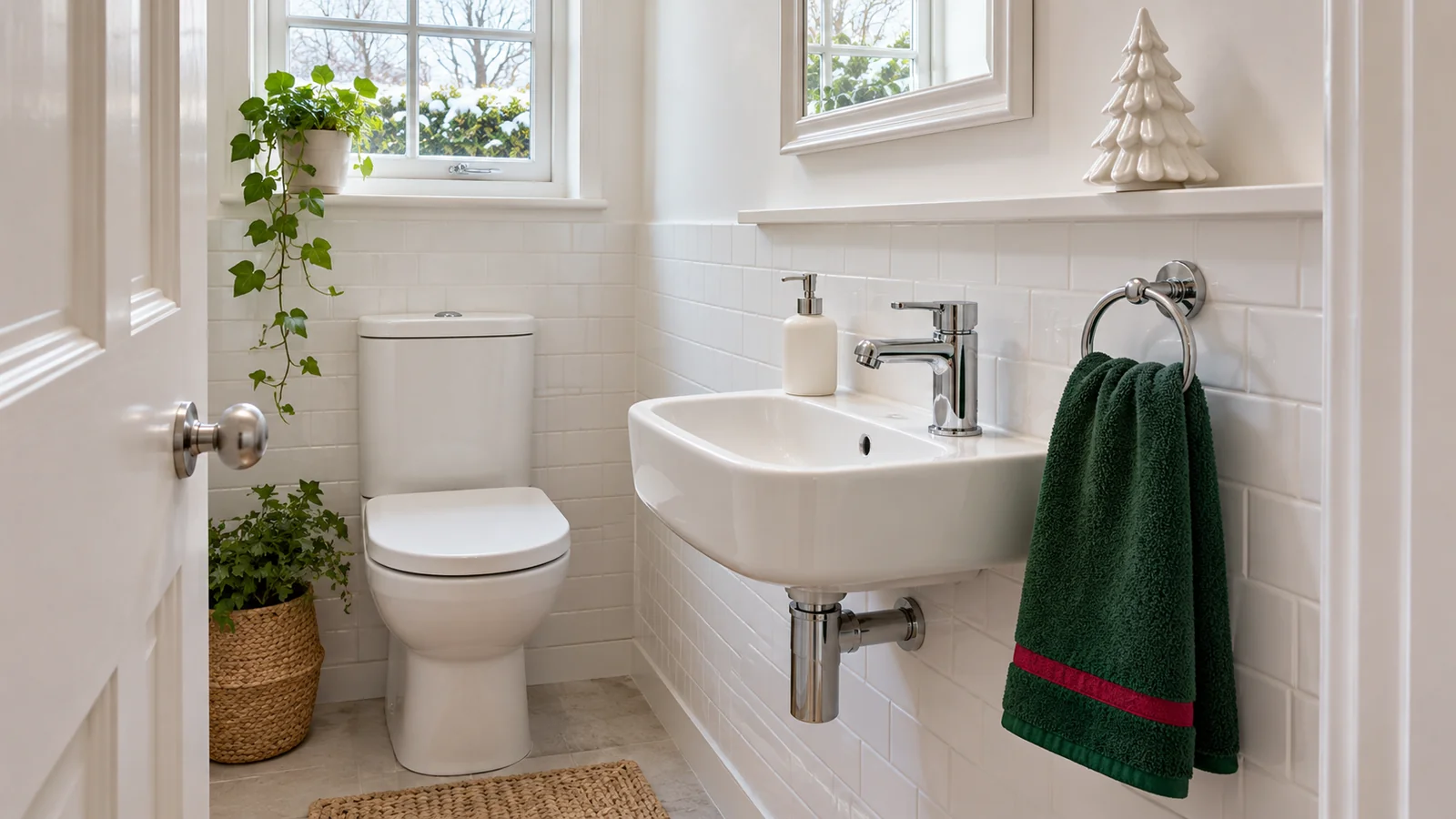
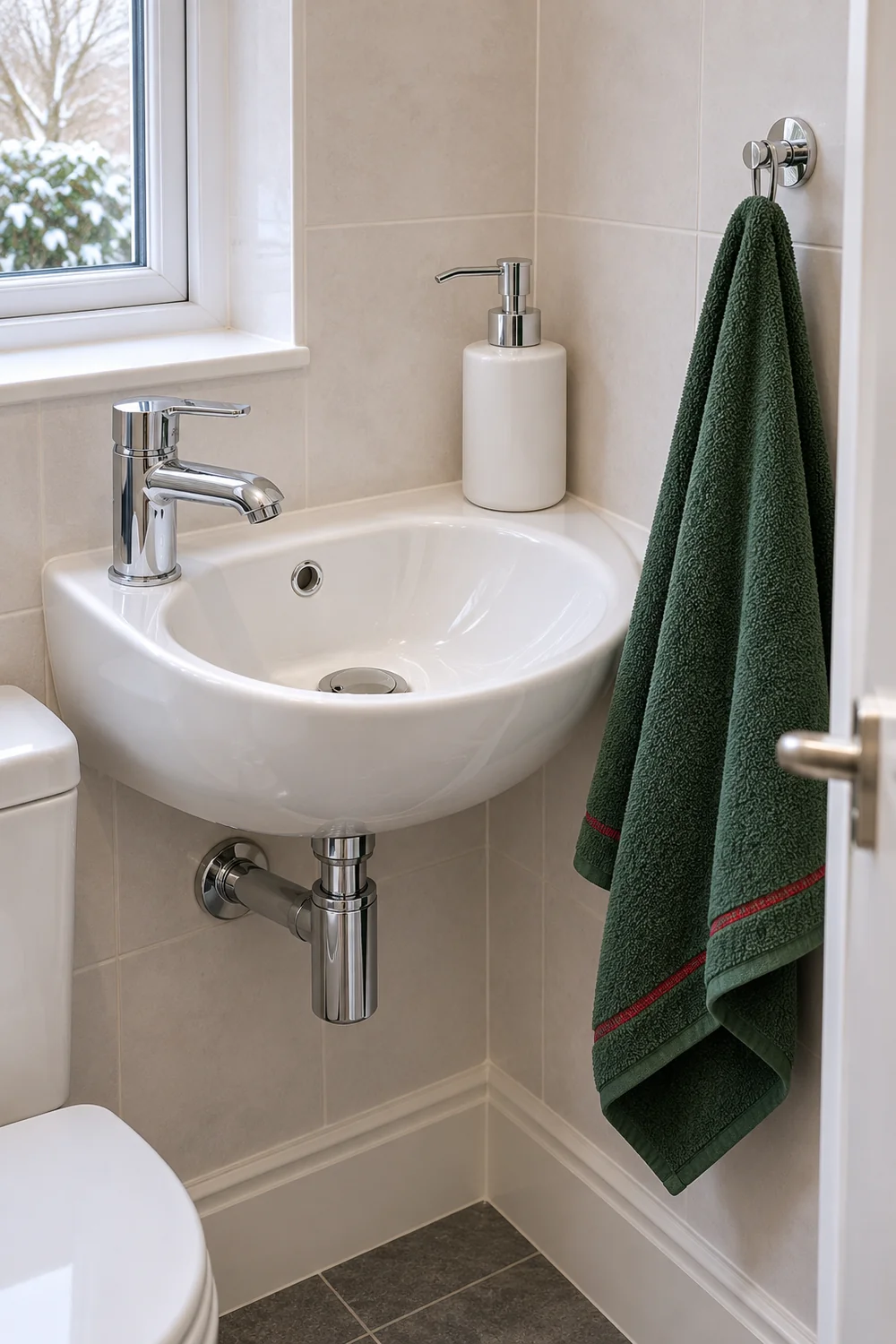
I would let the room you already have decide the decoration. A tiny basin, white tiles and a chrome tap might need only a forest green towel with a narrow cranberry stripe. In a room with patterned wallpaper, I would choose a quieter towel and put the Christmas colour in one small object on an existing shelf. Neither scheme needs a new set of accessories.
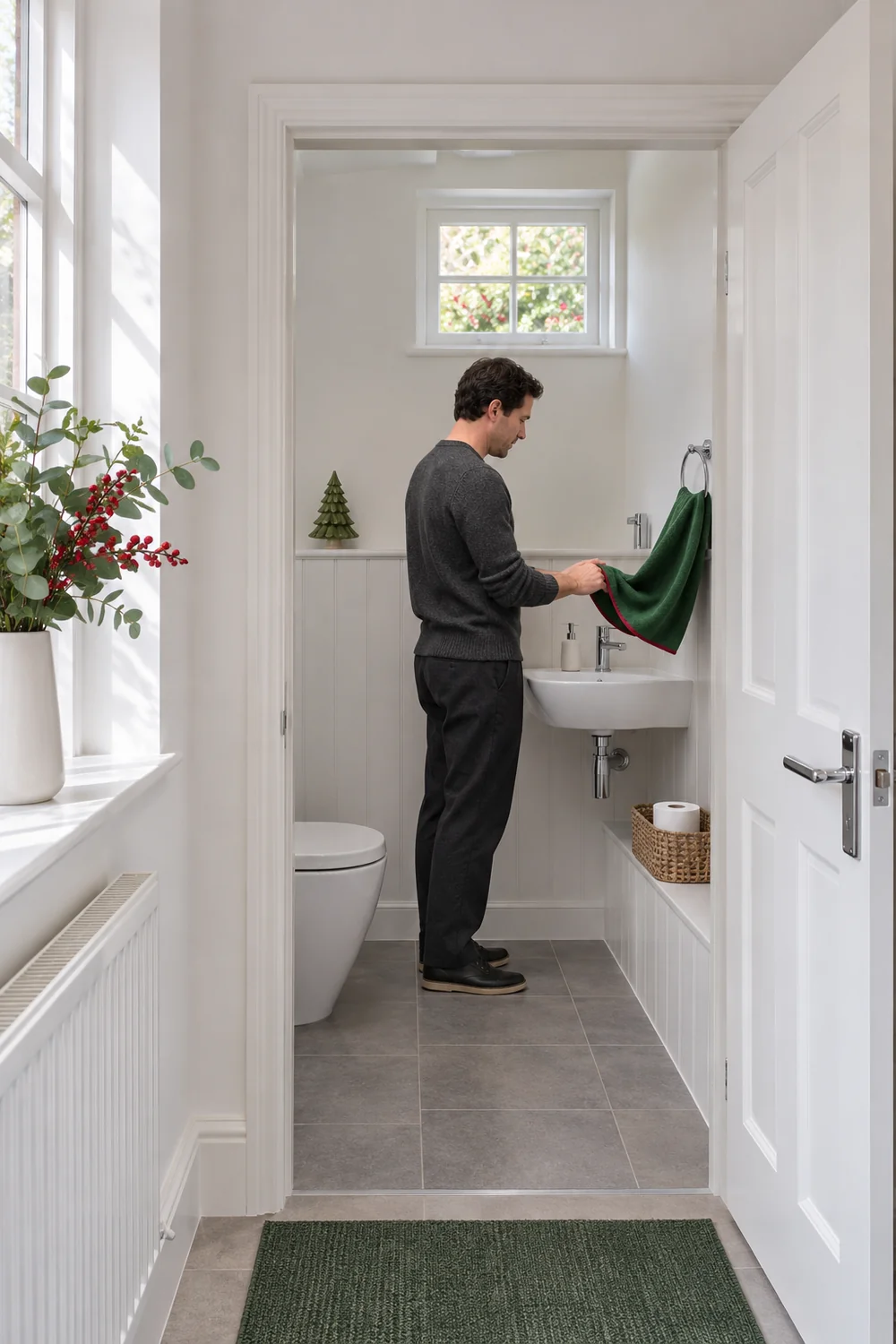
Start with the view from the open door. What do you notice first: the mirror, the towel beside the basin or the shelf beyond it? Choose one of those places as the festive focus. Spreading decorations evenly around every surface makes the room harder to edit and gives guests more objects to work around.
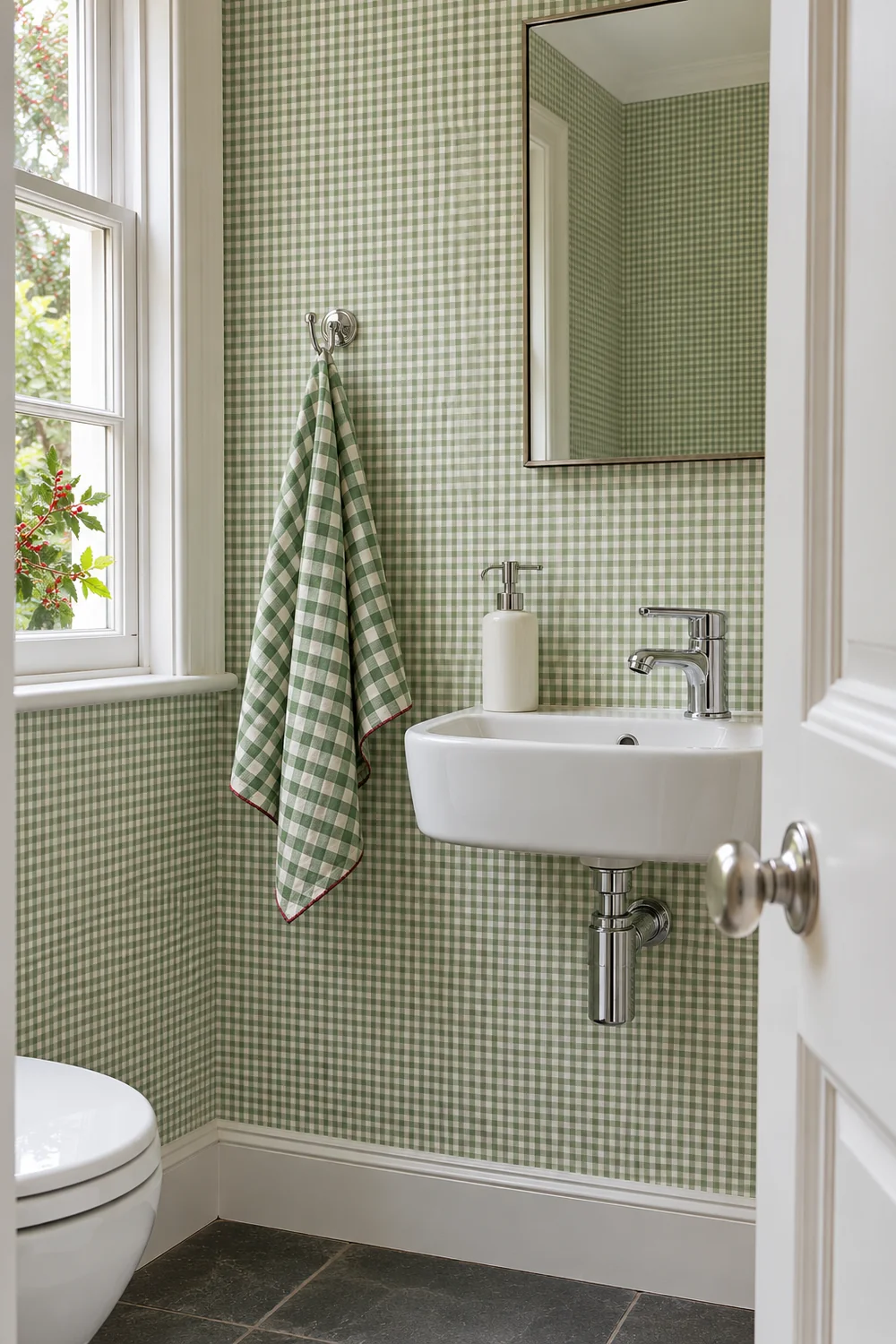
For a crisp Christmas look, I would pair white cotton with deep green and a small red detail. For a softer version, a green checked towel can sit against cream paint and a plain woven basket. If your wallpaper already contains red or green, borrow that colour rather than introducing a competing pattern. The permanent finishes remain the background.
The existing Christmas bathroom decor gallery offers different decorative directions. I would borrow one element from it, such as the towel colour or a shelf arrangement, then judge it against the space in your own room. A full bathroom with a vanity can accommodate a display that a corner basin cannot.
My first choice would be the towel. It is visible, useful and easy to change after Christmas. A simple border or check can carry the season without making every object festive. I would leave the soap dispenser plain if the towel is patterned, and avoid buying a matching set before checking what the room actually needs.
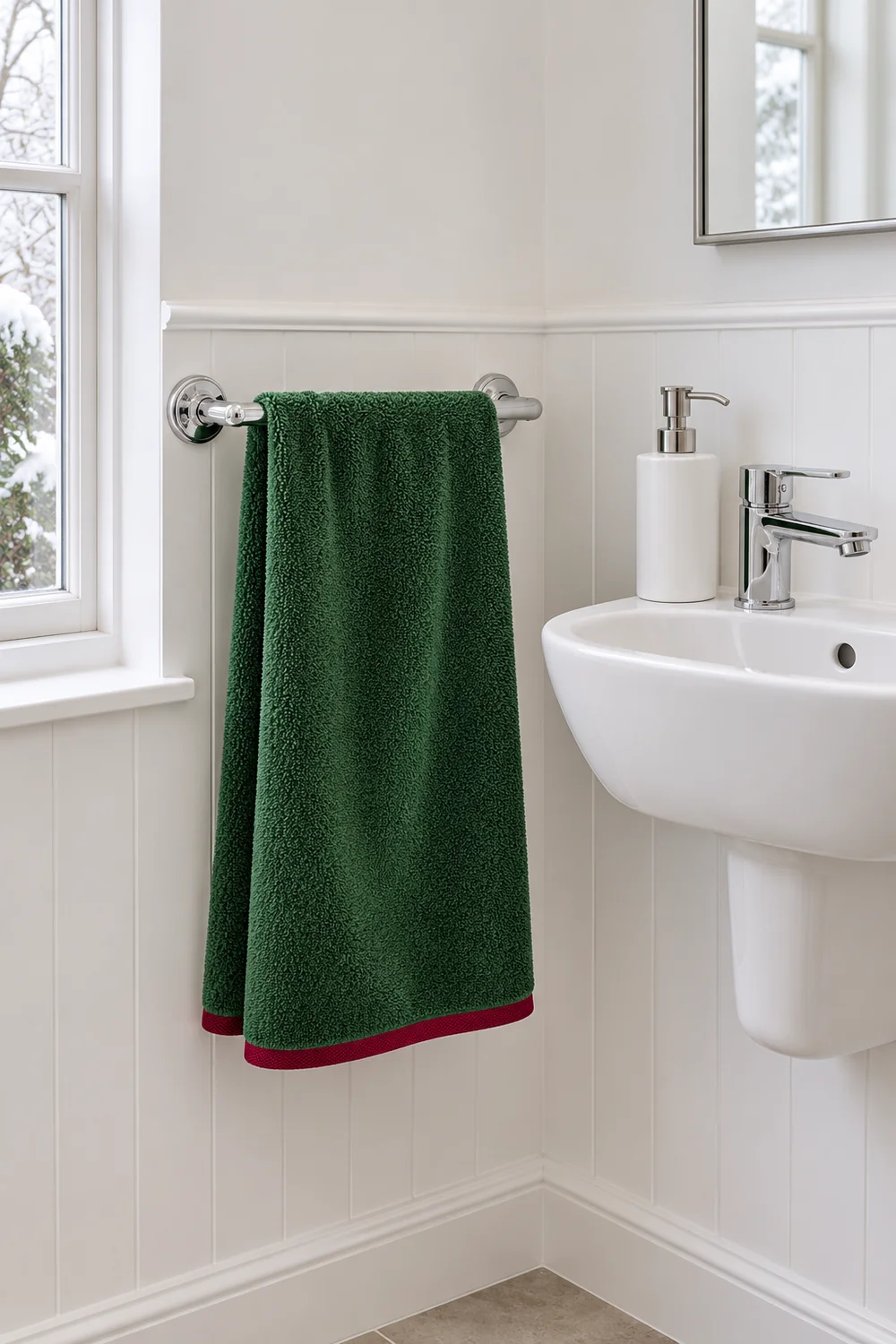
Lay the proposed pieces together outside the room first. Keep the towel, choose one accent and set the rest aside. If the combination still looks considered with fewer items, that is the version I would try. You can add something later; a small room gives a better answer when you begin with a clear view of its working surfaces.
Before decorating, I would use the room once exactly as a visitor would. Close the door, turn on the light, stand at the basin and wash your hands. Notice where your elbows go, where water lands and where you reach to dry your hands. Those movements define the space the decorations must leave available.
A narrow basin ledge is often doing more work than it appears to. The soap needs a stable place and your hand needs room to operate it. If a small vase would push the dispenser into the corner or leave it balanced on an edge, I would choose a towel led scheme instead. A decorative tray is optional; it can take up the very space you are trying to organise.
Check these four points before adding anything:
The small toilet ideas are useful if the difficulty comes from the permanent layout. For Christmas, I would work around that layout rather than use seasonal pieces to disguise an awkward fitting. A basket that blocks the door is still in the wrong place when it contains beautiful towels.
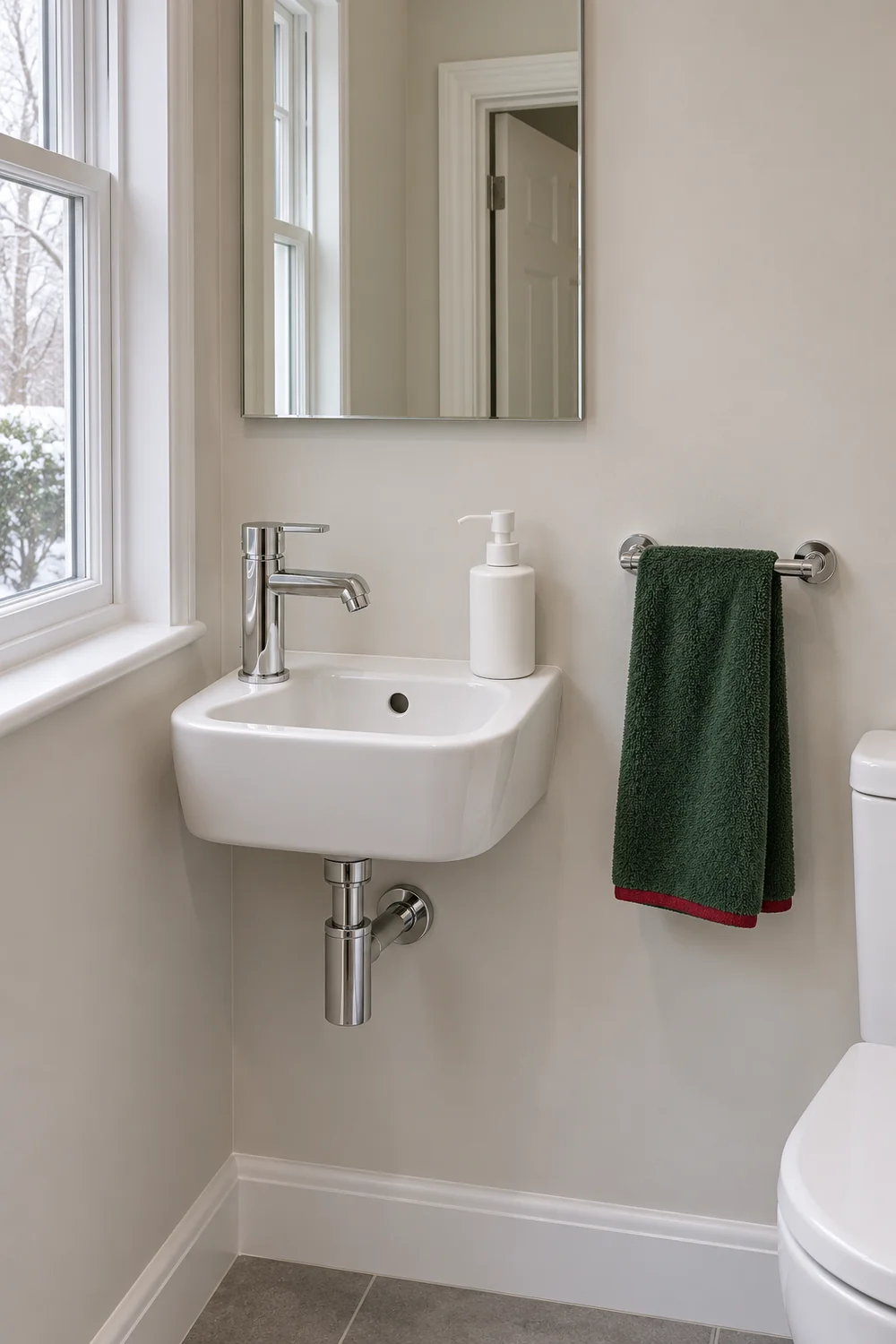
In a room with a corner basin and no shelf, I would leave the basin clear apart from soap. The festive towel becomes the focal point, and spare supplies stay in the existing cupboard. In a slightly wider room with a shallow shelf, I might add one small ornament there. These are two different arrangements, not a smaller and larger shopping list.
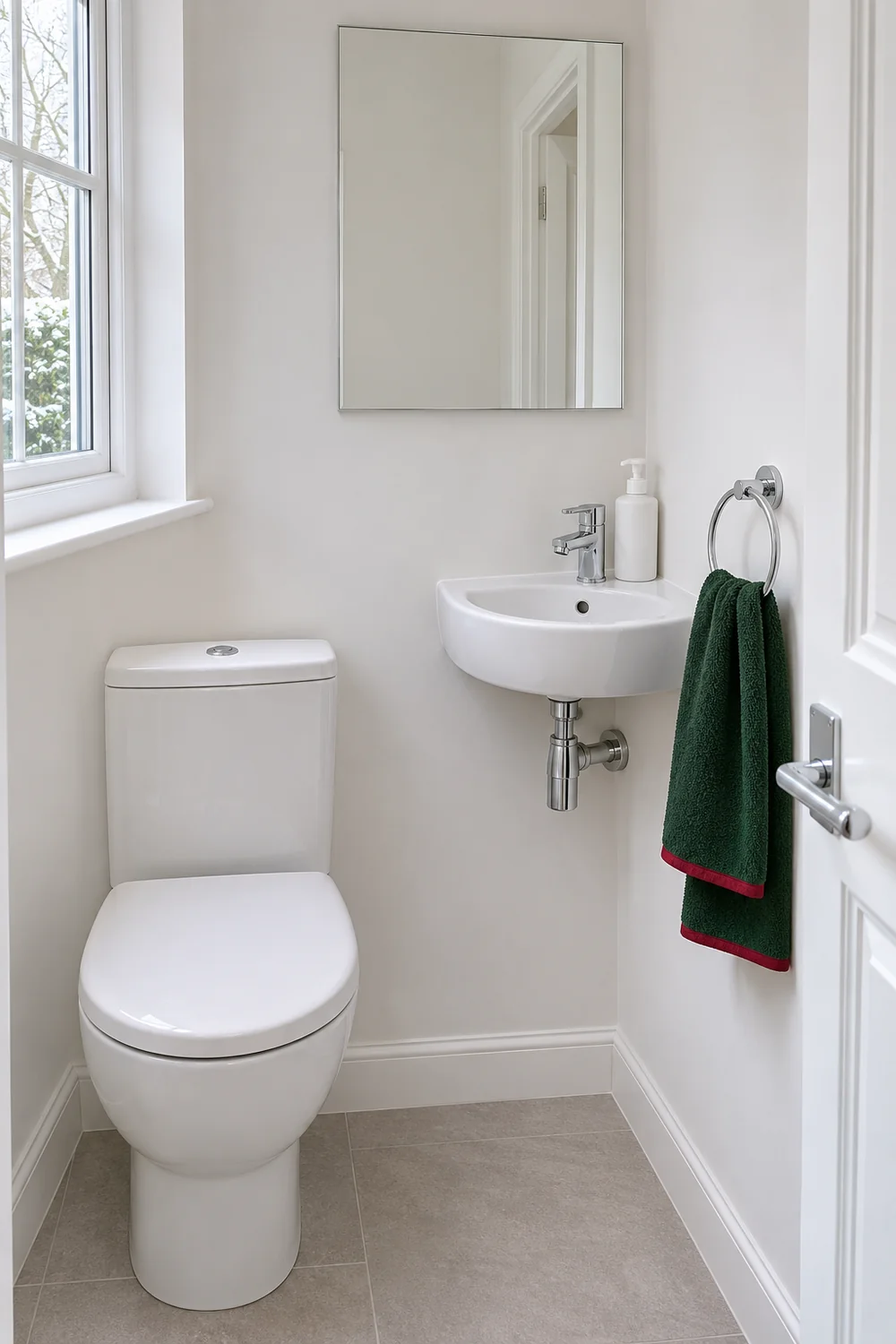
Look down as well as across. The route from the door to the basin should stay clear, including the area where someone turns to leave. I would remove a floor basket if it makes that movement awkward. The finished room should let a visitor use it naturally, without having to work out which things can be touched or shifted.
If the basin has no spare surface, I would look at an existing shelf before considering any new fixing. A shallow ornament on a stable ledge can provide a festive detail while leaving the tap area alone. Choose a piece that fits fully on the shelf, with room to lift it away for cleaning.
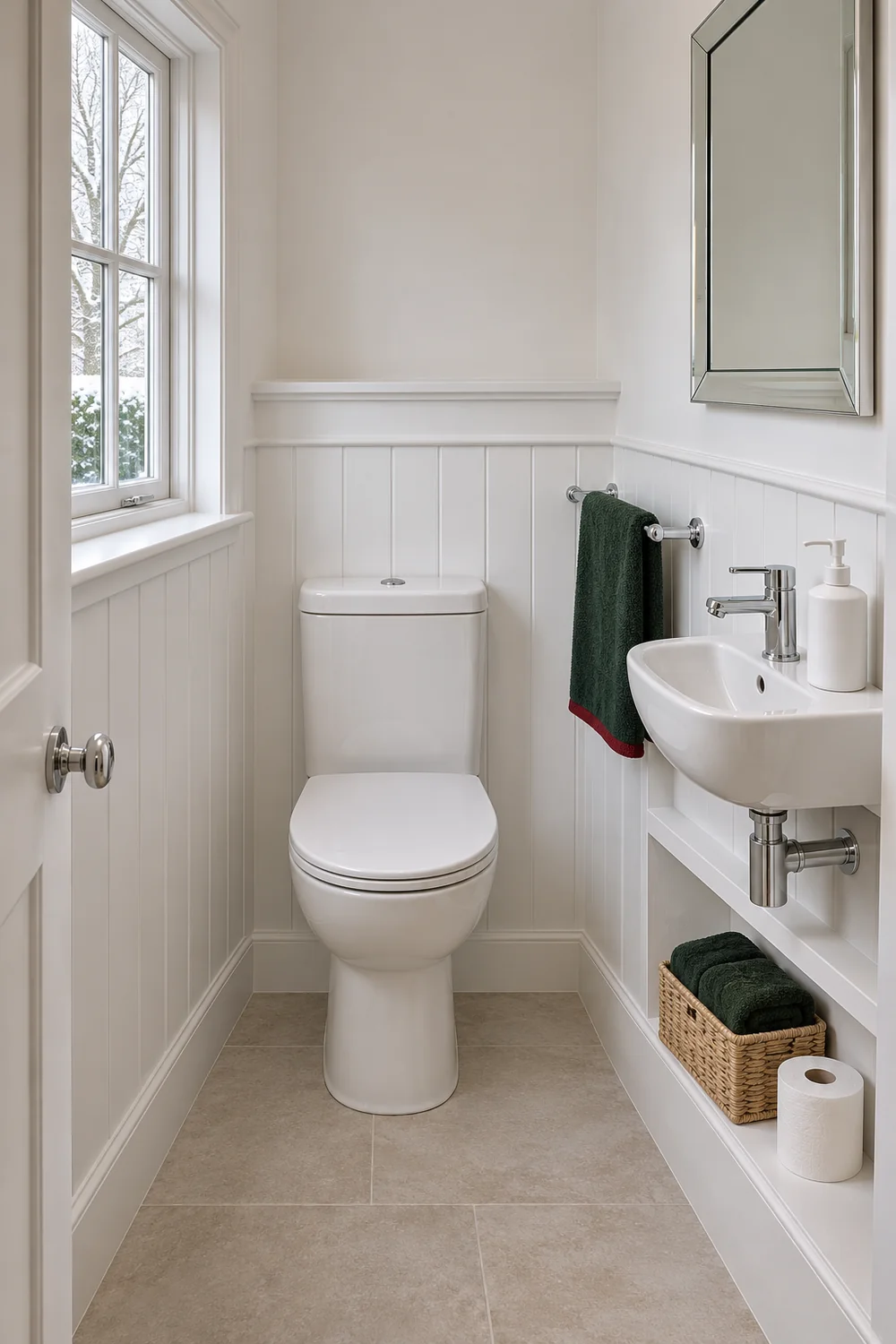
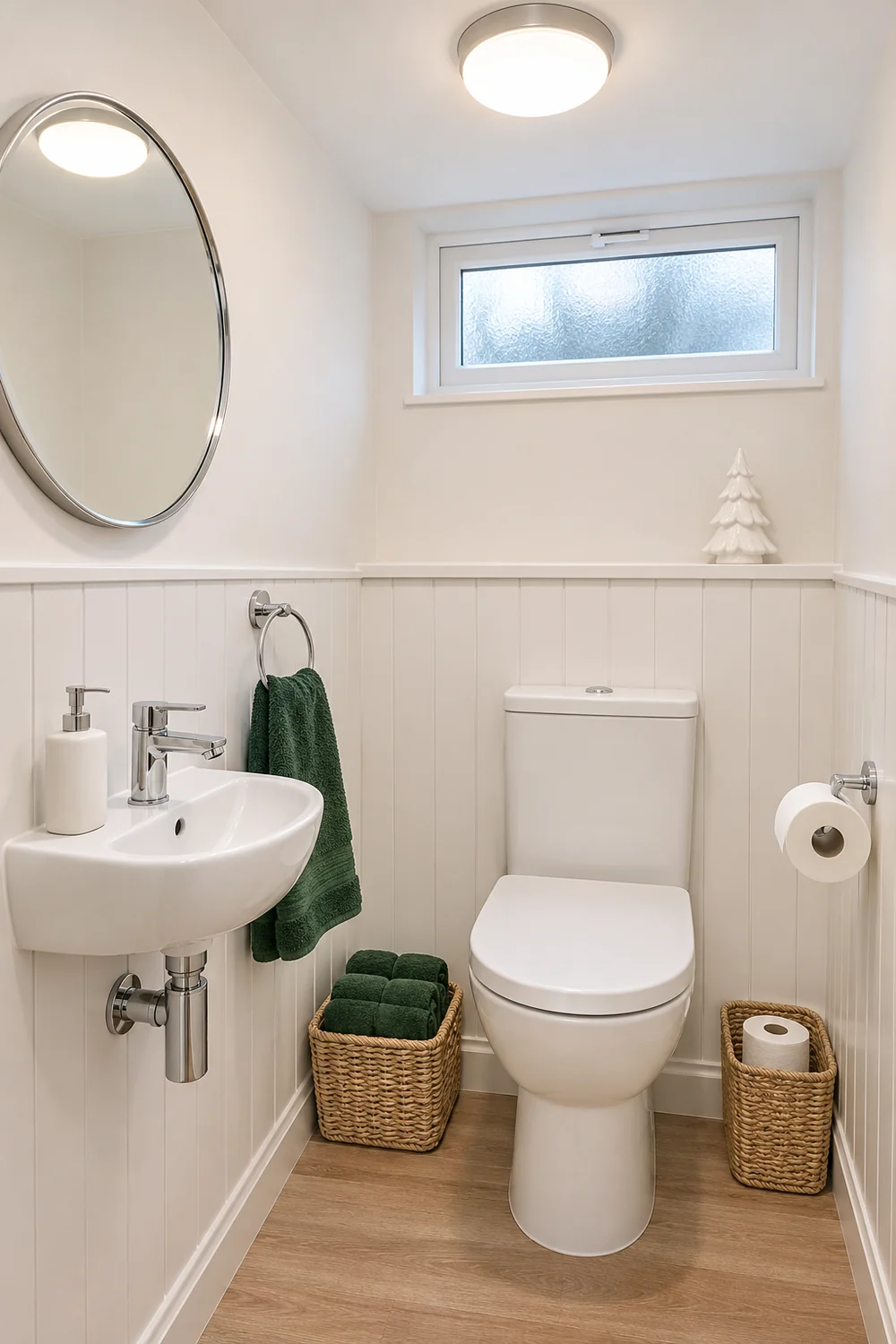
The position matters more than the number of ornaments. On a shelf above a towel rail, I would place a modest ceramic tree to one side rather than spread several pieces along its length. On a wider shelf, a small arrangement can sit beside a stack of spare towels, provided each can be reached independently. Leave a visible gap between the decorative and useful items.
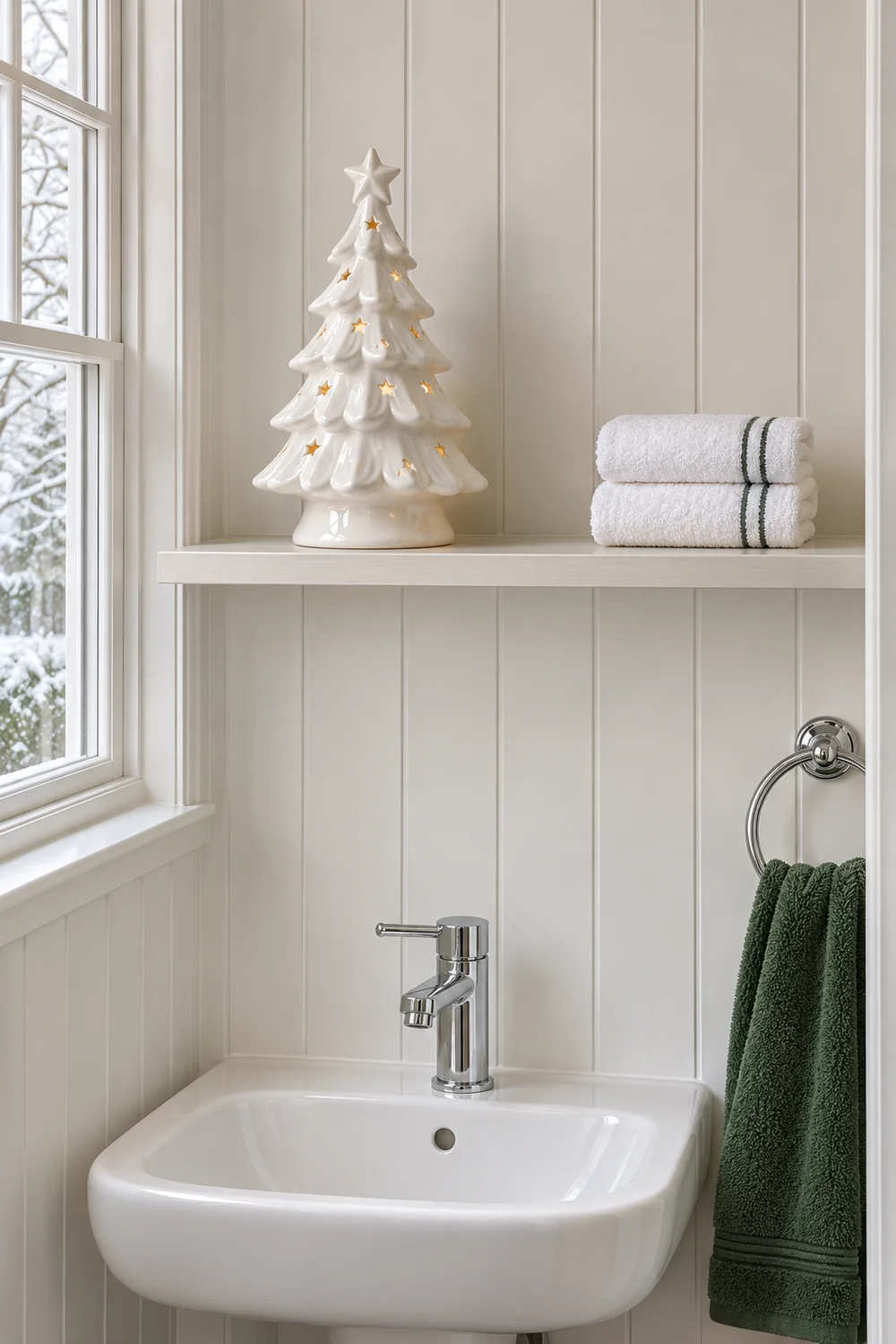
The open storage examples in a minimalist bathroom show why a few clearly placed objects can be enough. I would apply that restraint to the Christmas arrangement: one focal piece, a readable outline and space around it. You do not need to restyle the whole shelf to make one seasonal change look intentional.
I would also consider what is directly below the display. A decoration that sheds onto the hand towel, hangs into the mirror or needs moving whenever the soap is refilled has not found a useful position. If there is no suitable shelf, I would return to the towel scheme rather than introduce a shelf purely for a few weeks of decoration.
A mirror is already a strong shape in a small room. I would keep its useful reflection clear and avoid treating every edge as a place to attach something. Any attachment needs to suit the actual surface and its instructions. An existing ledge with a freestanding ornament is a simpler choice when you are unsure how a fixing would affect the finish.
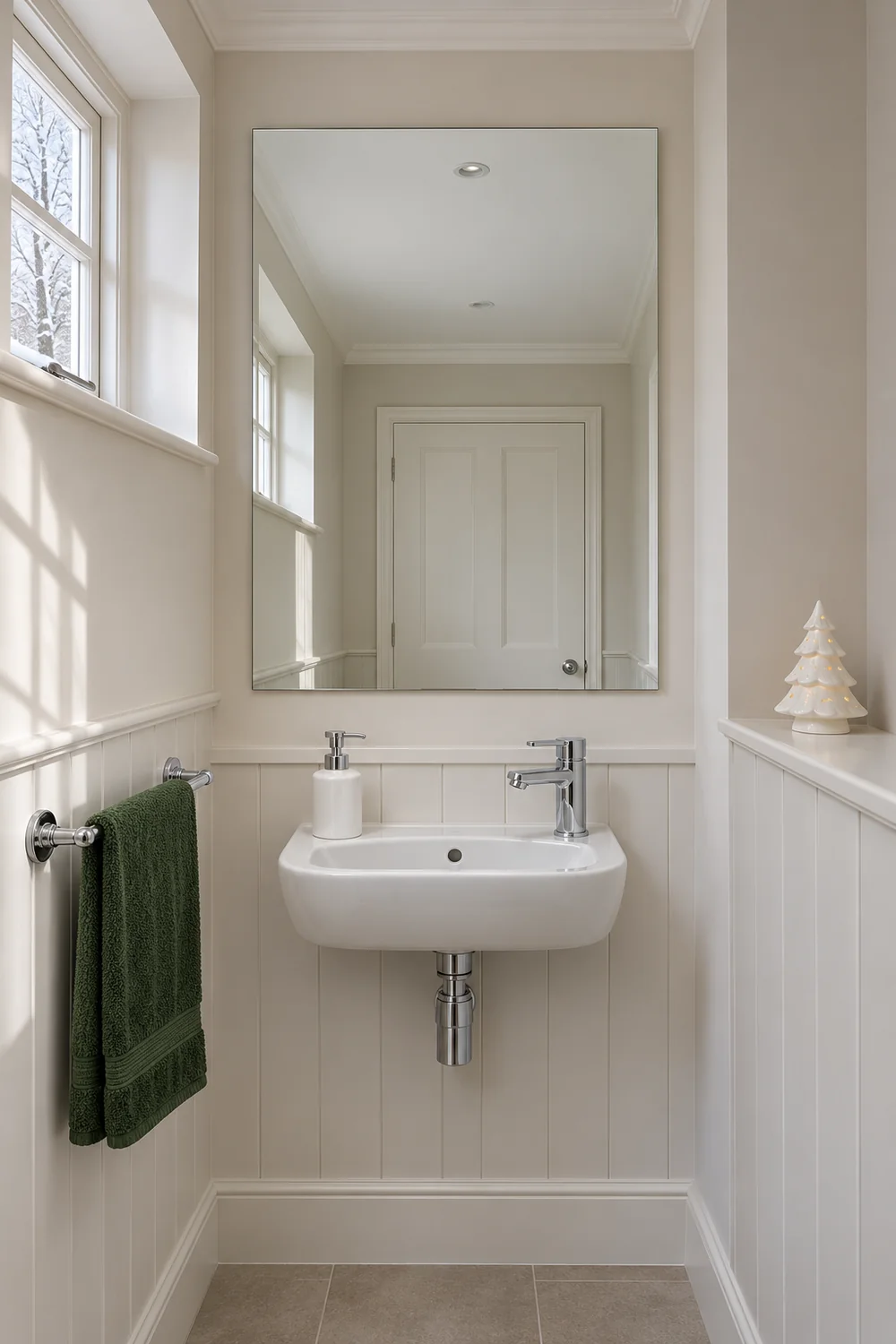
Stand at the doorway again once the accent is in place. It should be easy to read without reaching over the basin or leaning into the room. If it disappears behind the door, it may not be worth keeping there. I would rather have one visible green towel than a more elaborate display that only works when the room is empty and photographed from a particular angle.
The working hand towel is the first thing I would settle. It should be obvious which towel guests can use, and it should have enough space to hang after use. If the festive towel is purely decorative or difficult to wash, I would choose a different towel rather than expect visitors to preserve the arrangement.
Keep spare towels separate from the one in use. A neat folded stack in an existing cupboard works well; a small clean basket can also be useful if it fits on a dry shelf. I would avoid packing it so tightly that removing one towel pulls out the rest. Guests should be able to take what they need without rearranging the display.
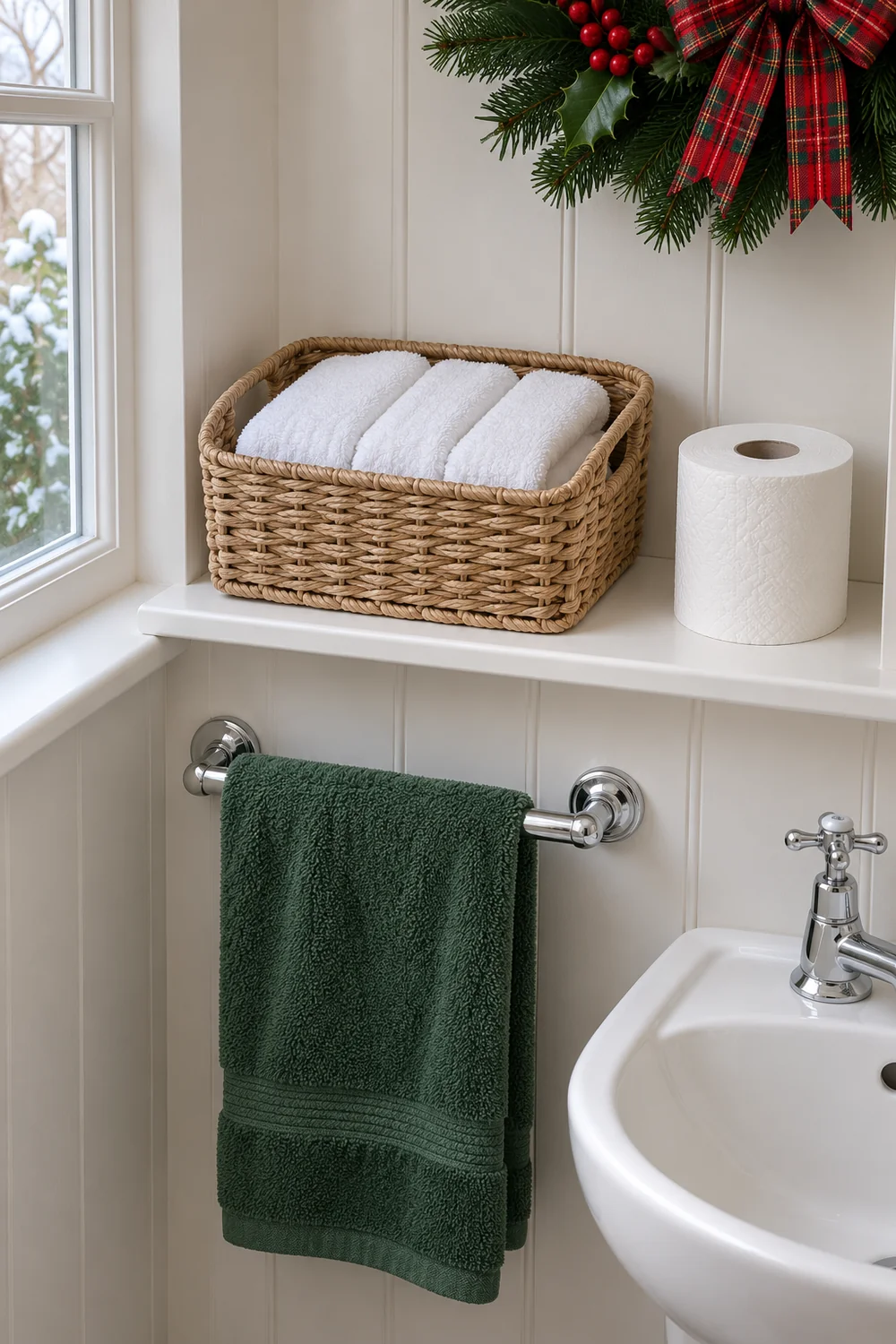
The baskets in an English style bathroom suggest a useful material contrast beside painted joinery and white cotton. Here I would use an existing basket for a specific job, such as spare towels. Its dimensions and location matter more than whether it matches another container elsewhere in the house.
For toilet rolls, I would make at least one spare easy to spot or explain where it is. A cupboard is perfectly reasonable if your guests know to look there. If the spare is on view, keep it away from the basin splash area and give it a stable place. Do not tuck it behind a decoration that has to be lifted first.
I would keep the soap in a dispenser that works reliably, whether or not it looks seasonal. Test the pump and refill it before the visit. A plain dispenser beside the green towel can look more composed than several matching novelty items. The colour connection can come from the towel and a single shelf accent, while the everyday objects do their jobs.
Finally, think about what happens to used items. The bin needs to be available, and anyone using a fresh towel needs to understand where it goes afterwards. You do not need a printed instruction card for a familiar household arrangement. Clear placement and a brief word to overnight guests are usually more welcoming than an immaculate display whose routine is difficult to read.
I would finish the room in an order that makes editing easy. Clear the nonessential objects first, clean the working surfaces and return the soap, hand towel, bin and spare supplies. Only then add the chosen festive detail. This lets you see whether it belongs in the remaining space instead of squeezing necessities around it.
Use this sequence for the final arrangement:
During that last check, notice small frustrations. Does the towel brush the ornament when you pull it forward? Does the soap bottle move when you press the pump? Can the cupboard open fully with the basket beside it? Correct the placement now. A display is ready when the normal movements work, not simply when the shelf looks balanced.
If the room feels crowded, I would remove the least useful decorative item first. Then move any bulk supplies back to their normal storage place, leaving an accessible spare. The minimalist bathroom approach is helpful here: keep the things needed for the routine and give each a clear position, rather than solve every problem with another container.
Try a simple rescue if guests are nearly at the door. Put out a fresh towel, check the soap and spare roll, empty the bin and remove loose objects from the basin area. Let the towel supply the festive colour. A larger shelf arrangement can wait; those useful changes already make the room look cared for and ready to use.
Take one final look with the normal room light switched on. Notice whether the towel is still easy to identify and the supplies are visible from inside the closed room. I would also wipe any marks left during setup. The aim is a finished little room that you can hand over to guests without giving them a list of things to avoid disturbing.
Between visits, I would check the things people have actually used before straightening the decoration. Replace a damp towel, refill soap when needed, check the toilet roll and empty the bin. Wipe the basin and any splashes nearby. The festive accent can stay where it is if it still leaves those jobs easy to do.
A basket that looked useful before the first visit may turn out to be awkward. If guests keep setting it aside or moving a decoration to reach something, treat that as information. Move the supplies to a clearer position and reduce the display. You are allowed to change the arrangement once you see how the room is being used.
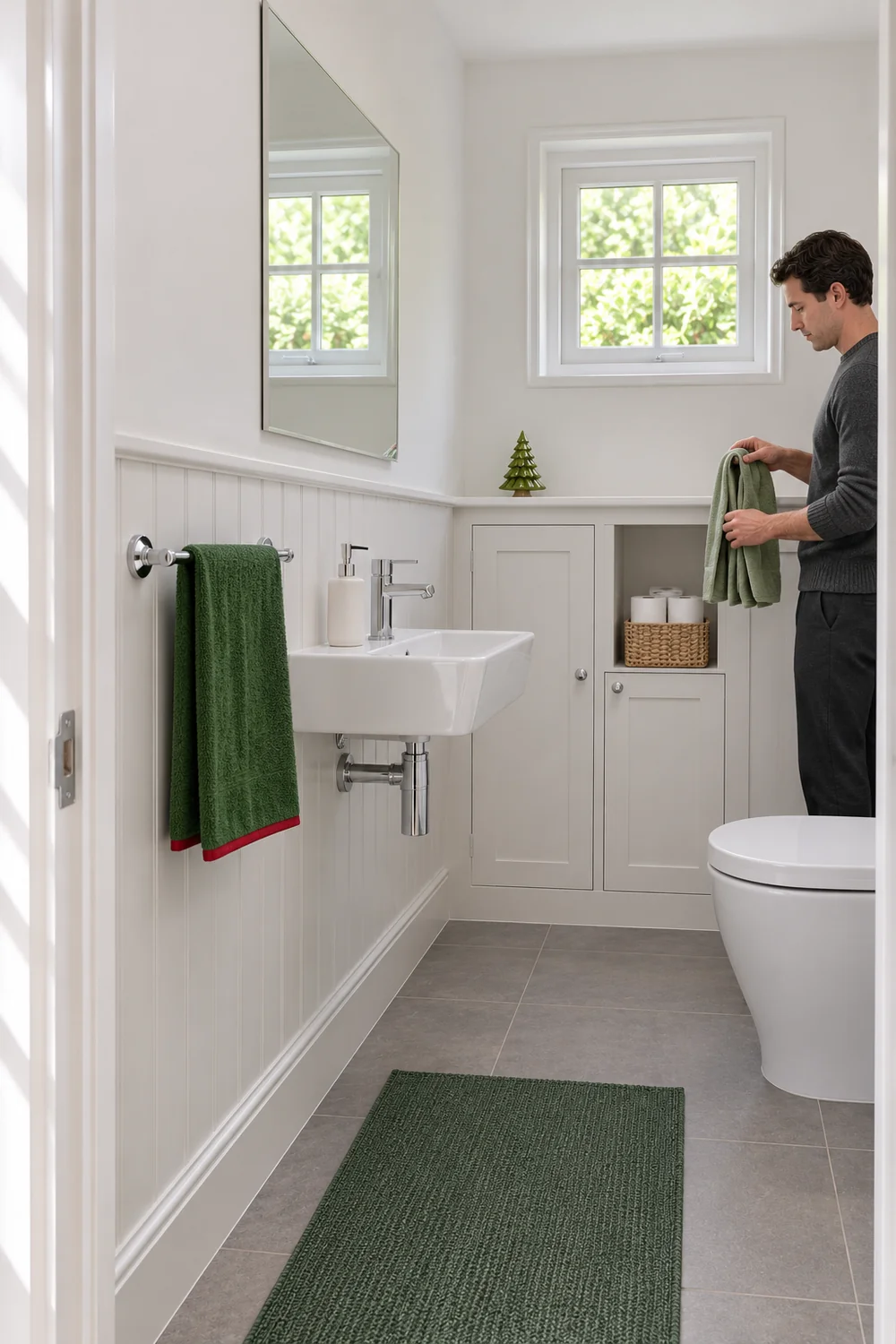
For overnight visitors, I would point out the spare towels and rolls once, then leave the room straightforward to use. Keep replacements where you can reach them during an ordinary tidy. Storing every spare upstairs may leave the downstairs room looking neat, but it gives you an extra trip whenever the working towel needs changing.
After Christmas, separate the washable pieces from the ornaments. Follow the towel care label, clean decorations in a way suited to their materials and let everything dry before storing it. Check the basket and shelf as you return the everyday arrangement. Avoid packing a damp textile with the reusable decorations simply because both belong to the same seasonal scheme.
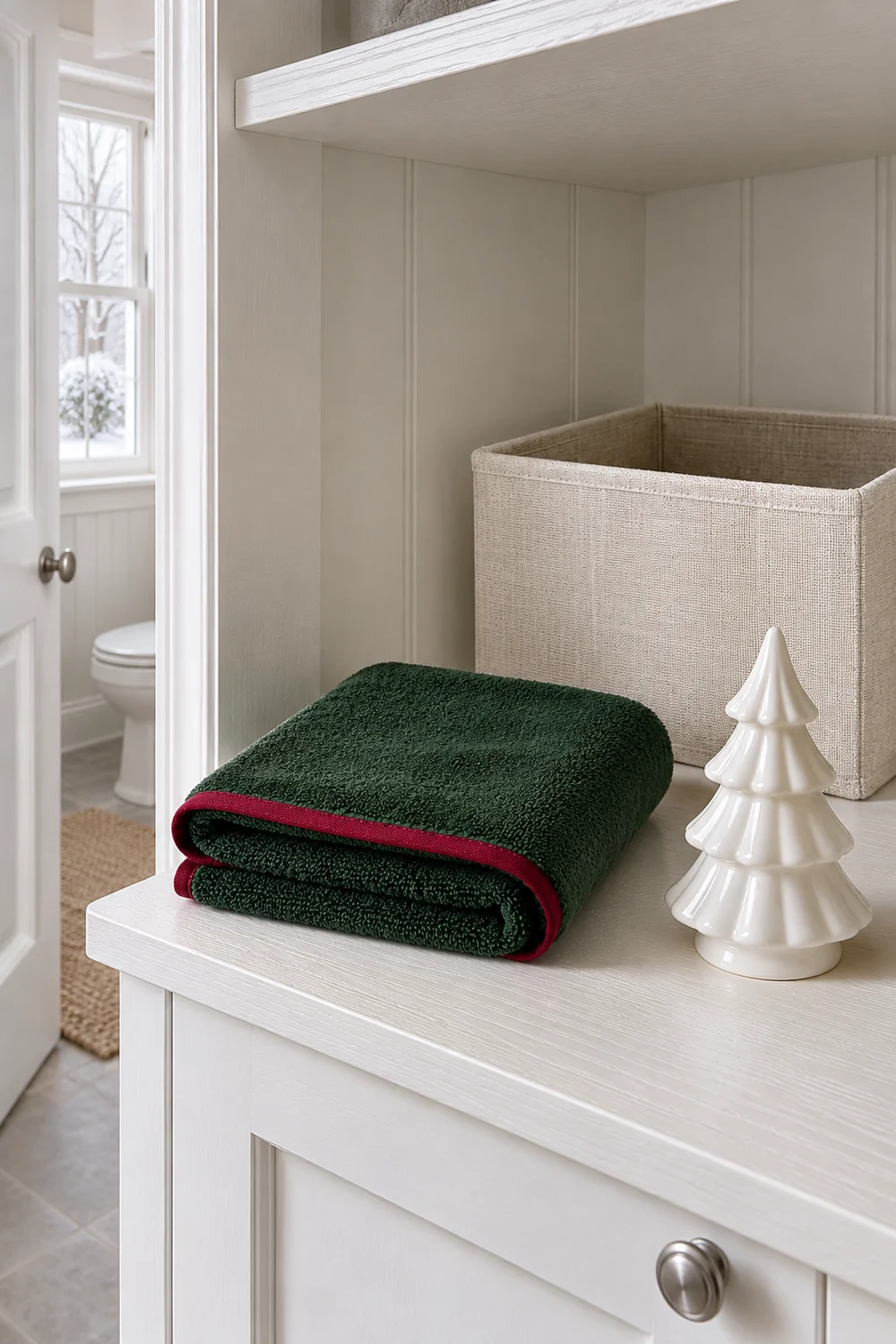
I would keep a quick photograph of the arrangement that worked, with a note about anything you changed. Useful notes are specific: the towel could be reached easily, the shelf tree stayed clear of the cupboard, or the spare rolls were easier to find in the original cabinet. Next year, that is more helpful than remembering that the room looked festive.
If you want to revisit the choices, return to the single festive detail and begin with what you already own. I would keep the towel or accent that earned its space and leave the unsuccessful extras packed away. The best small Christmas bathroom arrangement is one you can use, reset and enjoy throughout the visits you made it for.