Newsletter Subscribe
Enter your email address below and subscribe to our newsletter

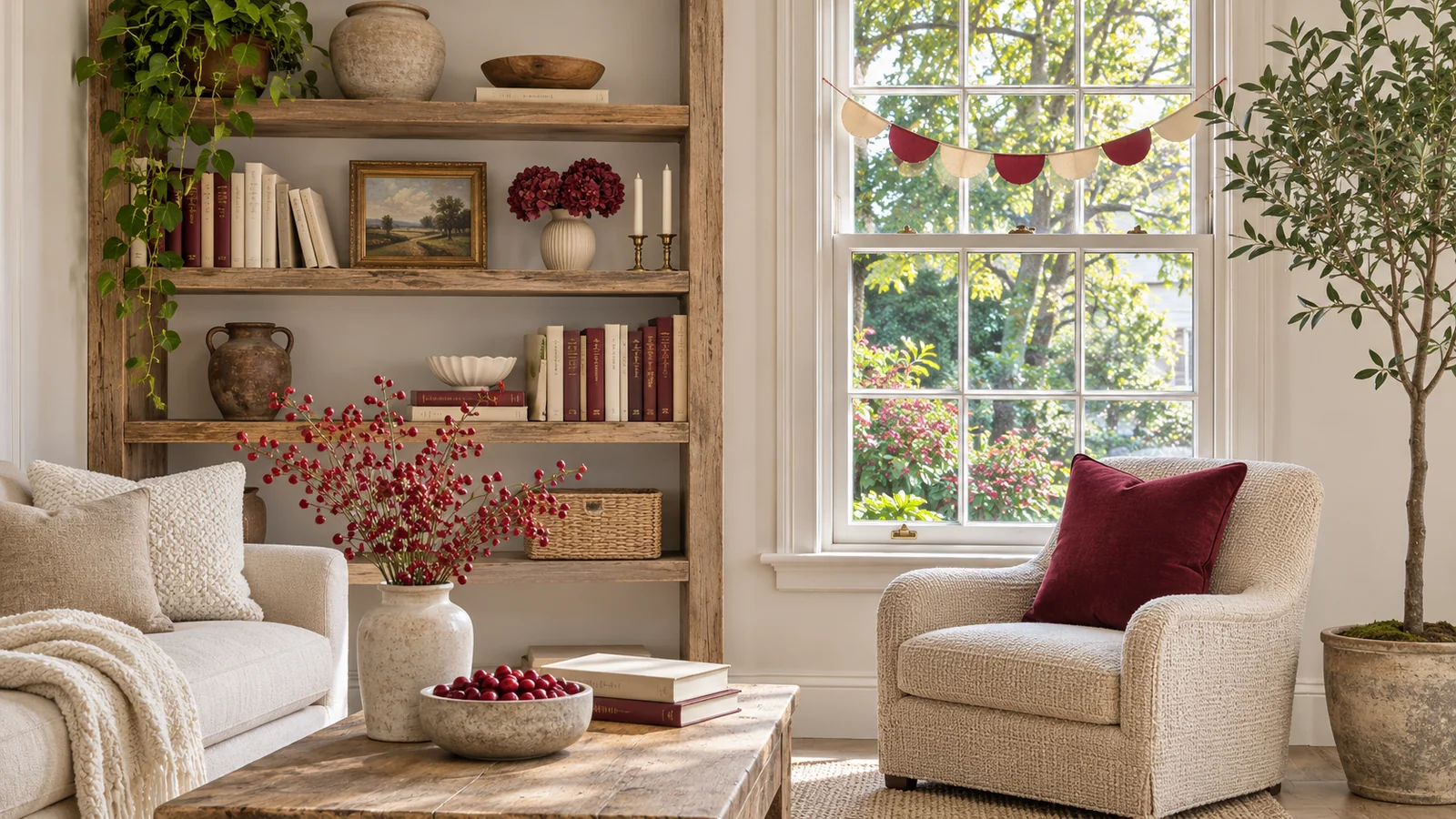
If your Christmas decorations ideas 2026 board is full and you have one afternoon with the kids, I’d choose two living room spots. A paper garland can brighten a window, a row of shapes can wake up a shelf, and a cushion can change a reading nook. Here’s how I’d choose the jobs and finish them together.
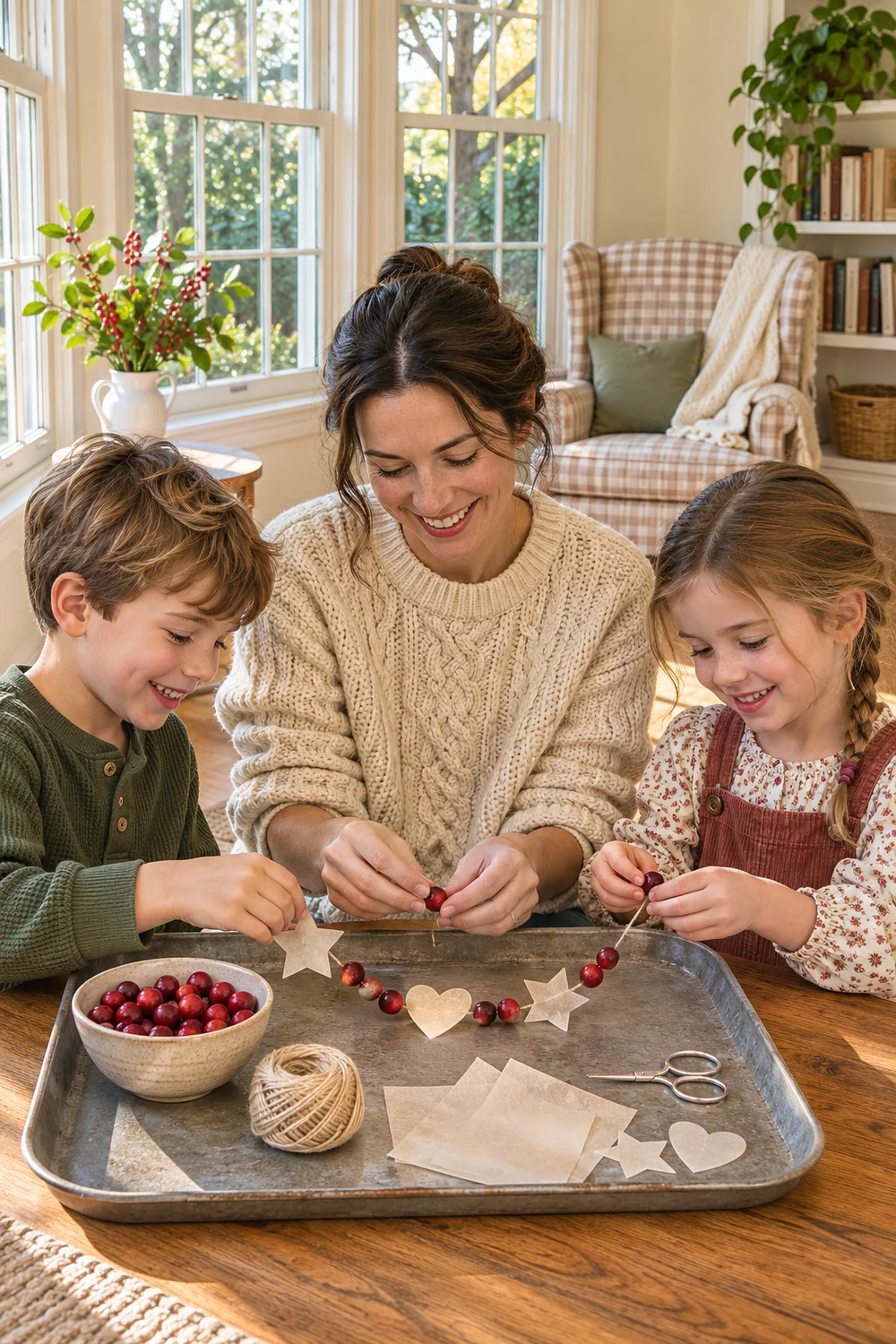
Walk in from the hall as you normally do, then sit where you would with a book or a cup of tea. Notice which surfaces come into view without you turning your head. A window and a shelf may do more for the room than decorations along every wall. If there’s a tree in the corner, put one new display where you can see it from the opposite end of the room. Give the tree its own clear space.
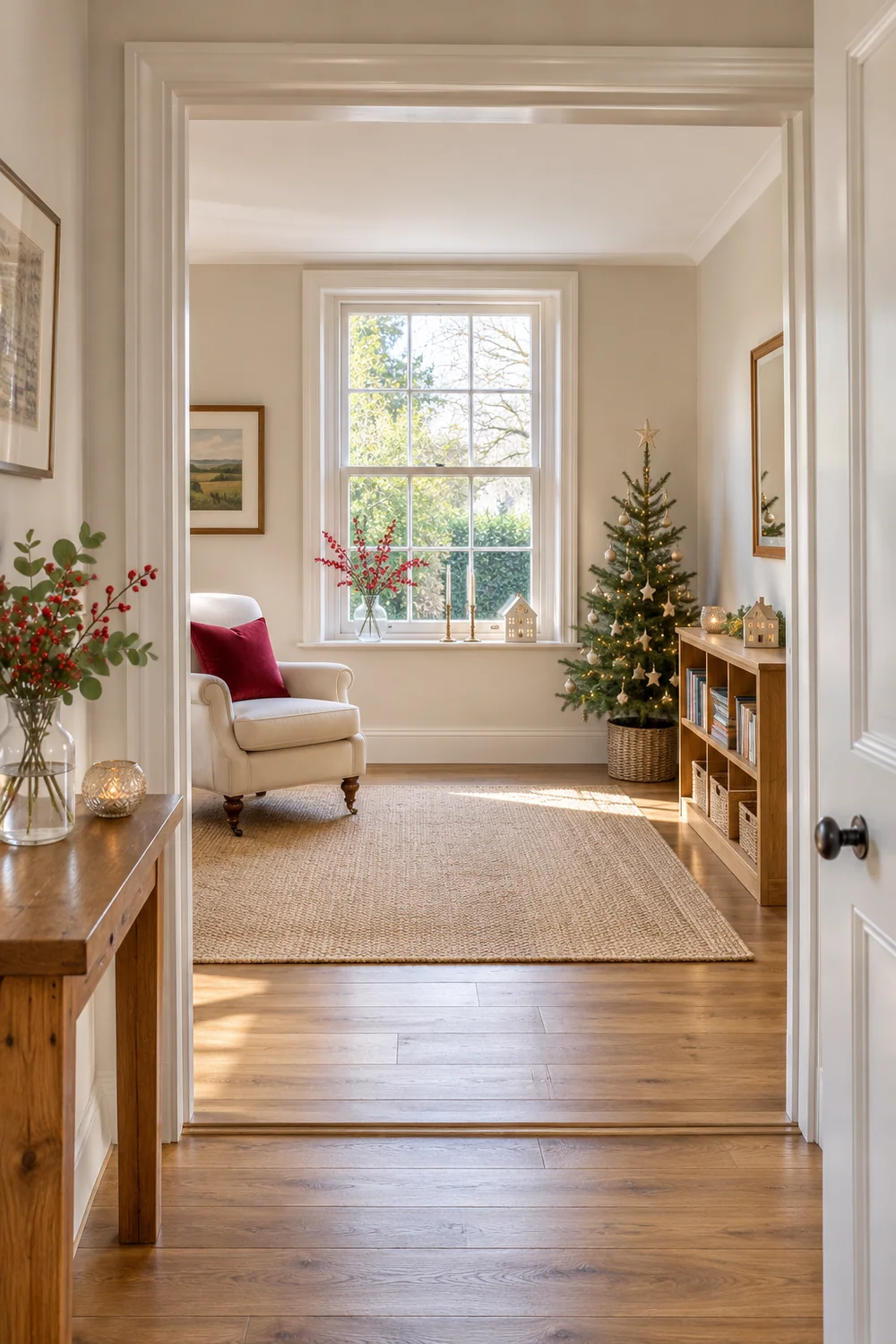
I’d offer three jobs and let the kids pick two. The window is the right choice for a child who likes cutting repeated shapes or making patterns. A shelf works well for someone who wants to arrange and rearrange objects. A reading chair gives a child who prefers choosing fabrics and books a part in the afternoon. Let each job reach a finish the child can recognise, such as a garland that ends at the window edge or a shelf with room for three paper shapes.
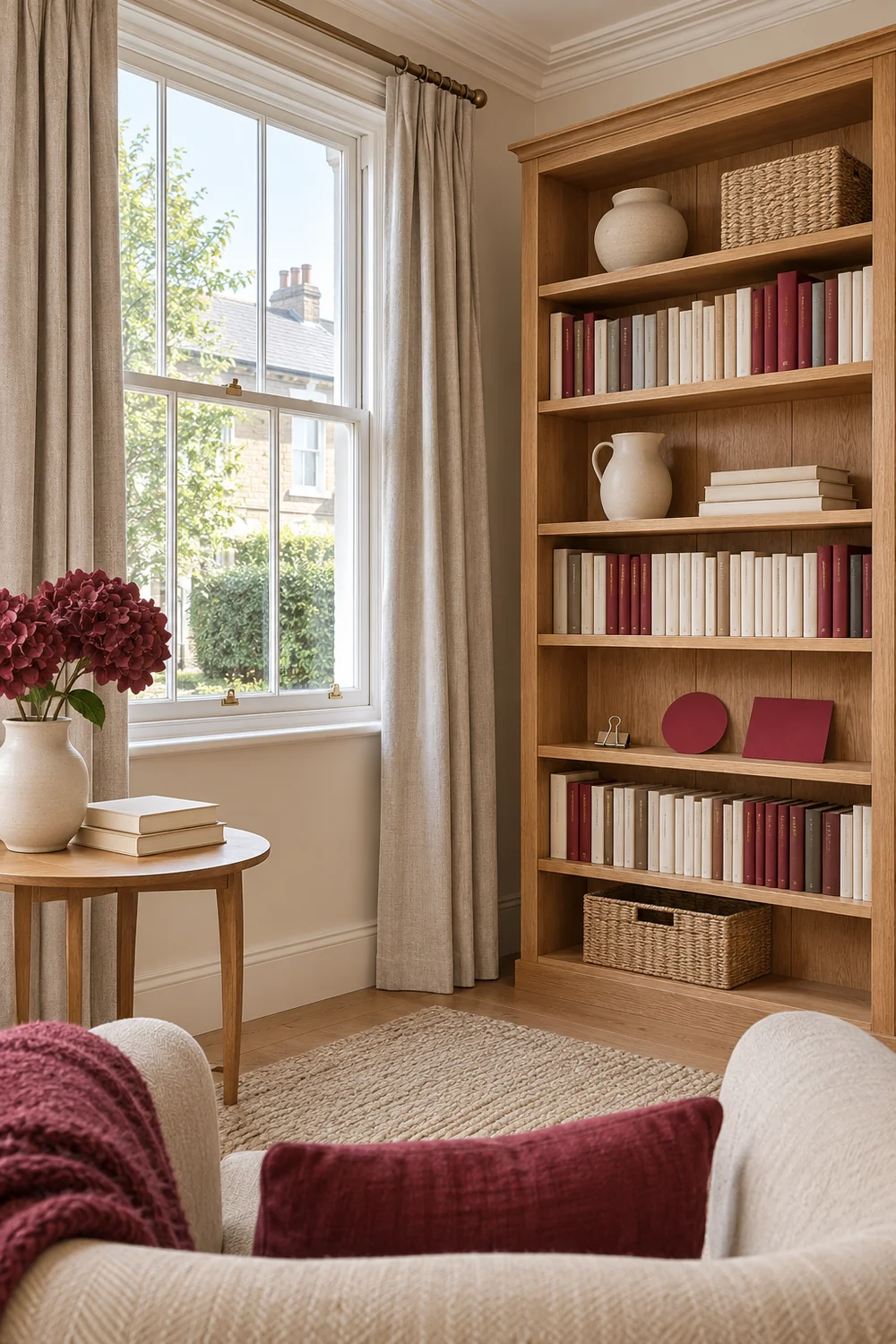
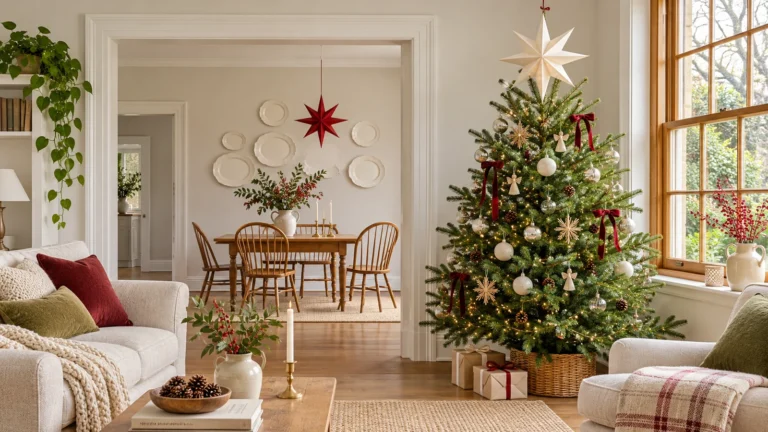
Start with the furniture and materials you have. Here’s an example. A cream living room with a bay window, oak shelves and a checked chair could use a paper garland in the bay and a dark red cushion at the chair. If you have a radiator under the bay or blinds that need full movement, put the paper on a bookshelf away from the window instead. There are more Christmas decor ideas for different spaces if the surfaces you have suggest another starting point. For this afternoon, I’d still settle on two.
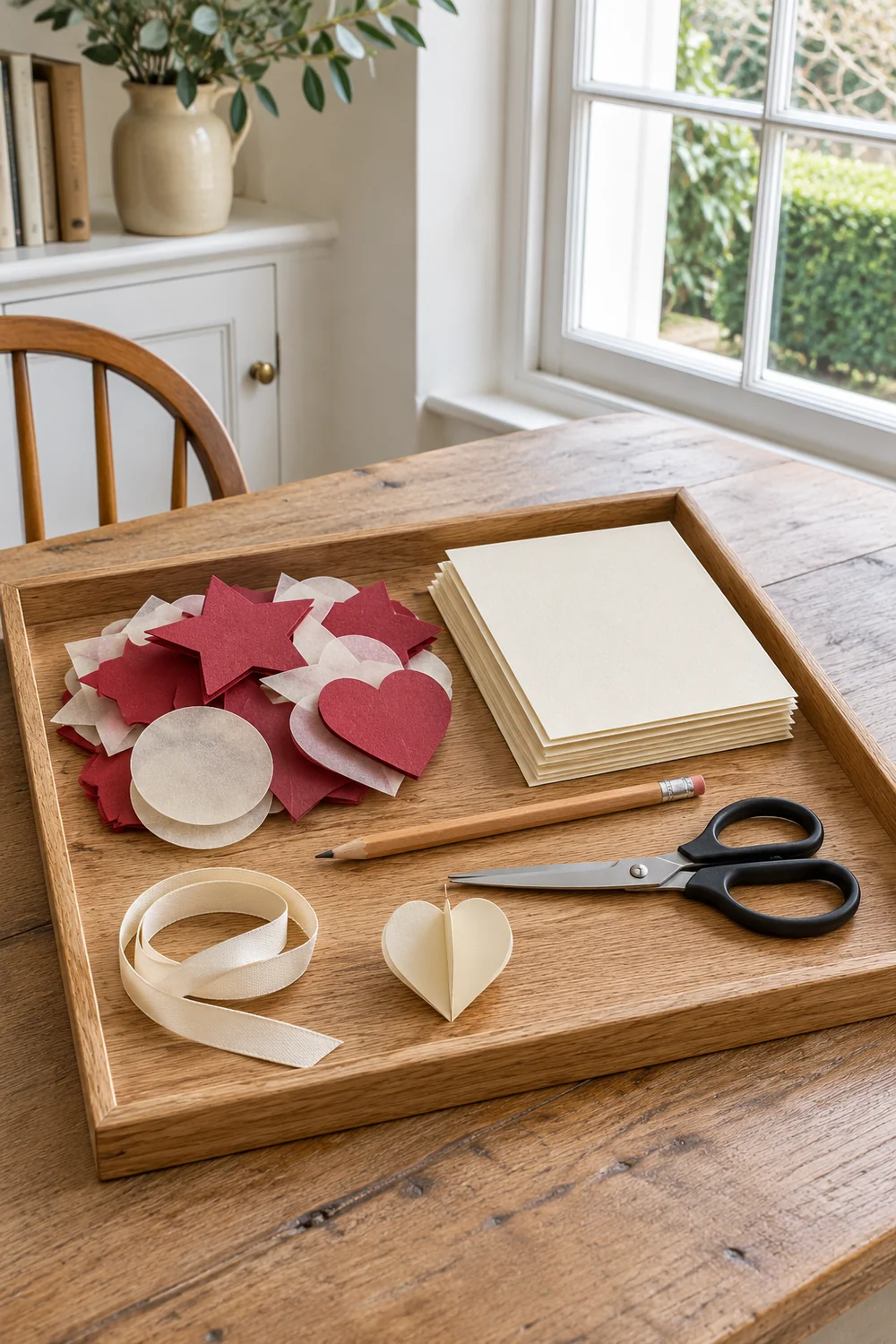
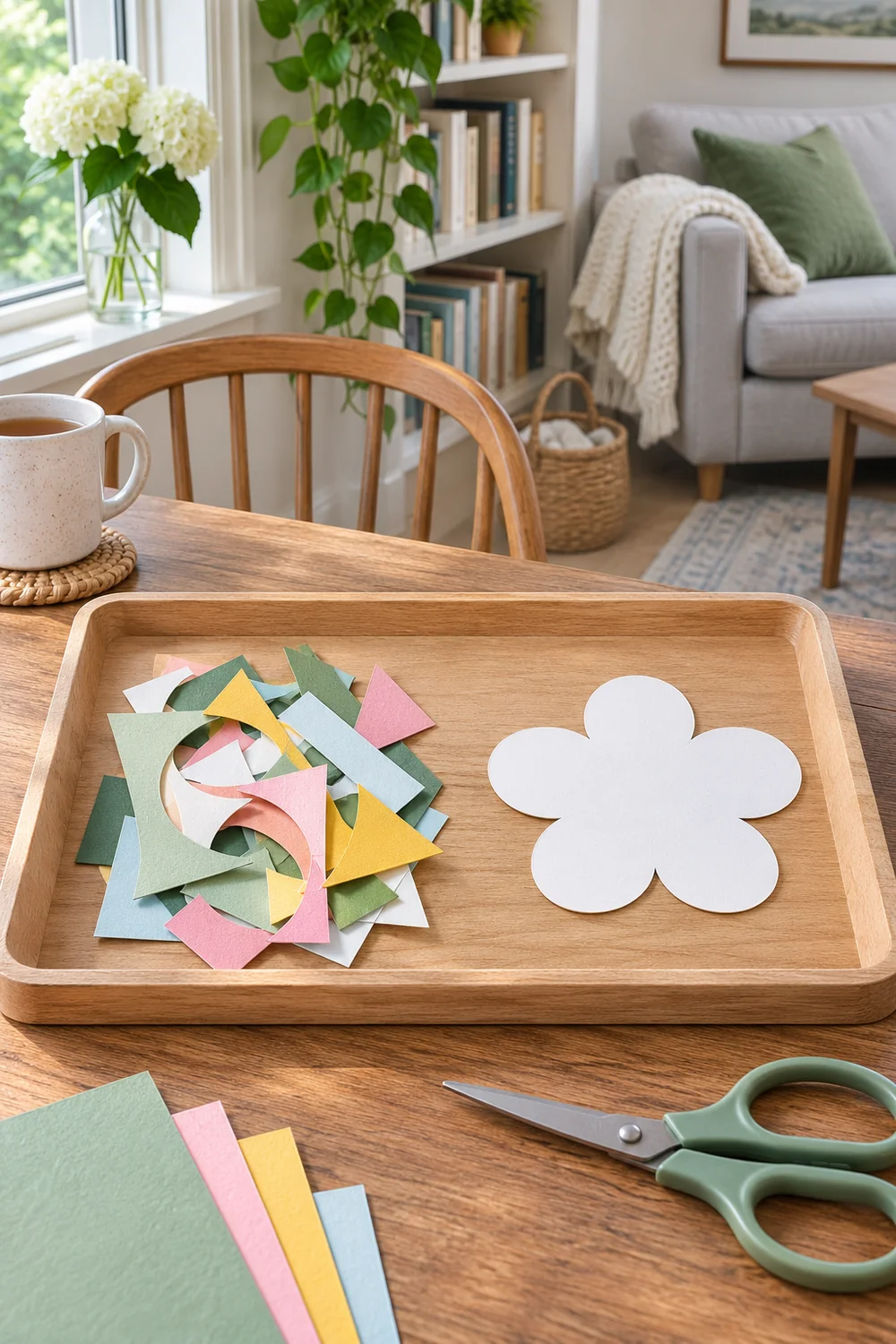
Put cardboard, a few sheets of paper, a pencil, scissors appropriate for the children using them, scrap ribbon and a glue stick on a tray. I’d include a bowl or small box for the scraps you want to keep. Lay out the jobs before anyone starts cutting. Put the paper intended for the window together and set aside the card that needs to stand up on the shelf. The jobs are easier to share when the children can see which pile is theirs.
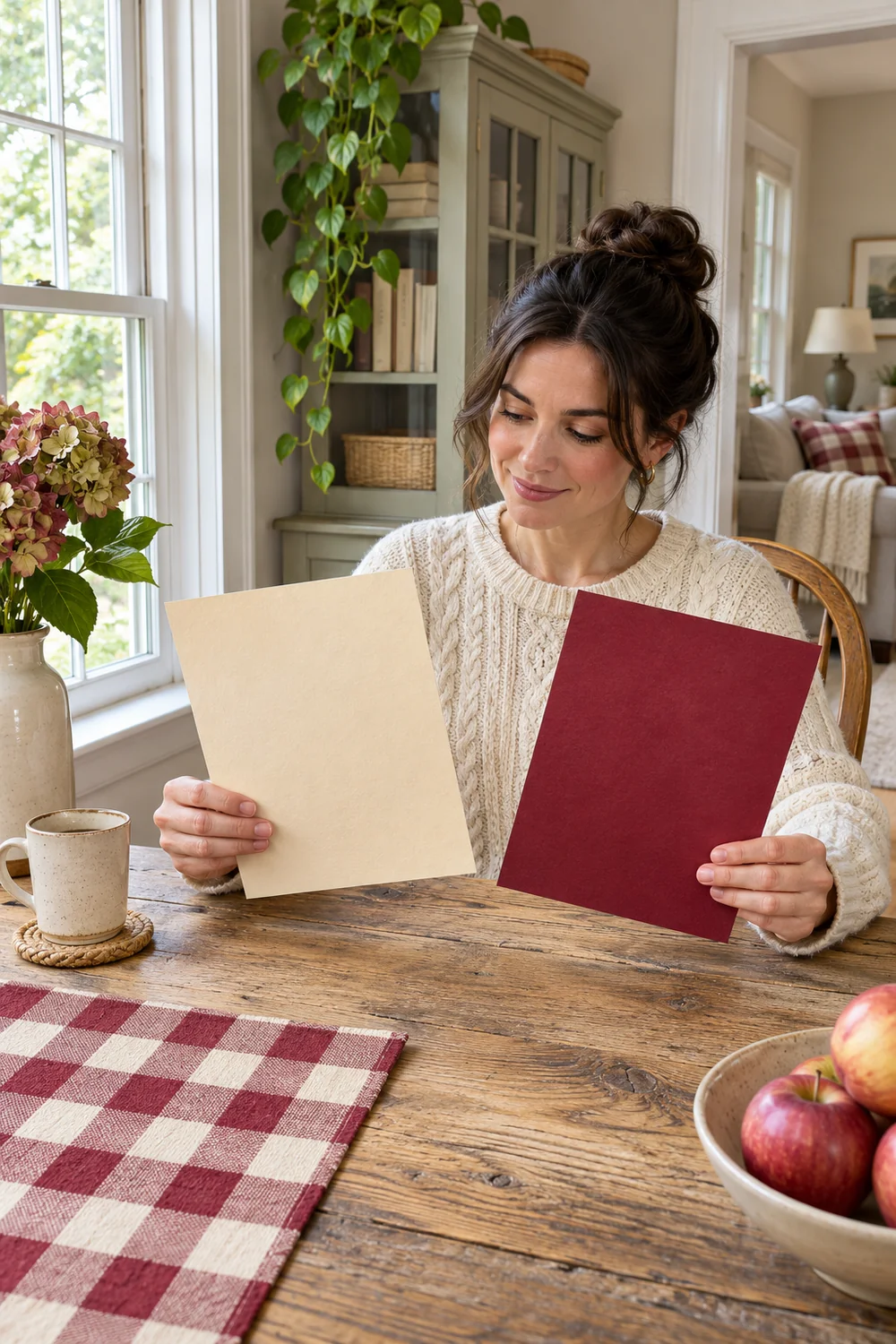
Look for two colours in the room. Weathered oak and a cream sofa might suggest parchment paper with a cranberry edge. If you have dark blue cushions you want to keep, use cranberry as a small detail and let cream paper do most of the work. A green throw could give you the evergreen part of the colour scheme without adding another new thing to the room. The guide to rustic Christmas colours gives useful examples of reds and greens that look at home with wood and textiles.
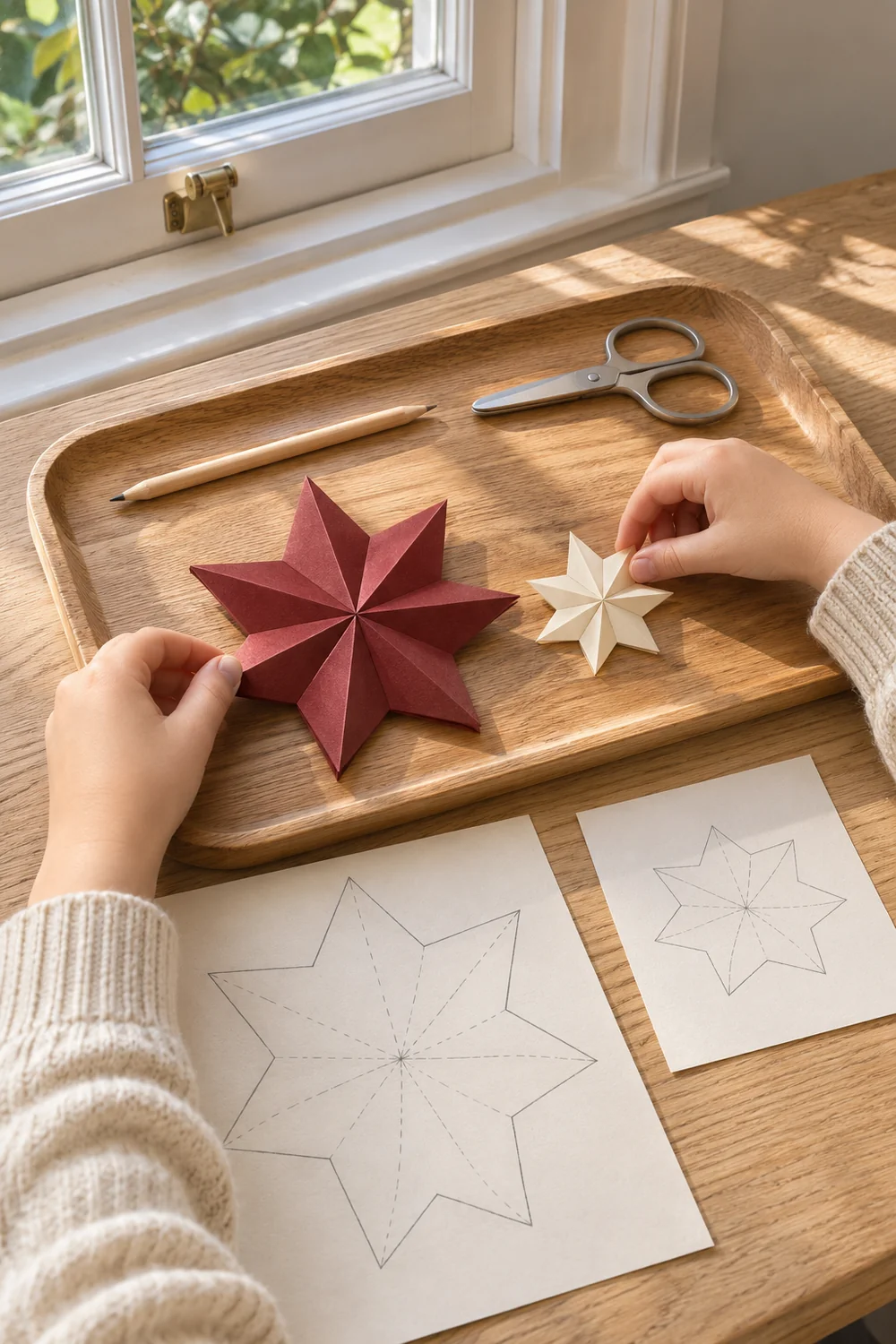
I’d make one small test decoration with the children. Fold a scrap in half, draw a simple half shape with its straight side at the fold and cut it out. Open it on the shelf or hold it in front of the window. If patterns in the room steal its outline, make the next piece bigger or use plain card. This little test is also a good chance to agree which cutting and hanging jobs an adult will do. Put the chosen sample at the front of the tray so everyone can refer to it while they work.
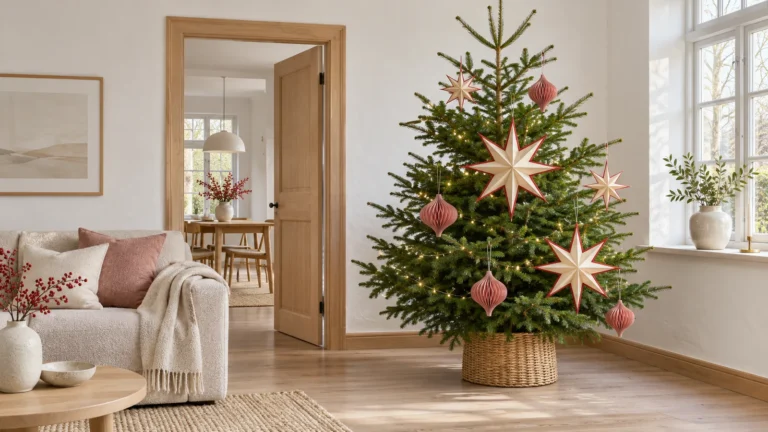
I’d use a short garland across one part of the window. Work out its width with a piece of string where the garland will hang. Set the string down on the table to see how many pieces fit with a clear gap between them. For a narrow sash, five larger shapes can be enough. A bay window might suit three short strings, one across each pane, or a single accent on the main pane. You can make one remainder piece in a contrasting colour and see if it improves the rhythm.
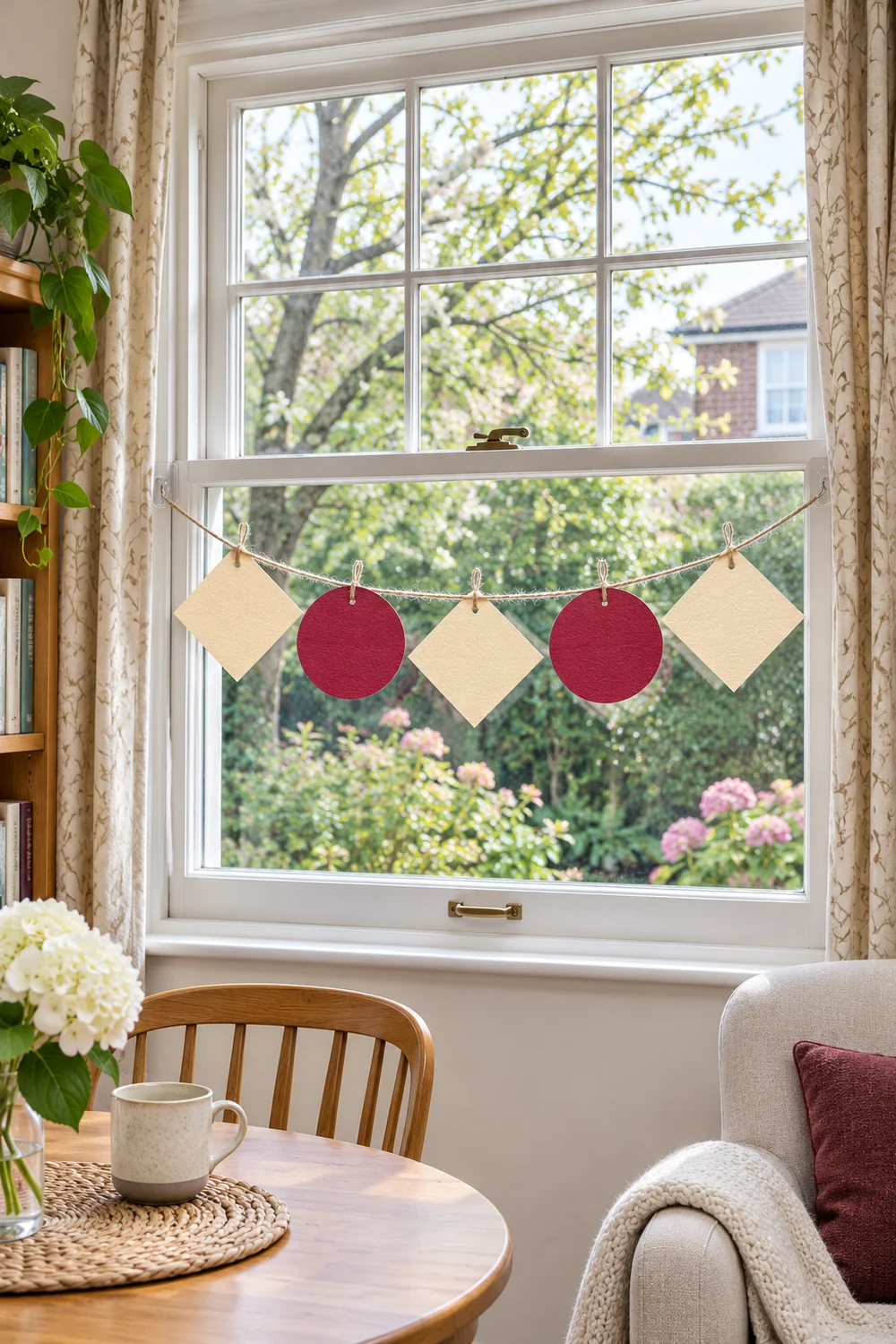
Give a child a sample to lay on folded paper and trace. If they prefer choosing the order, have them alternate cream and cranberry on the table while you make the hanging points. I’d keep two neighbouring pieces wide apart when the window has plenty of glazing bars. From the street or the hallway those bars already give the display a pattern. Use a shorter hanging line if there would otherwise be loose ends around handles or curtain cords.
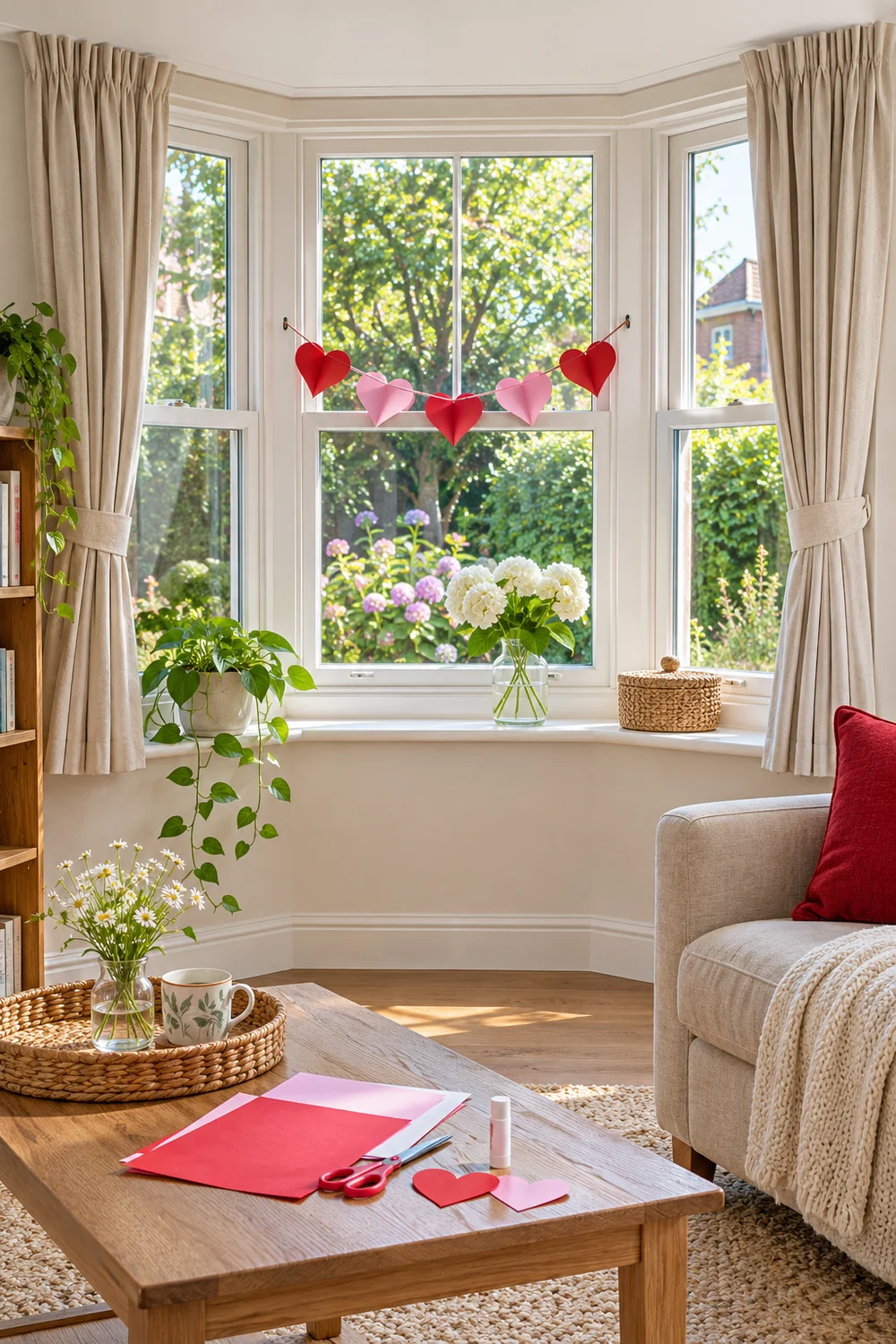
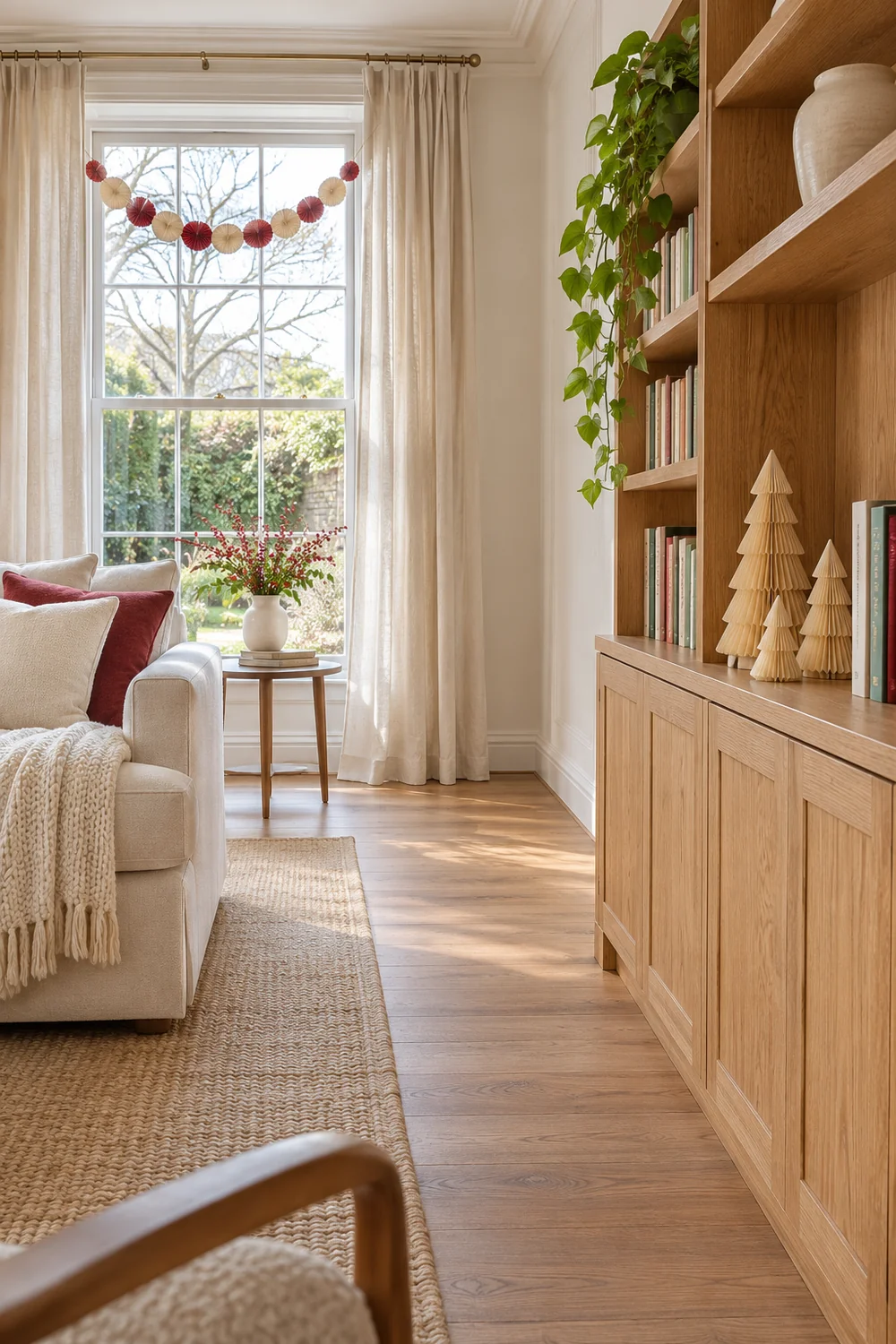
Hold the finished line up and open the window covering before you fix it in place. The garland can sit on a suitable existing fitting where it clears hardware and the curtain still moves. If that doesn’t work in your room, the same row of shapes can sit along a shelf or hang in a different opening. The Christmas living room decor ideas guide has more window and room views for working out where a festive accent will show. From the sofa, you should be able to see the outline of each shape after the children let go of the line.
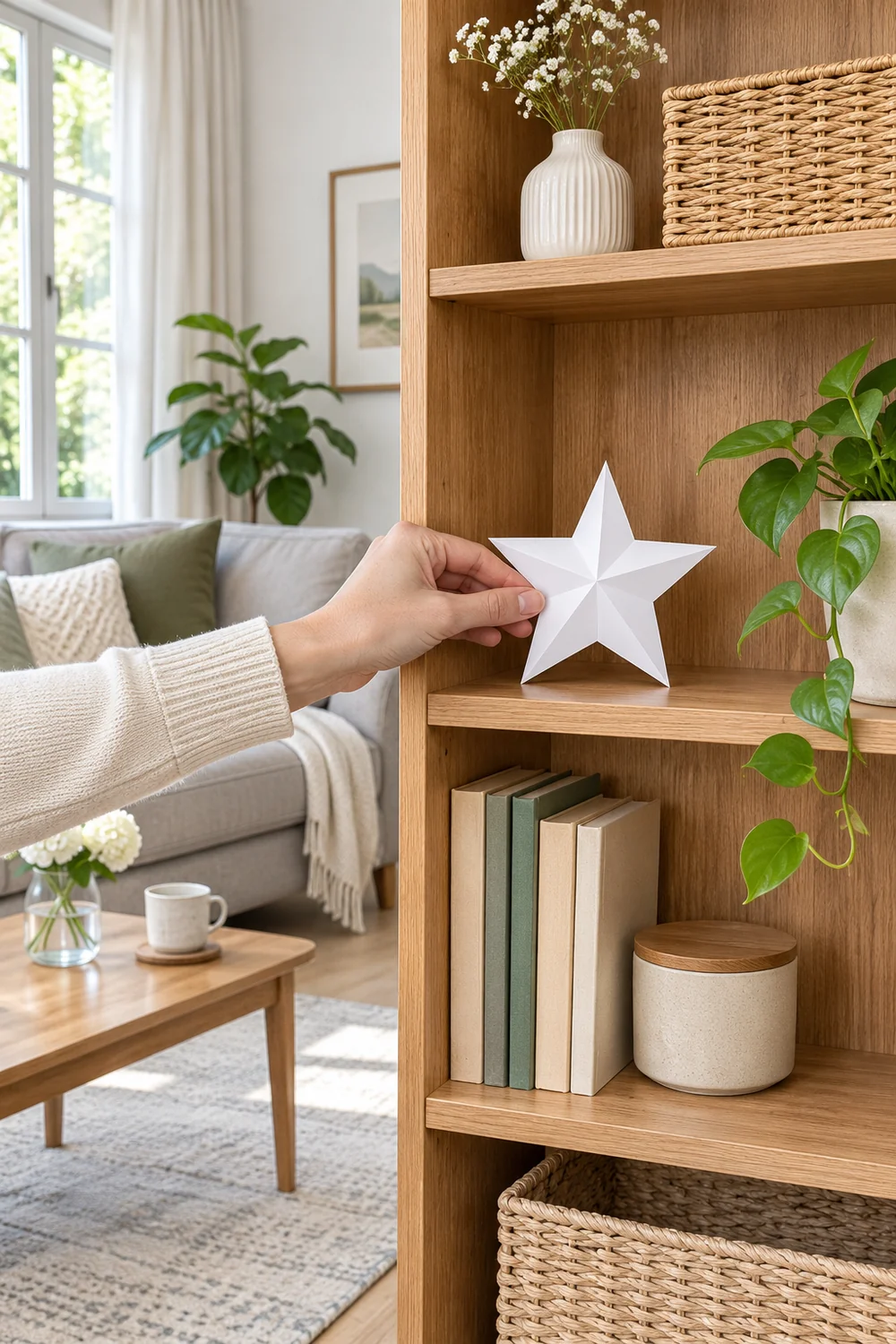
Choose a decoration that can stand up at the depth you have. Paper folded into a small tent shape works on a narrow bookshelf, while a deeper oak ledge can hold three sizes of folded card with a glazed bowl behind them. I’d keep most of the everyday books or pots where they are. Clear one short stretch, put the tallest piece at one end and let a child try two positions for the smaller pieces. From a chair the gaps between them may make more difference than their height.
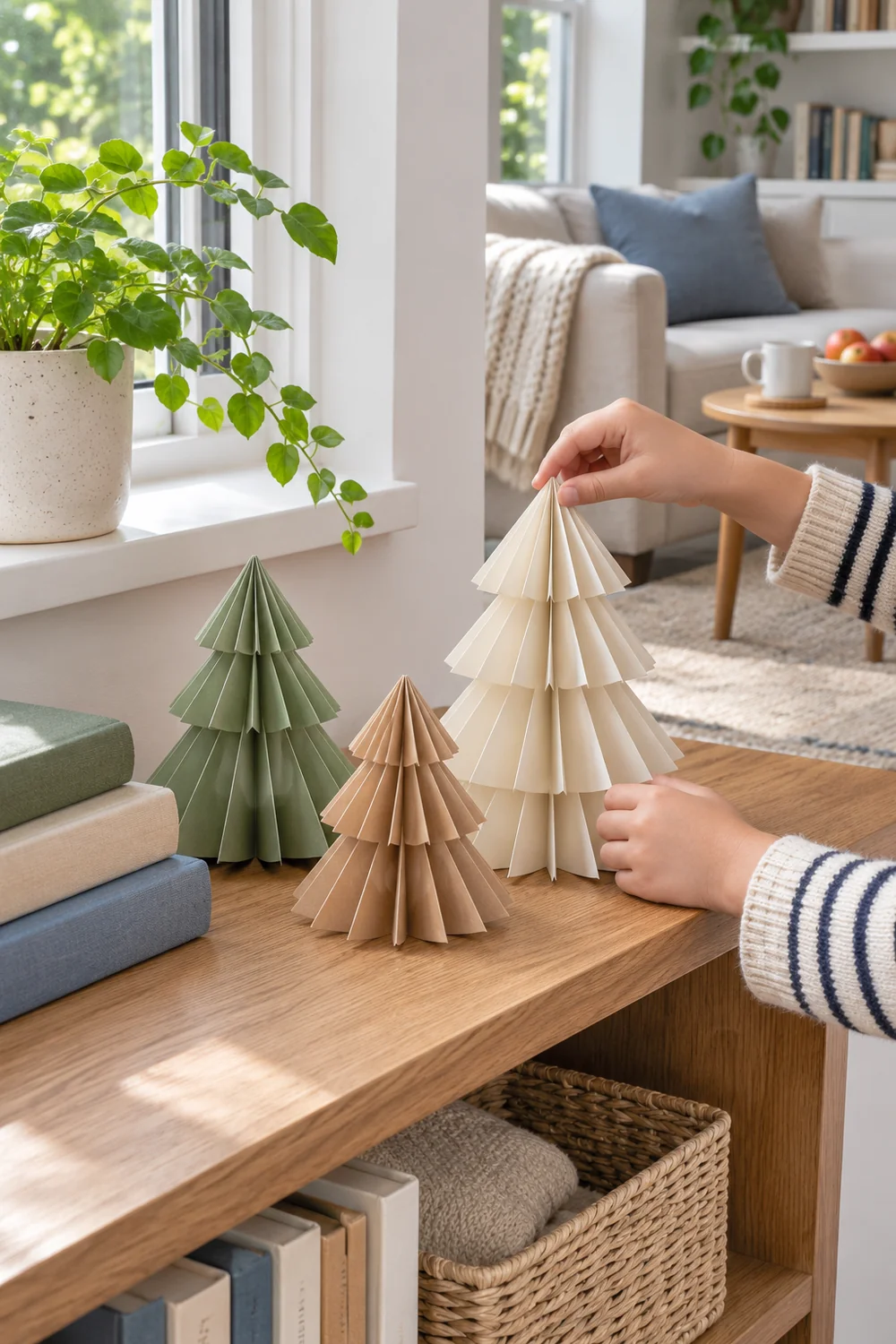
For a mantel with a mirror, look at the reflection before you decide how many objects to use. A single shape in front of the mirror may look like two from certain seats. In a room with a working fireplace I’d put the paper display on a separate shelf away from the heat. For ideas specific to the materials and proportions of the mantel itself, look at Christmas fireplace ideas. On a shelf near a TV, put the shapes outside the sightline you use when the screen is on and make sure the remote still has a place.
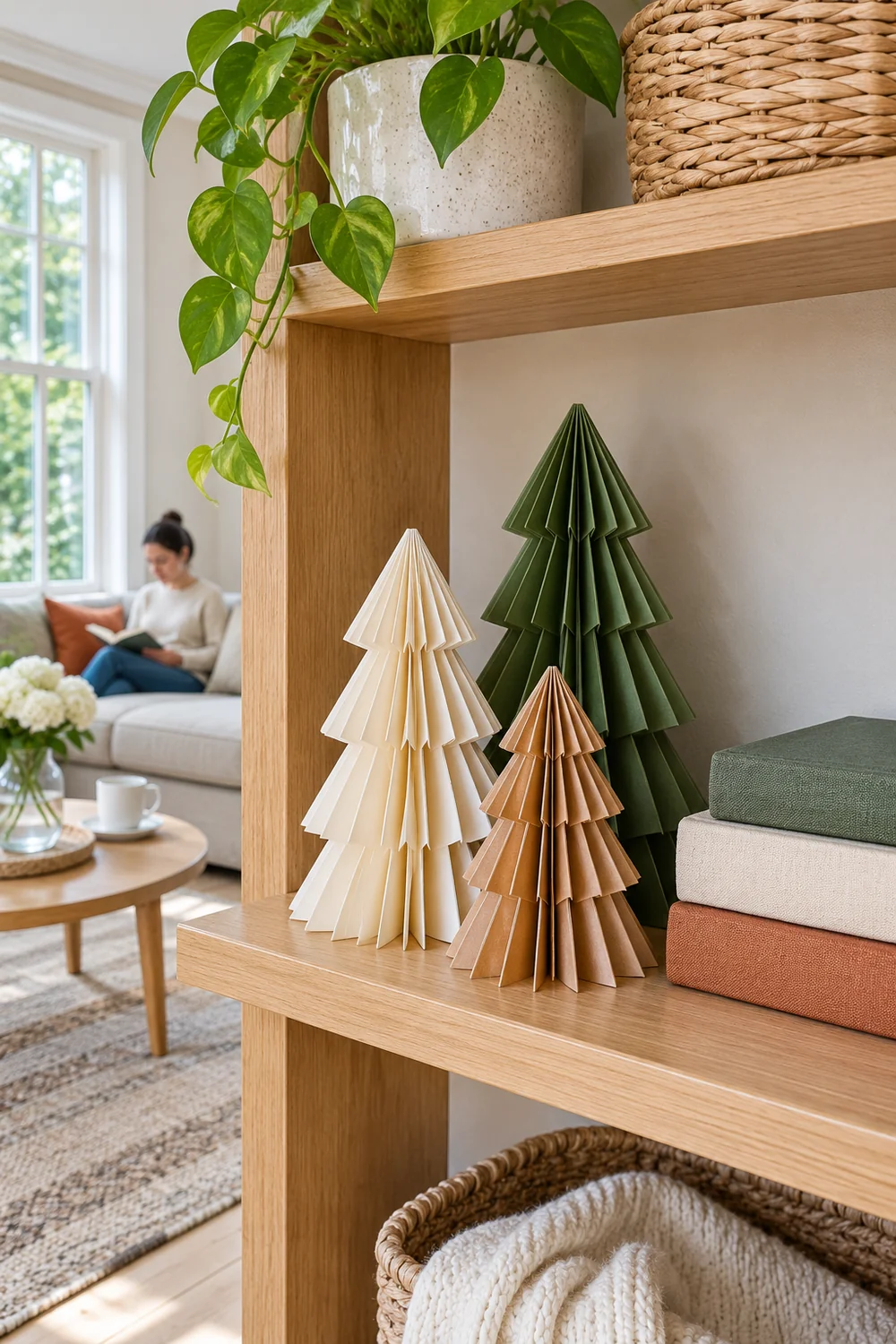
I’d offer the child a tray or a shallow box lid on which to arrange the sample before putting it on the shelf. Try three paper trees in a row. Then try one paper tree next to a book laid flat. Ask which they would want to notice when they walk past. Use the choice they can see for themselves. If the shelf belongs to a well used corner of the house, leave enough clear surface to lift the display and dust underneath in one movement.
A reading chair or the end of a sofa is a good candidate when the tree and window already do enough. Put a coloured cushion against an ordinary one, set out a seasonal book and add one small paper piece where it won’t be knocked by an elbow. I’d give a child the choice of two books they would like to see there. If their chosen book has a bright cover, let that be the colour cue and keep the paper detail simple.
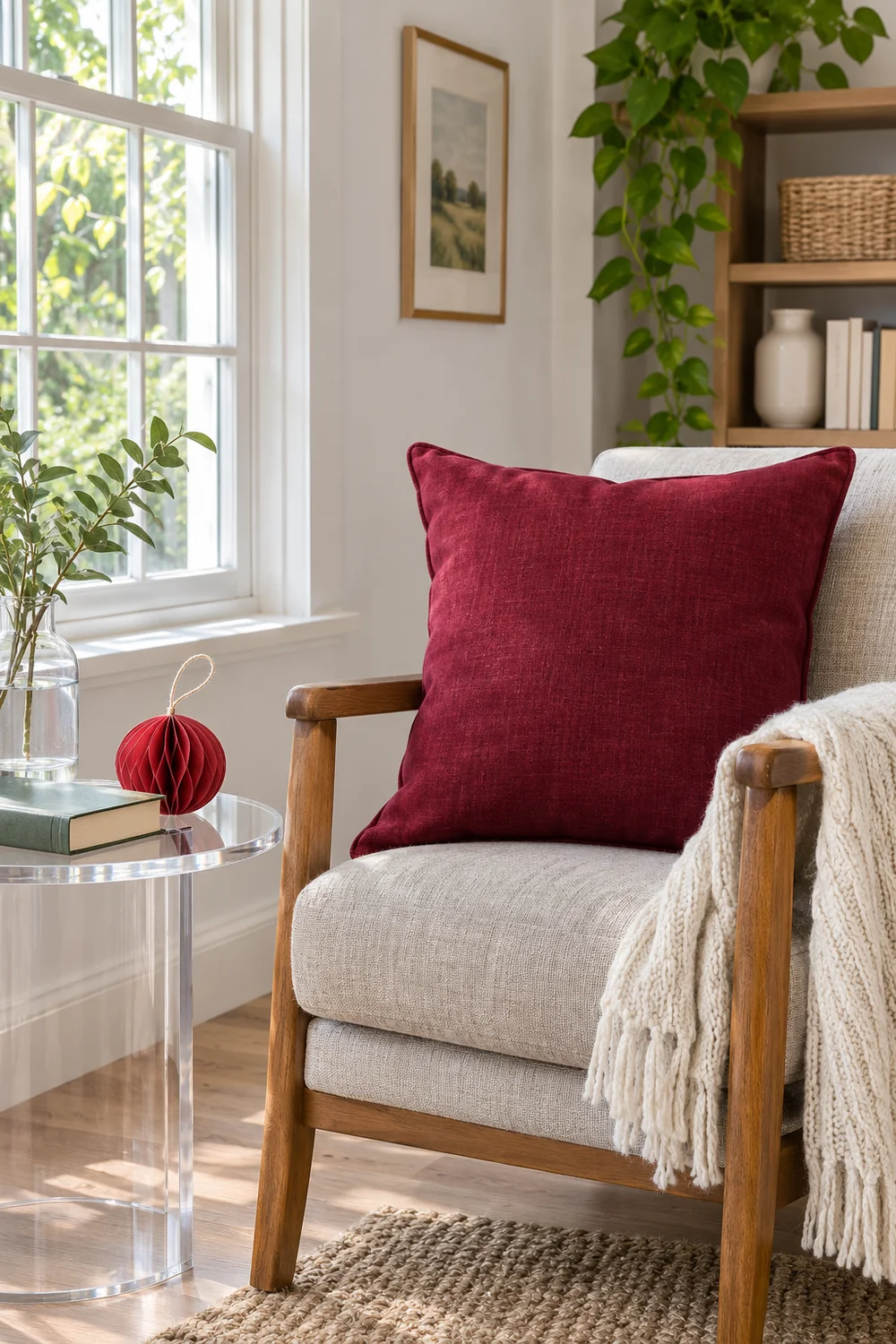
Walk over and sit down with the book before calling the corner done. Check that the light switch, lamp and table are as easy to reach as they were before. See whether the extra cushion pushes the person who normally sits there too far forward. If it does, move it to another chair or choose a small throw that can fold over the arm. Try the paper piece at the back of the shelf if the cup or book cover already occupies the useful part of the table.
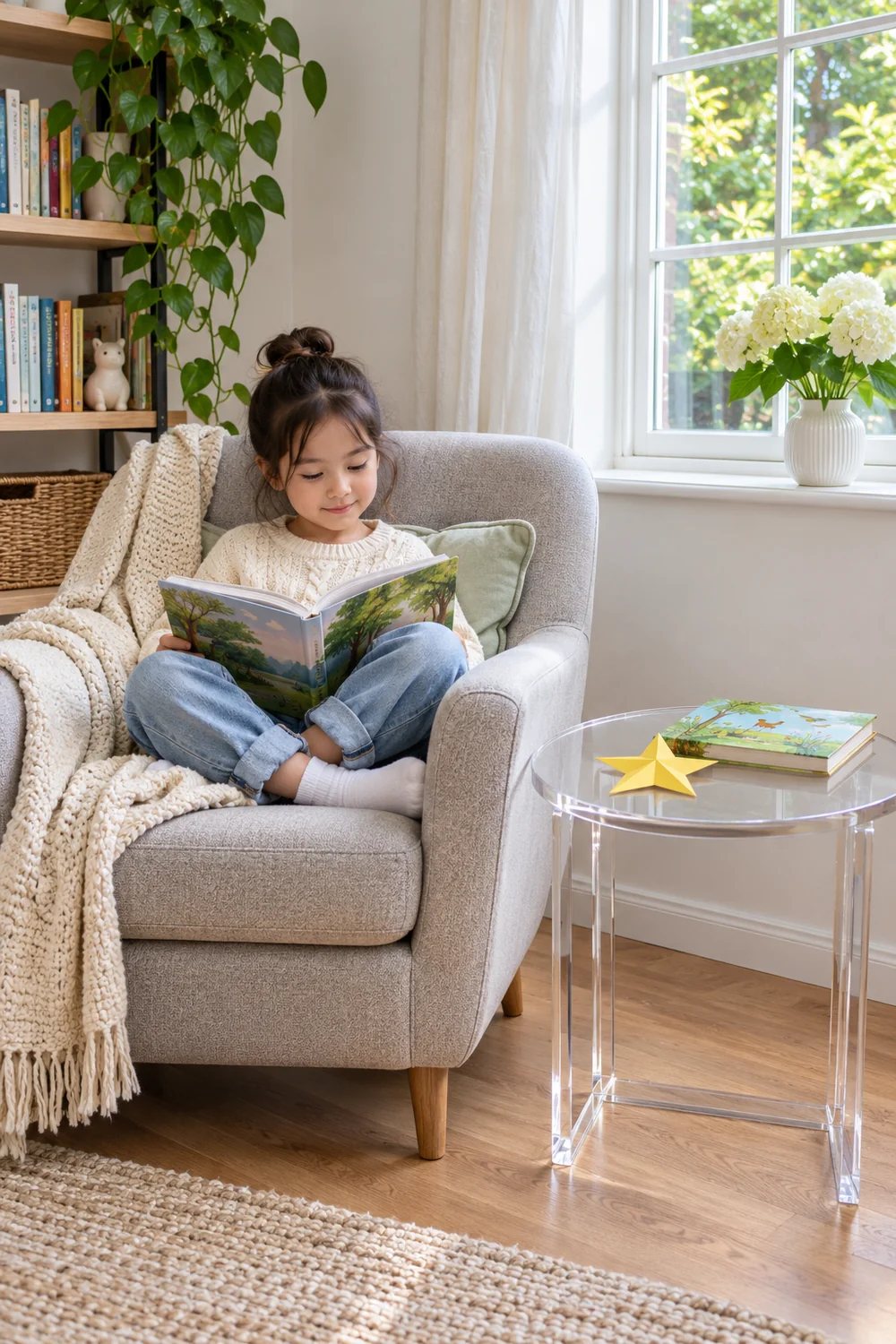
I’d use an offcut of the same paper to make a decoration for the Christmas box or a single ornament to hang later. If the children would like to repeat the work on the branches, Christmas tree inspo 2026 shows how to decide on the right size and give the handmade pieces room. For the reading corner itself, let the child choose one finishing detail they can remove easily when they want to use the chair.
Give the afternoon a visible end. I’d let the children put the finished pieces in position, then bring the tray back to the table and sort what’s left. Keep squares large enough to cut a new shape, the clean sample and any short piece of ribbon you may want at the table. Paper touched with glue or covered in loose scraps can head to the appropriate waste. Put adult tools away and wipe the work surface before you use it for anything else.
Stand where you chose the spots and see whether your two displays belong together. In the cream room with the bay, the window paper may want a single cranberry accent at the chair. Or the chair may be colourful enough with its checked fabric, and the second piece is better on the shelf. I’d try that small swap while the children can still say what looks most like their idea. Resist reopening the whole selection when a move of one piece gives the room a clear focal point.
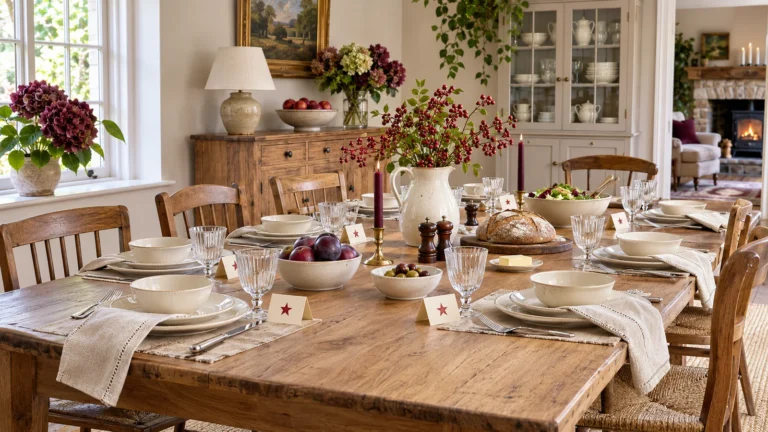
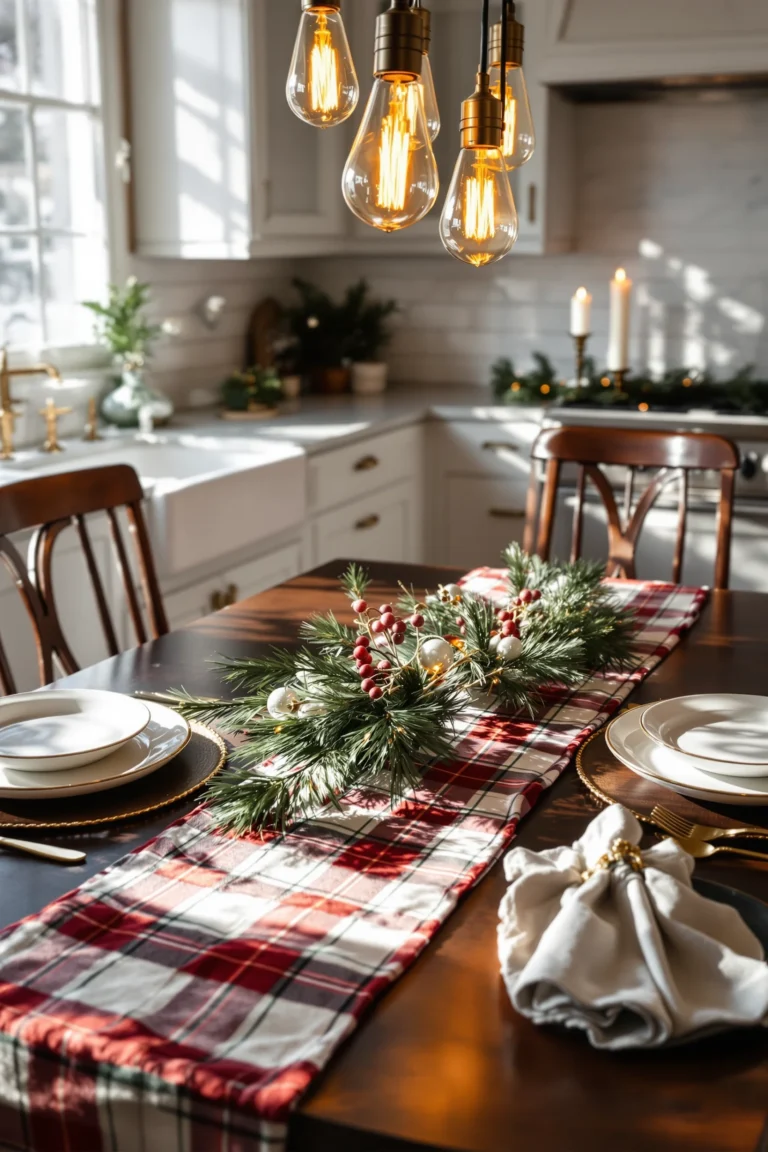
If you want to repeat the design at the tree and lunch table, keep the most readable paper shape and a small sample of each colour. The whimsy Christmas decor guide compares more ways to test colour and motif with the ornaments and dishes you own. Put the sample in the Christmas box at the end of the afternoon, or keep it on the tray if the tree or table is the next job.
I’d take one photo with the angle wide enough to show the furniture you use. The window display should leave curtains and handles free. The chair should still take a person and a book. On the shelf, check whether you can get to the everyday item you use most without disturbing the paper. Wherever the decorations get in the way, shift them by a few inches or move them to the next surface before the family gets used to working around them.
If your kids want to do more, offer a future spot where a new shape can go. Leave a small gap at the end of the shelf or set aside one blank card for a December drawing. That gives the room somewhere to grow without requiring an extra display today. You can also agree which two pieces to store next year. The paper samples can lie flat and the cushion or throw can go straight back into everyday use.
Finish with the view a child chose. If the decoration reads best from their chair, sit there together and look at what they made. The change you can see from that seat is a good measure of what an afternoon can do. I’d leave the spare ideas on the board and enjoy the two you made.
Two well placed displays are enough for a visible change. Pick a shape that fits the surface, let the kids decide where the finished pieces go, and leave the room ready for whatever the family does next.