Newsletter Subscribe
Enter your email address below and subscribe to our newsletter


An Italian guest bedroom should make an overnight visitor feel considered from the moment the door opens. The style can borrow sun washed colour, natural linen, dark walnut and hand finished ceramics from an Italian villa, but the room still has practical work to do. A guest needs an obvious place for a suitcase, a comfortable bed, privacy, useful light, water, charging and enough empty space for personal belongings. Plan those needs before adding decorative layers and the result will feel relaxed rather than staged. This guide shows how to turn a spare room into a calm summer retreat that is simple to prepare, pleasant to sleep in and easy to reset after every stay. It also keeps the host’s preparation routine clear.
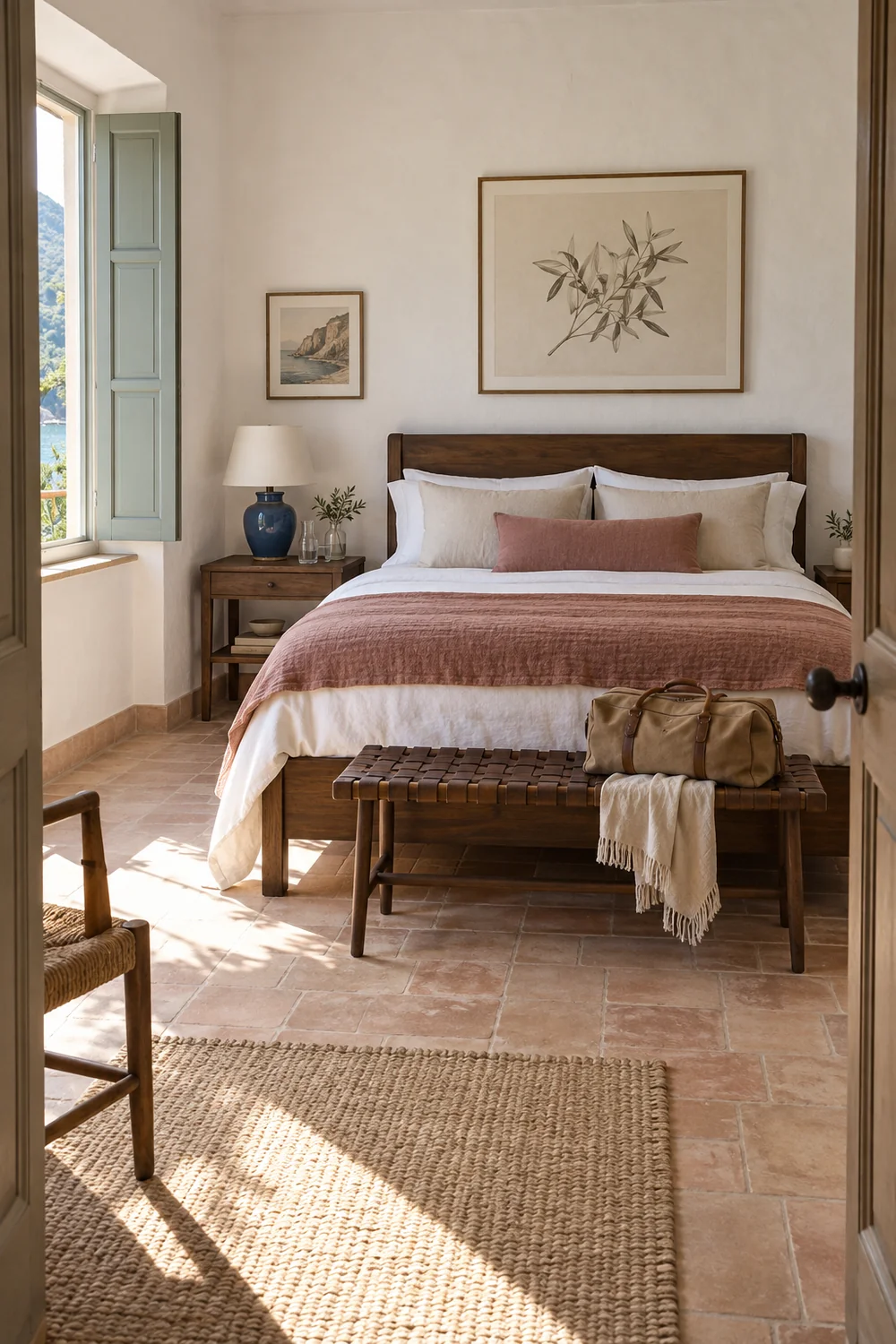
Start by imagining the first five minutes after a visitor arrives. They enter with a bag, look for somewhere to put it, decide where shoes and outer layers belong, then scan the room for the bed, bathroom route and a place to charge a phone. If those actions are obvious, the room feels welcoming before the guest notices a single decorative detail. Walk the route yourself with a suitcase in hand. Open the door fully, move to the bed, turn towards the wardrobe and return to the doorway. Any chair, basket or small table that interrupts that movement is in the wrong place.
Clear more than you think you need. A guest room often becomes quiet household storage, with drawers, shelves and surfaces gradually filled between visits. Keep private items behind one closed door and leave a visible portion of the room genuinely available. One empty drawer, several hangers, a clear bedside surface and an open luggage place communicate permission to settle in. A styled stack of books is less useful than an empty area where a visitor can place glasses, jewellery or medication.
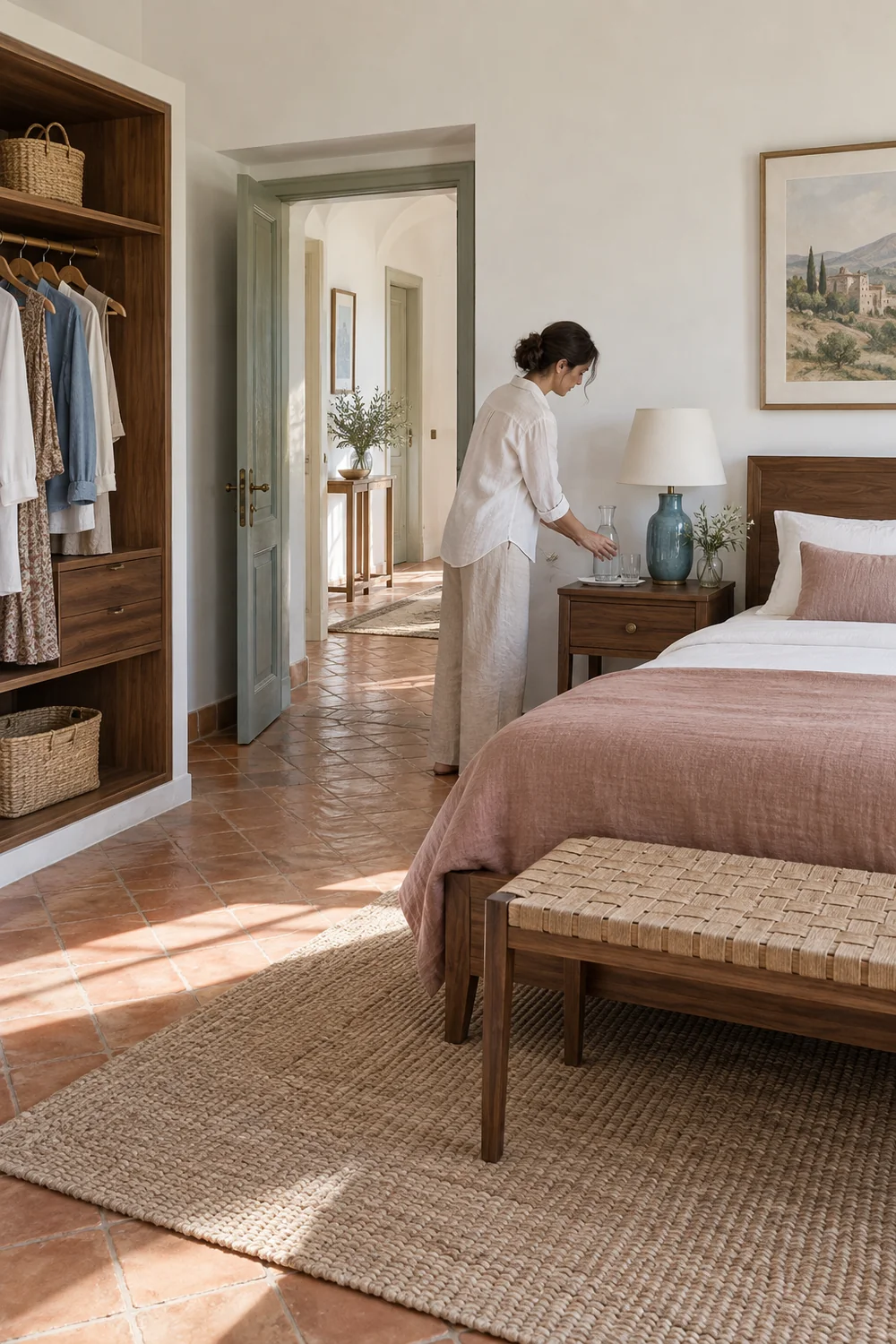
Decide what the guest needs to understand without asking. A small card is rarely necessary when the room itself is legible. Place the light switch where it is easy to reach, keep a spare blanket visible, put water beside the bed and make the bathroom route clear. If the room is compact, remove furniture that performs no guest function. A narrow bench, one comfortable chair or a simple wall hook can earn its place. A decorative console that blocks the route cannot.
The visual direction should follow the same hierarchy. Let the bed be the calm centre, then support it with a luggage surface, one bedside station and a clear window treatment. Italian character can come through proportion, material and colour rather than an excess of themed objects. For broader style references, the existing Italian bedroom ideas collection shows several ways to interpret the look. Here, every choice is judged by how well it serves an overnight stay.
Build the bed in layers a visitor can understand and adjust. Begin with smooth cotton or linen sheets, add a light cover, then fold one warmer layer at the lower third of the bed or place it within easy reach. This gives the guest control without asking them to remove a heavy pile of cushions and throws before sleeping. Two sleeping pillows per person are usually enough for a generous appearance when they are arranged neatly and supported by one modest decorative cushion.
Choose bedding by feel and care as well as colour. Natural flax, washed cotton and a lightly textured cover suit the relaxed character of an Italian summer room. They also look attractive without precise hotel styling. Keep the palette quiet around the face of the bed, using chalk white and warm cream for the largest surfaces. A faded fresco rose cover can add depth without making the room feel sugary, while a narrow sea glass blue detail can connect the bed to a lamp, chair or ceramic piece elsewhere.
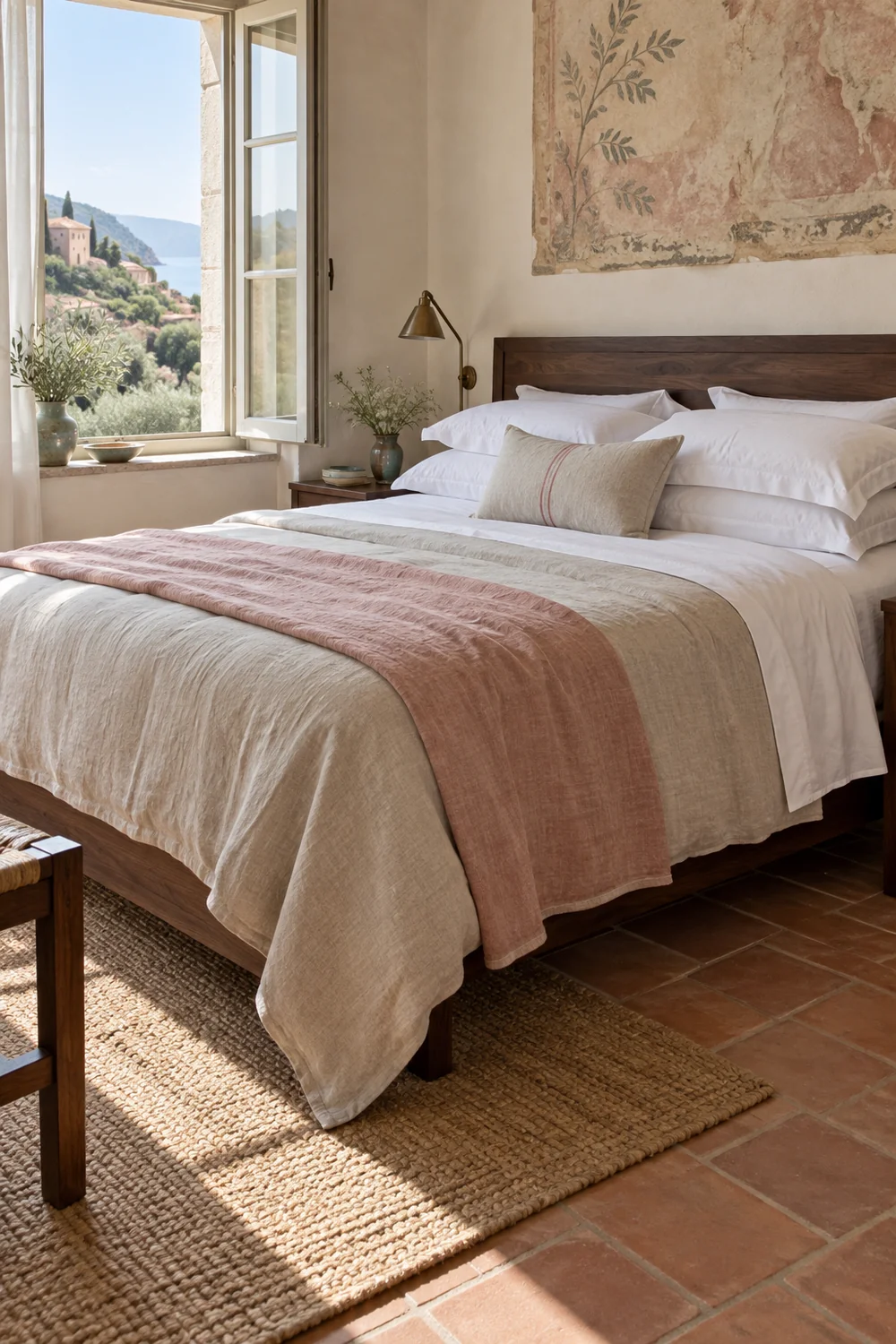
Leave useful clearance around the mattress wherever the room permits. A visitor should be able to approach the bed, place a glass on the table and get up during the night without negotiating baskets or loose fabric. Check that the duvet does not pool into the walkway and that curtains do not fall across the pillow. If only one side of the bed can be accessed, make that side especially clear and place the main bedside station there. The constraint should look intentional rather than accidental.
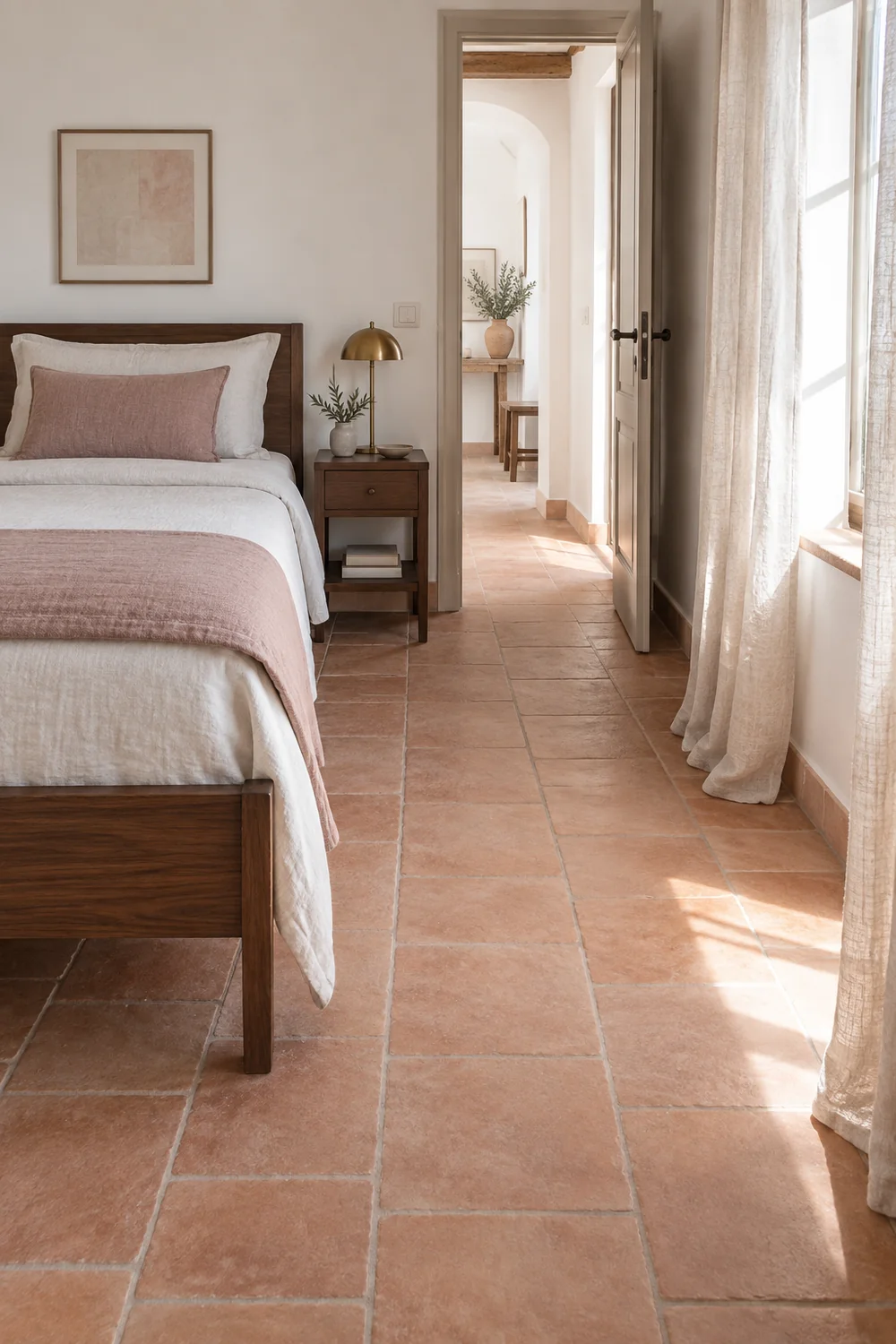
Think about what happens after the first night. Bedding that needs elaborate folding will rarely be restored by a guest, so choose a simple arrangement that still looks complete when the cover is pulled up and the pillows are reset. Keep spare bed linen together in one labelled drawer or cupboard outside the guest area. A repeatable system helps the host prepare the room without searching through the house and prevents the guest wardrobe from becoming a linen store.
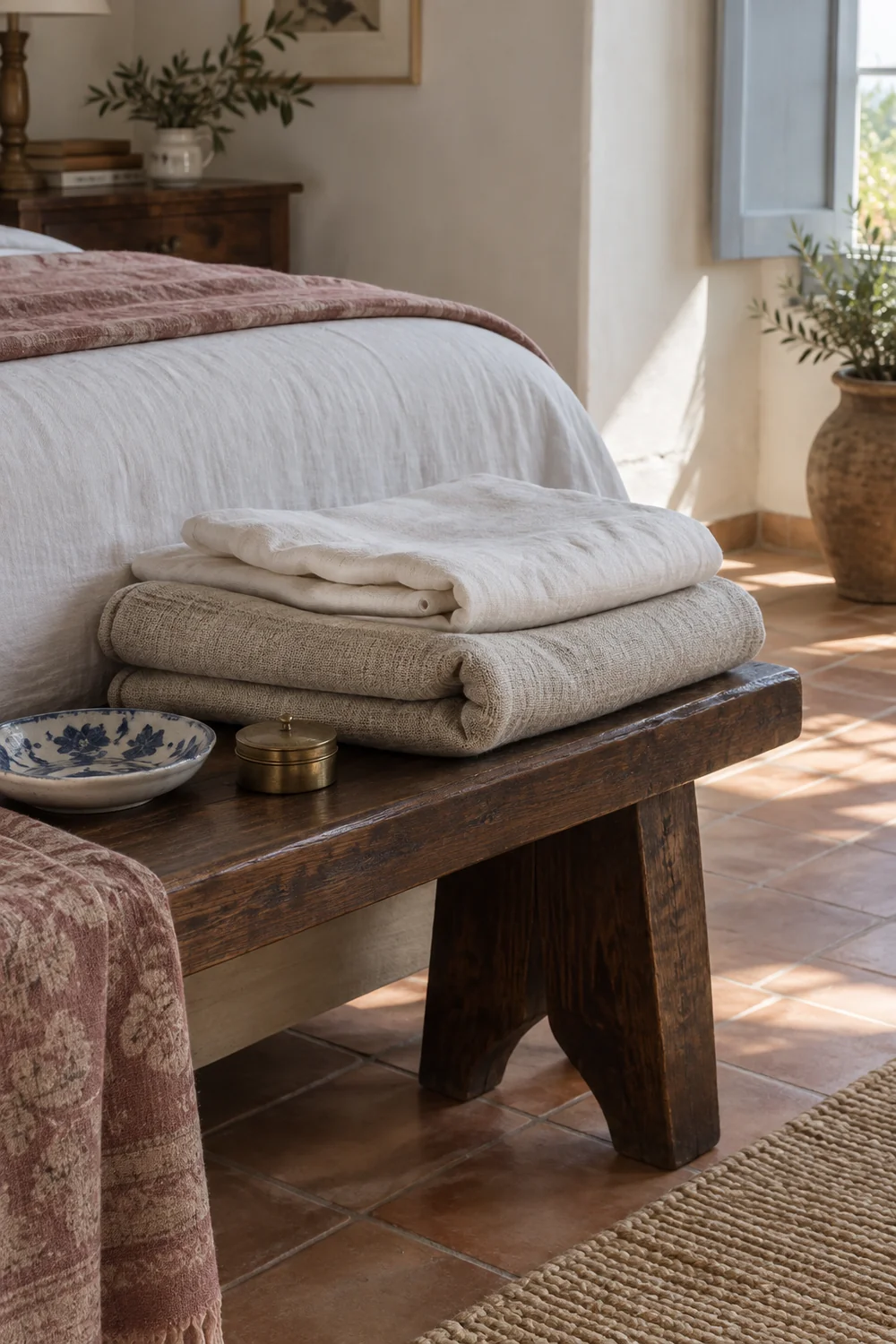
A suitcase on the floor quickly changes how a small guest bedroom works. It narrows the route, encourages clothes to spread across the bed and makes repeated bending necessary. Give luggage one deliberate place from the beginning. A slim walnut bench at the foot of the bed can work when there is enough passage around it. In a tighter room, place a folding rack beside the wardrobe or use a low chest that is already part of the furniture plan.
Measure the landing place with the room in use, not empty. Open a medium suitcase on the bench and check the door, drawers, wardrobe and curtains. The case should not project into the main route or prevent the guest from sitting on the bed. If the suitcase must close before the wardrobe can open, the arrangement will become frustrating during a longer visit. Move the bench to a side wall or use a shallower rack rather than accepting a daily conflict.
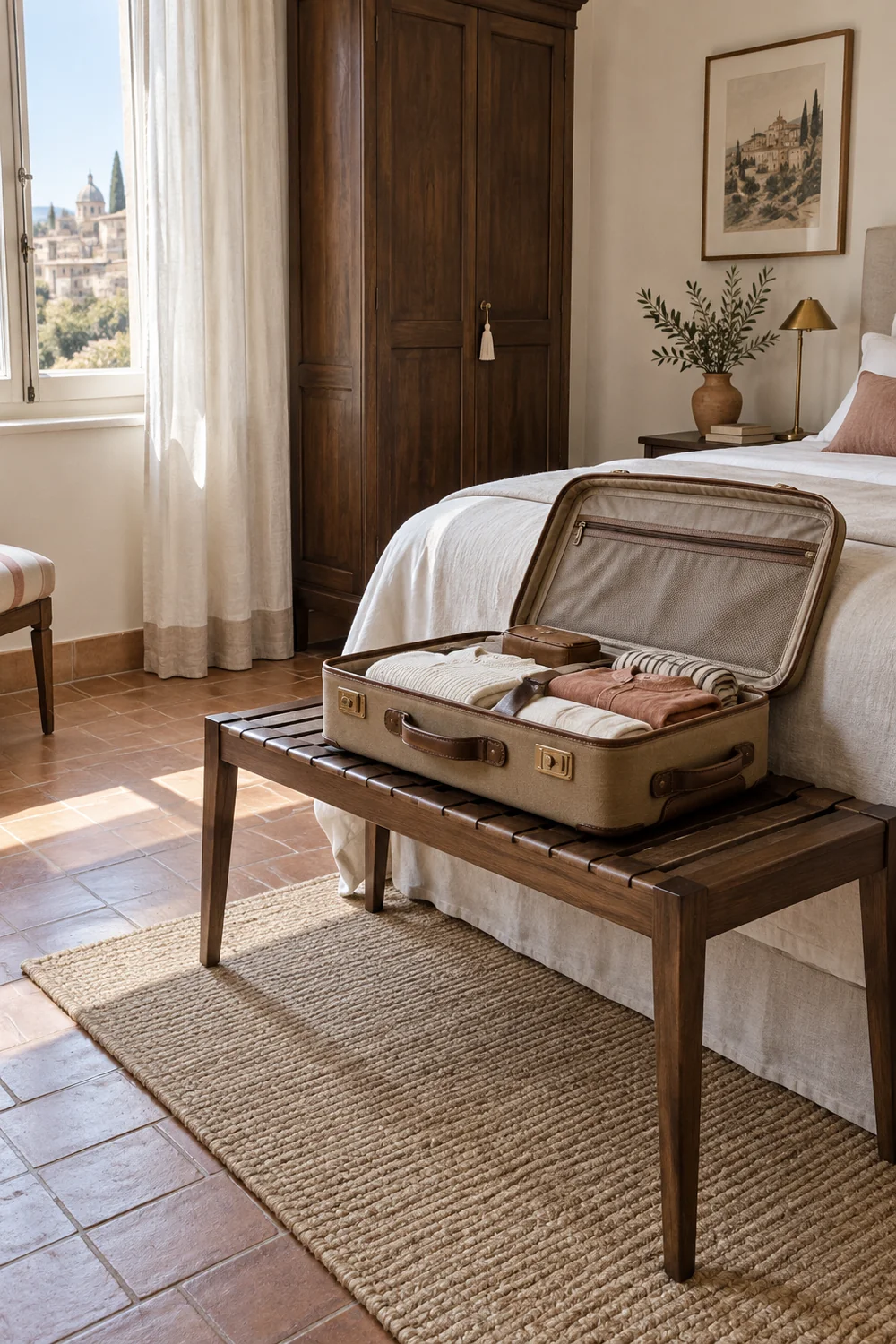
Keep the luggage zone visually calm. One surface is enough. Avoid surrounding it with stacked baskets, decorative trunks and spare stools that compete for the same floor area. A wall hook above can hold a light bag or hat, while a small tray inside the wardrobe can collect keys and travel documents. These details support the visitor without turning the room into a hotel imitation.
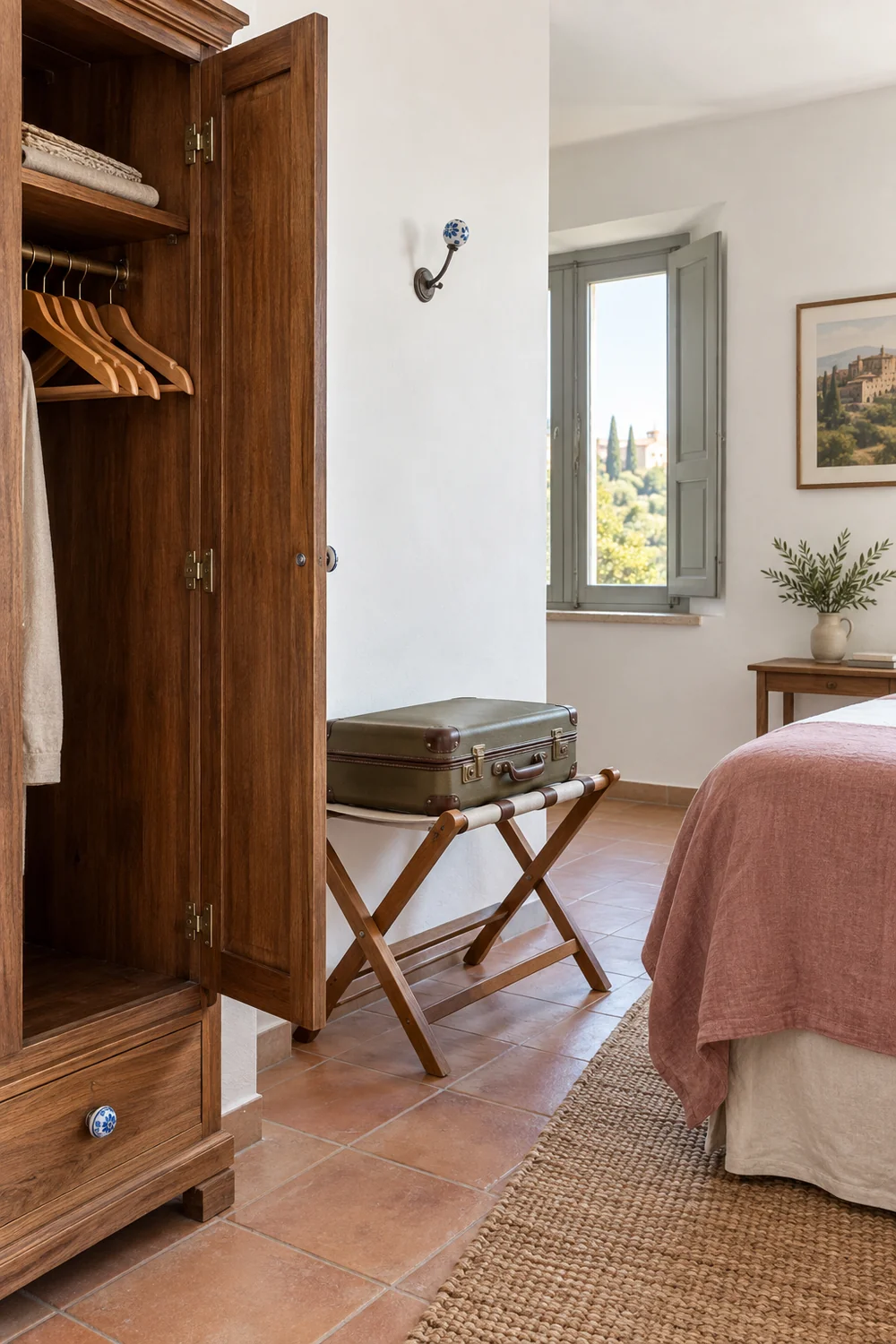
If the room has no suitable bench, a sturdy chair can serve as a temporary case stand, but be honest about what that removes. The guest may then have nowhere to sit while dressing. A folding luggage rack is often more flexible because it can be stored between stays and placed only when needed. Choose a simple timber or canvas design that relates to the walnut and linen already in the room. The object should disappear into the scheme while doing a very clear job.
Plan the bedside surface around the guest’s belongings rather than the host’s display. Start with a lamp that illuminates the pillow and a book without producing glare from the reclining position. Add a stable water carafe or bottle and a glass. Then leave at least half the top empty for a phone, watch, glasses and anything the visitor needs during the night. One small book or ceramic dish is enough decoration.
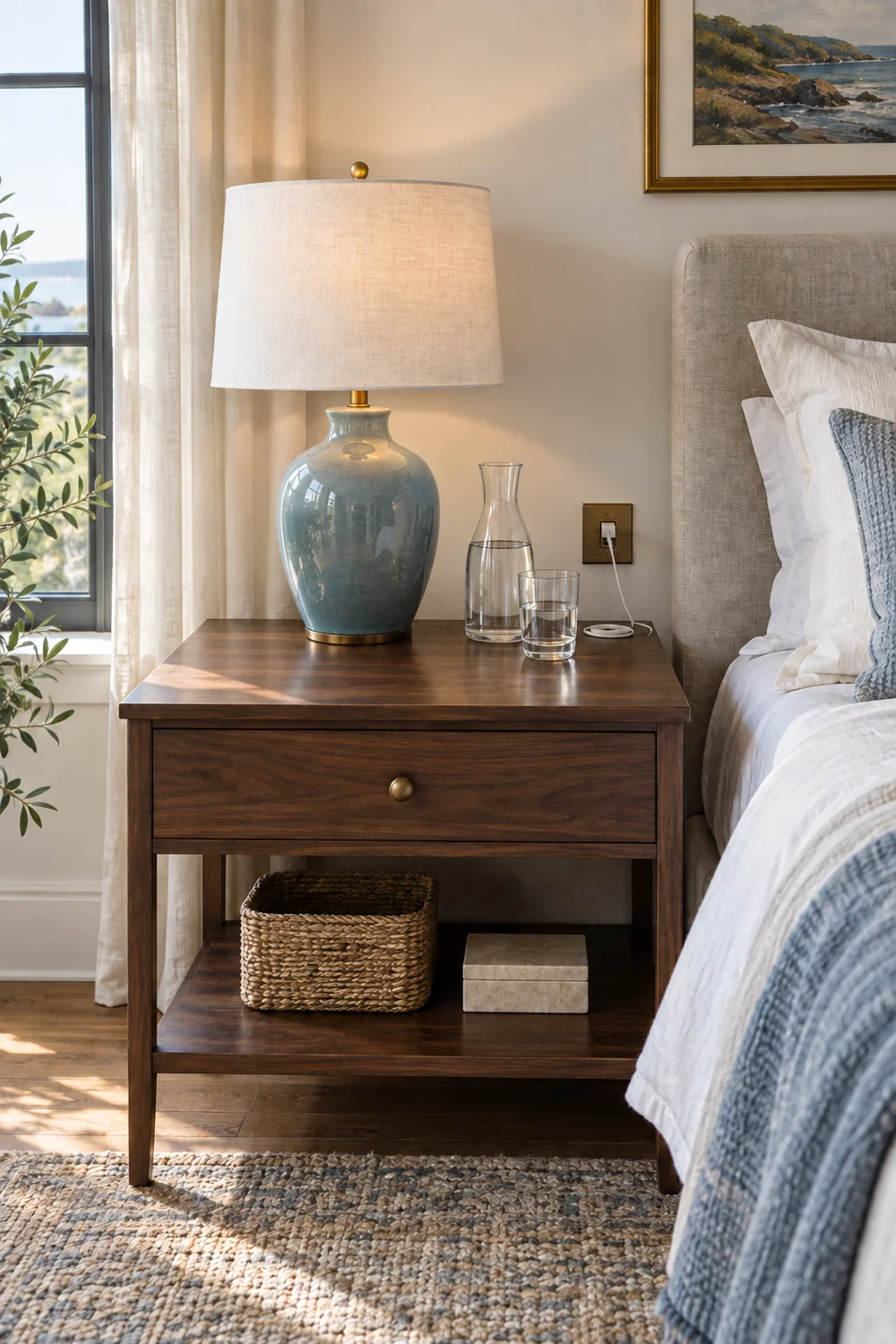
Make charging easy to find. A discreet socket or approved charging point near the bedside is more useful than a cable hidden behind heavy furniture. Keep cords arranged so they do not cross the walking route, and follow the product instructions for every lamp, adaptor and charging device. If the room has only one accessible outlet, decide whether the lamp or the guest’s device takes priority and provide a suitable arrangement before arrival rather than leaving the visitor to rearrange furniture.
The lamp can carry much of the Italian character. A blue and white ceramic base, a simple aged brass wall light or a small alabaster form introduces craft and colour without occupying much space. Use a shade that softens the light while keeping the reading area clear. The material should look convincing in daylight too, since the bedside table remains part of the room composition even when the lamp is off.

Repeat only what the room genuinely needs. In a double guest room with access on both sides, two modest lamps and two clear surfaces feel balanced and generous. In a narrow single room, one well planned station is better than two cramped tables. Symmetry is not a requirement for hospitality. Ease of use is the stronger design principle.
The window affects sleep, privacy, daylight and temperature, so treat it as part of the guest plan rather than a final styling moment. Check the room at the times a visitor is likely to use it. Morning light may enter directly across the pillow, while an evening street view may require more privacy than expected. Combine a light filtering layer for daytime with a more substantial closing layer for sleep when the room needs both.
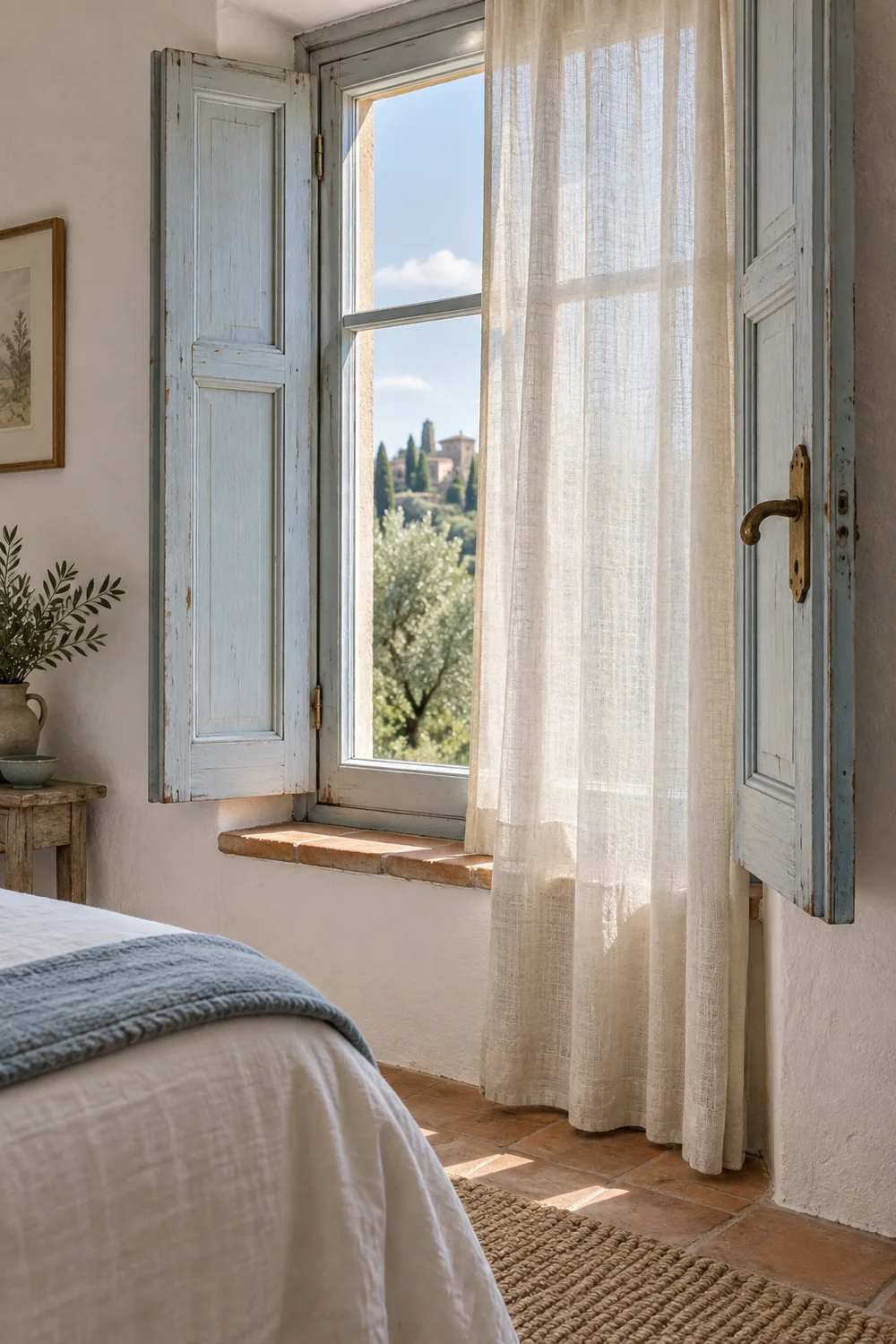
Timber shutters are a convincing Italian reference when they belong to the architecture or can be added appropriately. Curtains are often the more flexible choice. Hang them so they can open fully away from the glass and do not cover a radiator, vent or bedside surface. A natural linen look keeps the room soft, but the lining and installation should respond to the actual light and privacy conditions rather than a photograph of a villa.
Make the path to the window easy. A guest should be able to open a casement, adjust a blind or close a curtain without moving luggage. Keep tall furniture away from handles and allow the fabric to fall cleanly. If airflow is limited, a quiet portable fan may be helpful during warm weather, but it needs a stable position and an accessible power source. Test the arrangement before the guest arrives and use all equipment according to its instructions.

Do not use darkness as the main design tool. The Italian mood in this room comes from sun softened colour, honest materials and controlled daylight. During the day, the space should feel bright and legible, with detail visible in walnut, terracotta and linen. At night, the bedside lamp should create a comfortable pool of light while the route to the door remains easy to understand.
Choose a small family of materials and let each one perform a visible role. Chalk white mineral colour can make the walls feel fresh. Pale terracotta brings warmth underfoot or through a lamp and small ceramic pieces. Dark walnut grounds the bed, bench or bedside table. Natural flax adds texture without shine. Sea glass blue introduces a coastal Ligurian note, while faded fresco rose softens the bedding or chair.

The room should not look as though every object was bought from one themed collection. Mix one older looking timber piece with simple contemporary bedding. Pair a handmade ceramic lamp with a plain bedside table. Let a slightly irregular plaster finish or woven linen provide evidence of touch and age. Avoid printed signs, novelty lemons, artificial vines and an excess of tourist imagery. Italian character is stronger when it comes from proportion, craft and material.
Use colour in measured areas. Chalk white should remain the largest field so the room stays bright. Faded rose can appear on one light cover or chair. Sea glass blue can be limited to the lamp, a cushion or a ceramic tray. Pale terracotta belongs on the floor, a pot or a small stool rather than every textile. Dark walnut needs clear daylight and open shadow detail so it reads as timber rather than a black shape.
Finish with a restrained art choice. A small landscape, an abstract work in mineral colours or a simple framed textile can support the palette without becoming a theme. Place it where the guest sees it on entering or from the bed, but do not fill every wall. Empty plaster is part of the composition and gives the practical furniture room to breathe.
A guest rarely needs the entire wardrobe, but they do need storage that is obviously available. Clear a short hanging section and supply several matching hangers. Empty one drawer or use two open shelves at a comfortable height. Keep household possessions together behind a separate door or in labelled containers so the visitor never has to guess which space is private.
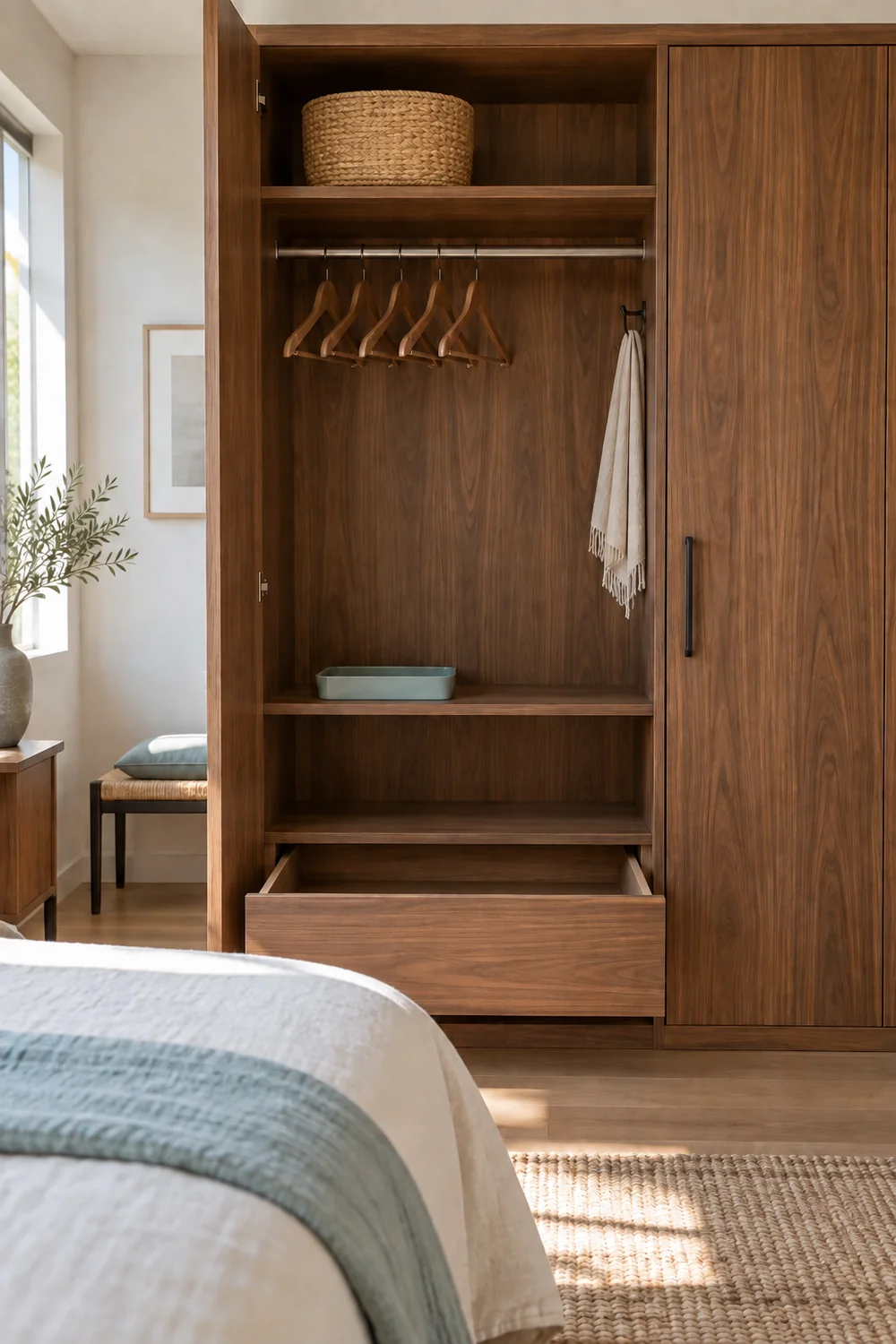
Add hooks only where they solve a real action. One near the door can hold a light jacket, while another inside the wardrobe can take a bag or robe. Avoid a row of decorative hooks directly above the bed or luggage bench, where hanging items would crowd the focal area. The guest should be able to unpack enough to feel settled without reorganising the room.
Consider the departure as well as the arrival. An open shelf lets the visitor see small items before leaving, while a patterned drawer interior can hide a dark phone charger or jewellery. A small tray near the bedside helps contain loose belongings. Before resetting the room, check those three places first: bedside, drawer and luggage surface. A consistent storage plan reduces the chance that something is left behind.
Keep a little capacity for different stays. Some guests will hang every outfit, while others will live from a suitcase. The room should accommodate both without forcing either behaviour. Empty space is not unfinished styling. In a guest bedroom, it is one of the most useful signs of generosity.
Create a short routine that begins with function. Open the room, check the route, clear the luggage surface and make sure the wardrobe space is empty. Prepare the bed with the light cover and place the warmer layer within reach. Confirm that the lamp, curtains, window and charging arrangement work. Put fresh water beside the bed shortly before arrival and remove anything that has collected on the guest surfaces.
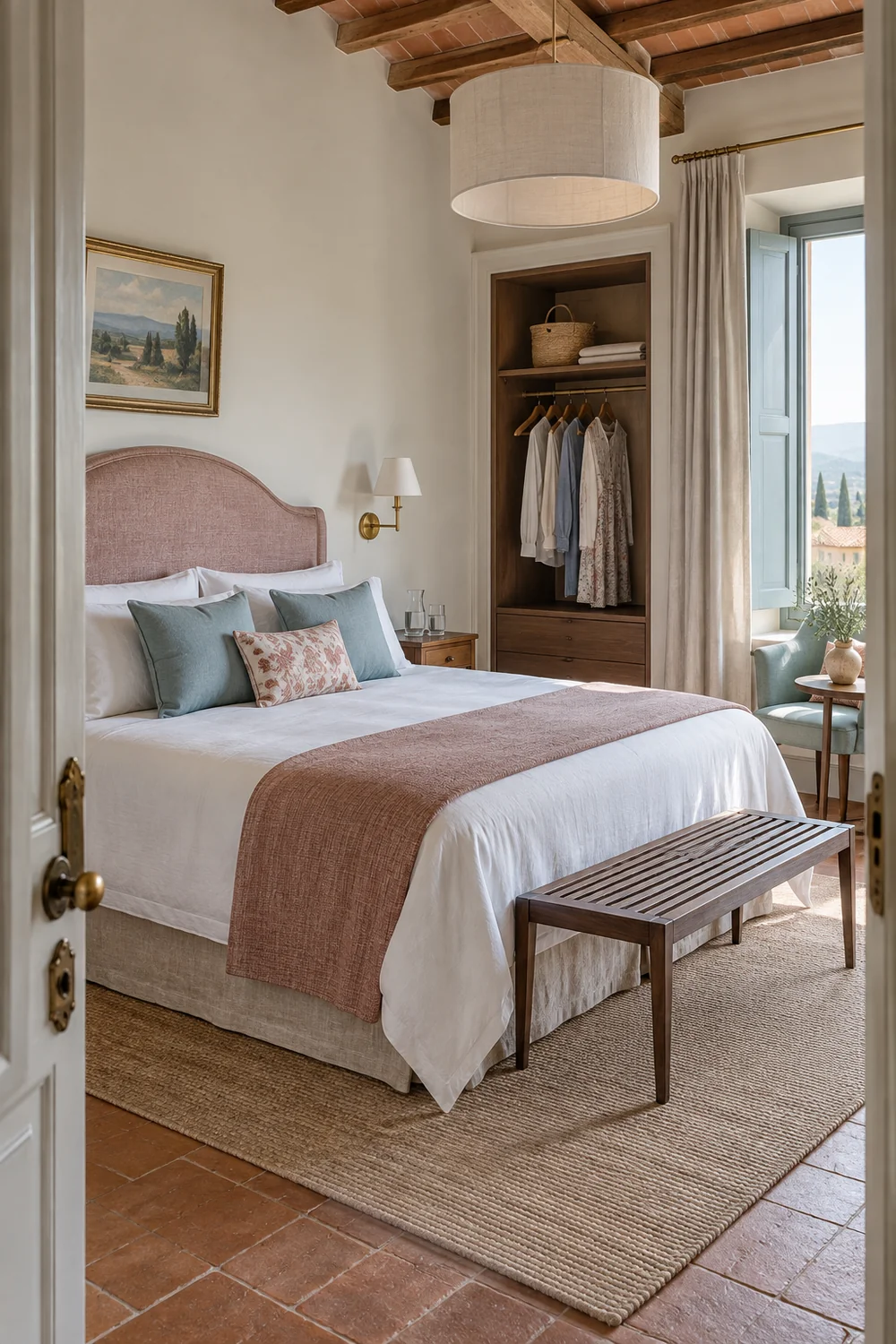
Then inspect the room from a visitor’s height and position. Sit on the bed and look towards the lamp, window and door. Open the suitcase on its bench. Close the curtains. Walk to the door with the main light off and the bedside lamp on. These simple tests reveal blocked routes, glare, awkward handles and surfaces that are more crowded than they first appeared.
The final decorative pass should be small. Straighten the linen, place one branch or a modest bunch of garden flowers in a stable vessel, set one book near the chair and stop. Strong fragrance, fragile collections and a crowded bed create work for the guest. The room already has character through colour, timber, terracotta and ceramic details.
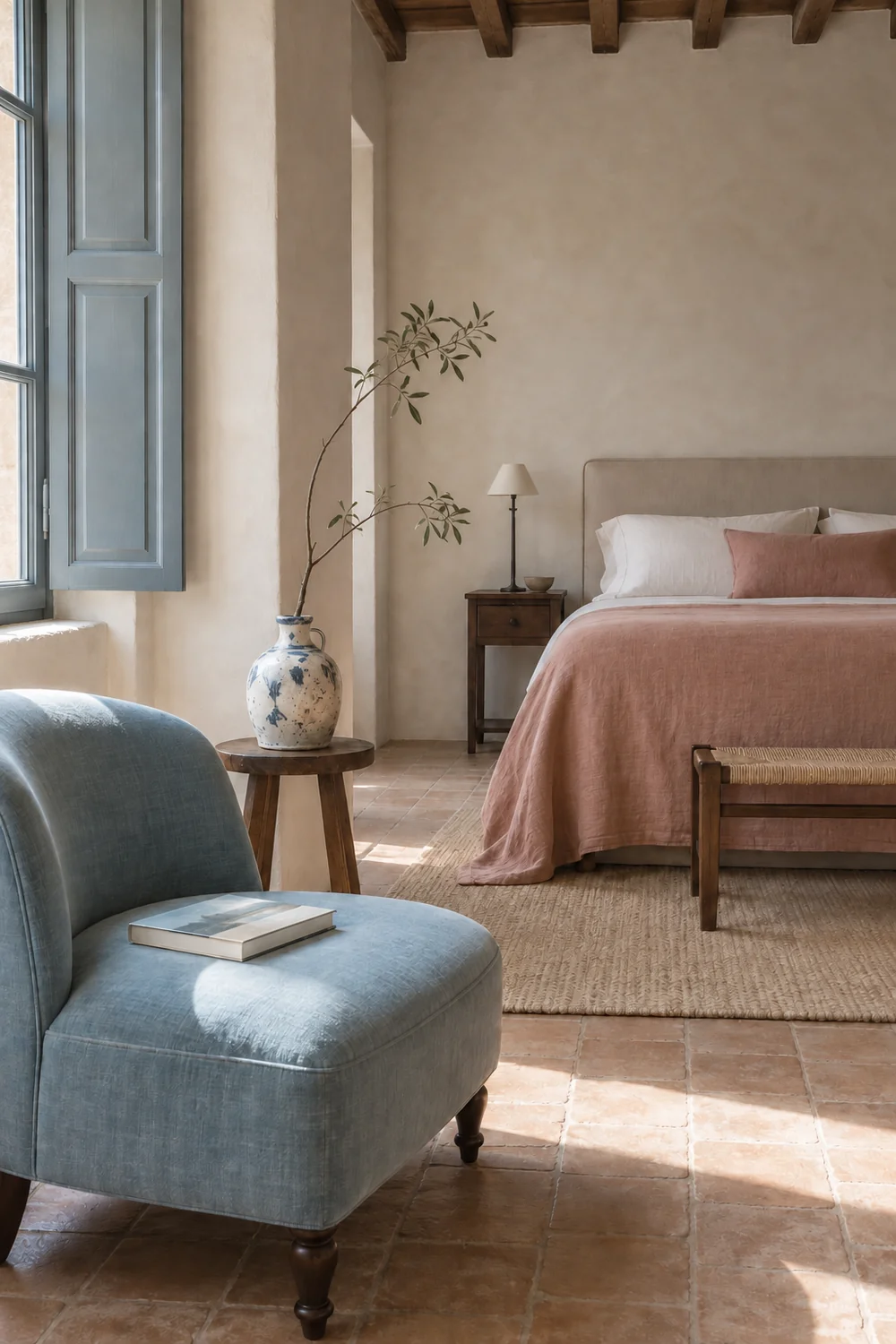
After the stay, record what worked. A suitcase that remained on the floor may need a wider bench. An unused chair may be taking space from the route. A lamp moved by the guest may not have reached the pillow. Treat these observations as design evidence and adjust one thing before the next visit. A guest room becomes more comfortable through use, not through adding more decoration.
The most convincing Italian guest bedroom is not the one with the most obvious references. It is the room where sun softened colour, linen, walnut, terracotta and handmade ceramics support a thoughtful stay. Give the visitor a clear route, an adjustable bed, a proper luggage place, useful bedside light, water, charging, privacy and a little empty storage. Then keep the decorative edit calm. When every element has a reason to be there, the room feels generous before it feels styled. That balance creates the relaxed pleasure associated with an Italian summer villa while respecting the practical needs of a real guest in a real home.