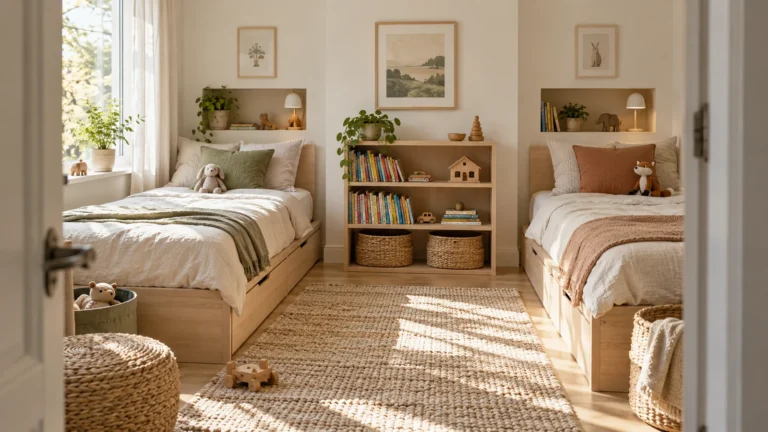
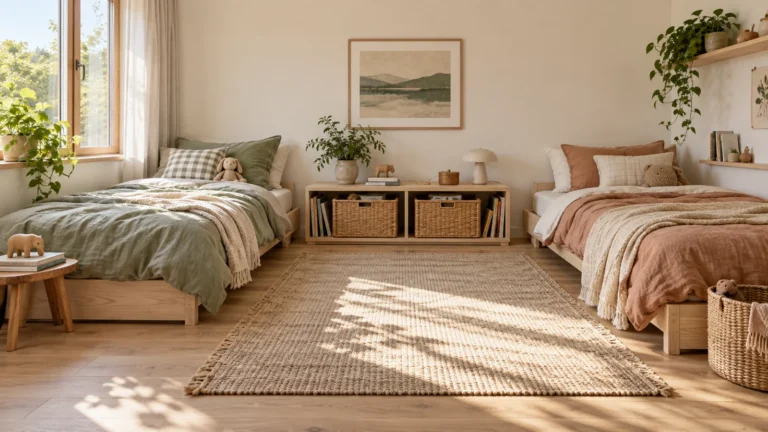
I’ve always thought blue and Japandi were made for each other, the way cool, still colour meets warm, honest wood and everything just settles. What I love about this style is how much it rewards restraint: the right shade of blue on a wall, a bed in dark oak, a single woven throw, and the room does the rest. In the ideas ahead you’ll find everything from navy ceilings to sage and blue pairings to cosy attic retreats, and every one is a look you can lift and make your own.
How a Wooden Bed and Blue Bedding Set the Whole Japandi Tone
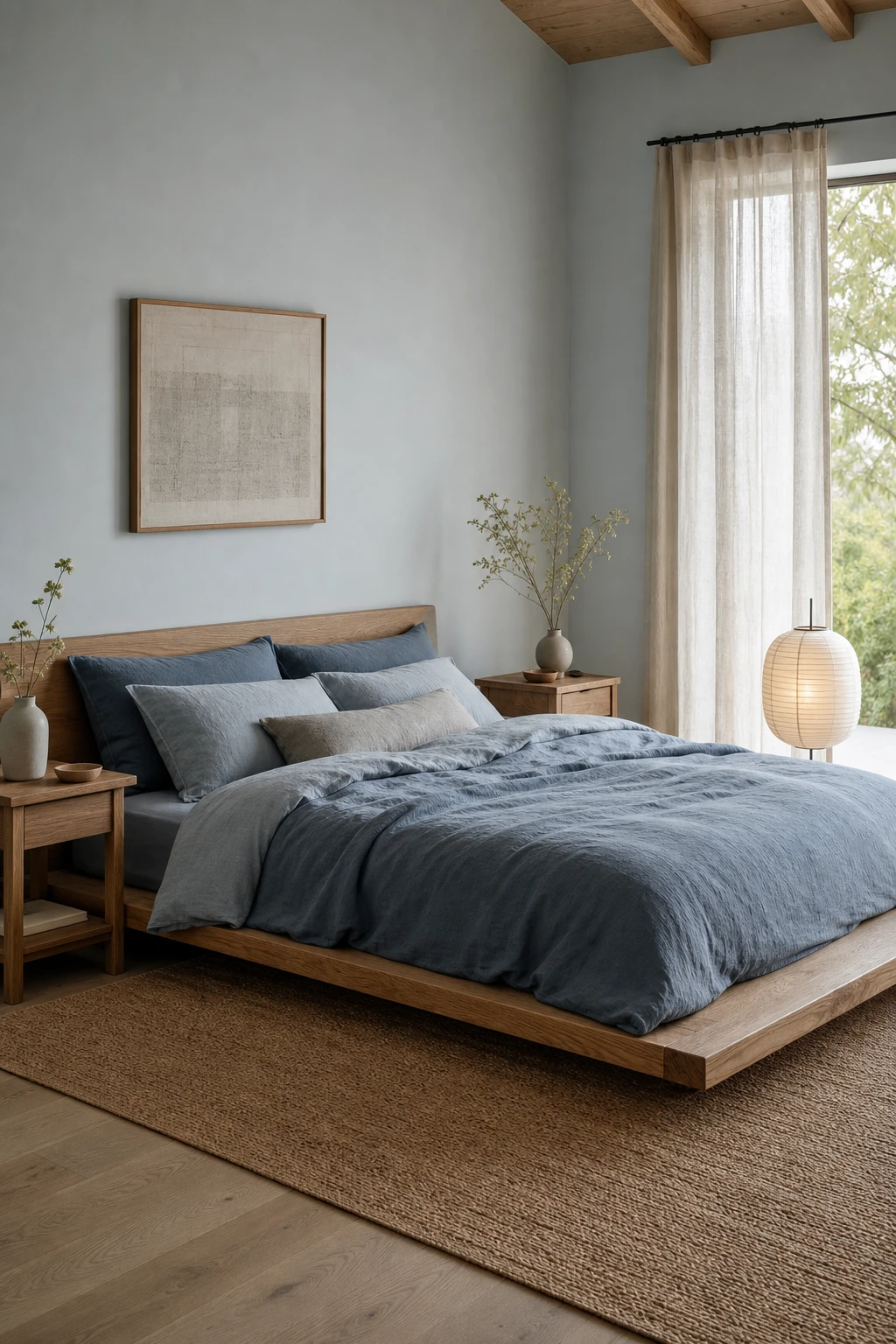
Pairing dusty blue linen against a low oak platform bed is one of my favourite moves in Japandi rooms because the contrast is quiet rather than sharp. You get warmth from the grain and stillness from the blue, and those two things together settle a room faster than almost any other combination I know. The flat, unfussy surface of the bed lets the colour do all the talking, and what I love most is how little else the room needs once this pairing is in place.
The Key Details
Low oak platform bed frame
Layered dusty blue linen bedding
Slender solid oak nightstands
Woven seagrass area rug
Ribbed paper shade floor lamp
Pro TipChoose a mid weight linen of around 170 gsm so the bedding lies flat and holds a clean fold rather than bunching into soft, shapeless piles.
AvoidPiling on extra throws and decorative cushions collapses the sculptural flatness that makes a Japandi bed look intentional in the first place.
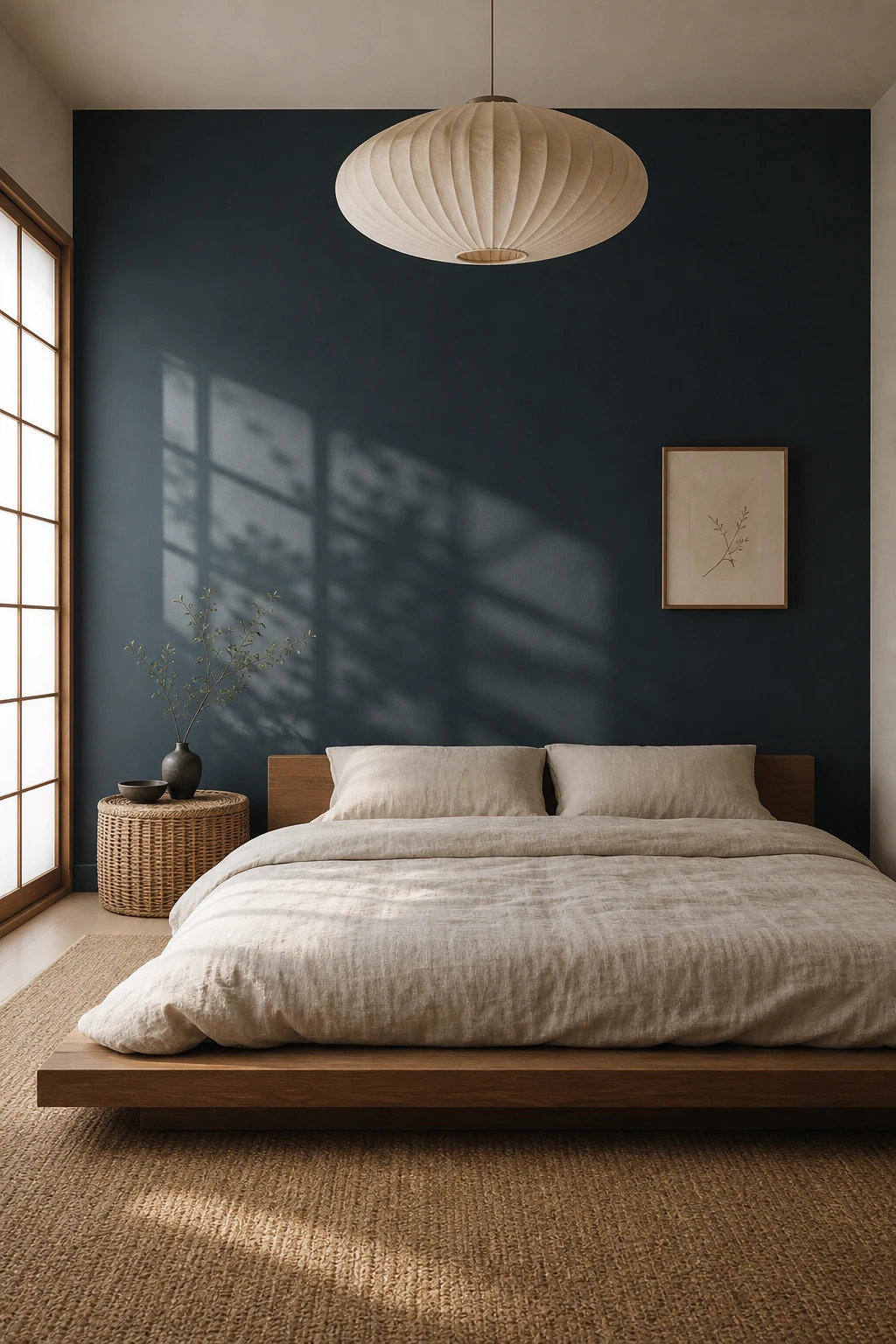
Blue Walls That Make a Minimalist Bedroom Feel Intentional Not Empty
There is a quiet confidence that comes from letting one deep, considered shade carry an entire room, and that is what draws me to this approach every time. Strip back the accessories, hold your nerve, and the colour does more than any gallery wall or layered shelf ever could. A single blue wrapping all four walls reads as calm rather than cold, especially in a Japandi space where restraint is the whole point.
The Key Details
Low platform bed frame in hand planed oak
Undyed linen bedding with raw hem finish
Rattan dome pendant light
Shoji inspired slatted wood window panel
Ceramic bud vase on solid oak bedside shelf
Pro TipIn a small bedroom, paint all four walls the same blue rather than picking one feature wall, because wrapping the colour around you pulls the room together and makes the space feel deliberate rather than unfinished.
AvoidFilling the room with decorative objects after committing to a strong wall colour splits the eye in too many directions and the whole sense of calm you painted for simply disappears.
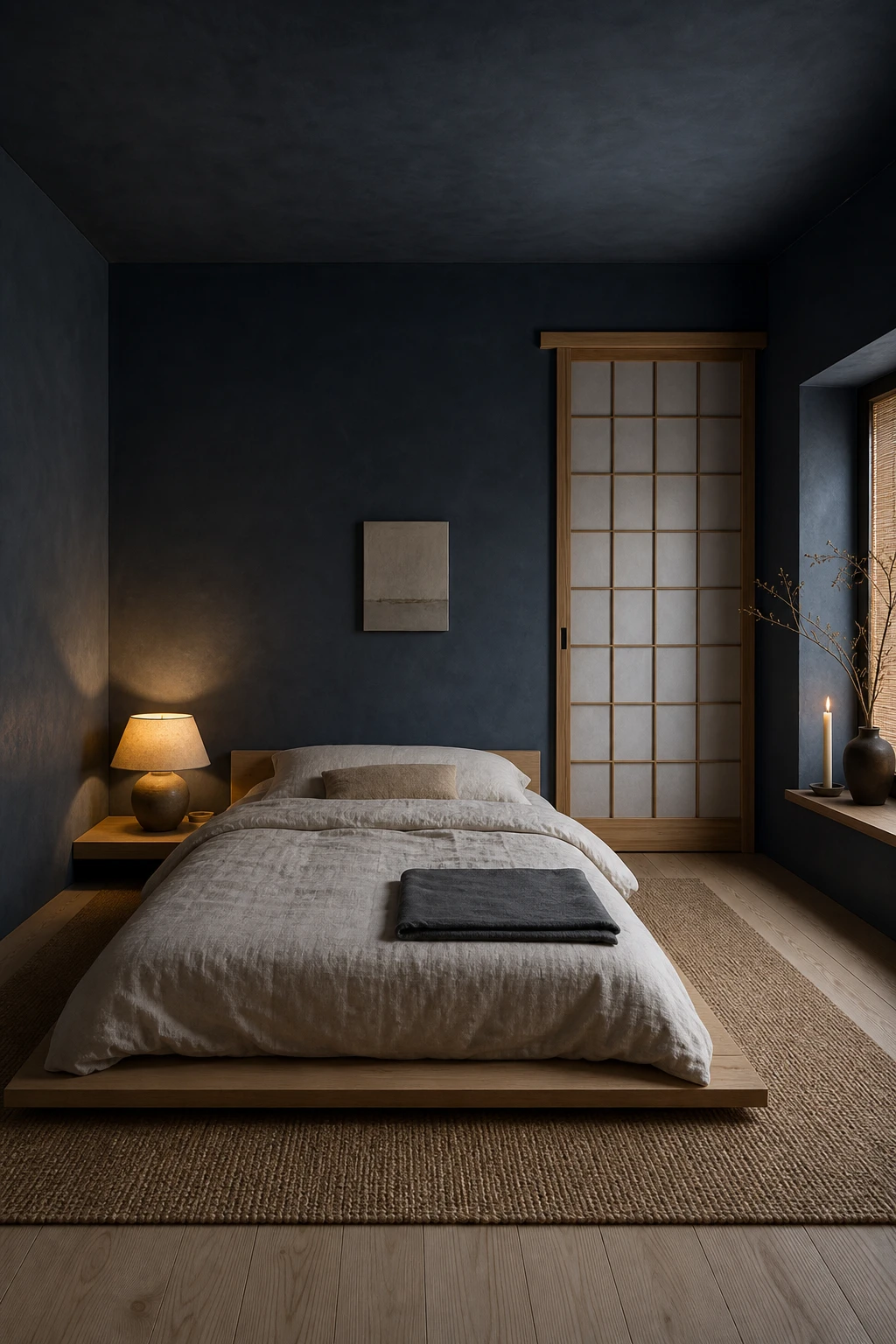
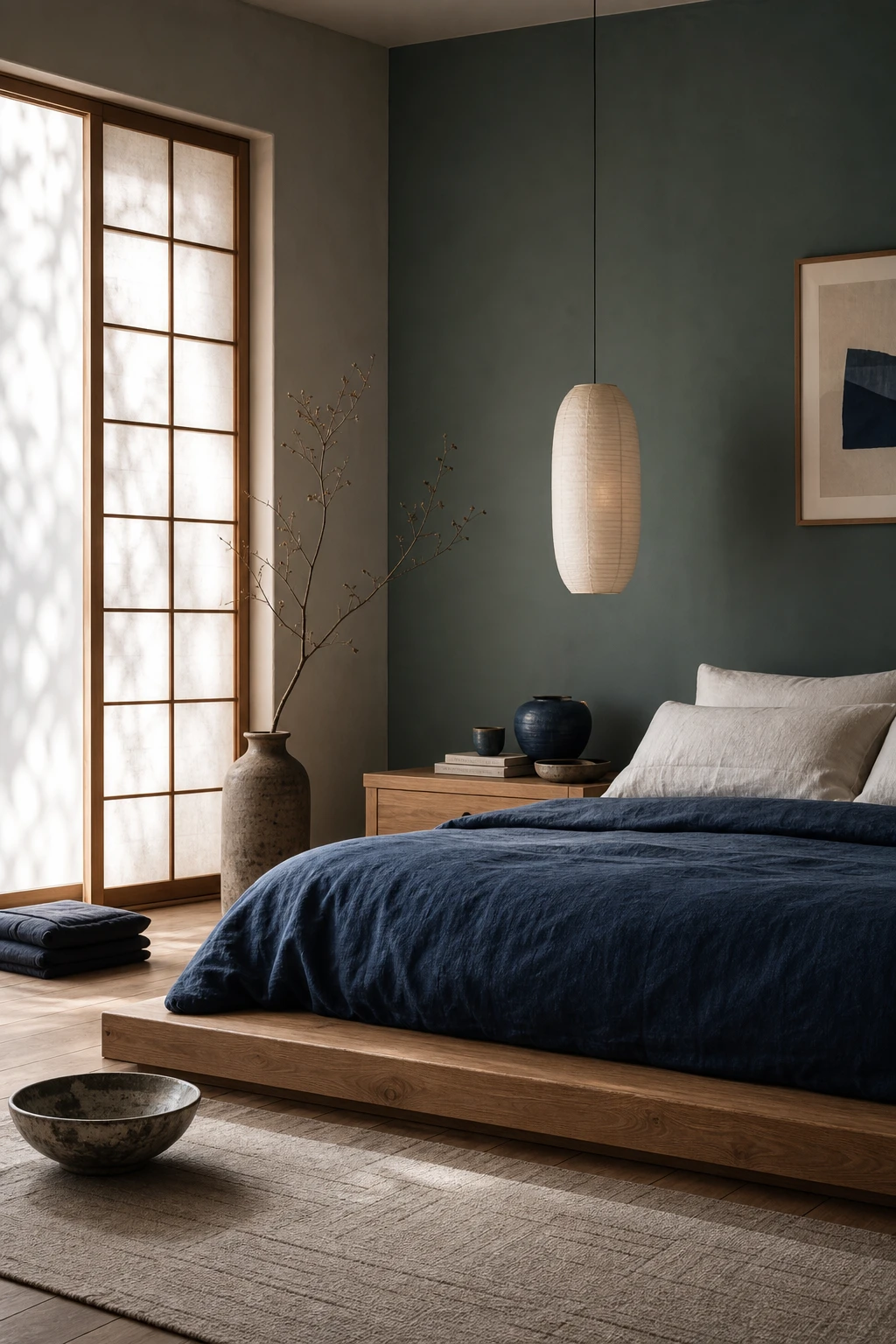
Dark Blue All Around and Why It Works Better Than You Expect
Dark blue all around sounds bold, but the cocoon effect it creates is genuinely one of the most restful things you can do in a bedroom. What I love is how the eye stops hunting for edges and the whole room settles around you. You get that wrapped, held feeling that pale rooms rarely deliver. Pale ash floorboards and one or two natural light sources do the work of stopping it feeling heavy.
The Key Details
Low platform bed frame in unfinished ash
Handthrown ceramic table lamp
Woven rush floor mat over pale ash floorboards
Shoji inspired sliding oak panel door
Matte plaster walls and ceiling in full enclosure
Pro TipKeep your flooring and ceiling a shade or two lighter than the walls so the room breathes upward and your eye has a natural place to rest.
AvoidUsing two or three different dark tones across walls, ceiling and textiles strips the space of contrast and leaves everything looking muddy and flat.
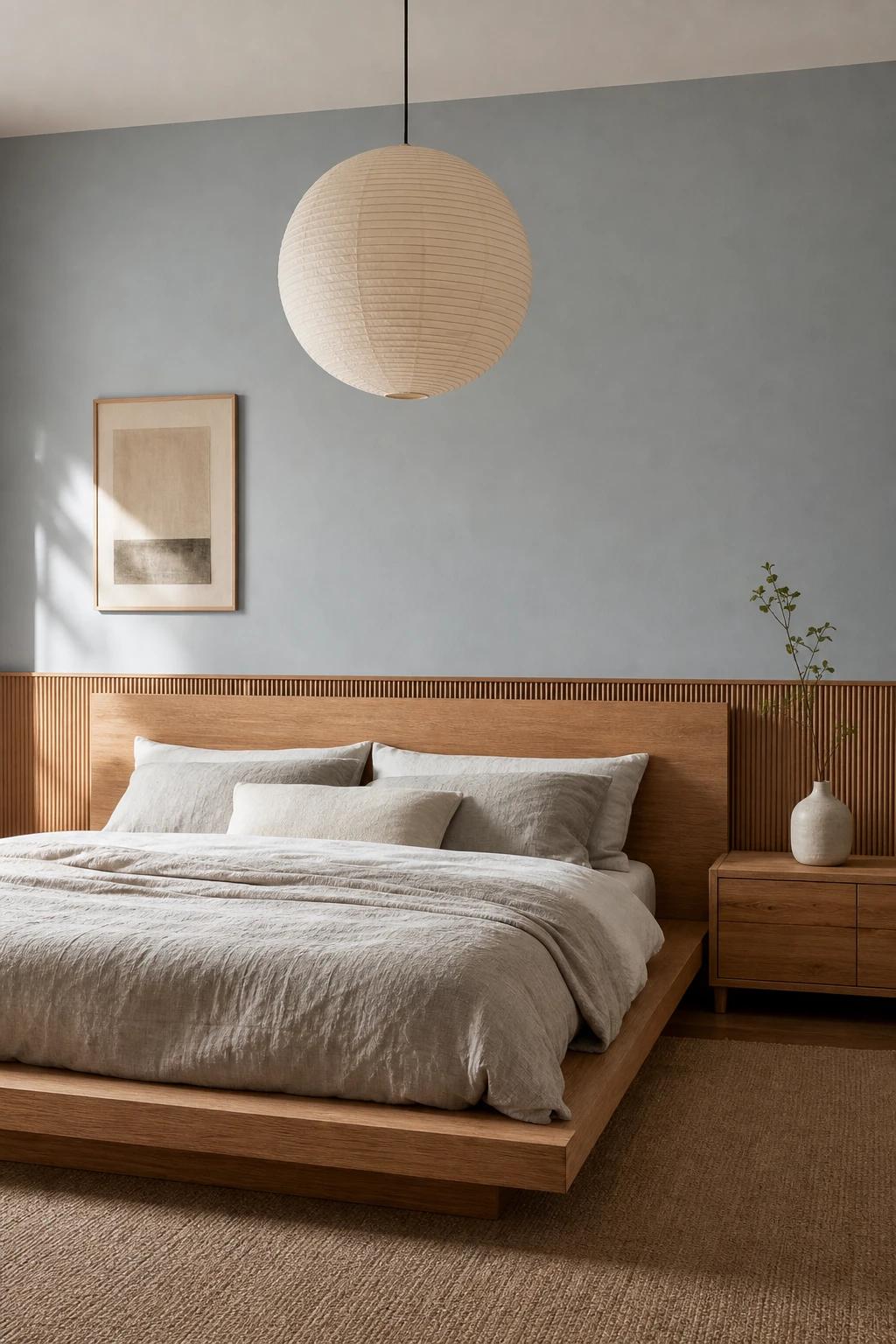
Light Blue and Warm Wood Together Hit a Note That Feels Just Right
Warm timber is the quiet hero here, pulling the cool blue back from feeling clinical and giving it somewhere soft to land. What I love most is how the wood grain adds a slow, earthy rhythm that your eye follows without realising it, and you get that same calm you feel in a forest after rain. The blue lifts the wood too, stopping it from reading heavy or dated.
The Key Details
Low platform oak bed frame
Washi paper globe pendant
Undyed linen bedding
Slatted timber wall panel
Unglazed ceramic bud vase
Pro TipRun your main timber piece, whether that is a bed frame or wall panel, with the grain horizontal in a wide room and vertical in a narrow one, and the proportions will feel settled without you touching another thing.
AvoidChoosing a blue so pale it has almost no pigment left will leave it looking chalky and washed out against honey toned oak, and the whole pairing loses the quiet tension that makes it beautiful.
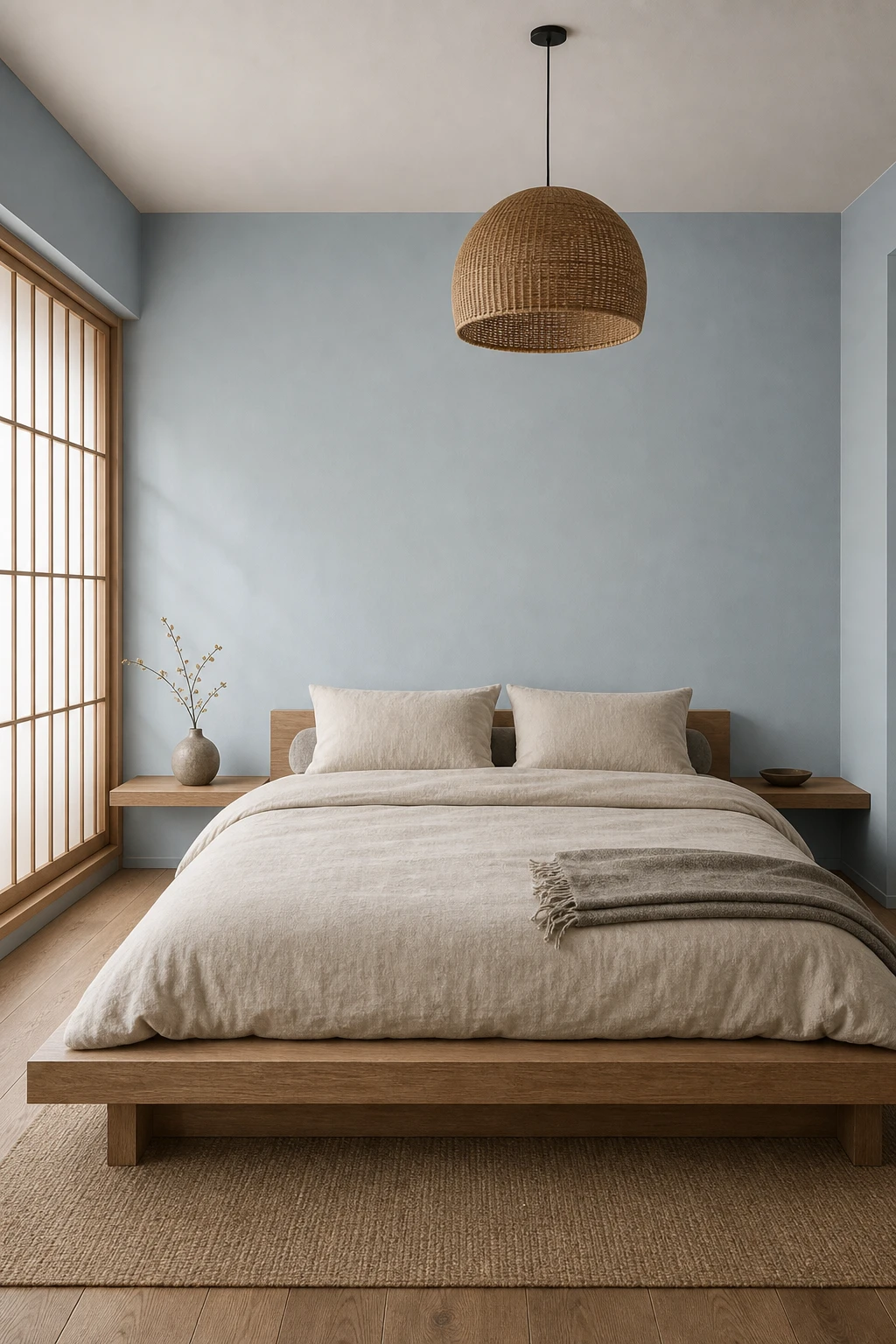
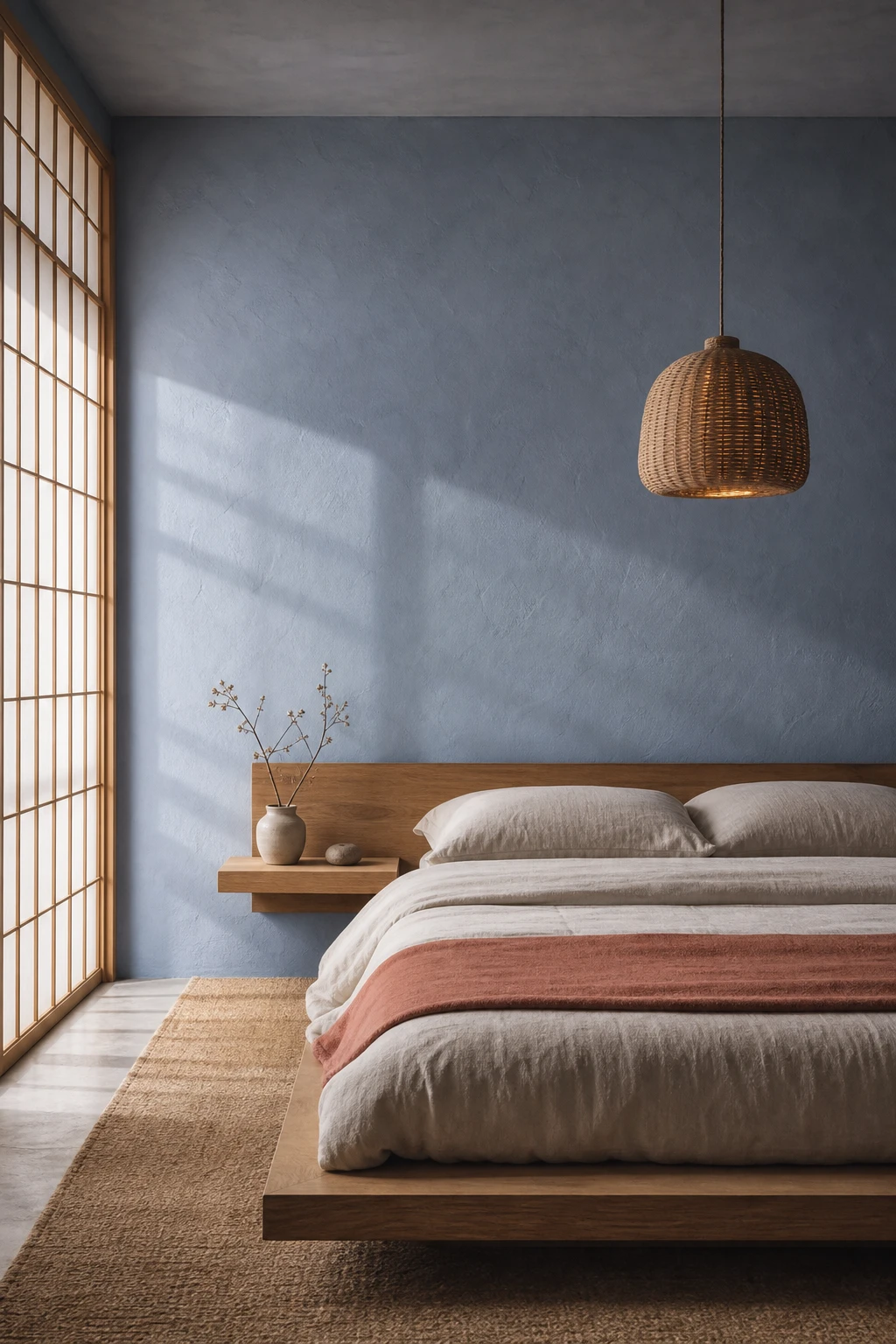
Muted Blue on the Walls Is the Quiet Move That Makes a Room Breathe
Muted blue walls are one of my favourite quiet moves in a Japandi bedroom, because the right shade carries just enough colour to feel intentional without asking for attention. What I always check is the undertone: a blue with a soft green or grey lean will read serene at noon and still feel warm by lamplight, while a cool flat blue can tip into clinical. You will notice how the unfinished oak and undyed linen in this room pull the warmth forward, so the walls never feel sad or hollow.
The Key Details
Low platform bed frame in unfinished oak
Undyed linen bedding with muted terracotta throw
Woven rattan dome pendant light
Rice paper shoji screen panel
Floating oak bedside shelf with ceramic bud vase
Pro TipPaint at least an A3 sized swatch directly on your wall and live with it through a full day, checking it in morning light, afternoon sun, and then again under your evening lamps before you commit.
AvoidPushing a blue so far toward grey that all the colour drains out leaves you with a wall that reads more tired than tranquil, and no amount of warm timber will rescue it.
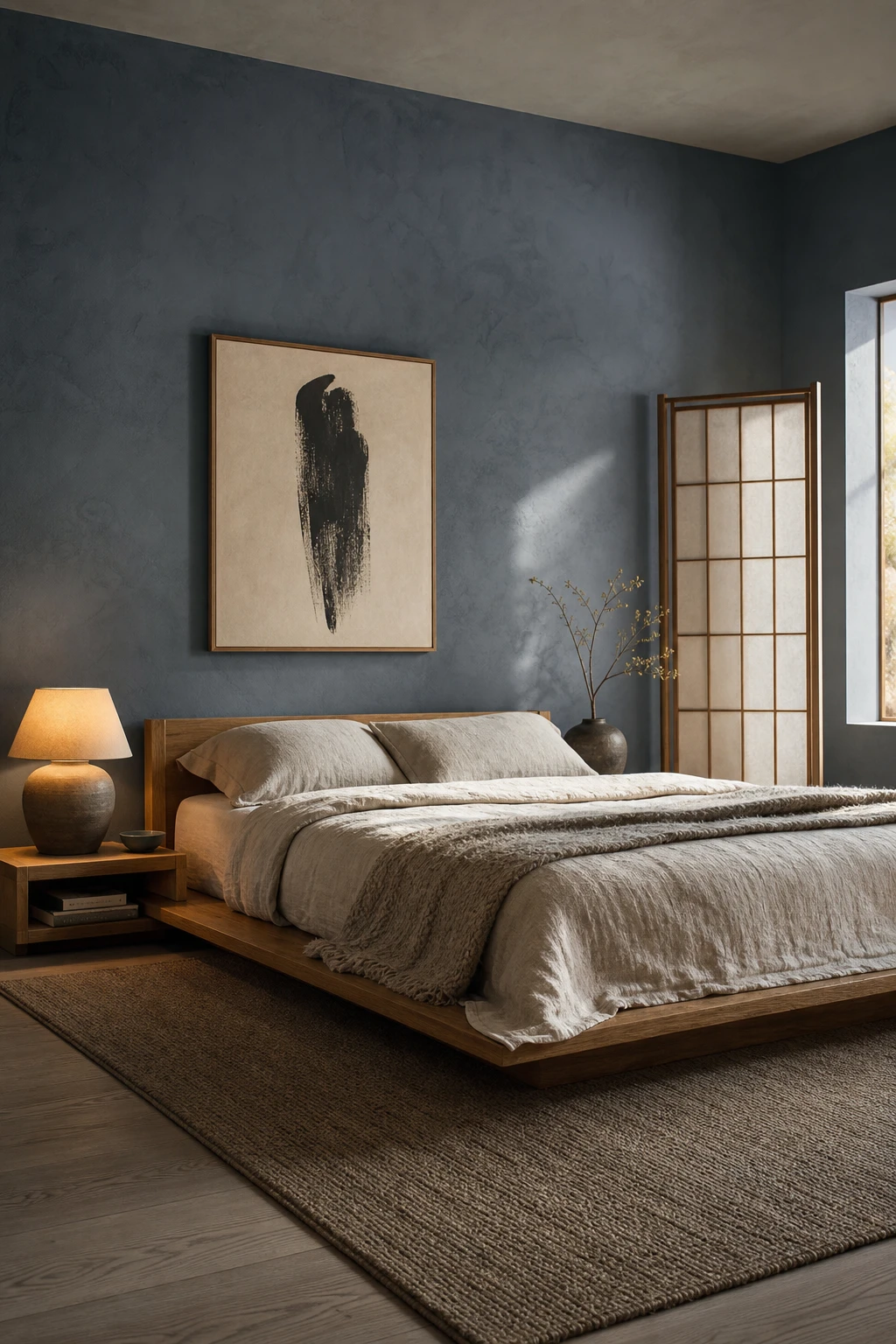
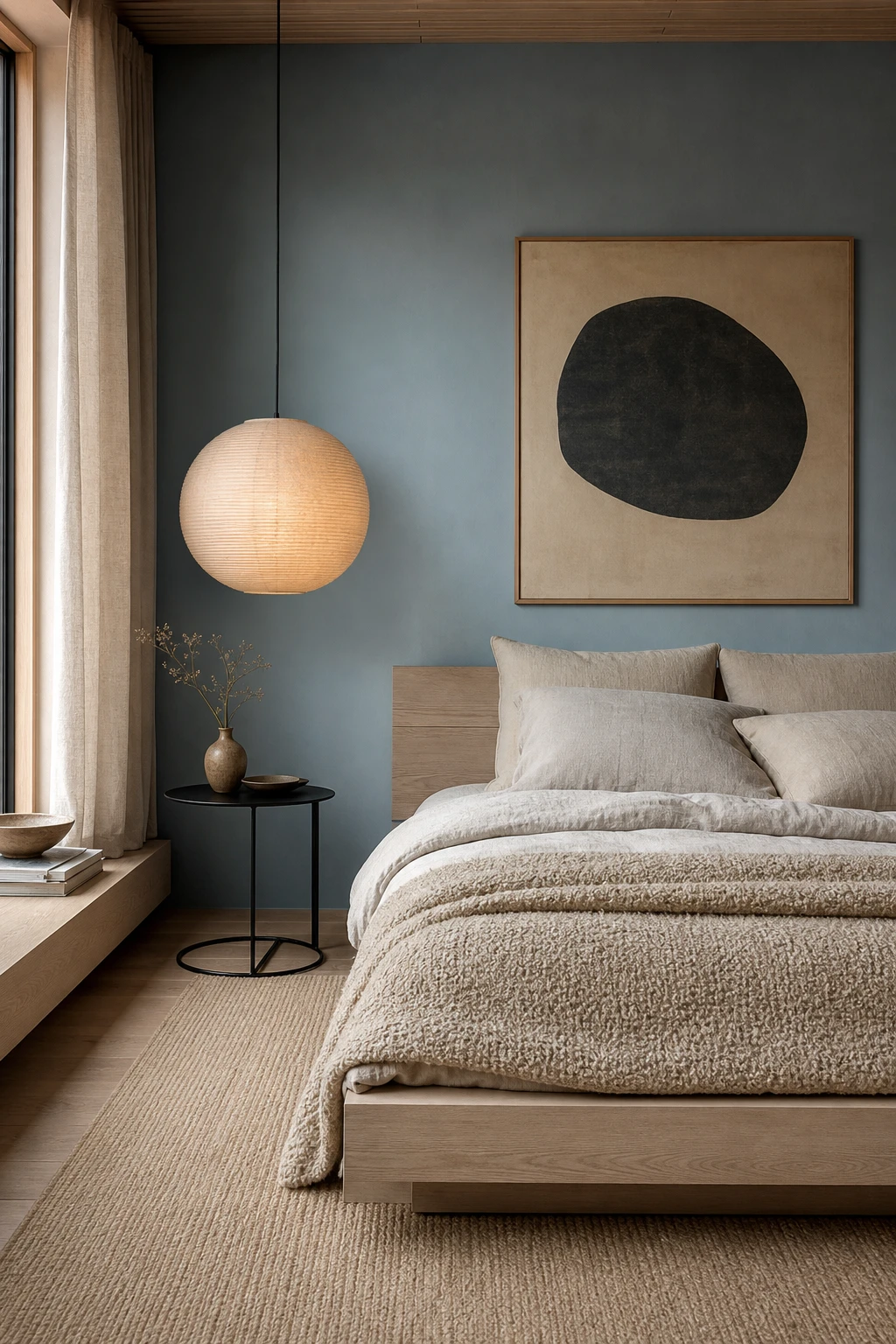
Smoky Blue Walls Give a Japandi Bedroom That Hard to Name Atmosphere
Smoky blue sits right in that quiet middle ground between colour and neutral, and that is exactly what makes it so useful in a Japandi bedroom. You get mood and depth without the room tipping into something heavy or dramatic. What I love about greyed blues is the way they shift slightly in changing light, feeling cooler at noon and almost warm by lamplight. That gentle ambiguity is the whole atmosphere people are searching for but cannot quite name.
The Key Details
Low platform oak bed frame
Undyed linen and wool throw bedding
Shoji screen panel in ash and rice paper
Handthrown ceramic table lamp
Abstract ink brushstroke artwork in raw wood frame
Pro TipLayer undyed linen and raw wool bedding against smoky blue walls and the tones will read as one calm, cohesive whole rather than colour against neutral.
AvoidPainting smoky blue in a dead flat finish can drain the wall of all its depth and leave it looking chalky and lifeless rather than atmospheric.
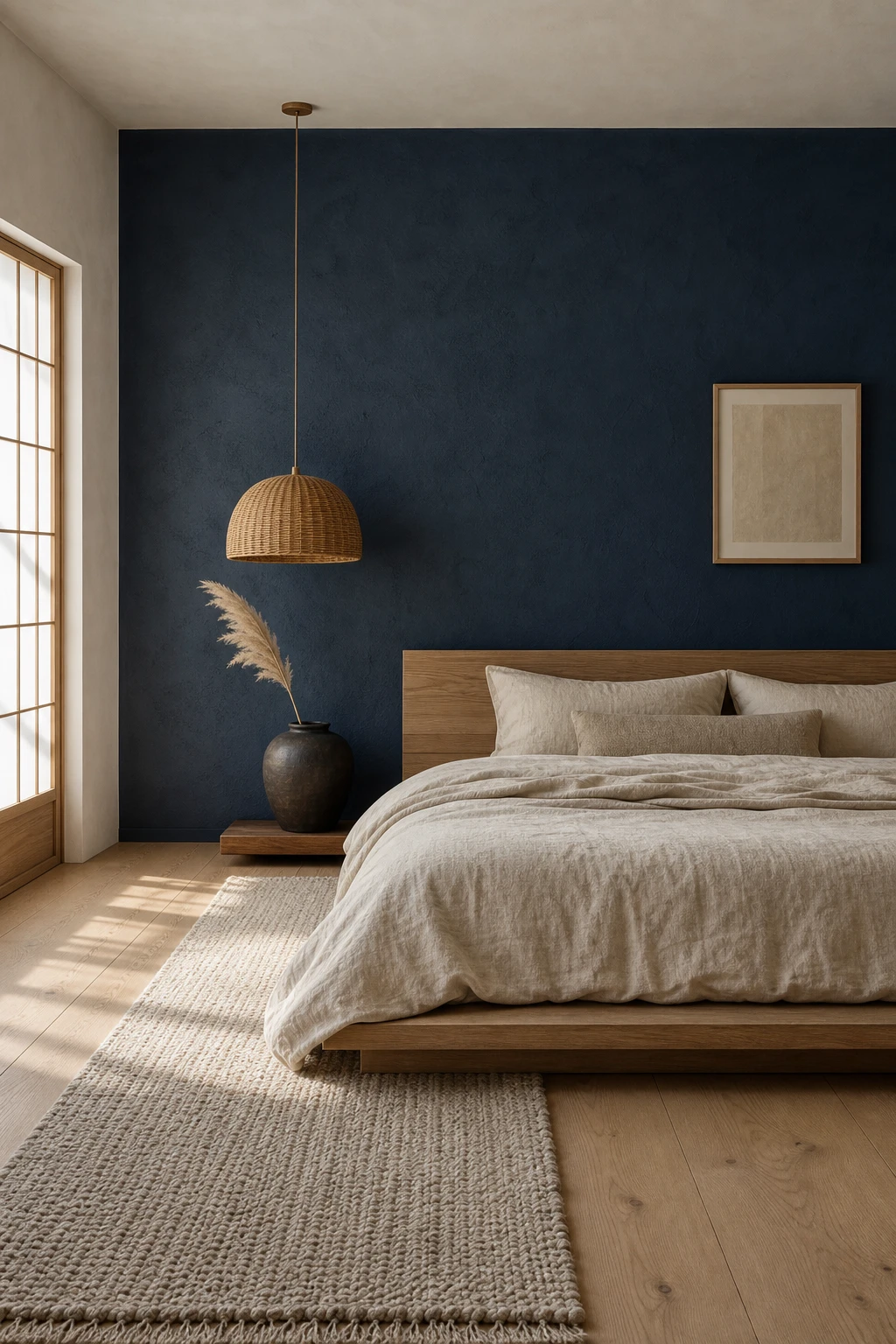
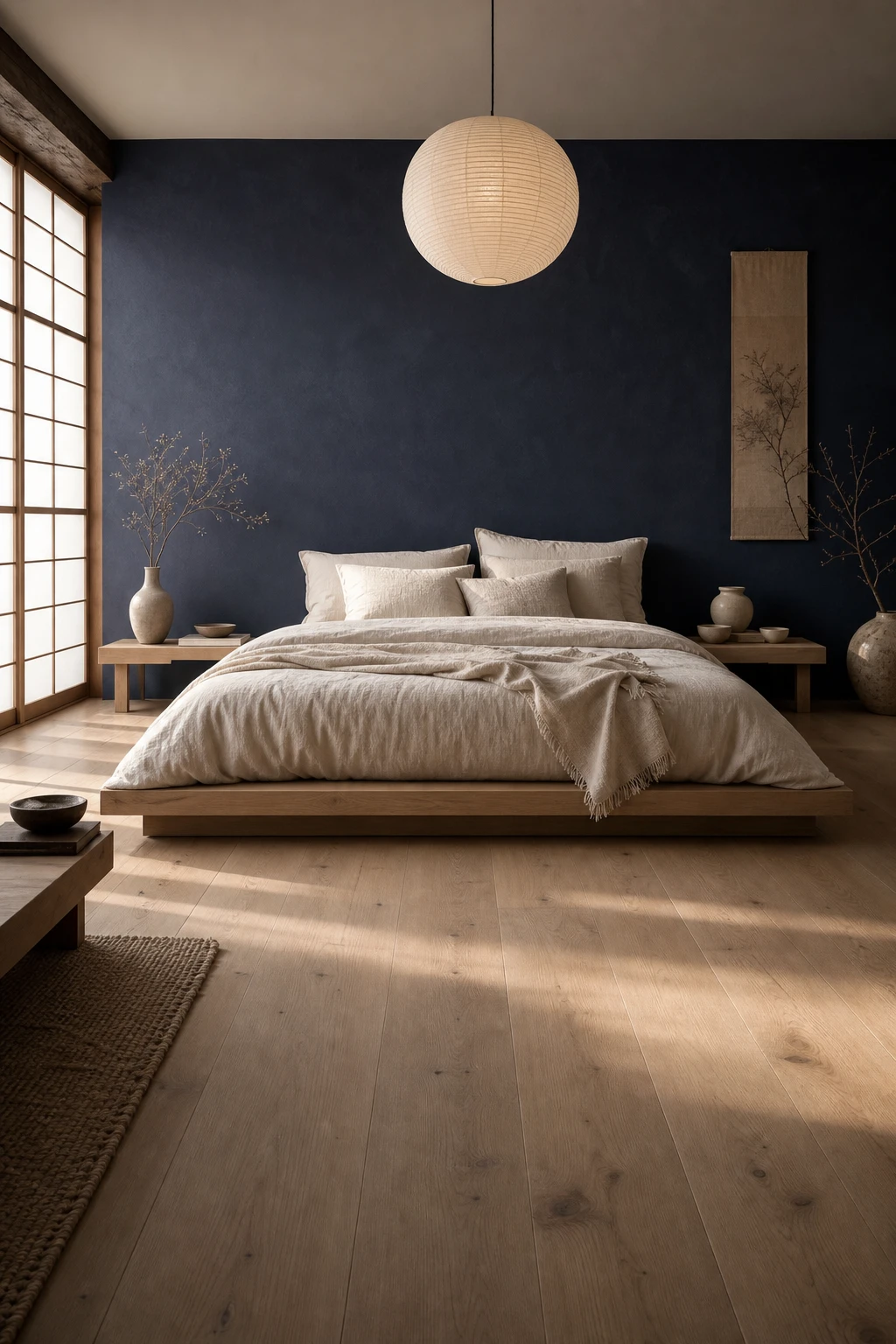
One Navy Wall Behind the Bed and the Room Suddenly Has a Backbone
One navy wall behind the bed is the move I come back to again and again in Japandi rooms because it gives the whole space a quiet authority without overwhelming it. You get the depth and drama of a bold colour, but the rest of the room stays calm and breathing. What wins me over every time is how that single dark plane makes the pale oak bed float in front of it, almost like the wall is doing the job a heavy headboard would.
The Key Details
Low platform bed frame in pale oak
Woven rattan pendant light
Hand knotted wool runner in oatmeal
Ceramic bedside vessel with dried pampas stem
Shoji style window with natural timber frame
Pro TipMatch the width of your navy panel exactly to the width of your bed frame so the two read as one composed unit rather than a wall that just happens to be dark.
AvoidPainting a panel that is narrower than the bed creates an accidental, unresolved look that makes the whole composition feel like a mistake rather than a decision.
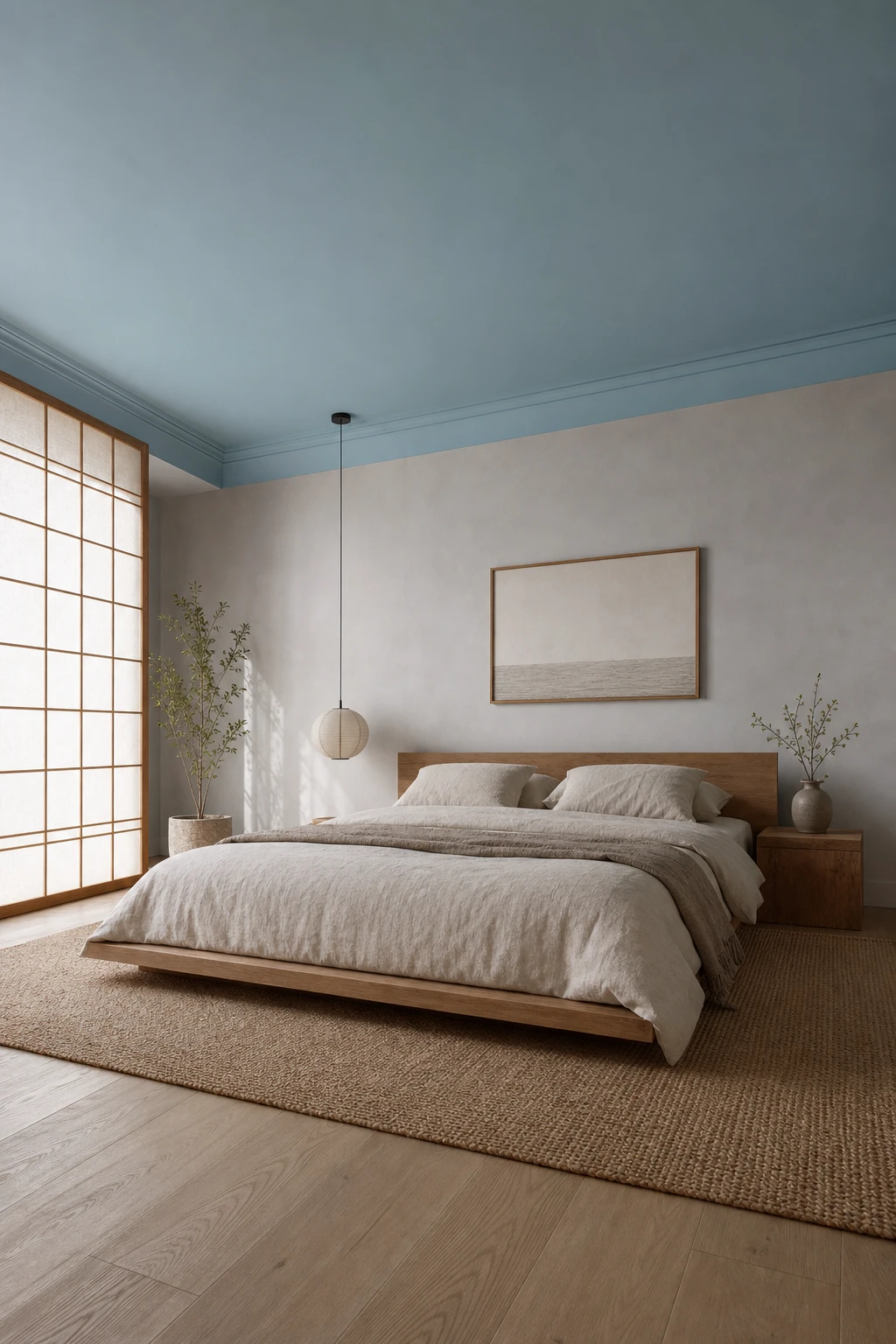
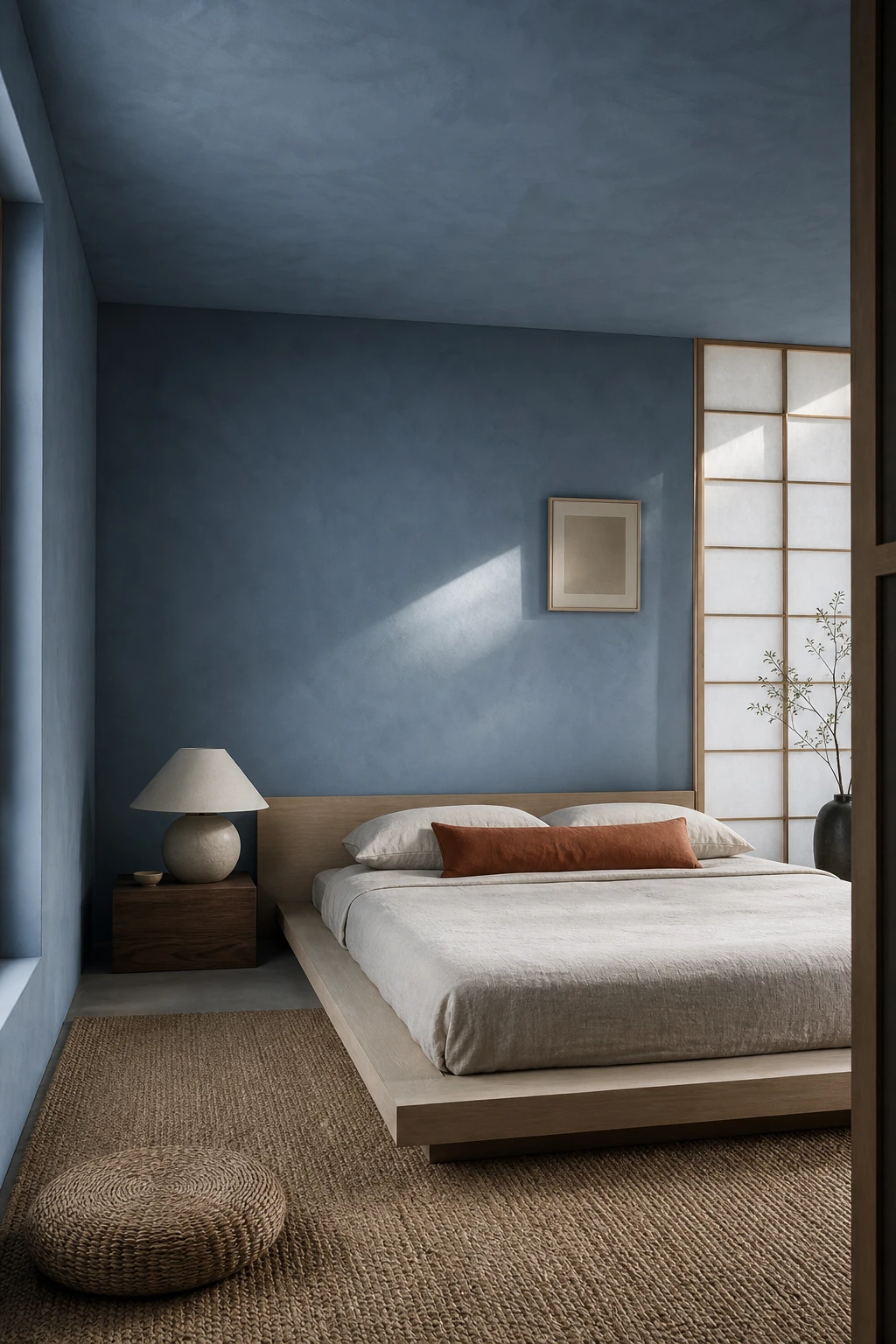
Paint the Ceiling Blue and Watch the Whole Room Pull Together
Most people treat the ceiling as a fifth wall they forgot to decorate, and a blue ceiling is the move that fixes that oversight beautifully. The moment colour goes up there the room closes into something complete rather than unfinished, and you get a soft canopy effect that makes the whole space read as one considered palette. What I love is how a quiet blue overhead deepens the calm without adding visual weight, especially when the walls below stay pale and the eye has plenty of room to breathe.
The Key Details
Low platform bed frame in pale oak
Undyed linen bedding set
Shoji screen room divider panel
Handthrown ceramic bud vase
Woven jute area rug
Pro TipPull your ceiling blue two shades lighter than the wall colour so the sky feeling reads clearly and the room never feels like a box.
AvoidPainting the ceiling a deep blue while keeping the walls the same tone removes all sense of lift and makes the ceiling feel like it is pressing down on you.
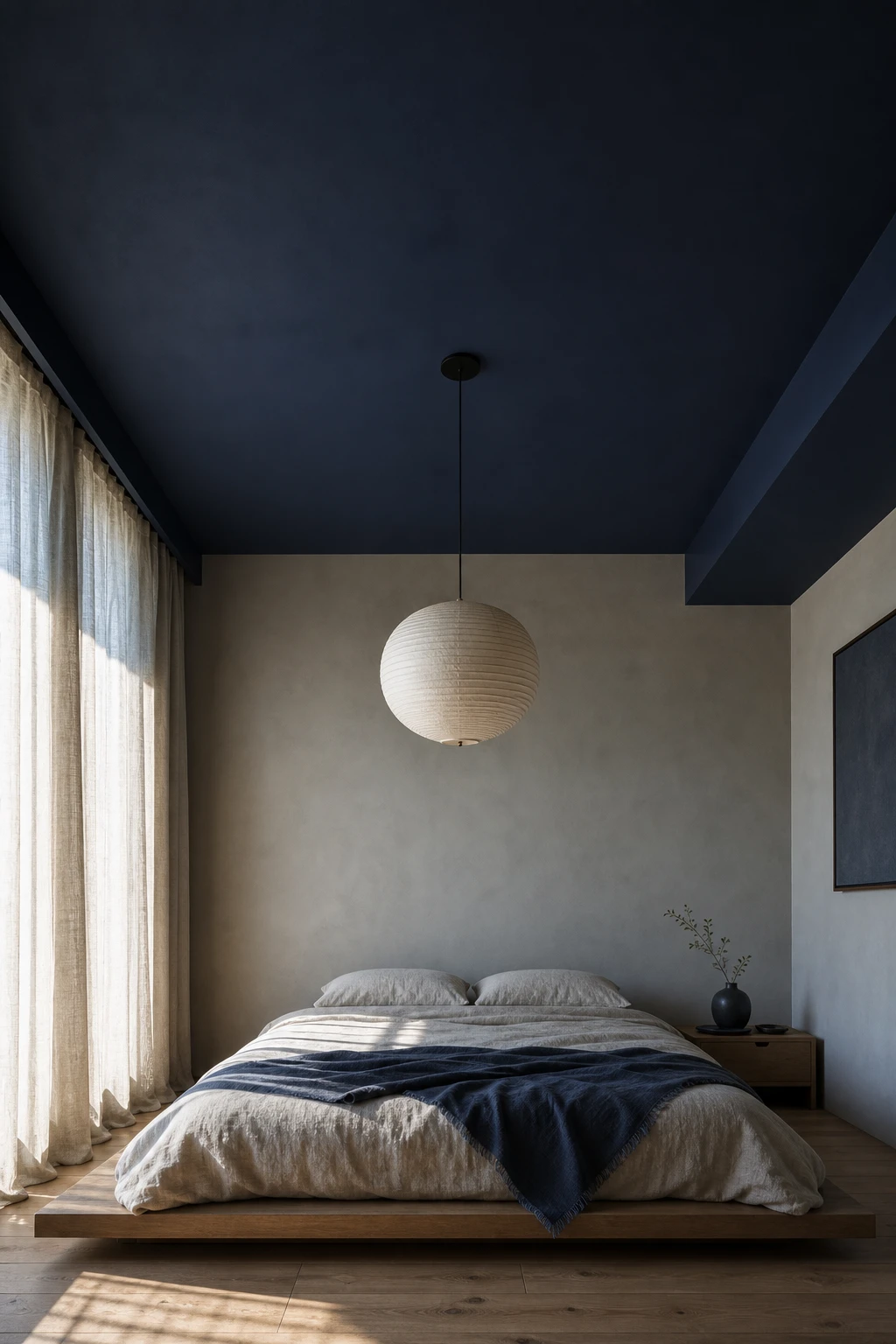
A Dark Blue Ceiling Feels Like Stars and Makes the Bed Feel Cradled
A deep navy or indigo ceiling pulls the room inward and wraps you in a way pale rooms simply cannot manage. What I love most is how it creates that rare held feeling, the way a forest canopy feels at dusk, with the bed becoming the obvious centre of gravity and everything below settling naturally around it. The darkness does not close the room down; it gives it a quiet focus that feels genuinely restful.
The Key Details
Low platform bed frame in solid oak
Washi paper pendant lantern
Undyed linen and indigo throw bedding
Wide plank oak flooring
Ceramic bud vase on low oak nightstand
Pro TipBring the ceiling colour down onto the top two or three centimetres of each wall so the colour melts into the room rather than sitting as a hard line where ceiling meets plaster.
AvoidA bright overhead fitting punches straight through the mood, flooding the ceiling with harsh light and turning that rich dark colour flat and grey.
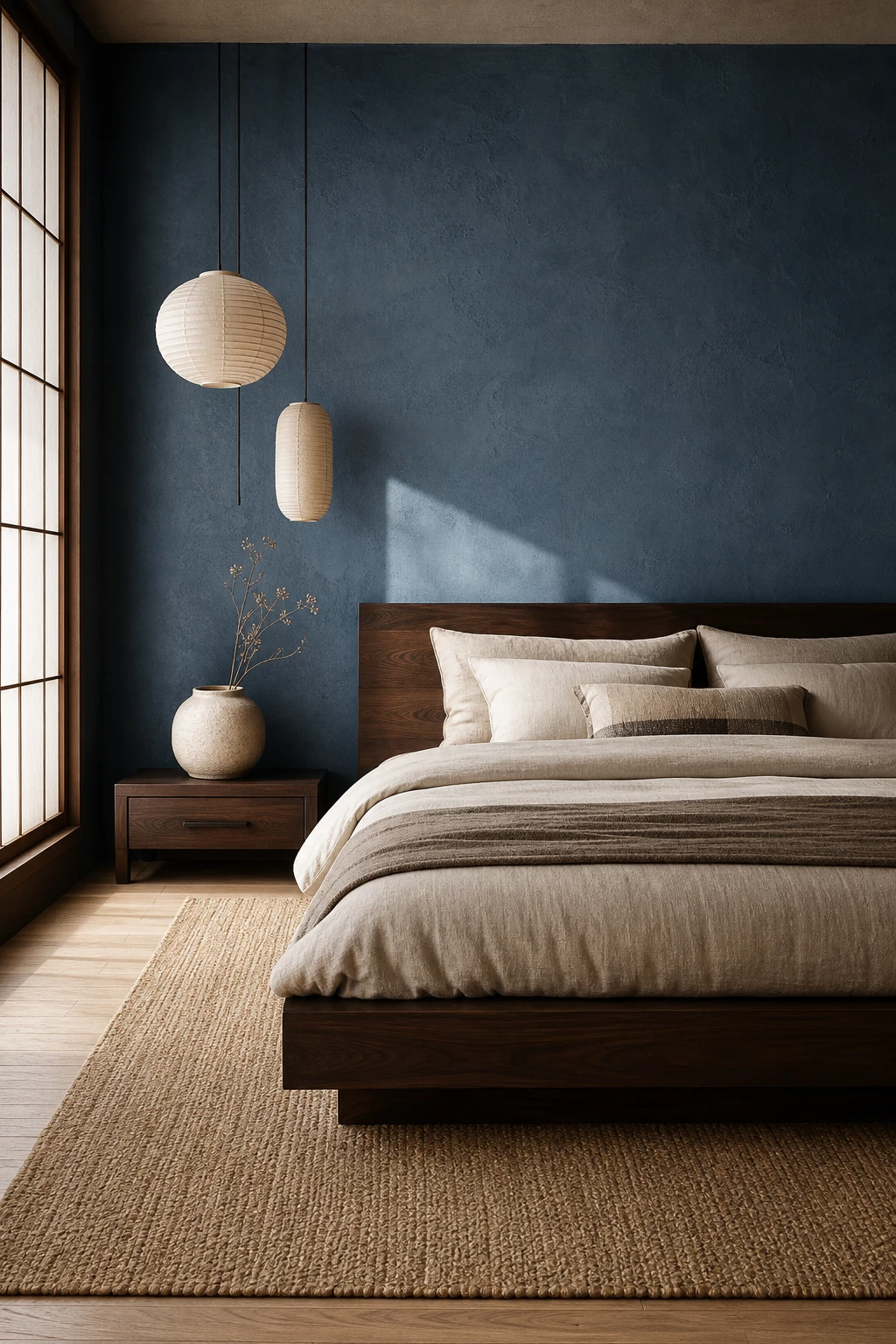
Blue and Dark Wood Side by Side Is a Pairing That Rewards You Every Morning
Blue and dark wood sit beside each other the way dusk and earth do, one cooling the air while the other pulls you back down to ground. What I love is how the cool hue makes the timber look richer, almost warmer, than it would against a neutral wall. You get this layered calm that feels complete the moment you open your eyes, no fussing required.
The Key Details
Dark walnut platform bed frame
Layered linen bedding in oatmeal and stone
Low dark timber nightstand with ceramic vessel
Woven jute floor runner over pale oak boards
Staggered paper lantern pendant lights
Pro TipRepeat the same dark wood finish on the bed frame, nightstand, and at least one shelf so the eye reads them as one considered system rather than a collection of separate pieces.
AvoidBringing in a lighter honey toned wood alongside the dark timber splits the scheme in two and quietly kills the quiet unity that makes Japandi feel so settled.
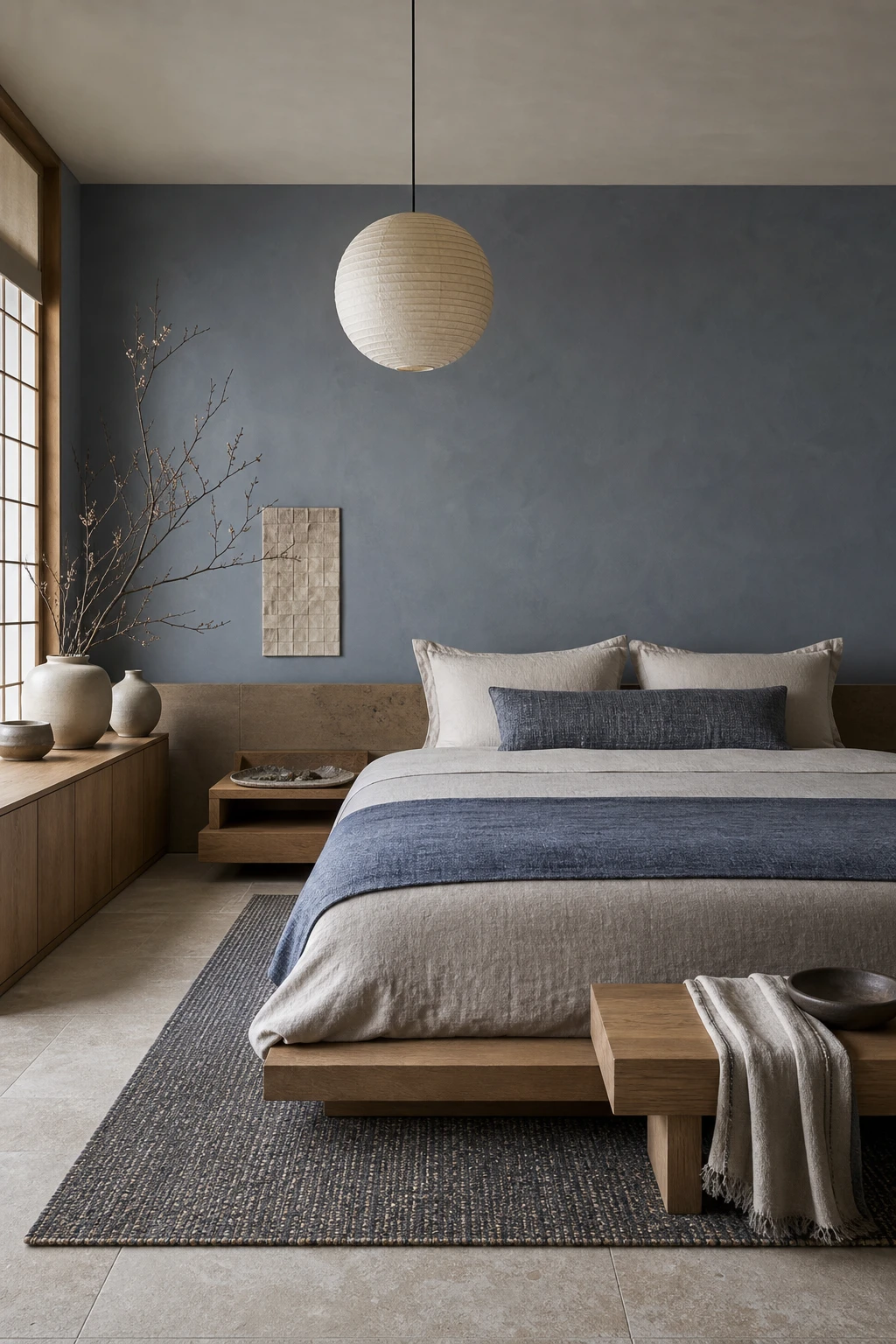
Blue and Stone Textures Together Feel Like a Room That Has Always Been There
Blue and stone together hit a balance I keep coming back to: the cool softness of the blue holds the eye while the stone grounds it in something honest and old. What I love is how one surface of honed limestone or raw concrete stops a minimal scheme from feeling floaty, giving you that sense the room has simply always been this way. The texture reads as quiet rather than rough because the blue absorbs it.
The Key Details
Low platform bed frame in raw oak
River stone tray on bedside shelf
Washi paper pendant light
Honed limestone floor tiles
Unglazed ceramic vessels on low sideboard
Pro TipLimit raw stone or concrete to a single surface, a floor, a shelf, or one wall panel, so it reads as an accent and the blue stays the mood setter.
AvoidBringing stone onto too many surfaces tips the whole palette toward industrial, and the calm the blue was doing so well quietly disappears.
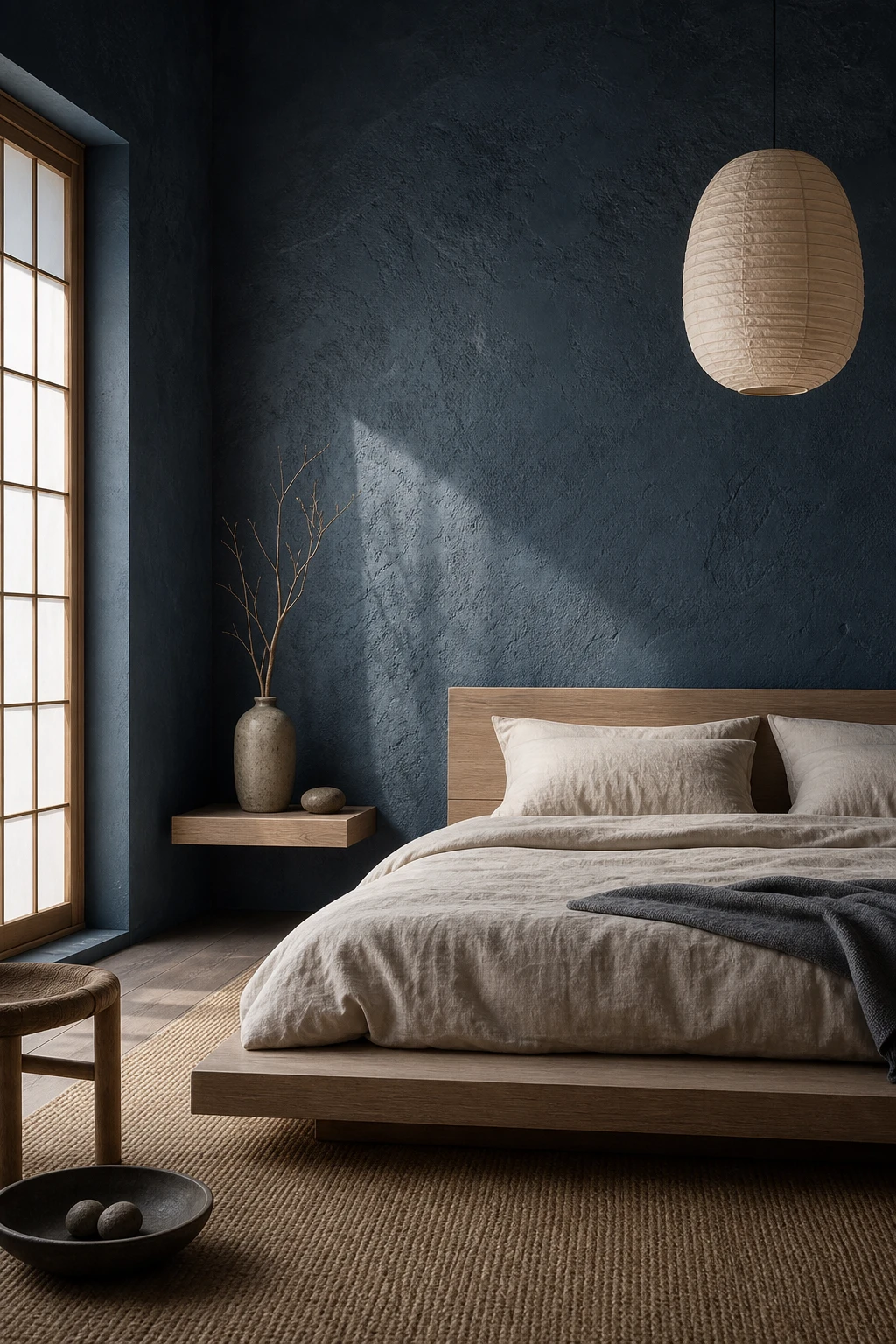
Plaster Walls Bring a Softness to Blue Japandi That Paint Alone Cannot
Textured plaster gives a blue Japandi bedroom something paint simply cannot: depth that shifts as the light moves across the day. What I love about this approach is that the wall itself becomes the visual interest, so you never need pattern, fuss, or extra layering to make the room feel alive. You get warmth and quiet at the same time, which is the whole point of Japandi done well.
The Key Details
Handworked plaster wall finish
Low ash timber platform bed
Undyed linen bedding with wool throw
Washi paper pendant light
Minimal floating bedside shelf
Pro TipTint the plaster base with a wash of your chosen blue before the final coat so the colour lives inside the texture, not just on top of it.
AvoidBuffing plaster to a high polish removes the natural variation and soft shadows that give the finish all its character, leaving you with a surface that looks more like plastic than stone.
A Dark Wall in a Japandi Bedroom Is Bolder Than You Think and Calmer Too
A dark wall behind the bed gives a Japandi room something a pale scheme simply cannot: one clear point the eye travels to and stays. The depth feels settled rather than heavy, and what wins me over every time is the way the darkness makes the pale linen and raw oak beside it glow warmer and softer than they ever would against white. There is no fussing required once that single plane is in place.
The Key Details
Low oiled oak platform bed
Pleated washi paper pendant light
Undyed linen duvet and pillows
Woven rattan bedside floor tray
Shoji style frosted window panel
Pro TipPlace a pale rattan bedside piece right up against the dark wall so the natural texture catches the light and stops the depth from reading cold.
AvoidPutting a dark accent wall in a room that gets little daylight and no warm artificial light creates a flat, oppressive box rather than the focused calm you are after.
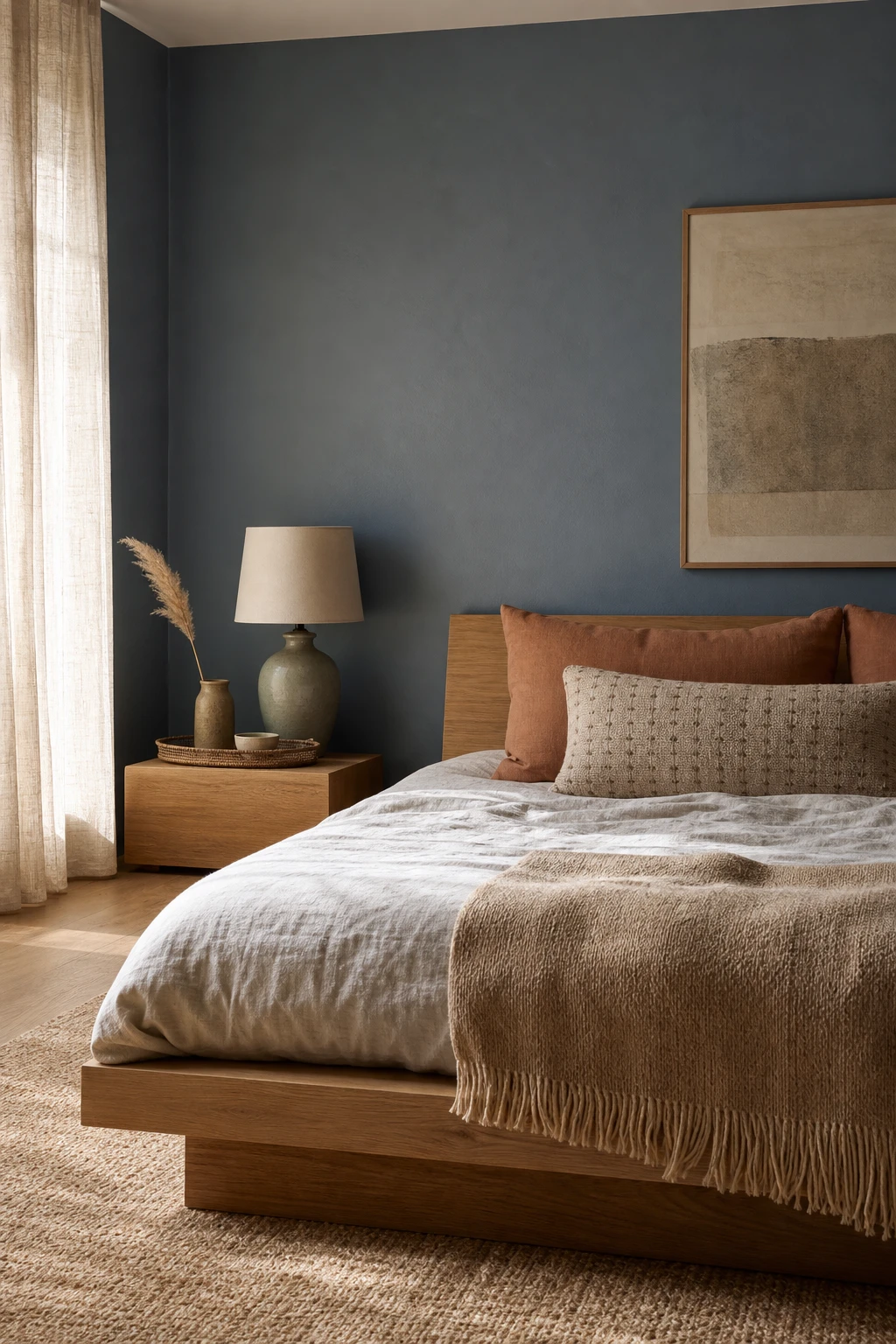
You Can Have Colour in a Japandi Bedroom Without Losing the Calm
Colour does belong in Japandi, and what wins me over every time is choosing shades that have had the brightness dialled right down. Terracotta, sage and warm sand all sit quietly beside each other because none of them shout. You get a room that feels personal and layered, yet the calm never breaks.
The Key Details
Low platform bed in hand planed oak
Muted terracotta linen cushions
Dusty sage ceramic table lamp
Sheer hemp curtains
Rattan tray with dried pampas stem
Pro TipCluster your colourful pieces at one height only, such as the bed or a single shelf, so the eye settles in one place rather than bouncing around the room.
AvoidScattering colour at every level, floor to ceiling, means no single palette reads as a deliberate choice and the room feels restless rather than calm.
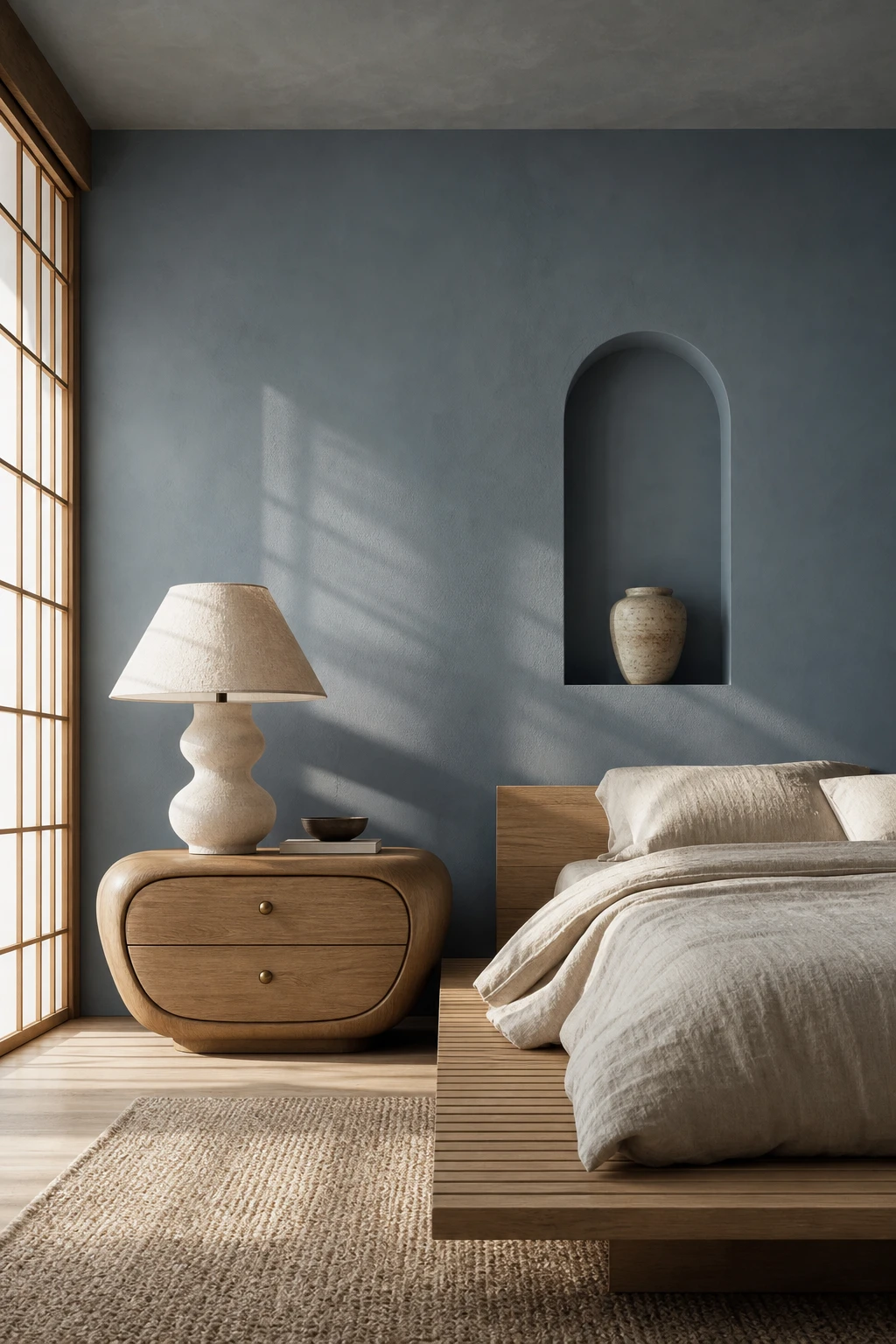
Retro Curves and Japandi Blue Turn Out to Be a Surprisingly Happy Match
Retro curves and Japandi minimalism sound like opposites, yet one rounded vintage piece is exactly what loosens the style’s natural stiffness. What I love here is the way a single curved nightstand or softly bowed lamp base reads as warmth rather than clutter, and you get that calm the style promises without the room feeling cold or rigid. The key is keeping everything else spare so the retro detail lands as a considered choice.
The Key Details
Curved vintage nightstand
Low slatted oak platform bed
Sculptural ceramic table lamp
Arched wall niche
Handthrown ceramic vessel
Pro TipHunt for retro pieces in teak or walnut specifically, because those warm mid tones already live inside the Japandi wood palette and the whole room holds together without any extra effort.
AvoidBringing in two or three retro pieces at once pulls the room toward full mid century nostalgia, and that busy, themed feeling works against the stillness Japandi is built on.
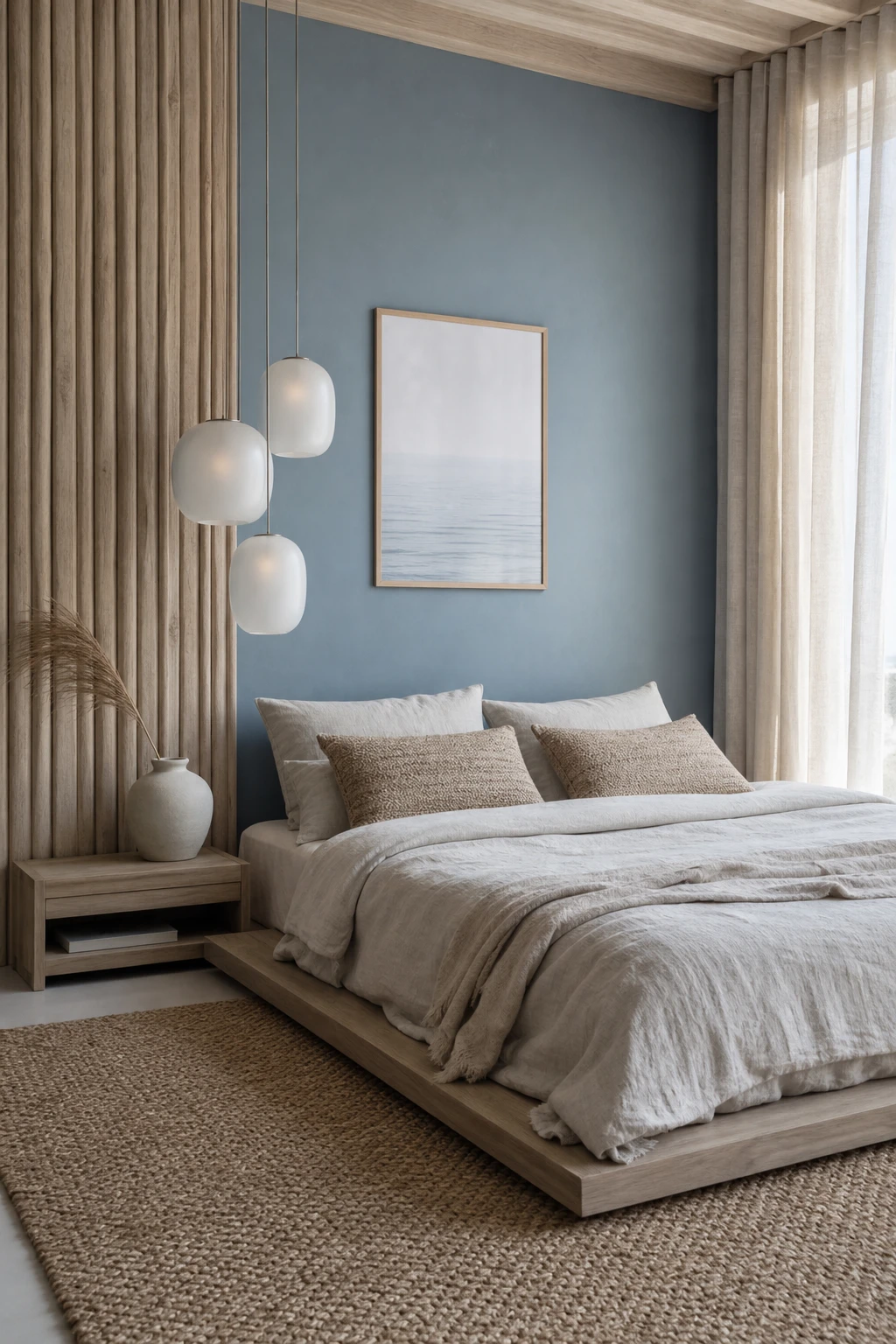
Where Coastal Air Meets Japandi Stillness and the Blue Ties Both Together
Coastal Japandi wins me over because both languages are already speaking the same quiet dialect: raw materials, open space, and nothing fussy. The bleached oak bed and driftwood wall panel bring the shoreline in without announcing it, and the blue ties the two together like a shared exhale. You get lightness that never tips into seaside kitsch because the jute rug and unglazed ceramic keep everything grounded and warm.
The Key Details
Low platform bed frame in bleached oak
Staggered frosted glass pendant cluster
Driftwood vertical wall panel
Woven jute floor rug
Dried pampas stem in unglazed ceramic vessel
Pro TipReach for undyed linen bedding over bright white cotton and the whole room stays sun warmed rather than sailing holiday.
AvoidBringing in shells, rope details, or anchor motifs is the fastest way to collapse the Japandi edit into a beach house theme and lose all that hard won stillness.
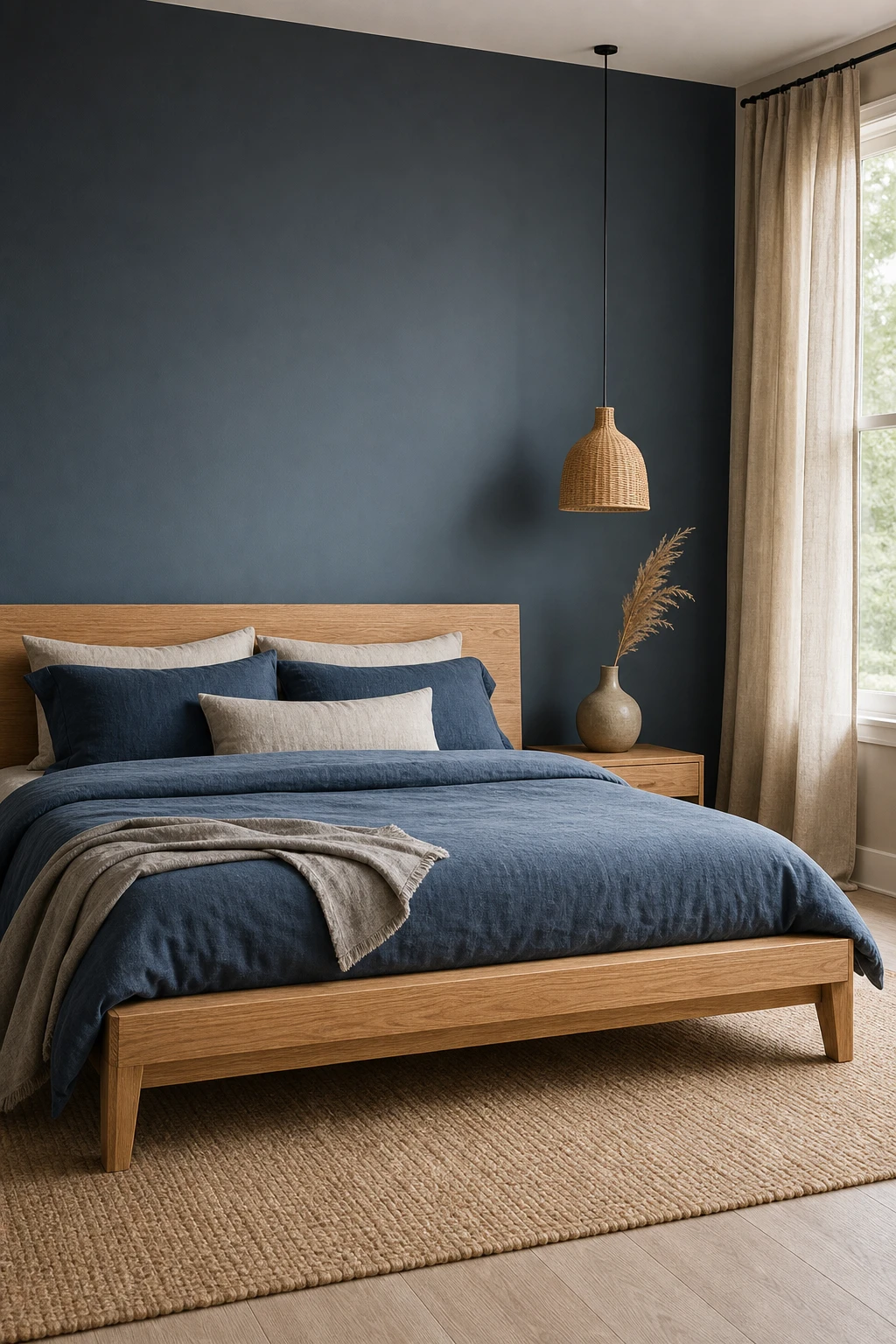
A Modern Wooden Bed With Blue Bedding Is as Close to Perfect as a Bedroom Gets
A low platform bed in solid oak sits close to the floor and that single choice changes everything. You get clean horizontal lines that let the layered blue bedding become the centrepiece rather than a detail tucked beneath a towering headboard. What I love here is the way graduated slate to indigo linen draws the eye across the whole bed rather than upward, so the room feels wide, calm and genuinely restful. The natural grain of the oak and the cool blue tones do exactly what Japandi asks of them: quiet contrast, nothing competing.
The Key Details
Low profile solid oak bed frame with tapered legs
Layered blue linen bedding in graduated slate to indigo tones
Slim rattan pendant light
Woven jute area rug
Sheer linen curtains pooling at the sill
Pro TipChoose a platform bed with a headboard no taller than 60 cm so the bedding sits at true picture frame height and holds the eye right where you want it.
AvoidA headboard that rises above 90 cm turns your carefully layered blue bedding into a small afterthought sitting at the bottom of a large wooden wall.
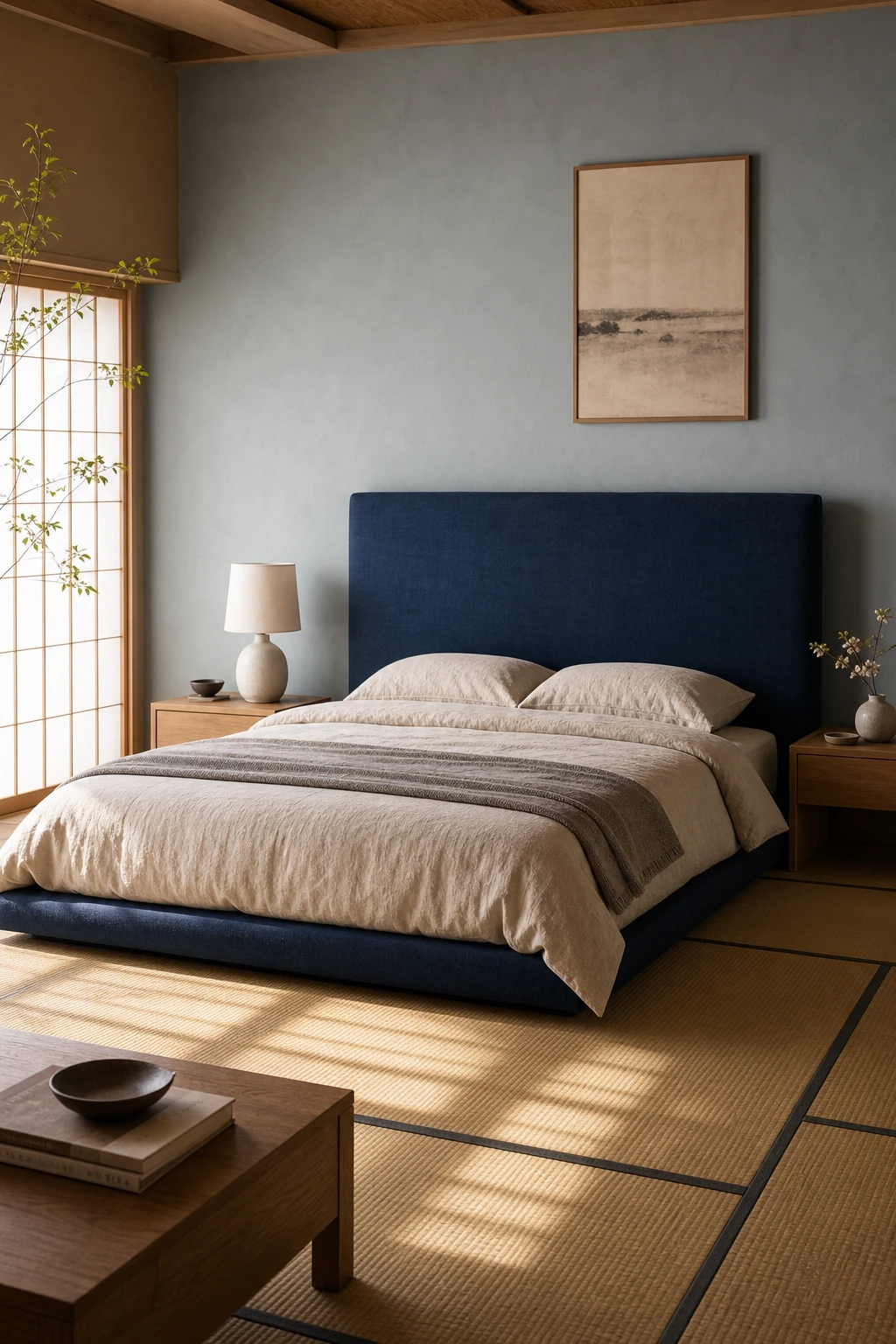
A Blue Bed Frame Changes the Whole Game in a Minimalist Japandi Room
Putting all the colour into the bed itself is one of my favourite moves in a Japandi room, because the walls stay calm and the eye goes exactly where you want it. You get a clear focal point without a single thing feeling busy or overdone, and a low profile upholstered frame in soft blue reads almost like furniture and art at once. What wins me over is how grounded it looks when natural oak and woven matting carry everything around it.
The Key Details
Low profile upholstered bed frame
Solid oak low nightstands
Shoji screened window
Woven tatami floor matting
Ceramic bud vase and minimal lamp pairing
Pro TipChoose a velvet or boucle weave in your blue rather than a flat fabric, because the texture catches light and keeps the bed looking considered rather than flat on camera and in real life.
AvoidSelecting a blue that shifts cool and grey under your room’s natural light will make the whole bed look washed out and disconnected from the warm oak and linen tones around it.
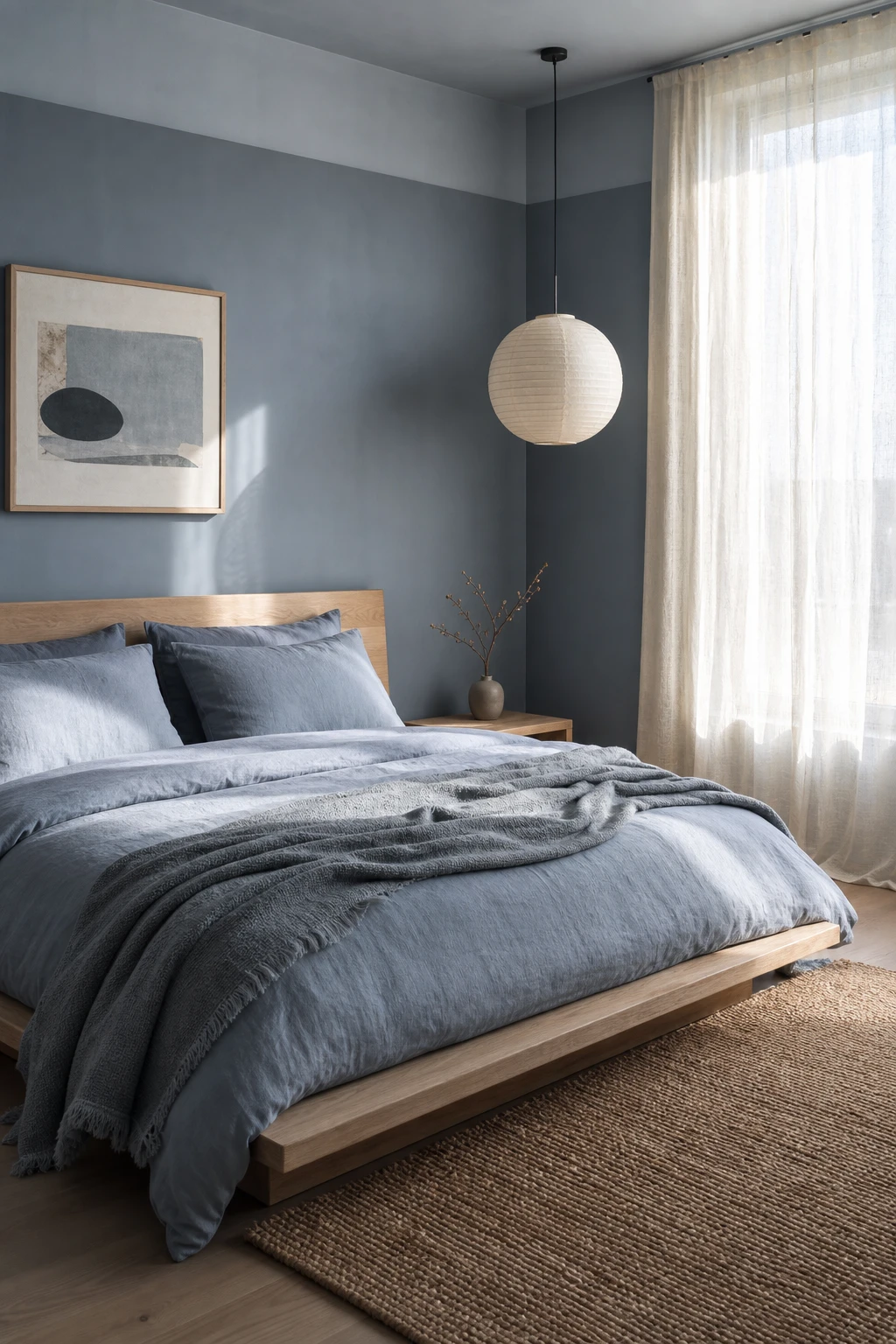
Matching Your Bedding to Blue Walls Creates a Tonal Calm That Feels Almost Meditative
Tonal dressing, keeping walls and bedding inside the same blue family, is one of my favourite moves for a Japandi room because the eye relaxes rather than bounces. What I love is how each layer, a deeper linen duvet, a softer mist on the wall, a mid tone pillow, gives you quiet depth you can feel without any sharp contrast to break the calm. You get all the richness of colour with none of the noise.
The Key Details
Layered tonal linen bedding
Low platform ash timber bed
Washi paper pendant light
Unglazed ceramic bud vase
Coarse weave jute runner
Pro TipPull in one pillow cover a full shade darker than your wall and place it at the front of the stack, so the eye travels gently from the deepest point on the bed outward to the lighter wall behind.
AvoidMatching your bedding and wall to the exact same tone flattens the whole composition into a single dull plane, and all that careful layering disappears.
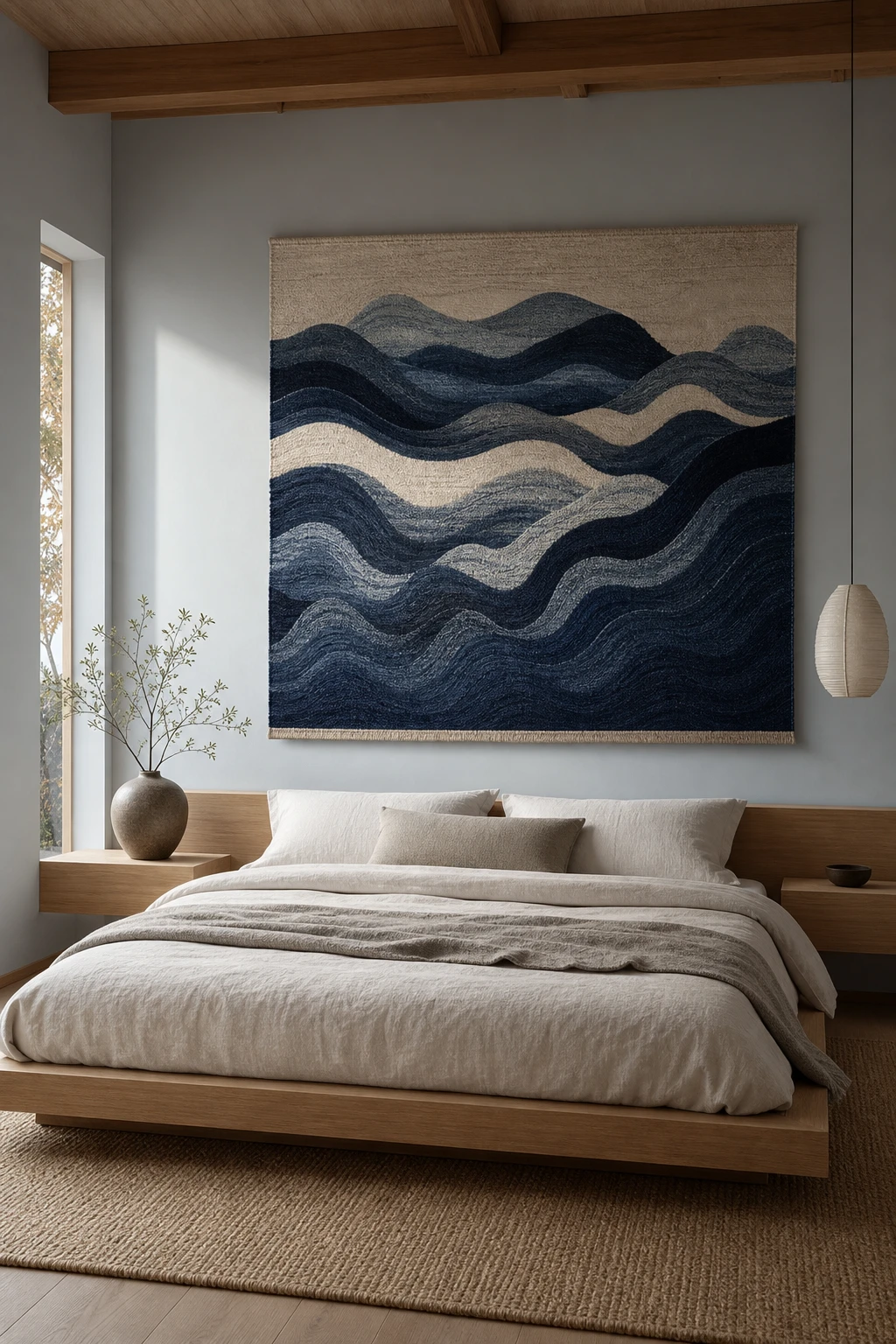
A Blue Wave Tapestry on the Wall Earns Its Place and Never Feels Like Decor
A single wave tapestry does something clever: it carries all the pattern the room needs without asking anything else to compete. What I love is how the movement in the weave feels alive rather than decorative, so you get warmth and visual interest from one considered decision. The undyed linen and pale oak around it let the blue read quietly, never loudly, and that restraint is exactly what makes it land.
The Key Details
Hand woven blue wave tapestry
Low platform oak bed frame
Layered undyed linen bedding
Ceramic bud vase on bedside shelf
Woven rush floor mat
Pro TipHang the tapestry on a raw timber branch or a slim wooden dowel so the fixing becomes part of the look rather than something to hide.
AvoidPutting the tapestry in a frame immediately gives it a formal, gallery weight that flattens the relaxed, handmade quality the whole room depends on.
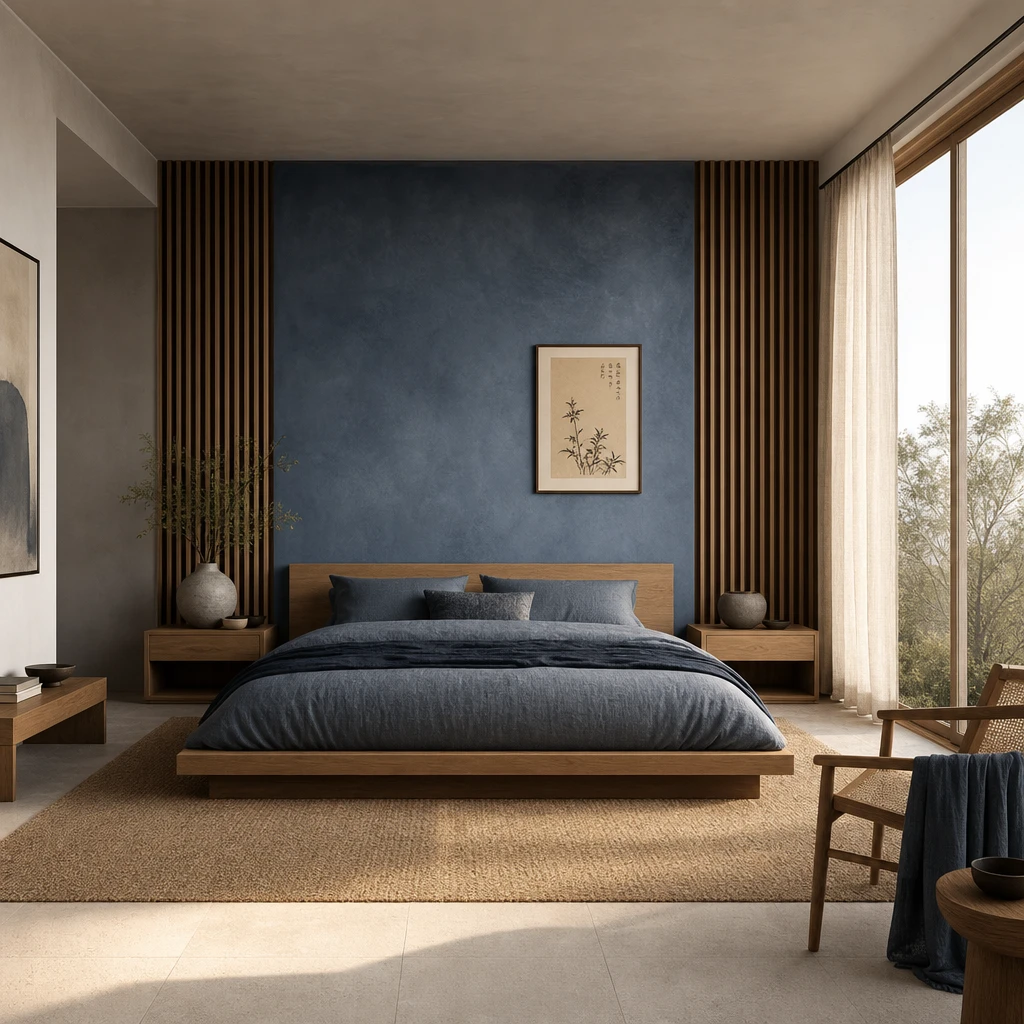
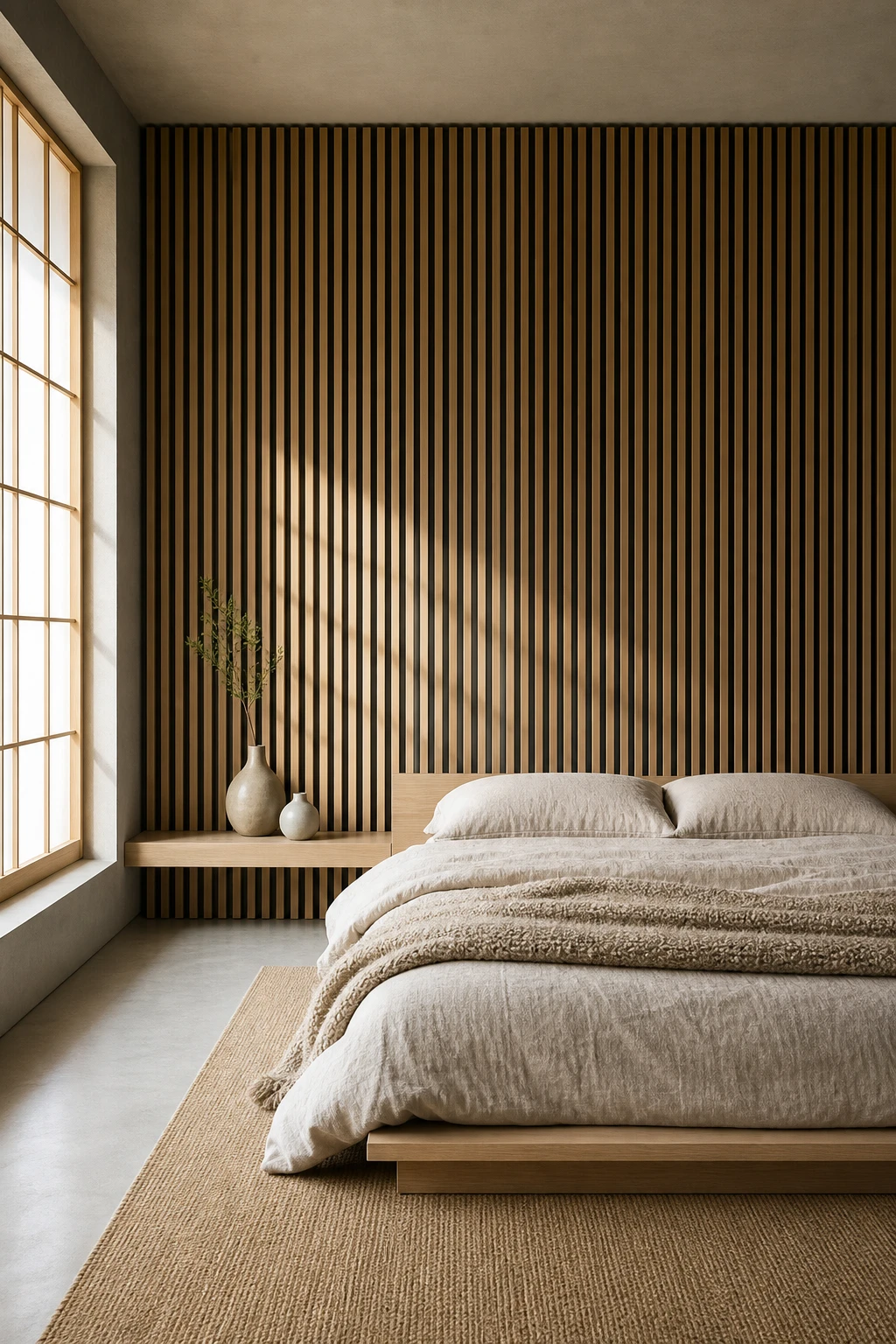
Wood Slats on the Wall Behind the Bed Give Blue a Gorgeous Place to Rest Against
Vertical slats do something pattern and print simply cannot: they add rhythm without noise. What I love is how the gaps let that blue wall breathe through, so you get depth and warmth at the same time. The wood draws the eye upward and the blue holds it steady, and together they create a calm that feels genuinely restful rather than decorated.
The Key Details
Vertical oak slatted wall panel
Low platform bed frame
Undyed linen and boucle bedding
Floating pale ash shelf
Ceramic bud vases
Pro TipSpace your slats so each gap is roughly half the width of the slat itself, giving just enough blue wall showing through to read as a considered layer rather than a gap you forgot to fill.
AvoidTaking the slats all the way to the ceiling turns a calming feature wall into something that closes the room in, and a small bedroom will start to feel like a crate rather than a sanctuary.
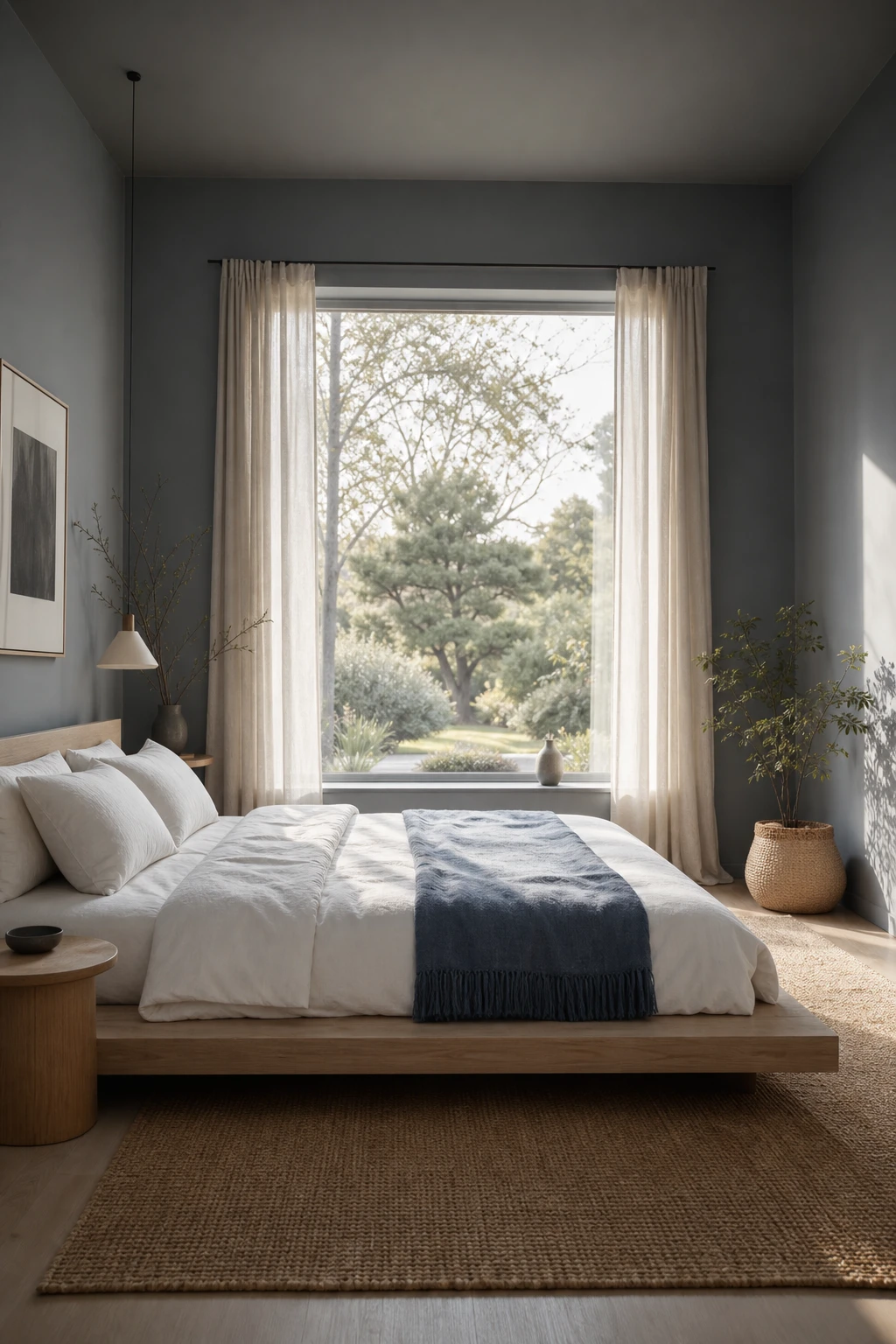
Facing the Bed Toward the Window Is a Small Choice With a Very Beautiful Payoff
Orienting the bed toward the window is one of those decisions that sounds small until you actually live with it. You wake up to soft blue light already filling the space, and the connection to sky and garden makes the room feel far bigger than its footprint. The low ash frame keeps nothing between you and the glass, so morning light travels all the way across the rug and up the plaster wall in a warm, slow wash. That daily ritual of waking into natural light is something I find myself recommending more than almost any material or colour choice.
The Key Details
Low ash timber platform bed frame
Sheer floor length linen curtains
Woven seagrass area rug
Ceramic bud vase on windowsill
Matte plaster walls
Pro TipHang unlined linen curtains so morning light filters through the weave and casts a warm glow across the blue walls rather than being blocked at the window.
AvoidA tall, bulky headboard pushed close to the window intercepts the best light in the room and kills the very connection to outside you positioned the bed to create.
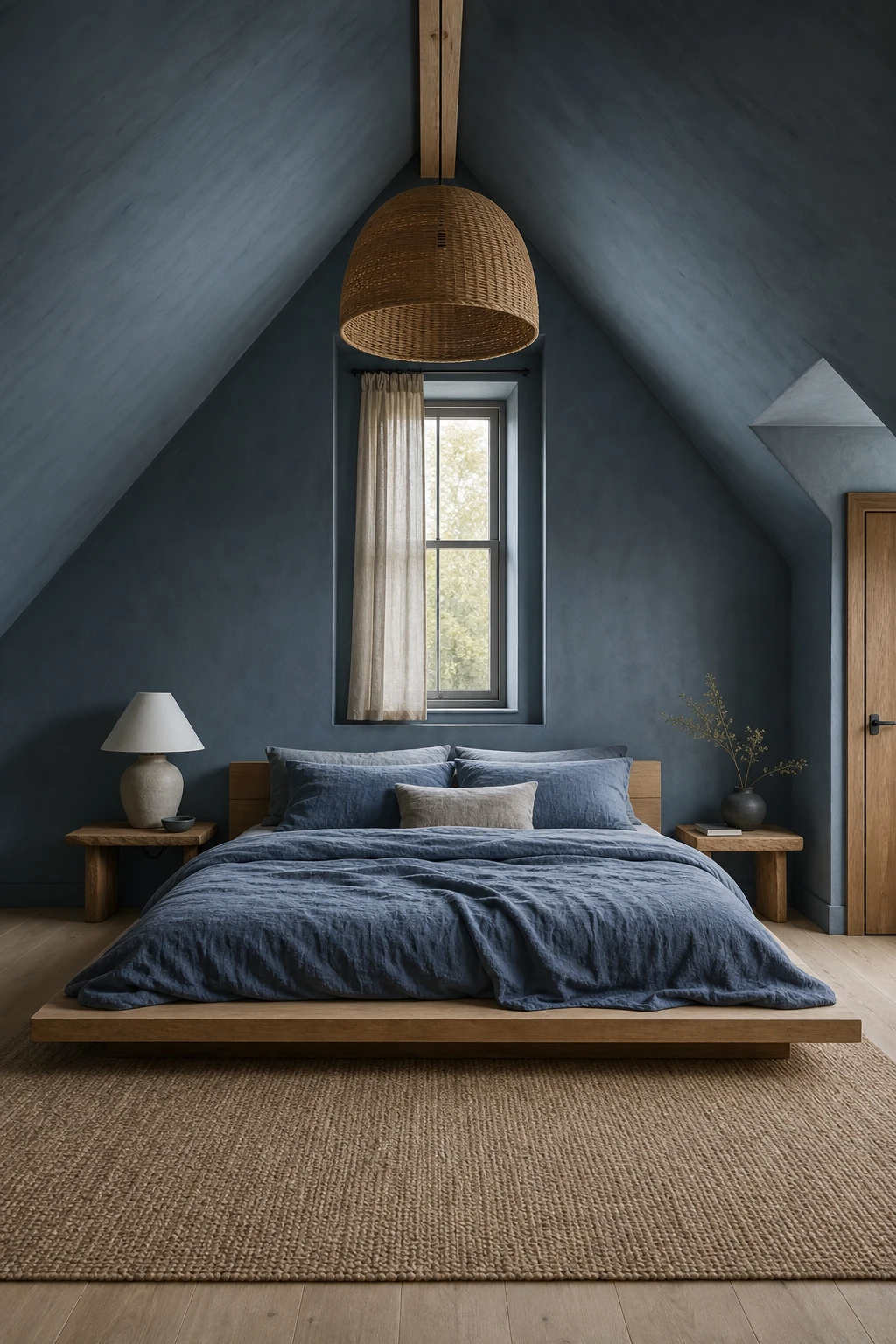
An Attic Bedroom With Blue Bedding Turns Sloped Ceilings Into a Feature
Sloped ceilings get a bad reputation, but what I love about this attic room is how the blue pulls the angles into the composition rather than apologising for them. You notice it straight away: the colour moves from the bedding up into the ceiling plane and suddenly those slopes feel deliberate, almost like a canopy wrapping the bed. The live edge oak and woven rattan keep everything grounded and warm so the blue never tips into cold.
The Key Details
Sloped ceiling architecture
Low platform bed with linen bedding
Live edge oak bedside table
Hand woven rattan pendant light
Dormer window with linen curtains
Pro TipPaint the sloped sections the same blue as your bedding and the ceiling angles will read as one seamless envelope around the sleeping space rather than an awkward architectural leftover.
AvoidA tall bed frame in a low attic room leaves you with almost no visual breathing space between the headboard and the slope, and the whole room starts to feel like it is pressing down on you.
Blue in a Small Bedroom Is Not the Risk You Think and Here Is Why
Blue in a small room gets a bad reputation, but the right shade used on the right surfaces actually pulls the walls apart rather than closing them in. What I love about this approach is the way blue draws the eye inward and creates a sense of depth, so you feel like there is more room than there is. Keep the floor pale and clear, hold the furniture low, and you will notice the space starts to breathe. The ceiling lifts, the corners open, and the room stops feeling like a box.
The Key Details
Low platform ash bed frame
Undyed linen bedding with clay lumbar cushion
Shoji inspired corner screen panel
Ceramic table lamp on walnut bedside block
Woven seagrass floor mat
Pro TipChoose a pale or mid toned blue with a slight grey undertone rather than a saturated one, so the colour recedes gently and lets the room feel larger without losing its mood.
AvoidClustering too many objects on surfaces breaks the open feeling the blue is working hard to create, and the room shrinks back to exactly the size it actually is.
Blue and Beige in a Japandi Bedroom Feel Soft in the Most Grown Up Way
Blue and beige together is one of my favourite combinations because cool and warm neutrals quietly balance each other without either one shouting. What I love here is that the beige does the heavy lifting in the larger pieces, so the blue settles into the room like something you noticed rather than something that was placed. You get that rare feeling where a bedroom looks considered but never decorated, which is the whole point of Japandi.
The Key Details
Low platform ash timber bed frame
Oat linen and boucle bedding layers
Washi paper globe pendant light
Blackened steel bedside tray
Unglazed ceramic bud vase
Pro TipAnchor beige in your rug, throw, and bedding first, then bring blue in through a single wall or your ceramics, so the palette feels discovered rather than matched.
AvoidChoosing a beige with pink or peach undertones pulls the whole palette warm and leaves your blue looking cold and out of place rather than calm and intentional.
Blue and White in a Japandi Room Works When You Let the White Do Less
Blue and white sounds simple until you watch what happens when both colours compete at equal volume, and neither wins. What I love about letting white sit quietly in the background is that the blue gets to breathe and lead, and you get a room that feels calm rather than busy. The white is not decoration here, it is air. I reach for it the way I reach for silence in a piece of music, just enough to make the blue resonate.
The Key Details
Low platform oak bed frame
Indigo linen duvet cover
Shoji inspired sliding panel
Hand thrown stoneware ceramic vessels
Slender branch floor vase
Pro TipChoose a white with a faint warm or linen undertone so the blue reads serene rather than cold and clinical.
AvoidSplitting the room fifty fifty between blue and white leaves both colours fighting for attention, and the result feels restless rather than restful.
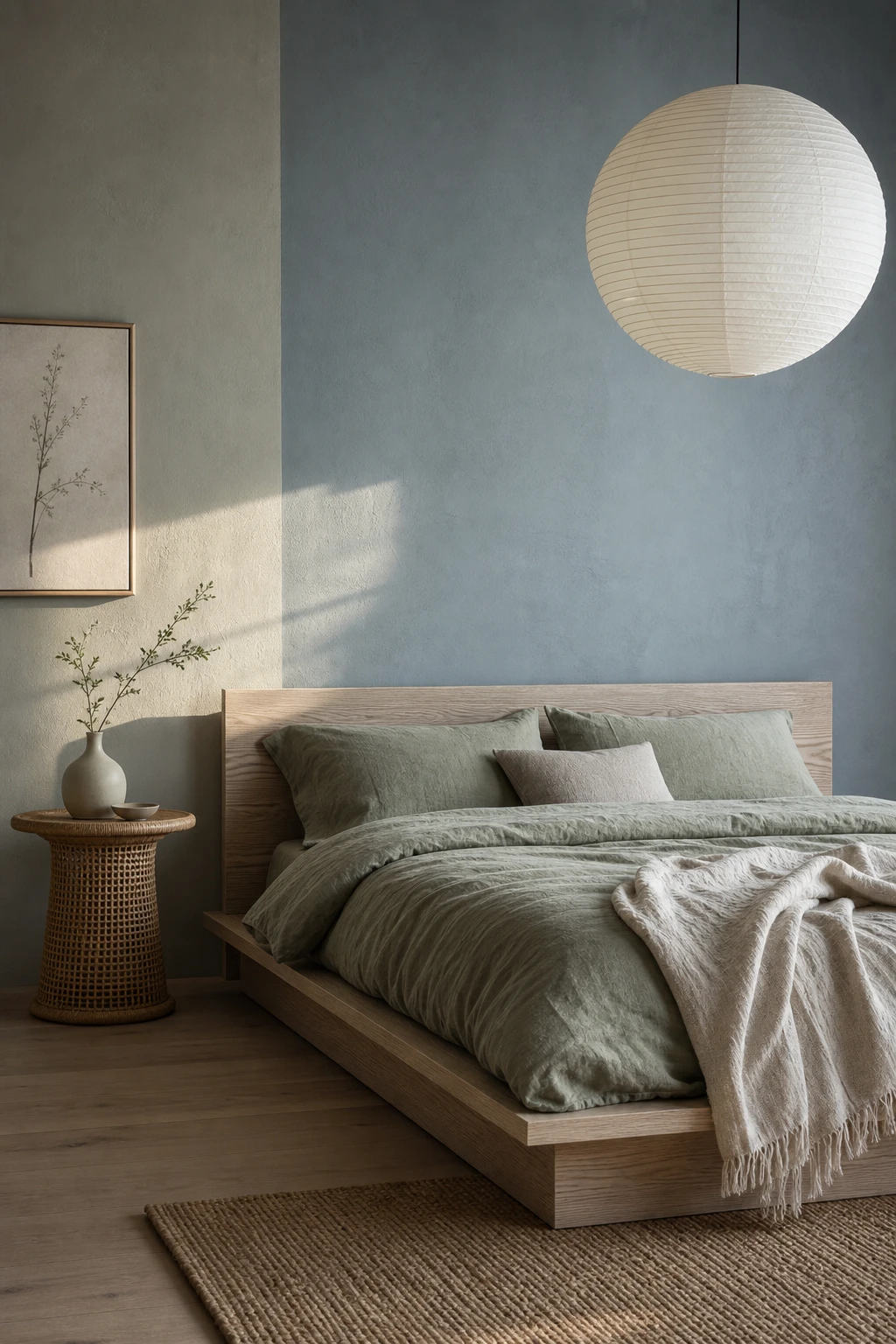
Sage and Blue Together in a Bedroom Have a Quiet Chemistry Worth Knowing About
Sage and blue share the same quiet grey undertone, and that hidden kinship is what makes them read as one calm breath rather than two competing colours. What I love about this pairing is how each hue borrows a little from the other: the sage feels cooler, the blue feels softer, and you get a room that seems to exhale. Neither shade is reaching for attention, and that restraint is exactly the Japandi spirit I reach for in a bedroom.
The Key Details
Low platform ash bed frame
Washi paper lantern pendant
Rattan bedside table
Sage linen bedding set
Matte ceramic bud vase
Pro TipLet sage carry the soft furnishings and keep the deeper blue on the walls, so the eye reads warmth up close and depth further away.
AvoidBringing in a third strong colour, even a warm terracotta or mustard meant as an accent, breaks the gentle dialogue between sage and blue and the whole room suddenly feels unsettled.
Dark Blue Anchored by Neutrals Is the Combination That Never Gets Old
Dark blue anchored by undyed neutrals is one of my favourite combinations because the contrast does all the heavy lifting without any fuss. What I love is how the pale oak and raw linen pull warmth from the blue rather than fighting it, so you get depth and calm in the same breath. Watch how the natural textures keep the room feeling grounded and human, never cold or overdone.
The Key Details
Low platform bed frame in pale solid oak
Undyed linen and raw cotton bedding layers
Washi paper pendant light
Wide plank pale oak flooring
Paired minimal timber bedside shelves with stoneware vessels
Pro TipLayer at least three neutral textures, such as rough linen, smooth cotton, and grainy timber, so the scheme has enough variety to feel considered rather than flat.
AvoidReaching for cool grey neutrals alongside dark blue drains every trace of warmth from the room and leaves the whole space feeling clinical rather than restful.
Alan launched Edward George London in 2017. Since completing his masters in Town & Regional Planning (MPlan) he has combined the skills he learned at the University of Sheffield with his passion for design, to help create a foundation for those looking to create a beautiful home.