Newsletter Subscribe
Enter your email address below and subscribe to our newsletter

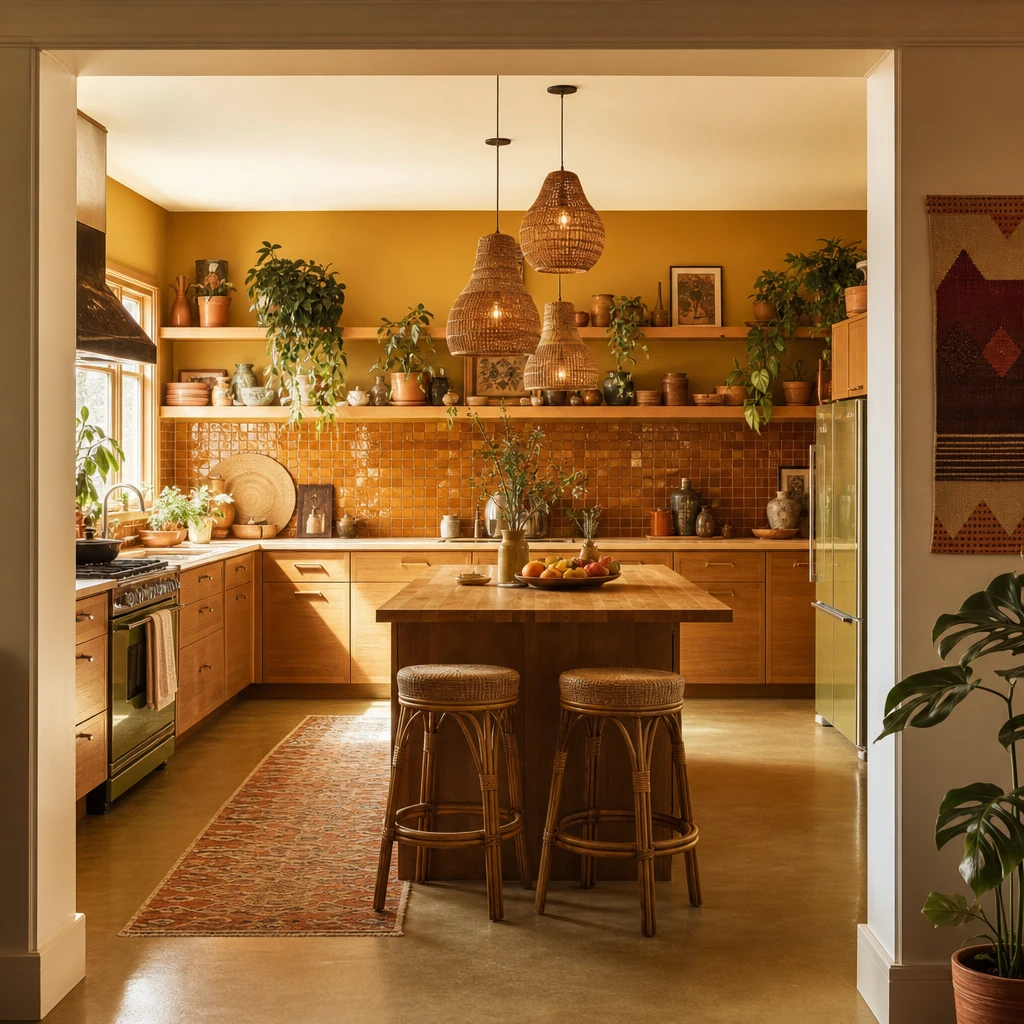
I’ve always had a soft spot for the 70s boho kitchen, where warm earthy tones, rattan, and a little happy chaos come together in the most liveable way. What I love most is how this style lets you layer colour freely, whether that means pairing brown and yellow cabinetry, going all in on terracotta tiles, or smuggling in a wall of trailing plants. Every look in this list is something I’d happily steal for my own kitchen.
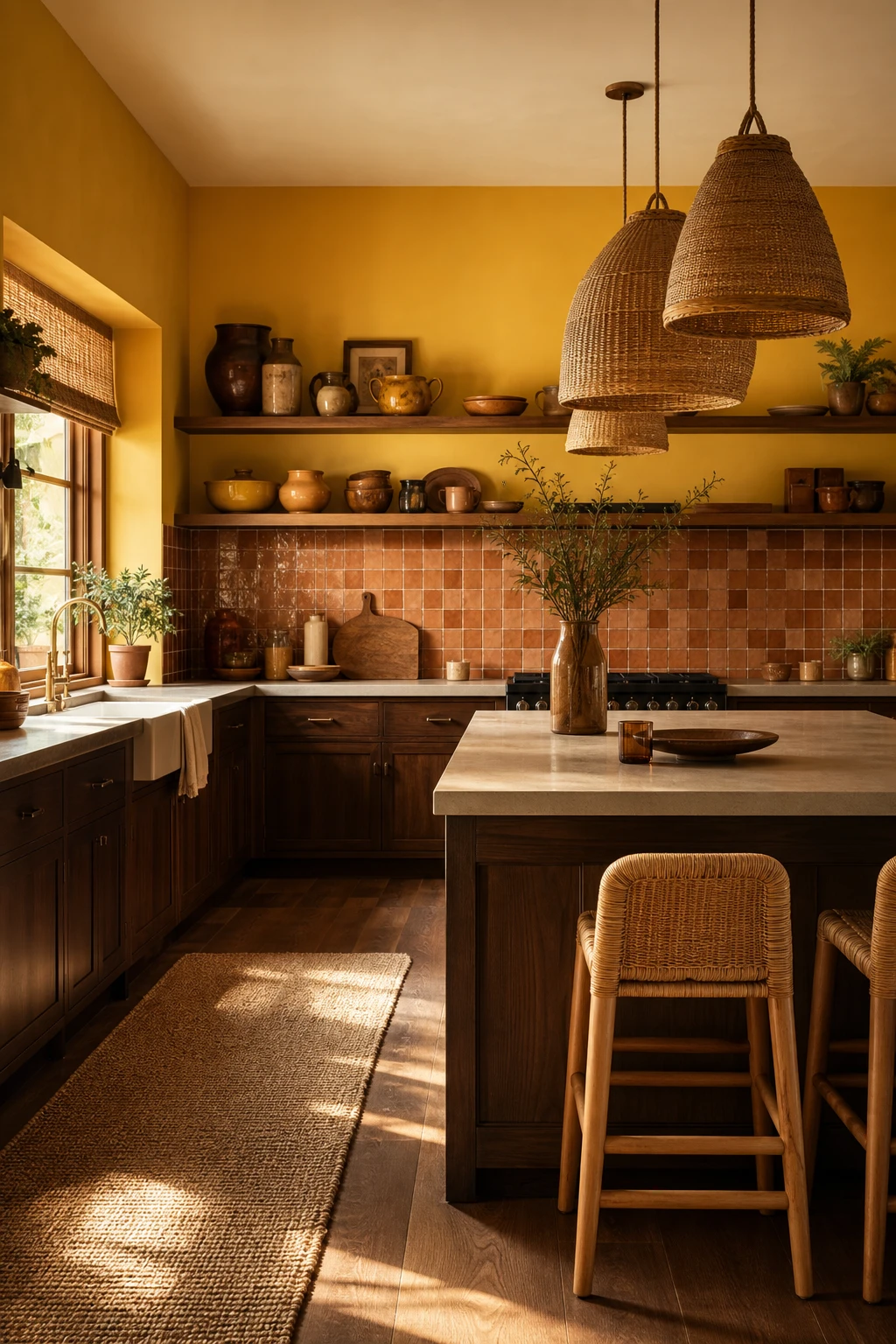
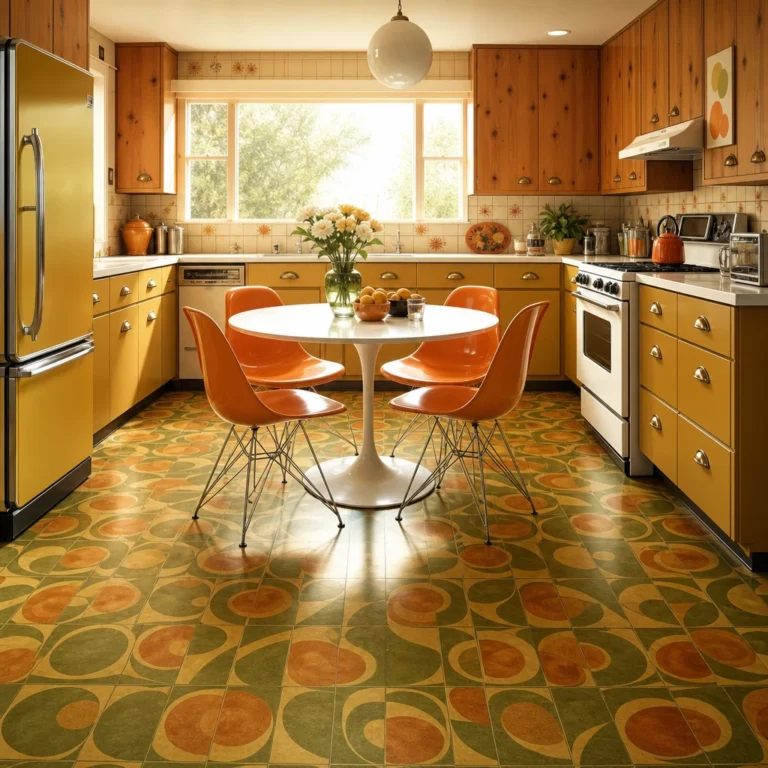
Brown and yellow is the combination that makes most people nervous, and I completely understand why, because one wrong step and the whole kitchen slides back to a school cafeteria in 1974. What saves it is treating brown as your anchor and yellow as your light source, so the eye has somewhere warm to rest and somewhere bright to travel. Walnut cabinets do the heavy lifting here, grounding the room with that deep, honeyed grain, and then the yellow comes in as a glaze of sunshine rather than a shout. You will notice how the terracotta zellige tiles sit right between the two tones, acting as a bridge that keeps everything feeling earthy and alive rather than flat or muddy.
The Key Details
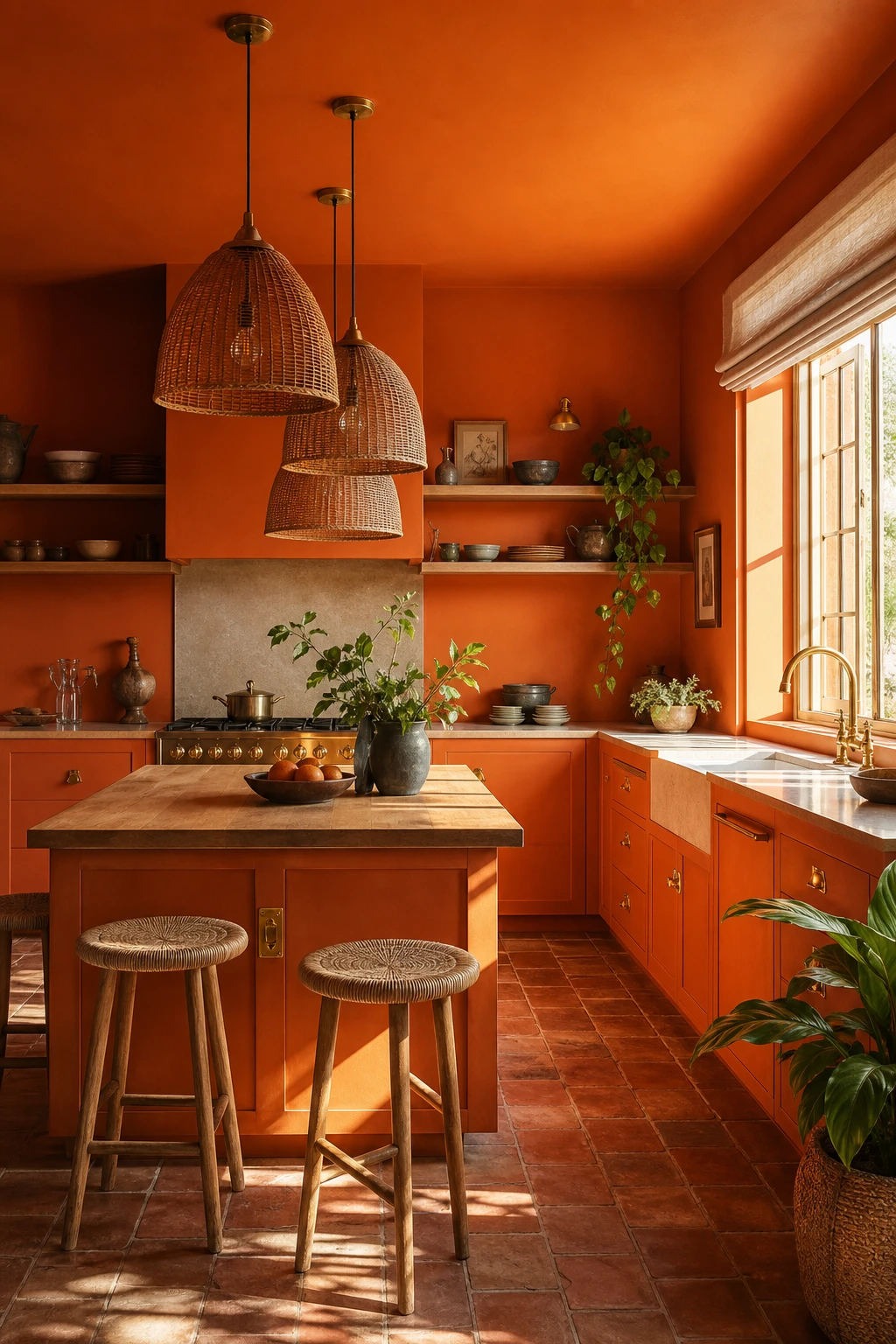
Committing every surface to a single saturated hue is one of my favourite moves in a small kitchen because it dissolves the edges of the room and pulls you inside a warm, enveloping space rather than a box with walls. What I love about orange specifically is that it carries the whole spectrum of the 70s palette on its own, earthy enough to feel grounded, bright enough to feel alive. You get that rich, almost edible quality when the tone sits closer to amber than tomato, and watch how the natural wood shelving and terracotta floor tiles do not compete with it but breathe alongside it, giving your eye a place to rest without breaking the spell. The whole room reads as one warm intention rather than a collection of separate decisions, and that single mindedness is exactly what makes it feel confident instead of chaotic.
The Key Details
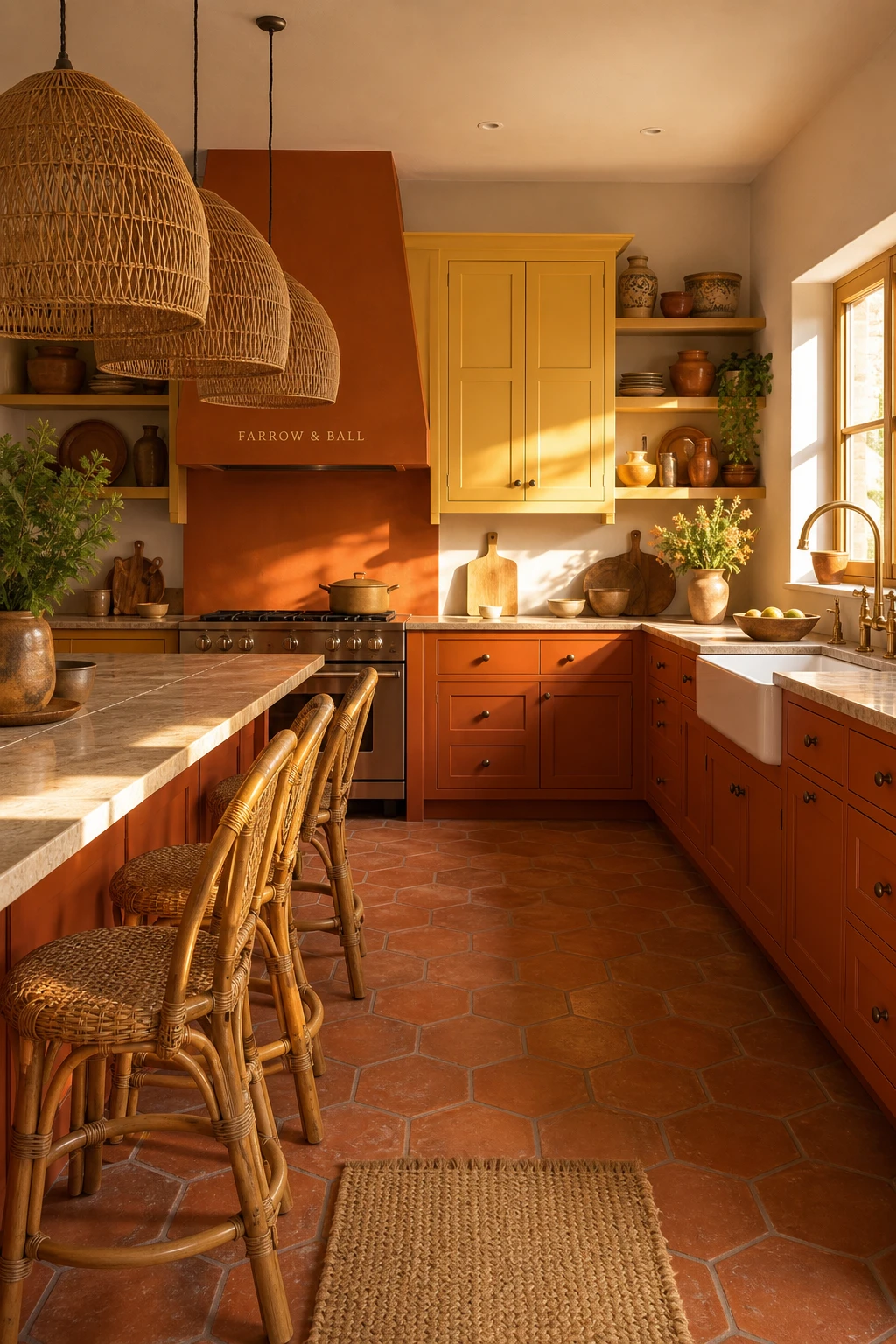
Analogous colours, the ones sitting right next to each other on the colour wheel, never fight each other. They just deepen the mood as your eye travels across the room, and running yellow into orange across cabinets and walls is one of the moves I keep coming back to because the room reads as one continuous warm story rather than a collection of individual choices. You get that slow burn glow that feels genuinely alive rather than painted on, and the terracotta tiles on the floor anchor the whole gradient, pulling the warmest end of the palette down to ground level where it belongs. Watch how rattan pendants and ochre ceramics on open shelving echo those tones without adding a single new colour to manage, and you will notice the whole scheme just breathes.
The Key Details
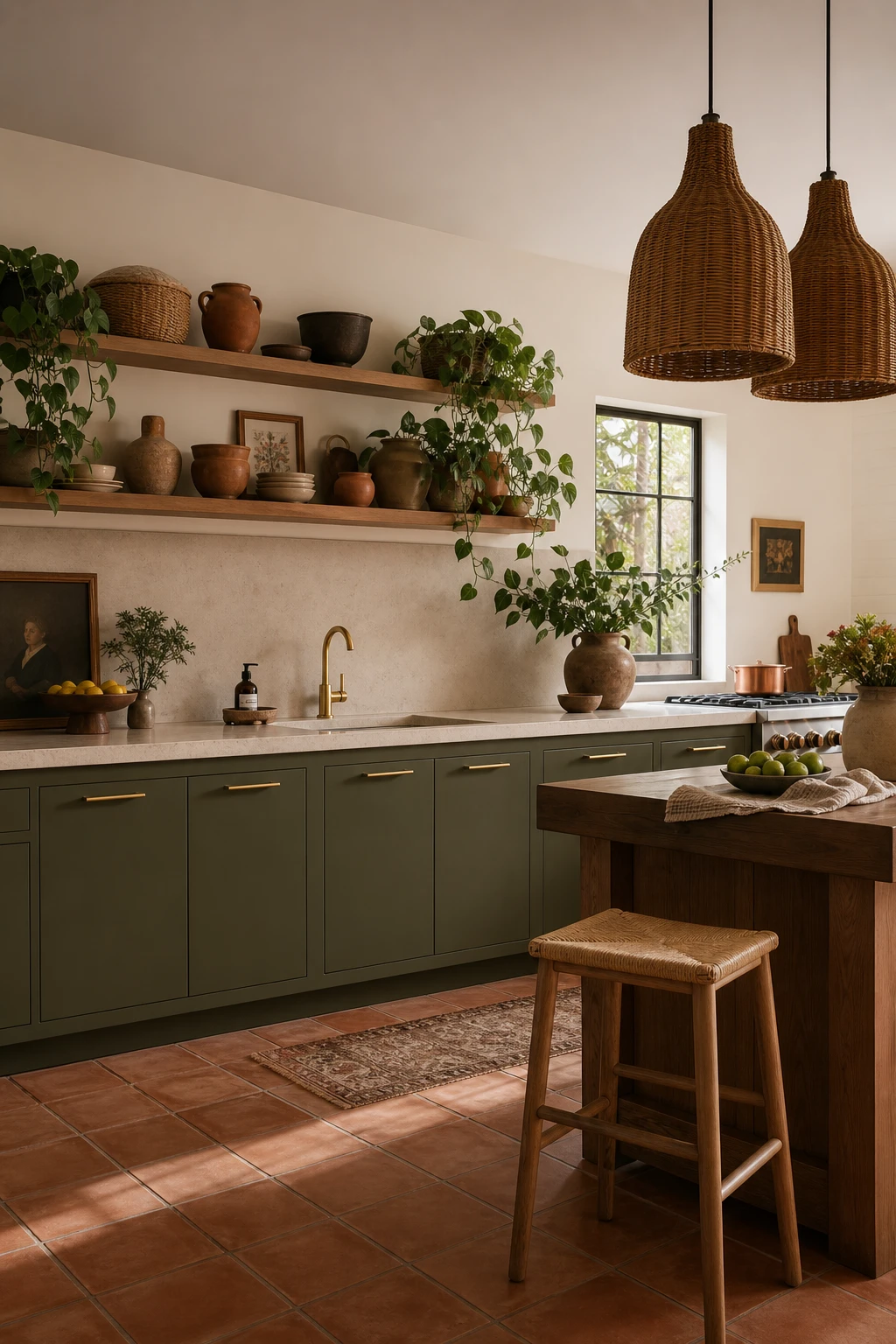
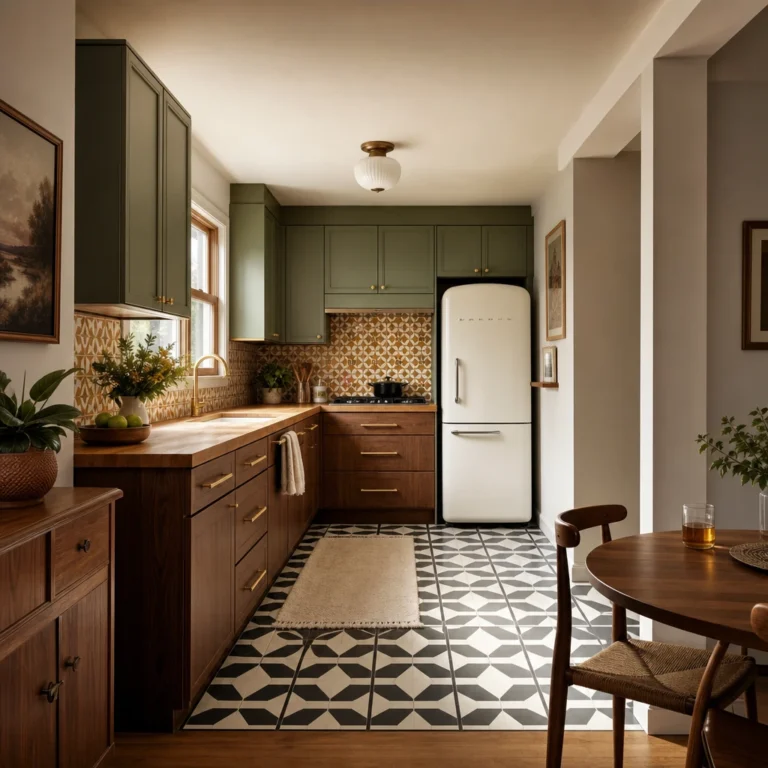
Dark olive is one of those colours that earns its place the moment you see it against warm cream walls, and what I love most is how it reads as rich and grounded rather than cold or heavy. You get that depth of a truly dramatic kitchen without any of the chill you would feel from navy or black, because olive carries yellow and brown underneath that keep the whole room breathing. The flat slab doors with brushed brass bar pulls are the move I reach for here, because the clean face lets the colour itself do the talking while the brass pulls up all that warmth hiding in the green. Watch how the terracotta floor and the honed travertine countertop on top complete the loop, earthy, sun baked tones below and above so the olive sits nestled rather than floating.
The Key Details
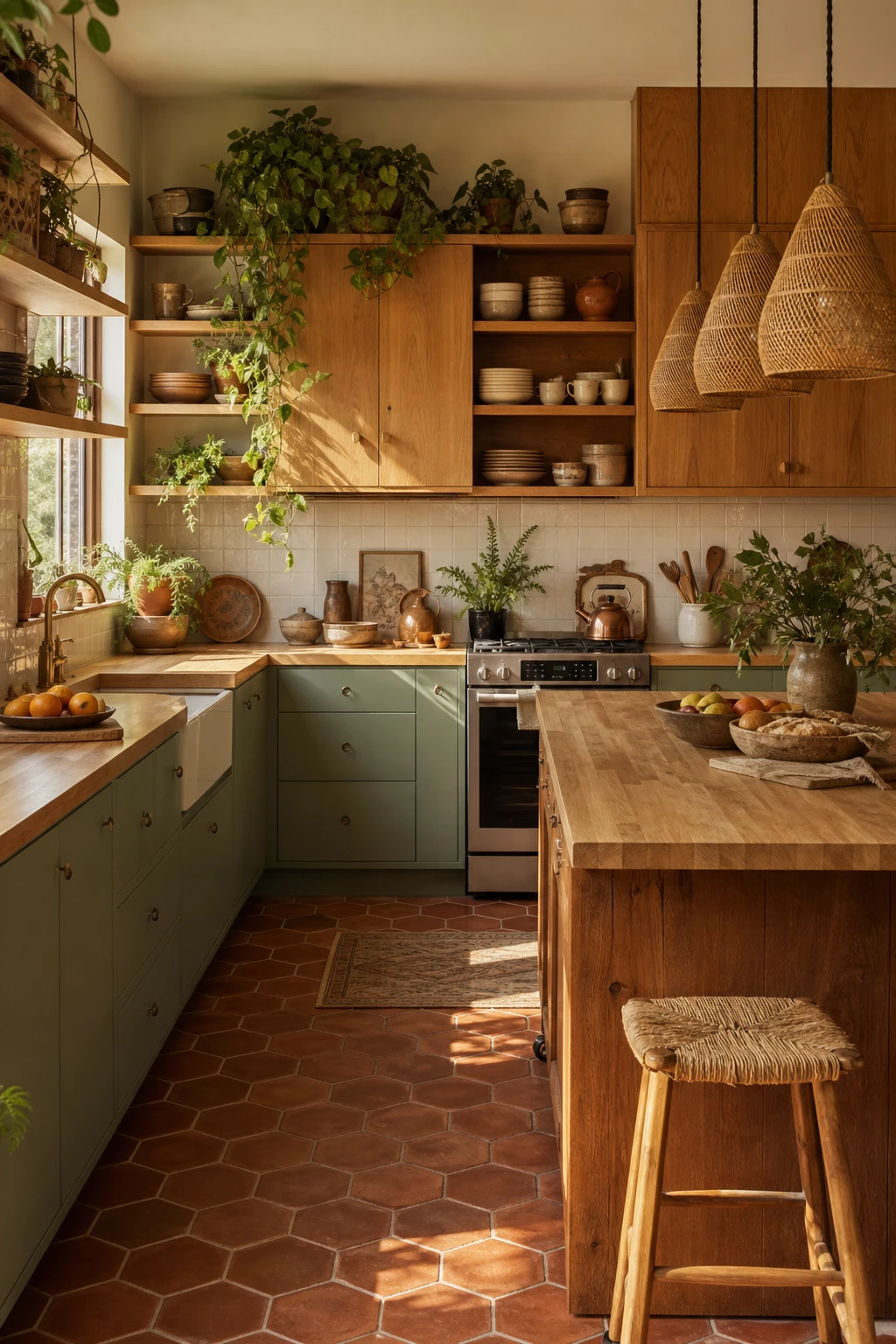
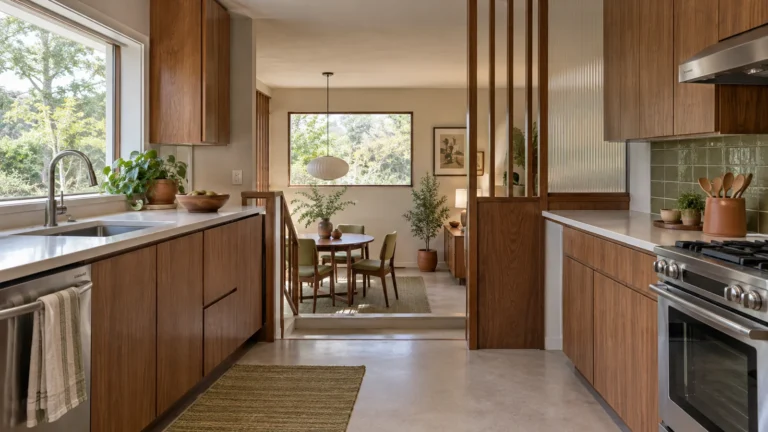
Sage green and warm oak is one of those combinations that just feels easy to be around, and the reason it works so well is that both tones are already doing the same quiet job. The green carries enough grey in it to stay calm, and the honey in the oak stops the whole room from feeling cold or flat. What I love about this pairing is the contrast it creates without any tension, you get depth and warmth at the same time, which is exactly the mood a boho kitchen should land on. Watch how the wood grain pulls the green forward and gives it life, because without that earthy warmth alongside it, a muted green can easily read as dull rather than considered.
The Key Details
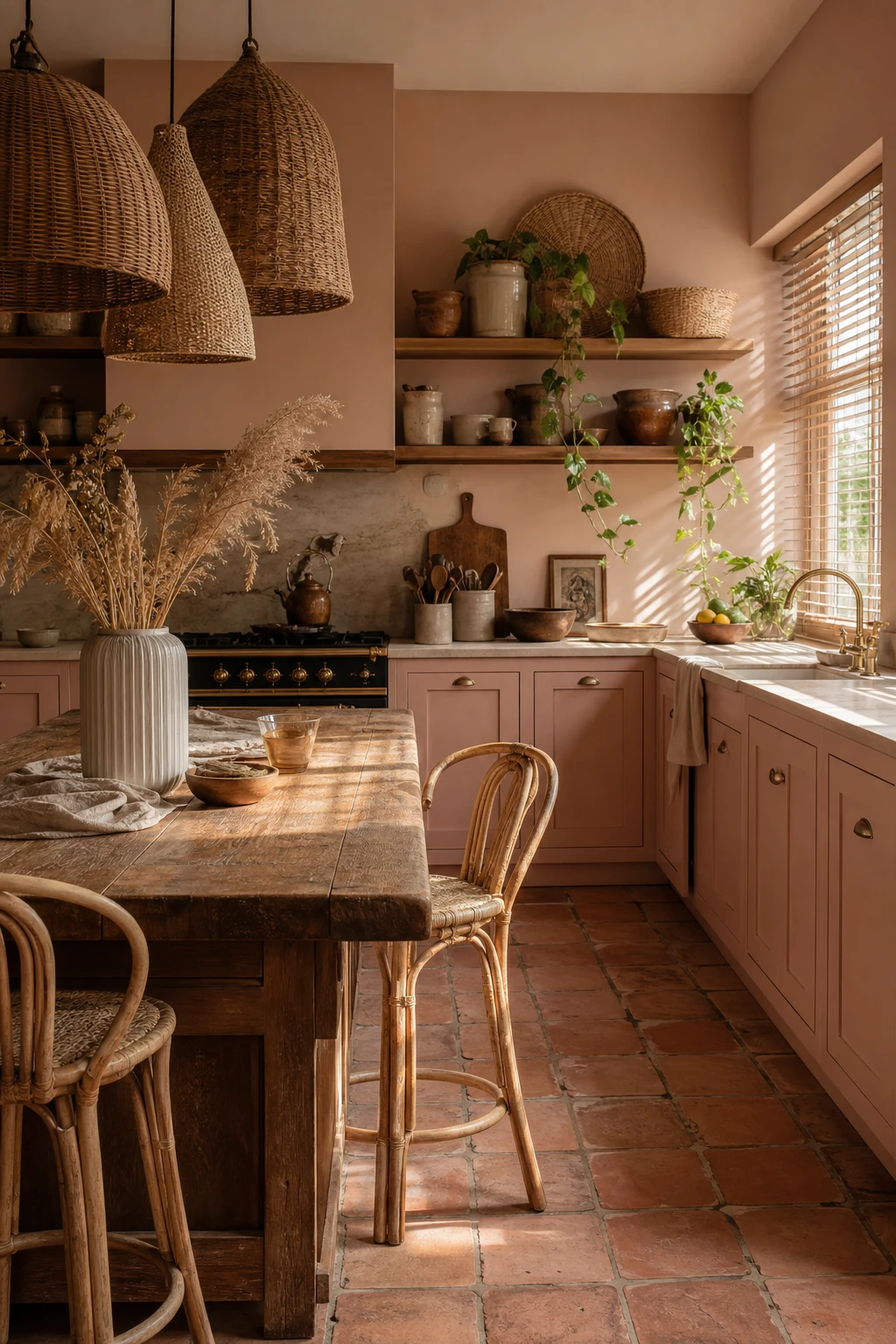
Pastels in a kitchen get a bad reputation because people picture them on every wall, every cabinet, every surface at once, and that is when they tip into something that feels more playful than grown up. Restraint is everything here, and the move I always suggest is a single pale sage or dusty blush cabinet front sitting against raw timber shelving and rough terracotta floor tiles, the softness of the colour playing off the grittiness of the materials around it. You get that gentle, sun faded quality that sits right at the heart of 70s boho without the room ever feeling like it belongs to a toddler. The texture is doing the heavy lifting, and once you see it working you will notice it is almost impossible to make a pastel kitchen feel too sweet when the surfaces around it have this much warmth and grain.
The Key Details
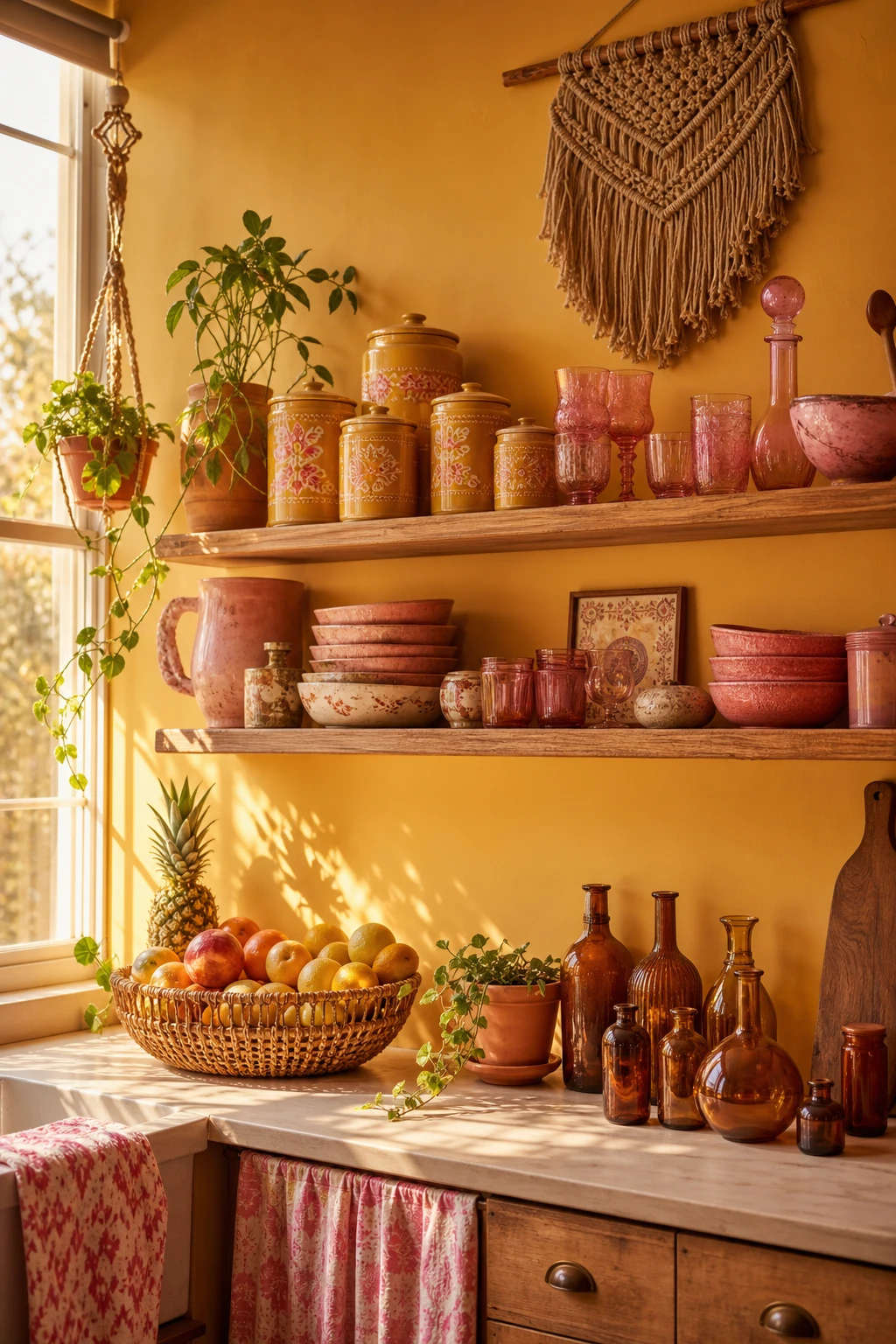
Pink and yellow is one of those combos that sounds risky on paper and then completely wins you over the moment you see it done right. What I love about using accessories to carry bold colour is that you are essentially running a test with zero commitment, a swap of canisters or a new bowl costs almost nothing compared to repainting cabinets. You will notice the secret is saturation: a warm mustard yellow and a soft blush pink share the same dusty, slightly faded quality that reads as vintage rather than garish, and that shared warmth is what holds them together on the shelf. The accessories do all the talking while your kitchen surfaces stay calm, and that balance is exactly what gives the whole room its confidence.
The Key Details
Get The Look
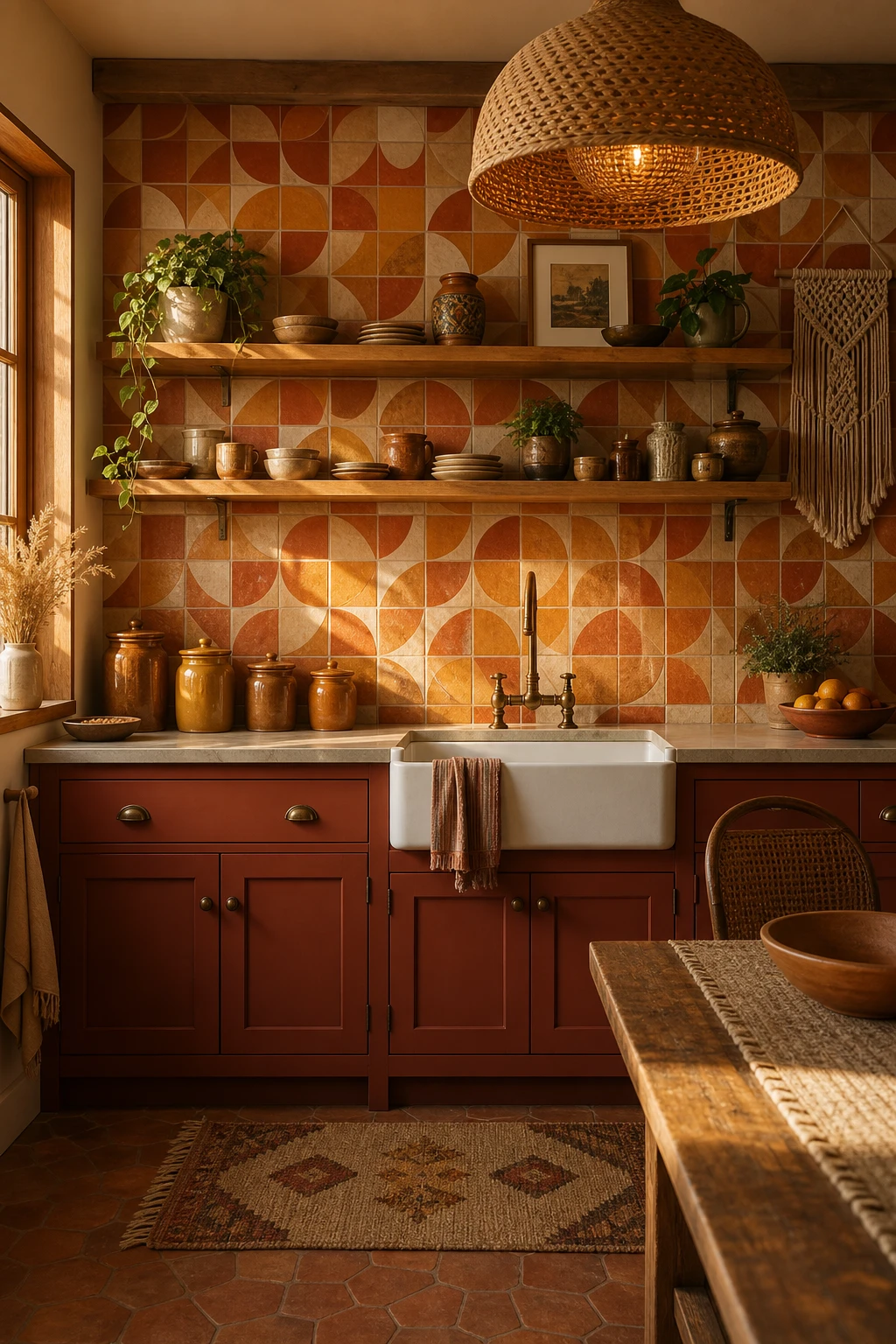
A patterned retro tile is one of the bravest moves you can make in a kitchen, and when you get it right, it pulls the whole room into focus. The geometric terracotta and ochre pattern here is doing something really clever: it acts as the colour anchor for every other decision in the space, so nothing feels random. You will notice how the oak shelves, the stoneware, the brass hardware all feel like they belong together, and that is because the tile chose them first. What wins me over every time with this approach is the confidence of it, one strong pattern doing the heavy lifting so the rest of the room can breathe.
The Key Details
Get The Look
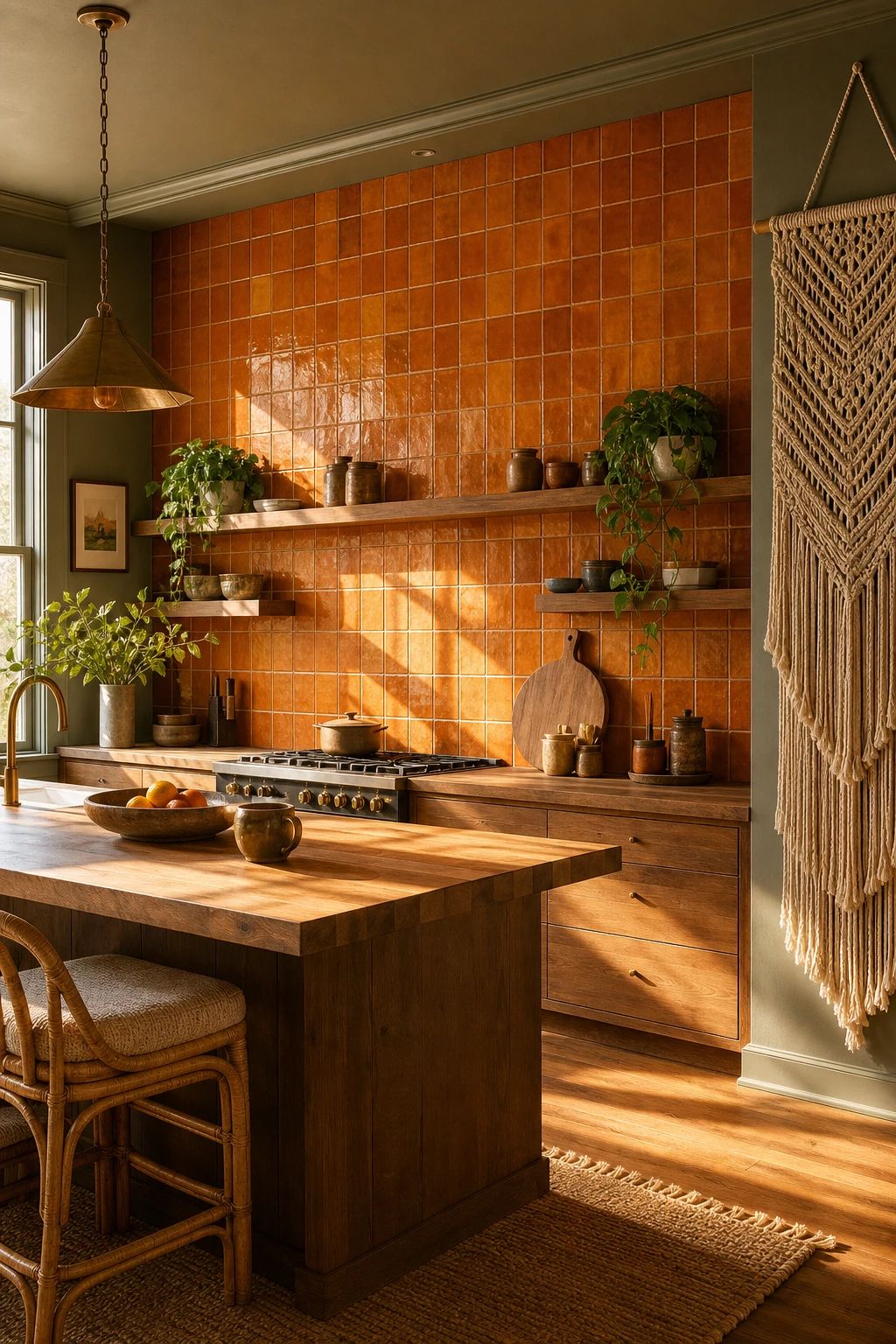
Floor to ceiling is the only way I would ever do a wall like this, and the moment you commit to it you will understand why. A thin strip of orange tile reads as an accident, something left over from a renovation that never quite finished, but carry it all the way up and the wall becomes the room’s anchor. What I love about handmade ceramics here is the variation baked into each piece, the slight wobble in glaze from one tile to the next, and you get a warmth that no factory tile can fake. Watch how the timber shelves and the butcher block island pull the eye back to natural tones so the orange never tips into overwhelming.
The Key Details
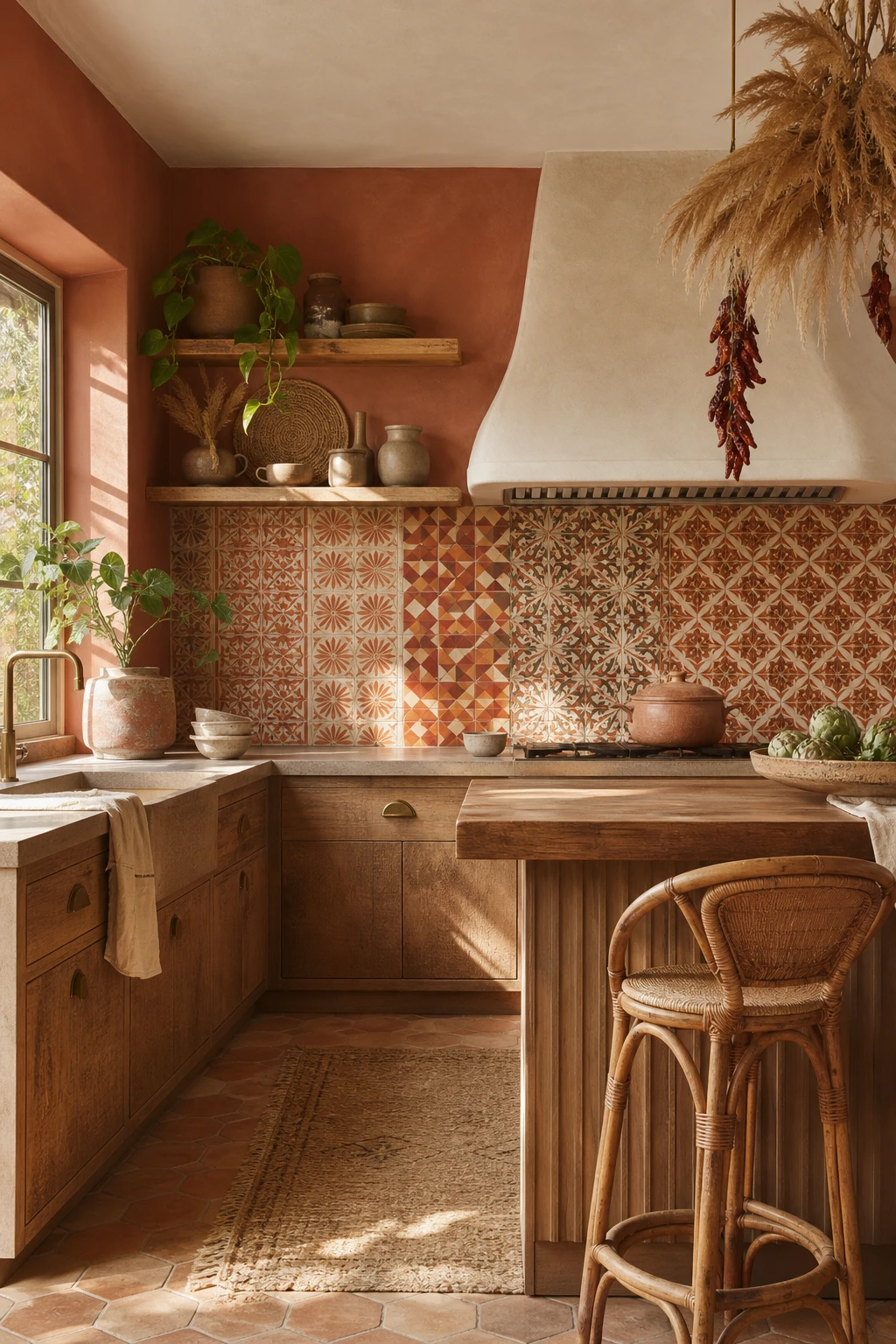
Mixing tiles feels risky until you understand the one rule that holds it all together, and colour is that rule. Pull a hand painted splashback tile and a bold encaustic floor tile from completely different visual worlds, and the moment they share even one strong colour the eye reads them as a family rather than a fight. The contrast in pattern adds energy to the room while the repeated colour keeps everything feeling calm and considered, and that tension between variety and unity is the heart of boho style. Tiles are one of the easiest places to let it play out, and I find they reward boldness far more often than caution.
The Key Details
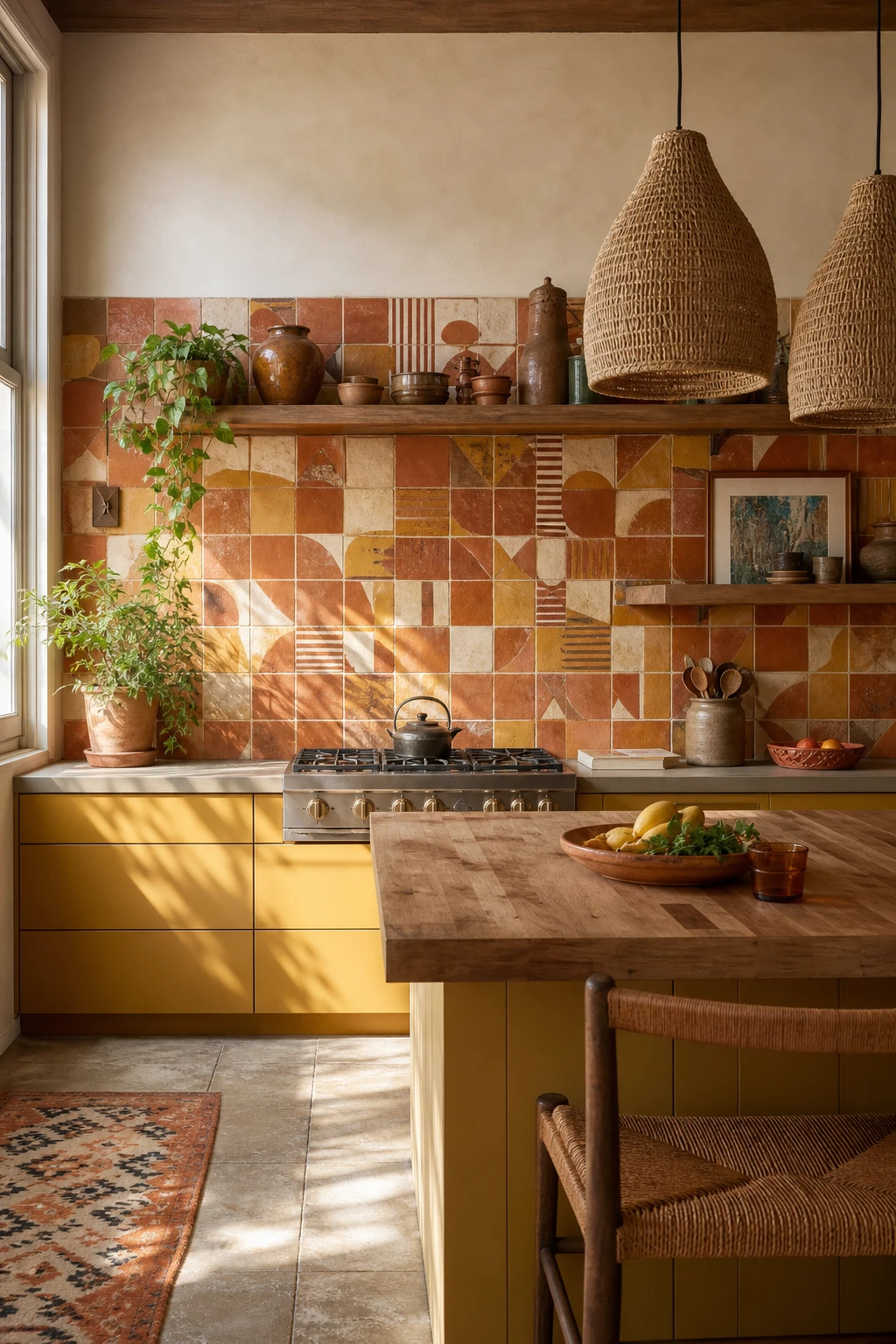
A playful backsplash is the one place in the kitchen where I say go for it, be bold, pick the pattern you have been quietly obsessing over. What I love about giving a single surface all the personality is that the rest of the room gets to breathe. You will notice the flat front timber cabinet doors and the butcher block counter look more considered and calm precisely because they are not competing with anything. The hand painted ceramics become a genuine focal point, and every other honest, simple material in the room quietly frames them.
The Key Details
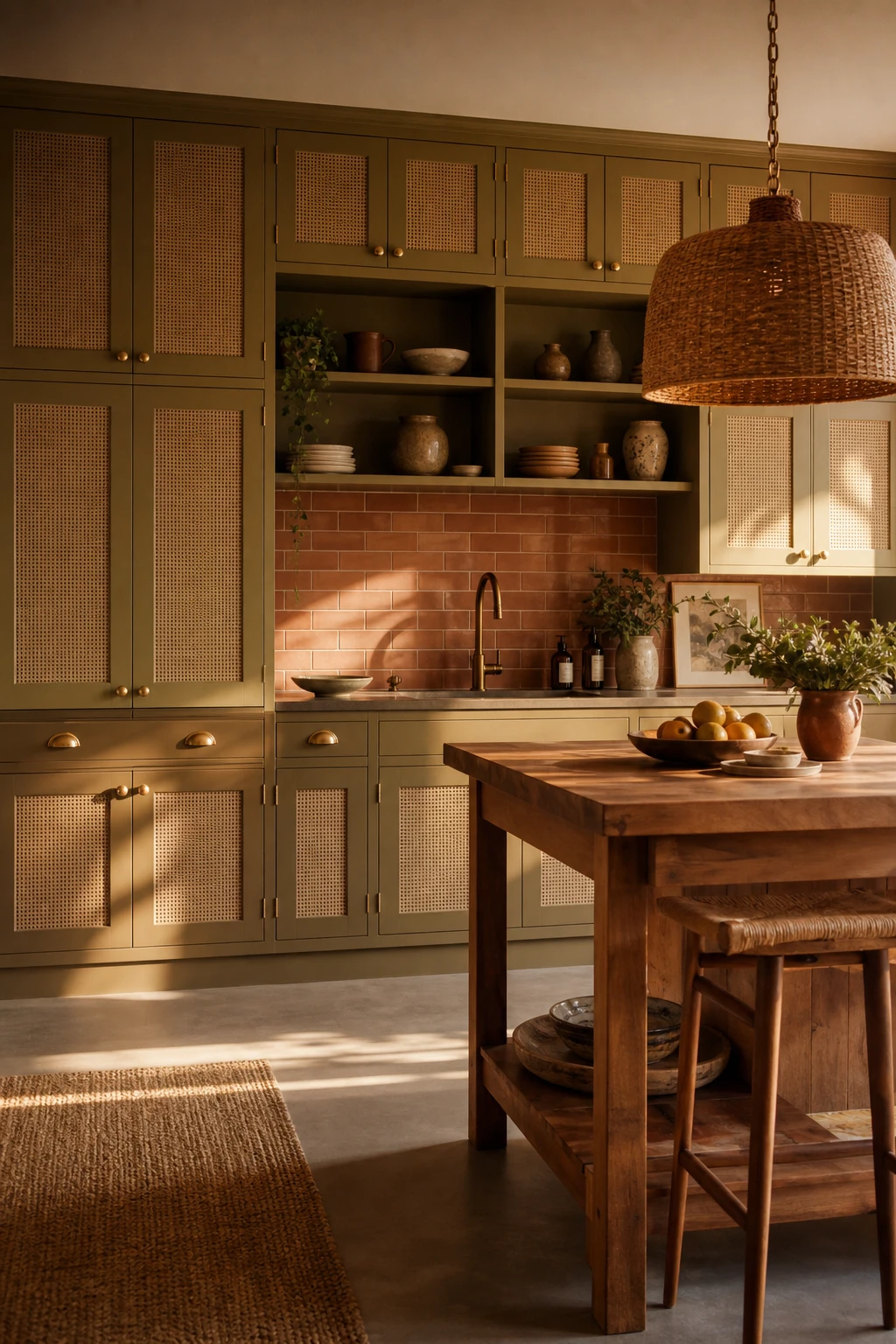
Flat slab and simple shaker doors are the quiet heroes of a 70s boho kitchen, and what wins me over every time is how much character they carry without shouting. The door profile itself does the era signalling, a clean flat face or a single step shaker frame gives you a canvas that reads vintage the moment you add the right hardware. You will notice that cane inset panels push the whole room straight into that warm, earthy 1970s territory, because the woven texture is so tied to the decade it needs nothing else to do the talking. Watch how a flat door with an unlacquered brass cup pull pulls the whole kitchen together, the simplicity of the door and the richness of the metal doing all the work between them.
The Key Details
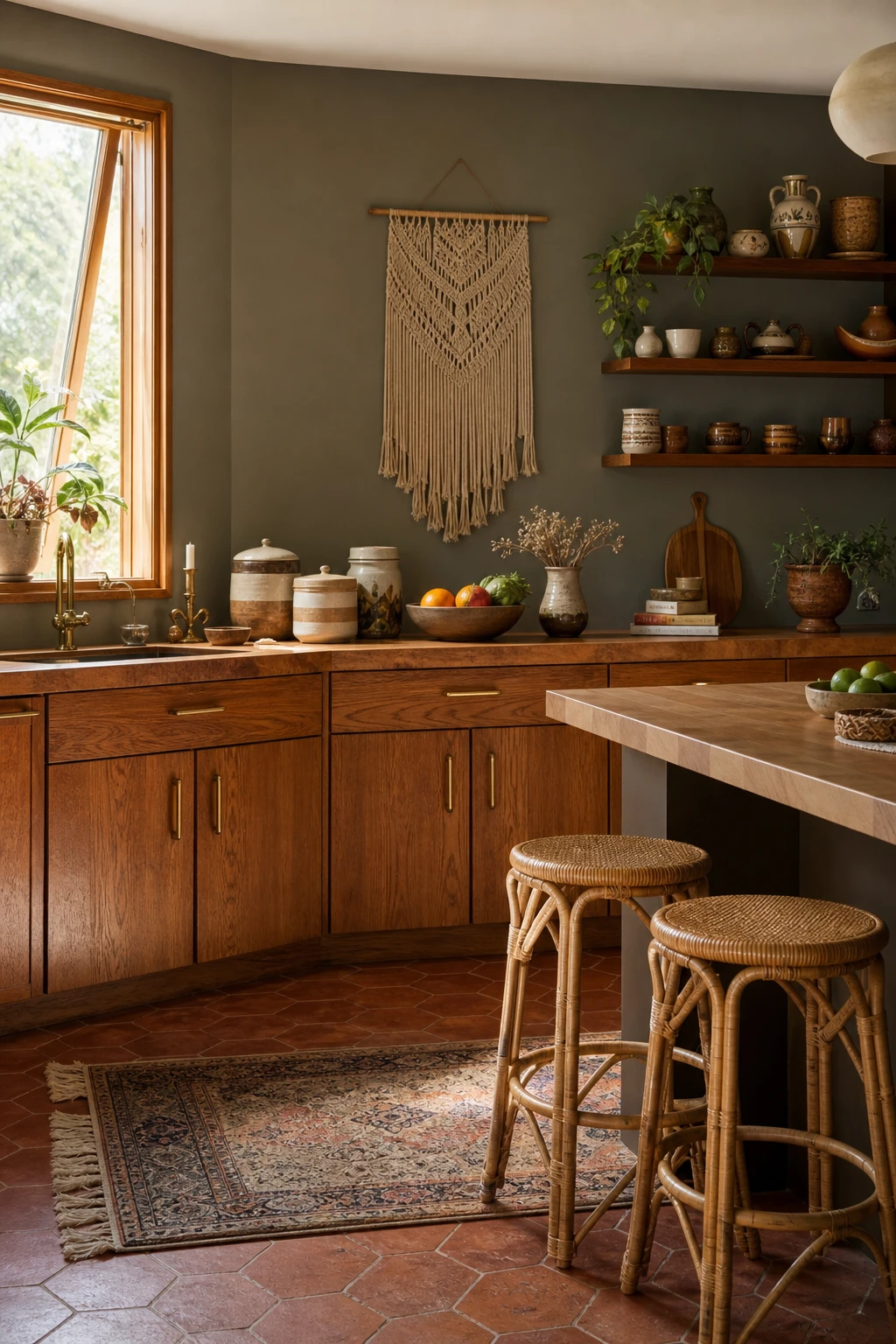
Honey and amber wood tones are the heartbeat of an authentic 70s kitchen, and getting the stain right is everything. A warm, medium toned oak finish pulls the whole room into that sun drenched, earthy mood without you having to do much else, and the grain catches the light differently through the day, giving the cabinets a living quality that painted surfaces simply cannot match. Brass pulls and a butcher block counter are the natural companions here, and once those three elements sit together the decade clicks into place almost instantly. The thing I always tell clients is that you do not need to decorate much else once the wood is doing this job properly.
The Key Details
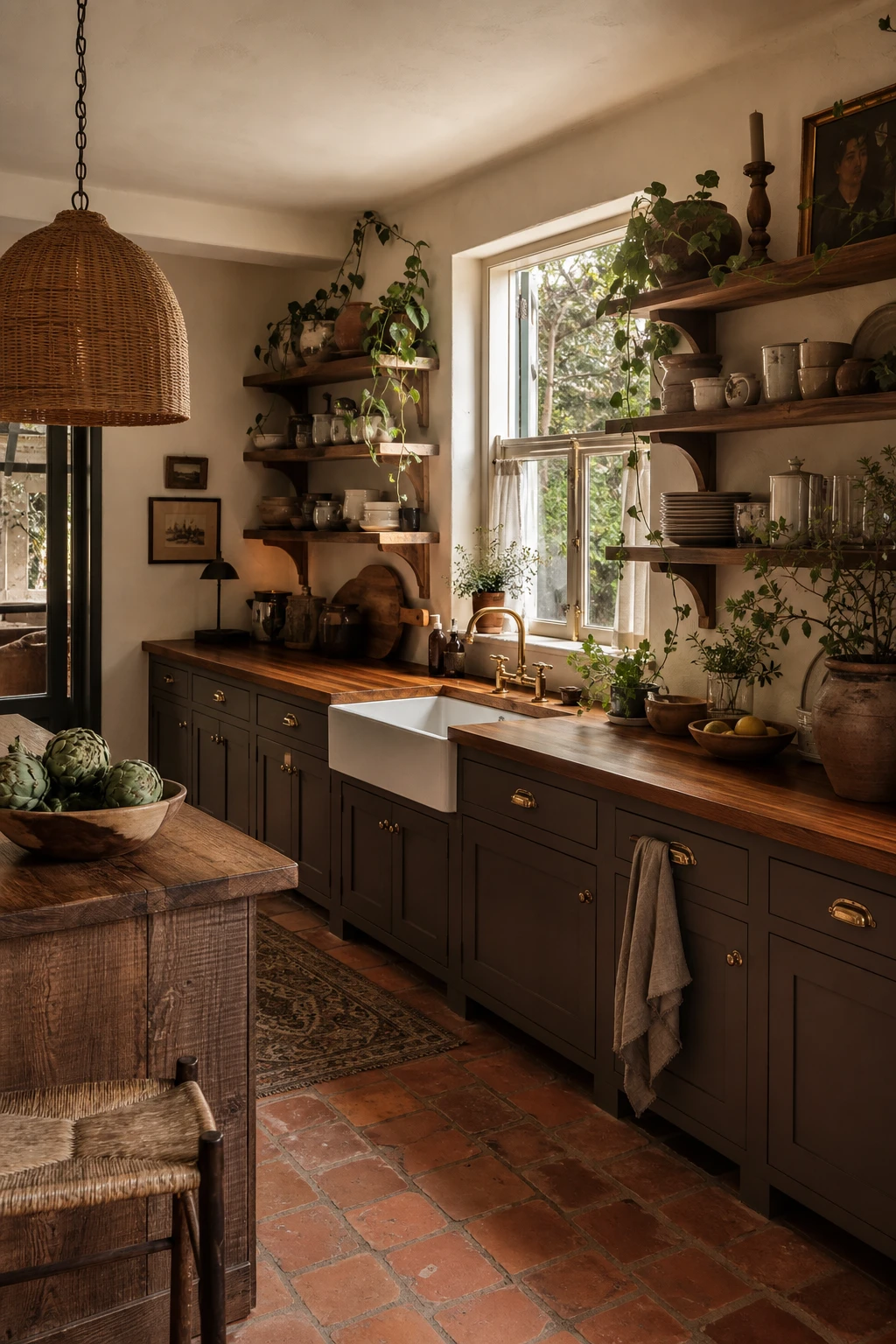
Wood countertops are one of those surfaces that actually get better the longer you live with them, and that quality is what makes them so right for a boho kitchen. What I love is the way a well used oak worktop tells a quiet story, a little darkening near the sink, a gentle grain that catches the morning light differently each year. You get a warmth from it that no stone or laminate can replicate, because it genuinely responds to its environment rather than sitting there looking the same forever. The whole surface becomes part of the room in a way that feels lived in and honest, which is exactly the soul a 70s boho kitchen is after.
The Key Details
Get The Look
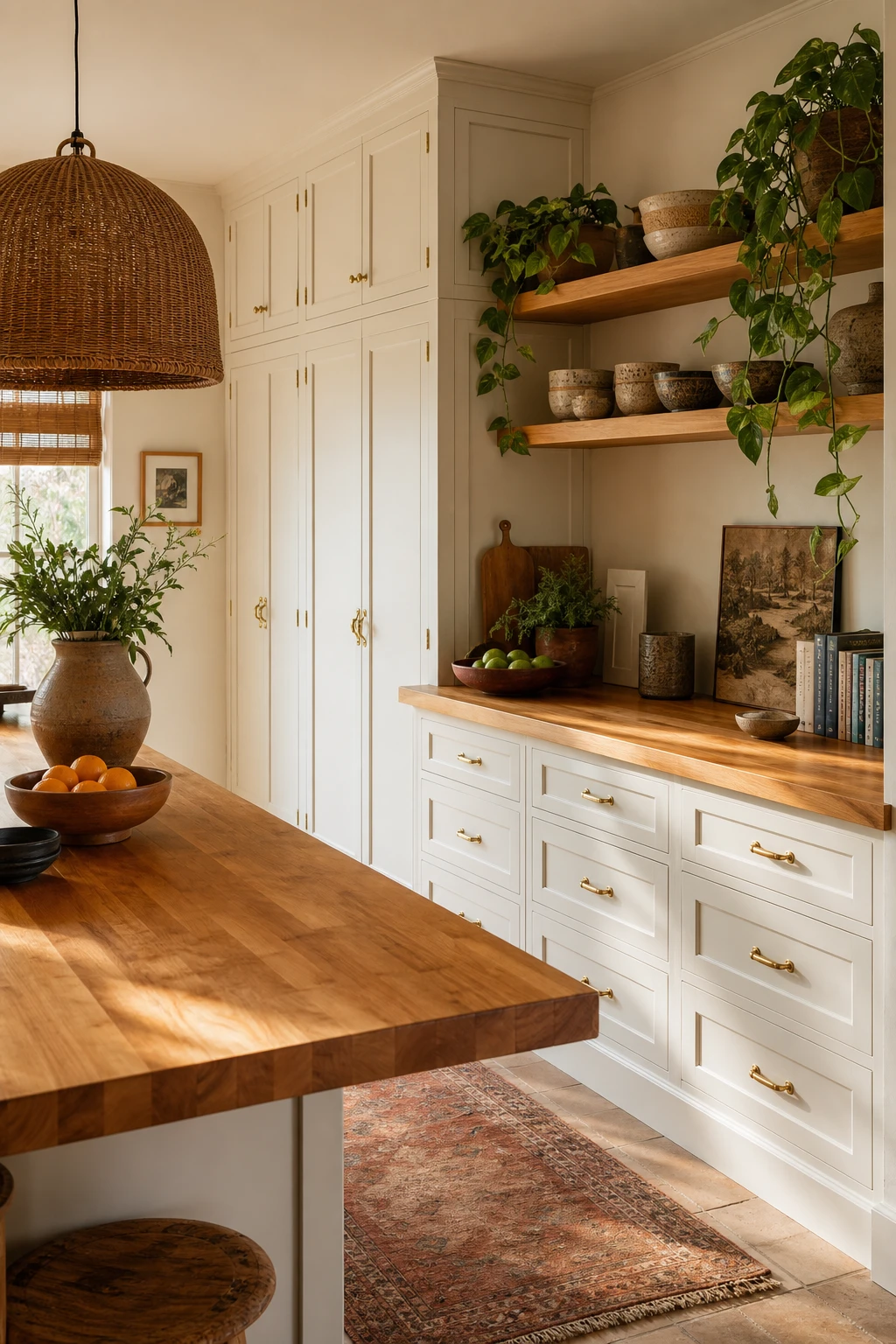
Butcher block against white cabinets is one of those pairings that never asks for much and yet always delivers. The raw grain of the wood pulls every bit of warmth it can out of the room while the white cabinets give your eye somewhere quiet to rest, and you get that easy, lived in feeling that sits right at the heart of 70s boho, where nothing is too precious and everything feels like it belongs. The contrast does the heavy lifting here, keeping the kitchen grounded rather than rustic and bright rather than cold. It is the kind of combination that always makes me smile because it looks considered without anyone having to try very hard.
The Key Details
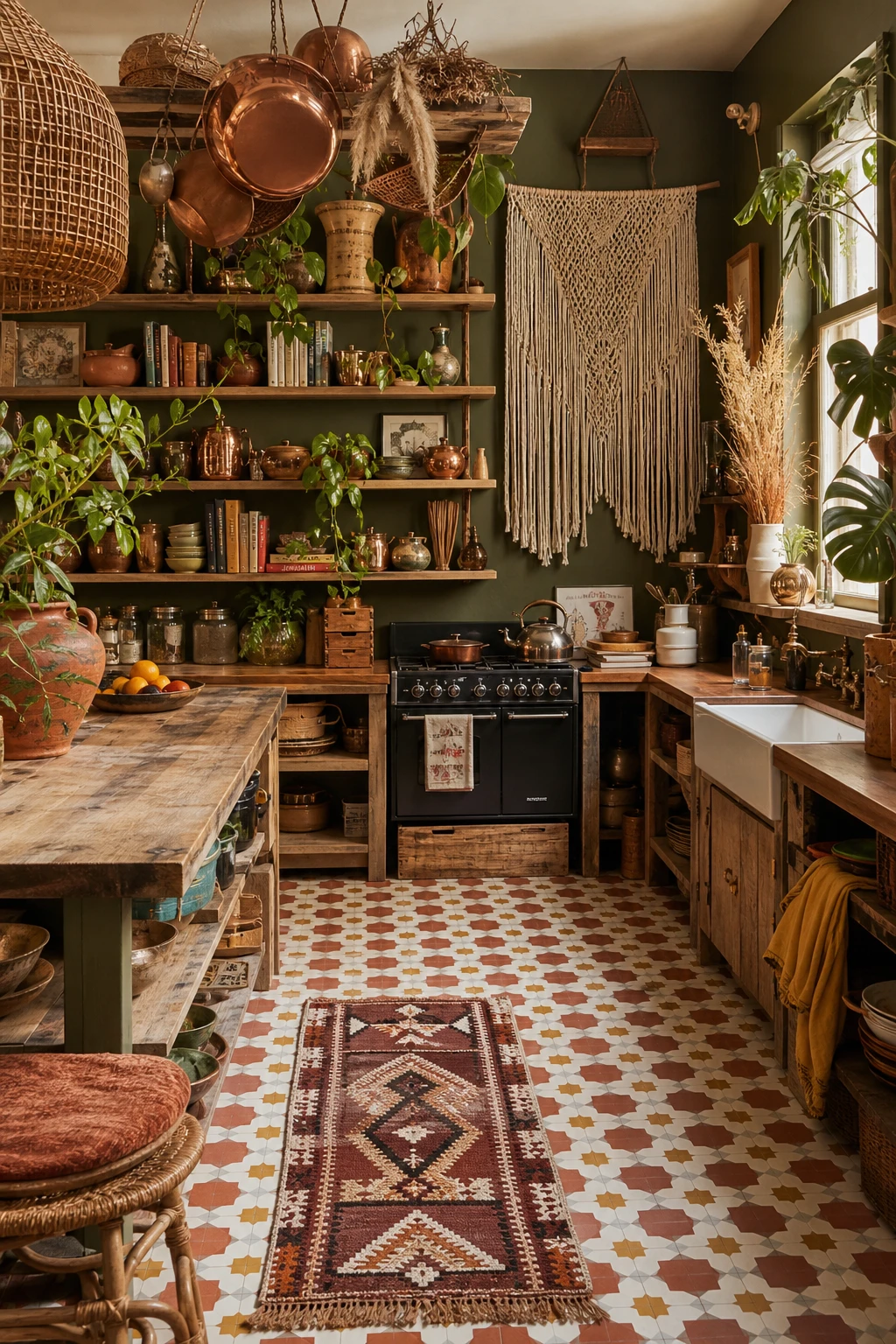
Maximalist layering works when every single thing you see has been chosen on purpose, and that is the secret the 70s boho kitchen gets so right. A room like this builds colour, pattern, and objects in waves: the Moroccan floor tiles set the palette, the copper pots and trailing pothos pick it back up, and the macrame anchors the whole wall without competing with anything below it. You will notice it never feels chaotic because each layer belongs to the same warm family of rust, mustard, and natural timber, so the eye moves around happily rather than getting snagged. The thing I always check in a maximalist room is whether there is a clear through line connecting the pieces, and here that line is the earthy 70s palette running from floor to ceiling.
The Key Details
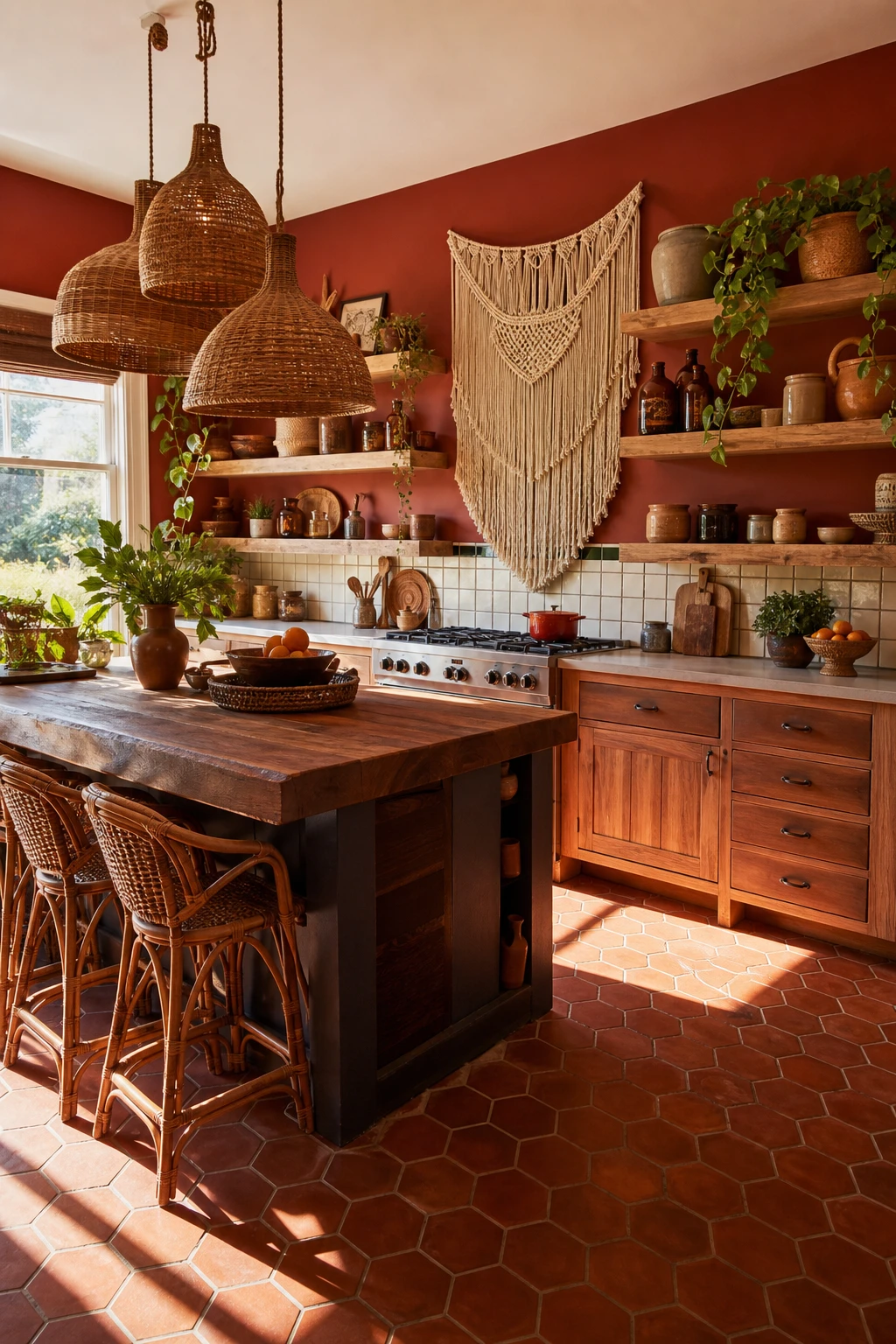
Pulling every element together into one room is where the real magic of 70s boho happens, and the whole becomes so much greater than the sum of its parts. The rattan pendants talk to the timber shelves, the terracotta floor echoes the warm cabinet tones, and the macrame adds just enough softness to stop it all feeling too structured. You get a room that feels lived in and layered, like it arrived over years rather than a single weekend, and I love that sense of collected warmth most of all. When every piece earns its place, the kitchen stops looking decorated and starts feeling like home.
The Key Details
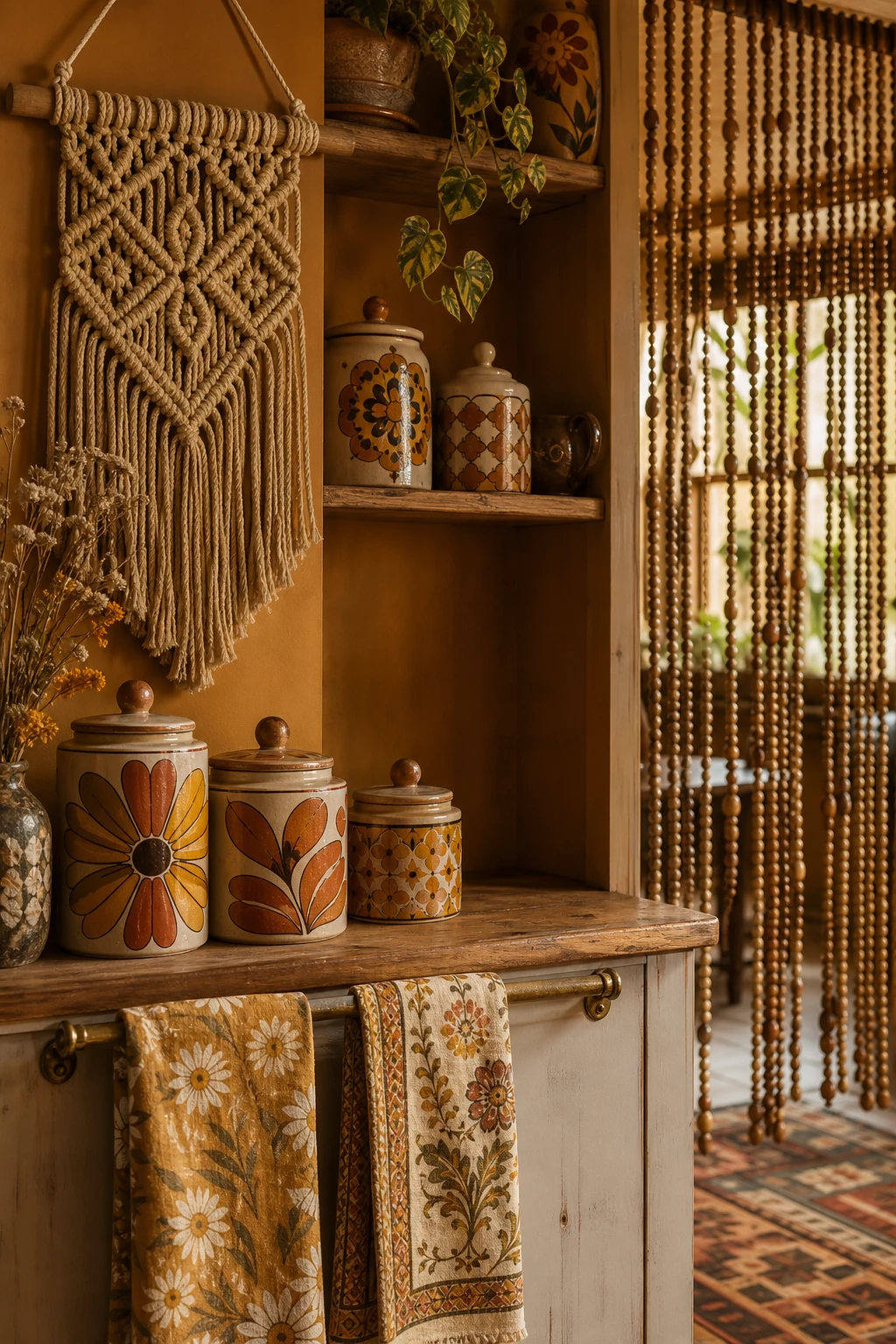
Small details carry more weight than people realise, and in a 70s boho kitchen the right ones do all the heavy lifting without you touching a single wall or cabinet. A hand knotted macrame hanging, a string of wooden beads across a doorway, a set of hand painted ceramic canisters lined up on a shelf: each piece reads as intentional but relaxed, which is exactly the spirit you are going for. What I love about this approach is that none of it requires a renovation budget or even a free weekend, you just layer things in over time until the room starts to feel like it belongs to someone with a well travelled, free thinking soul. You will notice how a couple of vintage botanical prints propped on a shelf or hung in a loose grouping can shift the whole mood of a plain kitchen wall into something that feels genuinely personal and alive.
The Key Details
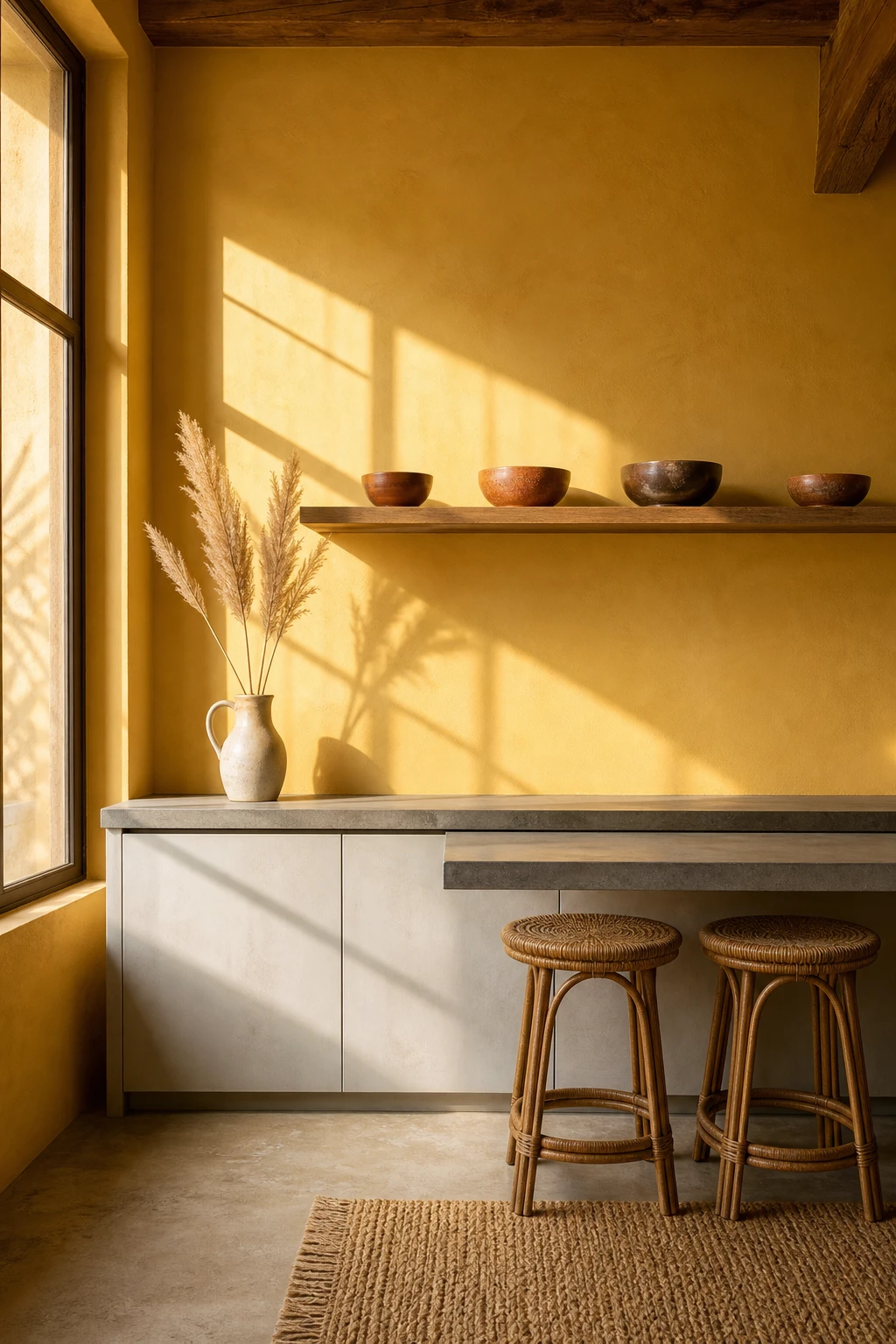
Colour hits harder when it has room to breathe, and that is the whole secret behind this approach. One bold rust glaze on a handthrown bowl, sitting alone on a raw oak shelf against plain off white cabinetry, stops you in your tracks far more quickly than it ever would in a kitchen crowded with competing things. The restraint here is never cold, which is what I find so compelling about it. The concrete counter brings texture, the rattan stools bring warmth, and the oiled wood carries that earthy character, so the room still feels layered and alive even though nothing is cluttered. You get full boho soul and full visual punch at the same time.
The Key Details
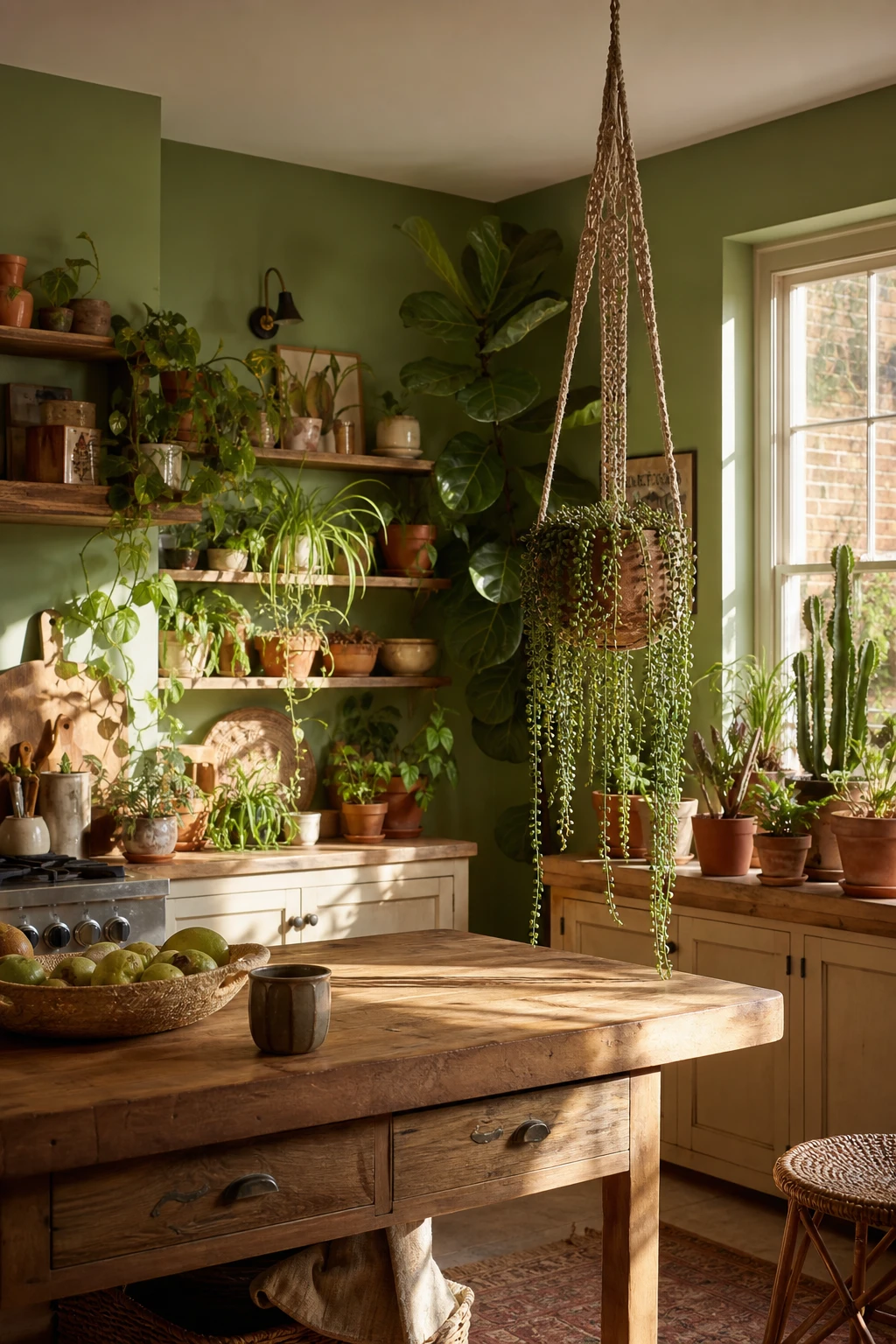
A plant filled kitchen does something no paint colour or tile can fully replicate. The green pulls the whole room together without any effort, and plants work on three levels at once: colour, texture, and actual movement as leaves shift in the light, so you get the visual richness of a full styling moment from something that costs very little. Grouping a trailing ivy on an upper shelf alongside a stocky terracotta cactus down below creates a layered scene rather than a flat row of pots, and I always encourage people to think in that vertical way rather than lining everything up at the same height. That depth is what separates a kitchen that feels genuinely alive from one that just has a few plants sitting around.
The Key Details
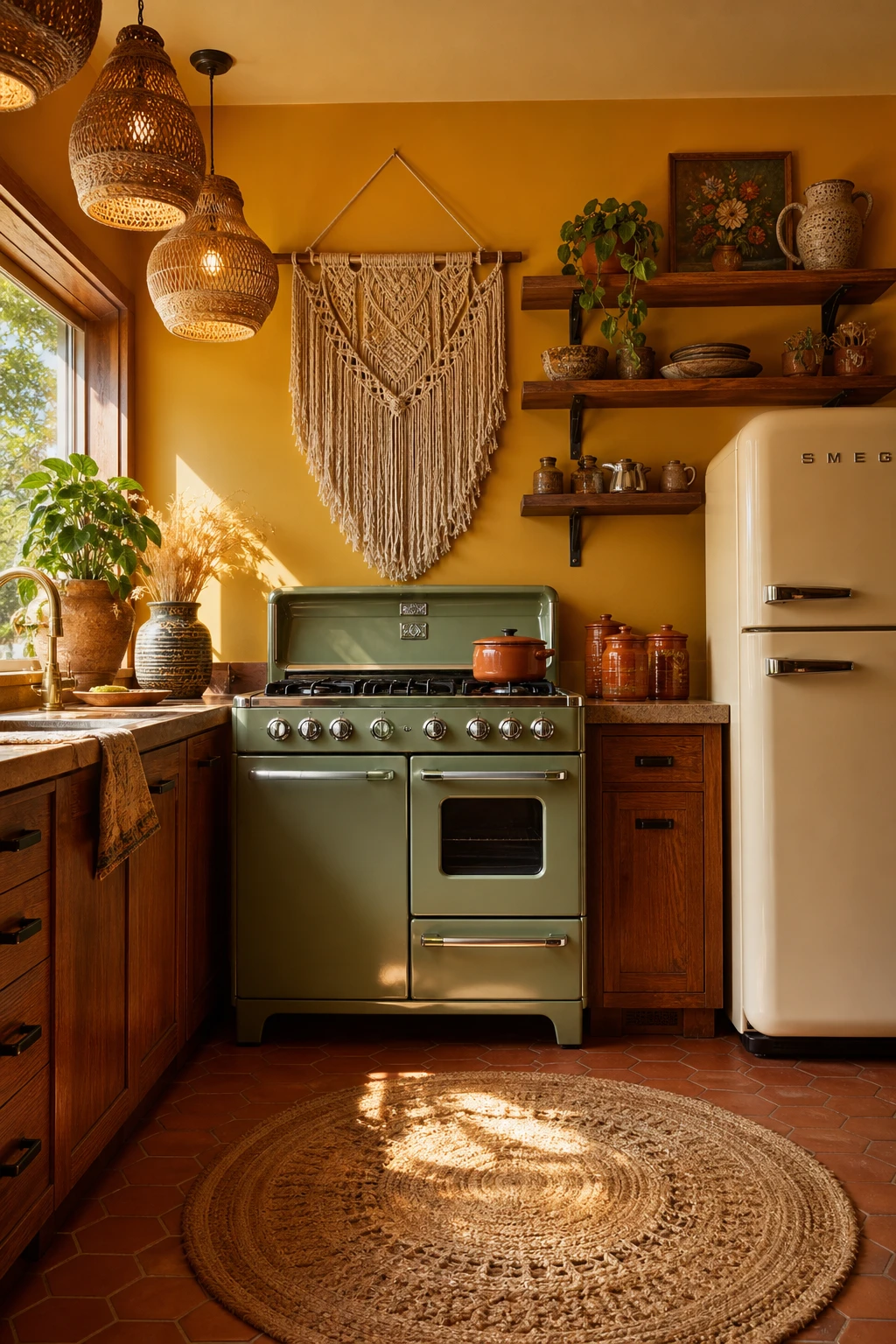
A single avocado green range sitting against warm timber shelving does something no amount of styling tricks can quite replicate: it becomes the room. What I love about leaning into coloured appliances is that the kitchen stops needing extra decor to feel finished, because the appliance is already doing that job with real confidence. You get a focal point that is also fully functional, which wins me over every time as a designer. Watch how the eye settles on that one bold piece and the rest of the room simply supports it, rather than competing for attention.
The Key Details
Get The Look
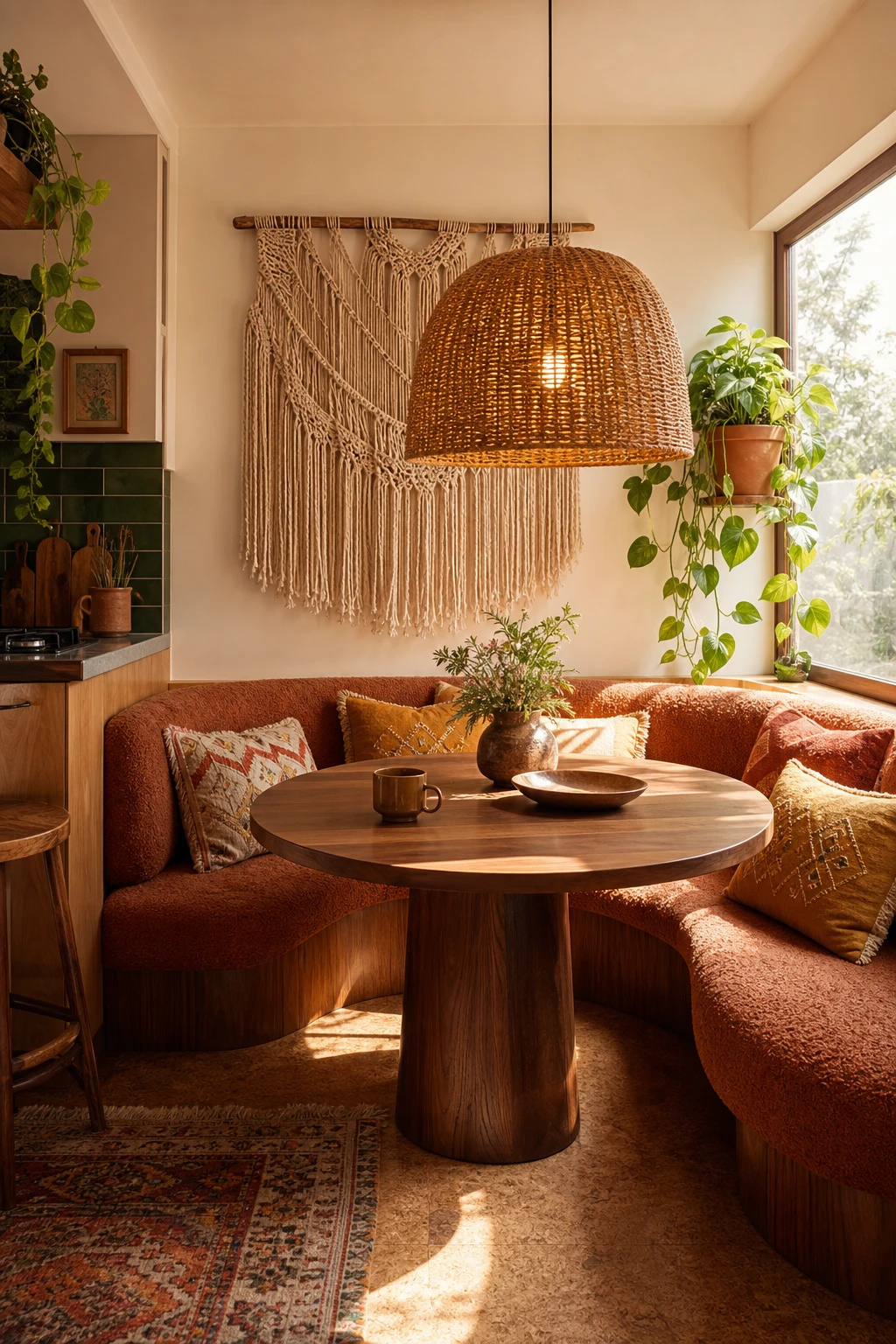
Carving a breakfast nook out of a kitchen corner is one of my favourite moves because it takes dead space and turns it into the most loved spot in the whole room. The curved bouclé banquette wraps you in softly, and that round walnut pedestal table pulls people together without any awkward corners to navigate around. You get that intimate, tucked away feeling even though you are still right in the middle of the kitchen, and watch how the oversized rattan pendant light draws the eye down and seals the zone off from the rest of the room. The macrame wall hanging and a trailing pothos in a terracotta pot do the quiet work of making it feel personal, the kind of corner that says sit down, stay a while.
The Key Details
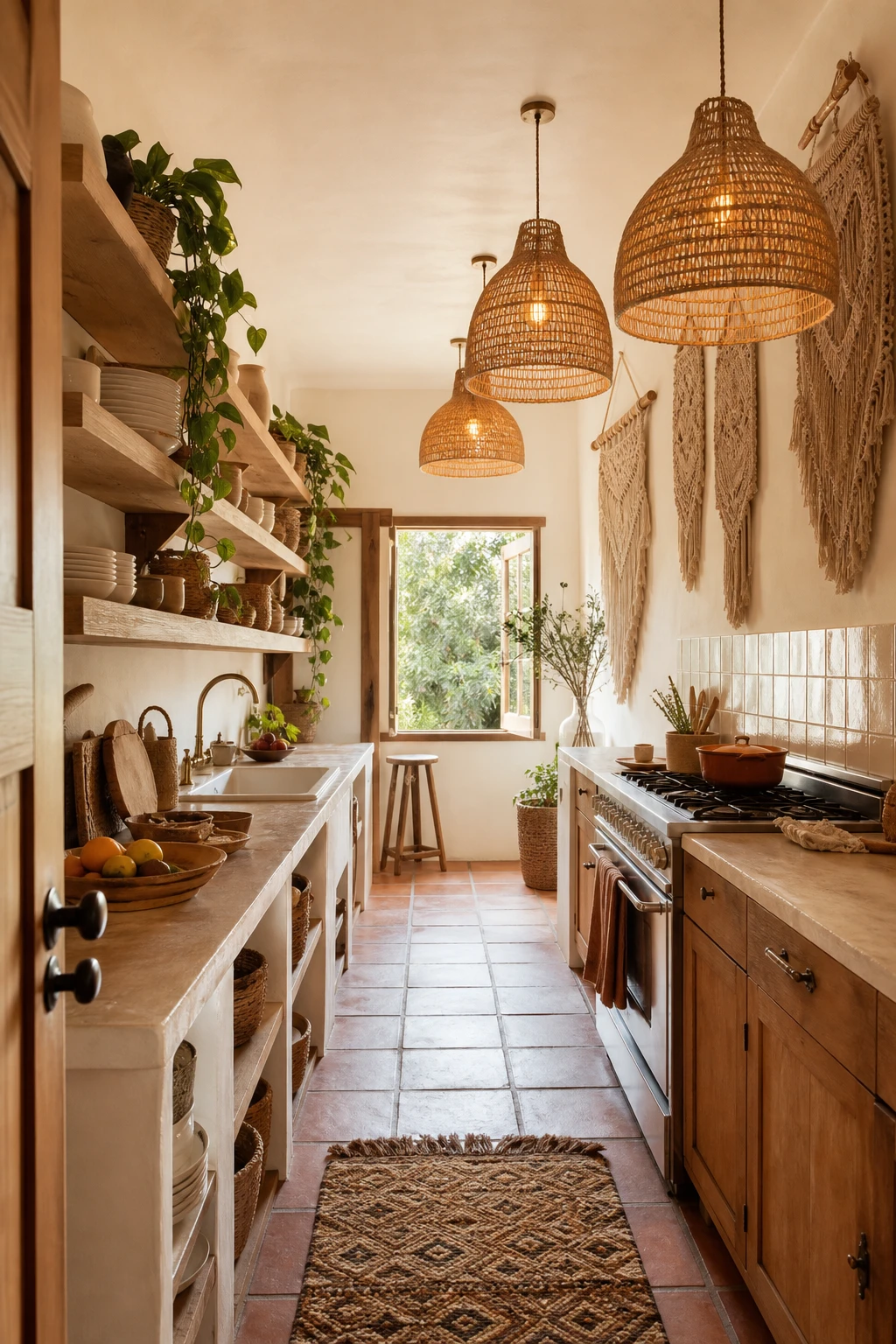
Galley kitchens get a bad reputation, and most of that comes down to people treating the narrow layout as a problem to hide rather than a structure to work with. The trick I keep coming back to is letting warm colour sit low while the upper half of the room stays light and open, so you get all the richness of terracotta tiles and rattan and trailing green without the walls closing in. The ceiling and upper walls bounce natural light back down the run of the kitchen, and you will notice how the whole space feels longer and more generous than the footprint suggests. Keep the colour confident but anchored below the worktop line and the layout stops feeling like a corridor and starts feeling like a room.
The Key Details
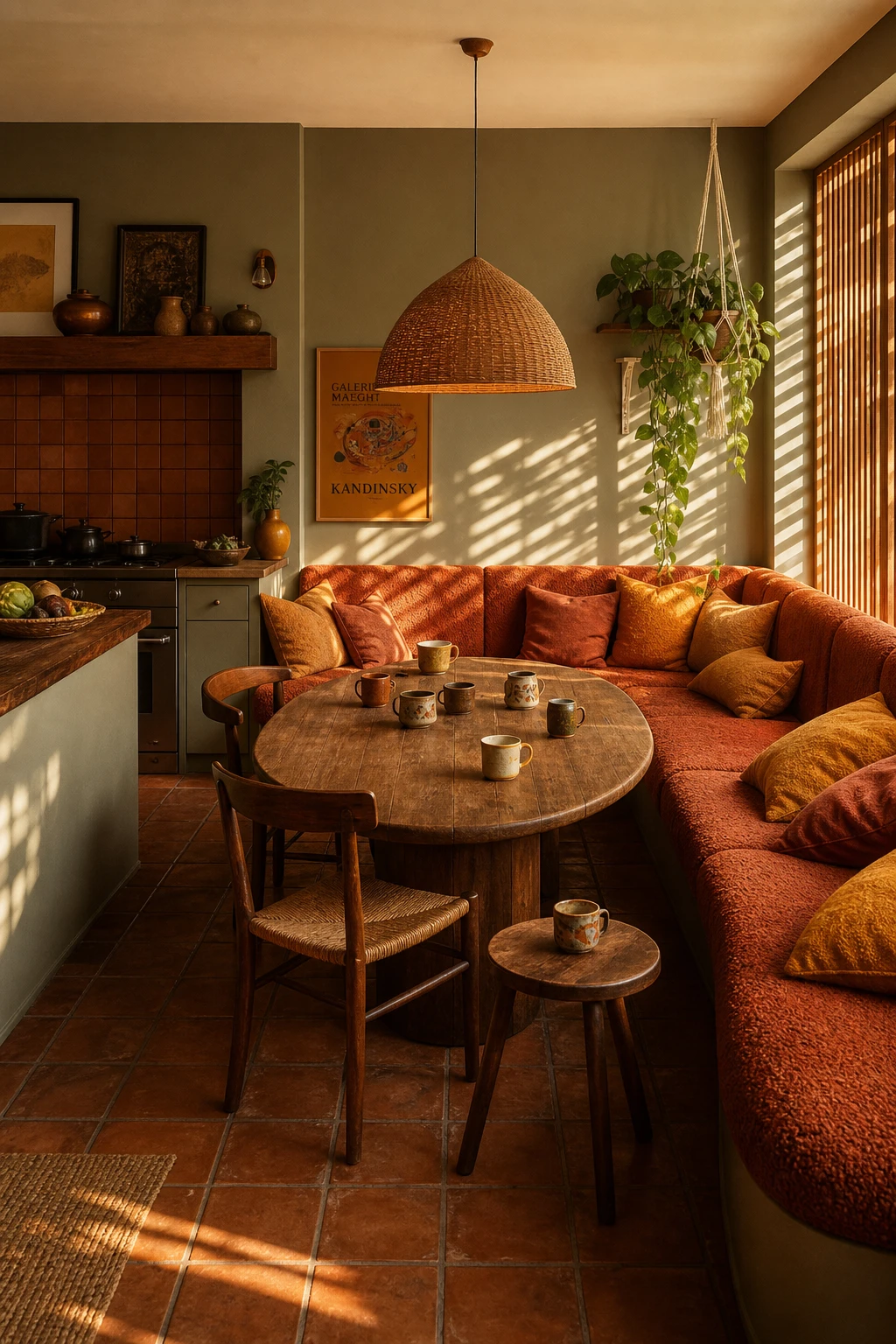
A wraparound corner banquette does something no row of chairs ever manages, and that is anchor the kitchen as a place where people actually want to sit and stay. The burnt orange boucle pulls the 70s warmth right through the room, and you get this lovely visual pocket that feels carved out and intentional rather than left over. Fixed seating signals to everyone who walks in that gathering here is the point, not just passing through to grab something, and that is a quality I value deeply in any kitchen I work on. Pair it with an oval aged teak table and a low woven rattan pendant and watch how the whole corner takes on the feel of a proper room, not a waiting area tacked onto a worktop.
The Key Details
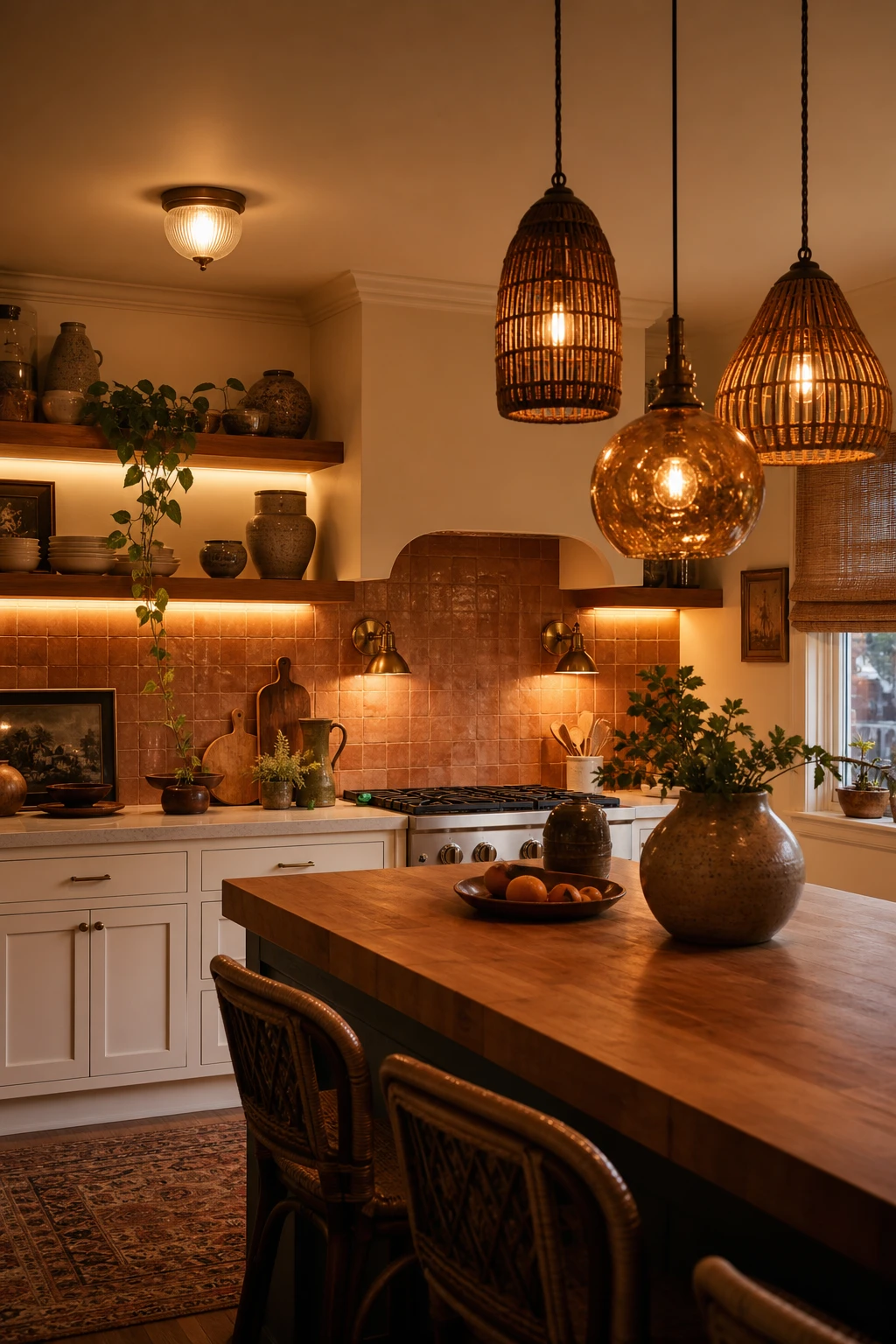
Layered lighting is one of those things I always check first when a kitchen feels cold or flat, because nine times out of ten a single overhead fitting is doing all the work and losing the battle. What I love about this setup is the way the staggered rattan and amber glass pendants sit low over the island and cast that golden, almost honeyed glow across the butcher block, so the whole surface looks warm and lived in rather than clinical. You get the under cabinet strips pulling the eye along the timber shelving at a completely different level, and the wall sconces add a soft pocket of light closer to head height that makes the room feel like it has corners and depth rather than one flat ceiling glare. Watch how the terracotta zellige tile splashback comes alive in that layered light, each little variation in the glaze catching a slightly different angle, and you will notice the whole room shifts from a bright, functional morning space to something genuinely cosy and inviting by the time dinner is on the table.
The Key Details
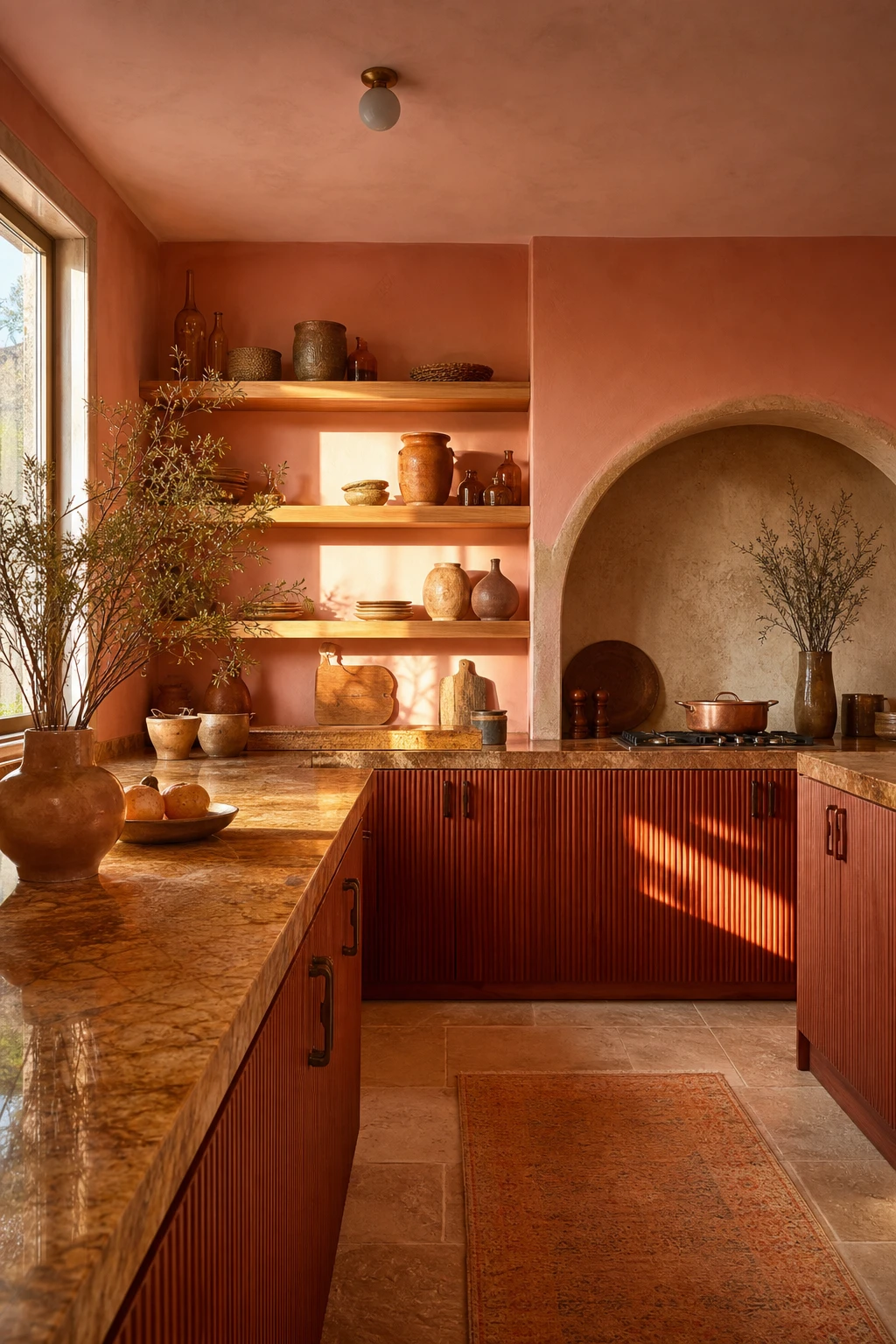
Tracking light across the day is the secret move behind a sunset palette that actually holds together, and this kitchen does it beautifully. The amber honed stone worktop sits at the warmest, most luminous point of the scheme, the way the horizon blazes just before the sun drops, and everything above and below it shifts by a step or two. The deep rust cabinets anchor the lower half without pulling the eye into darkness, while the raw plaster arch and oiled oak shelving carry the cooler, dustier tones of the sky once the blaze fades. That coherence, a room that feels like a single breath rather than a collection of orange things thrown together, is what keeps it from tipping into costume, and it is the quality I look for first when judging whether a bold palette is working.
The Key Details
Get The Look
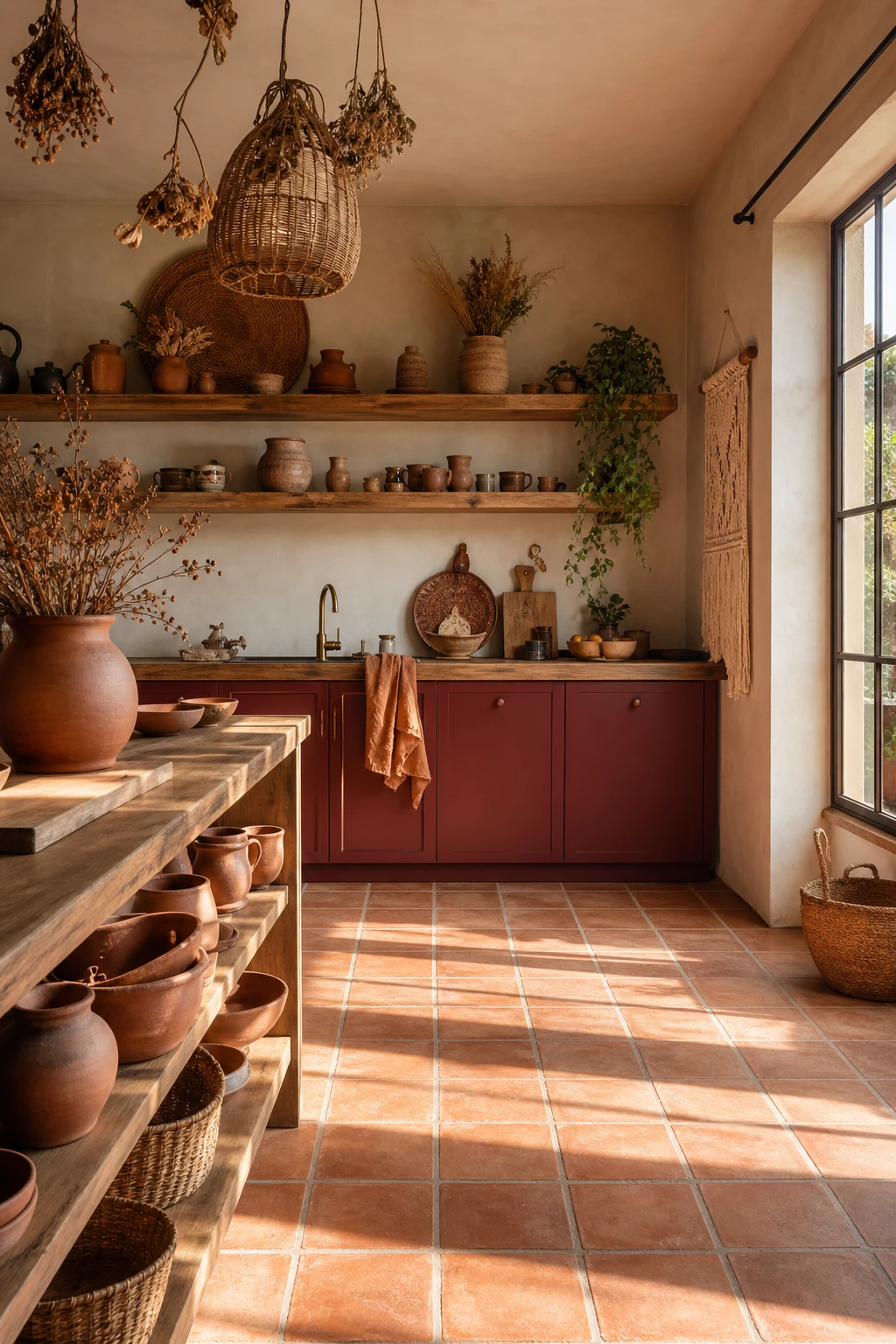
Terracotta is the heartbeat of the 70s boho kitchen, and it belongs in a cooking space in a way few other colours do. The shade carries the warmth of sun dried clay, raw earth, and open air markets all at once, so you get an instant sense of comfort the moment you walk in. When I am building a terracotta palette the first thing I check is whether the chosen shade has enough orange red depth to feel alive, because the best rooms lean into that warm, dusty richness rather than softening it away. The colour shifts through the day too, glowing amber in morning light and settling into something deeper and moodier by evening, and that daily movement gives the kitchen a life that cooler palettes simply cannot match.
The Key Details