Newsletter Subscribe
Enter your email address below and subscribe to our newsletter

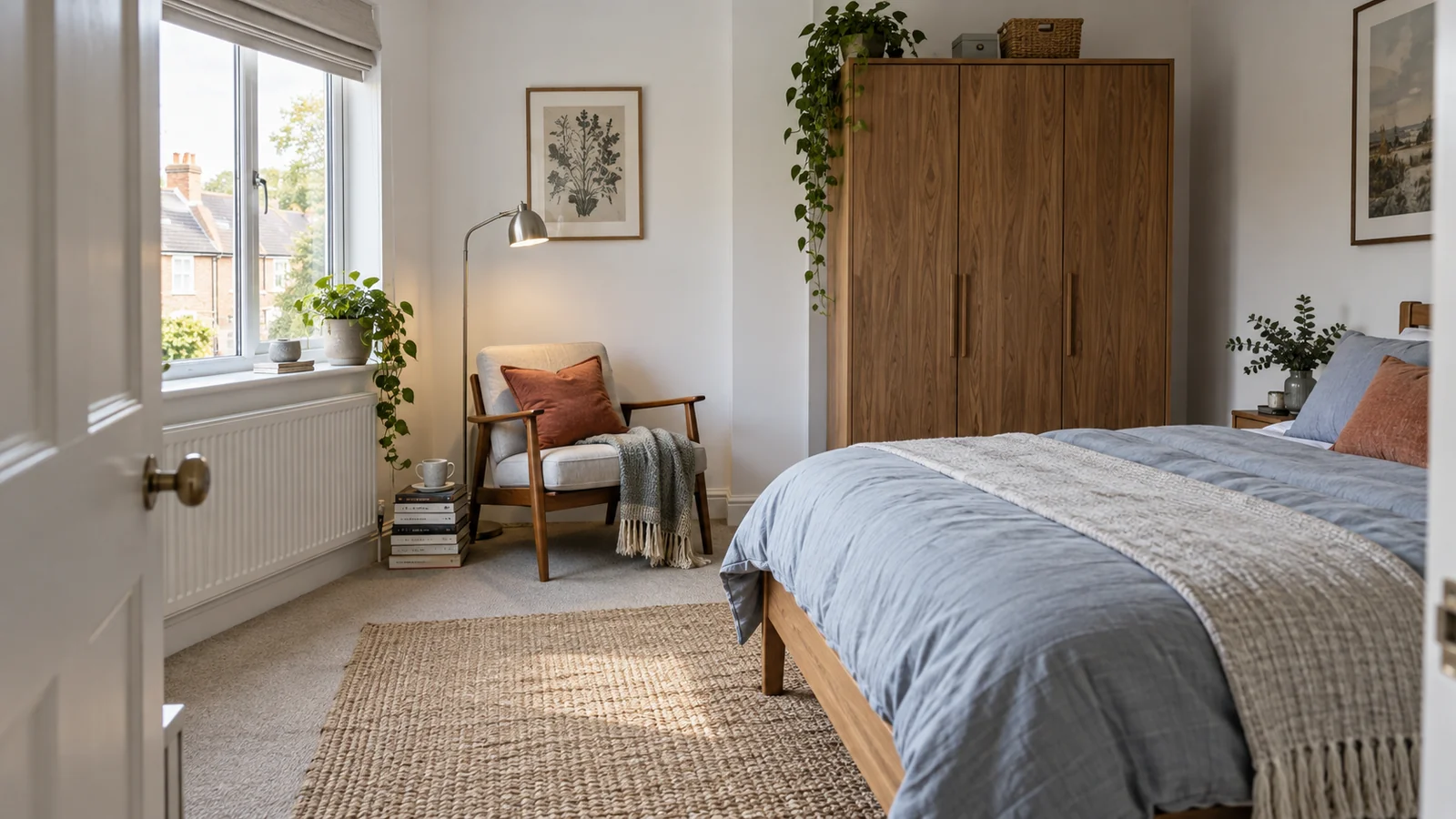
A small bedroom reading nook can sound like one more piece of furniture in a room that already works hard. If you have no spare room, the useful question is not how to make a corner look like a library. It is whether you can sit with a book while still opening the wardrobe, walking around the bed and reaching the light without a tangle of furniture. Start with the room you have, including its awkward edges. This guide will help you compare three kinds of seat, find a sensible place for a lamp and a few current books, and test the whole arrangement before you commit to it. The dimensioned example below compares two chair positions, and the worksheet helps you check your own room before buying. The result may be a proper chair, a narrow bench, a supported floor seat or simply a better place to read from the bed. A cozy corner earns its place when it makes reading easier and the rest of the bedroom remains easy to use.
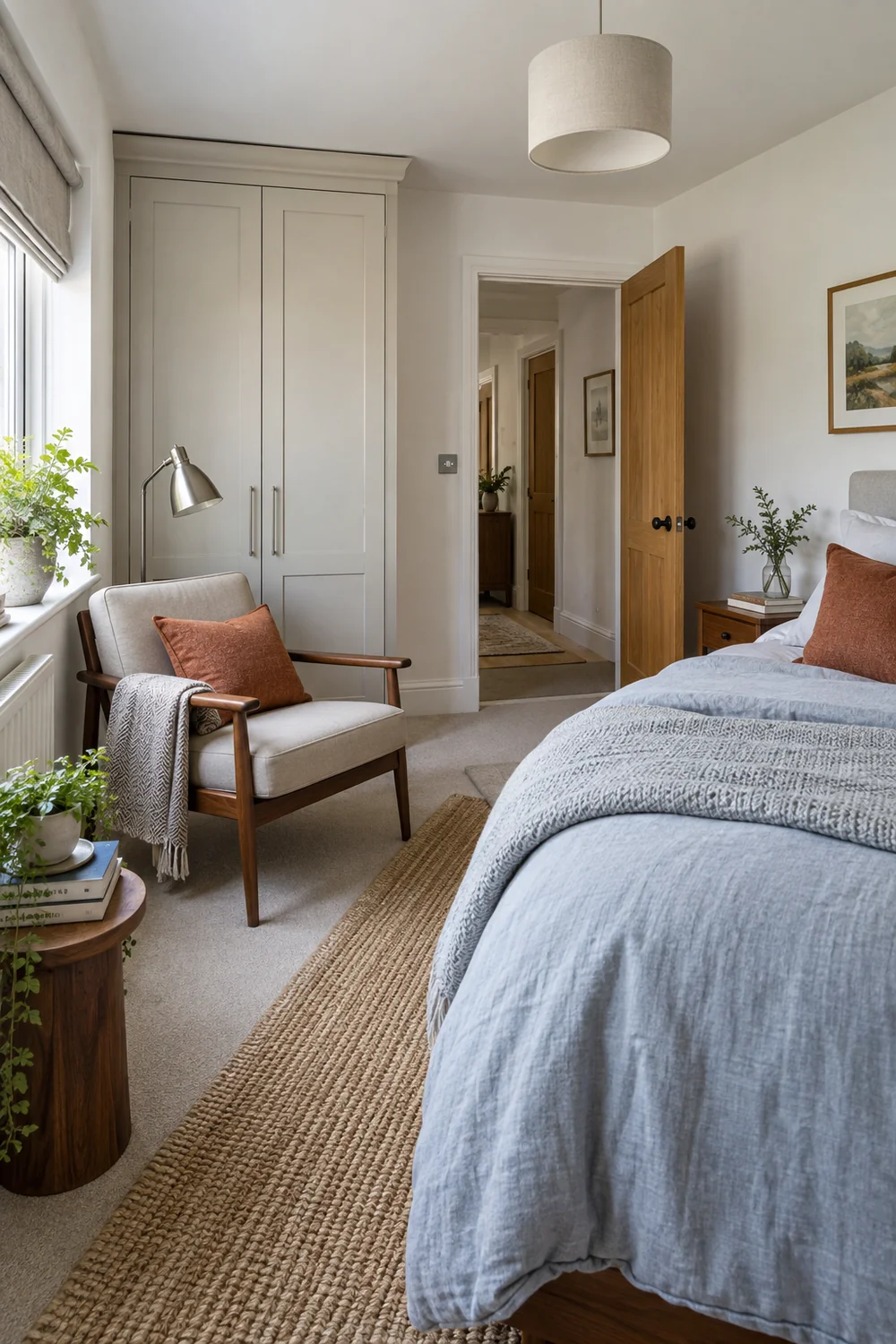
Stand in the bedroom doorway and look at the space you use rather than the space that appears empty in a photograph. An empty patch beside the wardrobe may be the place where you stand to choose clothes. A gap at the foot of the bed might be the route to the window. The corner that works for reading has to stay available after you have opened doors and drawers and made the bed. The general cozy reading nook checklist explains the basic ingredients; here the first decision is which part of this specific bedroom can actually give them space.
Take a simple overhead sketch, even if it is only a rectangle with the bed and wardrobe marked in pen. Note which way the door opens, how far drawers travel, and where you naturally step when you get up. Put a book or small box in each possible spot and use the room normally for a day. A corner that still feels open is a stronger candidate than one that only looks pretty while everything is shut.
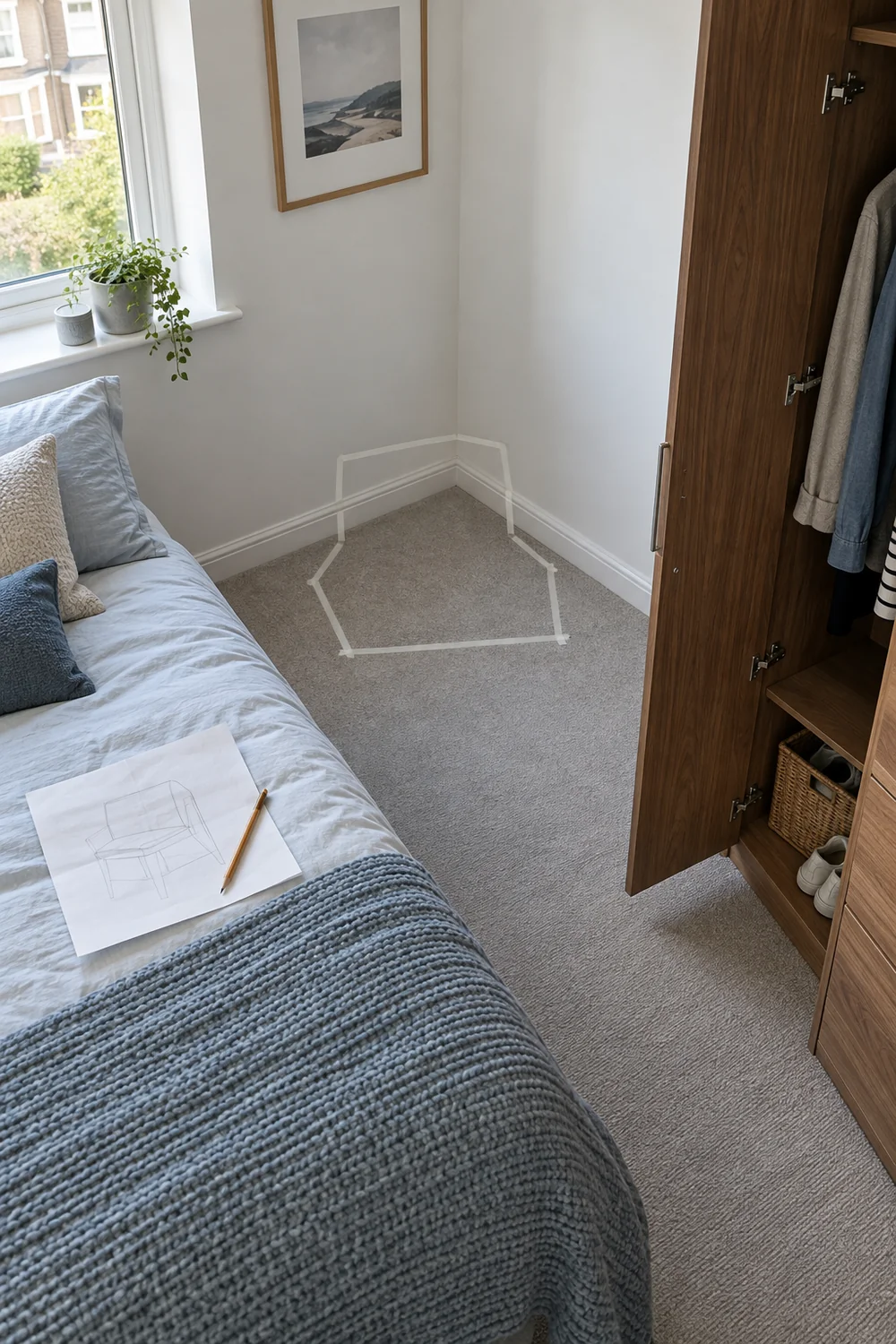
A window corner gives you daylight, but check whether the chair would block curtains, a radiator or the route to open the window. The side of a bed may offer a better place for a narrow chair if the opposite side already carries most traffic. An alcove can contain a seat visually, yet its width and depth may rule out the chair you imagined. None of these positions wins by default. Compare the whole outline of a seat, including the space your knees and feet will need when you are actually reading.
If the available corner disappears once a wardrobe door is open, plan for a smaller and more movable arrangement. A reading place can be an intentional chair pulled into position when needed, with the lamp and books kept nearby. The project still succeeds if it supports the habit without requiring a permanent object in every free patch of floor.
I would start by drawing the furniture you cannot move, then test the chair in two positions. In the example below, the room measures 320 by 360 cm. The bed occupies a 140 by 200 cm rectangle, and the wardrobe occupies a 140 by 60 cm rectangle against the bottom wall. These are deliberately simple example footprints. If your headboard, bed frame, wardrobe handles or skirting project farther, include that extra depth in your own drawing.
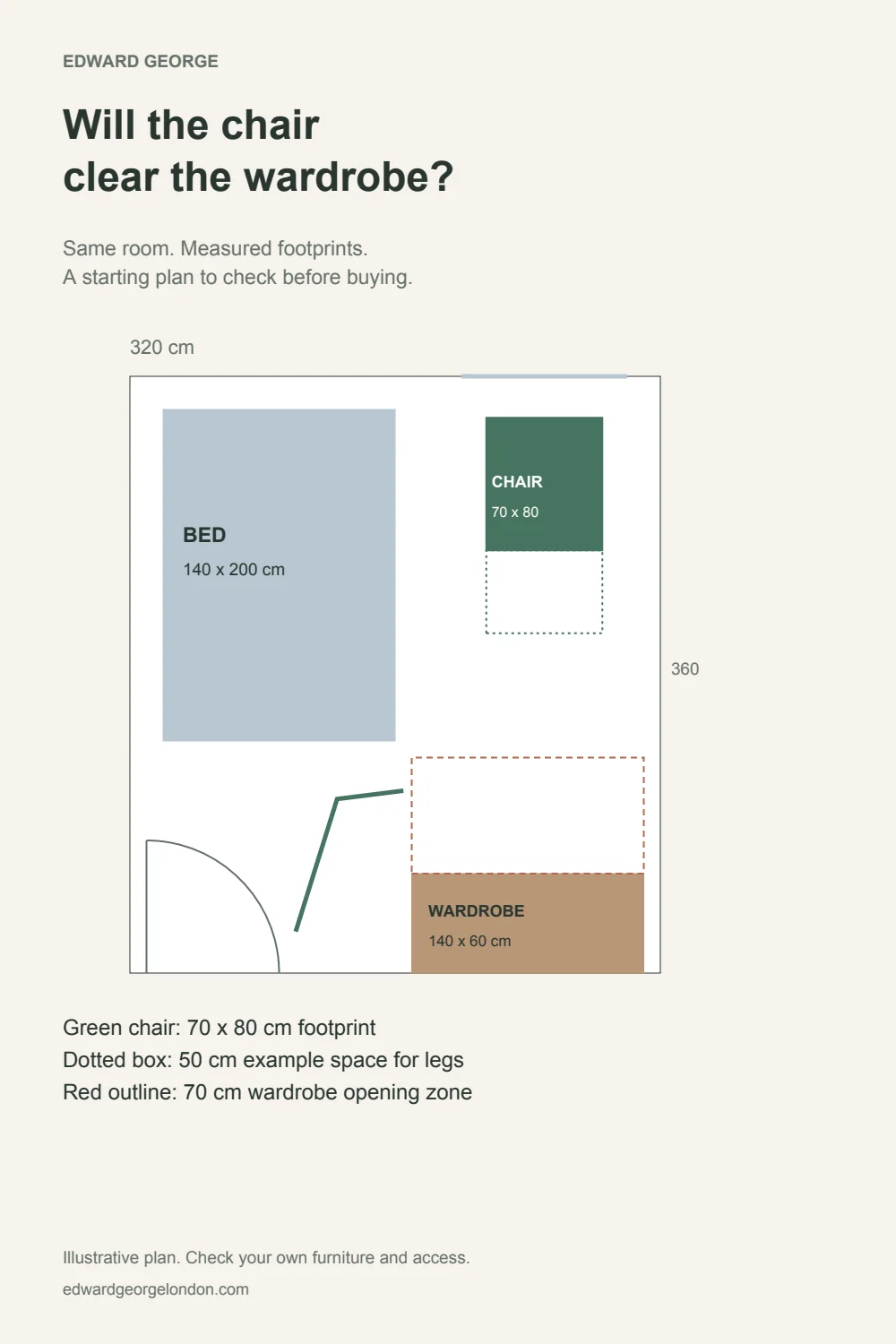
The chair footprint is 70 cm wide and 80 cm deep in both arrangements. I have reserved a zone 70 cm deep in front of the wardrobe, representing the projection of a hypothetical hinged door. That measurement belongs to this example. Measure how far your actual door or drawer projects; sliding doors still need somewhere for you to stand and reach the contents. The green line indicates a possible approach from the entrance toward the bed and wardrobe, rather than a specified or verified walking clearance.
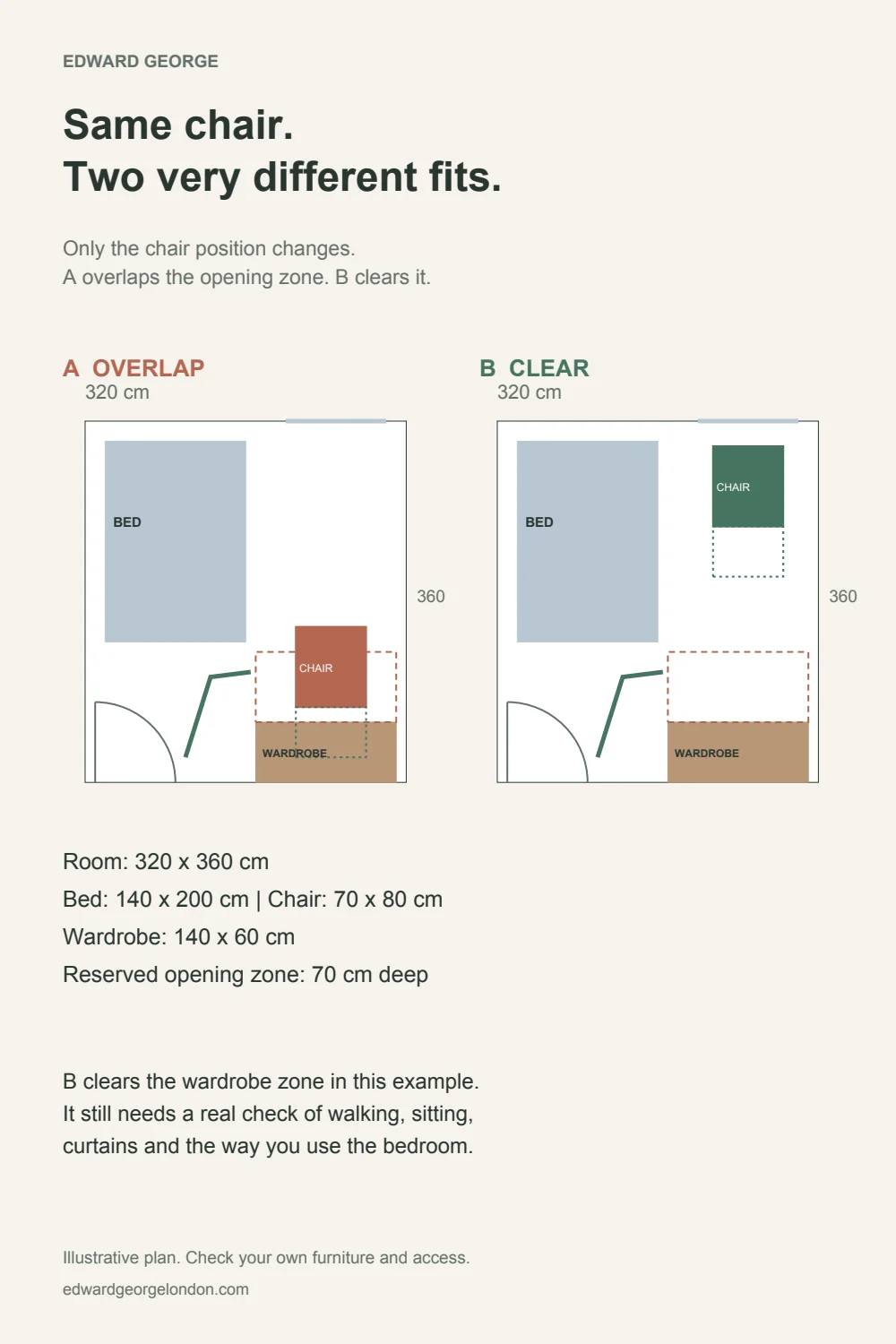
In arrangement A, the chair sits beside the foot of the bed and overlaps the wardrobe opening zone. That is a reason to reject this position before buying, even though the chair itself sits within the room and does not overlap the bed. In arrangement B, I move exactly the same chair toward the window. Its footprint clears the reserved wardrobe zone. I would take B forward to a physical trial, then check whether the curtains, window controls, radiator and normal route remain usable. Clearing one drawn zone is a useful first result, not a guarantee that the whole arrangement works for every reader.
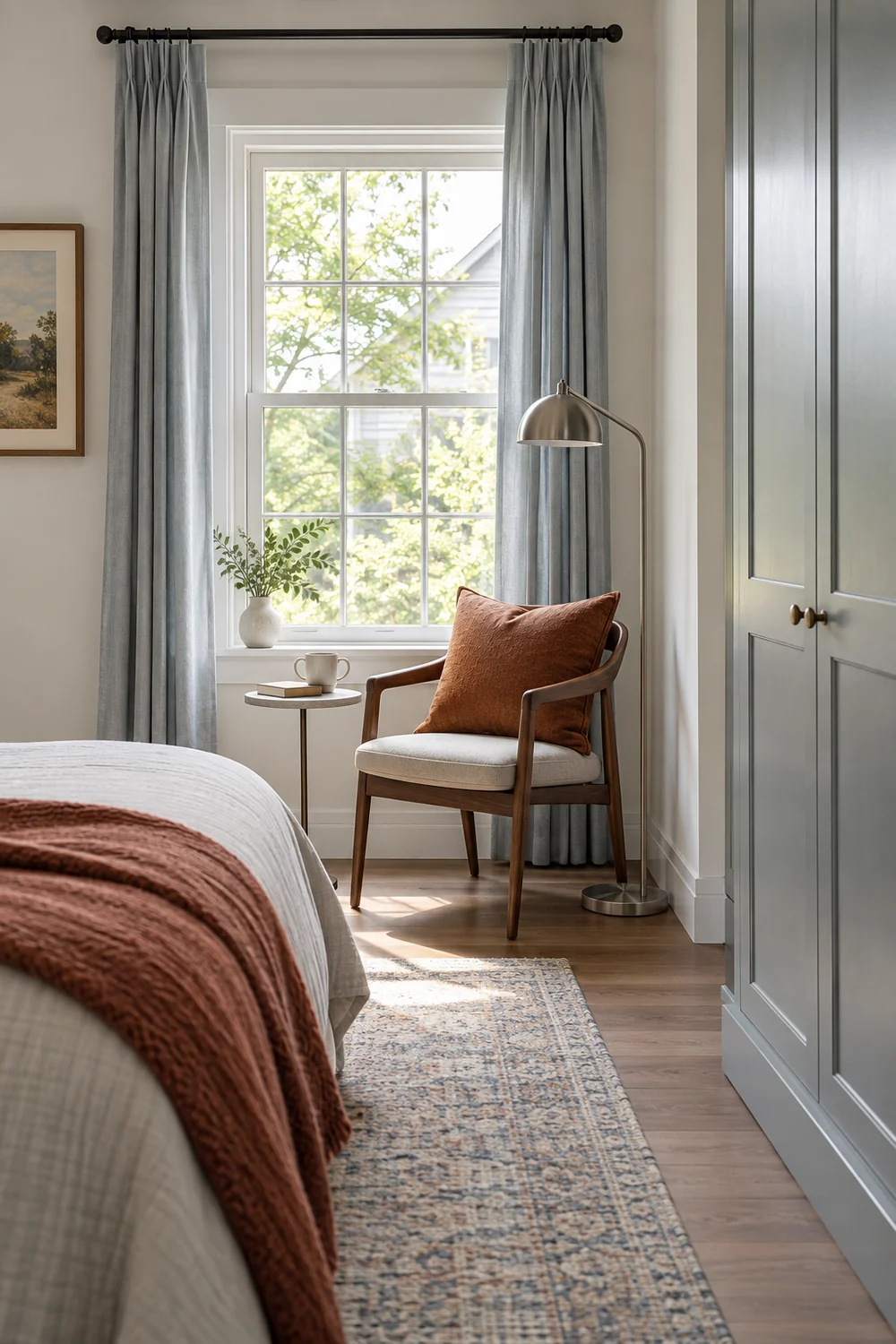
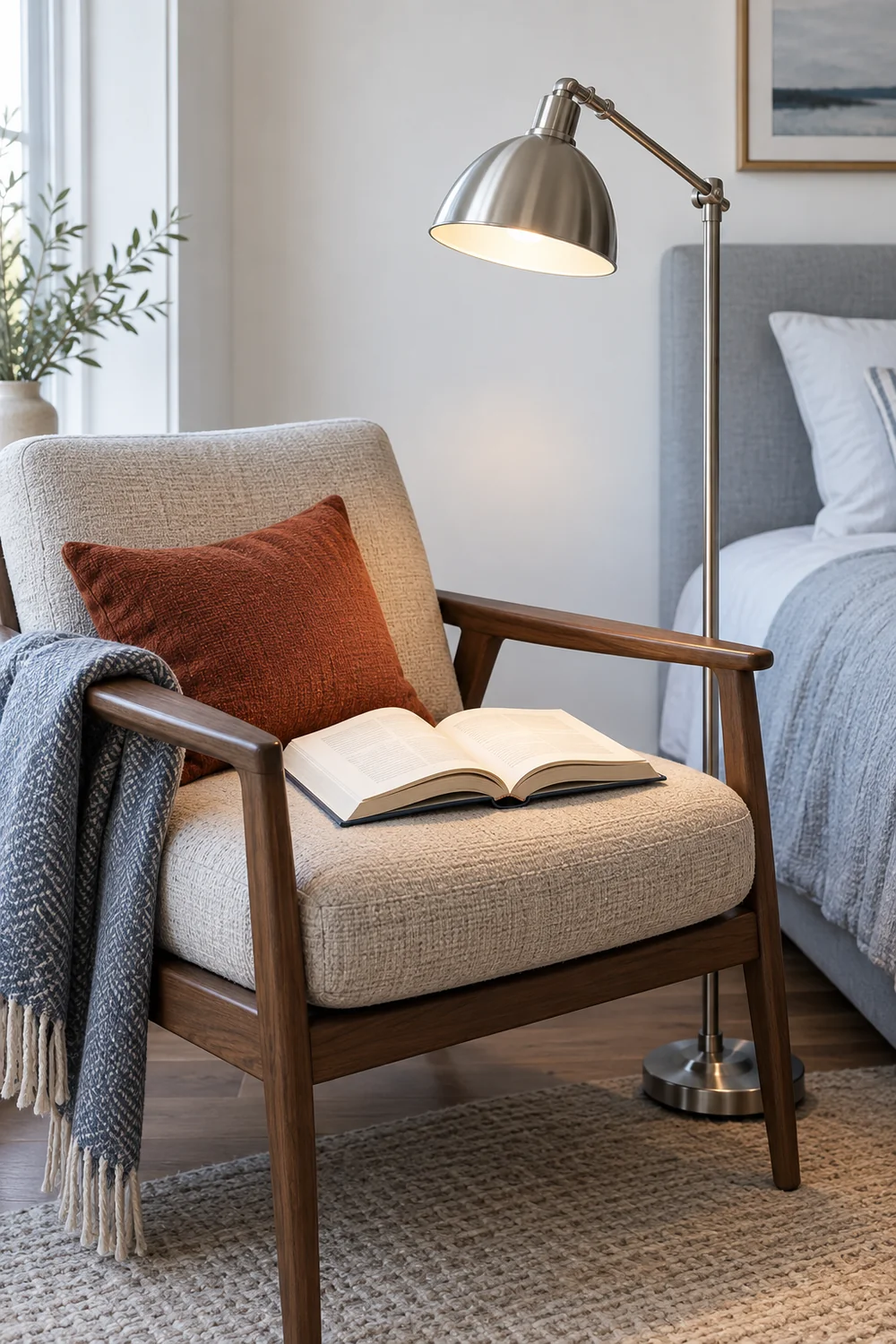
The rectangles show a hypothetical room with checked geometry. They are not a surveyed bedroom or a record of a completed furniture test. The room photographs are generated design illustrations and do not represent this exact dimensioned plan. Use the diagrams to understand the decision, then measure the room you actually have.
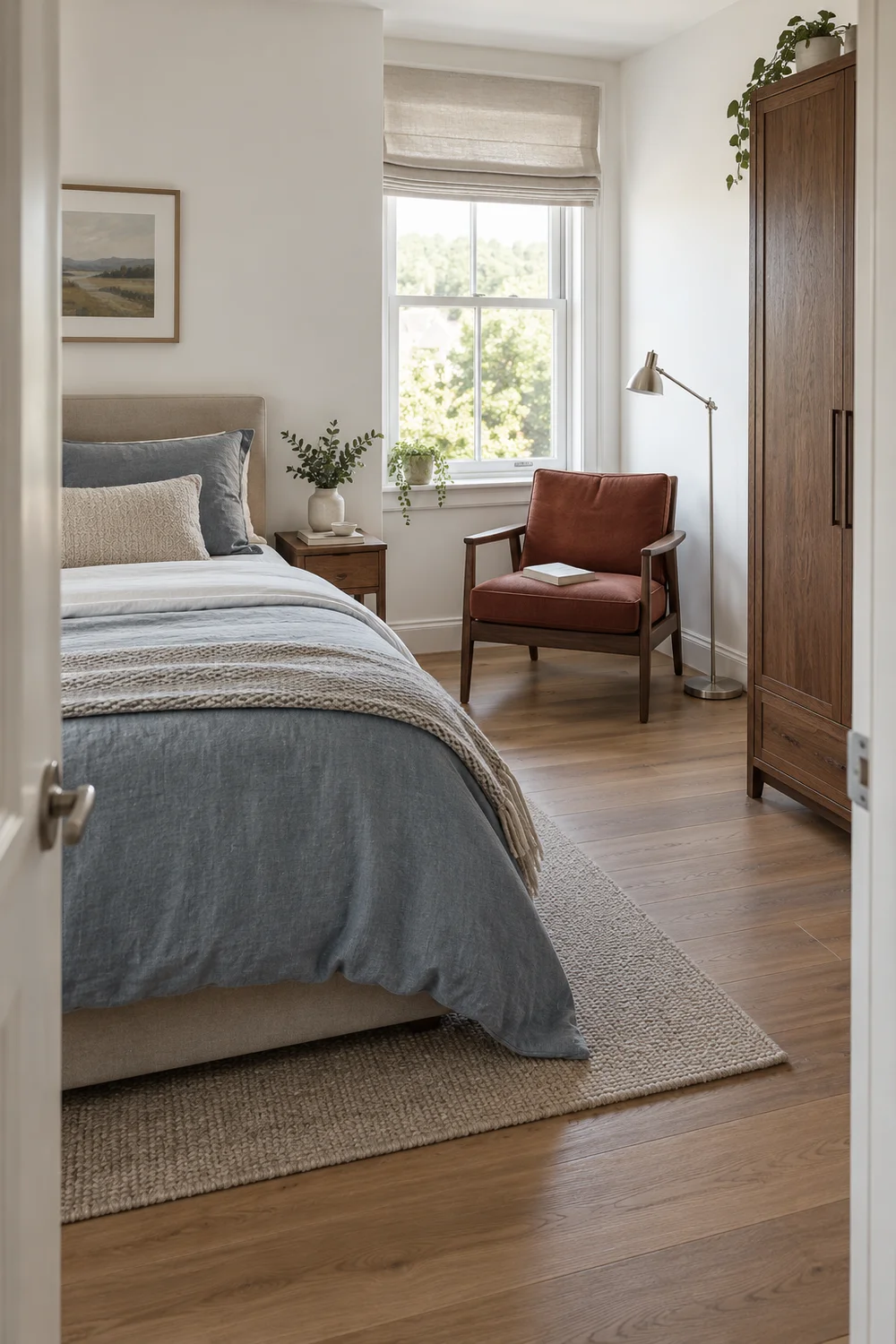
Begin with the way you read. Do you sit upright and turn pages at a table height, curl sideways with your feet supported, or read in short stretches before bed? A compact chair with an honest back and seat can be more useful than a large armchair whose arms and deep cushion push you away from the page. Try the seat in person where possible, then measure its full width and depth. Include any footstool in the sketch rather than treating it as a small accessory that will somehow find room later.
A narrow upholstered chair is the most straightforward option when the corner has a clear edge and the floor in front remains open. A bench can work beneath a window or along a wall if the reader can lean back comfortably; without support, it is often better as a place to put on shoes. A floor seat uses less visual height, but only choose it if getting down and up is comfortable for you and there is a supportive surface behind it. The right seat is the one you will want to use, not simply the smallest silhouette.
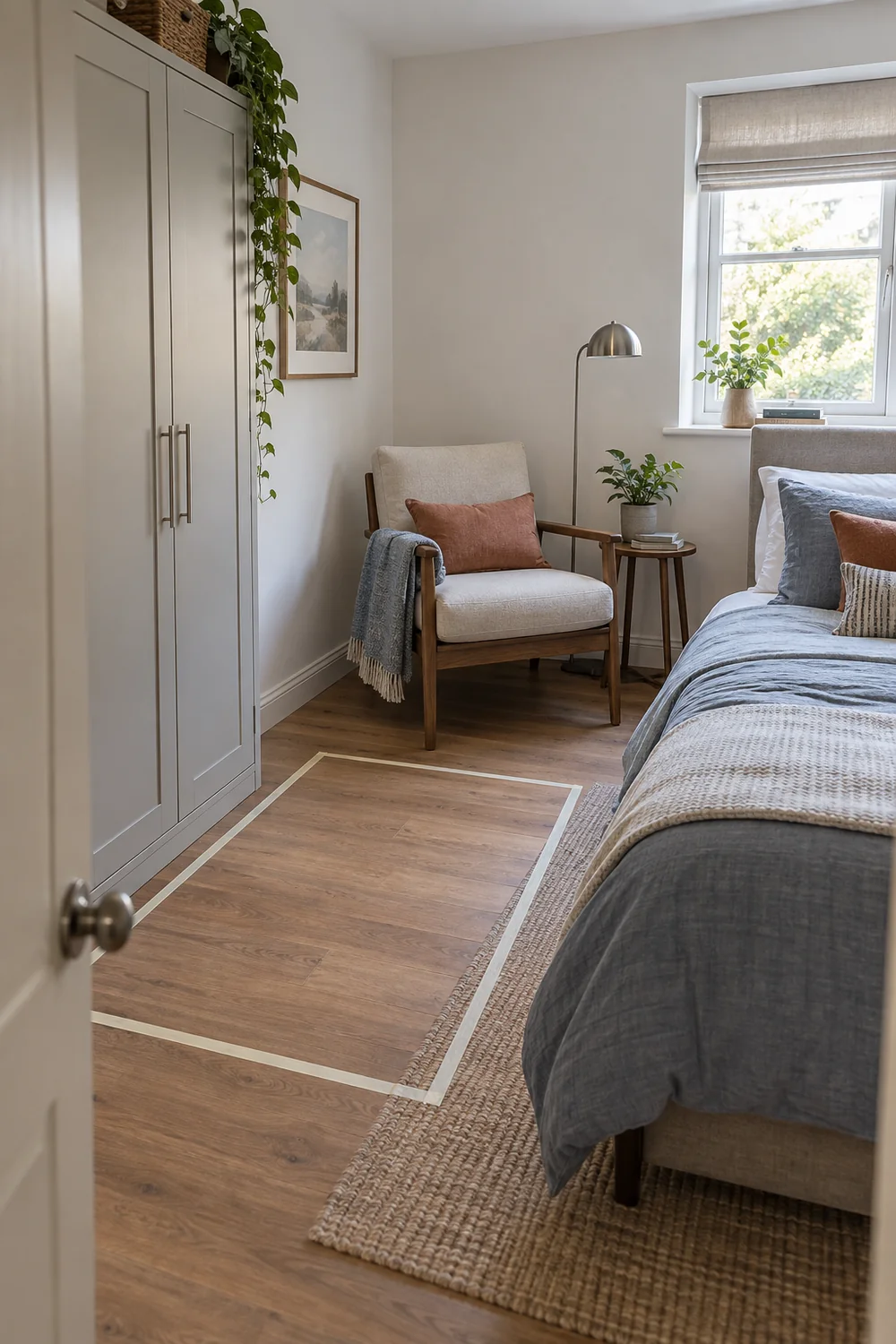
Compare the options by taping their outlines on the floor. Sit in a chair of similar size elsewhere in the home and notice where your knees, elbow and book end up. Then place an ordinary dining chair within the taped outline for a rough trial of the view and traffic. This is not a test of final comfort, but it exposes a placement that makes the bed difficult to reach. If you want more reading nook chair examples after fixing a maximum footprint, the broader gallery is useful for looking at shapes rather than copying an entire room.
An adult reader needs a place to rest a book, a hand and perhaps a drink. If the chair leaves no space for a nearby surface, compare a chair with a wider arm, a slim side table or a small shelf within easy reach. Keep the choice tied to the room: a large chair and a full size table may each look reasonable alone but fail as a pair beside the bed.
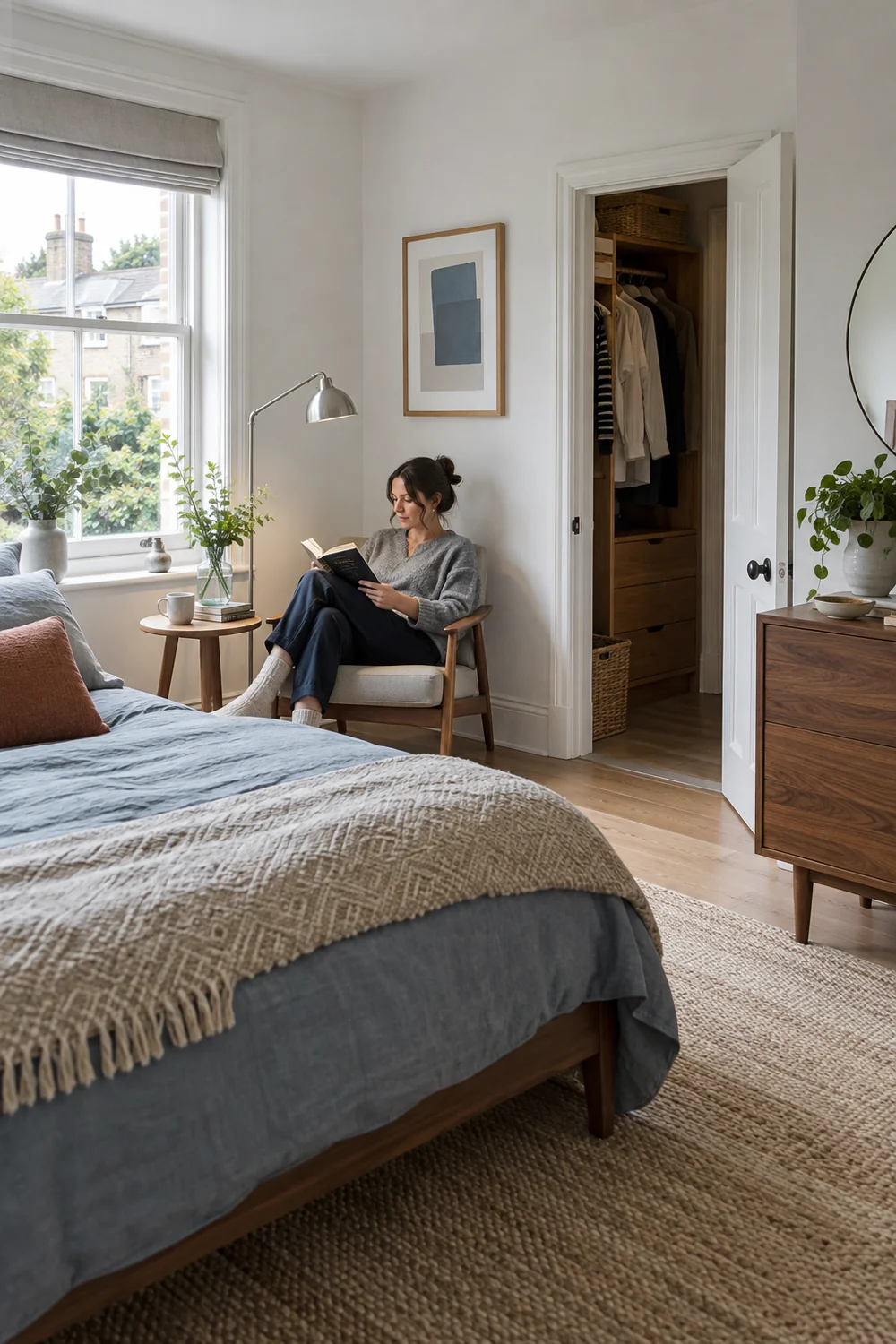
The chair's width and depth describe the object, but they do not describe the whole reading position. I would also measure how far your knees and feet extend when you sit the way you normally read. Include a footstool if you use one, and check the full reclined position if the chair reclines. An upright chair and a recliner can have similar closed dimensions yet make very different demands on the floor in use.
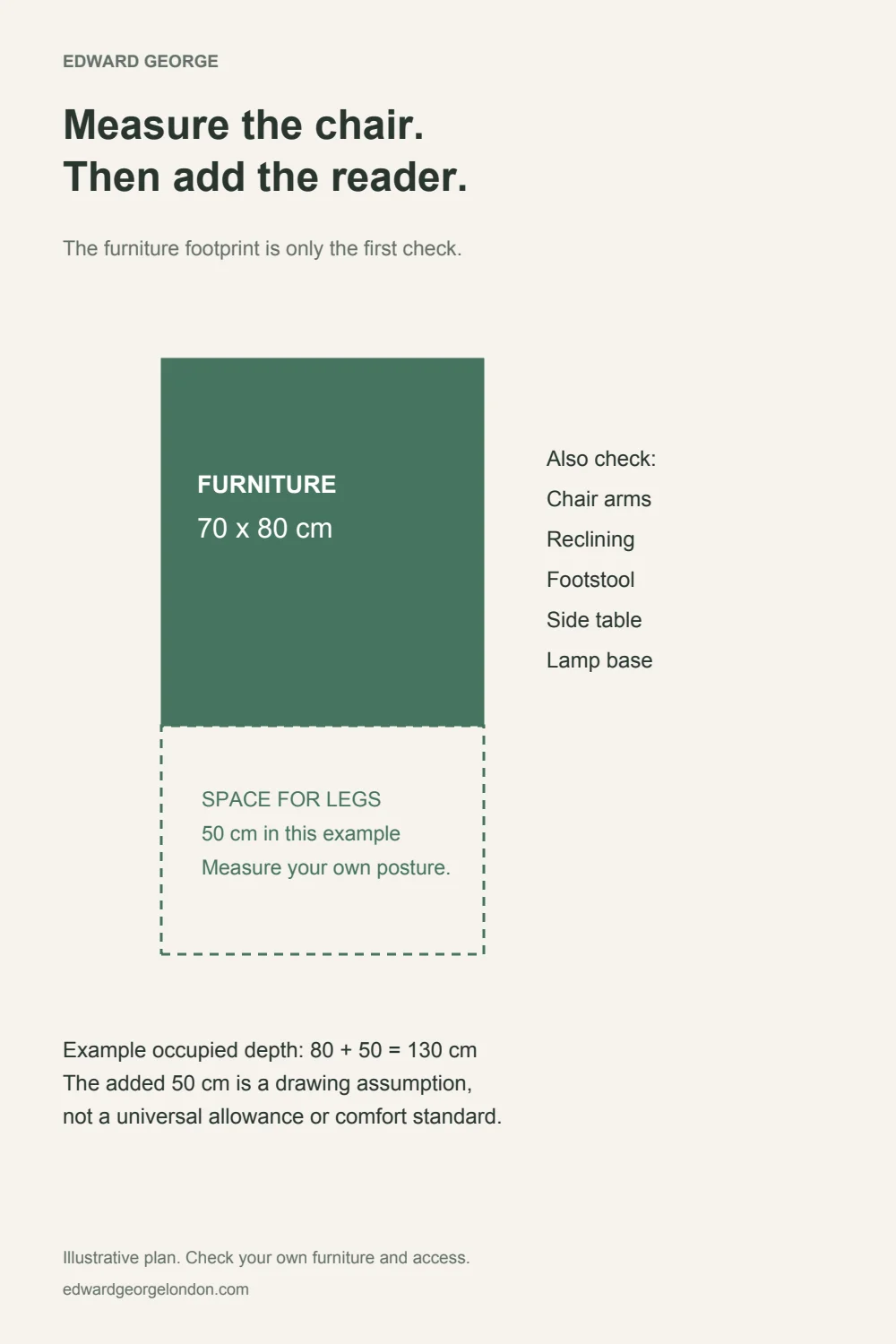
For the example plan, I have drawn an additional 50 cm in front of the 80 cm deep chair, making the illustrated occupied depth 130 cm. The extra 50 cm is a drawing assumption, not a comfort rule, accessibility standard or suggested minimum. Your posture, stature and chair shape can change that number. If you tuck your feet under the seat, stretch them out or rise with support from the arms, measure that action separately rather than borrowing the example.
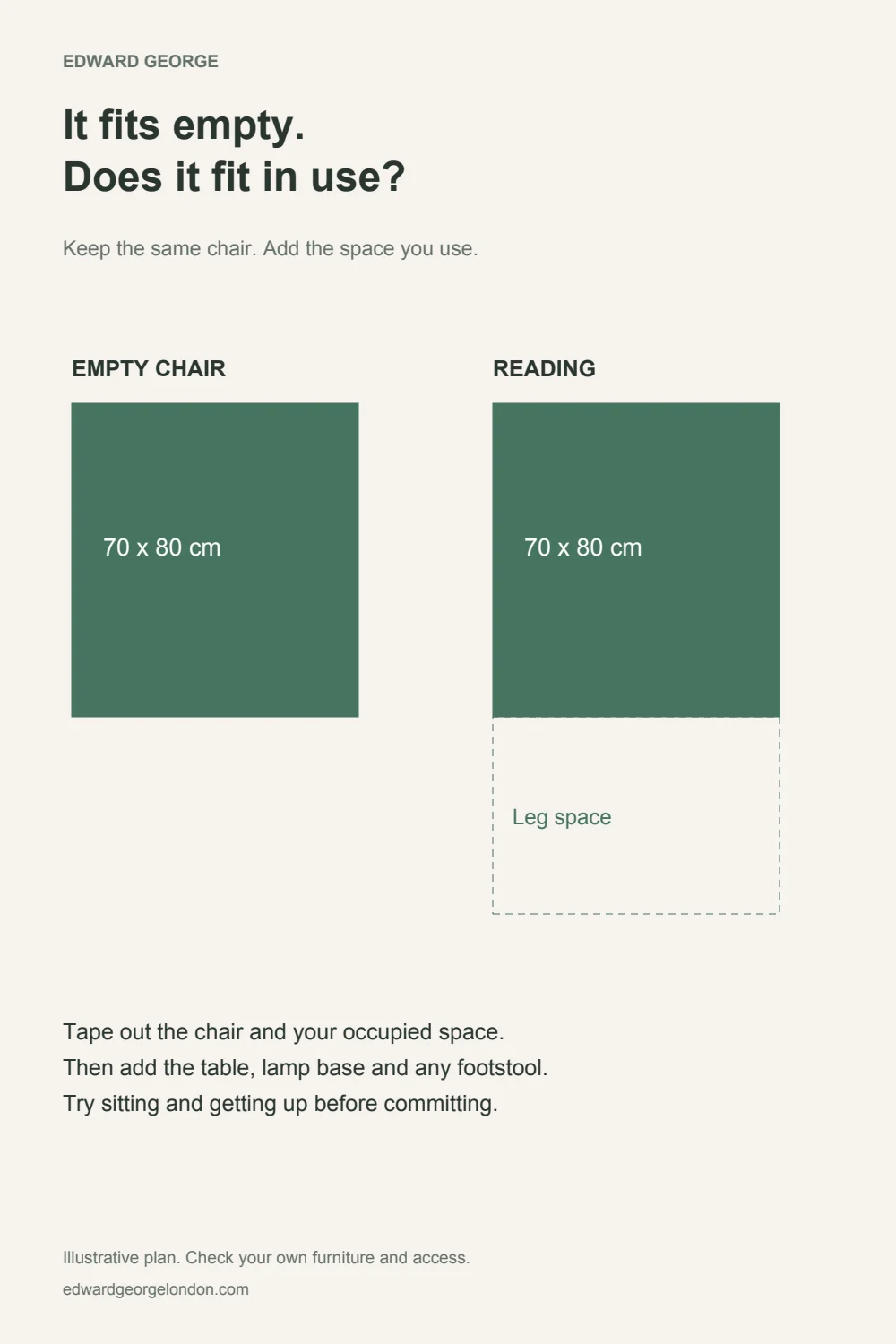
I would make a second outline for the occupied space, using a different tape colour or a labelled sketch. Then add the side table and lamp base. Check whether you can reach the book surface without twisting, whether the lamp can illuminate the page without sitting in the route, and whether you can stand up without bracing against the bed. A borrowed dining chair can help you test position and circulation, but it cannot establish the comfort or exact occupied footprint of an armchair you have not tried.
If two people use the bedroom, repeat the access check while one person is seated and the other opens the wardrobe or walks to bed. A corner that only works when nobody is reading may need a different chair position, a smaller table or a movable setup. I would prefer the version that fits an ordinary evening over the one that looks most complete when the room is empty.
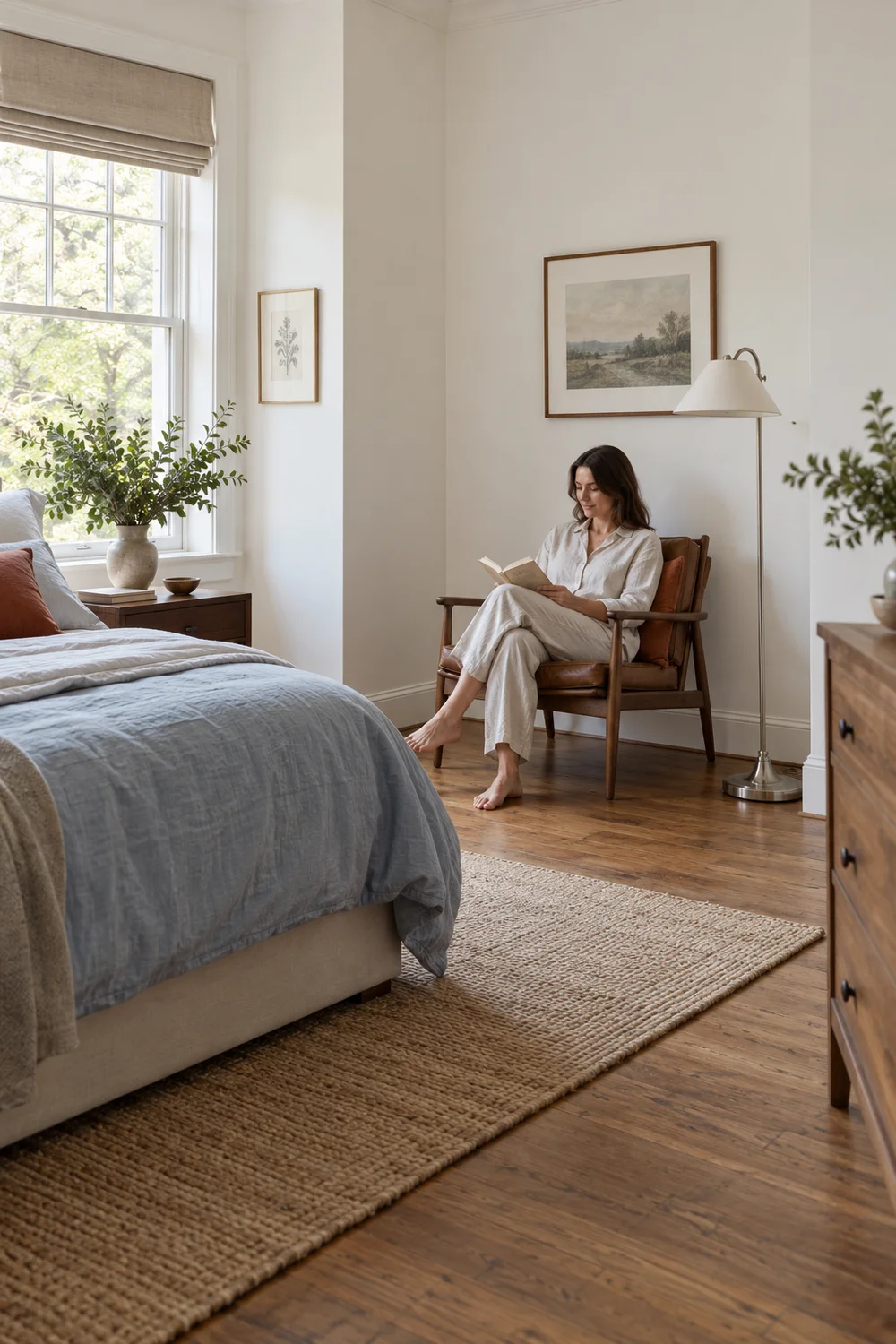
Daylight helps you choose a corner, but a reading place has to work when the sun is elsewhere. Sit in the intended position with a book and check where light falls on the page. A lamp that makes the room glow can still leave the text in shadow if it sits behind your shoulder or far across the bed. Move a portable light around during the test before choosing its permanent home.
A floor lamp can give the chair its own light without using the side table, provided its base does not claim the walking route. A table lamp works when the table has enough surface for both lamp and current book. In a very tight corner, the bedside lamp might serve both bed and seat if you can turn or reposition it without leaving one place poorly lit. The aim is reachable light on the page, not a decorative cluster of lamps.
Do the light test with the kind of book you normally read. A large illustrated book held open on your lap needs a different angle from a small paperback held close to your chest. Shift the lamp until you can see the whole page without leaning toward it, then look up and check that the bulb is not glaring into your eyes from the chair. This simple trial may change where the table belongs.
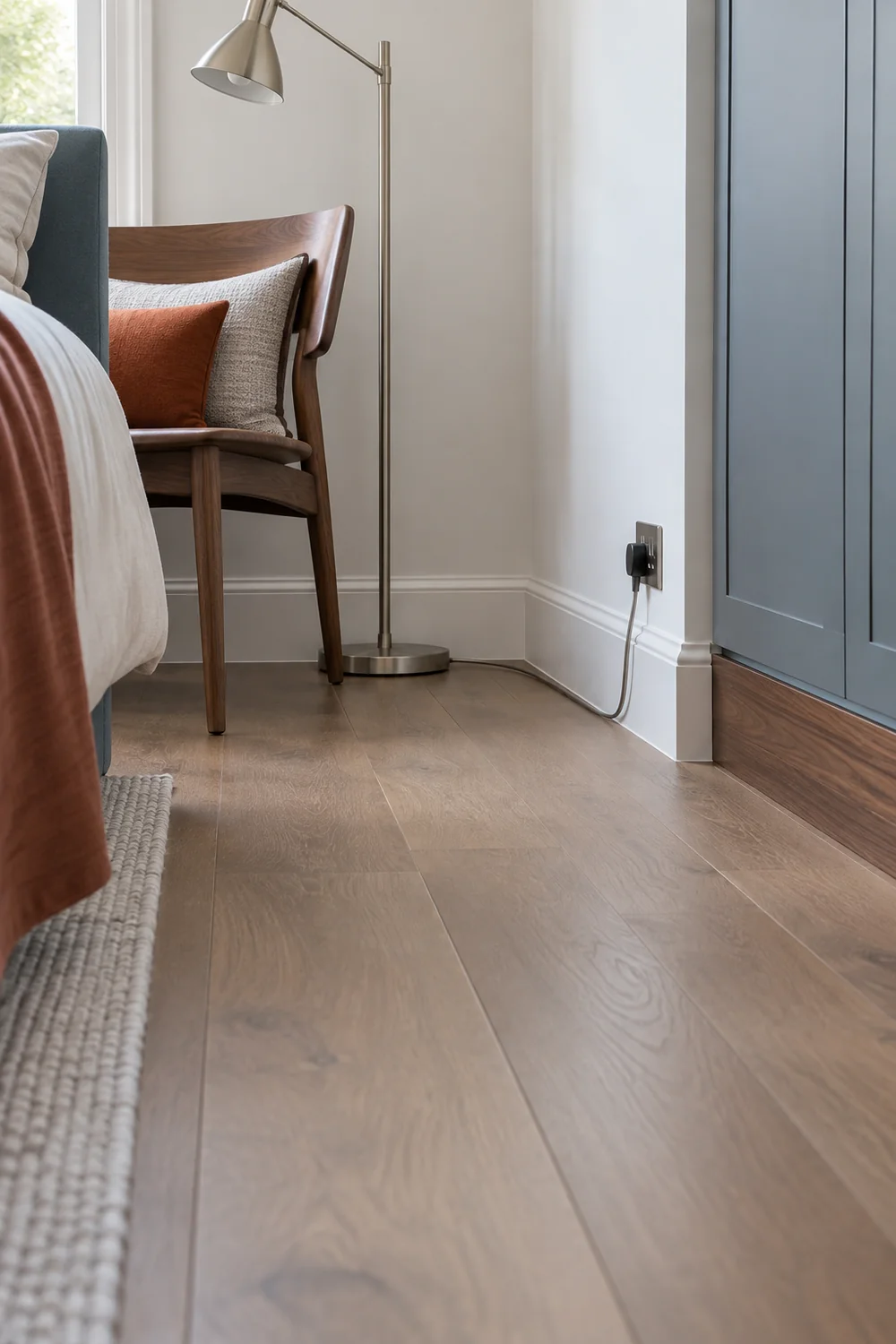
Look at the plug socket and the route from it to the lamp before deciding where the seat goes. Keep cords away from the places where you walk, pull out drawers and move the chair. If the only workable lamp position would drag a cable across the floor, change the arrangement instead of styling around the problem. A small room leaves little tolerance for a loose cable or a floor lamp base that catches your foot.
Once the base arrangement works, shorter autumn days may change when you use it. The existing fall reading nook guide offers seasonal textiles and lighting ideas for that later question. Start with a lamp that lets you read clearly now; add seasonal warmth without hiding the task light.
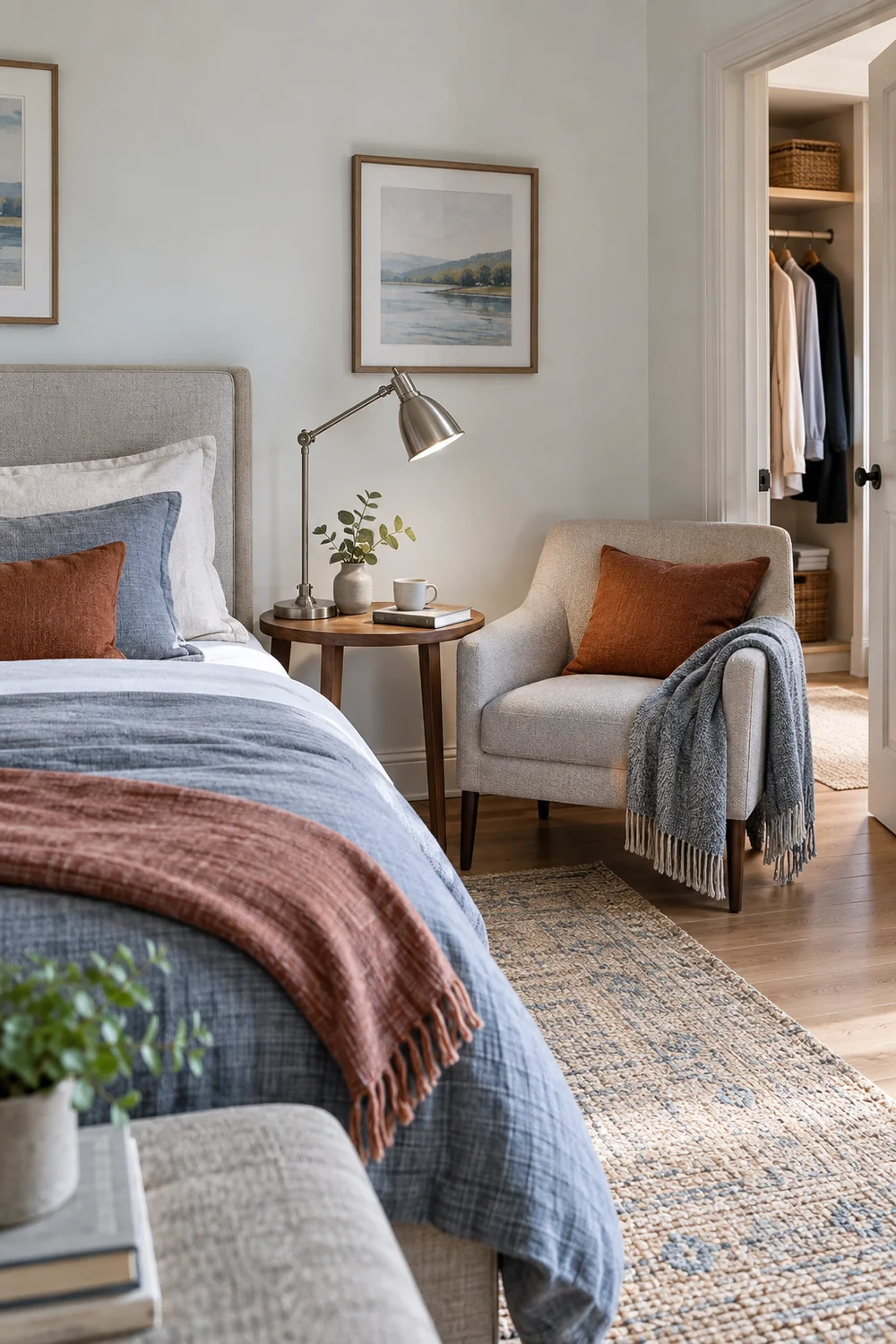
Your reading corner does not need to hold every book you own. Decide how many you actually reach for during a week. A short stack on a side table may be enough for one reader; another may want a narrow freestanding shelf for a current series and a small basket for magazines. The useful limit is the amount that keeps the chair easy to approach and the floor easy to see.
Choose storage by its footprint and stability in the specific room. A tall narrow unit may look economical from the front but demand a deep base; a broad low unit can take the space your feet need. Put a cardboard outline of the proposed unit beside the taped seat and use the wardrobe again. If you have to turn sideways to get past, the book solution is too large for this position.
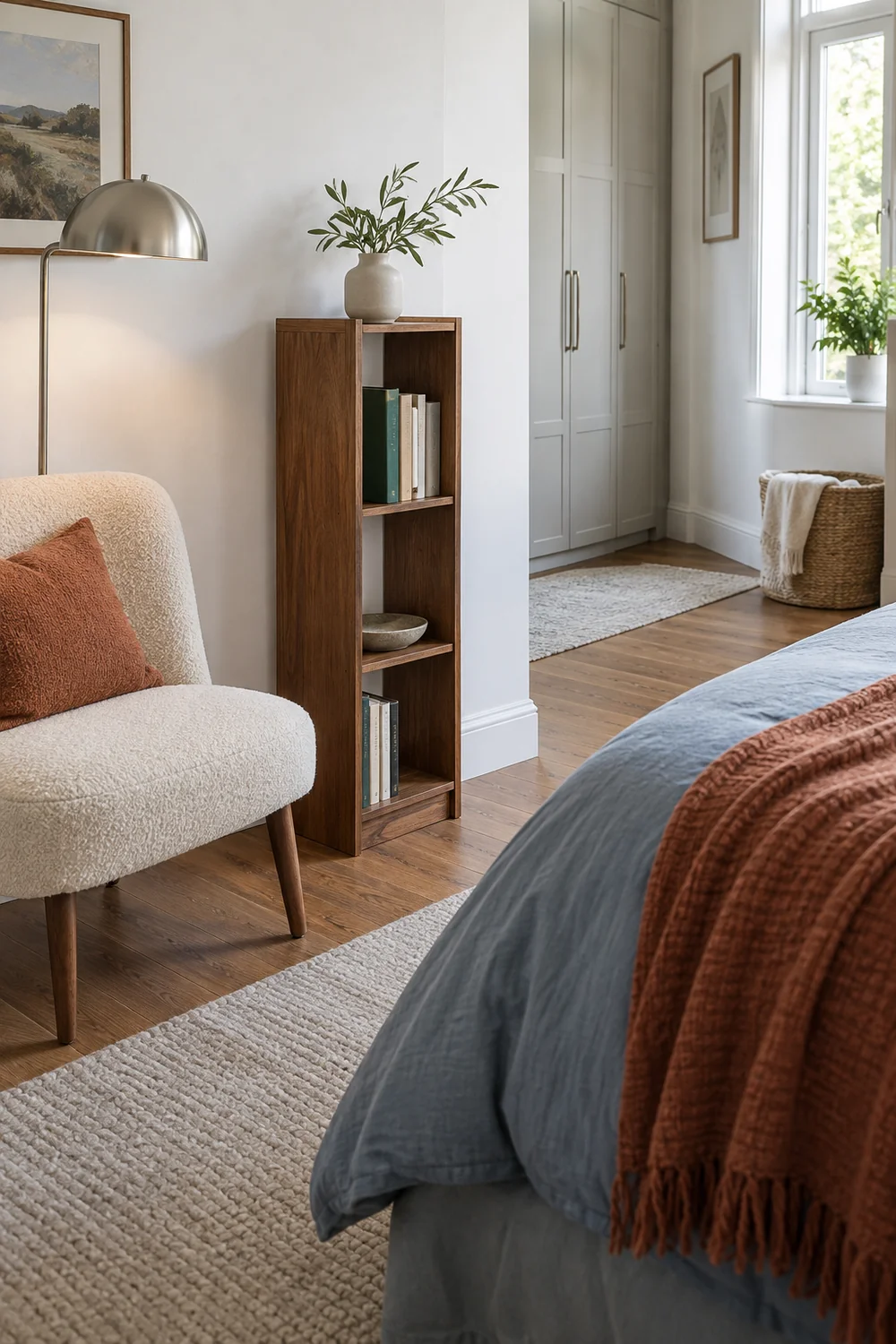
A side table with one lower shelf can combine a landing place for the current book with a place for a few others. A basket is useful if it can sit fully under the table or beside the chair without creeping into the route. Resist building a display around the seat before the reading habit has proved itself. Books that migrate onto the floor are a sign that the arrangement needs either a clearer limit or a better return place.
If you read several books at once, give each a simple return place rather than balancing them on the chair. The book you are reading can stay on the top surface; the next two can sit below it. Keep the rest with the main collection elsewhere in the home. This small limit lets the corner look ready for use without turning it into another storage task.
For a visually spare example, Japandi reading nook ideas show how a modest collection and restrained surfaces can keep the seat prominent. That is an optional style reference, not a requirement to copy the room. The practical test is whether you can take a book, set it down and put it away without standing in the doorway or reaching across the bed.
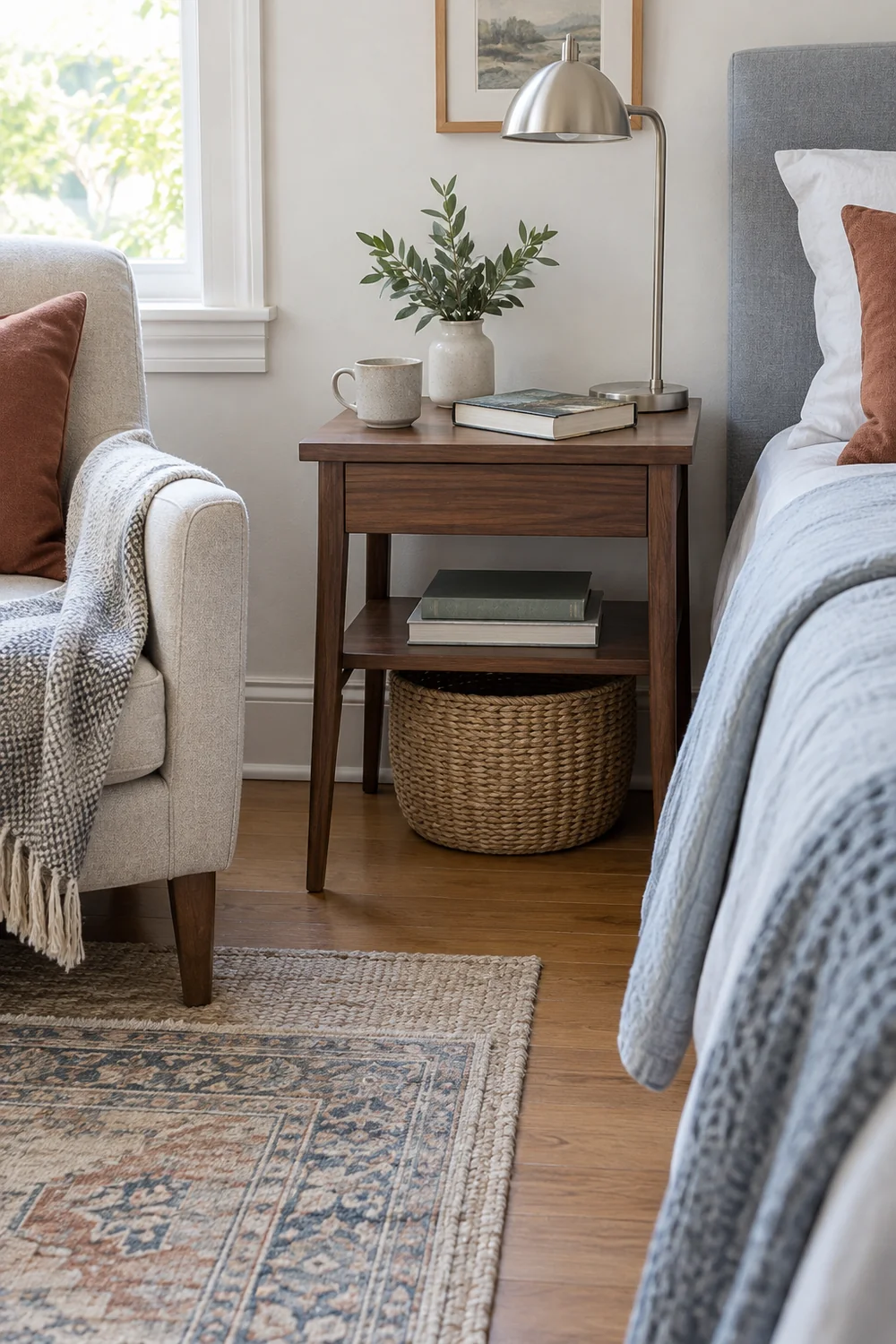
The reading place should belong to the bedroom rather than look like a second room squeezed inside it. Start with one seat, one useful light and one book surface. Repeat a colour or material already in the bedroom so the corner connects to the bed. Then give it one texture that feels good to use, such as a wool throw or a cotton cushion. This is enough to mark the spot without surrounding the chair with decorative objects.
In a small room, visible floor and wall edges help you read the space. A pale wall behind a medium walnut chair, soft blue grey bedding and a muted rust textile can create a distinct place while leaving the room's boundaries legible. Keep the window treatment easy to move and the bedside area calm. The effect comes from contrast and purpose, not from making every surface soft or filling every shelf.
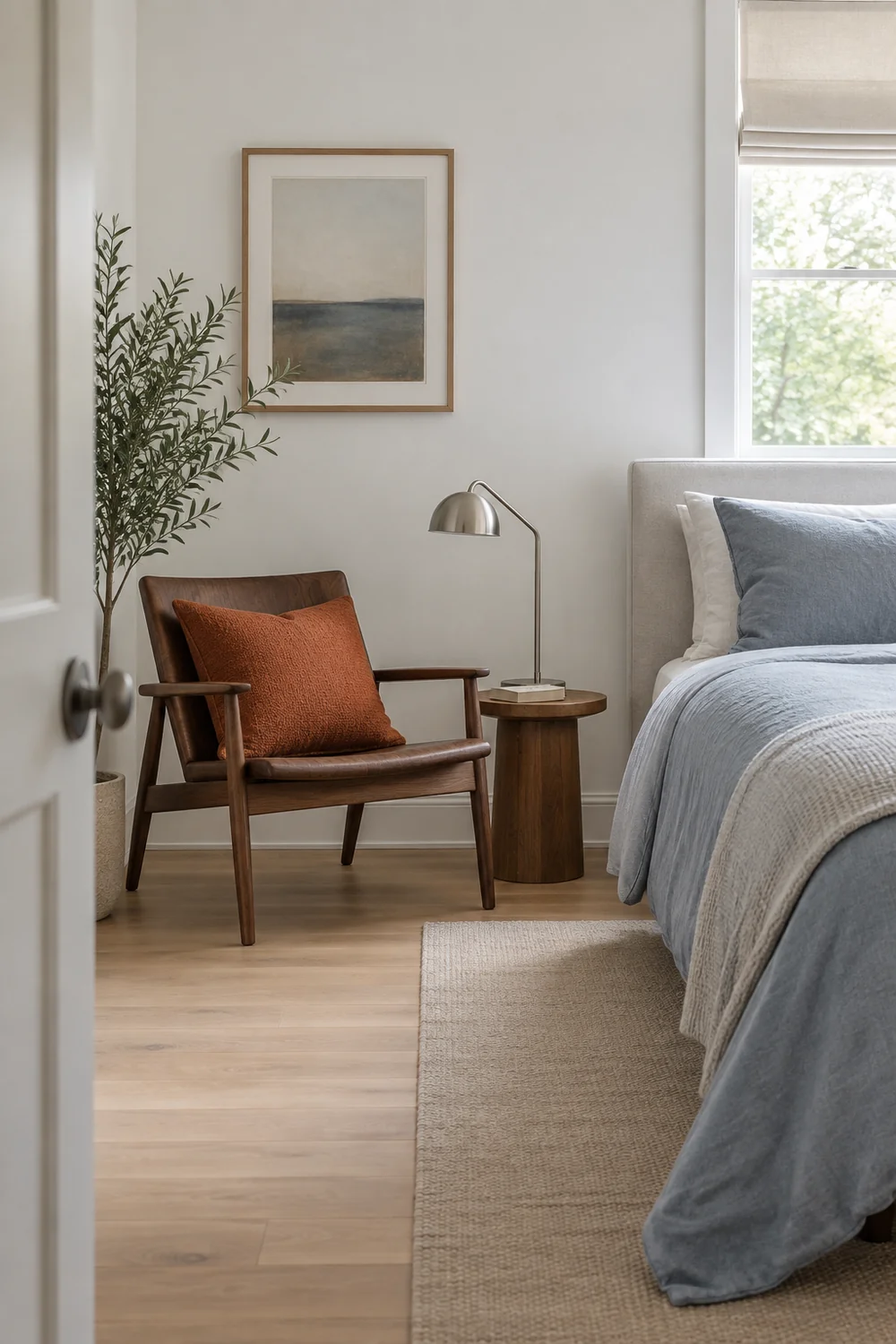
If your workable corner is genuinely at a window and you like a more layered look, window reading nook examples from the English country gallery can help with fabric, timber and the relationship to daylight. Use the detail that fits your measured plan. A deep built in window seat shown elsewhere is not evidence that a narrow bedroom can accommodate one, and a patterned cushion may be all you need from that style.
Think about the view from the doorway as well as the view from the chair. You should see an inviting reading spot and still recognise a bedroom with an open route. If the corner feels crowded, remove the extra table, stack or cushion before rejecting the seat itself. One useful object can create more comfort than several objects that require constant tidying.
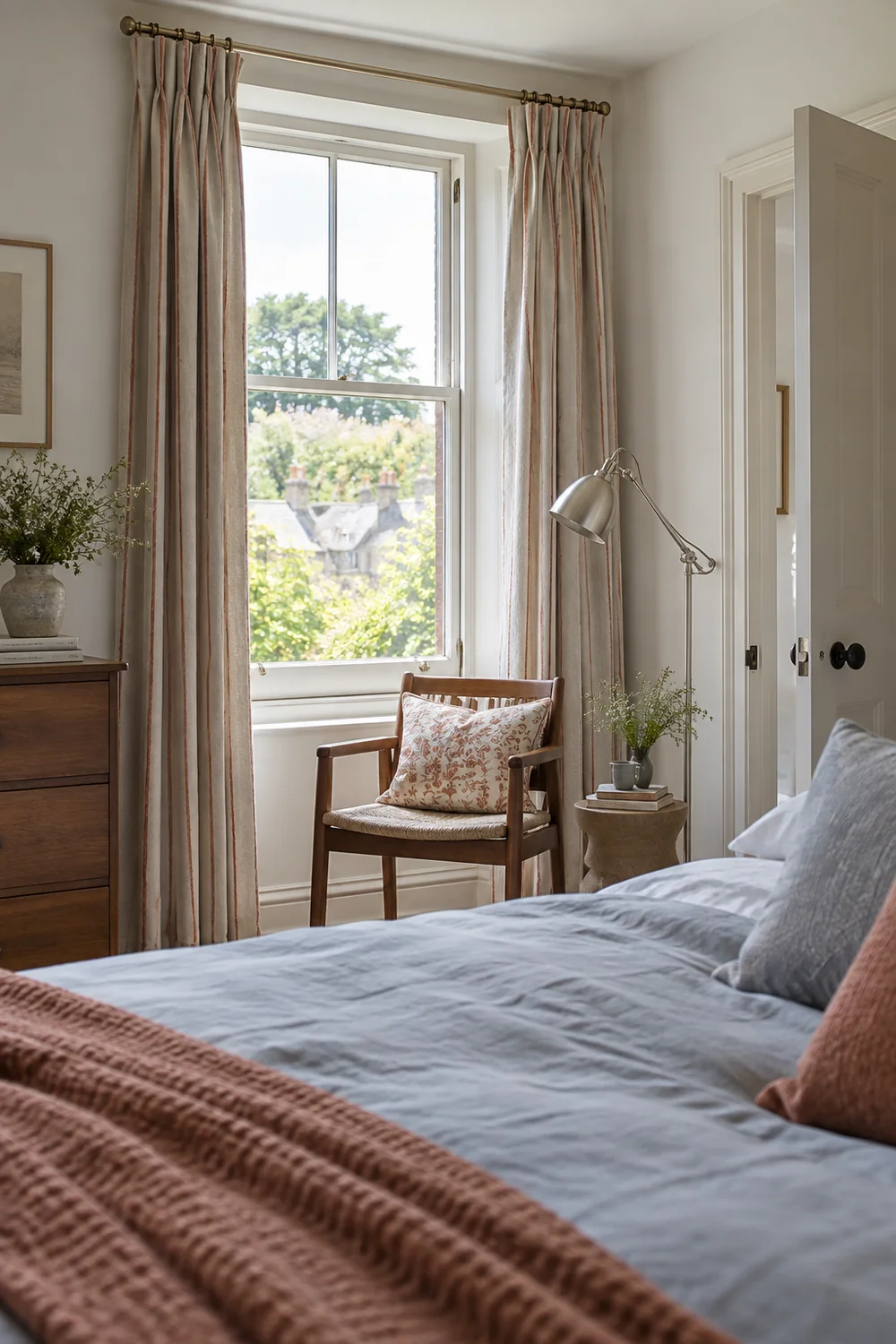
Bring the choices together before buying or moving heavy furniture. Mark the seat and storage footprints with removable tape, place a chair of similar size inside the seat area and set a portable lamp where the plan proposes. Use a real book. Sit long enough to notice whether your shoulders, arms and feet are comfortable and whether the page receives light without twisting. The test should feel like reading, not like checking a display.
Next, use the bedroom as you normally would. Walk from the door to the bed, open the wardrobe, pull out drawers, open the curtains and make the bed. Try it once in daylight and once at the time you usually read. Note every point where you sidestep a chair, move a basket or reach over the bed for the lamp. Those moments tell you more than a tidy overhead sketch.
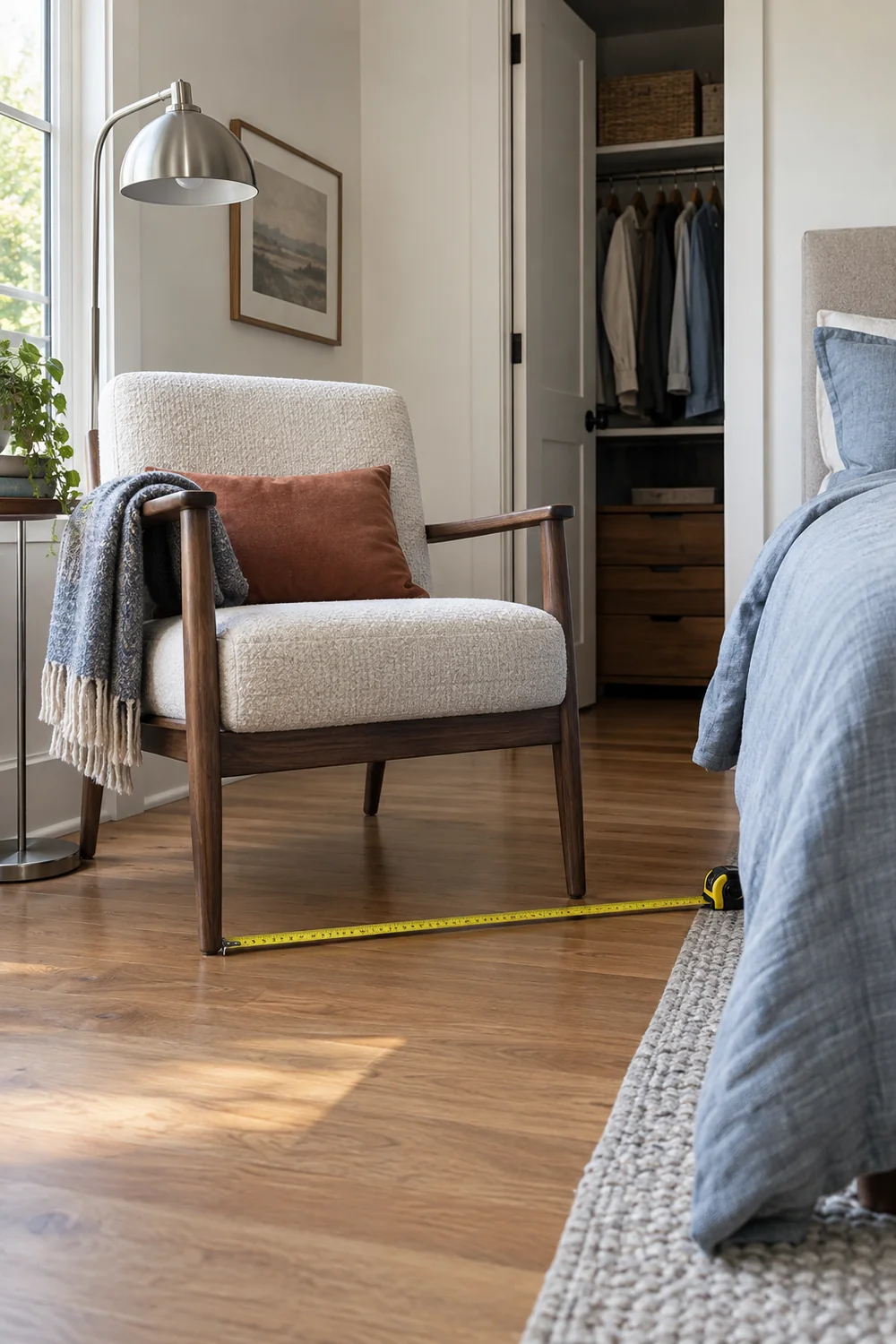
If the setup fails, change one variable at a time. Move the chair closer to the window, replace the side table with a shelf on the chair arm, or swap the deep armchair outline for a narrow seat. Recheck the route each time. A slightly smaller reading place that you use regularly is a better result than a showpiece seat you must push aside every morning.
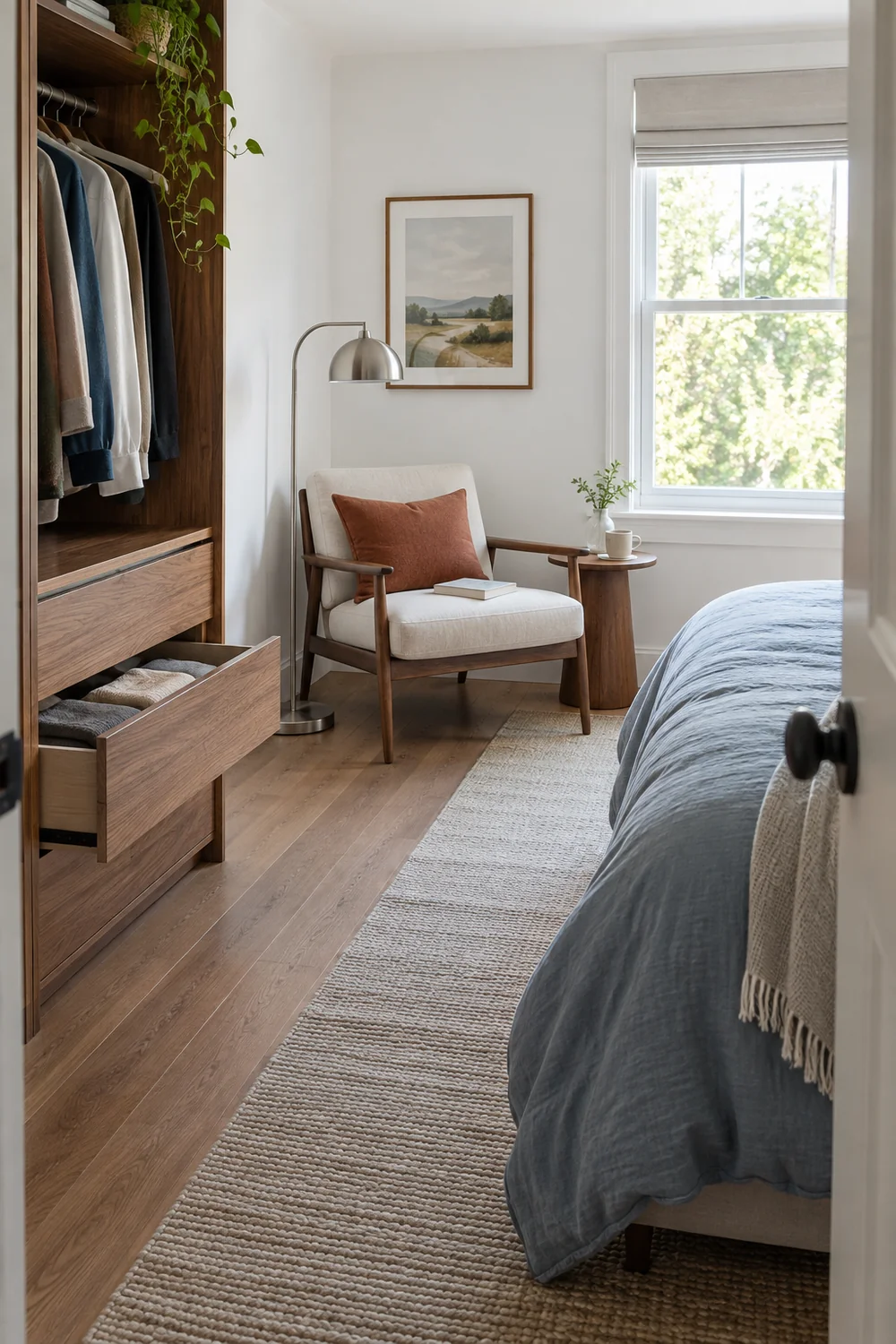
The final check is the return habit. Where does the book go when you finish a chapter? Can you turn off the light from the seat? Can you leave the corner ready for the next reading session without clearing the bed? When those answers are easy, the nook has become part of the room's routine. If no separate chair passes the test, improve the bed's reading light and book surface instead. You have still solved the original problem: a comfortable place to read in the bedroom you actually have.
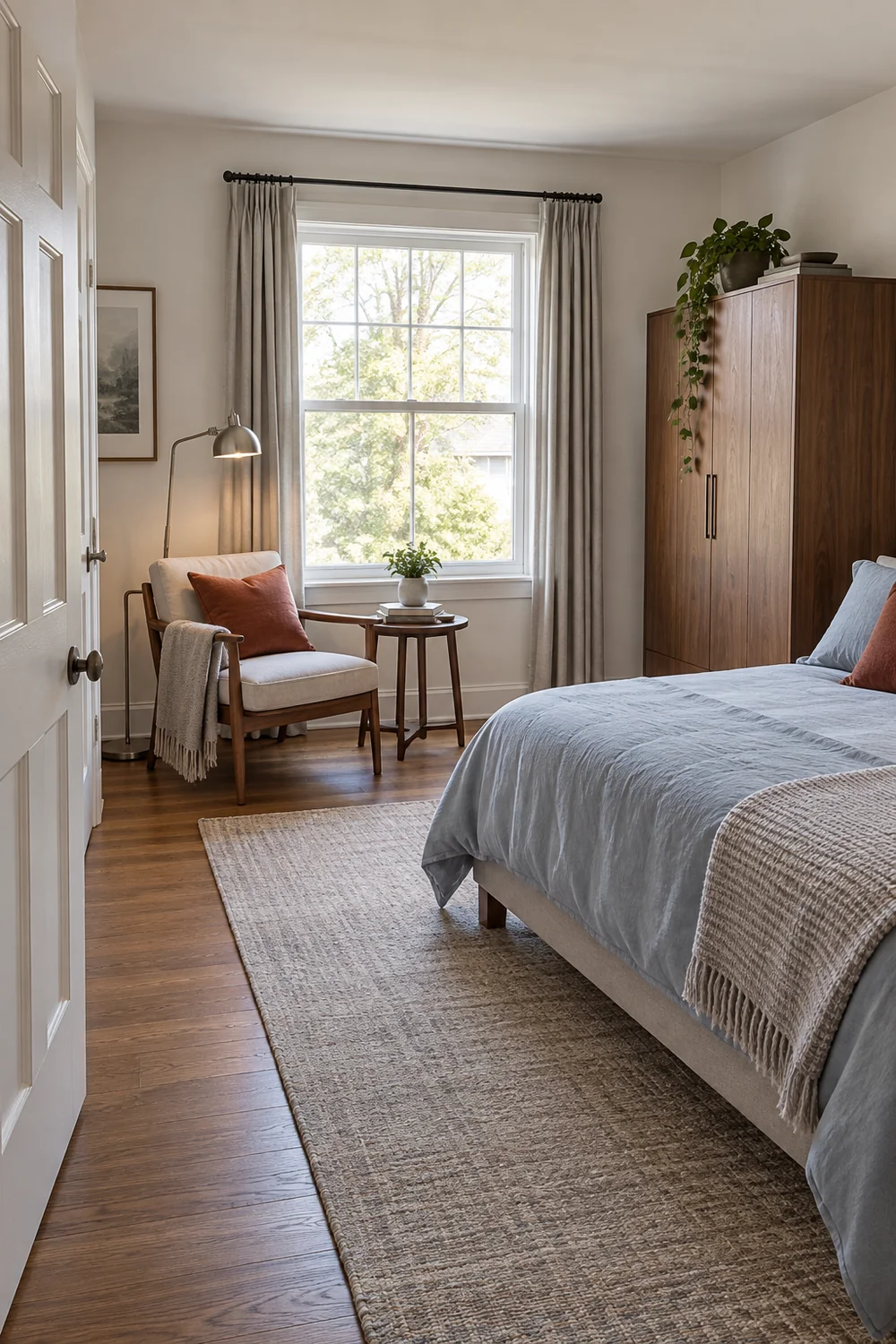
Before buying, I would record the measurements in the worksheet below and try the complete arrangement with the bedroom in use. Begin with the chair's maximum outer width and depth, including arms and any projecting frame. Record the occupied space separately. Add the footprint of a footstool, table and lamp base, then measure the wardrobe's actual opening projection. Keep the units consistent throughout your notes.
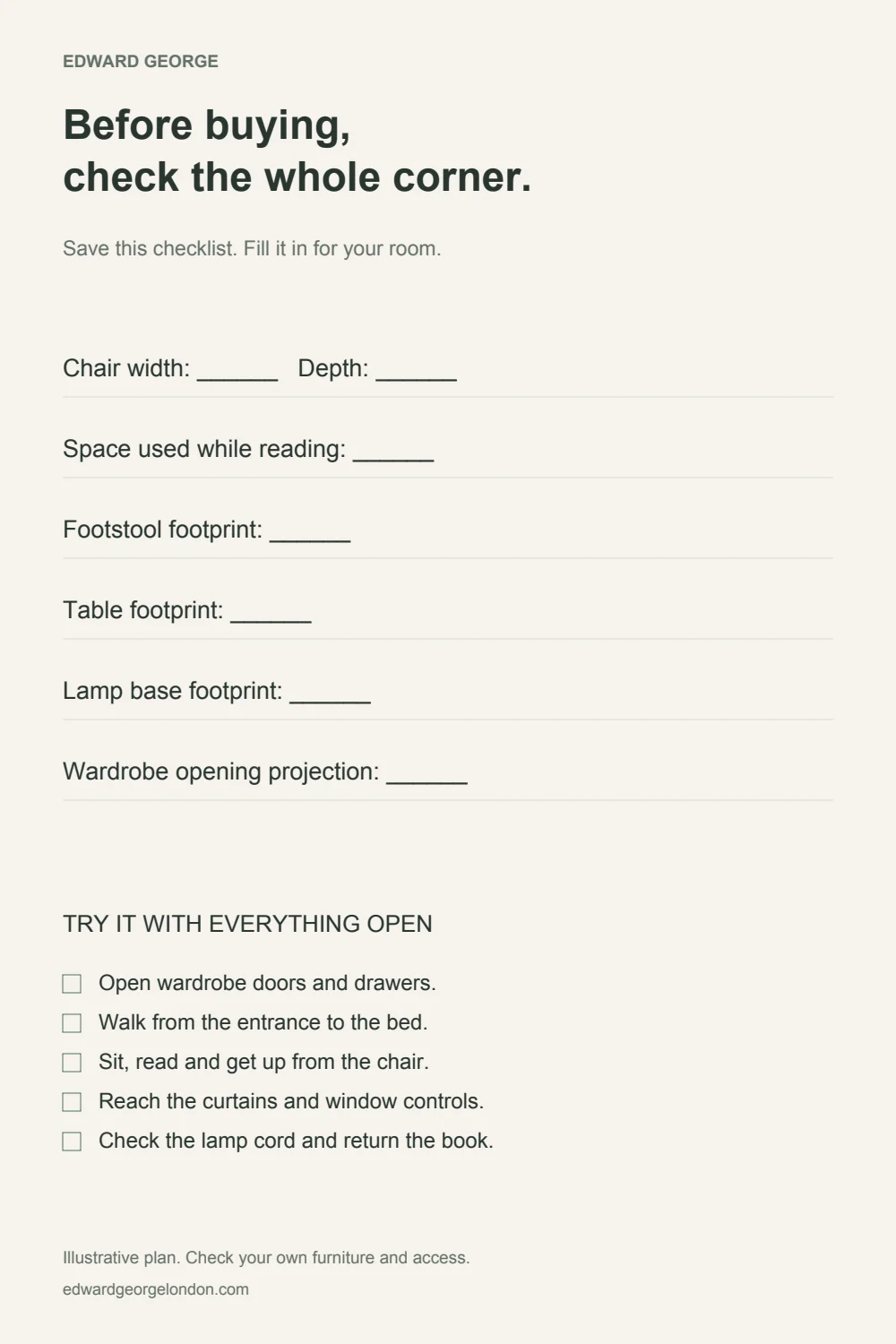
The worksheet's checks are also listed here so you can use them without reading the image. Open the wardrobe doors and drawers fully. Walk from the entrance to the bed using your normal route. Sit, read and get up from the intended chair position. Reach the curtains and window controls. Check where the lamp cord runs, and put the book back where it will live. Record which action fails and which object causes the problem, rather than marking the entire corner unsuitable straight away.
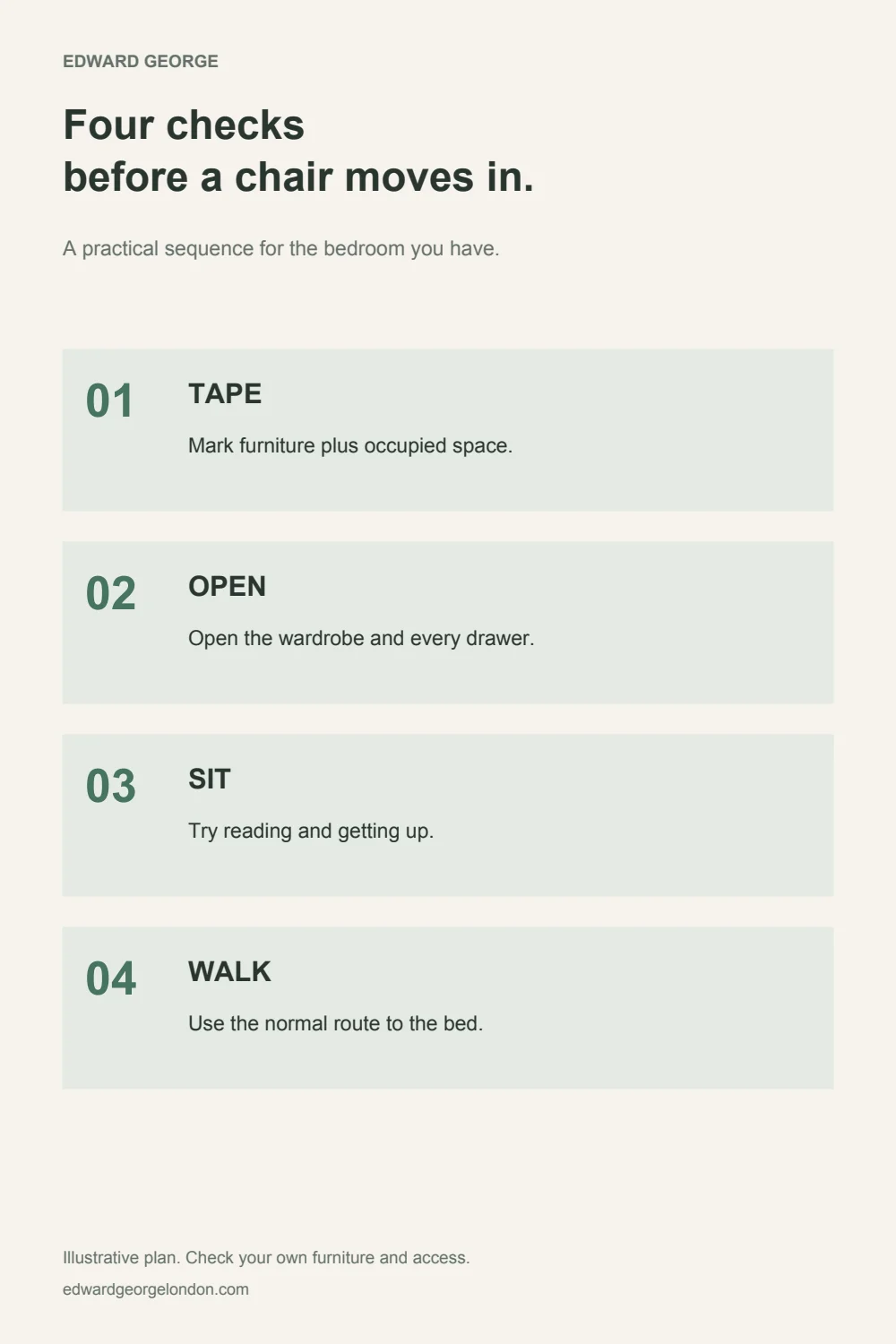
I would run those checks in this order: tape, open, sit, walk. Use removable tape suitable for your floor, following its maker's directions, or paper outlines if you are unsure about the finish. The first pass can rule out obvious furniture conflicts; the sitting and walking passes reveal how you use the space. Try it at the time you normally read, with the lamp you intend to use and any other bedroom user following their ordinary routine. These are checks for you to perform, not tests claimed to have been carried out for the illustrated room.
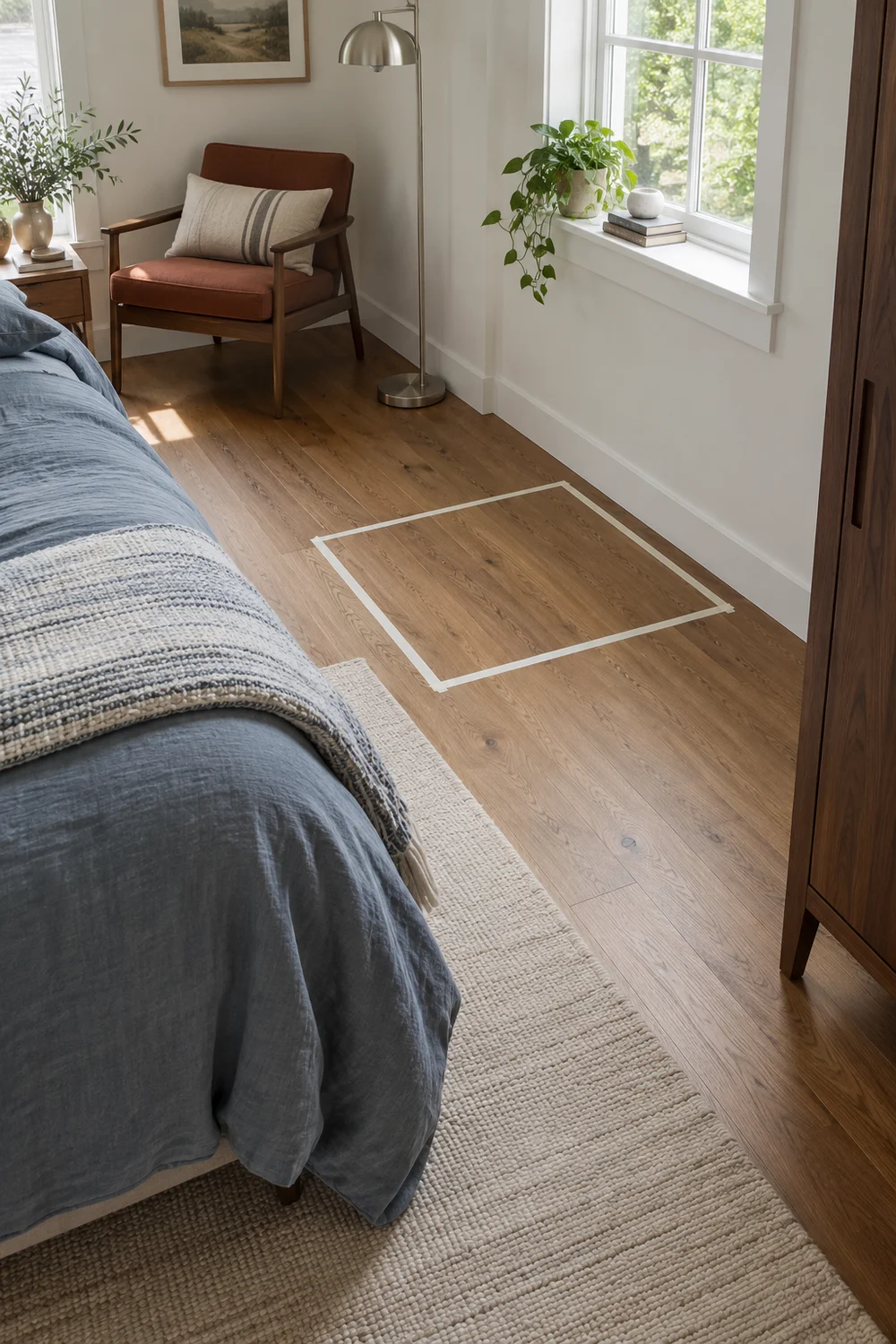
Change one thing after a failed check and try again. Move the chair, remove the footstool, bring the table closer or try a shallower seat outline. If a chair still obstructs the wardrobe or makes getting into bed awkward, keep a better bedside reading setup instead. Return to the checklist after a week of use, especially if the book basket or lamp has drifted into the route. The successful arrangement is the one you can keep using without rearranging the bedroom every day.
Download the chair fit worksheet (PDF). Print it or copy the measurements into your own notes.
The strongest small bedroom reading nook starts with a decision about space, not a shopping list. Find the corner that remains free when the room is in use, compare seat footprints against the way you read, put light on the page and keep only the current books within reach. Tape out the complete arrangement, sit in it and test the bed, door and wardrobe before calling it finished. A compact chair may be the right answer, but a bench, a movable seat or a better bedside setup may serve you more honestly. The aim is a place you return to with a book while the bedroom still feels comfortable every other hour of the day.