Newsletter Subscribe
Enter your email address below and subscribe to our newsletter

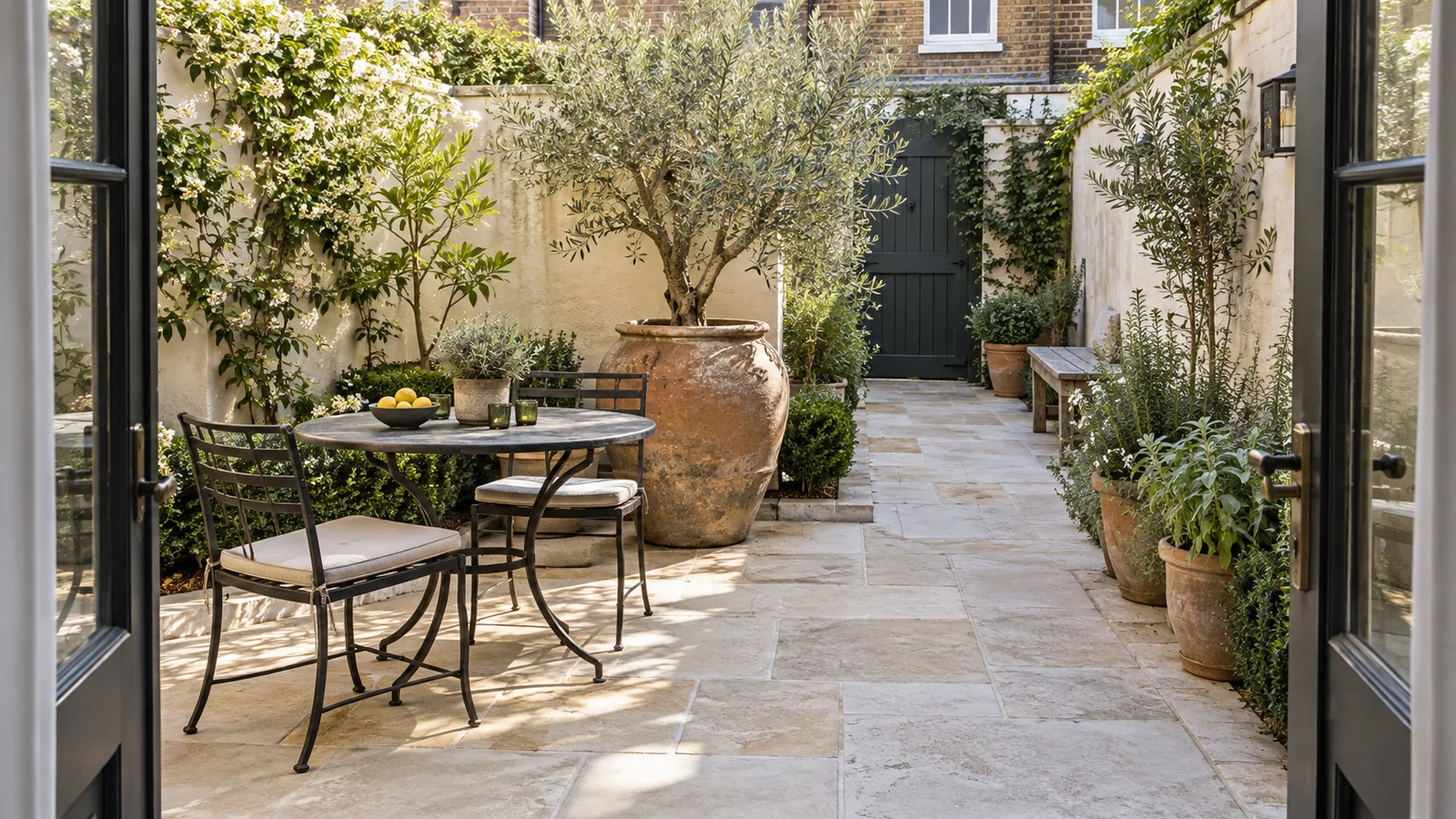
A small Mediterranean garden can work beautifully in a townhouse courtyard, but the romance of olive trees and terracotta pots is not a layout. In an enclosed space, one oversized planter can make the door awkward and one attractive chair can leave no room to walk past. Start by finding out where you can sit, move and grow plants comfortably. Then choose the colours and materials that bring the atmosphere you love into that practical plan. This guide takes you through the decisions in order, including what to do when the courtyard has both a sunny corner and a shaded wall. The result should feel generous when you use it, even if the floor area is modest.
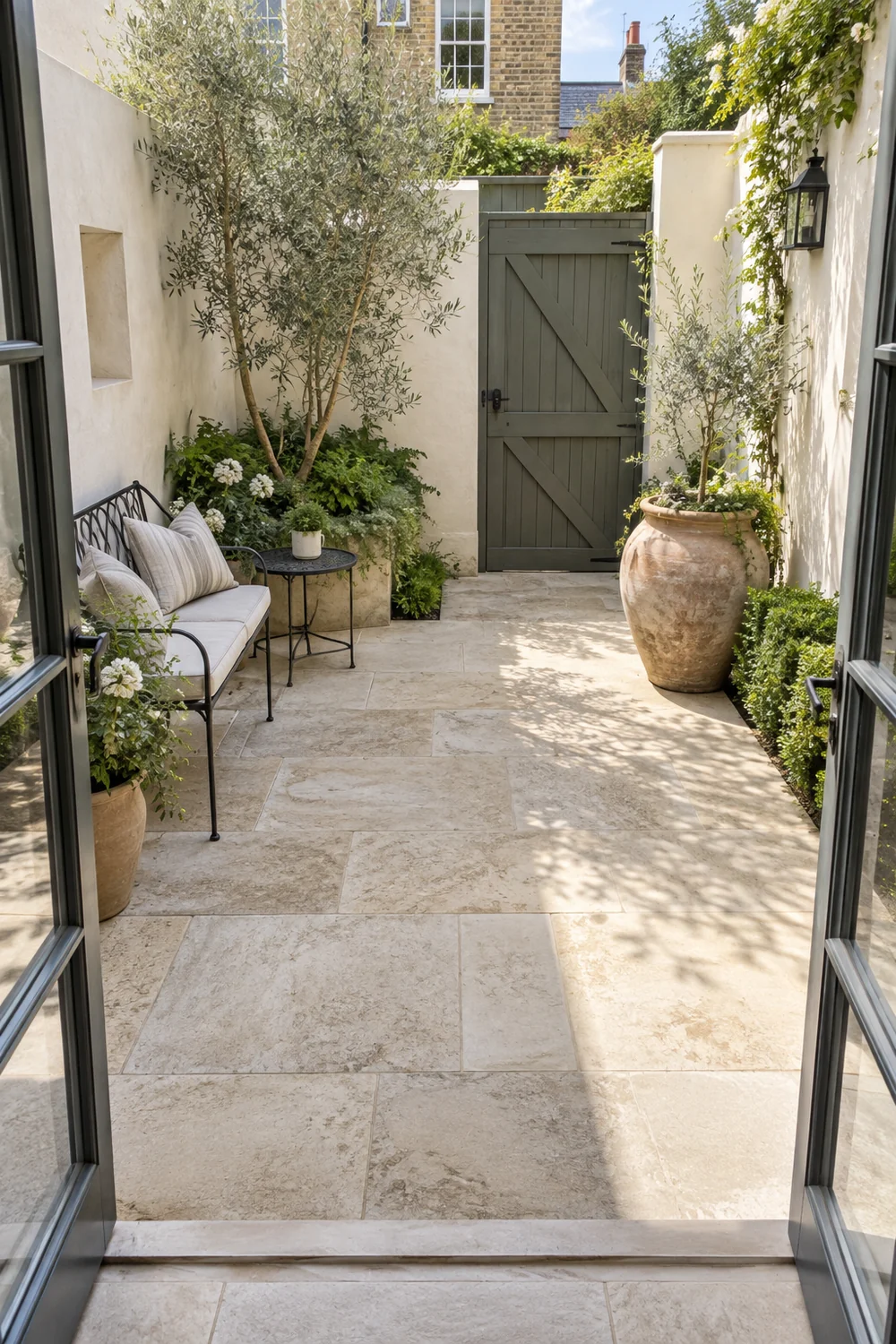
Measure the floor, each wall, the door swing and any steps before you collect planting ideas. Mark drains, outside taps, vents and the places where water runs after rain. Note the route from the house to any gate, shed or bin. You need those parts of the courtyard even after the garden becomes beautiful. A quick sketch with the real dimensions makes the competing uses visible before anything is bought.
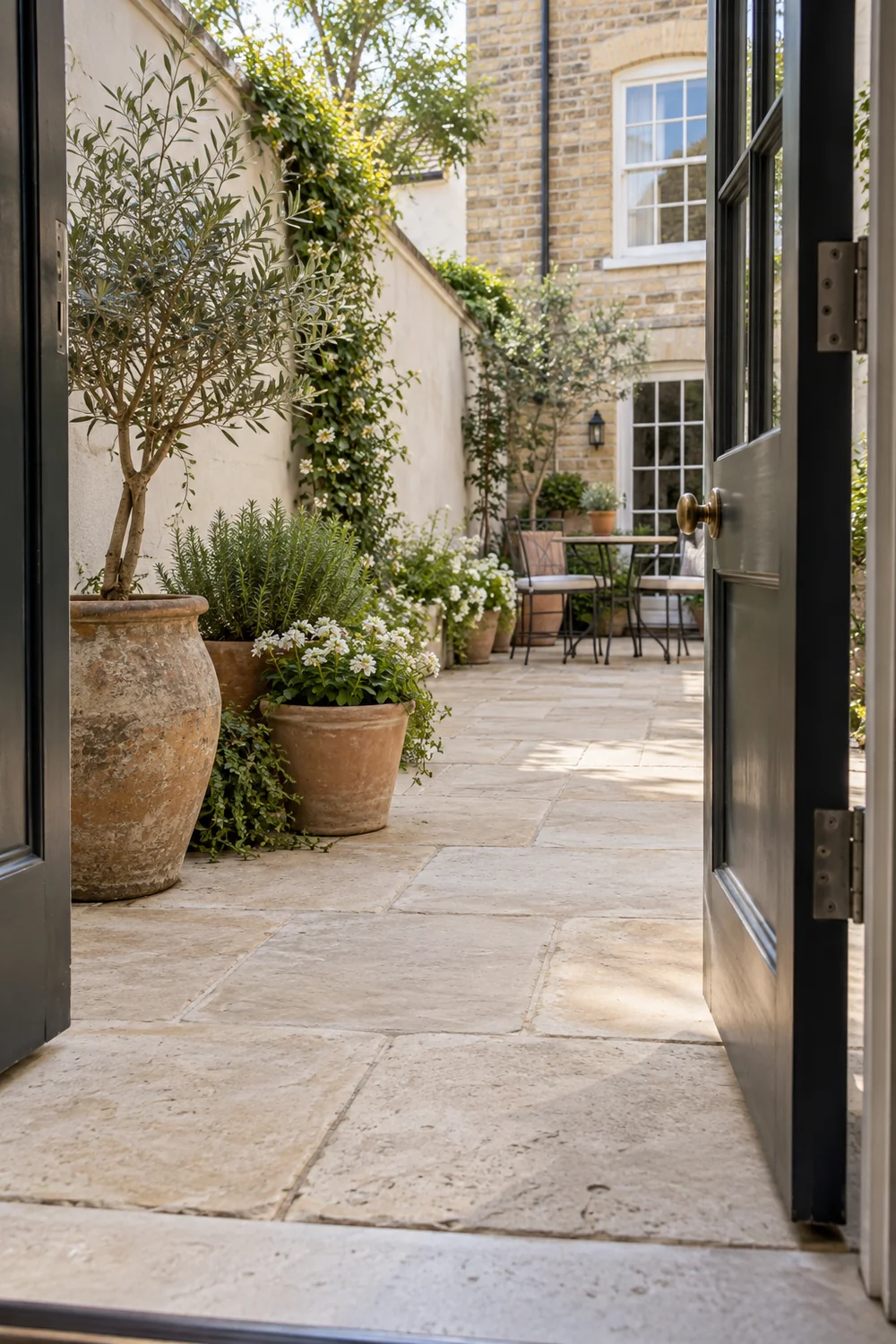
Put the outline of your intended chair and table onto the sketch at their actual dimensions. Include the space needed to pull a chair out and stand up. Then test the arrangement with a cardboard template or temporary objects on the ground. Walk through carrying a watering can or a bag of compost. If you have to turn sideways or move a chair every time, the arrangement needs changing. This practical test is more useful than borrowing a clearance number from a much larger garden.
Keep the central route simple. In a narrow courtyard, a clear strip from the door to the far end often makes the whole space feel larger. Planting can sit along one boundary and around the seat, while a single specimen marks the view from inside. The visual rhythm of a Provence garden can inspire the sense of journey, but a compact courtyard usually needs fewer turns and less planting across the walking line.
Look at the view from the main room as well as the view from the chair. When the doors are closed in winter, the garden still belongs to the house. Place the most interesting shape where it can be seen from indoors without blocking the working path. The project is successful when the courtyard is easy to enter on an ordinary weekday, not only when it is photographed from one perfect angle.
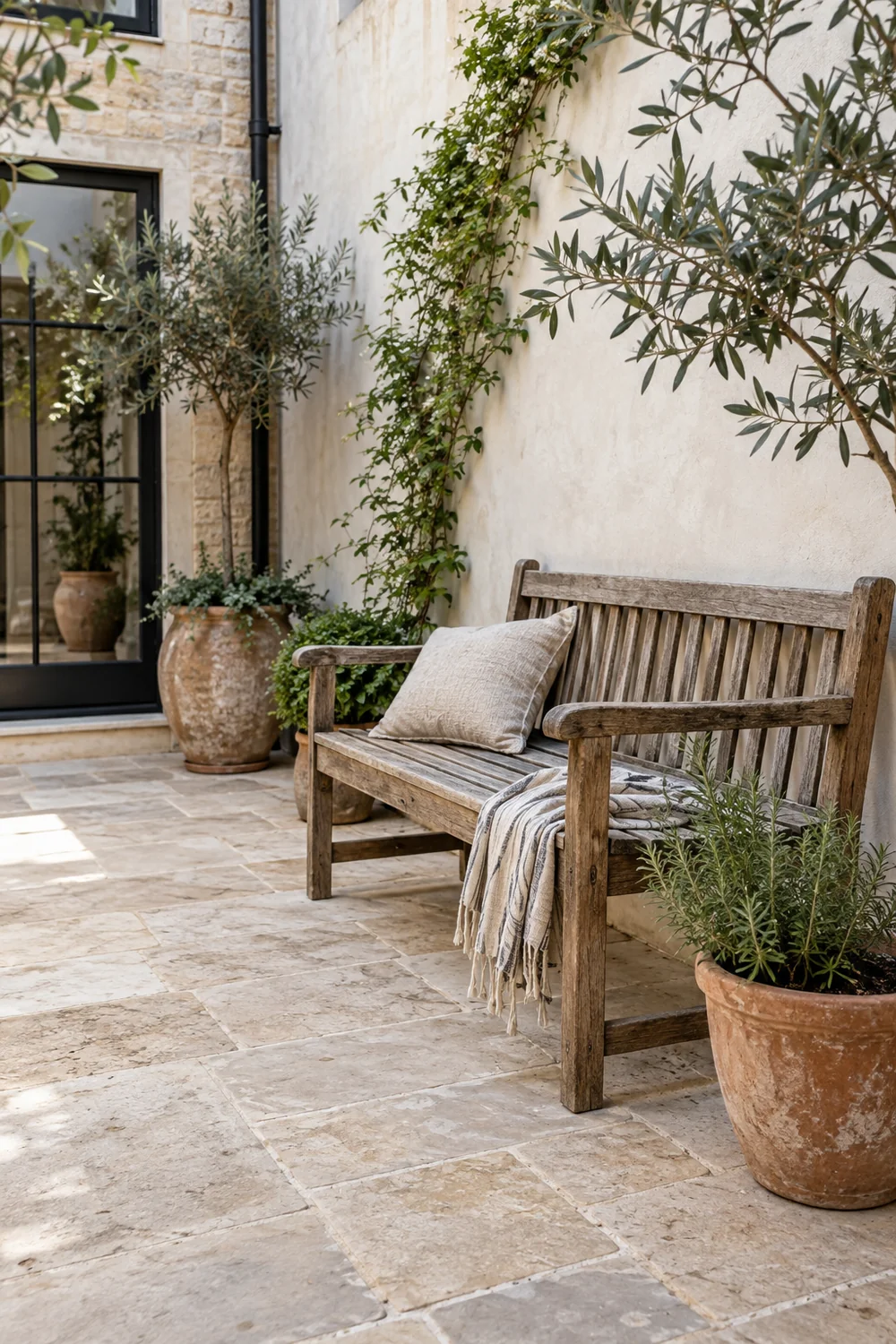
Decide whether the courtyard is mainly for a quiet drink, a meal for two or a place to tend plants. A tiny space can support more than one activity, but one must lead. For a quiet drink, a compact seat with a small table may be enough. For meals, check that chairs can be moved while someone walks past. A bench against a wall can leave more floor visible than two separate chairs, but only if the wall is comfortable to sit beside in the hours you expect to use it.
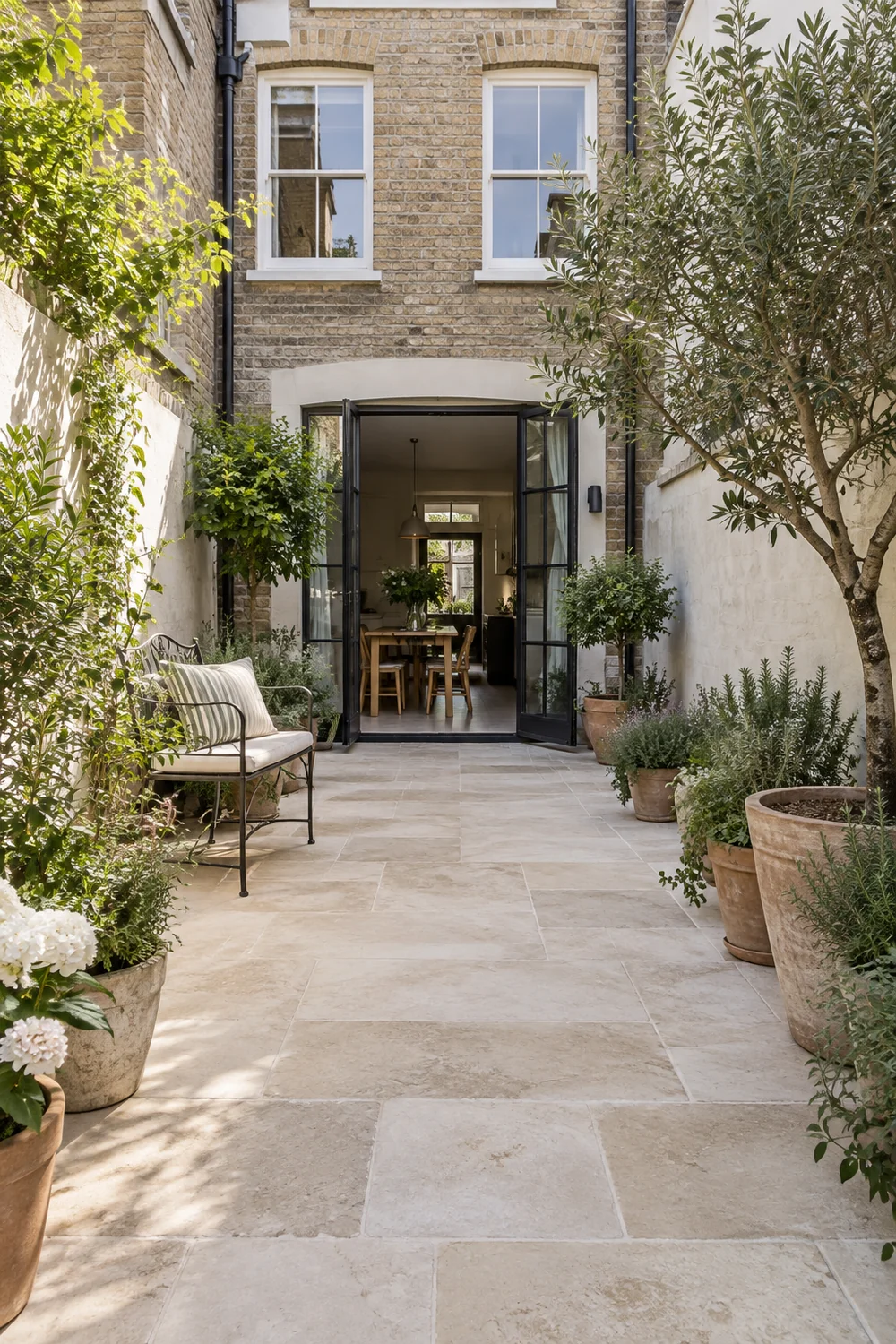
Try two positions before settling. A seat near the house feels convenient and lets you carry food outside easily. A seat at the far end creates a destination and a garden view back toward the home. Stand in each position at the times you would normally be outside. A seat in deep afternoon shade may be welcome in summer but less inviting in spring. A sunny corner may be pleasant in April and too hot in July against an enclosed wall.
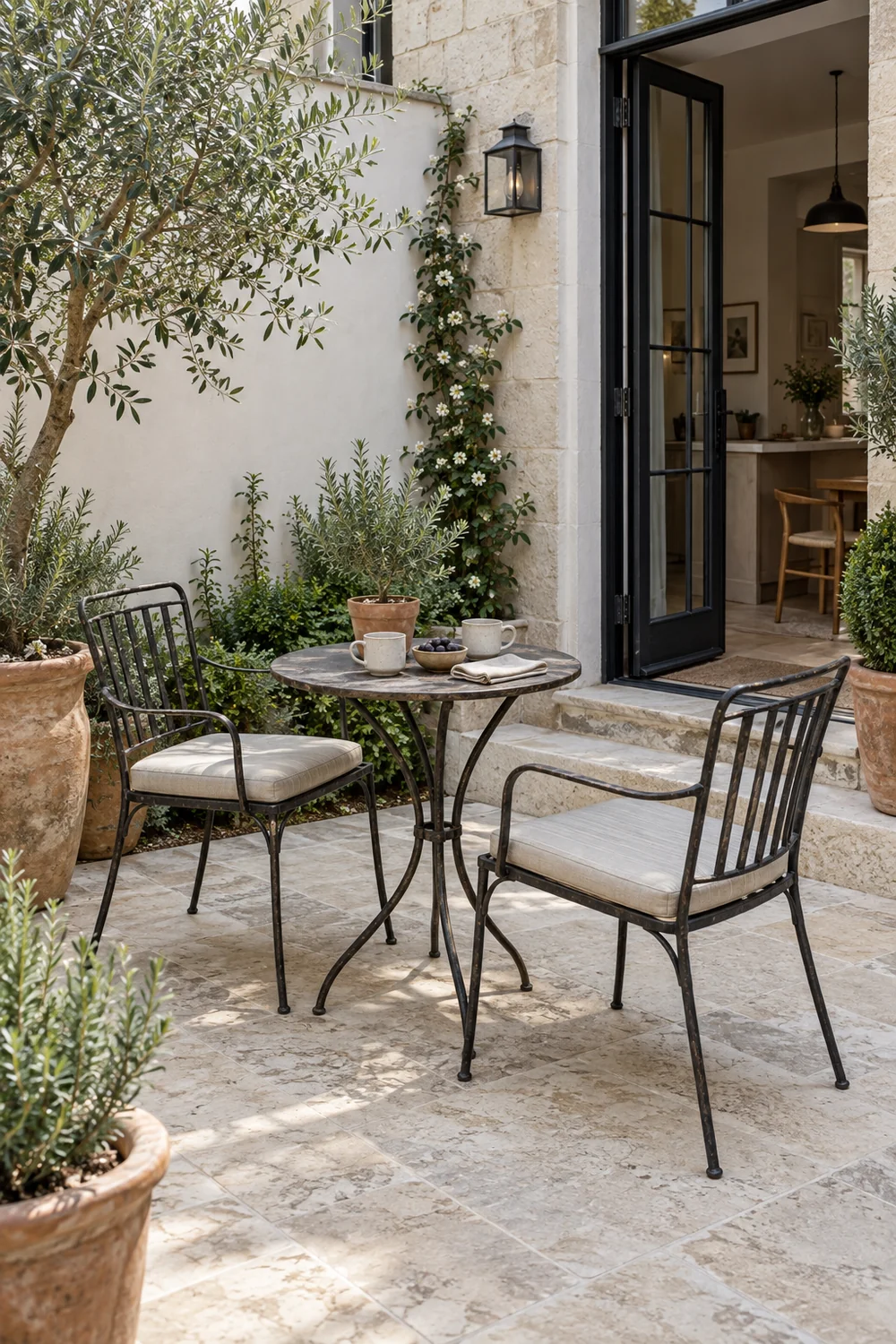
Once the seat works, give it one focal companion. A sculptural tree in a generous pot, a simple wall finish or a grouping of herbs can do this job. Do not start with three competing focal points. The established article on Mediterranean garden ideas shows a wider range of elements; in a small courtyard, choose only those that make the seat and route better. Keep a clear view across the floor so the arrangement reads as an outdoor room rather than a collection of purchases.
The seat should be comfortable without needing constant rearrangement. Check whether there is a place for a cup, whether rainwater will drip from an overhanging ledge and whether a nearby planter leaves enough room to stand. A garden that feels usable on a normal morning is a stronger design than one that needs every pot shifted before a guest can sit down.
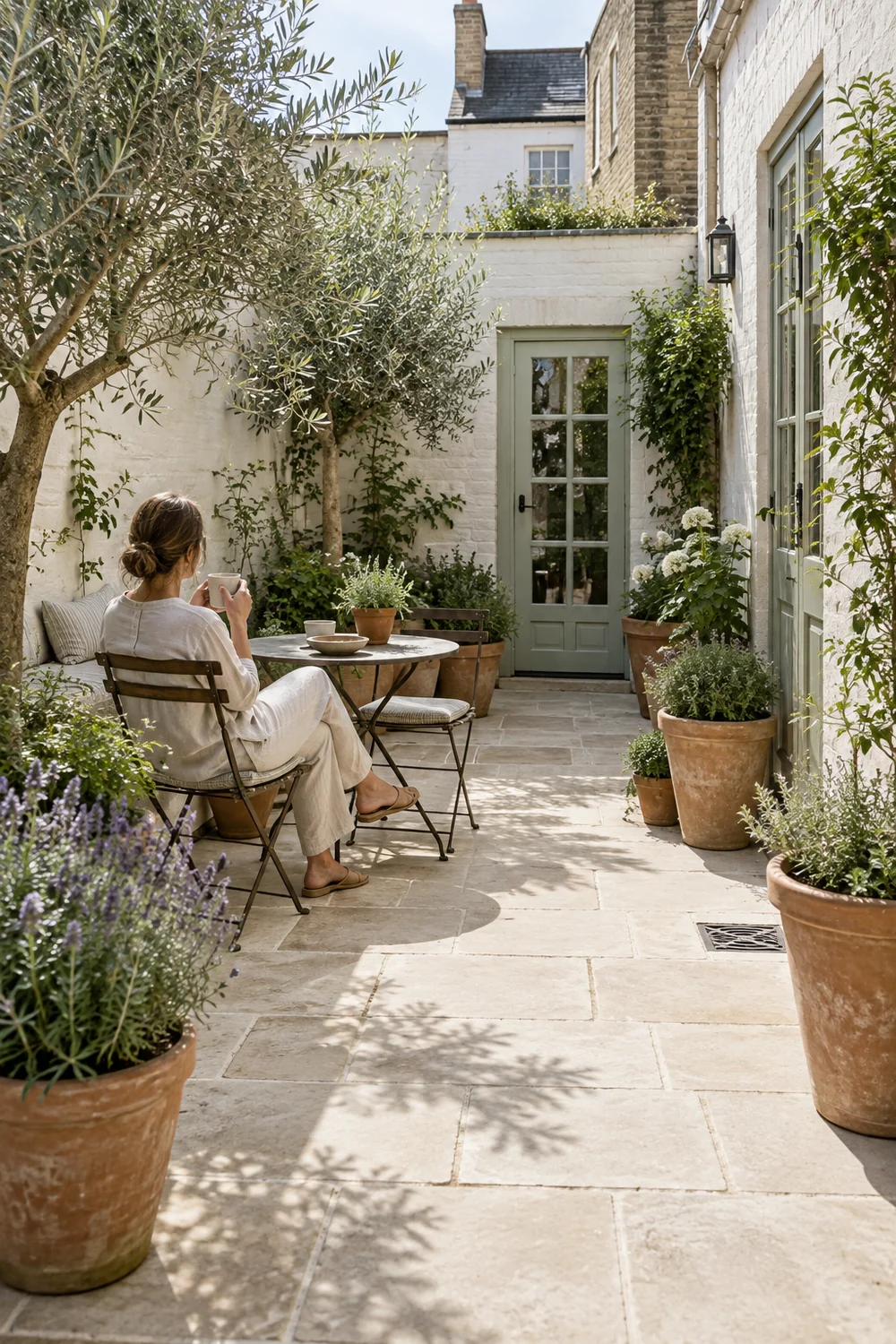
Courtyard walls create their own climate. Watch the floor and walls in morning, midday and late afternoon, and repeat the observation in another season if you can. Record which corner receives reliable direct sun and which remains bright but shaded. Notice strong reflected heat on paving and any cold wind tunnel between buildings. A phone photograph taken from the same spot at several times is enough to make the pattern clear.
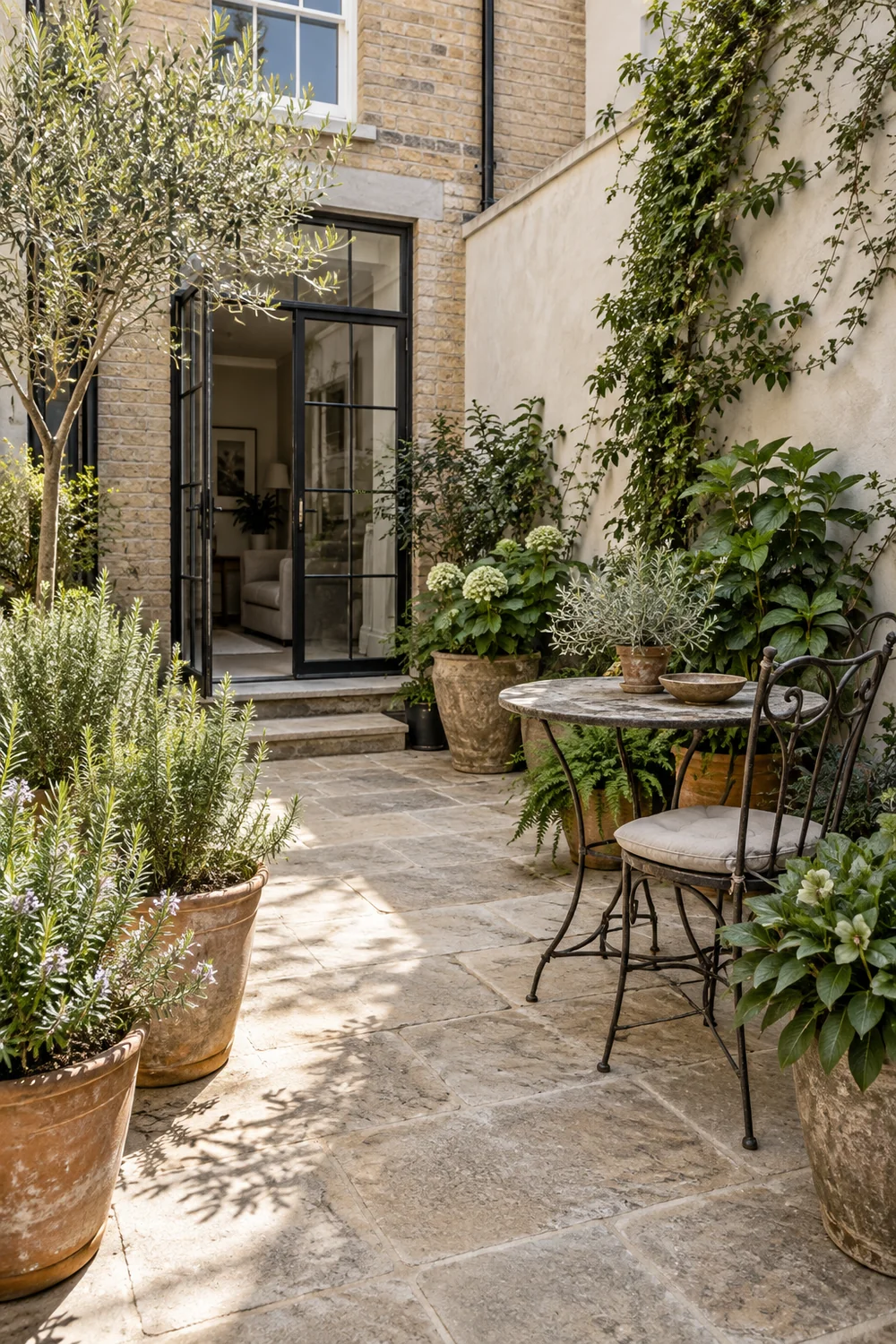
Do not describe the whole courtyard as sunny because one wall catches light for an hour. Mediterranean herbs such as rosemary generally want full sun and good drainage. Royal Horticultural Society guidance also notes that olives need a sunny, well drained and sheltered position, with cold weather limits that matter in Britain. Give the best light to the plants that require it. Use the more shaded wall for a different kind of foliage display rather than asking lavender to flower where it cannot.
Look down as carefully as you look up. Find where water leaves the courtyard after a storm. A solid paved floor may need existing drainage kept free; a pot set over an outlet can turn a design detail into a maintenance problem. Containers need drainage holes, and RHS container advice warns that winter waterlogging and exposed roots are particular concerns. Choose pots that can drain and stand where their bases will not sit in trapped water.
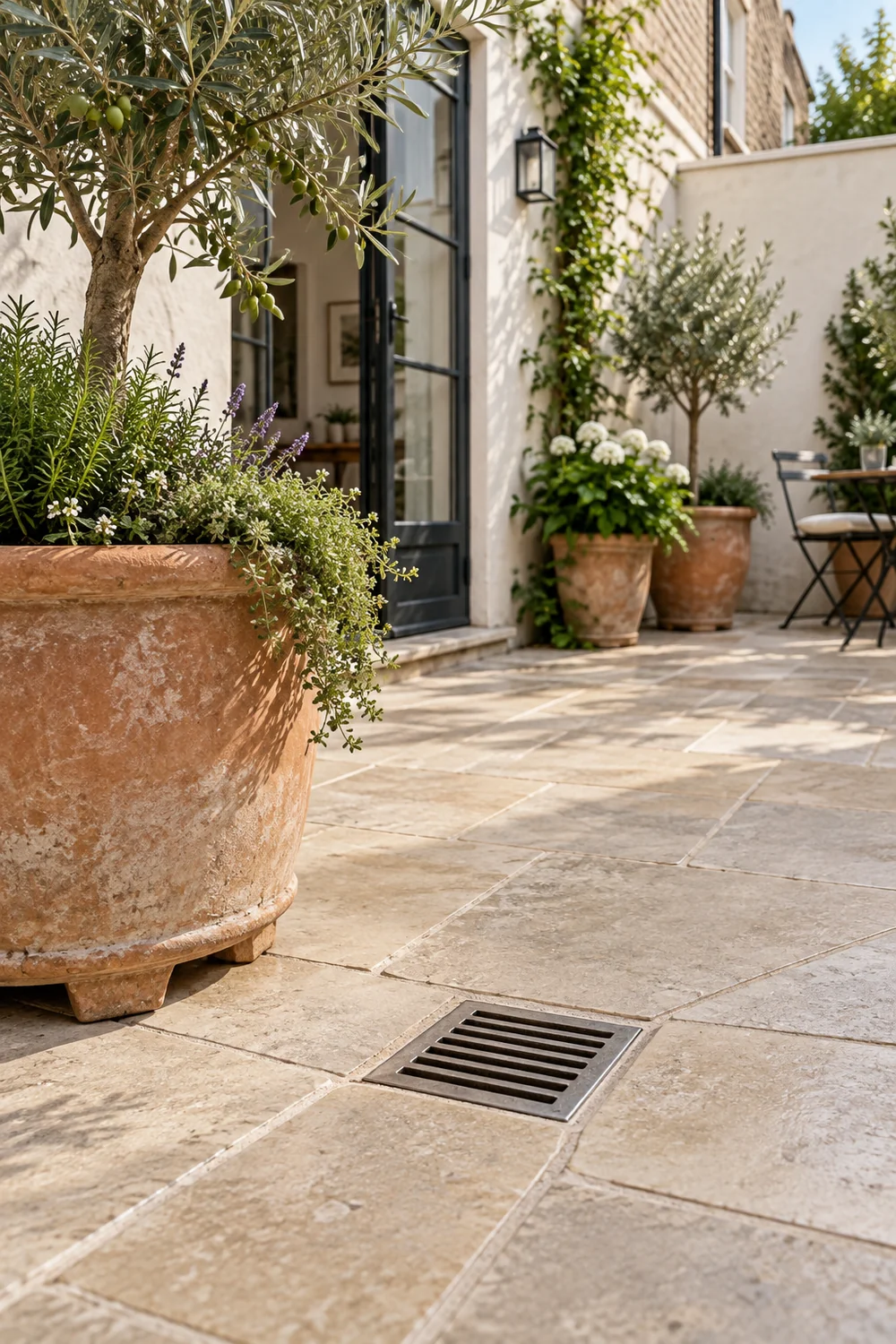
This light and water map is the point where the design becomes yours. The reference image may show a hot Spanish courtyard, while your townhouse has two hours of direct sun and a wet corner. Keep the Mediterranean language in the stone, clay and proportions, then select planting that matches the real site. That decision protects both the look and the money spent on plants.
Choose one quiet floor material as the background. Existing paving may already have enough character, so cleaning or repairing it could be a better first step than replacement. If a new finish is needed, test samples in dry and wet light beside the house wall. Pale buff stone, a warm mineral surface or a restrained gravel area can make the space feel open. Always check how a surface will be installed, drained and maintained in your actual courtyard before committing to it.
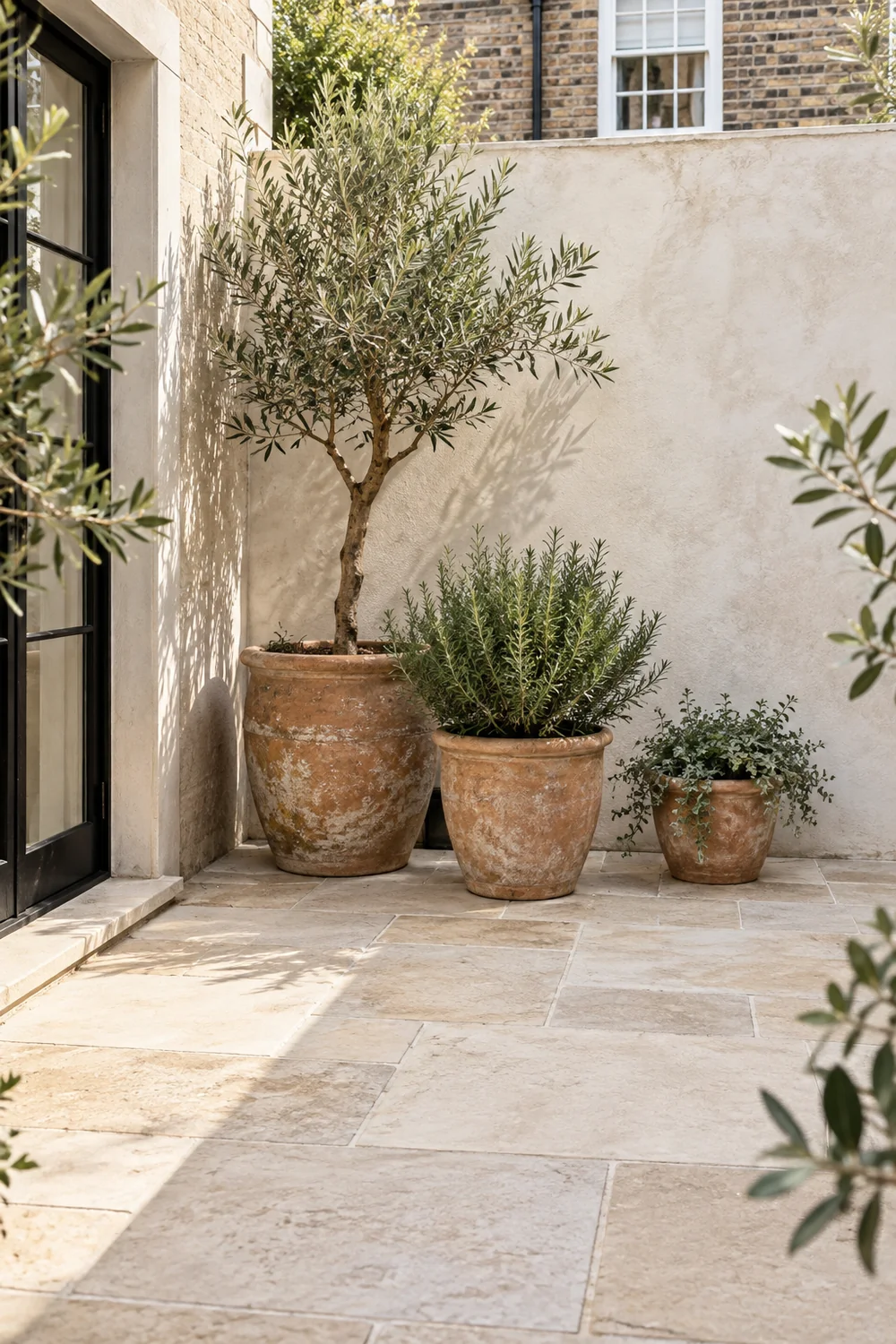
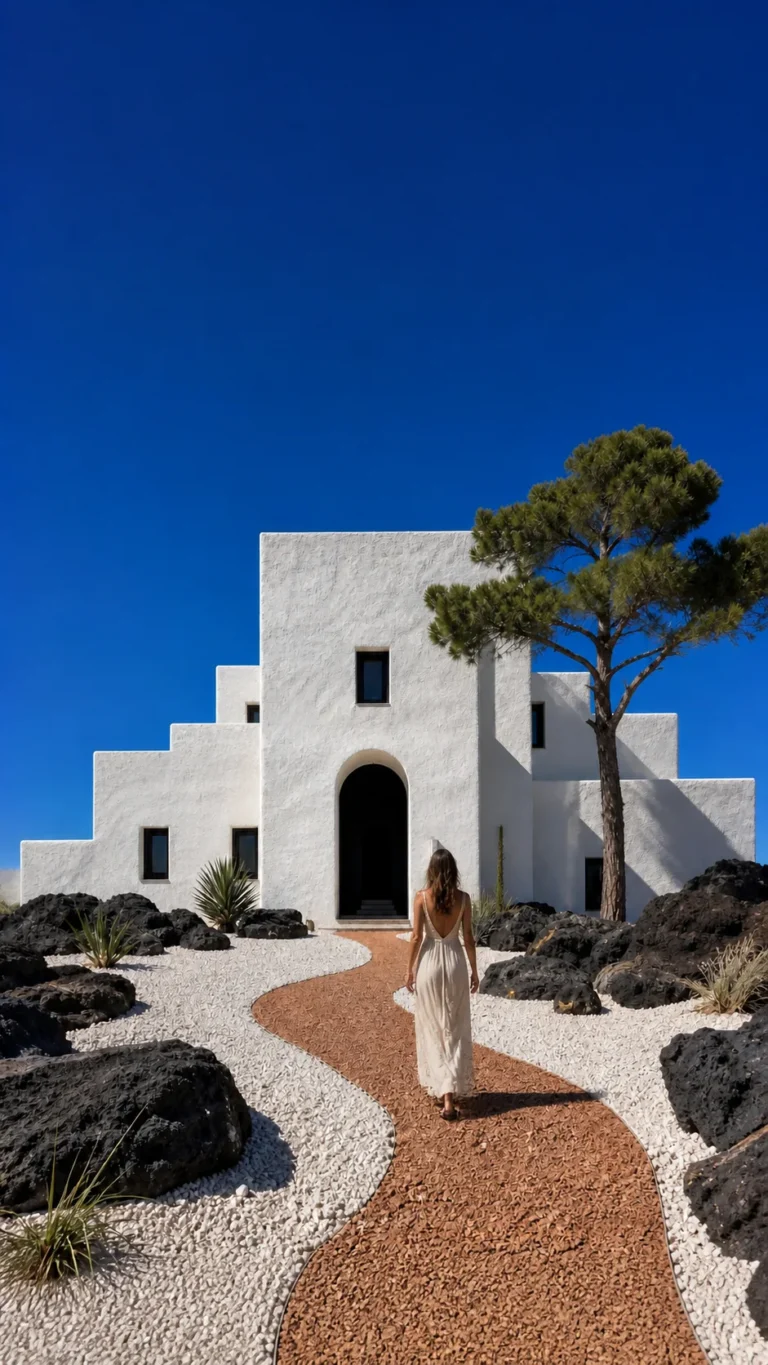
Let the walls return light without forcing every surface to brilliant white. A softened chalk tone can make foliage legible, while a deeper clay or stone accent can add warmth. Keep the number of finishes low: one main floor, one wall family and a consistent range of pots will do more than a patchwork of small decorative features. The article on Greek garden ideas offers a brighter coastal interpretation; you can take its clarity and restraint without adding blue to a courtyard whose house and stone already point toward terracotta and olive green.
Use pot sizes as part of the composition. A single generous pot at the end of the sightline can anchor the courtyard, while a small group near the seat brings scent and detail close enough to enjoy. Avoid placing a little pot at every interval along the wall. The repeated gaps between them can make the perimeter look busy without adding useful planting. Grouping creates one clear mass and leaves more open floor.
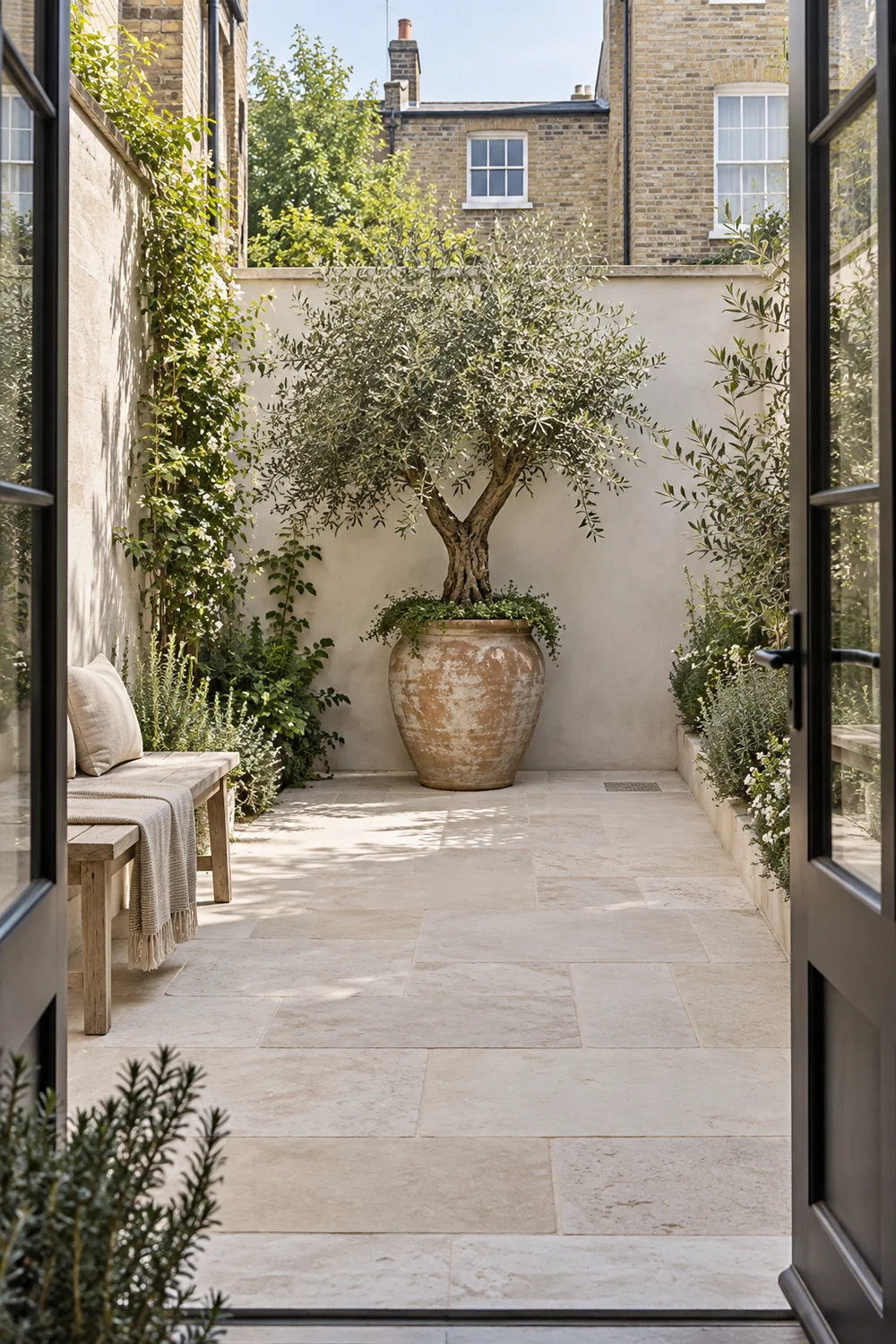
Treat patterned tile as an accent rather than a demand to cover the whole floor. A small inset, a threshold or the back of a simple water bowl can introduce craft without competing with every plant. In a townhouse courtyard, restraint makes the material texture visible. It also makes later replacements easier if a tile or pot is damaged.
For the sunniest, most sheltered area, start with one structural plant and a few companions rather than a shopping list of Mediterranean icons. An olive in a suitable container can be a focal point where local conditions and winter care make it realistic. Rosemary can bring evergreen texture and scent near a path or seat. Lavender needs strong light and free drainage; RHS lavender guidance warns against cold, wet conditions for young plants. If your courtyard cannot offer that, choose the atmosphere through materials and use plants better suited to the light.
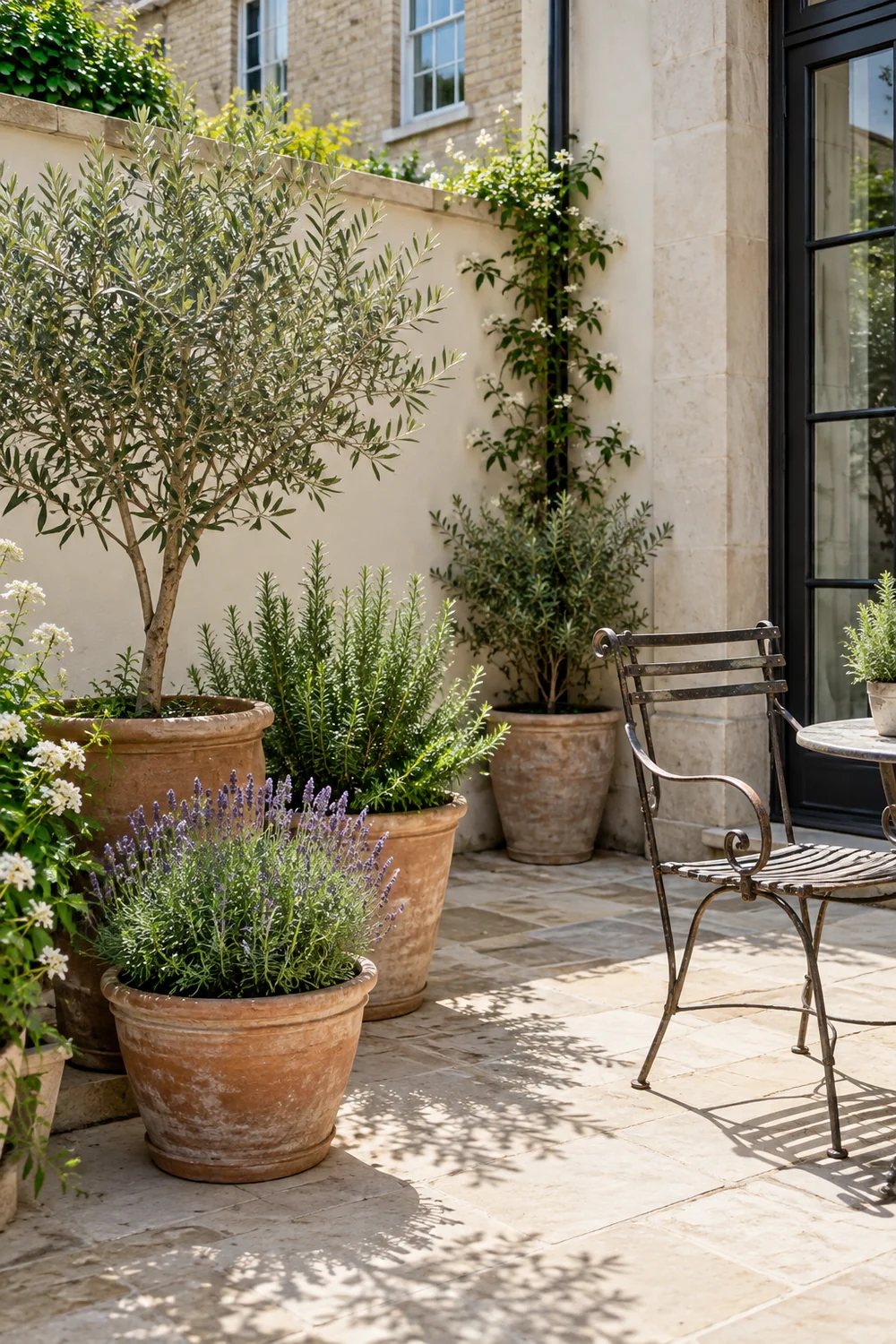
Give each container enough volume for its plant and a drainage hole that can work. A cluster of identical tiny pots may look appealing on purchase day, but they dry rapidly in warm spells and make regular watering laborious. The RHS notes that container plants need more watering and feeding than plants in the ground because compost volume is limited. A smaller number of well sized pots can look calmer and be easier to maintain. Our terracotta pots guide shows ways to group them without filling every gap. Check the mature size of each plant before placing the order, particularly if the specimen will stand beside the route.
For the bright shaded wall, select plants by their actual shade tolerance and local hardiness rather than by Mediterranean origin alone. Use foliage shape and leaf colour to echo the sunny side. The two zones can still share the same pots and stone, so the garden reads as one design. Ask a reputable local nursery which species will cope with your exposure and winter conditions, then check the plant's mature spread. The goal is a green wall that remains healthy, not a short lived picture of lavender in shade.
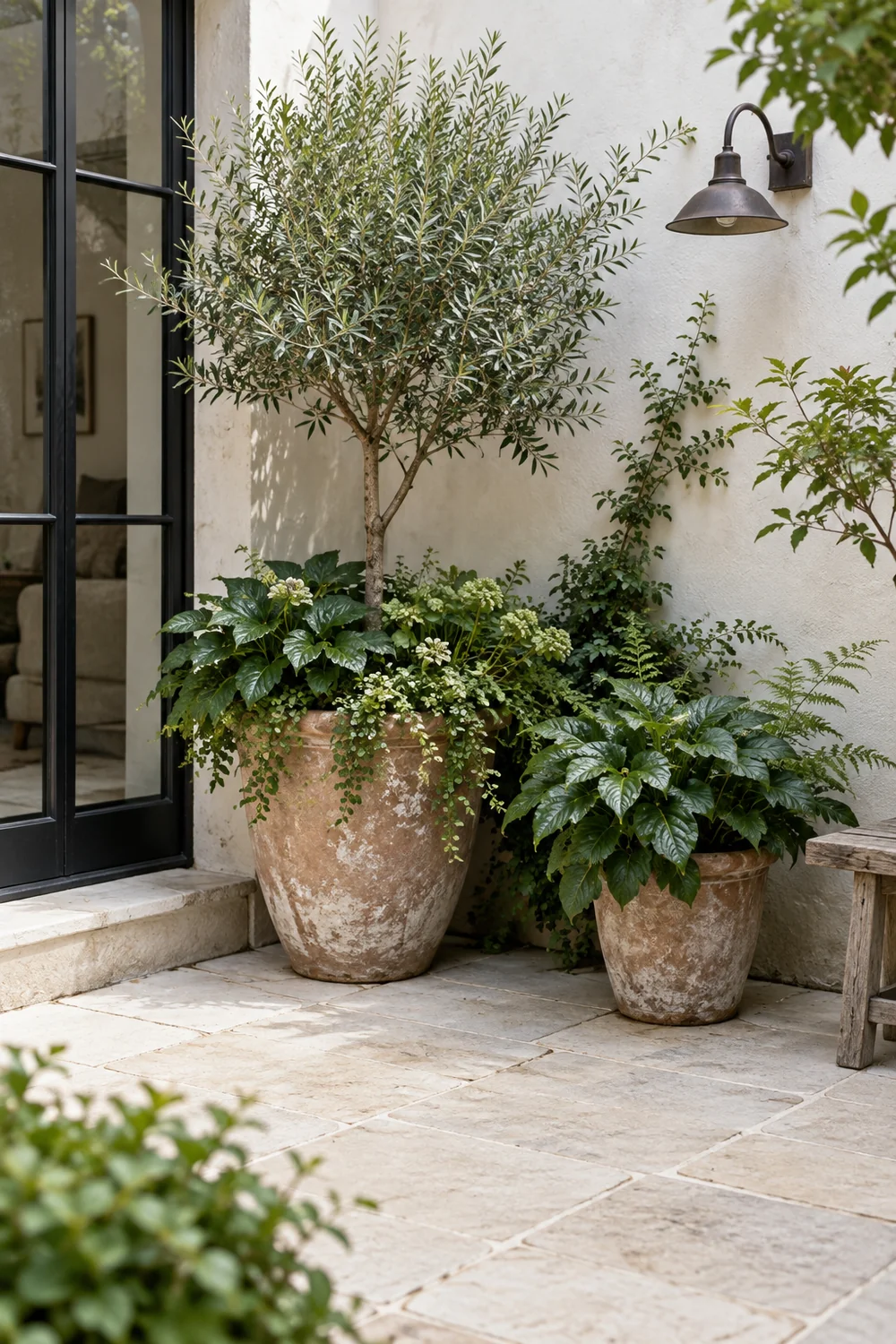
If you want flowers or herbs close to the seat, place those pots where the light suits them and where you can reach them without moving furniture. The planting plan should leave the chair usable. Keep a simple note of which pots need watering most often and which need seasonal protection. This turns care into a short routine rather than a recurring rescue effort.
Privacy can come from where you sit and what you can see, rather than from a heavy screen on every boundary. Sit in the proposed chair and check the actual sightlines from neighbouring windows or the path beyond a gate. A climber on a suitable support, a carefully placed tall pot or a partial screen may solve the problem. Before fixing anything to a shared wall, establish ownership and check permissions. Keep access to services and drains open.
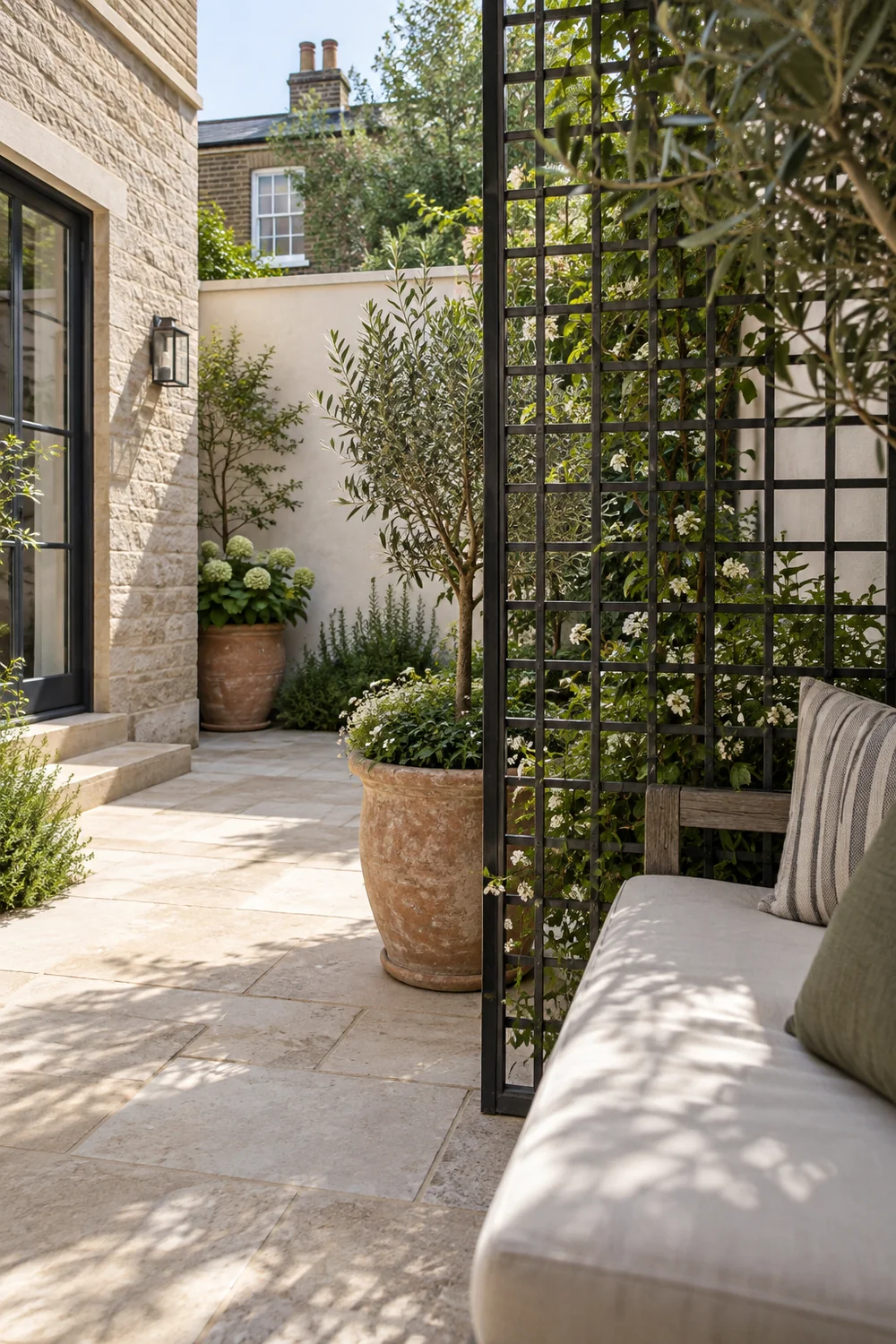
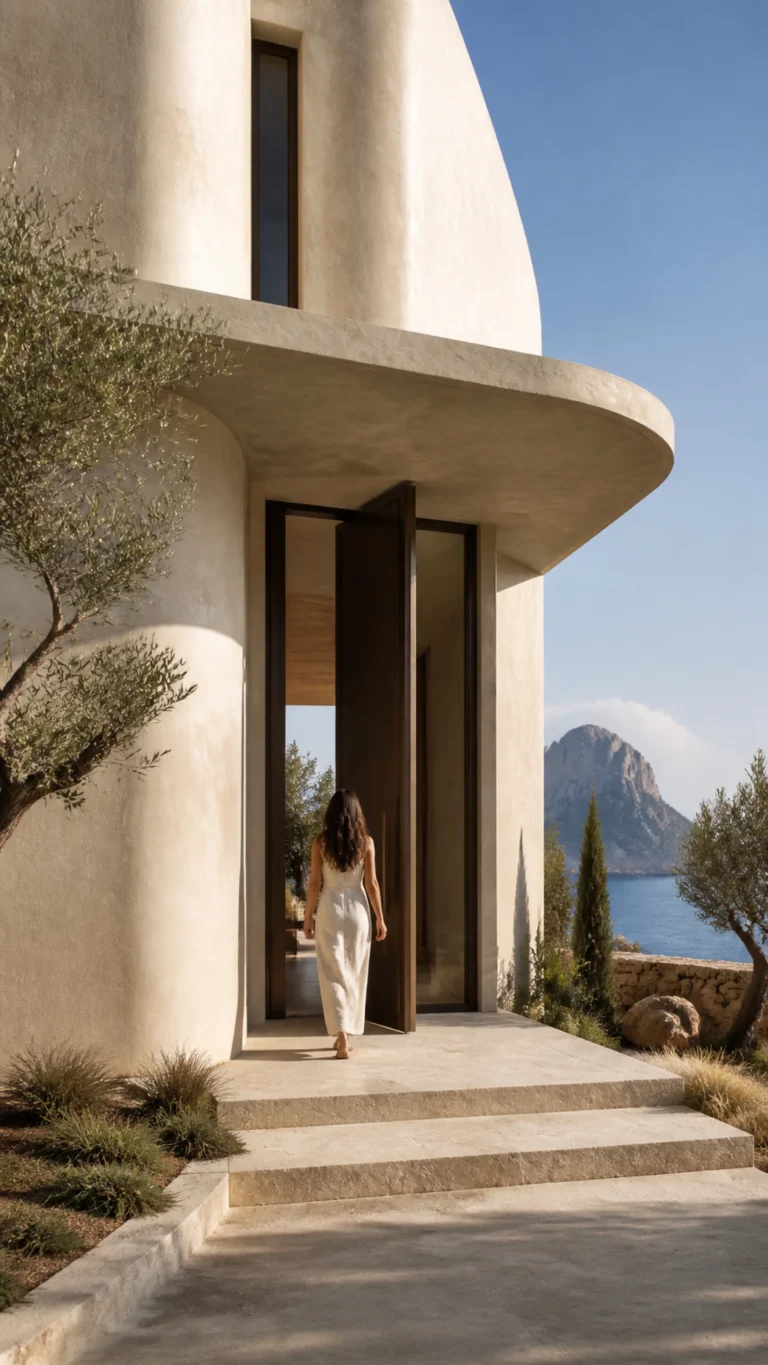
An enclosed Spanish courtyard can inspire the feeling of shelter, but a townhouse space still needs light and air. If a tall screen shades the only sunny planting corner, it may solve one concern while creating another. Try a temporary outline at full height before installing it. The test should include the view from inside, where a dense barrier can make the room feel darker.
Place any storage where it helps the garden work. A narrow weather suitable cupboard may be more useful near the door than a decorative bench that hides nowhere for tools. Keep hoses, watering cans and spare compost from taking over the seat. If there is no room for a separate cupboard, choose one practical storage point and make it part of the material palette.
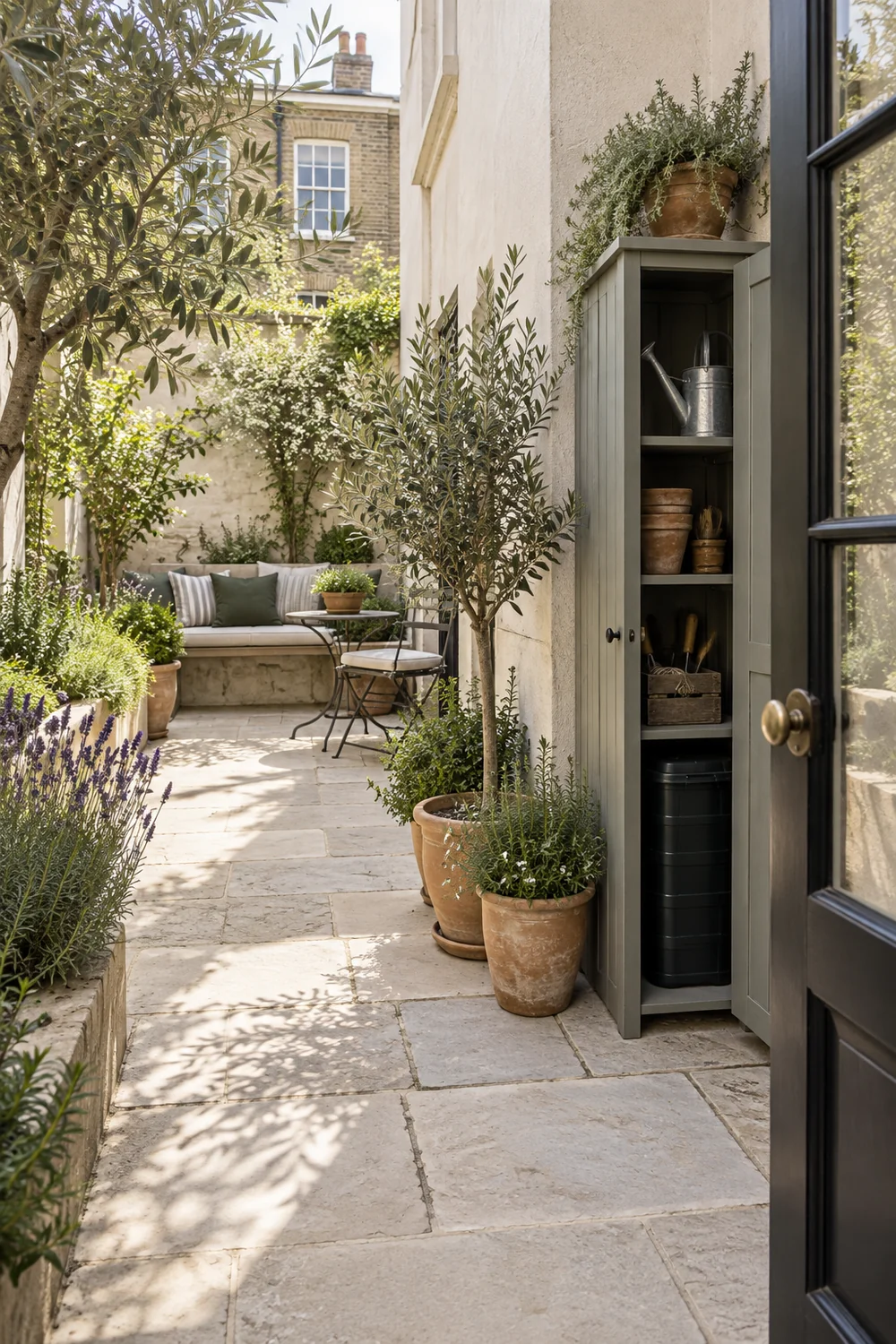
Plan lighting for the route and the seat, not for a theatrical night photograph. A modest light at the threshold and a restrained fitting that reveals a step can make the garden safer and easier to use after dark. Confirm electrical specifications and installation with a qualified professional where wiring is involved. The courtyard should remain visually complete in daylight, because that is when its stone, clay and foliage are seen most clearly.
Before spending on the full scheme, mark the seat, main pot and route on the ground for several days. Use a temporary chair and move it as you would in daily life. Watch where the sun reaches the sitting area and where the watering can has to travel. This test may show that the focal pot should move by a small amount, or that a round table fits better than a square one. Changing the sketch is cheap; moving installed paving is not.
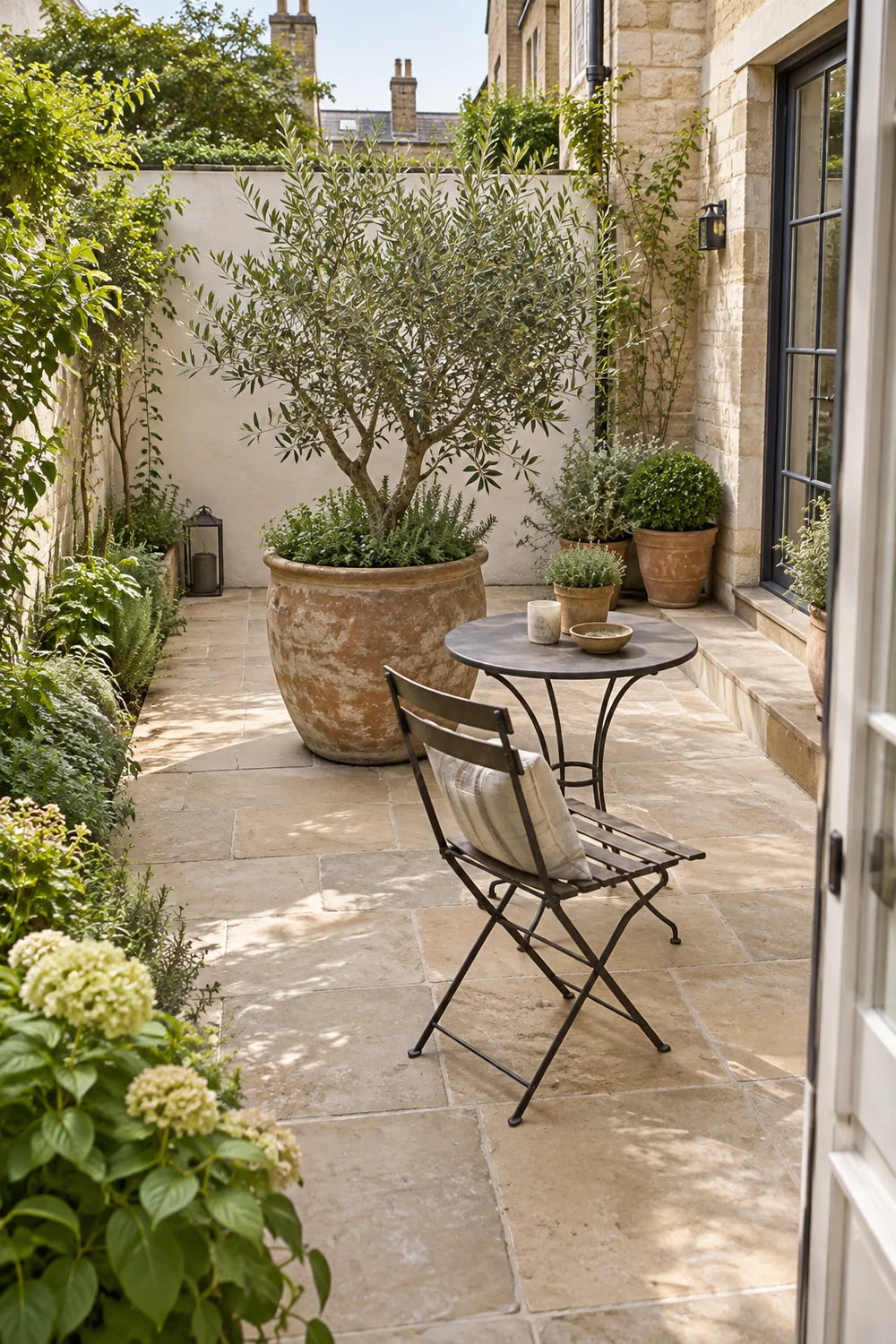
Build in a sensible order. Keep drainage and access clear first, then finish the main surface and walls, place the furniture and largest container, and add the smaller plants last. This sequence stops a collection of tempting pots from deciding the layout for you. It also lets you judge whether the finished materials already provide enough texture before adding decorative accents.
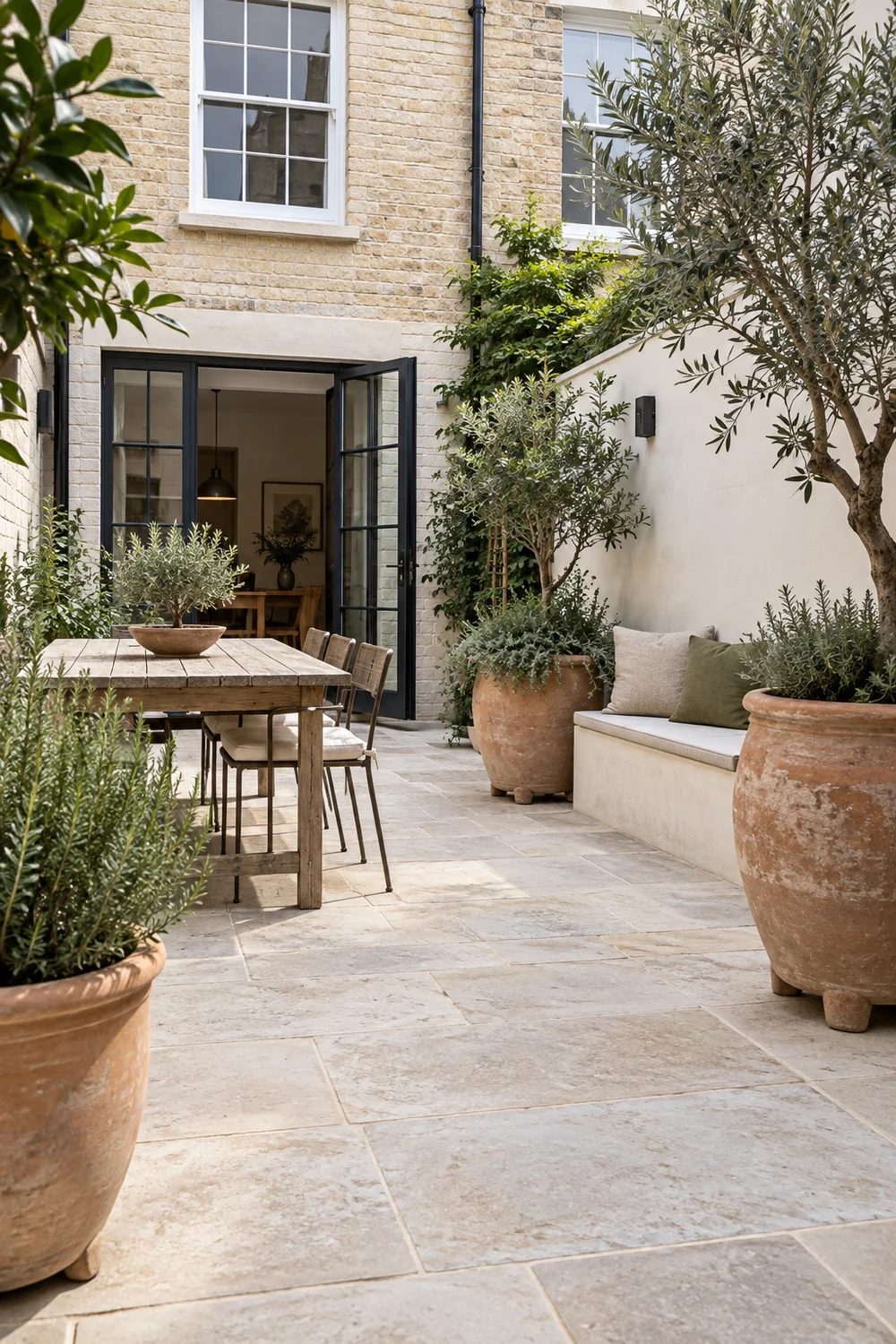
Plan for winter as part of the initial design. Find out where any tender container can be sheltered and whether a heavy pot can realistically be moved. Check drainage after prolonged rain and watch for standing water around pot bases. The RHS notes that containers are exposed to cold and winter waterlogging; a plant that is suited to a Mediterranean picture may still need local protection. This practical care plan matters as much as summer styling in a British courtyard.
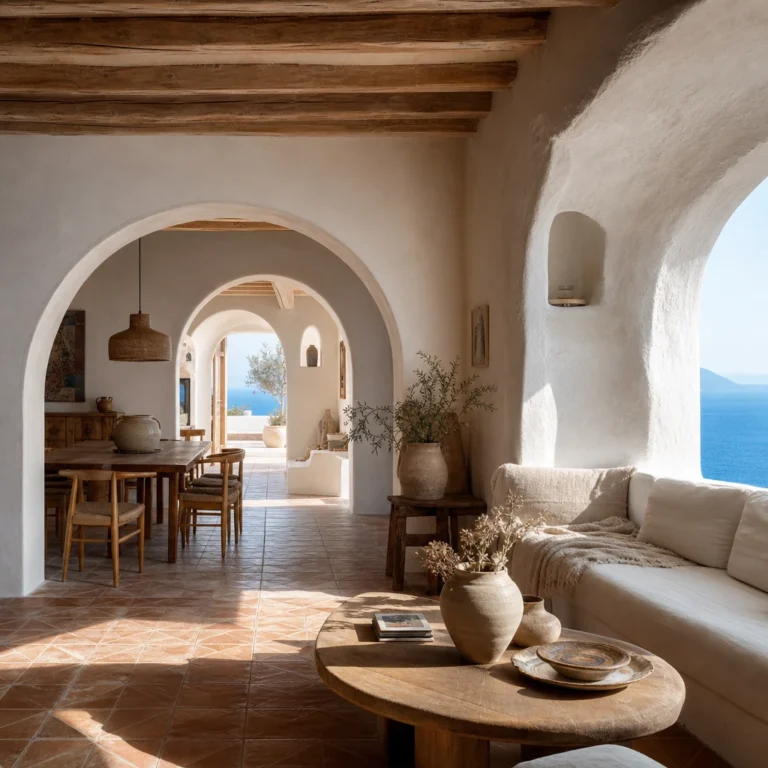
The modern Mediterranean home can provide a broader material language if you want the courtyard to connect to your interior. Carry through one or two related surfaces or colours rather than duplicating every detail. From inside, the garden should look like an extension of the home. Outside, it should let you sit down, walk through and tend plants without moving the entire arrangement.
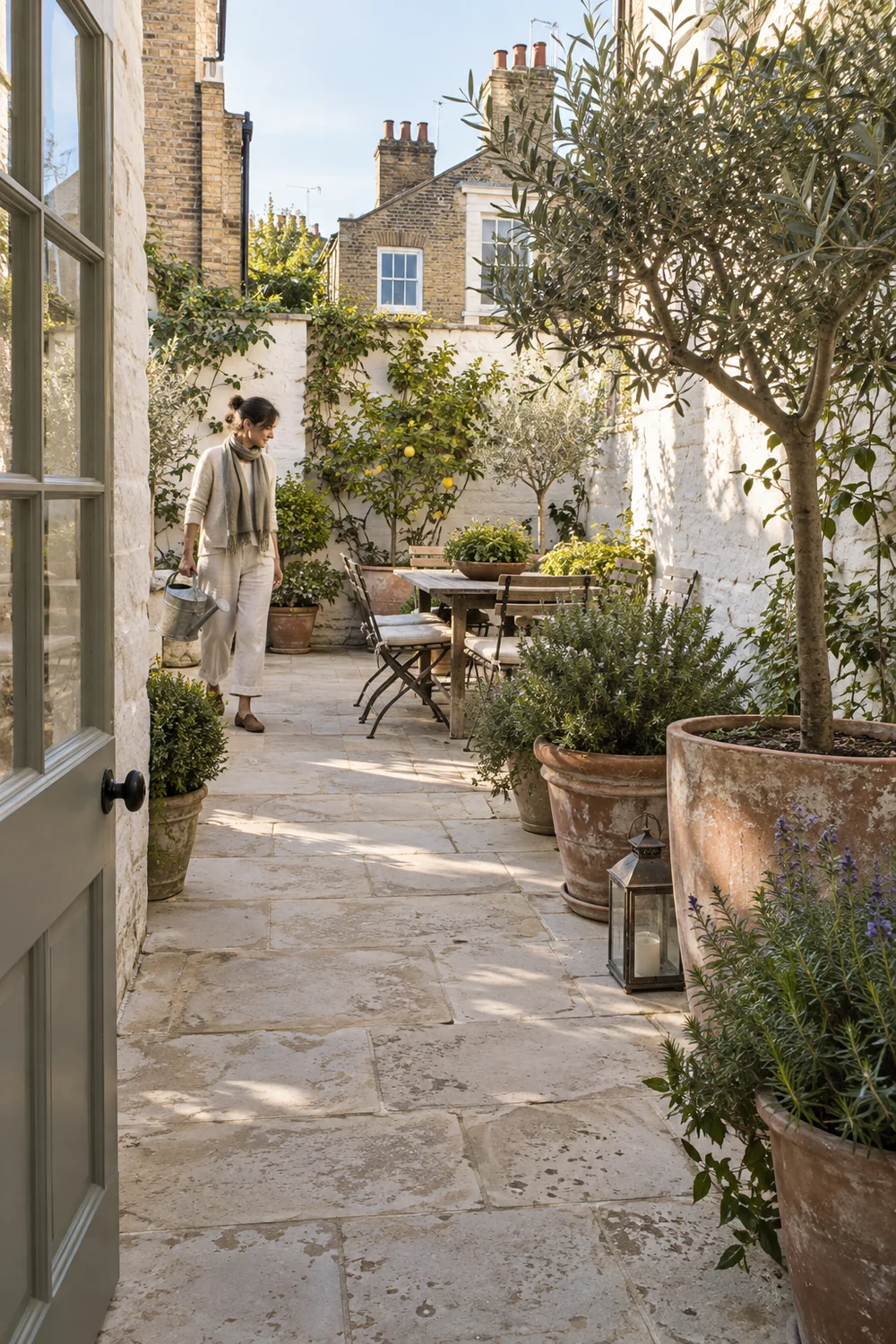
The strongest small Mediterranean garden begins with a seat and a route, then uses light, planting and materials to make them pleasant. Measure the townhouse courtyard, test the furniture, give sun loving plants the light they need and use containers that you can care for through a British winter. One good focal plant and a coherent mineral and terracotta palette can carry the idea. When the space works on an ordinary day, the Mediterranean feeling has a place to live rather than appearing only in a photograph.