Newsletter Subscribe
Enter your email address below and subscribe to our newsletter

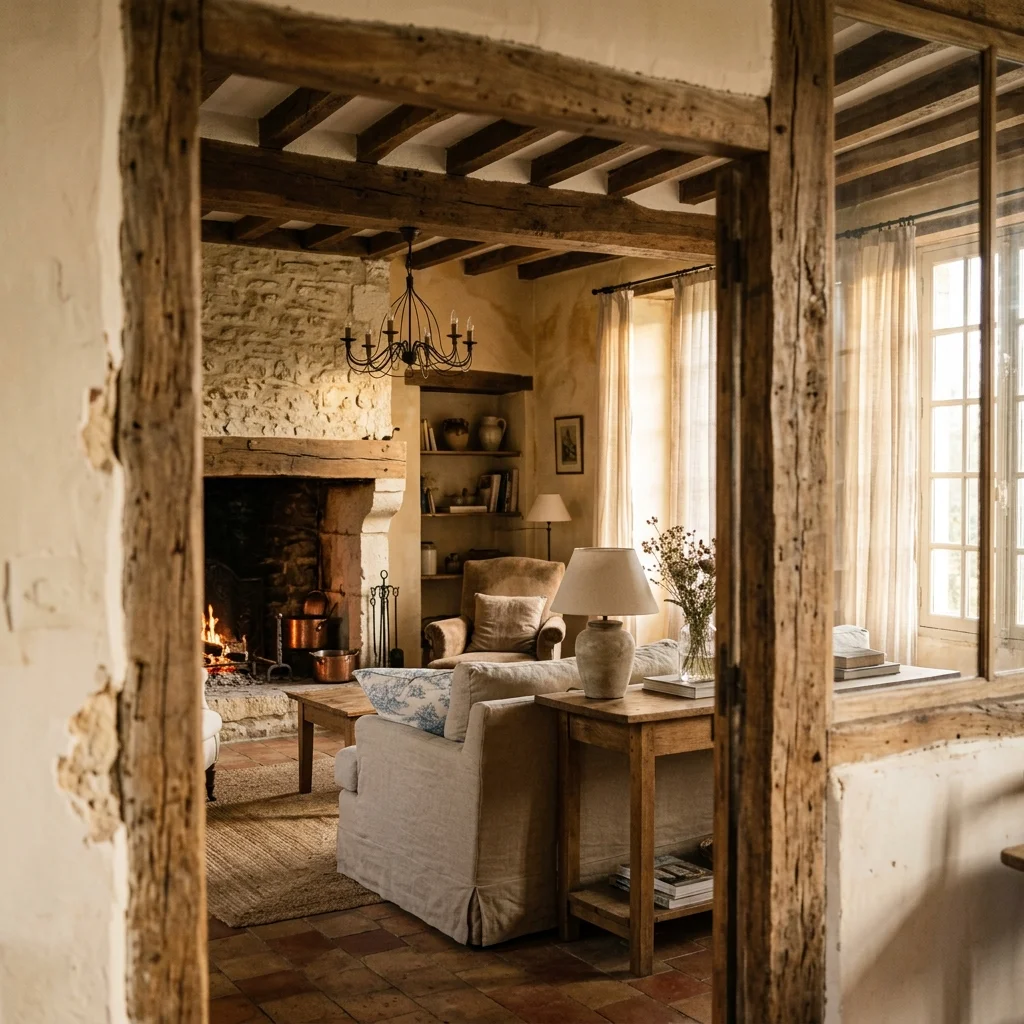
There is a version of French country living room design that has nothing to do with gilded mirrors or perfectly appointed mantelpieces. The cottage interpretation is messier, warmer, and honestly more interesting. It is the difference between a room arranged for a photoshoot and one where someone kicked off their shoes and read a novel until the light changed. Joanna Gaines built a media empire on farmhouse charm, but the French cottage version predates that trend by centuries. It starts with imperfection. Scratched wood, faded linen, stone that has been walked on for generations. Pretty practicality, not performance.
Most French country living room ideas lean towards the polished end of the spectrum. The cottage version goes the other way.
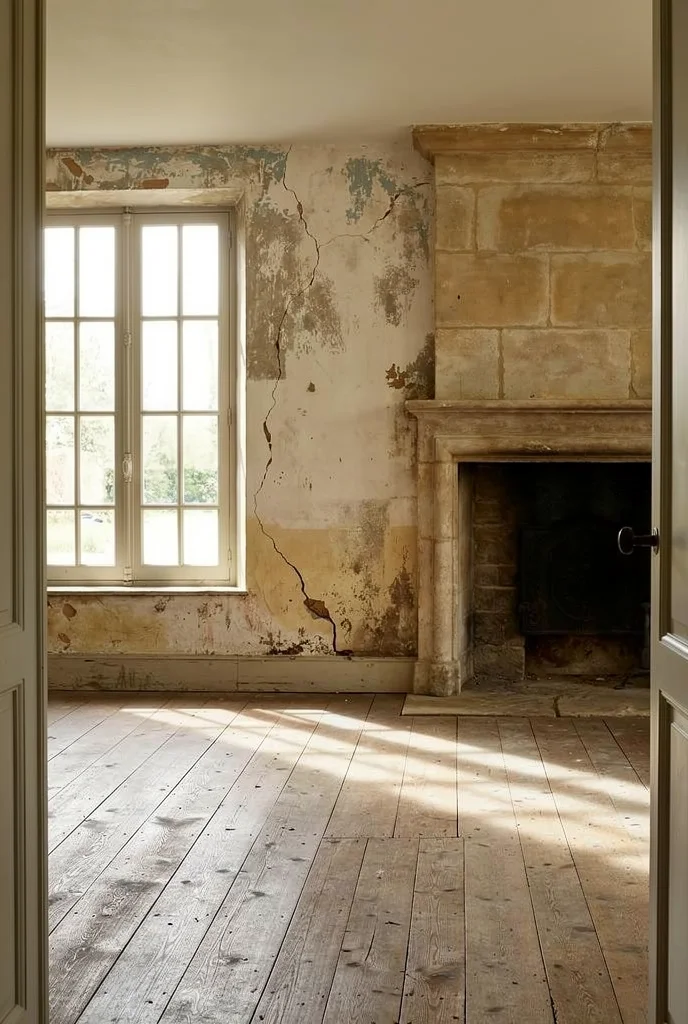
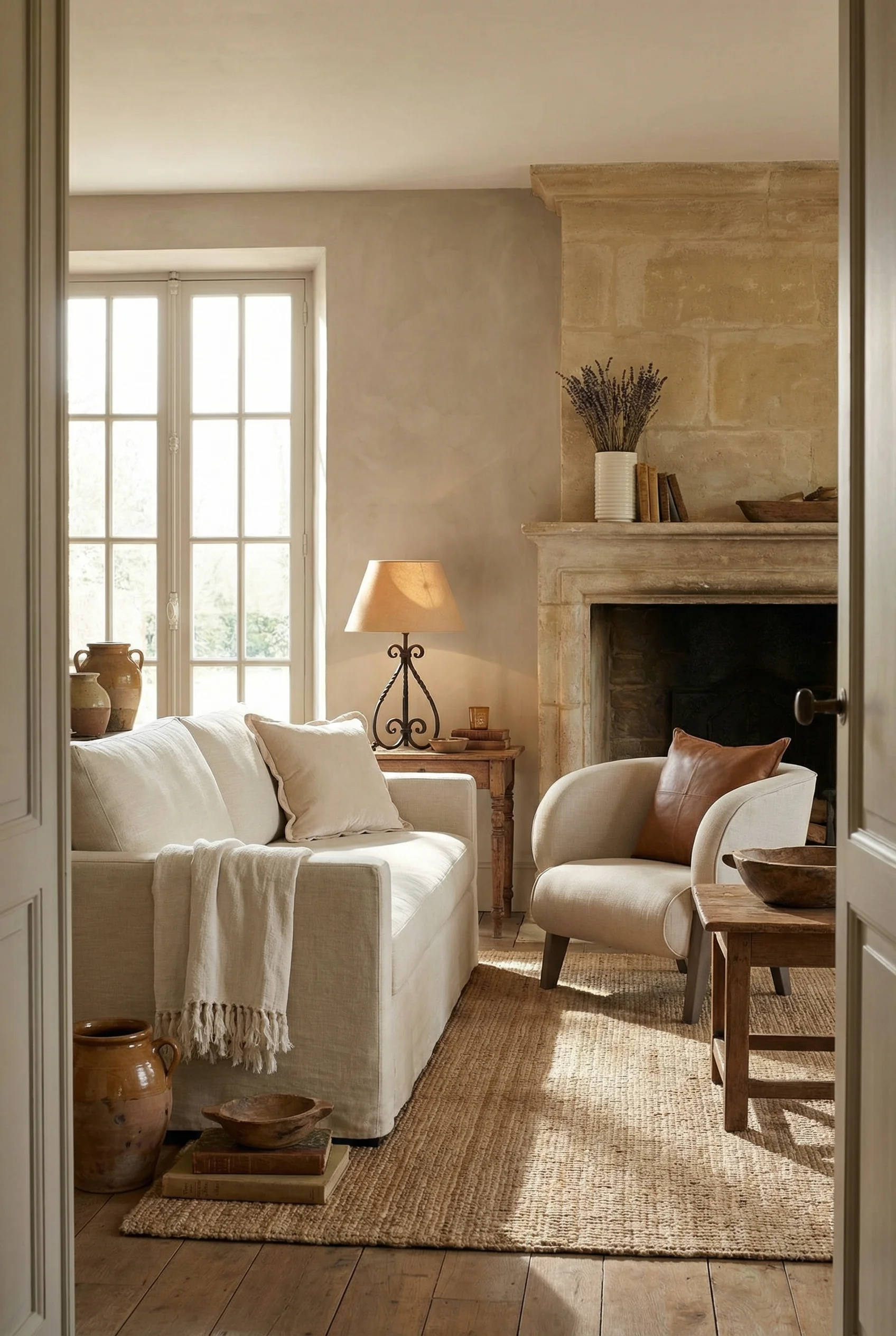
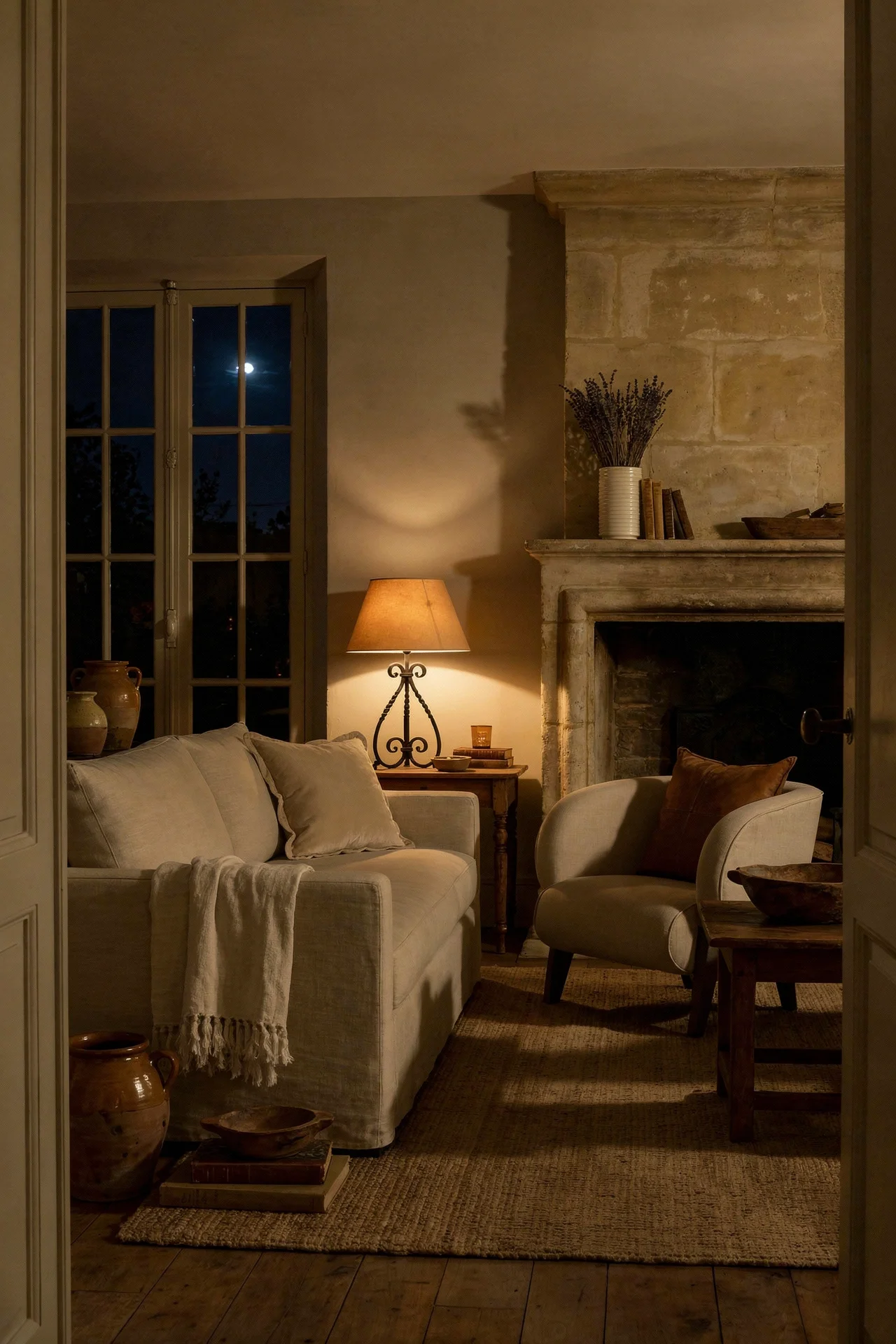
This is not about removing quality. It is about choosing pieces that look better with age rather than worse. The core philosophy, one that French Country design historians describe as “pretty practicality,” treats beauty as something that should happen naturally through use, not despite it. A sofa should look like people sit on it. A table should bear the marks of dinners and mornings and years.
The distinction from a formal French Country interior is important. Where a chateau draws from aristocratic refinement, the cottage draws from agrarian life. Working kitchens. Stone floors worn smooth by actual feet. Furniture painted and repainted as tastes shifted across generations. If you want the broader style overview, our French Country Living Room Guide covers the full spectrum. But if you already know you want the informal version, this is where to focus.
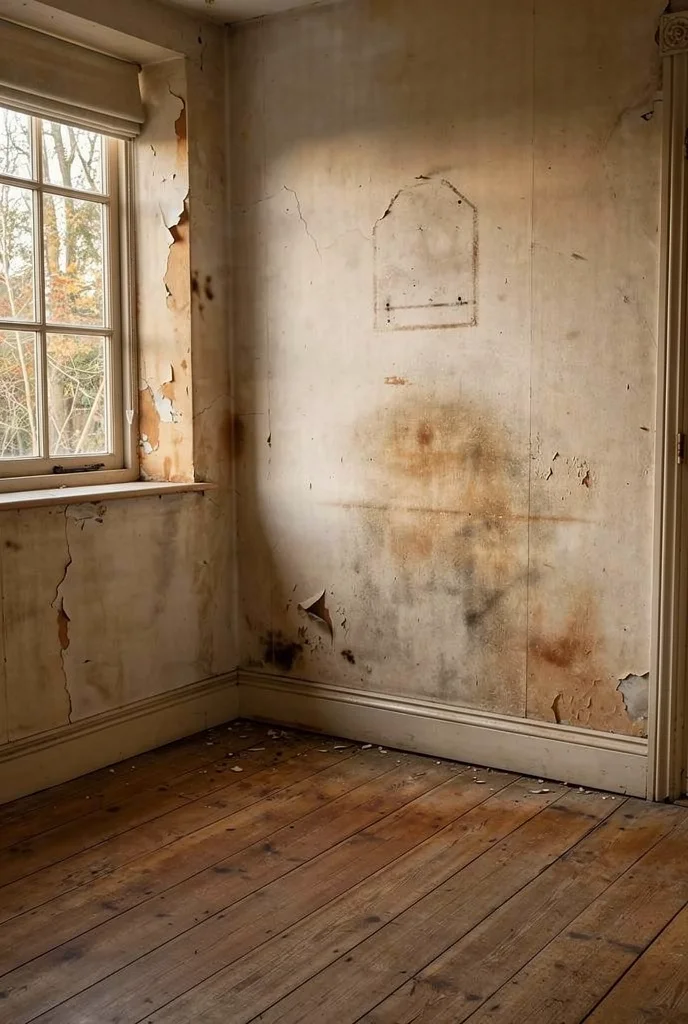
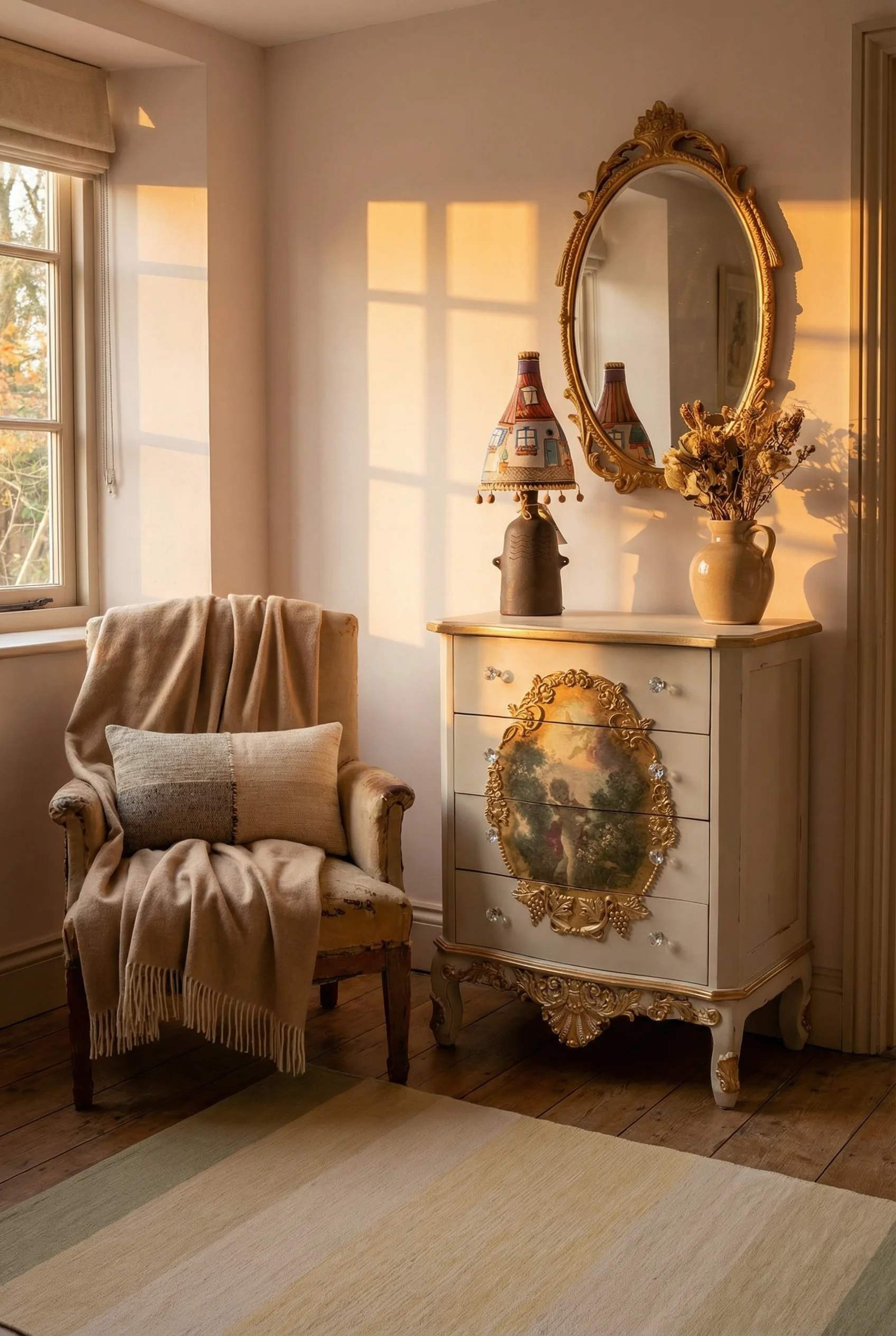
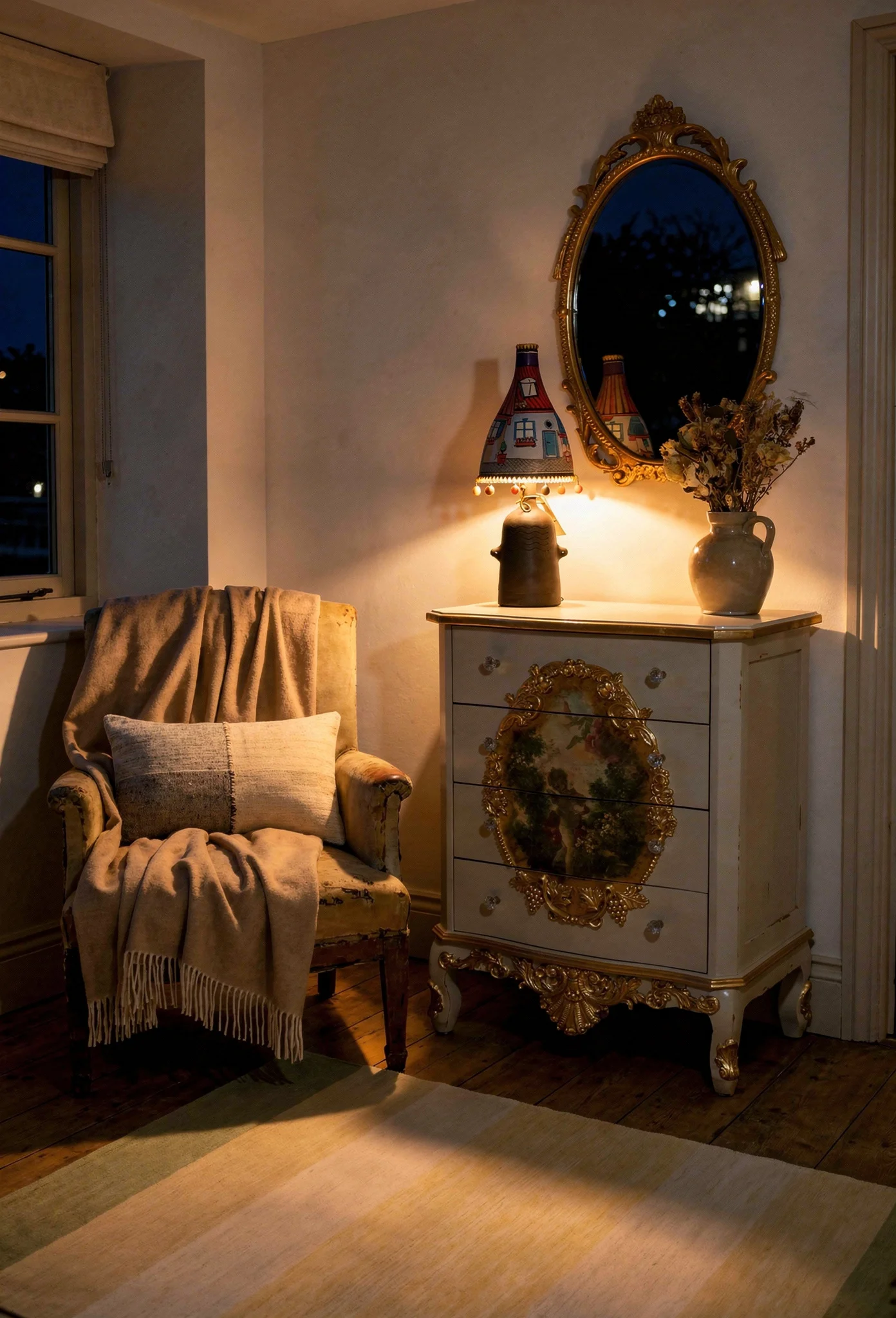
The trick is restraint. A cottage room that tries too hard becomes a costume. One that gets it right feels like walking into someone’s actual home in Provence and realising they have been living beautifully without thinking about it for decades.
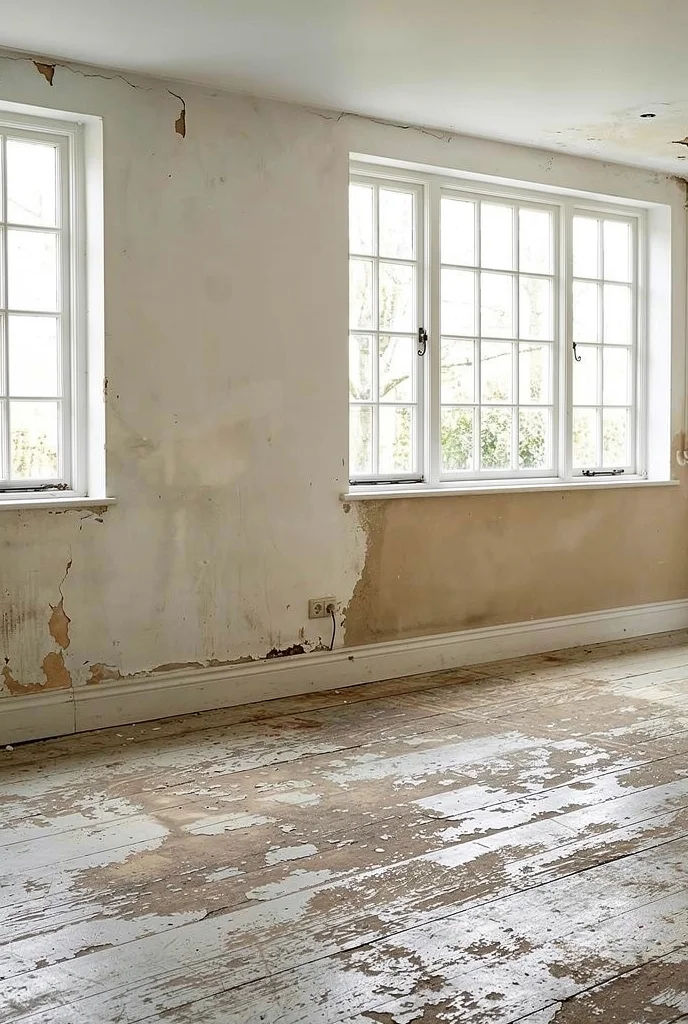
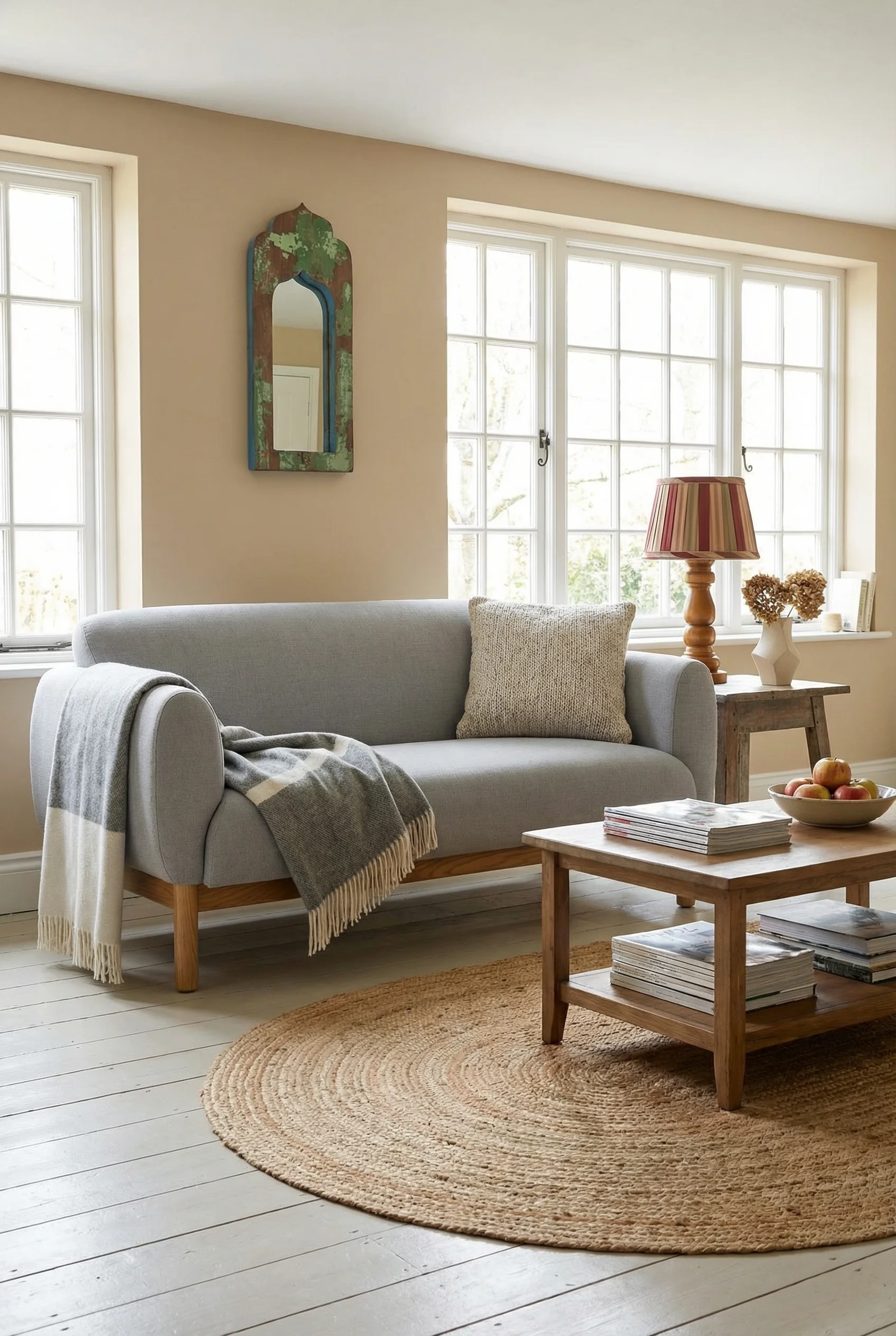
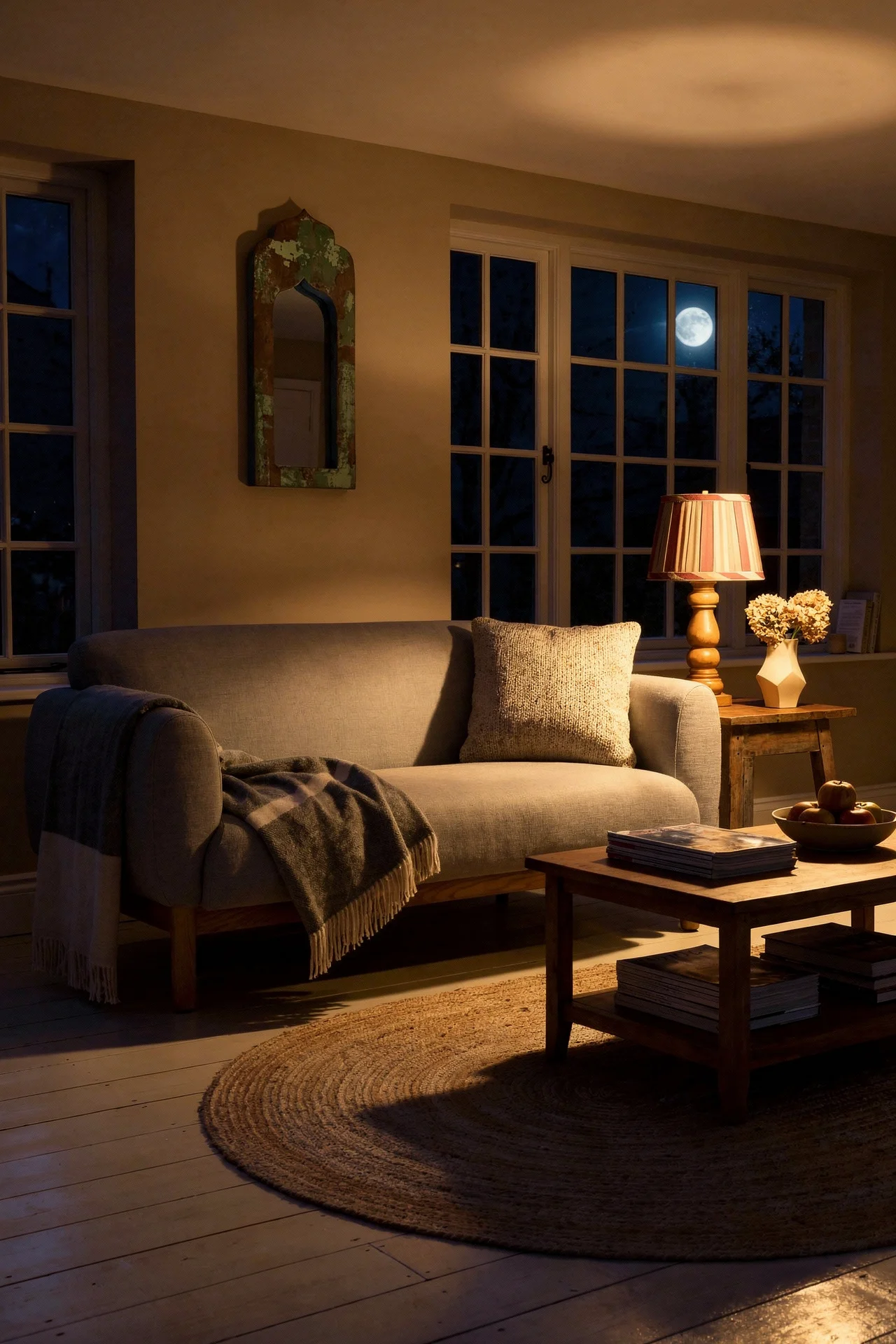
That effortlessness is the whole point. Everything else in this article follows from it.
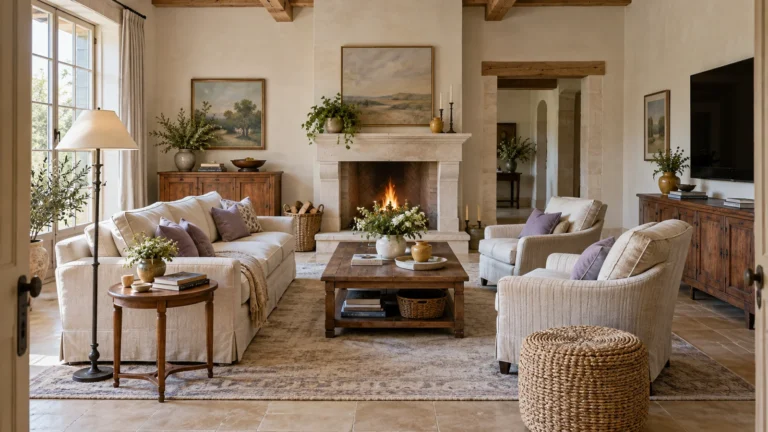
Every French cottage living room needs a gravitational centre. In almost every case, that is the fireplace.
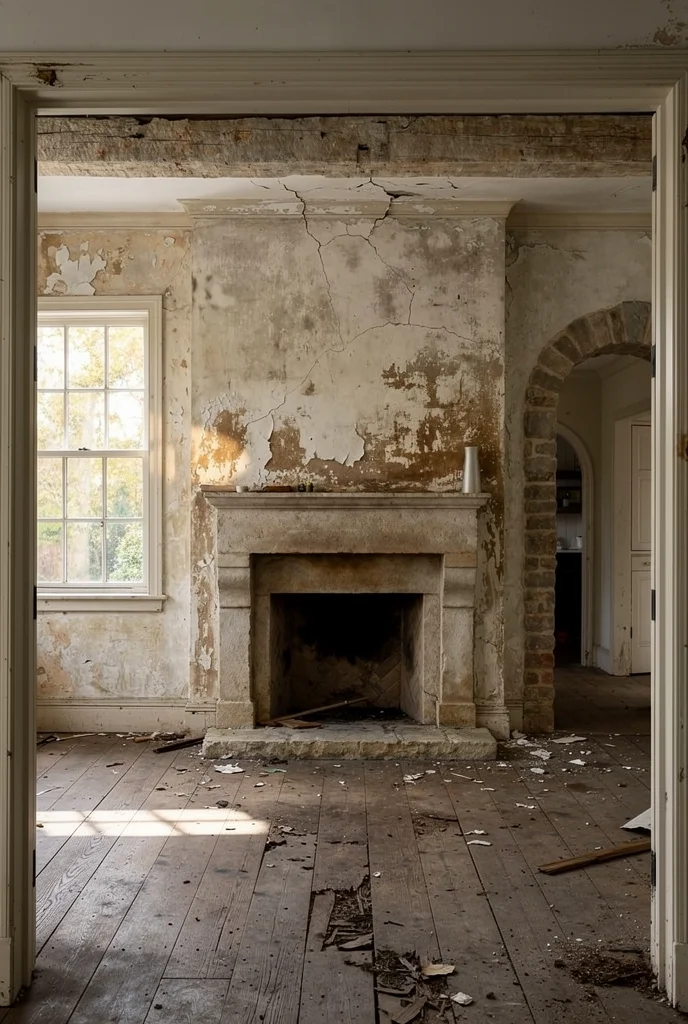
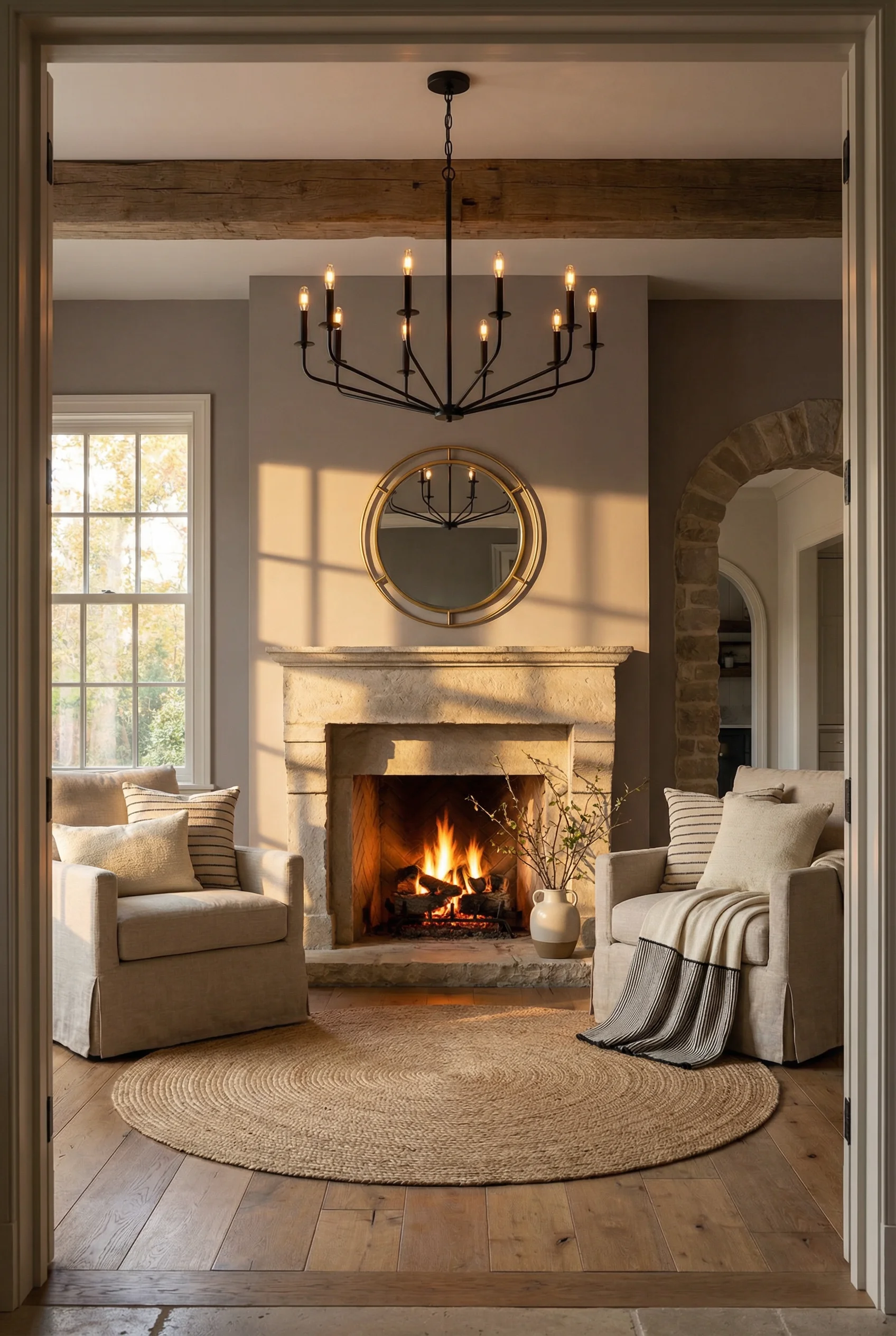
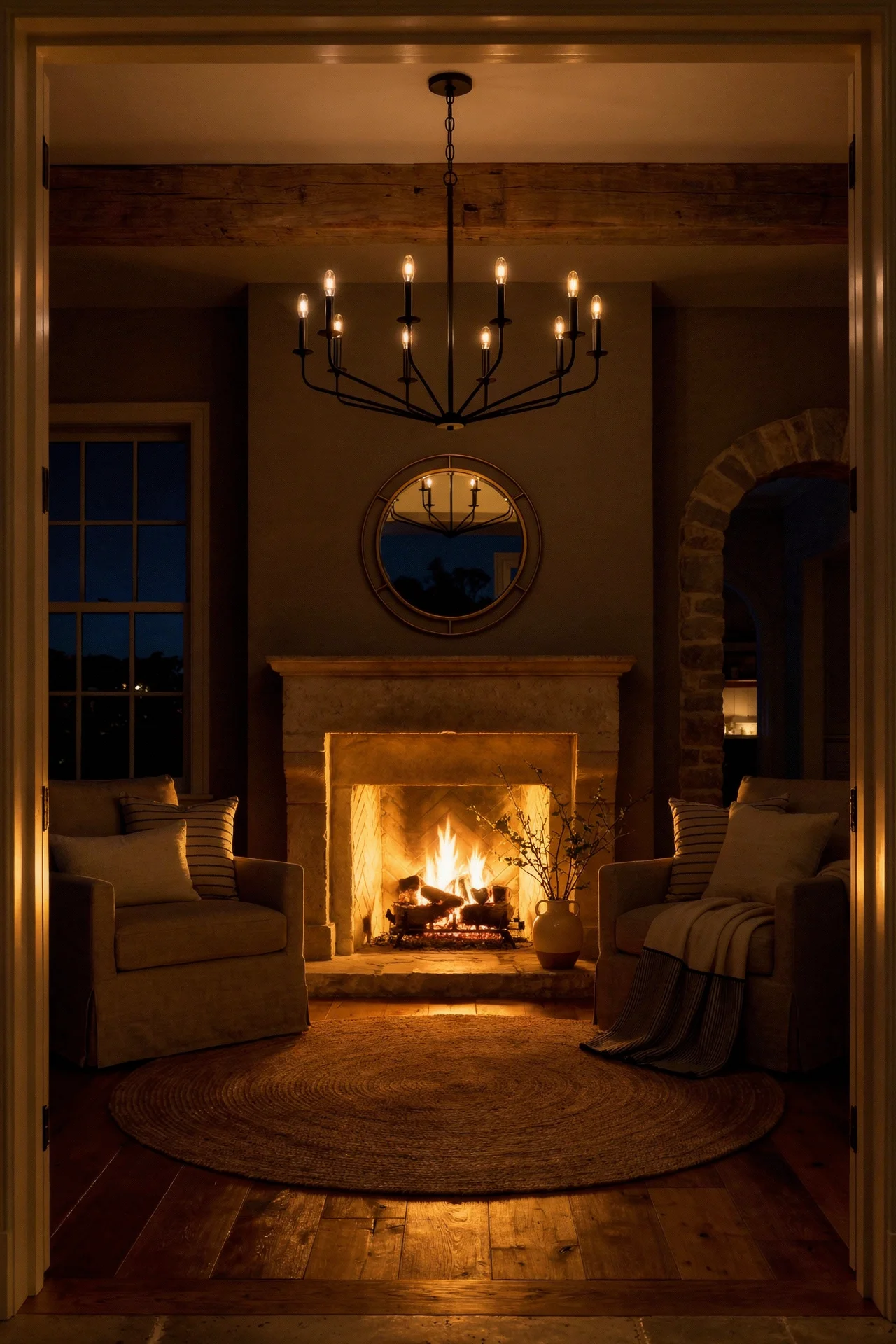
I would always choose stone over brick for the cottage look. Rough cut limestone or tumbled stone has a warmth that painted brick struggles to match. The mantel matters too. A reclaimed oak beam sitting on top of raw stone says cottage more clearly than any piece of furniture in the room. It sets the entire tone before you have placed a single chair.
The surround does not need to be grand. Some of the best cottage fireplaces I have seen are modest in scale. What makes them work is material honesty. Real stone with real texture. No veneer, no perfectly uniform edges.
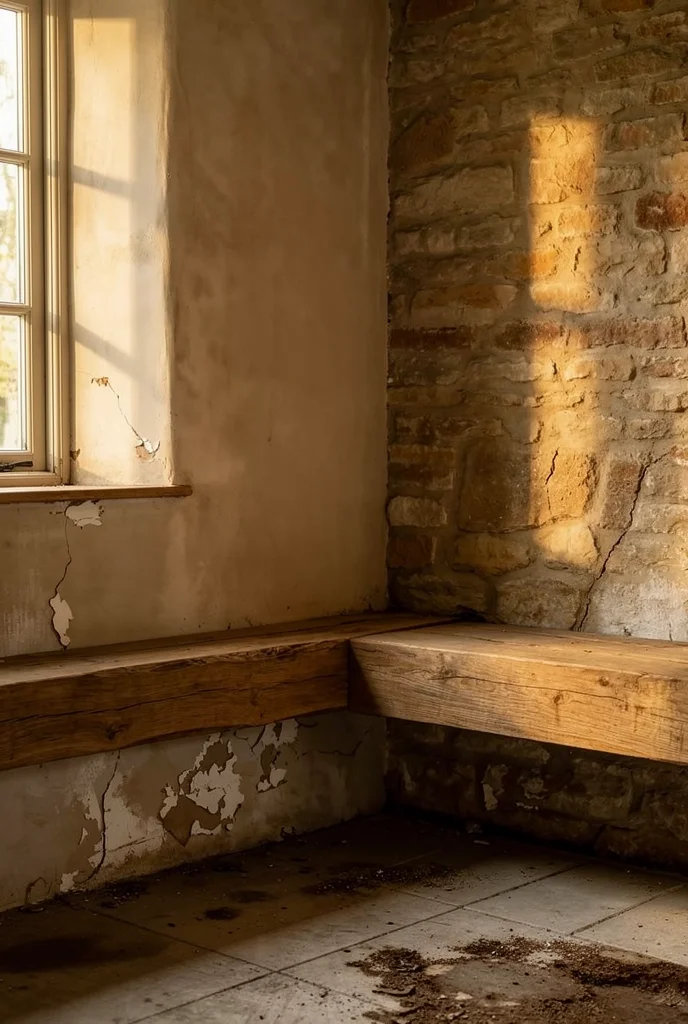
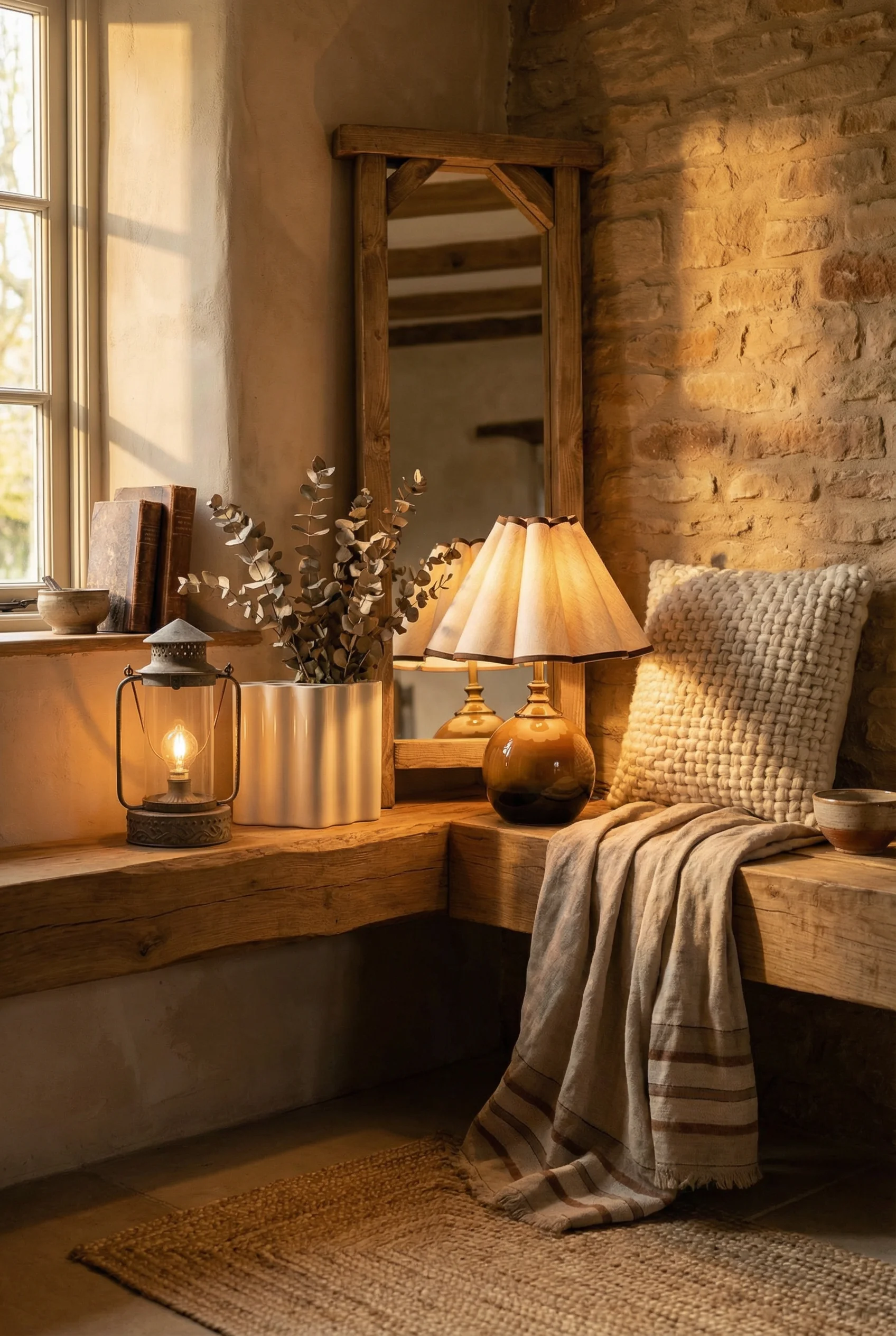
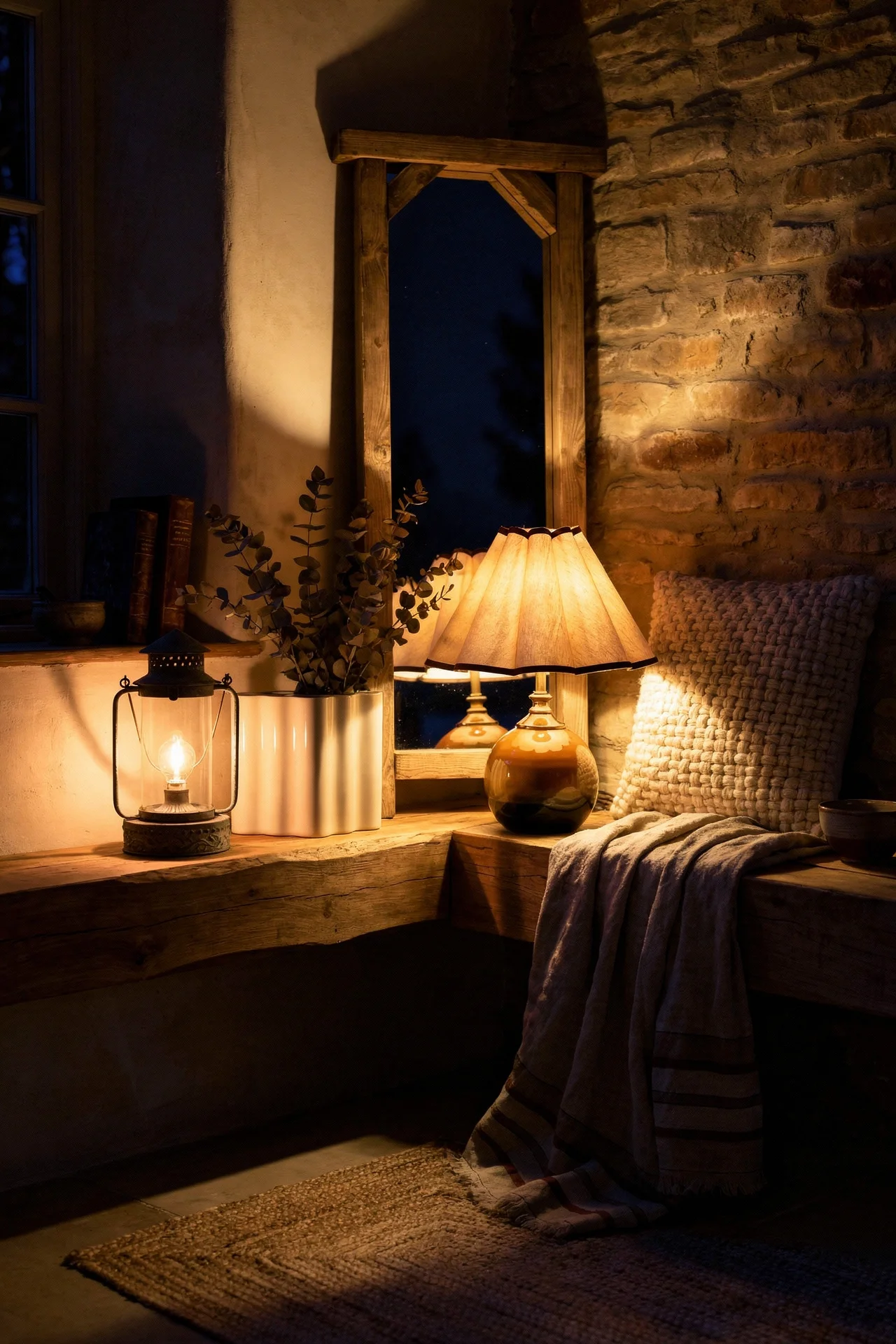
Mantel styling follows the same principle. A few collected objects, an old clock, a pair of candlesticks that do not match, a small landscape painting leaning rather than hung. The moment it looks curated, it stops feeling like a cottage.
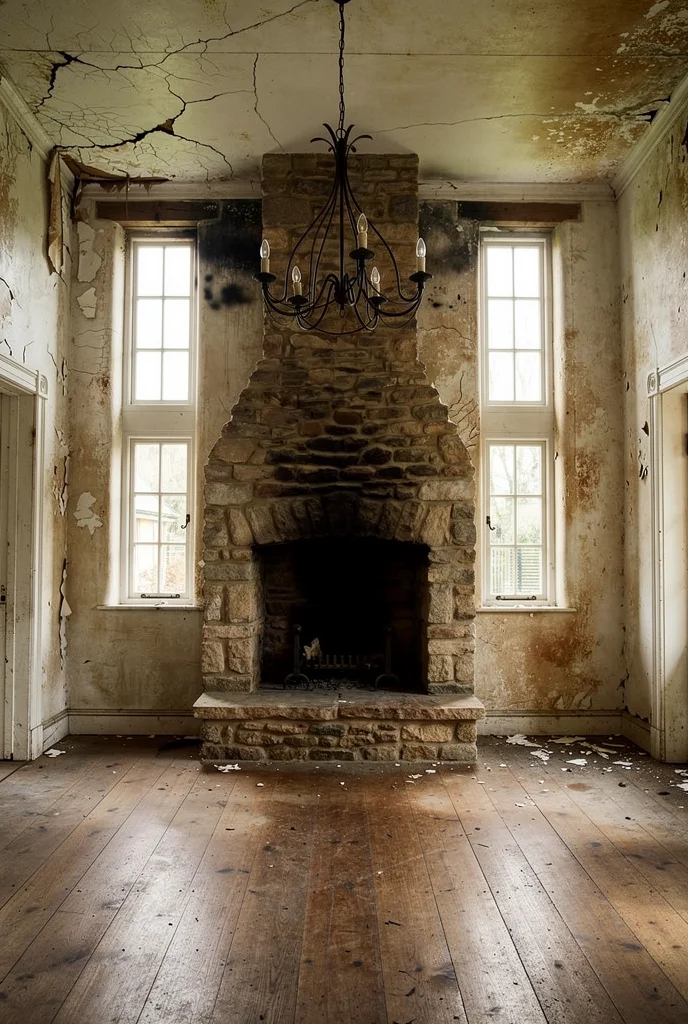
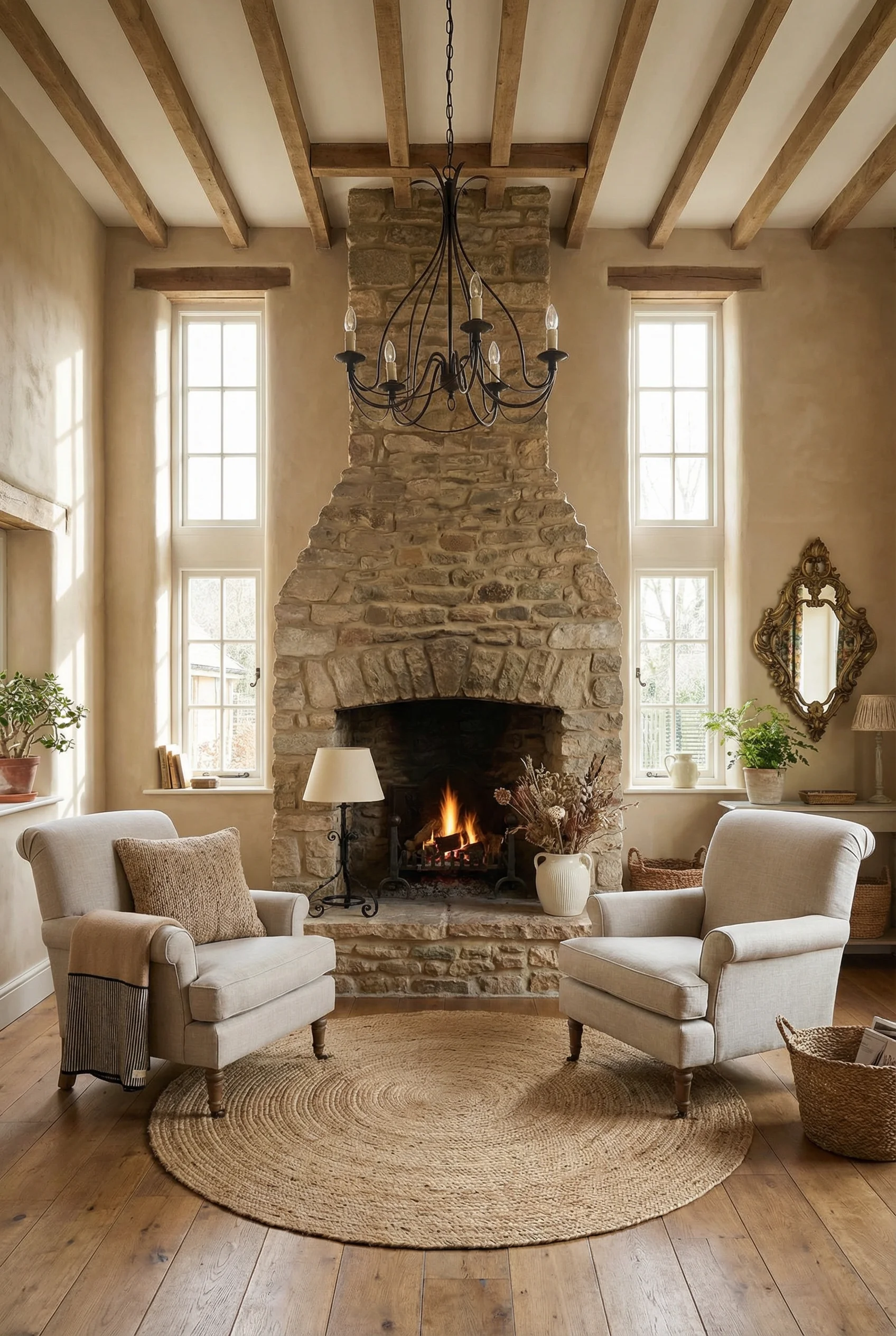
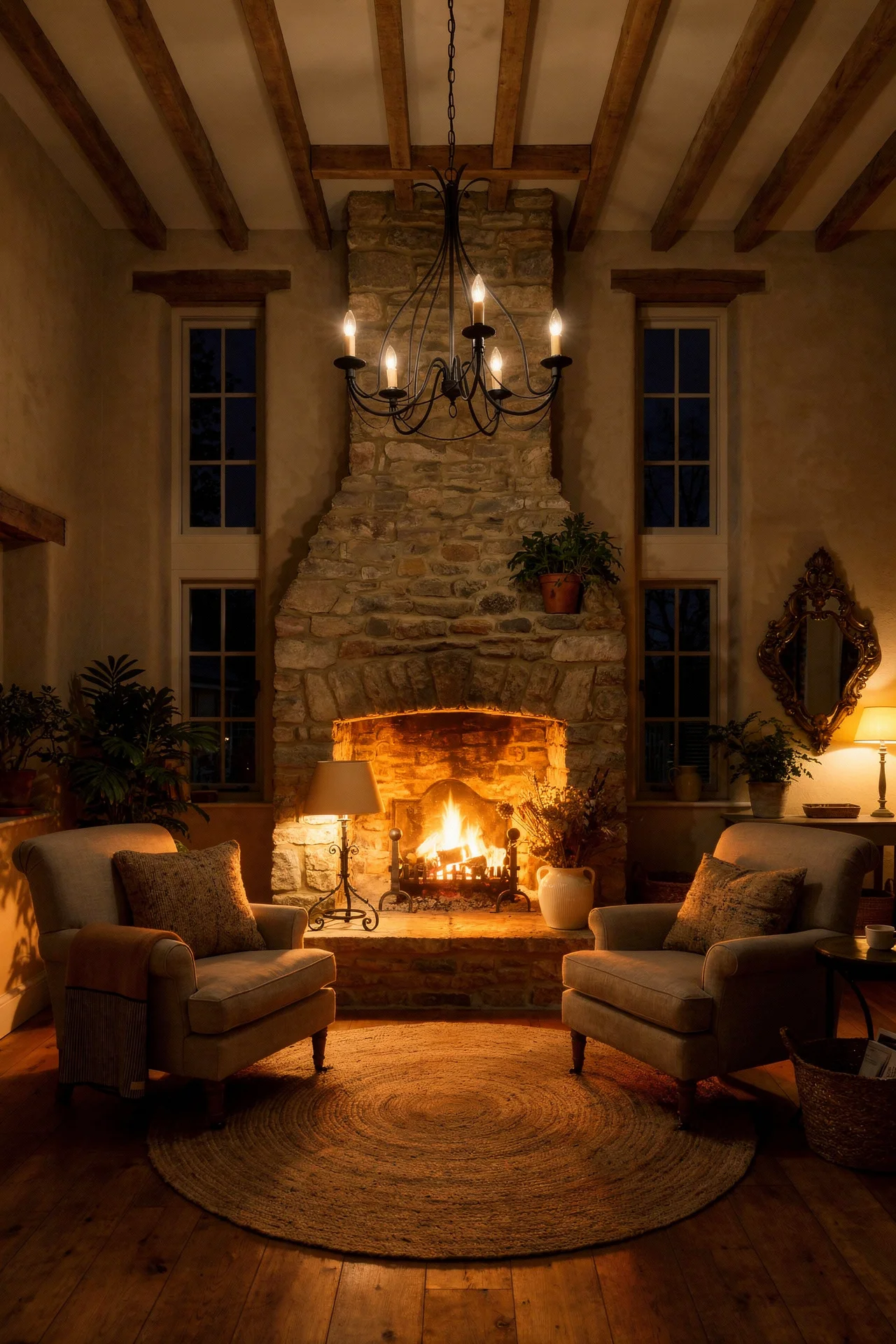
If your home does not have a fireplace, a large stone console or a substantial antique mirror can serve as the anchor point. The room needs somewhere for the eye to rest.
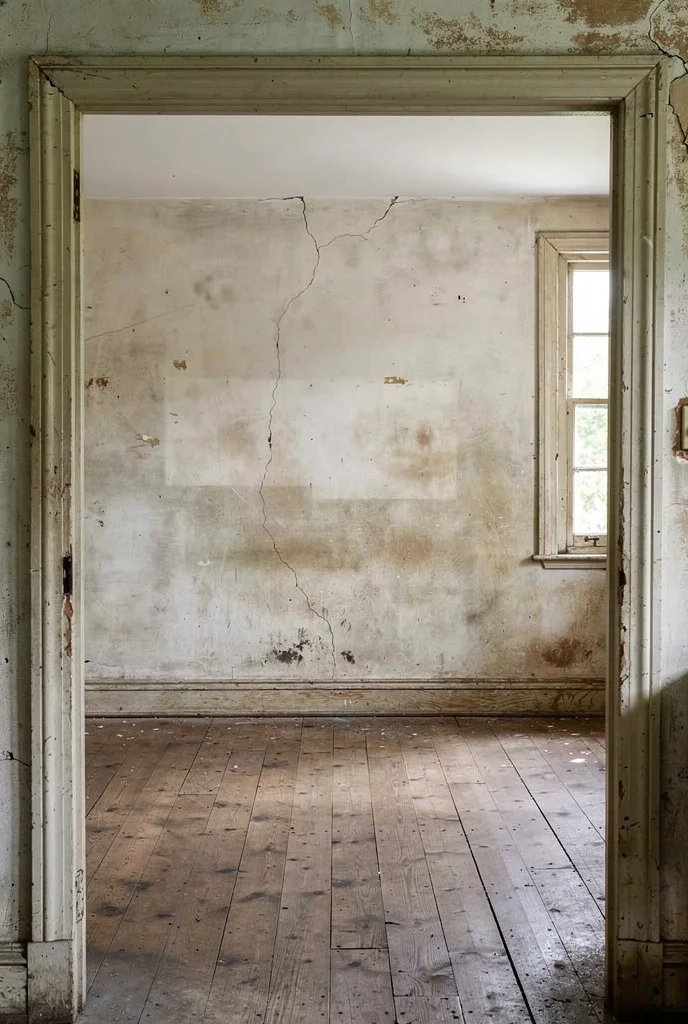
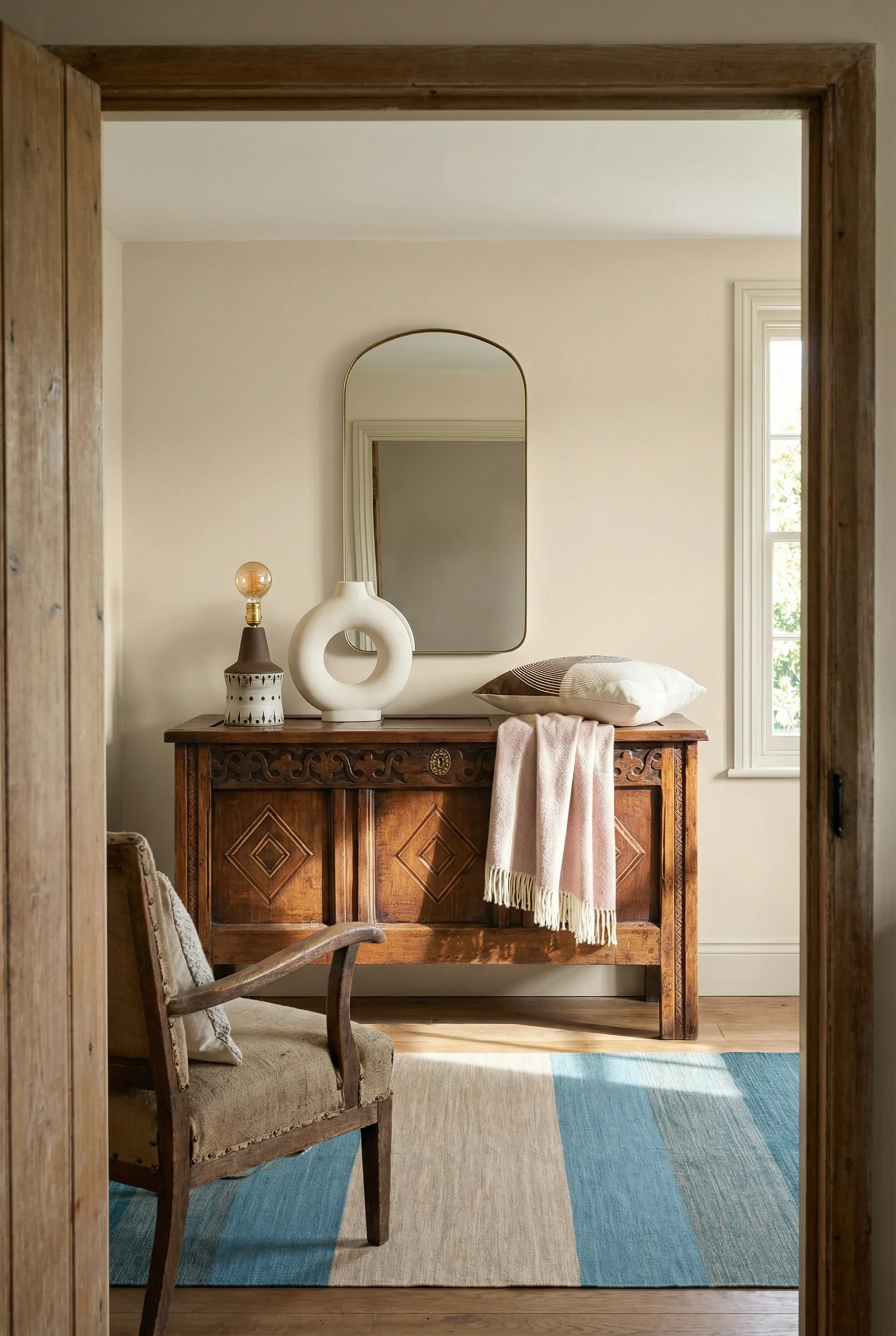
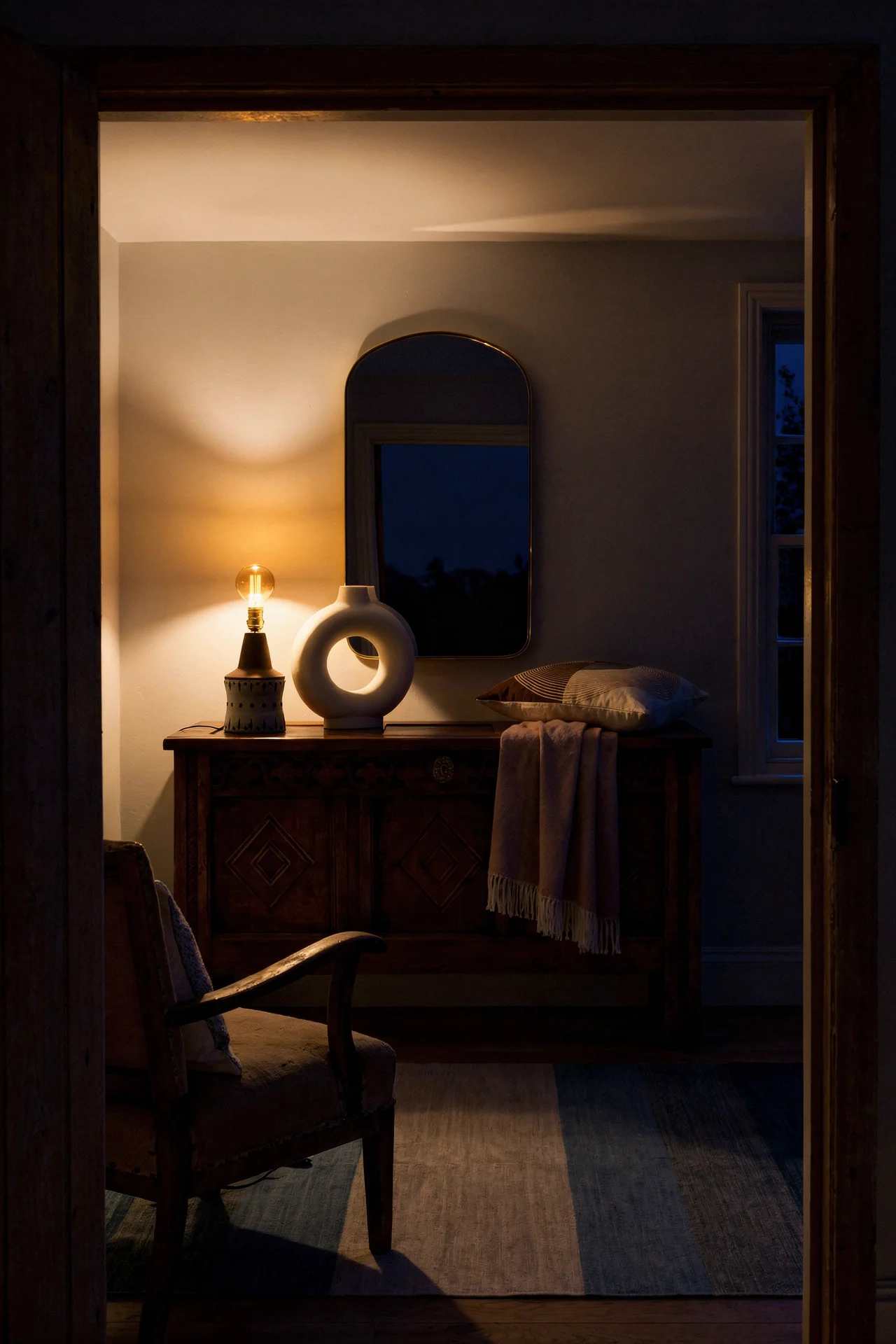
The worst thing you can do in a French cottage living room is buy a matching furniture set.
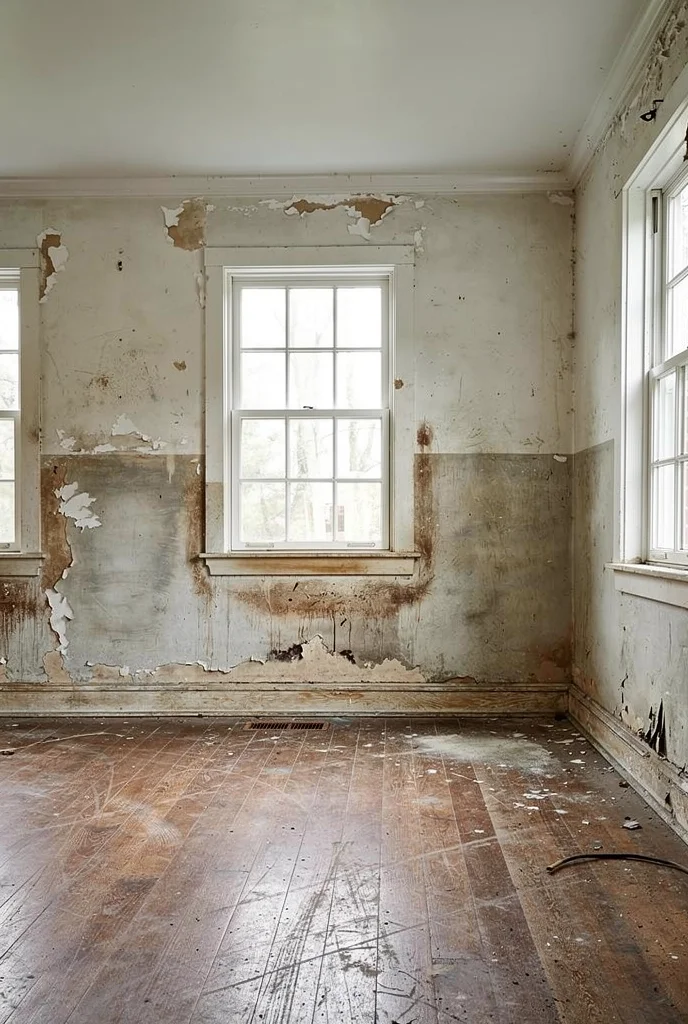
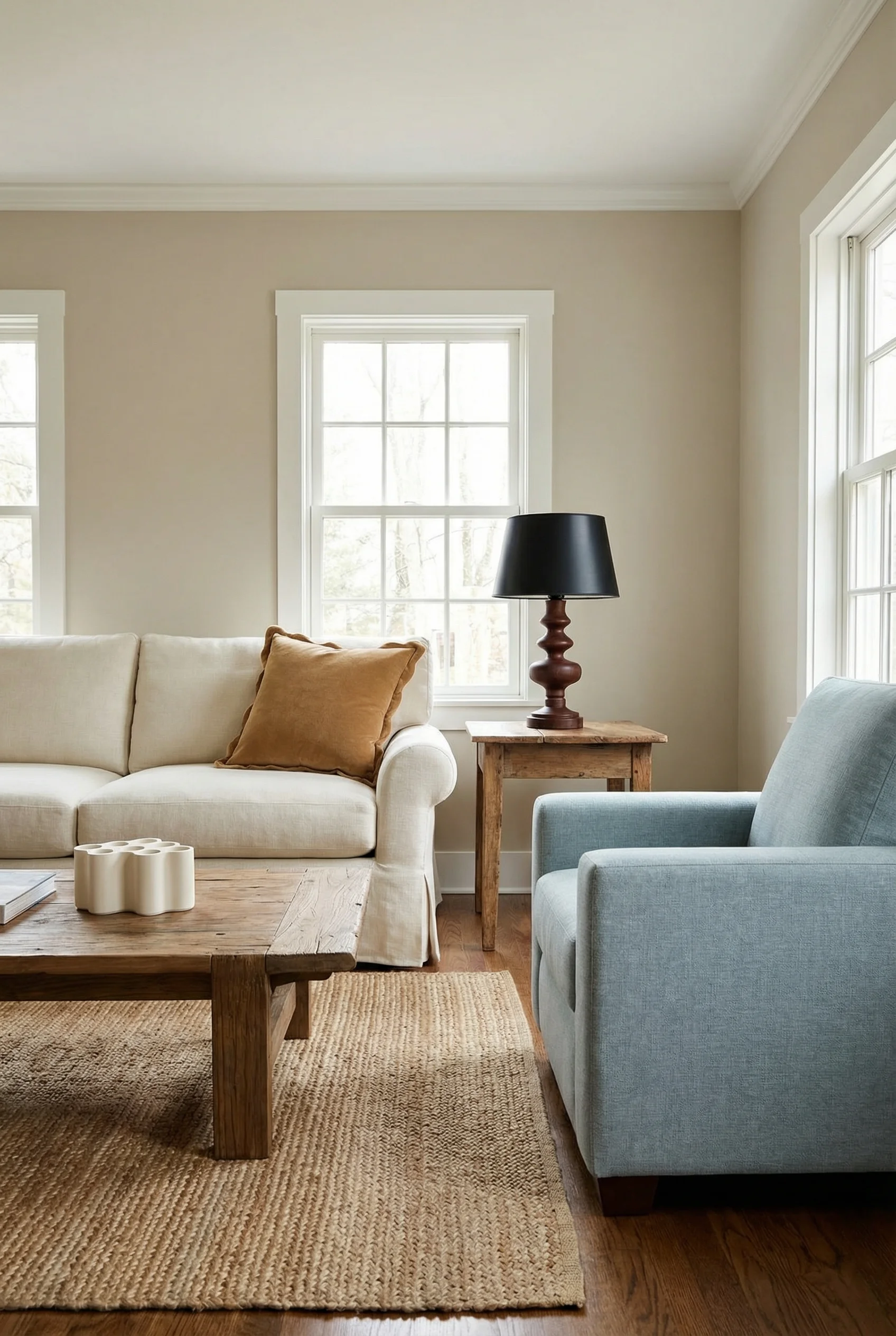
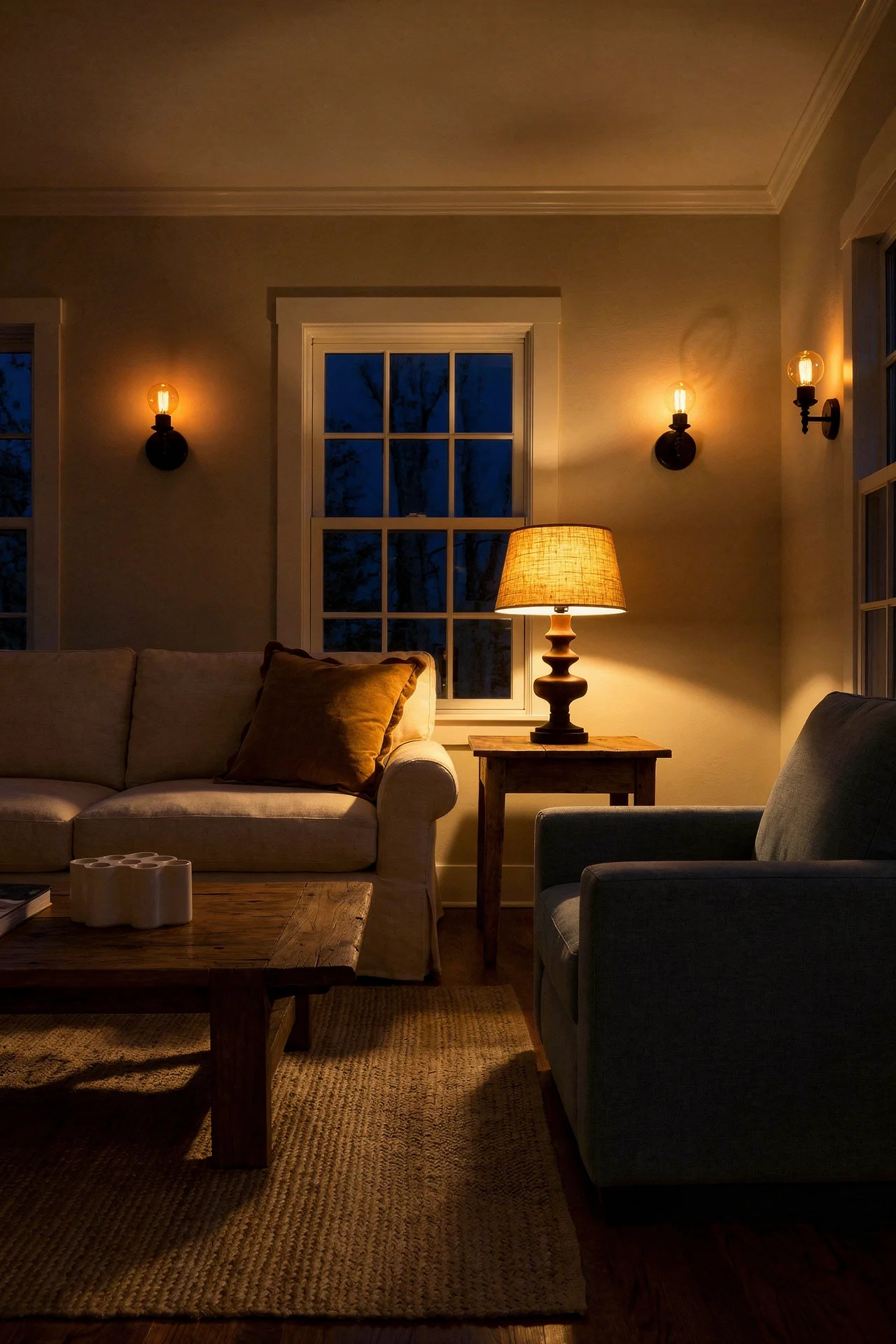
I think the linen slipcovered sofa is the single most important piece. It should look relaxed, slightly wrinkled, and comfortable enough to fall asleep on. Pair it with a bergere chair for deeper seating, one with closed upholstered panels and a loose cushion that practically swallows you. Or go for a fauteuil if you want something lighter and more elegant with its open sides.
For the coffee table, I would look at distressed solid wood or a repurposed trunk. Something you would not worry about putting your feet on. An old farm table cut down works brilliantly. And for storage, a large weathered armoire is hard to beat. It brings vertical scale and hides whatever you need to hide.
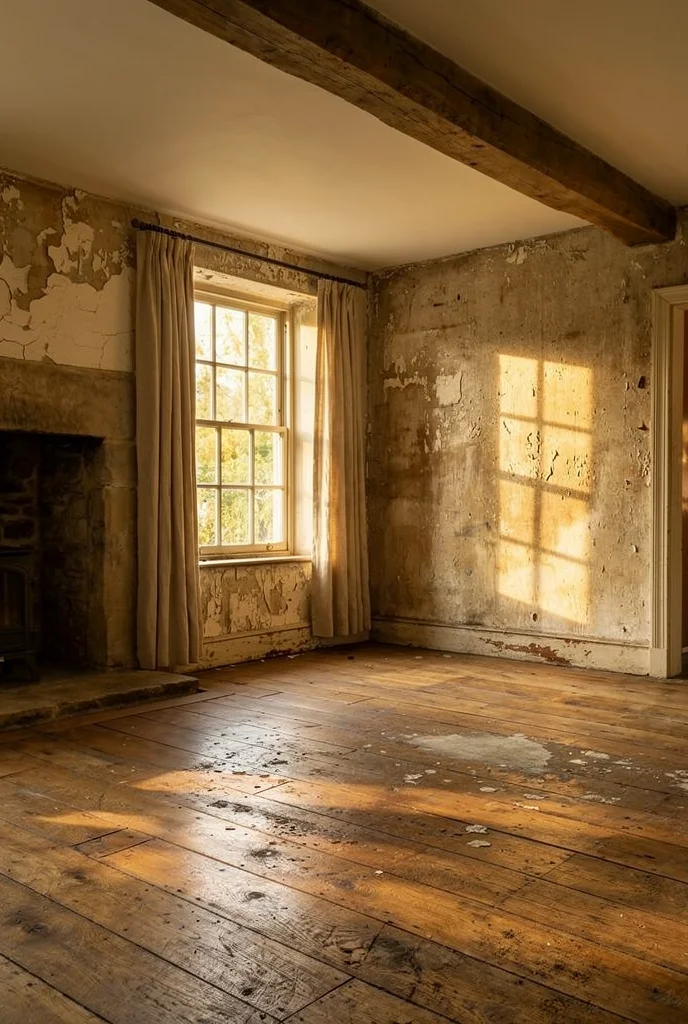
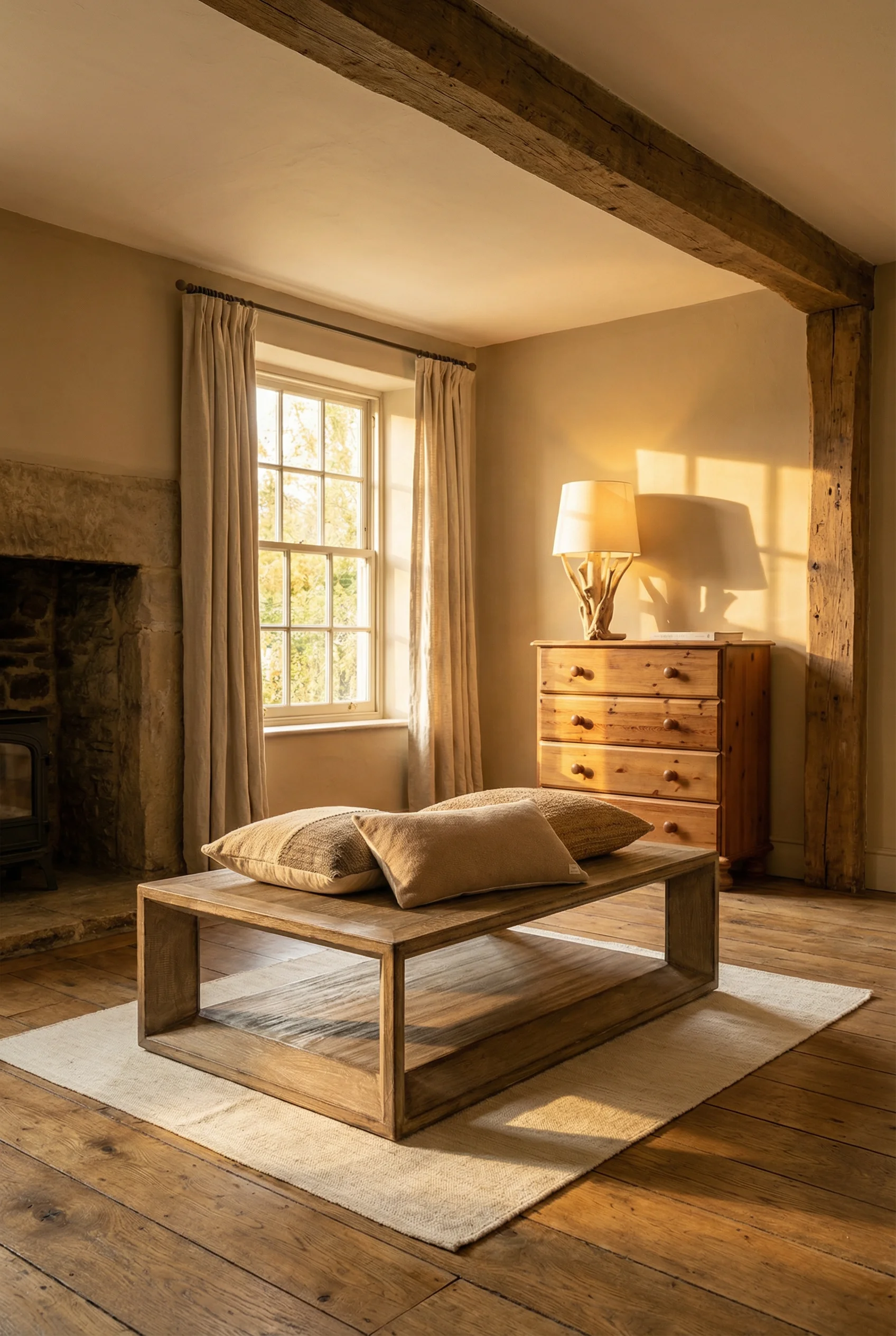
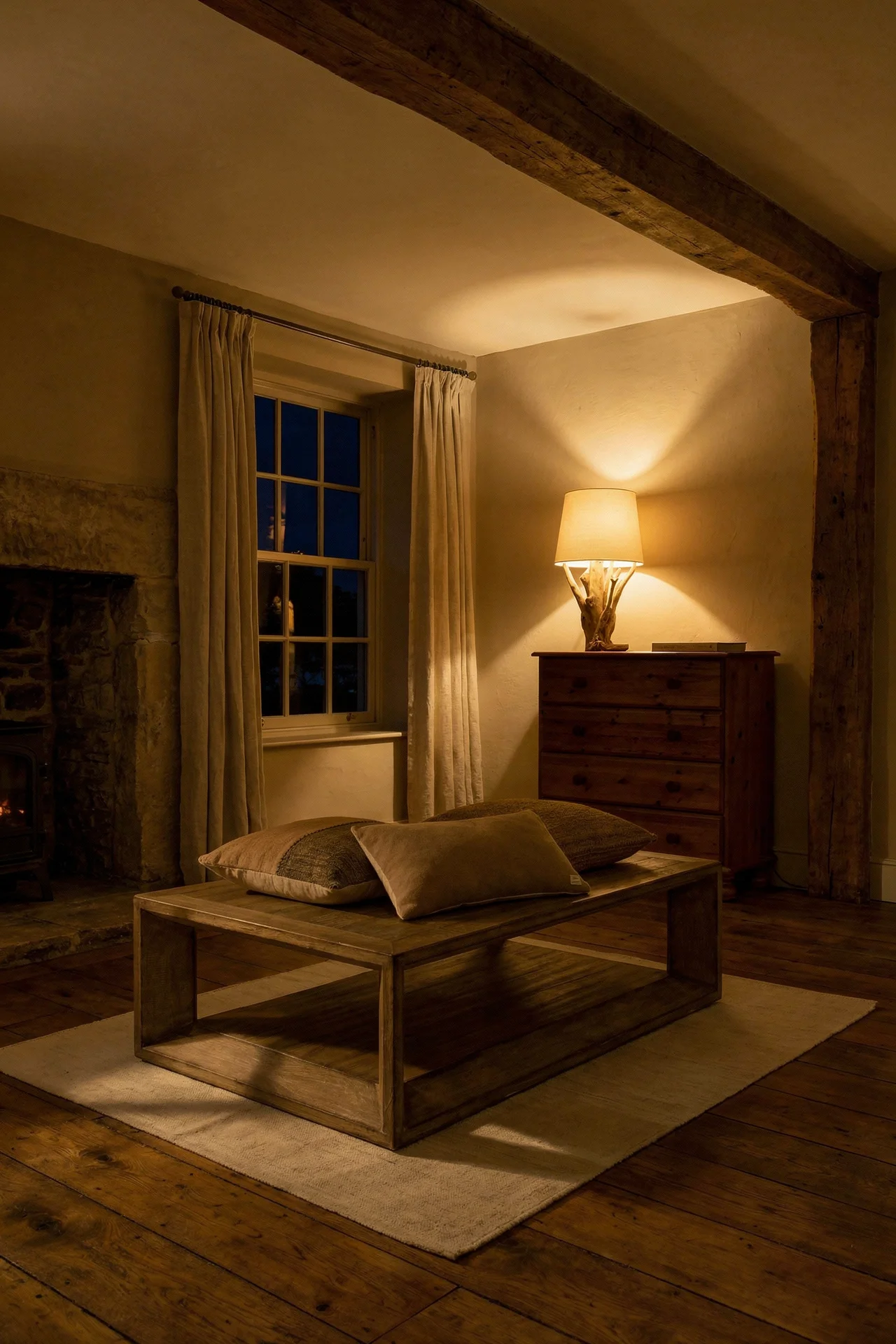
The paint finishes are where things get interesting. Milk paint and chalk paint create that genuine chipped look where warm wood shows through layers of soft white or pale blue. The technique is sometimes called “wax resist,” where you rub wax on edges and carvings before painting, then sand back to reveal the wood underneath. It mimics a century of natural wear in an afternoon.
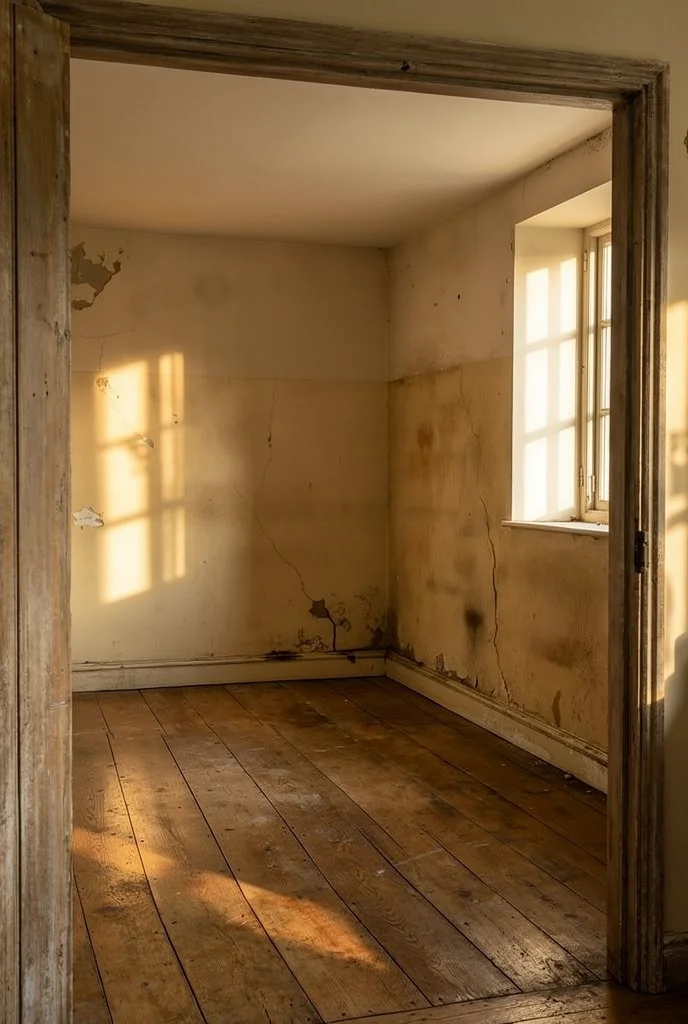
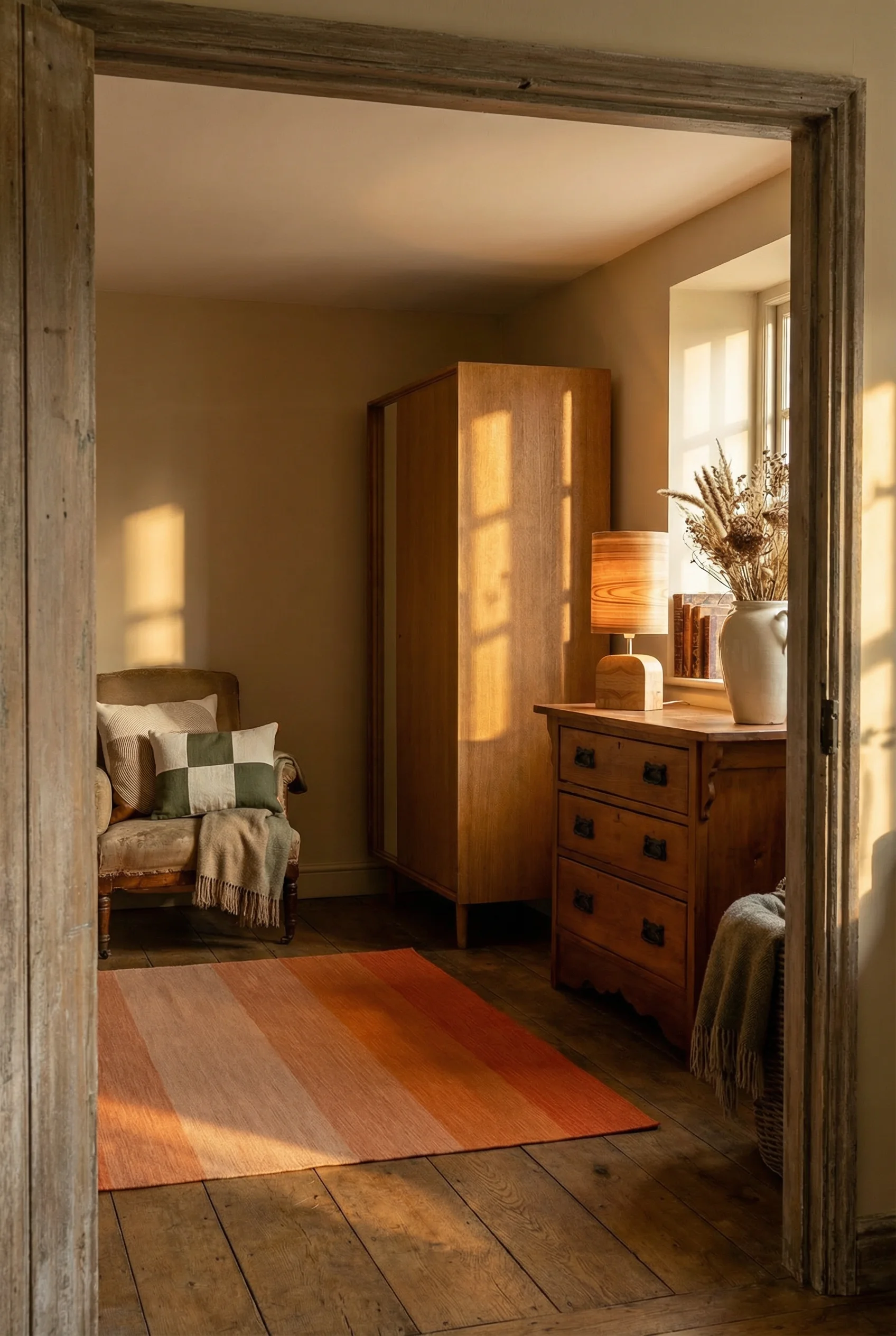
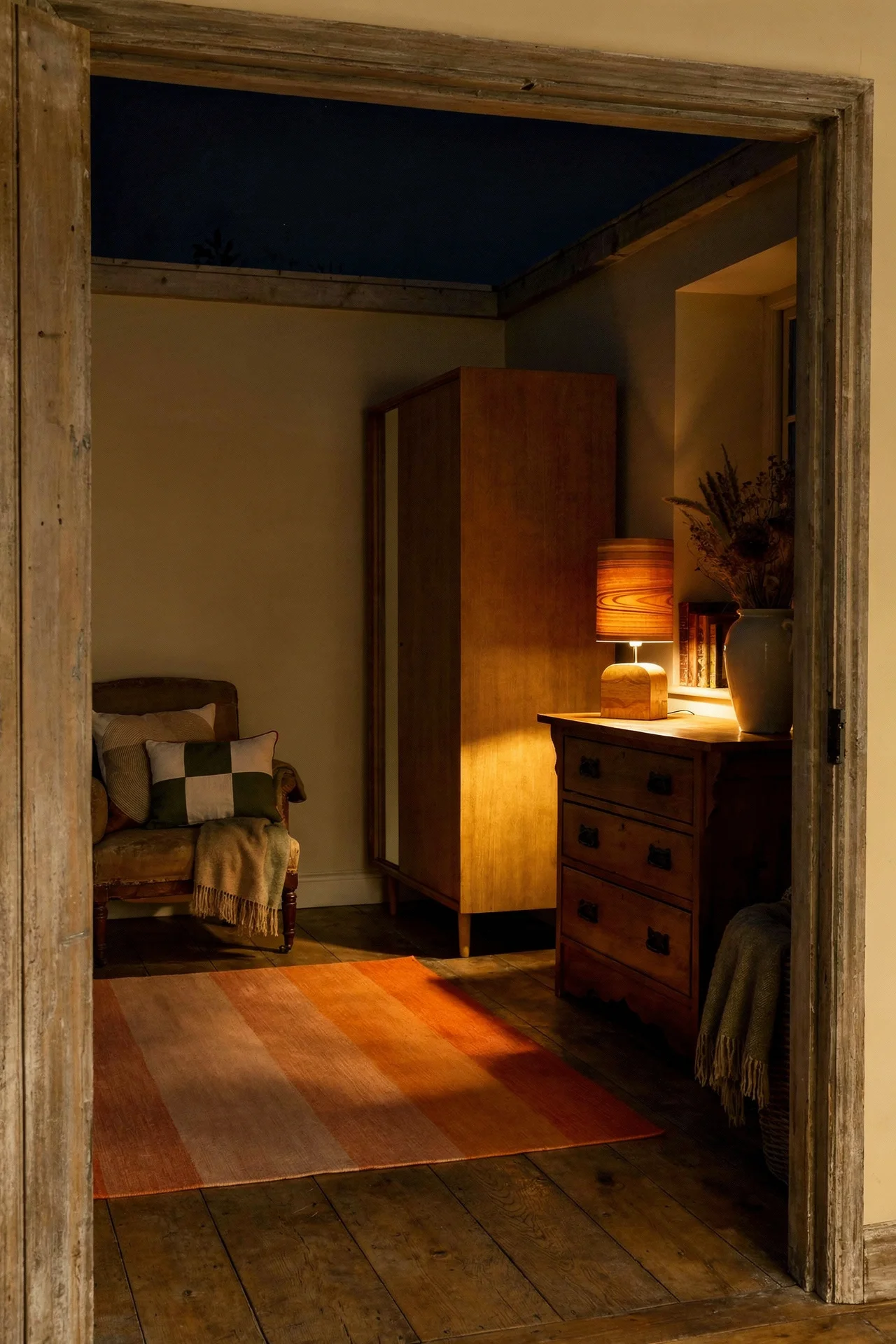
When nothing in the room matches but everything belongs together, you have found the right balance.
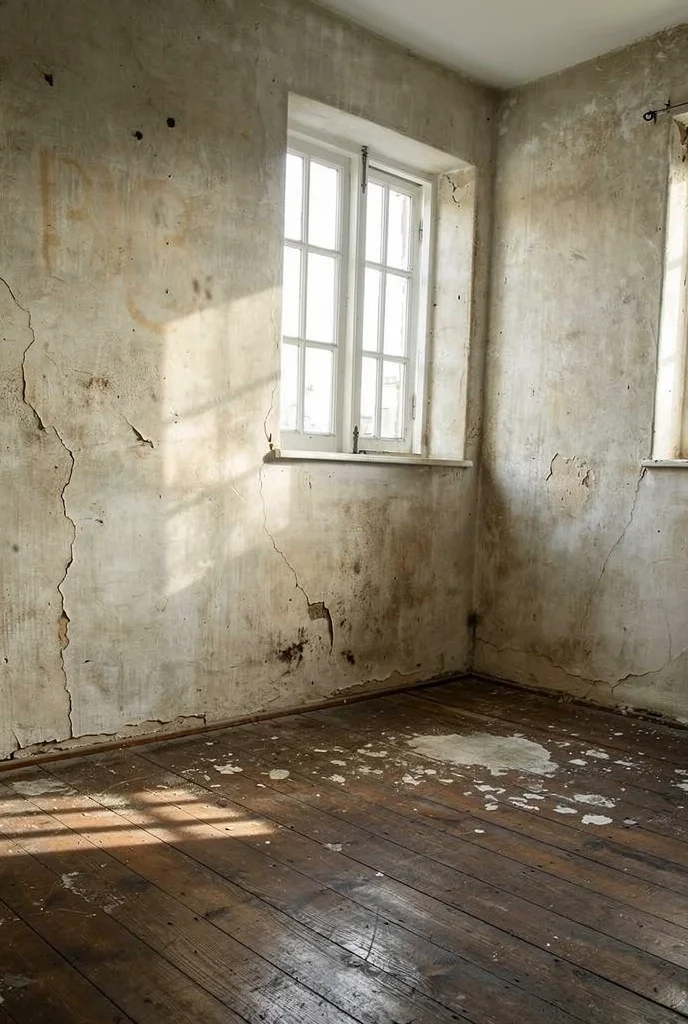
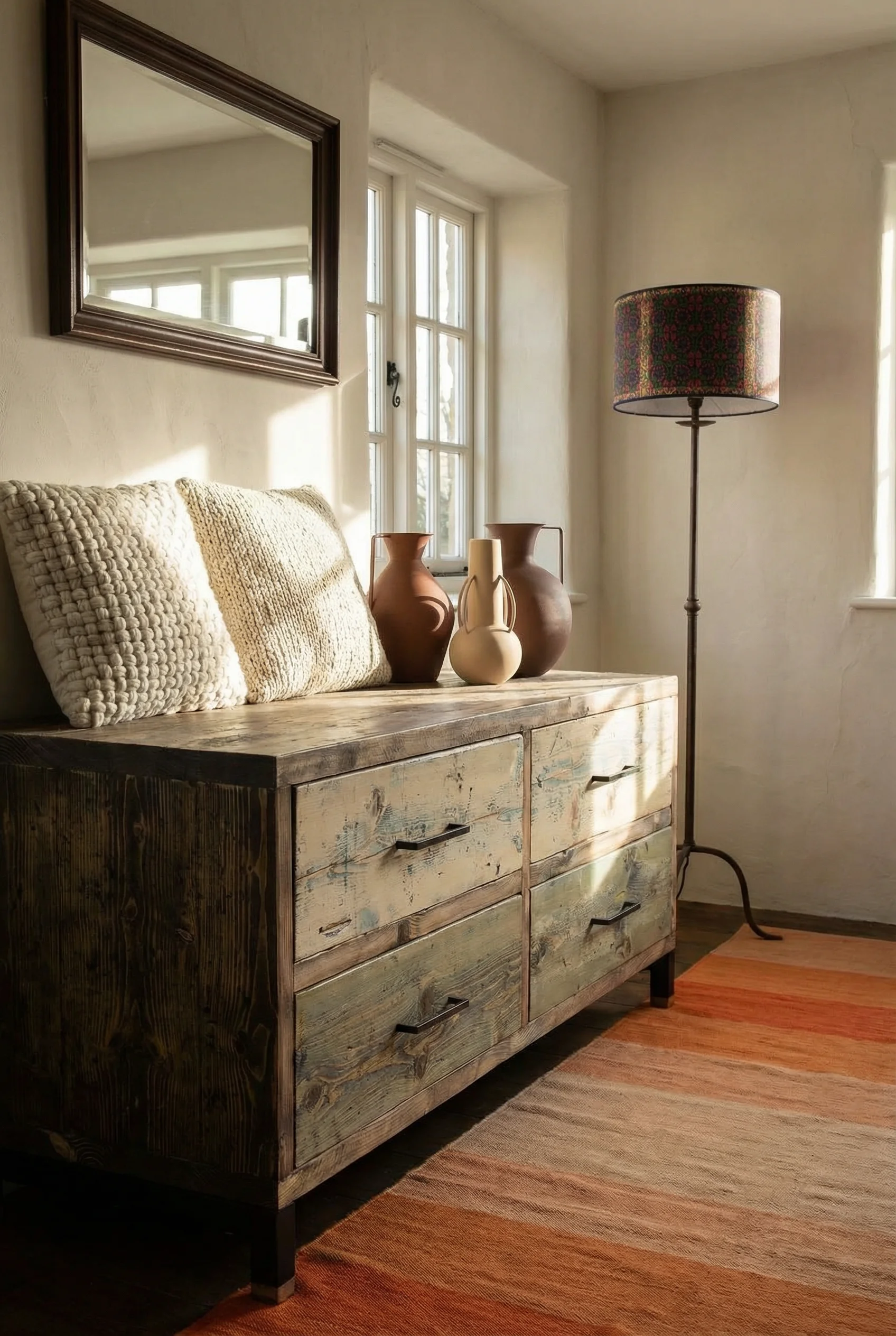
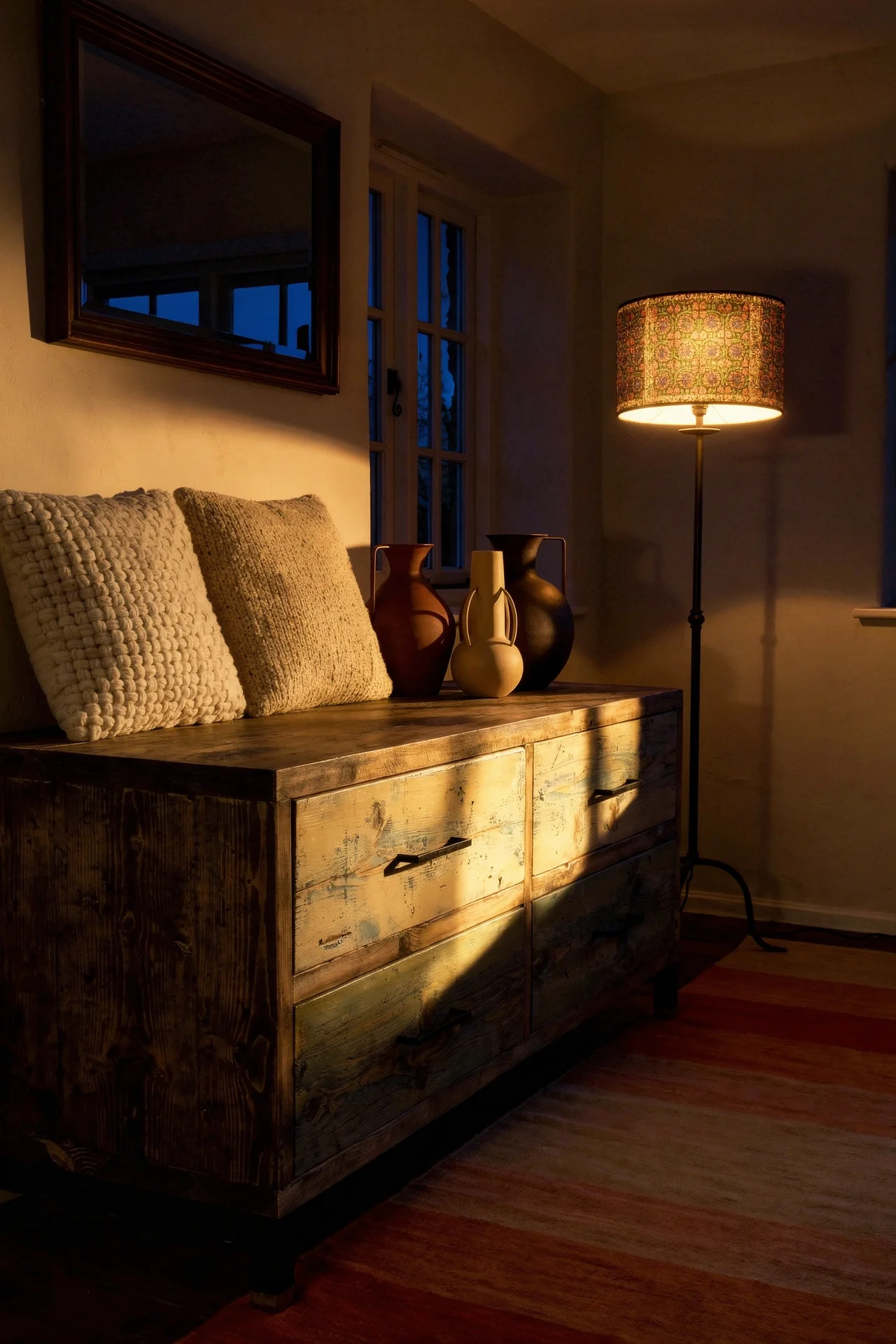
French cottage style is as much about how a room feels under your hands as how it looks.
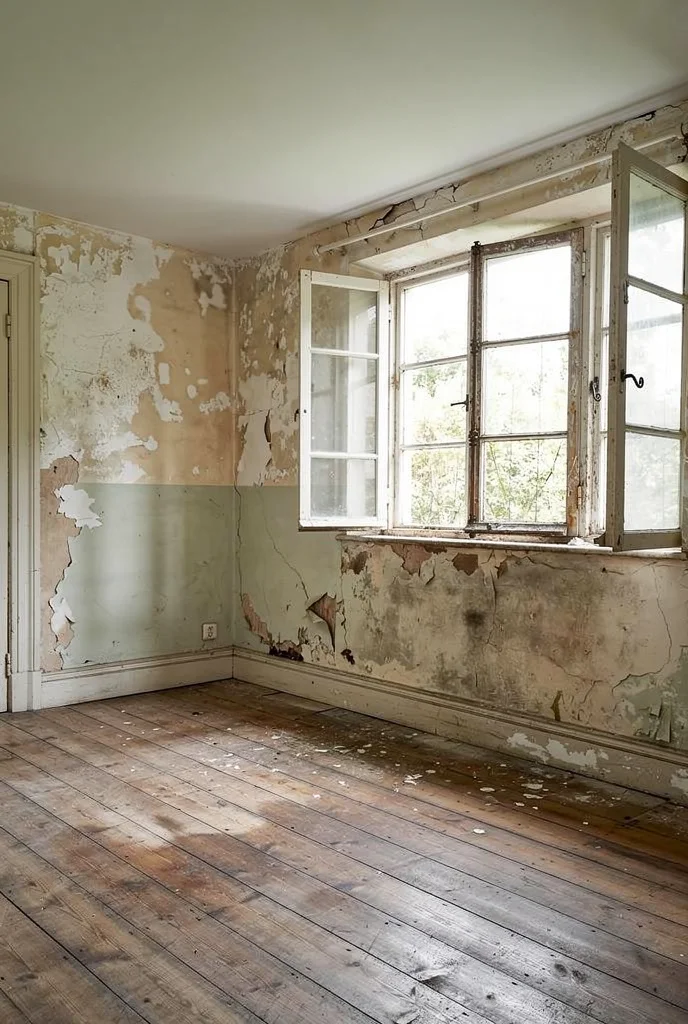
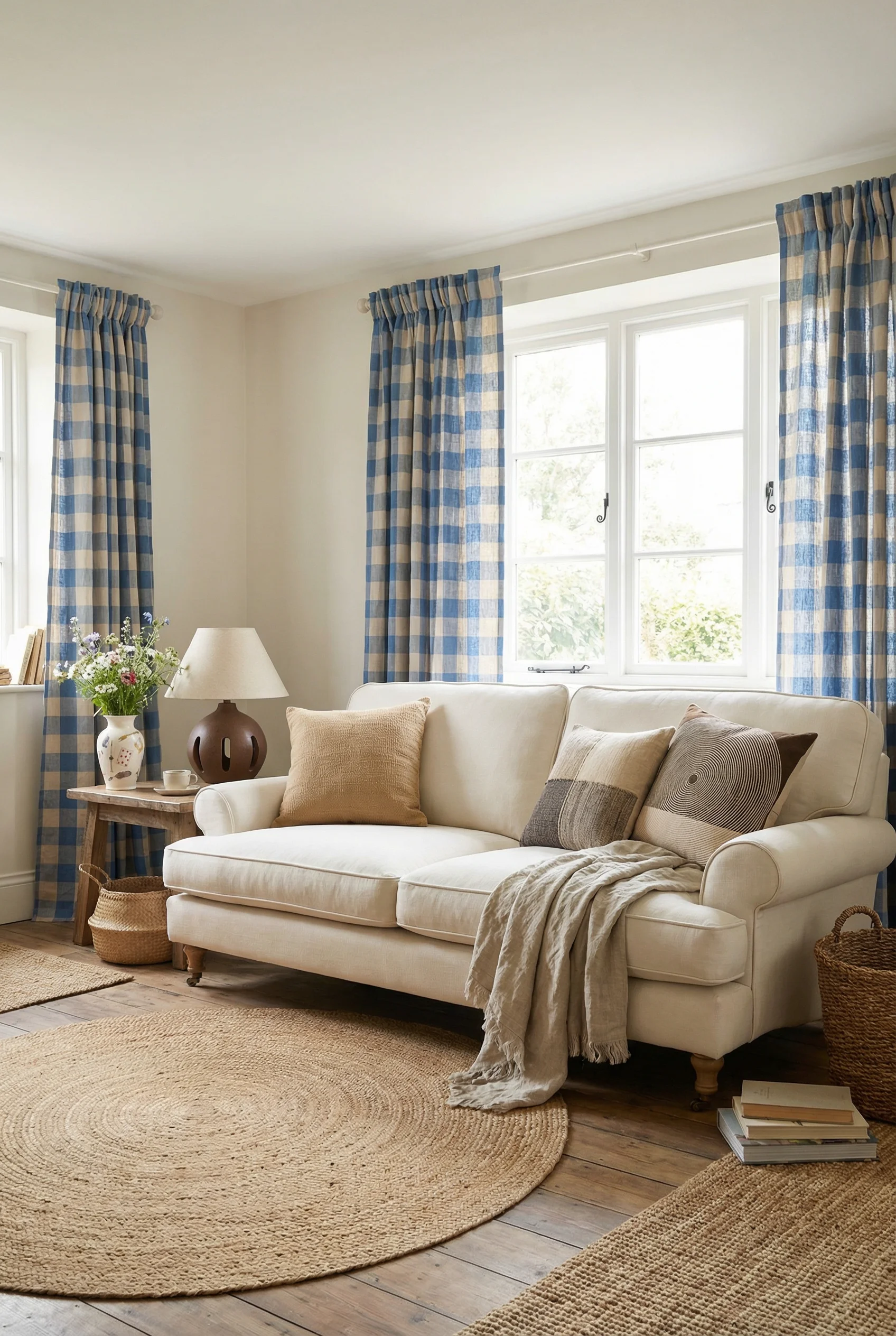
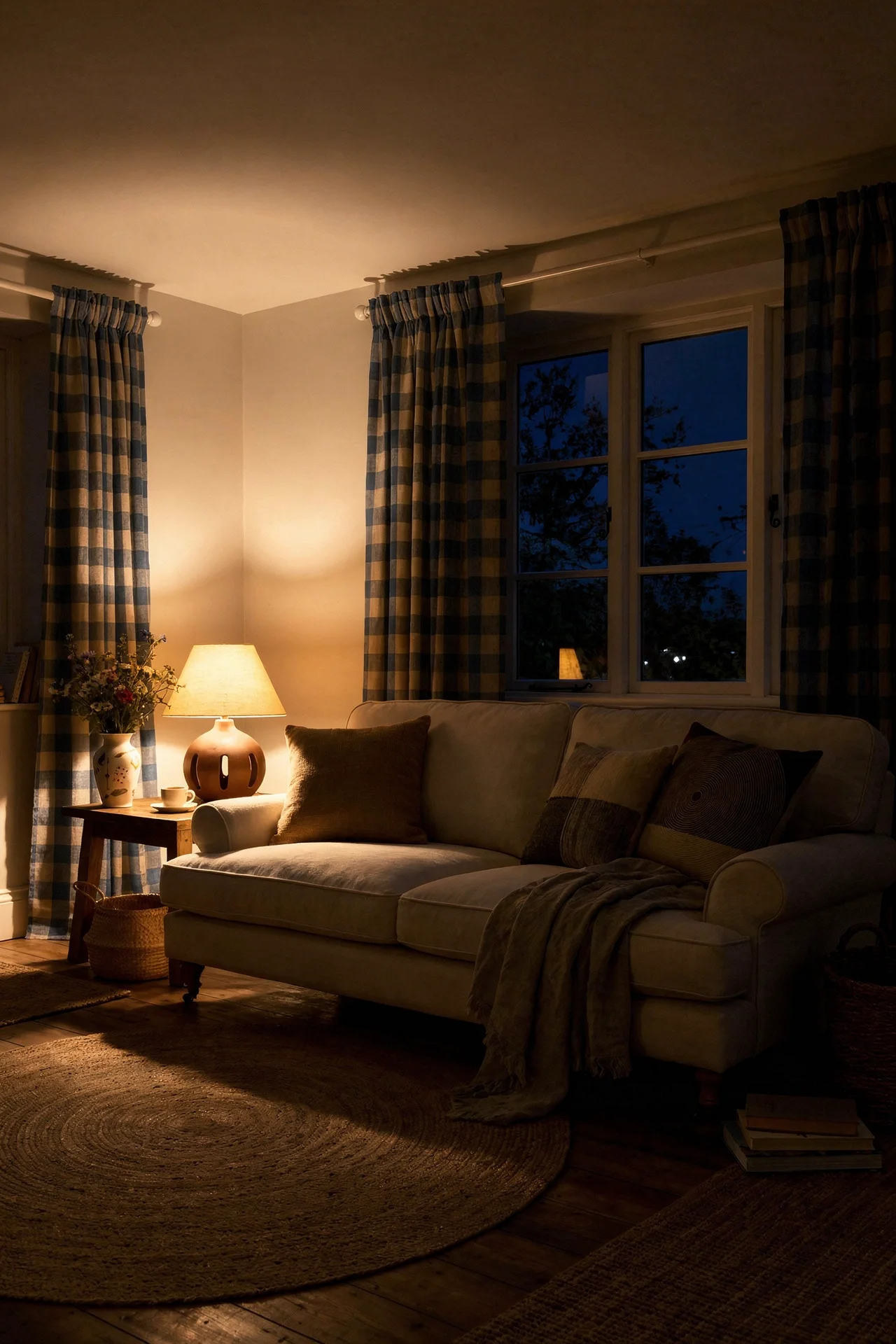
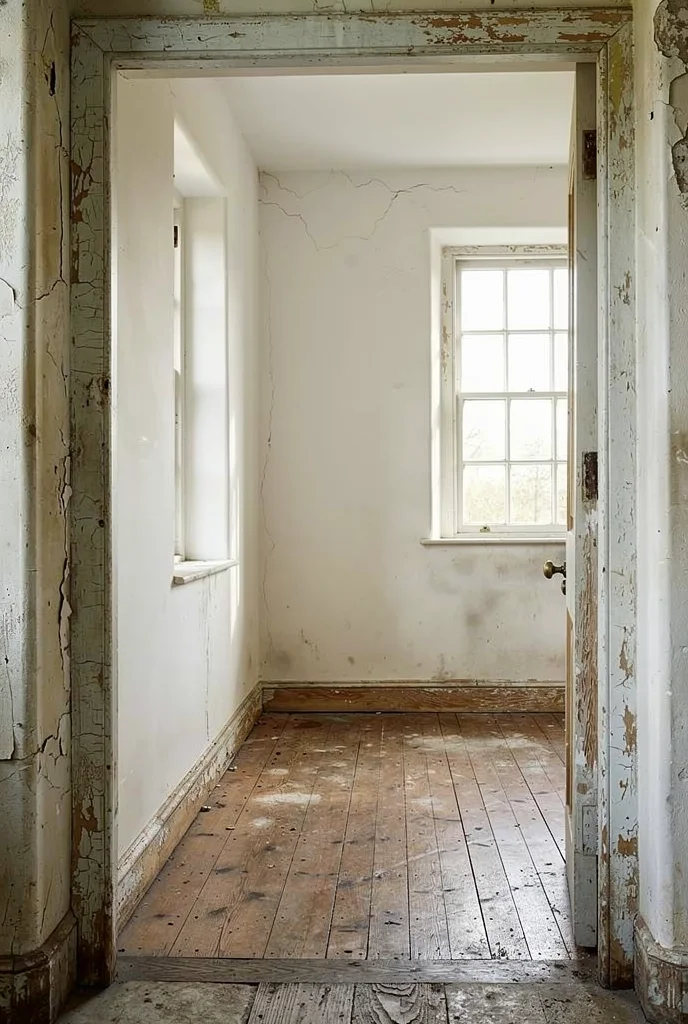
Linen is the foundation. I would put it on everything. Curtains that filter light without blocking it. Sofa covers that soften with every wash. Throw pillows in natural, undyed tones. Cotton and wool layer on top, and heavier tickings add structure. The fabrics should look like they have been washed a hundred times, slightly crumpled, never pressed.
The real magic happens when you contrast soft with rough. A smooth linen curtain falling next to a raw wooden shutter. A leather accent chair sitting on a woven jute rug. A glazed ceramic lamp on a stone ledge.
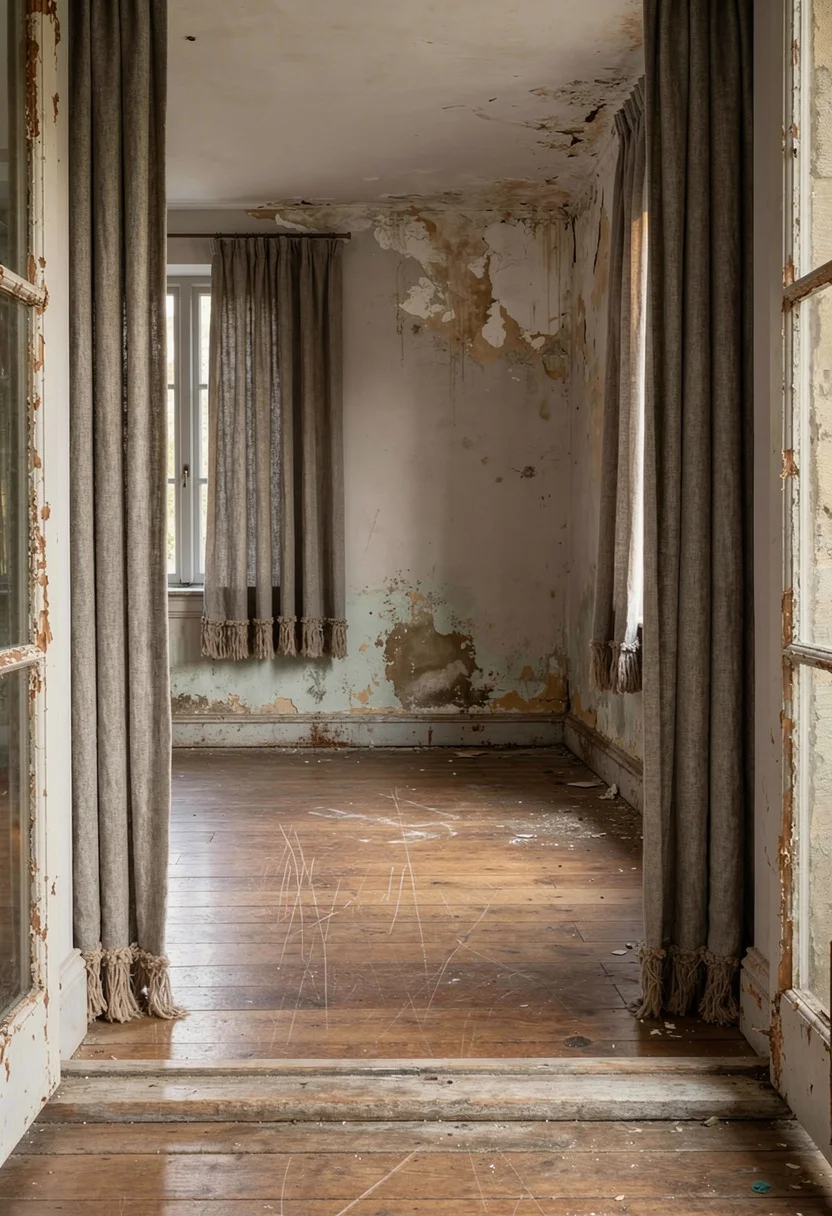
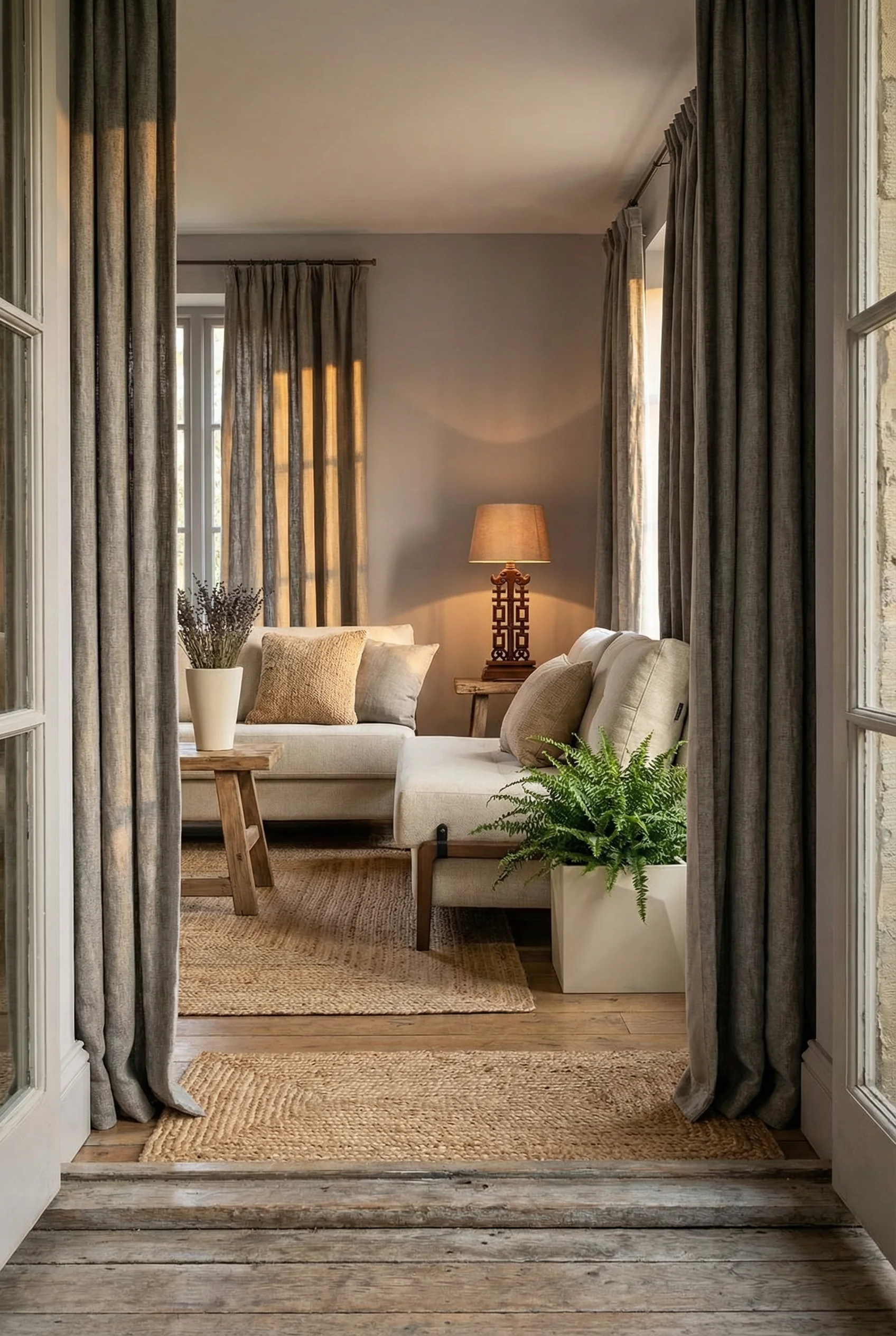
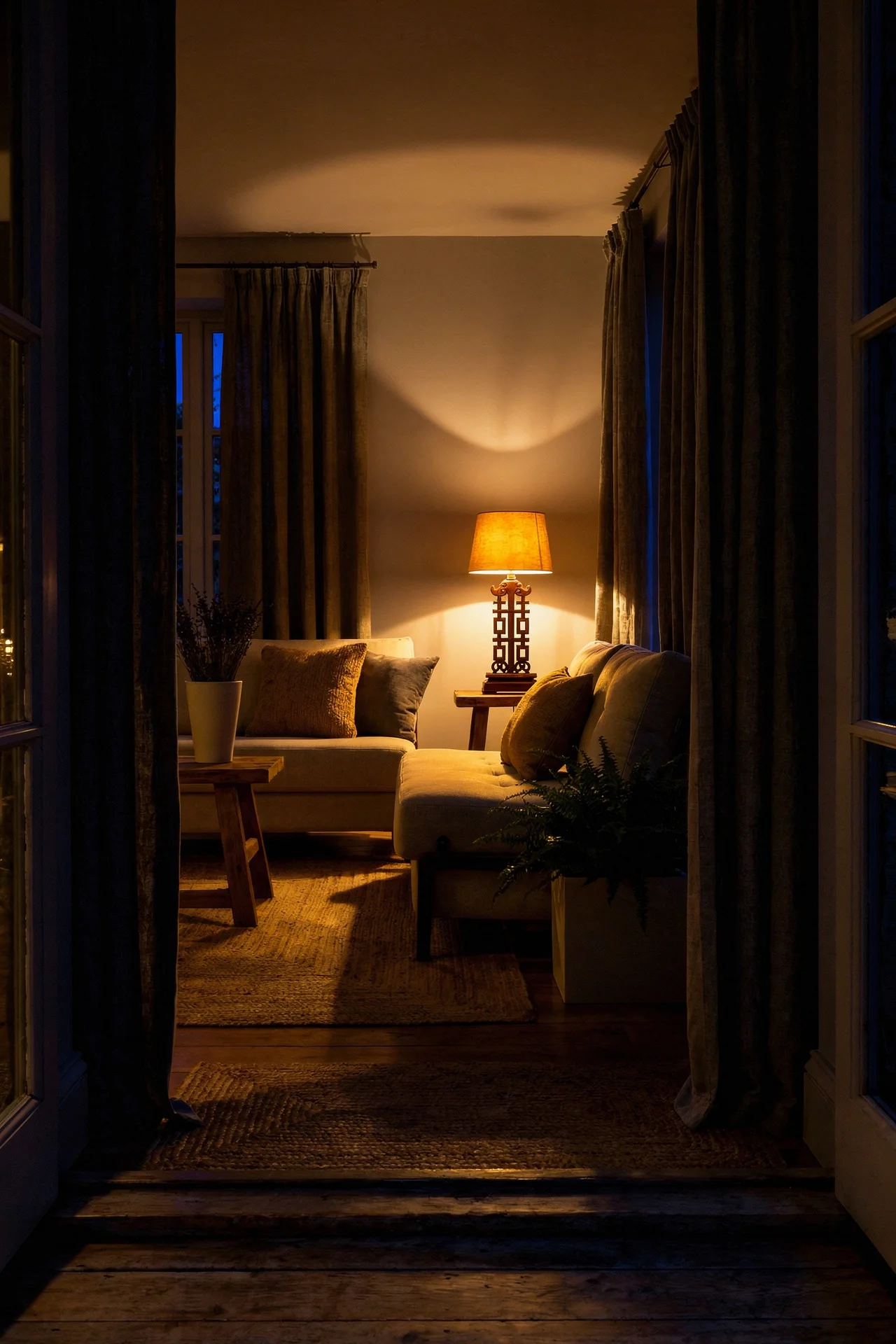
Underfoot, natural fibre rugs are essential. Jute and sisal add that rough, grounding texture. Layer a faded vintage wool rug on top for warmth and pattern. The layering of floor coverings is one of the most effective ways to build the cottage feeling without spending much.
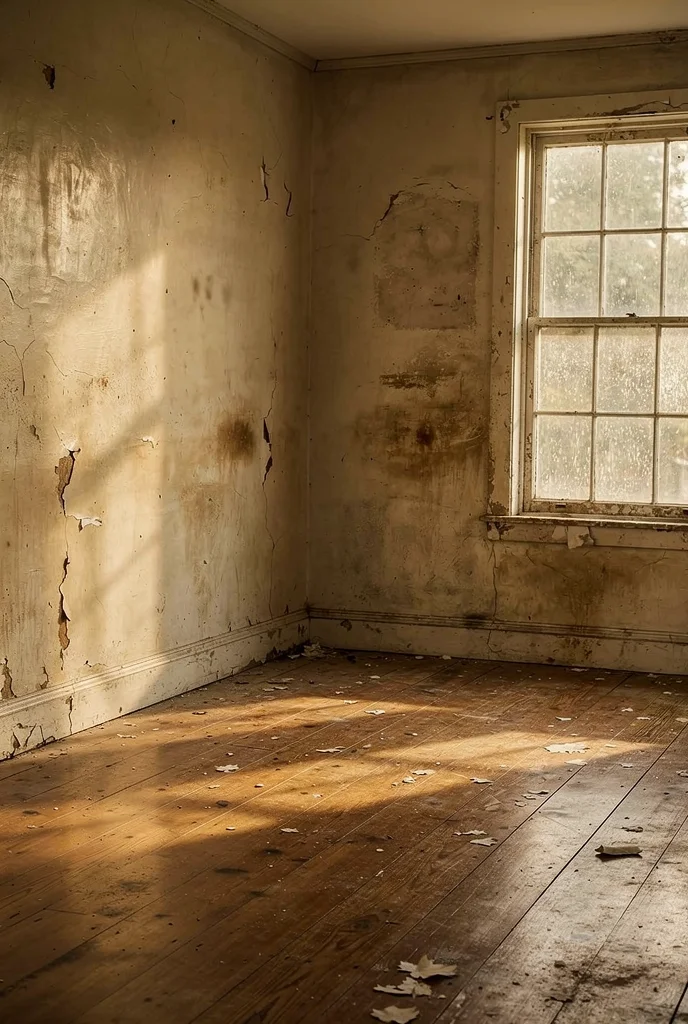
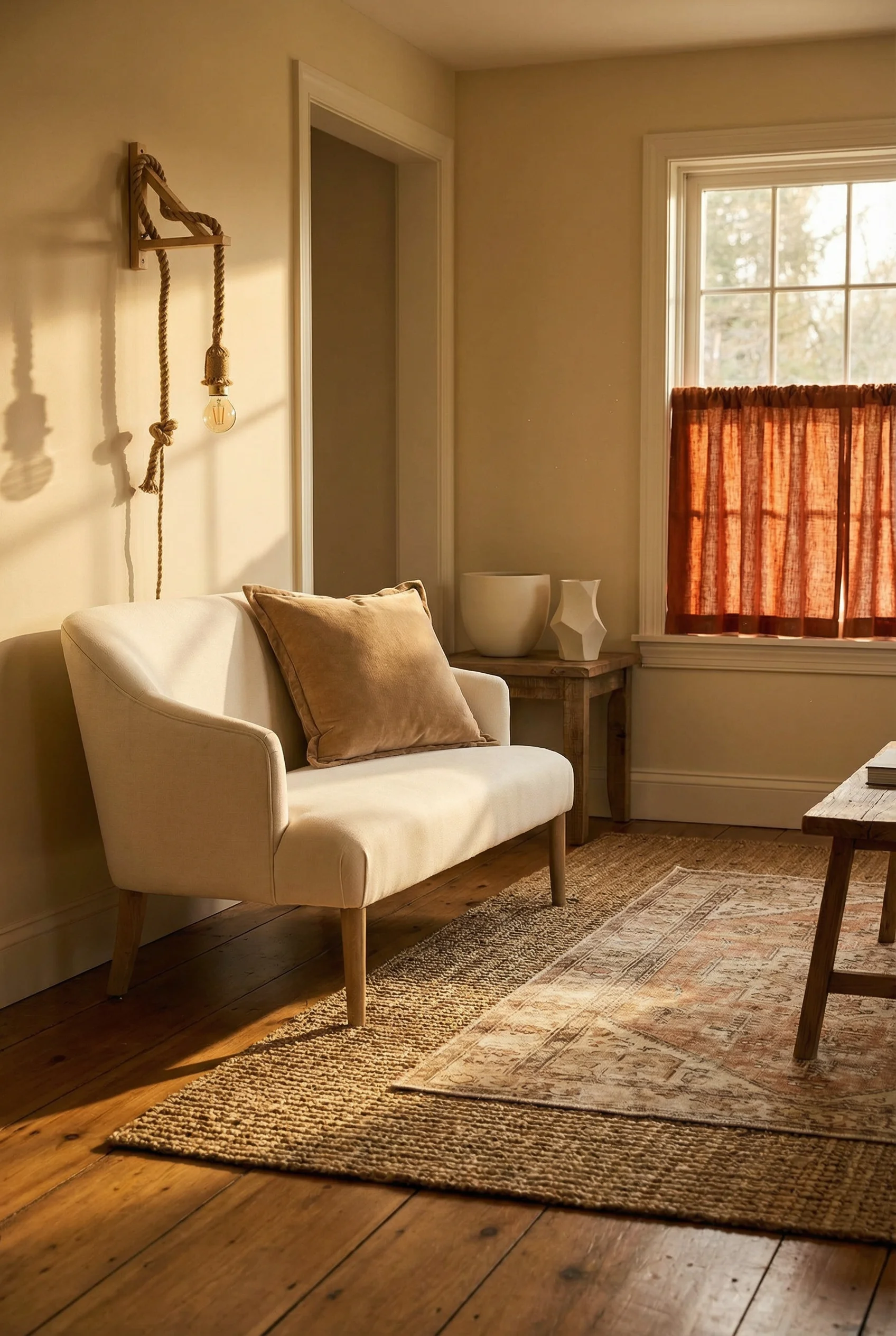
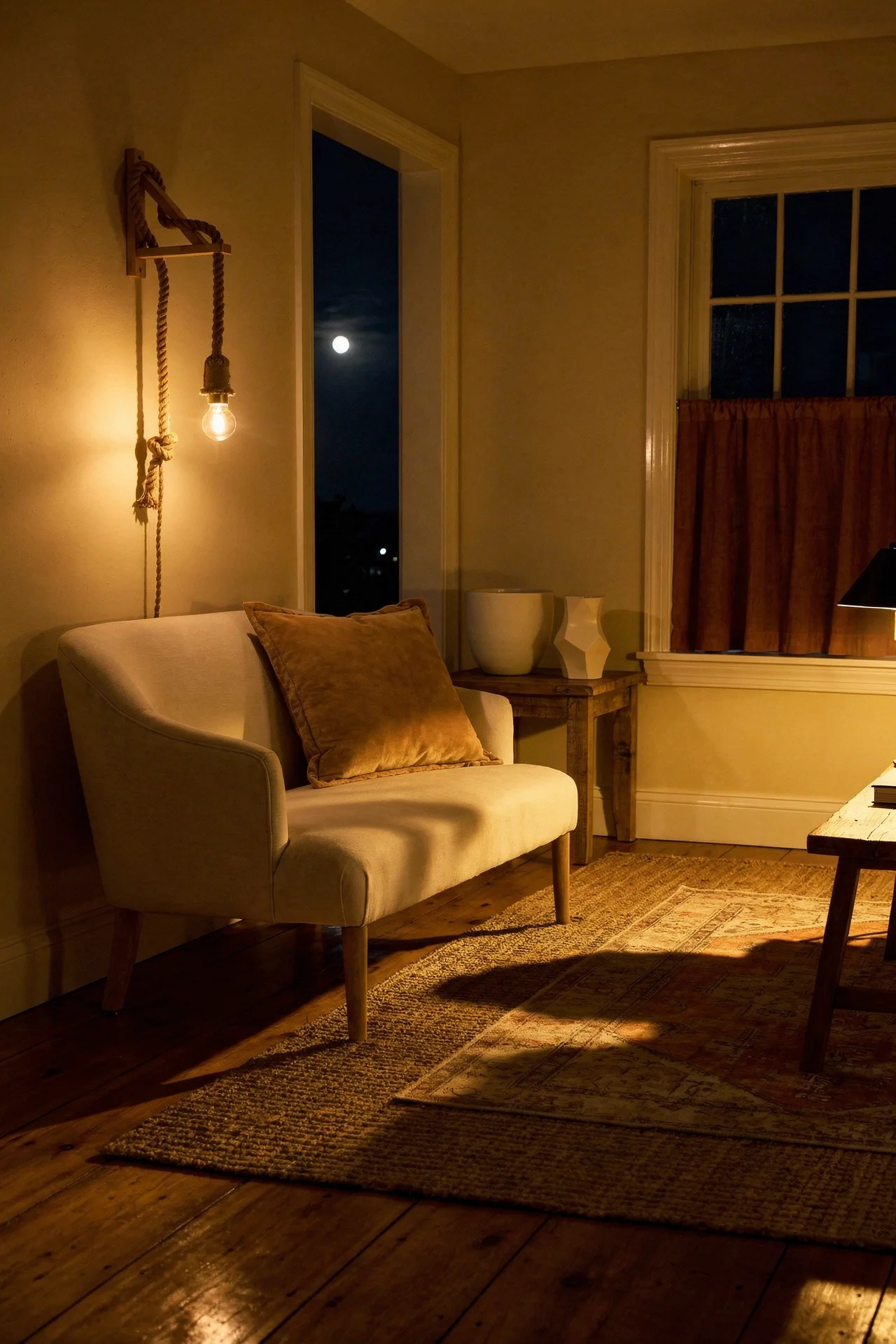
This stacking of textures is what creates the response people cannot quite name. They walk into the room and just feel like they want to stay.
The bones of a cottage room do more work than any amount of decorating.
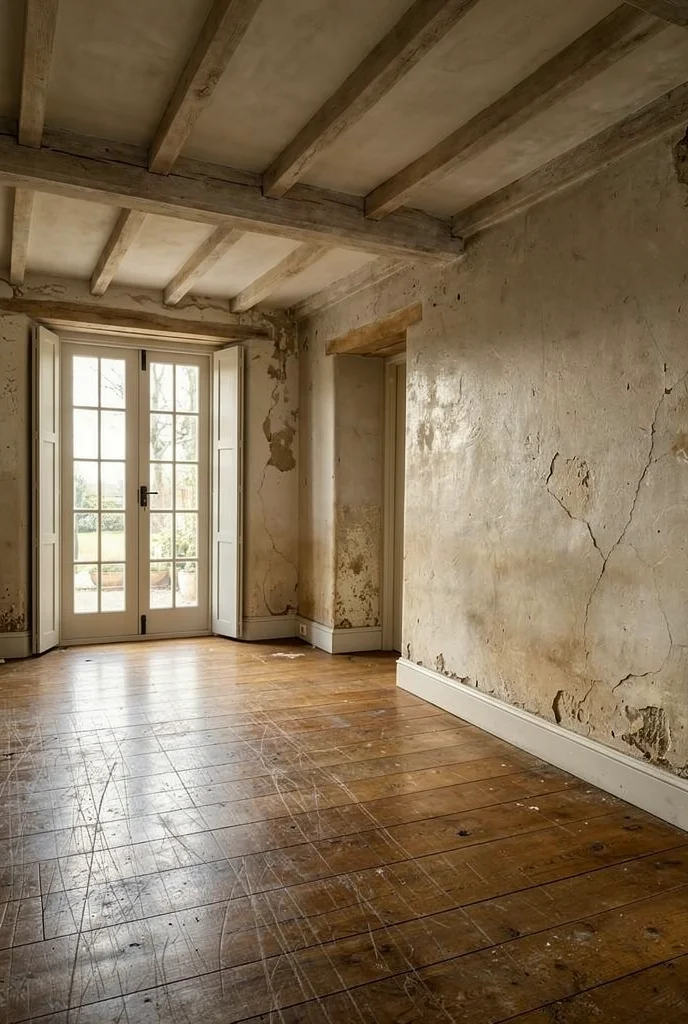
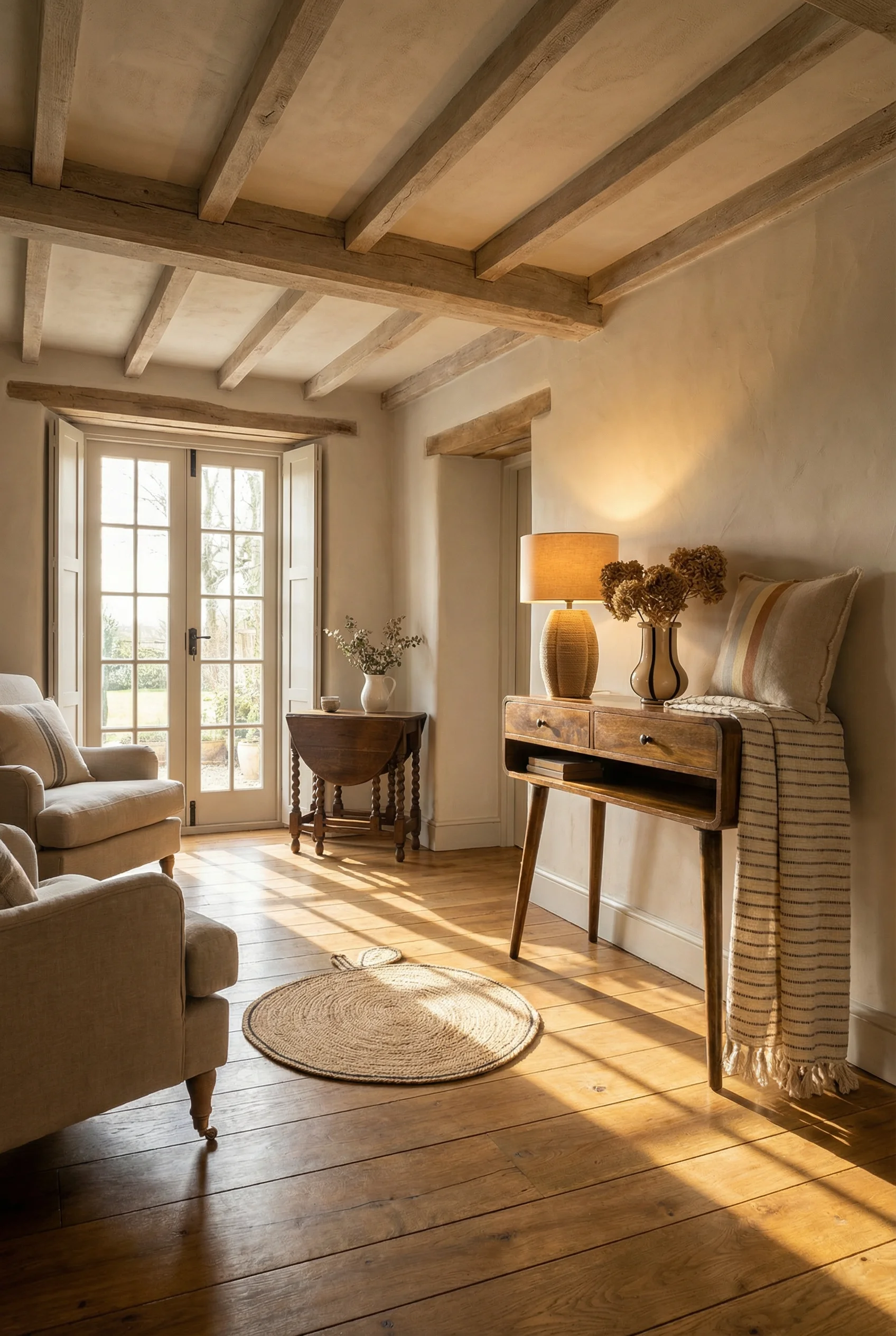
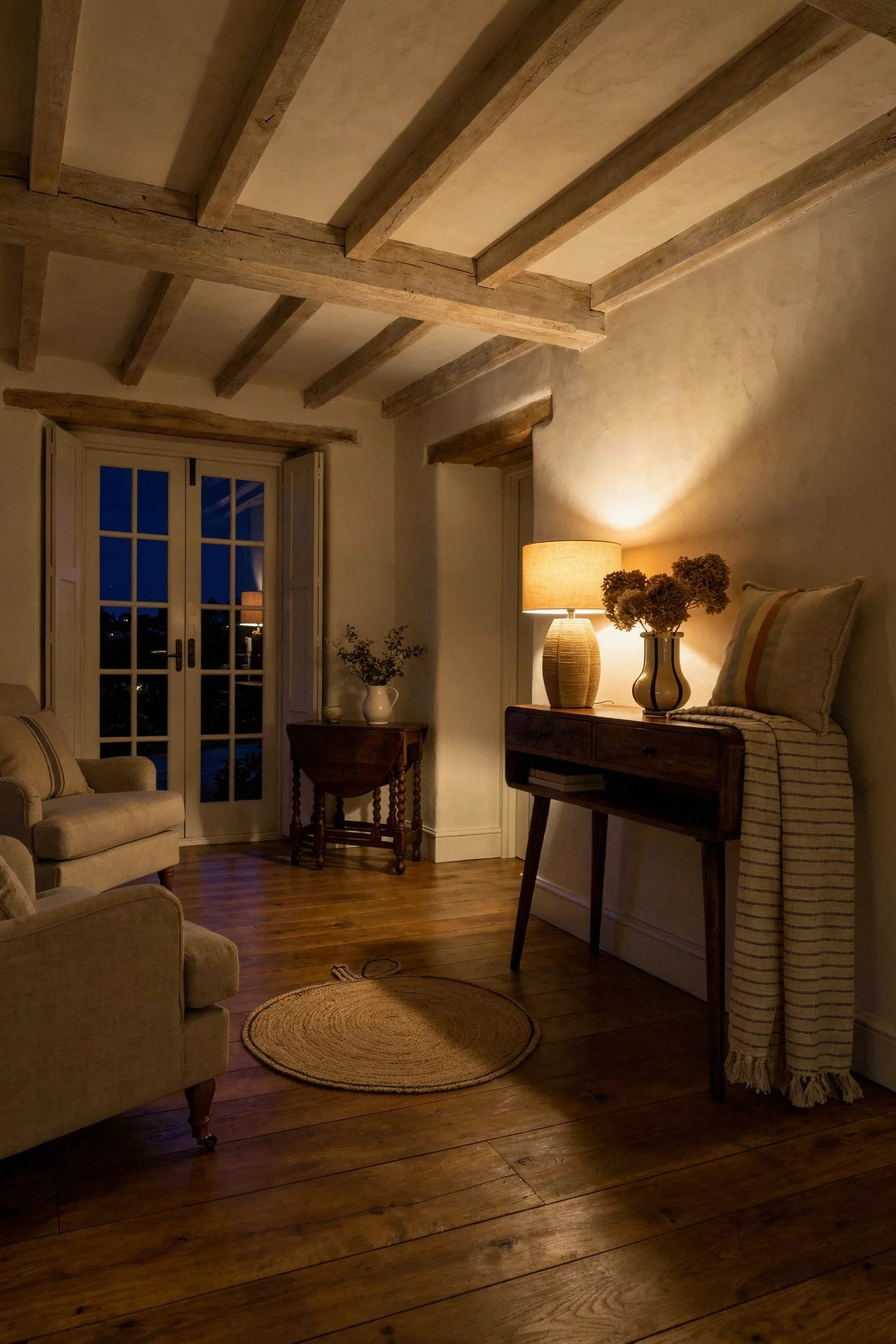
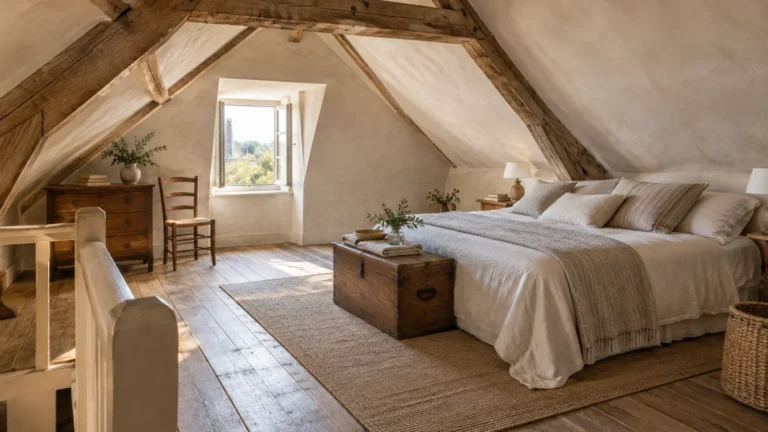
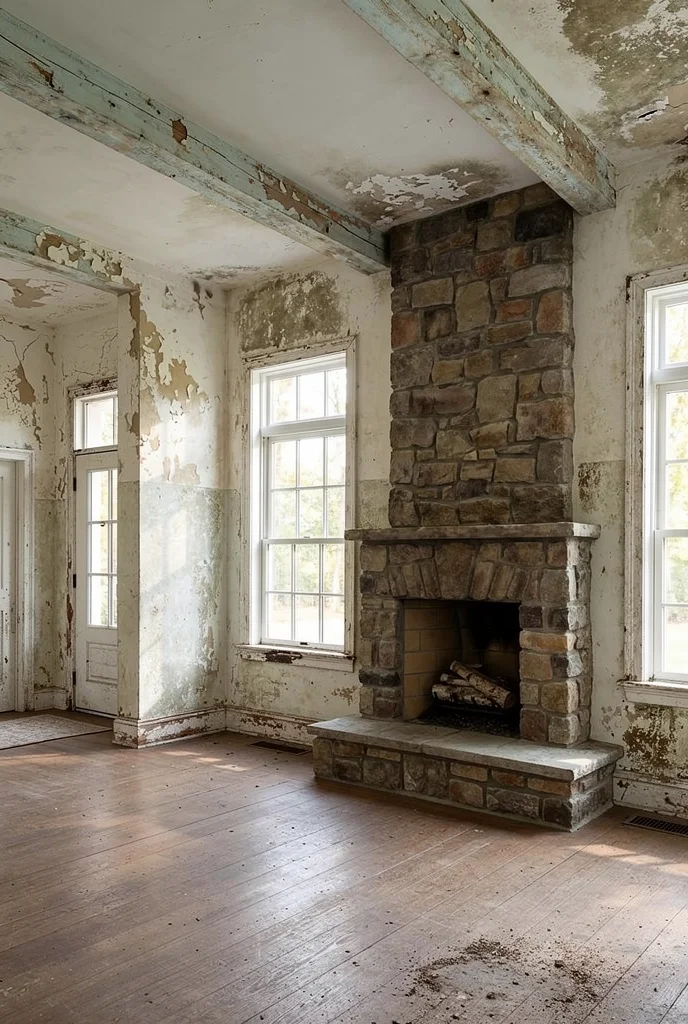
Exposed wooden ceiling beams are the most recognisable element of this style. If your home has them, leave them raw or lightly waxed. If it does not, faux beams in reclaimed wood are a legitimate shortcut. I would avoid anything that looks too new or too perfect. The whole point is that they look structural, like they have been holding the roof up for a long time.
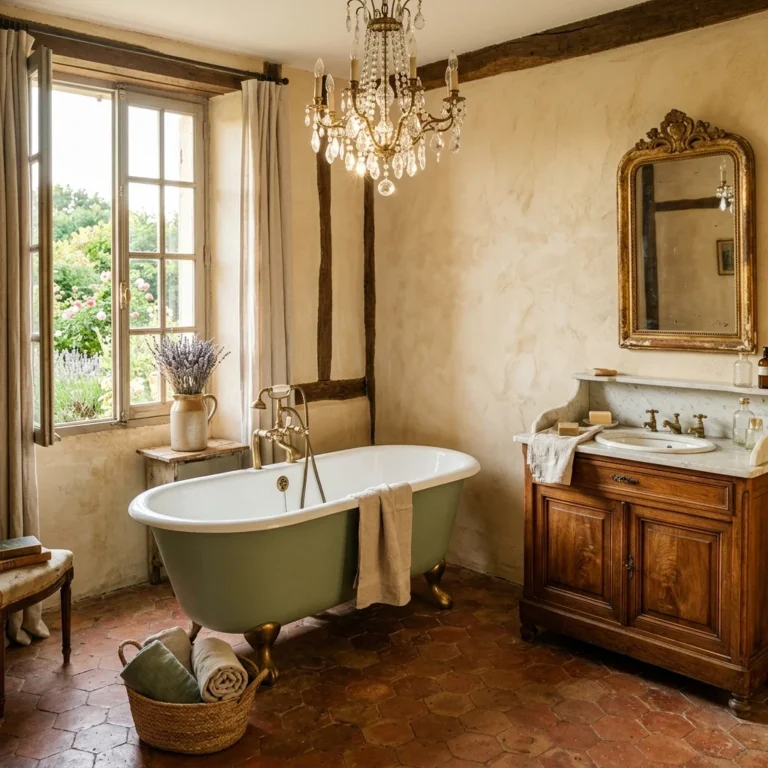
Flooring follows the same logic. Wide plank hardwood with visible grain, natural wear, and the occasional knot is ideal. Terracotta tiles are the other classic option, especially if you lean towards the southern French cottage look. Both are hard surfaces that need softening with rugs, which ties back to the texture stack.
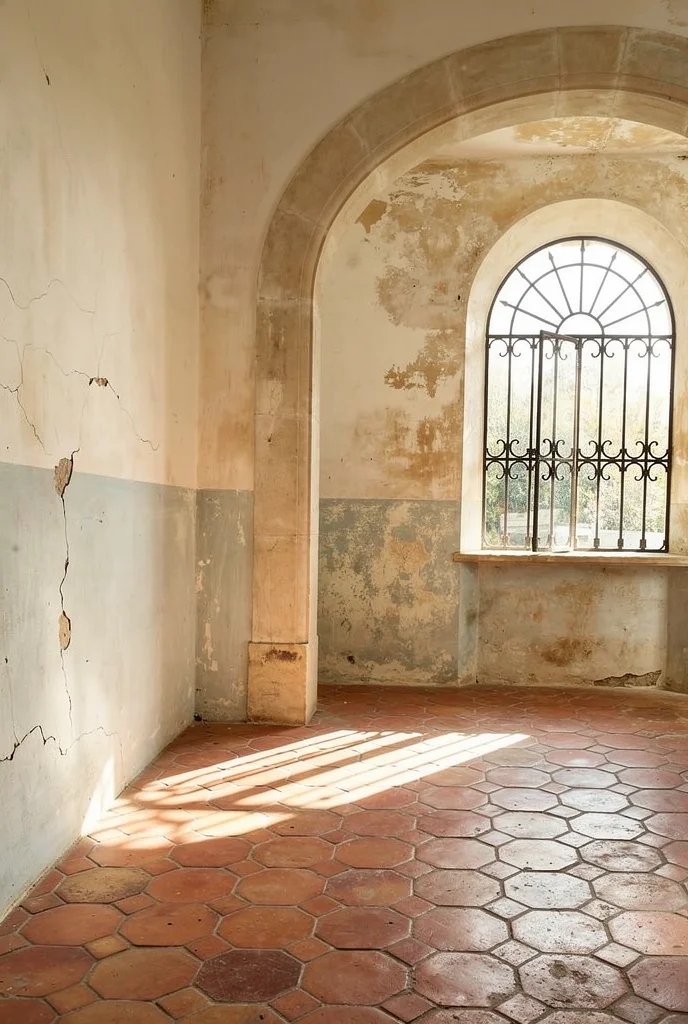
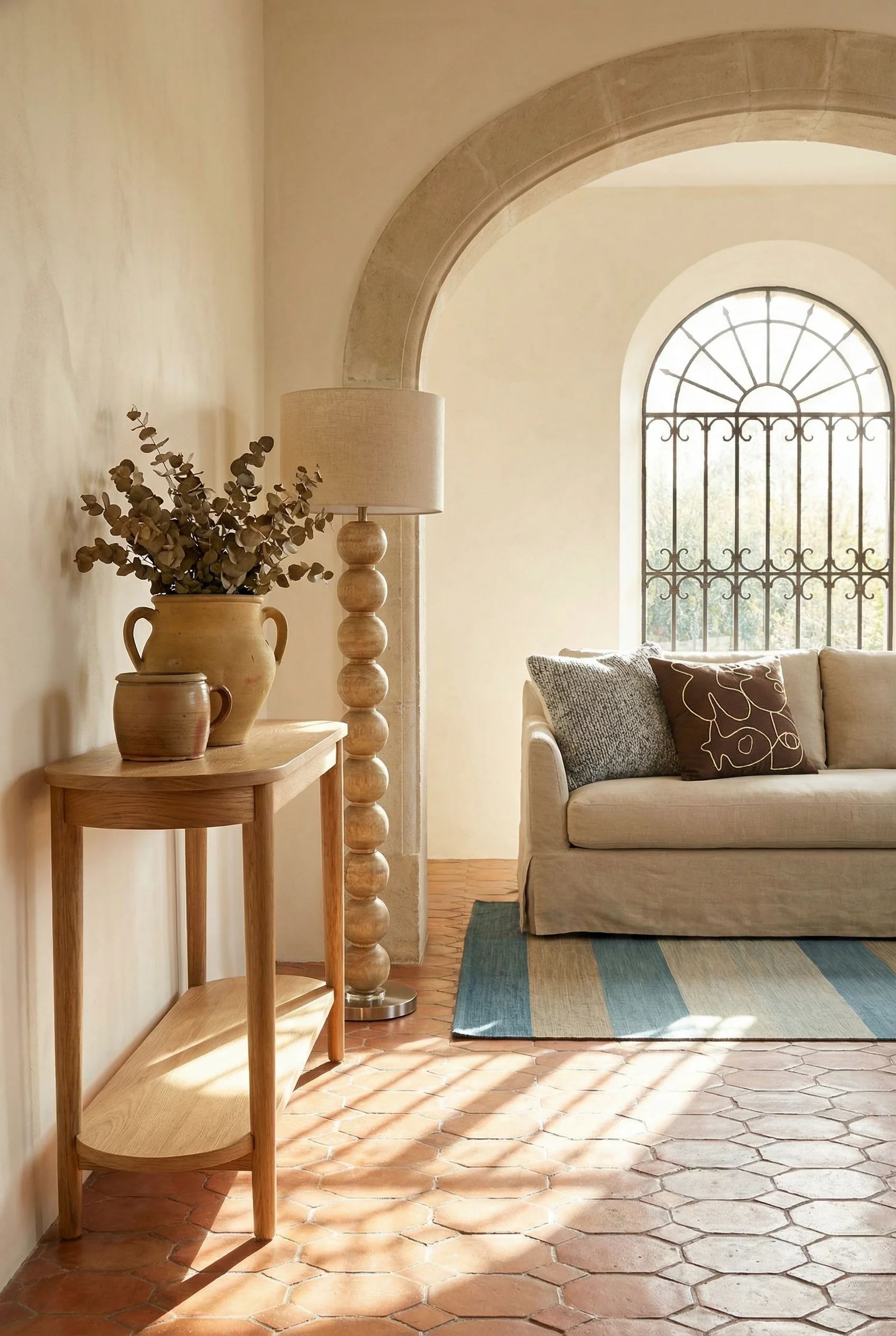
Stone flooring works beautifully in the right context, particularly near the fireplace or in homes with ground floor living rooms. The key is warmth of tone. Cool grey stone feels more industrial than cottage. Warm limestone or aged flagstone is what you want.
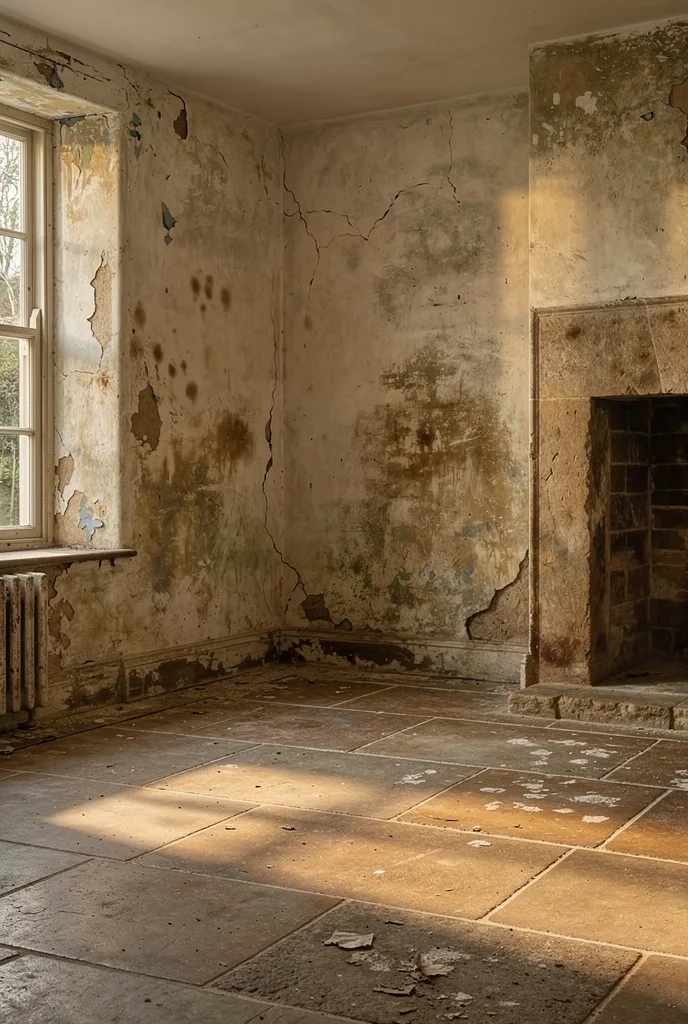
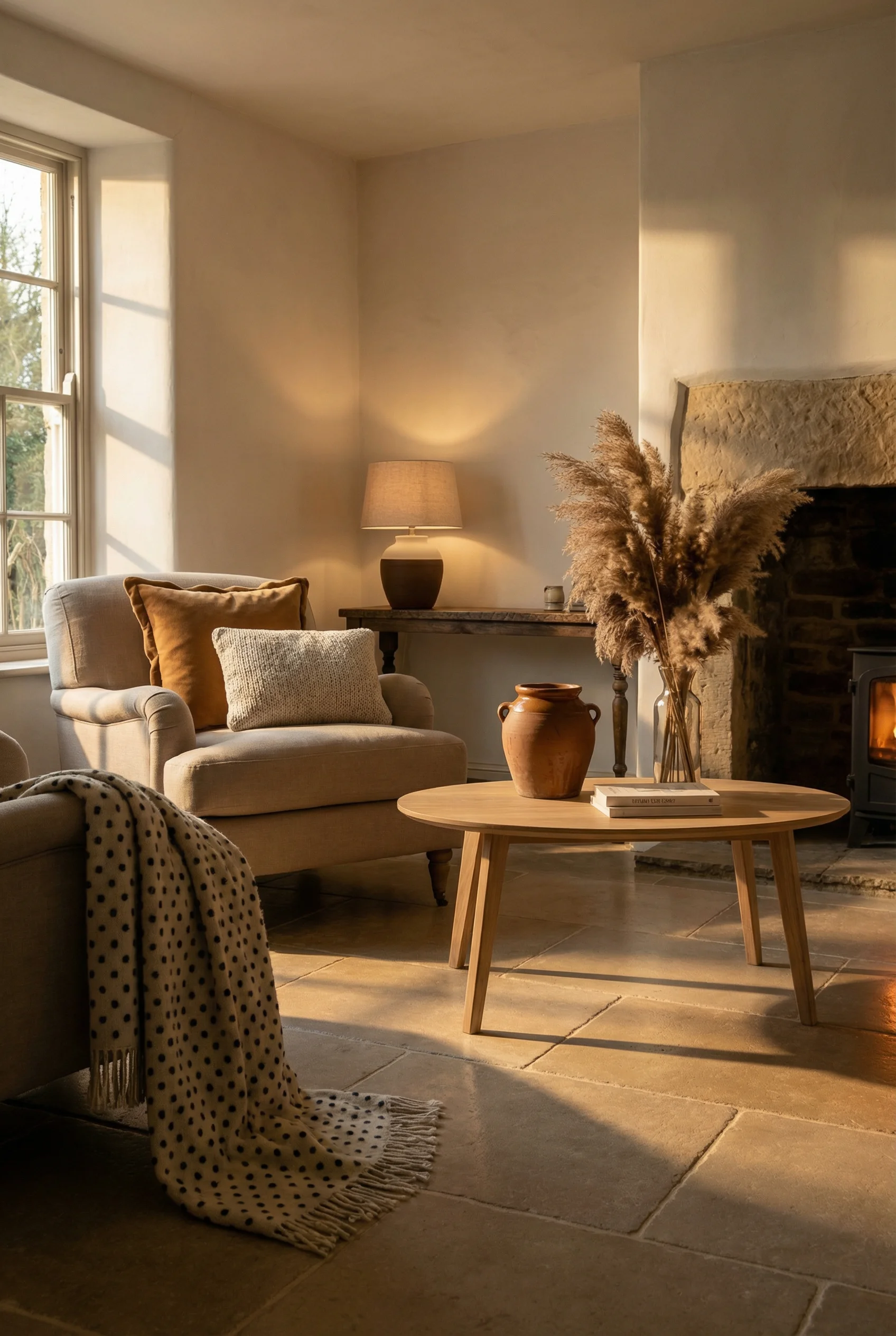
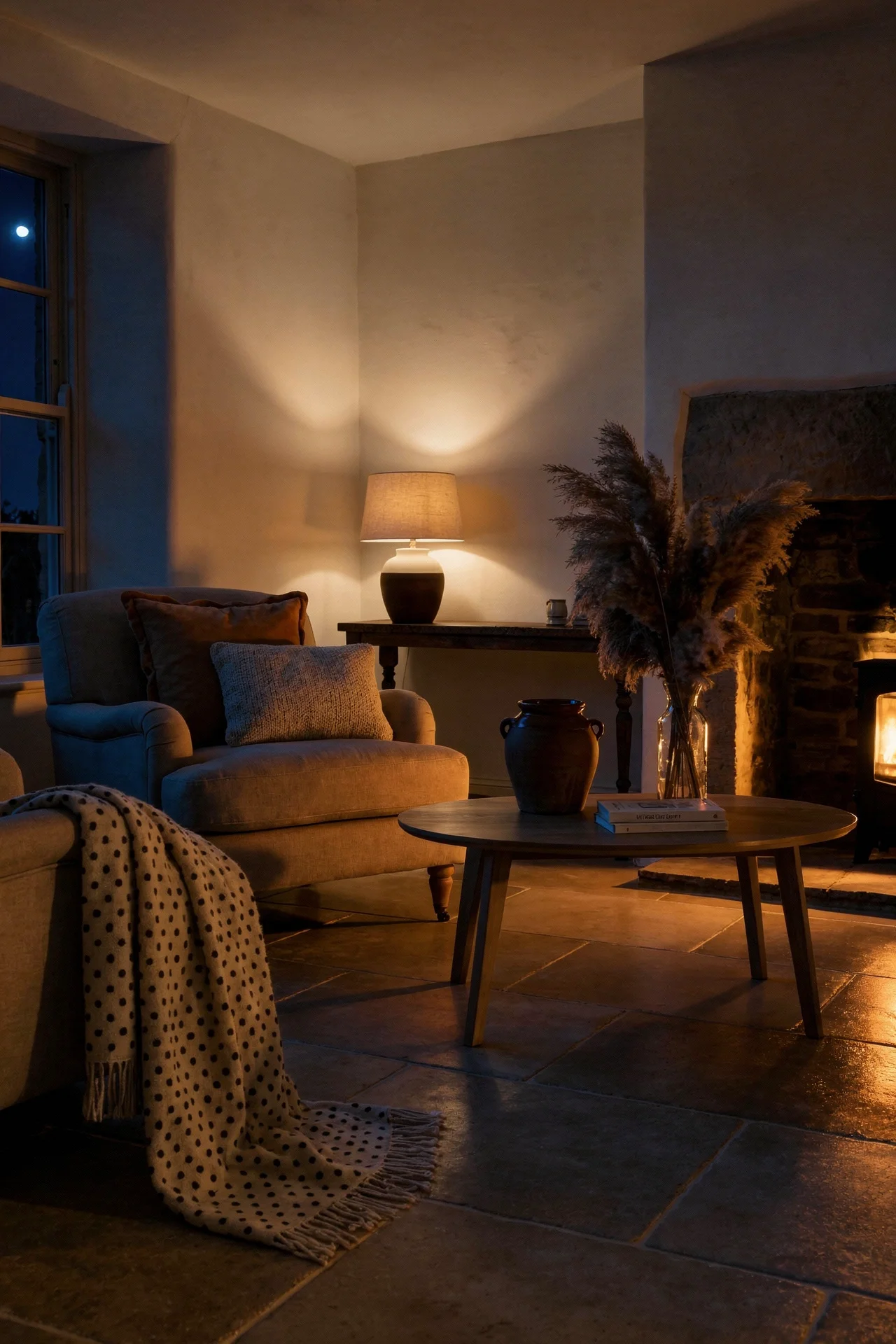
These elements are difficult and expensive to change later, so they are worth getting right first. Everything else in the room can evolve around them.
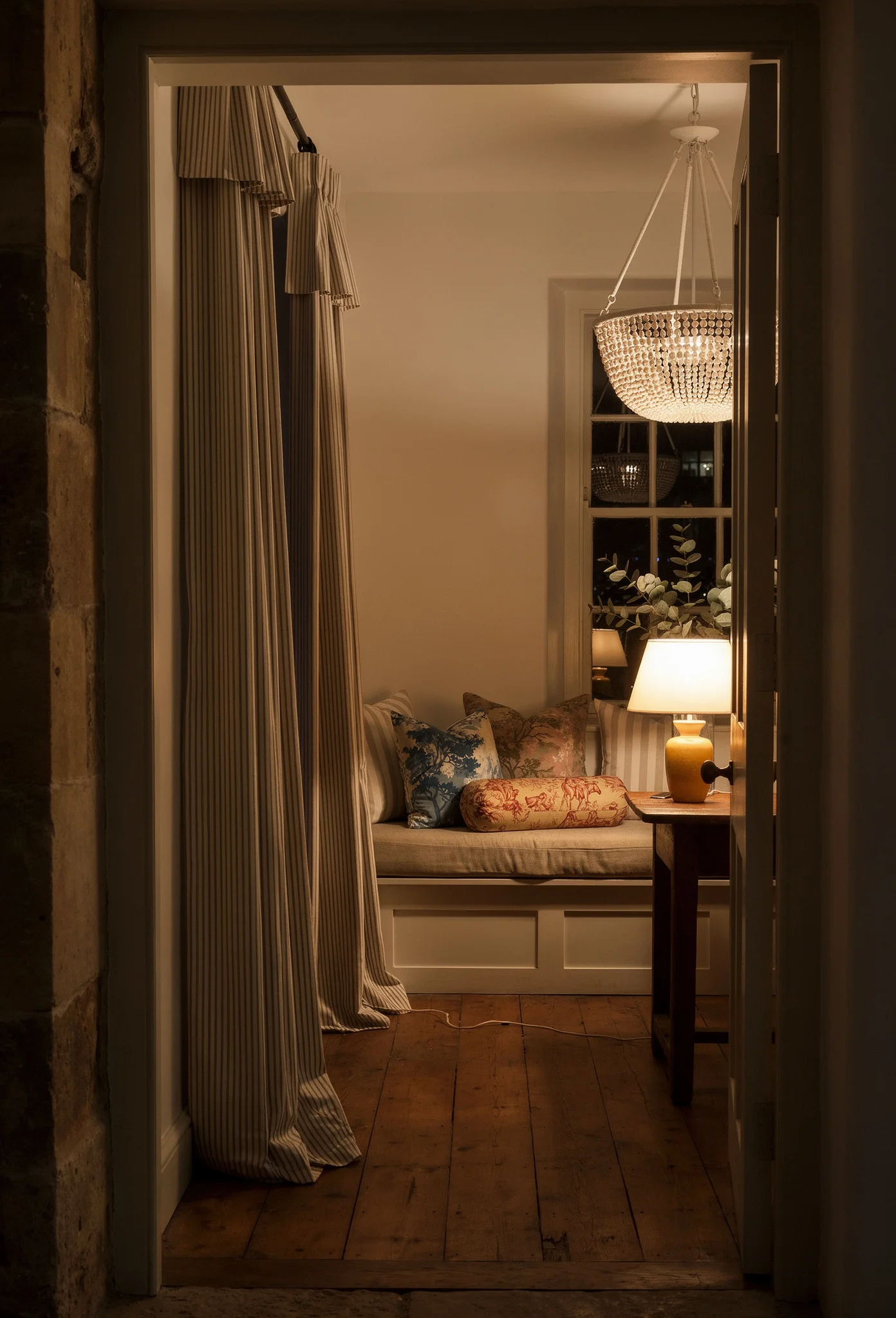
Most people light their living rooms too brightly. A French cottage room should feel like the hour just before sunset, even at midday.
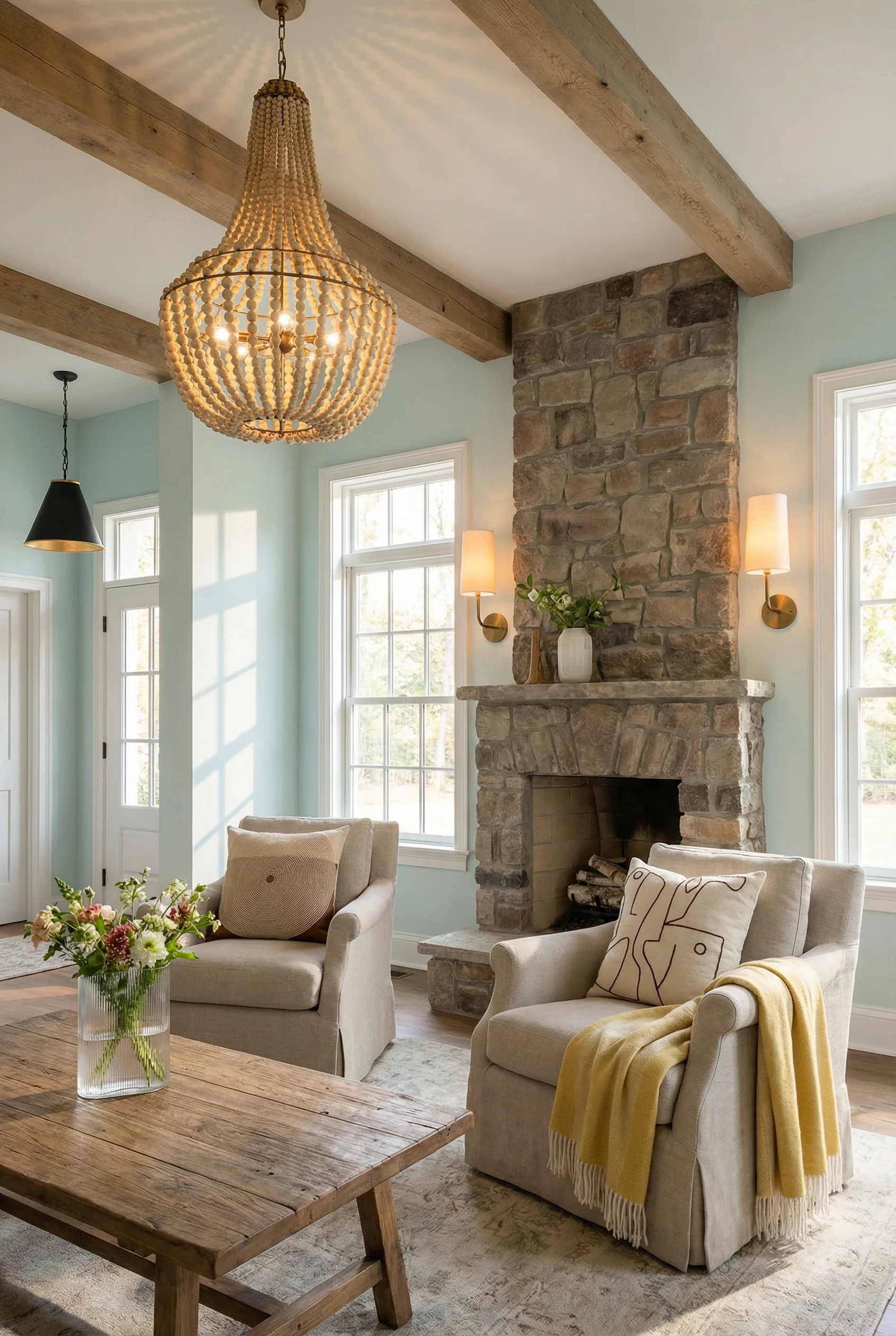
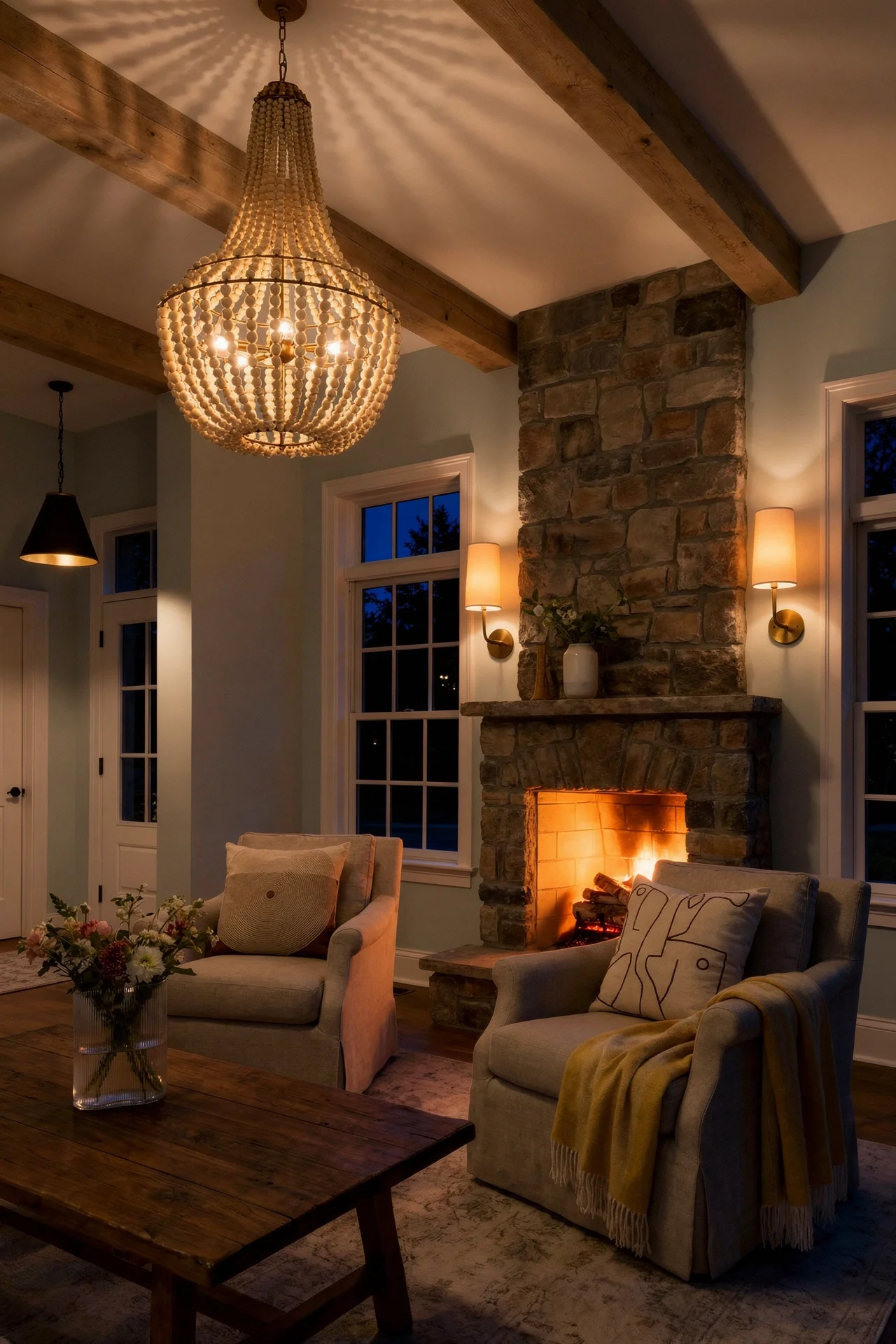
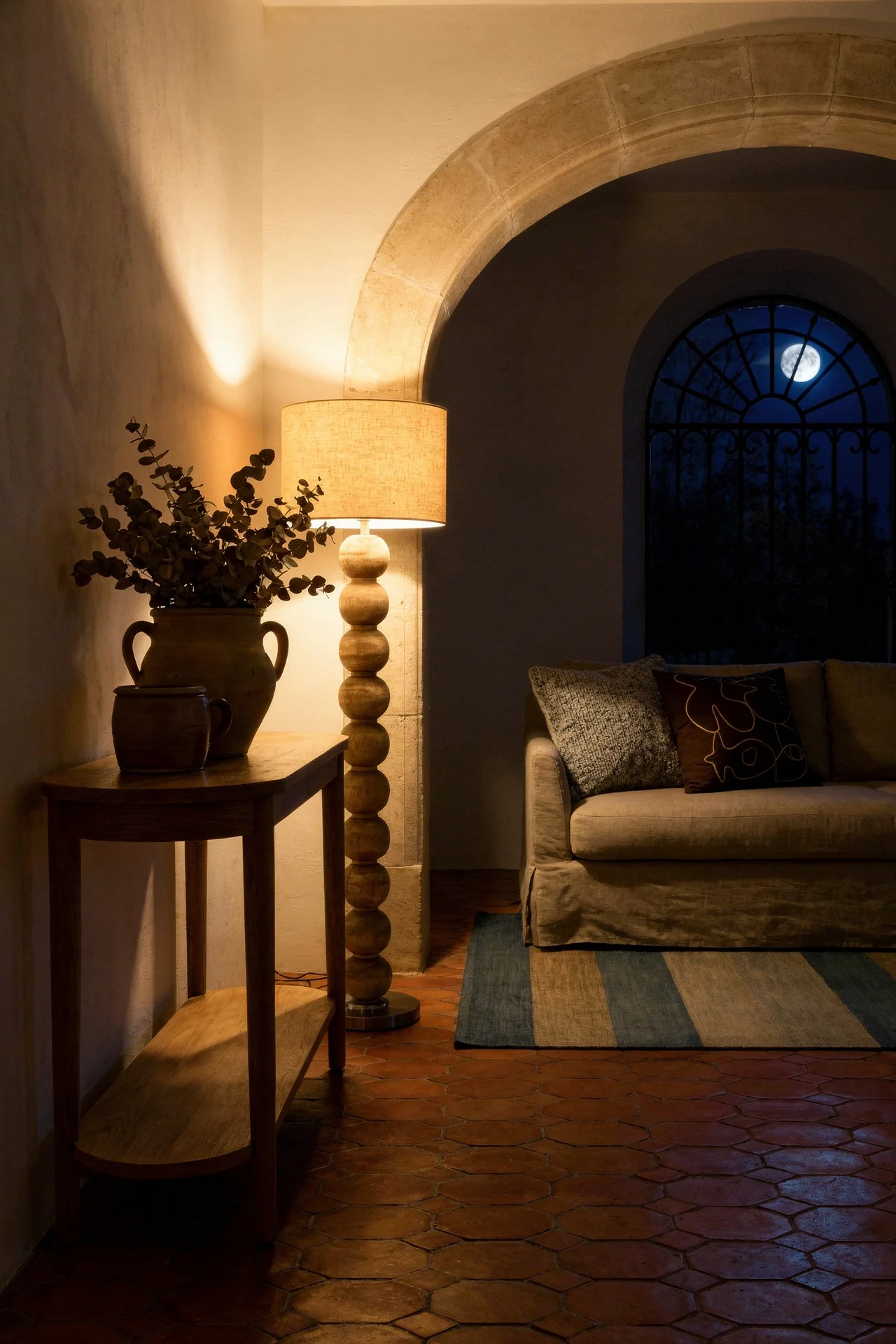
My favourite starting point is a vintage style chandelier. Not crystal and sparkle, but wrought iron or distressed wood or antiqued brass. Something that looks like it has hung in a dining room in Aix en Provence for fifty years. It does not need to be the primary light source. It needs to set the mood.
Add candle style wall sconces for vertical drama and ambient warmth. Rustic hanging lanterns in corners or near seating areas create pools of soft light that draw you in.
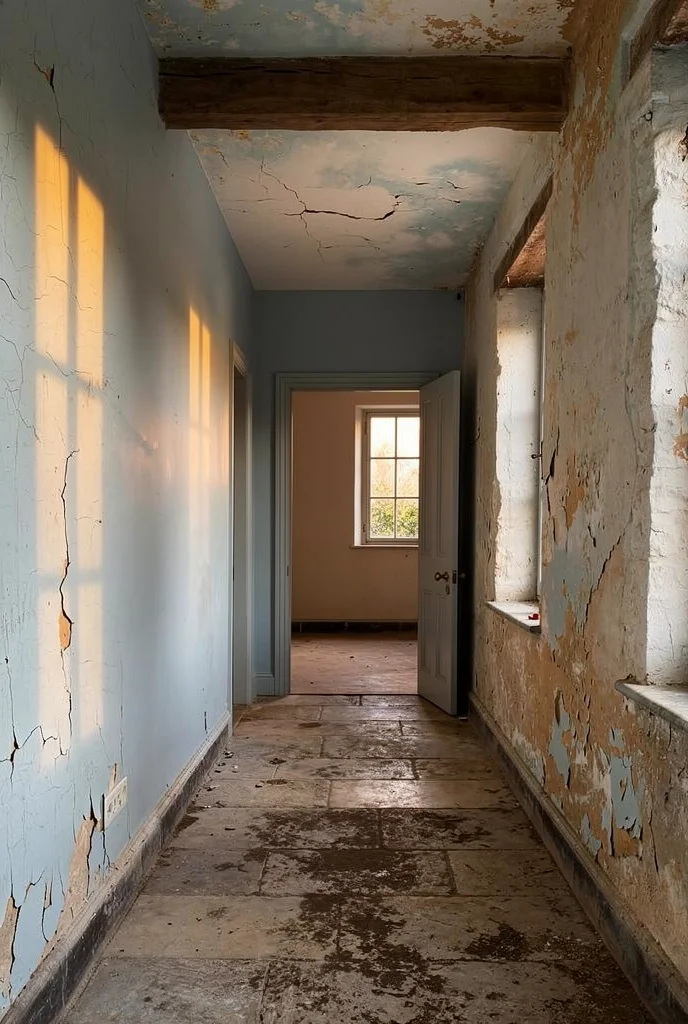
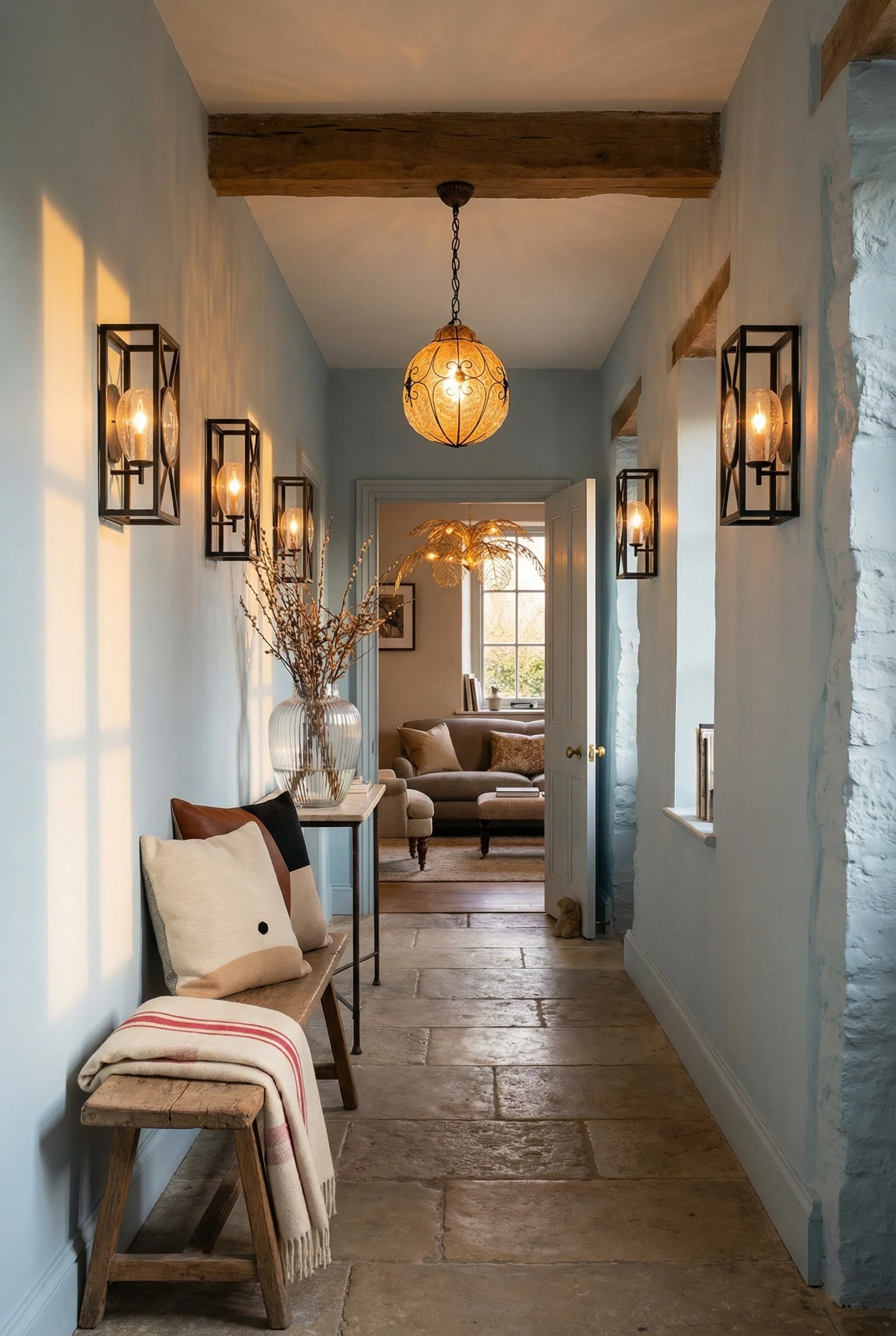
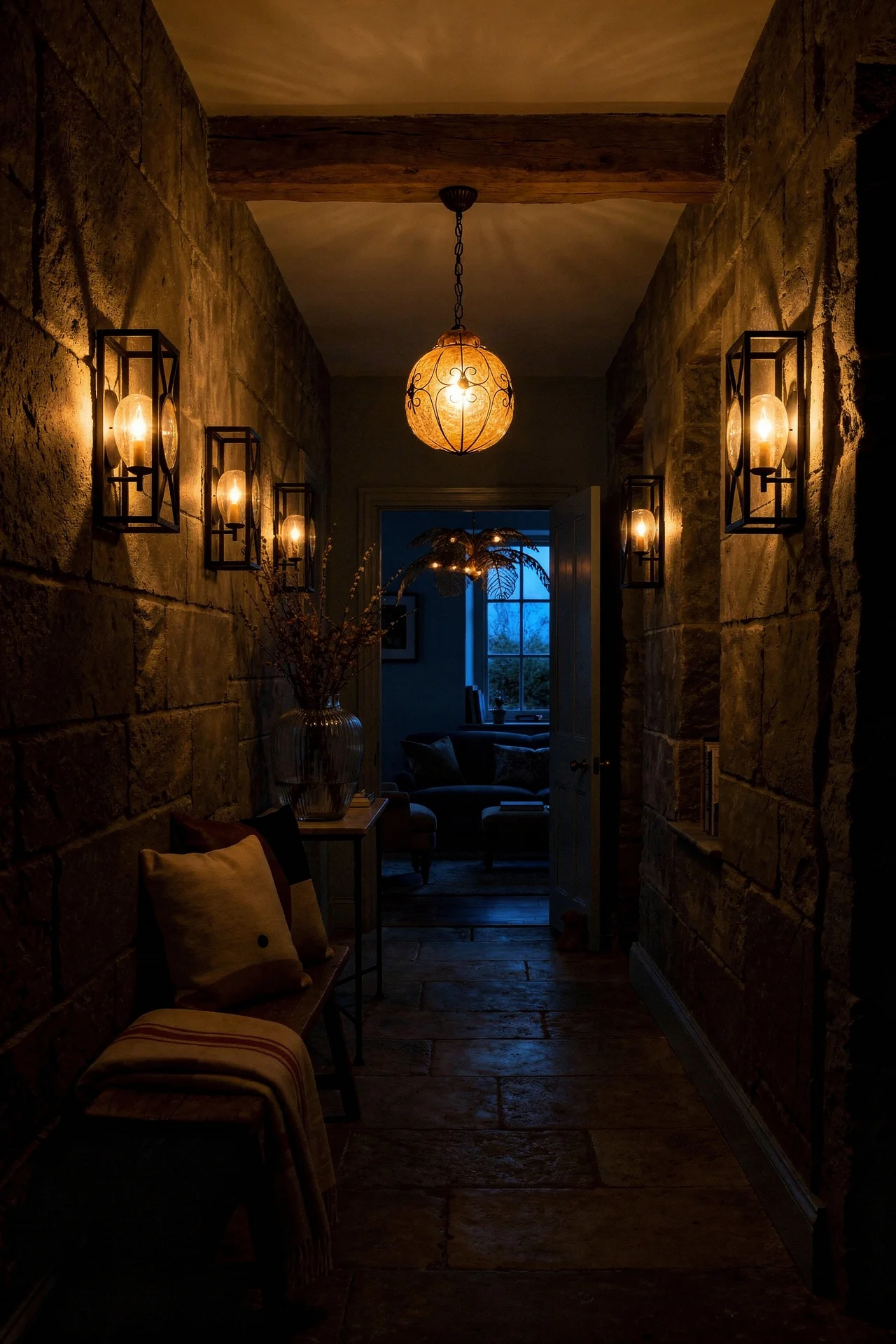
The most important detail is the bulbs. Warm LED bulbs at 2700K on dimmer switches transform any fixture. That warm glow mimics candlelight and makes stone, wood, and linen look their absolute best. I would install dimmers before buying a single new fixture.
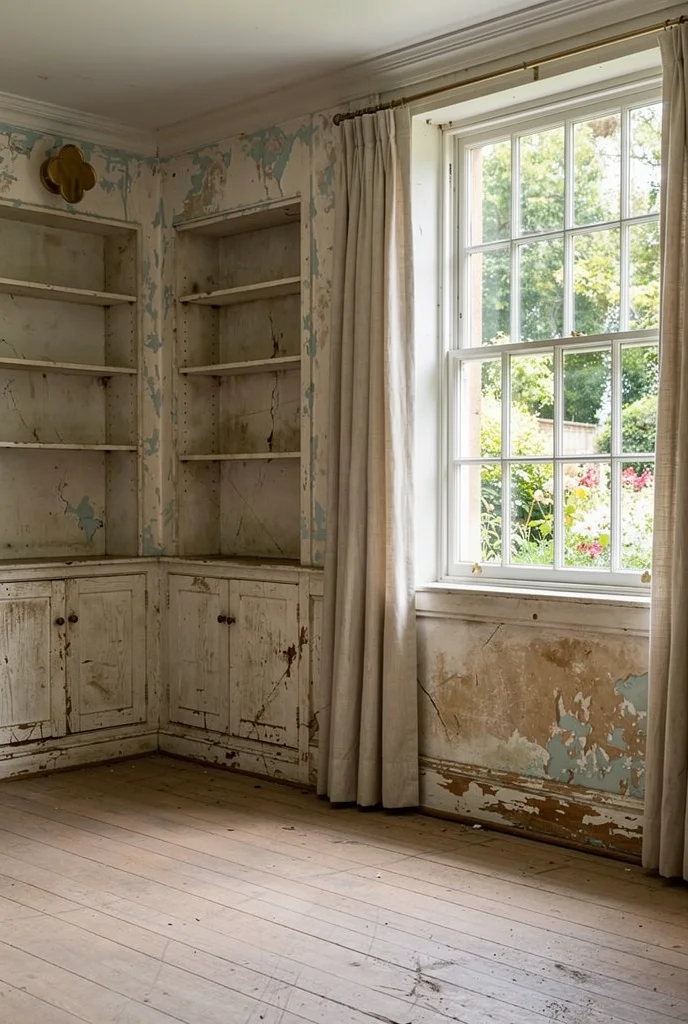
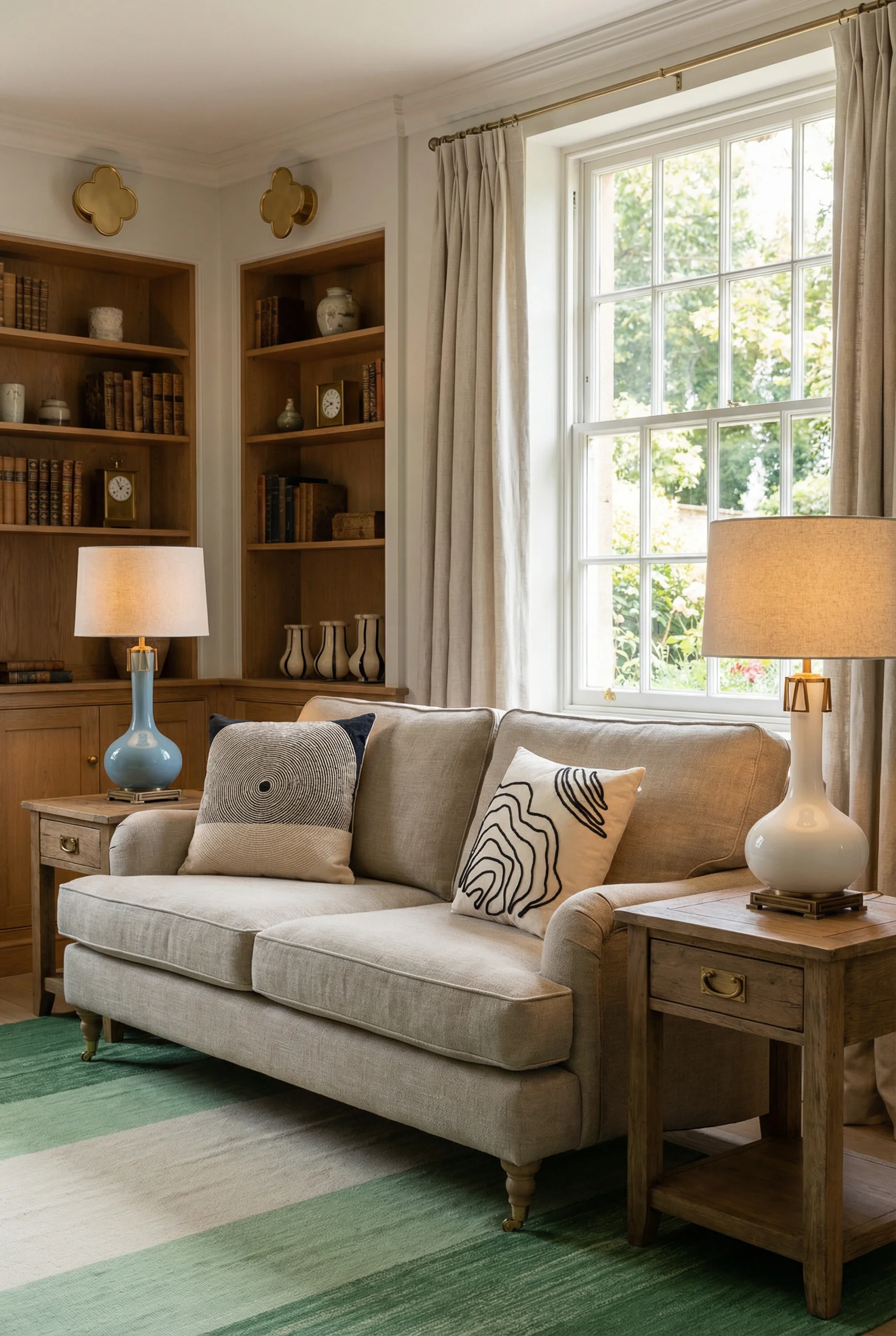
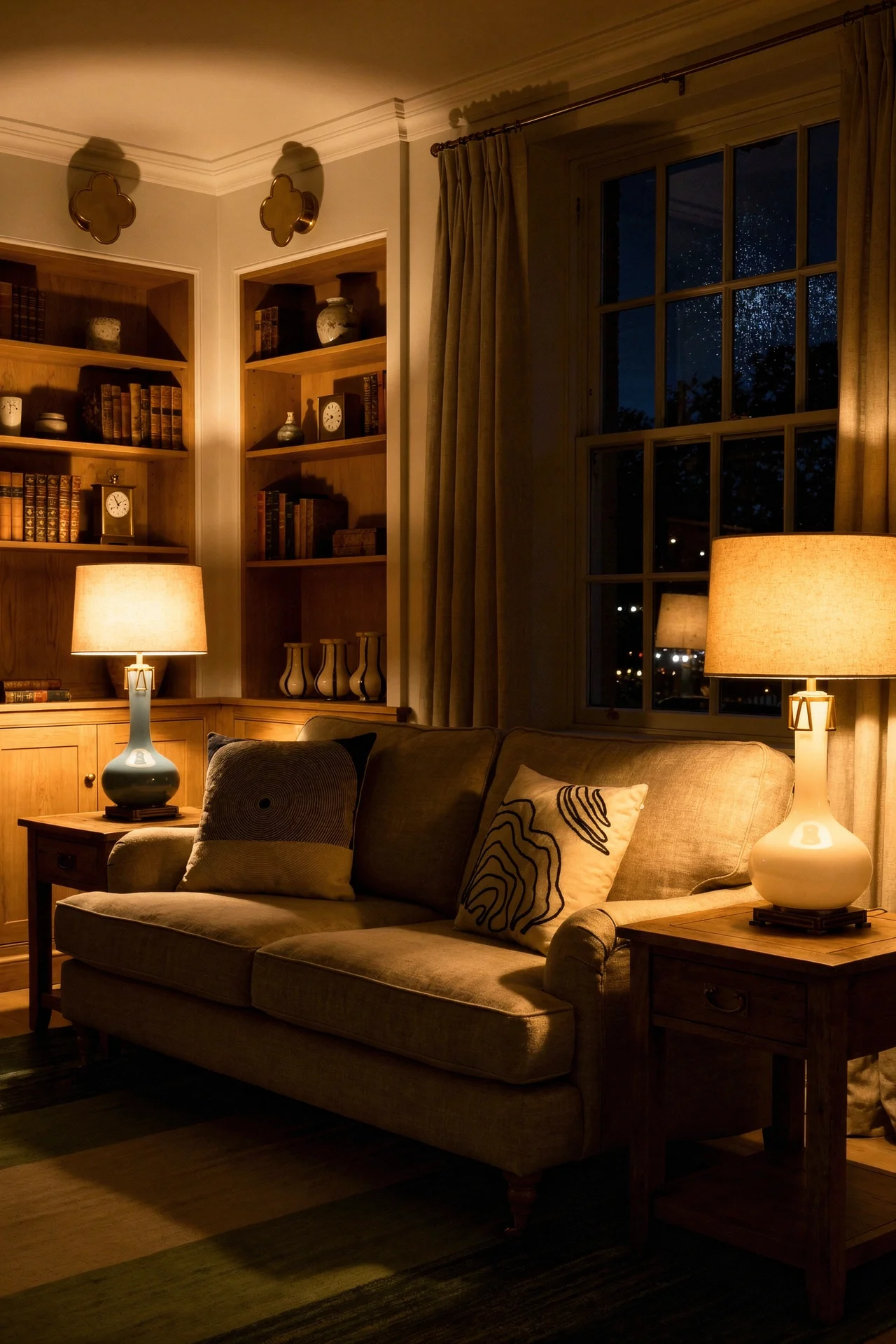
The right lighting can make a newly built room feel like it has existed for centuries. That is not an exaggeration.
The finishing layer is where most people either get it right or reveal that they were trying too hard.
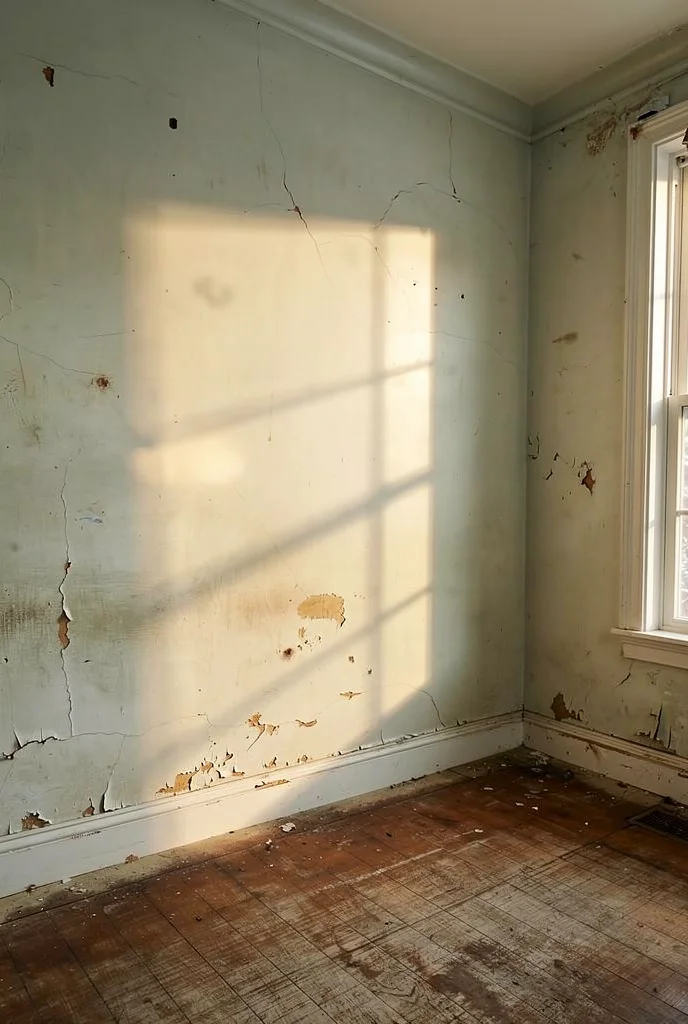
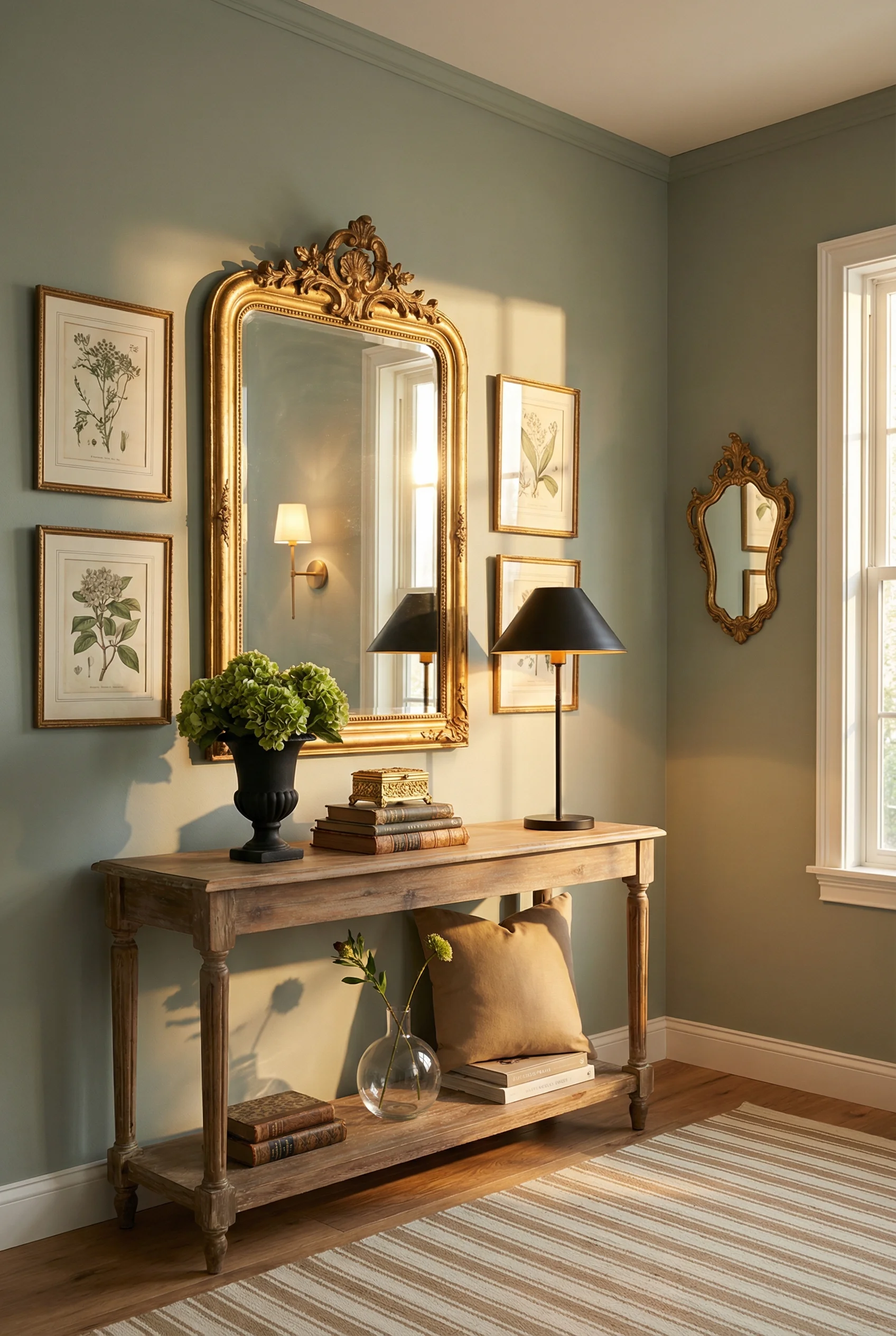
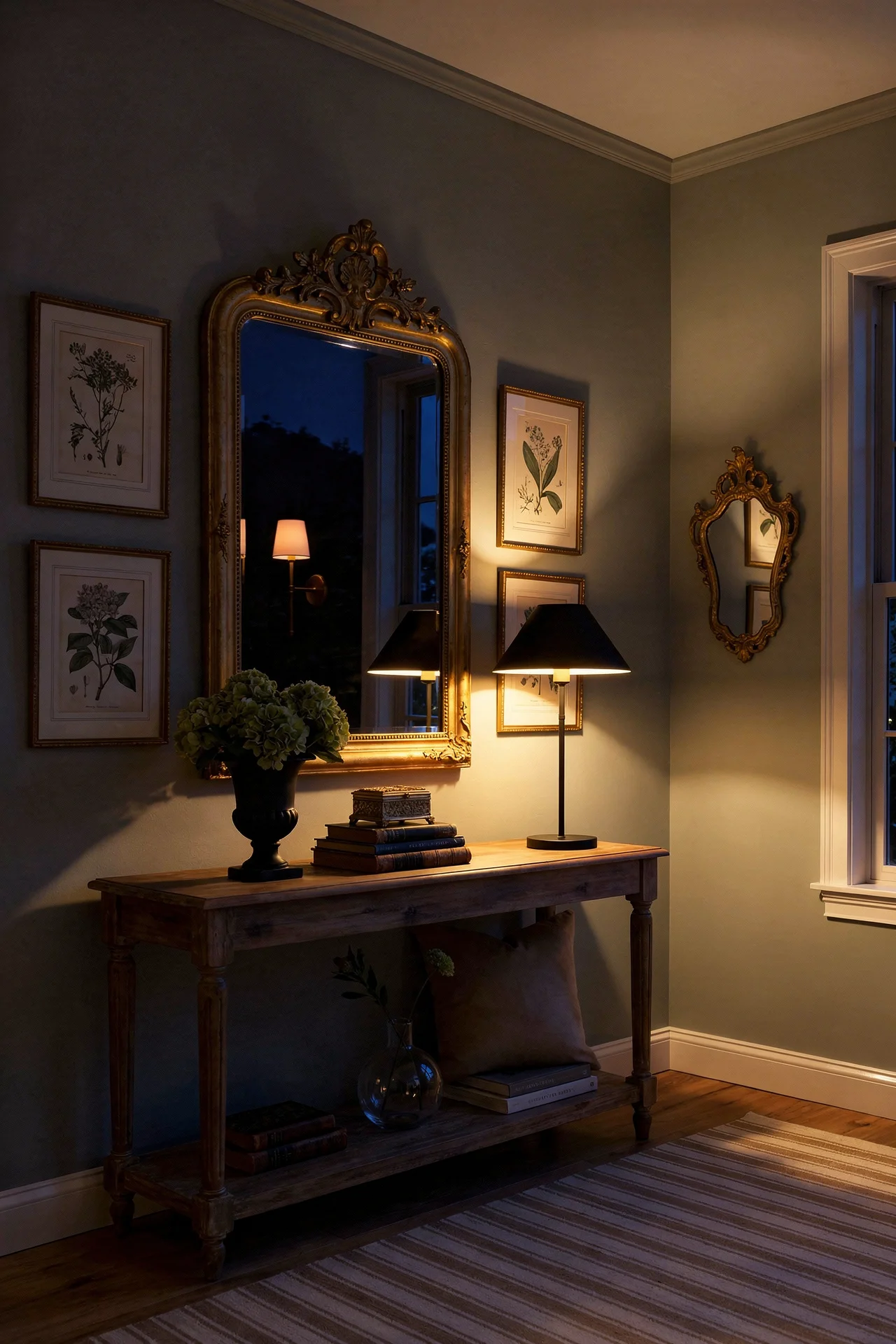
An oversized antique mirror is one of the most effective single additions. A trumeau mirror above the fireplace, slightly foxed, with its gilding worn through in places, reflects natural light and makes even a small cottage living room feel twice its size. It also brings a touch of faded grandeur that balances the rusticity of everything else.
For patterns, less is more. Ticking stripes on a pillow or two. A muted floral on an armchair. Vichy checks on a throw. Toile de Jouy on a single piece of upholstery, not wallpaper to wallpaper. These classic French patterns work because they reference a tradition without overwhelming the room.
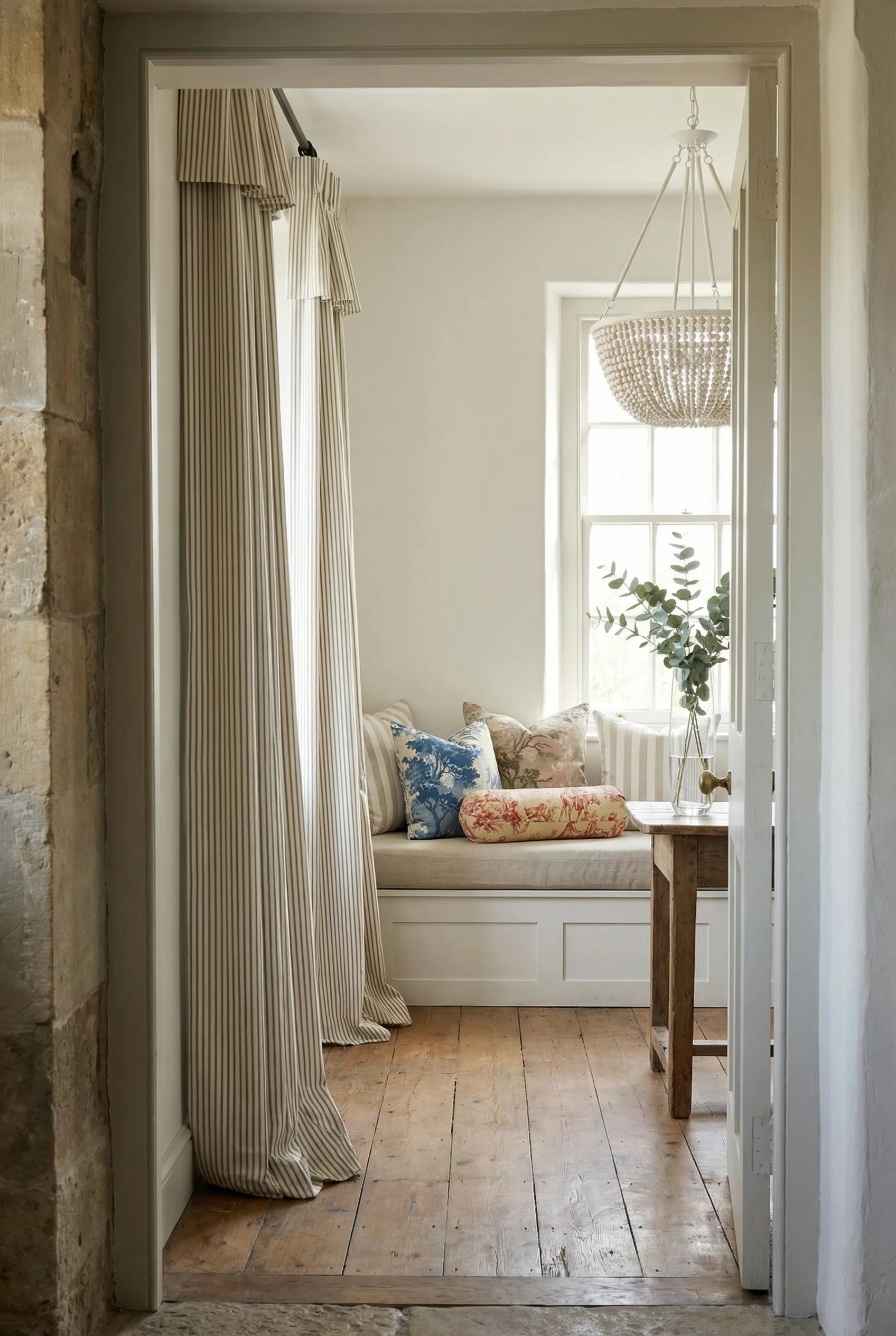
Bring nature inside. A potted olive tree in a terracotta pot. Fresh lavender in a stone vessel. Eucalyptus draped loosely on a mantel. Gallery walls work when the frames are mismatched and the art is personal. Vintage botanical prints, watercolour landscapes, something you found at a market and could not leave behind.
Functional ceramics complete the picture. Confit pots, vintage books stacked casually, a stone mortar repurposed as a planter. These objects should look like they are here because someone uses them, not because someone placed them.
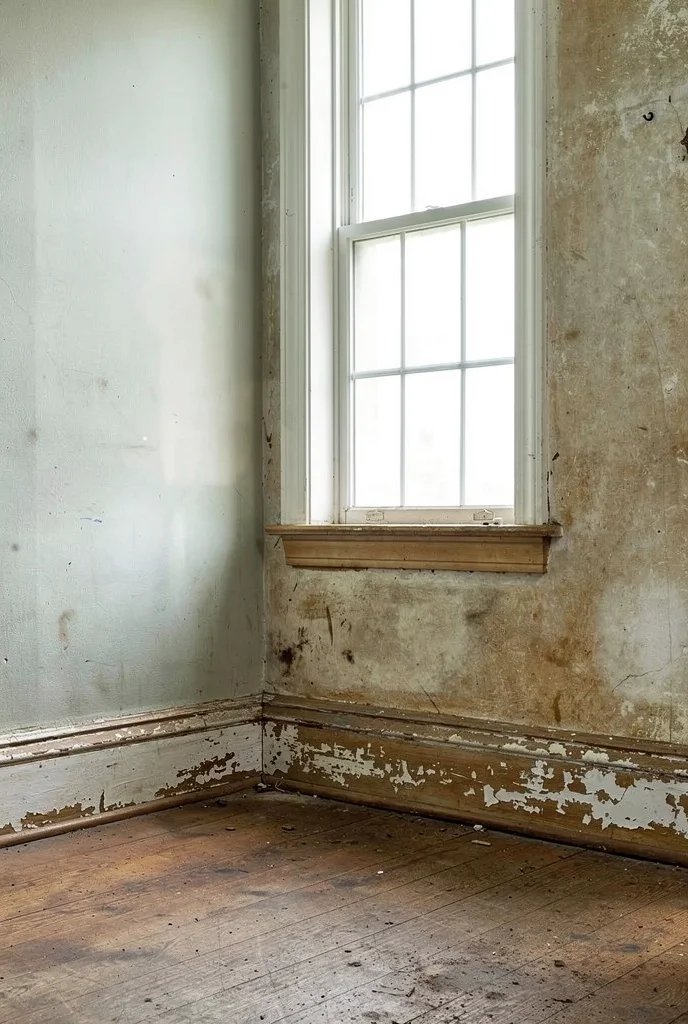
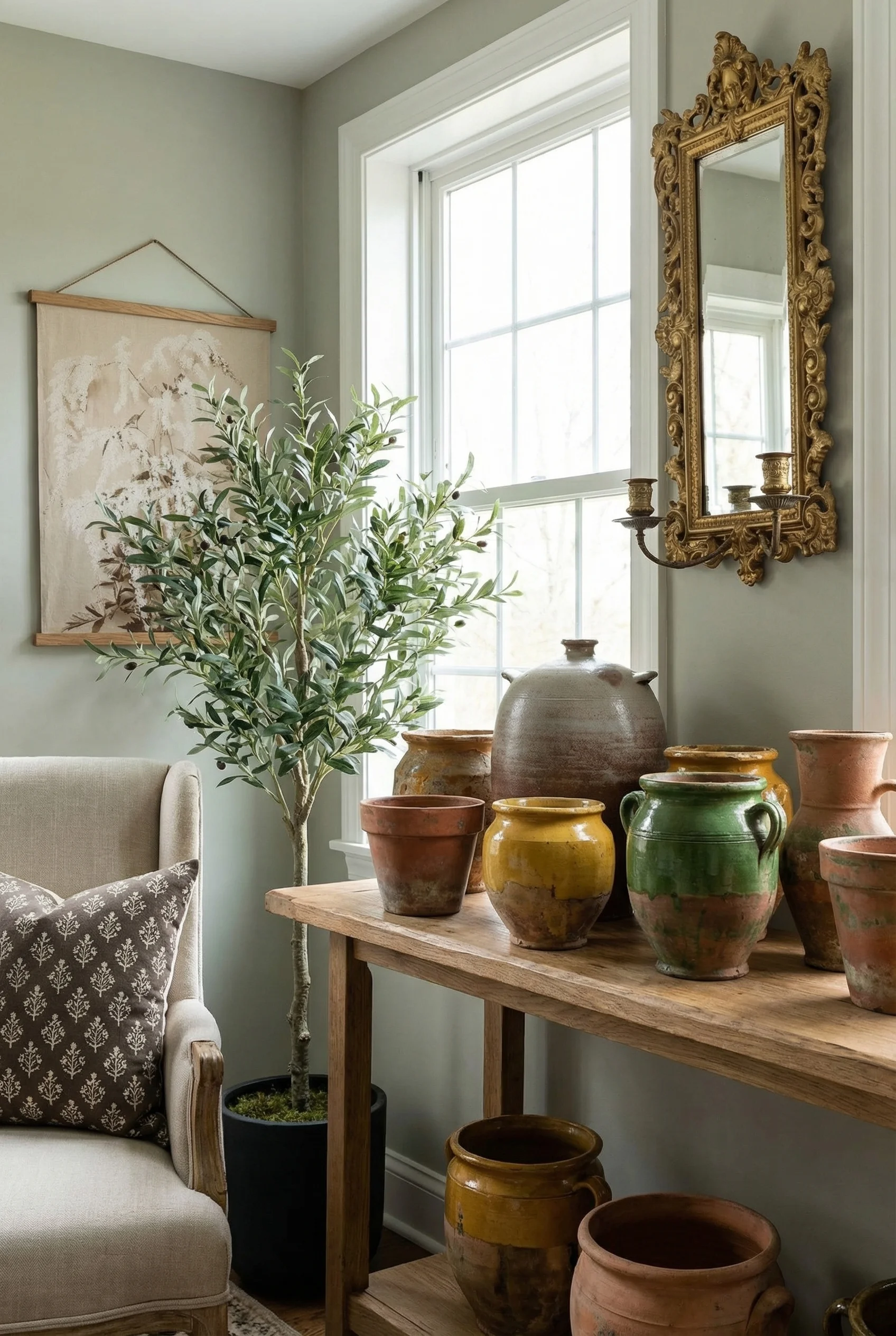
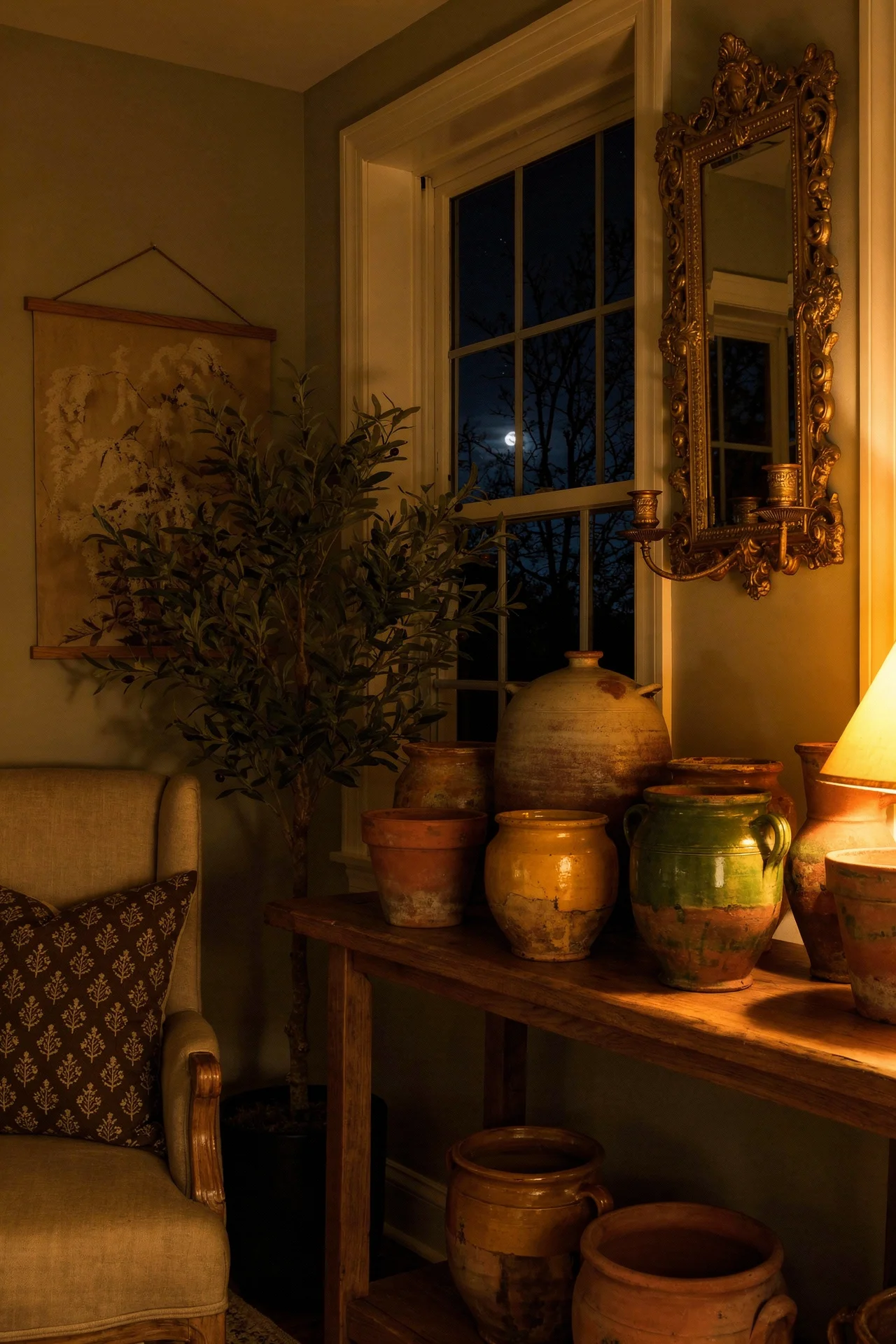
The restraint is the skill. Every object you decide not to add matters as much as every one you keep.
The palette that makes cottage French Country work is one of the gentlest in interior design. Every colour looks like it has been softened by decades of sunlight.
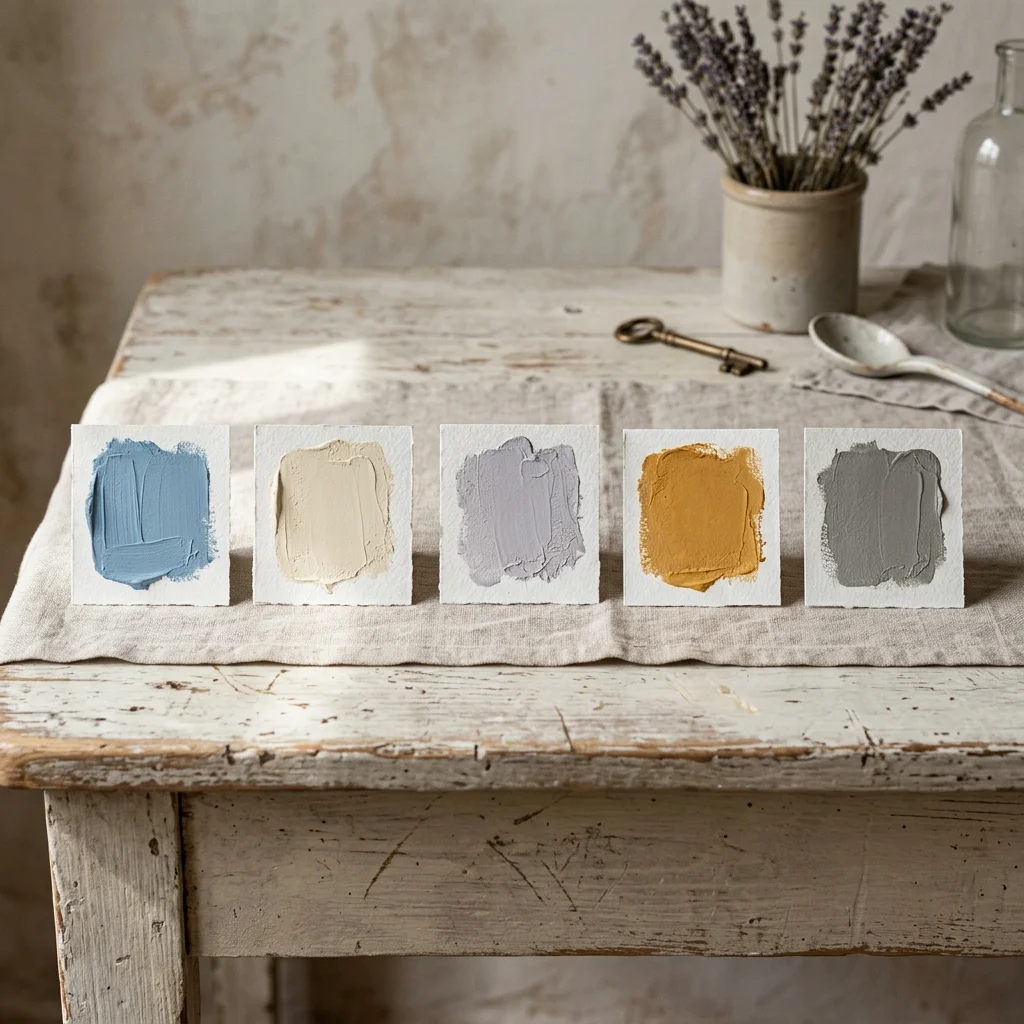
Soft Blue The most iconic French cottage colour. Think faded shutters, china plates, a Provencal summer sky late in the afternoon. Use it on an accent wall, a painted armoire, or upholstered dining chairs. It pairs beautifully with cream and warm wood. Paint Pick: [placeholder]
Cream Not white. Cream has the warmth that white lacks, and in a cottage room, warmth is everything. Use it as the base coat for walls and as the background colour for the entire space. It makes every other colour in the room feel intentional. Paint Pick: [placeholder]
Lavender A whisper of purple that connects the room to Provencal lavender fields. Best used in soft furnishings, a cushion, a throw, dried stems in a vase. On walls, keep it to a powder room or bedroom rather than the main living space. Paint Pick: [placeholder]
Gold Not bright or metallic. A muted, aged gold that appears in picture frames, chandelier hardware, and the warm undertones of aged oak. It brings quiet richness without flash. Paint Pick: [placeholder]
Soft Gray The neutral that bridges cool blues and warm creams. Stone grey, specifically. The colour of aged limestone and morning mist. It works on larger furniture pieces and as a secondary wall colour in rooms with strong natural light. Paint Pick: [placeholder]
Once the palette is in place, everything else falls into line. These colours do not compete. They coexist.
You do not need to renovate an entire house to get this right. Start with a single corner. An armchair reupholstered in washed linen. A jute rug layered under a faded kilim. One confit pot filled with dried lavender on a mantel you have cleared of everything unnecessary. The cottage version of French Country was never about perfection. It was always about the warmth of a home that somebody actually lives in.
For a shared sitting room with a television and hearth, this French country family room layout turns cottage character into a workable daily seating plan.
This post contains affiliate links, which means we may earn a small commission if you make a purchase through our links, at no extra cost to you.