Newsletter Subscribe
Enter your email address below and subscribe to our newsletter

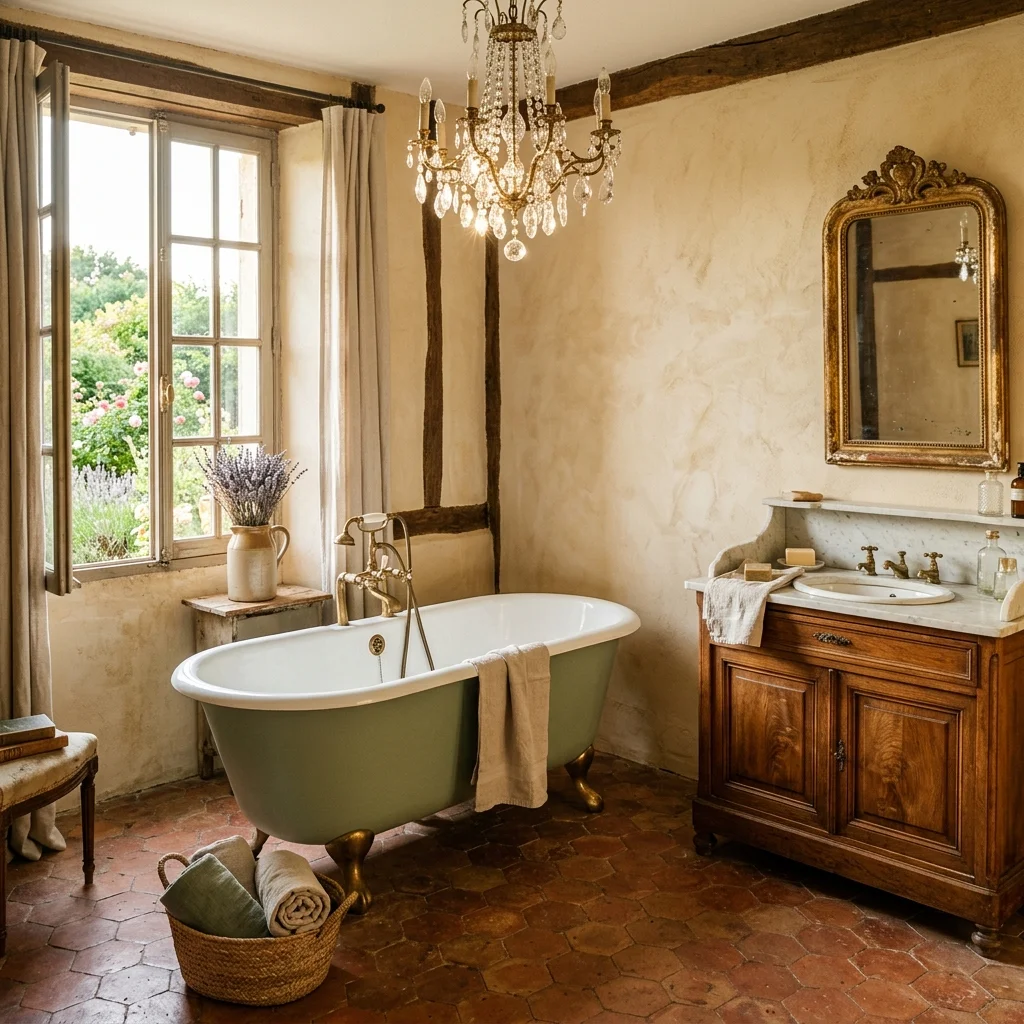
There is a detail that separates a French country bathroom that feels inherited from one that feels purchased. It is not the clawfoot tub or the gilded mirror. It is the oxidation on the tap. Unlacquered brass reacts to humidity and the oils from your hands, slowly darkening from polished gold to a deep amber brown. Sealed reproductions never do this. They stay frozen, artificially bright, and that frozen brightness is the tell. I’ve spent a long time looking at what makes these rooms feel real versus staged, and it keeps coming back to the same thing. The materials that age are the ones that earn the room its character. Everything else is set dressing.
Most bathroom hardware ships with a synthetic lacquer coating that locks the metal in a permanent state of polish. It looks sharp on day one and identical on day three thousand. That consistency is exactly the problem.
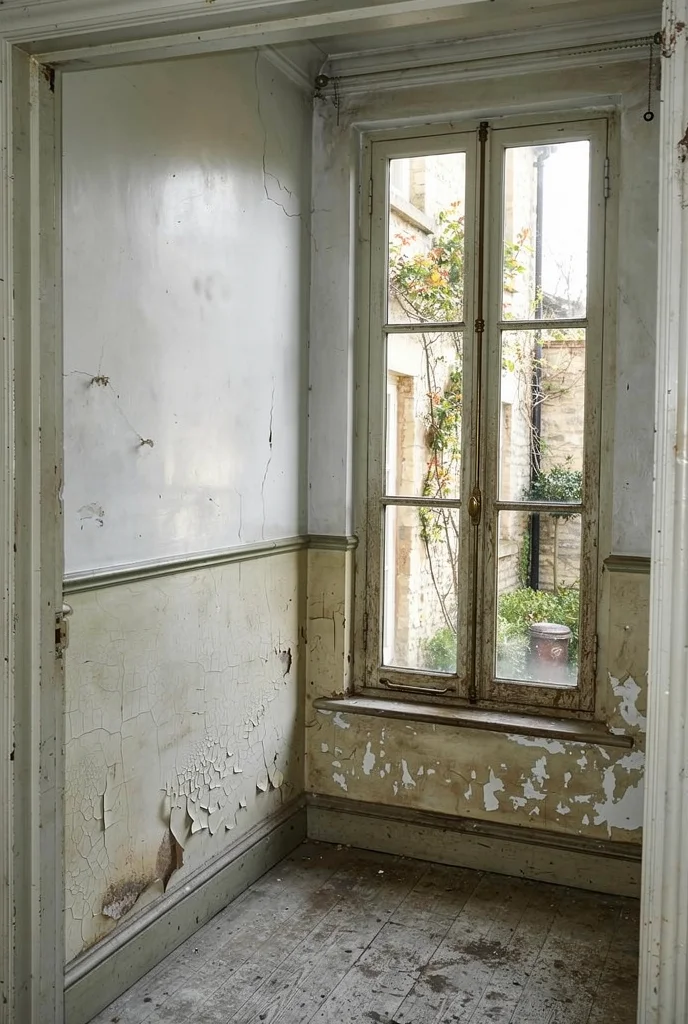
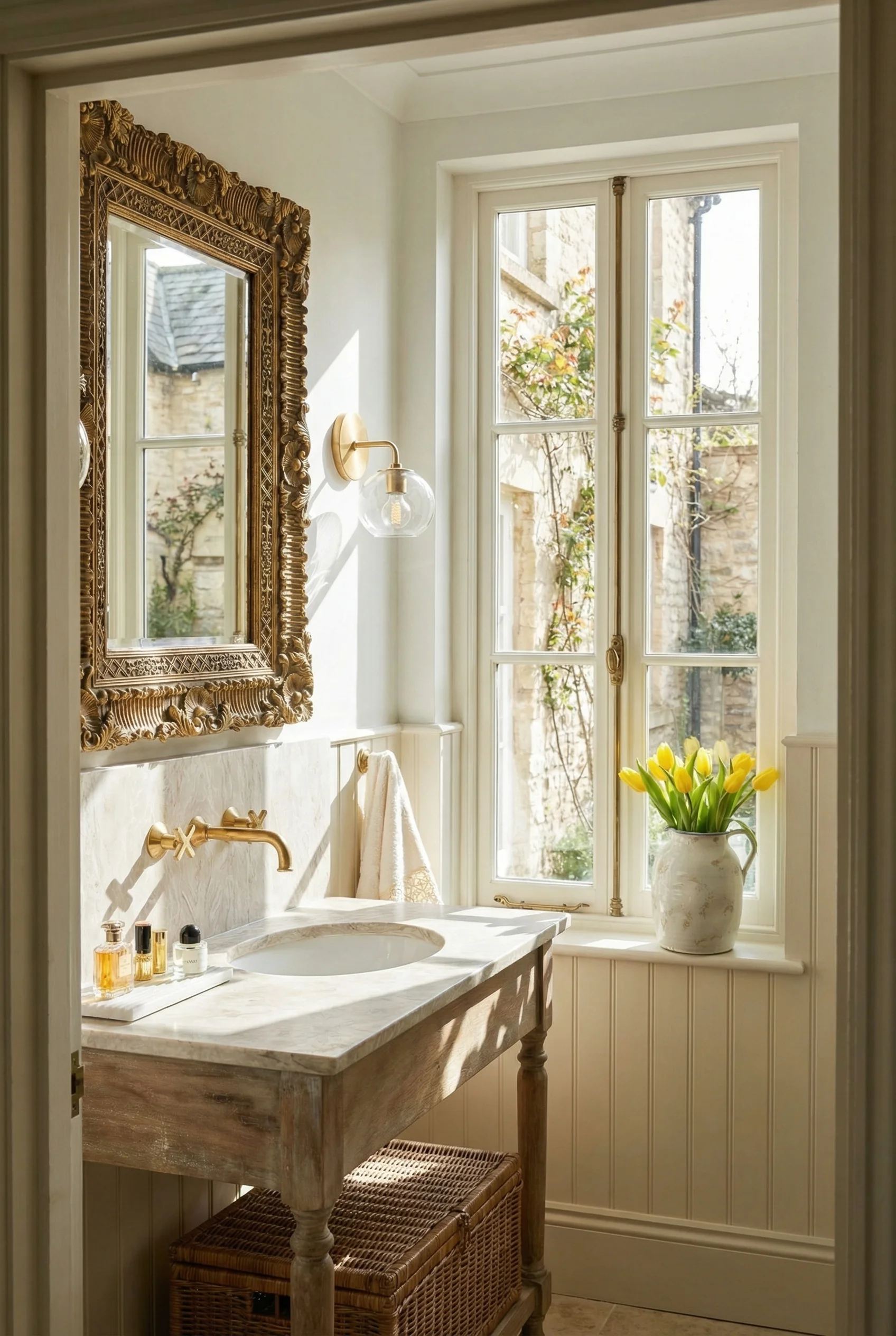
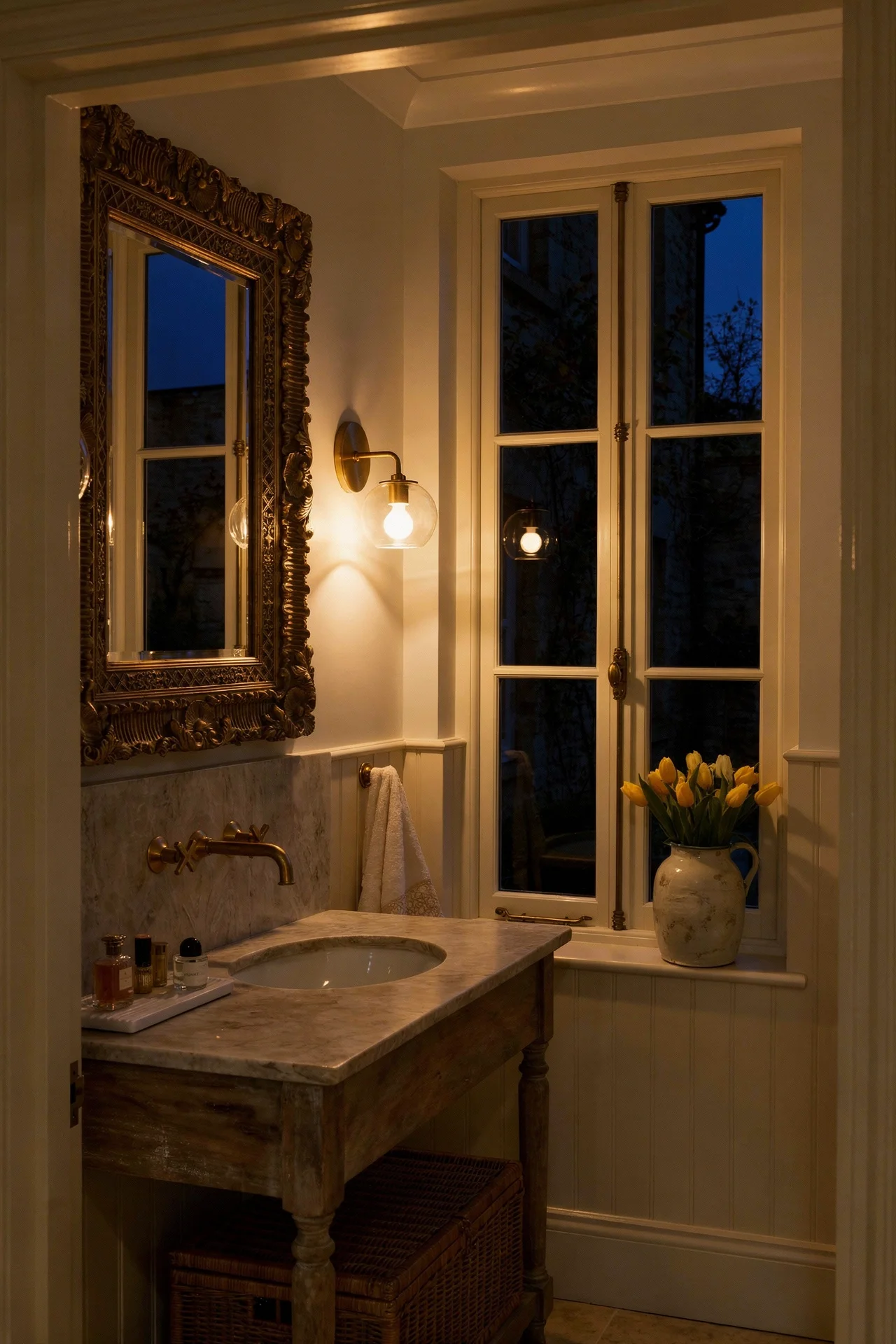
French country design leans heavily on what the trade calls “living finishes.” Unlacquered brass, burnished copper, oil rubbed bronze. These metals react to the bathroom’s humidity, to steam, to the natural oils on your skin. Over months, brass deepens from bright gold to a warm, tawny brown. Copper shifts toward a burnished rose. Bronze darkens at the edges while the high points stay lighter where your hand grips the handle.
The result is a piece of hardware that records how you use it. The faucet handle worn smooth on one side. The towel ring slightly darker where the damp cloth rests. I think this is the most honest form of decoration, the kind that tells the truth about a room instead of performing for it.
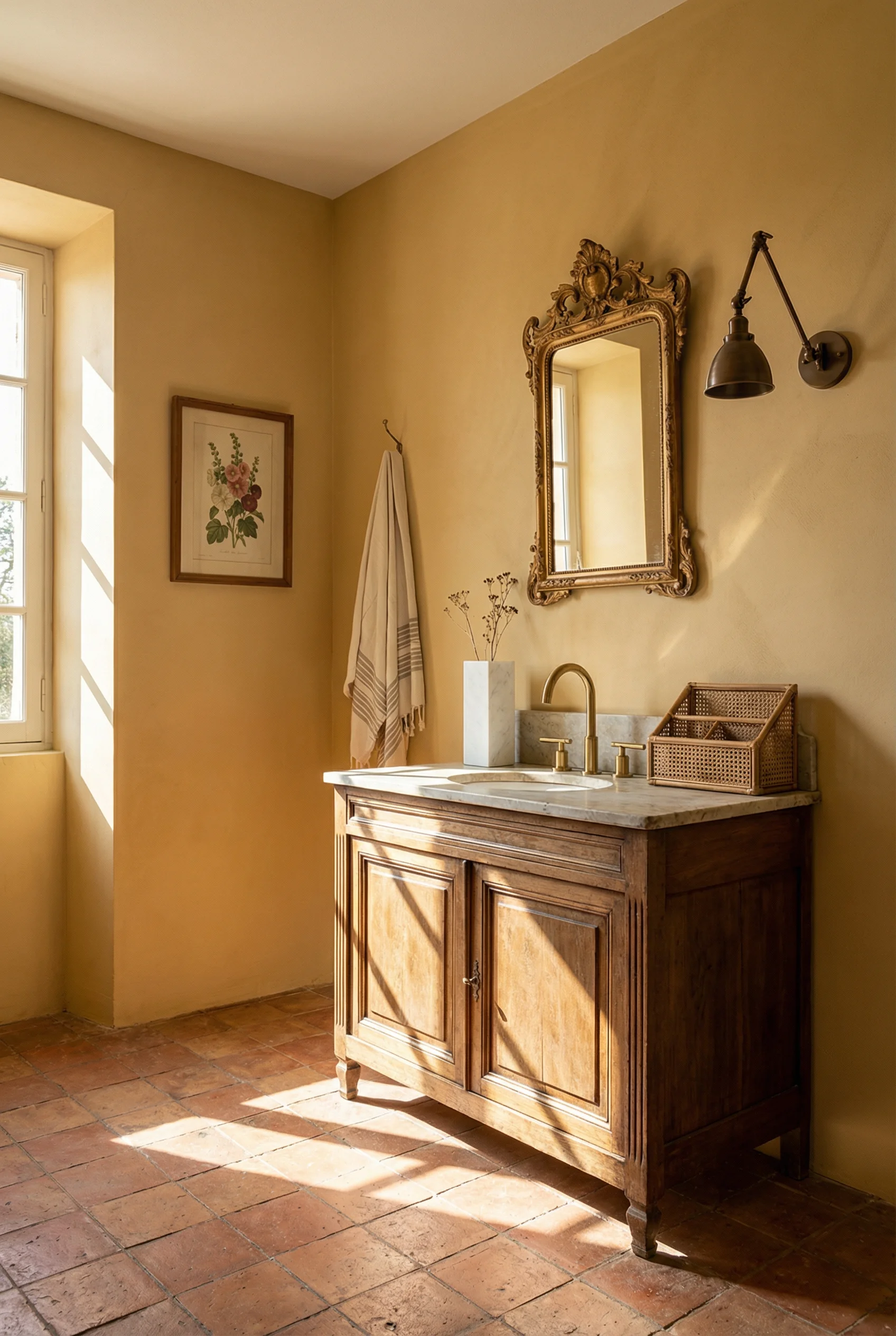
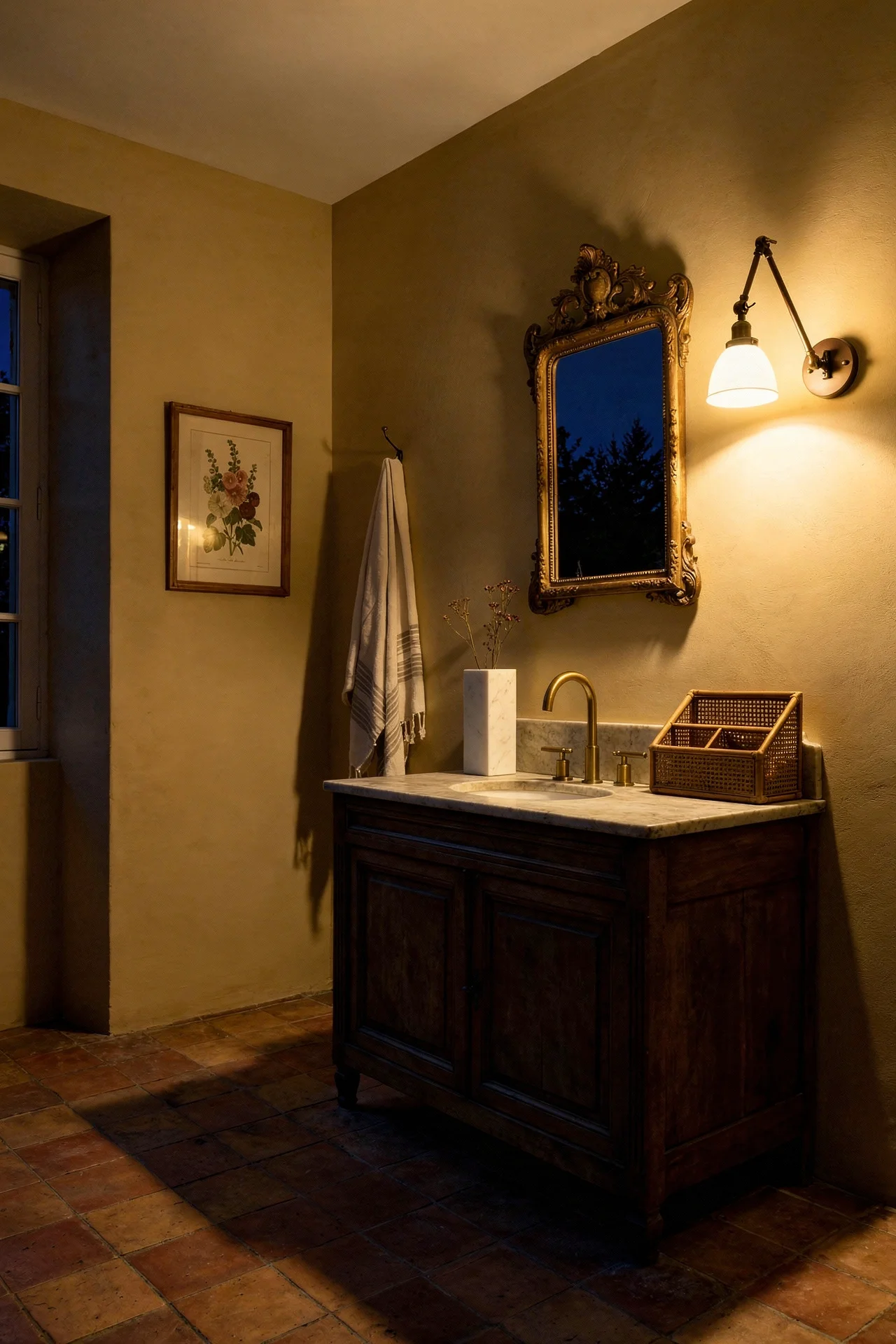
If you are sourcing unlacquered brass faucets, look at the underside of the spout before you buy. Reproductions sealed with clear lacquer will feel perfectly smooth and glassy. Genuine unlacquered brass has a slightly more textured, matte feel, almost like touching raw metal. Etsy and Van Dyke’s Restorers both carry solid unlacquered options. Tapron and Mountain Plumbing Products are worth checking for decorative brass P traps and bottle traps that keep exposed plumbing looking intentional rather than unfinished.
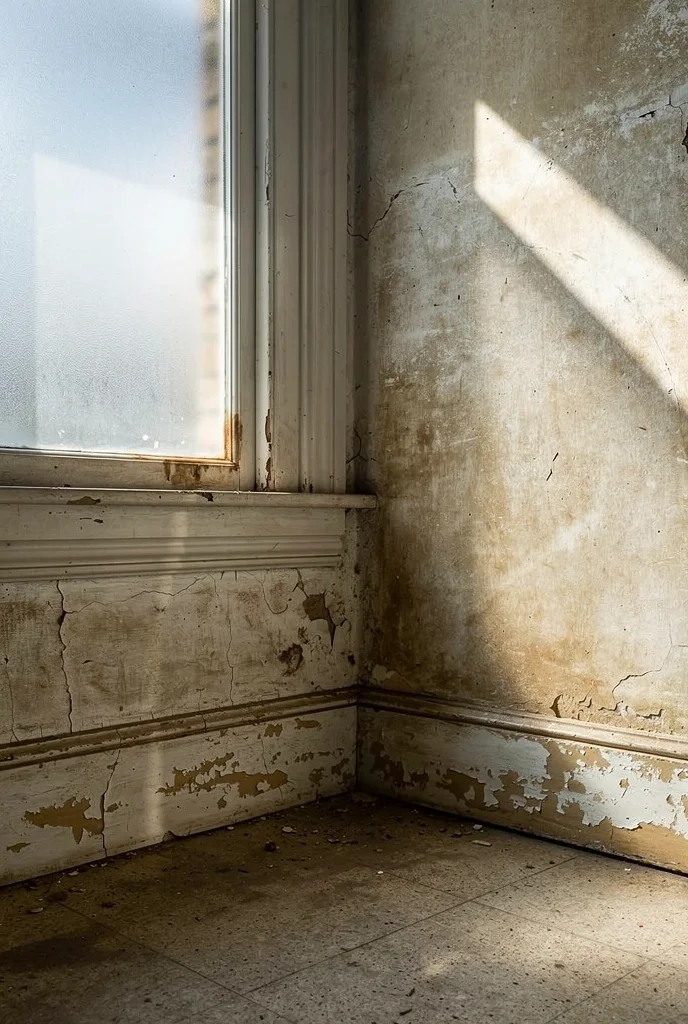
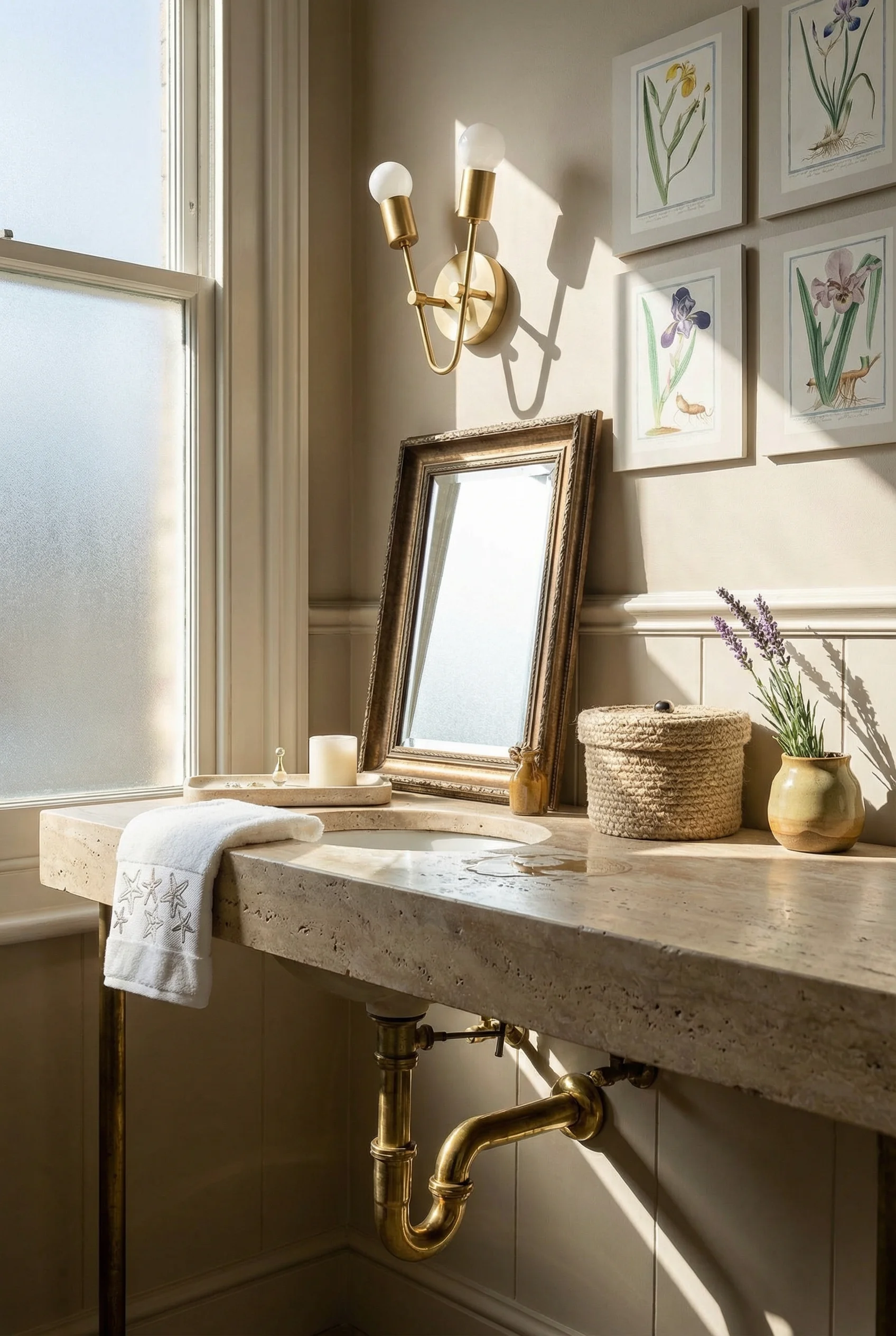
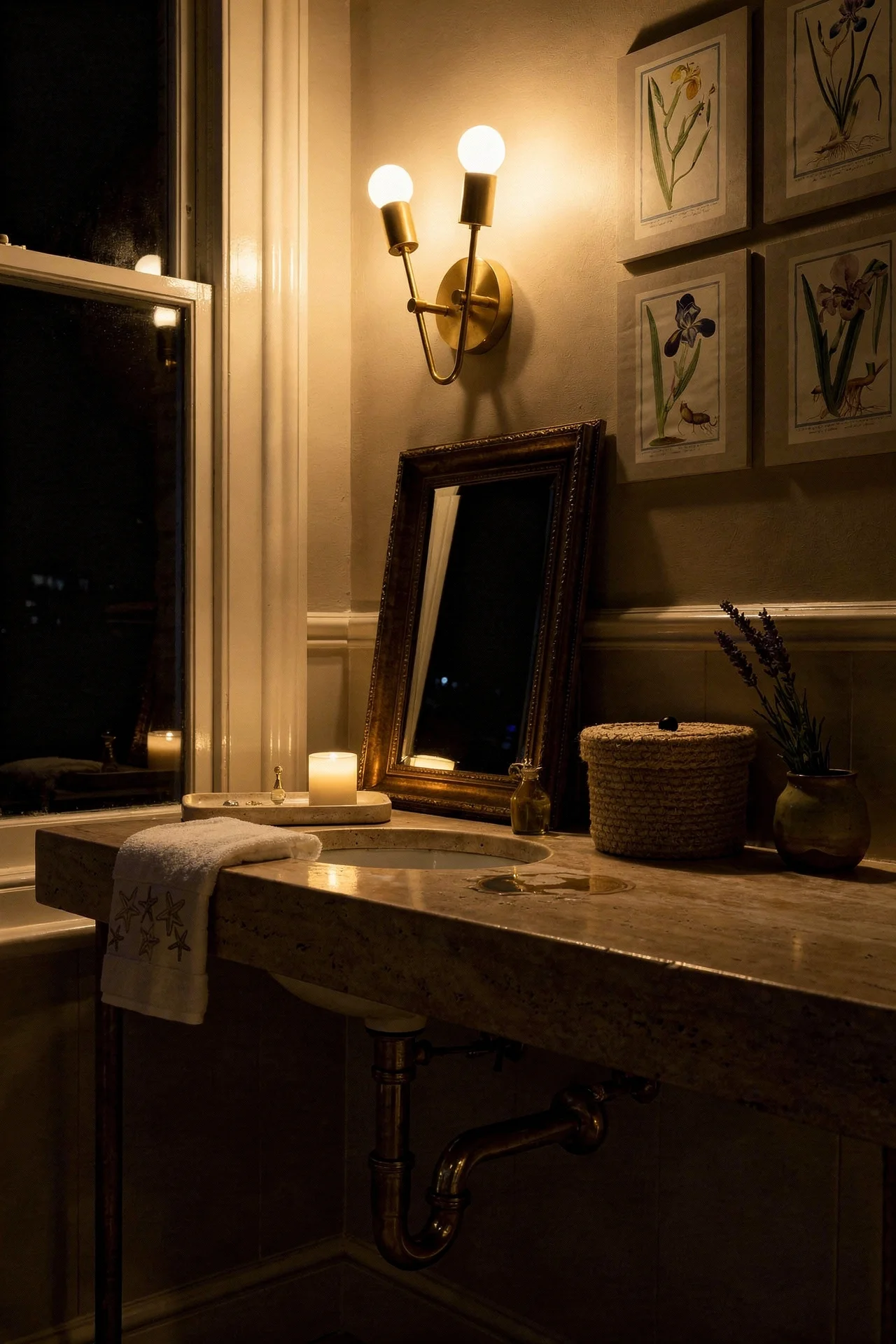
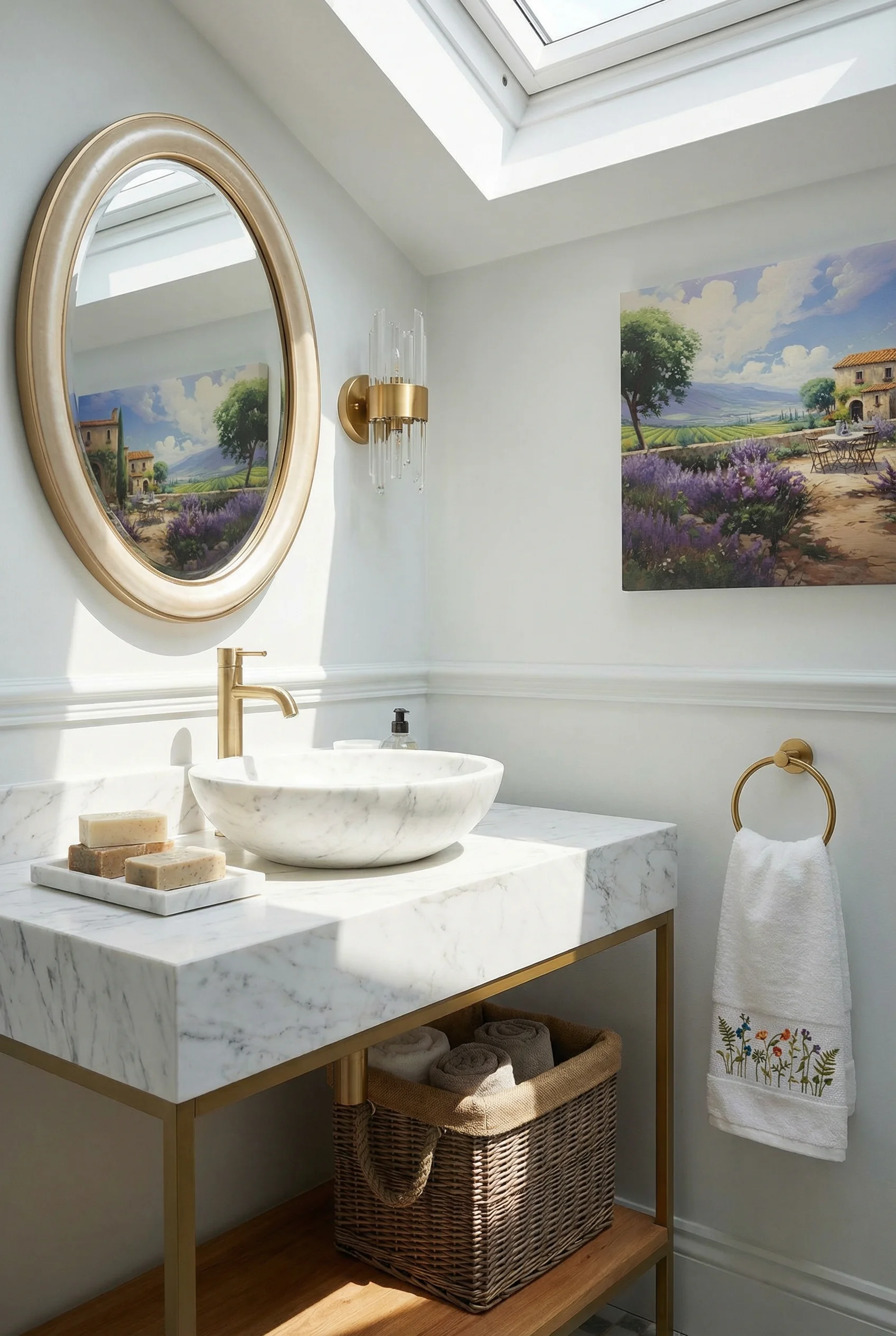
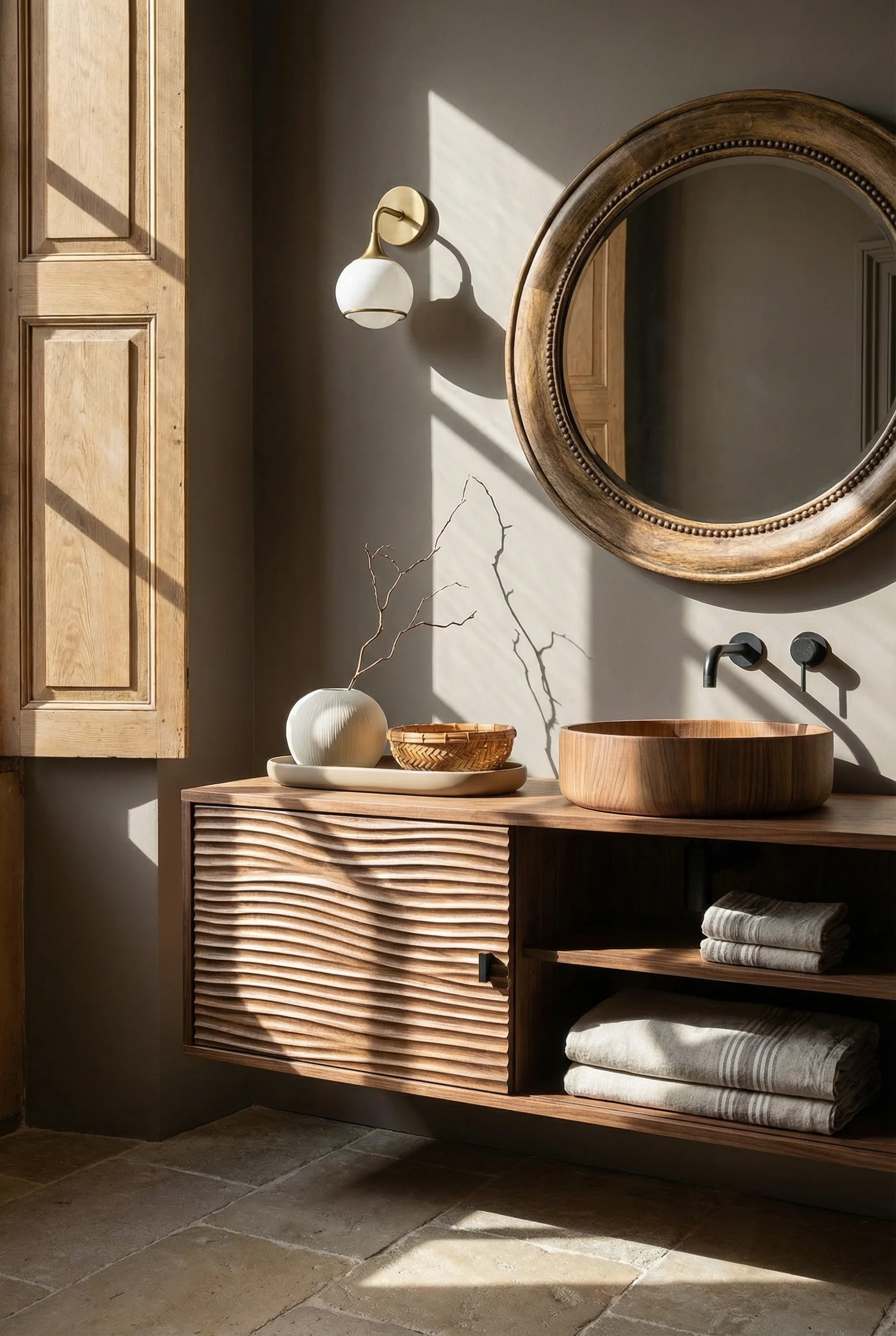
Built in vanity cabinets are one of the fastest ways to make a French country bathroom look like a catalogue page. The style has always favoured standalone furniture, pieces that look like they wandered in from a bedroom or a dining room and simply stayed.
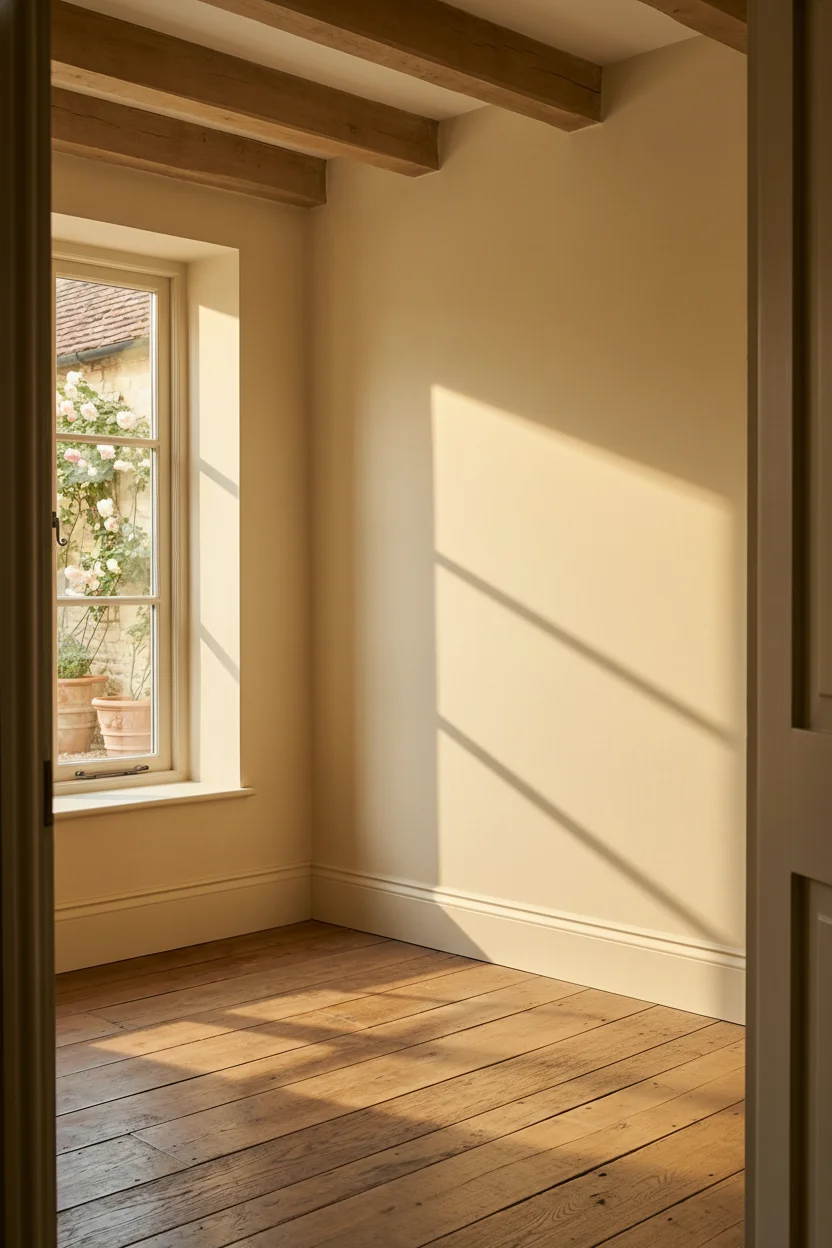
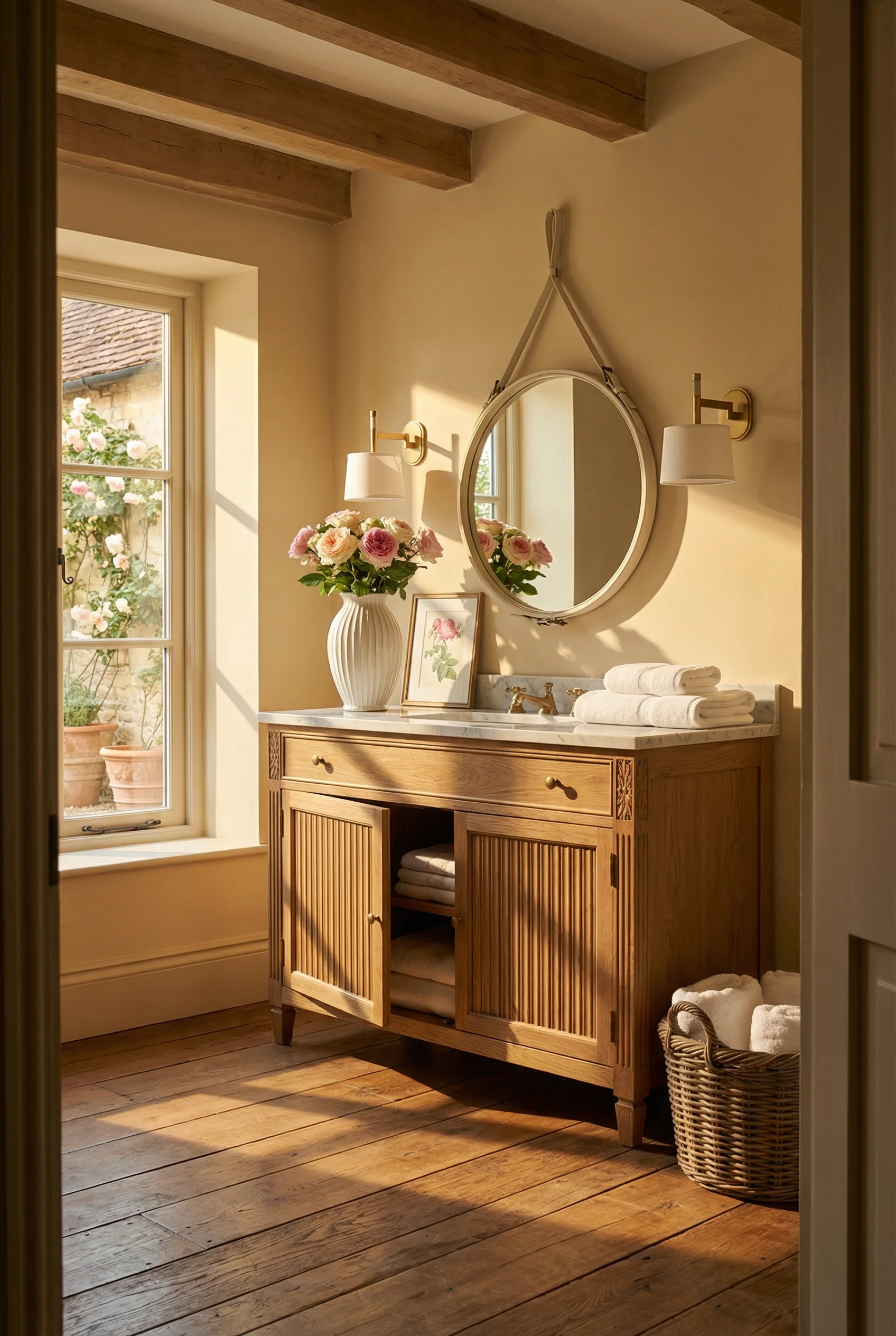
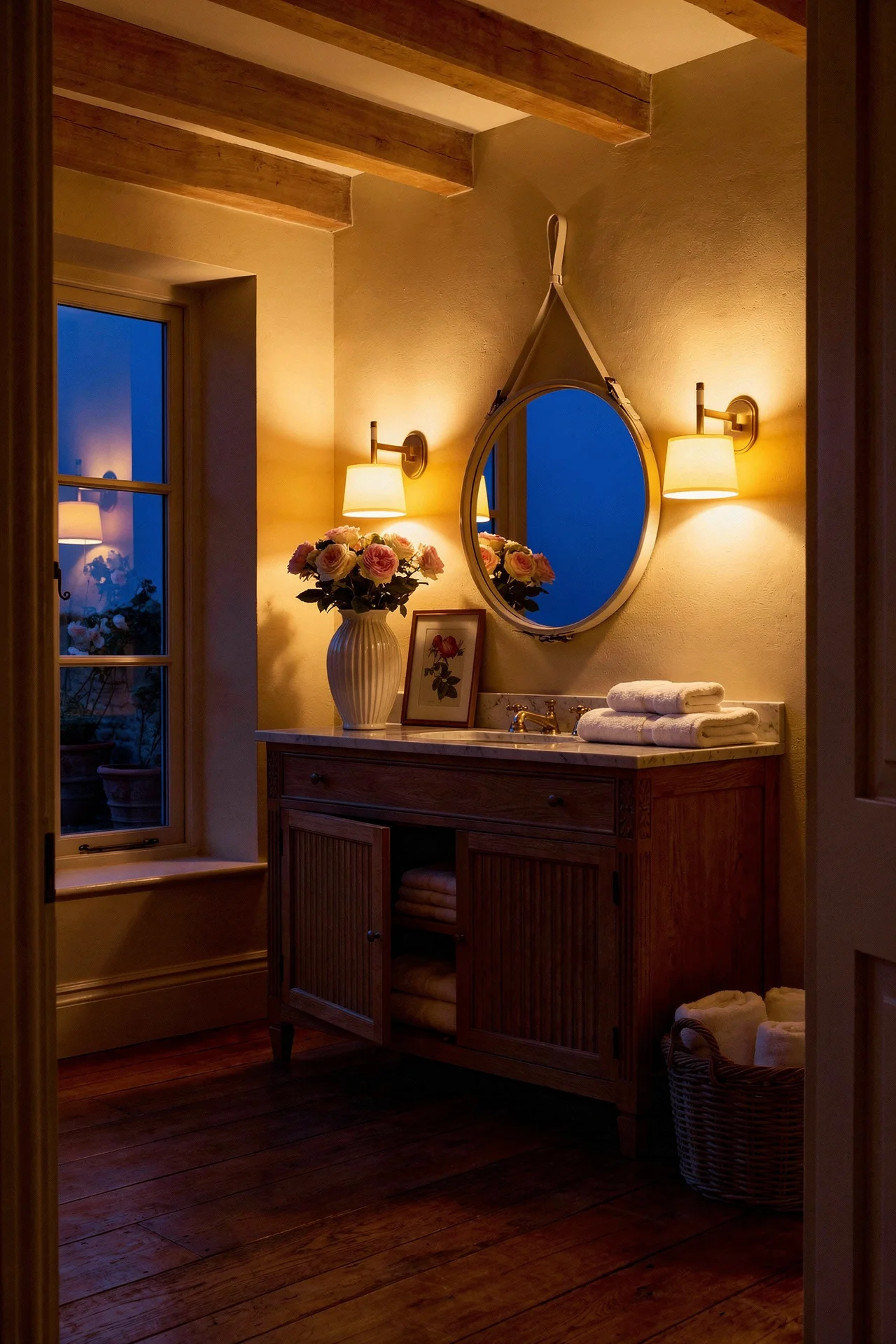
The most classic route is a 19th century Louis Philippe commode. These are solid oak or walnut dressers with a rounded front profile and simple brass hardware. Top one with a marble slab and an undermount copper or porcelain basin and you have a vanity that no factory cabinetry will ever replicate. Rustic pine dresser bases work in the same way, particularly the farmhouse pieces with thick plank tops and hand forged iron pulls.
For smaller bathrooms, open washstands are worth your attention. Victorian era pieces with turned wooden legs or slender brass and iron bases sit lighter in the room. They leave floor space visible, which helps a small room breathe, and the exposed shelf beneath becomes useful storage for rolled towels or a wire basket of soaps.
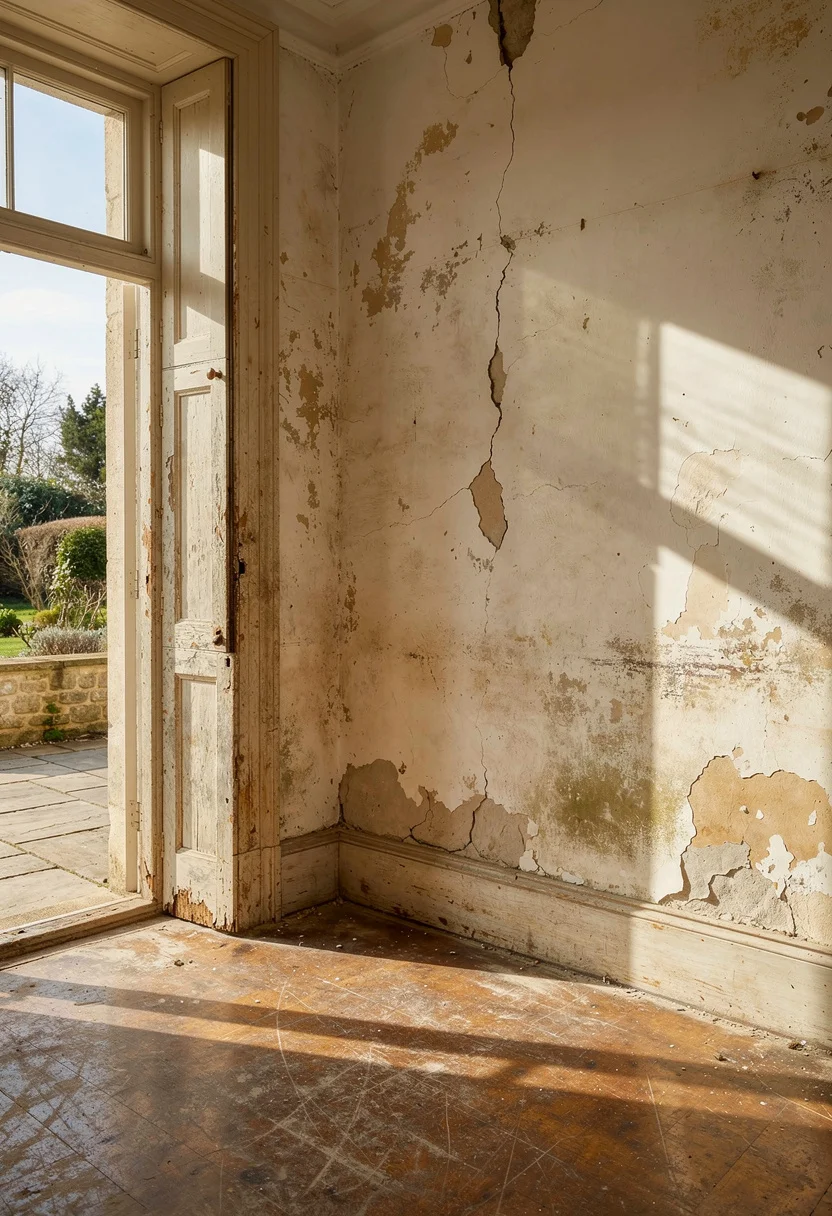
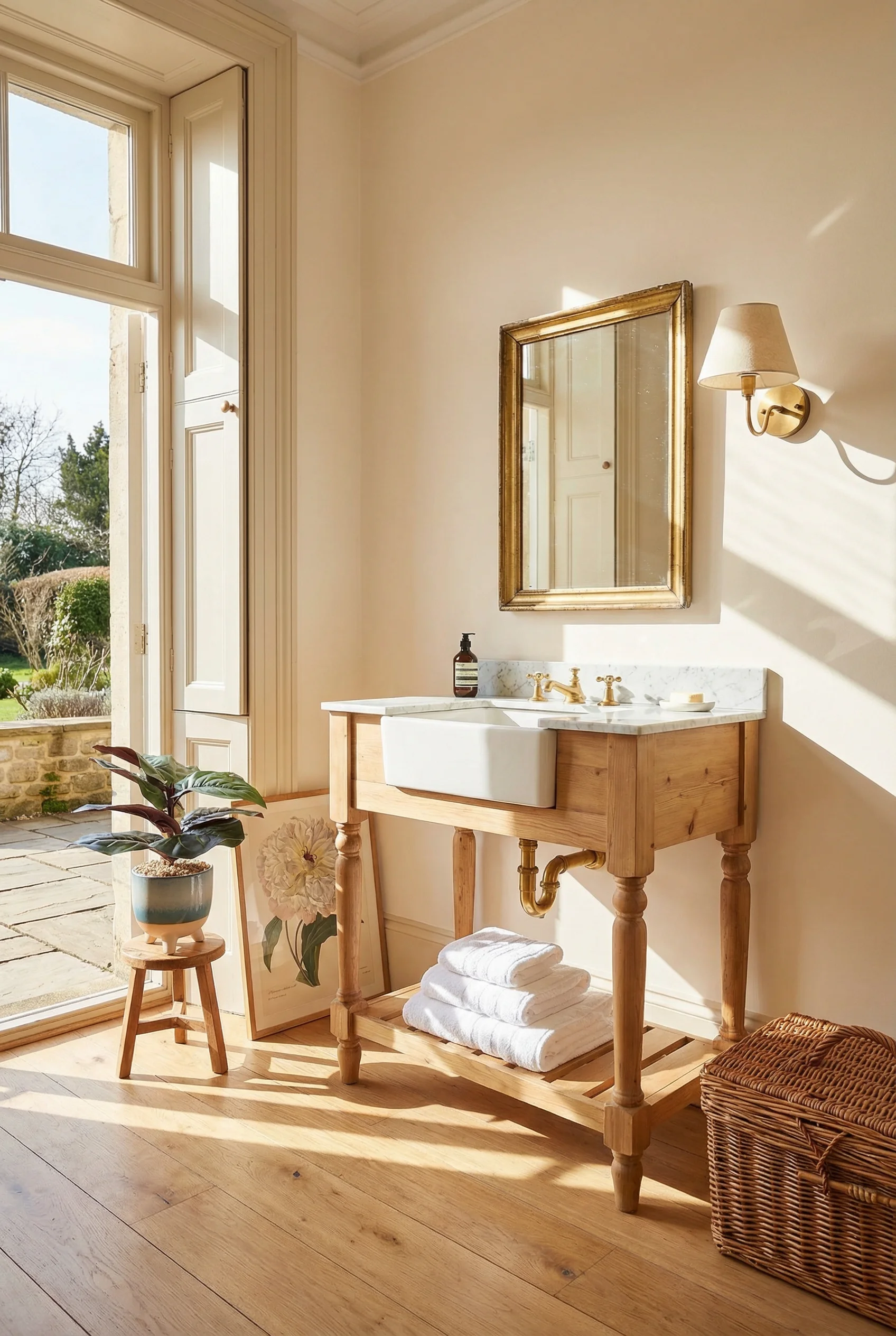
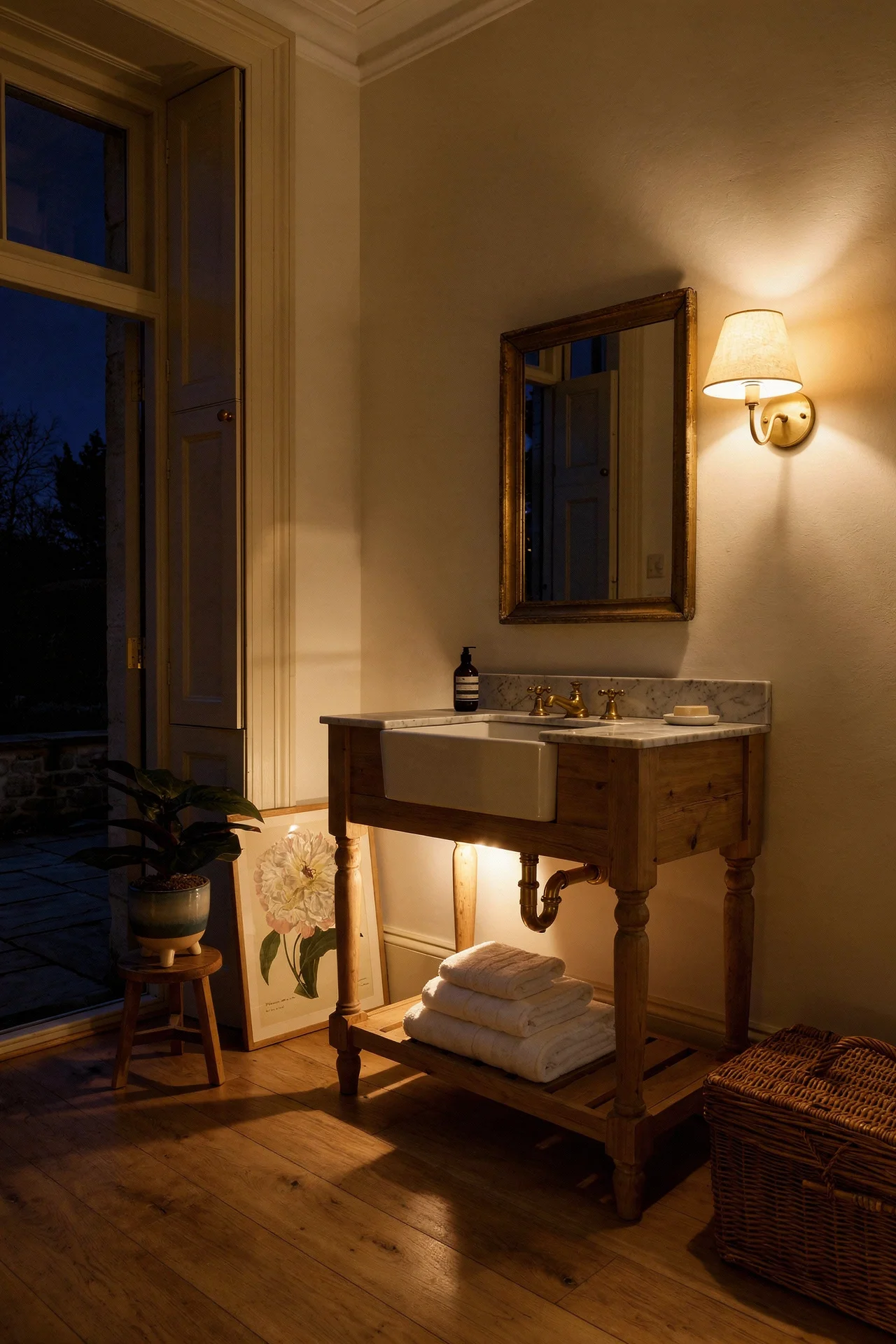
The trick to making a repurposed antique work as a vanity is waterproofing the top surface. Marine grade polyurethane on the wood surrounding the basin cutout prevents moisture damage without changing the visible patina. I’d lean towards a vessel sink sitting on top of the commode rather than an undermount cut, purely because it preserves more of the original piece. The less you modify it, the more the room benefits from the furniture’s actual history.
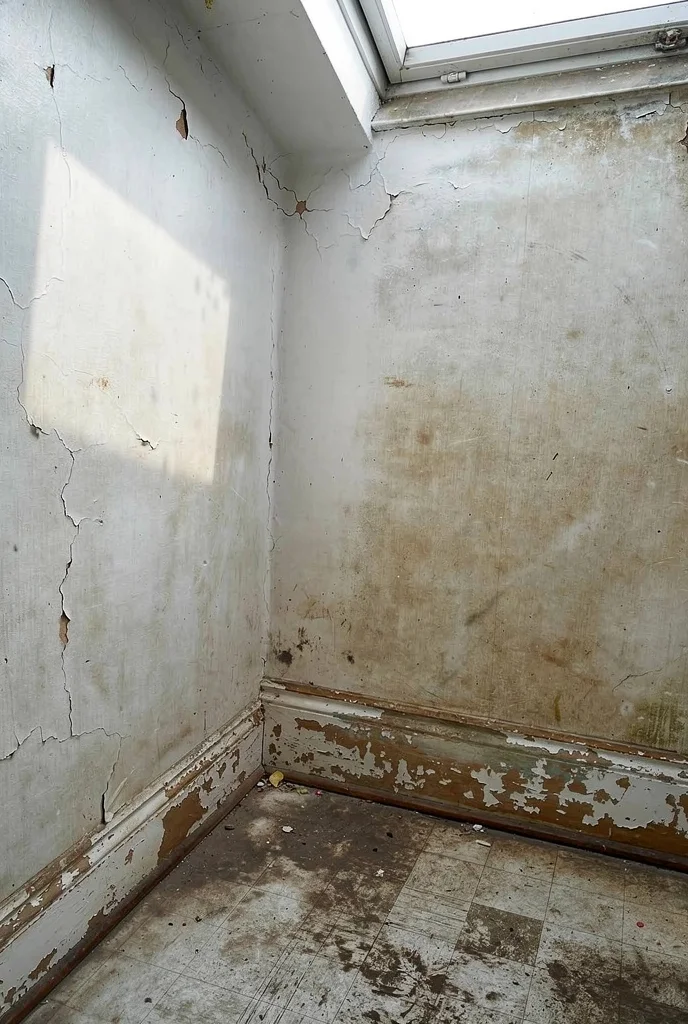
A freestanding bathtub is the centrepiece of the French country bathroom. Historically, owning one signalled quiet wealth. Today it signals that you cared enough to plan the room around a single object rather than fitting objects into a room.
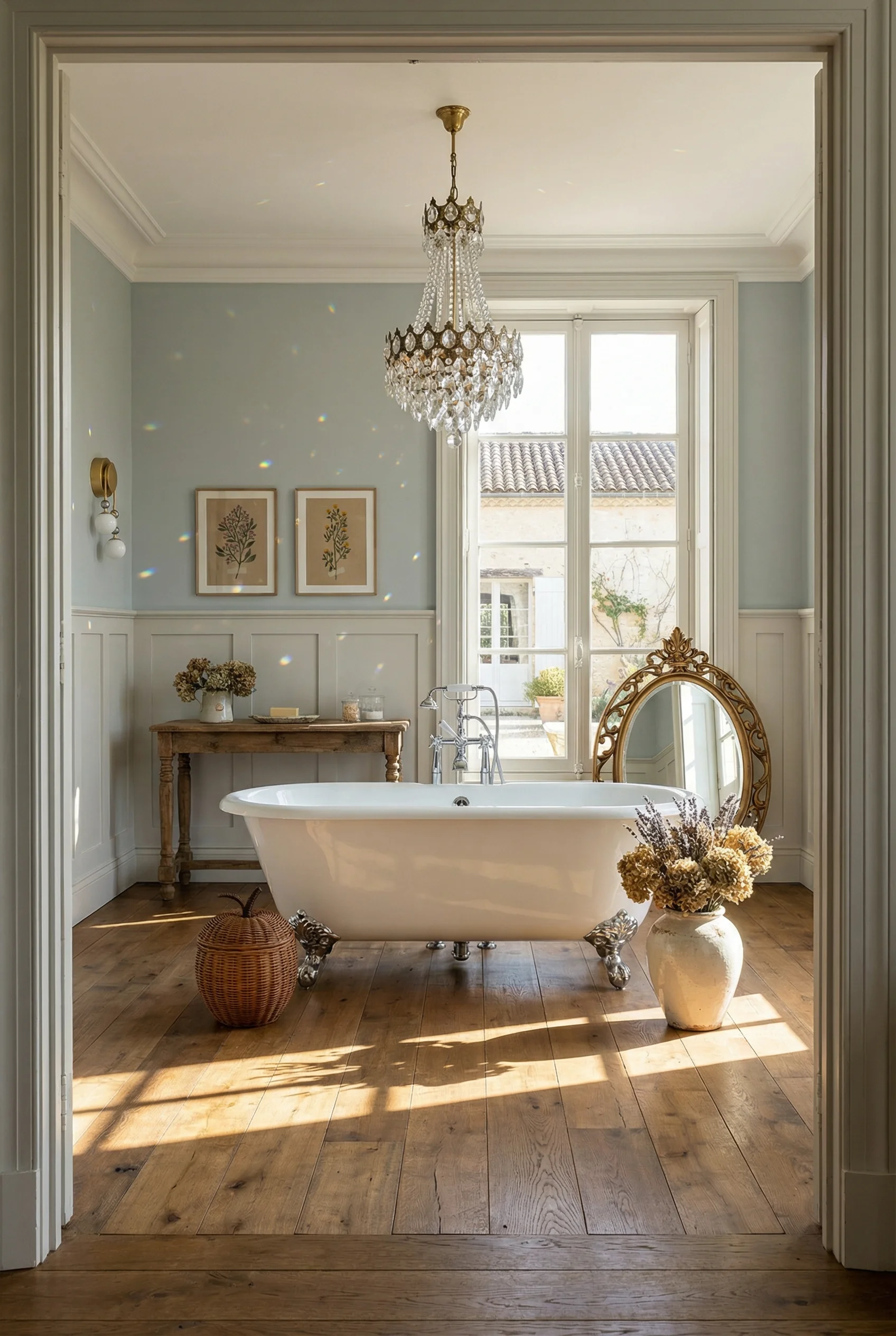
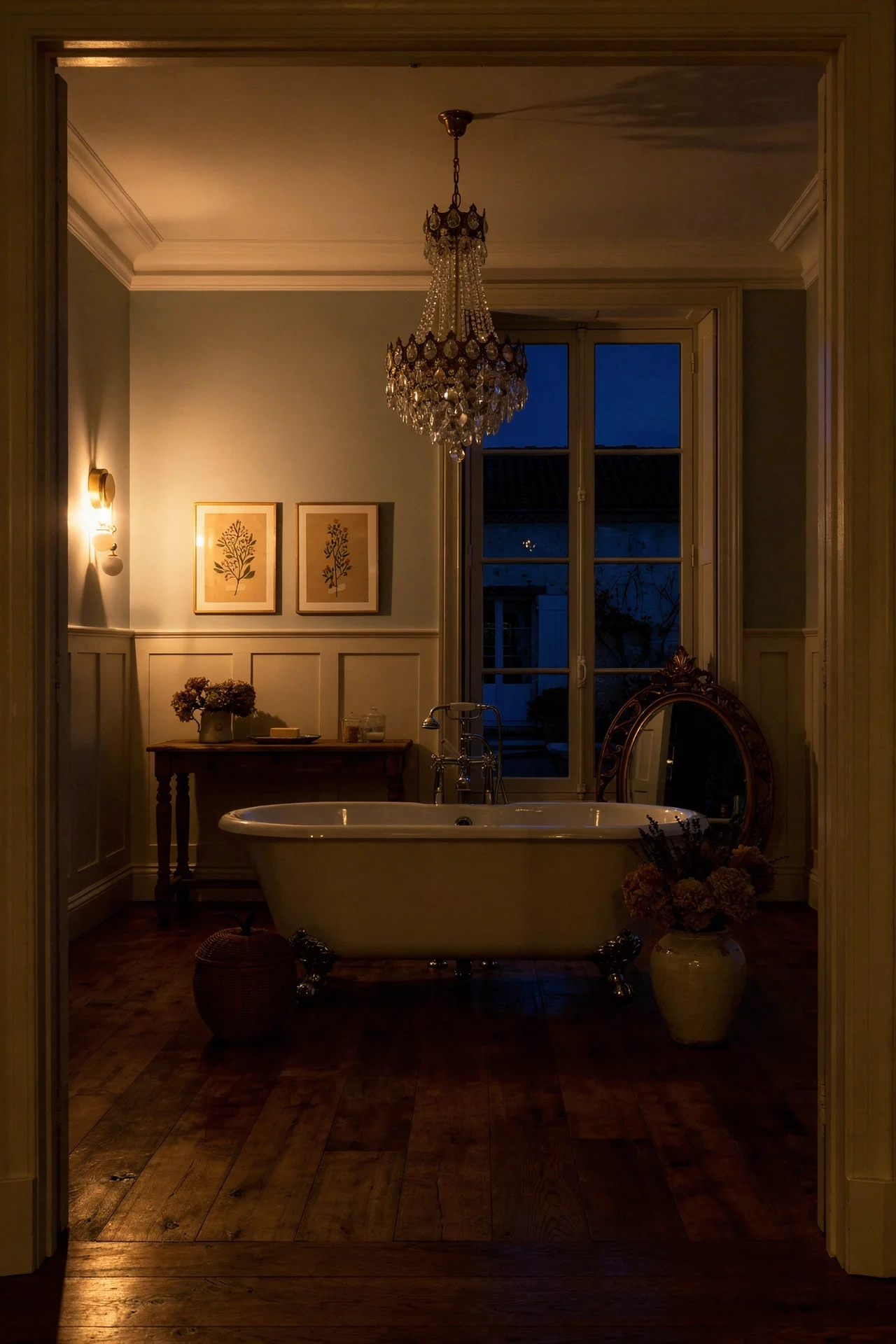
Cast iron clawfoot tubs come in three main shapes. The classic roll rim has a uniform lip all the way around. The slipper raises one end higher for a deep, reclined soak. The double slipper raises both ends with the faucet mounted at the centre. Feet are where the personality lives. Ball and claw is the most common, but lion’s paw feet and the ornate Imperial style add a heavier, more sculptural presence.
Copper tubs are the more dramatic option. They retain heat faster than cast iron, have natural antimicrobial properties, and develop that same living patina I keep coming back to. A new copper bath is a bright, almost salmon colour. Within a year of use, it burnishes to a deep, reddish brown that feels like it has been in the room for decades.
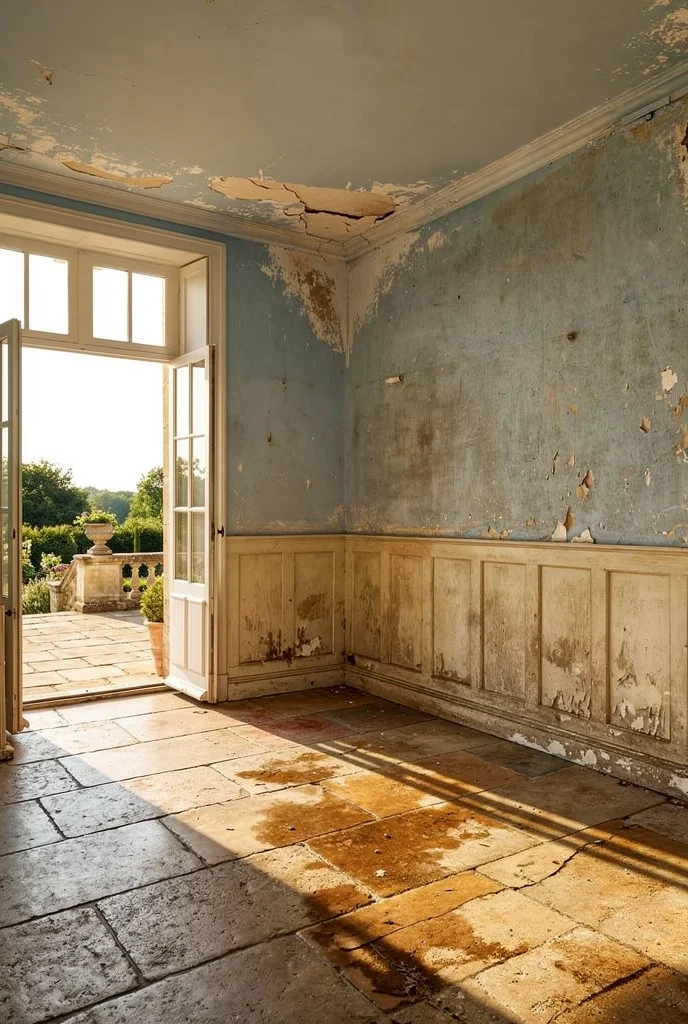
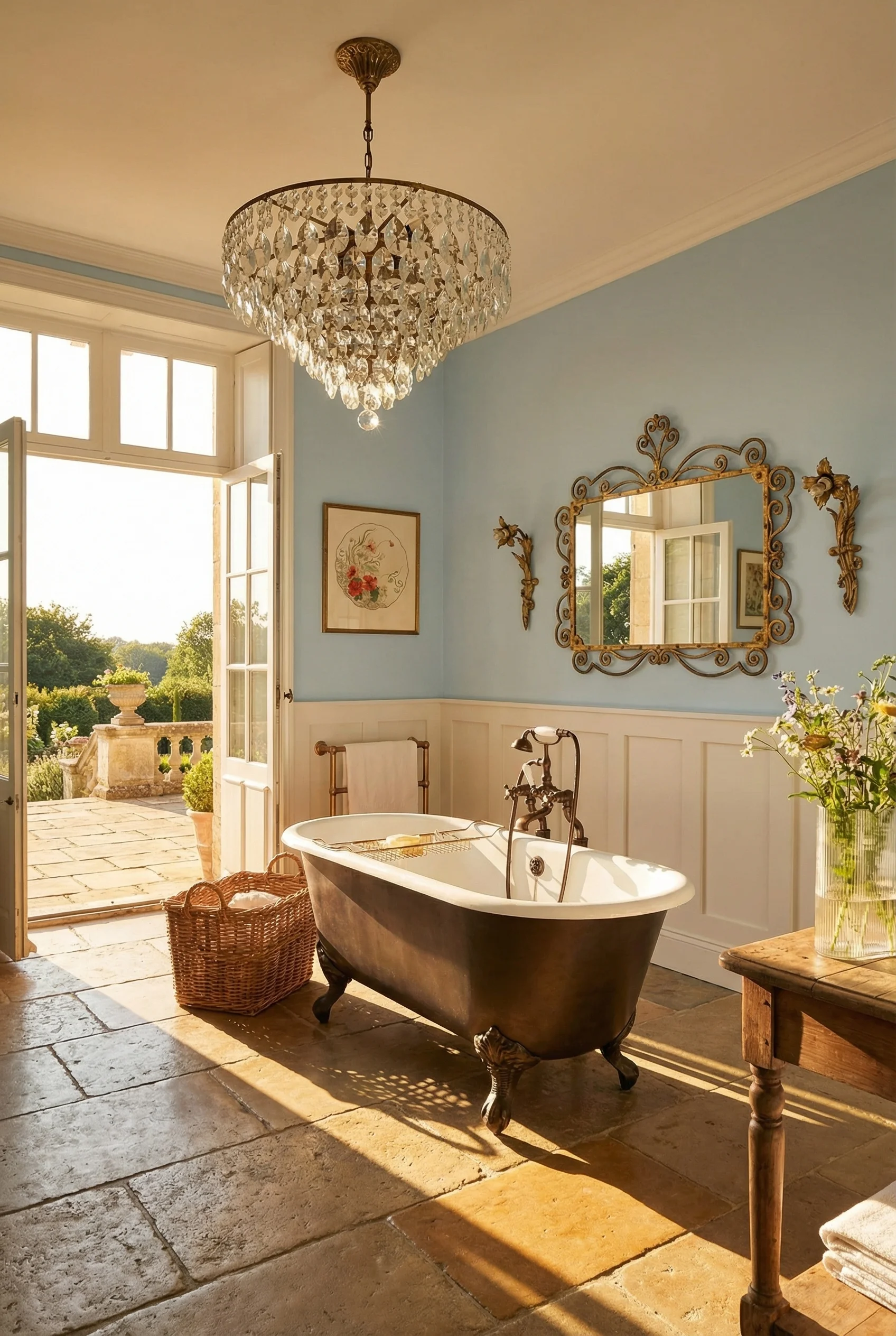
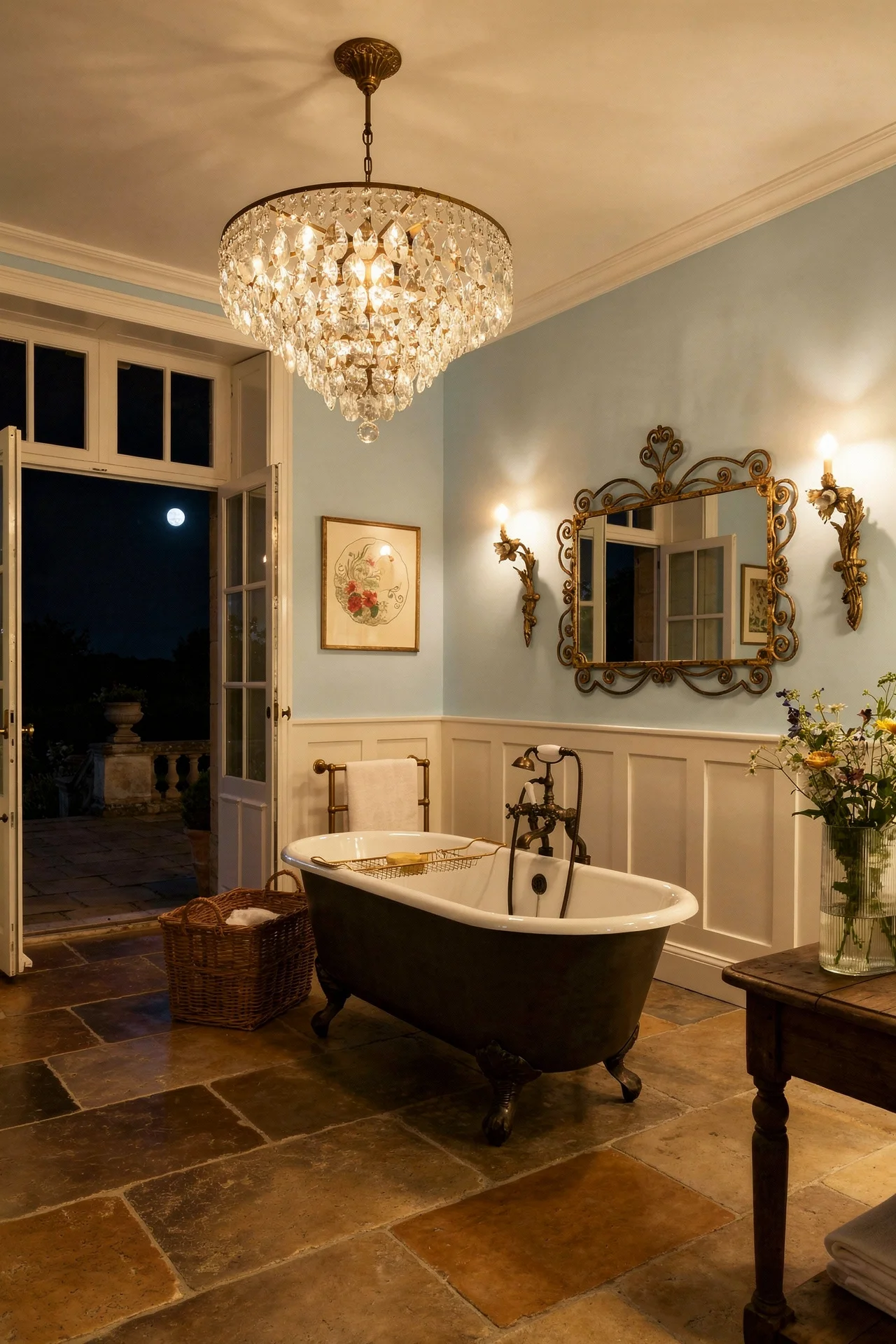
One practical note that gets overlooked. A cast iron tub filled with water and a bather can weigh between 700 and 1,000 pounds. If your bathroom is on an upper floor, you may need a structural engineer to assess whether the floor joists need blocking or sistering. It is not glamorous planning, but it is the kind of planning that stops a beautiful tub from becoming a beautiful problem. Vintage Tub & Bath and The Copper Bath Company both carry period accurate freestanding options worth looking at.
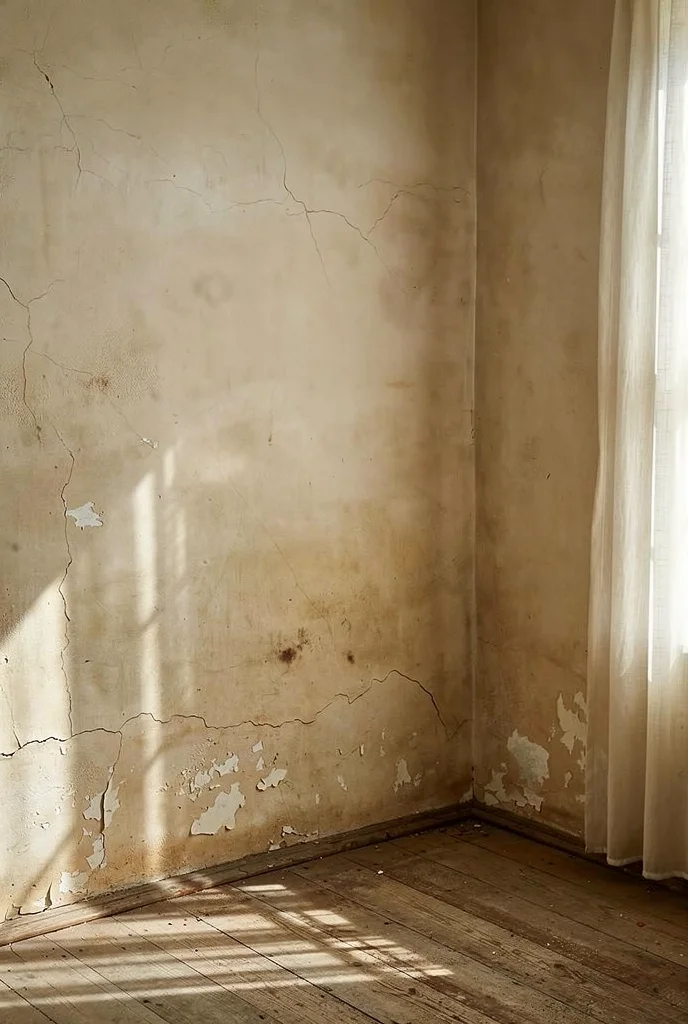
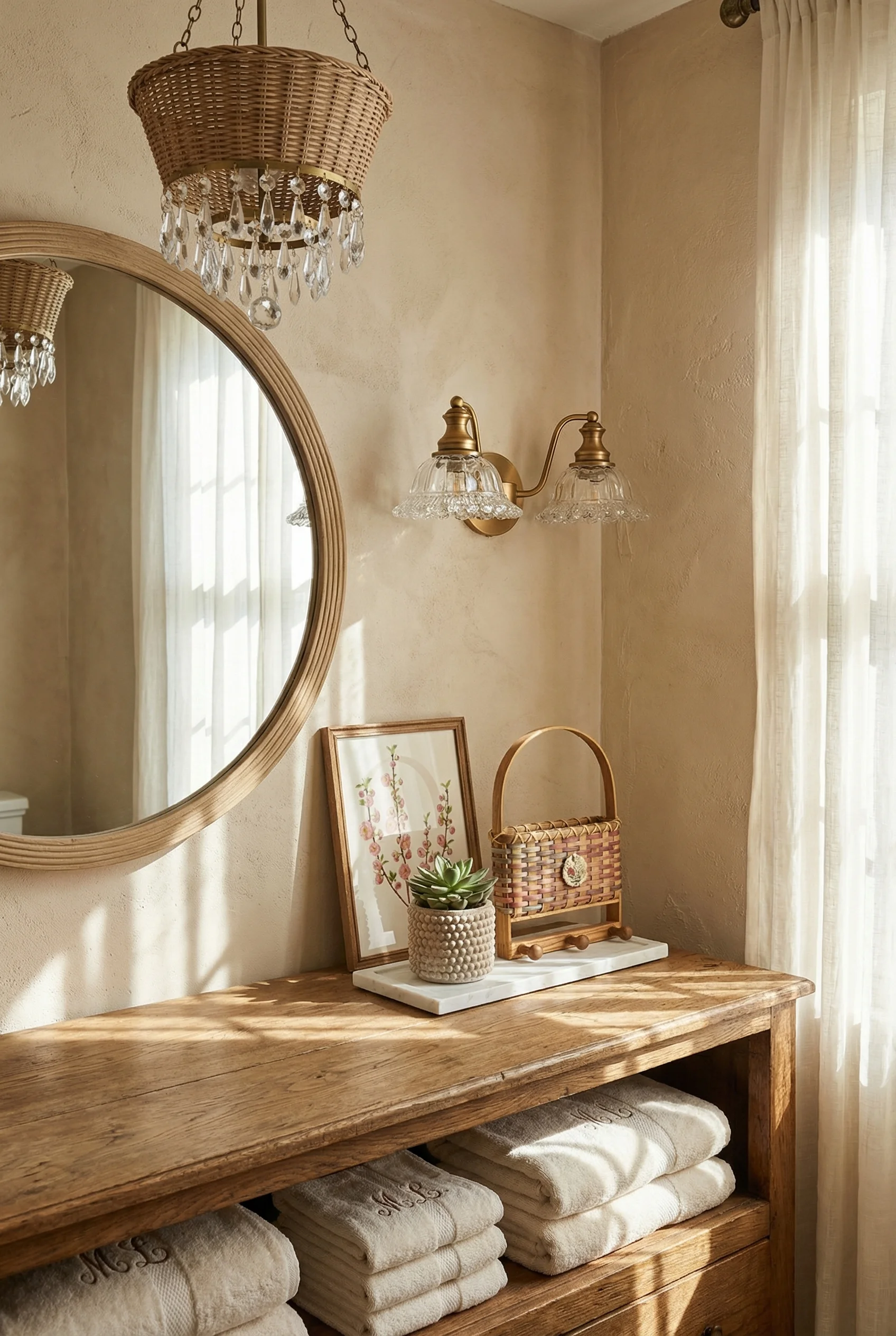
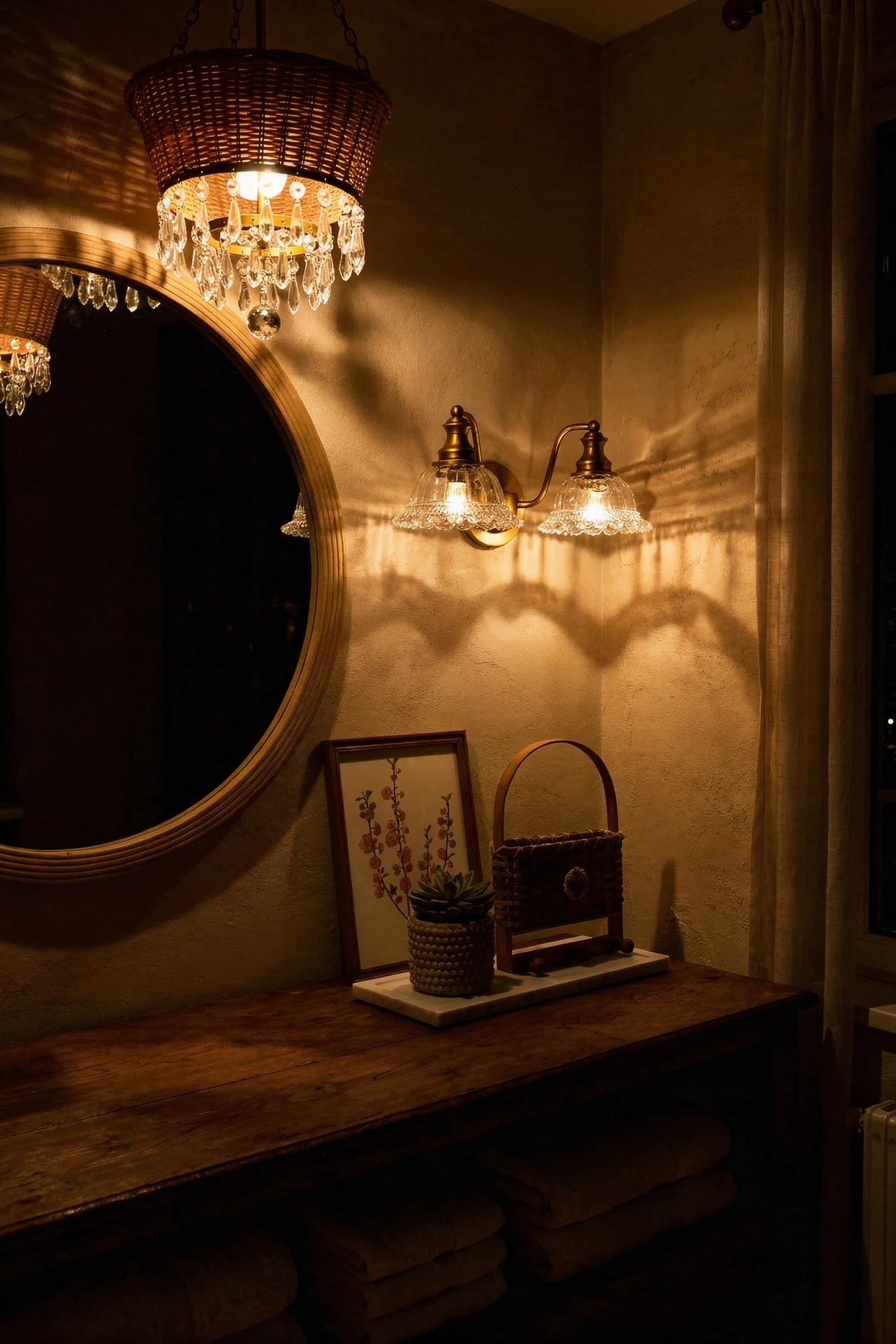
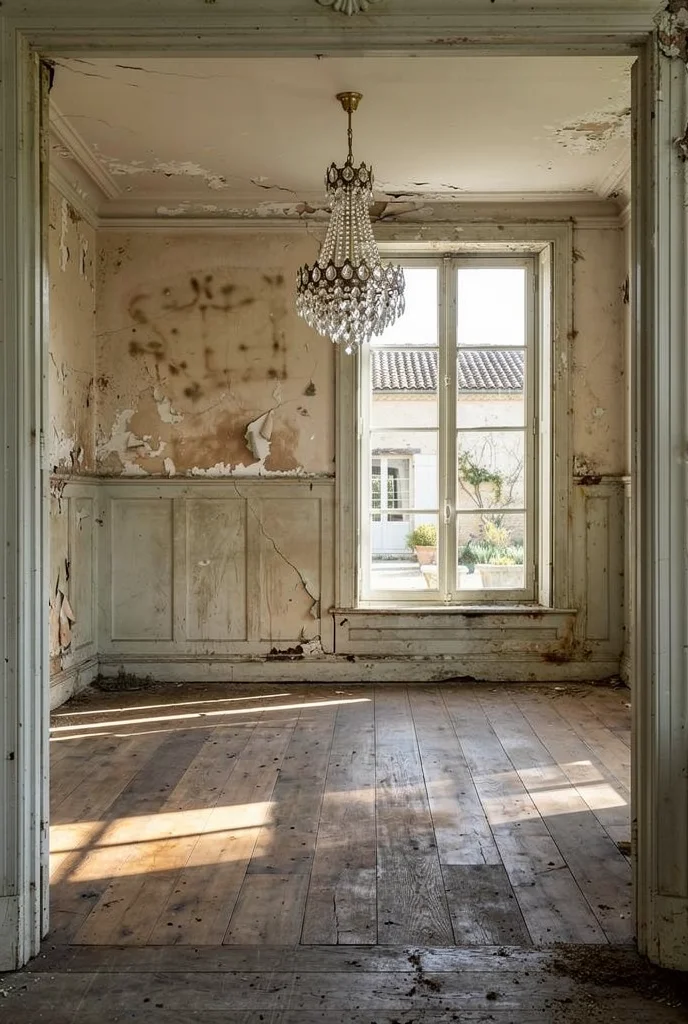
The floors in an authentic French country bathroom are not new materials made to look old. They are old materials that look exactly their age.
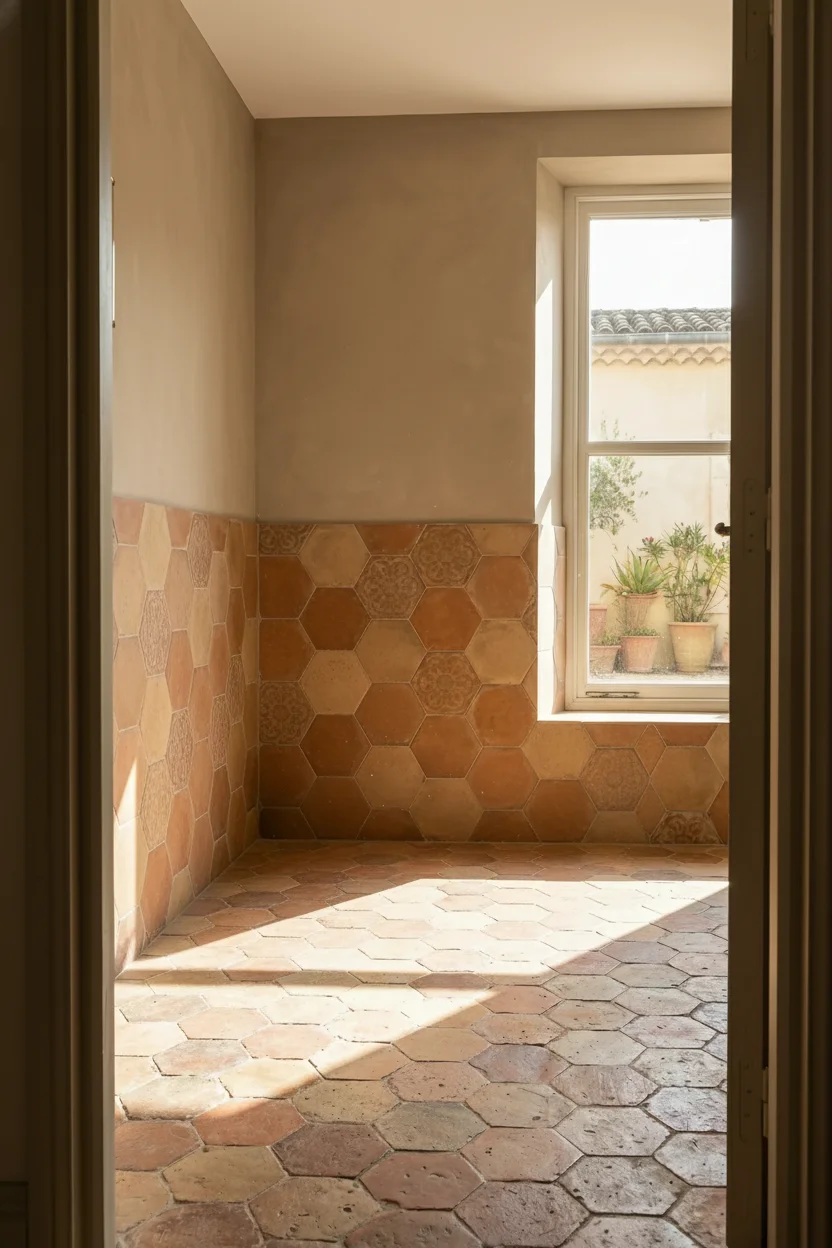
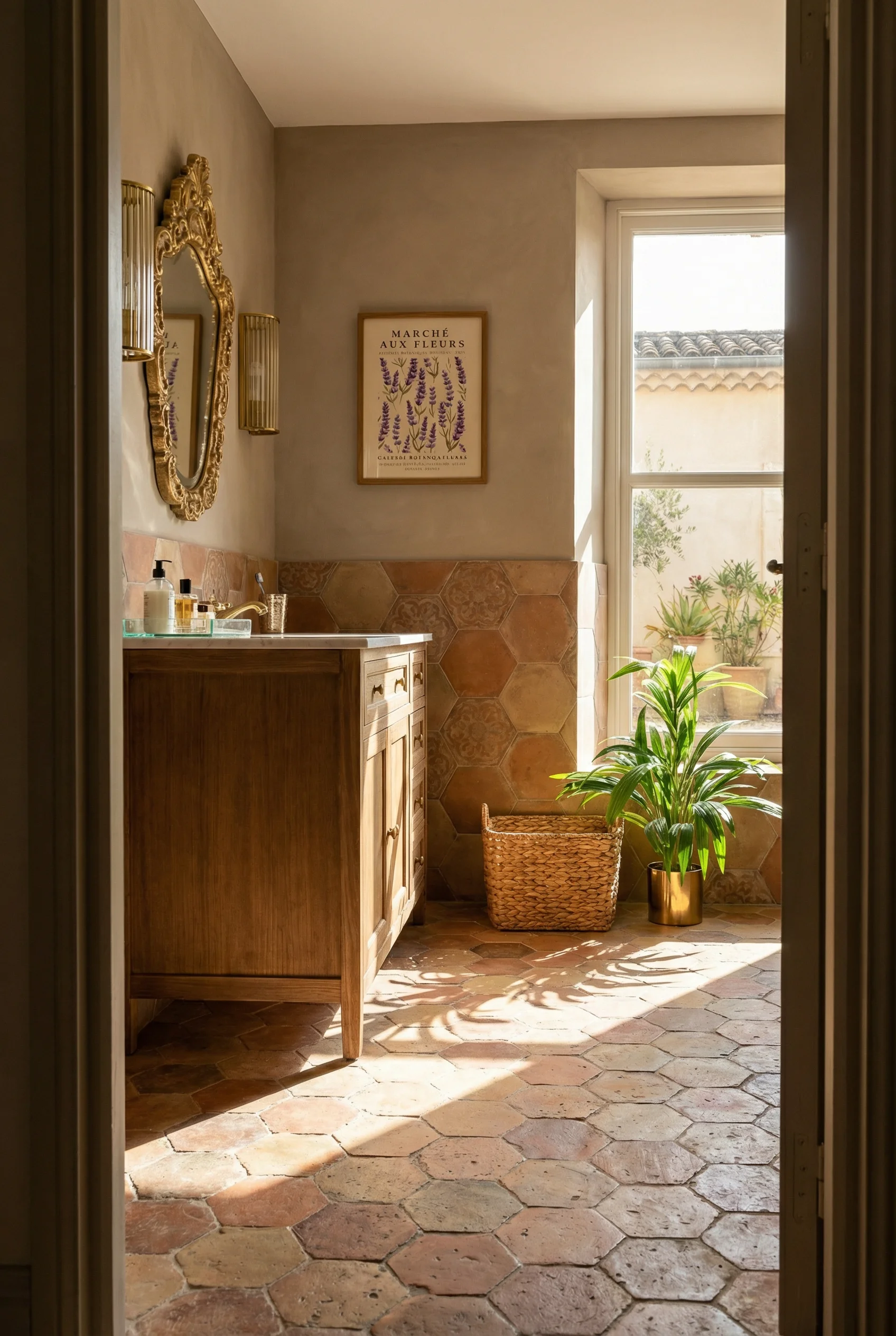
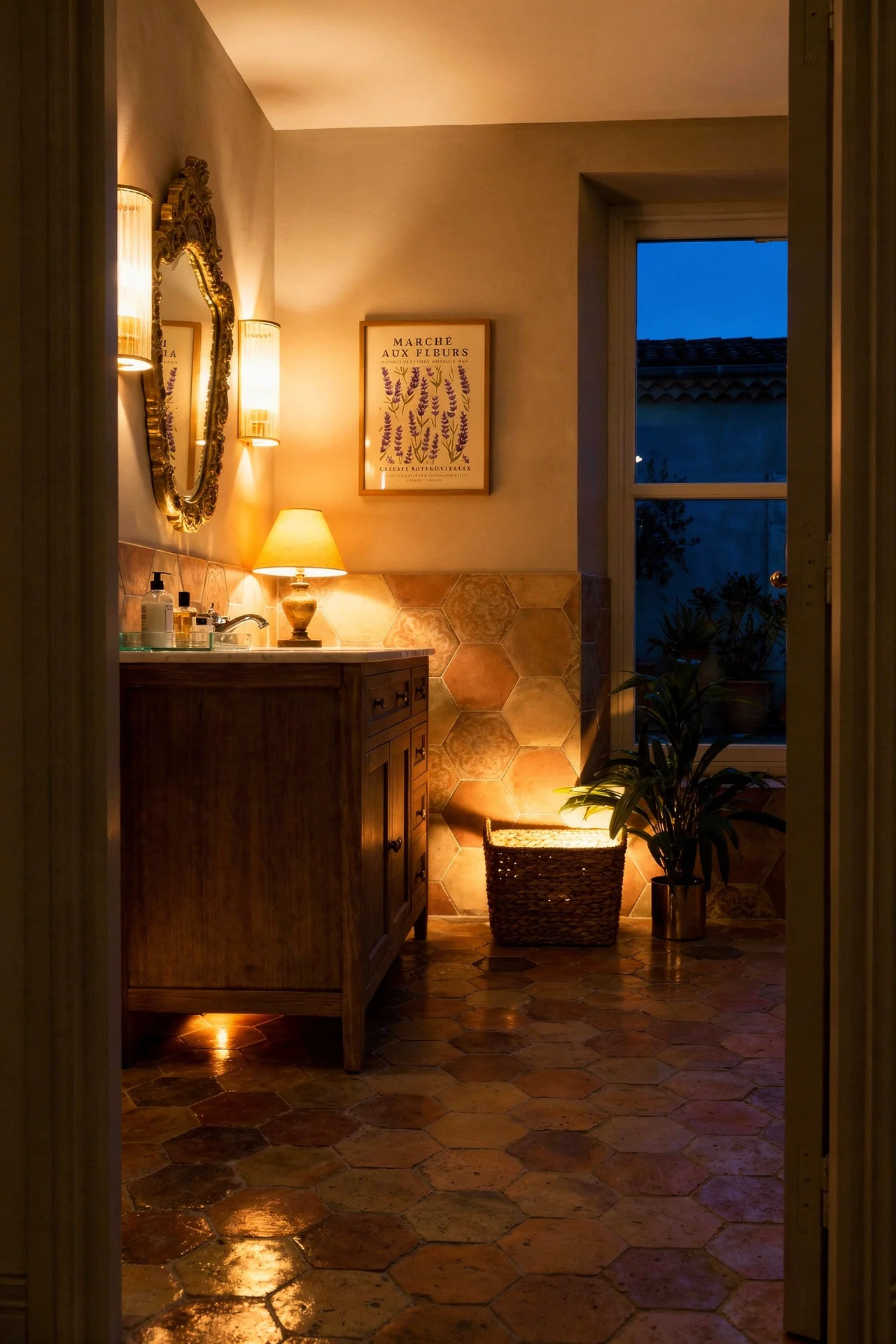
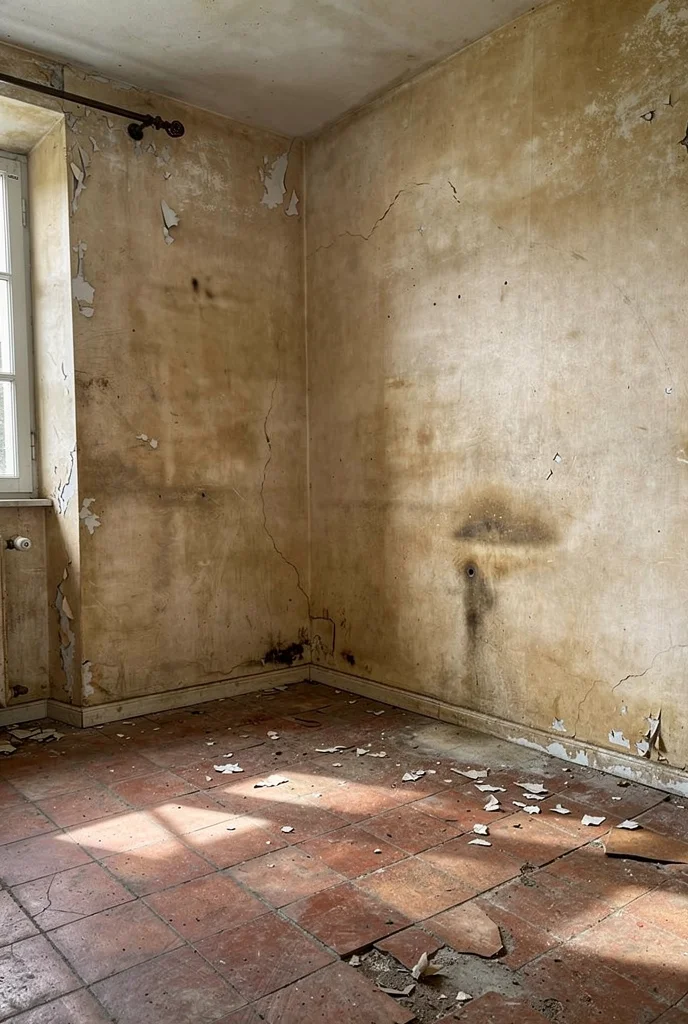
Two types of reclaimed terracotta dominate. Tomettes are hexagonal tiles, often found in 19th century Provençal homes, laid in tight grids that create a honeycomb warmth across the floor. Parefeuille tiles are rectangular, thinner, originally used as roof insulation in 18th century farmhouses before being repurposed as flooring. Both are wood fired clay with deep colour variations running from peach through ochre to a burnt red, and no two tiles are alike.
Here is what fascinates me about genuine Parefeuille. Because these tiles were sun dried outdoors in the 1700s, you will occasionally find artisan tool marks, irregular thicknesses, and literal animal footprints baked into the clay surface. A cat stepped on a wet tile three hundred years ago, and that impression is now part of your bathroom floor. No factory can reproduce that, and I think that is exactly the point.
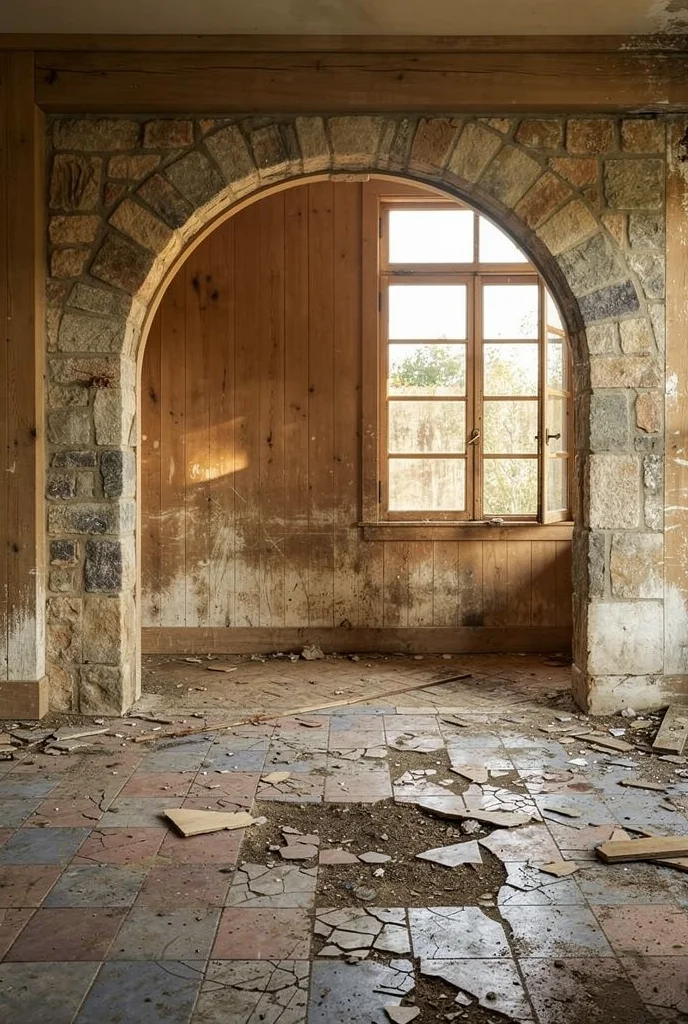
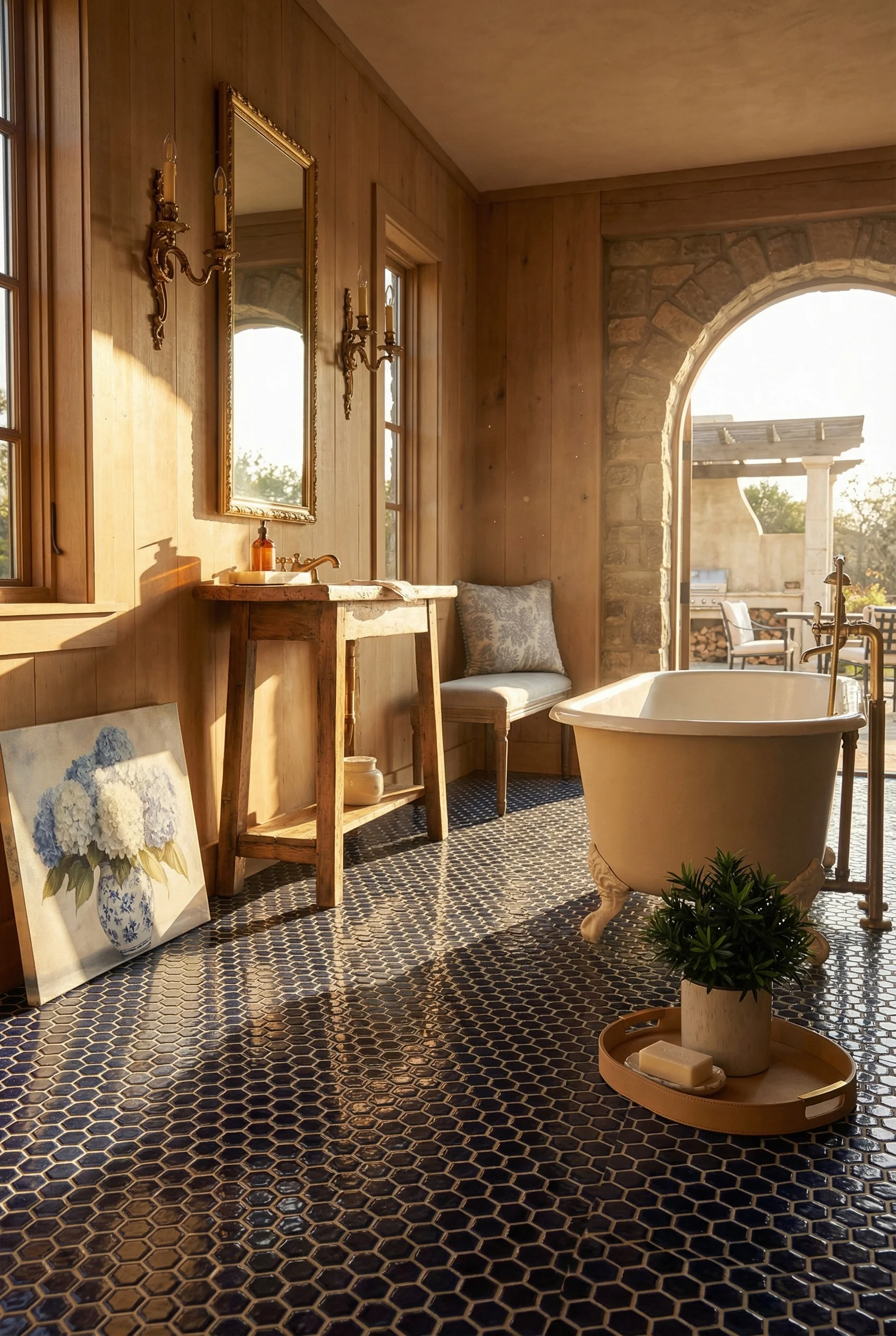
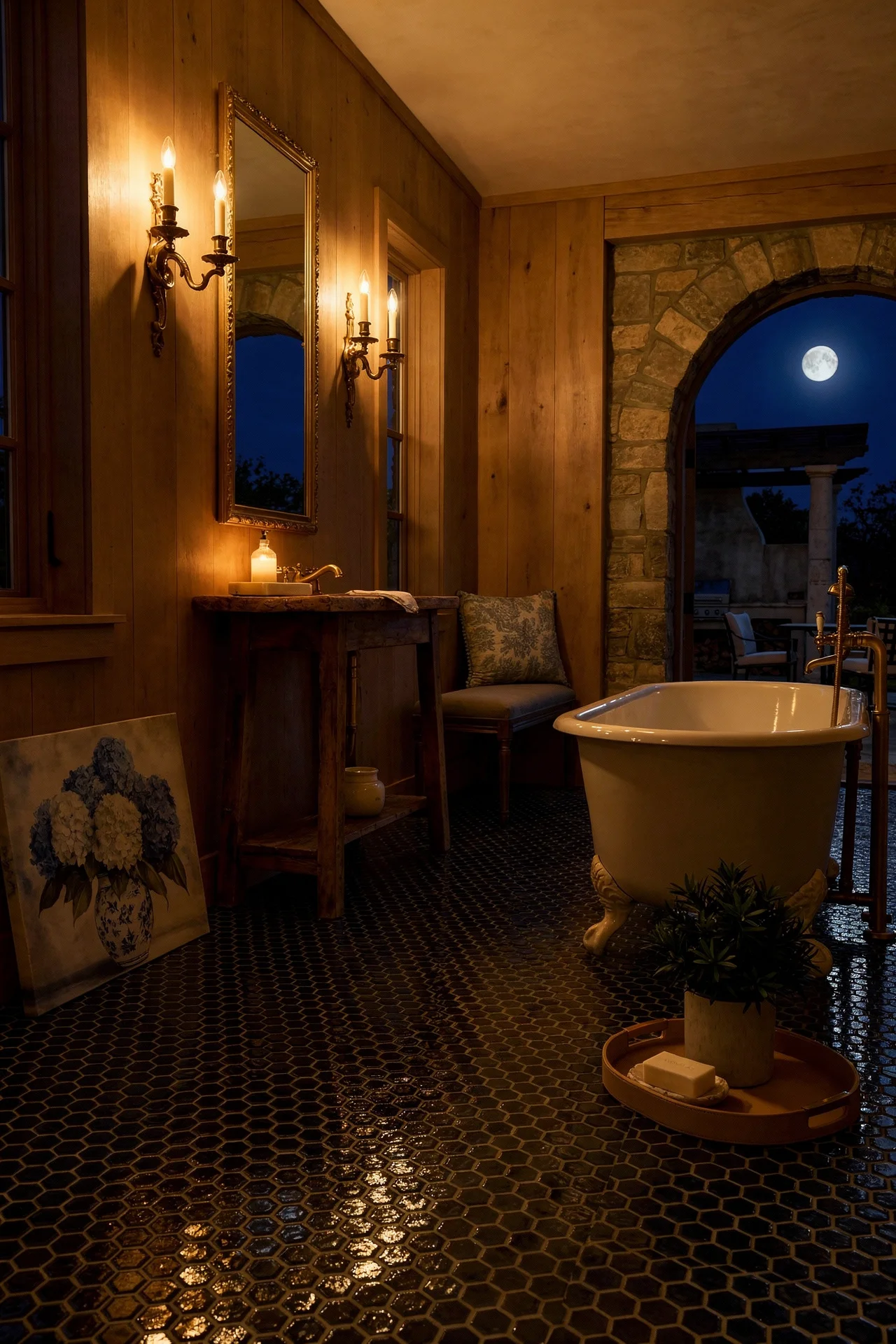
Dense French limestones are the other flooring option worth considering. Dalles de Bourgogne and Pierre de Valence are both prized for their crystalline structure, which means they wear slowly and develop a soft, polished sheen over years of foot traffic rather than degrading. Historic Decorative Materials (Pavé Tile) and Quorn Stone both source genuine reclaimed terracotta and limestone imported directly from Europe.
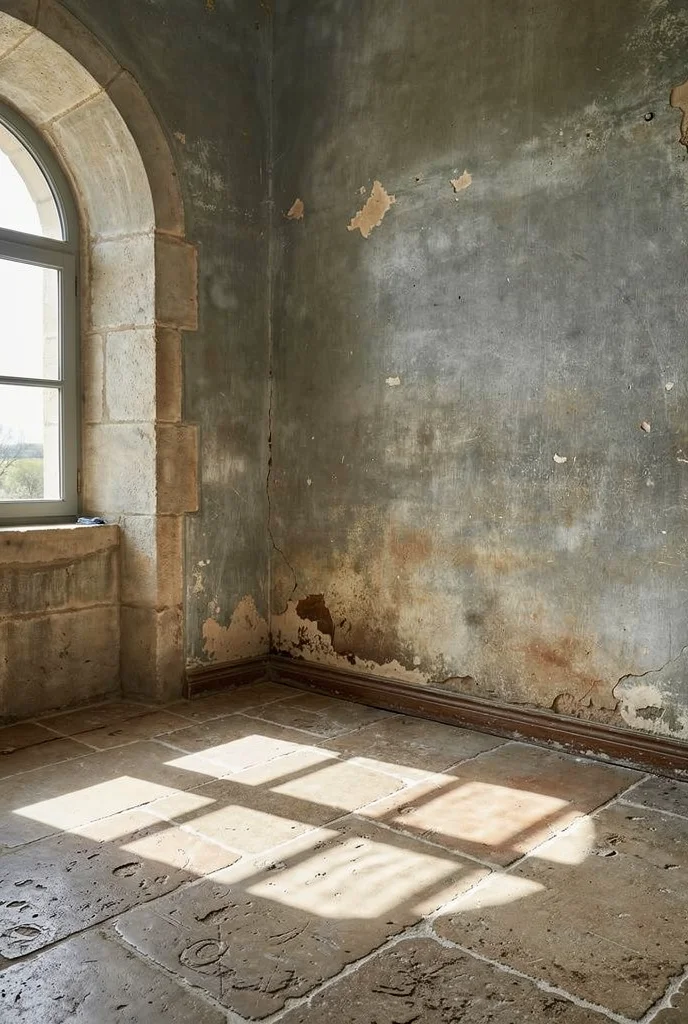
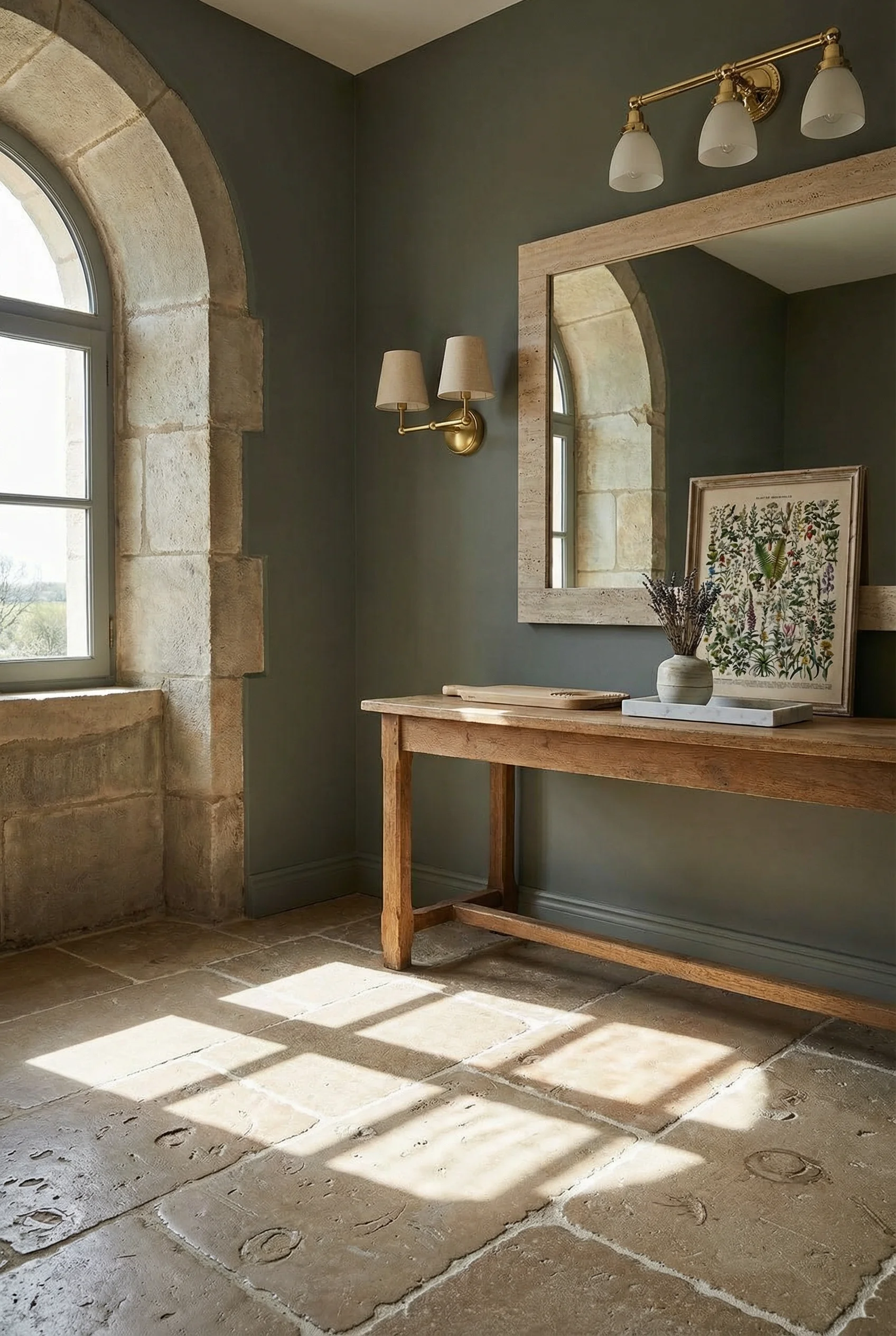
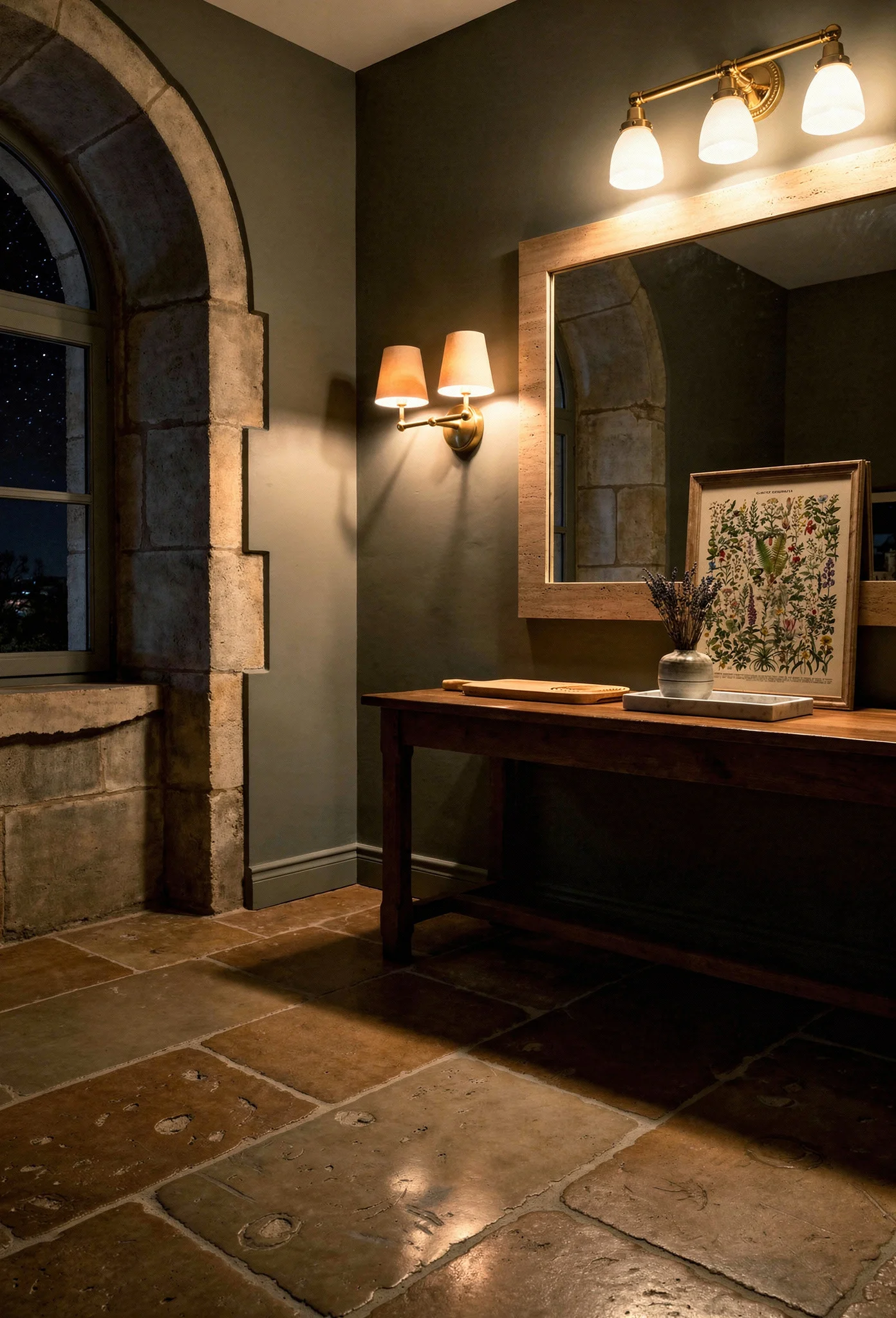
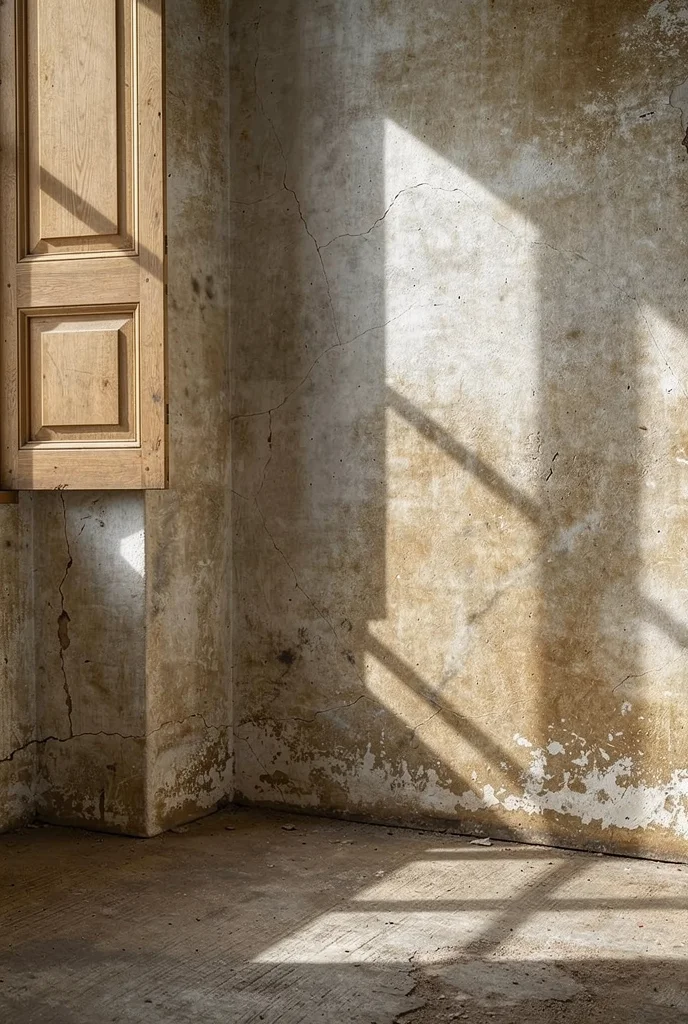
The walls in a French country bathroom should look like they have been breathing for a century. Limewash paint achieves this in a way that no synthetic acrylic can.
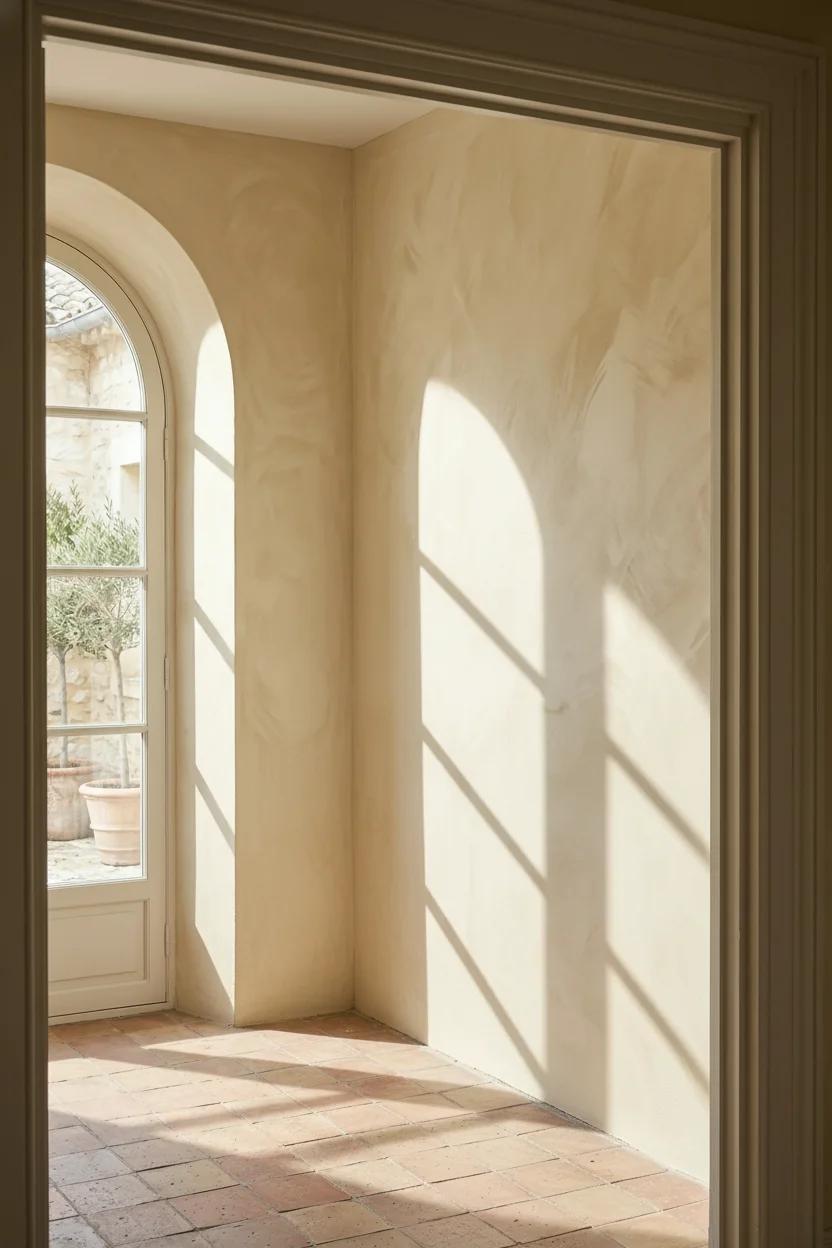
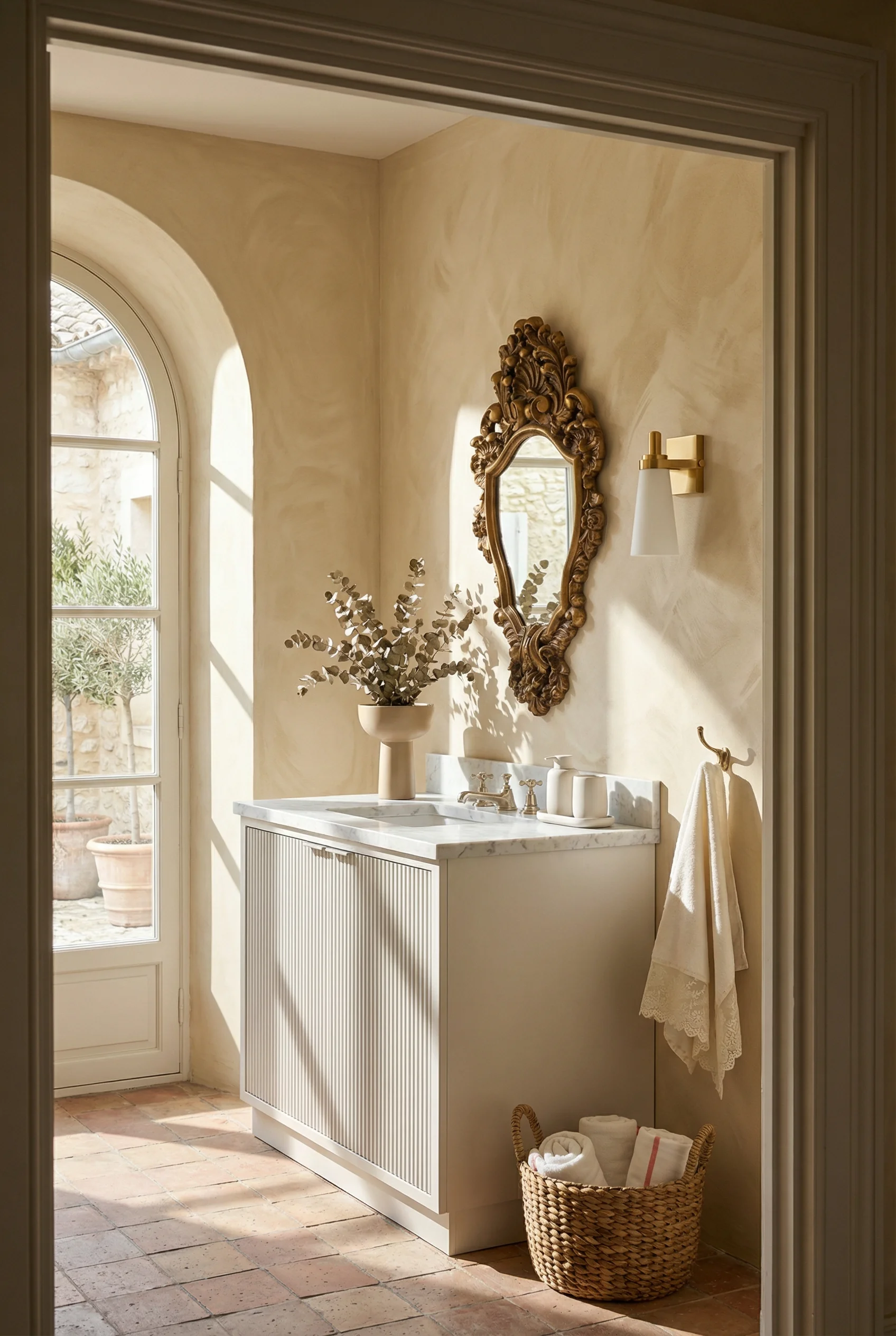
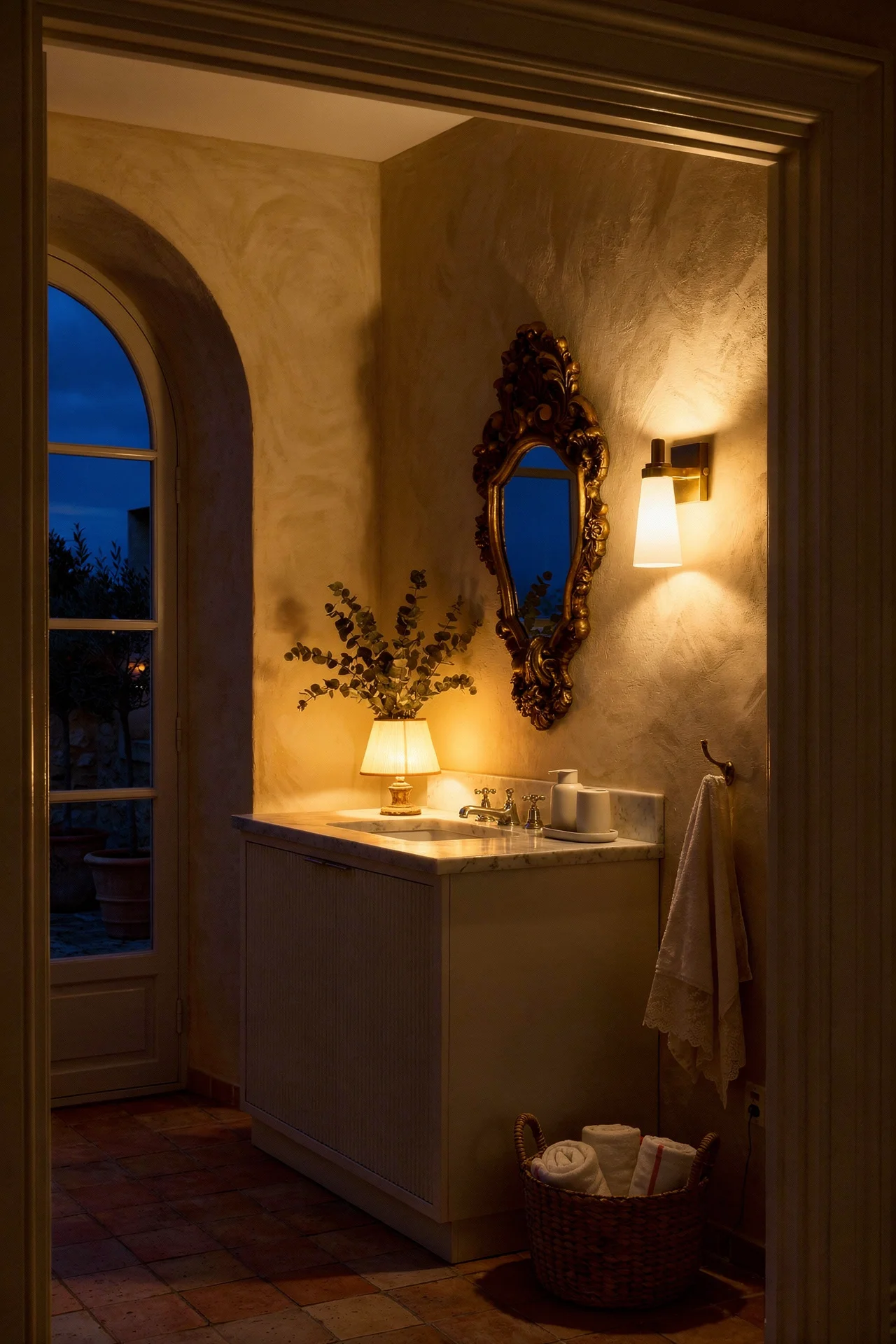
Limewash is mineral based. It is made from slaked lime and natural pigments, and it bonds chemically with plaster rather than sitting on top of it like conventional paint. The practical benefit in a bathroom is significant. It is breathable, allowing moisture to pass through the wall rather than trapping it behind a film. This prevents mould, which is exactly why French and Italian homes used it for centuries before plastic paints existed.
The visual benefit is harder to describe but impossible to miss. Limewash dries with a soft, chalky depth. Depending on the angle of light, the surface shifts from matte to a subtle luminosity. It is not flat and it is not glossy. It is somewhere in between, and that in between quality is what gives French walls their particular softness.

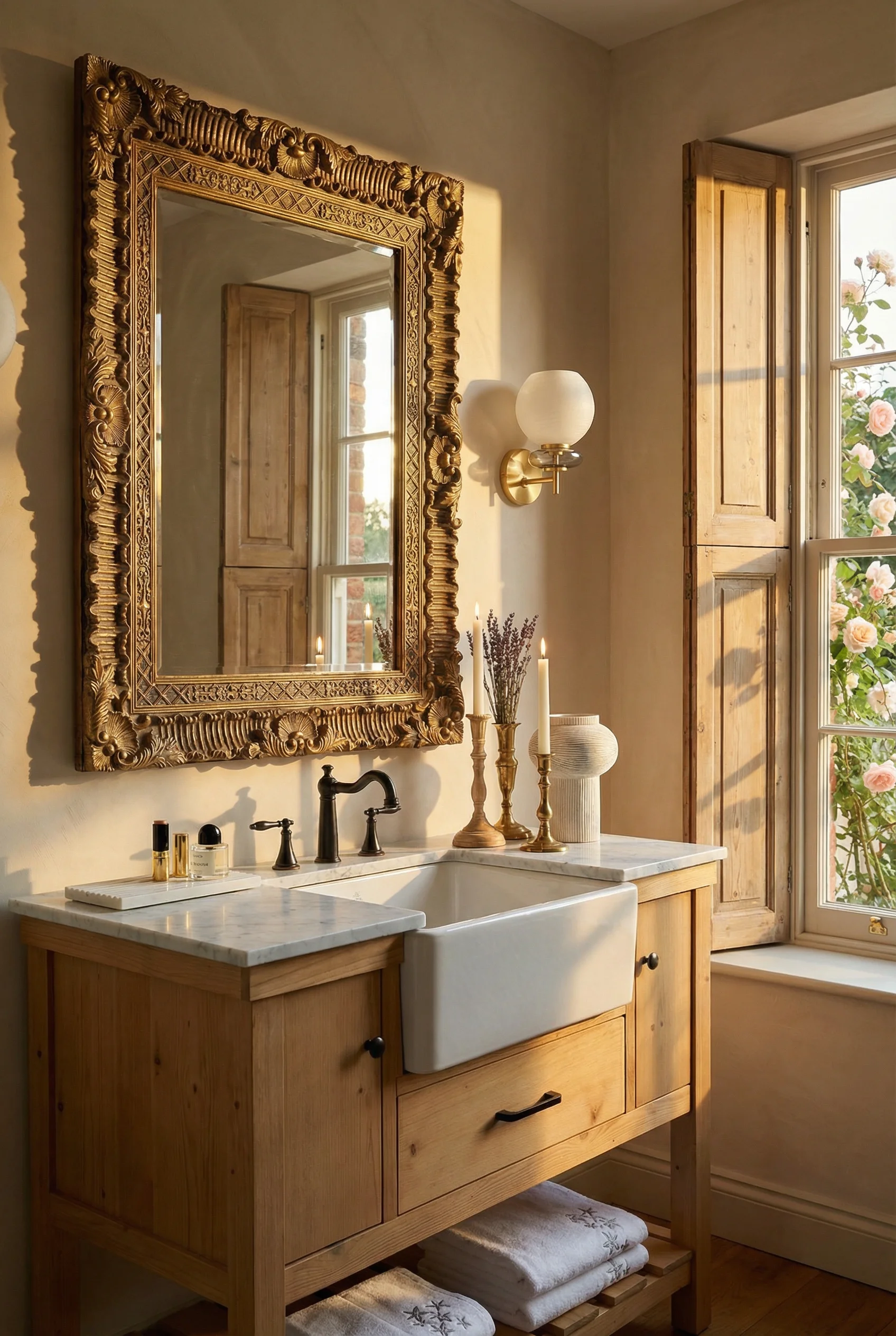
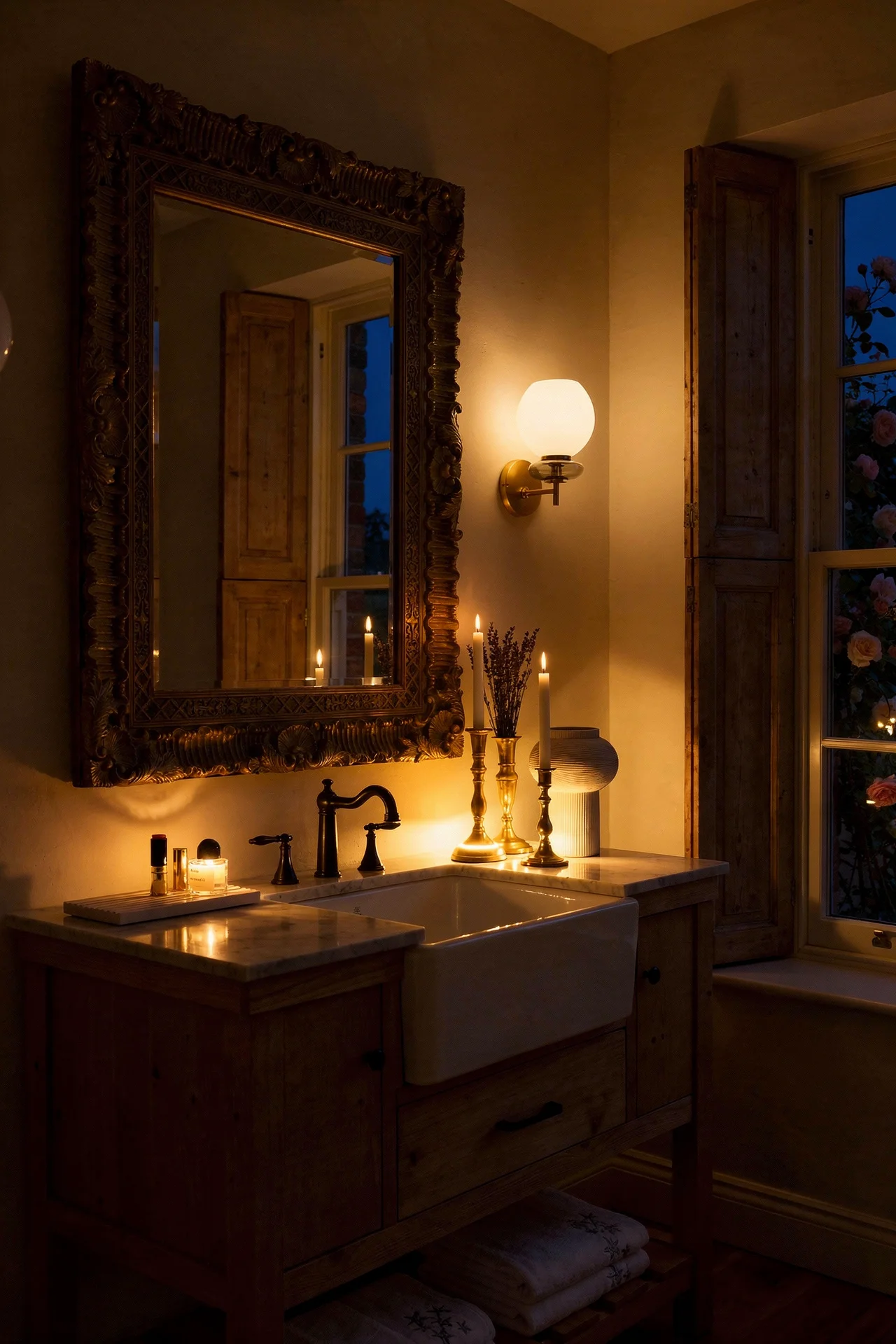
Color Atelier, KULTA, and Bauwerk Colour all make mineral based limewash formulated for high humidity environments. For splash zones around the basin and tub, a transparent hydrofobizer top coat protects without sealing the wall entirely. Above the splash zone, leave it raw.
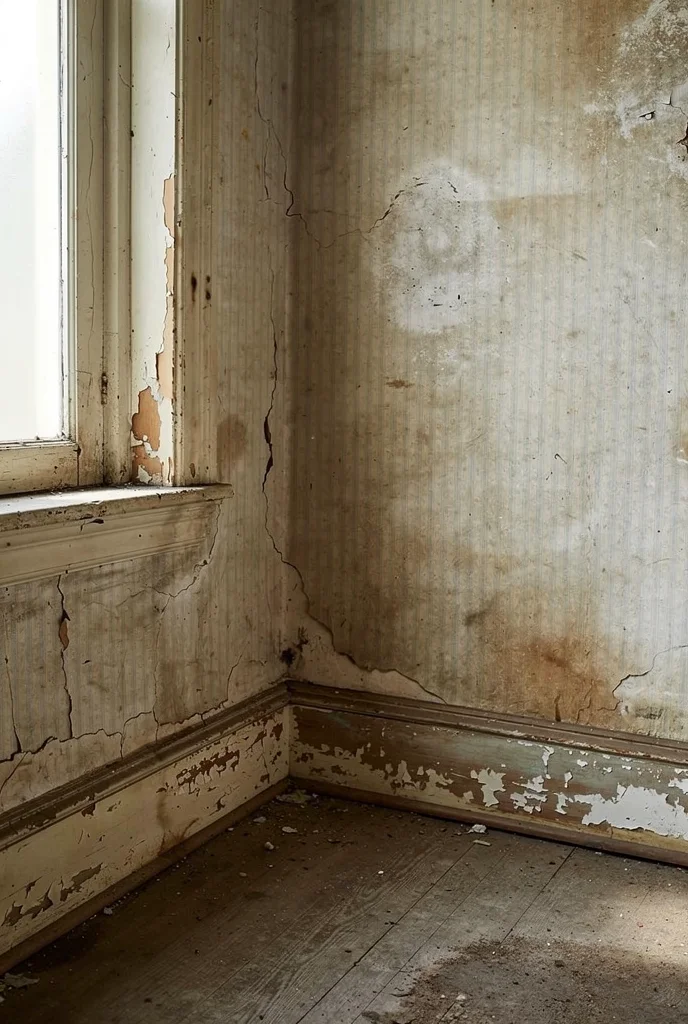
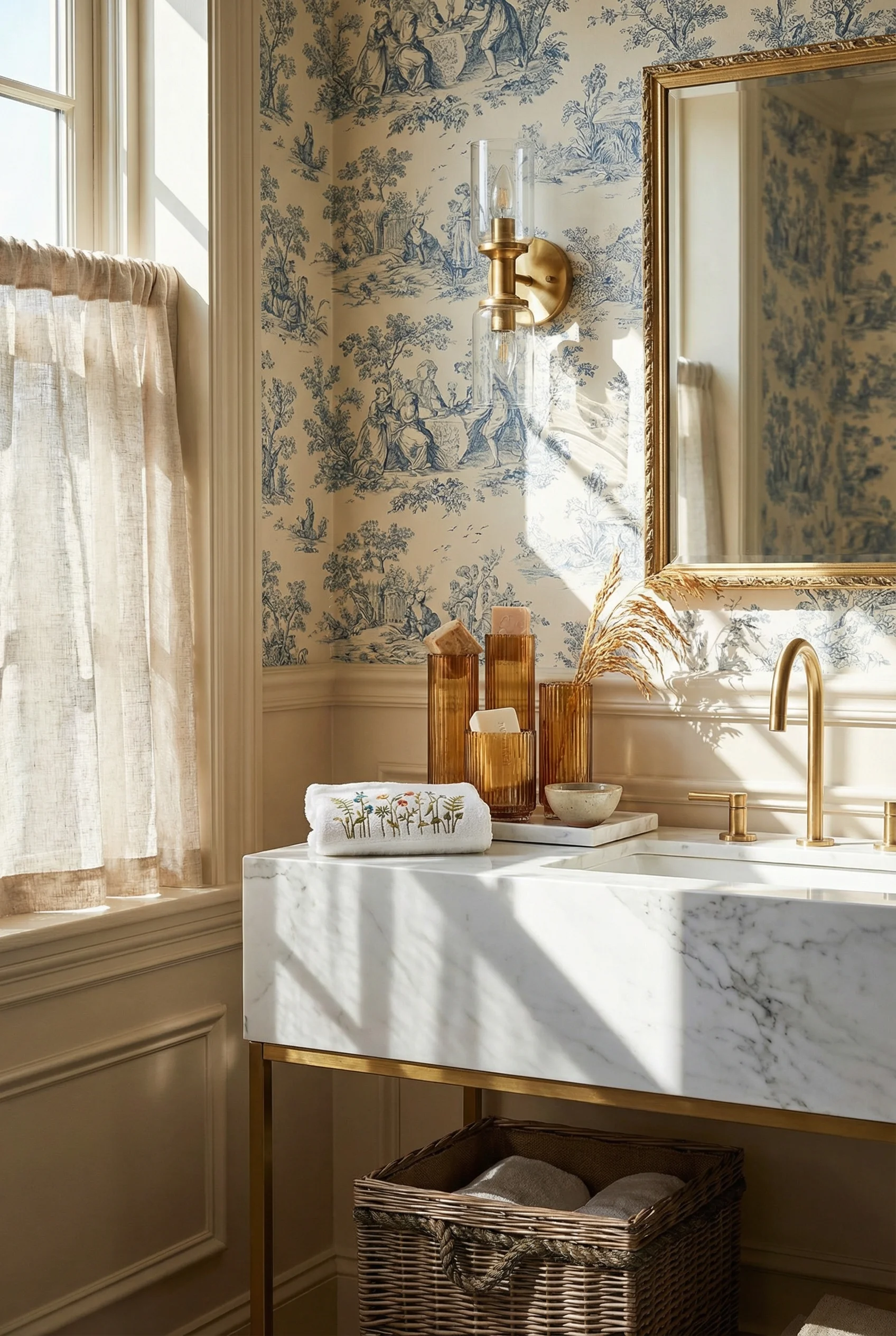
If you want pattern, Toile de Jouy wallpaper paired with lower wainscoting is the classic French move. Farrow & Ball’s Dropcloth or Bone for the panelling below, a vintage floral or pastoral toile above. The wainscoting protects the lower wall from moisture and gives the eye a visual break between the busy pattern and the floor.
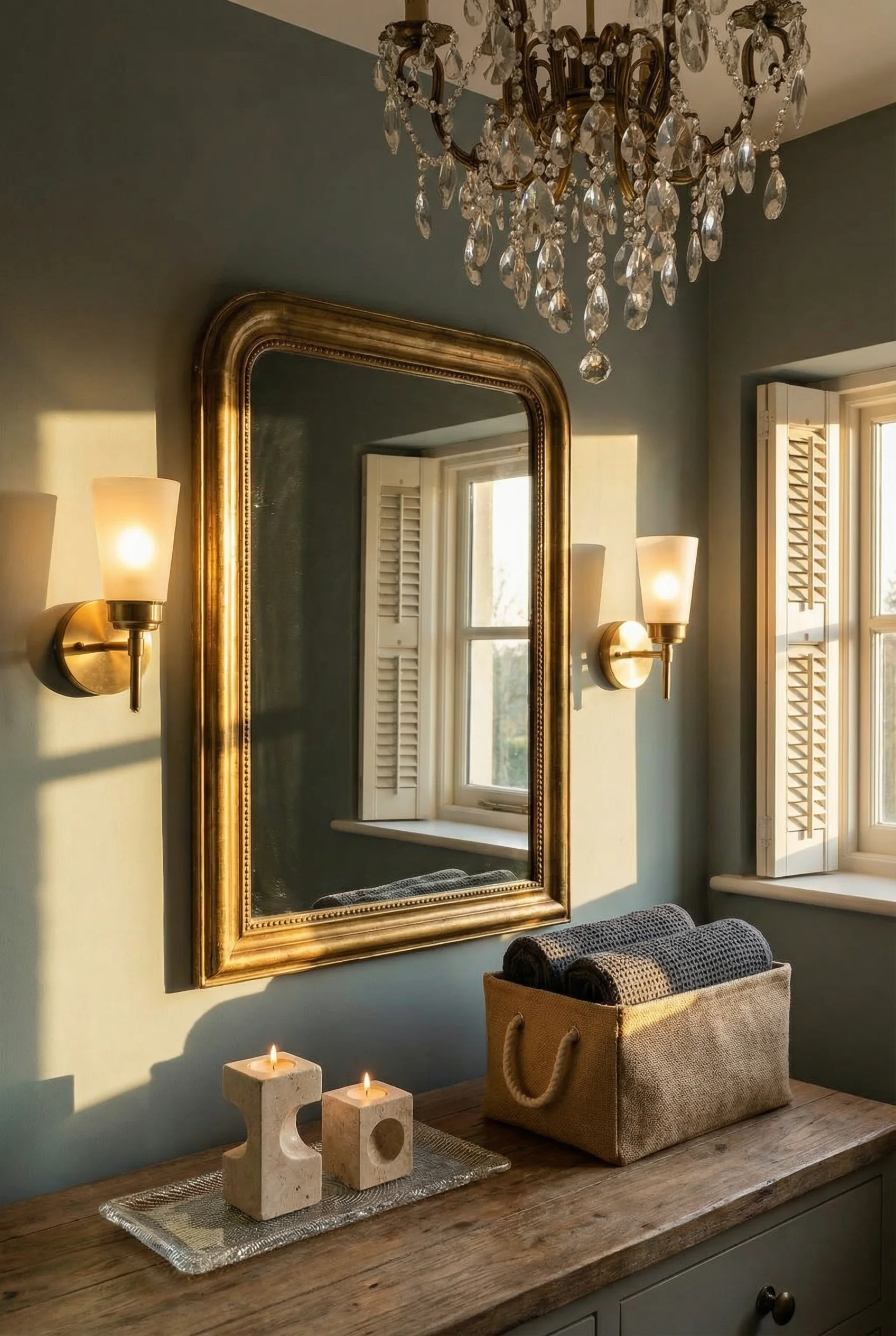
In most bathrooms, the mirror is an afterthought. In a French country bathroom, it is arguably the single most defining piece in the room.
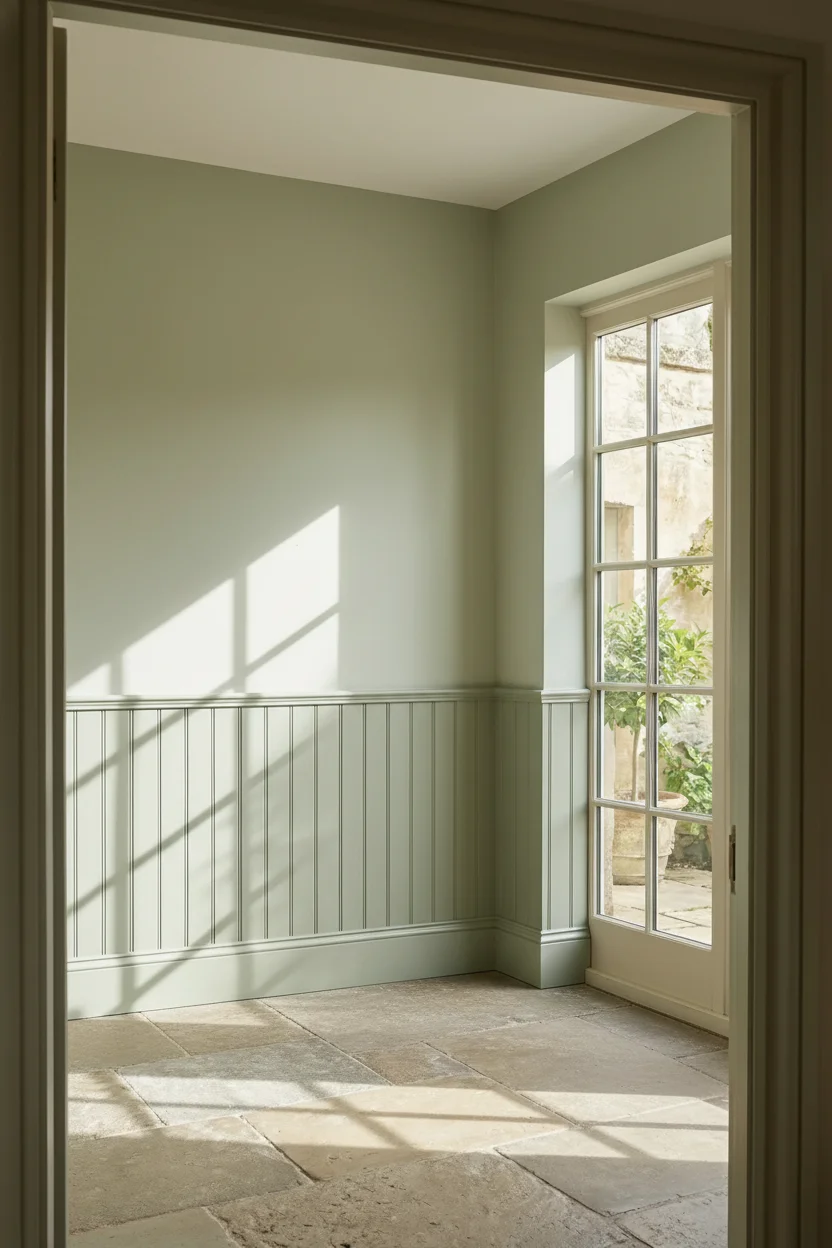
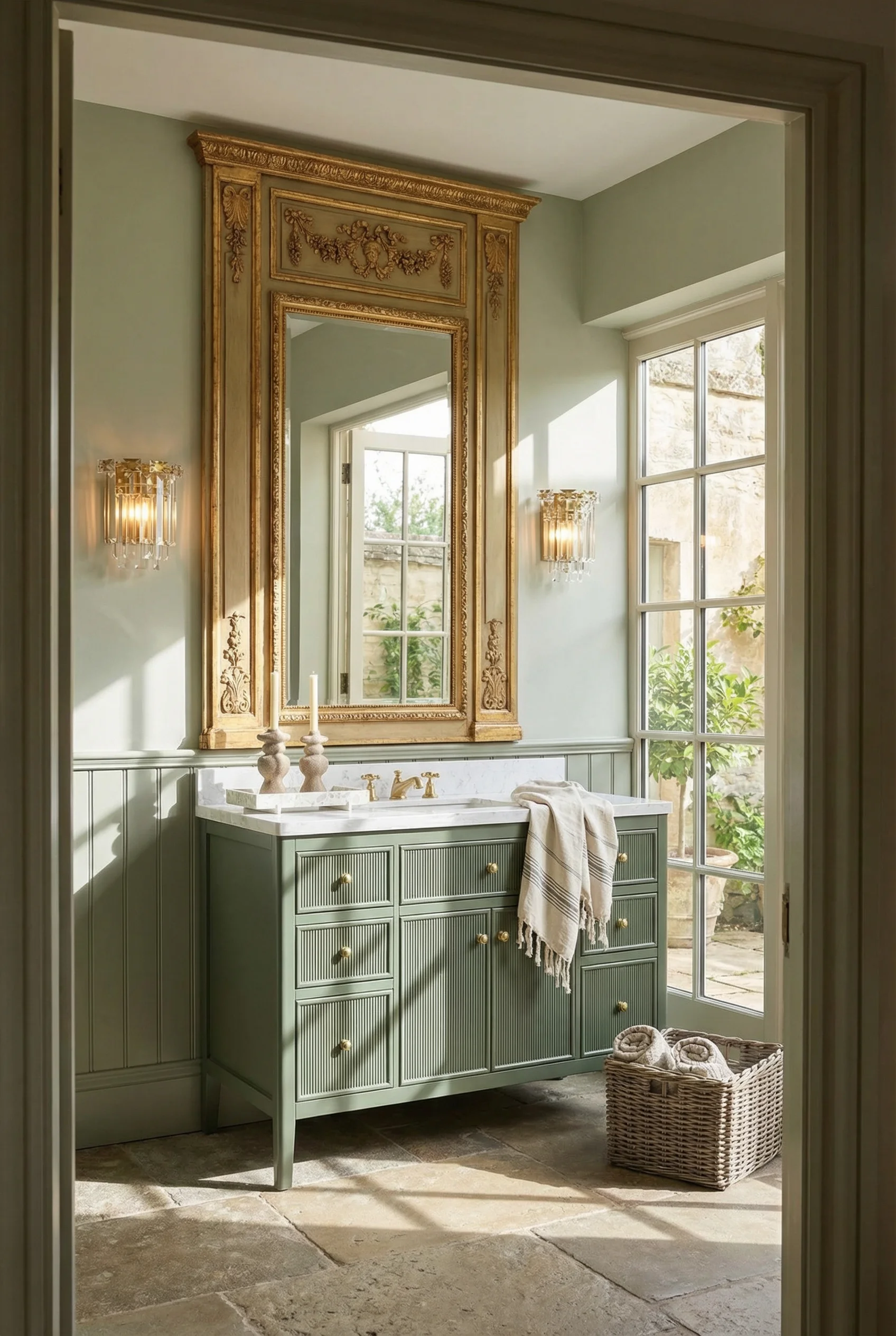
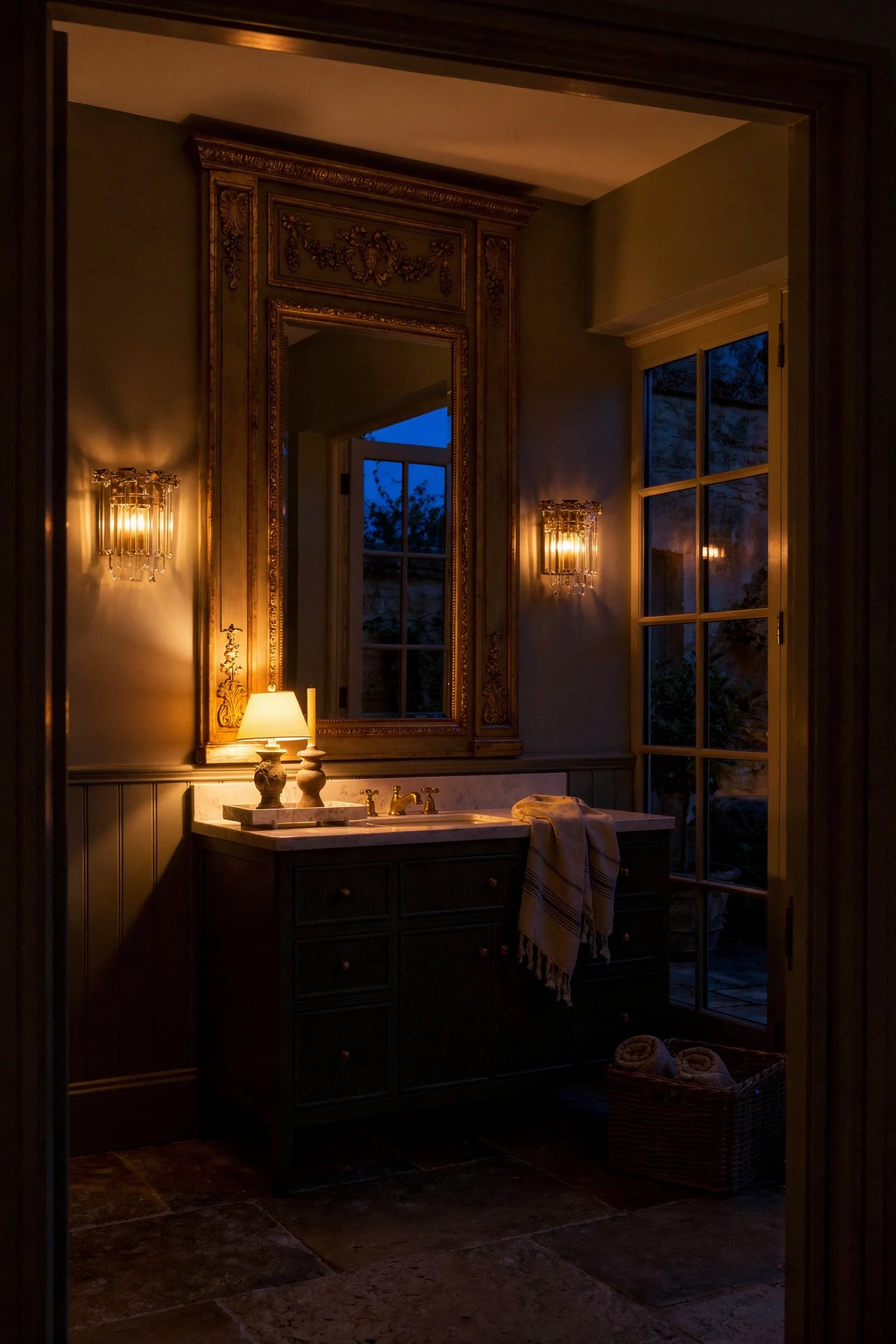
Three mirror types dominate. The Trumeau is tall and rectangular with a mirror at the base and a carved or painted panel above, often depicting a pastoral scene. It is architectural, almost like a window into another world. The Louis Philippe (1830 to 1848) is more restrained, with a gently rounded top, a squared base, and subtle gilded or silver leaf framing. The Louis XV is full Rococo: asymmetrical carved giltwood with acanthus leaves, shell motifs, and flowing curves that refuse to sit still.
I’d lean towards a Louis Philippe for most bathrooms. It is elegant without overwhelming, it catches light beautifully because of the slight dome shape at the top, and it works above both a vanity and a freestanding tub. The rounded top is sometimes called a “chapeau,” and once you know to look for it, you will spot it immediately in every antique shop.
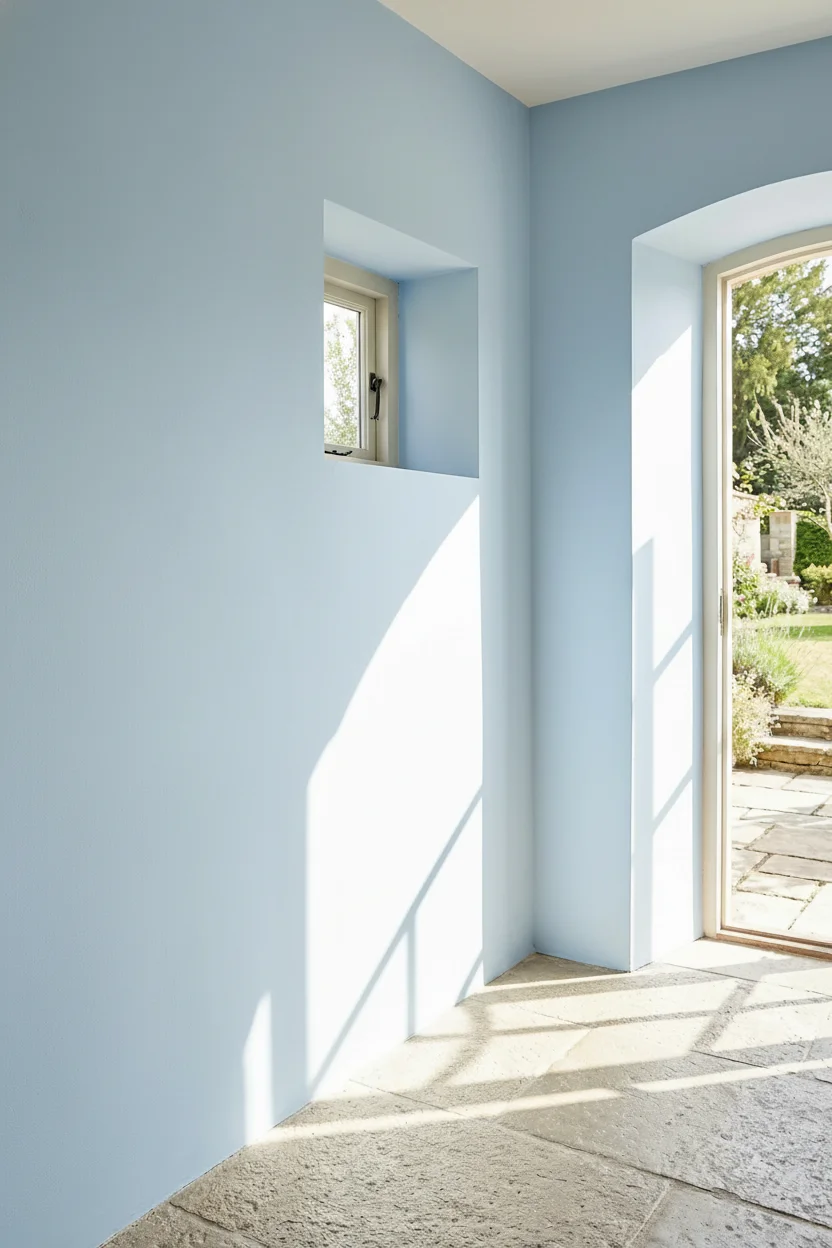
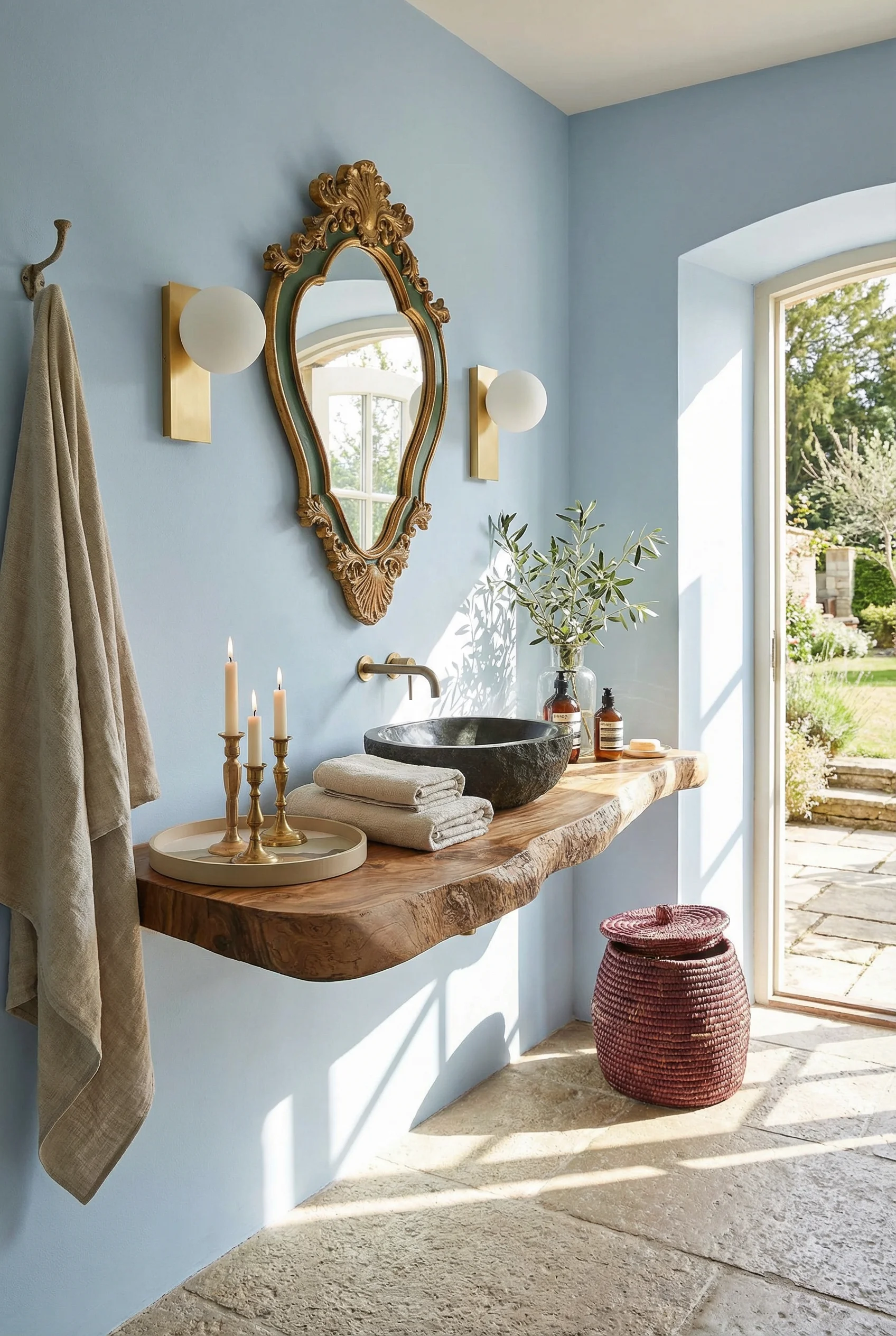
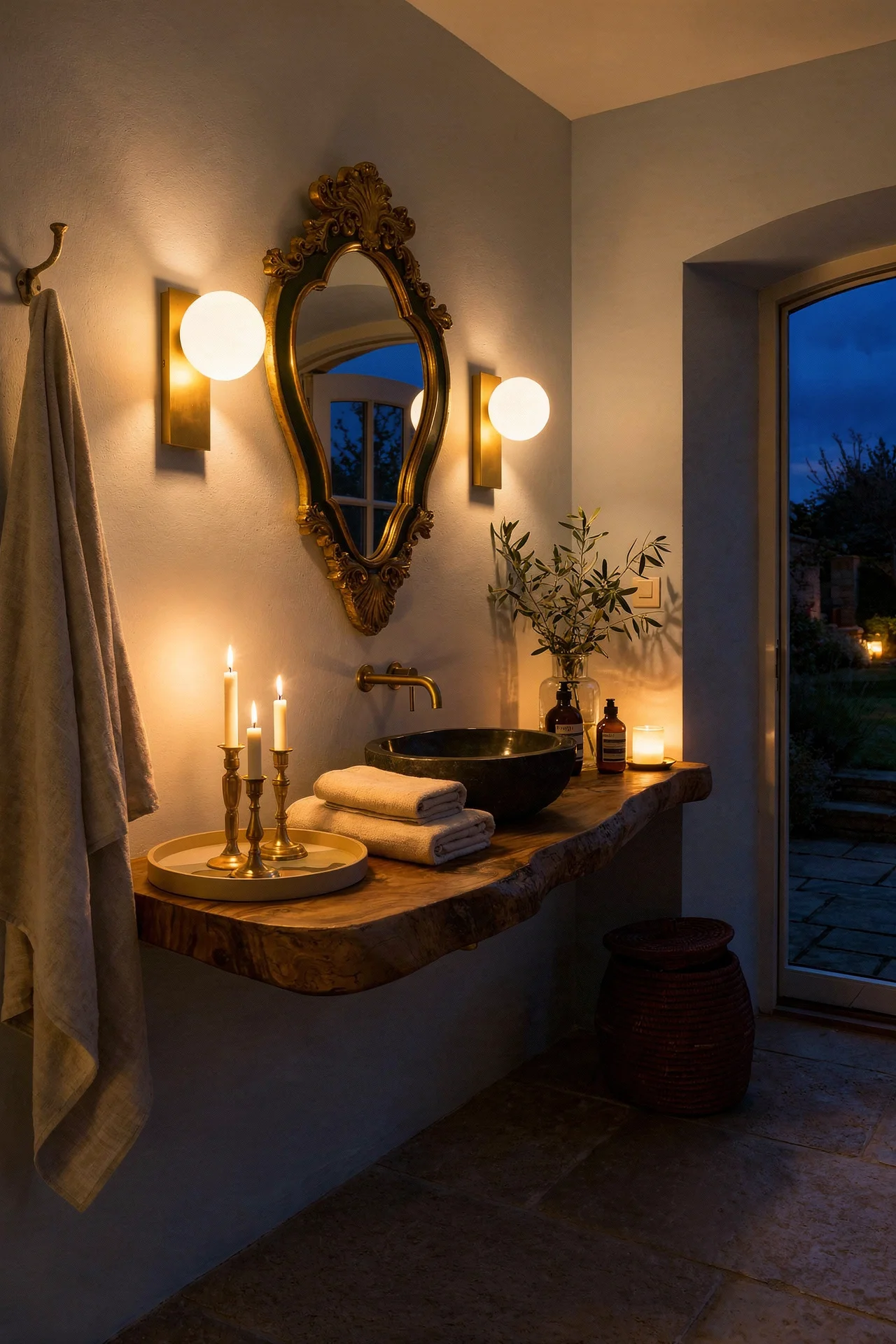
For sourcing, Chez Pluie ships directly from Provence and carries a rotating stock of genuine period mirrors. Lolo French Antiques and 1stDibs are also reliable, though 1stDibs tends to run higher on price. My advice is to be patient. Authentic mirrors surface regularly at estate sales and regional antique fairs, and the price difference between auction and retail can be significant.
Hanging a crystal chandelier directly above a freestanding bathtub is one of those French design decisions that sounds impractical until you see it done well. Then it looks like the only logical choice.
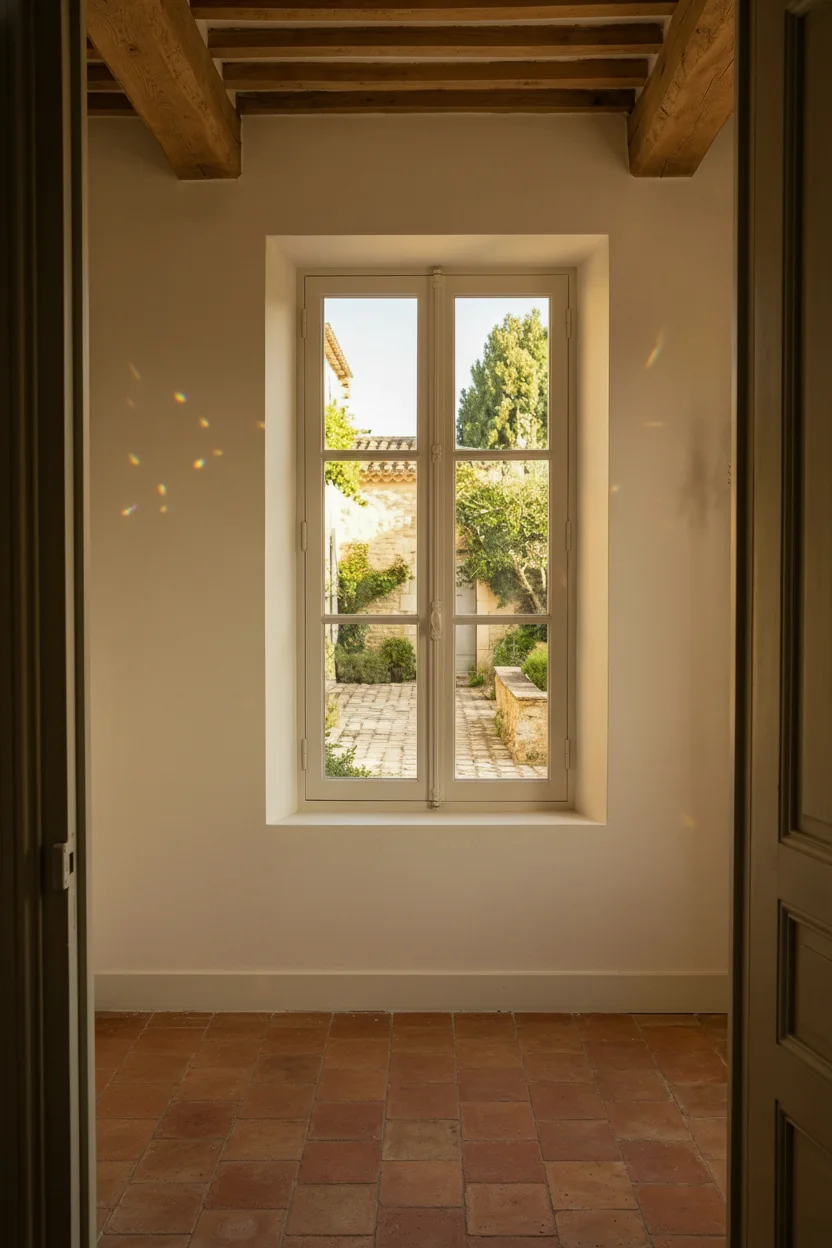
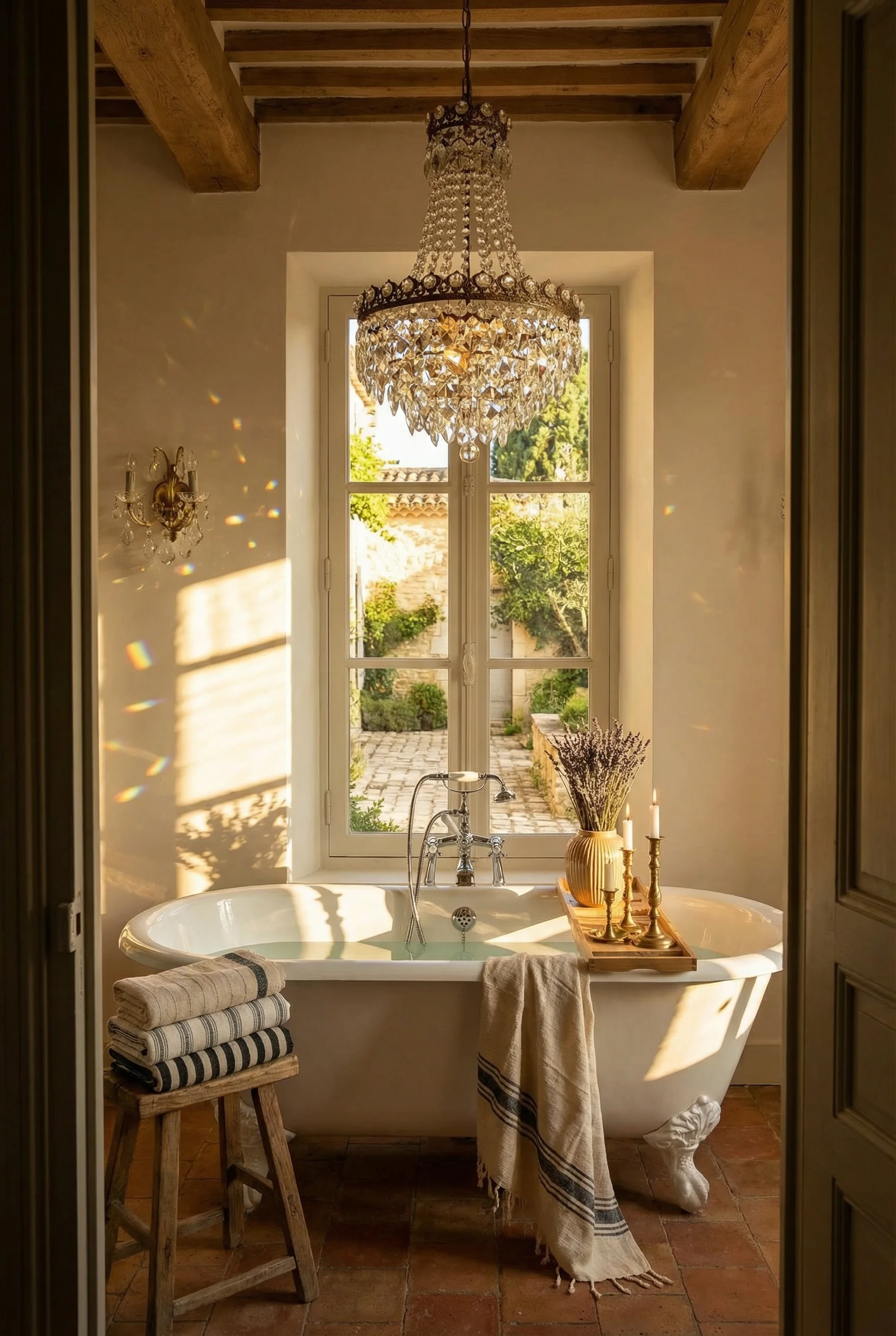
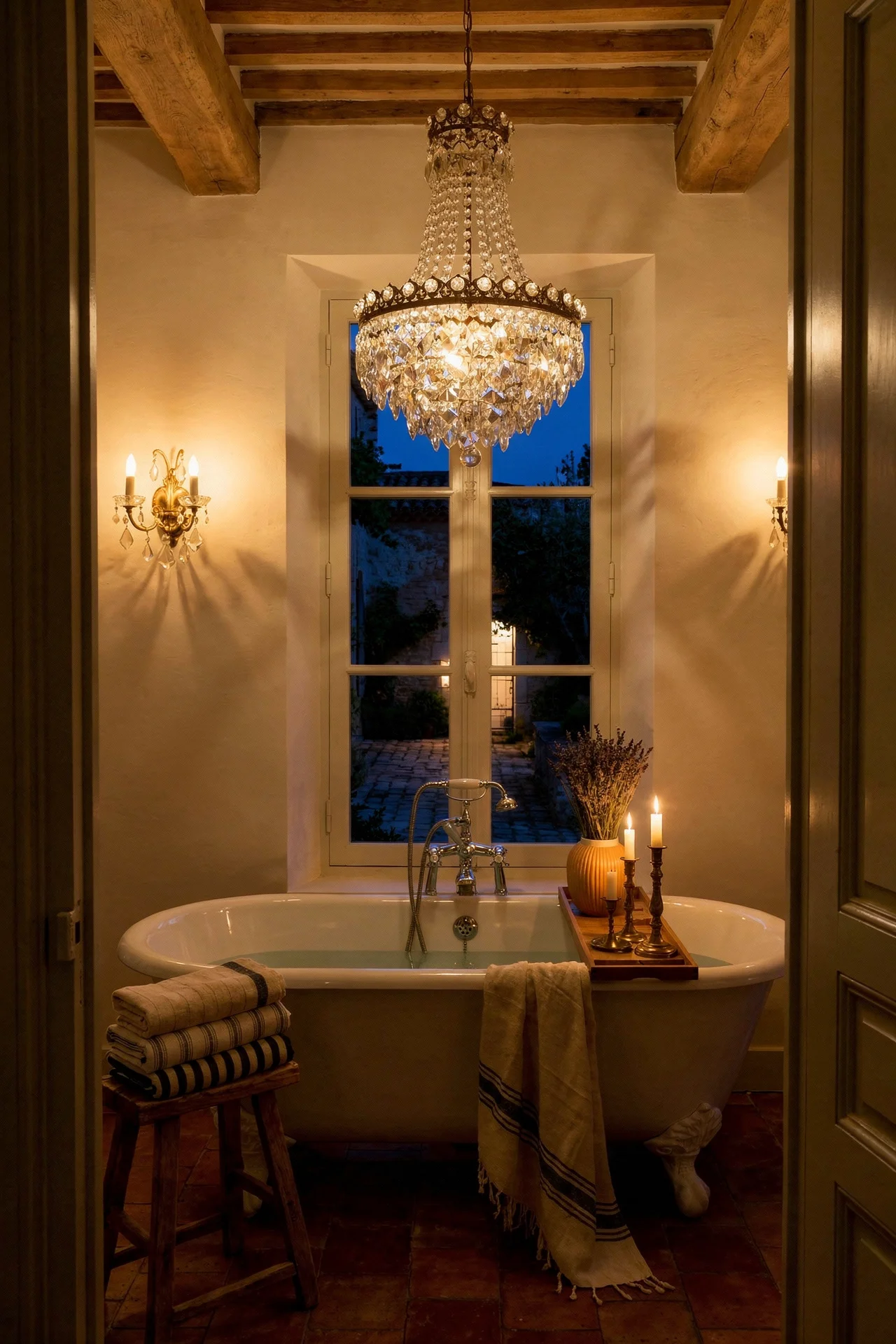
The effect is immediate. Light refracts through the crystal drops and scatters across the water, the walls, the ceiling. It introduces a layer of high glamour into a room built on rustic materials, and that tension between rough stone walls and delicate crystal is the entire philosophy of French country design compressed into a single fixture. This is the “high low” mix that defines the style: provincial utility paired with Parisian refinement.
Practically, any fixture installed above a bathtub must meet electrical zone regulations. In the UK, this means Zone 1 (directly above the tub to 2.25m height) requires an IP rating of at least IPX4. A qualified electrician will know the requirements for your region. It is not a reason to skip the chandelier. It is a reason to install it properly.
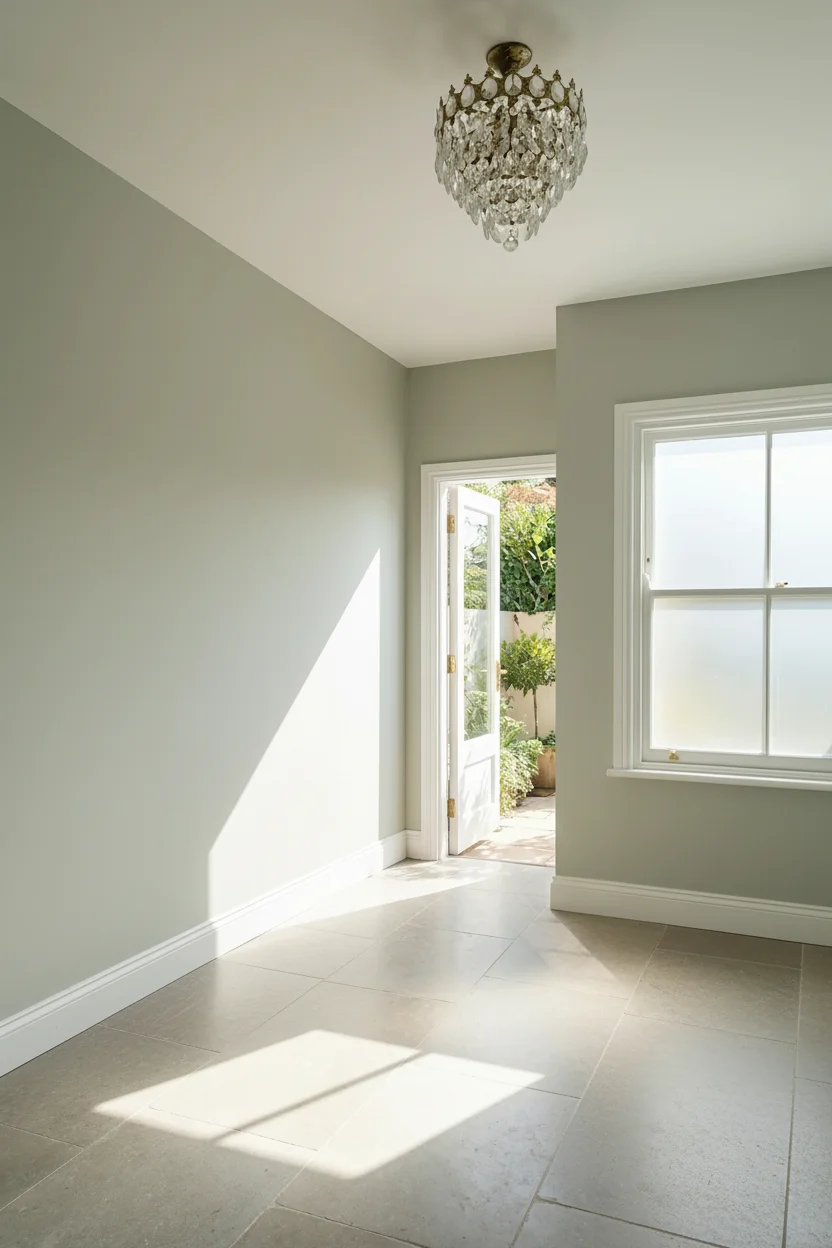
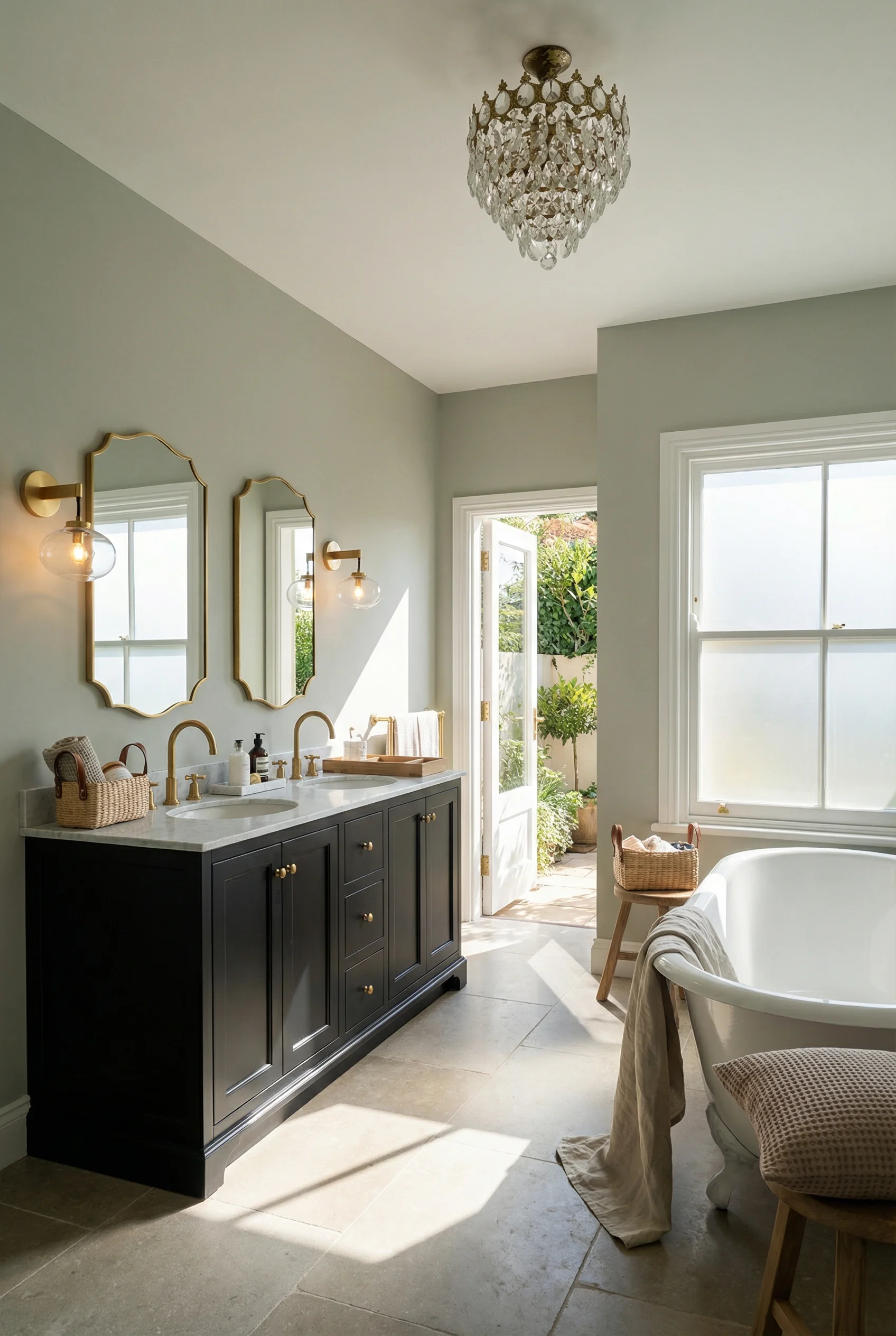
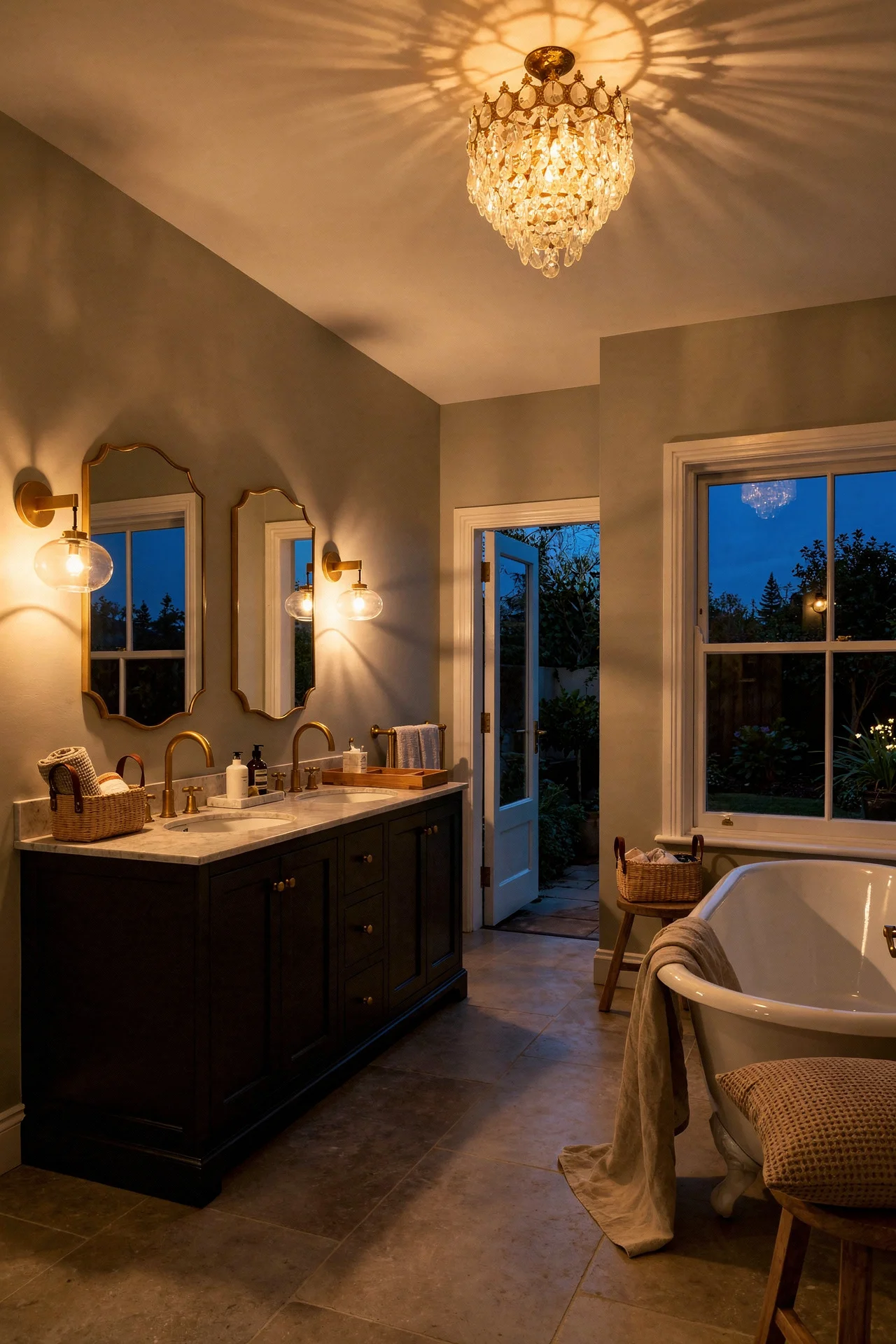
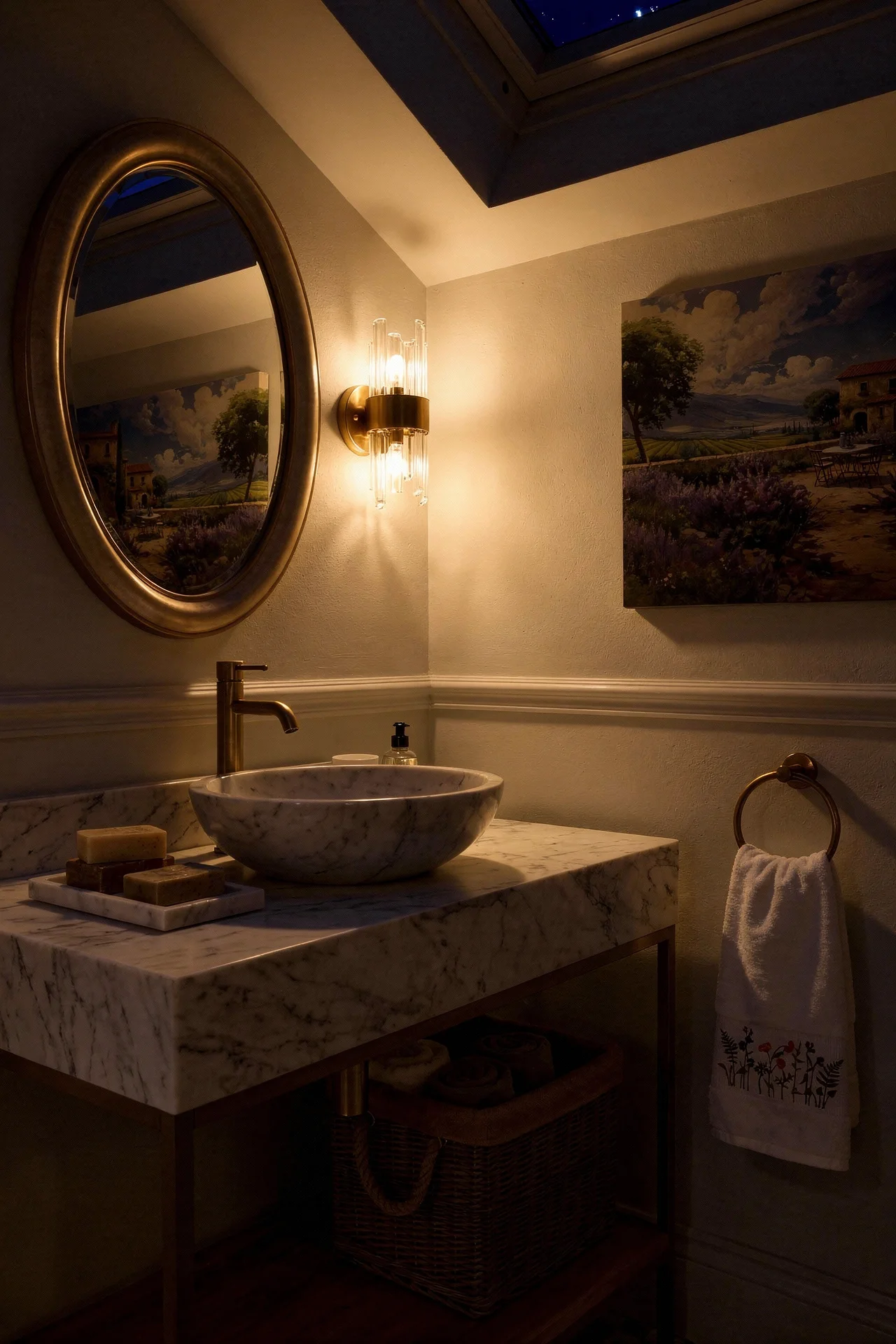
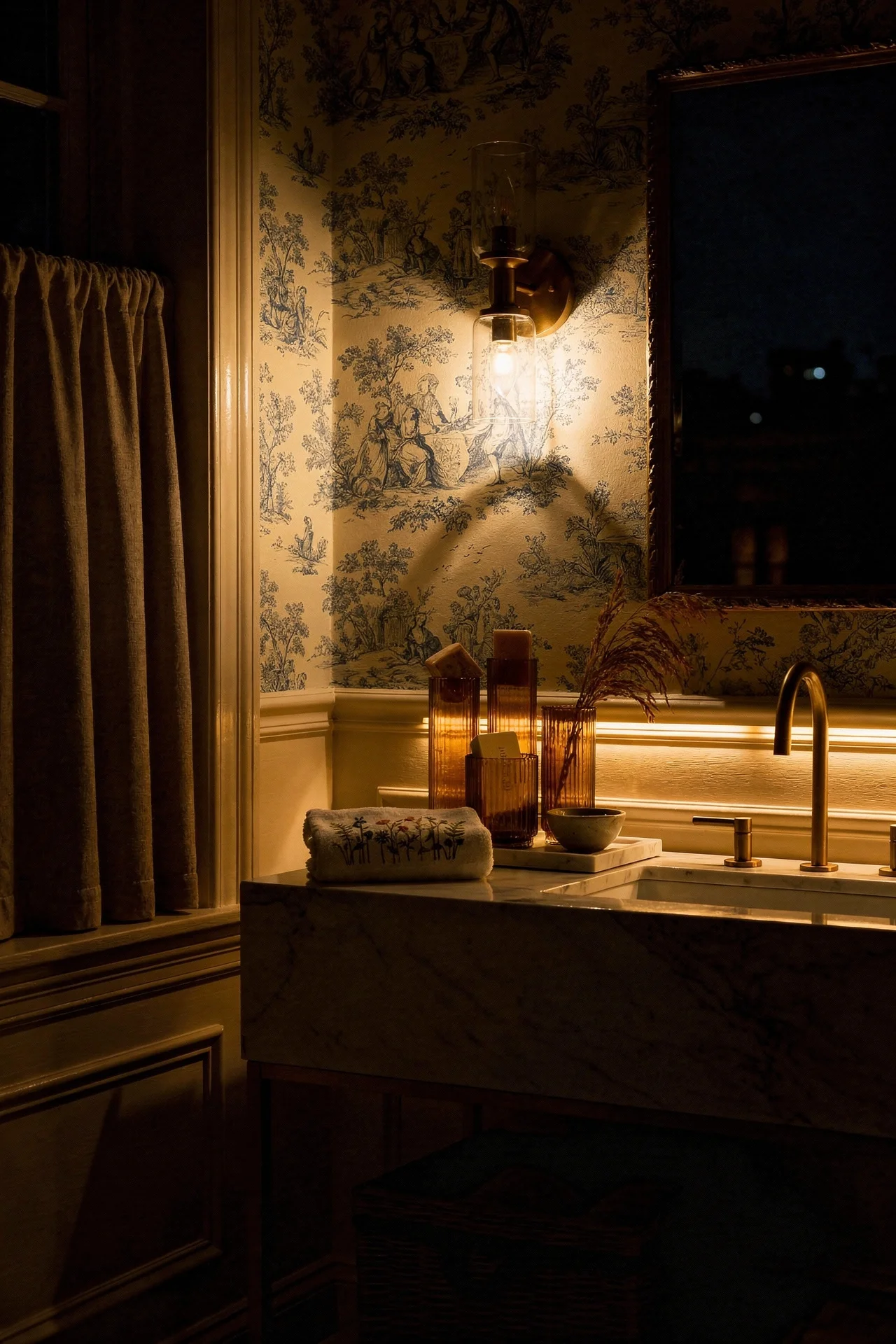
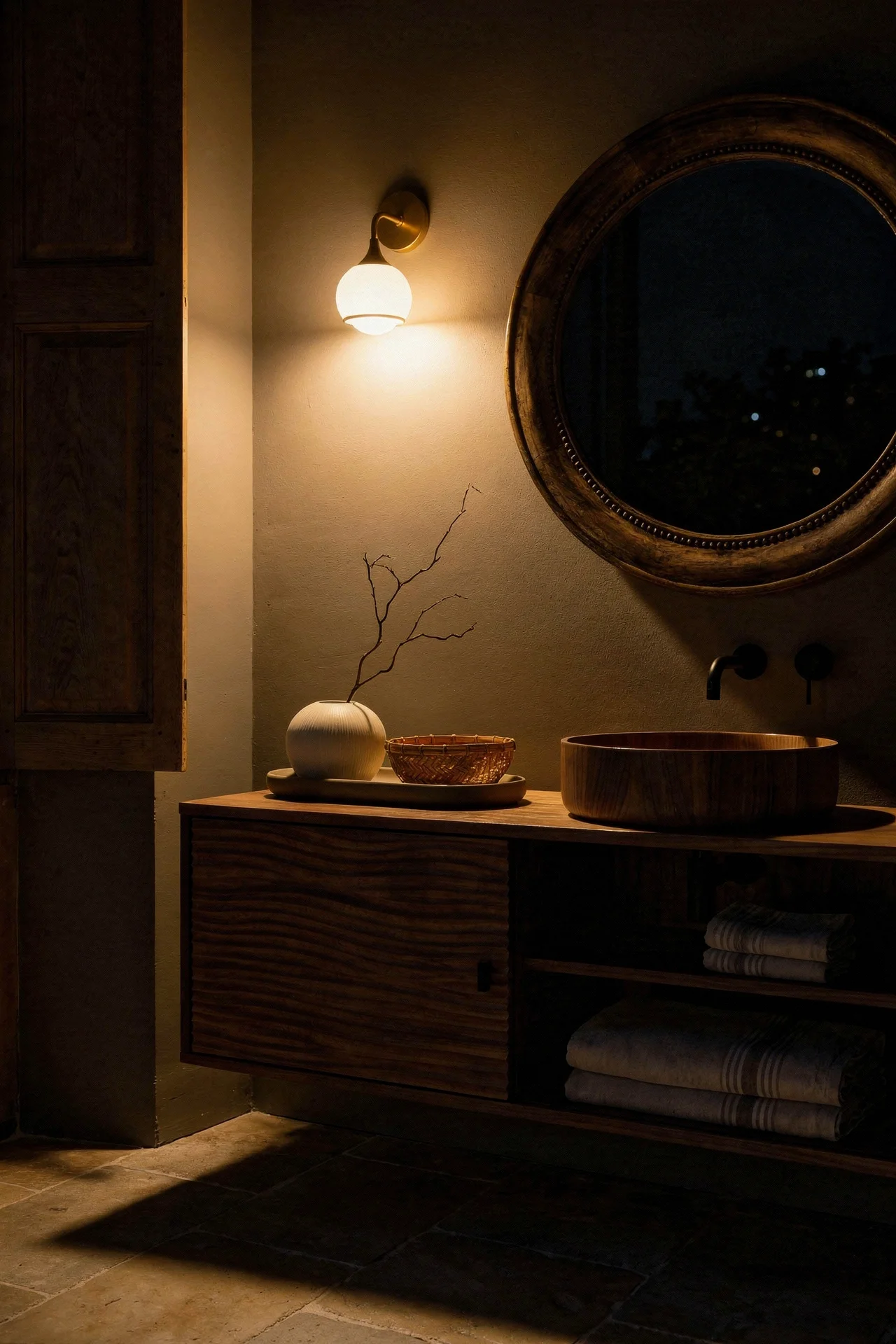
For the vanity, brass sconces with frosted glass or linen shades are the standard. Mount them at eye level on either side of the mirror rather than above it. Side lighting eliminates the shadows that overhead fixtures cast on the face, and the warm brass complements every mirror type mentioned above. If you are running unlacquered brass taps and towel rails, matching the sconce material creates a coherent material thread through the room without feeling over coordinated.
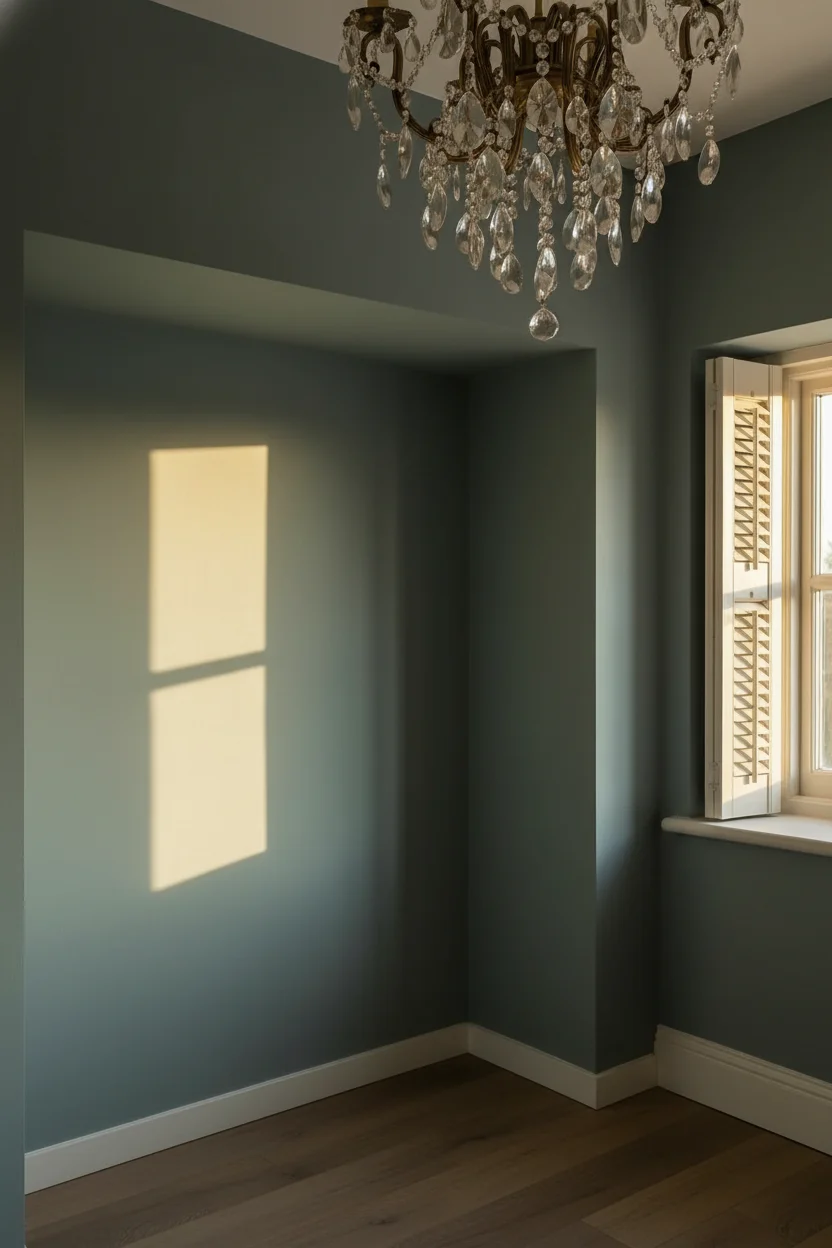

Knowing what to look for saves you from paying antique prices for modern manufacturing. Here are the tells I always check.
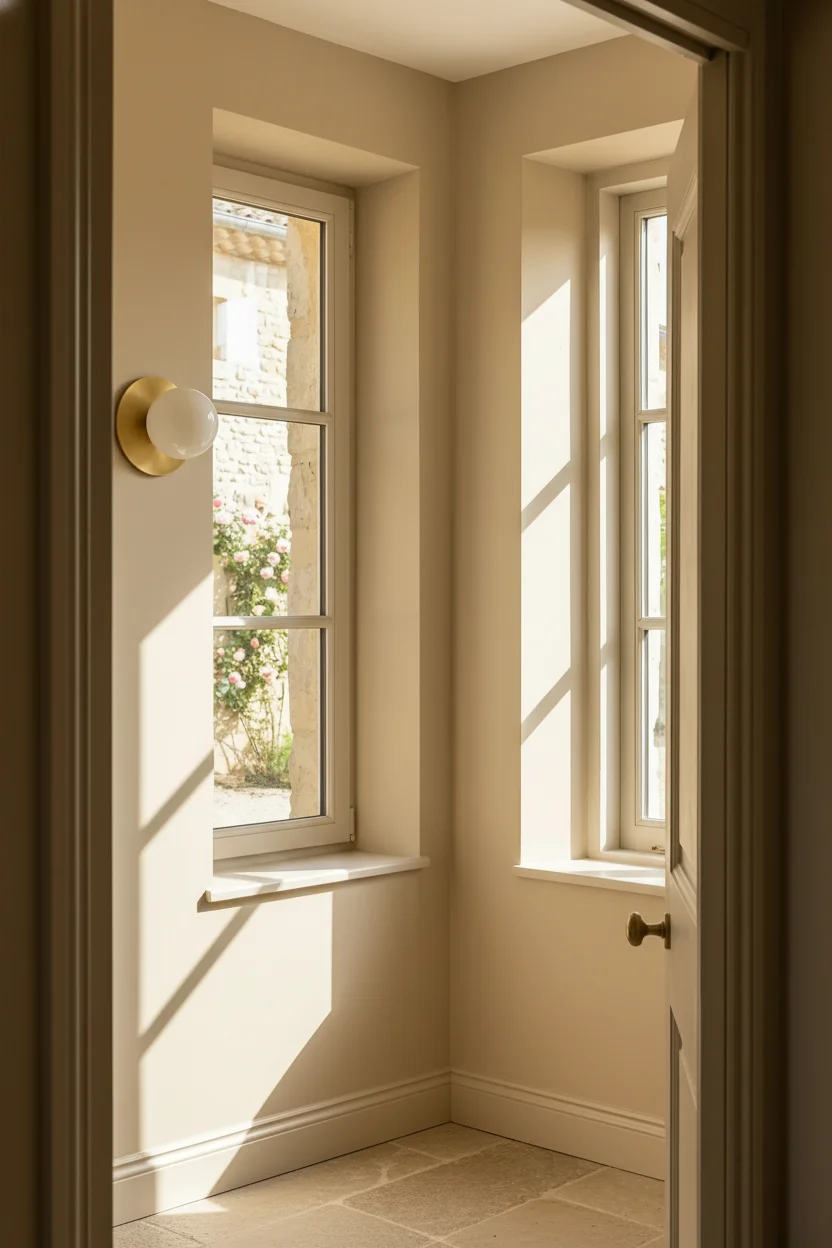
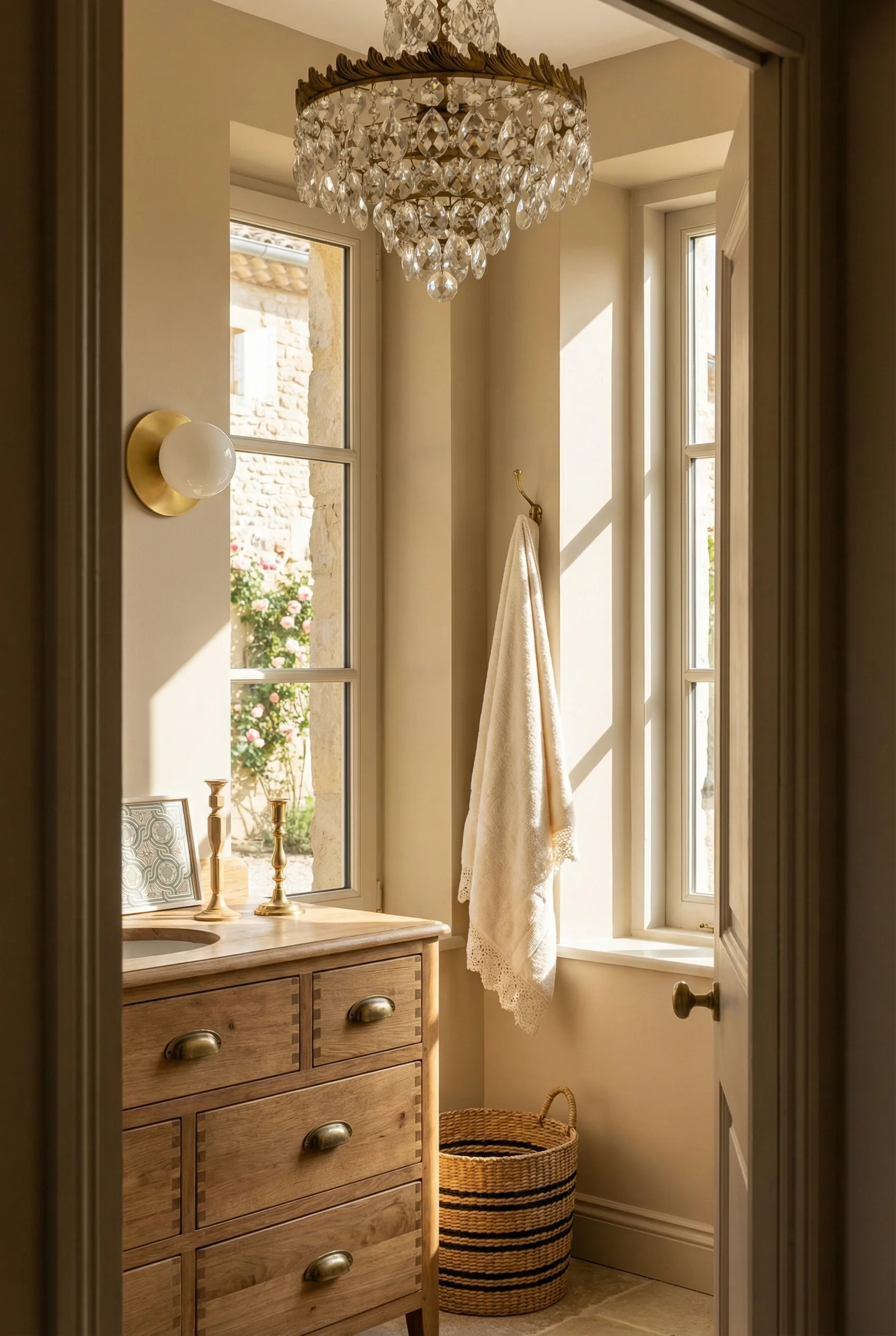
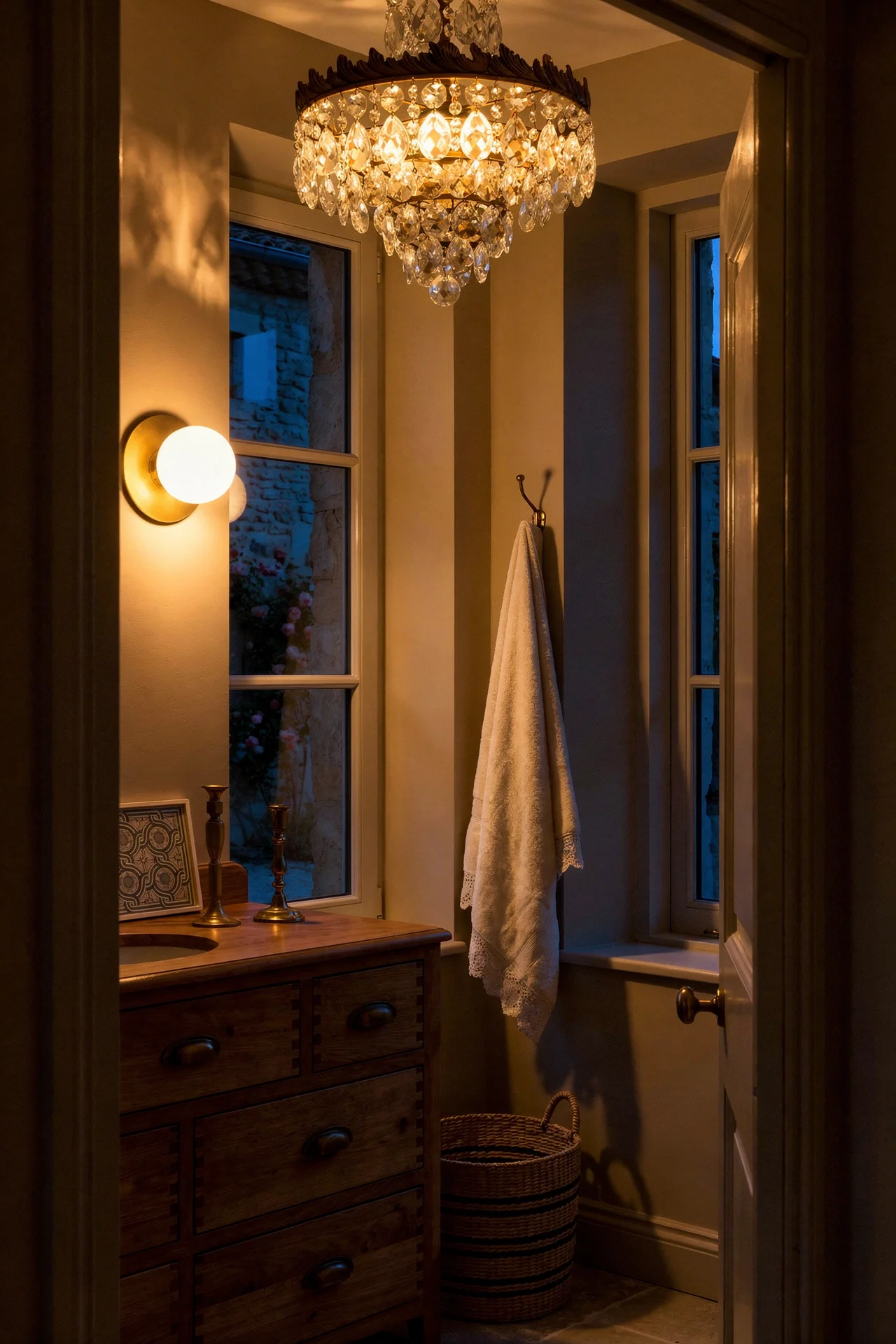
Hardware. Run your fingertip along the underside of a brass handle or faucet. Genuine unlacquered brass feels slightly grainy, matte, almost warm to the touch. Reproductions sealed with clear synthetic lacquer feel glassy, slick, and cool. If the brass is perfectly uniform in colour with no variation or darkening in the crevices, it is lacquered.
Terracotta tiles. Flip one over. Authentic reclaimed Parefeuille and Tomette tiles have irregular thicknesses, sometimes varying by several millimetres across a single tile. The colour is not printed. It runs all the way through the clay body. Modern ceramic reproductions are perfectly uniform in thickness and have a printed surface layer that stops at the glaze line.
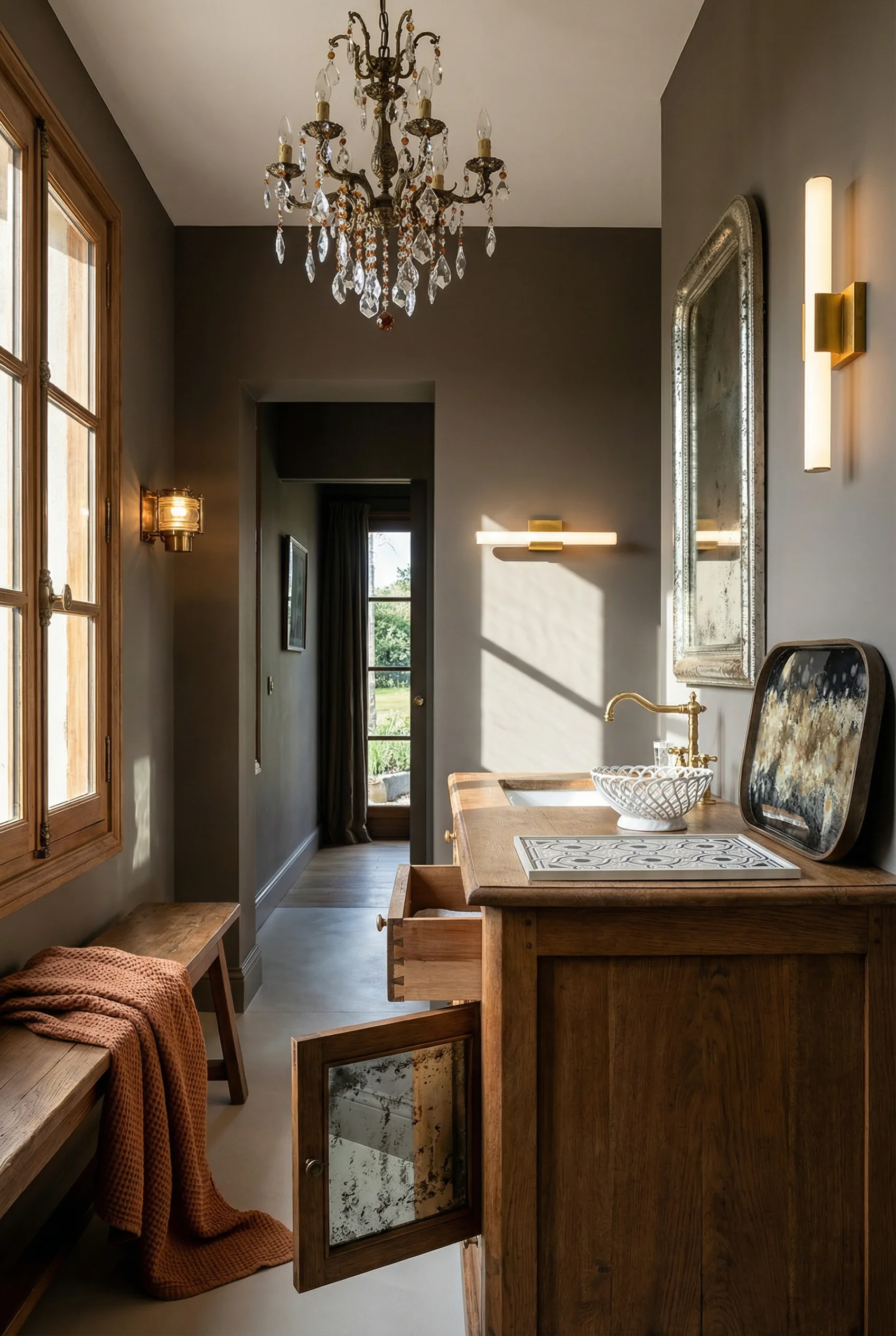
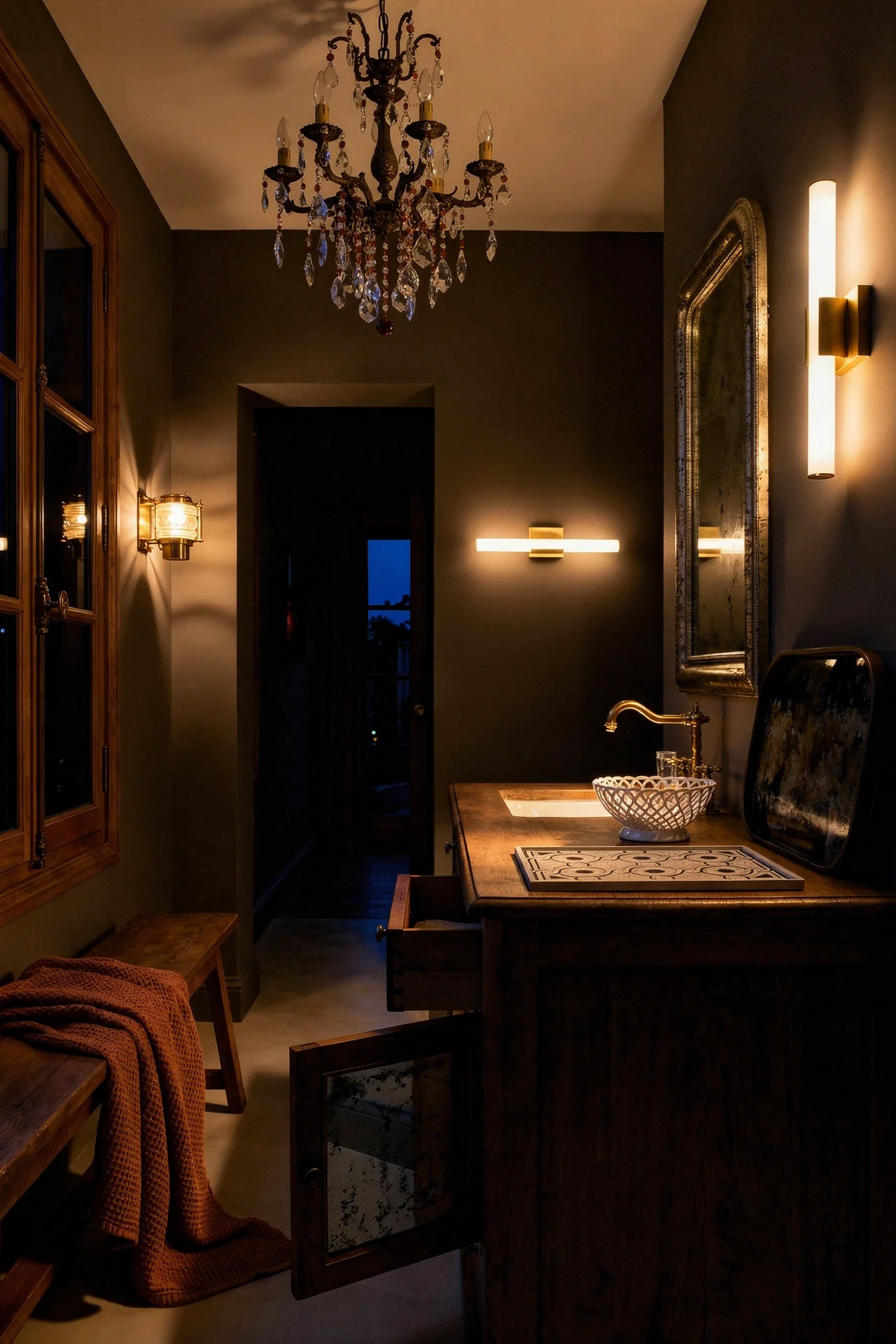
Vanity construction. Open a drawer or look at the back panel. Authentic antique commodes are solid hardwood, typically oak or walnut, with dovetail joints visible at the drawer corners. Reproductions built to look old use MDF or particleboard with a veneer surface and machine cut joints. The weight difference alone is telling. A real commode is heavy. An imitation is light.
Mirrors. Antique mercury glass has a slightly wavy, imperfect reflection with dark spots where the silvering has worn thin. Reproduction “antiqued” glass has artificially applied dark spots that are too evenly distributed. Real aging is random. Manufactured aging is symmetrical.
The colours that define a French country bathroom come from two distinct regional traditions, and the palette you choose signals which version of France your room is channelling.

Warm Ochre – The foundation colour of Provençal design, pulled straight from the sun baked clay and limestone of southern France. Use it on accent walls or in terracotta floor tones. It anchors the room in warmth without competing with patterned textiles.
Paint Pick: Farrow & Ball London Stone No. 6
Chalky White – Not a stark, clinical white. A warm, slightly creamy tone with the faintest yellow undertone, like plaster that has been whitewashed and left to age in soft light. This is your dominant wall colour if you are not using limewash.
Paint Pick: Farrow & Ball Pavilion Blue No. 252
Soft Sage – A dusty, grey green that reads as herbal and provincial rather than modern or trendy. It works beautifully on wainscoting, vanity paint, or as the secondary colour in a Toile de Jouy wallpaper.
Paint Pick: Farrow & Ball Vert de Terre No. 234
Lavender Grey – The colour that ties the Provençal warmth to the cooler Norman tradition. A muted purple grey that feels sophisticated without being cold. Best in small doses, on a freestanding cabinet, folded towels, or a fabric shade on a brass sconce.
Paint Pick: Farrow & Ball Calluna No. 270
Warm Taupe – The grounding neutral. Darker than cream, warmer than grey, and more interesting than beige. It is the colour of aged linen and unfinished oak, and it makes everything else in the room feel deliberate.
Paint Pick: Farrow & Ball Lichen No. 19
Once you settle your palette, the material decisions start making themselves. Warm ochre walls want unlacquered brass. Chalky white walls want a gilded mirror. The colours tell you where to go next.
If I had to pick one place to begin, it would be the hardware. Swap out the sealed, polished fixtures for unlacquered brass. A single set of taps and a towel ring. Within a few months, the patina will start to arrive, and you will have the room’s first honest detail. Everything you add after that has a reference point. Not a catalogue. Not a Pinterest board. Just a piece of brass doing what brass does when you let it.
This post contains affiliate links, which means we may earn a small commission if you make a purchase through our links, at no extra cost to you.