Newsletter Subscribe
Enter your email address below and subscribe to our newsletter

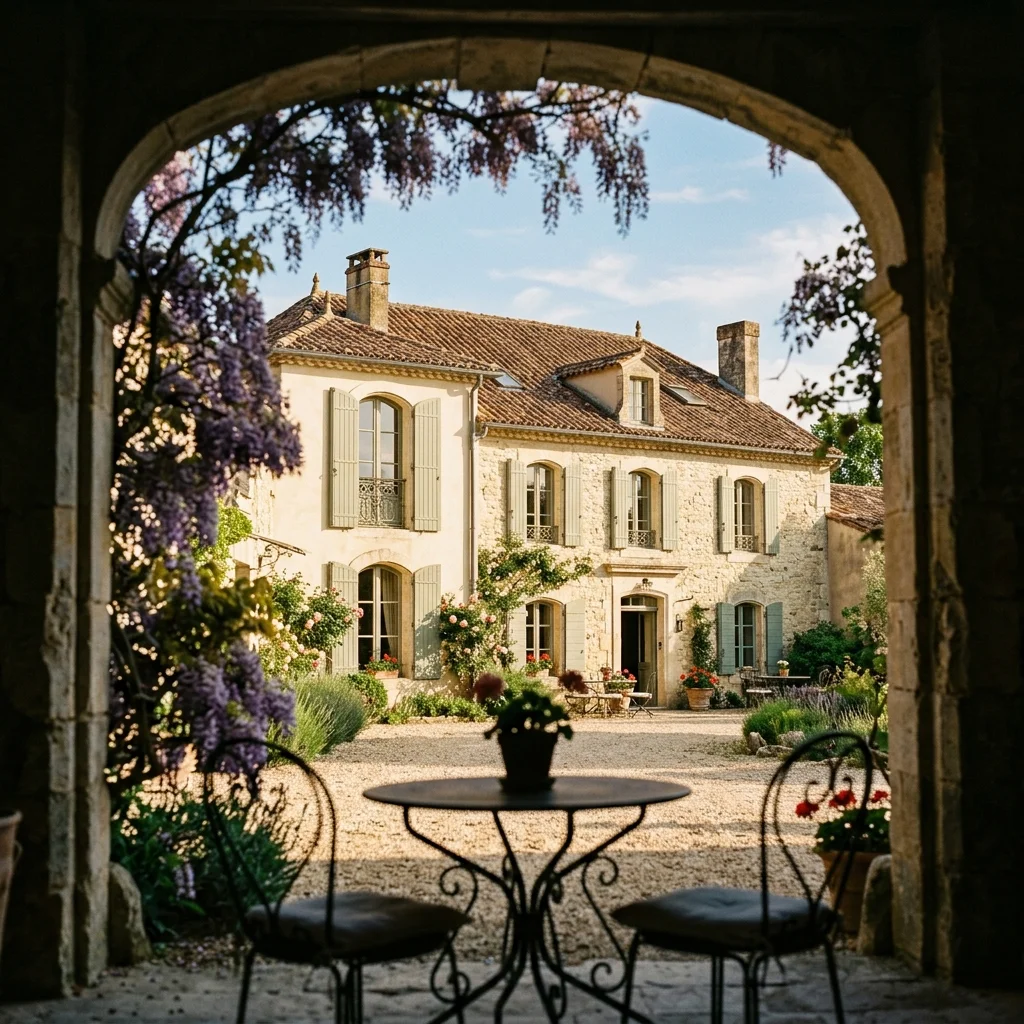
There is a street in every new development where someone has tried to build a French country house. You can spot it immediately. The shutters are screwed flat against the siding. The stone veneer stops at the corner like wallpaper. The landscaping is three boxwood spheres and a bag of red mulch. The bones might be right, but the details are telling a different story entirely. French country architecture was never about luxury. It was about honest materials, regional specificity, and details that earned their place over centuries. The gap between “French inspired” and genuinely convincing comes down to seven details that most builders skip and most homeowners never think to question.
Stone is not a cladding choice for French country exteriors. It is the soul of the building. The difference between a convincing facade and a costume starts with understanding that real French provincial homes were built FROM stone, not decorated WITH it. Limestone in particular carries the warmth and irregularity that no manufactured panel can replicate.
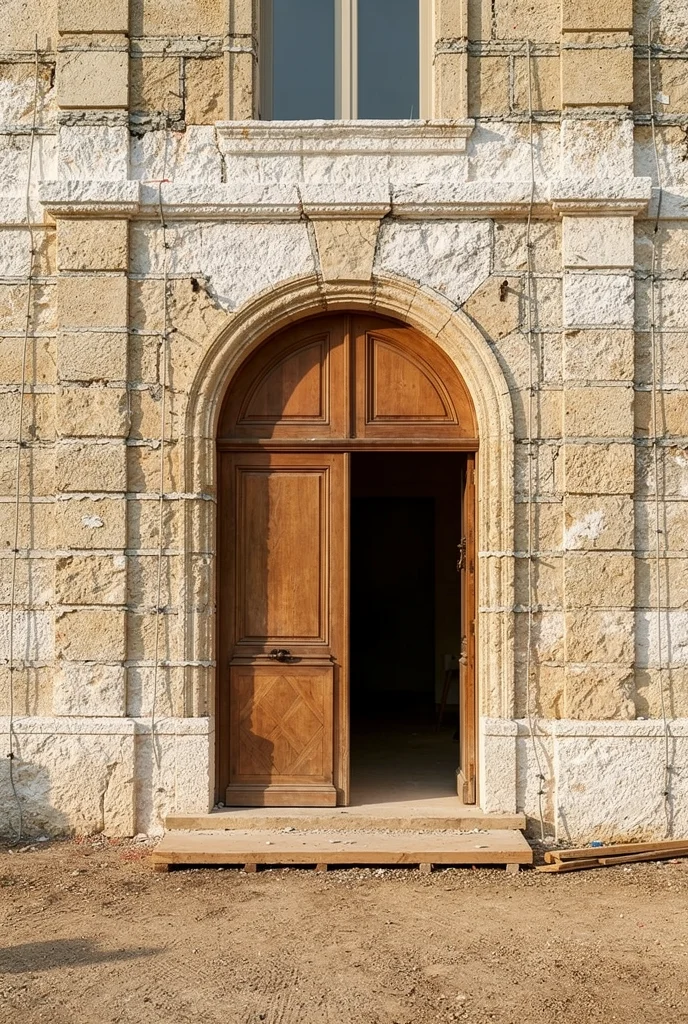
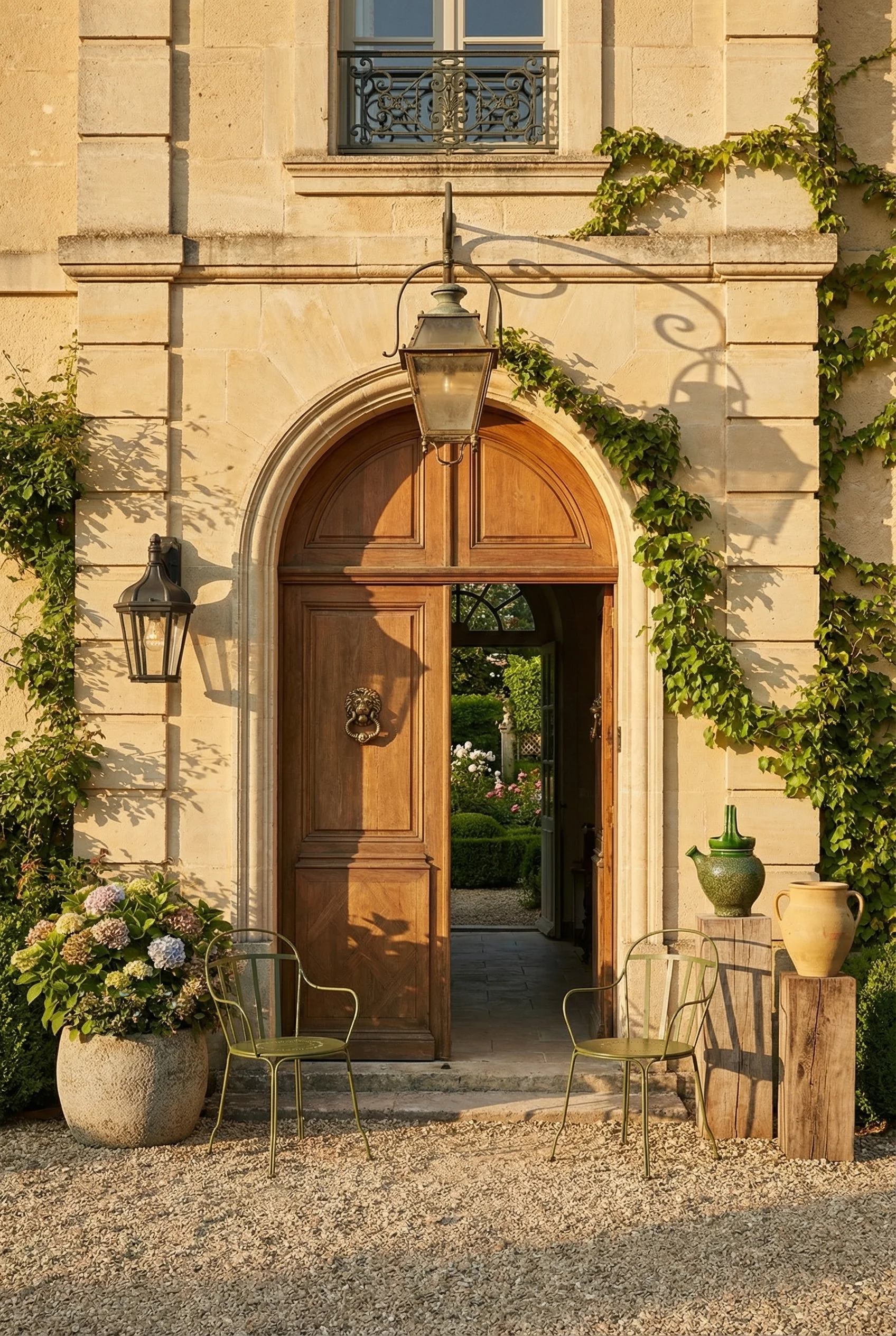
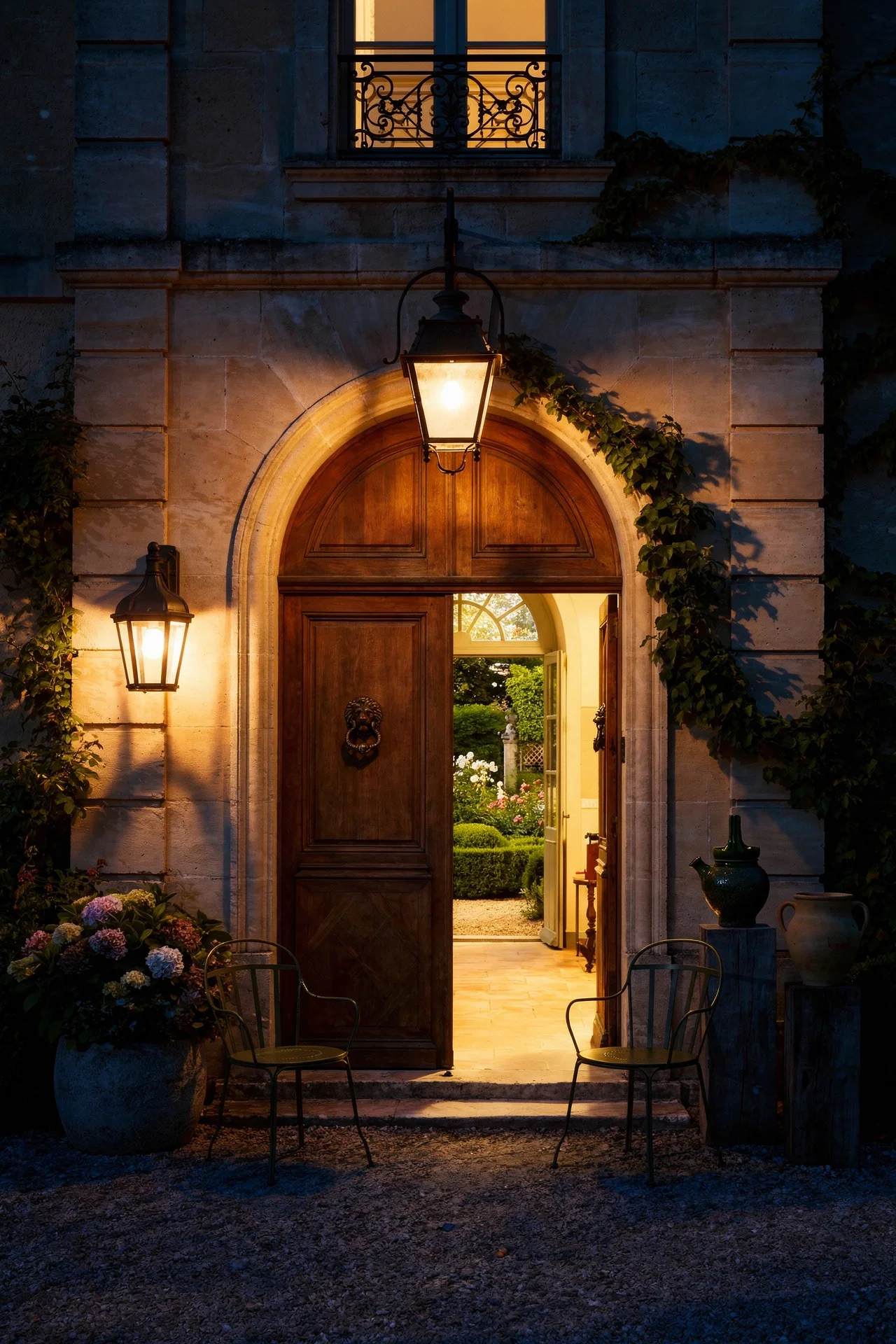
If you are renovating, start with the stone before anything else. For formal Provincial exteriors, limestone is the material. Coronado Stone Products offers French White and Country Beige profiles that read warm without veering yellow. Buechel Stone and Nitterhouse Masonry carry Silver Ash tones for cooler, northern French aesthetics. The key is matching the stone to your region’s light. Warm limestone suits southern exposures. Silver and grey tones hold up better under overcast skies.
For existing brick homes, German Schmear is the single most cost effective transformation available. This technique uses a thin mortar wash over brick, leaving irregular patches of the original surface visible. The result looks like centuries of weather and lime wash rather than a weekend project. I’d go heavy on the mortar and then scrape back selectively. You want 60 to 70 percent coverage, not a uniform coat.
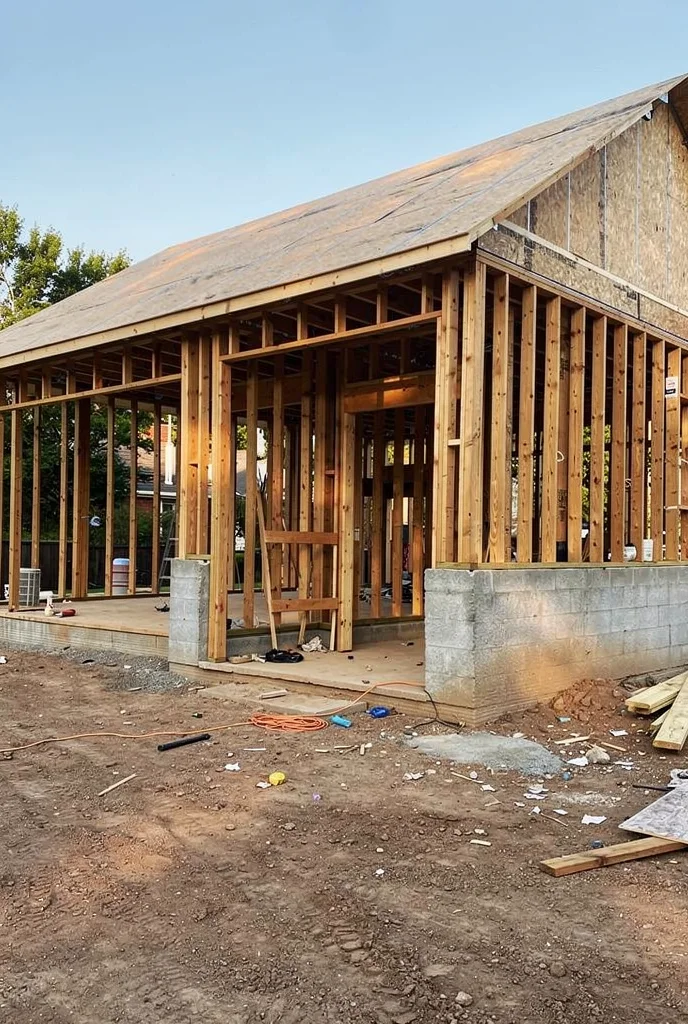
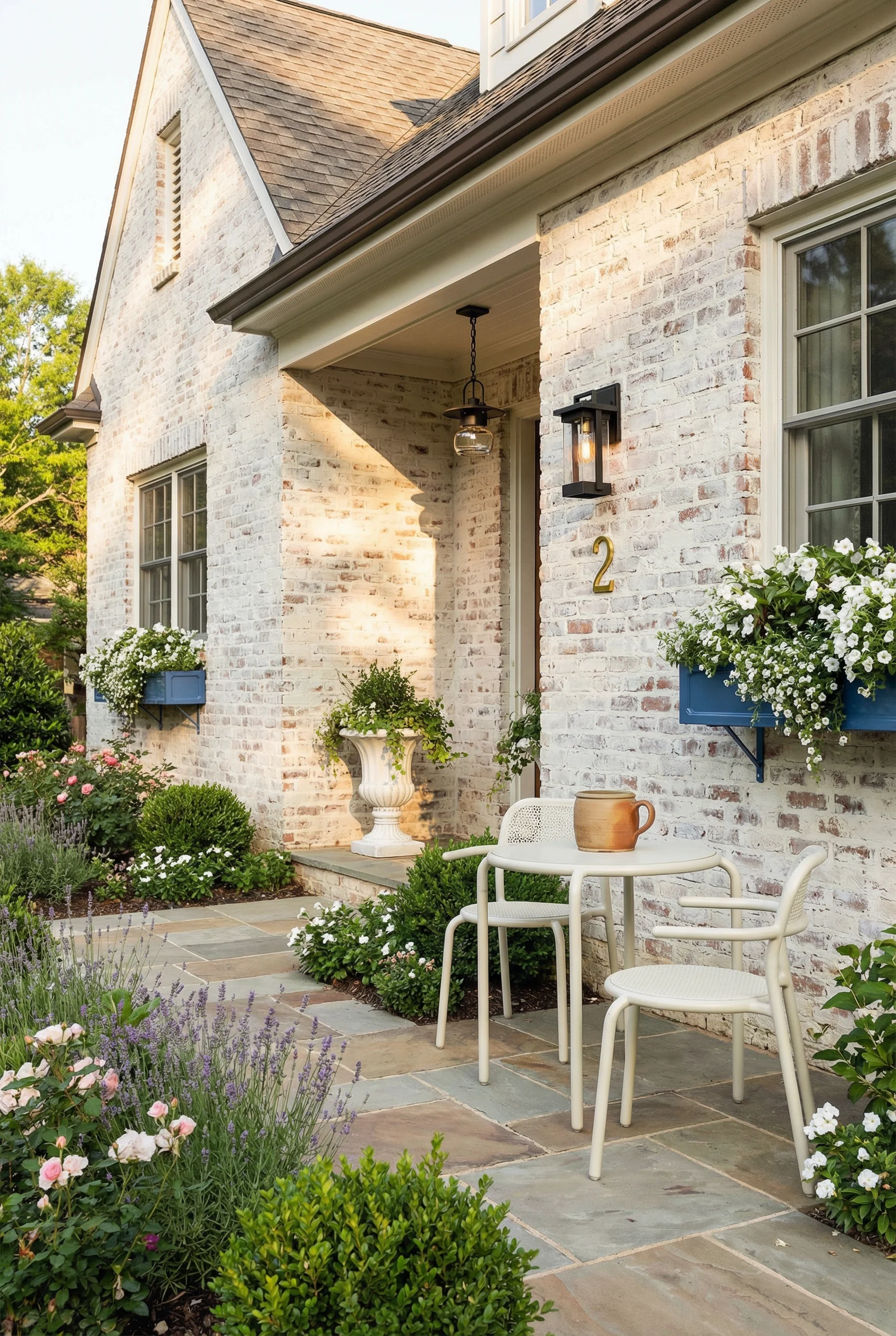
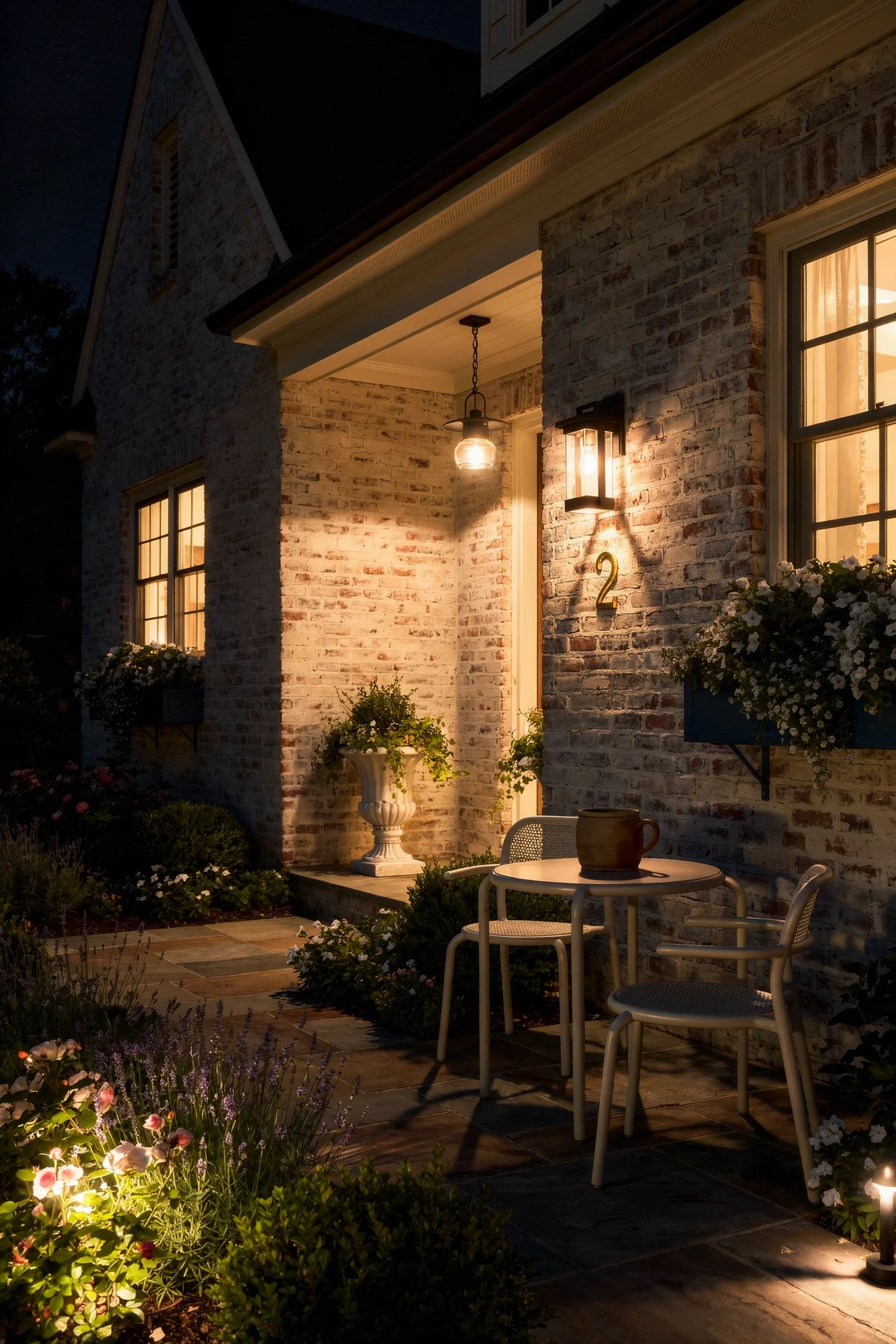
Fieldstone works brilliantly for farmhouse and Mas style exteriors. The irregularity is the point. Avoid anything that comes in repeating patterns or uniform sizing. Top Source Stone supplies hand sorted fieldstone that avoids the telltale grid look. Mix sizes aggressively. Real fieldstone walls were built from whatever the field gave up, and that randomness is what reads as authentic.
The mortar matters as much as the stone. Over grouted joints scream “installed last Tuesday.” French country masonry uses recessed or flush joints with a mortar color that nearly matches the stone. When in doubt, go slightly darker on the mortar. It recedes visually and lets the stone do the talking.
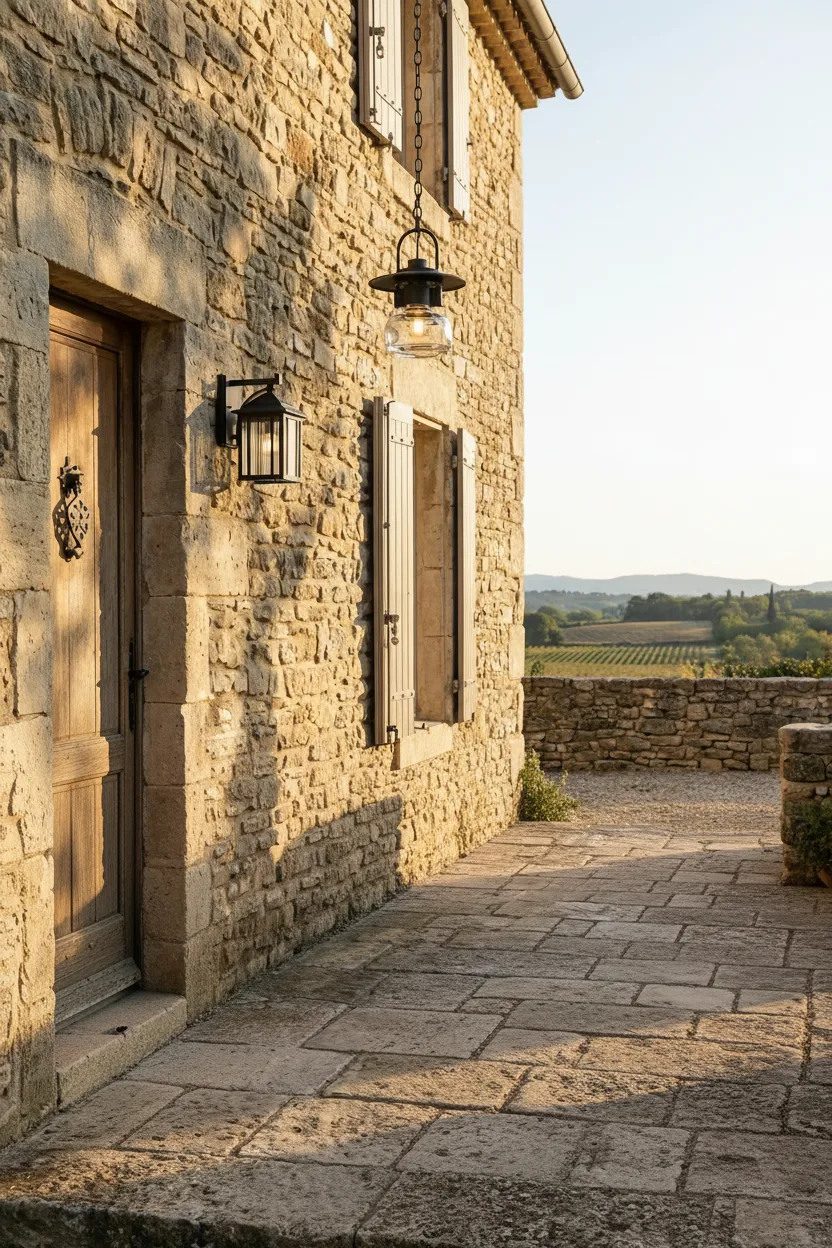
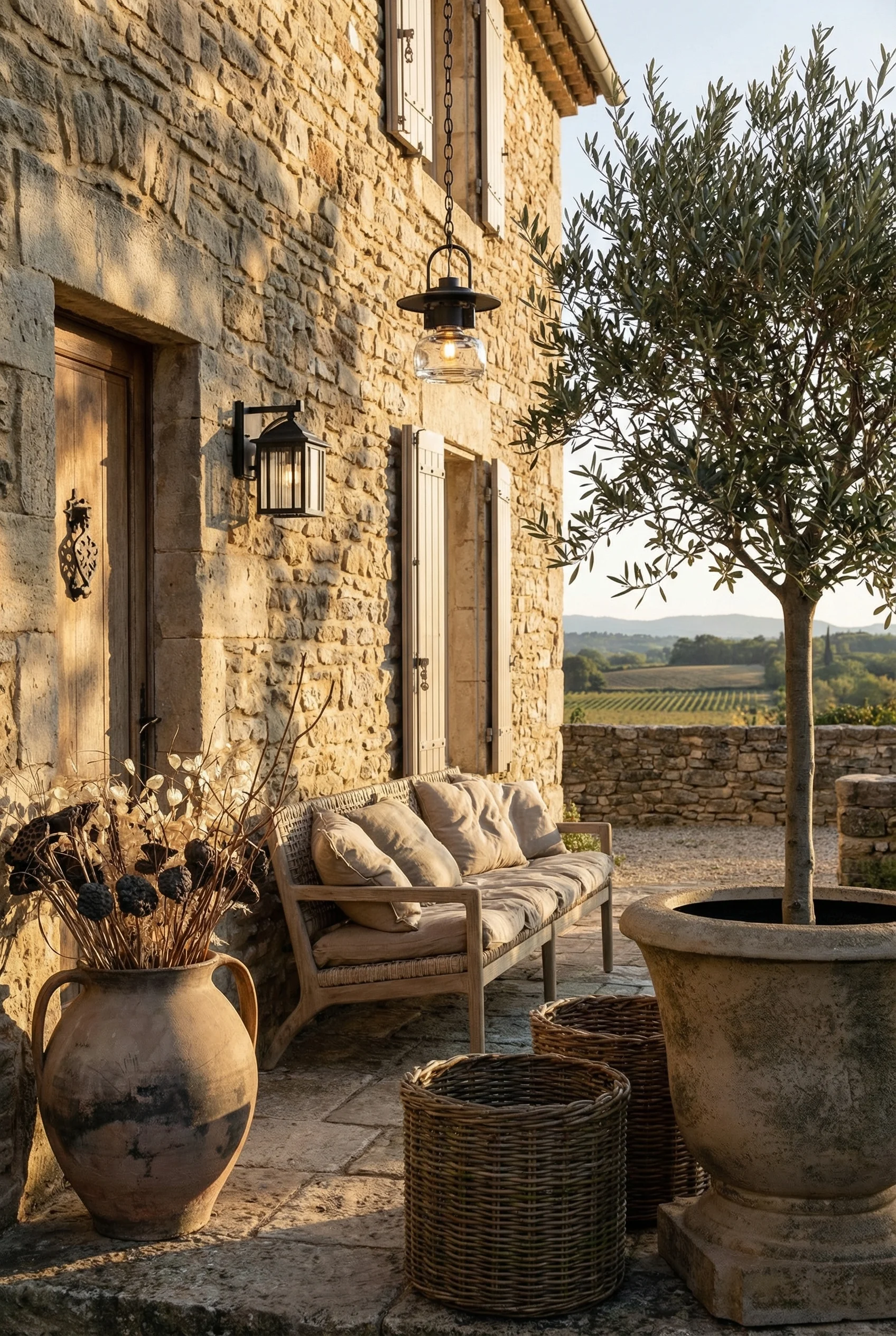
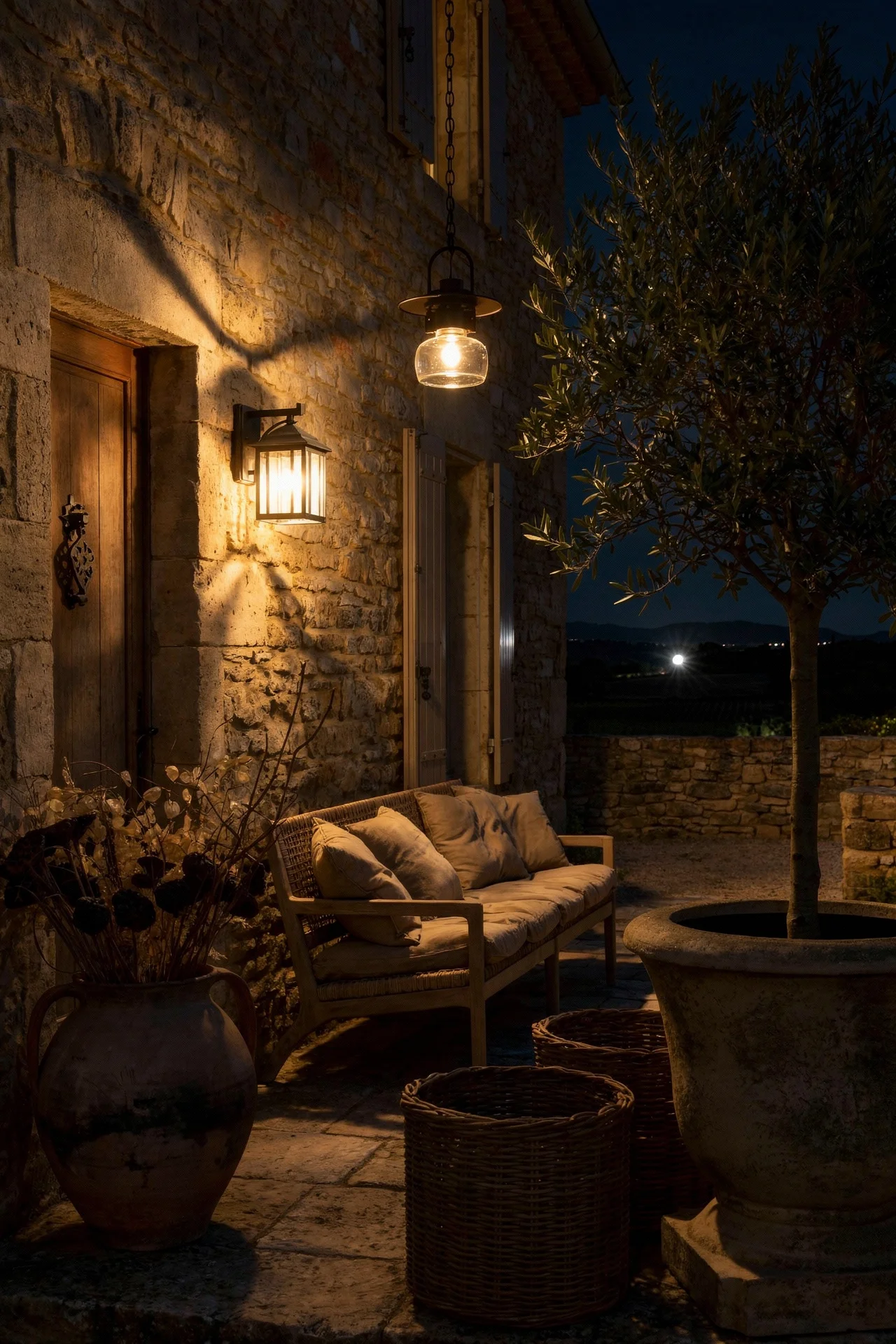
Get the stone right and everything else you add to the exterior has a foundation to build from. Get it wrong and no amount of shutters or copper lanterns will save it.
Before anyone notices your front door, your landscaping, or your paint color, they see the roofline. It is the most visually dominant element of any French country exterior, and it is the one most often compromised by budget or builder shortcuts.
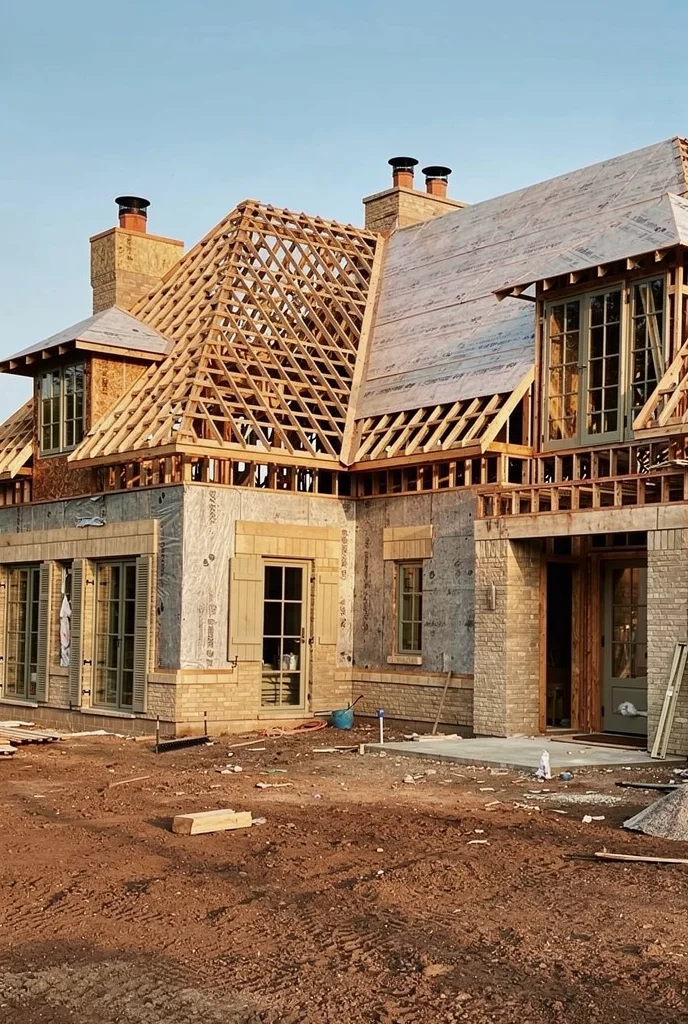
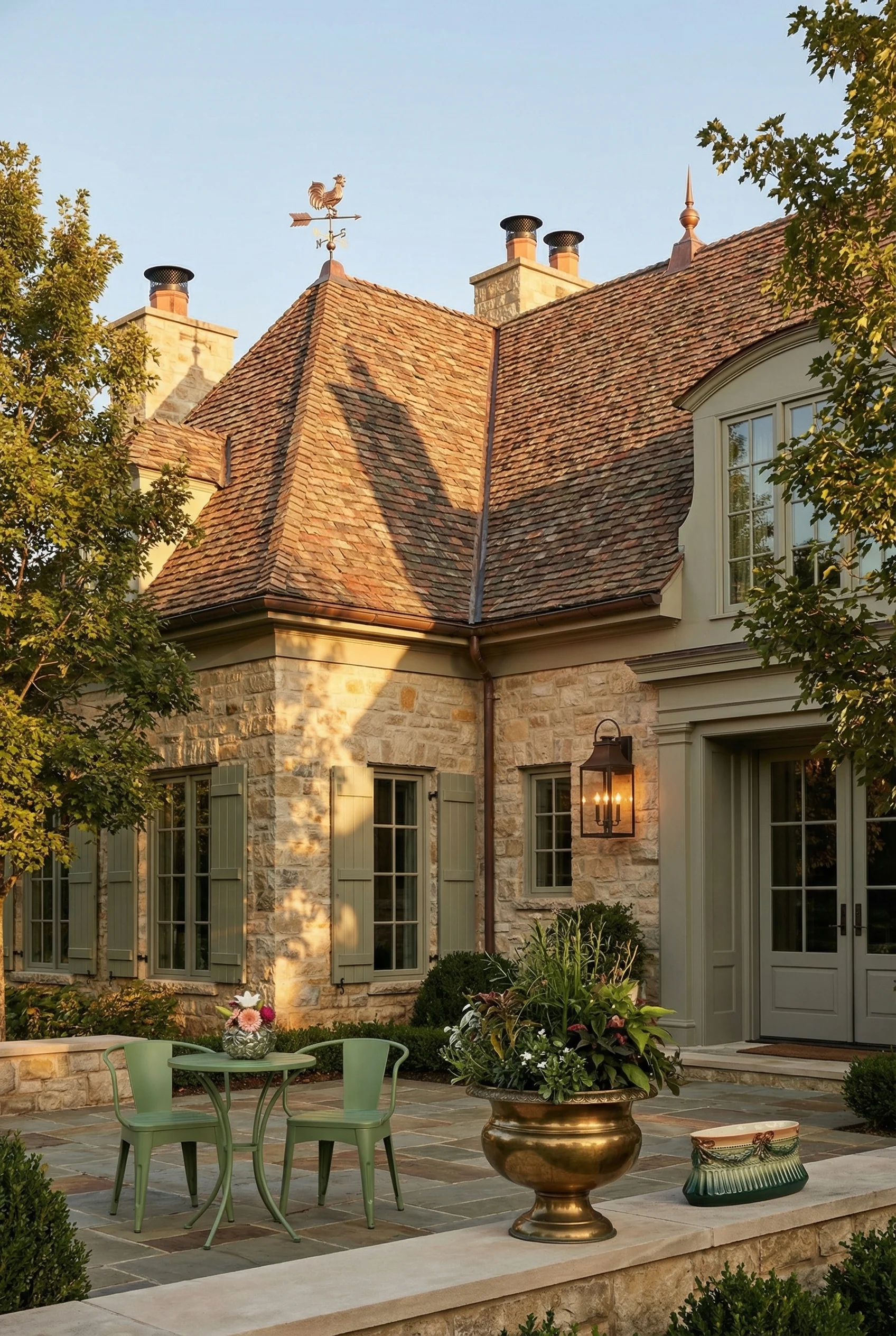
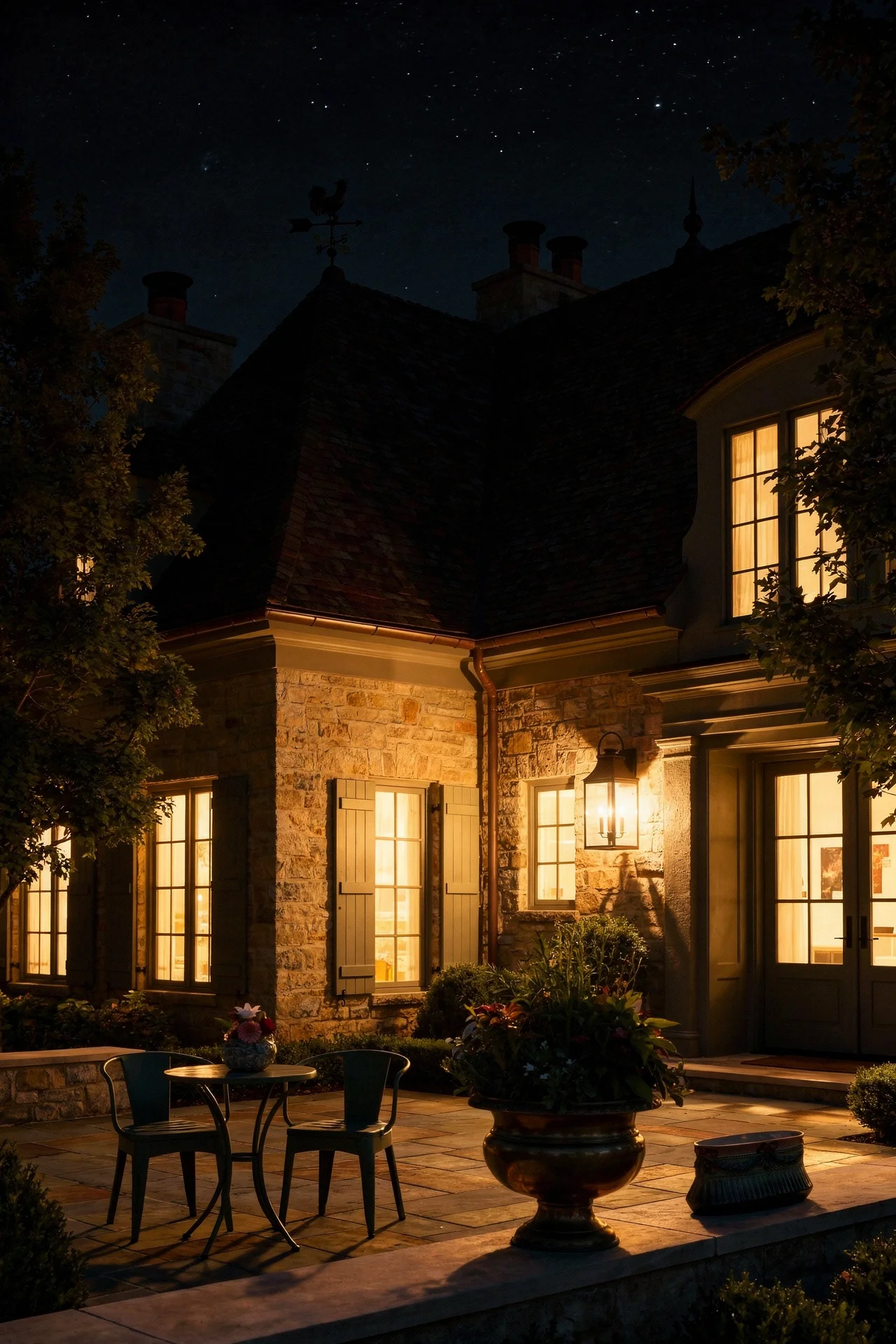
Authentic French country homes use steeply pitched hipped roofs. That pitch is not decorative. In Normandy, steep roofs shed rain and snow efficiently. In Provence, slightly lower pitches with wider eaves provide shade. The pitch should respond to your climate, but anything below a 45 degree angle starts looking suburban rather than provincial. Double chimneys are another marker. A single chimney reads as any house. Two chimneys, placed symmetrically or at gable ends, immediately signal intention.
Dormer windows are where most new builds reveal their shortcuts. On authentic French country homes, dormers align precisely with the windows below them. They are structural, not afterthoughts. Misaligned dormers or dormers that sit too high on the roofline break the visual rhythm that makes these facades feel composed.
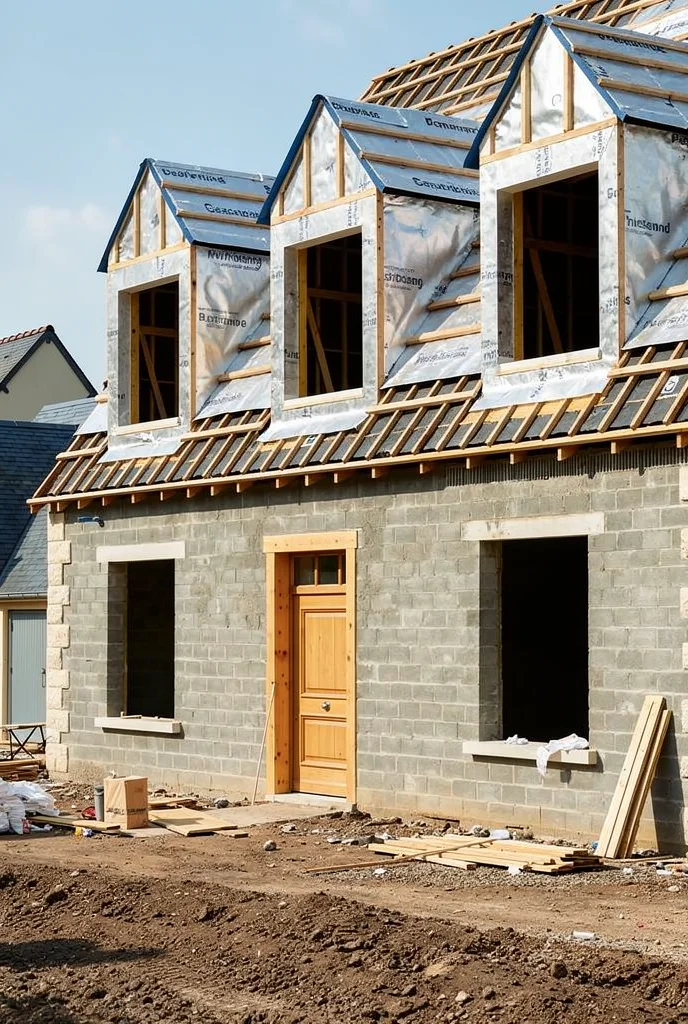
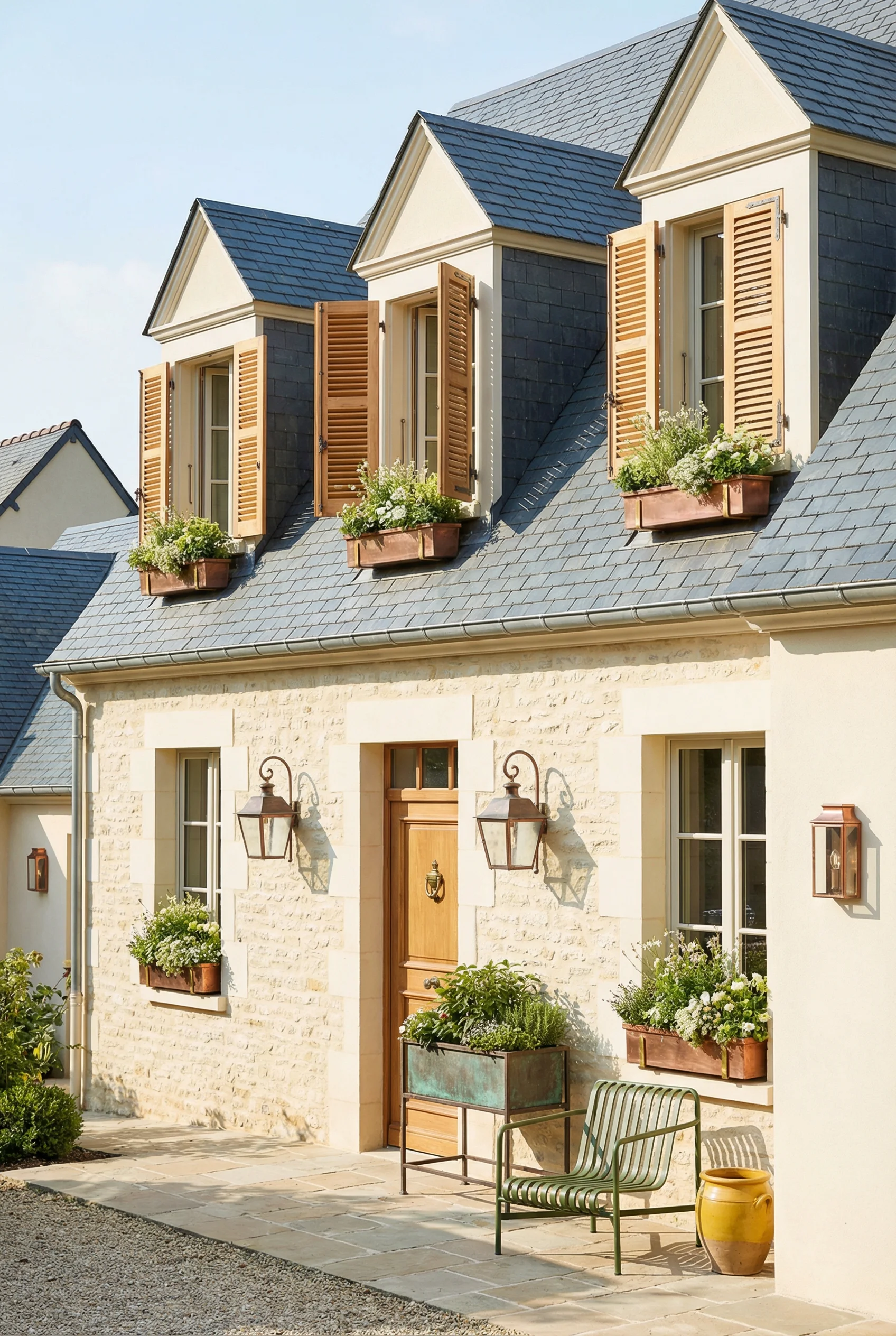
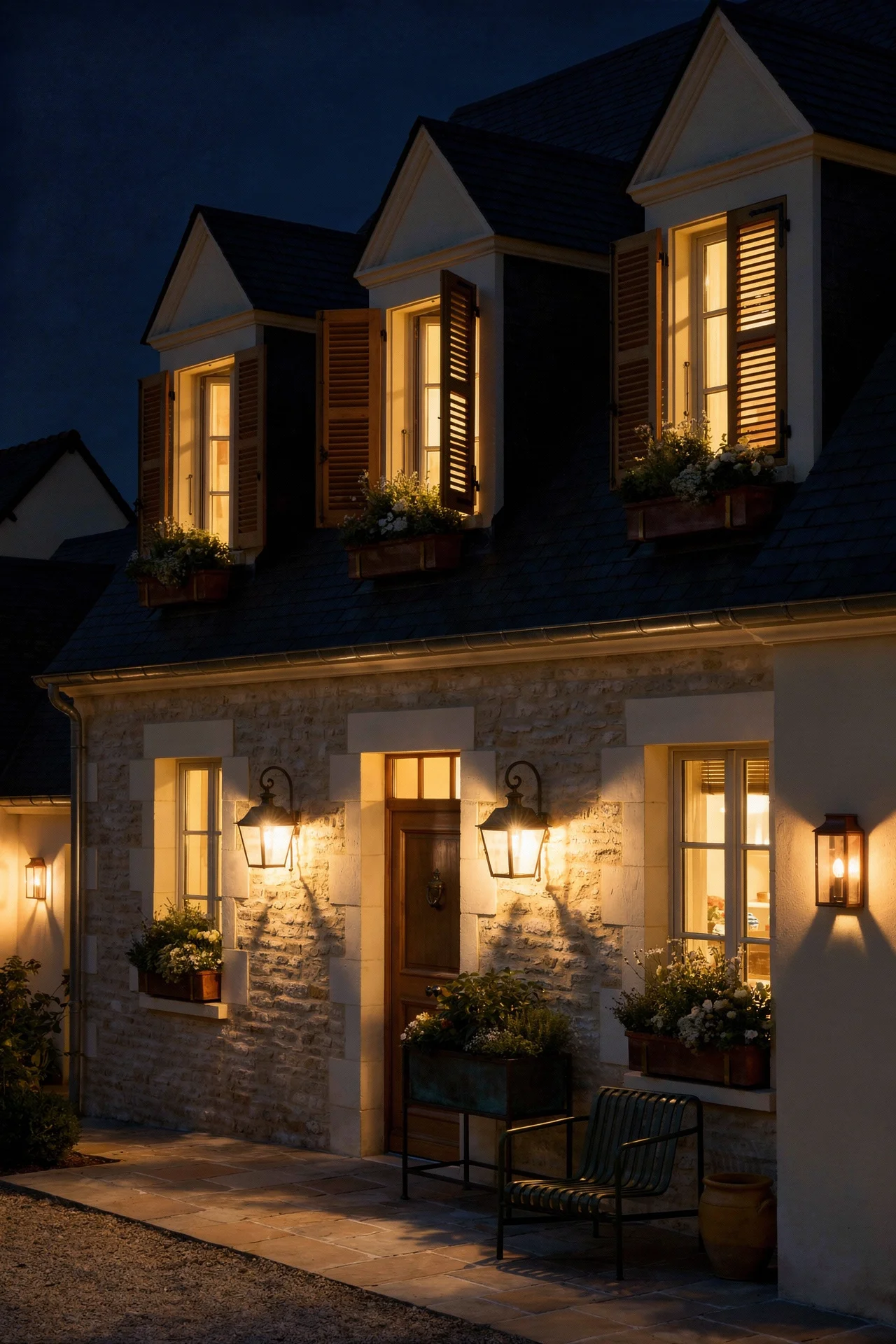
Material choice separates the serious from the superficial. Natural Black Slate is the authentic roofing material for northern French country homes, particularly in Normandy and Brittany. It lasts over 100 years and develops a patina that no composite can touch. The catch is weight. At roughly 600 pounds per square foot of roofing area, your framing must be engineered for it from the start. For new builds, specify this in the structural engineering phase. For renovations, a structural assessment is mandatory.
Clay and terracotta tiles suit warmer climate French country exteriors. They reference Provencal traditions, last 50 to 100 years, and carry a fraction of the weight. Barrel tiles in weathered terracotta are my preference. Flat profile tiles look too clean and modern for this style. If you are debating between slate and clay, let your geography decide. Cool, grey light calls for slate. Warm, sun heavy light calls for terracotta.
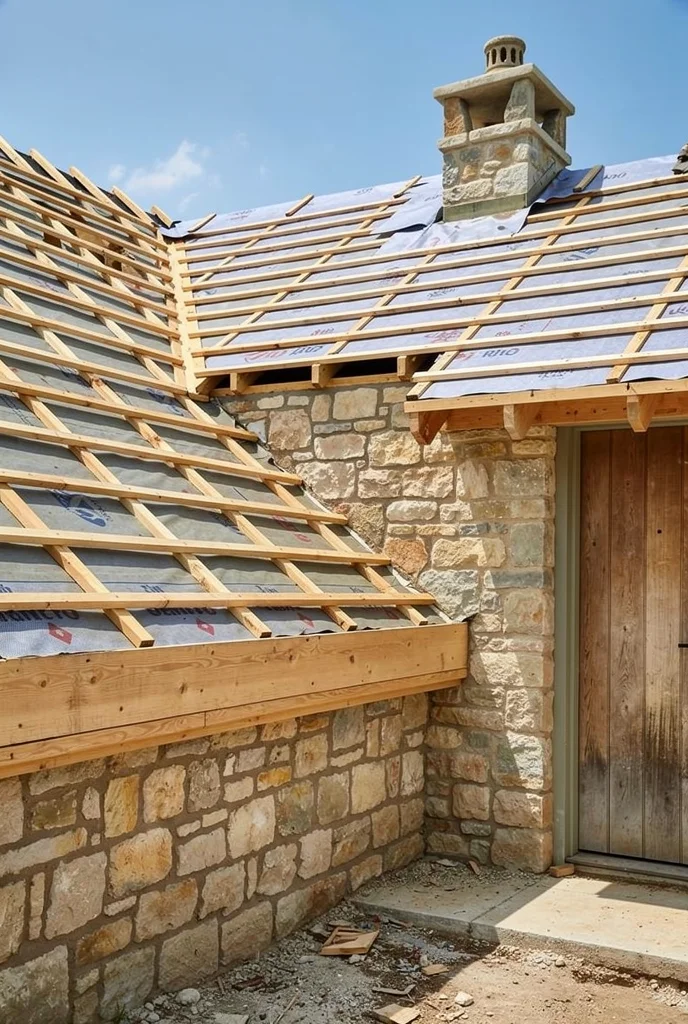
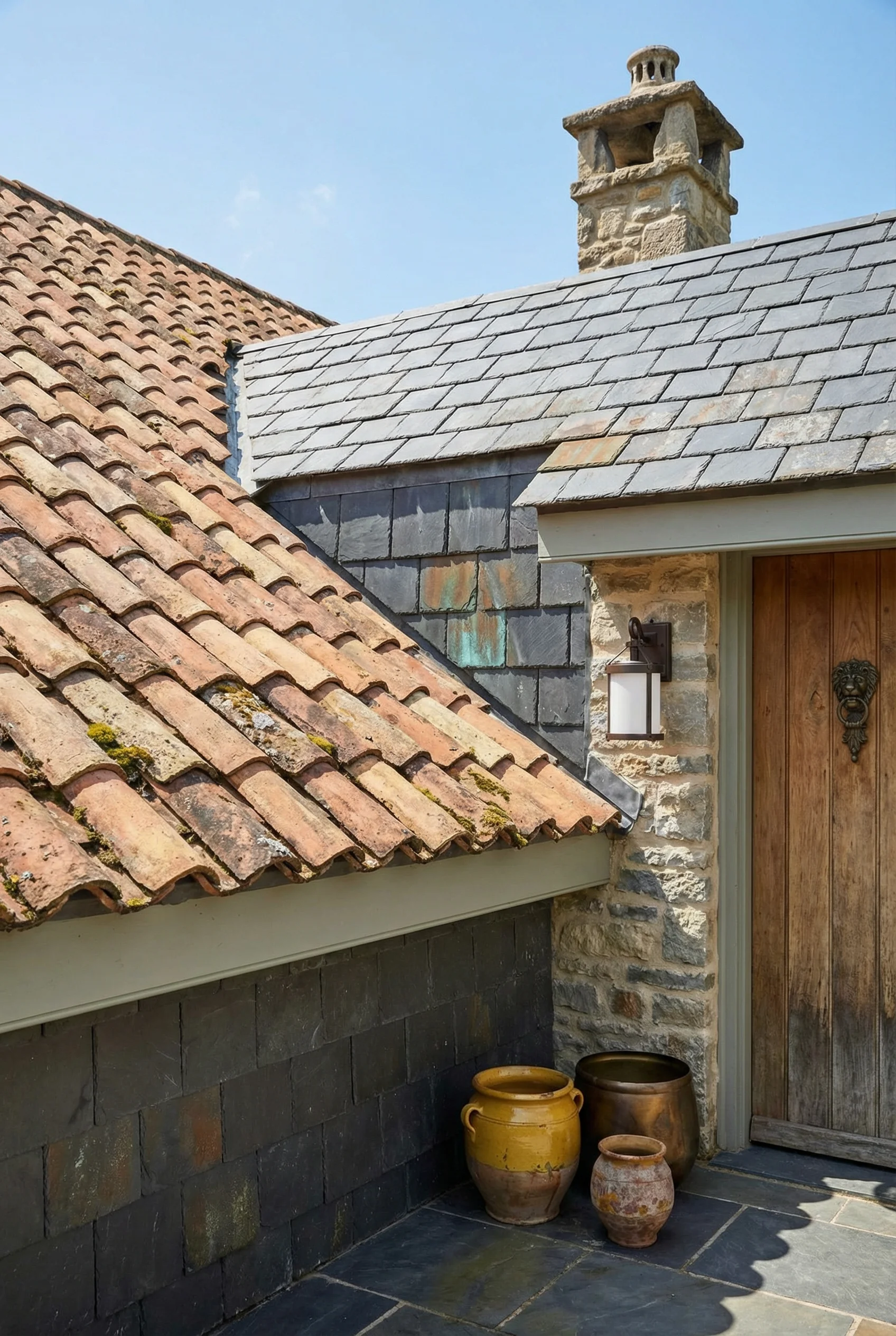
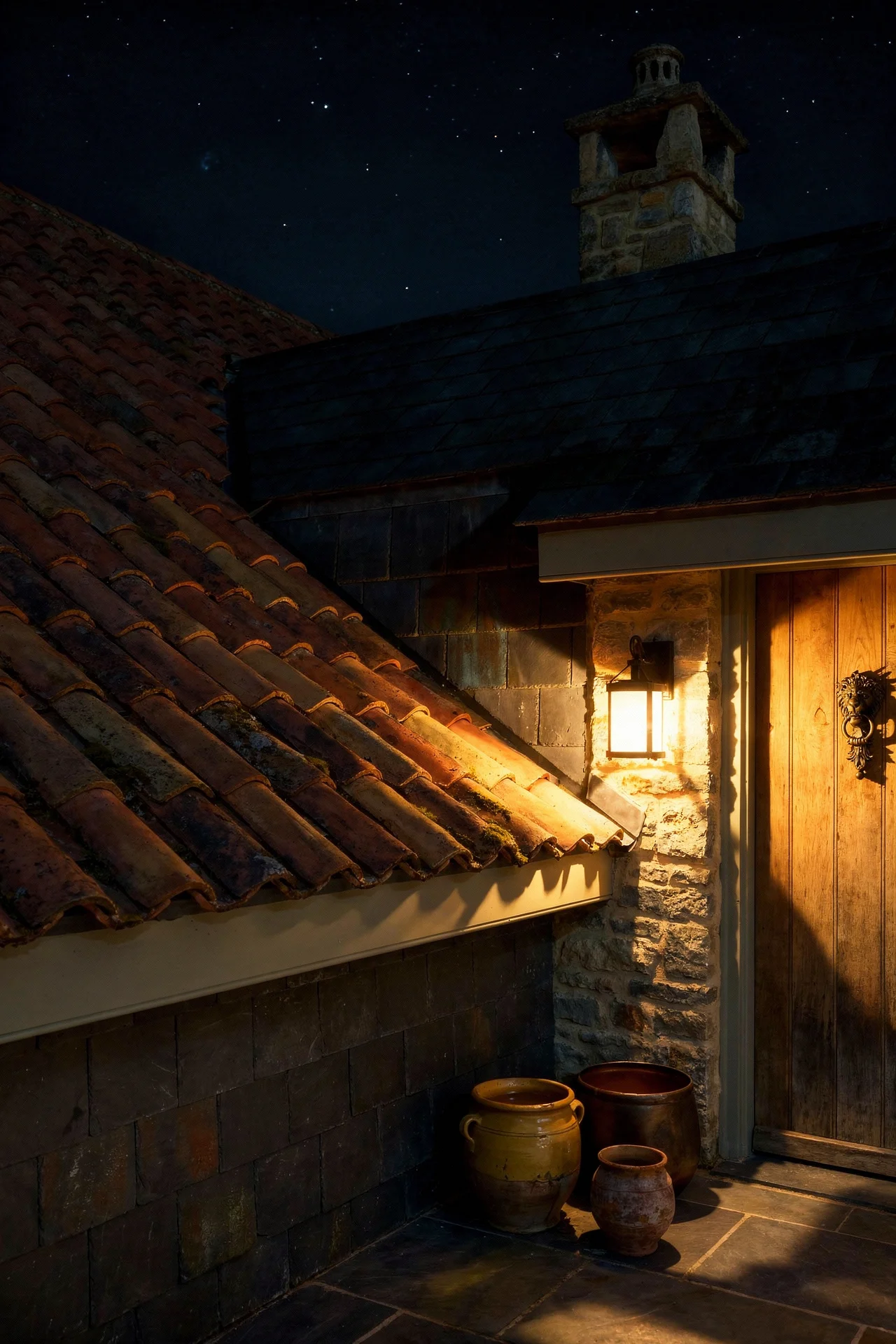
The roofline is the one element you cannot retrofit cheaply. If you are planning a build, invest the engineering budget here first. Everything below it is easier to adjust later.
I spent an embarrassing amount of time looking at French country homes on Pinterest before I noticed what was wrong with most of them. The shutters were fake. Not just aesthetically wrong, but physically impossible. Shutters screwed flat against siding, sized to cover maybe two thirds of the window, painted a single flat color, and clearly never intended to close. In France, these would be laughable. Volets are working architectural elements, not trim accessories.
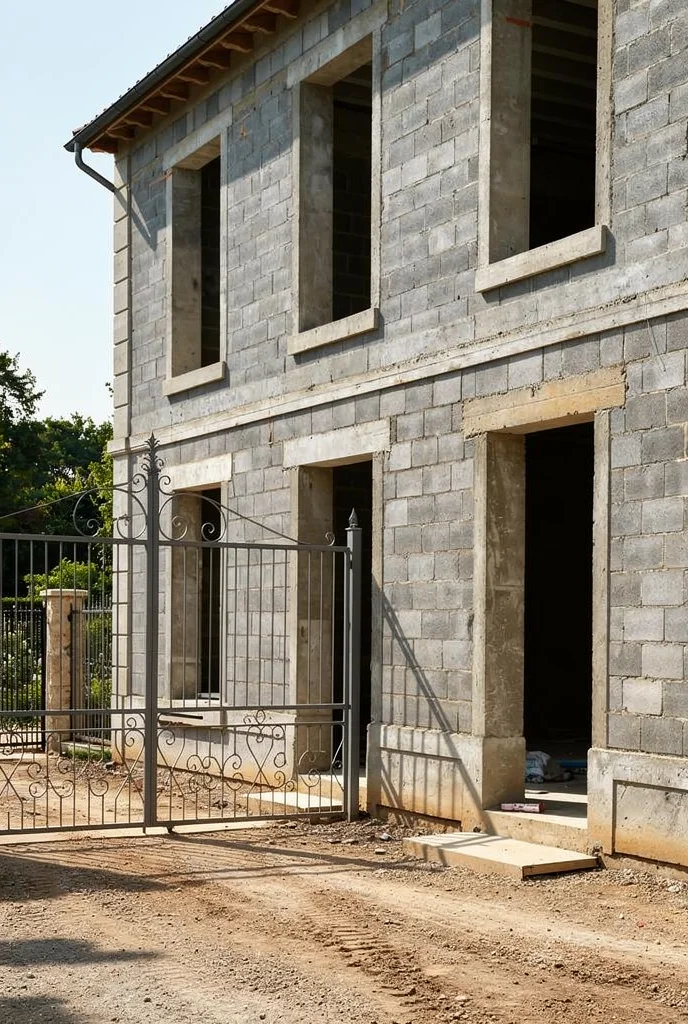
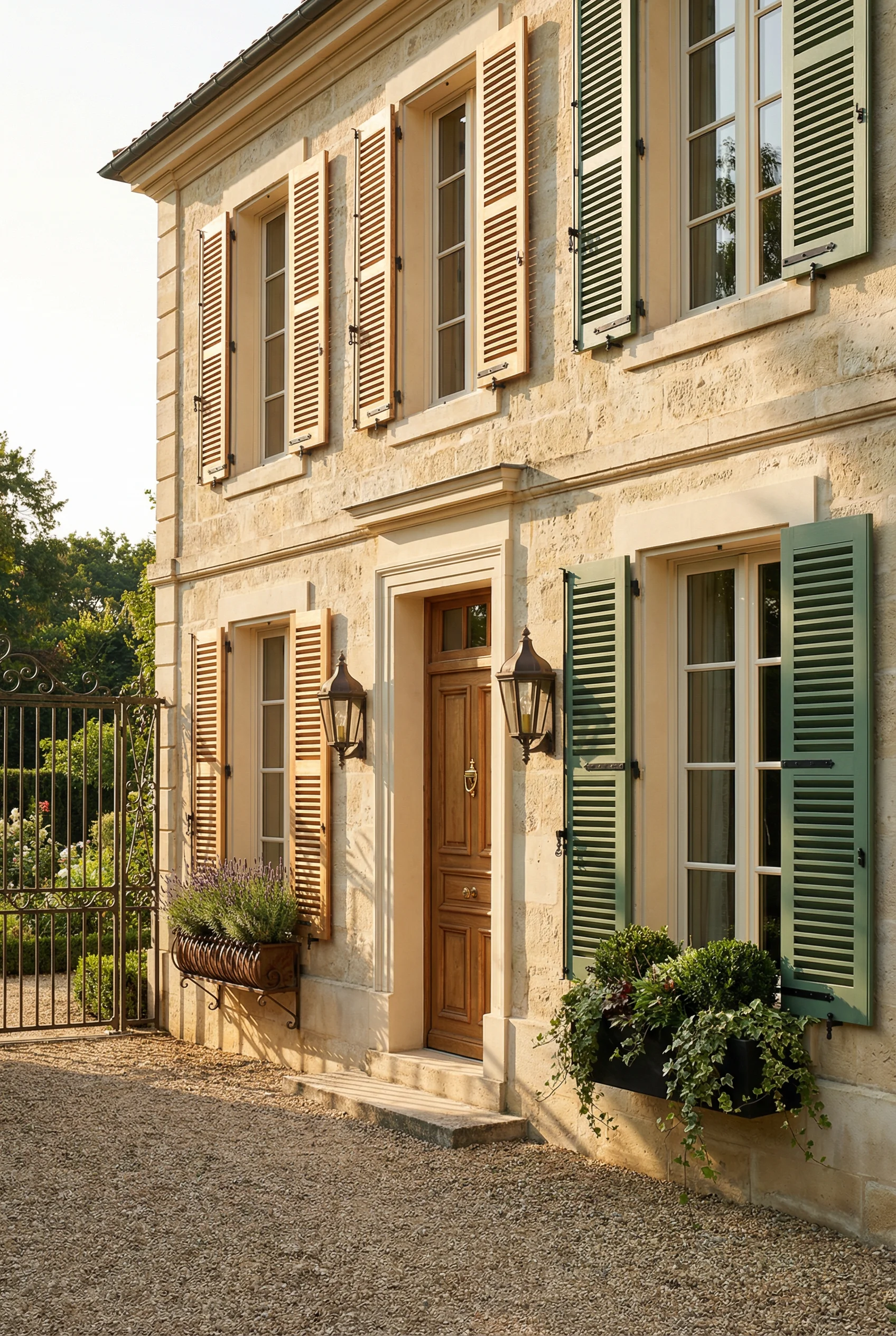
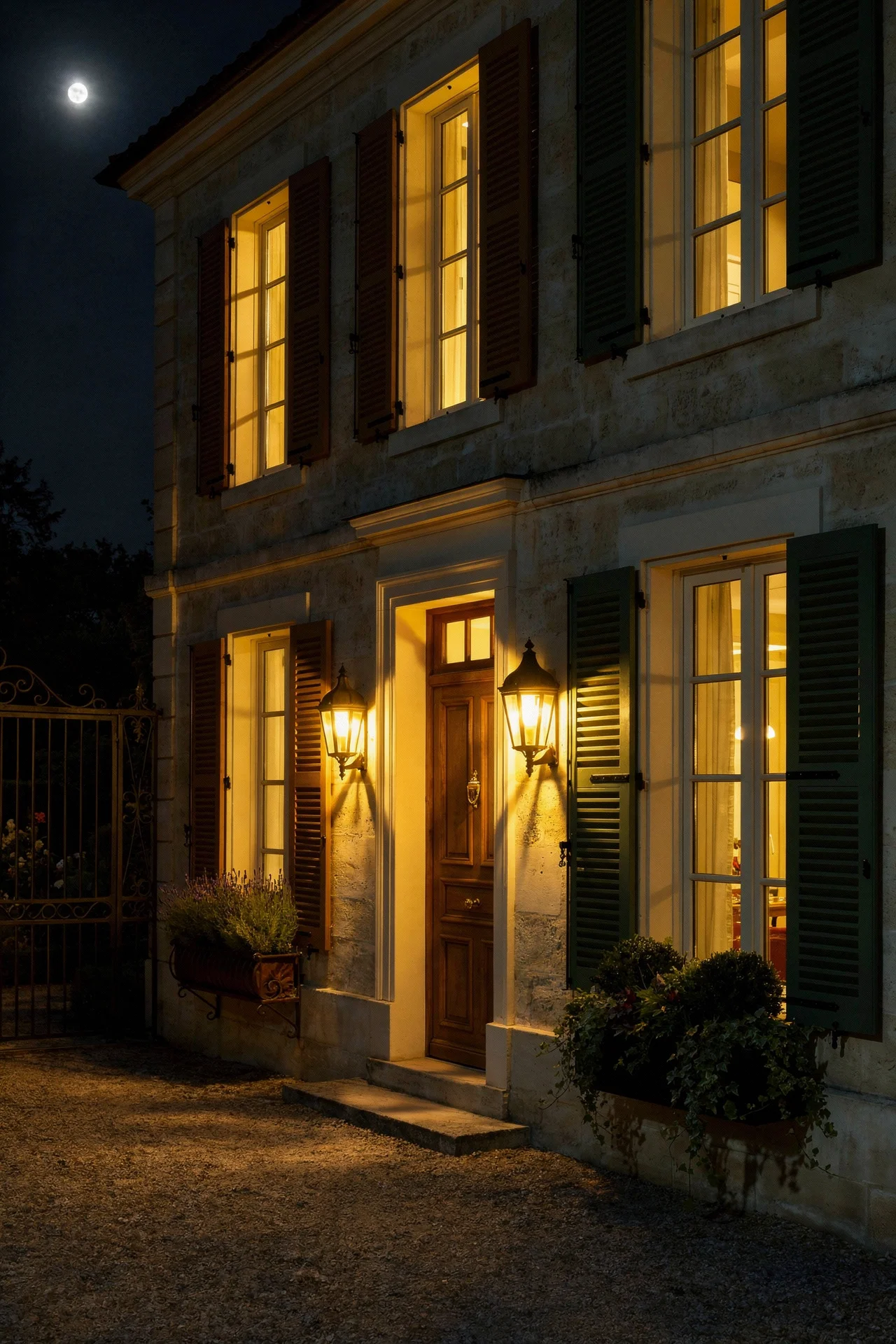
Real French shutters, volets, are sized to fully cover the window when closed. This is non negotiable. If your shutters would leave a gap, they are the wrong size. Measure the window opening and build the shutters to match it exactly. For a formal Provincial exterior, louvered shutters are the standard. For a farmhouse or Mas aesthetic, flat panel shutters with decorative cut outs (hearts, diamonds, or crescent moons) carry more character. Board and batten construction suits the most rustic interpretations.
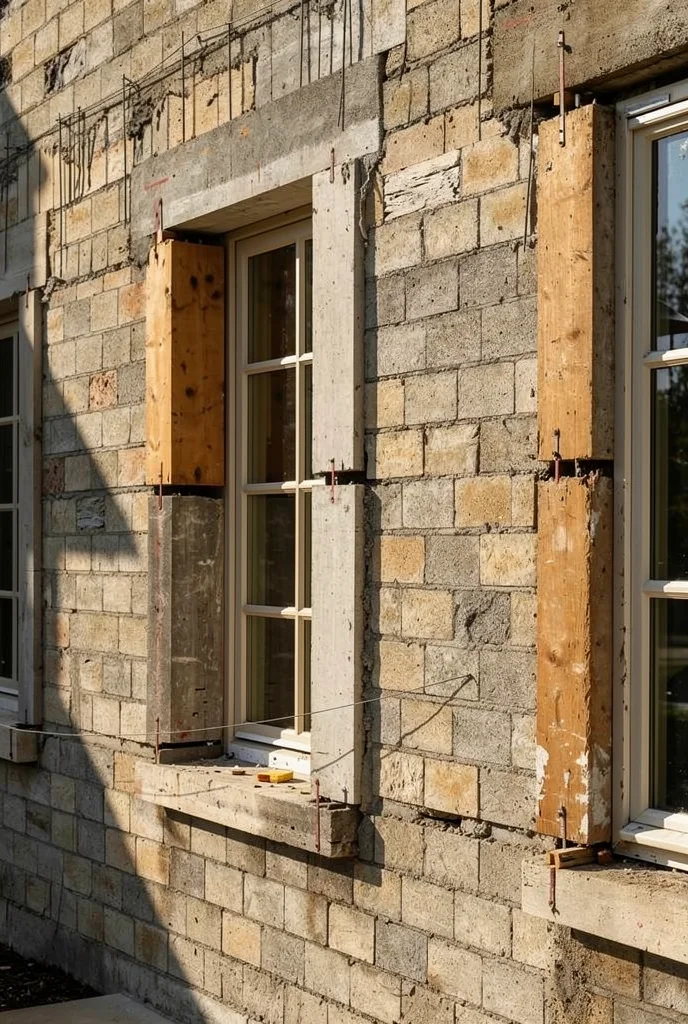
The hardware is where most homeowners fail because they do not know what to search for. Pintles mount into the masonry beside the window. Strap hinges connect the shutter to the pintles. Shutter dogs, also called tiebacks, hold the shutters open against the wall. These come in S curve, shell, and rat tail designs. Lynn Cove Foundry and Forge produces hand forged options that weather beautifully. House of Antique Hardware carries reproduction pieces at a lower price point.
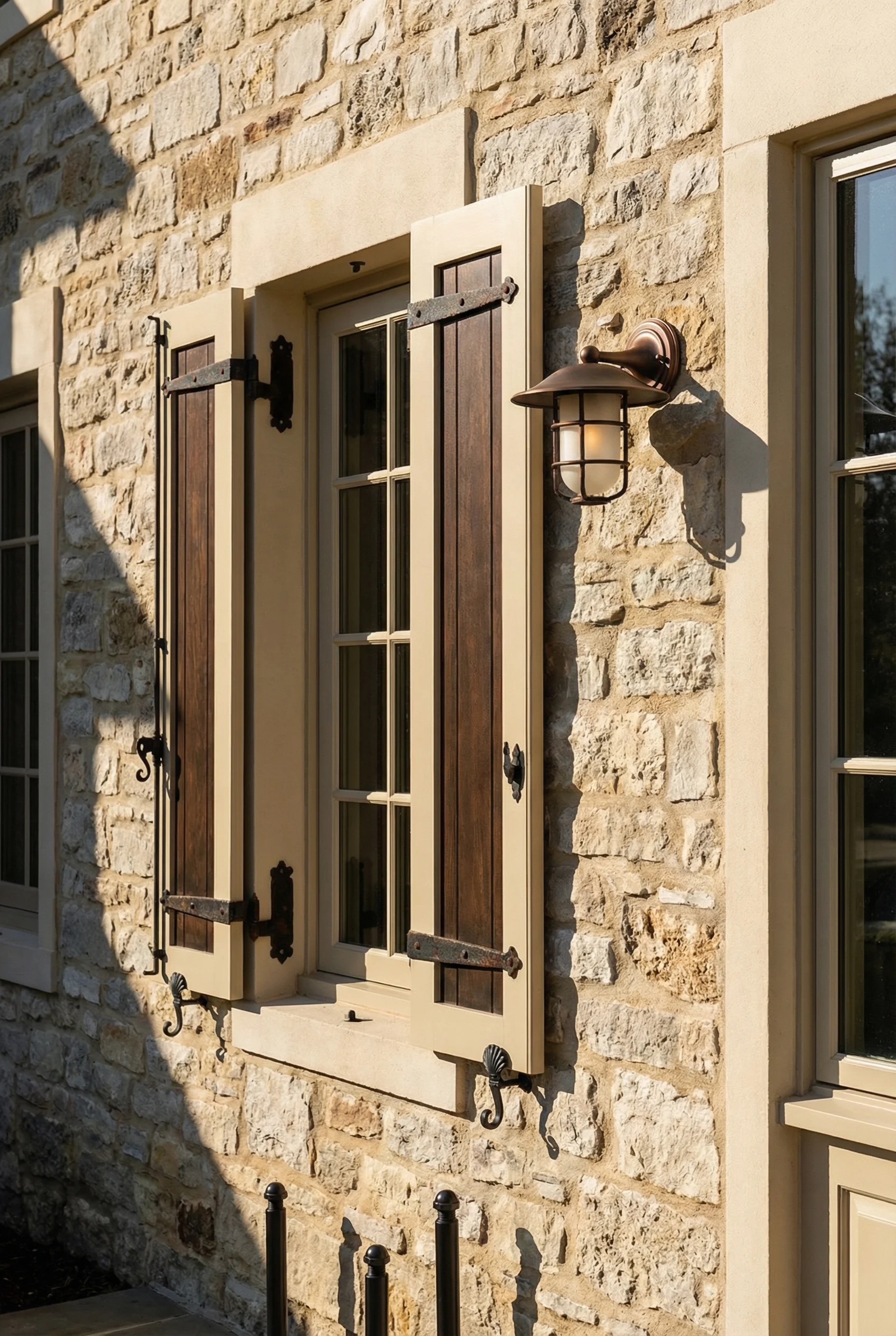
Paint your shutters in a finish that ages. Flat or matte paint weathers more convincingly than satin or gloss. Colors should contrast the facade without competing. Sage green against warm limestone. Peacock blue against cream stucco. Faded ocher against grey fieldstone. The French country palette is muted and sun worn, not showroom fresh.
If you are renovating and your current shutters are decorative, removing them entirely is better than keeping fake ones. An unshuttered window looks intentional. A badly shuttered window looks like a costume.
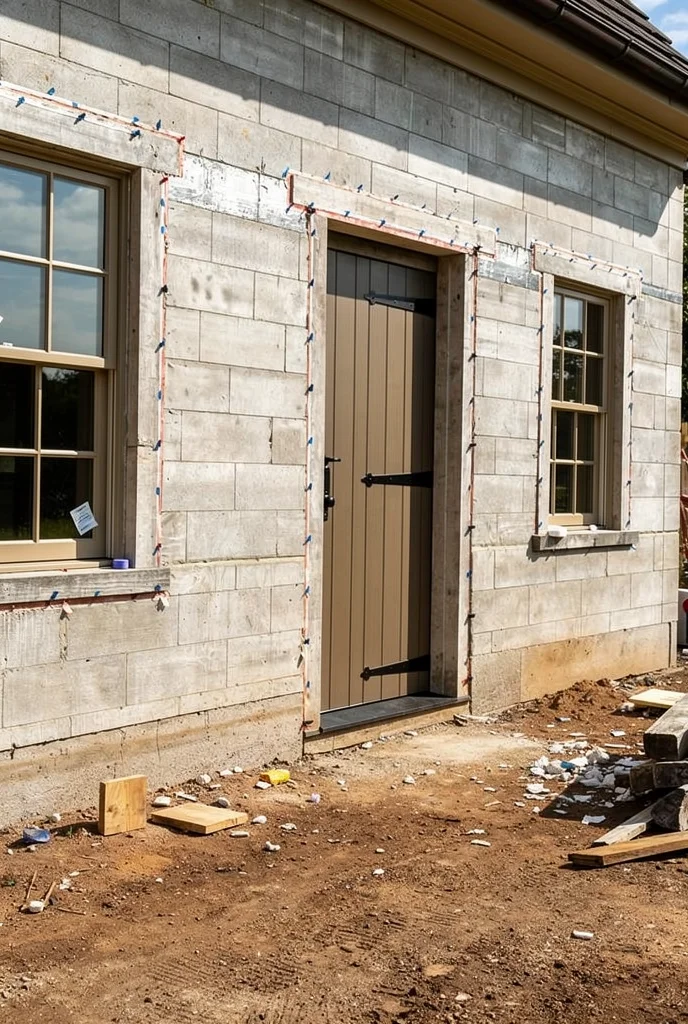
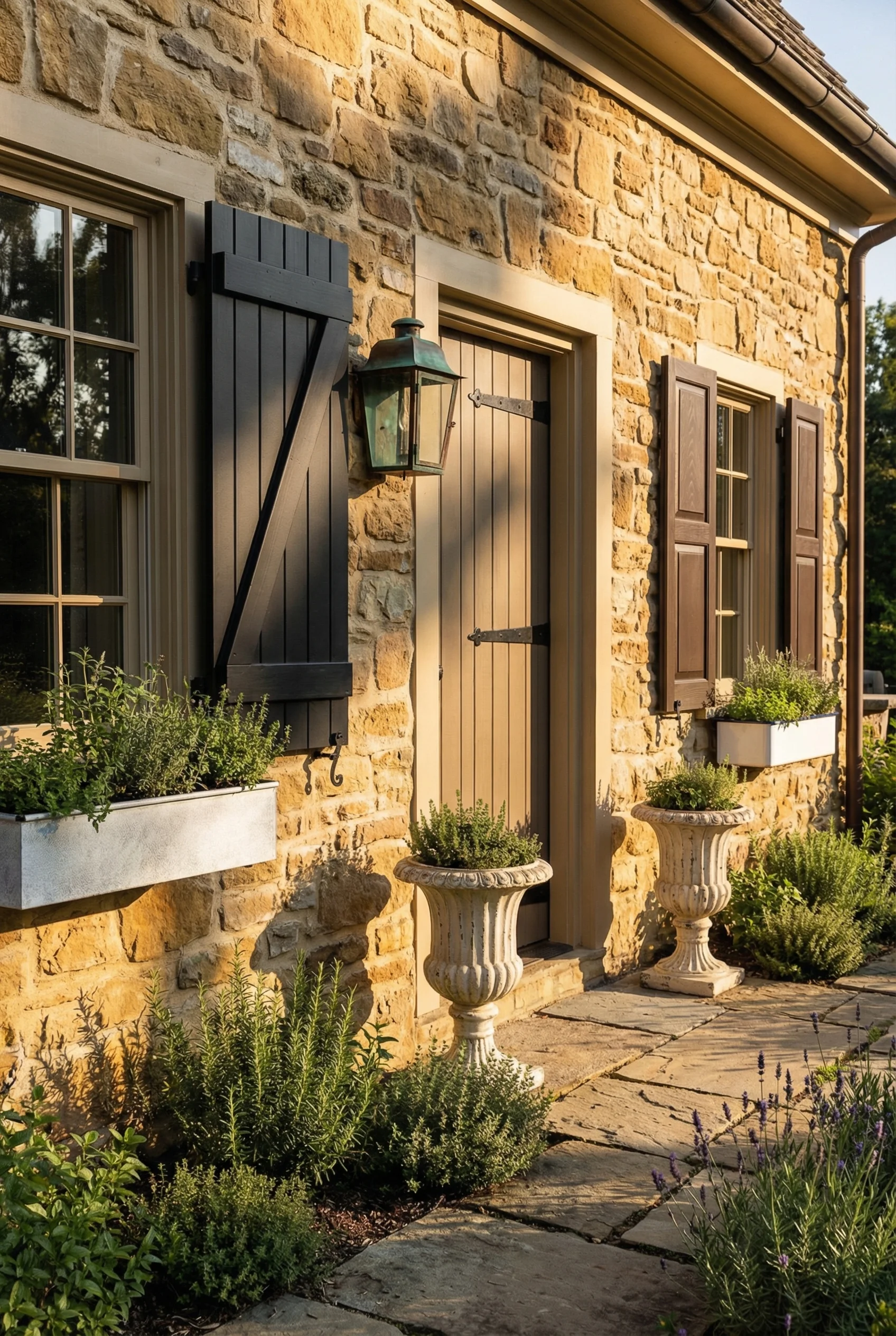
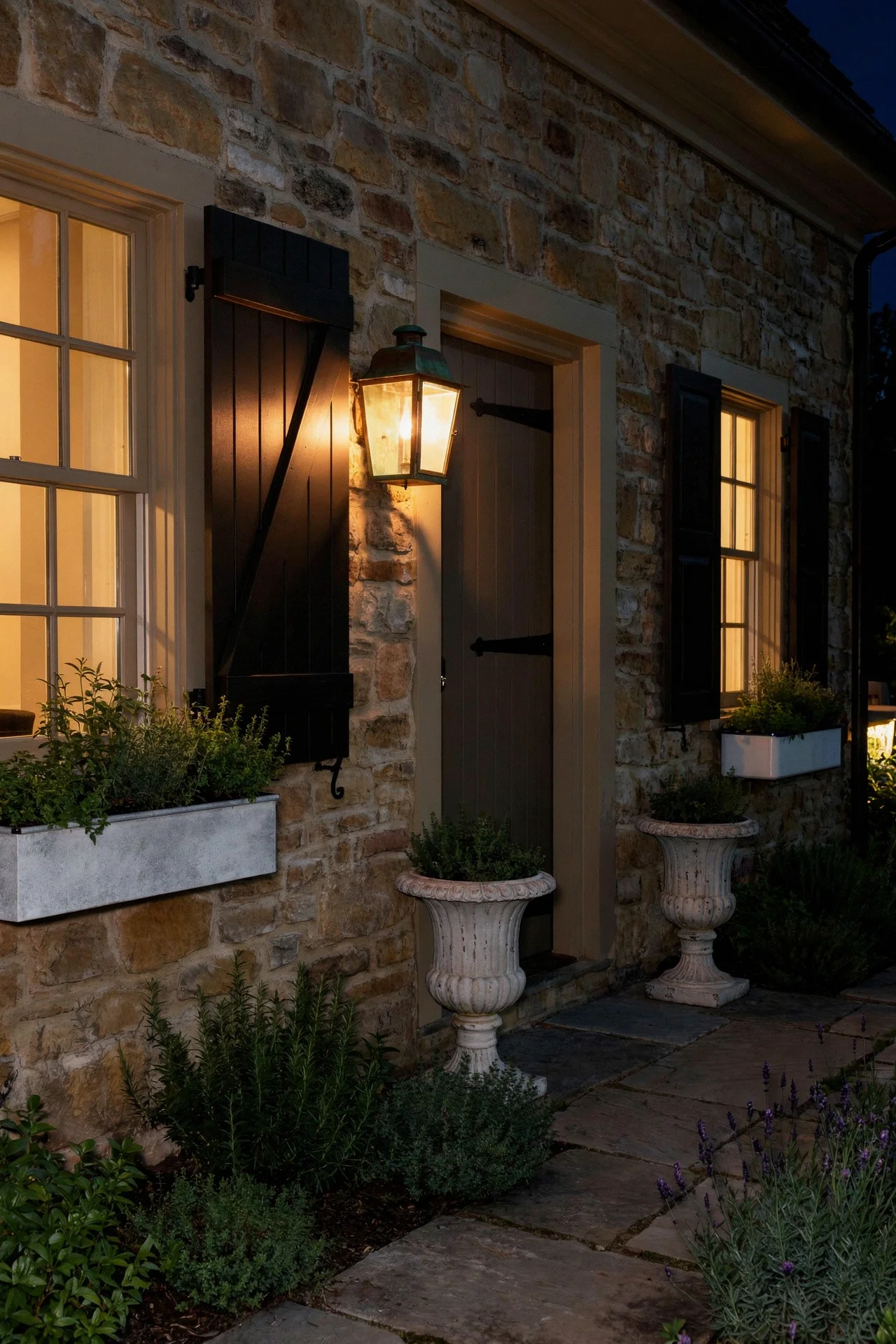
Properly sized, operable shutters with forged hardware are arguably the single most impactful upgrade you can make. They signal that someone understood the architecture rather than decorated over it.
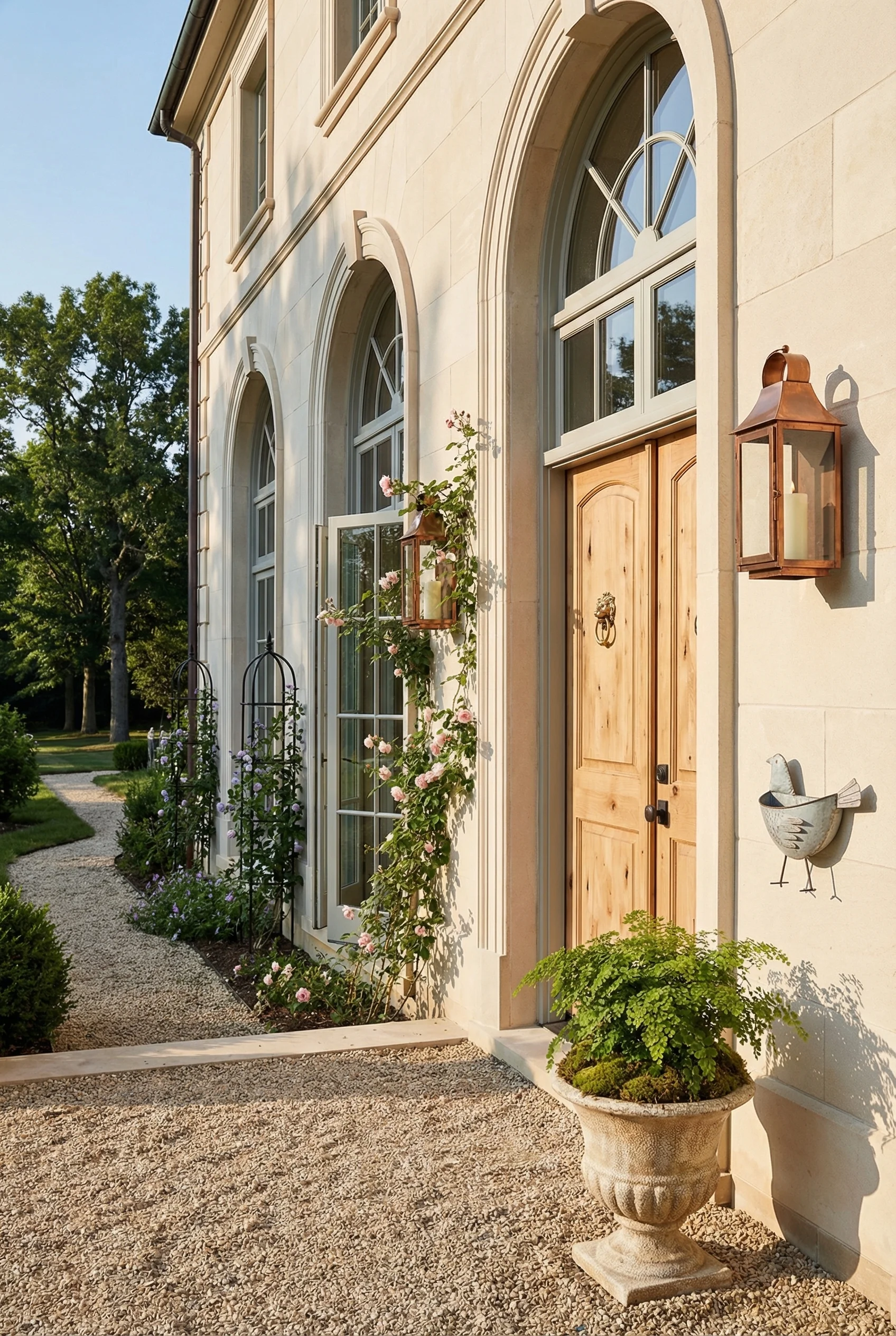
French country windows follow a proportion that modern builders routinely ignore. They are tall and narrow, often with a gentle arch at the top. The ratio matters. Windows that are too wide or too squat break the verticality that gives French facades their elegance. If you are choosing windows for a new build, casement windows are the authentic choice over double hung. They swing outward, which works with operable shutters and references the original French construction method.
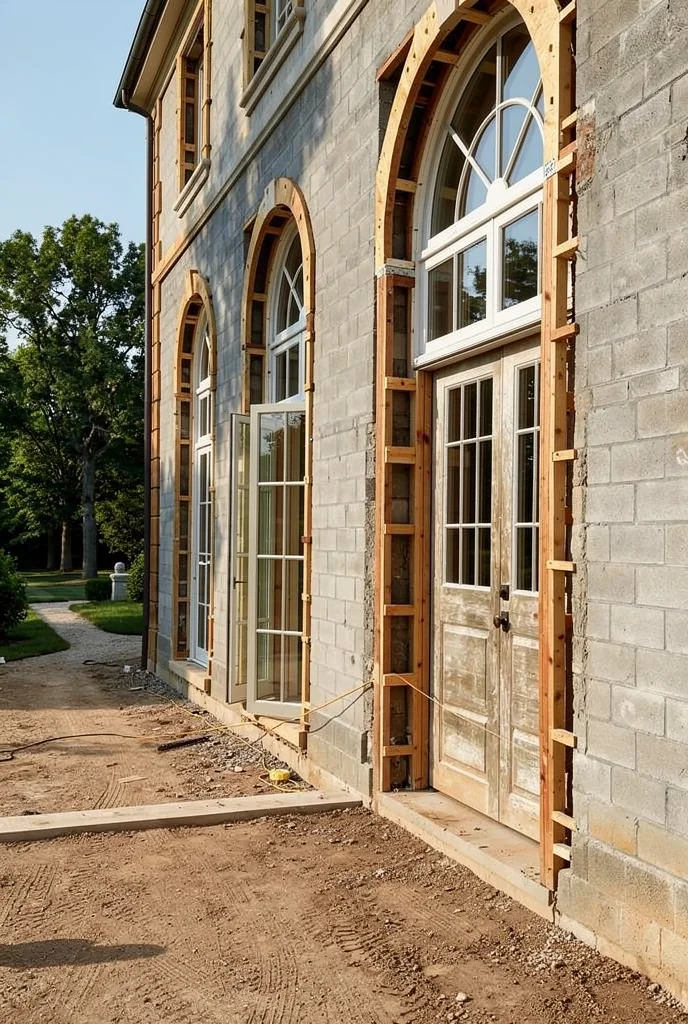
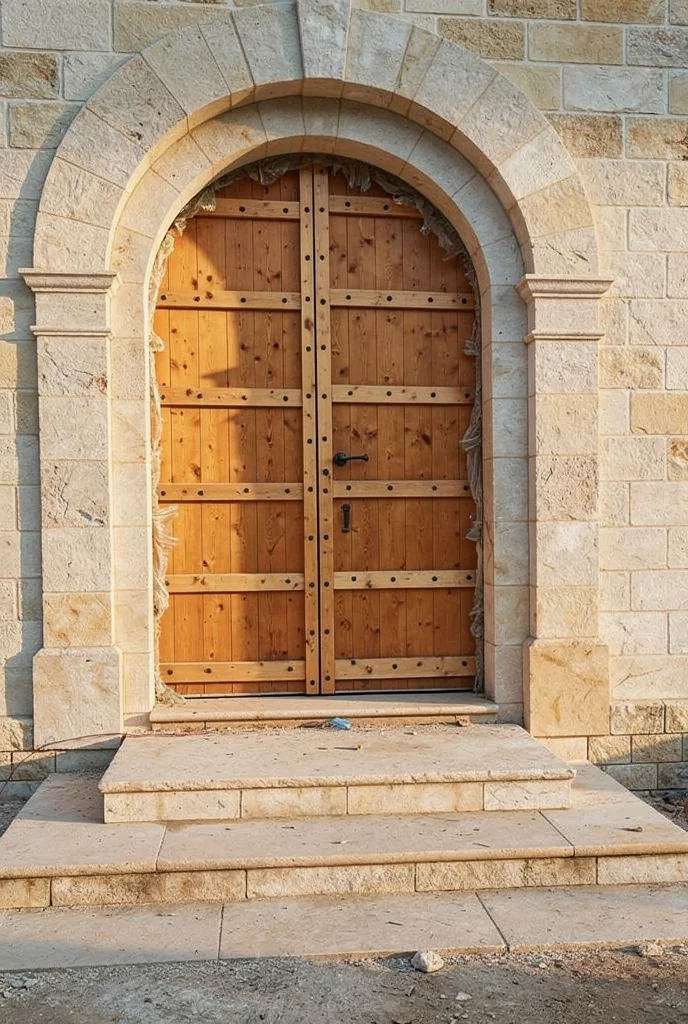
The front door is the focal point, and French country entries favour arched wooden double doors. Not a single wide door. Not a flat topped door with an arched transom above it. The arch should be integral to the door itself. Reclaimed wood doors carry instant character, but well built new doors in white oak or walnut will develop their own story within a few seasons of weather exposure.
Layering the entry makes it feel substantial rather than flat. A stone surround or copper awning over the door creates depth. Climbing roses or wisteria trained over the entry adds the romantic softness that distinguishes French country from other traditional styles. I would avoid elaborate porticos or columns. French Provincial entries are generous but restrained. The architecture speaks. It does not shout.
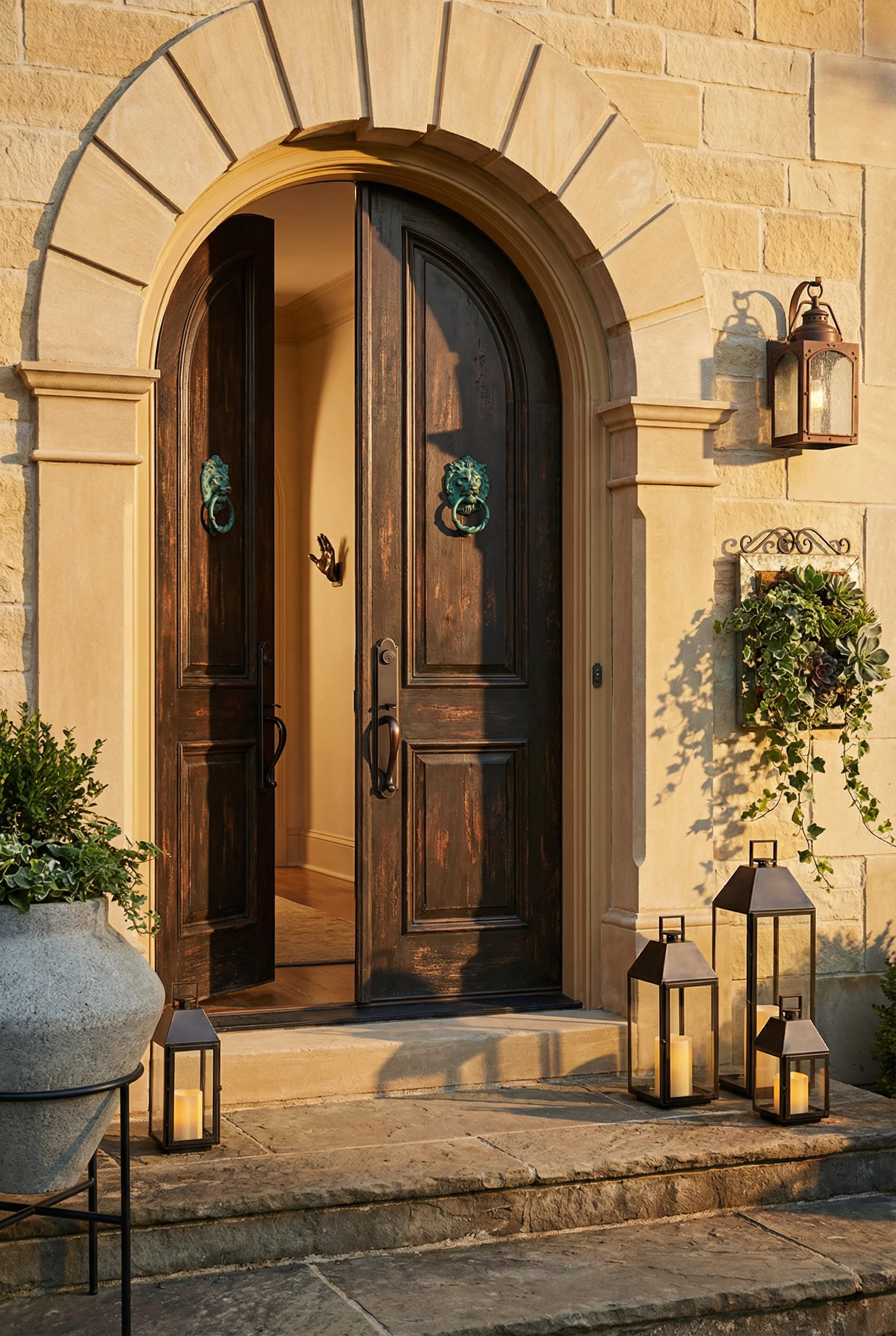

Hardware is the element people spend the least time on and it shows the most. Rocky Mountain Hardware produces hand cast bronze door handles and locksets that develop a living patina. The bronze reads warm against wood and stone in a way that brushed nickel or chrome never will. For window hardware, match the metal to your shutter hardware. Wrought iron or oil rubbed bronze. Consistency across every touchpoint is what makes an exterior feel considered rather than assembled from a catalogue.
Hinges, escutcheons, house numbers, mail slots. Every small metal element is an opportunity to reinforce the material story. One mismatched piece of polished brass can undercut an otherwise convincing facade.
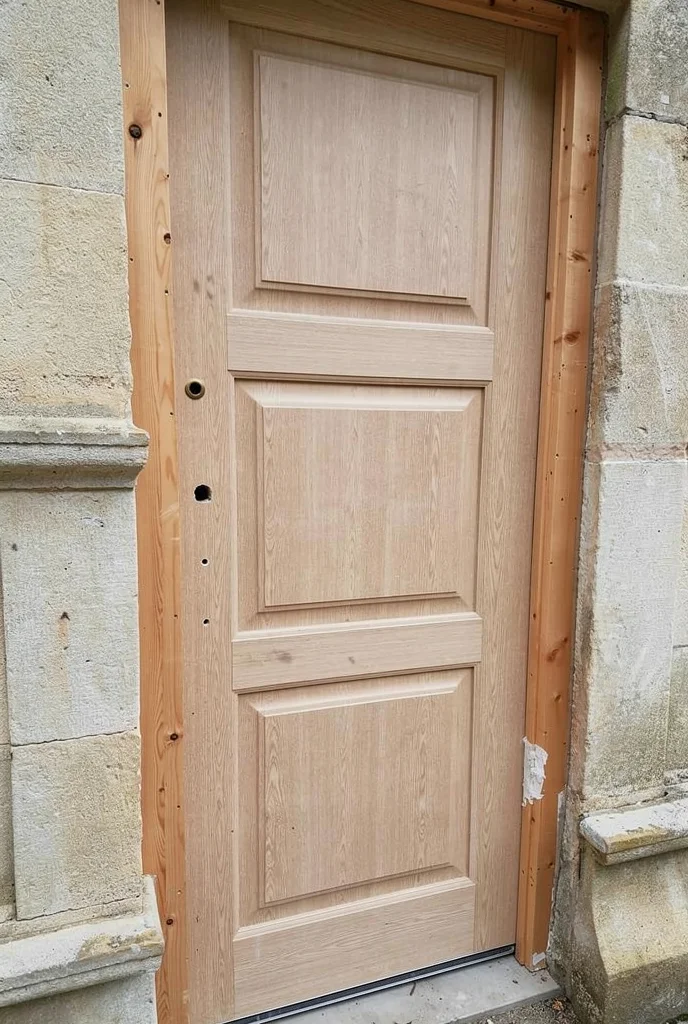
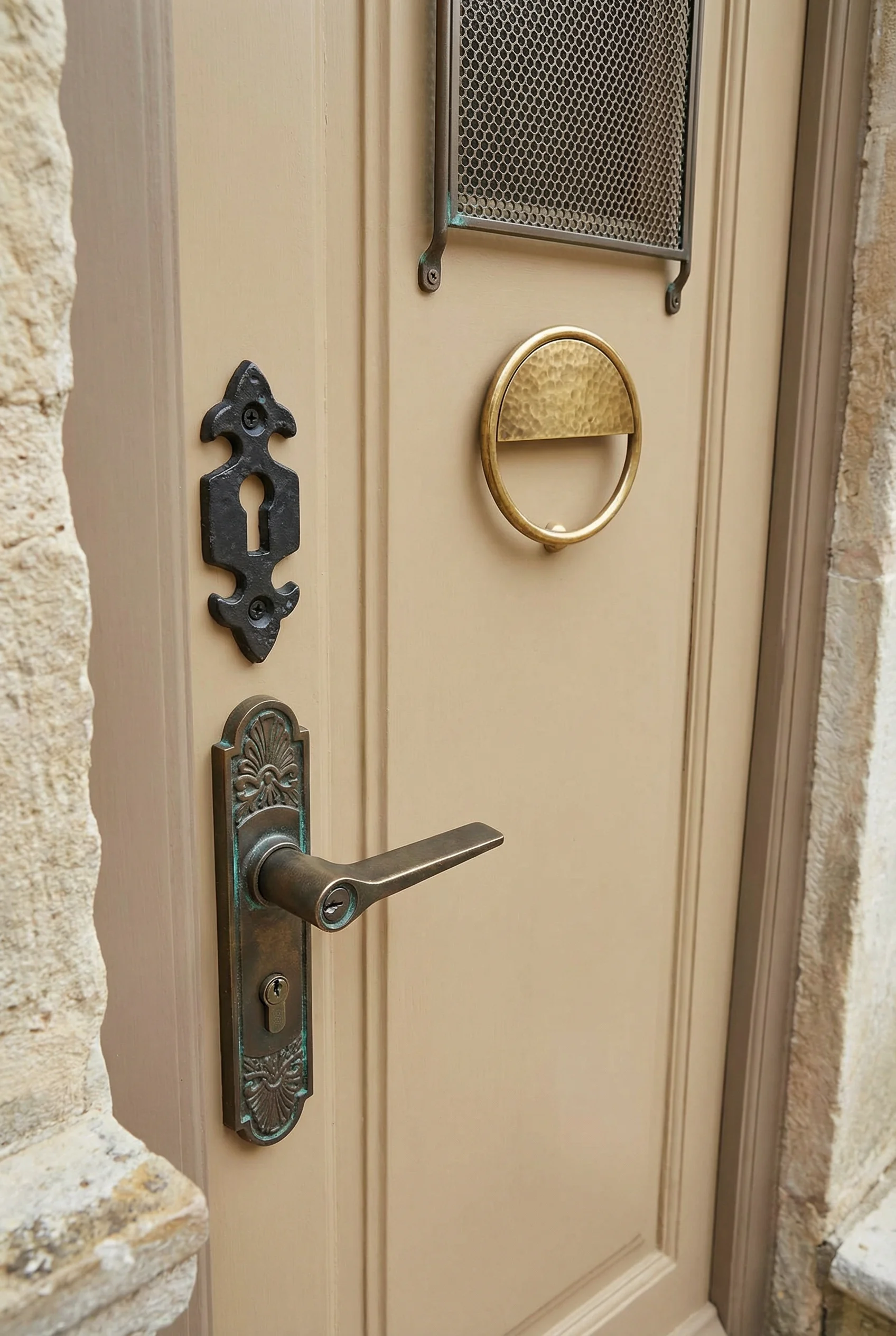
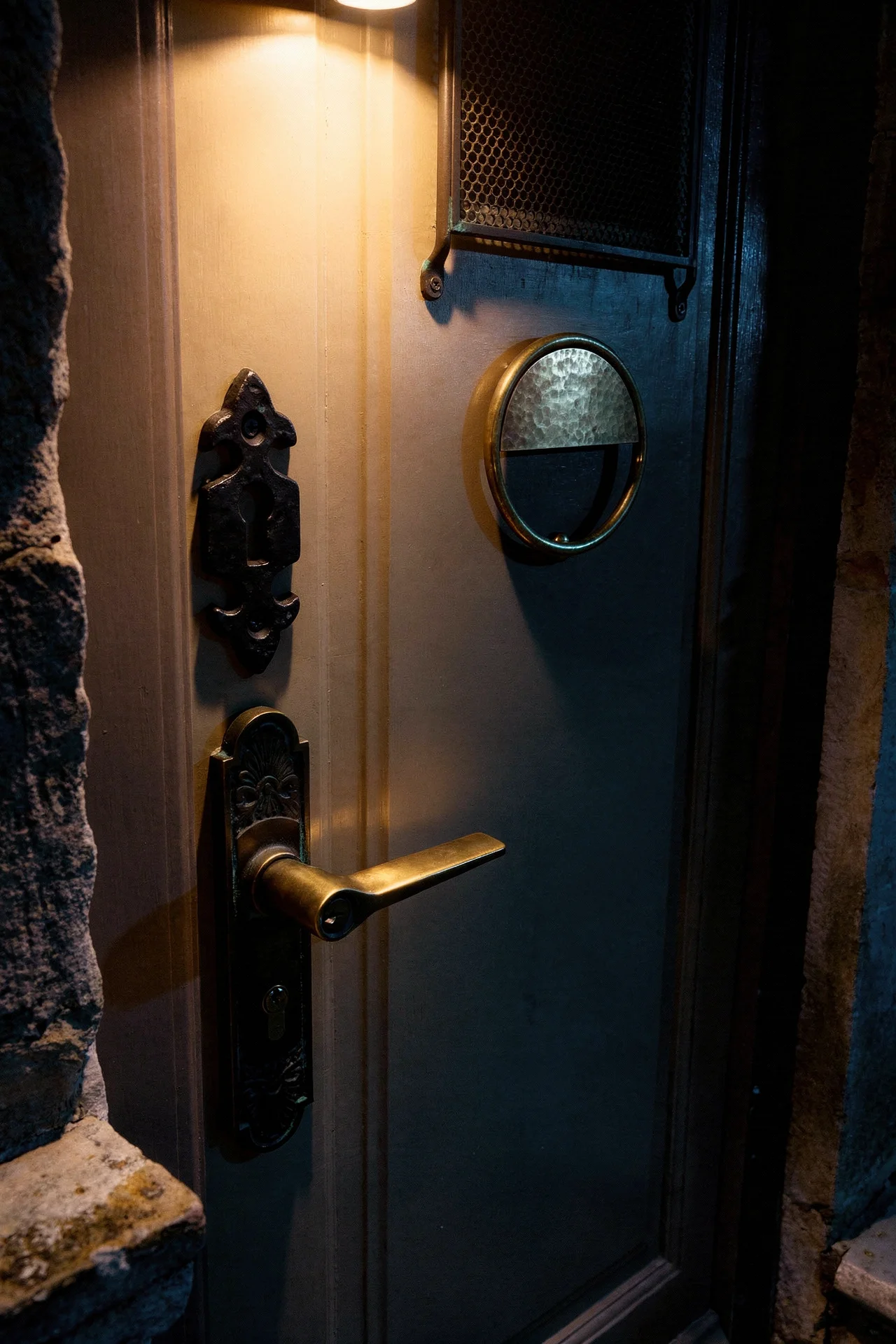
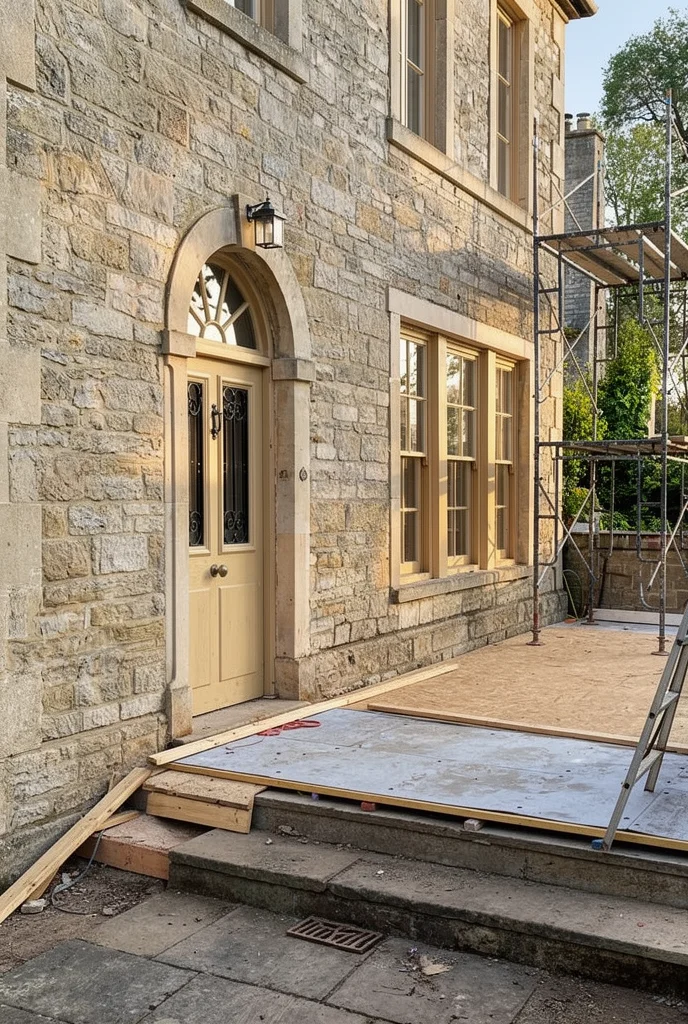
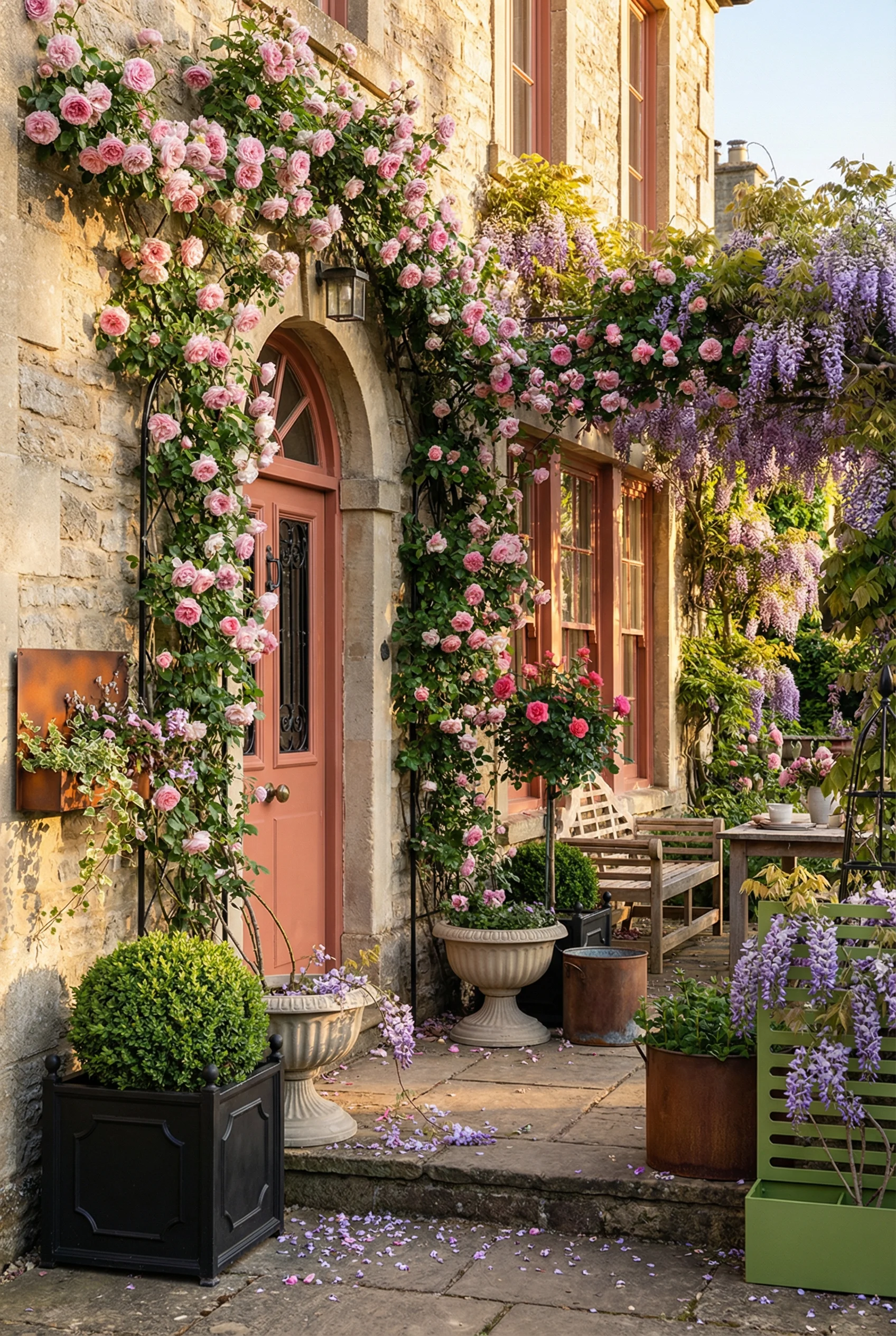
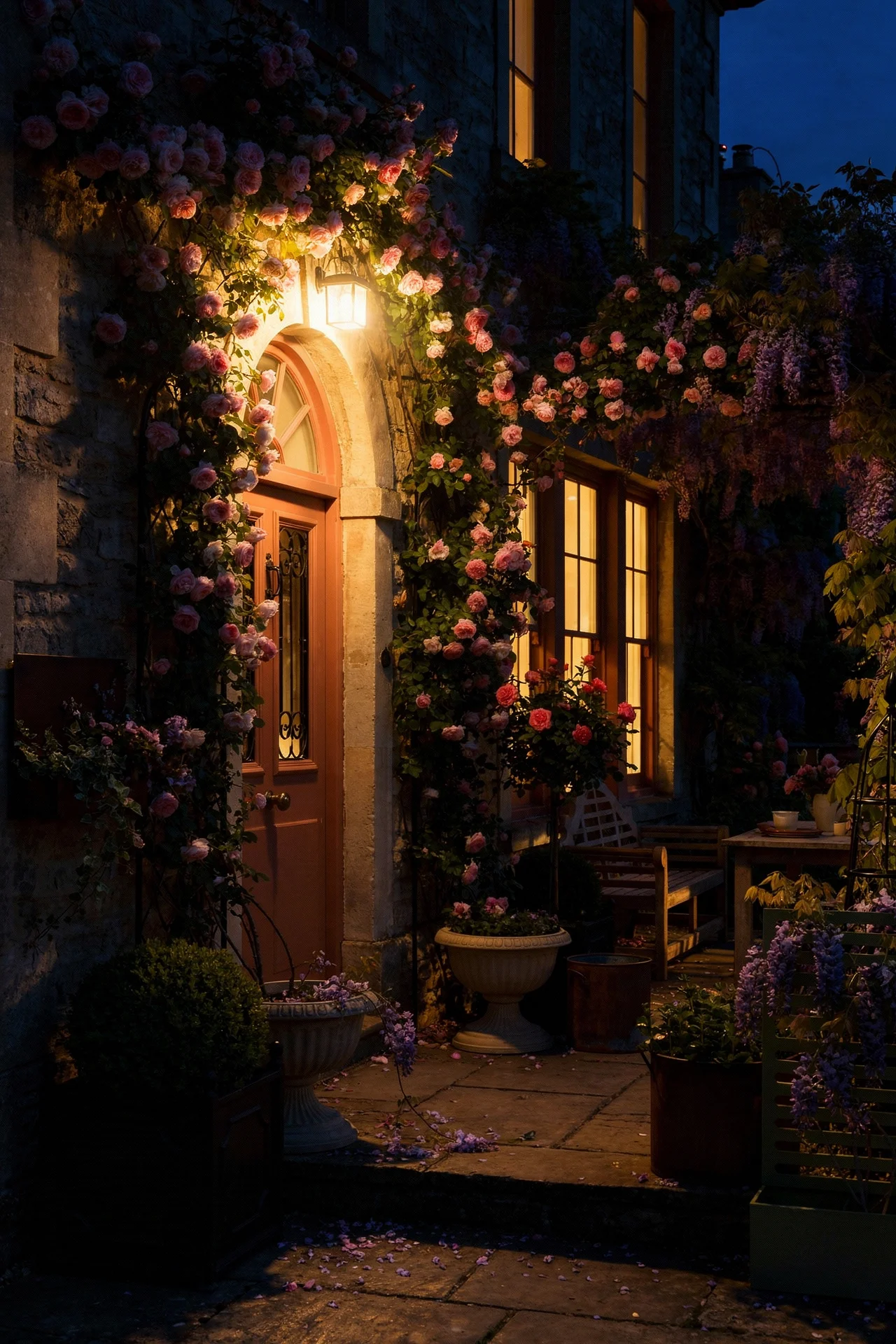
When I look at the most convincing French country renovations, the hardware is always cohesive. Bronze or iron, never mixed. Aged finishes, never polished. That discipline across small details is what separates the real from the replicated.
Here is the rule that fixes 90 percent of French country color mistakes. No stark white. None. The moment you paint a French country exterior in a clean, cool white, it reads as suburban American. The entire French country palette lives in warm whites, creams, and greiges. These are colors with visible undertones, not the absence of color.
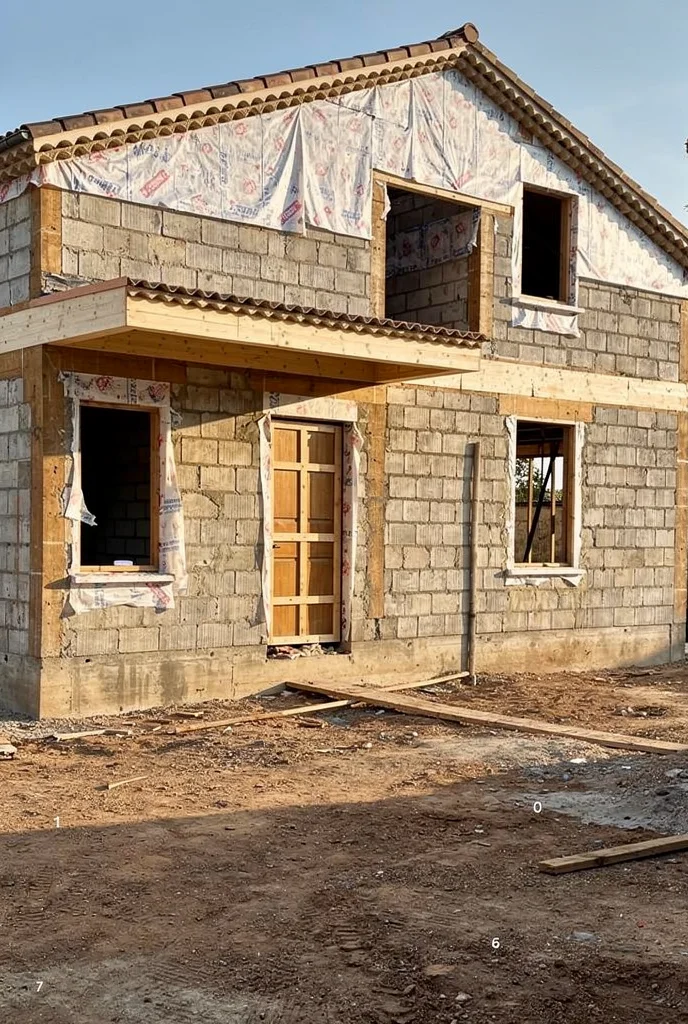
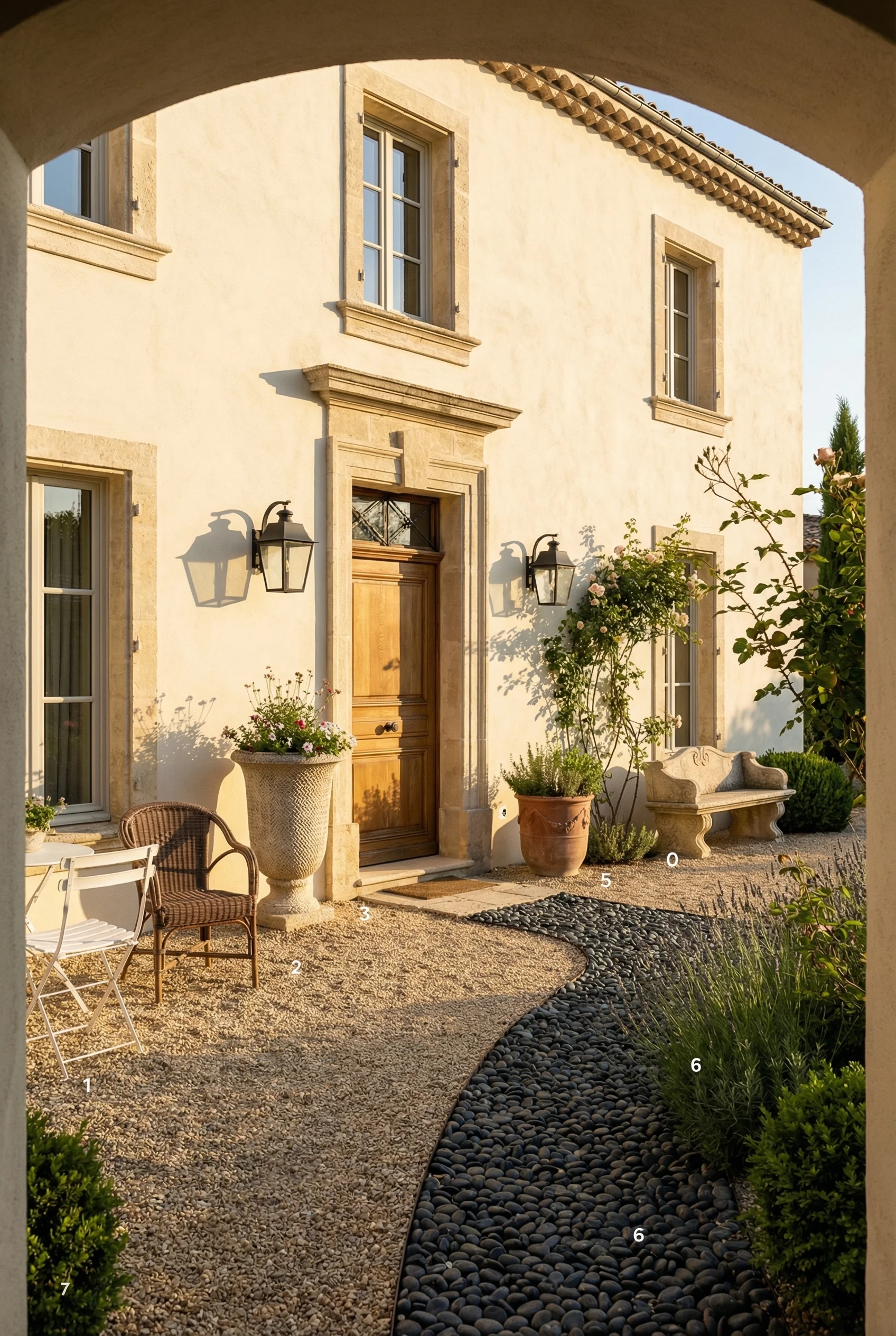
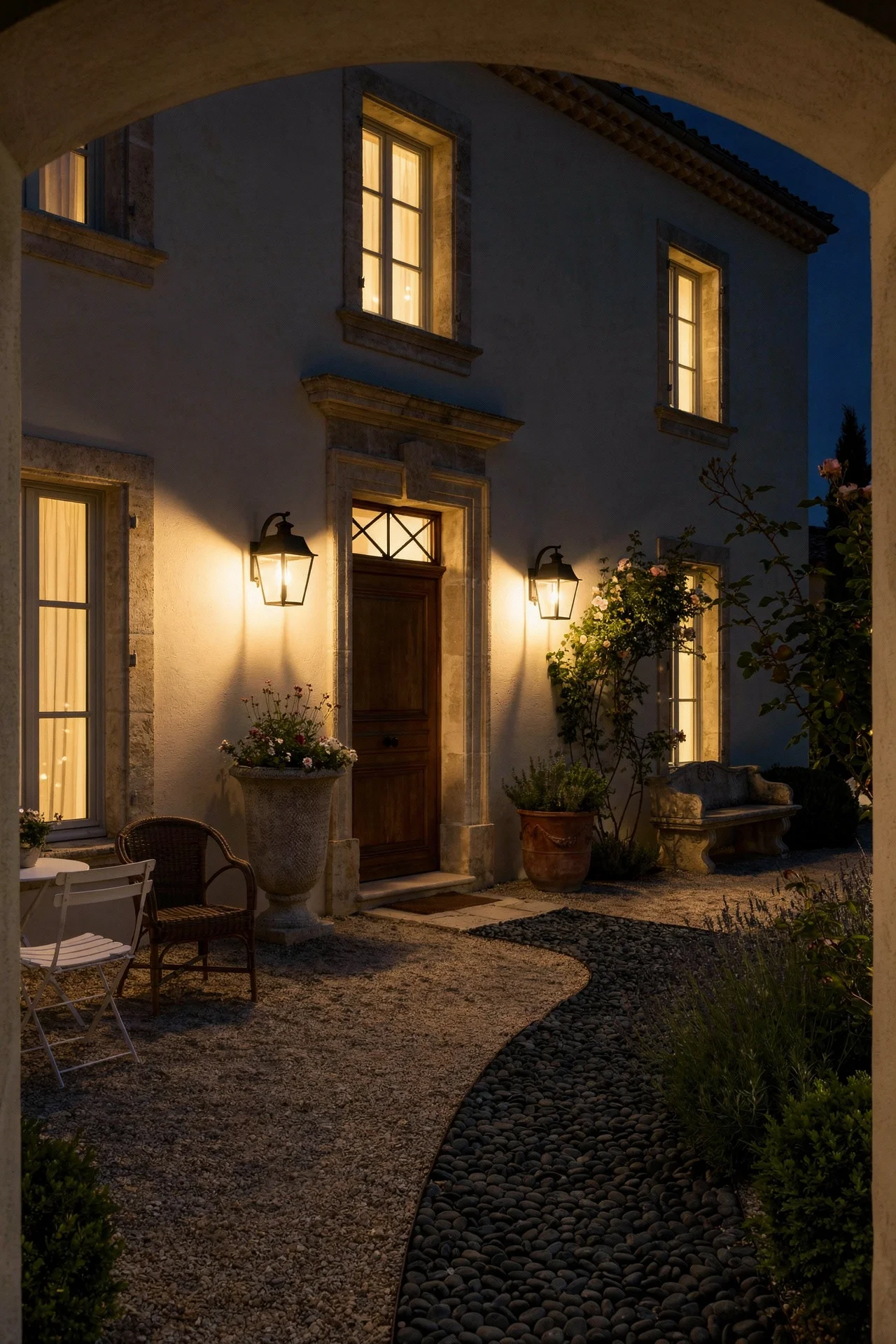
Sherwin Williams Greek Villa is a warm white with just enough yellow undertone to feel sun touched without going butter. Their Creamy sits slightly warmer and works beautifully against grey stone. Benjamin Moore Simply White is the safest choice for anyone nervous about going too yellow. It reads warm in natural light without any obvious colour cast. Wind’s Breath is my personal favourite for stucco exteriors. It sits in that perfect space between white and greige where the facade looks like it has been gently aged by decades of weather.
For trim and architectural details, Benjamin Moore White Dove OC 17 provides enough contrast against a warm body colour without the stark line that pure white creates. Use it on window frames, cornices, and door surrounds.
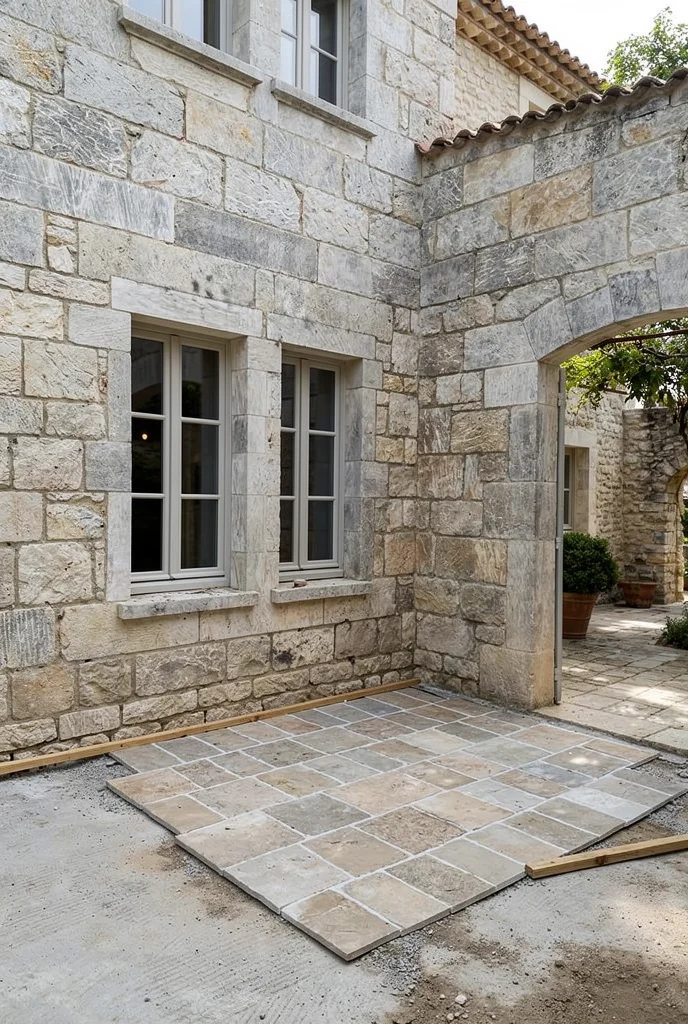
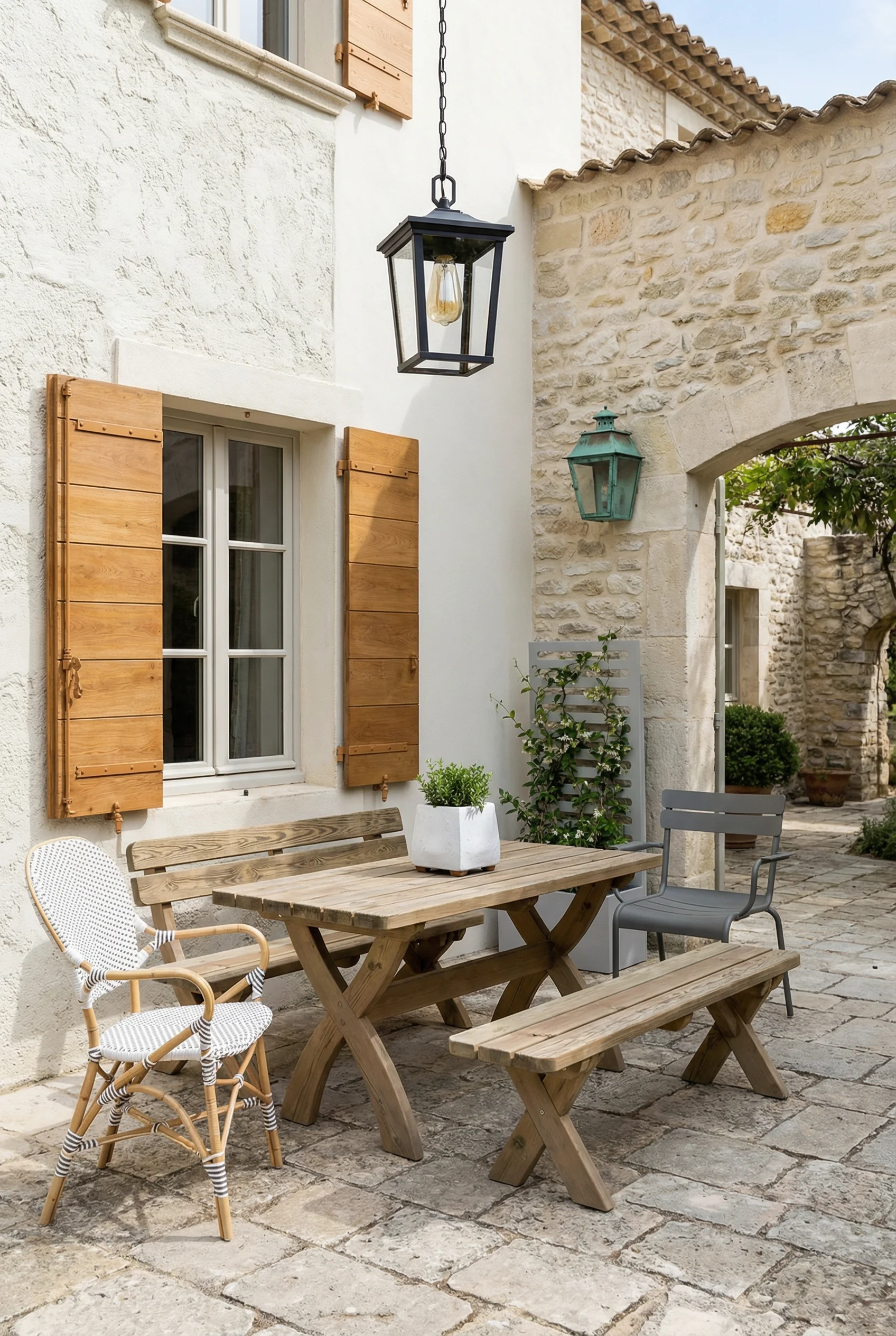
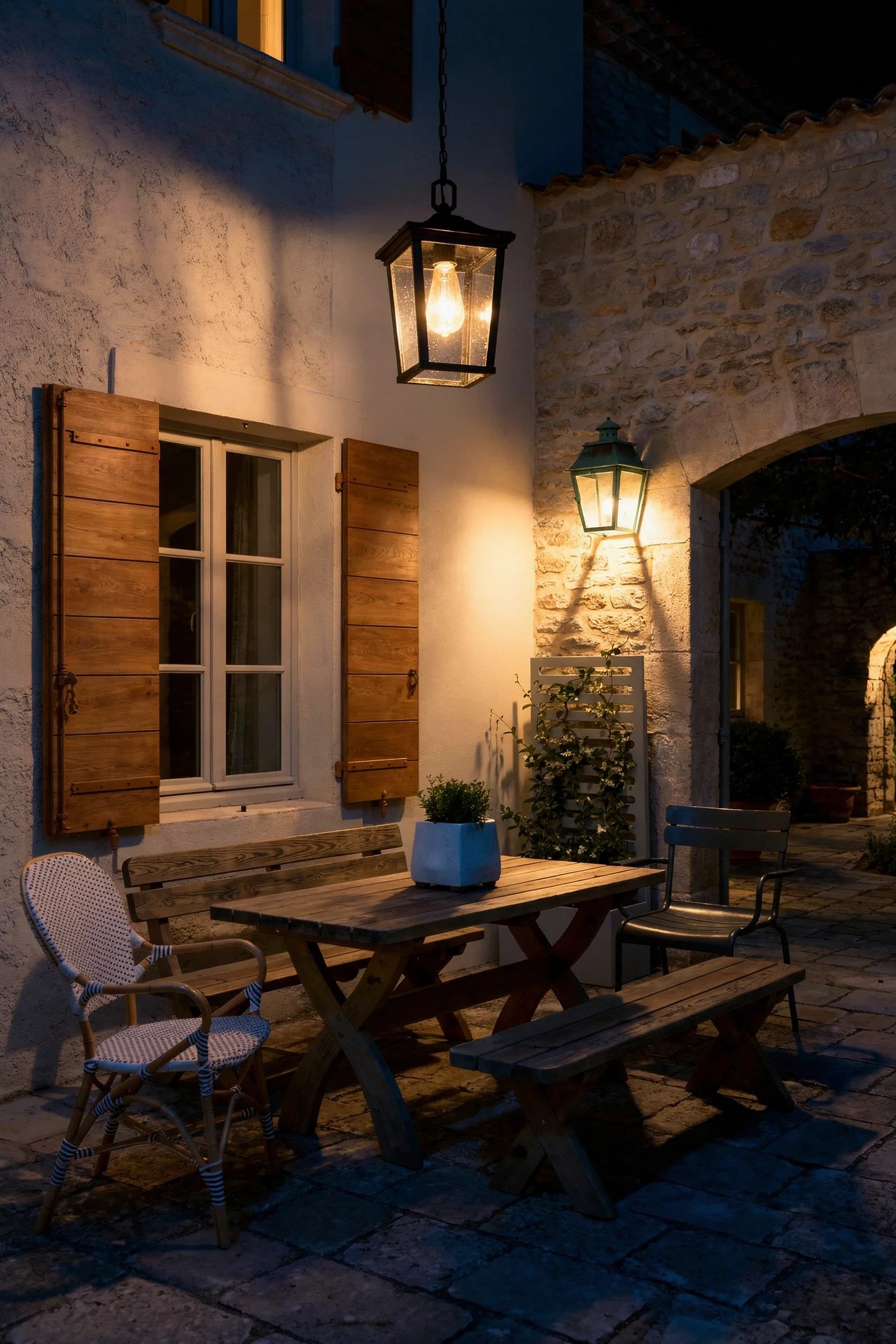
Accent colours should be drawn from the landscape, not a trend report. Ocher references the natural clay pigments used across Provence. Lavender and mauve echo the fields that surround southern French farmhouses. Olive and sage green connect to the kitchen gardens and cypress trees. Peacock blue is the bold choice, used traditionally on shutters and front doors throughout the Loire Valley.
Benjamin Moore Rosemary Sprig is an excellent exterior green for shutters. Bedford Blue carries the right depth for front doors without veering nautical. Marblehead Gold provides a restrained ocher that works on masonry accents or garden walls.


Test every colour on the actual facade material before committing. Paint reads entirely differently on smooth stucco versus rough limestone versus German Schmear brick. Sample at least a two foot square patch and observe it across a full day of changing light. Morning light flatters warm tones. Afternoon sun can push them towards orange. Overcast days reveal the true undertone.
The landscaping around French country homes follows a principle that modern landscape designers often overcomplicate. It is the balance between geometry and romantic abundance. Formal structure at the bones, soft and overflowing at the edges. When you get this balance right, the garden looks like it grew around the house over generations. When you get it wrong, it looks like a landscaping crew showed up last month.


Start with the geometric framework. Parterre gardens, those low clipped boxwood hedges arranged in geometric patterns, are the backbone of formal French country landscaping. They provide year round structure and require minimal seasonal replanting. Gravel pathways in a warm pea gravel tone connect spaces and reference the courtyards of rural France. Avoid anything resembling a paved path. Gravel crunches underfoot, drains naturally, and develops the gentle unevenness that signals age.
Next, layer the romantic plantings over that structure. Wisteria trained along a pergola or over the garage. Virginia creeper allowed to establish on one facade. Boston ivy softening a stone wall. These climbers take three to five seasons to establish properly, which is why starting them early in a renovation is critical. I would plant them the same month you begin exterior work, not after everything else is finished.


The potager, or kitchen garden, is one of the most misunderstood elements. In French country properties, the kitchen garden is celebrated, not hidden behind a fence. Raised beds of lavender, rosemary, and sage positioned near the kitchen entrance serve double duty as both cooking gardens and ornamental plantings. Standard roses, those tree form roses on single stems, provide vertical accents. Cluster them in groups of three or five along pathways.
The single biggest landscaping mistake I see is plastic edging. It kills the illusion instantly. Use natural stone edging, weathered brick, or no edging at all. Let the gravel meet the planting beds with a soft, irregular border. French country gardens do not have hard edges. They have conversations between materials.


Resist the urge to plant one of everything. French country landscaping uses repetition. Ten lavender plants along a path. A row of identical standard roses. A mass of the same ornamental grass. Repetition creates rhythm, and rhythm creates the sense that this landscape belongs to this house specifically.
If the stone is the soul and the roofline is the silhouette, then hardware and lighting are the jewellery. They are the final details that either confirm or contradict everything else you have done. And they are where budget cuts become most visible.


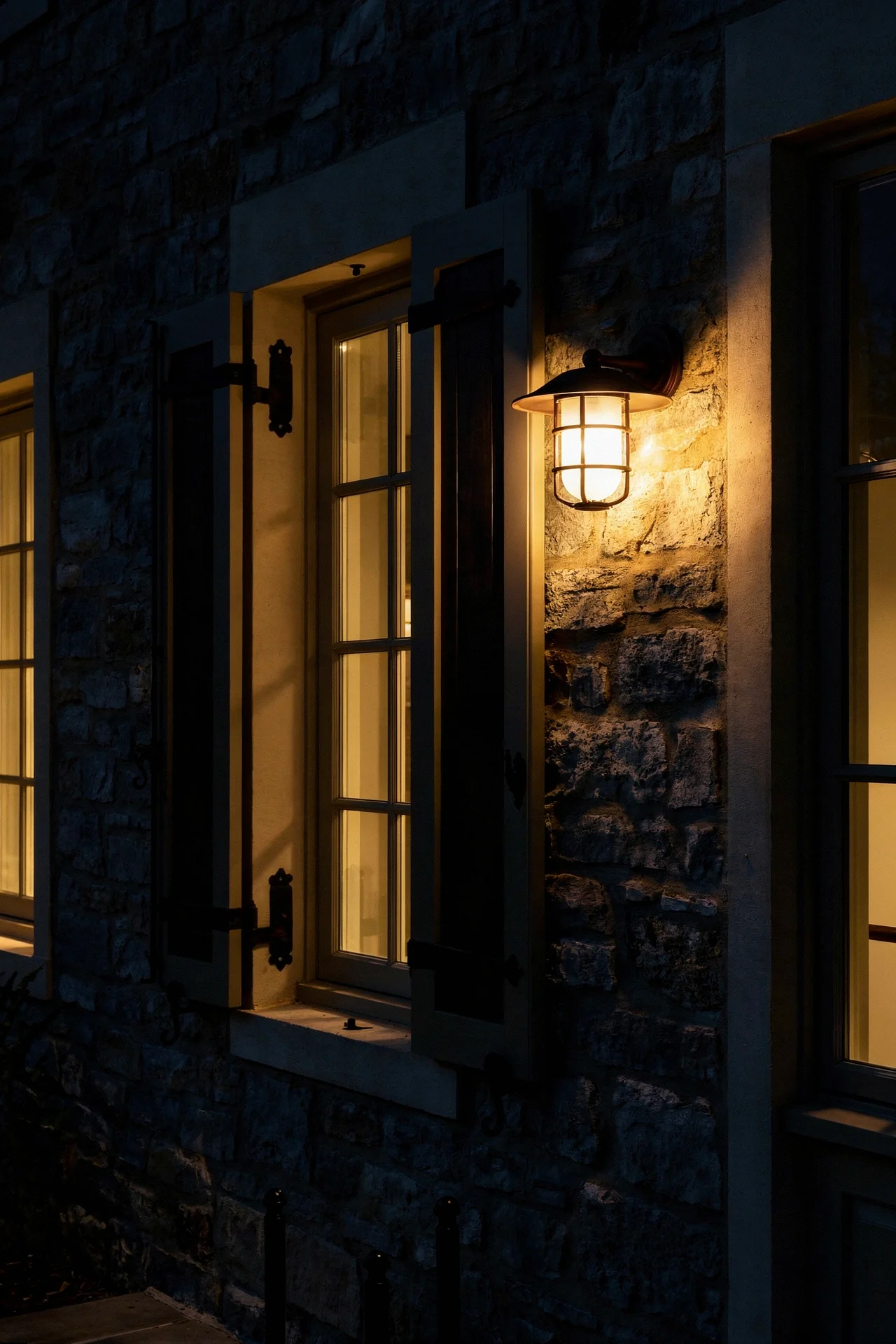
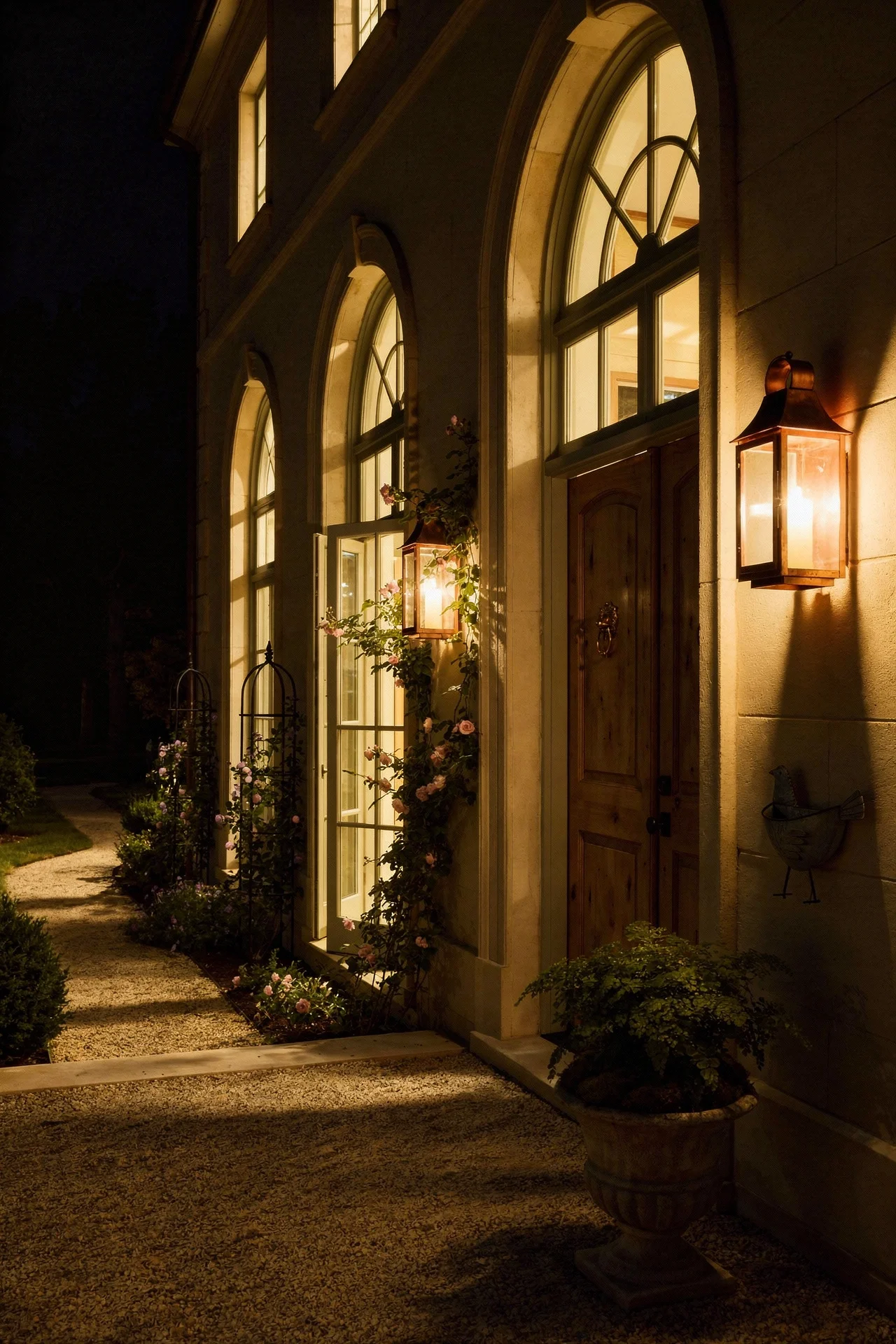
Exterior lighting on a French country home should look like it was there before electricity. Wall mounted lanterns in wrought iron or aged copper are the standard. Position them flanking the front door, at garage entries, and at any secondary entrance. The fixture should be substantial enough to read from the street. Small, delicate sconces disappear against stone and stucco. Scale up. A lantern that feels slightly oversized in your hand will look perfectly proportioned once mounted at eight feet.
Copper fixtures develop a green patina over time that is extraordinarily beautiful against warm stone. If you want the patina faster, there are chemical treatments, but I would let it happen naturally. The uneven progression of natural oxidation looks more authentic than a uniform chemical finish. Wrought iron stays darker and more consistent, which suits cooler, grey stone exteriors.


Curved wrought iron balcony railings are another defining element. Even a small Juliet balcony on an upper window adds enormous character. The ironwork should be hand forged or at minimum hand finished. Machine perfect curves lack the slight irregularities that make wrought iron feel historical. A climbing vine trained up through the balcony railing completes the picture.
Pergolas over patios or side entries provide structure for climbing plants and outdoor lighting. Cedar or white oak posts with wrought iron brackets are the most convincing combination. Avoid pressure treated pine. It reads green and modern even after staining.


House numbers, door knockers, mail slots, address plaques. Every visible metal element is a vote for or against your exterior’s credibility. Choose one metal family, iron or bronze, and commit to it across every single piece. The discipline of material consistency is what separates a renovated home from a decorated one.
You have probably noticed that convincing French country exteriors feel warm before you can articulate why. The palette is the reason. These five colours form the foundation that ties stone, shutters, trim, and landscaping into a single story.

Warm Linen White – The body colour for stucco and rendered facades. Not stark, not cream, but that sun warmed white you see across Provencal farmhouses. It has enough yellow undertone to feel alive without reading as butter. Paint Pick: Sherwin Williams Greek Villa SW 7541
Stone Grey Greige – The anchor for stone and masonry tones. This sits between warm grey and putty, grounding the facade without darkening it. Use it for masonry accents, garden walls, or as an alternative body colour for cooler climates. Paint Pick: Benjamin Moore Wind’s Breath OC 24
Weathered Sage Green – The shutter and accent colour that connects the house to its garden. Not forest green, not mint. Think dried sage leaves in late summer. It works against both warm limestone and cool grey stone. Paint Pick: Benjamin Moore Rosemary Sprig HC 128
Faded Provencal Blue – The front door colour that signals confidence. Deep enough to anchor the entry, muted enough to avoid competing with the stone. Traditional across the Loire Valley and Normandy for doors and window frames. Paint Pick: Benjamin Moore Bedford Blue 1679
Aged Ocher Gold – The accent that references the natural clay pigments of southern France. Use it sparingly on garden pots, ironwork details, or as a secondary trim colour. It warms everything it touches. Paint Pick: Benjamin Moore Marblehead Gold HC 11
Once your palette is set, every finish decision becomes easier. The shutter colour, the front door, the garden furniture, the planters. They all draw from these five tones, and that consistency is what makes an exterior feel resolved rather than assembled.
You do not need to do all seven at once. If I were standing in front of a house that needed help, I would start with two things this weekend. Replace the shutter hardware with proper pintles and strap hinges from Lynn Cove Foundry. And buy four litres of Benjamin Moore Wind’s Breath to test on the most visible facade. Those two moves, one afternoon of work, will tell you immediately whether the rest of the details are worth pursuing. They almost always are.
This post contains affiliate links, which means we may earn a small commission if you make a purchase through our links, at no extra cost to you.