Newsletter Subscribe
Enter your email address below and subscribe to our newsletter

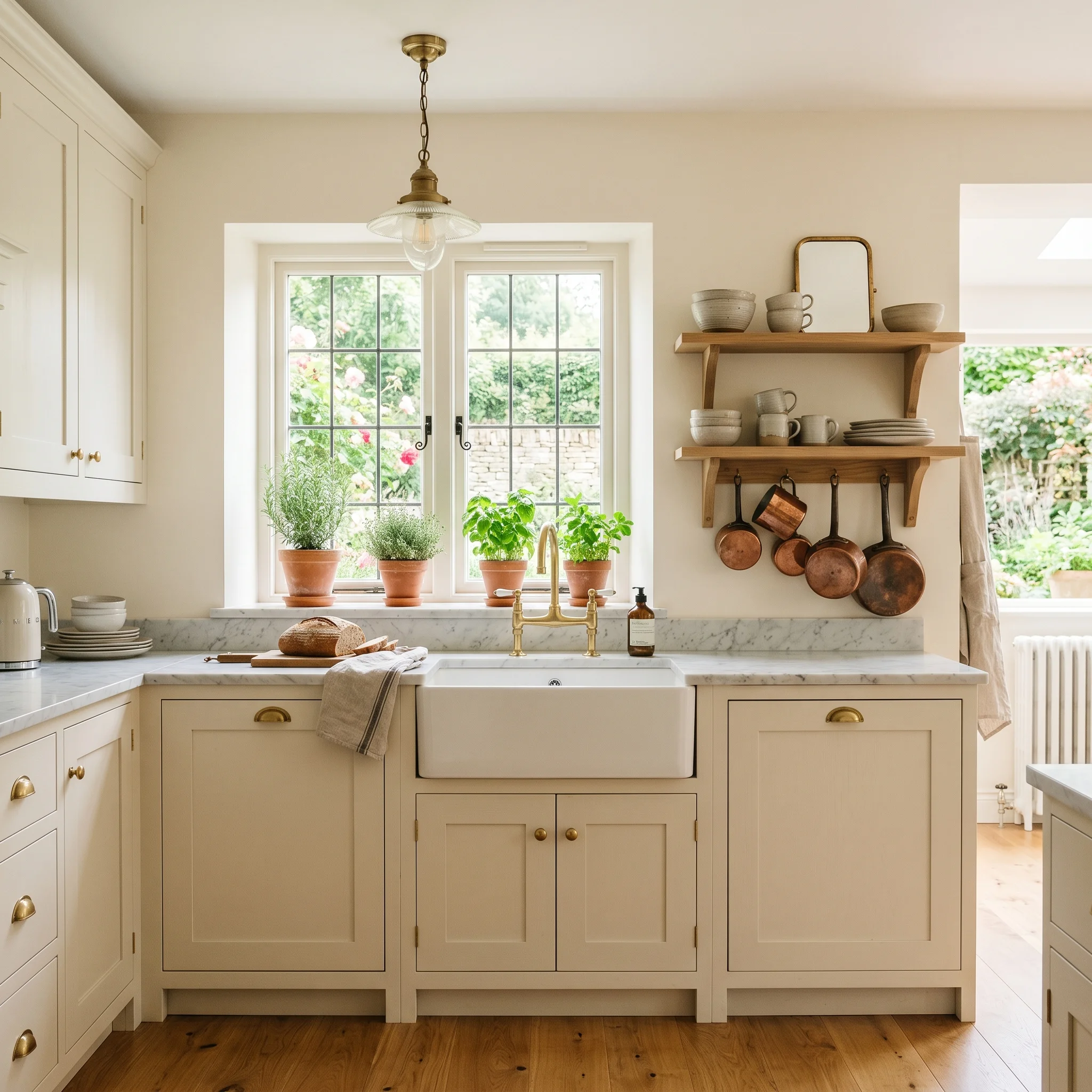
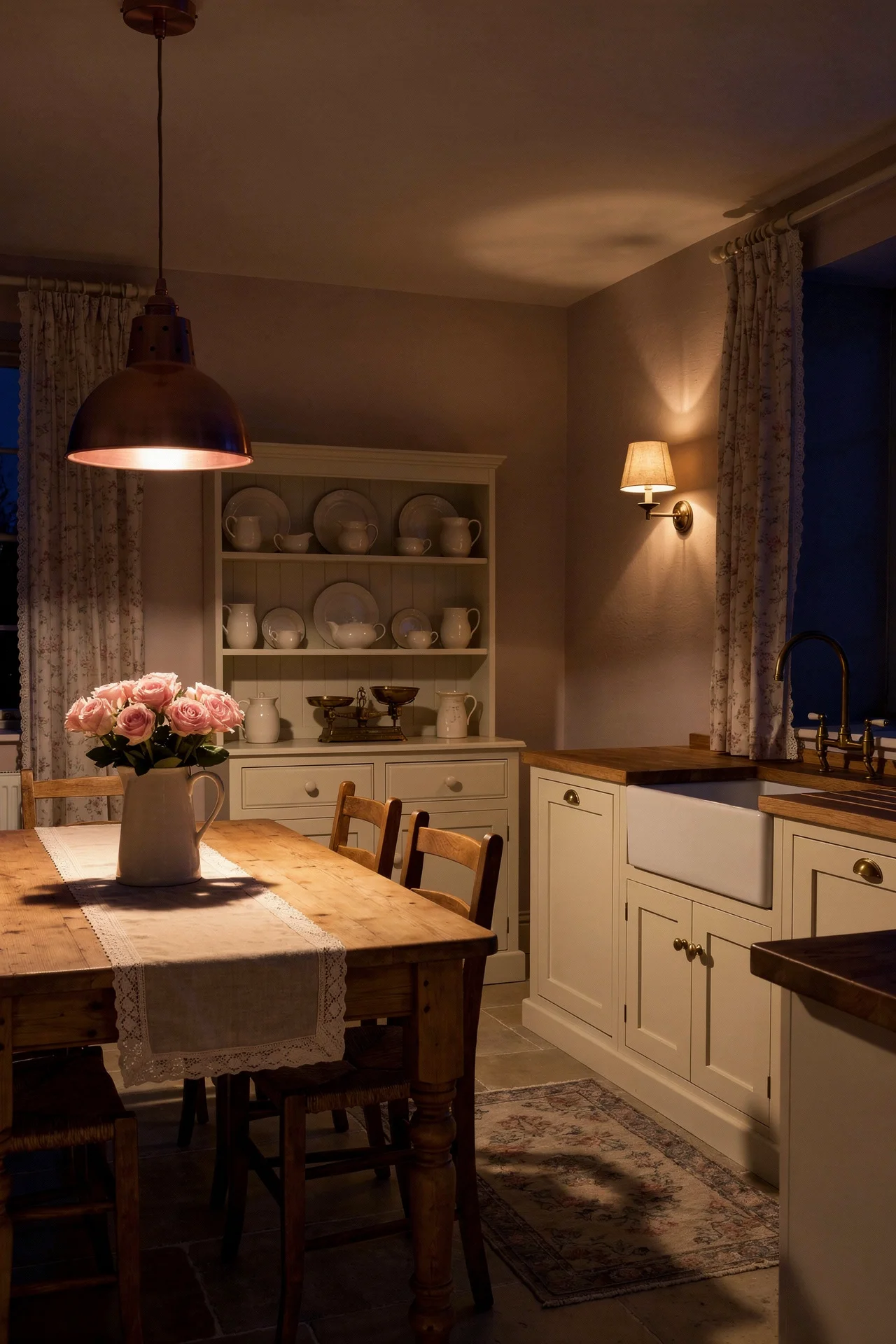
I’ve been down a deVOL rabbit hole for the better part of a year, and I’ve noticed something most Pinterest boards get wrong about the English Country kitchen. It isn’t a style you buy. It’s a philosophy you build. The cottages I keep coming back to, the ones Ben Pentreath and the Plain English team quietly publish in House & Garden, treat the kitchen as a room of furniture. Not a fitted box with matching handles. Muted greens that respond to grey English light. Unlacquered brass that darkens with use. A Welsh dresser older than the cabinets. That’s the trick. And once you see it, the glossy showroom version starts to feel, honestly, a bit thin.
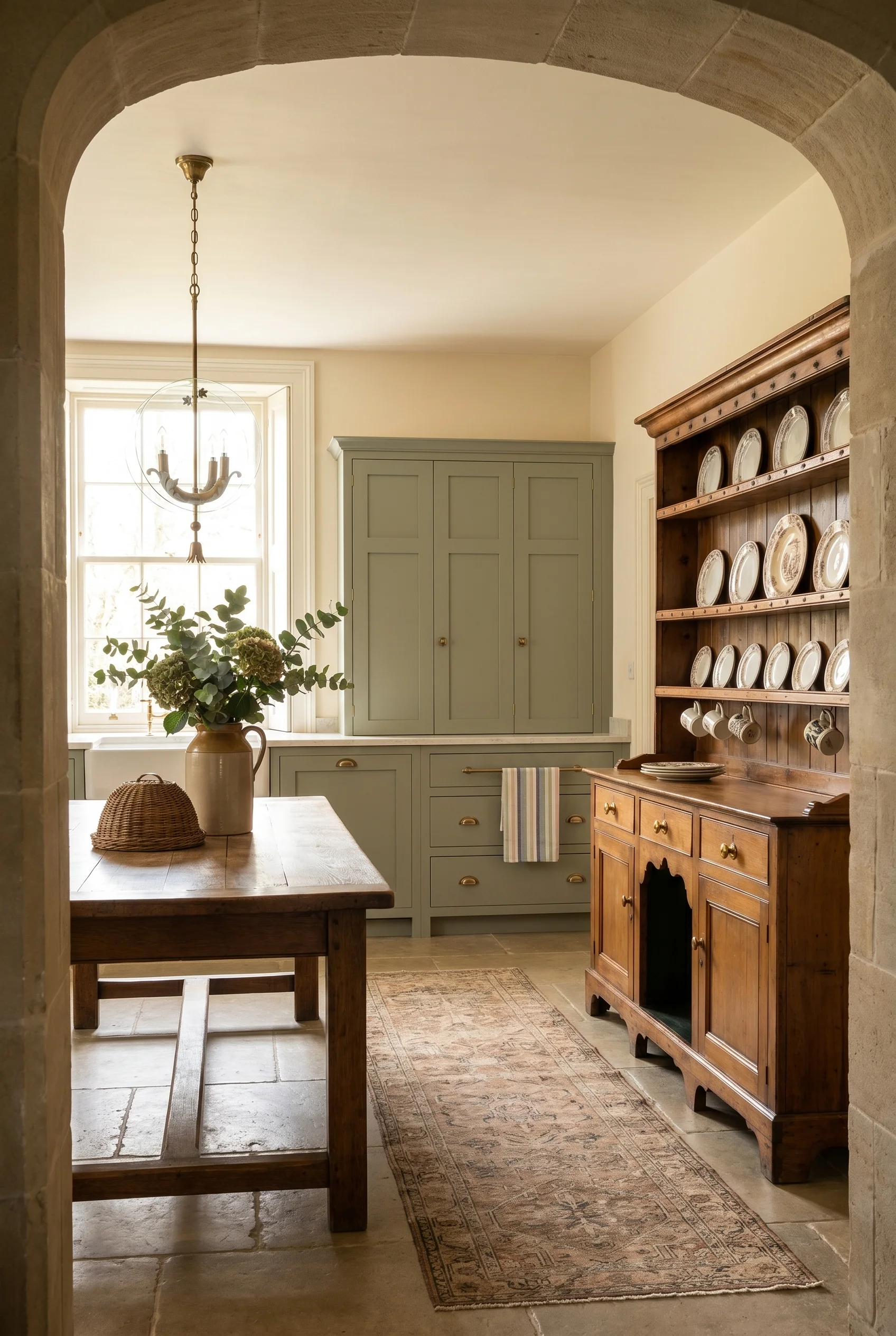
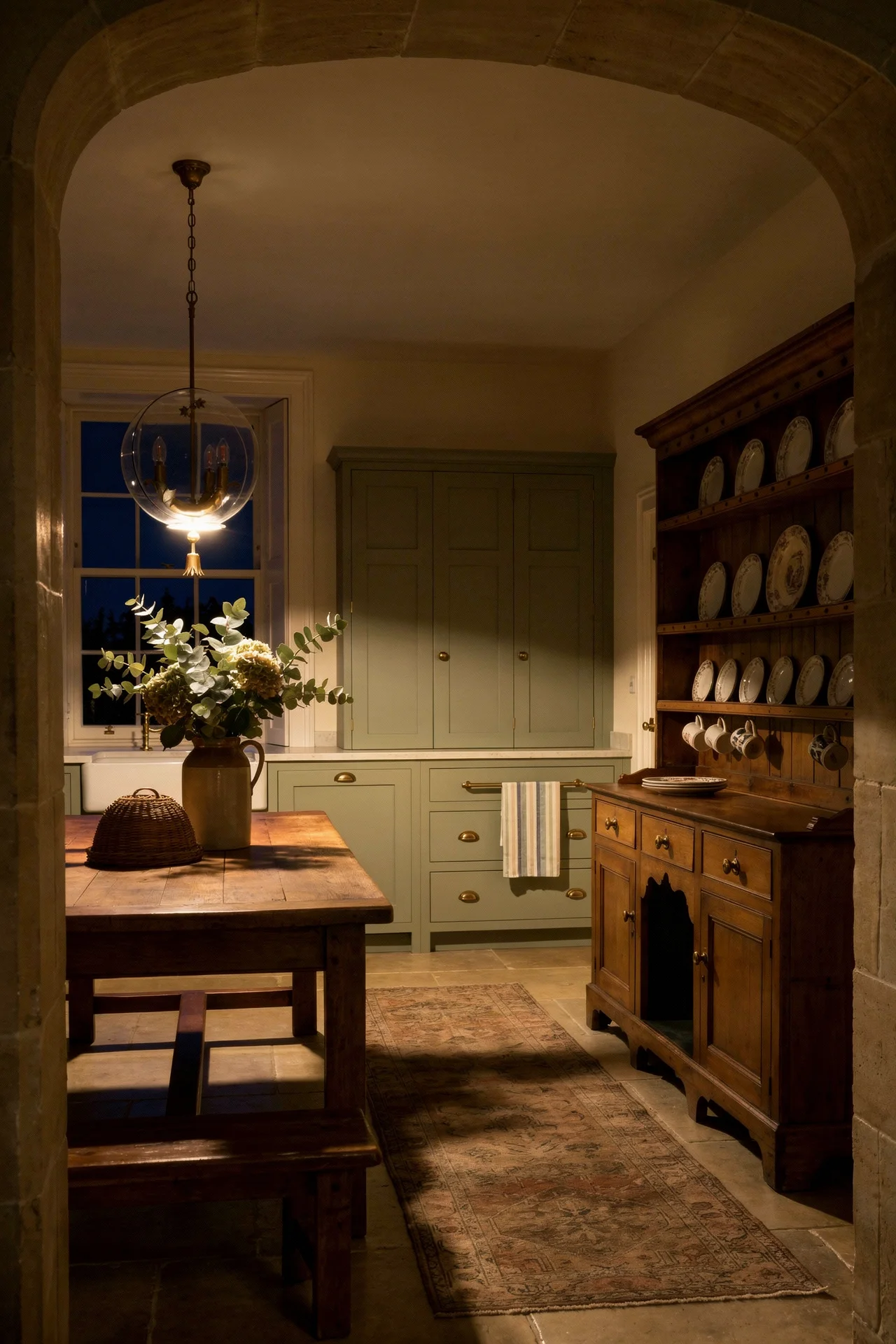
If there’s one technical decision that separates a proper English Country kitchen from a farmhouse knockoff, it’s in frame joinery. The doors sit flush inside a solid timber frame, the way a Georgian cabinetmaker would have built them two hundred years ago. Look at a deVOL Classic English or a Plain English range closely and you’ll see it straight away. The frame is visible around every door and drawer. Nothing overlays. Nothing floats.
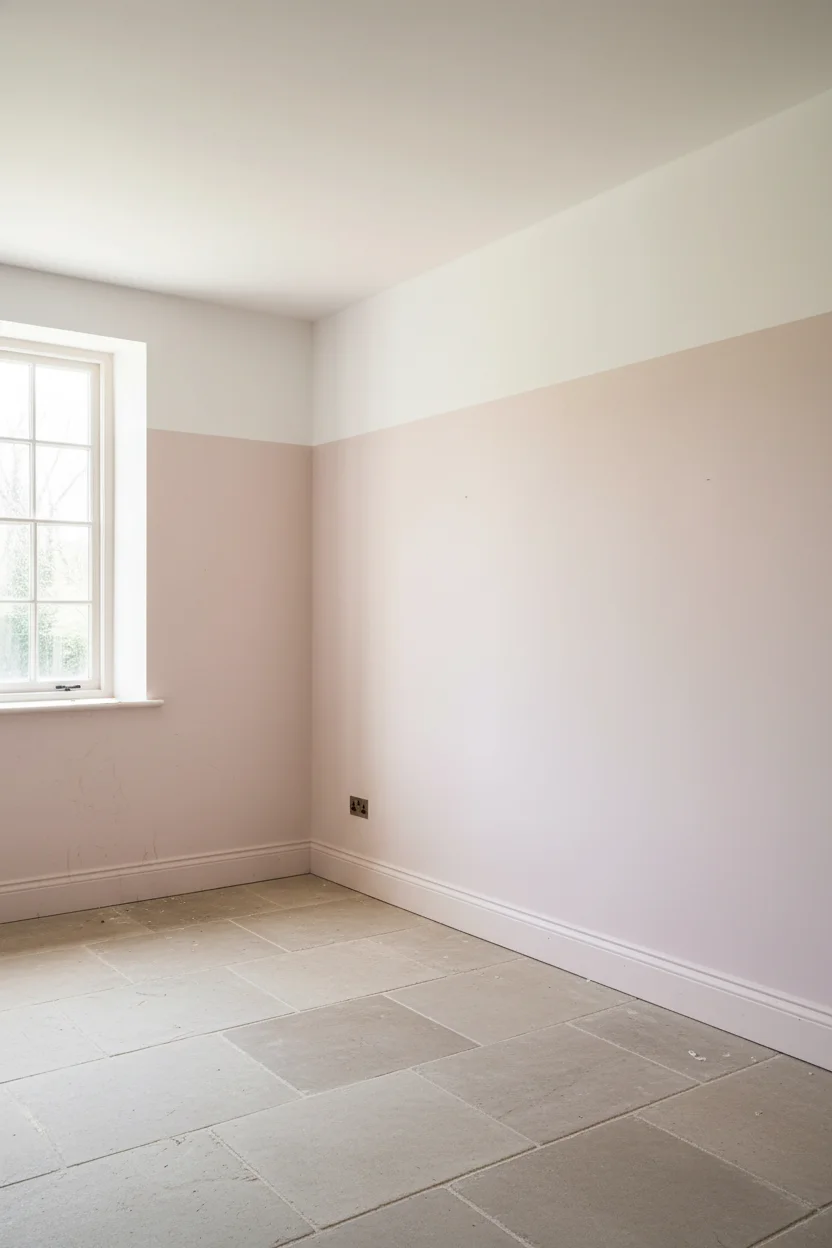
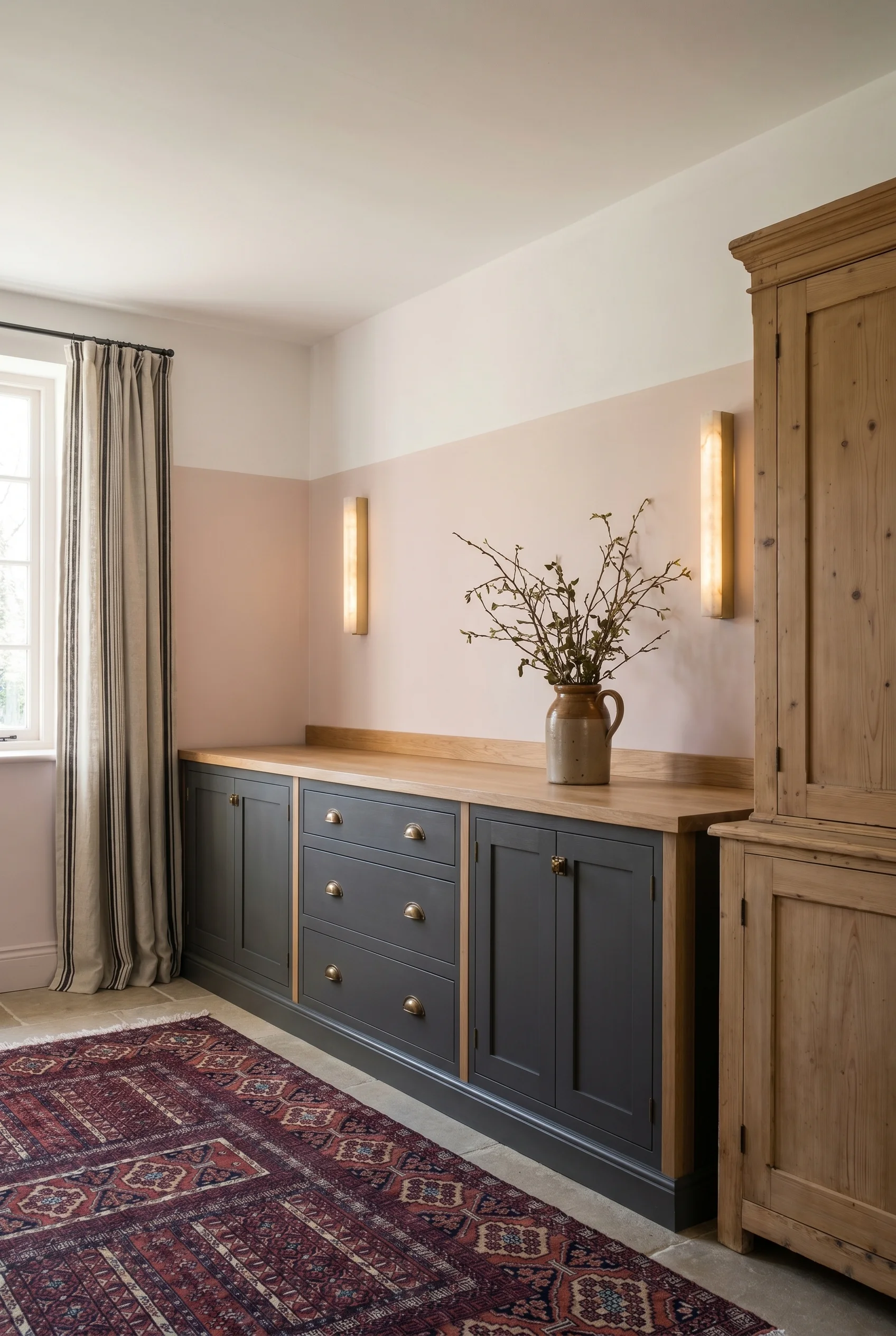
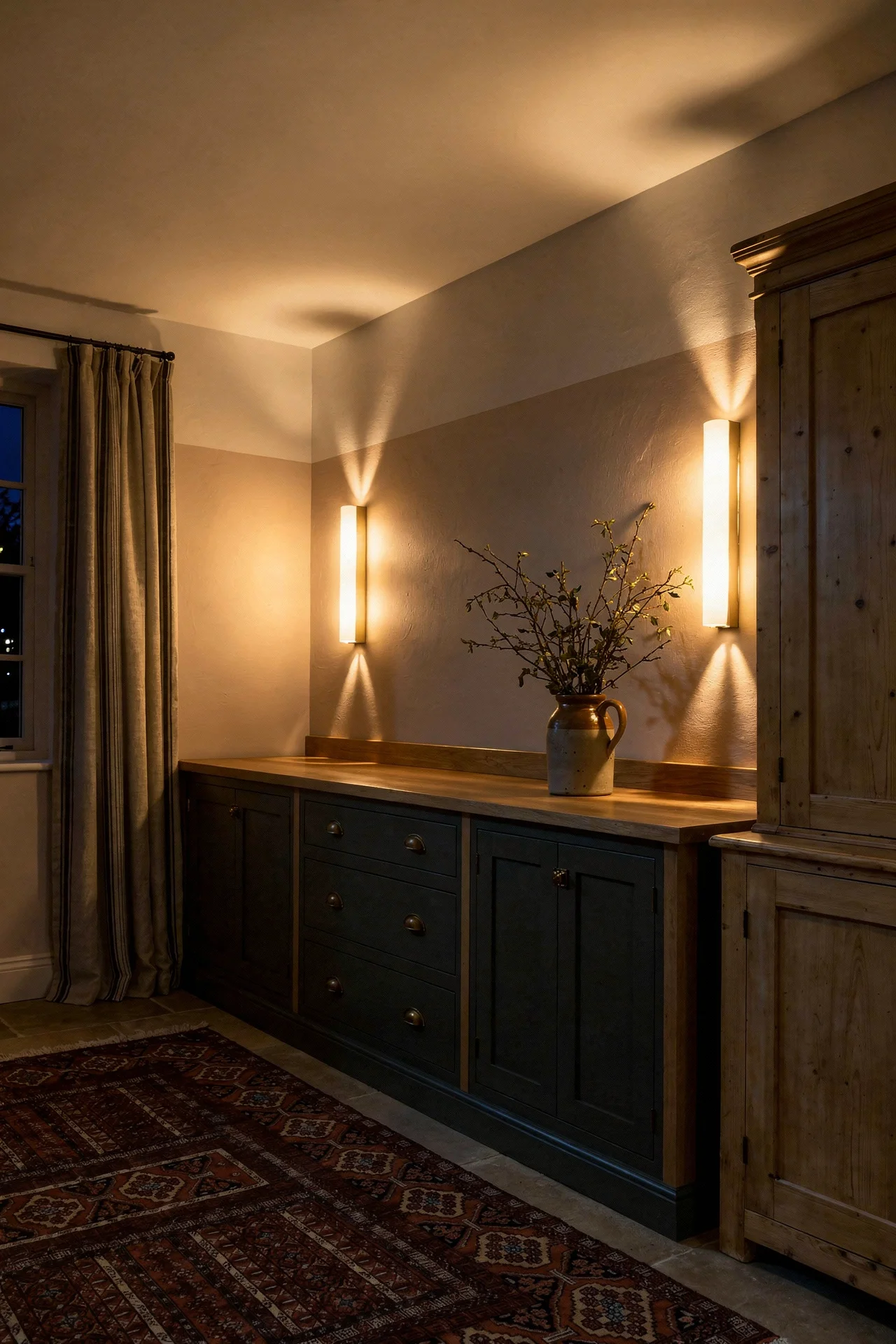
Modern overlay cabinets, the kind most kitchen showrooms push, hide the carcass behind a slab of door. They’re cheaper to build and they read as unmistakably contemporary, which is exactly the opposite of what you want here. I’d lean towards in frame every time, even if it means fewer cabinets or a longer build. The gap of timber between each door does something the eye reads as quality before the brain catches up.
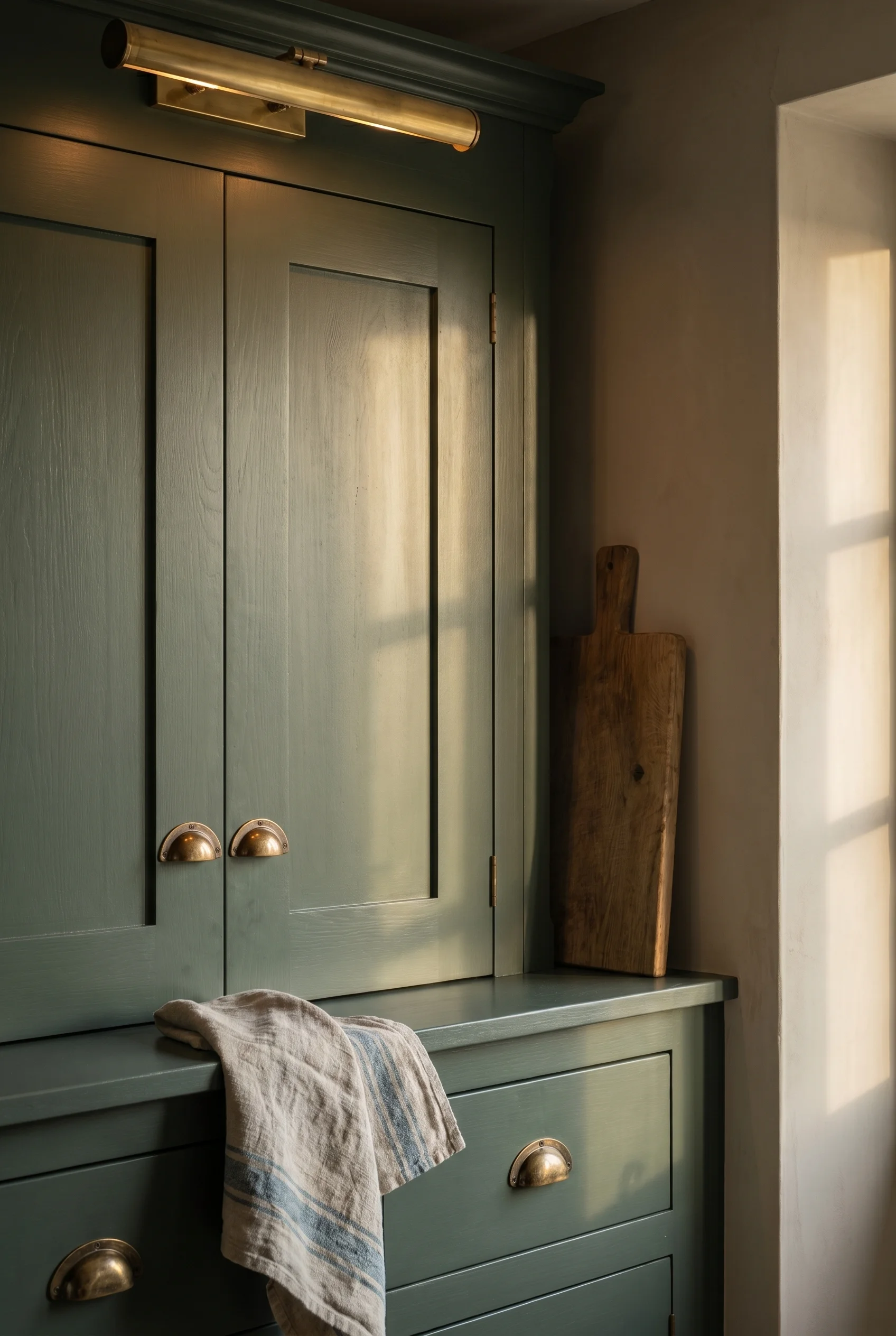
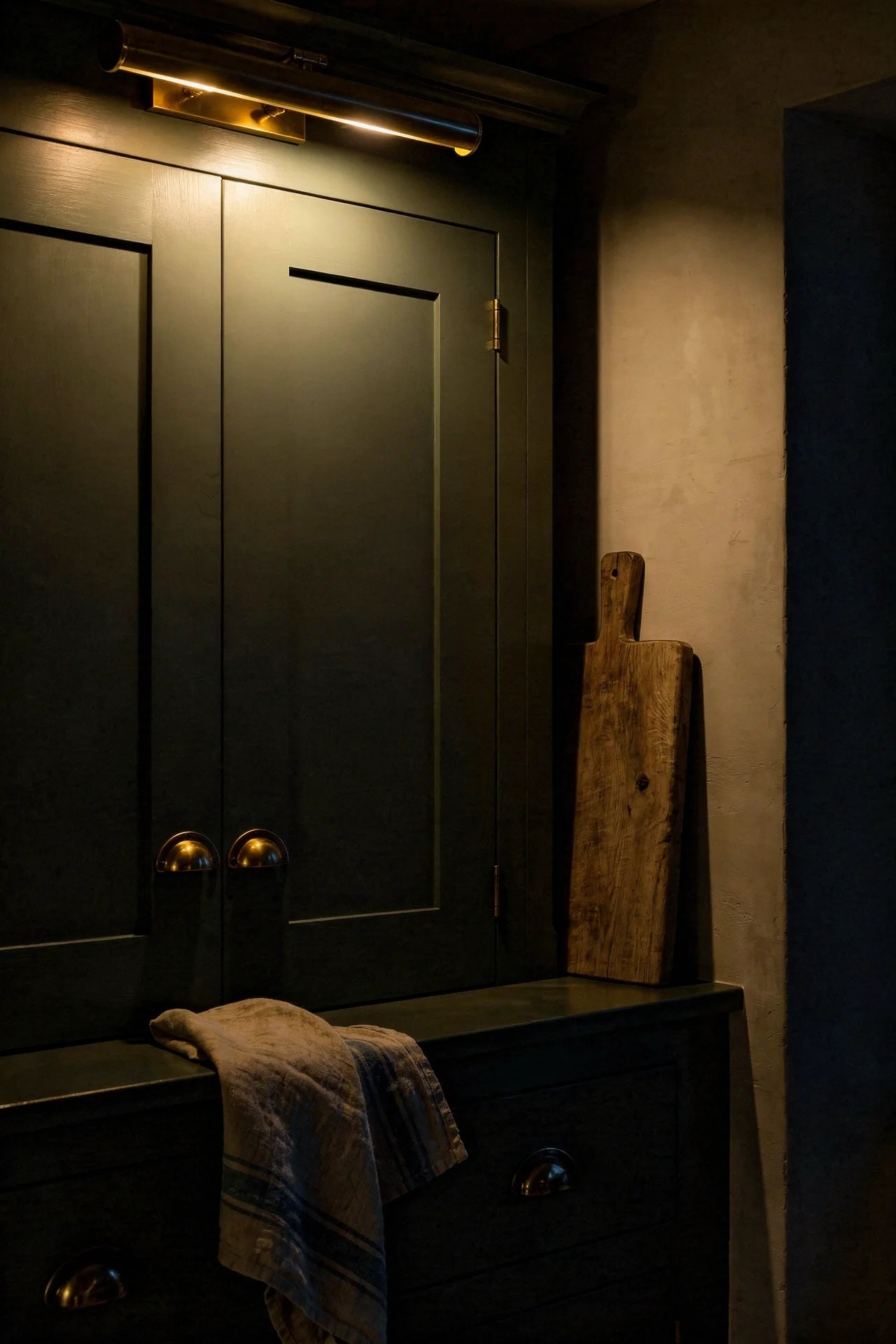
Shaker is the enduring style inside the frame. Five piece flat panel, inset centre, no bevels or unnecessary profiles. If you want a touch more formality, a subtle Georgian beaded moulding around the inside edge reads beautifully without tipping into fussiness. What you’re avoiding is the raised panel door with the cathedral arch at the top. That’s American builder kitchen, not English cottage.
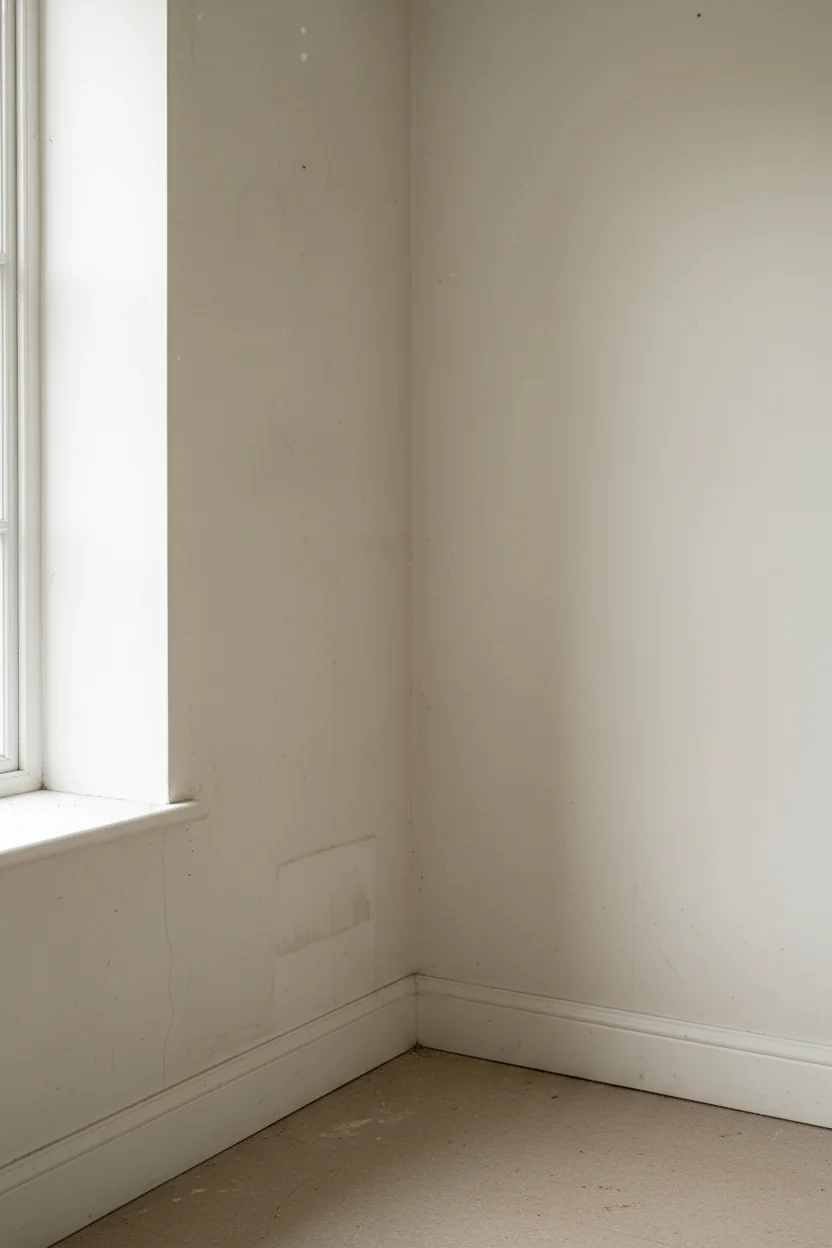
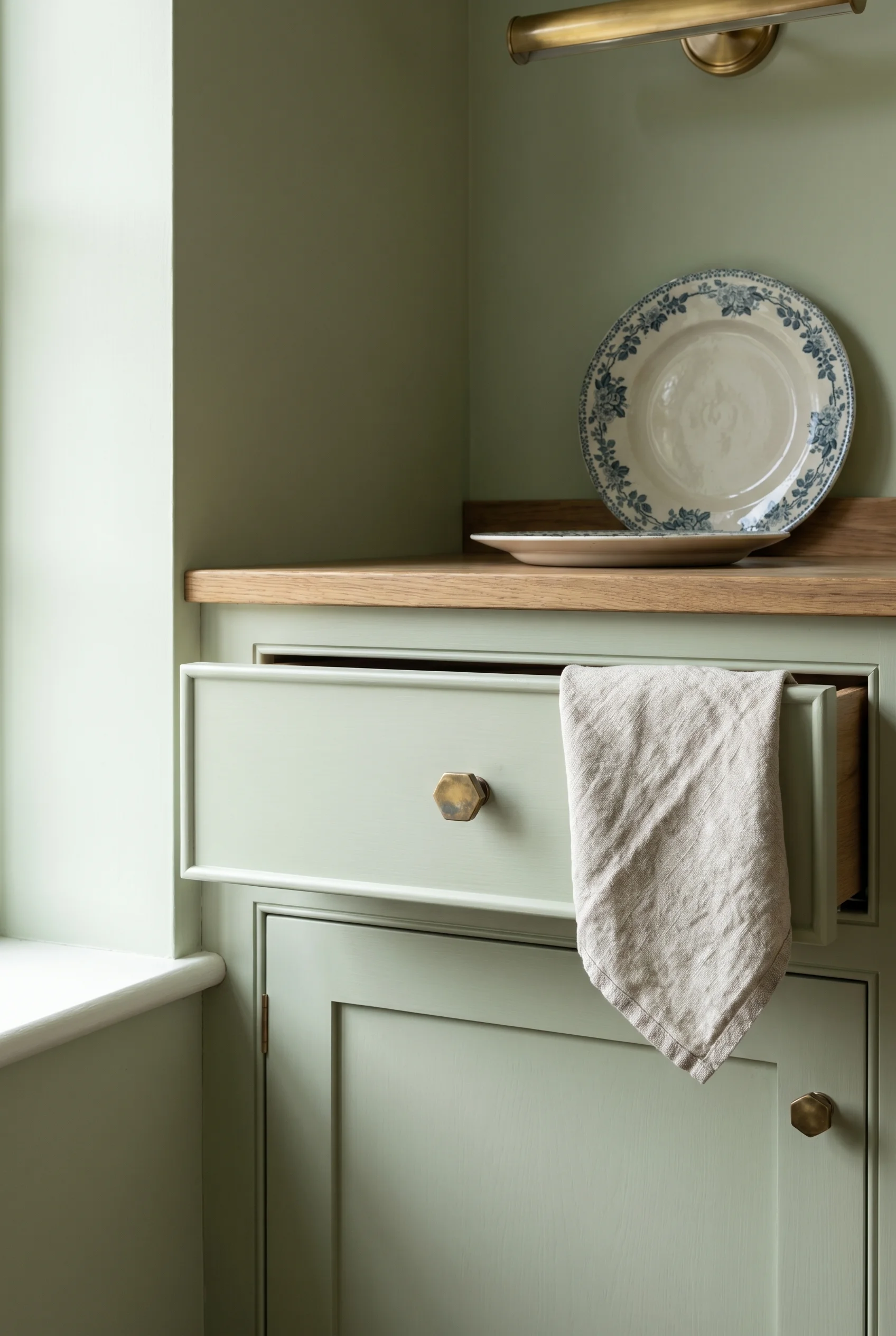
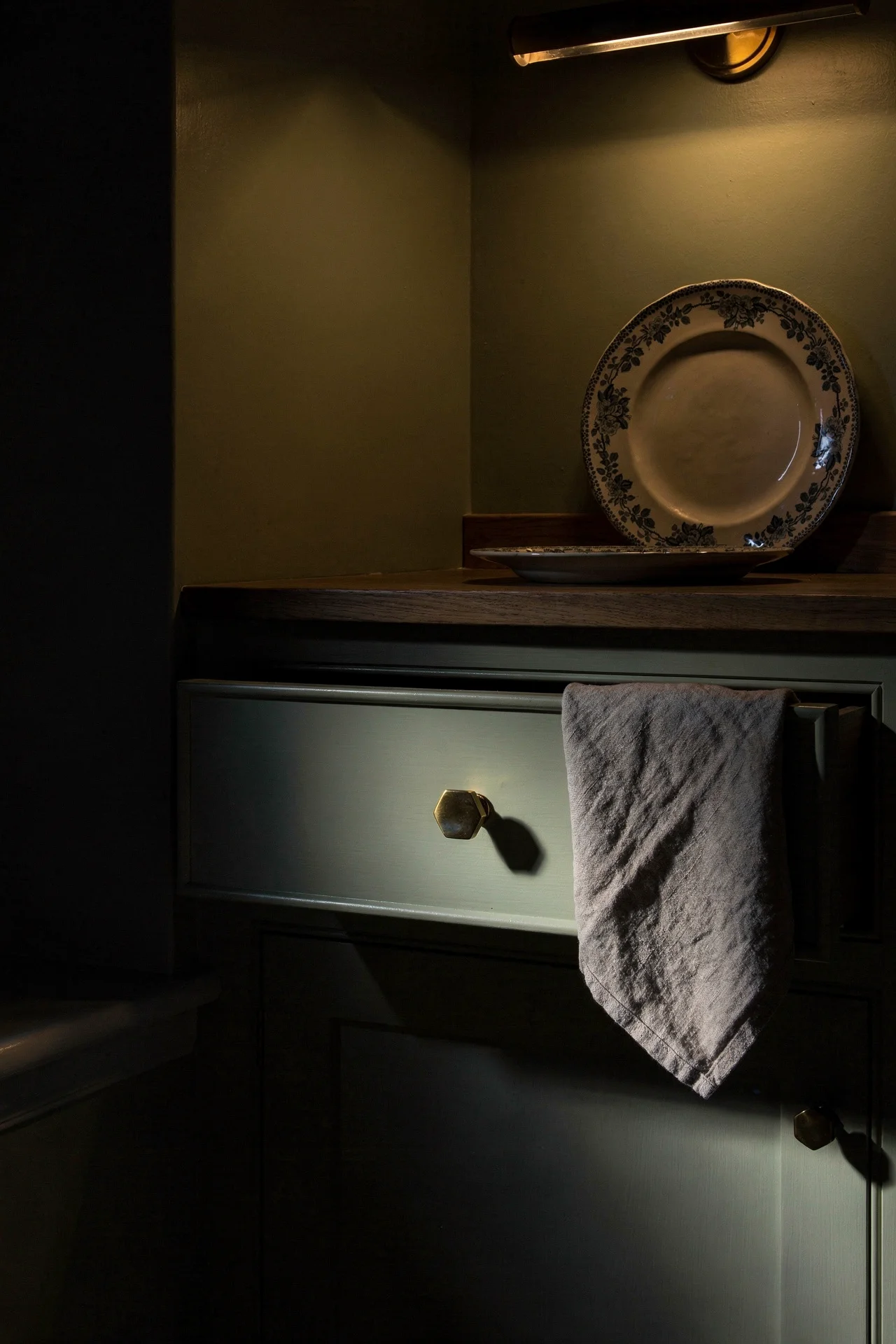
The other thing about in frame is that it forgives. A little cupping in an old cottage wall, a floor that slopes half an inch across the room, none of it matters because the frame absorbs the adjustment. Modern frameless cabinets need laser level installation or the reveals look wrong. In frame looks right even when the building isn’t.
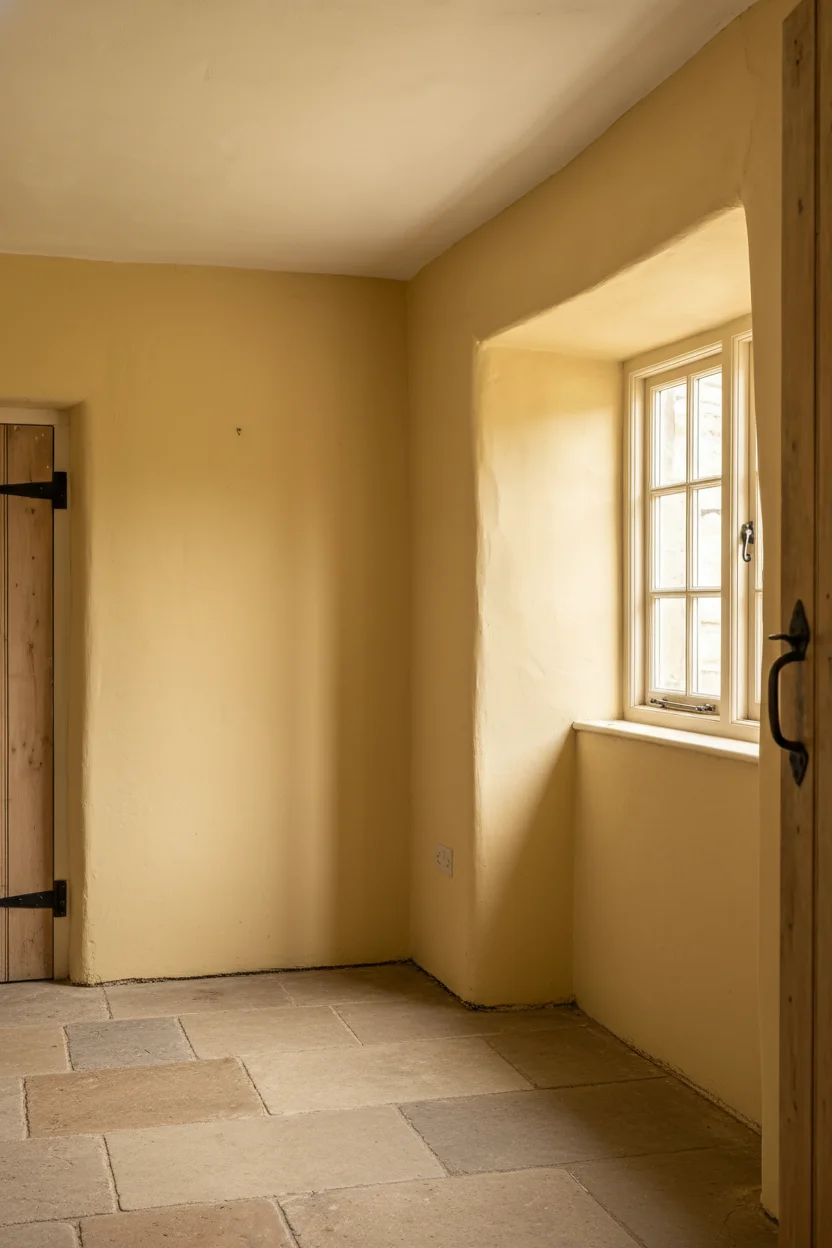
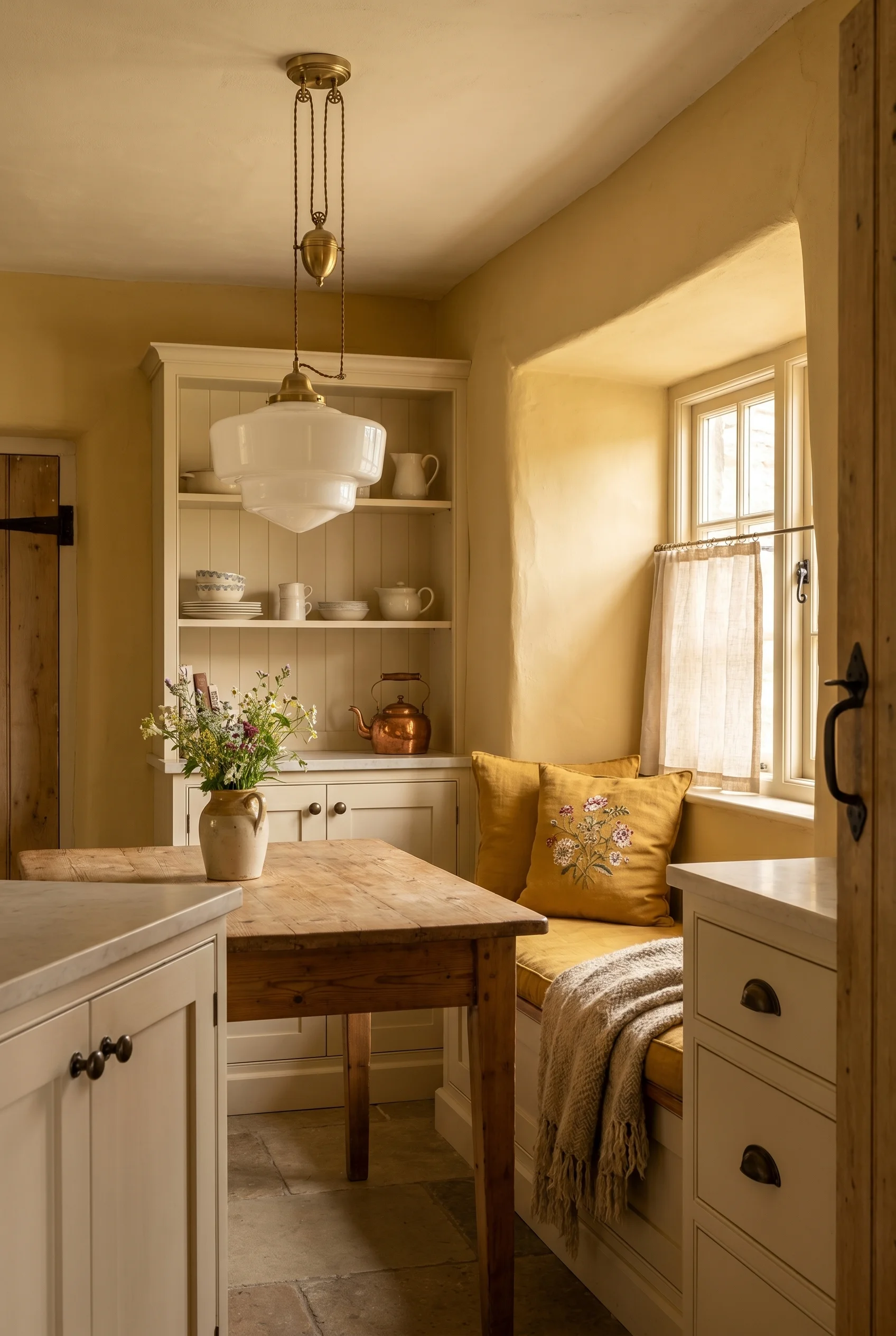
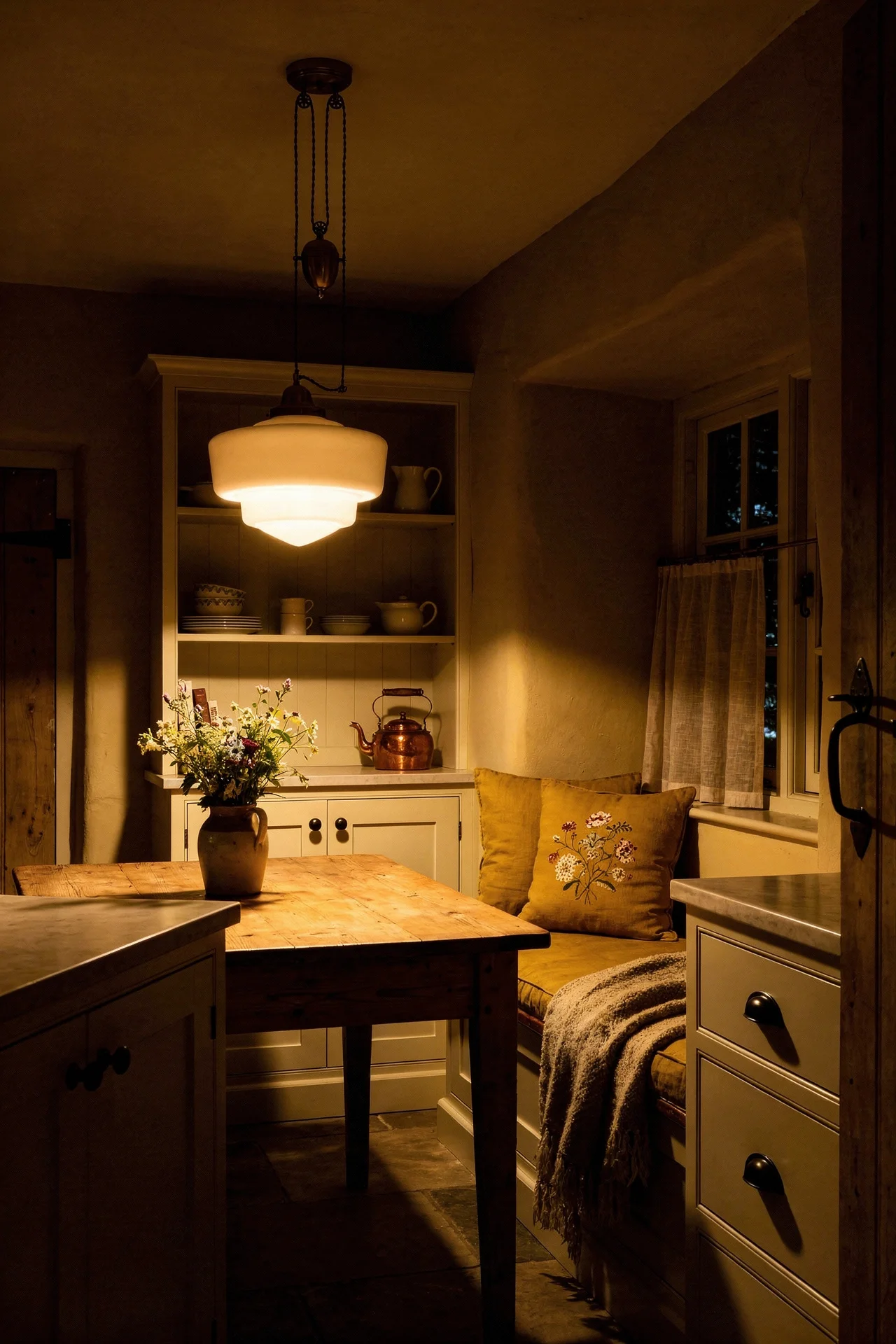
The single biggest shift in my thinking, once I started paying attention to how designers like Clarence & Graves actually compose these rooms, is the concept of the unfitted kitchen. Wall to wall matching cabinets are the very thing you’re trying to escape. The room should read as a collection of pieces that arrived over decades, not a single delivery from one supplier.
If you make coffee at home and want one useful piece of furniture to carry that collected character, my vintage coffee corner ideas show how I would give a cabinet and everyday cups a clear role in a small kitchen.
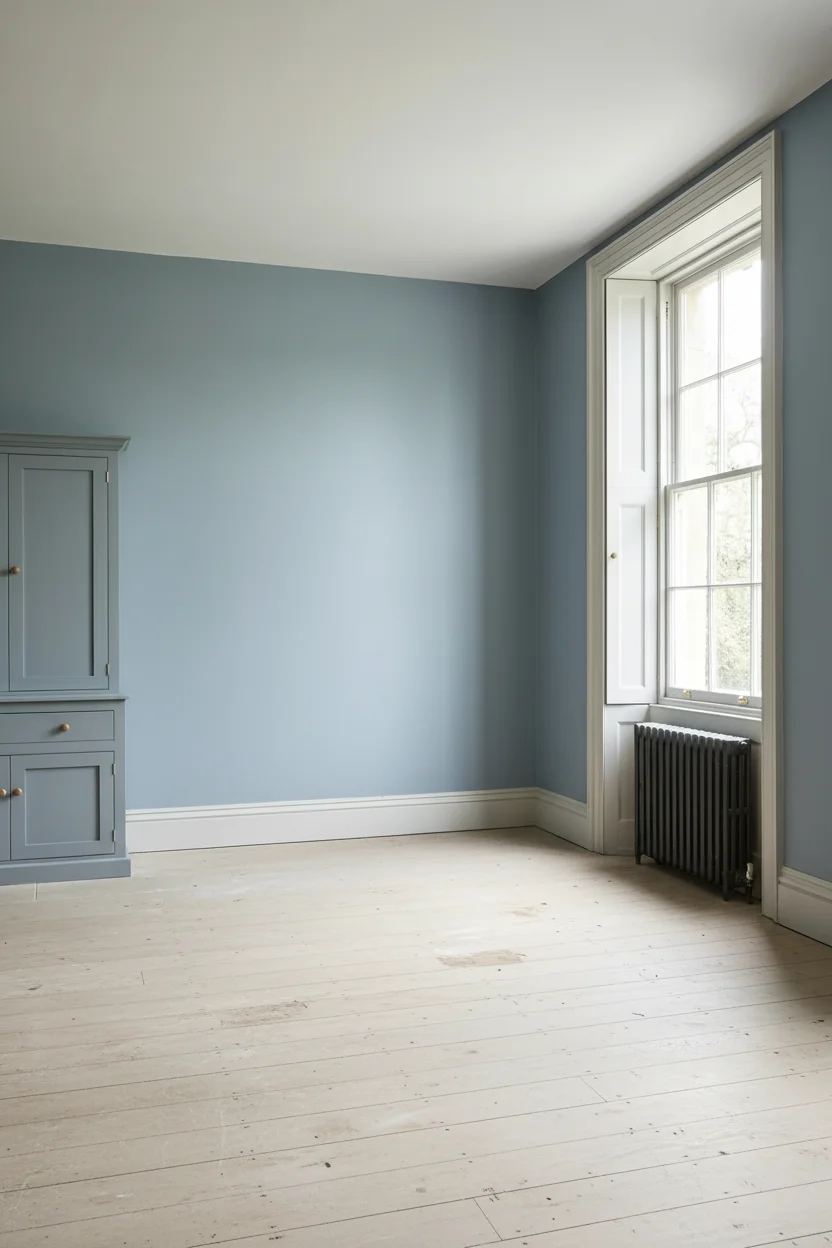
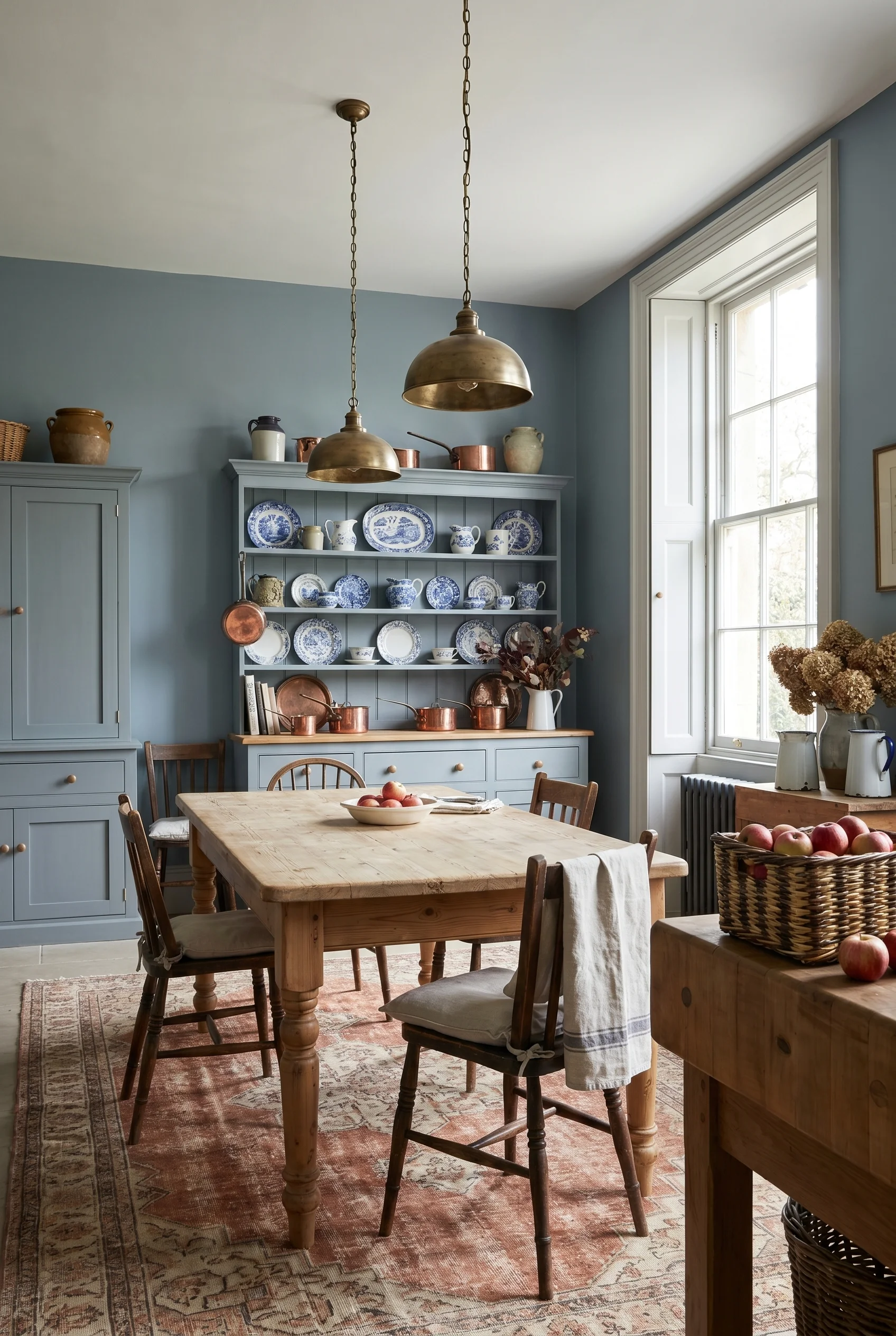
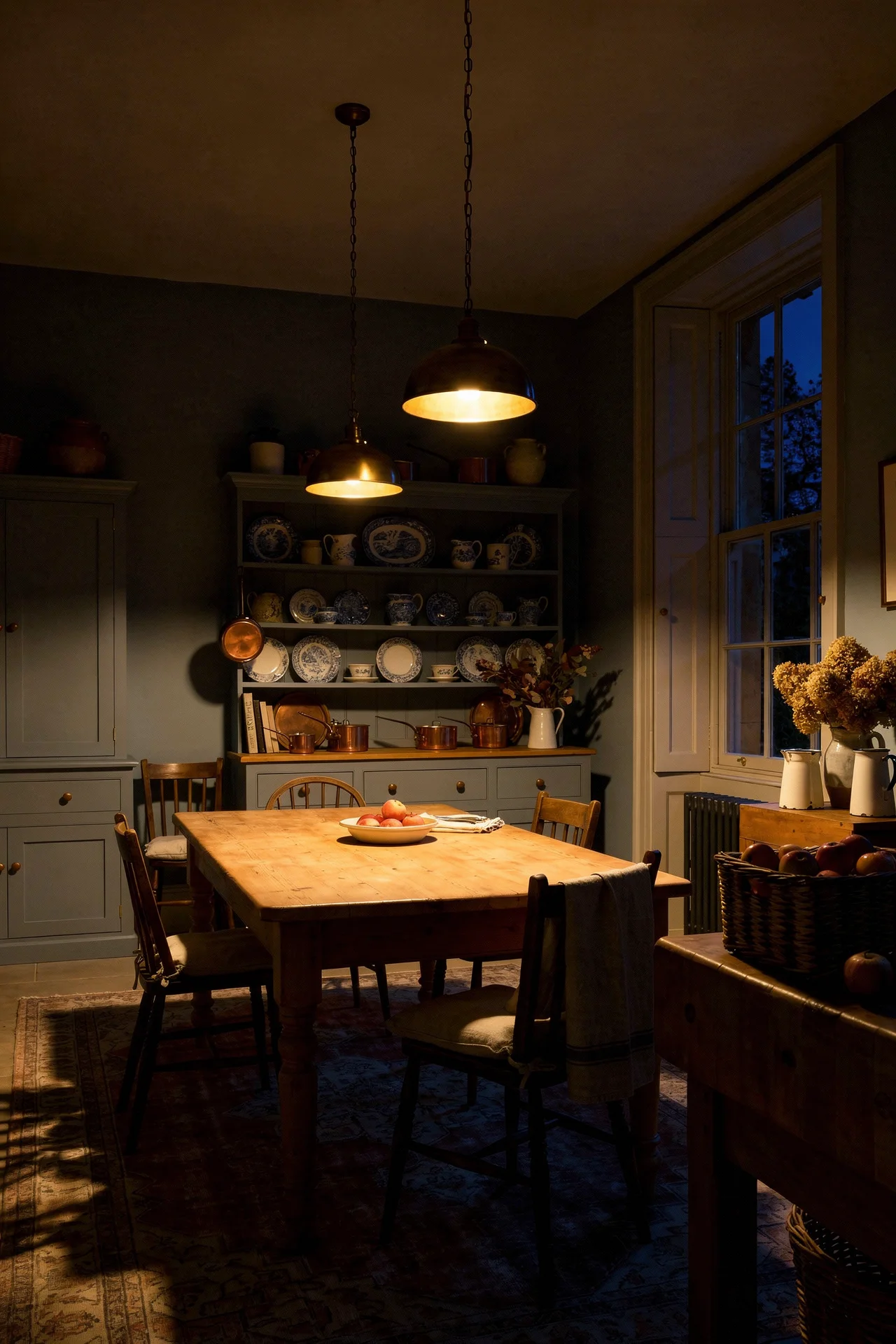
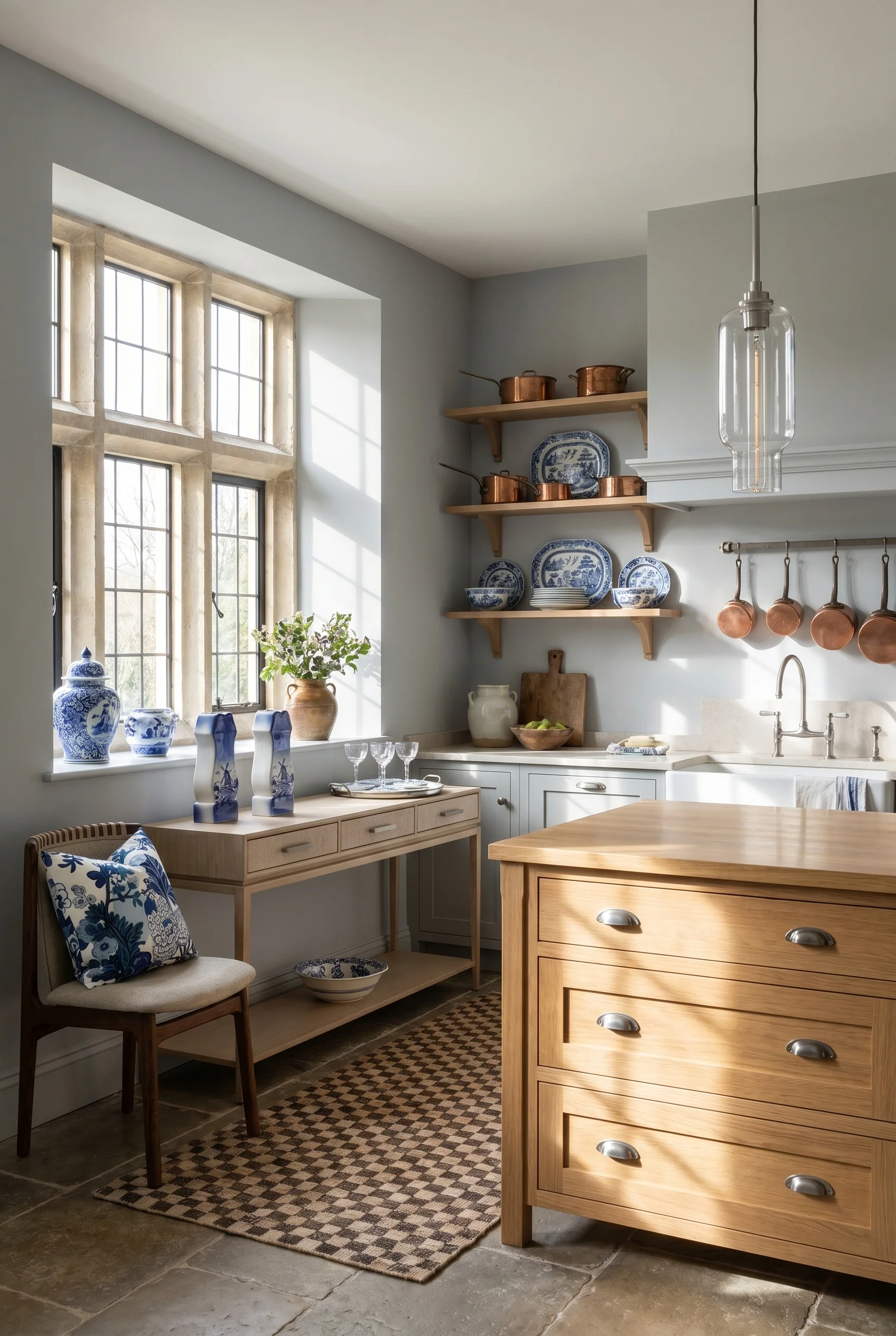
In practice this means breaking the run. A tall larder cupboard in a different paint colour to the base cabinets. A Welsh dresser against one wall, preferably older than everything else in the room, displaying vintage ironstone and a mismatched set of teacups. A freestanding butcher’s block instead of a fixed island. A scrubbed pine farmhouse table doing double duty as prep surface and dining spot.
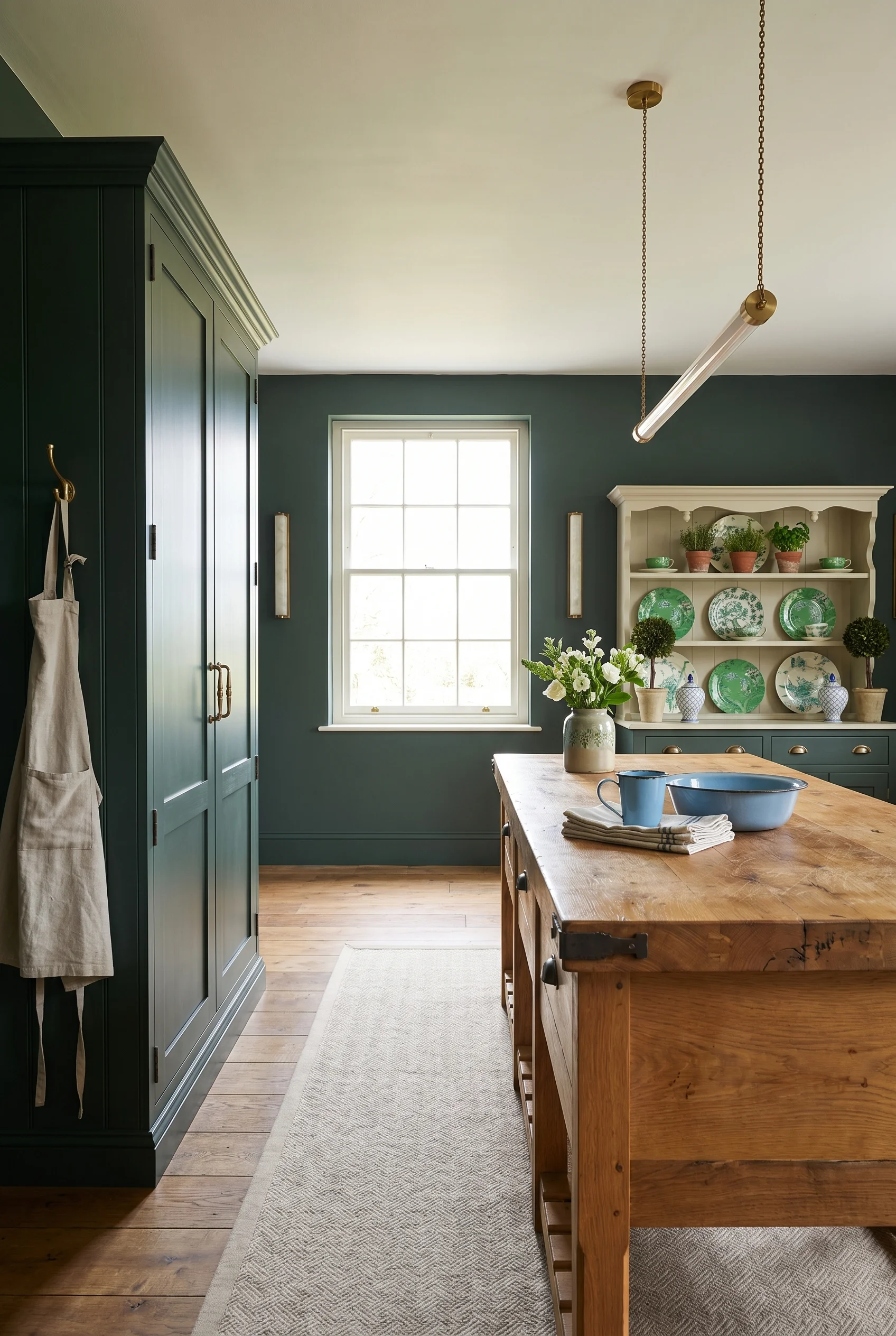
The Welsh dresser is the one I’d prioritise if the budget only allows for a single antique piece. A good one anchors a whole wall, provides serious storage, and signals the entire philosophy of the room in one object. Look for Victorian or Edwardian examples with original paint, dovetailed drawers, and some honest wear on the shelf edges where generations of plates have slid in and out.
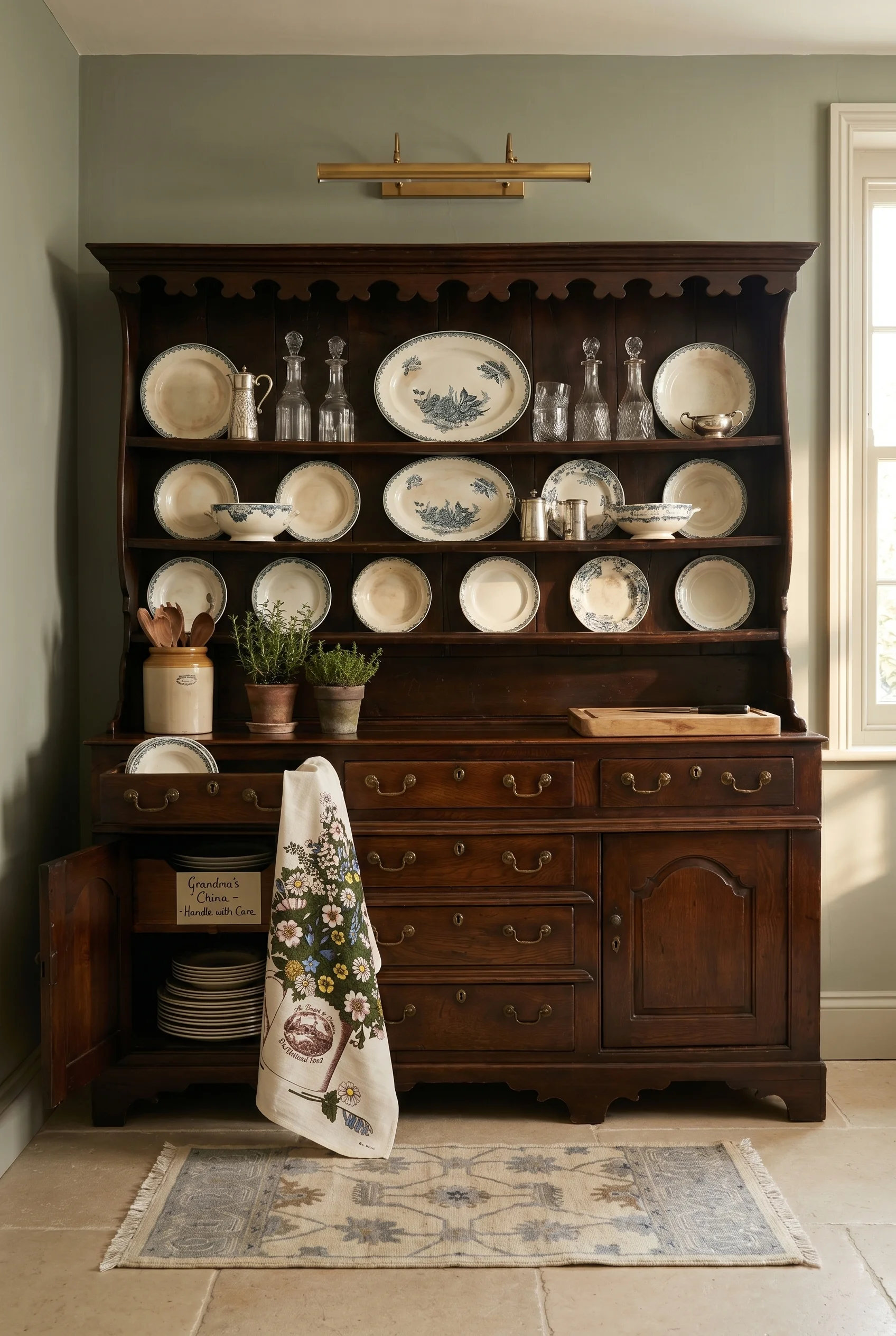
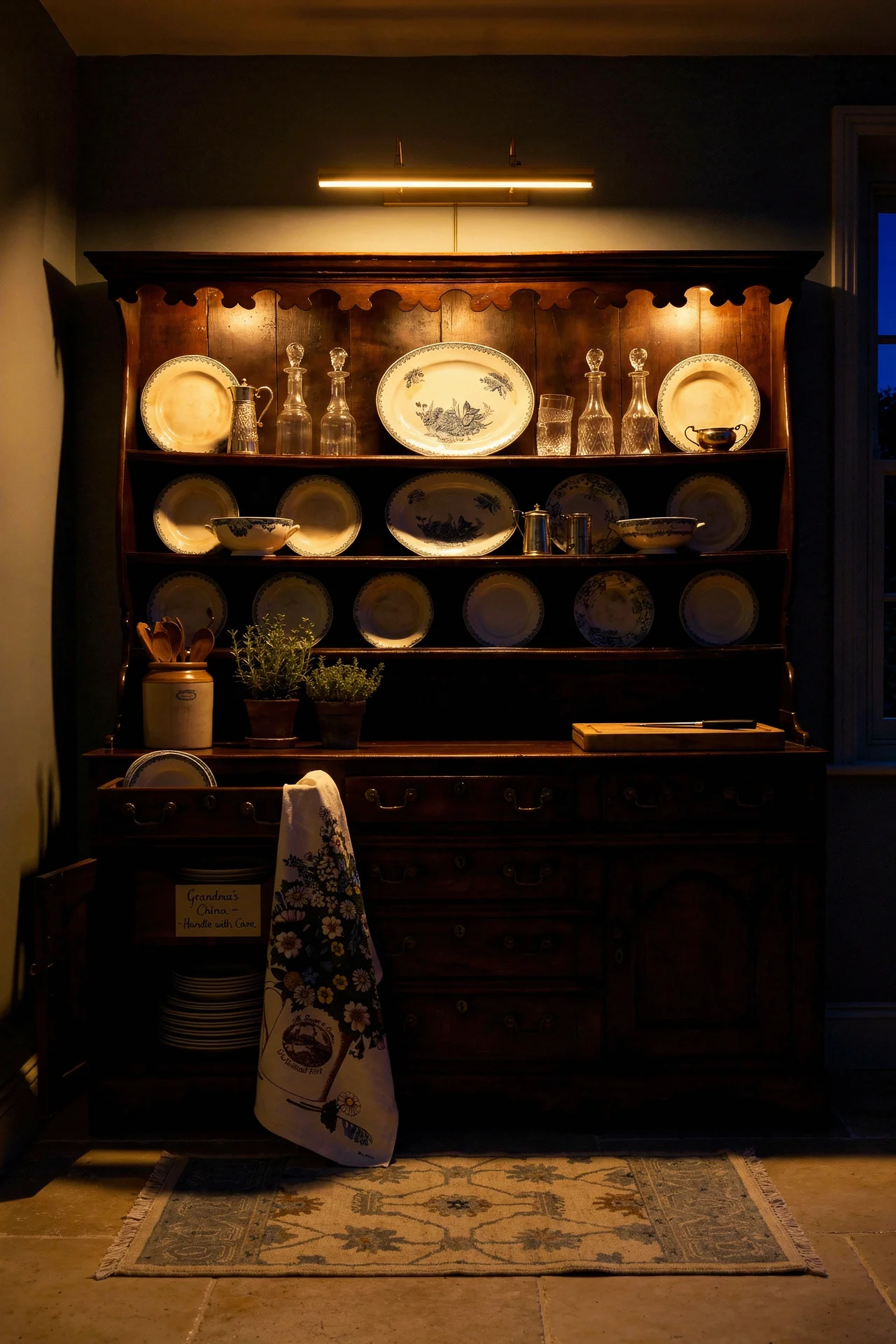
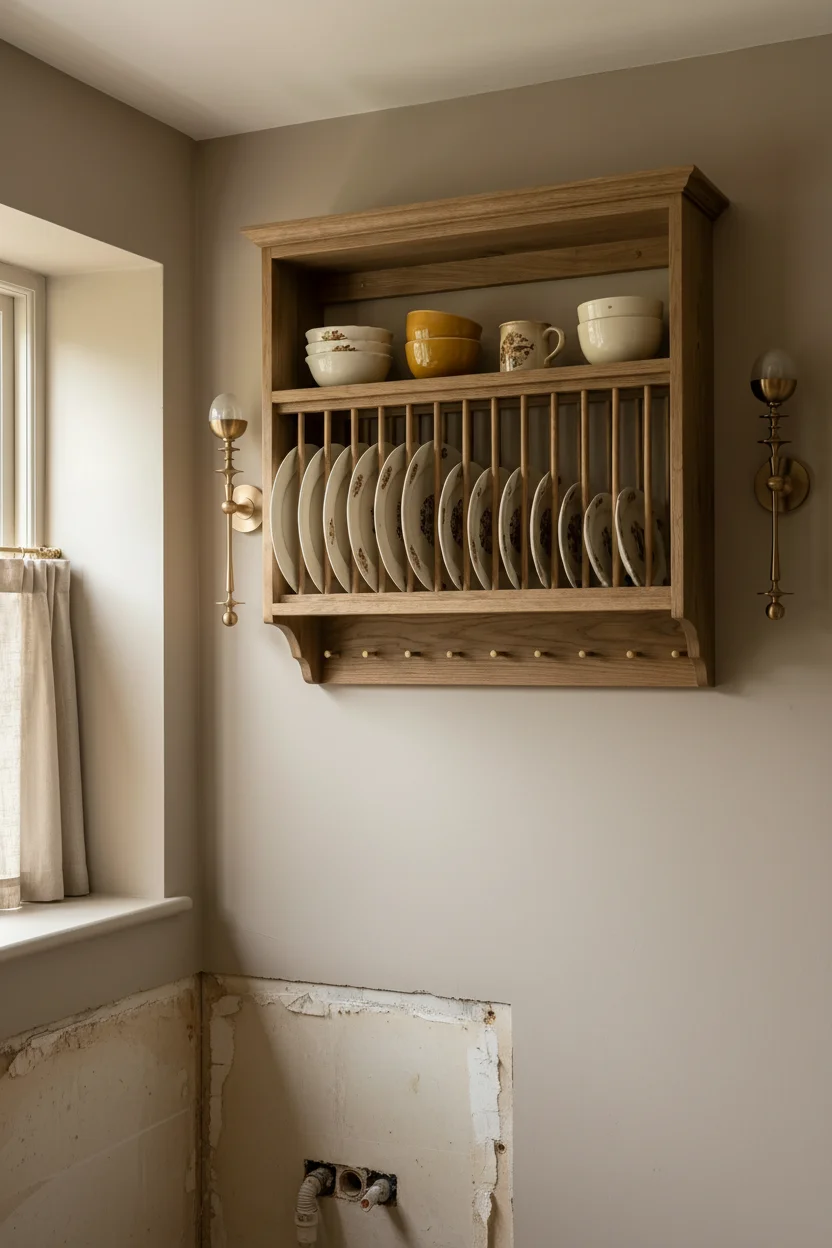
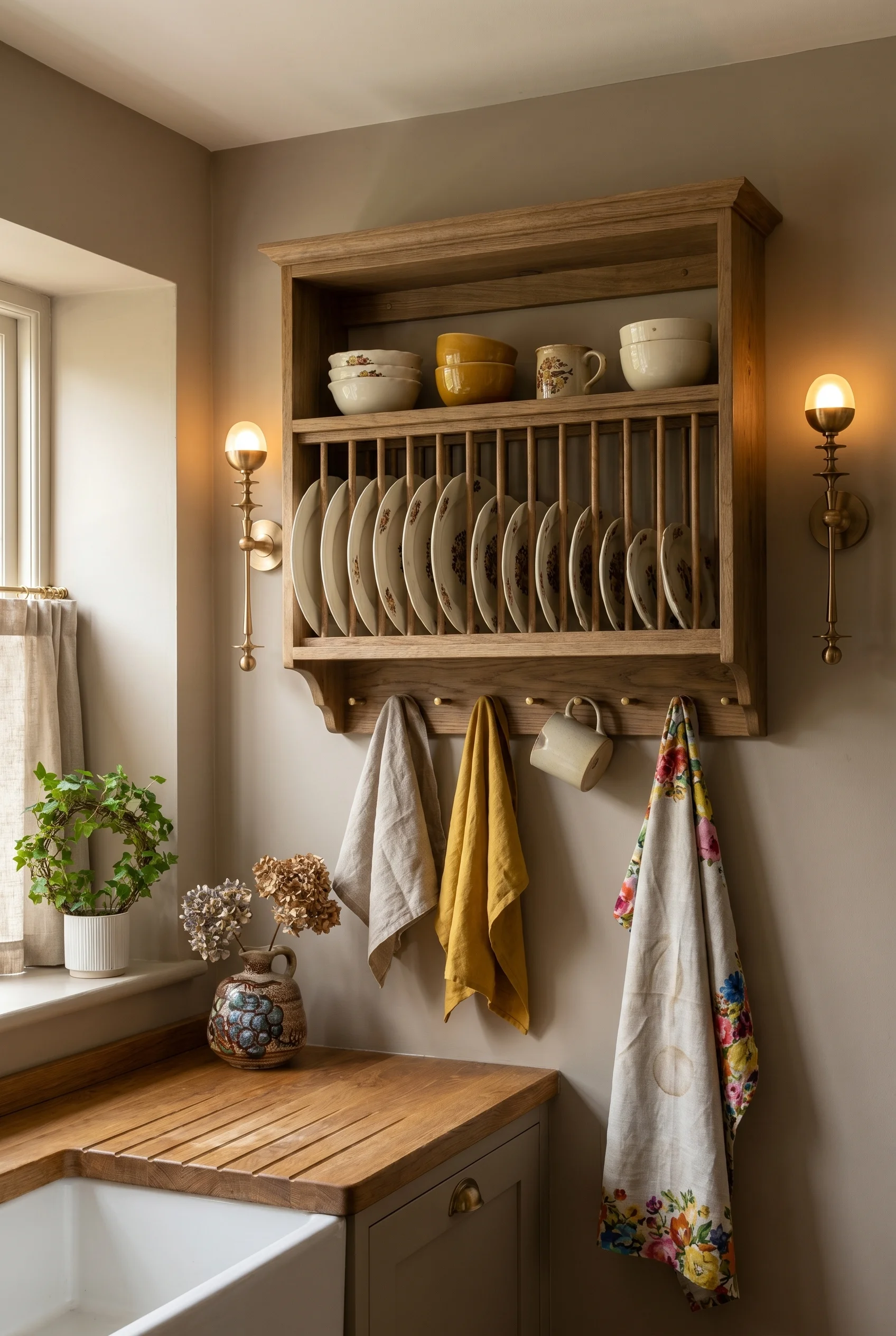
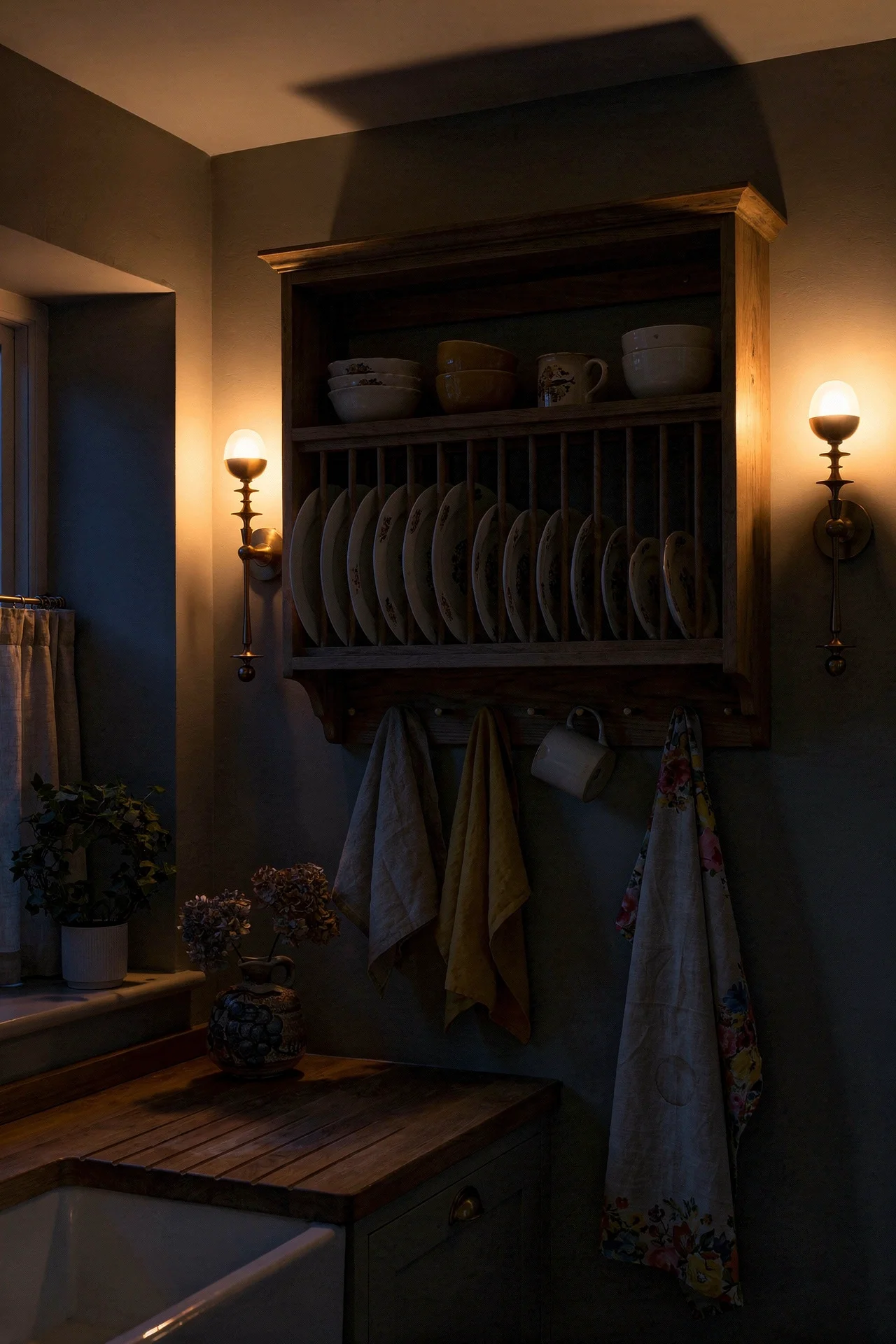
A plate rack, either built into a run of upper cabinets or hung as a standalone, gives you the same collected feeling on a smaller budget. Plates stored vertically on display, cups on hooks below, everyday crockery within arm’s reach rather than buried behind cabinet doors. It’s practical storage that earns its keep visually. Add a Shaker peg rail along one wall for tea towels, mugs, maybe a small pendant light, and the room starts telling you a story.
The mistake I see people make is buying a complete matching set of freestanding pieces from one company. That’s just fitted kitchen dressed up in costume. The pieces need to feel like they arrived separately, from different eras, with different scars.
The Aga range cooker is, genuinely, the heart of an English Country kitchen. That isn’t hyperbole, it’s almost a historical fact. Originally invented in Sweden in 1922, adopted wholesale by the British in the 1930s, and now so deeply associated with country house kitchens that the word “Aga saga” exists as a literary genre. A heavy cast iron stove in rich enamel, typically cream, pale blue, deep green, or the occasional dusty red.
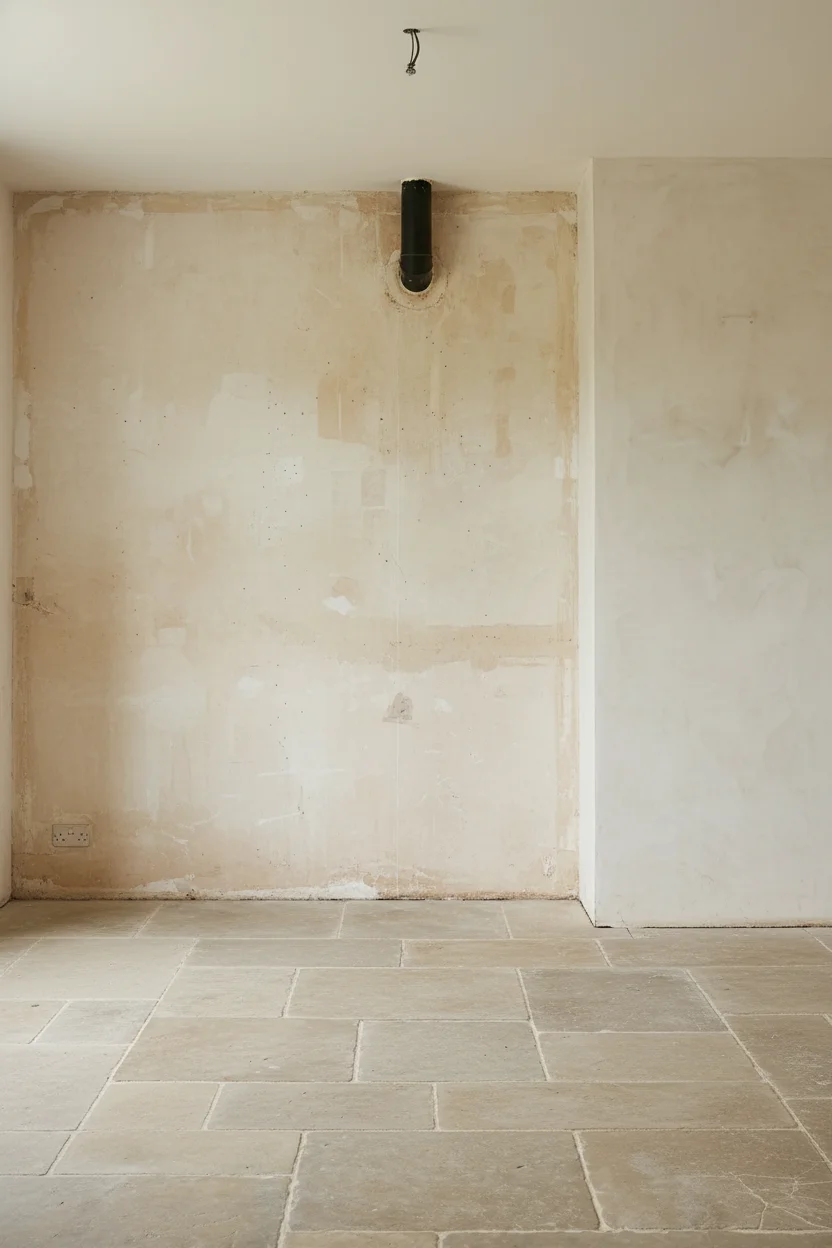
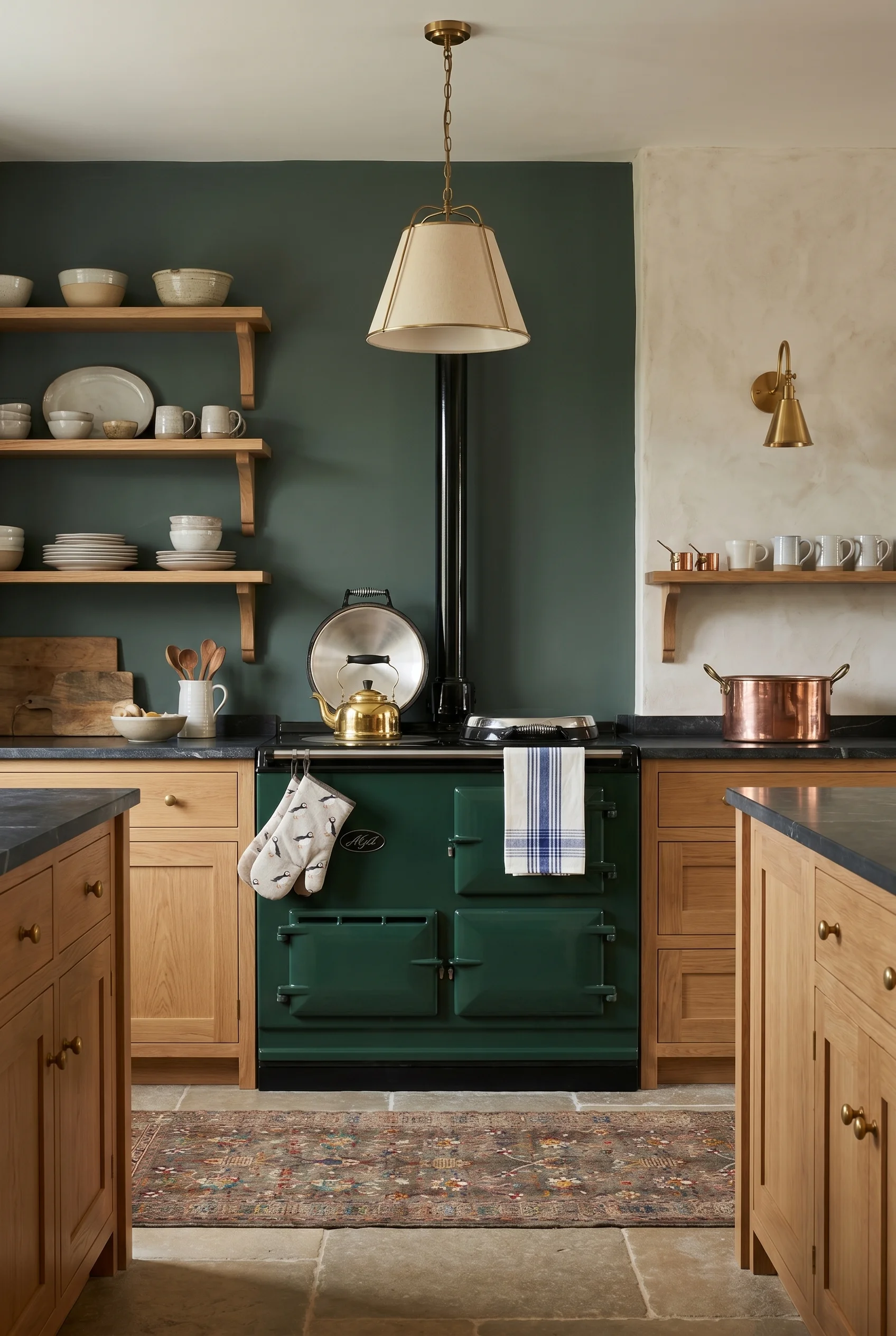
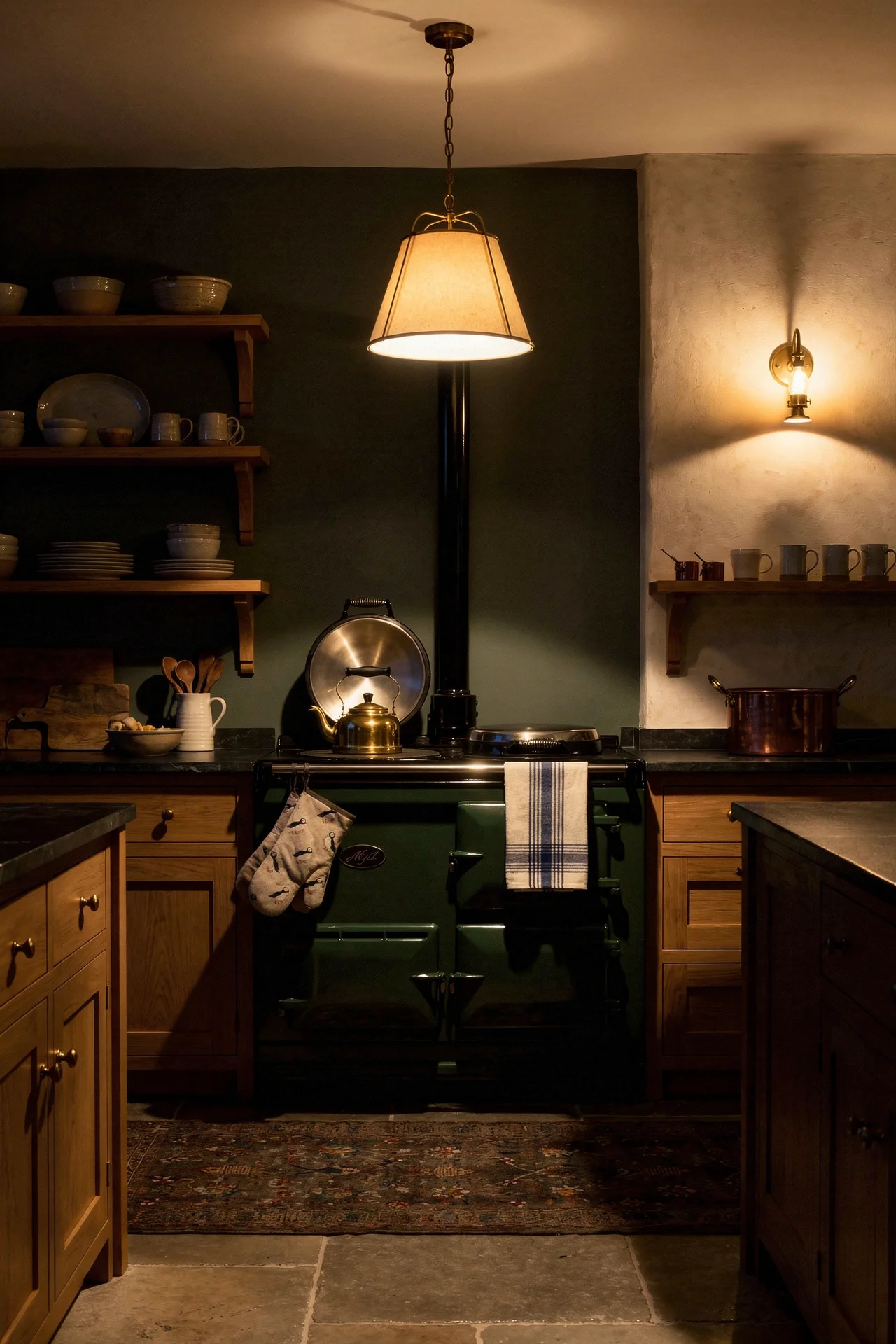
What makes the Aga work visually, beyond the colour, is how it’s set into the room. The traditional move is to tuck it into an inglenook, a deep alcove surround that nods to a historical cooking hearth. Framed by a painted timber mantle, often with corbels supporting the shelf, sometimes with exposed brick or a limestone surround behind. The Aga itself does a lot of heavy lifting, but the alcove is what makes it feel architectural rather than appliance shaped.
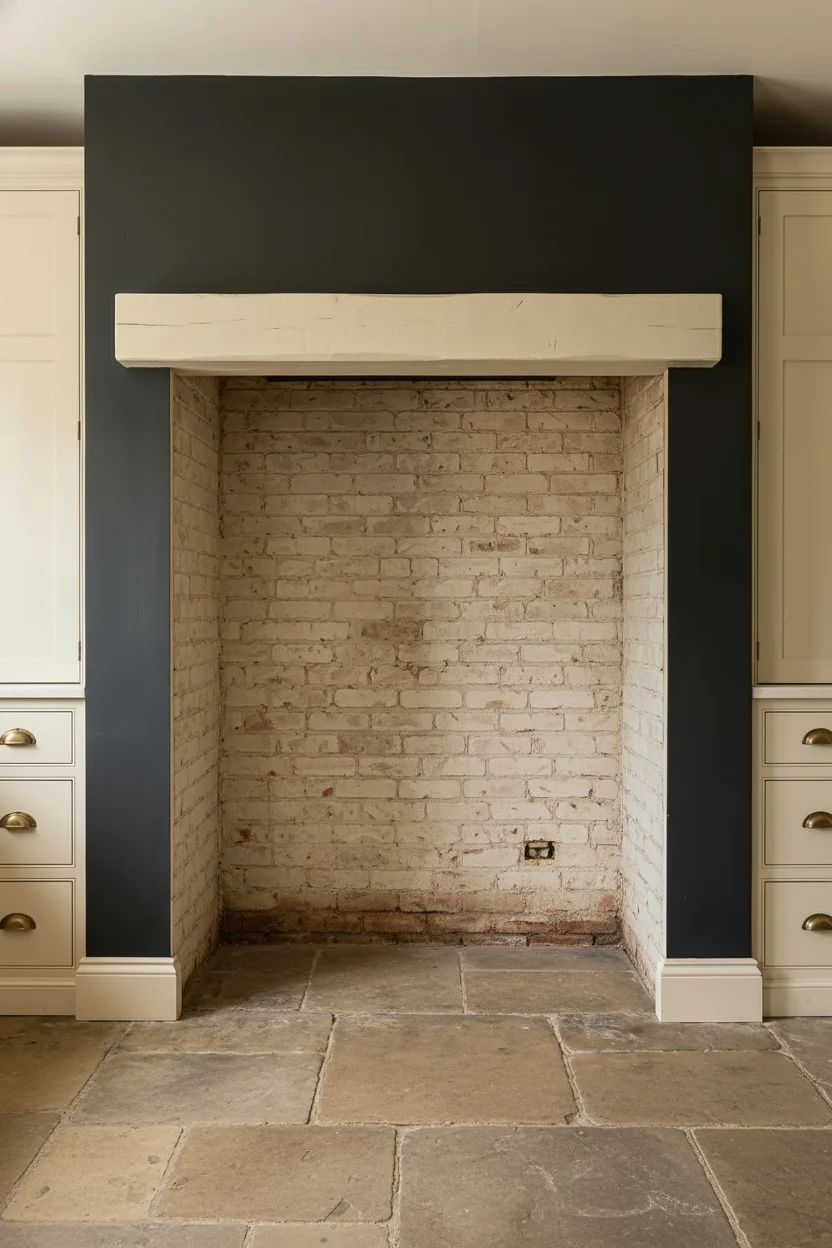
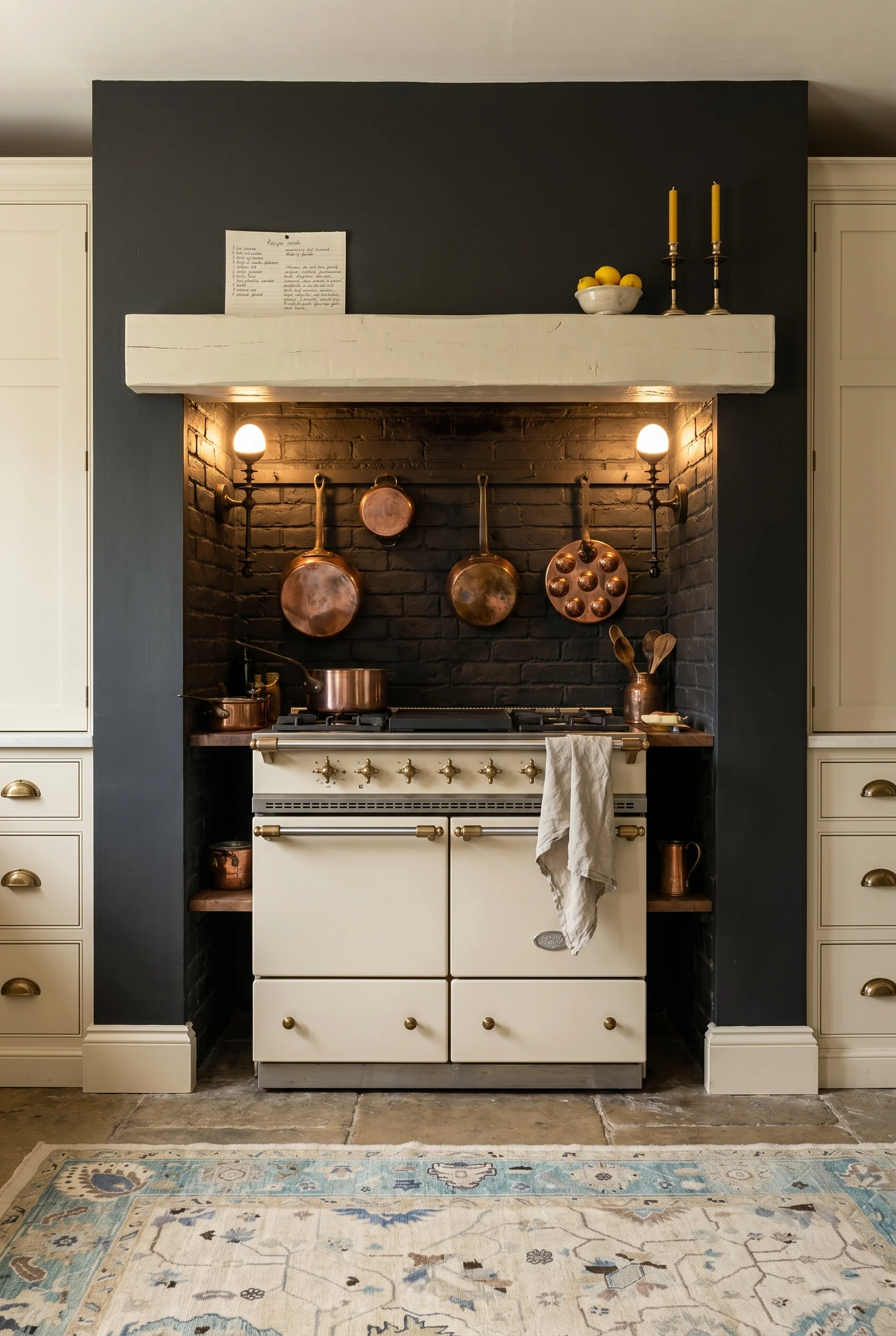
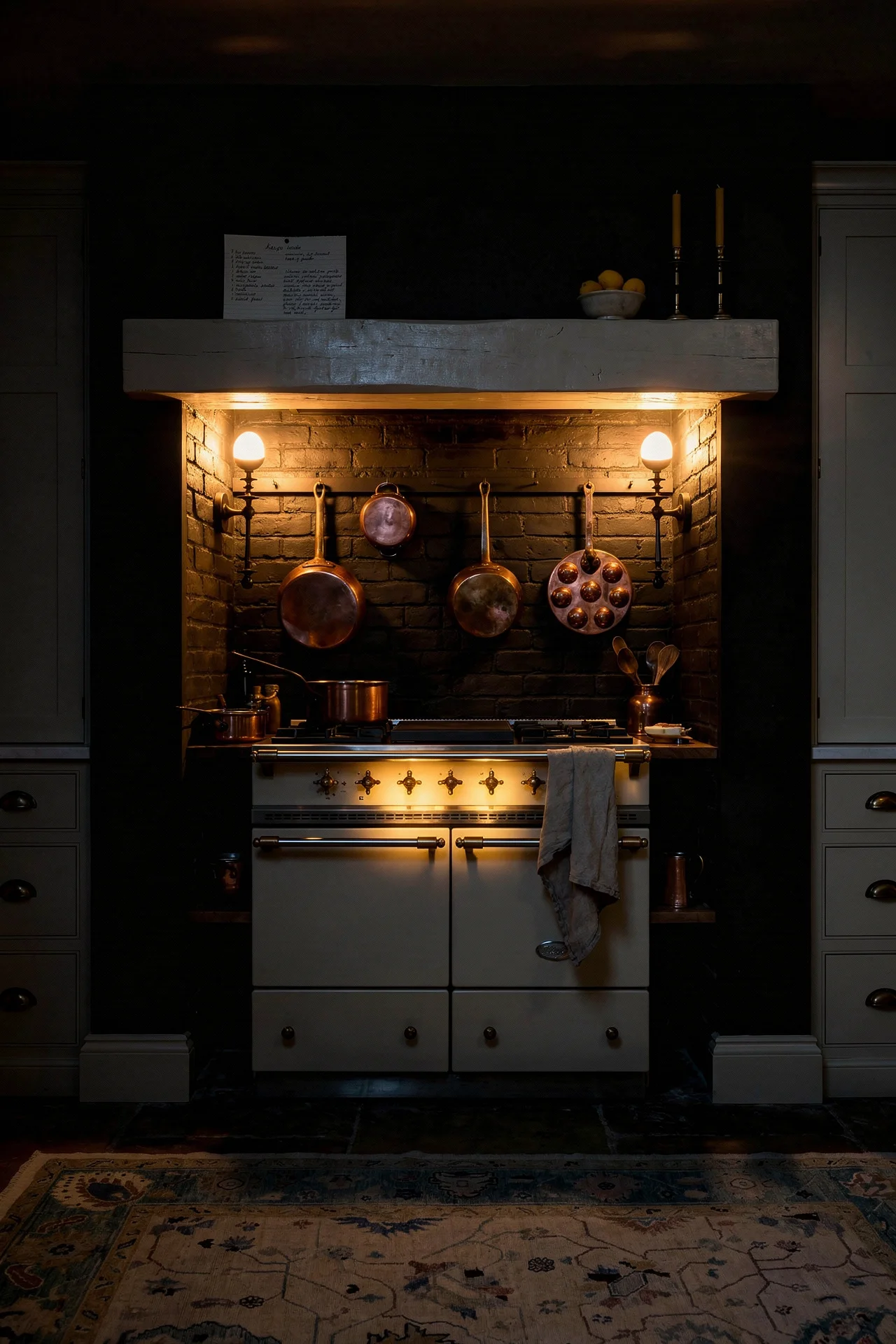
I’ll be honest about the practical side. A proper Aga runs constantly, heats the room year round, and costs money to fuel. For a lot of people, a nod to the look with a large range style cooker in a similar enamel finish, set into a similar alcove, gets you ninety percent of the aesthetic without the running costs. Lacanche, La Cornue, and some of the reproduction British brands all work in this register.
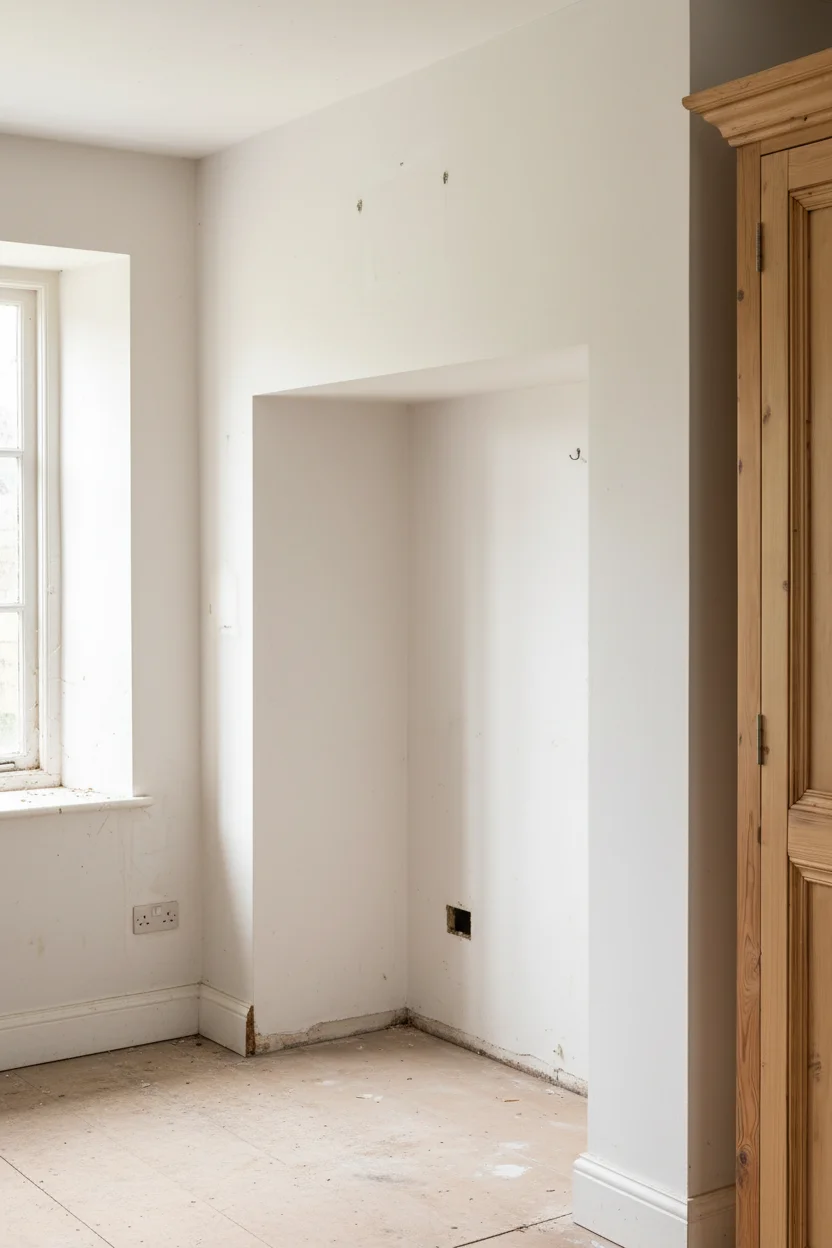
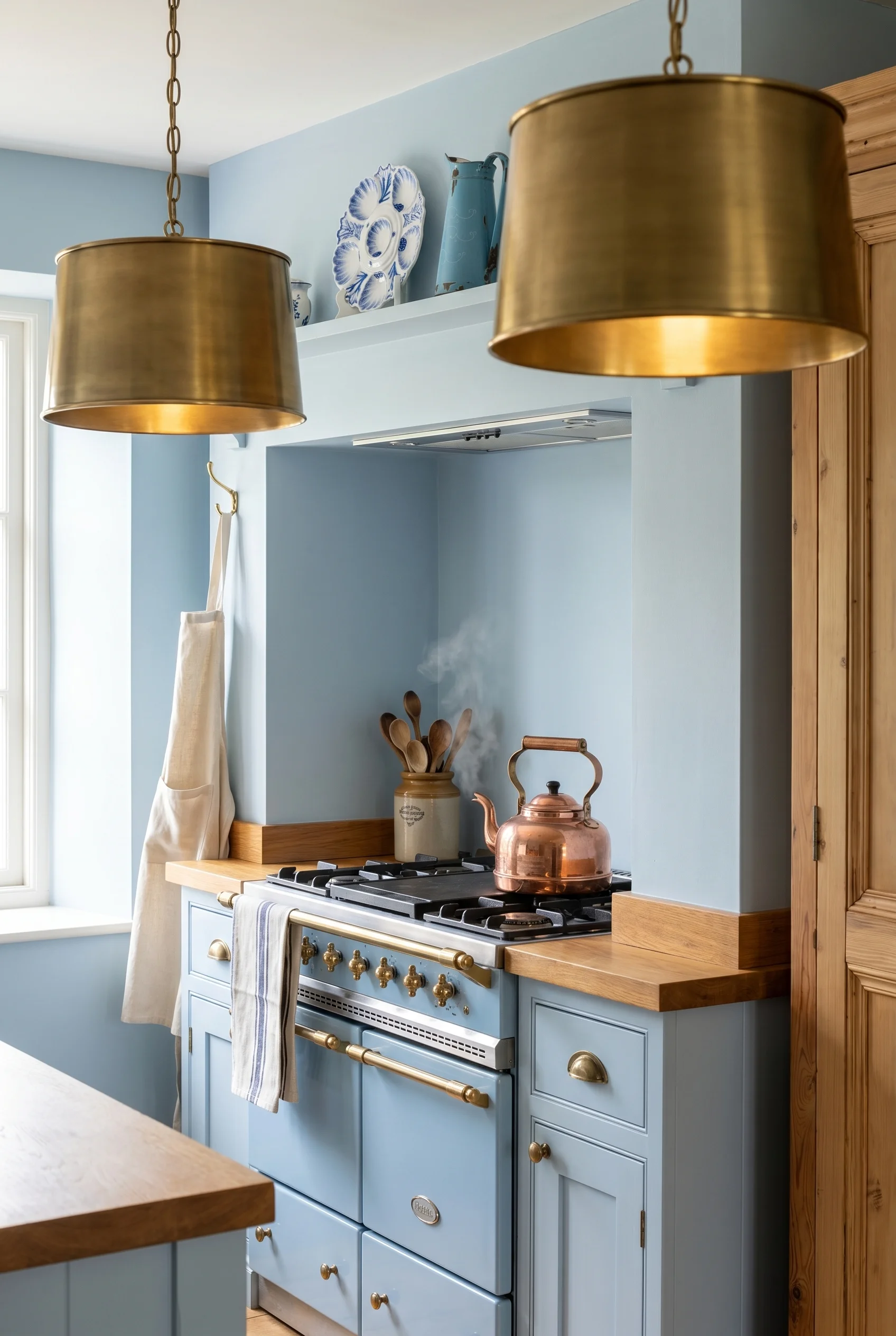
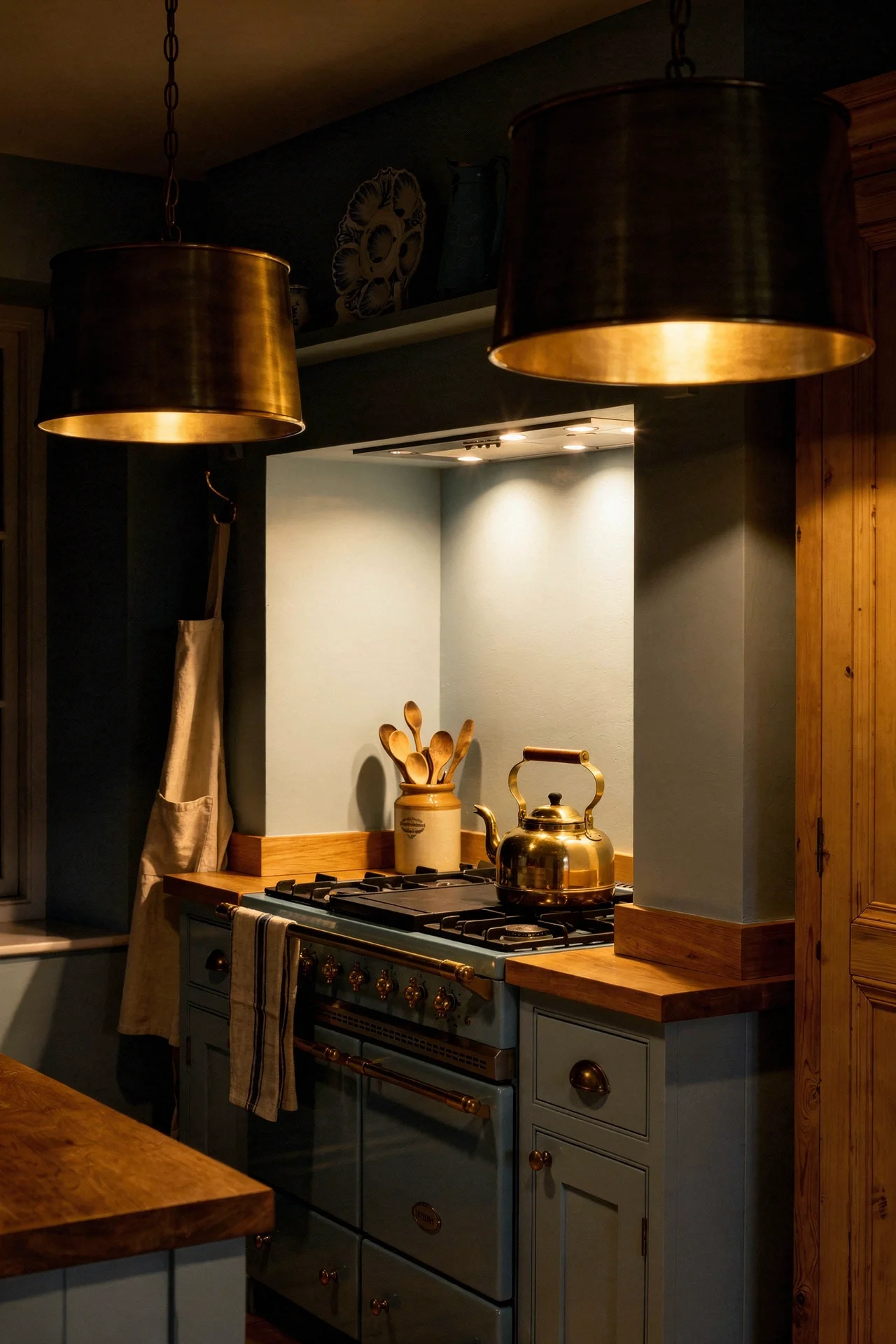
Whichever route you go, the alcove treatment is non negotiable. A range simply pushed up against a wall between two cabinets reads as fitted kitchen thinking. Pull it into a recess, frame it with a mantle, hang a couple of copper pans on hooks either side, and it becomes the focal point of the entire room. In my view, this single detail elevates an English Country kitchen more than almost any other move.
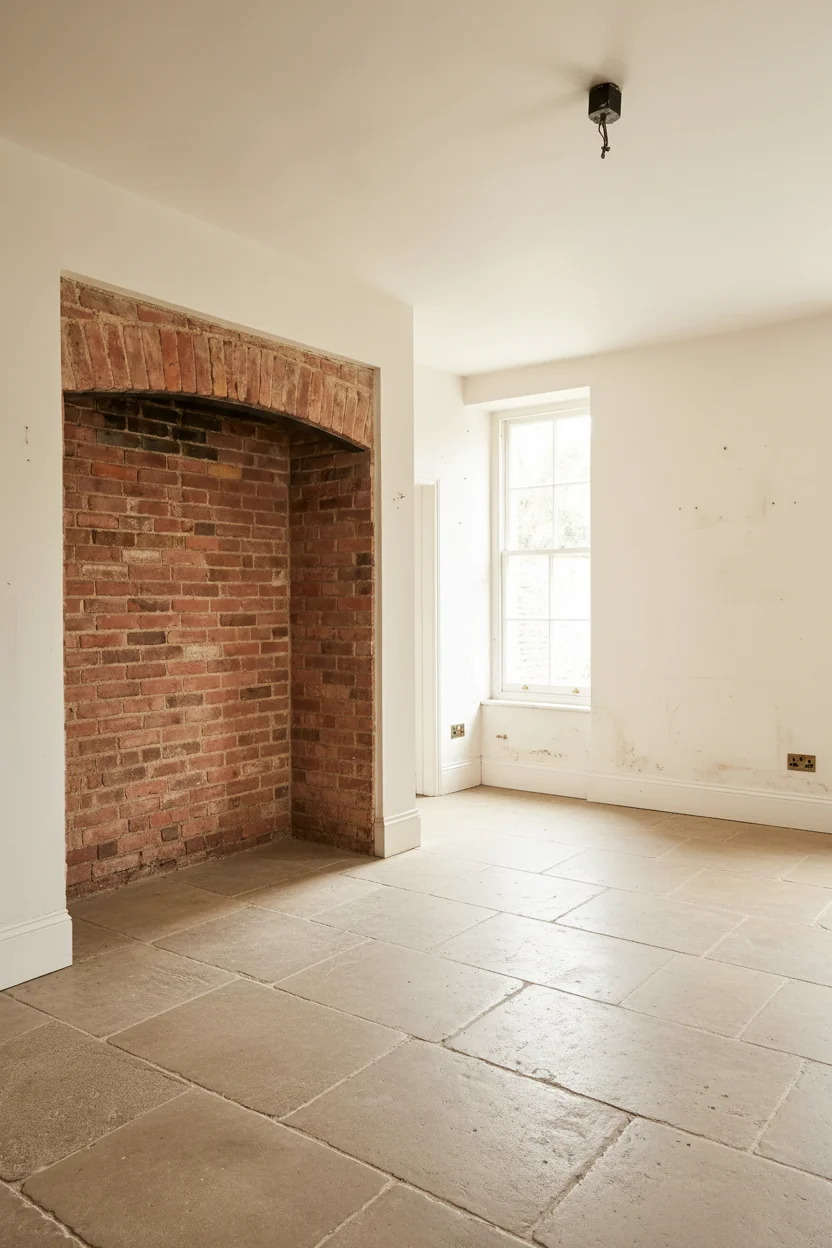
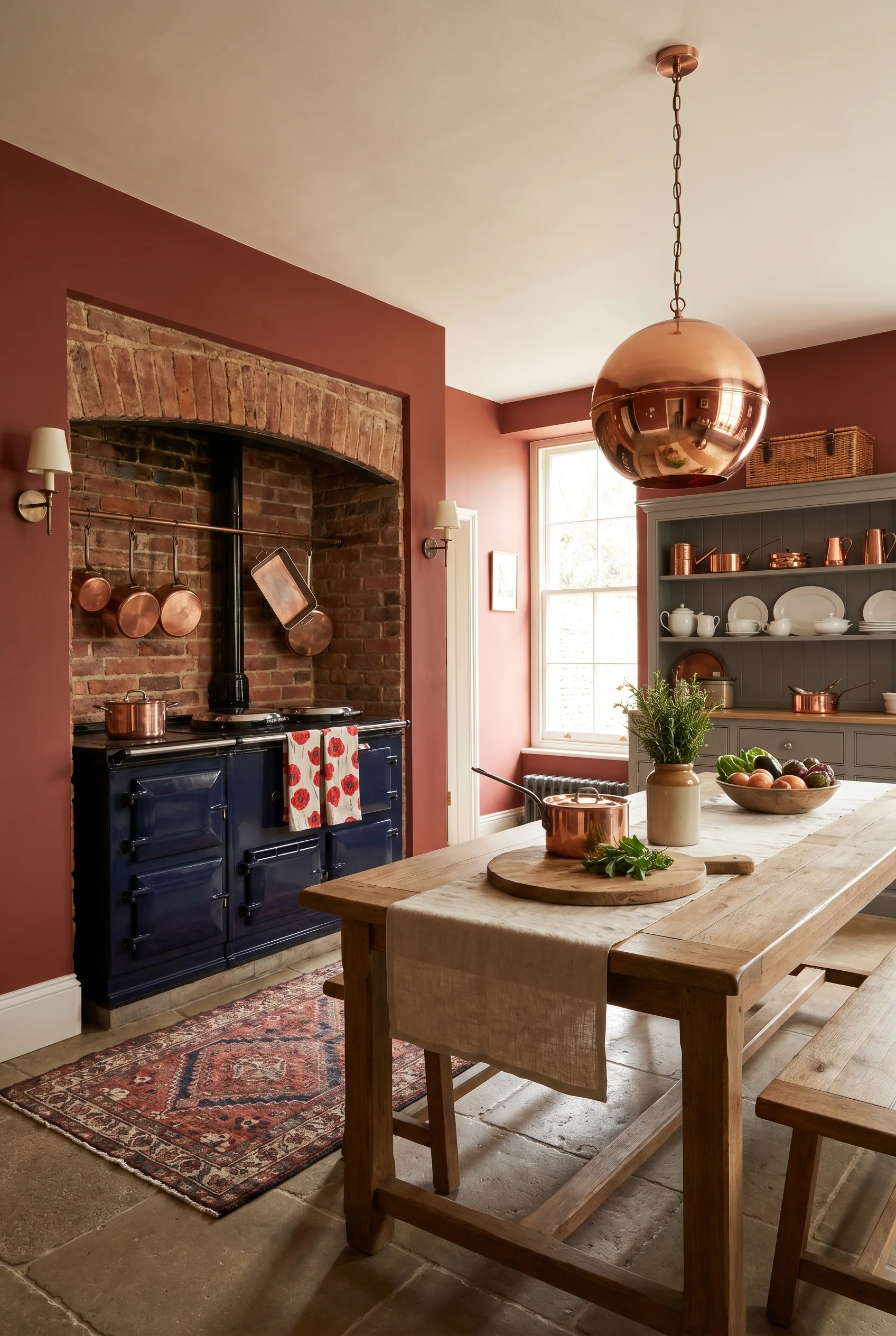
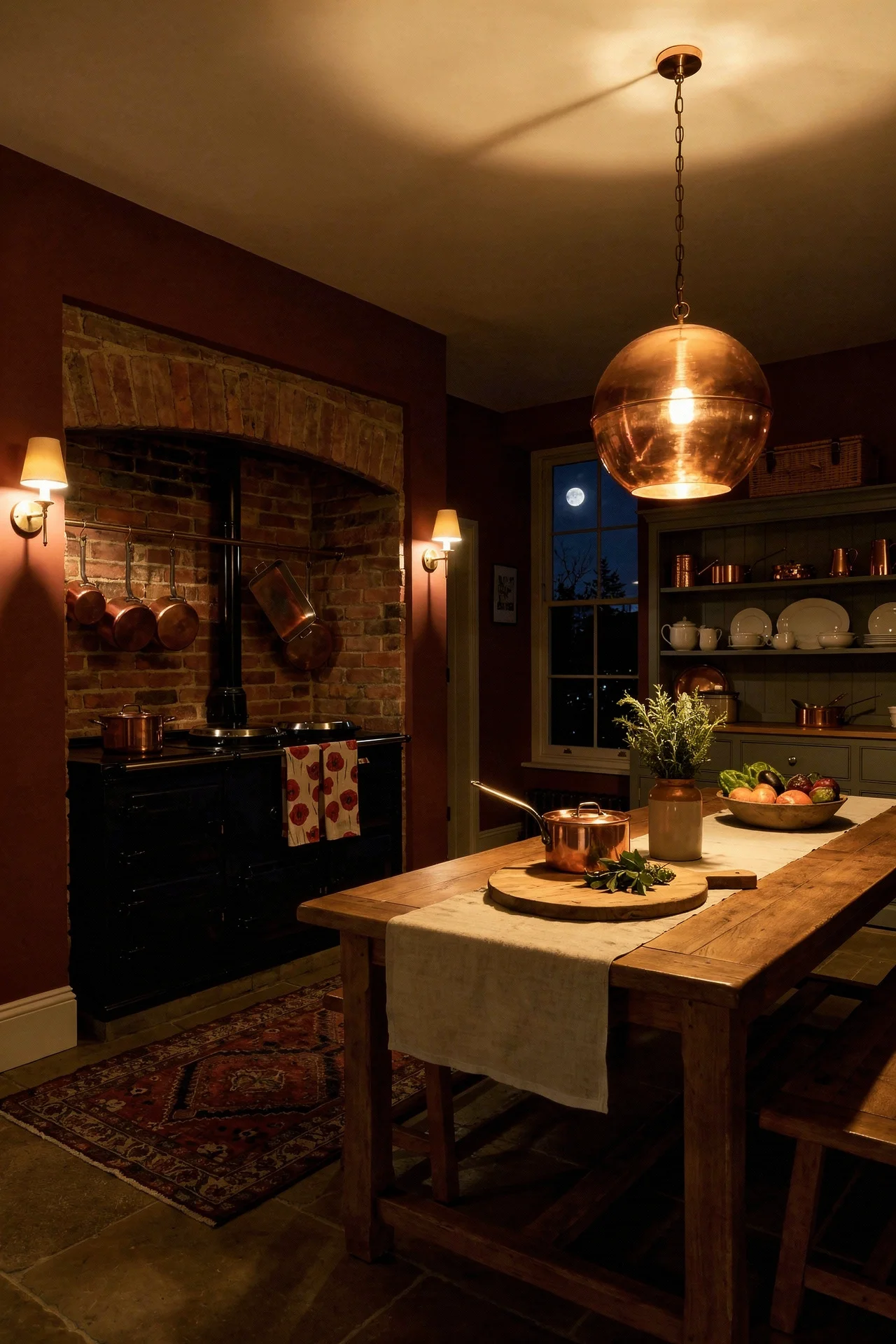
The materials in this kitchen are meant to age. That’s the whole point. They arrive looking one way, and twenty years later they look better. Honed soapstone darkens where water hits it. Oak butcher block develops the faintest silver under a south facing window. Unlacquered brass tap handles dull from polished gold to the soft, uneven bronze of a cottage pub door.
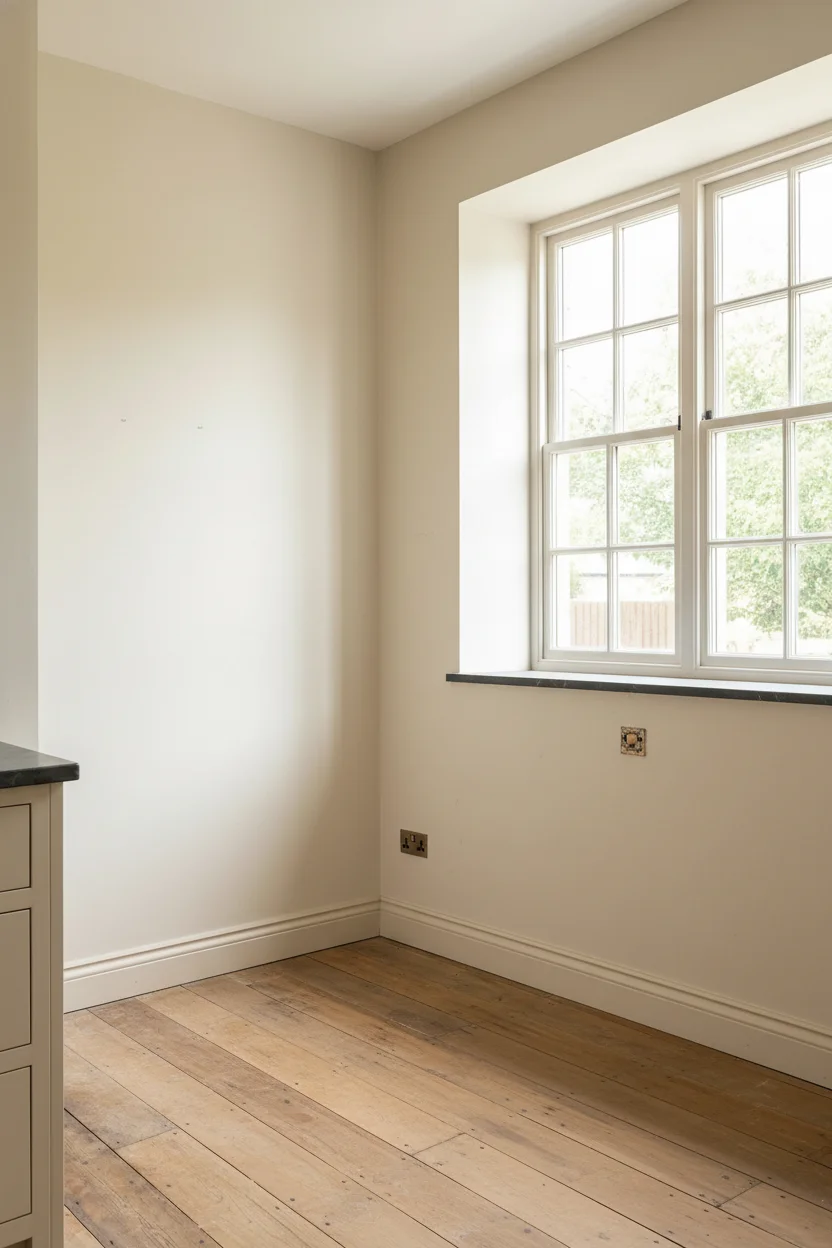
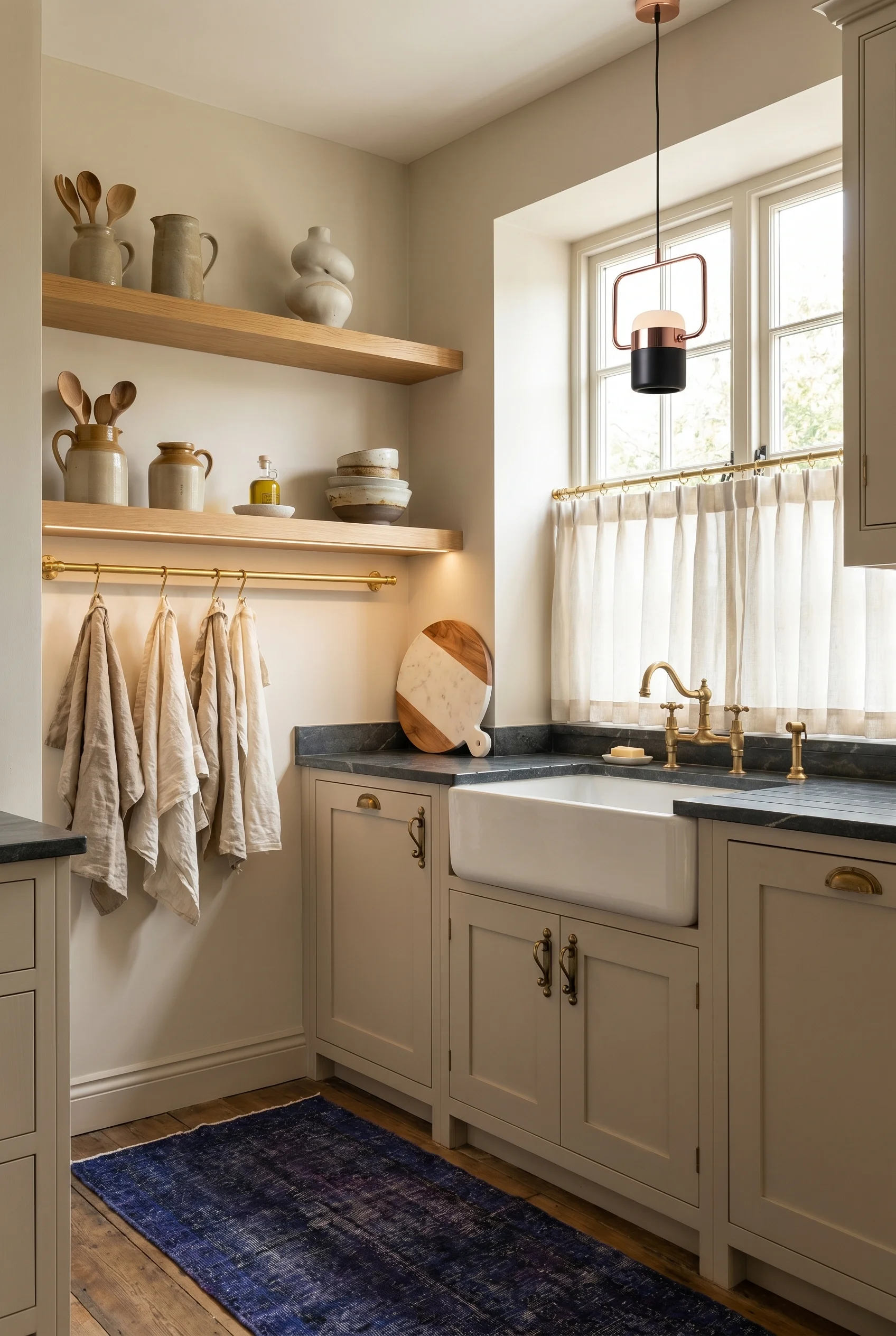
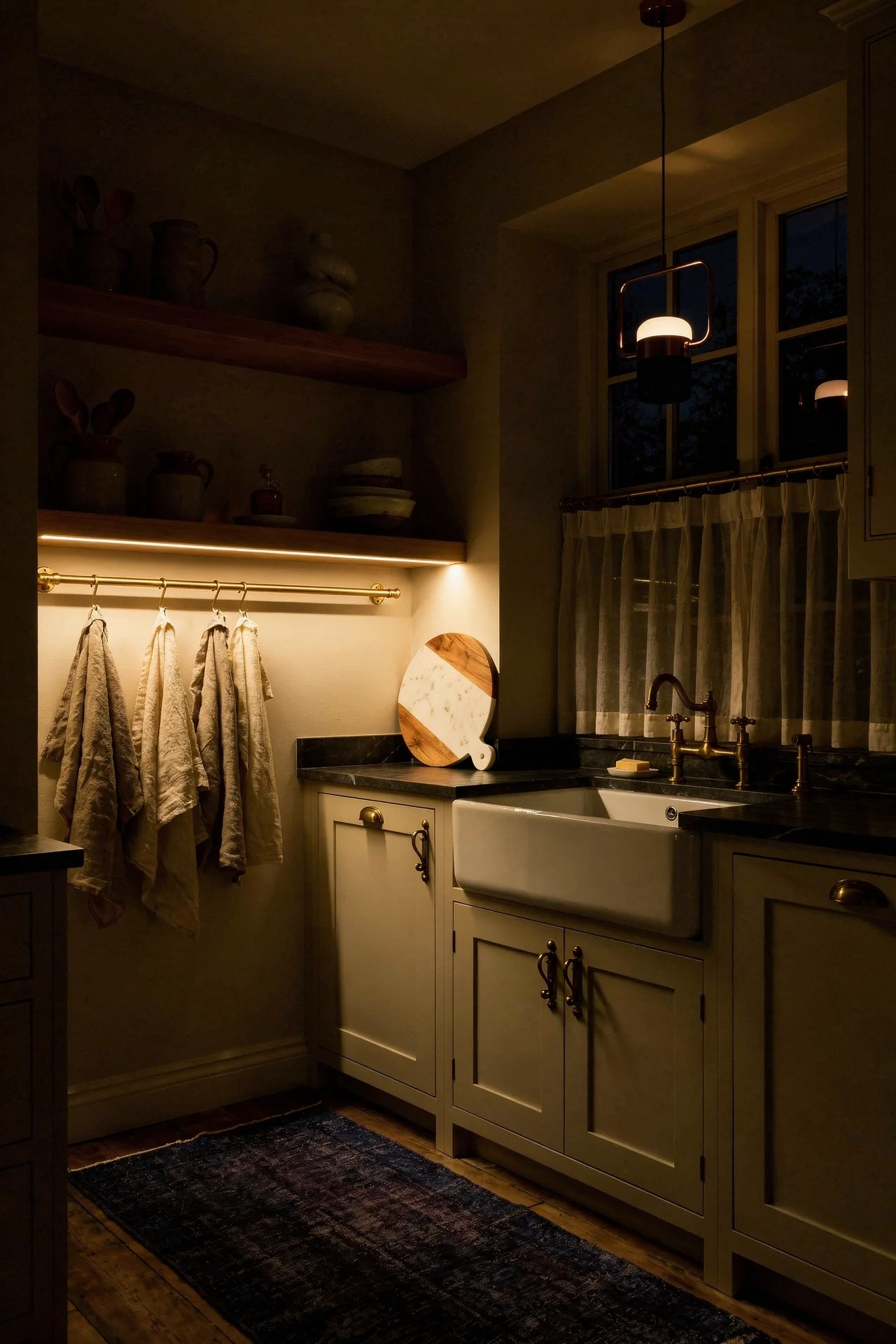
The Belfast or Butler sink is the defining fixture here. Deep, fireclay, apron front, usually white but occasionally a soft putty or cream if you want to lean period. The original Victorian versions had a weir overflow instead of a plughole overflow, which is a detail that tells you something about the people who specify them now. The bigger choice is between a single or double bowl, and a fully exposed apron or one set slightly back into the cabinet run. I’d go single bowl, fully exposed, with the cabinet built around it rather than over it.
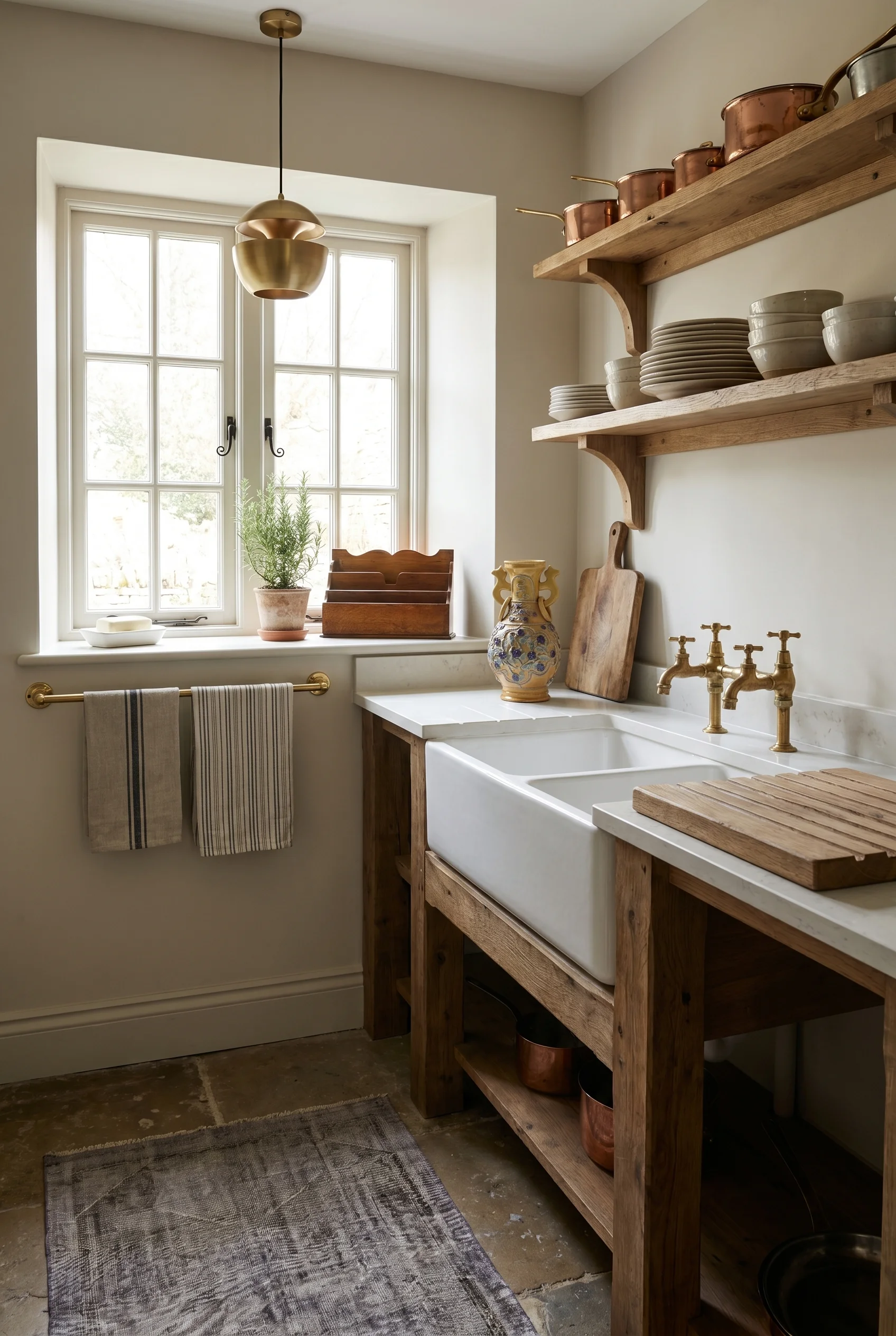
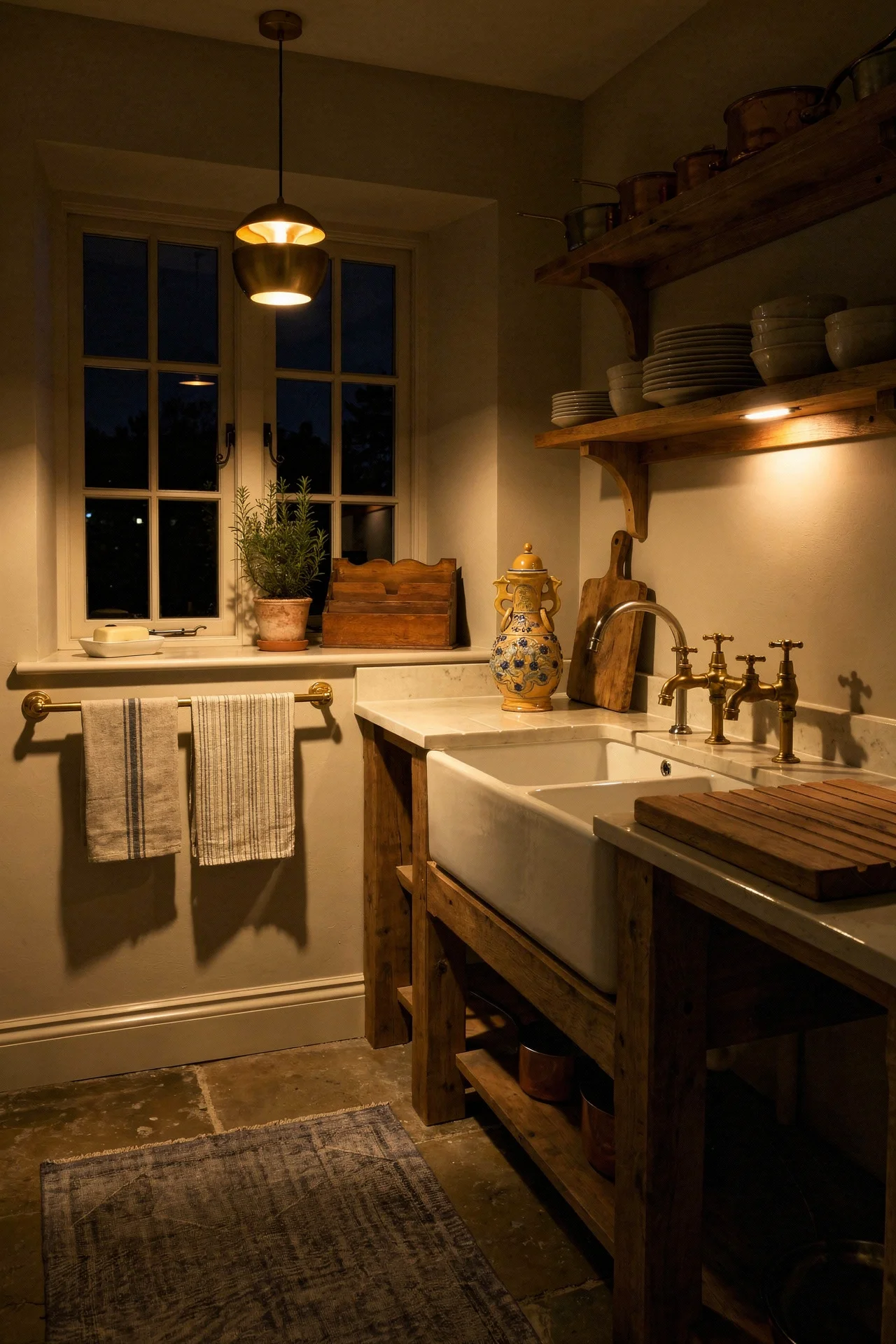
For worktops, walnut or oak butcher block is the warmest option. It needs oiling every few months and it will scar, which most people find they come to love. Honed soapstone is the dark, slightly soapy textured alternative, non porous, develops a lovely mottled patina, and pairs beautifully with sage or deep green cabinets. For a statement, a heavily veined marble on the island or around the sink run, accepting that it will etch and stain over time.
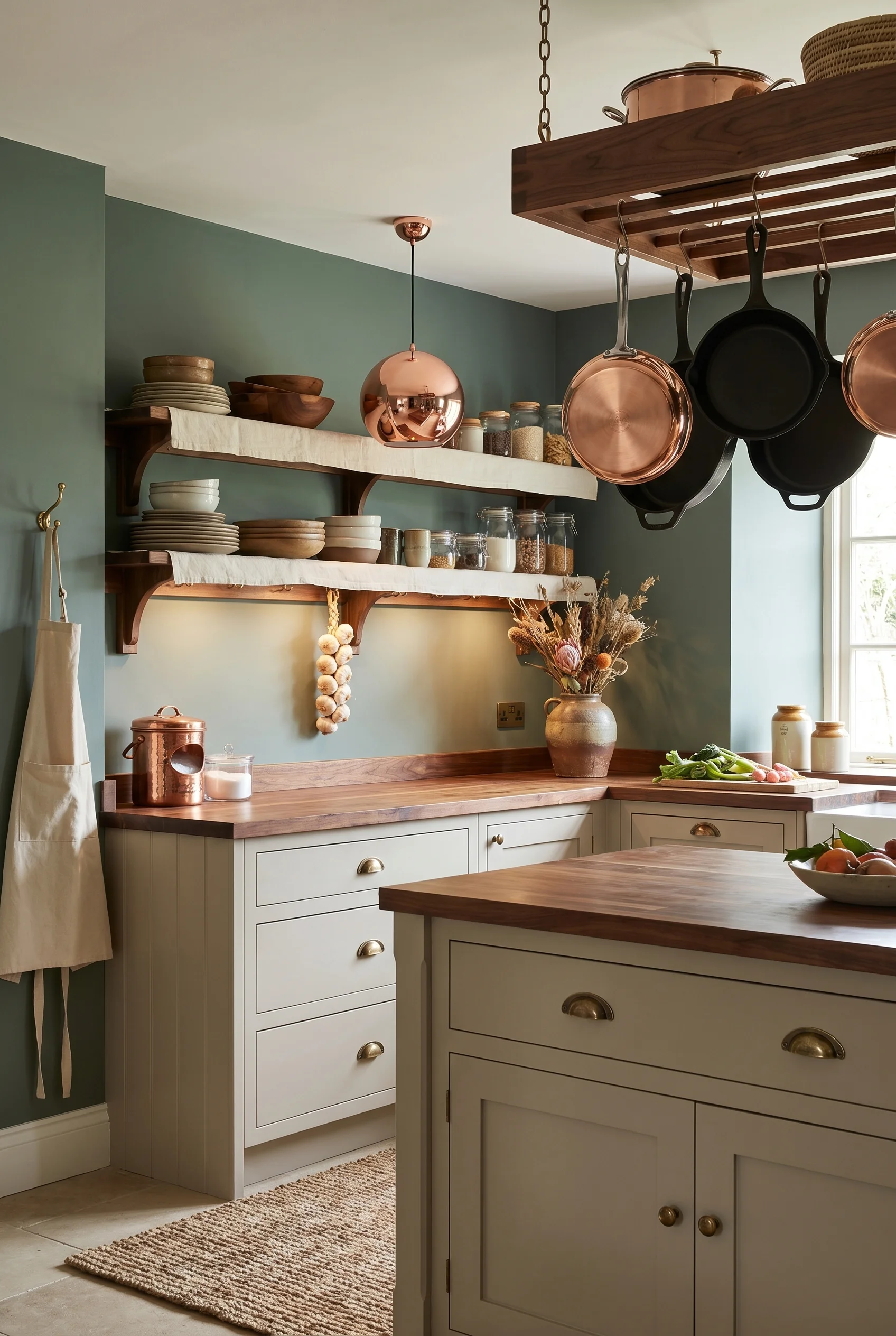
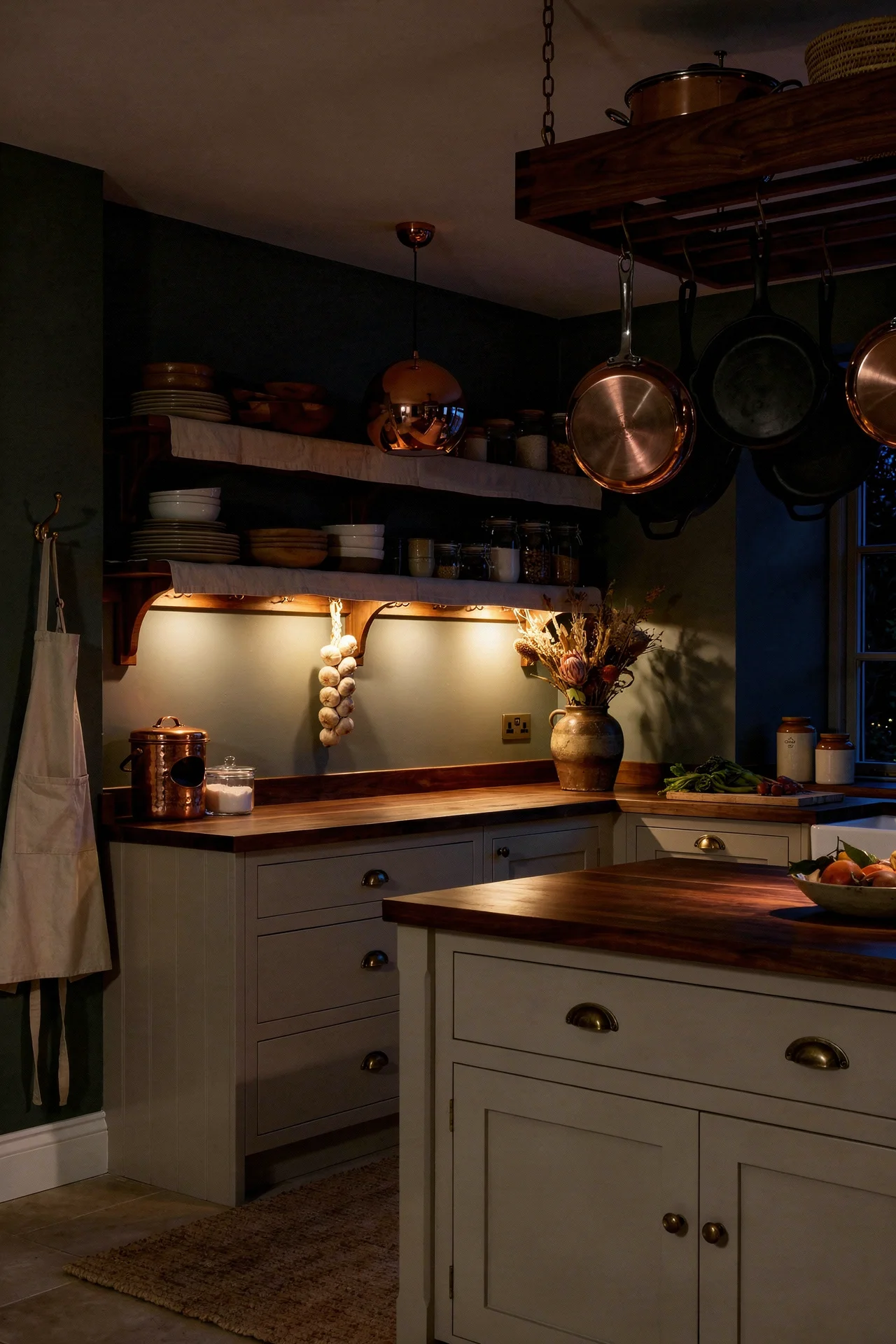
Hardware stays understated. Cup pulls and bin pulls in unlacquered brass or aged bronze. A few iron latches if you have any older style doors. Avoid polished chrome, brushed nickel, or matte black, all of which read as modern additions in a room that’s trying to look like it’s been there for a hundred years. I think the trick with hardware, honestly, is to choose one metal and stay there. Mixed metals can work but they require a confident eye, and in doubt, one material throughout is always the safer move.
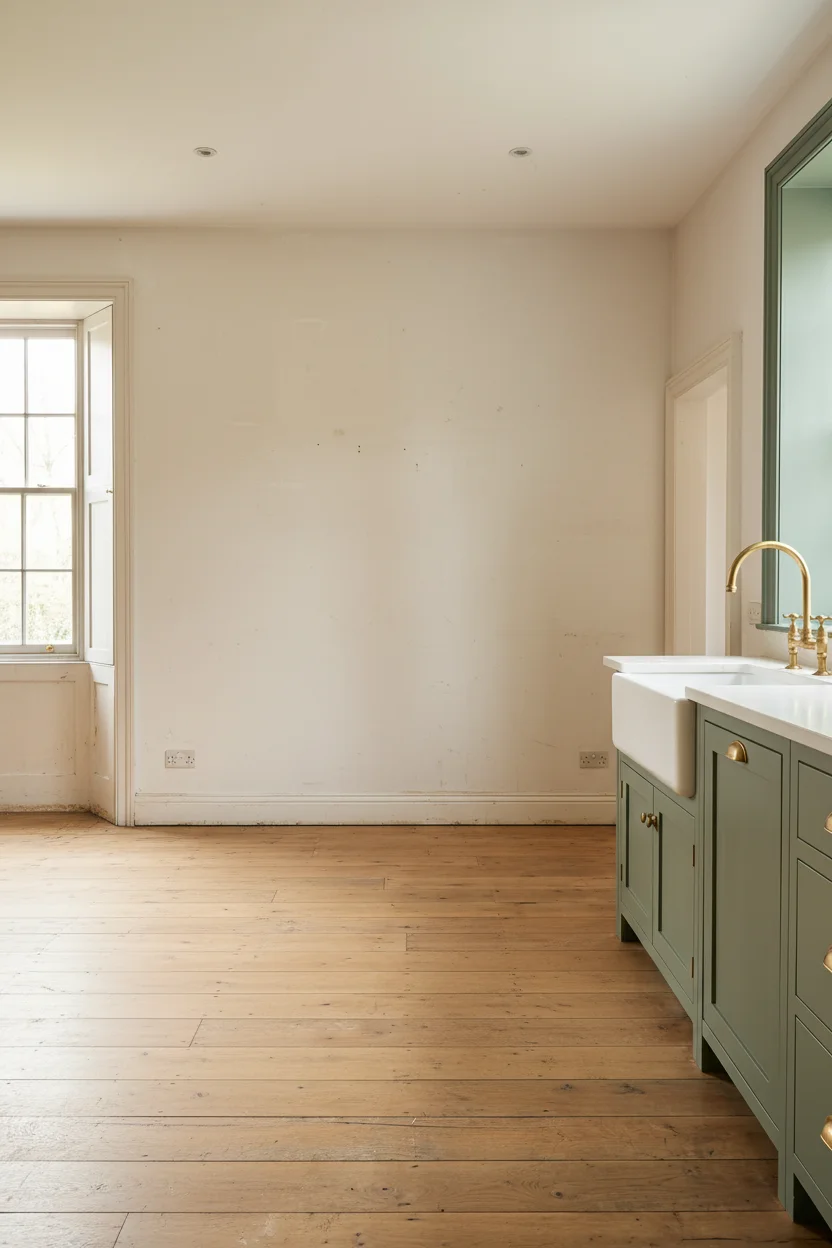
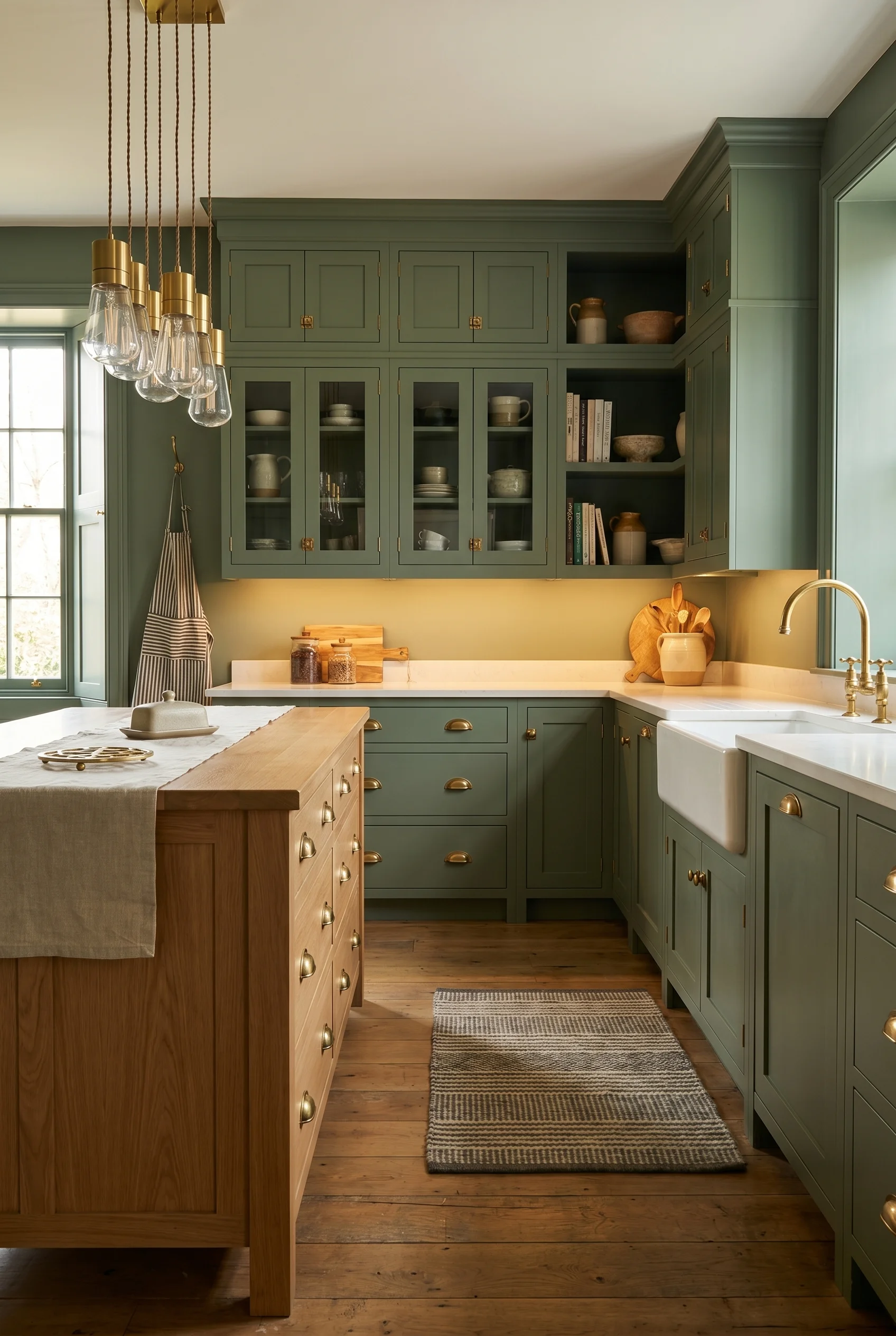
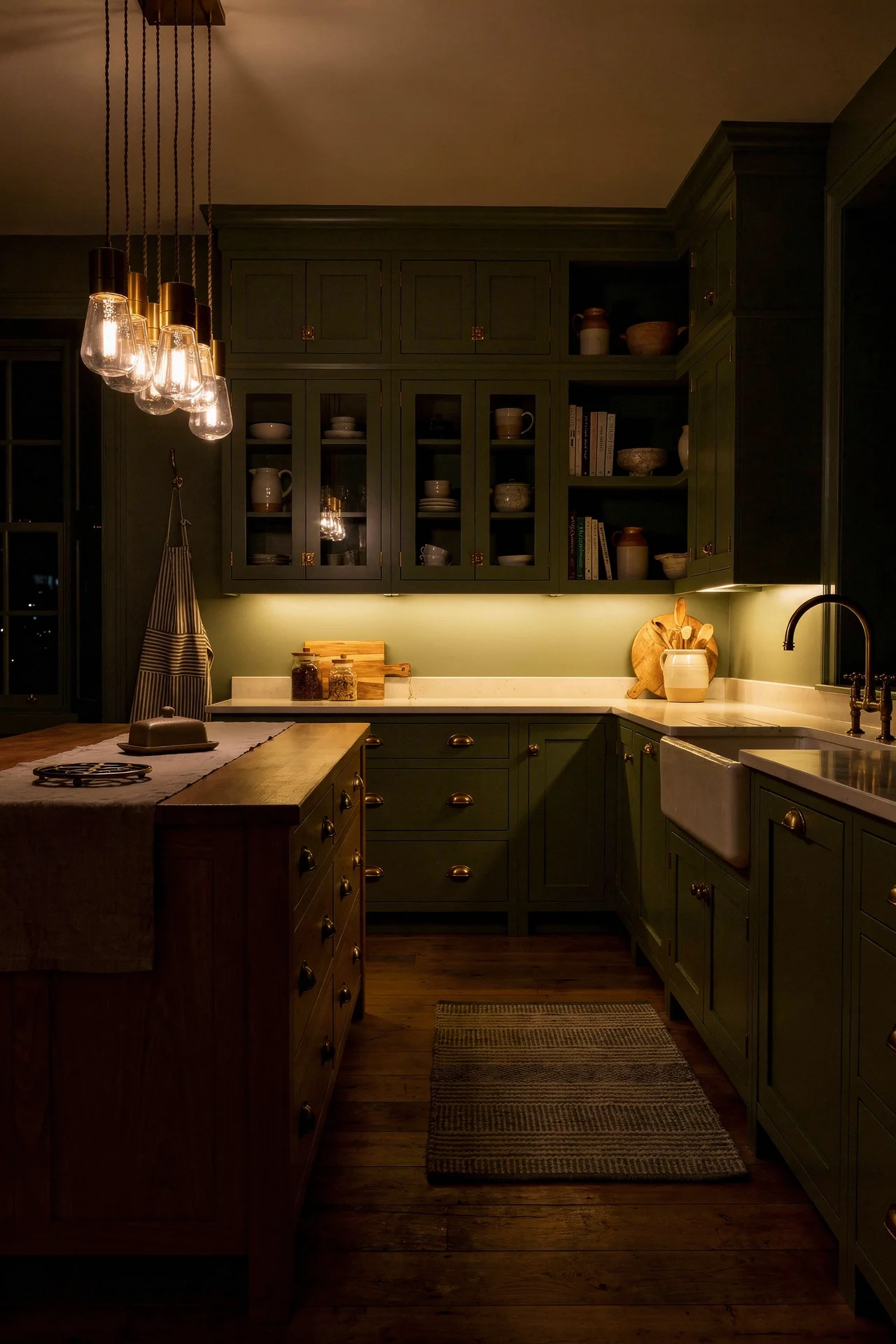
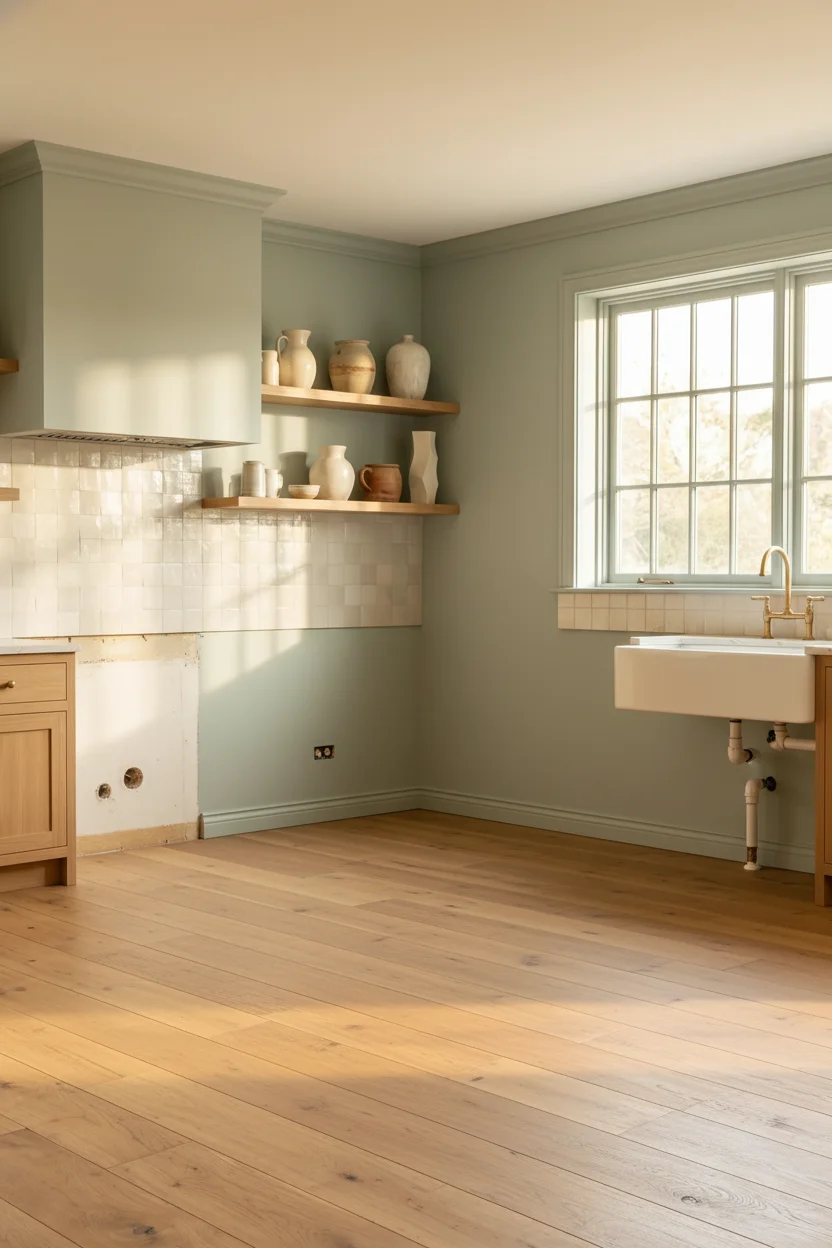
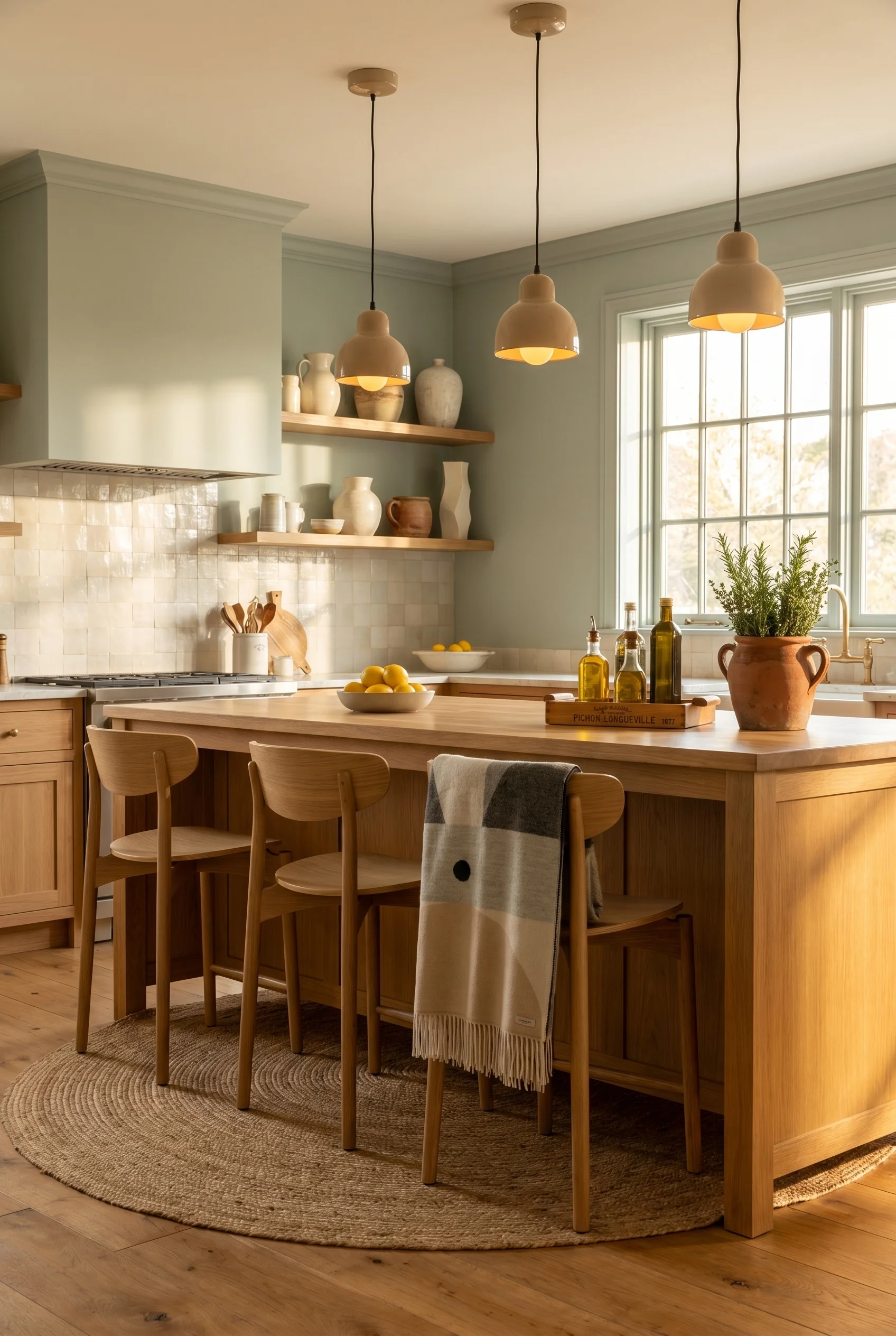
The backsplash is where most people default to plain white metro tile and miss a genuine opportunity. The English Country kitchen loves a handmade tile with visible variation, a glaze that pools slightly at the edges, a surface that catches the light differently from one tile to the next.
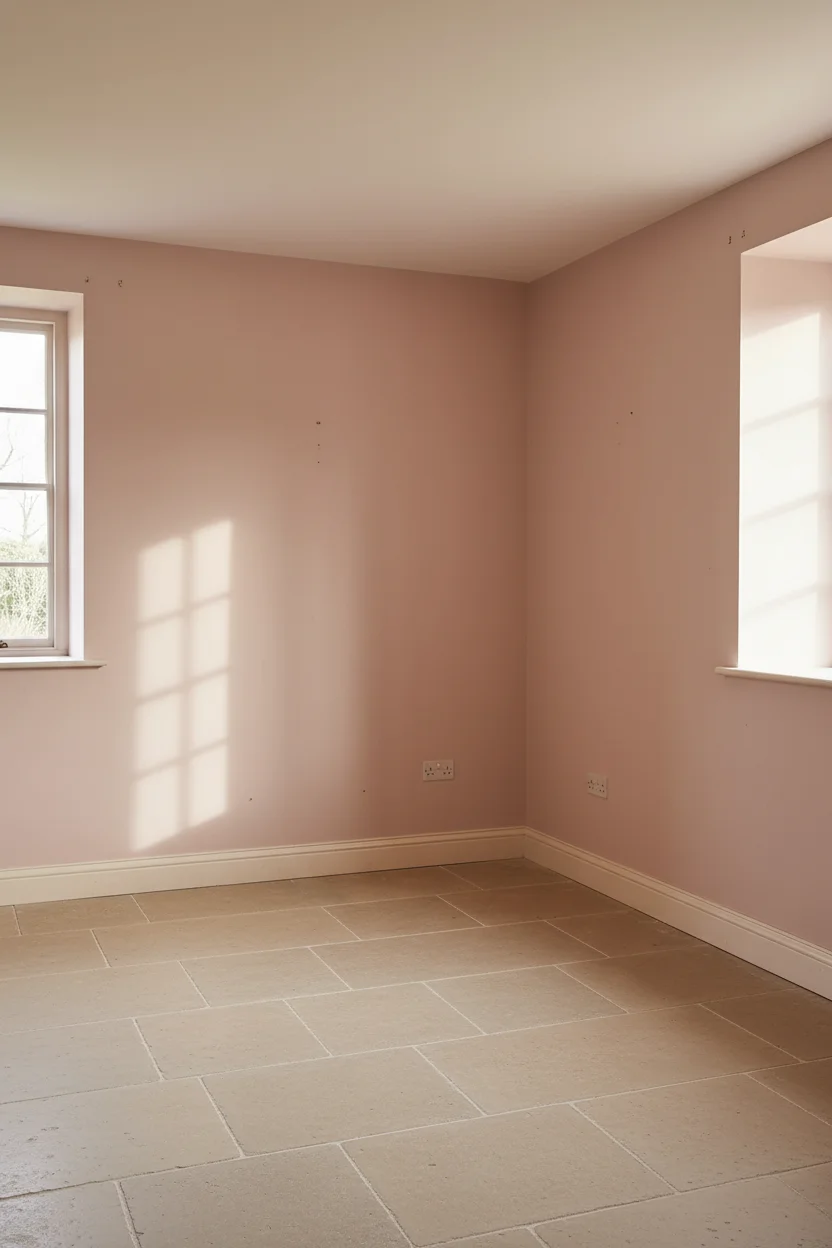
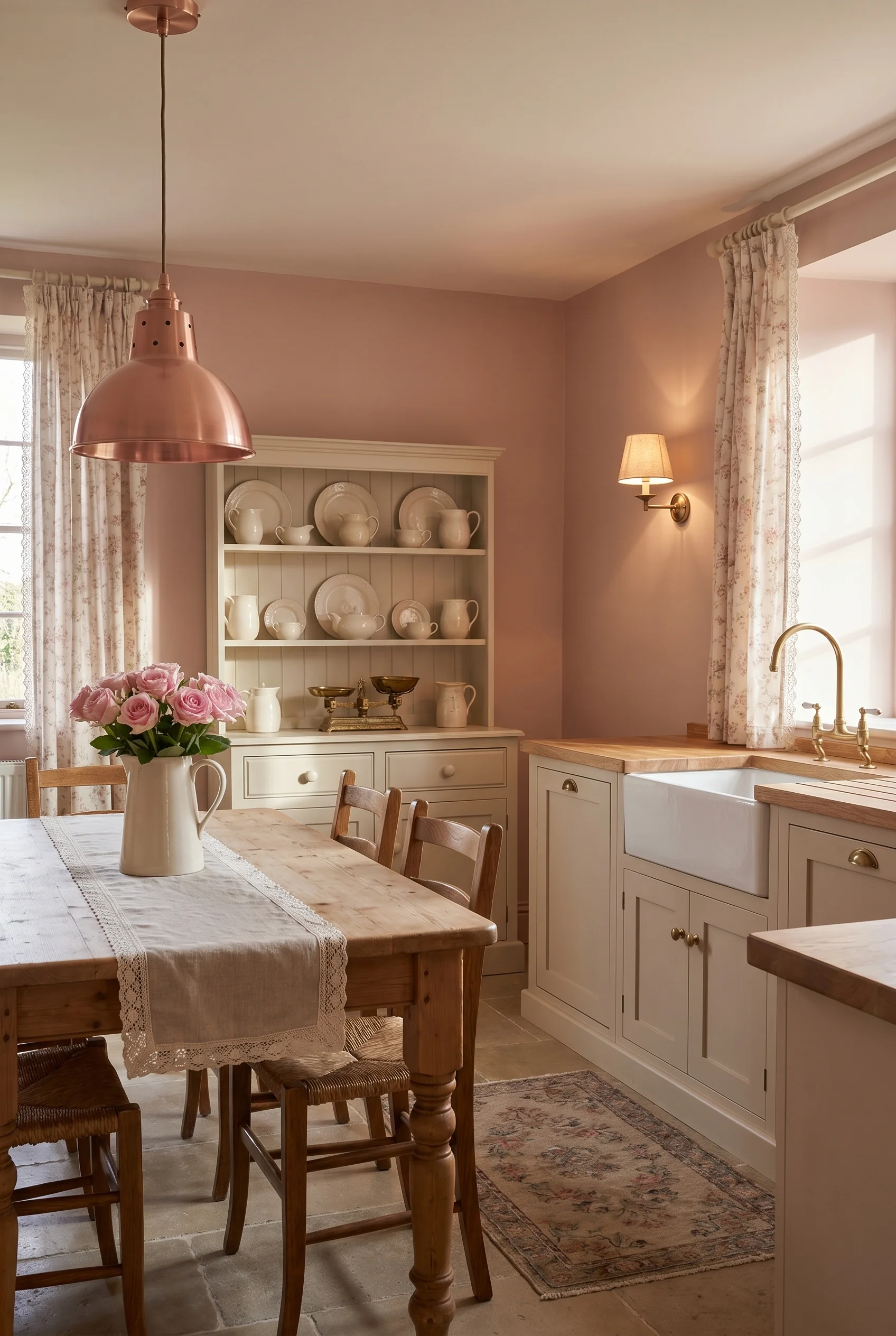
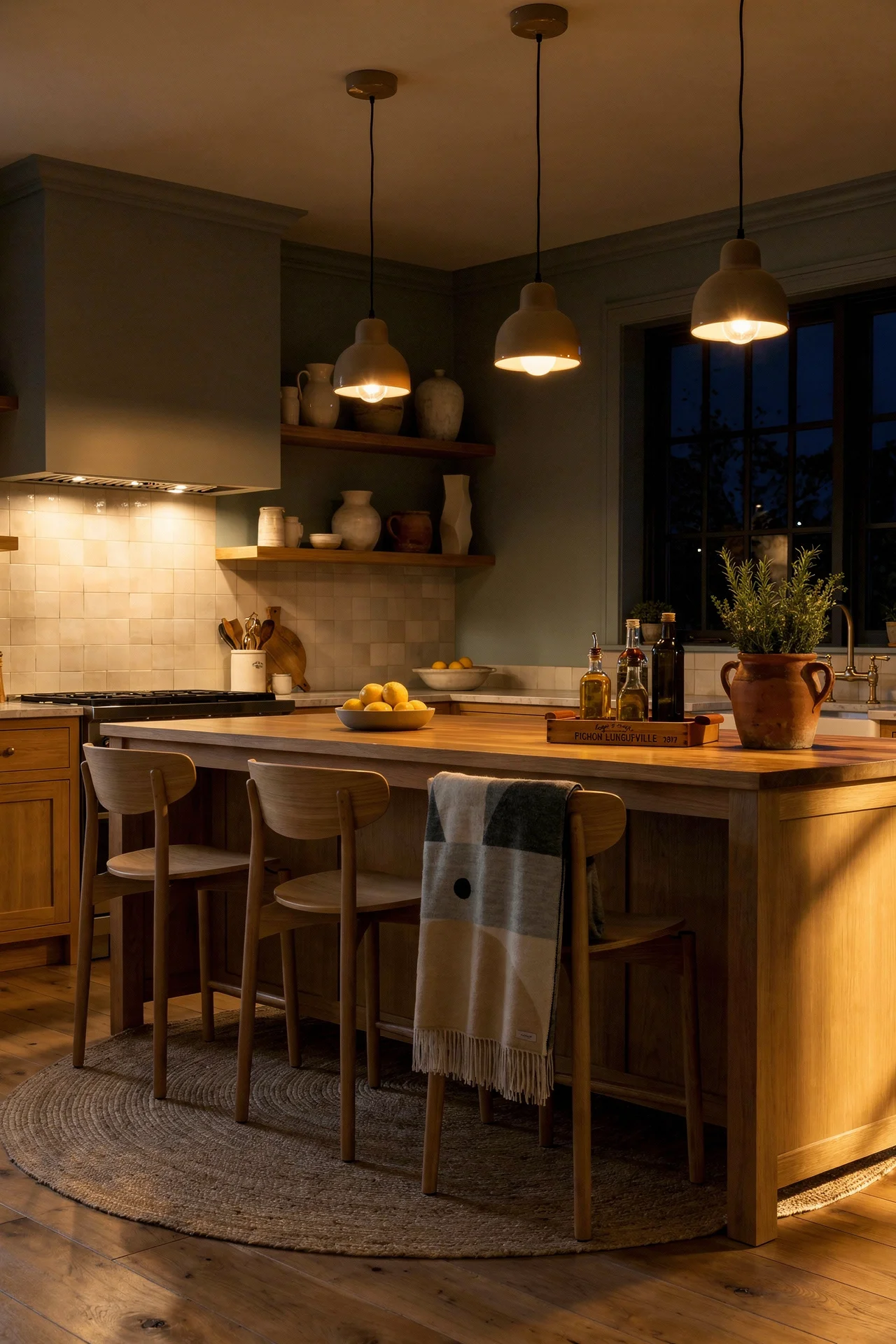
Handmade zellige is the obvious choice, and it’s become popular for a reason. Moroccan terracotta tiles, hand dipped in glaze, each one slightly different in size, colour, and surface texture. Laid in a running bond or a simple stack, they turn a backsplash into a living surface. Soft sage, warm cream, dusty pink, or a deep forest green all work beautifully against painted Shaker cabinets. The faint colour variation across the field reads as craft, not flaw.
Delft tiles, the tin glazed porcelain squares with hand painted blue illustrations, are the other classic. A small run behind a range, or a single accent row inside an open shelf, goes a long way. Ditsy Delft, which is the small scale floral version, reads softer than the full historical imagery and suits a cottage kitchen better than a grand country house in most cases.
Crackle glazed metro tile is the budget friendly middle ground. It still has the handmade imperfection quality but costs a fraction of zellige. Laid in a soft cream, warm white, or pale sage, grouted in a muted warm grey rather than stark white, it reads as entirely period appropriate. Exposed aged brick works too, particularly behind an Aga alcove, though it needs sealing to survive daily kitchen life.
For something dramatic behind the range, a single slab of heavily veined marble, Arabescato Corchia or a good Calacatta Viola, reads as natural art rather than splashback. It’s the move Studio McGee uses regularly when a room needs one bold moment and everything else is held quiet. I’d only go this route once per kitchen, though. Two slab moments and it starts to feel like a showhouse.
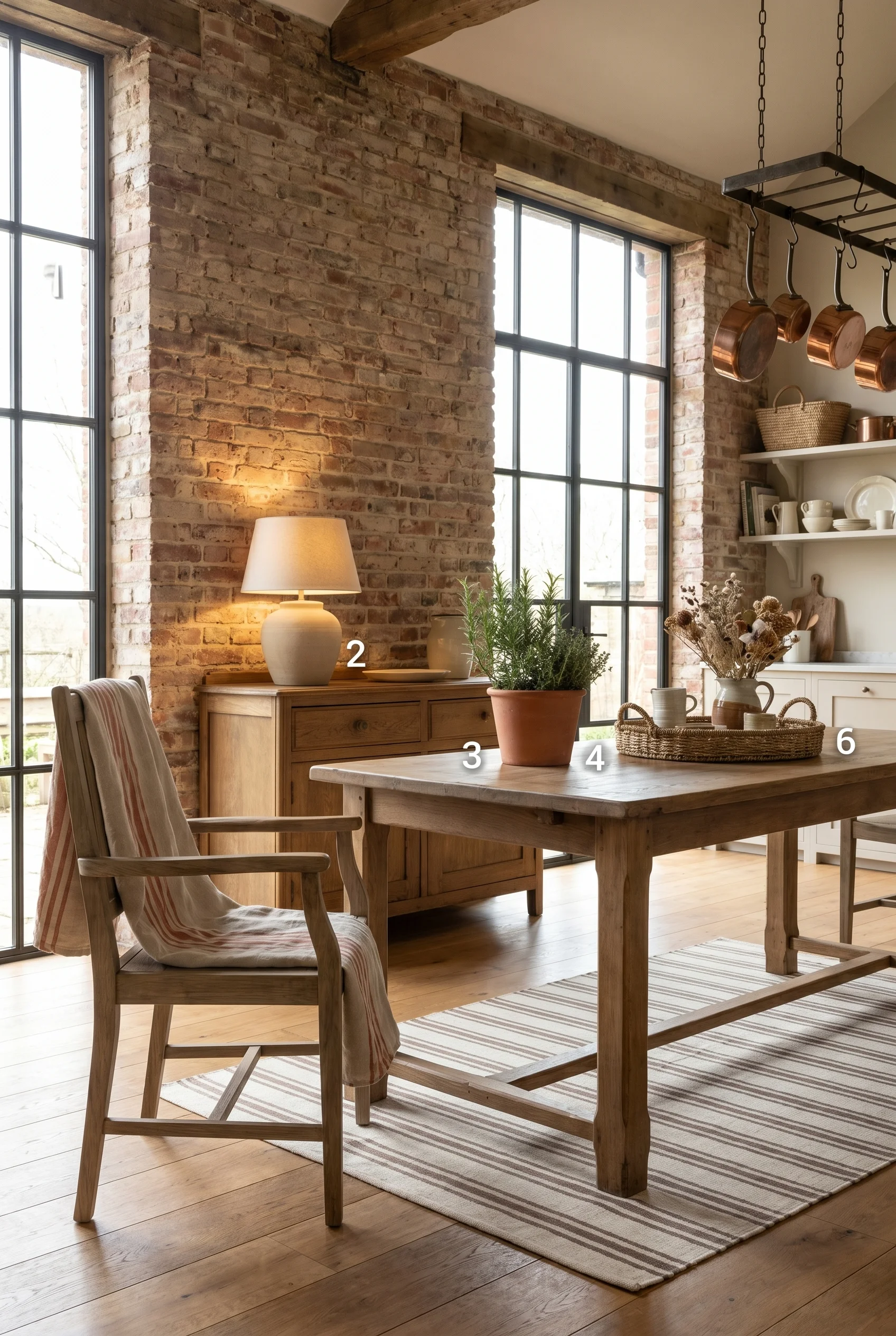
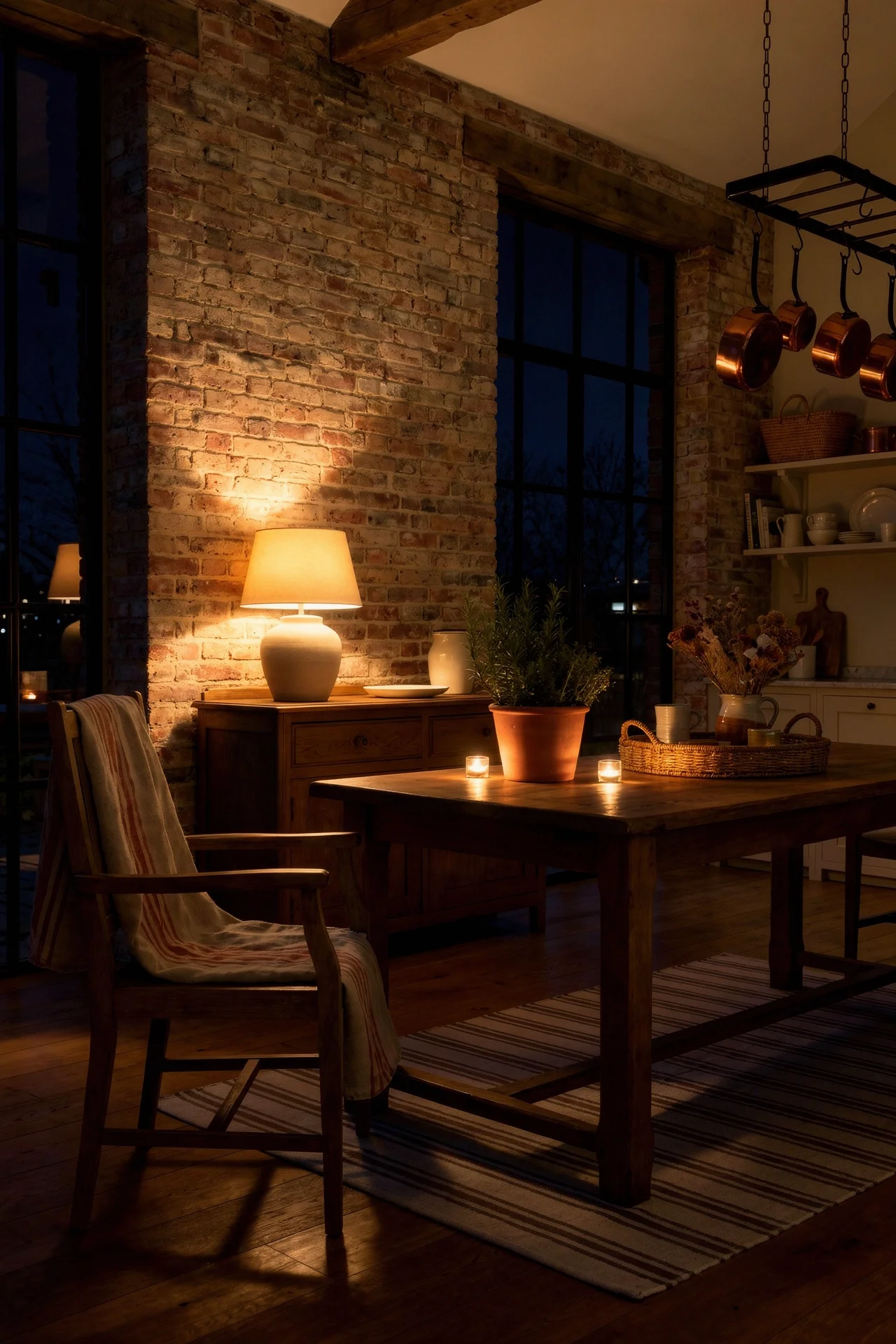
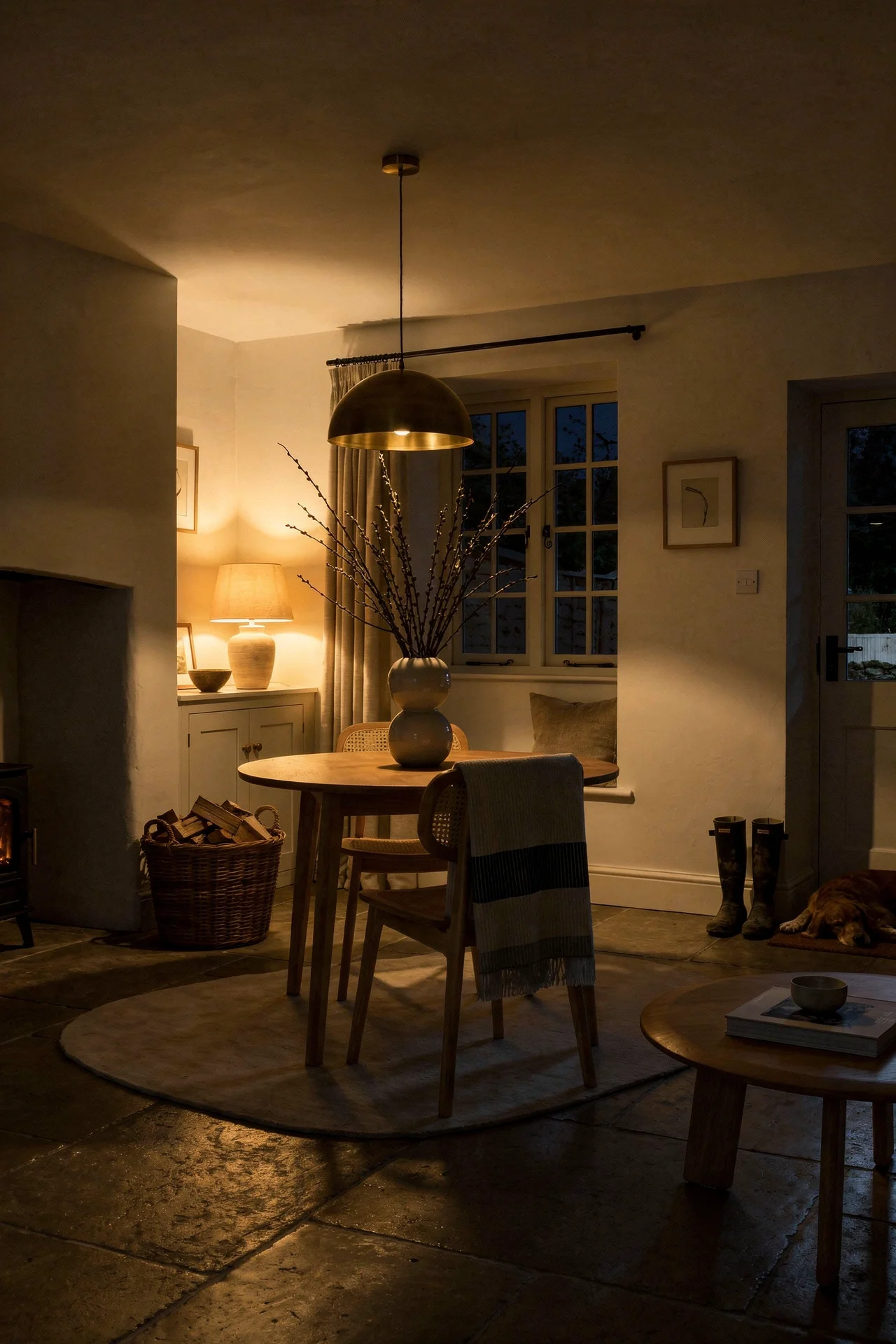
Floors are structural to the mood. Get them wrong and no amount of Welsh dresser will save the room. The English Country kitchen wants something rugged, tactile, and slightly uneven, a surface you could imagine a wet dog padding across without ruining it.
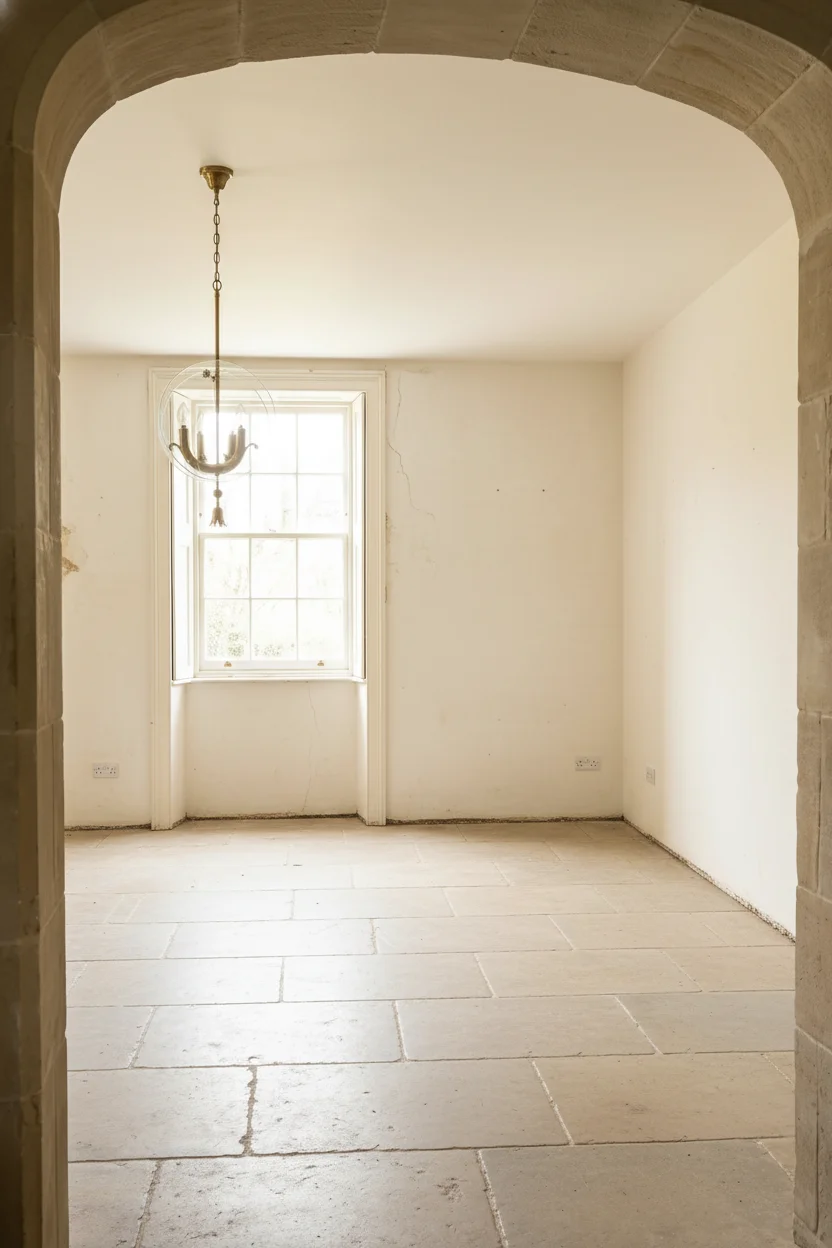
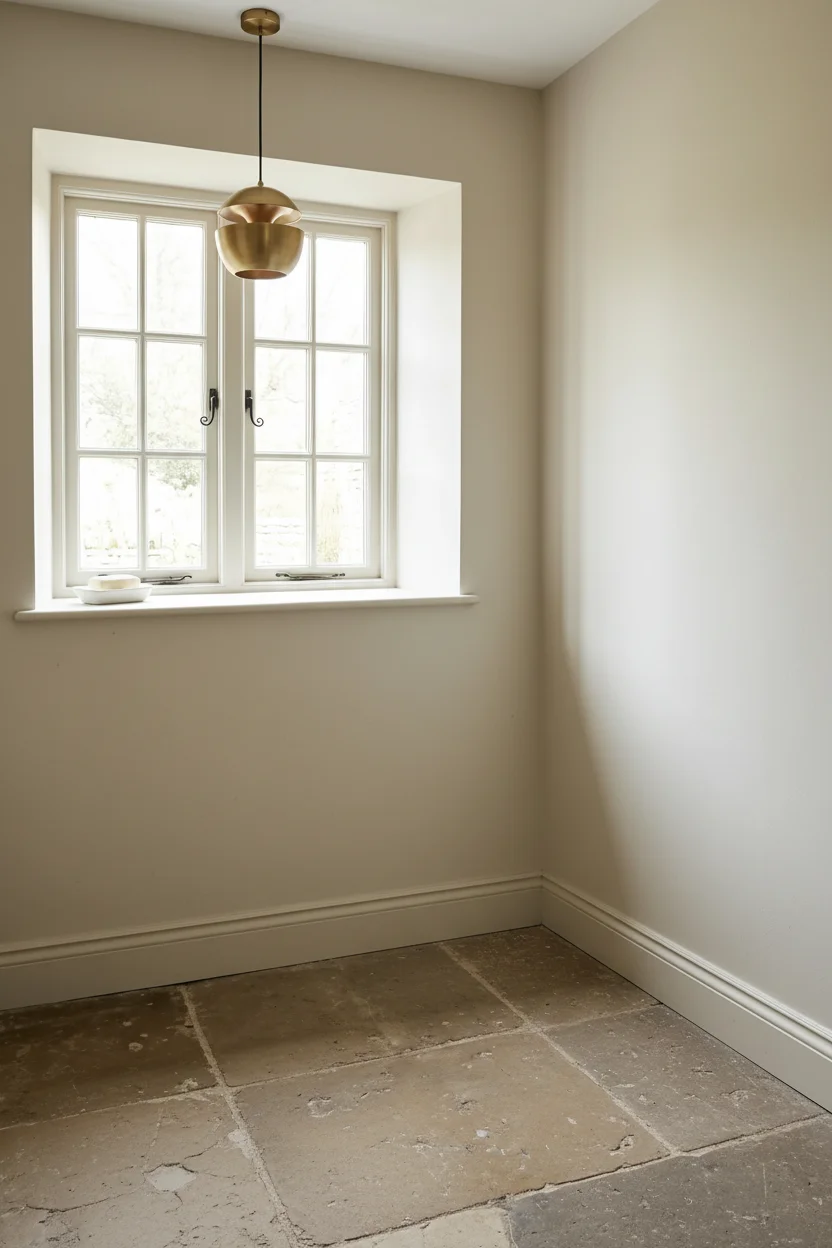
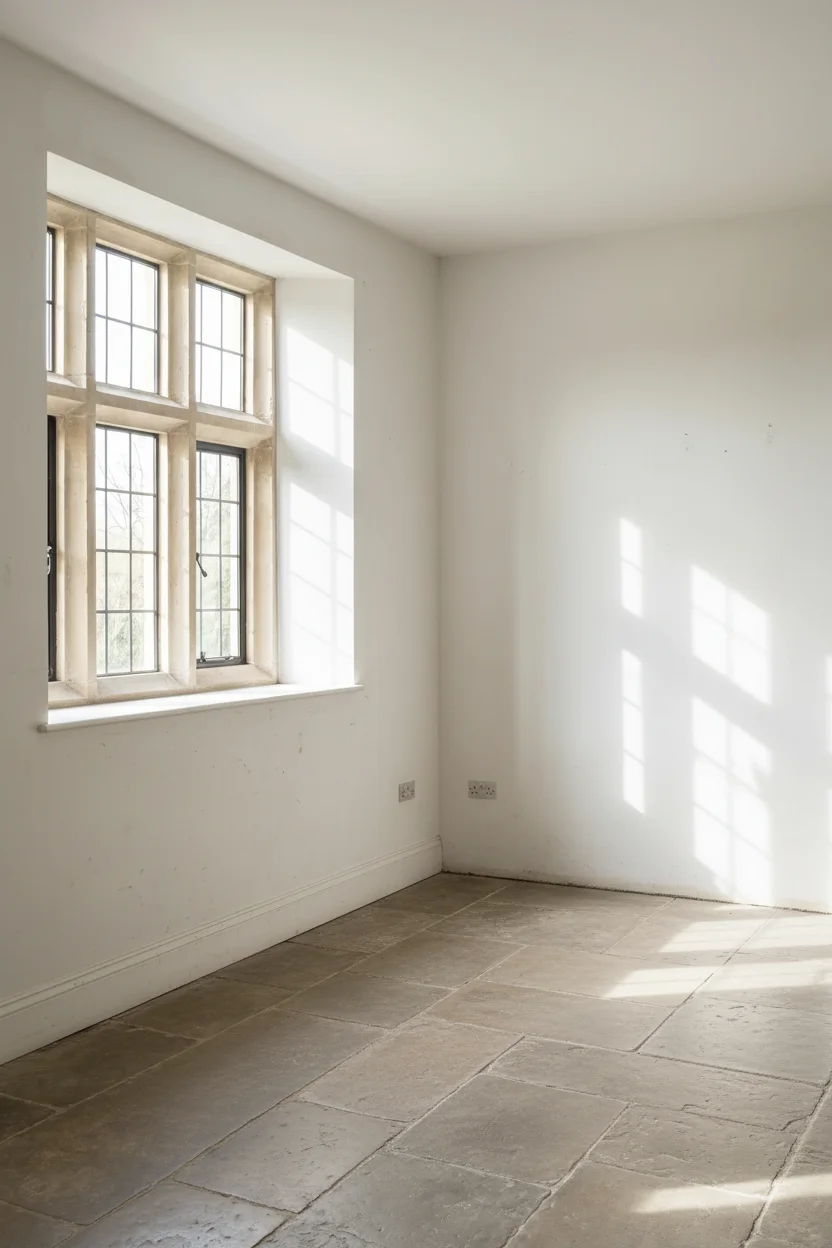
Natural stone is the most traditional answer. Limestone, slate, flagstone, all in irregular shapes and soft edged finishes. The gaps between stones filled with a warm putty mortar rather than stark white grout. These floors are cold underfoot in winter, which is why underfloor heating has become the default spec under any stone floor in the last decade, but the texture and patina of real stone is unreplaceable.
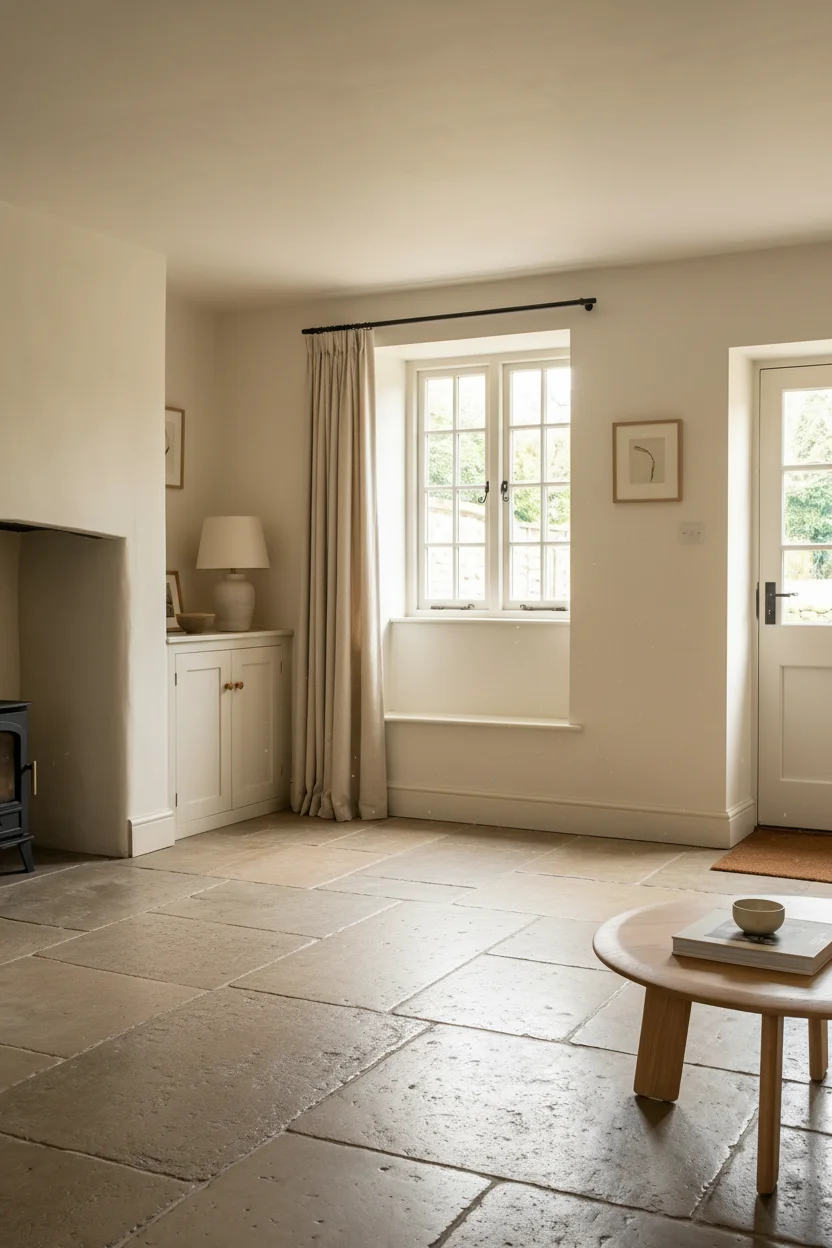
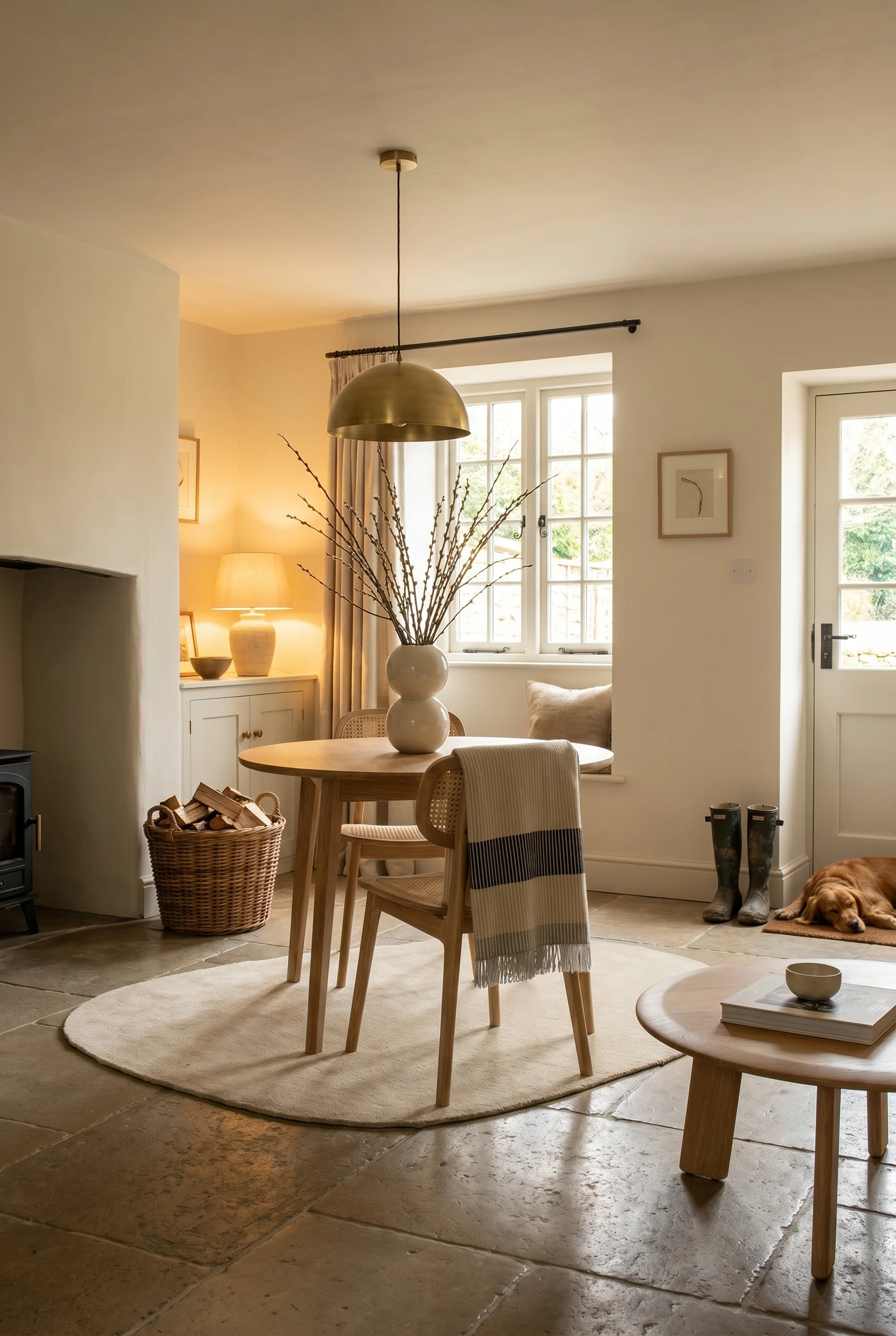
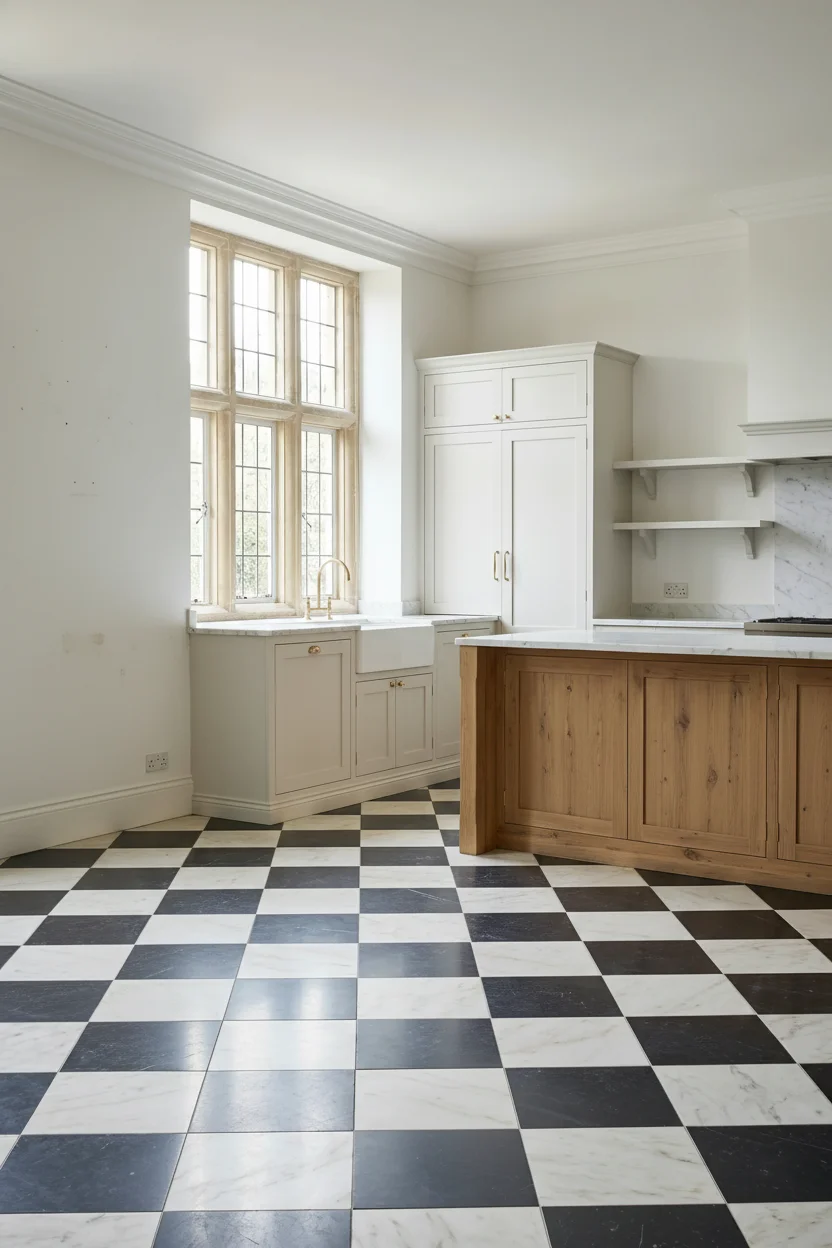
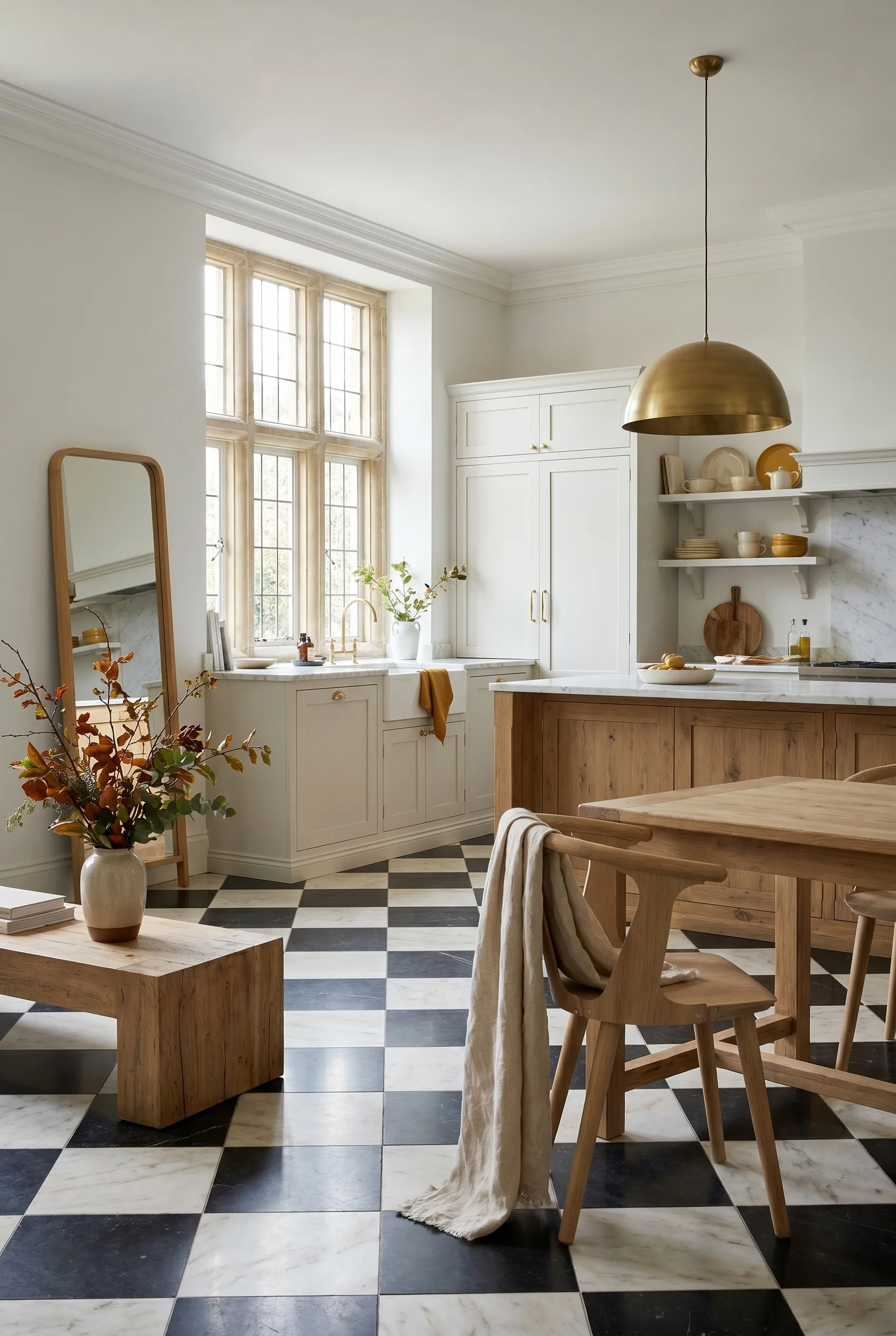
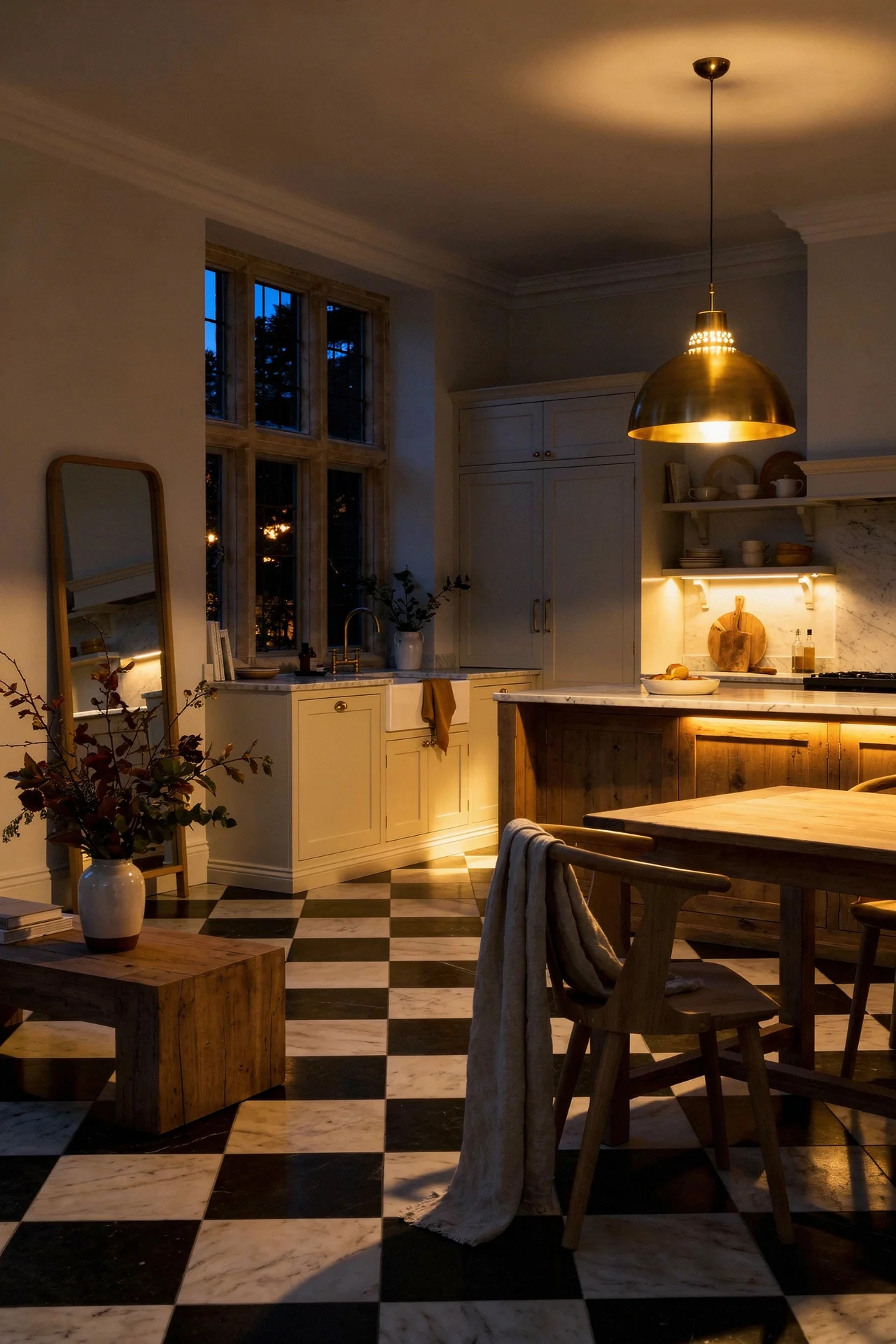
Checkerboard marble is the dress up option. A Parisian chequer in Carrara and Nero Marquina, laid on the diagonal, instantly gives the room a nod to grander country house kitchens and the more formal Georgian sensibility. It’s a stronger pattern, so it works best in rooms where the cabinetry is held quiet, typically a single paint colour with a minimum of decorative fuss.
Encaustic patterned tiles sit between the two, more decorative than flagstone, less formal than checkerboard marble. A small geometric pattern in muted ochre, sage, and cream works beautifully in a smaller cottage kitchen, particularly as a feature under an island or in the threshold between the kitchen and a utility room.
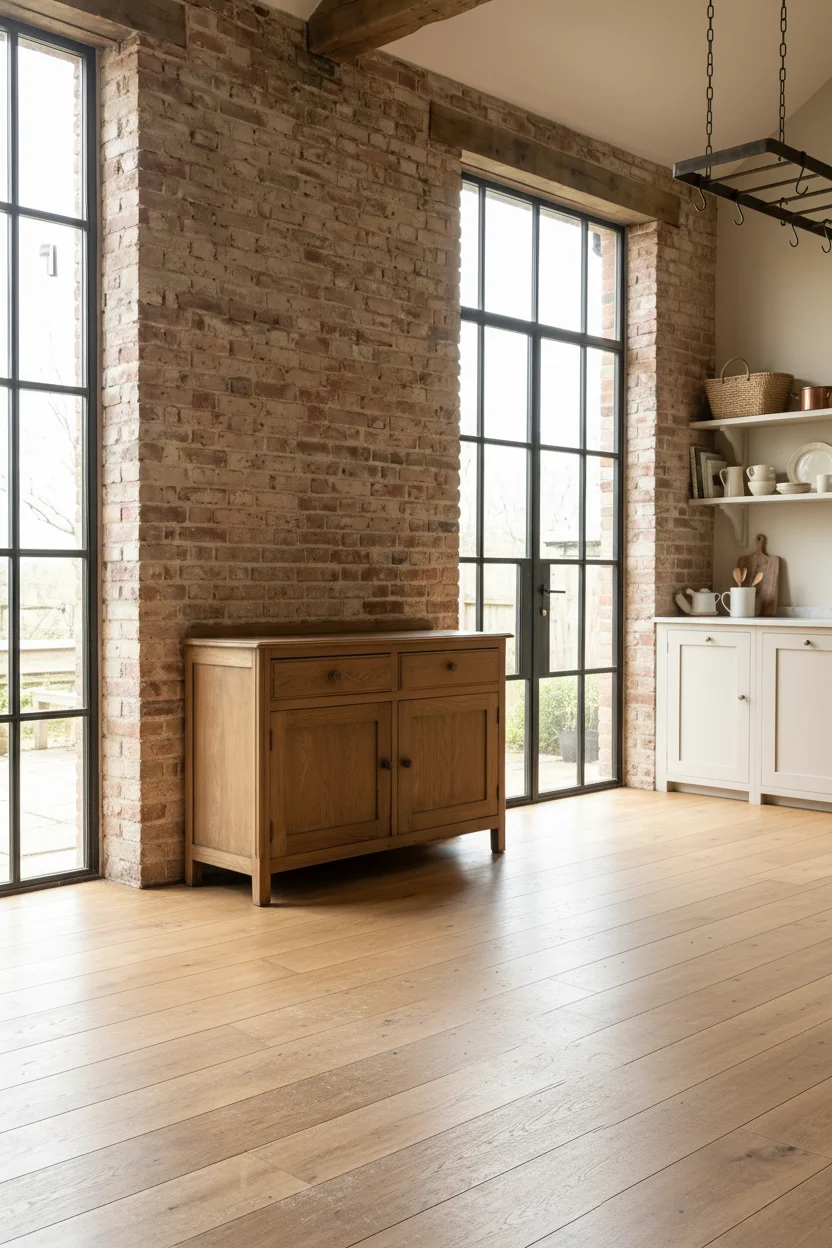
For warmth, reclaimed oak or pine floorboards are the softer alternative. A wide plank, ideally with some honest wear, finished with a hardwax oil rather than a high gloss varnish. The boards should feel like they could have been in the house for a century, not installed last month. Aged brick, sealed, is the other warm option, more common in Victorian and Edwardian kitchens than Georgian.
Whichever surface you choose, soften it. A runner of flatweave wool, or a vintage Moroccan or Persian rug in front of the range, adds warmth without hiding the floor itself. In my experience, a kitchen floor with a rug is what separates a country house kitchen from a country pub kitchen. The rug says the room is lived in, not just worked in.
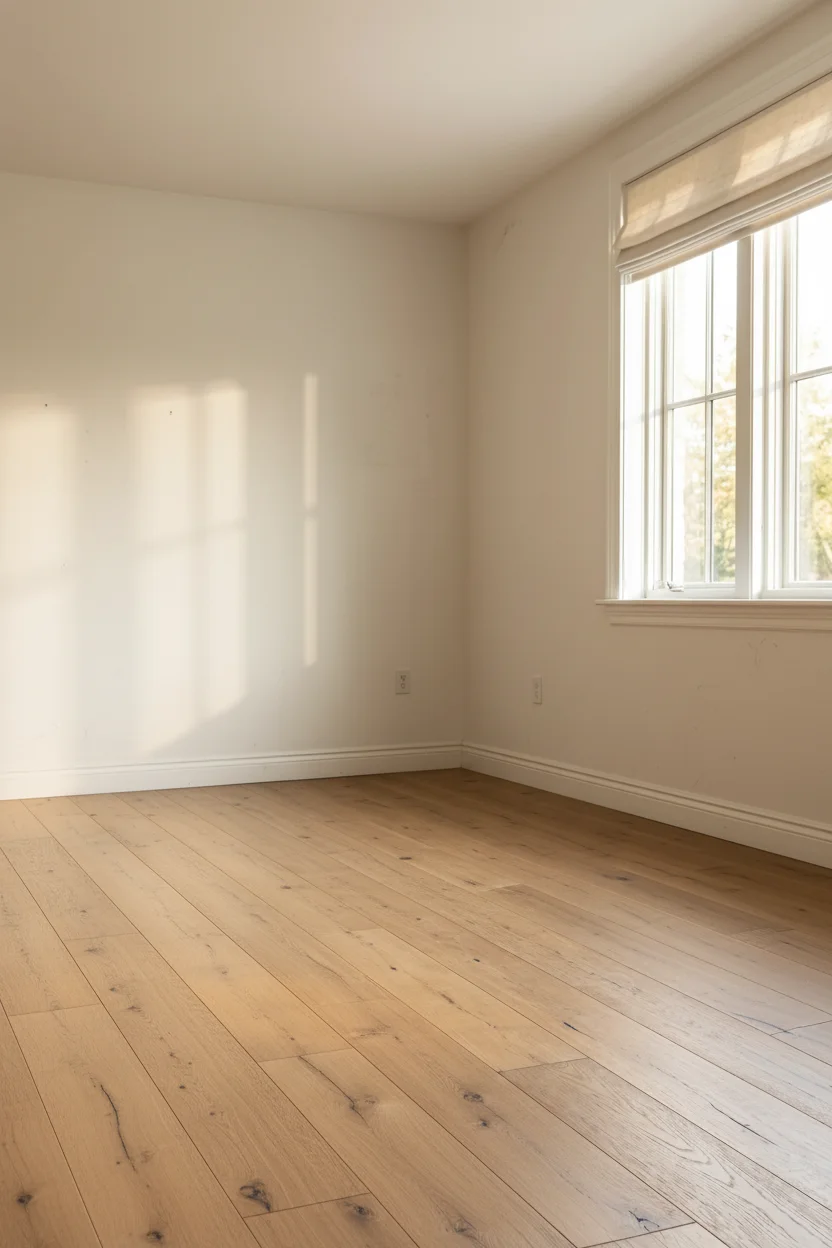
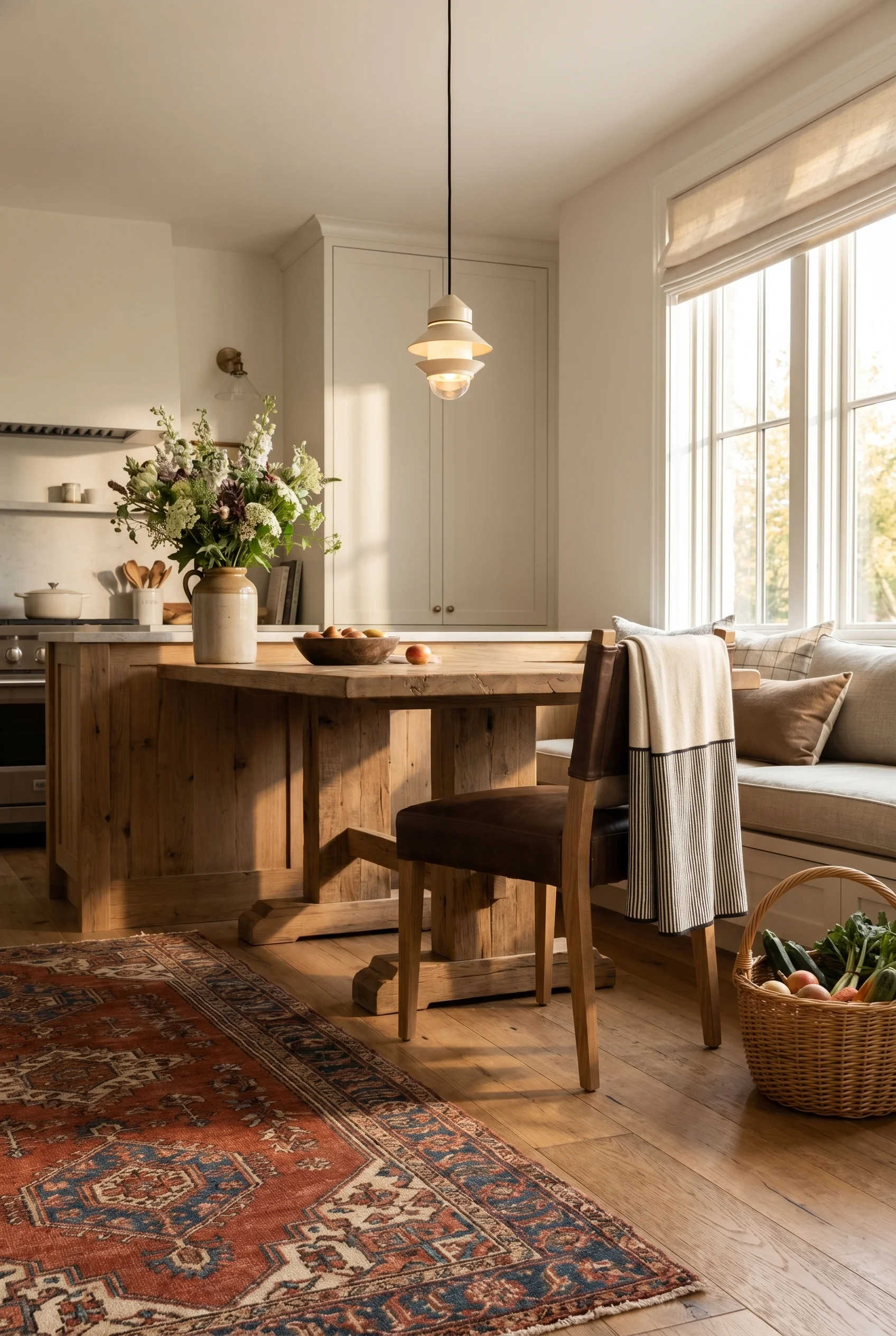
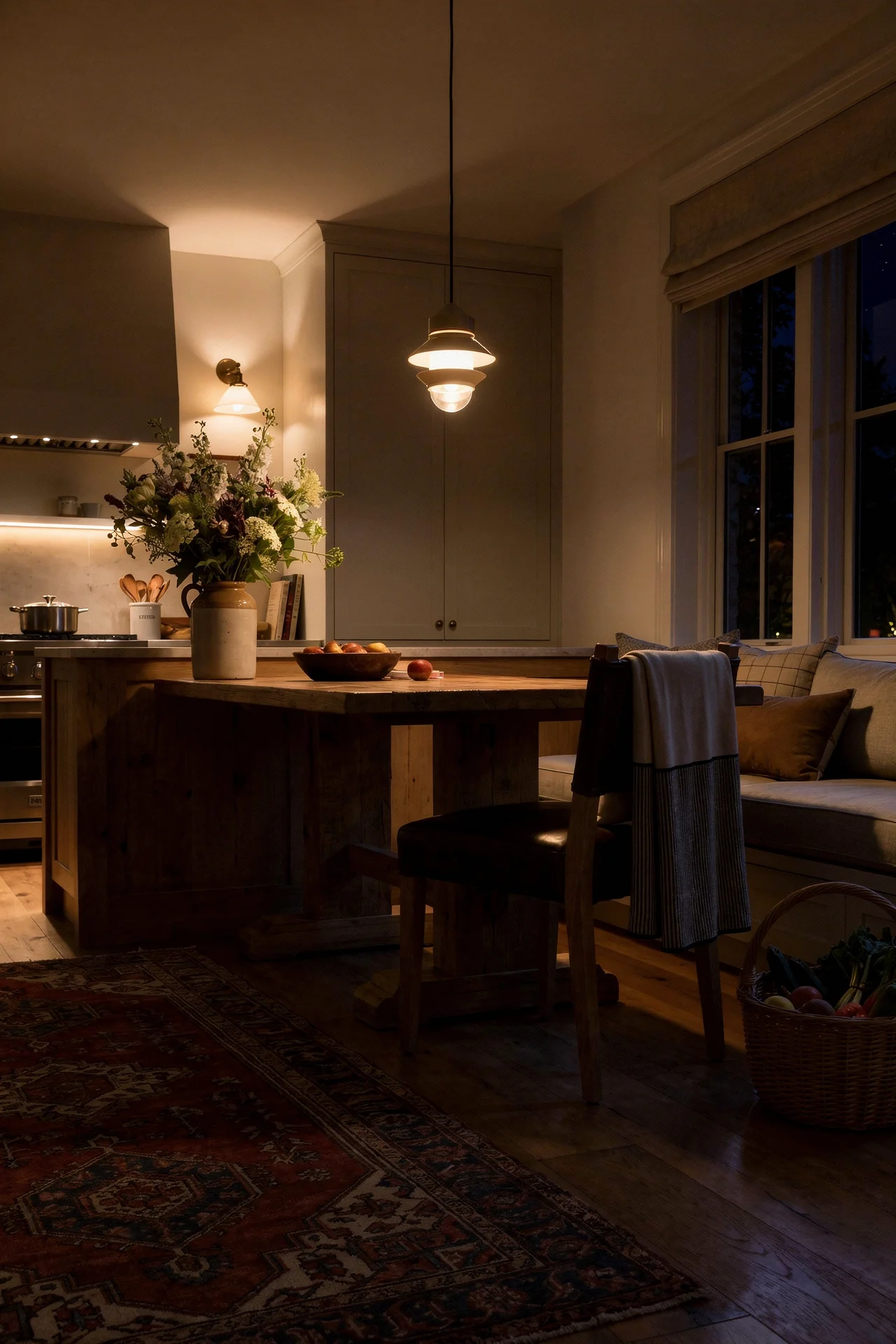
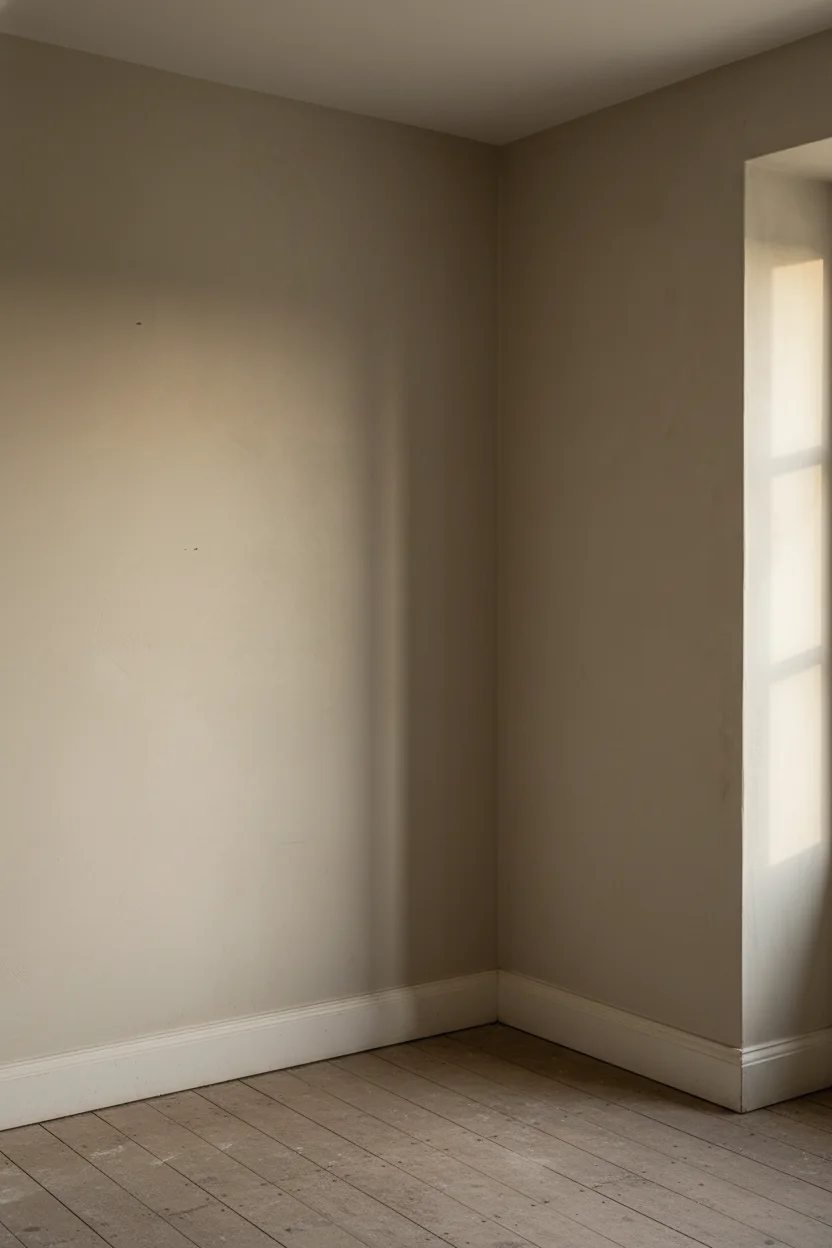
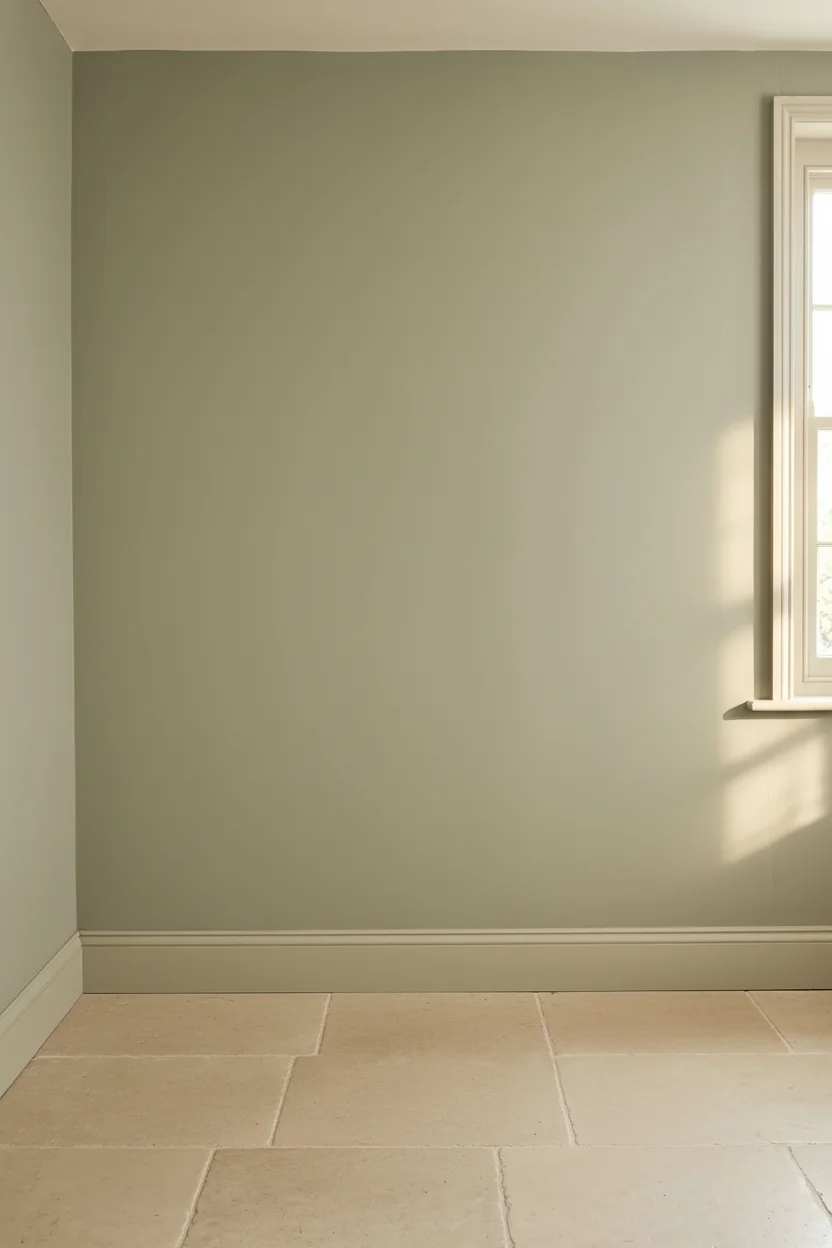
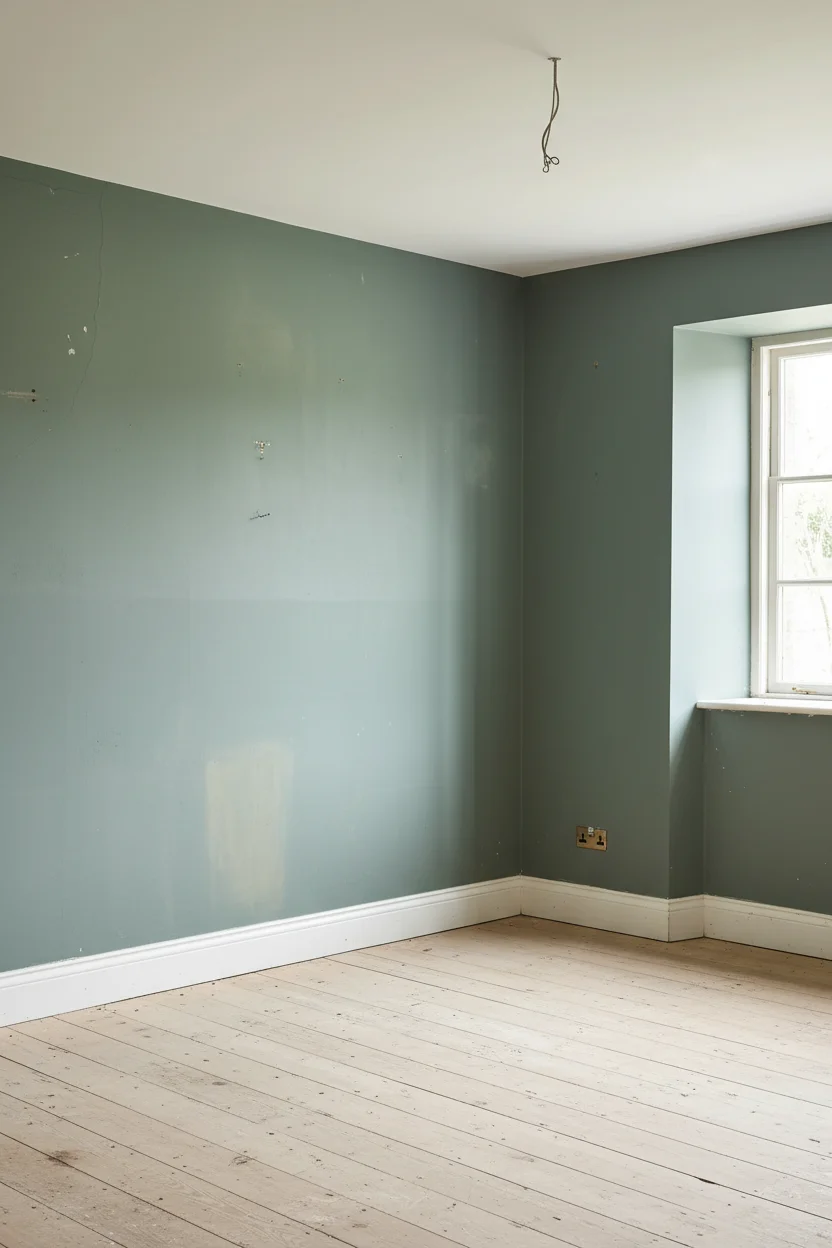
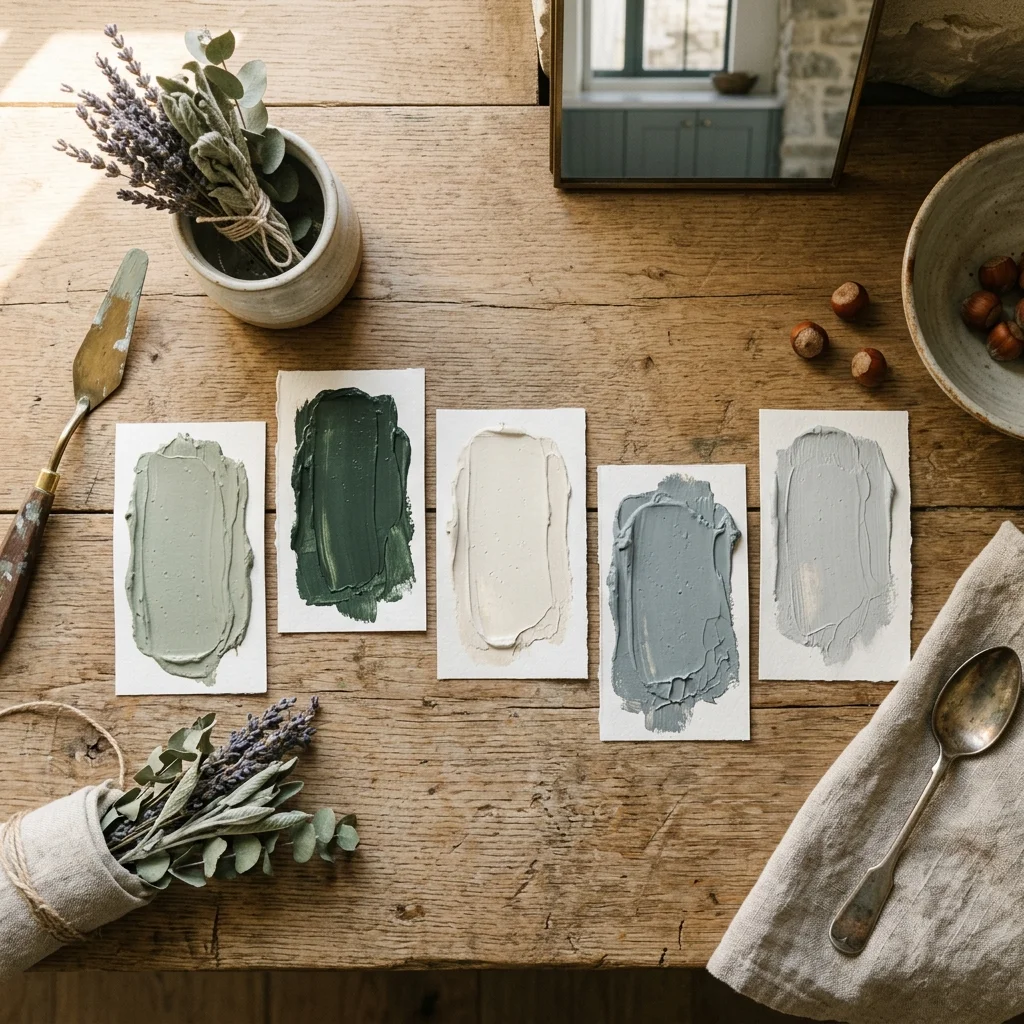
Paint is where the room’s whole mood gets set. The palette below is the one I keep returning to, cross referenced against the Farrow & Ball and Little Greene specifications that Ben Pentreath and the deVOL team use most often.
Farrow & Ball Pigeon – the muted grey green that’s become almost synonymous with deVOL cabinetry. It reads as green in north light and grey in south. Works on base cabinets, larder cupboards, or a whole run.
Paint Pick: Farrow & Ball Cromarty 5 L Estate Emulsion No. 285
Farrow & Ball Green Smoke – deeper, moodier, more forest than sage. I’d use this on a single larder cupboard or a kitchen island to anchor a room painted in lighter neutrals.
Paint Pick: Farrow & Ball Oxford Stone 5 L Estate Emulsion No. 264
Farrow & Ball Skimming Stone – a warm, complex off white that sits beautifully next to natural stone and oak. The walls and ceiling in a lot of the cottage kitchens I keep saving.
Paint Pick: Farrow & Ball Shadow White 5 L Estate Emulsion No. 282
Little Greene Rolling Fog Mid – the warm putty grey in the mushroom family. Works on cabinetry when you want neutral without going cream, and it doesn’t pull blue the way a lot of greys do.
Paint Pick: Farrow & Ball Tanner’s Brown 5 L Estate Emulsion No. 255
Farrow & Ball French Gray – despite the name, it’s a soft sage green grey in warm light. Ben Pentreath uses it regularly on woodwork and panelling where he wants quiet colour.
Paint Pick: Farrow & Ball De Nimes 5 L Estate Emulsion No. 299
The full palette should sit in the muted, complex, earthy register. Avoid anything that reads as pure brilliant white, and avoid cool blue greys entirely. These kitchens live or die on the warmth of their paint.
If you’re starting from a blank kitchen, the order I’d work in is this. Cabinet construction first, because in frame Shaker in a good muted paint carries the room even if everything else takes a year to fall into place. Then the range, then the sink, then the floor. Plates, dressers, copper pots, and rugs arrive over time. That’s the point. A kitchen built this way is never really finished, which is exactly why it always feels alive.
This post contains affiliate links, which means we may earn a small commission if you make a purchase through our links, at no extra cost to you.
If you cannot alter the fitted kitchen, this English country kitchen for renters guide adapts the country feeling with pieces you can take with you.