I’ve always thought brown and orange is one of the most underestimated pairings in a living room. There’s a depth to it that cool, neutral schemes simply can’t match. In this piece I’ll walk you through everything from burnt orange walls and terracotta sofas to layered rugs and glowing log burners, each one a look you can genuinely steal for your own space.
Why Burnt Orange Walls Make a Living Room Feel Instantly Alive
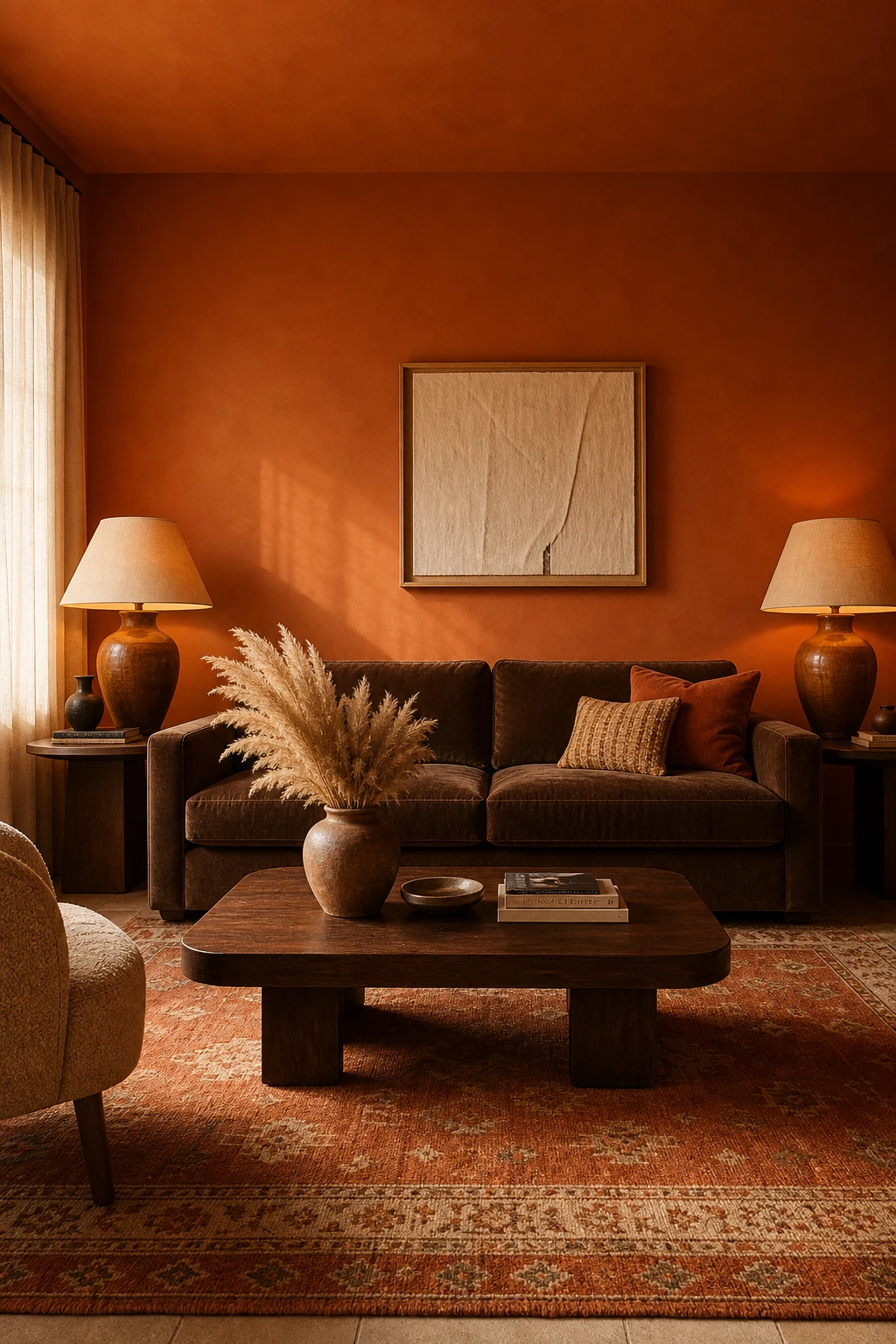
Burnt orange walls do something almost magical to a living room: they pull the light inward and make the whole space feel like it is glowing from within. What I love about this shade is the way it anchors every brown and earthy tone you place against it, so a chocolate sofa or a walnut table looks intentional rather than accidental. You get warmth without heaviness, and that balance is everything.
The Key Details
Chocolate brown velvet sofa
Amber ceramic table lamps
Hand knotted terracotta wool rug
Dark walnut coffee table
Dried pampas stems in earthenware vase
Pro TipPaint two large swatches on opposite walls and check them at midday and again under your lamps in the evening, because burnt orange can read rich and earthy in one light and almost terracotta red in another.
AvoidLeaning too far into yellow orange tones strips out the earthy depth that makes this palette feel grounded, and the room ends up looking more citrus than cosy.
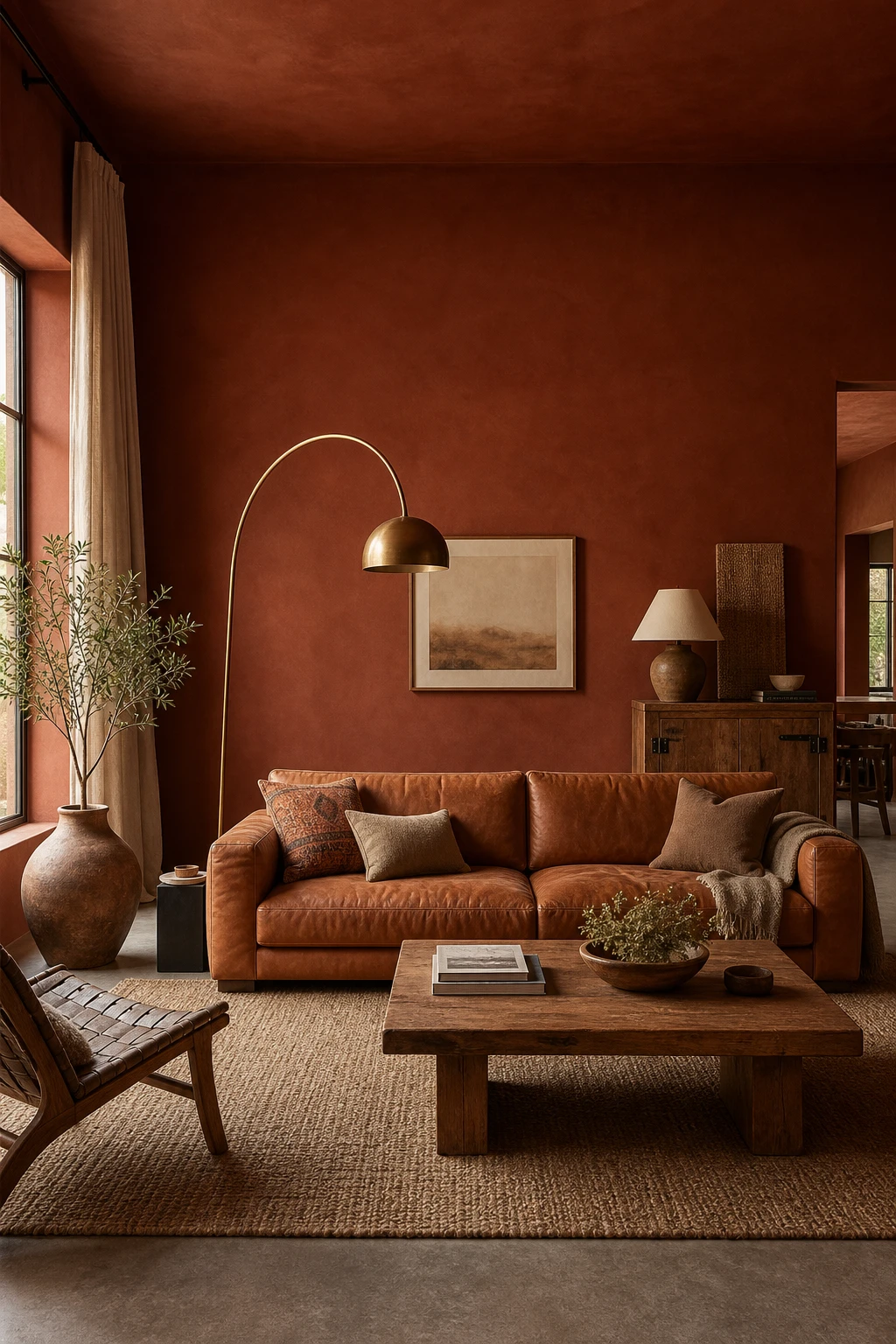
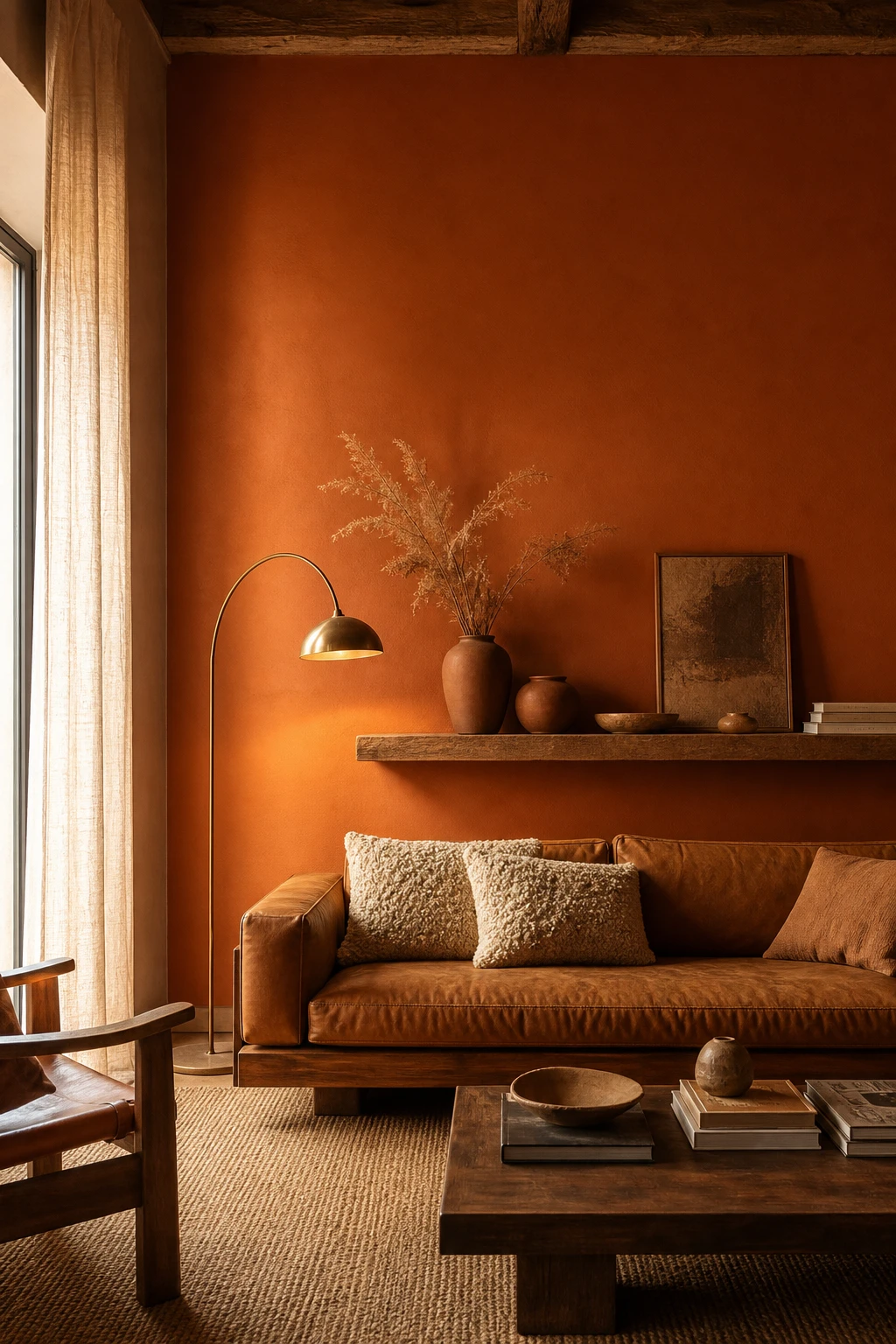
Rust is the shade I reach for when someone wants colour with real depth but not a room that shouts. You get all the warmth of orange with none of the sharpness, and that quieter tone is what makes the cognac leather and oak wood feel so at home against it. Watch how the muted clay undertone pulls every brown accent together into something that reads as considered rather than collected.
The Key Details
Cognac leather sofa
Brass arc floor lamp
Chunky woven jute rug
Solid oak coffee table
Floor to ceiling linen curtains
Pro TipPaint your skirting boards and door frames a warm white rather than a cool or bright white, and the rust walls will glow rather than look heavy.
AvoidPairing rust walls with very dark floors, dark curtains, and a dark sofa at the same time drains the light out of the room and leaves it feeling more cave than cocoon.
Terracotta Paint Turns an Ordinary Living Room Into Something Special
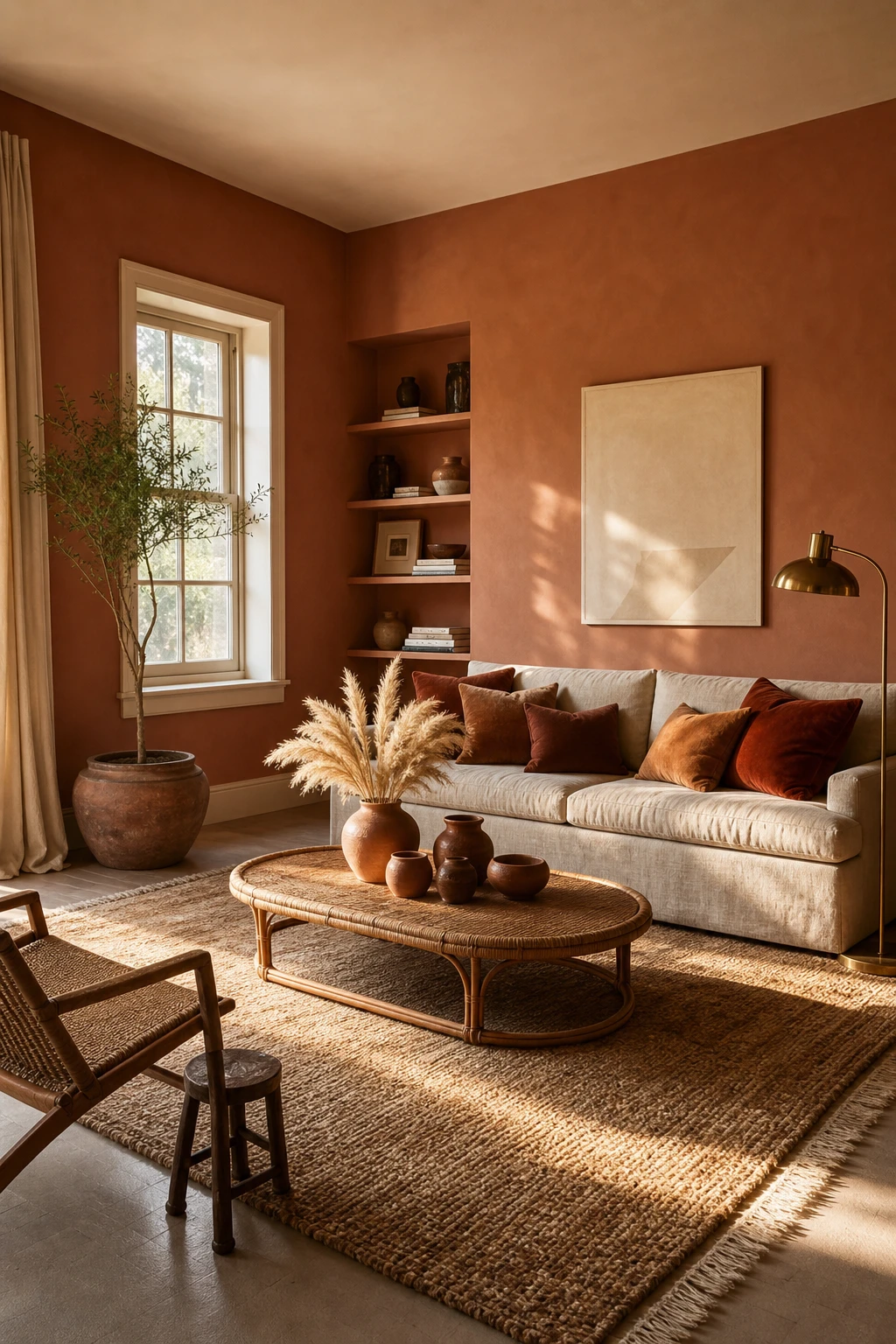
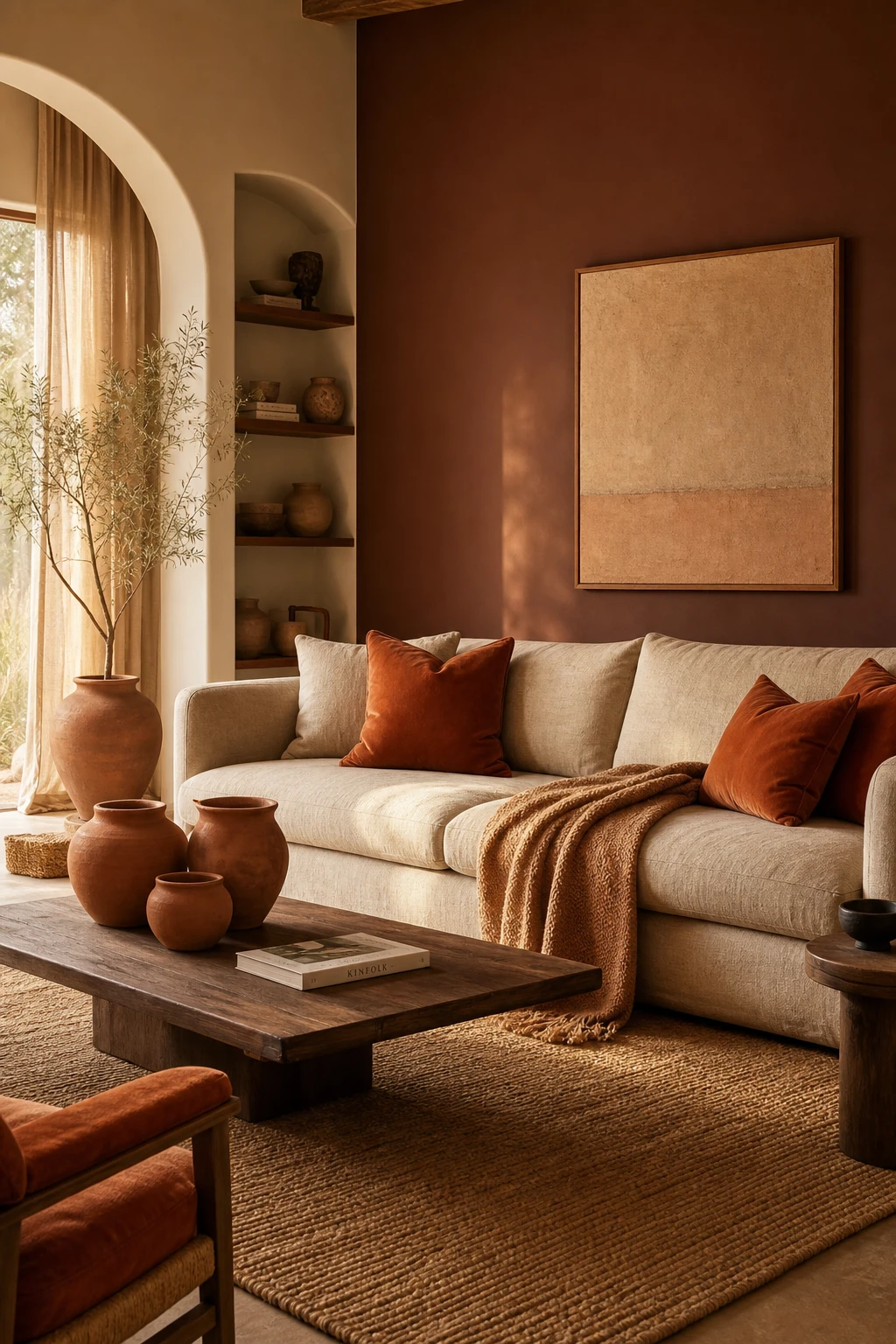
Terracotta is one of those shades that earns its keep from morning coffee to candlelit evenings, and the secret is picking a tone with plenty of pink in it rather than a bold orange. What I love is how a softer terracotta wraps the whole room in a warmth that feels effortless, not overdone. You get that sun baked glow without the walls closing in, and the oatmeal linen and tobacco wool on the floor keep everything breathing.
The Key Details
Oatmeal linen sofa
Rust and cinnamon velvet cushions
Oval rattan coffee table
Brass arc floor lamp
Hand knotted tobacco wool rug
Pro TipIn a north facing room, choose a terracotta with a dusty pink undertone rather than a grey one, as it will read warm even under flat daylight.
AvoidReaching straight for a deeply saturated terracotta looks bold on a paint card but by evening the room can feel oppressive and smaller than it really is.
One Burnt Orange Accent Wall Is All This Look Really Needs
One burnt orange wall does the heavy lifting so everything else can stay calm. What I love about this move is the instant warmth it drops into the room without you committing to colour on every surface. The walnut sofa and jute rug pull the earthy tones forward, and you get that layered, collected feeling with very little effort.
The Key Details
Low profile walnut sofa
Cognac leather and boucle cushions
Woven jute area rug
Raw oak floating shelf with terracotta vessels
Slim brass arc floor lamp
Pro TipPaint the wall your sofa sits against, not the one facing it, so the colour wraps around you rather than sitting at a cold distance.
AvoidCentring the accent wall on a window breaks up the colour with bright light and competing frames, which flattens the impact you were trying to create.
How Dark Orange Tones Make a Living Room Feel Cosy and Considered
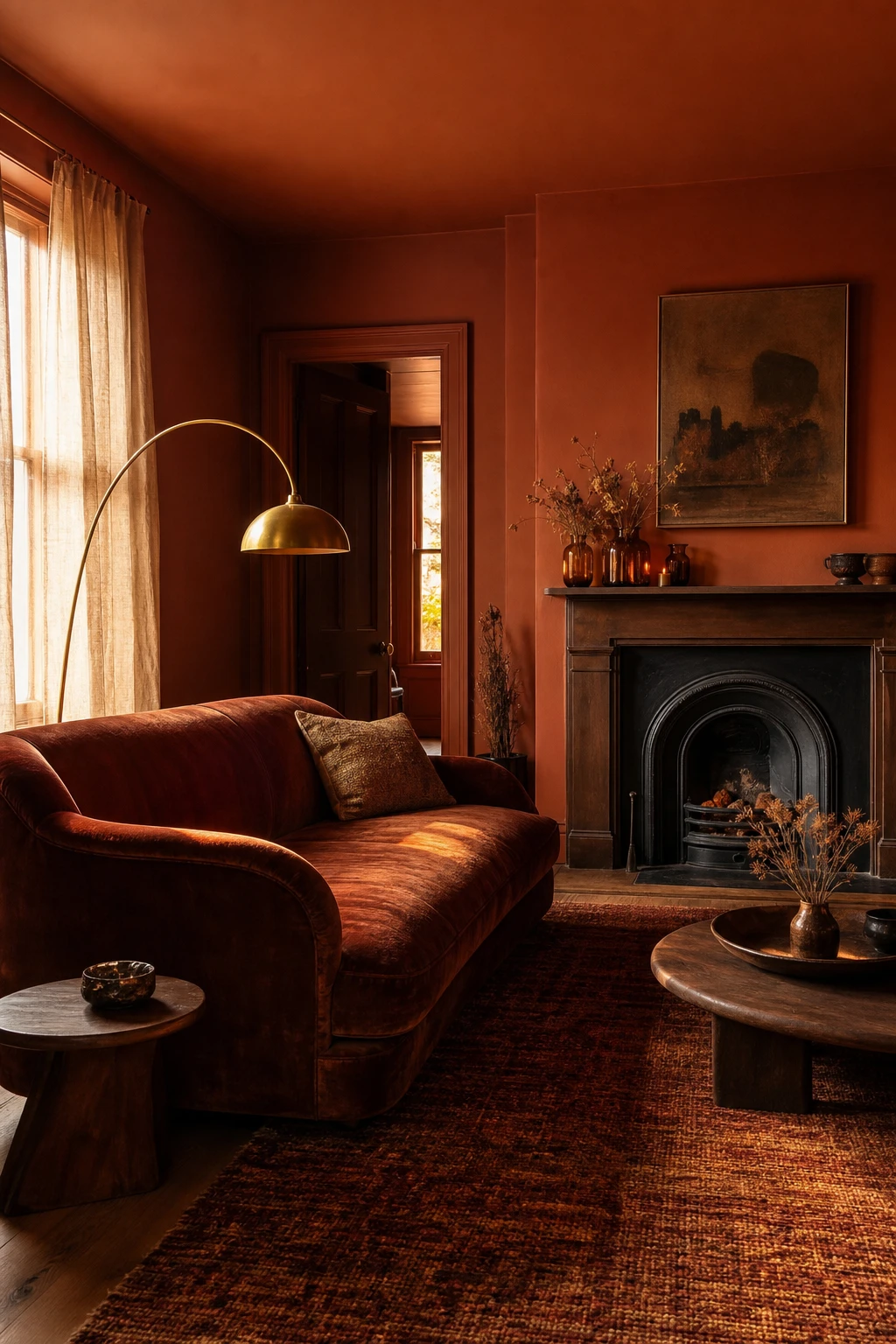
Deep orange is one of those pigments that seems to pull the walls inward in the best possible way, giving a room a wrapped, held feeling that lighter palettes simply cannot touch. What I love is how the darkness in the tone does the heavy lifting, so you get that enveloping mood without relying on clutter or contrast. You will notice the chestnut velvet and the rust rug keep everything within the same warm family, and that shared depth is what stops the room from feeling busy.
The Key Details
Chestnut velvet curved sofa
Cast iron fireplace with mantel styling
Hand knotted rust and tobacco wool rug
Burnished brass arc floor lamp
Low walnut side table
Pro TipCluster two or three light sources at different heights around the room so the glow catches the orange walls from several angles and keeps the space warm rather than dim.
AvoidPulling in too many red toned cushions or accessories gradually shifts the whole palette toward red and the orange identity you worked so hard to build quietly disappears.
Orange and Black Together on Your Walls Is Bolder Than You Think
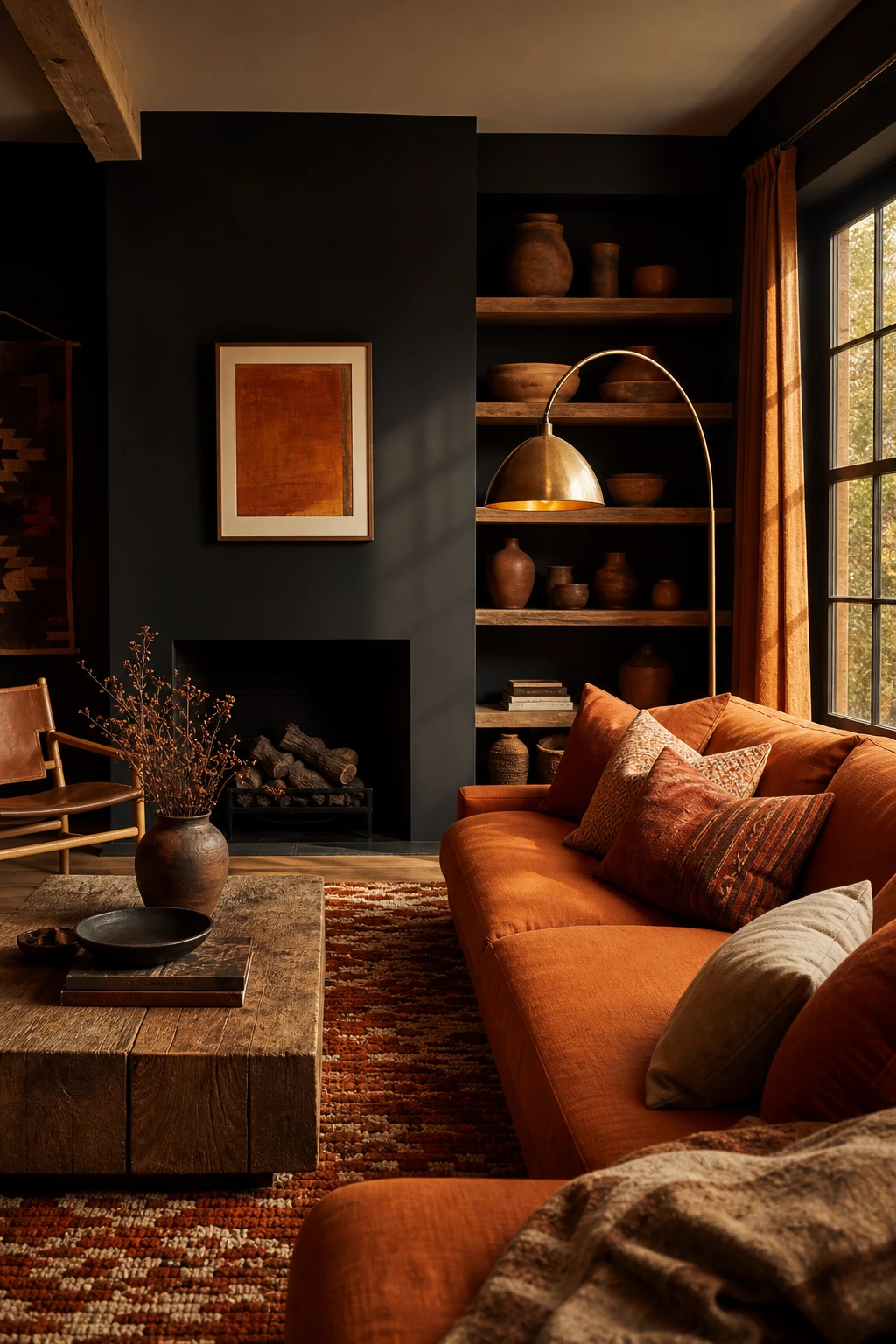
Orange and black together sounds risky, and that is exactly what I love about it. The contrast is so sharp that the orange almost glows, and you get that cinematic quality without touching a single piece of furniture. What wins me over every time is how little black you actually need: a painted skirting board, a window frame, a door architrave, and the orange wall behind it suddenly looks curated rather than cheerful.
The Key Details
Orange linen sofa
Aged brass arc floor lamp
Raw oak open shelving unit
Rust and cream hand knotted wool rug
Terracotta ceramic vessels
Pro TipKeep black to the trims, frames, and architraves only, so it acts as a sharp outline that makes the orange sing rather than competing with it for attention.
AvoidPainting the wall half orange and half black turns a bold idea into a choppy, unsettled room that feels more like a pattern than a considered design.
Painted Geometric Shapes Bring a Living Room to Life for Almost Nothing
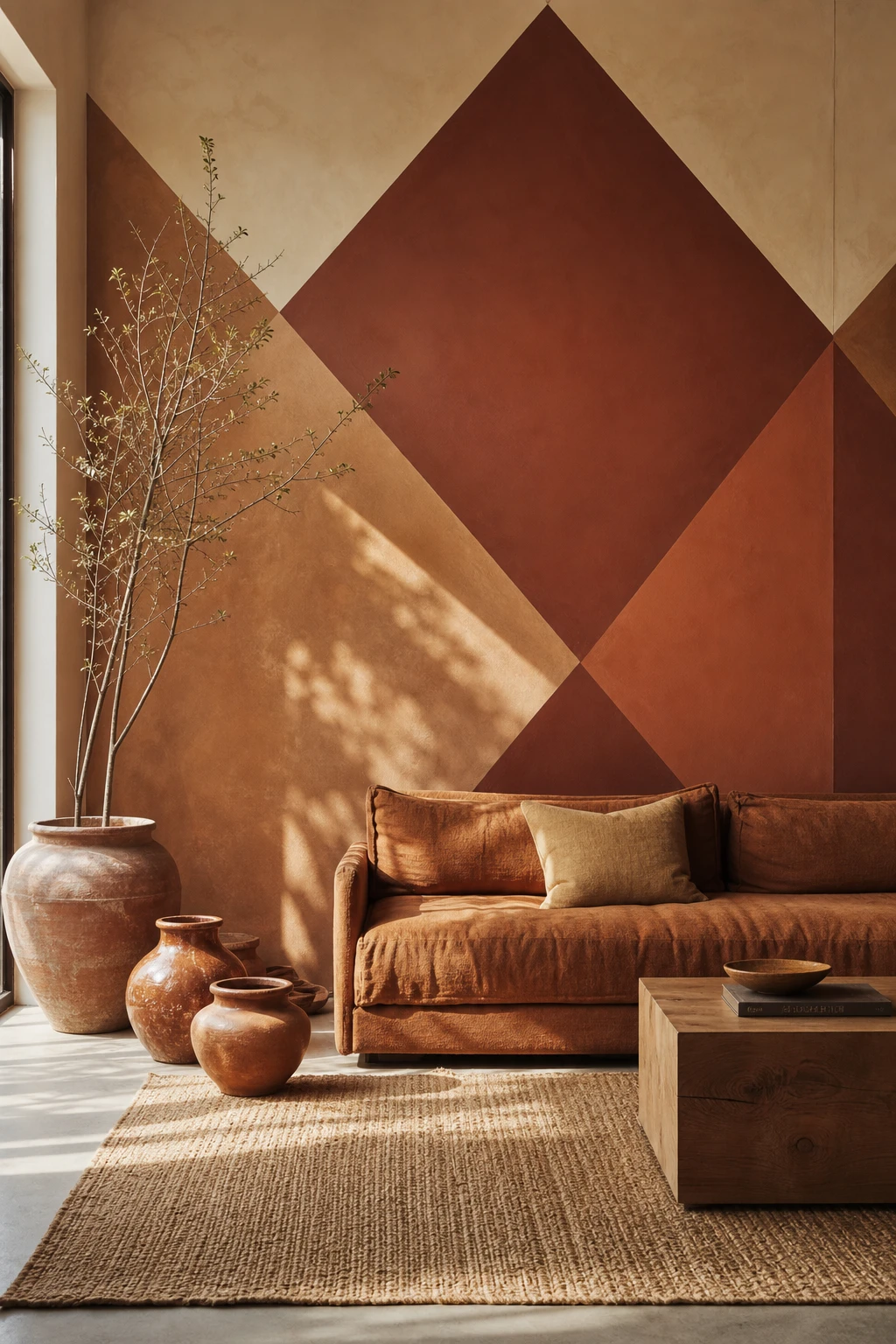
Geometric paint shapes are one of my favourite budget moves because you get the visual punch of wallpaper for almost nothing. Watch how two tones pulled from the same brown and orange family, say a warm caramel beside a deeper terracotta, sit together without fighting. The scale is what I always check first: bold triangles or wide diamonds read as deliberate and confident, giving the wall a rhythm that pulls the whole room together.
The Key Details
Geometric painted accent wall
Caramel linen sofa
Terracotta and amber ceramic vessels
Jute area rug
Raw oak side table
Pro TipStick to two tones from the same colour family and let painter’s tape do the precision work so every edge stays razor clean.
AvoidCutting shapes too small turns the wall into a restless pattern that tires your eyes before you have even sat down.
A Painted Arch on the Wall Is the Easiest Architectural Trick Going
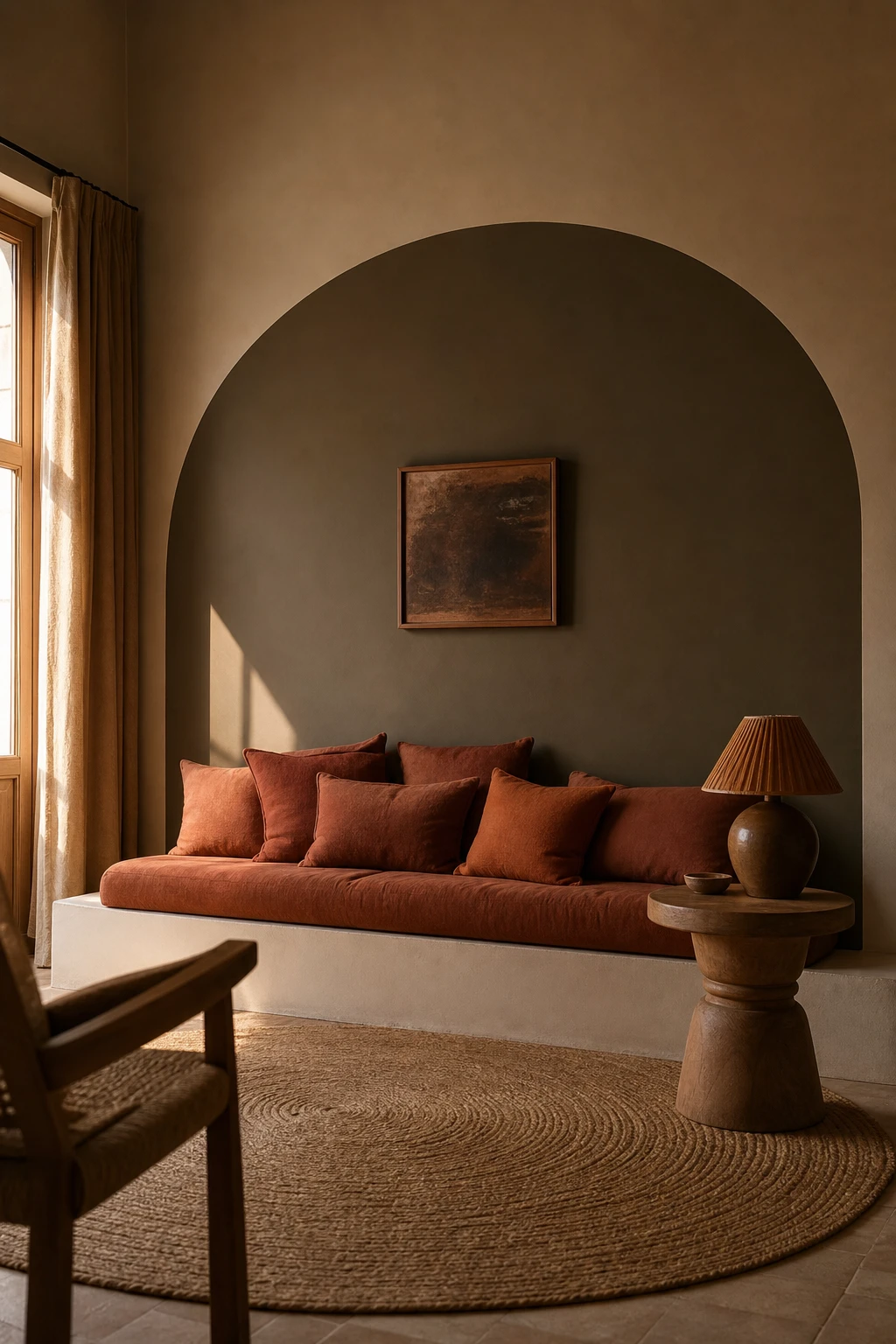
A painted arch asks nothing of a builder and gives you everything a proper alcove would. What I love is how the curve draws the eye up and out, making the wall feel taller and the room feel considered. You get that sense of architecture, of bones, without a single nail. The rust orange against brown here is the thing I always check: enough contrast to read cleanly, warm enough to feel like it belongs.
The Key Details
Rust orange linen sofa
Terracotta and burnt sienna cushions
Woven jute round rug
Turned wood side table
Pleated amber ceramic table lamp
Pro TipCentre the arch so its widest point sits just above the sofa back, roughly ten centimetres clear on each side, and the two will frame each other like a built in headboard.
AvoidPainting the arch in the same tone as the wall flattens the whole effect and leaves you with a shape nobody notices, so the contrast colour is doing all the real work here.
A Terracotta Couch Is the Piece That Does the Most Work in the Room
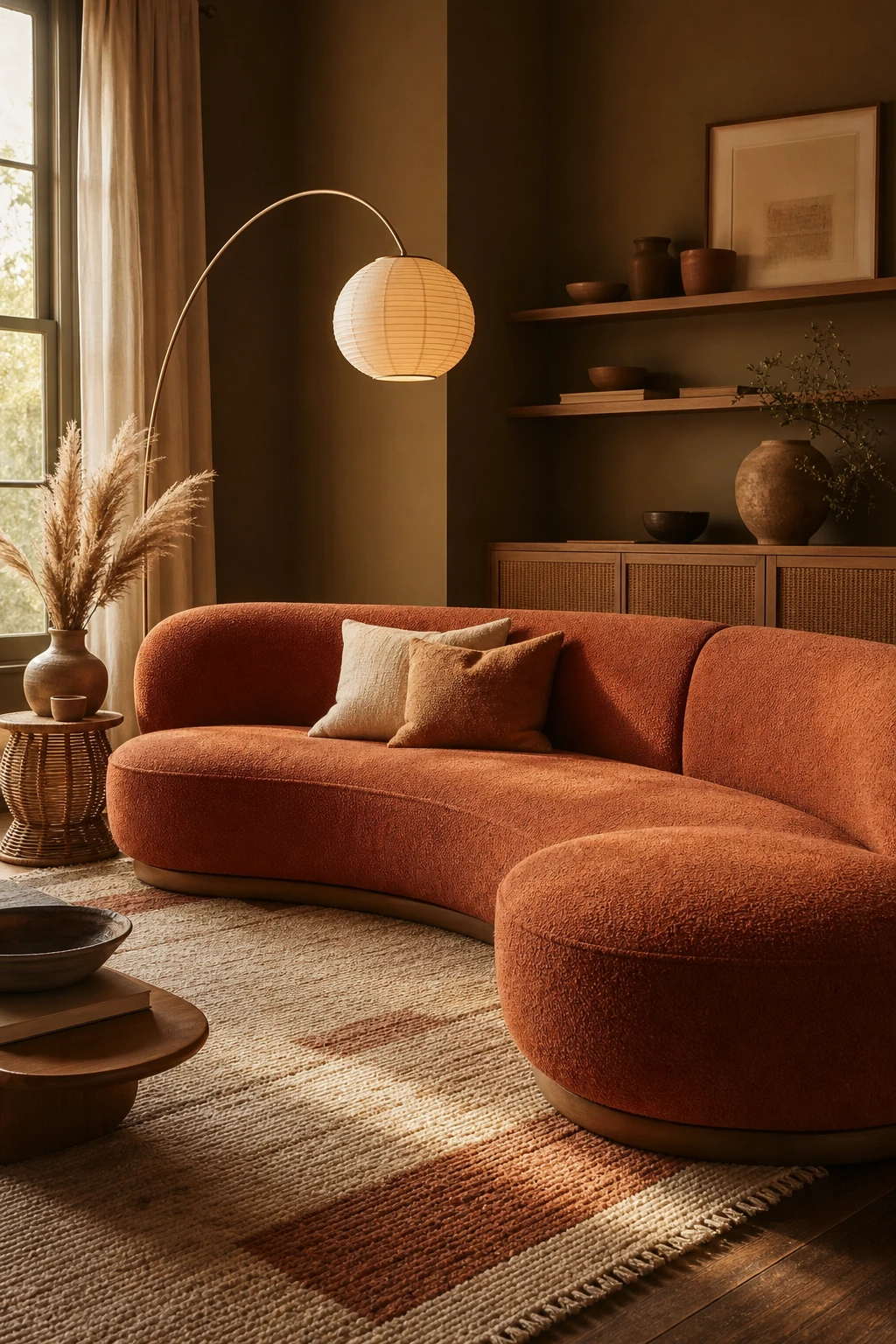
A terracotta sofa is the boldest move I know for a living room, and the secret is letting everything else step back so it can do its job. Walls go pale and quiet, and watch how the whole room opens up around that one warm anchor. The sofa carries all the colour so the space never feels heavy, just grounded and alive. That single decision, sofa loud, walls soft, is what keeps the look feeling generous rather than overdone.
The Key Details
Curved terracotta bouclé sofa
Hand knotted sand and rust wool rug
Rattan cane side table
Dried pampas in unglazed ceramic vase
Arc floor lamp with paper shade
Pro TipAnchor a terracotta sofa with a natural fibre rug in sand or oat underneath it, so the colour has something calm to sit against.
AvoidPiling on burnt orange cushions, amber throws, and warm terracotta walls all at once flattens the contrast and leaves the sofa with nothing to push against.
A Burnt Orange Sofa Pulls Every Warm Tone in the Room Together
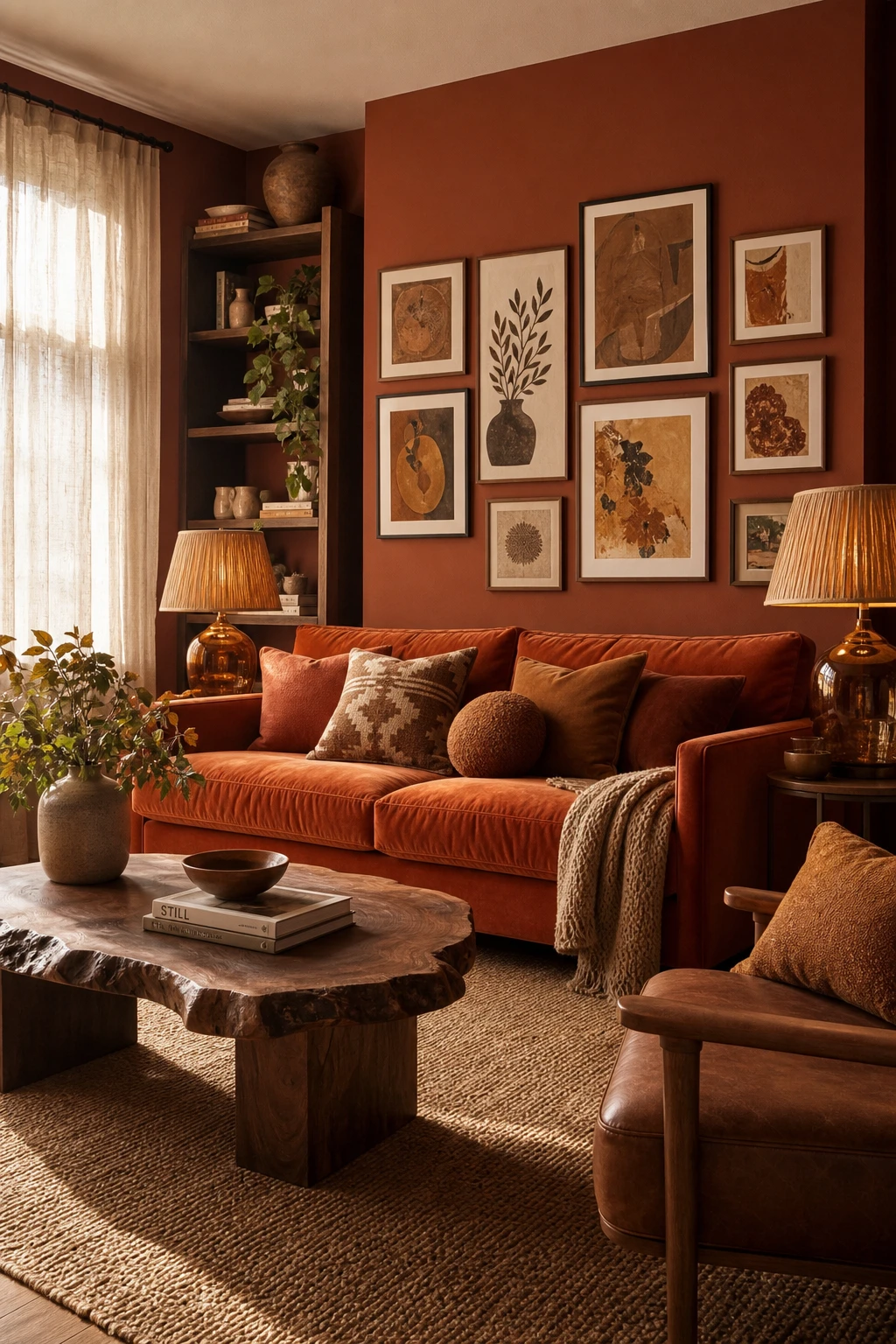
Burnt orange upholstery earns every bit of attention it pulls into the room. What I love is how it gathers the terracotta, the walnut, and the amber glass into a single conversation, giving the room a centre of gravity instead of a scatter of warm tones all competing at once. The moment it lands in the space, everything around it stops looking like coincidence and starts looking like intention.
The Key Details
Terracotta velvet sofa
Live edge walnut coffee table
Amber glass table lamps
Woven jute area rug
Rust and ochre gallery wall prints
Pro TipLayer olive and deep brown cushions across the sofa to push the warmth earthward and stop the orange reading as too bright or summery.
AvoidBuying a sofa in a fabric that shifts toward red under warm bulbs will throw the whole scheme off, making the room feel hot rather than cosy.
A Brown L Shape Sofa Gives the Whole Room Something Solid to Build Around
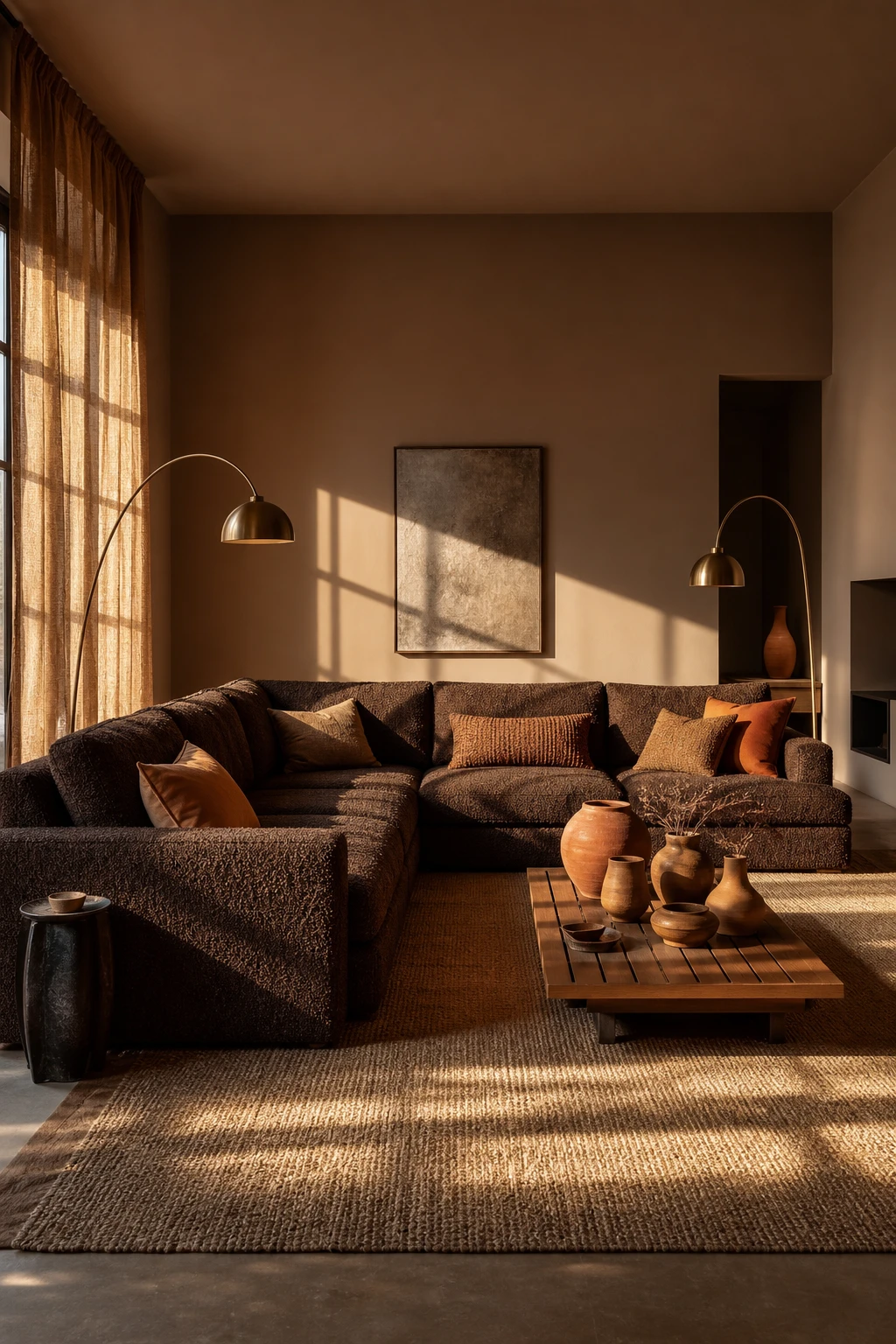
Bending a sofa into an L shape is one of my favourite moves in a living room because it does two jobs at once: it draws the boundary of the seating zone and drops the main colour block in a single decision. What I love about a deep chocolate sectional is the way that warm brown reads as grounded and generous, giving every other tone in the room something to lean against. You get instant structure without a single extra piece of furniture doing the heavy lifting.
The Key Details
Chocolate boucle L shape sectional sofa
Low slatted walnut coffee table
Woven sisal area rug
Amber linen floor length curtains
Brushed brass arc floor lamps
Pro TipPoint the open end of the L toward your fireplace or television so sightlines stay clear and the sofa feels like it was always meant to be there.
AvoidPushing a sectional that is too wide into a tight floor plan closes off the natural walking routes and makes even a beautiful sofa feel like an obstacle.
Tan Leather Brings a Living Room the Kind of Warmth That Only Gets Better With Age
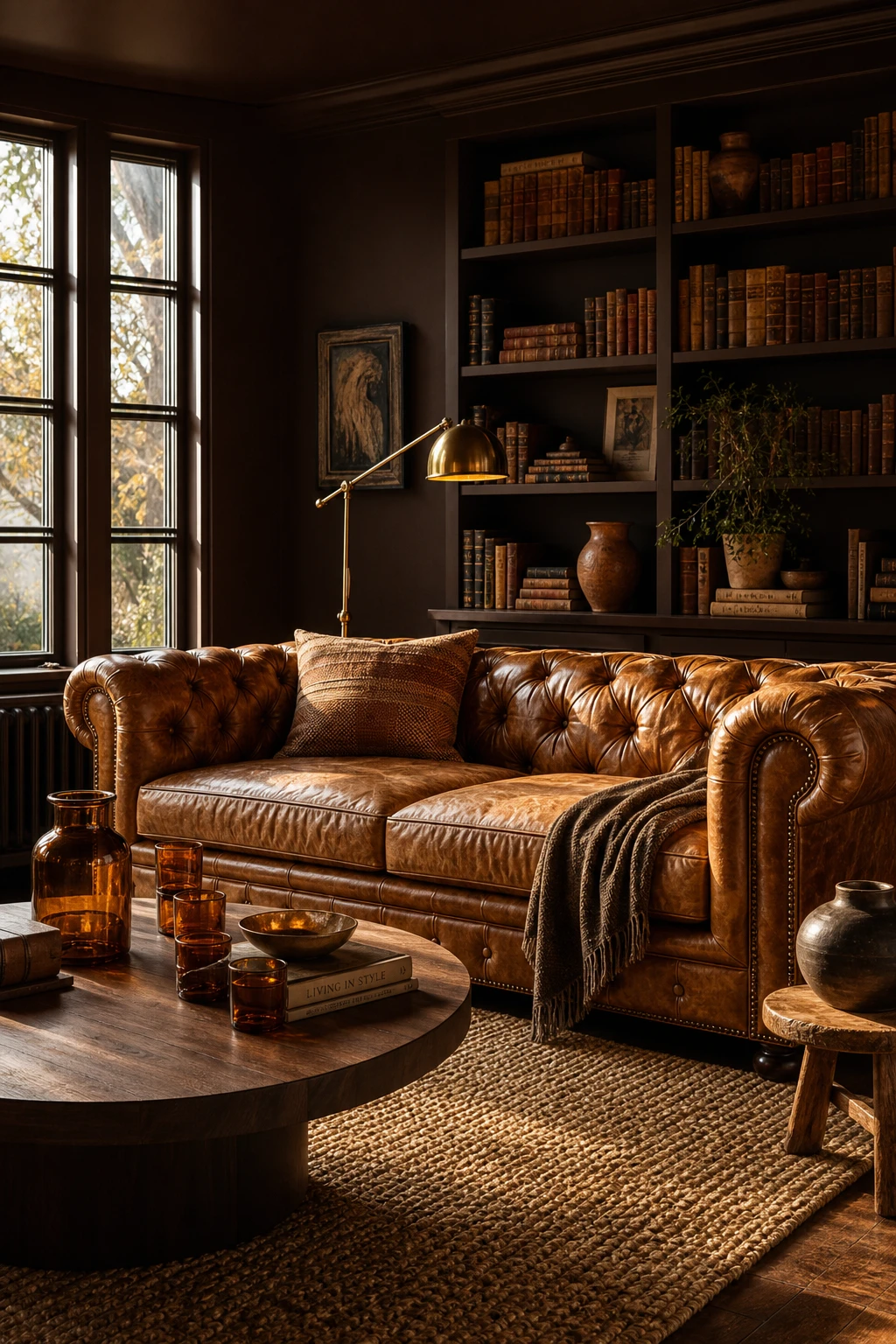
Tan leather is one of those materials that earns its place more and more as the years pass. What I love about it is that every crease and colour shift tells a story, and in a brown and orange room those honey and amber tones deepen the whole palette rather than sitting apart from it. You get a richness that no paint or fabric can quite replicate, because the material itself is always slowly changing.
The Key Details
Chesterfield sofa in burnished tan leather
Aged wooden bookshelves with leather bound volumes
Handwoven jute rug
Round walnut coffee table with amber glass vessels
Articulated brass floor lamp
Pro TipFeed your tan leather every few months with a good natural conditioner and watch those honey tones grow richer and more amber with each application.
AvoidUsing anything with alcohol or strong detergents on leather strips the natural oils and leaves a dull, flat surface that loses all that warm depth you bought it for.
A Curved Sofa Softens All That Rich Earthy Colour Beautifully
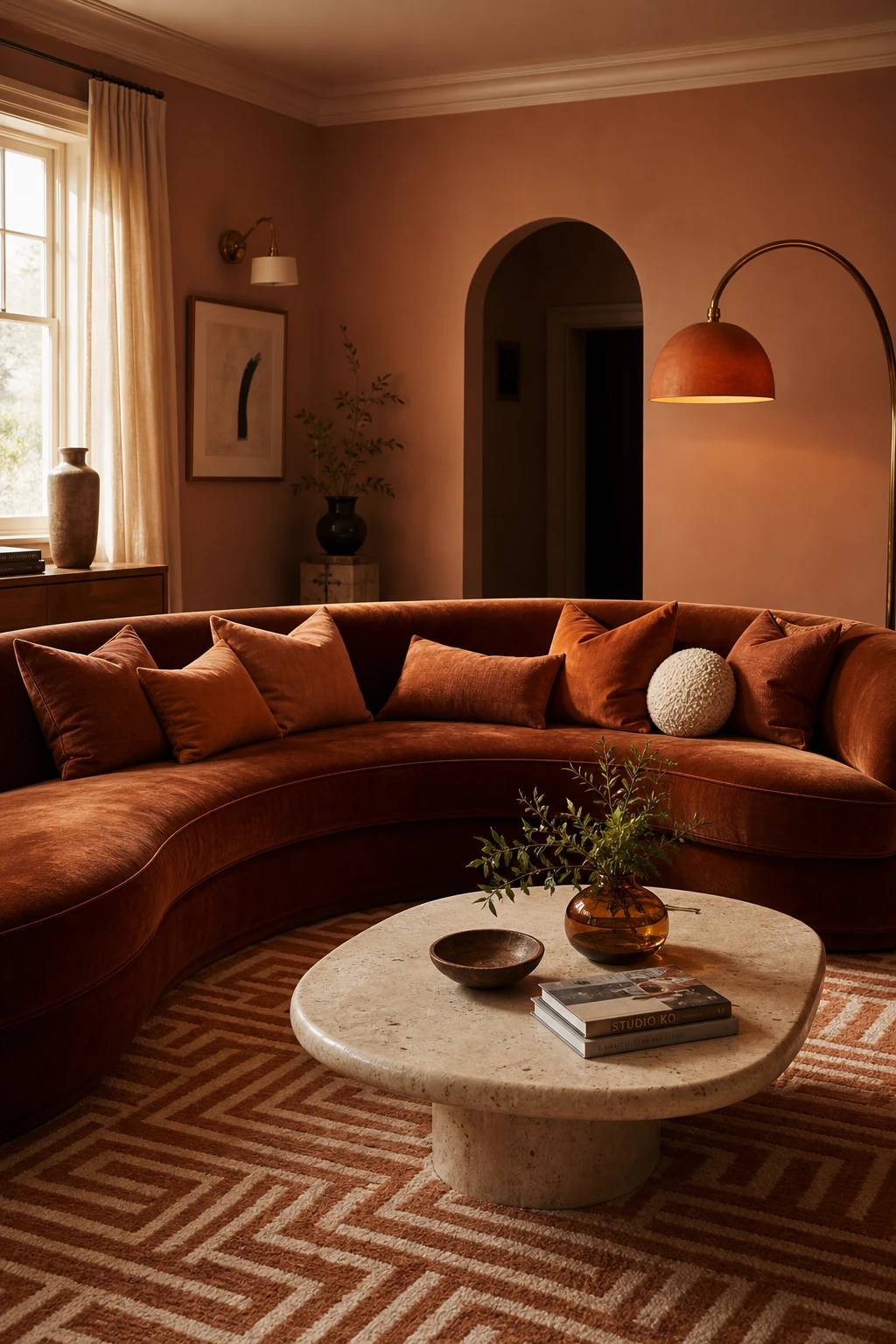
A curved sofa in a room this warm and earthy is one of my favourite moves, because those soft rounded lines take the edge off all that rich colour and stop the space feeling heavy. You get this lovely push and pull between the depth of the browns and oranges and the gentle arc of the silhouette. What wins me over every time is how the curve draws the eye around the room rather than anchoring it in one hard spot.
The Key Details
Curved cognac velvet sofa
Geometric sienna and cream wool rug
Rounded travertine coffee table
Arched ceramic floor lamp
Burnt orange linen cushions
Pro TipPull the sofa a foot or so away from the wall so you can actually see that beautiful curved back, which is half the reason to buy one in the first place.
AvoidFilling the rest of the room with sharp angular accessories tends to fight the softness of the curve and leaves the whole space feeling unsettled rather than balanced.
Black and Burnt Orange Together Hit a Note Very Few Colour Pairs Can
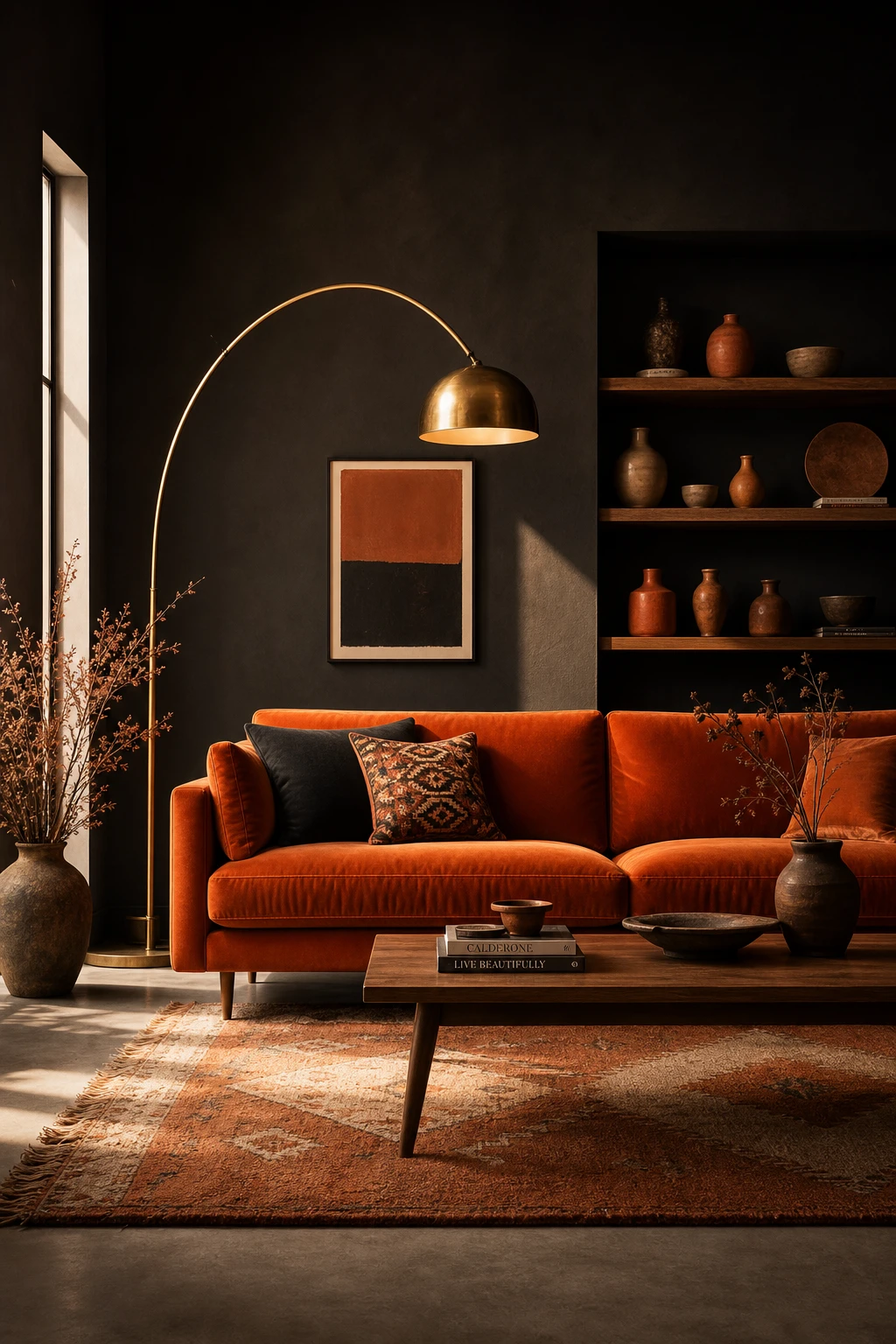
Burnt orange and black is one of those pairings that stops people in their tracks, and what I love most is how little black you actually need to make it work. A dark neutral pulls the warmth of the orange into sharp focus, so you get real punch without adding more colour. Watch how the orange reads almost luminous when black frames it, whether through ironwork, a lamp base, or a slim picture frame cluster on the wall.
The Key Details
Burnt orange velvet sofa
Walnut coffee table with tapered legs
Antique brass arc floor lamp
Hand knotted terracotta and ivory wool rug
Rust and sand ceramic vessel cluster
Pro TipBring black in through metal picture frames grouped in an odd number, so you get the contrast hit without committing a single wall to a dark paint.
AvoidPainting more than one full wall black tips the balance and the warmth of the orange gets swallowed, leaving the room feeling heavy rather than dramatic.
Burnt Orange and Beige Is the Combination That Always Feels Calm and Collected
Burnt orange paired with beige is one of those combinations I keep coming back to, because the beige does all the heavy lifting quietly. You get the warmth and personality of orange without any of the nervous energy, and that calm comes entirely from the neutral holding it steady. What I love is how the two colours share the same golden undertone, so they never fight, they just settle into each other.
The Key Details
Beige linen sofa
Burnt orange velvet cushions
Jute area rug
Low walnut coffee table
Terracotta vessel grouping
Pro TipLayer your beige across linen cushions, a cotton throw, and a woven rug so the neutral reads as rich and textured rather than flat.
AvoidPicking a beige with a grey undertone pulls the orange toward red and makes the whole room feel tense rather than grounded.
Grey Gives Brown and Orange Living Rooms the Breathing Room They Need
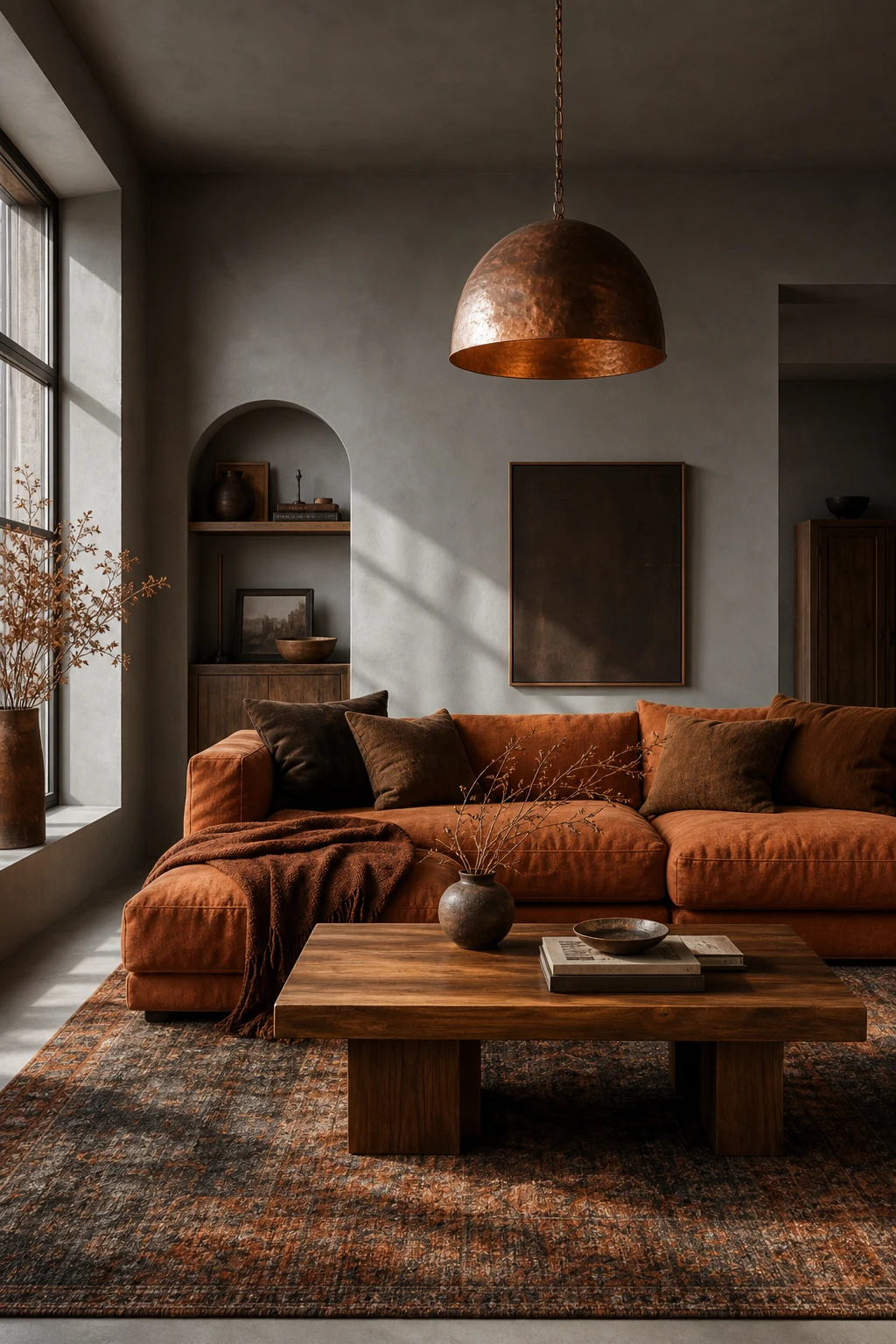
A warm palette of brown and orange is rich and enveloping, but without a cooler tone to rest against, it can feel like the room is pressing in on you. Grey is the note I reach for when a scheme needs air. Painted on the ceiling, a soft grey lifts your eye upward and you get a sense of space that the terracotta and walnut below can anchor into, rather than compete with. The whole room breathes.
The Key Details
Terracotta orange linen sofa
Oiled walnut coffee table
Burnished copper pendant light
Amber charcoal and rust wool rug
Burnt sienna and tobacco brown cushions
Pro TipChoose a greige or a warm mid grey for the ceiling rather than a pure cool grey, so it reads as a natural step back from the amber and brown rather than a sharp contrast.
AvoidPicking a blue grey for the ceiling pulls the eye in two directions at once, and the warm tones below start to look muddy and tired rather than rich and grounded.
Bring Gold Into an Orange Living Room and Watch the Whole Space Lift
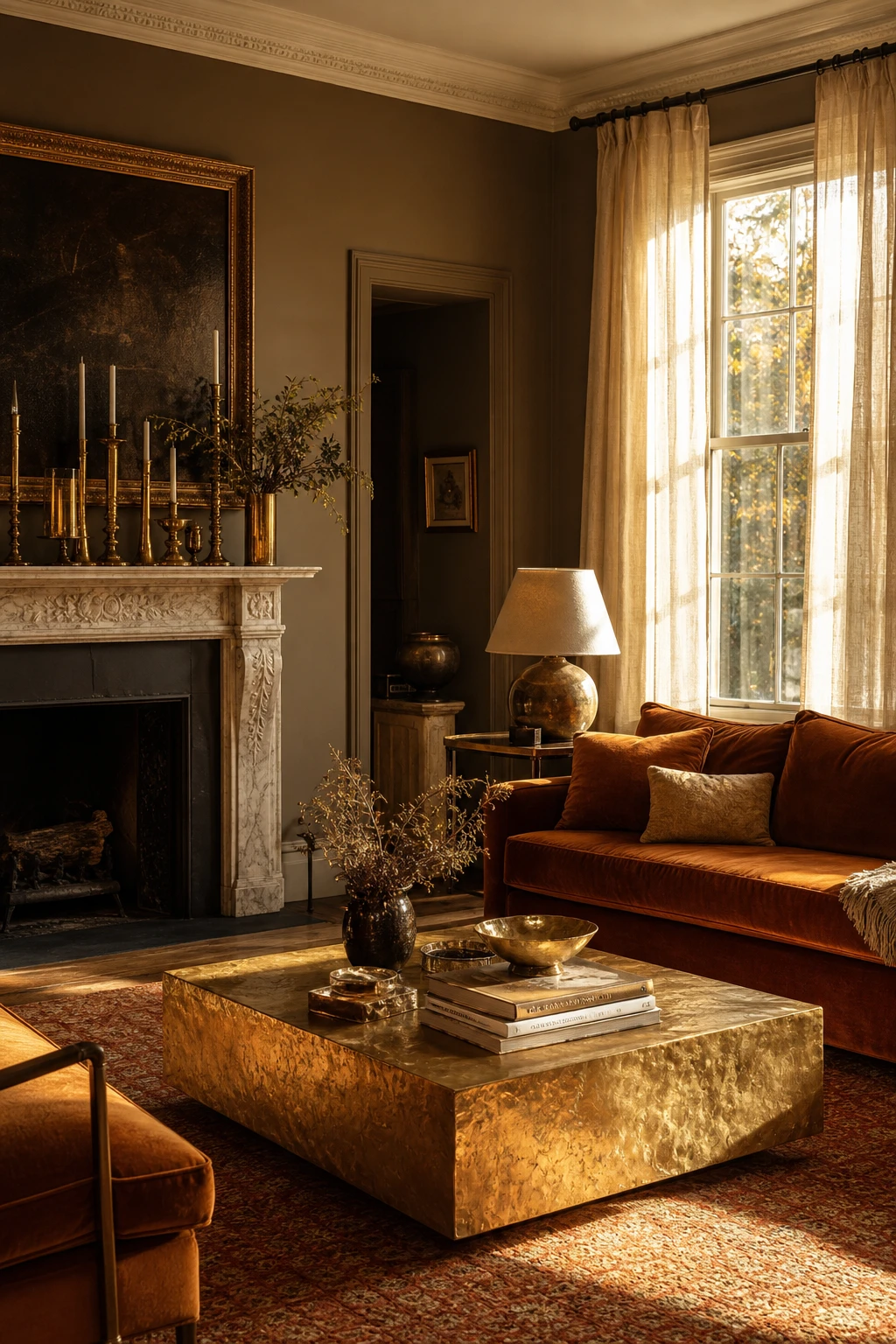
Gold and orange share the same warm undertone, so when you bring them together they pull toward each other rather than compete. What I love about this pairing is how the gold lifts the whole room without cooling it down, the way a polished mirror would. You get that sense of richness and depth while the space stays anchored and earthy. Watch how even one burnished gold piece, a frame, a lamp base, a table edge, makes the oranges around it feel more deliberate and considered.
The Key Details
Burnished gold leaf coffee table
Amber velvet sofa
Terracotta and ochre wool rug
Gilded picture frames and candleholders
Sheer linen curtains
Pro TipReach for brushed or antique gold finishes rather than high shine polished ones, because the softer surface holds warmth and reads as intentional rather than flashy.
AvoidBringing silver metallics into the same room splits the temperature of the palette and leaves the space feeling like it cannot decide what it wants to be.
Charcoal and Orange Is the Moody Grown Up Version of This Palette
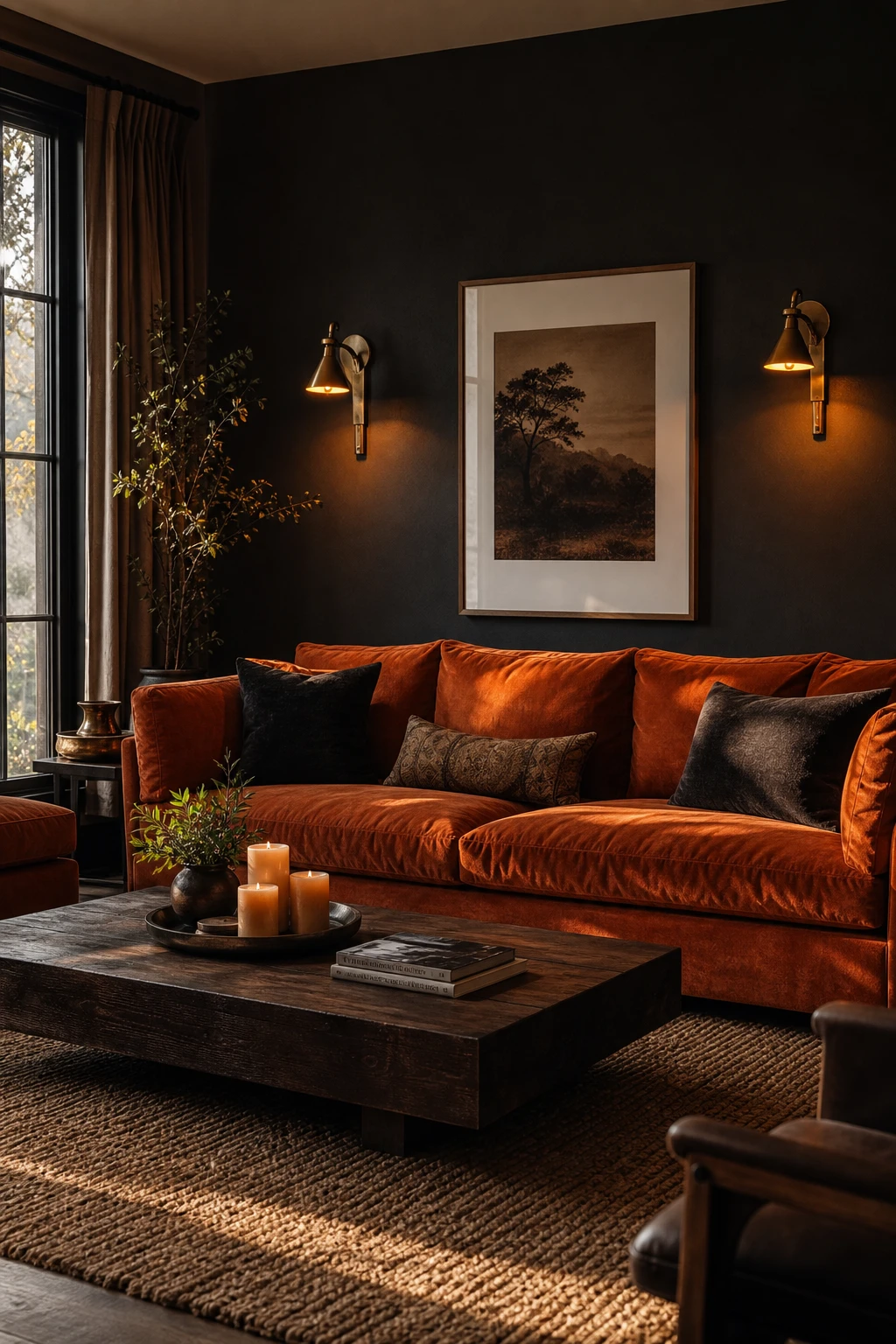
Charcoal behind warm orange is one of my favourite moves because the contrast does something almost theatrical: the orange stops looking just orange and starts to glow. What I love here is how the depth of the dark wall pulls every warm tone in the room forward, so the velvet sofa and brass sconces feel lit from within. You get a room that reads as genuinely grown up without losing any of the warmth that makes orange so liveable.
The Key Details
Burnt orange velvet sofa
Aged brass wall sconces
Dark walnut coffee table
Sisal area rug in tobacco tones
Clustered pillar candles
Pro TipPaint just the wall behind your sofa in charcoal and leave the remaining three walls in a warm off white so the contrast does its job without closing the room in.
AvoidPicking a charcoal with blue or purple undertones will fight directly with warm orange accents and leave the whole room feeling slightly off without you being able to say why.
Mid Century Shapes Give Brown and Orange Living Rooms Their Most Timeless Look
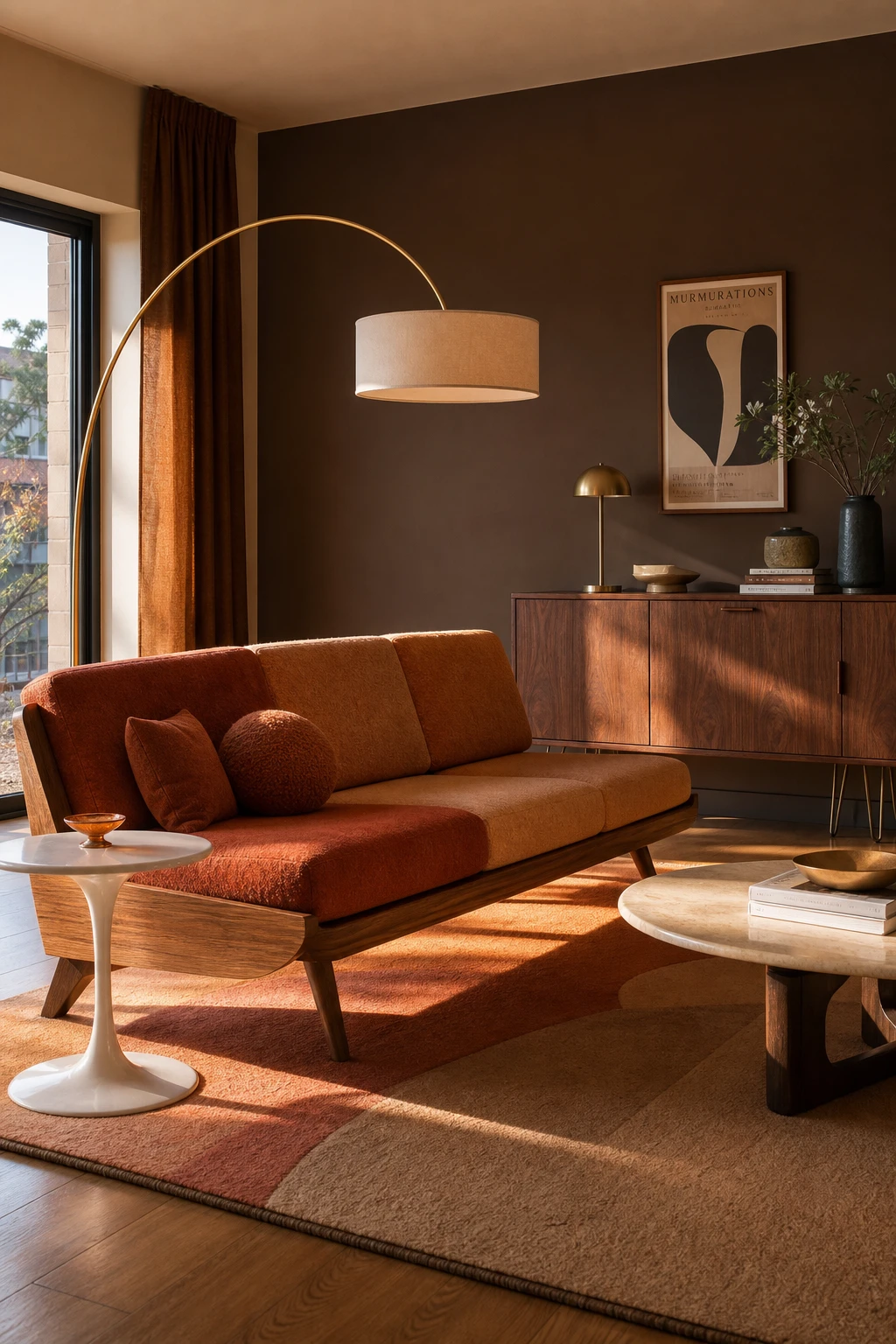
Furniture silhouette is doing the heavy lifting here, and that is the thing I always check first in a mid century scheme. Those tapered legs, the low slung sofa, the long clean credenza: they give the eye a clear rhythm before colour even enters the conversation. Once the lines are right, the burnt sienna and terracotta land as feeling rather than decoration, warm and grounded rather than loud. You get a room that looks considered, not costumed.
The Key Details
Low slung tapered leg sofa in burnt sienna bouclé
Tulip pedestal side table in moulded fibreglass
Arc floor lamp with brushed brass stem and drum shade
Long walnut credenza with hairpin legs
Terracotta and sand low pile wool rug
Pro TipPair one genuine vintage piece, a sideboard or side table, with new sofas so the room reads as collected over time rather than ordered from a single catalogue.
AvoidAdding too many decorative objects on every surface breaks the negative space that makes mid century lines sing, and the whole scheme starts to look cluttered rather than calm.
The Best of 70s Boho Decor Without Any of the Parts Worth Leaving Behind
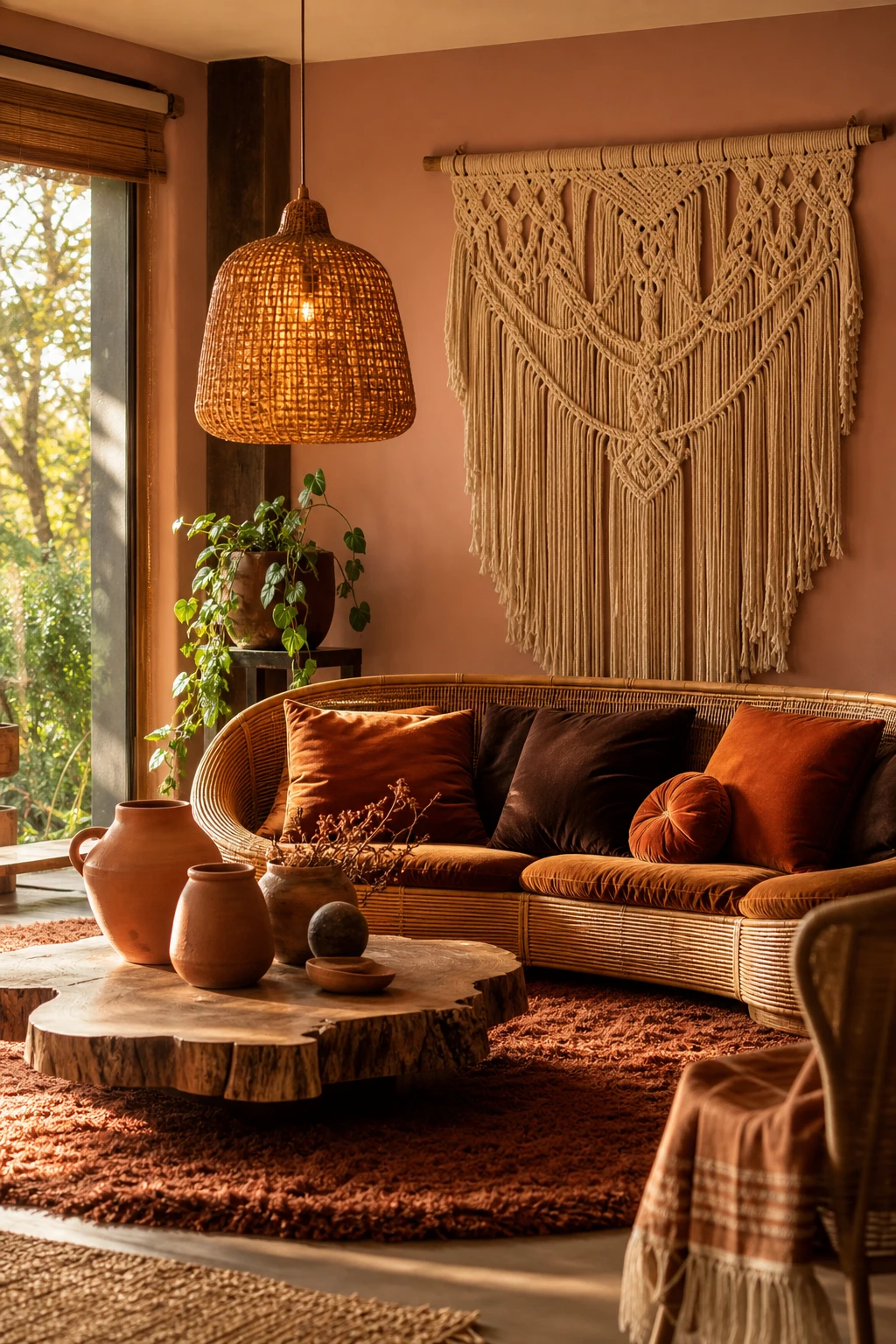
Seventies boho is a reference I keep returning to, because once you strip away the avocado green and the fussy clutter the bones are genuinely beautiful. The low, curved rattan sofa anchoring the room at eye level is the move I always start with: it pulls you into the space rather than keeping you at a polished distance. Warmth arrives through the shag rug and macrame without any costume party feeling, because the palette stays in that tight band of rust, caramel, and deep brown, and nothing steps outside it.
The Key Details
Low curved rattan sofa
Shaggy rust wool rug
Organic macrame wall hanging
Woven rattan pendant light
Live edge timber coffee table
Pro TipBring in one strong macrame piece and a shag rug in the same rust family, then let those two carry all the texture so everything else can stay clean.
AvoidLayering every 70s motif at once, the sunburst mirror, the lava lamp, the pampas grass, collapses the edit and the room reads as a theme rather than a home.
Boho Living Room Decor Is Really Just an Art of Confident Layering
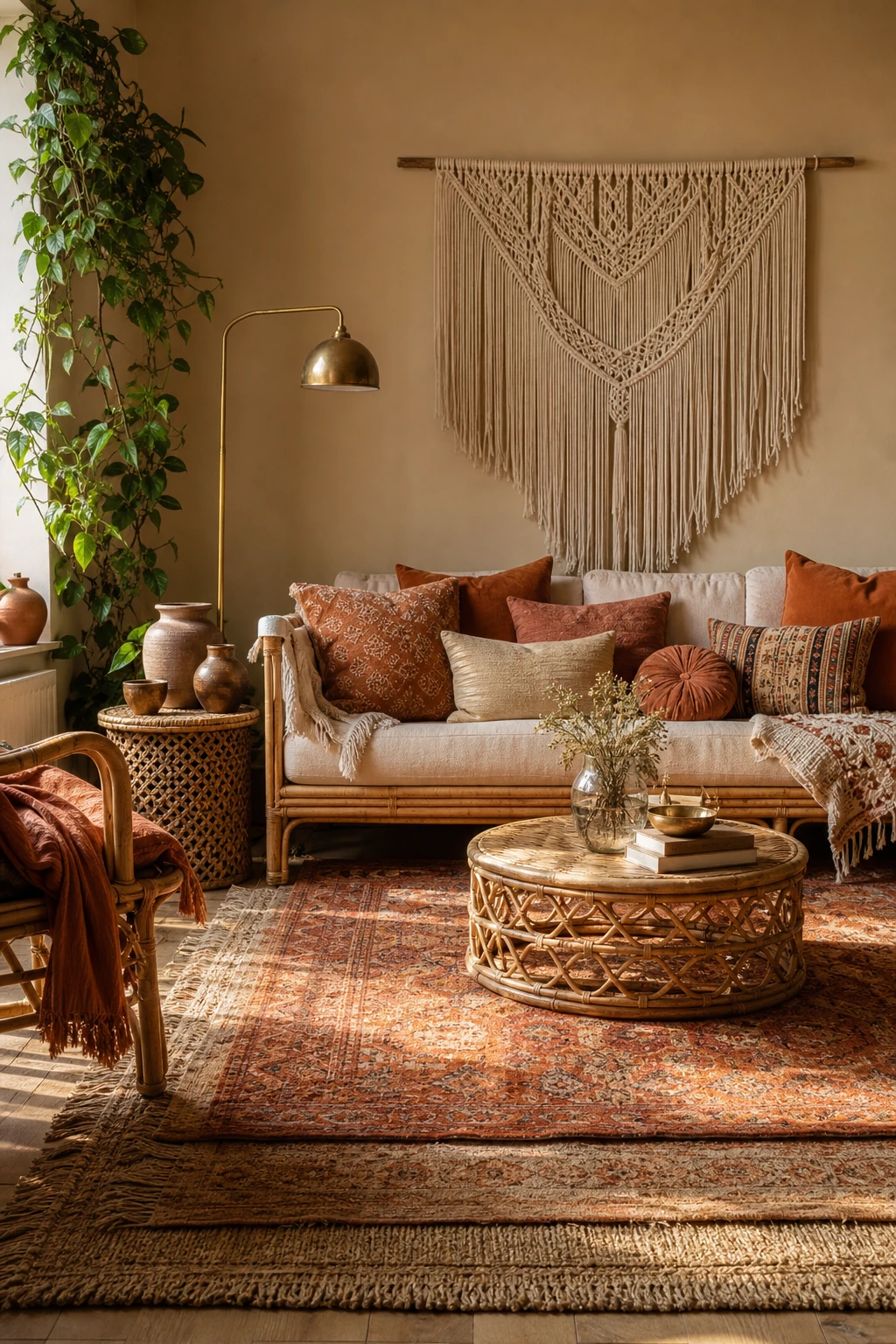
Boho layering wins me over precisely because it rewards patience. You build the room slowly, starting with a large woven rug in terracotta, then pulling ochre and warm brown from that base into cushions, throws, and ceramics. What you get is a room that looks collected over time, not assembled in an afternoon. That gradual accumulation is exactly what separates curated from cluttered.
The Key Details
Stacked layered rugs in terracotta and ochre
Low rattan sofa with mixed velvet and woven cushions
Macrame wall hanging
Vintage brass floor lamp
Hand thrown terracotta ceramic vessels
Pro TipChoose one large anchor textile first, such as a stacked rug in terracotta and ochre, then let its colours decide every cushion, throw, and vessel you add after it.
AvoidMixing every pattern at the same scale, a large ikat next to a large stripe next to a large weave, flattens the whole composition and makes the room feel restless rather than rich.
Retro Boho Details That Brown and Orange Living Rooms Were Built For
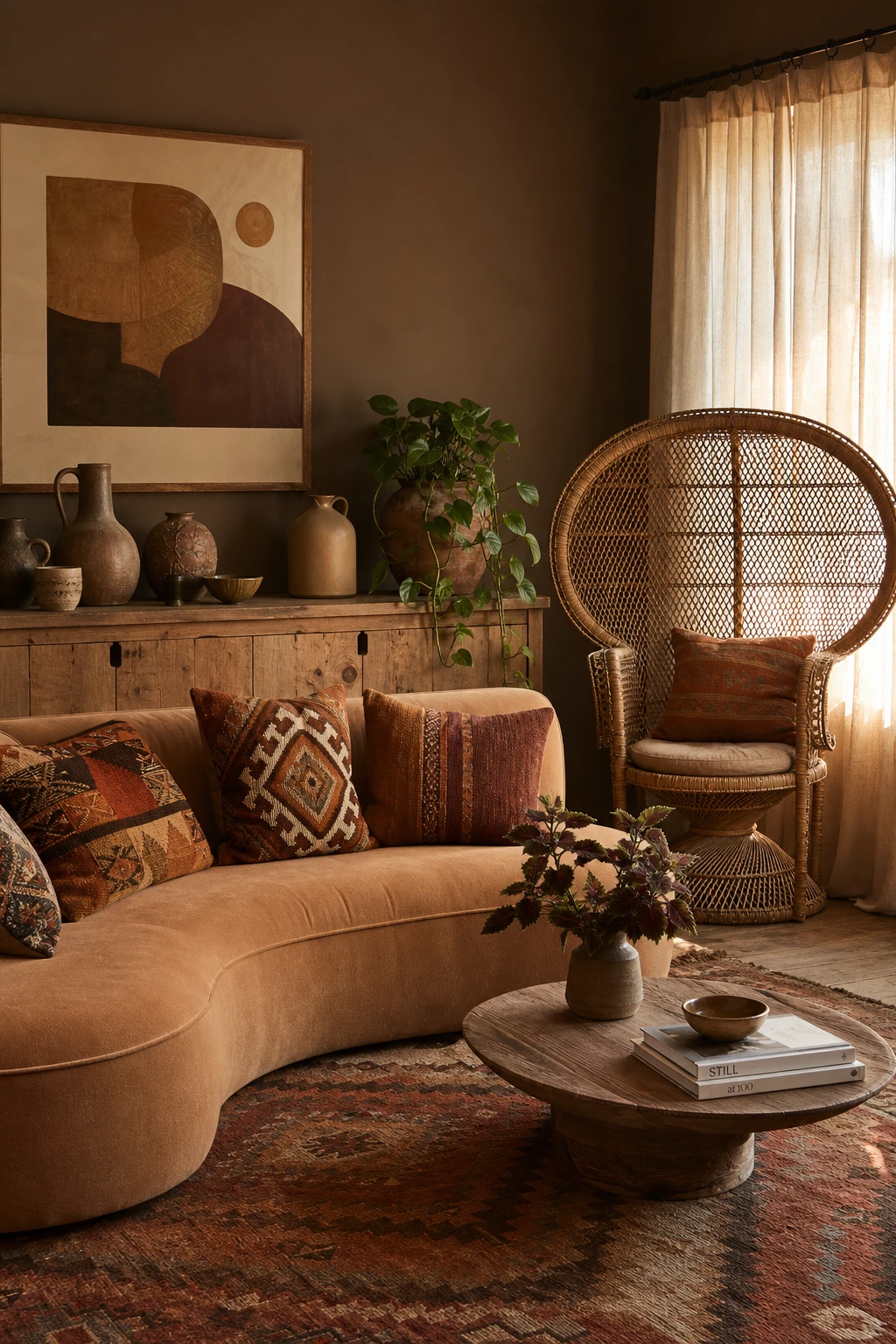
Put retro boho references into a brown and orange room and they slot in as if they were always there. Vintage geometric cushions, a woven peacock chair, a kilim on the floor: they all carry the same earthy warmth, so nothing fights and everything belongs. The quality I am chasing is that handpicked, gathered slowly feeling where the room looks like it grew rather than arrived all at once.
The Key Details
Low slung curved sofa with vintage geometric cushions
Woven rattan peacock chair
Layered kilim rug in terracotta and tobacco
Mismatched ceramic vessels on raw timber sideboard
Trailing pothos in hand thrown ceramic pot
Pro TipChoose one rattan or cane piece as your anchor, like a peacock chair or a slatted sideboard, and let everything else in the room respond to its warm, open texture.
AvoidBuying a full matching retro furniture set pulls the room into showroom territory and kills the handpicked, gathered slowly quality that gives boho its personality.
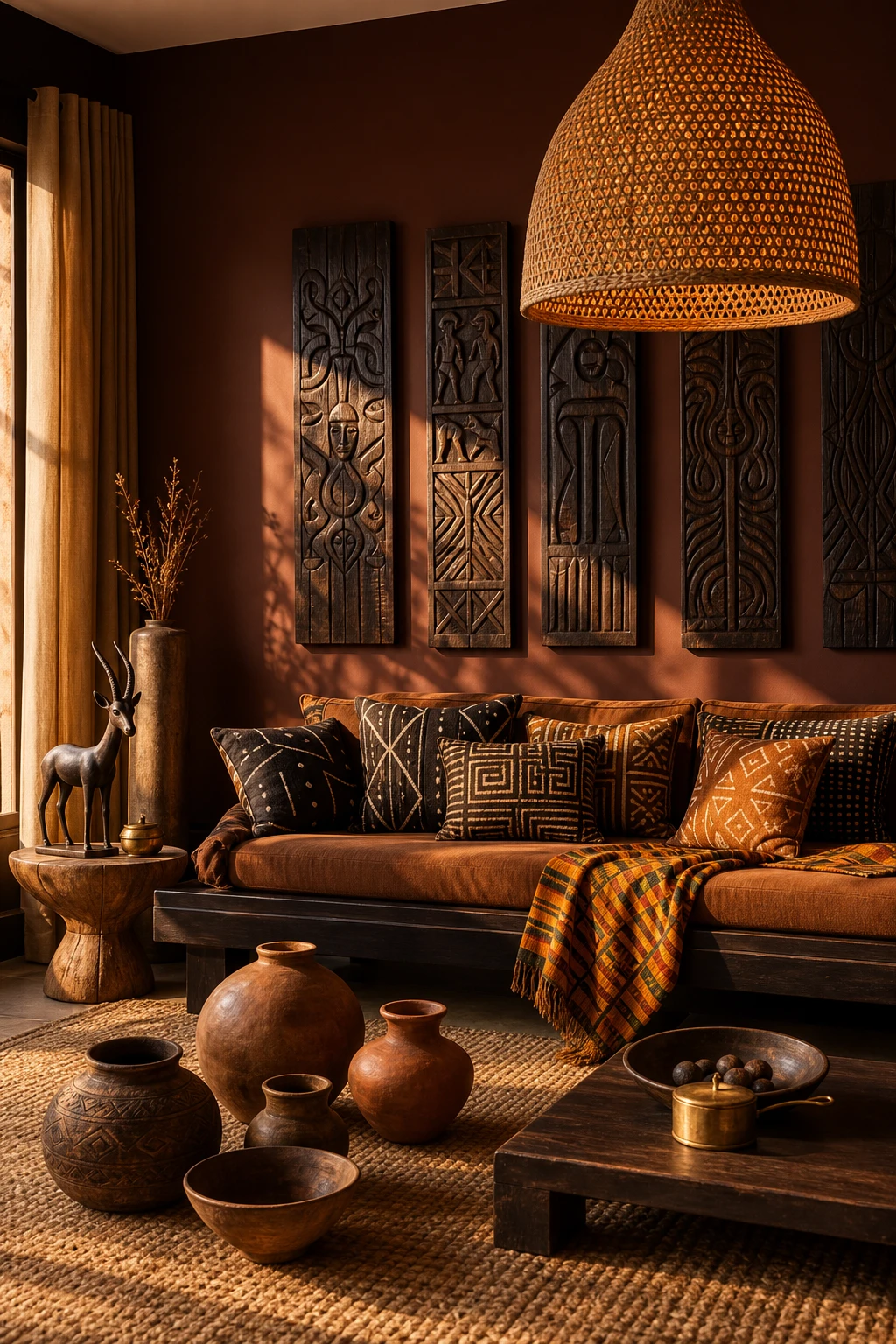
African Style Inspiration Brings a Living Room Richness Nothing Else Quite Matches
Drawing from African craft traditions is one of the richest moves you can make in a brown and orange room. The hand carved wood, mudcloth, fired clay and woven grass all carry real weight, the kind of warmth that comes from a maker’s hands rather than a factory line. What I love is how every texture here talks to the next, so you get depth that builds slowly across the room rather than landing all at once.
The Key Details
Hand carved dark wood panel feature wall
Low ebony platform sofa with mudcloth and kente cushions
Woven grass pendant light
Terracotta and burnished clay vessel cluster on sisal rug
Carved antelope figurine on raw wood side table
Pro TipAnchor the whole room around one genuinely handmade piece, a carved panel or a fired clay vessel you know the story behind, and let every other choice orbit it.
AvoidPulling a look together from surface pattern alone turns a considered room into a theme, and the difference shows the moment anyone sits down in it.
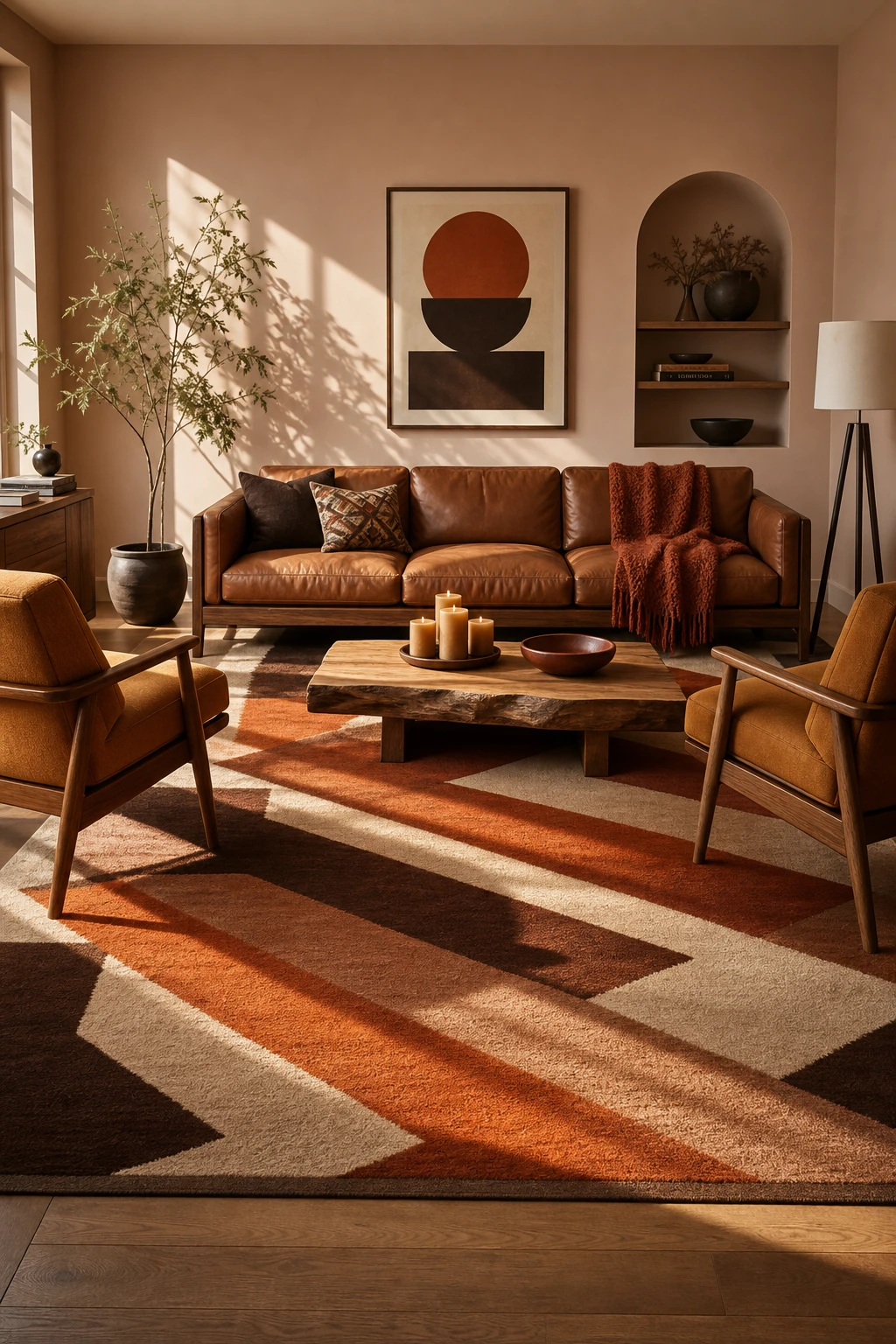
A Geometric Rug Gives the Room Its Pattern Without Touching a Single Wall
A geometric rug does the heavy lifting here, bringing pattern into the room without a single painted motif or printed cushion on the walls. What I love is how the burnt orange, chocolate and cream geometry pulls every piece of furniture into one clear zone, so the sofa, armchairs and coffee table all feel like they belong together. You get graphic interest right at eye level when you walk in, yet the walls stay calm and easy to live with.
The Key Details
Hand knotted geometric wool rug in burnt orange, chocolate and cream
Low profile walnut frame sofa with cognac leather cushions
Amber linen armchairs
Raw edge oak coffee table
Matte rust ceramic bowl with beeswax candle cluster
Pro TipSize up and place the rug so all four sofa legs sit on it, because that one decision unifies the whole seating zone and stops the furniture from looking like it is floating.
AvoidChoosing a rug with five or six colours might feel exciting in the shop, but it locks you into a palette that fights every cushion, lamp and throw you try to add later.
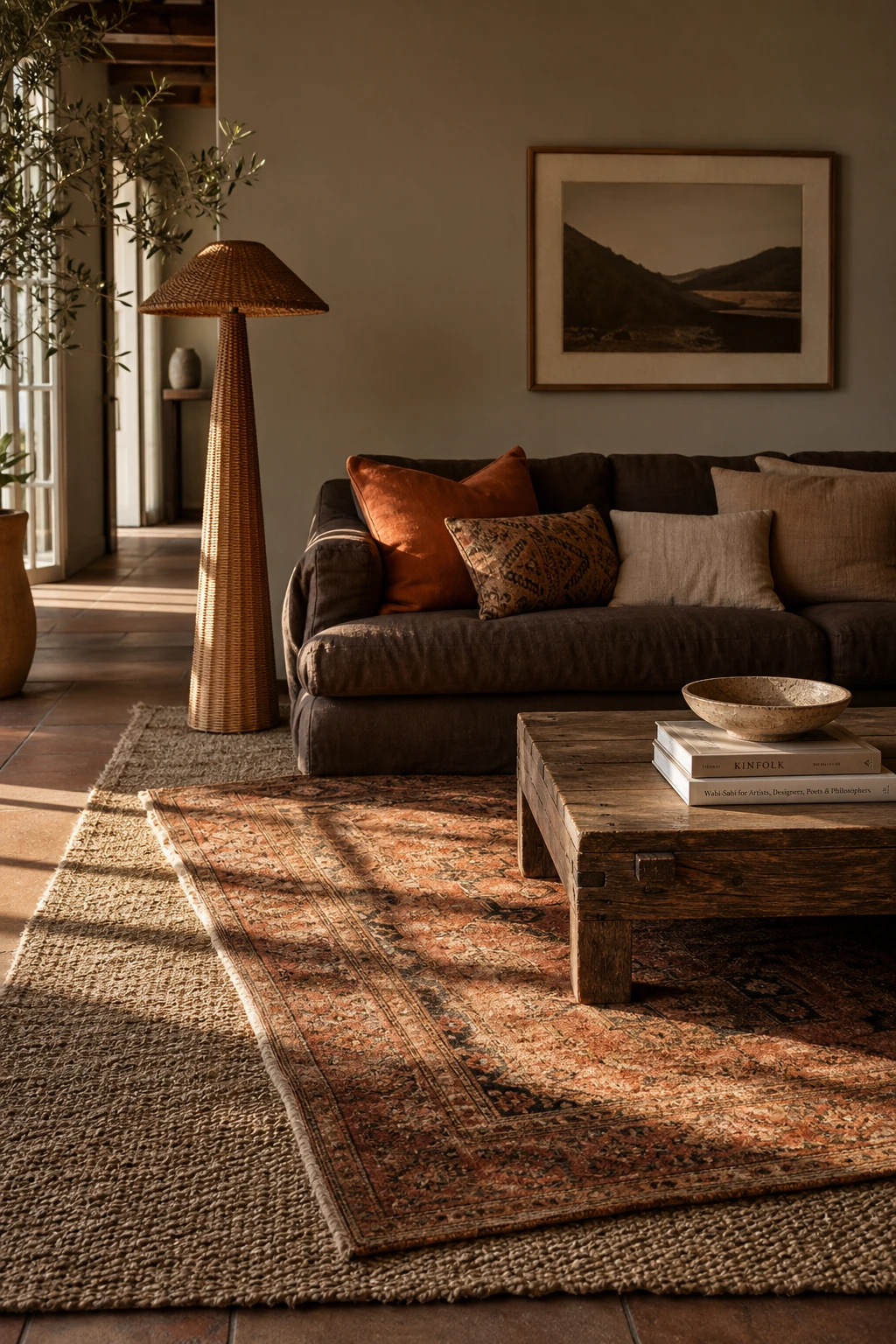
Layering Two Rugs Is the Trick That Makes a Living Room Look Truly Styled
Layering rugs is one of my favourite ways to add richness to a brown and orange living room without pushing another piece of furniture into the space. A large jute base anchors the whole seating area, and a smaller vintage burnt orange wool rug laid on top pulls the warm tones together and gives the floor real personality. You get contrast in texture, depth in colour, and that relaxed, collected feeling that no single rug can quite manage on its own.
The Key Details
Jute base rug
Vintage burnt orange wool rug
Low linen sofa
Weathered oak coffee table
Woven rattan floor lamp
Pro TipChoose a flat weave or very low pile rug as your top layer so it sits flush against the jute beneath and stays put underfoot.
AvoidPlacing two thick pile rugs on top of each other creates raised, unstable edges that curl and turn the floor into a trip hazard.
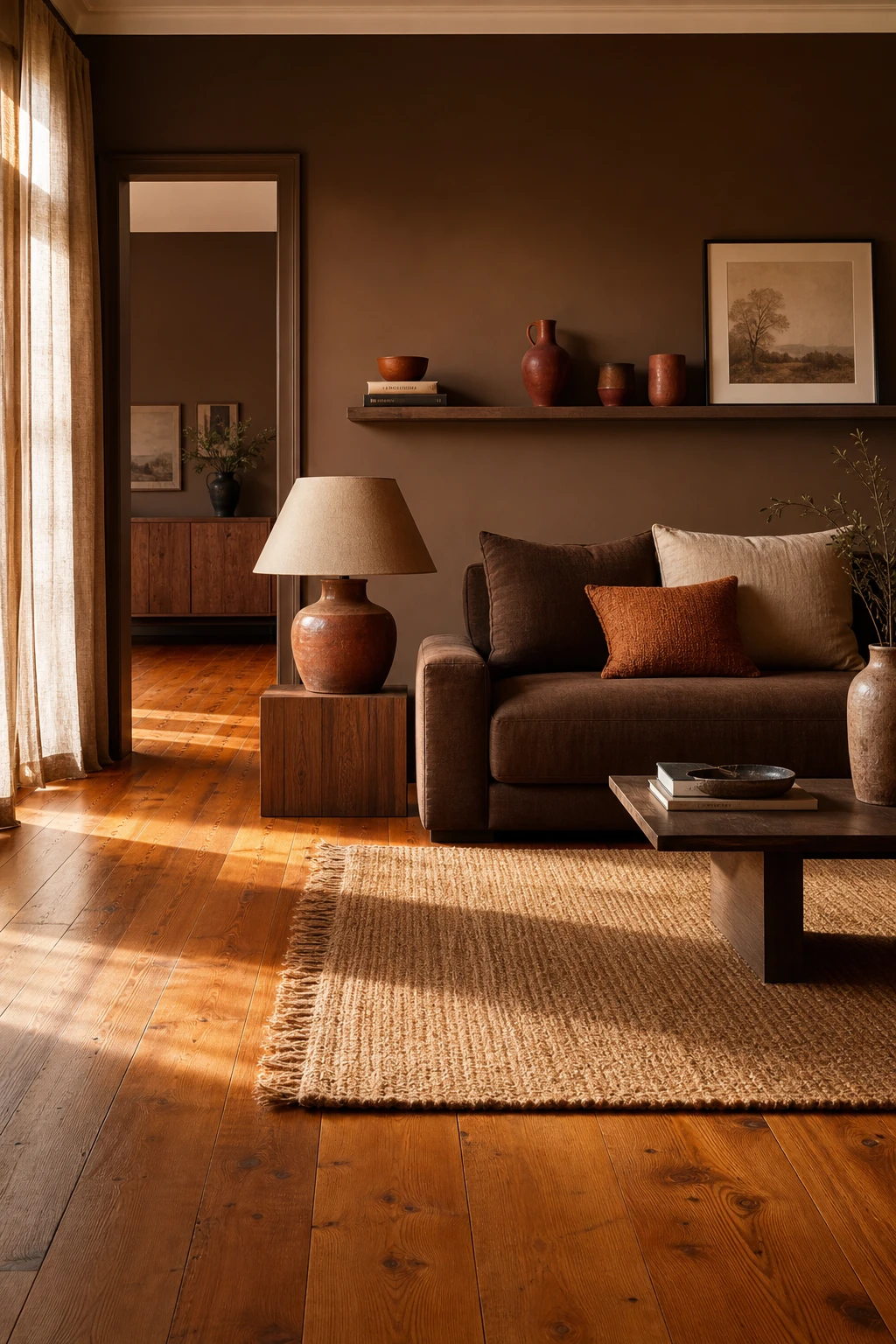
Orange Toned Wood Floors Give the Whole Room a Warm Foundation to Grow From
Orange toned wood floors are one of the warmest foundations a living room can have, and what I love is how they pull the whole colour scheme upward from the ground. You get this continuous amber glow running beneath everything, so the terracotta lamp, the brown sofa and the earthenware vessels all feel like they belong to the same family. The floor stops being background and becomes a full member of the palette.
The Key Details
Wide plank honey oak floorboards
Deep brown linen sofa
Terracotta ceramic table lamp
Layered woven jute area rug
Burnt sienna earthenware vessels on gallery ledge
Pro TipChoose a sofa and side tables in warm honey or mid brown tones so the room moves through a single warm range from floor to ceiling rather than jumping between temperatures.
AvoidBringing in cool grey furniture against an orange toned floor creates a jarring clash that makes the wood read as a mistake rather than an asset.
Orange and Natural Wood Together Is the Warmest Pairing a Living Room Can Have
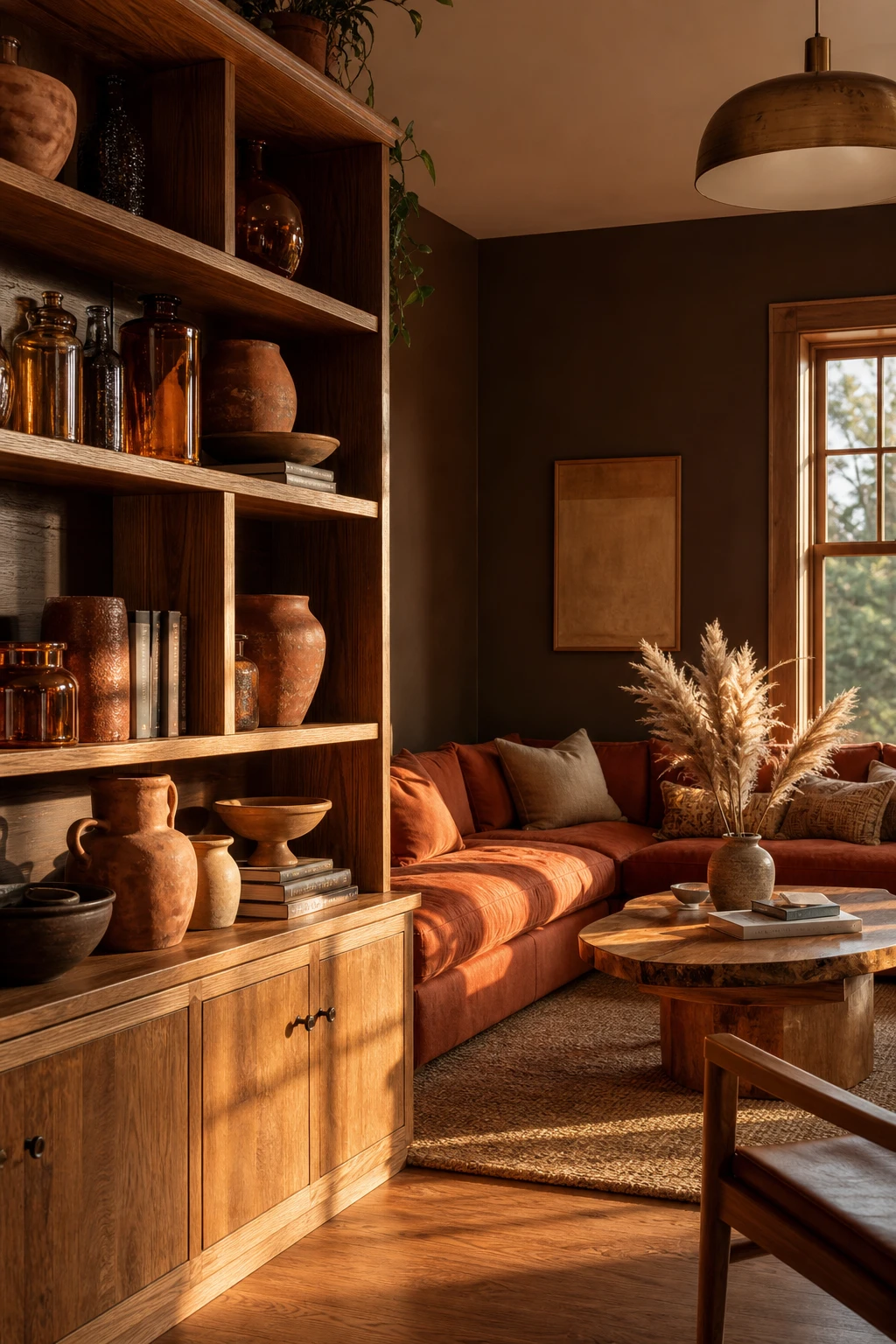
Orange and natural wood share the same warm undertones, so placing them together feels less like a design decision and more like they simply belong. What I love is how every surface quietly agrees: the sofa pulls the amber out of the grain, the live edge table echoes the pottery, and you get a room that reads as one continuous warmth rather than a collection of separate choices. The jute underfoot and the glass vessels overhead keep it breathing.
The Key Details
Built in solid oak shelving unit
Burnt orange linen sofa
Live edge honey toned coffee table
Jute area rug
Amber glass vessels and terracotta pottery
Pro TipMix at least three different wood finishes, a pale honey, a mid oak, and something darker, so the room looks gathered over time rather than bought in one afternoon.
AvoidCovering every surface in raw wood at once pushes the room into cabin territory, so anchor the timber with soft textiles and coloured upholstery to keep it feeling like a living room.
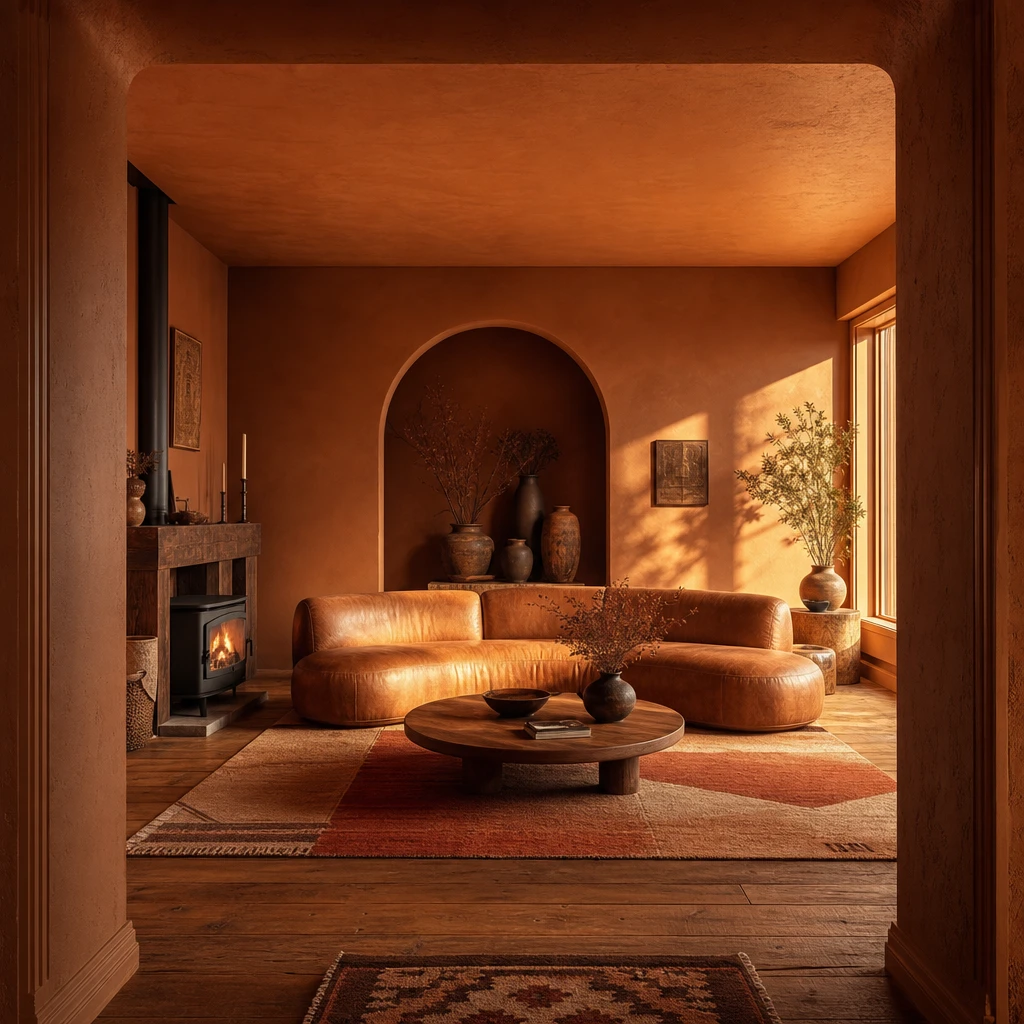
A Log Burner Gives a Brown and Orange Living Room Its Most Irresistible Focal Point
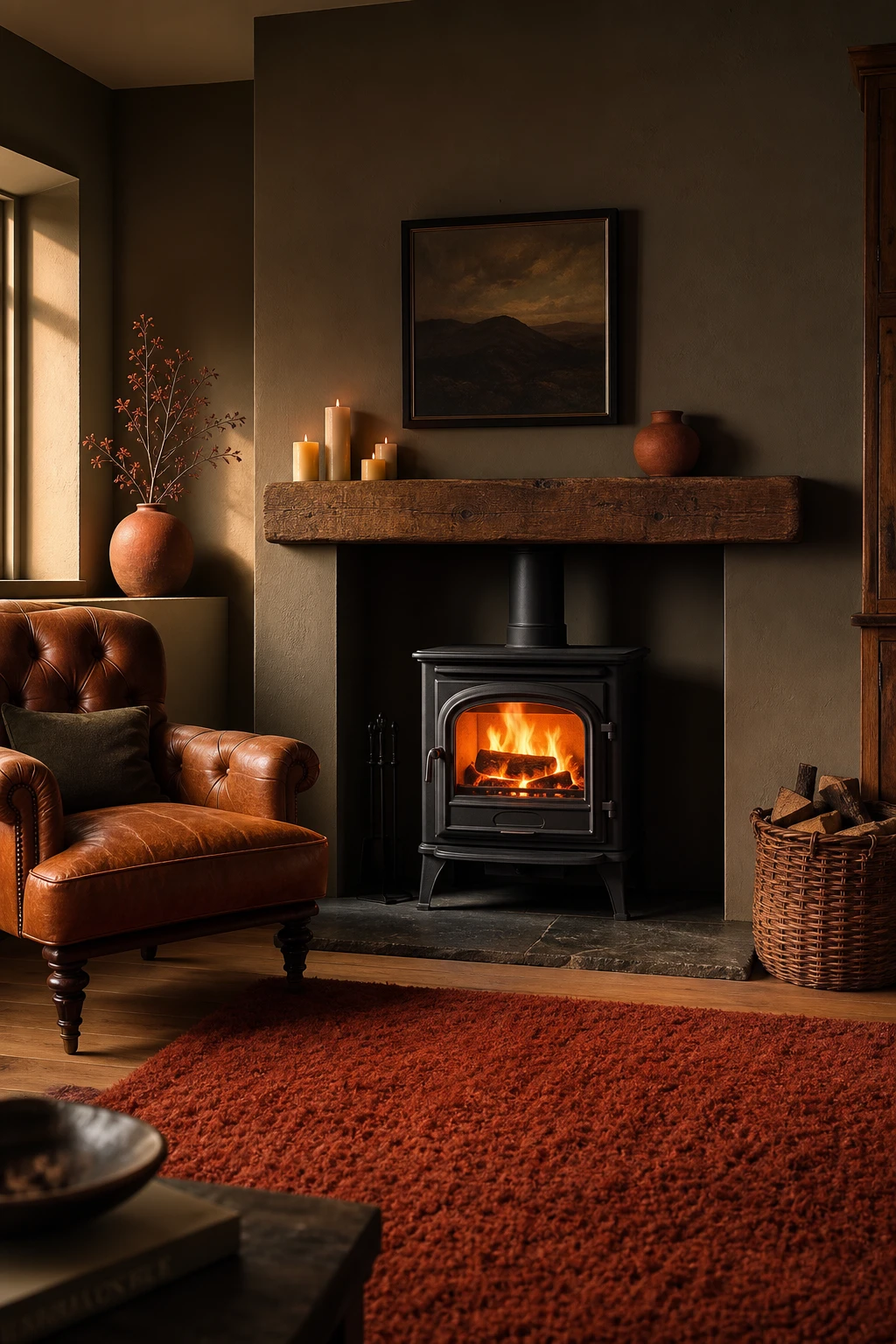
A log burner earns its place in a brown and orange room because it delivers the one thing every other element is only trying to suggest: actual warmth. The glazed door frames a living flame and you get a focal point that no artwork or mirror can compete with. What I love is how the cast iron pulls the deep browns together while the fire itself throws out exactly that amber and burnt sienna glow the whole palette is built around. Anchor it right and the room feels complete before you add a single accessory.
The Key Details
Cast iron log burner with glazed door
Reclaimed oak mantelpiece
Cognac leather armchair
Burnt sienna wool rug
Terracotta vessel and pillar candle grouping on mantel
Pro TipKeep the surround in plain smooth plaster or unfussy stone so nothing competes with the flame and the fire stays the clear star of the room.
AvoidStacking the hearth with decorative log piles, candles, and tools all at once swallows the burner and the fire gets completely lost behind the clutter.
Alan launched Edward George London in 2017. Since completing his masters in Town & Regional Planning (MPlan) he has combined the skills he learned at the University of Sheffield with his passion for design, to help create a foundation for those looking to create a beautiful home.