Newsletter Subscribe
Enter your email address below and subscribe to our newsletter

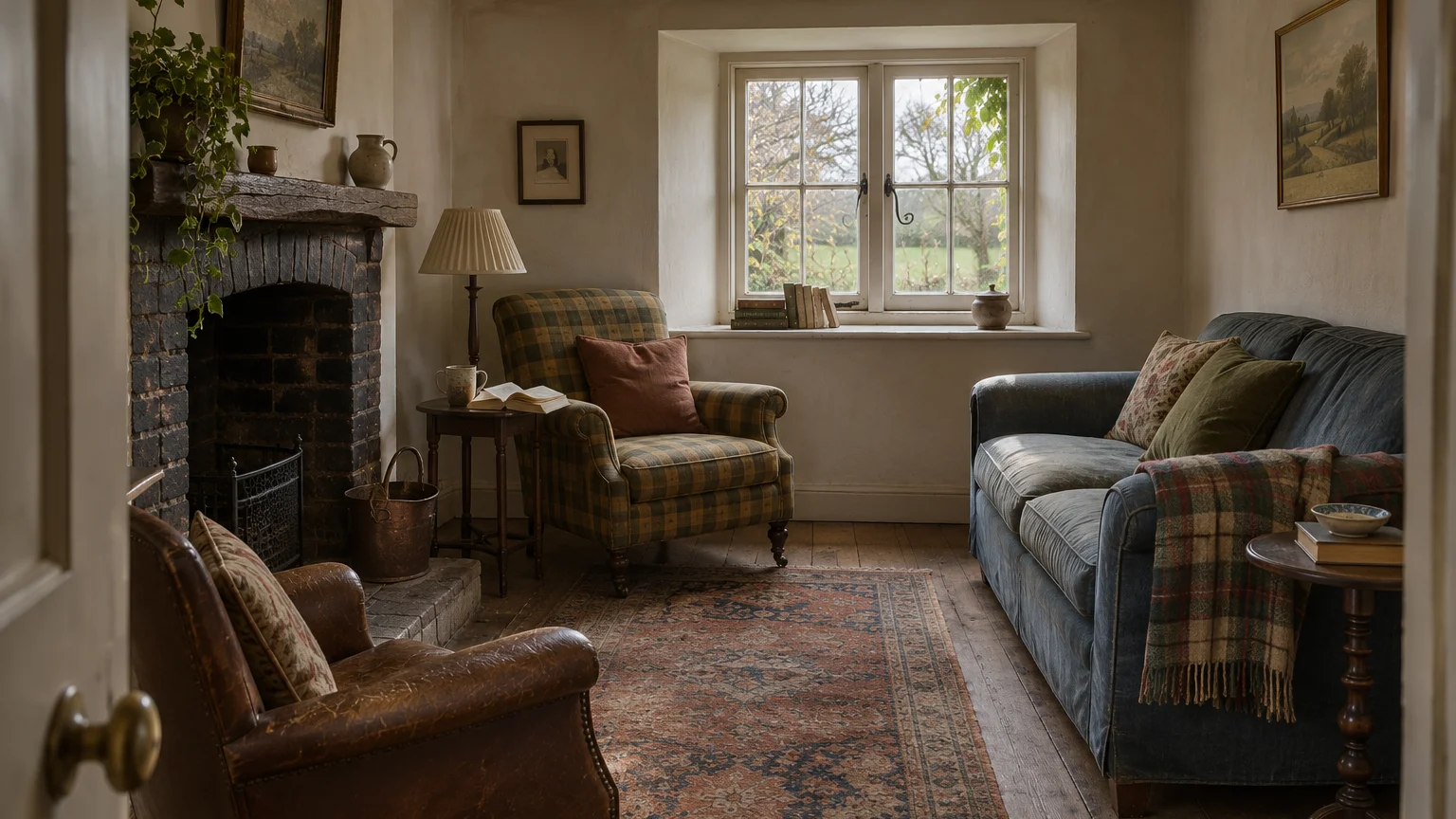
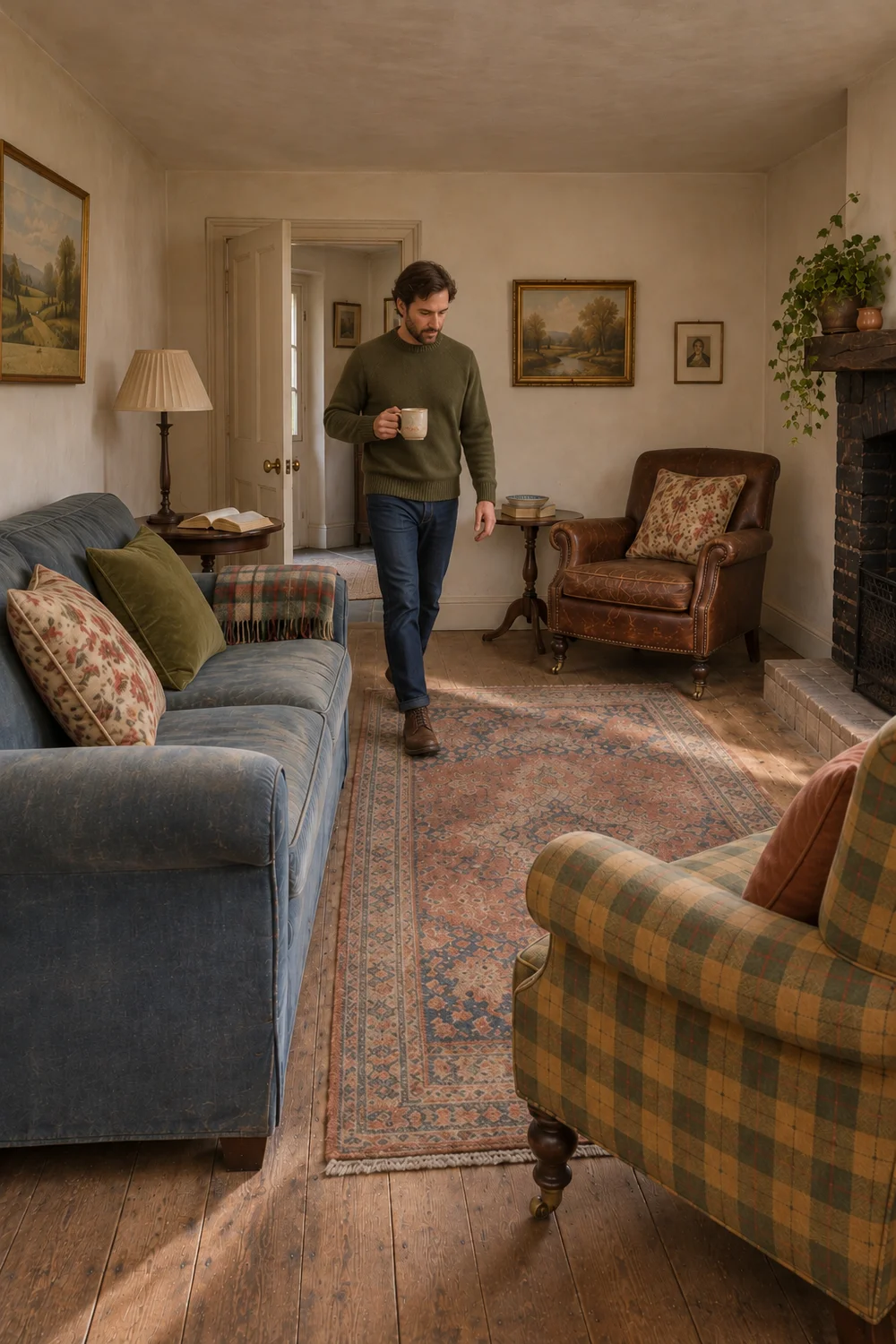
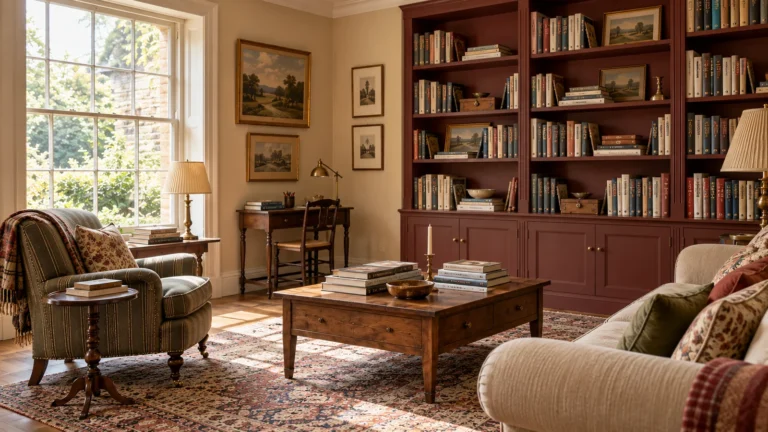
A small sitting room can have four seats and still feel awkward when everyone comes in at once. In this cottage layout, a two-seat sofa and two mismatched armchairs make room for four. The trick is to give each person somewhere to sit and put a drink while leaving a clear route through the middle.
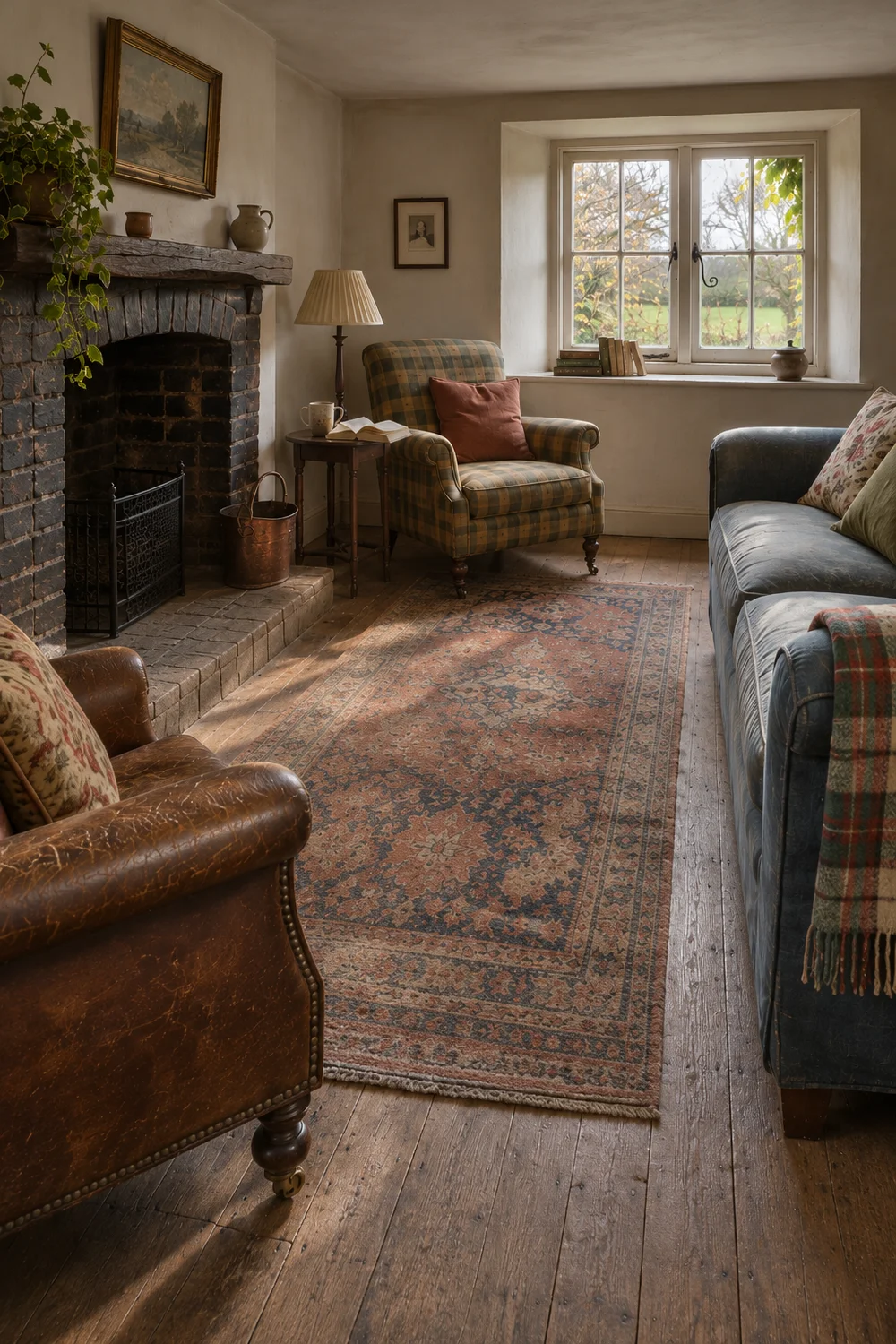
Start at the doorway. Open the door fully, then walk to the window and to the seat furthest away. Leave room for the door to swing and for someone to pass when the nearest chair is occupied. A chair that fits neatly against the wall on paper can still catch the door or make you turn sideways as you enter.
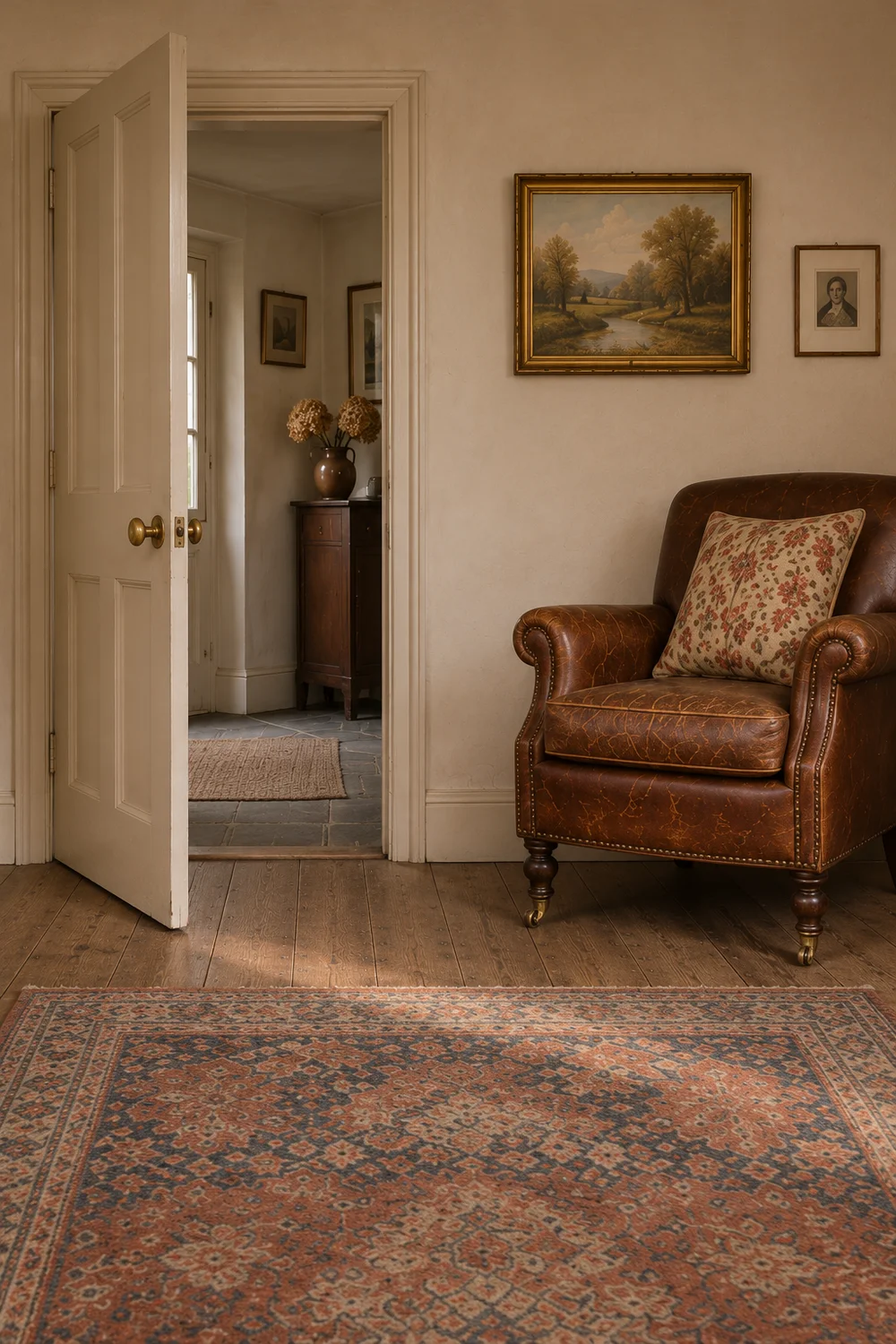
If you’re planning to add a table, mark its full footprint with low-tack tape where the finish allows. Walk past it holding a mug. Then sit down and stand back up. Try the test with the room in use. You’ll soon see where you need the space back.
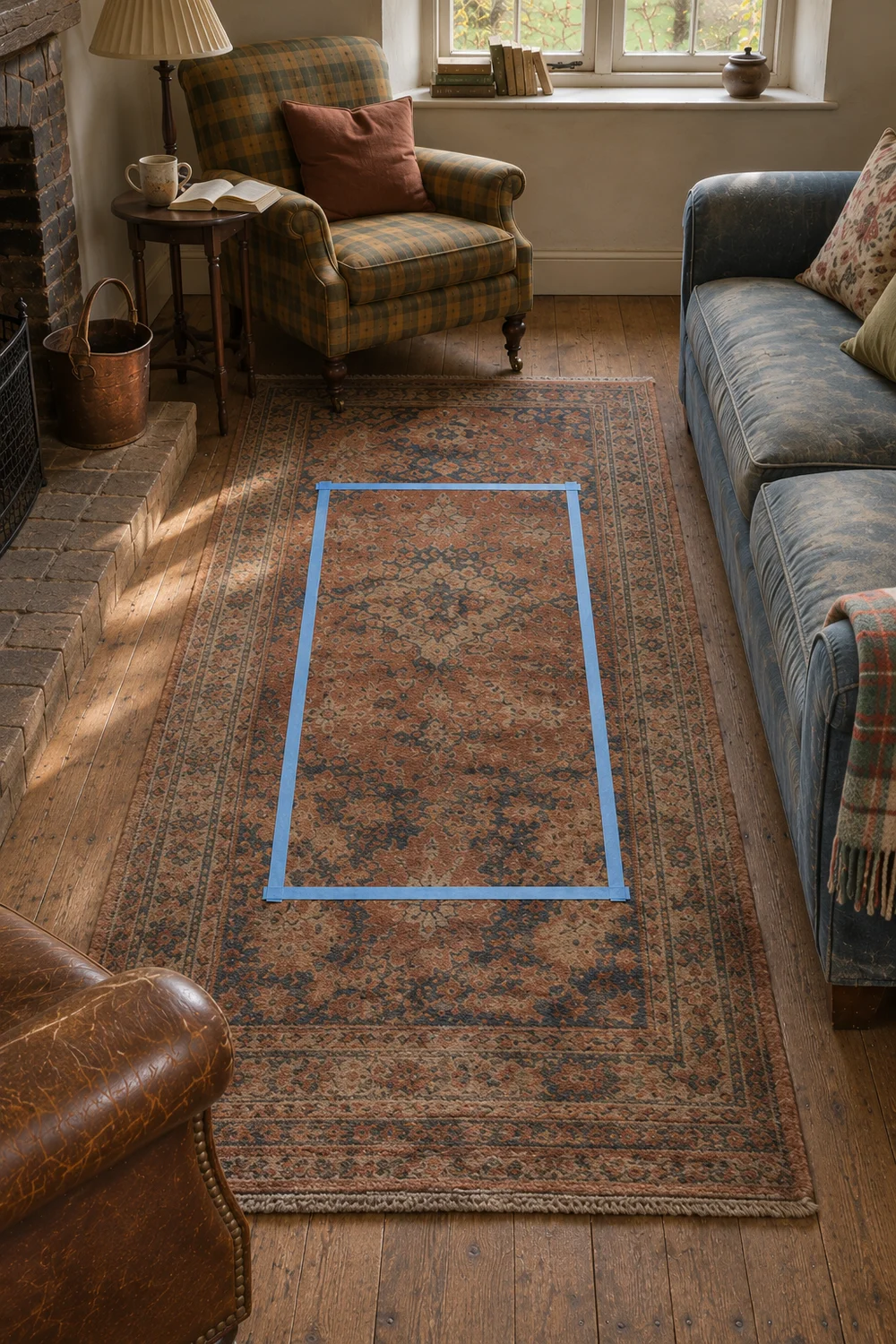
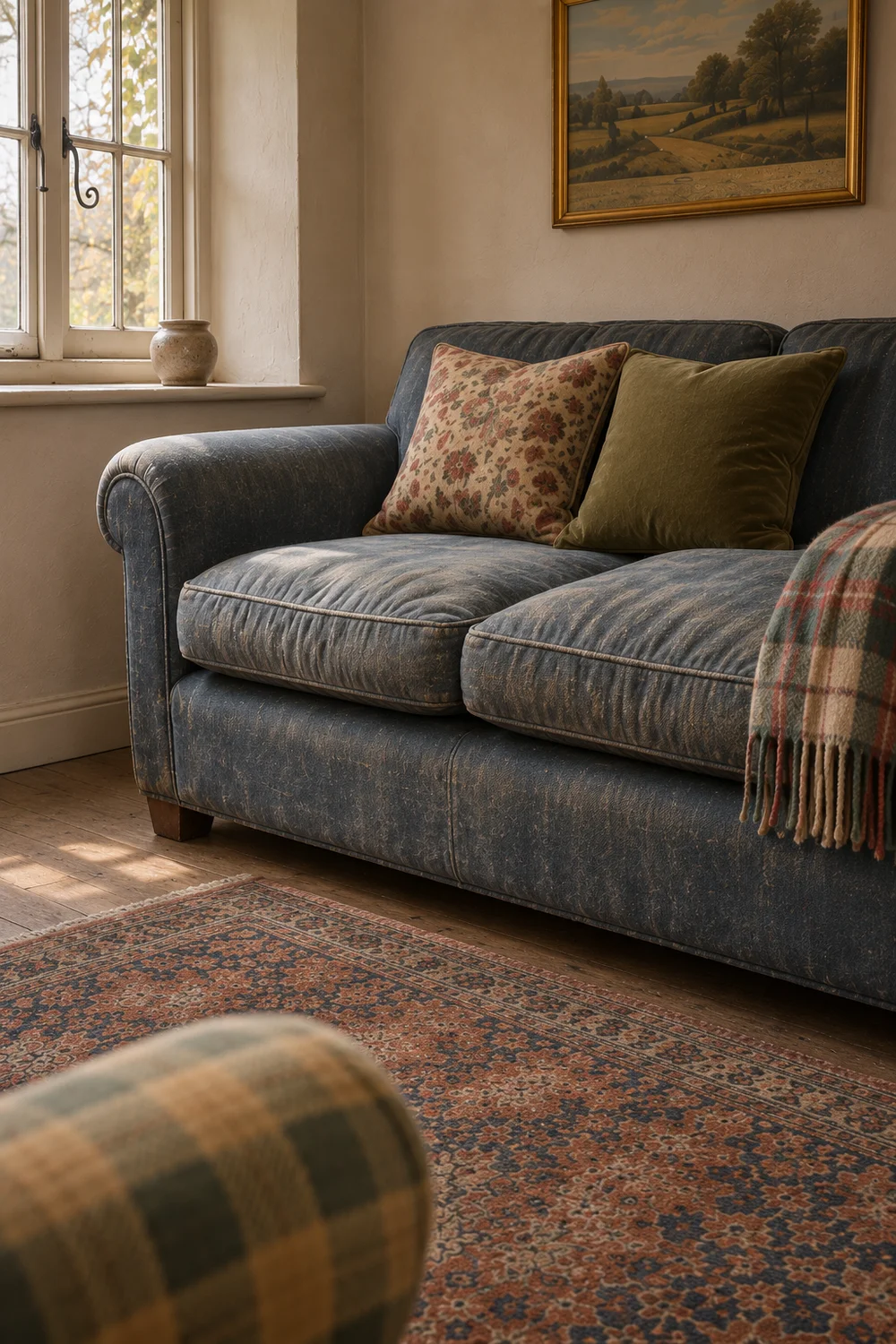
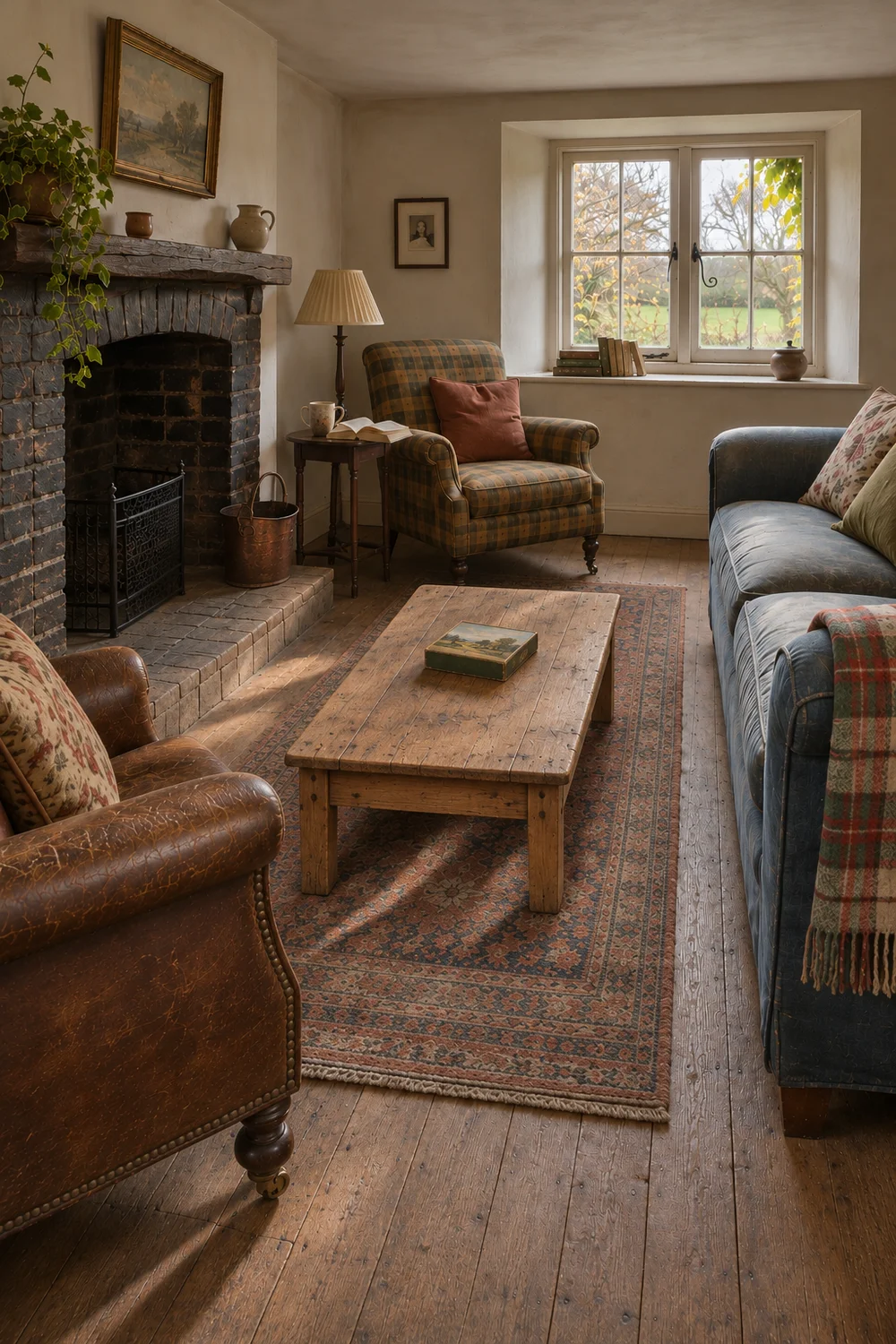
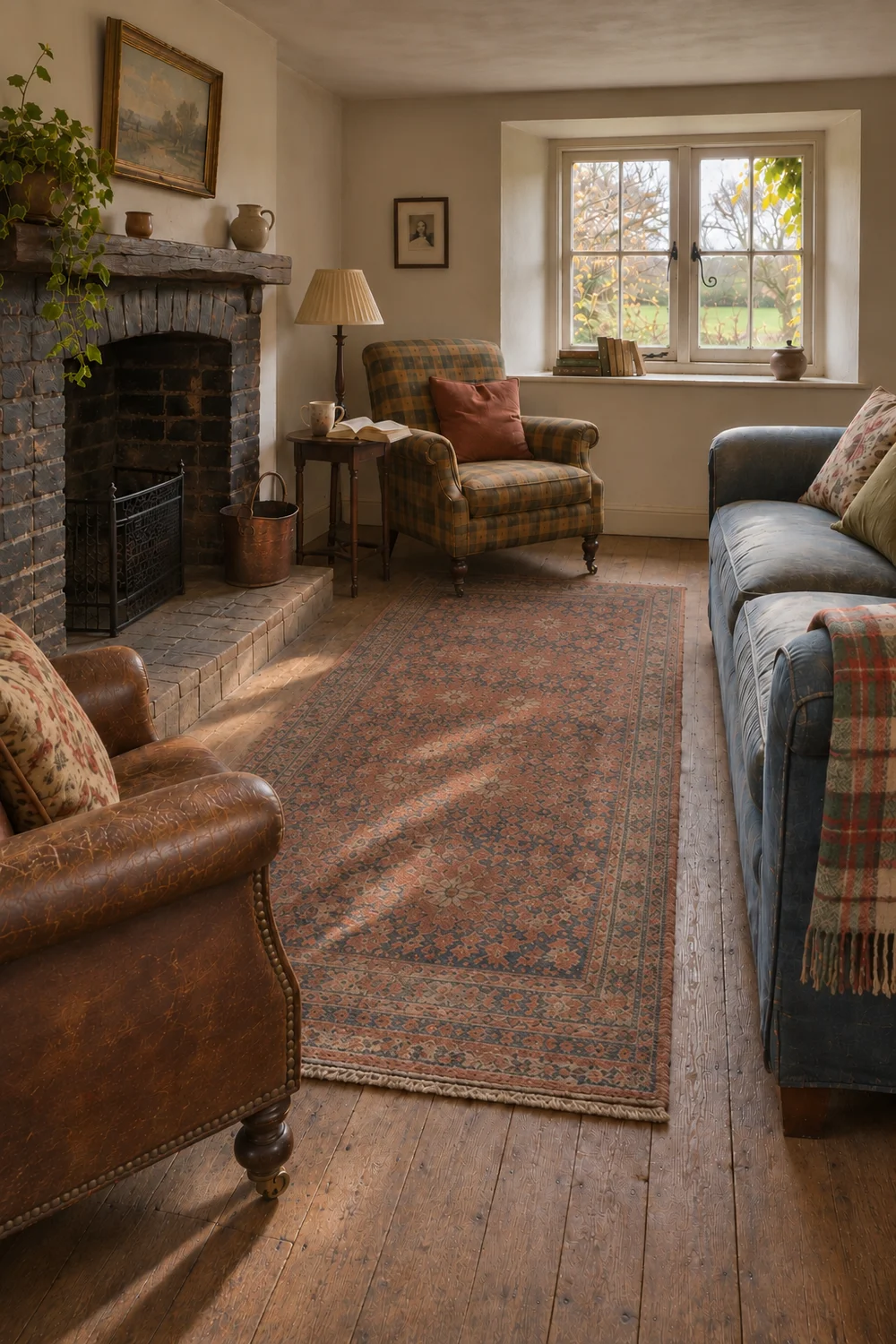
In this room the faded blue sofa sits along the long wall. The checked chair by the window and the leather chair near the doorway face in towards it. Each chair has a different shape, but the arrangement gives all four people somewhere to sit and lets them see one another without twisting.
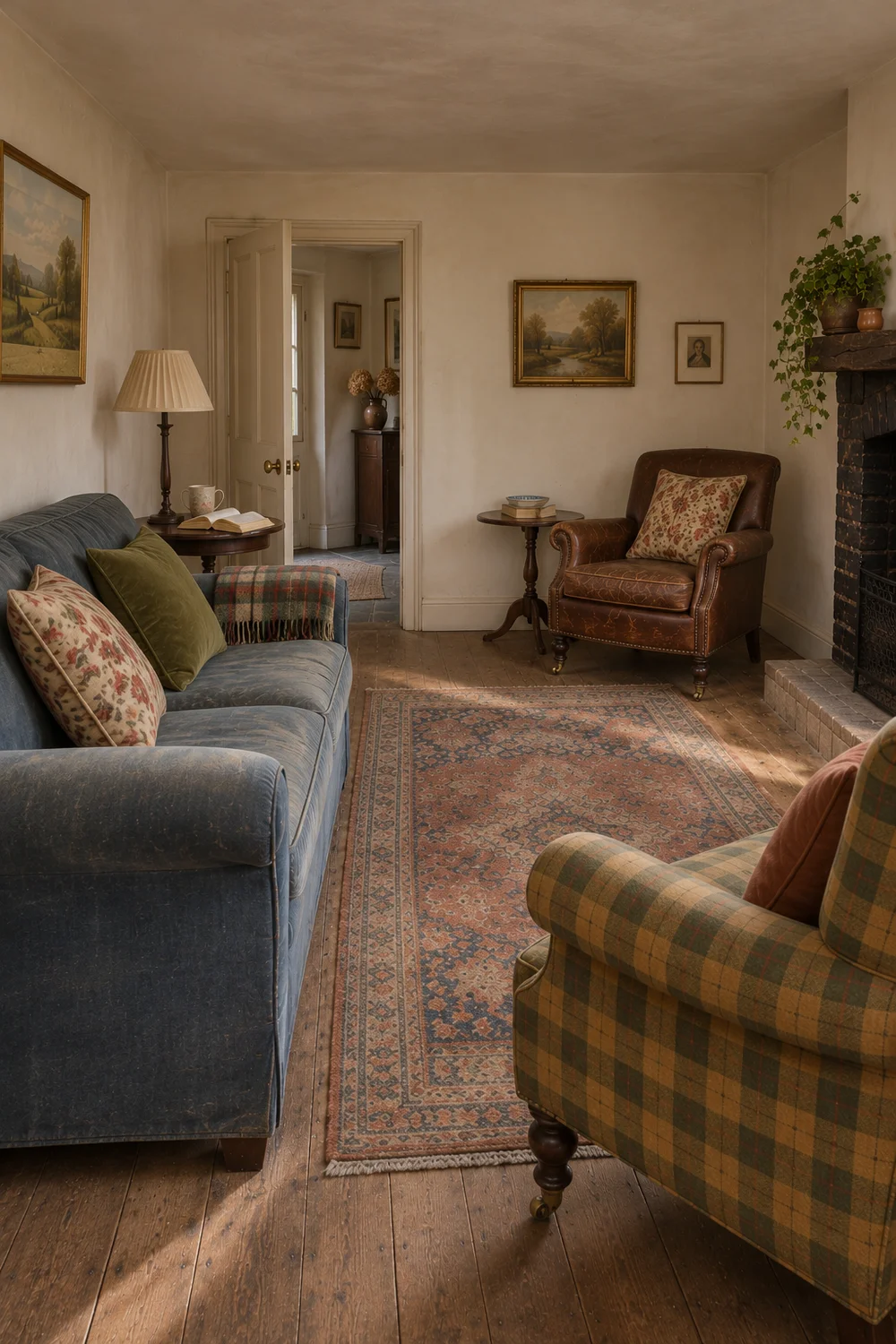
Count seats you’d happily use for an evening. Two adults should be able to sit on the sofa without crowding its arms. Check the armchairs too. A firmer chair with supportive arms can be a welcome choice alongside a deeper sofa, especially for someone who finds a low seat harder to get out of.
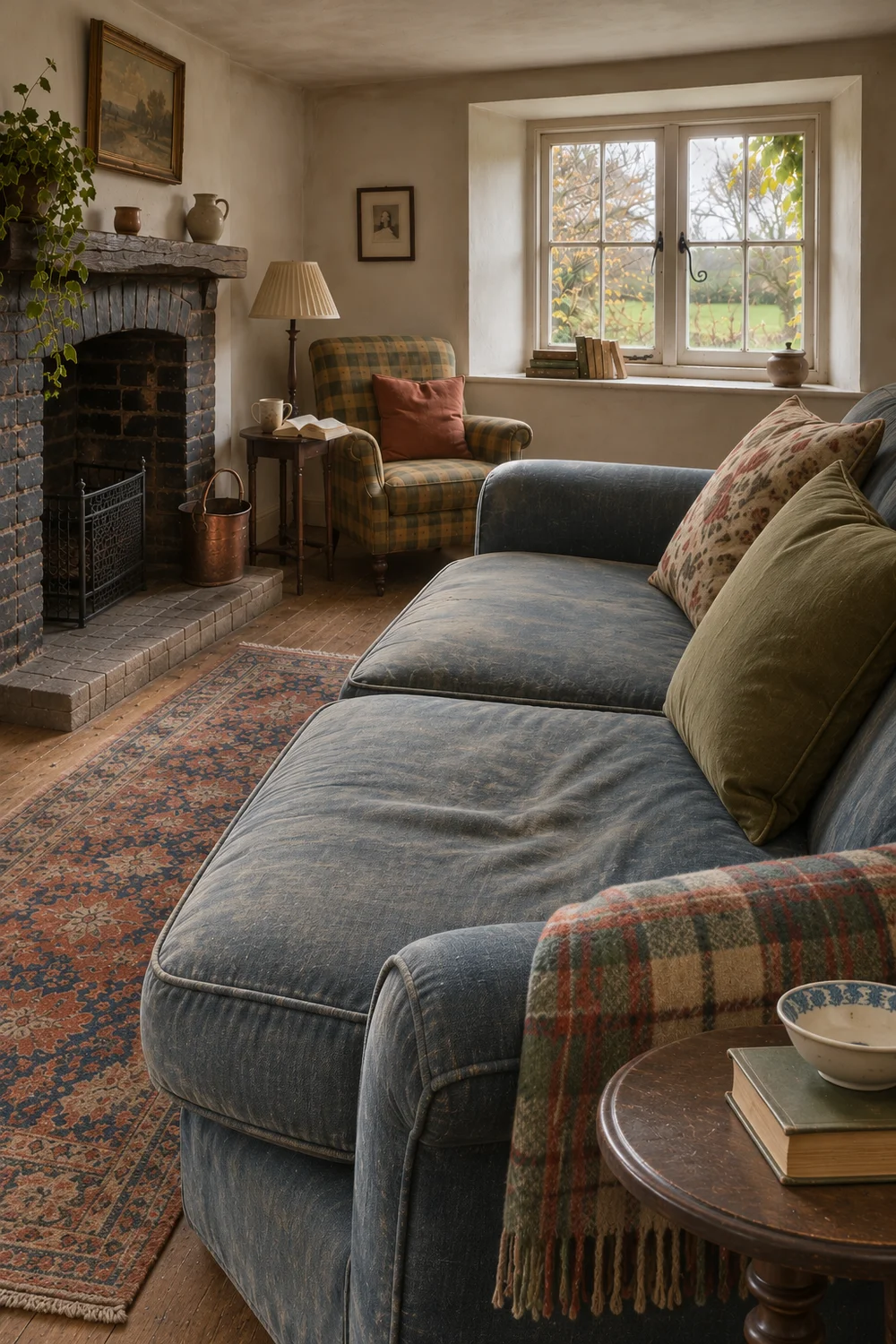
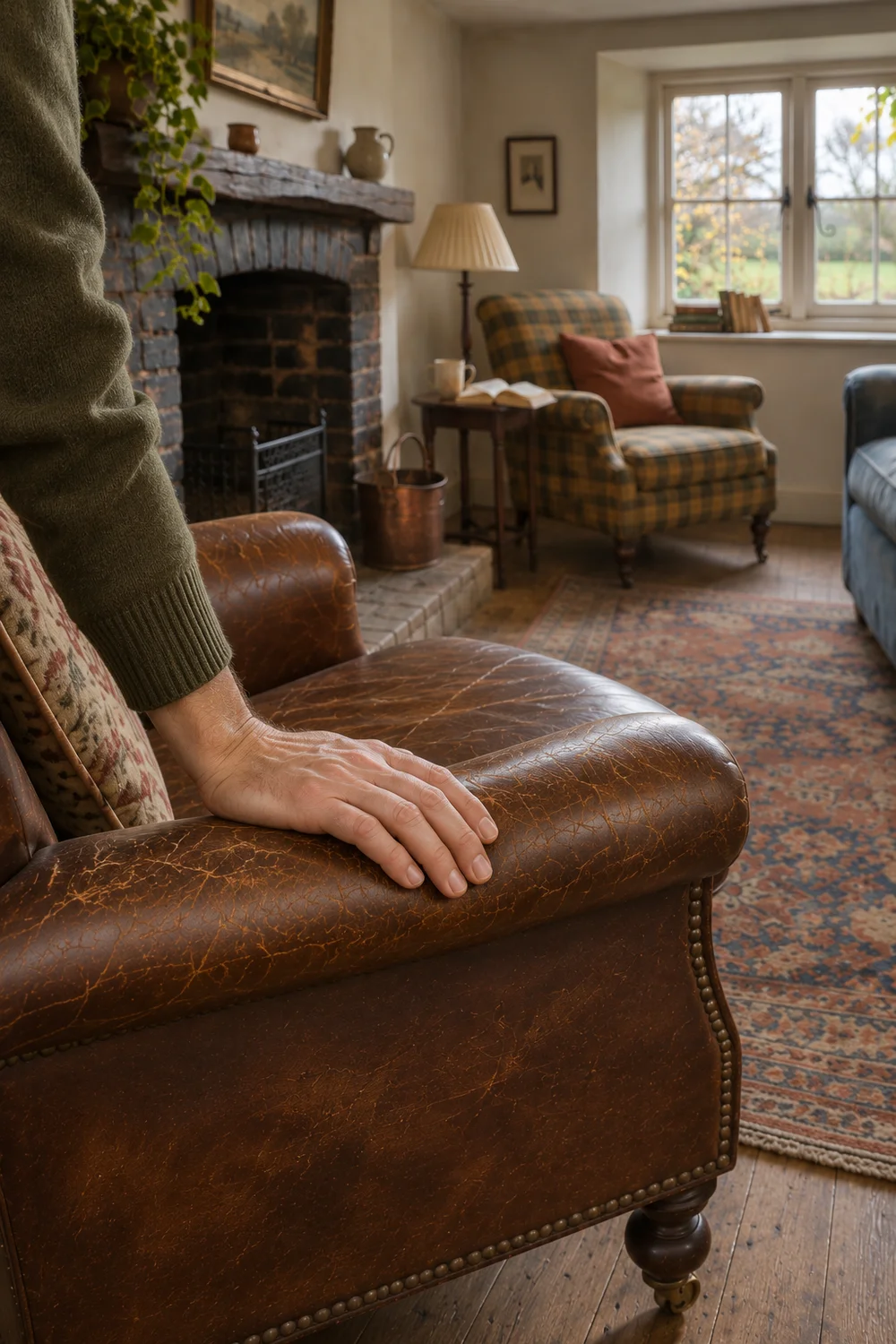
With a coffee table. If you spend evenings playing cards or spreading out a puzzle, a central surface earns its place. Start by trying a narrow table. From the doorway, check the space at the end of the table as well as the gap between it and the sofa. In this example, a deep rectangular table takes up the stretch of floor you need when stepping past the leather chair.
With side tables. Keep all four seats and move the shared surface to the edges. In this room the small table by the window serves the checked chair, and a table at the end of the sofa serves the seats nearest the doorway. The middle stays open. Sit in each spot before settling on the tables. If a mug is out of reach, adjust a table or add a small, stable surface beside that seat.
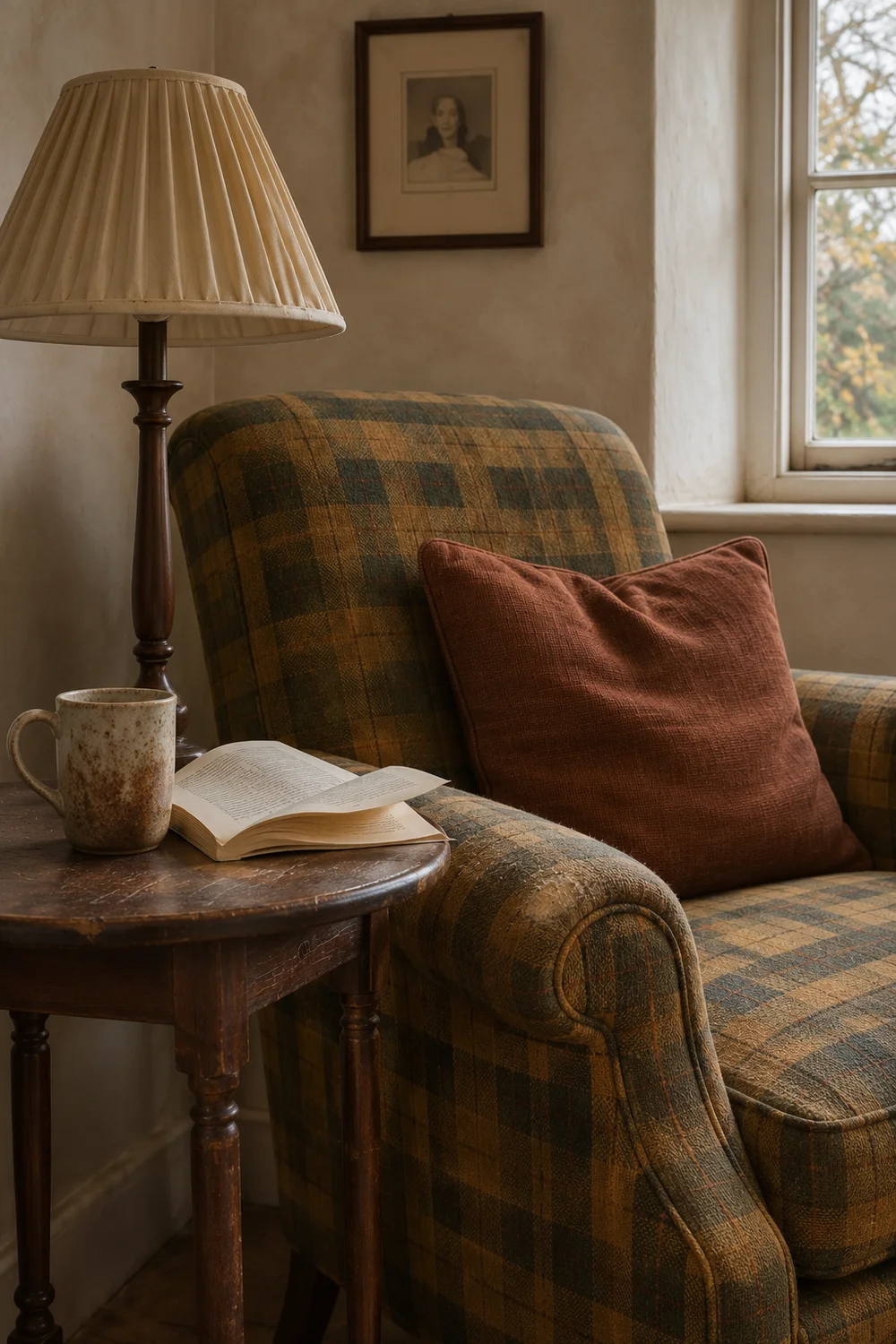
Try the checked chair by the window first. The little table sits beside its arm, so a book and a mug are close to hand. The reading lamp shares that table and lights the pages when daylight fades. Test the table height from the seat. It should feel easy to reach without leaning over the arm.
At the sofa, a round table can tuck close to the arm without putting a projecting corner in the walkway. If the sofa’s far seat needs its own light, a compact floor lamp beside that end can work where there’s room for the base. Try the switch from the seat and keep the cable out of the path.
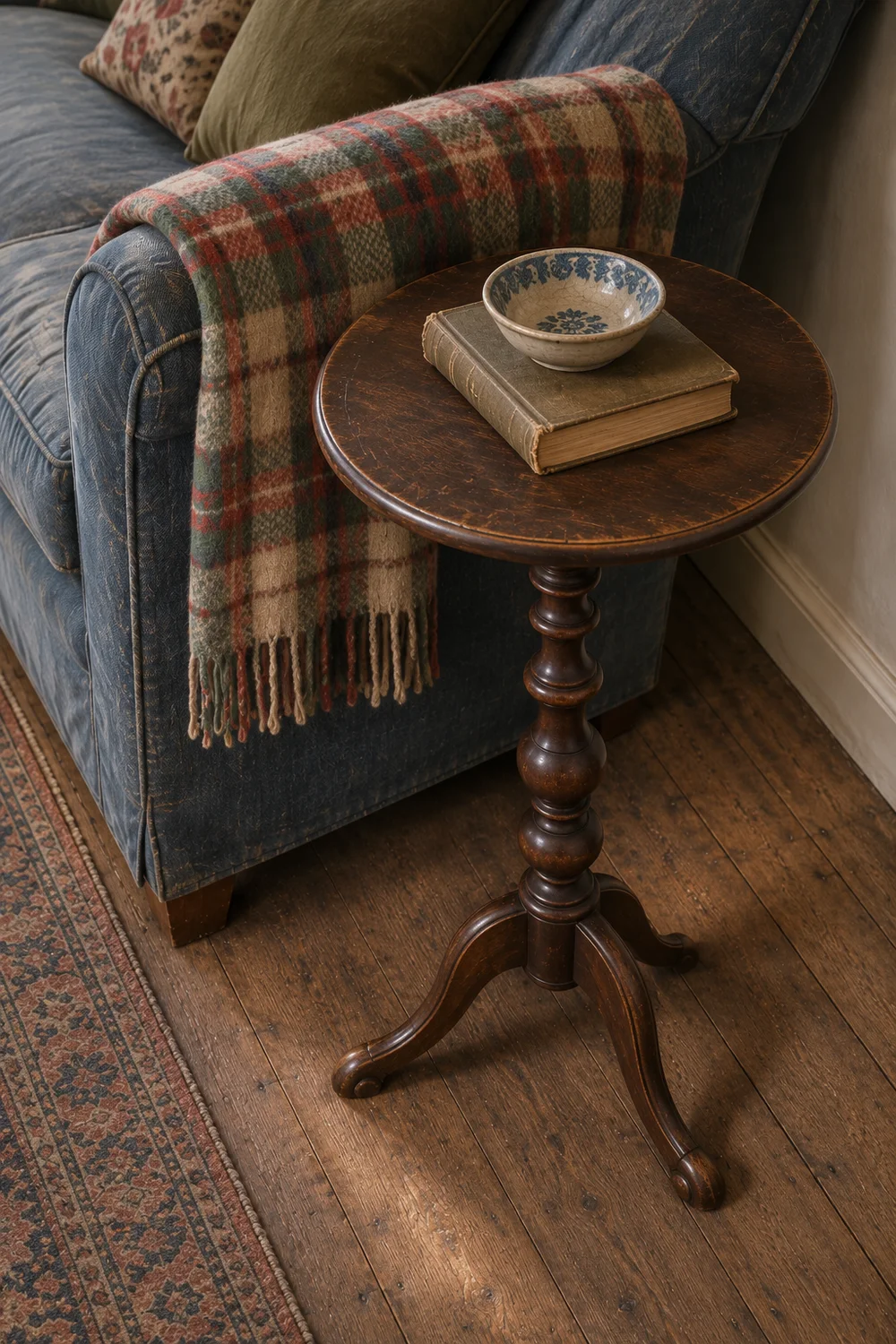
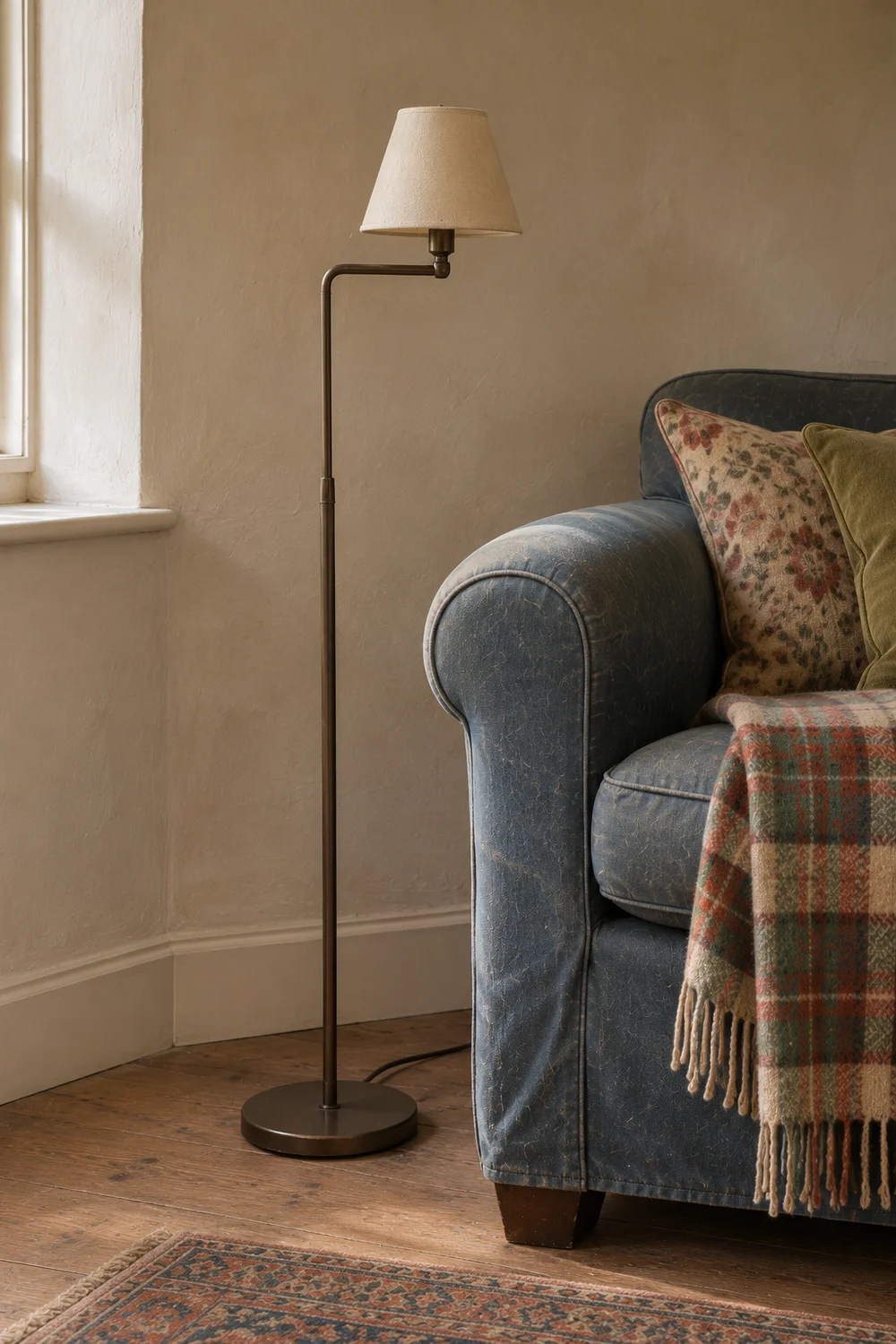
Try turning the leather chair towards the sofa a few degrees at a time. A small turn can make conversation easier. Watch the back of the chair as you move it. If it starts to narrow the entrance, bring it back until the walking route feels comfortable again.
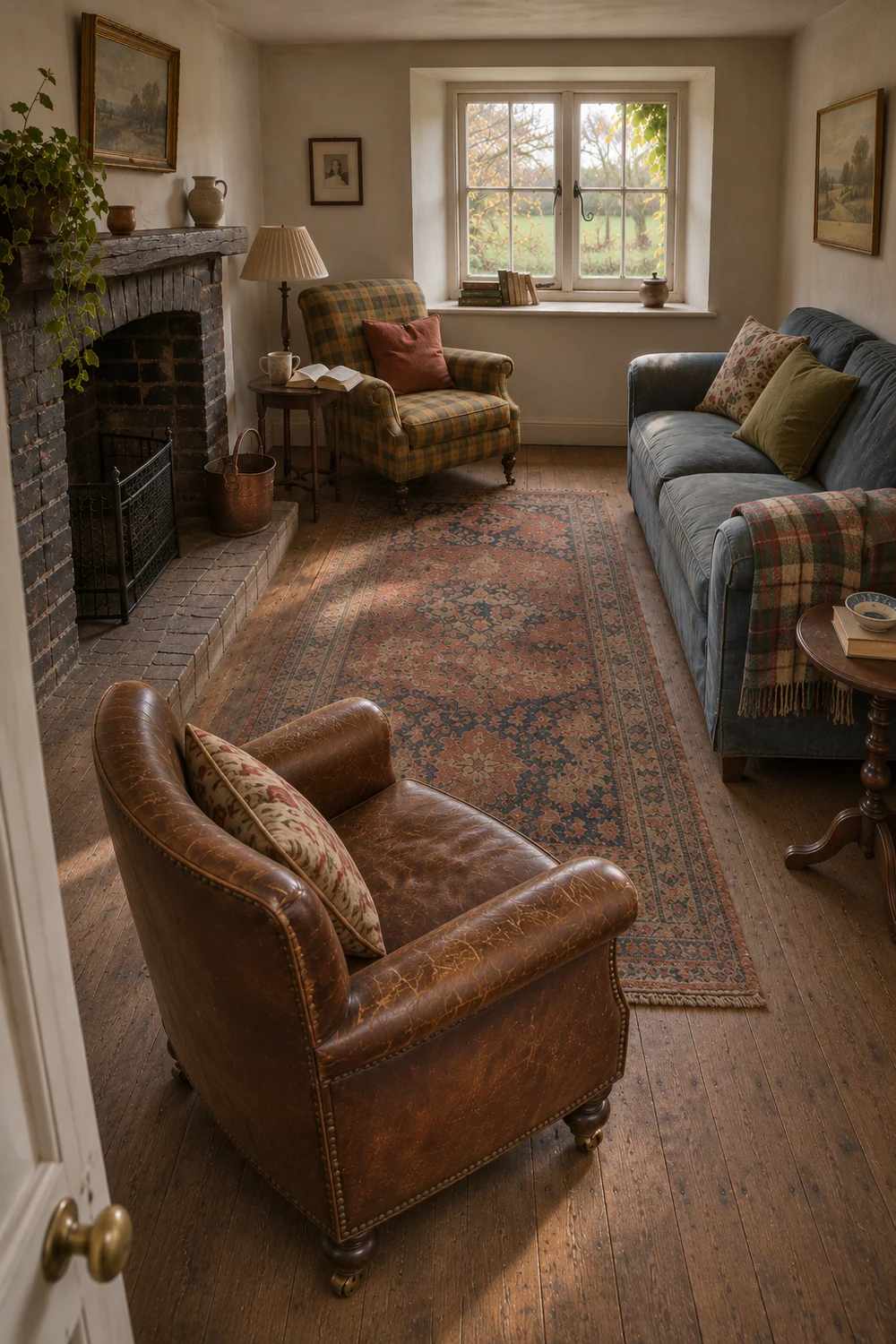
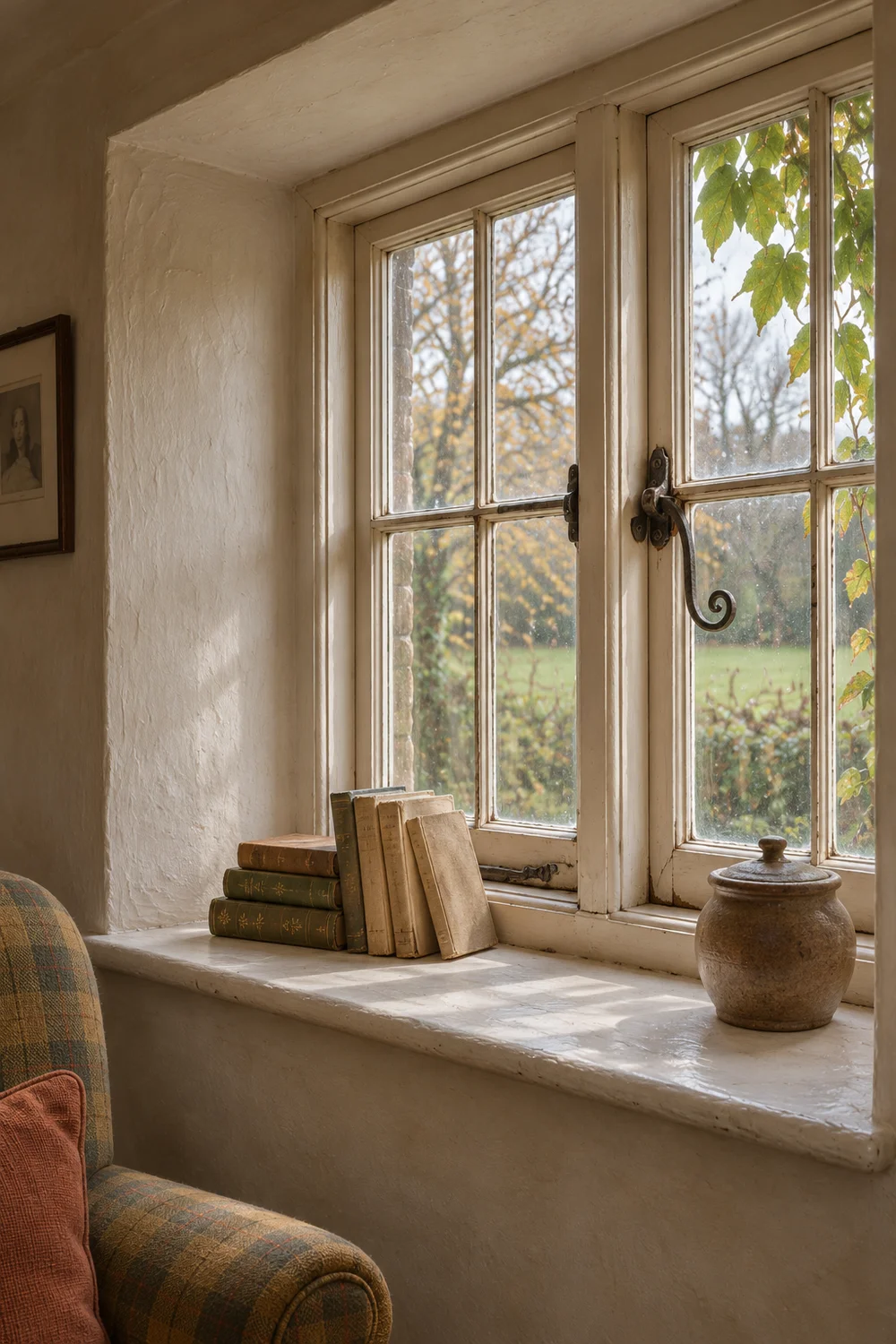
Check the room from the seat by the window. Can you see the others, get up without shifting a table and reach the window catch? If you’re choosing furniture for an English country room, the sitting-room guide has more ideas for mixing upholstery and timber.