Newsletter Subscribe
Enter your email address below and subscribe to our newsletter

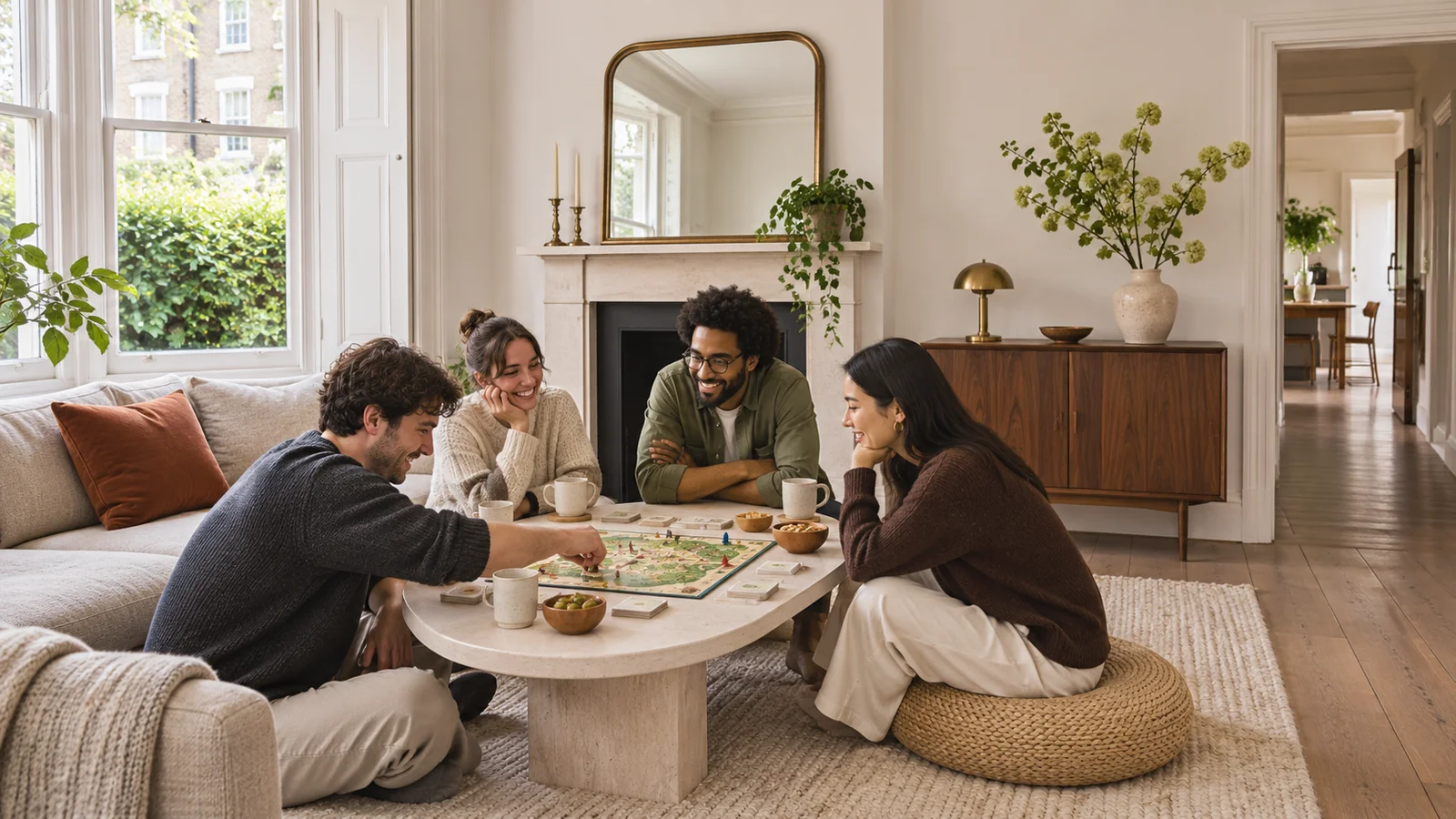
When it’s your turn to host, I would take my board game night ideas from the way your friends actually play. A deck of cards can make the sofa the best seat in the room. An expanding board or a set of tiles asks something different of the same space. The three scenes below show what I would keep, clear or bring in for each kind of evening, so you can choose a version that still feels like your living room.
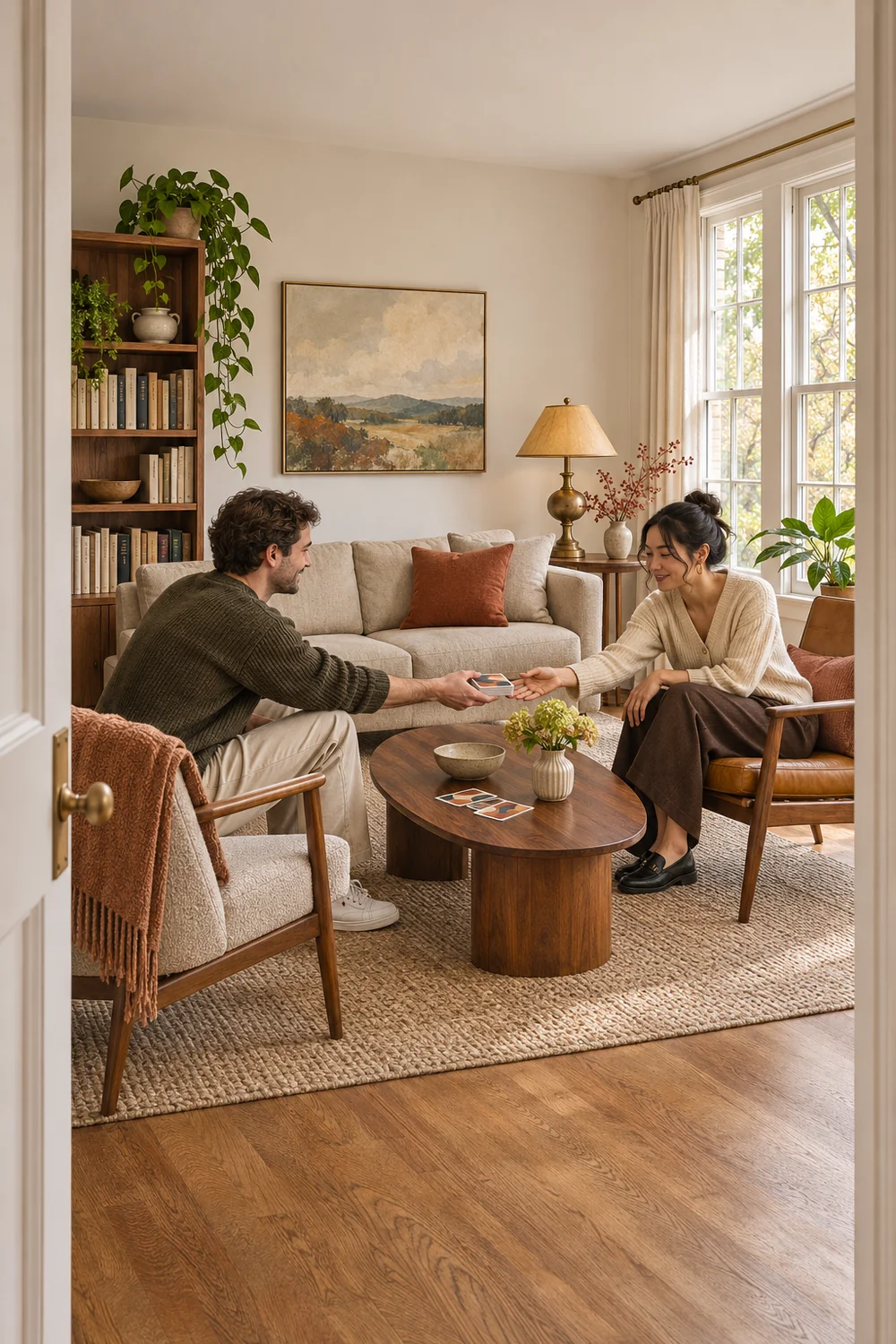
Picture what people will be doing once the first round is under way. If they will talk between turns and pass the deck, I would set up around the usual seats. If they will each be sorting cards, comparing pieces or studying the same growing board, I would make the play area the centre of the room for that evening. The choice changes what guests see when they arrive. In one room the sofa does the inviting. In the other the table gives everyone a place to join.
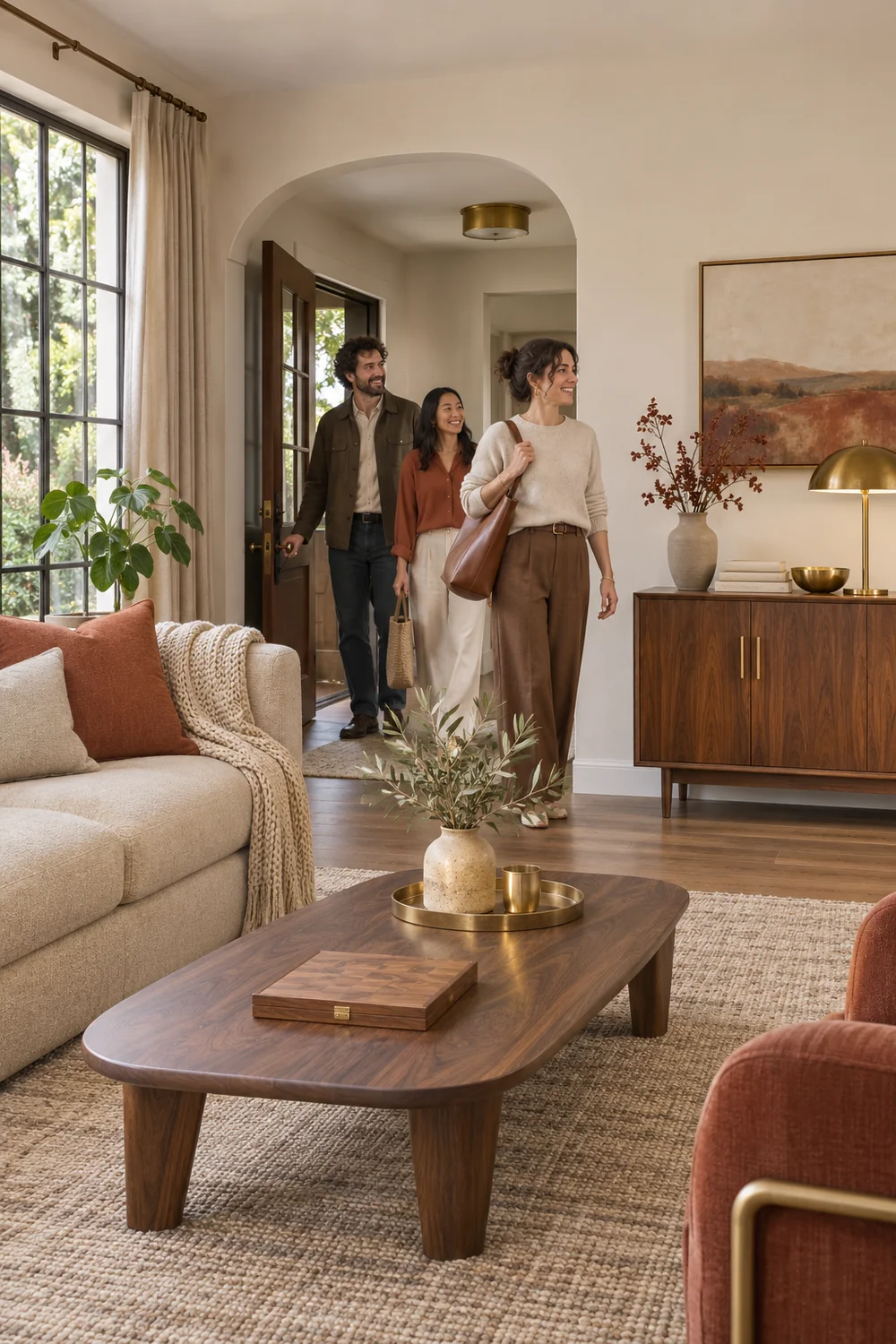
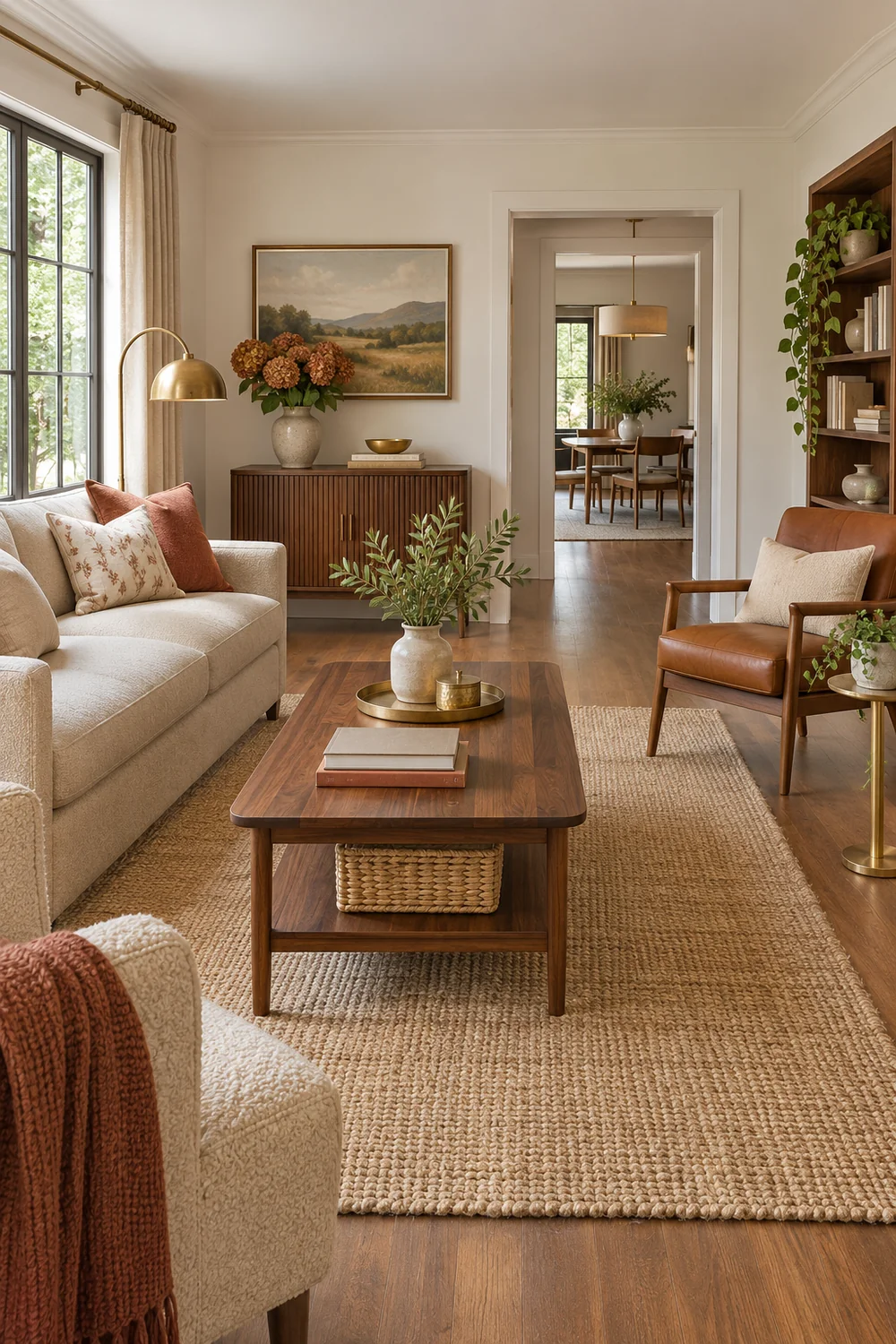
I would work with the furniture that already makes the room pleasant. In a compact modern living room, a low walnut table might sit next to an oat coloured sofa with a rust cushion and a wool runner that finishes before the doorway. If four friends normally gather around that sofa anyway, a card game feels like a small change. A larger game might belong at a separate table laid out in the same palette, with the sofa left free for the gaps between rounds. The room can still feel familiar when the way you use it changes.
Think about how the evening will start and end. A game you can pick up while someone is still arriving invites a softer start. A game that needs everyone together from the opening turn feels better with the seats already in place. If you’re taking turns hosting the same group, the choice of format can be enough variety for one evening. You can leave the furniture, art and rug doing what they do for the other six days of the week.
Imagine the sofa facing a clean oval coffee table, with two light chairs angled towards the room. You can still see the conversation rather than the backs of chairs. There’s a small pile of cards at the centre and marks of everyday use around it, such as a reading lamp and a cushion with its corner folded over. This is the version I would choose for a compact card game that leaves everyone room for their own hand and needs little else on the surface.
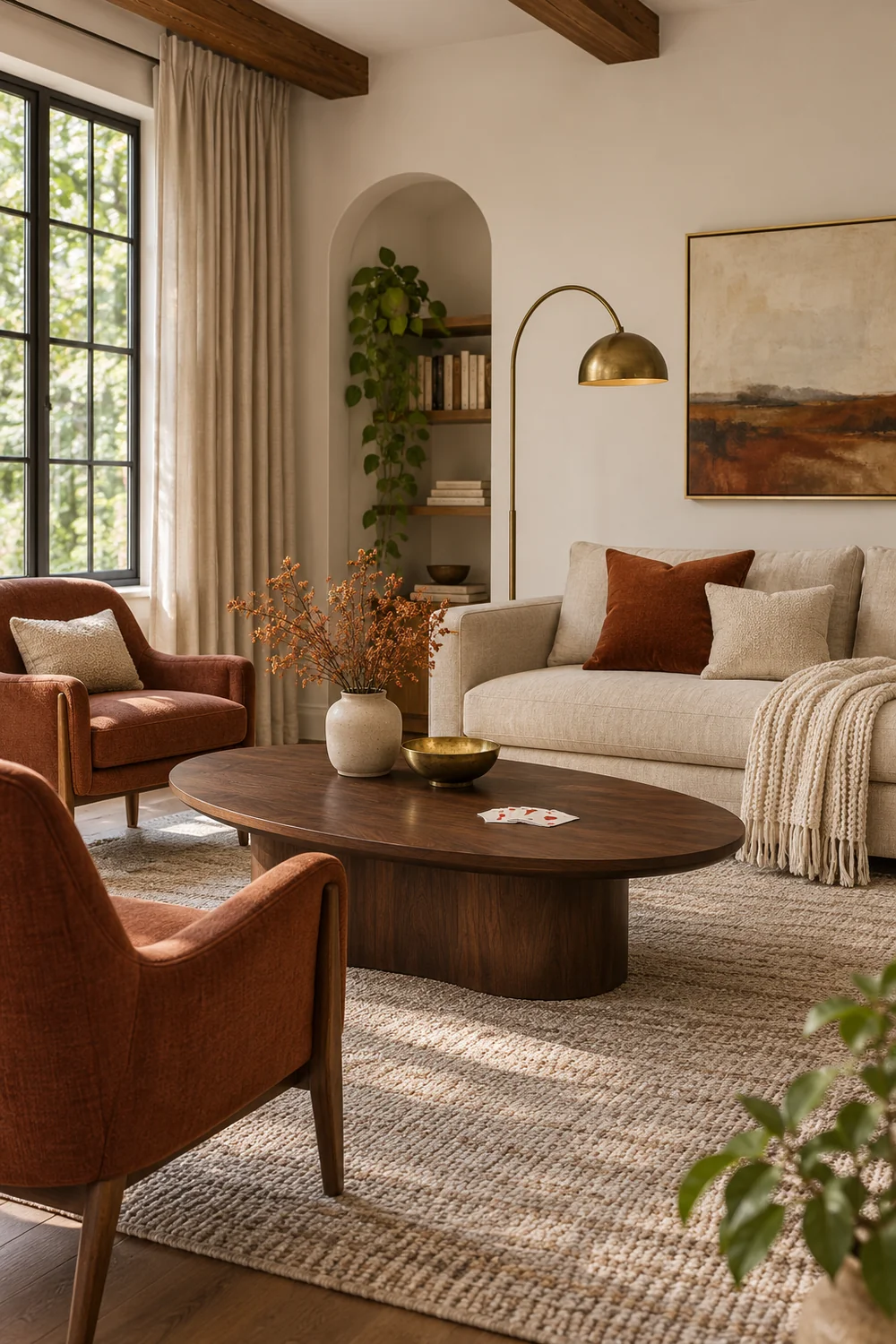
A low table can look generous in a photograph. It feels different when you have to keep reaching down to draw a card. In the sofa version, I would choose a game with short, occasional reaches and keep shared cards close to the edge that everyone can use. If your regular game keeps every player bent forward for most of the evening, put the deck back in the box and choose the next scene. The point of sofa play is that the seats already feel comfortable.
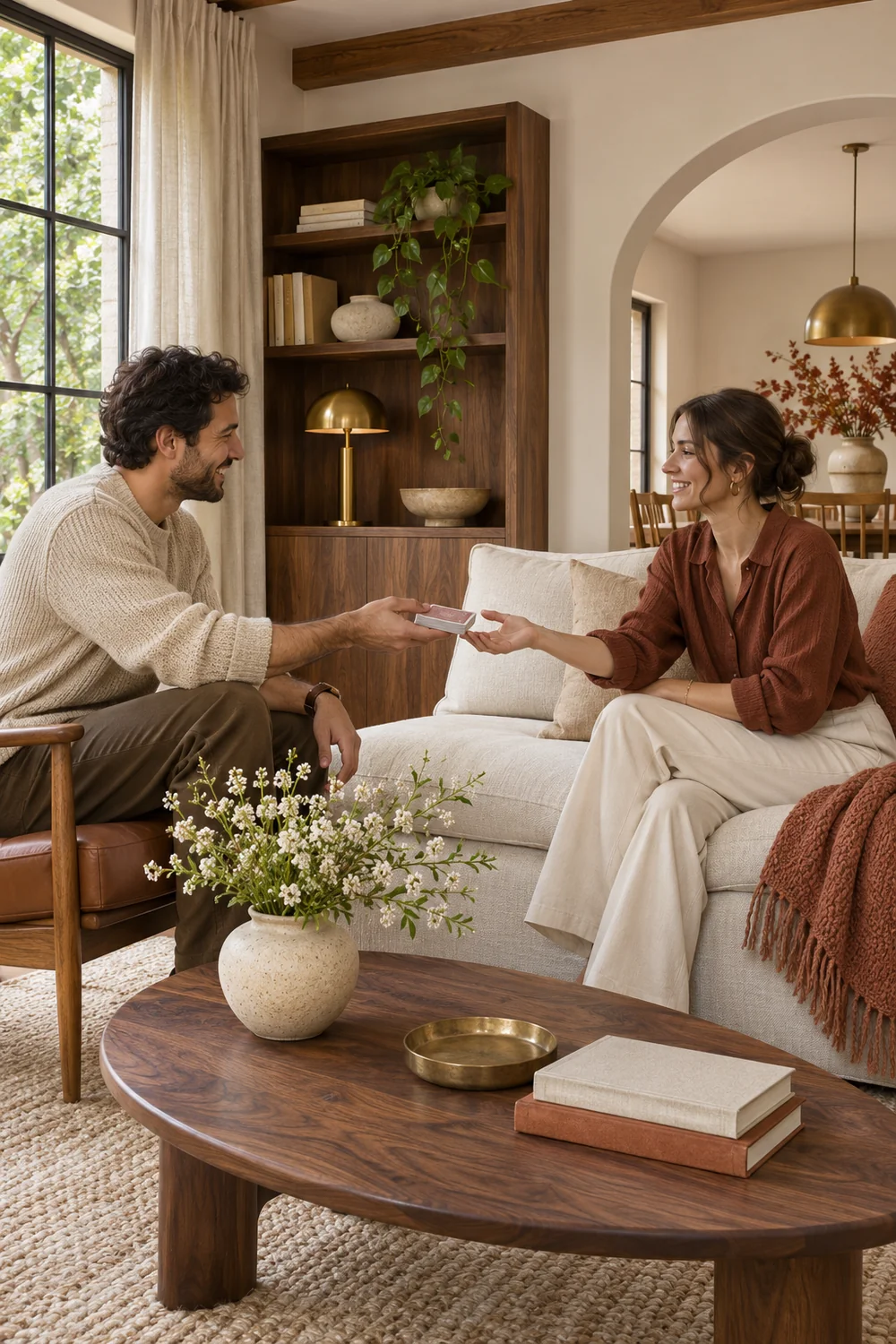
A little side surface can make the arrangement look finished without adding another piece in the centre. I would put a glass and coaster on a firm tray or a stable table beside the sofa, rather than treating the board area as a drinks station. These living room side tables show ways to add a surface at the edge of a seating group. If you don’t have one, use the sideboard you already own and choose a game where people can stand and return between rounds.
For a photo worthy finish, let the game supply one accent. A stack of red cards relates to a rust cushion. A cream deck sits quietly on dark wood. I would leave the tabletop as you want people to find it, with one clear place to begin. Save this setup for a night when you’d be equally happy talking or playing. Both feel natural from the same seats.
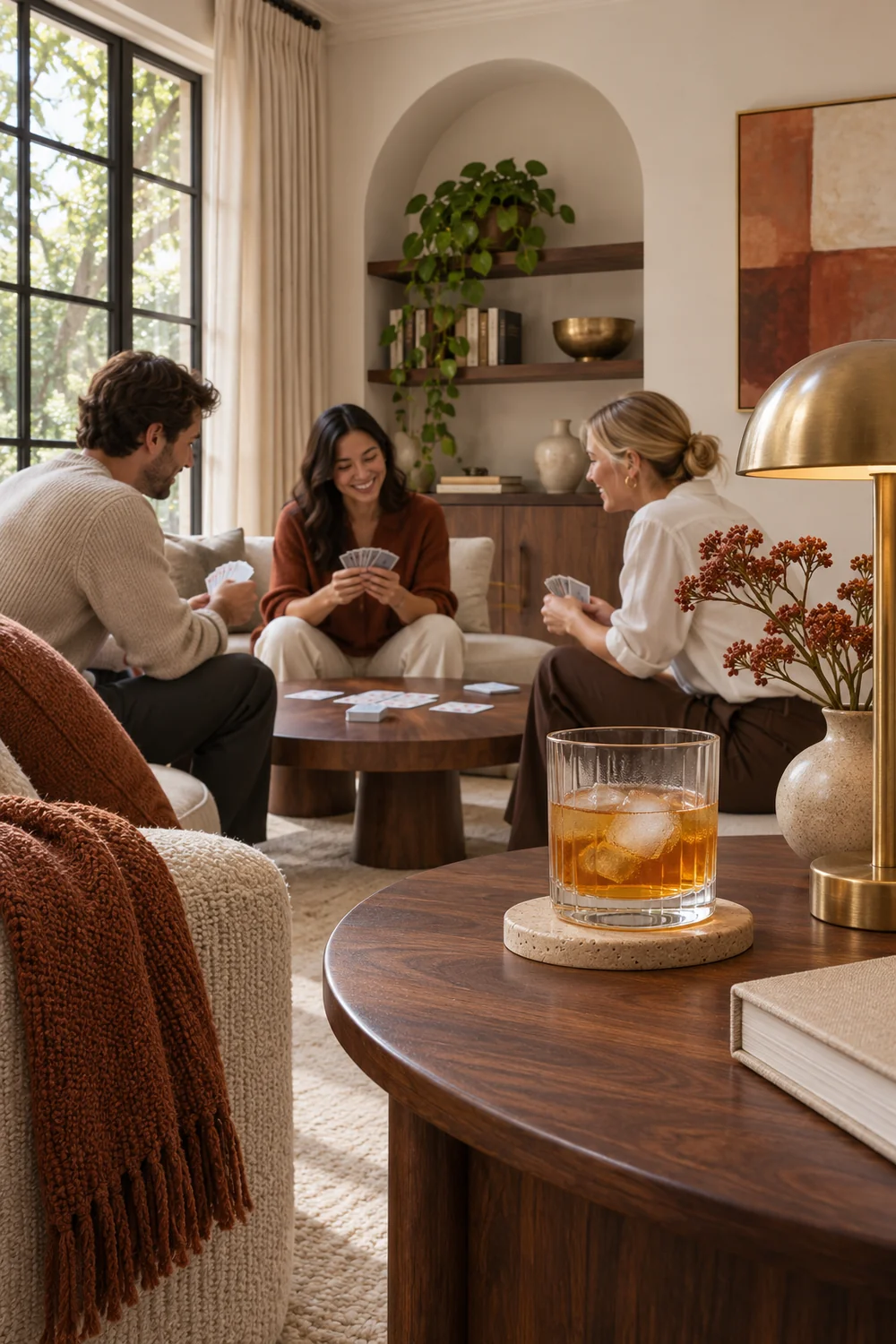
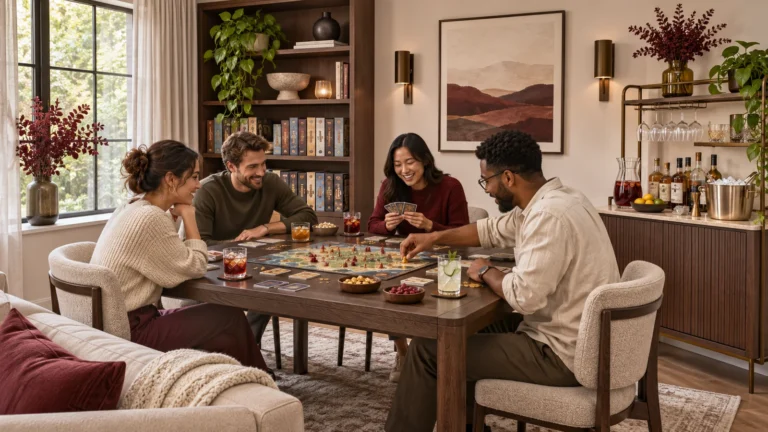
In the second room the board sits on a pale oval table at the edge of the lounge, with four separate seats. The sofa is still visible behind them. No one has to sit side by side and twist towards the board for a full round. A shelf and a soft lamp link this end of the room with the rest of it. The four chairs read as part of a small gathering even before there’s anything on the table.
Choose this setup when a shared board stays out for several rounds or when each person’s cards and pieces need a spot of their own. I would look for the feeling that everyone is equally part of the game. The best view of the board should belong to all the players, including the friend who arrives last and takes the remaining chair. If one place feels squeezed between the sofa and the wall, the scene hasn’t delivered that feeling yet.
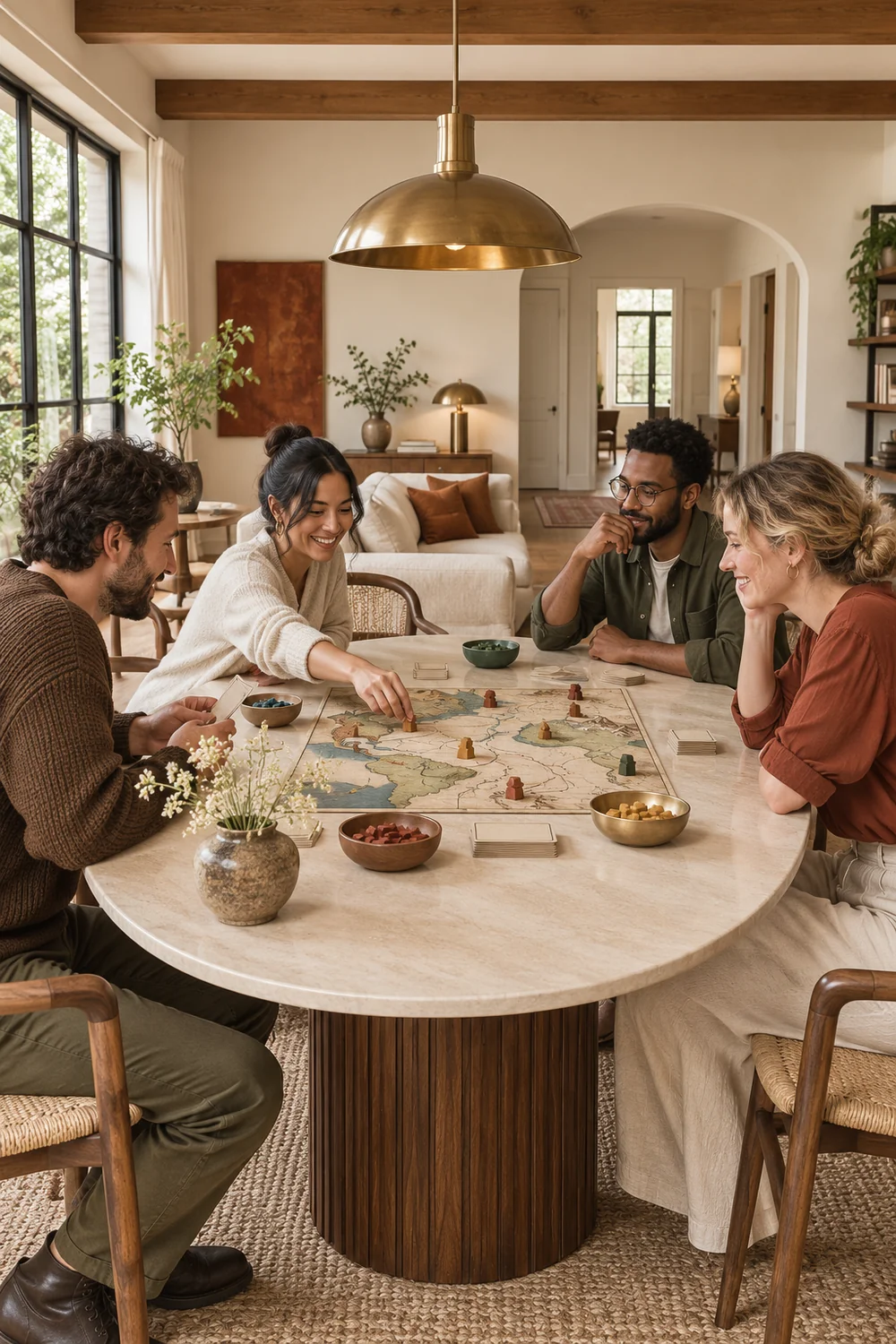
You may already have a dining height surface somewhere in the room. I would take a chair away from the wall and see whether the table becomes an inviting place to gather before thinking about buying anything. The same view can tell you where to put the seats for conversation when the game is over. The published guide to seating four shows how a sofa and two chairs can work together in a compact room. Keep that friendship between seats even if the playing table is a temporary addition.
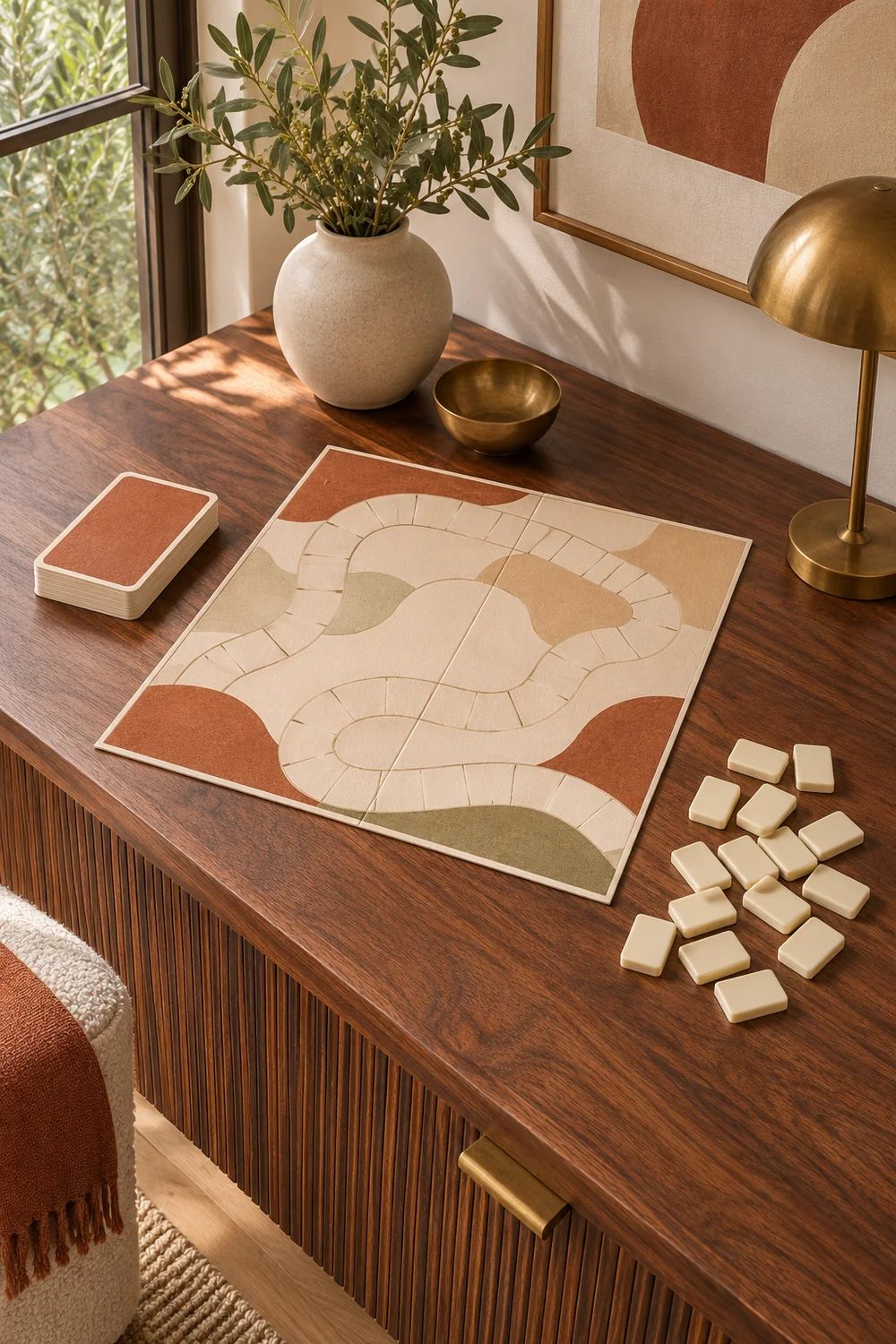
There’s a visual difference between laying out a game and decorating for it. A board with an illustrated map or distinctive colours makes a natural focal point. I would show that pattern and leave the route past the chair backs quiet. A folded throw or a clay pot on the far shelf can pick up one colour. Save the busy part of the scene for the table where your friends will look.
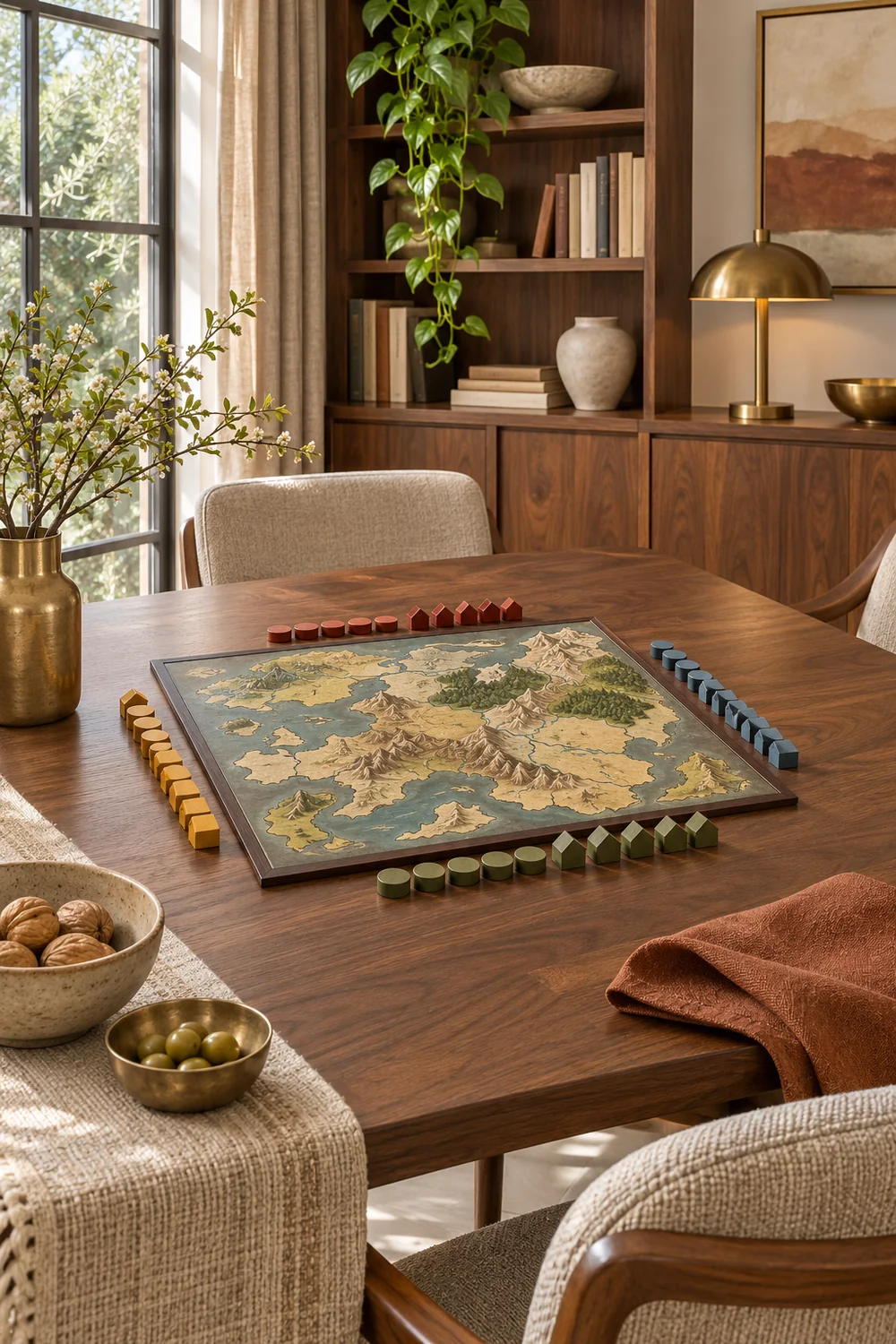
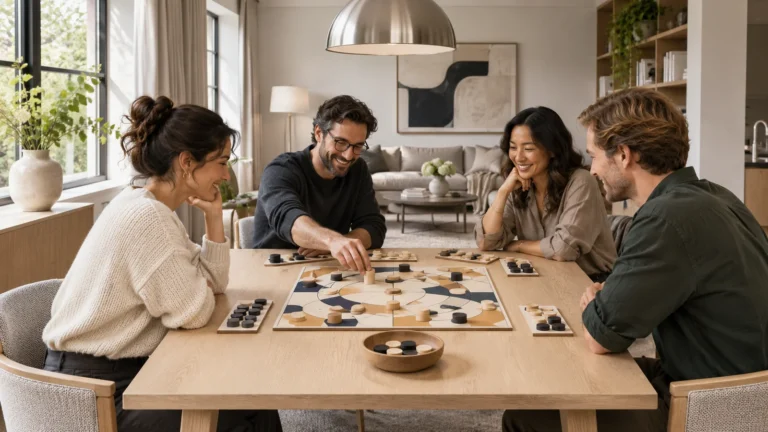
Imagine a compact square table beside a bookcase. Its wood grain is quiet and the four sides have equal visual weight. Each player has a defined edge. The centre is open and the floor is clear behind the chairs. This is the version I would choose for a tile game that gives players personal racks or hands to manage. The right arrangement feels self contained even in a room used for other things.
I would make the surface itself the most useful part of the composition. A simple, matte finish shows the edges of pale tiles. A dense pattern that competes with the pieces looks lively from across the room but feels busy when you’re trying to find a little mark. If you use a mat suitable for the chosen game, let its colour connect with the room. A moss green textile might sit well with walnut and cream, or a neutral mat might give a coloured set the clearest outline.
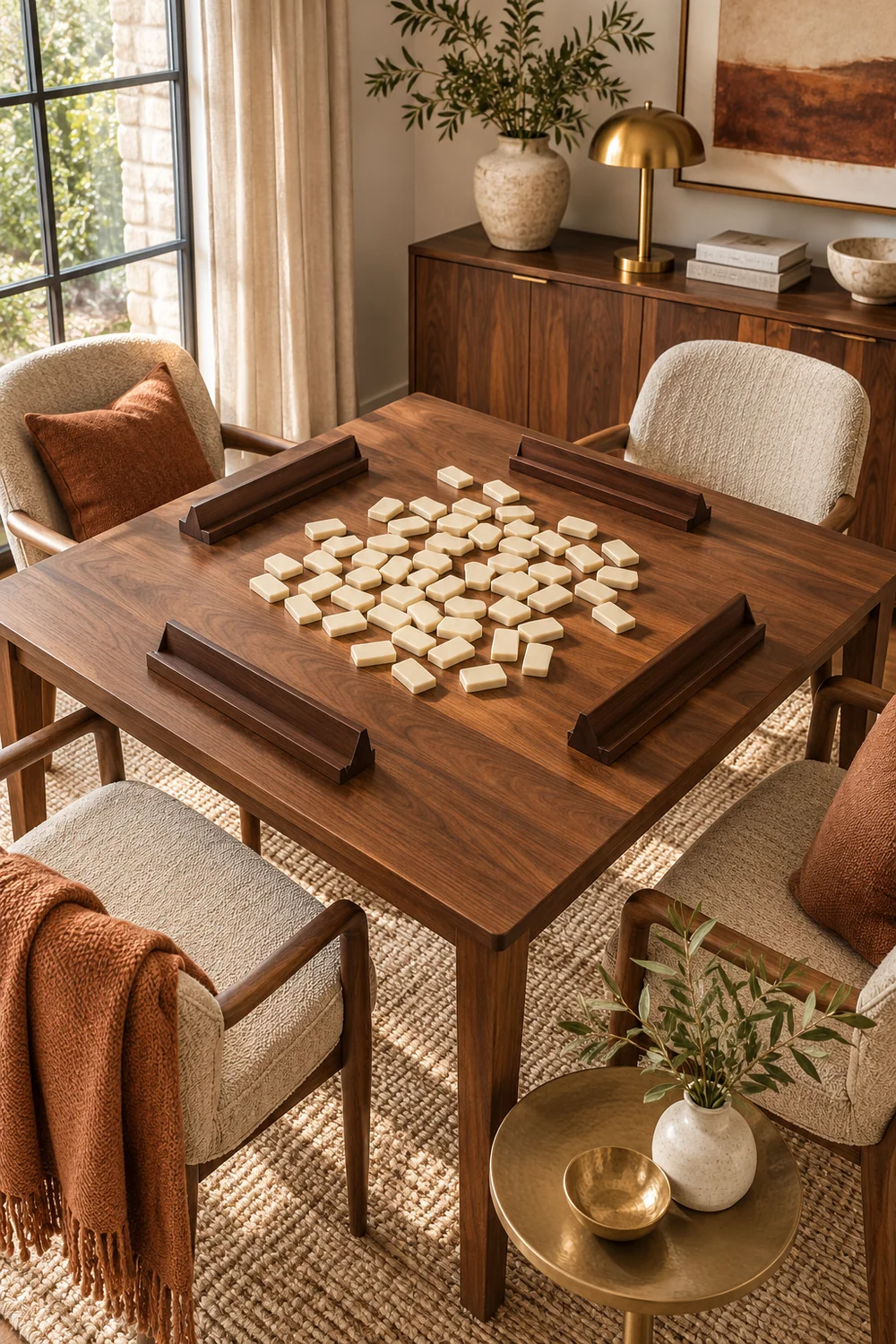
A square setup has an advantage when players use all four sides. It also asks for more from the floor because each side needs a seat and a way to get up. I would only choose this scene in a spot where the playing group can sit comfortably within the usual shape of the room. The general living room furniture guide explains how to think about furniture groups and the routes around them. As you look at your own setting, ask whether the tile table will feel tucked in with the furniture once all four chairs are occupied.
A quiet arrangement can still feel social. Use a comfortable ordinary chair rather than a showpiece you would hesitate to sit on for an hour. Keep the view towards the other players open. Let the lamp and bookcase make the corner feel like part of the house. I would choose this setup for a group that wants to settle into one game for a while, with breaks away from the table when people need them.
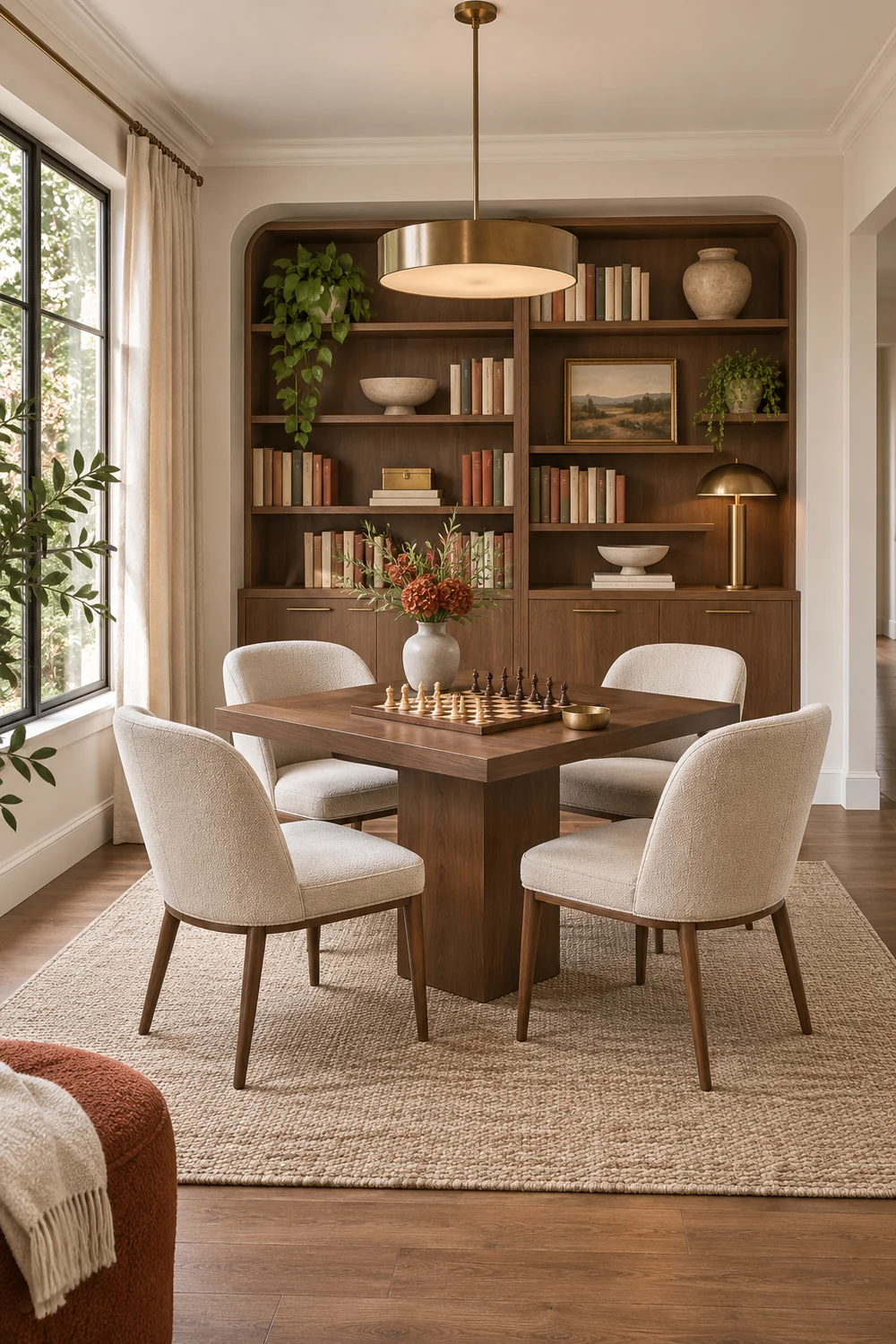
Look at the three scenes together and notice the details that can carry across them. The card game repeats the soft lines of the sofa. The central board brings a little colour into a quieter table group. A tile game gives one corner a clear purpose. None requires a new decorating theme. In your own room I would repeat one timber tone and one accent already present so the temporary pieces feel as if they belong.
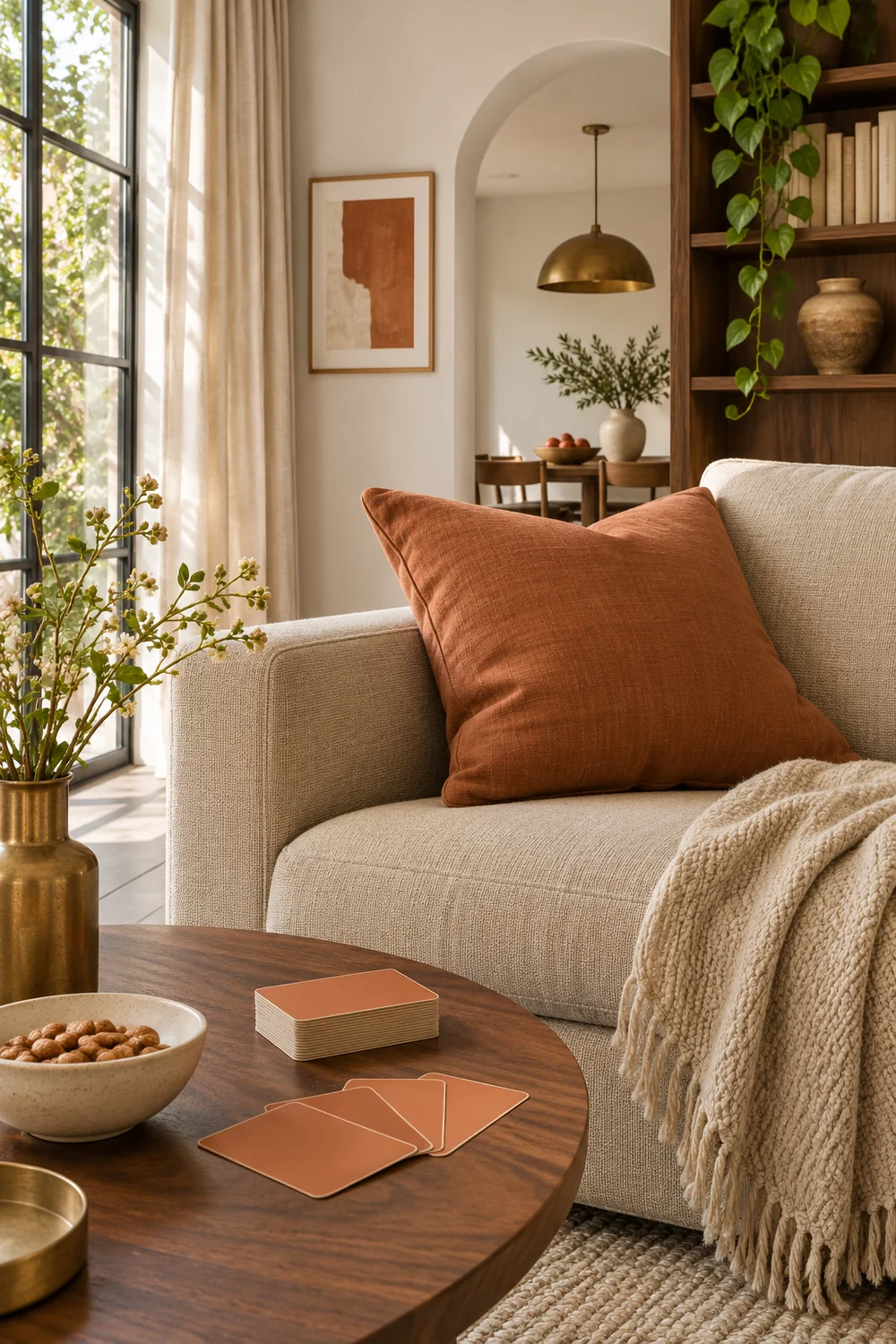
A modern room can feel relaxed when the items that move are visually lighter than the pieces that stay. If you already have walnut in the coffee table or sideboard, carry that warmth into the evening with a simple tray. Leave heavier pieces where they work every day. Bring in one extra chair as needed and put the lamp where it helps the group see. The modern living room design guide has examples of layering light and keeping a tight group of colours in ordinary use. I would borrow its treatment of the room, then let the games add their own small variations.
The images in this guide represent ways a room can look while people are using it. Look past the specific sofa or pot and notice the gesture you can repeat. In a small room you might angle one chair so it joins the group. You might keep a side surface clear for the visit. You might lay out a game as the thing that welcomes people when they walk in. Choose the change that still feels useful the next time you host.
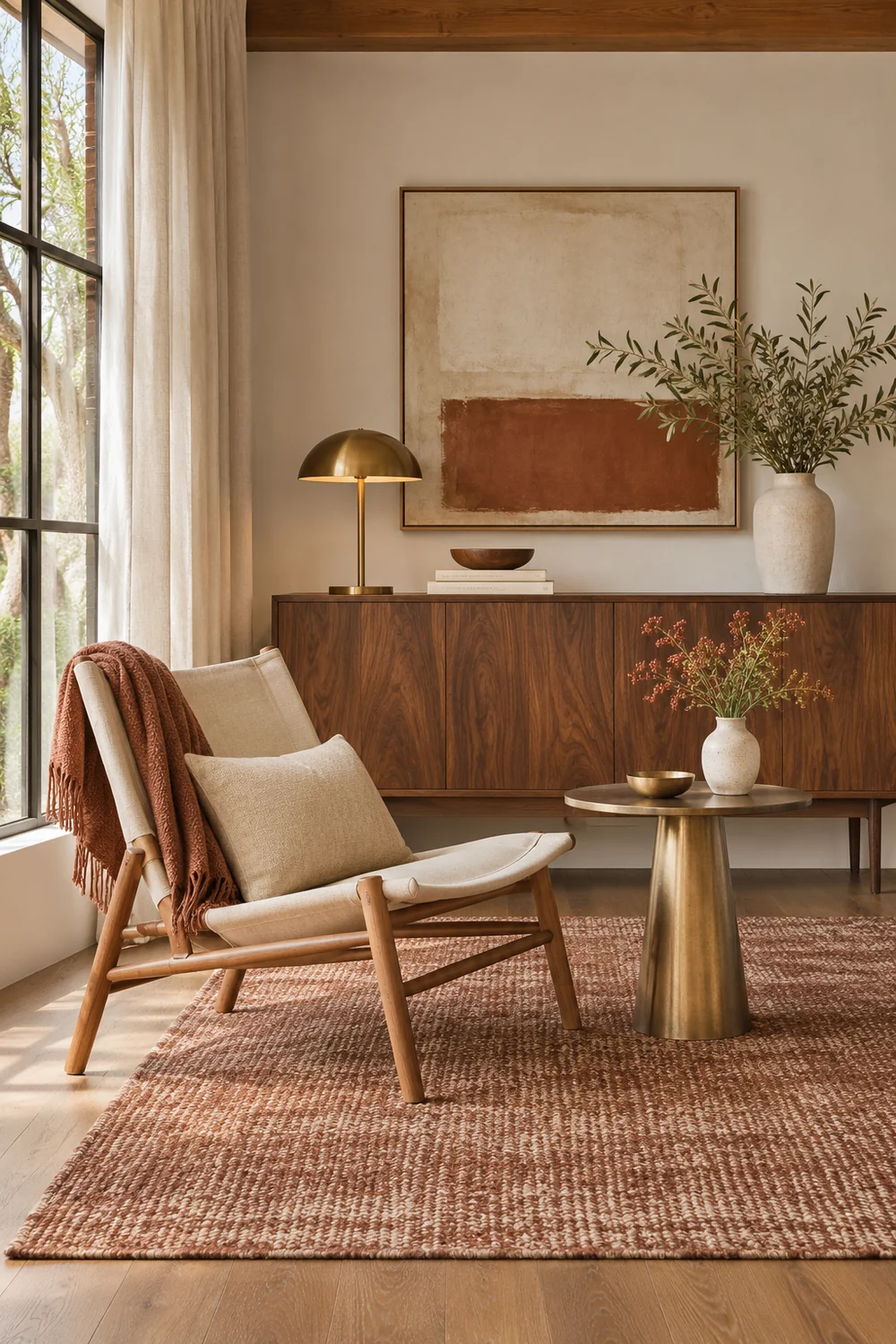
I would start with the people you’ve invited and the game you actually want to play. Choose the sofa scene for short reaches and a table the room already gathers round. Use the shared board arrangement when players need their own things close to the main board. Give a tile game a surface with usable sides, a clear centre and enough space around the chairs. If two scenes could work, choose the one that keeps more of the room useful while people are playing.
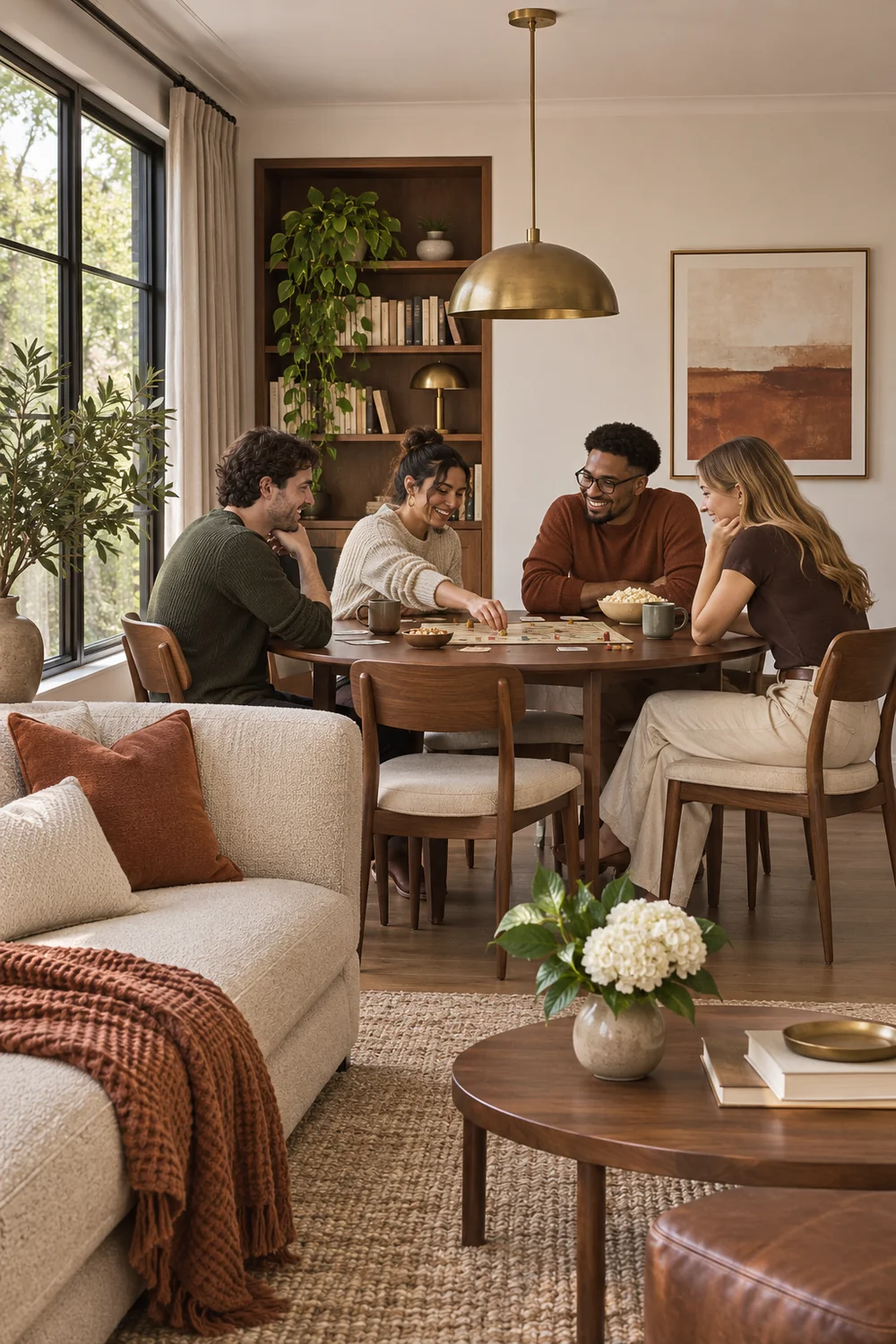
You can make the decision without promising to buy different furniture. Choose the closest scene, then gather the pieces of the chosen game and open it where people would sit. A surface that looks clear in the room photo might run out of space once every person has put their pieces in front of them. Use the board game table test to decide what fits, one seat at a time.
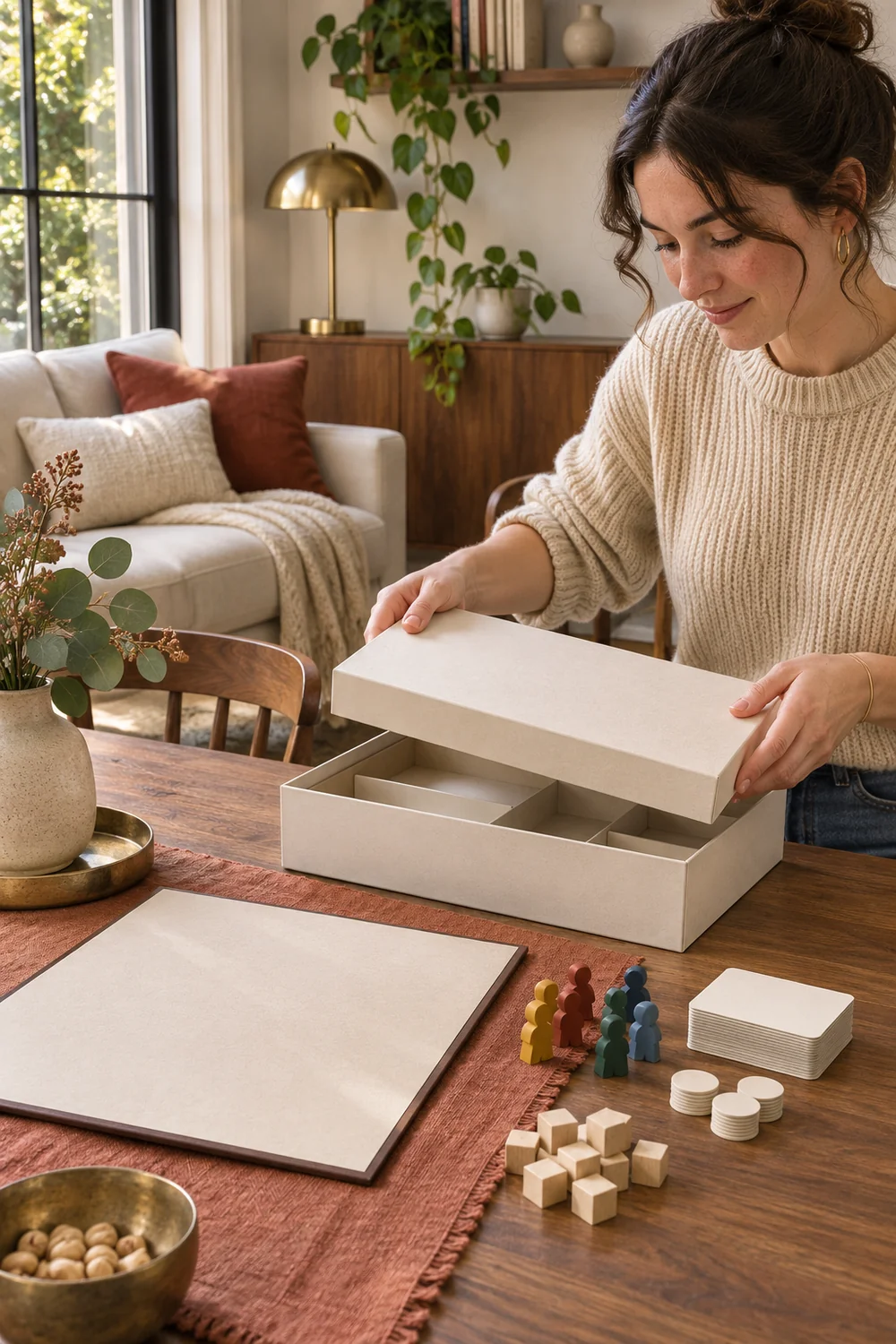
My favourite version of game night is the one you can come back to. The table should make it easy to play, the seats should make it easy to stay, and the room should look recognisable when everyone leaves. Begin with a setup that matches the game and your friends. That gives you a much better starting point than choosing a decorative theme or working around a piece of furniture you bought for one evening.