Newsletter Subscribe
Enter your email address below and subscribe to our newsletter

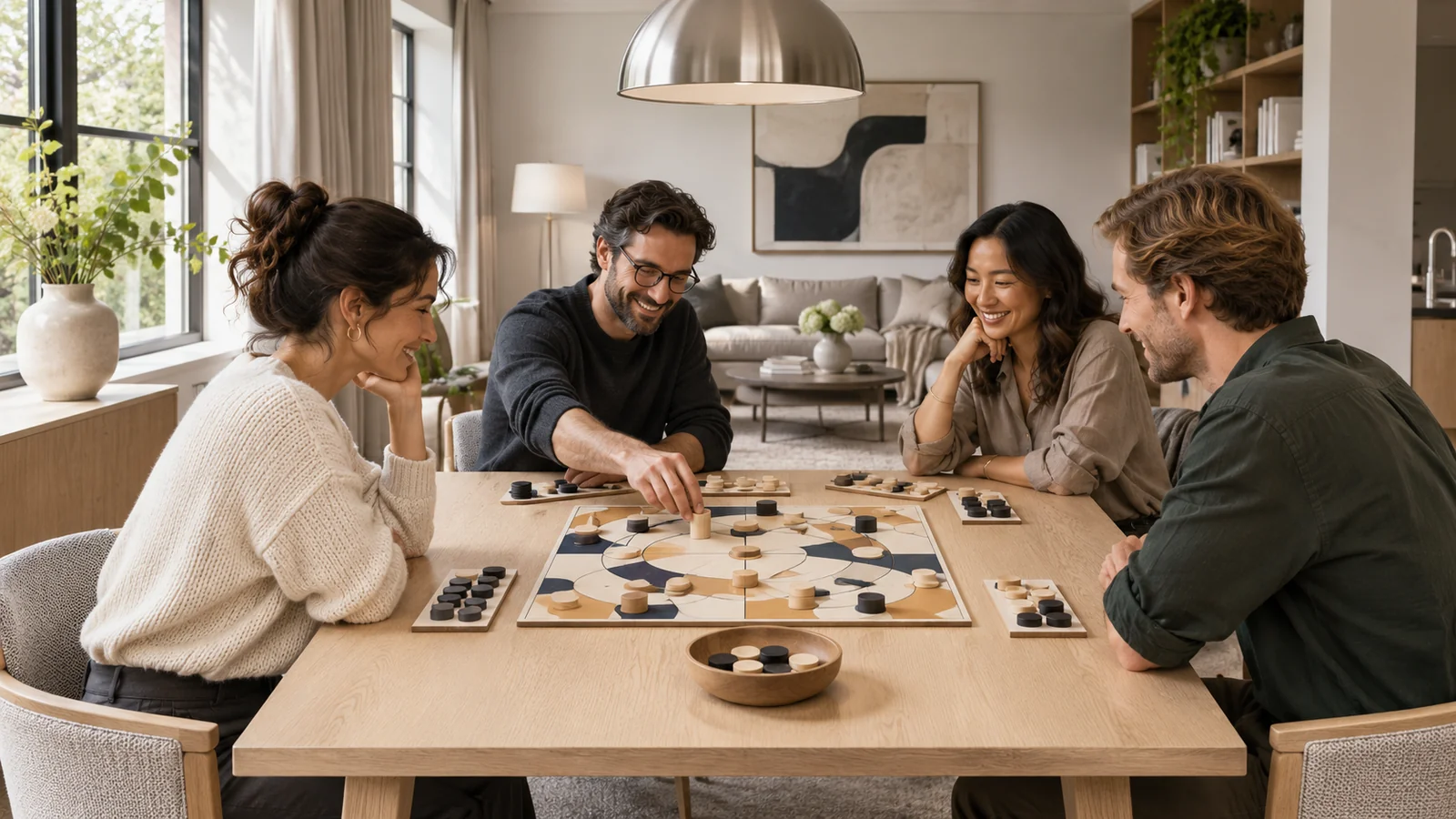
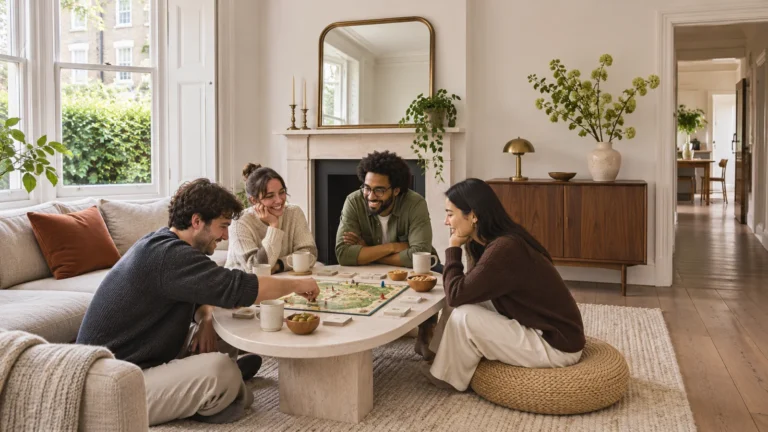
The board game table you already own might be the right one. I would test it with the specific game and group before moving another piece of furniture. Open the game, give each player their full spread and check the seat that looks least comfortable. Then try the same test on your second choice. The scorecard below shows what to keep, what to move and when a different surface is worth finding.
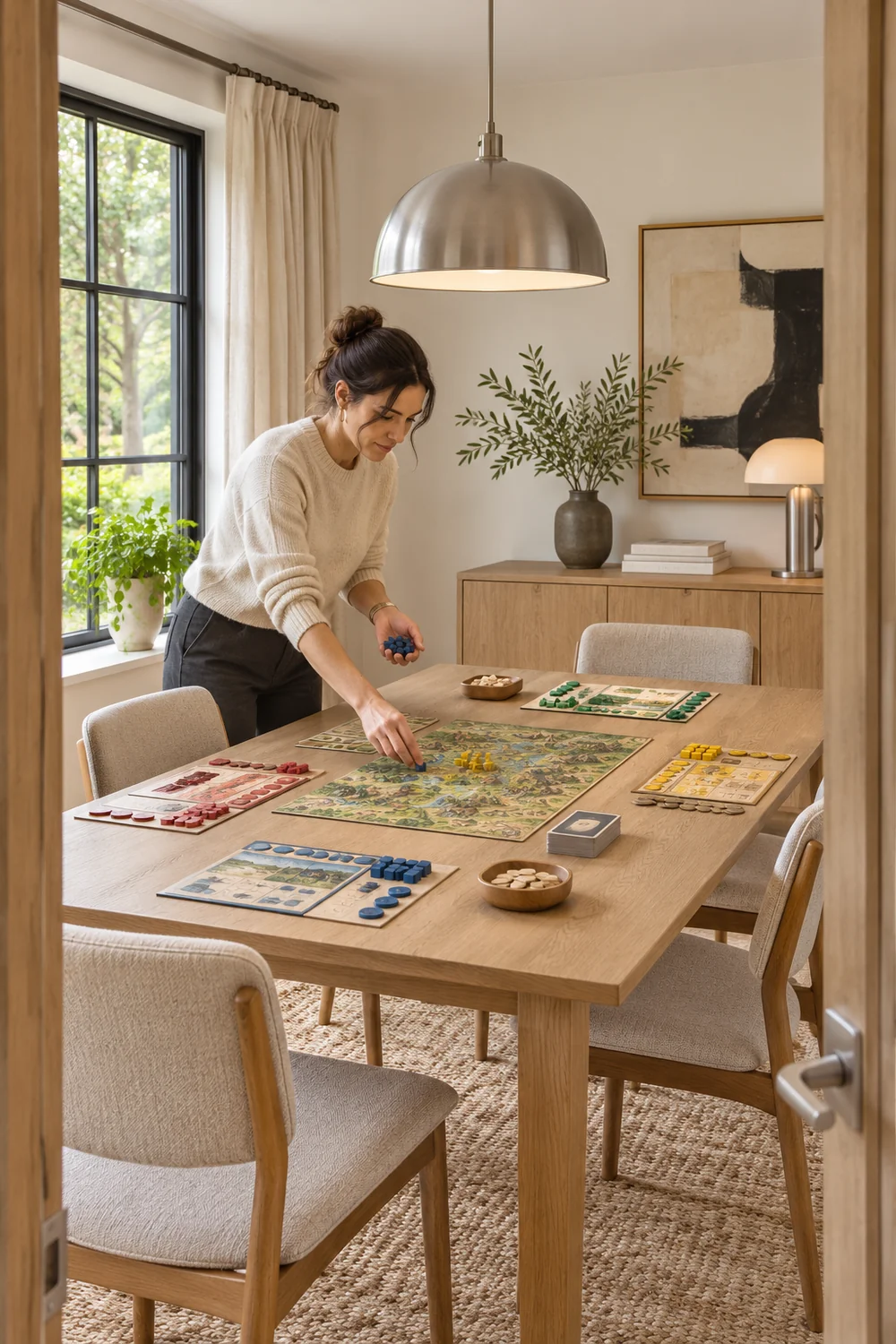
Choose a game the group genuinely wants to play on the next visit. Use the edition and number of players you expect. A box shows how the pieces will store. The table must hold what happens after they come out. For a game with a shared board I would lay that out first, then add the shared supply, any display of cards and the things that accumulate between rounds. Make a note of which part can get bigger as you play. For a tile game it may be the cluster you build in the middle. For a game with personal boards it may be each player’s row.
Look at the current version of the game instructions when you’re unsure what has to stay visible or where a card is meant to go. Ask whether the game has pieces that appear late. I would put one round’s worth of those pieces out for the trial. If there are hundreds of small pieces, you don’t need to lay each one in front of you. Put the real supply in the depth of container you plan to use and measure the space the container occupies.
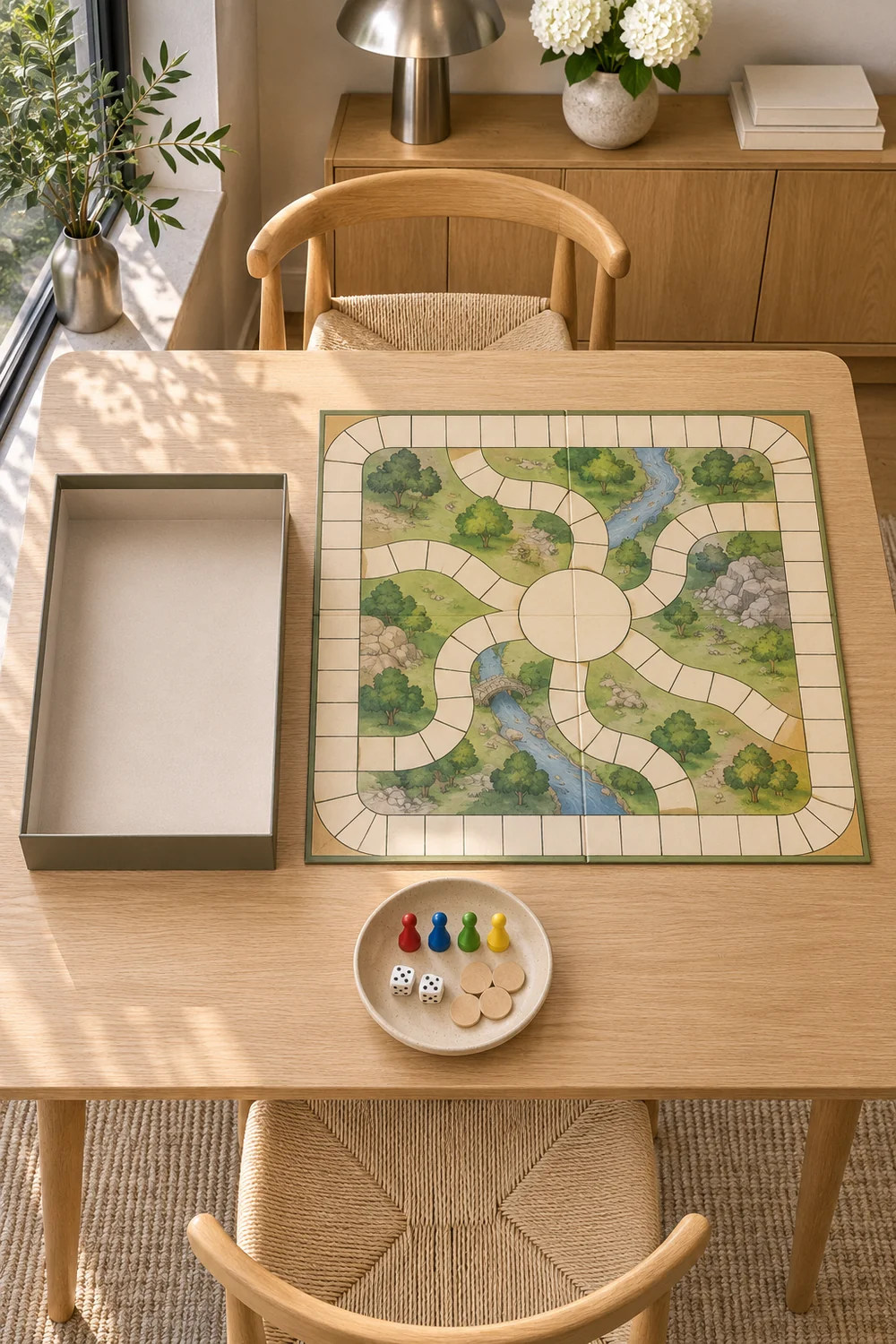
Take the empty box and any unused pieces off the play surface for the test. Put the rule book somewhere you can reach and open it once. A rule book can claim half a player space as soon as somebody needs to find an example. Leave it in the test if the group is learning. If everyone knows the game, it may live on a nearby shelf while you play. This is a choice about the next session and can change as the group gets more familiar.
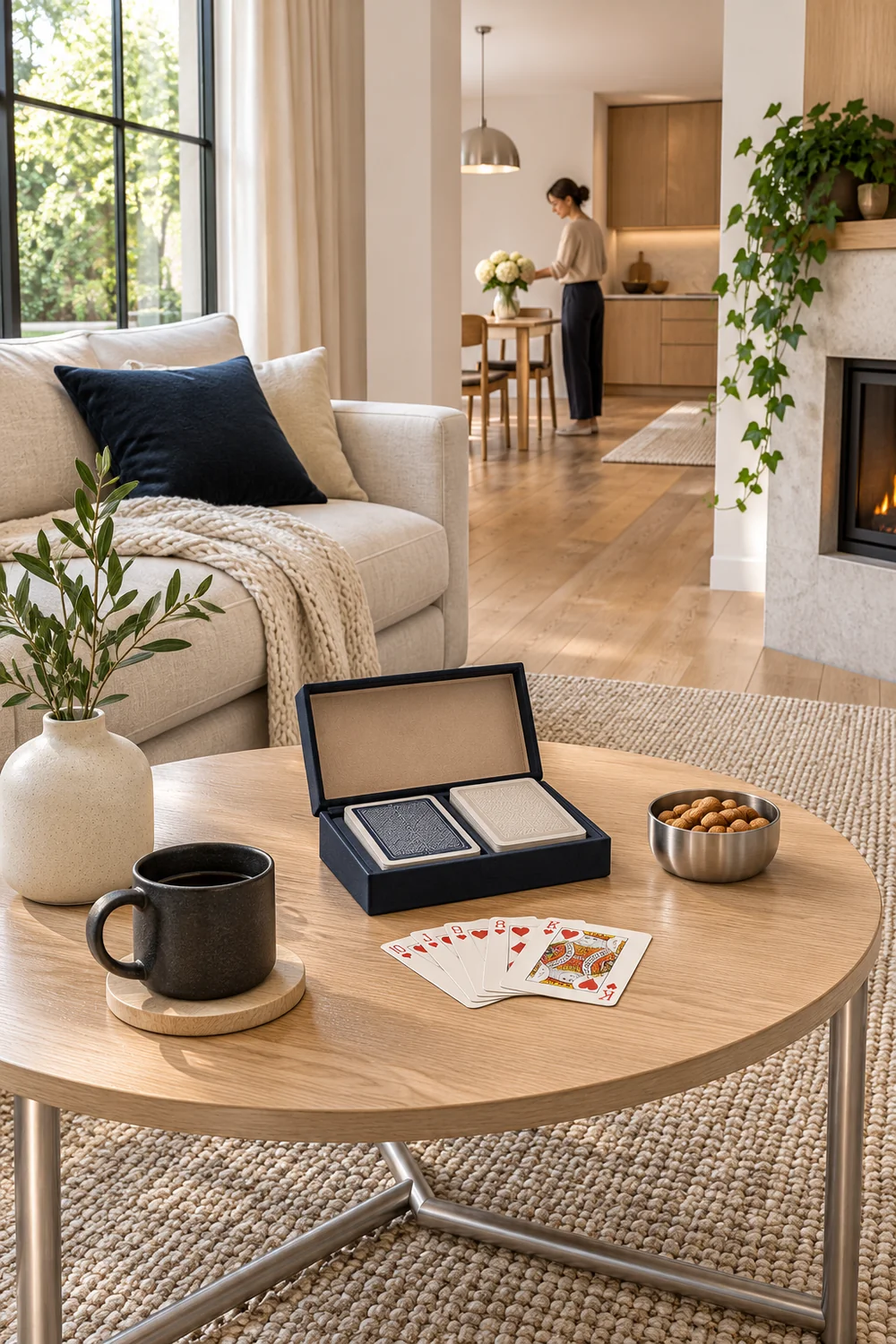
A small card game is worth testing too if people have to build individual spreads. I would open out a representative hand and work out how you want to keep it private. A reader might hold five cards upright at first and have a row of played cards spread across the table by the end. Mark both conditions. The verdict should reflect a normal later turn rather than the emptiest moment before a game starts.
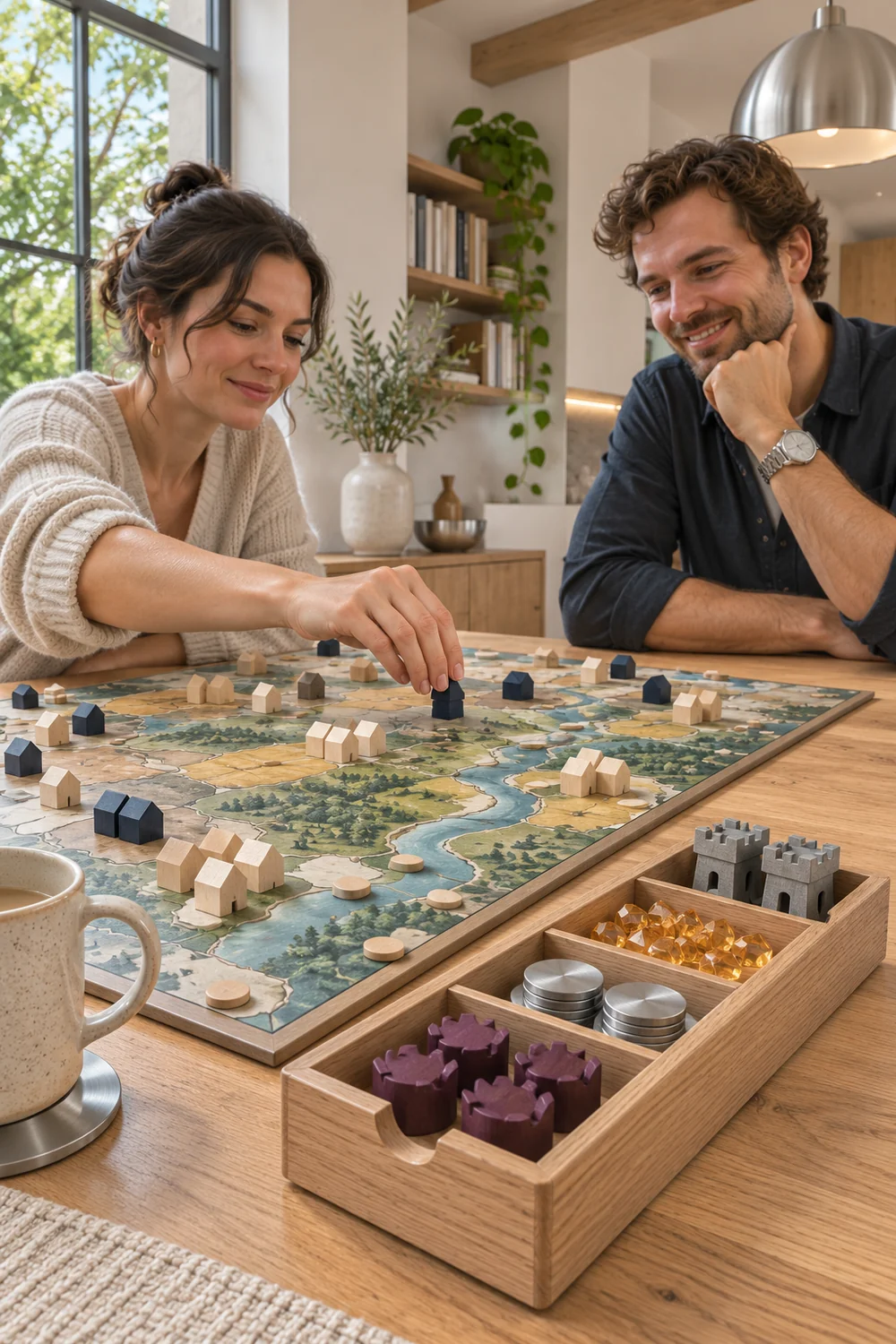
Give the shared board or tiles a centre. Add whatever all players need to be able to see and touch. I would put the common supply at one end only if people at the other end can genuinely reach it, or if the group is happy to pass it. Look at the furthest corner of the board from each seat. If the smallest print is only readable from one side, set up the readable edge for the person who needs it before you decide the surface fails. A piece someone else can move may matter less than a card everybody has to read independently.
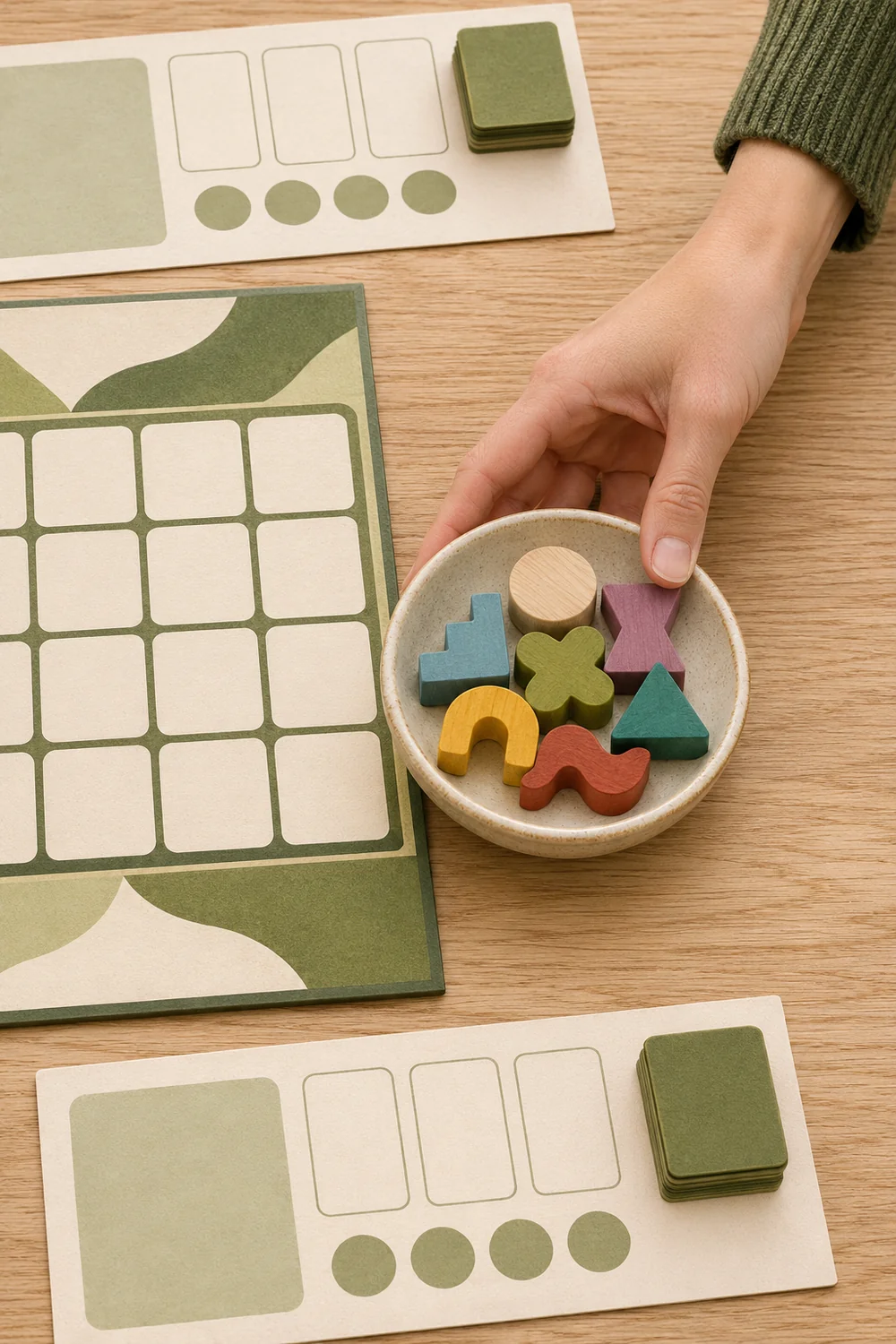
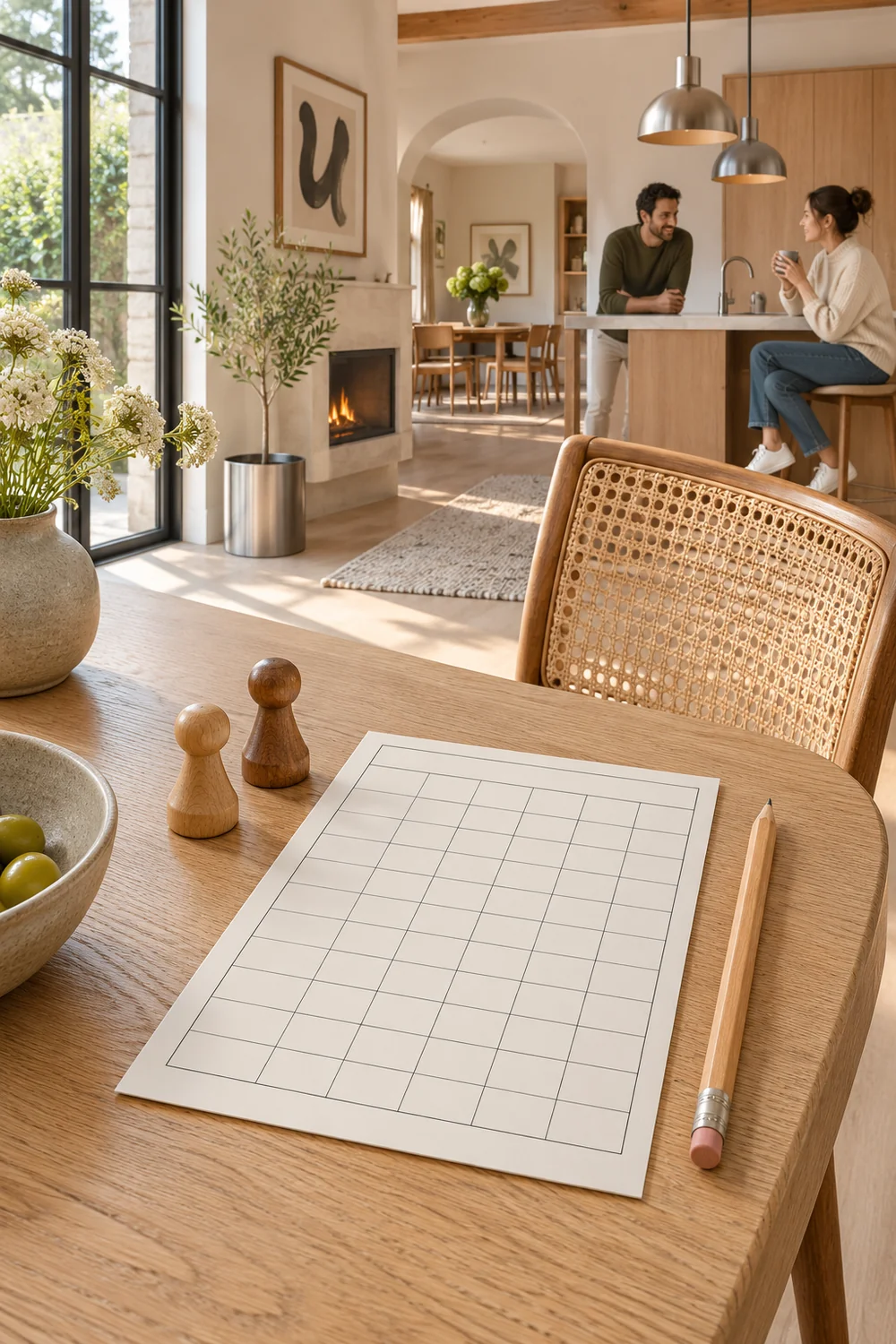
Set a folded sheet of paper down for each player zone when you want to see the arrangement clearly. Match the paper to the actual layout of that player’s cards and pieces. In a game with changing or hidden hands, include the space to lift, consult and put cards back down without disturbing someone else. Give the player at the corner the same room as the player sitting along a wide edge. A comfortable spare seat counts only if that person can play from it.

In a compact living room that also contains a dining surface, keep the existing route in view. Trying to make all the player areas face in the same direction can leave somebody sitting in a doorway. The small living dining room guide shows why each use needs usable space even when it shares one room. I would keep the route marked as you turn the board or the chairs. A solution at the surface can create a problem at floor level.
Separate standing space from game space. A friend who steps away from the table should be able to lift their knees and get up without pulling the board towards them or asking the group to stand. It may be worth changing which side gets the spare chair so a route stays open. Move one thing at a time and check the place that was cramped again. You want to know what actually made the difference.
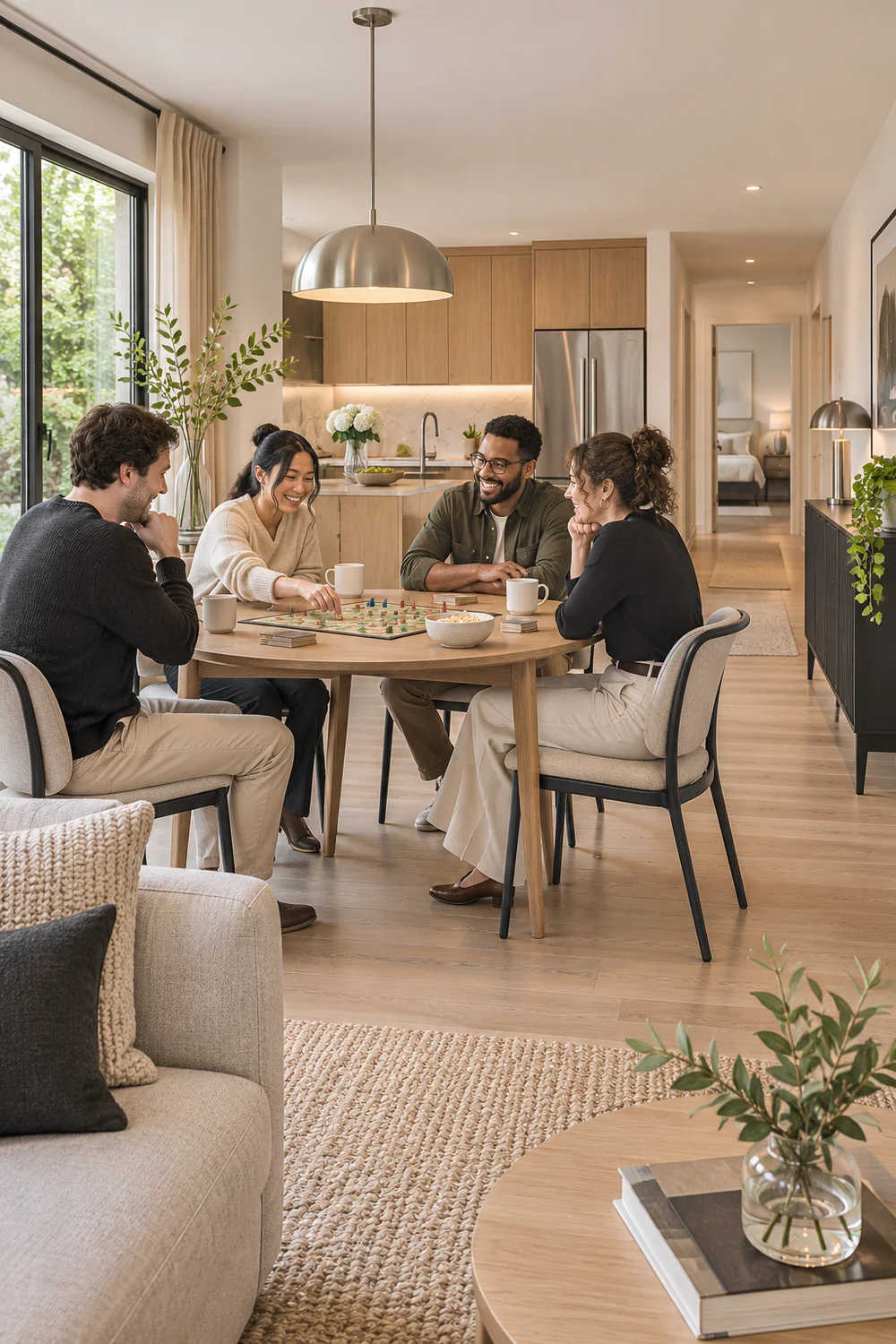
I would measure both the pieces and the clear surface they occupy. Use the finished edge of the table as your starting point and take out any rounded corners, seams, tilt or decoration that stops a game from using the whole span. Make two notes. One is width by depth of the playable layout. The other says where something protrudes, needs hands to reach, or needs empty space to operate. A thin extra margin can make a bigger difference next to cards than next to a stack of tokens you rarely use.
For an illustrative example, imagine a game laid out in a rectangle about 80 by 58 centimetres. Your coffee table is 100 by 50 centimetres, while a table you can bring in has a flat top 95 by 70 centimetres. The coffee table is longer than the game but shallow enough that the player rows would overlap. You could turn the game through a right angle, but then the long edge of the game would need even more depth. The second surface has room for the layout on paper. It still has to pass the player and room checks.
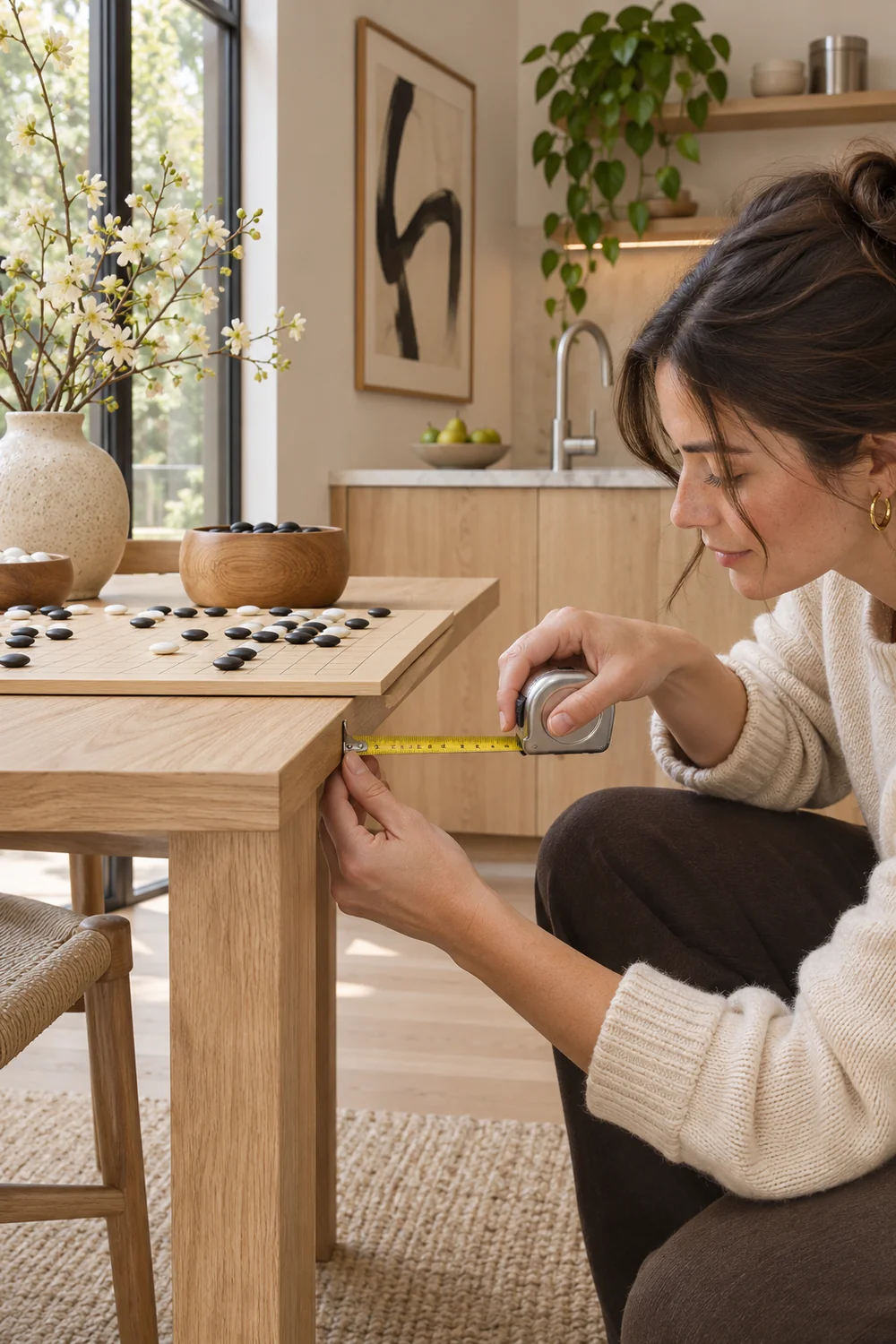
Use actual dimensions instead of relying on the examples. The table’s edge may tip slightly upward, have a curved end or include a leaf with a lip. A raised edge can be helpful for pieces and uncomfortable under someone’s forearm. Place cards where the edge changes and check whether a card can be picked up easily. Study chair and table relationships in the living room furniture guide if you’re borrowing a table from elsewhere in the home. I would keep the clear playing area and the overall piece size as separate measurements.
Lay the pieces in their real positions once before writing them down. A shared display tucked close to the board might hide the title or colour you need to see. A dice tray can prevent pieces rolling across the game but consumes its own patch. Write the overall footprint with both present if they are part of normal play. When a position works only because every item is touching the next one, allow more room and test again before calling it comfortable.
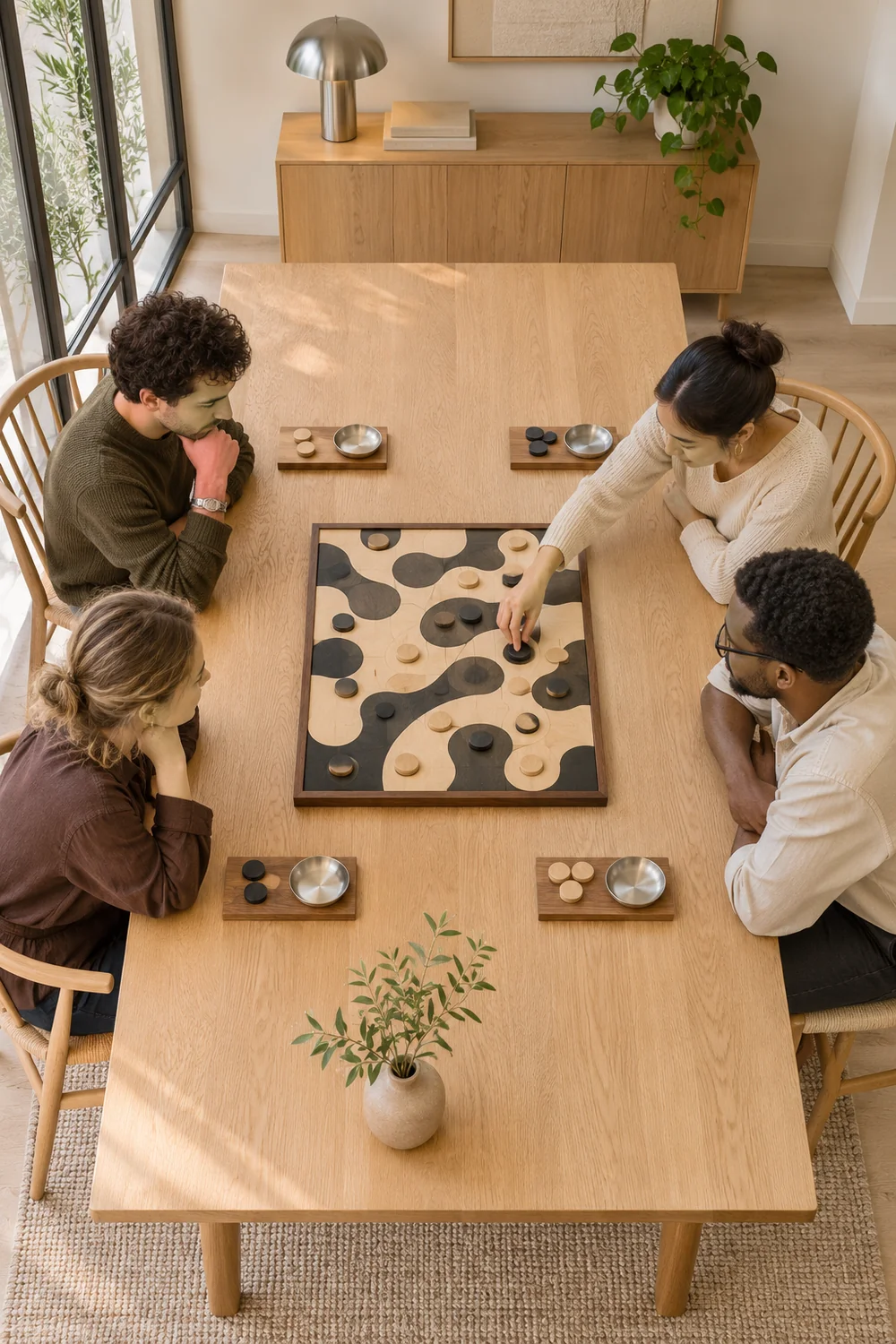
Use a separate row of the scorecard for every chair or sofa position. Give each check a clear pass, change or fail. Pass means you tried it in its normal position and would leave it as it is. Change means one specific correction is available with the furniture and game you have. Fail means the position prevents someone from using the game or moving comfortably and the obvious correction hasn’t worked. I would do one practice turn from the spot most likely to fail.
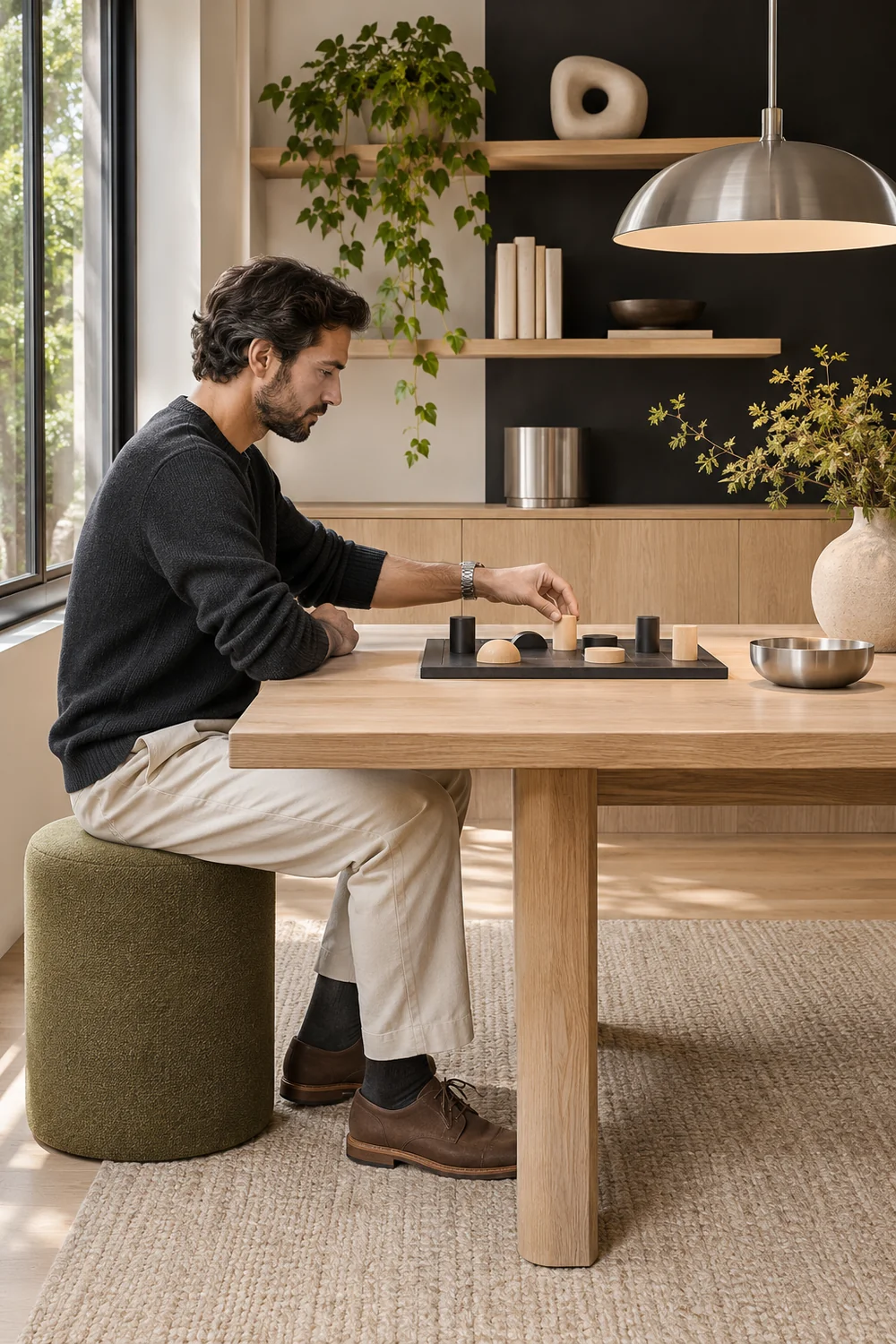
Write down these five checks for each seat.
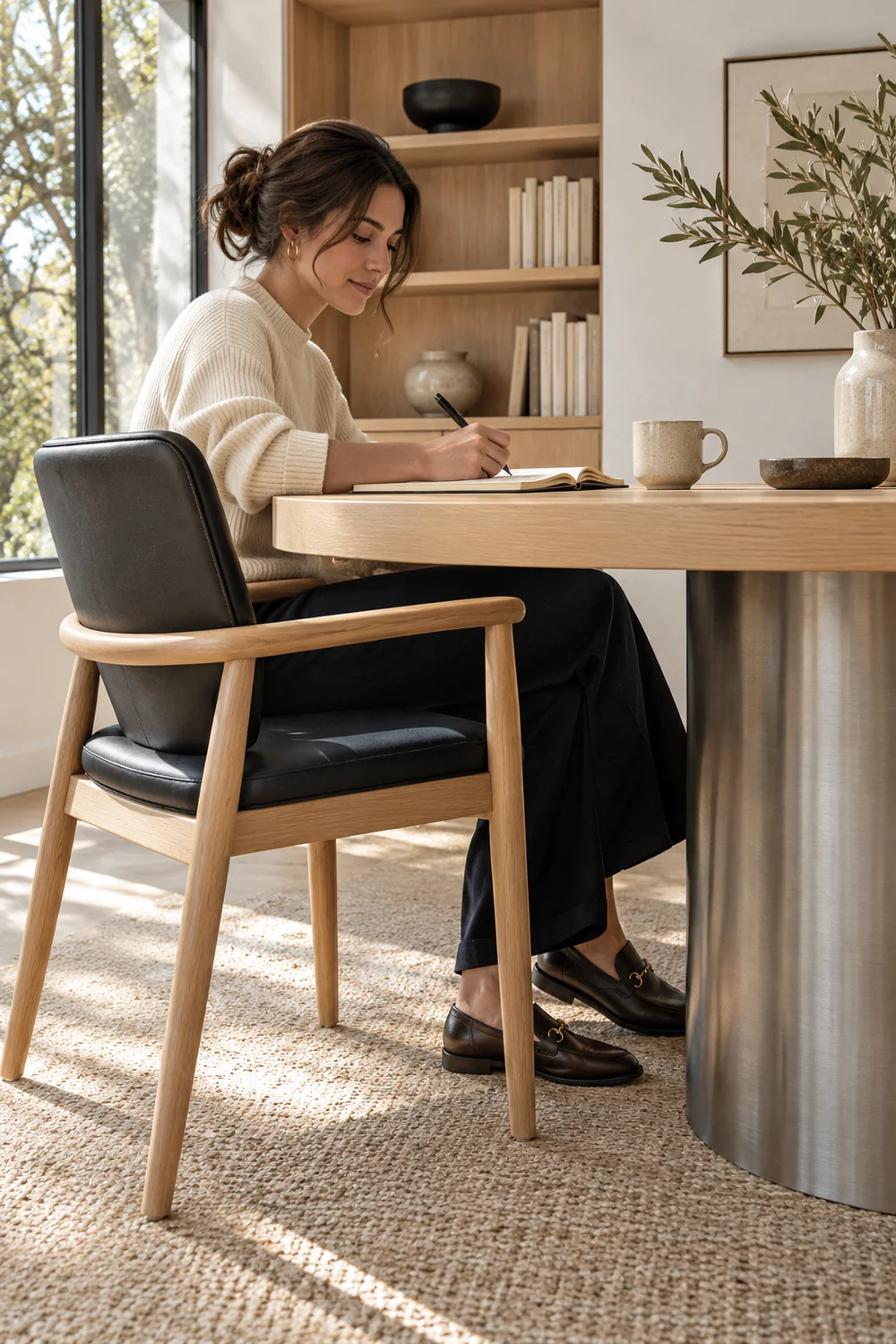
Picture a small group using a compact table with a diagonal base. The flat top passes every tabletop check. At the fourth seat, a leg makes it hard to sit close enough to reach the cards. Mark reach as change and sitting as change. Move the chair a little left if the table and route allow it, then repeat both checks. If the player area now clashes with someone else’s, the correction hasn’t passed. The seating four example is useful if you’re trying two existing chairs rather than immediately buying a set of four. Pay attention to what happens at the most difficult position.
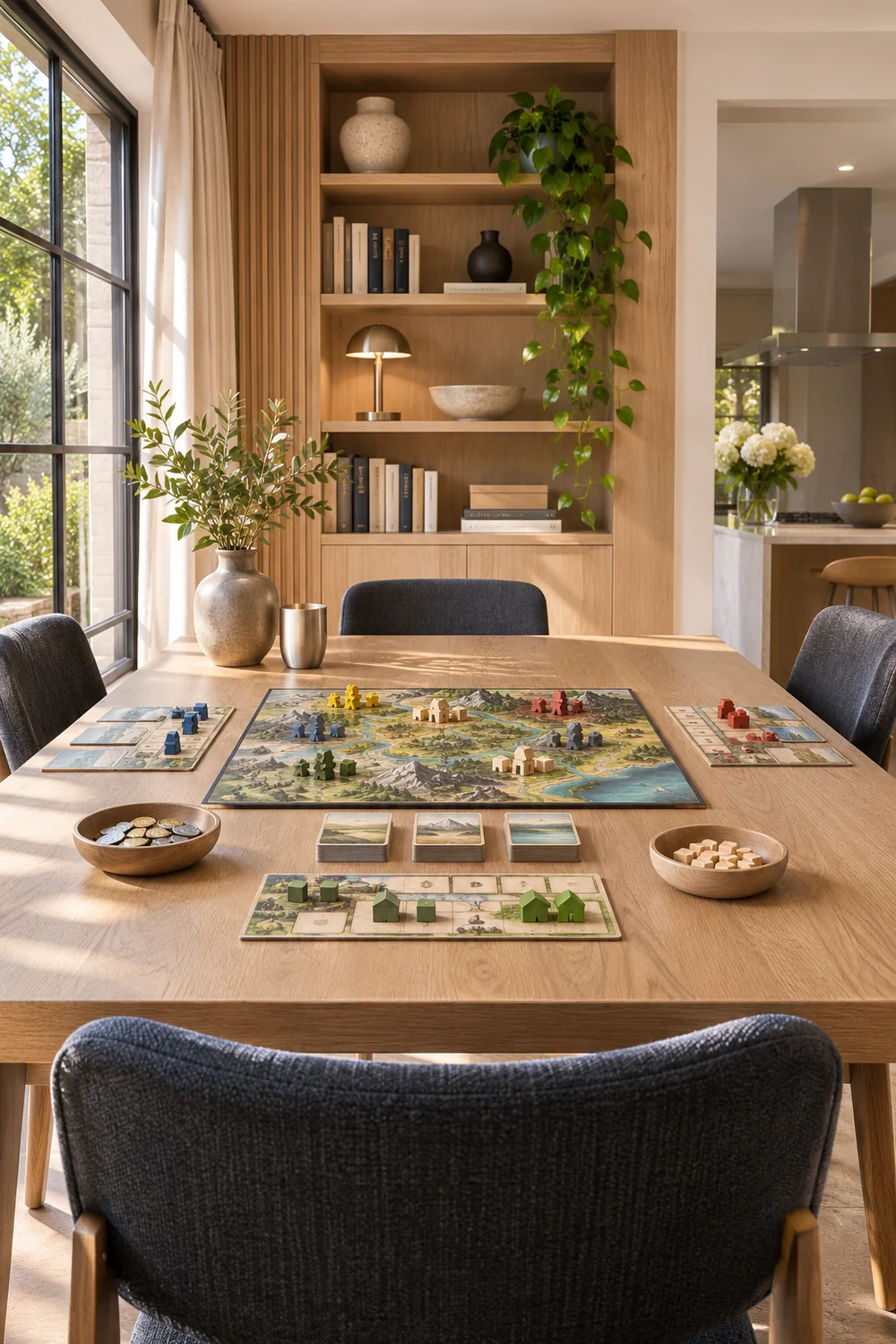
Keep any table position that passes every essential check for this group and this game. If two pass, choose the one with the fewest steps between ordinary room use and game night. The existing dining surface may make sense when you can clear it and return it easily. A coffee table might be the simplest choice for compact card games if people can stay comfortably in their usual seats. A stable spare table may be worth bringing in for a bigger game when the sofa area can stay undisturbed.
A dining height table near a window can reveal a board clearly during the day. At night the table may need a different lighting arrangement. I would test visibility at the time you normally play and put that observation on the scorecard. An existing living room light can work well from one direction and reflect straight across a shiny board from another. Try changing a usable lamp position once, with the cable kept out of the normal walk. If the people at the far side can now see, record the change along with the seat that needed it.
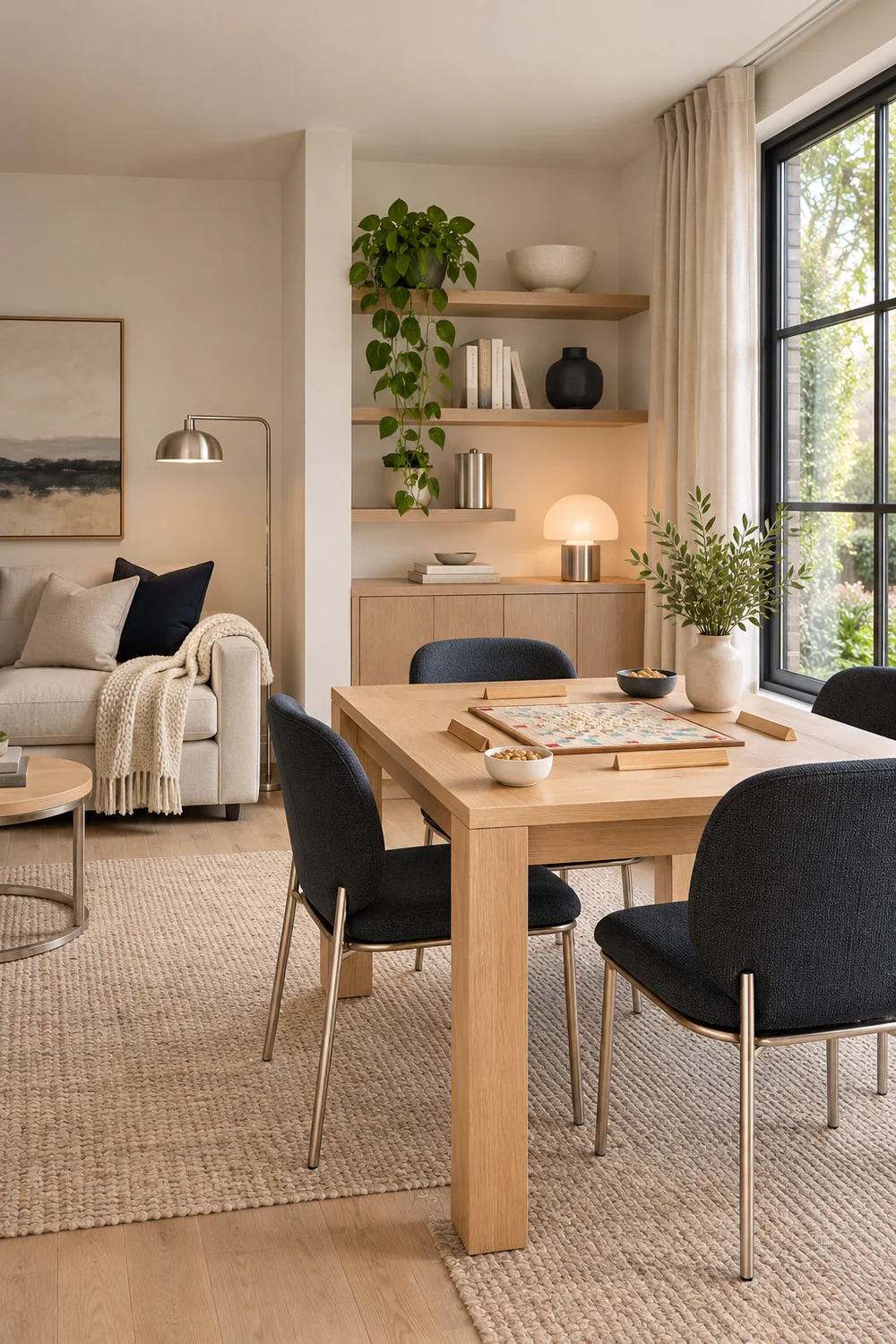
If a dining surface must fit around a sofa that isn’t moving, look at this small living room dining table example for placement options. I would test a long edge near the sofa and an alternate spot where more sides are available. The same table can feel very different once players sit around it. Choose between the positions using exactly the same game spread, chairs and checks.
In one room a coffee table and existing sofa may pass neatly for a small deck. In another a larger table passes the surface check and still fails because nobody can get around the far chair. Sometimes the best change is the game rather than the furniture. If the group wants the bigger one, choose a table and location that actually pass. If the room is the priority, pick a smaller format that gives everyone a decent place to play. A successful trial tells you which compromise belongs to this evening.
Run a second round through the scorecard if the game expands as you play. A table with plenty of room for the opening board might leave nowhere for a late stack of cards or a discard pile. I would reserve that space before anyone puts a drink or a phone down. In the worked example, the nominal twelve centimetres of spare depth on the larger table is only six at either edge if the game is centred. If one player needs all twelve, shift the shared area and see whether the opposite seat still passes. The extra room is useful only where you need it. Leave enough space to pick up a card near the edge without having to lift another item first.
Keep a note of which game and player count you tested, which surface passed and what correction helped the worst seat. Add the dimensions of usable area, the table position and where the shared supplies ended up. You can put these on a small card or take a picture of the final arrangement from above. A photo makes a useful reference next time somebody suggests switching furniture before you remember the first arrangement worked.
For the worked example, choose the 95 by 70 centimetre surface only if the occupied seat checks pass when the real pieces are set out. Note that the coffee table can still serve compact games. If the larger table fails a route check, write that separately from the surface result. Then you can decide whether a changed position or a smaller game is the next experiment. Keeping the cause beside the result makes the next trial shorter.
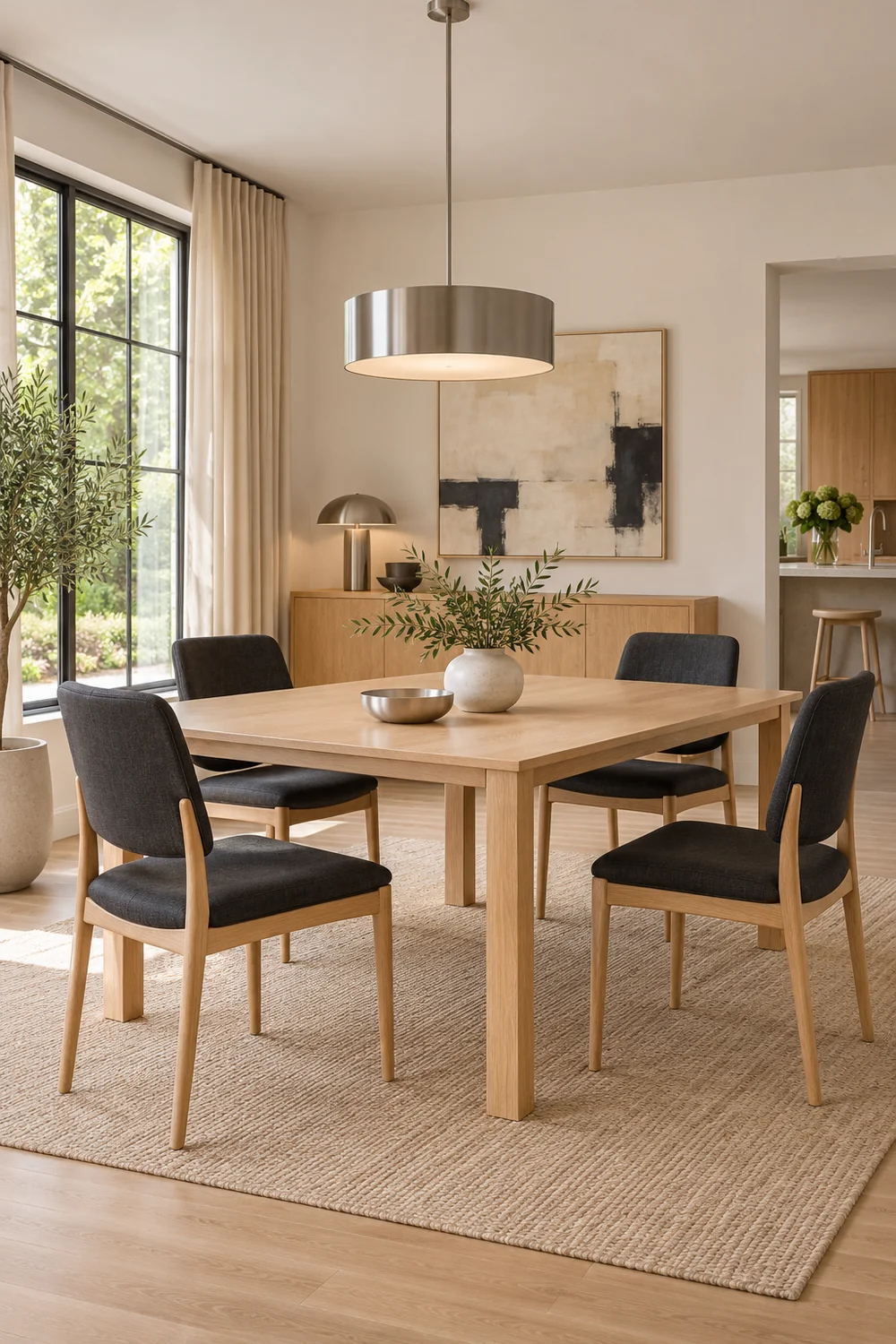
Once you’ve chosen the table, put the drinks, spare pieces and lighting on their own side of the decision. They need a home that keeps the tested layout intact rather than quietly replacing space you allocated to the game. The game night setup checklist orders those details from the first tray to the final reset.
I would keep the scorecard with the box if the group will play that game again. Bring it out when the game, table, people or room changes. If someone mentions they couldn’t read or reach a specific thing, put yourself in that seat first. You can often make one smaller correction when you know the actual problem.