Newsletter Subscribe
Enter your email address below and subscribe to our newsletter

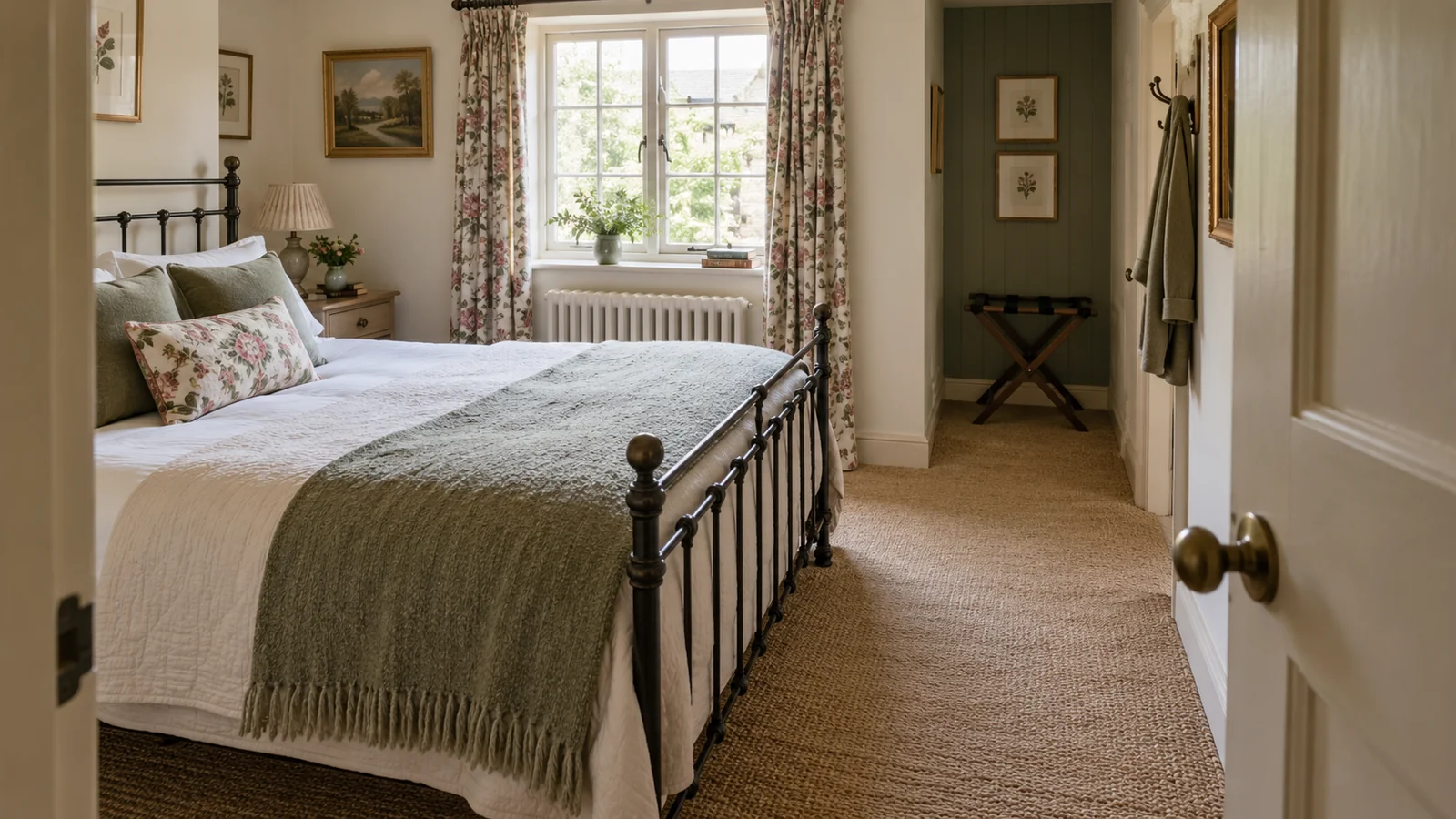
The loveliest country guest rooms often show a generous bed, patterned walls and a chair that seems made for a quiet morning. A small spare room may have space for only some of those things, especially when a visitor arrives with a case and needs to move around the bed. I would start with the room in use, then decide which English country details earn their place. You do not need to copy a complete room photograph. You need a clear route, somewhere for your guest's belongings and a few well chosen layers that make the space feel considered. This plan takes you from a measured sketch to a country scheme you can actually furnish.
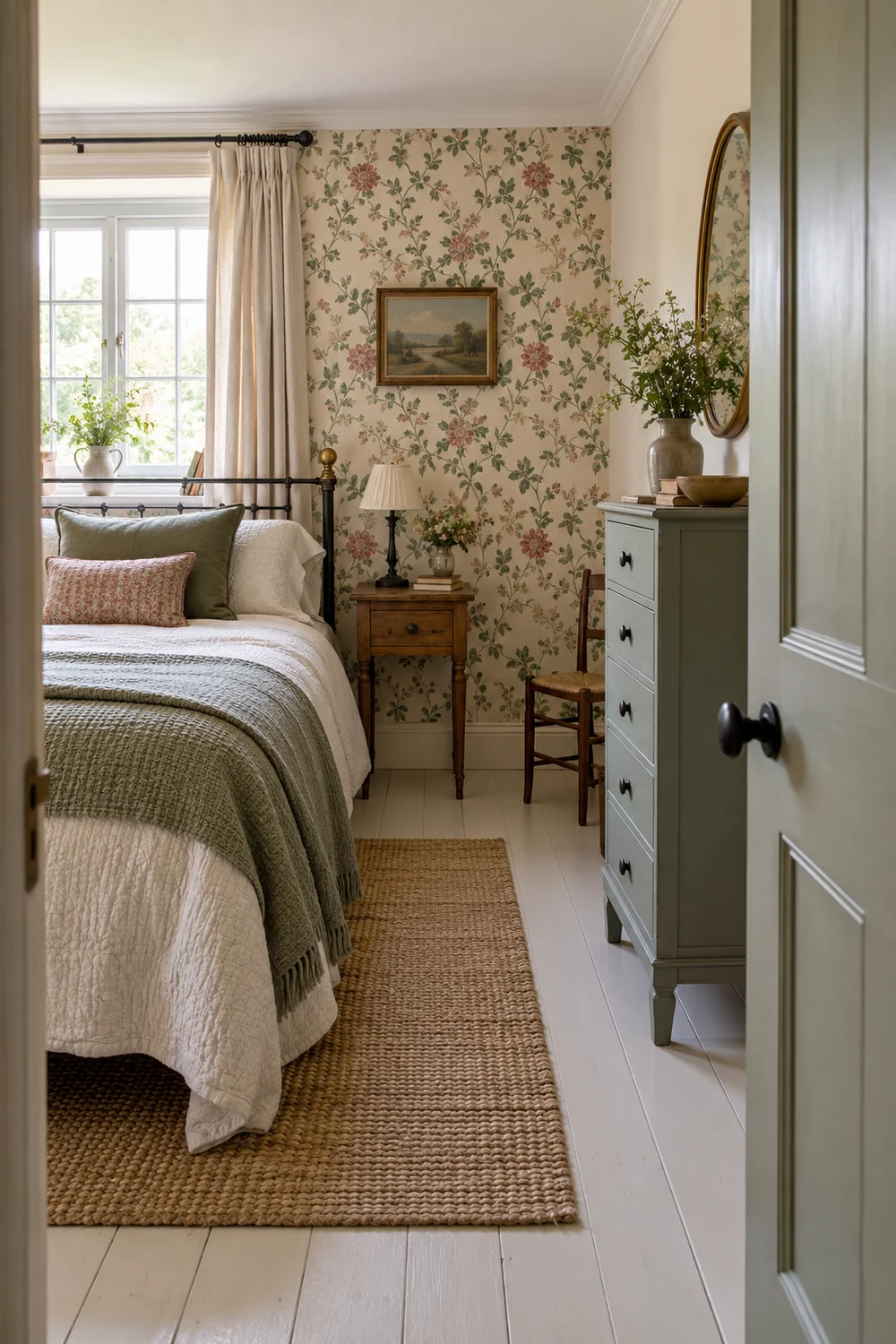
Begin at the door. Open it fully and note which part of the floor it claims. Stand where a guest would pause with a case, then walk to each side of the bed, the window and the place where a bag might be set down. A drawing of the empty room can make these routes look wider than they feel. I would mark the door arc, the window opening, radiator, sockets, low ceiling and every piece you intend to keep. If a wardrobe holds your own things, draw the door open as well. The guest needs to understand which storage is theirs without trying doors and drawers at random.
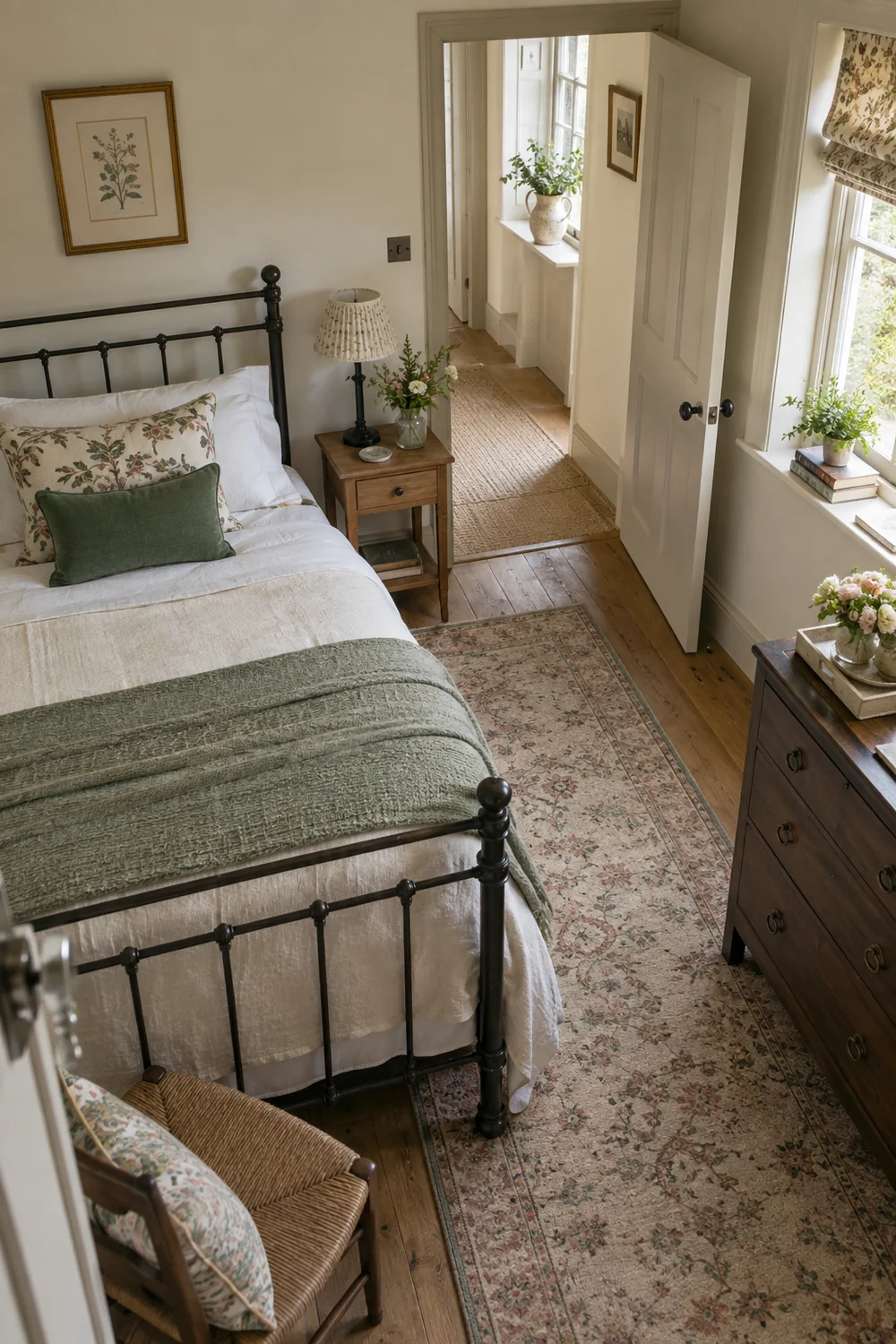
Record the bed and furniture you already own before imagining replacements. The useful measurements are the full frame, not just the mattress, plus the clearance needed to open a drawer or walk past an open suitcase. Tape the outlines on the floor and try them during an ordinary day. Make the bed, reach for a lamp, open the window and carry a case through the door. If two people might stay, test their routes separately. A room can look composed from the doorway and still leave one person stepping over a bag each morning.
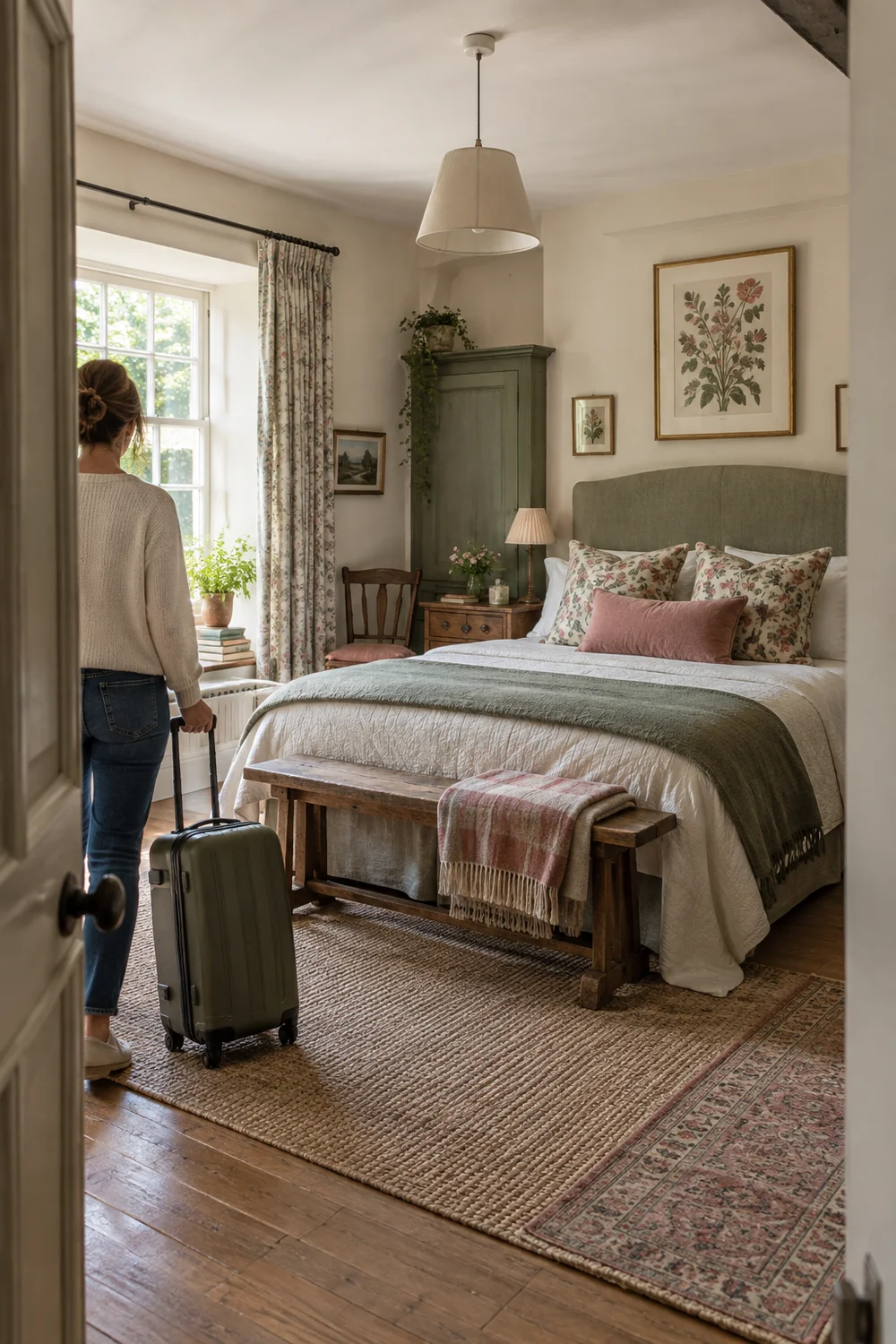
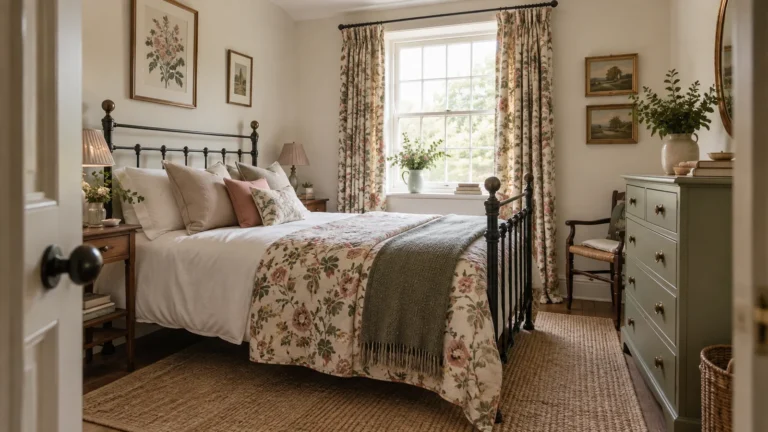
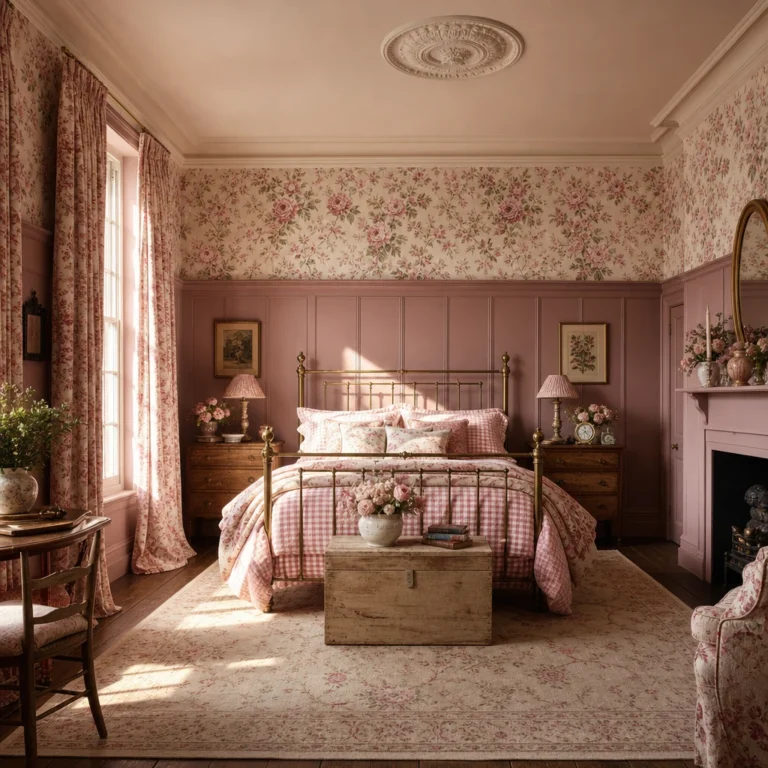
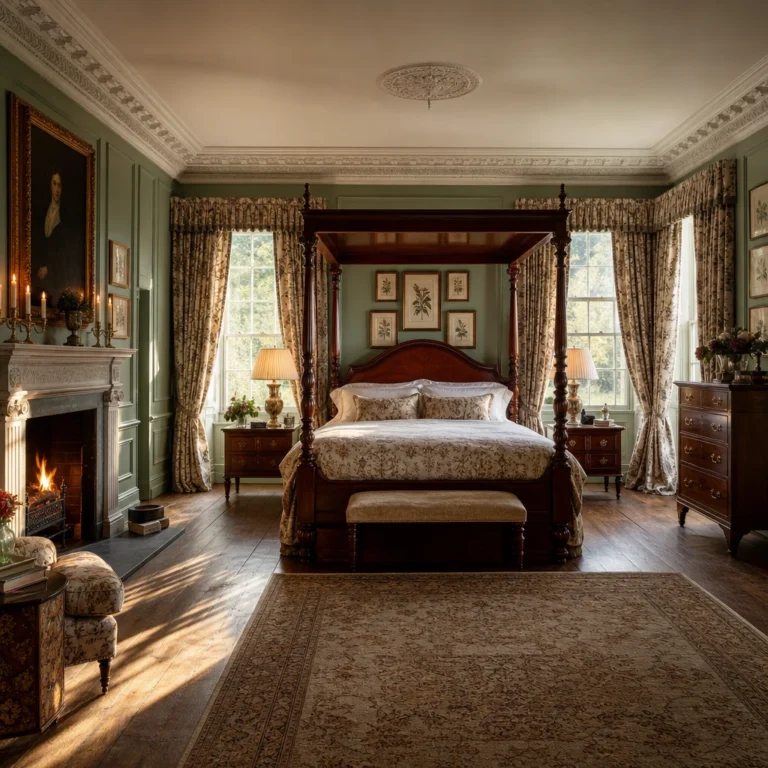
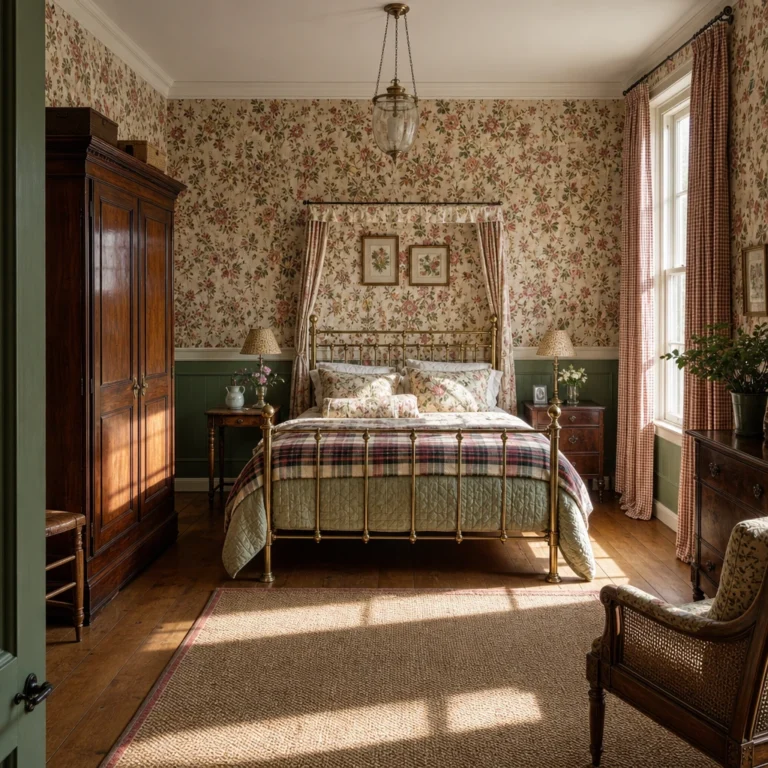
The published English country guest bedroom gallery is useful here for choosing the atmosphere you want. Keep one image or section as the reference for character, then draw your actual floor. A floral wall, an iron bed and a painted cupboard are possible ingredients, not a package that has to fit together in every spare room.
I would place the bed only after marking the path from the door to the window and to any storage the visitor will use. In a narrow room, centring the bed on the longest wall may create attractive symmetry but leave both sides too tight. Moving it toward one wall can give one genuinely usable side and a clear path. The decision depends on the number of visitors and what they need to access, so test both arrangements with the door and drawers open. A guest should not have to turn sideways between a dresser and bed just because the photograph looked balanced.
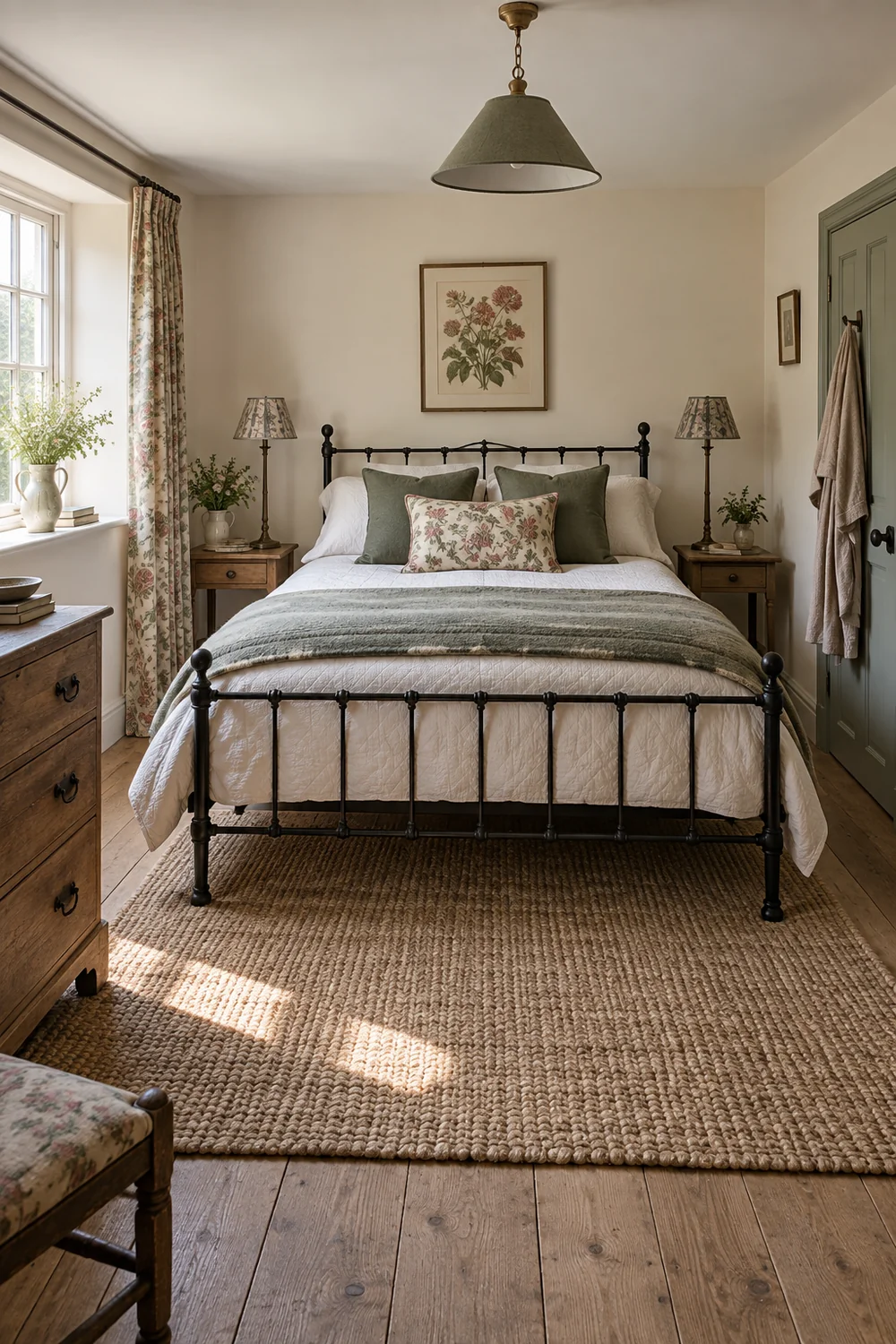
Check what the headboard does to the room as well as what the bed does to the floor. A tall tester or a heavily carved oak frame can be magnificent in a country bedroom, but a low ceiling or short wall may turn it into the only thing you see. I would make a paper outline of the headboard height and tape it to the wall. Look from the entrance and from the pillow. If it presses against a window reveal or leaves no calm wall around it, choose a lower iron frame, a curved upholstered headboard or a simpler timber bed. Save the strongest period character for a smaller piece you can give space to.
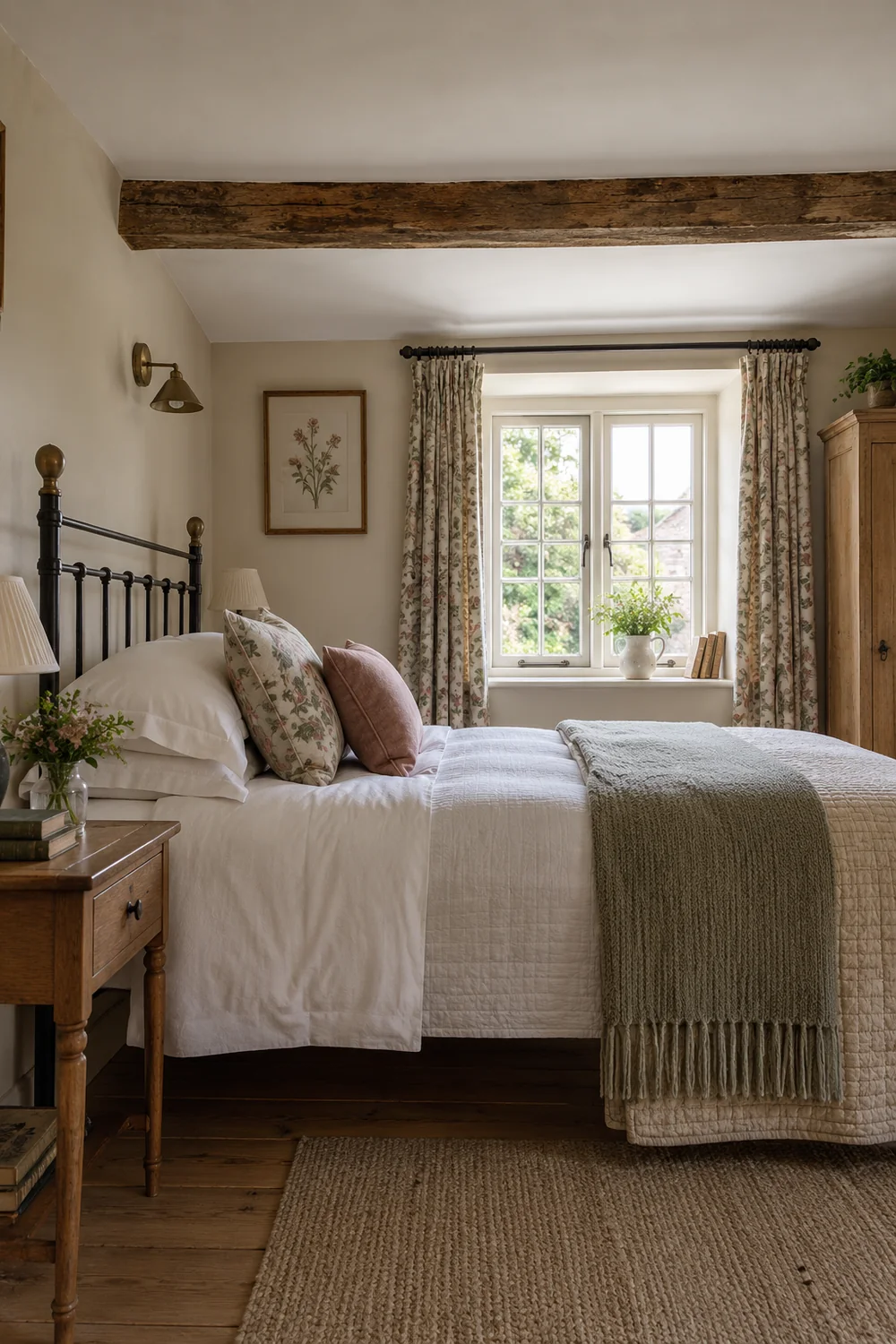
Where the bed touches an outside wall, notice the actual conditions before fixing it in place. Curtains need to fall freely, windows need to open, and any heat source should remain usable. A small country room earns its warmth through well judged layers, not by crowding every wall. To judge bed, rug and bedside proportions once the route is established, use the broader English country bedroom layers guide. This plan gives the visitor's movements priority.
Before buying a bench, put a typical case in the room and open it. The obvious place at the foot of the bed often consumes the only clear route. A slim luggage stand beside a wardrobe may work better if the case can open without blocking the cupboard. If there is already a sturdy chair, try it as a temporary landing place, but be honest about whether the guest then loses the only seat. I would rather leave a generous patch of floor clear than add a decorative bench that must be moved every visit.
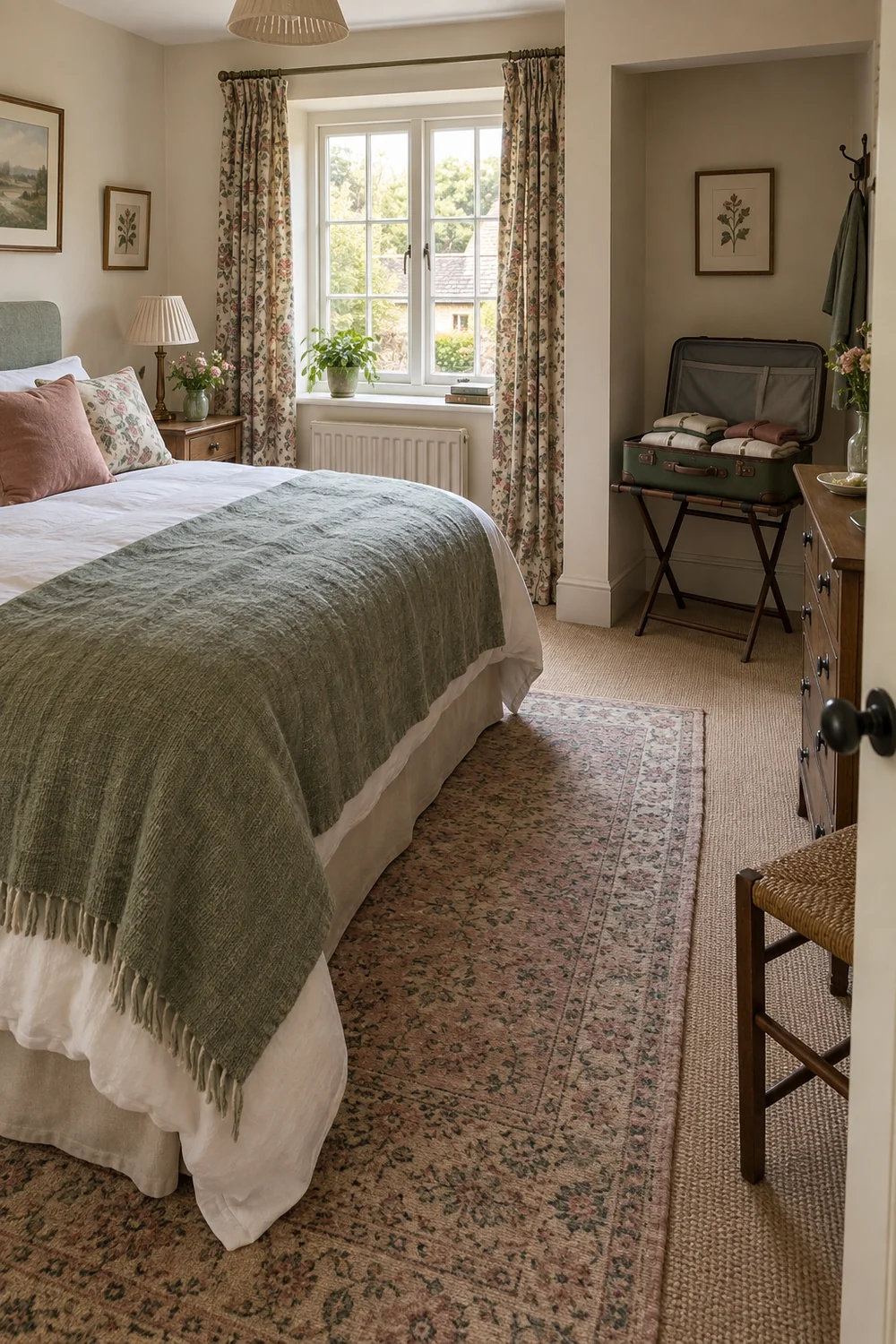
Mark the case open on your sketch. Then try the room with the bed made and the wardrobe door in use. The test is simple: can your visitor arrive, set down a bag, take out what they need and still reach the bed and window without shifting furniture? If not, reduce the furniture footprint before looking for clever storage. A narrow painted chest can sometimes replace a bedside table and give the guest a drawer. In another room, a wall shelf is enough at the bed, leaving floor space for a folding rack only when someone stays.
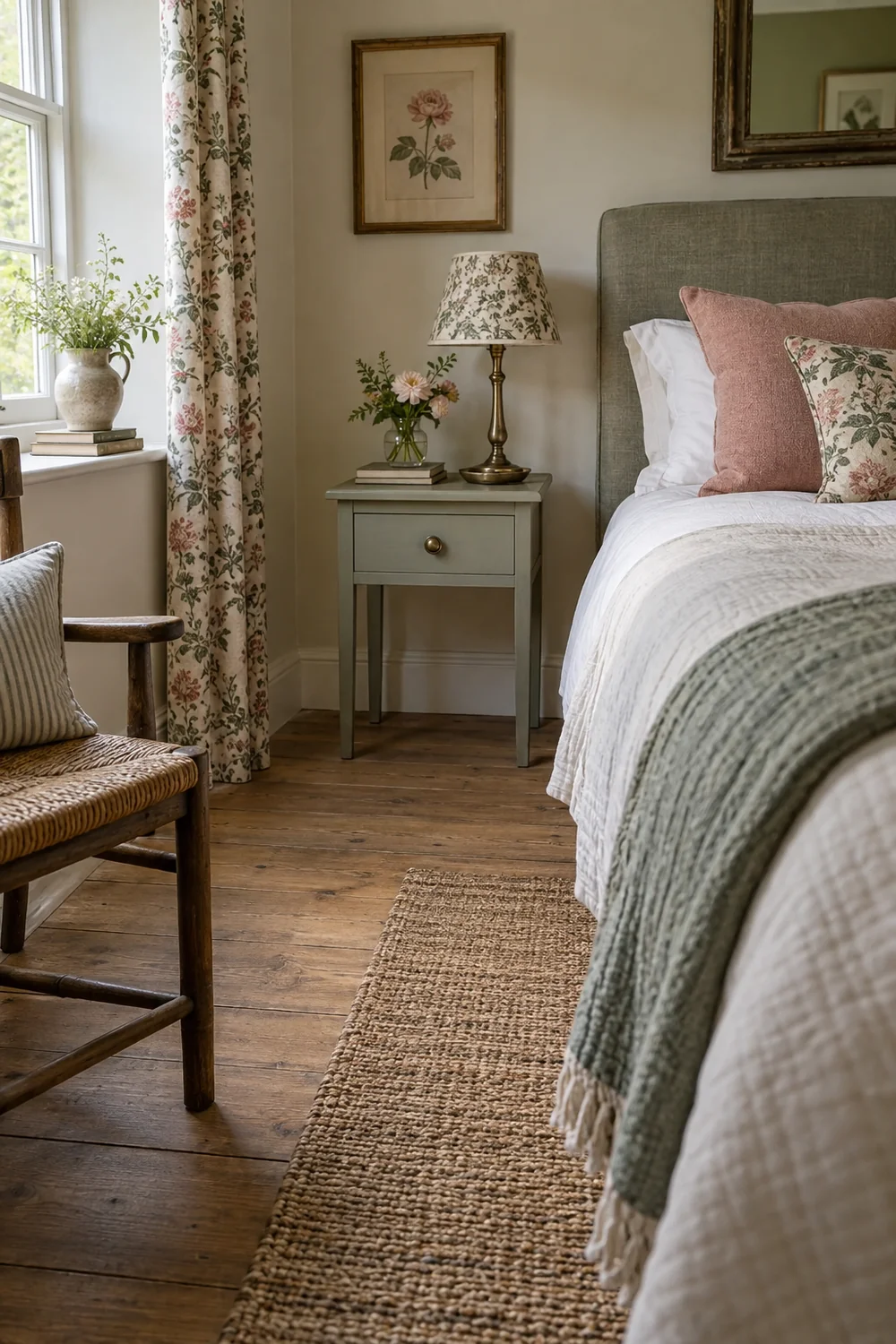
The recent Italian guest bedroom article gives a useful general account of luggage, bedside needs and turnover. Here the extra decision is how much English country furniture a small room can carry. Do not add a carved trunk simply to signal the style when a visitor would have to walk around it. One useful old piece, placed well, has more character than a collection of pieces competing for the same route.
English country style gives you several strong tools: a floral or toile pattern, painted wood, aged timber, an iron or upholstered bed, checks and generous fabric. I would pick one main architectural or patterned move and one supporting material move. In a very small room, floral wallpaper behind the bed with plain cream walls elsewhere may give enough character. If the wall is interrupted by a door and window, painted panelling or a small printed curtain may read more clearly. The choice should follow the room's shape rather than a rule that every country room needs wallpaper.
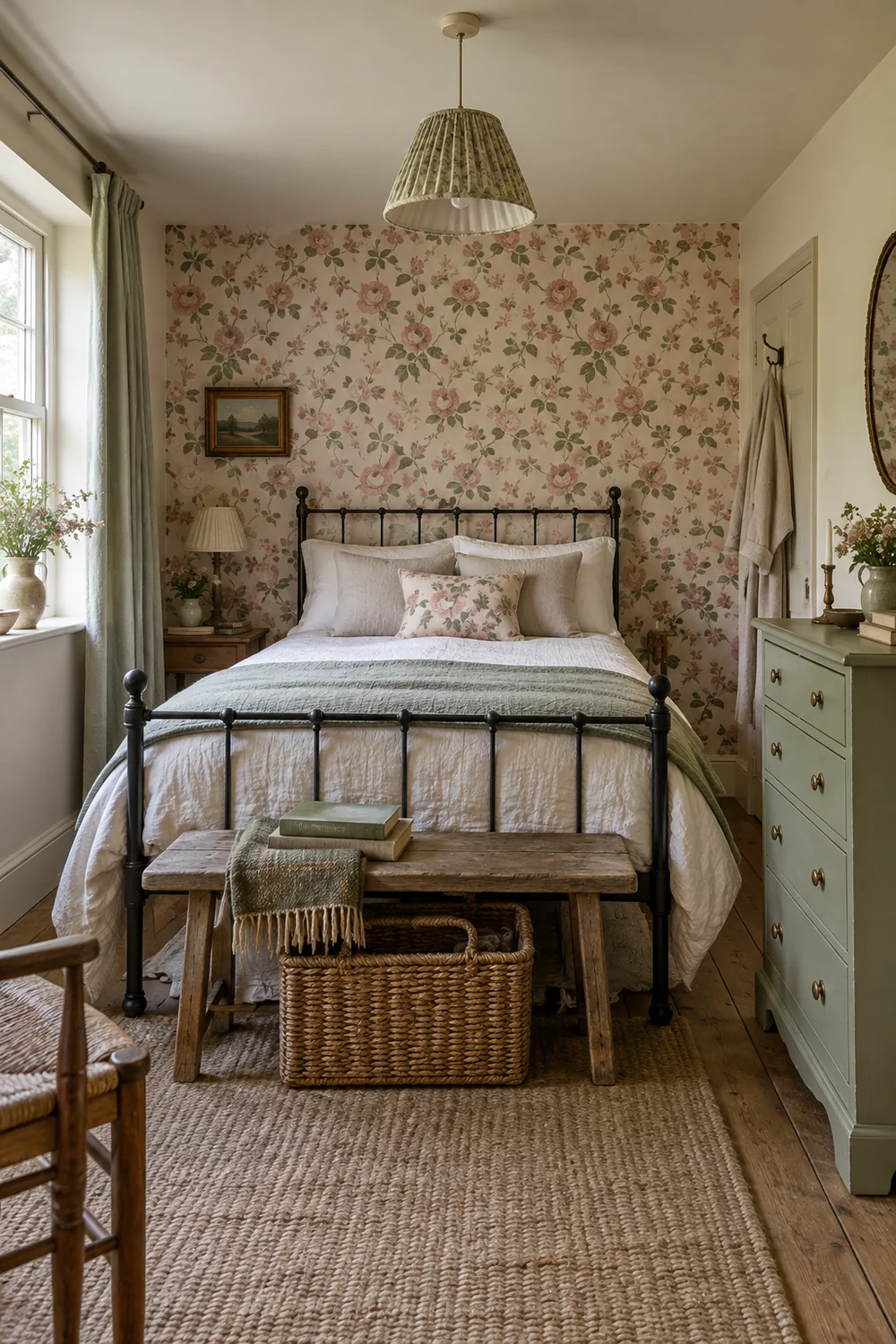
Think of the room in layers of visual weight. The bed is usually the largest object. If its frame is ornate, let the wall behind it stay quieter. If the bed is plain, a botanical paper or framed fabric can carry the story. An aged oak wardrobe feels different beside a soft painted wall than beside a dense floral print. I would lay photographs or samples of these large elements next to one another before choosing cushions. This avoids the common sequence of buying charming small pieces while the room's main surfaces still disagree.
The broader English countryside bedroom ideas page offers examples of pattern, textiles and old furniture. Use it to decide which detail feels like your home, then return to this room's plan. A country scheme is recognisable through the relationship between materials. It does not require a full set of period objects.
I would begin with the background colour that sits behind the bed and beside the window. In this project a chalk cream base keeps the small room open, while muted sage can appear on a painted cupboard or short run of panelling. A faded rose and leaf green floral can bring warmth to one wall or one textile. Aged oak and a little antique brass provide the harder notes. This is a family of colours, not a command to use every one at equal strength. If your existing floor is cool or your light is limited, hold large samples in the room before settling the balance.
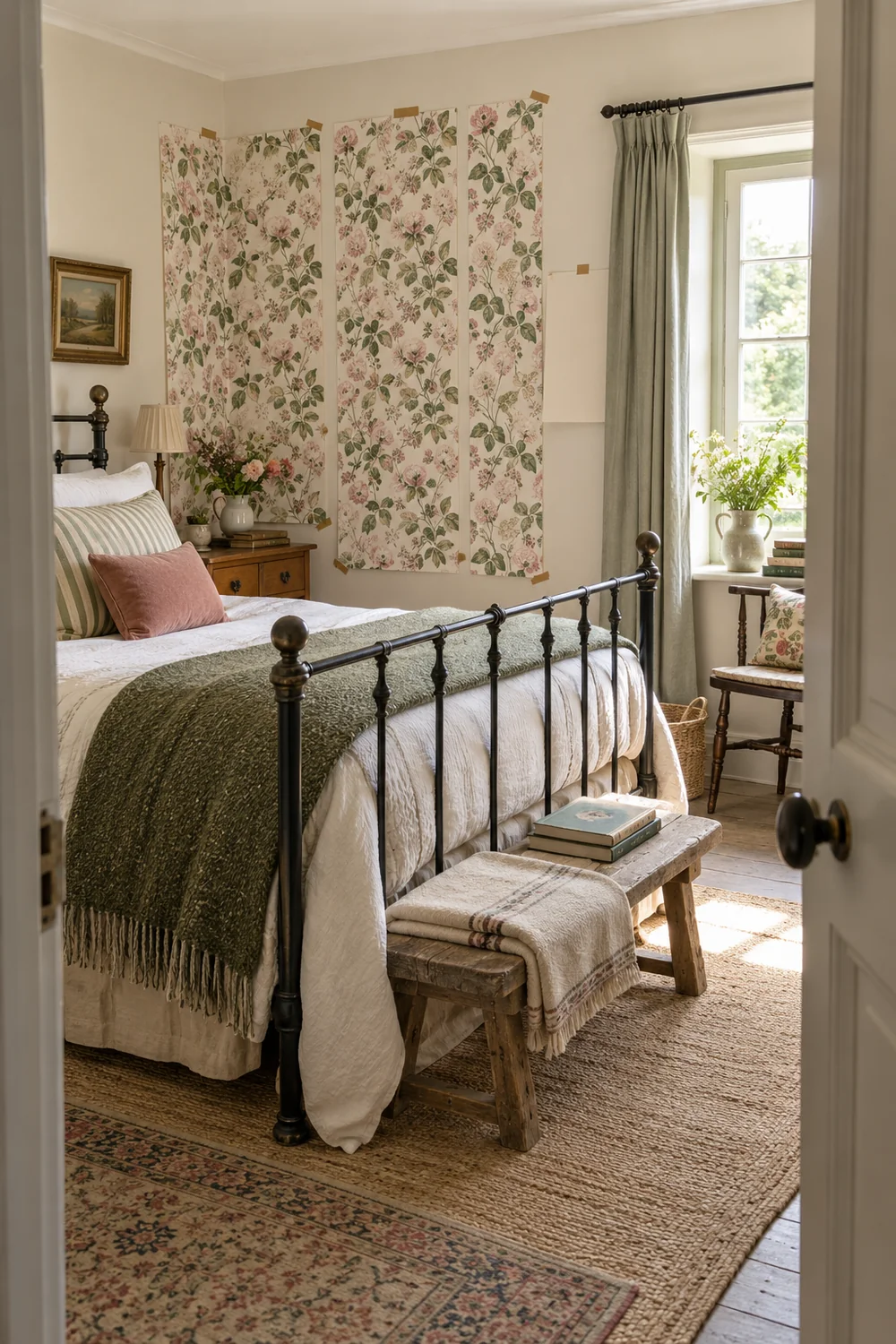
Pattern needs an actual viewing distance. A large flower that is beautiful on a sample may become a fragment when the bed covers half the wall. Tape several repeats together and look from the doorway. If you cannot read one full motif, move to a smaller repeat or use the print on a curtain, blind or cushion instead. For a check and floral together, I would let one lead and make the other quieter in scale or coverage. Plain linen or cotton gives the eye a resting place between them. The English countryside colours article can help you compare the wider country palette, but test your selected shades beside the real bed, floor and window before buying fabric or paint.
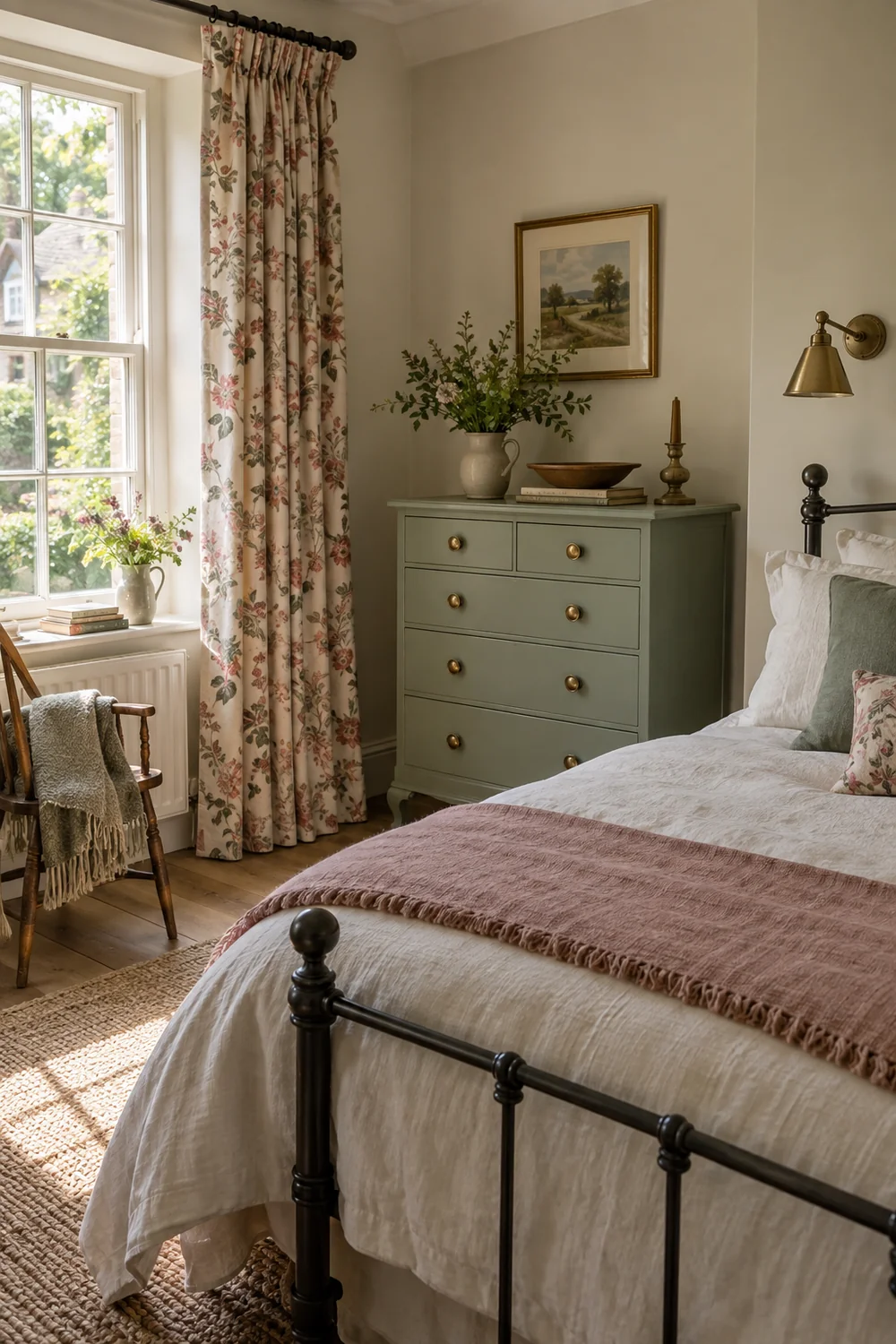
Photographs taken at midday are not enough. Look at samples in the morning and again when you would switch on the bedside lamp. A sage with a cooler cast may change the way a rose print reads. If the combination loses its calm, revise one surface rather than adding more accessories to compensate. The result I want is a room that looks collected because its large decisions agree.
A country window can be dressed beautifully and still fail a visitor if privacy or daylight control is awkward. Before choosing gingham curtains, check whether the window opens, where the pole can extend and what the fabric covers when drawn back. In a tight room, full curtains might brush a bedside table or cover a radiator. A Roman blind can keep the floor clear, while a curtain hung beyond the frame may make the window feel larger where there is wall space. I would make this decision on the plan, not at the fabric counter.
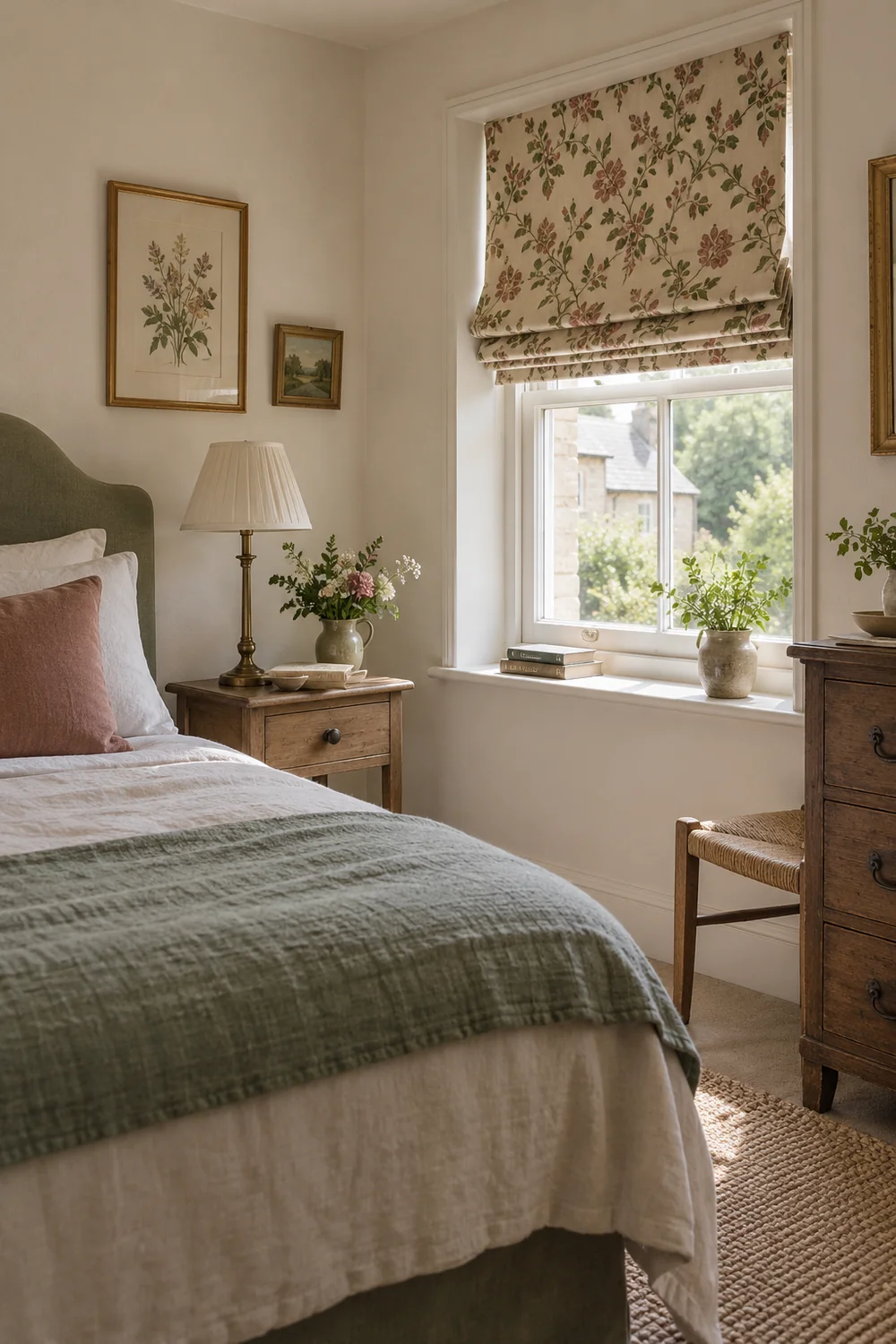
Give the guest a way to read and move around without relying on a bright ceiling fitting alone. Place a bedside lamp or wall light where it can actually be reached from the bed and switched off comfortably. Then check the path from the door at night. A lamp on a lovely but tiny table may leave no place for a glass or phone. A wall light can free the surface, but it should be positioned from the final bed and pillow location. If new wiring is involved, have a qualified professional assess it; the layout still tells them what the light needs to do.
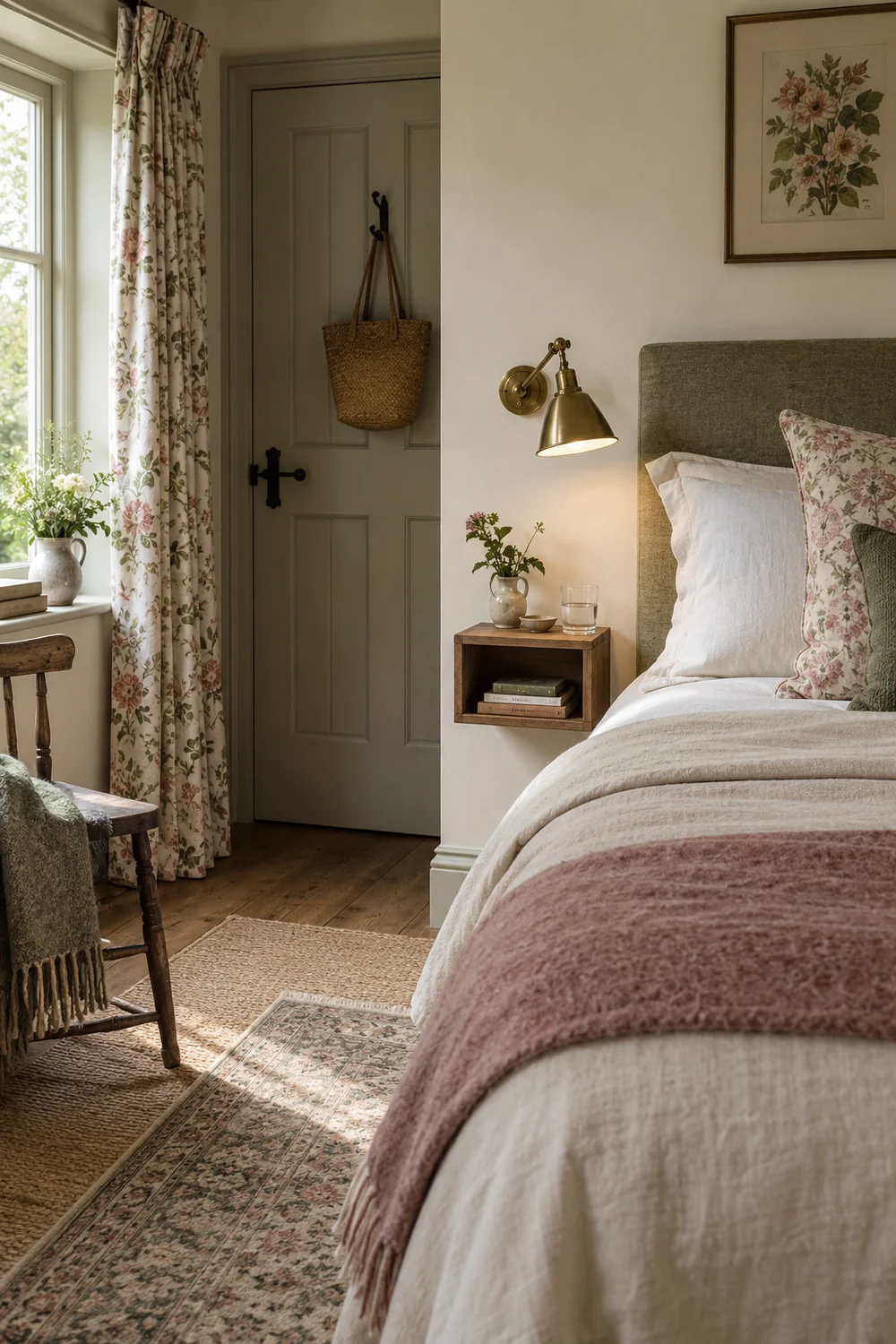
Test the room in clear daylight and again after dark. The first check shows whether the blind preserves useful light and whether the walking route is obvious. The second shows whether a visitor can reach the bedside light and find the door without relying on a harsh ceiling fitting. The general cottage bedroom page has more ideas for soft materials and warmth; here each window or lamp choice must also pass the small room test.
An English country wardrobe often looks best as a substantial freestanding object. A small guest room may not have space for that and the suitcase together. Open your existing wardrobe and decide what can be cleared for a visit. One obvious shelf and a short hanging section can be more welcoming than a full cupboard packed with household storage. If you cannot give the guest a drawer, a small painted chest might replace another piece rather than join it. If a hook is needed, put it where a coat or robe will hang without hitting the door or brushing the bed.
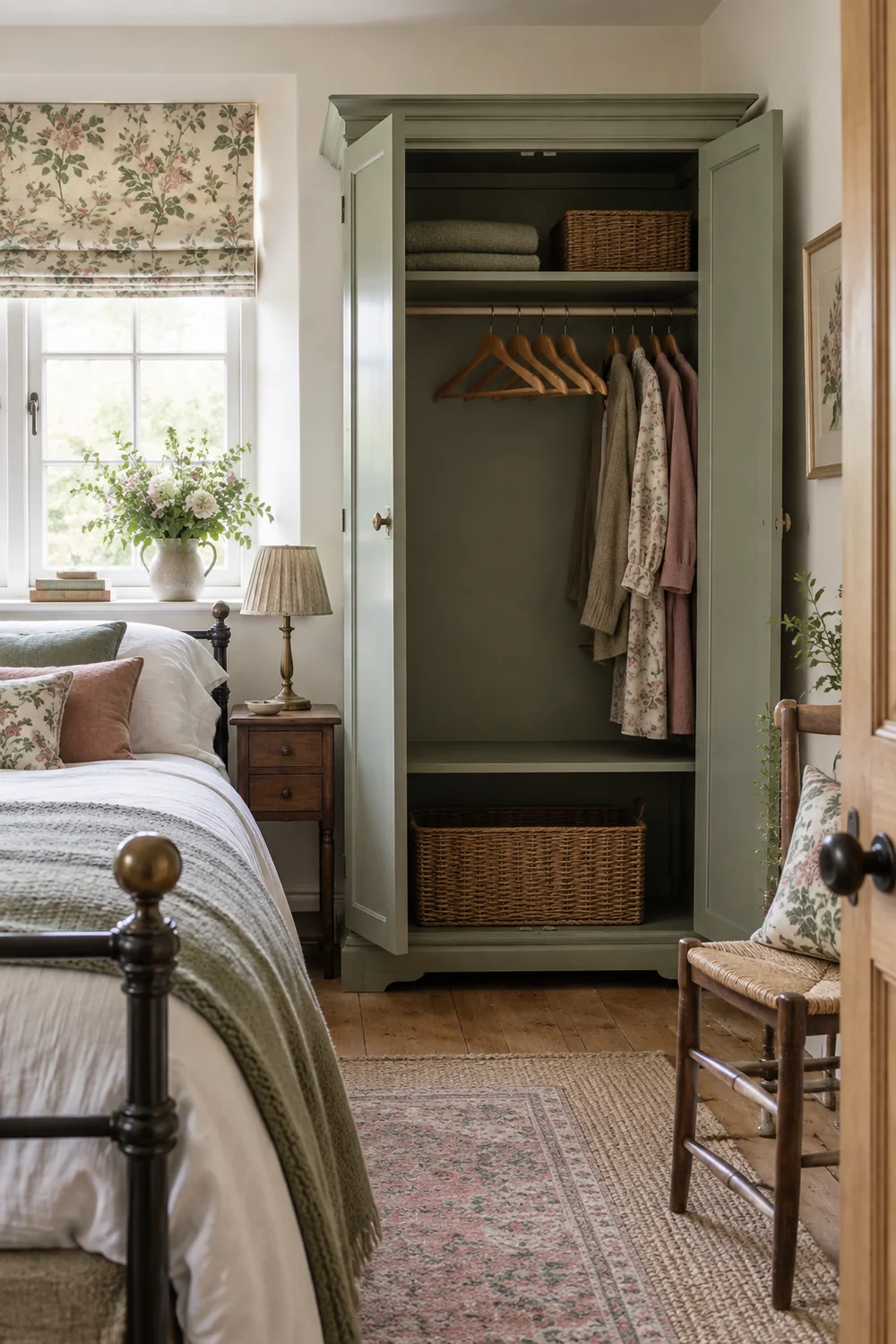
I would keep the visible surfaces restrained. A lamp, a small tray and one personal object are enough on a bedside table when a guest needs room for their own things. Books can make the room feel thoughtful, but a tall shelf belongs only where it does not narrow the route or crowd the pillow. The English country reading nooks article is a useful optional branch if your spare room truly has a chair corner. If it does not, let the chair live elsewhere and give the guest a clear bedroom.
Try the room once with a real visitor's likely possessions in place, even if you borrow a case and coat for the test. Photograph the room from the doorway and from the bedside. Anything that looks like attractive storage in the empty photograph but blocks use in the occupied one should move. The style will feel more generous when it leaves room for a person.
On one page, mark the bed footprint, door arc, open case, usable storage, window treatment and each light. On another, list the country elements that carry the scheme: perhaps a small floral paper, a plain iron bed, a sage painted chest and washed linen. Put a mark beside items already owned. This gives you a plan to test and a visual hierarchy to protect. It also makes the next purchasing decision much easier: a piece must fit both the drawing and the material family.
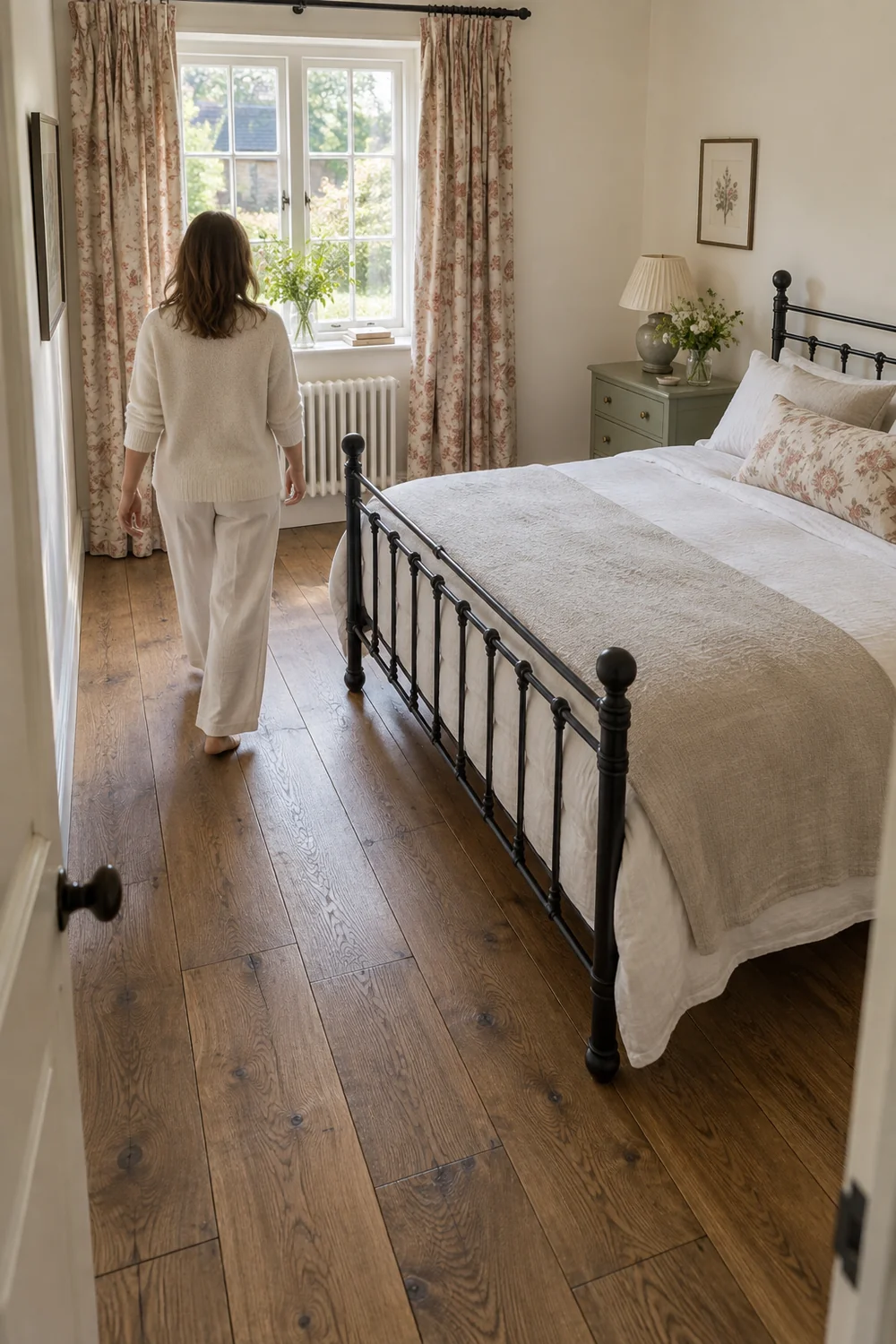
If you cannot make a clear route with the current bed, pause before selecting wallpaper. If the route works but the pattern still feels busy, reduce the printed area before replacing the furniture. The room has different kinds of problems, and buying a lamp should not be the answer to a bed that does not fit. Once your measured plan and palette are stable, use my cottage guest bedroom specification to compare bed frames, wallpaper repeats, fabrics, bedside pieces and storage against that plan. You should be able to say why each piece belongs before it comes through the door.
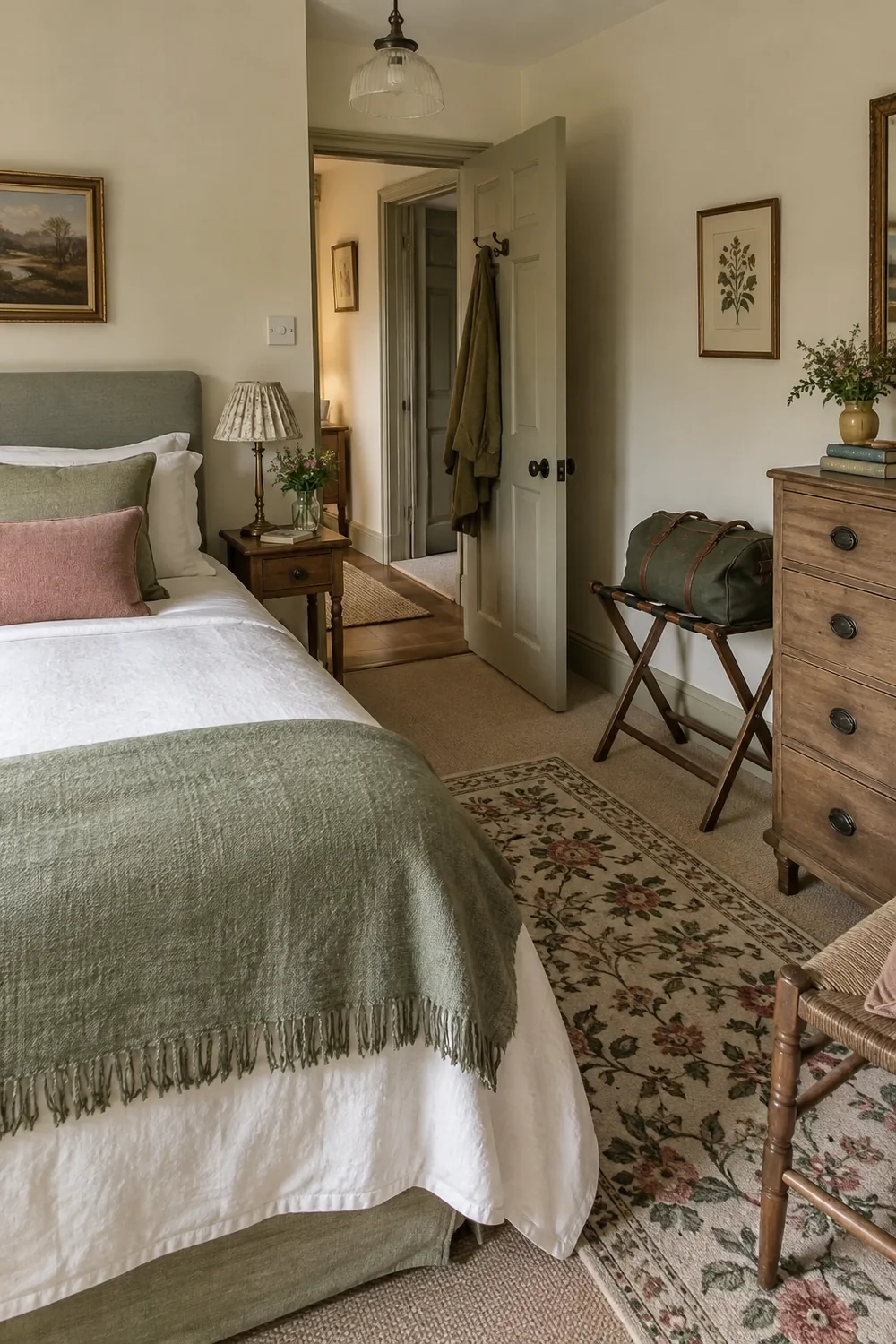
The room I would aim to hand over
I would want your guest to find a clear way in, a comfortable place to put a bag and a bed that is easy to reach. The English country feeling would come from a few confident choices that are visible in the room you actually have, rather than a crowded imitation of a larger house. Keep the measured sketch while you shop or reuse furniture. It is the quickest way to notice when a beautiful object would make the room less welcoming.