Newsletter Subscribe
Enter your email address below and subscribe to our newsletter

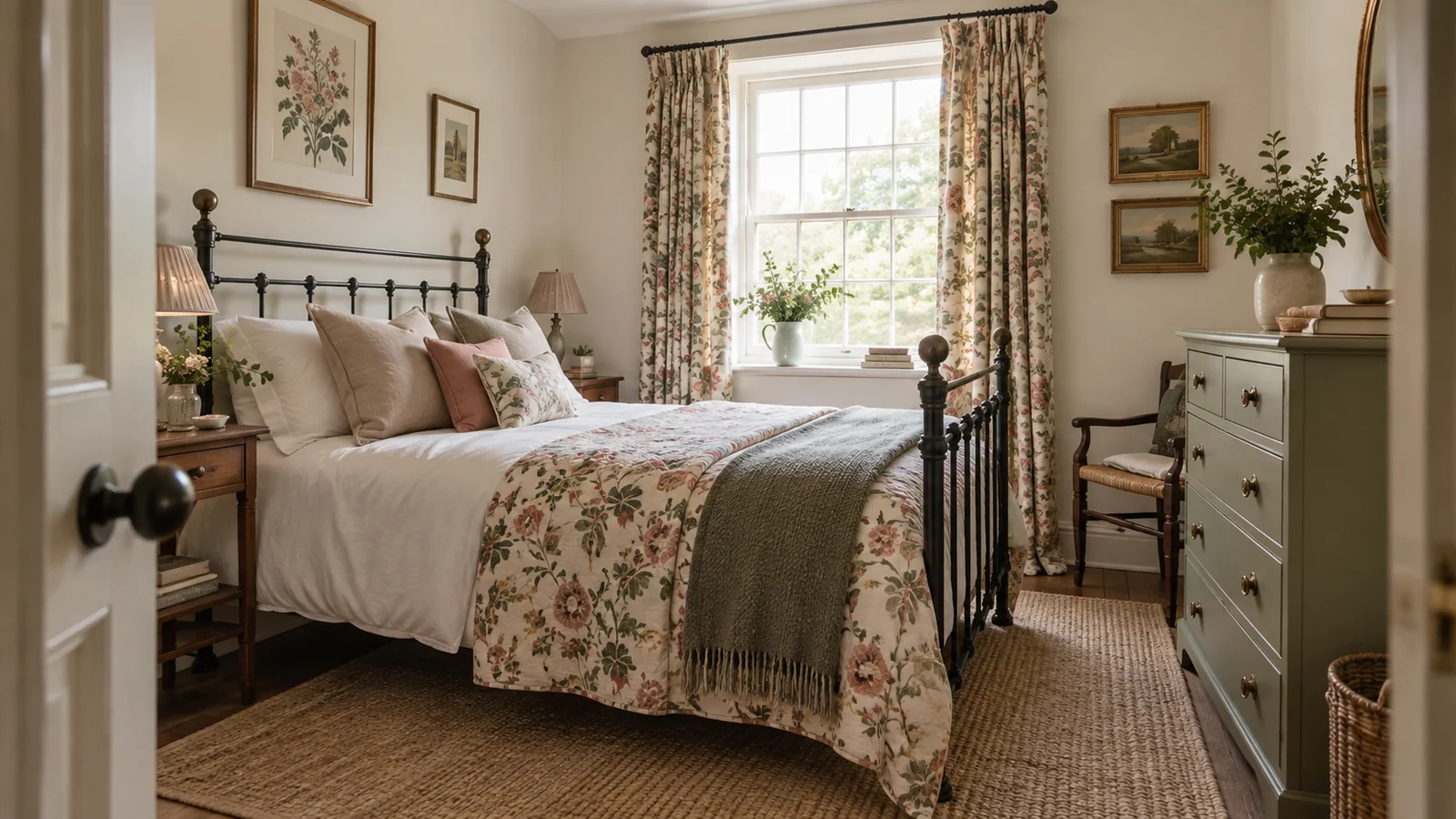
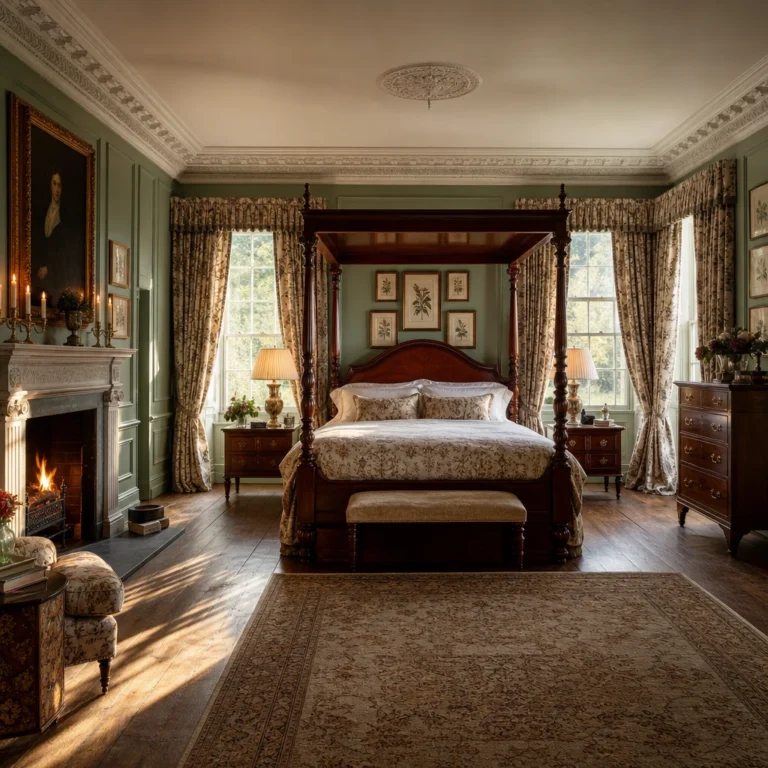
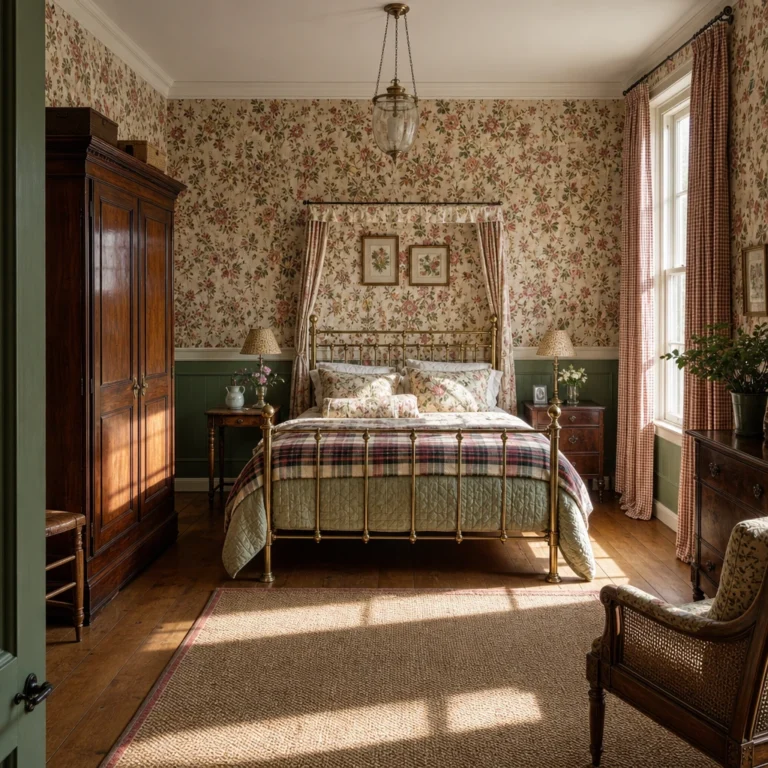
Once the bed position and walking route work, the pleasure of an English country guest bedroom is in choosing pieces that feel as though they belong together. That pleasure can turn expensive in a small room. A carved bed may fill the wall, a floral paper may fight the curtains, and a beautiful chest may take the suitcase's only place. I would use the measured room plan as a filter for every finish and piece of furniture. This is the specification stage: compare what you own with what you might buy, test real samples in the room and give each decision a reason. Your visitor should feel the care in the room without having to negotiate its decoration.
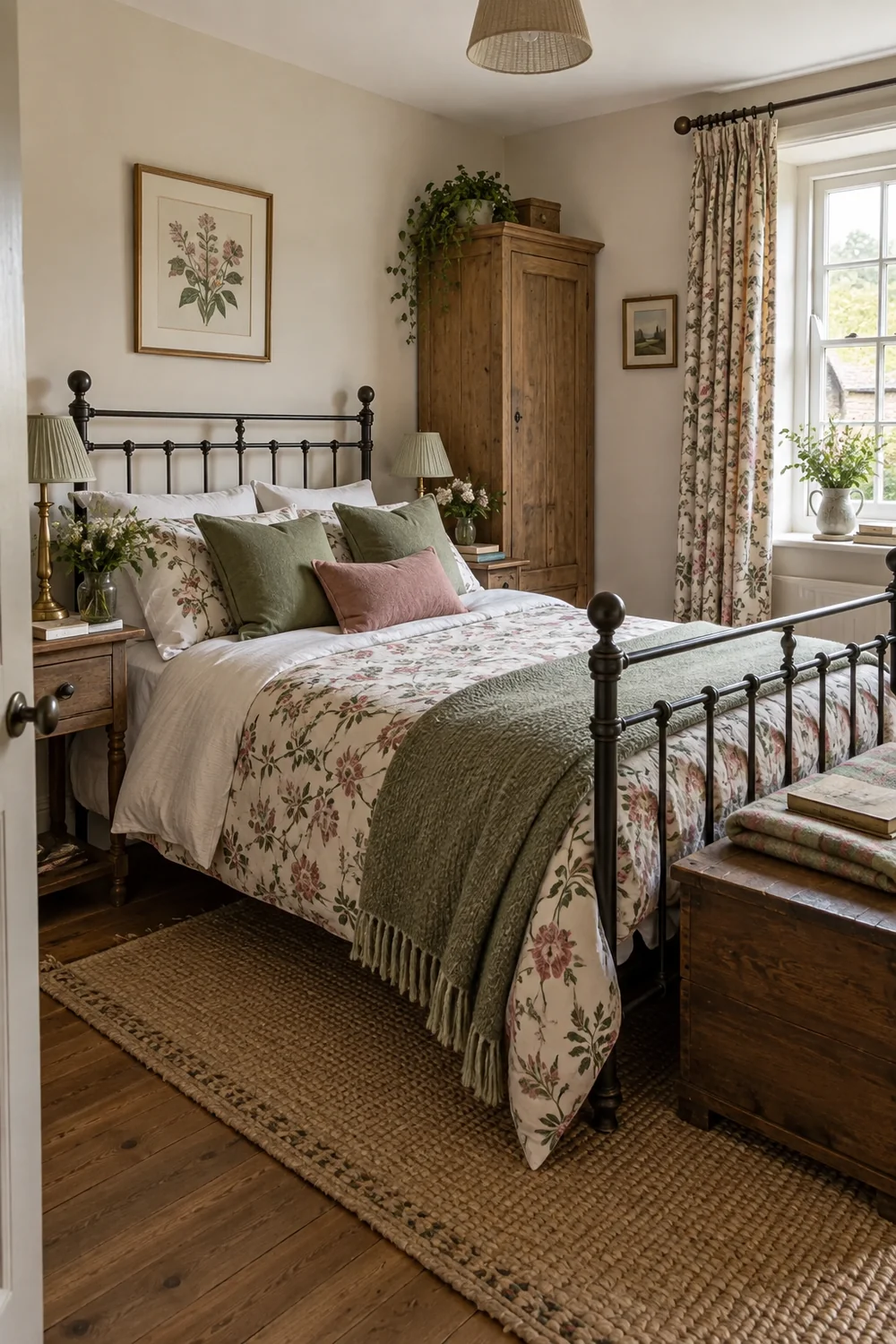
Bring the annotated drawing from my small guest bedroom ideas plan to the table. Write down the wall available for the bed including skirting and window reveals, the width of the clear route, the space for an open case and the usable height under a slope if there is one. Then write down the fixed conditions: floor colour, window orientation, any piece you intend to keep and the light position. These details are more useful than a shopping list because they tell you what a proposed purchase must pass.
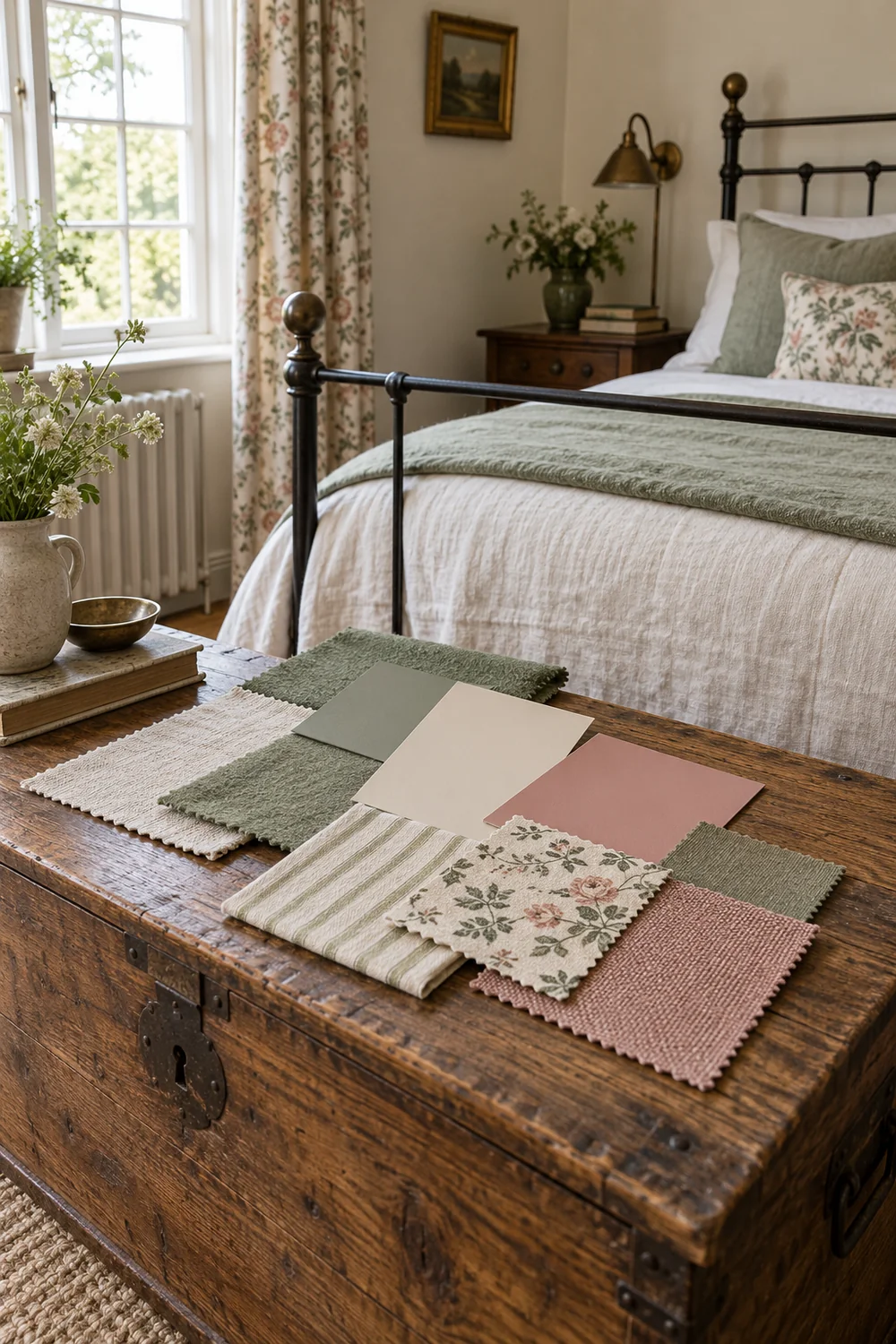
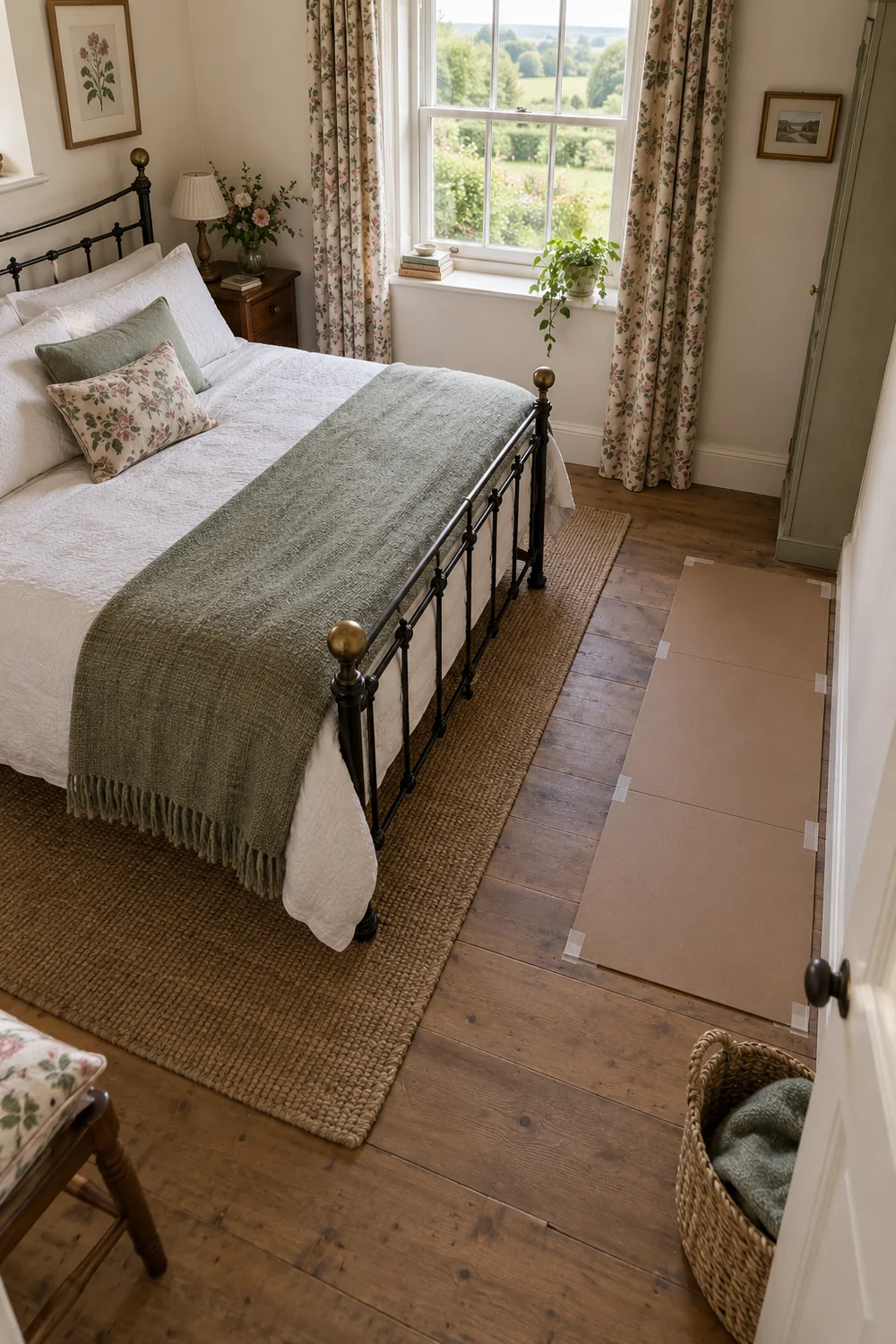
I would make three columns for each item: fit, visual role and care. Fit means the piece can be used with doors, drawers and walking routes open. Mark a proposed chest at full size with a flat cardboard outline on the floor before ordering it. Visual role means it contributes to the English country scheme without competing with the main pattern or bed. Care means its fabric, finish or mechanism can be lived with between visits. An antique chest might be visually perfect and still fail fit because its lid cannot open beside the bed. A delicate fabric might be beautiful and still be the wrong choice for a frequently washed duvet. A pass in one column does not cancel a failure in another.
Keep a small packet of samples with the sheet. One painted card, one wallpaper repeat, the bedding fabric, a photograph of the timber you already have and a metal finish are enough to start. Place them together in the room, not under shop lighting. The country palette should look like one decision made over time, not five unrelated discoveries made on separate afternoons.
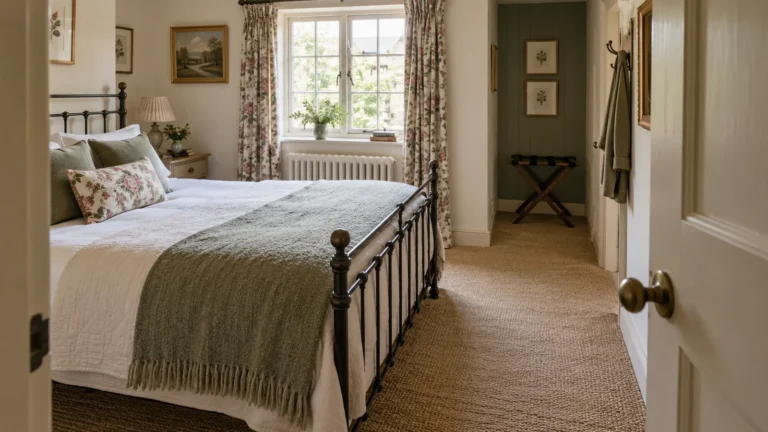
The bed is the room's largest furniture decision, and its full frame matters more than the mattress label. I would measure its posts, headboard, footboard and any projecting finial. An iron bed can give a small room a graceful open outline, especially when you can see wall and floor through it. An oak frame gives warmth and substance, but wide posts or a heavy footboard can close the route. An upholstered bed softens the wall and offers a place for a quiet floral, yet its fabric needs to make sense with the bedding and cleaning routine. Do not assume a familiar mattress size tells you the final footprint.
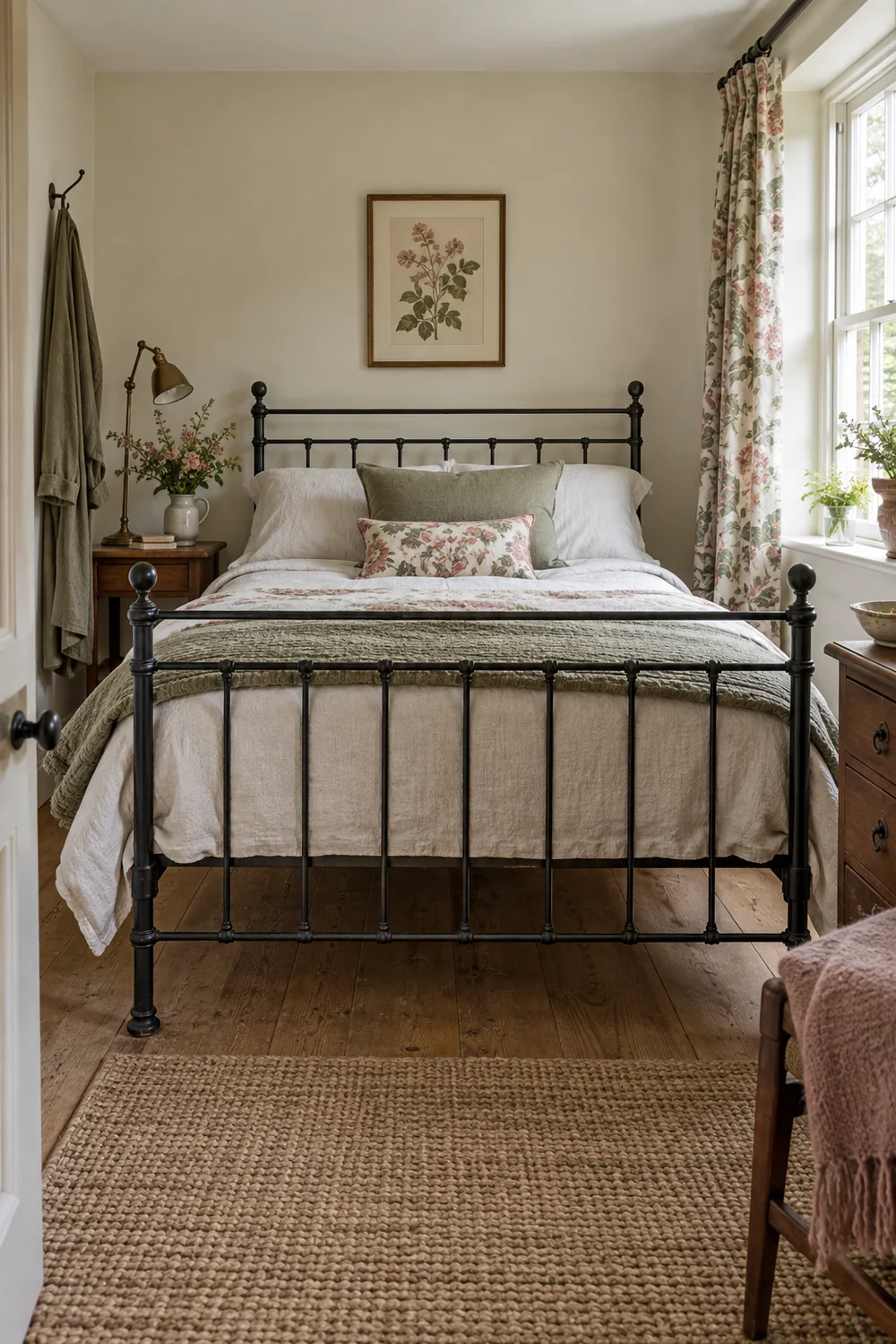
Tape the complete frame size on the floor and the headboard outline on the wall. Look from the entrance, then sit where a visitor would. If a tall antique frame cuts across the window or seems to press on a low ceiling, I would choose a simpler frame and let wallpaper or a painted cupboard carry the period feeling. If the walls are mostly plain, a curved linen headboard may supply enough shape without adding a canopy. A full tester belongs only in a room where it has real air around it. The English country bedroom layers article explains the wider proportion story; here the bed also has to preserve the guest's route and the space for belongings.
Check the bed with ordinary use. Can the visitor sit and stand easily? Can bedding be changed without moving furniture? Is the footboard an obstacle when an open case sits nearby? If the frame already in the house passes these tests, keep it and spend effort on the wall or textiles. English country character is particularly convincing when a useful old piece has been given the right setting.
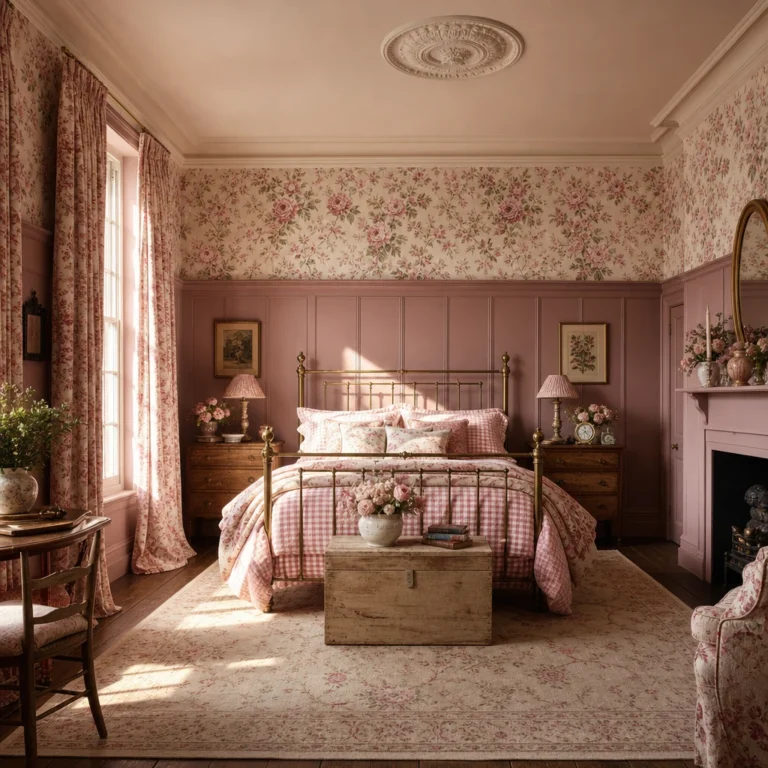
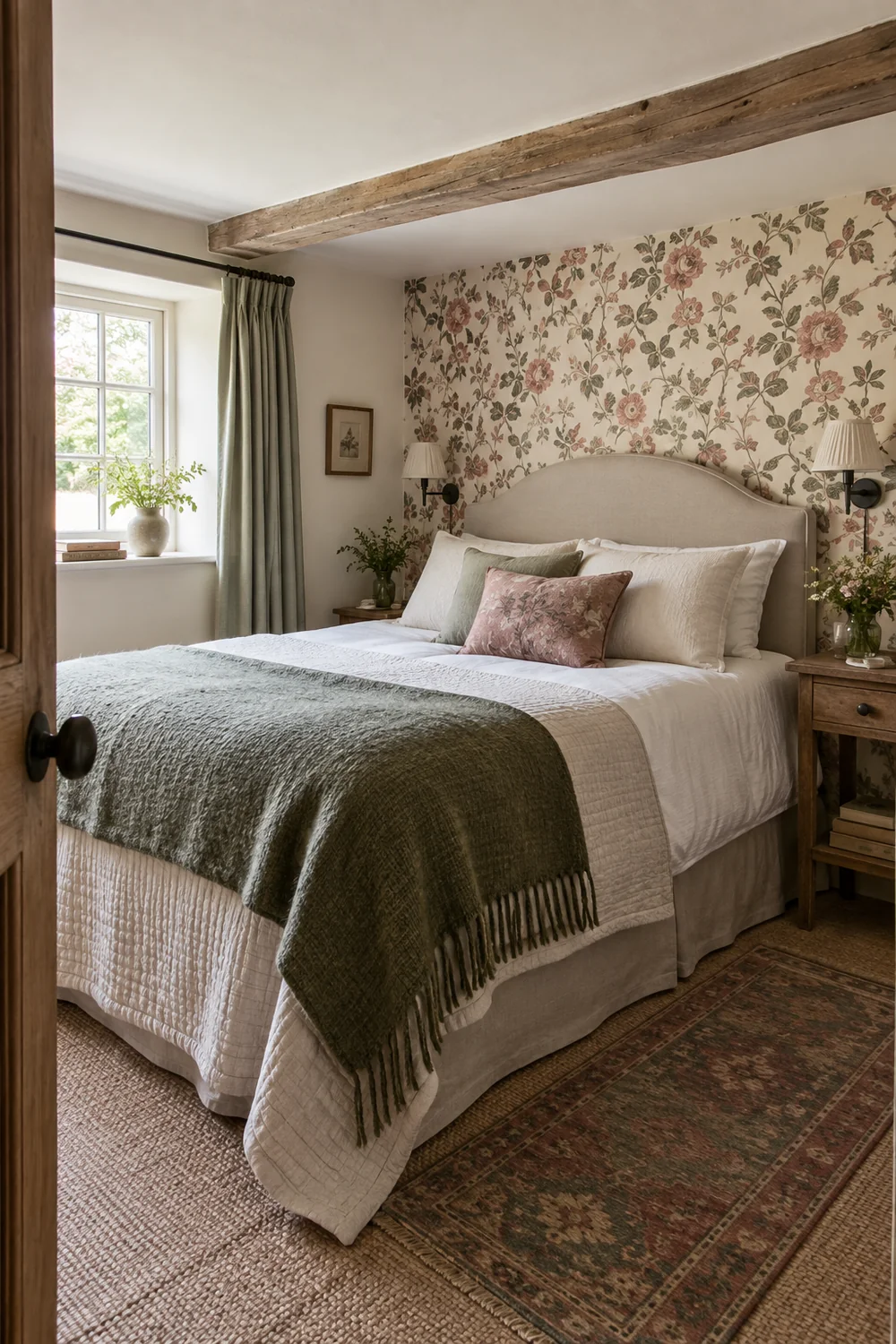
The published English country guest bedroom gallery shows several beautiful patterned and painted directions. I would choose one wall treatment for this actual room by looking at how much uninterrupted wall remains after the bed, window and door. A medium floral on a full wall can feel generous. The same paper chopped into narrow strips around cupboards can look restless. Lay several repeats on the floor and tape them in place behind the bed. Look from the doorway at the distance from which the room will normally be seen.
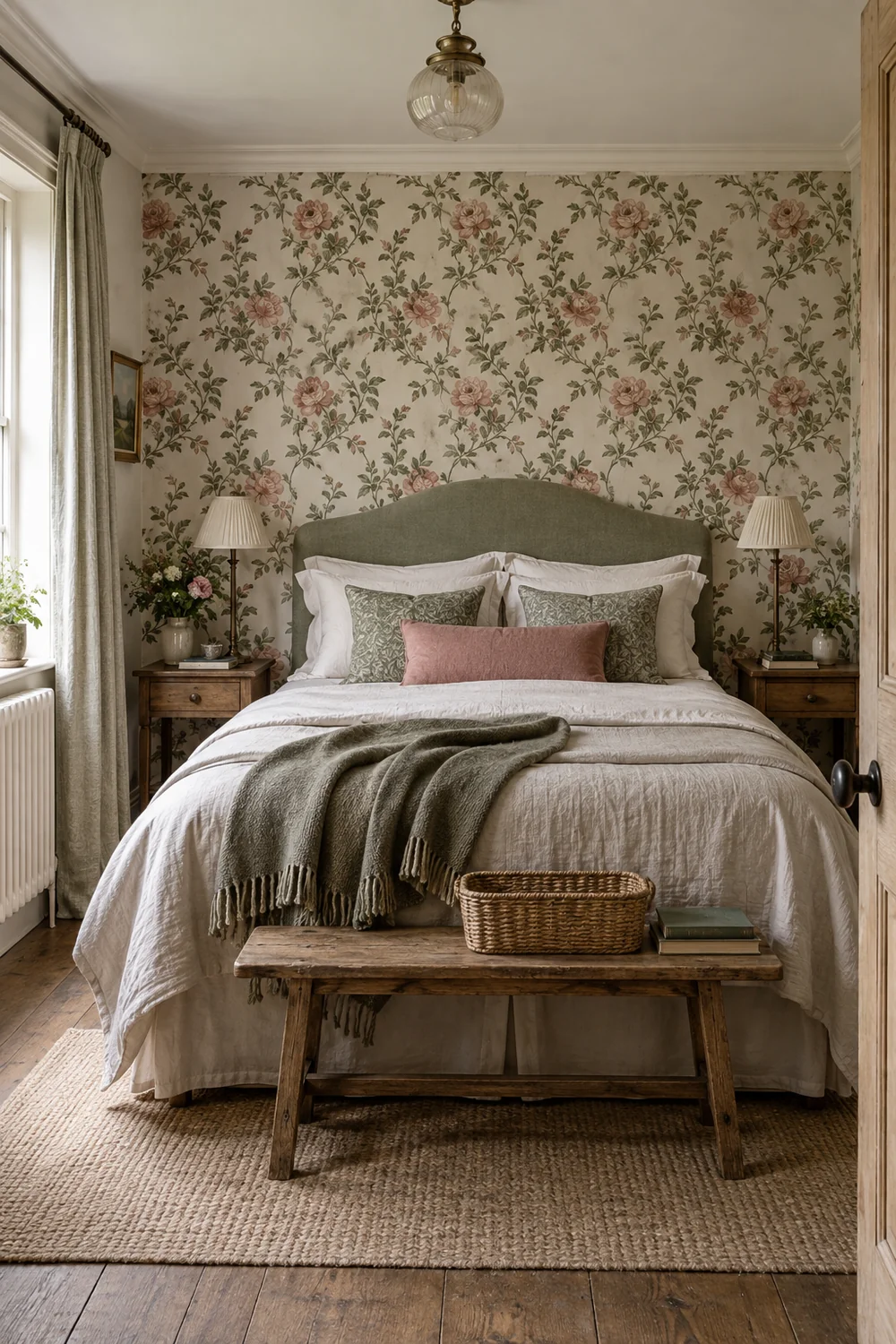
If there is no good pattern plane, painted panelling can give the room depth without an additional print. Keep the moulding scale in proportion to the wall and check where a bedside light or picture would sit. A painted chest or wardrobe can carry sage green if the walls remain chalk cream. I would not put the same green on every large surface simply to make the scheme match. A little variation in age and texture is part of the charm, but there needs to be a calm background.
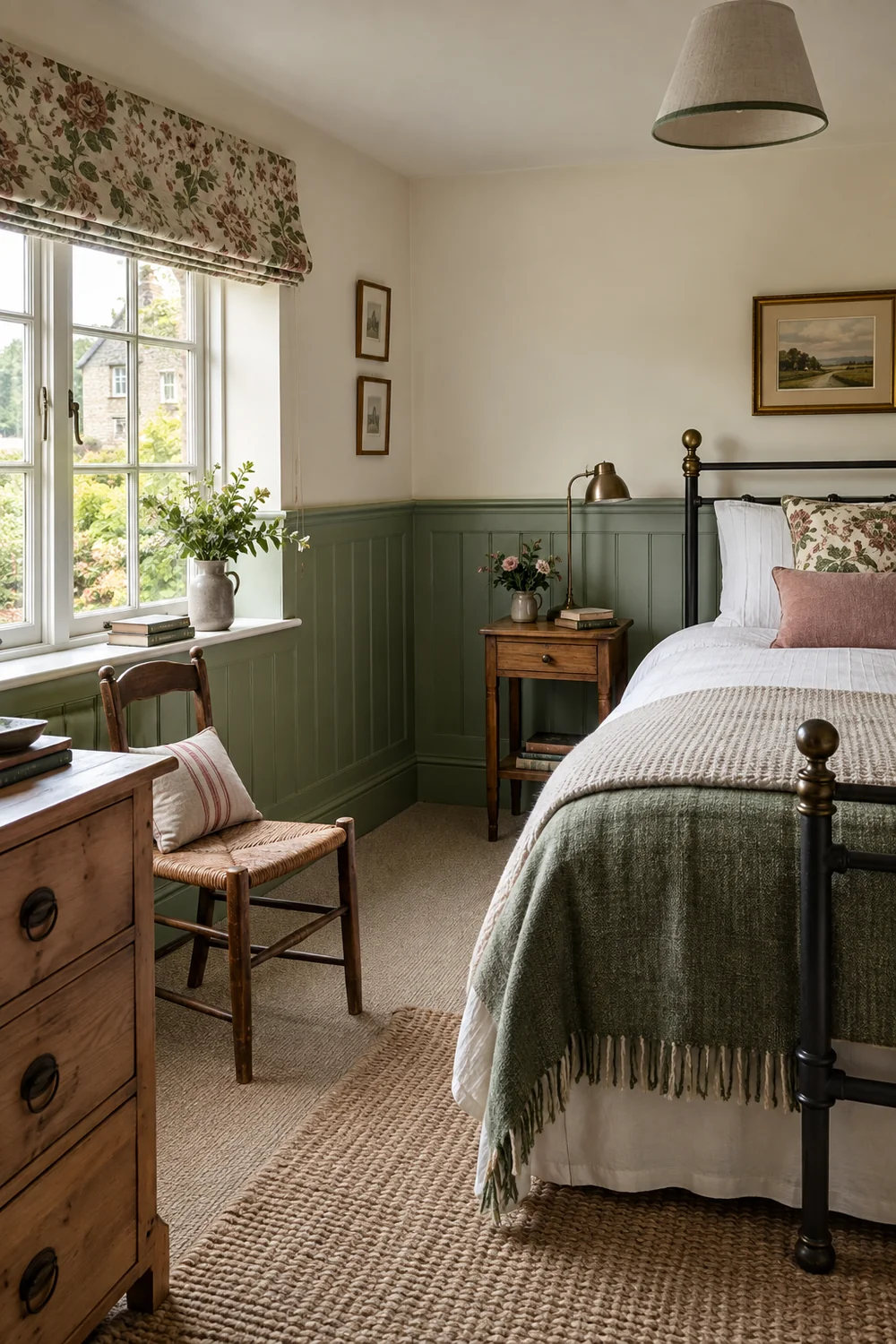
Test paint on a large card beside the actual floor and bed, morning and evening. Do the same with wallpaper against the linen you plan to use. A tiny chip can conceal an undertone that becomes dominant on a wall. The English countryside colour palette gives a wider set of references, but your sample has to work with this room's daylight and existing timber. Only order the full quantity once the combination works where it will be seen.
I would give one fabric the leading pattern role and make the others support it. If the wallpaper carries faded roses, bedding can be mostly plain cotton or linen with a small checked cushion or folded throw. If the wall is plain, a floral headboard or curtain can carry more of the room's character. Two prints can sit together when they share a colour and differ clearly in scale. Two large prints of similar weight often leave the eye nowhere to rest in a small room.
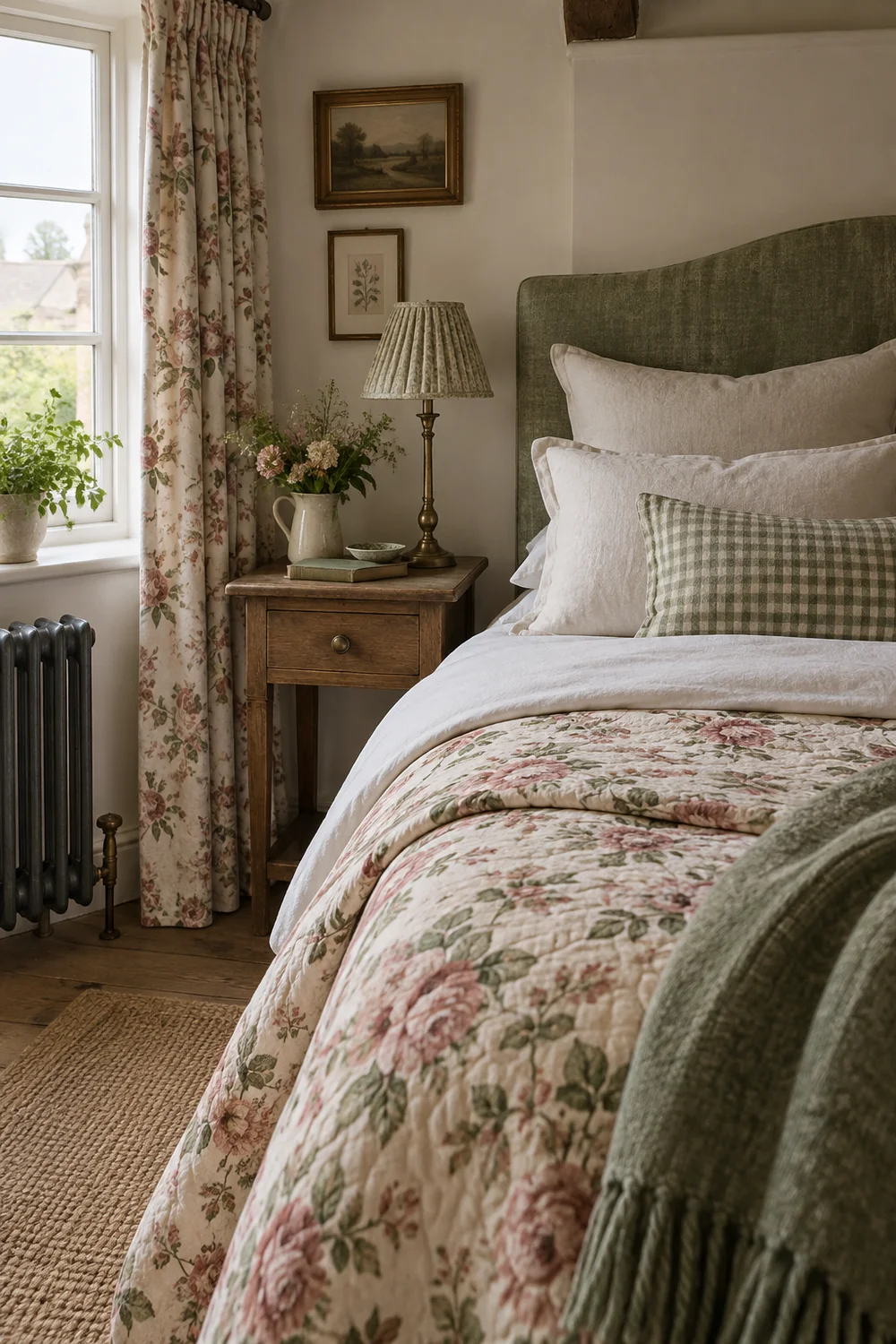
Hold the fabric samples vertically as well as flat. A print that looks restrained on a swatch can feel much stronger over a full curtain drop. Check a curtain against the window, not just the wall colour. If the fabric needs heavy lining for privacy or sleep, account for the thickness and where it will stack when open. A light blind may be better where a bedside table sits close to the window. The style choice follows the actual clearance. The cottage bedroom ideas page is a useful optional source for texture and softness, while this specification assigns each print a precise job.
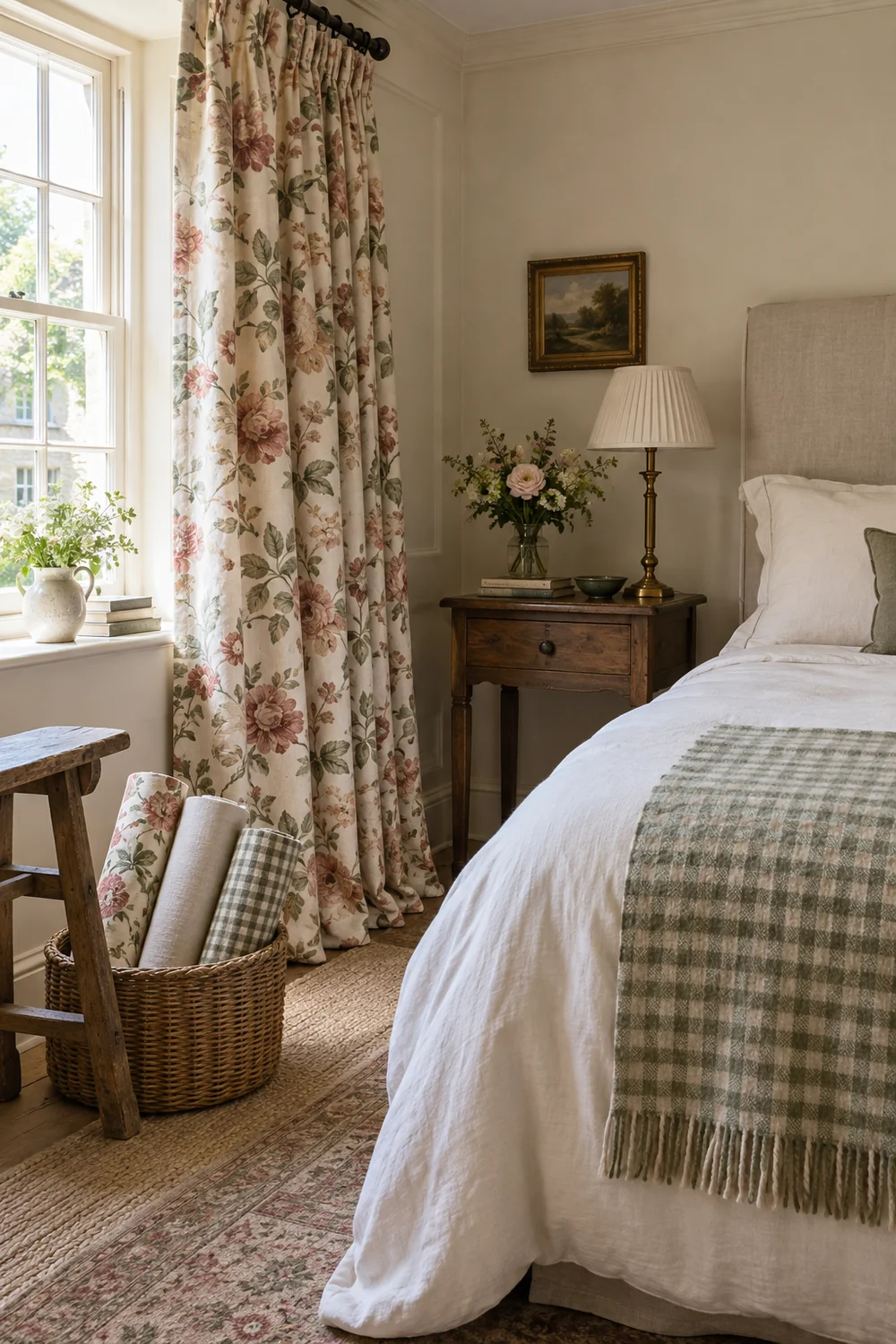
Think about the fabric after use. Bedding needs to be washed, curtains need to move easily and a headboard is touched more often than a wallpaper sample suggests. Ask for care information before ordering, and keep a spare piece of fabric or a record of its name if you are commissioning curtains or upholstery. I would rather use a plain, robust base with one well chosen antique print than fill the room with delicate layers that are difficult to maintain.
The most attractive little antique table is not always the most useful bedside. Check its height against the mattress with the bed fully made. Sit on the bed and reach for a glass, phone or book. If a lamp consumes the entire top, either choose a larger table or put the light on the wall. I would prefer one good drawer or an open shelf over decorative carving that reduces the only available surface. A painted piece can bring the sage accent into the room; an aged oak piece can echo the bed or floor. Both are English country choices when their proportions work.
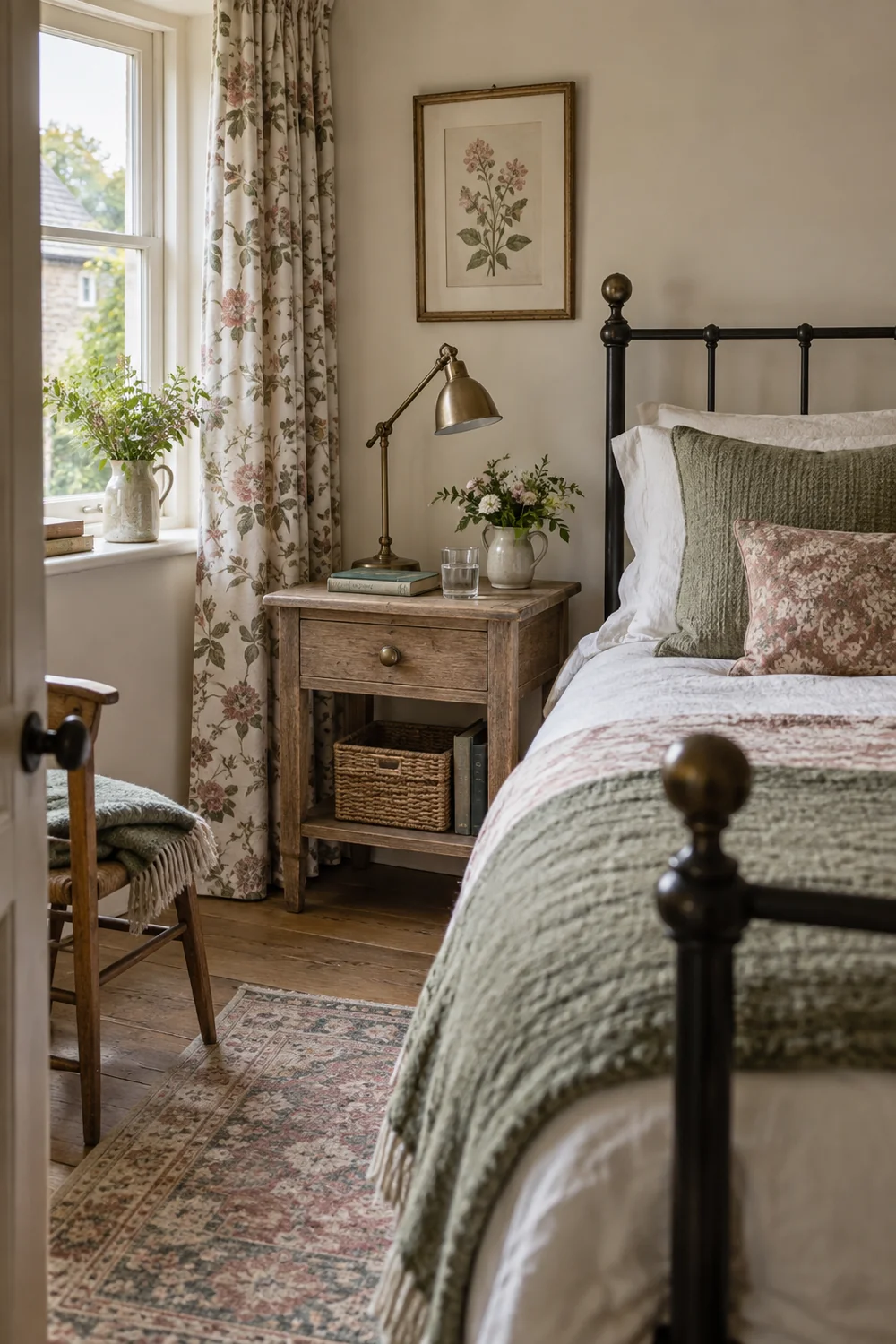
Choose the light after the table and pillow position are known. A ceramic lamp with a gathered shade can be lovely, but it must illuminate the book or pathway rather than only the wall. A small brass or blackened iron wall light can release surface space if its position and switching are convenient. Test the room after dark with the chosen arrangement before final installation. You want the visitor to reach the bed and find their things without using a harsh ceiling light. Electrical changes should be assessed and carried out by a qualified professional.
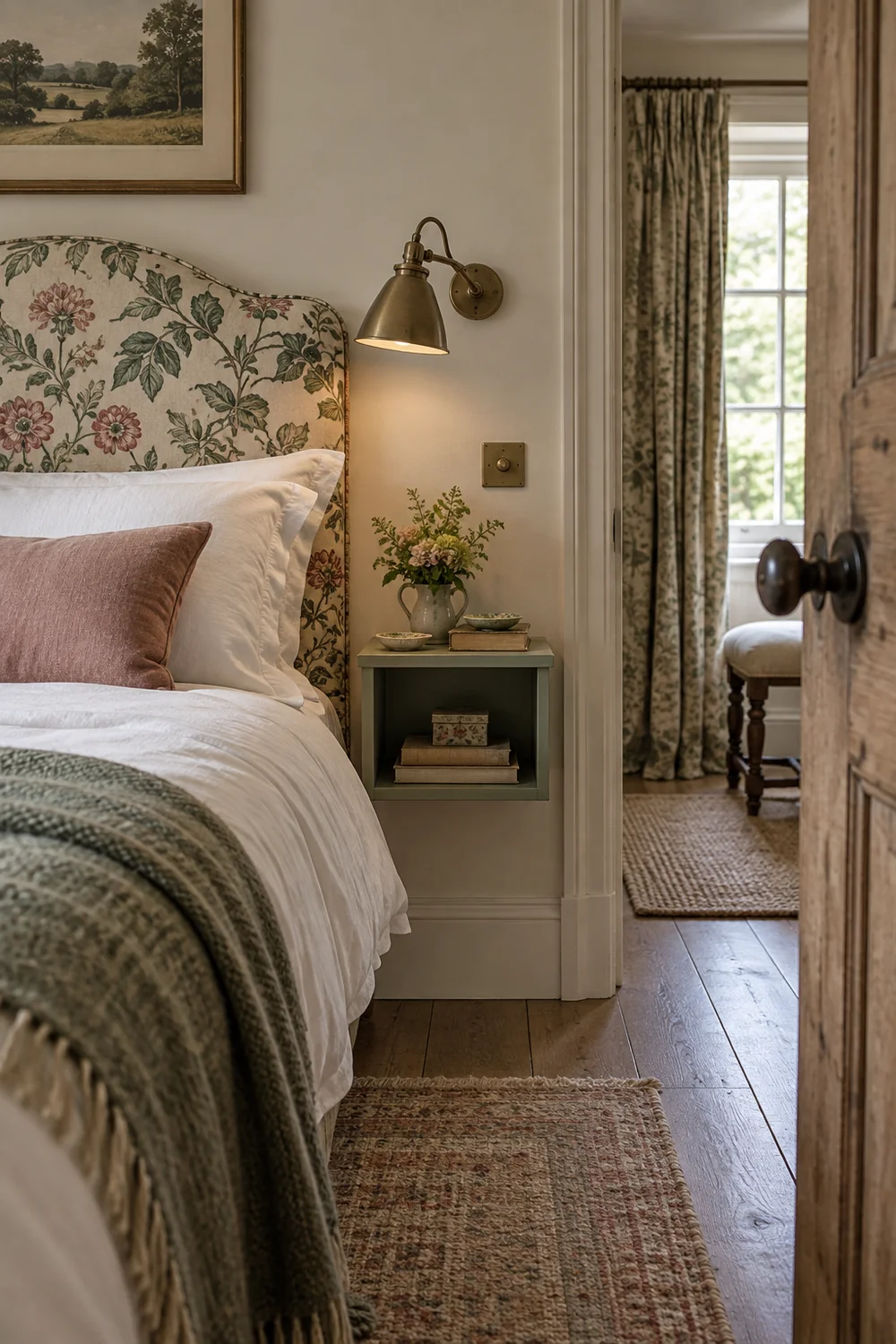
The English country reading nook offers examples of lamps and quiet seating, but a guest room need not add a reading chair to qualify as welcoming. If the bedside already gives a visitor light and a comfortable place for essentials, the clear patch of floor may be more valuable than another piece of furniture.
I would choose storage by what the visitor can actually use. A wardrobe that is full of the household's things offers little benefit even if it looks splendid in the room. A narrower painted cupboard with a cleared shelf may be better. Where the room cannot hold a wardrobe and an open case, decide which job the existing furniture can take. A chest with a drawer might replace the bedside and hold small belongings. A folding luggage stand can appear for visits and leave the room open the rest of the time. The selection depends on the measured plan, not on an idealised list of country furniture.
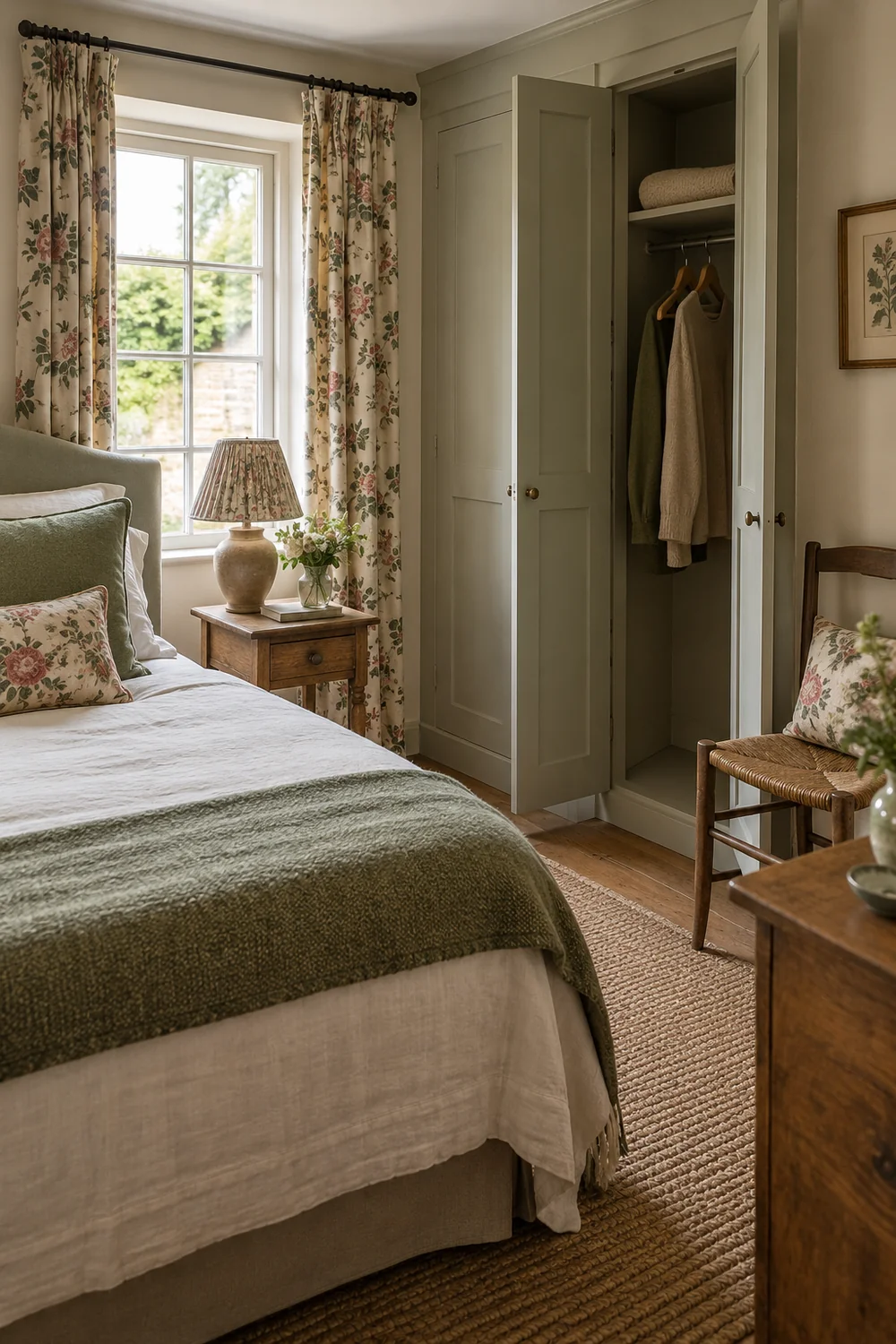
When assessing an antique piece, check its door swing, drawer travel and stability in the actual location. A deep dresser may look shallow in a photograph. Put tape on the floor for its full footprint and stand where the visitor will stand when opening it. Look at the route with the case open as well. I would keep its visible finish if the wood relates to the bed or floor and the piece does a useful job. Paint can help a visually heavy piece settle into the room, but it will not make an oversized piece smaller.
The general English countryside bedroom page shows how old furniture and soft materials create character. This room needs an additional filter: every object must leave the overnight guest enough physical space. If none of the attractive storage pieces pass, choose the simpler functional option and let the wall or bedding carry the country look.
I would settle the bed position and frame first because they establish the available wall and floor. Next I would approve the wall colour or paper beside the actual timber and floor. Then I would order the leading fabric, the supporting plain textiles, the bedside and light, and finally any extra storage. This sequence is not about withholding comfort until the end. It prevents a wallpaper decision from fighting a bed that must stay, or a beautiful wardrobe from making the luggage plan impossible.
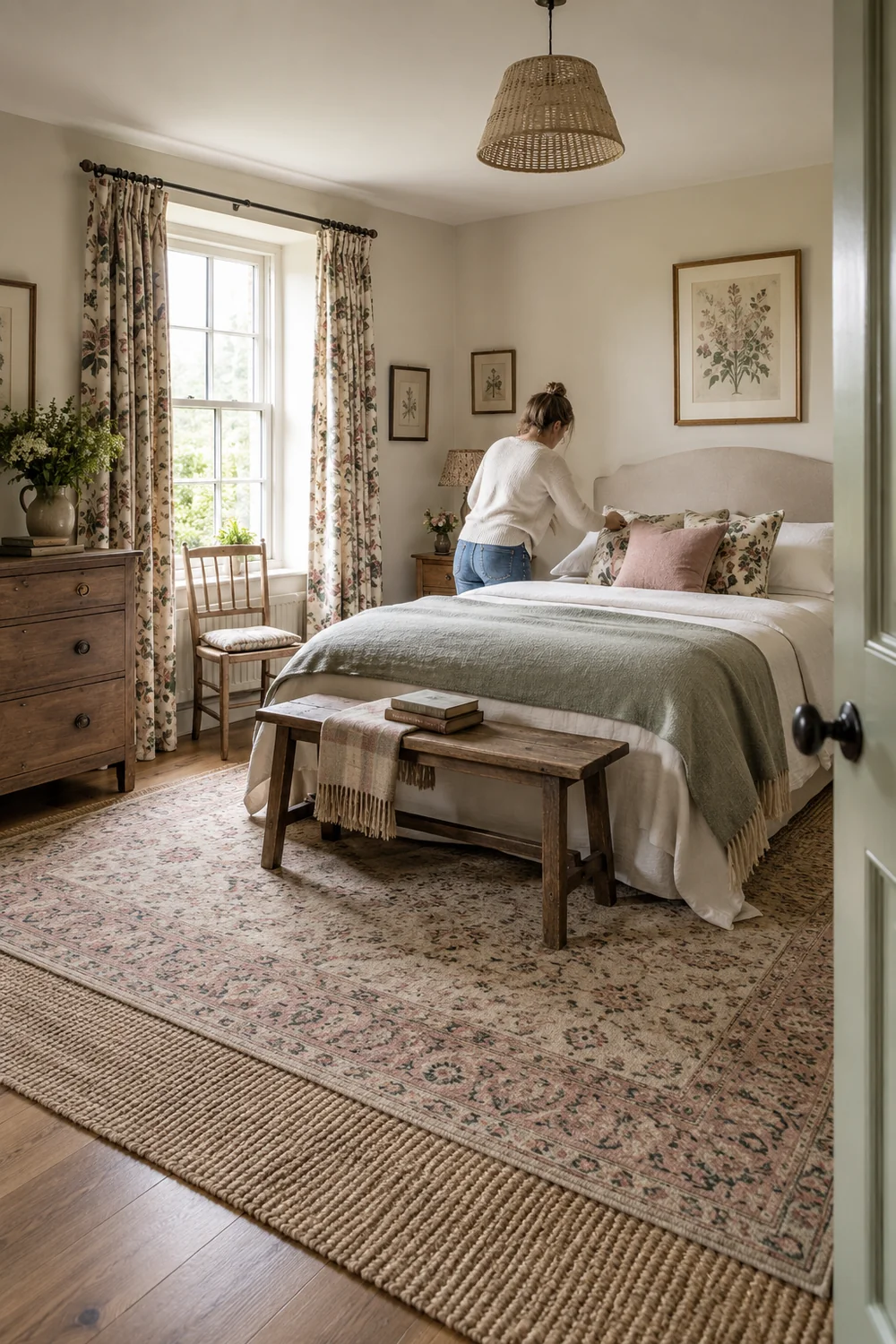
Mock up the room before committing. Place a sheet or cardboard at the size of the proposed chest, hang a full length fabric sample if possible and leave a case open overnight. Take a photograph from the doorway in clear daylight. Ask whether the bed, pattern and furniture each have a separate role. If two pieces are competing, remove one from the trial. The room should still feel warm when you take away the decorative tray and extra cushions.
Once the choices pass, keep the specification sheet with actual dimensions, paint and fabric references, care notes and a photograph of the finished arrangement. That record will help when a piece needs replacing. If the mockup exposes a blocked route rather than a wrong finish, revise the measured layout before buying anything else. The answer then lies in the layout, not in another material sample.
After a stay, I would look first at evidence of use. Did a case stay on the floor because the planned stand was inconvenient? Did the curtain catch on the bedside? Was the lamp easy to reach? Did bedding wash and return to the room as expected? Make one short note while the experience is fresh. If the furniture positions worked, keep the plan and adjust only the finish or object that failed. A spare room does not need a new design after every visit.
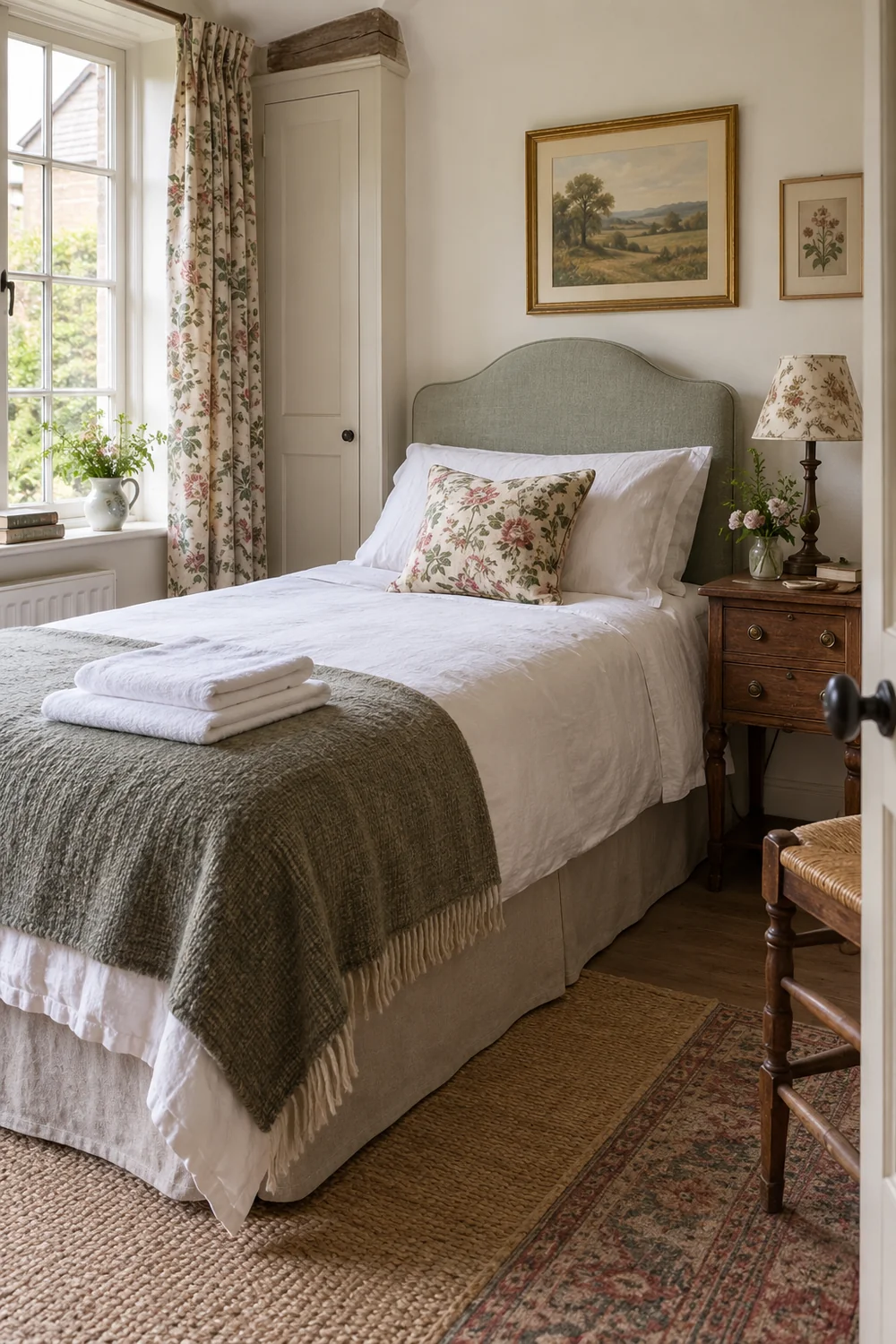
Care for the materials according to their actual finish and the maker's instructions. Keep a small record of paint, fabric and wallpaper references so a mark or worn area can be dealt with without guessing. Check a secondhand object's fixings and condition during normal cleaning. If repeated visits show that the bed, open case or storage still blocks movement, revisit the small guest bedroom ideas plan and test a different arrangement. That return is useful because the room has revealed a new fact, not because the decorative scheme needs another round of shopping.
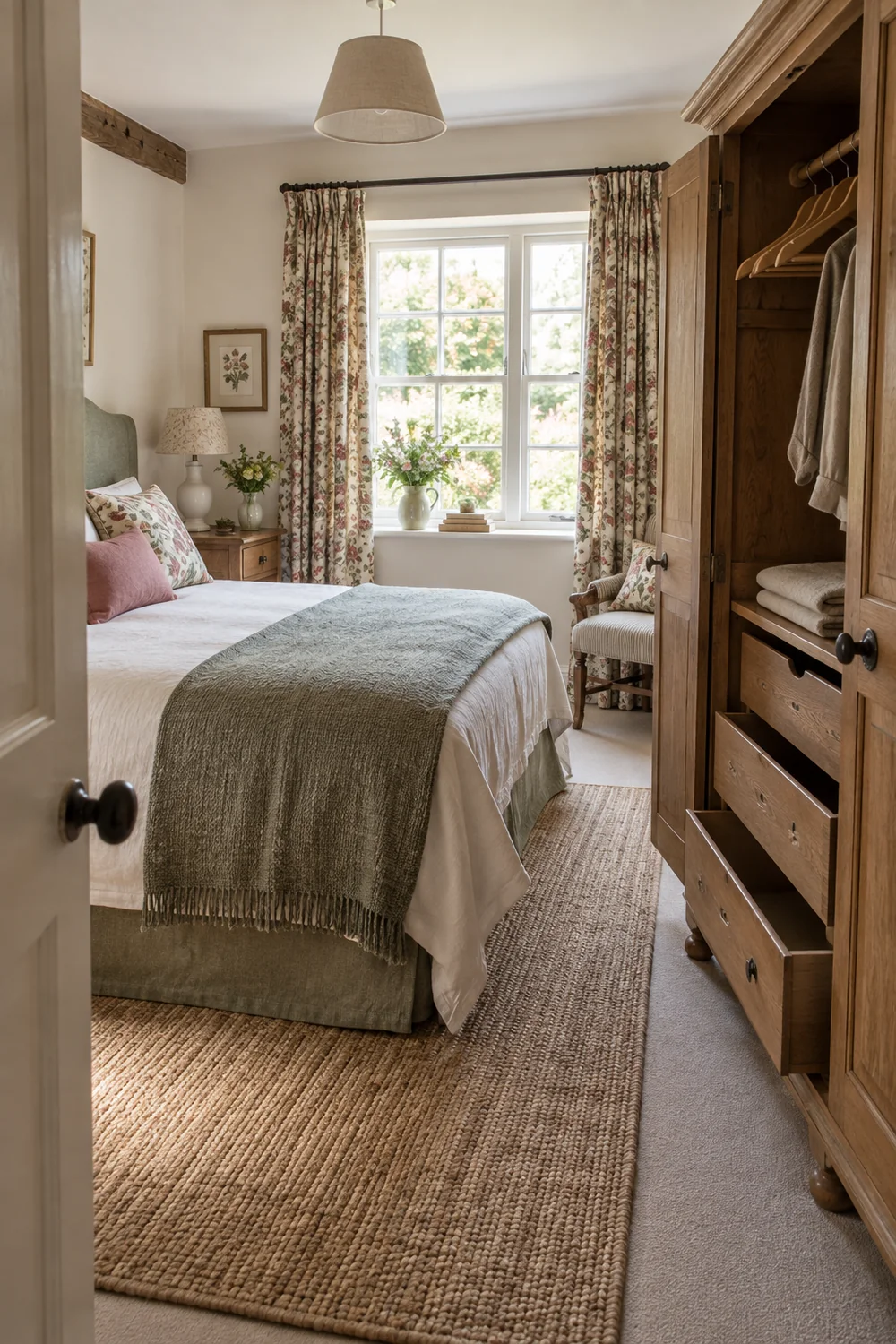
An English country guest bedroom can be richly layered and easy to use at the same time. I would make each layer earn its place against the measured plan, then let the familiar textures do their quiet work. The result should give your visitor room to arrive, rest and leave their own things, with the warmth of an English country room around them.