Newsletter Subscribe
Enter your email address below and subscribe to our newsletter

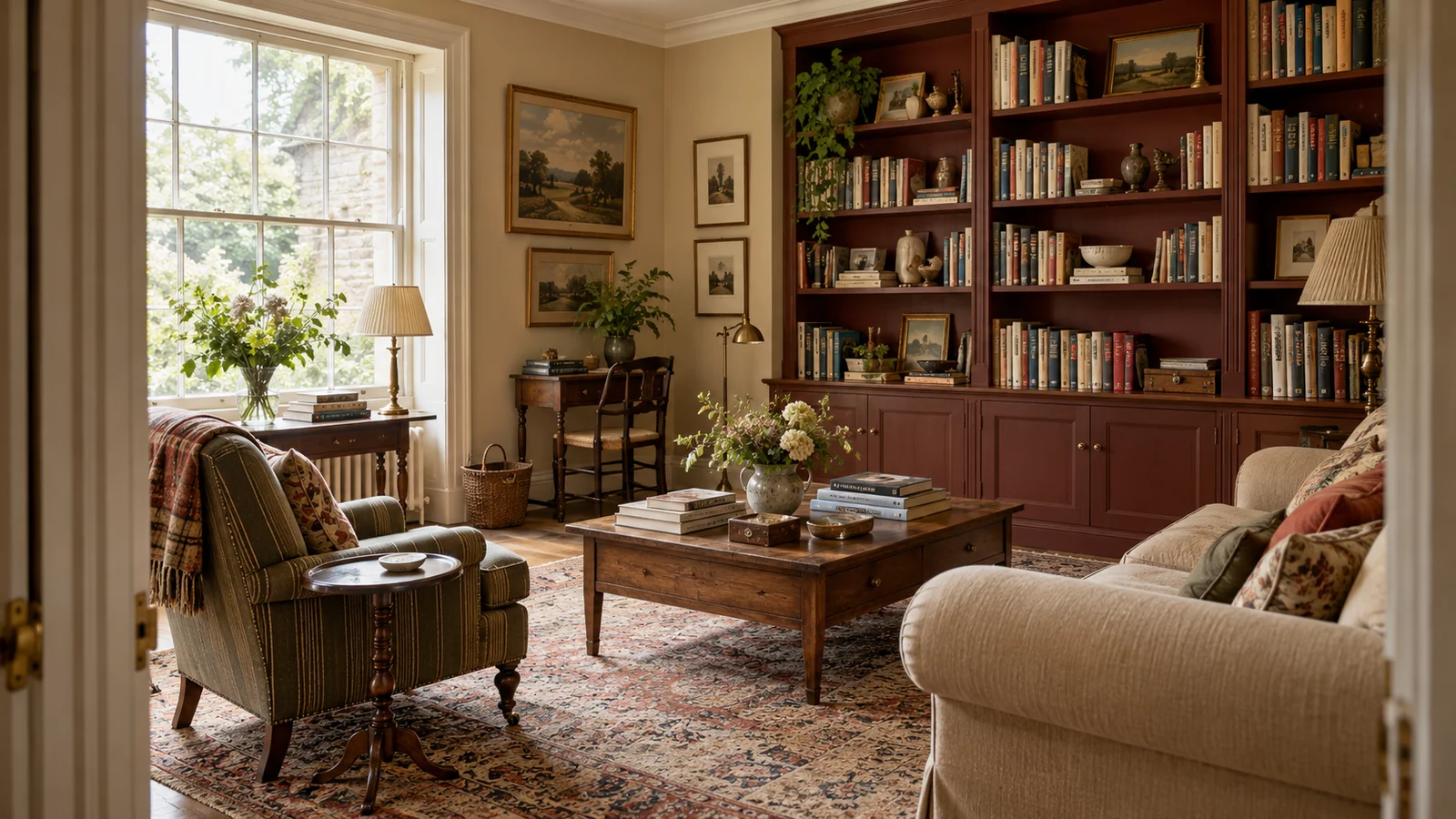
Living room bookshelves become a different project when the books are things you actually read. The novels beside the sofa need a return place, the large illustrated volumes refuse to fit with the paperbacks, and a beautiful empty wall may be the wall everyone walks past. I would begin an English country room with those everyday facts rather than a photograph of perfectly arranged shelves. You can keep the comfort, personal colour and generous furniture that make the style appealing while giving the main collection a deliberate home. Here I would compare one shelf wall, two alcoves and a low run, then connect the chosen arrangement to your seat, the light and the books currently in use. The aim is a room where you can find something to read and still sit with another person, reach the window and enjoy the furniture you already own.
I would bring the collection into the planning conversation before moving any furniture. That does not mean emptying every shelf onto the floor. Make a simple list of the groups you own and where they currently live: novels, reference books, illustrated volumes, borrowed titles and the handful you are reading now. Note which groups you reach for from this room. A shelf wall for familiar novels has a different relationship to the sofa from a display for large books opened on a table.
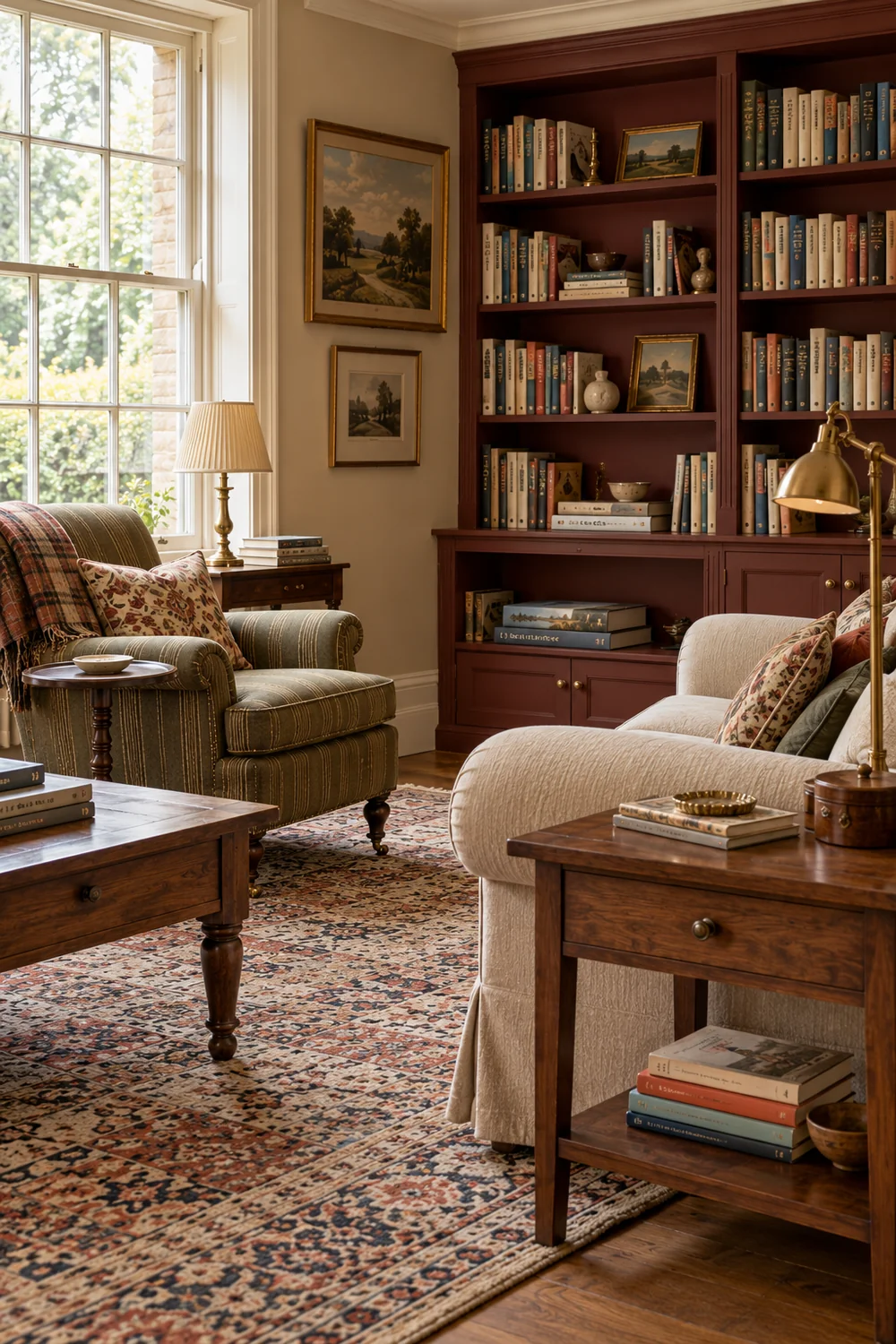
Separate the decision to keep a book from the decision to give it a prime living room position. You may want to retain a rarely opened set without putting it beside your favourite seat. Equally, a row of inexpensive paperbacks can deserve the easiest access because you read them continually. I would not turn the plan into an exercise in displaying only the most attractive bindings. The personal titles are part of the room's character, including their inconvenient colours and uneven heights.
Use one ordinary example to make the list practical. Perhaps novels are scattered between two existing cases, art books lie beneath the coffee table, and three current reads occupy its top. Those are three jobs, rather than one vague need for more storage. Record them separately. You can then ask whether the new arrangement must consolidate the novels, support the large books or simply release the table. It may need to do all three, but the reasons should stay visible.
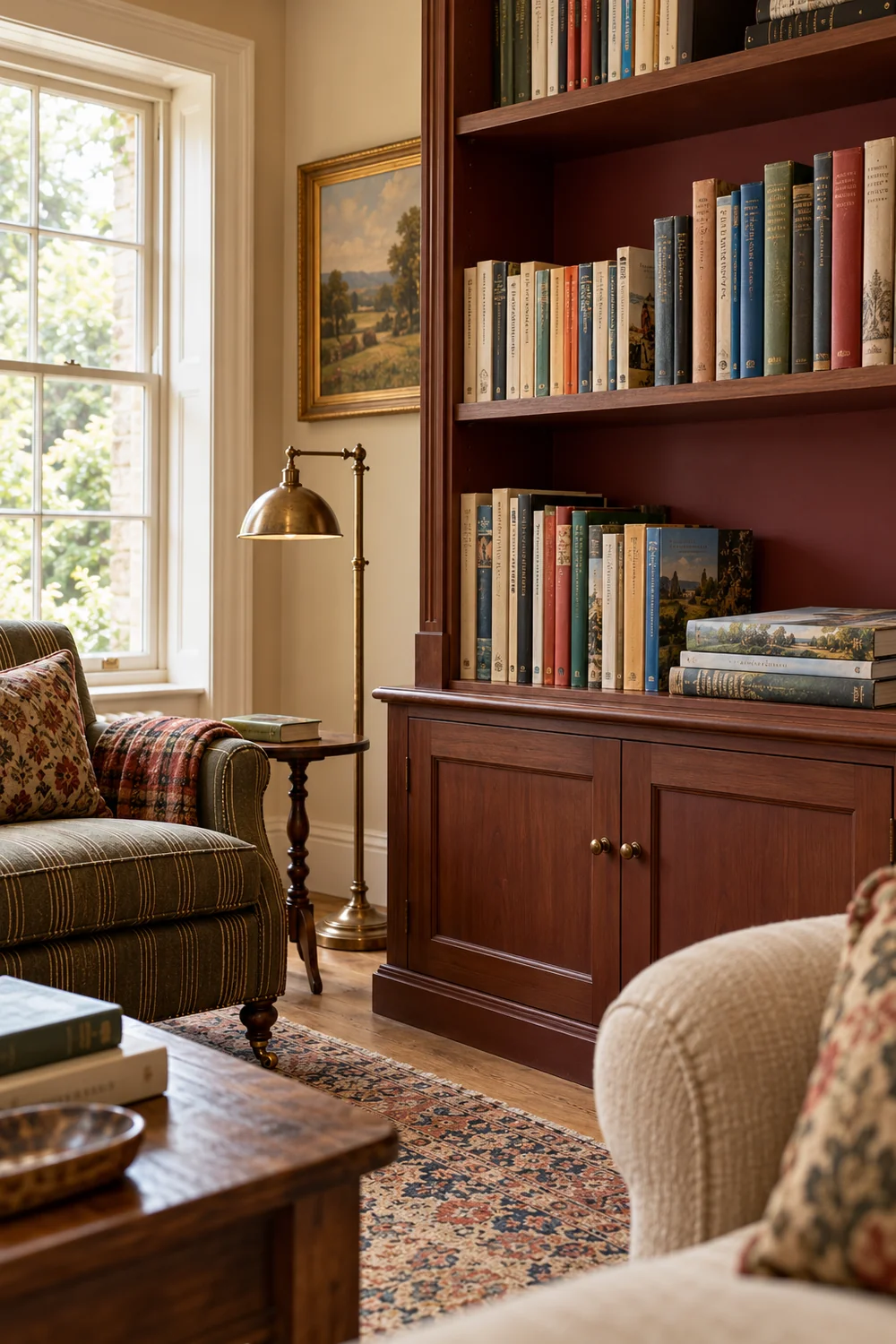
Finish with a short collection brief stating what stays in this room, what needs occasional access and what should return beside the seat. You do not need a finished shelf order yet. If deciding the actual categories and mixed book groups is the obstacle, the bookshelf organization method turns that list into a usable arrangement. Keep the room decision here clear: which reading books are this living room responsible for housing?
I would compare three arrangements against the same collection brief. A continuous shelf wall gives the books one obvious address and can make a large collection feel intentional. It also becomes a substantial surface in the room. Check what that wall currently contributes before assigning it to books. You may lose the place for a picture, an occasional chair or the only uncomplicated route between two doors. A full wall earns its position when those losses are acceptable.
Two alcoves divide the collection into smaller parts and can leave the centre of the room visually quieter. They work particularly well when the existing architecture already offers two distinct recesses. The compromise is that a single group may need to cross from one side to the other. I would give each side a clear purpose, such as fiction and illustrated or reference books, rather than distribute matching decorative objects while the actual books remain in piles. The two sides need related finishes, not identical contents.
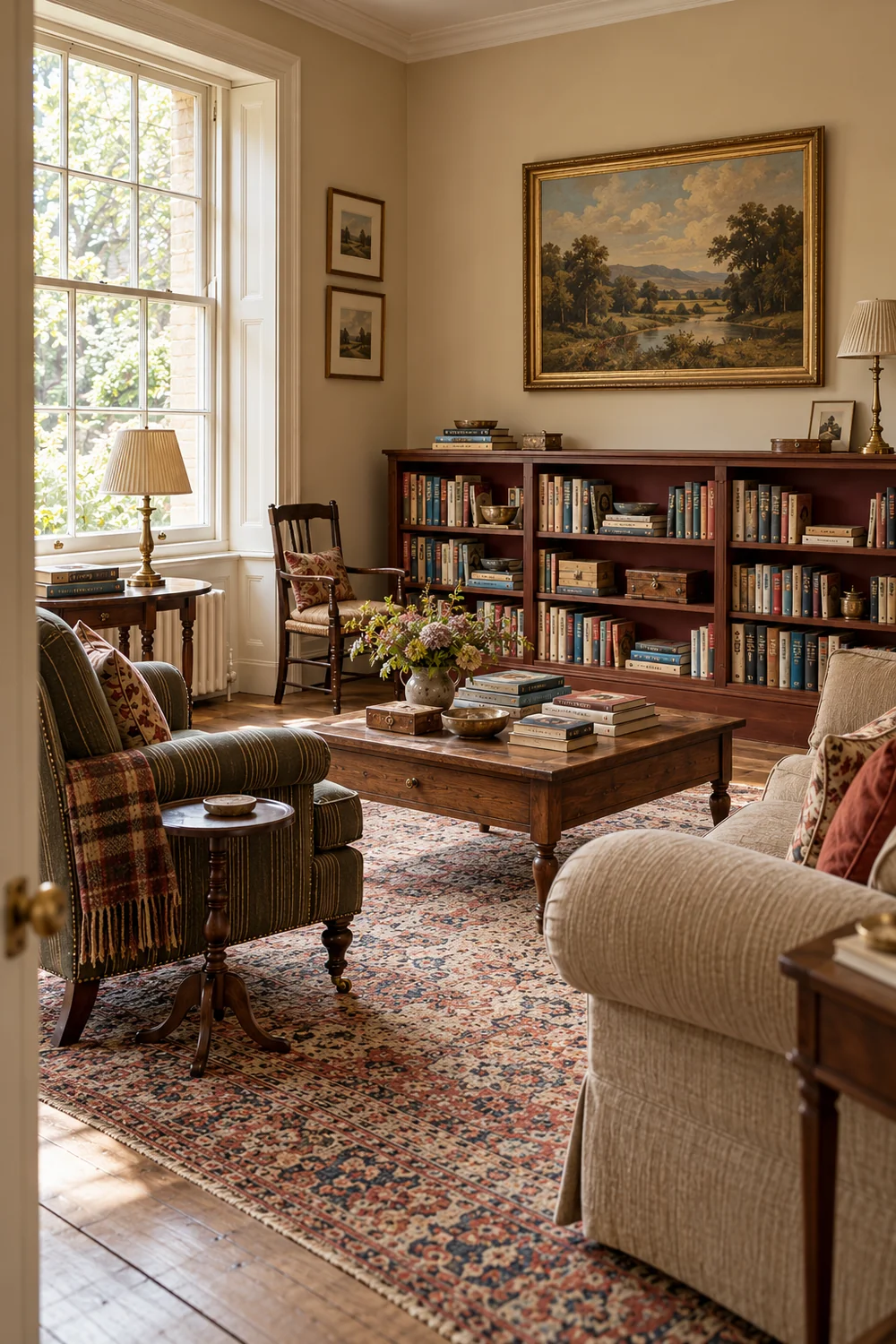
A low run keeps more wall visible and may suit a room where tall storage would crowd the windows or overwhelm the retained furniture. Its capacity is finite, and its top should not quietly become another book pile that recreates the original problem. Test whether the chosen collection fits the usable shelves before treating the attractive low silhouette as the answer. The top can then hold a lamp or picture because those objects have a job, rather than because the photograph needs filling.
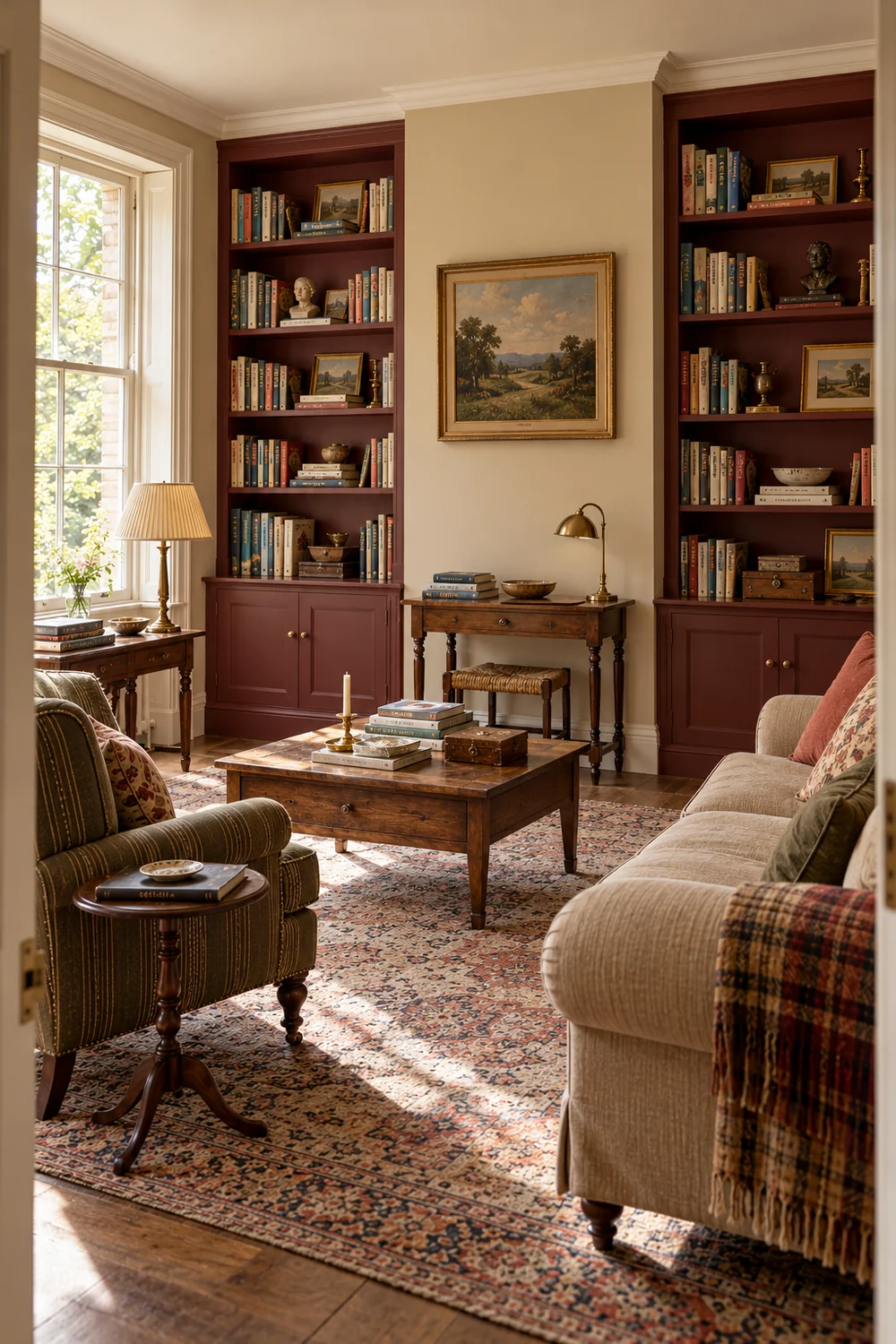
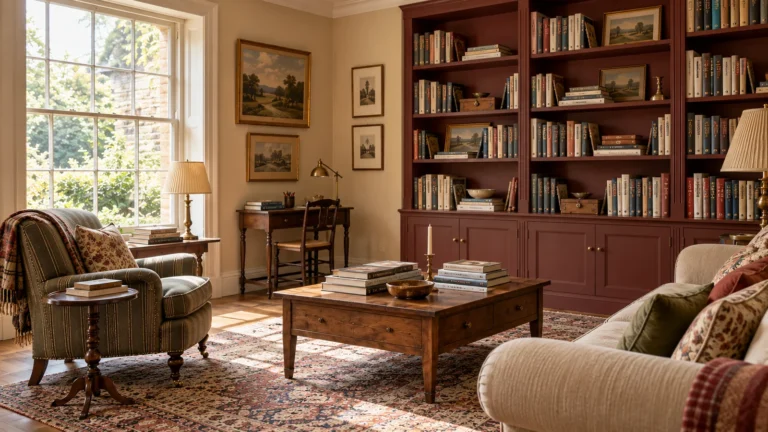
Choose the arrangement that makes both the collection and the room understandable. For the scattered novels and art books example, I would compare a main novel wall with one lower illustrated book position against two deliberately different alcoves. The English country living room examples help you judge the desired furniture and textile character. They are a visual reference while the collection brief determines which arrangement actually deserves the space.
Draw the room as it is, including the door swings, windows, heating, sockets and pieces that are staying. I would add the occupied sofa and chairs next, rather than draw a neat empty room and squeeze daily life into the gaps. Mark where a person normally crosses to the window or leaves the room. Then put the proposed shelf footprint on the drawing. A bookcase is furniture with depth, not a line applied to a convenient wall.
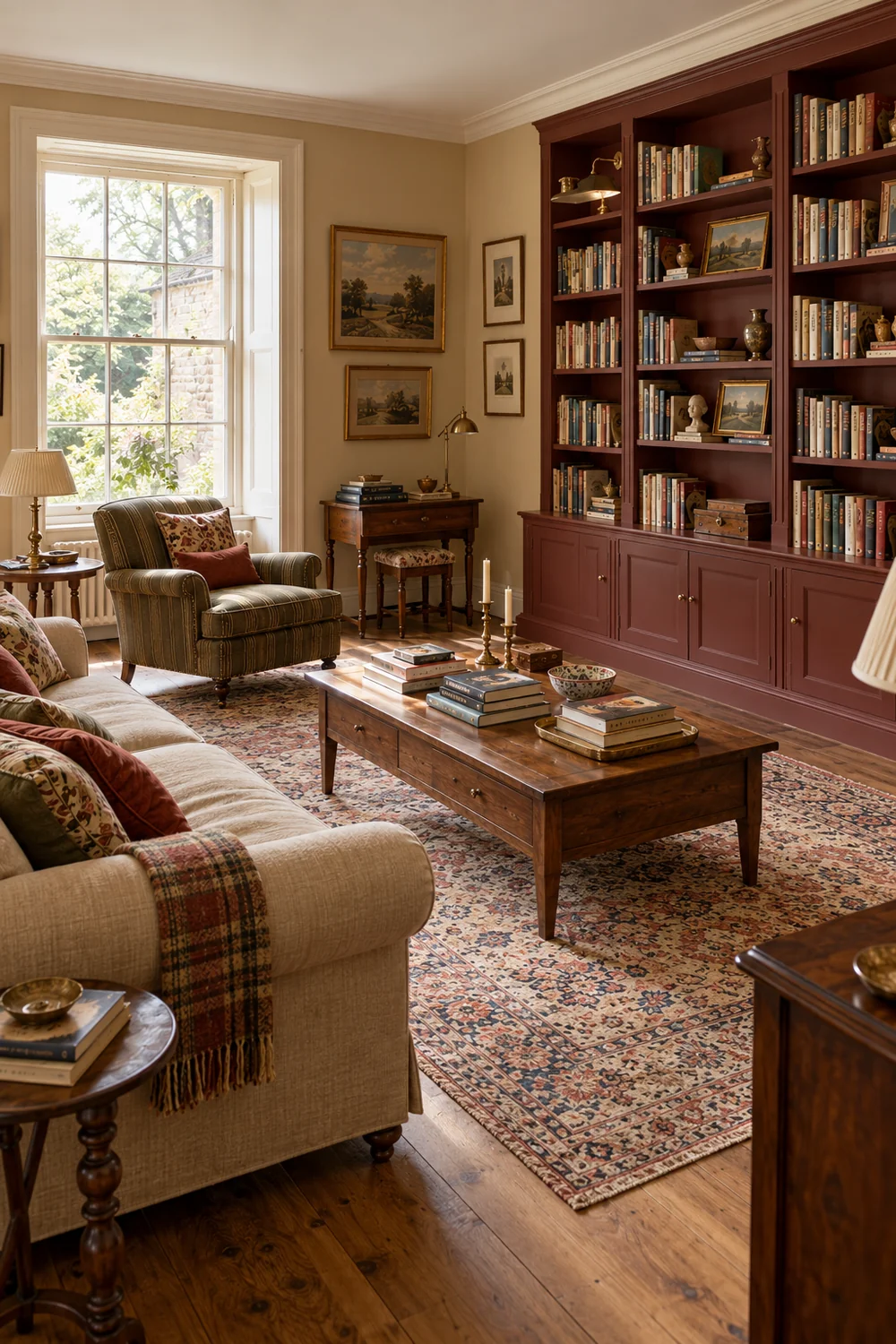
Test the proposed position in the room using removable markers suitable for the floor. Include the front edge of the bookcase and the space you use while standing before it. Sit on the sofa while someone takes a book from the proposed shelves. If one activity displaces the other, decide whether the shelf run can shorten, the collection can divide or another wall can take the job. The useful result is a relationship that works while occupied, not an impressive total length of shelving.
An existing television or fireplace does not automatically decide where every book belongs. I would first protect the room's actual use and the installation requirements of anything fixed. Books may sit on an adjacent wall rather than surround a focal point. A room without a fireplace can still have English country character through furniture, textiles, colour and personal objects. Do not invent architectural symmetry at the expense of the collection's access or the household's everyday sitting arrangement.
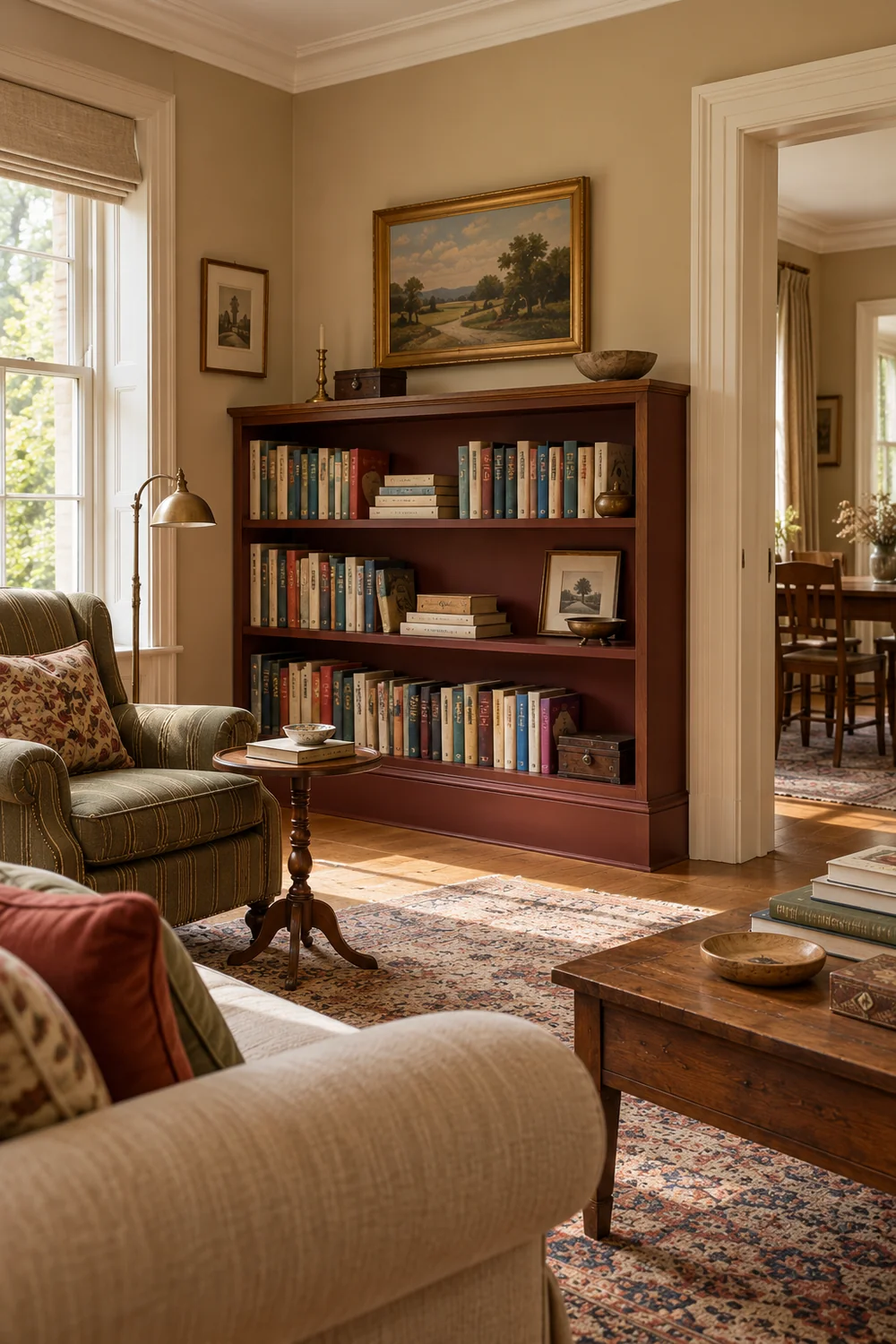
Keep a small record of the compromise each option requires. A tall case may preserve the sofa position but reduce a picture wall. Two lower pieces may preserve the window view but require a smaller collection in this room. The broader living room furniture guide is useful when the purpose or scale of another piece needs reconsidering. I would resolve those competing jobs before asking a new bookcase to compensate for an arrangement that already feels crowded.
The reading place does not have to become a separate room within the room. I would start with the seat you already choose when you open a book. Notice where your feet rest, where the open book goes when you pause and which side your hand naturally reaches. Those small habits are more useful than buying a ceremonial reading chair that looks right beside the shelves but is less comfortable than the sofa you keep returning to.
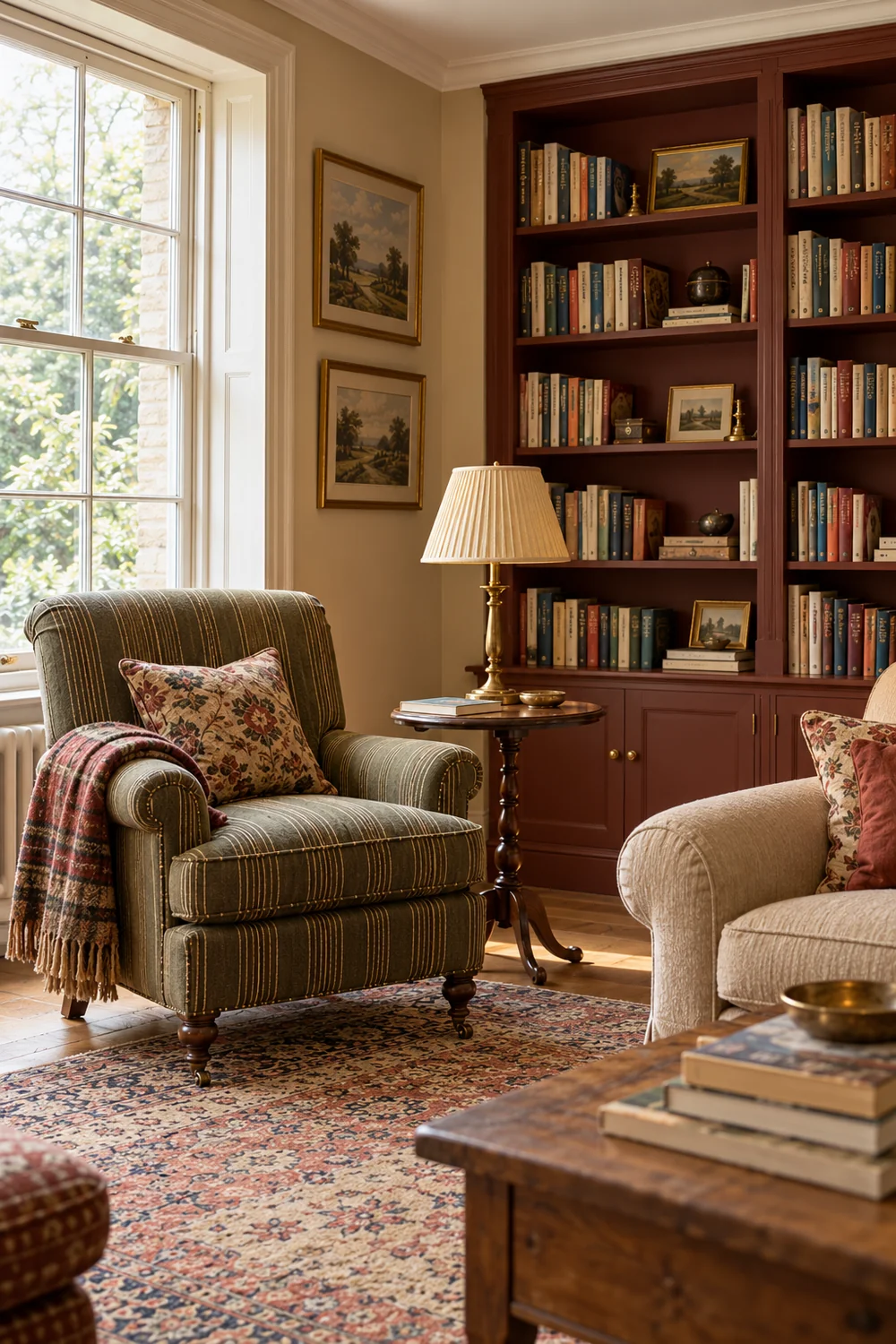
Give that seat one practical landing surface and a useful light position. Put a book down, pick it up and adjust the lamp while sitting as you normally would. Keep the cable route and the lamp base clear of the path used to approach the shelves. You are testing a reading relationship, rather than specifying electrical work. If a fixed fitting is needed, its installation and suitability need their own proper assessment. A movable lamp can help you understand the position before committing.
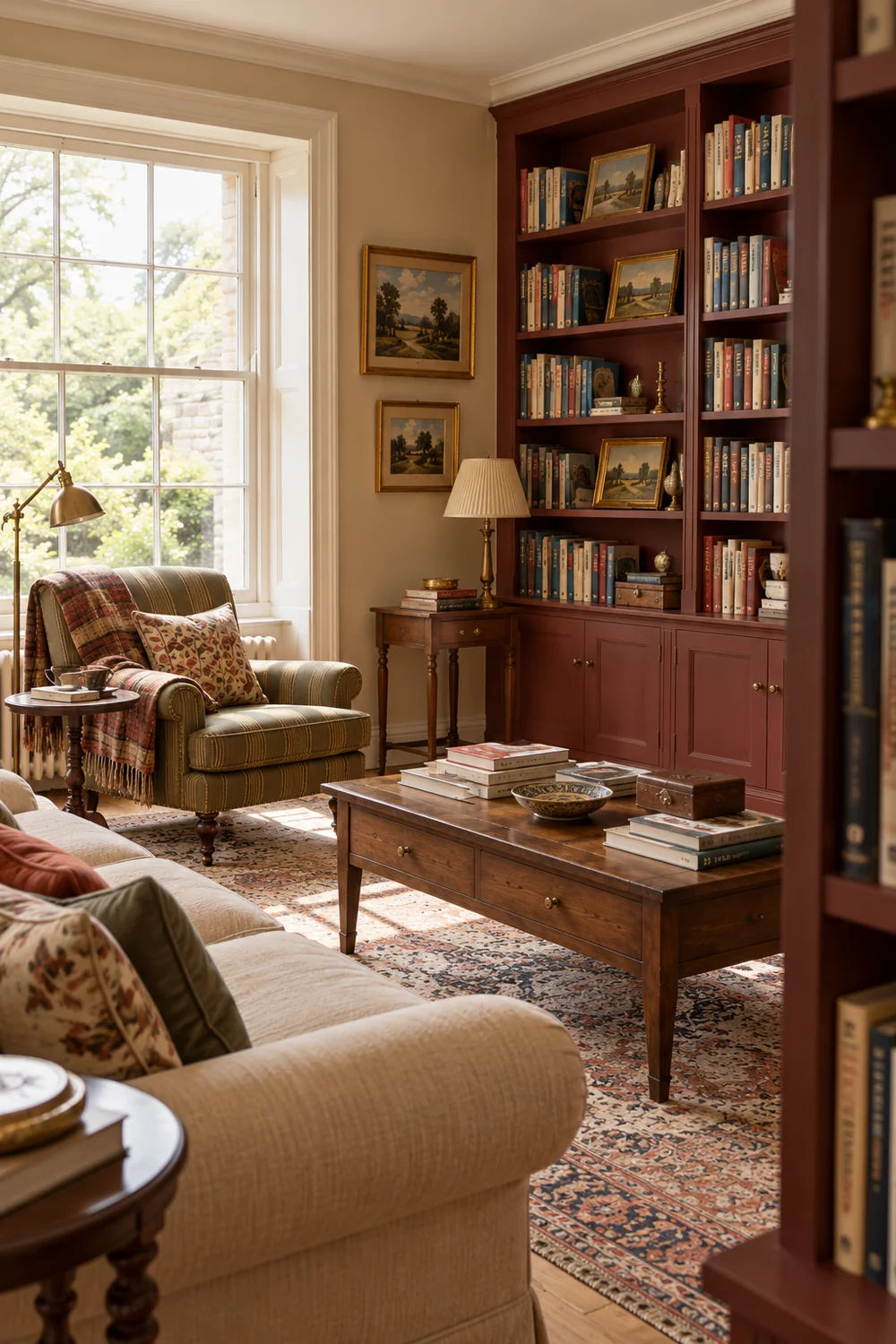
I would borrow the textile and furniture relationships from an English country reading nook without trying to reproduce every object. An olive striped cushion can connect a chair with the shelf wall; a small timber table can give the current book a home. Keep the actual resting surface usable. If reaching the book requires moving a vase and folding a throw first, the decoration has taken the place intended for reading.
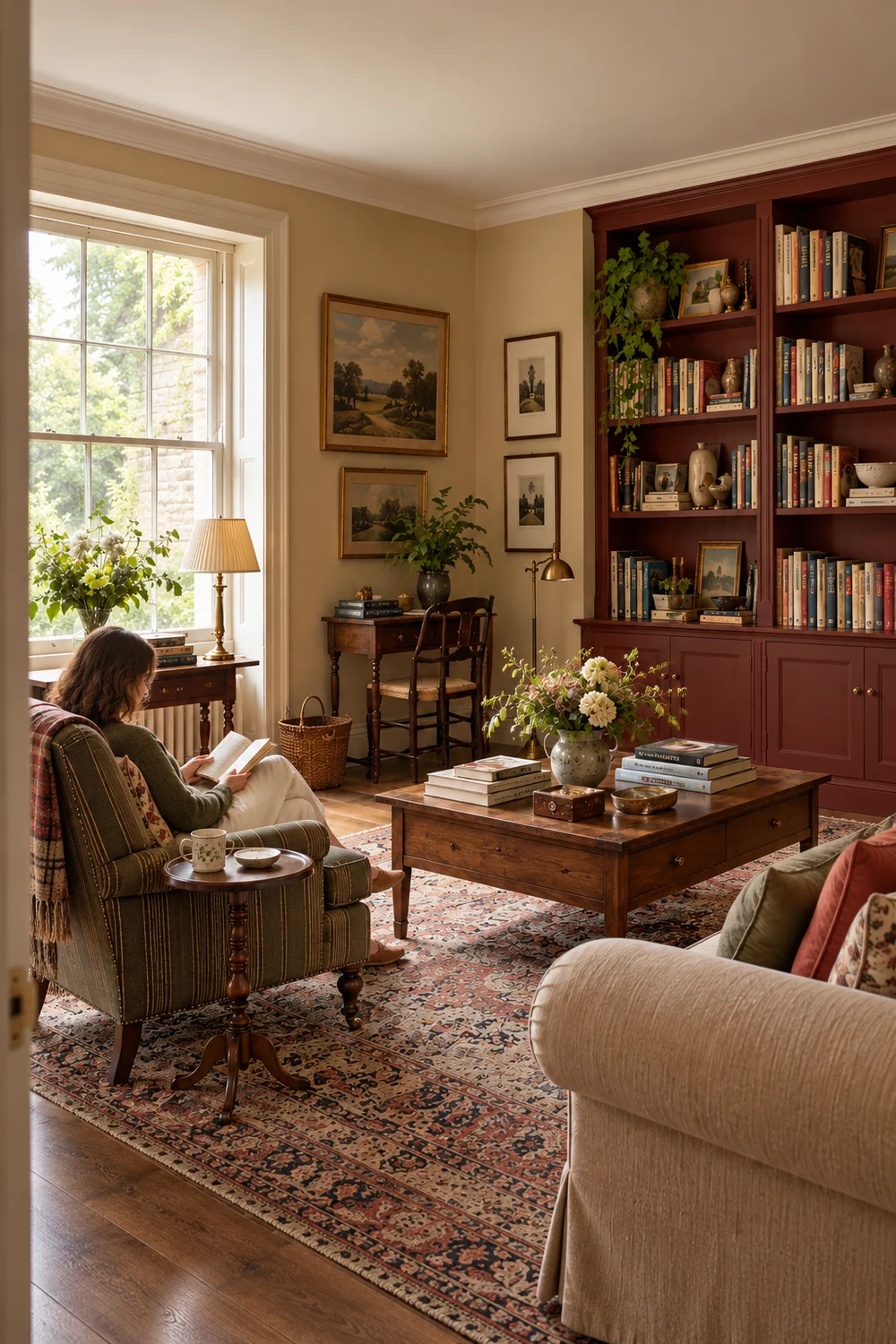
Check the seat from the rest of the room too. Someone else should still be able to sit and talk without feeling that they have entered a private study. A chair can turn slightly toward the books while remaining part of the conversation. In the worked collection example, I would keep the current novel near that chair and the main novel rows within an easy room journey. The seat and collection feel connected without requiring every volume to be within arm's reach.
A wall may look ideal for shelves while receiving strong direct sunlight for part of the day or sitting beside a heat source. I would watch it in ordinary use before making it the main collection wall. The US National Archives advises keeping treasured books away from heat, moisture and direct sunlight. For the room plan, that means comparing the actual conditions of the candidate positions rather than assuming that the brightest display is automatically the best place for the books.
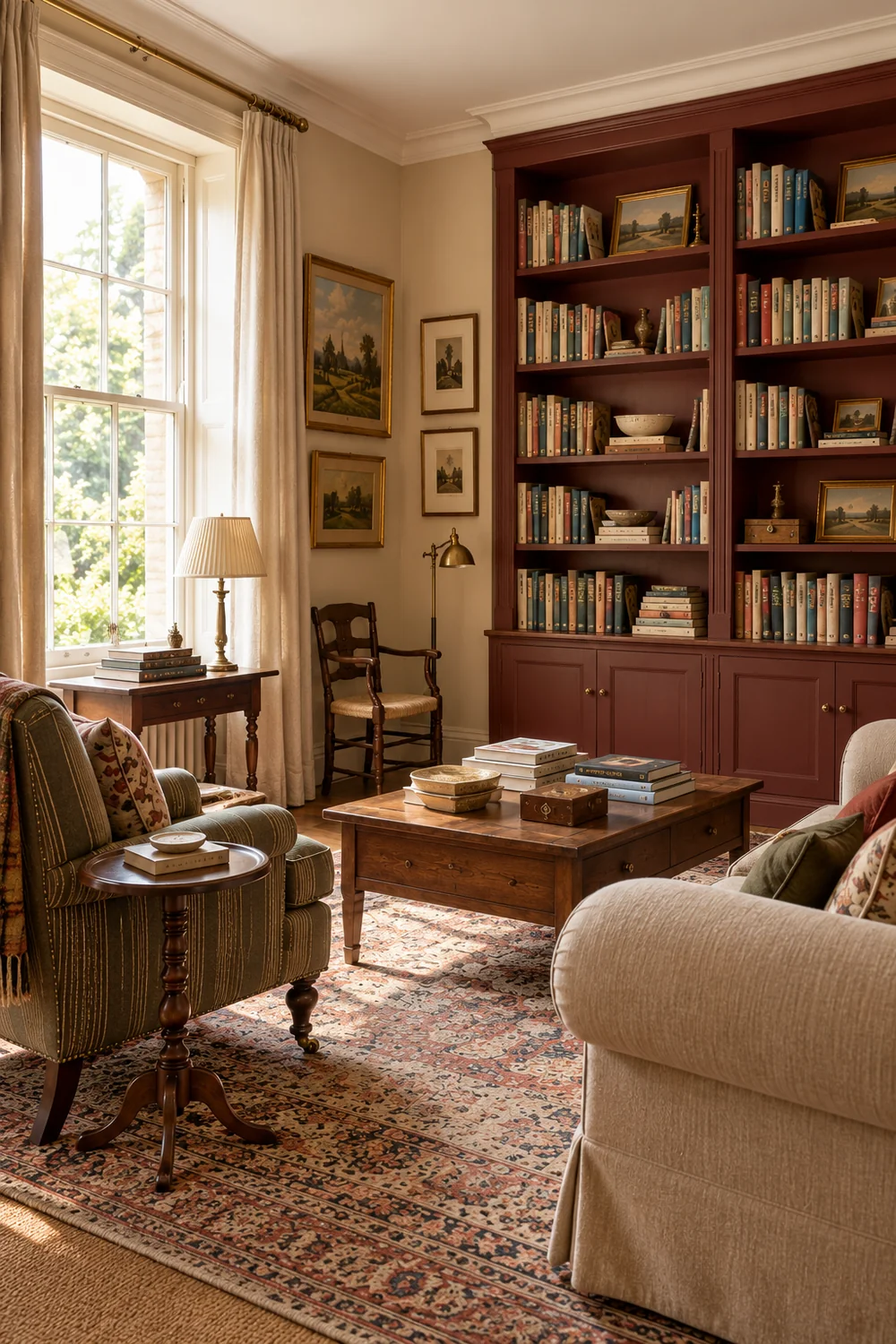
Daylight can still make the room welcoming. The distinction is between illuminating the living space and exposing the collection directly. Notice whether curtains or blinds already help manage the window and whether the books can occupy a neighbouring wall instead. Do not cover a heating or ventilation feature with a shelf drawing and hope to resolve it later. Keep the relevant equipment instructions and room conditions part of the choice. Delicate or damaged books may need care beyond this everyday room project.
I would also check how the shelves will be reached for ordinary cleaning and use. A very high decorative run may look efficient on a sketch while putting familiar books beyond convenient access. A collection that you cannot comfortably browse is not serving the reading brief. Prefer a smaller, understandable arrangement over an ambitious wall that depends on awkward retrieval. The room can show its books generously without requiring every available surface, recess and strip above a doorway to become storage.
Books already bring a complicated palette into the room. I would photograph a representative group beside the retained sofa and floor before choosing the shelf finish. Look at the combined impression rather than selecting one handsome cover as the entire scheme. A collection containing white paperbacks, dark cloth bindings and bright illustrated jackets needs a background that lets those differences belong. You should not have to turn favourite titles backwards to make a decorating idea appear successful.
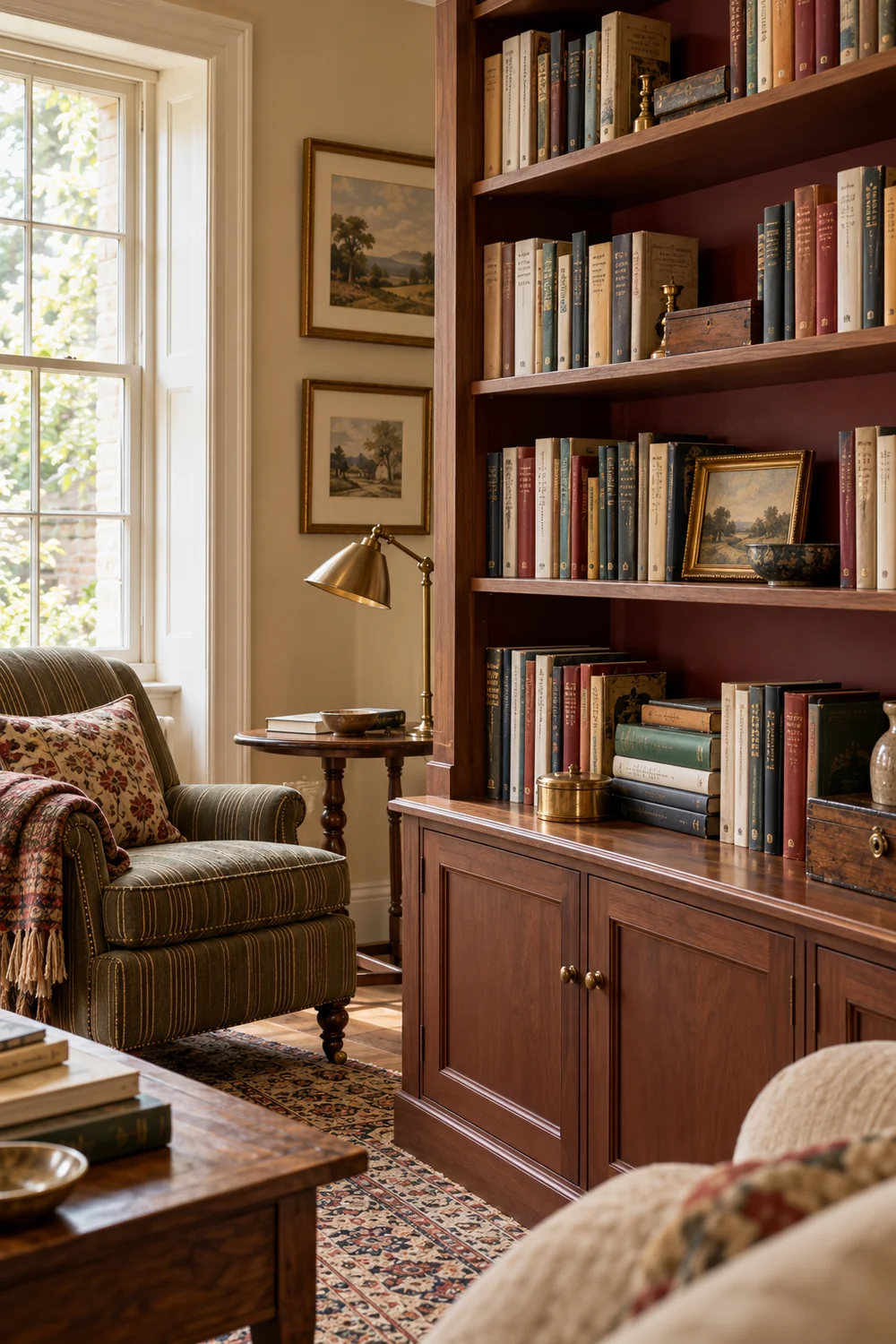
For this English country direction, I would use warm parchment on the main wall, worn walnut furniture and muted oxblood within selected shelf backs. Faded olive can appear in the reading textile. These are an editorial palette proposal, not a requirement to repaint sound furniture. If the bookcases you own have a useful wood finish, let that finish carry more of the warmth and try the oxblood in a smaller surface. Hold the actual samples beside the real books before deciding.
The English country color palette guide explains how a quiet base, an earthy material and a controlled accent work together. In this room, the spines remain personal variation within that structure. I would keep a generous plain surface near the collection, perhaps the sofa or a section of wall, so the books do not compete with strong pattern everywhere. A patterned chair can still belong, provided its scale and colour have a clear relationship with the room.
The main shelves and the book you are reading today have different jobs. I would give the current reading a small, explicit return place beside the chosen seat. It could be one lower shelf of the side table or a defined part of an existing nearby case. Keep its purpose narrow enough to recognise when it is full. A current book position that gradually accepts every newly acquired title becomes the original scattered pile under a more attractive name.
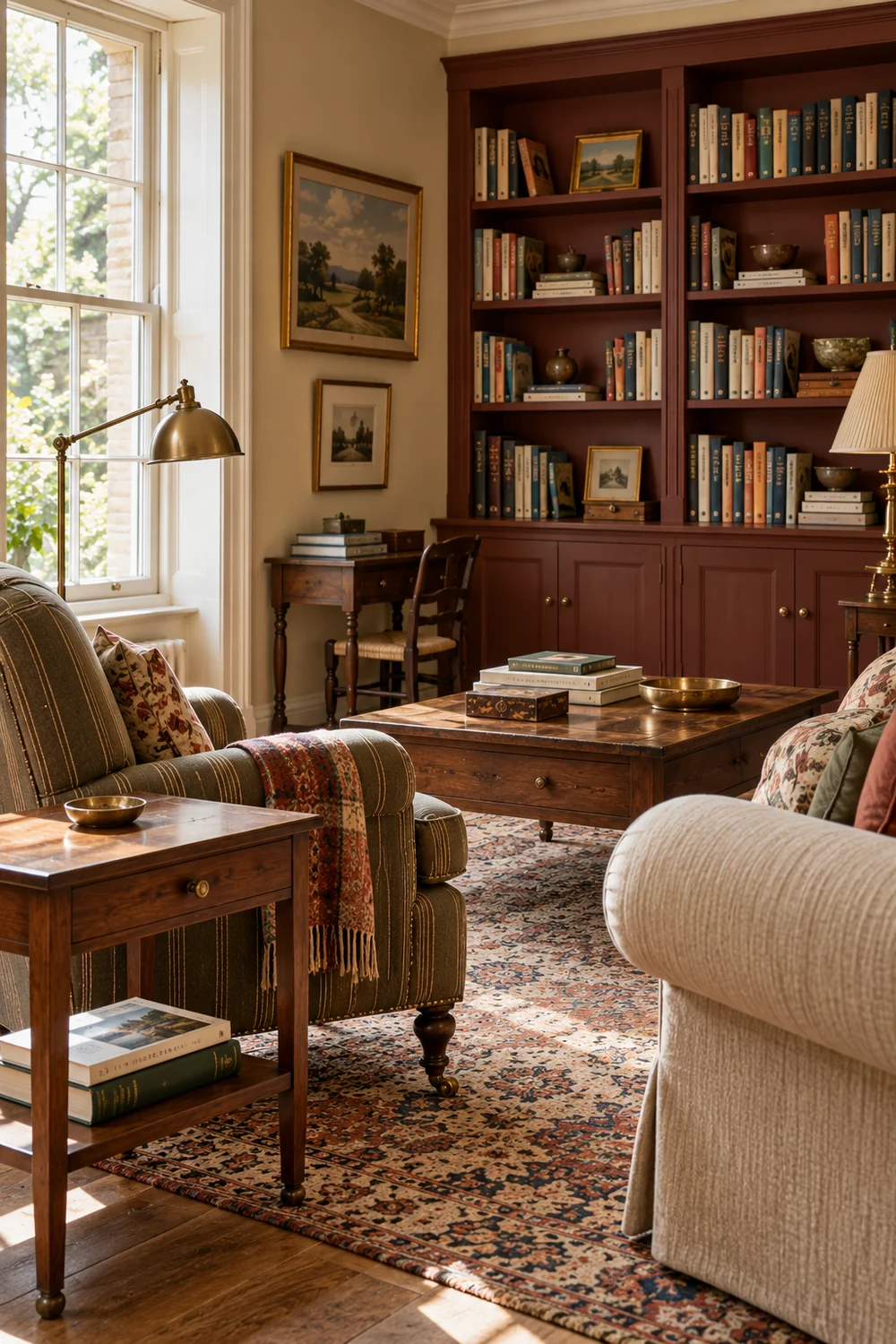
Borrowed books deserve an equally understandable temporary position. You might keep them with current reading while they are in use, then return them to a clearly remembered place awaiting their next journey. The system should make the book easier to find without requiring a decorative label on every surface. Choose whatever distinction you can reliably remember. The important decision for the room plan is where that temporary group lives and how it avoids taking over the coffee table.
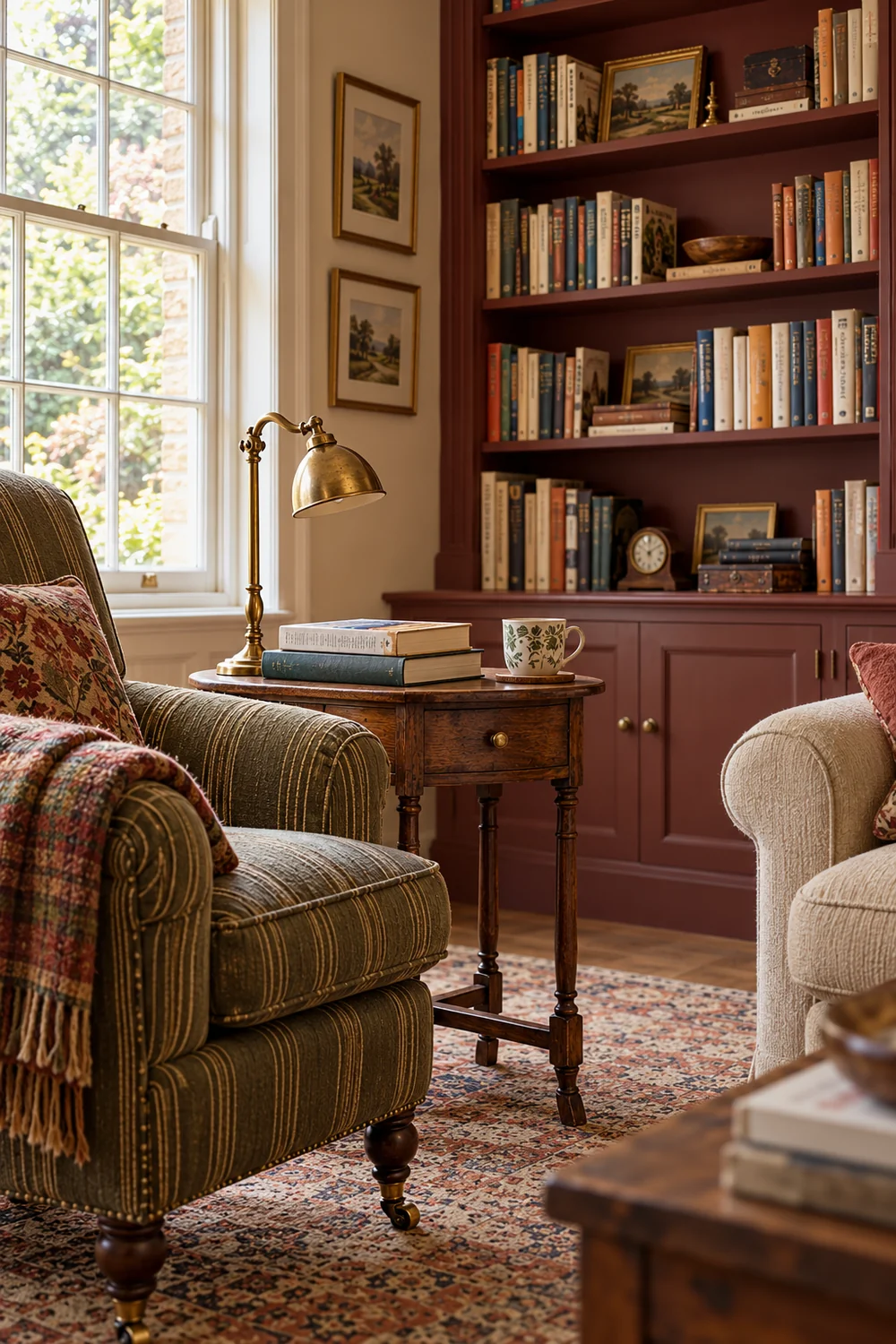
Once those two destinations are clear, the detailed bookshelf organization answer helps you allocate actual openings to paperbacks, hardbacks and oversized books. It also shows how to choose a useful lookup order and return a title without disturbing a display. Here, finish the relationship: main collection, current reading and temporary arrivals should each have an address. That is enough structure to keep a personal room readable without making it feel institutional.
Write the chosen arrangement as a short set of decisions someone else could understand. Name the collection groups staying in the room, the wall or alcoves responsible for them, the furniture remaining in place and the current reading position. Add the practical observations that changed your choice, such as a door route or direct sun at the original wall. This is a useful brief even if you keep every bookcase you own. It explains what the furniture must accomplish before appearance starts driving another purchase.
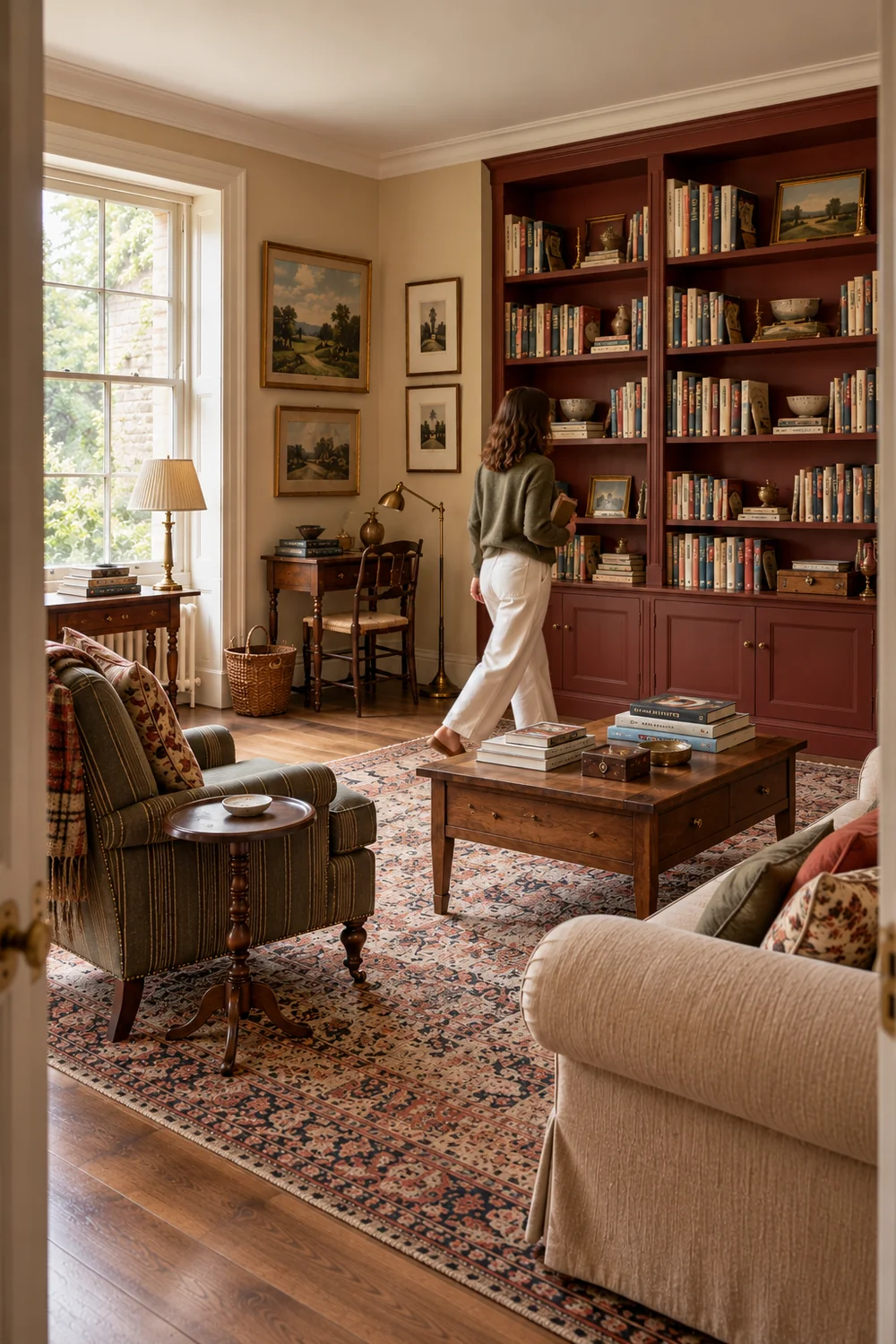
Rehearse the arrangement with a few representative books in the proposed positions and ordinary living room use continuing around them. Take a novel, sit down, put it aside and return it. Open the window treatment and move through the room as usual. You are not proving a universal clearance with this exercise. You are checking your own sequence and discovering whether the drawing omitted an occupied surface, an awkward reach or a piece of furniture that matters more than you expected.
If the plan fails, change one relationship and try again. The low run may need to end earlier, the current reading surface may need to move beside the other arm of the sofa, or the illustrated volumes may deserve a separate existing cupboard. Keep the collection brief visible while making that change. It prevents a disappointing trial from turning into an unrelated room makeover. The completed plan should make the next shelf decision smaller and clearer, rather than add a list of things to buy.
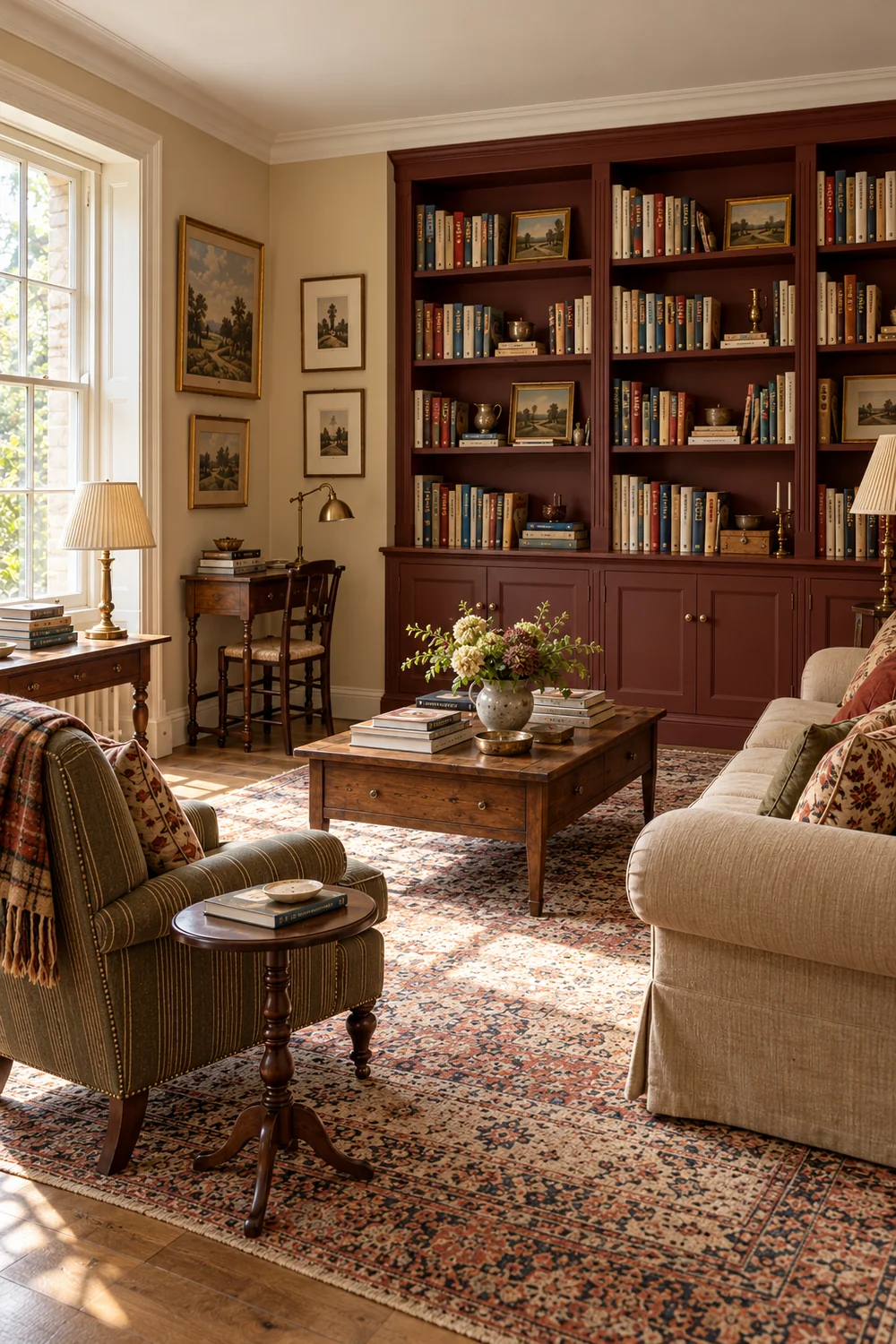
I would call the room plan ready when the main books have a deliberate home, familiar titles are connected to a comfortable seat and the everyday room remains easy to use. The English country character can then come from the real collection, the warm timber, the controlled colour and the textiles you enjoy. You have not designed a display that needs everyone to stand back. You have given reading a lasting place within ordinary life, with a clear brief for the shelf arrangement that follows.