Newsletter Subscribe
Enter your email address below and subscribe to our newsletter

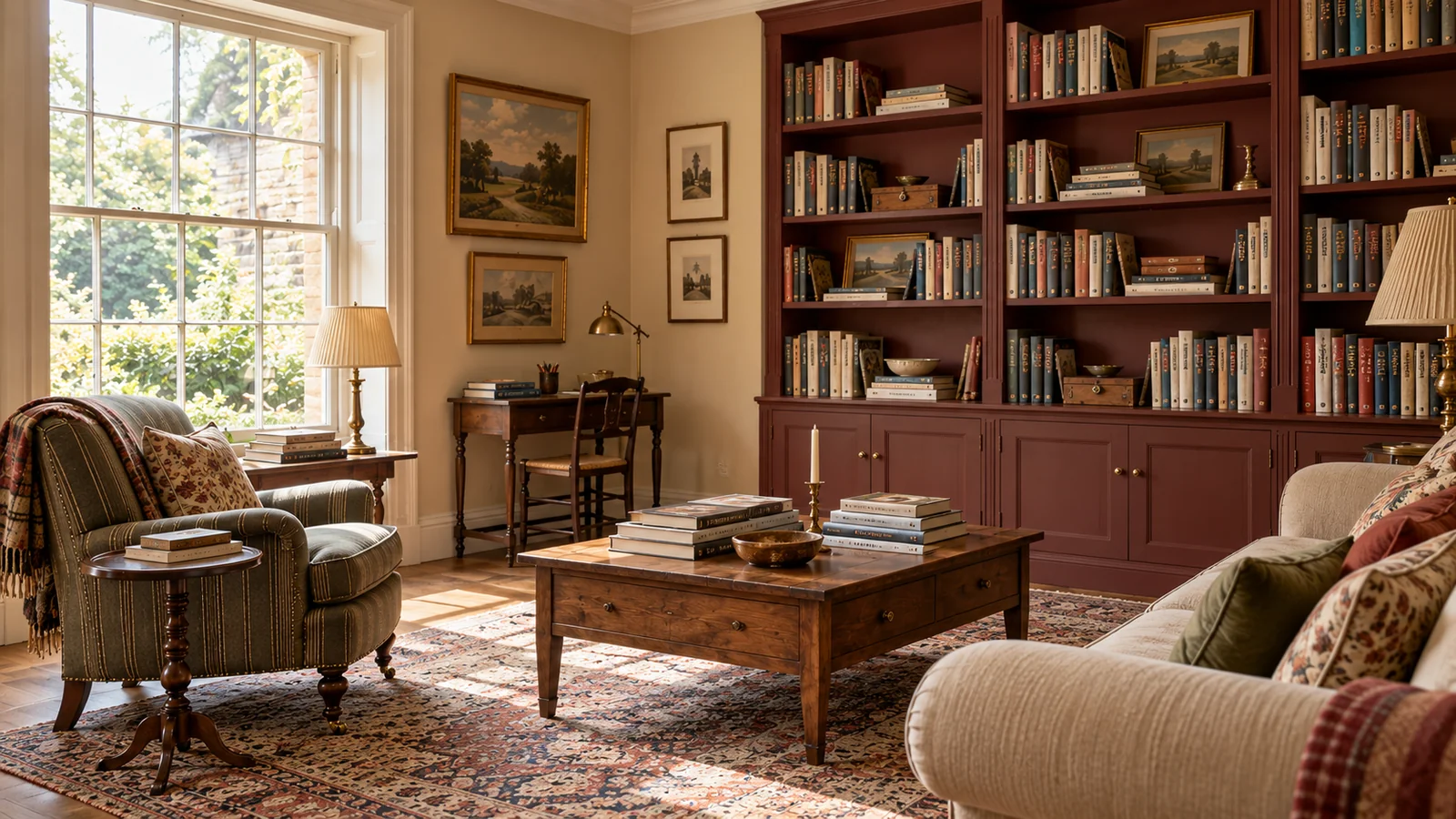
Bookshelf organization works best when you can find a particular book and return it without rearranging the room. If your collection includes small paperbacks, ordinary hardbacks and illustrated volumes that fit nowhere neatly, a photograph of colour matched shelves is only a starting point. I would give those different books a supported place, choose an order you can remember and keep the books currently being read close to the seat. An English country living room can hold that practical system without losing its personal character. The warm timber, muted shelf colour and familiar objects should make the collection feel welcome rather than make the titles disappear. This is the stage where I would work with the actual bookcase and books, checking usable openings and ordinary retrieval. You can finish with the furniture you own when it is suitable; the result is a usable arrangement, rather than a reason to replace everything.
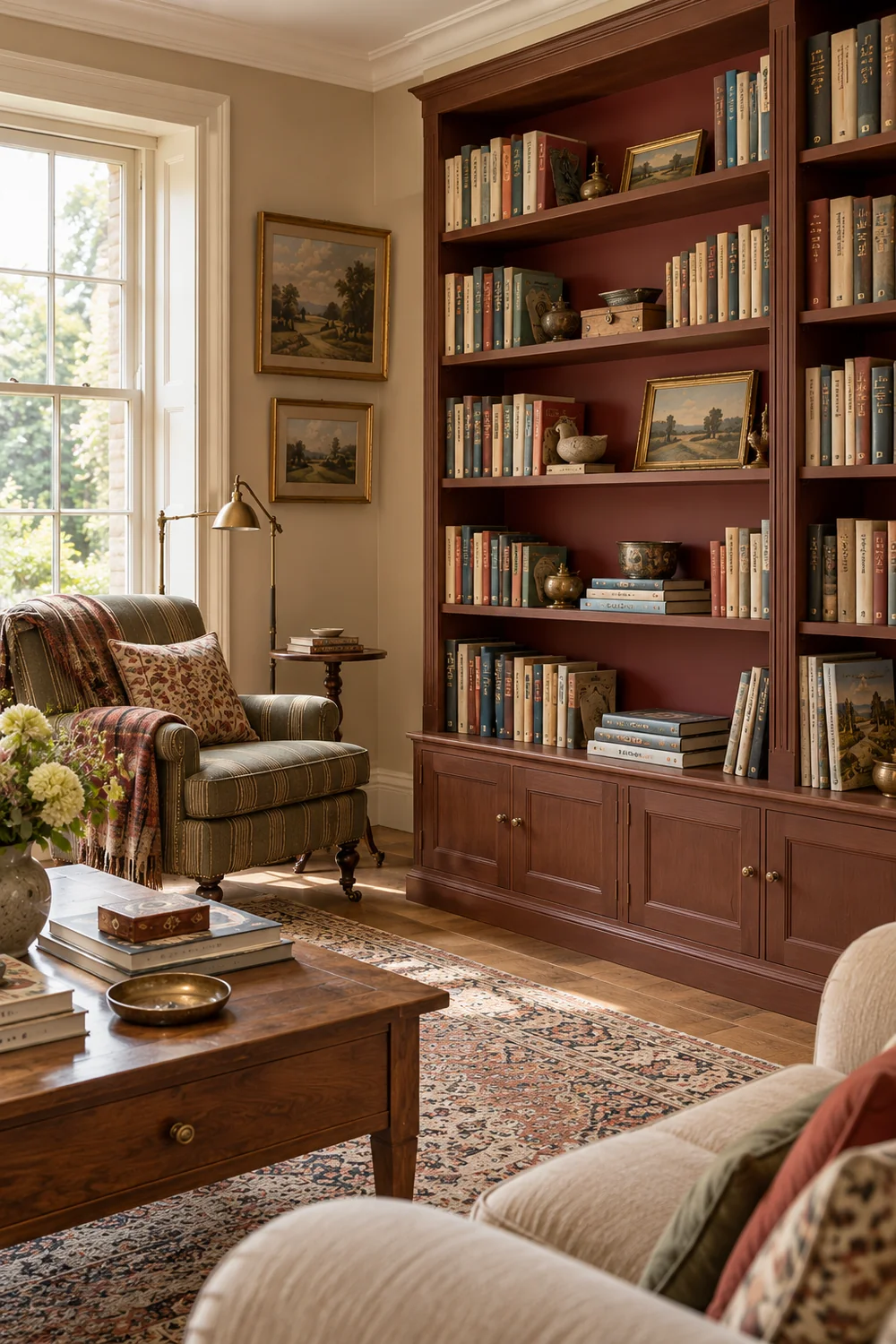
I would start with the existing piece, not an image of a beautifully filled bookcase. Empty one manageable area and look at the shelf surface, supports, back and accessible joints. Check the available product information and any required installation conditions. A shelf's appearance does not establish what it can carry. If you cannot establish suitability for the books and arrangement you intend, leave that question unresolved while you obtain the information. Do not use the collection itself as a test load for doubtful furniture.
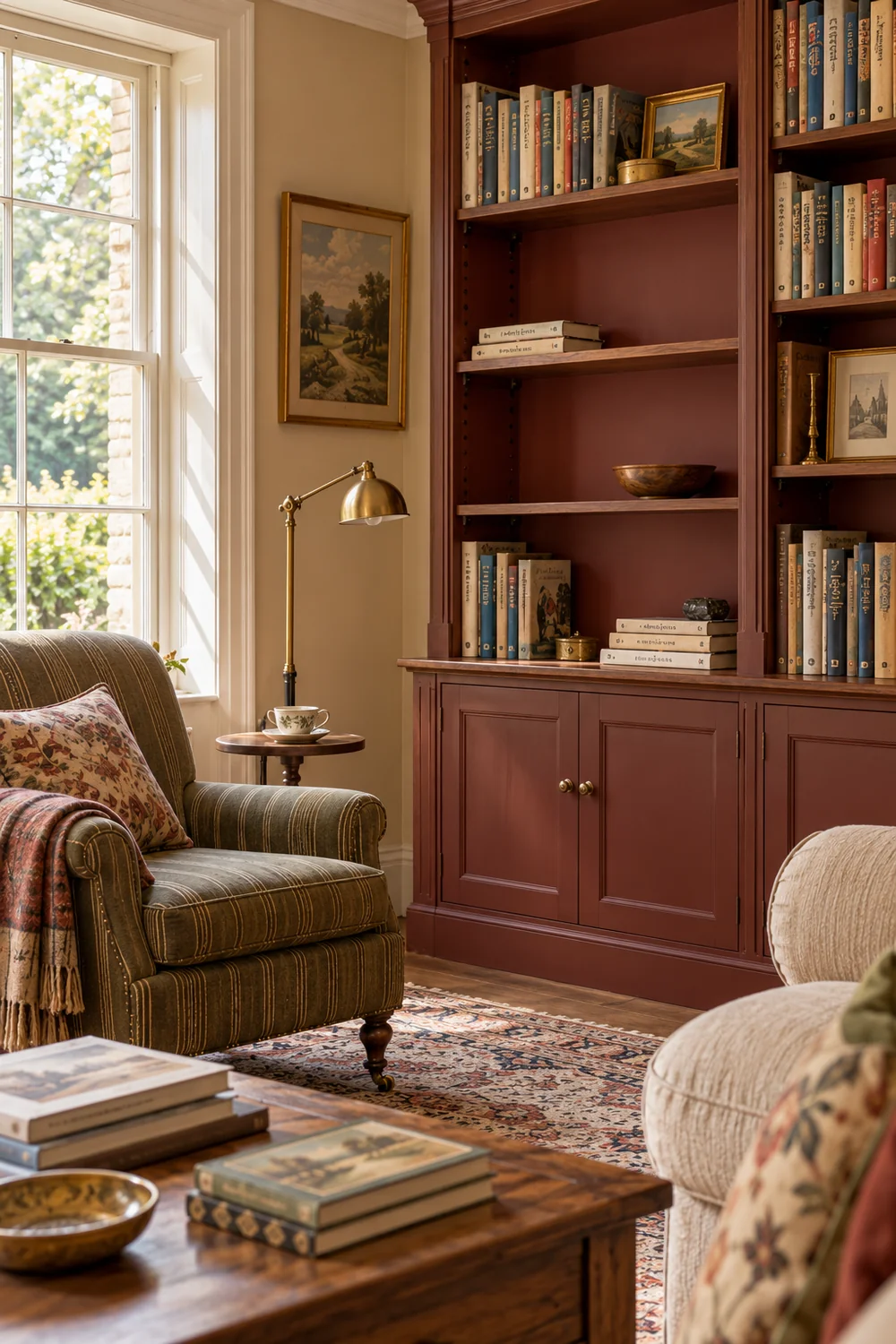
Separate the useful internal openings from the overall outline. Decorative moulding, a thick base and fixed shelves can make a large cabinet offer less usable space than its outer dimensions suggest. Record the clear height and depth of each opening and the usable shelf run. If the shelves are adjustable, note the actual positions available rather than assuming every height can be chosen. This gives you a truthful set of spaces to allocate before you start selecting books for a photograph.
If you are considering an older piece, the secondhand living room furniture guide covers inspection, fit and complete cost in more detail. I would use that process to decide whether a potential bookcase belongs in the room, then return here to arrange the books. A convincing country finish is a visual benefit, not a substitute for an established condition and useful opening. Keep the frame decision distinct from the order of the collection it will hold.
Choose several real examples from each group rather than measuring only the most attractive hardback. Include the tallest paperback, a representative hardback and a wide illustrated volume. Note whether a jacket, slipcase or projecting cover changes the size. Then compare those objects with the clear openings you recorded. I would test taking a book out and returning it without forcing the top or dragging a cover against the shelf above. The useful height is the one that supports the actual group and its handling.
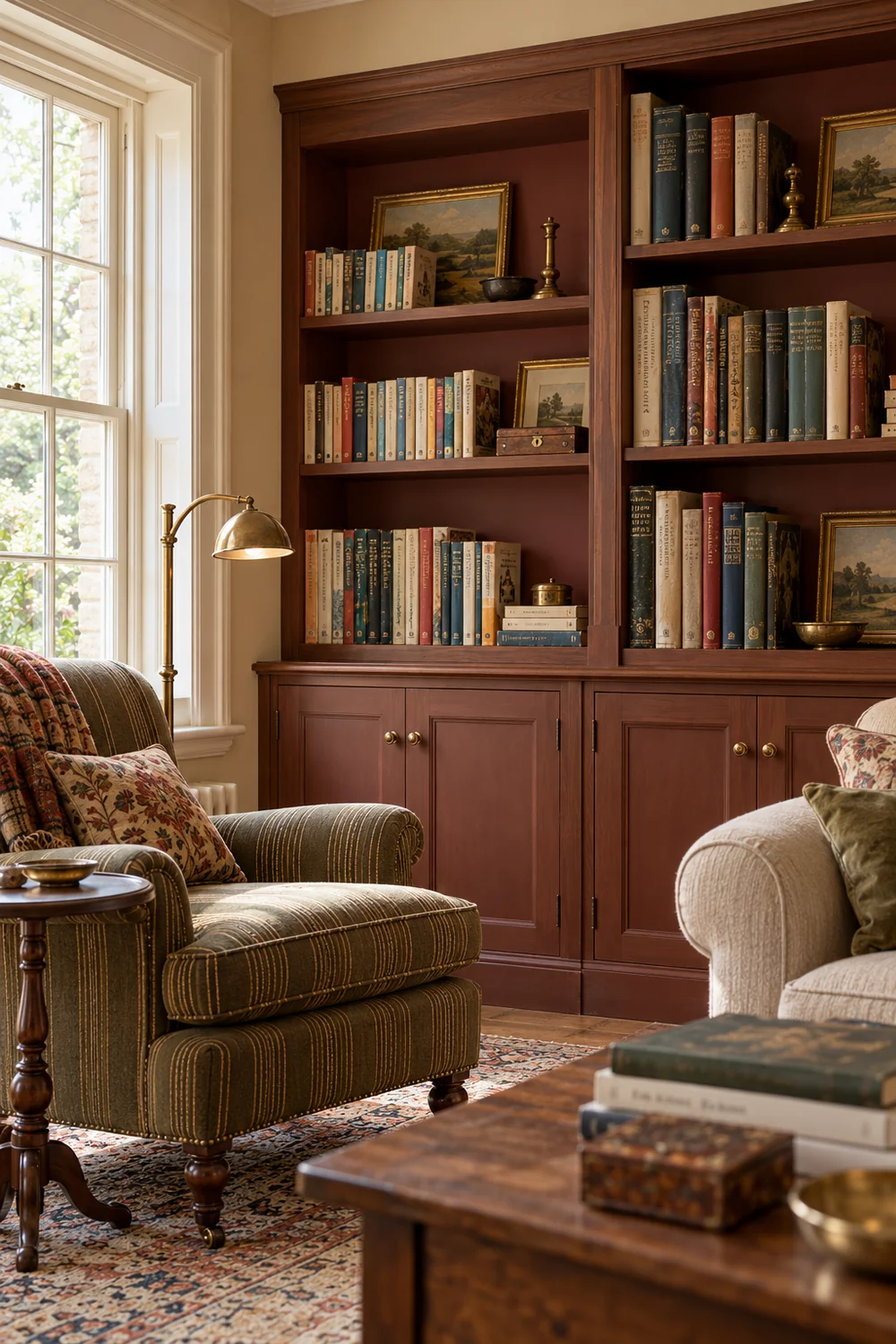
Consider a hypothetical case with three adjustable bays and a collection divided between novels, biographies and art books. I would give the paperback group one opening that suits its tallest example instead of setting every shelf to the height of the art books. The hardback group gets a different opening. The largest volumes receive their own position. There is no universal measurement hidden in that example: your books, available adjustments and furniture information determine the finished spacing. The lesson is to stop one unusual format from setting every ordinary shelf.
Keep related books together where their sizes allow it. If an author's novels include one unusually tall edition, you can either give that small group a taller opening or move the outlier to a remembered oversized position. Choose deliberately and record the exception in a simple collection note if useful. Do not scatter the entire group purely to make identical rows. A little irregularity can be more usable than a perfectly even arrangement that separates books you naturally look for together.
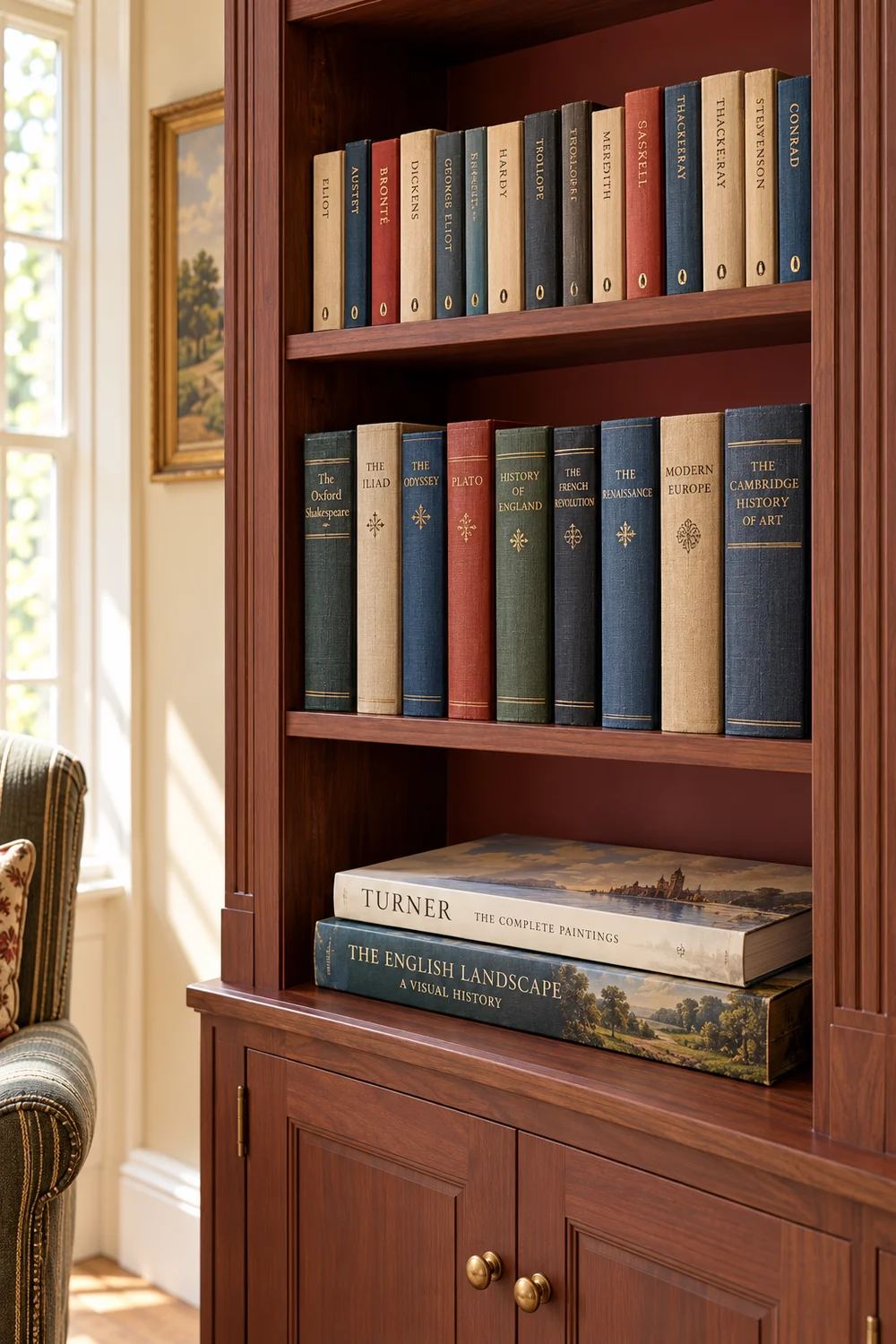
I would finish one small group before moving the next shelf. Put the books into the opening, support the row appropriately and try ordinary retrieval. Look at both the fit and the empty space you need for returning a volume. Leave an intentional allowance for books likely to join that group, based on your own reading habits. That is a choice about your collection, not a prediction of future purchases or a fixed percentage every household should follow.
Large illustrated books often create the muddle because they are treated as exceptions after the ordinary rows have filled the case. I would plan their position early. The Library of Congress recommends keeping ordinary books upright with support and allowing oversized books to lie flat when appropriate, fully supported beneath. Apply that principle to the actual volume and opening rather than forcing an atlas into a short shelf or allowing its cover to project beyond the surface carrying it.
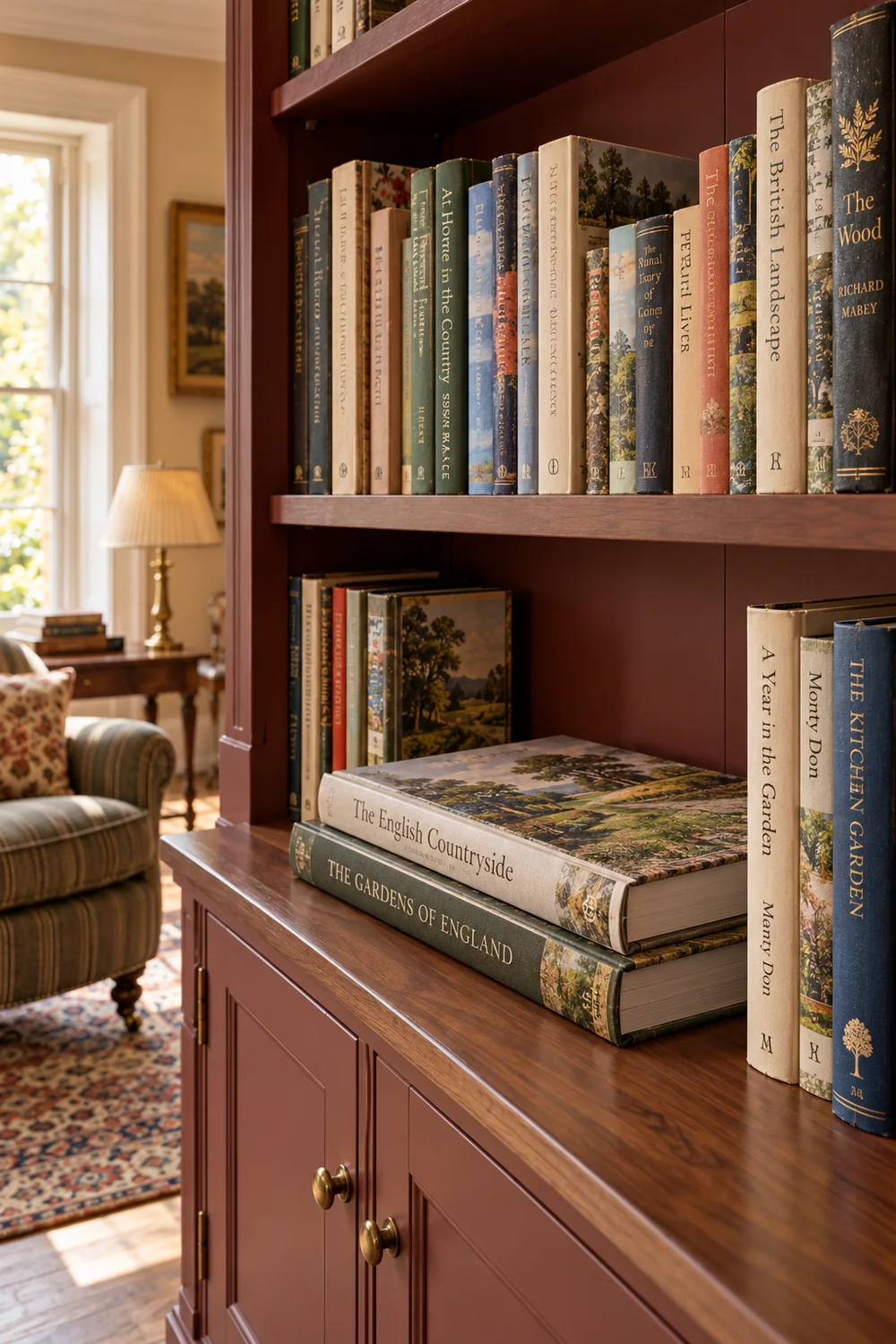
Compare two practical positions. A broad lower shelf may let a large book lie supported without occupying a coffee table used for other things. A suitable nearby cabinet may keep the illustrated group together while the main case holds novels. In either position, retrieve the title you actually use. If opening a favourite volume requires lifting a decorative sculpture and several heavy books first, the arrangement is treating it as a plinth rather than a book. Keep stacks modest enough for your own comfortable handling.
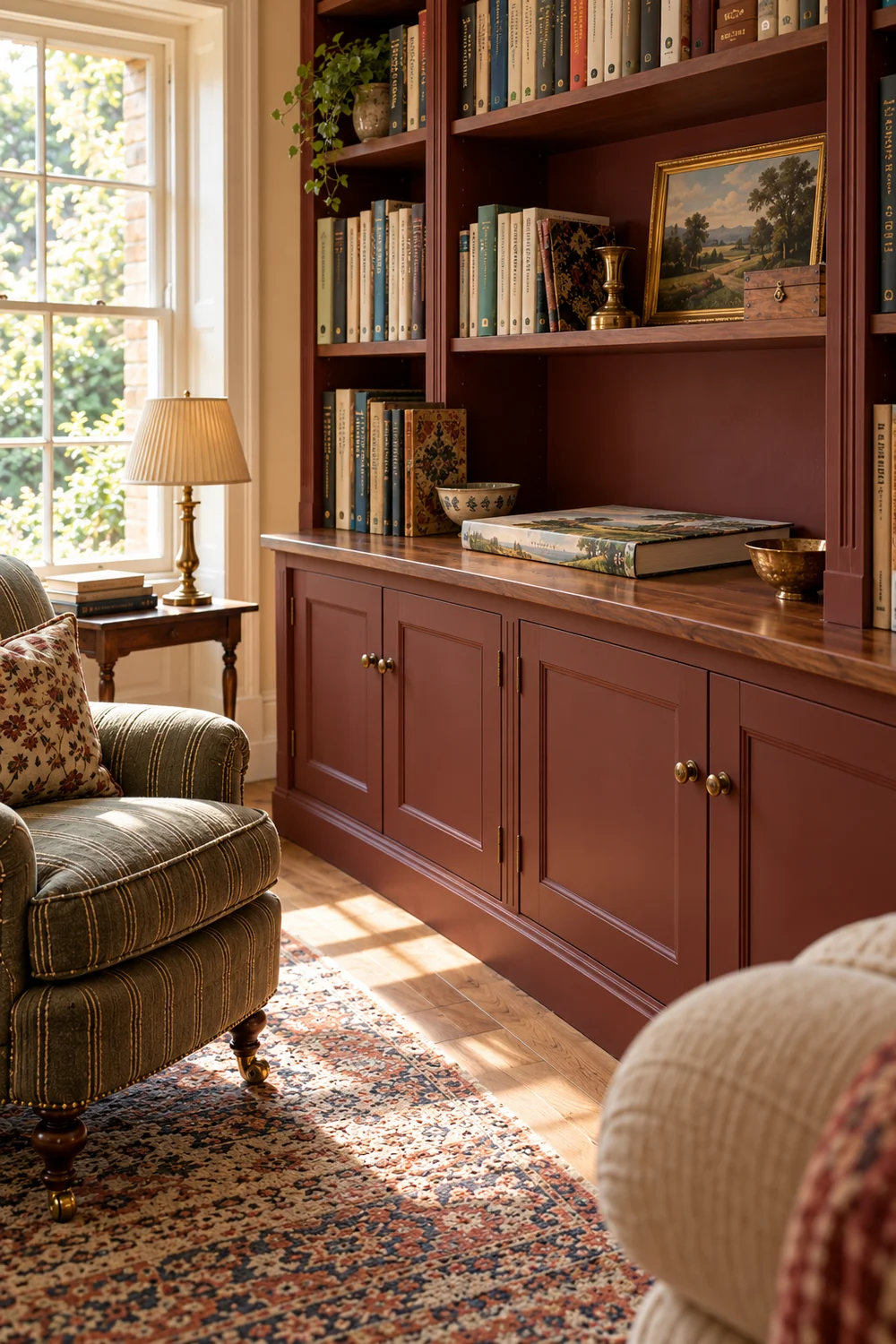
If the oversized group changes the chosen room arrangement, revisit the living room bookshelves plan before adding another piece. A wide book might need a different existing position, rather than a deeper cabinet along the entire wall. I would preserve the living room's useful route and sitting space while giving that group a complete answer. Fragile or damaged bindings need appropriate individual advice; this everyday arrangement is not a conservation treatment.
Start with the question you actually ask when looking for a book. You might remember the author, reach for a subject or browse one kind of fiction. I would choose one primary order for each useful group rather than combine several decorative systems at once. Fiction can be arranged by author within a clearly remembered area, while reference books can be grouped by the subjects you use. These are examples to test, not a classification scheme imposed on every personal collection.

For the novels, biographies and art books example, I would begin with three recognisable homes. Within the novel group, familiar author names provide a straightforward return rule. Biographies can follow the person whose life you read about or the author's name, depending on how you search. Choose one. The oversized art books can keep a separate physical position while remaining a single remembered subject group. An exception is manageable when you understand it; a new exception for every shelf quickly becomes another puzzle.
Test the order with a title you have not handled recently. Find it, take it to the seat and return it later without referring to a staged photograph. If the return position is unclear, simplify the rule. Perhaps the broad subject is enough and alphabetising that small group adds unnecessary work. Perhaps a much larger fiction collection benefits from a more explicit order. I would let the collection's size and your habits decide how much structure it needs, rather than add labels to make a small bookcase look organised.
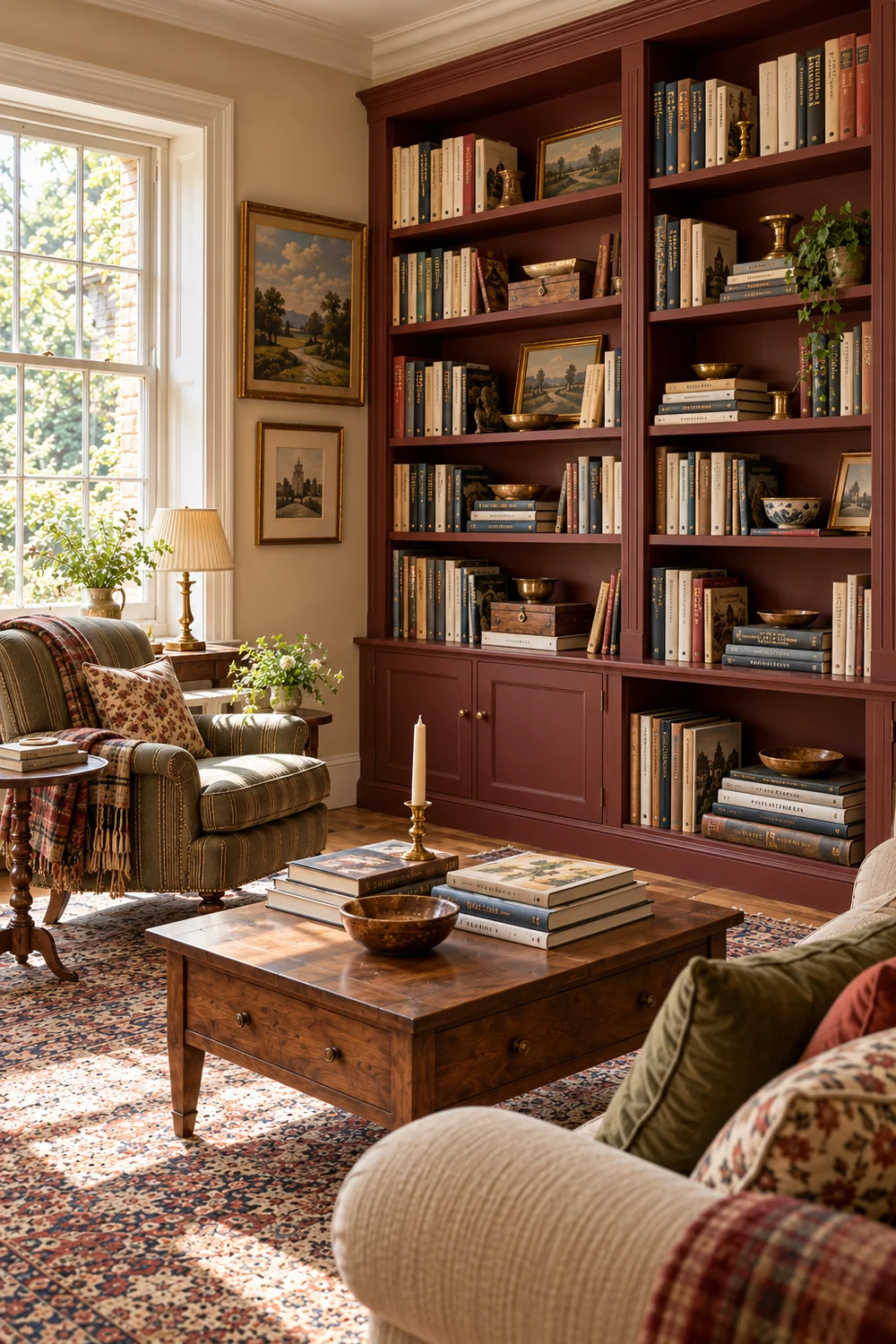
Keep the spines readable wherever practical. I would not turn a frequently used collection backwards or wrap the books in matching paper solely to calm the colour. Your titles and editions are useful information. If a decorative colour grouping appeals, try it within a small group you can still find easily and assess it honestly after use. The finished order should remain understandable when a book is absent, because reading the collection is its purpose, not a disruption of the display.
The book on the arm of the sofa needs a temporary home, even when its permanent shelf position is perfectly organised. I would define one current reading place beside the seat: a lower side table shelf, a small section of a nearby case or another existing surface that does not displace ordinary use. Give it a visible limit through its physical size. It should hold the books being used now, rather than absorb every book that has not yet been allocated.
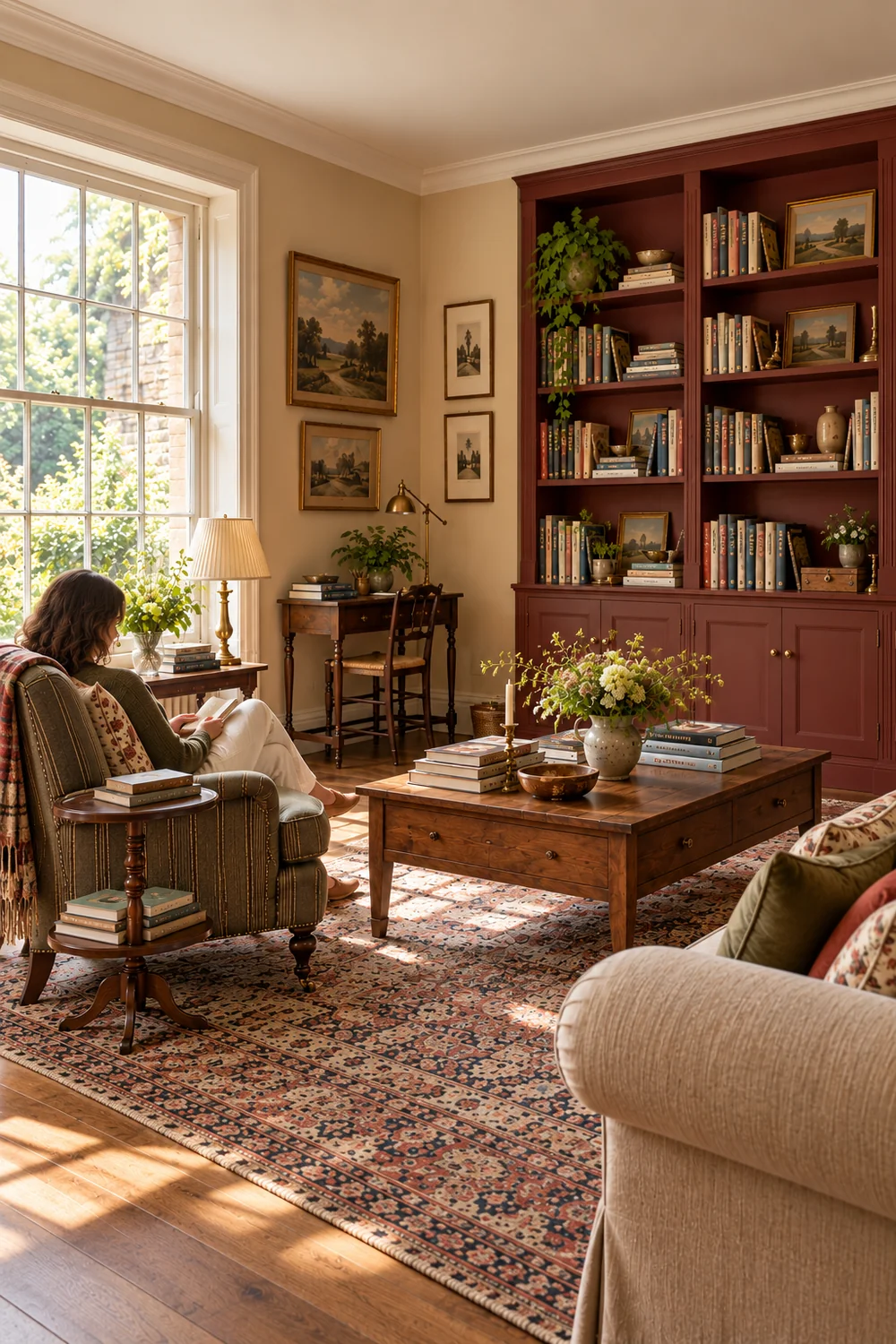
Keep the next action clear. A finished book returns to its main group, a borrowed book goes to the agreed temporary return position, and a book still being read can stay near the seat. That small distinction prevents a tidy bookcase from coexisting with a growing, unexplained floor pile. You do not need to finish one title before starting another. You need a current reading group that reflects what is genuinely in use and can be reset without a major sorting session.
The English country reading nook examples help if the nearby table, light and textiles still feel disconnected. I would borrow the relationship, then keep the actual landing surface free for the book. A small shaded lamp, worn timber and an olive cushion can make the seat inviting without filling every reachable surface. Check the arrangement while sitting with an open volume, because an attractive table that cannot be reached comfortably will not become the book's natural return place.
Before choosing more shelf colour, stand back from the actual arranged collection. Its pale jackets, darker bindings and bright paperback spines are already a substantial surface. I would photograph that combination with the retained furniture in daylight. Notice whether the background needs more contrast or whether the room simply needs one quieter neighbouring surface. The answer may be a plain textile beside the books rather than repainting the case. Keep a useful finish when it already supports the room.
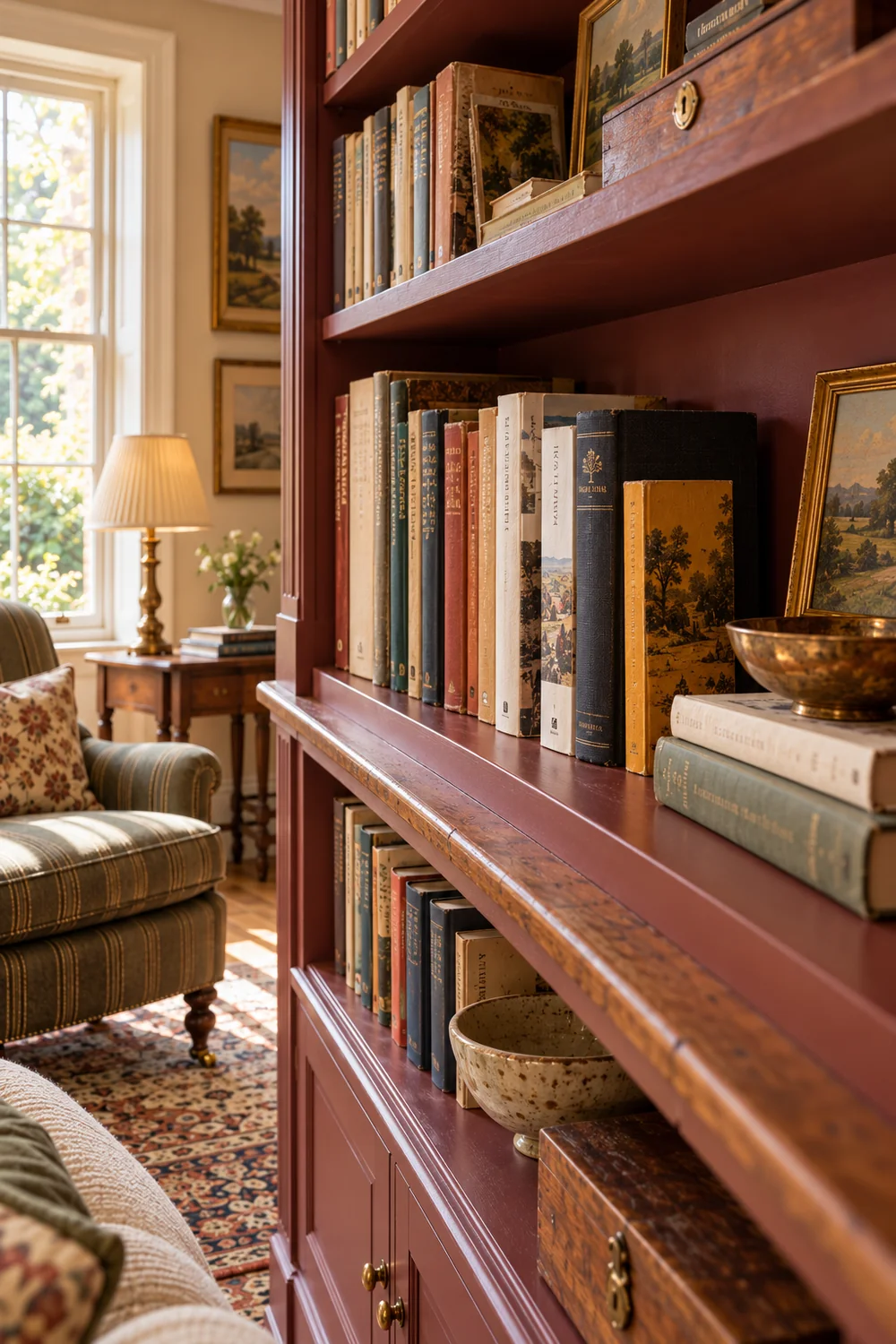
For this project, the proposed palette is parchment, worn walnut, muted oxblood and faded olive. The oxblood can sit within selected shelf backs while the wall stays light. It should remain a muted background, not a requirement to recolour the collection. Try a real sample behind several contrasting books and look from the usual seat. I would include a white paperback, a dark hardback and one colourful jacket in that test, because a sample that suits only the nicest binding has not answered the collection's visual problem.
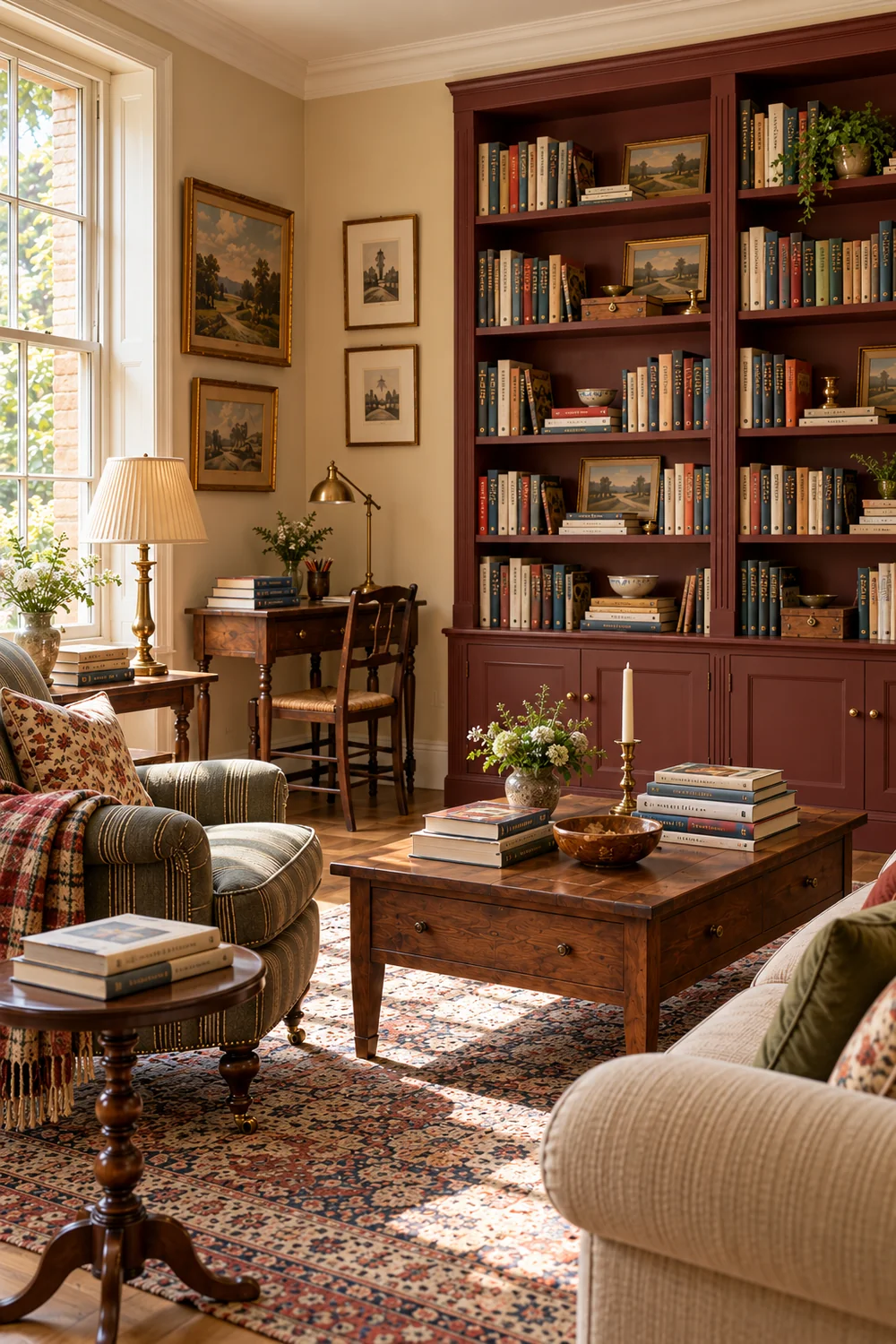
The English country color palette guide provides other base, material and accent relationships if those samples conflict with your fixed furniture. Choose the family that works with the room you have. The organisation system should survive a new book arriving in an inconvenient colour. Let the finish, timber and textile create continuity around the collection so you can keep buying and reading books for their contents rather than for how their spines will photograph.
I would place the books first and add objects only where they do not interrupt the system you have just made. A familiar framed photograph or small piece of pottery can give a case personal rhythm. It should not conceal the author sequence, make an oversized book inaccessible or sit in the space needed to support a short row. Useful empty space is allowed to remain empty. A shelf does not need a decorative object simply because a photograph contains one.
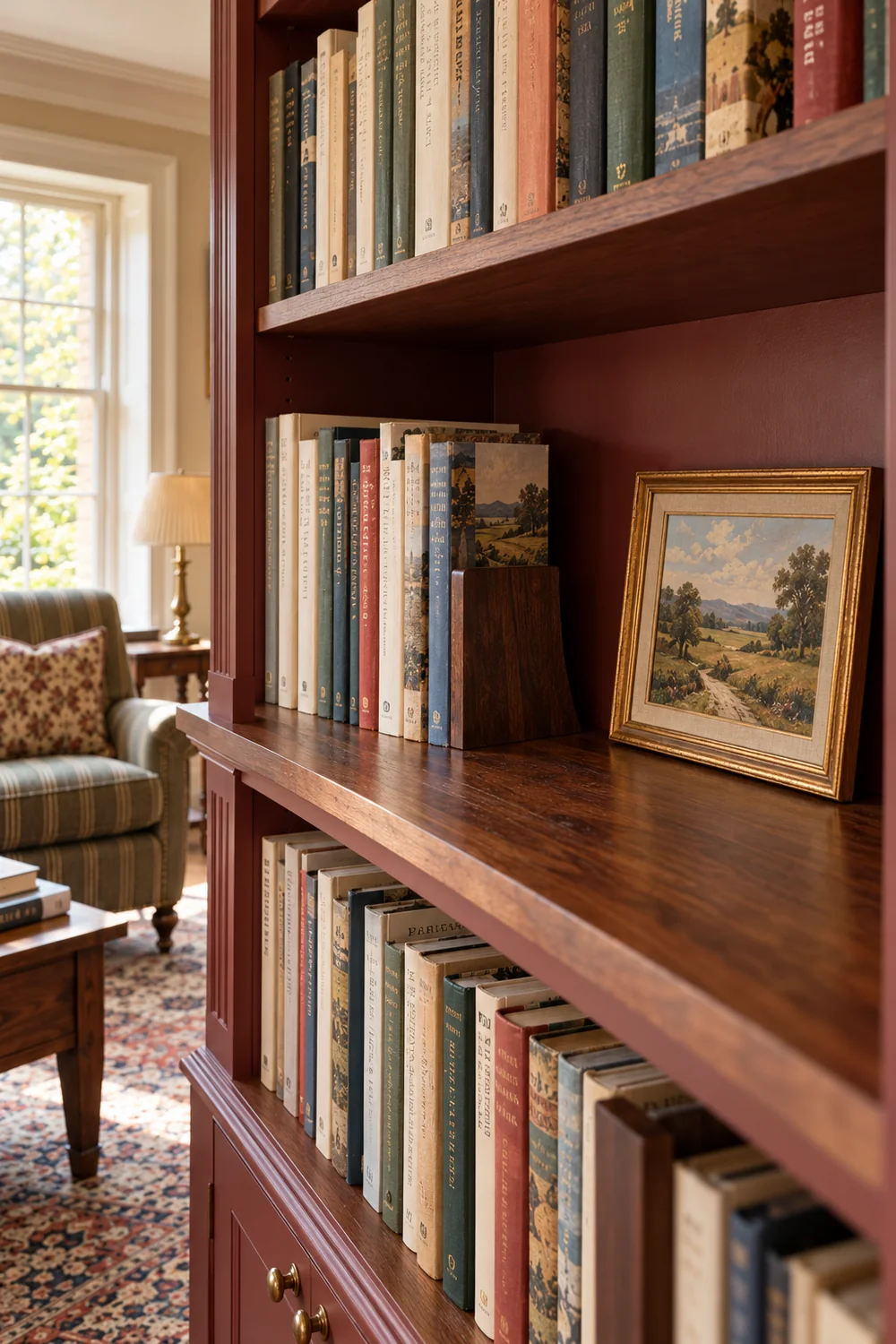
Choose objects that can stay in place while you use the collection. If the sculpture has to move every time you take a novel, it belongs elsewhere. If a lamp occupies the only suitable position for large books, decide which job matters more and give the other a proper alternative. I would keep drinks and water filled vessels on a separate suitable surface rather than place them among the books. This is a room for reading and living, so the objects should make those activities easier to enjoy.
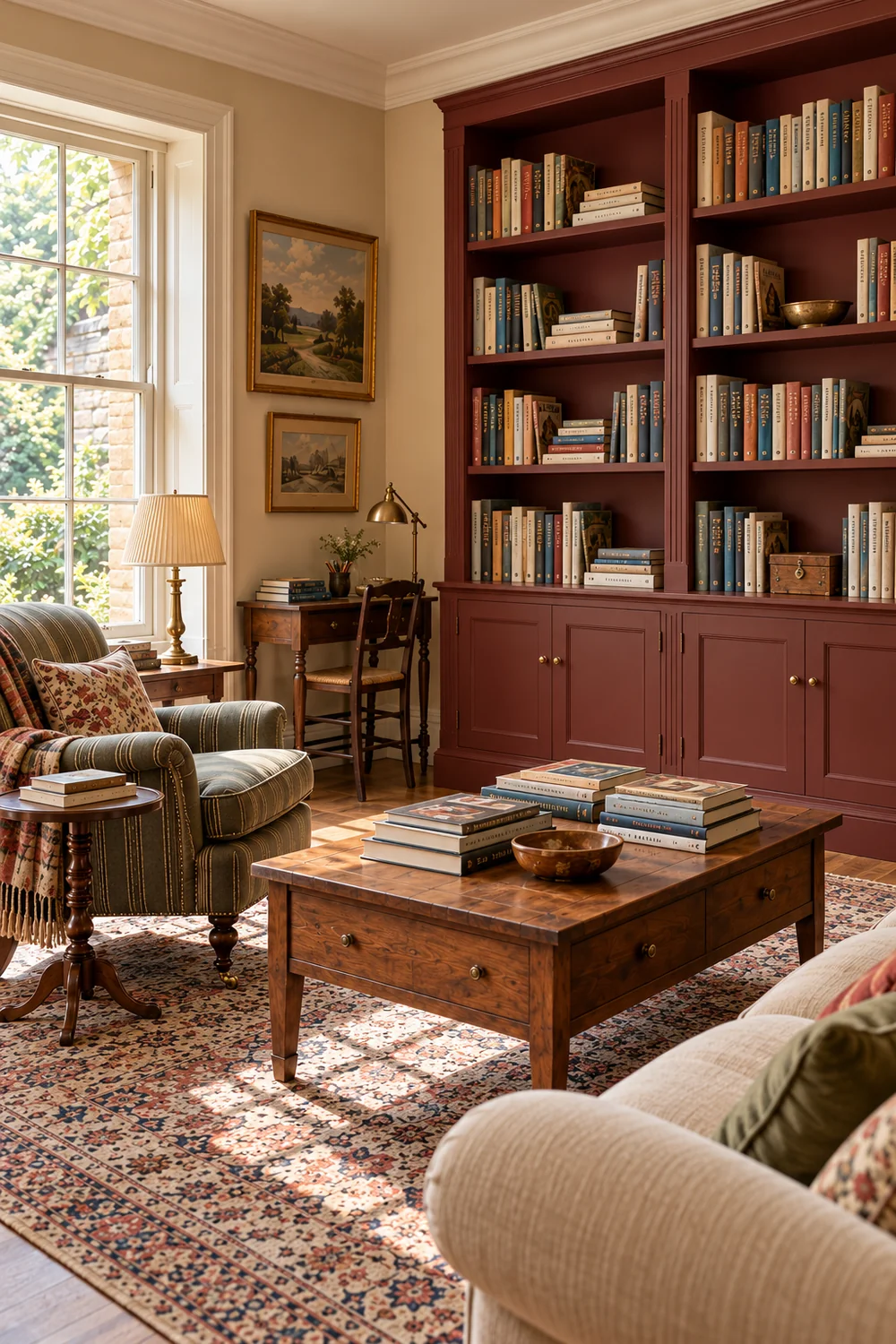
The English country living room inspiration shows why personal books and mismatched familiar objects can feel convincing together. Borrow that sense of use without copying an unstable stack or accepting a doubtful shelf as charming patina. I would judge the finished case from the seat and then use it again. If its character disappears as soon as one book is taken out, the decoration is doing too much of the work.
After several reading cycles, inspect what happened instead of starting the arrangement again for a photograph. Which books returned naturally, which stayed beside the chair and which new format had nowhere useful to go? I would correct the smallest failed relationship first. A biography group may need a clearer address; the current reading place may have accepted books that are no longer active. Restore those groups before deciding that another bookcase is necessary. The reset is part of the system, rather than evidence that it failed.
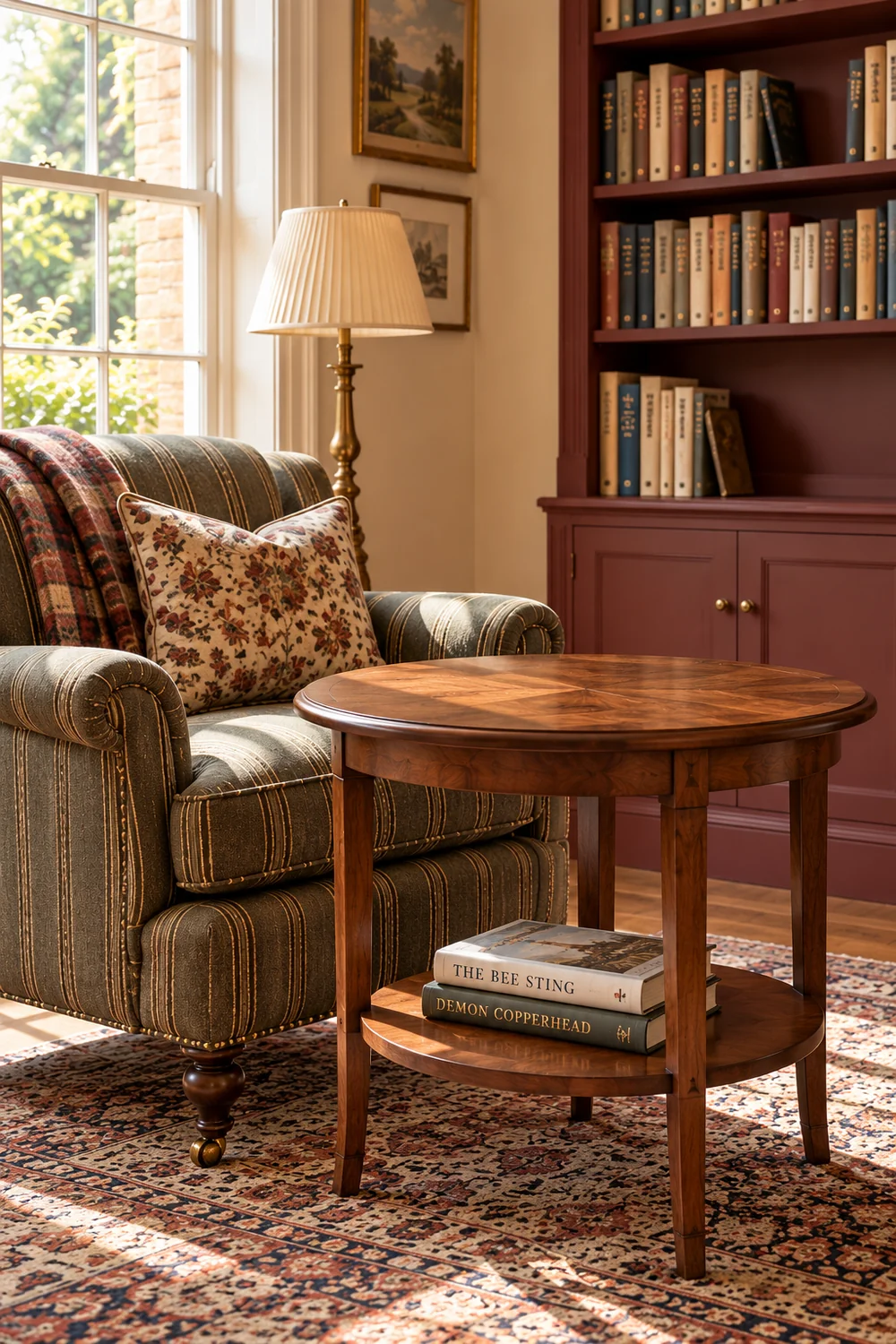
Keep cleaning practical and appropriate to the books and furniture. The Library of Congress recommends regular housekeeping and avoiding fragranced or chemical dusting products on books. Follow suitable care guidance for the collection and the furniture finish, keeping the processes separate. While cleaning, notice unsupported leaning books, an overcrowded group or a shelf condition that needs checking. Do not disguise a new problem with another decorative row. Damaged or fragile volumes deserve individual care rather than an improvised household repair.
Return to the living room bookshelves plan when the collection or room's use has actually changed. A new group of large volumes may need another position; a different seating arrangement may move current reading to the opposite side. Reconsider the shelf wall, alcoves or low run using those real changes. A useful lookup order can remain while the furniture relationship evolves. You do not have to discard everything that worked because one part needs a better home.
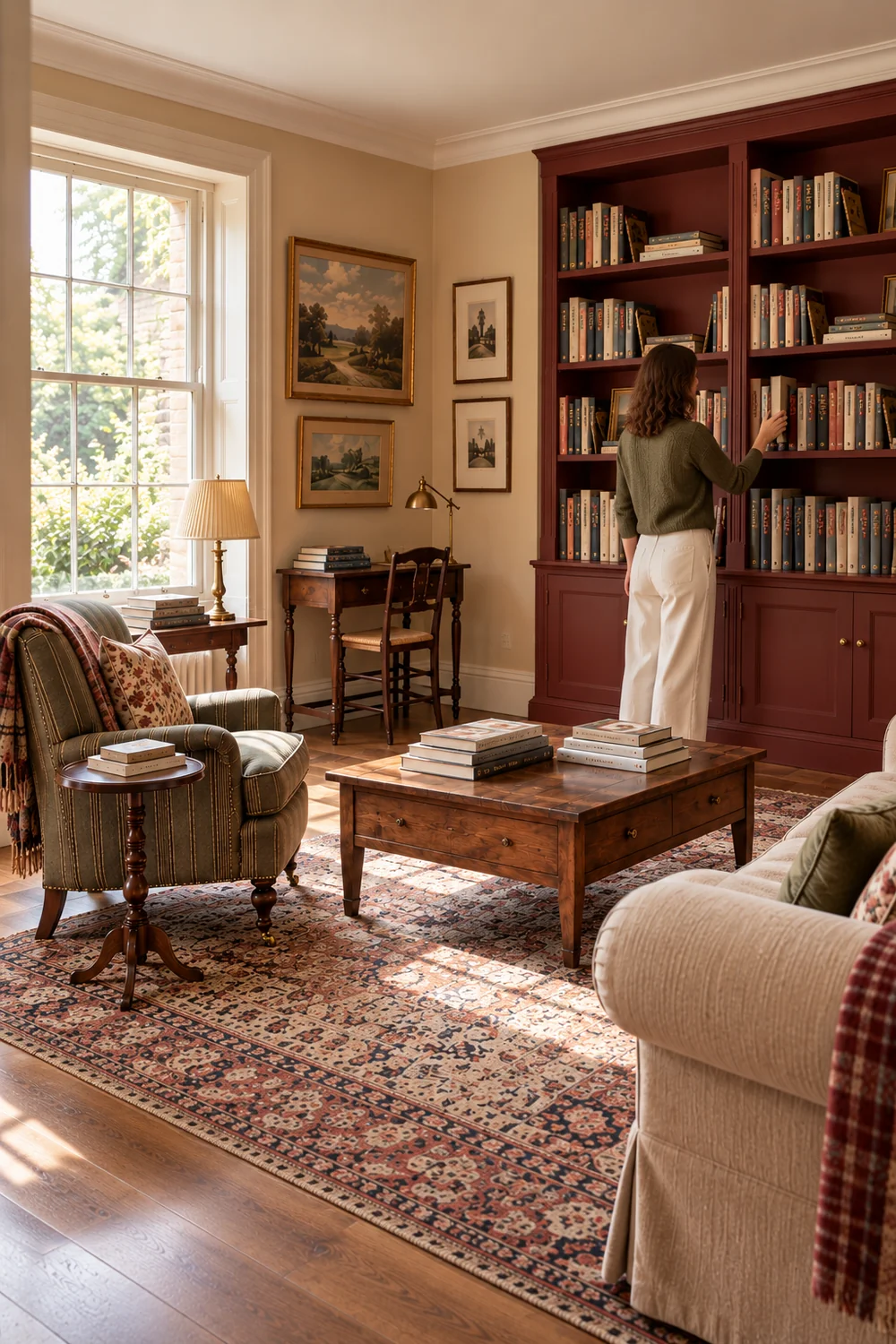
I would call the bookshelf organisation complete when the mixed formats have supported places, familiar titles can be found and returned, and the current reads belong beside a seat you use. The colour and personal objects can then give the room its English country character without hiding that practical structure. Keep the system simple enough to recognise after a busy week. A living room full of books should invite another chapter, with a place for that book to return when ordinary life calls you away.