Newsletter Subscribe
Enter your email address below and subscribe to our newsletter

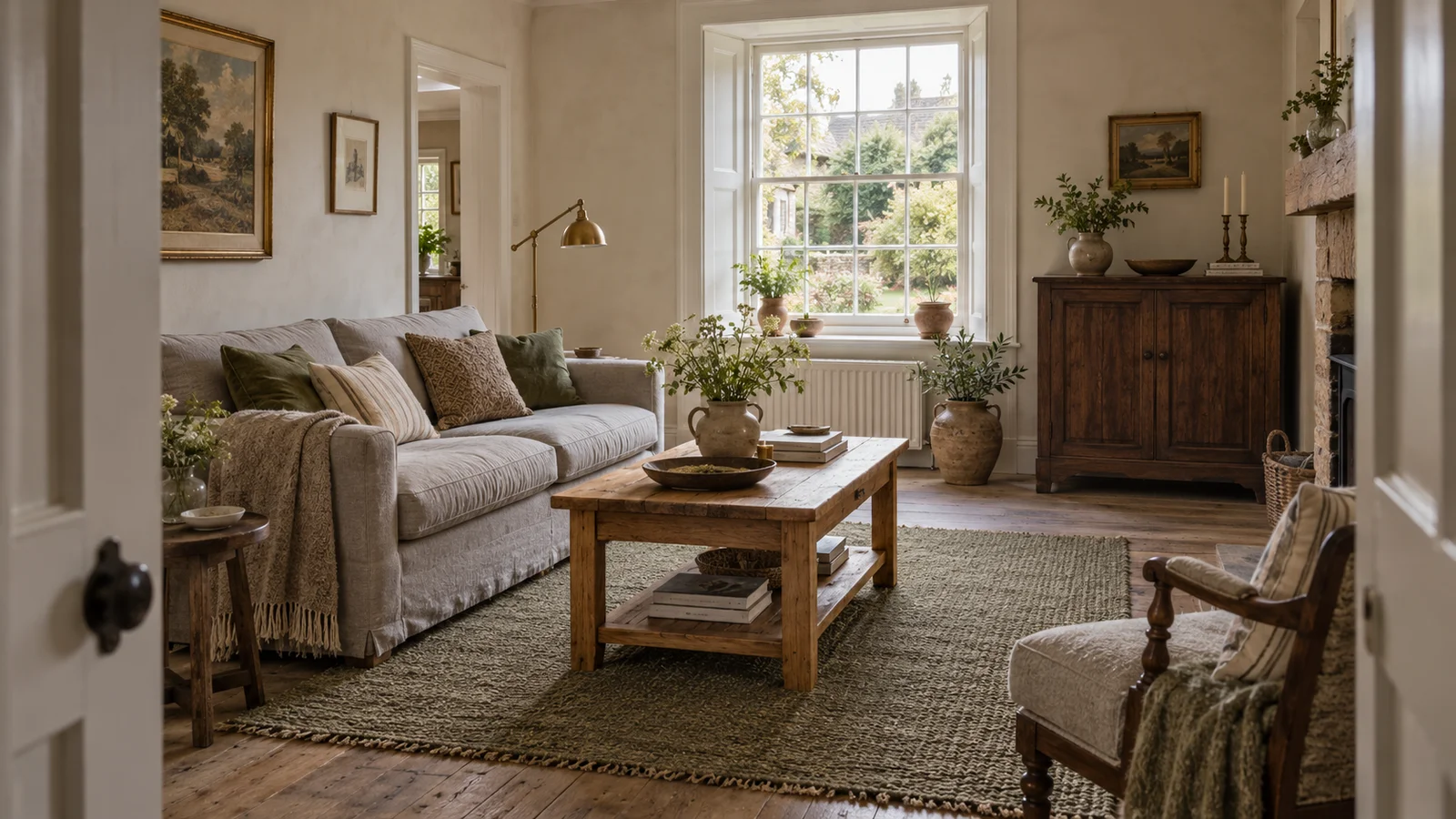
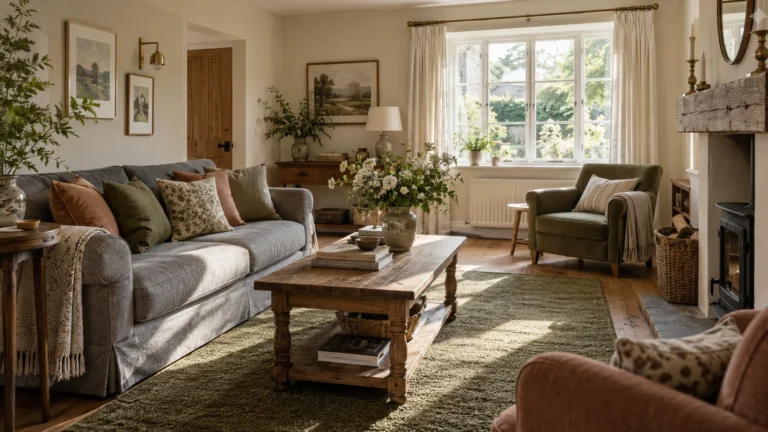
An earthy cottage living room can look wonderfully relaxed until you try to build one from secondhand finds. The oak table you love is too deep, the floral chair competes with your rug, and a cheap cabinet needs delivery that costs more than the cabinet itself. I would start with the room you actually have, including the sofa you intend to keep, then give each potential purchase a clear job. You do not need a matching suite or a house full of antiques. You need a few pieces whose size, colour, condition and everyday use make sense together. This is the selection process I would use before shopping, with practical ways to compare wood tones, choose patterns and decide when an attractive find deserves to stay in someone else's home.
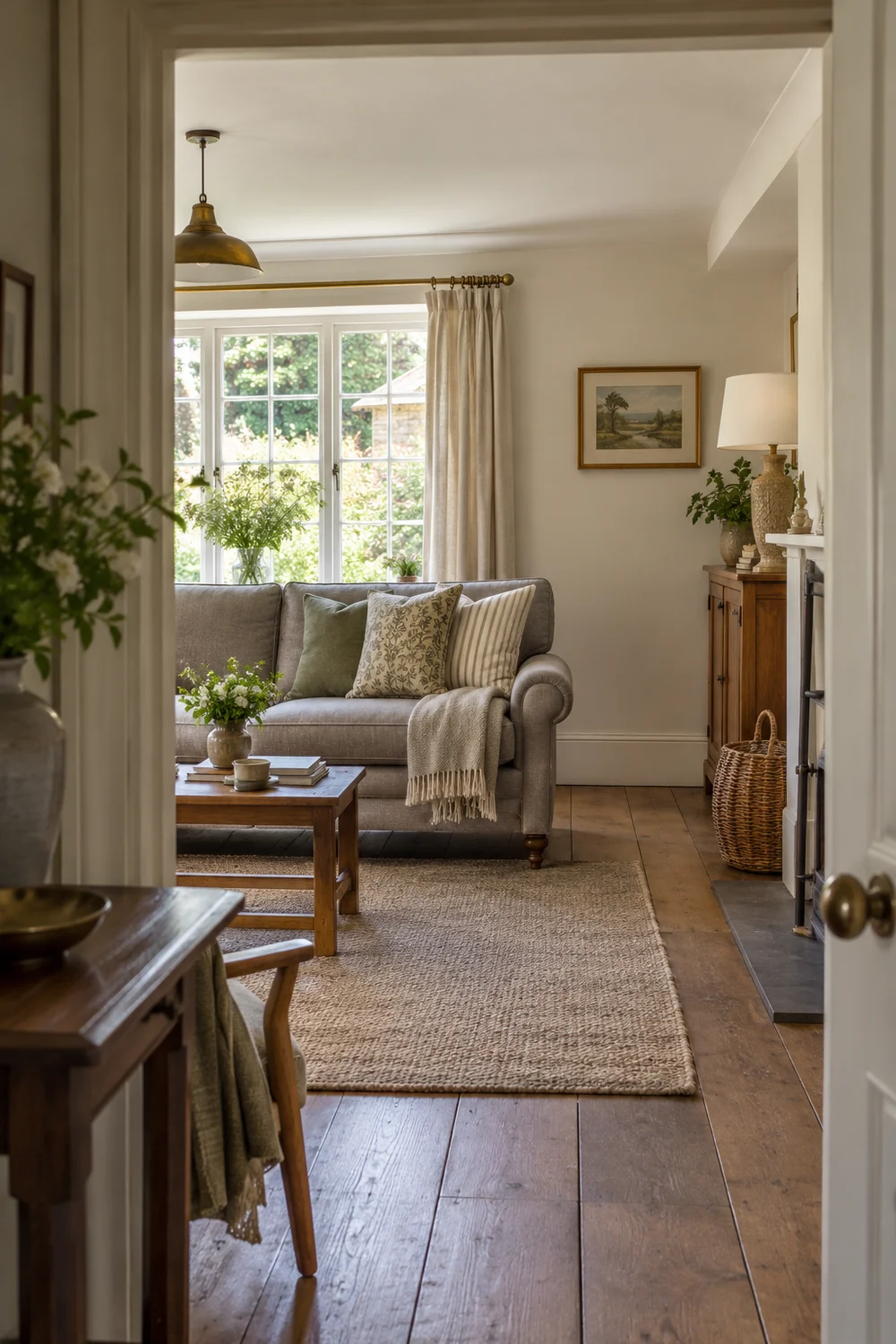
Before opening a marketplace listing, I would photograph the room in daylight from the doorway and from the main seat. These views reveal different problems. The doorway shows whether one dark cabinet dominates the room; the sofa view shows the surfaces and storage you actually use. Write down what stays, what has a useful function but needs a different position, and what you genuinely want to replace. An ordinary sofa is a perfectly reasonable starting point. Its scale, upholstery and position are information, rather than obstacles to disguise.
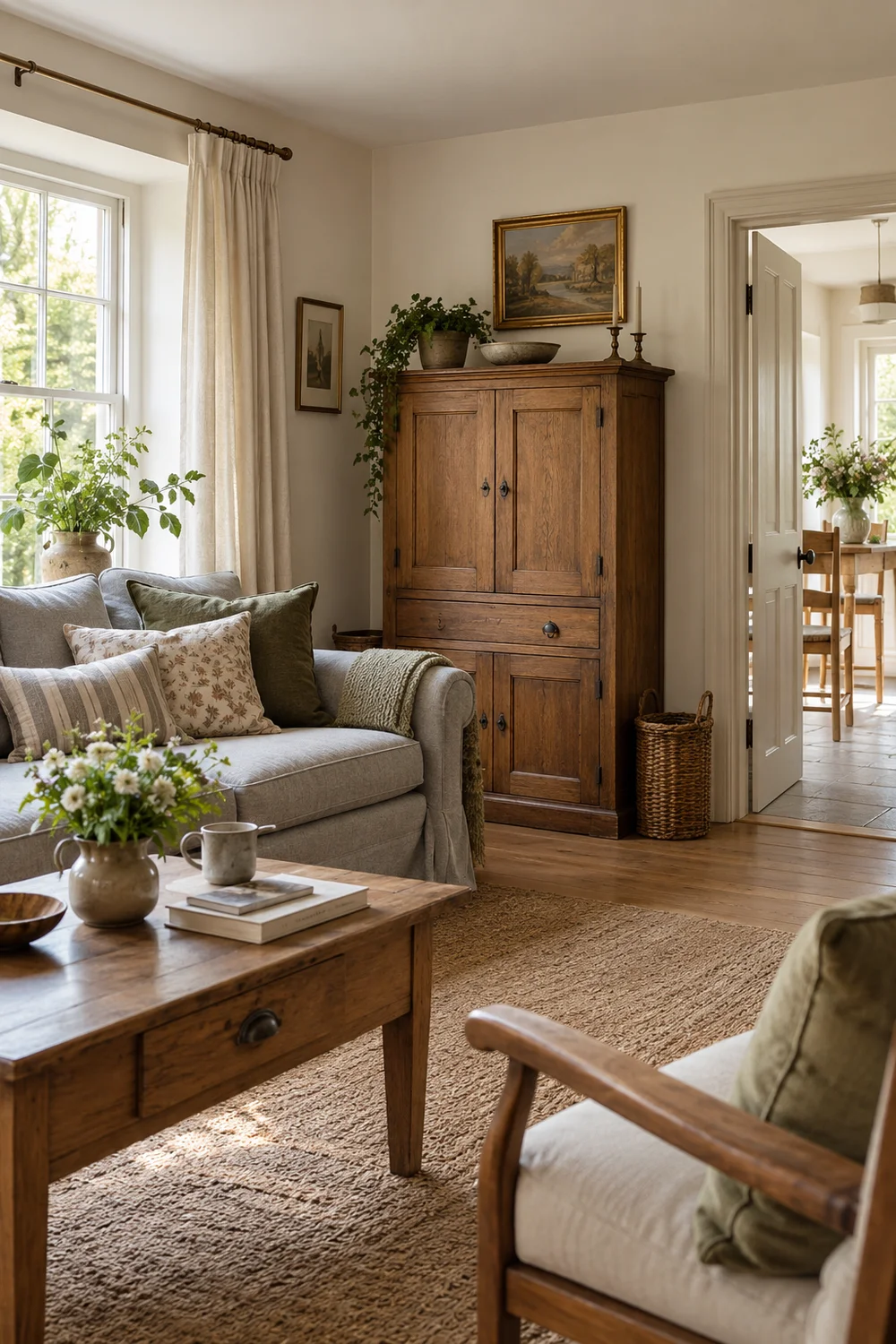
Make the inventory concrete. Instead of writing “add cottage character”, write “replace the folding side table with somewhere stable for a book and mug”. Instead of “more vintage furniture”, write “find closed storage for cables and board games”. When an item has a job, it becomes easier to judge. A handsome chest with stiff drawers might be unsuitable for everyday storage but acceptable as an occasional display surface. The question is whether its actual condition matches its intended use.
I would also record what the room already contains visually: a cool grey sofa, warm oak flooring, cream walls and a dark television, for example. This small list prevents you from planning against a beautiful reference room with completely different foundations. The existing earthy cottage home decor guide can help you recognise the material character you like. Use it to choose a direction, then return to your inventory before translating that direction into purchases.
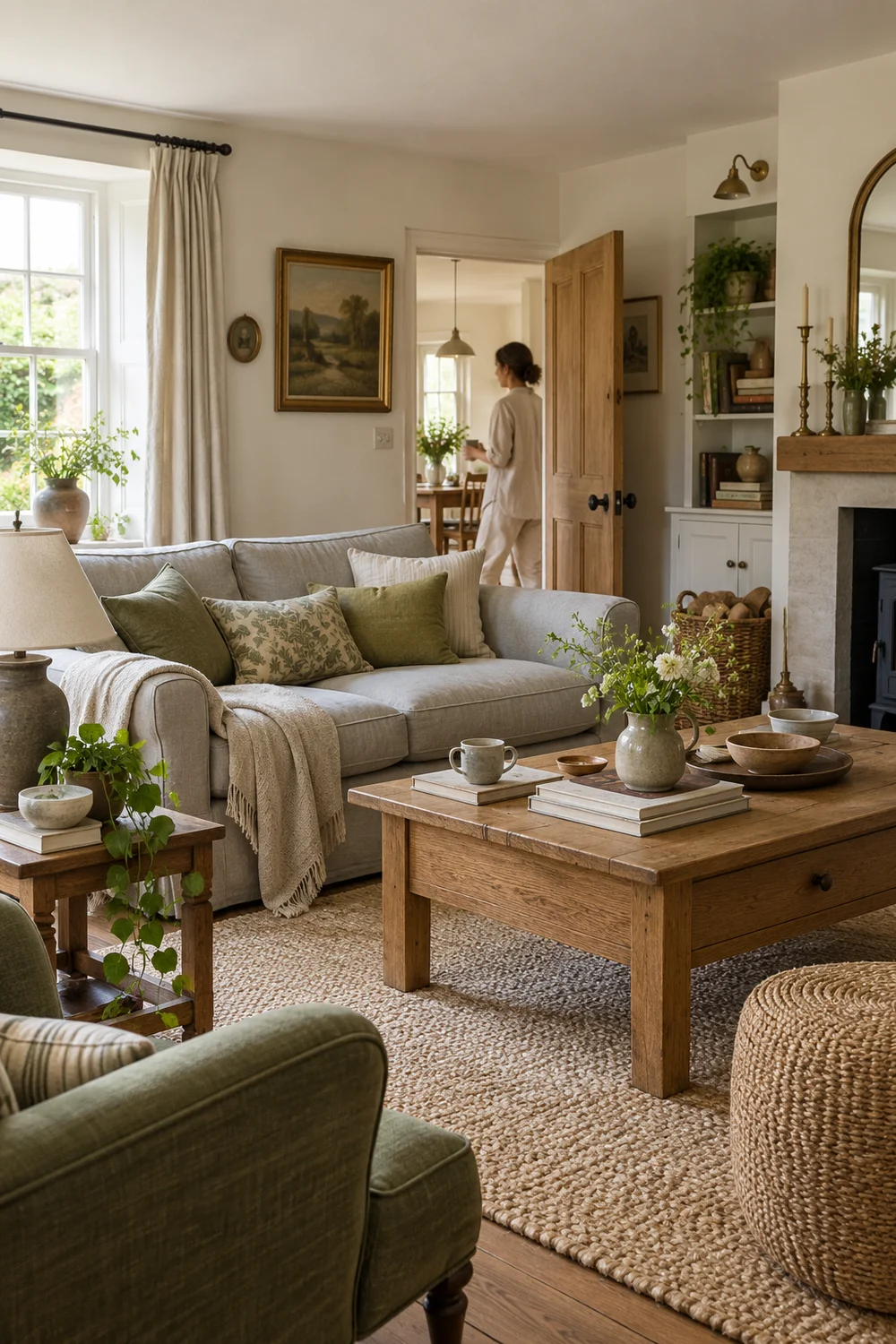
Keep one item off the shopping list deliberately. If you already have enough seating, do not browse chairs merely because cottage rooms often contain a floral armchair. Leaving a category closed makes the rest of the room easier to solve. The aim is a home that feels personal and usable, with secondhand pieces doing real work. It is not a collection of objects bought to prove that you understand a style.
I would give each open category a maximum footprint before shopping. Measure the available width, depth and height, then test the footprint with paper or removable tape suitable for the floor. A side table must fit beside the sofa while leaving the route clear. A cabinet must fit with its doors or drawers open. A chair needs enough space for someone to sit down and get up, rather than merely occupy a corner in a photograph.
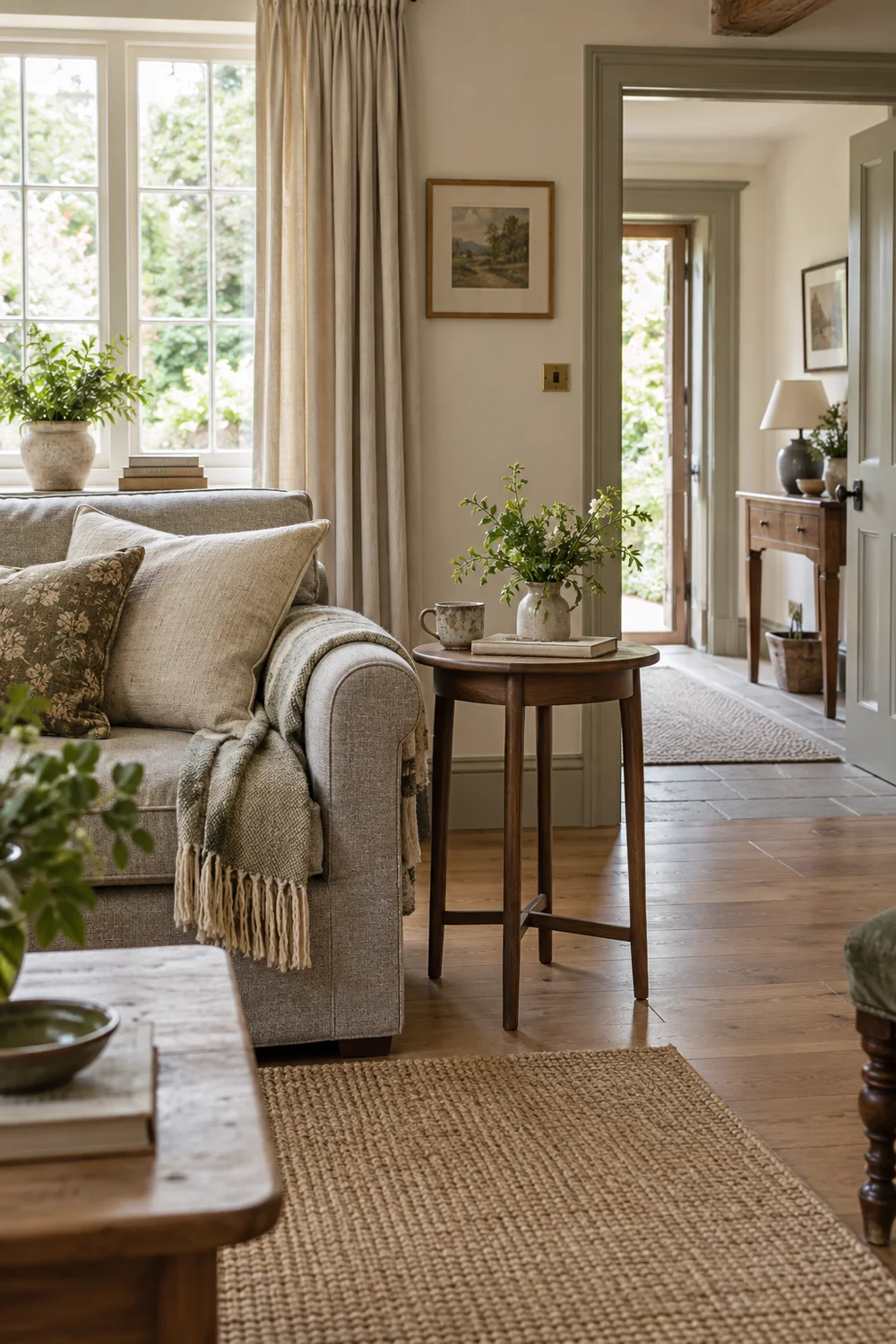
Record access separately from placement. Check door openings, stair turns and the route from the entrance to the room. Ask the seller for the overall dimensions and whether any parts detach as intended by the manufacturer. Do not assume that a piece will fit because its width is smaller than the doorway. Depth, height, angles and available turning space all affect a delivery. If access is uncertain, clarify it before paying or arranging collection.
Think about usable surfaces as well as external dimensions. A small round table with a deeply curved edge may offer less flat space than you expect. A tall narrow cabinet may look lighter than a broad low chest, but its shelves might not hold the objects you need to put away. Check the measurements of the actual books, baskets or equipment that will live inside it. For a coffee table, sit on the retained sofa and imagine reaching the proposed surface, then try an equivalent height with something stable you already own.
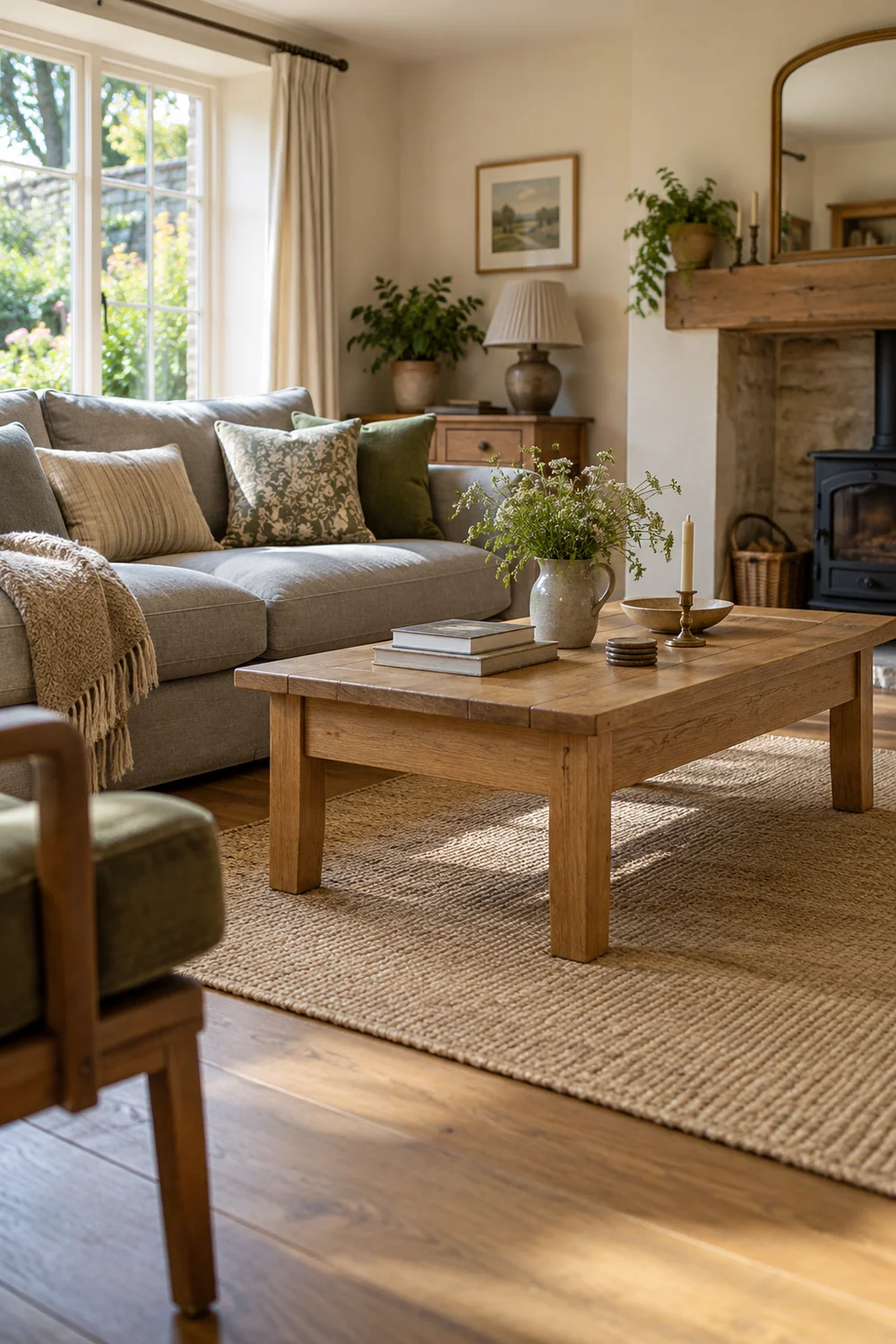
The shape should also support the room's rhythm. I would favour a simple rectangular table when the room needs a quiet practical anchor, or a small rounded side table when several large pieces already feel boxy. Neither shape is automatically more cottage appropriate. When the shortlist is ready, setting up an earthy cottage living room becomes a placement task rather than a rescue operation. You will be arranging pieces that were chosen for this room from the beginning.
Secondhand furniture rarely arrives in perfectly coordinated finishes. I would not try to find a coffee table, cabinet and chair that all imitate the same oak. Instead, identify the wood tone that already occupies the most visual space. Often that is the floor, although a large bookcase or exposed timber can matter more. Then compare a possible purchase with that foundation in daylight. Seller photographs can be useful for shape, but screens and warm indoor lighting can make a finish look different.
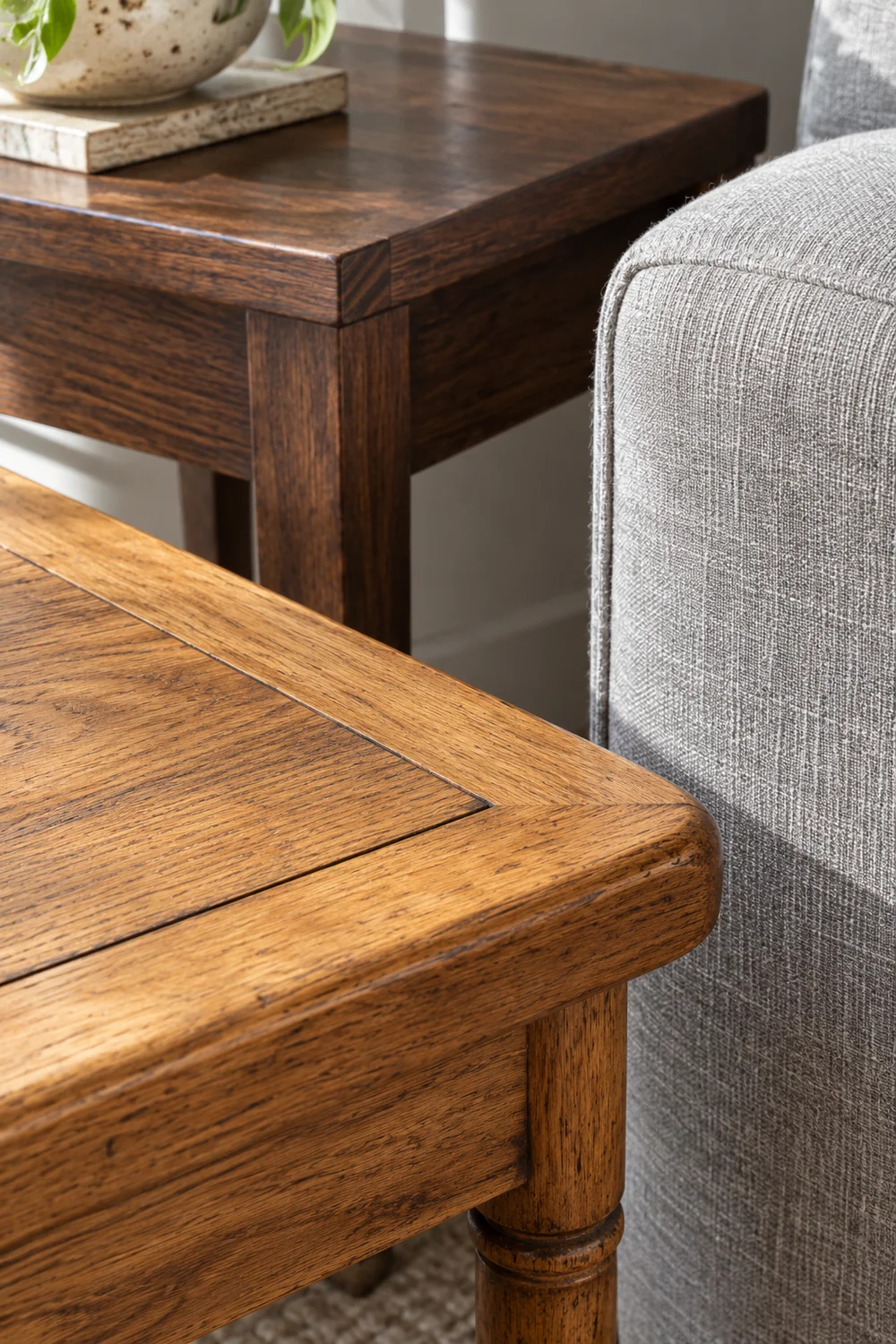
Look at warmth, depth and surface character separately. A honey coloured table and a dark brown cabinet may work together because both feel warm. Two similarly pale pieces can look less comfortable together if one appears pink and the other strongly yellow. These are visual judgements rather than rules about wood species. You can also like the contrast deliberately. The important thing is to notice the contrast before bringing the furniture home.
I would use one dominant wood family, with a smaller contrasting piece when it adds something useful. If oak flooring and an oak coffee table already establish the room, a dark cabinet can supply depth without requiring several more dark purchases. A cream textile, an olive cushion or a warm neutral rug can sit between the finishes visually. The earthy color palette guide offers a wider colour reference, but the purchase decision should still come back to the finishes in your photographs.
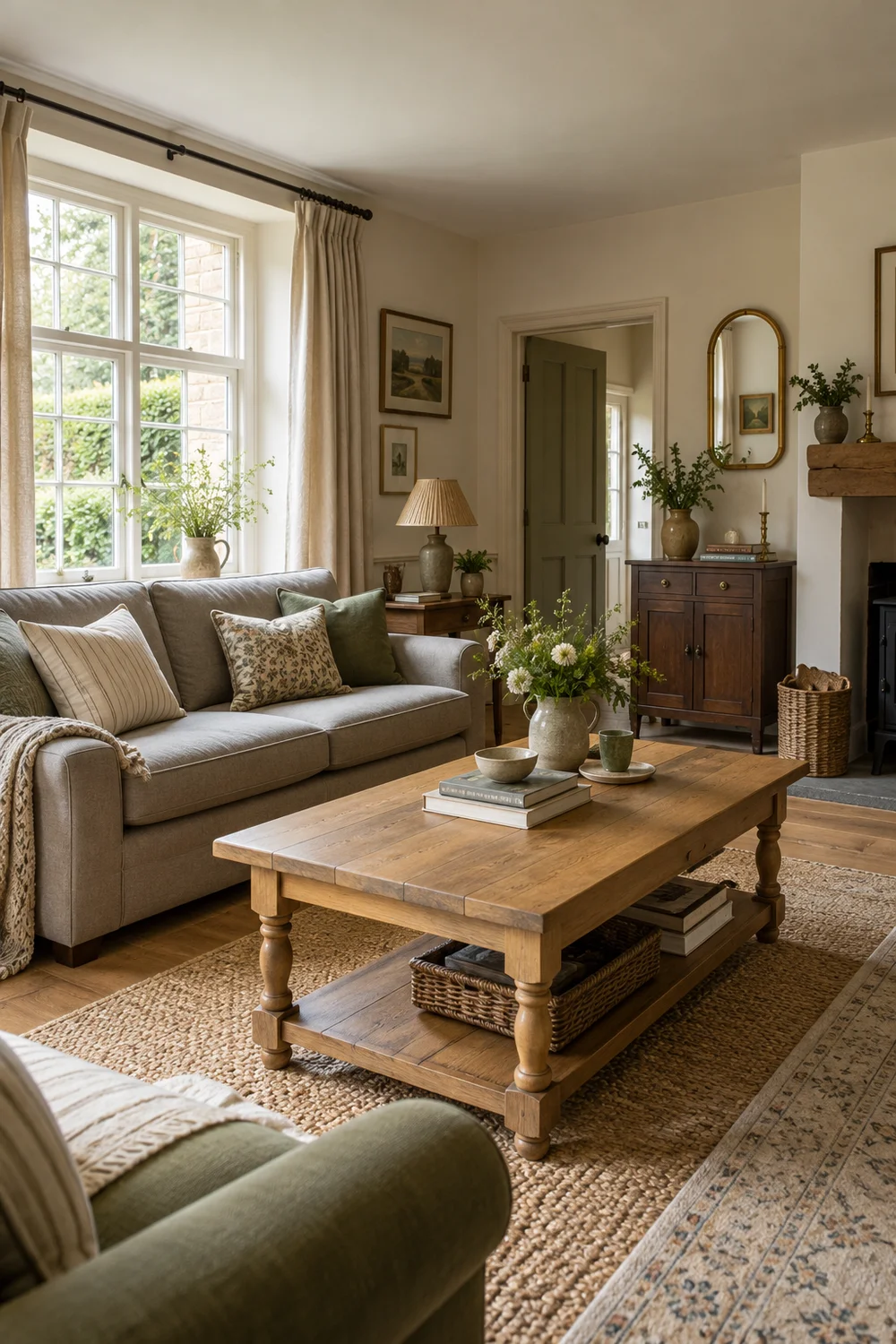
Do not plan to strip, bleach or repaint every mismatch. Those changes involve time, cost and material questions that are easy to overlook in the excitement of a find. For this project, I would prioritise pieces whose existing finish I can use. A few worn areas may be visually appealing, while structural damage or an unidentified coating is a separate question. If a repair or finish change is essential, obtain appropriate advice and a realistic quote before treating the piece as an affordable choice.
A cottage room can hold florals, checks, stripes and a patterned rug, but buying them independently makes the balance harder to control. I would first identify the largest pattern that is staying. If your sofa already has a floral cover, that is the starting point. If the sofa is plain and the rug is patterned, the rug usually sets the stronger rhythm. Only when both are quiet would I consider making a secondhand upholstered chair the main patterned element.
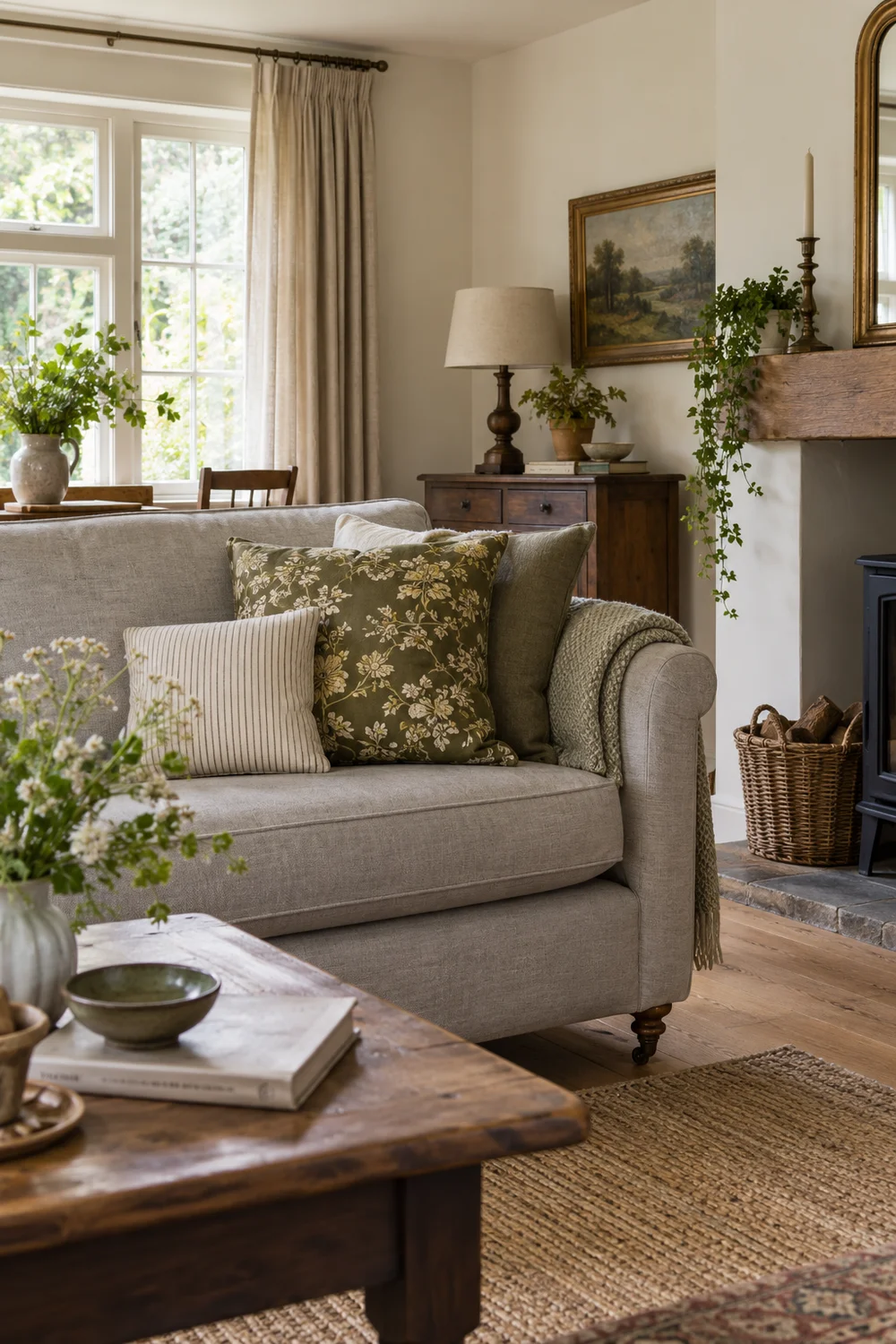
Compare the apparent size of the pattern, its contrast and its colours. A small faded floral behaves differently from a bold dark botanical print, even when both contain green. Rather than repeat every colour, I would choose one or two connections that are already useful elsewhere in the room. A muted olive cushion can connect a floral chair with the floor rug; a plain cream throw can create some space between them. The connection can be gentle without making the textiles look like a coordinated product range.
Take a photograph of the proposed fabric beside the items it needs to live with, if you can do so before buying. For small textiles, ask about measurements, composition, care information and condition. An old curtain panel may have beautiful material but be too short for your window. A decorative cushion cover might not fit your existing insert. Buying first and solving those details afterwards can turn a modest purchase into several additional purchases.
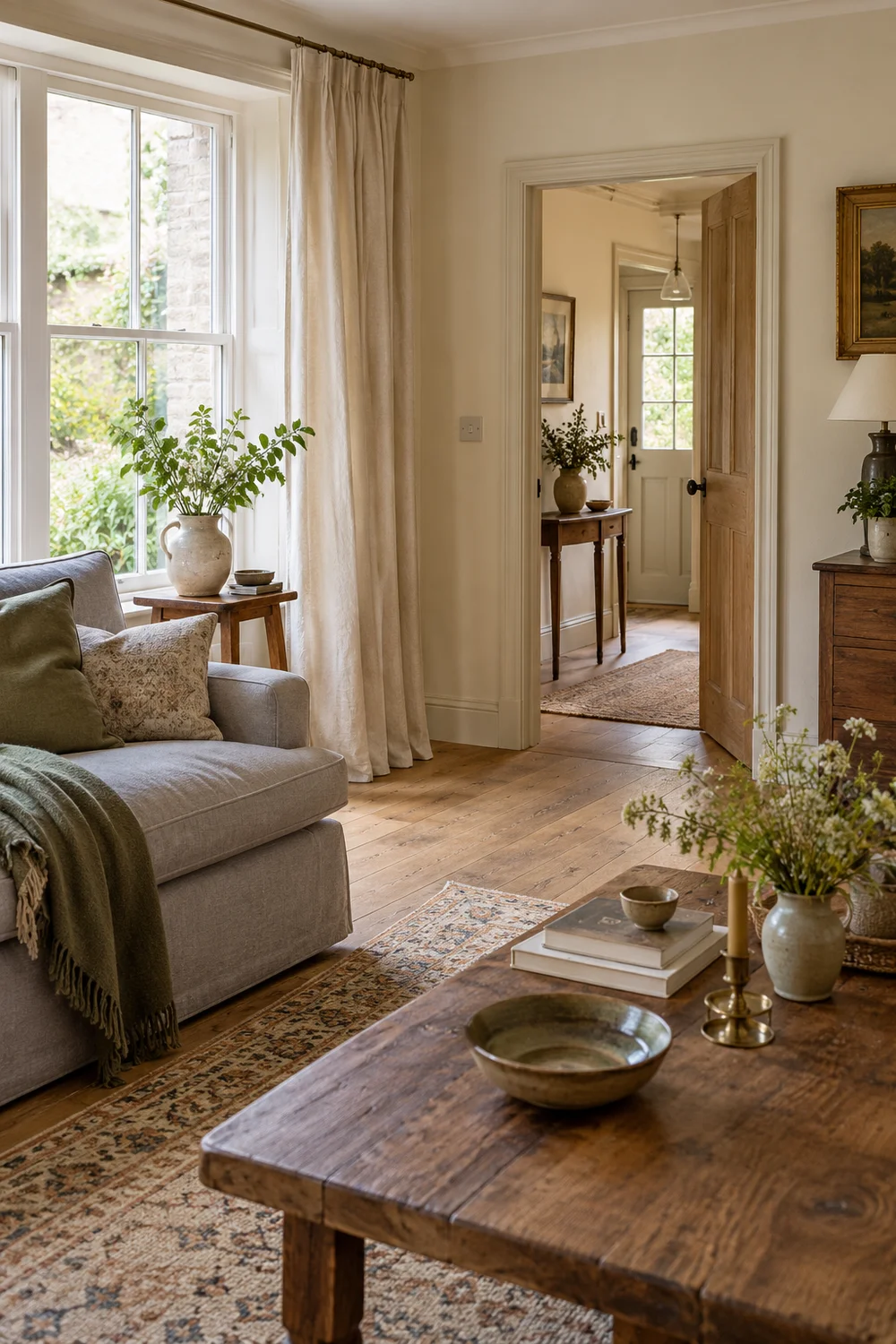
I would use the cottage color palette as a reference when choosing between two plausible fabrics, rather than inventing a new scheme every time a good listing appears. For the worked room here, warm chalk, muted olive and soft clay are enough. If a patterned chair introduces bright blue, orange, red and strong black all at once, it might belong in a different version of the room. Passing on it does not mean the chair is unattractive. It means the current project already has a direction.
A bargain price does not tell you whether an item is a good buy. I would ask for clear photographs of the underside, back, joints, drawers and any damaged areas. Request a description of anything loose, missing, stained or repaired. For a storage piece, check that its doors and drawers operate as intended. For seating, the seller's description is a starting point rather than a substitute for inspection. If you cannot establish condition well enough to use the piece with confidence, keep looking.
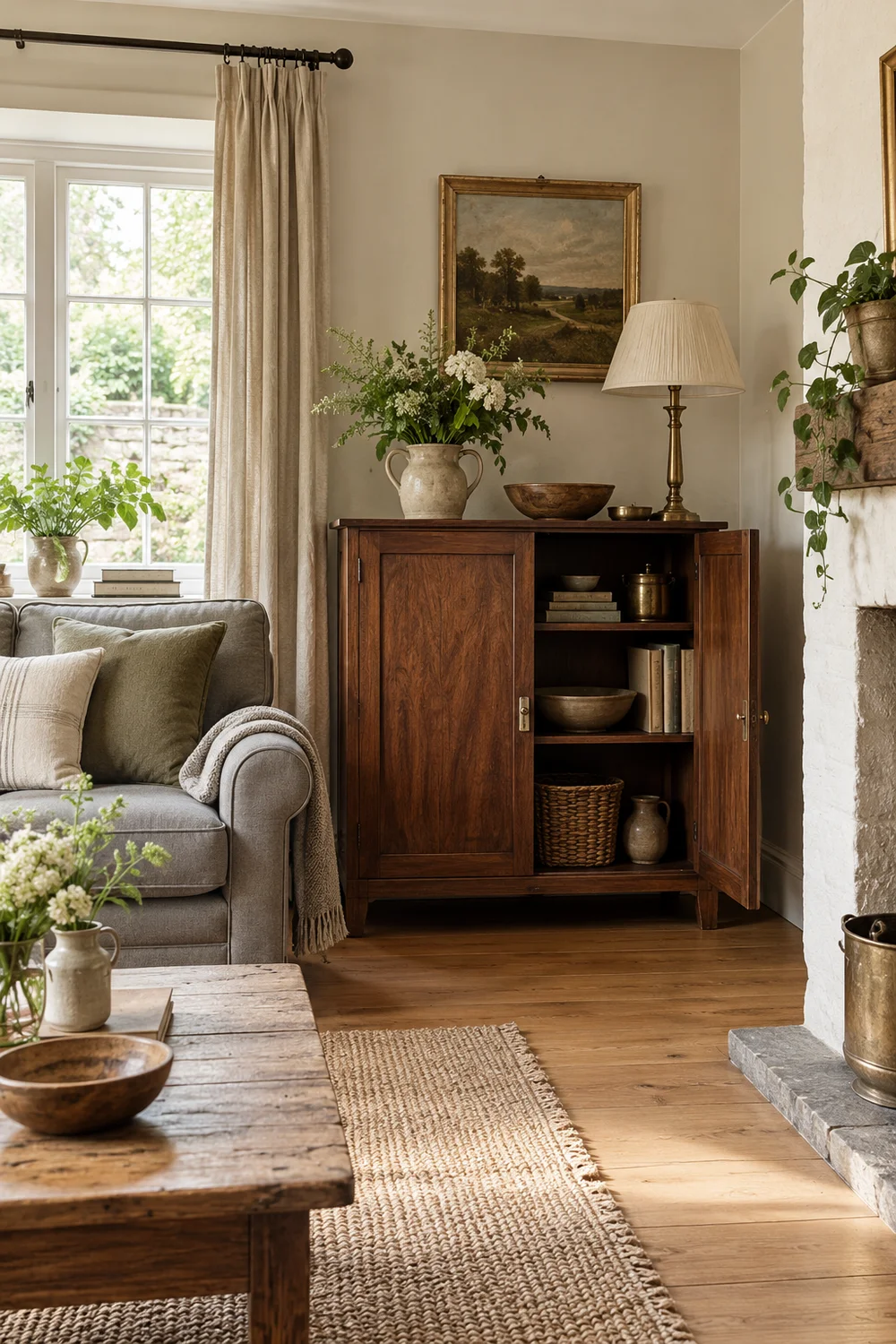
Separate a surface mark from an unresolved function problem. A scratch that you are happy to live with may be acceptable. A loose joint, cracked glass or damaged mechanism changes the decision because the intended use depends on it. Do not buy a questionable chair on the assumption that a throw will solve it. Likewise, an appealing vintage lamp should not become a decorating project that depends on improvising electrical repairs. Get suitable professional assessment when a purchase depends on specialist work.
Check available product identification and recall information where applicable. The US Consumer Product Safety Commission advises resale businesses to check whether products have been recalled; I would make checking an identifiable used product part of my own buying process too. For UK upholstered purchases, ask about applicable labels and the seller's requirements. The British Heart Foundation requires attached fire safety labels for upholstered items it accepts for resale. Its policy is a useful shopping prompt, rather than proof that every item or country follows identical rules.
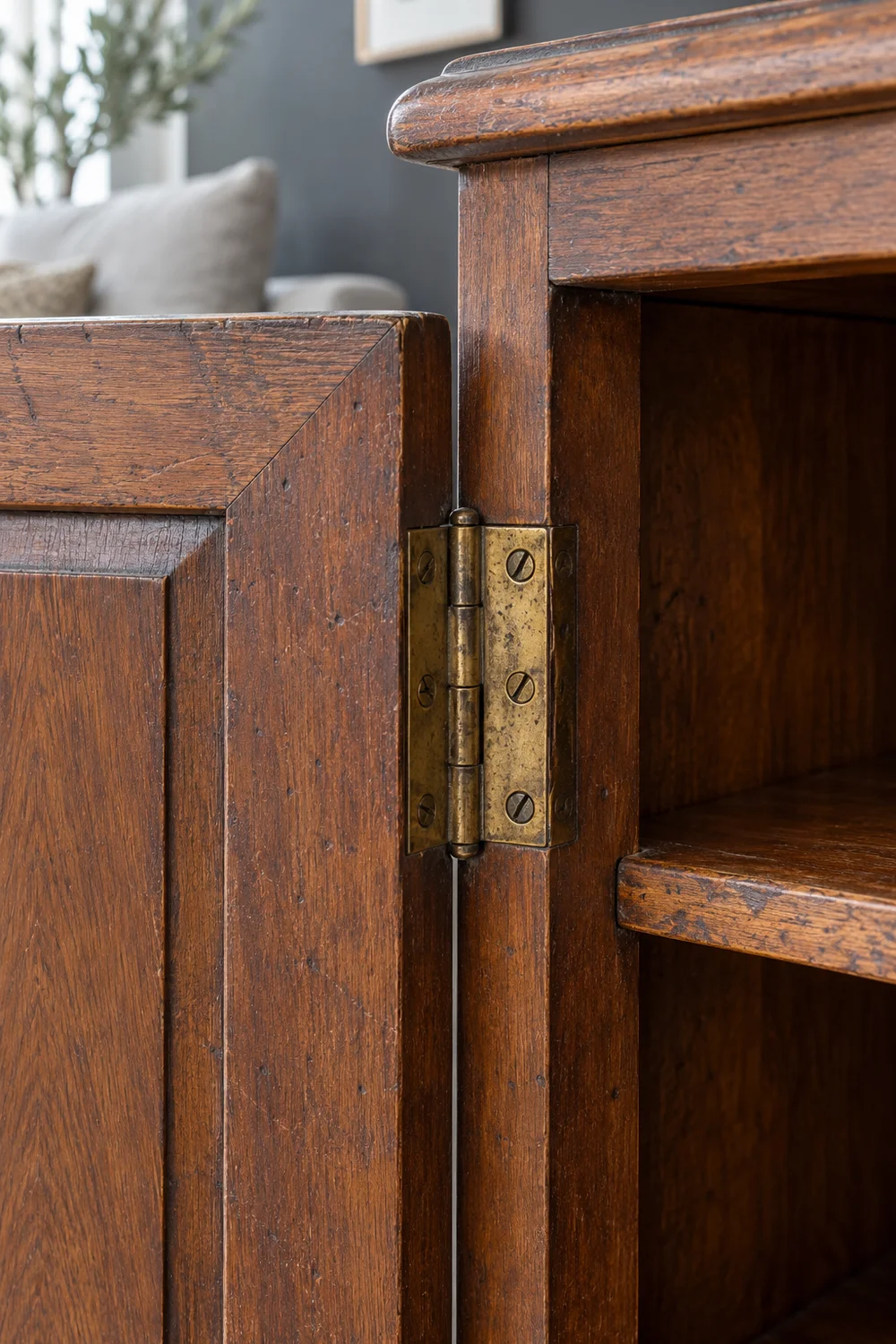
Finally, write the complete cost: purchase, delivery or collection, any confirmed cleaning or repair, and any additional item needed to make the find usable. Compare that total with the money reserved for its job. A cheap cabinet that needs transport and a repair may cost more than a ready to use alternative. I would also count the effort you are willing to spend. A find can be affordable financially and still be wrong for the amount of work you want this room to involve.
I would solve the largest unmet practical job first. That might be storage, a usable table or additional seating. Once that piece is chosen, its dimensions and finish become part of the inventory. Smaller purchases can then respond to something definite. Starting with decorative ceramics is enjoyable, but a room can end up full of appealing details while the surface you need beside the sofa is still missing.
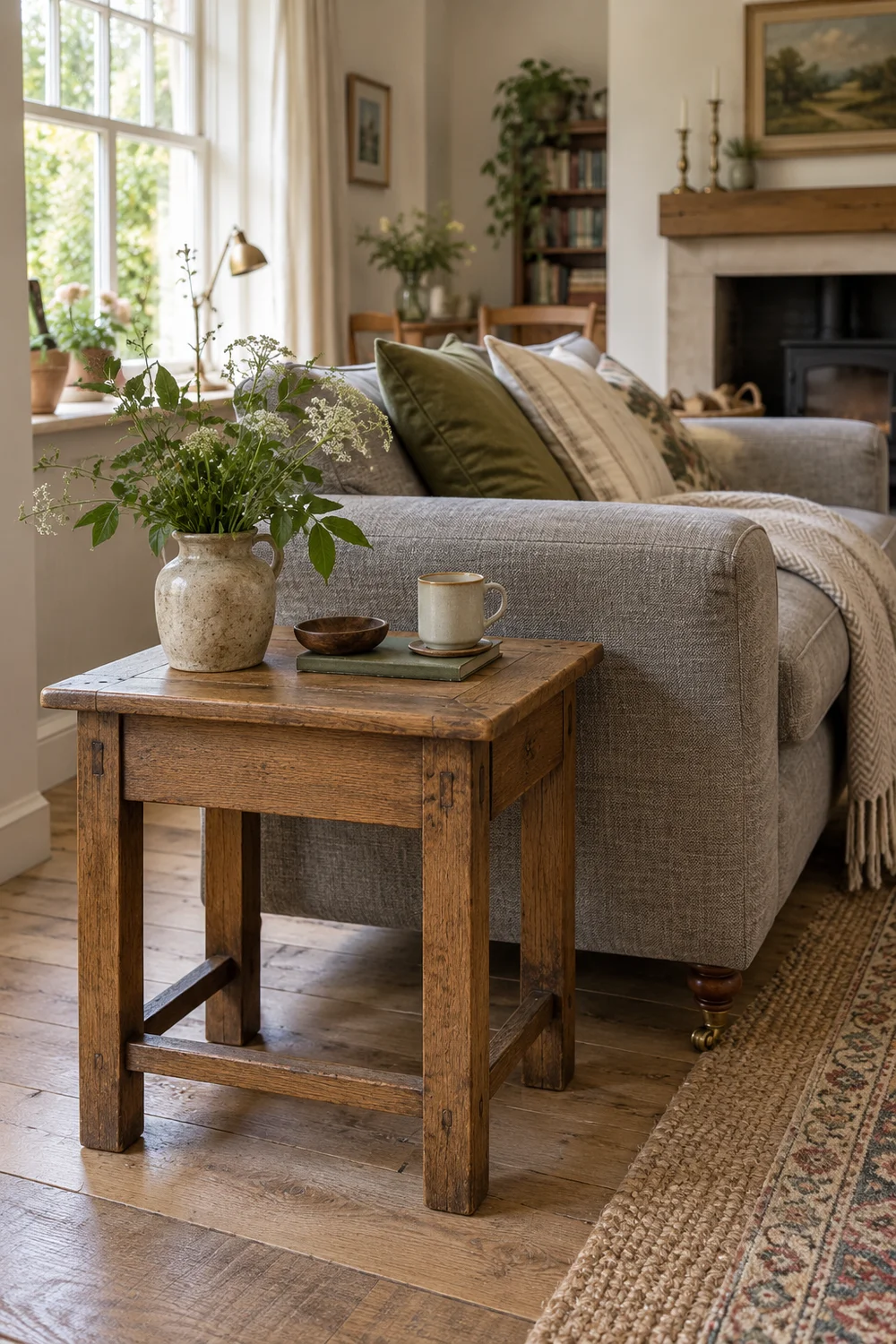
Keep a short priority list rather than browsing every category together. For the example room, I would write: closed storage, coffee table if the present one cannot work, one textile connection, then a small decorative accent. Place each possible find against that list. If you discover a chair when you are solving storage, save its details only if the room genuinely needs a chair. Otherwise, allow it to remain an interesting object rather than the beginning of a new project.
Build in a pause after a major purchase. Move it into the intended position, use it and photograph it in daylight before looking for the next piece. A cabinet might supply enough wood warmth that the room no longer needs a timber coffee table. A faded rug may bring more colour than you expected, making plain cushions the better next step. The cottage living room examples show several material combinations; you can borrow the balance without buying every category pictured.
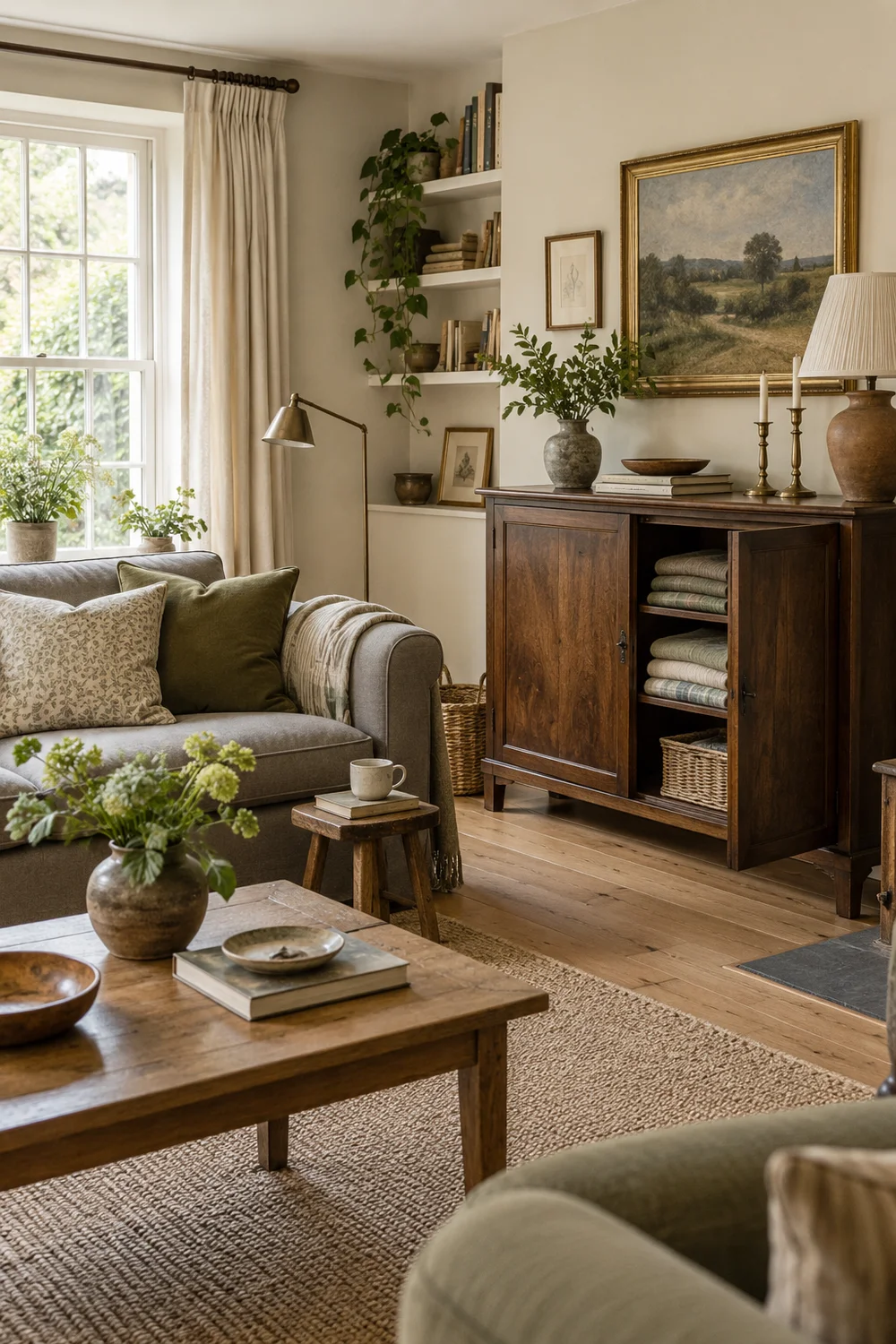
I would also keep a reserve for useful finishing details. A suitable rug pad, a replacement manufacturer specified part or an appropriate cleaning service can matter more than one additional ornament. If a purchase consumes the entire room budget before its practical requirements are addressed, it has not passed the comparison. Secondhand availability creates pressure because an item might disappear. A clear sequence helps you recognise when that pressure is about the listing rather than the needs of your room.
For each serious candidate, I would make a simple note with six answers: the job, the measured fit, the finish connection, the condition, the complete cost and what it replaces. An unresolved answer is a reason to ask another question, rather than a reason to persuade yourself. “It is beautiful” can be added at the end. It should not stand in for the other answers.
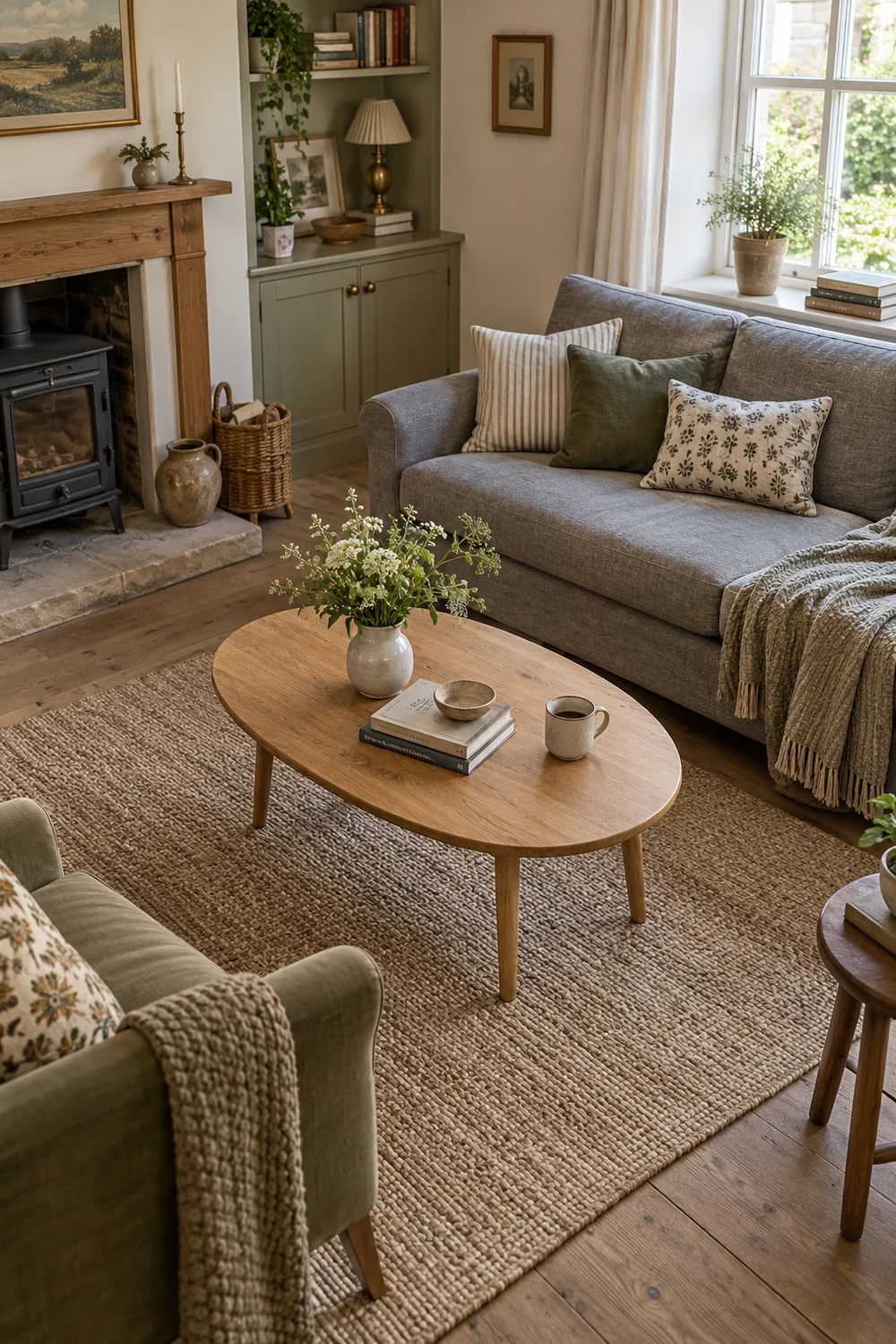
Consider two hypothetical coffee tables for a room with a grey sofa and honey oak flooring. The first is an inexpensive dark chest. It has attractive wear, but its top is too high for comfortable use from the sofa, its lid needs clearance and the seller has not provided photographs of the hinges. The second is a plain oak table at a higher asking price, with clear dimensions, a usable surface and a finish you already like. I would compare their full costs and conditions before favouring the chest because it looks more unusual.
A different room might reverse that choice. If the chest is confirmed sound, fits the available space and offers genuinely useful storage, its deeper colour could be welcome. The sheet is not a scoring system that declares oak better than dark wood. It makes the reasons visible. You can also decide that neither table answers the room's job and continue using the current one while you search.
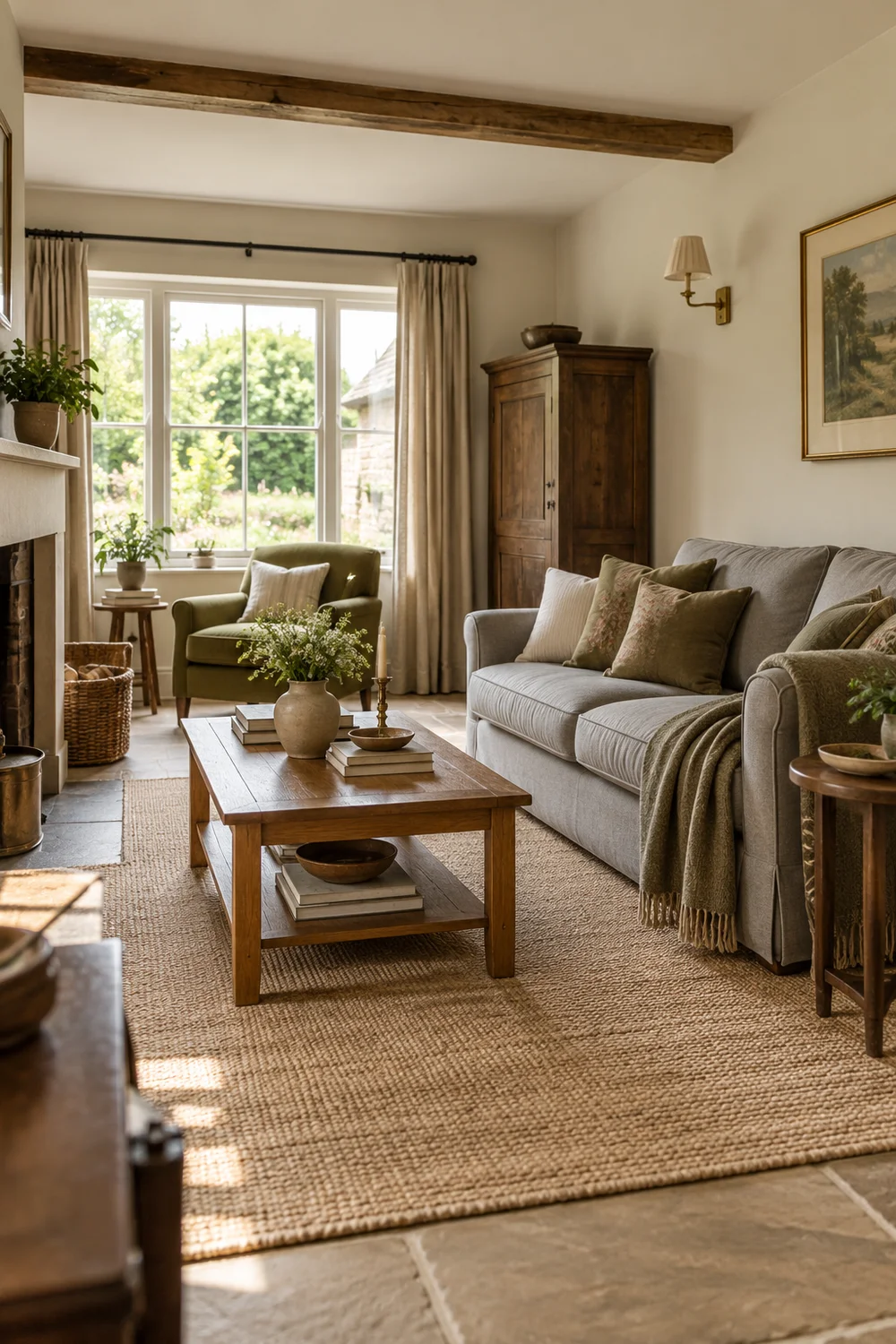
Before collection, confirm the final dimensions, condition description, arrangements and any applicable return terms with the seller. Keep the listing information and photographs with your room notes. Then return to the earthy cottage home decor direction and ask whether the whole shortlist still supports it. Once the pieces pass, the next step is the sofa centred room setup, where their relationships are tested in the actual room.
An earthy cottage living room does not need to be assembled in one weekend. I would rather leave one useful gap than fill it with a piece that creates three new problems. Keep the sofa and furniture that serve you, choose a small set of compatible finishes, and give every secondhand addition a practical reason to be there. The room can grow gradually without losing its direction. Your next purchase should be easier to explain because of the pieces already chosen, not harder. When you can say where it will go, what it will do, why its finish belongs and what it will really cost, you have a much stronger basis for bringing it home.