Newsletter Subscribe
Enter your email address below and subscribe to our newsletter

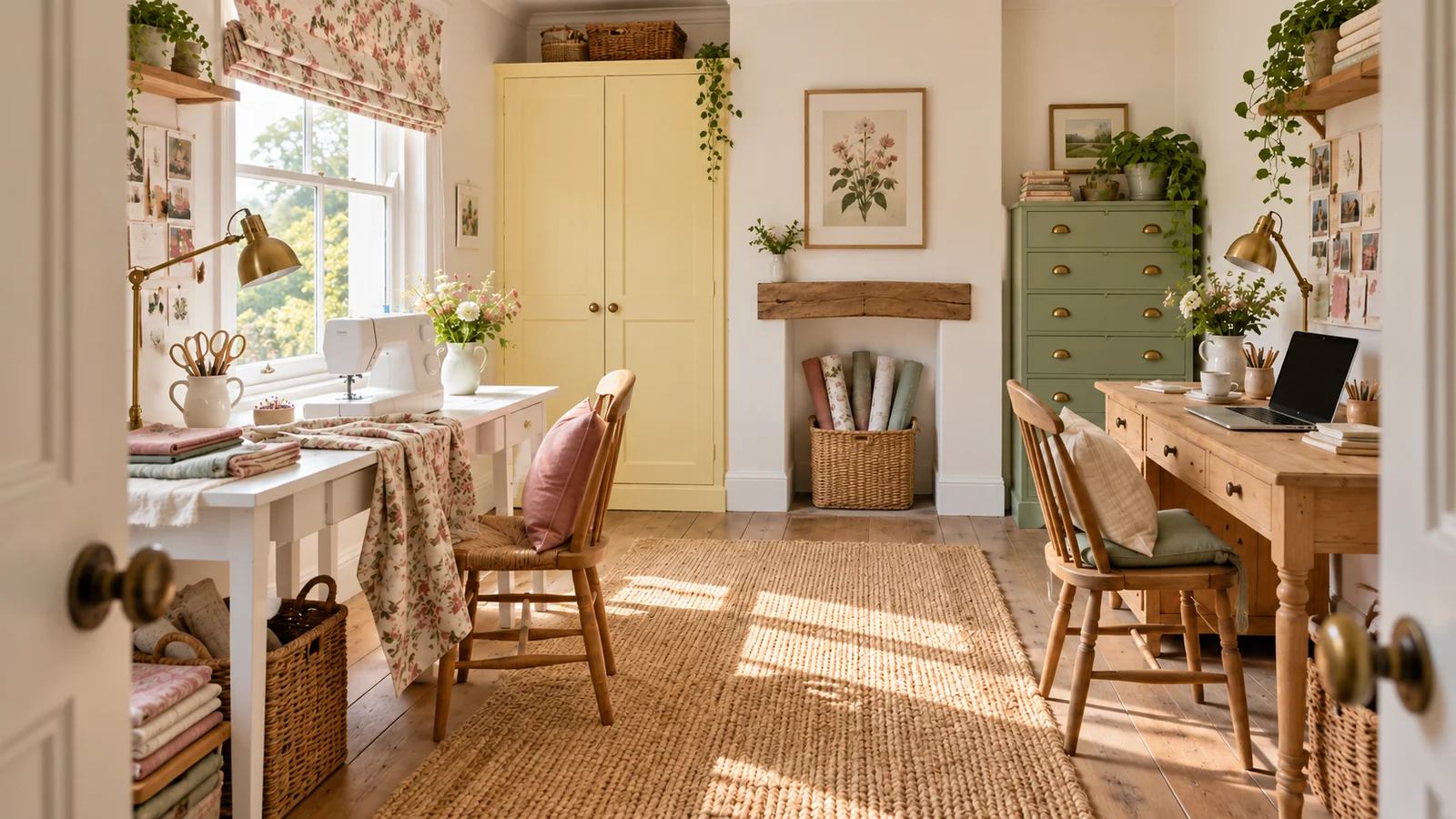
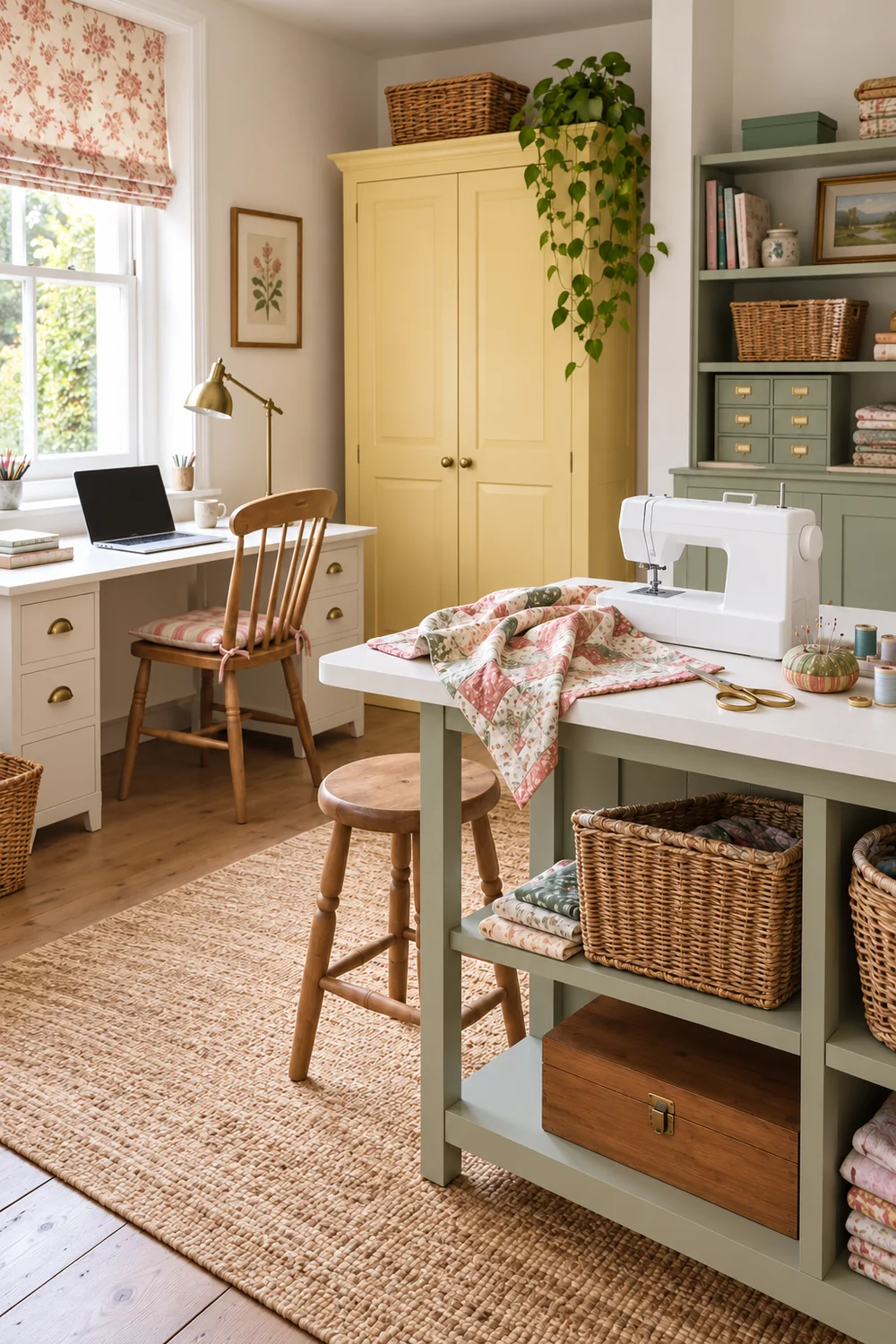
A sewing machine on the desk, a laptop balanced beside it and a half finished project across the chair can make a lovely room feel difficult to use. If you sew at home and use the same room for computer tasks, I would choose its direction around that ordinary change of activity. These cottage sewing room office combo ideas show how painted furniture, useful storage and a little floral fabric can belong to a room where things actually get made. You do not need a period cottage, a separate studio or a matching collection of cabinets. You need to see which relationship between sewing, computer work and supplies suits you. I would compare a shared worktop, two neighbouring stations and a quieter room with concealed stock, then choose the version whose everyday compromises you can comfortably live with.
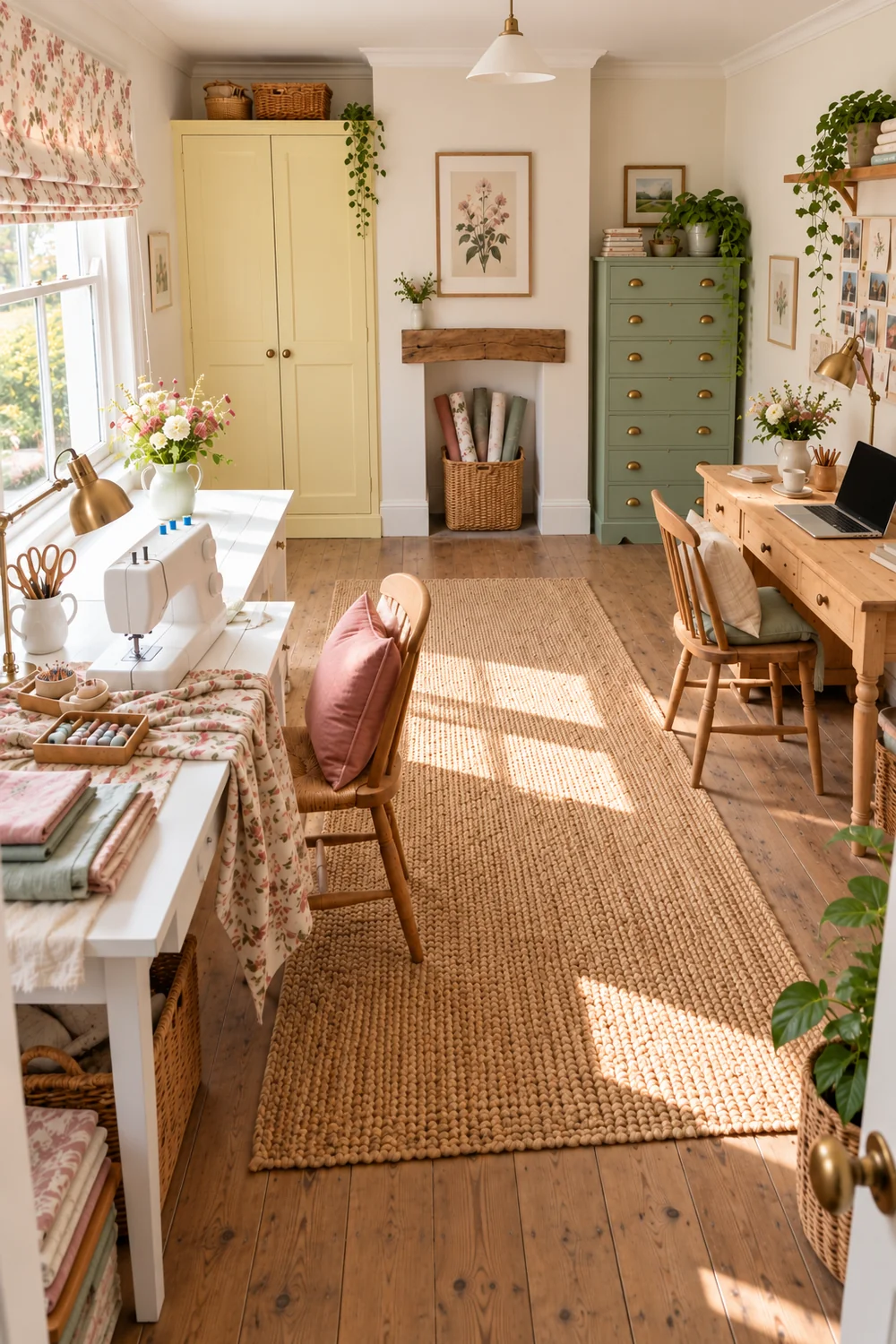
The cottage quality I would keep is the sense that useful pieces have found a home together. A worn pine cabinet, a painted table and a small floral curtain can establish that feeling without decorative tools covering every surface. Your machine should look as though it belongs there. Hiding it in every photograph can give you a room direction that disappears the moment you start sewing. I would leave one believable working area visible and ask whether the furniture still looks connected when the chair is occupied, the computer is open and a piece of fabric sits beside the machine.
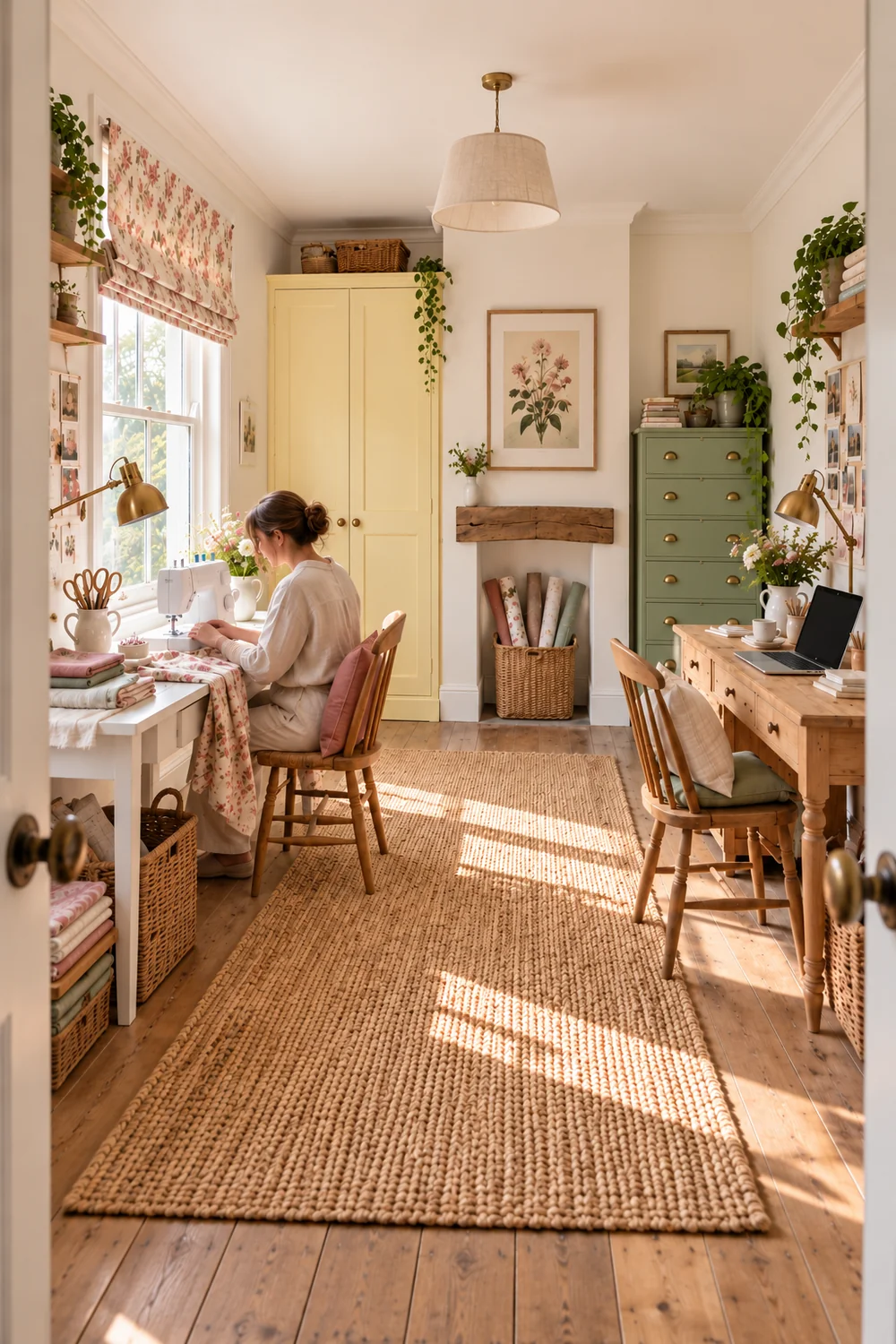
A warm white shell with pale butter yellow on a cupboard is a gentle starting point for this project. Faded rose can appear in a curtain or a small fabric panel, while soft sage gives a second storage piece some definition. Scrubbed pine and restrained aged brass connect the pieces. I would keep most work surfaces visually quiet so printed fabric does not have to compete with a strong pattern underneath it. That is an editorial cottage interpretation rather than a rule about historic interiors. The broader cottage office examples offer useful references for painted wood, natural textures and a welcoming office atmosphere.
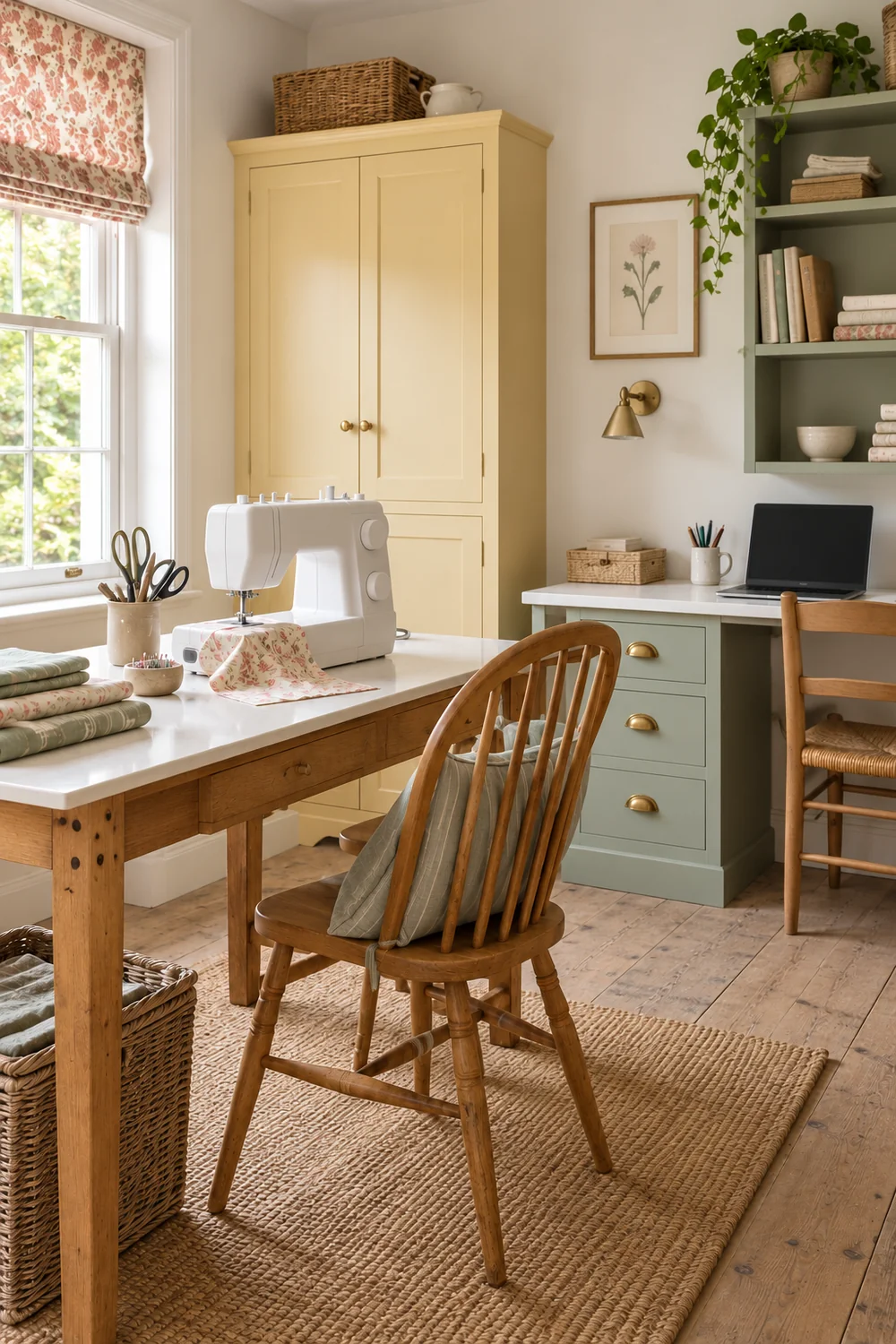
You can create that direction in an ordinary spare room. Existing plaster walls, a plain window and a modern computer do not need disguising. I would introduce character through one substantial storage piece and one soft textile, then let the working arrangement decide what comes next. Beams, stone walls and a fireplace are optional architecture, not requirements. If a shelf full of ornaments forces your patterns onto the floor, the decoration has stopped serving you. The most convincing version of this room has room for both the finished look and the temporary untidiness of making something.
A fabric collection introduces its own colours, often far more than a room scheme needs. I would decide which materials you want to see before choosing another paint. A few folded pieces in rose, green or cream can become part of the room. The rest can remain in closed storage without being treated as a failure of styling. This lets you enjoy the fabrics you actually use while keeping a clear background around the computer. You should not have to buy a new coordinated stash to make a design idea work.
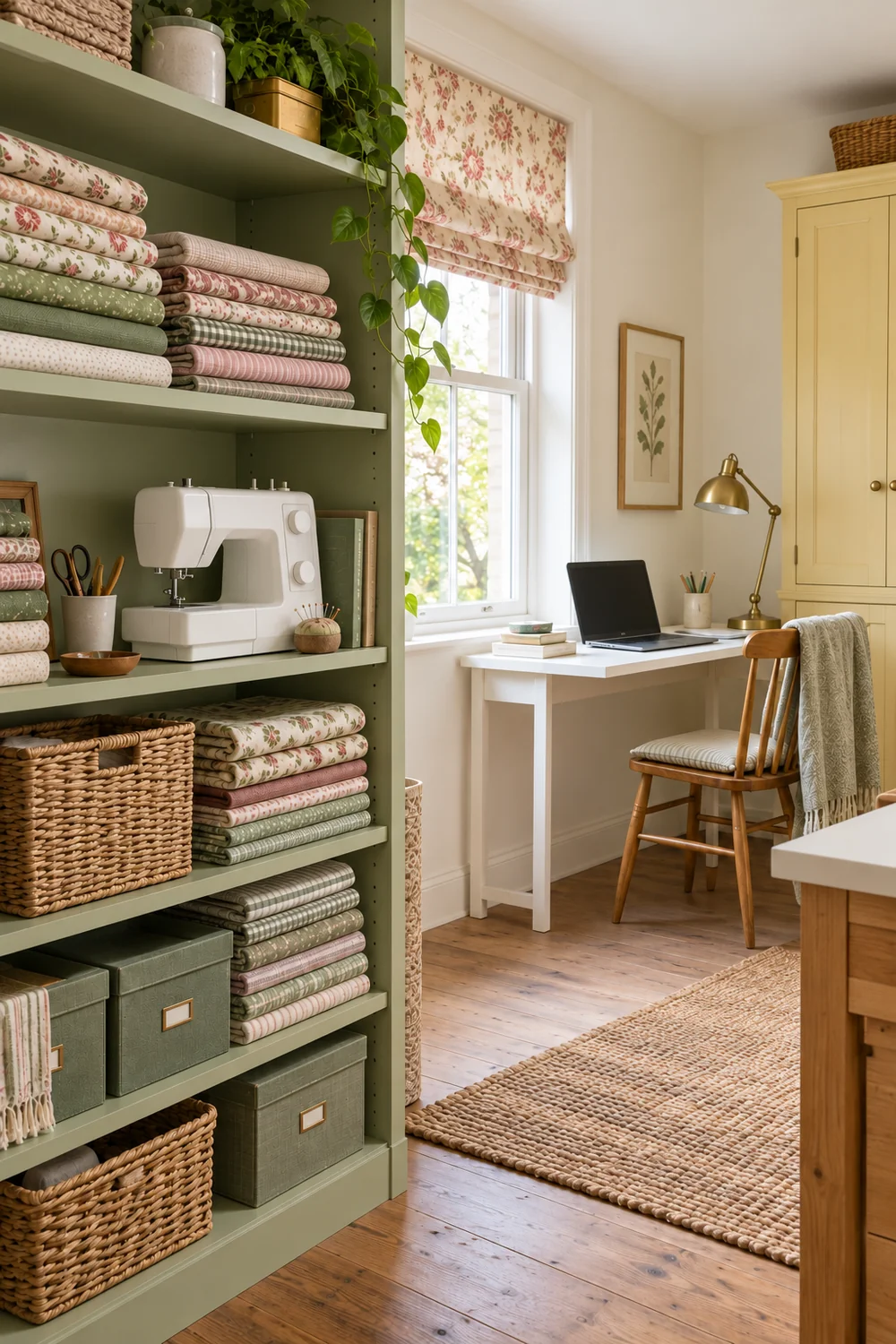
For a visible fabric shelf, I would repeat one colour from the room in the shelf finish or its containers, rather than demand that every fabric matches. Sage drawers beneath a white surface can connect brightly coloured contents to the larger room. A butter yellow cabinet can sit beside a floral curtain without requiring floral upholstery on every seat. The cottage color palette guide is a useful optional branch when you want to compare a restrained pastel family with a more neutral treatment before committing to paint.
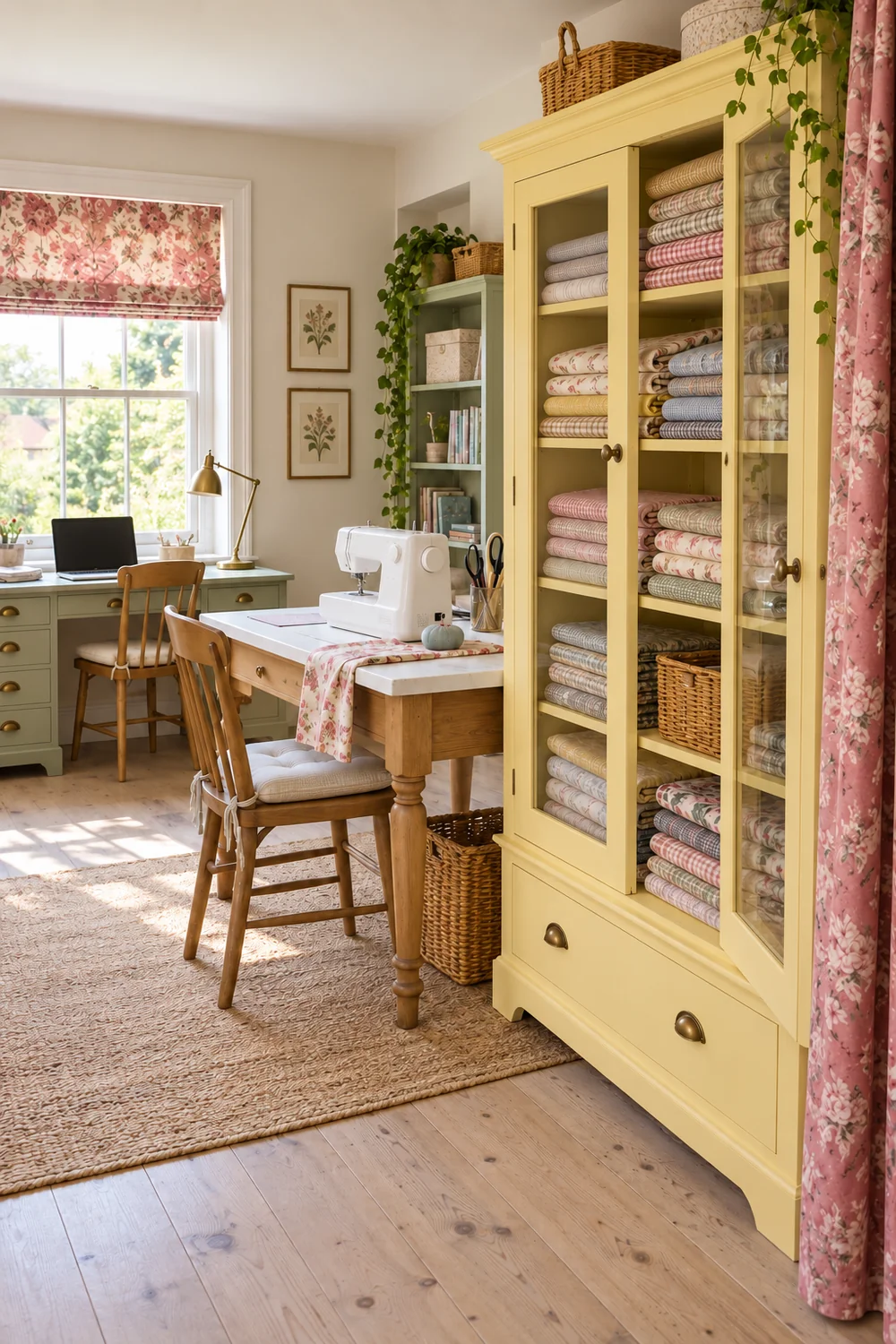
Keep the computer area calm enough that a screen does not become another layer of visual clutter. I would give paperwork its own contained space and avoid placing a busy inspiration board directly behind every task surface. A small board beside the sewing station can hold the current pattern or a reference image; it does not have to become an entire wall of permanent material. This is about assigning colour and display to a job. A room can feel personal while allowing you to find a document, see the fabric you are handling and set a cup down without clearing three objects.
A shared worktop can be a sensible direction when sewing and computer tasks happen at different times. The visual advantage is simple: one generous piece gives the room a clear centre, with supplies gathered nearby. I would picture the machine at one end and an uncluttered computer position at the other, or a surface that changes use completely when equipment can be moved appropriately. The important question is whether that change is realistic for your equipment and habits. A heavy machine that you dislike lifting does not become portable because a photograph shows an empty desk.
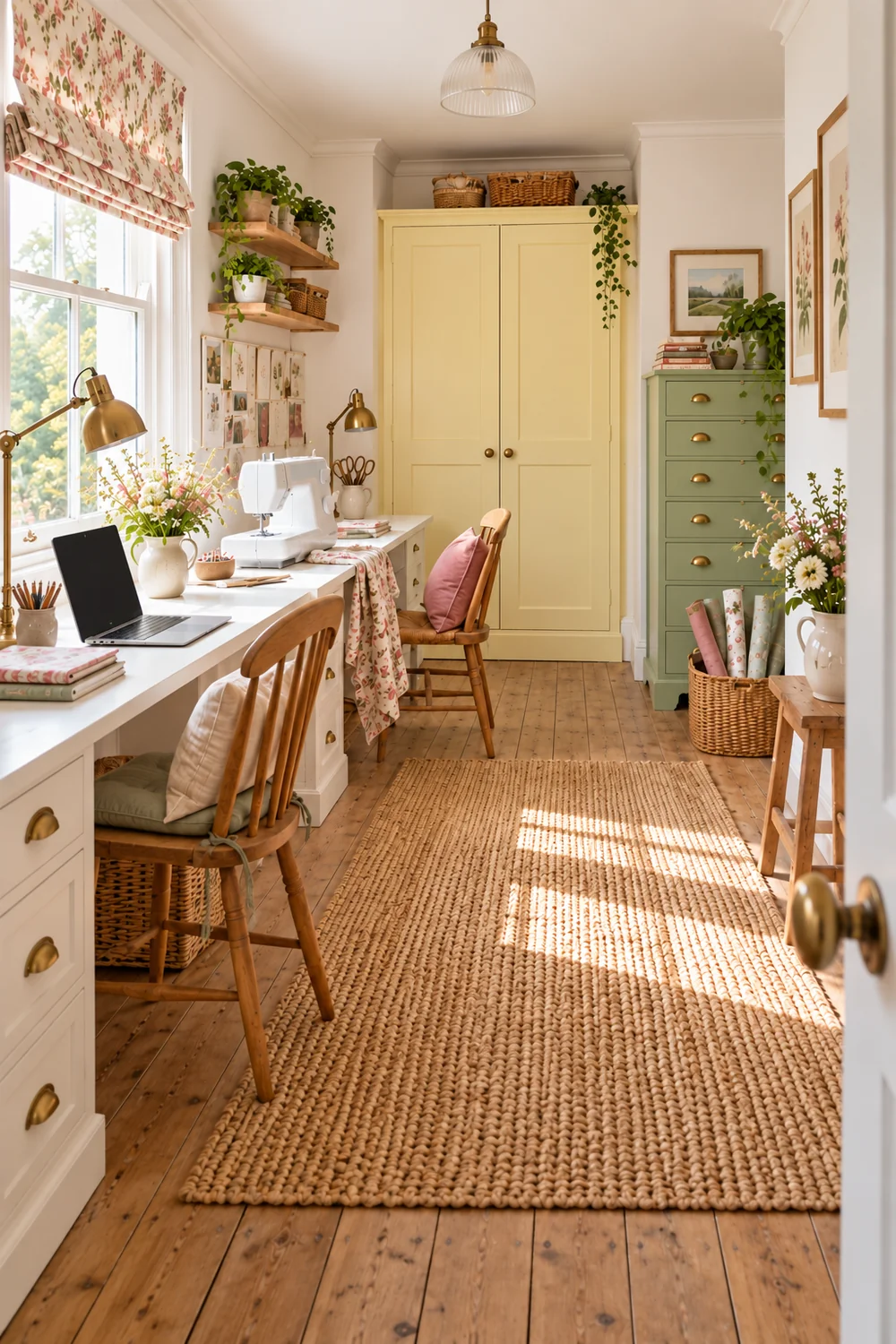
This direction is most appealing when you can finish a session by putting the active project in a dedicated tray or drawer. It asks for a real place to put the machine or computer equipment when the same surface is needed. I would not assume a cupboard can take the load, that a monitor can be moved casually or that a shallow writing desk provides enough fabric support. Those details belong to your actual room trial. The office sewing room combo plan turns this shared surface idea into an inventory and occupied layout test.
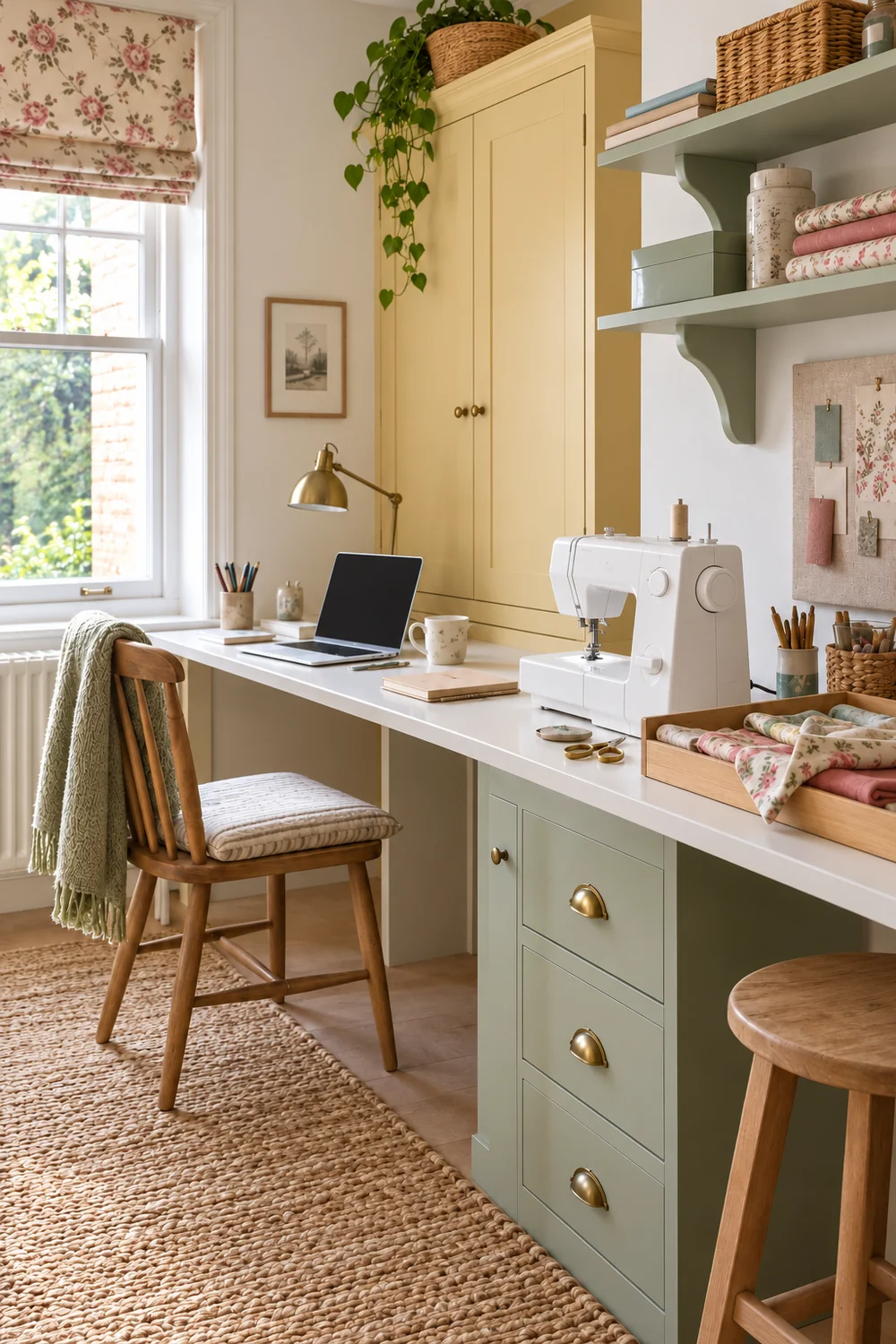
Visually, I would keep the supporting pieces modest. A painted cupboard, an adjustable task lamp and a small floral blind are enough to make a plain worktop feel at home in a cottage room. Avoid building the direction around a chair that only looks comfortable or a decorative table that rocks when touched. You are choosing an arrangement to investigate, rather than proving the final furniture specification from an image. If the thought of moving equipment every evening already feels irritating, let that reaction guide you toward separate stations instead.
Two stations make sense when a project needs to remain at the machine while you return to computer work. One surface can keep the machine and fabric relationship intact, while the second gives the laptop, keyboard or monitor a dependable home. I would look for a visual connection between the pieces rather than insist they match. A painted sewing table beside a pine desk can feel coherent if the surrounding finishes and storage colours repeat. This direction offers continuity for your project, but it uses more floor area and can create two competing chair positions.
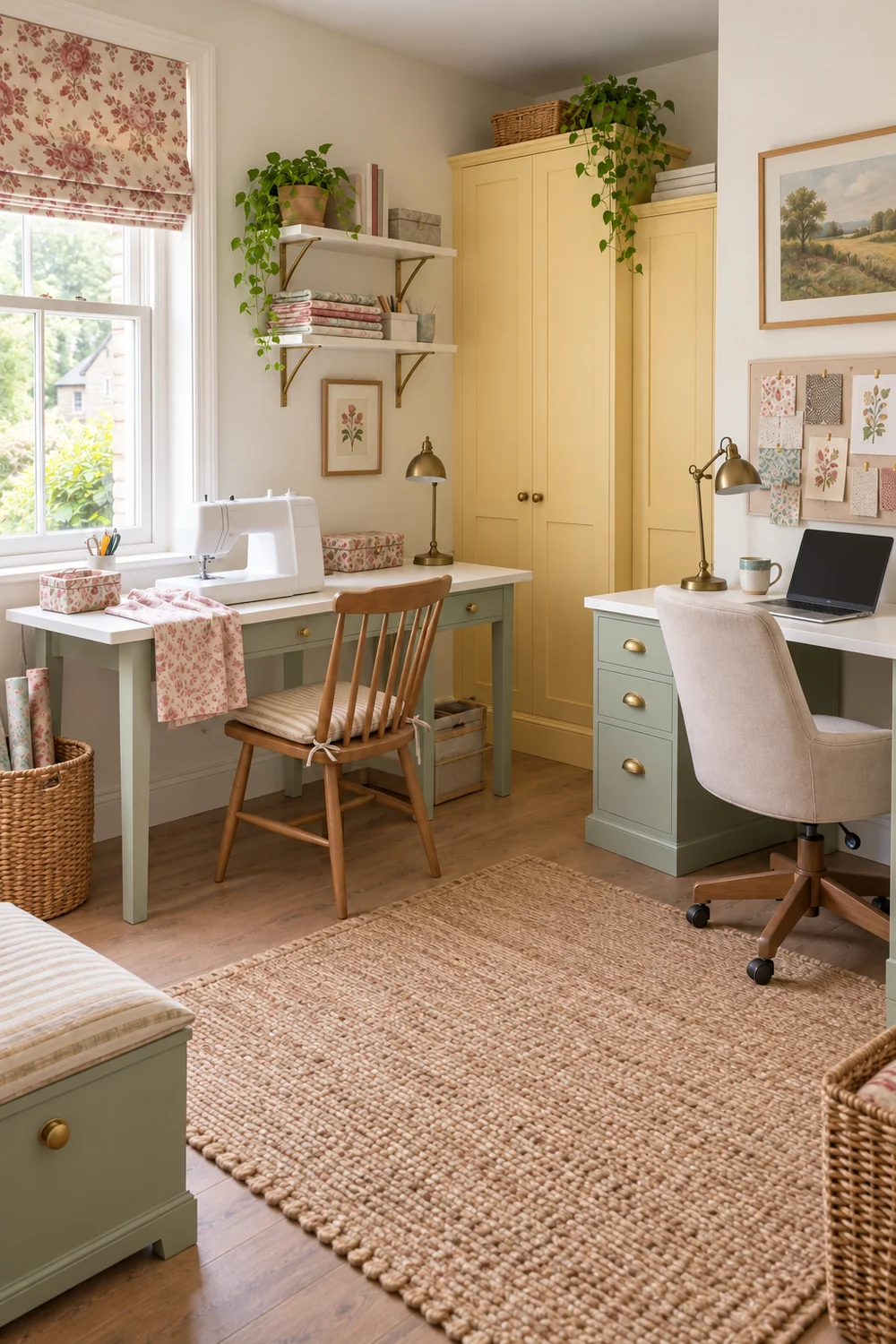
A neighbouring arrangement can keep supplies reachable without making you cross the room for every small item. An arrangement on different walls may give each activity more separation, but the route between them needs to remain clear when you are carrying fabric. I would notice where the chair goes after you stand up, where drawers open and whether the second desk becomes a convenient dumping area. A two station photograph with both chairs neatly tucked in tells you very little about the occupied room. Imagine it in use before deciding that two surfaces solve everything.
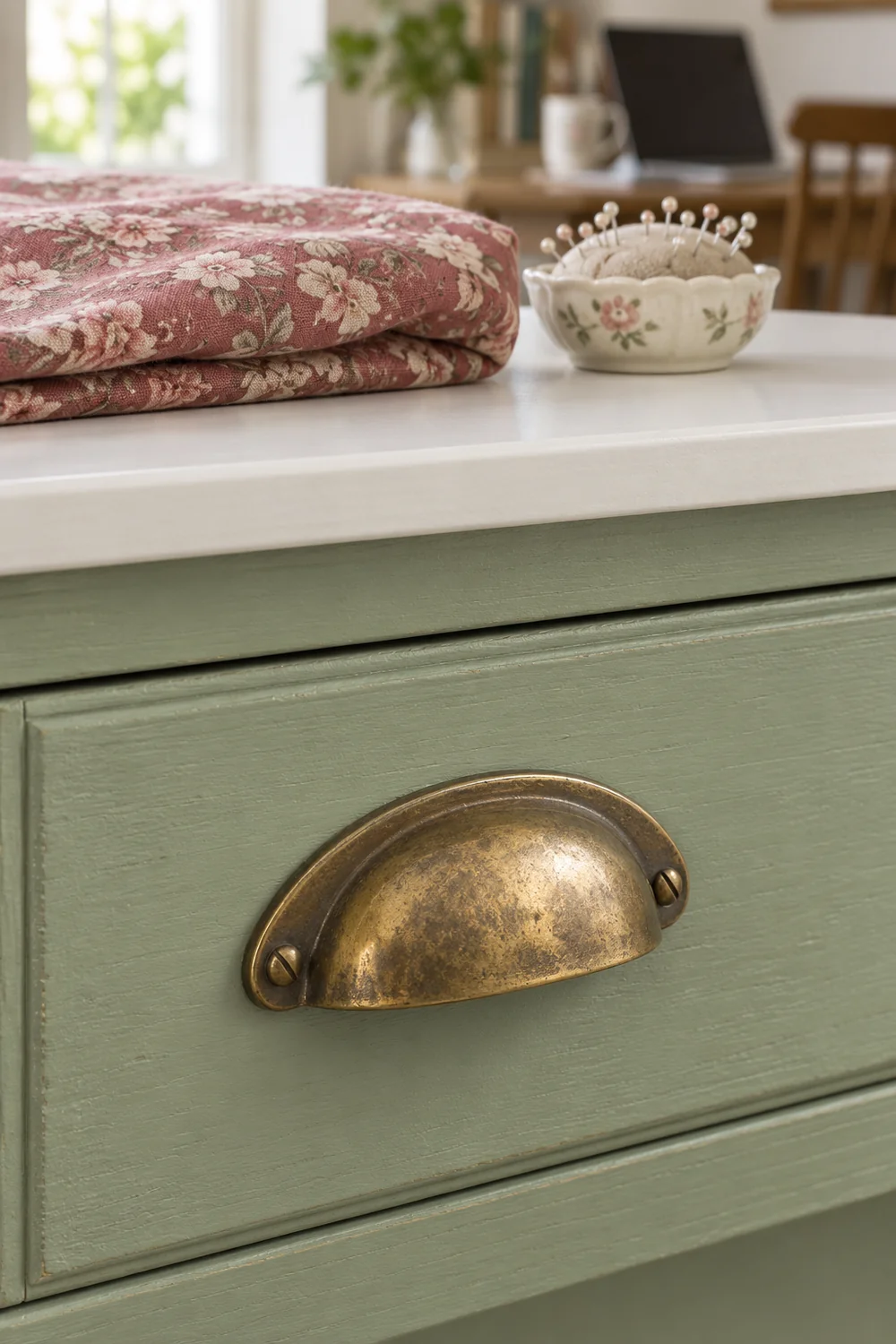
The furniture can stay light in appearance without being insubstantial. Painted legs, a pale working top and a low cabinet give this direction its cottage character. The broader English countryside home office guide offers optional material and lighting references when you want that traditional connection. I would borrow its useful warmth while resisting architecture that your room does not have. The aim is two dependable working positions with a shared visual language, not an elaborate office set that leaves too little room for a project.
A third direction places the supplies behind doors while leaving the machine and computer positions visible. This is particularly useful when your fabric stock is varied, when several unfinished projects are competing for attention or when you want the room to look settled between sessions. I would distinguish stored stock from the project you are currently making. Stock can have a permanent cabinet; the live project needs a reachable container that does not require unpacking an entire shelf. Closing a door is only helpful if the contents remain usable when you reopen it.
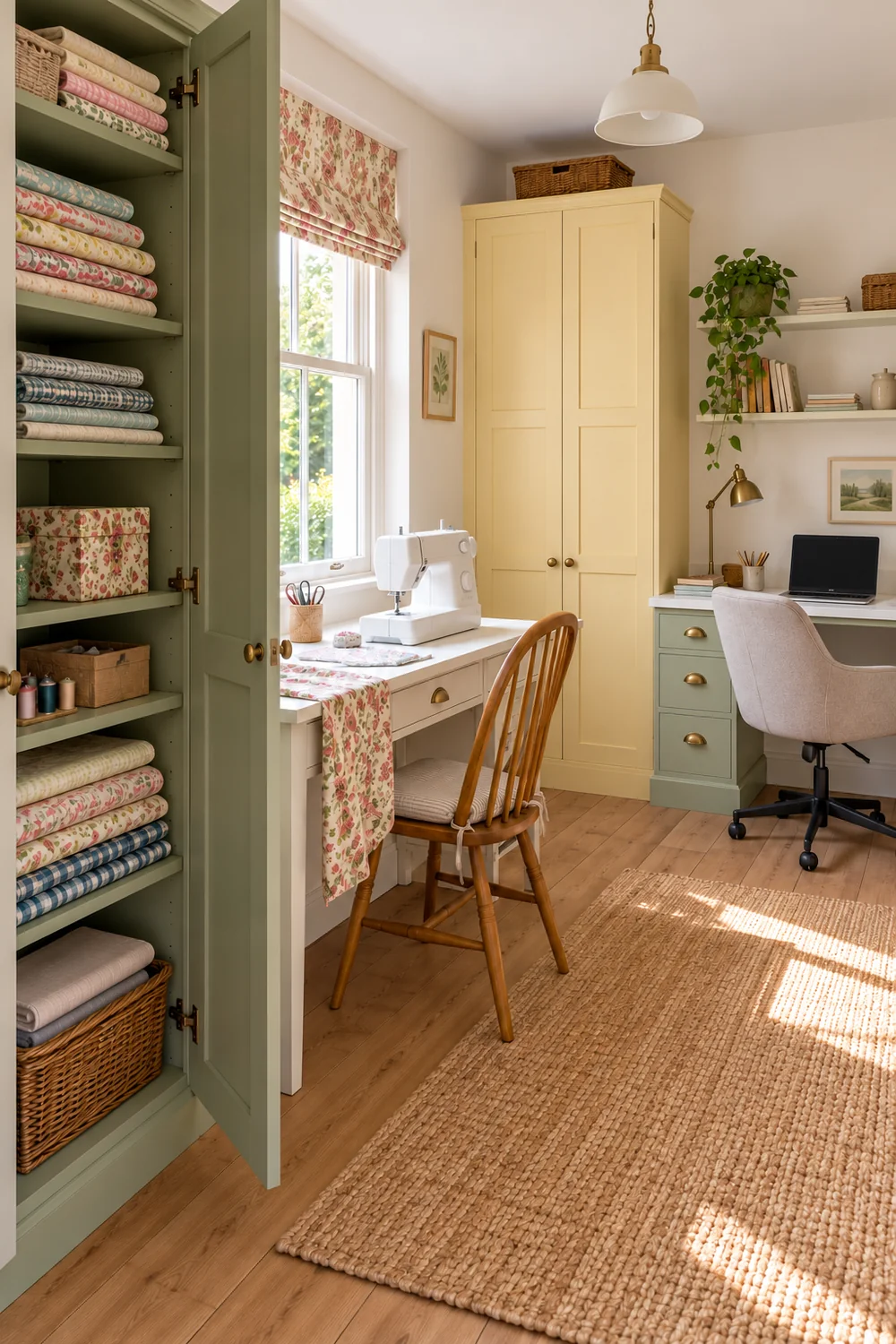
A sage cupboard beside a butter yellow drawer unit can give the room a collected appearance while containing different kinds of material. I would keep one small display area for a favourite textile or a finished piece, leaving the rest of the furniture to work. The relevant lesson from a minimalist office is assigning objects a purpose and keeping the computer surface usable. You do not have to adopt its entire aesthetic. Restraint can sit comfortably beside floral cotton and painted cottage furniture when it helps you distinguish today’s work from accumulated supplies.
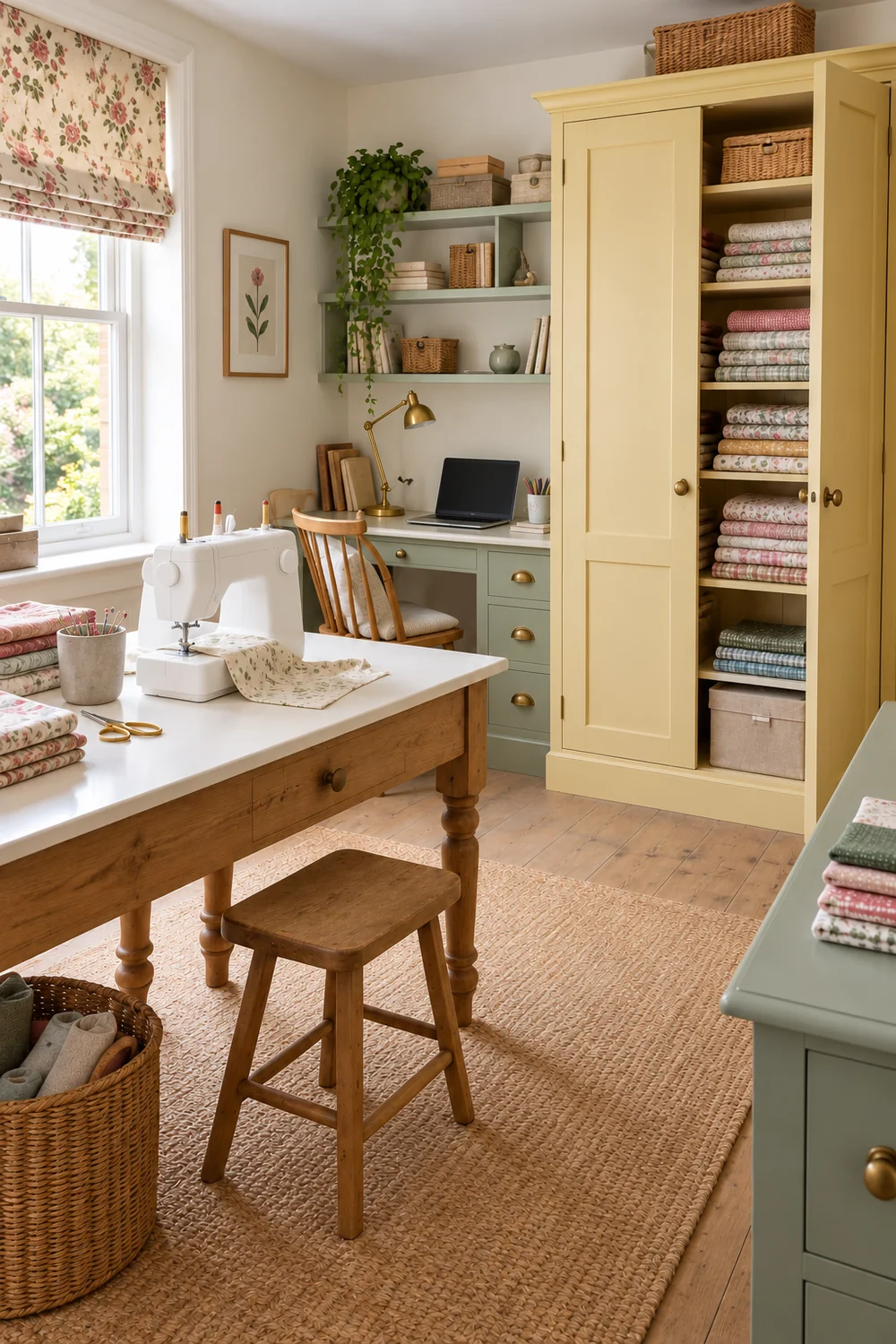
Closed storage brings its own tradeoffs. Doors need room to open, deep shelves can conceal material and attractive baskets may make small items harder to identify. A cupboard that looks quiet from the room entrance can still be frustrating at the machine. I would choose this direction because you want a calmer relationship between visible work and stored stock, then verify the contents and access later. Avoid filling every remaining gap with another cabinet. The room still needs a route, a place to handle fabric and somewhere to stand without moving a box first.
The cutting or project surface does not have to compete with the room’s character. A simple light top can look intentional beside painted storage, while a separate movable surface can serve a particular session and return to a planned home afterward. I would decide whether you genuinely need a dedicated surface before arranging the whole room around one. A small garment project and a large piece of fabric have different handling needs. The photograph should suggest a workable activity, not promise that one table solves every kind of sewing.
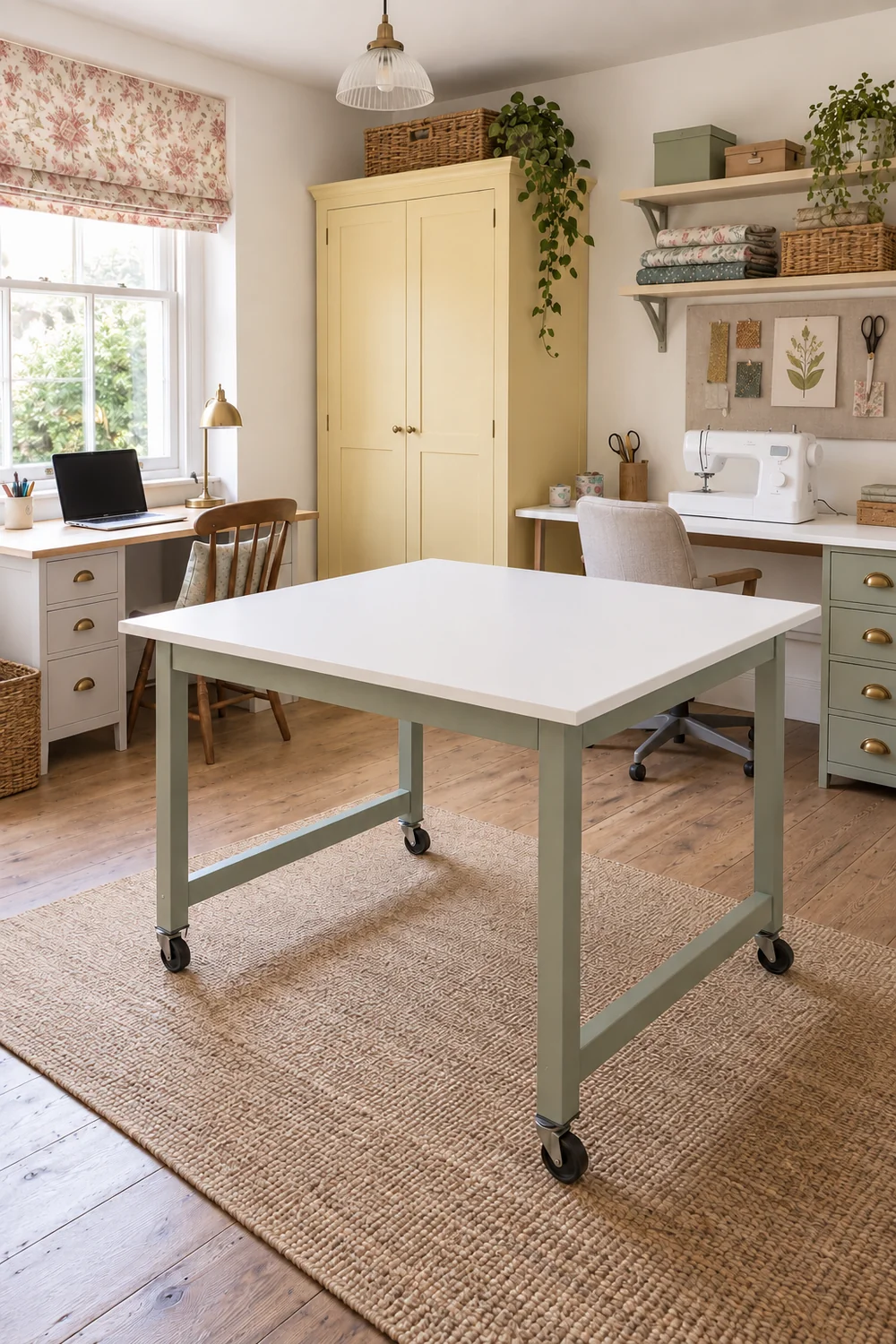
A folding or movable surface is appealing only when its storage position and stability are credible. If it lives behind the chair, needs lifting over a cabinet or blocks the door while open, the visual neatness may conceal a daily obstacle. I would keep the cottage treatment on the surrounding furniture and use the actual working top according to the task and equipment instructions. The sewing room storage specification article compares the tables, contents and acceptance checks that make these directions practical.
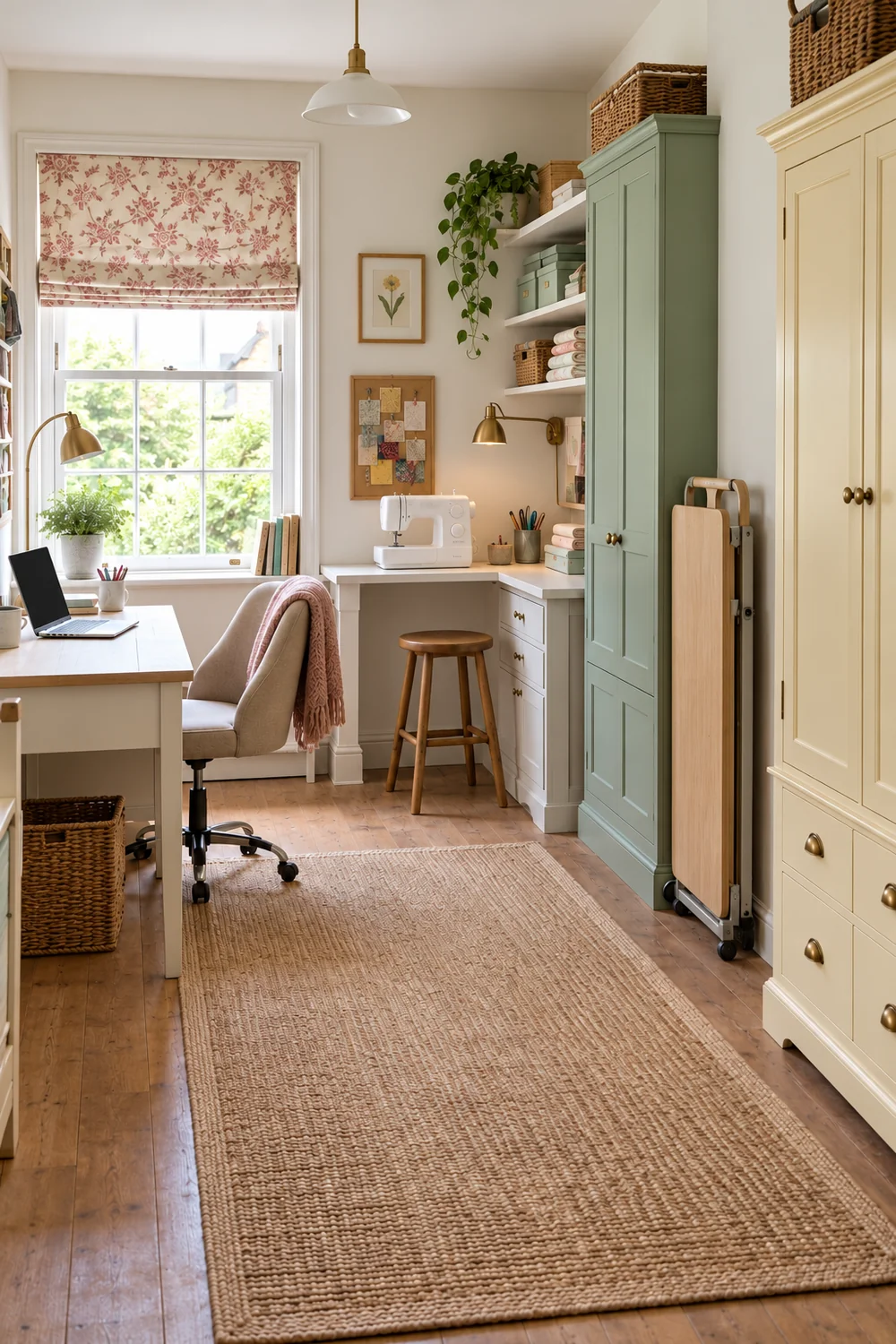
Pressing deserves a similarly ordinary place in the picture. It should not look as though a hot appliance is casually balanced beside loose fabric or a computer. I would show an appropriate dedicated position, with the equipment used and stored according to its instructions. A closed cabinet can hold equipment after it is cool and ready for storage, but that is different from hiding something while it is in use. The room looks more convincing when each working activity has a plausible relationship with the furniture, even if the photograph remains uncluttered.
Your computer corner can retain the cottage room’s softness while functioning as a real workstation. I would use a quiet wall or cabinet face behind it, a light working surface and a lamp whose position can be adjusted to the task. A floral curtain can soften the room without becoming the centre of every view. The screen and controls still need a usable arrangement. The Health and Safety Executive’s workstation guidance considers equipment reach, sufficient working space, chair adjustment and glare; those are more useful starting points than choosing a seat solely for its silhouette.
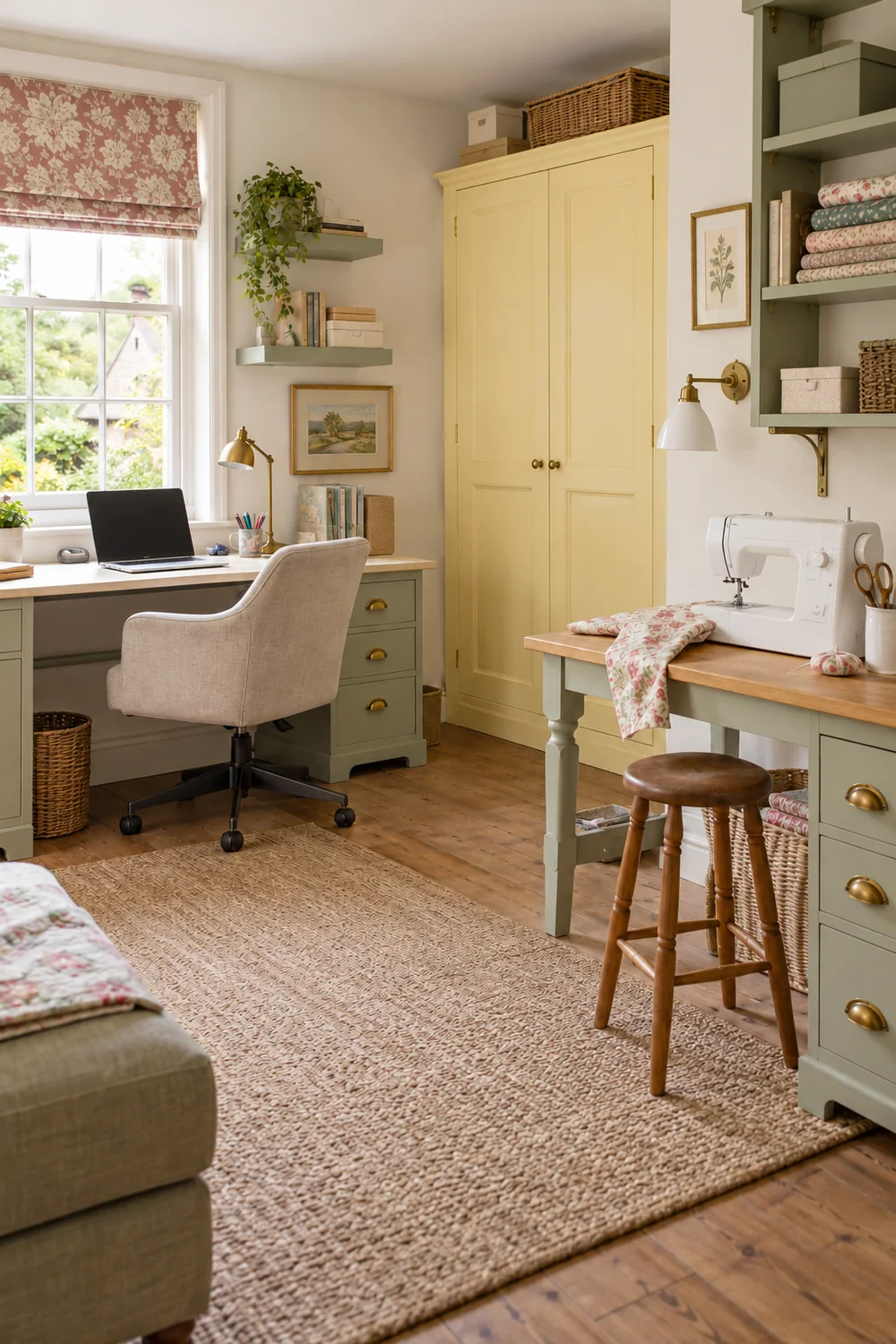
I would avoid styling the desk as a decorative vignette that leaves no room for your hands or papers. A small object can remain, but its position should not force the mouse, keyboard or document into an awkward corner. If you use a laptop only briefly, your setup may differ from a regular computer session; describe the actual task rather than treating all screen use alike. A practical chair can belong in this room through restrained colour and nearby texture. It does not need to pretend to be an antique dining chair.
The whole room should still feel like one project when you move between the two activities. Repeat the sage or rose quietly in a storage detail, let the pine provide a consistent timber note and give the working surfaces enough breathing room to remain legible. You can enjoy a welcoming view from the door without removing every sign of sewing. I would keep a current project contained beside its station and allow the computer corner to look ready, rather than stage both as permanently empty surfaces that nobody actually uses.
I would choose the shared worktop if changing tasks is easy and equipment has a proper home. I would choose paired stations if an unfinished project needs to remain at the machine. I would choose more concealed stock when visible supplies make the room feel busy, while keeping the live project reachable. These directions can overlap, but one should lead your decisions. Take the version you prefer into the office sewing room combo layout trial before buying another table. Your next useful step is to test the relationship between tasks, equipment and movement in the room you have. The cottage character can then grow from furniture and colour choices that support that relationship, instead of relying on a photograph that only works when the machine is put away.