Newsletter Subscribe
Enter your email address below and subscribe to our newsletter

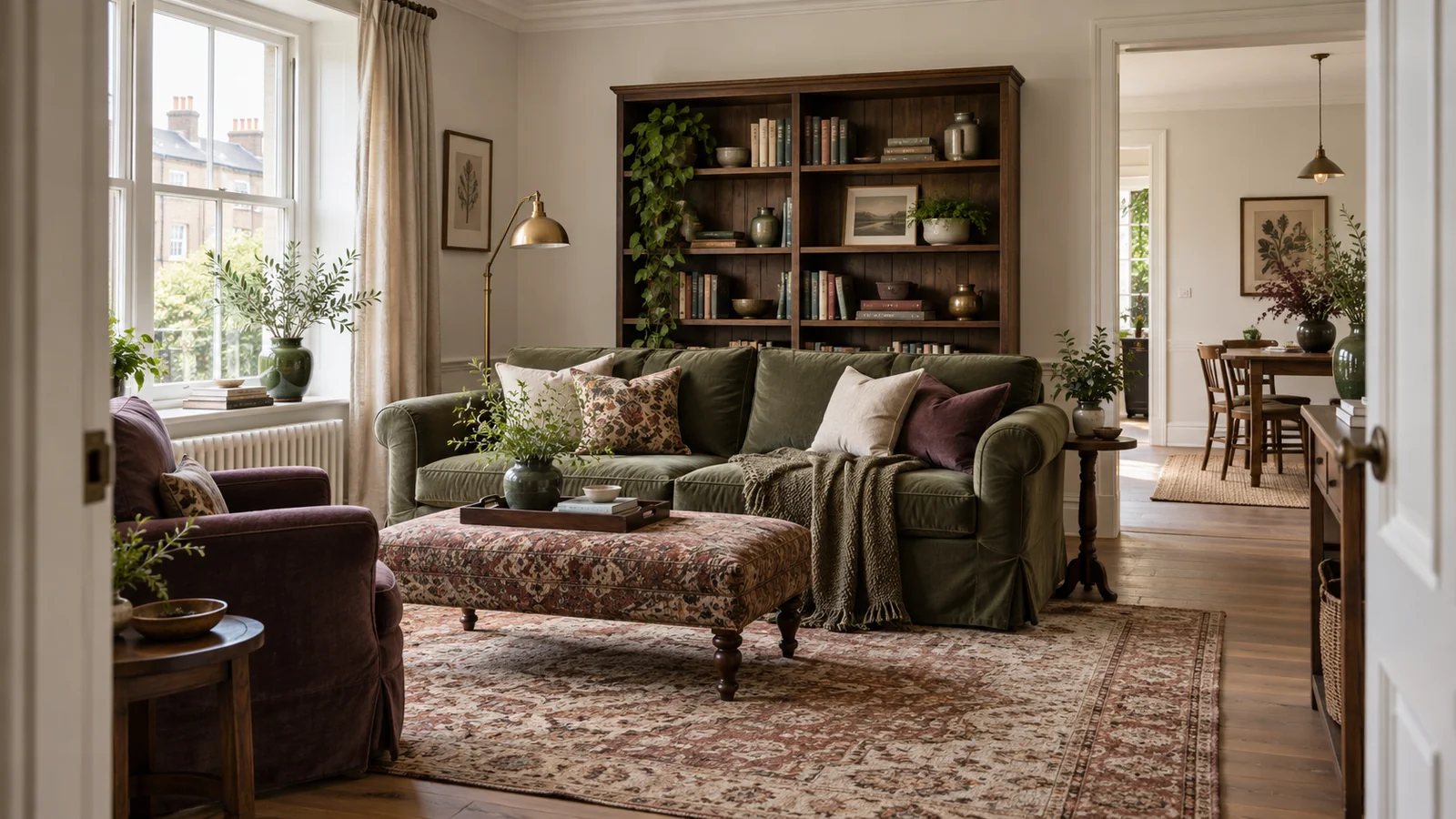
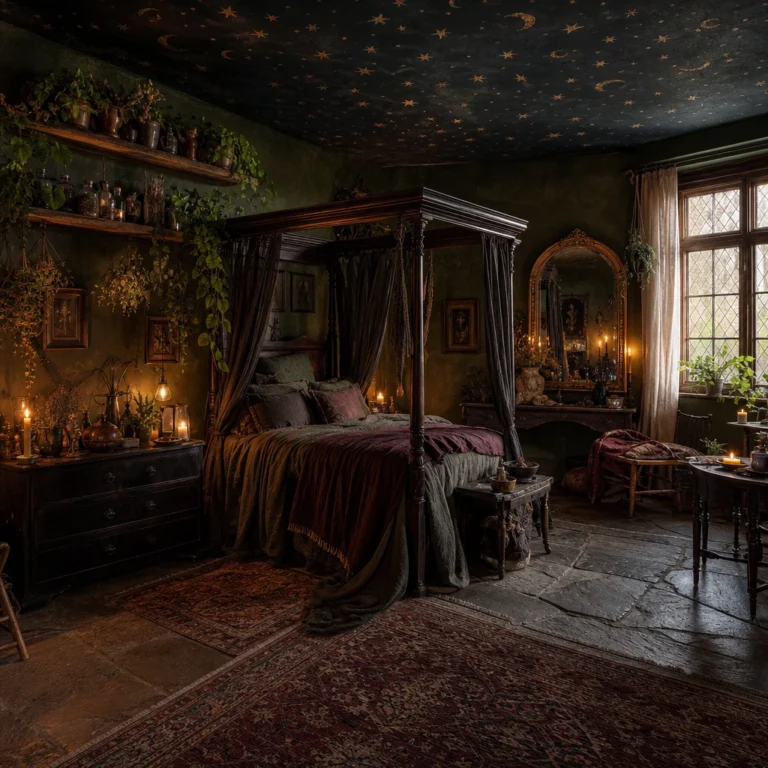
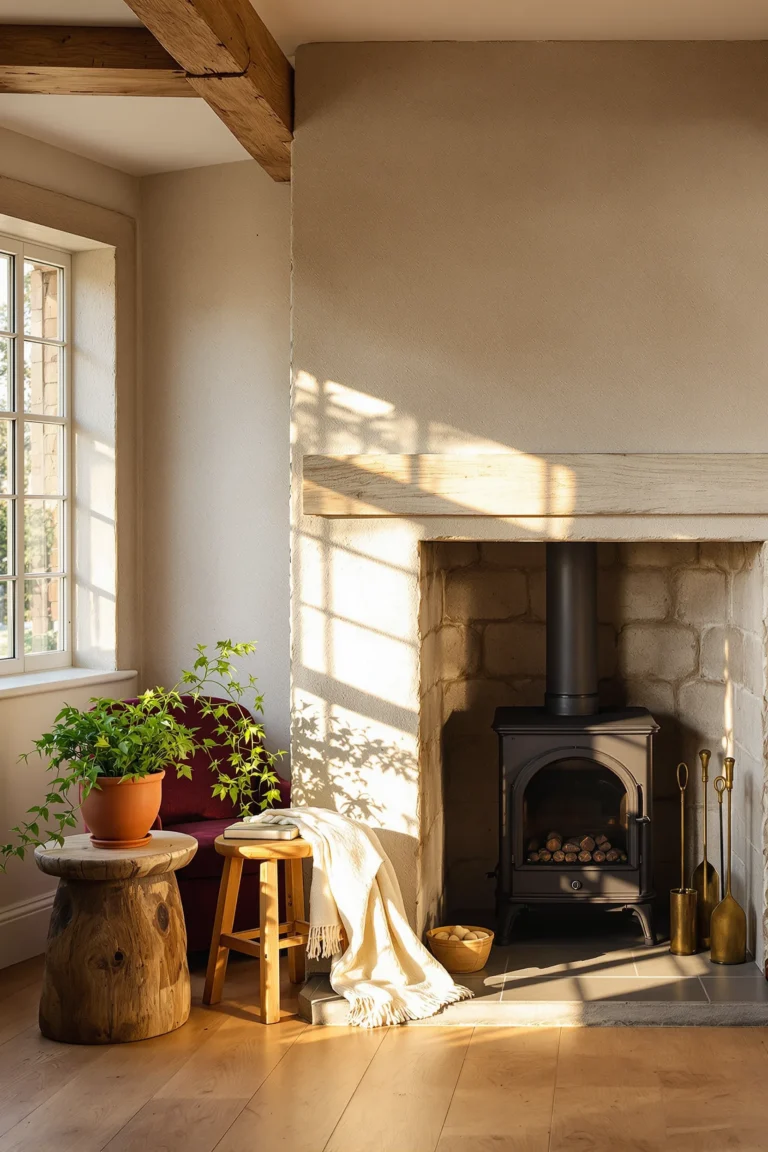
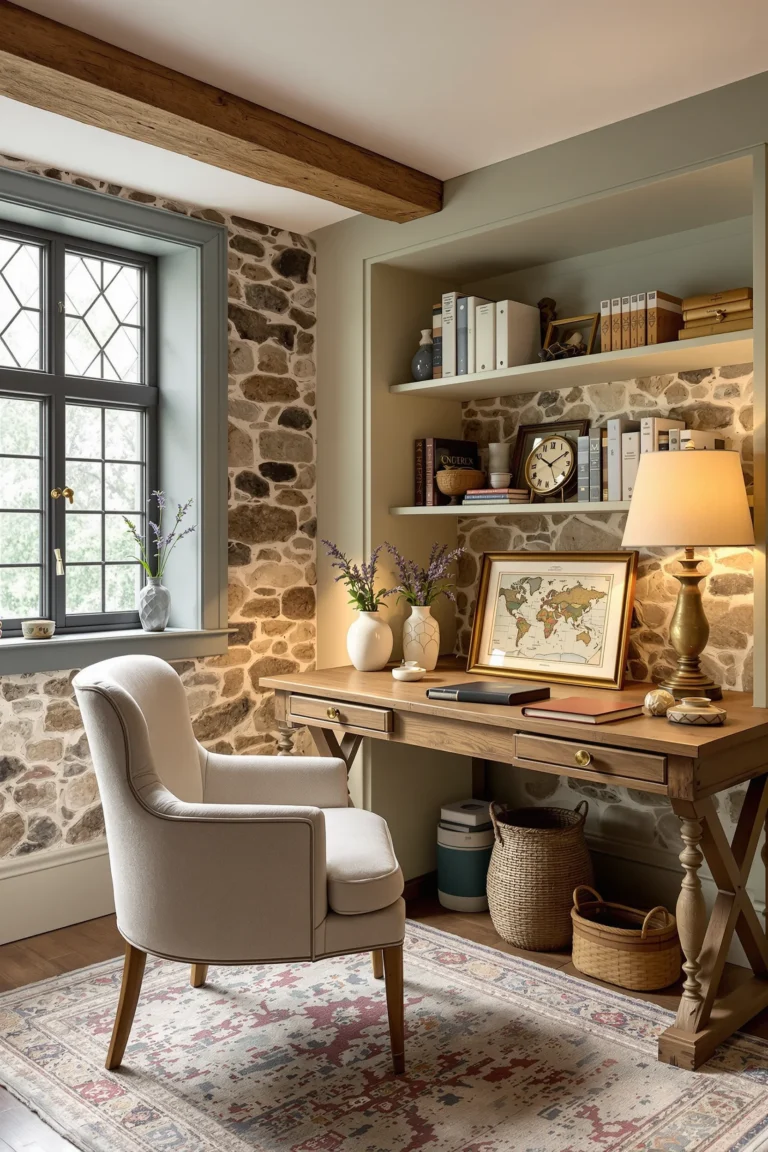
A dark cottagecore apartment does not need painted ceilings, fitted panelling or a forgiving landlord. The style can grow from portable furniture, layered textiles, warm pools of light and the ordinary objects that make a home feel collected rather than staged. For a renter, the useful question is not how to imitate an old cottage. It is how to create depth, softness and a sense of history while keeping every change reversible. This plan begins with the lease, the available daylight and the way each room is actually used. It then builds a coherent home through colour, storage, lighting and natural texture. The result should feel intimate in the evening and still look clear, comfortable and practical during the day.
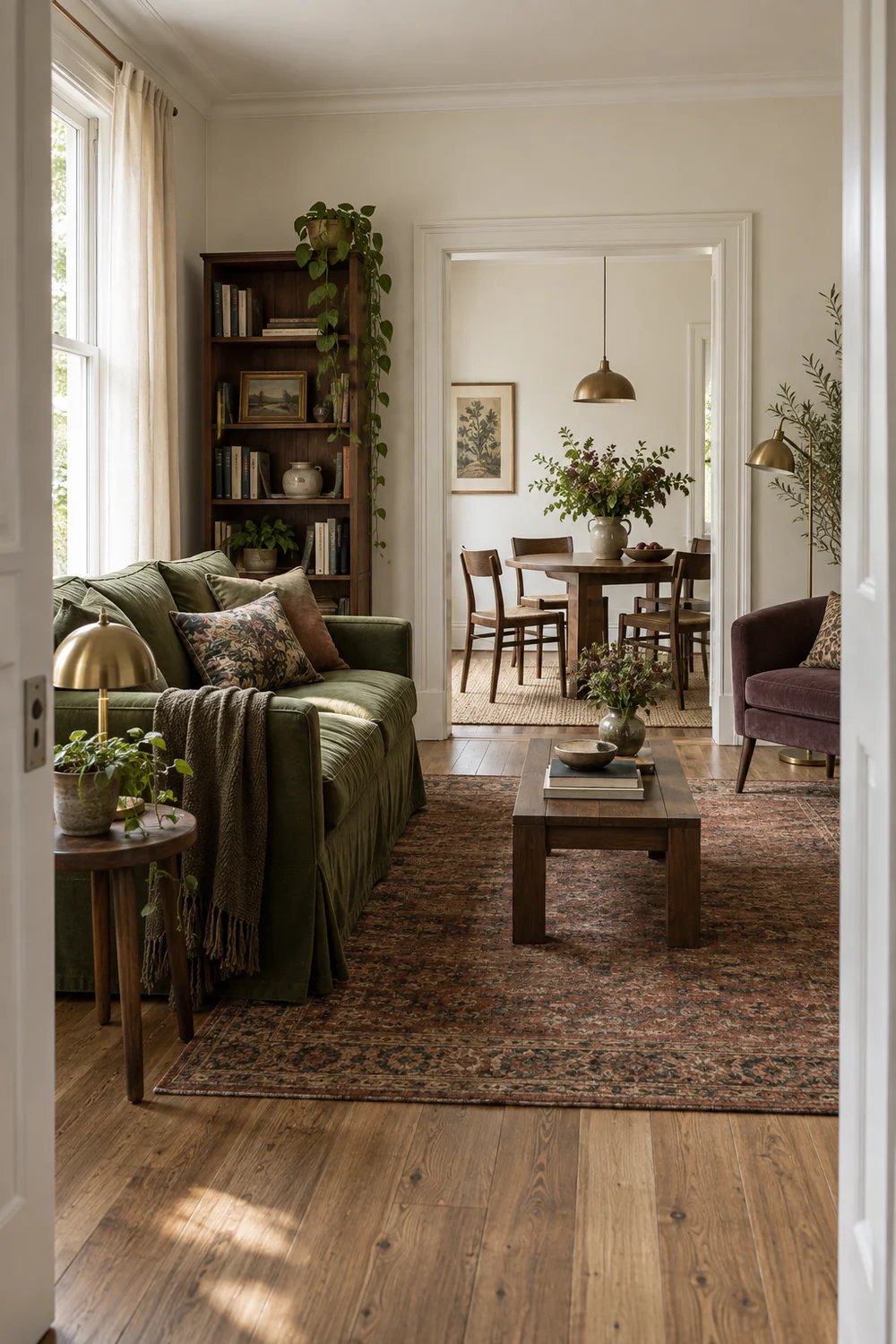
Begin by separating the atmosphere you want from the alterations you cannot make. Read the lease, photograph the original condition and list every surface that must remain untouched. Record where daylight enters, which corners stay dim, where sockets sit and which routes need to remain clear. This turns a vague decorating wish into a project with boundaries. The broader dark cottagecore house aesthetic can supply references, but your apartment needs a smaller set of decisions that can travel with you.
Next, make an honest inventory of what already belongs in the room. A brown sofa, a plain bookcase or a simple timber table may look ordinary alone, yet become convincing once colour, scale and texture connect them. Keep useful pieces even when they are not obviously cottagecore. Replacing everything at once creates a themed set rather than a home that appears to have evolved over time.
Choose one practical priority for every room. The living room may need better reading light and a more social seating arrangement. The kitchen may need concealed storage and softer colour. The bedroom may need darkness for sleep without becoming gloomy in daylight. A clear job for each space protects the project from decorative clutter.
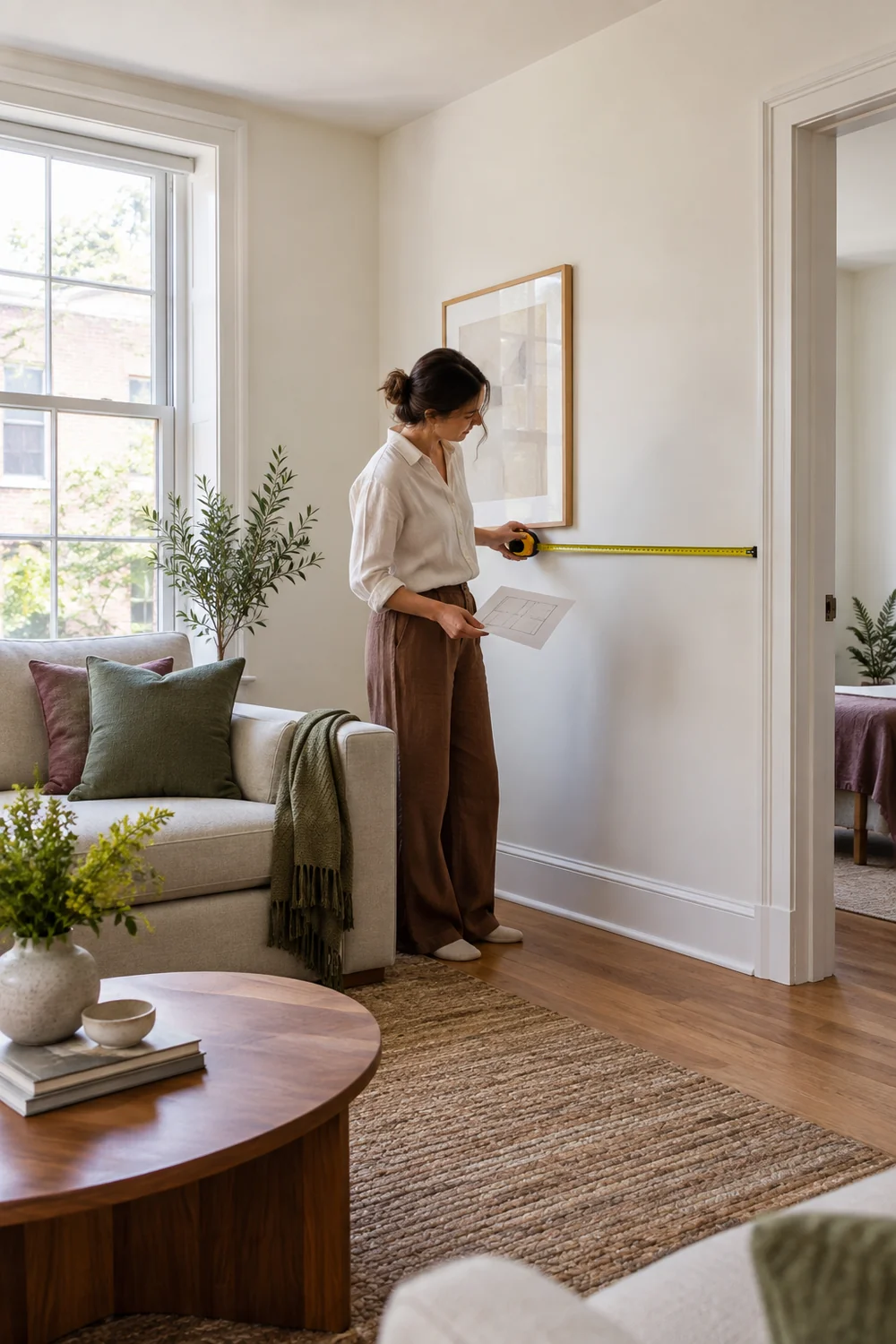
Measure the pieces that are hardest to move before buying anything new. Note the sofa width, the available rug area, the clear distance beside the bed and the depth of kitchen storage. Mark these dimensions in a simple room sketch. The drawing does not need to be beautiful. It only needs to prevent a romantic chair, chest or bookcase from narrowing a doorway or making a daily task awkward.
Use the permanent surfaces as the lightest part of the scheme rather than treating them as a problem. White rental walls can act like the pale plaster in an old cottage when they sit behind moss green, peat brown, muted plum and worn cream. The cottage color palette gives a useful starting point, but the apartment should repeat only a small family of colours from room to room.
For a lighter approach to the same fixed surfaces, my rental living room ideas compare three warm modern directions you can build without paint or drilling.
Put the darkest colour on objects you can move. A deep green slipcover, a brown wool rug, a walnut bookcase and plum cushions create depth without changing the shell. Repeat one dark note and one warm note in each room so the apartment feels connected. In the kitchen this might be green linen and a walnut tray. In the bedroom it might be a moss quilt and a dark timber bedside table.
Pattern works best when its scale changes. Pair one larger botanical print with a small check, narrow stripe or faded plain. Keep the background colours related so the layers feel accumulated rather than busy. If a patterned curtain or rug carries several colours, use it as the palette reference and stop adding new accents once the room feels balanced.
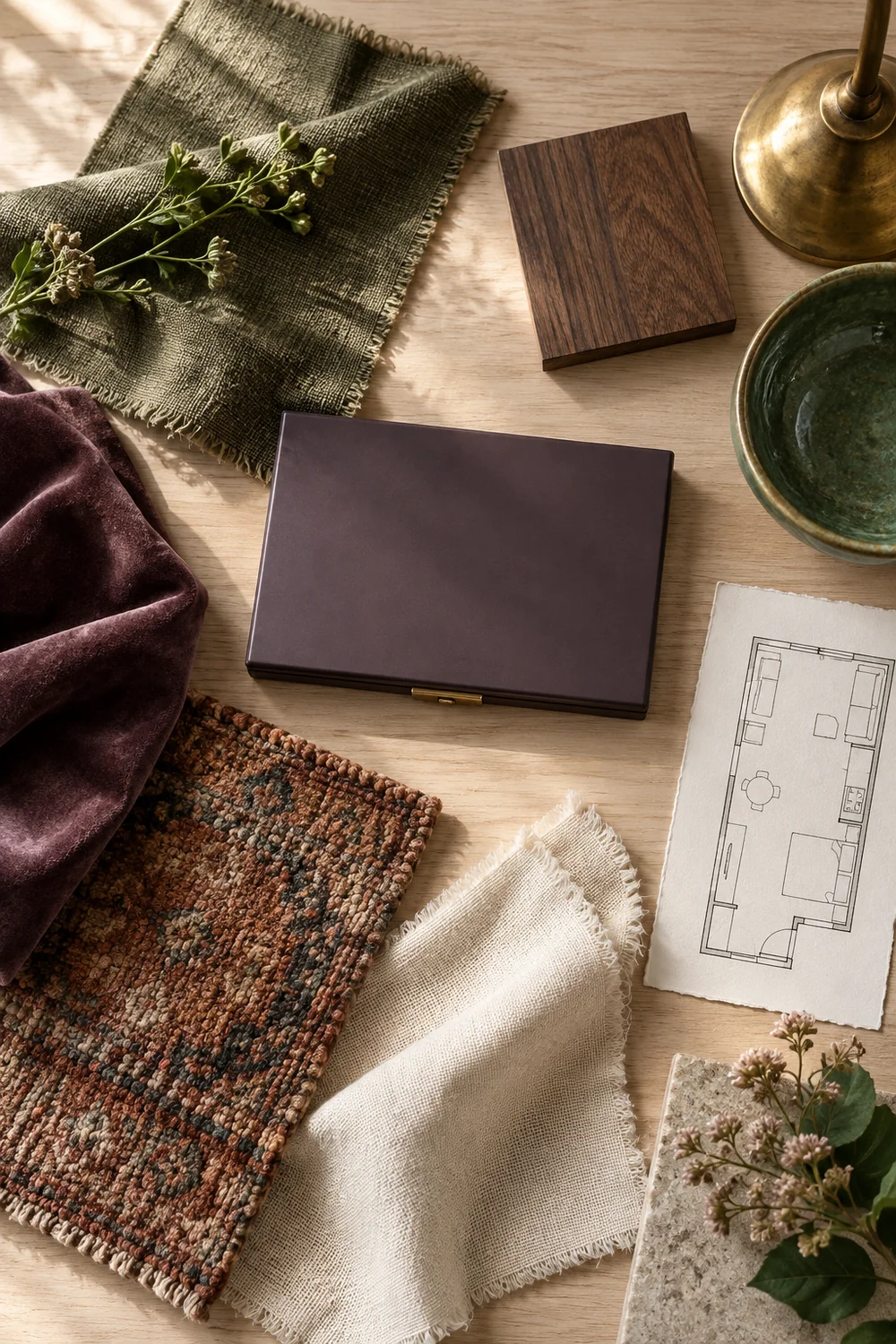
Test every dark layer in the actual room before committing. Look at it in clear morning light, late afternoon and under the lamps you use most. A fabric that appears rich in a bright shop can lose all detail in a dim corner. The goal is visible texture and tonal variation, not a flat mass of brown or black.
If the apartment faces away from strong sun, give cream and warm stone a larger share of the scheme. Let deep green and plum sit lower in the room on rugs, upholstery and small furniture, where a lamp can reveal their texture. In a brighter apartment, the darker tones can occupy more visual space. This proportional approach is more reliable than copying a photograph made under different light.
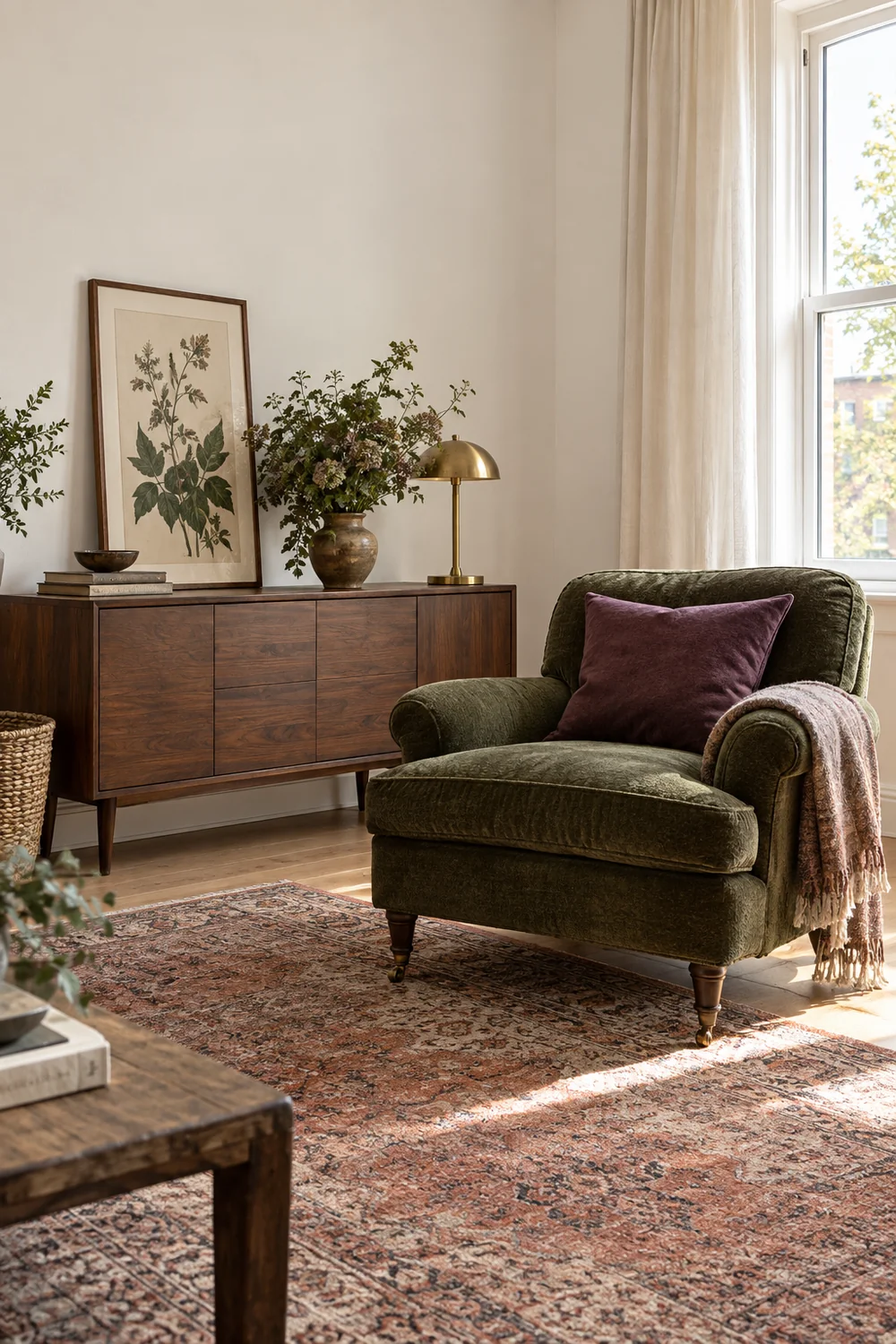
A successful dark cottagecore living room begins with the seating plan, not the accessories. Pull at least one chair away from the wall and turn it towards the sofa so the room supports conversation. Keep the main route from the door open. In a compact apartment, a small side table shared by two seats is often more useful than several decorative tables.
Create one clear reading position beside daylight, then make it work after sunset with a plug in floor or table lamp. The shade should send light onto the page while leaving a softer glow around the chair. A reading chair, lamp, small table and nearby shelf form a complete corner without built in joinery. If the room has no suitable corner, use the end of the sofa and place a narrow bookcase behind or beside it.
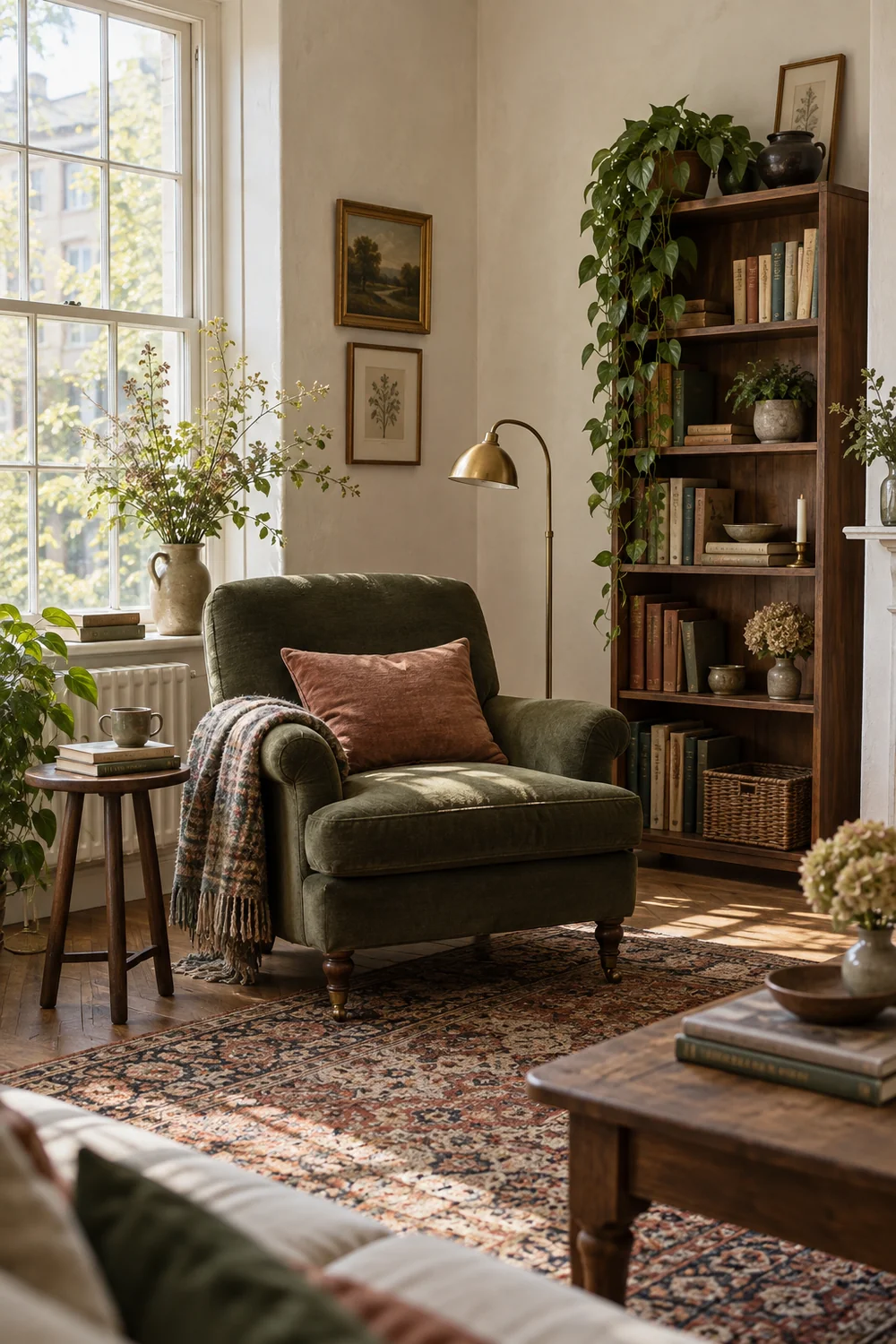
Use a large rug to gather the seating instead of relying on a dark wall colour. The front legs of the main seats should meet the rug so the arrangement reads as one area. Choose wool, flat weave or another durable texture with a muted pattern that can tolerate daily use. A rug that is too small makes even beautiful furniture look disconnected.
Books, framed prints, ceramics and branches provide the collected quality that the style needs, but give each group a boundary. Let one shelf hold books, a lamp and a single natural object. Let one wall carry a compact gallery rather than scattering small frames everywhere. This gives the eye places to rest and makes the room feel considered rather than crowded.
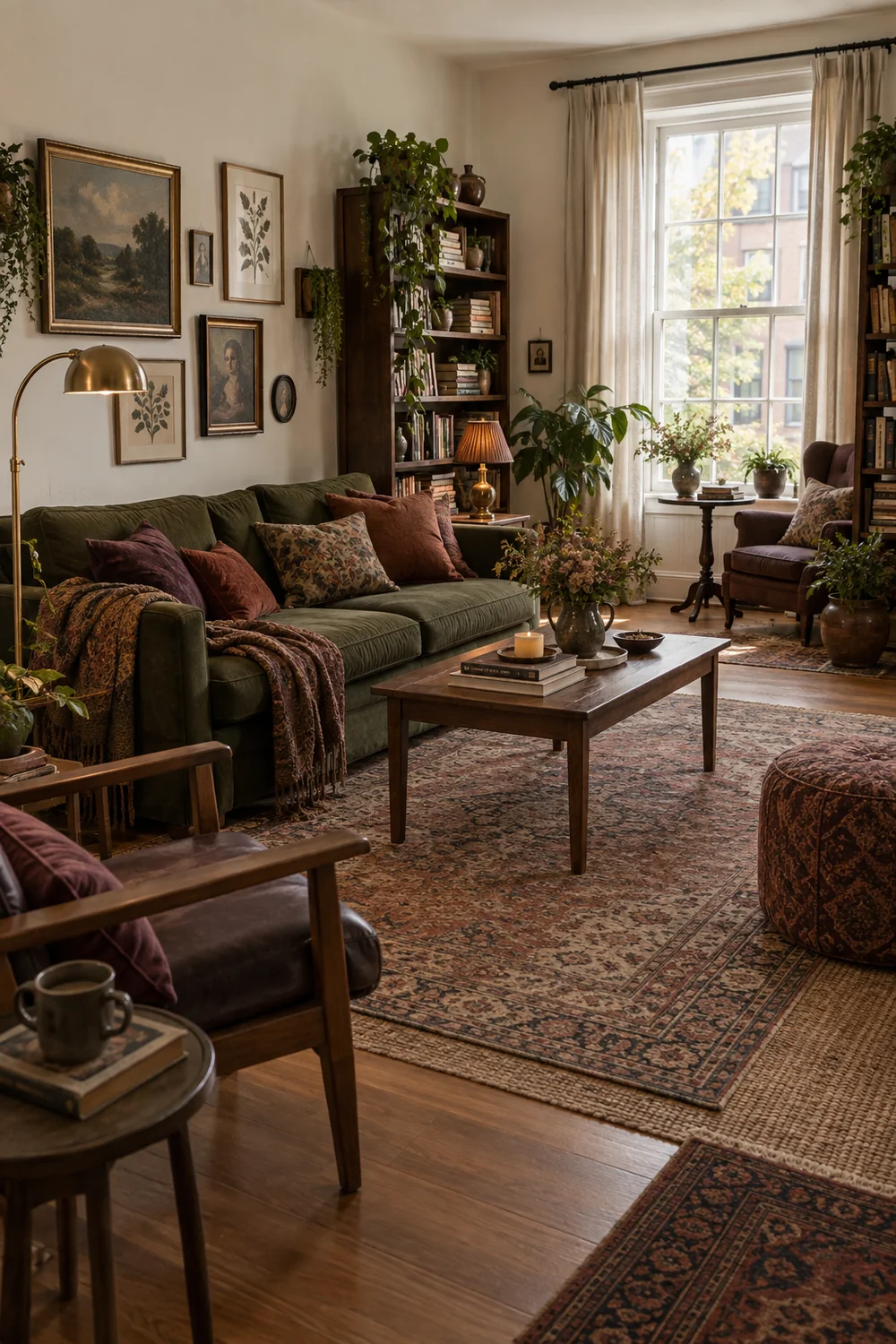
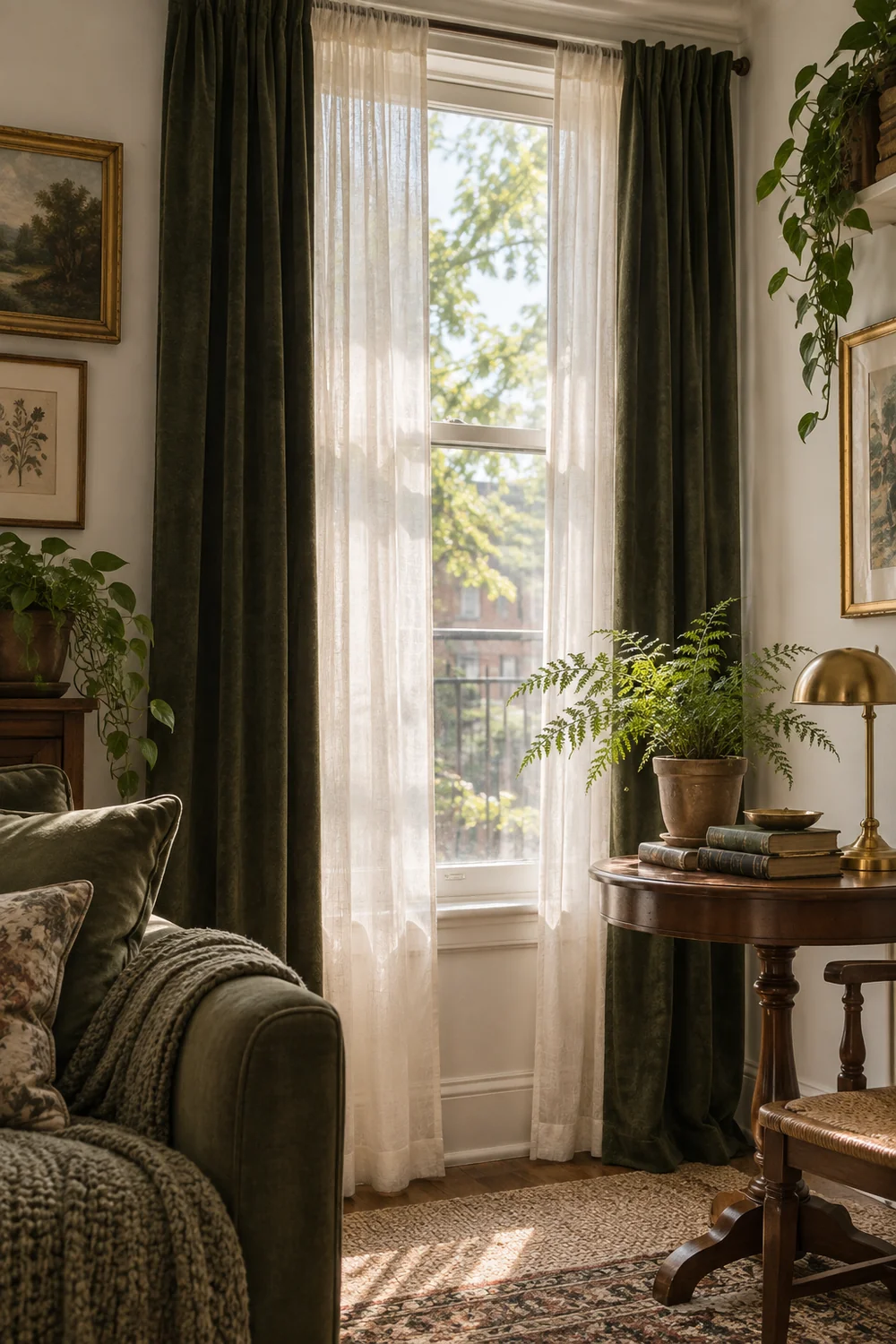
Keep the window as open as privacy allows. Hang portable curtains outside the glass area where the fixing method and lease permit, or use an approved tension system. Choose linen, cotton or a soft wool blend in cream, moss or faded floral tones. Heavy dark fabric across a small window can remove the daylight that makes the deeper furniture colours readable.
Finish the arrangement by checking it from the doorway and from every main seat. The focal point may be a bookcase, a fireplace, a view or a group of art. Let one element lead and keep the others quieter. A television can remain part of the room without becoming the only centre. Place it at a comfortable viewing height, then balance its dark rectangle with books, timber and one substantial lamp rather than a crowd of ornaments.
In a rental kitchen, visual calm matters more than disguising every cabinet. Clear the worktop first, then return only the objects used every day. A timber board, stoneware crock, linen towel and small shaded lamp can bring texture to a plain kitchen without touching the units. The existing dark cottagecore kitchen ideas can guide the mood, while the renter plan keeps the changes portable.
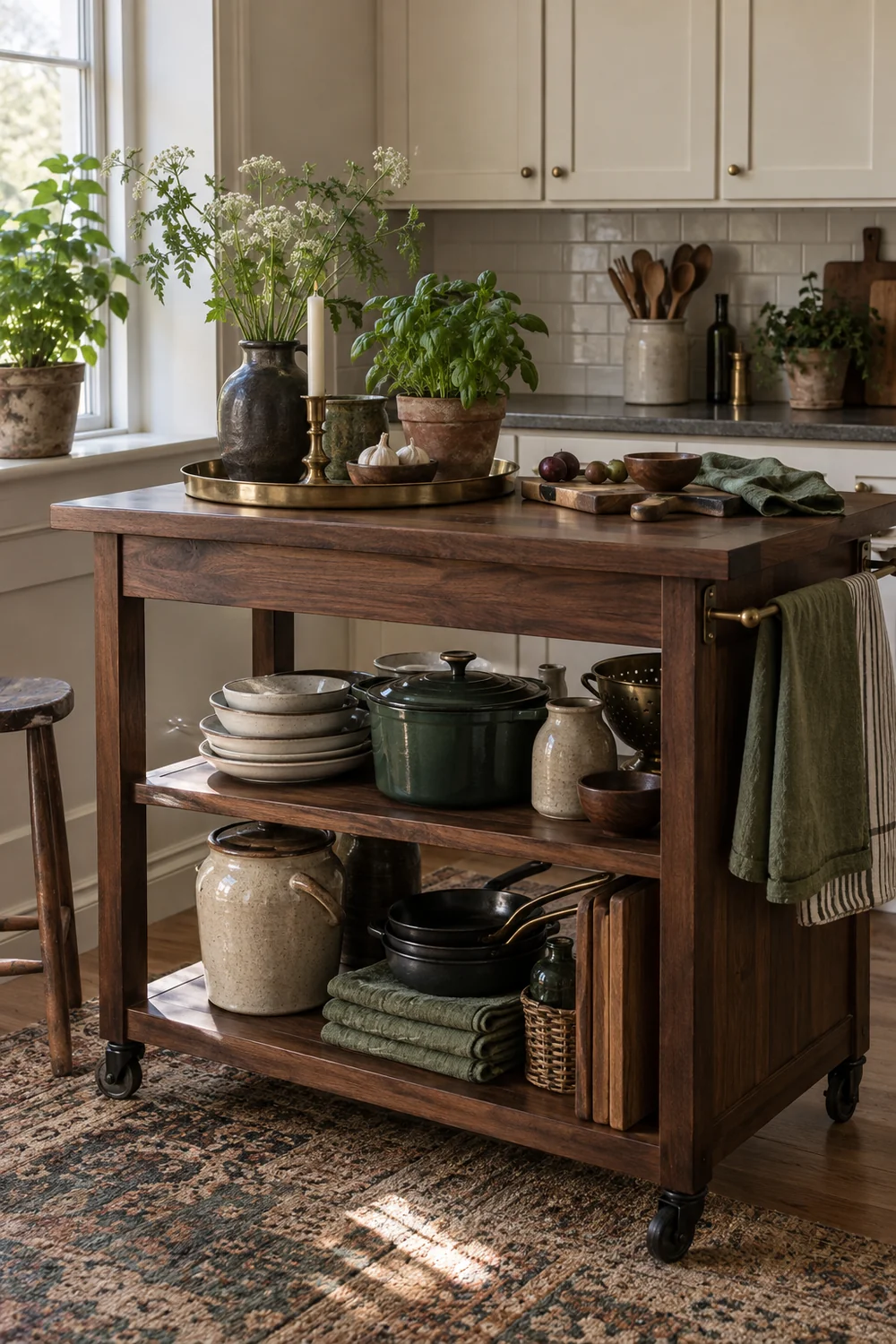
Use trays and open baskets to turn necessary items into contained groups. Tea, coffee and a few cups can occupy one tray. Oils and seasonings can sit on another. This keeps the work surface functional and prevents the style from becoming a collection of tiny props. Choose objects with useful capacity and stable bases, especially near cooking and washing areas.
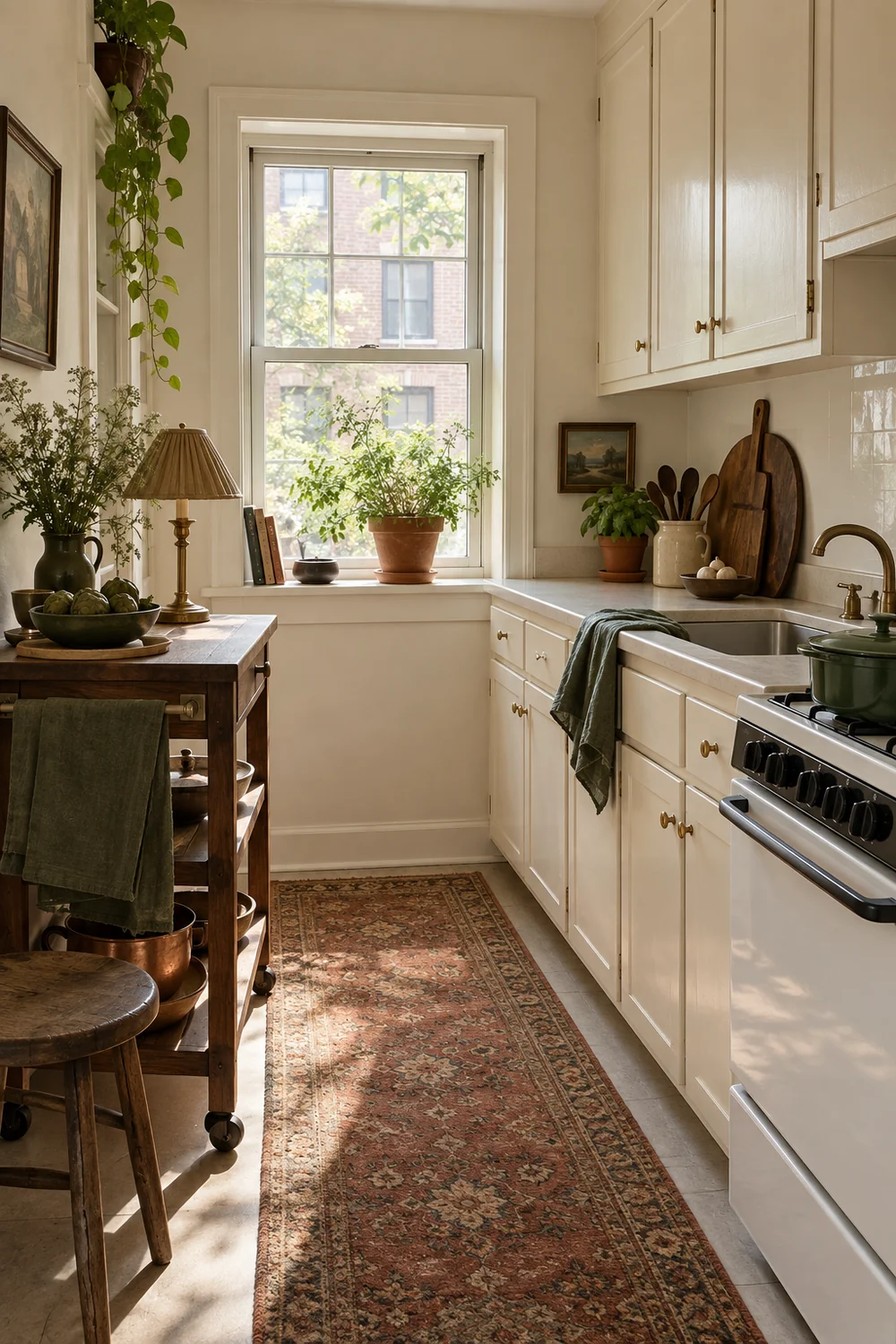
Bring colour through washable textiles and freestanding storage. A muted green runner, checked cafe curtain where suitable, or painted portable trolley can carry the palette. Avoid covering worktops, splashbacks or cabinet doors with products unless the lease and manufacturer both allow them and removal has been tested in a hidden place. Reversibility should be proven before a visible surface is changed.
Keep the cooking zone visually simpler than the breakfast or tea area. Fabric, paper and dried plants do not belong close to heat, flame or heavy splashing. Move the more decorative layers to a shelf, dining corner or windowsill where they remain easy to clean. The kitchen will still share the apartment palette, but it should communicate safety and order before atmosphere.
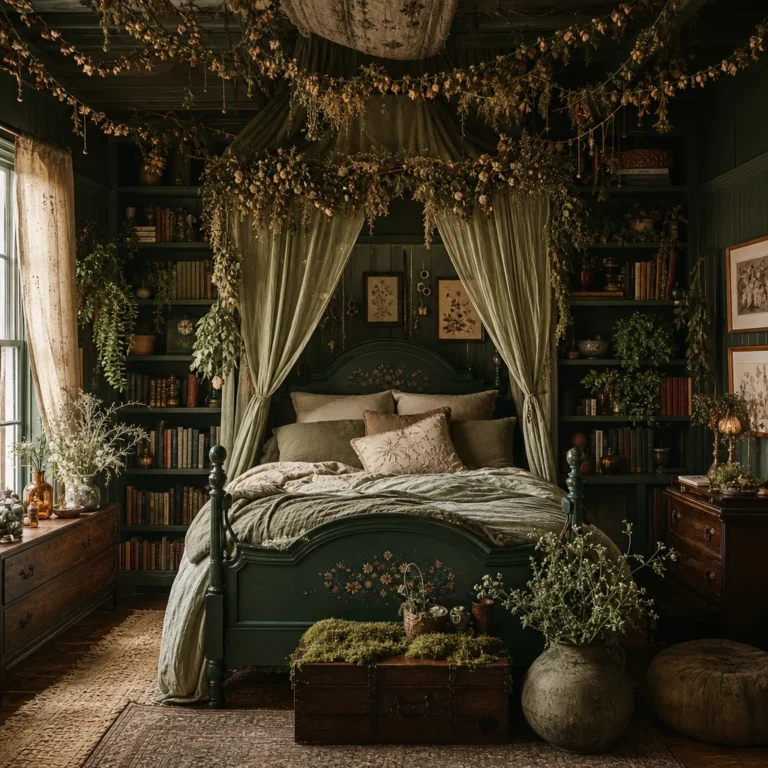
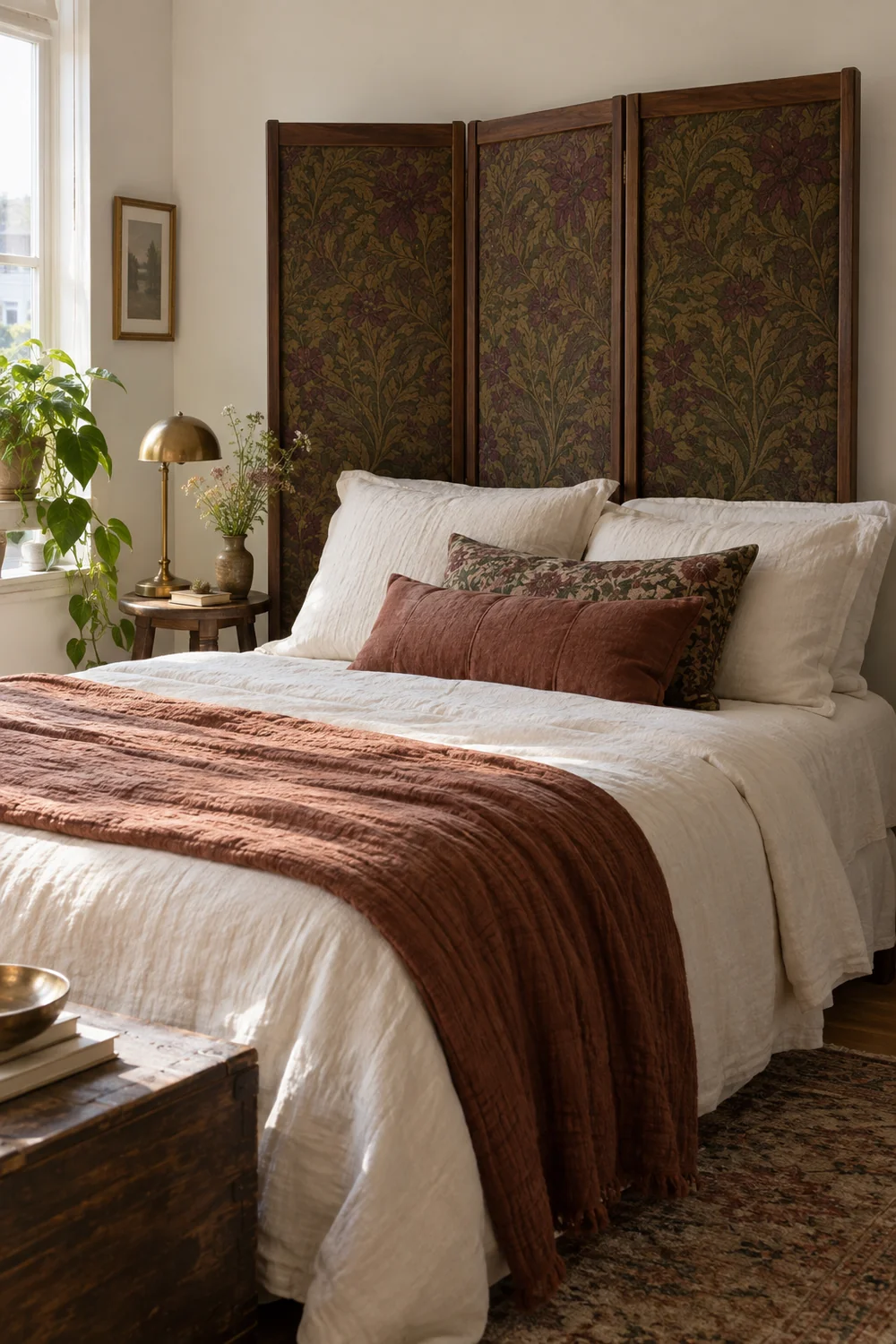
The bedroom can hold the richest version of the palette because softness already belongs there. Begin with breathable pale bedding, then add moss, plum or rust through a quilt, throw and cushions that are actually comfortable to move at bedtime. The existing dark cottagecore bedroom gallery offers visual references, but a rental bedroom should prioritise sleep, clear movement and useful bedside space.
Place the bed so doors, drawers and the main walking route remain easy to use. Give each sleeper a stable surface for a lamp, water and a phone. If there is room for only one table, use a narrow shelf unit or portable stool on the other side rather than blocking circulation with furniture that is too wide.
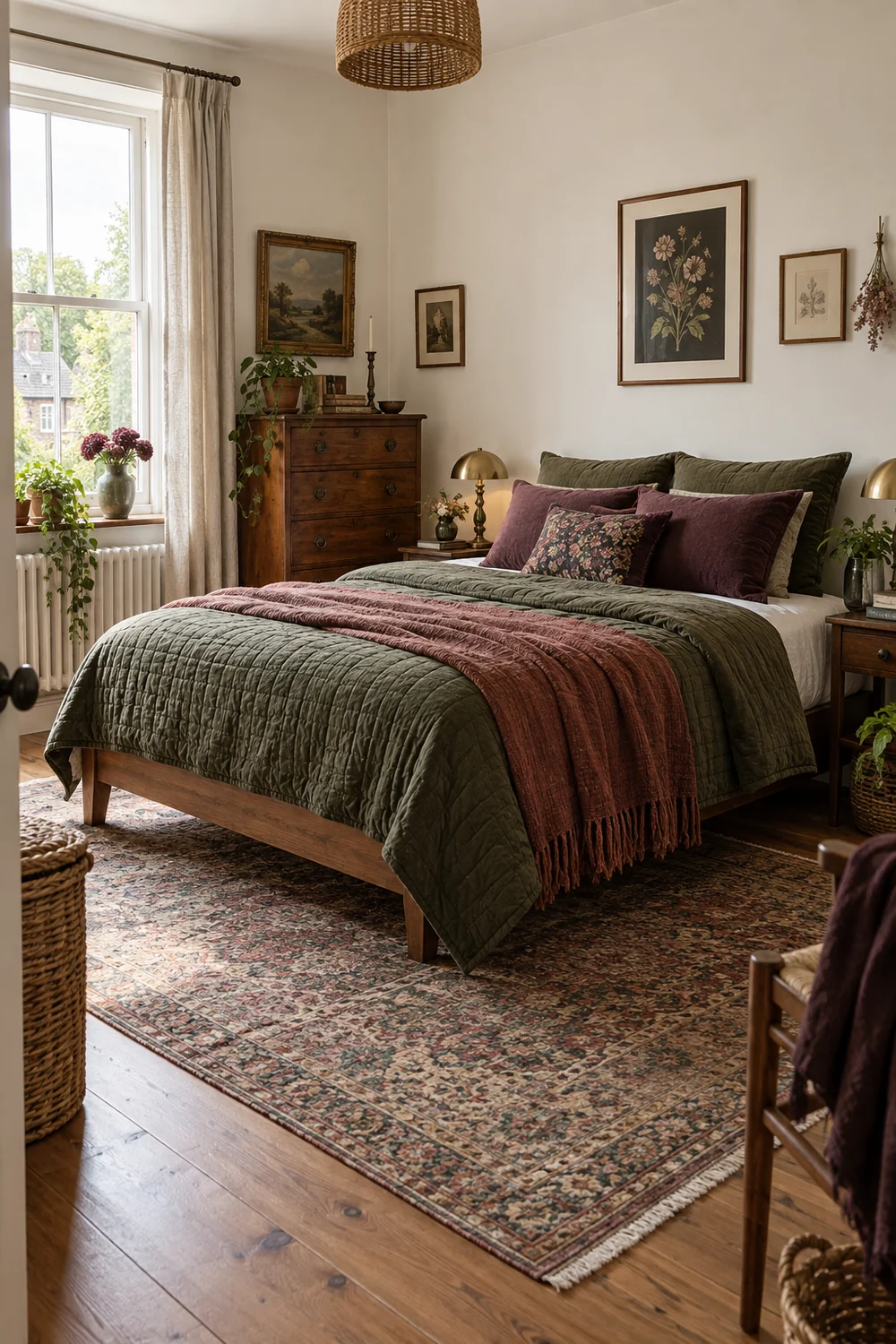
Create a sense of enclosure with fabric rather than permanent architecture. A generous headboard, full curtains, a folding screen or a textile hung from an approved removable system can soften the wall behind the bed. Keep fabric away from heat sources and follow the product instructions for every fixing. The effect should feel sheltered, not cramped.
Limit the visible collection beside the bed. A lamp, one book and a small dish are enough for most routines. Store jewellery, chargers and medicines in a drawer or lidded box so the surface can be cleared quickly. The room will feel more restful when the dark colours come from large, quiet shapes rather than many unrelated small objects.
A rental bathroom needs restraint because moisture and cleaning are non negotiable. Start with towels, a washable mat, a shower curtain and one closed container in the apartment palette. The dark cottagecore bathroom can inspire colour and botanical detail, while the temporary version avoids additions that trap moisture or obstruct ventilation.
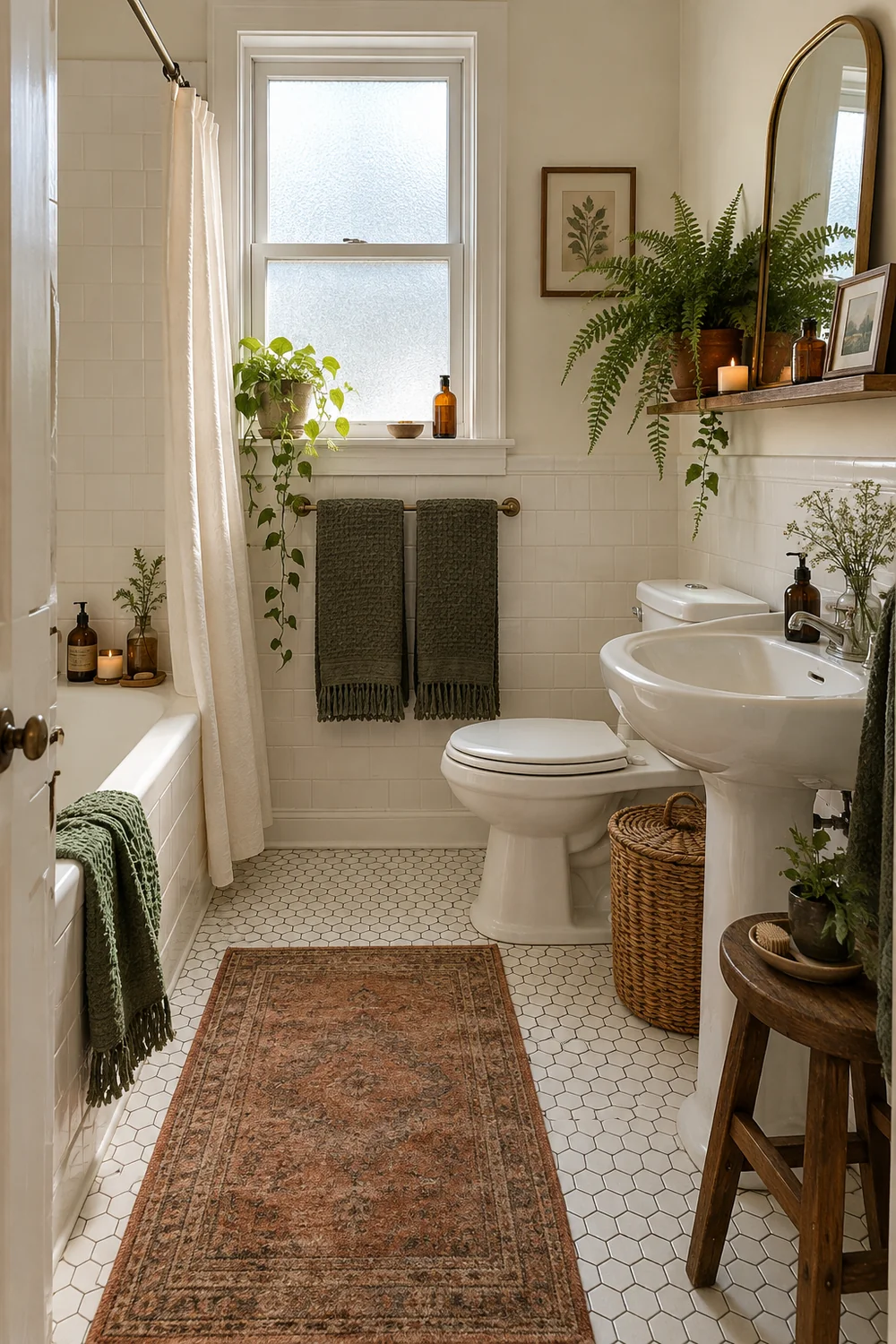
Choose storage that lifts small items away from wet edges and leaves surfaces easy to wipe. A freestanding stool, lidded basket outside the splash zone or narrow trolley can add timber and woven texture while keeping toiletries organised. Use only pieces suited to a humid room, and do not crowd heaters, vents or access points.
Use one living or dried botanical element only where it can remain clean and dry enough to last. A framed botanical print, green towel and amber bottle may be all the room needs. Too many small vintage objects turn a compact bathroom into a difficult cleaning project and weaken the calm that makes the darker palette feel luxurious.
Check the room with the door both open and closed. Towels and storage should not interrupt the swing, and the bath or shower route should remain obvious. If the floor is small, keep the darkest colour above it in towels or art so the walking area stays visually clear. This is especially useful when the existing tiles already contain strong pattern or contrast.
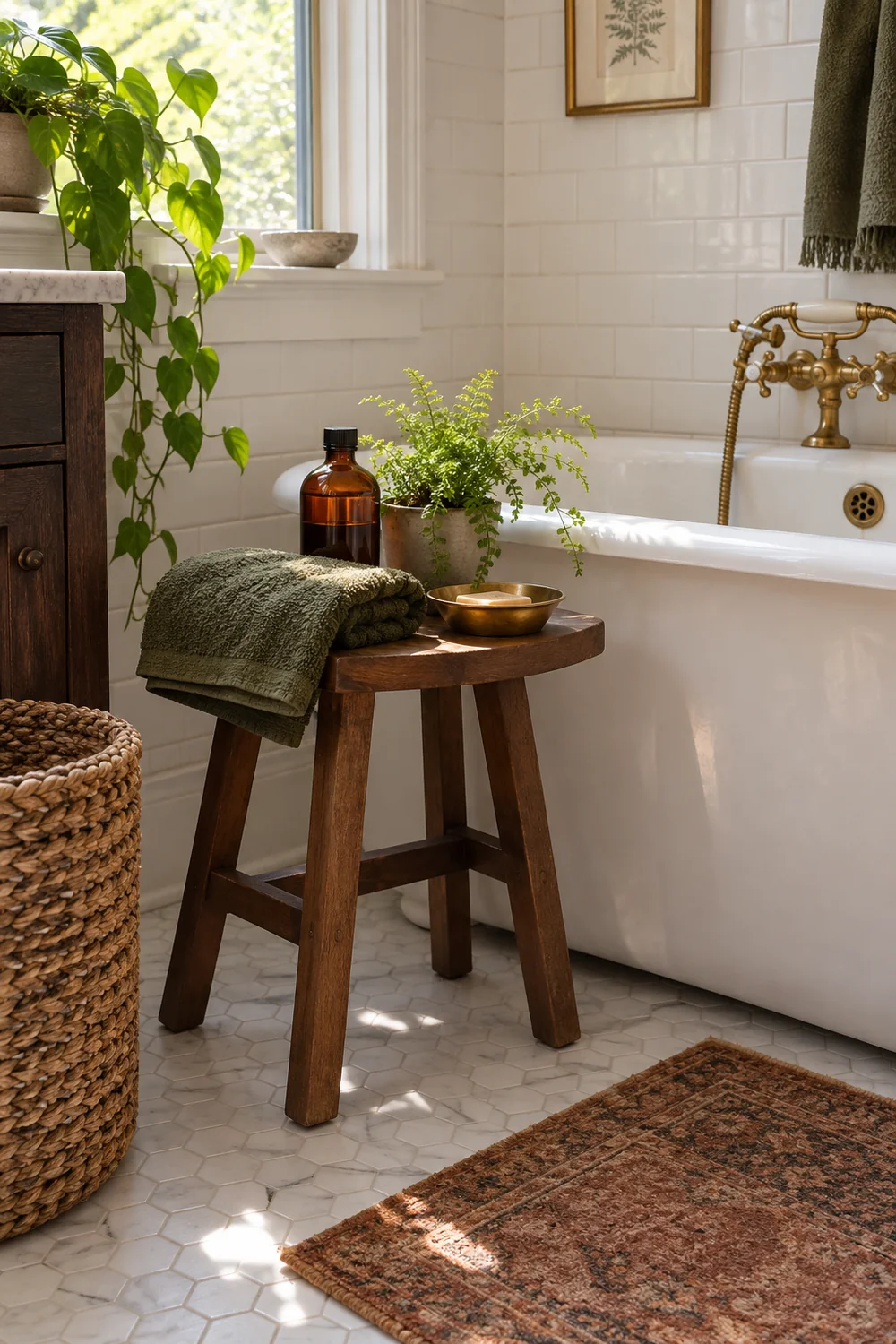
Dark cottagecore depends on visible possessions, but visible does not mean everything is on display. Divide belongings into three groups: daily use, meaningful display and concealed storage. Daily objects should sit close to where they are used. Display pieces need breathing room. The rest can live in matching baskets, boxes or closed furniture so the apartment remains easy to reset.
For the living room in particular, my renter friendly wall decor guide compares supported art, portable lamps and measured storage with the room you actually have.
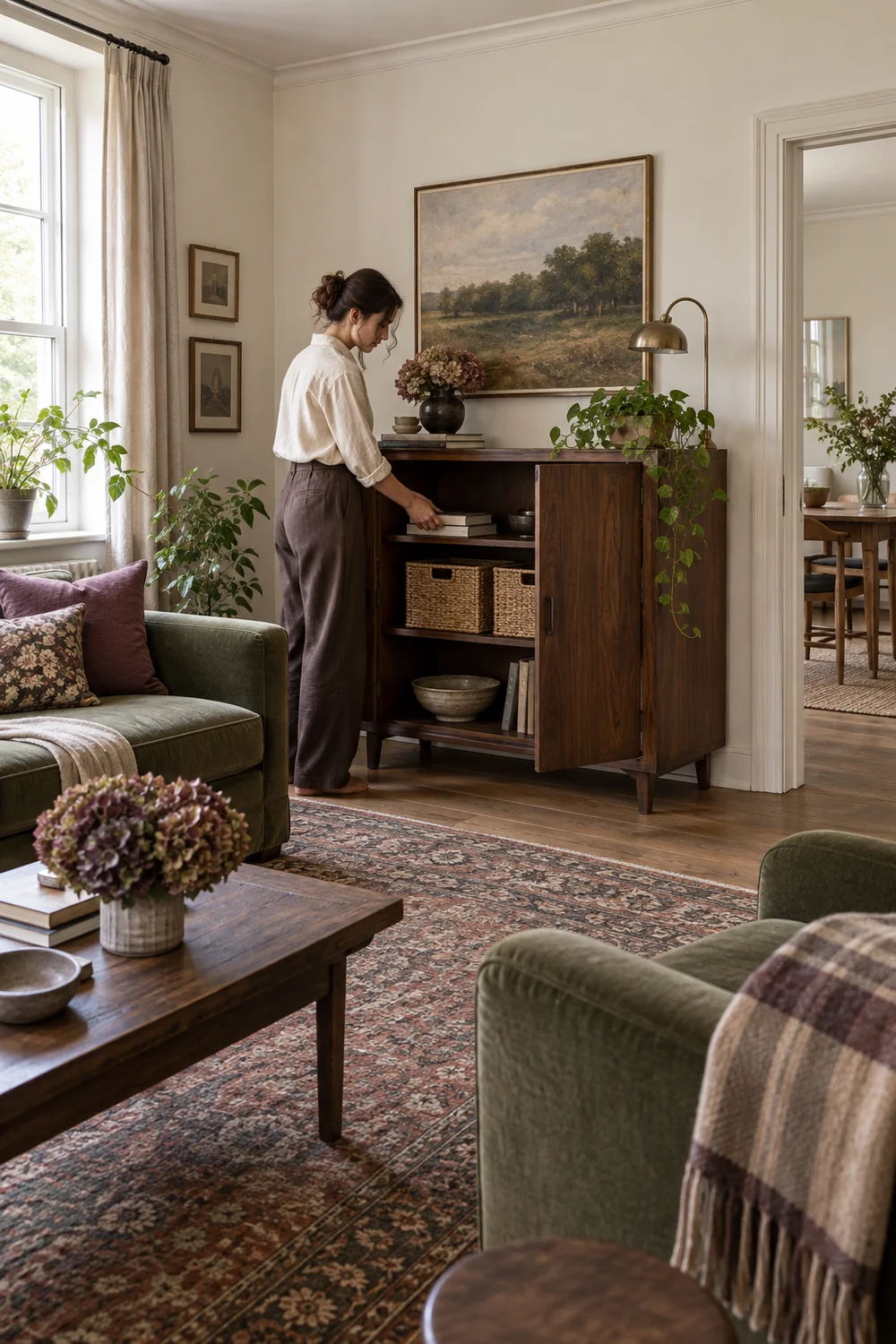
Repeat the same lighting logic in every room. Use clear daylight during the day, then combine a useful task lamp with one softer background source after dark. Plug in lamps are easier to take with you and allow light to sit where the activity happens. Keep shades large enough to diffuse the bulb and choose positions that do not create trailing cables across circulation routes.
Give collections a simple rotation. Display a small group of books, prints or found natural objects, then store the rest and exchange them when the season or room use changes. Rotation preserves the sense of discovery without asking every shelf to carry everything at once. It also makes packing easier because storage boxes are already labelled and the most fragile objects have a known home.
Before buying another decorative object, ask whether the room lacks light, storage, softness or a focal point. Solve that need directly. A lamp fixes a dark reading chair. A large basket contains spare blankets. One framed print gives a blank wall focus. This rule keeps the scheme practical and makes every addition earn its place.
Walk through the apartment at the busiest time of day and look for friction. A basket that blocks a door, a lamp cable across a path or a stool that must be moved for every meal is not a successful layer. Adjust those details before taking final photographs. The best version of the style should support ordinary habits so well that the room remains convincing after the candles and fresh branches have gone.
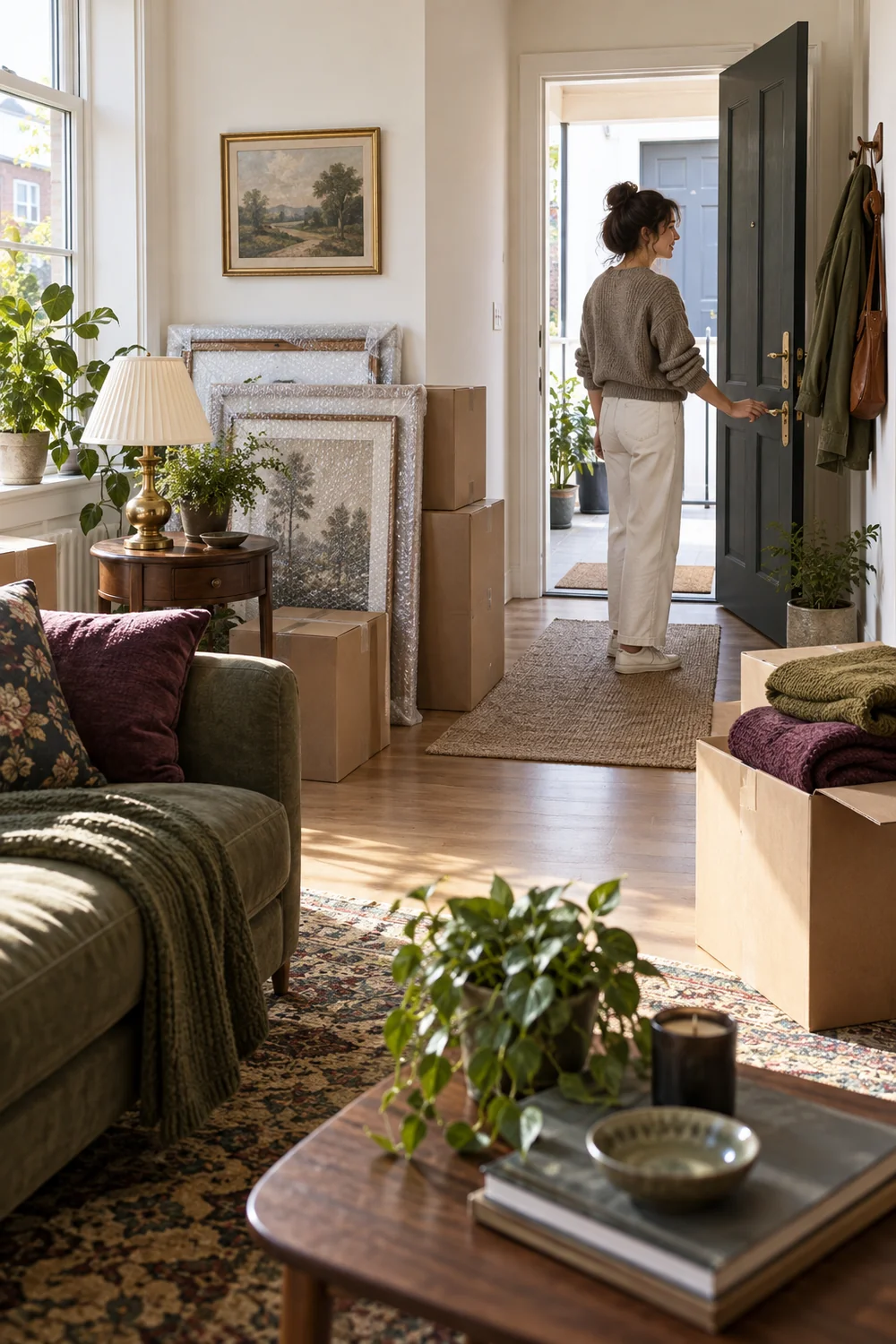
Finish by making a simple removal plan. Keep receipts and fixing instructions, label any original fittings you store, and photograph each room once the work is complete. Pack spare paint cards, fabric samples and a list of the palette colours with the move file. When the next home is different, these references will help you adapt the scheme rather than recreate it blindly. A successful dark cottagecore apartment is not defined by permanent beams, old stone or painted walls. It is defined by useful rooms, visible natural texture, warm light and a collection of portable choices that feel personal. If every major piece can serve the next home, the apartment will feel settled now without making the eventual move harder.