Newsletter Subscribe
Enter your email address below and subscribe to our newsletter

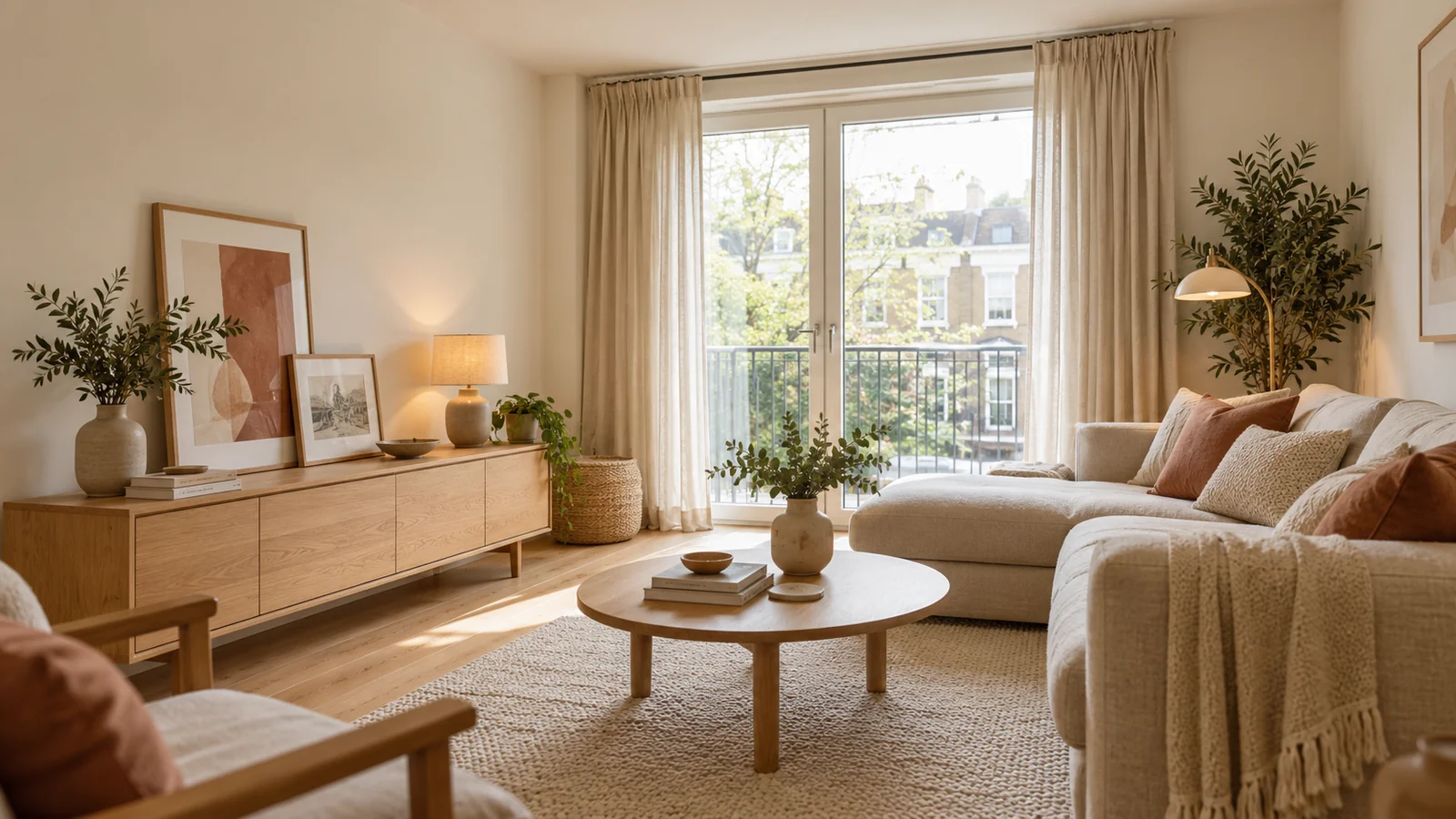
Renter friendly wall decor should begin with the room you have planned, not a promise on a packet that says it is removable. I would choose each art piece, lamp and fabric treatment for a clear job, then check its size, support, cable route and your own tenancy terms before placing it. A warm modern living room can feel finished without paint or new holes, but the pieces still need to work together. This article is the selection stage: you should already know where you sit, walk, read and need storage. I will show you how I would compare practical ways to give a fixed wall character, choose useful floor and table lighting, work with the existing window, and decide which finishing pieces are worth keeping. You will leave with a shortlist you can measure and check rather than a vague collection of rental hacks.
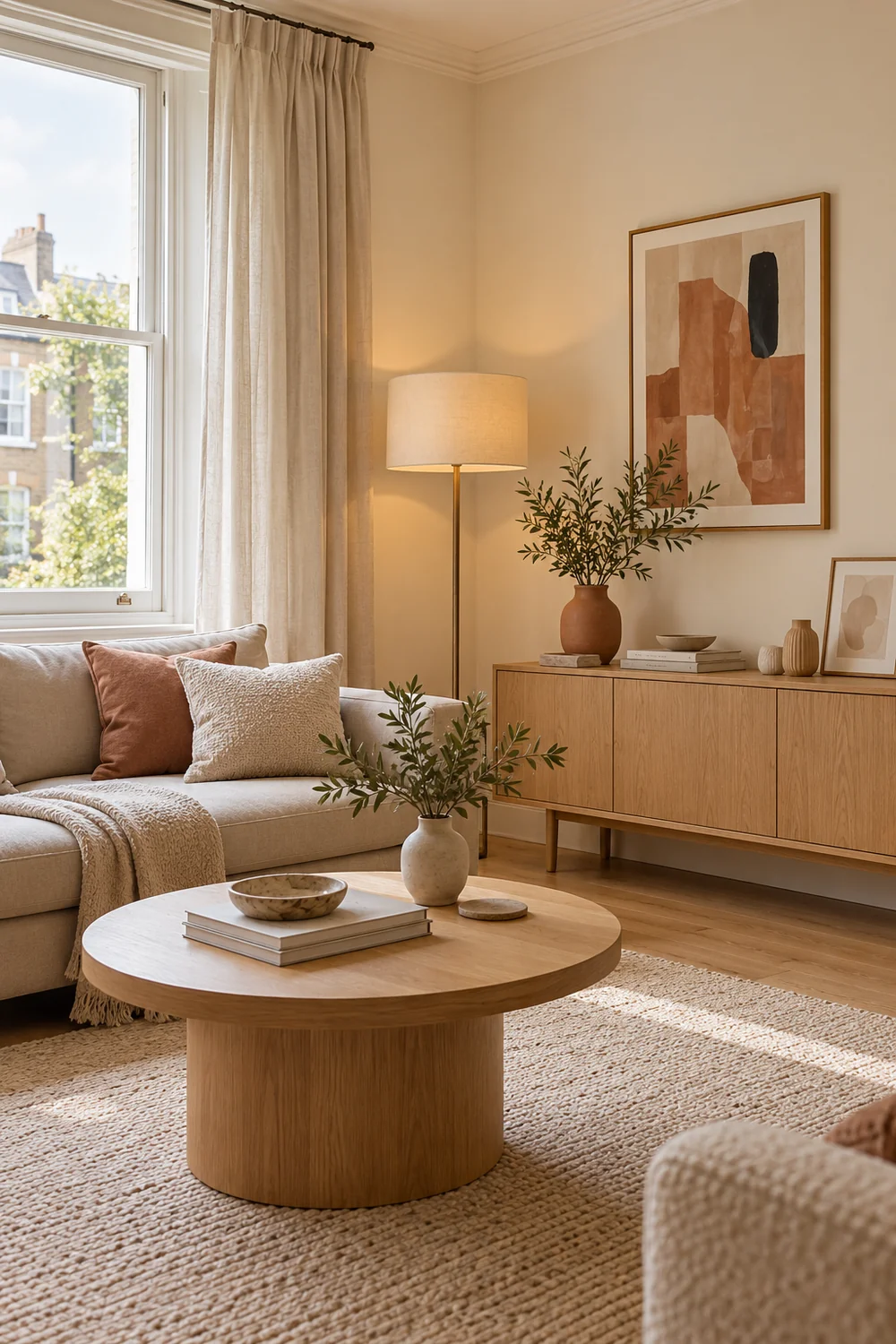
Bring your renter friendly living room plan into the room. Mark the empty wall or corner that needs a job. Write beside it what the job is: hold art, light a chair, store books, soften glare, or give the seating group a visual centre. Then mark the width, height, nearby socket, door or window clearance and any furniture that will remain. A decorative item that cannot fit those conditions is not the right item, however good it looks online.
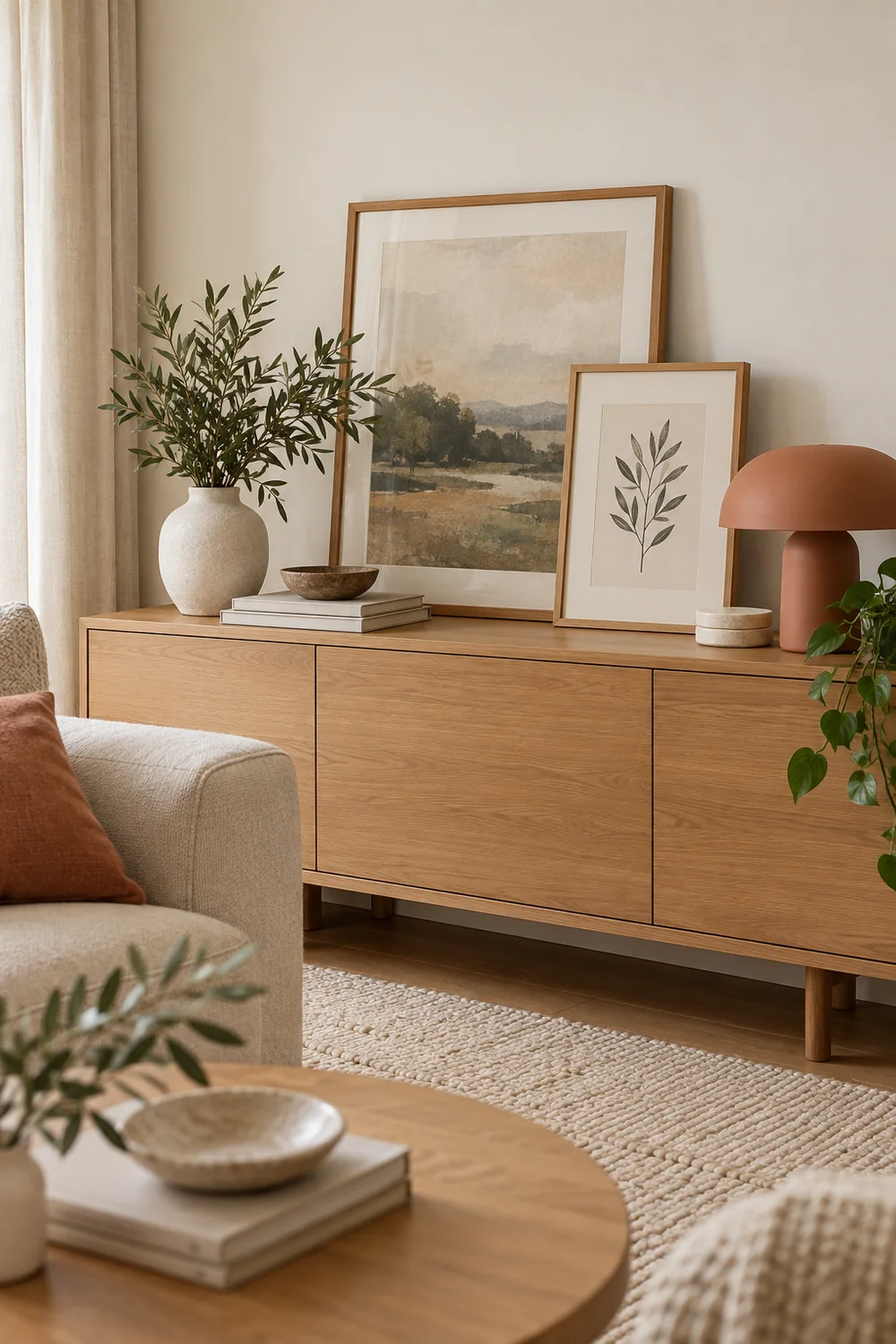
I would separate the choices into three permission groups. The first is simply placed furniture and textiles that need no change to the building. The second uses an existing fitting such as a curtain track. The third changes or attaches to a surface and needs careful checking. Your agreement, the property condition and the product instructions decide whether that last group is possible. Do not assume all renters face the same rule, or that every adhesive, hook or lamp installation can be removed without a mark. If you cannot confirm the method, choose a placed alternative.
Set a budget for the whole finish rather than buying art and discovering there is nothing left for useful light. I would rank the jobs by daily value: a lamp you need every evening, storage that clears the floor, fabric that improves a bare window, then art that completes the composition. Another renter might rank those differently. The point is to make each purchase answer the plan.
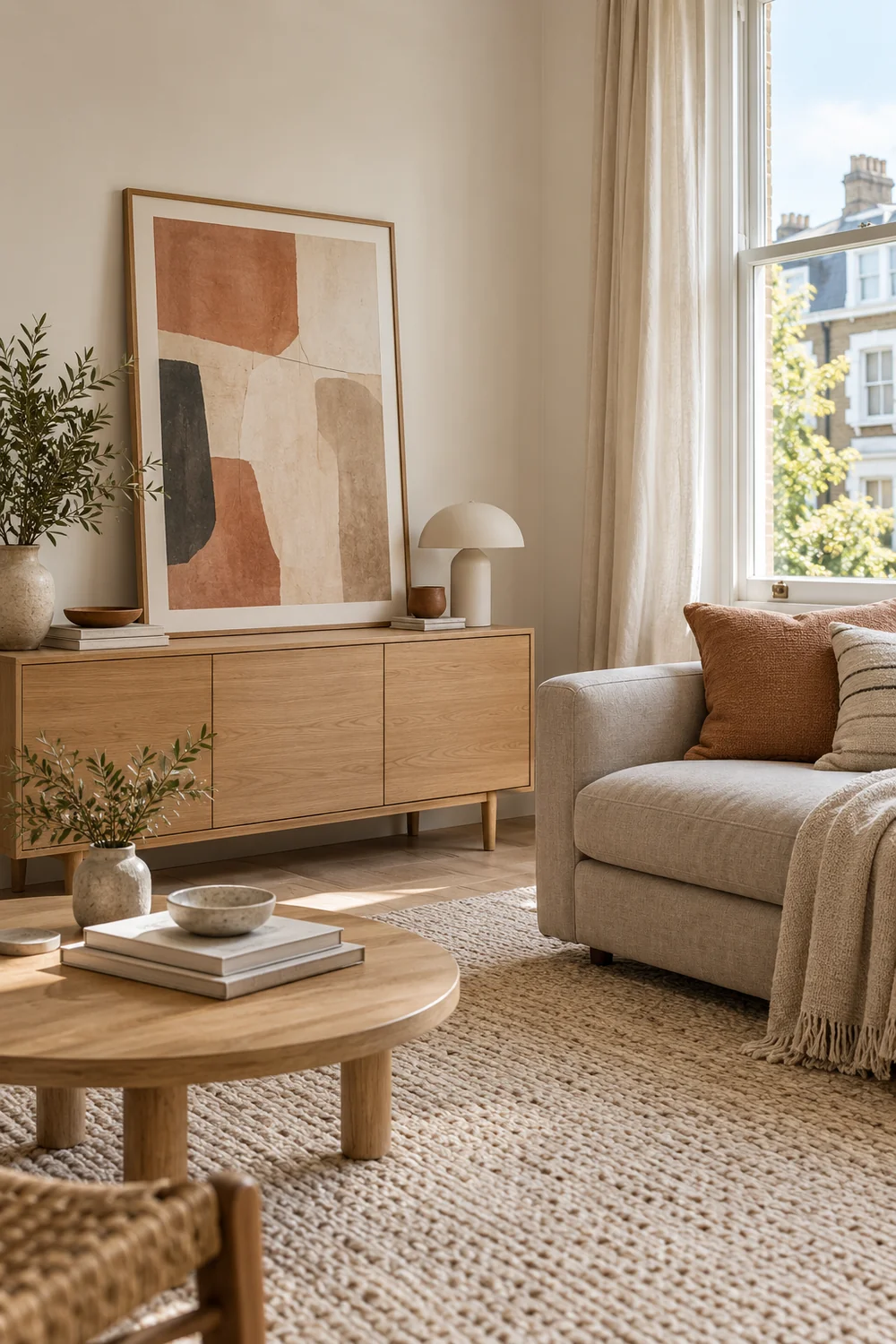
The dark cottagecore apartment uses movable layers in a different aesthetic. It is a useful reminder that the finish can live in objects and fabric even when the walls remain untouched. This warm modern room simply uses a lighter base and fewer, stronger forms.
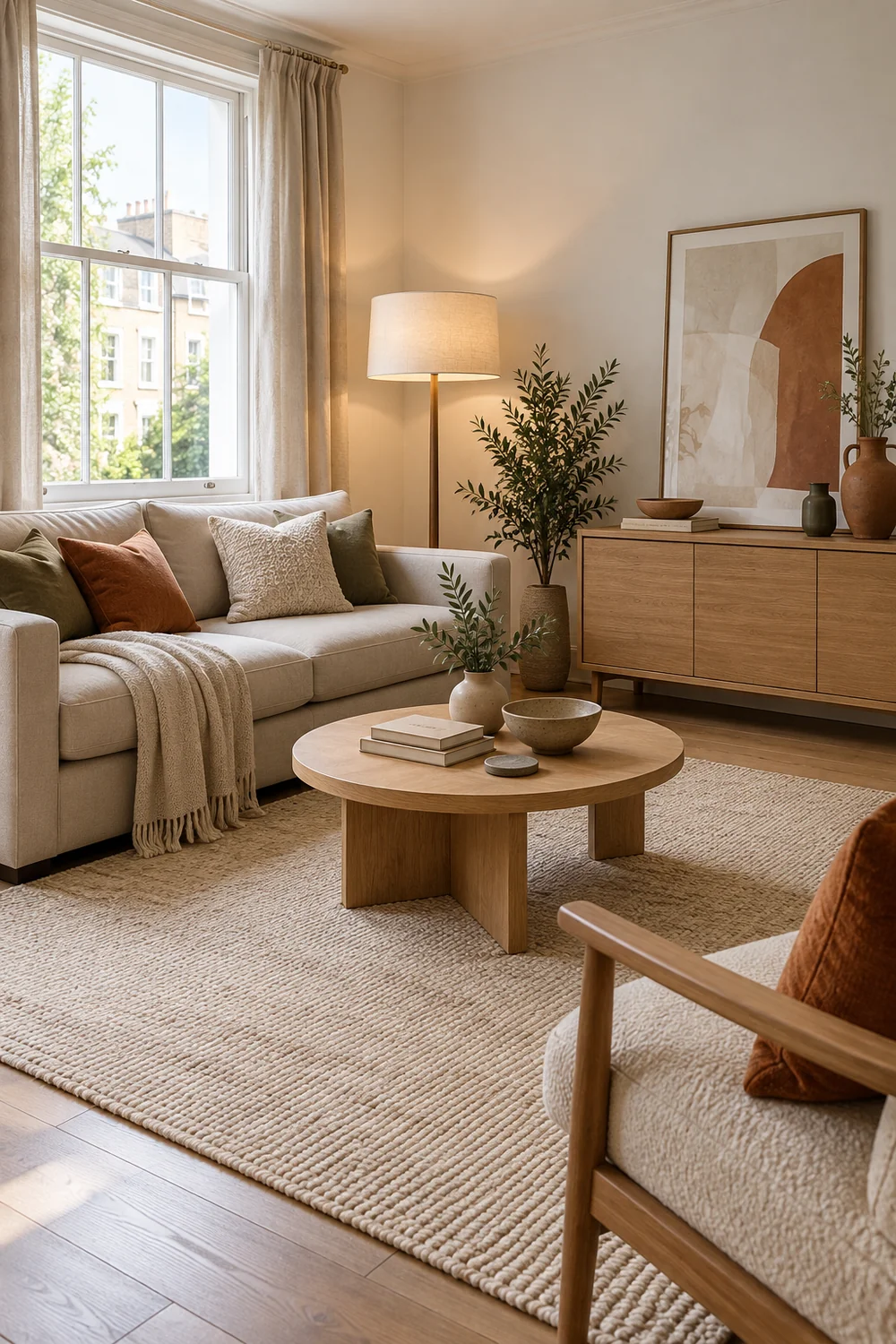
I would compare three ways to give a wall presence. First, a low sideboard with one modest framed work and a ceramic object on top can make the wall feel composed while adding storage. Check that the cabinet is stable, that the display cannot be easily knocked and that the frame is supported according to its maker's guidance. Second, a floor standing screen or bookcase can create a vertical element, if it fits the route and can be used safely under its product instructions. Third, if the property and fitting method permit it, a carefully placed wall piece can free the surface below. That last option is conditional, not the automatic renter answer.

The scale should respond to the furniture beneath it. A tiny print above a wide sofa may look lost; several small frames can become visual clutter. I would test paper shapes on the wall or lay the art dimensions out on the floor before ordering. Then sit where you normally sit and look at the proposed arrangement. The view from the doorway is useful, but your everyday view matters more. A strong art choice can repeat the muted clay of a cushion, the dark line of a lamp or the pale oak of a cabinet without matching all three.
I would avoid building an entire scheme around a product claim of easy removal. Finishes and previous paint condition vary. If a wall solution is uncertain, the rental living room ideas page shows how I would make the seating, textiles and light carry the look instead. The room can have character without making the wall the project.
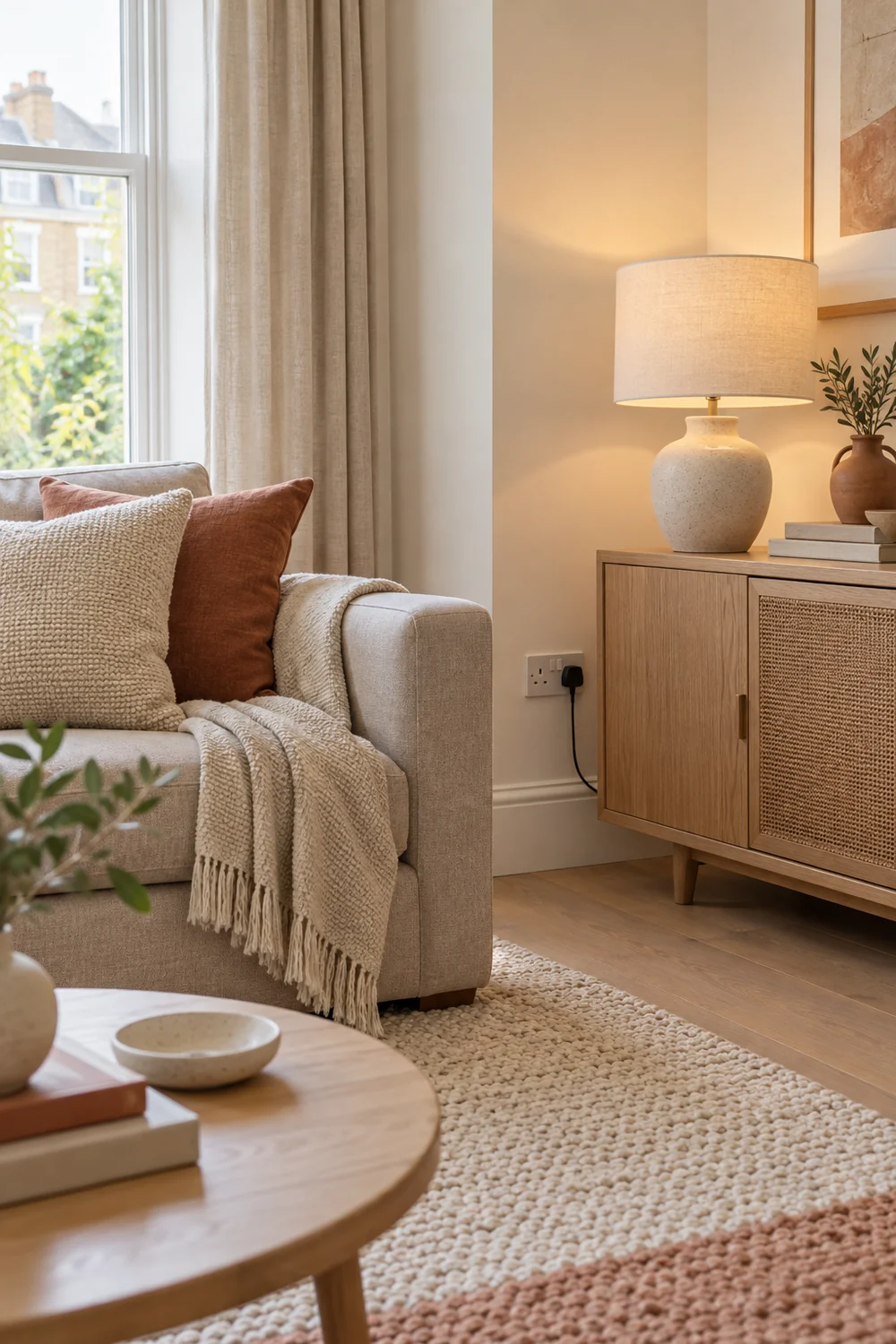
For your shortlist, record the art dimensions, display method, supporting furniture footprint and what you must confirm before setup. Write “permission unknown” where it is unknown. That small note is better than a confident but unsupported assumption.
Use the plan to identify the first lamp's task. If you read at one end of the sofa, the light should reach the page without shining into another person's eyes. If the room is mostly for conversation, choose a shade that spreads light across faces and materials rather than a narrow beam at the floor. If a cabinet is the main visual anchor, a smaller lamp on it can add depth behind the seating. I would select light for those jobs before choosing a sculptural base.
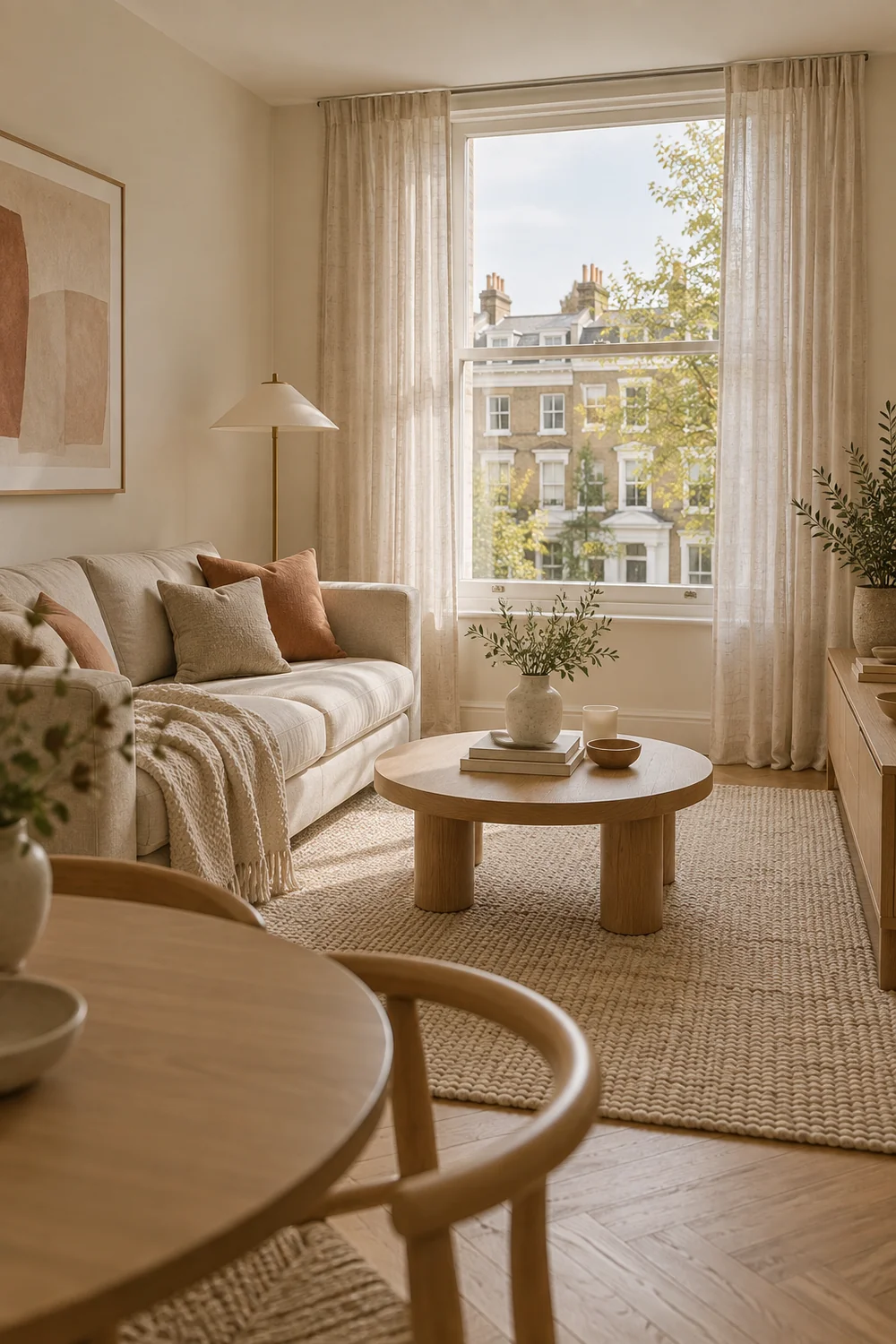
Measure the available floor beside the chair and the height of any table you will use. A floor lamp must stand where it cannot be tripped over or knocked, and a table lamp needs a surface that supports it. Check the cable length against the actual socket location, then draw the cable path. Keep cords away from the route and follow the lamp maker's instructions. I would not buy a lamp whose cable only reaches by crossing the busiest part of the room. That is a layout problem to solve before purchase.
The modern living room lighting section explains the value of more than one light layer. Here I would apply that general idea without altering wiring: one useful light at the main activity, one gentler source elsewhere and the existing ceiling light when needed. Choose shades and positions that let you see the room clearly after dark. Warmth does not require a dim, underlit room.
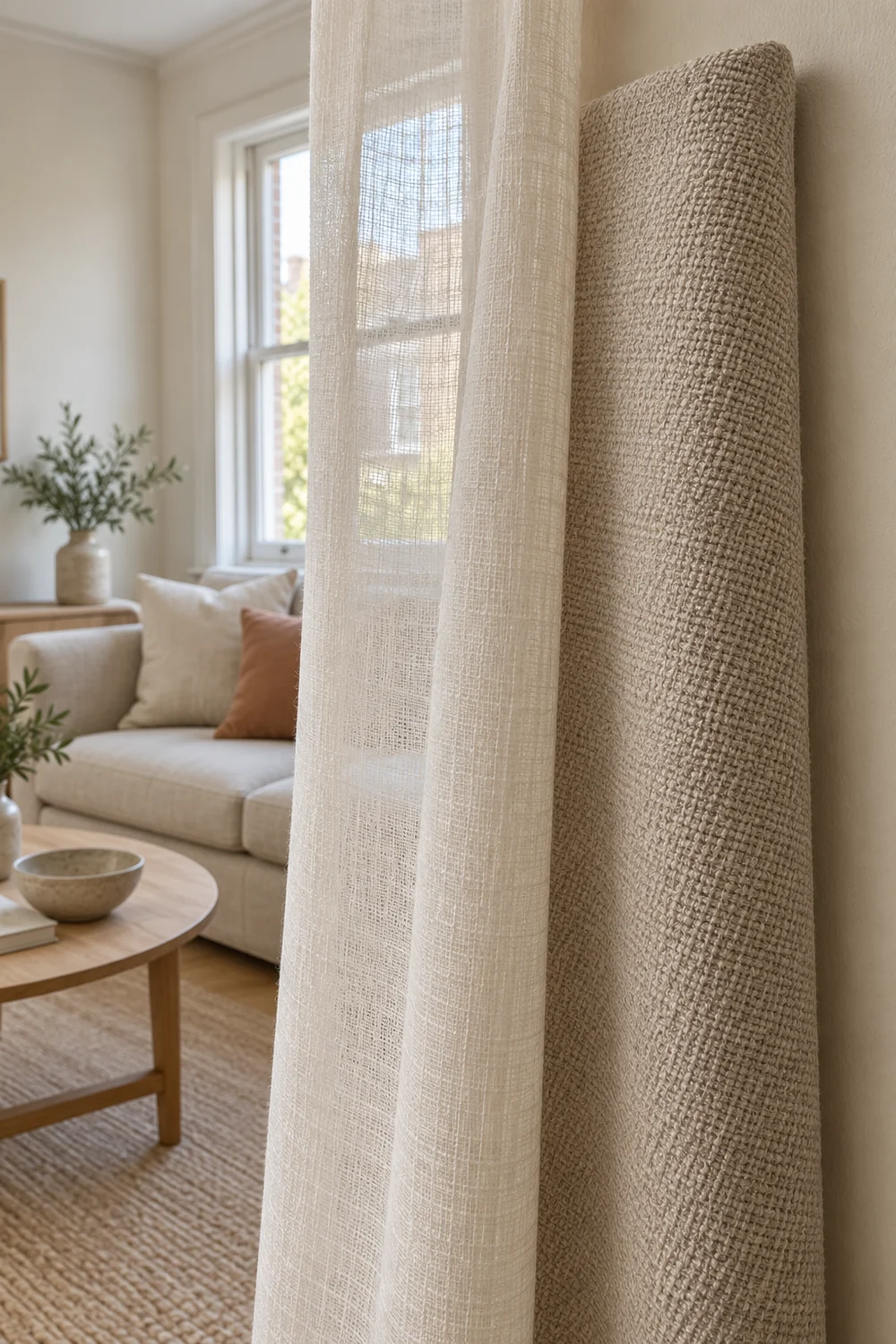
For the warm modern palette, I would compare a matte black slim floor lamp with a cream shade against a pale ceramic table lamp. The dark lamp gives a clear vertical line beside the oat sofa; the ceramic one repeats the soft base. You might need only one of them if the room is small. Put their dimensions and light jobs in the shortlist, then check them in daylight as objects as well as after dark as light sources.
Measure the current window, track or rod before you fall in love with a fabric. Record the available width, the drop, where the fabric can stack when open and whether a radiator or furniture interrupts it. If a fitting exists, check what it supports and whether you may use it. If there is no usable fitting and no permitted way to add one, do not invent a curtain scheme that depends on new holes. Use the window treatment already present and carry softness into the room through a rug, throw or upholstery instead.
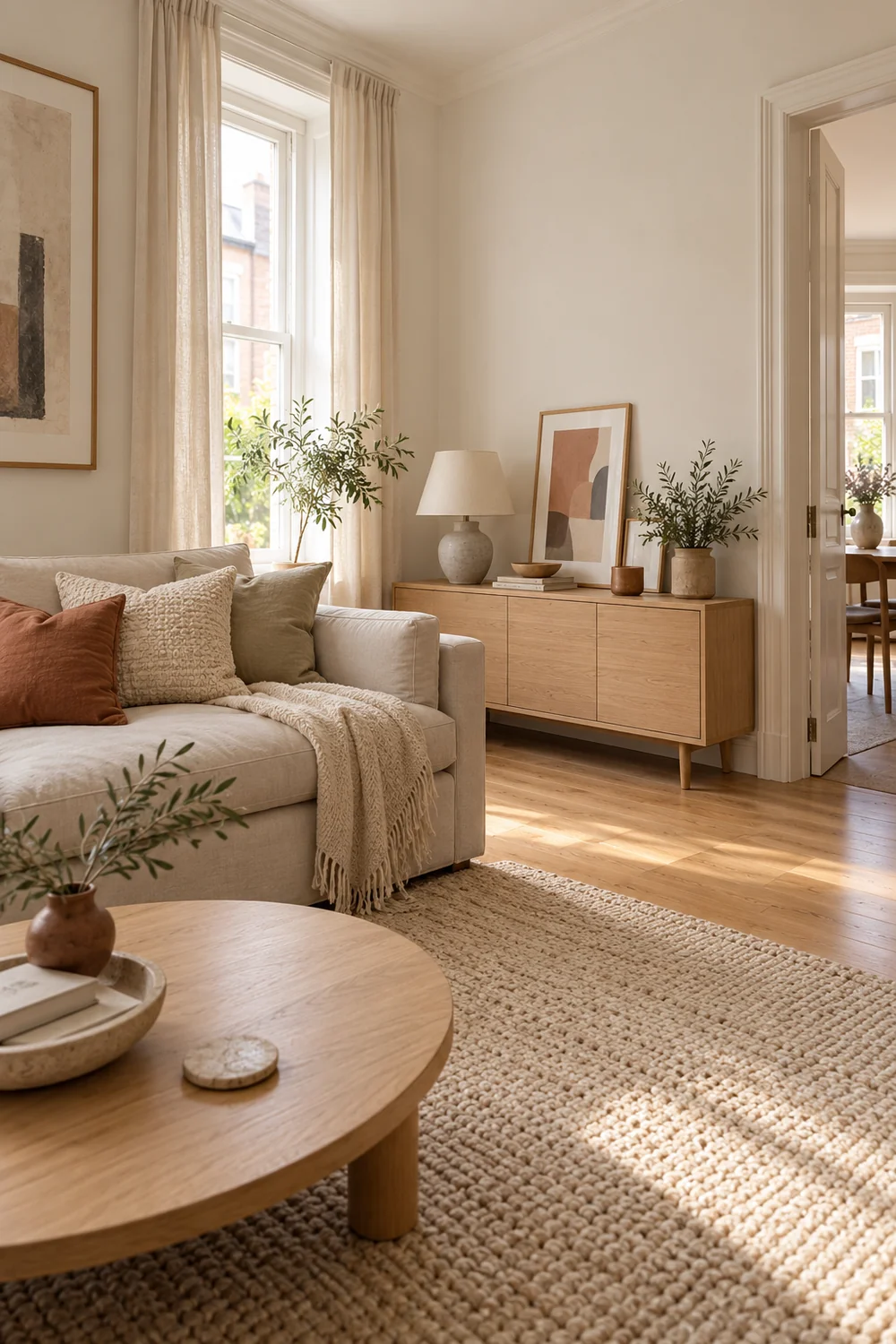
The living room curtains page compares texture, sheer layers and colour. I would take one lesson from it for this room: fabric changes daylight as well as appearance. A heavy panel can make a small window feel closed even when the colour is perfect. A lighter woven fabric can soften the edge of the window while leaving the room bright. Hold a sample beside the actual wall and sofa at the time of day you use the room most.
I would keep the textile palette small. If the rug is already thick and tactile, let the curtains be quieter. If the sofa is plain, one clay coloured cushion and a woven throw can carry the accent. A rug should relate to the seating footprint and lie well on the existing floor; follow its care and underlay instructions. The aim is a coherent group of materials, not a matching set of products sold under one room label.
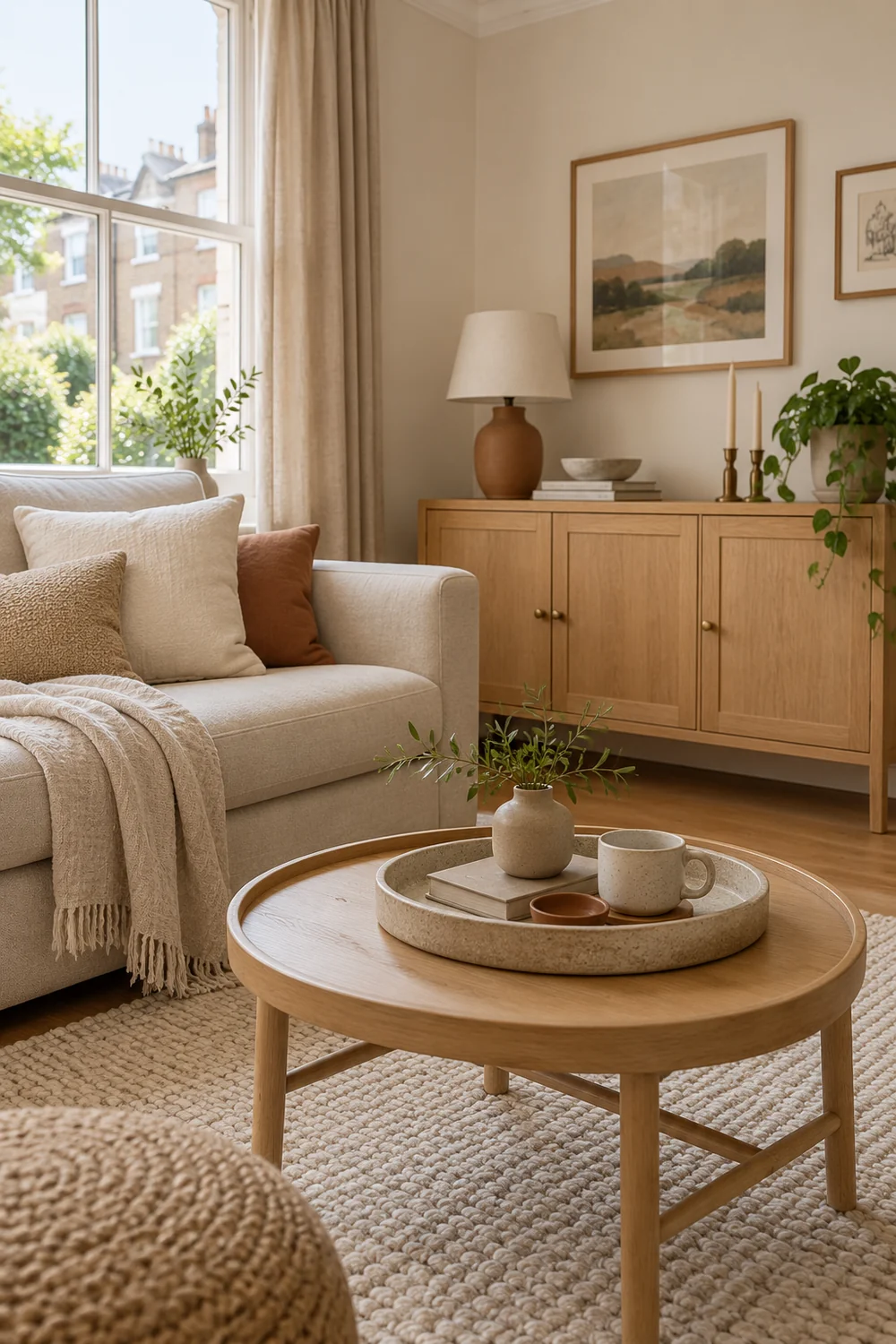
Add the fabric dimensions, cleaning needs and allowed fixing method to your shortlist. A portable textile is valuable because it can move, but only if it works in this room first.
Return to the furniture you are keeping. I would place photographs or samples of the proposed lamp, art, rug and cabinet beside one another, then ask what repeats and what competes. The pale oak sideboard can echo a table, but it does not require every leg and frame to be oak. A charcoal lamp can repeat a frame; the clay textile can appear in one other place. If all the pieces demand attention, remove one before adding another.
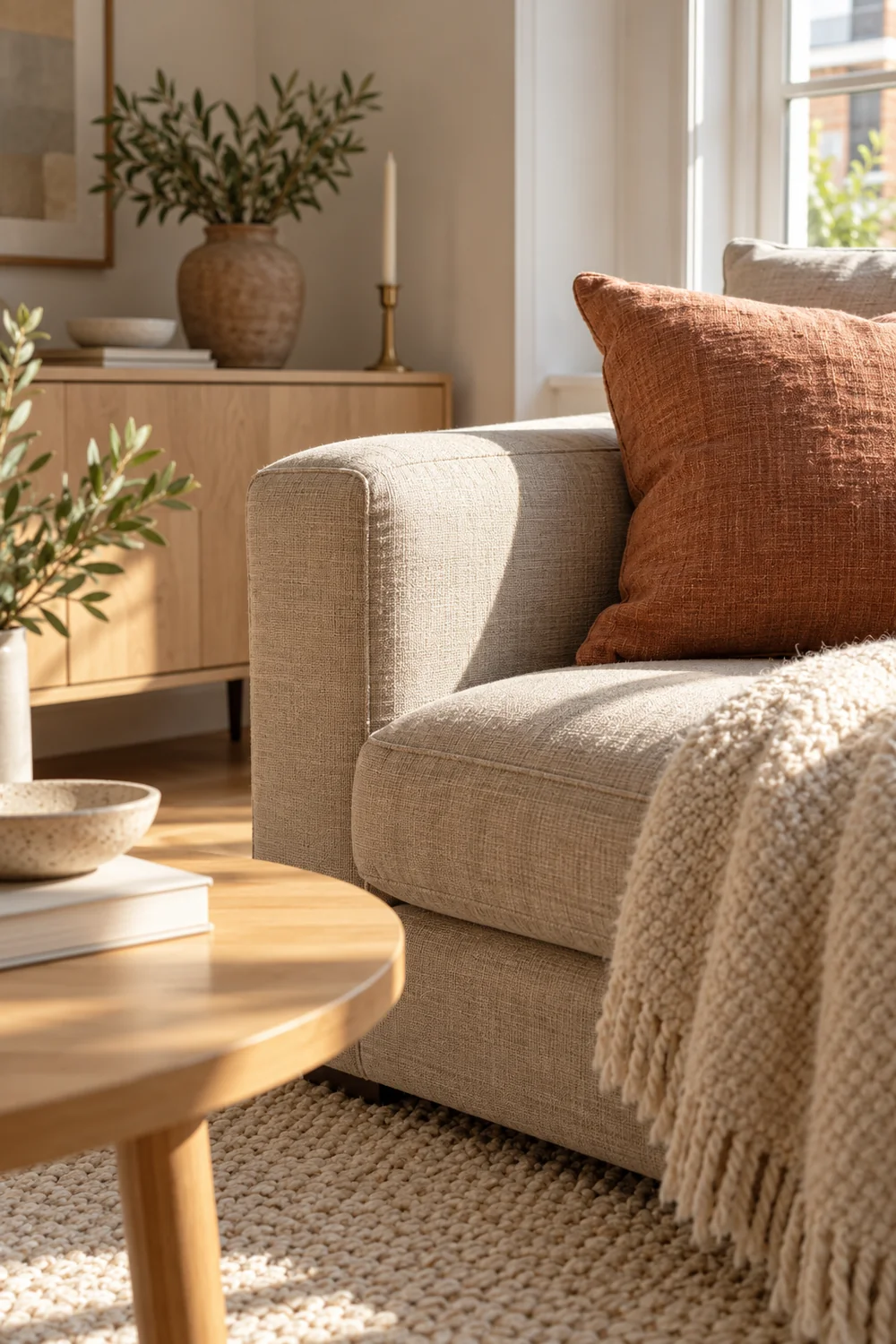
The living room furniture guide can help you compare the broad jobs of a sideboard, coffee table, chair or storage unit. This shortlist needs renter specific checks as well. Measure the item in both the current room and the likely route out through doors and stairs. Check whether it needs assembly or wall restraint according to its maker. If a tall item cannot be used safely under your situation, choose a lower cabinet or another storage approach rather than ignoring that requirement.
I would make a simple table for each candidate: job, width, depth, height, material, care, fixing or support, cost and move out plan. Use the same table for a lamp or an artwork, with fields that fit. This turns an emotional “I love it” into a decision you can still enjoy. If two pieces do the same job, buy the one that better fits the room and your likely next space. If neither passes, leave the gap visible rather than filling it with a compromise purchase.
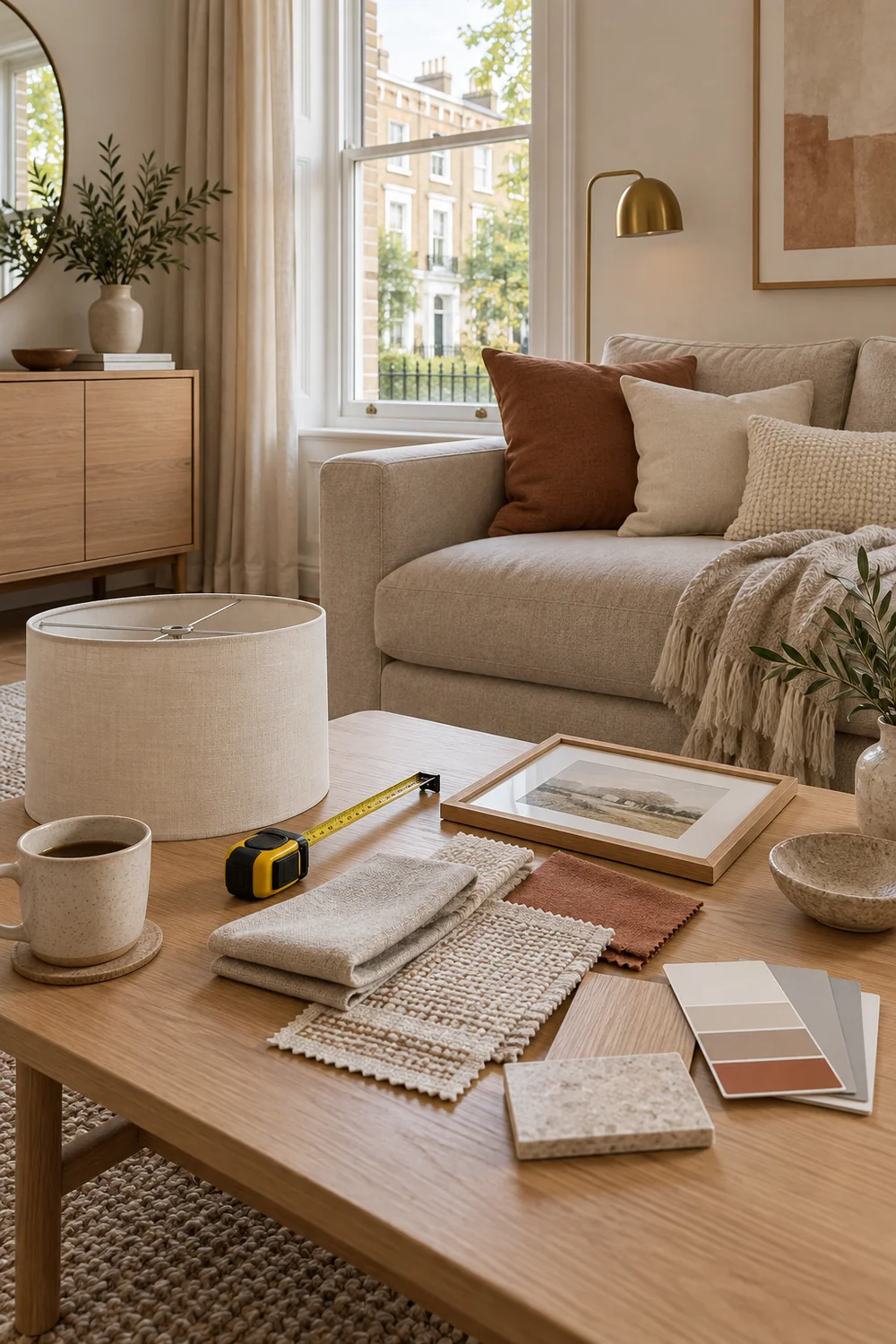
The final combination should not erase the original visual direction. Look back at the chosen warm modern room and keep its restraint. The finish succeeds when the room feels complete while the route, seats and daily surfaces remain useful.
Before anything arrives, photograph the relevant surfaces and record what belongs to the property. Then plan the setup in a sensible order: keep the room route clear, place large movable furniture, position the rug, set the lamps and check their cable paths, then add textiles and art. This order lets you see whether the large pieces already solve the room before smaller decorations fill the space.
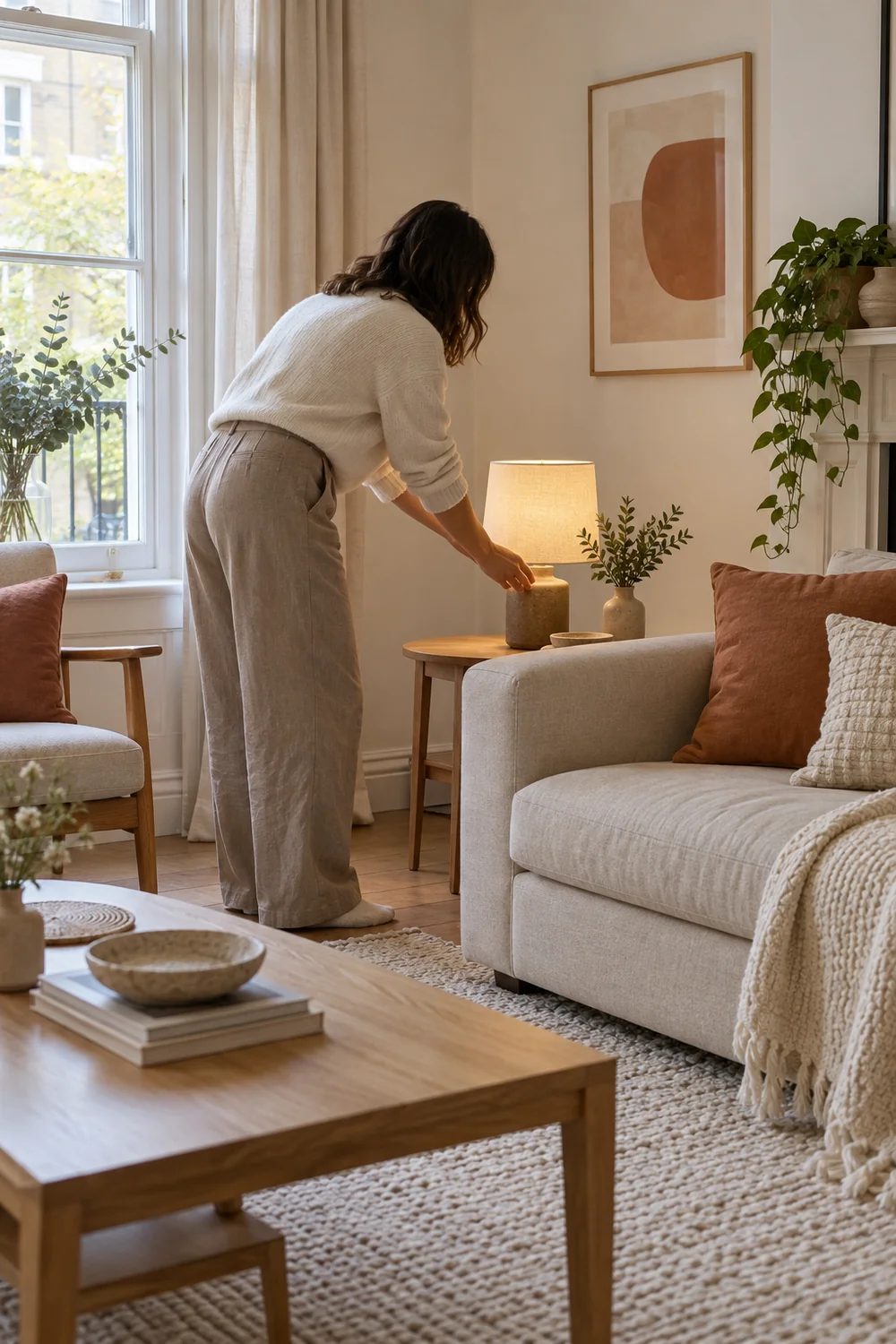
For every object that touches a wall or existing fitting, check the actual method with your agreement and the product maker. Do not treat “no drill” as a guarantee of no damage. If permission or suitability is unclear, use a freestanding or furniture supported option that meets the same visual job. Any electrical fixture beyond a normal portable lamp needs the appropriate qualified help and permissions rather than an improvised installation. The room should be comfortable to live in as well as easy to photograph.
If the setup reveals a blocked route or an awkward socket, return to the renter friendly living room plan. Move a smaller piece before ordering another extension or storage unit. I would consider the setup complete when you can enter, sit, use the light, reach storage and clean around the furniture without moving half the room.
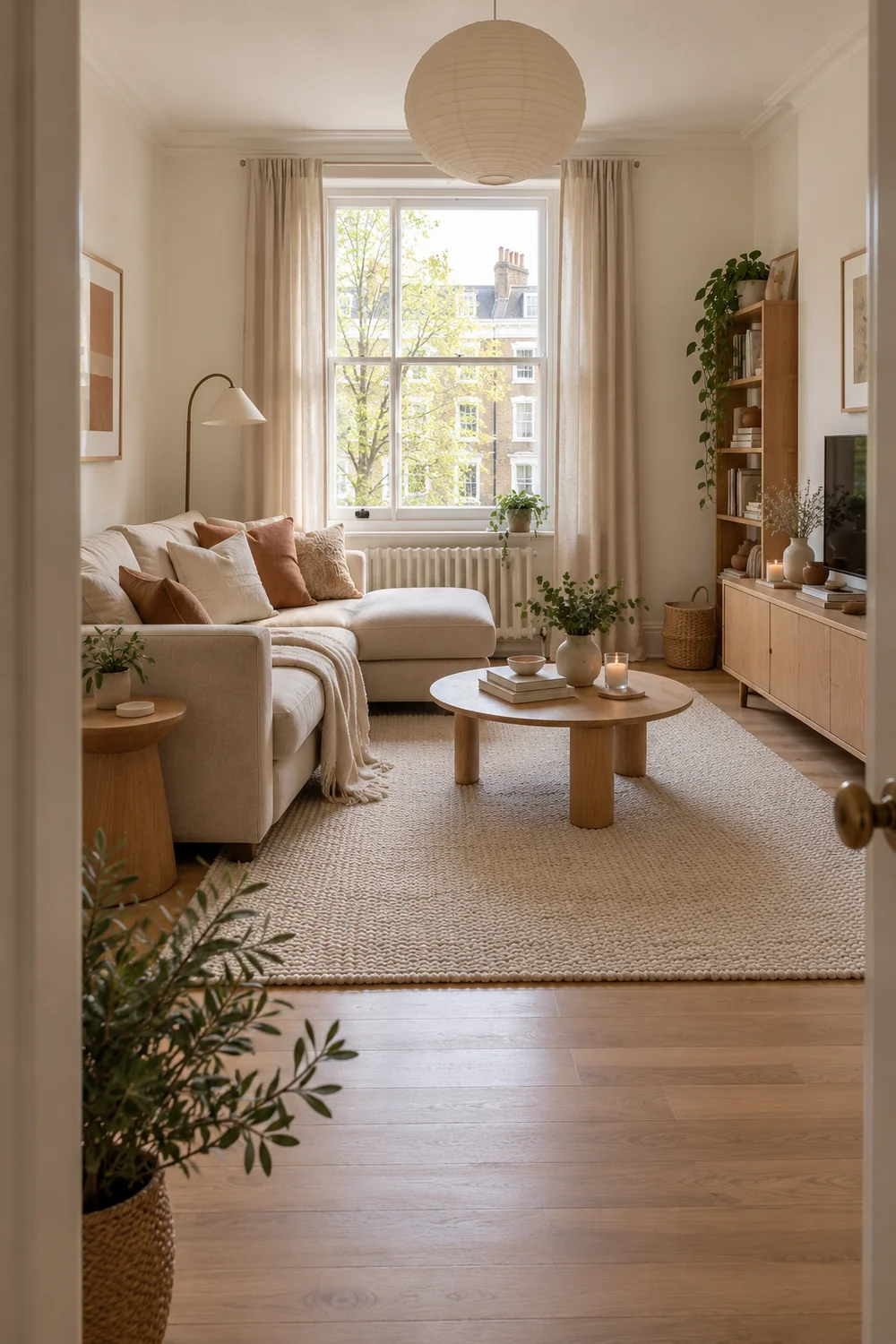
Keep the packaging and instructions for items you may need to move or remove later. Record the dimensions and exact position that worked. The next home may have a different shell, but a portable scheme is easier to adapt when you know which choices did real work here.
My final shortlist would name no more than a few decisive purchases: the lamp that serves the main seat, the textile that ties the seating together, and the art or cabinet that gives the plain wall a purpose. Each entry should state its job, measurements, surface or socket conditions, care and any permission to verify. Keep a separate “later” list for attractive pieces that are not needed to make the room work. This prevents the finishing stage from becoming endless shopping.
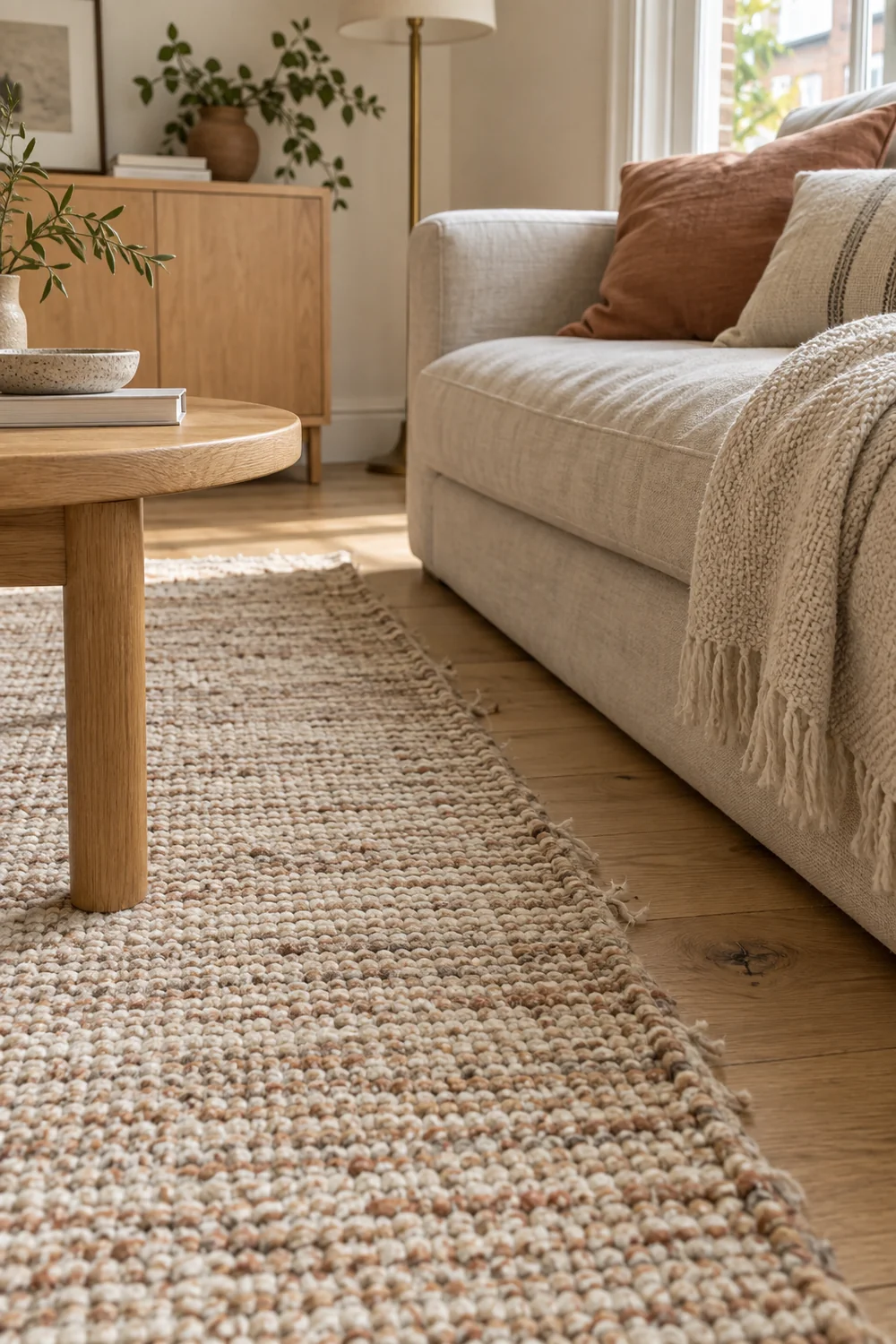
After living with the room, I would return to the plan instead of adding more decoration automatically. Check whether the route still feels clear when bags or guests arrive. Is the reading light in the right place? Does the textile wear or shift in a way you did not expect? Is storage close enough to the activity, or have objects started collecting on the floor? Look at the wall and furniture surfaces for marks or strain and follow the relevant product care instructions. This is a real aftercare visit, not a single cleaning tip.
If a lamp's position fails, compare its intended light job with another socket and the renter friendly living room layout before buying a replacement. If a wall display or textile is the problem, return to this renter friendly wall decor shortlist and choose another option that meets the same job with a better support or care method. If the room already works, leave it alone. A portable design is successful when you can keep living with it, adapt it and eventually take its useful parts with you.