Newsletter Subscribe
Enter your email address below and subscribe to our newsletter

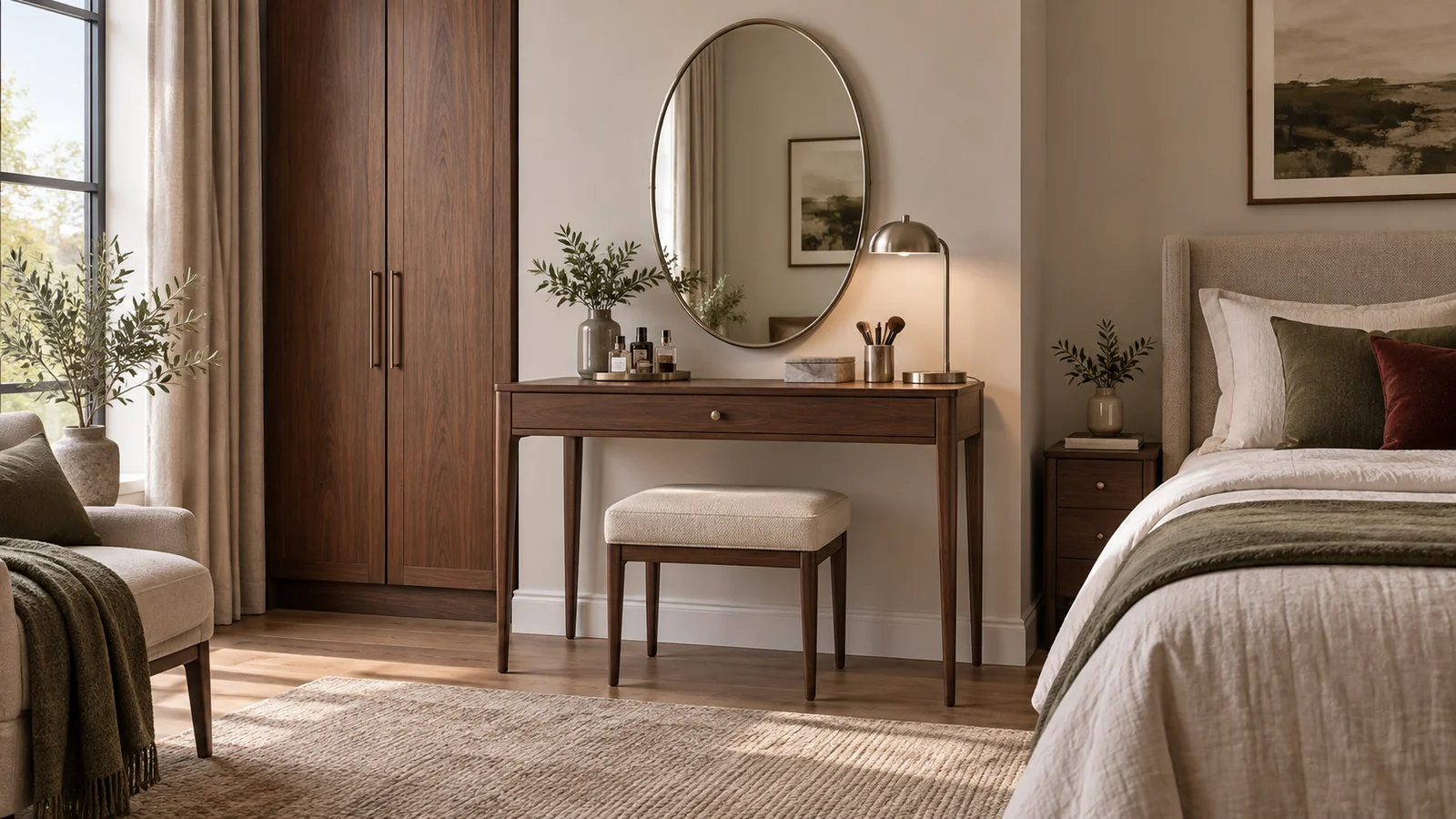
A measured bedroom vanity layout tells you where a corner can work. The next task is to choose pieces that actually obey that plan. I would take your marked table footprint, stool pullback, mirror zone, light notes and storage list into every comparison, rather than allowing a beautiful furniture photograph to reset the decision. This bedroom dressing table guide is for a woman fitting a seated daily routine around a bed and wardrobe that already belong in the room. I will compare the working surface, stool, mirror, light, drawers and materials as one setup. You will finish with a shortlist you can test, a sensible order for choosing or installing the pieces, and a way to adjust the corner after living with it. The aim is a bedroom that still feels restful when the routine is over.
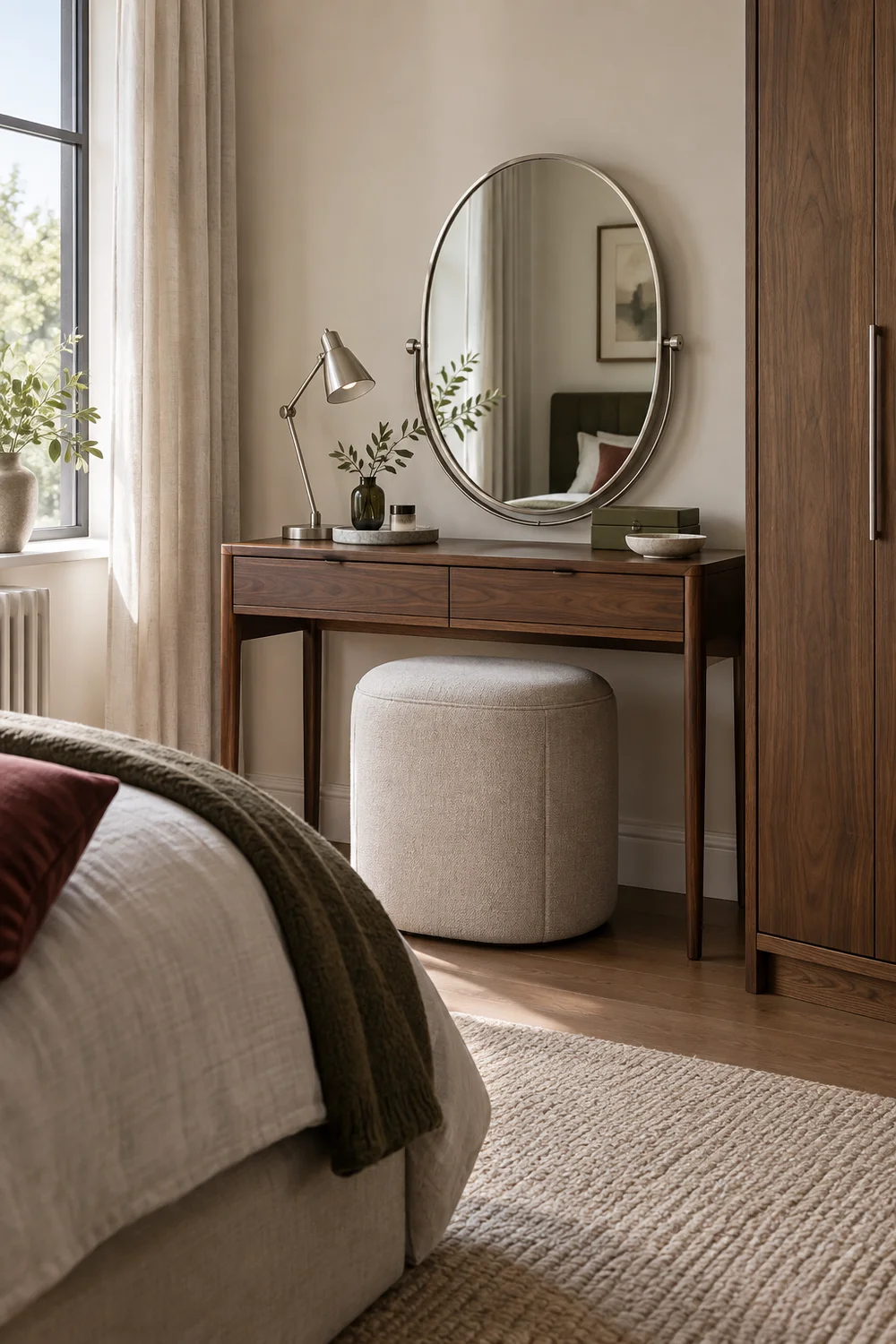
I would begin with your own maximum dimensions, not with a shop's category filter. Write down the largest table width and depth that left the route and wardrobe comfortable in the full size test. Note the stool space while seated and while tucked under the table. Mark the available wall for a mirror and the distance to a safe power point if you use electrical tools. These are limits, not targets; a slightly smaller piece may make the room feel better.
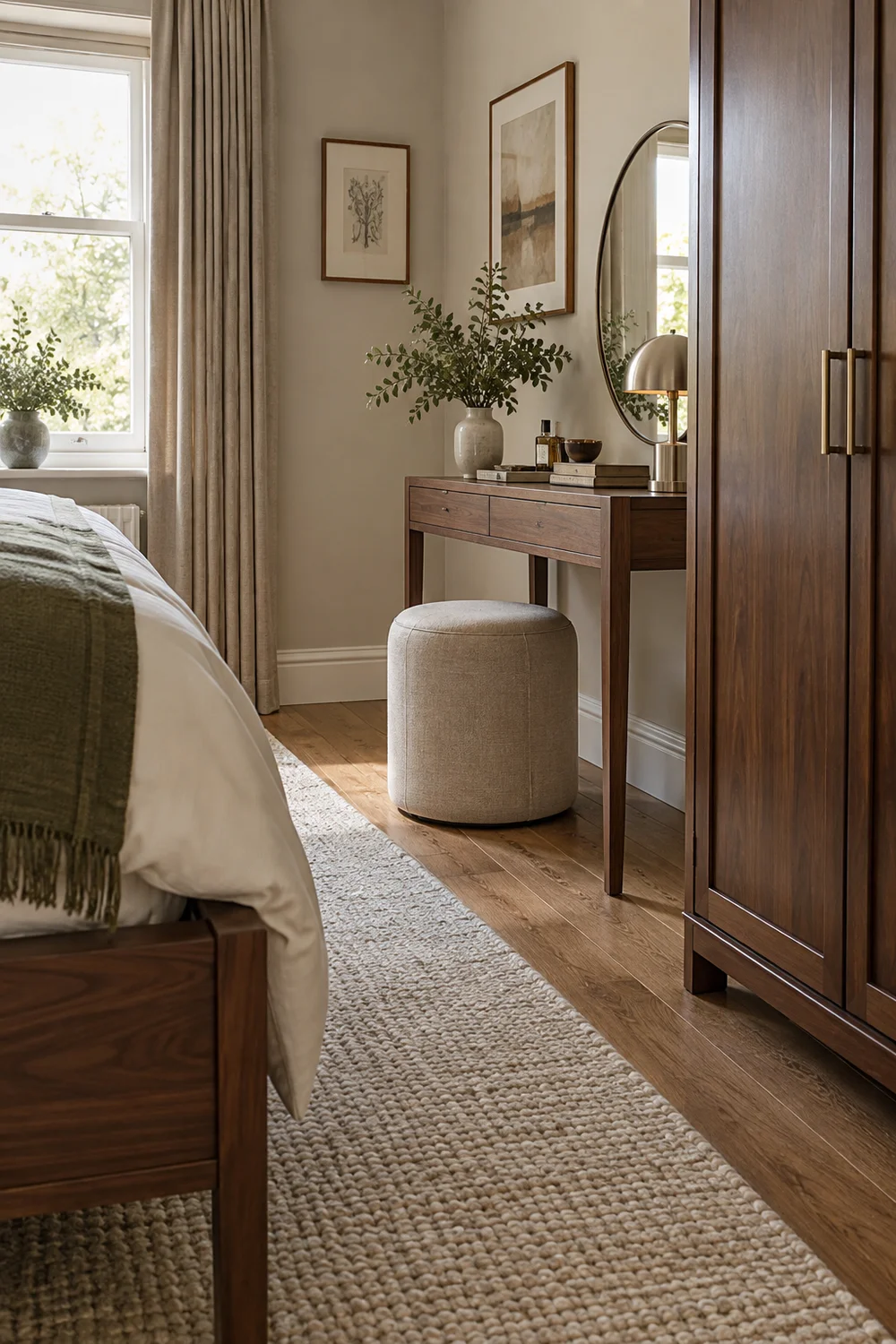
Keep photographs of the mockup beside any item you consider. Product pictures tend to show furniture in generous empty rooms, where neither a bed nor an open wardrobe reveals the difficult part. I would compare the actual outer dimensions, including projecting handles, decorative legs, mirror frame and drawer movement. If a listing omits a critical measurement, ask for it before ordering or measure the piece in person. Do not infer usable drawer size from the outside width.
Make the shortlist small enough to compare properly. Two or three tables with dimensions you can verify are more useful than a long saved board of attractive but unmeasured pieces. I would record what each candidate does well, where it exceeds the plan and which question still needs a sample or physical test. An unknown measurement stays unknown; do not quietly treat it as a pass because you like the finish.
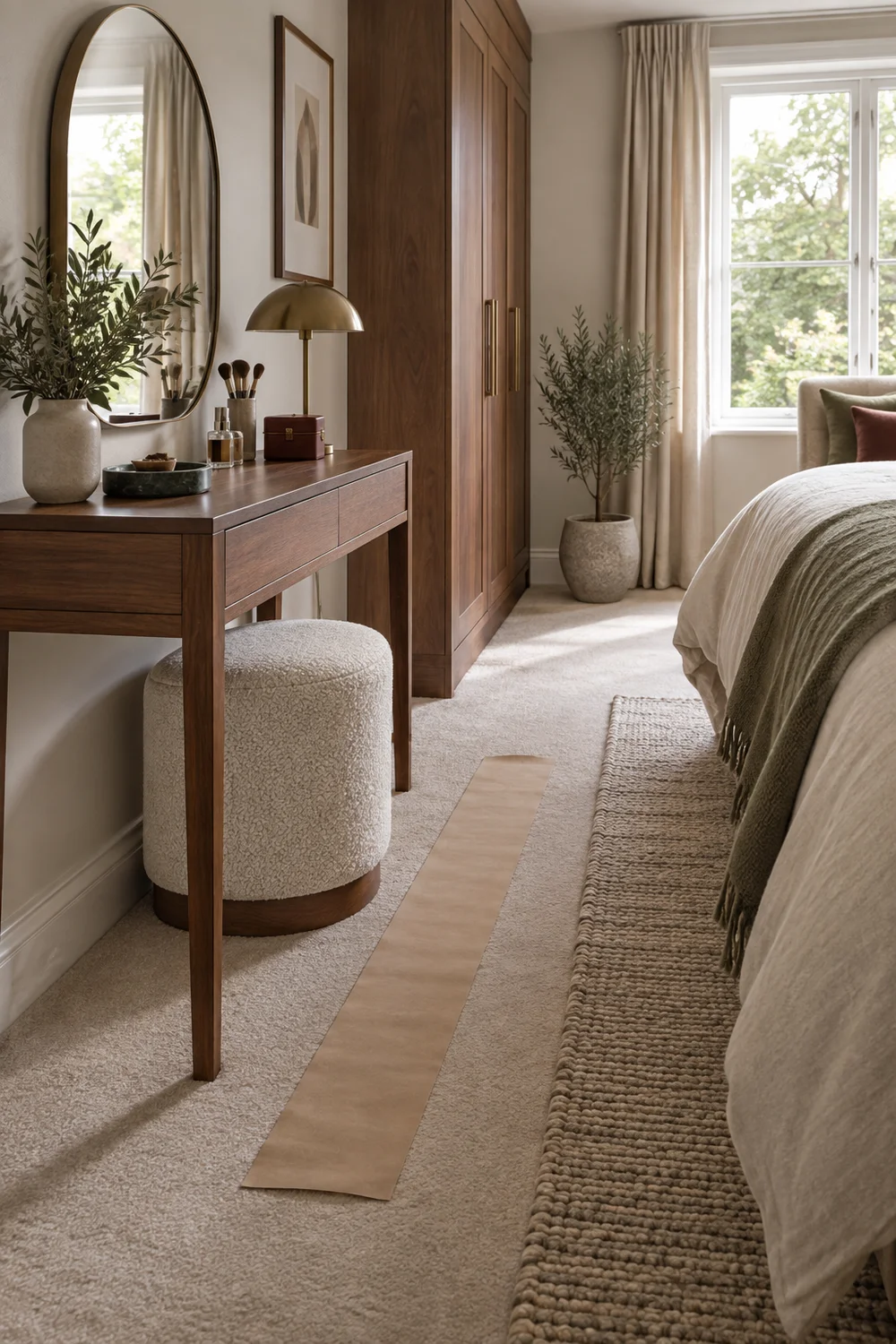
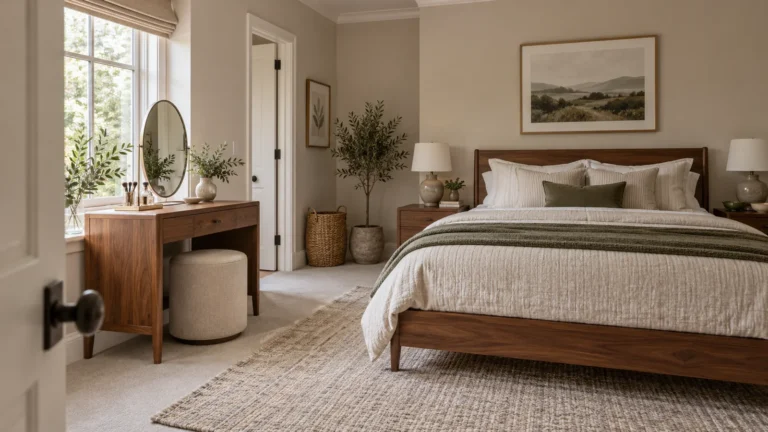
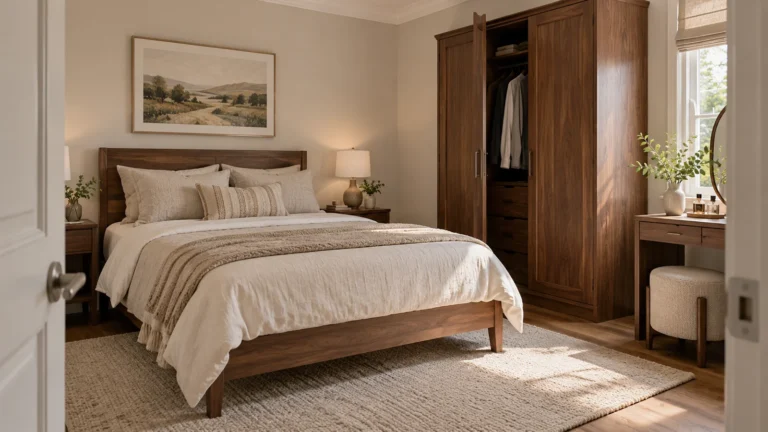
The small bedroom vanity plan is the reference point if you have not tested the footprint yet. Return to it if a candidate requires a larger stool zone, a different socket or a table deeper than you allowed. A selection is only decision ready when its dimensions satisfy the room that will hold it. I would reject a piece that asks the wardrobe to open less fully, even if its finish is perfect.
Place the daily objects on paper within the tabletop size you are considering. A mirror stand, tray, brush and the items you use together need positions that do not overlap. If everything barely fits with no room for your hands, the table is too narrow for that routine. A wider surface may be possible if it stays shallow; a deeper piece can be harder to walk around even when its width looks modest. I would use the room plan to decide which dimension is the real limit.
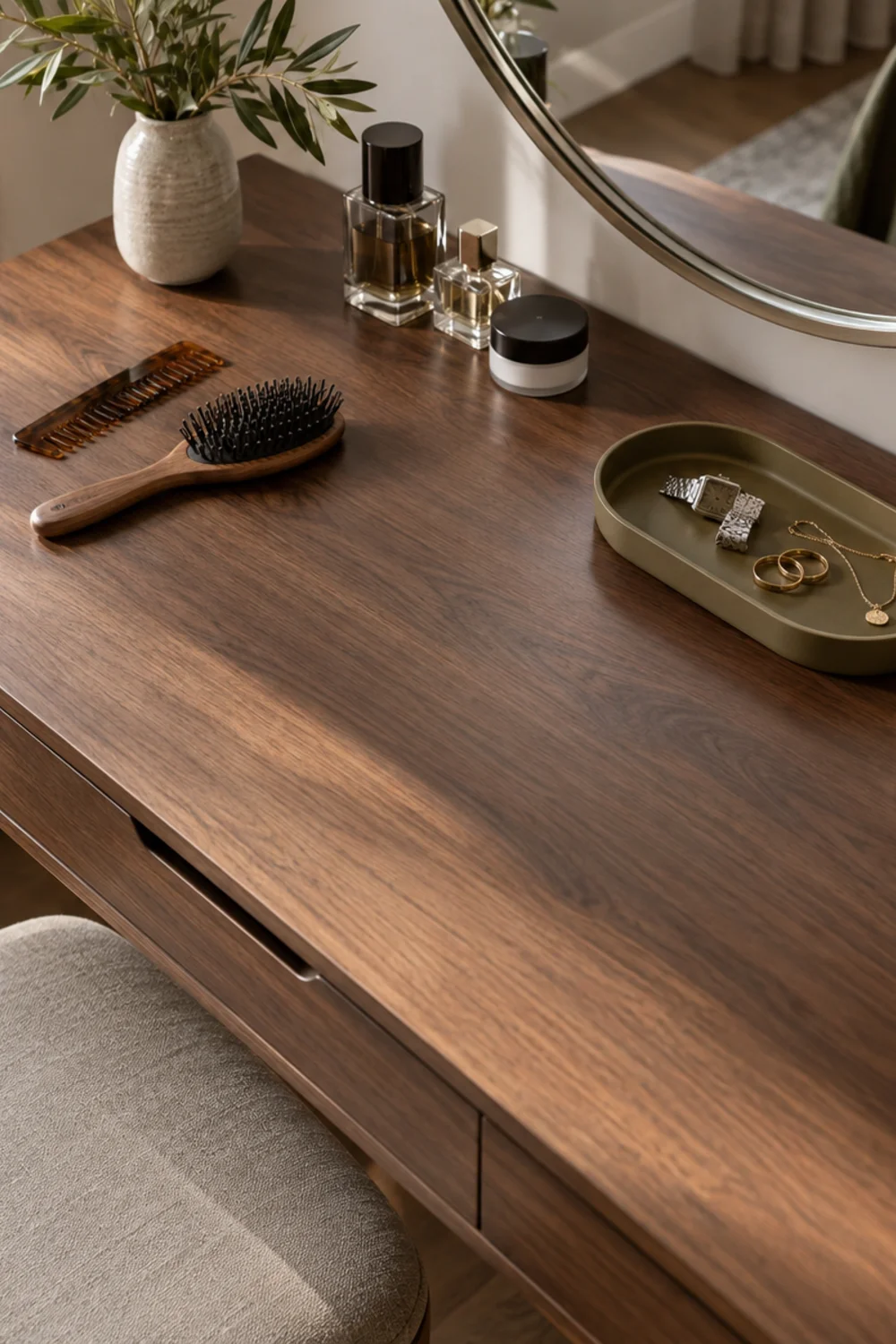
Check the underside as carefully as the top. A decorative apron or shallow drawer can reduce knee space. Sit at a table of similar height and depth if possible. Look for a stable surface, corners that feel comfortable along the route, and a finish you can clean according to its care instructions. Walnut or a walnut toned veneer can relate to the existing bedroom furniture, but I would inspect a sample in the room's daylight before assuming the wood tones match.
The general modern bedroom furniture guide explains the broader language of beds, dressers and simple lines. For this dressing table I would make a more specific decision: one useful working surface with drawers that open in the available space beats an elaborate piece that turns daily access into a puzzle. If the wardrobe already stores the occasional supplies, the table may need only one reliable daily drawer. If the vanity must hold more, test the total depth and stool clearance again rather than assuming storage is free floor space.
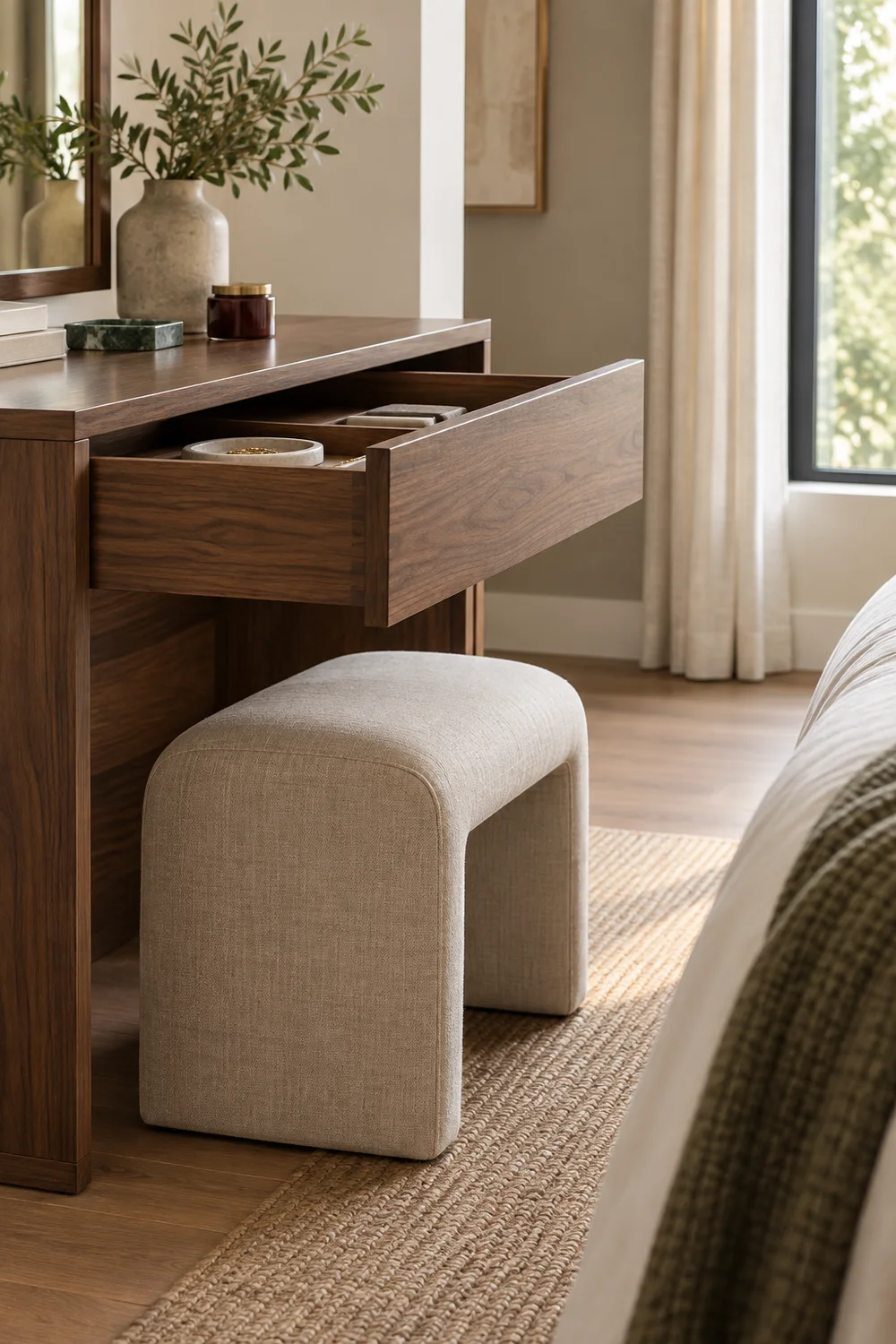
Choose the stool and table together. I would check whether your feet rest comfortably and whether your knees fit beneath the surface. A padded seat can make a routine more pleasant, but a bulky base may prevent the stool from tucking away. Check the actual width across the legs or arms, not just the cushion. Pull it out, sit, stand and put it back during a physical test if possible. The movement must preserve the route that made the plan viable.
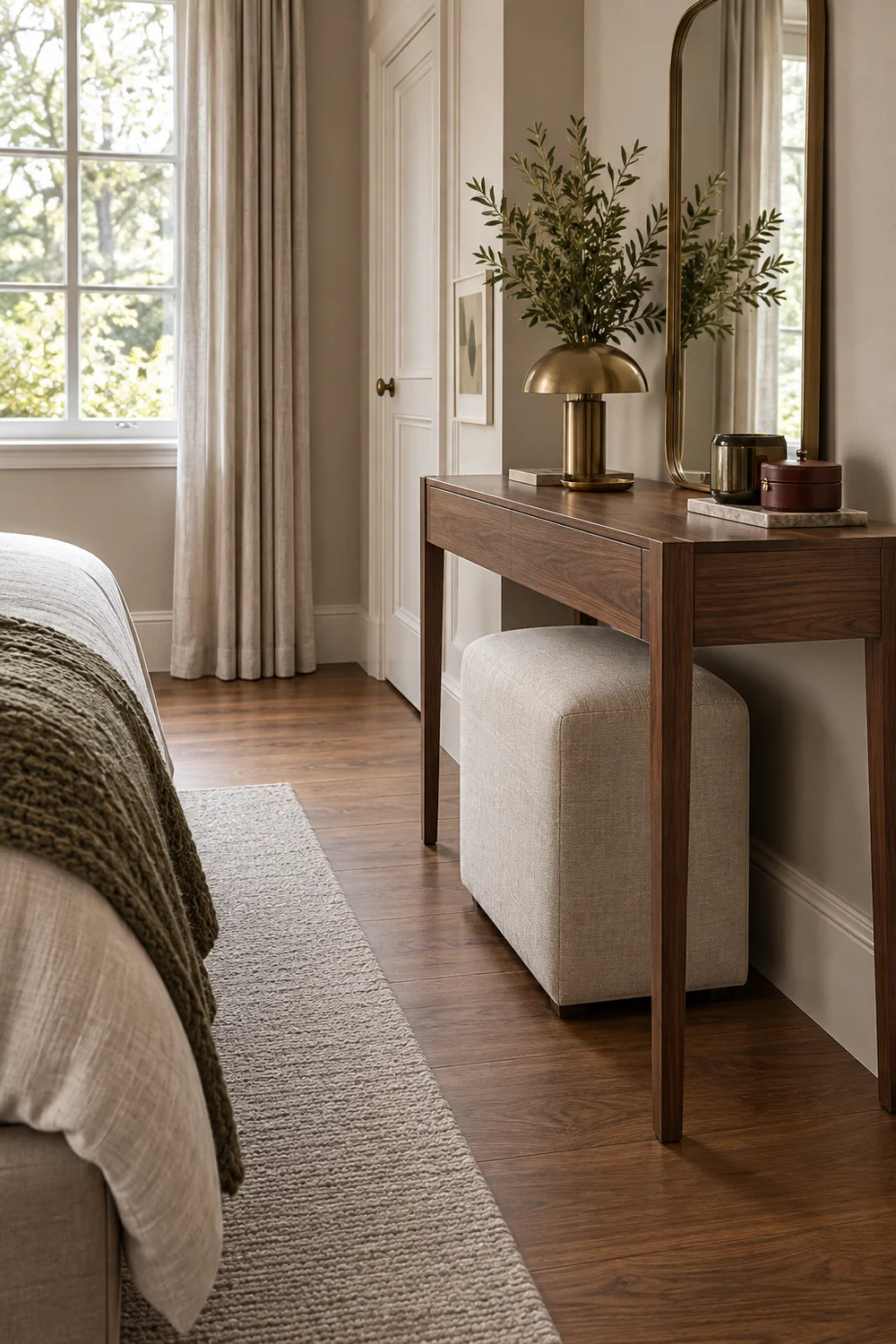
The mirror needs to work at your seated eye level. Hold a temporary mirror in the intended position before fixing anything to the wall. Check the view at the time you normally get ready. A freestanding mirror can be repositioned, but it uses tabletop depth and needs a stable base. A wall mirror frees the surface, but the position and fixing matter. Use suitable fixings for the wall and mirror weight, with qualified help when needed. I would not choose an oversized frame merely because a room photograph makes it look impressive.
If two mirrors meet the seated view, compare how each behaves when you stand and leave the corner. A wide frame may visually dominate the bed wall, while a smaller one can make the table feel disconnected. I would outline each size with removable paper and photograph it from across the bedroom. The right answer is a mirror that serves your face at the vanity and still looks proportionate when the stool is tucked away.
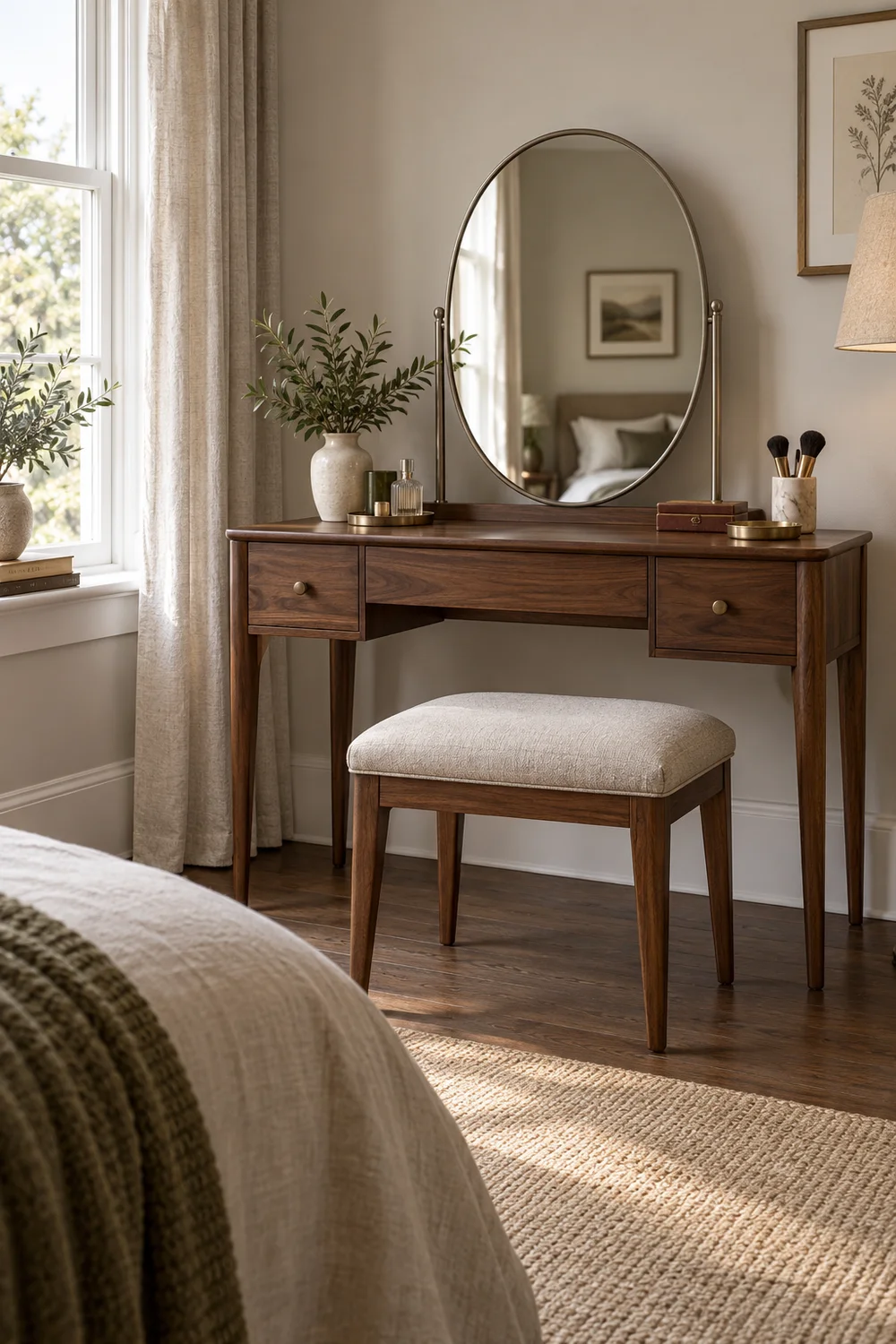
If the direction itself still feels unresolved, revisit the bedroom vanity ideas comparison of window wall, wardrobe edge and unused corner. A mirror that cannot give a useful seated view may indicate that the chosen position needs revision. Do not solve a poor layout by buying a more elaborate mirror. The table, stool and reflection need to make one coherent working position within the bedroom.
I would observe daylight at the hour you usually use the corner. Light from a nearby window can make the space pleasant, but a mirror facing a bright window may create glare. A window directly behind your seated position can leave the face less evenly lit. Move a temporary mirror and stool through the viable positions and compare what you can actually see. The goal is a comfortable routine, not a claim of perfect light in every season or at every hour.
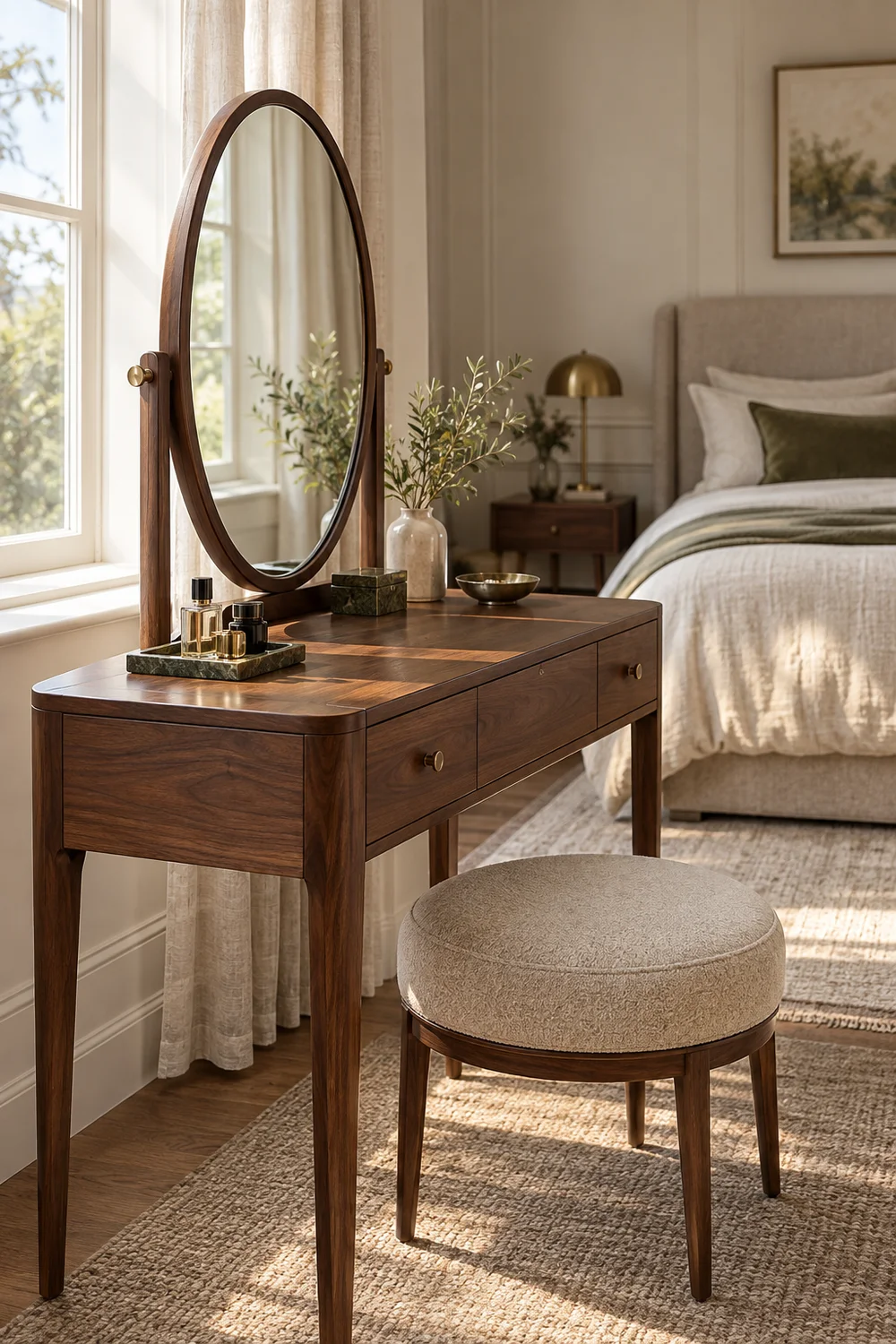
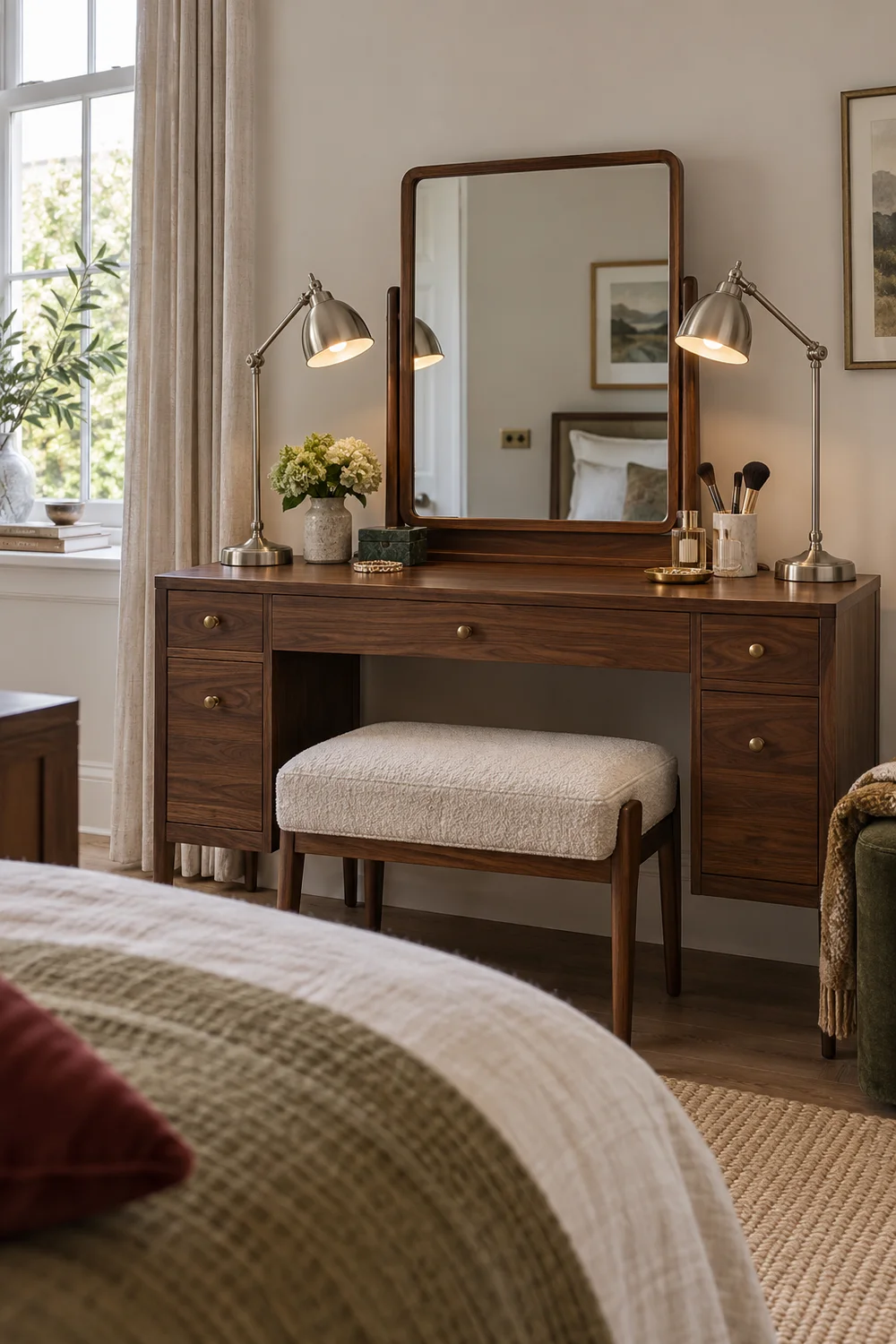
Electric task light should be controllable and positioned for the work you do. Try a pair of modest lights near the mirror or a well directed lamp that reduces harsh shadows. Check where the switch sits when seated. Avoid a dazzling source reflected into your eyes or a trailing cable across the route. If a permanent fitting or new socket is needed, ask a qualified electrician to assess the existing installation and the intended location. I would test portable lighting before committing to fixed work where possible.
The modern neutral bedroom article discusses the wider room's warm materials and lighting character. This corner needs its own functional layer that can be switched off when you return the room to rest. I would compare the lighting in both the used and unused states. A mirror outlined with light may look striking, but it should not become the only room light or create a permanent glow around the bed. Specific light colour claims and makeup accuracy claims would need product and task evidence; choose by a real in room test instead of a marketing label alone.
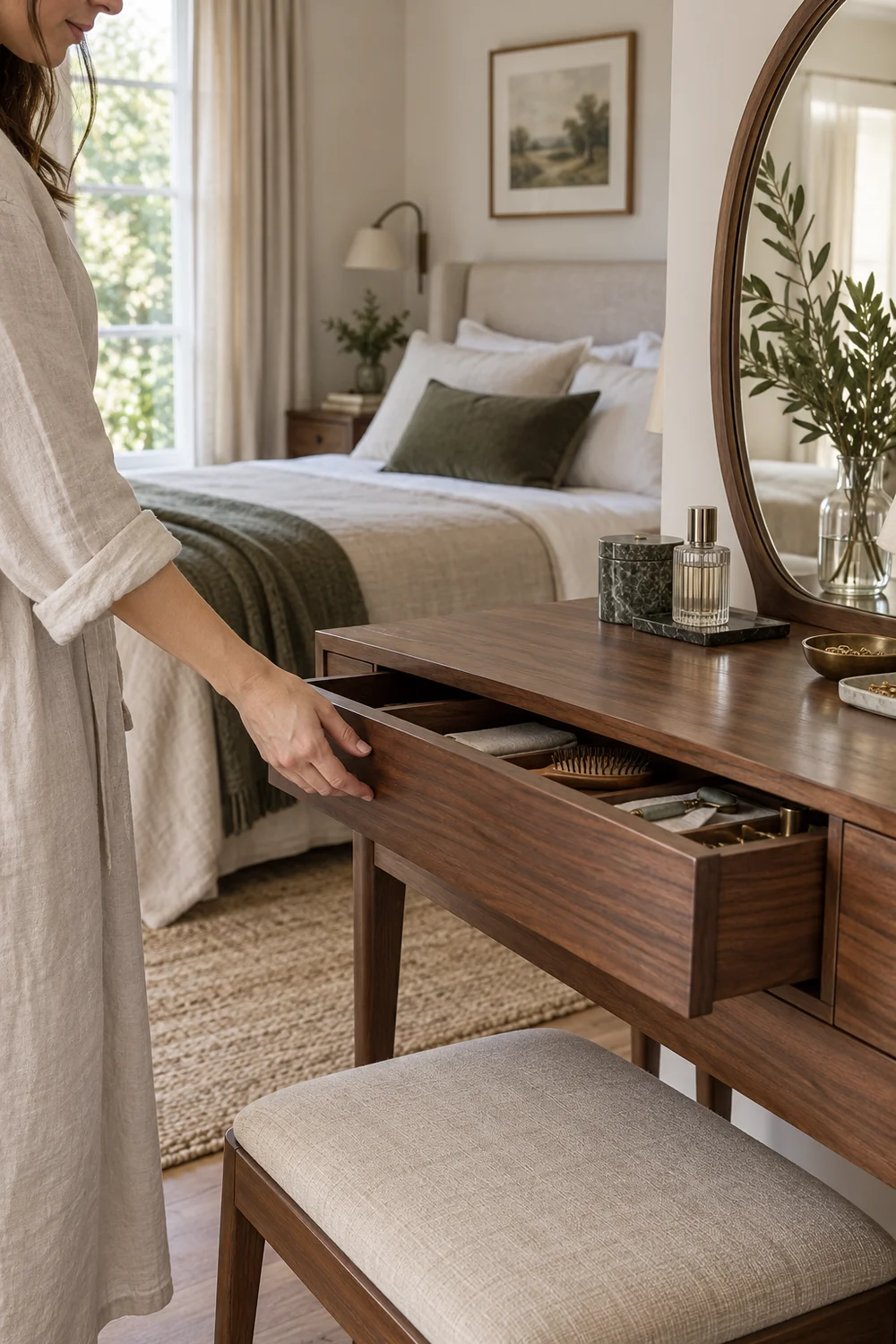
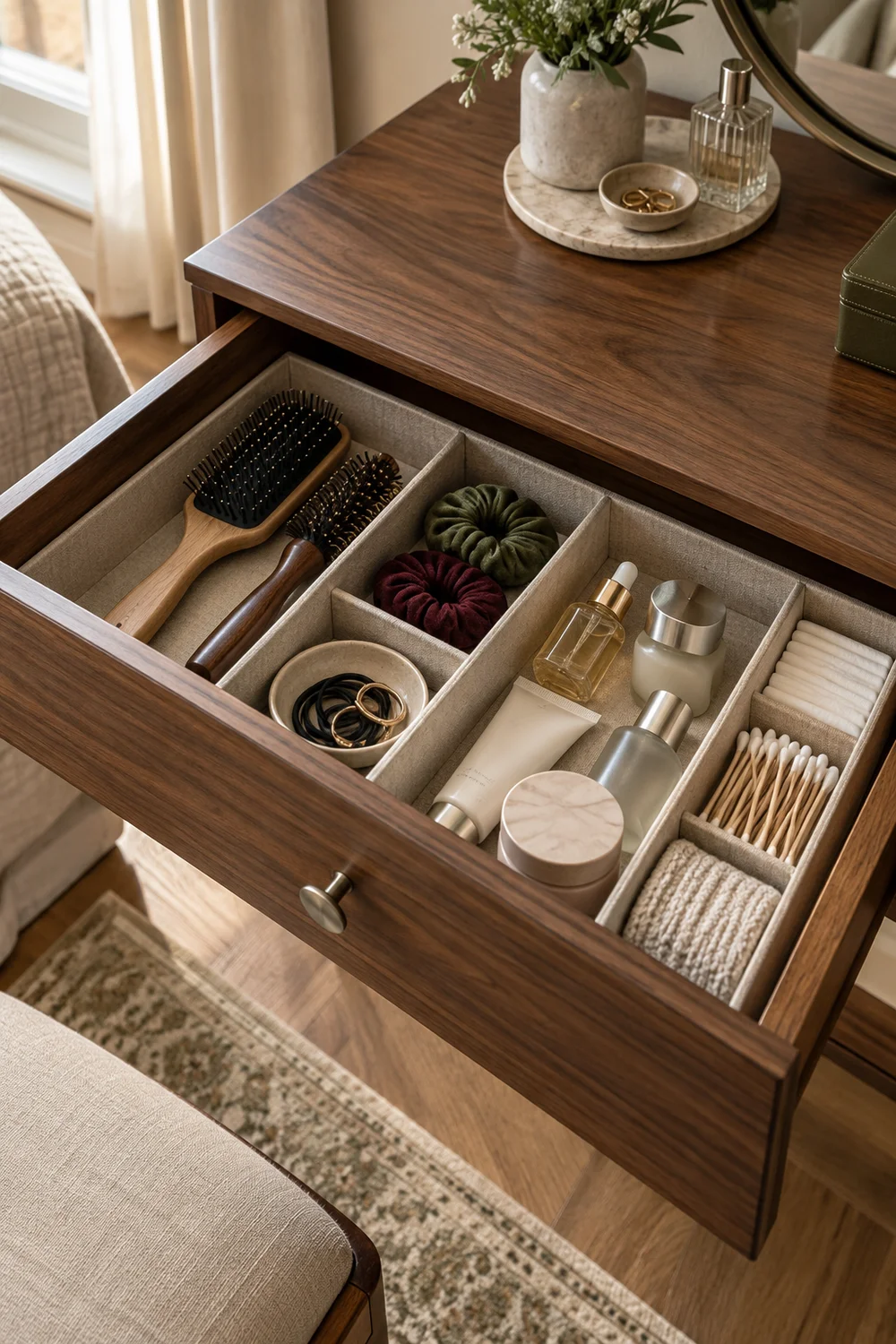
The storage choice follows the frequency list from the plan. I would put daily tools in a shallow, accessible drawer or tray; weekly items can be one step away; occasional items need not live at the vanity. Check that drawers clear the stool and the bed. Open every compartment in the exact position where the furniture will stand. If a product photograph hides the drawer travel, seek a demonstration or test it yourself. An attractive cabinet is not useful if its door cannot swing open.
For materials, compare the manufacturer's care advice with what happens in your routine. A surface that receives water, cosmetics or heated tools needs a practical place for those objects and care that you are willing to follow. A removable protective mat may be more honest than expecting a delicate timber finish to accept every spill. Check whether a fabric stool cover can be cleaned appropriately, whether the mirror frame gathers dust and whether small metal details can be wiped without damaging their finish. I would keep the walnut, oat and restrained metal palette consistent with the room while making the working surfaces easy to maintain.
A bright style branch is possible if it serves your taste. The hot pink makeup vanity vignette shows a more expressive surface and stool relationship. Its colour lesson is optional; the fit, cleaning and access checks remain the same. I would avoid paying for a dramatic finish before confirming the daily objects, drawer movement and care instructions. Colour should support a piece that already works.
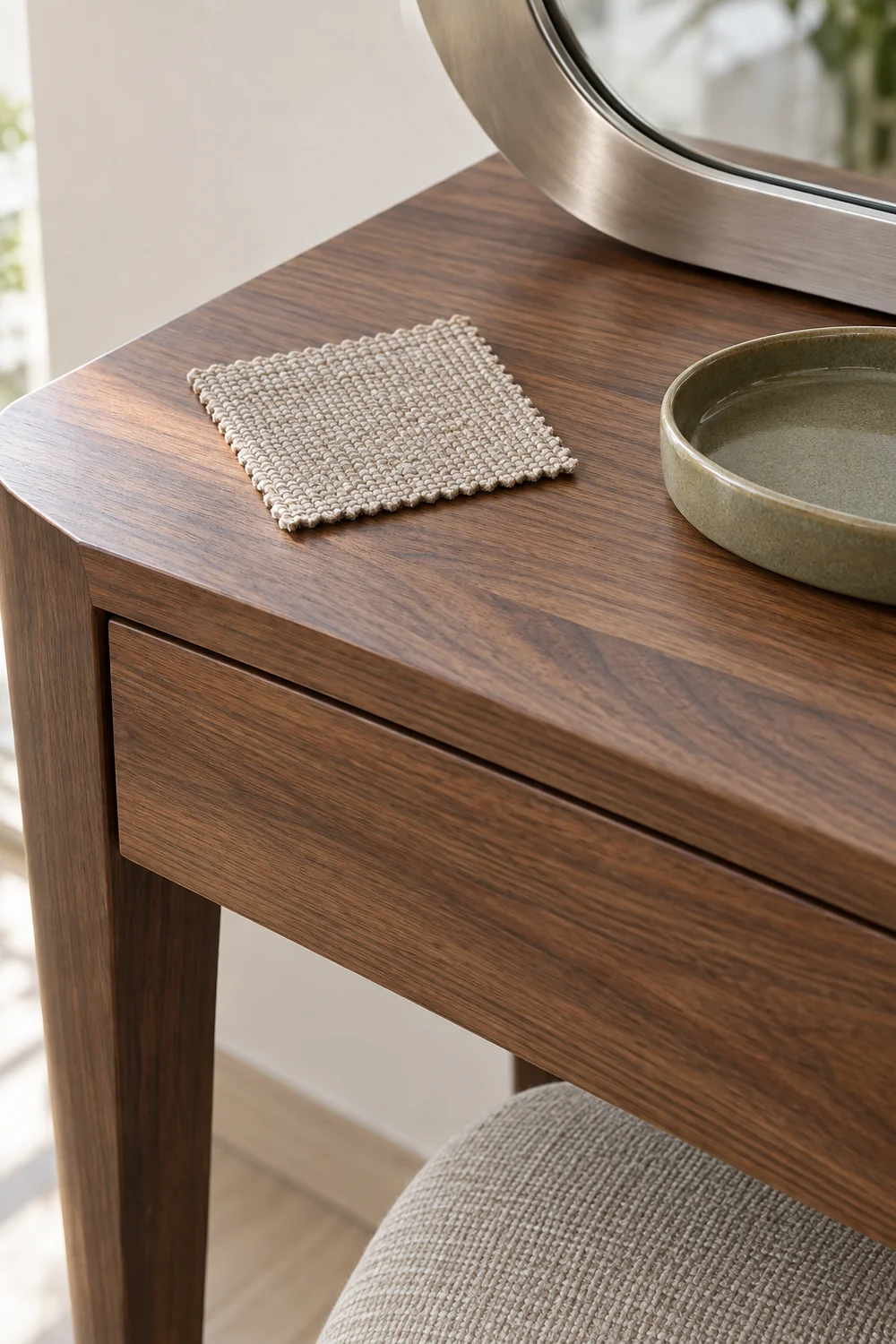
Bring the shortlisted table, stool, mirror, light and storage into one drawing. Mark their full dimensions, not just the nominal tabletop width. I would check the setup in three states: ready to use, in use with drawers and stool open, and reset for the bedroom at night. A piece may pass one state and fail another. If the stool blocks the wardrobe during use, choose a different arrangement or item rather than hoping the conflict will feel minor.
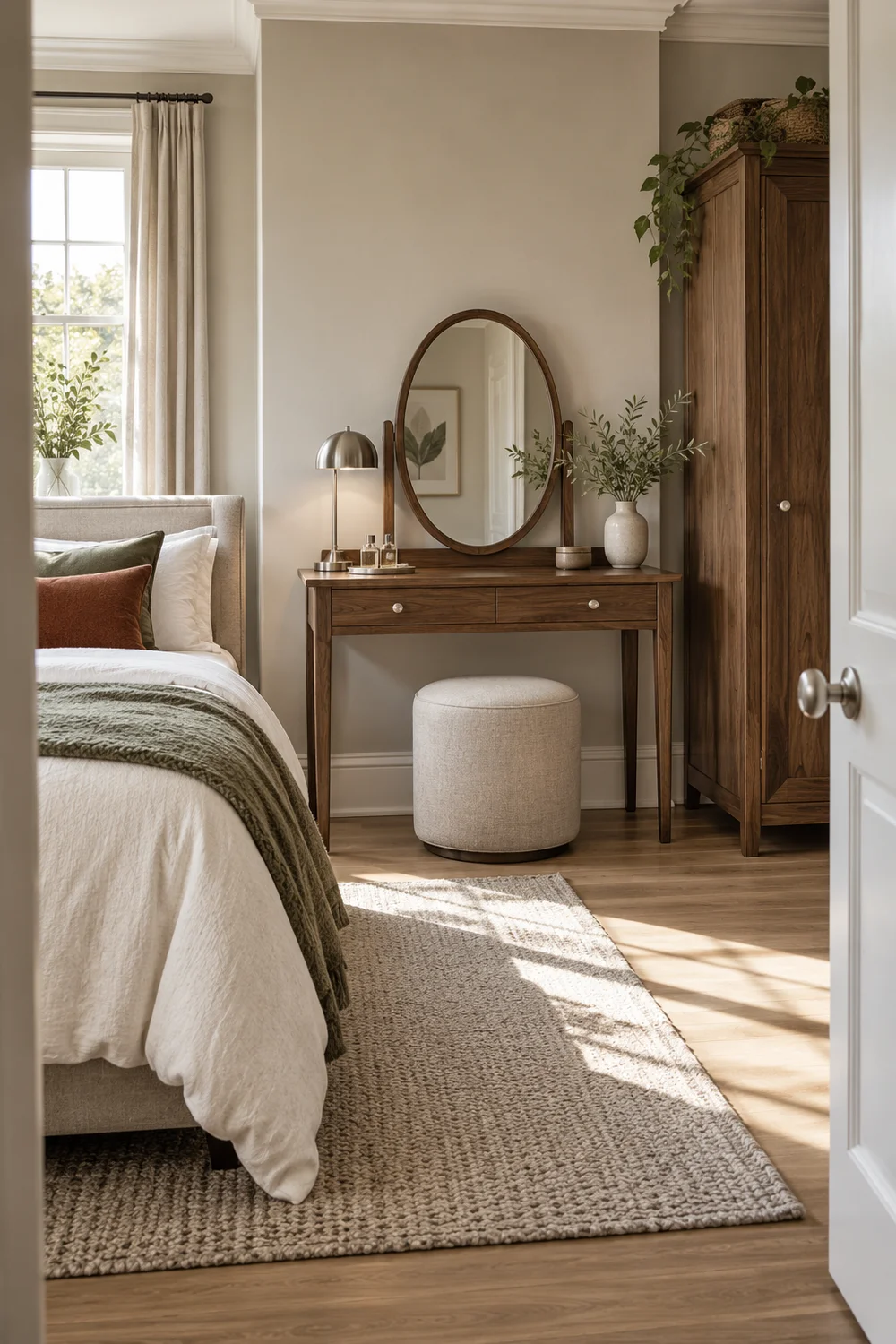
Decide the sequence before any permanent fixing. I would first confirm the table and stool in the marked footprint, then test the mirror at seated height, then settle the task light and storage. Each step can reveal a change the next one must respect. If you order all the pieces at once, a small error in table height or drawer direction can make the mirror and lamp choices harder to correct. Keep packaging and return conditions in mind when trialling items, without assuming every seller offers the same terms.
If you can, use samples and temporary objects in the real corner. Tape the mirror outline on the wall, set a lamp where the proposed light would be, and place a box the size of the storage unit. Photograph the setup from the bed and the doorway. This reveals whether the new corner takes too much visual attention as well as whether it works. Check any electrical and wall fixing questions with qualified people before permanent installation. I would make the room prove the shortlist, not let a purchase commitment force the room to adapt.
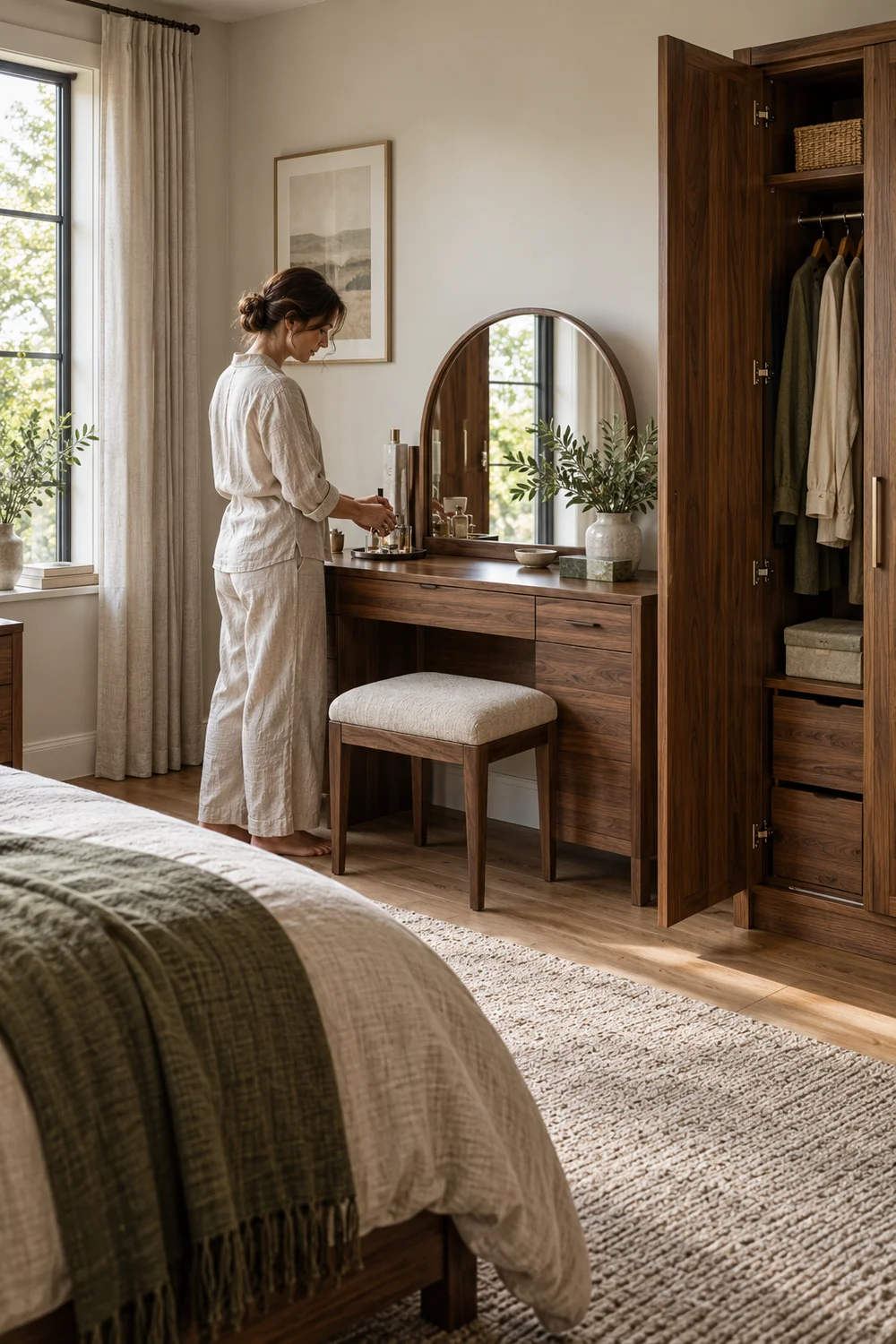
When a candidate fails, return to the small bedroom vanity layout and locate the cause. Is the table too deep, the stool too wide, or the entire chosen wall unsuitable? Changing one item may solve the first two. The last may require a new footprint. Keep that distinction visible so you do not replace several objects when the real issue is the placement. Once the arrangement passes in all three states, buy or install in an order that lets you verify each step before the next one hides a mistake.
I would use the vanity normally for several weeks before deciding that every drawer and accessory is final. At the end of each day, put the daily objects back in their assigned place and leave the surface clear enough for the bedroom to feel like a bedroom. Once a week, notice what has collected on top. Items that never get used may belong elsewhere; items that are always left out may need a closer drawer or tray. This is a complete routine check, not a decorative tidying tip.
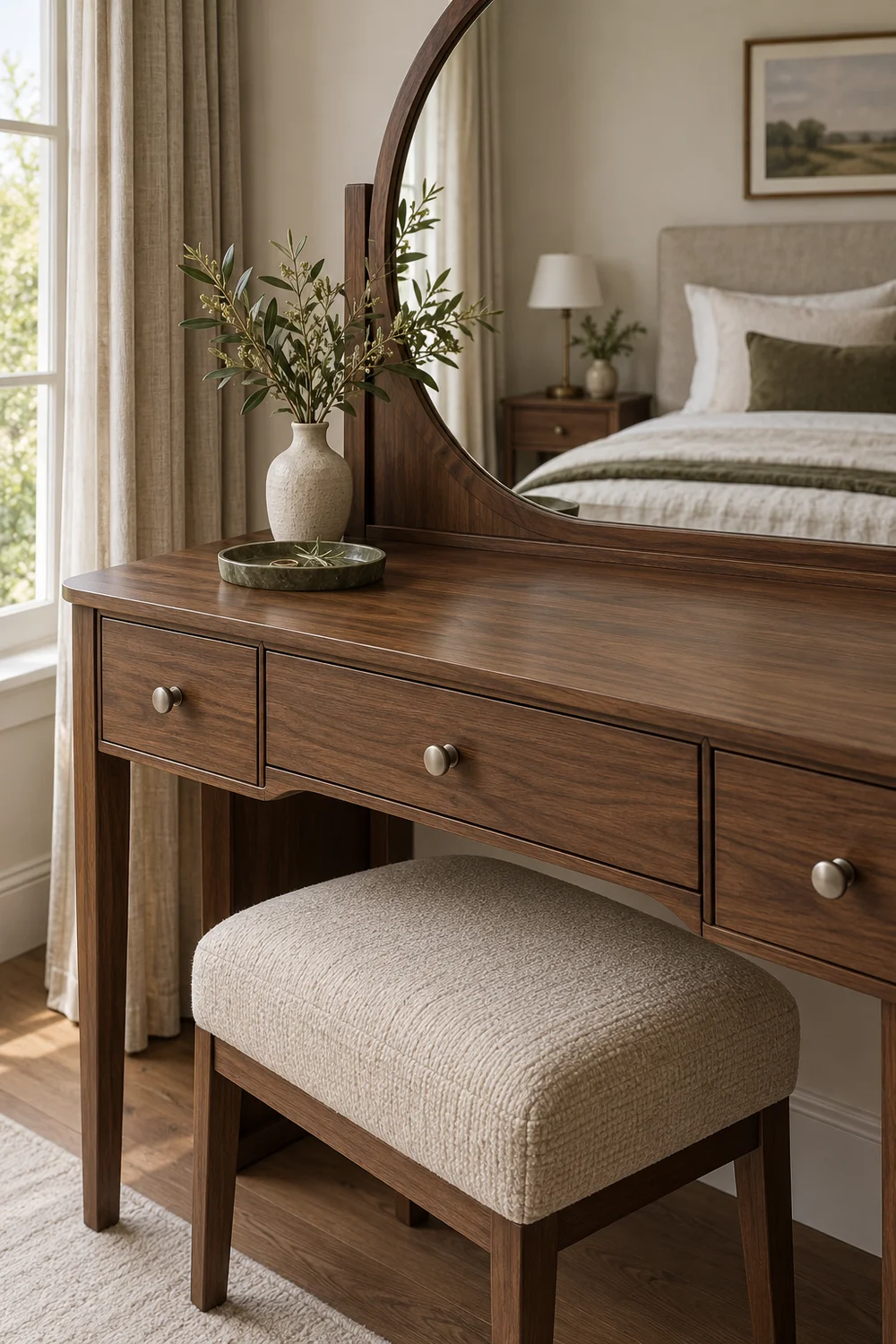
Care for the chosen table, stool and mirror according to their material and maker instructions. Wipe residues promptly with the recommended method, keep hot tools on suitable protection and check that drawers still open without scraping nearby furniture. Review the light at the times you actually use it as daylight changes through the year. If shadows, glare or a difficult switch make the routine awkward, adjust the lamp or mirror position before assuming the whole setup needs replacing.
If one selected item proves wrong, return to the dimensions and criteria above. If the route itself remains awkward even with sensible pieces, reconsider the measured footprint from the planning stage. The useful aftercare question is which decision failed: an object, the light or the room arrangement. Answer that before buying a replacement. A good corner can change as your routine changes while keeping the bed, wardrobe and rest of the room comfortable.