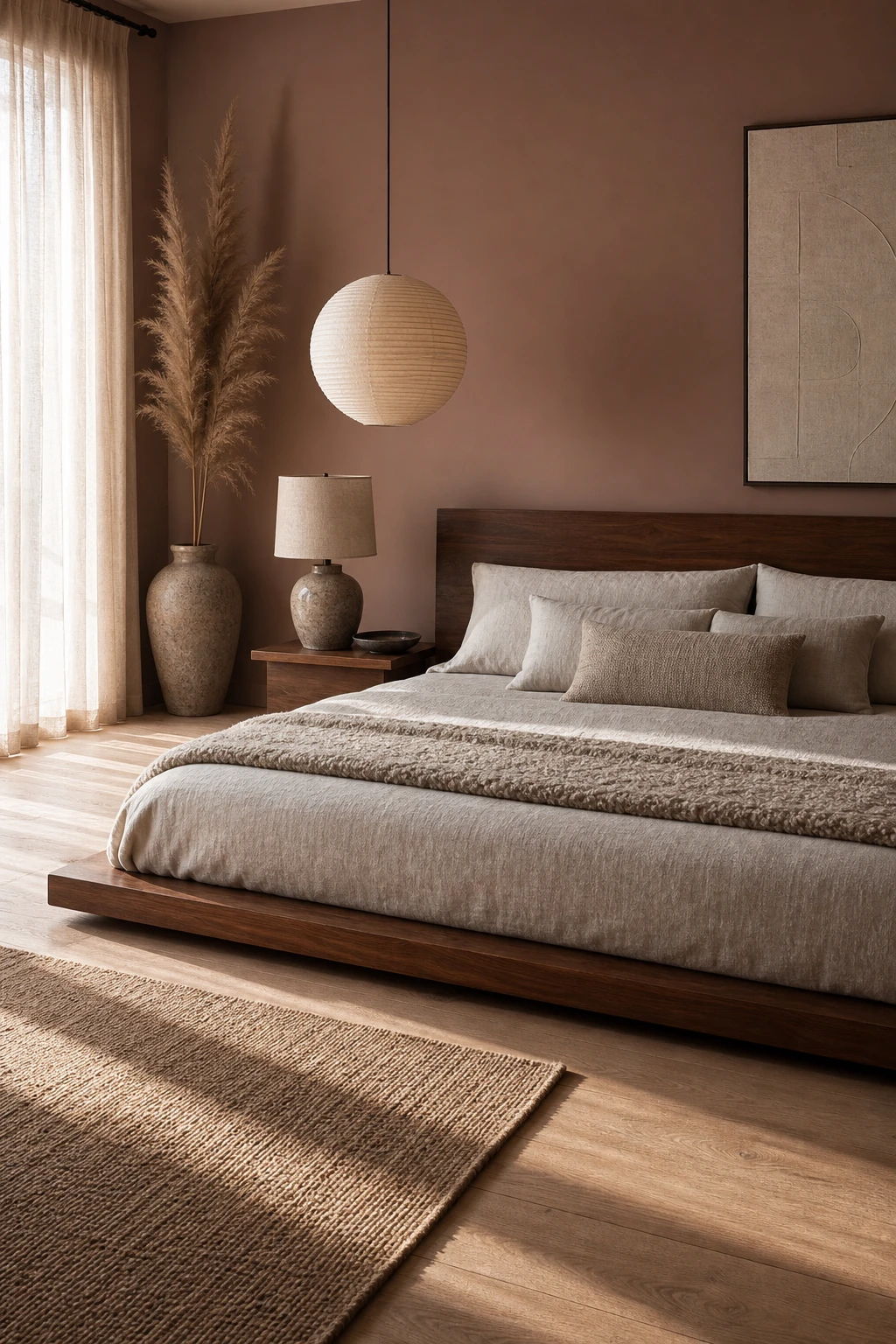
I’ve always been drawn to the way Japandi and mid century modern design speak the same quiet language, one that says less but means more. What I love about this bedroom style is how a low platform bed, a warm walnut nightstand, and a single paper lantern can make a room feel both grounded and completely serene. Every look in this piece is one you can genuinely borrow, whether your room is small, dark, or somewhere in between.
How a Japandi Mid Century Modern Bedroom Gets That Quietly Perfect Feel
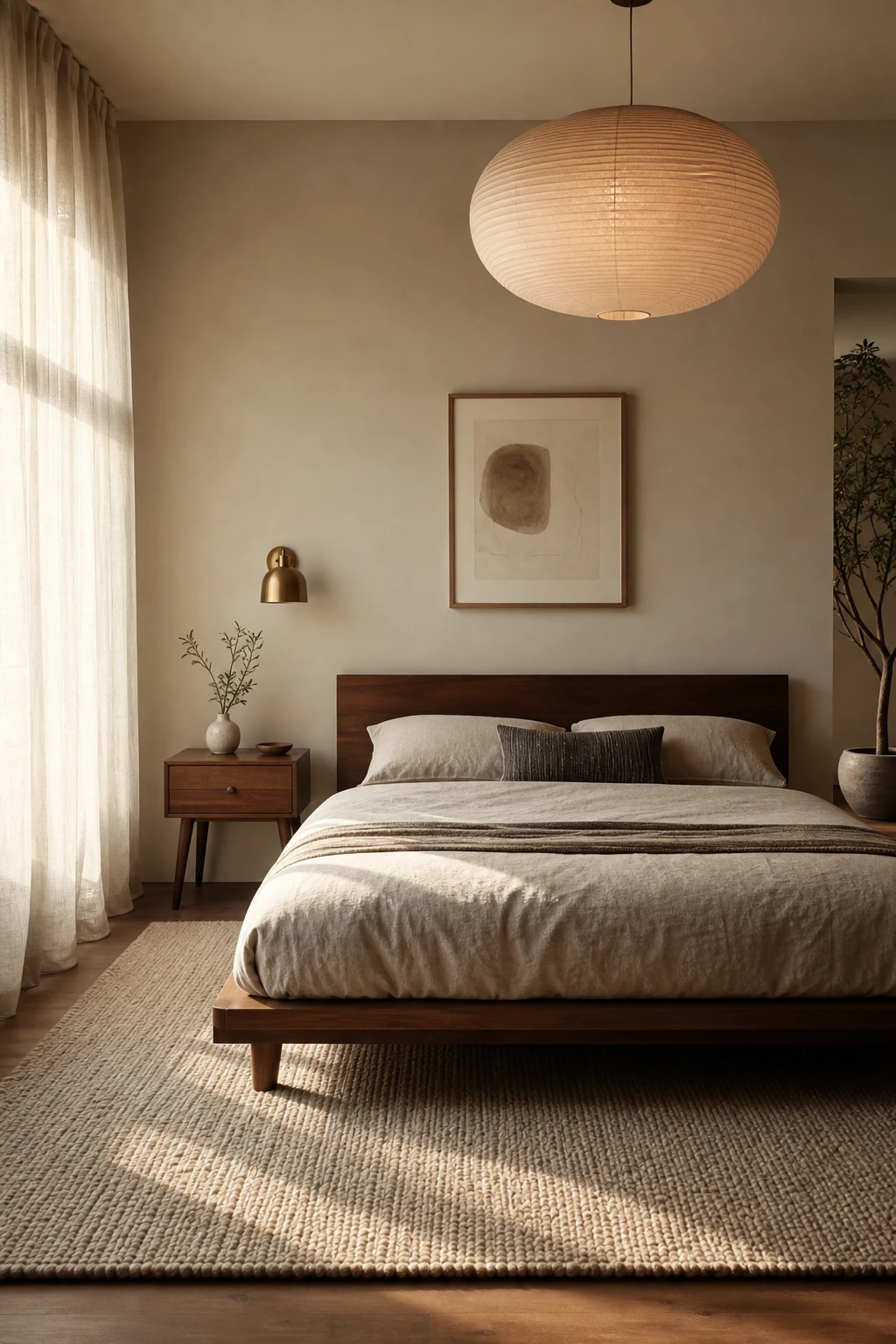
Japandi and Mid Century Modern sit closer together than most people expect, and that closeness is exactly what makes the combination so satisfying. Both philosophies chase the same things: honest materials, clean lines, and a room that breathes. What I love about this pairing is that walnut does most of the heavy lifting, giving you warmth without clutter, while the pared back Japanese sensibility stops the MCM pieces from ever tipping into retro costume territory. You get something that feels genuinely calm and considered rather than styled.
The Key Details
Low walnut platform bed frame
Washi paper sculptural pendant light
Sheer linen floor length curtains
Tapered leg walnut bedside table
Looped wool area rug
Pro TipChoose walnut as your single hero material and let it run through the bed frame, the bedside table, and any shelving so the room reads as one cohesive thought rather than a collection of nice pieces.
AvoidPulling in a third aesthetic, even one you love, fragments the calm the whole room is built on and leaves it feeling unresolved rather than curated.
Why a Dark Japandi Bedroom Feels Calm Rather Than Gloomy
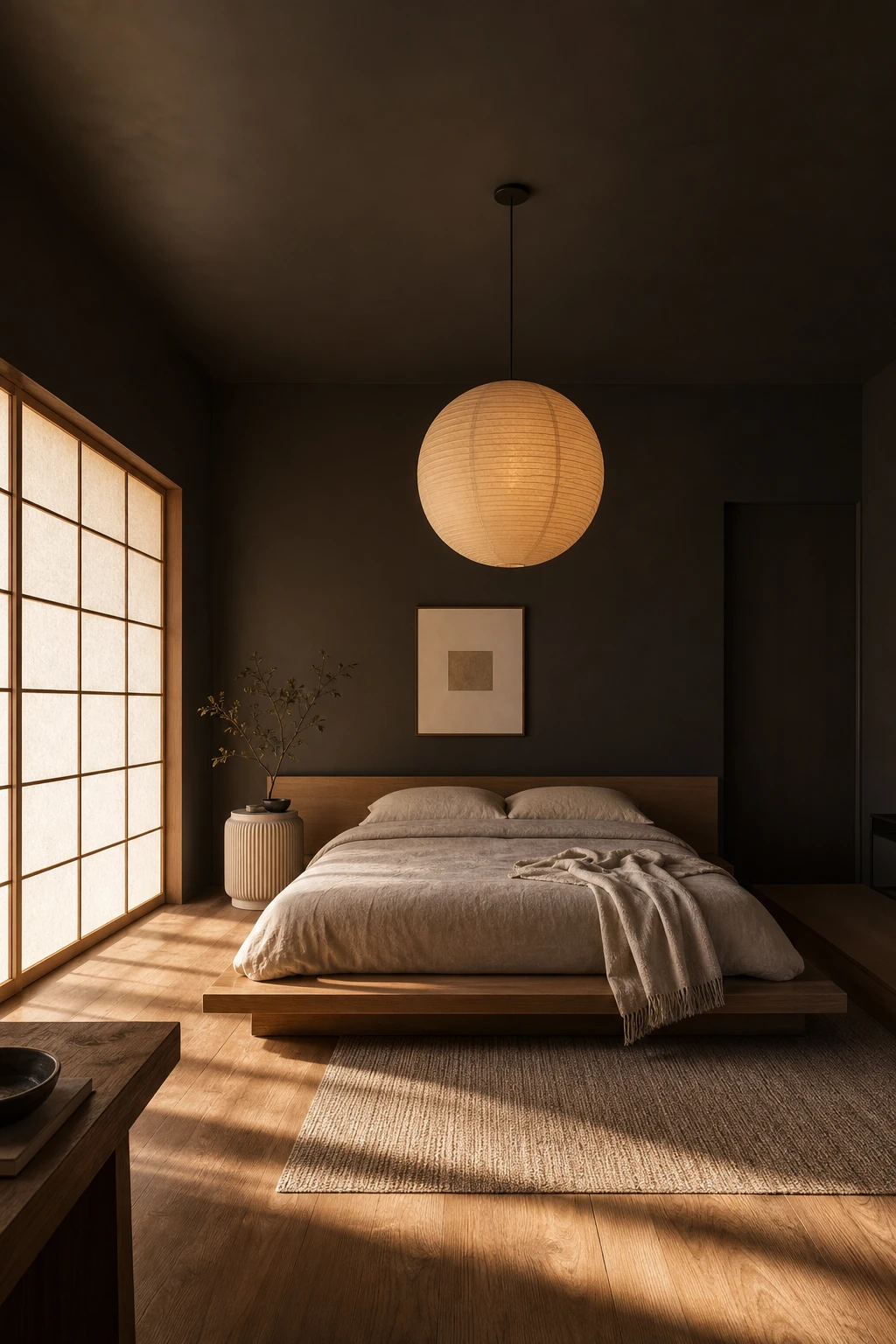
Deep walls pull the room inward in the best possible way, and what I love is how that closeness reads as calm rather than heavy when you pair it with pale, undyed textiles and warm wood. The darkness does the work of a low ceiling without actually lowering anything, so you get that tucked in, sleeping alcove feeling. Keep the surfaces raw and the light source soft and the whole room breathes.
The Key Details
Low platform oak bed frame
Washi paper globe pendant light
Fluted ceramic bedside vessel
Undyed oatmeal linen throw
Shoji inspired rice paper window panel
Pro TipLayer a chunky undyed linen throw across the foot of the bed to bounce warmth back into a dark wall and stop the palette from reading as cold.
AvoidChoosing a dark wall colour with a cool or grey undertone will drain the warmth from every wooden surface in the room and leave the space feeling stark rather than restful.
Earth Tones That Give a Japandi Bedroom Its Warmest Possible Glow
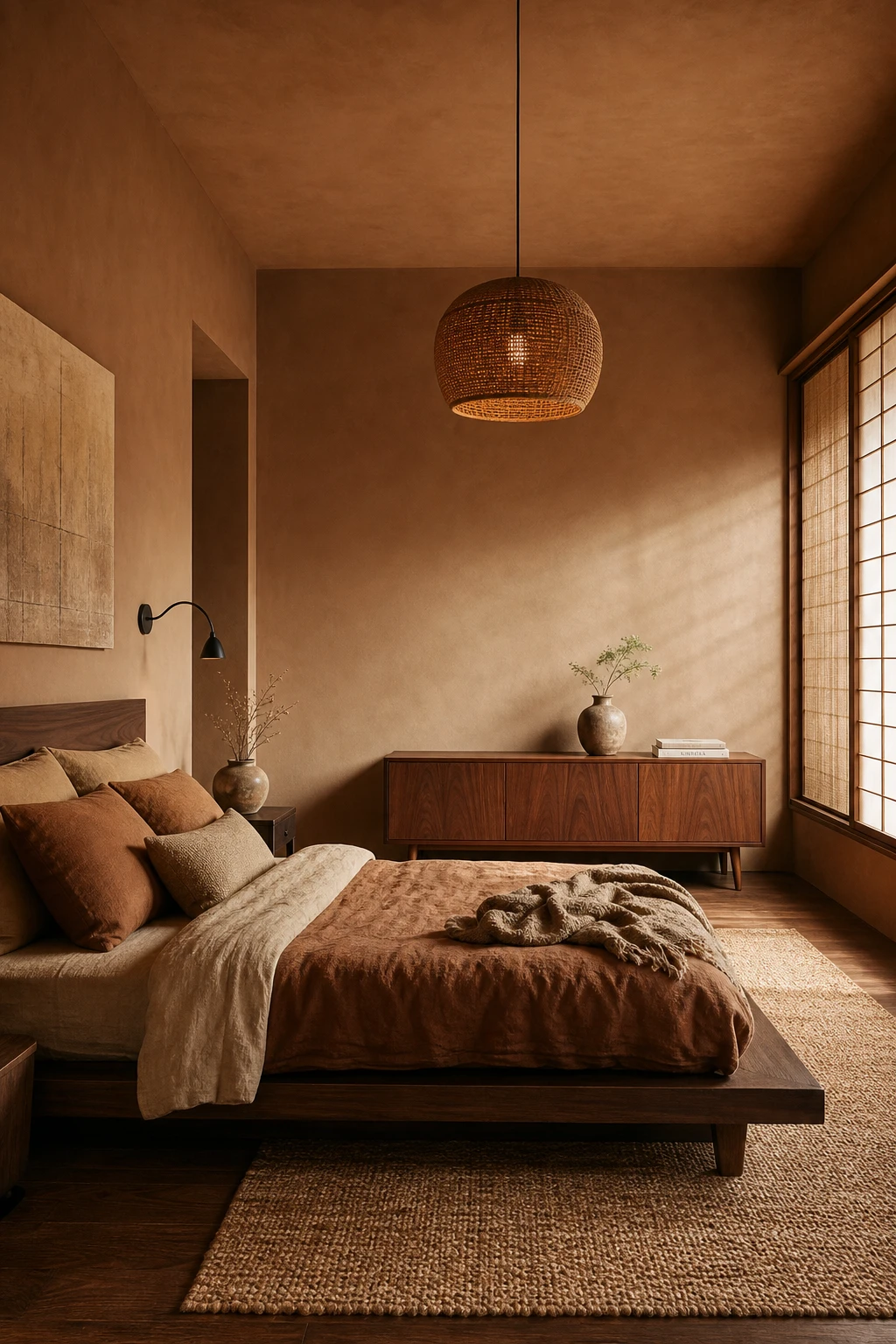
Earth tones pulled straight from nature, think raw clay, warm oat, and toasted walnut, give a Japandi bedroom a glow that feels genuinely restful rather than decorated. What I love about building a palette this way is that every shade already belongs together, because the forest and the riverbank sorted that out long before we arrived. You get a room that reads as one quiet, cohesive story from floor to ceiling, and the walnut wood pulls the warmth all the way down to the ground.
The Key Details
Low platform walnut bed frame
Layered terracotta and oat linen bedding
Tapered leg walnut credenza
Woven rattan pendant lamp
Shoji inspired woven grass cloth window panels
Pro TipAnchor the palette with one mid tone, like a soft terracotta linen, then step lighter toward the ceiling and darker toward the floor so the room feels grounded rather than flat.
AvoidReaching for too many saturated warm hues at once crowds the eye and strips the palette of the breathing room that makes a Japandi room feel calm in the first place.
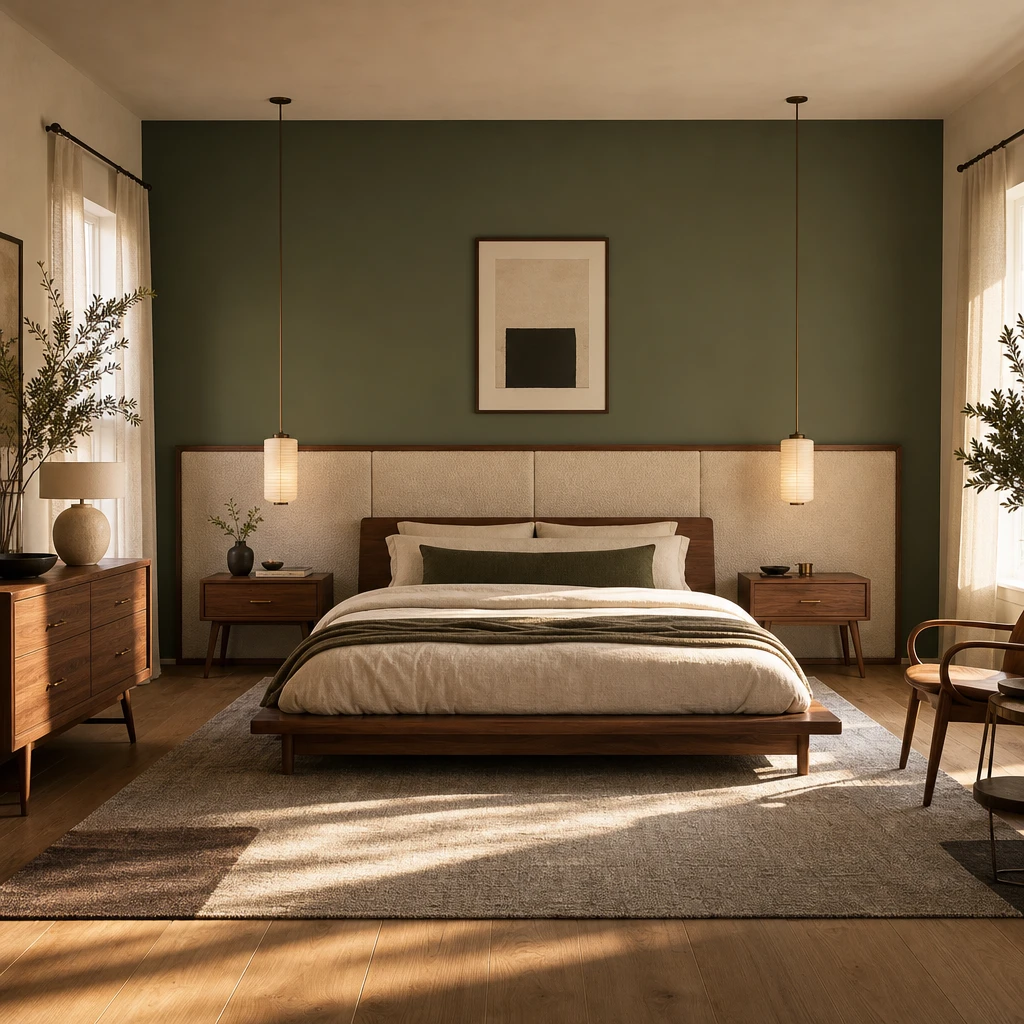
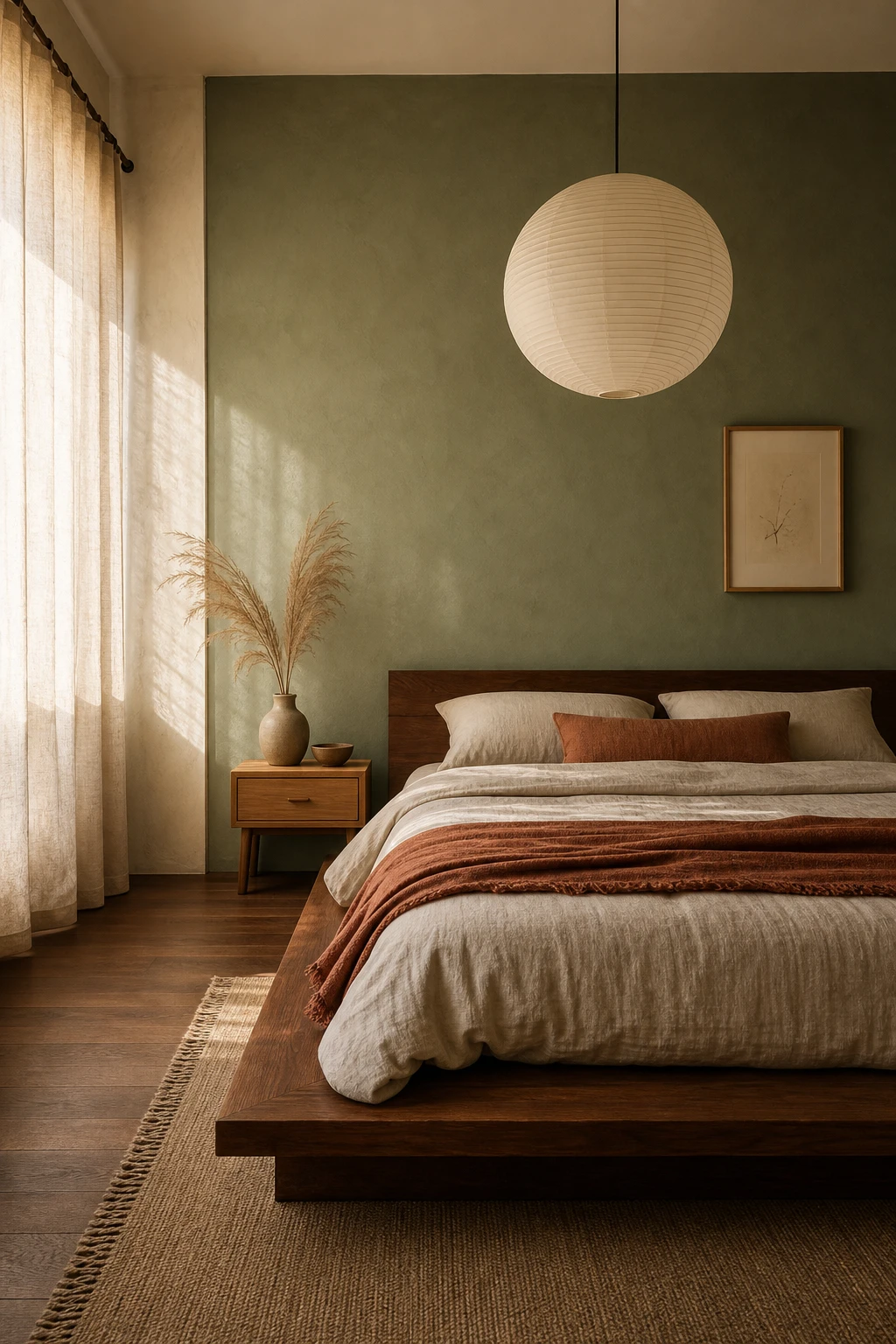
The Green Shade That Makes a Japandi Bedroom Look Effortlessly Fresh
Green accent walls are one of my favourite moves in a Japandi bedroom because the right shade does something almost effortless: it picks up the warmth already sitting in the walnut and oak and makes both look richer. What I love is how a soft, earthy green pulls the whole room into balance, warm enough to feel grounded, fresh enough to stop things feeling heavy. You will notice the wood tones almost glow against it.
The Key Details
Low slung walnut platform bed frame
Paper lantern pendant light
Undyed linen bedding with terracotta throw
Solid oak nightstand with ceramic bud vase
Sheer linen window curtains
Pro TipHold a large paint swatch flat against your floor in the afternoon light before you commit, because that is when warm undertones in the green become visible next to the wood grain.
AvoidChoosing a green with a cool or blue leaning undertone will fight your warm wood tones all day and leave the room feeling mismatched and cold under evening lighting.
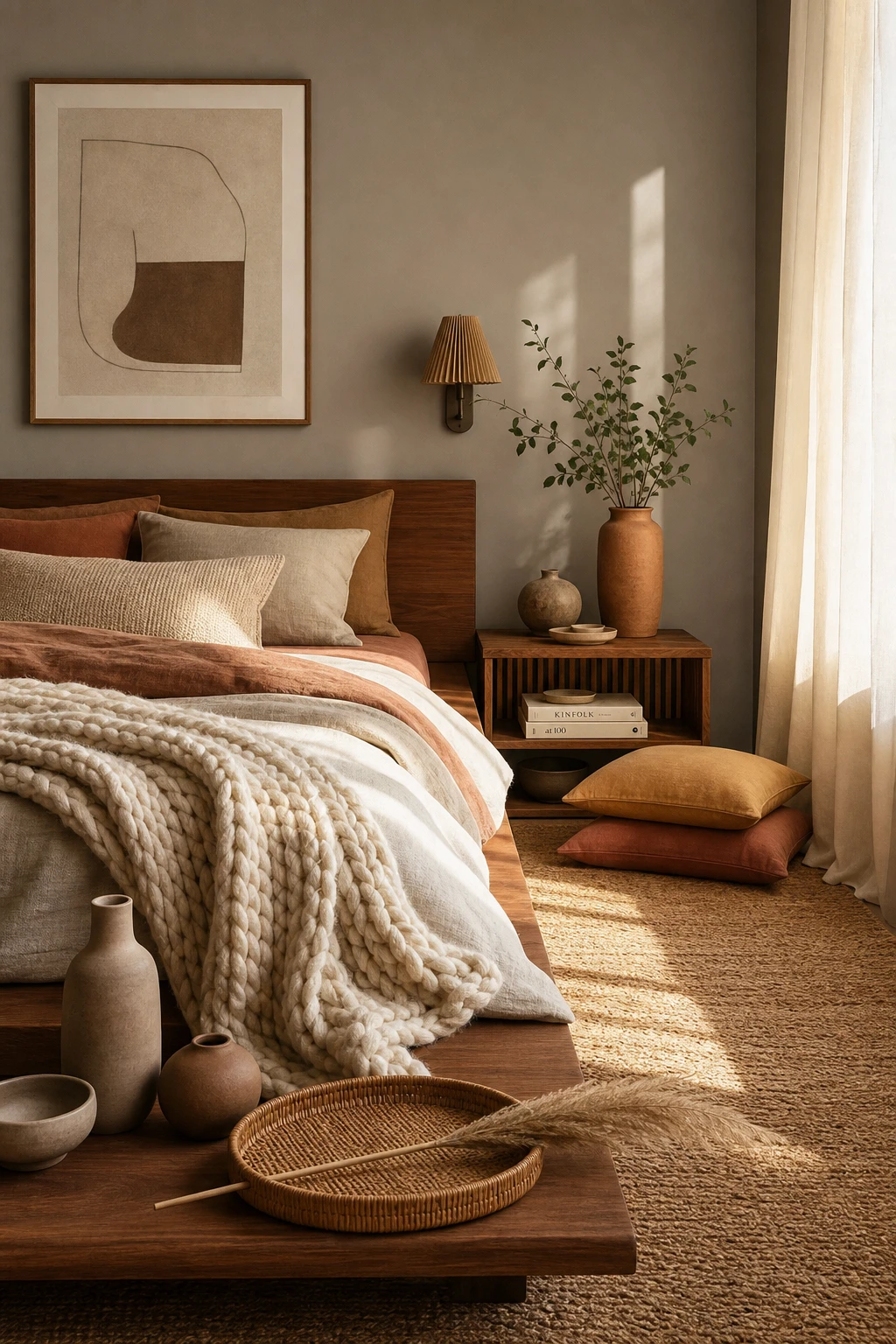
Small Decor Choices That Give a Japandi Bedroom Its Earthy Warmth
Small, earthy objects are where Japandi really comes alive, and you do not need a single new piece of furniture to feel the difference. A matte ceramic vessel, a hand loomed throw draped across the bed, a dried stem resting on a rattan tray: each one earns its place by adding quiet texture without noise. That restraint wins me over every time, because these modest, tactile things do the emotional heavy lifting, making a pared back room feel genuinely lived in rather than staged.
The Key Details
Low teak platform bed
Matte ceramic vessels
Hand loomed wool throw
Oval rattan tray with dried stem
Coarse jute area rug
Pro TipArrange your ceramic vessels or tray objects in groups of three, because odd numbers read as effortless and natural rather than symmetrical and stiff.
AvoidLetting every surface hold something is the fastest way to undo the calm the whole room is built on, so edit until each object has breathing room.
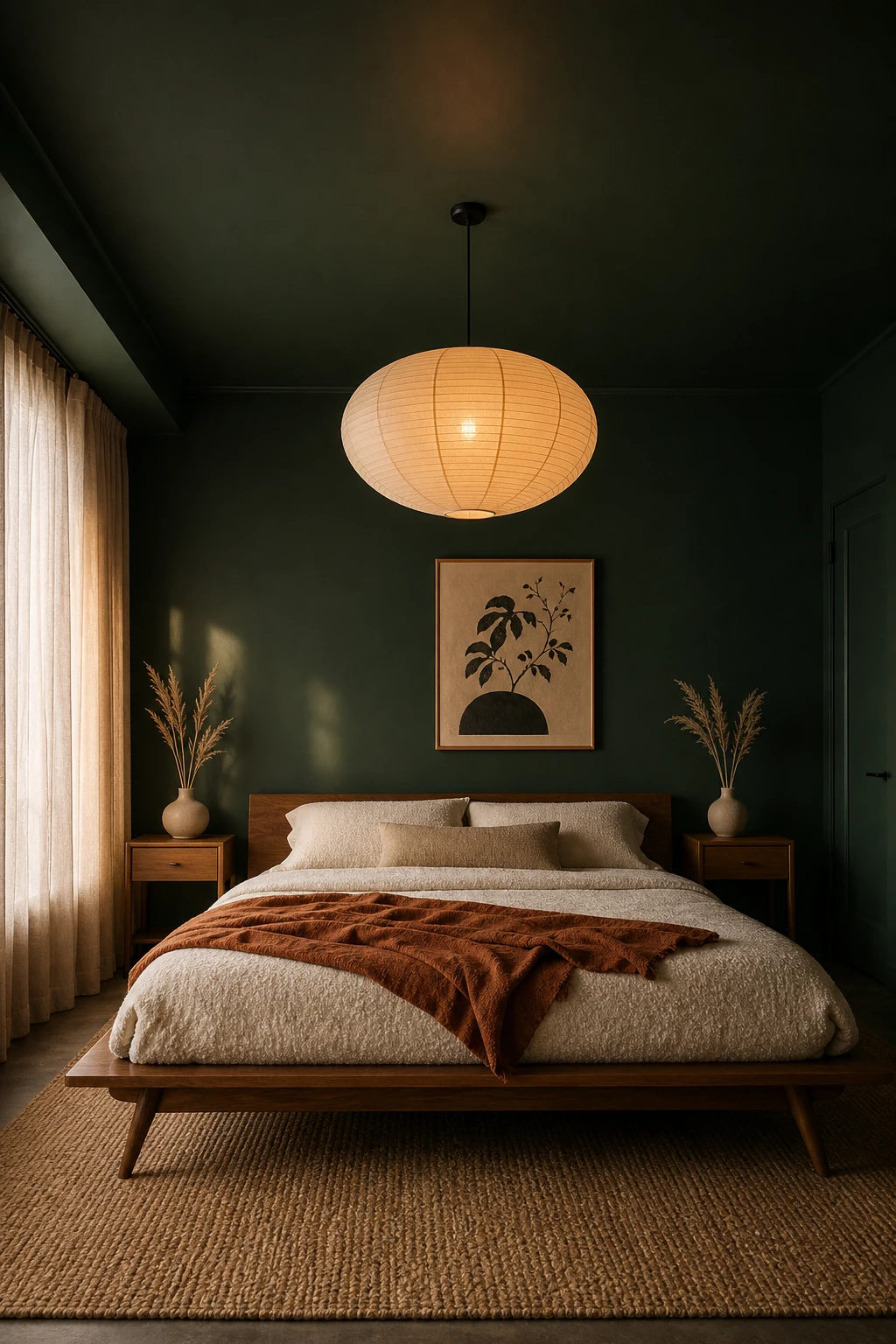
Deep Moody Green Walls That Make a Japandi Bedroom Feel Like a Forest Retreat
Deep forest green wrapped across all four walls is a commitment, and what I love is that it pays off completely when you pair it with pale linen and raw wood. You get that enveloping, almost atmospheric quality, like the room is breathing. The low walnut bed and cream boucle sit forward against the dark backdrop, so every warm texture pops. Watch how the whole space shifts from bedroom to retreat the moment that colour takes hold.
The Key Details
Low walnut platform bed with tapered splayed legs
Sculptural washi paper pendant light
Slim solid oak nightstands with ceramic bud vases
Cream boucle and terracotta linen bedding layering
Woven rattan floor mat
Pro TipHang full length cream linen curtains to break up the green and flood the space with soft diffused light during the day.
AvoidRelying on a single ceiling fixture in a deep green room leaves corners in heavy shadow, which tips the mood from cosy into gloomy.
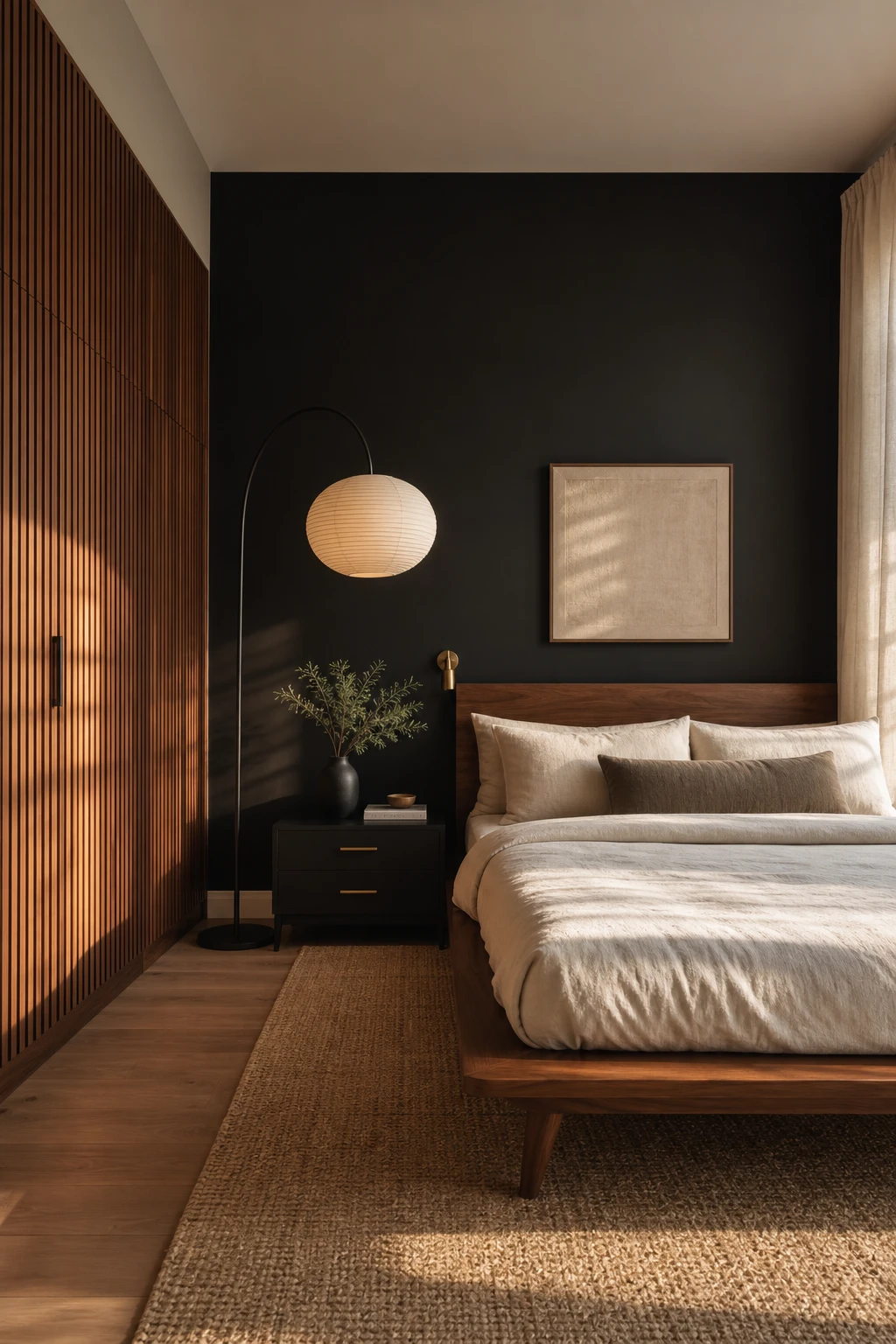
Pairing Wood and Black in a Japandi Bedroom for the Sharpest Contrast
Wood and black is one of those pairings I keep coming back to, because the contrast does the work without you having to add a single extra layer. The warm walnut pulls the eye in while the matte black anchors it, and you get a room that feels resolved rather than restless. What I love about this combination in a Japandi space is that the black never reads as harsh, it reads as calm, because the wood softens every edge around it.
The Key Details
Low walnut platform bed with tapered legs
Matte black arc floor lamp with washi paper shade
Slatted walnut wardrobe panel
Woven jute area rug
Sheer linen curtain panel
Pro TipChoose matte black over gloss on every fixture and frame so the finish absorbs light rather than bouncing it, which keeps the mood quiet and the walnut tones front and centre.
AvoidTipping the balance too far toward black causes the wood grain to recede into shadow, and the warmth that made the room feel liveable disappears with it.
Why a Low Bed Frame Is the Single Best Move in a Japandi Bedroom
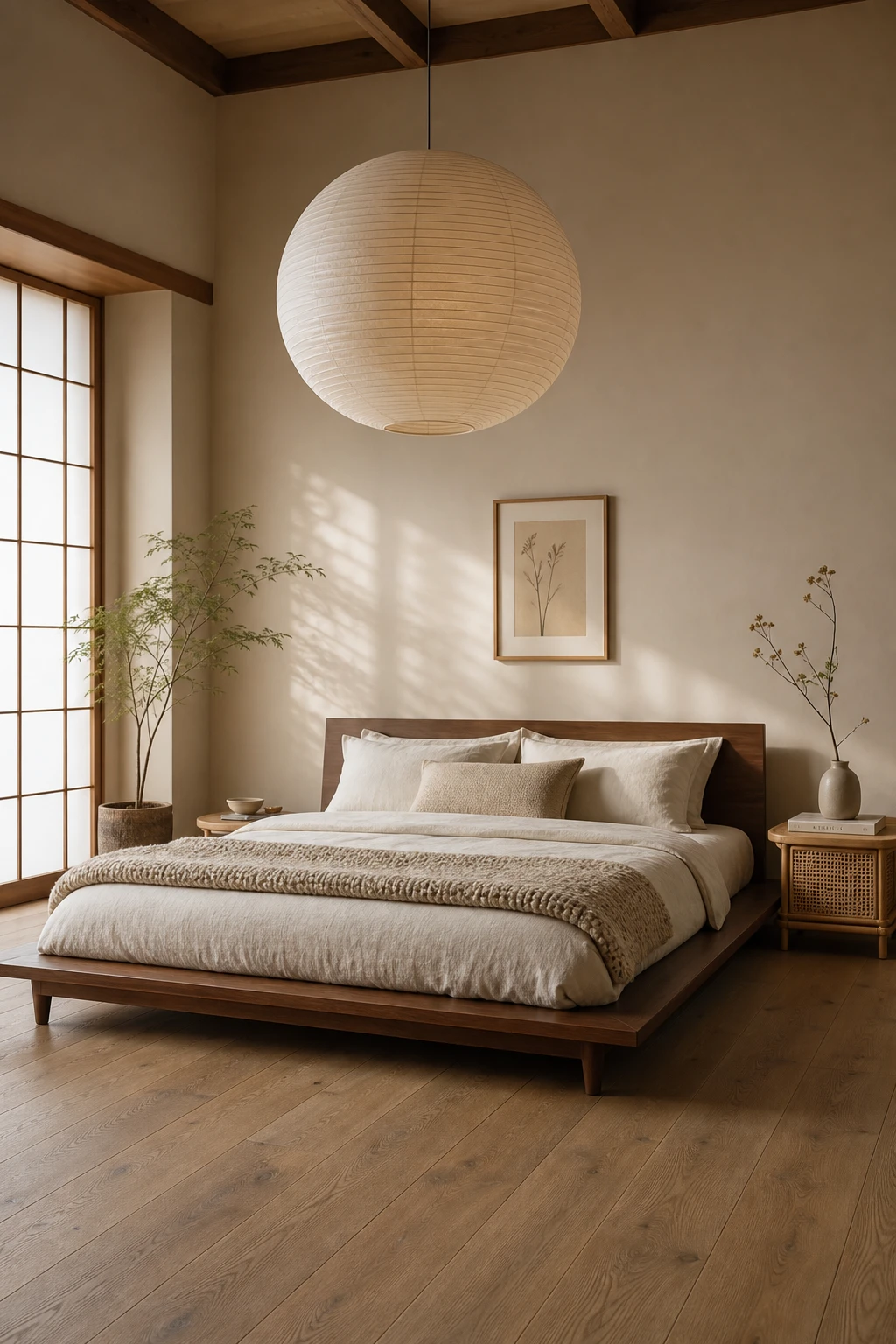
Dropping the bed close to the floor changes how your eye reads the whole space, and it is one of the first things I suggest when a Japandi room feels like it is missing something. You get a generous band of bare wall above the headboard, the ceiling feels taller, and the room breathes more freely. That low silhouette also carries the grounded, settled quality that both Japandi and Mid Century Modern are chasing, and once you see it in place it is hard to go back.
The Key Details
Tapered walnut platform bed frame
Wide plank oak floor
Washi paper pendant light
Rattan bedside table
Shoji style frosted side windows
Pro TipAim for around 15 to 20 cm of clearance beneath the frame so a robot vacuum can pass underneath without you ever needing to lift the bed.
AvoidChoosing a frame that sits only 5 or 6 cm off the ground looks beautifully minimal in photos but becomes genuinely hard on your knees and back every single morning.
How a Padded Headboard Adds Softness to a Japandi Mid Century Bedroom
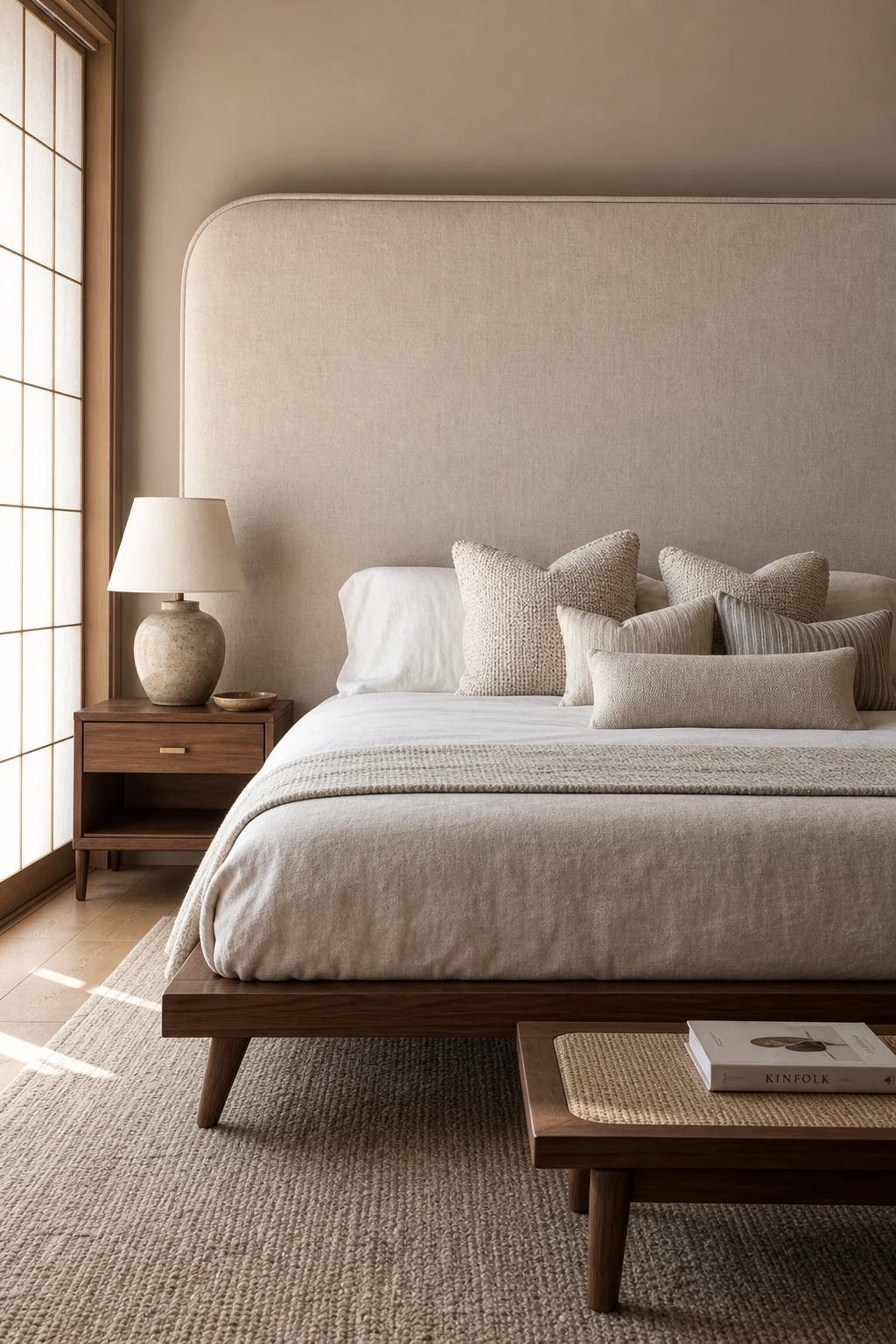
A padded headboard is the quietest way I know to bring warmth into a room that is already doing a lot with restraint. The softness lands right at eye level when you walk in, so you feel the comfort before you consciously notice it. What I love is that one curved linen panel does the job of several decorative pieces without adding a single thing to the floor or the shelves. You get a calmer, more inviting space and the clean lines stay completely intact.
The Key Details
Curved linen upholstered headboard
Low walnut platform bed frame with tapered legs
Ceramic bedside table lamp
Slim solid wood nightstand
Layered bouclé and linen cushions
Pro TipChoose a tightly woven linen or a performance fabric in a mid tone natural, as these resist daily scuffing from pillows and headrests far better than loose weaves or pale creams.
AvoidA deeply tufted or buttoned headboard pulls the eye in too many directions at once and fights the flat, honest surfaces that give Japandi Mid Century rooms their quiet confidence.
A Dark Brown Wooden Bed That Grounds the Whole Japandi Bedroom
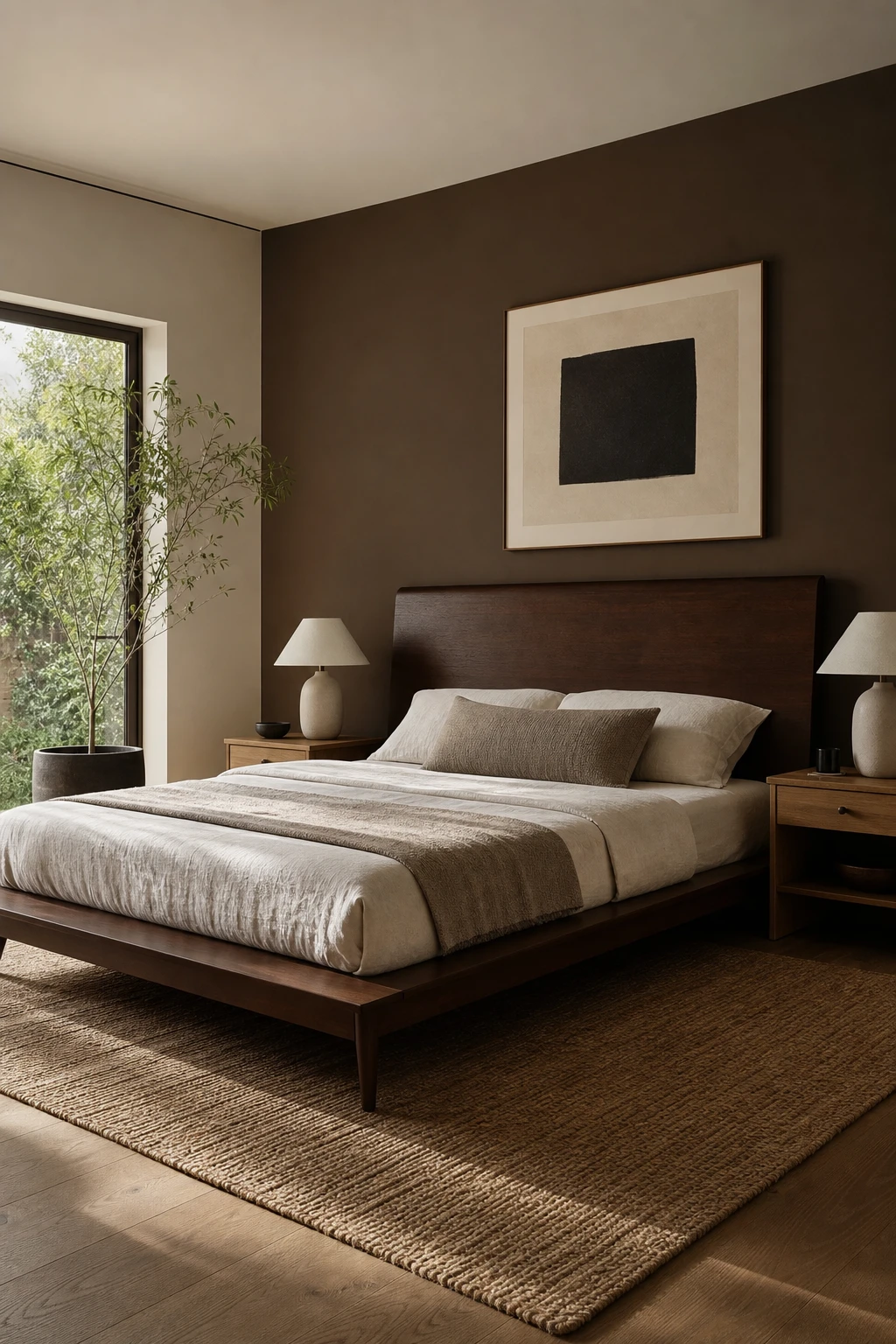
A dark brown bed does something no light piece can: it roots the whole room, giving your eye a place to land and rest. What I love about this move is how the contrast works quietly, the frame pulling everything else into orbit around it without shouting. You get depth and warmth at the same time, and the low platform shape keeps that Japandi calm intact rather than making the room feel heavy.
The Key Details
Low platform bed frame with tapered walnut legs
Raw oak nightstands
Slender ceramic table lamps
Woven seagrass area rug
Large format monochrome art print
Pro TipDress the bed in the palest linen you can find, off white or barely there oat, so the dark frame reads as a deliberate anchor rather than a shadow.
AvoidPairing a dark bed with equally dark side tables and a deep rug pulls all the weight to one corner and makes the room feel smaller and harder to breathe in.
The Long Headboard Trick That Makes Any Japandi Bedroom Wall Look Stunning
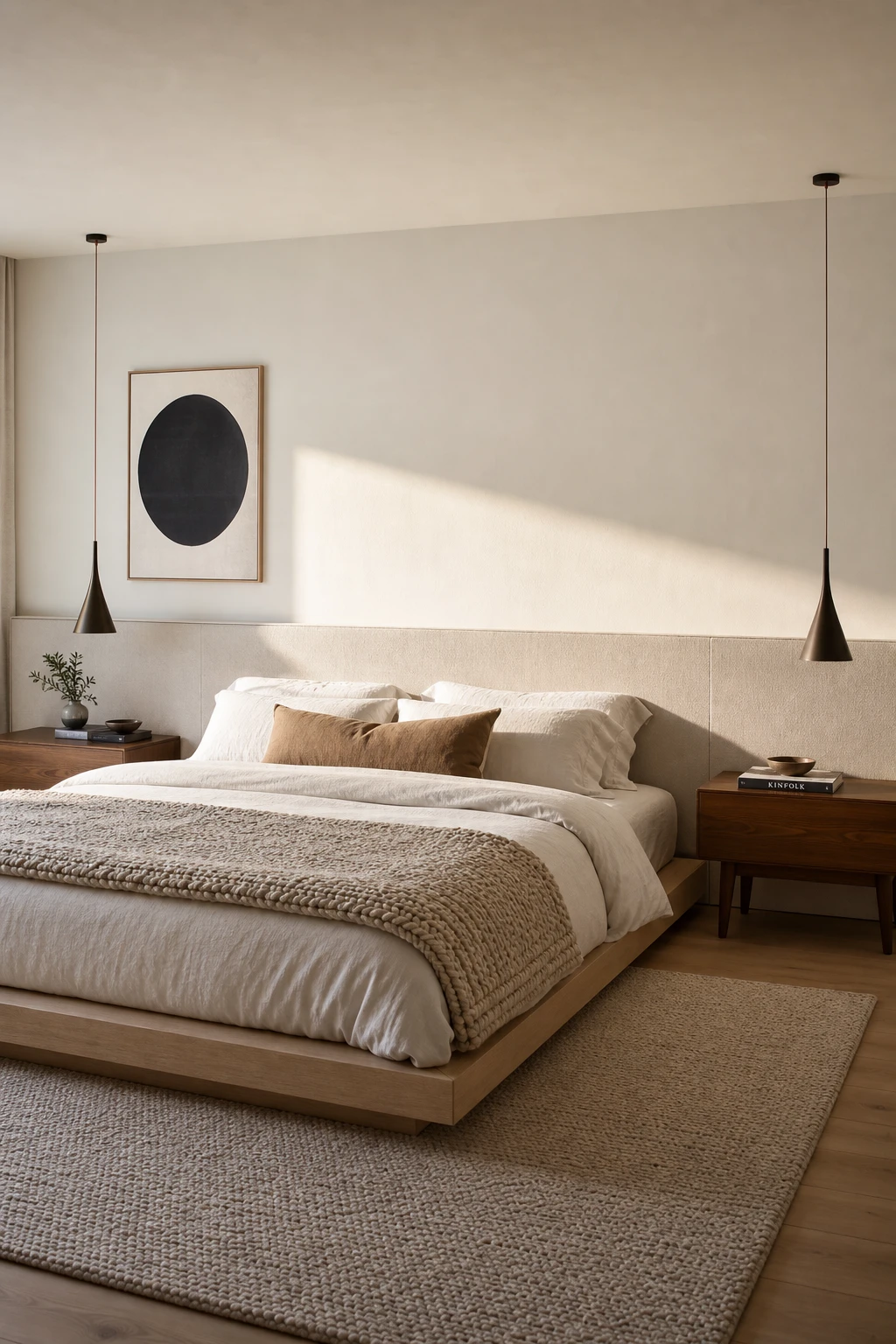
A headboard that runs the full width of the wall is one of my favourite moves in a Japandi bedroom. You get one long, low horizon line that the eye follows across the room, and that horizontal pull makes the space read as wider and calmer than it really is. The linen upholstery keeps it soft and tactile, while the pale ash platform bed underneath holds everything close to the floor the way Mid Century Modern always should.
The Key Details
Full width low upholstered linen headboard
Platform bed frame in pale ash timber
Tapered solid walnut bedside tables
Slim cone pendant lights
Boucle throw at bed foot
Pro TipRun a slim timber slat panel behind the headboard from skirting to ceiling so the wall reads as one composed feature rather than a headboard floating in empty space.
AvoidPositioning artwork at mid wall height directly above a wide headboard splits the horizontal line in two and loses the whole calming effect you worked to create.
Platform Beds That Give a Japandi Bedroom Its Most Grounded Silhouette
A low platform bed pulls the whole room’s gravity downward, and that single move gives a Japandi space its signature calm. What I love about a solid walnut base is the way the grain does all the decorating for you, no headboard theatre required. You get a silhouette that reads as both mid century and quietly Japanese, which is exactly the balance this style lives for.
The Key Details
Low slung solid walnut platform bed frame
Oversized washi paper globe pendant light
Chunky boucle throw at bed foot
Slim walnut bedside plinth
Dried pampas in matte stoneware vessel
Pro TipLook for a platform frame with a discreet drawer drawer running the full length of one side so you gain real storage without lifting the bed off the floor on chunky legs.
AvoidSizing up to a super king in a modest room leaves so little floor visible that the grounding effect you paid for completely disappears.
The Mid Century Bedside Table Style That Completes a Japandi Bedroom
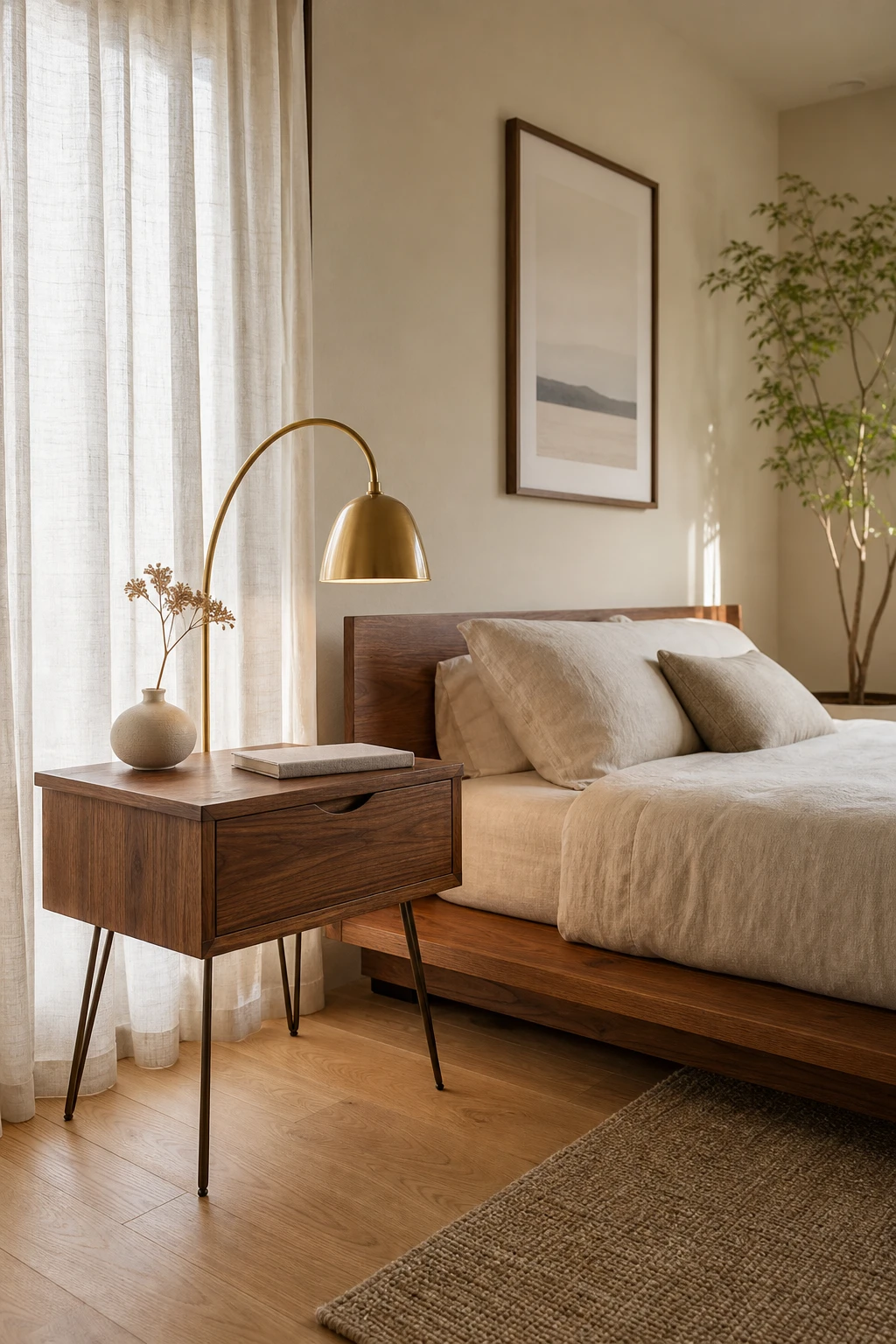
A nightstand with splayed tapered legs does something clever: it echoes the bed’s mid century bones without feeling like a matched set, and that slight distance between the two pieces is what gives a Japandi room its effortless calm. What I love here is how the walnut grain and brass lamp pull warmth into a palette that could otherwise tip too cool. You get a bedside moment that feels considered rather than coordinated.
The Key Details
Tapered walnut nightstand with hairpin style splayed legs
Brushed brass arc reading lamp
Matte ceramic bud vase with dried stem
Low profile platform bed in white oak
Sheer washi textured linen curtains
Pro TipChoose a nightstand whose legs are set at a splay rather than straight down, so a sliver of floor stays visible on all sides and the whole room breathes.
AvoidA wide, boxy bedside table pushed flush against the wall blocks the low morning light that a Japandi bedroom depends on, and the room immediately feels heavier than it should.
Why an Oak Nightstand Brings Such Gentle Warmth to a Japandi Bedroom
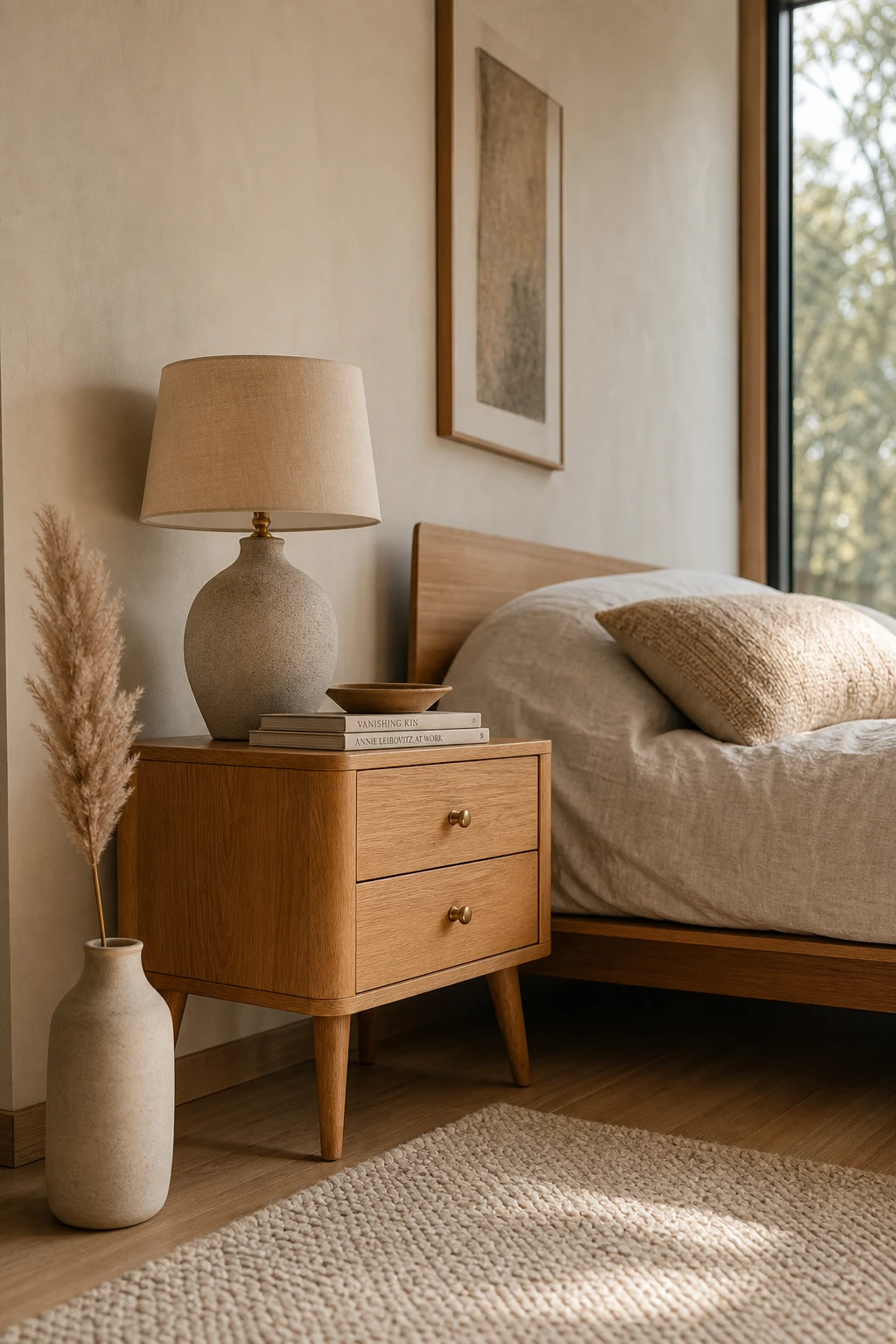
Oak grain does something quietly beautiful in a Japandi bedroom: it reads as texture without asking for attention, and that restraint is exactly what I love about it. The pale honey tones sit between warm and cool, so they hold their own next to linen bedding without competing. You will notice the room feels grounded rather than decorated, which is the whole point of letting natural material do the talking.
The Key Details
Tapered leg oak nightstand
Low platform bed with linen bedding
Hand thrown ceramic table lamp
Slim stoneware bud vase with dried pampas
Tall north facing bedroom window
Pro TipRub a thin coat of hardwax oil into the oak surface once a year and any water ring from a late night glass will wipe clean without leaving a mark.
AvoidBringing walnut, pine, and oak into the same room fragments the warmth and makes each piece look like it belongs to a different home.
A Natural Wood Bedroom That Shows How Much One Material Can Do
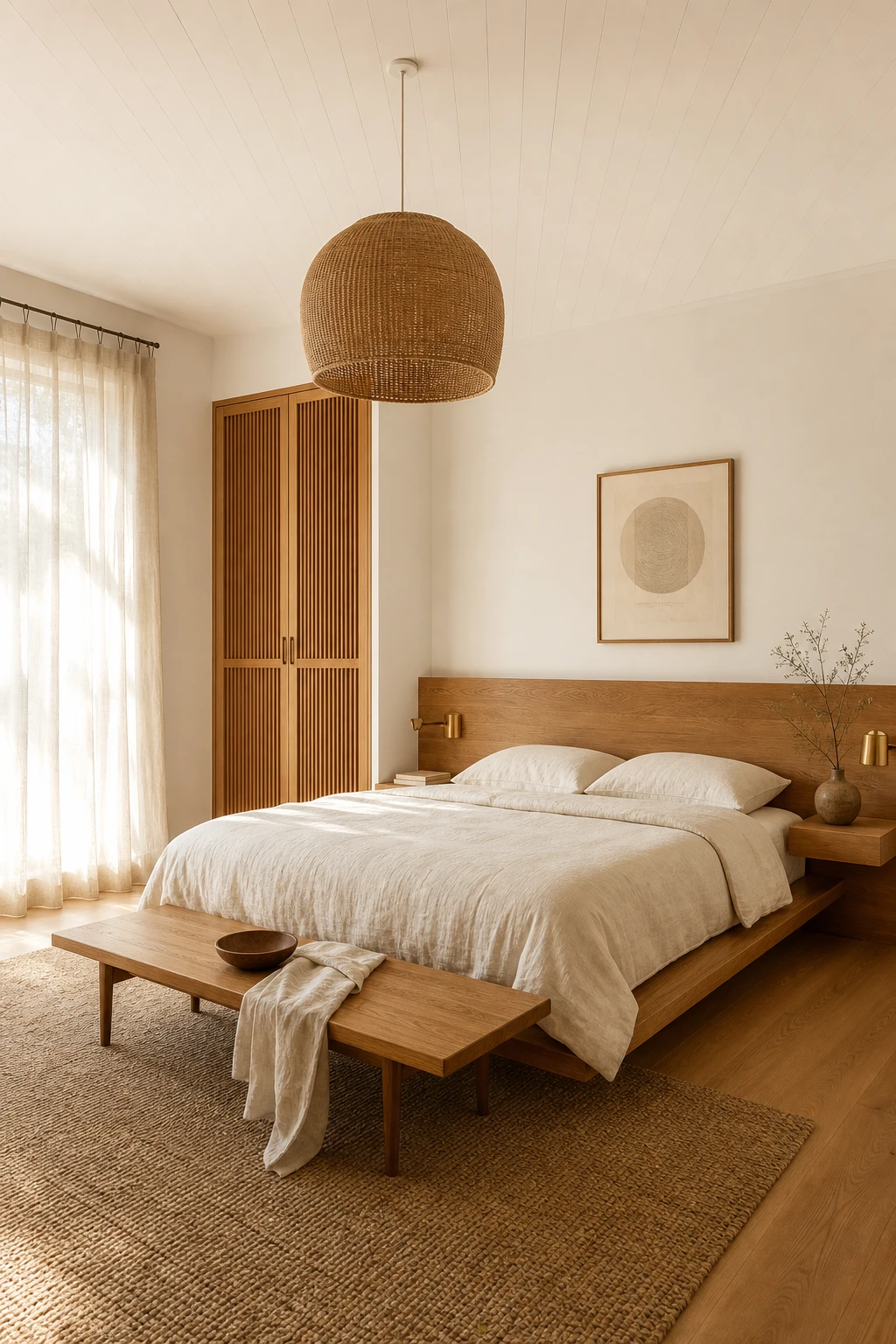
Committing to one material across the whole room sounds like a risk, and honestly it is one of my favourite bets to make. When natural wood runs through the bed frame, the wardrobe panels, and the shelves, the eye stops bouncing and the room settles into something genuinely calm. Small shifts in grain direction and tone create all the depth you need along the way, so the space never reads as flat or sparse, it reads as considered.
The Key Details
Low platform oak bed frame
Slatted wood wardrobe panels
Woven rattan pendant light
Floating solid oak bedside shelves
Slim legged low profile bench
Pro TipChoose two wood tones on purpose, one warm and one slightly cooler, so the contrast reads as considered rather than accidental.
AvoidLeaving every surface raw and unfinished makes the room feel more like a furniture showroom than a restful space, so ground the wood with at least one soft textile layer.
Walnut Furniture That Gives a Japandi Bedroom a Rich, Timeless Feel
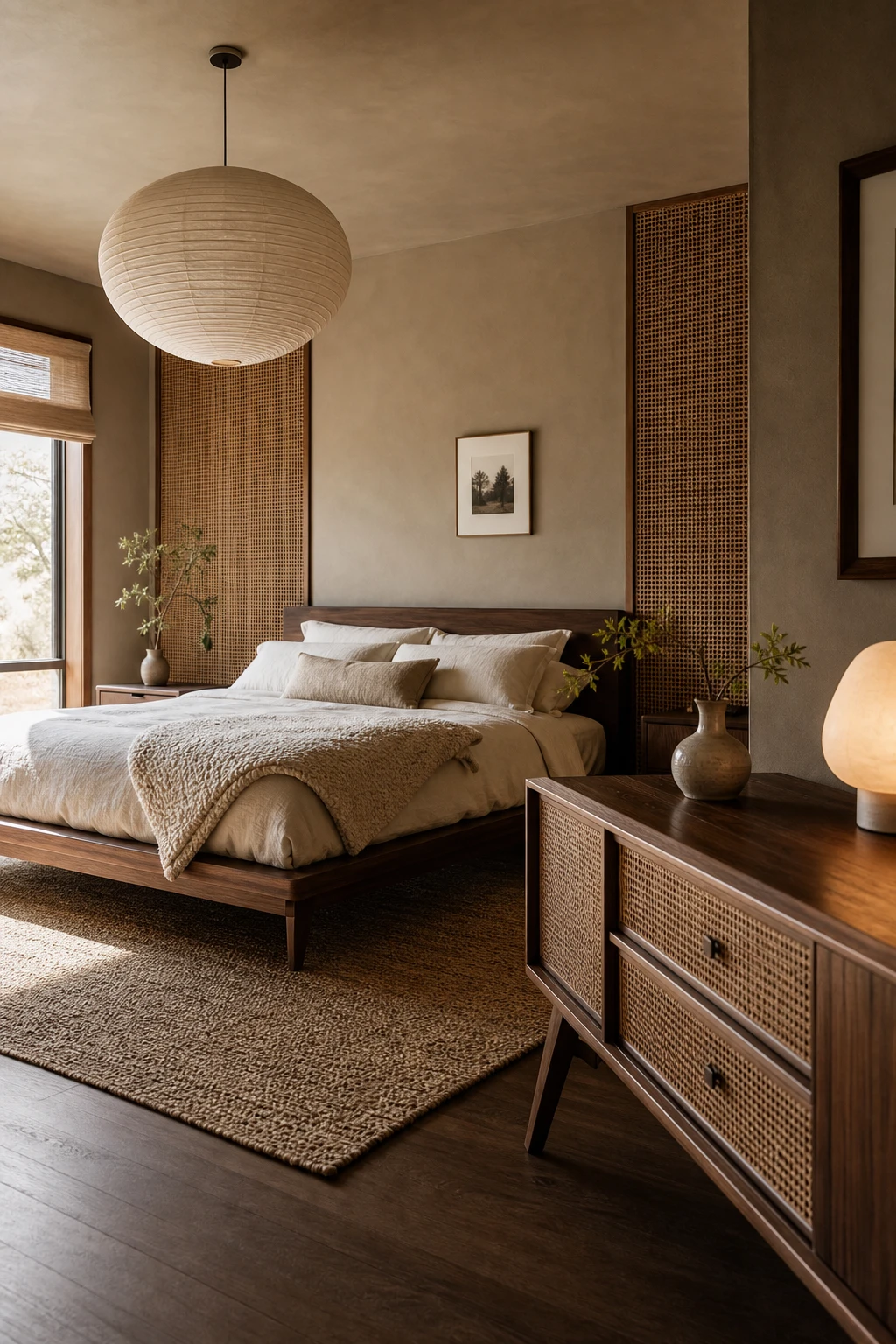
Walnut is the wood I reach for when a room needs richness without going heavy, and in a Japandi bedroom it really earns its place. The grain does the decorative work so you need very little else on the walls. What I love is how the warm red undertone pulls the whole palette together, keeping linen, cream, and natural rattan feeling cohesive rather than scattered. You get a sense of age and quiet luxury without a single fussy detail.
The Key Details
Low profile walnut platform bed with tapered splayed legs
Walnut sideboard with cane inset drawer fronts
Sculptural paper lantern pendant light
Rattan wall panels used as a headboard alternative
Pebble shaped ceramic table lamp
Pro TipGive your walnut furniture a coat of food grade oil every six months and you will see that deep red warmth lift right back to the surface.
AvoidPairing walnut with cool grey walls drains all the warmth from the wood and leaves the room feeling flat and slightly cold.
How Wooden Floors Set the Whole Tone of a Japandi Bedroom
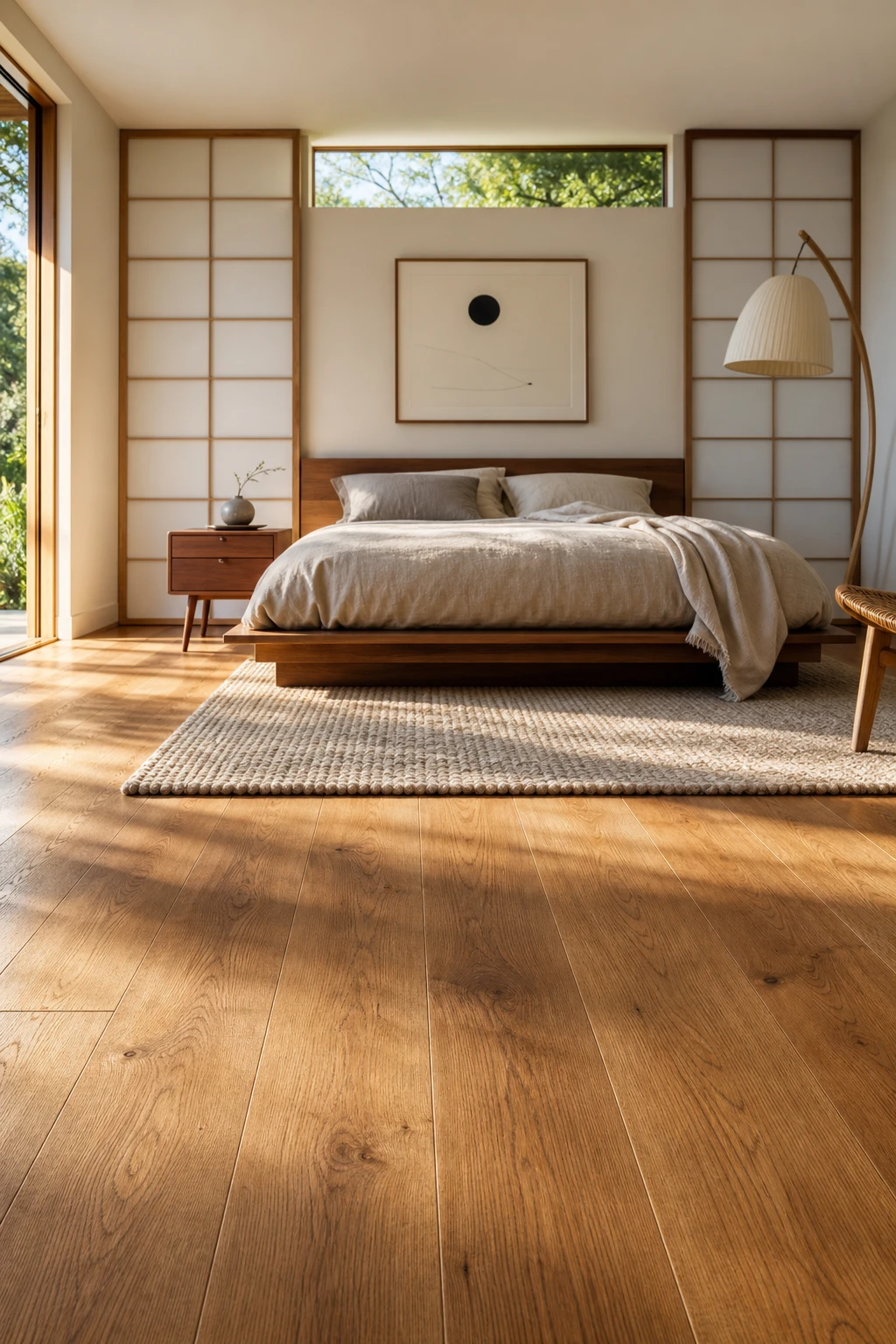
The floor is the first decision I lock in for any Japandi bedroom, because once that tone is down, every other material finds its place against it. Honey oak planks pull warmth into the calm palette without fighting the neutral walls, and you get that quiet layering of texture that makes a room feel genuinely considered rather than assembled. Wide planks especially earn their keep: a single continuous ground that anchors the low bed, the soft rug, and the paper panels into one coherent story, and I never get tired of watching it come together.
The Key Details
Wide plank honey oak flooring
Low slung platform bed
Hand spun wool area rug
Sculptural arc floor lamp
Shoji inspired paper wall panels
Pro TipLay your floorboards lengthways along the shortest wall and watch how the room stretches before you add a single piece of furniture.
AvoidCovering the floor edge to edge with rugs dissolves the very foundation you paid for, and the room loses the breathing space that makes Japandi work.
Paper Lantern Lights That Instantly Soften a Japandi Bedroom
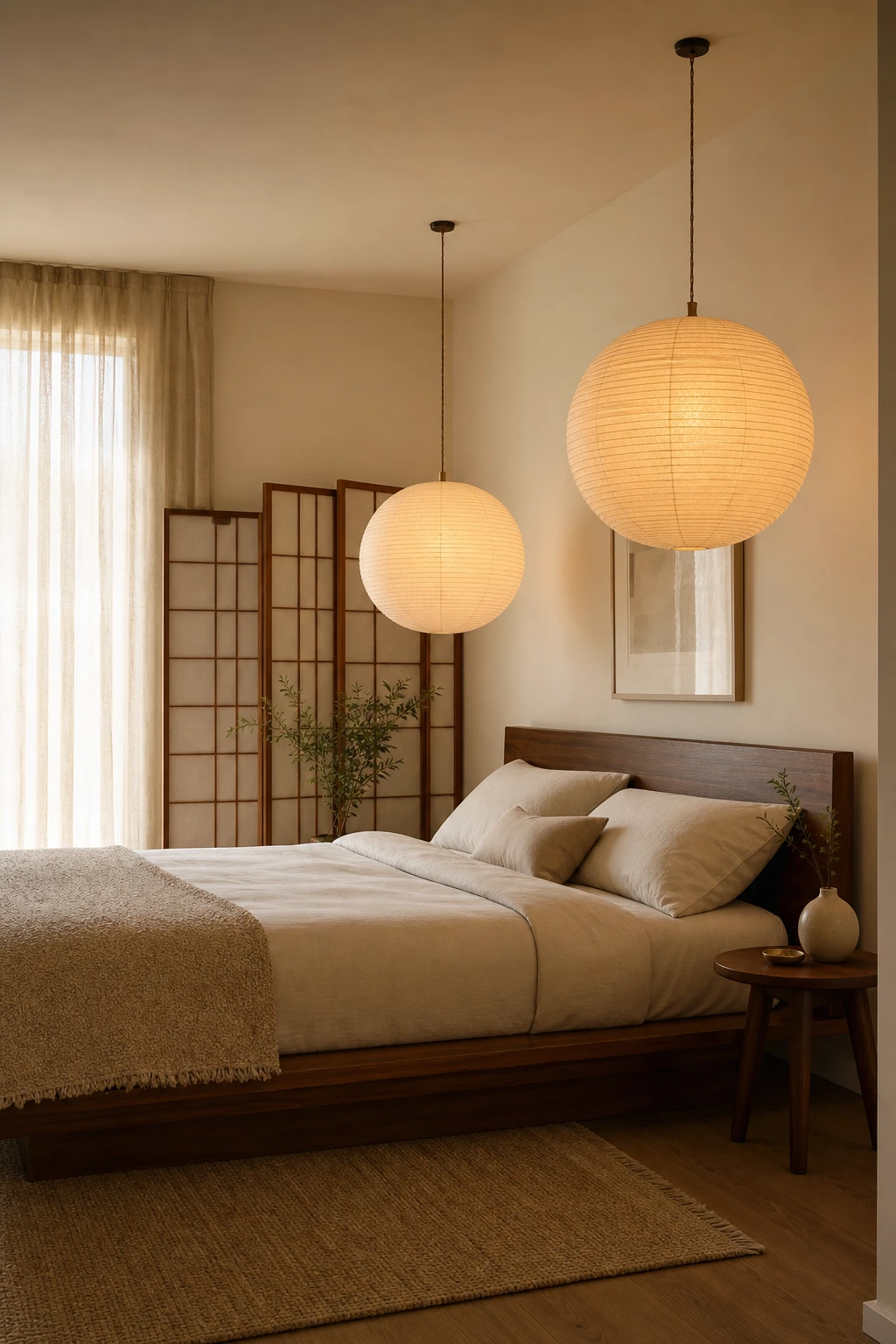
Paper lanterns are one of my favourite lighting choices for a Japandi bedroom because they turn a bare bulb into something almost alive. The washi paper filters the light into a warm, honeyed glow that softens every edge in the room. You get that gentle, candlelit feeling without any of the fuss, and watch how the whole space feels quieter and more restful the moment you switch them on.
The Key Details
Washi paper globe pendant lights
Low walnut platform bed
Shoji rice paper room divider
Teak bedside stool
Boucle throw
Pro TipHang a cluster of two or three lanterns at staggered heights above the bed to create movement and draw the eye upward without adding visual weight.
AvoidChoosing a lantern whose diameter is wider than your ceiling height allows will make the room feel compressed and heavy rather than serene.
Layering Bedroom Lighting So the Whole Room Feels Cosy After Dark
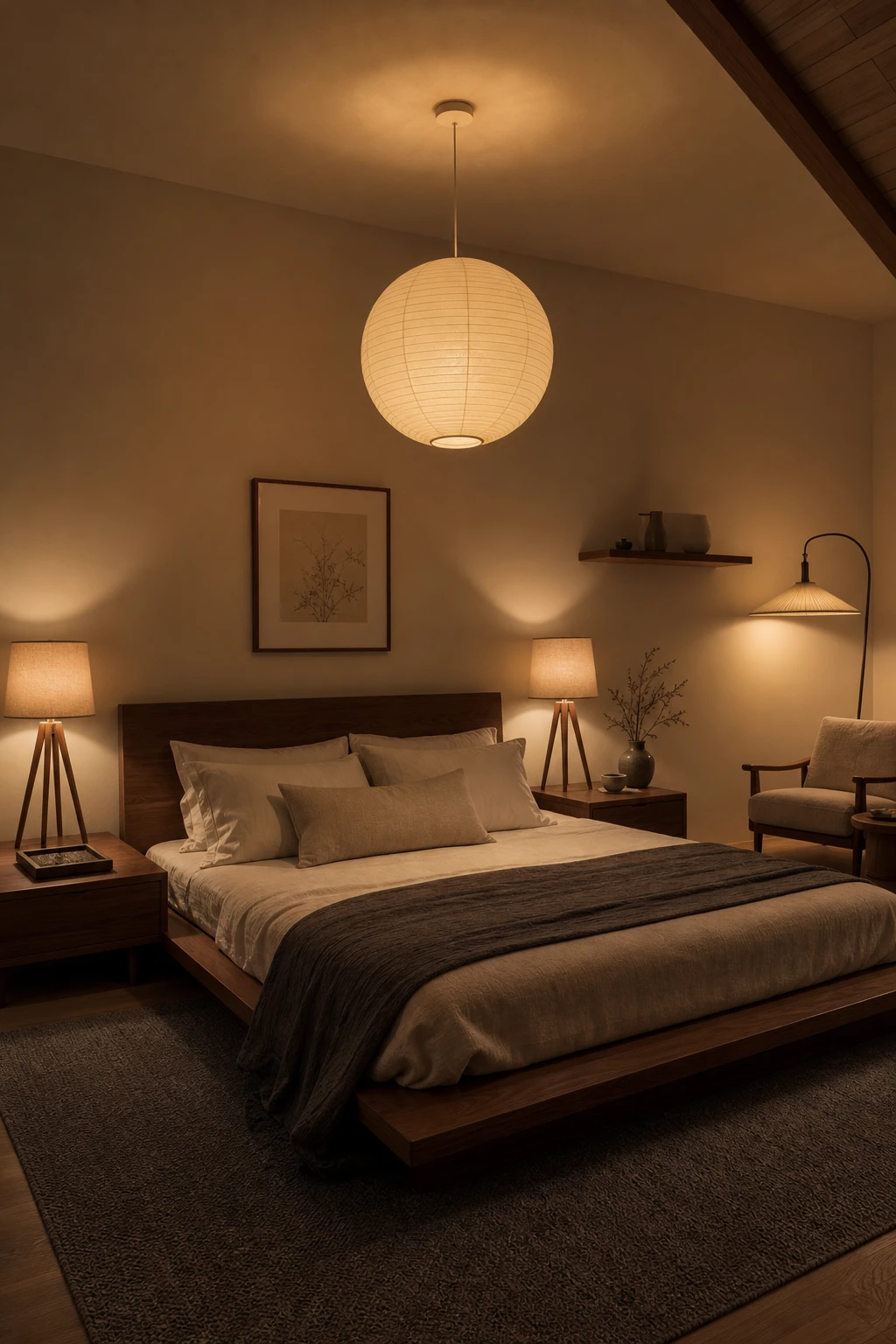
Layered lighting is one of those things I keep coming back to, because a single overhead fitting just cannot do everything a bedroom asks of it. What you get with three separate layers, a pendant for ambient glow, bedside lamps for task light, and a floor lamp tucked into the corner, is a room that shifts mood rather than staying stuck at one flat brightness. The washi globe softens the whole ceiling, the teak tripod lamps pull the eye down to bed height, and that bent stem arc fills the corner so no patch of wall is left cold or forgotten.
The Key Details
Washi paper globe pendant
Teak tripod bedside lamps
Bent stem arc floor lamp
Low slung walnut platform bed
Undyed linen pillowcases
Pro TipWire each layer to its own dimmer switch so you can dial the pendant almost off, lift the bedside lamps for reading, and keep the floor lamp on the lowest setting for a true wind down atmosphere.
AvoidRelying on a single overhead light leaves every corner in shadow and gives the room a flat, functional feel that no amount of lovely furniture can fix.
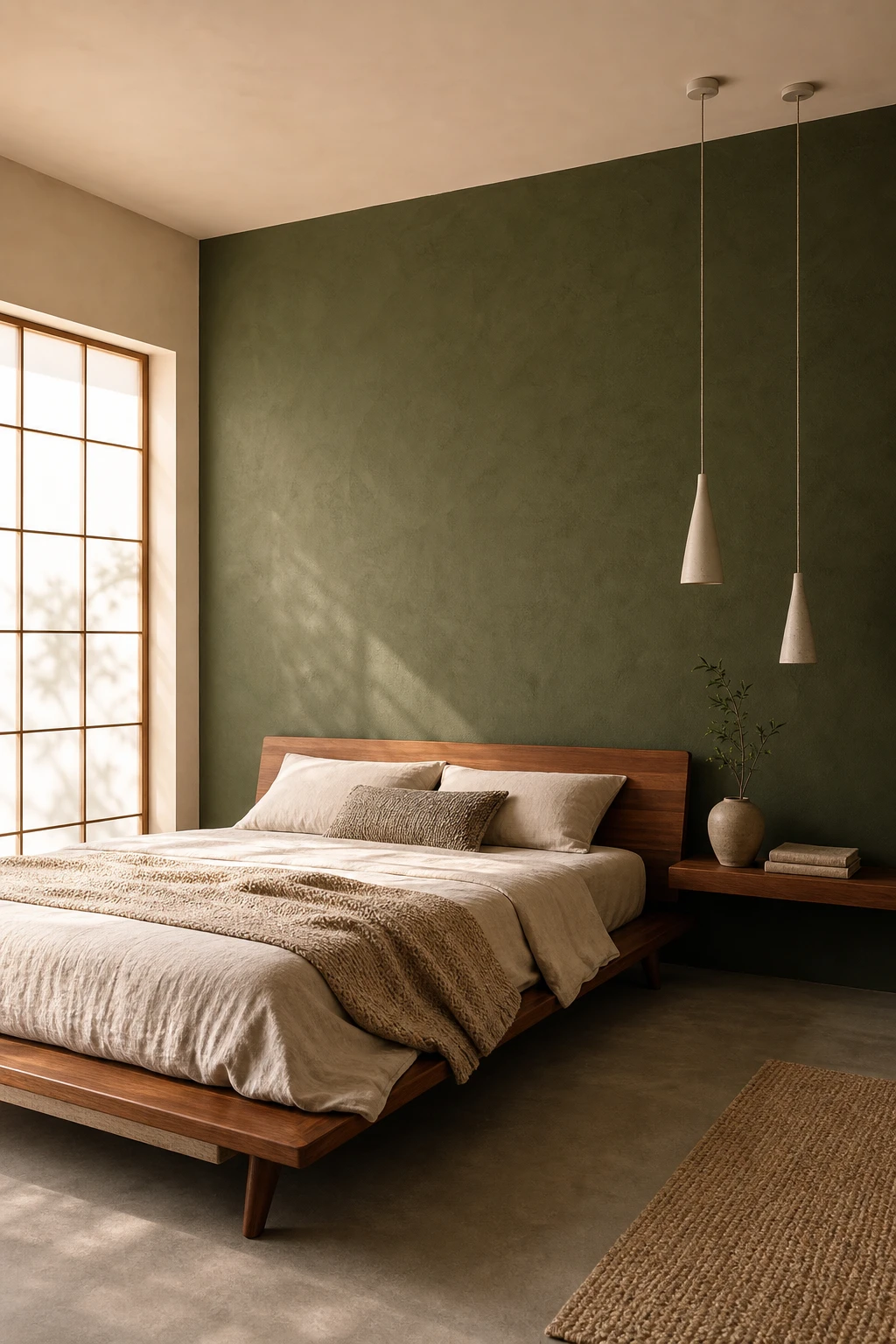
The One Accent Wall That Transforms a Japandi Bedroom Behind the Bed
One quiet moment of texture behind the bed is a move I keep coming back to in Japandi rooms. No objects to arrange, no gallery to hang: the wall itself does the framing work, giving the low teak bed a reason to sit exactly where it does. What I love is how an accent wall this understated manages to make the whole room feel more deliberate, as though every element was always going to land exactly there.
The Key Details
Low teak platform bed with splayed tapered legs
Cone shaped ceramic pendant lights
Shoji style rice paper panel window
Floating walnut low profile shelf
Honed concrete floor
Pro TipFix vertical slat panels directly to the wall in a natural oak or ash tone and you add warmth and shadow line without touching a paint tin.
AvoidChoosing a slat panel with a tight, fussy pattern turns the feature wall into visual noise that pulls against the stillness the rest of the room is working hard to build.
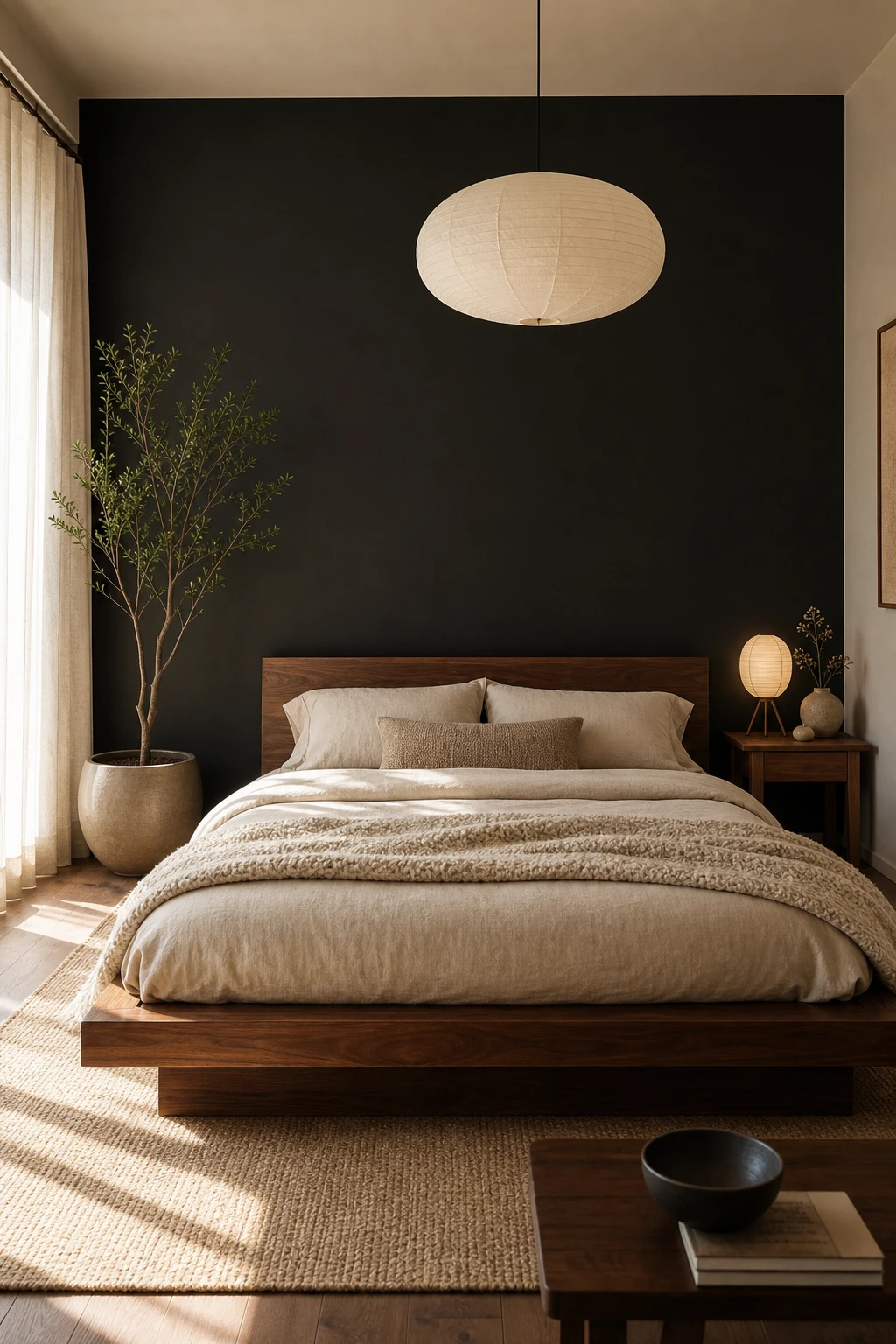
A Black Wall Behind the Bed That Makes a Japandi Bedroom Feel Bold and Still Calm
Black behind the bed works the way a deep shadow works in a Japanese ink painting: it pulls everything forward and makes the pale linens, warm walnut, and soft ceramics glow. What I love about this move is that the black never shouts because it sits still and absorbs light rather than bouncing it around. You get a room that feels anchored and restful, which is exactly the grounding quality Japandi asks for.
The Key Details
Low walnut platform bed
Washi paper pendant light
Oak nightstand with ceramic bud vase
Chunky boucle throw over linen bedding
Sheer linen curtains
Pro TipPaint only the wall your bed sits against and leave the other three walls in a warm white or soft clay so the black reads as depth rather than drama.
AvoidA satin or semi gloss finish on a black wall picks up every light source in the room and turns a calm backdrop into a restless, reflective surface that fights the whole Japandi mood.
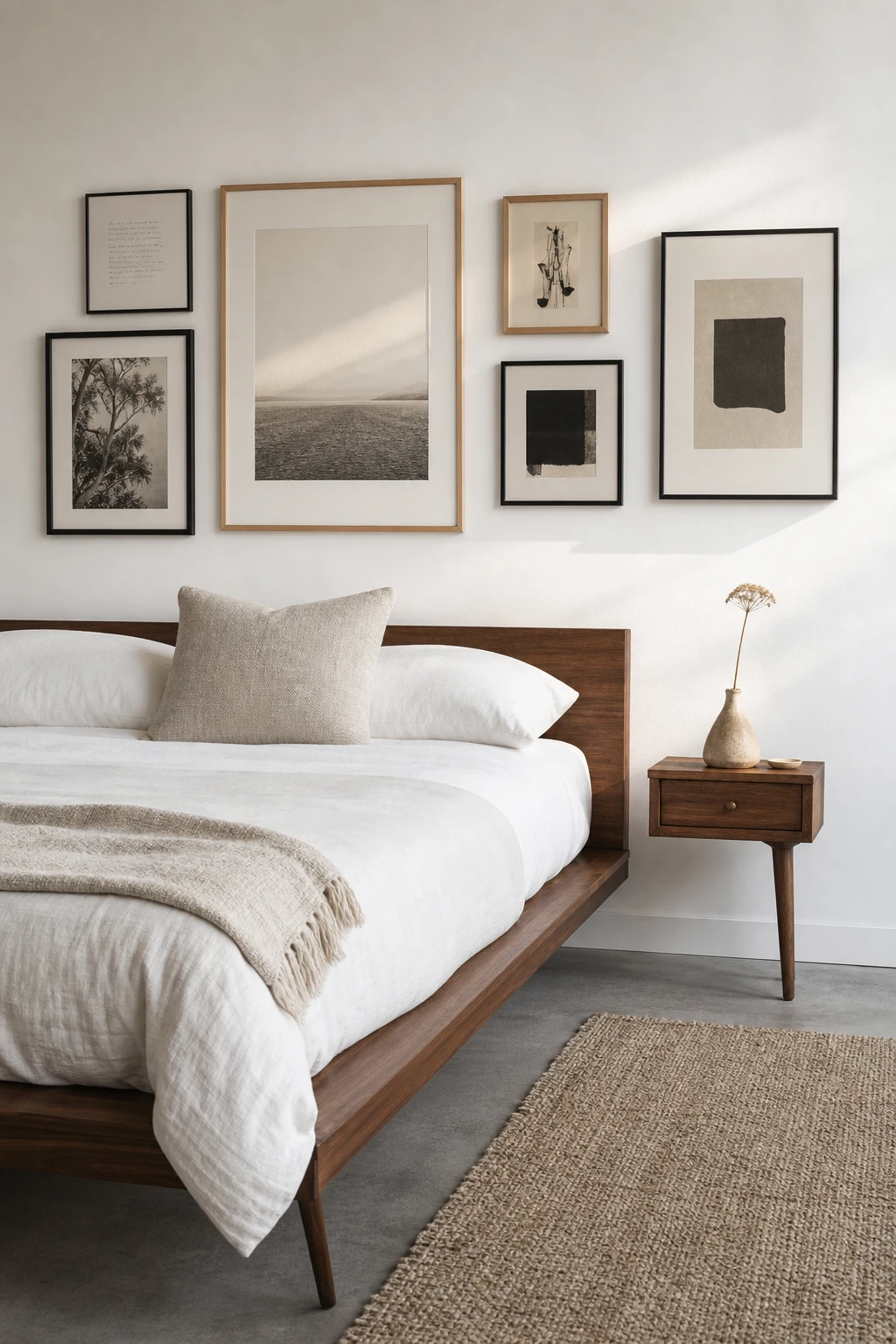
Hanging Picture Frames Above the Bed the Japandi Way
A gallery wall above the bed can so easily tip into clutter, and what I love about the Japandi edit is how it sidesteps that completely. Mixing matte black and natural oak frames sounds bold, yet when every piece is rectangular and kept to a quiet palette you get calm rather than chaos. Watch how the frames pull the eye upward without ever feeling busy, giving the bed a considered backdrop that adds personality without noise.
The Key Details
Mixed rectangular gallery frames in matte black and natural oak
Low walnut platform bed with tapered legs
Slender single leg walnut nightstand
Woven oatmeal wool floor runner
Ceramic bud vase with dried botanical stem
Pro TipStick to one or two frame profiles repeated across the whole arrangement so the eye reads the group as a single composed object rather than a collection of individual pieces.
AvoidHanging the frames too high leaves a gap above the headboard that makes the whole arrangement feel unmoored from the bed and the room.
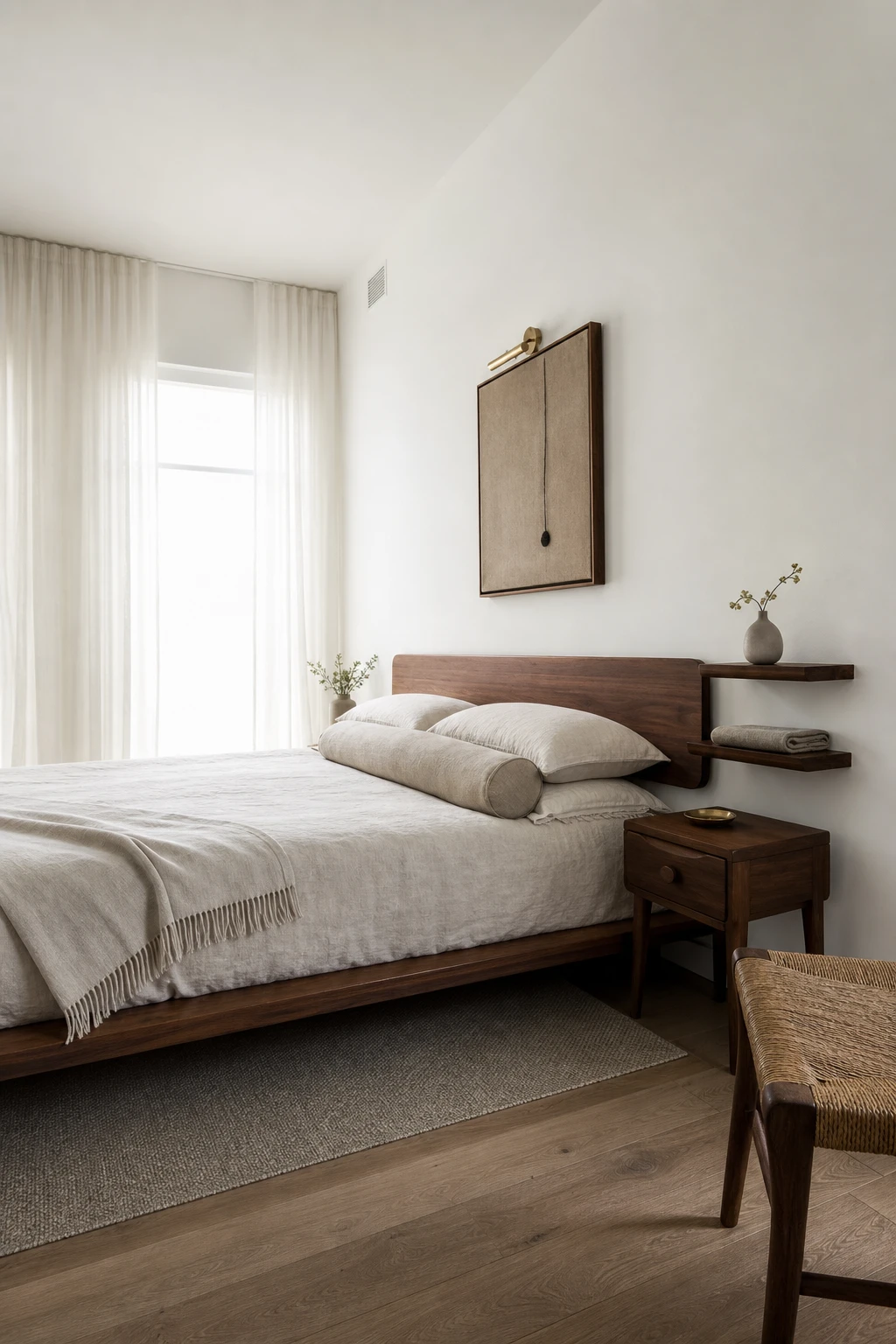
Small Bedroom Ideas That Make Japandi Style Work in a Tight Space
Small rooms reward restraint, and that is exactly where Japandi mid century modern shines. What I love here is how every piece earns its place: a low platform bed keeps the eye line low and the ceiling feels taller, slim tapered legs let light run under the furniture so the floor reads as one open plane, and a single bud vase on a floating shelf gives you the warmth you need without eating into floor space.
The Key Details
Low profile walnut platform bed
Wall mounted floating shelves
Slim tapered leg nightstand
Ceiling mounted sheer curtain track
Ceramic bud vase and folded textile shelf styling
Pro TipMount your nightstand to the wall instead of standing it on the floor and you instantly free up a strip of visible floor that makes the whole room feel wider.
AvoidBringing a full size dresser or oversized bed frame into a tight room eats the breathing space that makes Japandi feel calm rather than cramped.
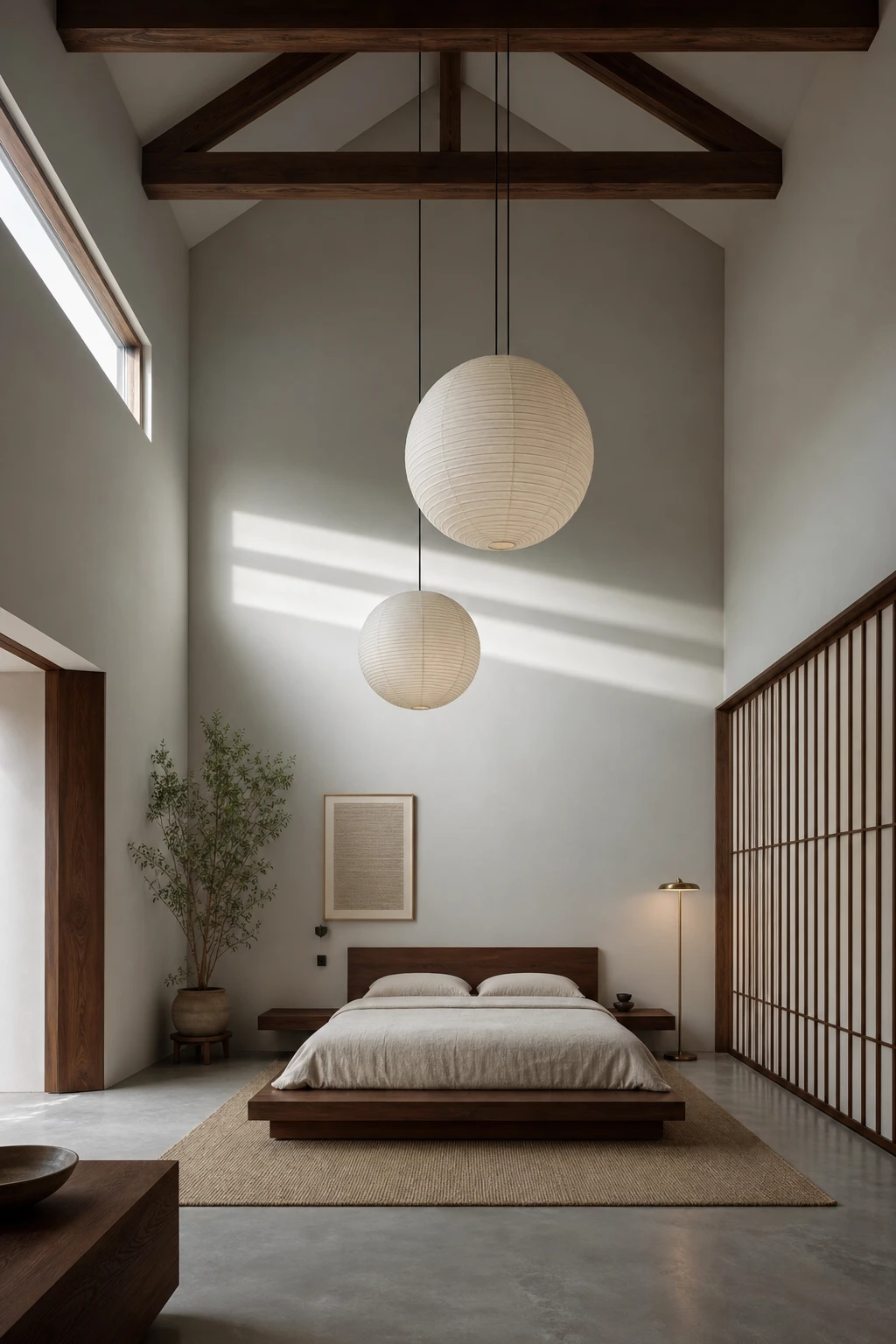
How to Decorate a High Ceiling Japandi Bedroom So It Feels Warm Not Vast
Tall ceilings become a problem the moment you ignore them, and what I love about this combination is how every element pulls the eye gently downward rather than letting it drift up into empty space. Exposed timber beams give the ceiling a job to do, washi pendants hang low on long cords so the warmth lands right where you feel it, and a low walnut platform bed anchors the whole room to the floor. You get volume without that hollow, echoing hall feeling that plagues so many high ceiling rooms.
The Key Details
Exposed timber ceiling beams
Oversized washi paper pendant lights on long cords
Low oiled walnut platform bed
Floor to ceiling timber slat panel
Clerestory window with horizontal light band
Pro TipHang your pendants so the bottom of the shade sits roughly at seated eye level, around 150 to 160 cm from the floor, so the light pools close to you rather than floating halfway up the wall.
AvoidLeaving a high ceiling completely bare pulls all the visual weight upward and makes the sleeping area feel like a forgotten corner at the bottom of a tall box.
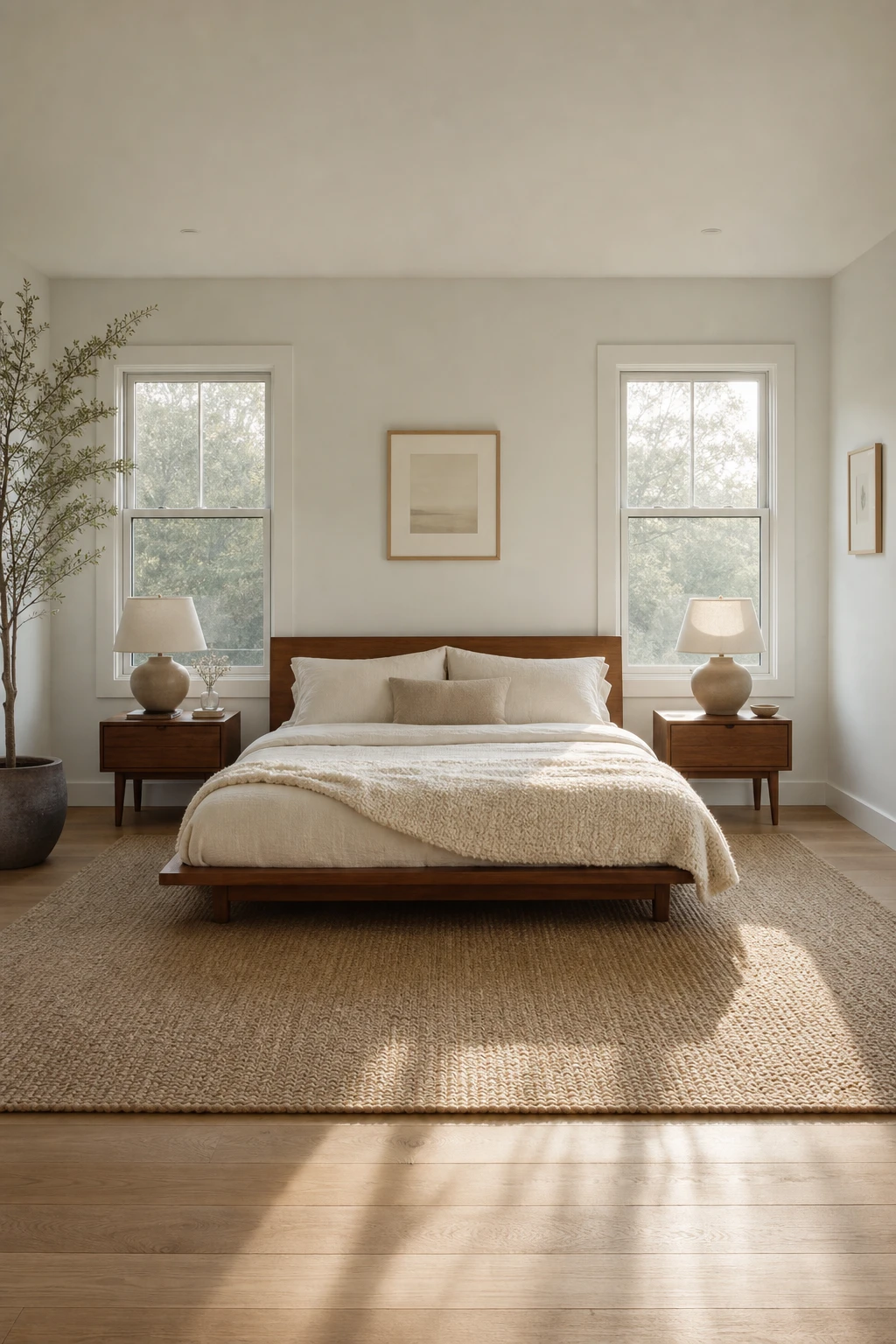
Two Windows in a Japandi Bedroom and How to Make the Light Work for You
Two windows sitting either side of the bed is one of my favourite moves in a Japandi bedroom. You get an instant visual anchor, the bed reads as settled and intentional, and the light comes in from both sides so shadows never pool in awkward corners. What I love most is how symmetry does the heavy lifting: your eye sweeps across the room and everything feels calm without a single extra accessory.
The Key Details
Low teak platform bed
Symmetrical ceramic table lamps
Undyed linen and bouclé bedding
Natural jute area rug
Blonde oak hardwood floor
Pro TipHang your curtain rod 15 to 20 cm beyond each window edge so the fabric stacks clear of the glass when open, leaving every bit of that natural light unblocked.
AvoidChoosing different curtain lengths, weights, or hanging heights for each window creates a lopsided tension that no amount of styling will fix.
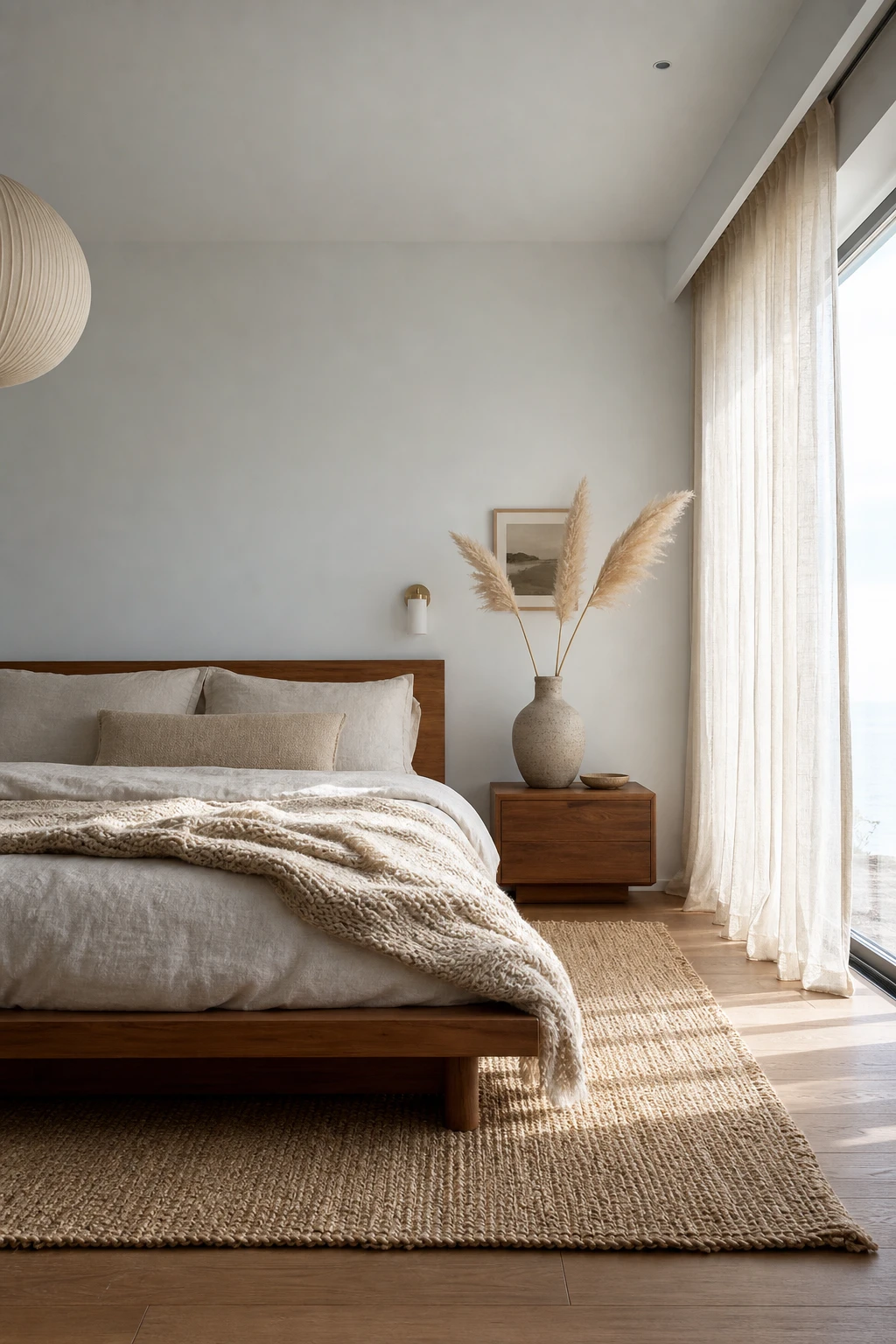
Coastal Japandi Bedrooms That Bring Sea Air Calm Indoors
Coastal Japandi is a pairing that wins me over every time, because both languages share the same quiet confidence. You get the airiness of a beach house, pale timbers and soft filtered light, held together by Japandi’s characteristic stillness. Watch how the low teak bed and sheer linen curtains keep the eye moving gently rather than landing hard anywhere. That restraint is the whole lesson: lightness without clutter, calm without feeling cold.
The Key Details
Low teak platform bed
Sheer floor length linen curtains
Woven seagrass area rug
Stoneware vessel with dried pampas stems
Wide plank timber floor
Pro TipChoose cushion covers and throws in undyed or barely there tones of sand, oat, and bleached linen so the textiles feel coastal purely through texture rather than colour.
AvoidBringing in rope, shells, or driftwood accessories pulls the room toward a seaside souvenir shop and dissolves the Japandi calm you have worked to build.
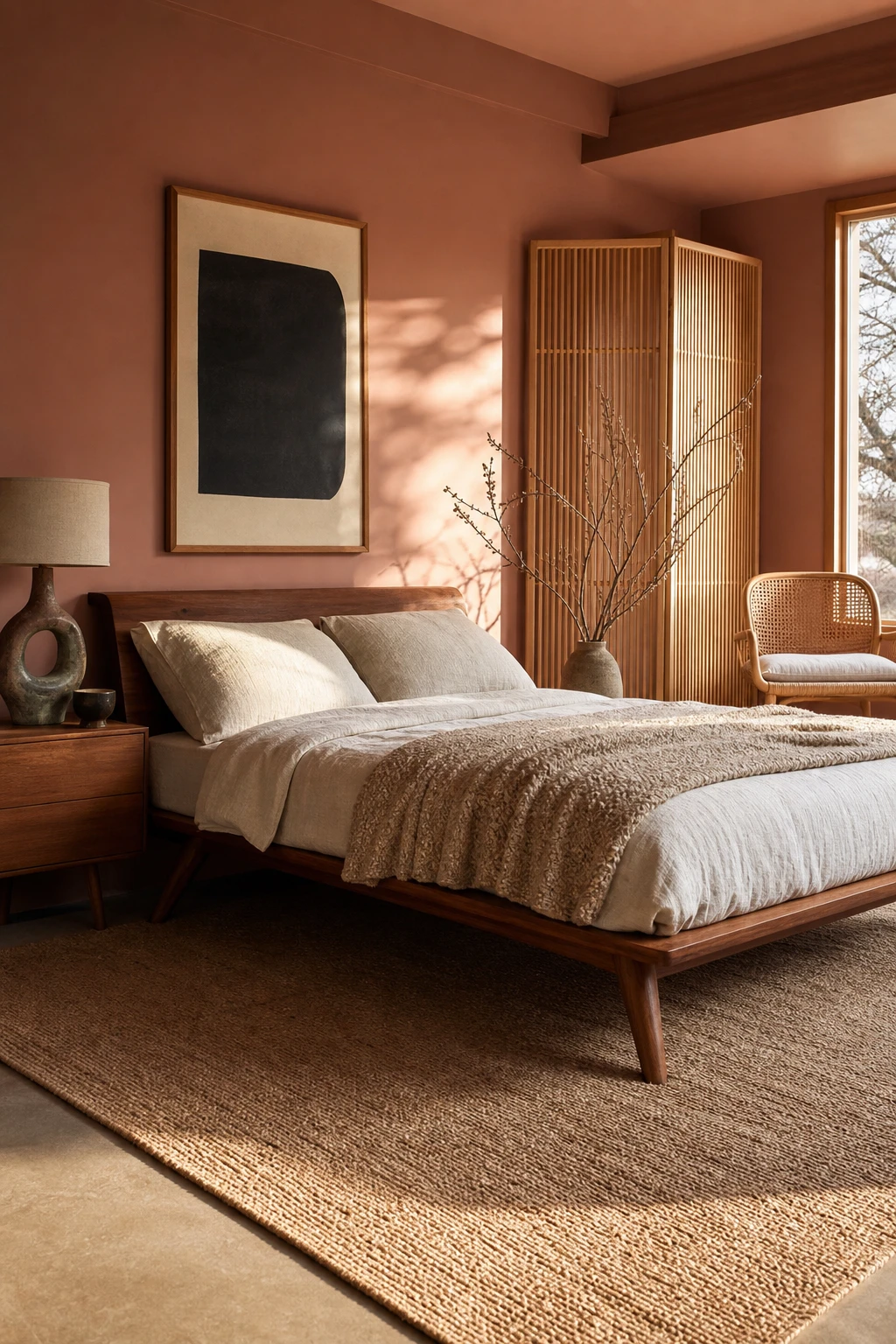
Retro Japandi Bedrooms That Prove Old and New Can Share a Room Beautifully
Mixing eras is a skill, and the Japandi palette is what makes it work here. The teak bed and ceramic lamp carry all that warm retro character you love, while the undyed linen and slatted oak divider pull everything back to quiet. You get personality without clutter, and the two styles end up holding each other in balance rather than competing.
The Key Details
Low teak platform bed with tapered splayed legs
Sculptural 1960s ceramic table lamp with linen shade
Slatted natural oak shoji inspired room divider
Rattan accent chair with flat wabi sabi cushion
Chunky boucle throw over undyed linen bedding
Pro TipPick your two or three retro hero pieces first, then build the rest of the room in calm Japandi neutrals so those vintage finds get the breathing room they deserve.
AvoidStacking in too many nostalgic finds one by one feels harmless until suddenly the Japandi stillness has gone completely and the room just reads as a crowded vintage shop.
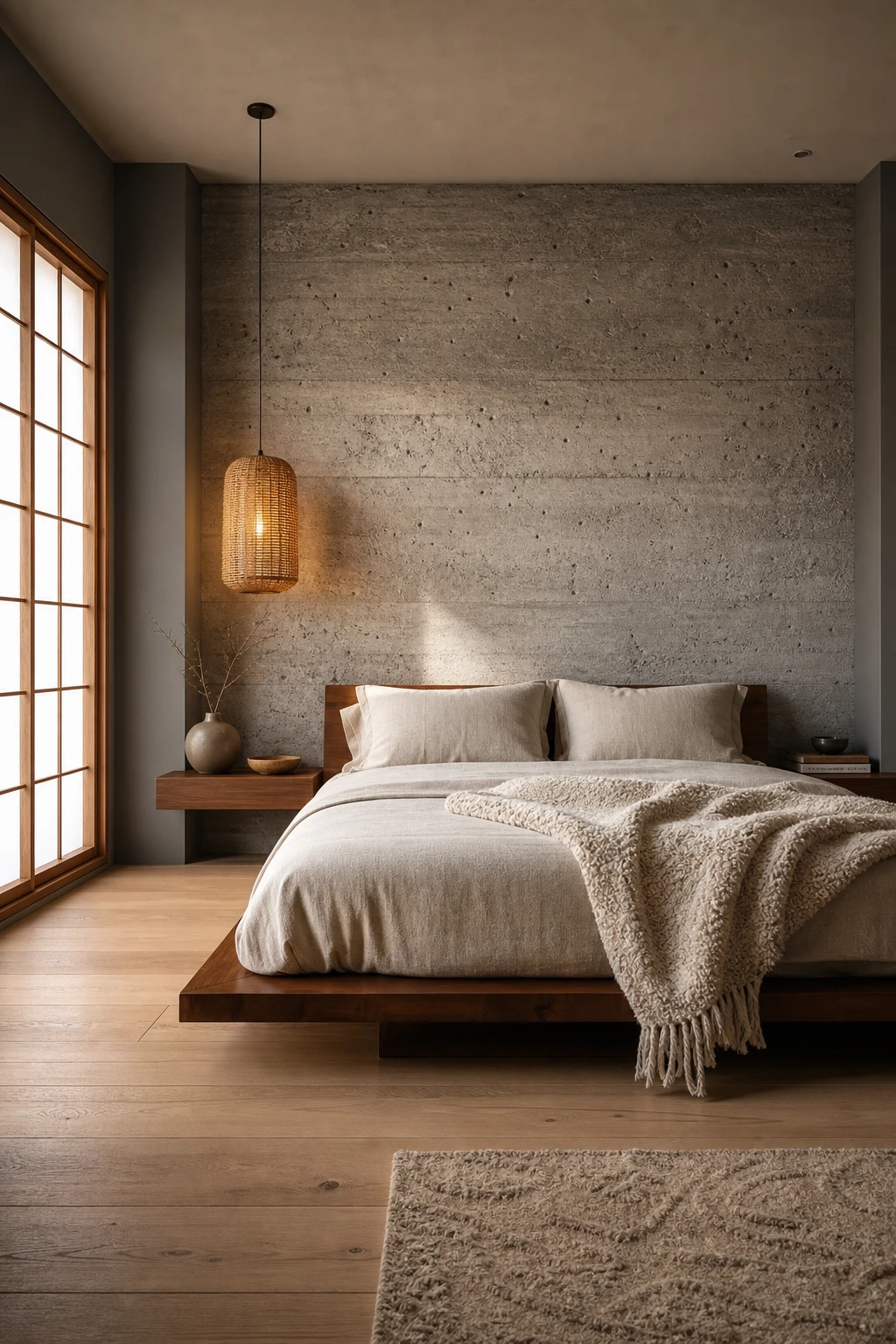
Concrete Textures That Add an Unexpected Edge to a Japandi Bedroom
Concrete is the last texture most people reach for in a Japandi bedroom, and that surprise is exactly what wins me over. The raw, poured quality of that feature wall gives the room a grounded edge, and then you soften the blow with warm teak, pale oak and rattan so the space never tips cold. Watch how the rough and the natural sit beside each other, the contrast is quiet but you feel it the moment you walk in.
The Key Details
Raw poured concrete feature wall
Low teak platform bed
Floating walnut bedside shelves
Slender rattan pendant light
Wide plank pale oak floor
Pro TipUse a concrete effect wallpaper on your feature wall rather than real polished plaster, because the paper surface reads just as tactile but holds a gentler warmth that keeps the room feeling like a bedroom rather than a car park.
AvoidBringing in brushed steel or chrome alongside raw concrete pulls the temperature of the whole room down fast, and the Japandi warmth you built with the timber and rattan simply disappears.
Alan launched Edward George London in 2017. Since completing his masters in Town & Regional Planning (MPlan) he has combined the skills he learned at the University of Sheffield with his passion for design, to help create a foundation for those looking to create a beautiful home.