Newsletter Subscribe
Enter your email address below and subscribe to our newsletter

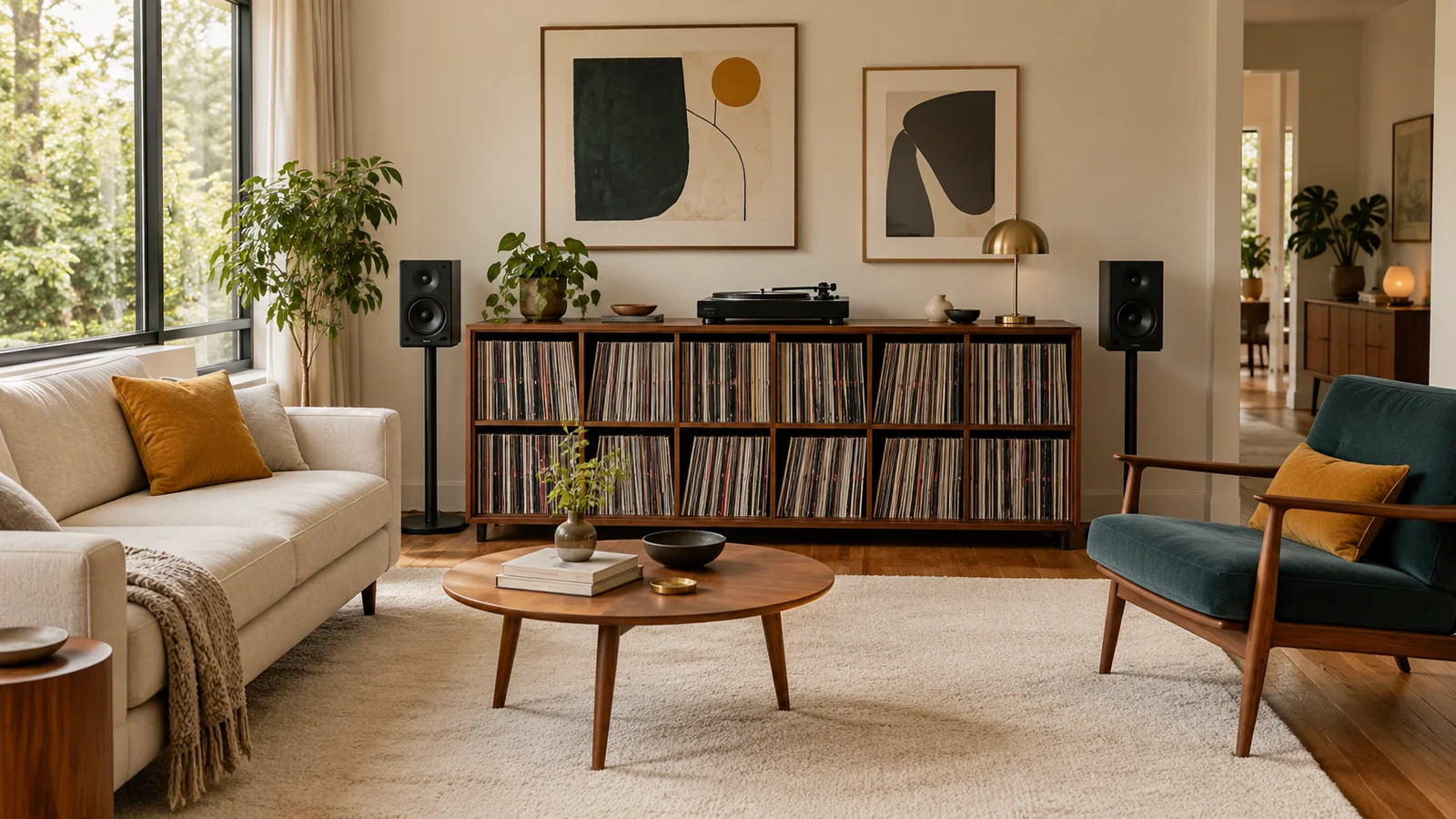
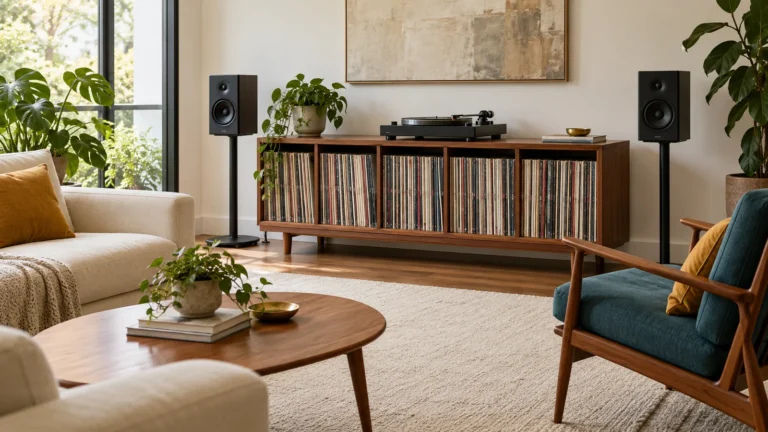
I would begin a mid century vinyl living room with the records you play, rather than the cabinet you have saved. A growing collection changes how a room works. You need somewhere to browse, a clear place to change sides, and seating that still feels sociable when the music is off. I like warm walnut, a low sofa and one petrol coloured chair for this project, but those choices earn their place through the everyday routine. If you keep moving albums off a dining chair or squeezing past a coffee table with a sleeve in your hand, the room needs a better relationship between its parts. Here is how I would turn that frustration into a complete plan, keeping useful furniture and making the collection feel at home without giving every wall to equipment. You can finish with a drawing and a clear order of priorities before buying anything.
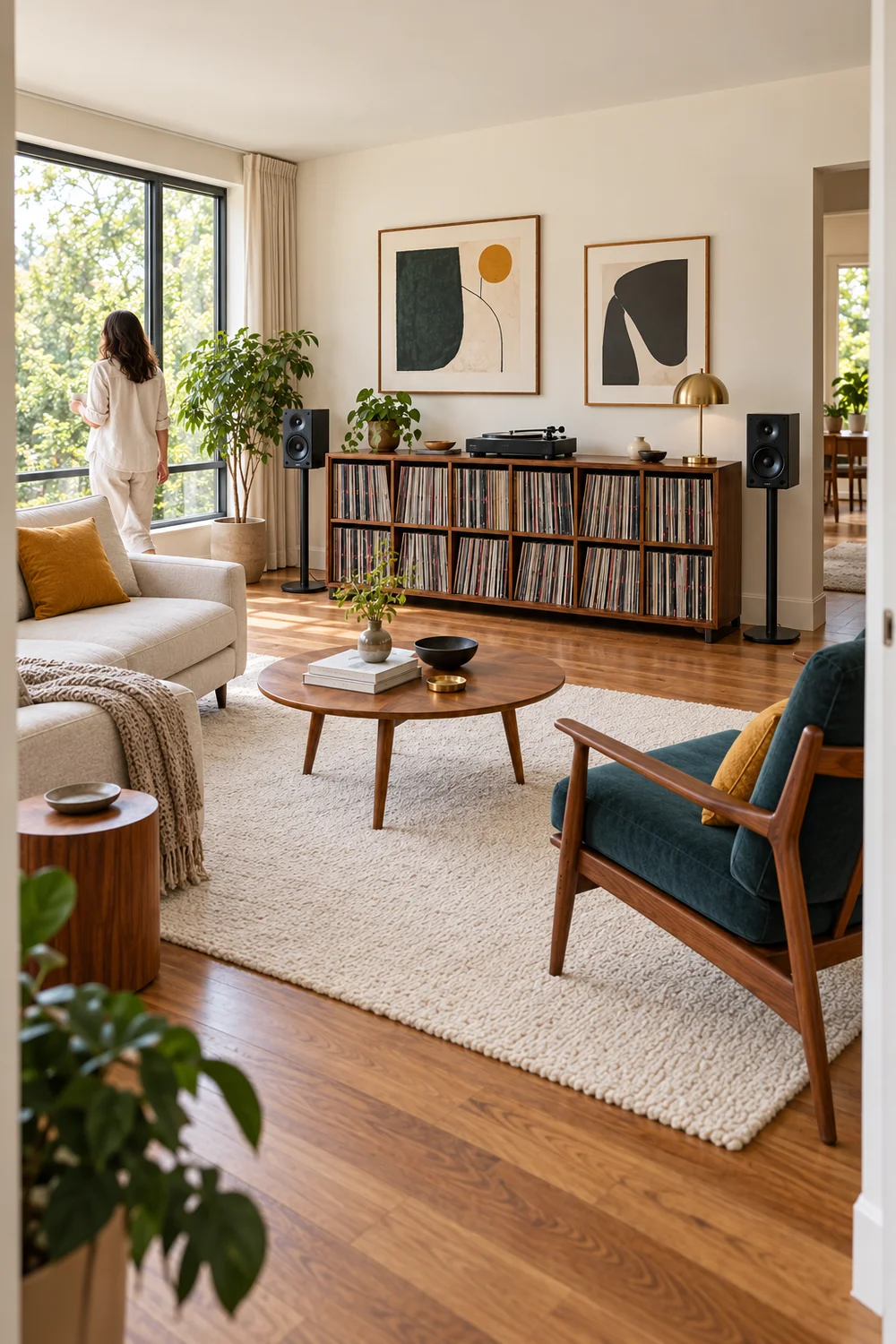
I would separate three questions that a photograph tends to blur. How much collection needs proper storage? Which records do you browse most often? Which covers do you want to see? Your answer might be one continuous library, a smaller accessible selection and a single changing display. They do not have to occupy the same piece of furniture. Separating those jobs stops a beautiful display from quietly becoming the only place available for new arrivals.
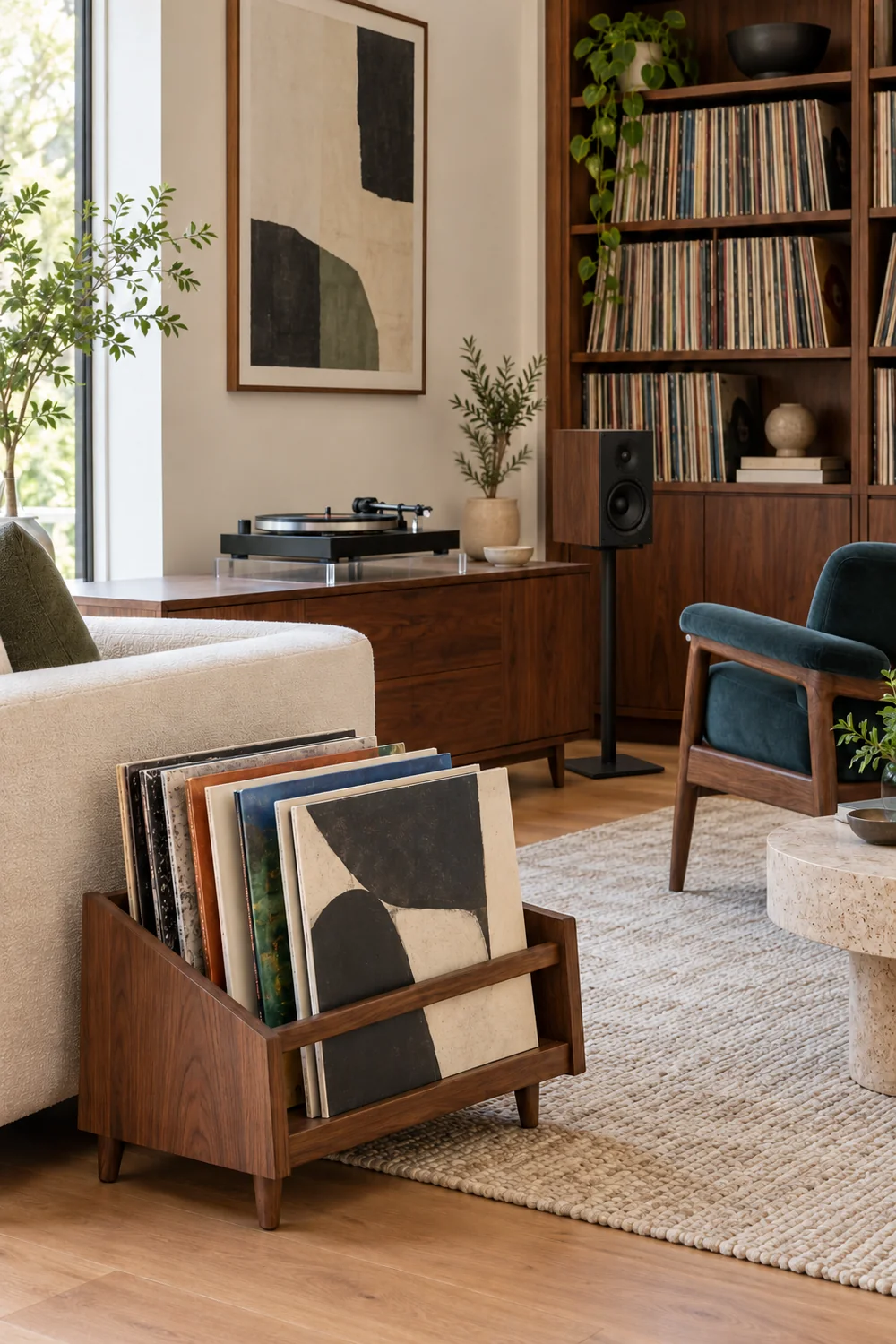
Look at your collection in its real sleeves, including larger box sets and protective covers. Note the shelf space it occupies now, then decide what growth you genuinely want to accommodate. I would use your recent buying habit to choose a review point, rather than promising that a certain cabinet holds a universal number of albums. A collection of thin single sleeves occupies space differently from one full of substantial boxed editions.
Next, describe one normal listening session. Where do you choose the album? Where does the empty outer sleeve rest while the record plays? Where do you stand to change sides? What happens to yesterday's purchases? Those small actions reveal more than a list of desirable furniture. If the empty sleeve always lands on the sofa, a modest dedicated resting place may solve more than another ornamental shelf.
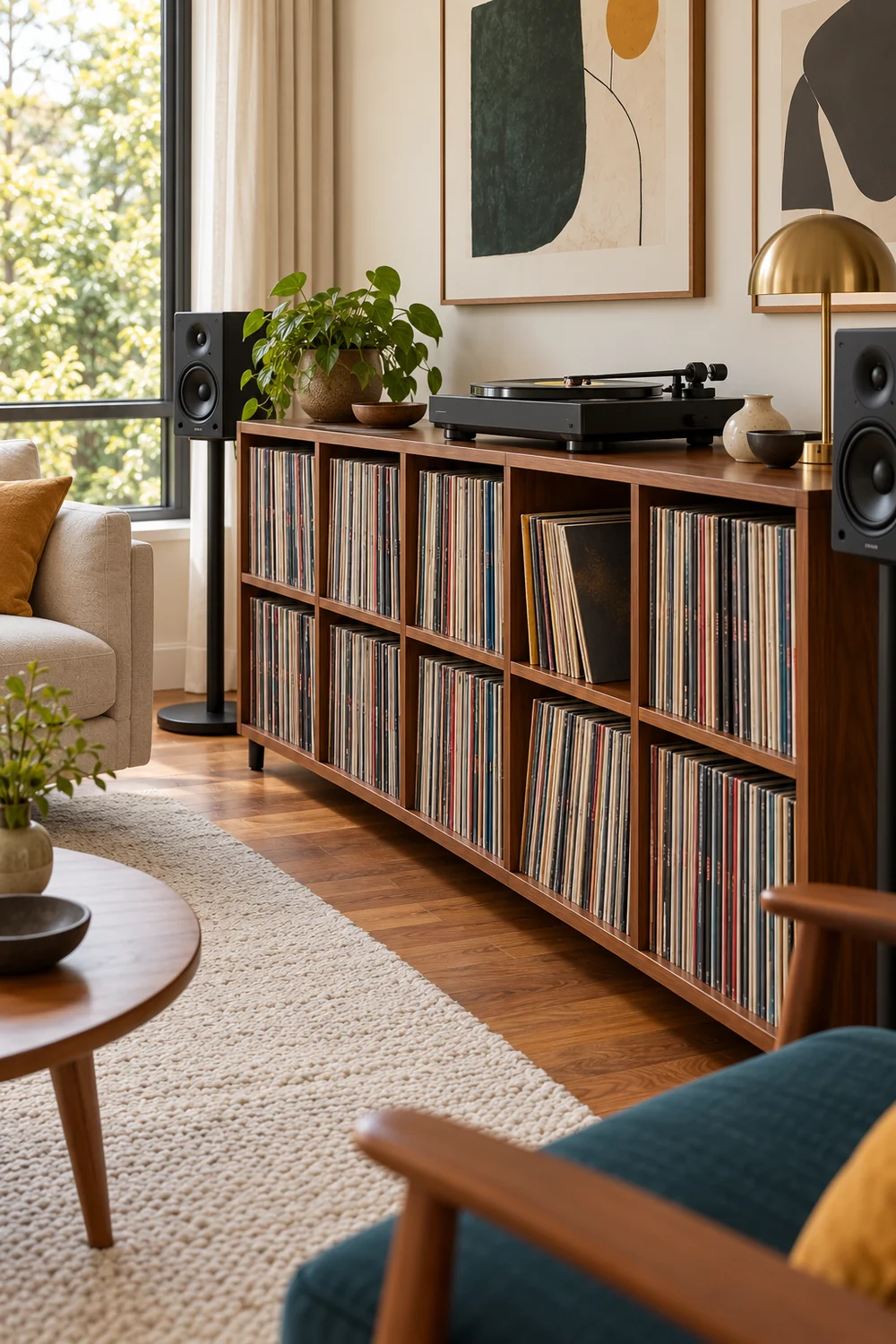
My starting sketch would give the complete collection a stable home and keep an accessible browsing section within it. The temporary sleeve rest belongs close to playback, while drinks belong elsewhere. The Library of Congress recommends upright storage and distance from direct light and heat for recordings. I would therefore assess the proposed location before deciding how much display it can carry, rather than choosing a sunny wall because the covers look attractive there.
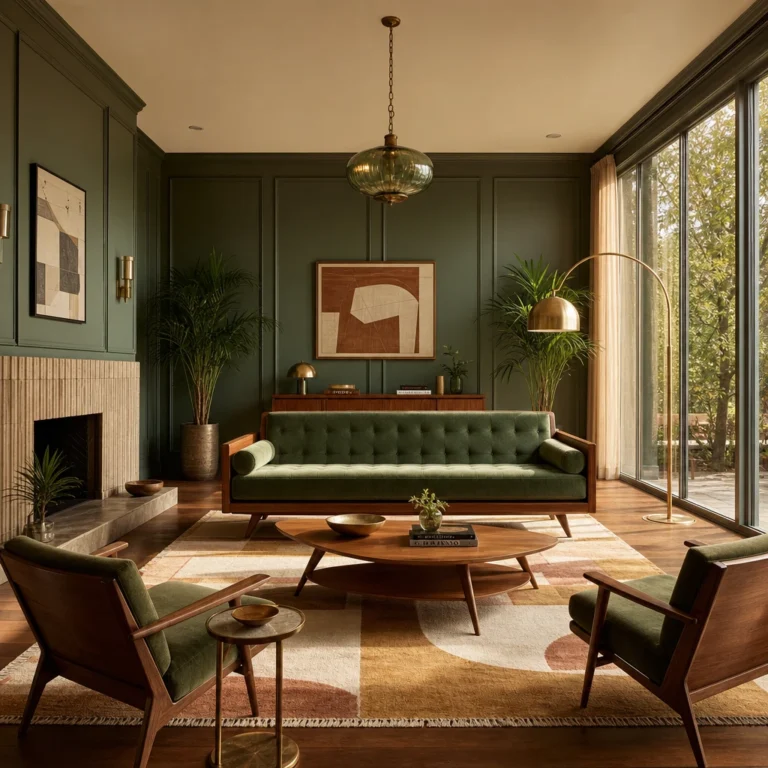
For the broader aesthetic, the mid century living room guide helps you decide whether low furniture, warm timber and graphic accents suit the room you want. Use that inspiration to set the direction, then keep this project brief specific: a collection you can browse comfortably, a playback routine with a clear surface, and a living room that remains enjoyable between records.
I would compare three arrangements before committing to a wall. In a collection led room, a low storage run becomes the main visual anchor, with the sofa and listening chair arranged in relation to it. This suits someone who regularly chooses albums as the starting point of an evening. It needs enough uninterrupted wall for storage and enough usable floor for browsing, rather than simply the longest empty stretch in a photograph.
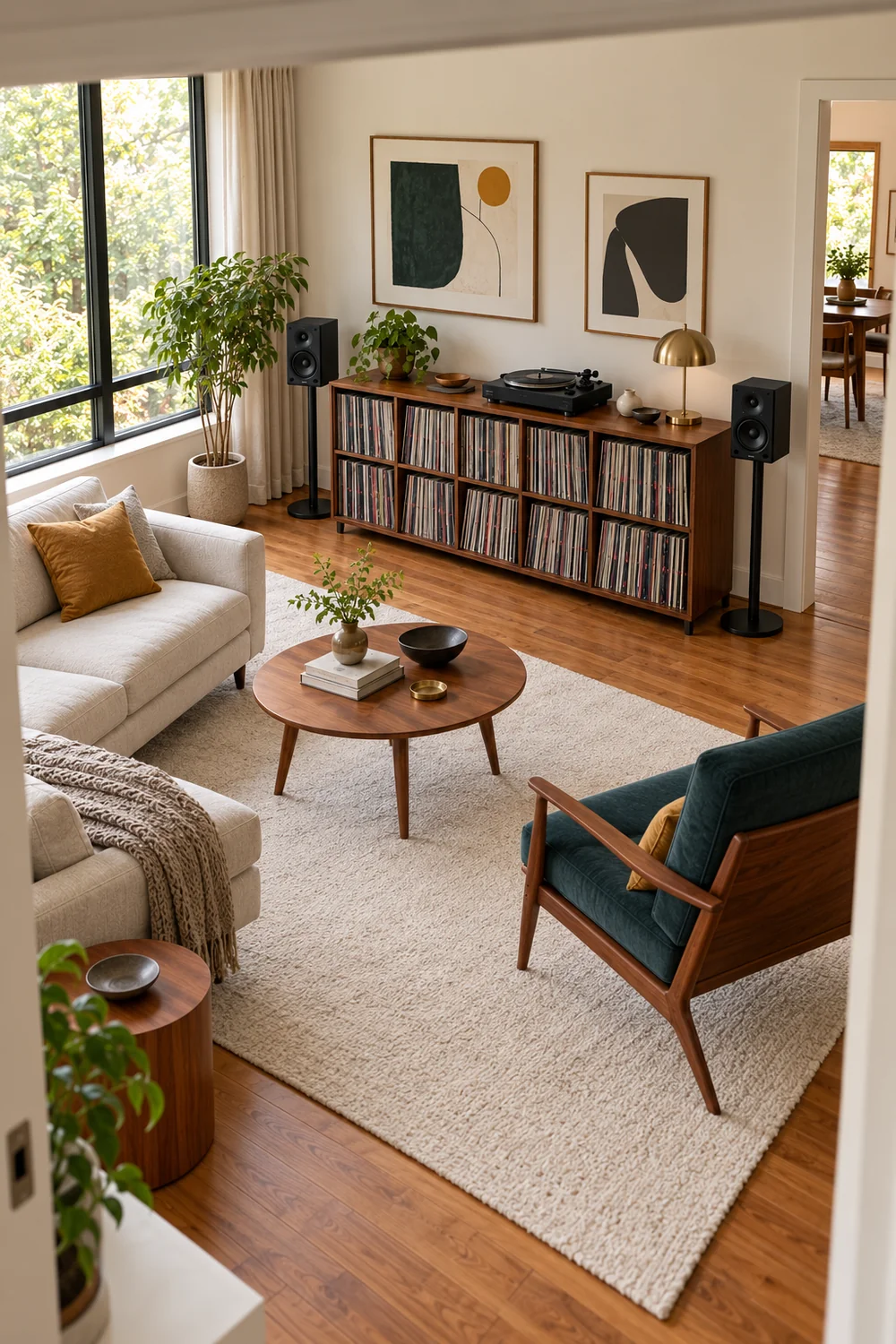
In a shared focus room, the collection occupies a side wall while the existing screen or fireplace retains its place. The main sofa still serves conversation and everyday viewing. A separate chair can turn toward the listening arrangement when you want it. I would consider this first if the room already works for other people and the collection needs a better home, rather than a complete rearrangement of everyone's routine.
The third option is a compact record corner connected to the main seating area. Storage, playback and one comfortable seat form a recognisable group, with a clear route between them. I would choose it when the collection can remain accessible without spreading furniture across the room. A corner should not become an excuse to push equipment into an awkward recess or put the chair directly in the only walking route.
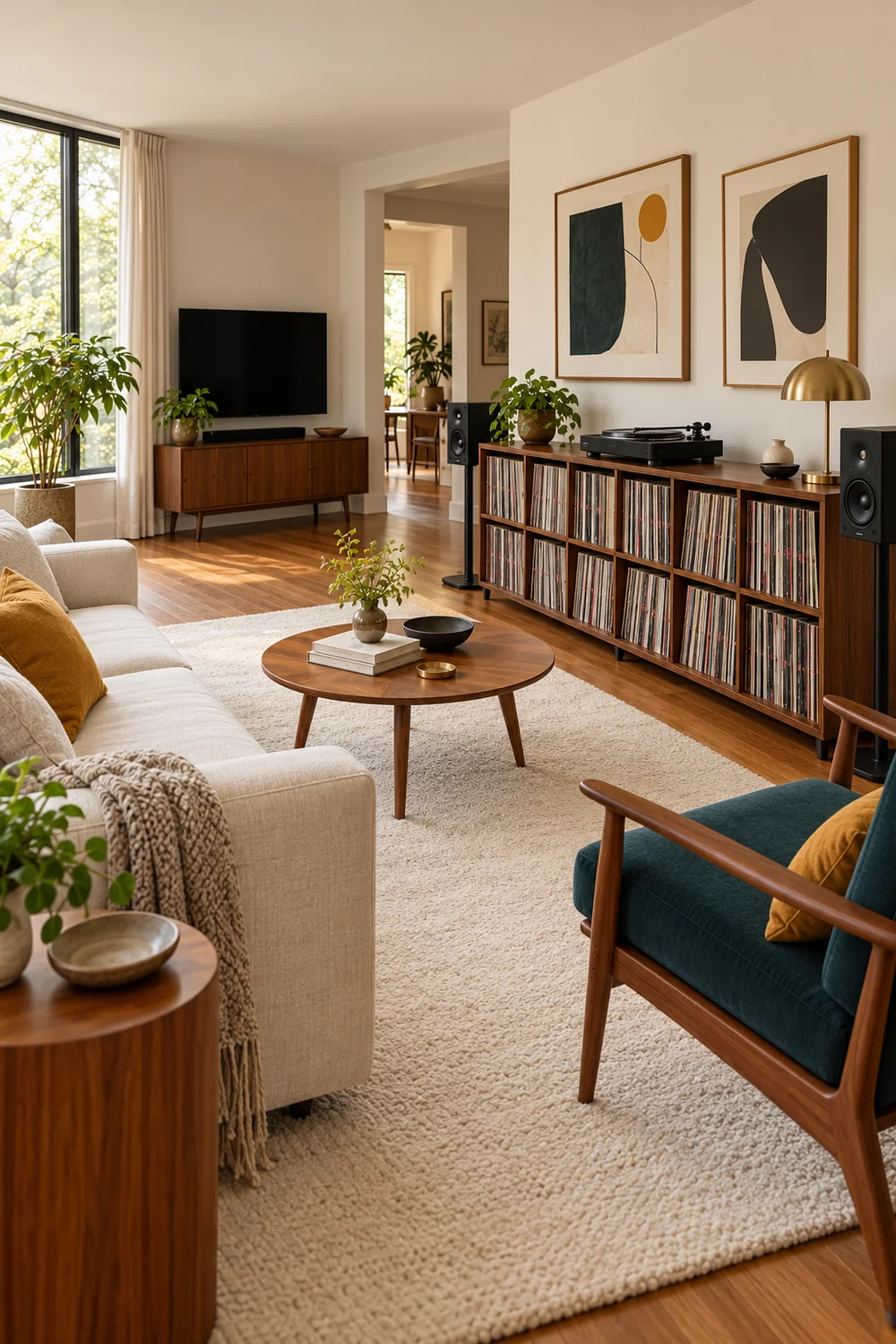
Draw your existing speaker and listening relationships as well as the furniture. Use the placement guidance for your actual equipment and allow for practical trials before fixing furniture positions. I would not promise a universal perfect triangle or a particular acoustic result from a decorating diagram. The useful planning question is whether the listening position, equipment requirements and ordinary room use can coexist without constant furniture moving.
For each arrangement, write one benefit and one cost. A collection wall may simplify browsing but compete with a fireplace. A side wall may protect conversation but require a different listening chair position. A corner may preserve the sofa layout but limit future storage. Choose the arrangement whose compromise you can live with; the one that looks most symmetrical is not automatically the most useful.
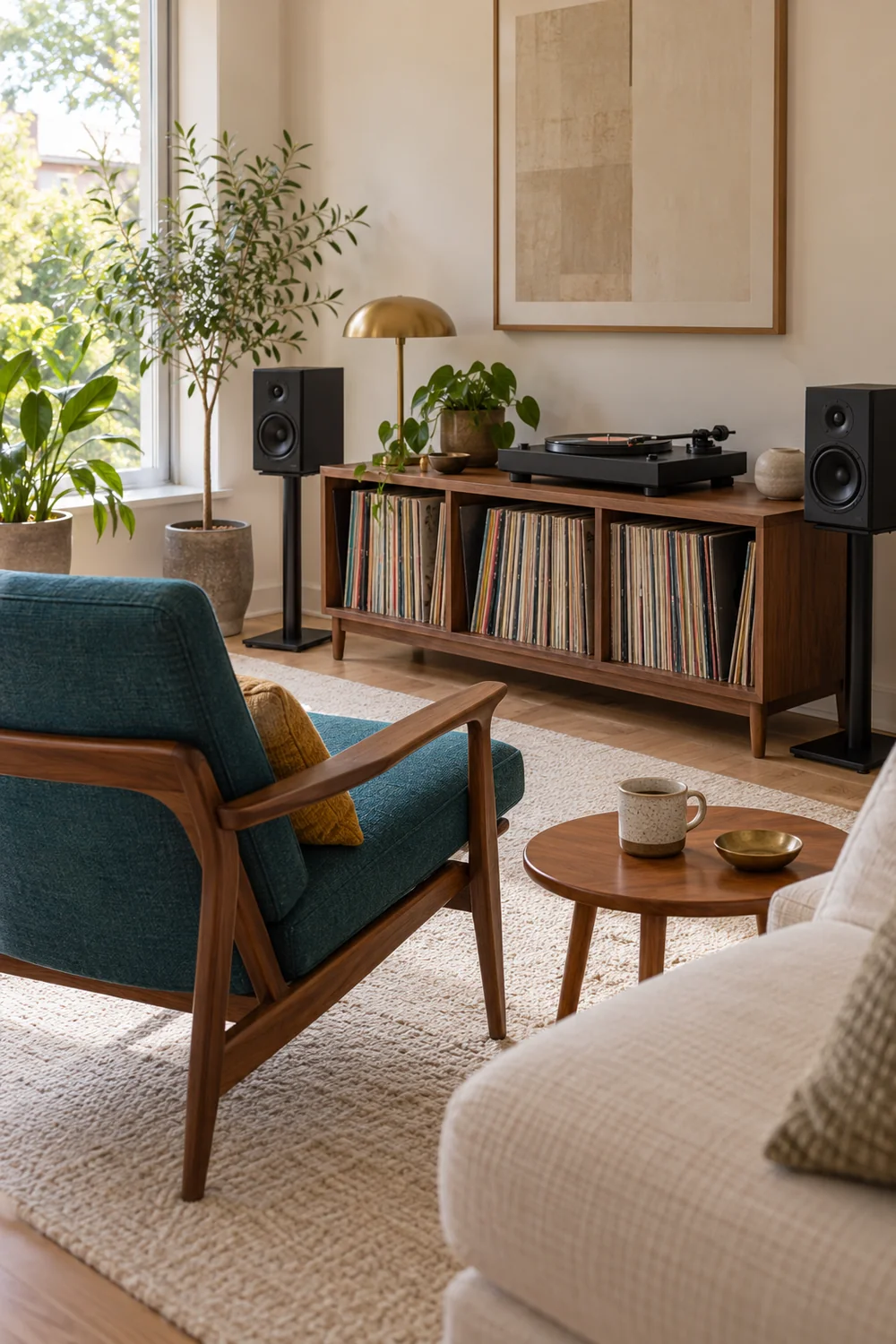
Once you have allocated the wall and the necessary browsing space, vinyl record storage becomes a concrete selection question. That guide checks usable compartments and equipment access against this plan. You should already know what the storage must do before comparing finishes or falling for a cabinet with elegant legs.
The route I would test first is the one you take without thinking: from the door to the usual seat, through to an adjoining room, or across to the window. Record browsing needs its own occupied space beside that route. A cabinet can fit against a wall while the person using it makes the room awkward. Put a person into the drawing, then include any door, drawer or browsing bin in its open position.
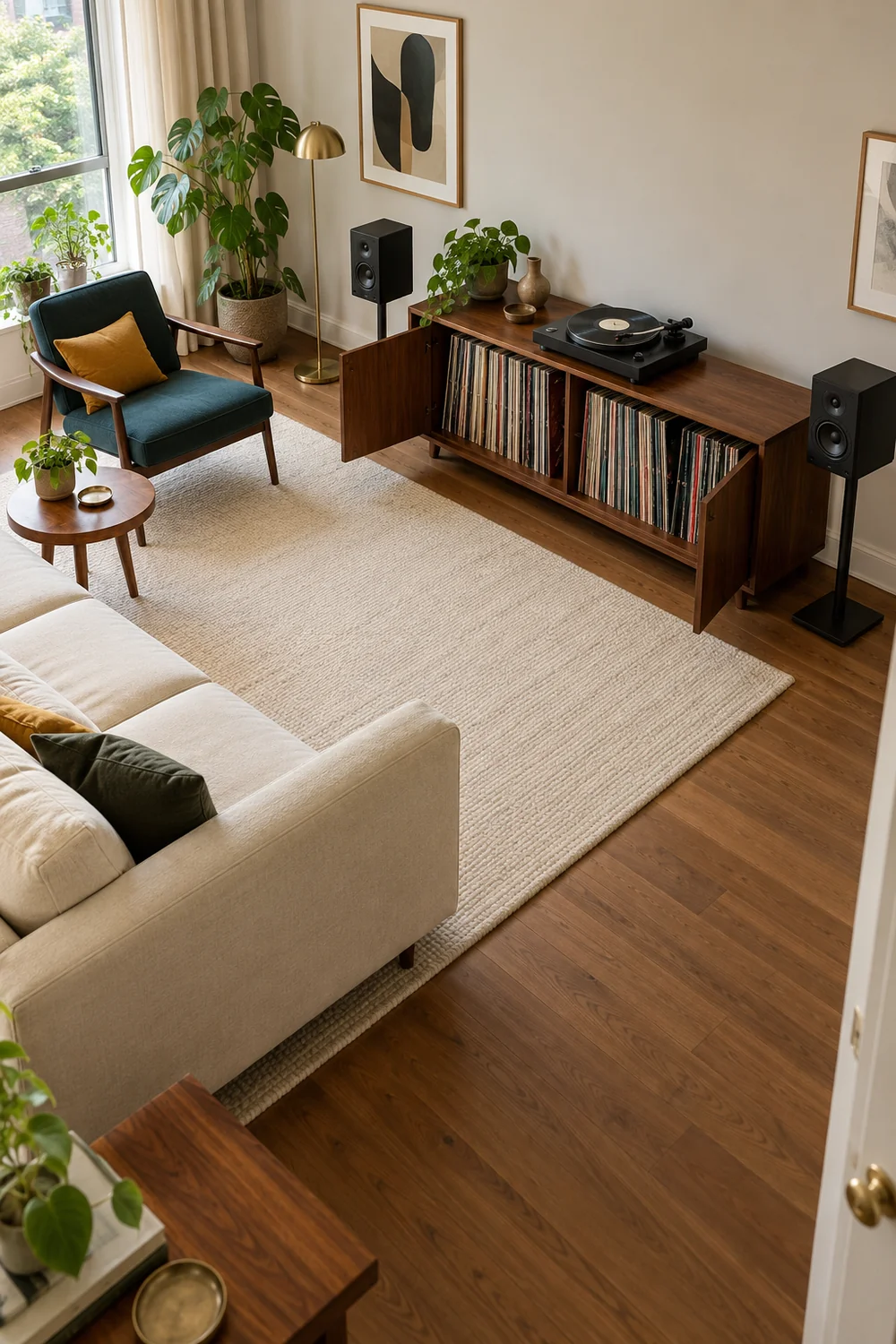
Use paper shapes or temporary floor markers to explore the furniture footprints. Include the coffee table, chair legs and the widest part of any storage door movement. Then stand where you would select a record while someone else takes the normal route through the room. I would judge the result through actual comfortable movement, including any individual mobility needs, rather than treating a generic clearance number as permission to squeeze everything in.
The coffee table is often the first piece I would reconsider. A large rectangular table can create a bottleneck between the browsing position and the sofa. A smaller oval form may improve that relationship, but only if it still serves the people sitting there. Alternatively, moving the existing table slightly and giving drinks a separate side table may solve the conflict without buying another central piece.
I would also test the room while carrying an empty sleeve. That makes awkward turns and inconvenient temporary surfaces obvious. You should not have to put a sleeve on the floor to open a cabinet or cross the room to find somewhere clear. If the browsing zone and playback surface are far apart, decide whether moving the active selection closer would make the routine simpler without scattering the whole library.
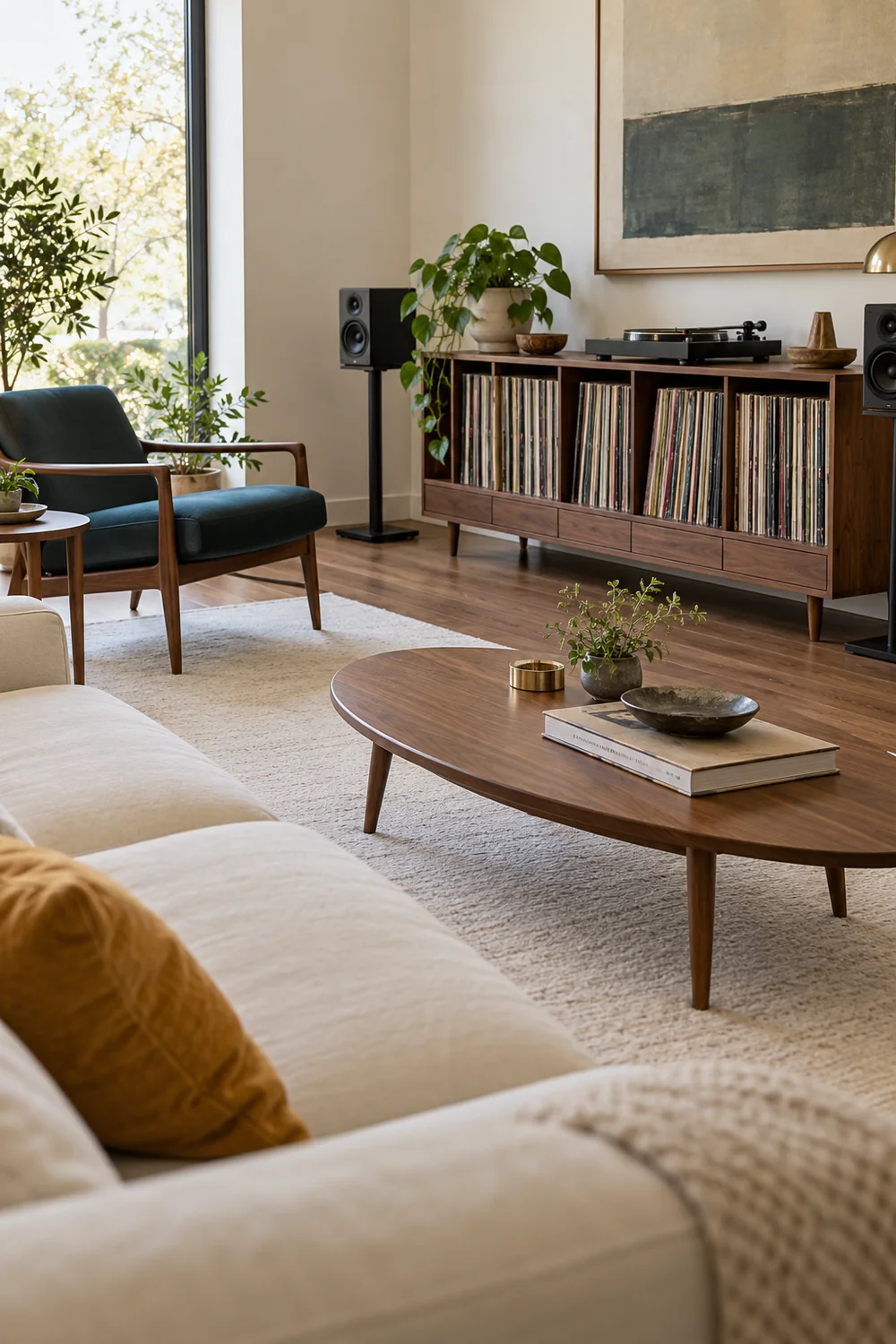
The principles in the mid century apartment article are useful here, particularly furniture that keeps the floor visible and rugs that define a seating area. I would borrow those principles where they improve this room, not assume that an apartment layout or a floating sofa works in every space. The route has to survive your actual doors and collection.
Finish this test with the room in ordinary use. Sit down, open the storage, change a record and walk past the occupied chair. If one action repeatedly interrupts another, revise the relationship now. Buying a shallower cabinet will not necessarily solve a problem caused by its location. The plan is ready when browsing feels like part of living in the room, rather than a special activity that requires everyone else to move.
I would keep useful seating unless it actively prevents the plan from working. A collection project can become expensive if every cabinet decision triggers a matching sofa, chair and table. Start by identifying the pieces that already support your listening and everyday routines. Their comfort and condition matter more than whether every leg resembles a period reference. The new storage should improve the room around them.
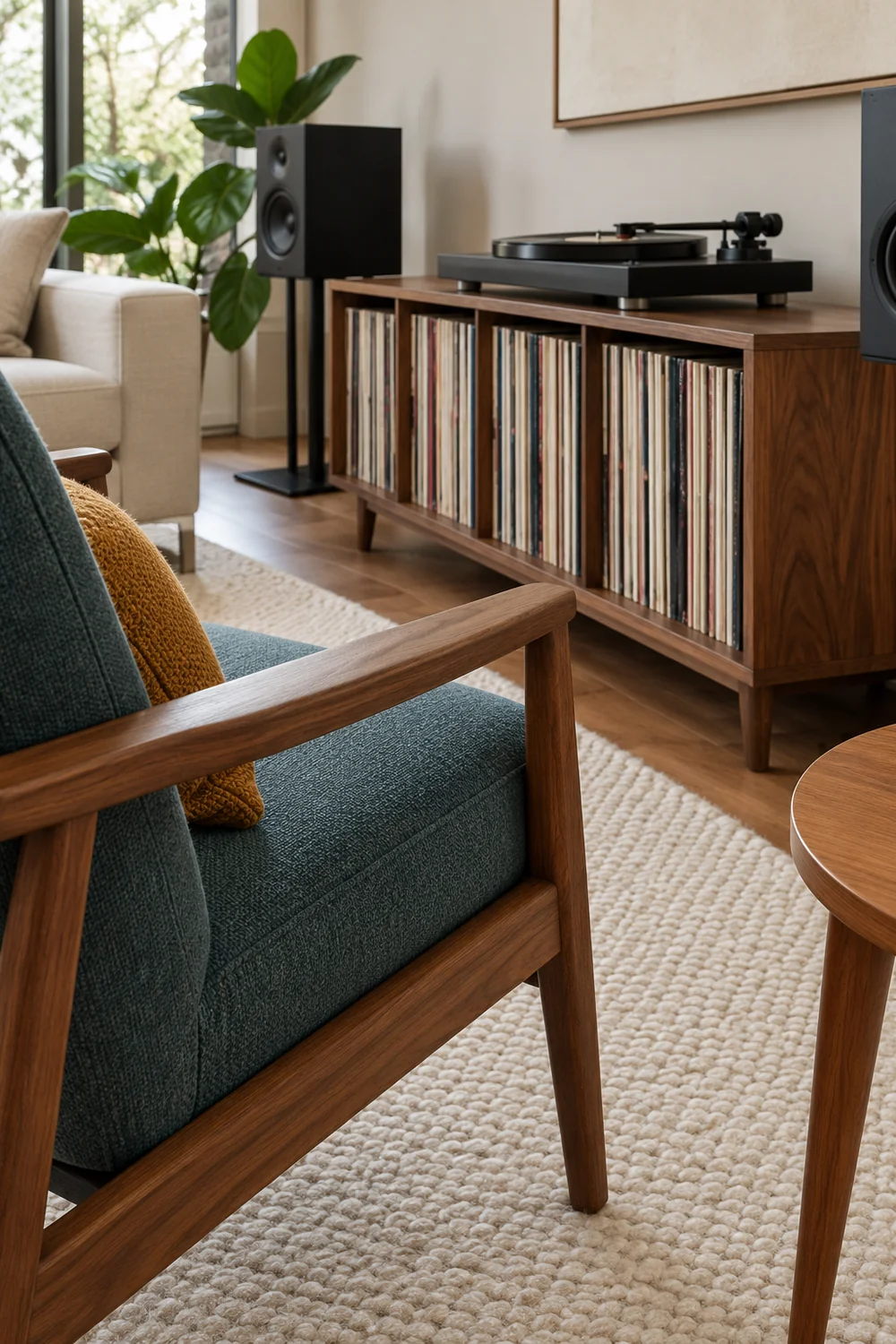
Choose one dominant timber relationship. In this room I would use walnut for the main storage and let a smaller existing teak piece remain a supporting note. I would compare their undertones in the room's daylight instead of trying to make every wood surface identical. A few deliberate differences can feel collected; several large unrelated finishes can make the equipment and record covers feel like additional visual clutter.
Low horizontal furniture gives this scheme its mid century emphasis, while one comfortable chair provides a more sculptural form. I would keep the chair modest enough to turn or reposition without disrupting the route. For storage, visual lightness should never substitute for appropriate construction or a verified load rating. A photograph of slender legs cannot tell you whether the whole piece is suitable for a dense record collection.
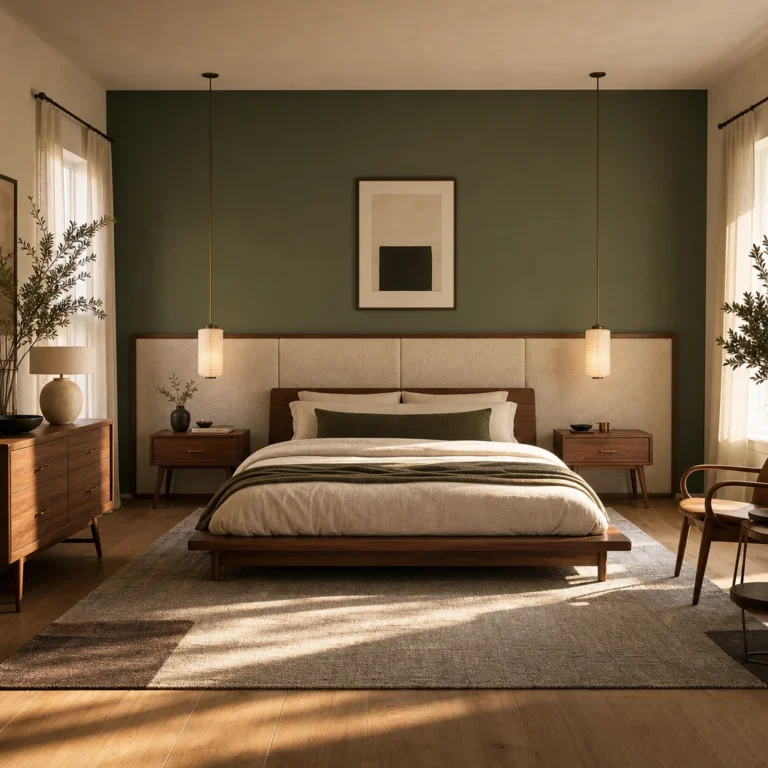
The mid century color palette guide offers a wider choice of neutral, earthy and brighter families. For this project, I would narrow that to cream walls, walnut, muted petrol upholstery and a small ochre accent. The cream gives varied sleeves a quiet background, while the petrol seat prevents the room becoming an uninterrupted field of brown timber and black equipment.
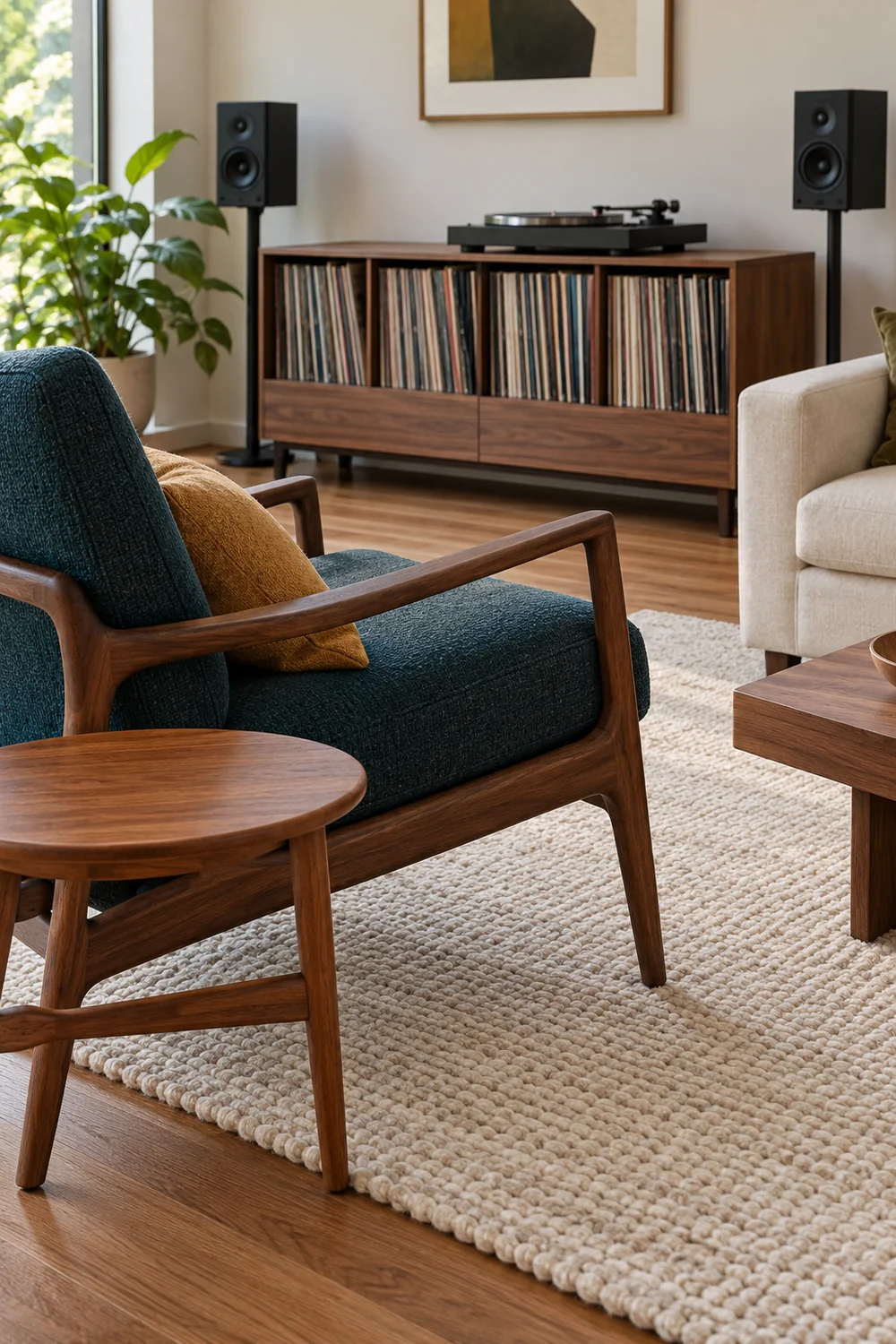
Let the rug connect seating rather than pretend to mark out an isolated showroom vignette. I would compare a restrained wool texture with a simple graphic pattern, checking how each sits beside the album artwork. If the records already bring many colours and shapes, the quieter rug may make the whole collection easier to enjoy. Repeating a motif from every cover would make the room feel busy rather than personal.
At this point your material brief should fit into a few clear decisions: the dominant timber, the upholstery that stays, one new accent if needed, and the surfaces that remain calm. You are choosing a framework for your own collection. There is no need to replace a useful sofa merely to reproduce an inspiration photograph, or to disguise contemporary equipment so completely that using it becomes inconvenient.
I would treat the visible cover as a changing piece of the room, rather than a reason to build an entire wall of display. One supported sleeve near the listening area can mark what you are enjoying now. A small accessible selection might show a few favourites. The rest of the collection can remain properly stored, without every purchase demanding a new place in the visual composition.
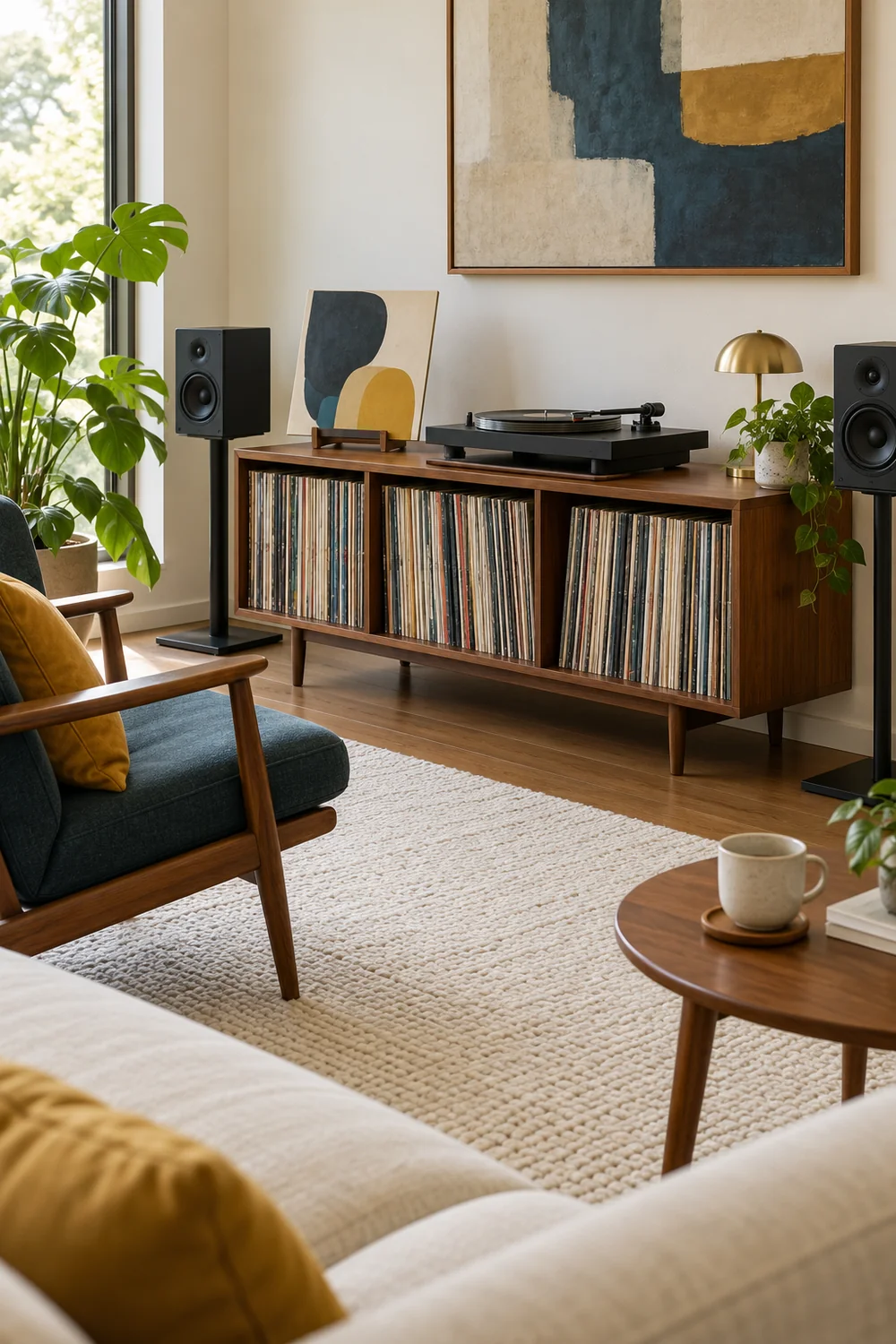
Decide what the display is for. If it holds the sleeve of the album currently playing, it needs to be near the playback routine and easy to clear. If it shows an artwork you enjoy, it can sit within the room's wider composition. These are different jobs. I would avoid adding a display so far from the equipment that it becomes another surface you stop using after the first week.
The storage location still comes first. I would keep the collection out of direct sunlight and away from heat, following the preservation principles already noted. A bright room can remain beautifully lit while the records occupy a protected wall. Choose the camera view or the chair position to enjoy the daylight; do not make the most vulnerable part of the collection a permanent feature of the sunniest sill.
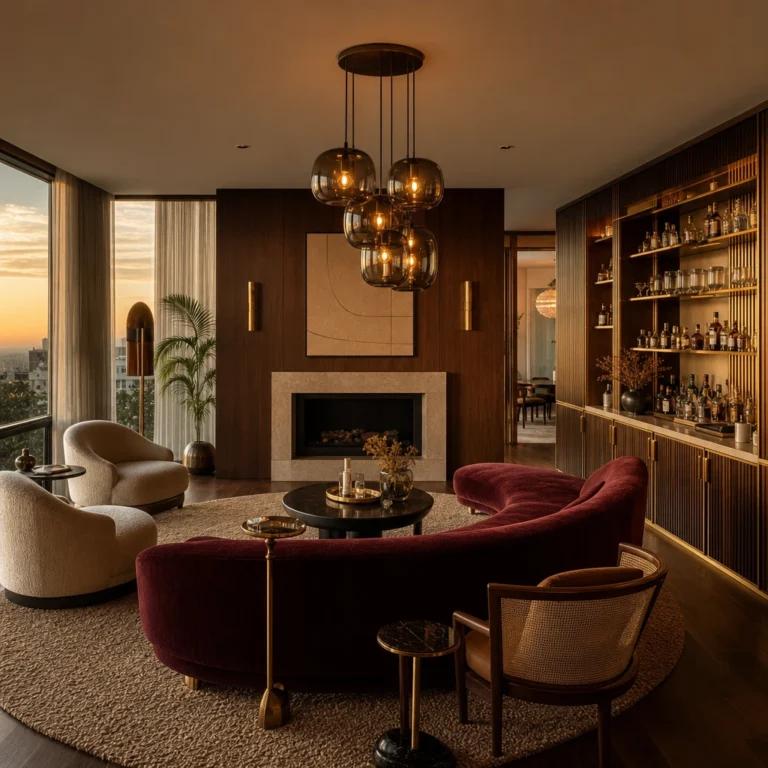
For an optional architectural variation, mid century Parisian decor shows a record player vignette within a more decorative setting. I would borrow its sense of an everyday ritual if your room already has those architectural details. The collection does not need ornate surroundings, and the vignette does not replace the practical storage and equipment checks this project needs.
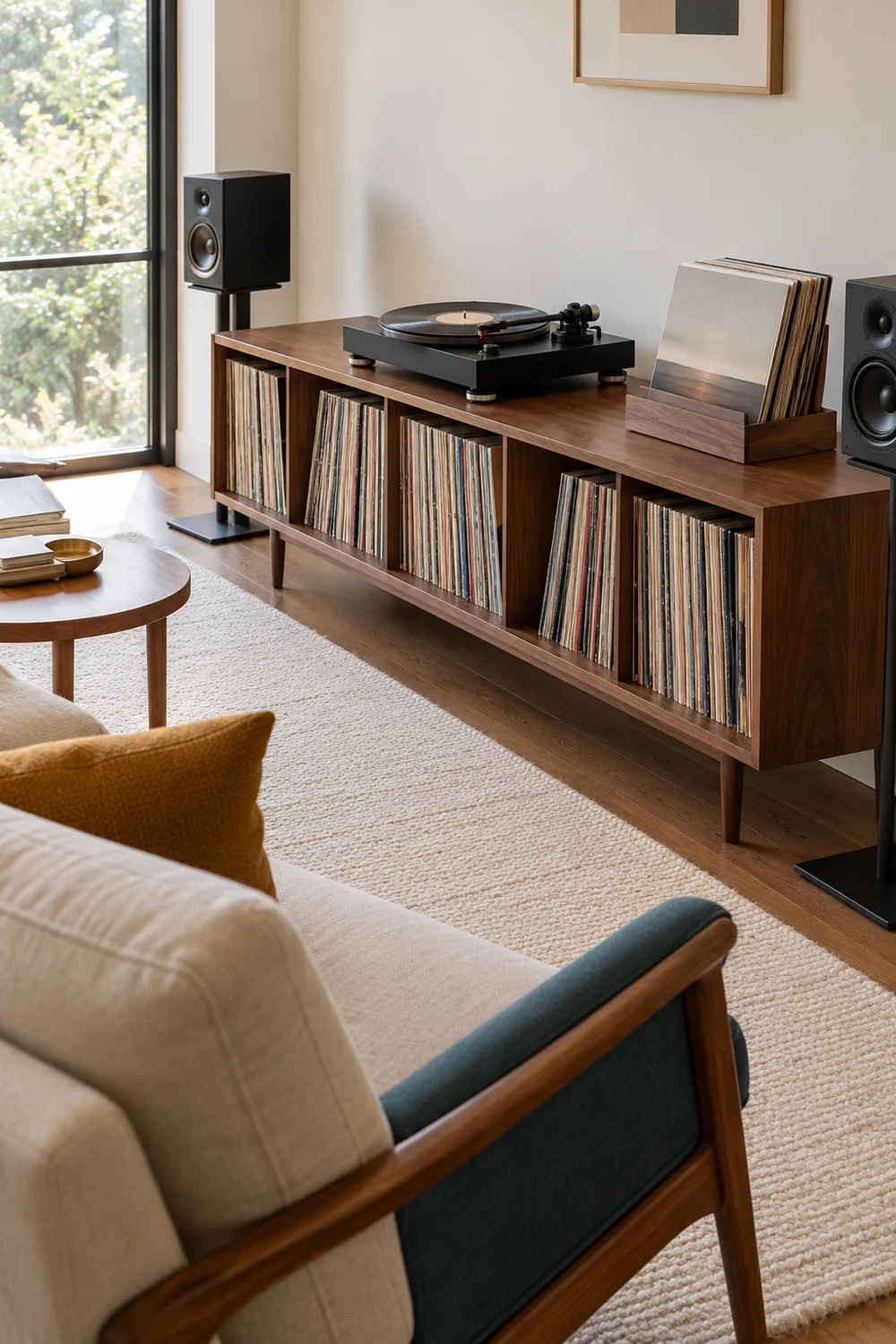
Keep decorative objects out of the working footprint of the player. I would give a ceramic piece a separate shelf or side table rather than move it every time the lid opens. The same applies to a lamp that obscures a control or a tall plant that makes the cable route awkward. When an arrangement works only while the equipment is unused, the styling is occupying space that belongs to the listening routine.
Try the proposed display with the room otherwise unchanged for a few days. Notice whether you use it, whether sleeves migrate onto other surfaces, and whether the area remains easy to clean. A useful display should make the collection more enjoyable with less effort. If it creates another pile to manage, reduce its size and return that space to the storage or browsing job that was missing.
I would finish with a brief that names the chosen arrangement, the collection location, the listening position and the everyday route. Add the furniture that stays and the open movements the plan has to accommodate. This is the point to record a compromise, such as keeping the screen as the main sofa focus while giving the listening chair a different position. A clear compromise is more useful than an idealised plan that ignores ordinary life.
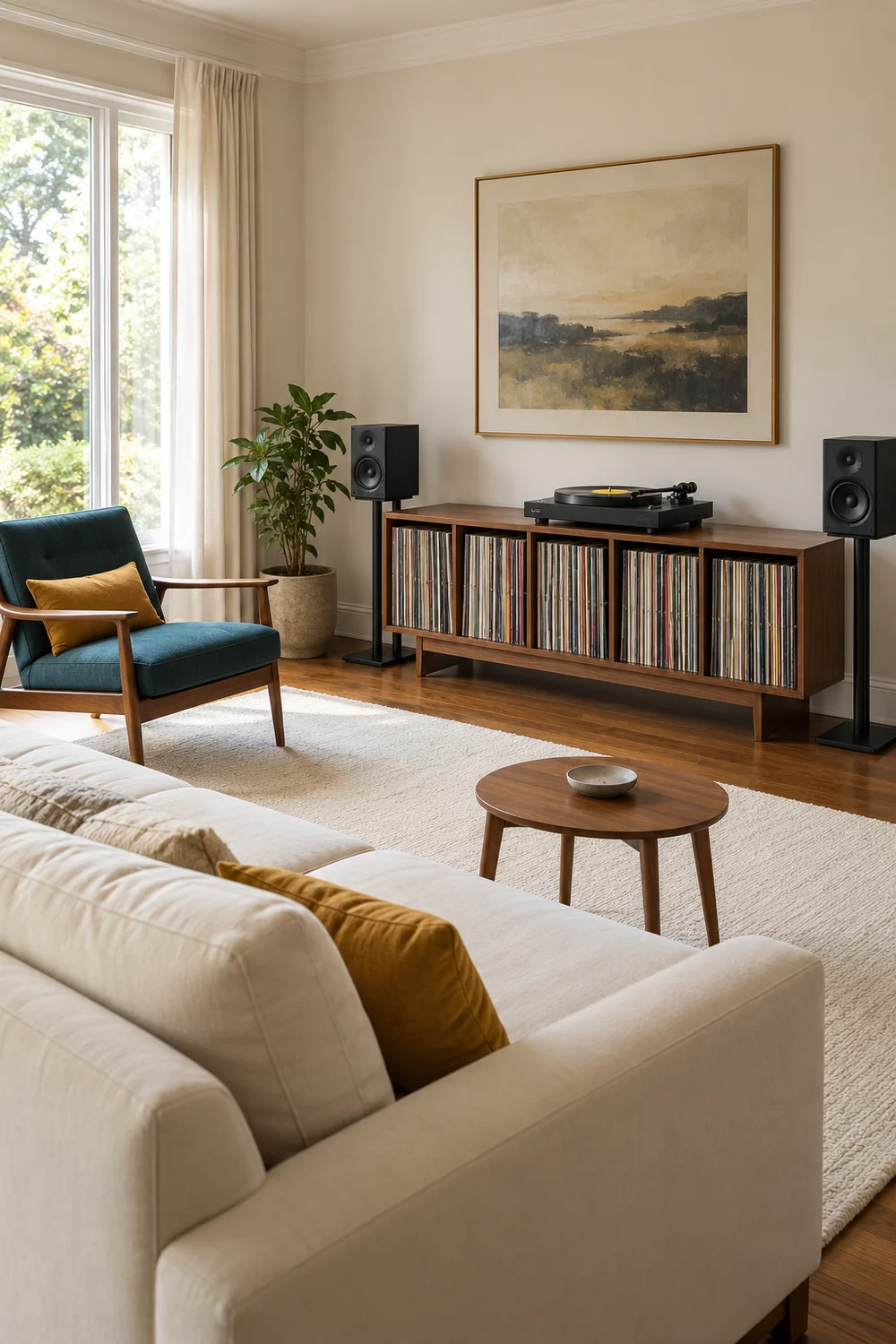
Your collection note should record its current occupied space, unusually large sleeves and the future capacity you want to allow. Your equipment note should identify each model, its instructions and any access requirements still to be checked. These notes turn a vague wish for more storage into a useful selection brief. They also show which questions remain unanswered, without pretending that the room drawing has solved the technical setup.
I would then prioritise changes in three groups. First are the moves you can test with existing pieces. Next are the missing functions, such as proper collection storage or a clear sleeve resting place. Last are the decorative improvements. If moving a chair makes browsing easy, try that before ordering furniture. If the collection has no suitable home, storage deserves priority over another accent lamp.
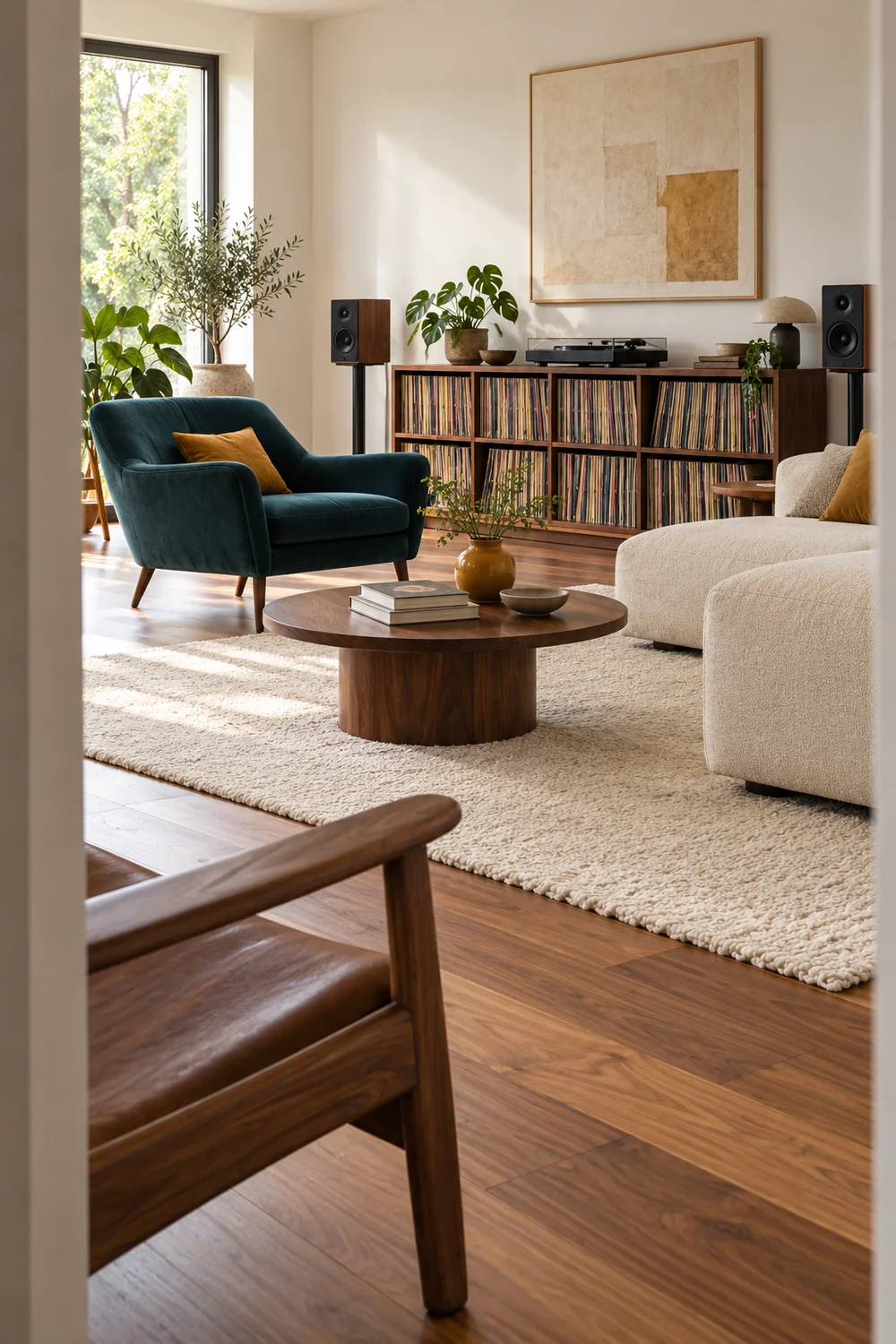
Take the completed brief into the vinyl record storage selection guide. There you can compare real internal dimensions, lid movement, equipment space and finishes against the room you have planned. The answer should be a confident accept, a specific question to resolve, or a decision to leave an unsuitable piece behind. The purpose of planning is to make those choices clearer.
Before spending, repeat one complete listening session in the proposed arrangement as far as existing furniture allows. Choose an album, sit down, change sides and return it to storage. Have another person use the normal route if that reflects your household. Record the point where the routine feels awkward. One honest observation is more helpful than another collection of saved rooms with no relationship to your own.
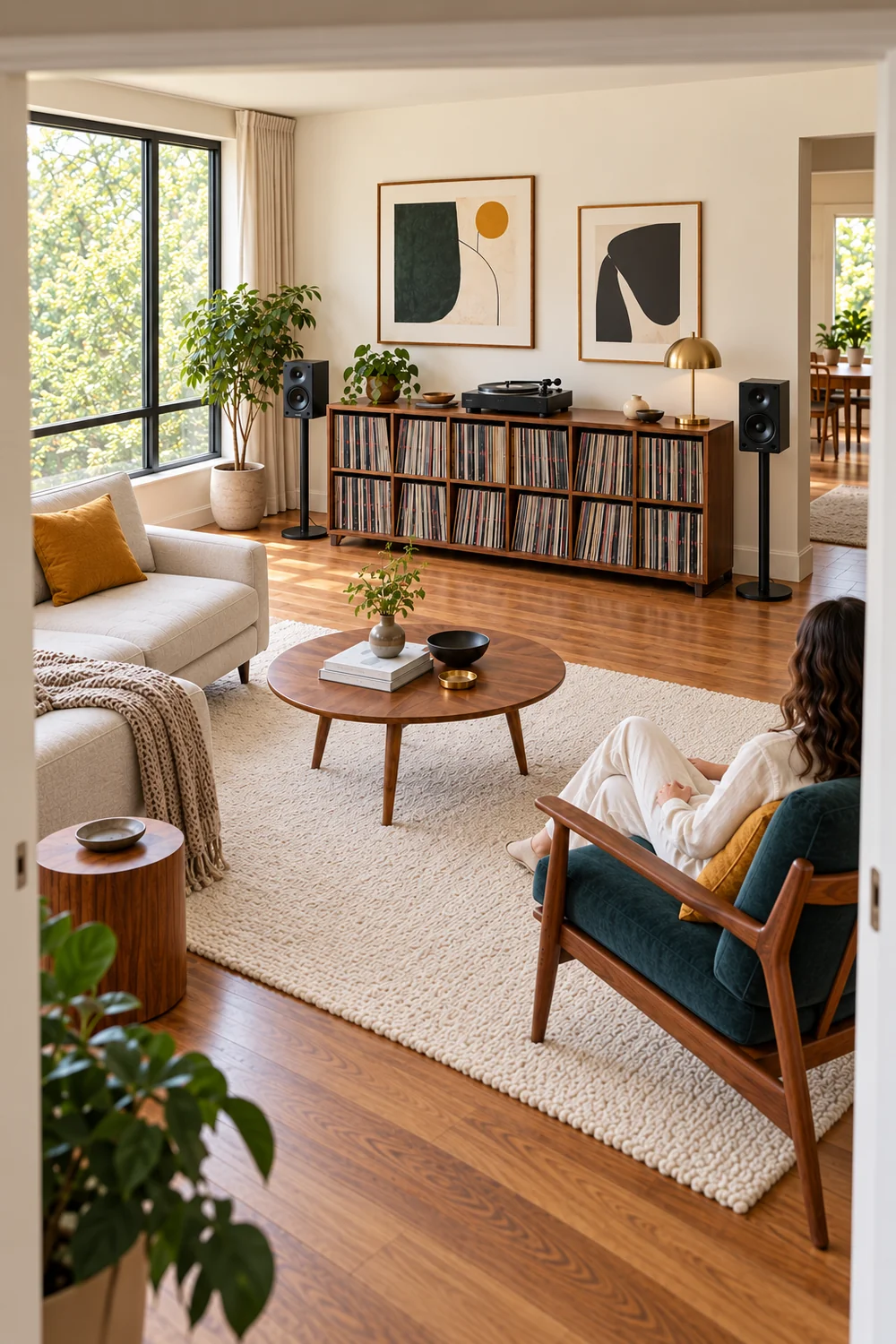
The finished room should make you want to play the records you already own. I would look for accessible sleeves, an unforced route and seating that remains welcoming when the player is silent. Walnut, cream and a confident accent can give the project its mid century character, but the lasting result comes from those useful relationships. Keep the plan, revisit it when the collection grows, and let new purchases answer a real need. You have made a living room for a collector, with enough room left to live in it.