Newsletter Subscribe
Enter your email address below and subscribe to our newsletter

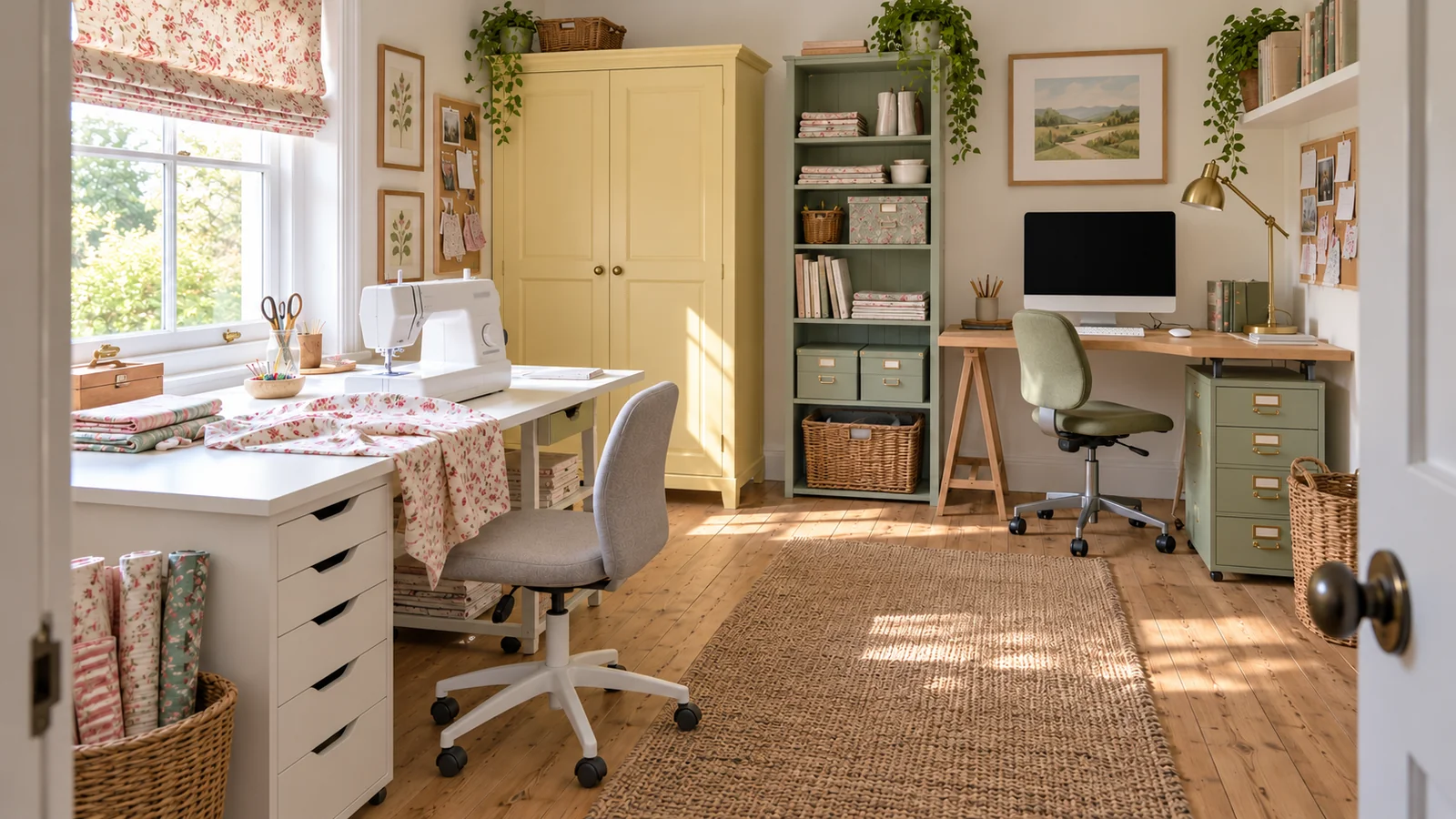
A cupboard full of matching boxes can look organised while the fabric you need is still difficult to reach. A beautiful desk can fit the wall and leave too little room for the machine in use. If you sew at home and share the room with computer tasks, I would choose sewing room storage and tables from the inventory and occupied plan first. This guide compares useful construction routes, turns folded fabric and live projects into storage measurements, and gives you acceptance checks for surfaces and task lighting. The cottage direction stays coherent through warm white, butter yellow, sage, faded rose and scrubbed pine. You do not need to replace every piece. You need to identify which existing pieces pass, what a replacement must do and how to keep an unfinished project contained once both activities are using the room.
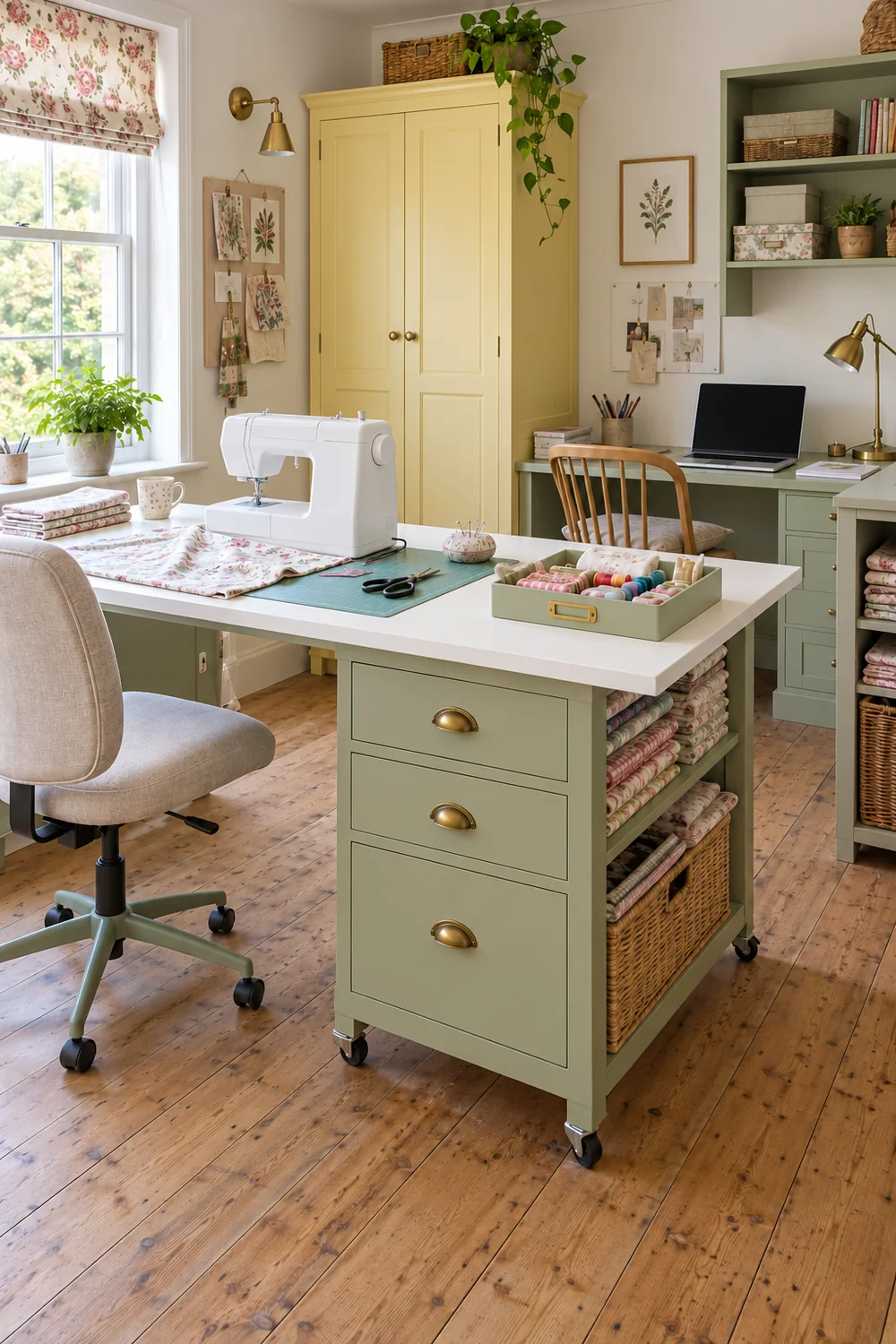
Start with the tested position of your machine and computer. I would record the machine’s footprint with the accessories you actually use, the space needed for fabric support and access required by its instructions. For computer tasks, include the open equipment, controls and papers rather than measure a closed laptop. Write these requirements on separate lines even when one surface serves both tasks. A table that meets the first requirement can still fail the second. The office sewing room combo plan helps you establish those occupied relationships before a purchase decision.
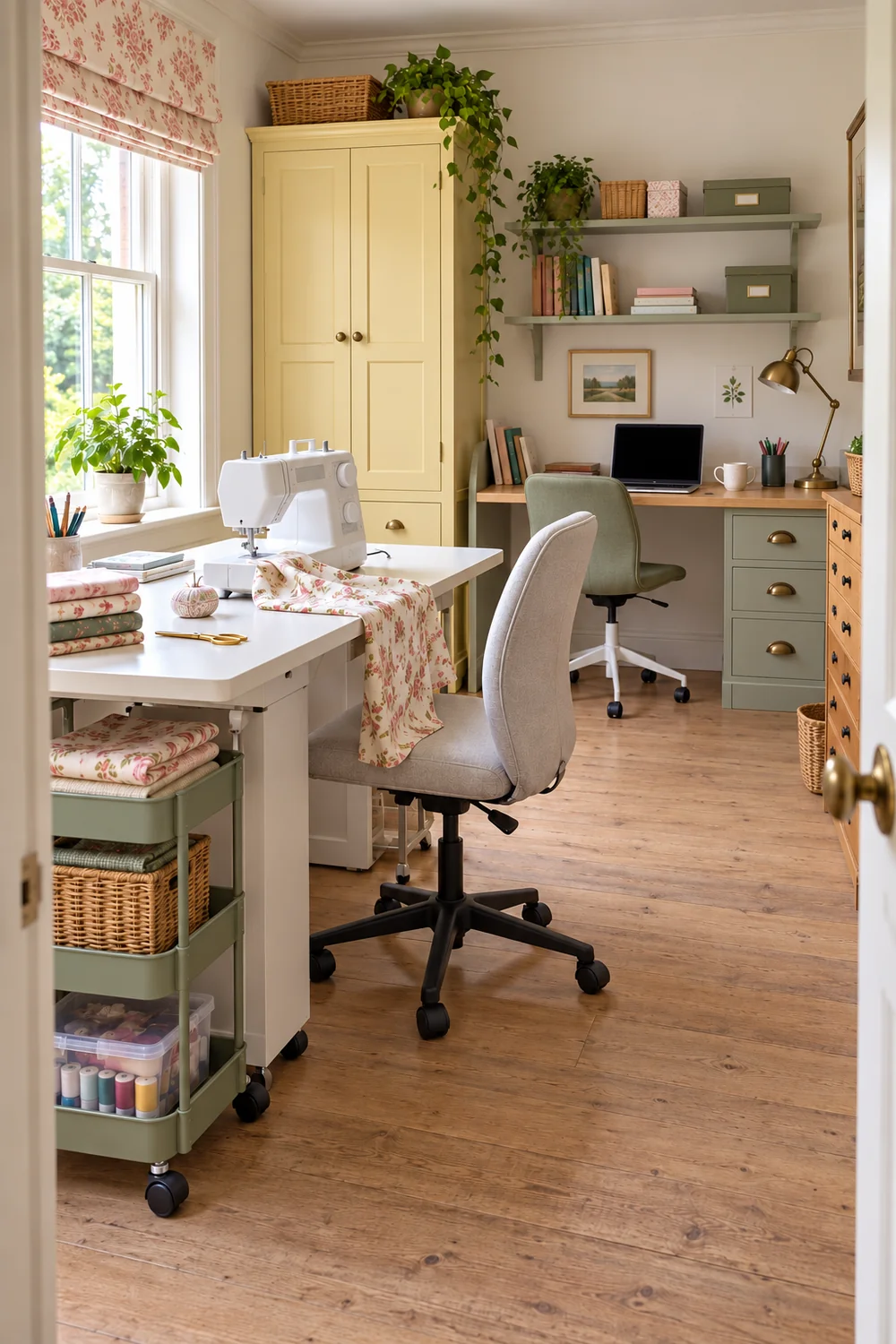
Compare three practical routes. A retained desk is worth keeping when its size, stability, surface and access already work. A freestanding worktable can offer a more suitable surface without changing the whole room. A purpose made sewing table may provide features suited to your equipment, but its compatibility needs checking against the exact machine and accessories. I would not assume a machine recess, folding extension or cabinet insert is universal. Ask for the manufacturer’s dimensions, intended use and any relevant load or compatibility information, then compare them with your written requirements.
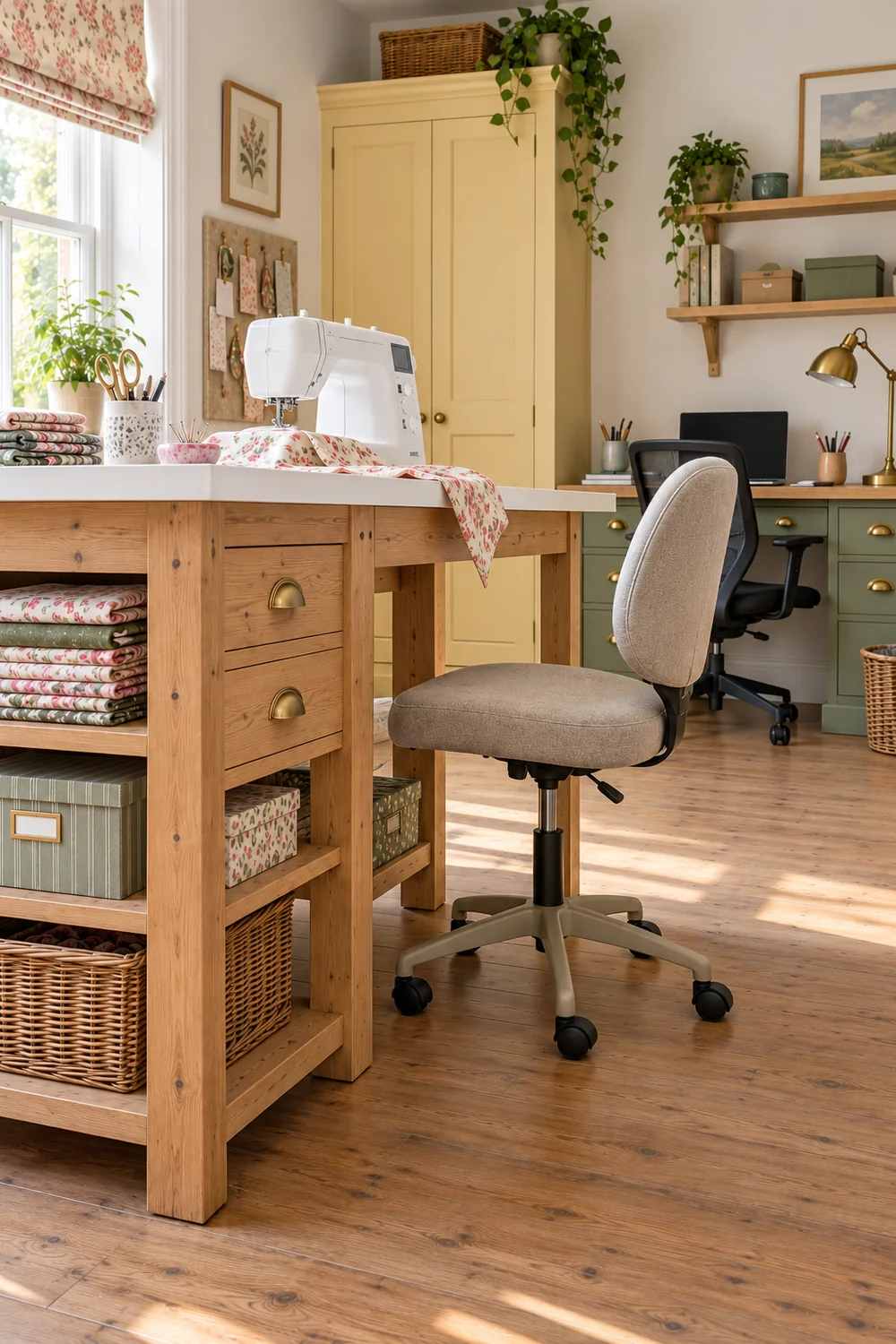
Make stability a separate acceptance check. Look at the complete construction, including the top, supports, joints and any moving parts. A description such as solid wood or heavy duty is not enough to establish that a particular table suits the equipment. I would test an accessible sample appropriately, ask how the table is intended to be assembled and used, and confirm any limits before placing a machine on it. A wall supported top or an improvised alteration needs its own suitable design and fixing assessment. The cottage appearance of a vintage piece does not establish its working capacity.
The surface also needs to support the activity without creating a new obstacle. Check its actual usable depth, the position of legs or aprons, and the space beneath it for the chair and controls. If the table has extensions, verify the open dimensions and the route around them. I would measure from the real working edge, not an ornamental outline. Record the acceptance result in plain terms: this equipment fits, the occupied position works and the intended support is confirmed. If one of those remains unknown, keep the attractive piece on the shortlist rather than treat it as ready to buy.
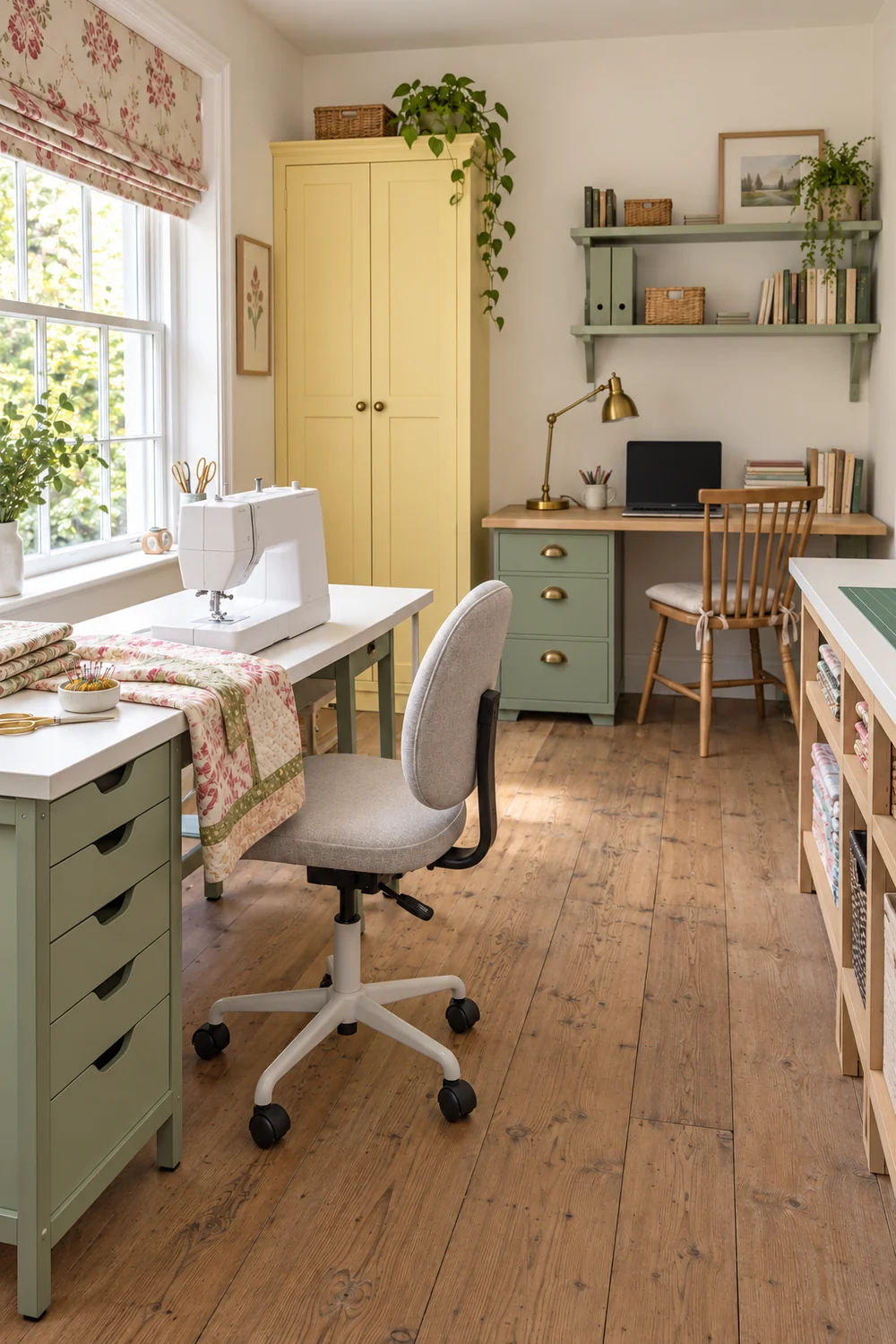
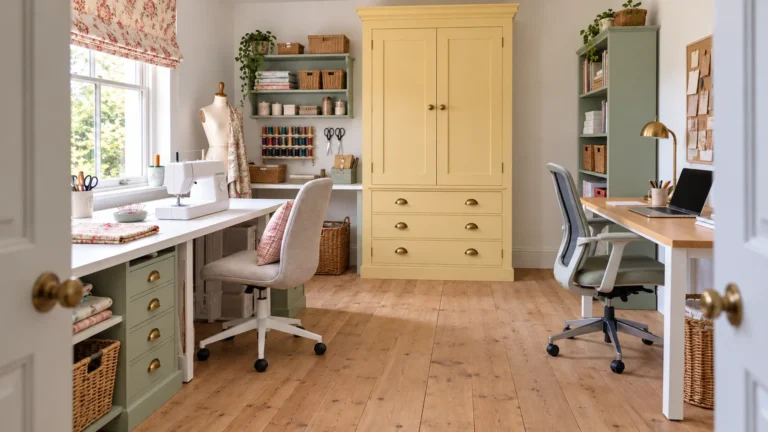
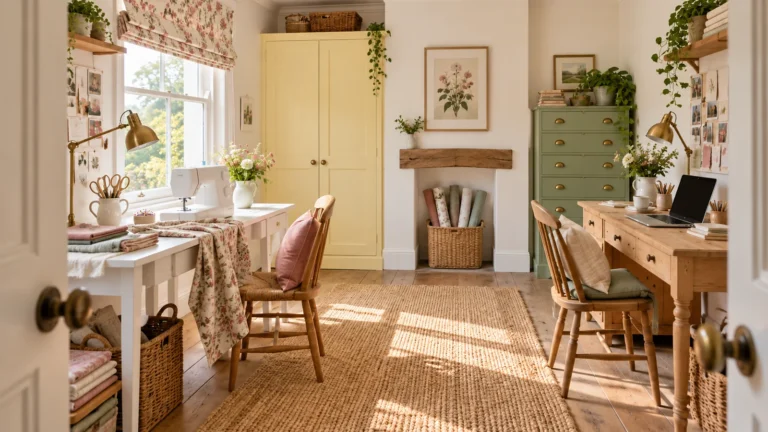
A painted table, scrubbed pine desk and pale worktop can all sit comfortably in the cottage palette. I would choose the finish after the surface has passed the practical checks. Warm white on the working top keeps fabric and small tools visually distinct, while butter yellow or sage on the surrounding drawers gives the piece character. Faded rose can stay in a curtain or small panel rather than cover the entire task surface. The broader cottage office examples are useful for the relationship between painted storage, natural wood and restrained textiles.
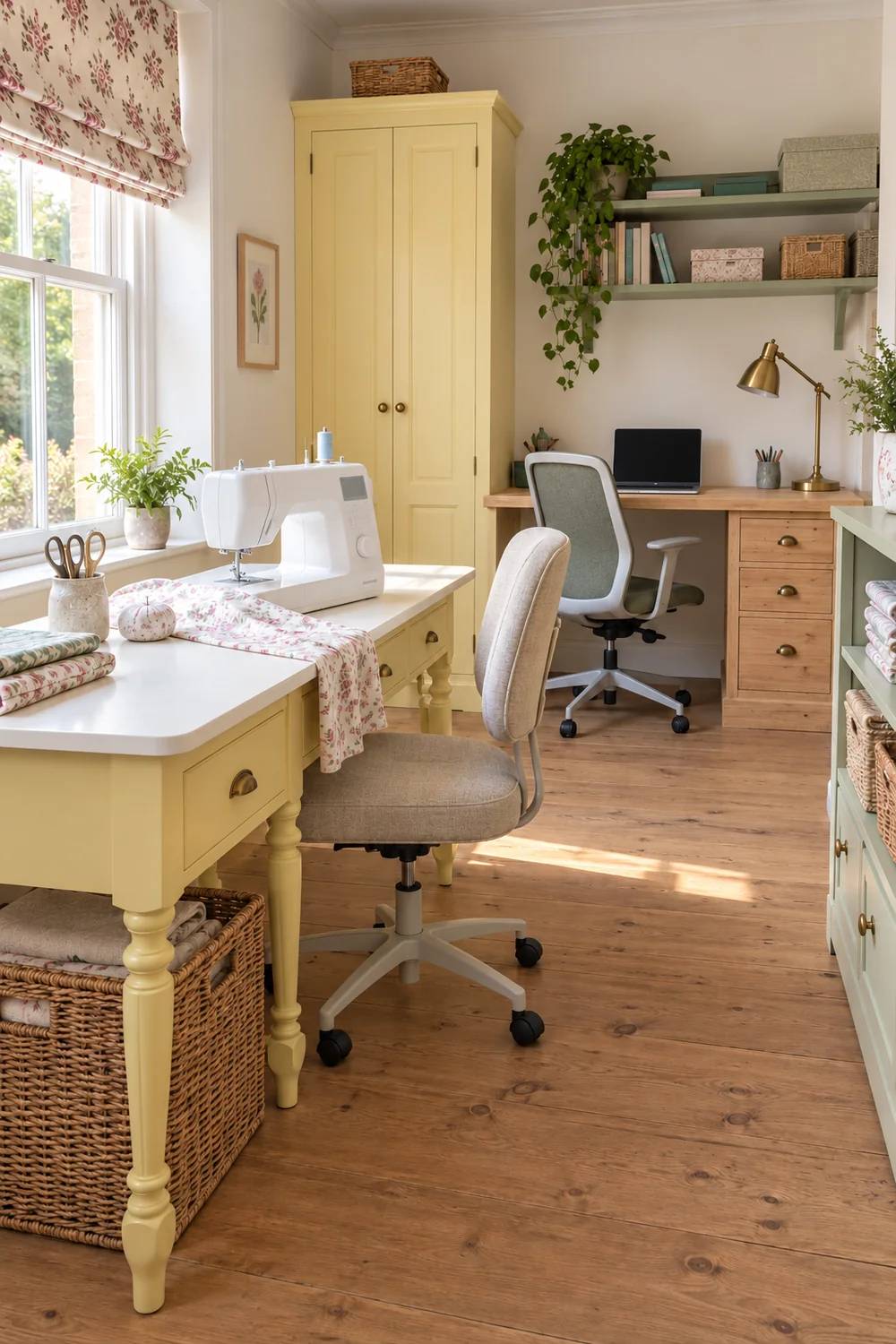
For a retained vintage piece, inspect its condition and function before refinishing it. Does the drawer open fully from the occupied position? Is the usable top interrupted by a raised edge? Are there finishes or repairs that require appropriate identification and handling? I would not recommend sanding an unknown old coating simply to achieve the look. A piece that can safely remain in its existing finish may already supply the character you want. If it needs specialist restoration or structural work, price that work alongside a suitable replacement rather than hide it inside a decorating budget.
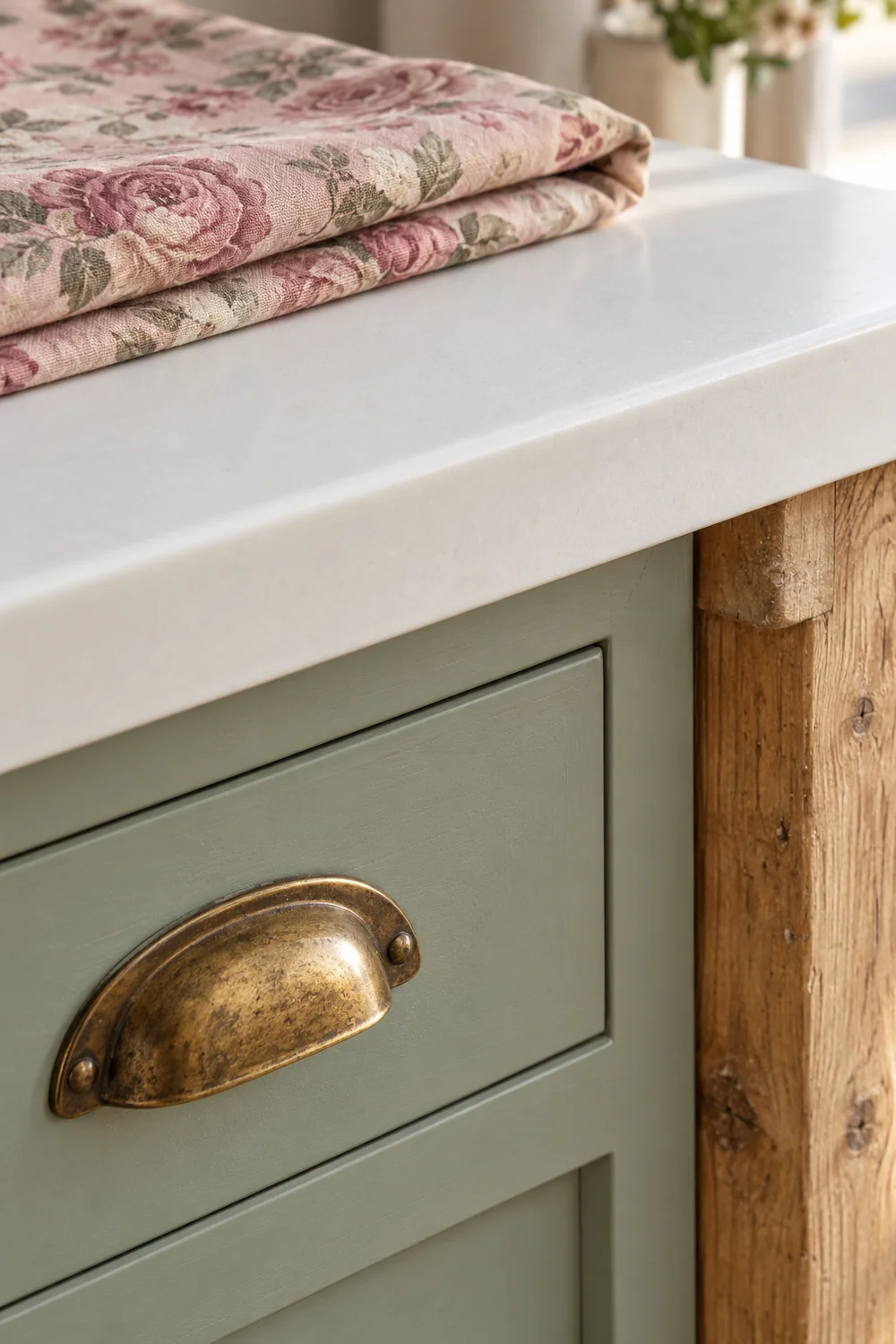
For a new table, compare the care instructions with your actual use. A surface that is easily marked may be a poor fit for the way you lay out tools or material. A decorative woven insert can catch small notions, while deep grooves may be inconvenient where you need a clear working area. I would choose a surface intended for the task and use appropriate protection where the equipment or activity requires it. A cottage room can contain a plain practical top. The surrounding furniture can carry the softness without every working element having a distressed finish.
Keep a record of the finish, dimensions and care requirements for the pieces you select. This makes future replacement and maintenance easier, particularly when several painted units look similar. I would also keep the palette decision separate from a claim about performance: sage drawers are a colour choice, not proof of better organisation. You can repeat the colour across unlike pieces while choosing each for its actual function. That is more useful than a matching suite whose drawer depths, table support or occupied position do not fit your sewing and computer tasks.
Fold several representative pieces of fabric as you intend to store them, then measure the bundles. Include the larger or more awkward pieces rather than select only the neatest cotton squares. I would record width, depth and height, then compare those numbers with the usable internal dimensions of a drawer, shelf or container. External cabinet measurements can hide narrower interiors, runners or a door opening that limits access. A photograph of perfectly stacked fabric does not tell you whether your own folds fit without becoming crushed or difficult to retrieve.
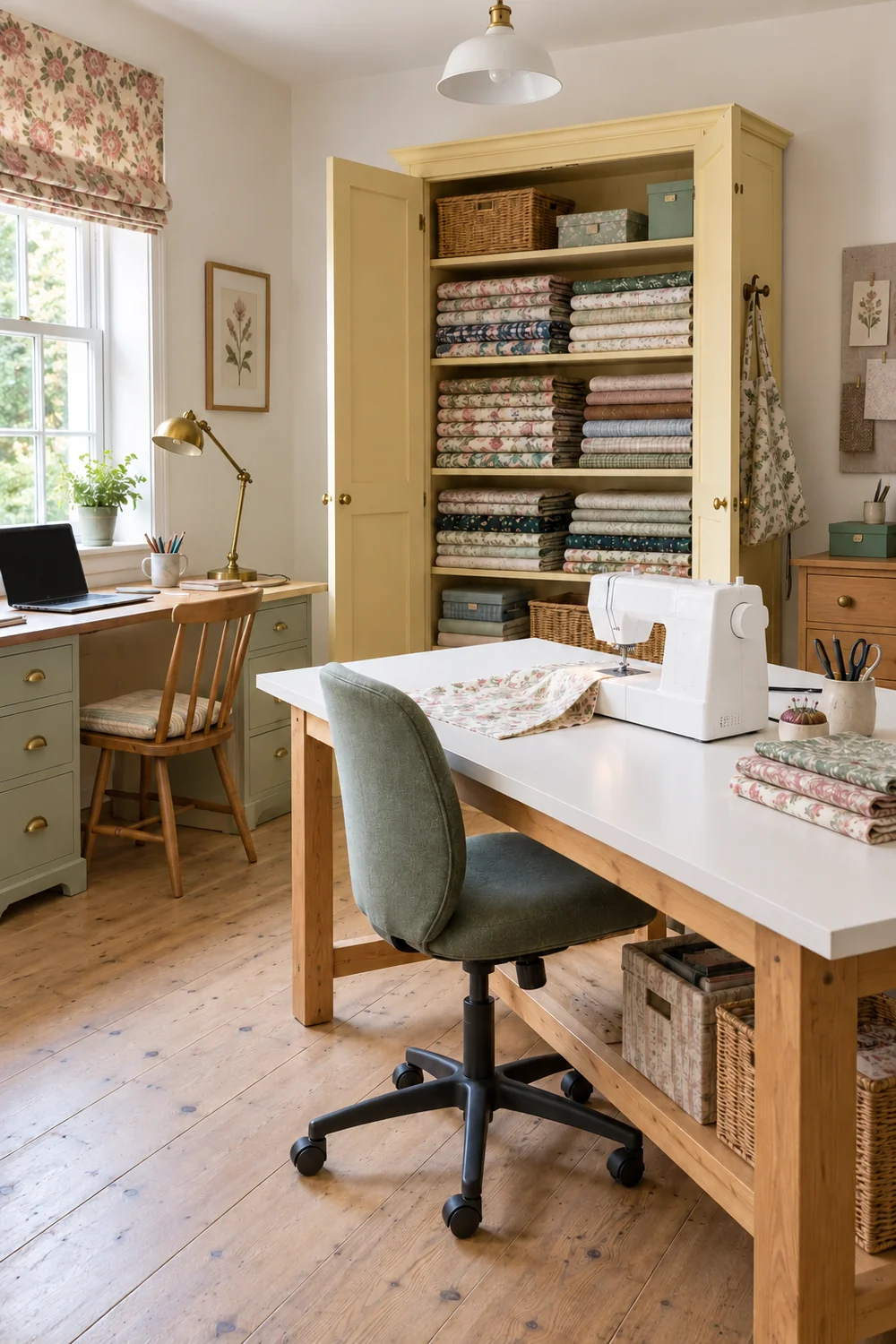
Compare drawers, shelves and upright containers according to the contents. Drawers can keep a manageable layer visible when opened, but deep piles may bury the lower material. Shelves can suit larger folded bundles, provided you can reach and identify them. Upright storage can make individual pieces easier to see when the fabric and container support that method. I would choose the route that suits your normal material and retrieval habits, rather than assume one folding method fits every textile. Test a representative group before buying enough organisers for the whole cabinet.
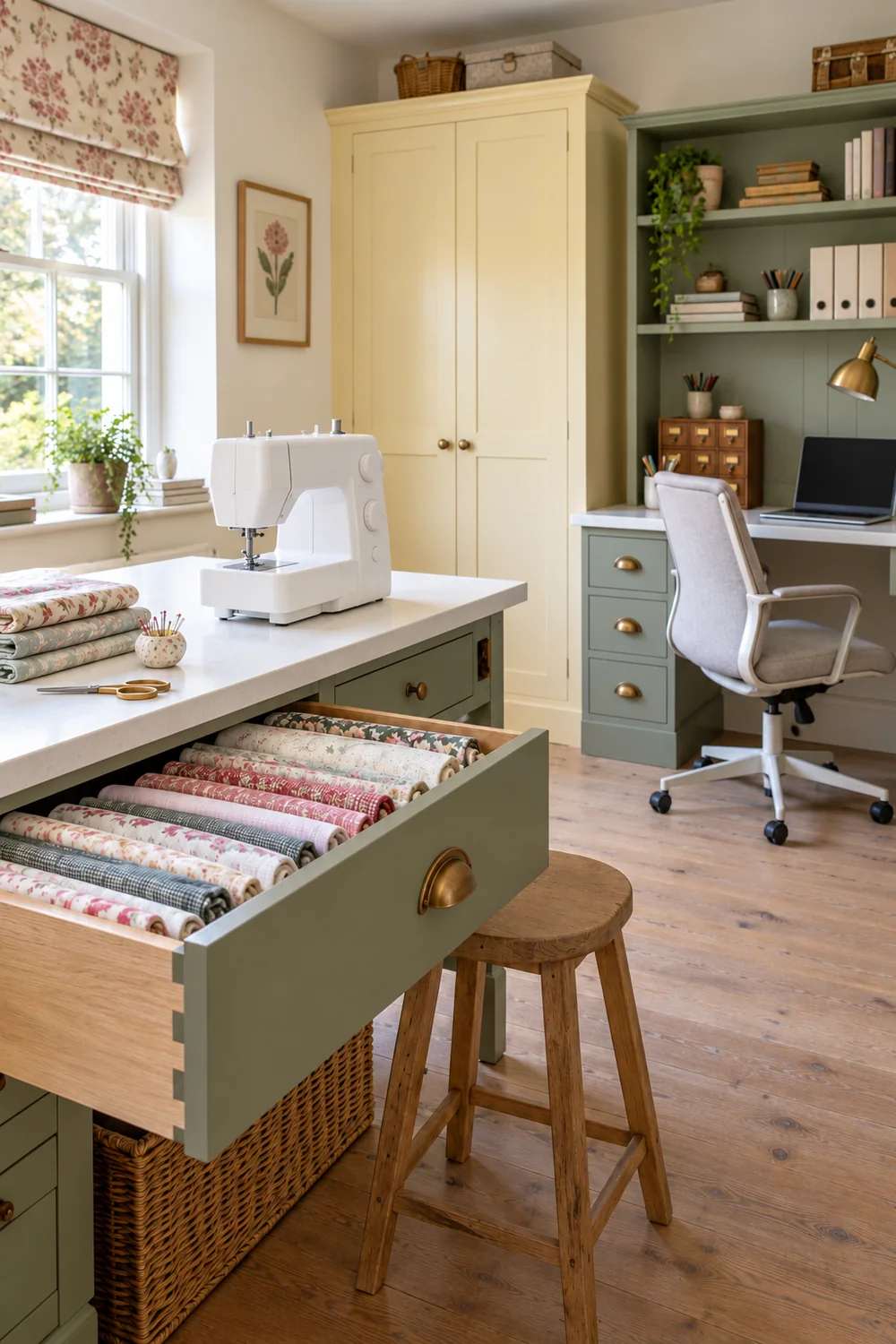
Allow for retrieval as well as capacity. You should be able to remove the piece you want without emptying an entire shelf or balancing another bundle on the computer desk. I would ask how the contents behave when the storage is partly full, not only when a new unit has plenty of spare space. A modest amount of available capacity makes a system easier to use, but the right amount depends on your inventory and how it changes. Do not convert an uncertain future collection into a wall of cabinets that crowds the present room.
For the visual treatment, a closed sage cabinet can contain varied stock while a small open area holds material you enjoy seeing. The cottage color palette guide can help you connect the cabinet finish with the butter yellow, warm white and faded rose elsewhere in the room. I would avoid selecting containers solely because their colours match. A clear internal label or a useful view of the contents matters more than a perfectly coordinated row that you have to open repeatedly to find the right fabric.
Small tools and notions need different storage from folded fabric. I would gather the items you regularly use and compare their shapes with the usable drawer or compartment dimensions. Long tools need an appropriate home that does not leave them projecting into a route. Small items need containers that allow you to identify and retrieve them without tipping everything onto the table. Choose and use tool storage according to the items and their instructions. The aim is a dependable relationship between the machine and its regular supplies, not a display that makes every tool permanently visible.
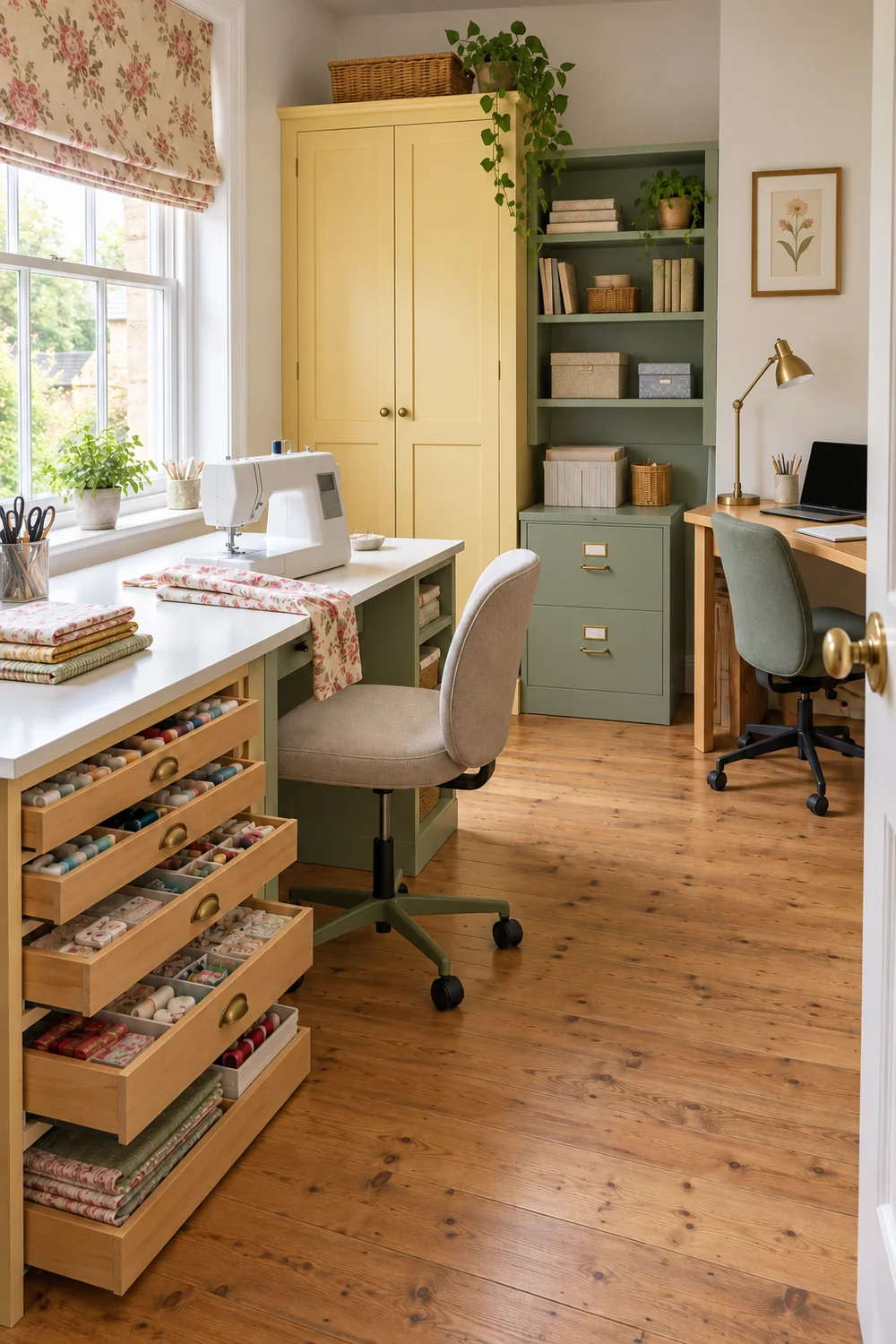
Paperwork needs its own category. Sewing instructions, patterns and computer documents can look like one paper problem while needing different access. I would keep the current sewing instructions with the live project and give computer papers a separate location. Archived patterns can have a storage method that suits their size and condition. Mixing all three functions in one attractive basket may make the room look tidy, but it asks you to sort the contents again every time you change tasks. Make the categories clear before choosing the basket, drawer or file.
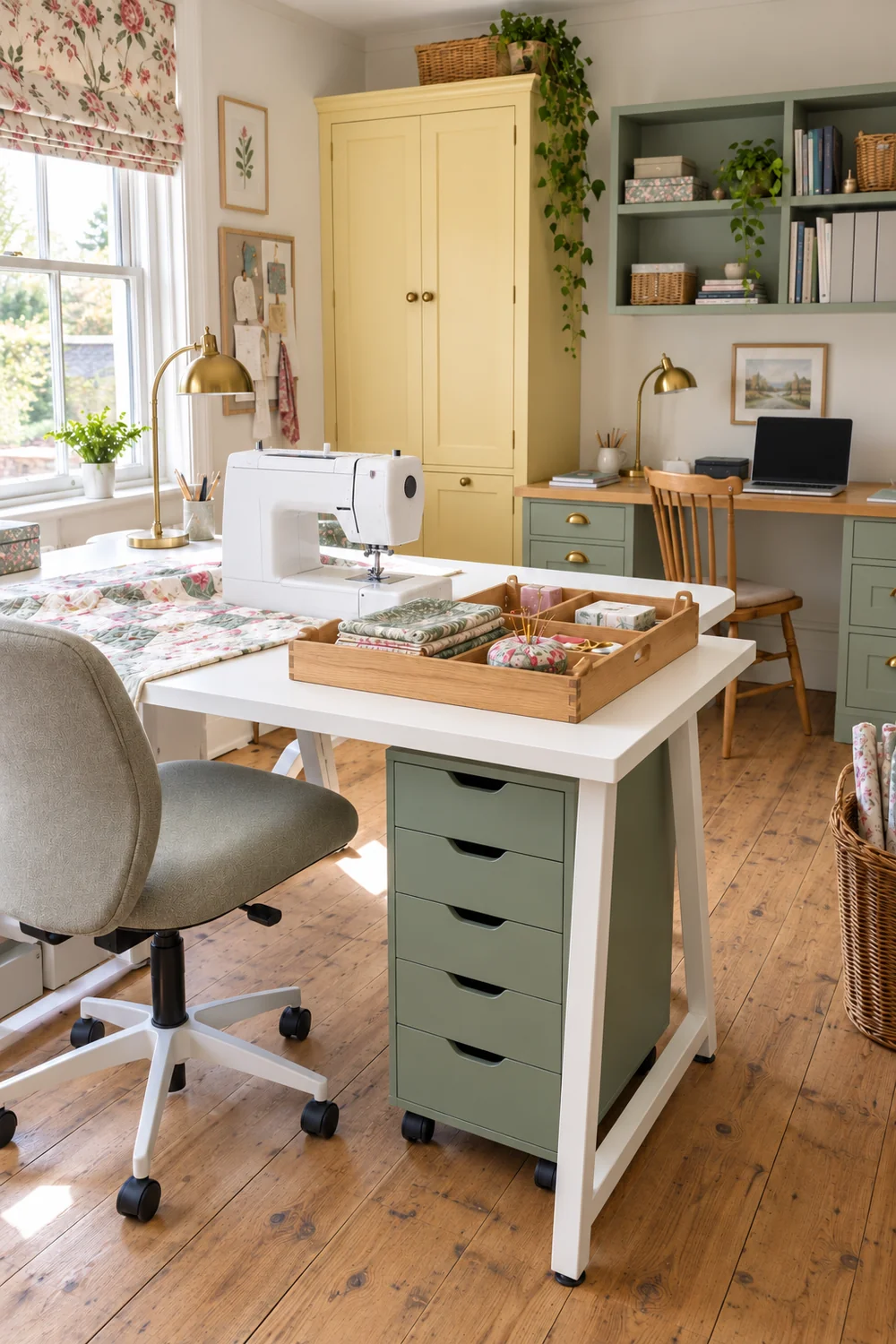
The live project deserves a container chosen for its actual pieces. Measure a representative unfinished project with its instructions and the tools that should remain with it. Check whether the container can sit in a reachable position without blocking a drawer or taking the computer chair’s space. I would choose a tray, shallow box or other suitable method that keeps the project together without requiring a complete repack after every session. Large or delicate work may need a different arrangement. That difference is a capacity decision to make openly, not something a small decorative box can solve.
The broader English countryside home office guide can support a cabinet treatment that belongs to the room while these internal functions remain specific to sewing. A painted front, restrained handles and a natural timber note can connect several storage types. I would let the fronts provide visual consistency and let the interiors differ where the contents require it. That gives you a cottage room with useful storage, rather than a matched collection whose contents all have to conform to the same container.
Place the actual equipment on the shortlisted surface before accepting the arrangement wherever a suitable trial is possible. Sit at the computer position, then at the sewing position, and test access to regular controls and supplies. I would notice whether a table edge, leg, drawer or chair arm keeps you from a usable position. The Health and Safety Executive’s workstation checklist considers sufficient surface area, equipment reach, chair adjustment and reflections. Use those questions for the computer task, with your own equipment and circumstances, rather than claim a particular furniture height is right for everybody.
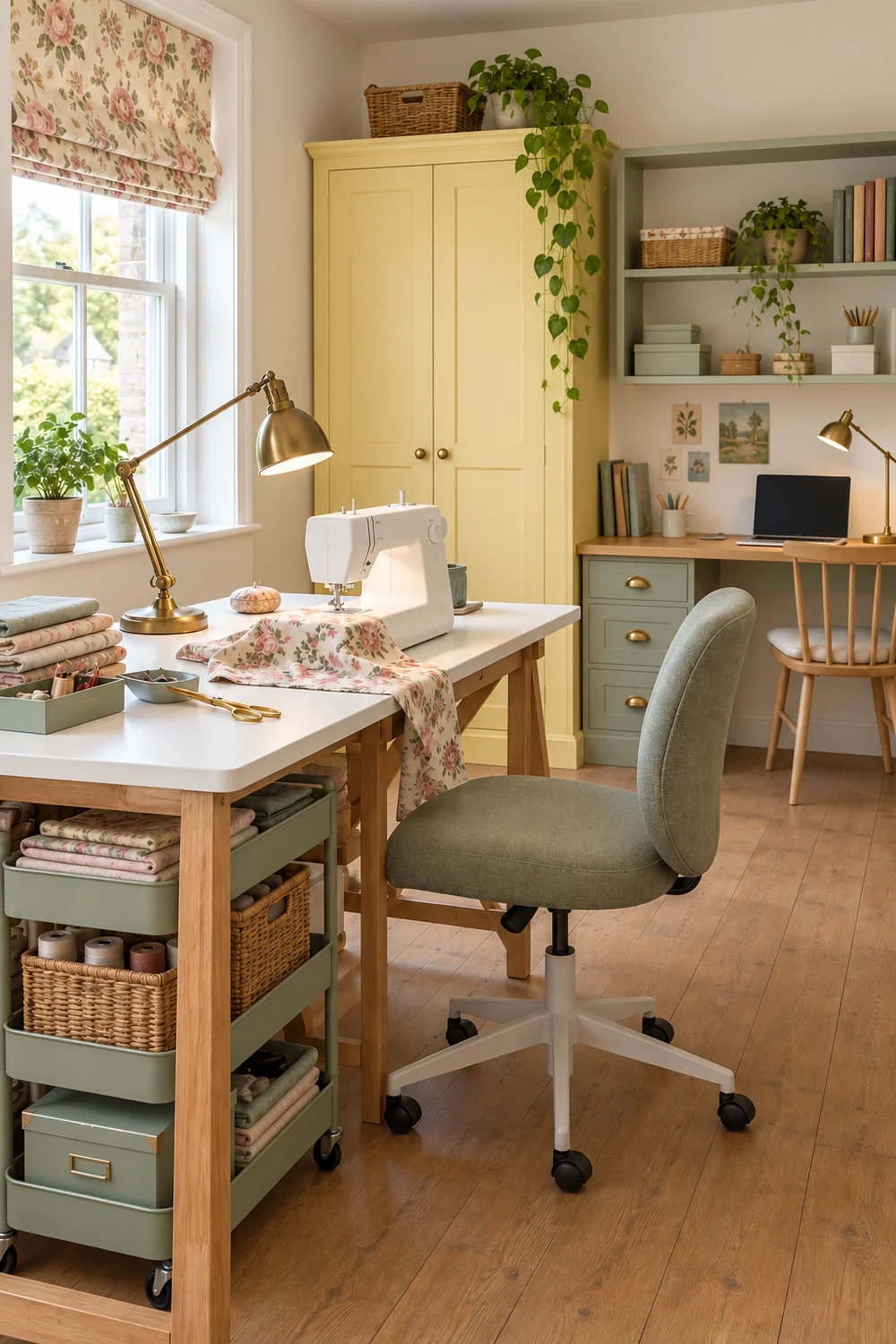
Compare task lights by where their illumination lands and how they fit the station. A suitable lamp beside the work can keep the surface clear; another arrangement may need a lamp with reach over the task. Check the base, adjustment, cable route and use instructions. I would look for shadows on the working material, reflections on the screen and light that creates discomfort when you face the task. A decorative shade or an appealing photograph does not establish that a lamp performs the needed job at your actual position.
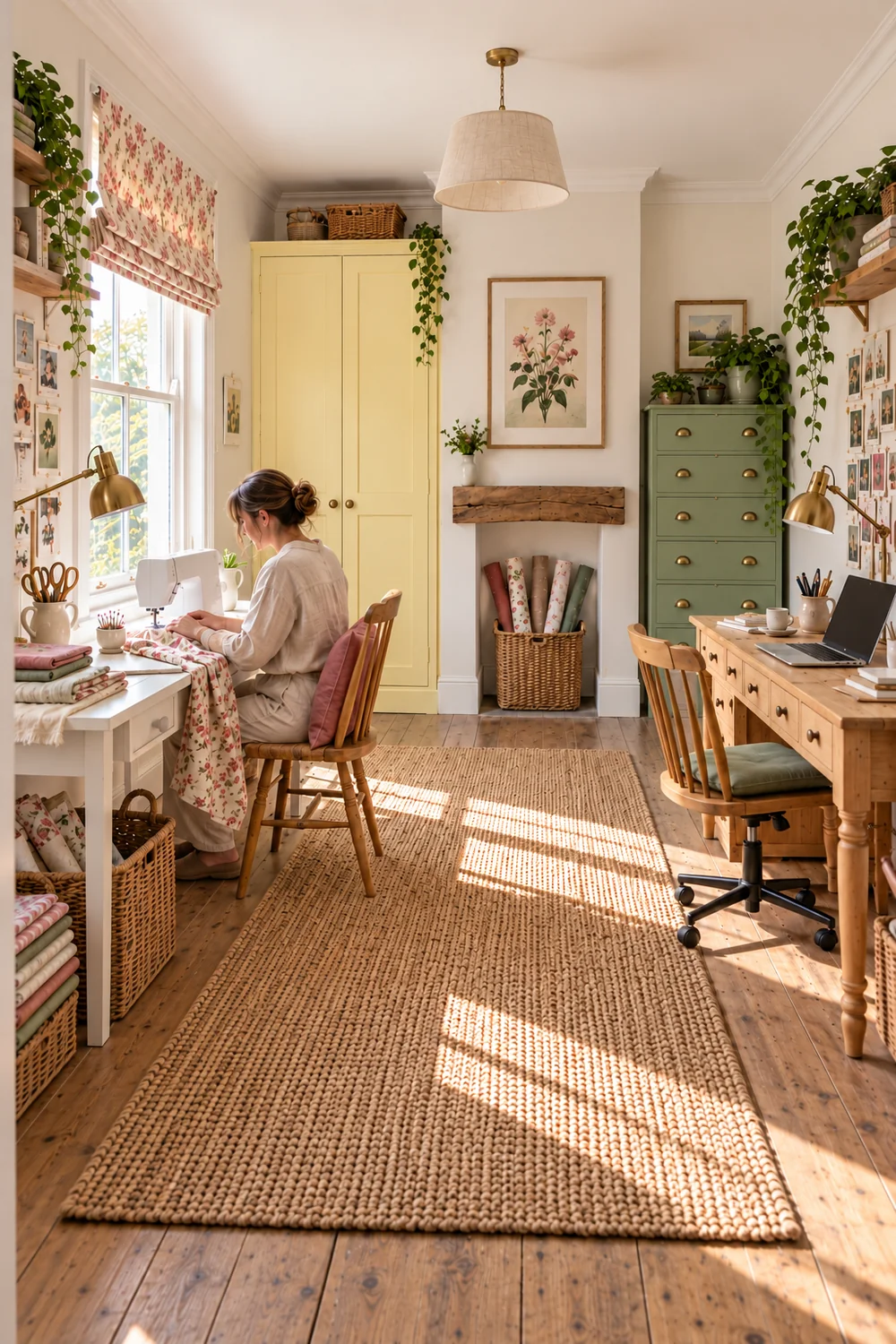
The general lighting and cable ideas in a minimalist office can help you organise the computer corner without changing the cottage palette. Keep the light itself practical and repeat the brass note only where it suits the selected fixture. You can retain a floral curtain and painted cabinet while using a visibly modern task lamp. I would choose the lamp that resolves the observed lighting problem, then judge its appearance in the room. The fixture should not require a smaller working area simply to maintain a more decorative silhouette.
Run an acceptance session that includes changing tasks. Open the relevant drawers, bring out a fabric bundle, return the project to its home and use the computer again. Check the occupied route with extensions and doors in their normal positions. I would reject a specification that passes the empty room view but requires you to relocate the chair, remove a cabinet’s contents or balance equipment somewhere unsuitable. Keep any uncertain equipment compatibility or support limit unresolved until the appropriate information is available. A clear recorded question is more useful than an optimistic assumption that becomes expensive after delivery.
At the end of a sewing session, I would give the live project a deliberate pause. Put its pieces and instructions together in the chosen container or location, return regular tools to their own homes and leave equipment according to its instructions. The purpose is to make the next computer task possible without losing where you were in the sewing. This is not a rule that every project must disappear or every surface must be empty. It is a repeatable transition that preserves the project and the desk’s other use.
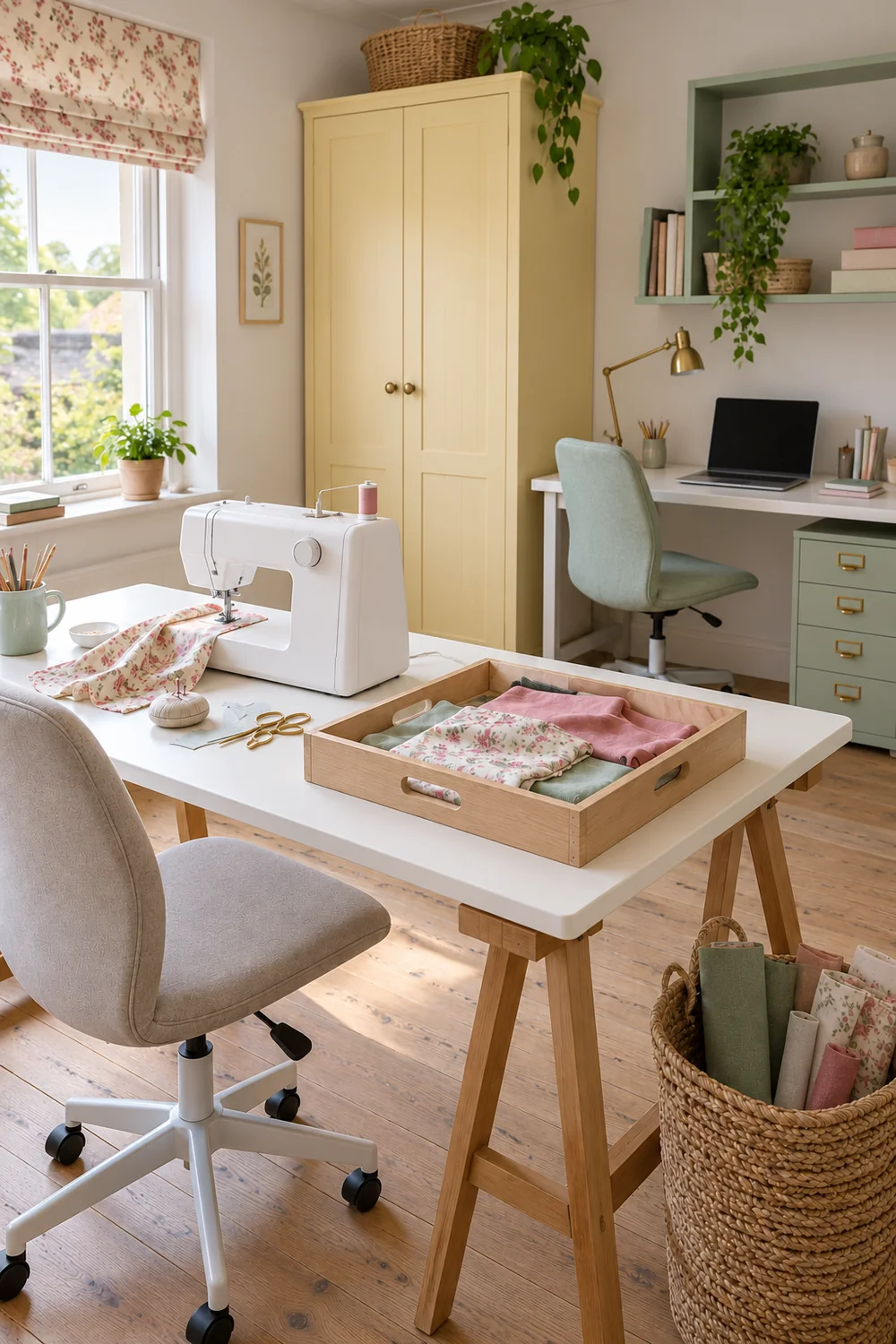
When the transition fails, identify the cause. Is the live project too large for its container, is stock filling the space intended for it, or is the container too awkward to reach? I would correct that specific mismatch before adding another organiser. If material repeatedly lands on the computer desk because the cabinet is full, a new habit alone may not solve the capacity problem. Return to the inventory and compare the useful internal dimensions with what you now own. This is the point to revisit the sewing room storage specification, rather than purchase a box without a job.
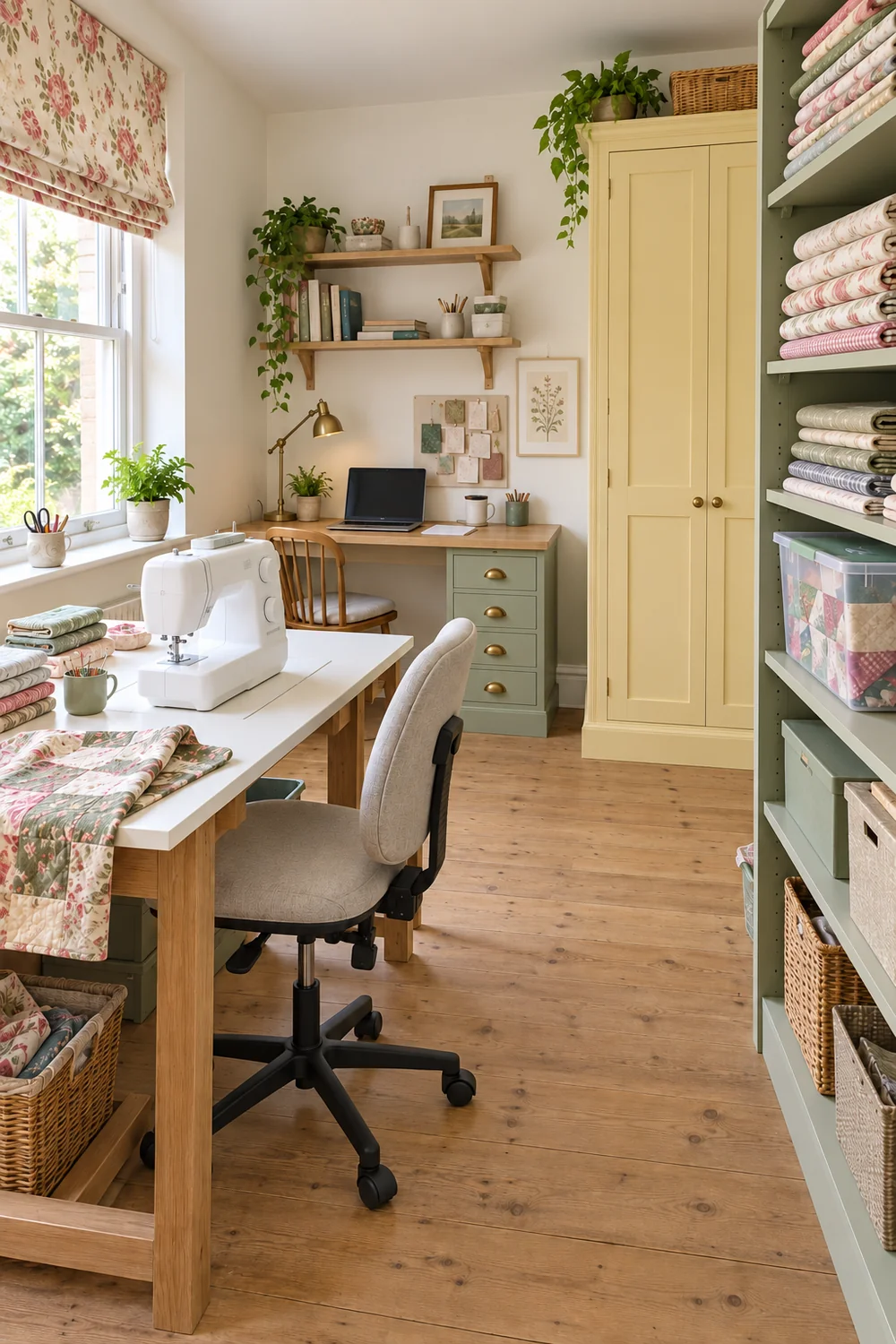
Keep a separate place for scraps, material awaiting a decision and completed work that needs to leave the active area. Otherwise these categories slowly become permanent residents of the live project container. I would review them at a suitable interval for your use and decide what stays, moves or leaves. The interval is yours to choose; the useful test is whether both tasks can begin without another sorting session. Avoid presenting a perfectly reset photograph as proof that the system will maintain itself. Its value comes from the clear decisions you can repeat after an ordinary session.
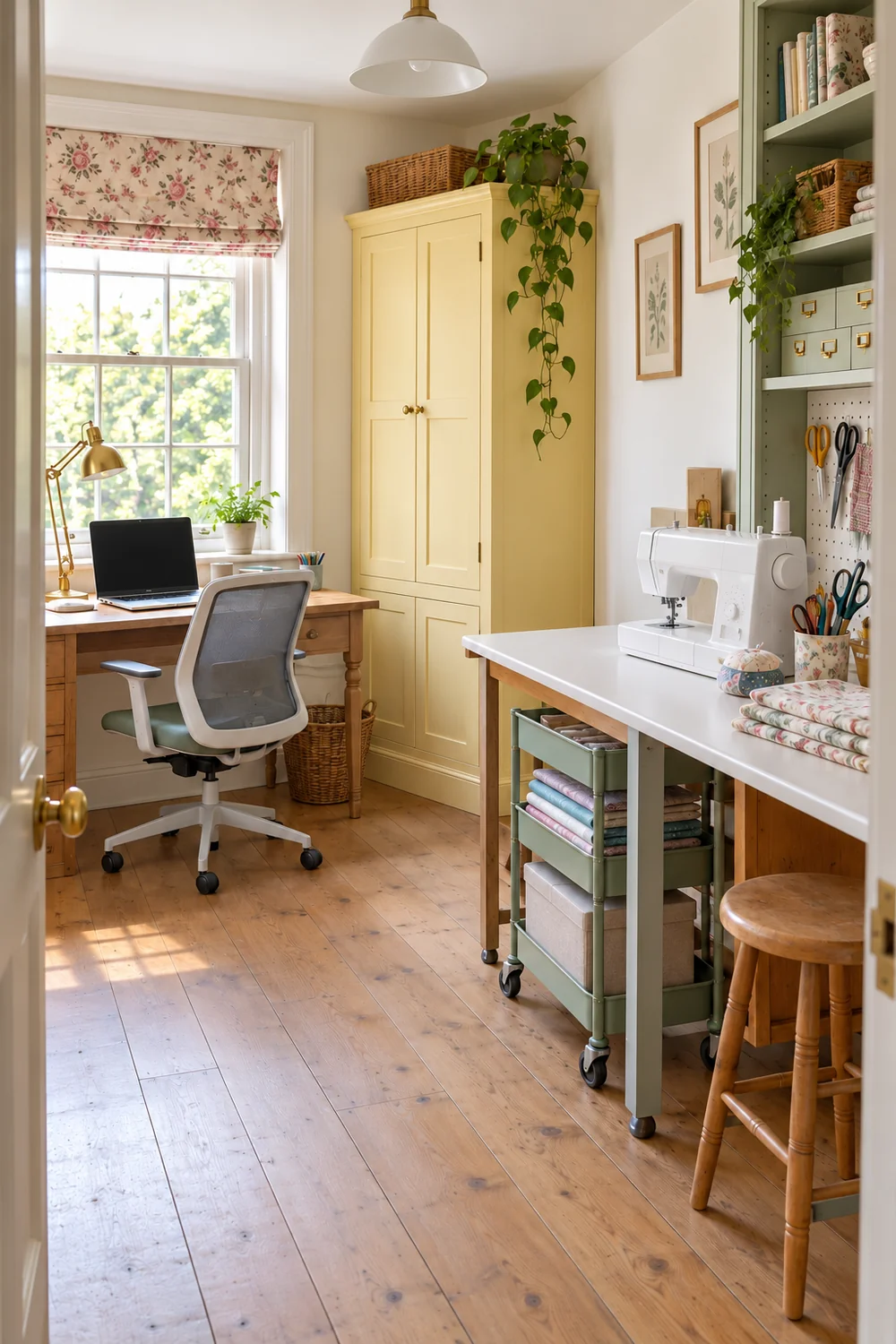
If the room stops supporting movement or a different machine changes the working space, return to the office sewing room combo plan. A changed workflow may require a new arrangement before more storage. The original sewing room office combo room directions are useful when you want to reconsider shared versus paired stations. That return is a practical response to changed use. It should preserve the useful cottage character while allowing the room to evolve around what you actually make and how you now use the computer.
I would keep the pieces that pass and replace the ones with a named failure. Record the table’s usable dimensions and confirmed suitability, the cabinet’s internal capacity, the live project’s home and the light’s tested position. Check delivery, assembly and any compatibility information before committing. Then run the same task change after installation rather than assume the furniture has solved it. A successful cottage sewing office has a stable working relationship: the machine belongs, the fabric is reachable and an unfinished project does not make computer tasks impossible. The colour and texture can remain gentle because the furniture is doing the harder work. You leave with a specification you can check, a contained project you can return to and a room that stays useful beyond its first tidy photograph.