Newsletter Subscribe
Enter your email address below and subscribe to our newsletter

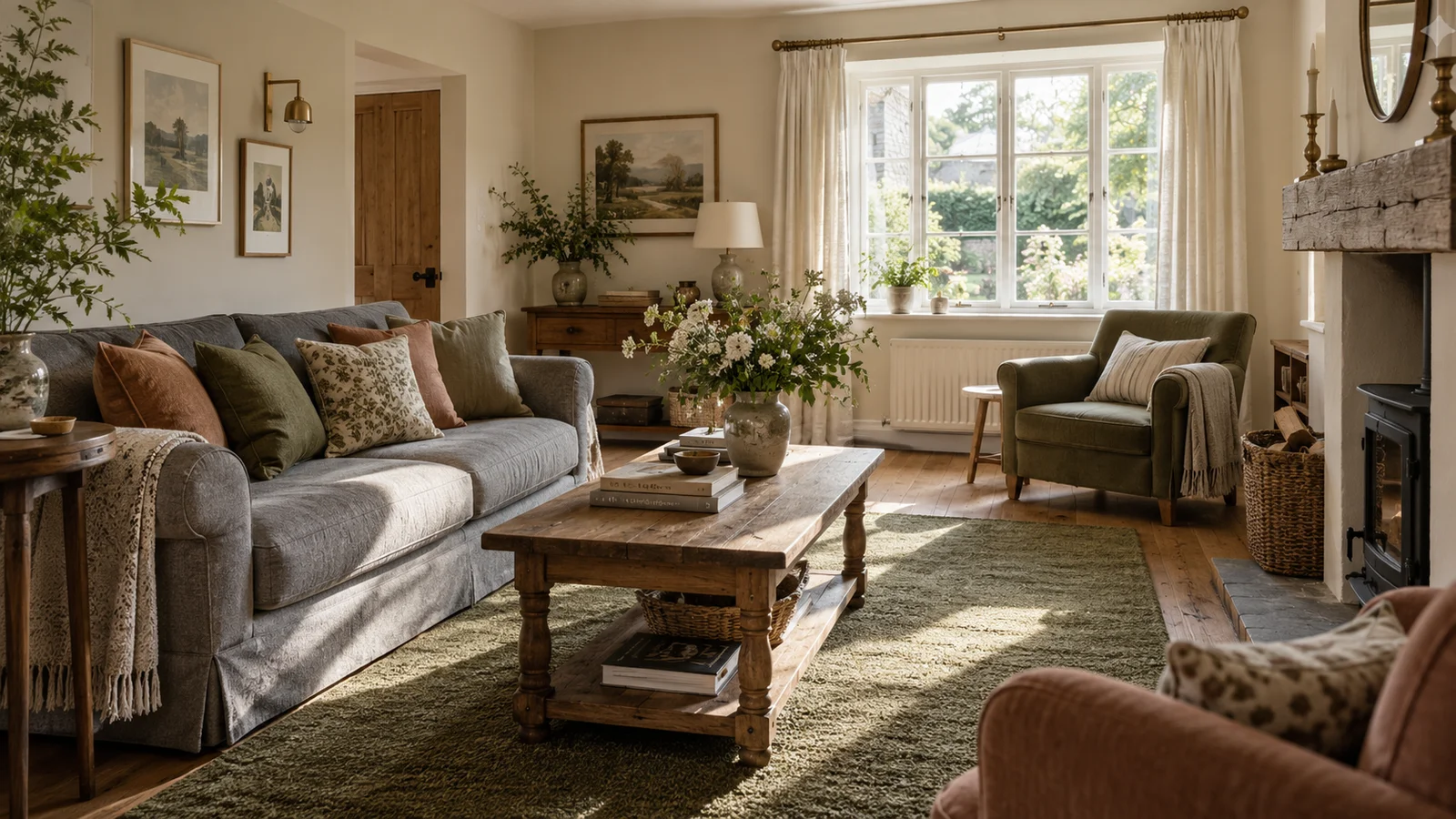
You can build an earthy cottage living room without replacing a sofa that is comfortable, sound and already paid for. I would treat its colour and shape as the starting point, then use your secondhand furniture, rug, curtains and smaller textiles to connect it with the rest of the room. The challenge is often the order of decisions. A throw might look lovely while the coffee table still blocks the route, or a vintage cabinet might feel heavy because everything dark has landed on the same wall. This is the setup sequence I would use once the furniture has been chosen. It begins with the sofa and the room's practical footprint, then works through wood, fabric, light and display before a later review of how the room actually feels to use.
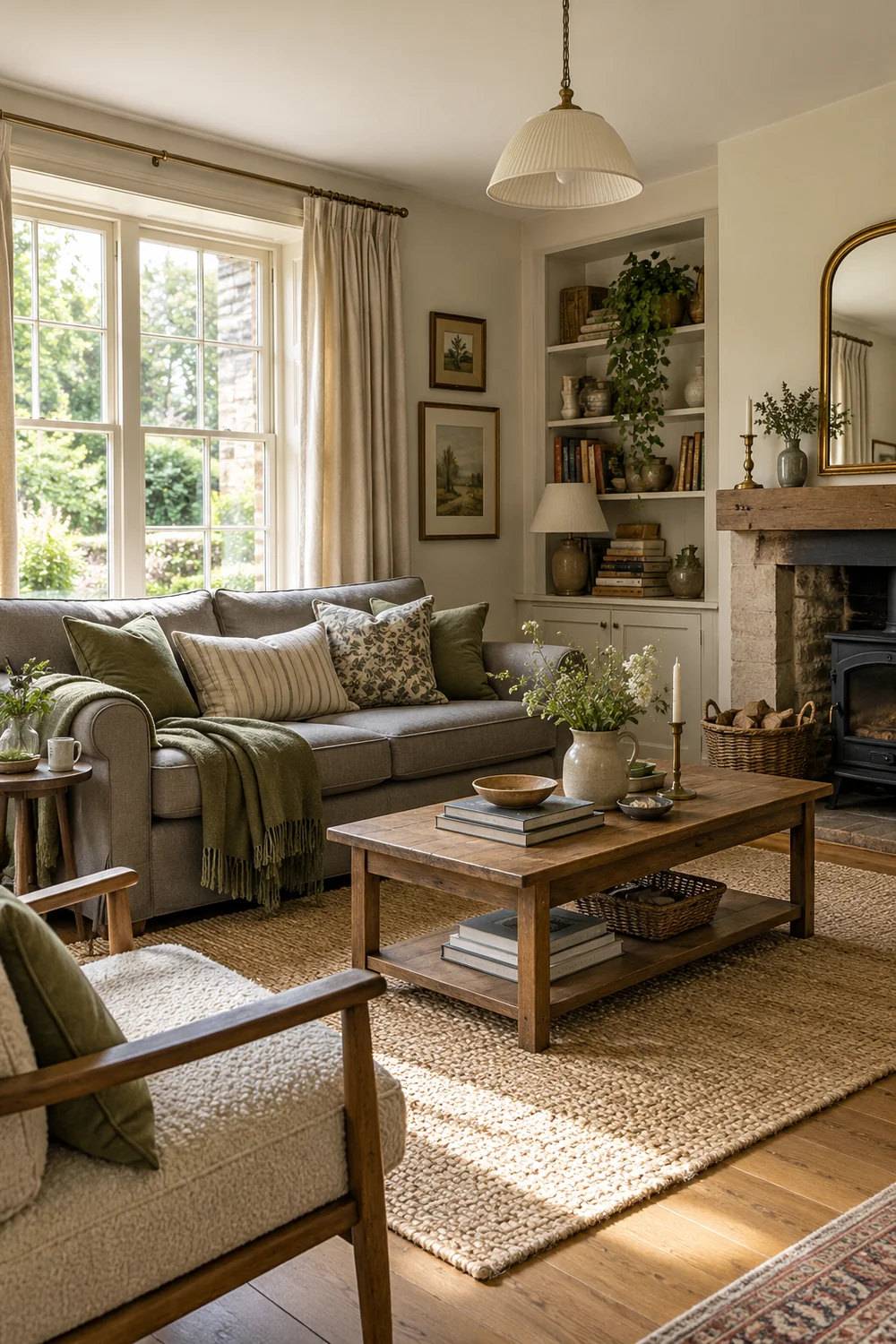
I would begin by looking at the sofa in clean daylight with its decorative cushions and throws removed. Its upholstery may be warmer or cooler than you thought, and its outline may feel lighter once the extra fabric is gone. Note the colour, the width of the arms, the height of the back and whether the legs are visible. These details tell you what the surrounding furniture needs to do. A deep bulky sofa often benefits from a lighter looking side table; a compact upright sofa may sit comfortably beside a more substantial vintage chest.
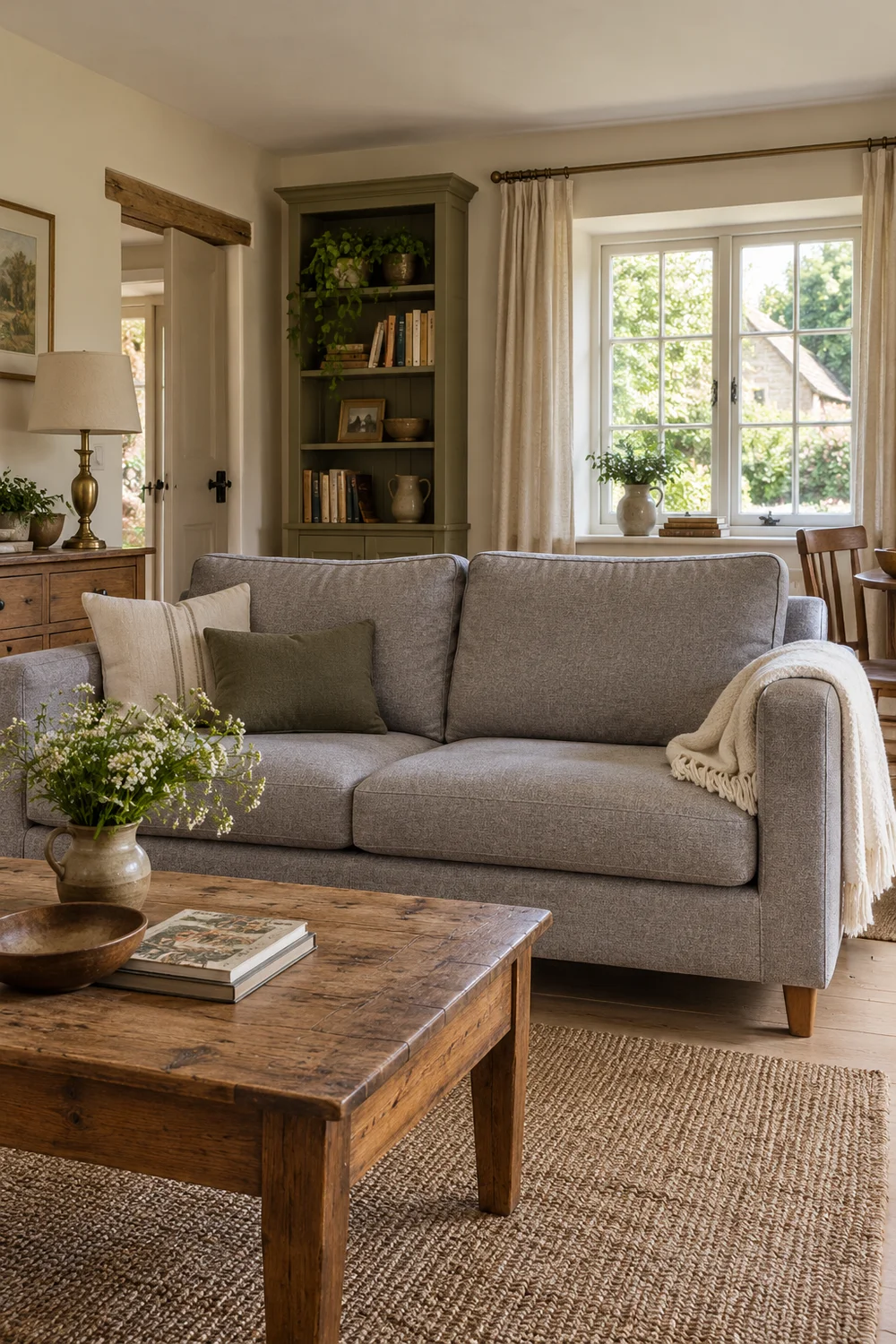
The first decision is where the sofa works best for everyday use. Check the view, the approach from the door and the relationship with any focal point you actually use. Keep the route usable before creating a decorative arrangement. Test the proposed position by sitting down, standing up and walking through the room carrying an ordinary household item. This is a practical check for your own room, rather than a claim that a single clearance measurement suits every household.
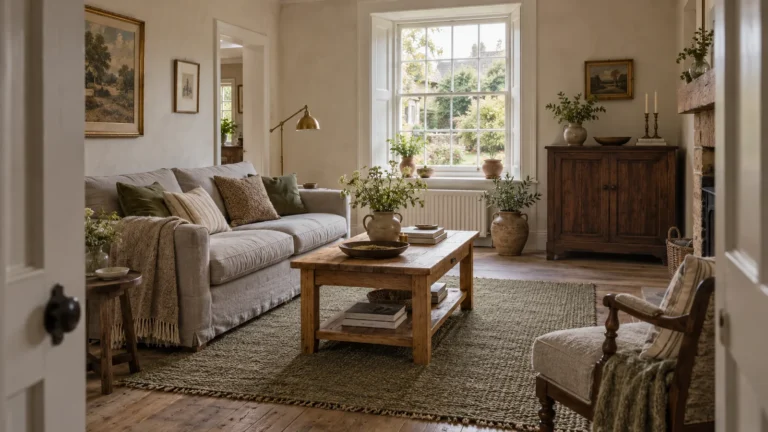
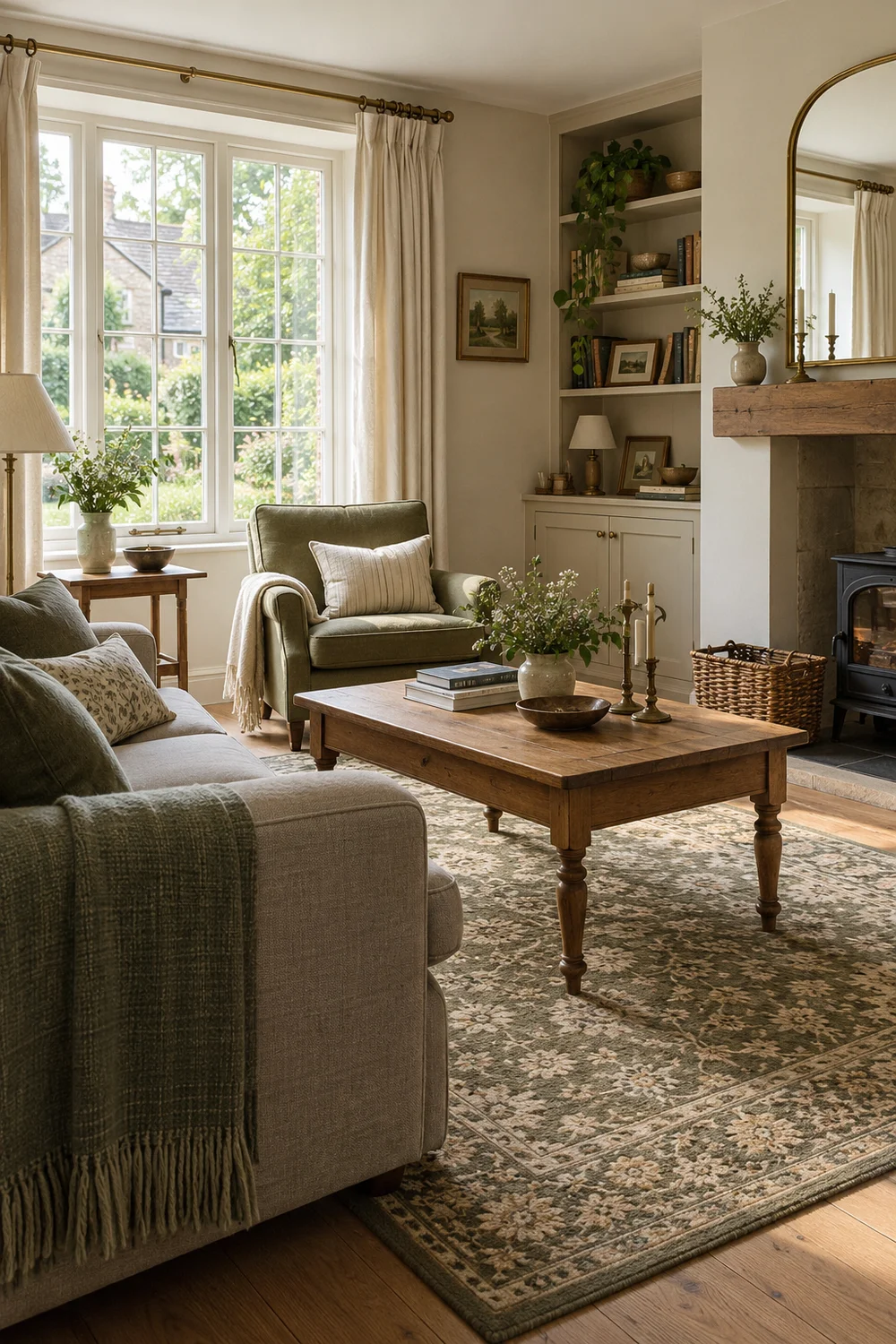
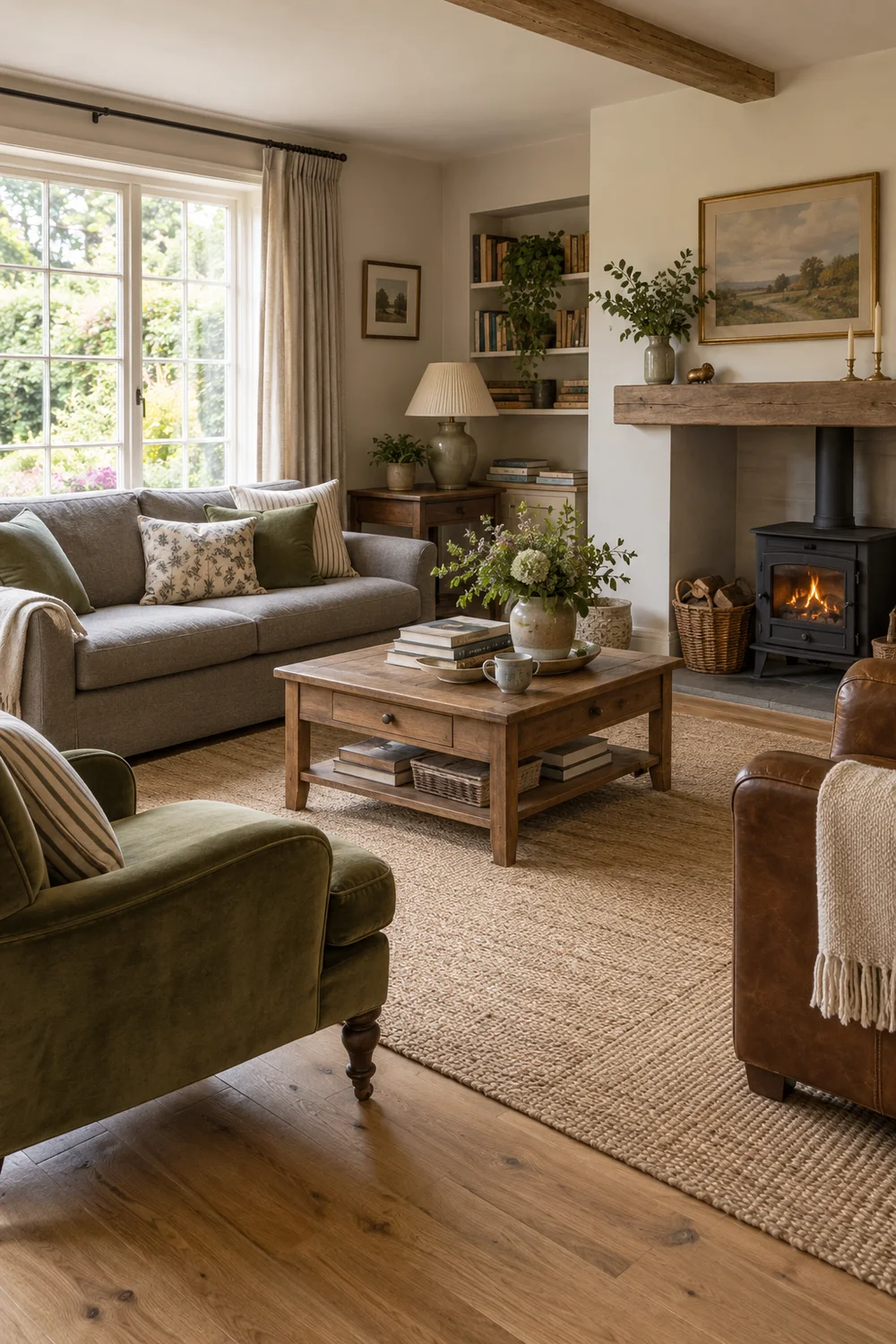
For the worked example, I would keep a plain grey sofa, cream walls and honey oak flooring. Muted olive and soft clay can help connect the cool upholstery with the warm wood. If your sofa is beige, the same ingredients can be used with a little more tonal contrast. With a brown leather sofa, I would give cream fabric and quieter patterned textiles more space. The earthy color palette guide provides colour ideas, but the actual sofa determines which ones are useful here.
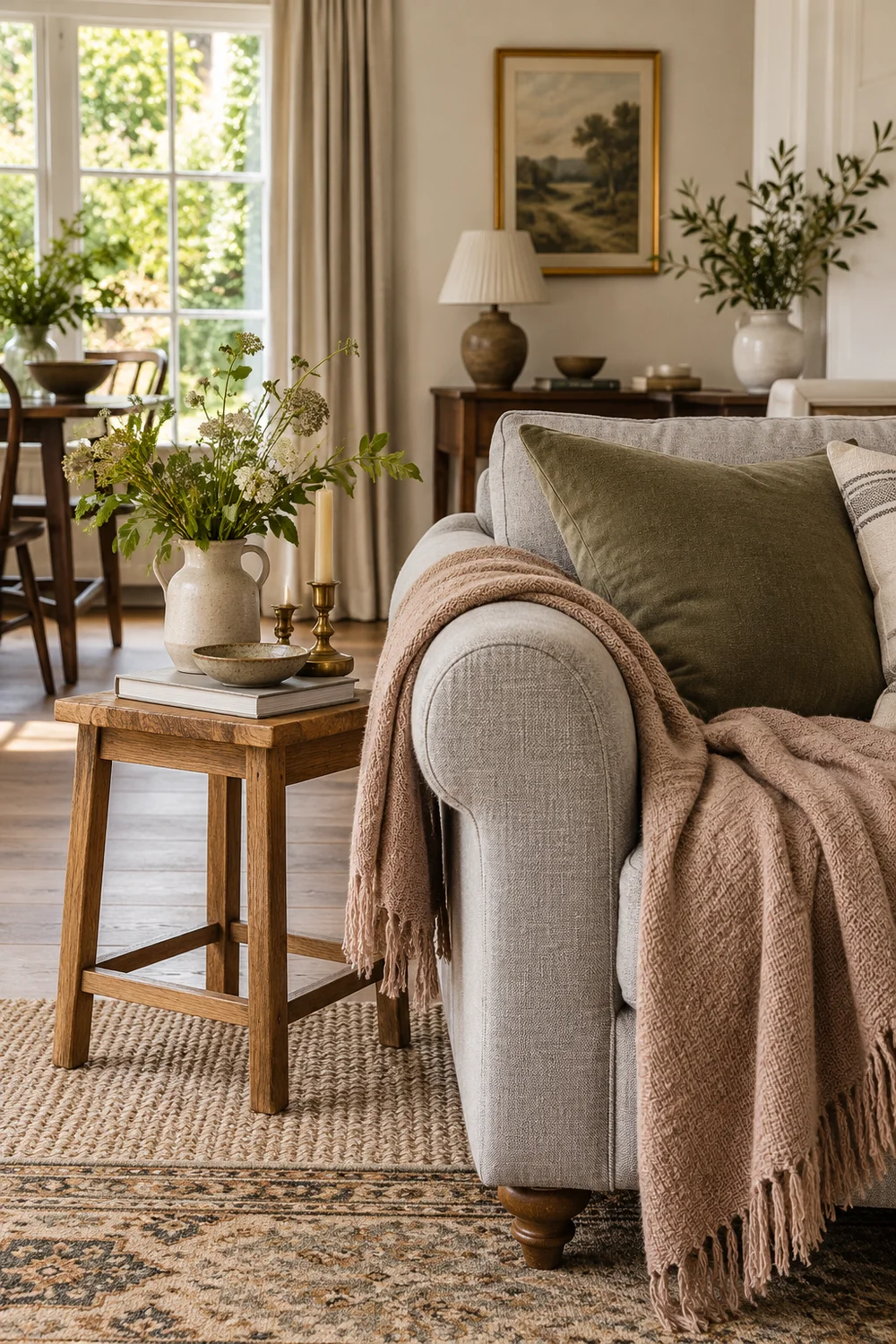
Resist covering the entire sofa to make it resemble a different piece. A throw can introduce texture, but it should not prevent normal use or make the seat awkward to maintain. I would start with one throw and a small number of comfortable cushions, then judge what they change. Keeping part of the original upholstery visible makes the room feel resolved around the sofa you own. It also gives you a stable reference when choosing the next layer.
Before placing small decorations, I would test the main rug position and table relationship. Lay out the actual rug if you have it; if you are deciding on a size, mark a candidate footprint using a floor suitable method. Look from the doorway and from the sofa. Does the rug connect the seating, or does it appear to float beneath only the coffee table? There is no need to apply a rigid formula without checking the proportions of the room.
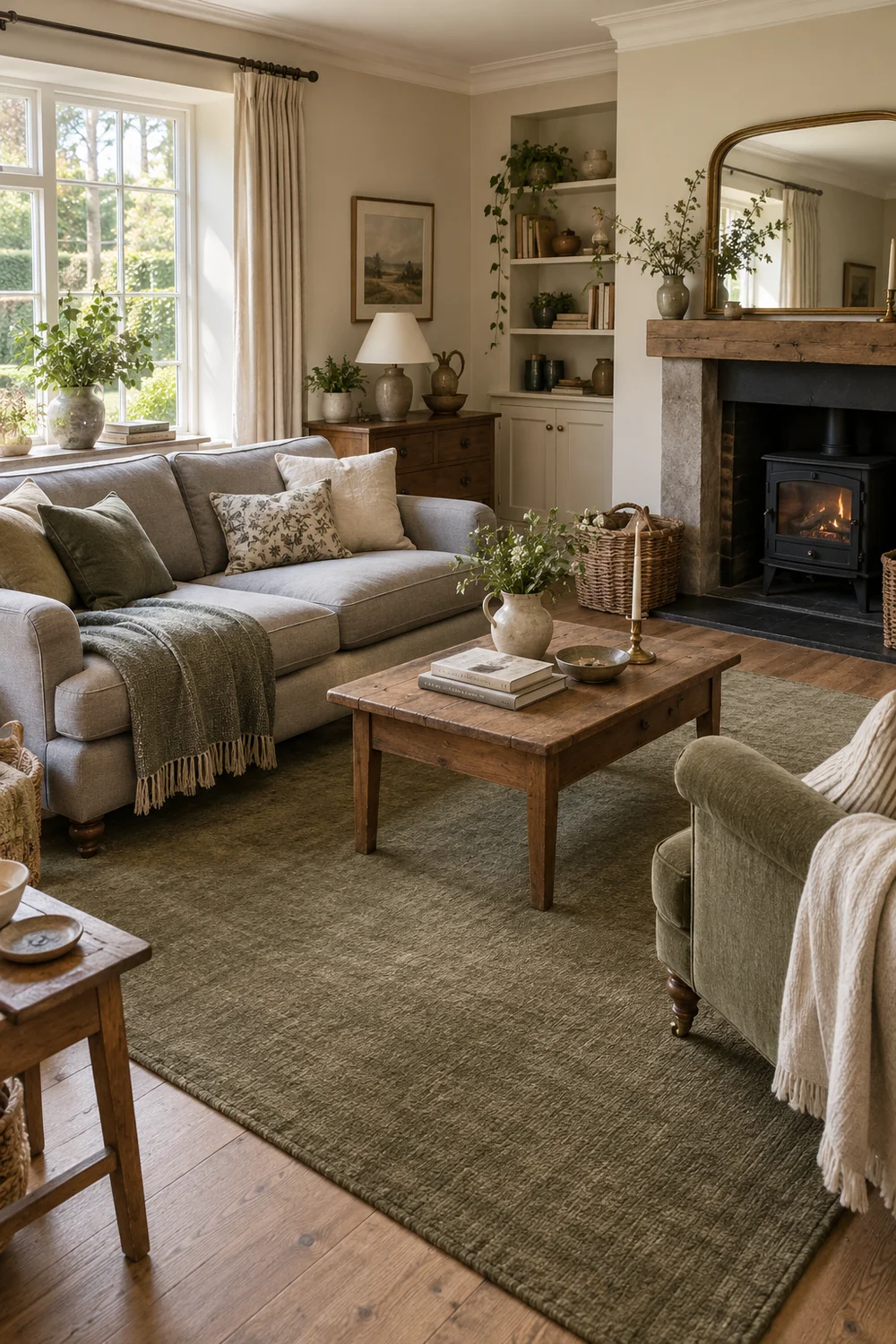
In the example room, I would try the sofa's front legs on the rug, then see whether the chair and coffee table form a coherent group. If that position pushes the rug into a door swing or a busy route, adjust it. A smaller rug can still be useful beside a particular seat, but it should be chosen for that job rather than expected to unite the whole room. Include an appropriate rug pad or other manufacturer recommended method where needed, especially if movement is already a problem.
Place the coffee table only after testing the rug. Sit in your usual position and check whether reaching the surface feels comfortable. Walk around the table with the chair occupied. Open nearby storage. If the arrangement works only when nobody uses the room, change the footprint before adding a basket beside the table. A good looking obstruction is still an obstruction.
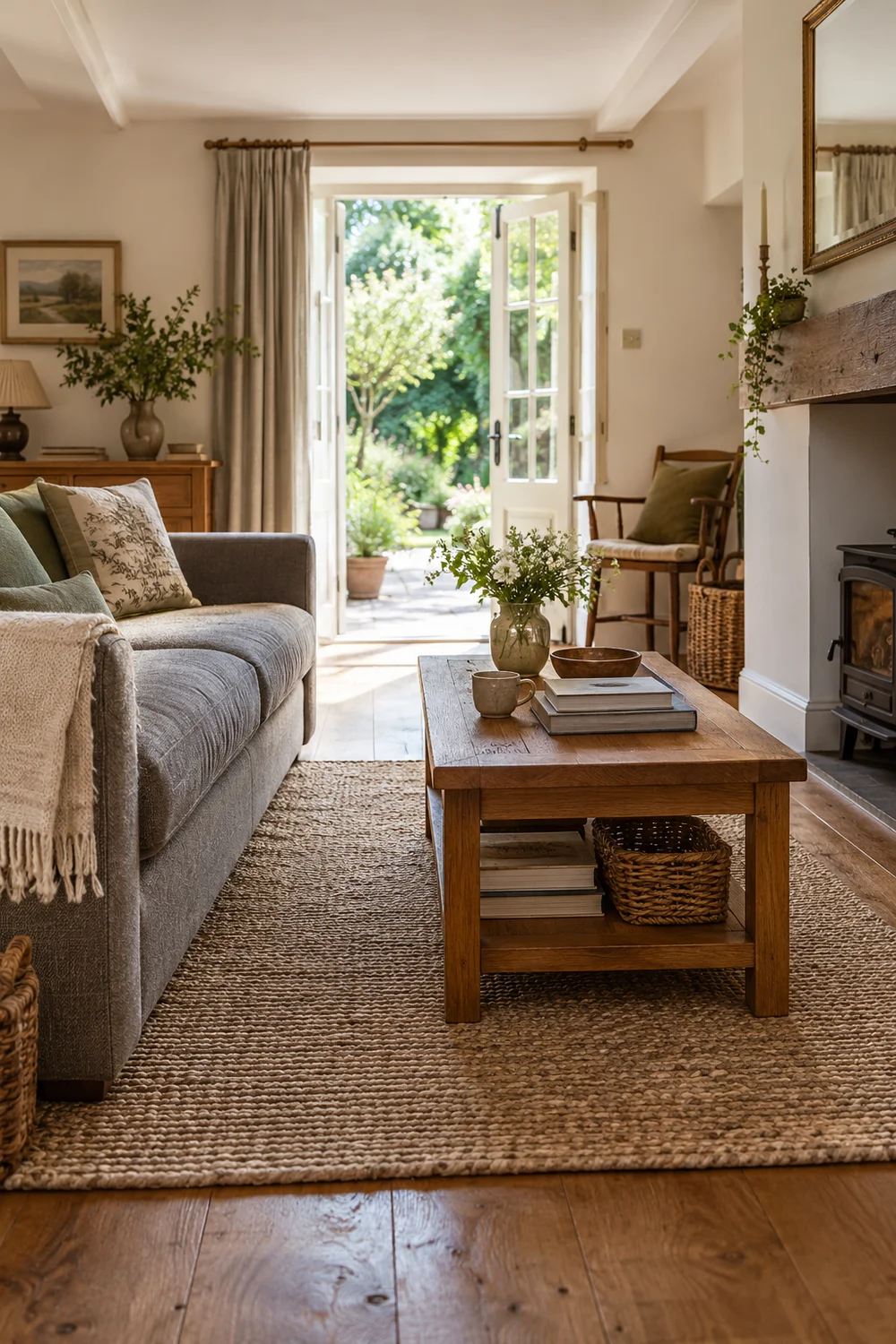
If one piece repeatedly makes the group difficult, review the secondhand furniture selection process before buying its replacement. The question might be shape or depth, rather than style. A compact table that leaves the room usable can contribute more to an earthy cottage living room than an impressive chest that narrows every route. Test with the pieces you have first, and record the exact reason if something needs to change.
A room can contain several lovely timber pieces and still feel unbalanced. I would look at where their visual weight has landed. An oak coffee table, oak bookcase and dark cabinet grouped on one side can make that side feel dense, while the sofa appears detached on the other. The solution is sometimes redistribution rather than a new purchase. Move a smaller wood piece, or use a warm textile near the sofa to carry some of that colour across the room.
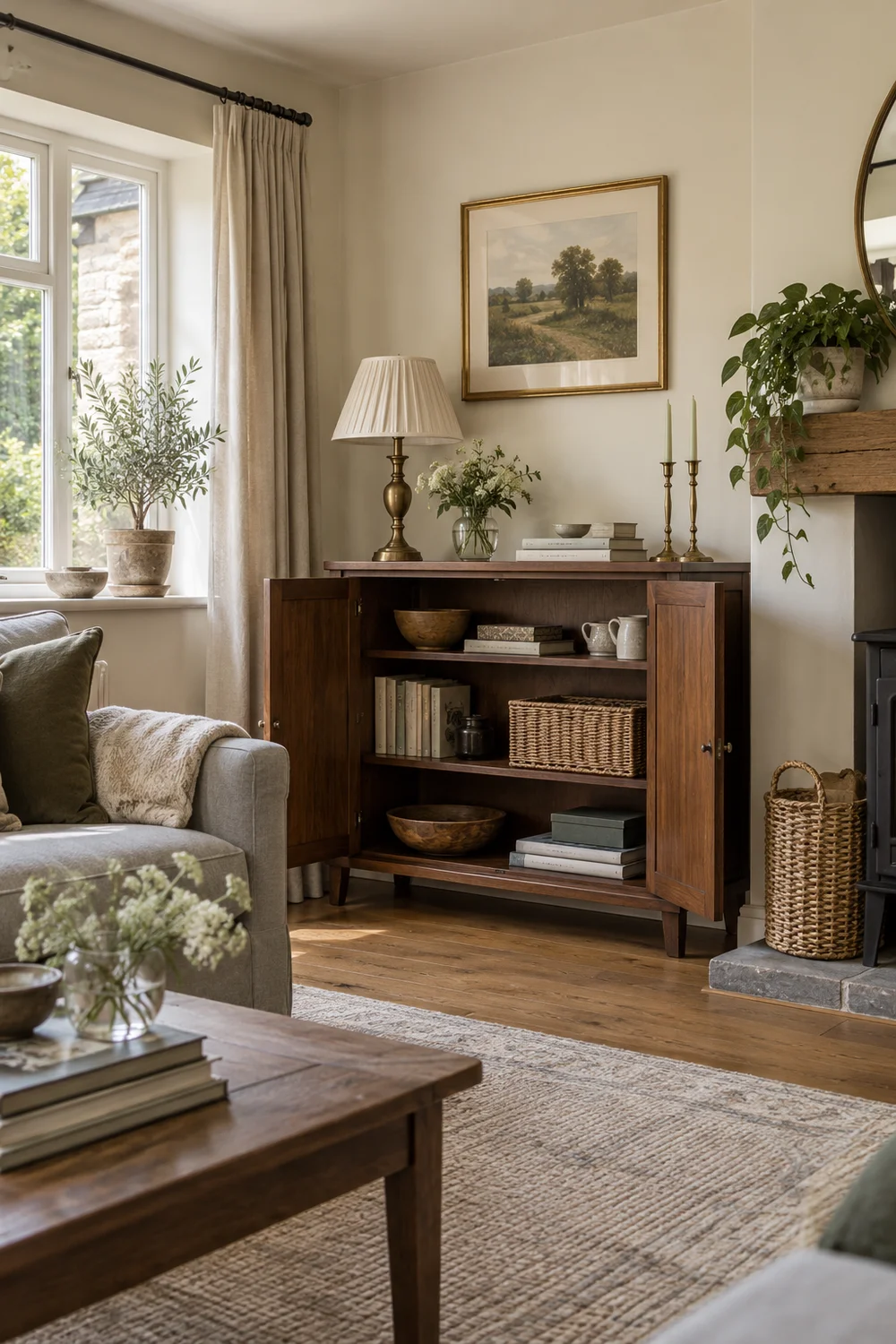
Start with the largest fixed or retained element. In the worked room, oak flooring is already the main wood surface. I would use a simple oak table in the seating group and allow a smaller darker cabinet to provide contrast elsewhere. A cream curtain and olive cushion can sit between the two visually. This does not mean every dark cabinet needs balancing with another dark cabinet. Repeating warmth through a modest frame or a textile is often enough for the effect I would want.
Check the arrangement from more than one position. From the doorway, the tall cabinet may be the first thing you see; from the sofa, the coffee table may dominate instead. Photograph both views, then remove a small decorative item from the busiest area before adding anything to the quietest one. Sometimes the apparent imbalance is a crowded surface rather than the wood itself.
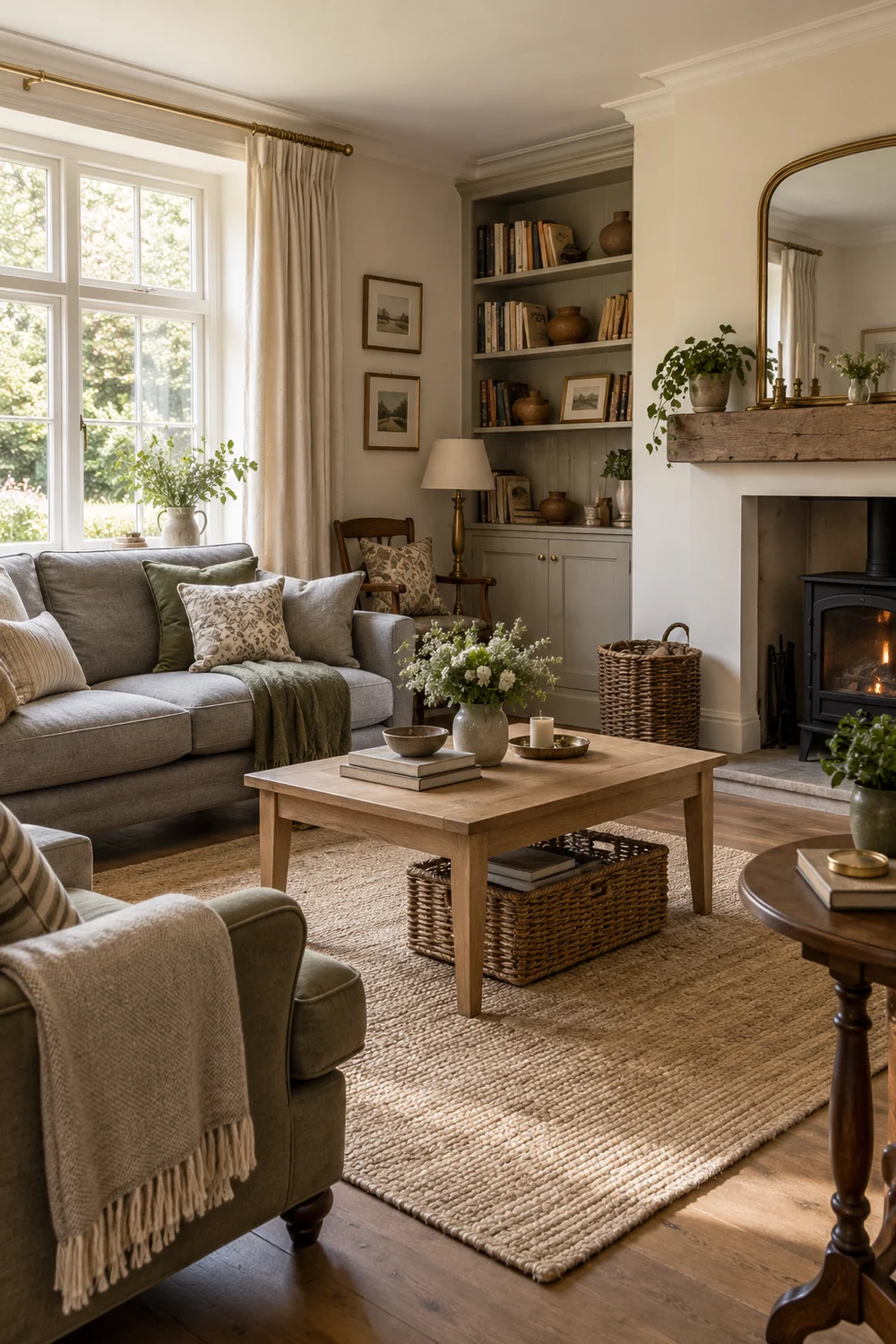
The existing cottage living room guide shows how wood, seating and textiles can share a room. Here, I would translate that inspiration into a specific placement test: one main timber presence, a smaller supporting presence and some space around each. Keep clear access to doors, drawers and electrical points. Wood warmth is part of the composition, but the cabinet still needs to work as a cabinet after its styling is finished.
I would establish the largest fabric surfaces before deciding on small cushions. The sofa and rug come first, followed by curtains or a large chair fabric, then the smaller additions. This order makes it easier to see whether you need pattern or a quiet texture. If the rug is already a busy faded floral, plain curtain fabric and a softly textured throw may be more useful than another botanical print.
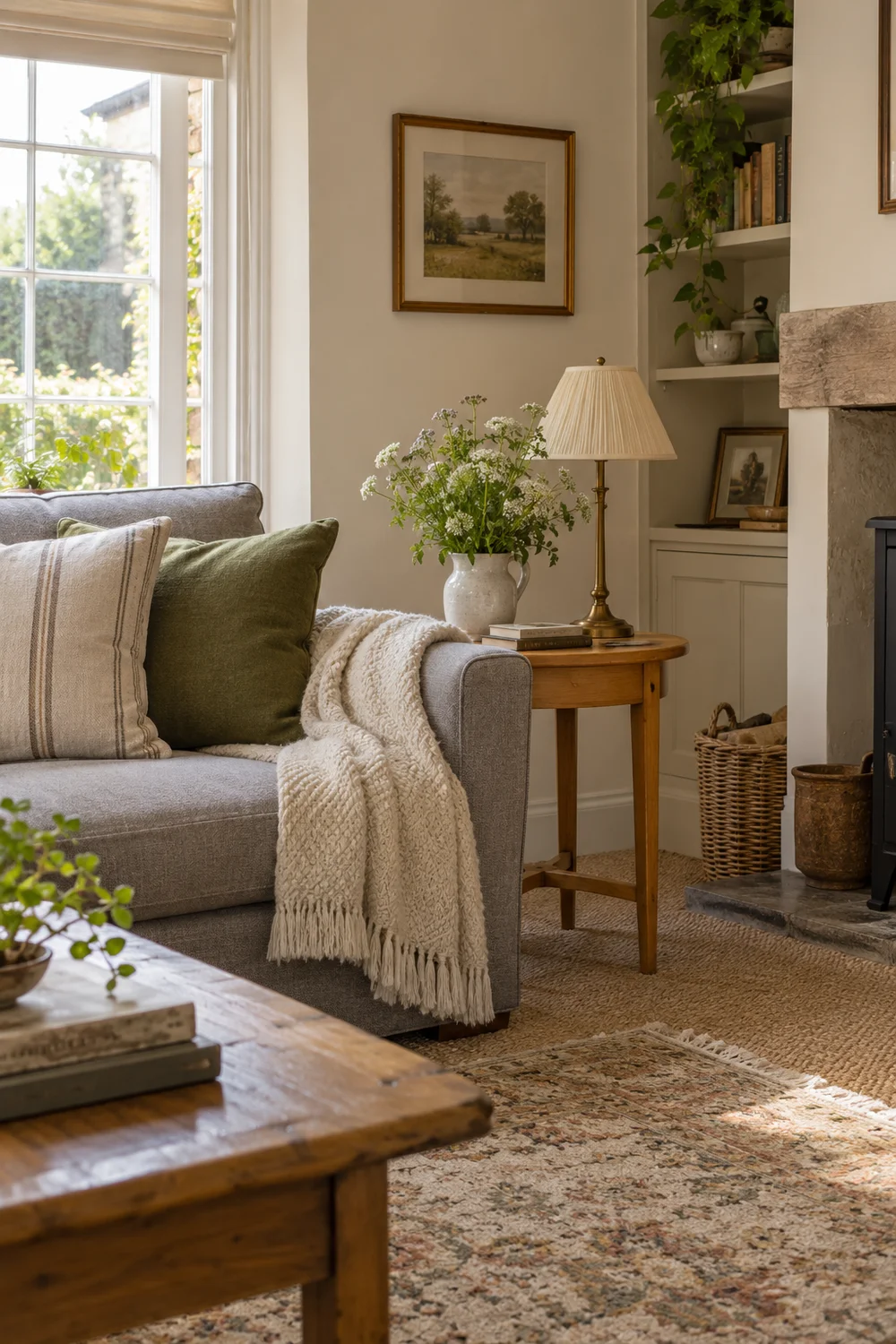
Choose one main pattern and let the others support it. A small check can sit beside a larger floral because the scales differ, but I would also compare their contrast and colours. Several dark prints can make a grey sofa feel heavier even if each one is beautiful. In the example room, I would try a faded olive and clay rug, plain cream curtains and one modest patterned cushion. Add a second cushion only if it improves comfort or connects a colour that otherwise feels isolated.
Use the cottage color palette as a reference for the direction, then judge the actual fabrics against one another. Place candidate covers on the sofa in daylight before committing to the arrangement. Sit on the seat with them in place. If they constantly need removing to make the sofa comfortable, there are too many or they are the wrong size for its depth.
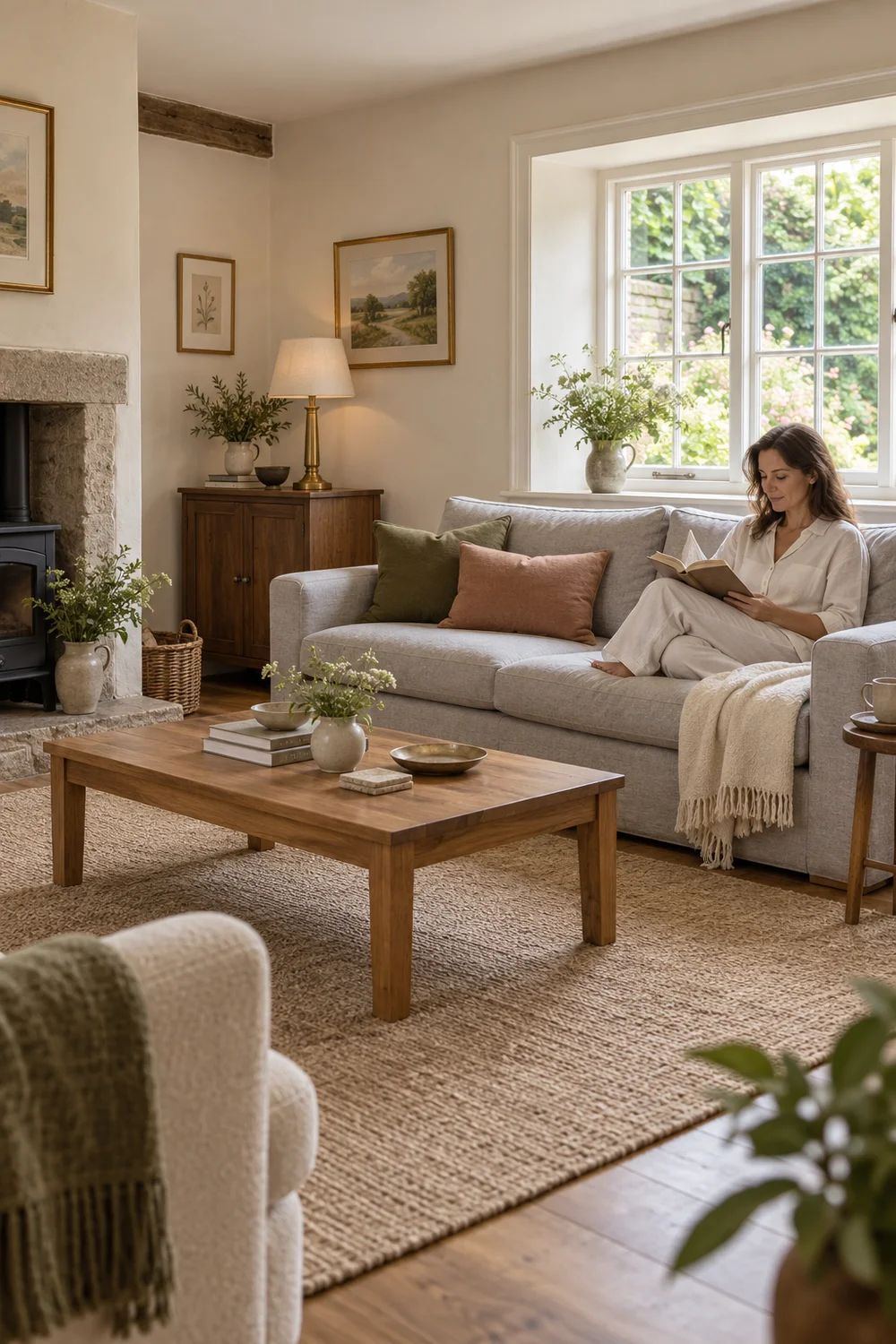
Consider the maintenance of a secondhand textile before making it central to daily use. Look for care information and inspect condition; do not assume that an unfamiliar fabric can go into a washing machine or receive the same cleaner as another fabric. A delicate decorative textile might work on a surface that sees little handling, while a practical washable cover may be better on the main sofa. The best layer is one you like looking at and can live with, rather than one that needs arranging again every time someone sits down.
I would assess the room's daylight before buying lamps or changing curtain positions. Open the curtains as fully as the existing fittings allow and observe the sofa, rug and cabinet together. A corner that looked gloomy under closed fabric may need a simpler window treatment rather than additional objects. Keep the useful window area clear, while respecting privacy and the way you already use the room.
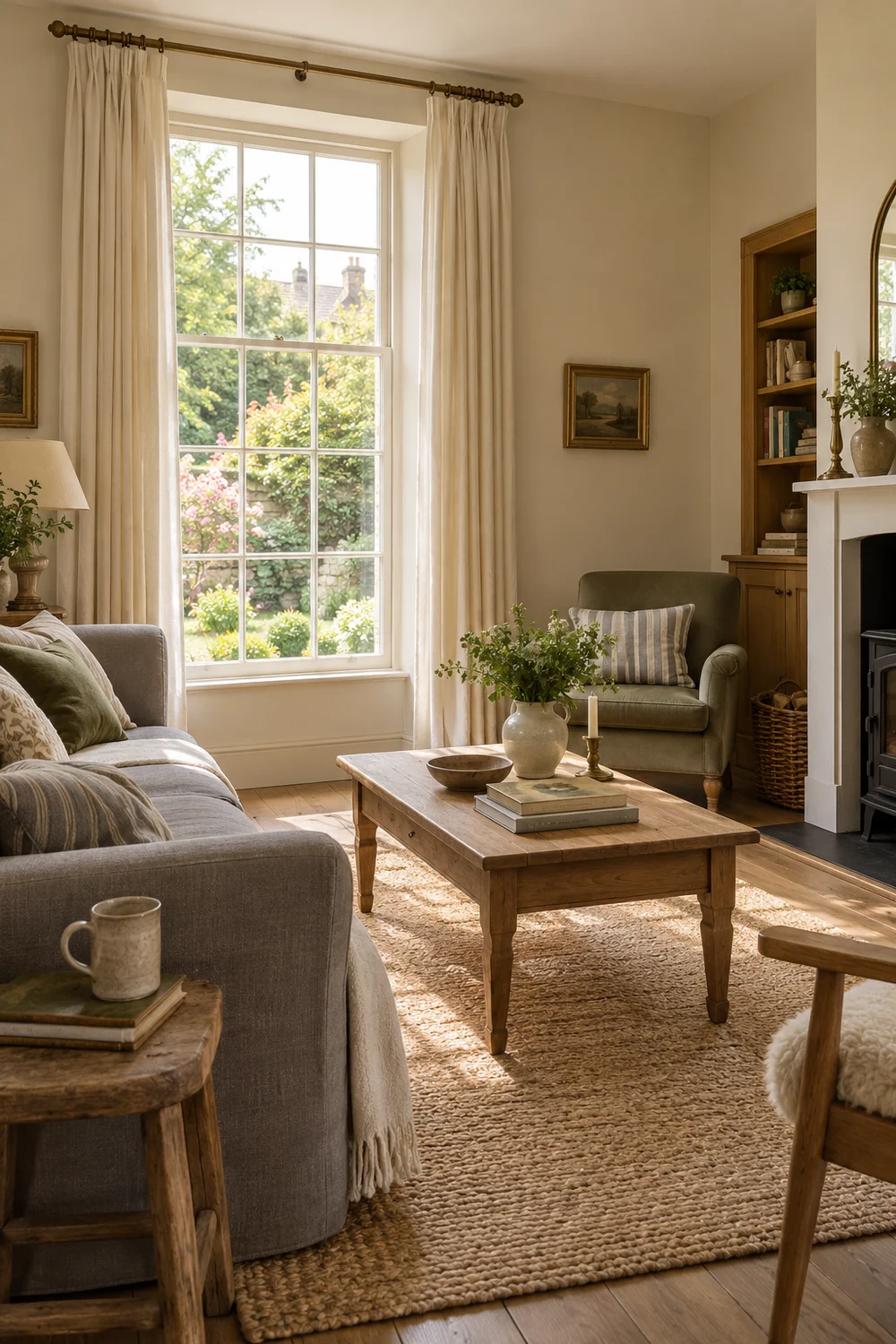
Check curtain length and placement against actual fittings. A secondhand panel can be visually right and still too short, too narrow or incompatible with the existing track. For this setup, I would choose fabric that fits safely with the hardware you have, or plan any change properly before installing it. Aim for a tidy fall that works with doors, heating equipment and normal movement. Do not create floor pooling simply because an inspiration photograph shows it.
Next, identify where you need local light: beside the seat where you read, near a storage surface or in a part of the room that becomes difficult to use in the evening. A table lamp should have a stable surface and a suitable position for its intended use. Follow the fixture's instructions, use the correct specified bulb and keep cables out of walking routes. If a vintage fitting requires assessment or repair, resolve that with a qualified professional before making it part of the room.
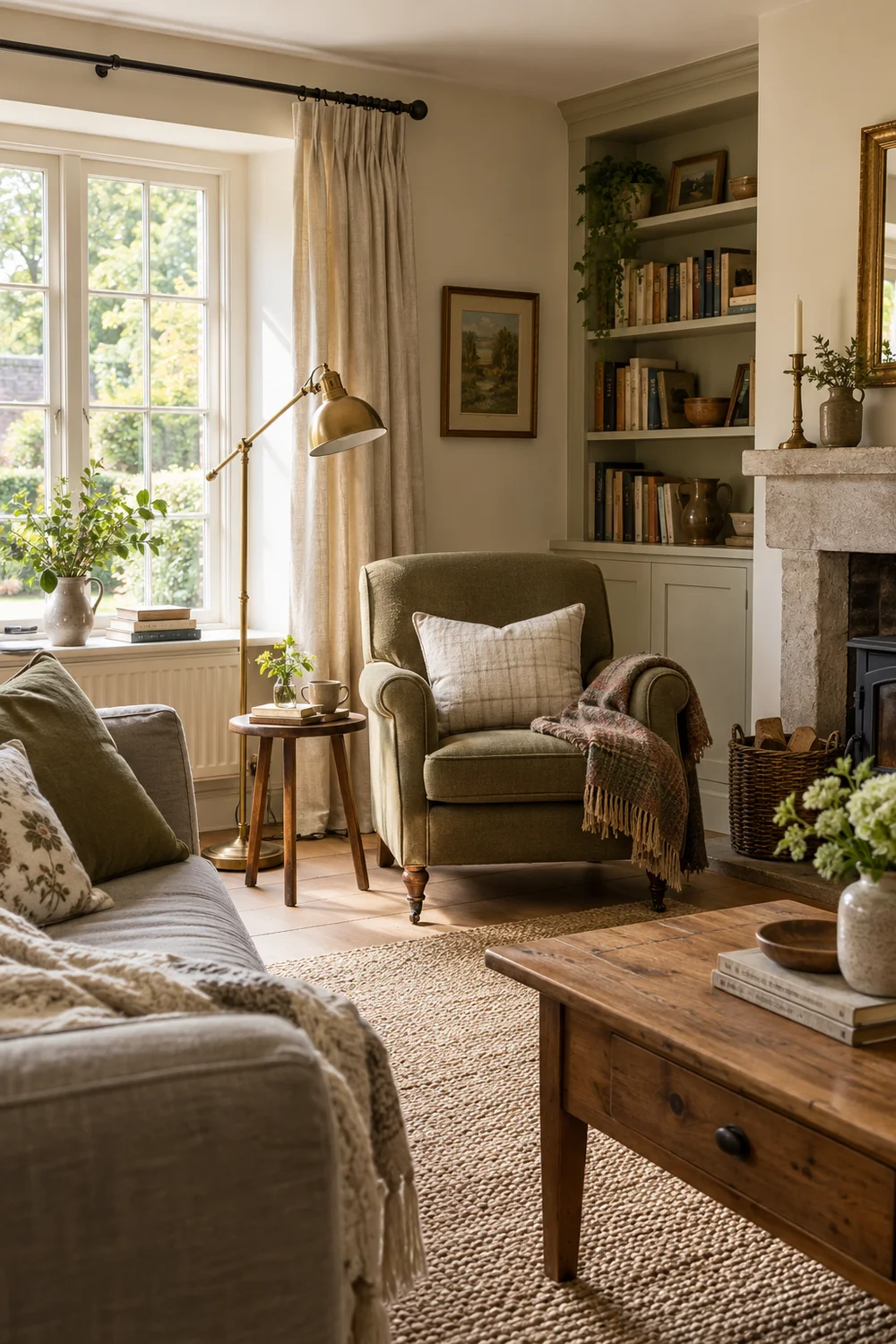
The earthy living room guide offers a broader look at natural materials and light. In this room, I would keep the implementation simple: clear daylight at the window, a useful lamp beside the main seat, and enough visual space around the darker furniture. A lamp is not a substitute for moving an oversized cabinet away from the window. Test the room in daylight and during your usual evening routine so both versions support real use.
Once the furniture, rug and fabric relationships work, I would arrange the surfaces. Start by removing decorative objects from one surface at a time. Put back its functional items first: the lamp on the side table, the equipment on the cabinet, or the book and drink space on the coffee table. Then choose one small decorative group that leaves those functions intact. A room with secondhand character does not need every find visible at once.
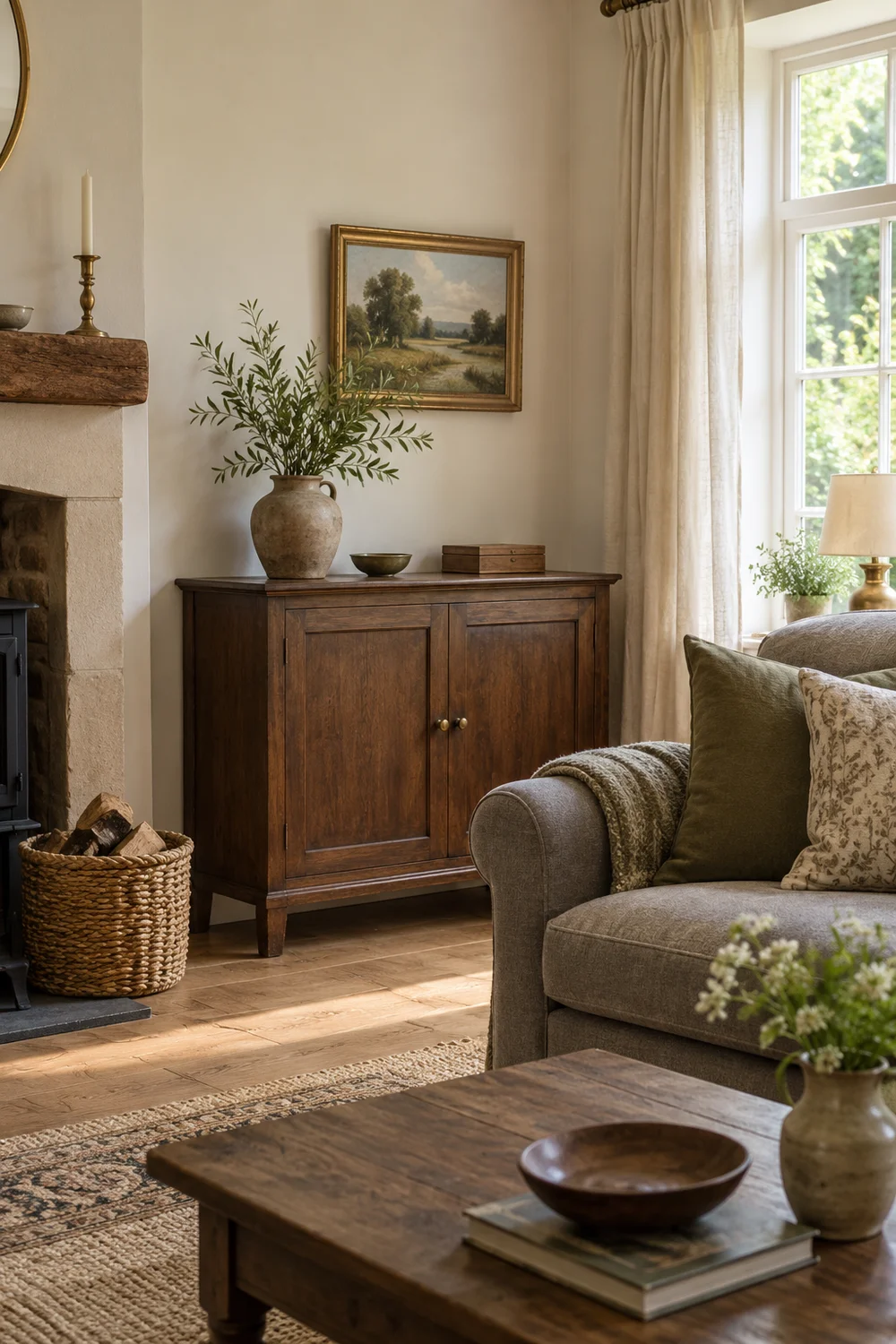
Vary the shape and material within a modest group. On an oak cabinet, I might use a ceramic vessel and a framed picture, leaving a clear section of the top. On the coffee table, a single shallow object may be more useful than a tall arrangement that interrupts conversation or the view. The exact number matters less than whether the surface still supports the way you use it.
The earthy cottage home decor guide includes baskets, terracotta and open shelving. I would use those ideas selectively. A basket earns its place when it holds something you reach for; an empty basket occupying a busy route is simply another object to navigate. On shelves, give larger pieces some breathing space and keep frequently used books or items accessible. Avoid treating storage as a display that cannot be disturbed.
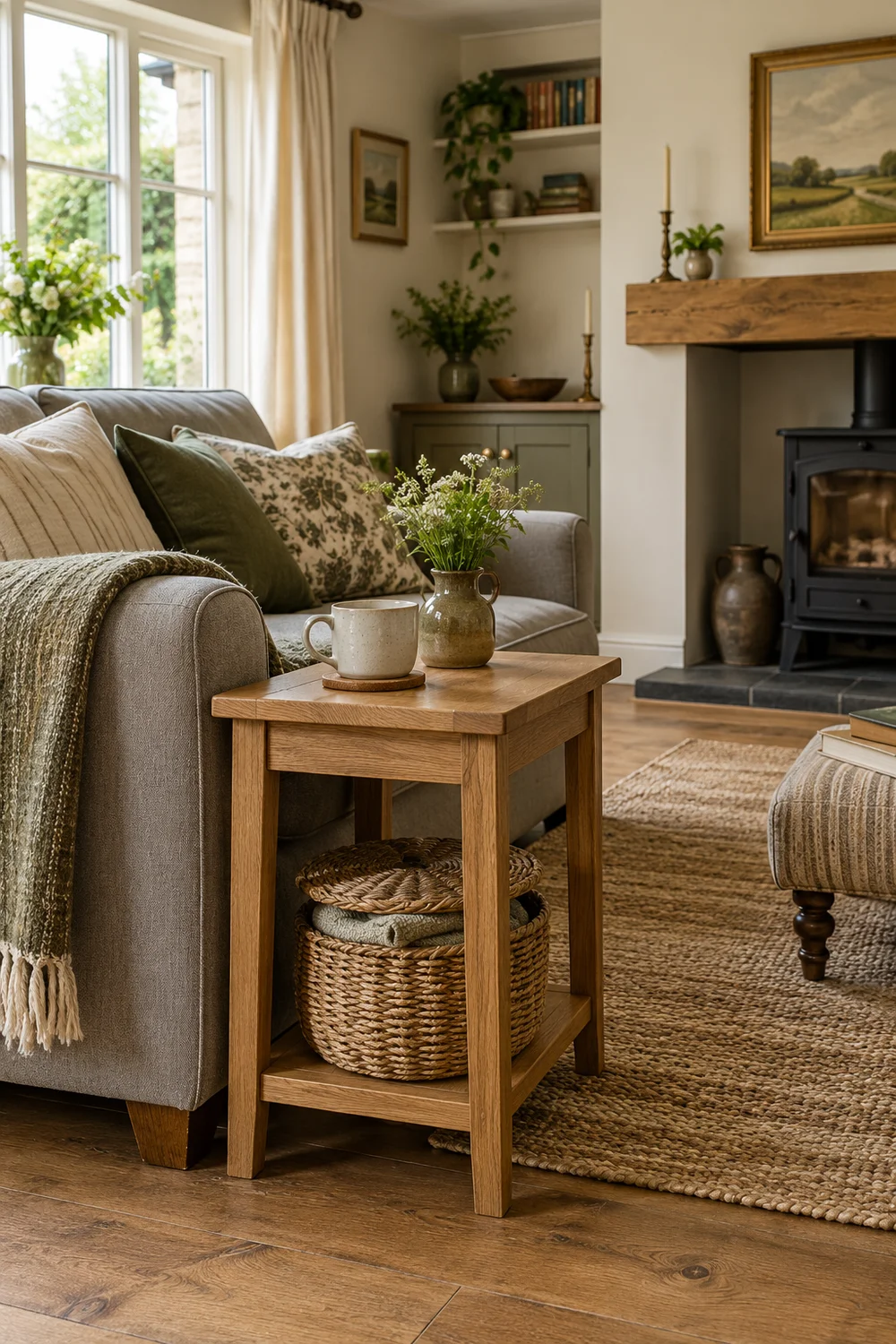
Try a temporary rotation box for the finds you are unsure about. Put them away, then live with the clearer surface for a few days. If you miss one item, return it to a specific place. If you do not miss the rest, they do not need to come back merely because they cost little or were hard to find. This is especially useful when several inexpensive purchases have accumulated. Editing preserves the character of individual pieces by allowing you to notice them.
I would leave the main arrangement in place for a week, unless it creates an immediate practical problem, then record what daily use reveals. Where do books accumulate? Which table is too far from the seat? Does a cushion end up on the floor every evening? Does the curtain interfere with access or an item of furniture? Those observations are more useful than asking whether the room matches a reference photograph exactly.
Choose one correction at a time. If the sofa feels crowded, remove a cushion before looking for new covers. If the wood feels heavy, clear the cabinet top before replacing the cabinet. If the coffee table is difficult to use, adjust its position and test again before changing the rug. Small controlled changes let you understand what helped. Changing several parts at once makes it harder to tell which problem you actually solved.
Keep a room record for the items you intend to retain: material or finish information where known, care labels, supplier instructions and any confirmed repair details. Use the appropriate guidance for each item, rather than applying a universal cleaning recipe to unfamiliar vintage finishes. Start routine care gently and seek specialist advice when material or condition is unclear. A decorative choice should not depend on a treatment whose effect you cannot establish.
For future finds, return to the secondhand selection checklist with the room's new measurements and photographs. Additions now need to answer an observed gap, not restart the scheme. A seasonal change can be as modest as rotating one textile or one small group of objects. The sofa, useful furniture and main palette can stay. That continuity is what makes an earthy cottage living room feel comfortable to live in as well as pleasing to look at.
I would finish by taking the same two photographs used at the beginning: one from the doorway and one from the sofa. Compare the relationships rather than looking for a dramatic transformation. The retained sofa should feel connected to the wood and fabric around it, the room should remain easy to move through, and each secondhand find should have a useful place. If one area still feels unresolved, give it a specific question and work on that question next. You do not need to replace the whole room to improve it. A clear sequence, a few deliberate layers and a later review can help the furniture you already own belong to the cottage direction you want.