Newsletter Subscribe
Enter your email address below and subscribe to our newsletter

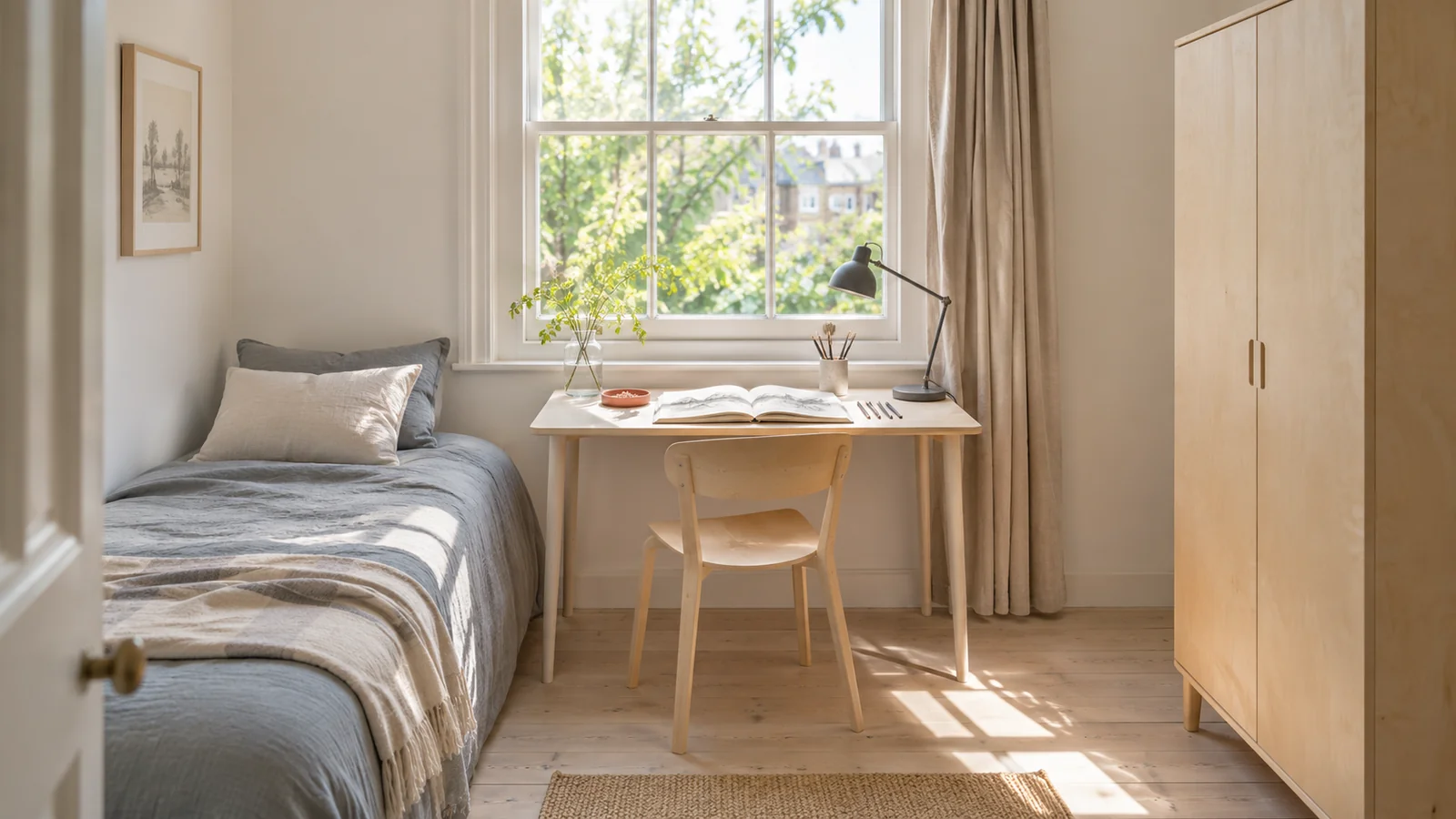
An open sketchbook can take over a bedroom desk before there’s anywhere to put a lamp. I would try two positions for the desk while keeping the bed and wardrobe where they are. Let the person who draws test both positions with their usual chair and sketchbook. They should be able to see the page, stand up easily and get to the wardrobe.
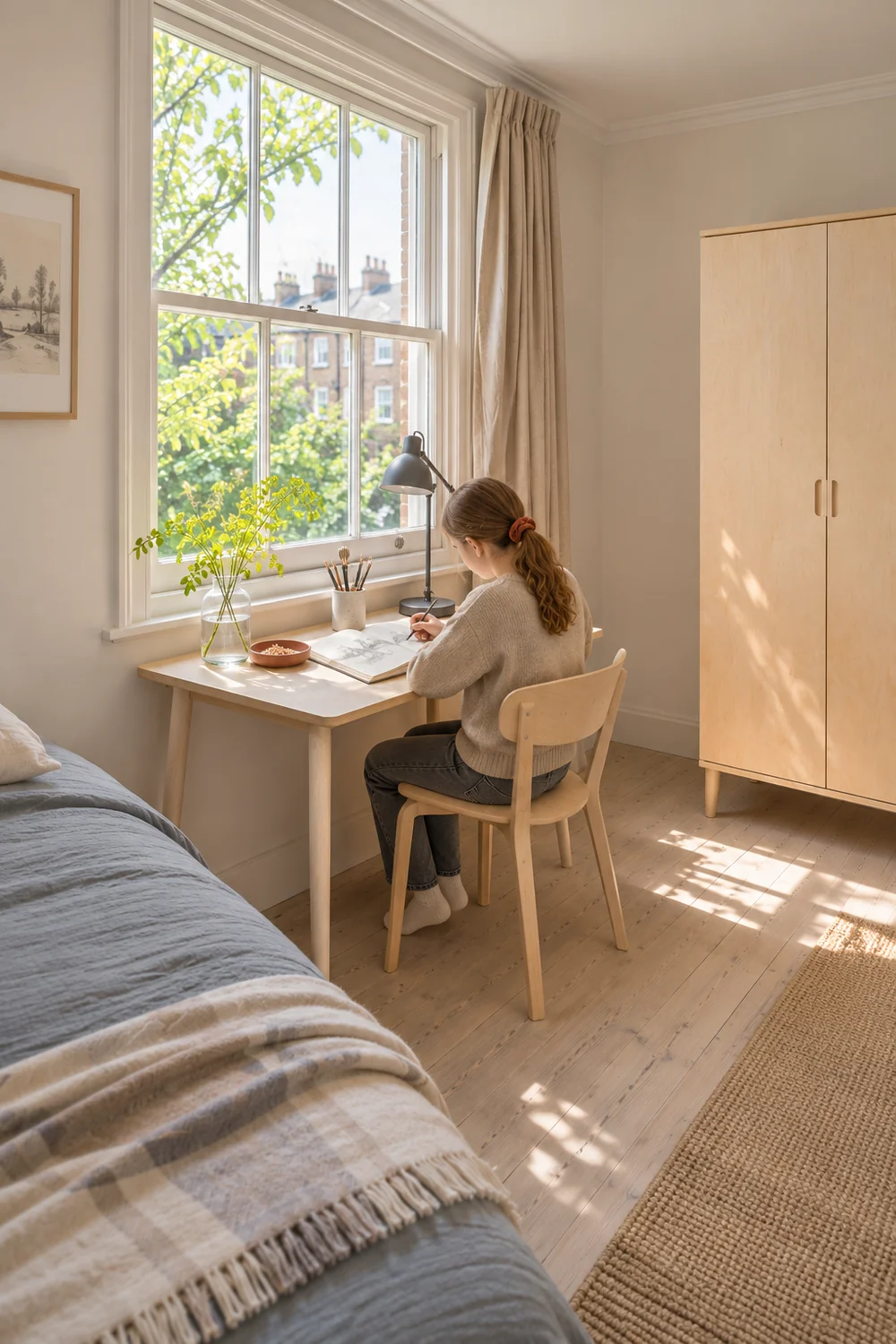
Draw the room from above. A rough outline works if you write the measurements beside it. Start with the length of each wall, then mark the door, window, radiator and sockets. Show which way the door opens and where the curtains fall when they’re open. Include the skirting if it stops furniture sitting against the wall. A desk with a shallow top can still sit farther out than expected if its legs catch the skirting.
Measure the bed across the widest part of the frame, including any headboard that sticks out. Do the same for the wardrobe with the doors shut, then mark where each open door reaches. Draw the floor space someone needs to stand and reach the clothes they take out every day. If the bed has storage drawers, pull out the one that needs the most room. Mark its reach and keep that space visible on both desk plans.
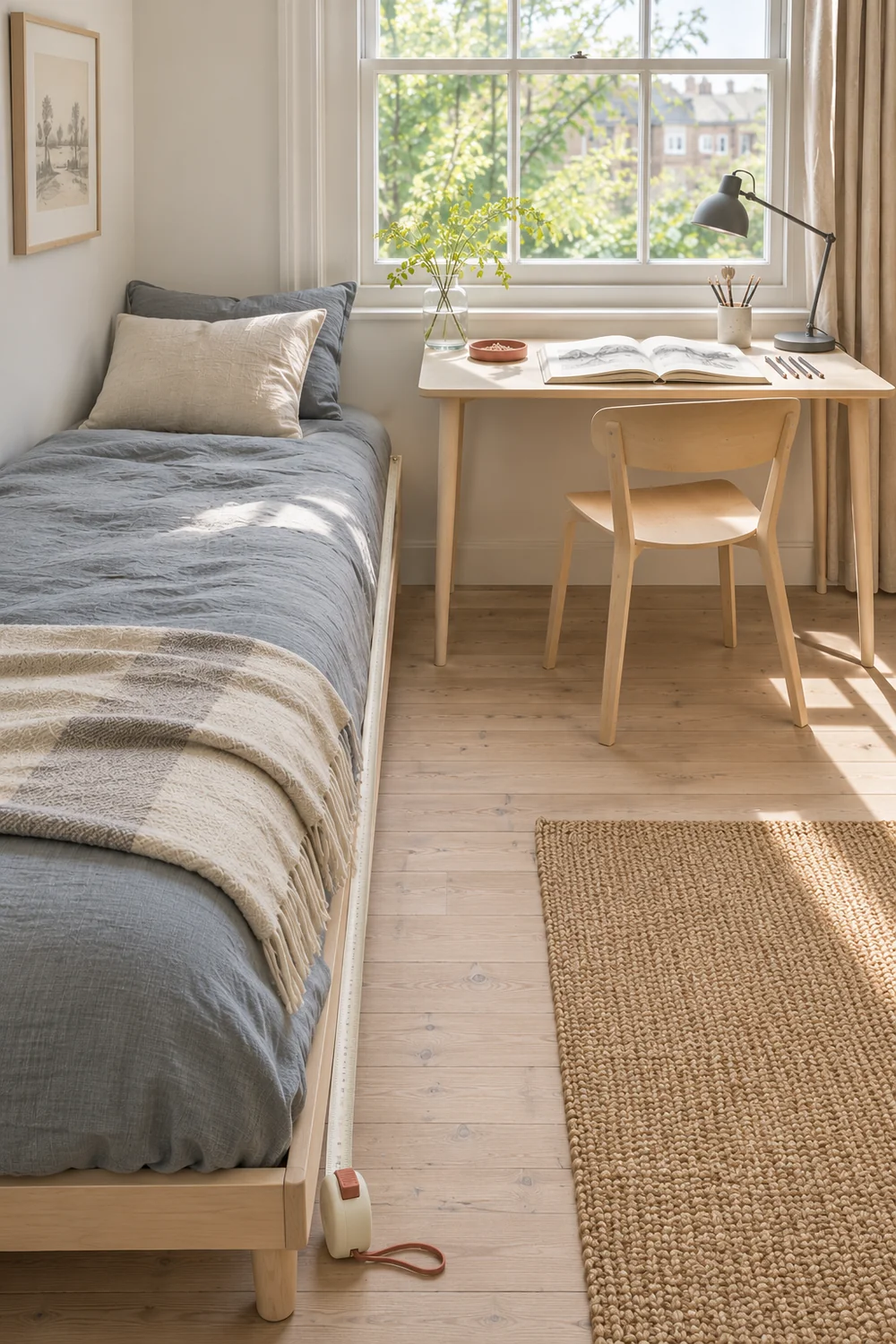
Next measure the desk you have and the chair you would actually sit in. Include the arms and castors if it has them. If you don’t have a desk yet, start with a table or another surface you can borrow for the trial. Tape the outline of the size you’re considering onto it. Use the existing chair and check whether its arms fit beneath the top. A drawer or a crossbar can change where your knees go even when two desks have identical tops.
I’d ask the teen to put the room’s regular objects on the sketch. The bag they drop after school, the laundry basket and the charging lead all need a place once the desk is there. Give each a home before using an apparently empty corner for a new piece of furniture. If an object ends up in the bed route every afternoon now, count it in the trial or agree where it’s moving.
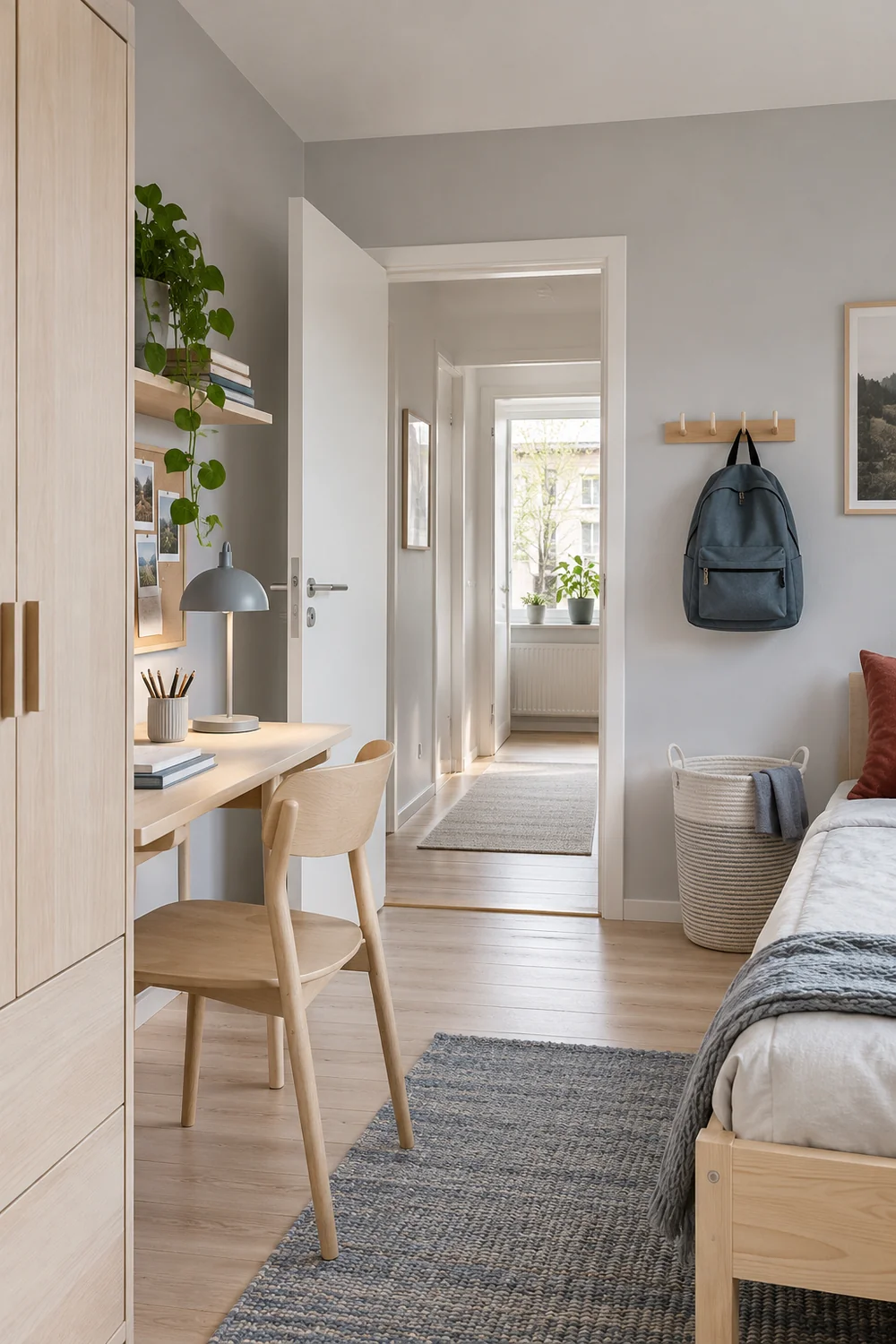
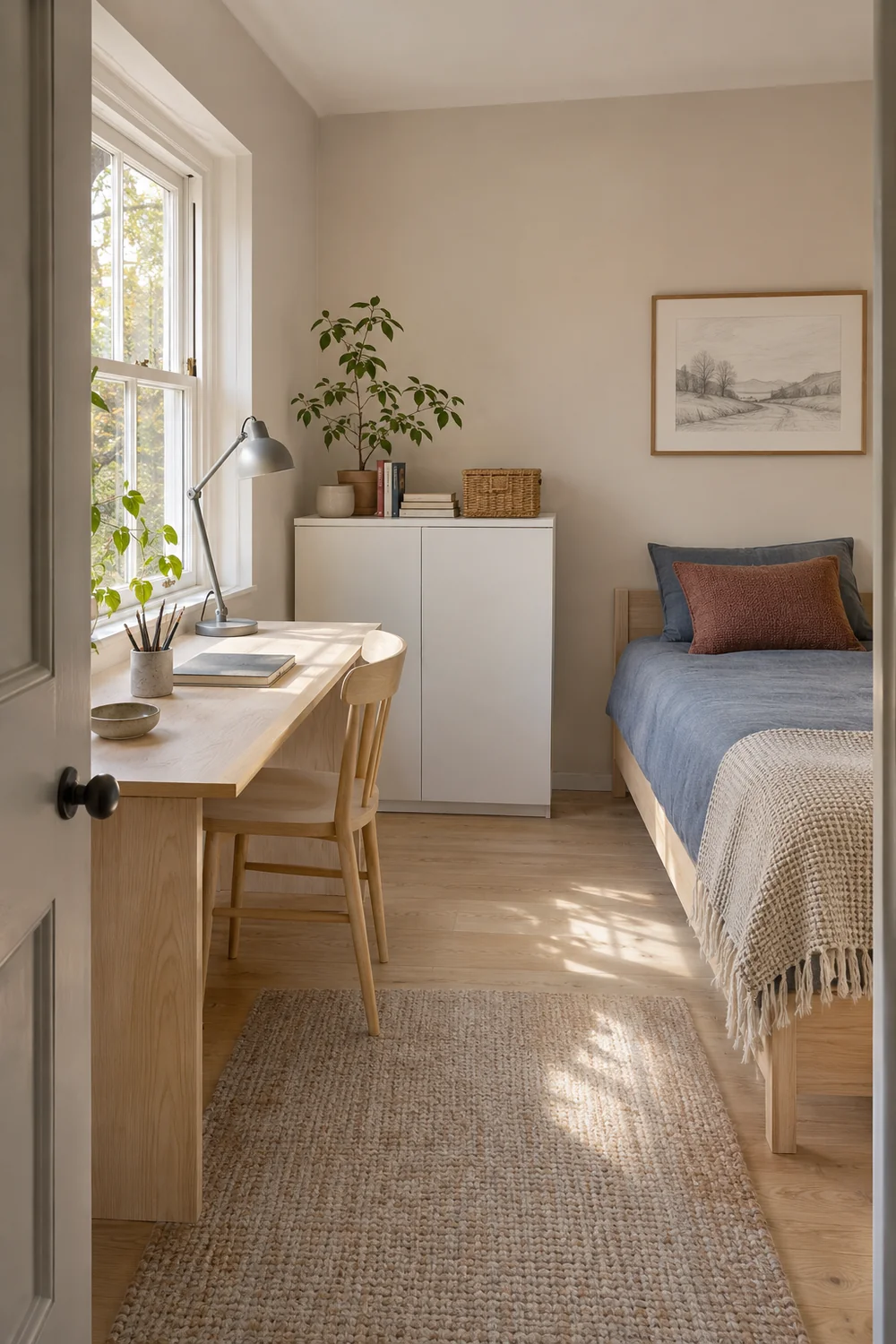
I’d keep the bedroom’s palette simple while solving the layout. The pale timber and soft colours in my Scandinavian bedroom guide leave room for drawings and favourite objects to supply the colour. In the example below I’d keep the warm chalk walls, a muted blue bedcover and the existing birch wardrobe. A desk in a similar timber could sit comfortably beside either wall, so the drawing test can determine where it goes.
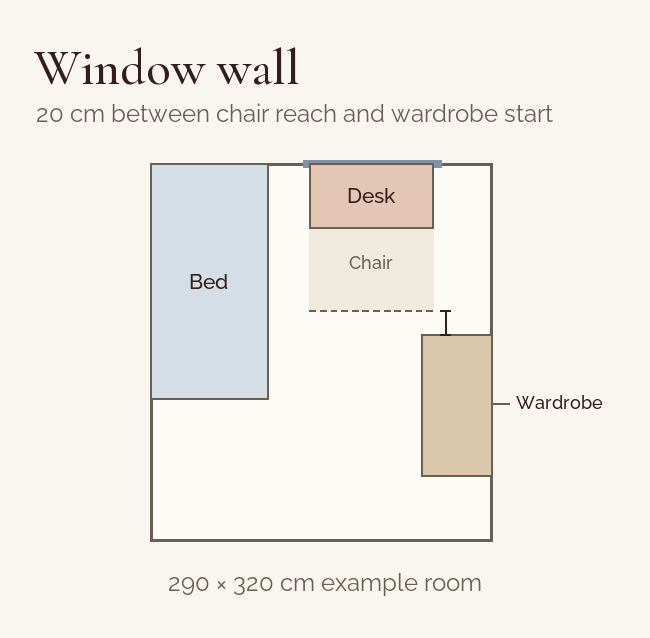
For a worked example, picture a bedroom 290 centimetres wide and 320 long. A bed with a 100 by 200 centimetre footprint runs along the left wall. The wardrobe stands against the right wall, beginning 145 centimetres from the window wall. The window is on the far wall, to the right of the bed. I’d compare two positions for the same 105 by 55 centimetre desk. Use the same chair and paper for both so you can see what the move changes.
First, put the desk at the window. Start its left edge 135 centimetres from the left wall. This leaves 35 centimetres between the side of the desk and the bed on the plan. Leave that narrow gap alone and approach the chair from the foot of the bed.
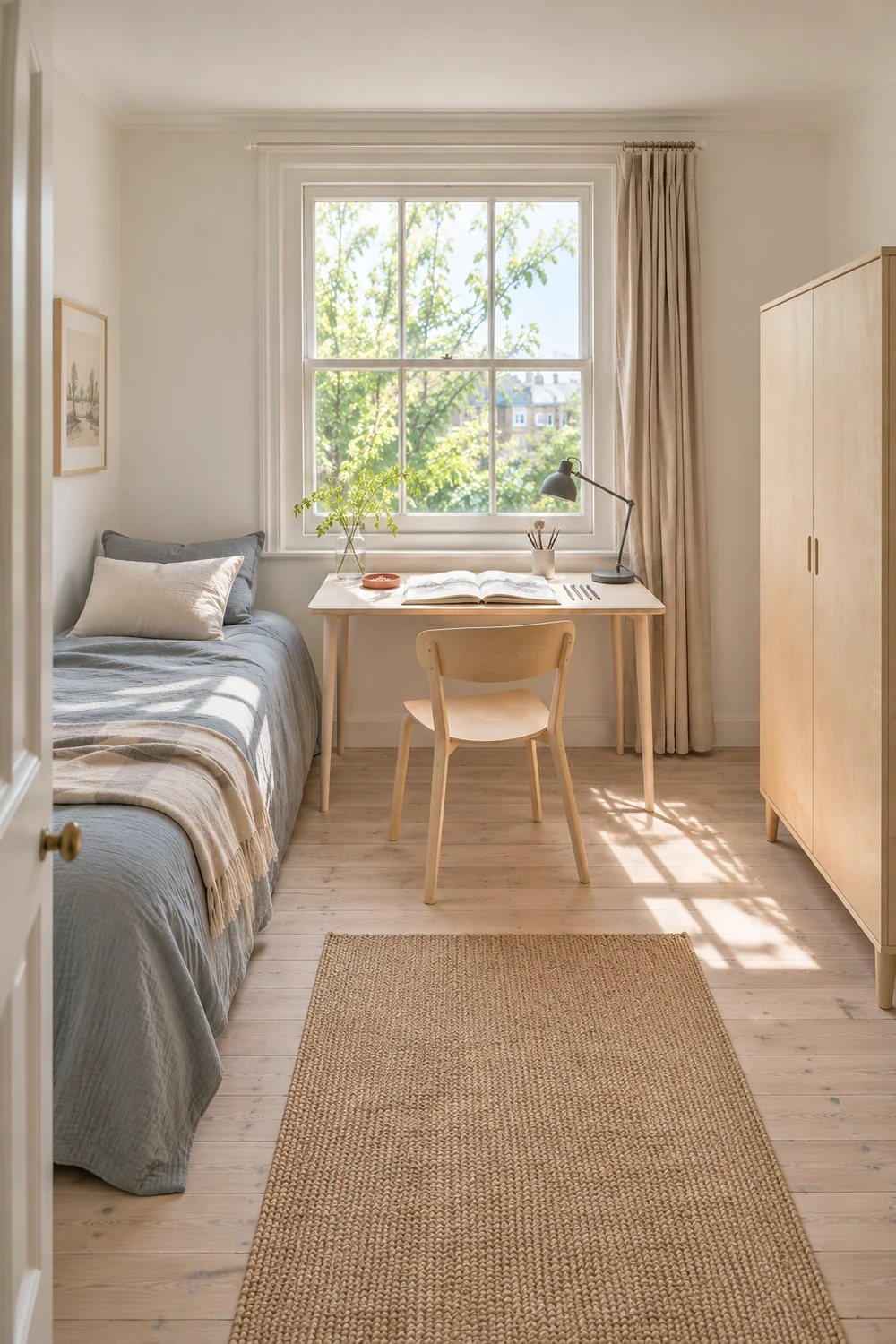
In this example, the person sitting down needs 70 centimetres beyond the desk front to pull out the chair and stand. The full desk and chair reach is therefore 125 centimetres from the window wall. Draw that on the plan beside the point where the wardrobe begins. The 20 centimetres between those two marks gives you a first check. Now open the wardrobe door and test the approach in the real room.
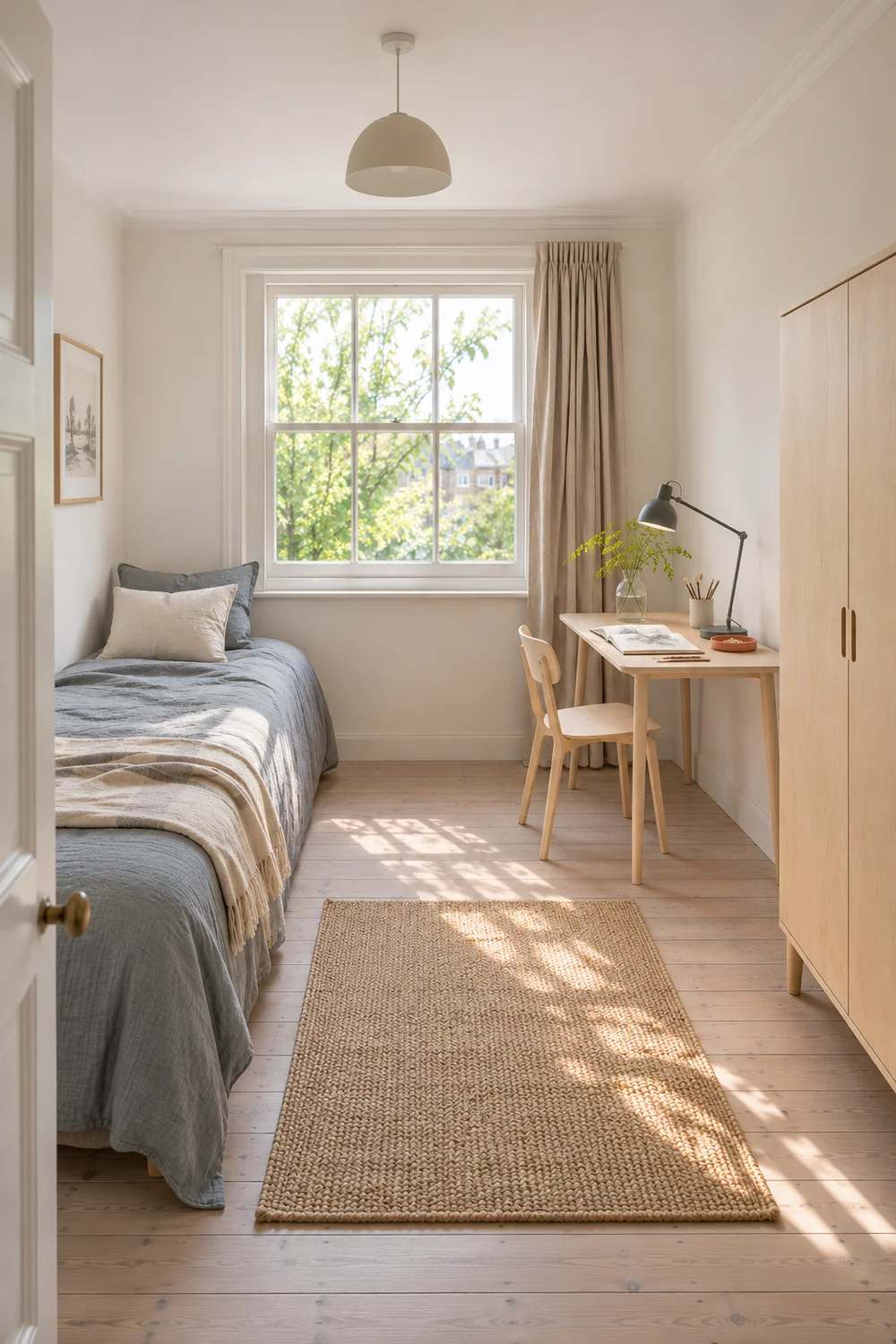
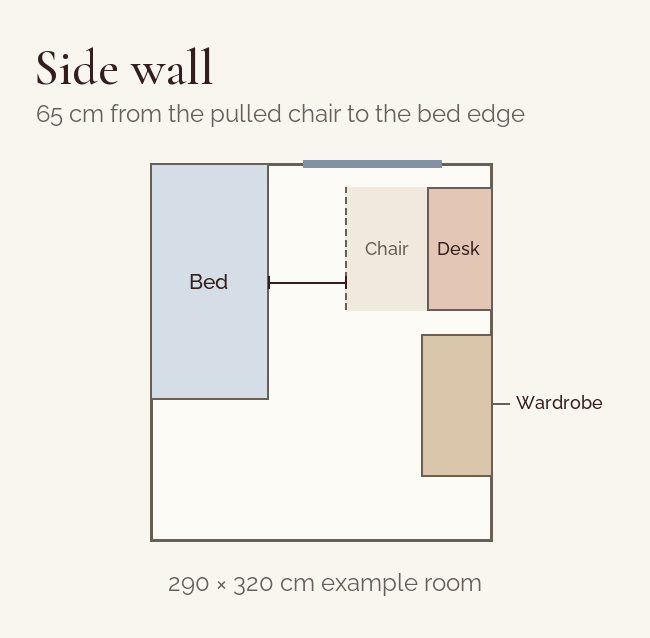
For the second position, rotate the desk a quarter turn and put it along the right wall above the wardrobe. Its front now projects 55 centimetres into the room. Add the same 70 centimetres for the chair and there are 65 centimetres from the back of the pulled out chair to the nearest edge of the bed. Try that gap with the teenager getting up and someone walking past with a laundry basket. If both have to turn sideways or wait, the position changes how the bedroom works. Write down the point where they meet before trying a smaller top or a different chair.
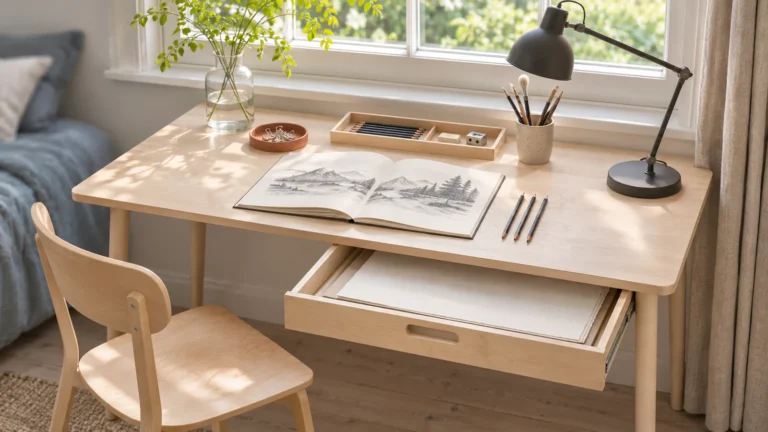
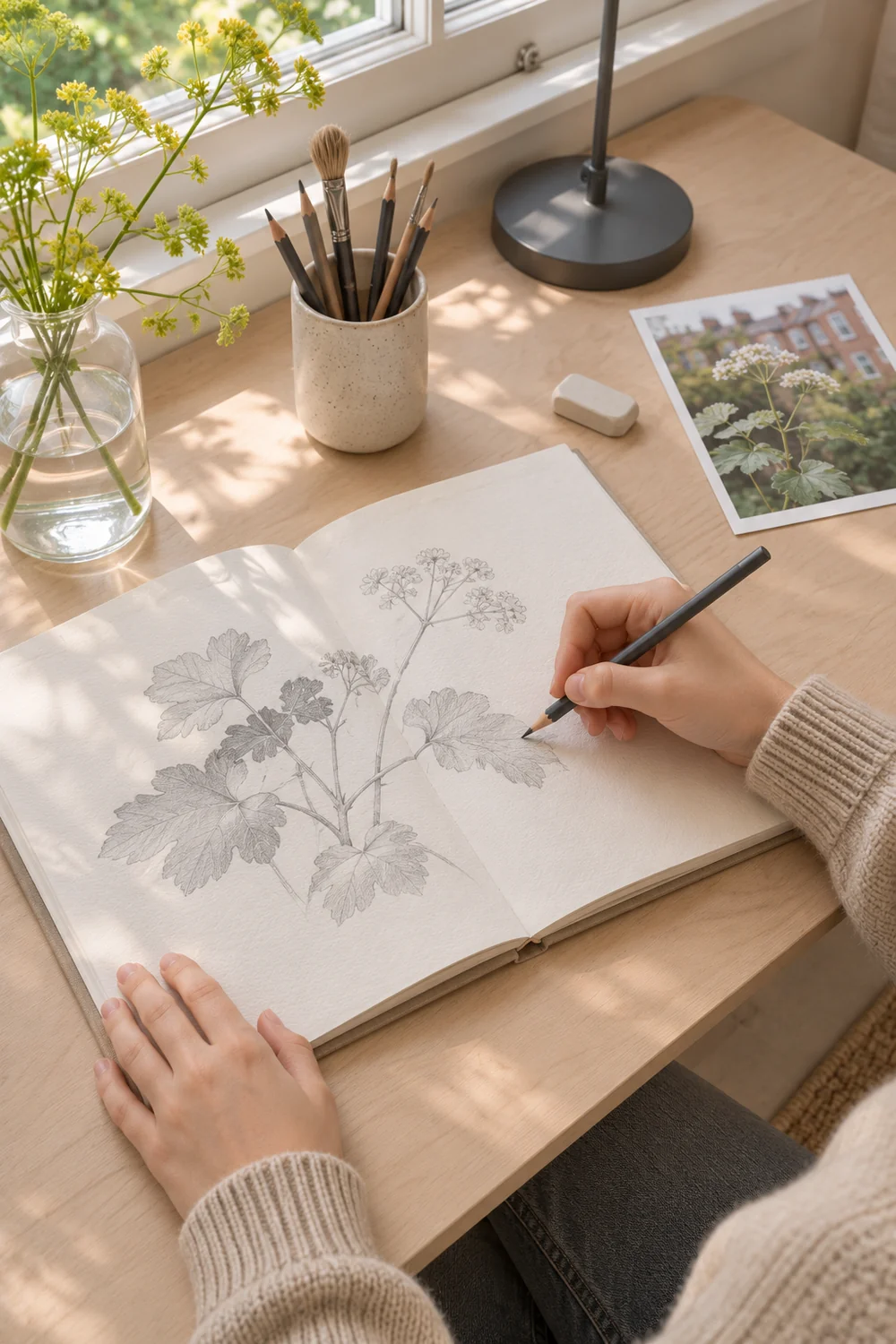
At each position, open the largest sketchbook the teen uses most weeks. In this example the open spread is about 42 centimetres across and 30 deep. Set the pencil, eraser and any reference beside it. Draw a line at the upper corner of the page, then turn the spread slightly as you would for a longer stroke. If the book hangs over or the lamp has to move for every turn, mark the farthest point the paper reaches. That tells you which part of the surface you need to change.
If two people share the room, try both positions while the other person uses the bed or wardrobe. My Japandi kids bedroom guide shows how a second person’s routines change the furniture plan. For one teen, it’s still worth checking when someone comes in to pass over a sketchbook or look at the drawing. Use whichever setup lets them come and go without leaning over the work.
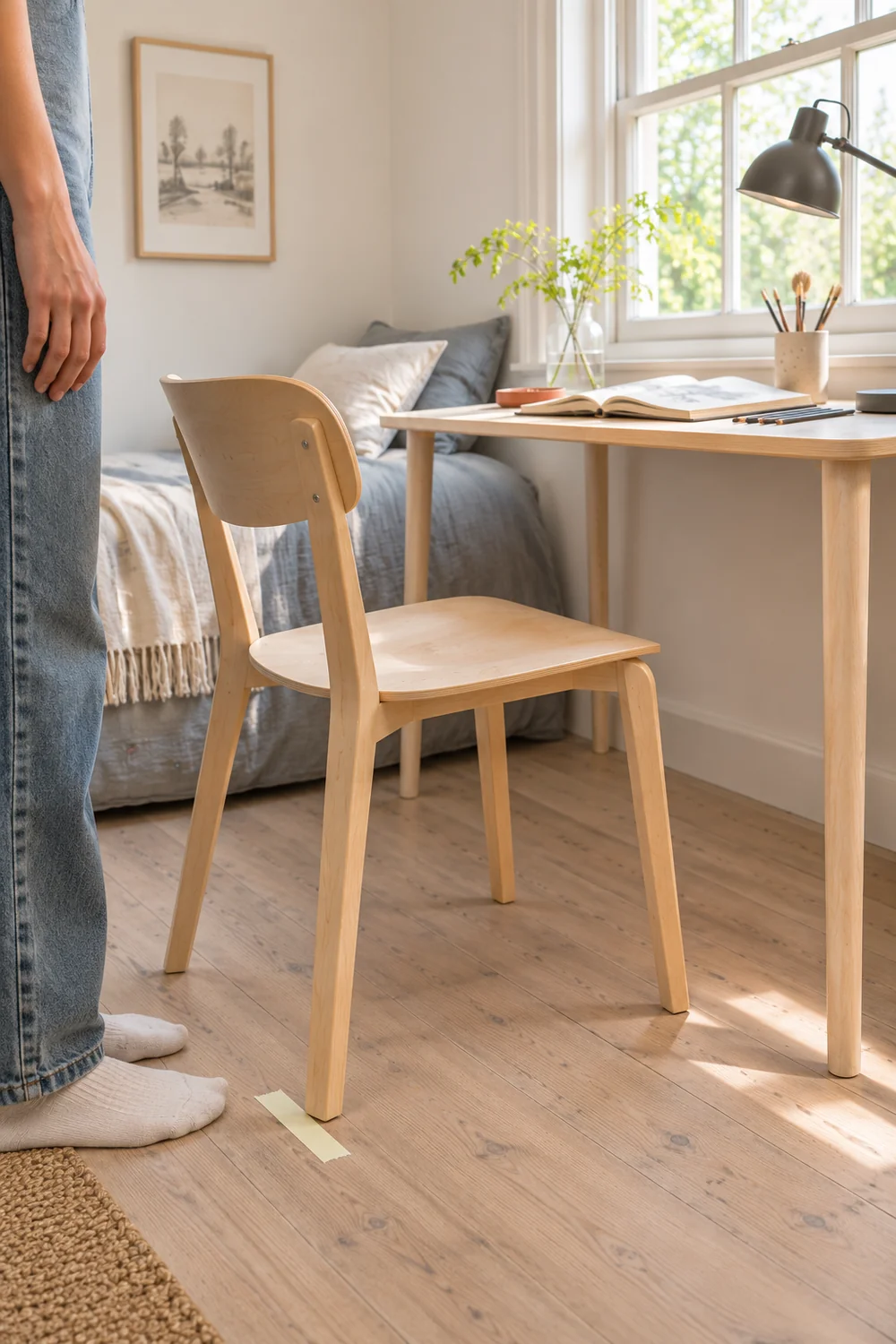
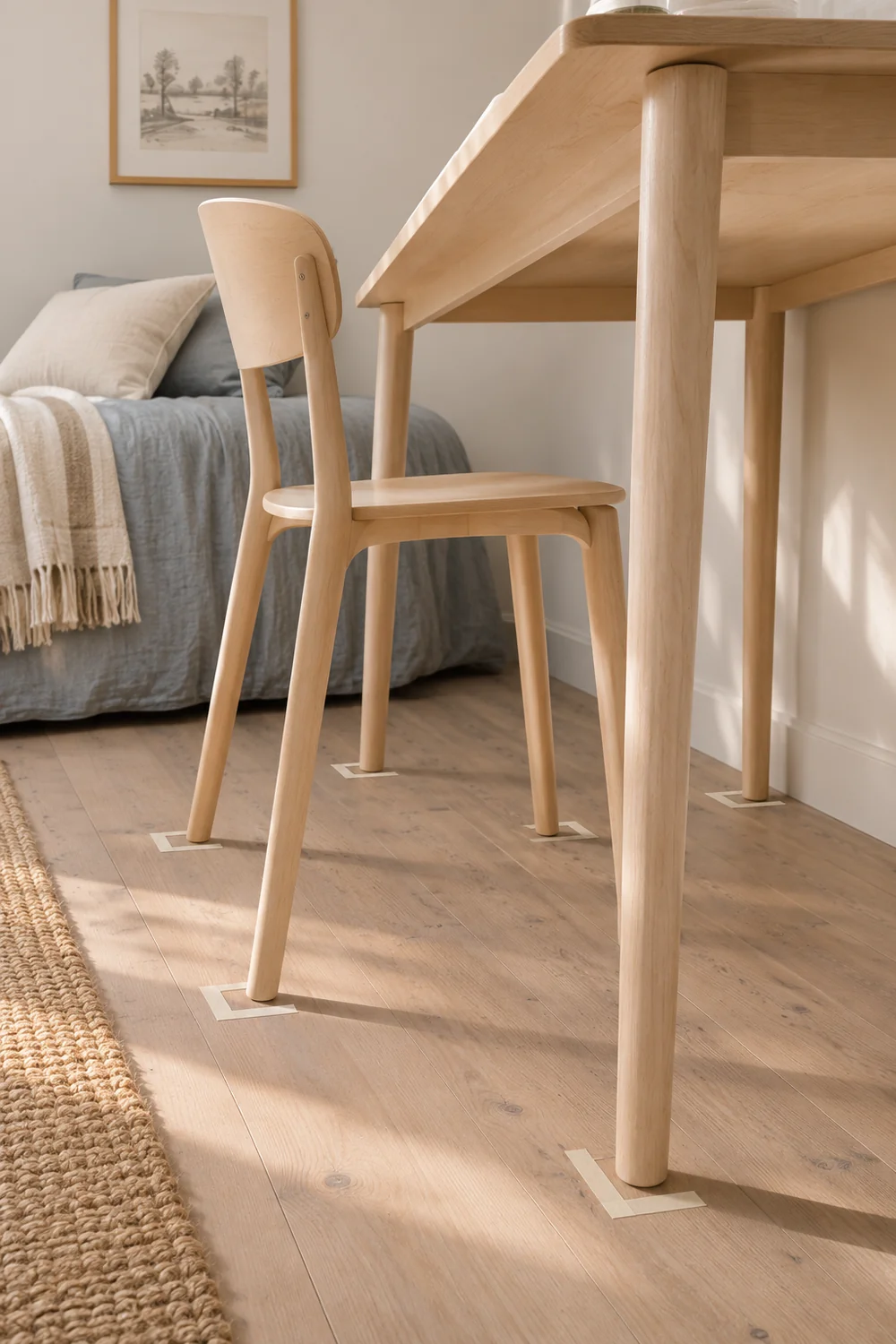
Test the chair in three positions. First, tuck it away as you would before bed. Next, sit at the desk and draw something at the far corner of the page. Finally, push back just far enough to stand in your usual way. Tape the furthest point the chair reaches. If it swivels, check where the end of an arm or the wheel base extends as you turn. Leave the tape in place while you open the wardrobe and the bedroom door.
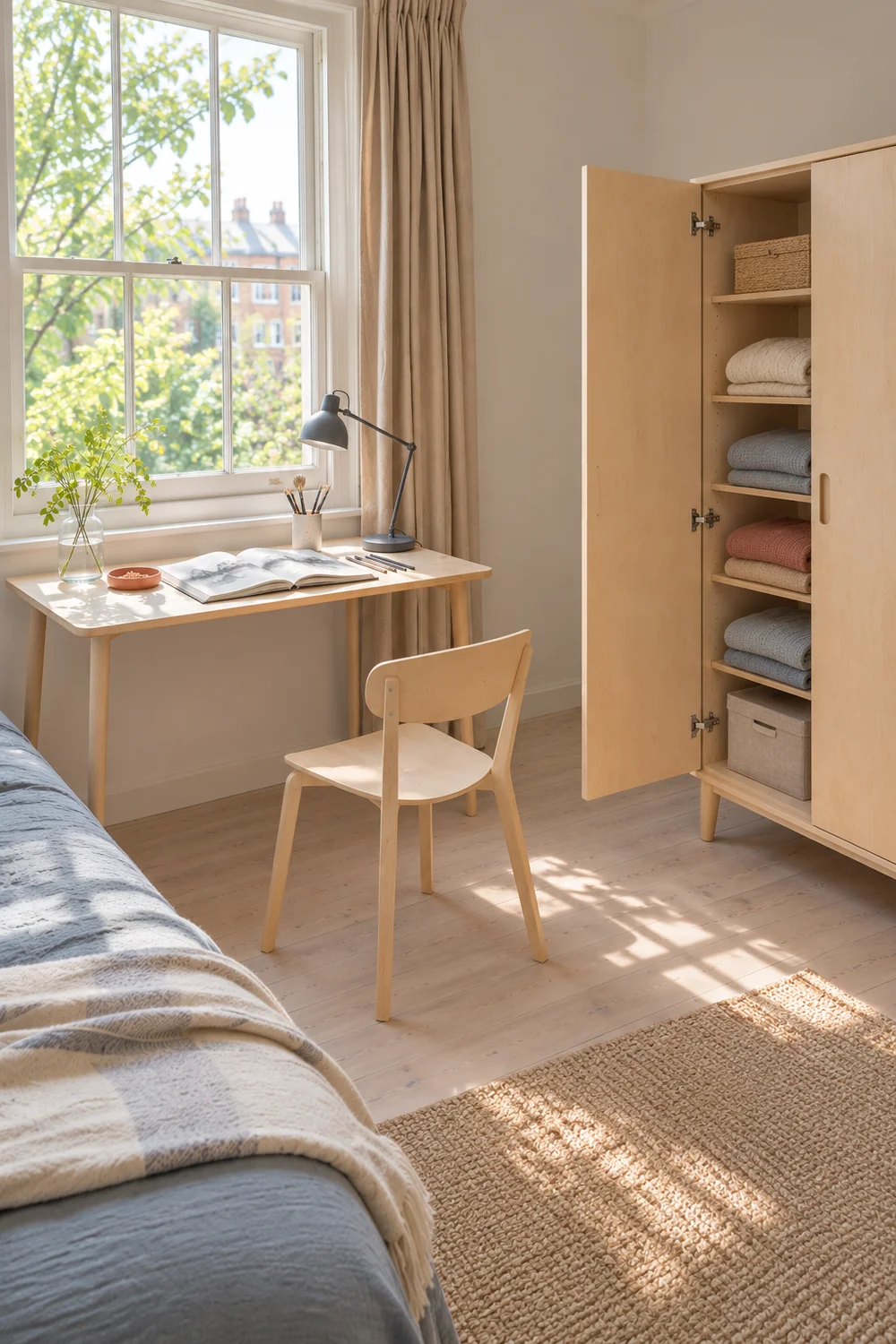
I would use the door or drawer the teen opens on a school morning. Pull it as far as they need to reach the item at the back. Stand where they stand and carry the clothes to the bed. If the wardrobe opens on paper but your feet need to be where the chair is, the sketch hasn’t captured the full clearance. My small bedroom layout example uses the same check with wardrobe doors and bed frames. In the drawing room, it’s the chair that changes position repeatedly.
Watch the desk legs while the teenager sits. A shallow pencil drawer or a chunky rail can take away a comfortable place to rest the legs. Try their usual chair height, then see whether the page can be brought closer without pulling the whole chair further into the walking space. A chair with slimmer arms may tuck in farther, but the space needed to get out still matters. If a borrowed stool fits easily, test it for the sort of drawing session the teen actually has before treating it as a solution.
If both positions fail, isolate the cause. A desk that crowds the route only when the chair is pushed all the way back might work with a base that turns within a smaller area. If a corner of the desk catches the open wardrobe door even with the chair gone, try a narrower desk along that wall. Bring the sketchbook back after each change. If reducing the desk depth makes it impossible to turn the page, keep the work surface and look for a different end of the room. You want the smallest arrangement that passes both the drawing and room tests.
Look at both positions around the time the teen usually draws. I’d start with the curtains or blind where they normally sit, then ask the teen to draw a line across a light page. At a window, the view may feel open and the light may be even. The same desk can leave you looking towards a bright window or put a reflection on a glossy reference. At the side wall, the daylight may cross the page comfortably or fall behind the drawing hand. Compare what happens on the paper from the chair.
Try moving the page or changing the blind before ruling out either position. If the drawing hand casts a shadow where the pencil tip meets the paper, try light arriving from the other side. If you draw with your right hand, start with the light on your left. If you draw with your left, start on the right. The test is whether the teen can see the edge of a light pencil mark in their usual position. Some people angle the page, so let them set the sketchbook down their own way.
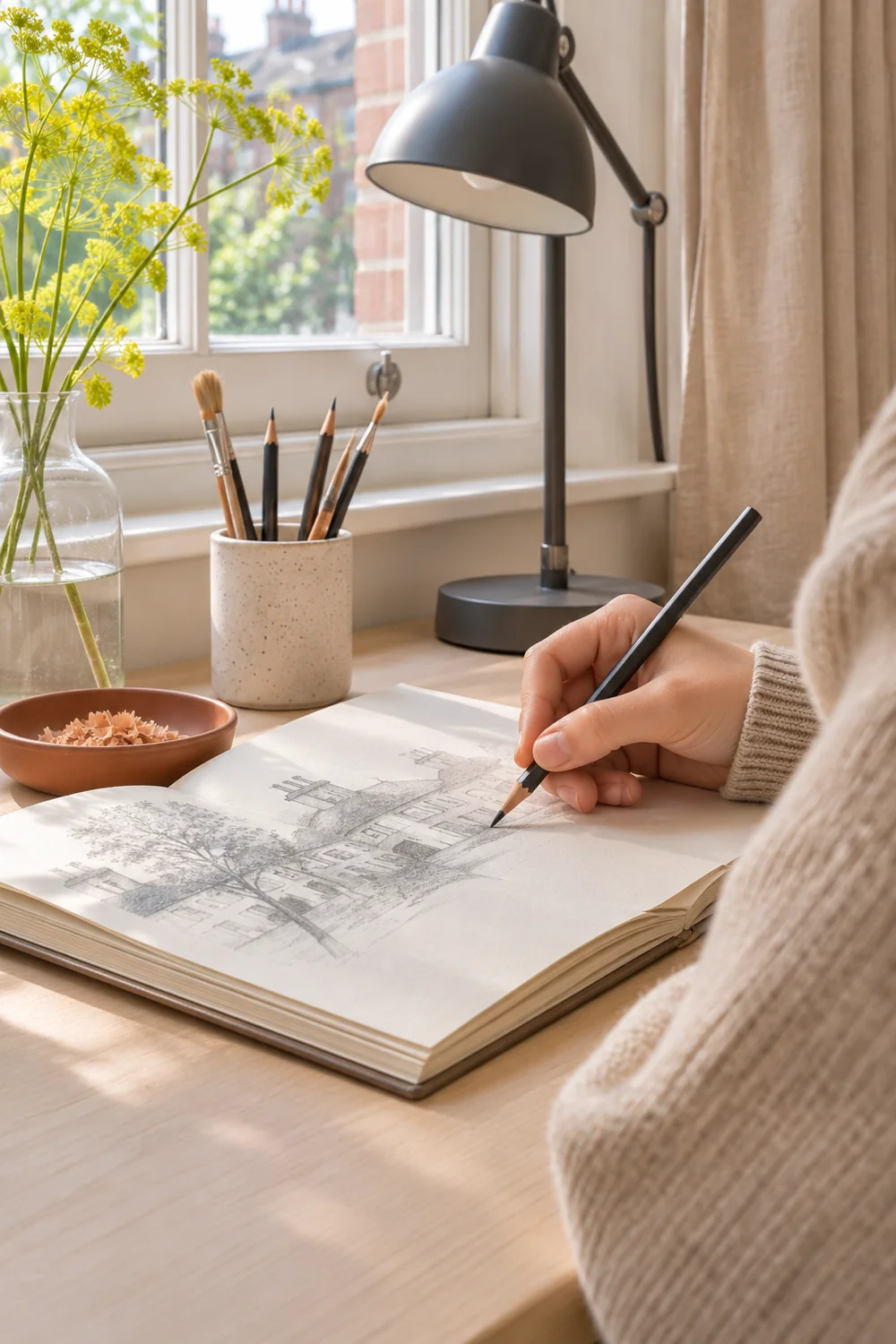
Repeat the test after dark with the lamp you already own. Put it at the edge of the paper, adjust the shade and see whether the front and far corners of the spread are both visible. Keep the cord clear of the route from door to bed and away from rugs. If the cord would have to cross that route, I’d try the other position or a cordless light.
Think about the rest of the room too. My cozy reading nooks guide has examples of making one patch of light useful. A desk lamp can serve the sketchbook while a separate bedside light keeps its own job.
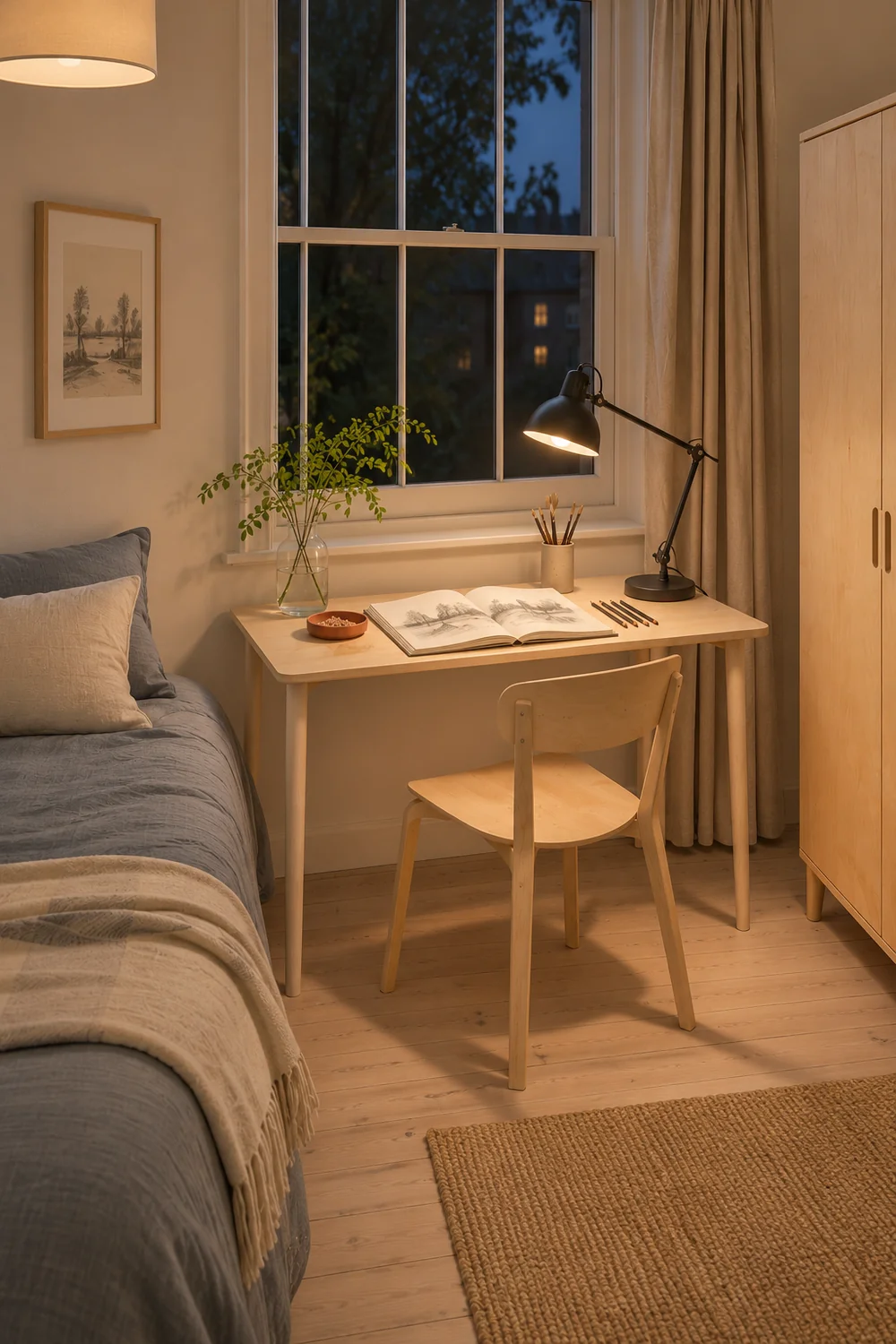
Walk the route while someone sits and draws, then try it again while they get up. Start at the door and go to the bed. Continue to the wardrobe if that’s the route the teen normally takes. Lift a bag from its intended spot and put it back. If an adjustment makes the page easier to see but closes the route, see whether another lamp position restores both. A gentle turn of the chair might solve a shadow. It can also put an arm where a door needs to swing, so retest the whole motion once.
Before choosing the window position, carry out one ordinary window routine. Pull the blind, reach the latch if the teen uses it and check where the opened curtain settles. If the top has to move forward to clear a radiator or curtain, move your tape line by the same amount and repeat the chair test. The distance from the wall to the front edge is the measurement that matters when the furniture sits away from the wall.
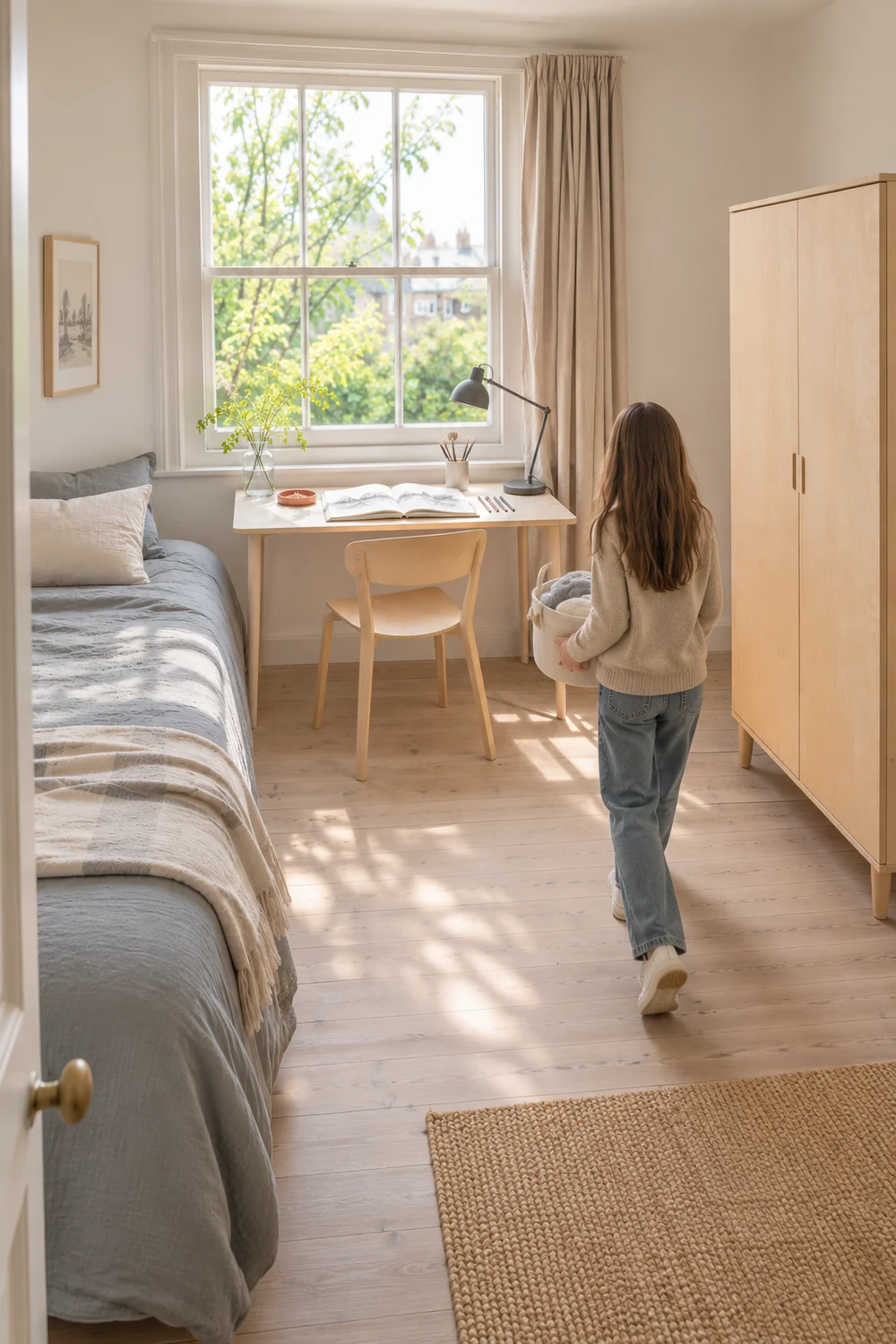
In the worked room, I’d start at the window because it avoids cutting across the space between the bed and the right wall. I’d keep that position only if the blind remains usable, the page is easy to see and the wardrobe still opens comfortably while the teen is seated. In a room where the window has glare every afternoon, the side wall could be the better choice. I’d give it the same occupied route test before settling on it. The winning position is the one that works at the hour the teen will sit there.
Write down the width and depth of the useful desk surface, the furthest point the chair backs out and the narrowest part of the route with the wardrobe open. Also mark which end gets the lamp and how far the drawn page can turn before reaching it. On a 105 by 55 centimetre top, the 42 by 30 centimetre spread leaves 25 centimetres of depth before allowing for the lamp, tools and whatever space you need in front of the page. Test those objects together before treating the whole 25 centimetres as spare.
Keep the exact leg positions and any drawer depth on the drawing if you’re shopping. Compare those with the seller’s dimensions or check them in person. A desk might have enough room on top but a leg where the teen would naturally sit. If you’re keeping the old desk, put two small tape marks down for its tested position and check once more with the actual chair. Let the teen choose what they want in view when they sit down. A drawing or a single changing display above the corner can give it a clear identity without using the work surface.
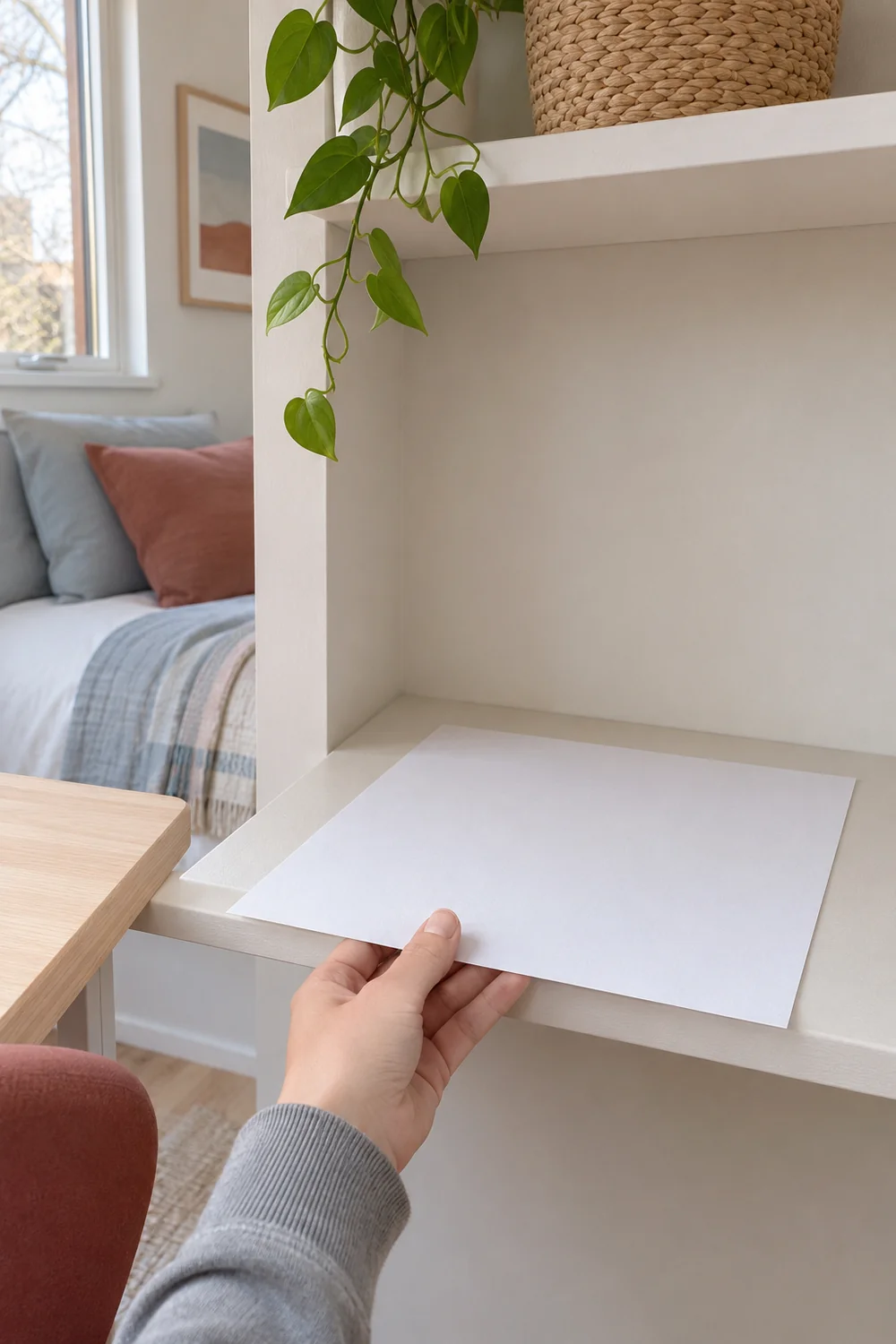
Once you know where the desk and chair can sit, put a scrap piece of the largest paper on a nearby shelf and practise taking it out and putting it back. A shallow tray or clear shelf is enough for the trial. If the drawing needs its own place to pause, my art supply storage guide works through tray, drawer and trolley sizes. Measure the usable space once the chair and lamp are where you want them.
I’d leave the trial arrangement in place for a few ordinary evenings. See whether the teen can sit down with the lamp in place, leave a drawing halfway through and walk to the bed with the chair where they tend to leave it. Ask which part they would change first. Try both a quick sketch and a longer drawing before deciding.
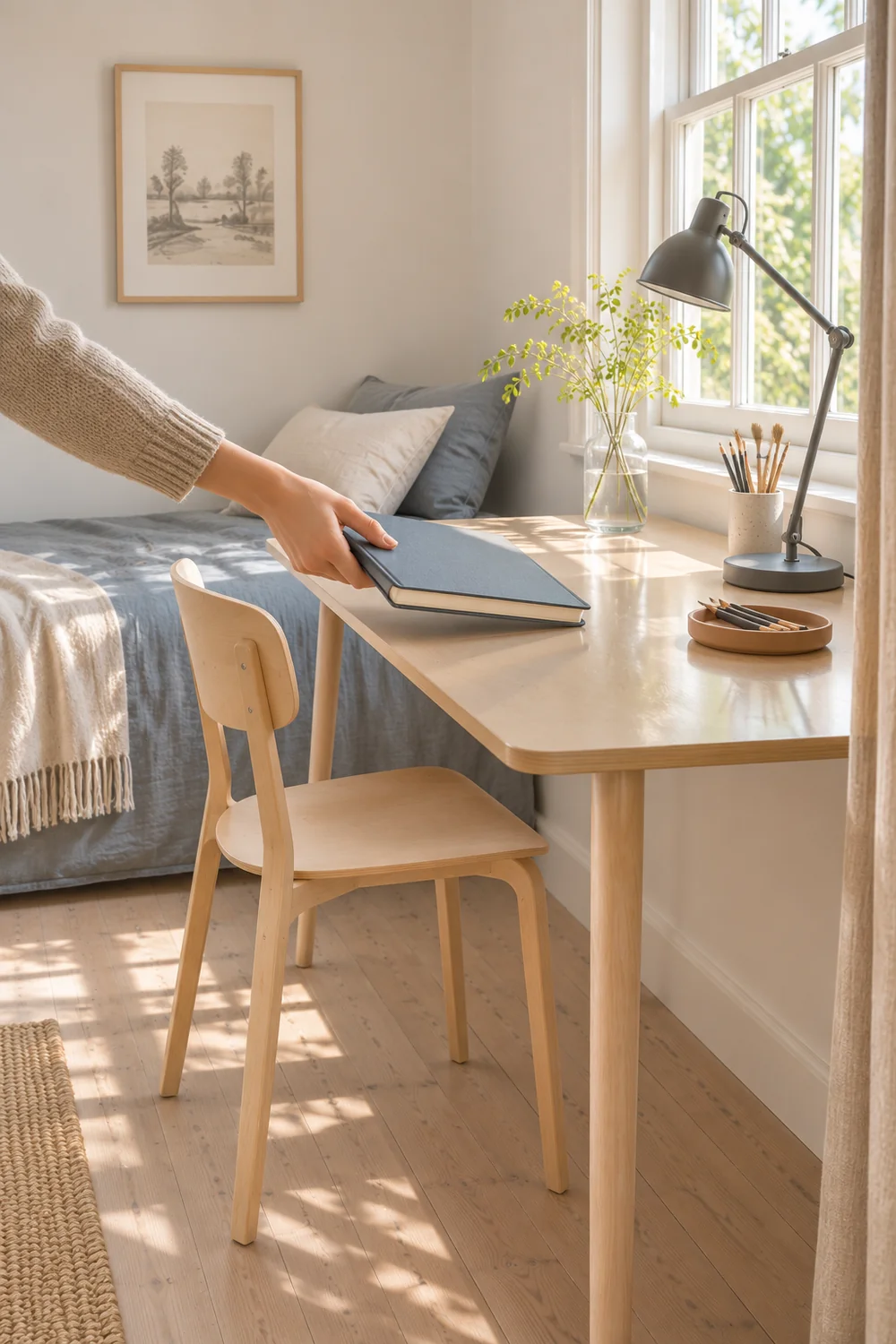
Keep the taped plan until those everyday movements feel easy. Then check the ordinary evening habits again, like opening the wardrobe while the chair is out. You may find the desk you tested already does the job. If you do replace it, take your notes on the width, depth and the position of the legs.