Newsletter Subscribe
Enter your email address below and subscribe to our newsletter

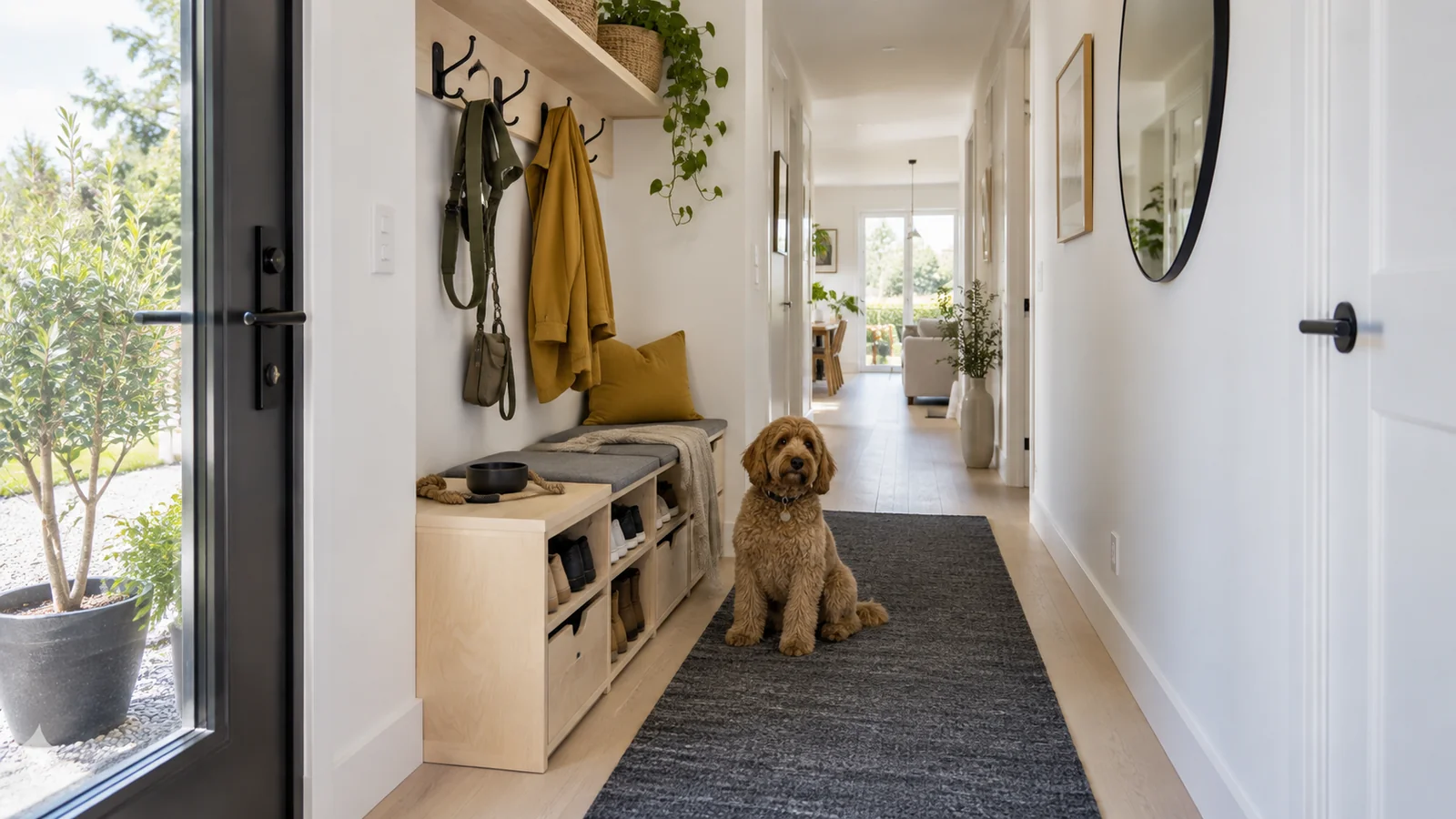
You have decided where you and your dog will pause after a walk. Now the tempting part begins: choosing a handsome bench, shoe cabinet or row of hooks for a small Scandinavian hallway. A piece can look compact online and still swallow the only clear route once shoes, coats and the dog are in the room. This guide turns the layout into a measured storage brief. You will count the gear used on ordinary walks, calculate the furniture envelope from your actual hall, compare open and closed shoe storage, place the lead and towel where you can reach them, and test floor protection before fixing anything in place. The aim is a storage arrangement that handles wet arrivals while leaving enough visual calm and practical space for the people who use the entrance.
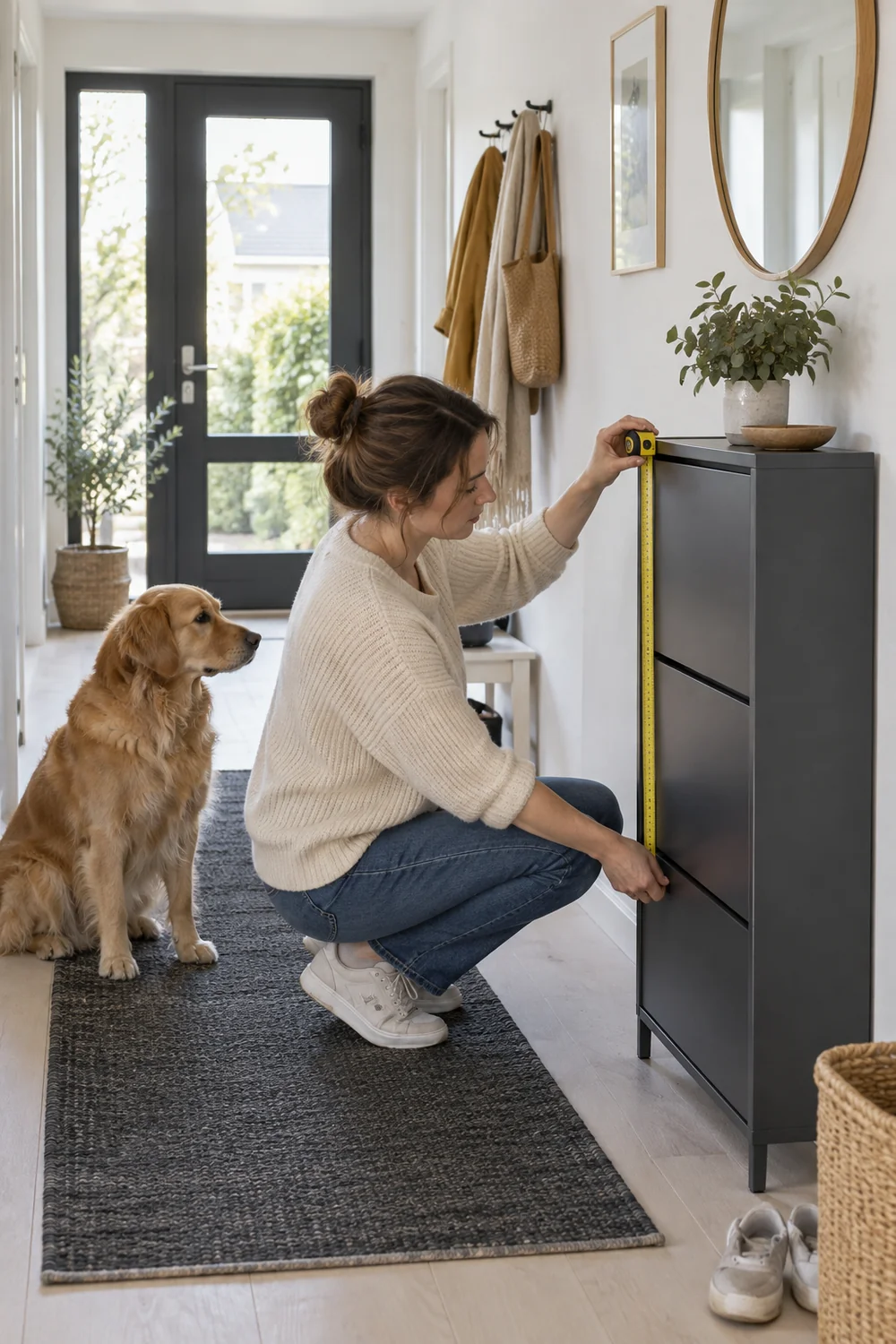
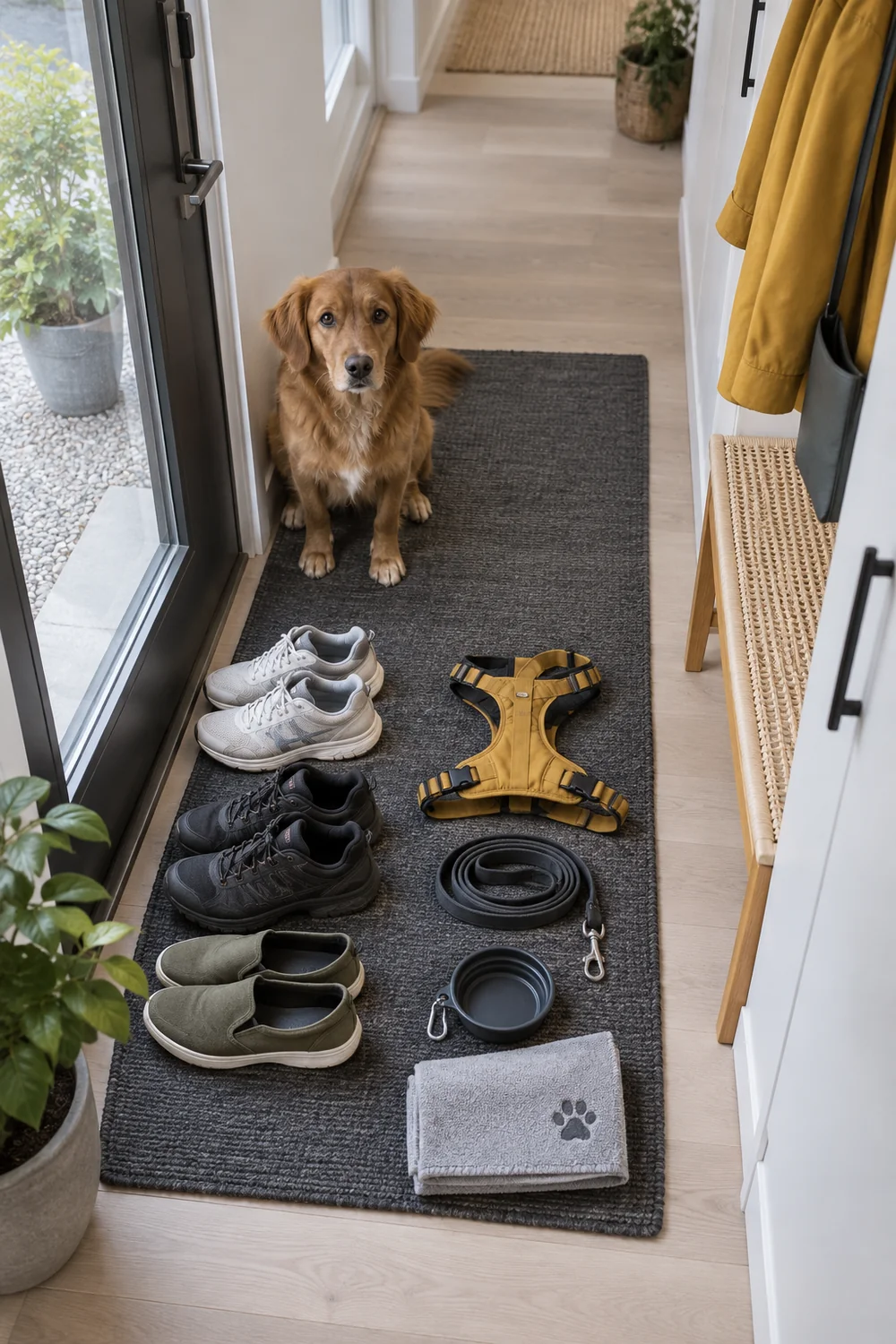
Empty the current entrance and gather what actually belongs to the next walk. Count the shoes kept by the door on an ordinary day, the coat or jacket in use, the lead, any harness, waste bags and the clean towel you reach for after a wet walk. Put seasonal or spare items in a separate group. Do not design a permanent hallway cabinet around objects that only need to pass through once in a while.
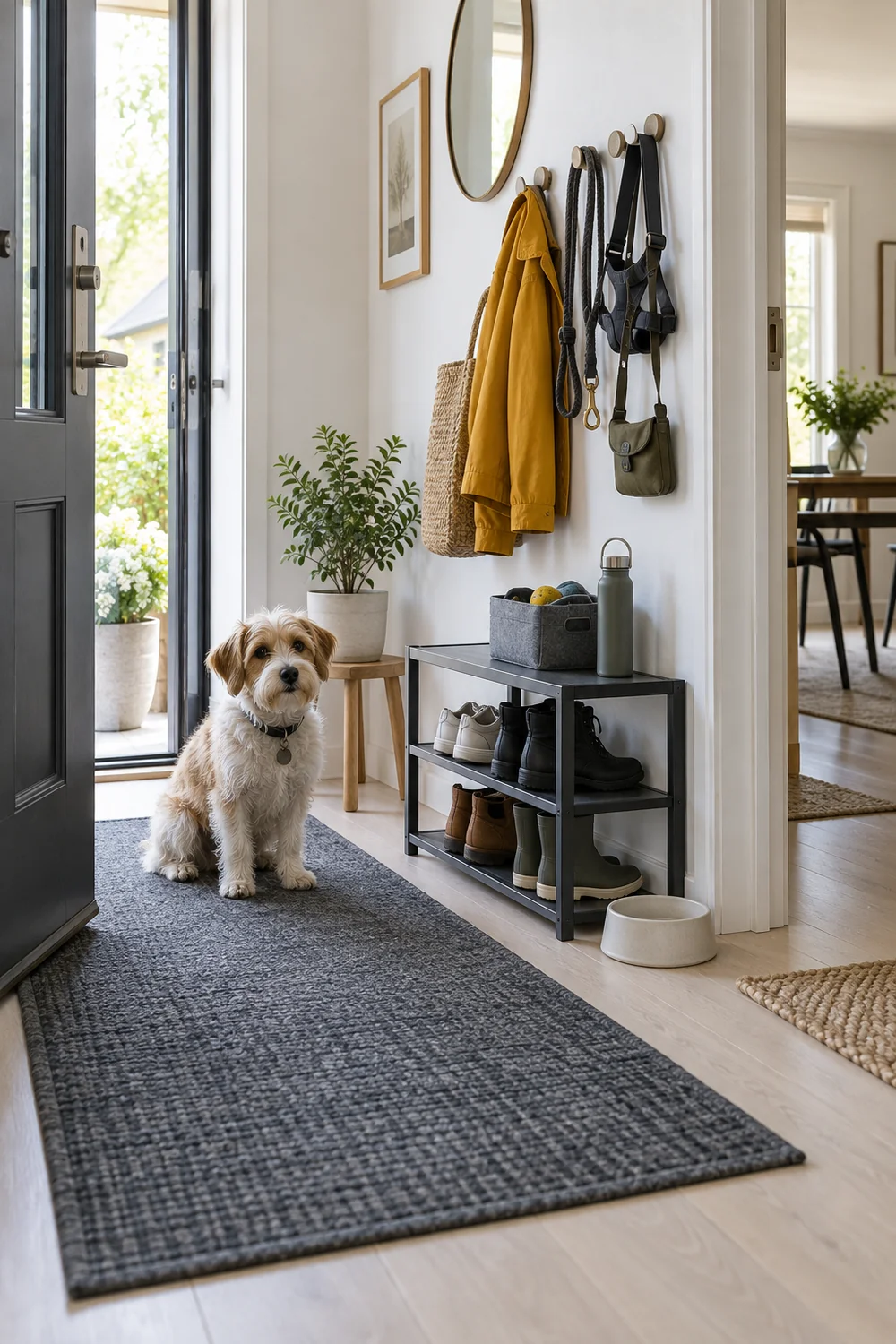
Then run the arrival sequence from the dog entryway ideas layout. Which hand holds the lead? Where do you stand to remove shoes? At what point can you set down a bag? The storage should support that order. A beautiful hook behind the front door may be impossible to reach while the door is open. A towel basket at floor level may sit exactly where the dog needs to turn. Move each item in the real room before you assign it a shelf in a drawing.
Use a simple three column list: keep at the threshold, keep nearby, and move out of the hall. The threshold group should be small. If two people share the entrance, consider whether both sets of daily shoes truly need to stay there, or whether one pair can live in a bedroom cupboard. A narrow hall gains more from a disciplined inventory than from an intricate organiser that is filled on day one.
Take a photograph of the edited gear. This is your baseline. Later, if the hallway becomes crowded again, you can see what was added and decide whether it earns its place. The inventory is also a practical shopping list: buy for the measured items and the way you reach them, not for the maximum quantity a product page says it can hold.
Return to the plan of the door swing and walking route. Measure the usable wall length, the depth available without narrowing the passage, and the height that can be reached comfortably for daily items. Include the skirting, radiator, switches, door trim and any cupboard that needs to open. A cabinet dimension is not the same as its working footprint: a drawer or door needs space to open, shoes need room to be taken out, and a person has to stand somewhere while using it.
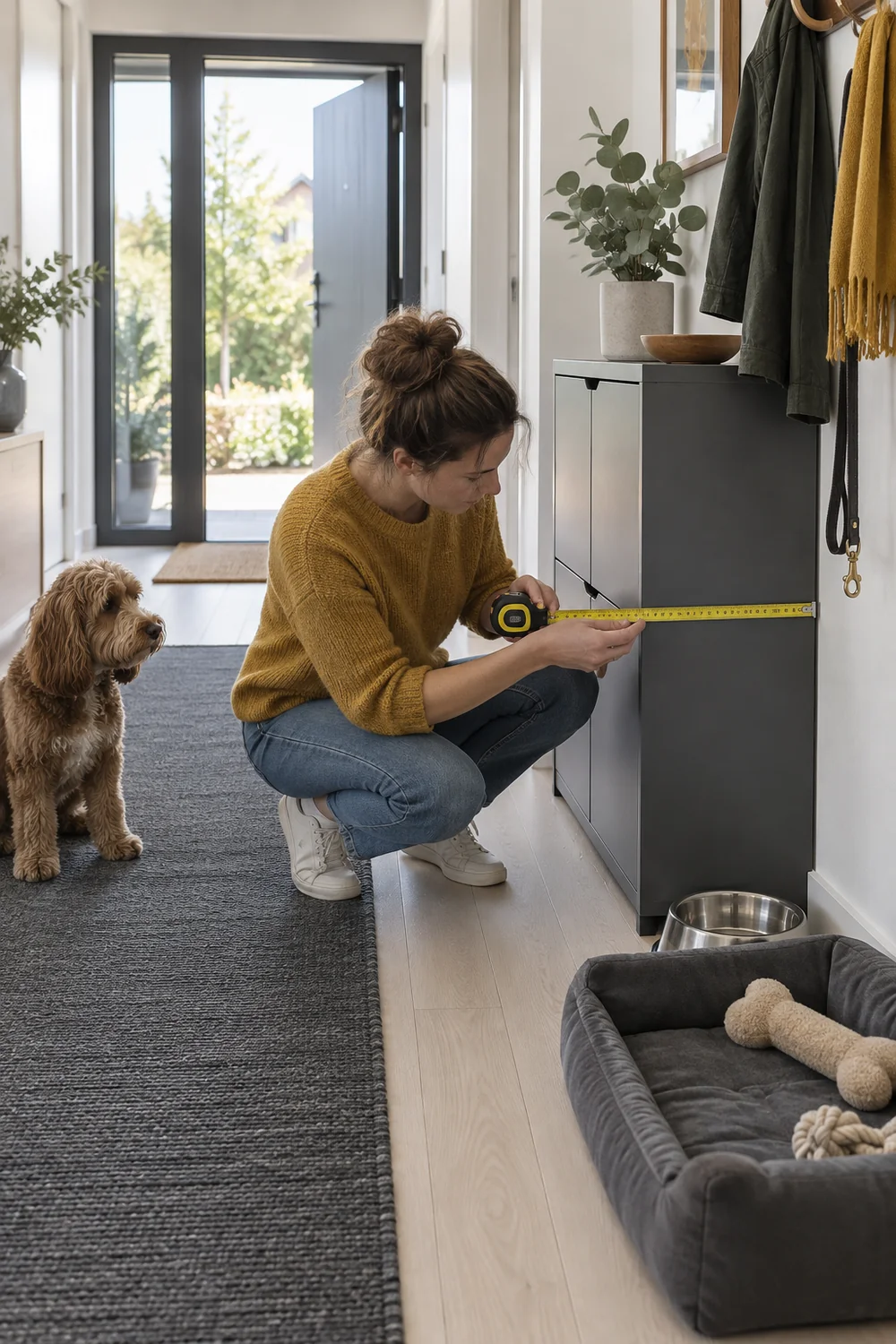
Mark the full proposed piece on the floor with a paper rectangle. If it has drawers, represent the open drawer as another rectangle. Put your everyday shoes beside it and walk past with the dog. This reveals whether the storage works when occupied, not only when closed. The broader small hallway design examples are useful for comparing slim furniture forms, but your actual envelope must be set by this hallway and this dog walking routine.
Record three numbers before browsing: maximum width, maximum closed depth and maximum working depth. Add a note for the route you want to preserve. Do not substitute a universal minimum that ignores your doors, people or access needs. If a piece cannot be used without someone standing in the only passage, you may need a shallower unit or a different location rather than a slightly smaller version of the same cabinet.
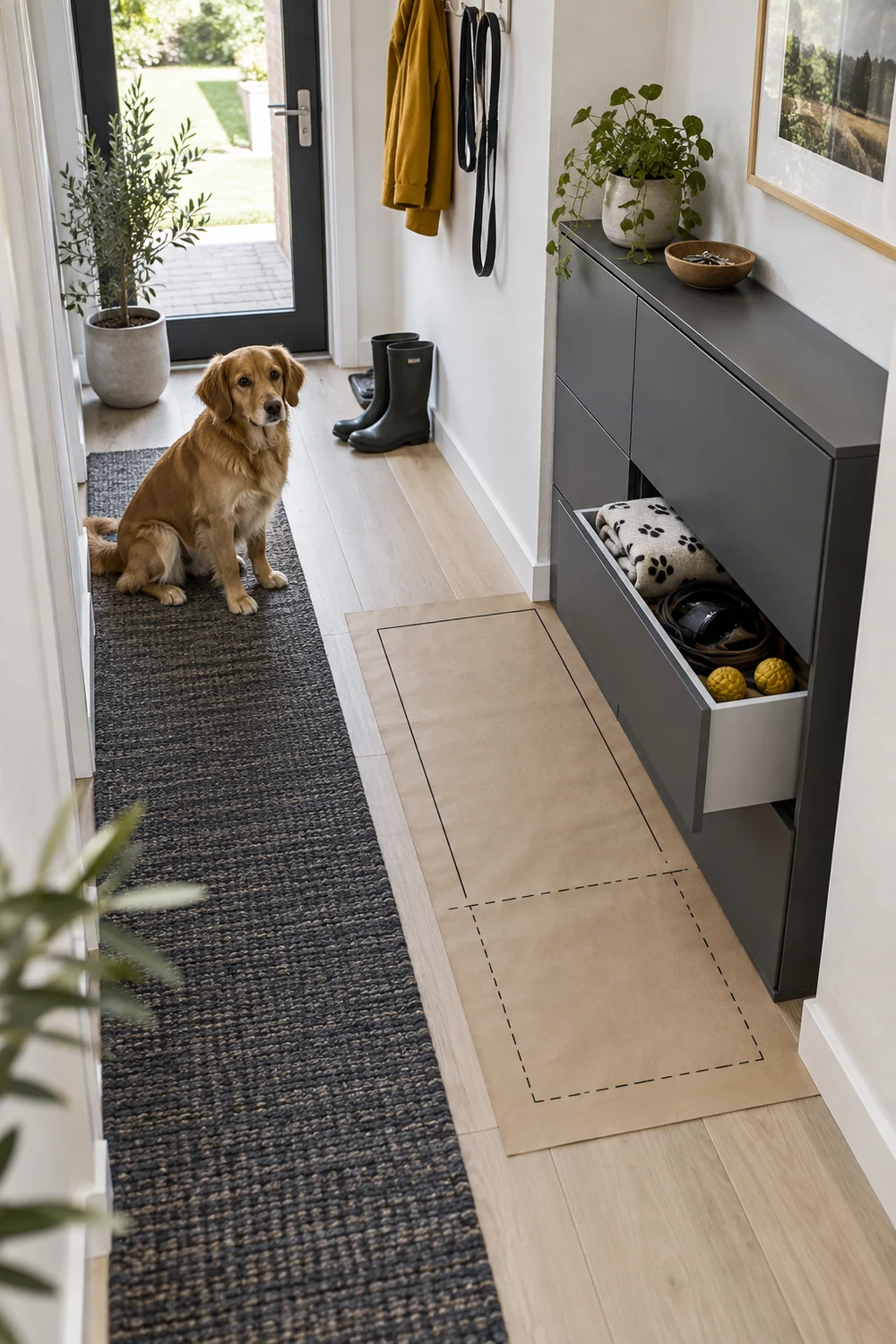
If the hallway changes width along its length, measure at several points. A tapered old wall or projecting trim can make a tight cabinet difficult to place even when the catalogue dimensions look right. Leave room to clean around the furniture and inspect the wall behind it. The aim is not to fill every available centimetre; it is to give each daily object a practical home while keeping the entrance easy to move through.
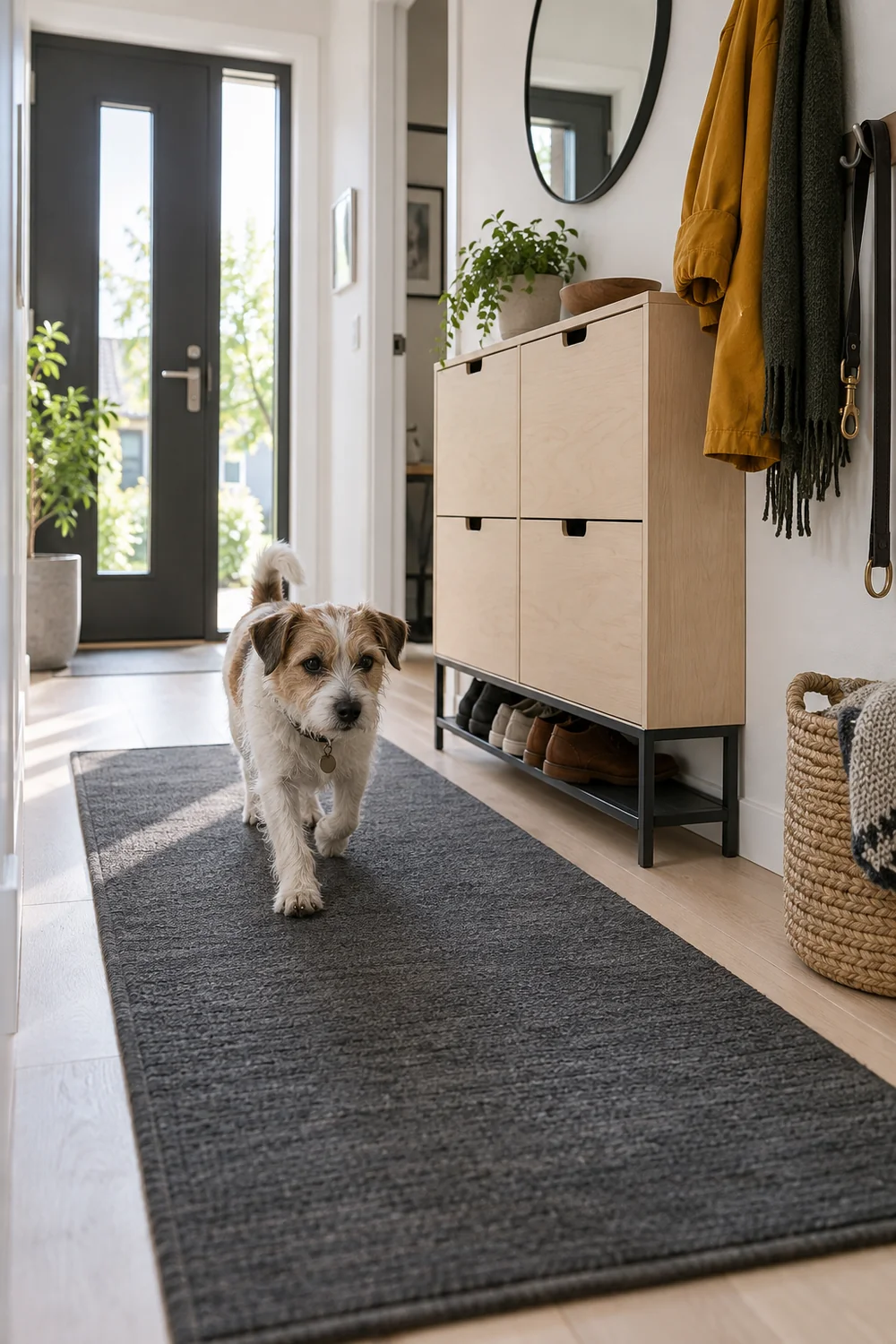
Compare three kinds of shoe storage against the envelope. A shallow closed cabinet hides visual clutter and can work where floor depth is limited, but check how its doors open and how boots fit. An open rack makes drying and access simple, yet a row of visible shoes may be the first thing seen from the living room. A bench gives a place to sit while changing footwear, but its seat and legs may consume more of the narrow floor than you can spare. Choose by the way you use the hall, not by the appeal of a single photograph.
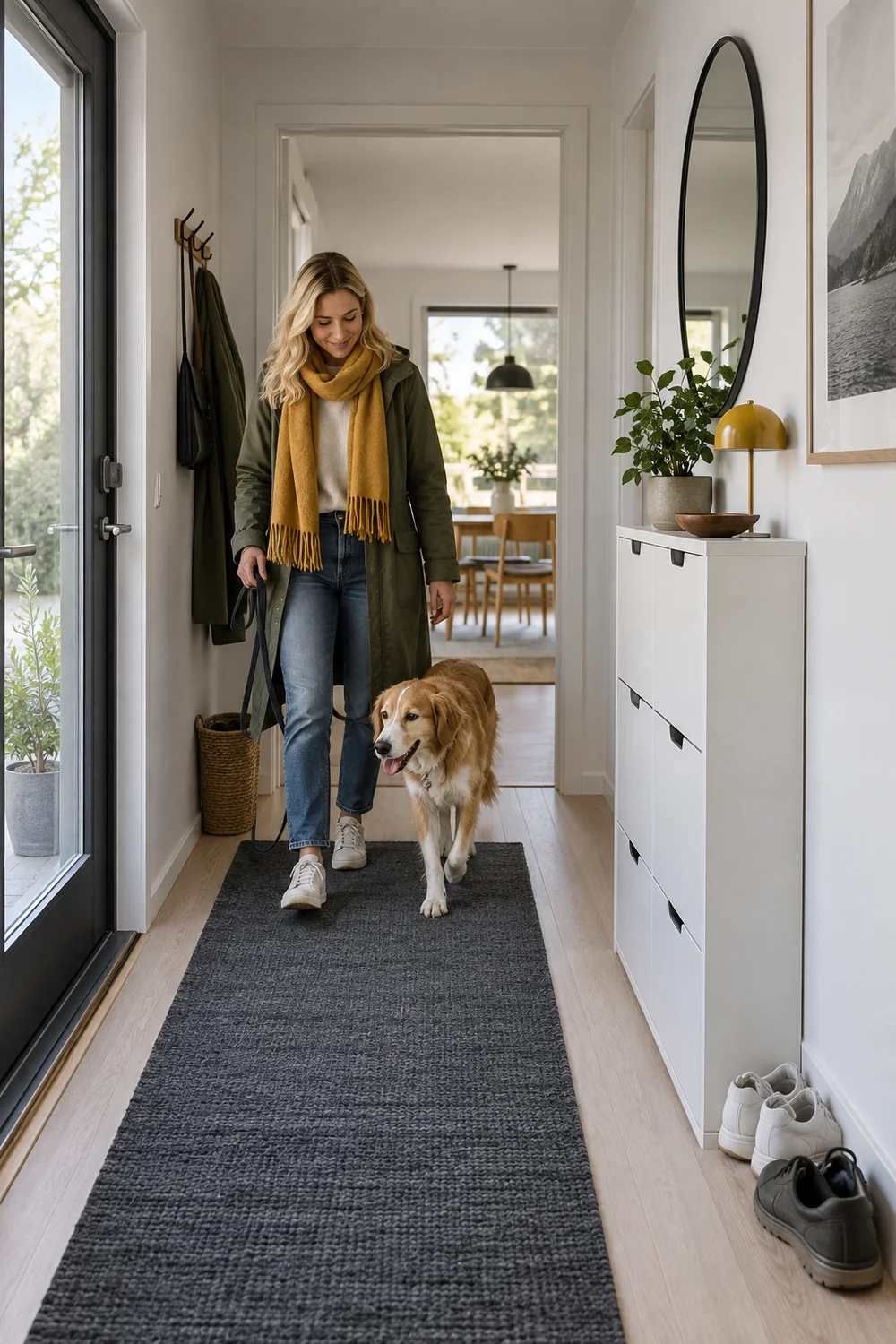
Put the shoes you actually keep at the door into the proposed arrangement. A narrow cabinet that accepts small flat shoes may not hold walking boots at the angle you expect. A bench basket may take the shoes but make them awkward to retrieve with one hand. If wet shoes need a temporary place, make sure that place is easy to clean and does not transfer moisture to dry footwear. Follow the care instructions for both the furniture and the floor finish.
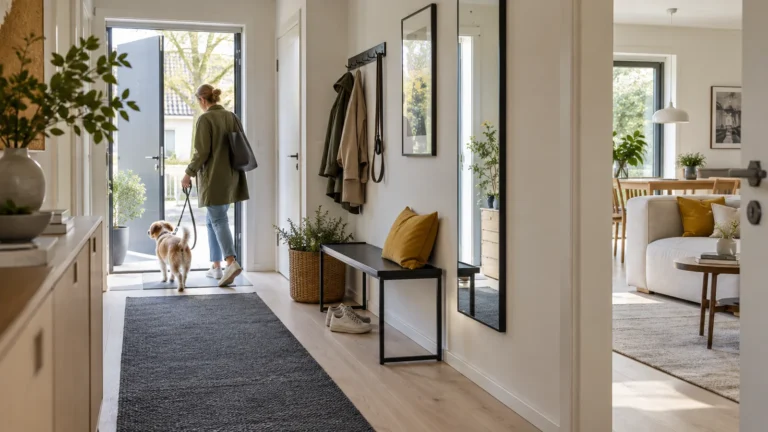
The existing scandinavian hallway guide shows the broader furniture language of pale timber, simple forms and restrained storage. Your dog owning hallway can use that language without requiring a built in wall of cabinetry. One shallow piece with honest capacity often looks calmer than several small containers spread along the route. If you need more capacity than the envelope permits, remove occasional shoes from the hall instead of forcing a larger unit into it.
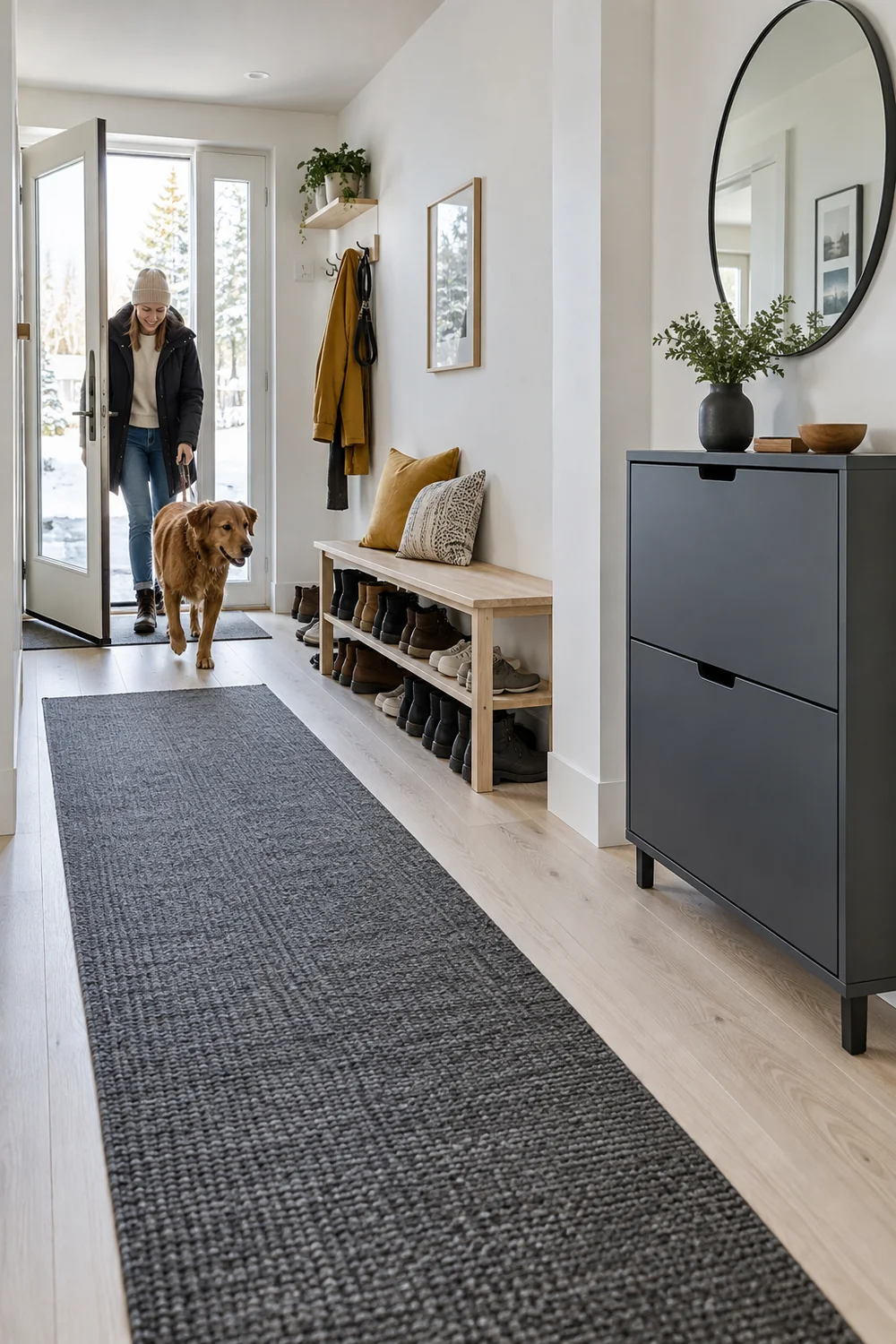
Stand at the open front door and at the adjoining room to review the chosen silhouette. Ask whether the piece makes the arrival easier and whether the passage still reads as open. A good storage choice will withstand both the practical route test and the visual one.
The lead should be reachable from the place where you prepare to go out. The clean towel should be reachable from the place where you pause on returning. Those may be near each other, but they are not automatically the same point. Trace both movements and mark the reachable wall area before installing hooks or shelves. Avoid a projecting rail where coats or straps could catch as people pass.
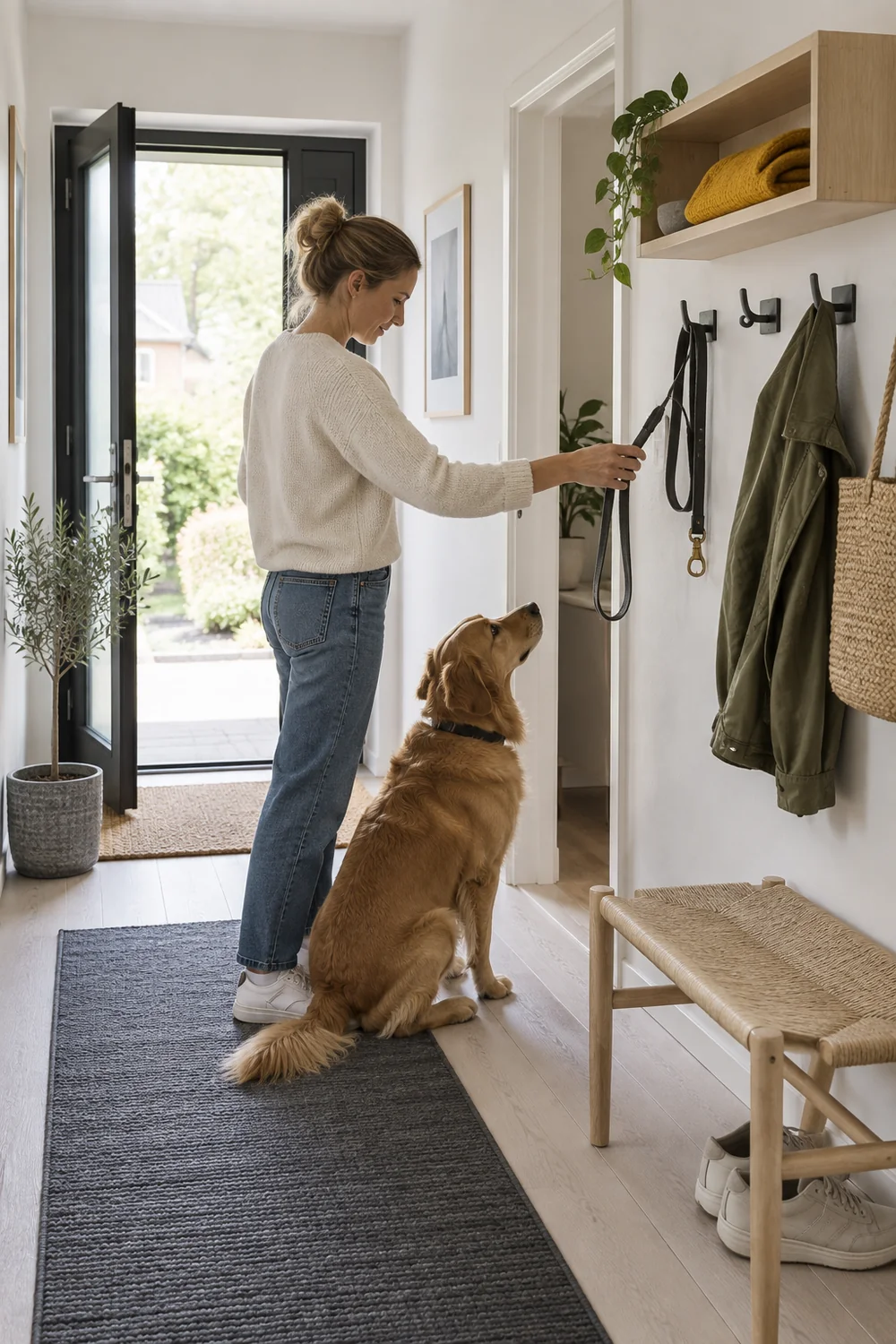
Try a small hook group for the daily lead and harness, paired with one defined location for clean towels. It may be a shallow basket on a shelf, a drawer in the shoe piece or a nearby cupboard. Make the used towel's destination separate. A damp towel left on top of clean supplies turns a tidy looking station into an awkward routine. If the hallway has no suitable drying place, move the used towel to a better ventilated part of the home as soon as the dog is settled.
The scandinavian mudroom examples show larger arrangements with hooks, baskets and sometimes utility functions. They can suggest a hierarchy of gear, but do not copy a full mudroom wall into a passage that cannot hold one. Give the narrow entrance only the part of the system needed at the threshold. Store seasonal coats, spare leads and bulk supplies elsewhere.
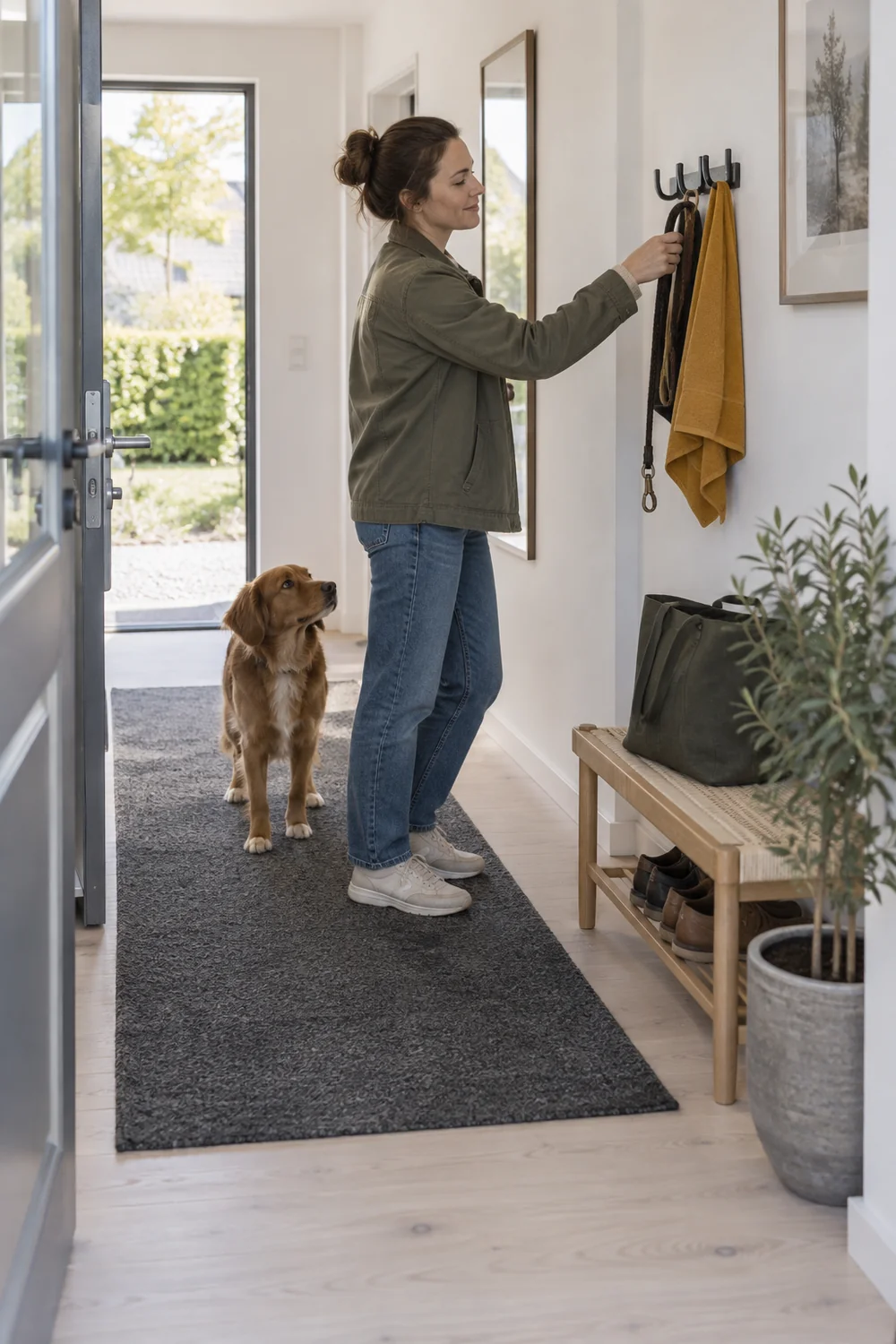
Before fixing a hook, tape a paper marker at the proposed height and use it during several walks. If you find yourself reaching across the door, bending around a cabinet or turning sideways with the dog, move the marker. Check the wall and fixings appropriate to the load and substrate before installation. When in doubt, use a freestanding or existing secure option and seek suitable installation advice rather than guessing from the image of a finished room.
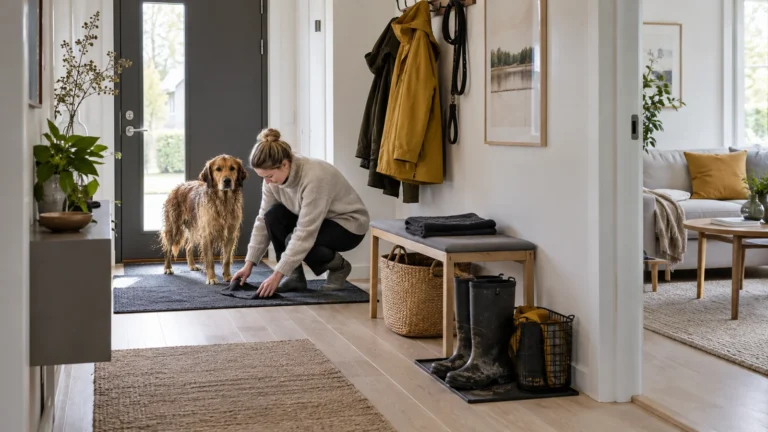
The floor at the entry has a simple job: give wet footwear and paws a defined place without becoming a trip point or preventing the door from opening. The best solution depends on the existing floor, the door clearance, the space where the dog pauses and the way you clean. Put the proposed mat or runner on the floor before buying a second layer. Open the door, walk the route, and see where the dog naturally stands.
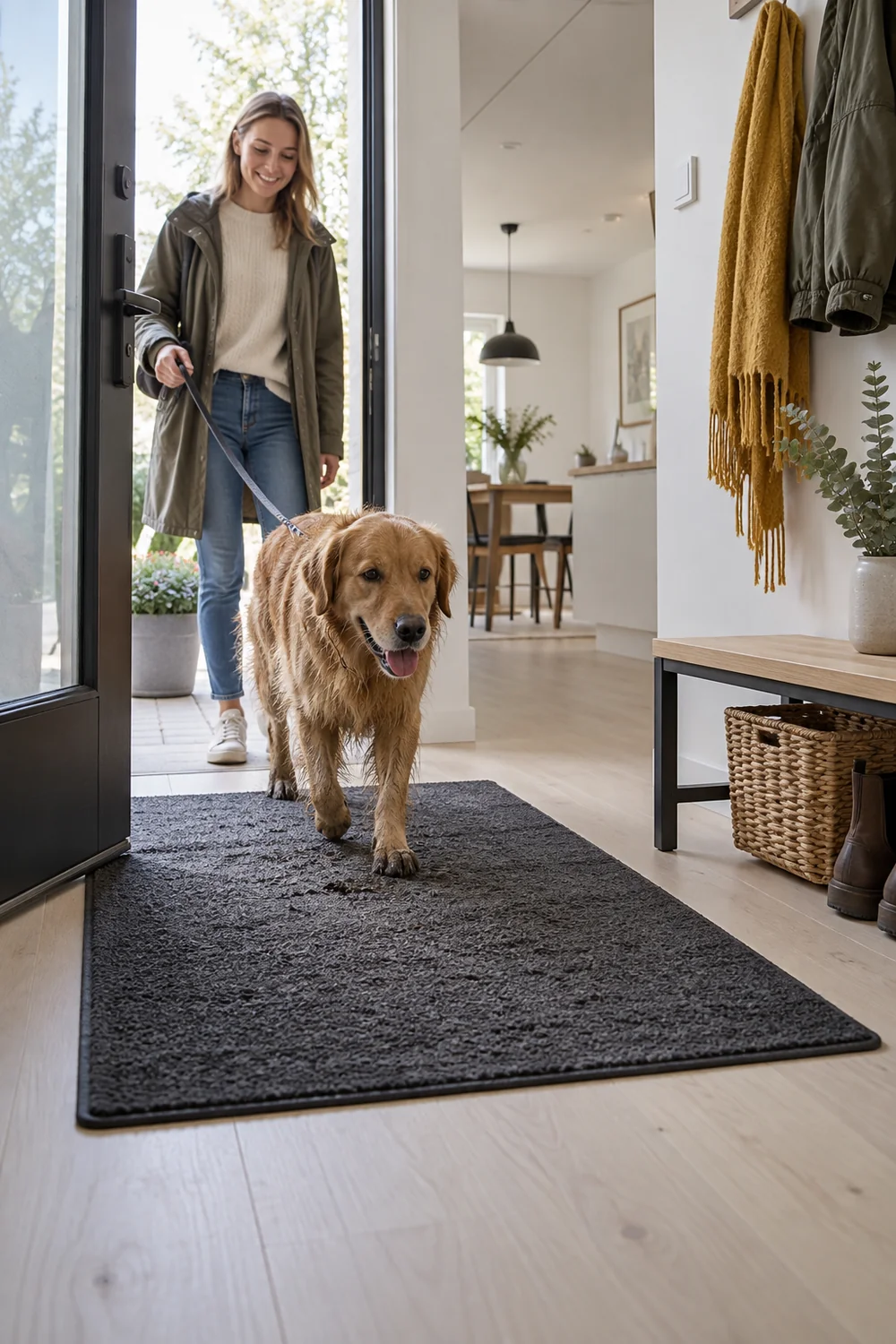
Choose a surface that can be maintained according to its label and the floor beneath it. A washable textile is useful only if you have a realistic place and routine to dry it. A tray may contain wet shoes but should not sit where its edge interrupts the passage. A long runner may visually extend the hall, yet the entrance portion still needs to cope with the daily arrival. Keep any layers stable and inspect them in normal use. The minimalist hallway article can help you judge how much visual texture the hall needs once function is settled.
Think about colour as part of care, not just styling. A pale surface may look crisp on the first day but may show every mark. A very dark surface can obscure small debris you would otherwise remove. The choice is a design judgment that should follow the actual light and cleaning routine in your home. Keep the palette coherent with the door, floor and storage, and let one practical texture do more work than a collection of decorative rugs.
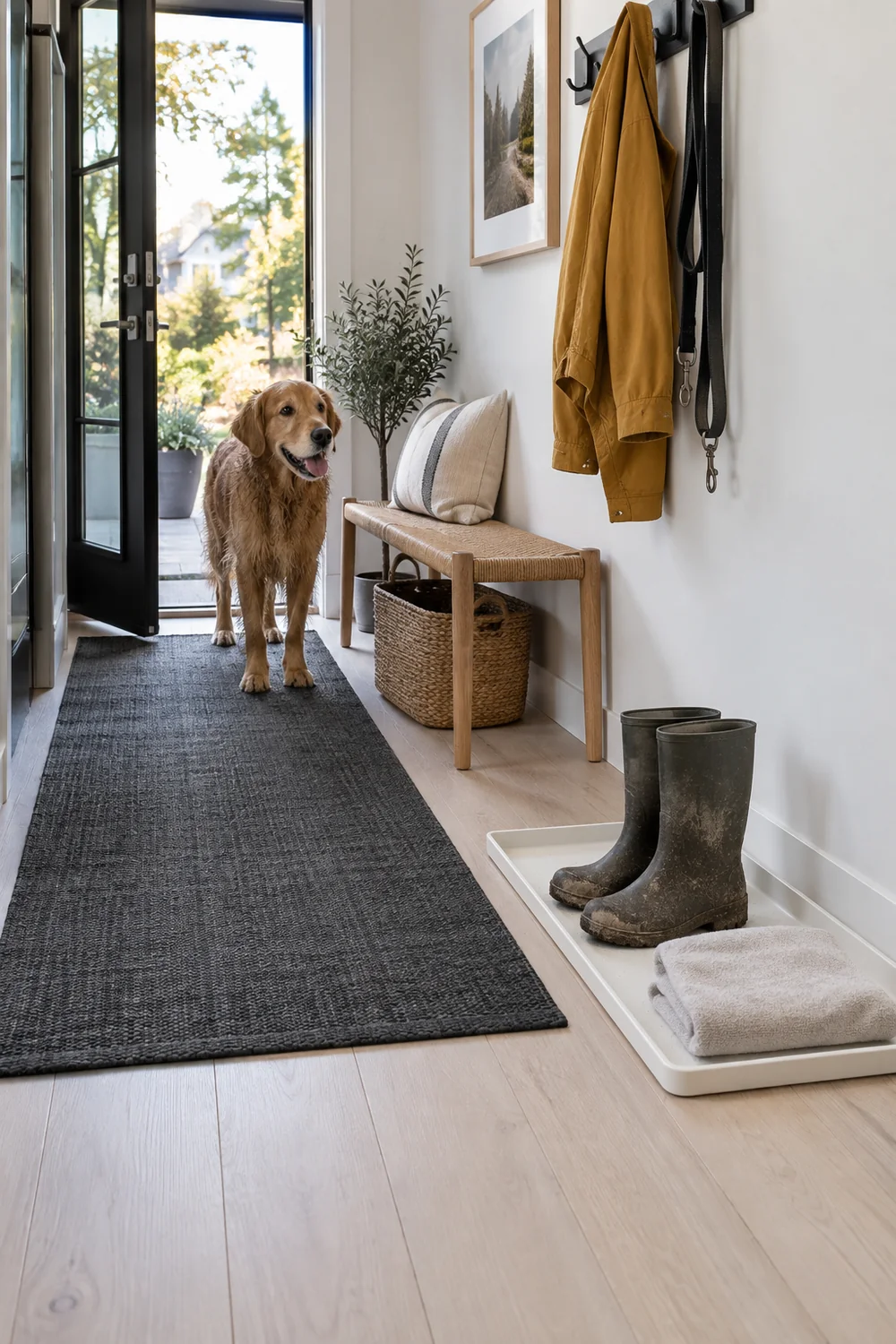
For a wet walk, keep a clean towel available and gently manage the dog's paws according to the needs of the animal. Pet welfare organisations such as PDSA advise checking paws after contact with winter grit and salt. The article's purpose is to plan the hallway station; if you see soreness or have a health concern, use veterinary guidance rather than treating a floor mat as pet care.
Set out the furniture and temporary gear positions before making permanent changes. Put daily shoes in the chosen unit, hang the lead, place a clean towel and walk the arrival several times. Then repeat with an ordinary bag or coat in your hand. Open every door and drawer fully. Ask another household member to pass if the hall is shared. This is the last chance to move a cabinet before its position feels fixed.
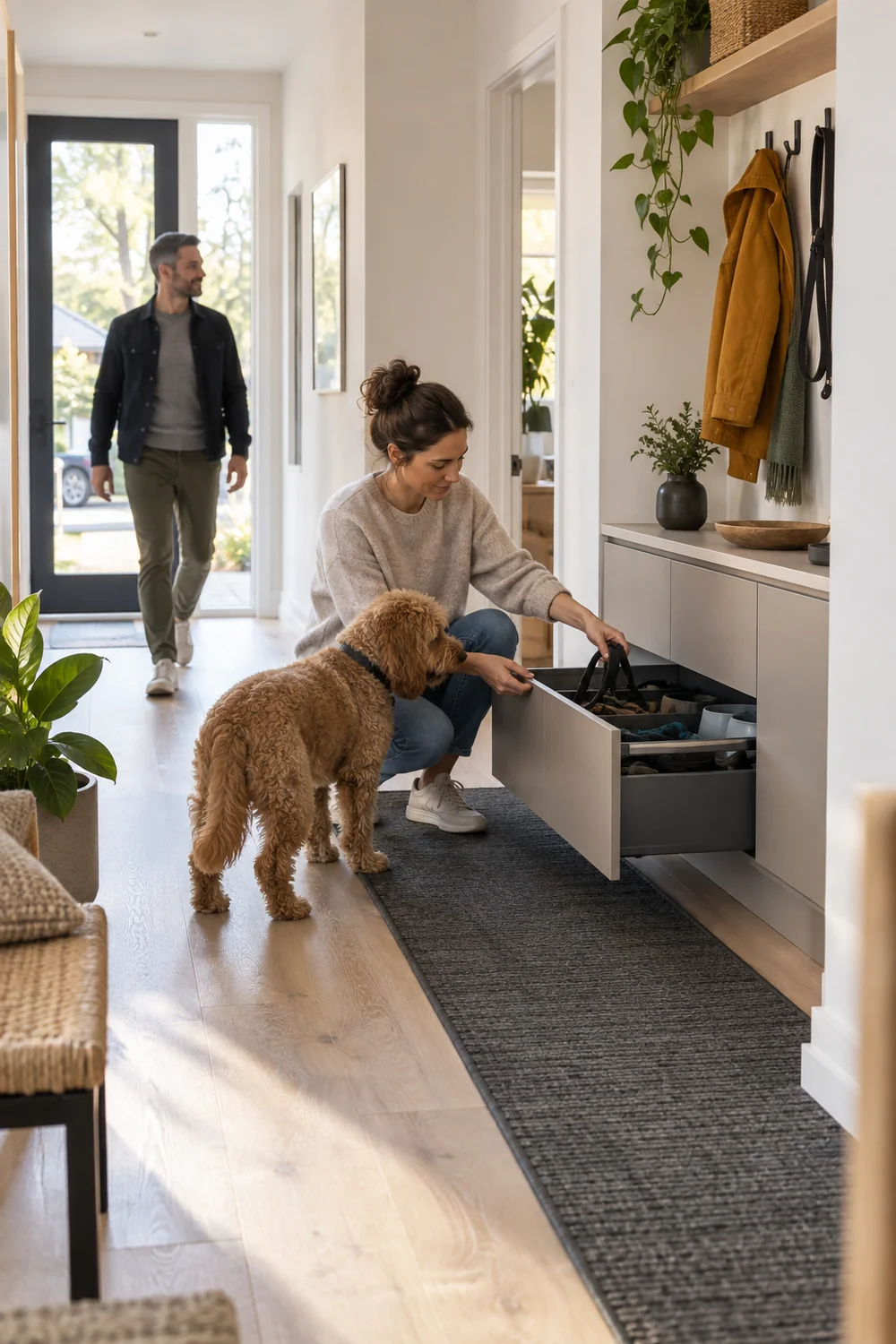
If the station passes, make a simple placement record: a photograph, the unit dimensions, the hook position and the mat footprint. Keep it with the original route sketch. It will help if you later change a piece or repaint the wall. Secure anything that needs securing using the appropriate instructions and fixing method for the wall and product. Do not let the desire for a quick finished look override a stable installation.
After the first week, note what has moved. If clean towels remain unused, perhaps they are too far away. If shoes collect beside the cabinet, its opening may be awkward or its capacity wrong for the daily pair. If the lead hangs over the mat and gets wet, separate the wet and dry positions. Adjust the smallest thing that will resolve the repeated problem.
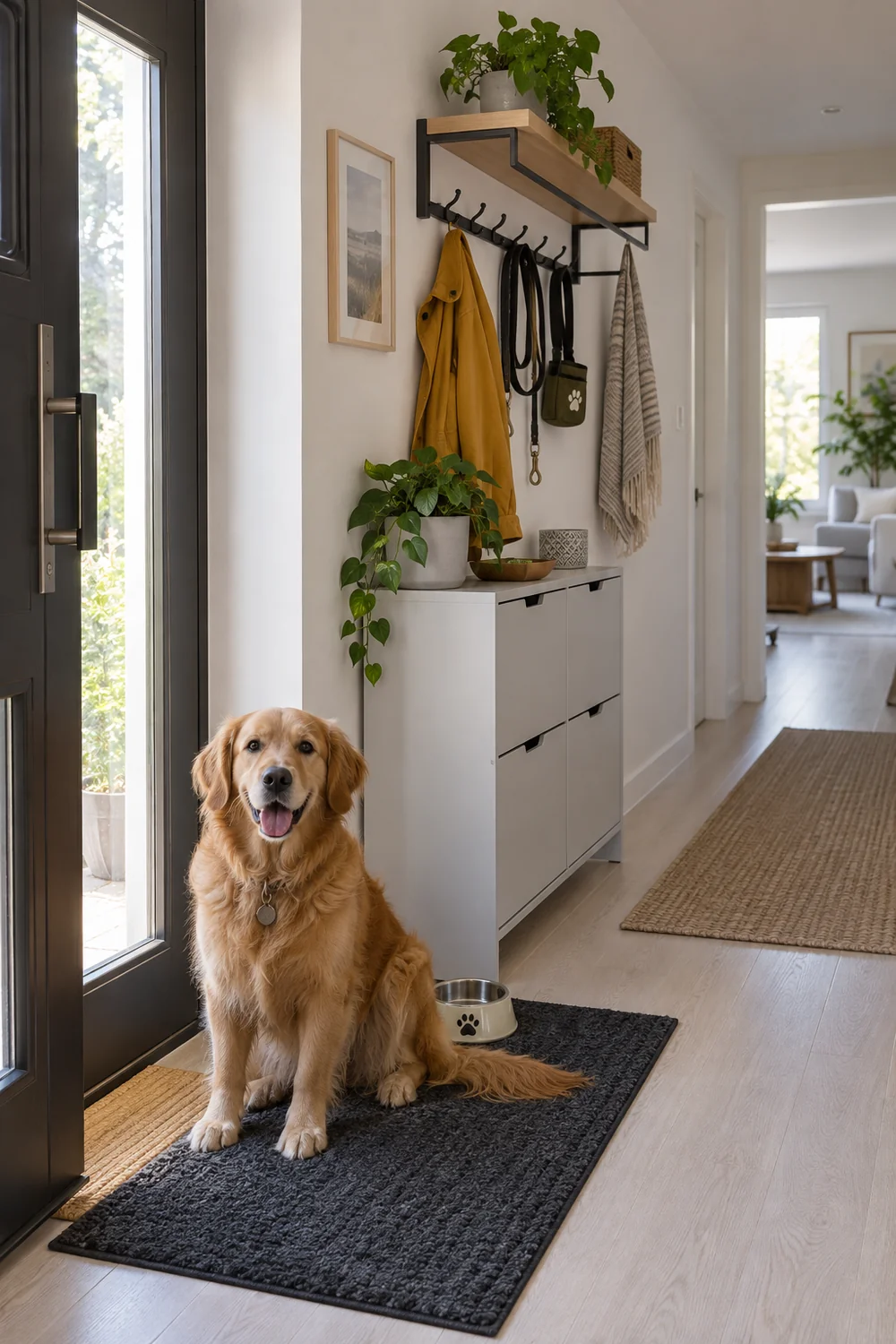
The later dog gear organization guide takes over when several wet walks have changed the station's needs. For now, the completed storage arrangement has a clear test: the front door opens, the human route remains available, shoes and the lead have usable positions, wet items have a temporary landing place, and the hallway still feels like part of the home.
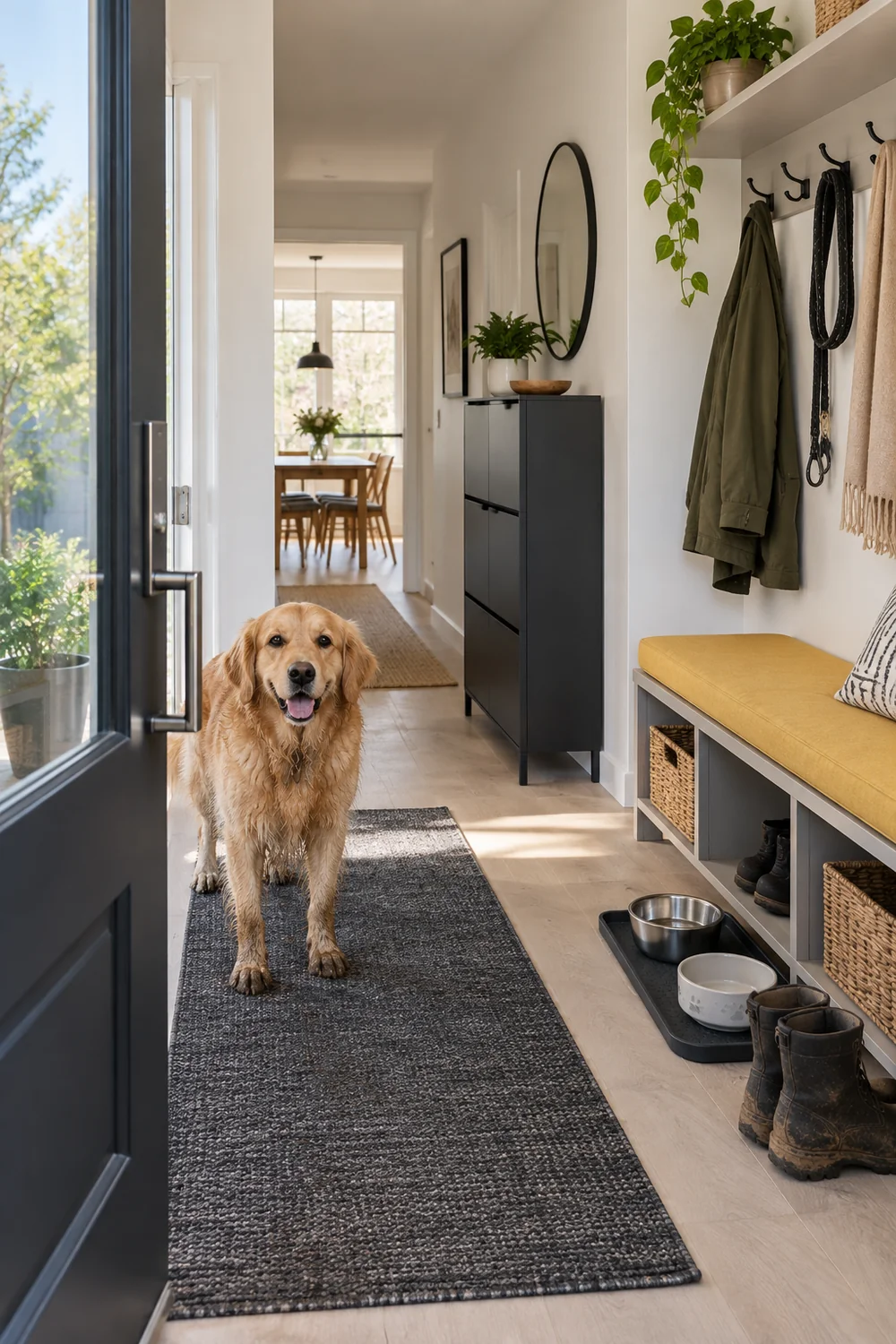
The most useful storage for a dog owner's small Scandinavian hallway is the storage that fits the real route. Count the daily gear, measure the closed and working footprint, test shoes in the chosen piece, and place the lead and towel where the arrival actually happens. Give wet items a temporary home without letting them occupy the passage. Simple forms and a restrained palette can make the station feel calm, but the daily walk is the final test. Keep your measurements and revisit the layout if the gear outgrows its agreed space.