Newsletter Subscribe
Enter your email address below and subscribe to our newsletter

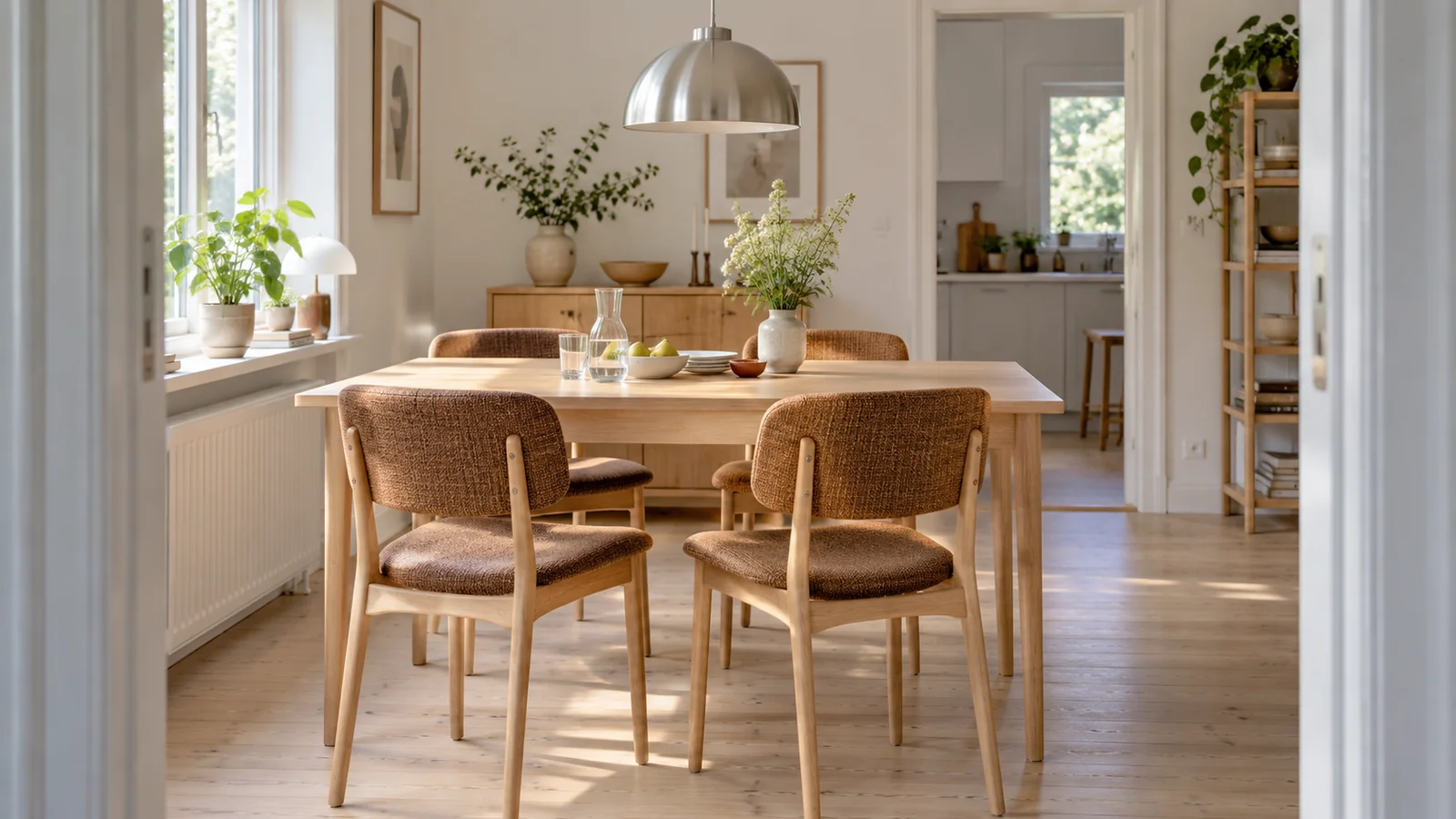
A dining room can look ready for friends and still send everyone to the sofa as soon as the plates are cleared. If you want the conversation to stay around the table, I would start with the chairs rather than buy another centrepiece or replace a table you already like. Comfortable Scandinavian dining chairs need to work with that table, the people sitting in them and the kind of evening you want to host. A padded seat is only one part of the decision. The back, usable seat depth, arm position and space beneath the table can matter just as much to how the setting feels. I would keep the calm room you have, compare three sensible chair routes and try one candidate before ordering a full set. The aim is a seating choice you can explain, test and care for between invitations, rather than a photograph that promises more than the furniture delivers.
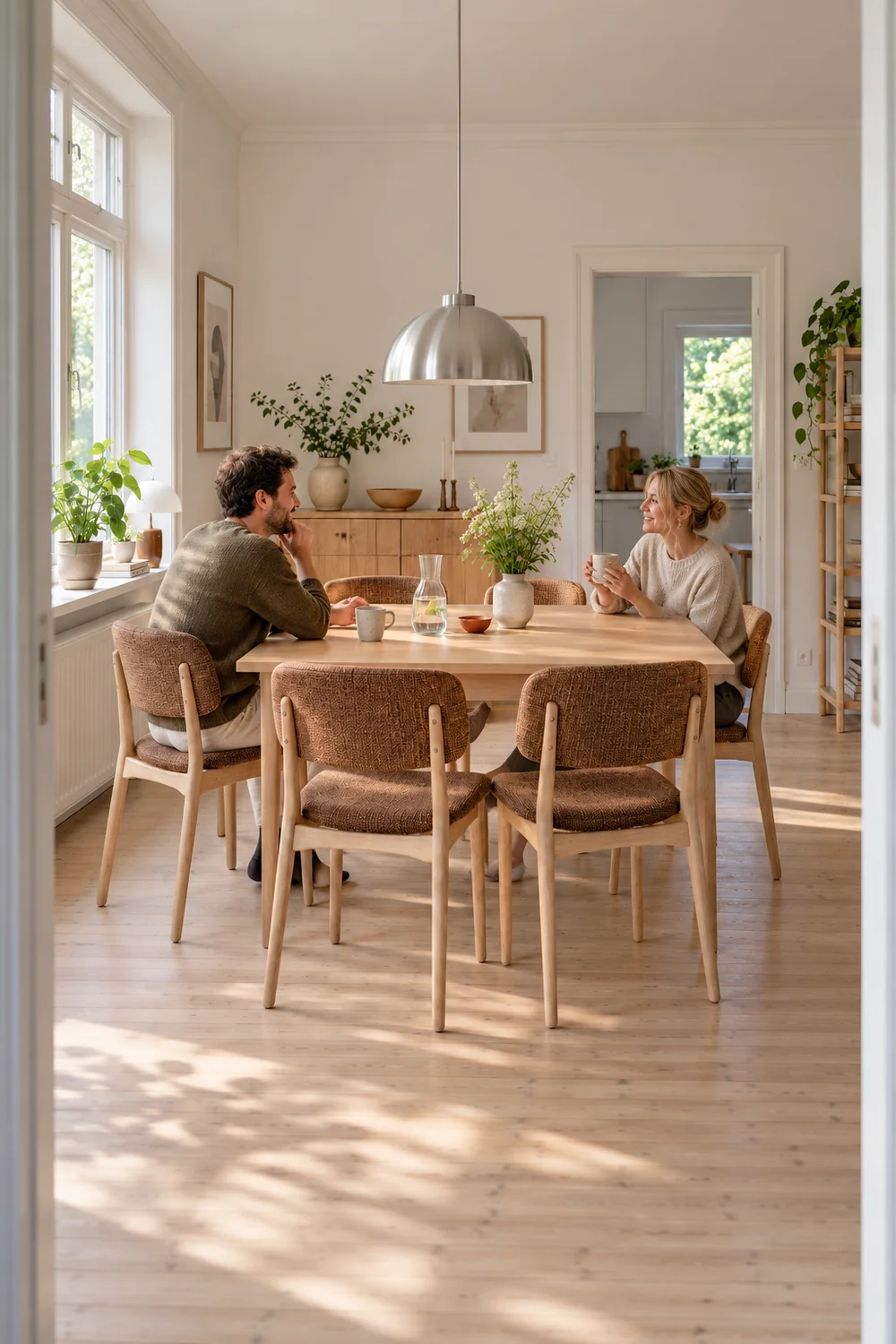
Before choosing a softer chair, I would write down what should stay. Perhaps your table has a pale timber surface, the window brings in generous daylight and the room feels pleasantly uncluttered. Those are useful decisions already made. Keep the table, floor and main room arrangement in the brief unless an actual fit problem asks you to reconsider them. The chair refresh should solve the uncomfortable meal, not turn into a renovation because the first upholstery sample looks different from the old seats.
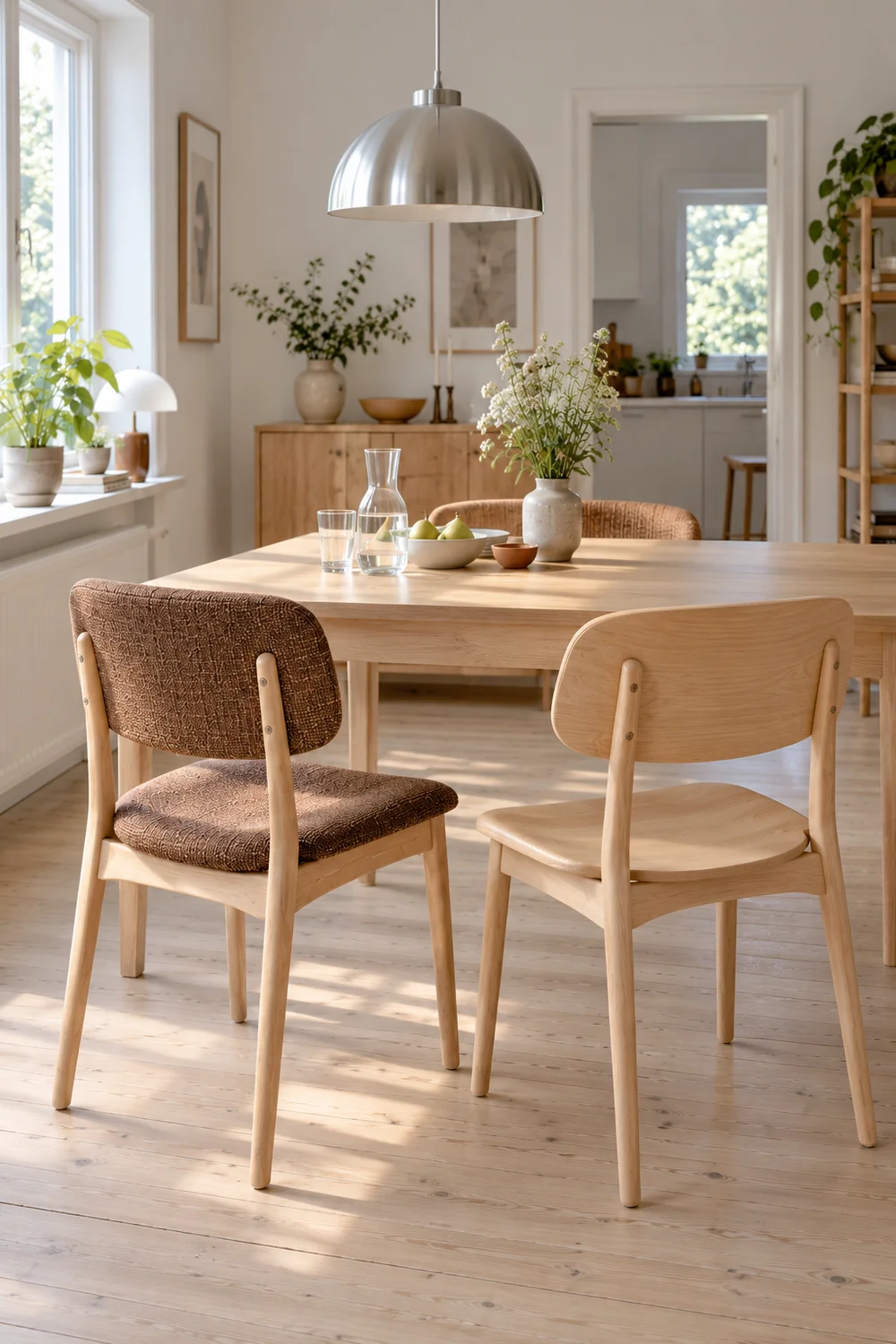
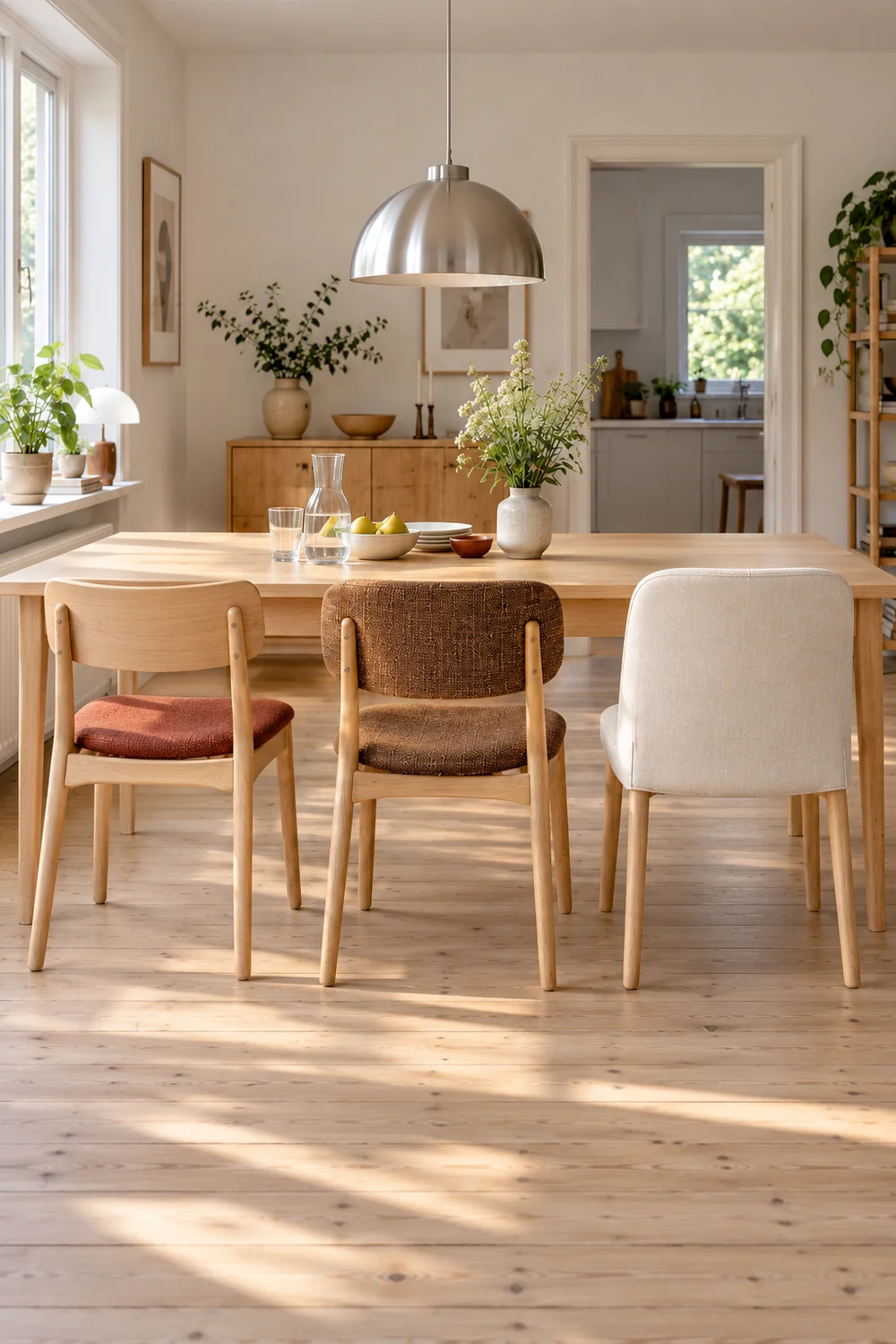
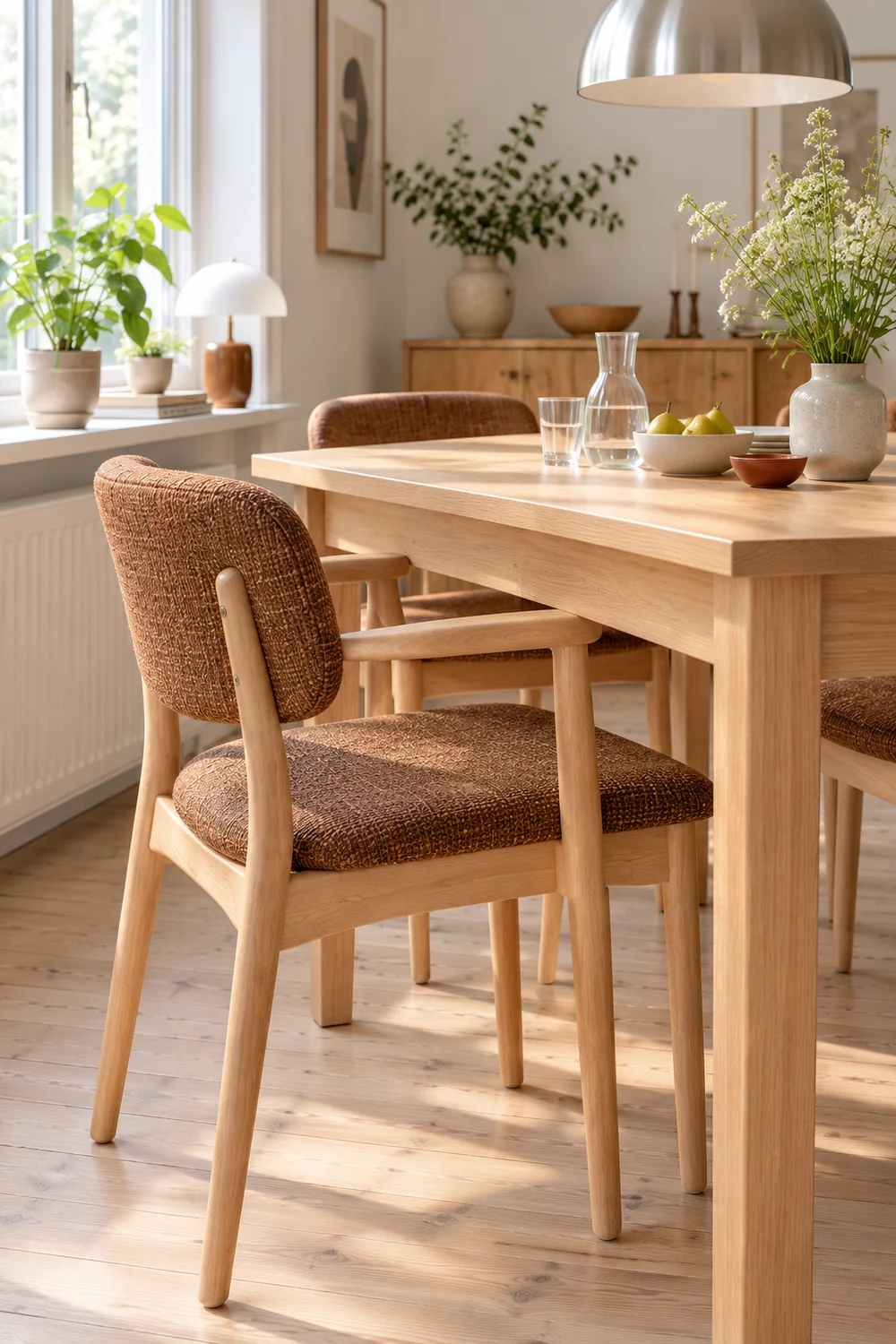
The scandi dining room direction gives you a useful starting point: simple furniture forms, natural materials and a restrained setting for gathering. I would translate that into three chair priorities. Keep the frame legible, choose a back that belongs beside the table and let one upholstery colour do the work. Soft white, natural beech and tobacco fabric can create a contemporary version of that relationship. A small brick coloured textile detail adds interest without making every chair a different design decision.
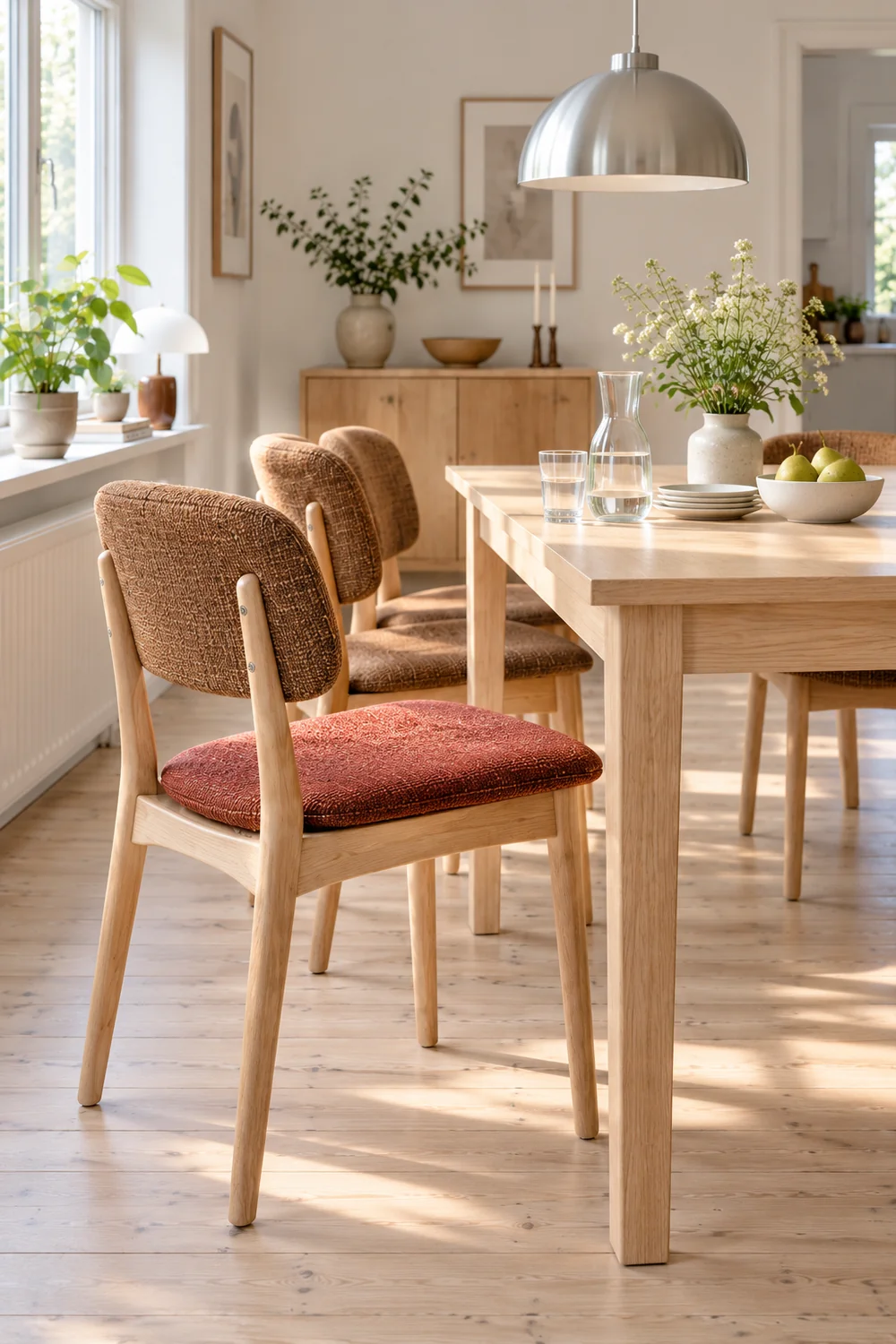
Then name the discomfort honestly. Do guests lean forward because the back does not meet them, move a cushion because it slides, or sit away from the table because the arms will not pass beneath it? Ask the people who use the chairs rather than assume that softness is the missing ingredient. I would note the problem at each regular place. One awkward seat beside a table leg requires a different response from a whole set with a hard front edge. That short diagnosis becomes the brief against which every replacement earns its place.
I would measure the tabletop height, the lowest underside obstruction and the clear width between the legs at every intended place. An apron can sit much lower than the top suggests. A pedestal can occupy foot space even where there are no corner legs. Record both the table you see and the space your body and chair can actually use. Keep the measurements together with a photograph taken from seated height, so a showroom visit does not rely on remembering the underside of the table.
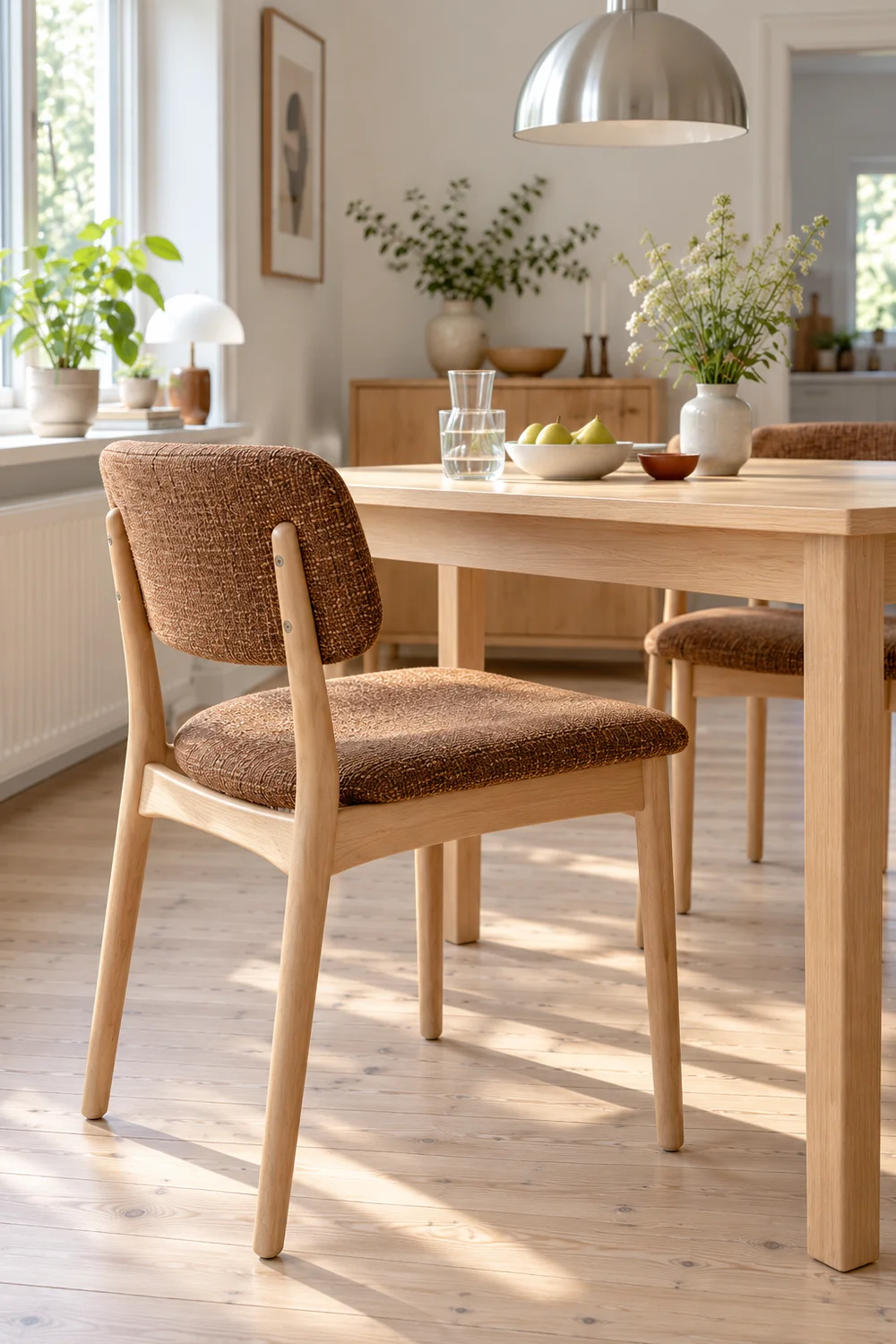
For each candidate, ask for overall width and depth, seat height, usable seat width and depth, and arm height if it has arms. Overall depth tells you how much room the chair occupies. Usable seat depth tells you something different about where the sitter meets the back. Cushion thickness and compression can also change the seated relationship. IKEA's dining chair guidance identifies seat height and armrest width as checks against the dining table. I would use the actual chair and table together to confirm the result rather than treat a familiar measurement as a guarantee.
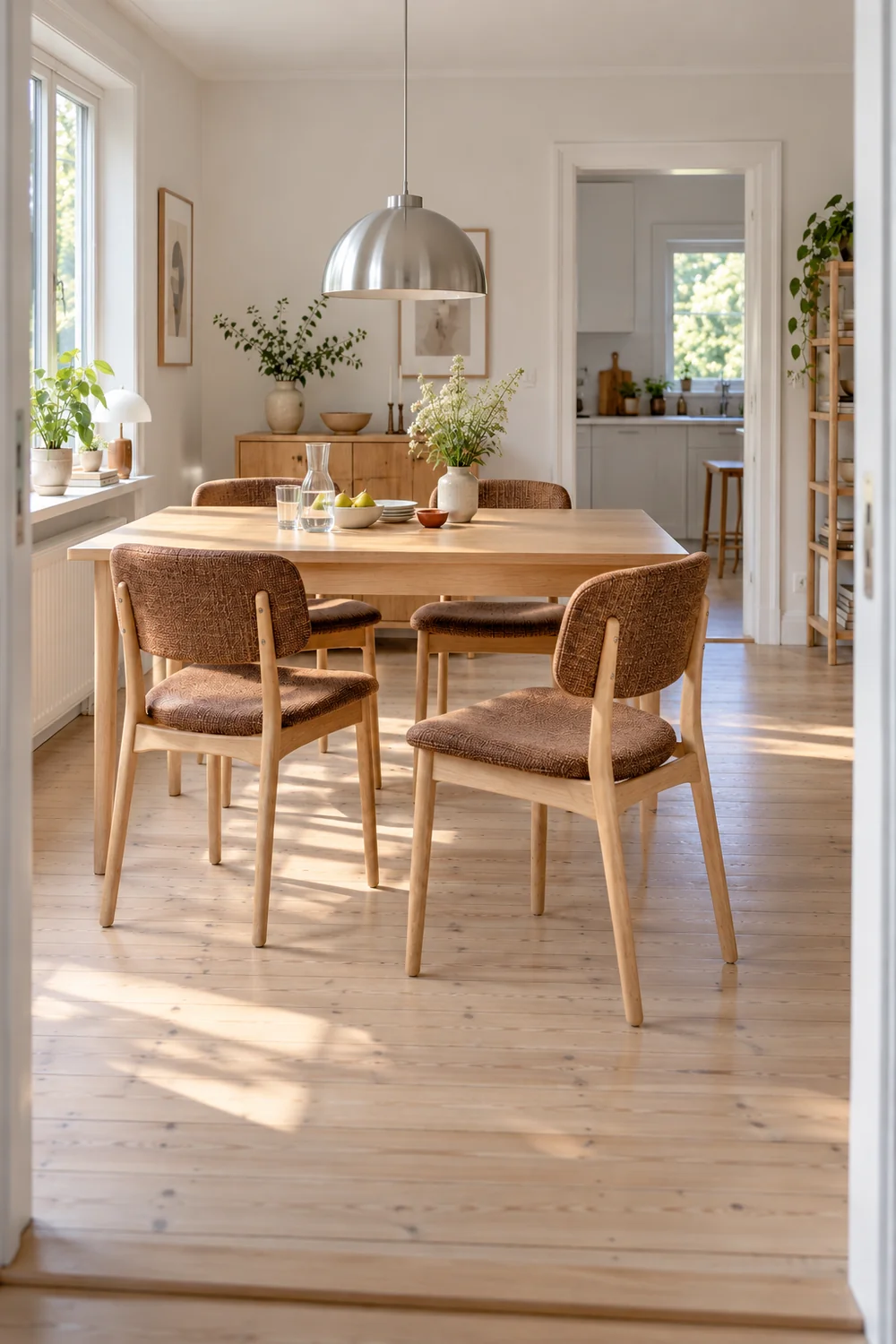
Place a paper footprint on the floor and pull an existing chair back to a realistic occupied position. Test standing up and passing behind it, including the route to the kitchen that you use during dinner. If you also need the table to grow for extra guests, the small modern dining room plan answers that separate layout question. For this chair refresh, keep the guest count you can genuinely accommodate. A narrower frame is useful only if its seat and back still work for the people you invite.
I would compare the chairs from the doorway before committing to a full upholstered silhouette. An open timber back lets the table and the room beyond remain visible. A padded timber chair adds softness while leaving much of the frame exposed. A fully upholstered chair introduces a larger block of colour and material. None is automatically the correct Scandinavian choice. The useful question is which profile gives your guests the support they need while preserving the room qualities you decided to keep.
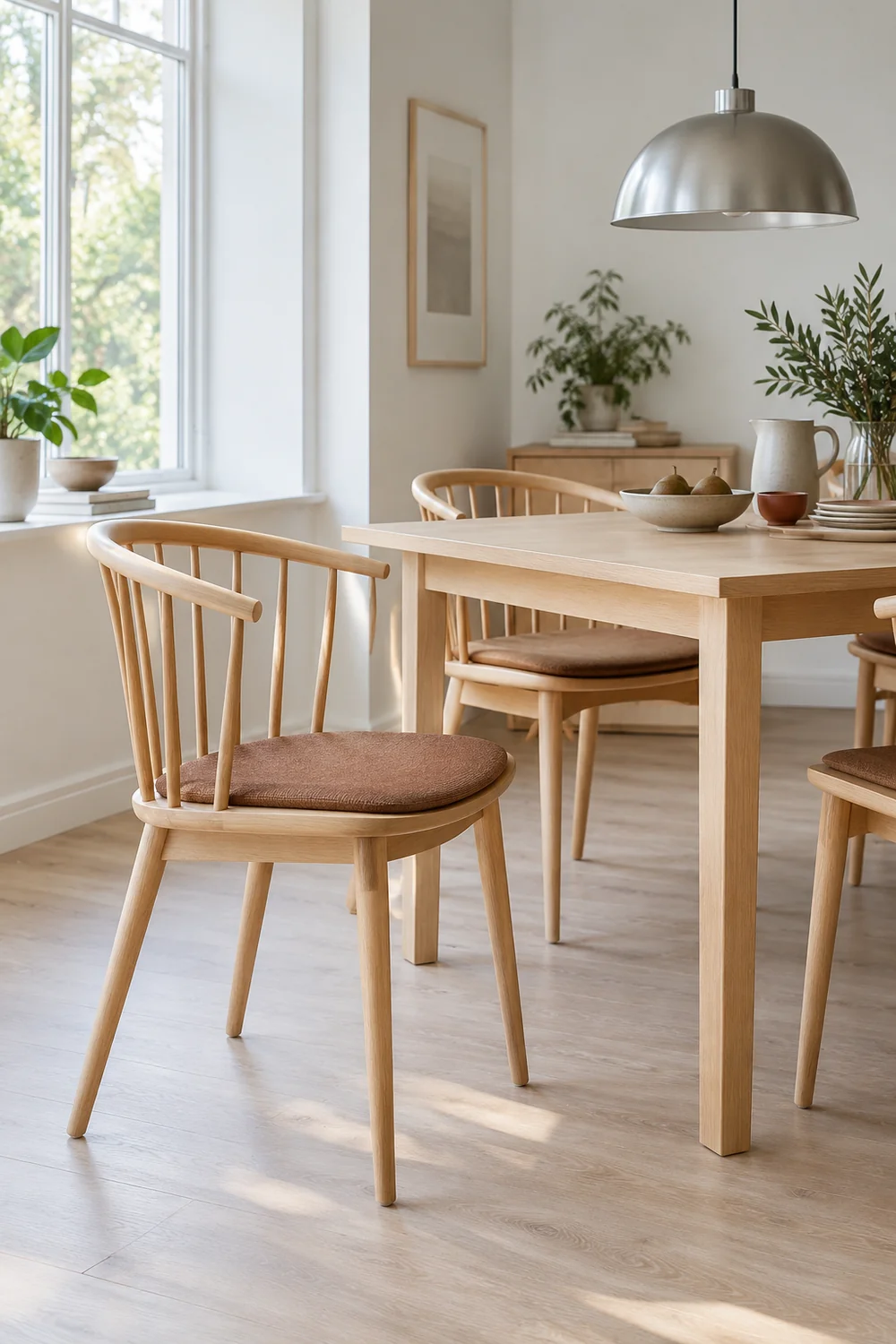
The minimalist dining room examples can help you judge furniture outlines and visual breathing room. Apply that lesson to the backs of the chairs when they are pushed in and when people occupy them. A tall back may interrupt the view towards a window; a lower one may leave it open. That visual choice must follow the sitting trial. I would never choose a low back simply because it disappears in a photograph if the people using it find the support inadequate through a meal.
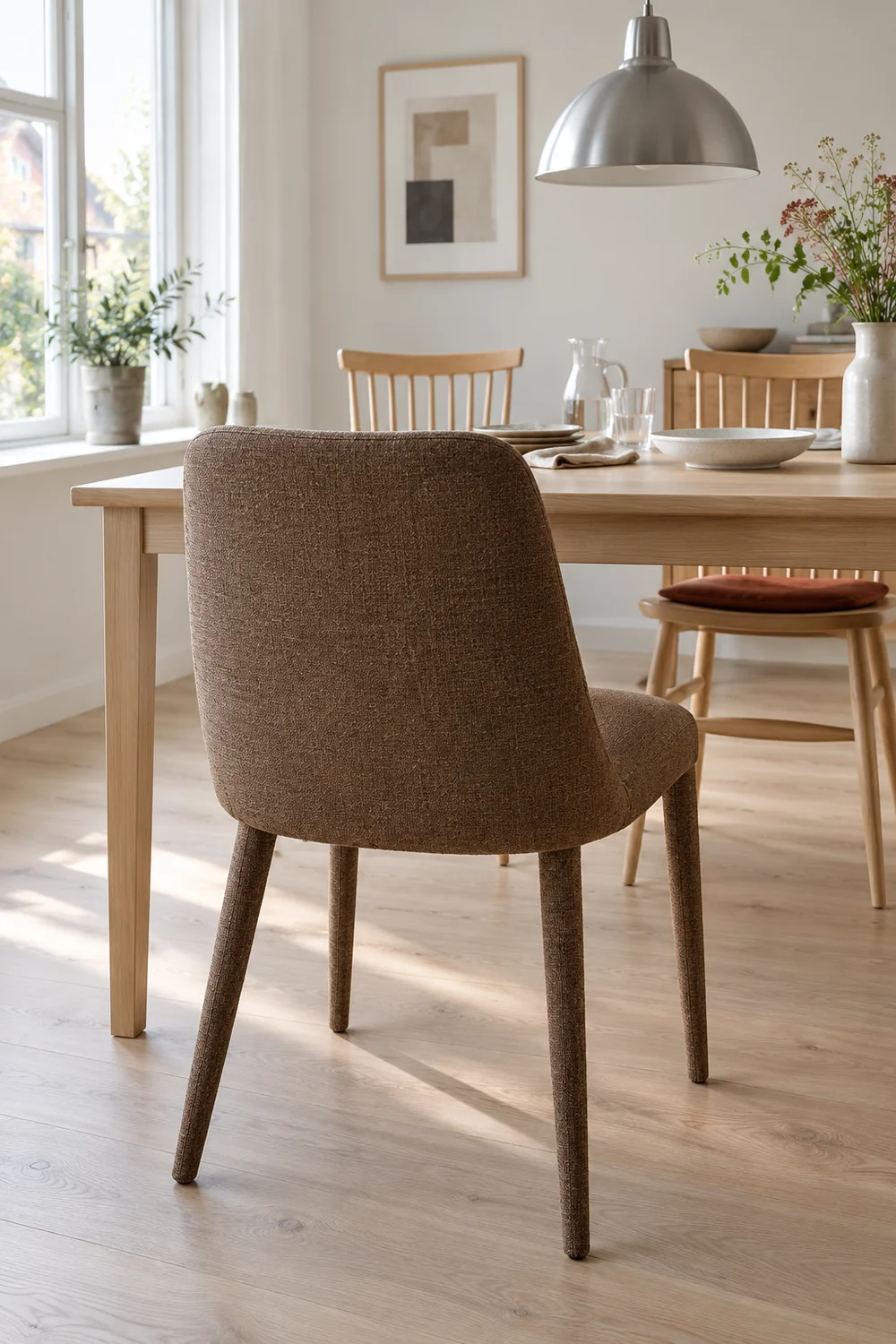
Keep the comparison controlled. Set an upholstery sample beside the actual table finish and look at it in your ordinary daylight. Beech, oak and ash do not have to match exactly, but their colour relationship should be deliberate. I would repeat one timber tone or one fabric colour rather than buy six unrelated chairs to create variety. With the profile and measured envelope settled, you have a practical brief. The next step is to compare comfortable dining chairs by construction and trial, rather than keep collecting room photographs.
Timber frame with a fitted seat pad. I would consider this when the existing chair shape already suits the room and the problem appears to be concentrated at the seat. Check the back and front edge first, then trial the pad securely fitted as intended. A thicker cushion can raise you towards the apron, and a loose pad can move each time a guest turns. Accept this route only if the chair and pad work together. It can preserve an open outline, but it cannot correct every unsuitable back or seat shape.
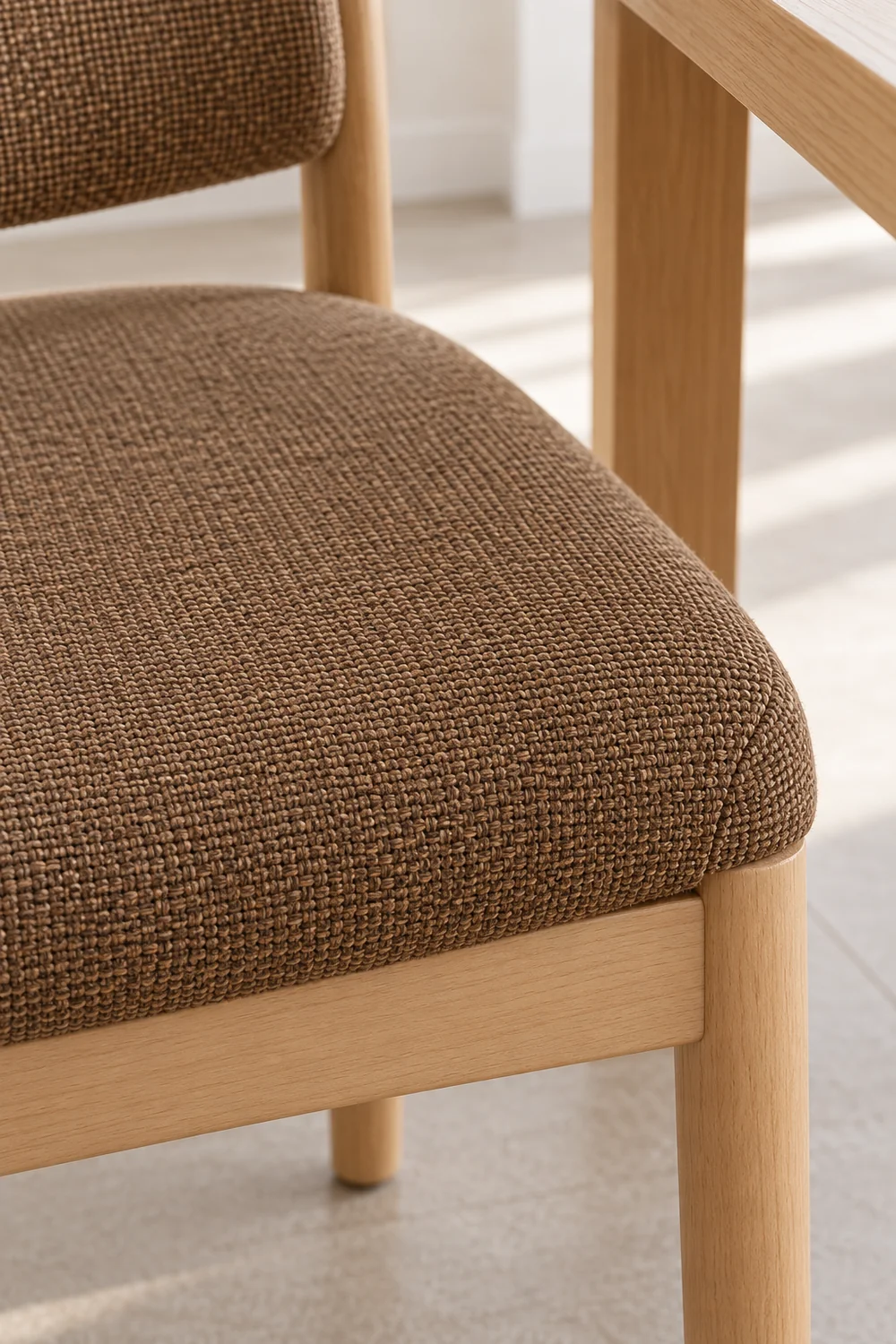
Timber frame with an upholstered seat and back. This is the route I would shortlist when a visible frame matters but the sitter wants cushioning at both contact points. Compare where the back padding actually sits, how the front edge feels and whether the chair lets you eat without perching. Fixed upholstery needs a care method you can follow. Ask how the seat is constructed, which fabric is supplied and whether replacement upholstered parts are available. A reassuring product photograph does not answer those practical questions.
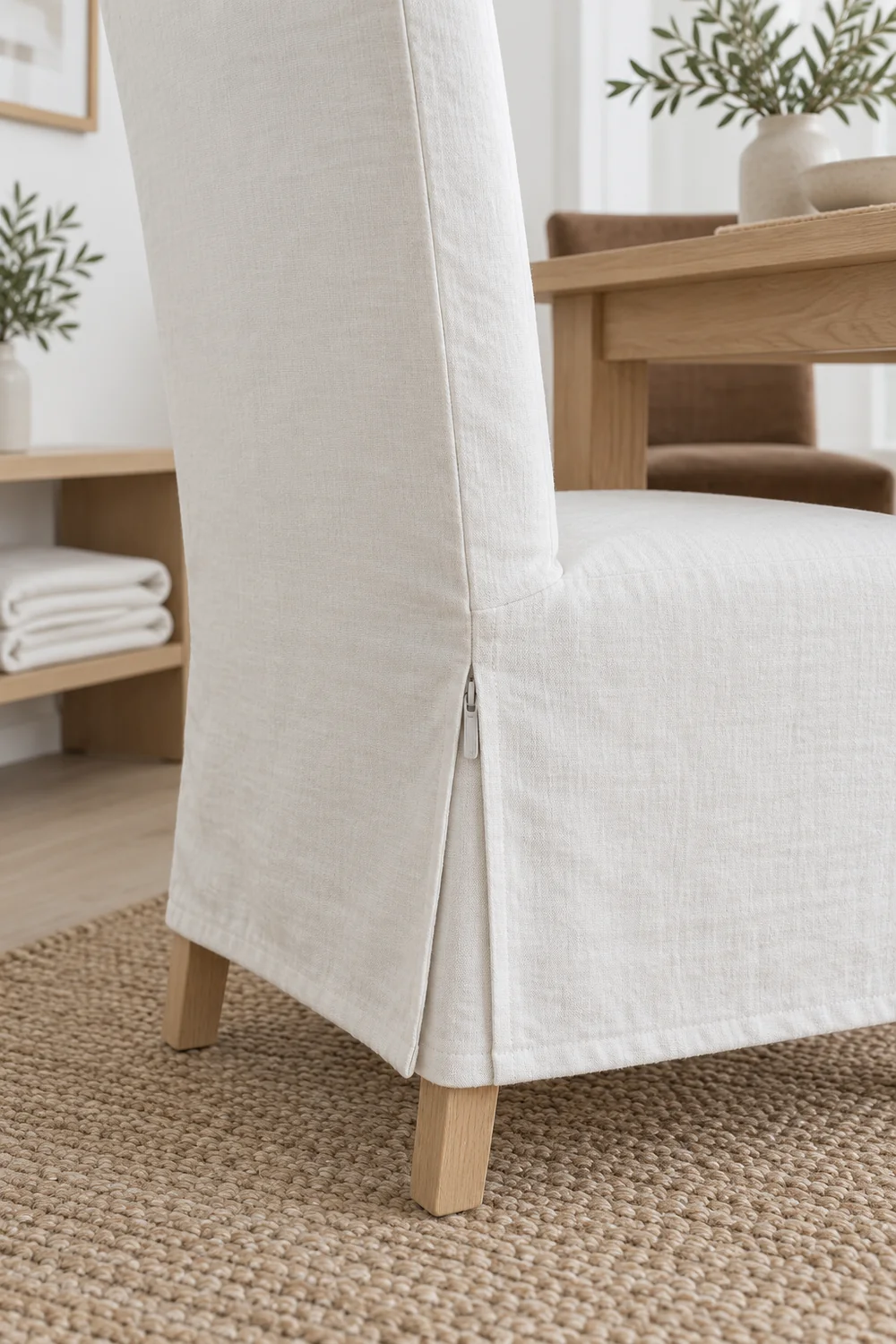
Fully upholstered chair with a removable cover. I would compare this when a more enclosing chair feels appropriate and repeat cleaning is part of the brief. Confirm that the cover is genuinely removable, how it is cleaned and whether a replacement can be ordered. Removable does not necessarily mean machine washable. Test the larger footprint and any arms against the table before judging the fabric. The neutral modern dining room examples help you assess the visual weight of pale or textured seating. Use them for the material relationship, then let the actual long meal trial decide which route survives.
I would make a small written specification for the leading candidate. Start with the exact model, frame finish and upholstery or pad option. Record the manufacturer's overall dimensions alongside usable seat dimensions, seat height and arm height where relevant. Add the table height, underside clearance and the measured width at each intended seat. If the seller cannot supply a needed dimension, ask for it or measure a sample. Do not replace missing information with the assumption that every dining chair fits every dining table.
For the fabric, record its exact name or code and the care instruction that belongs to that option. Ask whether the cover removes, whether the seat pad detaches and what replacement parts are available. A fabric described as durable still needs its own cleaning guidance. I would check whether you are comfortable with that routine after food or drink spills. If regular professional cleaning would be impractical for your household, recognise that before choosing a material whose appearance depends on it. Keep the supplier's instructions with the specification rather than relying on a generic stain remedy.
Add the quantity, delivery route and trial arrangement. Check doorway turns, packaging dimensions and assembly requirements where supplied. Read the seller's sample, return and custom order terms before treating one chair as a reversible experiment. I would also record the floor glide or protective foot option that suits your floor, following the chair and floor guidance. At this stage you are making the purchase legible: the exact chair, the exact material, the actual table relationship and the conditions under which you can try it. The sample trial now has something concrete to confirm.
I would try the candidate at your table if that is possible, or reproduce the measured table relationship when testing it elsewhere. Sit as you would while eating. Check that you can approach the table without the arms catching, that your legs have usable space and that the front edge does not feel intrusive. Then move into the more relaxed position you use while talking after dinner. A chair that works for an upright mouthful may feel different when you sit back and remain there.
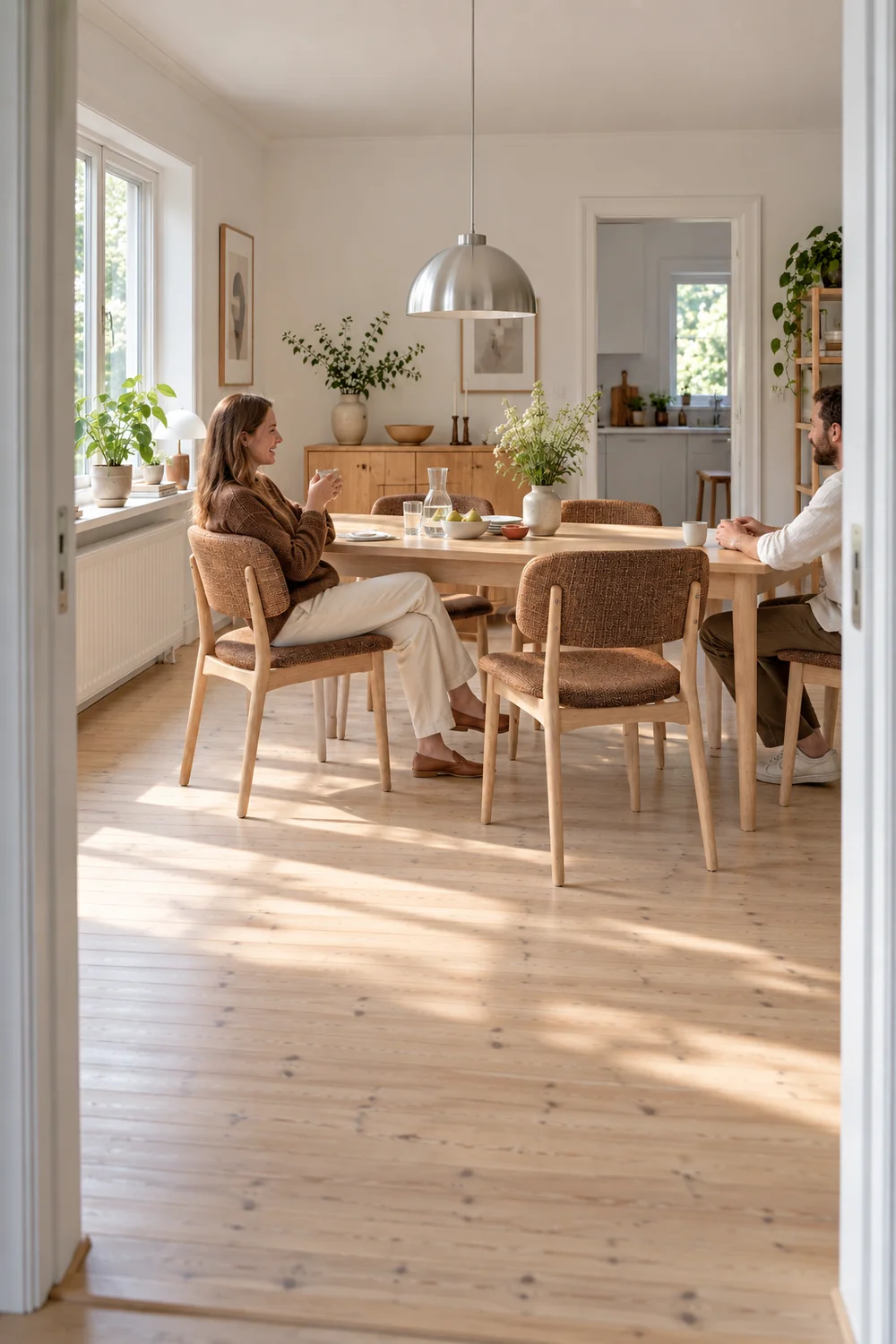
Give the trial time to reveal what a quick perch misses. I would use an ordinary meal and a period of conversation, then write down what changed. Notice whether you keep moving the pad, leaning away from the back or lifting your feet because the position feels wrong. Ask another person who will regularly use the setting to try it too. Comfort varies between people, so one person's approval does not establish a universal result. The point is to collect useful observations from the people and situations that matter to your invitations.
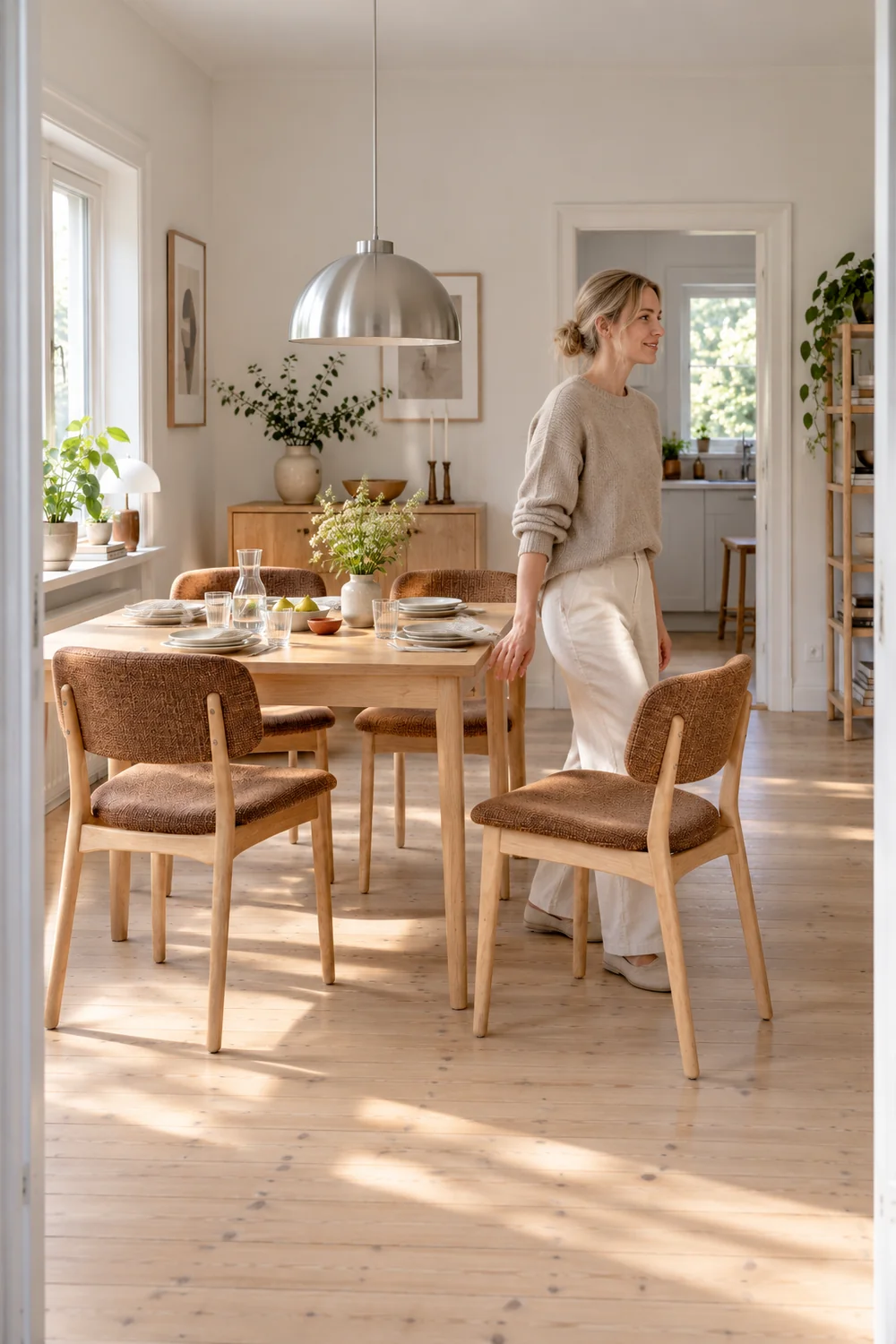
Finish with movement. Stand up, slide the chair in and out, carry an empty serving tray past the occupied position and sit down again. Test adjacent places rather than only the easiest end seat. I would reject a candidate that repeatedly catches the apron, leaves an intended place unusable or requires a cushion adjustment every time you turn. Keep a simple decision record: what passed, what failed and what change needs another trial. If a different pad or fabric construction changes the seat, test that version again before ordering the set.
One good sample is the start of the final check, not proof that six will fit. I would draw the actual chair widths against the clear table edges and include the legs that interrupt them. For an illustrative example, a table with 130 centimetres between its legs and two chairs each 52 centimetres wide leaves 26 centimetres to distribute between the chairs and the legs. That arithmetic identifies available space; it does not prove two people can use it comfortably. Test the occupied arrangement before deciding it passes.
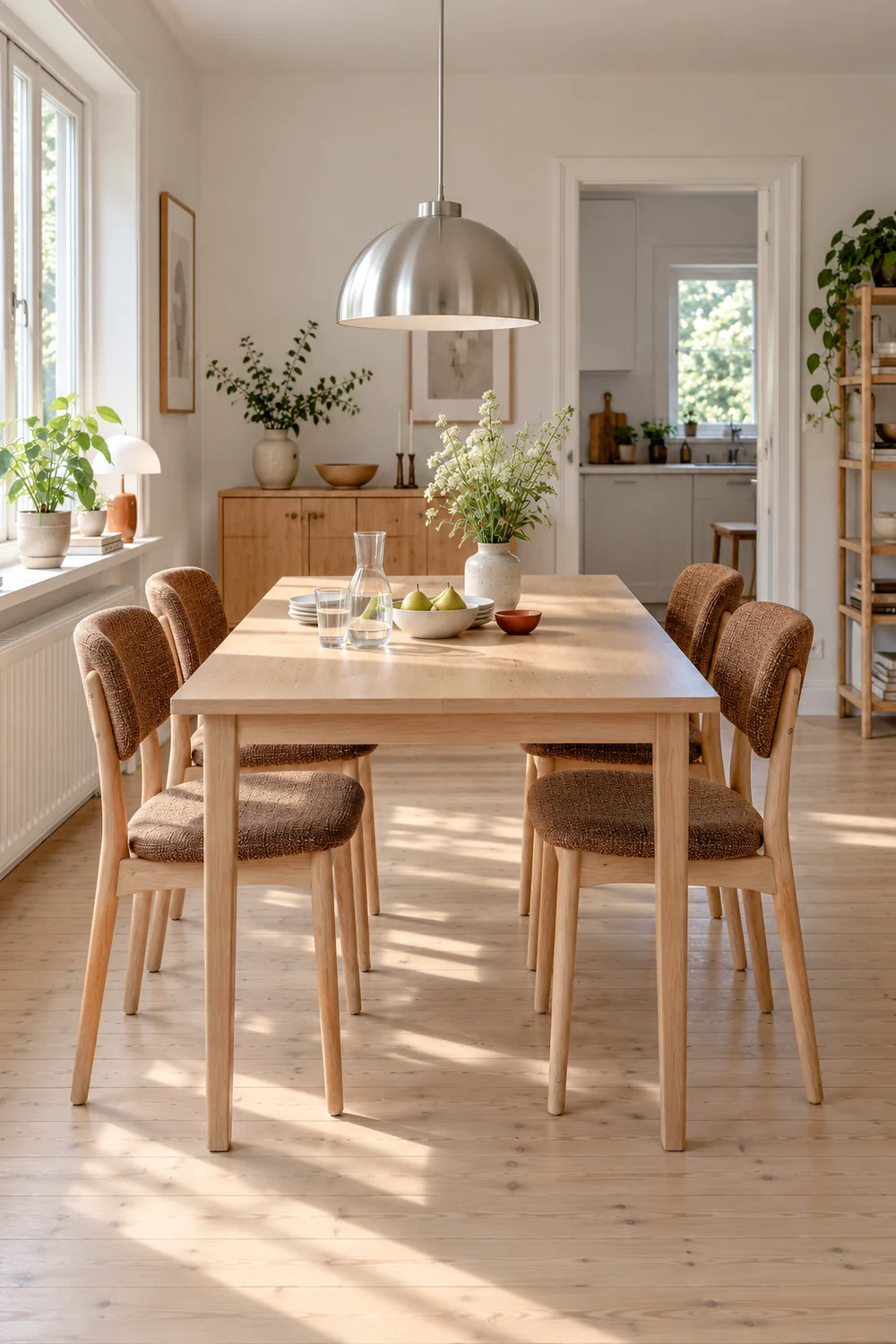
Arm clearance deserves the same precision. Imagine a chair arm measured at 68 centimetres and the lowest table apron at 66 centimetres. The arm cannot tuck beneath that apron even if the tabletop is higher. A candidate with lower arms may pass that particular obstruction, yet still fail at the knees, back position or occupied route. I would keep each check separate on the specification. Do not let a reassuring overall height or seating capacity claim hide the one dimension that makes your table and chair incompatible.
Now return to the scandi dining room view and judge the selected set as a whole. Keep the comfortable chair you have tested, then adjust the smaller surrounding details if necessary. You might remove a bulky centrepiece or simplify the sideboard rather than choose an uncomfortable seat to recover visual lightness. Before ordering, confirm the exact model and material, quantity, supplier terms, delivery route, care guidance and the recorded trial result. Once those decisions are complete, the useful next question is dining chair care between the meals you want to host.
I would keep the chair instructions somewhere you can find them when a spill happens. Follow the method for the actual finish and fabric rather than apply one treatment across timber, upholstery and woven seats. Carl Hansen and Son provides a separate care method for paper cord, which is a useful reminder that natural materials need specific handling. If the manufacturer calls for a particular cloth, cleaner or professional treatment, use that guidance. Do not scrub, soak or improvise because another chair in the house tolerated it.
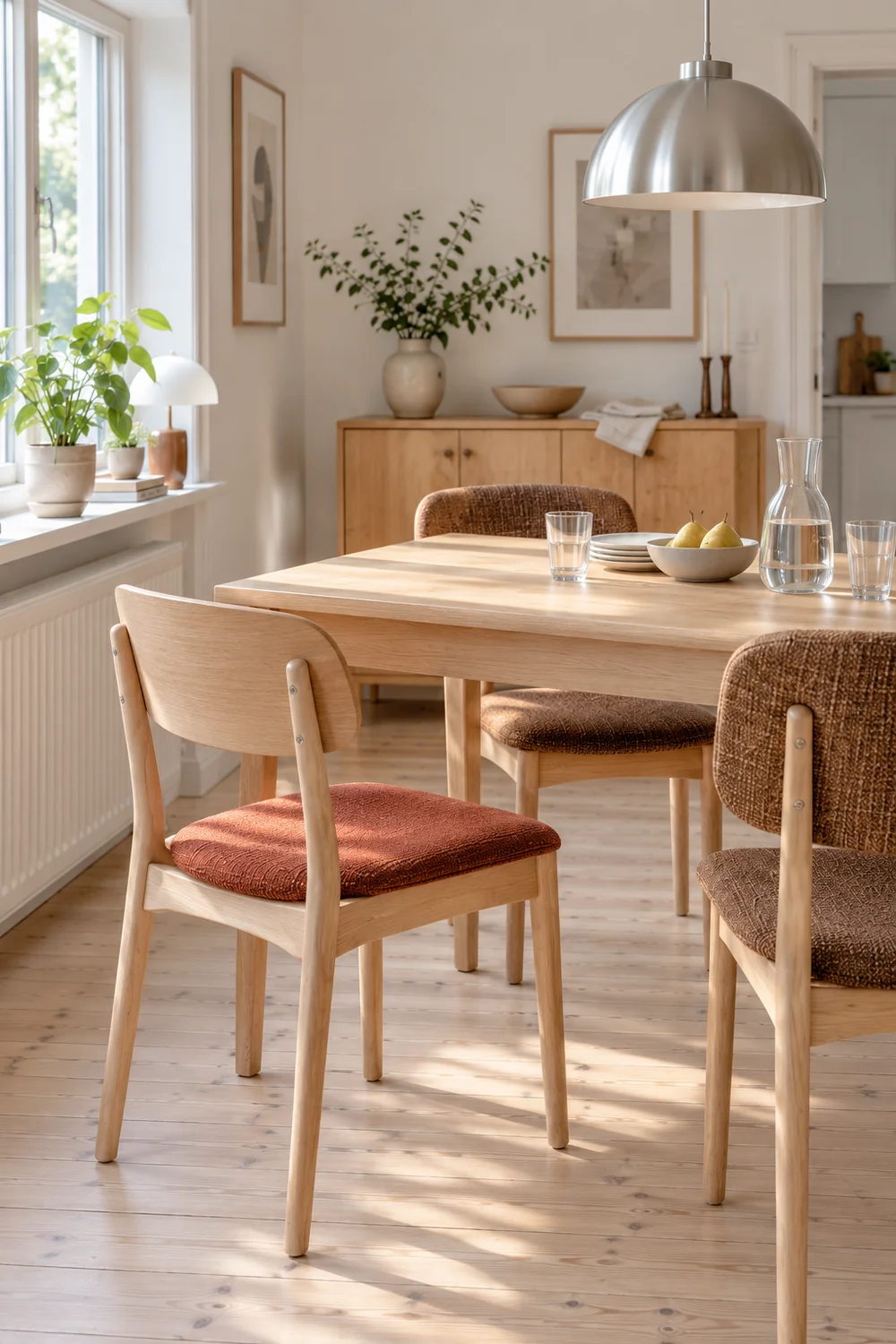
For removable covers, follow the stated cleaning and refitting instructions and check them when they return to the chair. A spare approved cover or pad can be useful if the supplier offers one, but it is an option to verify rather than a reason to buy extras automatically. Before the next invitation, check that pads remain secured, chair feet and glides are intact, and every intended place is ready to use. If the back, pad or table relationship starts feeling different, return to the Scandinavian dining chairs trial and identify the change before ordering another accessory.
With the seats ready, turn to the surfaces that surround them. The organic dining room decor guide answers the separate question of what to keep on the table and sideboard when a room needs to reset easily. I would keep that finishing decision modest. Your useful result is already substantial: a chair chosen against a measured table, tried through eating and conversation, and supported by a care routine you can follow. That is a more convincing invitation than a perfectly matched set you do not enjoy sitting in. Keep the specification, trial notes and care instructions together so the next meal begins with the room working for you.