Newsletter Subscribe
Enter your email address below and subscribe to our newsletter

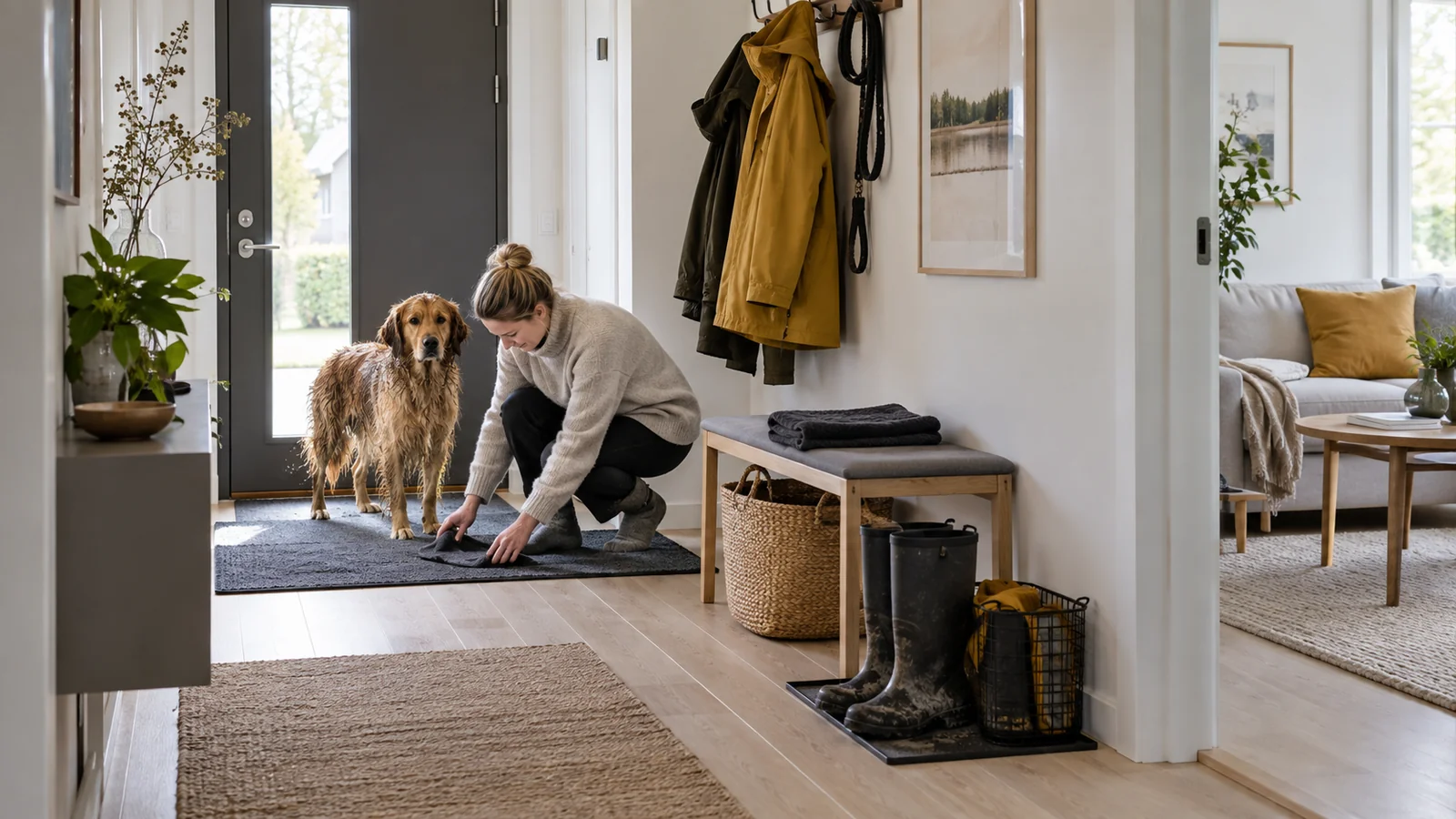
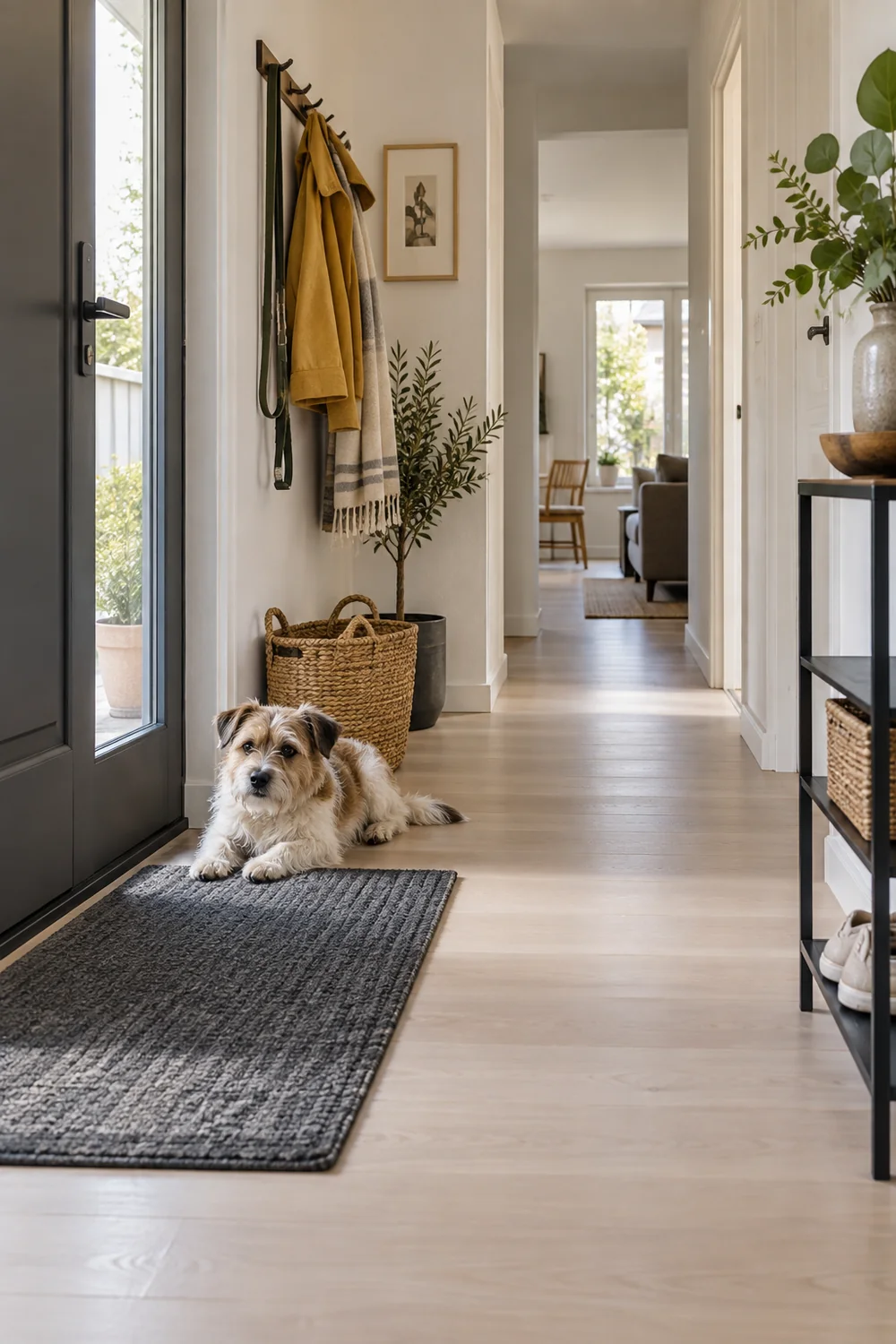
The layout worked when you first set it up. Then came a run of wet walks, an extra pair of boots, two used towels and a lead left where it could dry. The narrow hallway has slowly become a holding area again. Dog gear organization at this stage is a return visit question: how do you keep the fitted entrance useful after the routine has been tested by real weather? This guide is for owners who already have a small Scandinavian hallway station. It shows a brief arrival reset, a place for wet gear to dry, a weekly edit of what stays near the door and a decision point for returning to the original layout. The aim is to preserve the clear route and the calm look without pretending that every walk is clean or that a dog owning home can remain staged like a photograph.
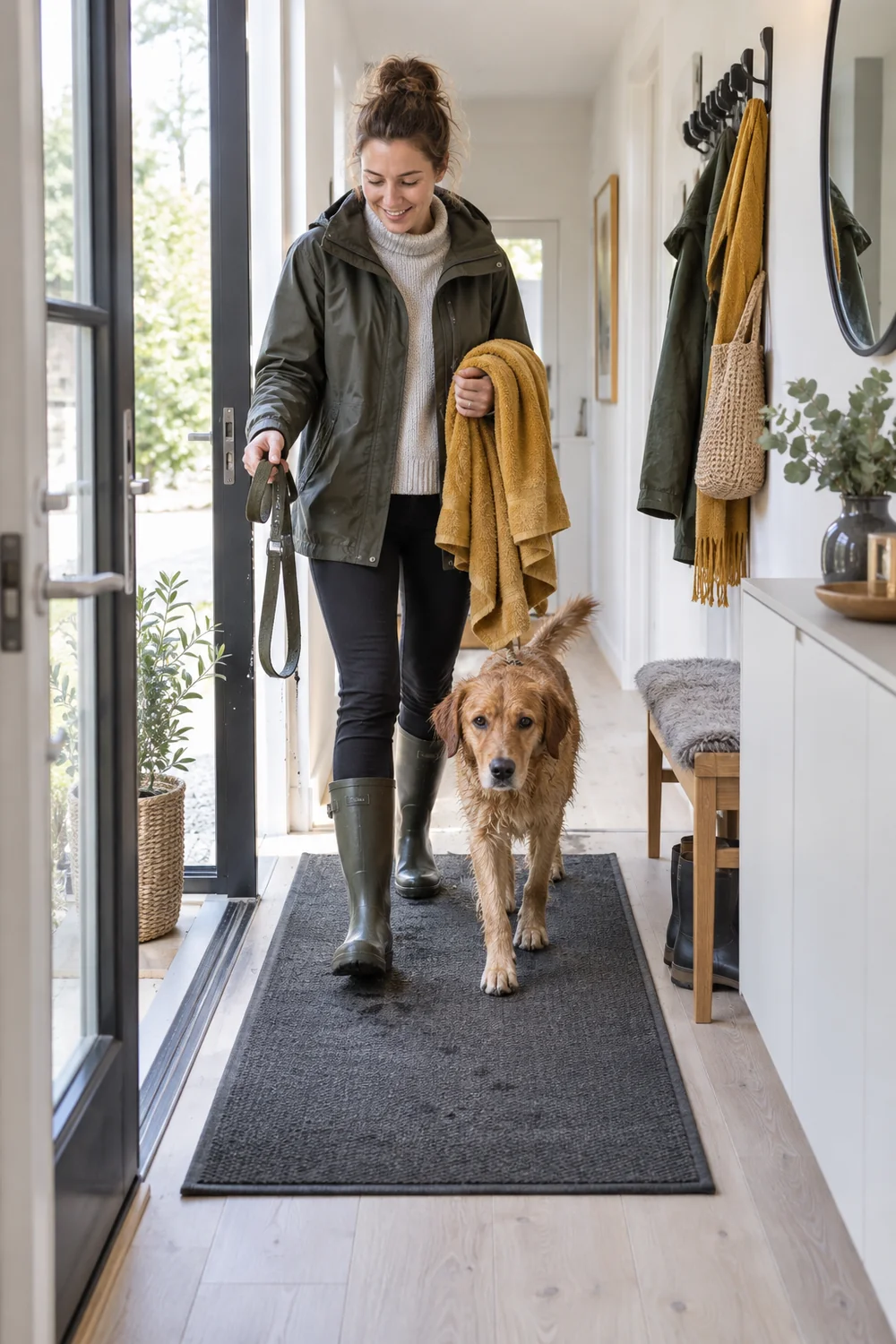
Begin with the original route sketch or a photograph of the completed hallway. Compare it with the room today. Are shoes on the floor because the storage is full, because the cabinet is awkward to open, or because they need somewhere to dry? Is the lead on a chair because the hook is hidden behind a coat? These causes need different fixes. Removing the visible clutter for a photograph will not tell you why it returns.
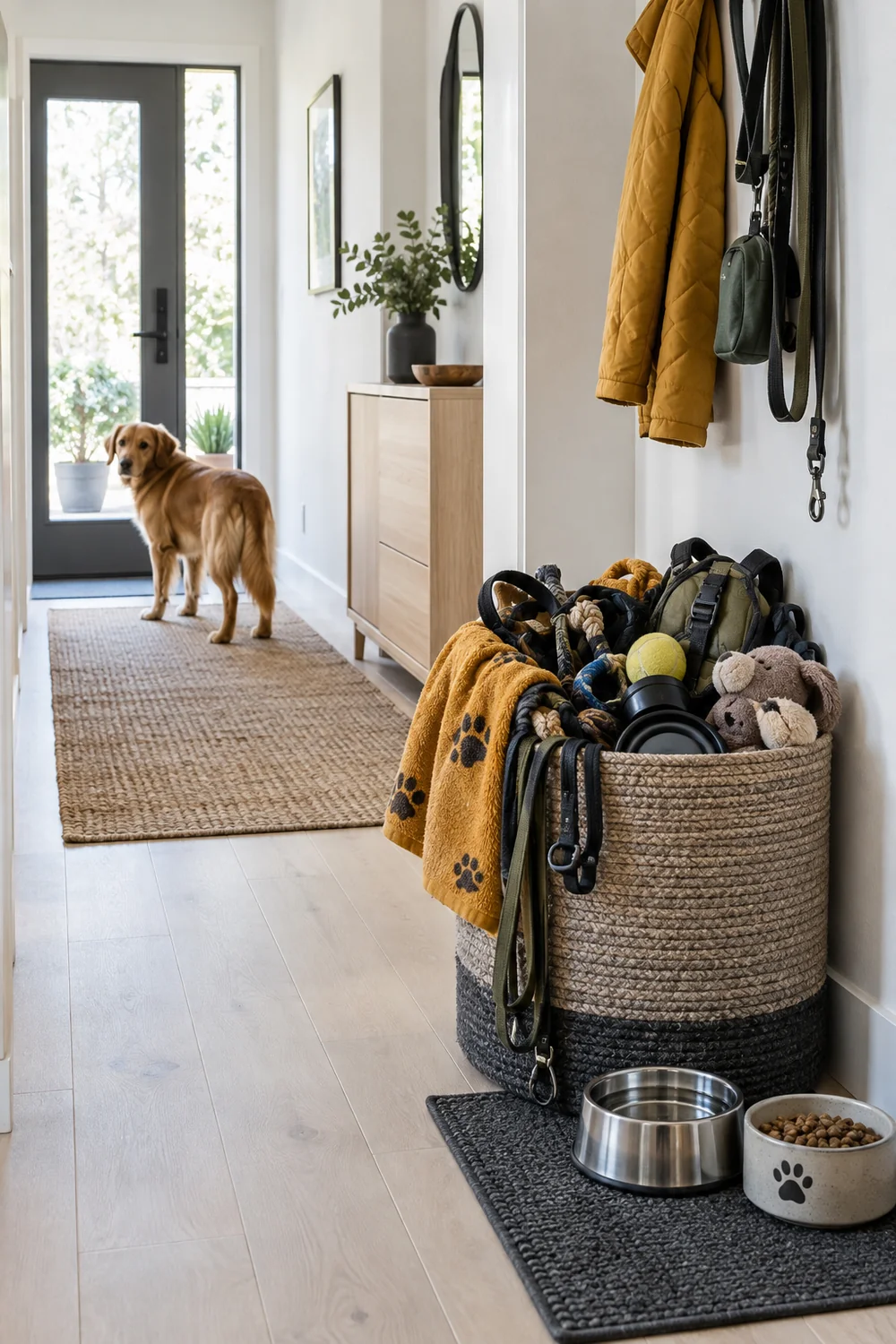
Use one ordinary arrival to make the problem specific. Watch where you pause, where the dog turns and which item you reach for first. If your route is now narrower, identify the object that changed it. If the hallway shoe storage ideas plan still fits the daily shoe count, the answer may be a better return habit rather than a new cabinet. If the daily count has changed, measure again before assuming that more storage can fit.
Look for signs of a system that has begun to mix wet and dry items. A clean towel under a damp lead, a basket holding both spare gear and used cloths, or footwear drying inside a closed unit can make the entrance harder to use. Separate these functions again. The hallway can be a handoff point without becoming a permanent drying room.
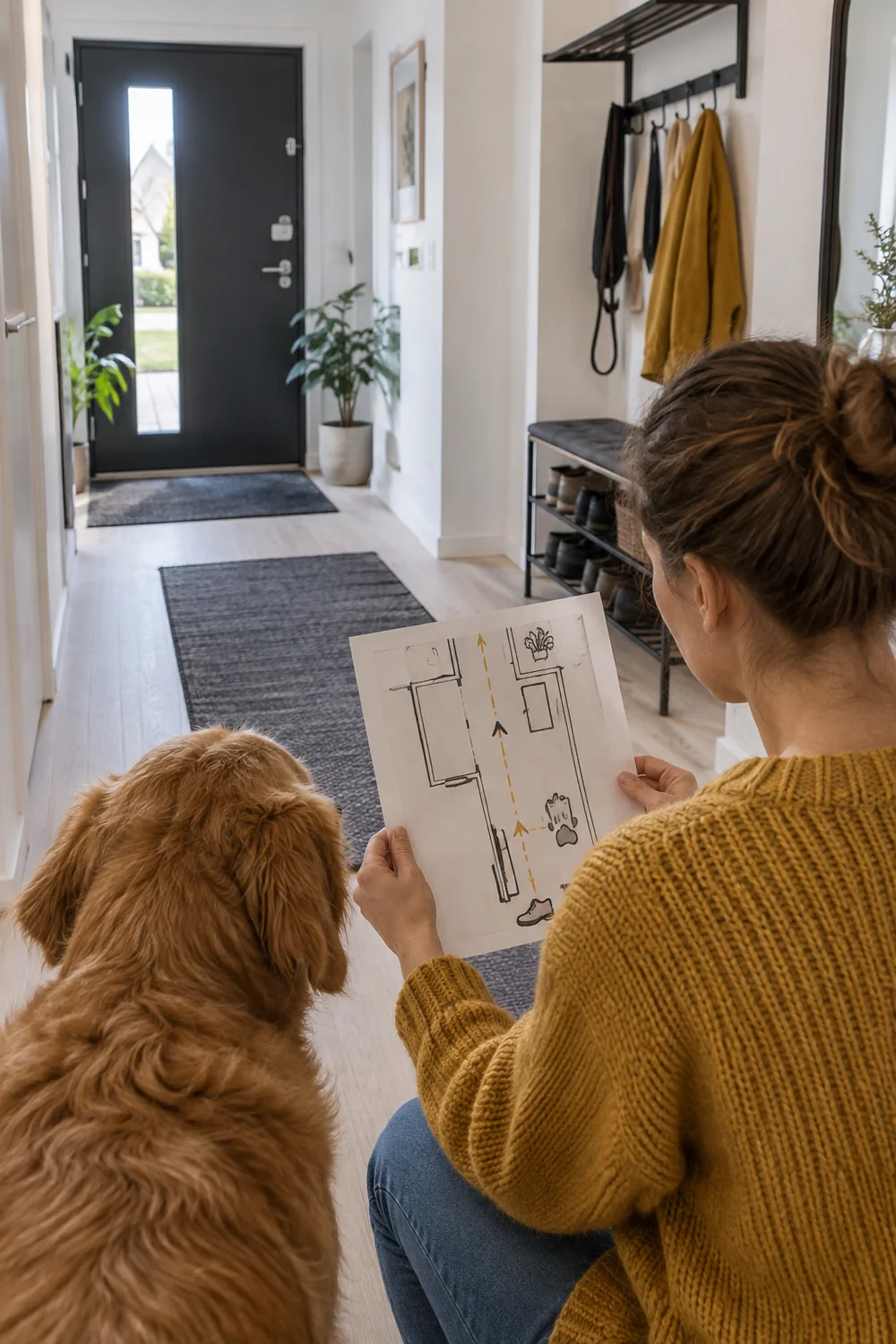
Ask what caused the change: a short wet spell, a new walking schedule, another person using the hall, or gear that no longer belongs to the next walk. That answer determines whether you need a five minute reset, a seasonal change or a fresh layout decision. Do not buy an organiser until the reason is clear.
Make the reset proportionate to the cause. If the hallway worked for months and a few rainy days filled the tray, begin by returning dry items and washing the used towels. If the route has been blocked every day since the station was installed, a quick tidy will only hide a layout problem. This distinction protects you from spending money on another container when the actual issue is where the first one sits.
Make the first few minutes easy enough to repeat. Stop at the defined landing place, close the door, manage the dog, and place wet shoes where they can be dealt with without blocking the passage. Put the lead in its intended position only when it is ready for that place. Take any used towel to its drying or washing destination. The precise order may vary with the dog and the household; the important feature is that each item has a next move.
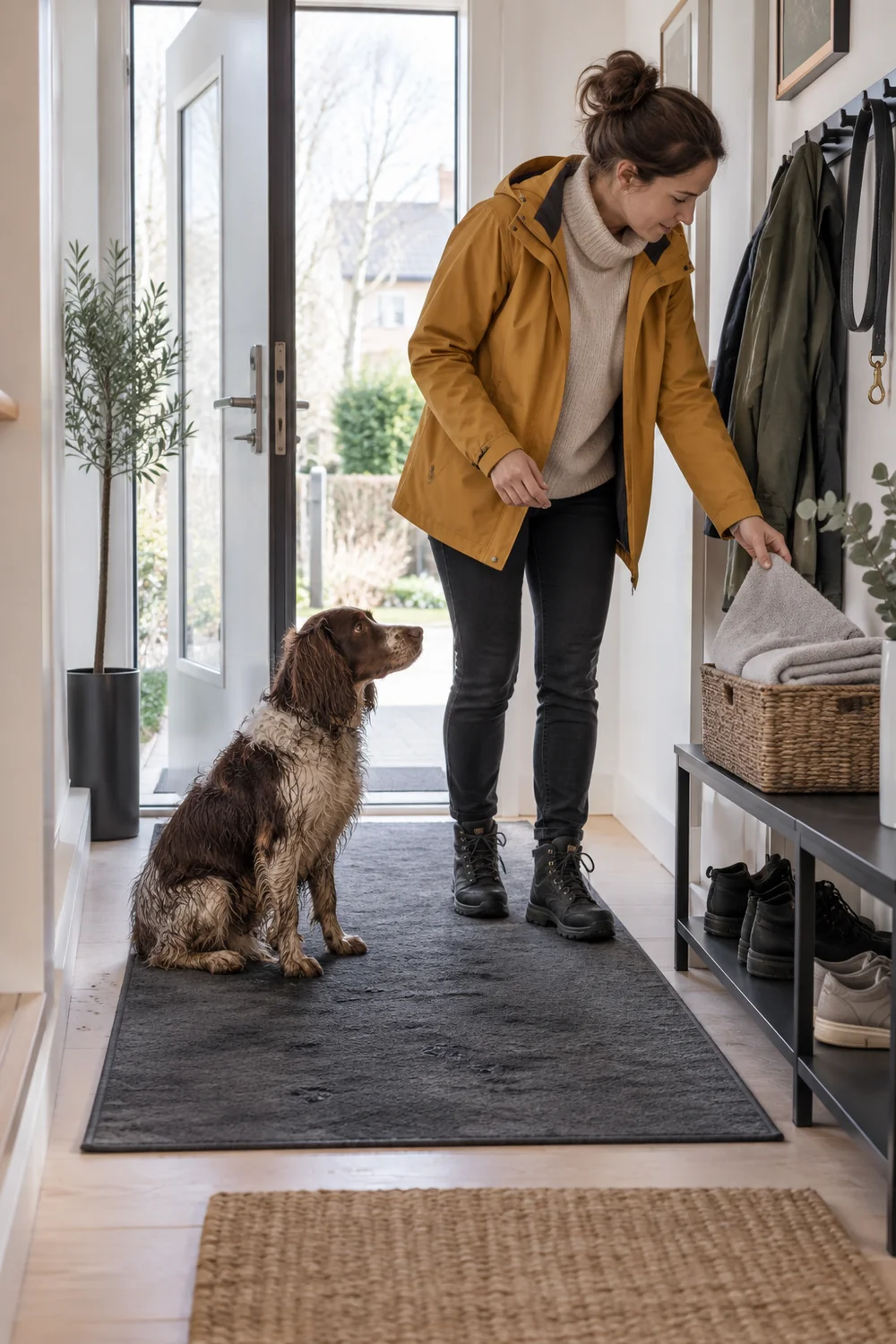
Keep the clean towel reachable before you need it. If it is buried inside a cabinet behind wet shoes, the station asks too much at the most inconvenient moment. A small dry container near the pause point can be enough. Avoid leaving a line of spare towels on display if one or two are all that the daily routine requires.
PDSA advises checking a pet's paws after contact with winter grit or salt and considering plain water to wash away residue. Follow veterinary guidance for a health concern, and adapt the arrival routine to your dog rather than using an abrasive or strongly scented household cleaner on paws. The hallway arrangement supports the routine; it does not replace pet care advice.
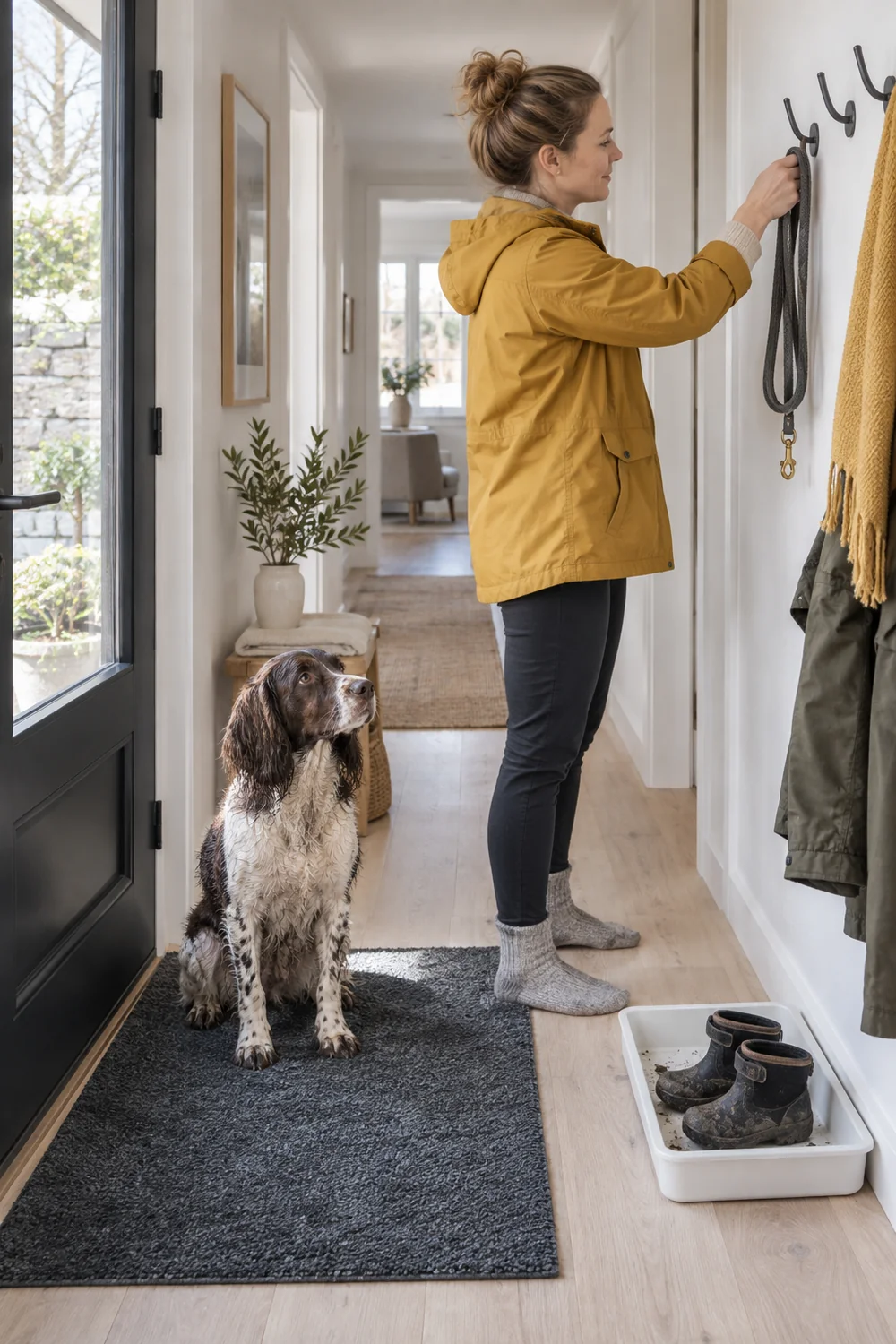
Review the scandinavian hallway article's seasonal decorating ideas only after the working surfaces are clear. In a dog owning entrance, the practical mat and towel place are the seasonal features that matter first. A branch or decorative basket can be added later if it does not displace the daily gear or obstruct the turning space.
The hallway should not have to hold every damp object until it dries. Name a drying destination elsewhere in the home that suits the items and the ventilation available. Move the used towel there promptly. Let wet shoes or walking gear dry according to their care instructions before returning them to closed storage. If the hallway itself is the only feasible place, keep the drying position deliberate and out of the passage, and reduce what else is stored there.
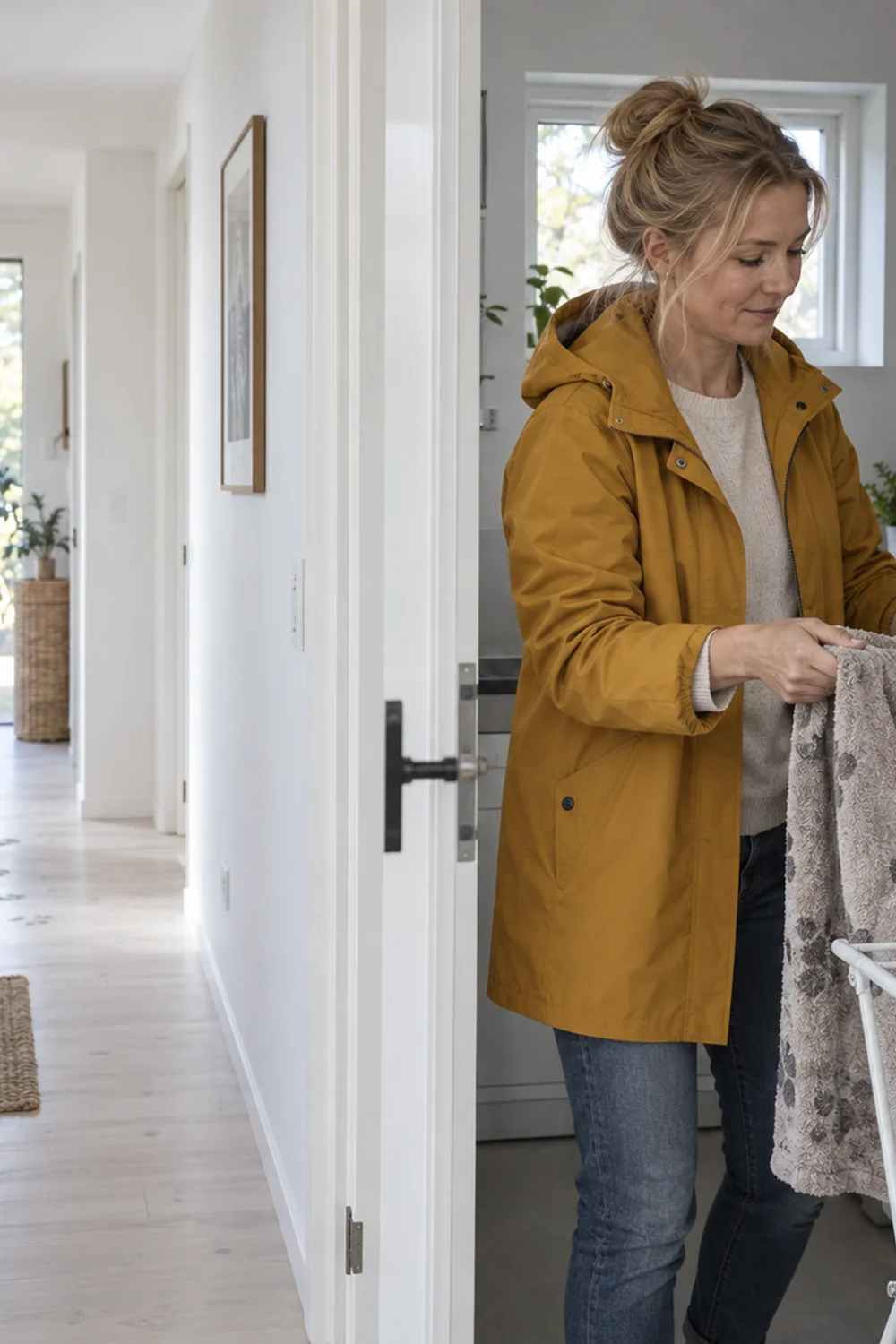
Separate clean supplies from used gear. A small rotation might be one clean towel ready, one in use and one washing or drying. The number should match the actual routine, not a prescribed set. Keep extra leads, seasonal accessories and bulk supplies outside the entrance unless they are genuinely used daily. The larger scandinavian mudroom article shows how a dedicated room can accommodate more functions. A narrow front hall needs a much smaller version of that logic.
Check the container itself. A basket can hide gear from view, but if it has become a place for damp cloths to sit, its neat exterior masks an unhelpful routine. Move the wet items, clean the container as appropriate and return only the dry supplies it is meant to hold. If hooks are crowded, move the occasional pieces to a secondary location.
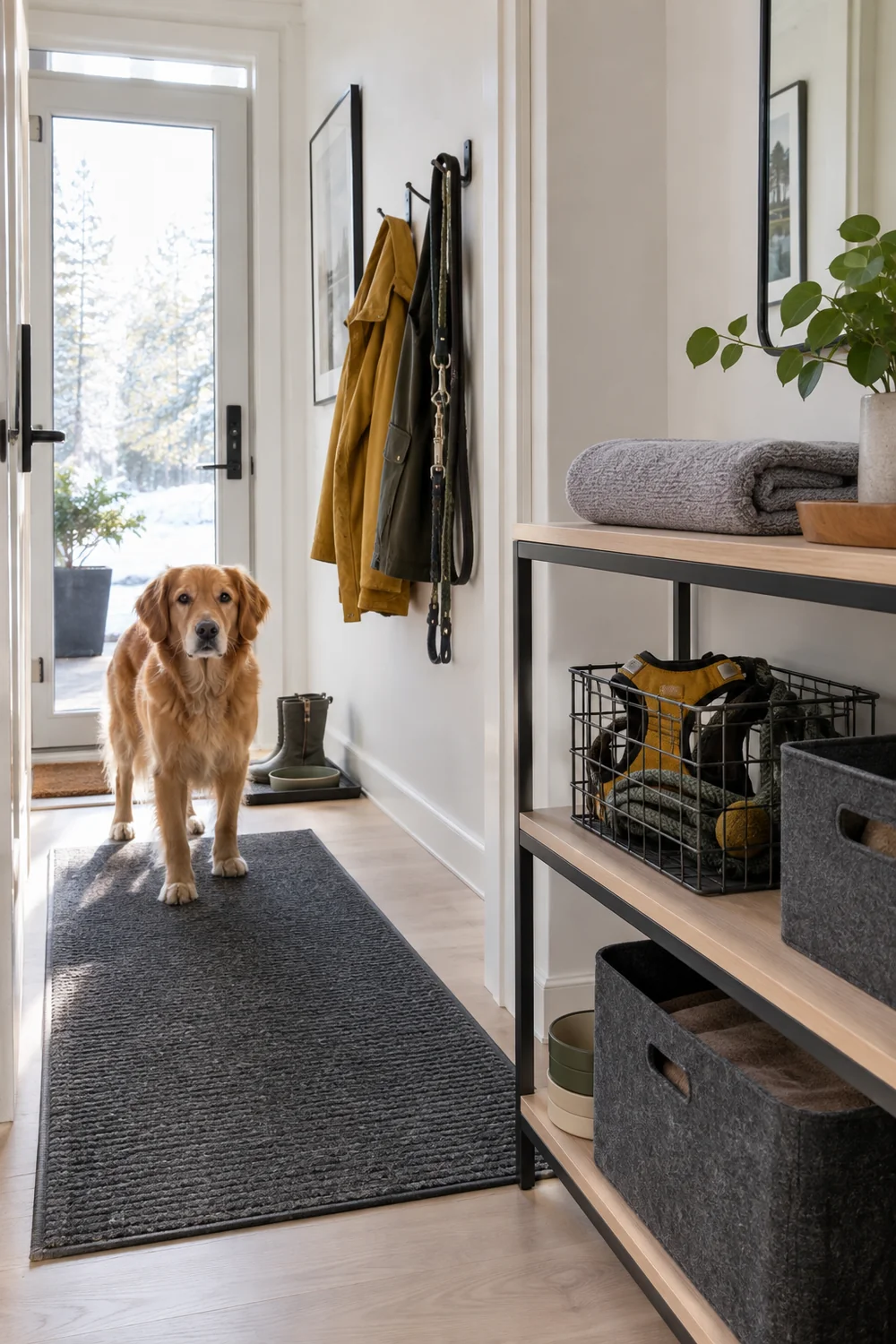
The goal is a predictable loop. Take the lead and clean towel when leaving, use the wet landing place on return, move damp items to their care destination, and replenish the ready position. When that loop is easy to perform, the entrance remains usable even during several wet days.
Once the wet gear is dealt with, decide what deserves a permanent position. Lay out everything currently visible in the entrance. Sort it into next walk, this season and occasional use. Return only the first group to the most reachable places. Put the seasonal group where it can be retrieved without occupying the everyday route. Move occasional objects to a more suitable cupboard.
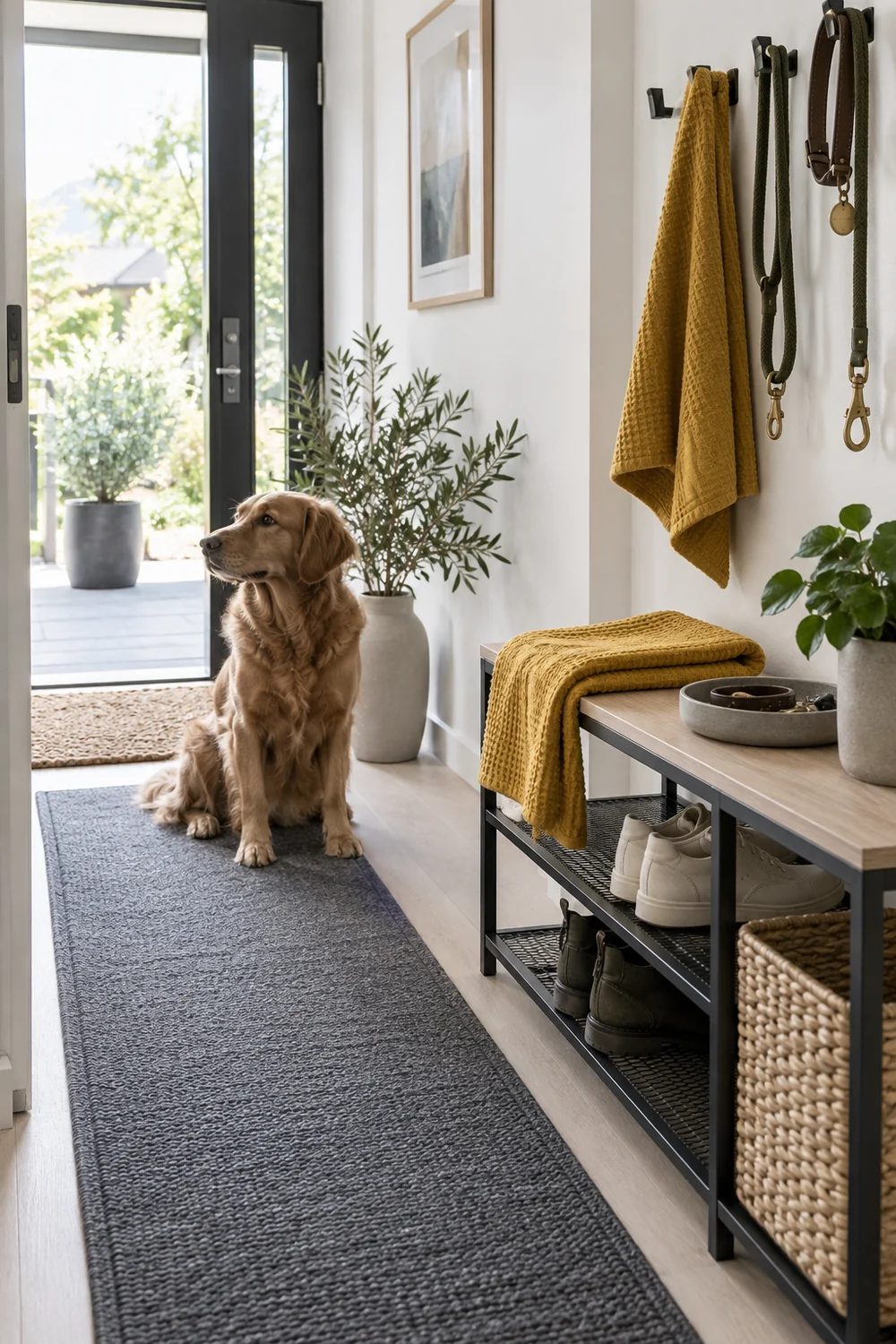
This is not a demand for a perfectly empty hallway. A dog lead on a well placed hook is evidence that the room serves its household. The edit is about preventing every spare accessory from competing for the same limited wall and floor. In a small entrance, one extra pair of shoes can matter more than several decorative details. Prioritise the objects that make the next walk easier.
The minimalist hallway examples can help you judge the visible balance once the functional edit is done. Keep the surfaces that are easiest to wipe, the hook group that is easiest to reach and enough unoccupied wall for the space to breathe. If a decorative shelf must be moved for a towel to have a reliable place, the towel's position is likely the stronger decision.
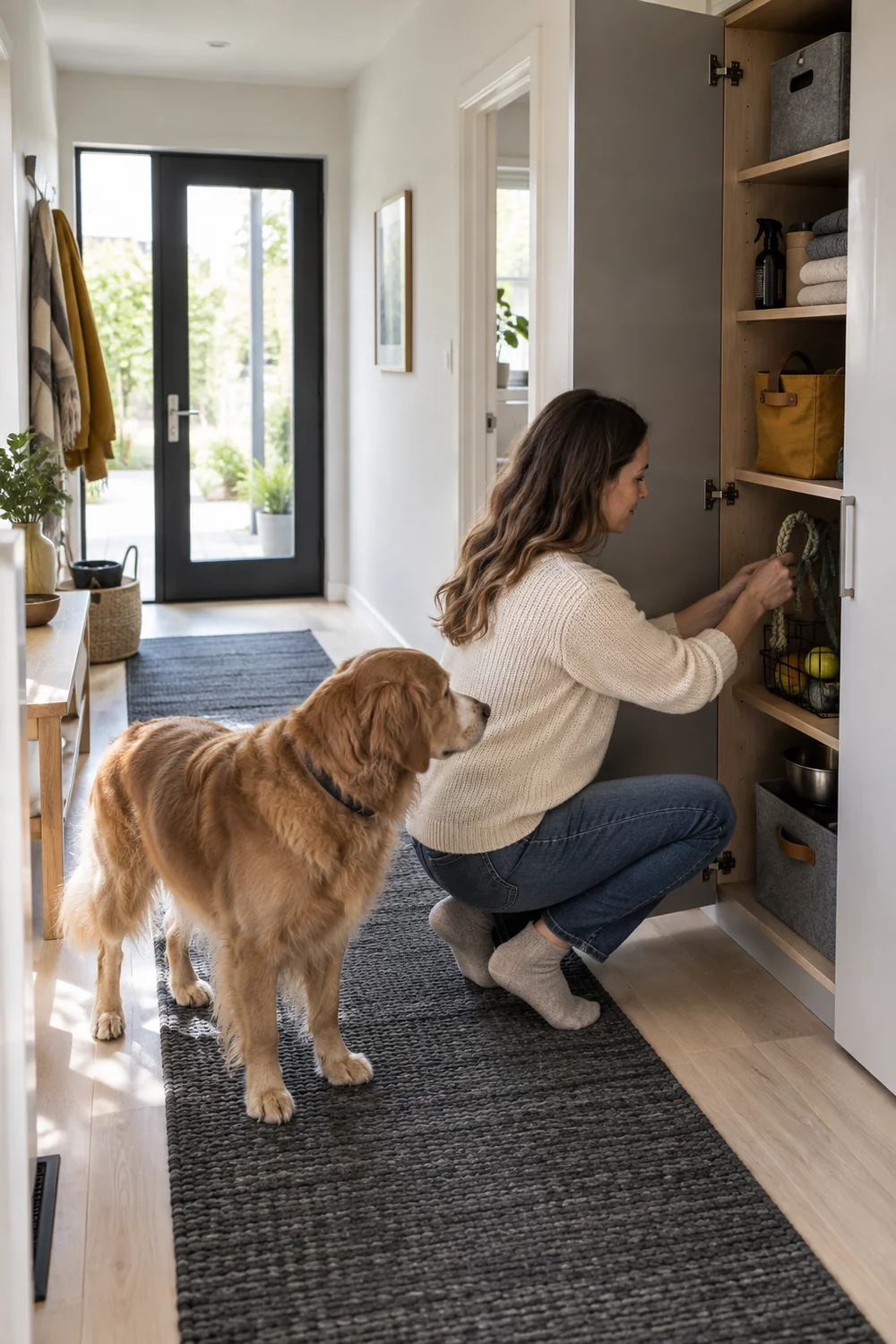
Take a fresh photograph from the same viewpoint as your original one. You should be able to identify the practical stations without a forest of containers. If the room still feels busy, remove one rarely used object at a time rather than changing the colour scheme or buying matching baskets to conceal an oversized inventory.
Give the entrance a short weekly review during wet weather. Lift and clean the mat according to its instructions, check the floor beneath it, and make sure its edge lies flat when returned. Inspect the storage unit for damp items that were put away too soon. Wipe the appropriate surfaces using the manufacturer's care guidance. Empty a tray or basket before it becomes a permanent collection point.
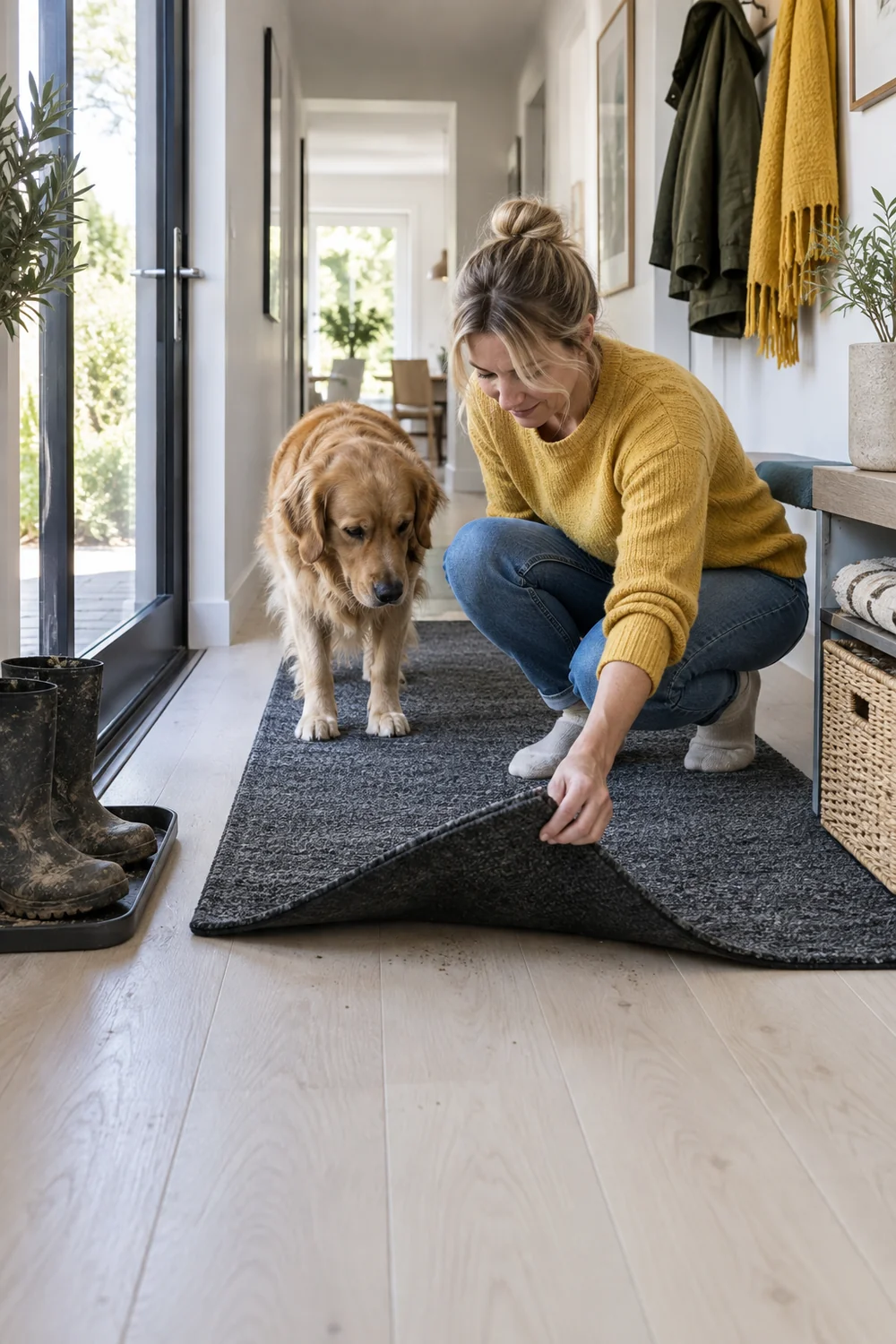
This review can also show whether the chosen floor protection still fits the route. A mat that repeatedly shifts or folds when the door opens may need a different size or position. A tray that catches the door may be better placed beside the threshold than directly in front of it. The broad small hallway ideas article offers other visual treatments, but the weekly test should decide what is useful in your particular entrance.
Look at what has happened to the materials, not only whether the room looks tidy. If a painted wall is repeatedly marked by a lead or bag, move the hook or protect the contact point with a suitable finish. If a basket is hard to clean, reconsider whether it belongs in the wet zone. These adjustments preserve the Scandinavian feeling because the visible materials can stay clear and cared for.
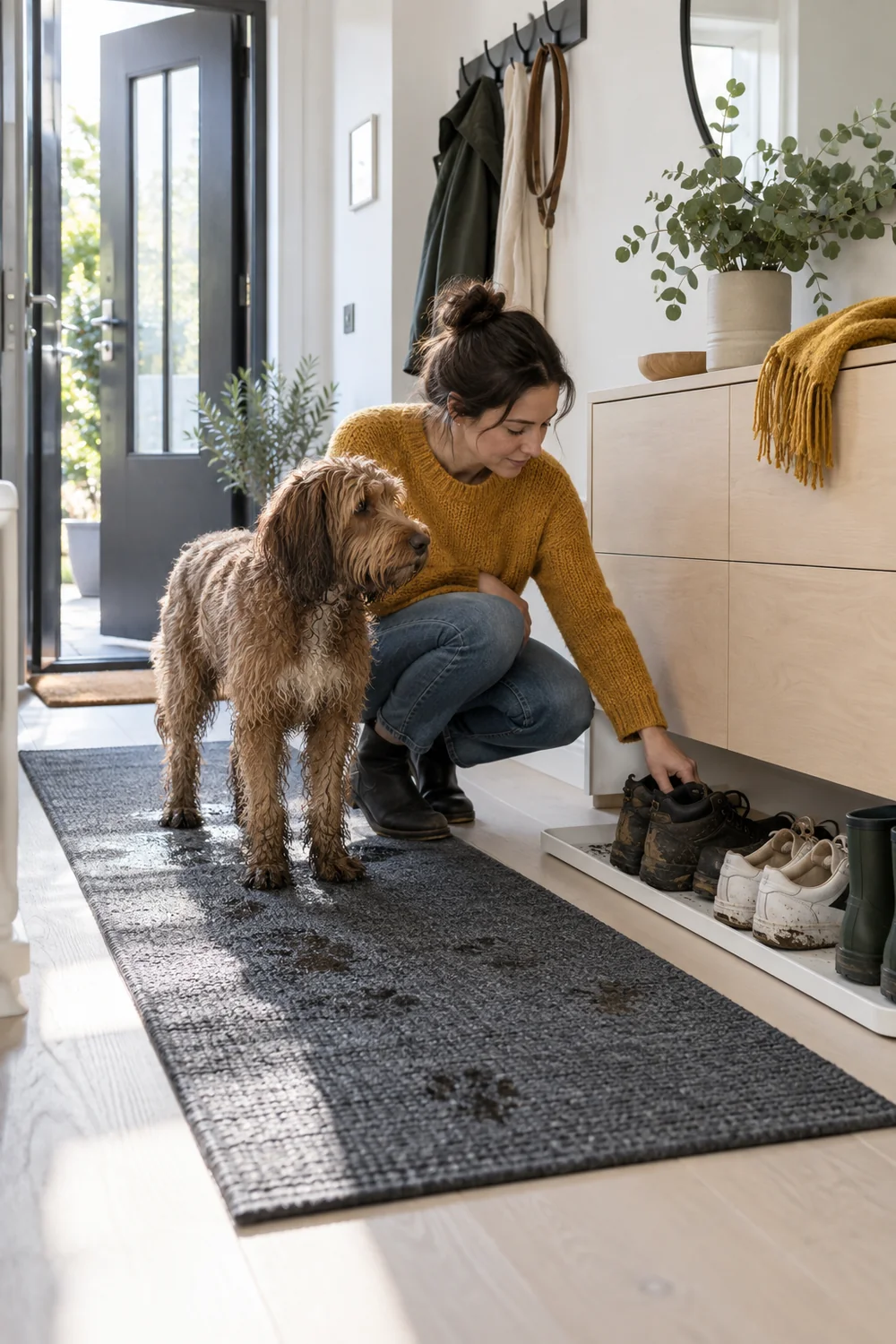
Keep a small note of repeated problems. One muddy week does not necessarily justify a new storage purchase. A pattern across several ordinary weeks is better evidence that the station needs a change. Record what you moved and whether it improved the arrival so you do not keep cycling through the same unhelpful arrangement.
Use the same camera angles each time you review the entrance. A photograph from the open door shows whether the wet landing place remains legible; a photograph from the next room shows whether the storage has crept into the path. These images are a practical record, not a demand that the hall look untouched. Compare them with the original route sketch and focus on the repeated obstruction.
Sometimes the best reset is a new layout decision. A second person may begin using the hall at the same time. Your dog's routine may change. A different coat or footwear collection may fill the previous storage envelope. When the walking route is no longer clear despite the weekly edit, return to the original sketch and measure the changed conditions.
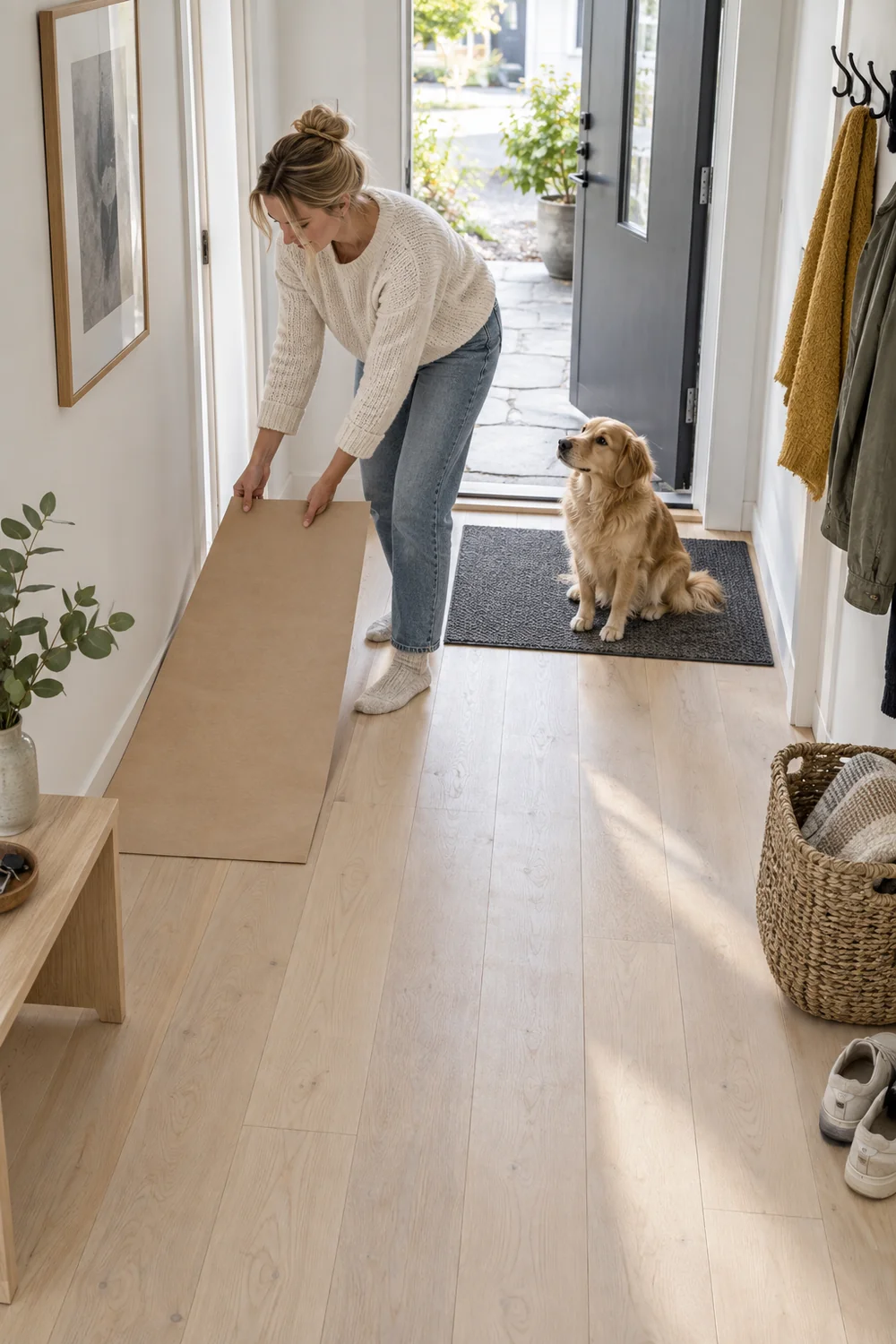
The small hallway storage ideas layout guide asks where people, dog gear and the wet landing place can coexist. Revisit the door swing, pause point and storage zone before adding another cabinet. Moving one existing piece may solve the problem. If the hall cannot safely or comfortably carry every function, move an occasional function into a nearby room rather than making the passage work beyond its size.
Retest the new arrangement for a normal week. Do not judge it only after a deep clean, when the dog is asleep and the floor is empty. The useful measure is the arrival after a real walk, with the household's ordinary bags, shoes and movements. If the route works in those conditions and damp gear has a clear next destination, the station is doing its job.
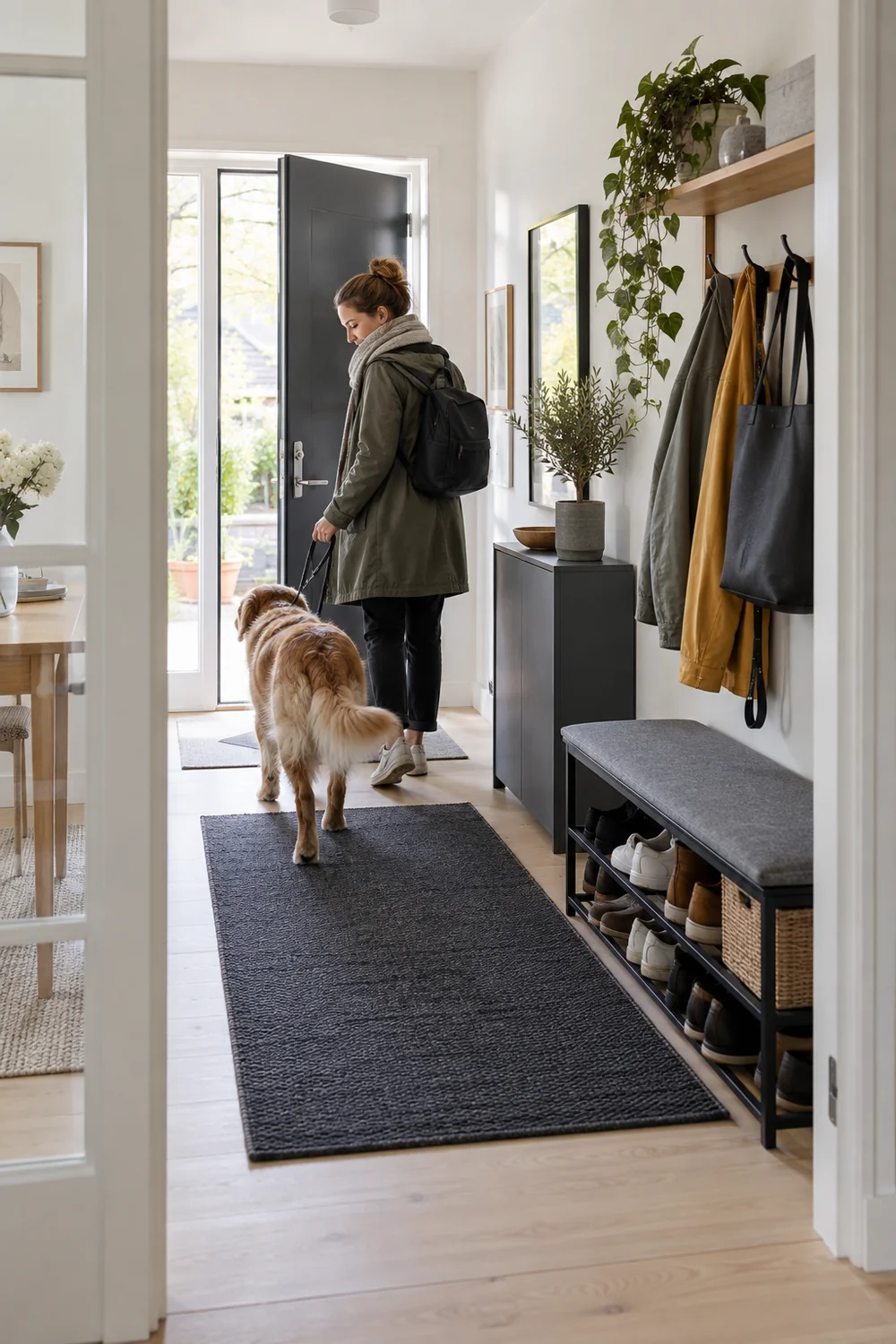
Keep the calm appearance as a result of that practical loop. Pale timber, restrained hardware and a simple wall colour can stay, but they will feel convincing only when the gear has a home and the floor route remains legible. The entrance is allowed to show that a dog lives here. It should also be easy to use tomorrow.
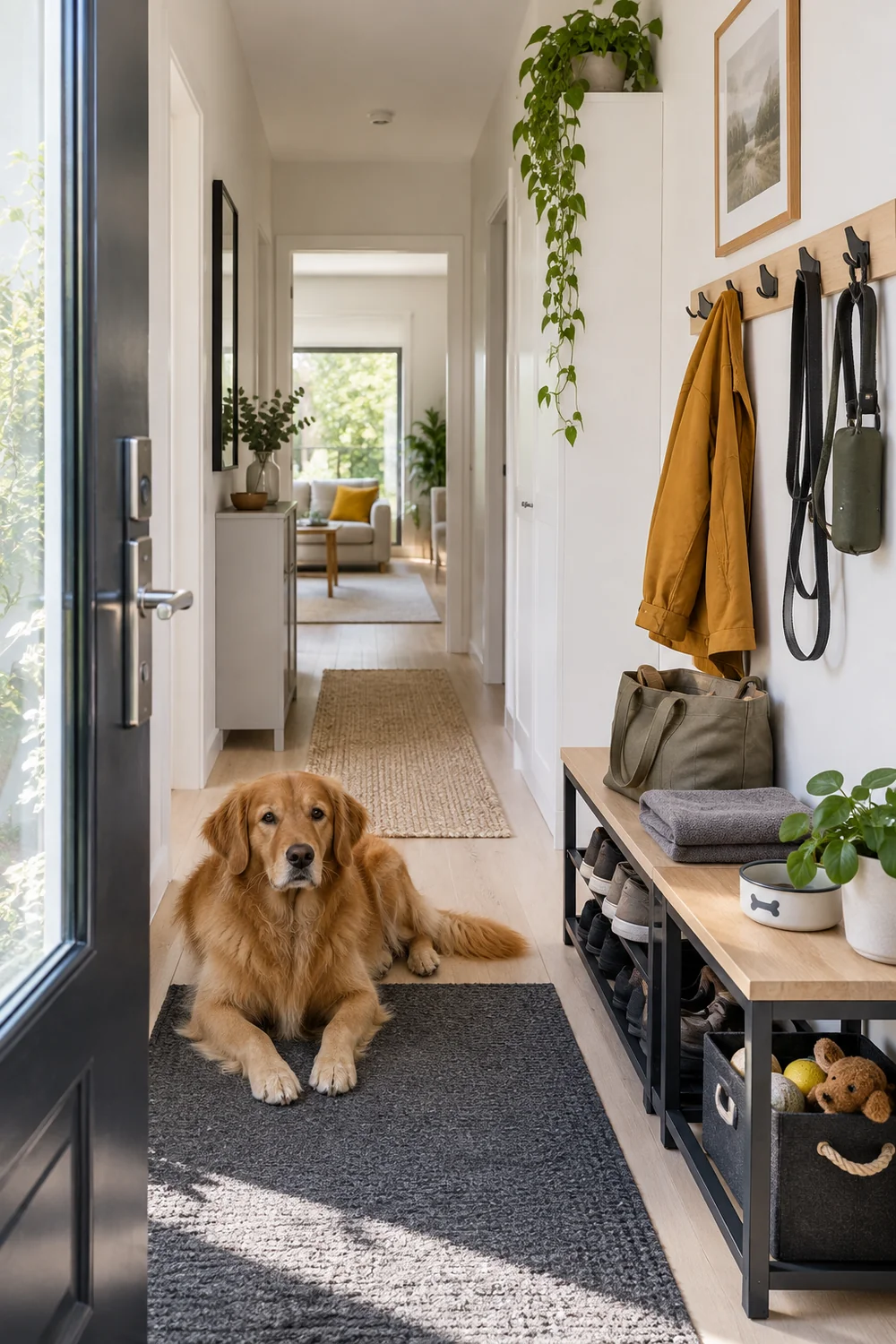
After several wet walks, reset the small Scandinavian hallway by tracing what changed. Restore the clear route, separate clean and used gear, give damp items an appropriate drying destination and keep only the next walk's essentials within reach. A short weekly check of the mat, floor and storage helps you catch a failing arrangement before clutter becomes the default. When the routine truly changes, return to the measured layout and revise the positions rather than piling on another container. A calm entrance is one you can maintain through real walks, not one that looks finished only when everything has been removed.