Newsletter Subscribe
Enter your email address below and subscribe to our newsletter

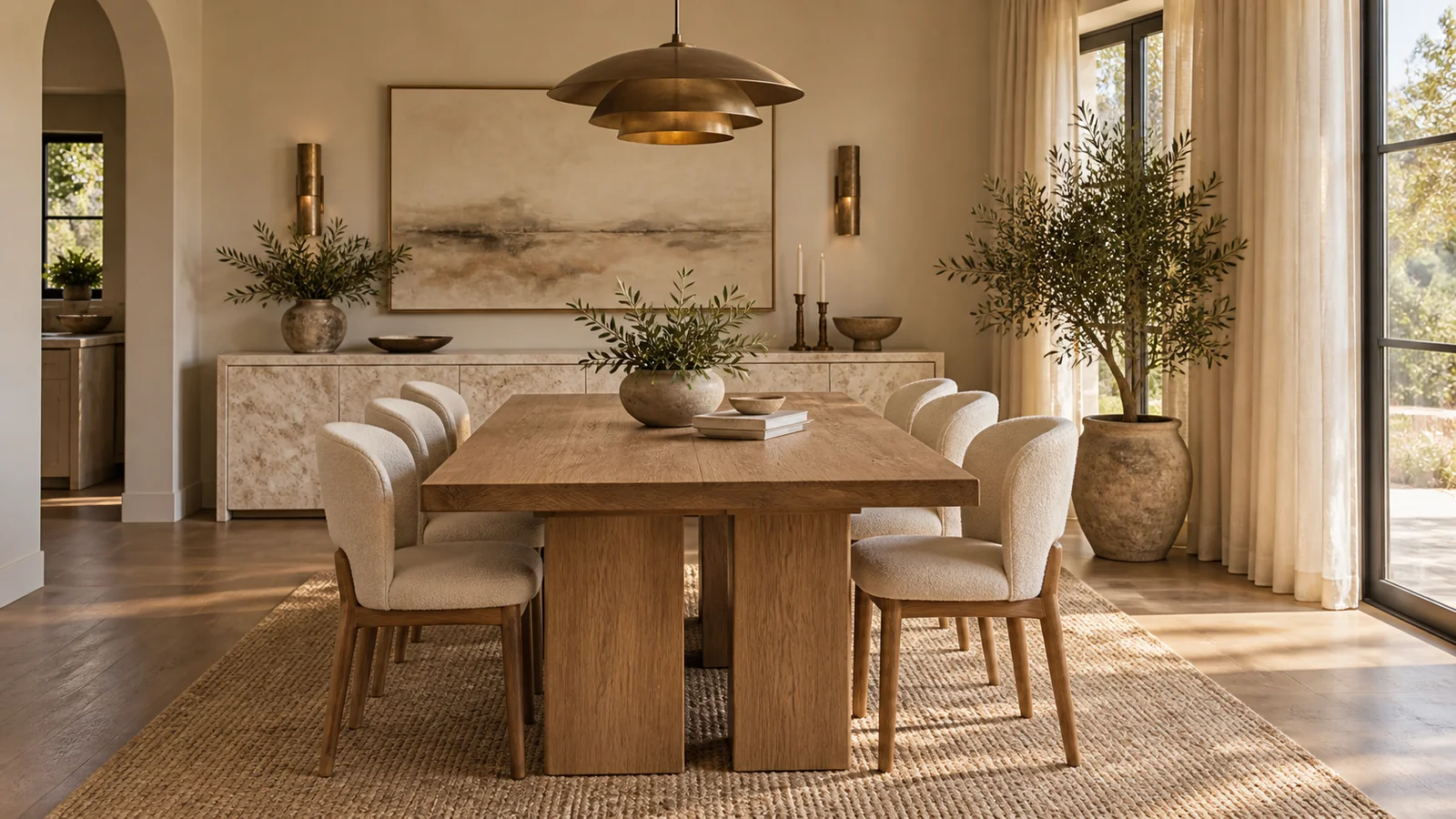
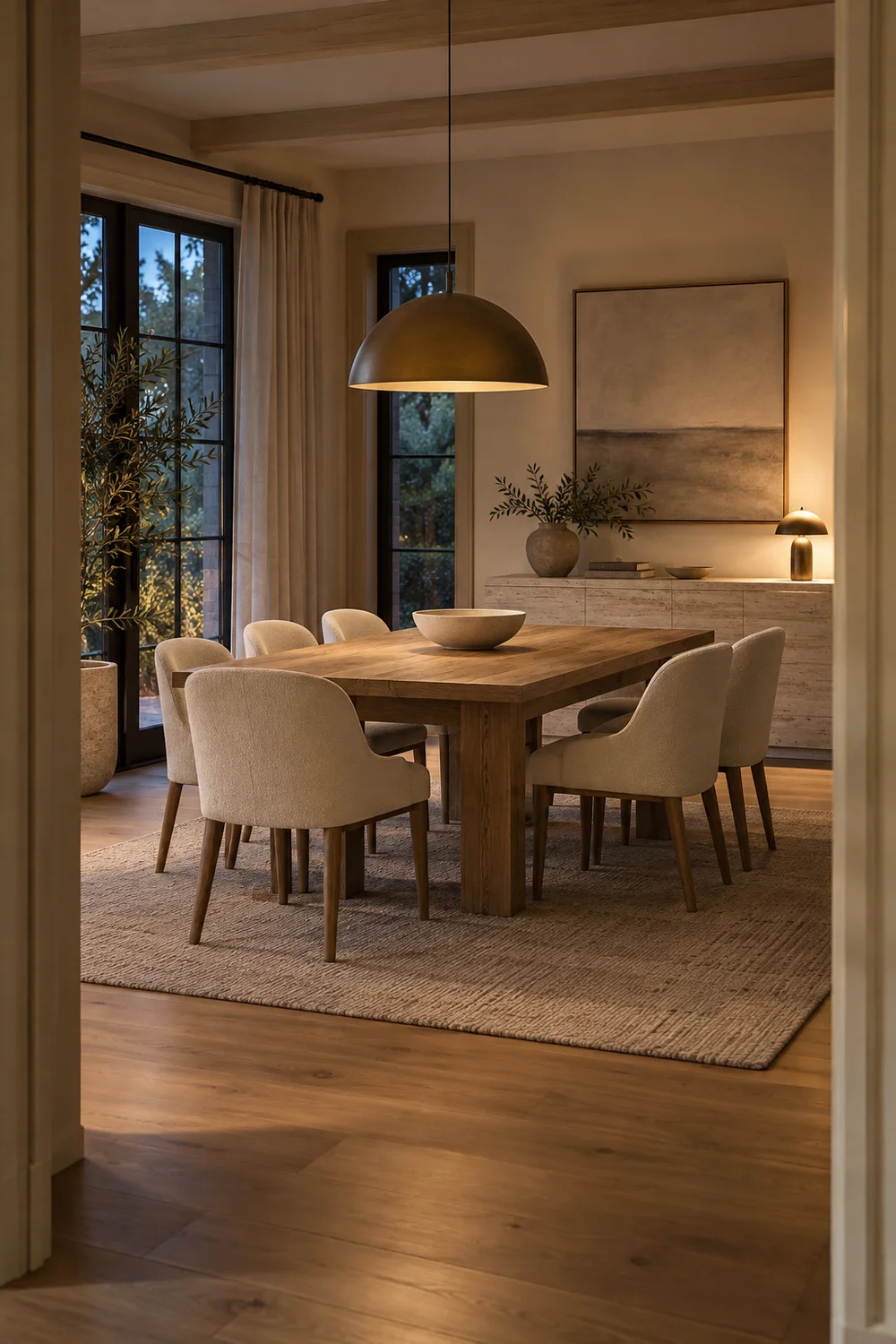
Organic dining room decor has a simple purpose: it should make a dining room feel more considered without making it feel dressed for a photograph. The best finishing layers bring warmth, texture and a little history to the space, then leave enough empty room for the table, people and light to do their work. If the layout is still in motion, start with the modern organic dining room planning guide. Once the table, seating and lighting are settled, these are the choices that give the room character.
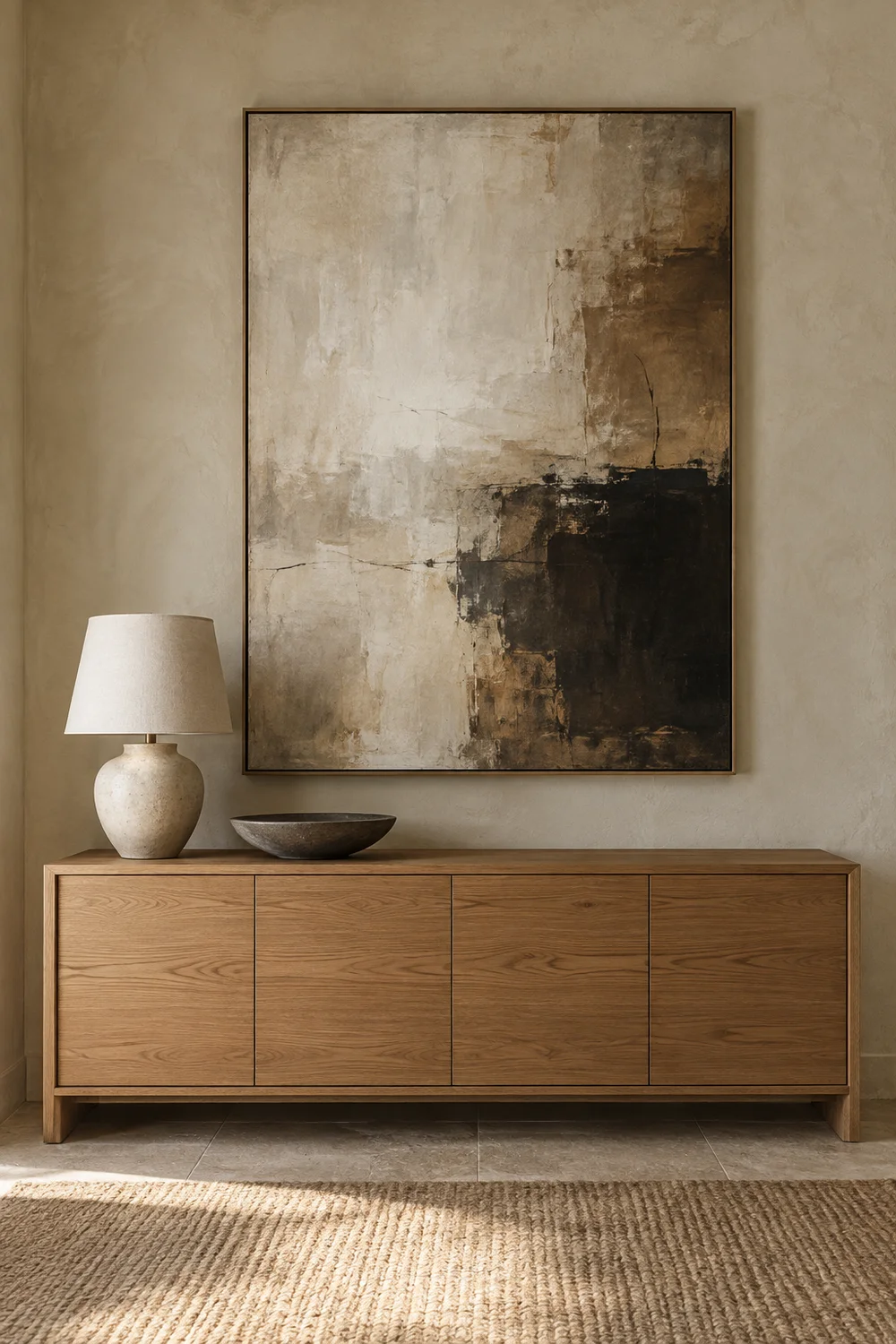
Art is often the quickest way to give a dining room a sense of intention, but it needs enough presence to hold its wall. Above a sideboard, one generous work generally has more impact than several small pieces fighting for attention. The art should relate to the furniture beneath it rather than float high above it.
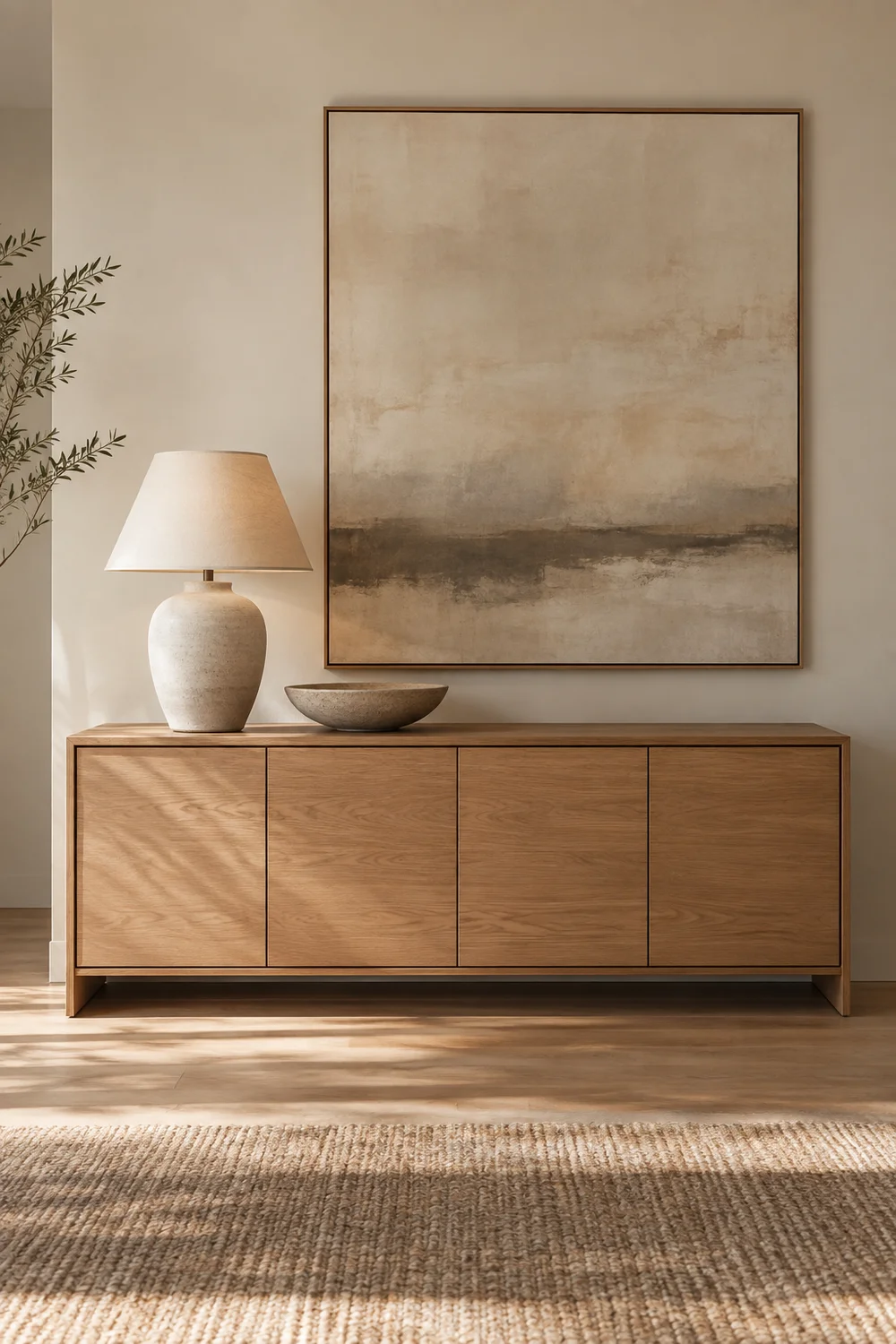
Choose a subject that carries atmosphere instead of a literal colour match. Tonal landscapes, gestural drawings, textile work and quiet abstract compositions work particularly well with natural materials. Warm chalk, muted olive, aged brown, softened charcoal and stone tones can all give the wall depth without making it busy.
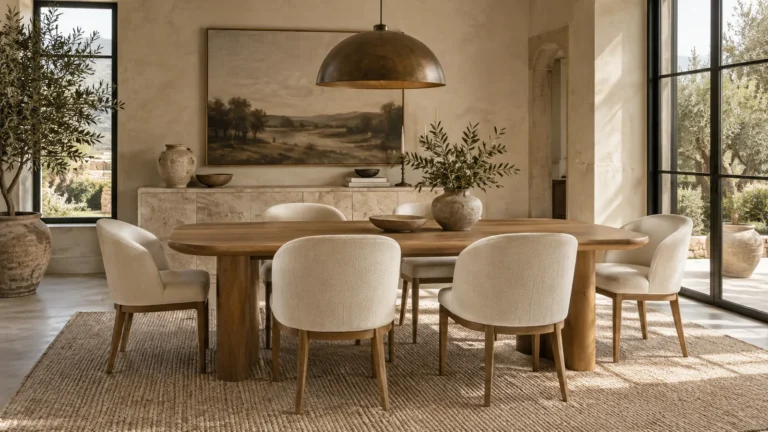
Handmade ceramics are a natural fit because they introduce irregularity beside clean furniture lines. A low bowl on the table, a vessel on the sideboard or a small sculptural form beside a lamp is enough. The object should have a distinct silhouette, a tactile glaze or a beautiful raw surface.
Avoid grouping lots of tiny objects simply because they share a colour. A room feels more collected when each visible piece has space around it. If you have a larger collection, rotate it seasonally instead of displaying everything at once.
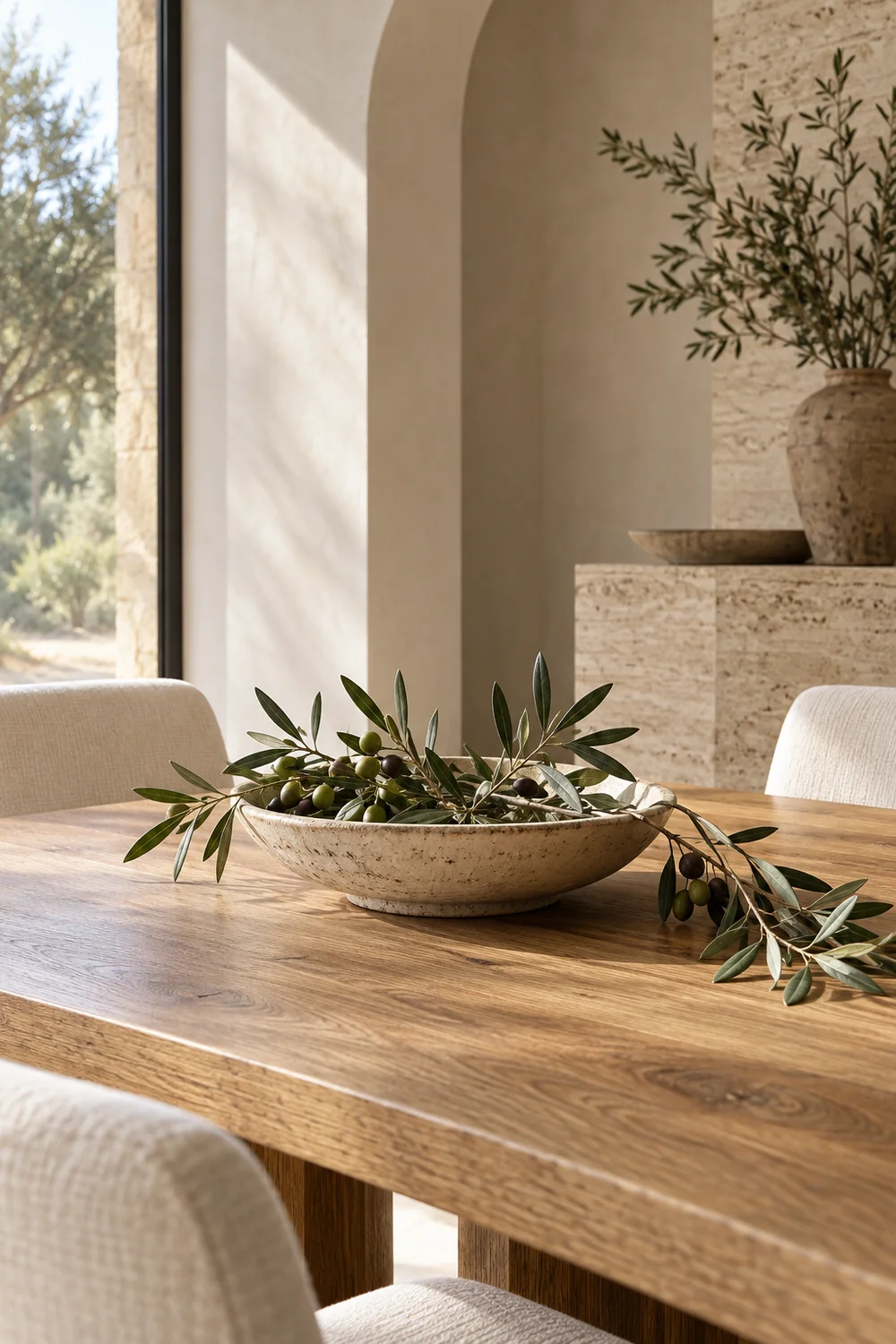
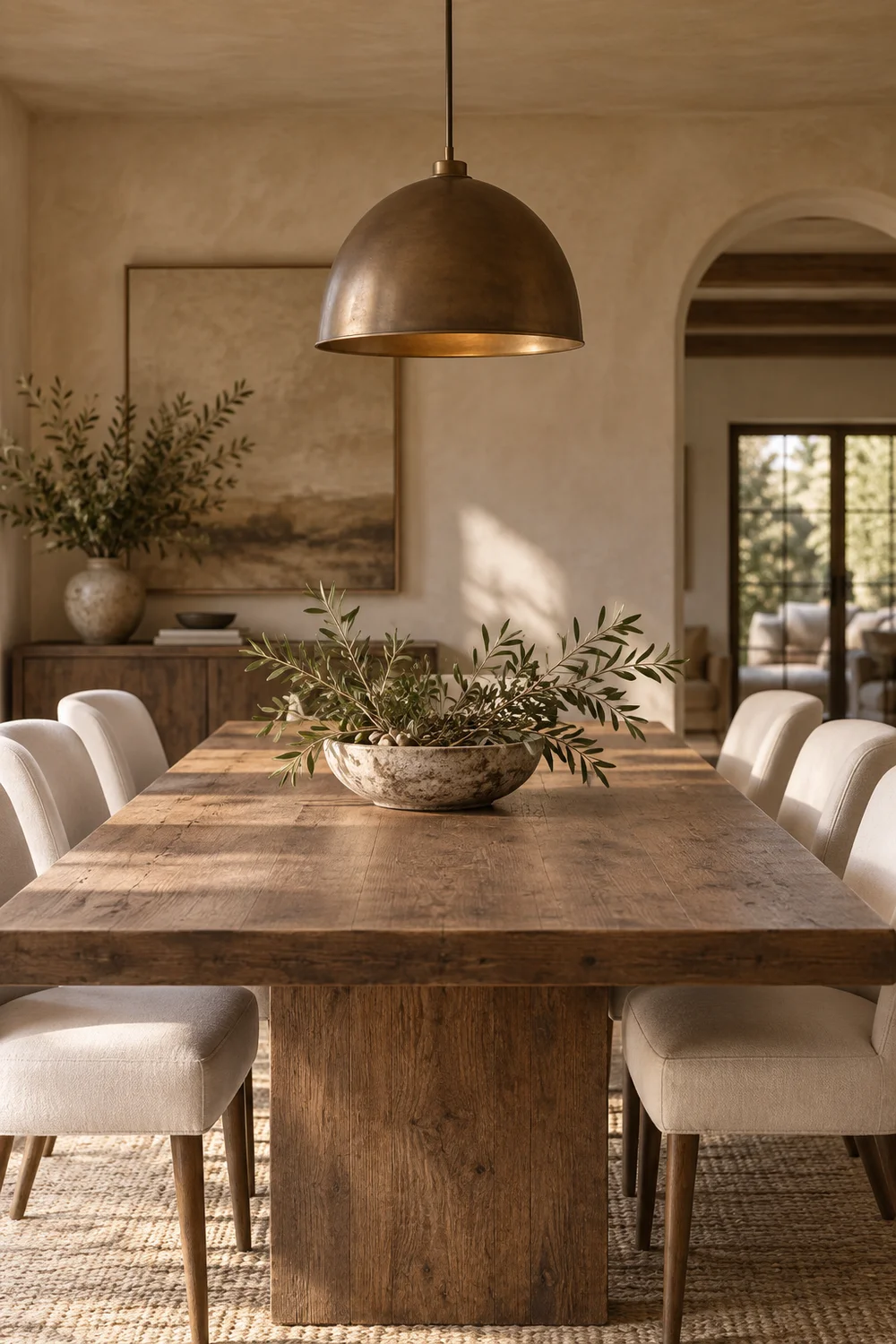
A few olive branches, seed heads, blossom or garden cuttings can change the feeling of a dining room more than a formal arrangement. Look for shapes that arc naturally and keep the vessel low enough for conversation across the table. The branch should feel like a trace of the outdoors, not an event centrepiece.
In the darker months, dried stems can work well, provided they remain simple. One substantial branch in a textured vessel is usually more convincing than several stems in matching bottles.
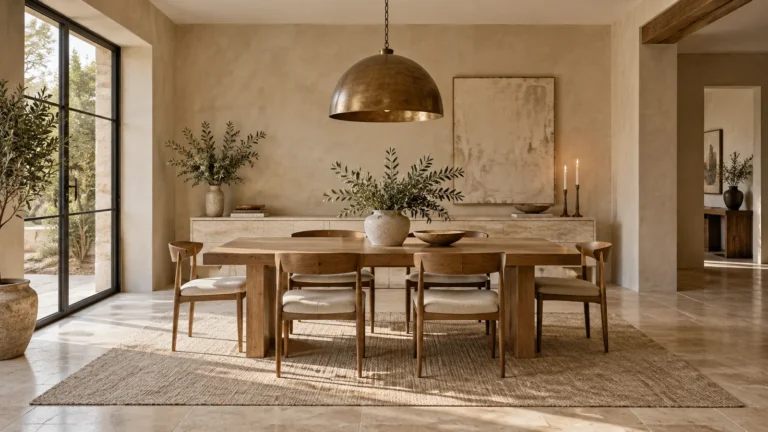
A sideboard is useful because it can hold a lamp, art and a few objects without asking the dining table to perform every decorative role. Build it with varied heights: a lamp or taller vessel, a lower bowl, perhaps a short stack of books. Leave clear space between them.
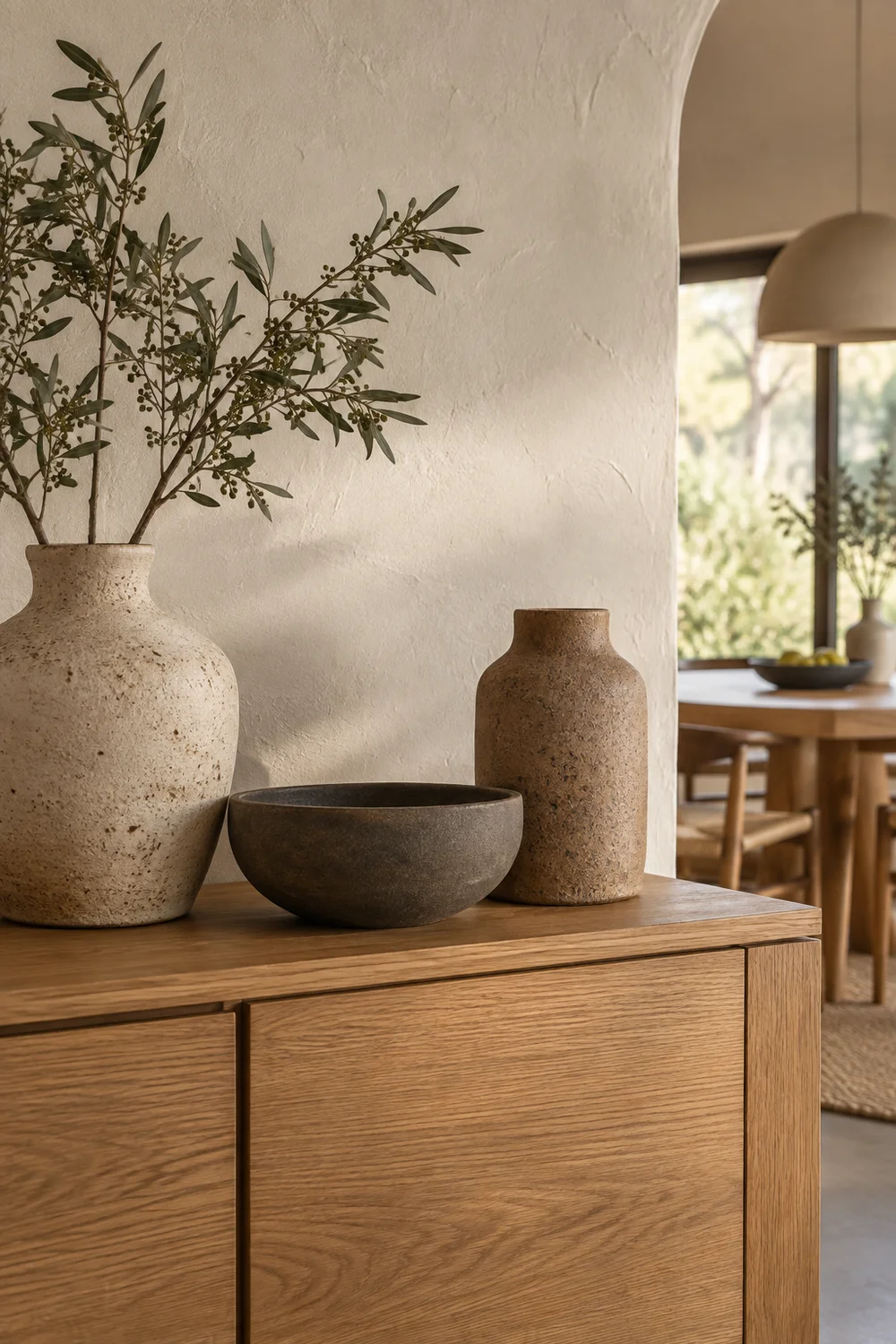
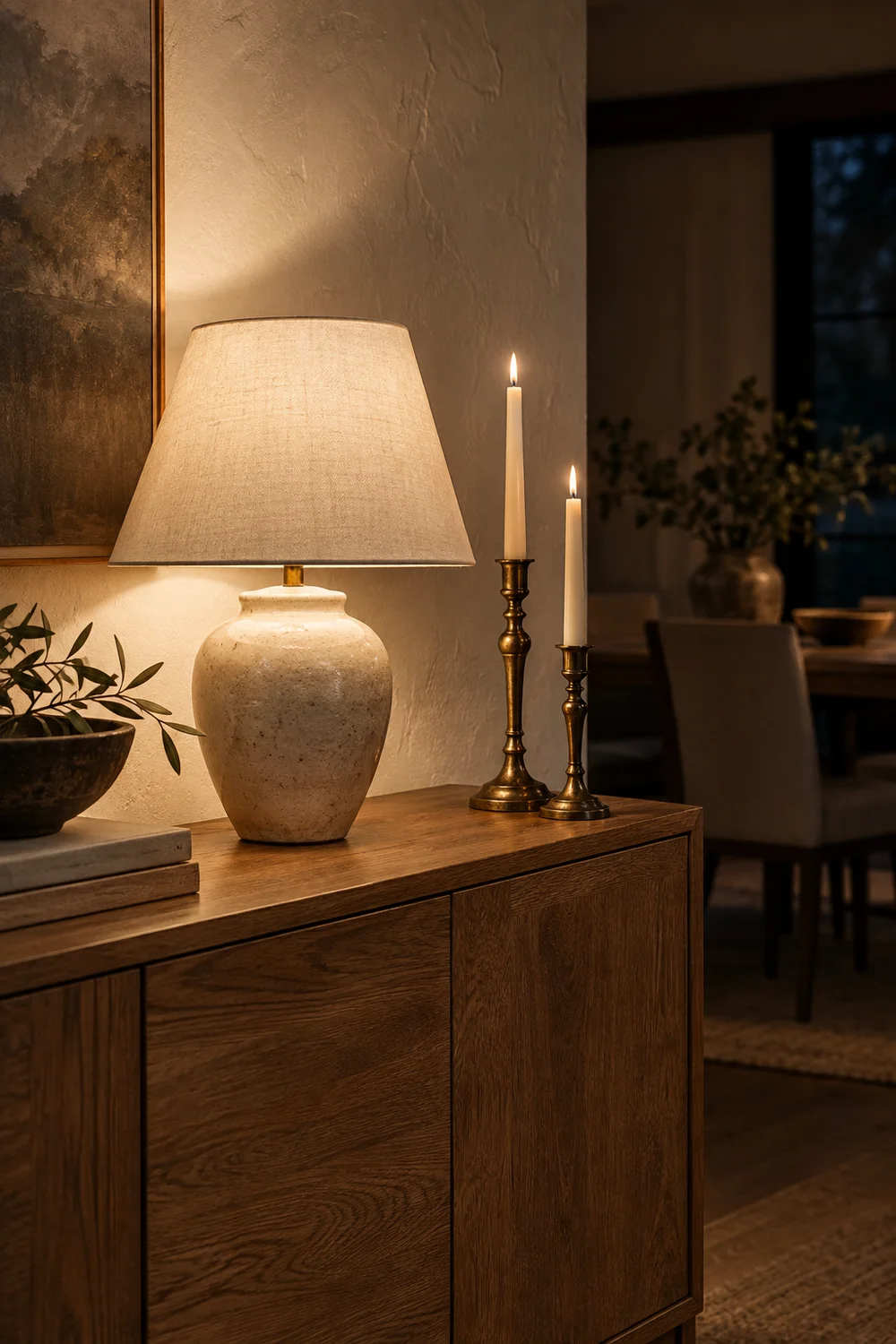
Mix one warm material with one cooler one. For example, an oak sideboard may hold a chalky ceramic lamp, a dark bronze candlestick and a pale stone bowl. The contrast keeps the arrangement from looking like a retail display.
Decor feels most convincing when it has a job. A bread board can lean against a sideboard. A linen napkin basket can sit within reach. A substantial bowl can hold fruit on ordinary days and serve at dinner. These objects give the room the relaxed quality that purely ornamental accessories struggle to achieve.
Choose the version with the best material and proportion you can reasonably afford. A heavy wood board, a woven basket and a hand thrown bowl become more appealing with use. They do not need to remain perfectly pristine to belong.
A mirror can brighten a dining room and enlarge a darker wall, but it changes the room more dramatically than art. Use one where it will reflect a window, a pendant or a softly textured wall. Avoid placing it where it doubles visual clutter from the kitchen or catches an unflattering view of storage.
A simple bronze edged, dark timber or softly shaped plaster frame tends to suit the natural palette. The mirror should support the light, not become a glittering focal point.
You do not need a full redecoration every season. A change of branches, fruit, linen napkins or a small textile is enough to make the dining room respond to the time of year. Spring might bring blossom in a pale ceramic. Autumn may call for a darker bowl, nuts or dried stems. The stable pieces should stay in place.
This small rotation lets the room feel lived in without filling cupboards with decor. It also protects the calm feeling that makes organic modern spaces appealing in the first place.
The first is buying too many objects in the same neutral. Variation in texture and silhouette matters more than a perfectly coordinated colour family. The second is making everything rustic to prove that the room is organic. Clean lines and a little empty space are essential to the modern side of the balance.
The third is treating every surface as a display shelf. A dining room needs room for serving dishes, papers, elbows and the occasional imperfect moment. Keep the table mostly clear and let the sideboard or one console carry the visual detail.
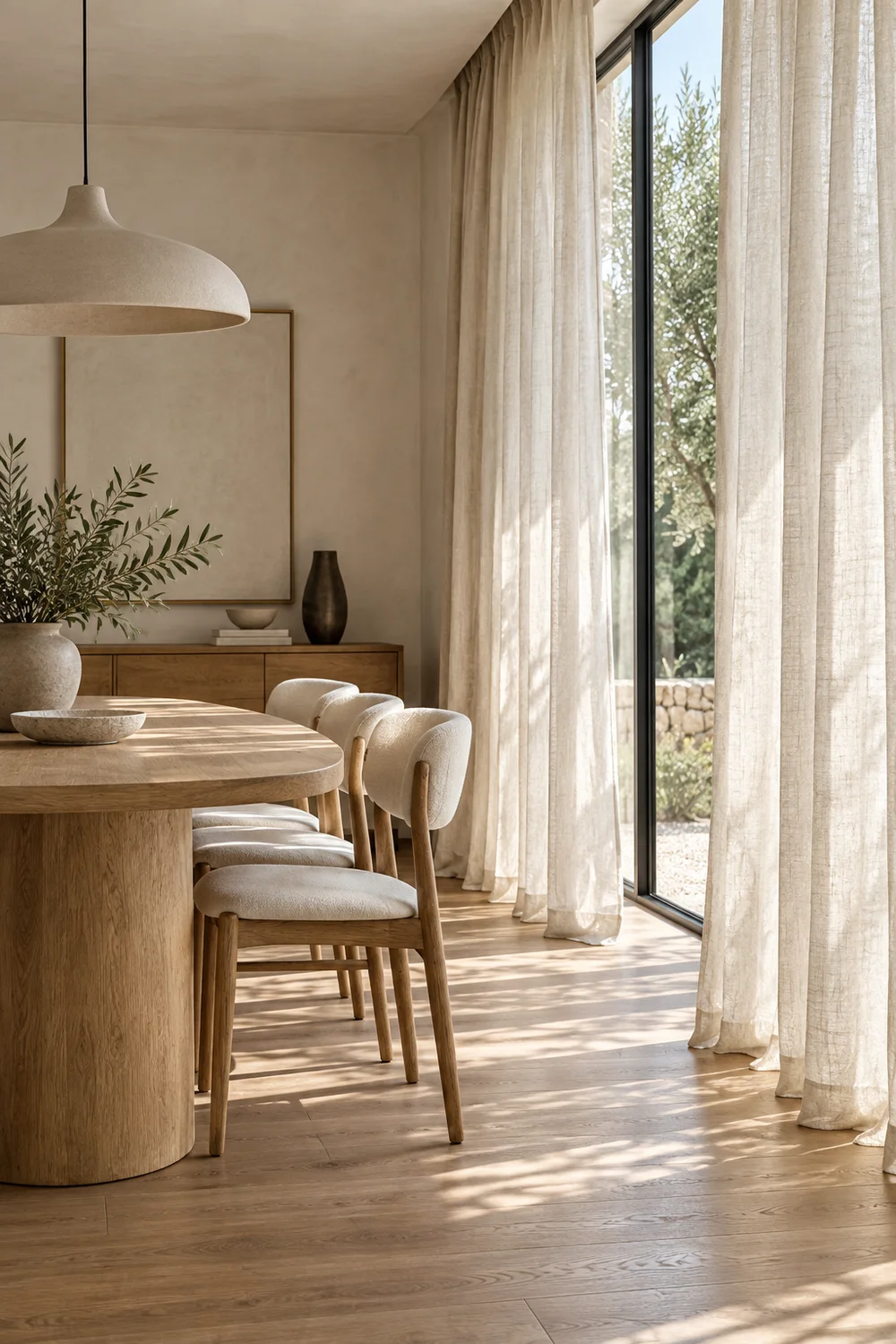
Textiles should make the room softer to use, not simply add more texture. Linen curtains can filter harsh daylight. A wool or flat weave rug can improve acoustics. Seat cushions may make timber chairs practical for long dinners. Choose them in related neutrals rather than trying to introduce every colour through fabric.
Texture is more important than pattern here. Slubbed linen, brushed cotton, wool bouclé and woven natural fibre all offer depth while letting the rest of the room remain calm.
The decorative layer is incomplete if the room is only beautiful at noon. A small table lamp on a sideboard or console brings a low warm pool of light and makes the room feel inhabited before anyone sits down. Use a warm bulb and a dimmer on the main pendant so the furniture looks softer in the evening.
Keep metals consistent in temperature rather than perfectly matched. Aged bronze, softened brass and dark iron can sit together when each has a matte or brushed finish. Highly polished chrome has a different visual language and usually interrupts the natural palette.
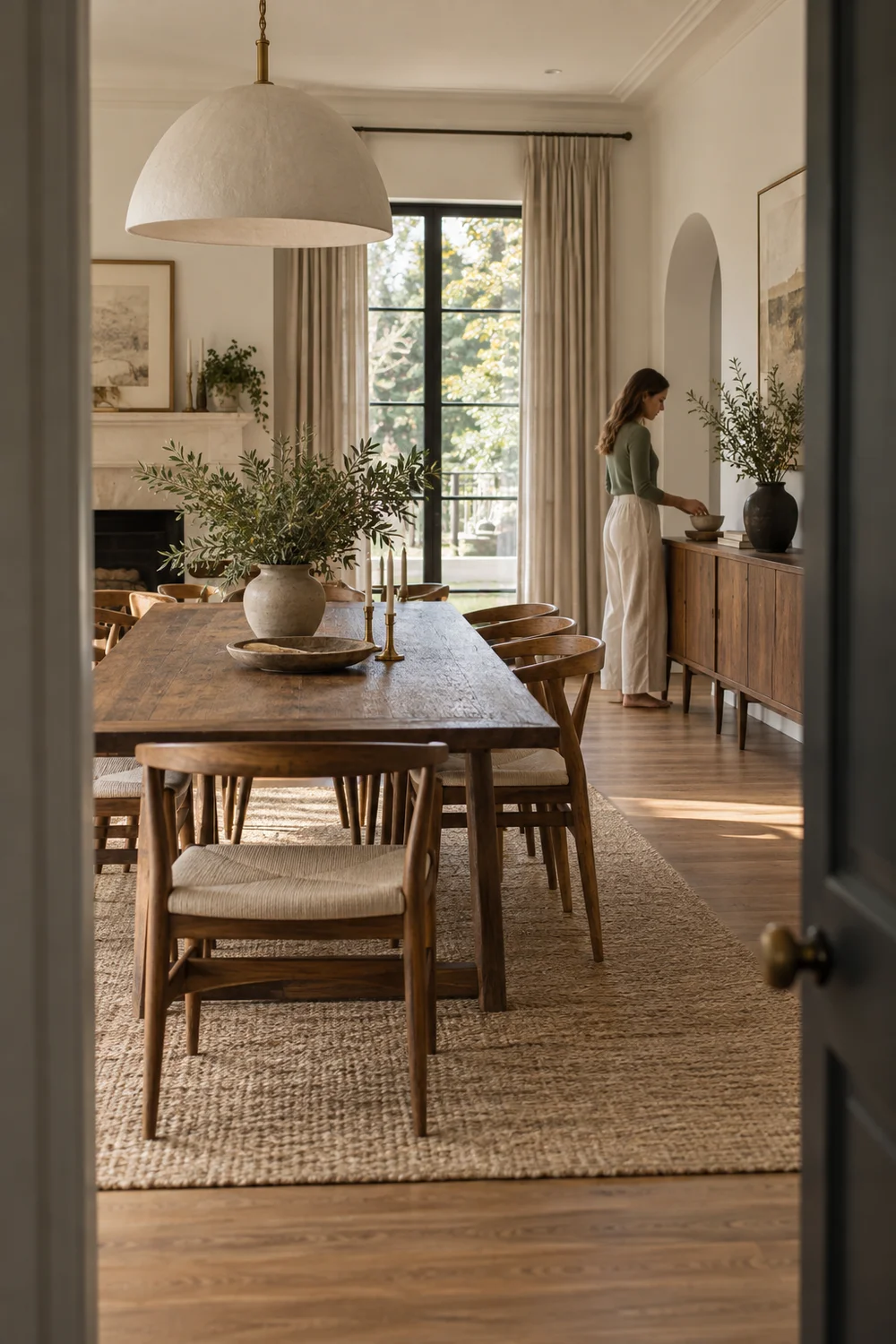
The final step is subtraction. Remove anything that is only there to fill a gap. Ask whether each visible item contributes material, function, shape or memory. If it does not, put it away for a week and see if the room feels clearer without it.
That edit is what makes organic dining room decor feel intentional. The room still has personality, but the personality comes from timber, stone, light and a few meaningful objects rather than visual noise.
For a wider view of the style, return to organic modern dining room ideas that feel warm and collected. For the foundation beneath the finishing layer, use the modern organic dining room planning guide.
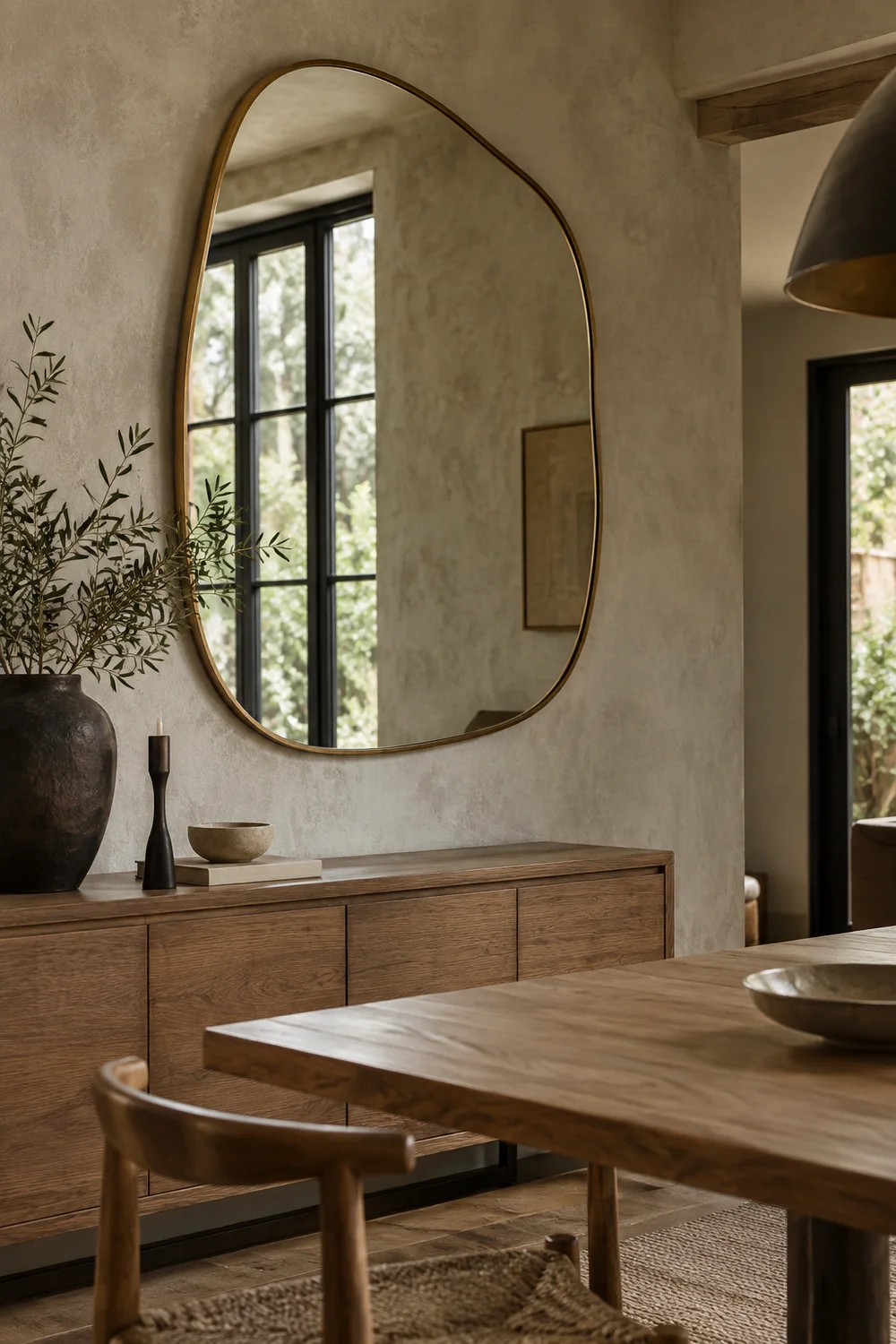
Scale is the quiet discipline behind a room that feels polished. A tiny lamp on a broad sideboard disappears. A huge vase on a small table makes the furniture seem insubstantial. Before buying, measure the surface and consider the empty space the object will leave around itself.
For table styling, lower and wider is usually safer than tall and narrow. For a sideboard, a taller lamp or art piece can provide the vertical line, while the smaller objects sit below it. This difference in height gives the arrangement rhythm without requiring many pieces.
Organic does not mean impersonal. A framed photograph, inherited serving bowl, travel sketch or a book you genuinely return to can make a composed room feel yours. Choose one or two visible reminders rather than creating a dense memory shelf. Their power comes from contrast with the calm surrounding them.
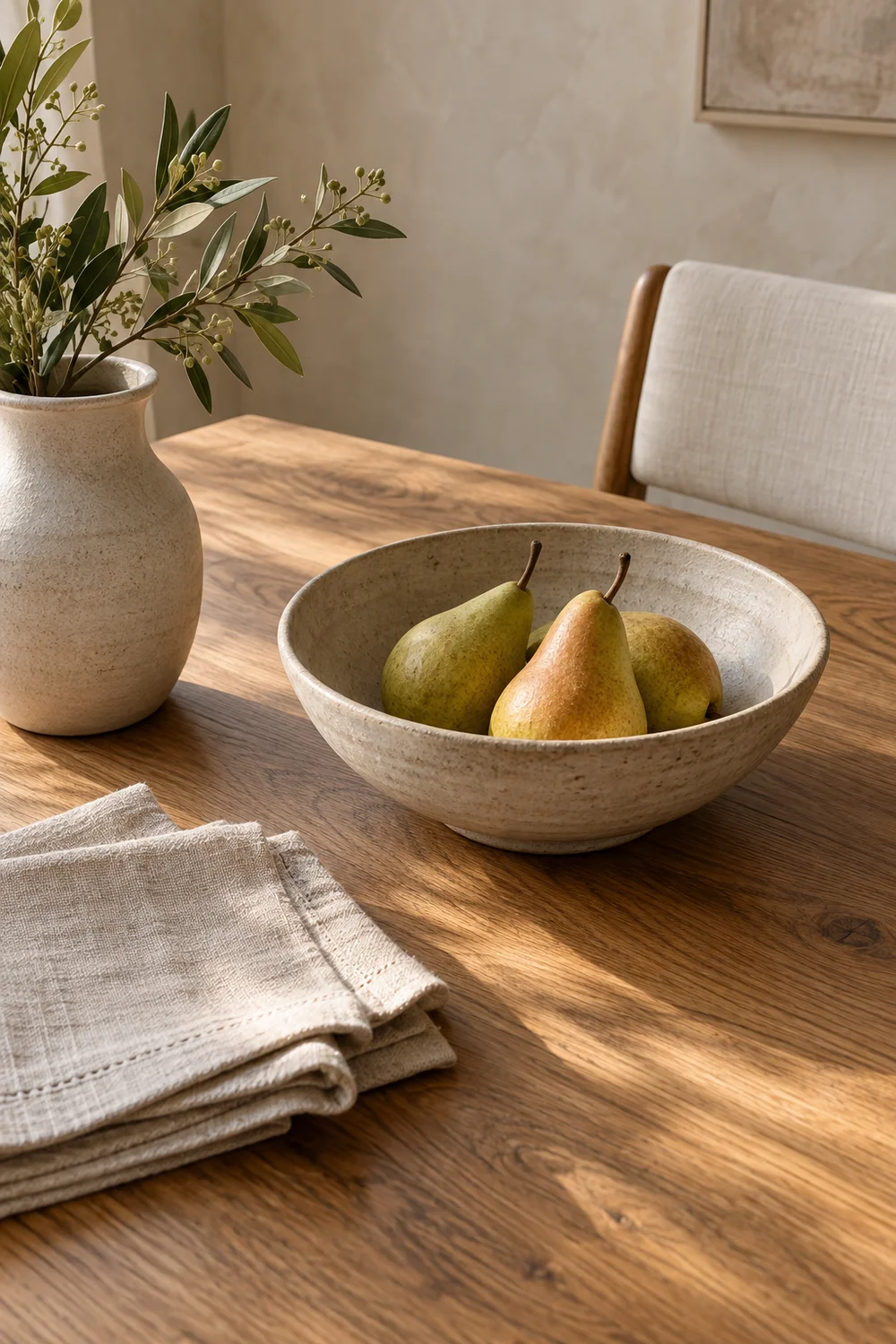
The same rule applies to colour. A small object with faded blue, rust or deep green can be welcome when it has a story. It should remain an accent, not the colour plan for the whole room.
Leave the room slightly incomplete for a while. Live with the wall, table, chairs and light before making every surface decorative. The pause gives you the chance to see whether the room needs softness, storage, art or simply less. It is far easier to add a well chosen object later than to undo a hurried collection.
A finished organic dining room should feel easy to reset after breakfast, comfortable at dinner and quietly generous when friends arrive. When that is true, the decor is doing its work.
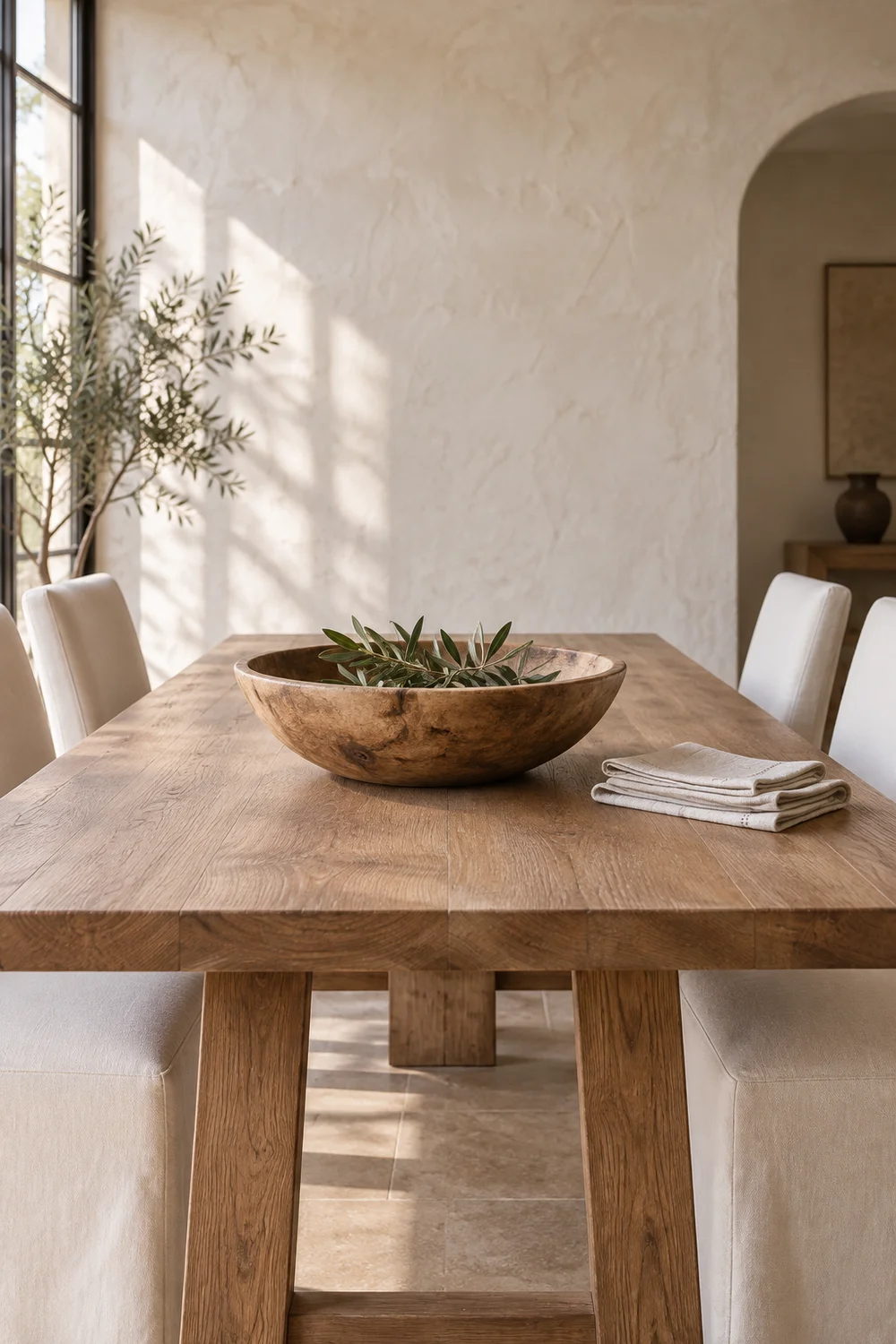
The table is the visual centre of the room, but it must remain available to use. Choose a centrepiece that can stay in place during an ordinary breakfast and move easily when you need the table. A broad shallow bowl, one low ceramic vessel or a simple stone tray works better than a complicated arrangement of small objects.
Pay attention to the material against the tabletop. A rough pale ceramic can soften dark oak. A darker bowl can anchor a pale stone table. Let the contrast be about texture and value, not a bright competing colour. When flowers are added, keep them loose and low enough that the people at the table can still see one another.
The relationship between art and a sideboard is as important as the artwork itself. Leave a clear but modest gap above the furniture so the two feel related without touching. If the sideboard is wide, a substantial single work or a deliberately paired arrangement usually looks calmer than several narrow frames.
Frames should support the mood rather than announce themselves. Natural oak, dark stained timber, softened bronze and simple off white mounts all work with an organic palette. A glossy black frame can be useful when the room needs definition, but it needs a corresponding dark note elsewhere so it does not feel isolated.
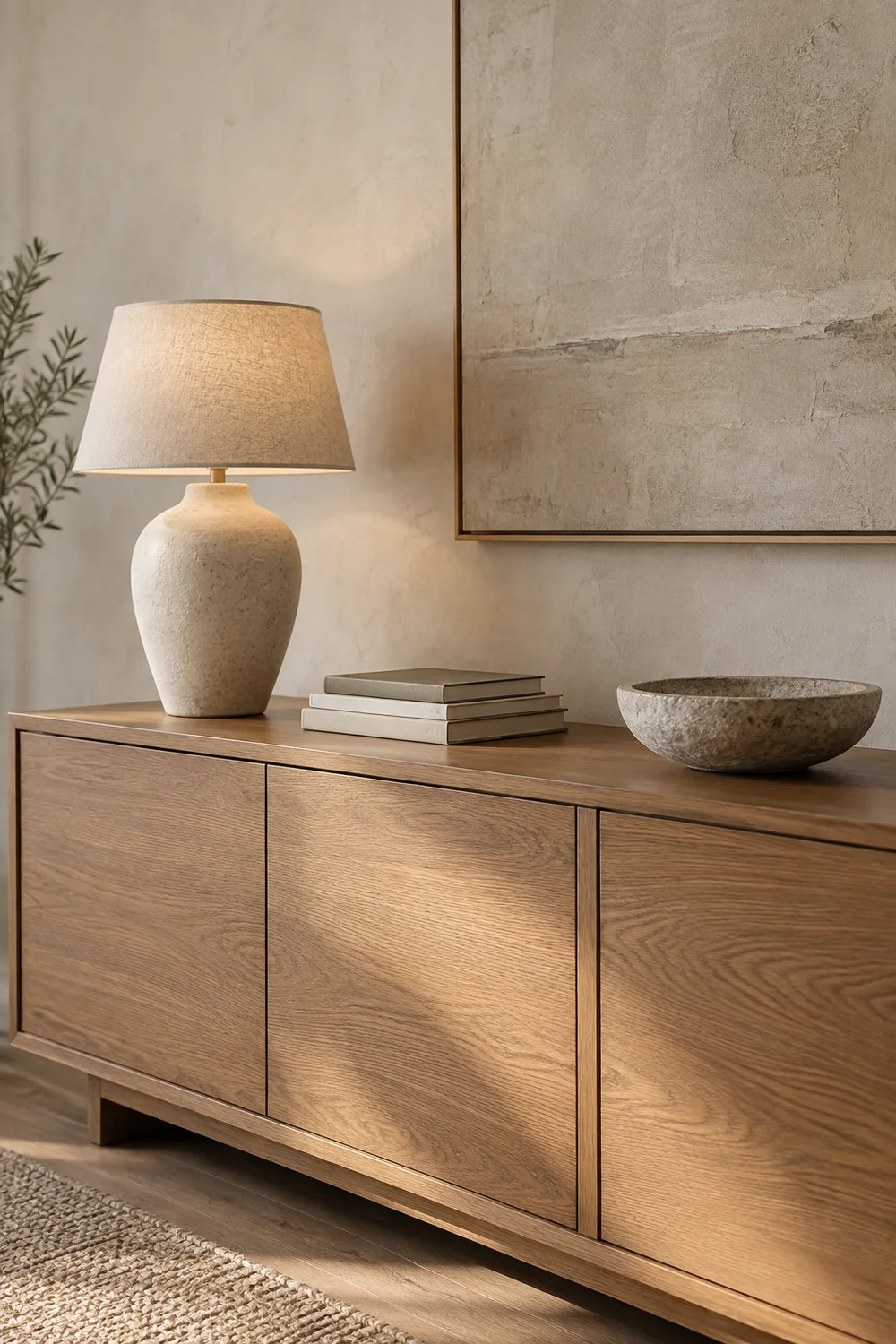
The finishing layer is not only visual. A dining room can feel more welcoming with a subtle natural candle, a bowl of citrus or simply an opened window before guests arrive. Avoid heavily perfumed products that compete with food. The same restraint applies to sound. A rug, curtains and upholstered chairs can soften the room enough that conversation feels easy without introducing more decorative pieces.
These details are not required, but they reveal the point of the style. Organic decor is about the experience of being in the room, not the accumulation of objects.
Every household collects temporary items: post, chargers, children’s drawings, receipts and half finished projects. Give them a place to go before dinner rather than trying to hide them behind more decor. A lidded basket in a sideboard, one drawer or a tray that can be carried elsewhere keeps the reset quick.
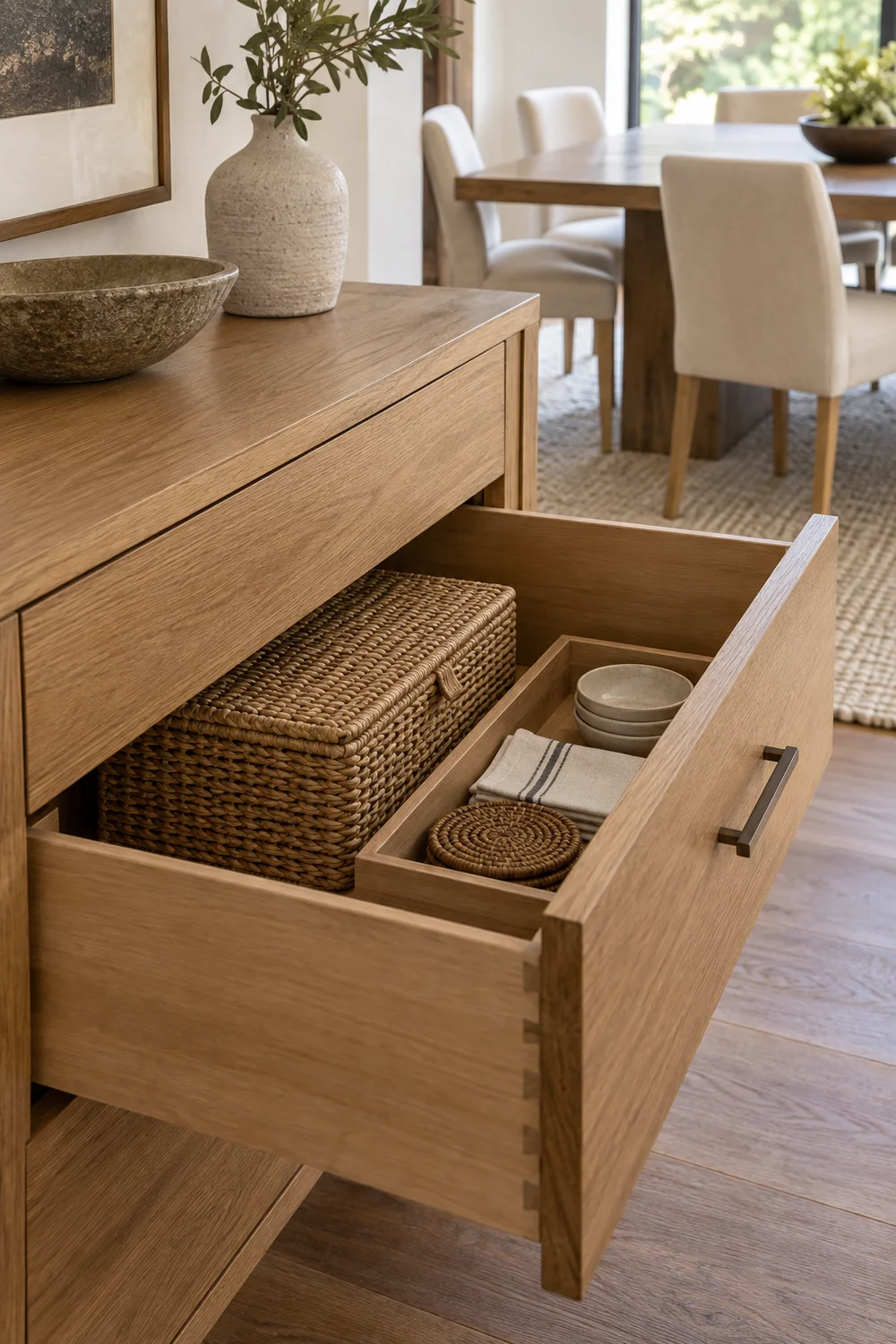
This is a practical part of making a room look intentional. When surfaces can be cleared easily, the few objects left visible feel chosen rather than incidental.
Natural materials become more appealing when they are used. Oak develops small marks, linen softens and ceramics acquire a history. Protect surfaces sensibly with felt pads, coasters and regular gentle cleaning, but do not expect a dining room to remain untouched. A little evidence of real meals and real gatherings gives the space the warmth that decor alone cannot create.
Choose care routines that are easy enough to repeat. When the room can be reset in a few minutes, it stays inviting without becoming another task.