Newsletter Subscribe
Enter your email address below and subscribe to our newsletter

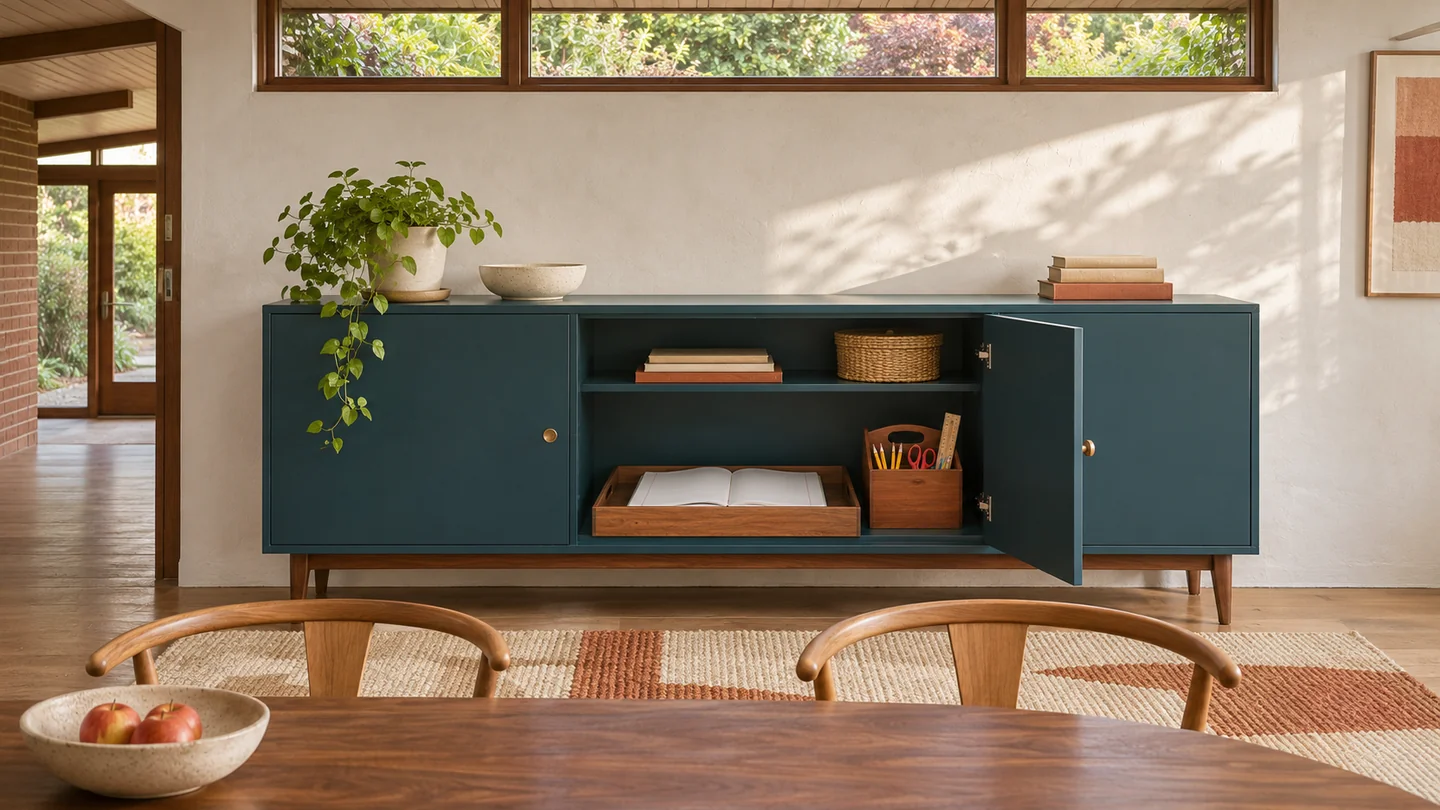
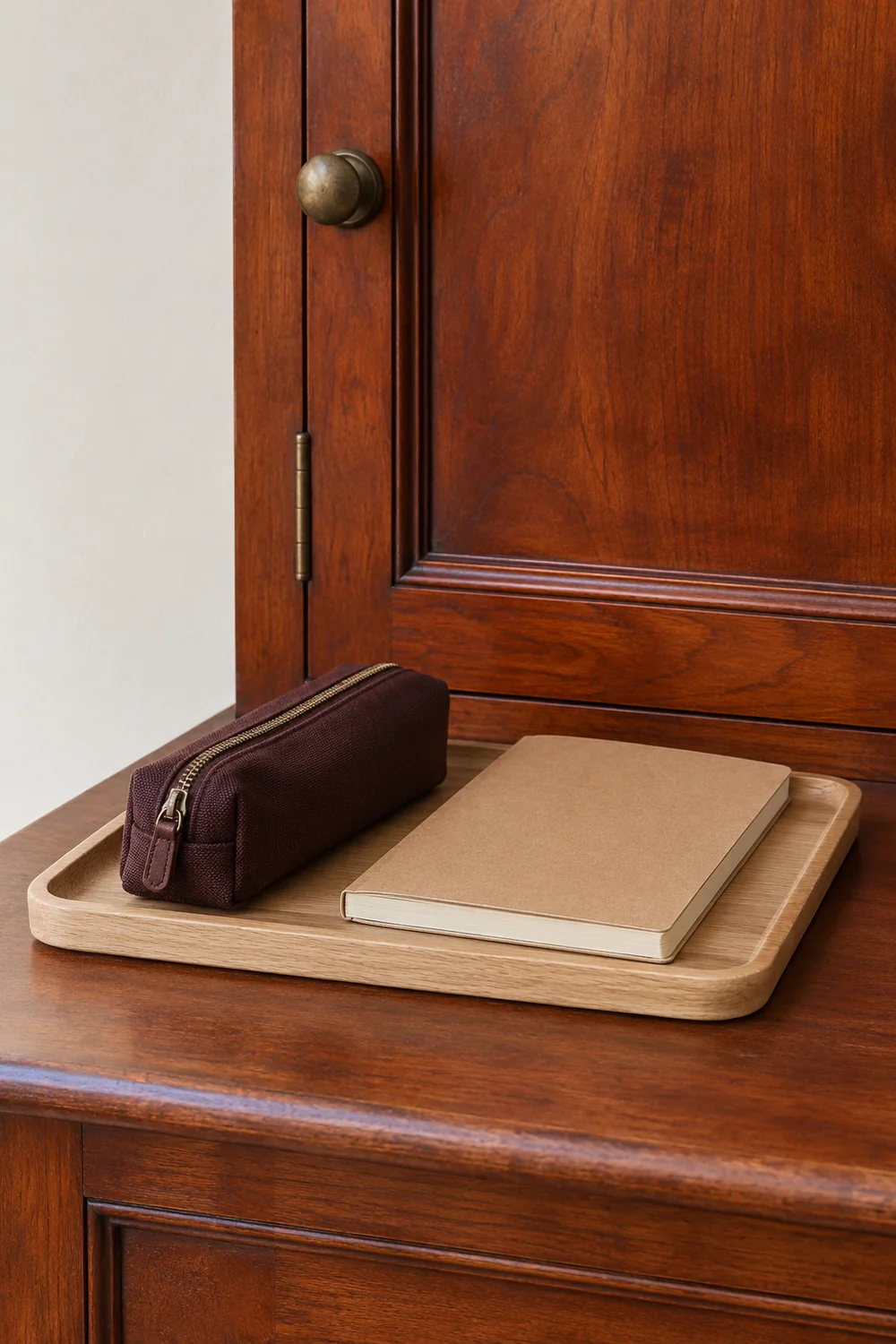
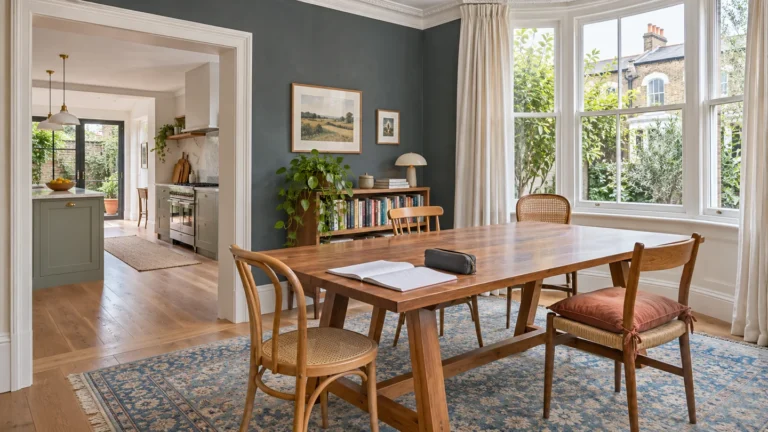
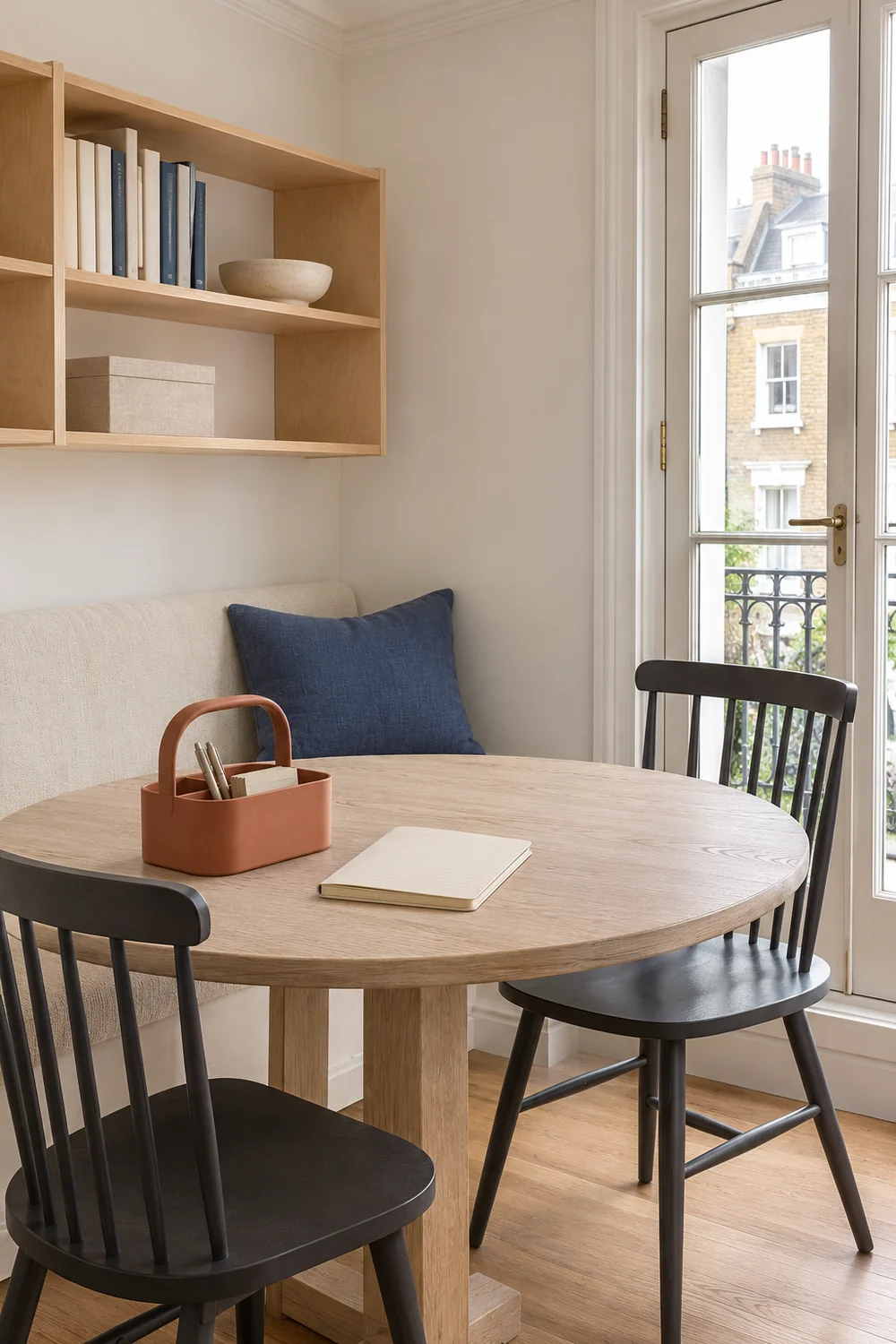
The dining table needs to be set, but there’s an exercise book open and a drawing waiting for one more colour. That’s when homework station storage has to prove itself. I would start with the work your child really brings to the table, then see what will fit in the place you’ve set aside. A caddy can carry the things that travel together. A sideboard shelf can give big books and unfinished work a more stable home. A pencil case and a shelf might already be enough. Either arrangement can work if your child can find the page again and the table can be cleared for dinner. Here’s how I would measure the spot, choose what goes in it and test the change with a real load.
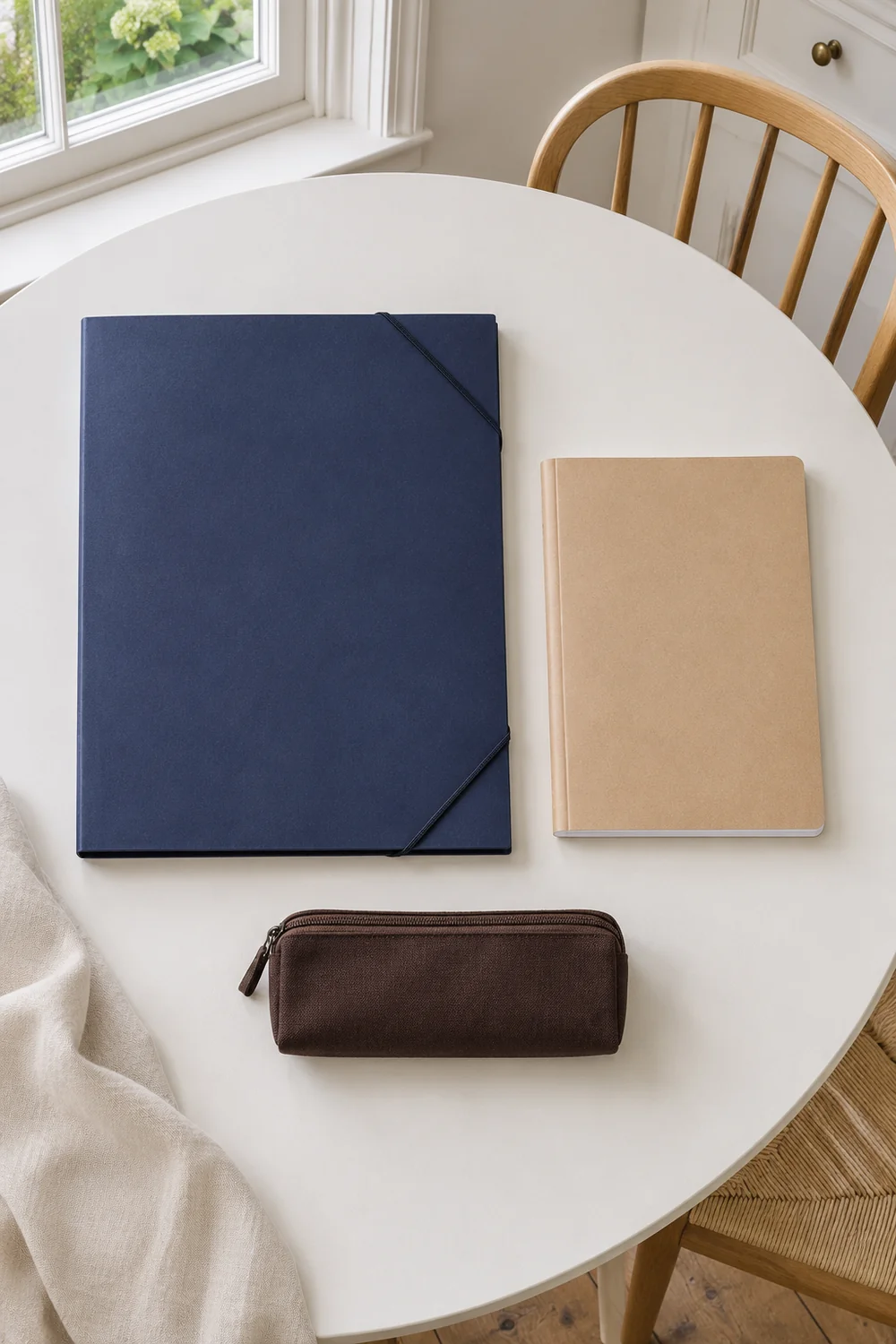
Pull out the three bulkiest things your child uses in an ordinary week. That might be a rigid folder, an exercise book and a pencil case. Put beside them anything that has to stay open or flat overnight. Measure the largest thing in the state it has to go away in. A closed notebook and a landscape sheet with work in progress make very different demands on a shelf. Measure any handle or raised edge on the tray you already use. The whole thing has to fit and come out easily.
Take three measurements of the storage spot with the door open. Note the usable width between the hinges and the other side, the depth to the back or door stop, and the height left under the shelf above. Inside dimensions alone can be misleading because a hinge intrudes just where the front corner of a tray needs to pass. Check the room in front of the cupboard as well. If someone opens the door while a person is seated at the dining table, can they still lift out the load without moving the chair?
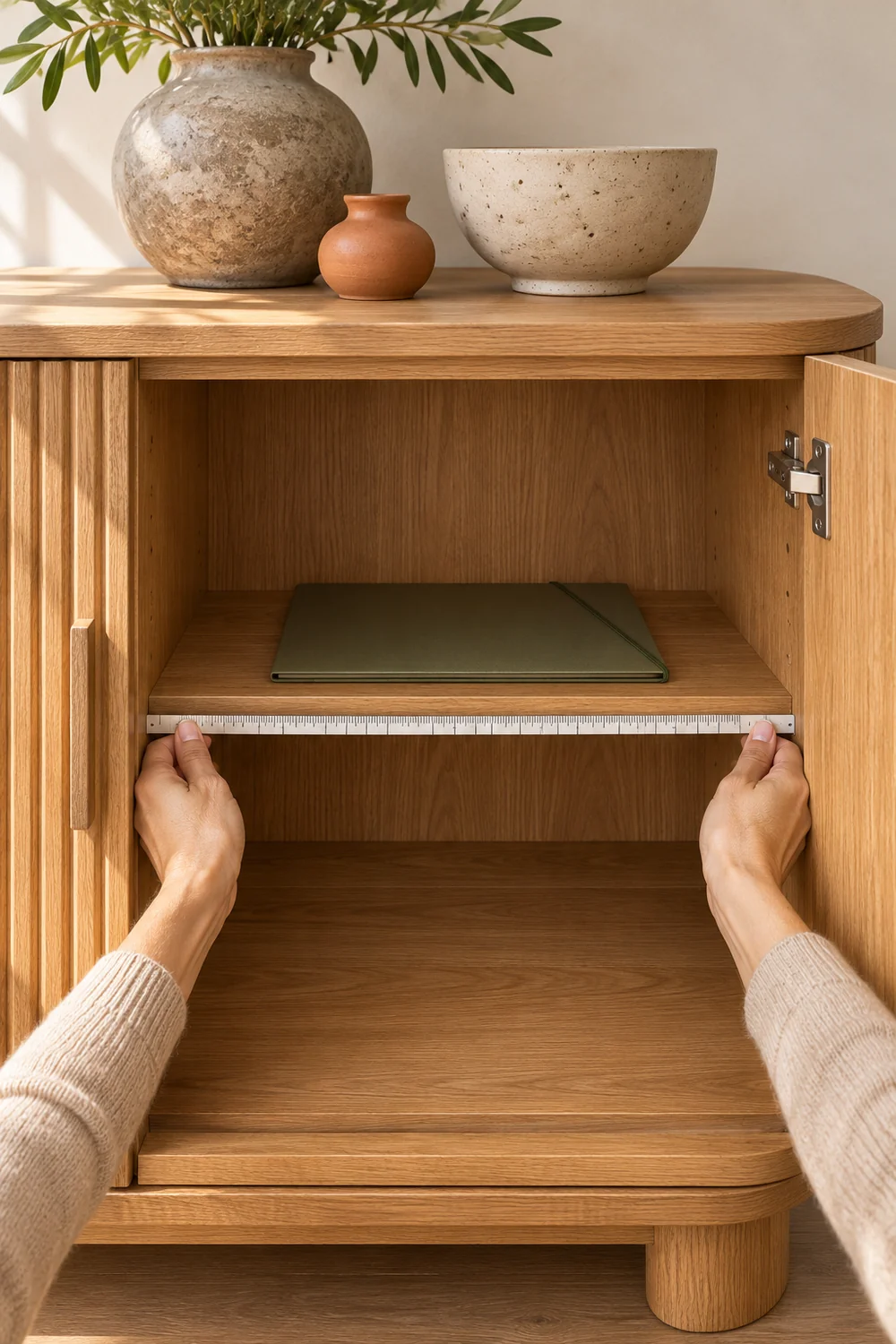
For a worked example, imagine a shelf with a 36 centimetre opening, 32 centimetres of clear depth and 23 centimetres of height. A folder that measures 32 by 25 centimetres fits flat on paper. Test it with the tray you mean to carry. A tray with a 34 centimetre outside width leaves 2 centimetres of total side clearance at that opening. If the handles need fingers beside them, that spare width may be too little to lift it comfortably. Try a central handle, front grip or a slightly smaller tray that still holds the folder. Use your actual opening rather than treating the example as a shopping size.
If you are still deciding where the cabinet can sit, my dining room storage advice explains how cabinet depth, closed storage and circulation fit into the room. The homework decision begins when there is a real shelf, door or landing space to measure. I’d test the opening with a box or a piece of card the size of the proposed container before I buy anything.
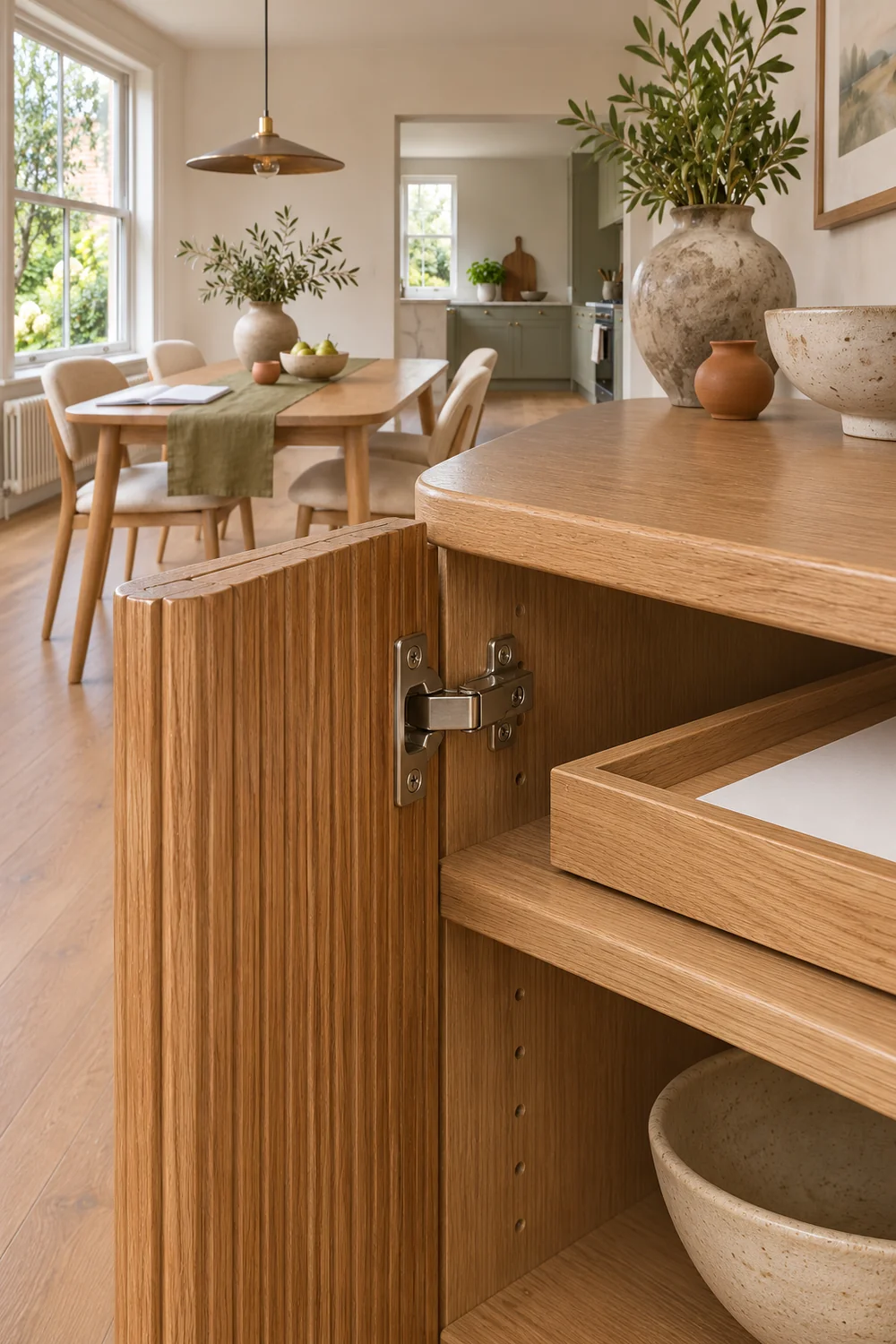
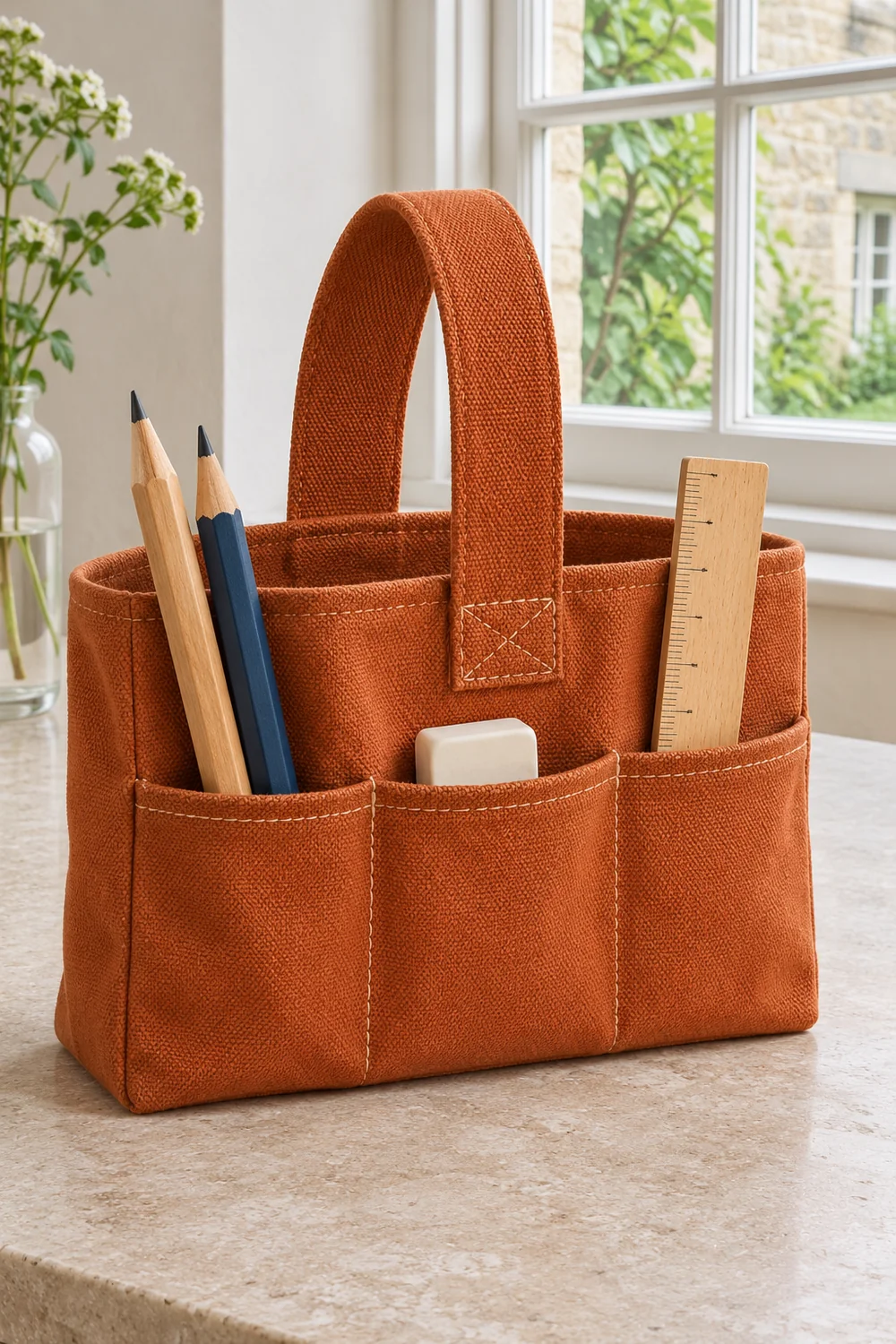
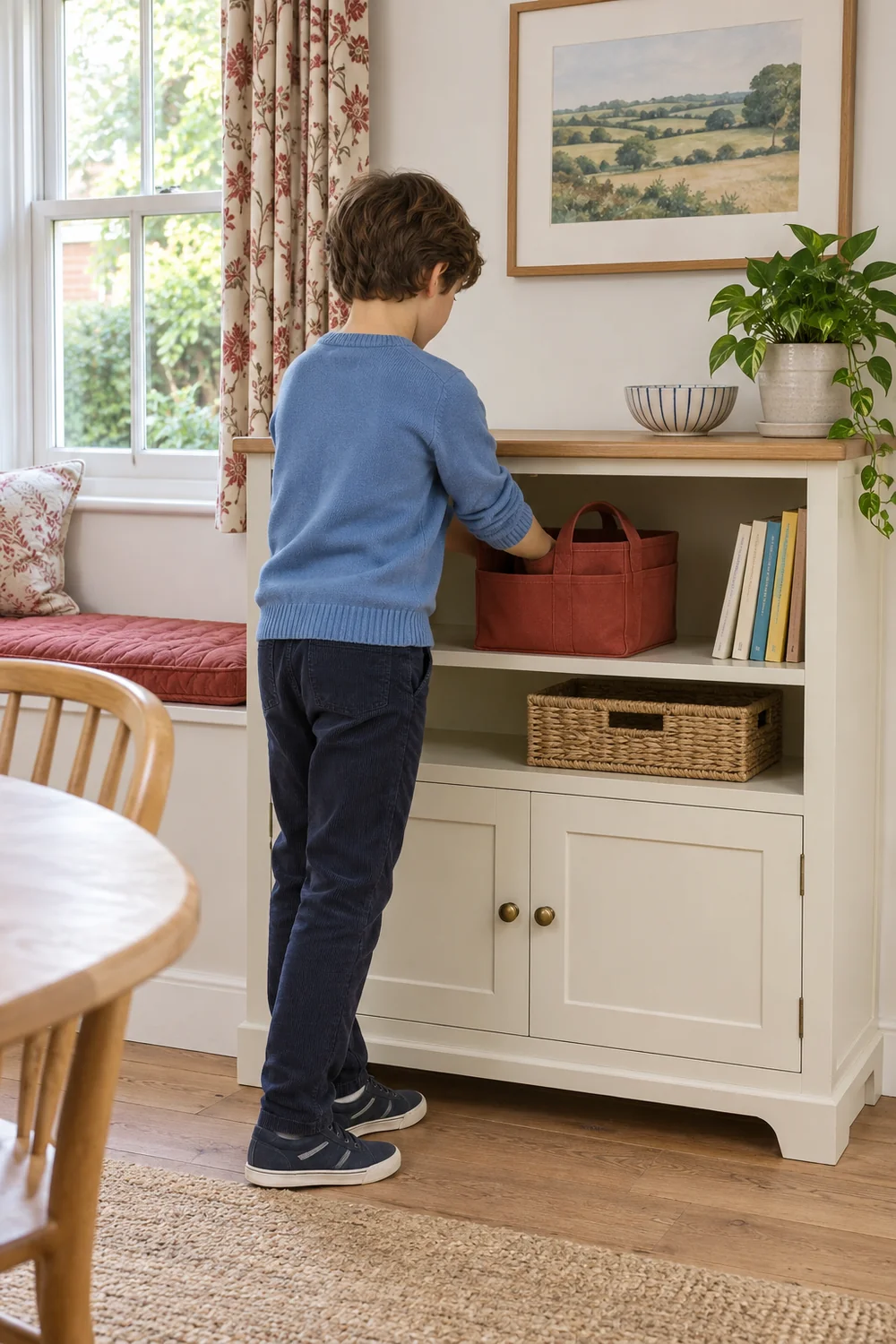
I would choose a carry caddy when homework shifts between seats or your child regularly uses the same small tools. Look for a base that sits steadily on the table, a handle they can hold with the load inside and shallow compartments where pencils and small erasers stay visible. Try carrying it one handed from shelf to table and back. If it swings into a chair or needs a grip your child can’t manage, reduce the size of the everyday kit or give it a shorter journey.
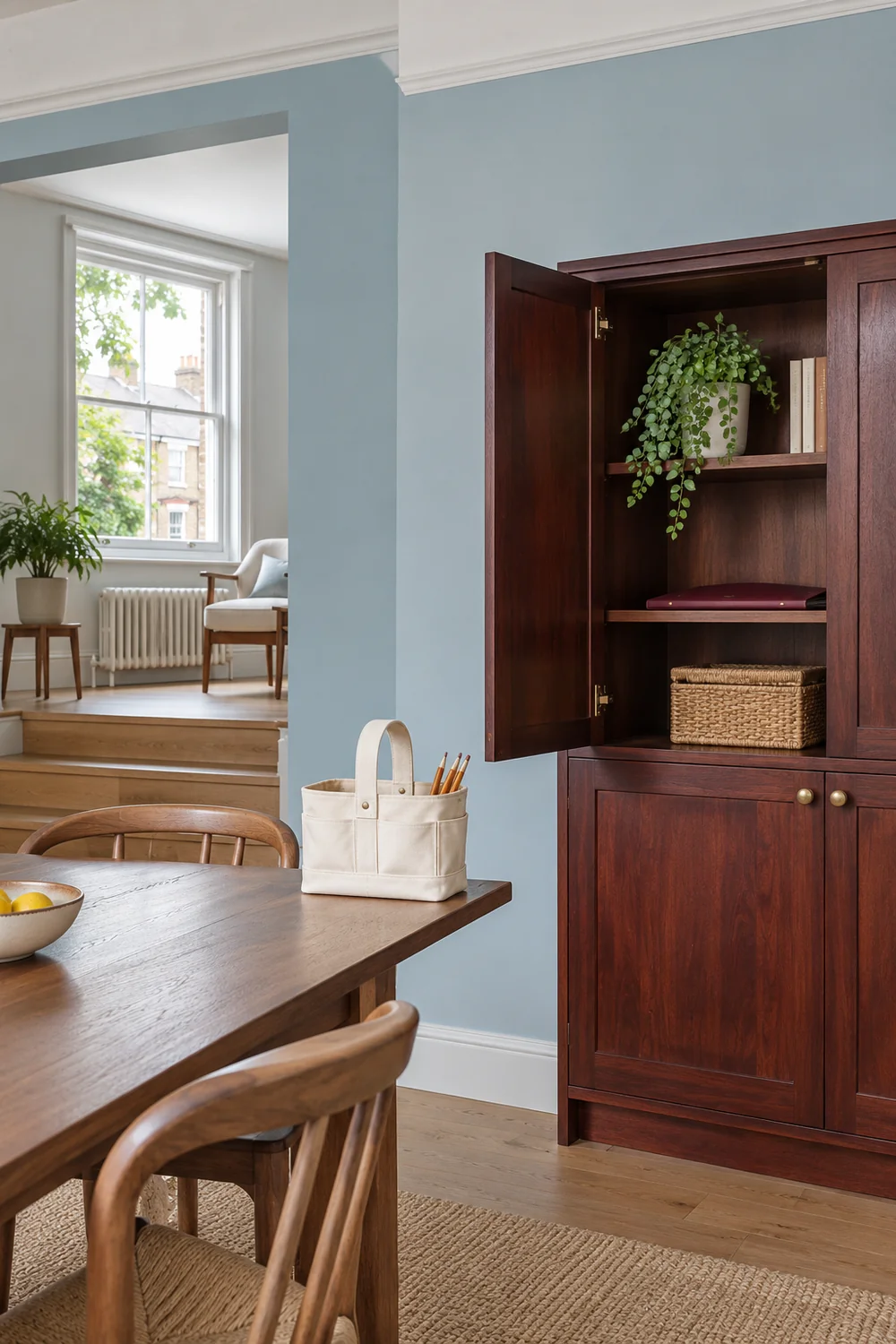
A caddy works best with a limited job. For the example room I’d give it the pencils, an eraser, the ruler that actually fits and the things your child reaches for most evenings. Stiff folders, thick exercise books and pieces that must stay flat can make a small caddy top heavy or too awkward to lift. Put those pieces on a shallow shelf or in a tray sized for the load. If your child only needs a short pencil case and one book, a case and a shelf they can reach may do everything a caddy would.
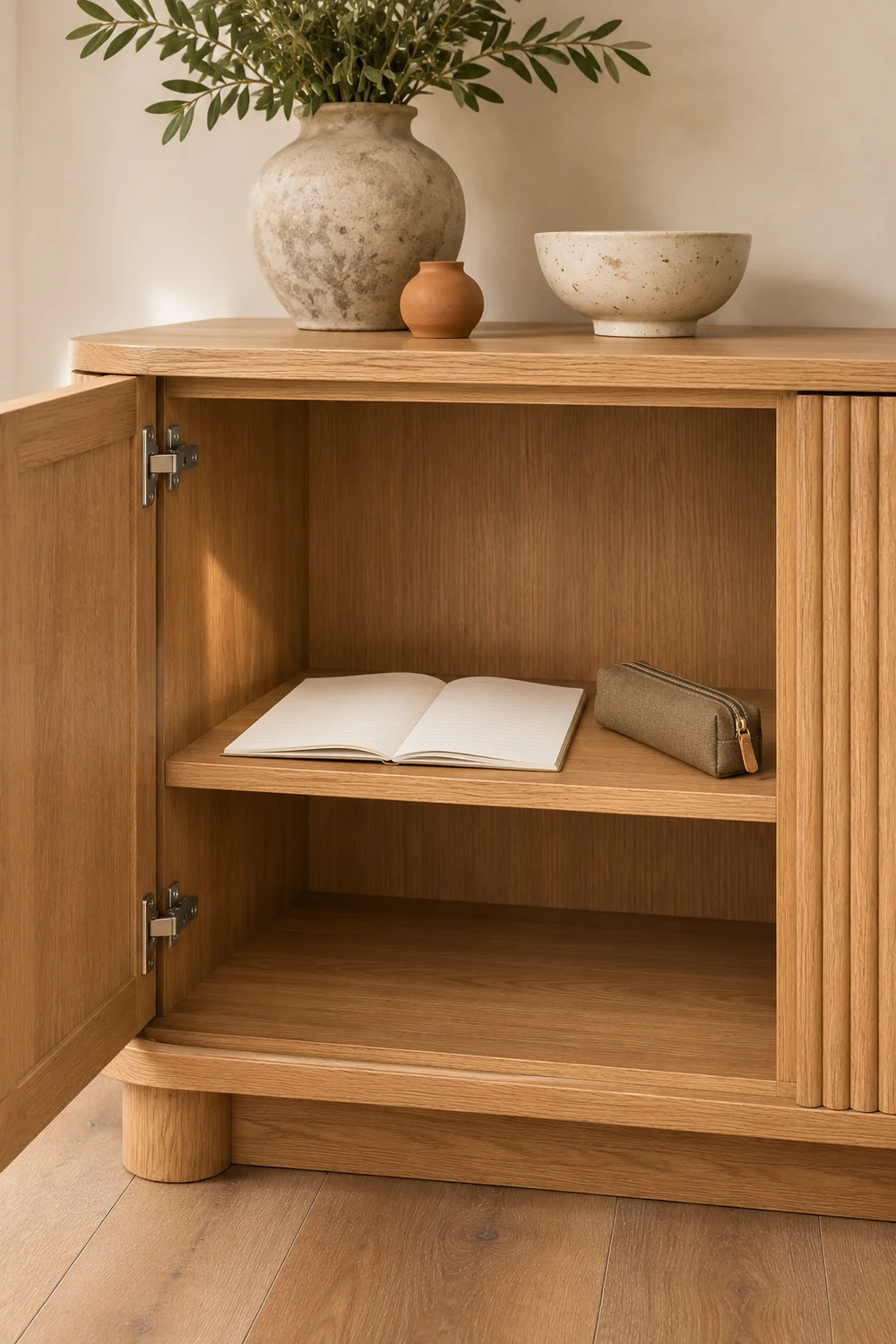
Choose a sideboard shelf when homework mostly happens at the same table and large work needs to rest flat. Put the frequently used supplies close to the front, with enough space above for a hand to reach over them. Use a shallow tray or upright folder for papers that can stand, then check the cupboard closes with both in place. A deep drawer can take a large sheet, but make sure the bottom of it can be lifted without dragging the work against the front. If your tray has to be tipped to clear the door, it is a poor fit for a piece with loose parts.
I would use the cabinet interior for the kit and let a small lamp or low bowl keep its usual place above. My sideboard styling guide shows how I’d use the top without filling a useful surface. If there is no cabinet, the same division can work with a portable caddy and a single flat tray on an existing shelf. Check that the tray has a designated parking spot so it doesn’t drift back onto the table.
Give the two options the same trial. Put the everyday supplies in the smallest box that holds them and the paperwork on a separate tray. Use that arrangement for a few sessions, then try keeping everything on one accessible shelf. The choice comes down to what gets lifted, what stays flat and which version leaves fewer loose items on the table at dinner.
Work in progress needs a place of its own. Try a shallow tray with an inside base bigger than the largest loose page you regularly pause. Check the corners as well as the published dimensions, because rounded corners can catch a rigid folder and a sloped side can make the usable base smaller. Lift the tray when it has a real paper, book and pencil on it. If the paper curls against a corner or the load slides when you turn, find a wider flat base or separate the heavier book.
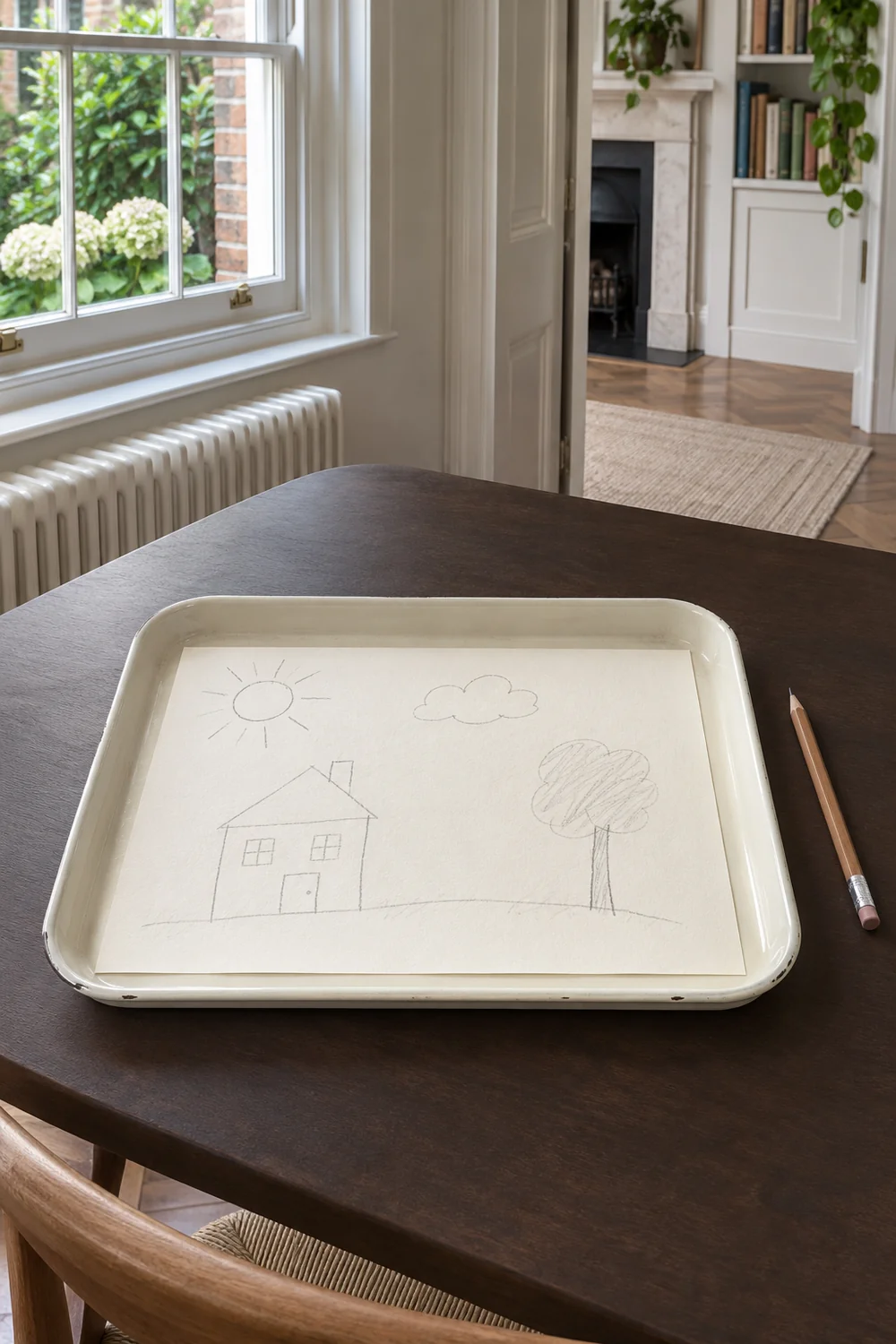
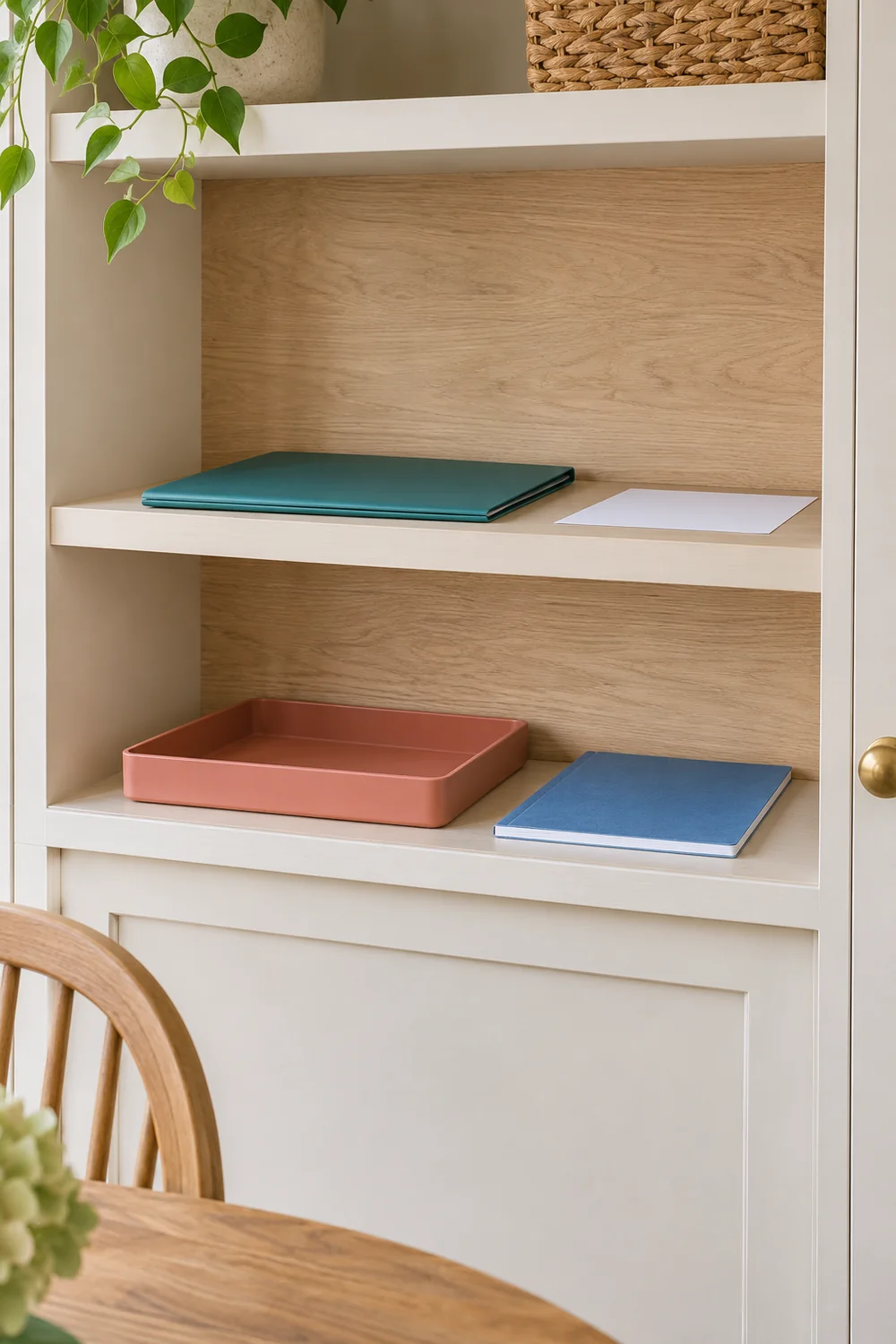
I would keep one slot for the piece to pick up next. An ordinary folder can hold a loose worksheet and a bookmark can keep the place in a book. For a picture or project that must stay open, make the shallow tray the active slot. Use the same place every evening so your child can find it without emptying the rest of the shelf. When two children share the table, give each an active slot they can recognise. A familiar folder colour or different position on the shelf is enough.
The finished work has a different destination. If it needs to go back to school, put it directly into the bag or its usual take to school folder as you clear the table. Spare paper and little used tools can stay behind the everyday kit. That leaves the active slot available tomorrow. I would keep school letters for an adult somewhere separate from the piece of work the child expects to find. A tray that holds every paper in the house soon becomes another sorting job just before dinner.
Try the system once when an assignment has a loose second piece, such as a pencil sketch beside an open notebook. Move the work just as your child would and bring it back to the same seat. See what has moved, which page opens first and whether the pencil is still in the kit. Adjust the slot or divide the load if a piece gets lost. The test succeeds when your child can sit down and carry on from roughly where they paused. If the dining table shares a room with a sofa, my small dining layout guide can help you put the tray where it stays off the route you use during the meal.
Do the first trial with the storage full enough to reflect an ordinary day. Have your child get the things they normally need and return the kit. Look at what requires a stretch, what needs both hands and what catches on the shelf. Move heavy or awkward things to a stable spot that an adult can manage if the child cannot carry them easily. An everyday container is useful when the person expected to put it away can do that without improvising.
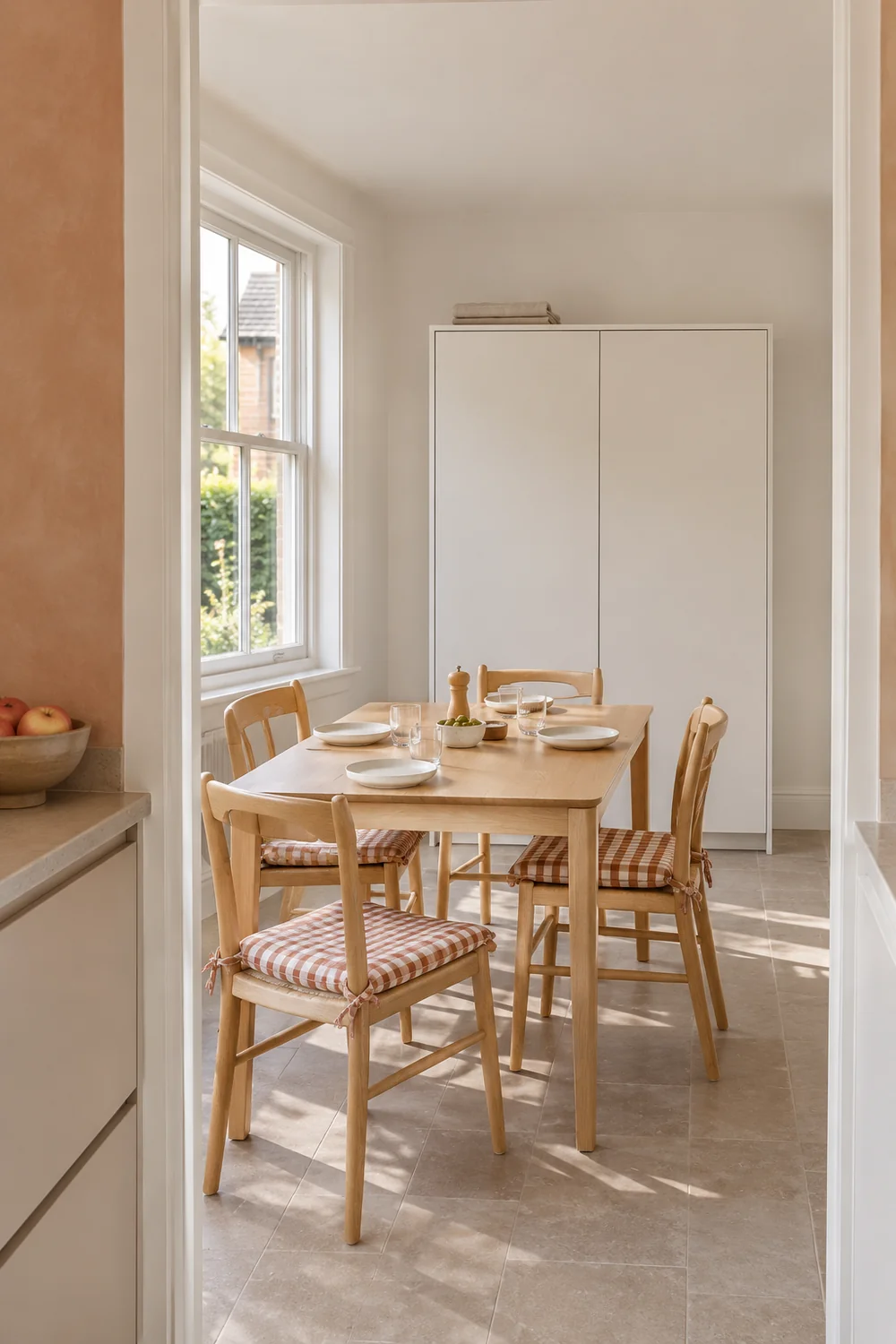
Then run the dinner reset. Have the active work go to the flat slot, the small tools back into the kit and completed work to the bag. Set the table and check that all the places work, the path from the kitchen stays open and the caddy or tray hasn’t displaced something you need for the meal. In the example, the tabletop is ready once the tray is in the cupboard and the pencil caddy has its own shelf space beside it. The sideboard top can go back to the lamp and bowl it usually holds.
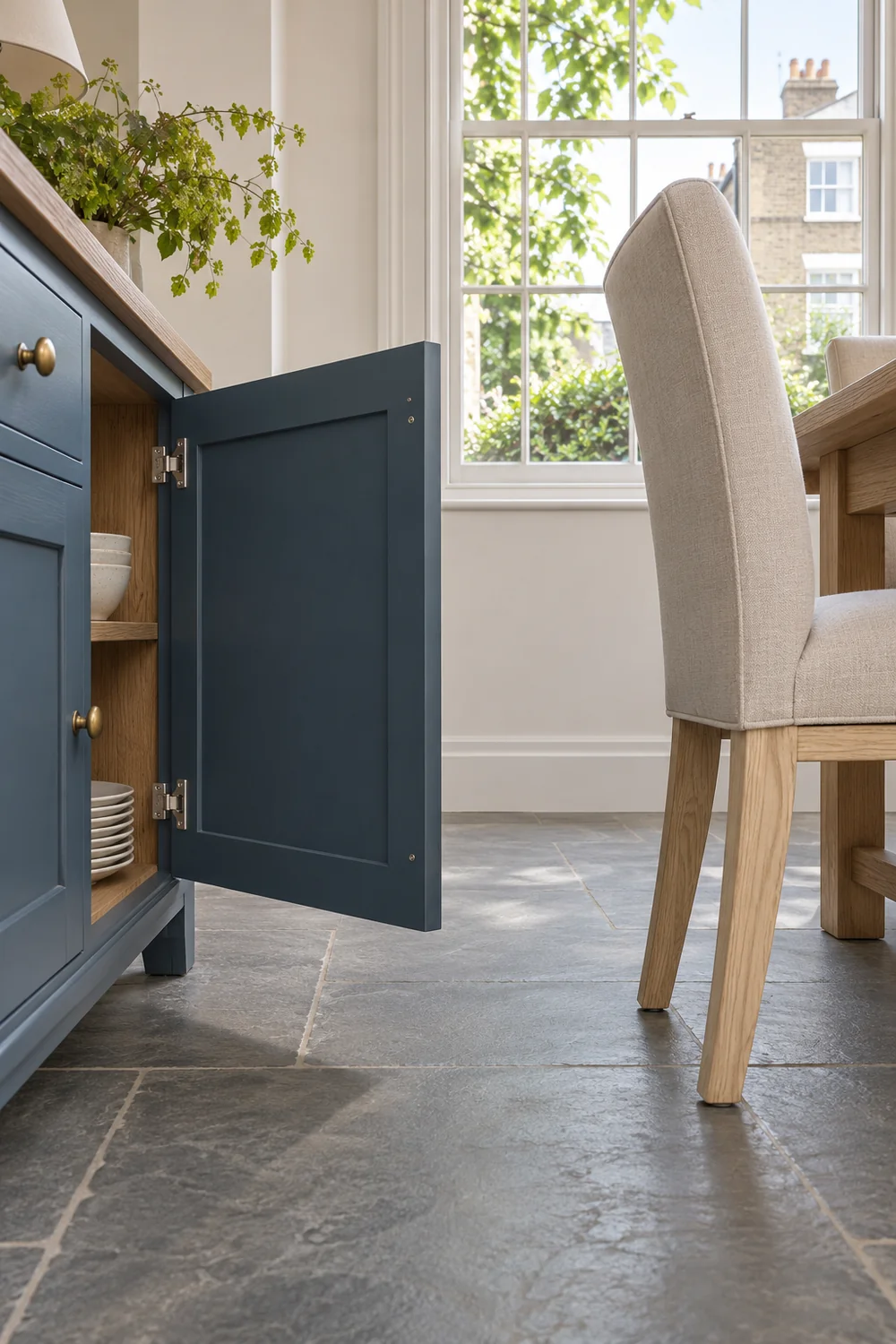
Look for the places where the reset takes an extra step. If the work comes out intact but the cupboard door can only open when a chair is pulled out, first try putting the kit in a more accessible opening. If you always lift notebooks off the top of the pencil caddy to reach one pen, give the notebooks a flat shelf spot and reserve the caddy for the small things. If you have to carry the tray through the serving route while dinner arrives, clear it a minute earlier or return to the room plan to find a better landing spot.
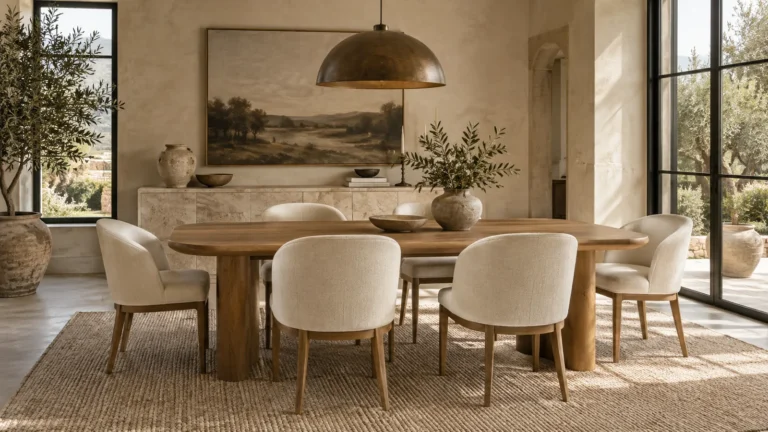
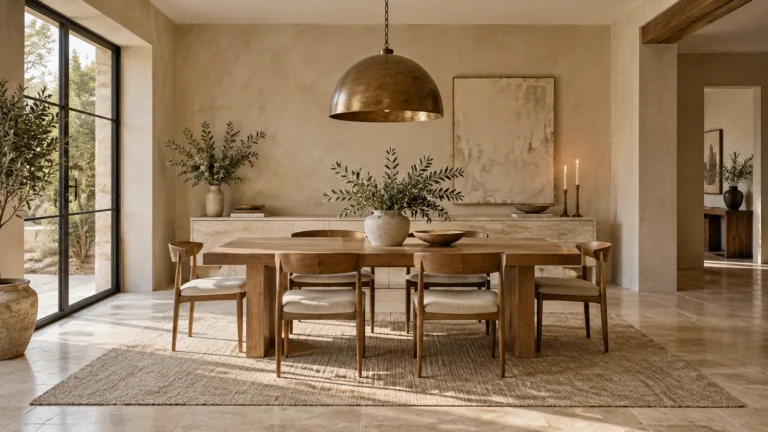
After the test, I would keep the table visually simple between meals. A low bowl or a small object that lifts away easily can be enough. The organic modern dining room guide has examples of quiet materials and clear surfaces that still feel lived in. You can see whether the storage choice serves the room by looking at what remains on the table after the child has put everything away.
Clear the active slot at the end of the school week with your child. Send completed work to the bag or the place you keep it at home. If one project still has another session to go, return it to the active spot with the piece they need next sitting on top. Then check the basics in the caddy. A pencil that needs sharpening and a pad that has run out are easier to fix now than when the next assignment is about to begin.
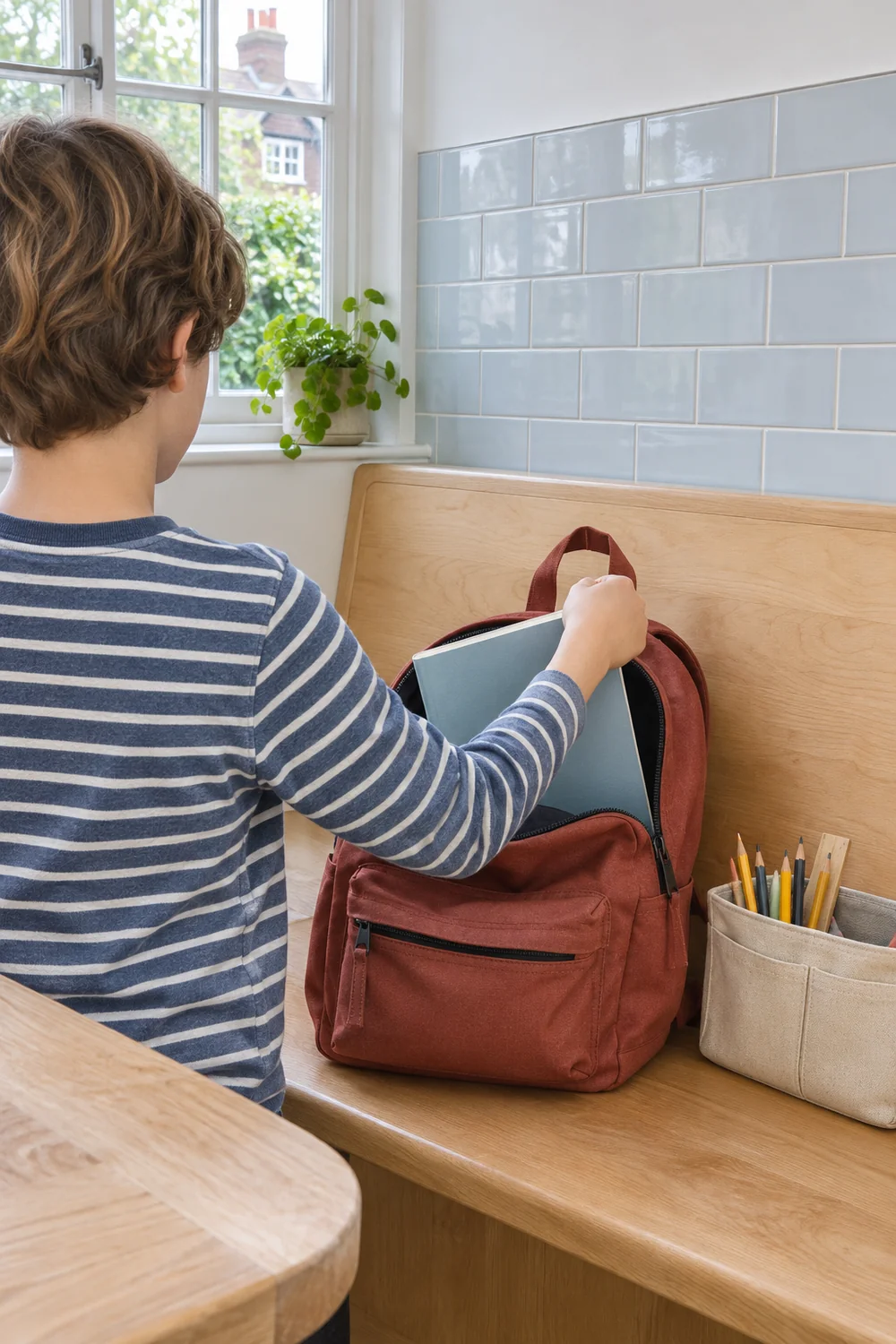
Pay attention to what is still coming home on the table every night. A stray pen may need a more obvious compartment. A stack of supersized worksheets calls for a different flat space. If everything keeps landing in the wrong place despite a workable container, go back to the dining room homework station plan and retest the route and landing spot. Repeated friction in the same place usually tells you which part of the routine deserves attention.
Keep one everyday kit and one place for active work through the next few sessions. Notice any supplies that never come out. Take them out of the caddy and leave room for what is actually used. When a term changes or the child starts bringing home a larger book, measure the new piece against the current setup before replacing the whole thing. A weekly check should sustain the routine, and it gives children a simple part of it they can increasingly do themselves.
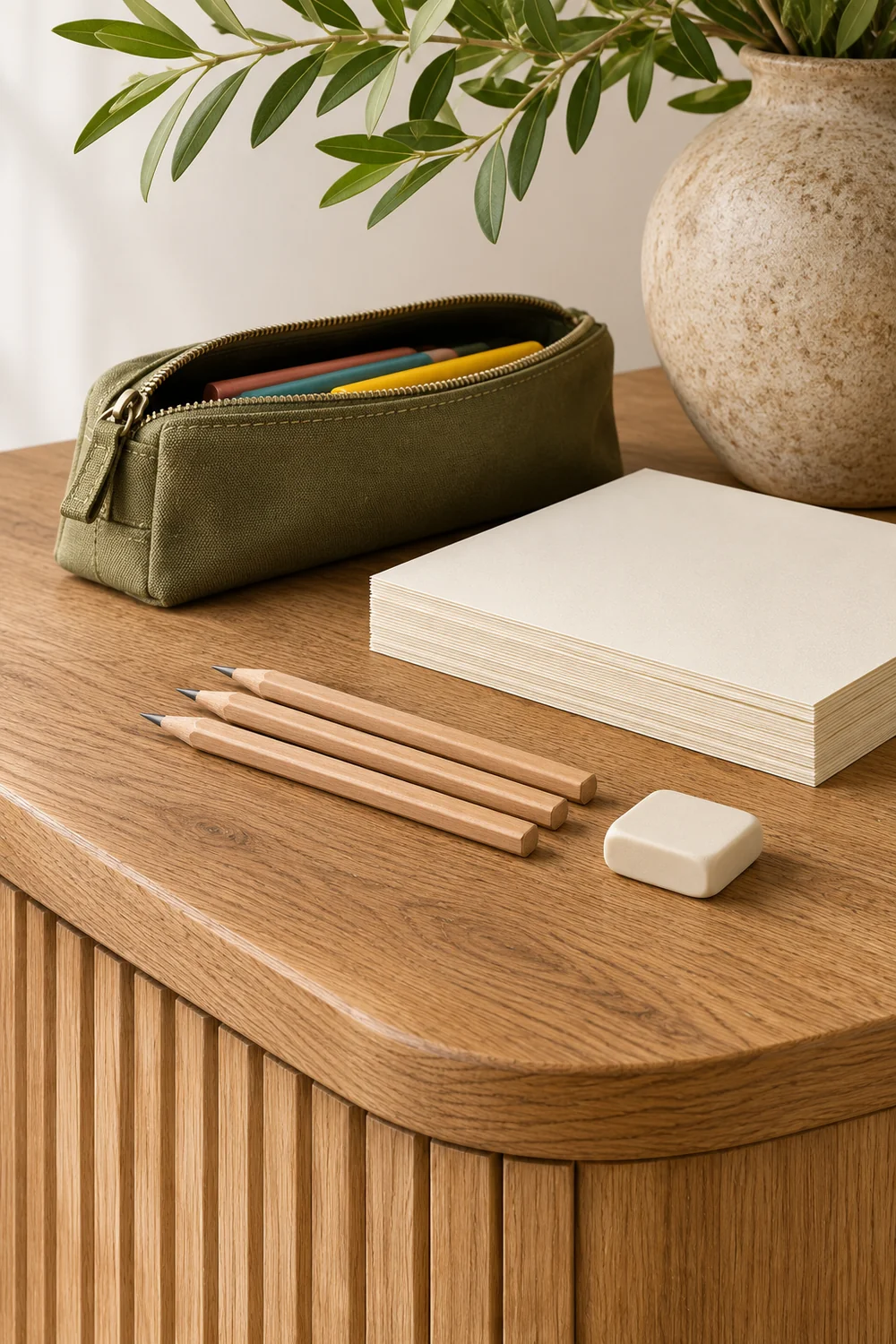
A good choice is a compact setup that holds the real work, sits where your child can use it and leaves dinner straightforward. I would keep the existing tray if it passes the open book test, the carry test and the cupboard check. If you need to buy something, take the dimensions of the opening and largest piece of work with you, and check the usable interior and how the handle actually lifts. If you shop in person, bring the folder or a cardboard template. Try sliding it in and lifting it back out without bending the corners. You can make the same check at home before removing the packaging. The end result can be as modest as a pencil case and a flat place for unfinished work. At six o’clock, what matters is that the table can be set and the child can find tomorrow’s page in the place they left it.