Newsletter Subscribe
Enter your email address below and subscribe to our newsletter

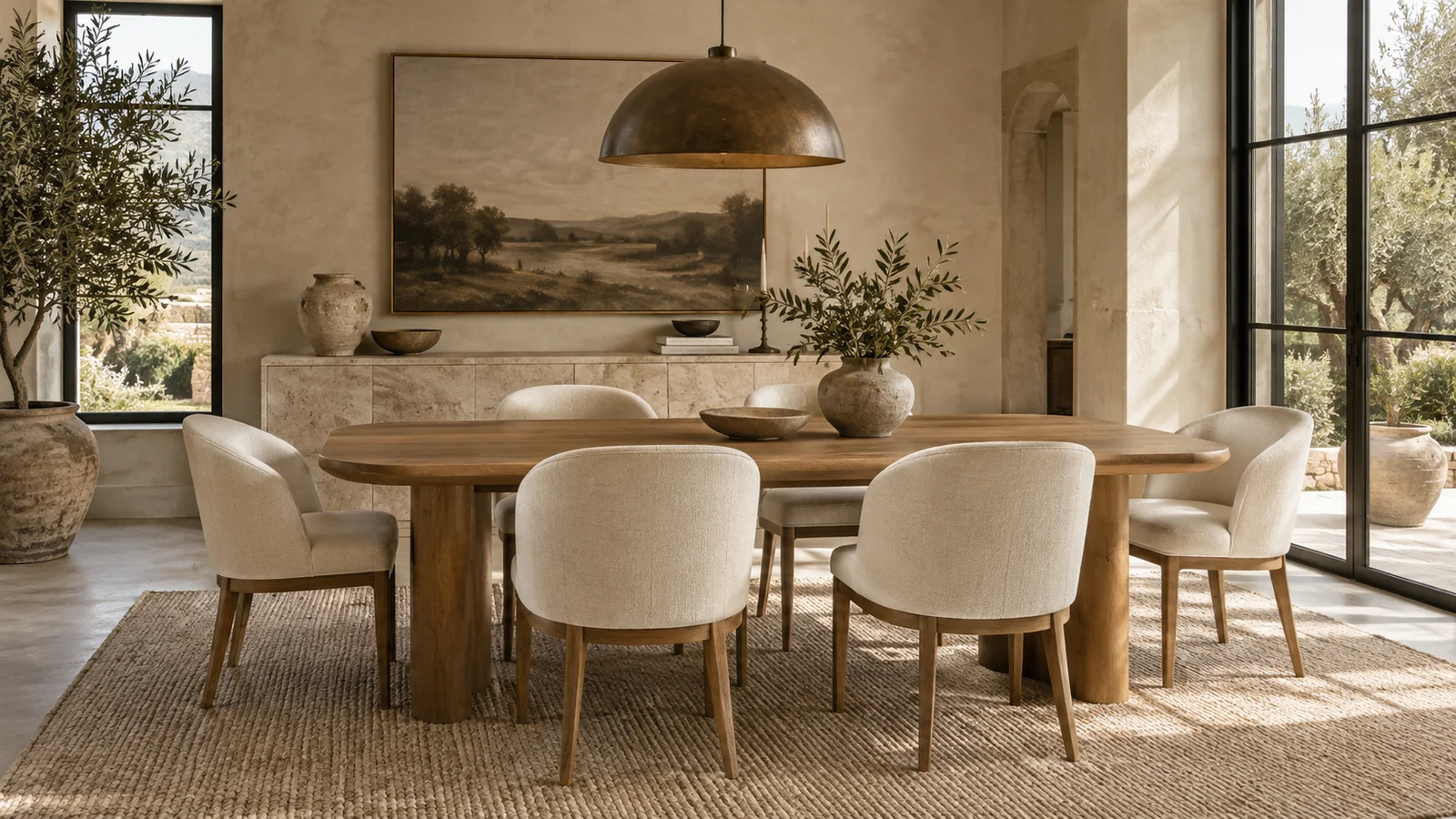
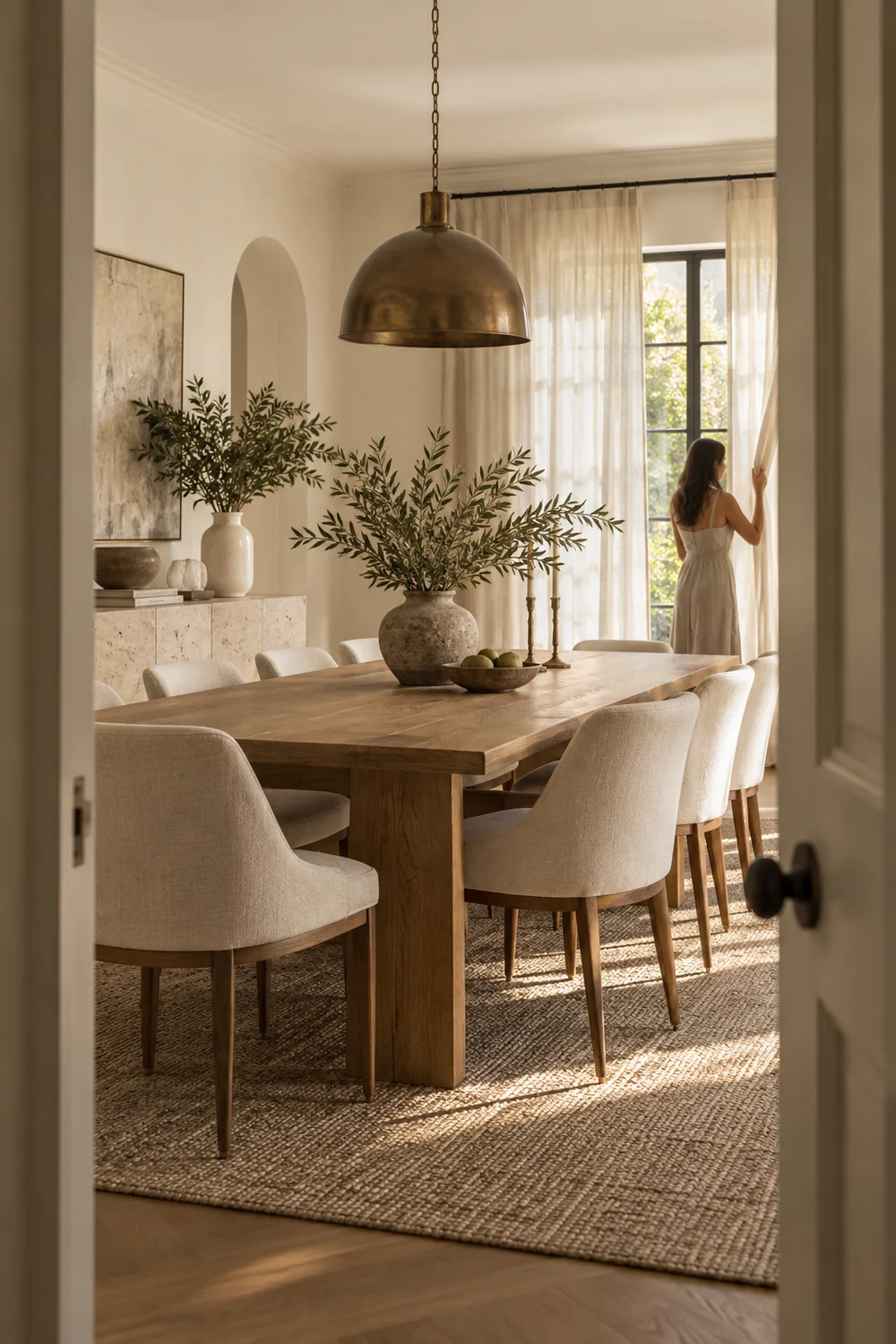
An organic modern dining room is less about following a strict style recipe and more about getting the balance right. It brings the clarity of modern furniture together with the softness of natural materials, then leaves enough breathing room for the space to feel settled rather than styled within an inch of its life. The most convincing rooms tend to rely on a few quiet ingredients: warm wood, tactile stone, upholstered seating, softened light and objects with an irregular or handmade quality. The result is calm, but it is not blank. It feels collected because every material has a little visual weight and every piece has a reason to be there. If you are at the beginning of the process, use these ideas to decide what version of organic modern suits your home. Once the direction is clear, the modern organic dining room planning guide can help you translate it into layout, palette and material choices.
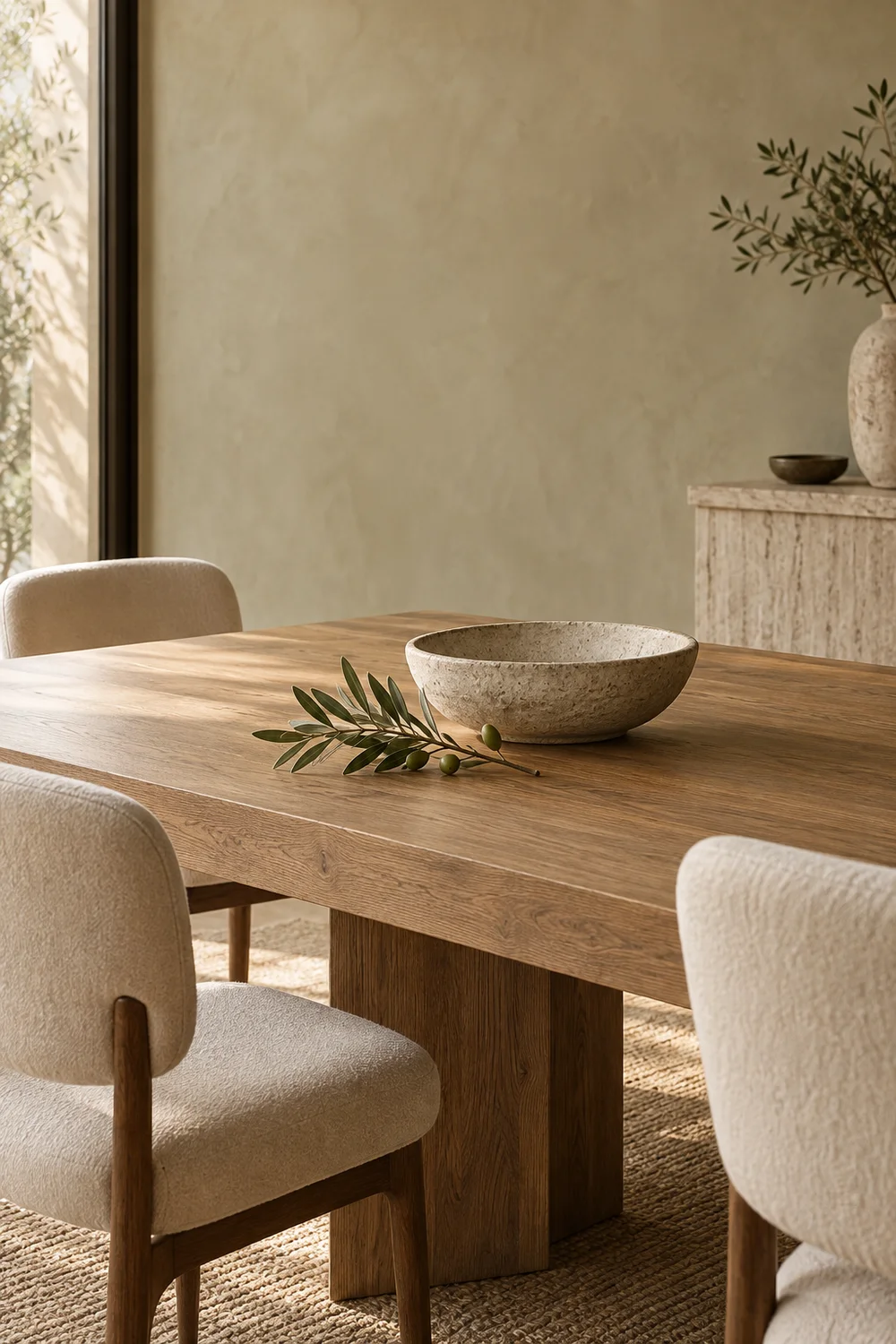
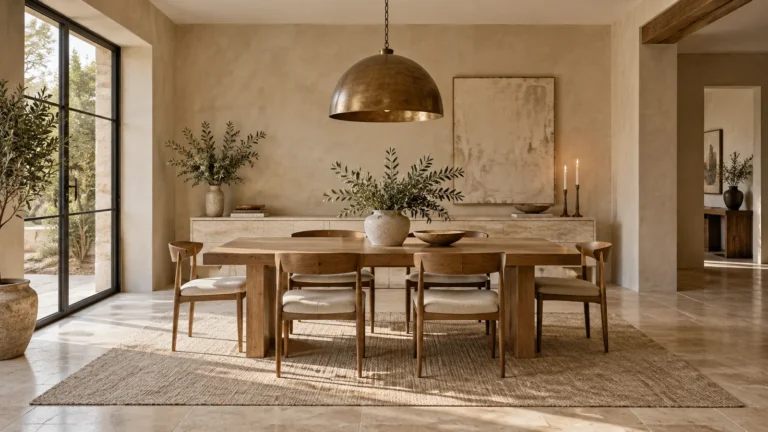
The dining table does more than provide a surface. In this style, it is the main source of warmth in a room that might otherwise be made from pale plaster, stone and upholstery. A table with a medium to warm oak finish is especially useful because it gives the room a grounded, human feeling without making it rustic.
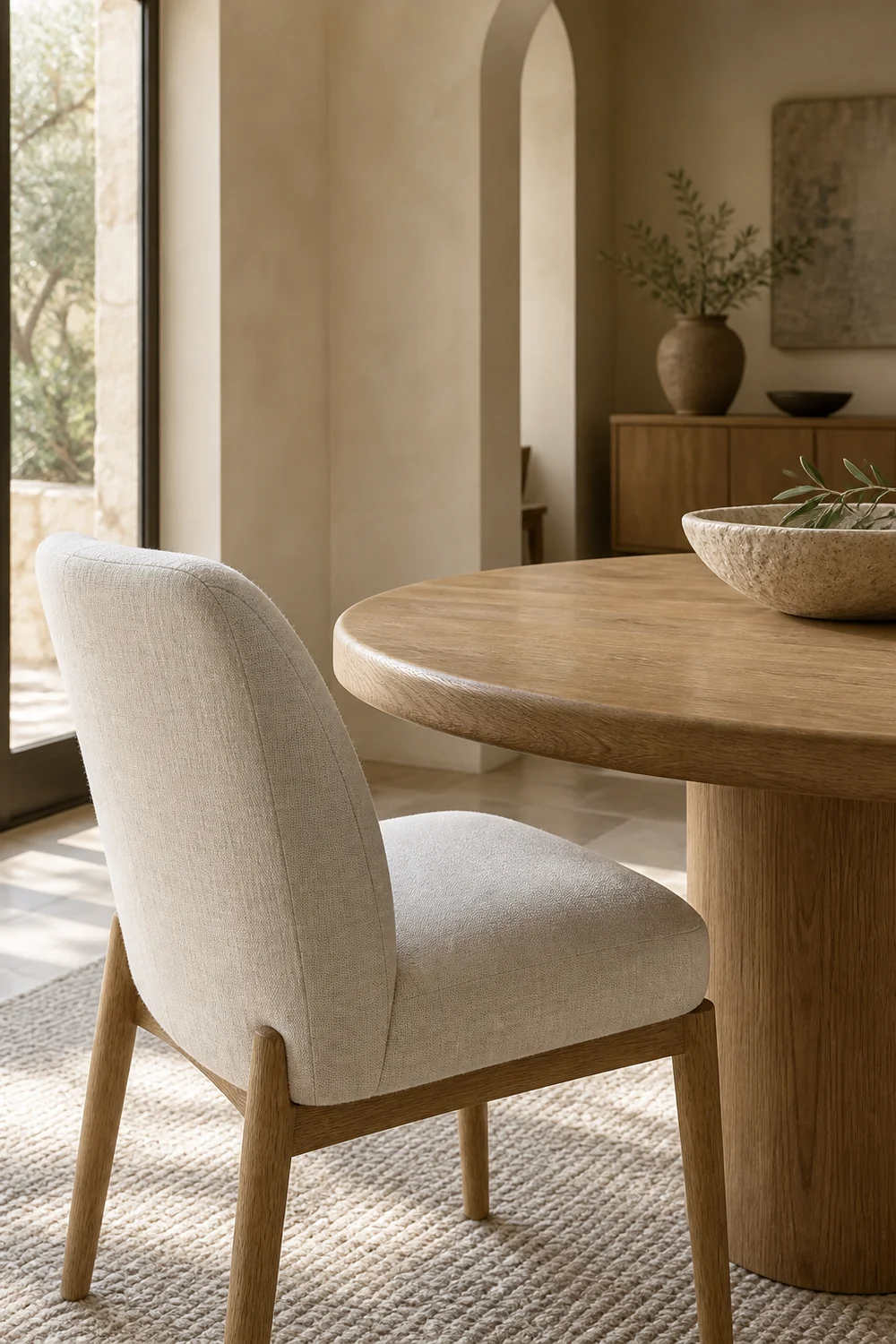
Look for a silhouette that is simple but not severe. Rounded corners, a softly pillowed edge, a pedestal base or substantial cylindrical legs all take the sharpness out of a modern scheme. A beautifully plain rectangular table works too, provided the timber has visible grain and the surrounding materials introduce softness.
Try to avoid treating the table as a precious showroom piece. One low ceramic bowl, an unfussy branch and a linen runner used occasionally are enough. The wood should still be allowed to read as wood.
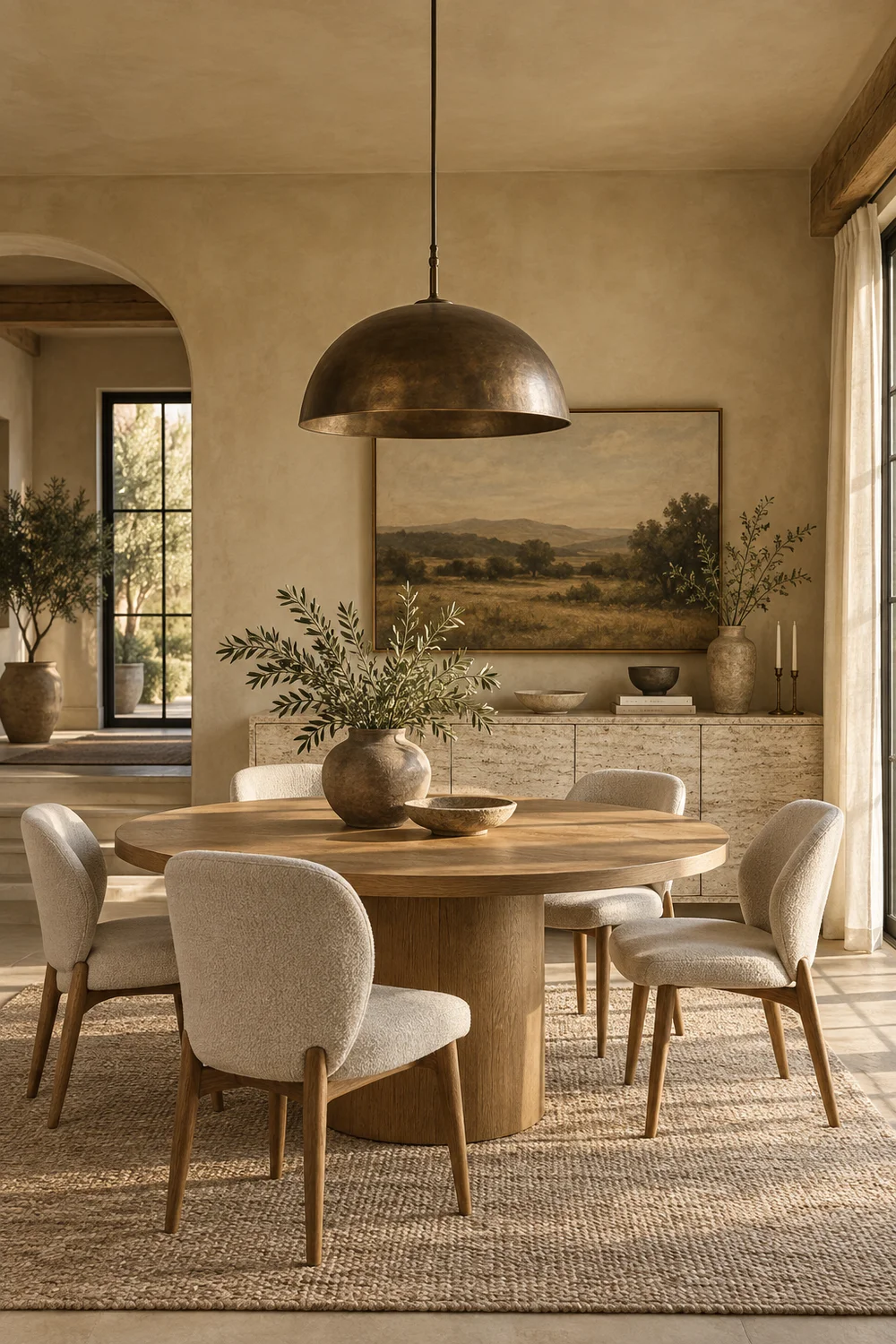
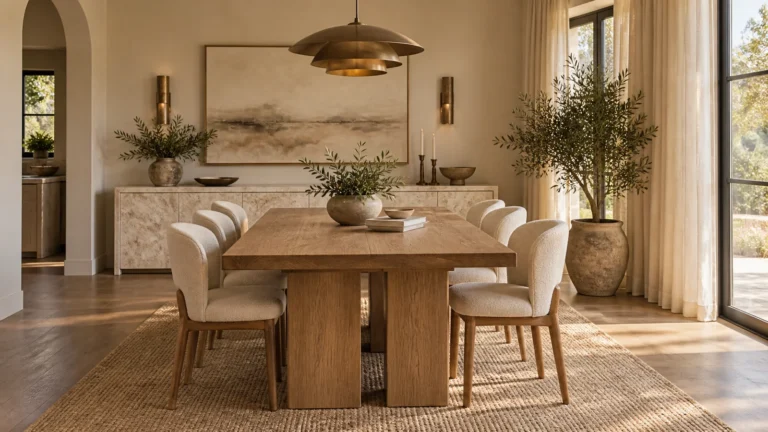
Upholstered dining chairs are one of the easiest ways to shift a dining room from merely modern to organic modern. A nubby ivory fabric, washed linen blend or soft oatmeal weave gives visual relief beside timber and stone. It also makes a dining setting feel more comfortable, which matters if the room is meant to hold long lunches rather than brief formal meals.
The best chairs are gently shaped rather than overly sculptural. Curved backs, rounded corners and a relaxed upholstered seat work particularly well. A slim dark timber chair can be useful in the mix, but use it as a contrast rather than repeating it around the whole table. Too much visible angular wood can take the room towards mid century rather than the warmer, quieter look you may be after.
Organic modern rooms need a backdrop with some depth. Plaster, limewash and chalky paint all diffuse light more beautifully than a flat brilliant white, especially in a dining room where the walls are seen at different times of day.
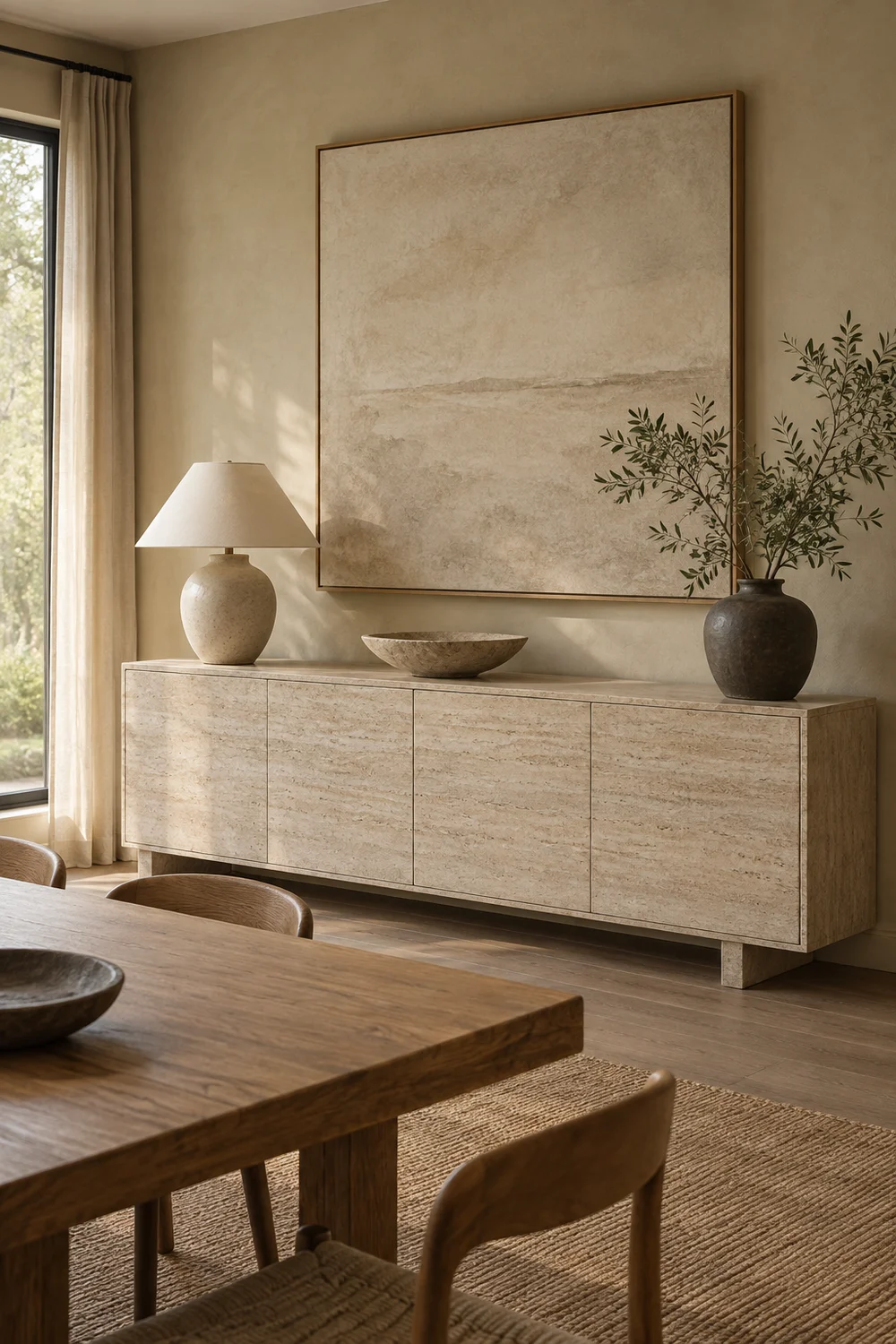
Choose an off white with a warm undertone, muted sand, pale mushroom or a very gentle putty. These colours make oak look richer and keep ivory chairs from appearing yellow. The aim is not to create a feature wall. It is to establish a low contrast envelope in which texture has room to be noticed.
If you rent or do not want a specialist finish, a matte paint in a complex neutral can achieve much of the same mood. Pair it with linen curtains or a woven blind so the window treatment adds another soft layer.
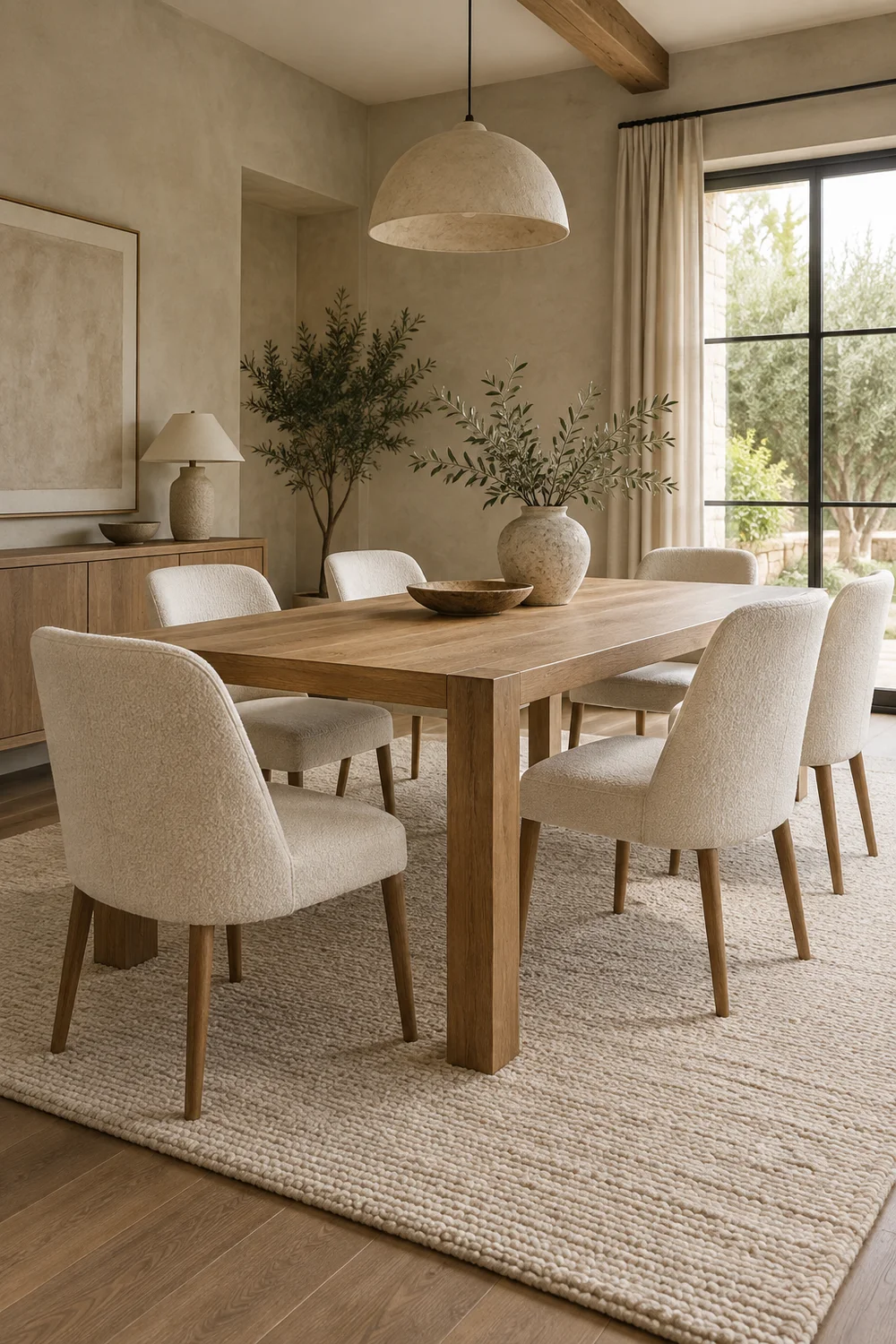
Stone gives an organic modern dining room its sense of permanence. It can appear as a travertine sideboard, a limestone topped console, a small pedestal, a vessel or simply a natural stone floor. The point is not to cover every surface in it. One or two stone notes are more persuasive than a room full of matching slabs.
Travertine is popular because its pores and tonal variation keep it from feeling slick. Limestone, honed marble and softly veined quartzite can work in the same way. Choose finishes that are honed, brushed or matte where possible. A highly polished surface reflects too much light and can make an otherwise relaxed room feel formal.
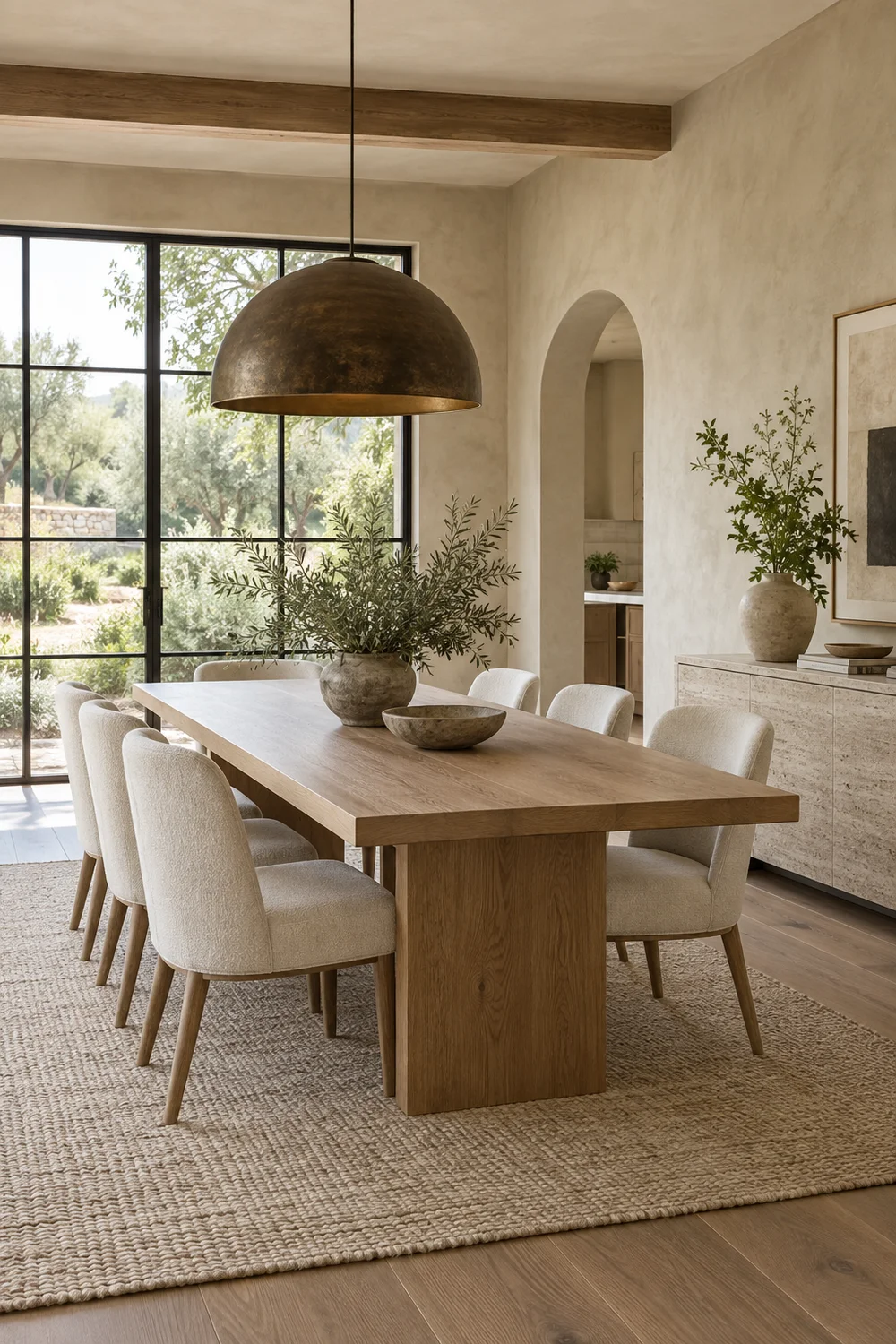
A dining pendant is often the most visible decorative element in the room, so it should bring shape without hijacking the view. A dome in aged bronze, a linen shade, a plaster form or an opal glass globe can all work. What matters most is scale and warmth.
Hang the pendant low enough to gather the table, but not so low that it interrupts conversation across it. A dimmer is worth prioritising. During the day, the fixture can disappear into the room. In the evening, a warm pool of light makes the timber and ceramics feel richer.
Add a lamp on a sideboard or console if the room has one. That secondary light is what stops a dining room from feeling like a space that only exists at mealtimes.
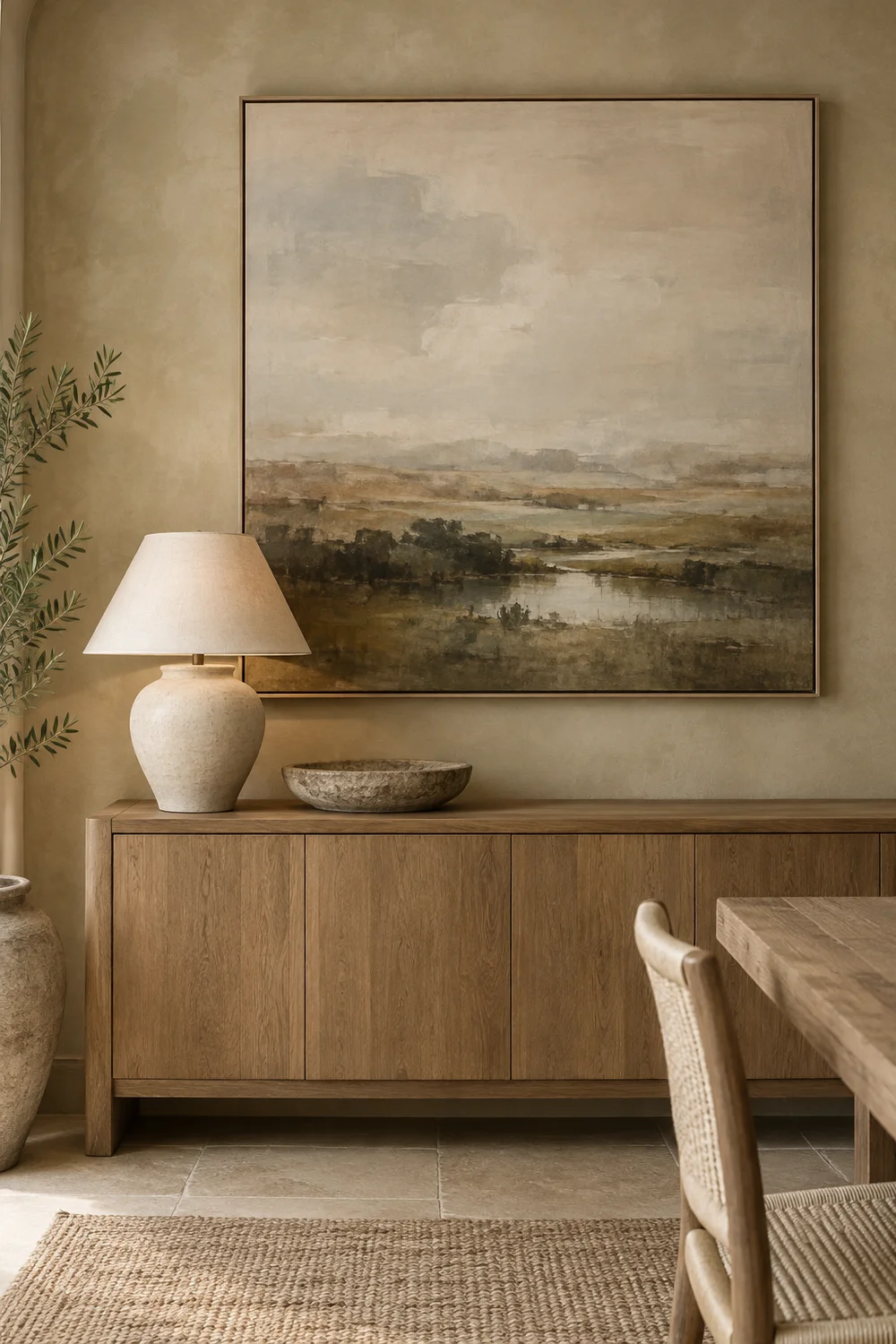
Large, quiet art is often more effective here than a gallery wall. An abstract landscape, a tonal study, a hand drawn figure or a simple textile can give the wall a focal point while holding the palette together. Look for work with warm neutrals, softened charcoal, olive, clay or faded brown rather than bright contrast.
The art does not need to match the chairs or rug. In fact, a little difference makes the room feel more collected. The useful question is whether it shares the room’s visual temperature. If it feels sun warmed, mineral, wooded or hand worked, it will probably belong.
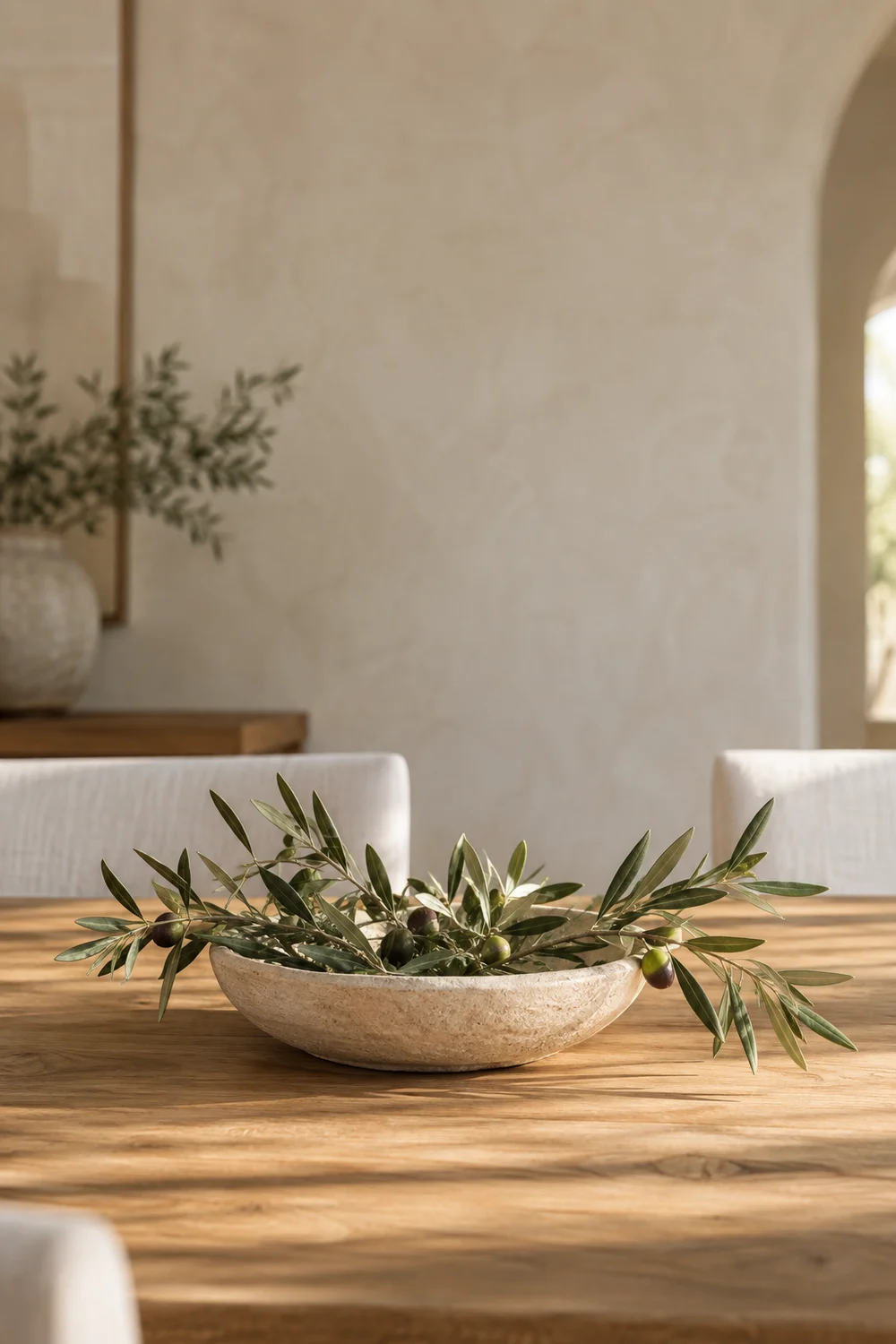
This is a style that benefits from restraint at table level. A low bowl, a rough ceramic vessel, a few olive branches or seasonal stems are enough. Tall symmetrical arrangements can block sightlines and turn the table into a display rather than a place to sit.
The same principle applies to a sideboard. Leave some empty surface around a lamp, a small stack of books, a bowl and a vessel. Negative space is not unfinished. It is part of why the materials feel special.
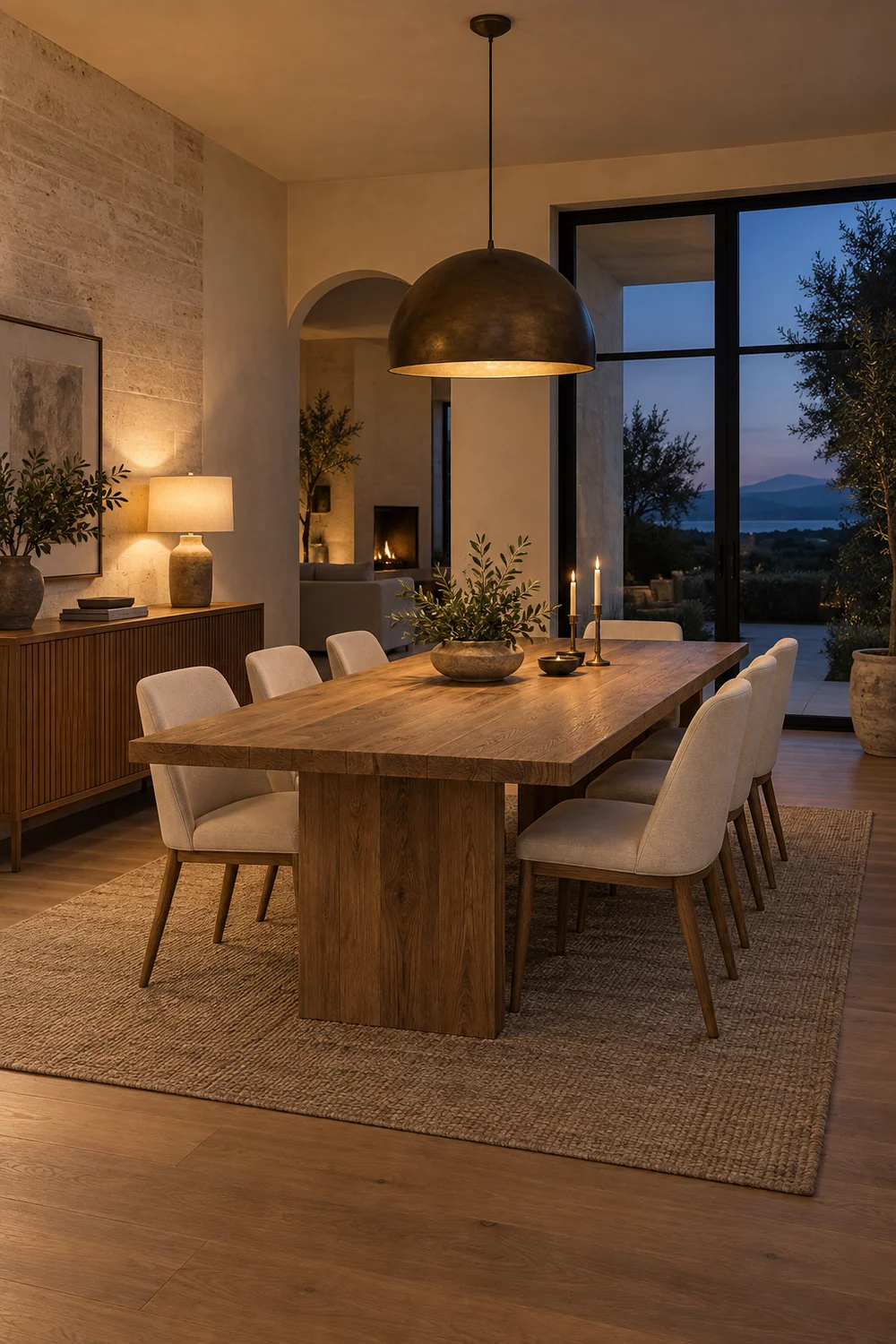
A dining room rug is not essential, but it can make an open space feel more intimate and improve the acoustic quality of hard surfaces. Flatweave wool, low pile texture and natural jute blends suit this look well. Avoid a rug that is so pale it disappears entirely or so patterned that it becomes the main event.
Make the rug large enough that chairs remain on it when pulled back. If that is not possible, skip it and let the floor breathe. A too small rug makes a generous table look cramped, which is the opposite of the relaxed feeling this style relies on.
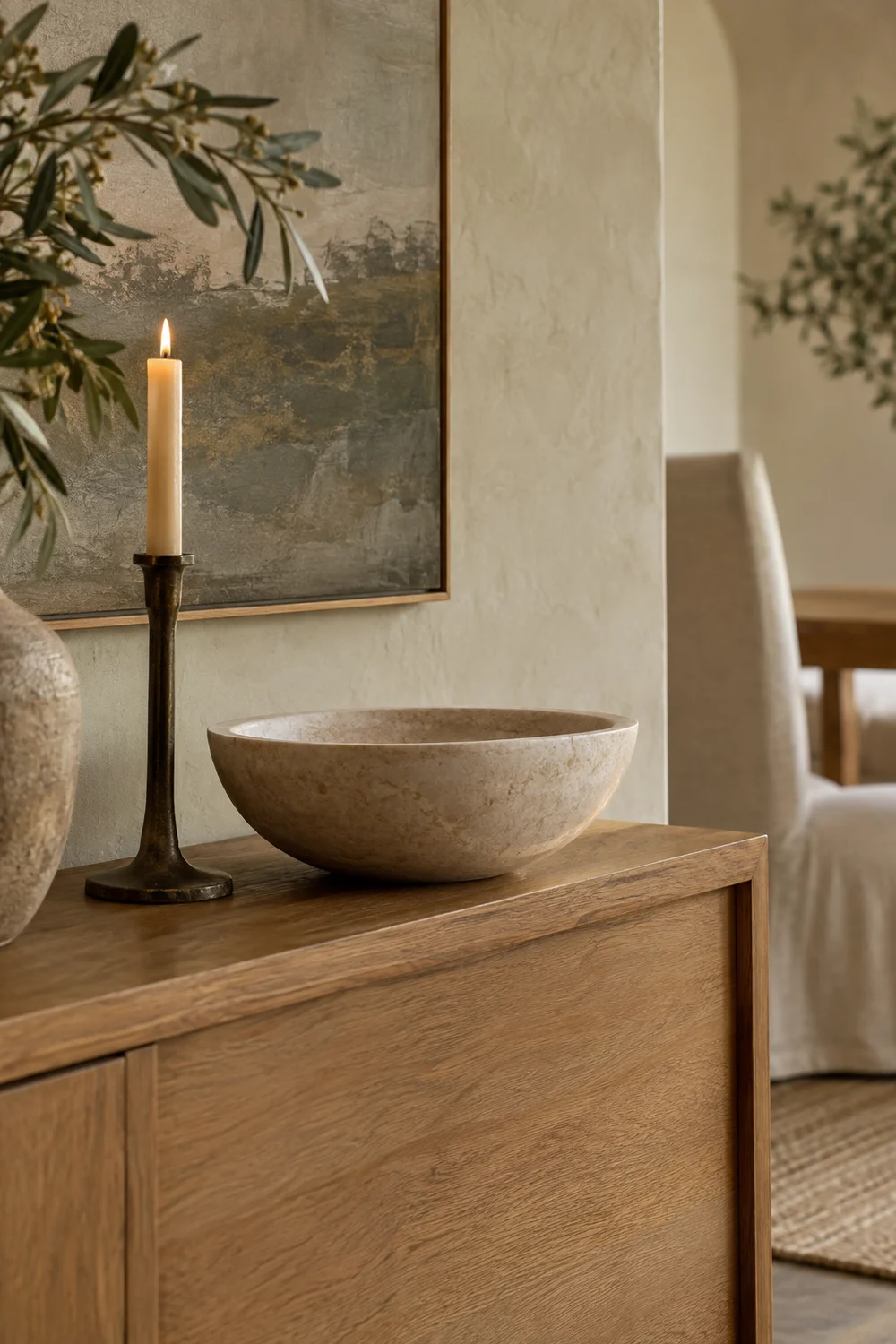
The collected part of organic modern comes from contrast. A clean lined oak table becomes more interesting beside a vintage ceramic, a small antique stool, an aged brass candlestick or a framed work with visible texture. These details keep a new room from looking as though everything arrived on the same delivery day.
Natural does not have to mean beige from wall to wall. Rooms with the most depth usually have a warm base and one restrained cooler counterpoint. The base might be oak, camel, warm white and sandstone. The counterpoint could be dusty olive, softened charcoal, muted blue grey or a little blackened metal. This tension is what gives the room shape.
Keep the contrast quiet. A single olive branch against plaster, dark bronze at the pendant or a charcoal sketch in an oak frame can be enough. Once several strong colours compete, the room starts to feel decorated in a way that obscures the materials.
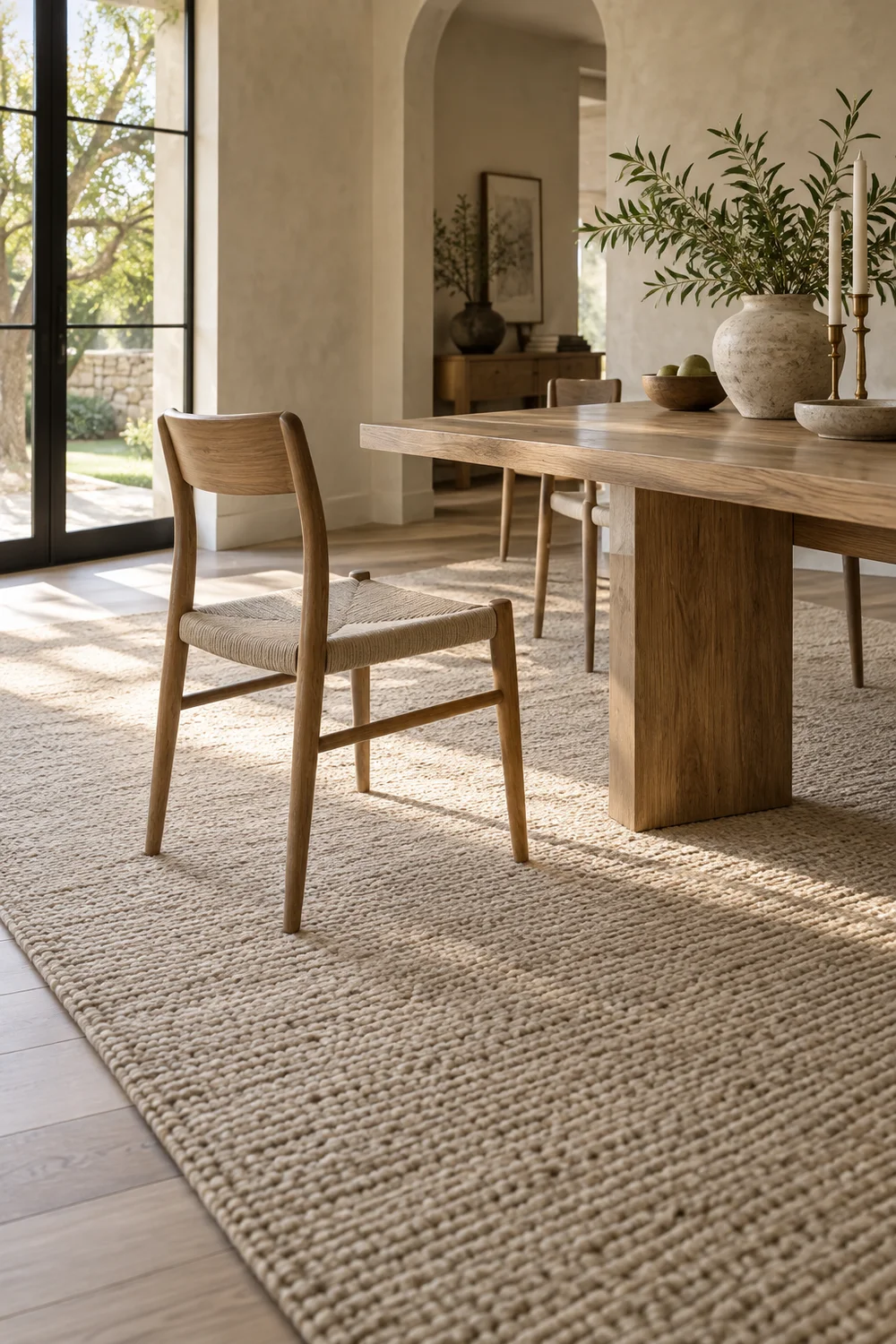
The strongest organic modern dining rooms are not only attractive in photographs. They support the ordinary moments that make a house feel lived in: breakfast in daylight, homework spread across the table, a lamp switched on before dinner and flowers replaced with branches from the garden.
Think about these rituals when placing a sideboard, choosing curtains or deciding whether the table needs an extension. A landing place for a serving bowl, a drawer for candles and a comfortable path around the chairs will do more for the room than another decorative object. Function is part of the warmth.
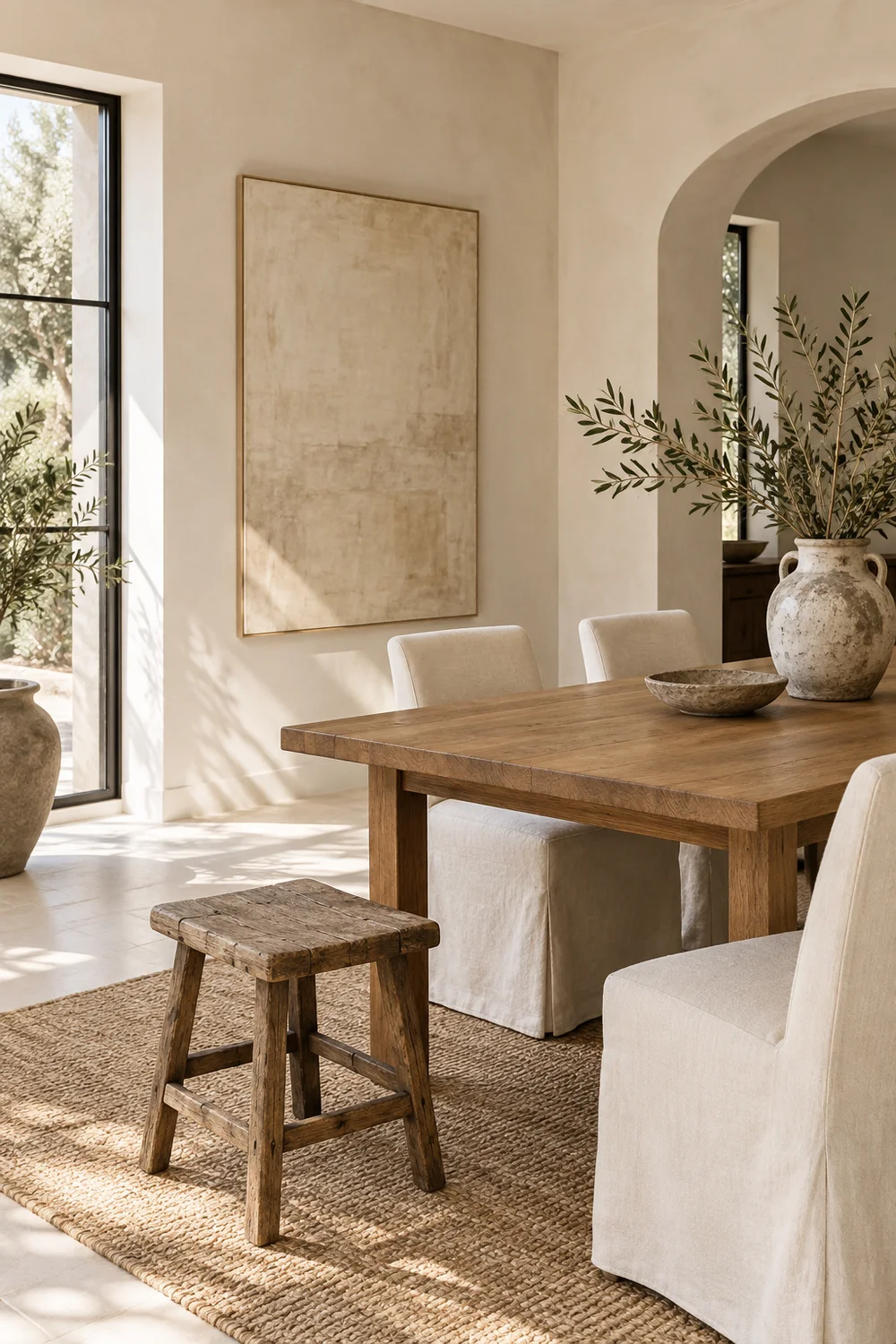
Organic modern is at its best when it feels edited, not empty. Step back once the primary surfaces, seating, lighting and one or two supporting pieces are in place. If your eye can move around the room and settle on the texture of the table, the curve of a chair and the light on the wall, you probably have enough.
Anything added after that should answer a practical need or introduce a genuinely different material. That small discipline is what turns a collection of attractive items into a dining room that feels calm for years rather than fashionable for a season.
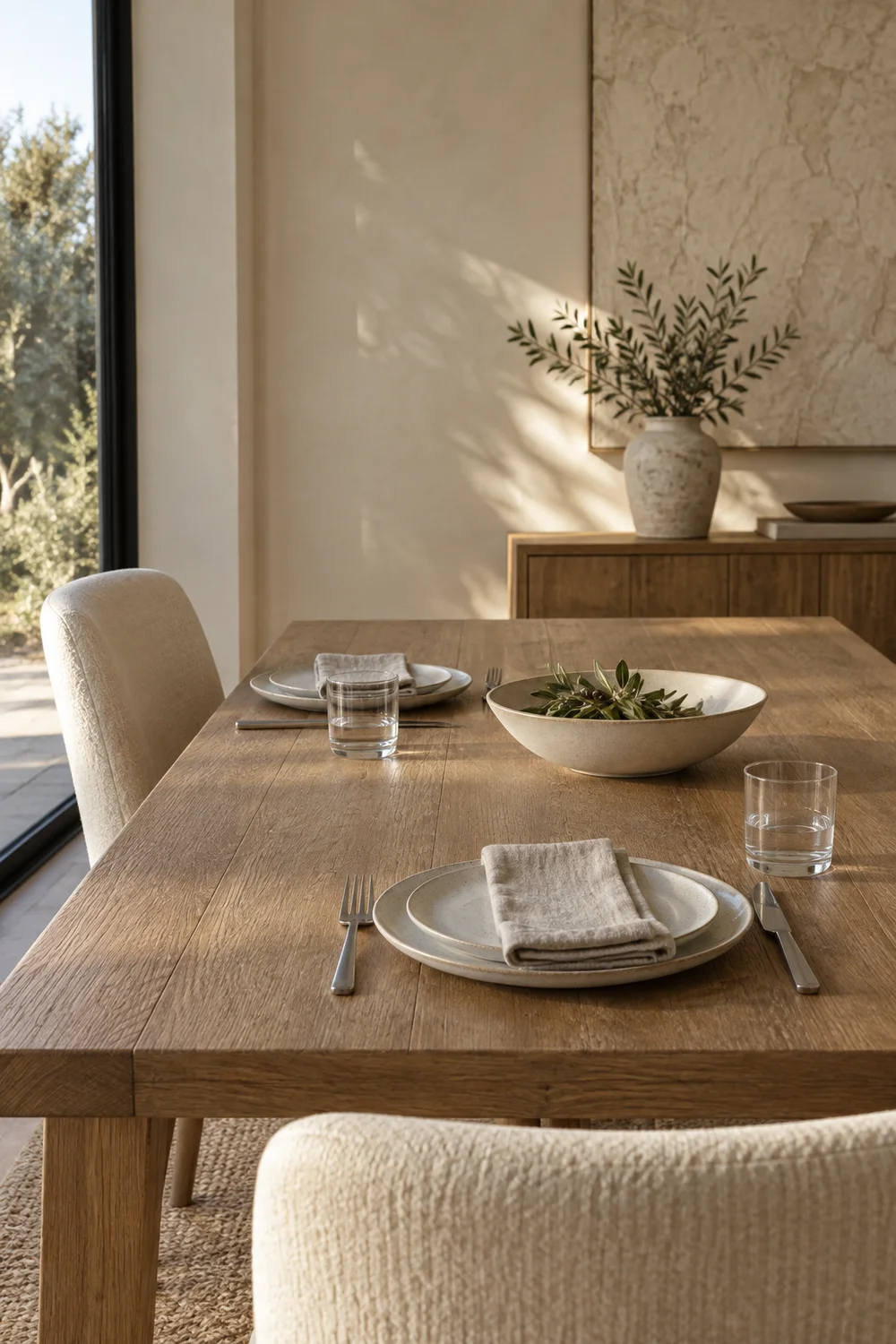
Take a final photograph of the room from the doorway before you call it finished. The camera is useful for spotting a pendant that feels too small, an art piece that sits too high or a sideboard that has accumulated too many objects. Make only the changes that improve the room’s balance. The aim is a dining room that invites you in, not one that demands to be looked at.
Choose pieces for their patina, proportion and material rather than for their label. A single old object has more effect than a shelf full of faux vintage accessories. It should look as though it earned its place.
The easiest mistake is to buy every organic modern cue at once. That usually produces a room with plenty of the right ingredients but no hierarchy. Start with the table, chairs, wall colour and lighting. Then live with the room before deciding on the rug, art and smaller objects.
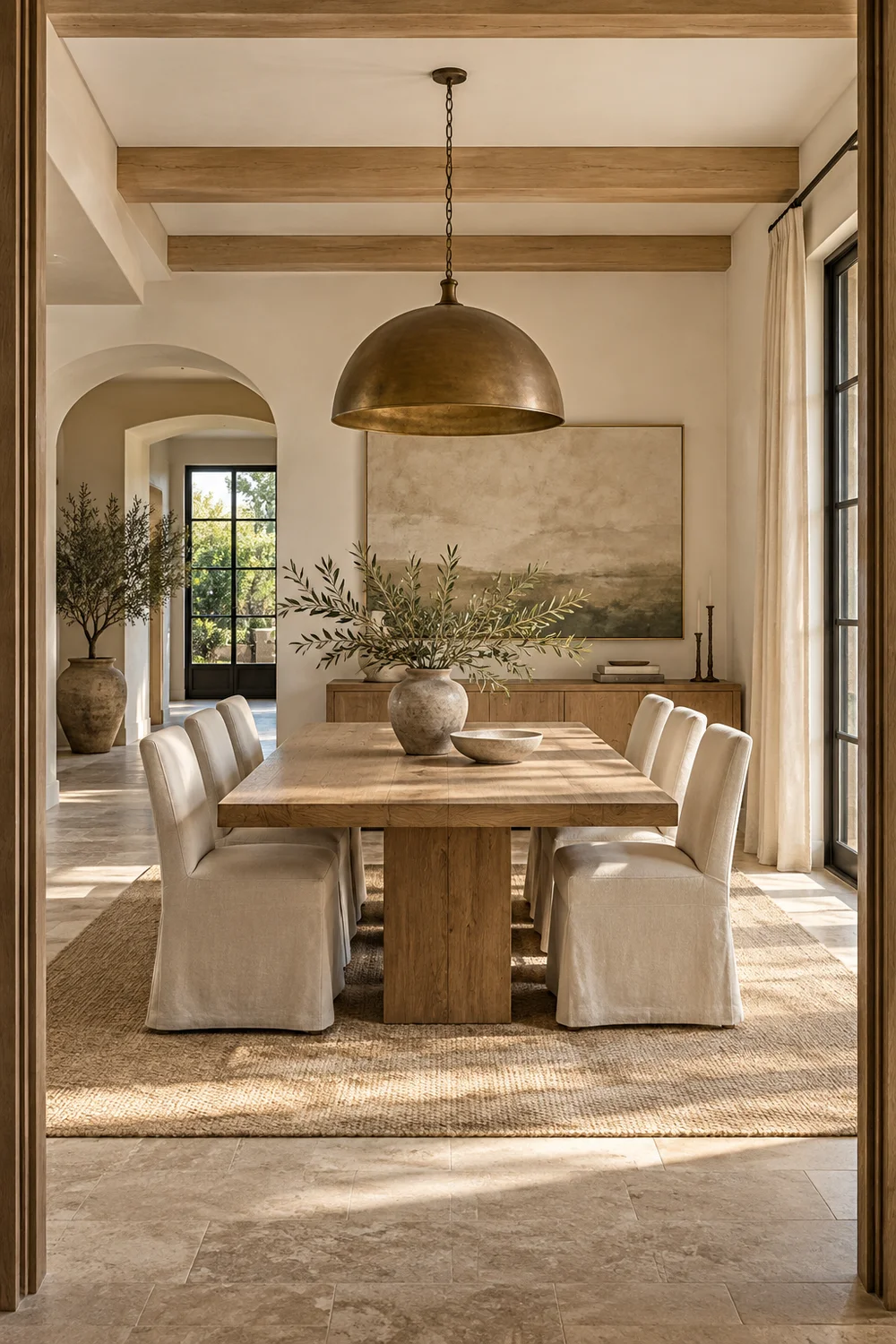
This slower approach makes it easier to notice what the room actually needs. It may need a softer curtain rather than another vase, or a more substantial pendant rather than more furniture. Those decisions are what make the finished space feel calm and personal.
For the practical next step, move on to the modern organic dining room planning guide. When you are ready to edit the finishing layer, use our guide to organic dining room decor that makes every piece feel intentional.