Newsletter Subscribe
Enter your email address below and subscribe to our newsletter

How To Design a Mid Century Modern Bathroom When You’ve Got Half the Space (And None of the Budget)
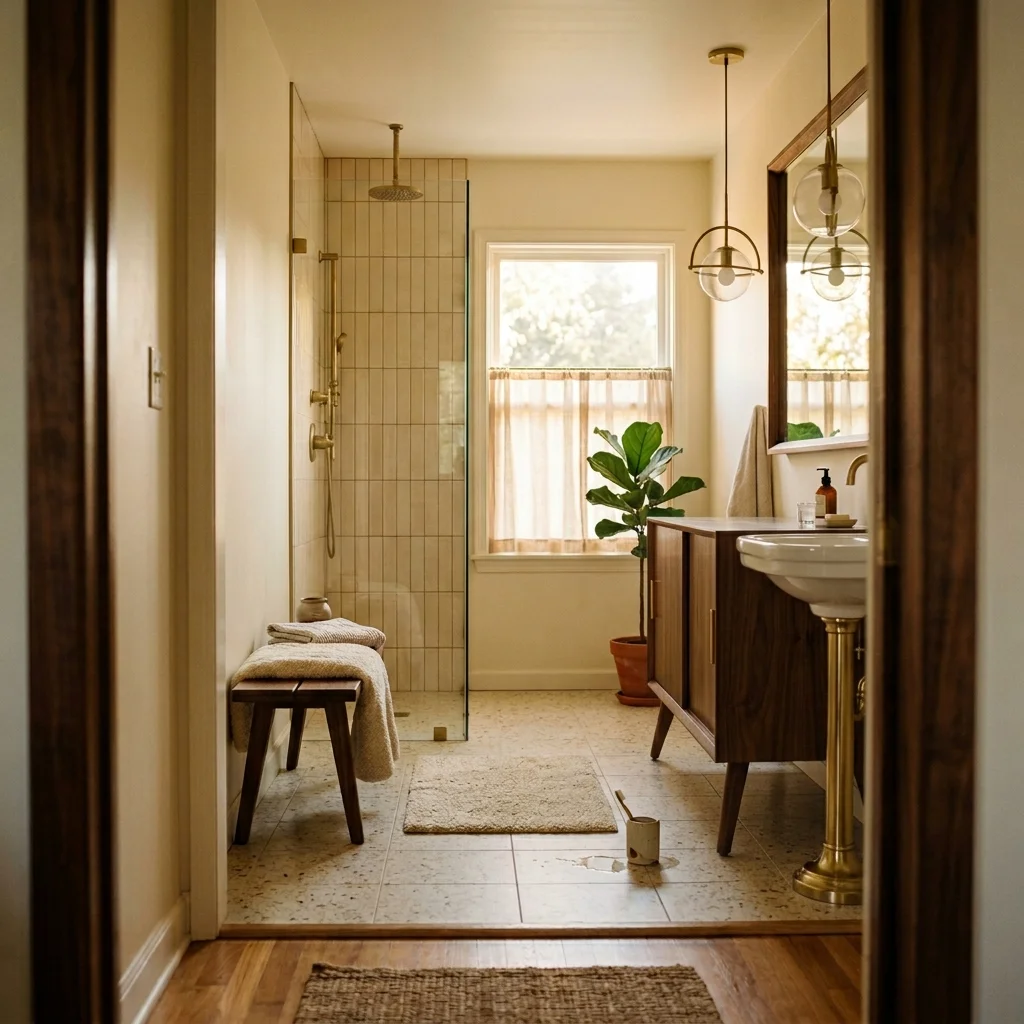
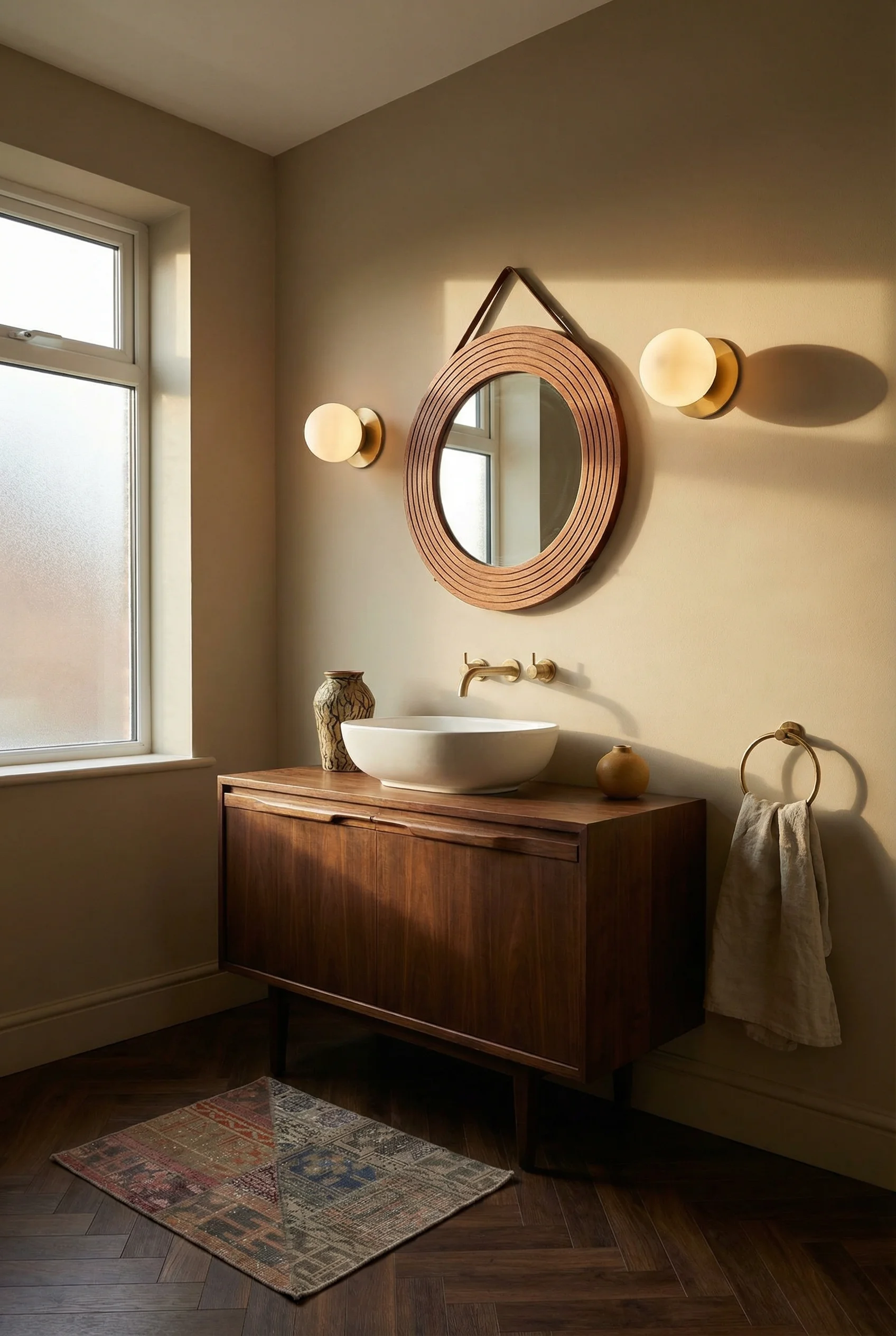
The mid century modern bathroom most people picture has a double walnut vanity, terrazzo floors, and enough square footage to park a small car. That version costs about $30,000. The version that actually works in a real bathroom, the one where the toilet is uncomfortably close to the shower and your countertop space is roughly the size of a dinner plate, costs closer to a few hundred. I’ve been watching the MCM bathroom revival closely over the past year, and the most convincing transformations I’ve seen share one thing in common. They skip the Pinterest fantasy entirely and focus on the three or four moves that punch hardest in tight spaces. One Amazon globe sconce. One floating walnut vanity. One bold tile decision. That’s usually enough.
Here’s how to get there, step by step, even if your bathroom is fighting you the entire way.
If you take one thing from this entire article, make it this. A floating vanity is the single highest impact swap you can make in a small mid century modern bathroom. It is not just aesthetic. It is spatial sleight of hand.
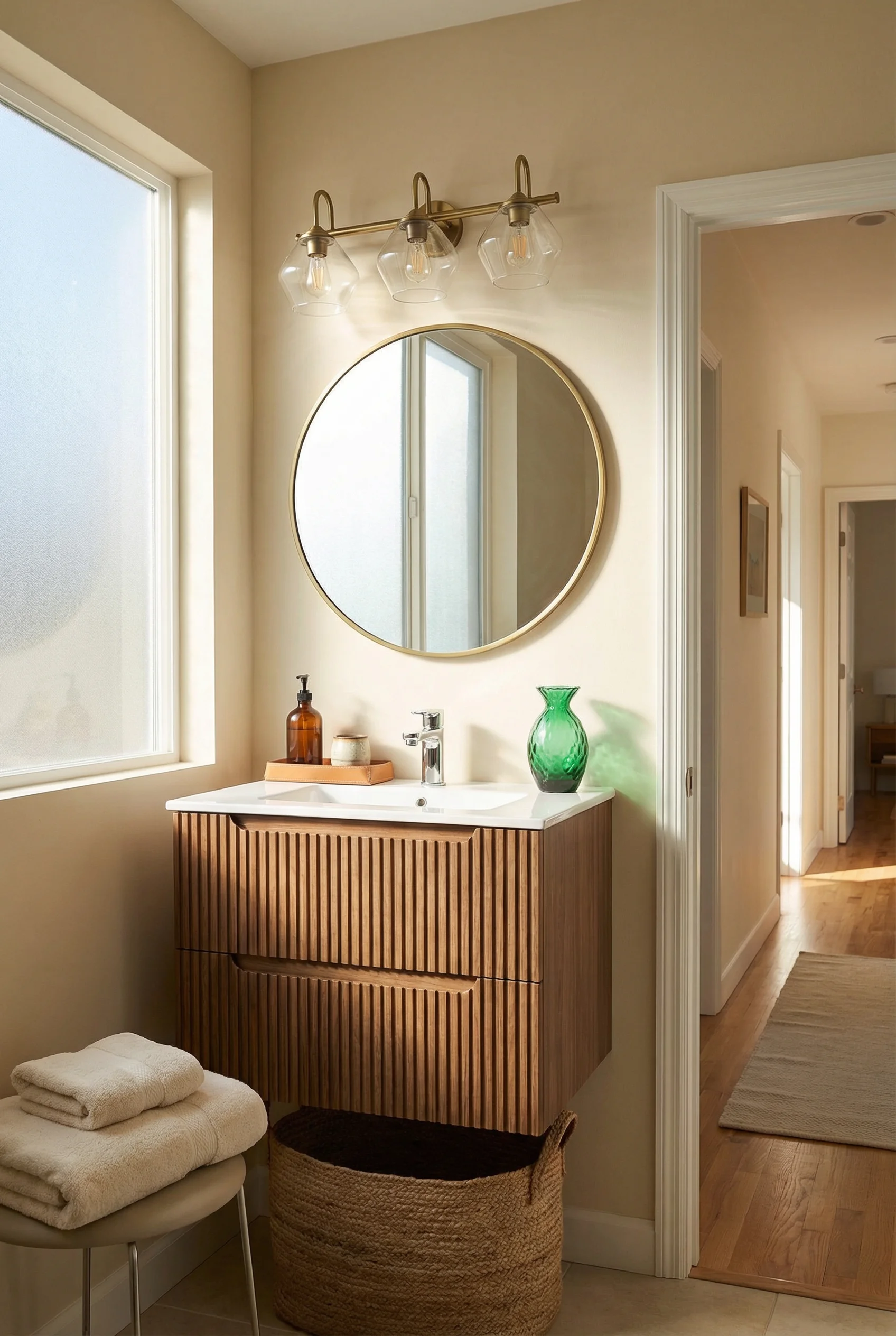
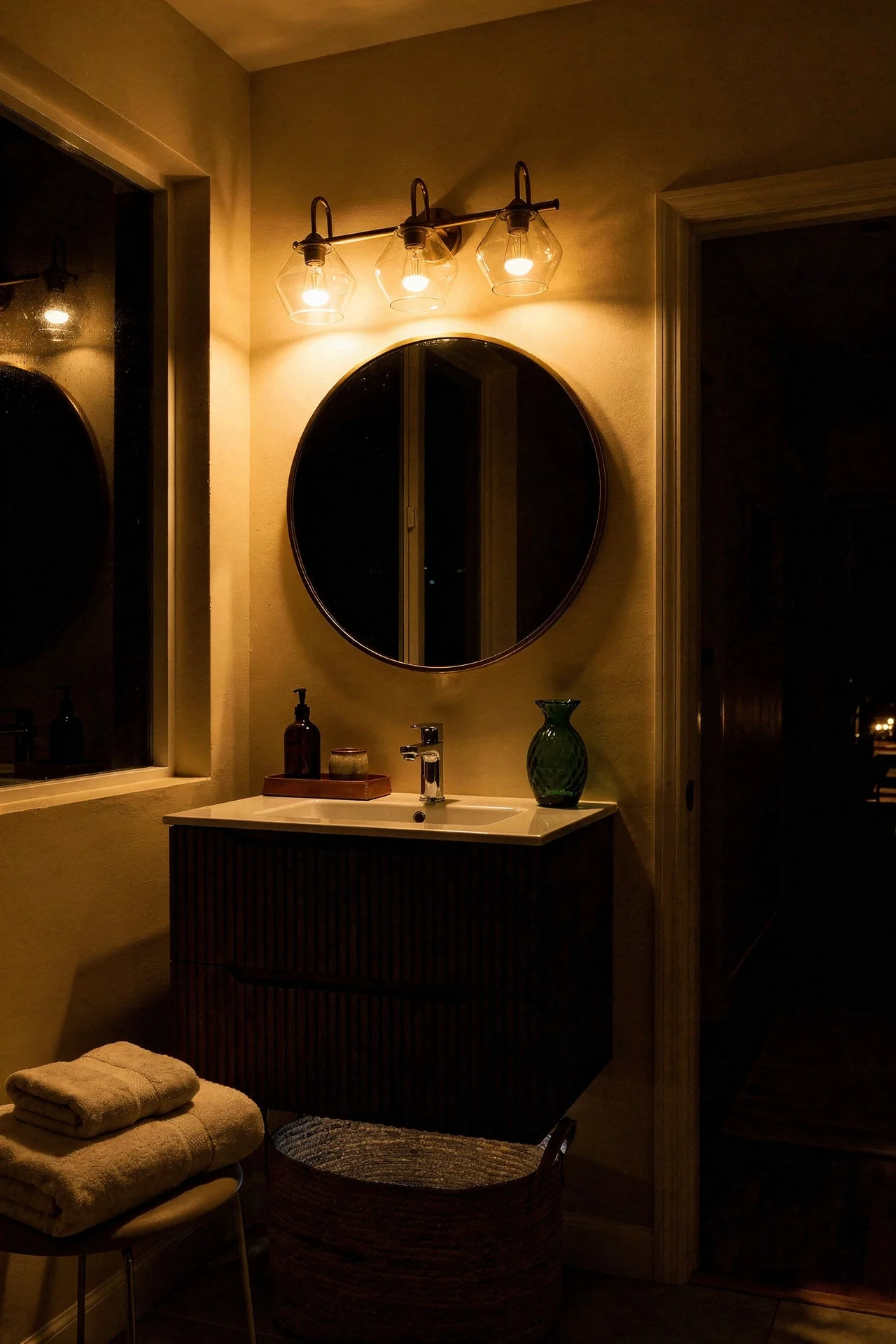
Wall mounted vanities free up visible floor space, and in a bathroom under 50 square feet, every inch of visible floor makes the room feel larger. The eye reads the continuous floor line and registers “bigger room” before it notices the vanity itself. A standard pedestal sink or builder grade cabinet that sits on the floor does the opposite. It chops the room into segments.
The IKEA Godmorgon hack has become the go to move here. Interior designers like Jenna Sue have taken that $200 cabinet, mounted it to wall studs with 2×4 support ledges, and added third party oak or walnut panels from companies like The Cabinet Face. The result looks custom. It looks like it cost $3,000. The actual total, including a stone countertop, tends to land around $1,800 for a 90 inch double setup.
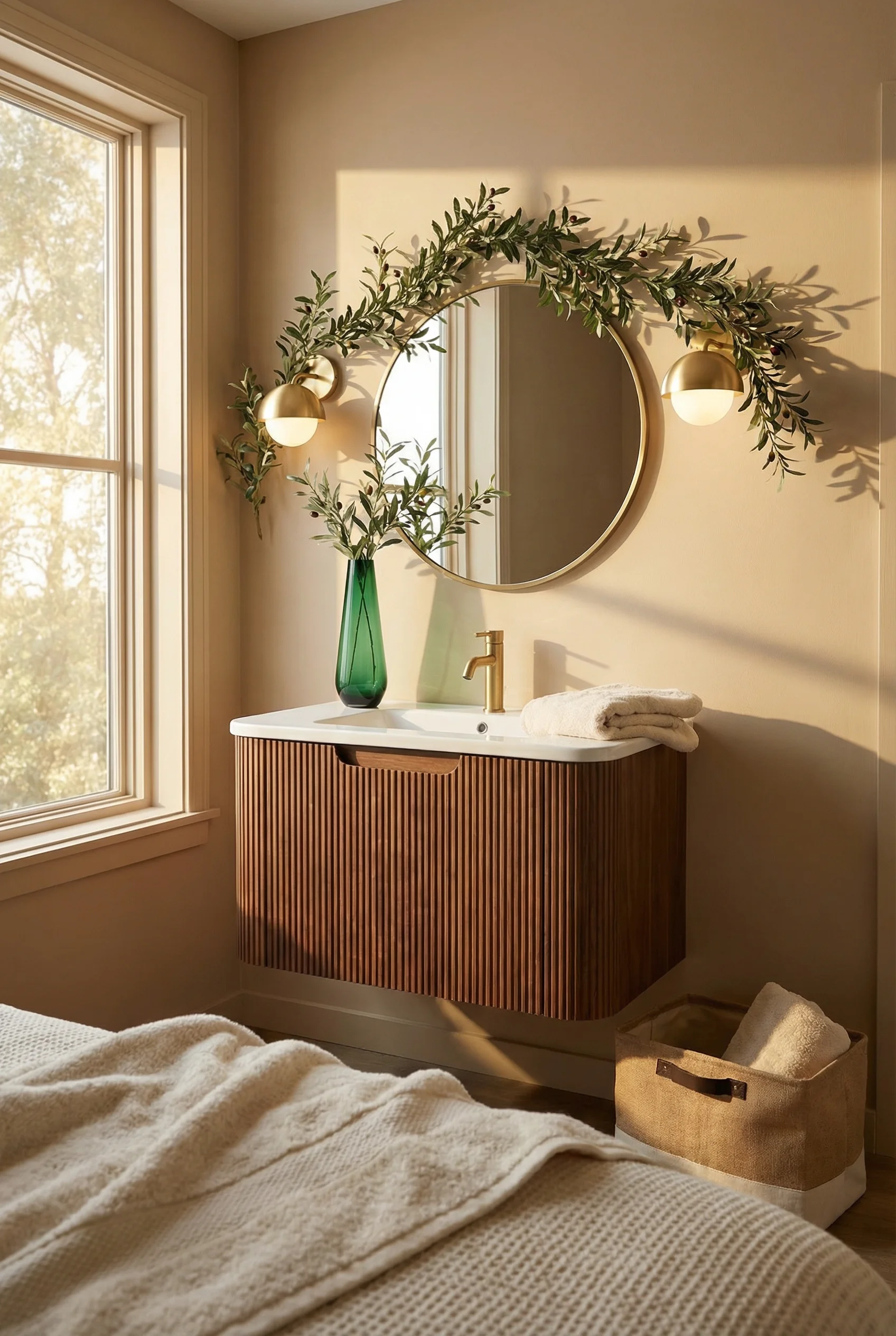
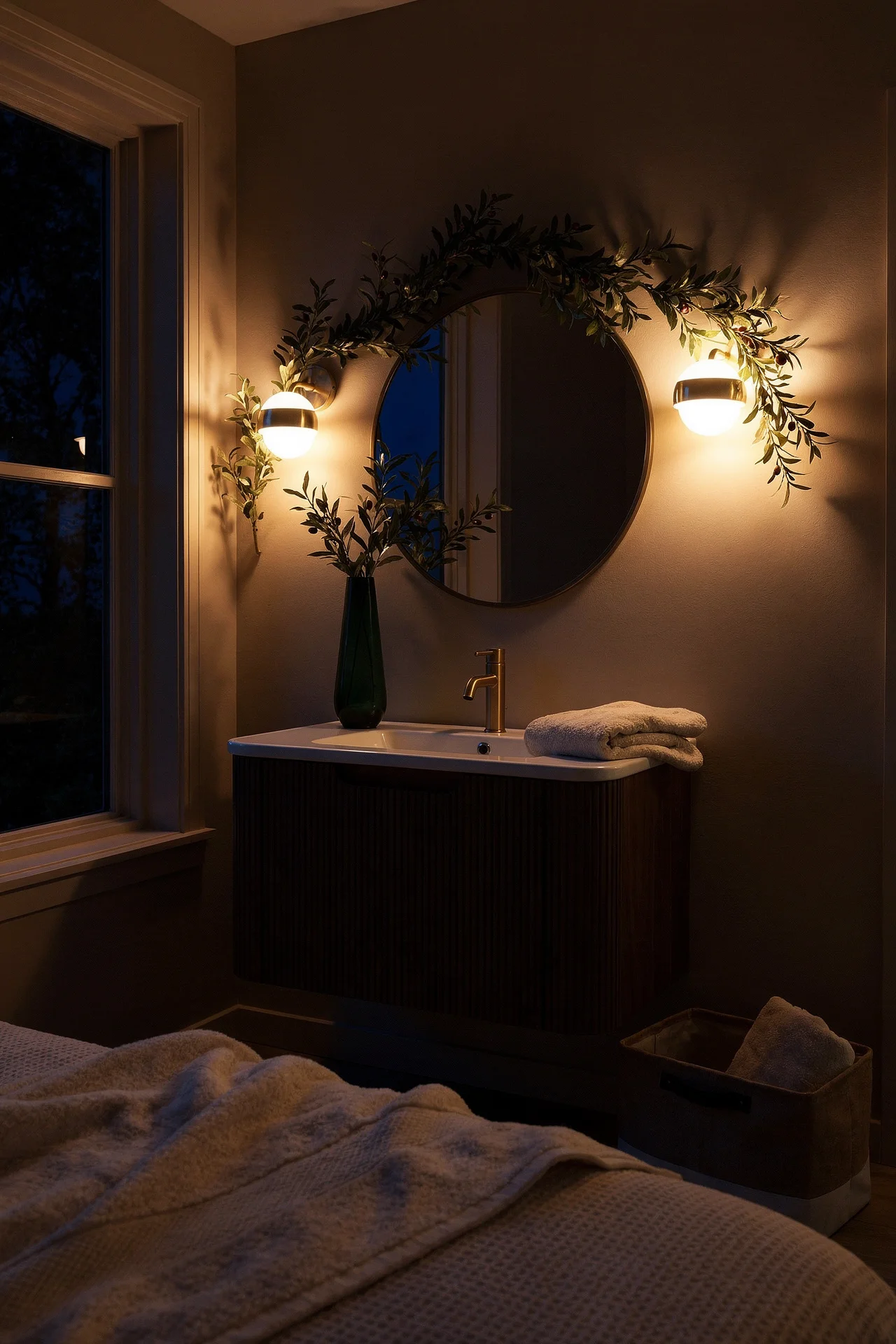
For a single vanity in a smaller bathroom, you are looking at a fraction of that. The critical detail most people miss is reinforcement. Standard IKEA mounting hardware is not built for stone tops. You need 2x4s screwed into studs, not just wall anchors. And if your plumbing does not align with the drawer cutouts, a Dremel tool will sort that in about twenty minutes. The floating shelf underneath, built from a simple 2×4 frame wrapped in matching wood panels, completes the look.
I think the floating vanity is where your budget should go first. Everything else in this article works around it.
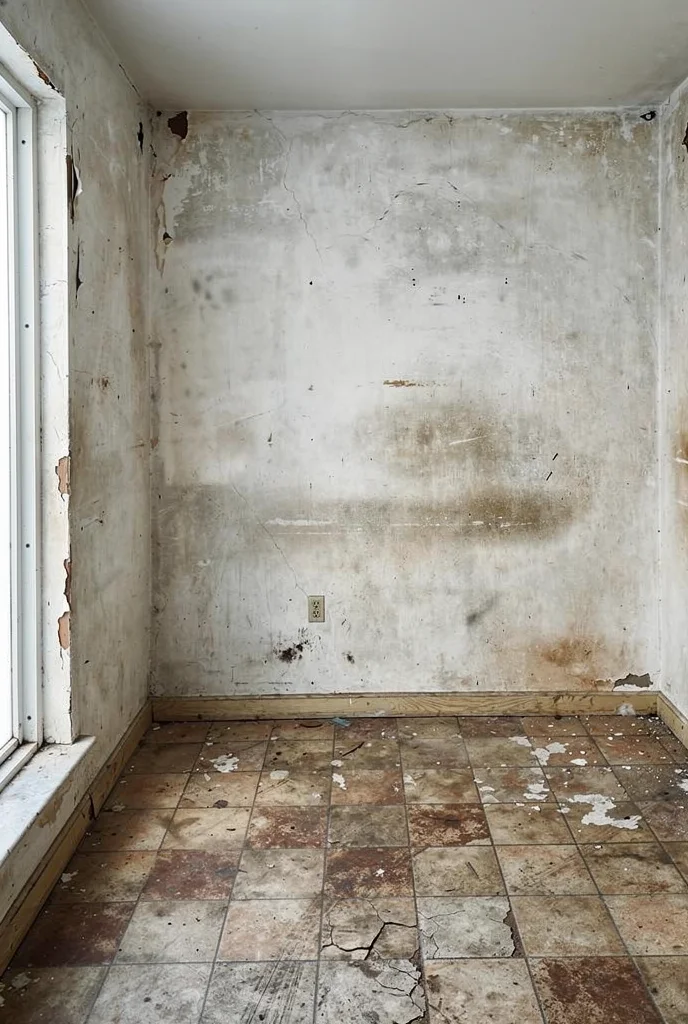
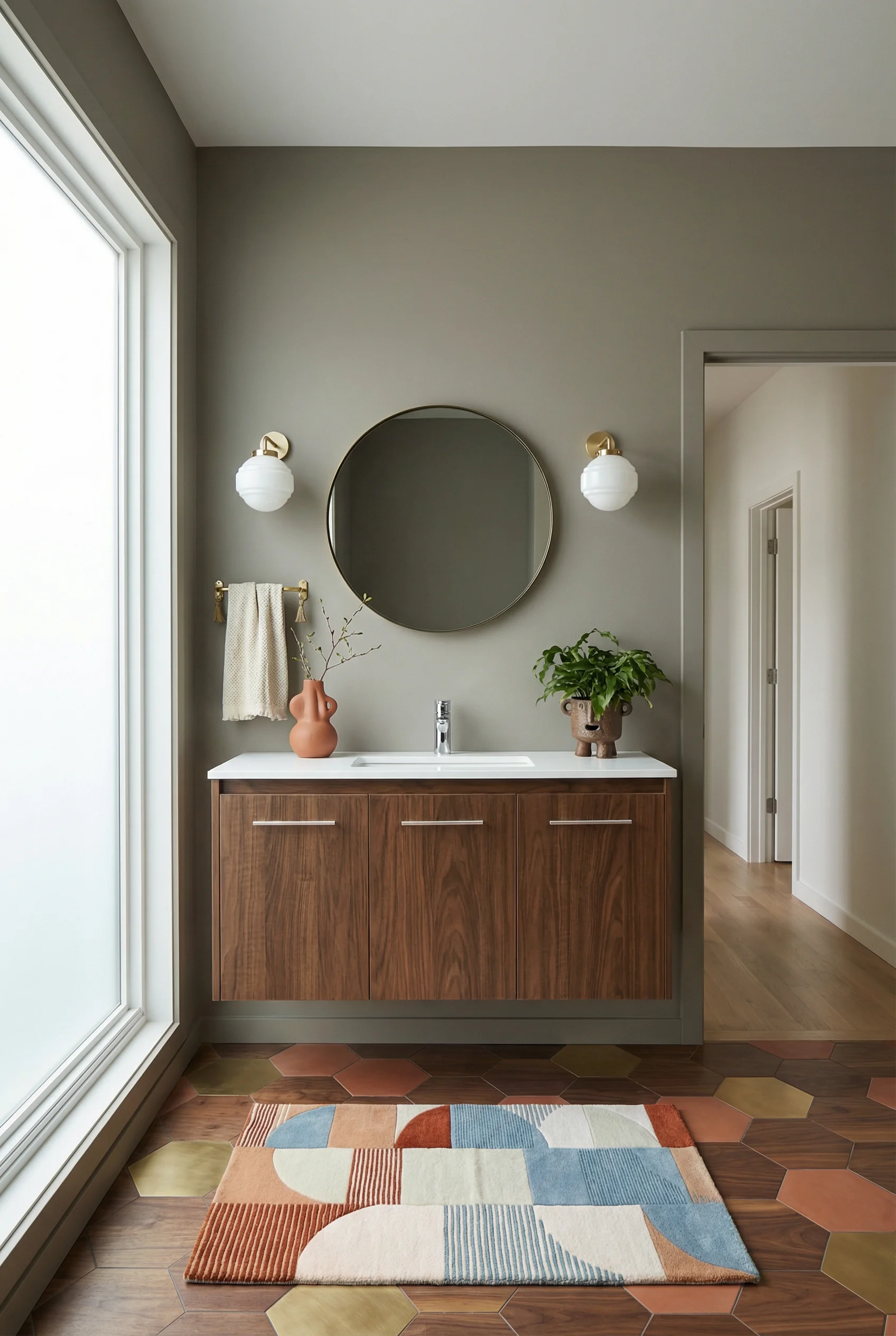
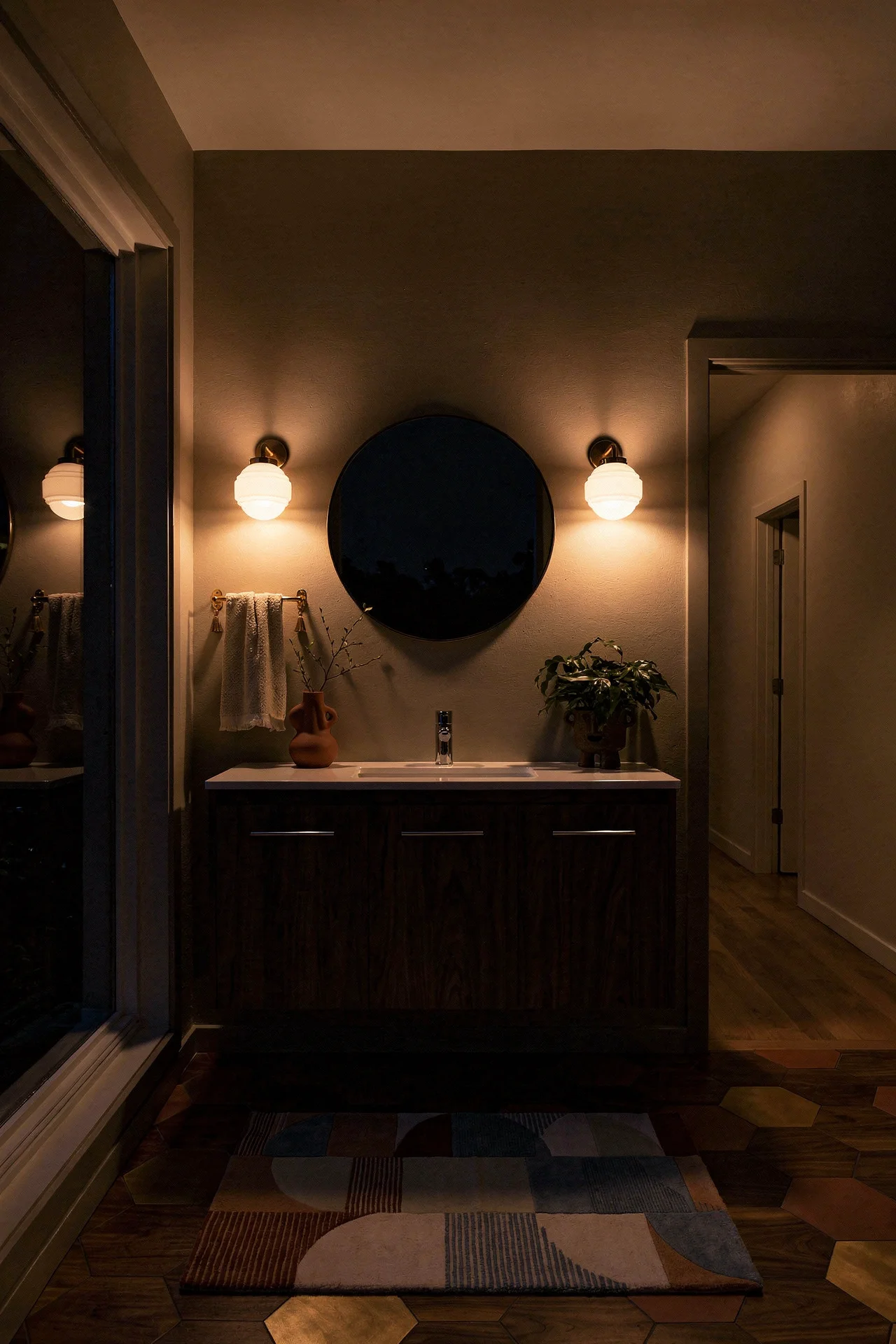
Mid century modern lighting is the one element where the “dupe” strategy works best. Visual Comfort’s Katie Small Conical Sconce runs $459. The Amazon version runs $57.80. That is an 87% saving, and in a bathroom where the sconces are four feet from your face, the visual difference is genuinely hard to spot.
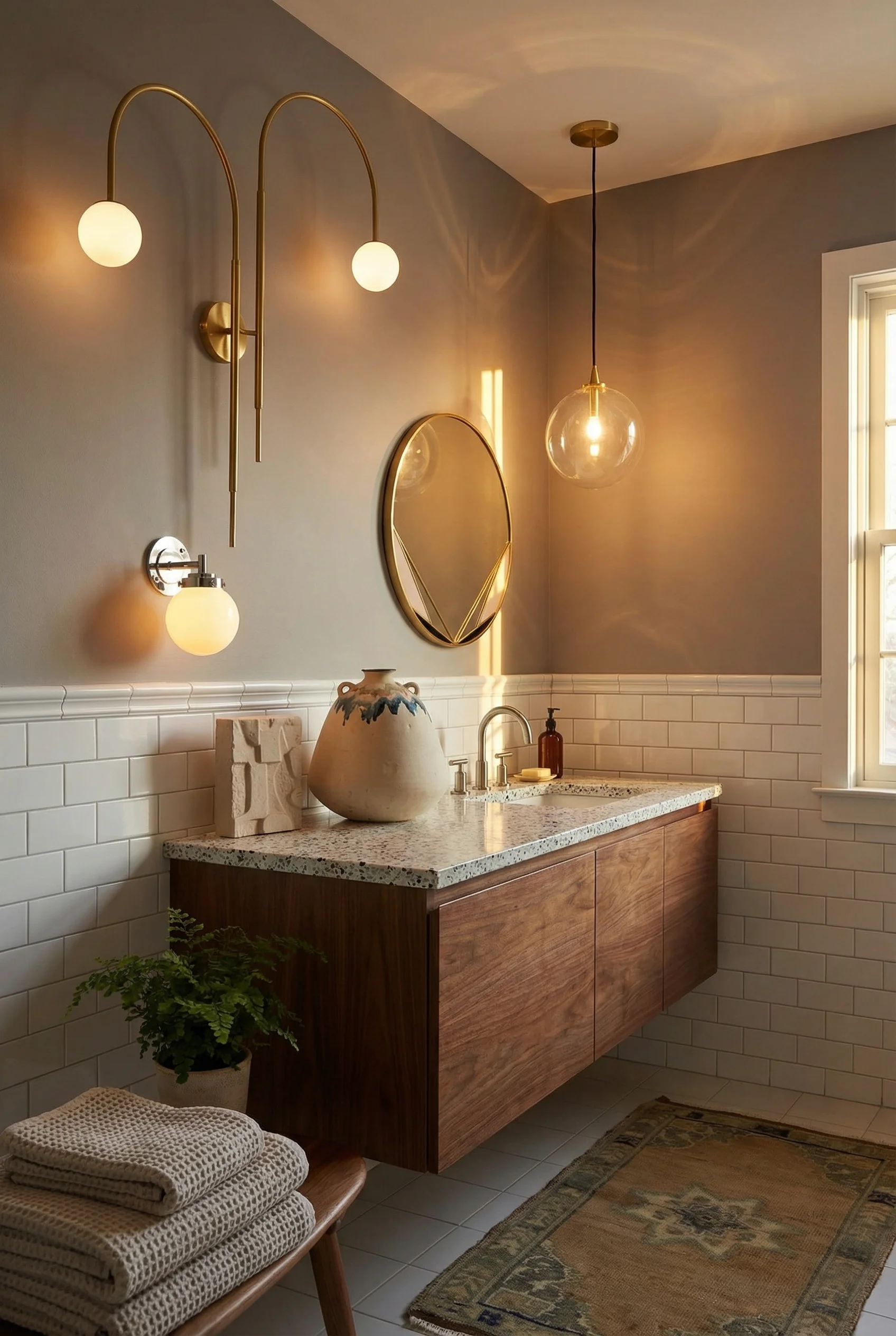
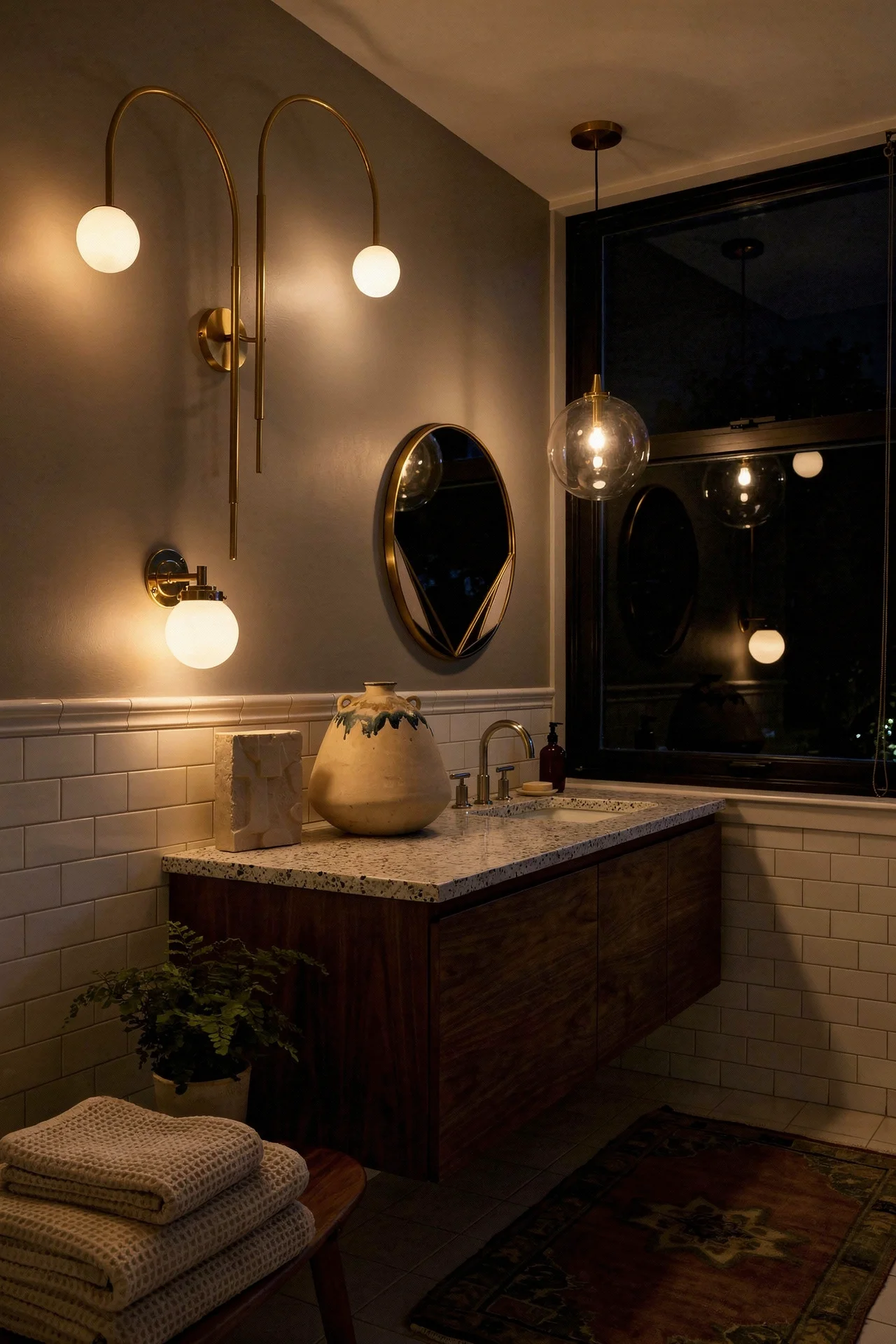
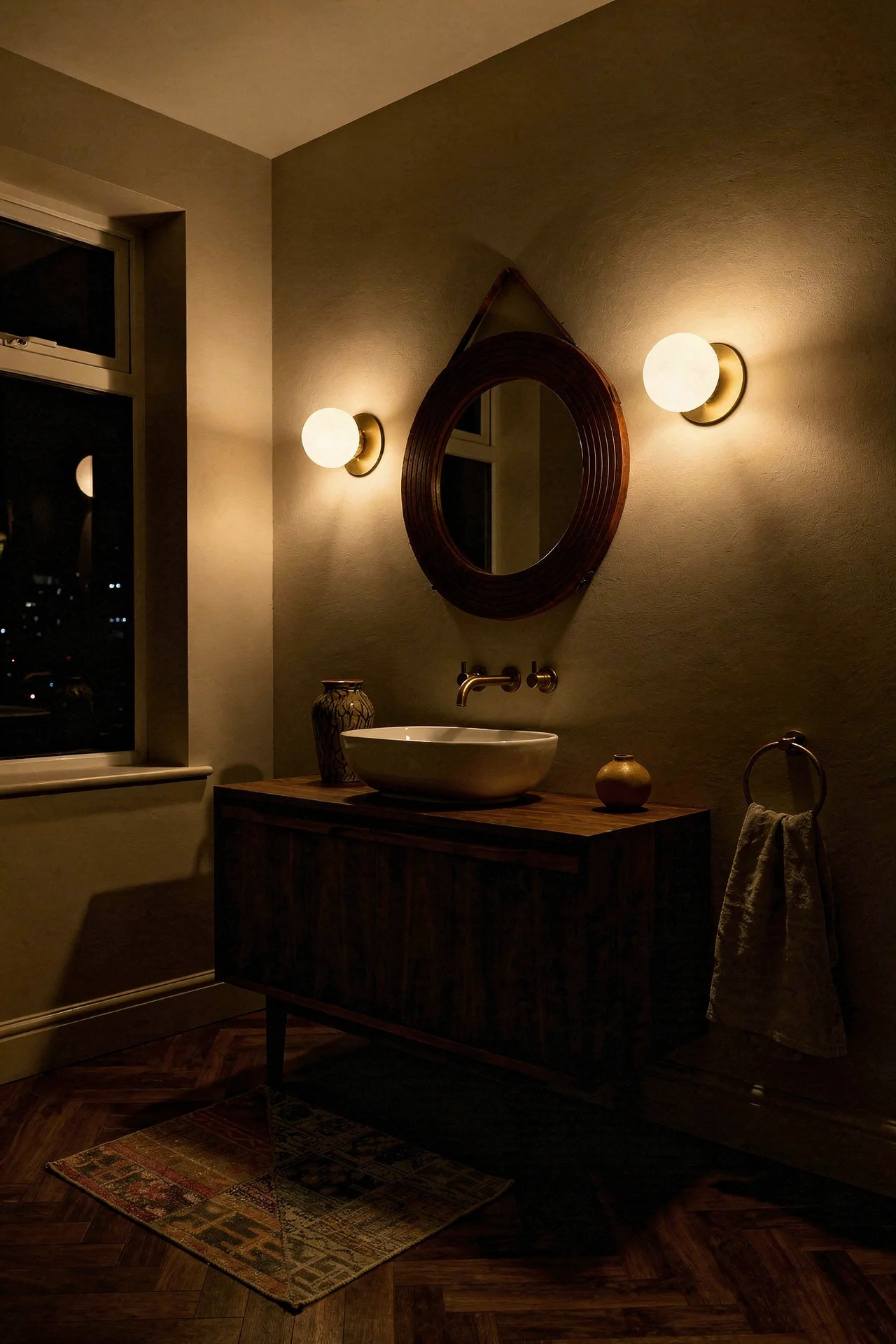
Globe sconces are the signature MCM bathroom light fixture. Brass or brushed gold finish, opal glass globe, clean geometric lines. Mounted either side of the mirror at roughly eye height, they throw soft, even light that flatters both the room and anyone standing in it. This matters more than people realise. Overhead lighting alone creates harsh shadows under the eyes and chin. Side mounted sconces eliminate that entirely.
The Melange Elongated Sconce from Visual Comfort retails at $949. The Amazon equivalent comes in at $79.99. A saving of 91%. When Z & Co. Design Group called Amazon “a treasure trove of deals that rival even the most sought after brands,” they were not exaggerating. For bathroom light fixtures specifically, the quality gap between a $60 sconce and a $500 sconce is almost entirely about the brand name on the box.
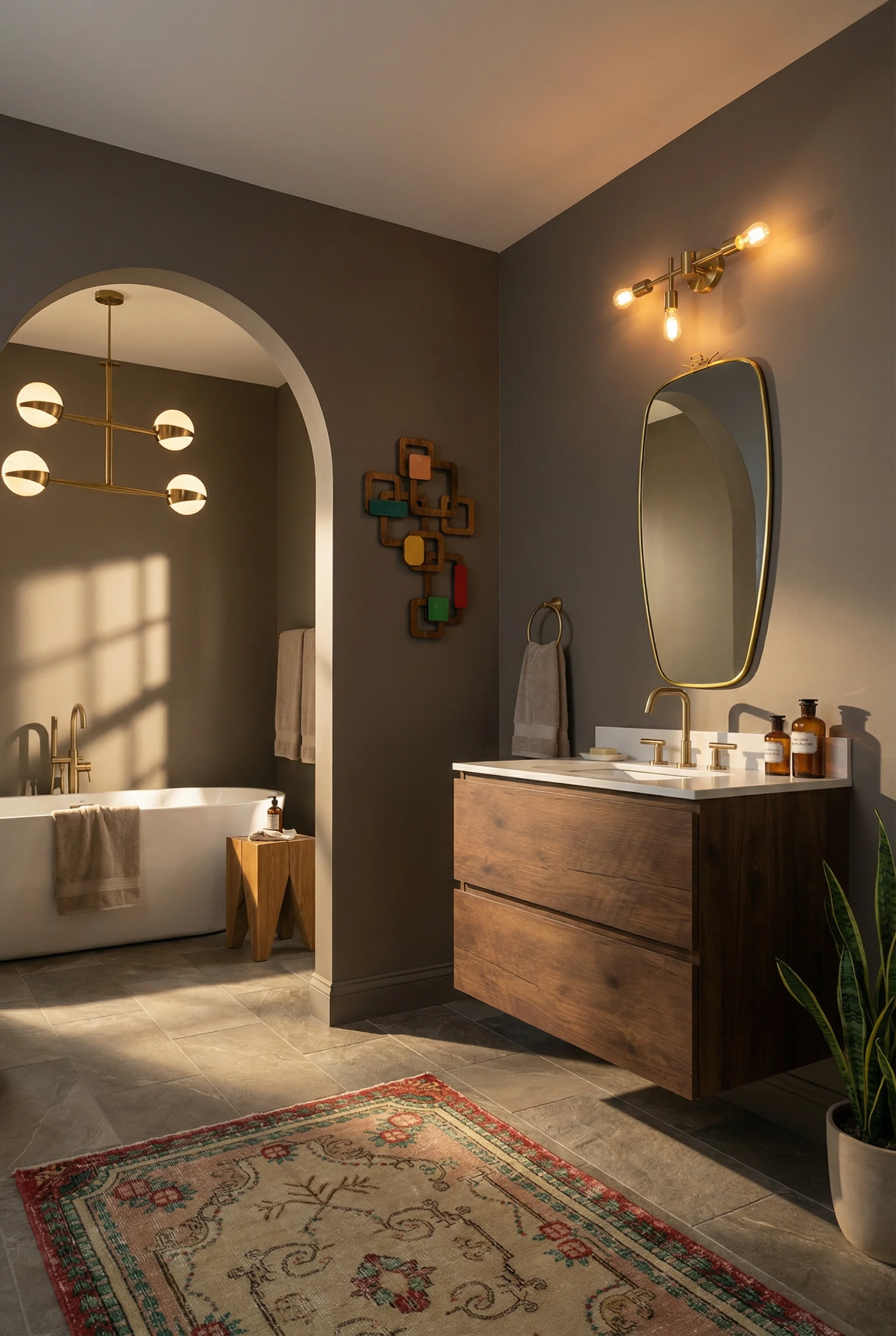
If your bathroom has no hardwired sconce points, plug in wall sconces with a painted cord cover are a legitimate workaround. Not ideal, but far better than relying solely on a ceiling fixture. The warm brass finish is non negotiable here. Chrome reads contemporary. Matte black reads industrial. Brass, specifically satin or brushed brass, is what anchors the room in the mid century era.
My advice is to buy two matching sconces and a matching overhead flush mount. Three fixtures from the same family ties the whole room together without overthinking it.
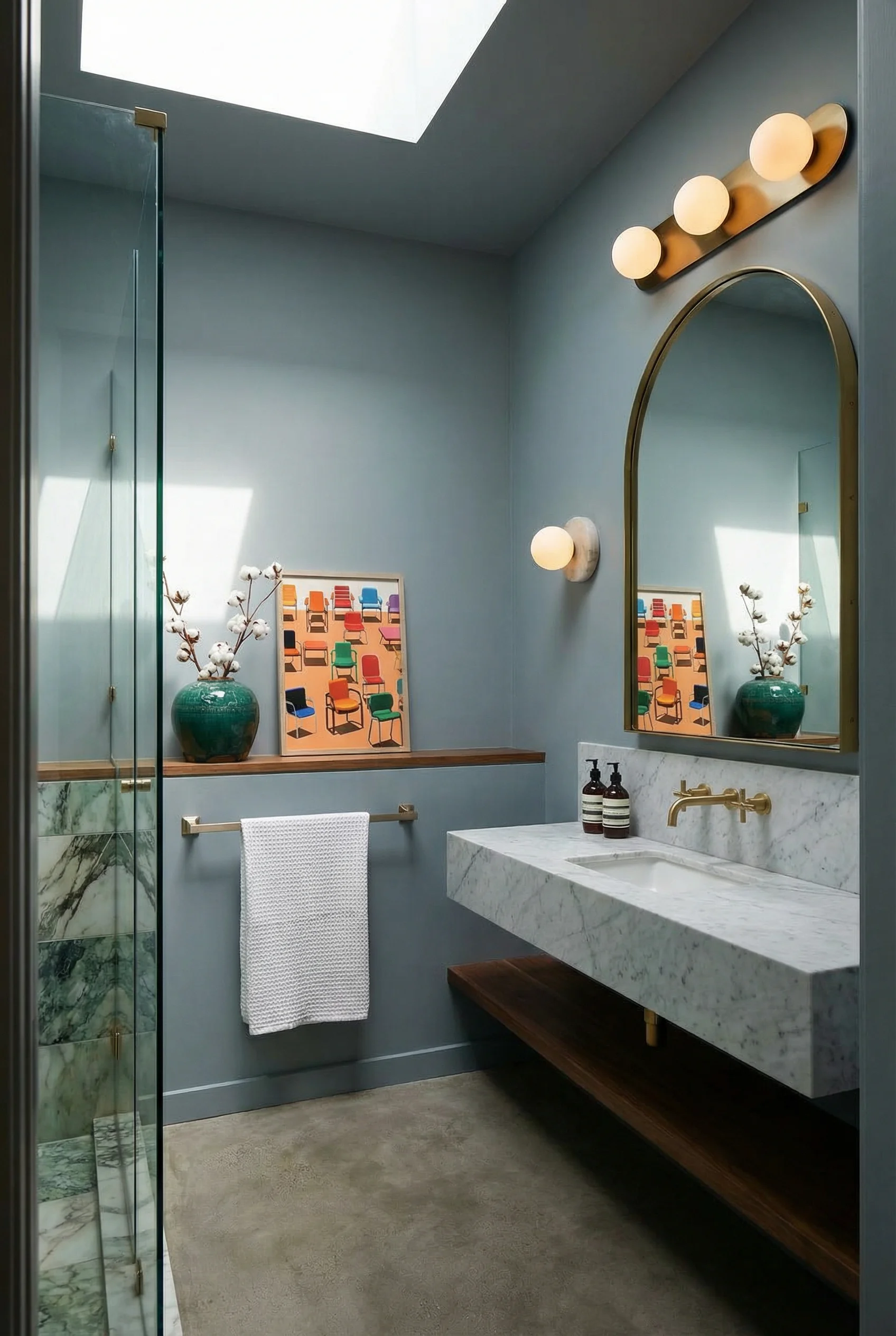
There is something about a wooden vanity in a bathroom that just works. Specifically walnut and teak. These are the two woods that defined mid century furniture, and they bring that same warmth and character into a bathroom that tile and porcelain alone never quite manage.
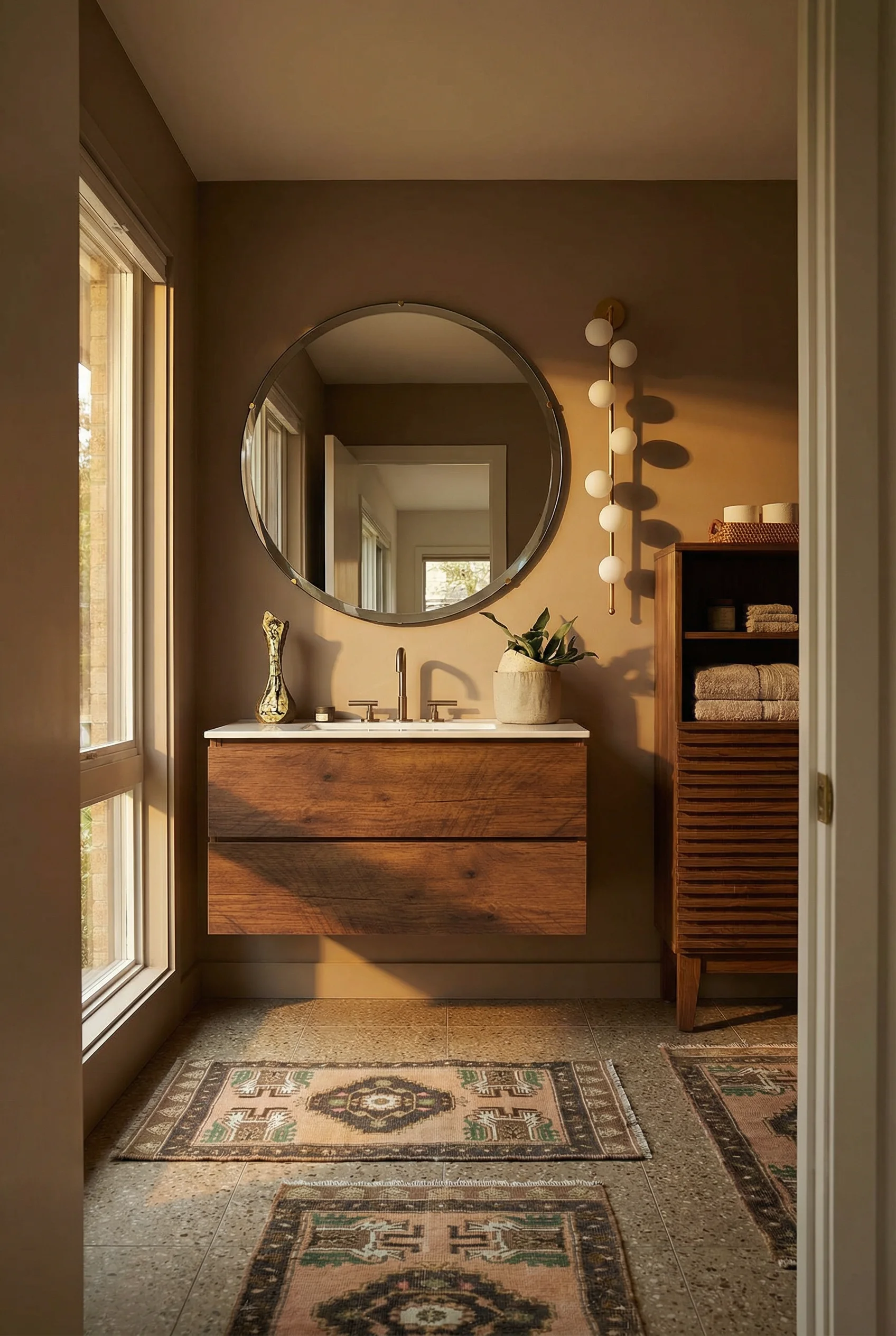
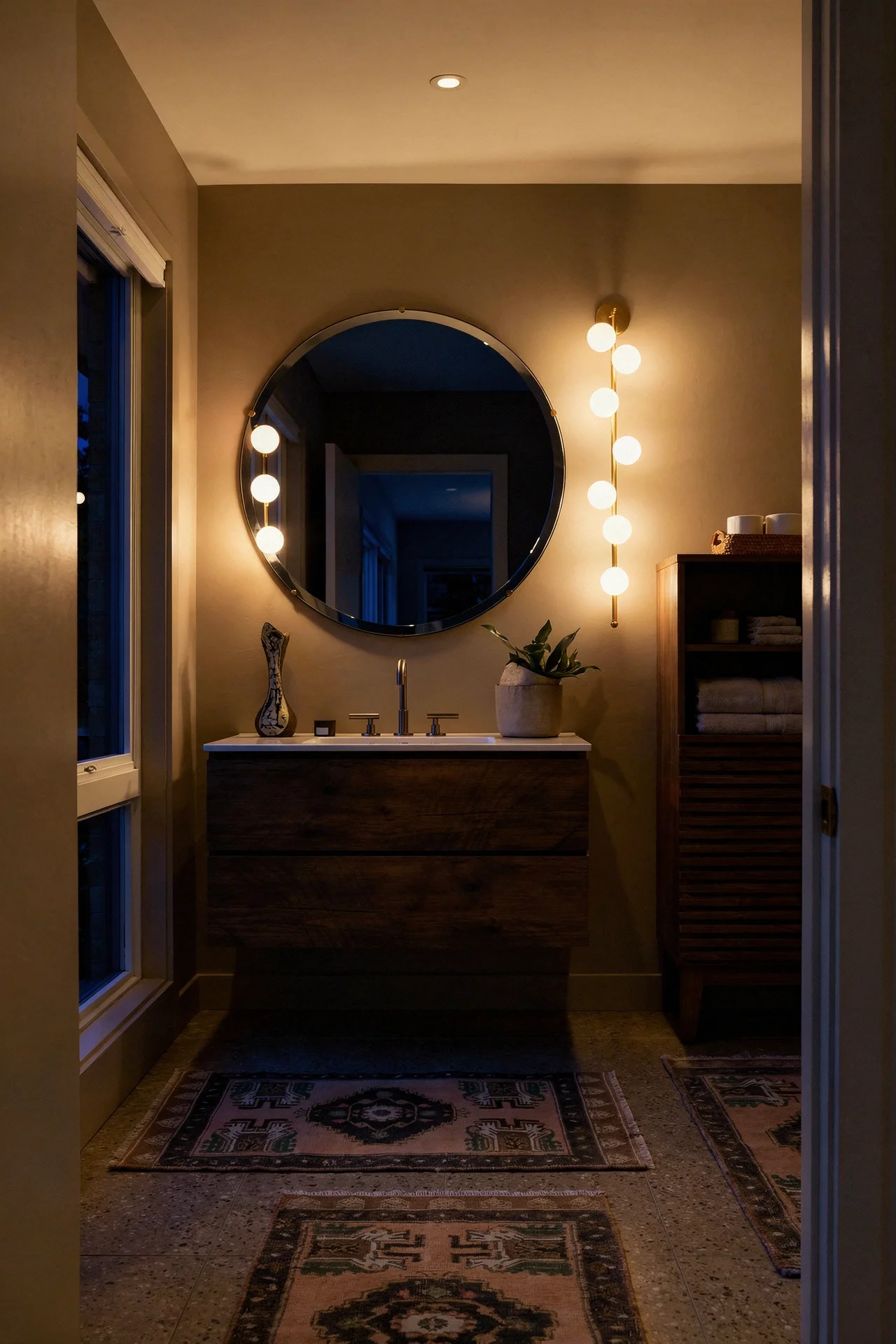
Walnut skews darker, richer, with a grain pattern that deepens over time. Teak is lighter, honey toned, and naturally water resistant, which makes it the practical choice for a bathroom. Both develop a patina that gets better with age, which is the opposite of most bathroom materials. Your chrome faucet will look dated in five years. Your teak vanity will look better.
The West Elm mid century vanity range sits around $1,200. The ZINUS platform bed approach, adapted for bathroom use, brings that down to around $300 for the frame. But the real sweet spot is the IKEA hack mentioned earlier, dressed with genuine wood panels. You get real wood grain, real warmth, at a fraction of real cost.
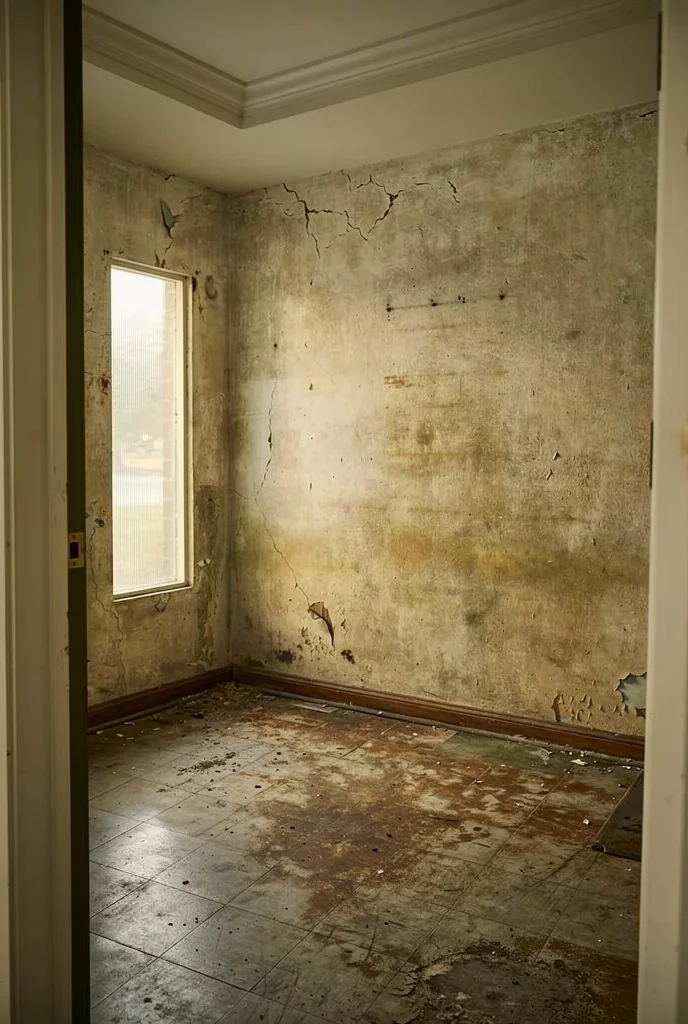
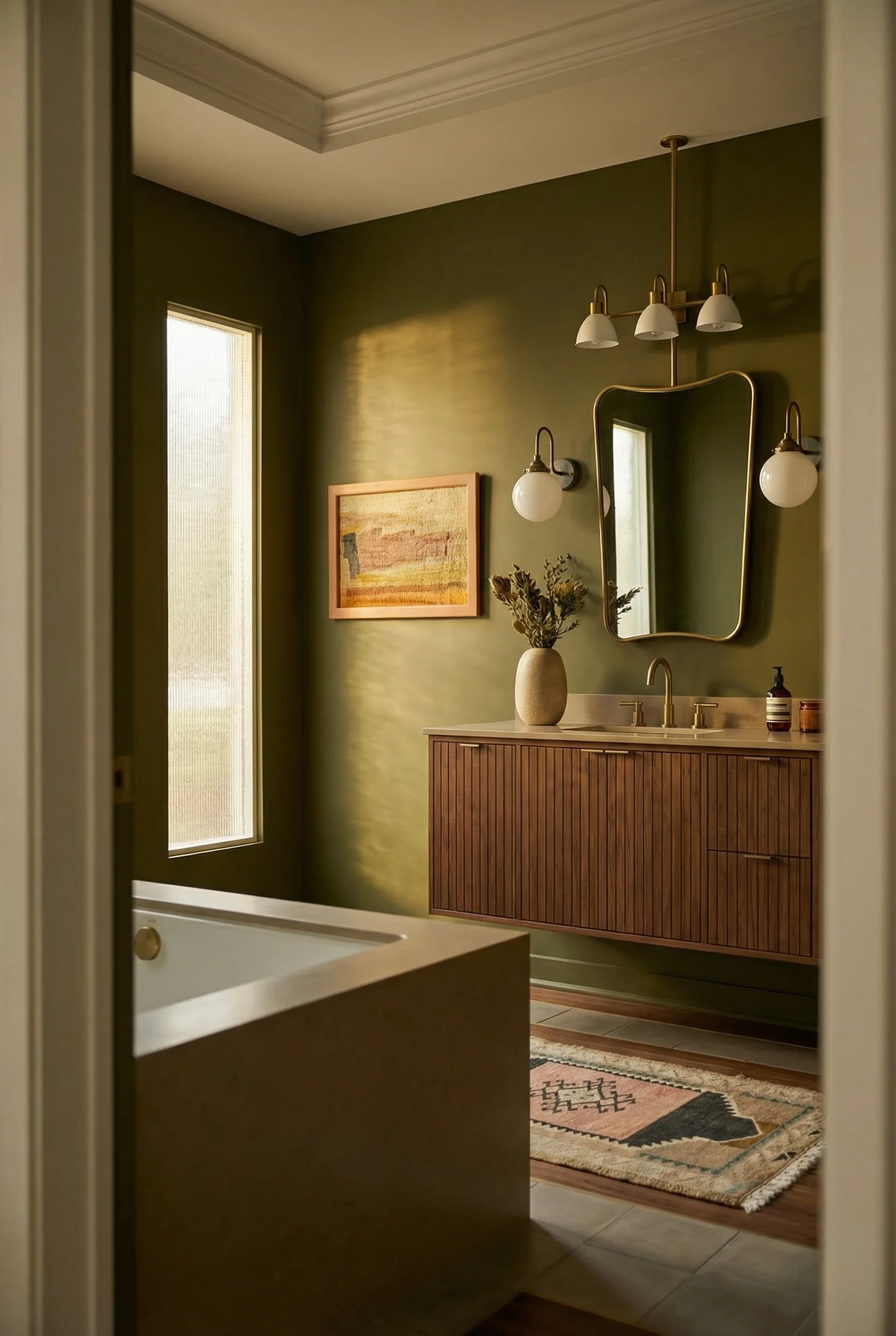
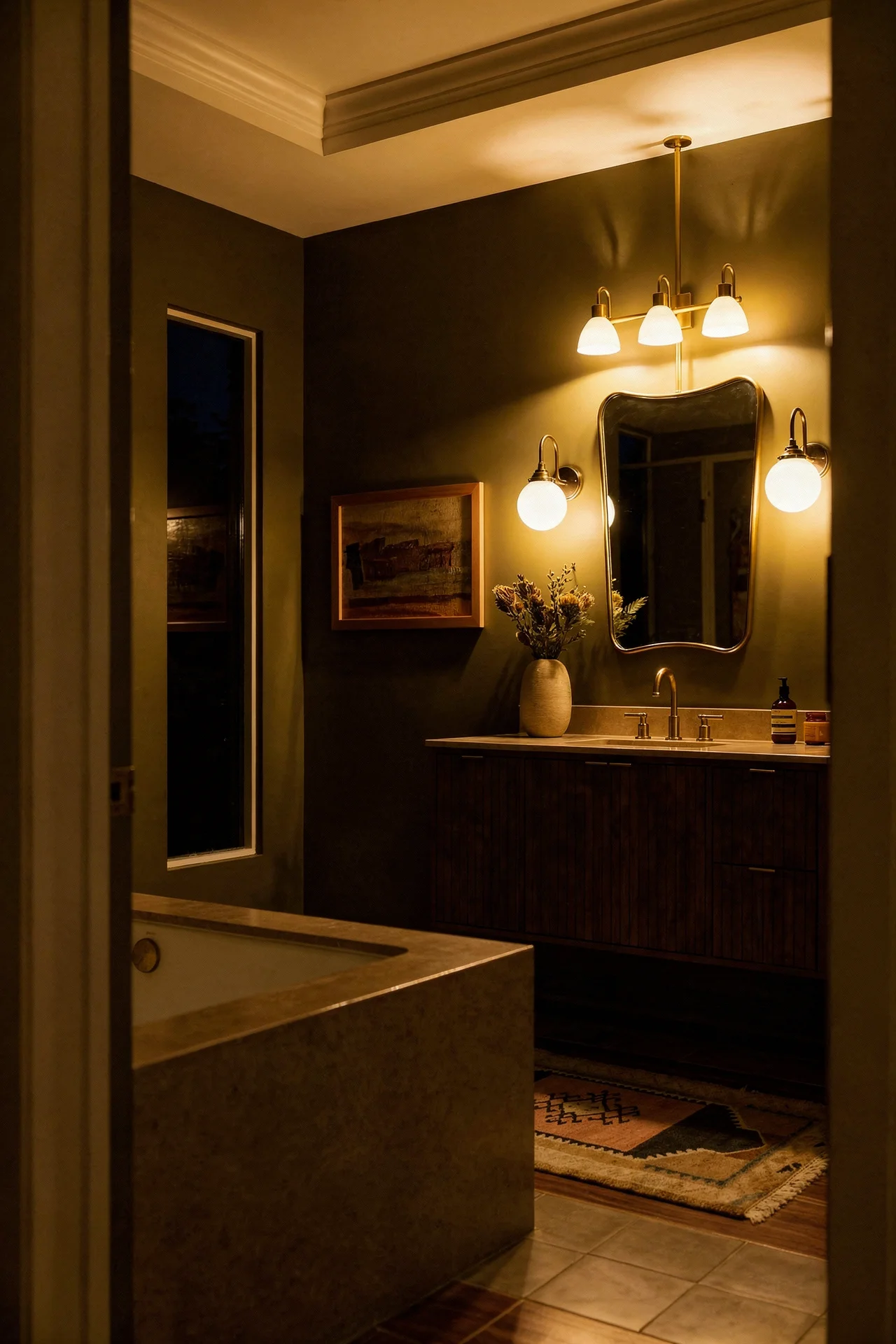
One thing I would watch out for. Veneer versus solid wood matters more in a bathroom than anywhere else. Humidity will delaminate cheap veneer within 18 months. If you are going the budget route, marine grade polyurethane sealant on all edges and surfaces is not optional. Two coats minimum. Three if you shower without the fan running.
I’d lean towards teak for a bathroom that gets heavy daily use and walnut for a powder room or guest bathroom where moisture exposure is lower.
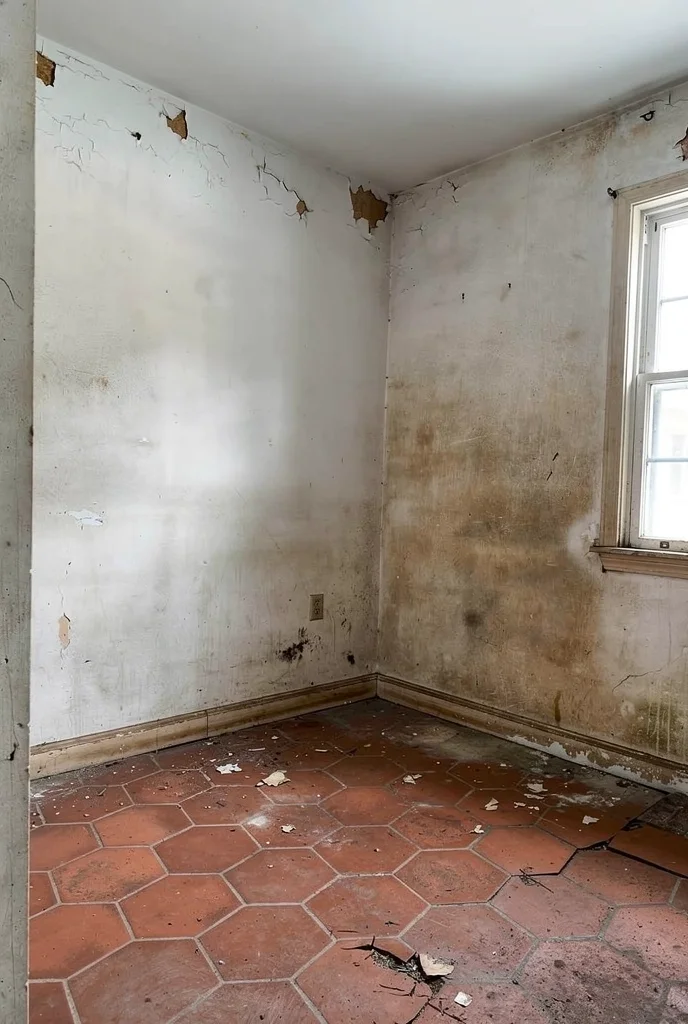
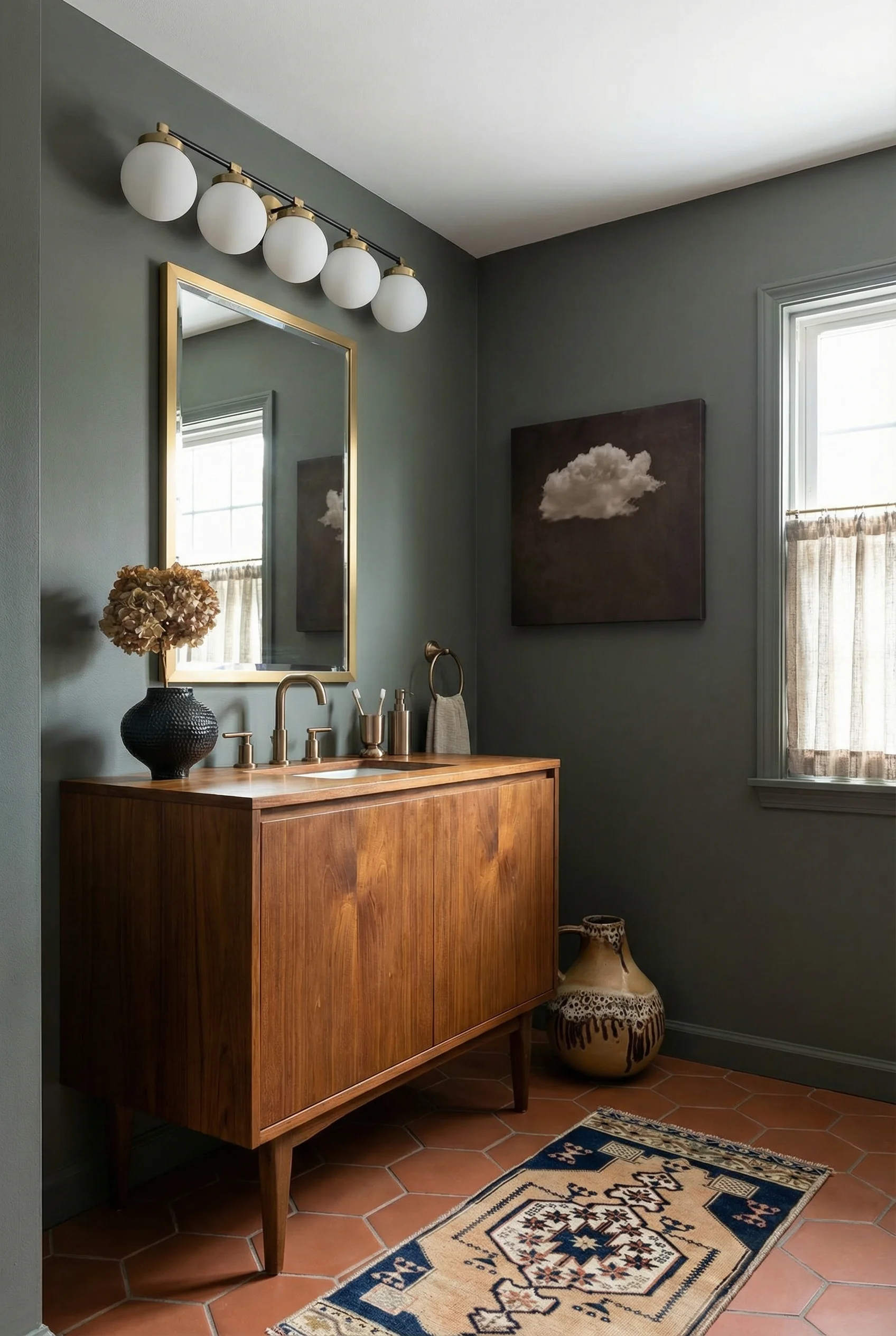
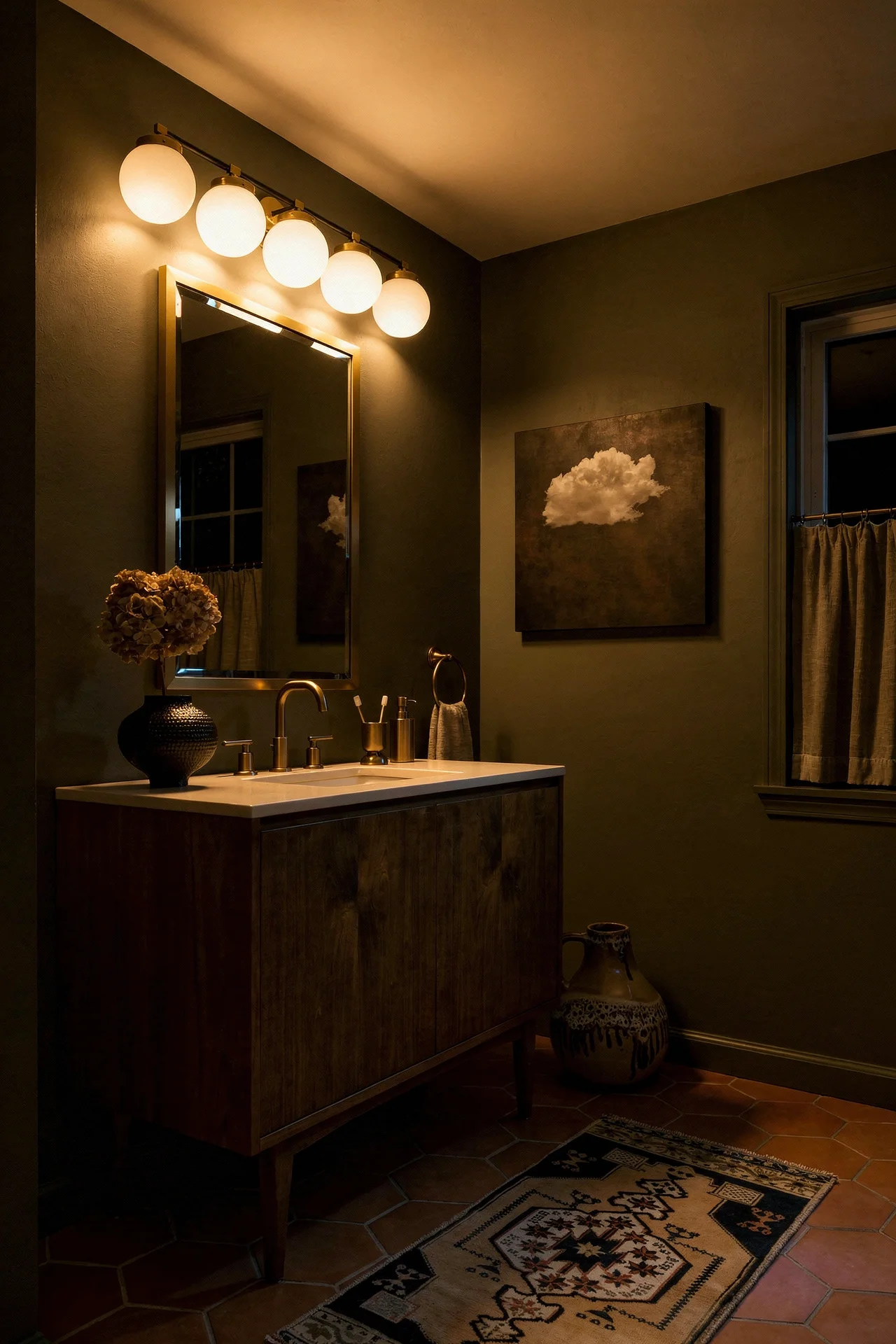
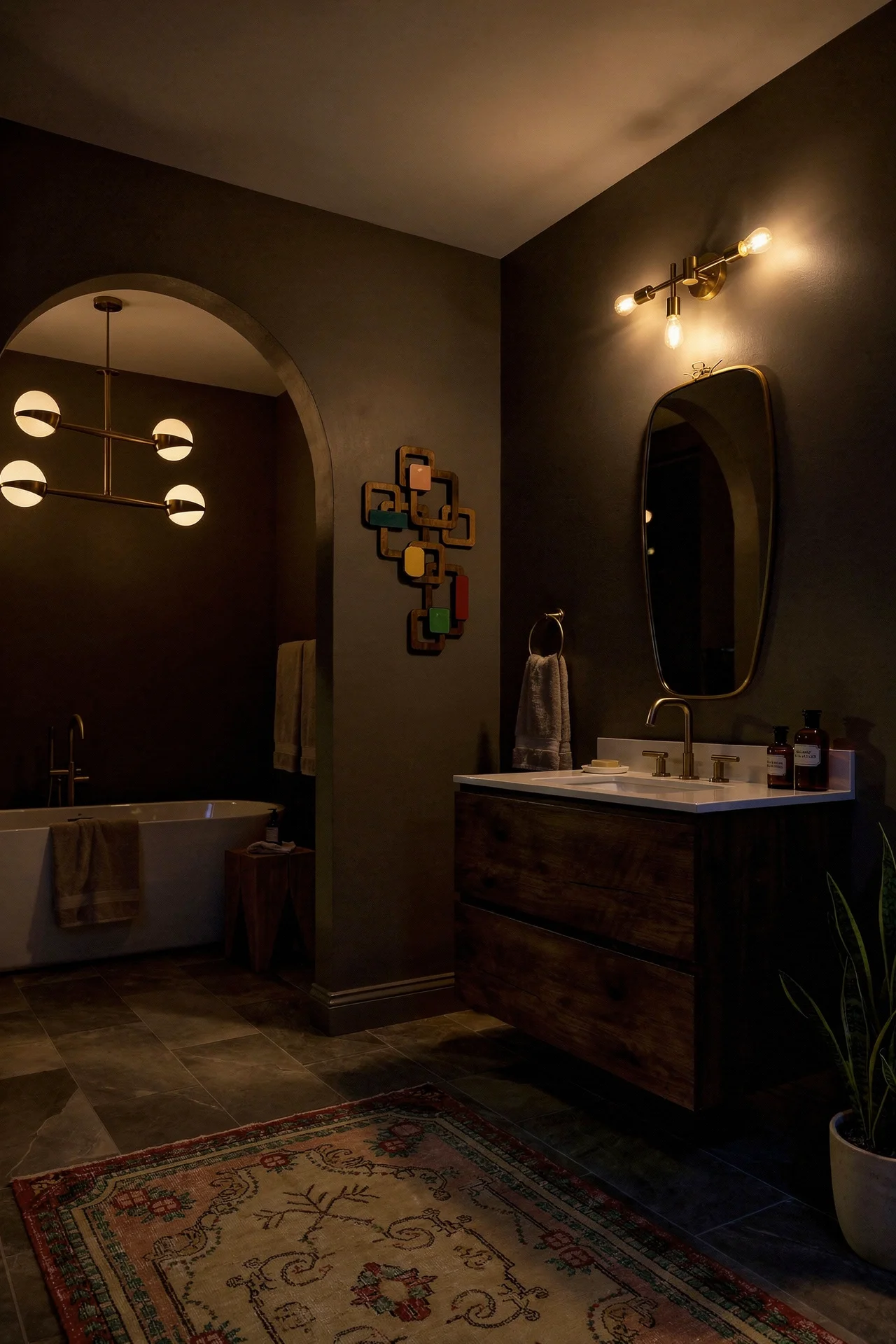
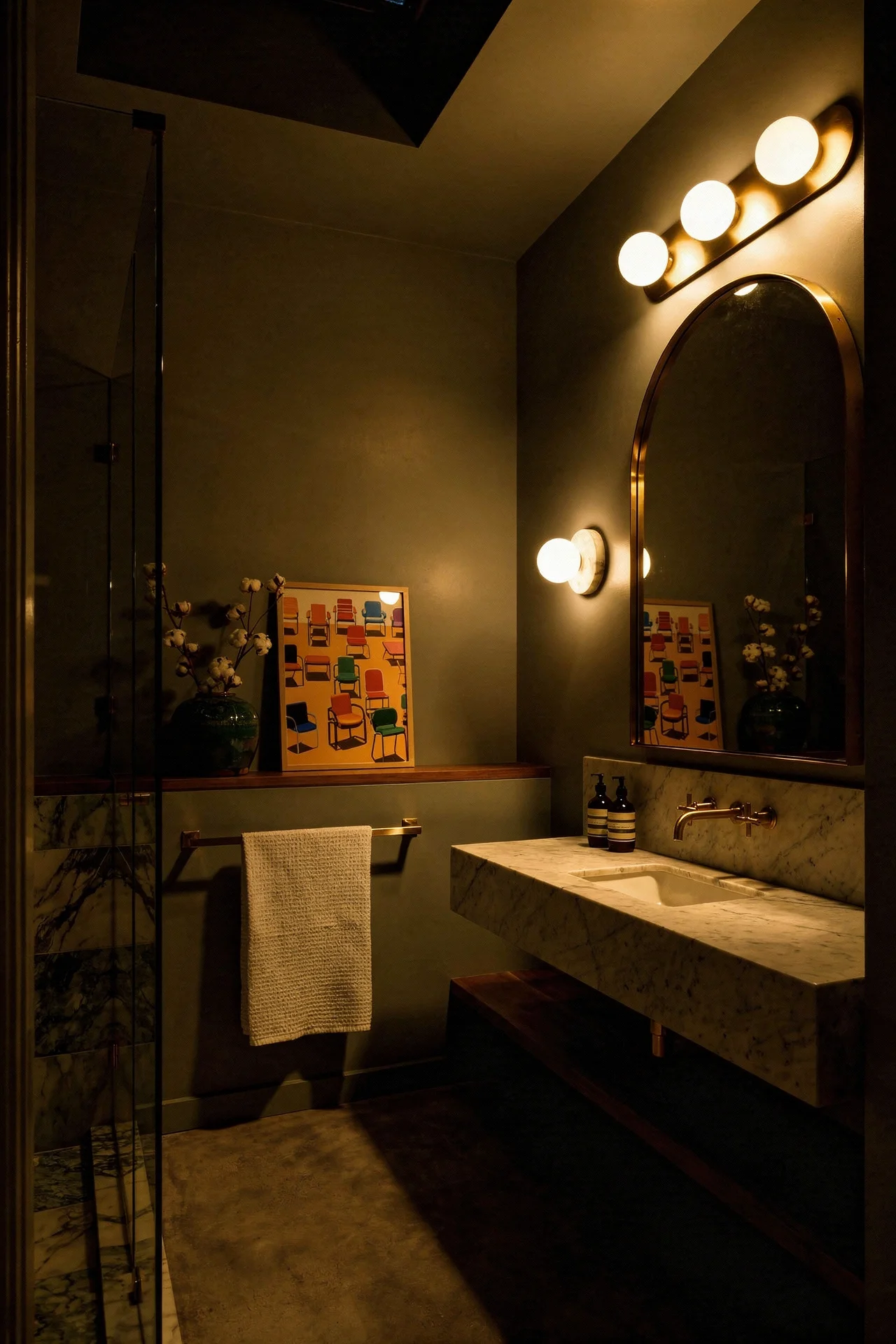
Here is where mid century modern takes an unexpected turn. The moody bathroom. Dark walls, dramatic lighting, rich saturated colour. It sounds like the opposite of what you’d want in a small space, but I’ve seen it work brilliantly in bathrooms under 60 square feet.
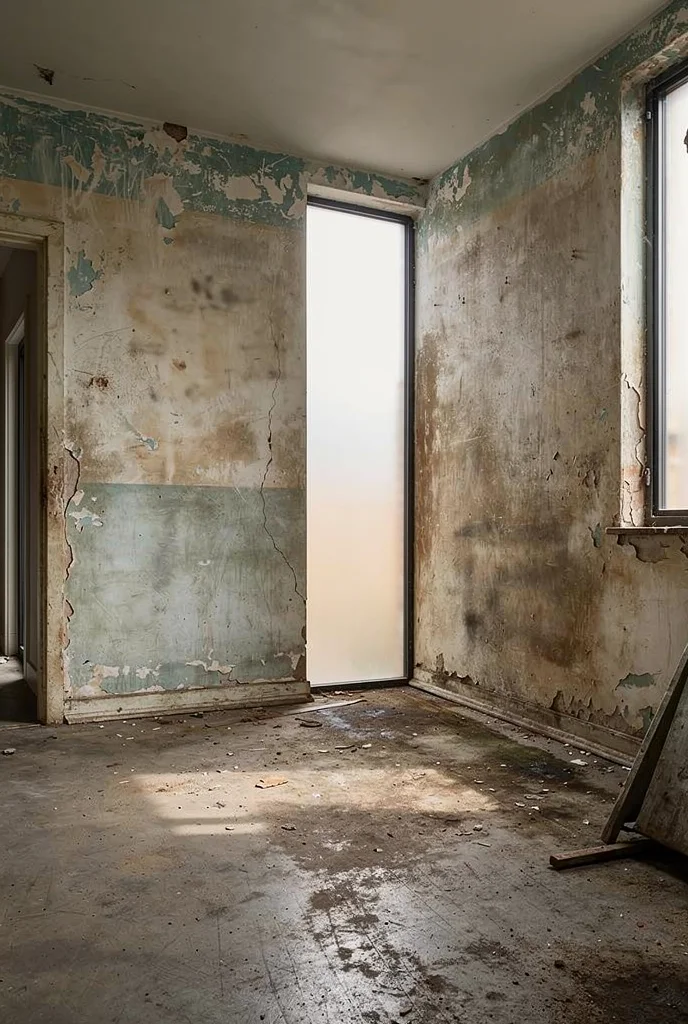
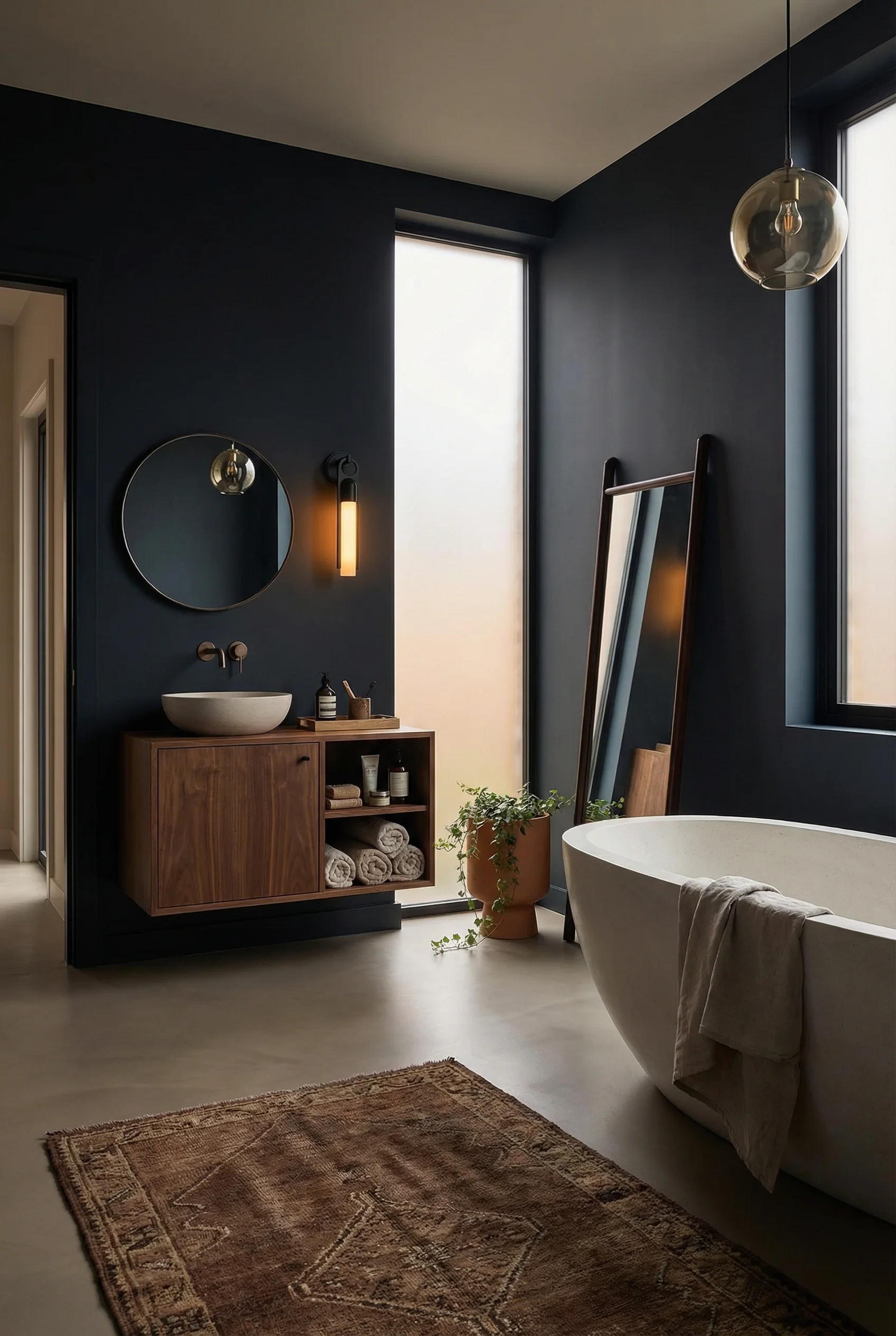
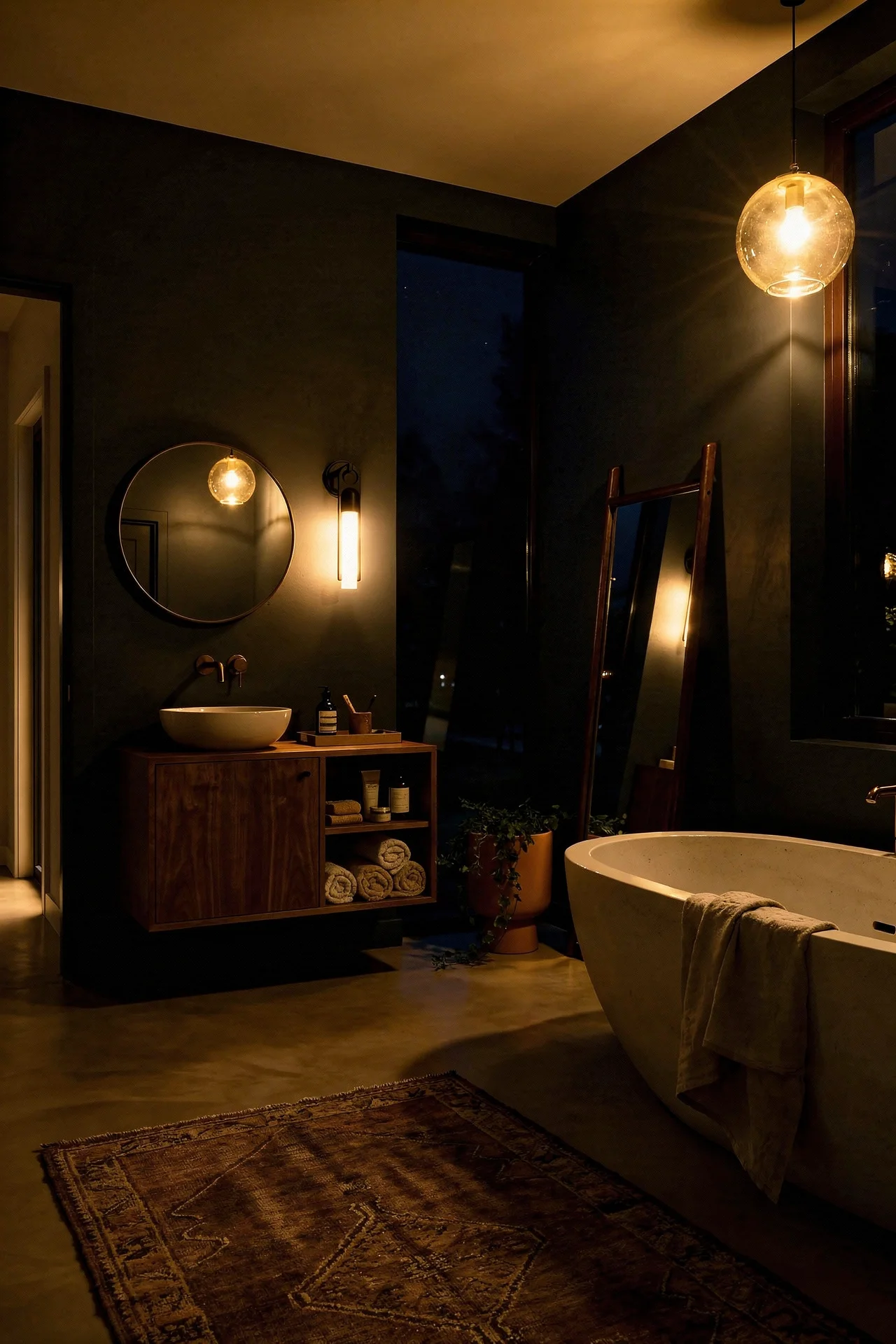
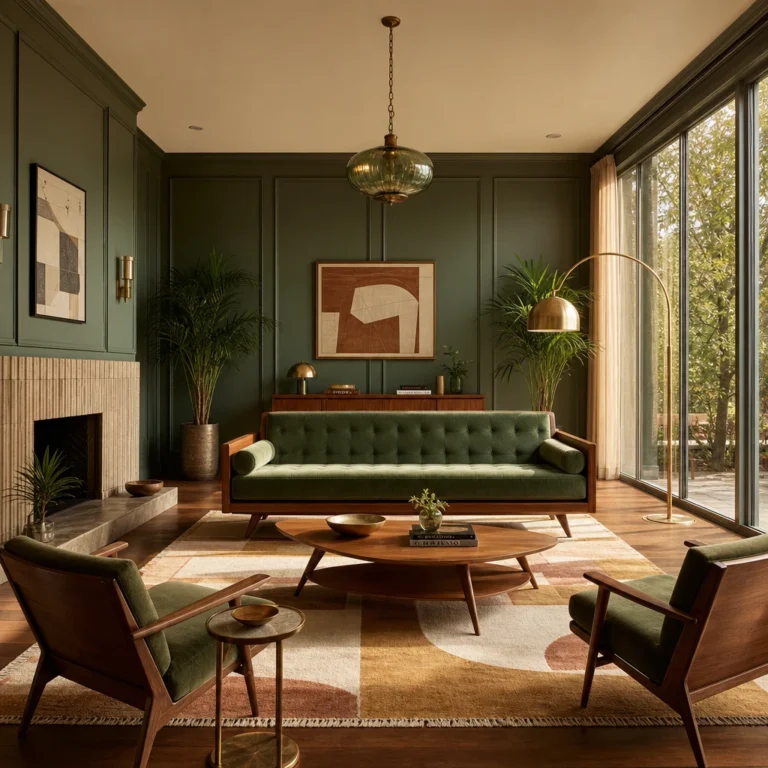
The trick is specificity. A moody bathroom is not just “paint it dark.” It is dark walls with warm lighting that creates pools of amber glow. It is a deep forest green or navy paired with brass fixtures that catch the light. The darkness becomes a feature, not a problem, because the warm metallic reflections break it up.
MCM designers in the 1950s and 60s were not afraid of saturated colour. Avocado green, burnt orange, deep teal. These were standard bathroom palettes. The modern MCM moody bathroom draws from that same confidence but updates it with better materials. Think matte finish wall tiles in a deep charcoal paired with a walnut vanity and brass hardware. The combination reads expensive and intentional.
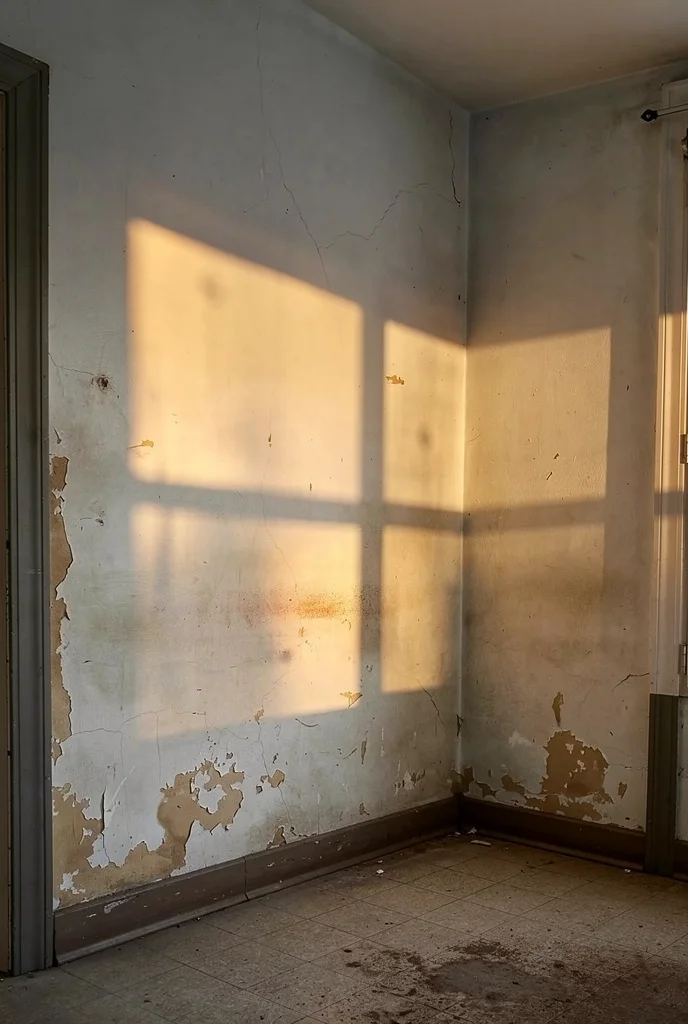
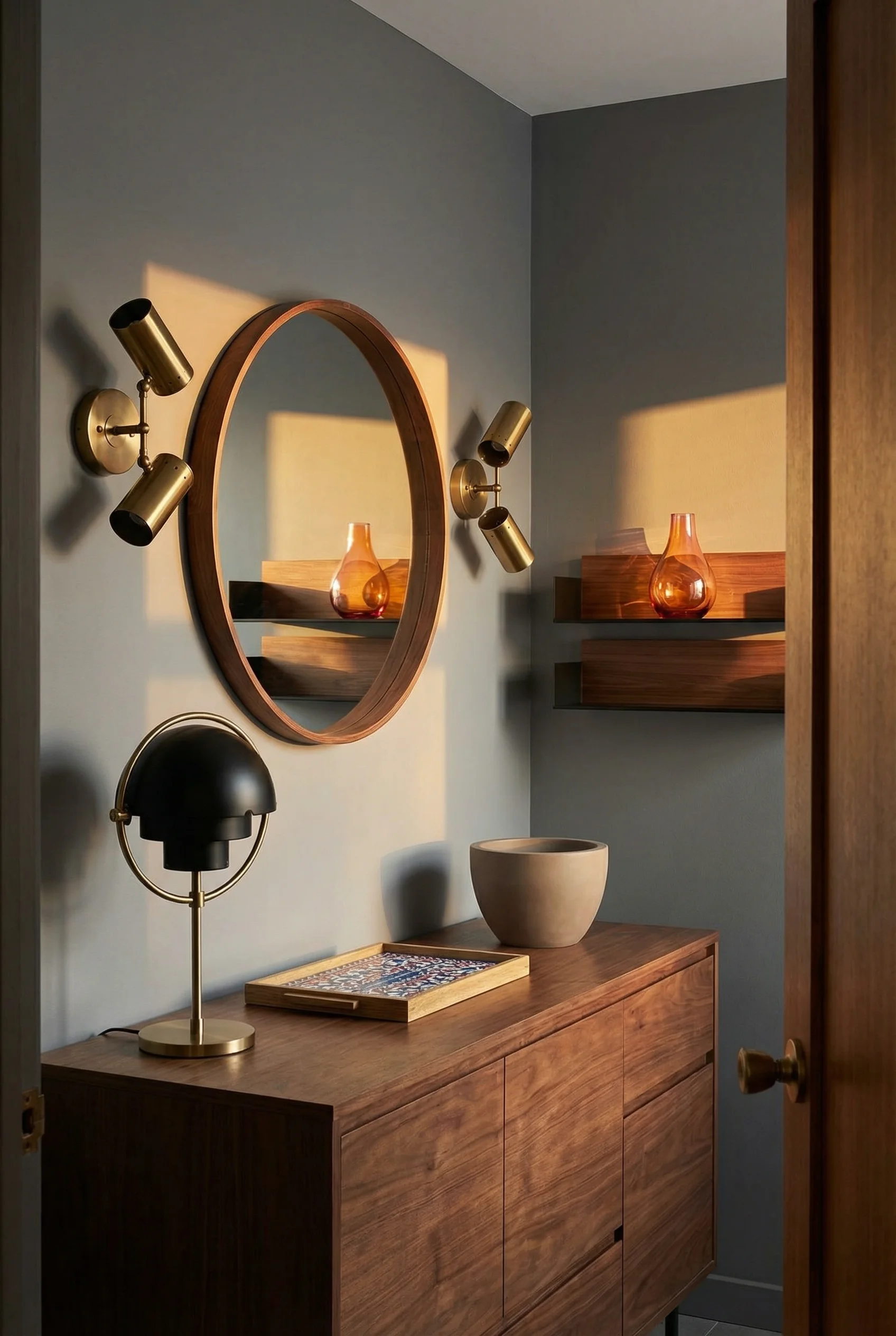
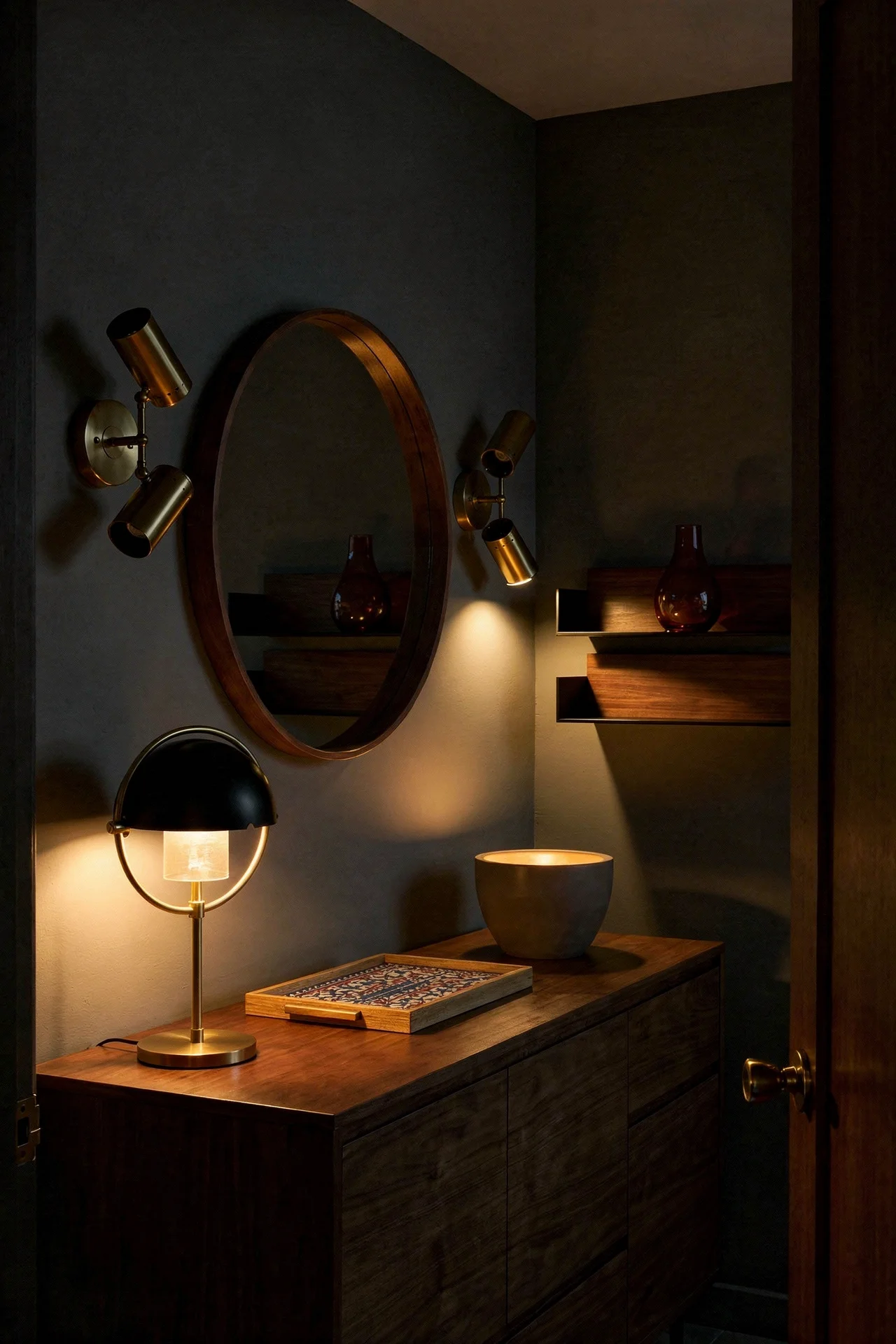
For a budget approach, painted tile is the move. The process is more involved than regular wall painting, but the results are surprisingly durable. Seal Krete epoxy paint, designed for garage floors, bonds to existing tile when you sand the surface with 150 grit first. Four coats of paint. Four coats of clear sealer. Interior design blogger Mysha from Remington Avenue put it plainly. “Preparation is key. If you want your paint to adhere, you must roughen the surface and clean thoroughly.”
In my view, the moody MCM bathroom is the most underrated direction right now. Everyone gravitates toward light and bright. Going dark in a small bathroom feels risky. But when you commit to it fully, the result has a gravity that pale rooms simply do not.
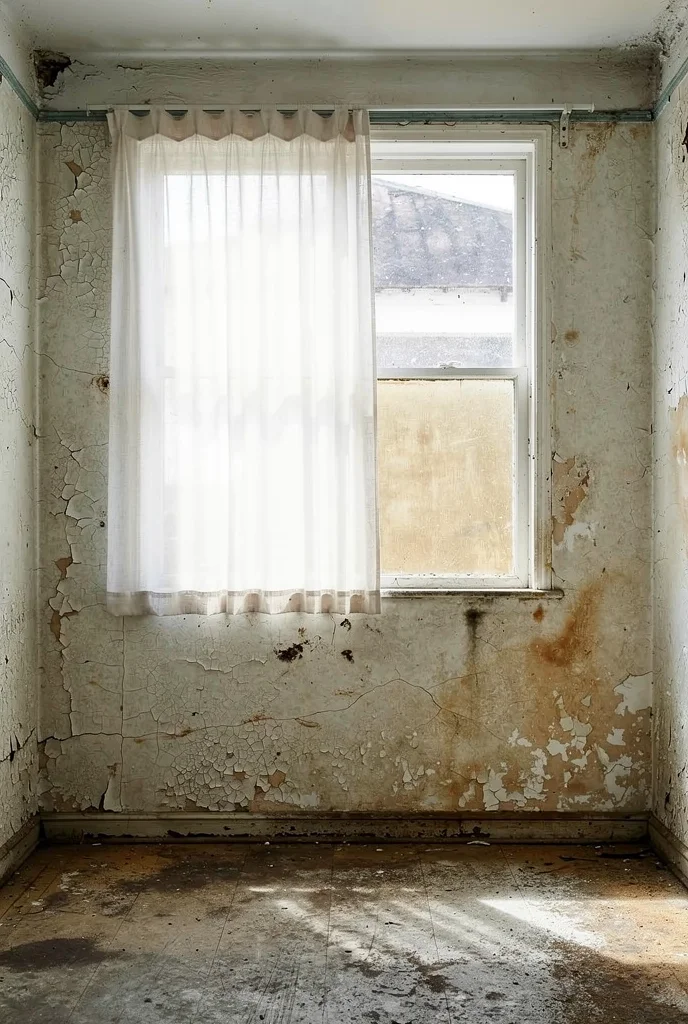
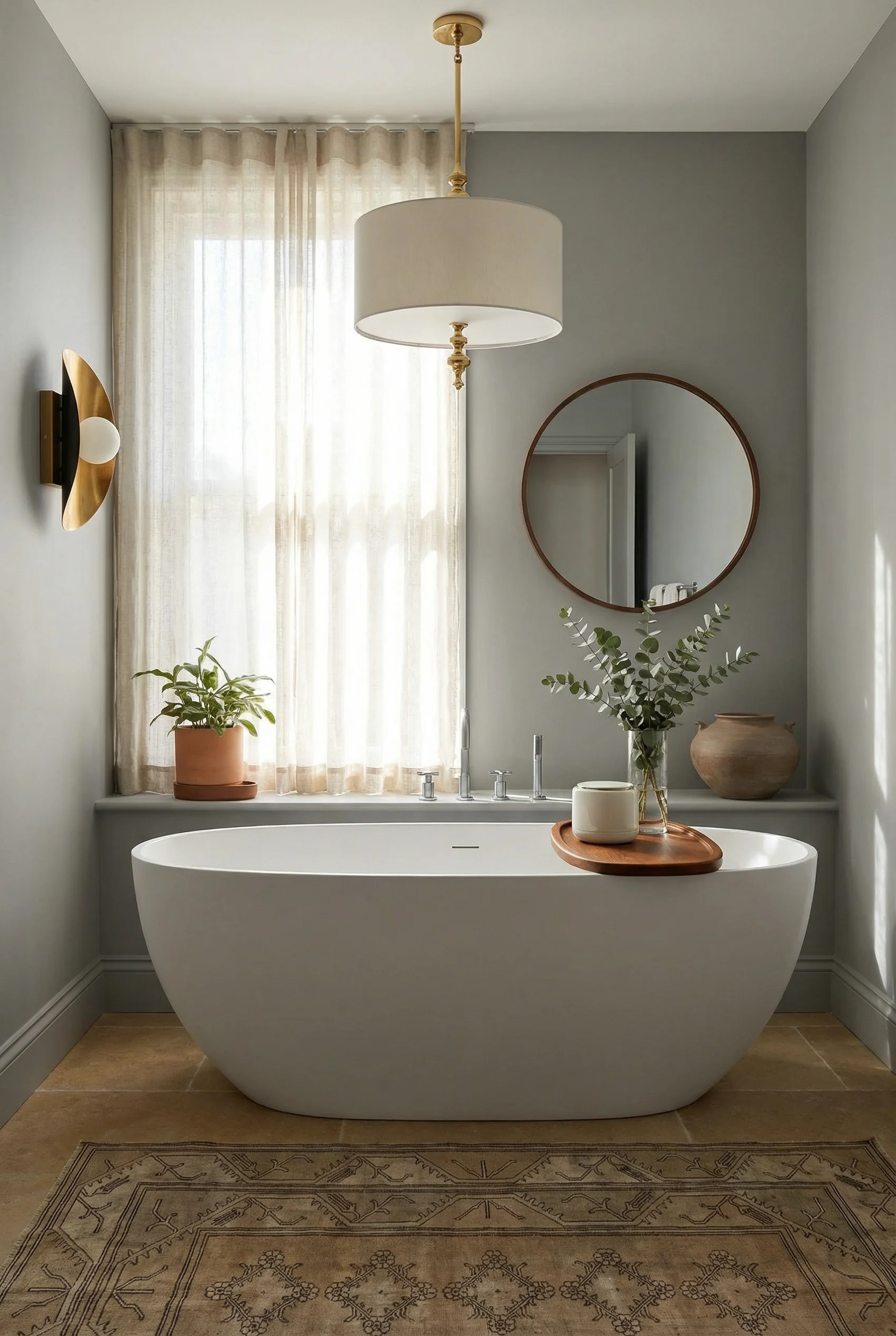
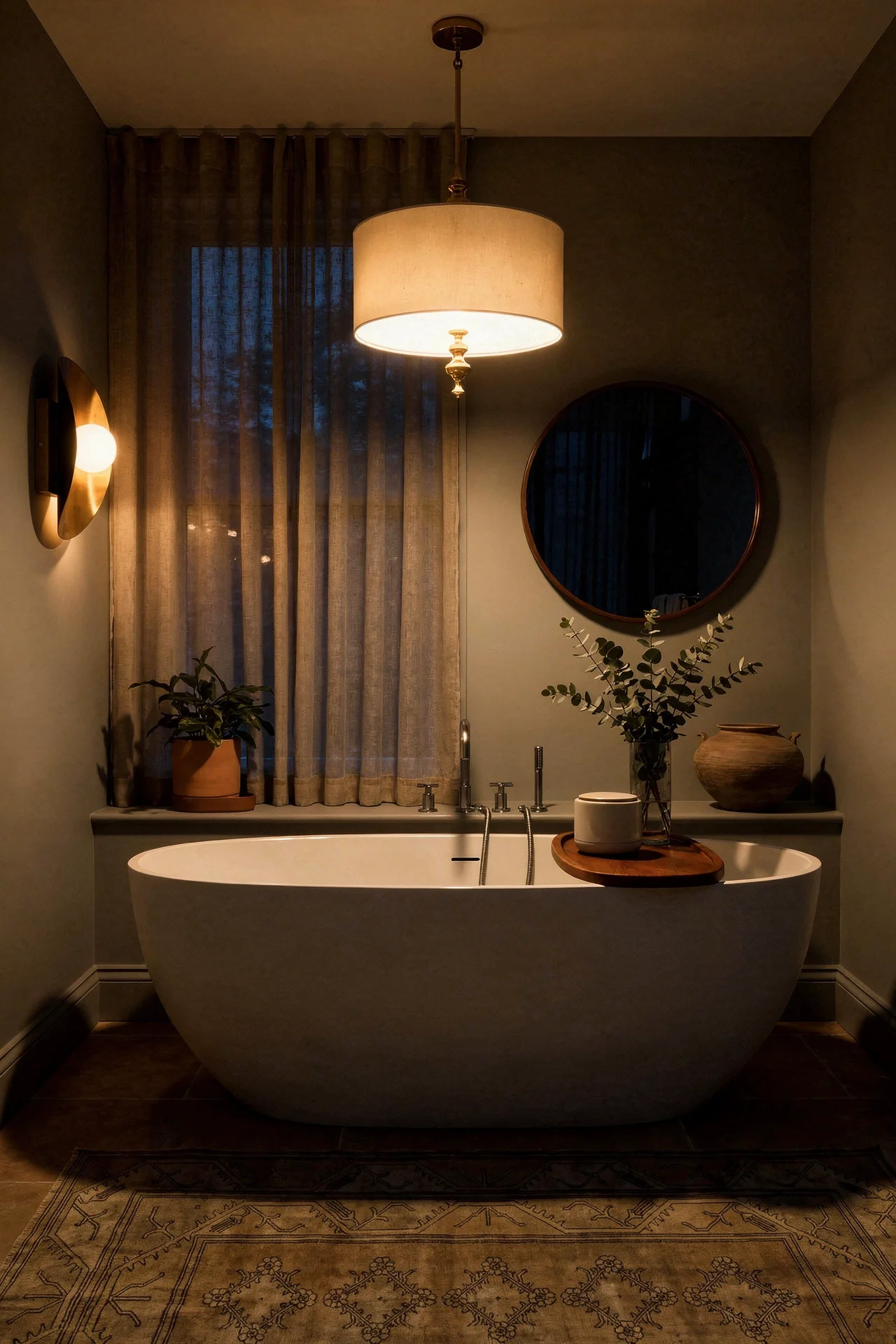
Brown bathrooms spent two decades as a punchline. The 2000s builder beige, the dated tan tiles, the sad chocolate accent wall. But MCM brown is a completely different animal, and if you look at the search numbers, people are figuring that out.
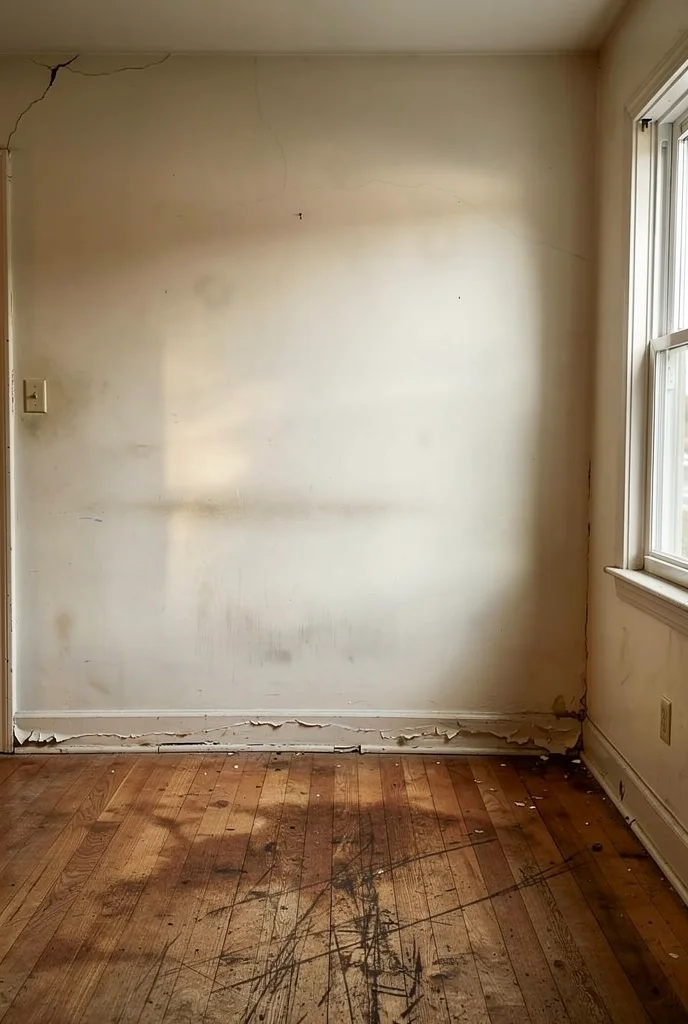
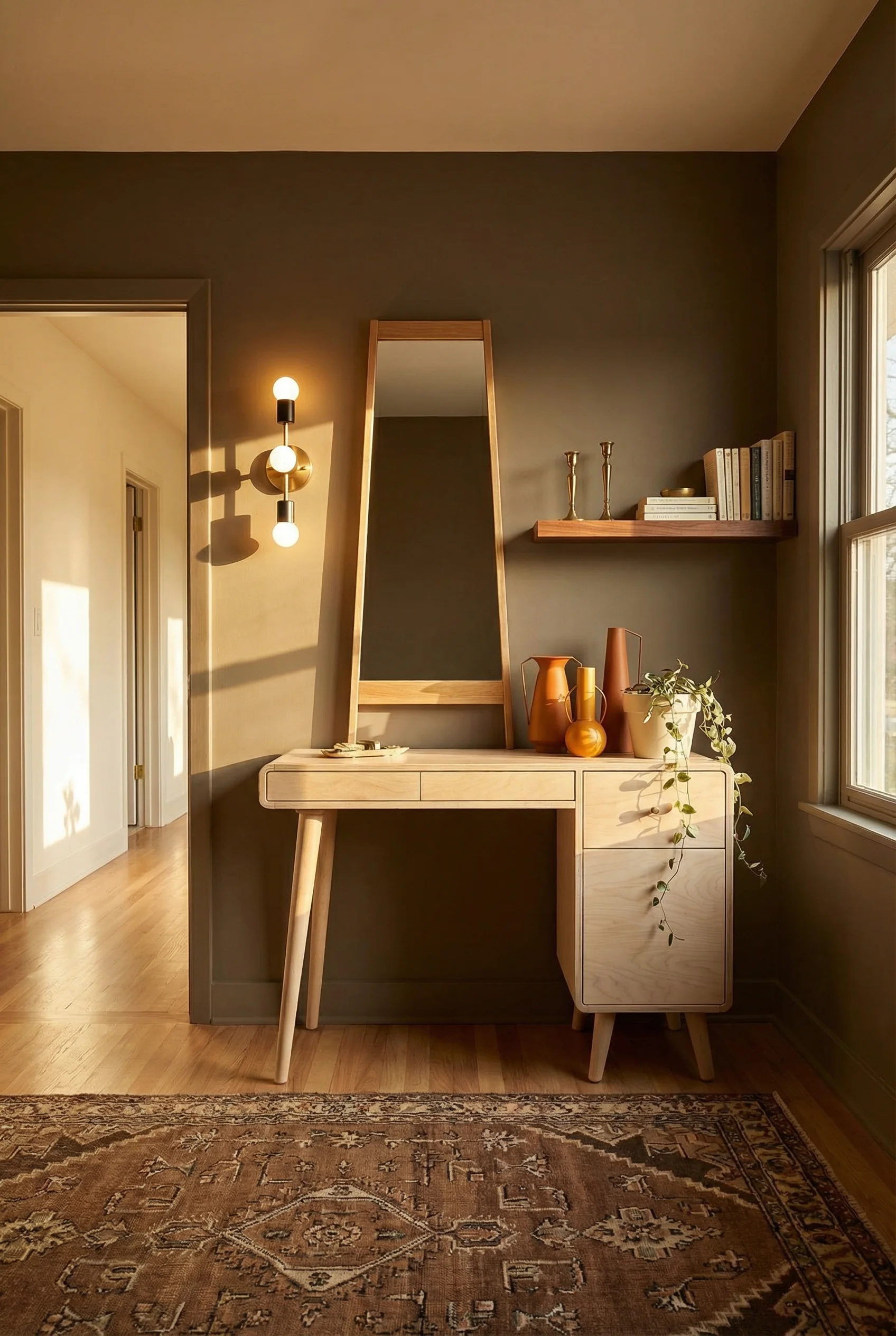
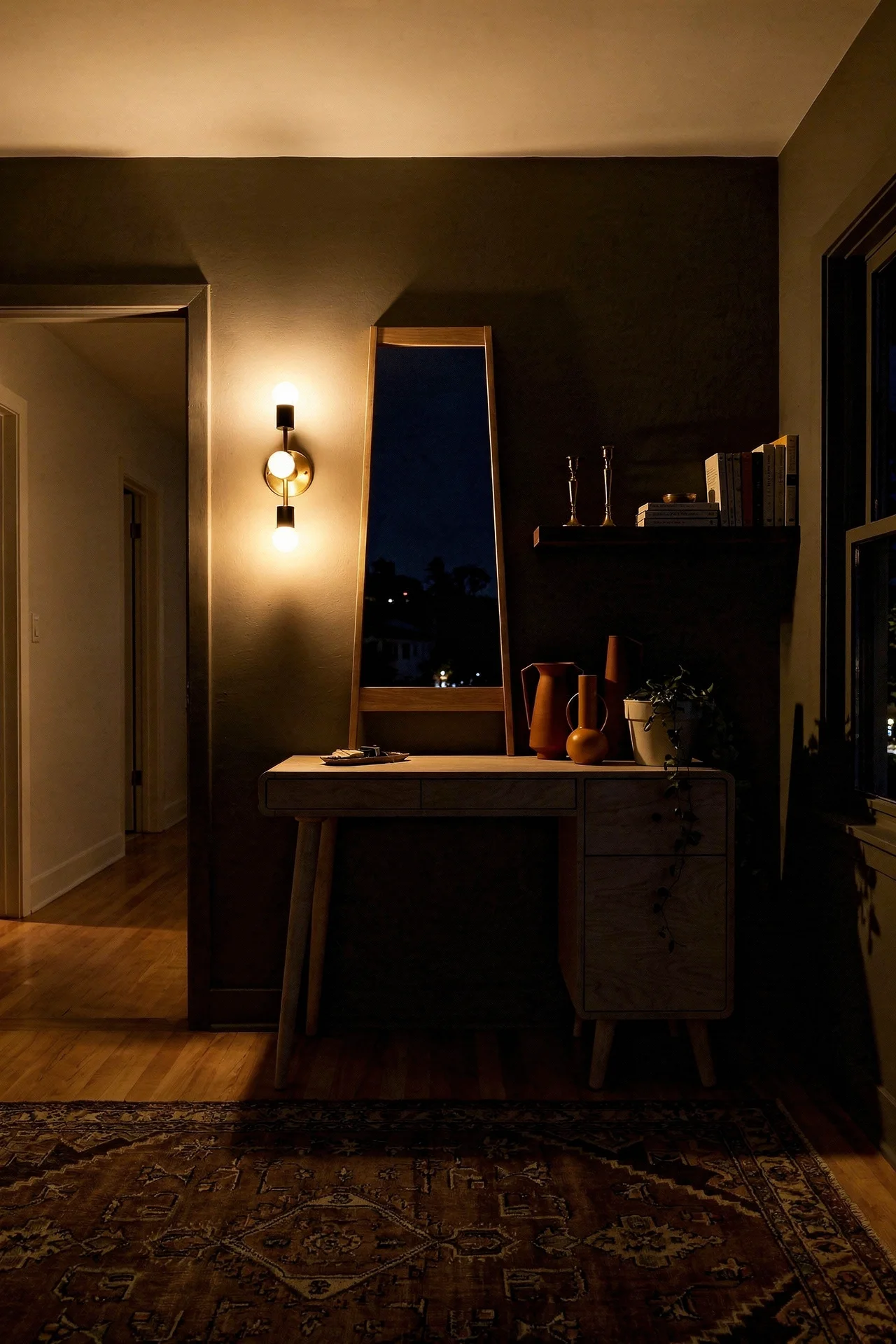
Mid century modern brown is warm, not muddy. It is the brown of oiled walnut, saddle leather, and caramel toned terrazzo. It pairs with cream, with warm white, with mustard, with olive. It never pairs with grey. That is the critical distinction. The brown bathrooms that looked terrible in 2010 were brown with cool grey undertones. MCM brown runs warm through every layer.
In a bathroom, brown shows up through wood tones (vanity, shelving, mirror frames), through tile choices (terracotta, warm limestone, clay coloured penny rounds), and through accessories. A brown leather storage tray on the vanity. A woven jute basket for towels. A ceramic soap dish in a warm spice tone.
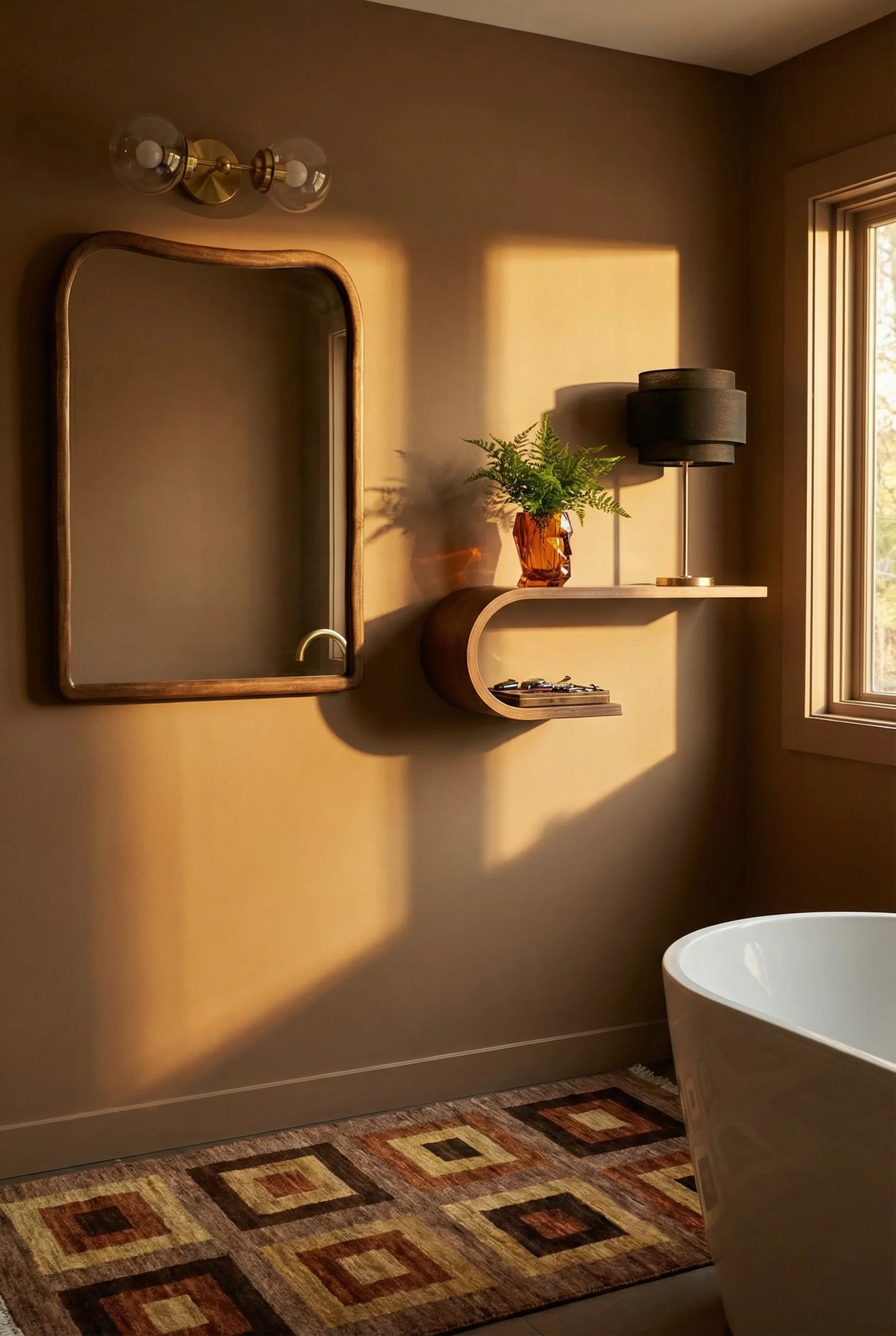
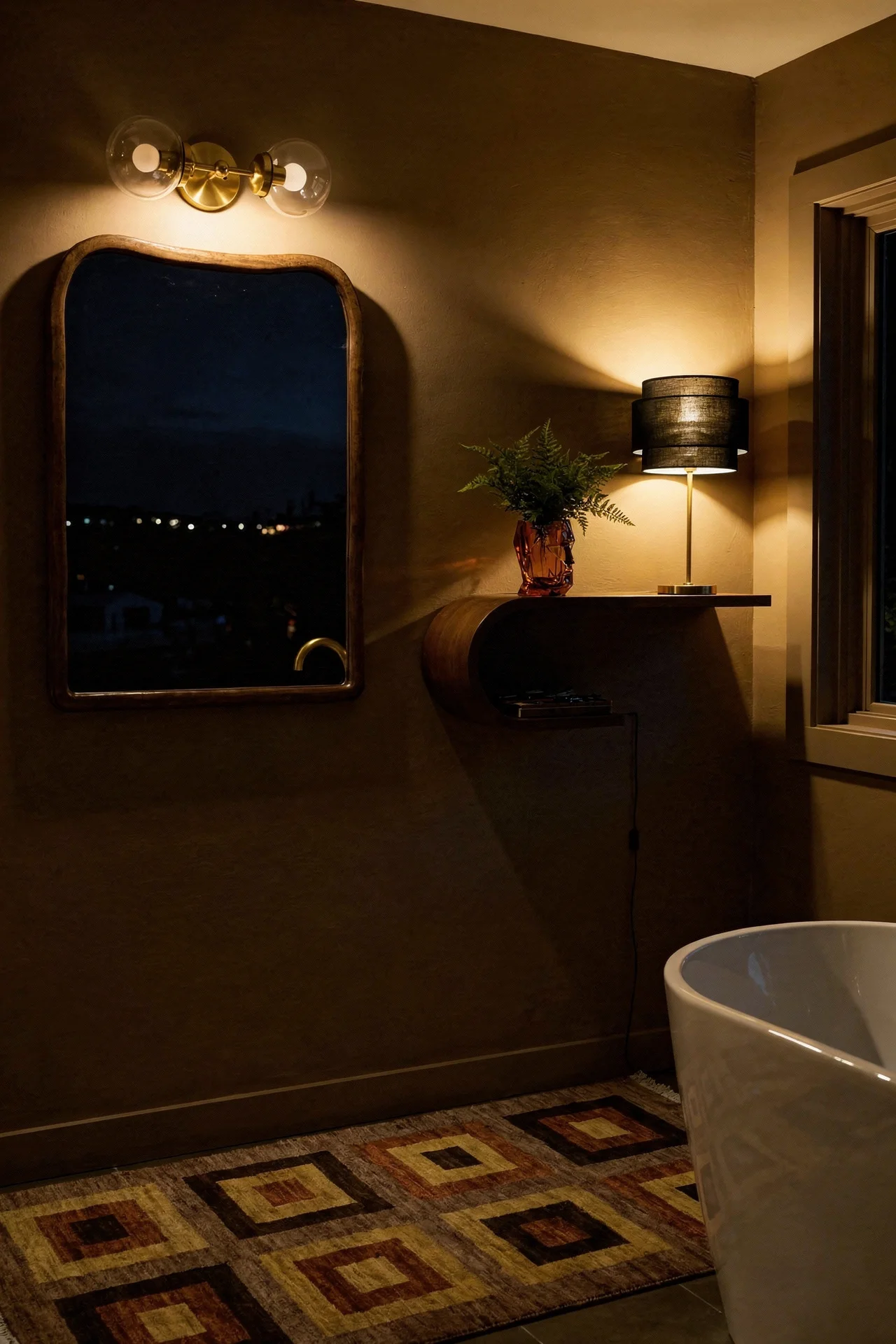
The palette works especially well in a small bathroom because warm tones advance toward the eye, creating a sense of enclosure that feels cosy rather than cramped. Cool tones recede, which sounds better in theory, but in a tiny bathroom the result is often clinical rather than spacious.
I think brown is the colour that separates a mid century modern bathroom that looks curated from one that looks like a Pinterest screenshot. It brings the organic, human element that all white or grey schemes are missing.
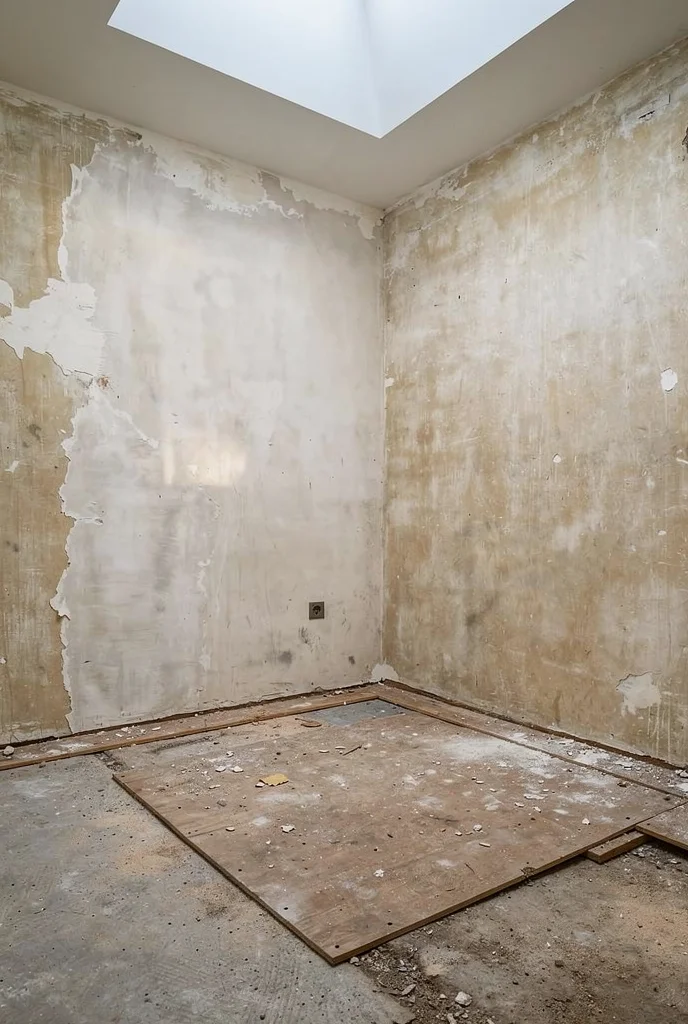
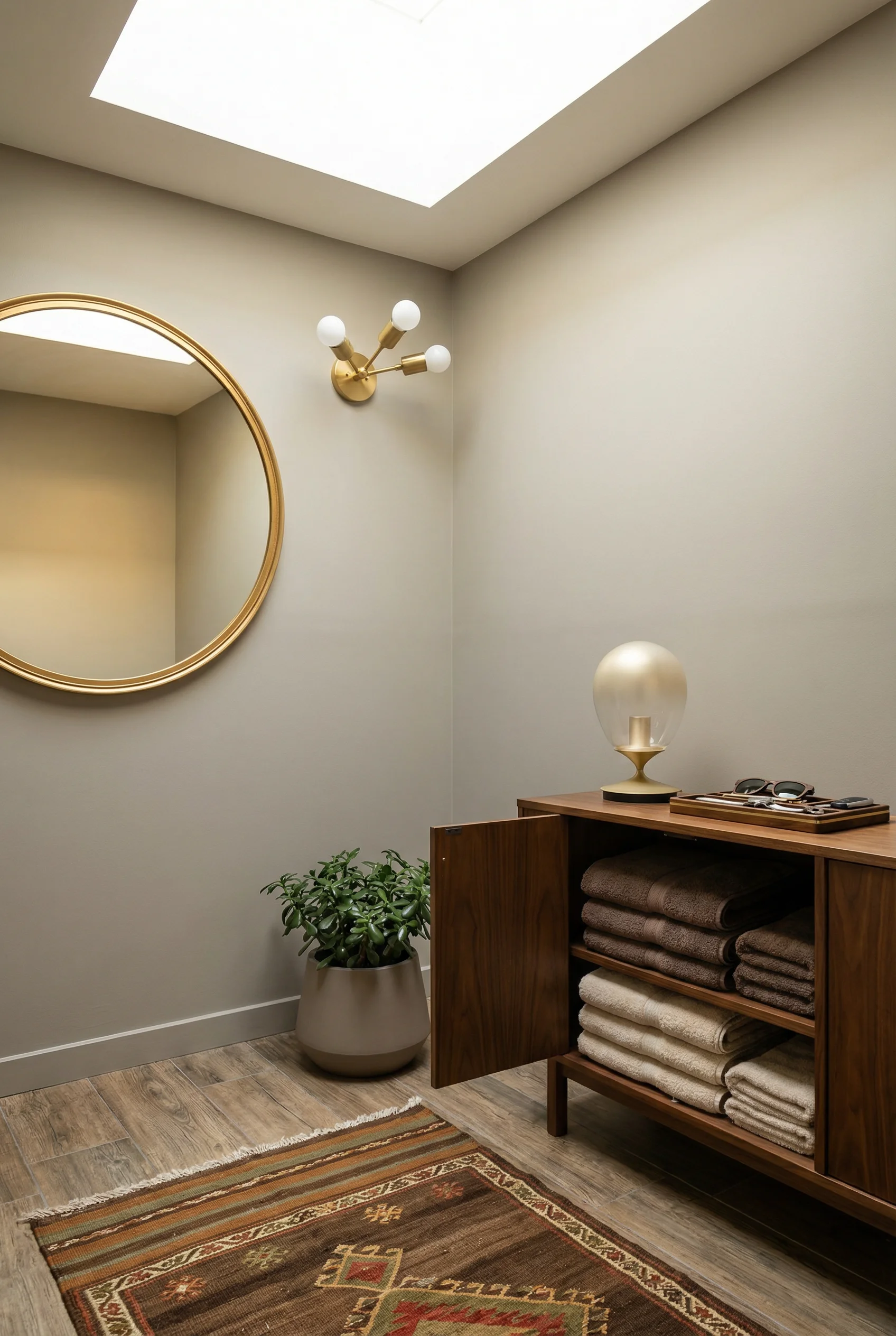
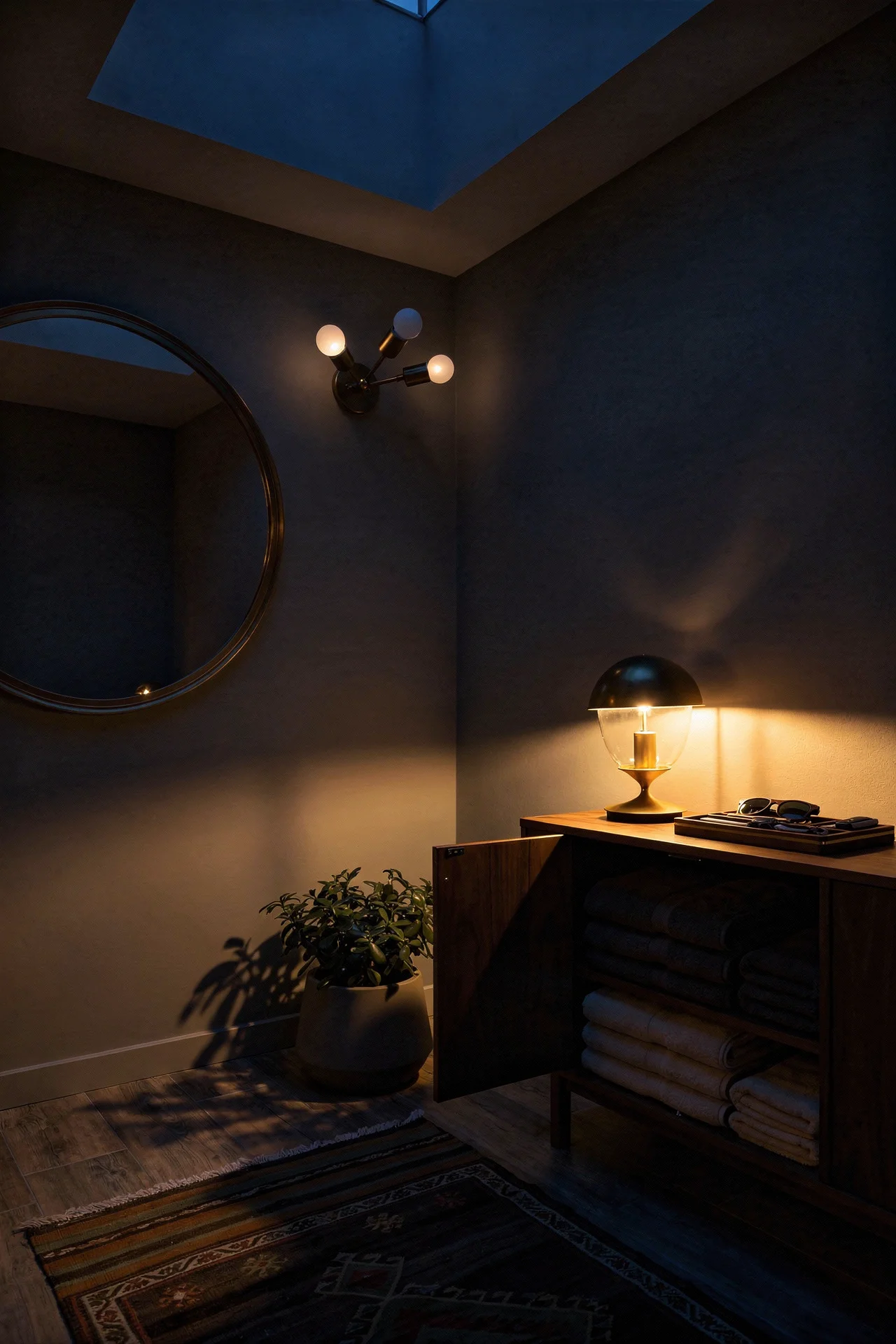
Real wood in a bathroom is a maintenance commitment most people are not prepared for. But wood look porcelain tile and luxury vinyl plank have reached a point where the visual difference is marginal and the practical advantages are enormous.
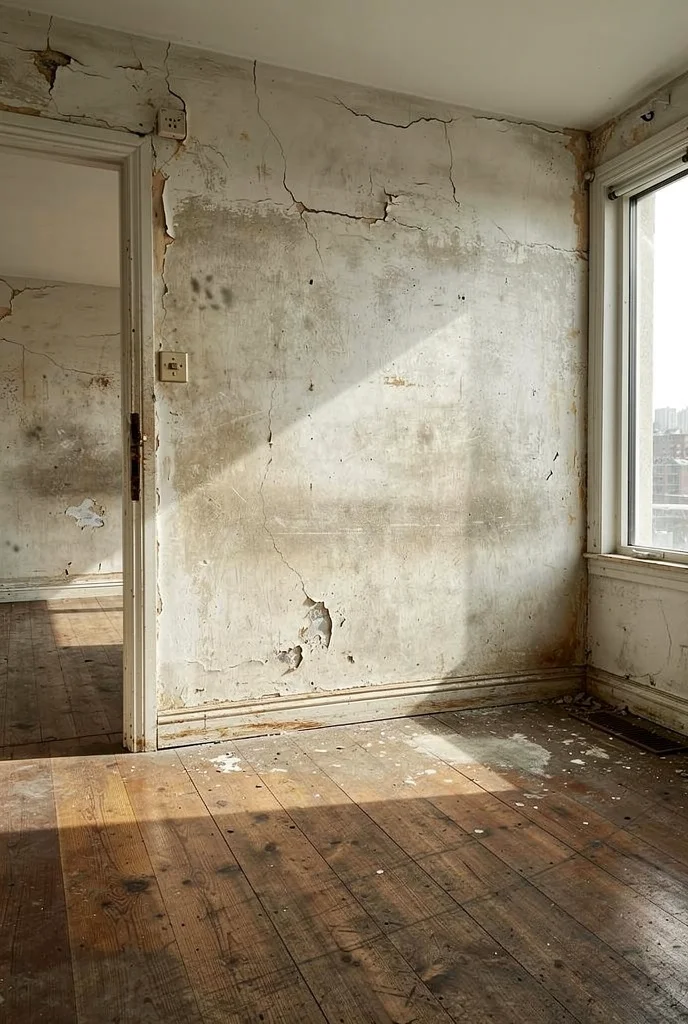
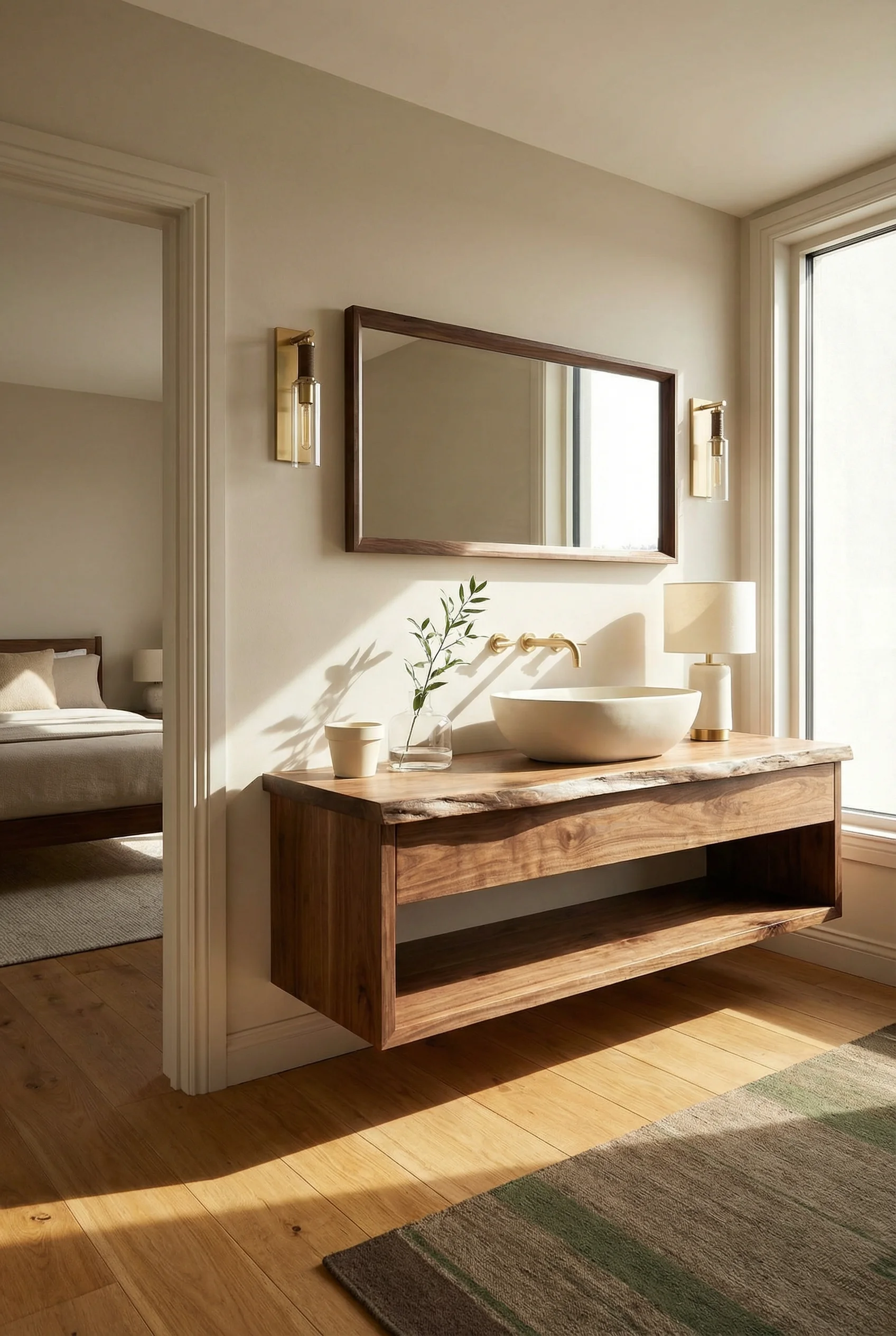
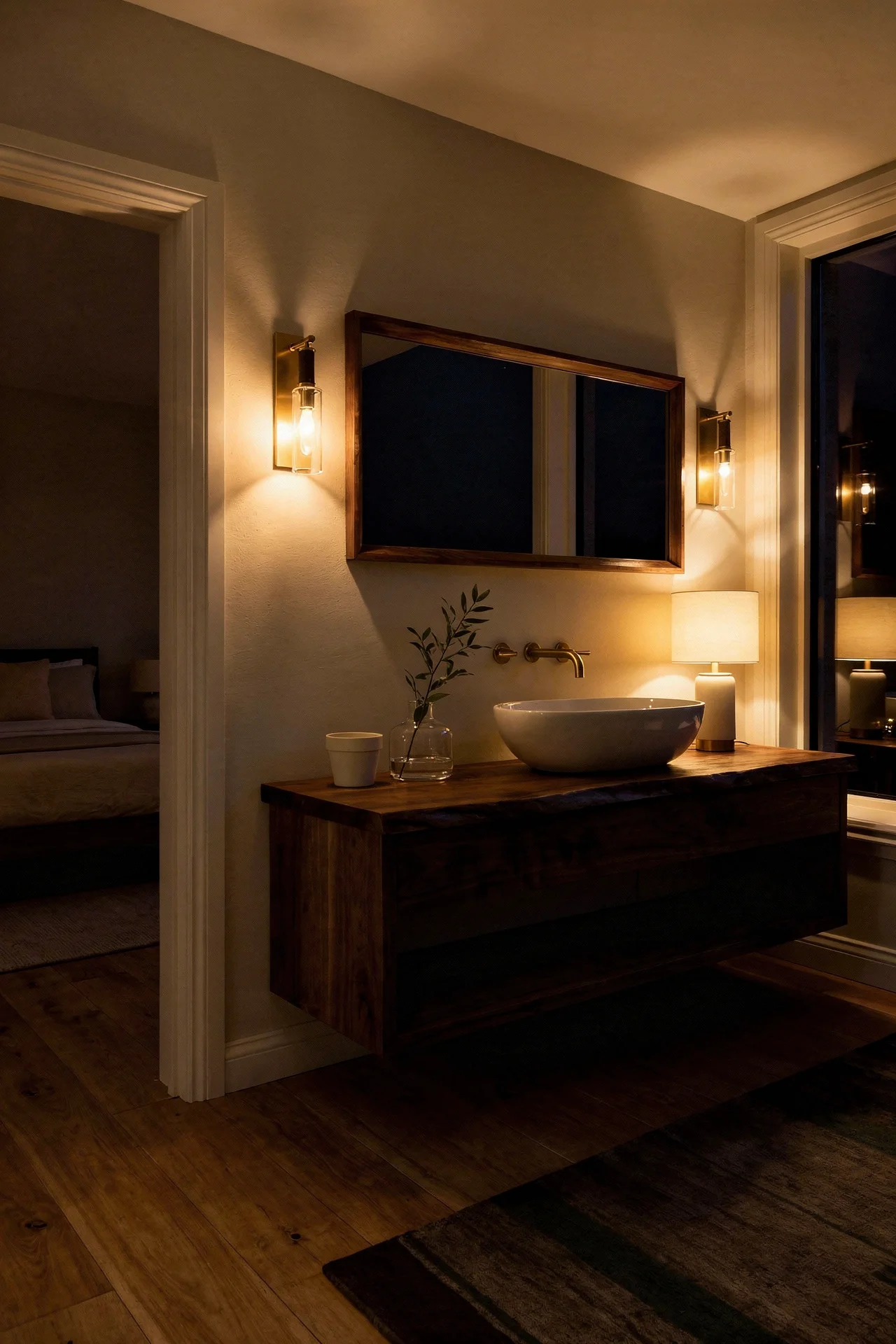
Wood look porcelain comes in plank formats that mimic oak, walnut, and teak. The better versions have textured surfaces that feel like wood grain underfoot. They are waterproof, require zero sealing, and handle underfloor heating without expanding or contracting. For a mid century modern bathroom, a medium toned oak or warm walnut plank laid in a straight pattern (not herringbone, which reads more traditional) is the move.
Luxury vinyl plank is the budget alternative. It is softer underfoot, warmer to the touch, and costs roughly a third of porcelain. The trade off is longevity. LVP will last 10 to 15 years in a bathroom. Porcelain will last indefinitely. For a rental or a bathroom you expect to renovate again in a decade, LVP is the smarter spend.
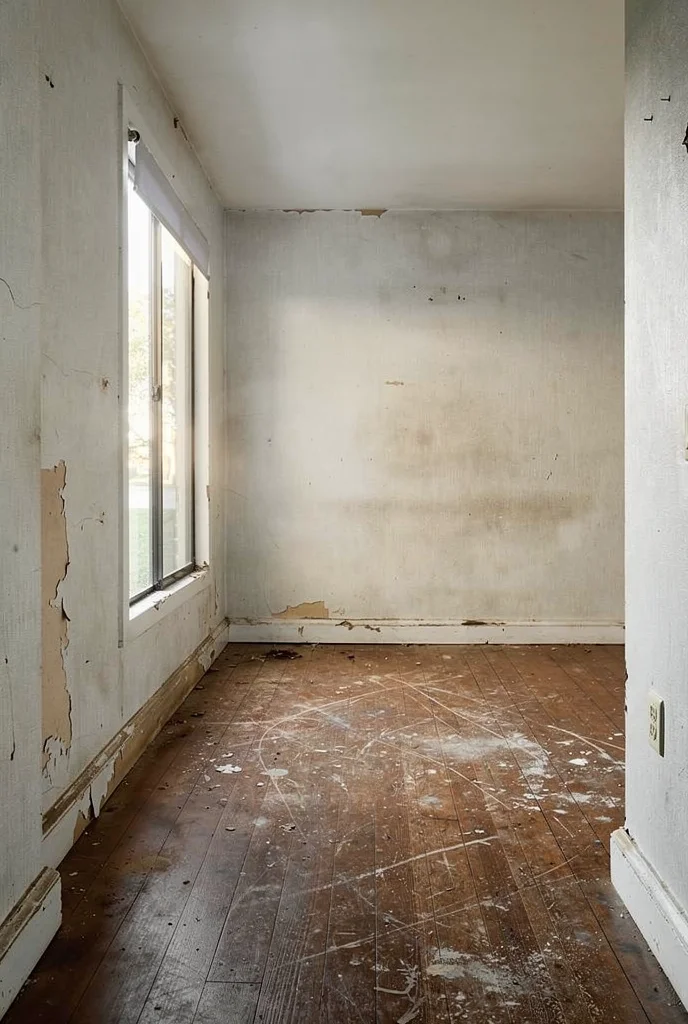
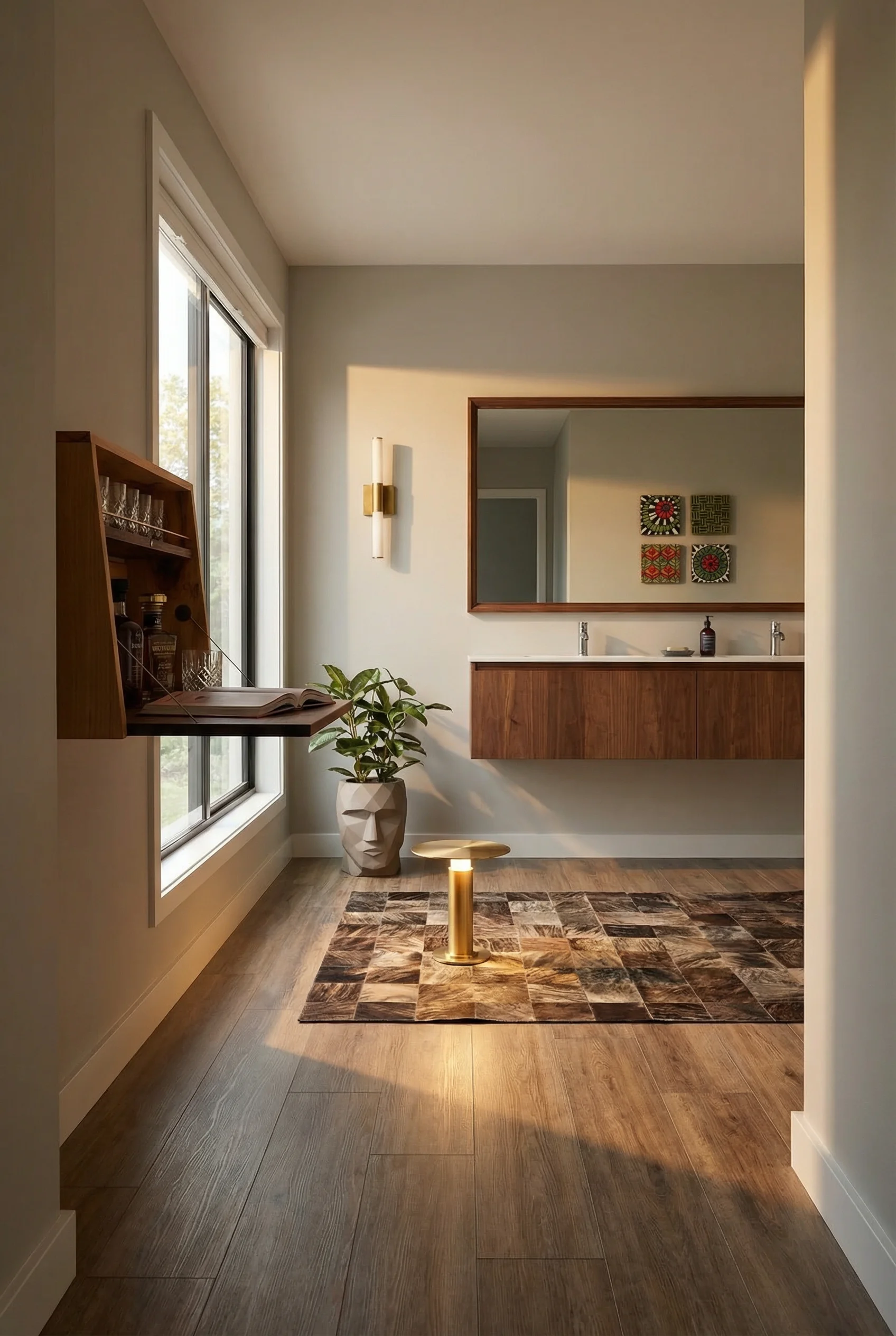
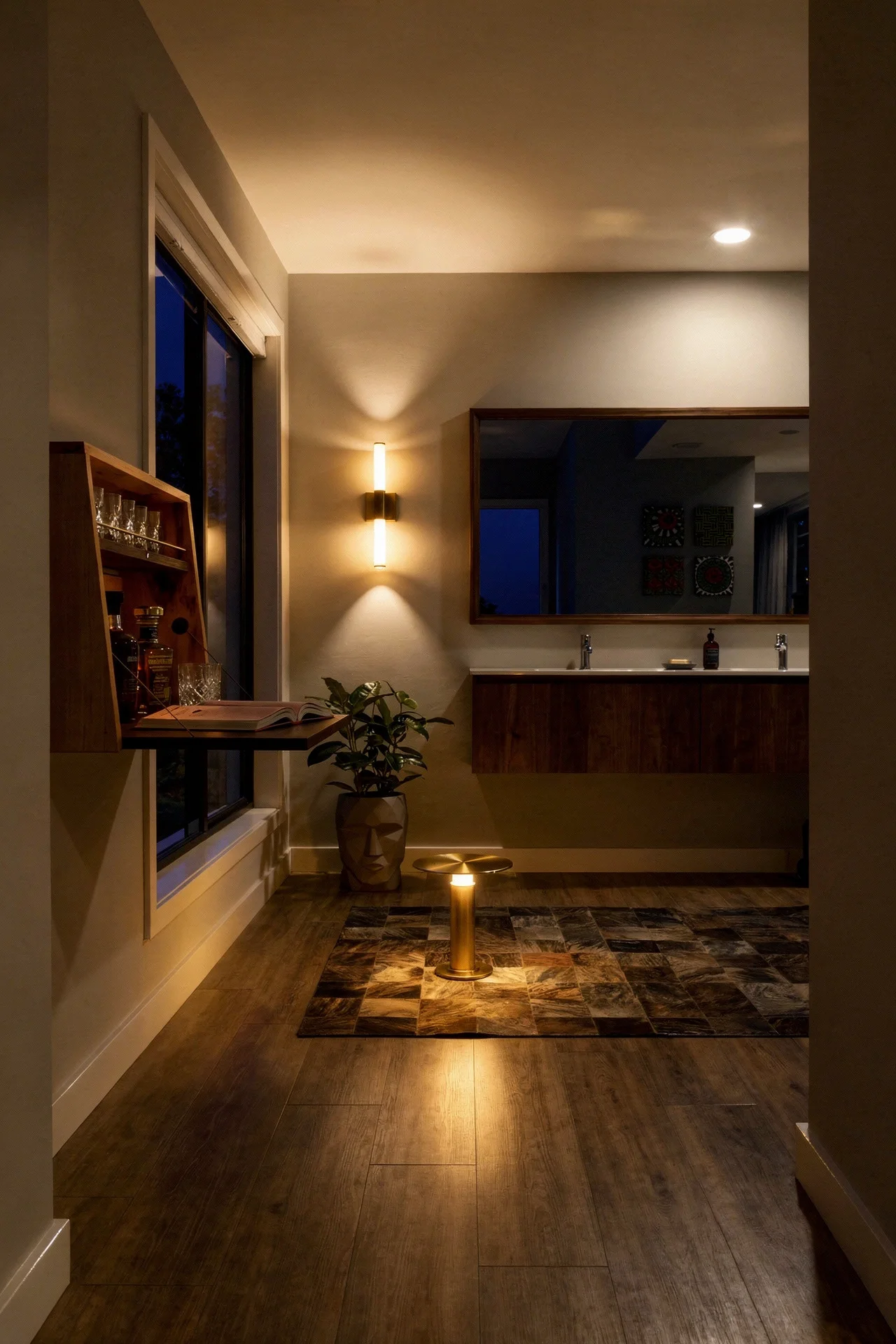
One detail that trips people up is grout colour. With wood look porcelain, you want the thinnest grout line your installer will agree to, in a colour that matches the mid tone of the tile. Contrasting grout lines destroy the illusion immediately. The goal is a continuous wood floor appearance that happens to be completely waterproof.
I’d pick a plank width of at least six inches. Narrow planks look busy in small rooms. Wide planks, eight or nine inches, read more modern and make the floor feel like fewer pieces, which subconsciously reads as more expensive.
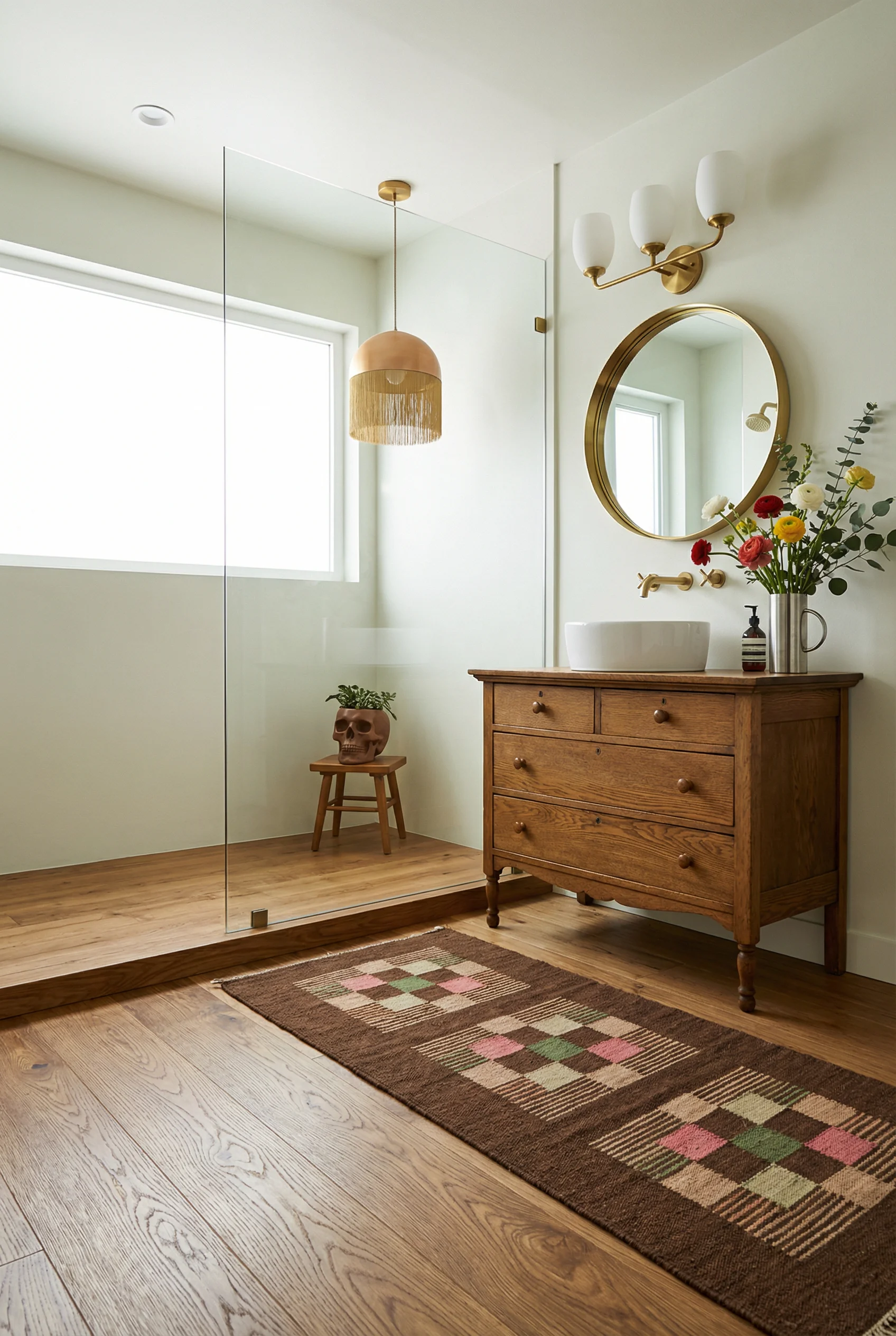
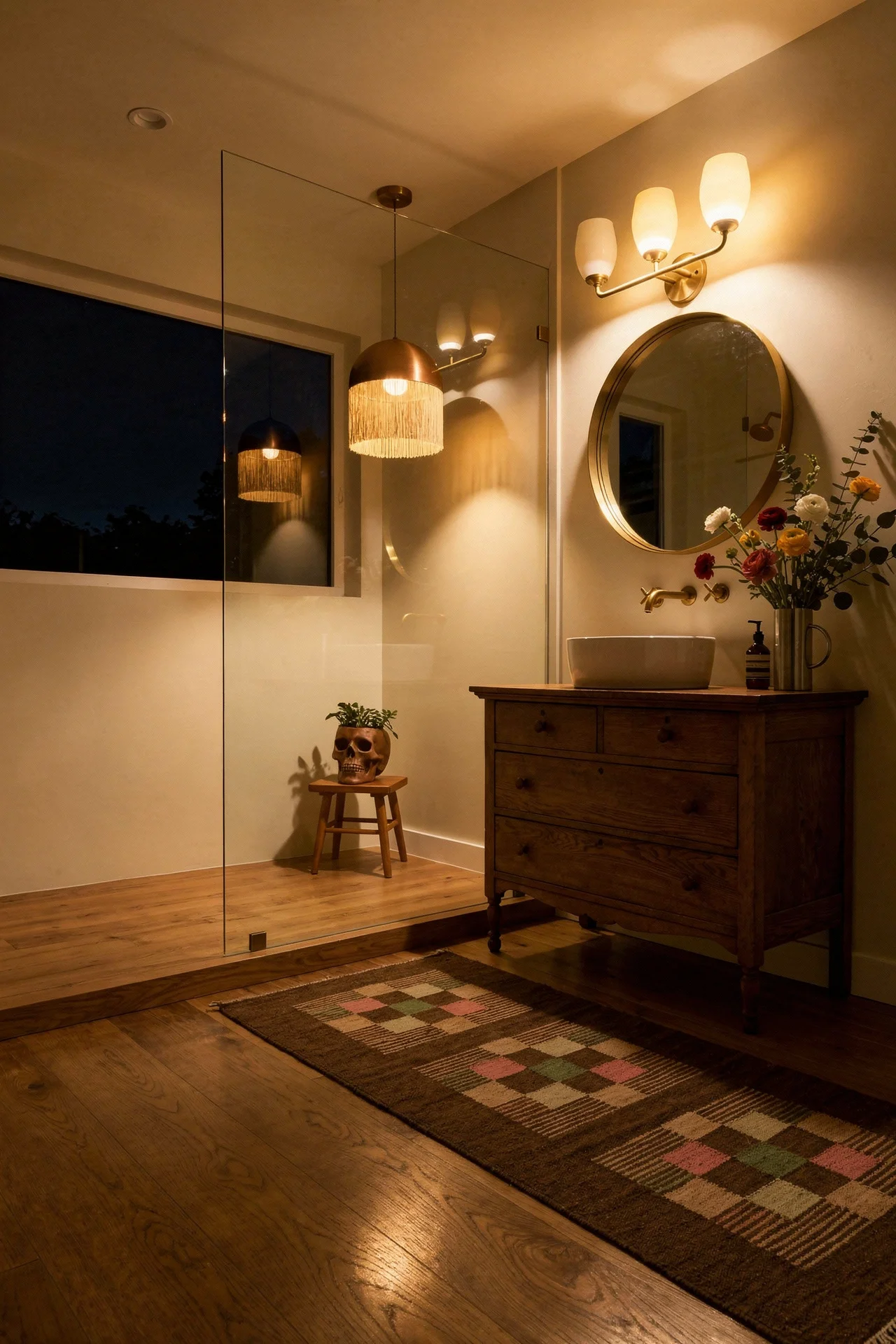
The best mid century modern bathrooms are not museum recreations. They borrow from other eras. An art deco mirror here. A contemporary matte black showerhead there. An Arts and Crafts tile pattern on the floor. The key is knowing which elements play well together and which break the MCM thread entirely.
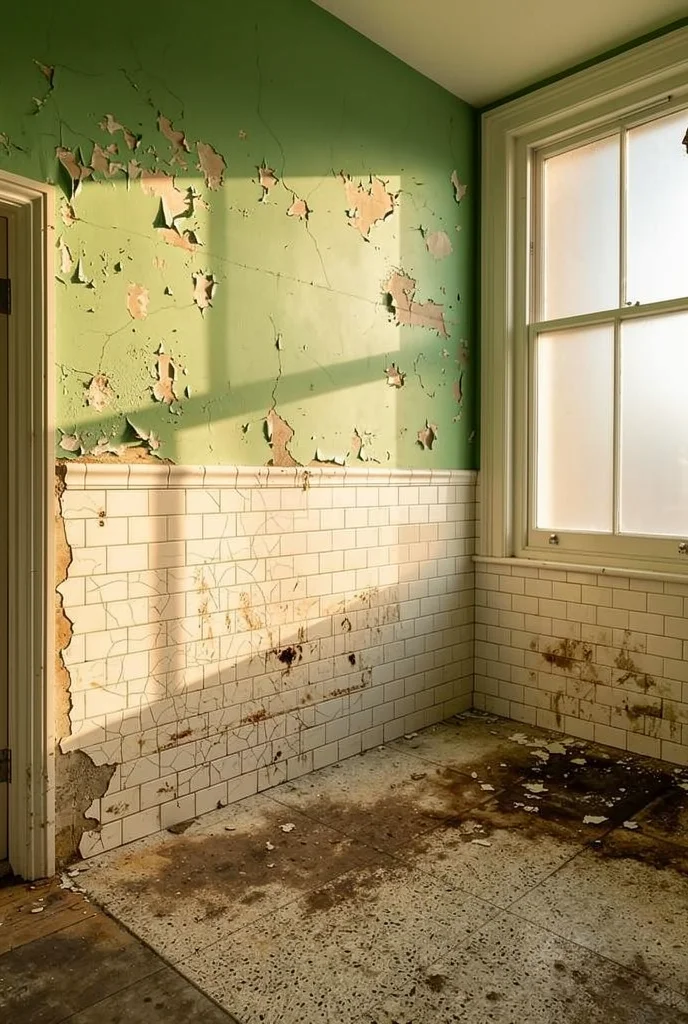
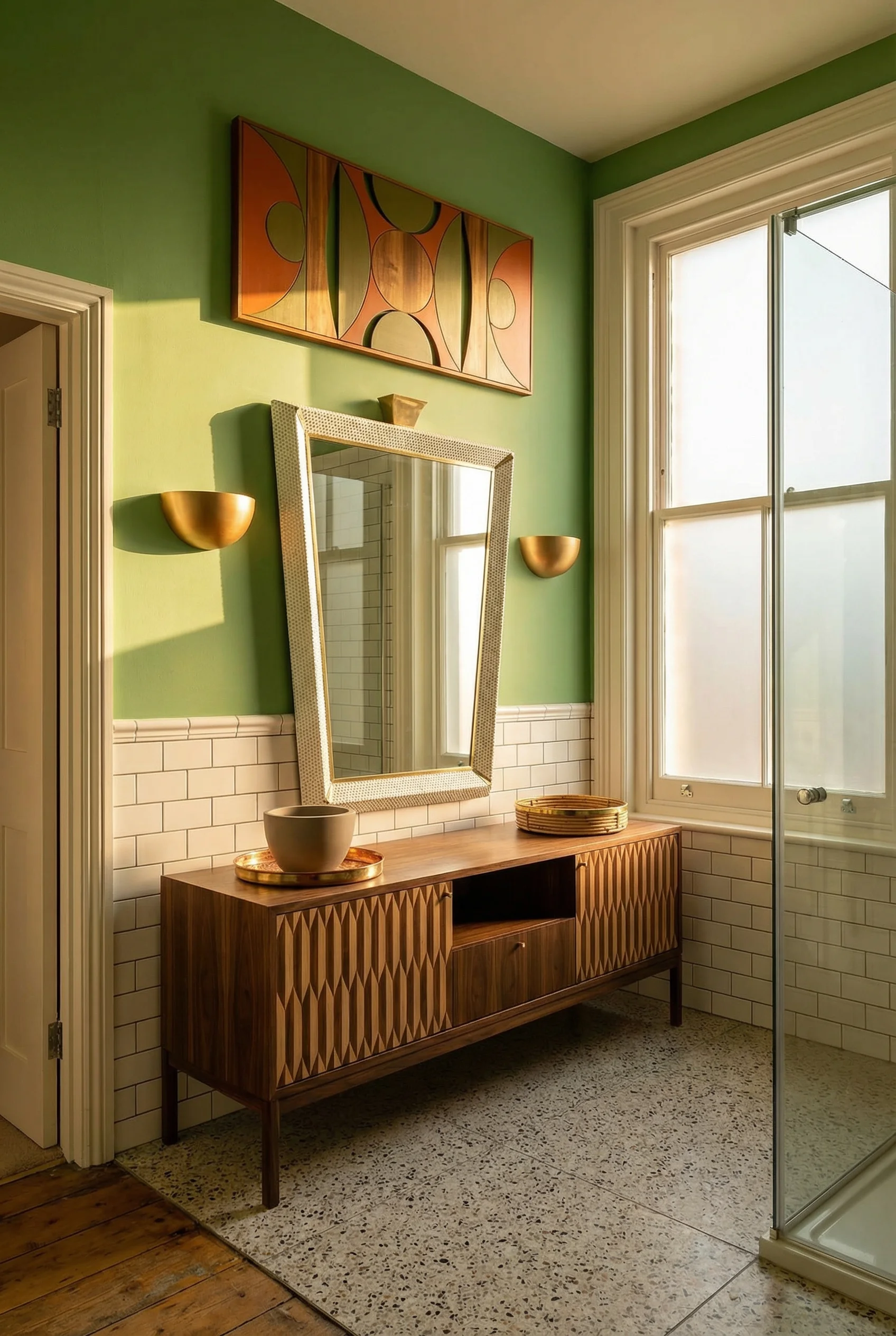
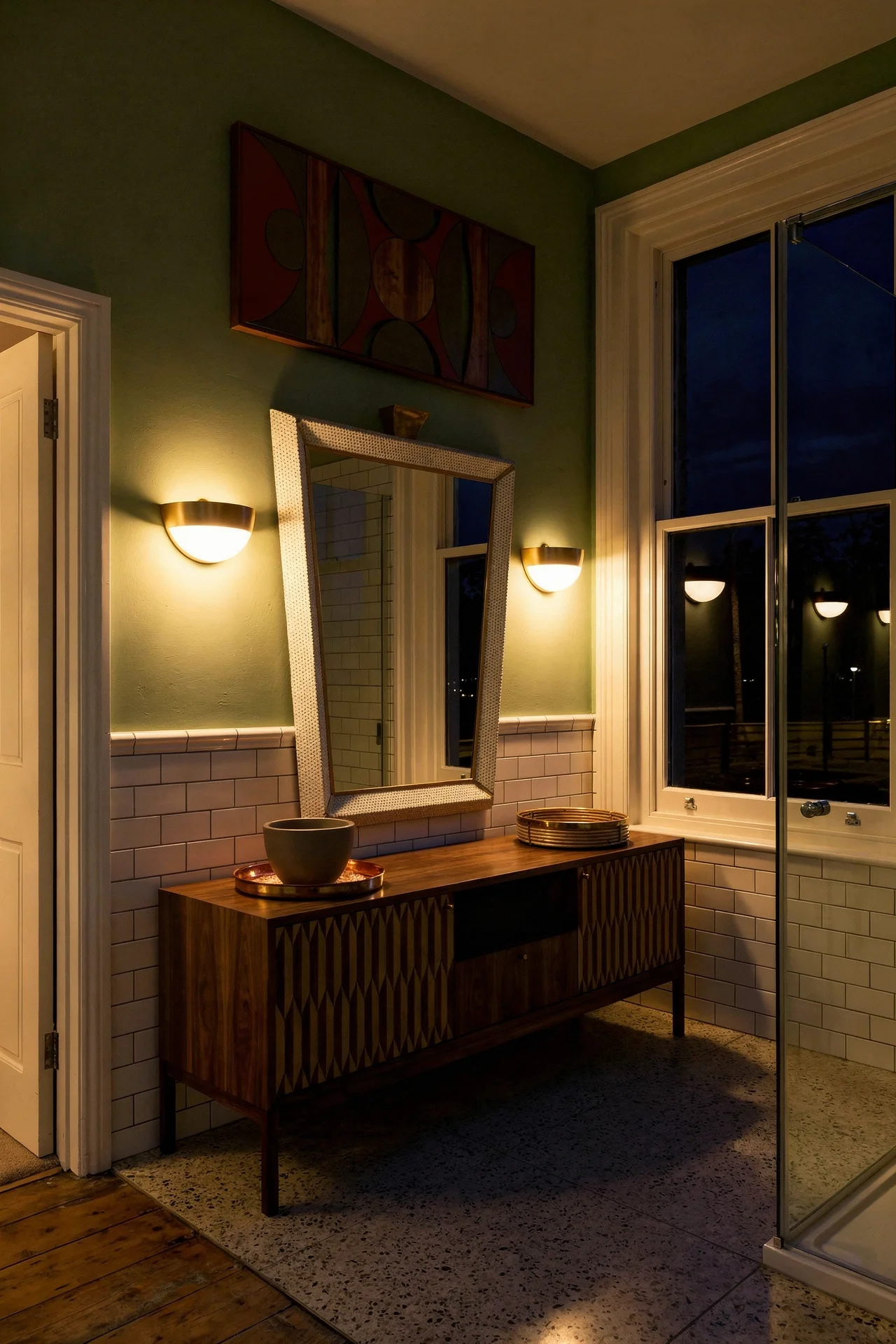
The rule I follow is the 70/20/10 split. 70% of the room reads clearly mid century modern. The vanity, the lighting, the colour palette. 20% comes from one complementary era. Art deco geometry, Scandinavian minimalism, or Japanese simplicity all share enough DNA with MCM to coexist. The remaining 10% is wildcard. A vintage flea market find. A contemporary art print. Something that is purely personal and has nothing to do with any style label.
This eclectic approach actually makes your bathroom look more authentic. Real homes that were built in the mid century and have been lived in for 60 years have layers of different decades. A bathroom that is rigidly, perfectly MCM looks like a showroom, not a home.
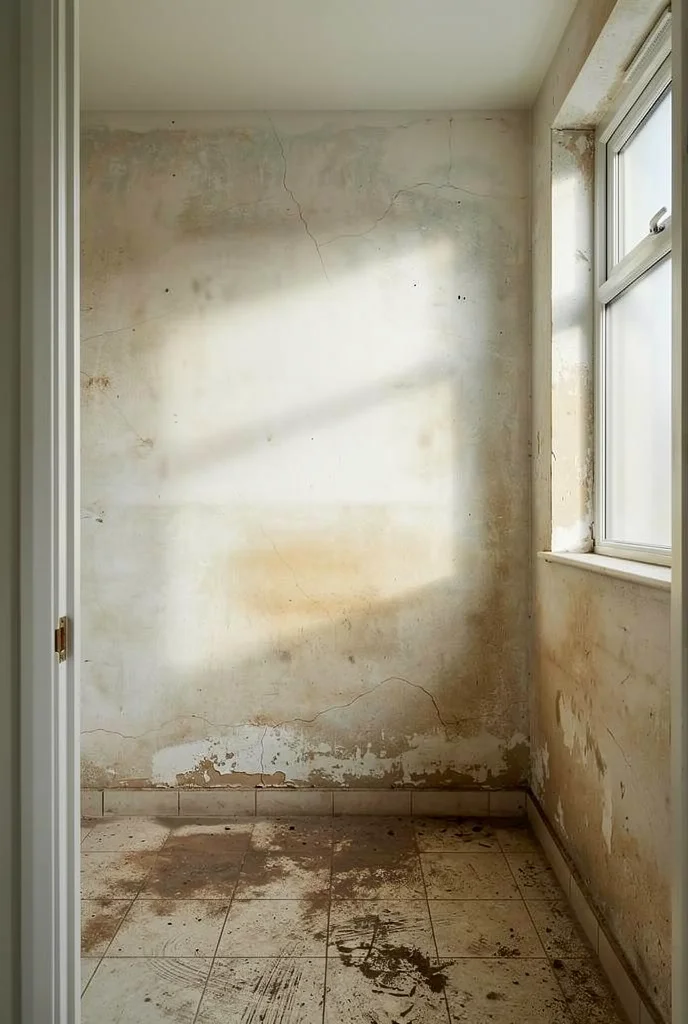
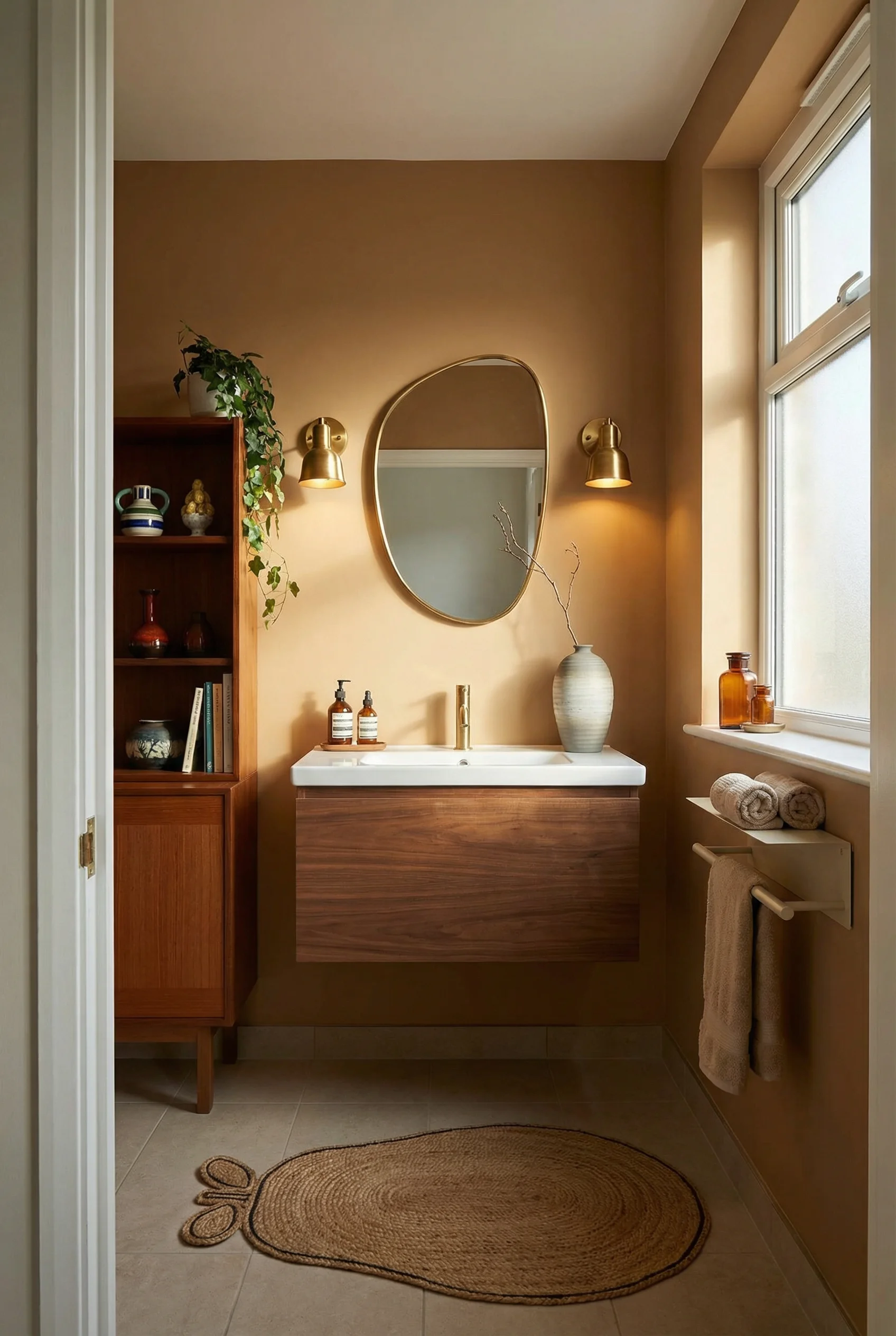
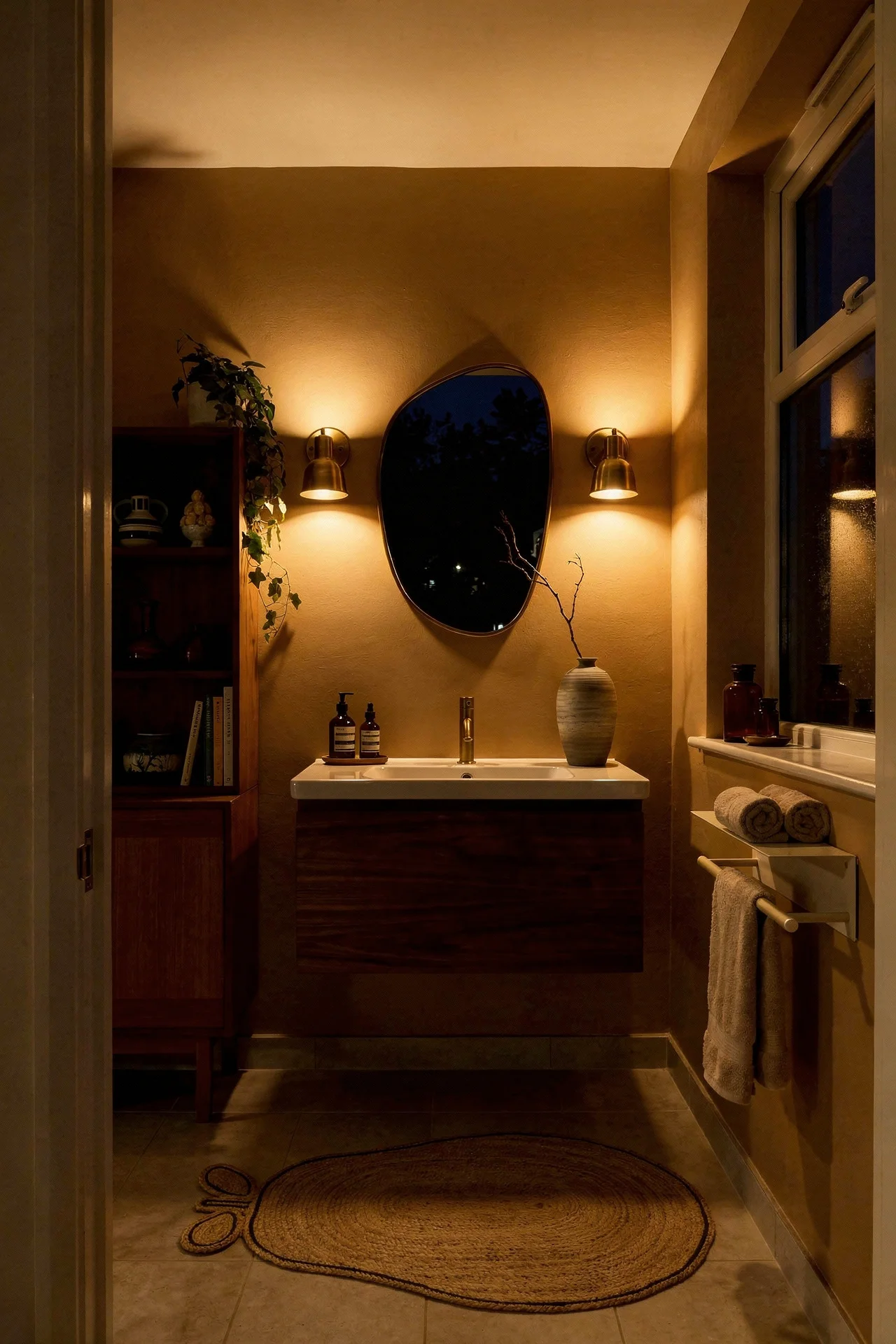
The eras that clash most with mid century modern in a bathroom are farmhouse (the ornate hardware and shiplap fight the clean MCM lines) and coastal (the whitewashed driftwood look reads too casual for MCM’s more refined silhouettes). Everything else, from industrial brass to bohemian textiles to Japanese wabi sabi ceramics, tends to blend in naturally.
Emtek’s mid century modern hardware collection is worth knowing about here. Their knobs and pulls in solid brass and zinc alloy come in Flat Black, Satin Brass, and Polished Nickel. Swapping out builder grade drawer pulls for one of these makes a $200 vanity look like a $2,000 vanity. Hardware is the lowest cost, highest impact finish detail in any bathroom.

You’ve probably noticed that mid century modern is not a neutral style. The palette has real personality. Here are the five colours that anchor an MCM bathroom and make everything else fall into place.
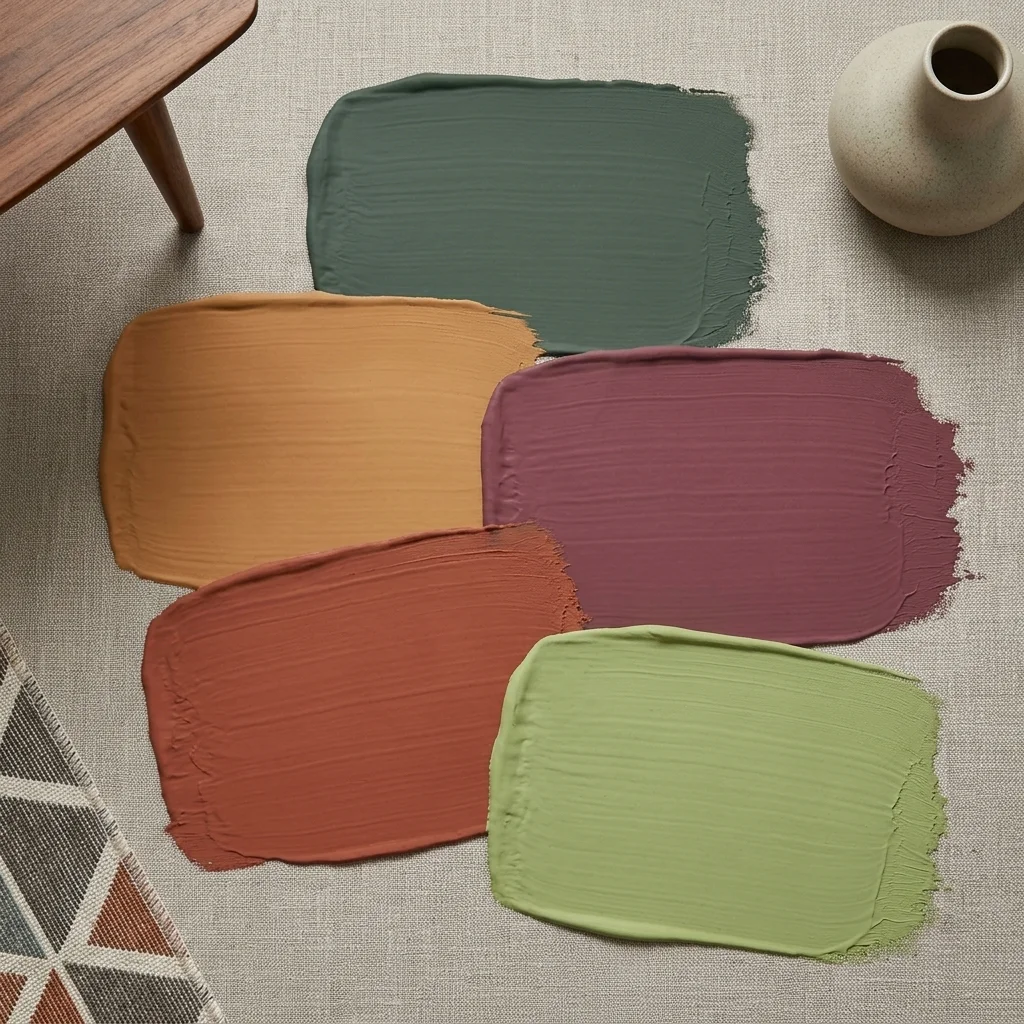
Warm Walnut – The backbone of any MCM bathroom. This rich, reddish brown shows up in your vanity, your mirror frame, and your accessories. It grounds the room and gives everything else something warm to lean against.
Paint Pick: F&B London Clay No. 244
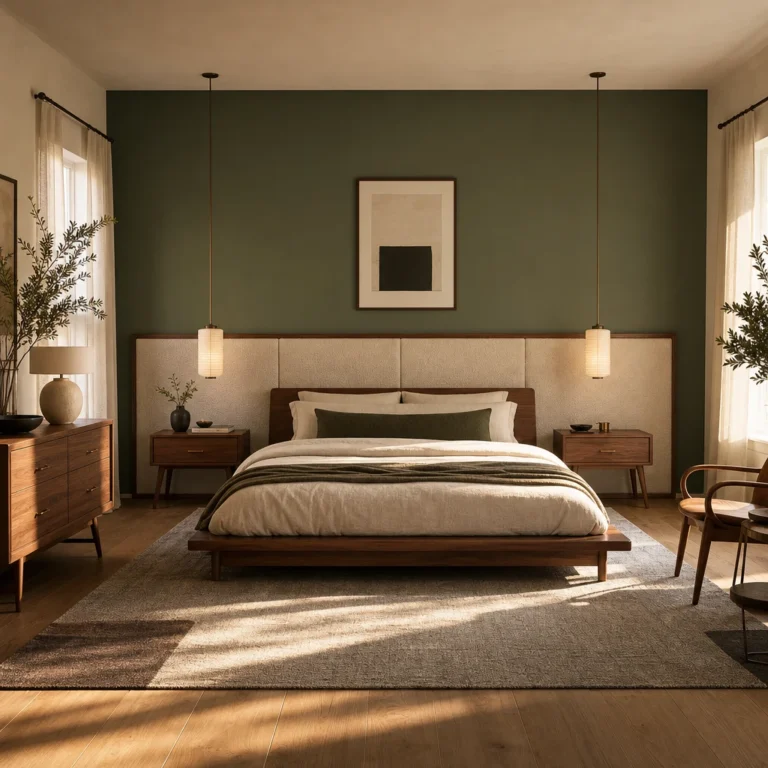
Olive Green – MCM loved green before green was trendy. Olive specifically, not sage, not mint. It sits between warm and cool and works on walls, in tile, and in textiles. Pair it with brass and walnut for the full effect.
Paint Pick: F&B Sutcliffe Green No. 78
Mustard Gold – The accent colour that separates MCM from every other warm style. A mustard towel set, a gold framed mirror, a single accent tile. A little goes a long way.
Paint Pick: F&B Fox Red No. 48
Cream – Not white. Cream. The difference is an undertone of yellow that keeps everything feeling warm. Cool white walls next to a walnut vanity create a jarring temperature clash. Cream prevents that entirely.
Paint Pick: F&B Sand No. 45
Teal – The statement colour. Used sparingly, teal adds the retro punch that reads unmistakably mid century. A teal accent wall behind the vanity, or teal penny round tiles in a shower niche, is usually enough.
Paint Pick: F&B Pea Green No. 33
If your bathroom budget is tight and your square footage is limited, start with the floating vanity. It solves the biggest spatial problem and sets the mid century tone for everything that follows. Add globe sconces when you can. Swap the hardware next. Layer in warm brown and wood tones over time. The best MCM bathrooms I’ve seen were not done in a weekend. They were built one considered swap at a time.
This post contains affiliate links, which means we may earn a small commission if you make a purchase through our links, at no extra cost to you.