Newsletter Subscribe
Enter your email address below and subscribe to our newsletter

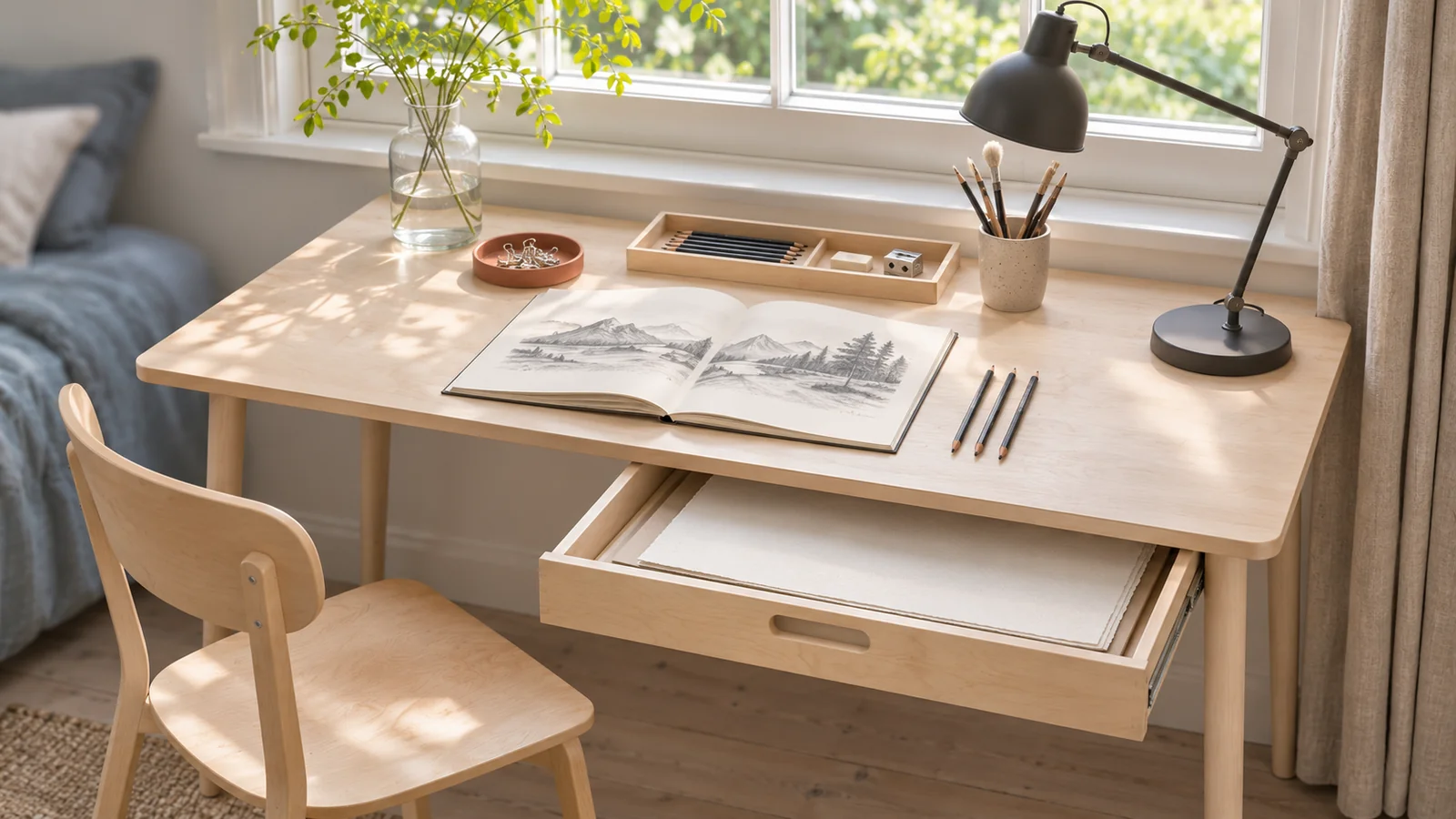
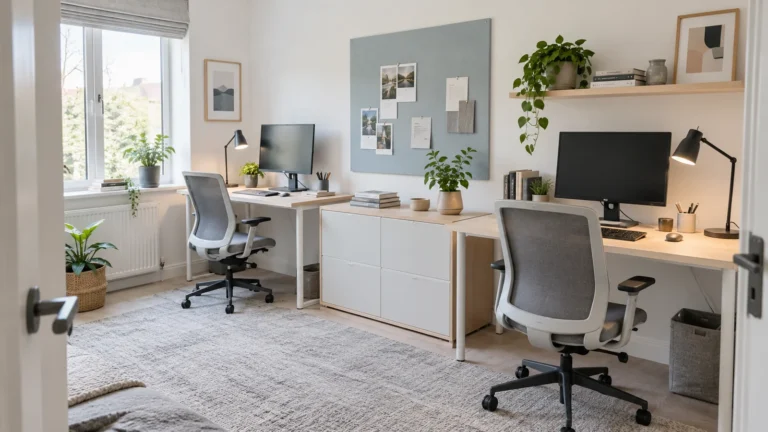
An unfinished drawing needs somewhere to lie flat when the desk has to clear. I would choose art supply storage by putting the largest sheet, the everyday tools and the lamp on the bedroom desk together. Then I’d measure the paper and the place it can go. A shallow tray, flat file and slim trolley each solve a different part of that problem.
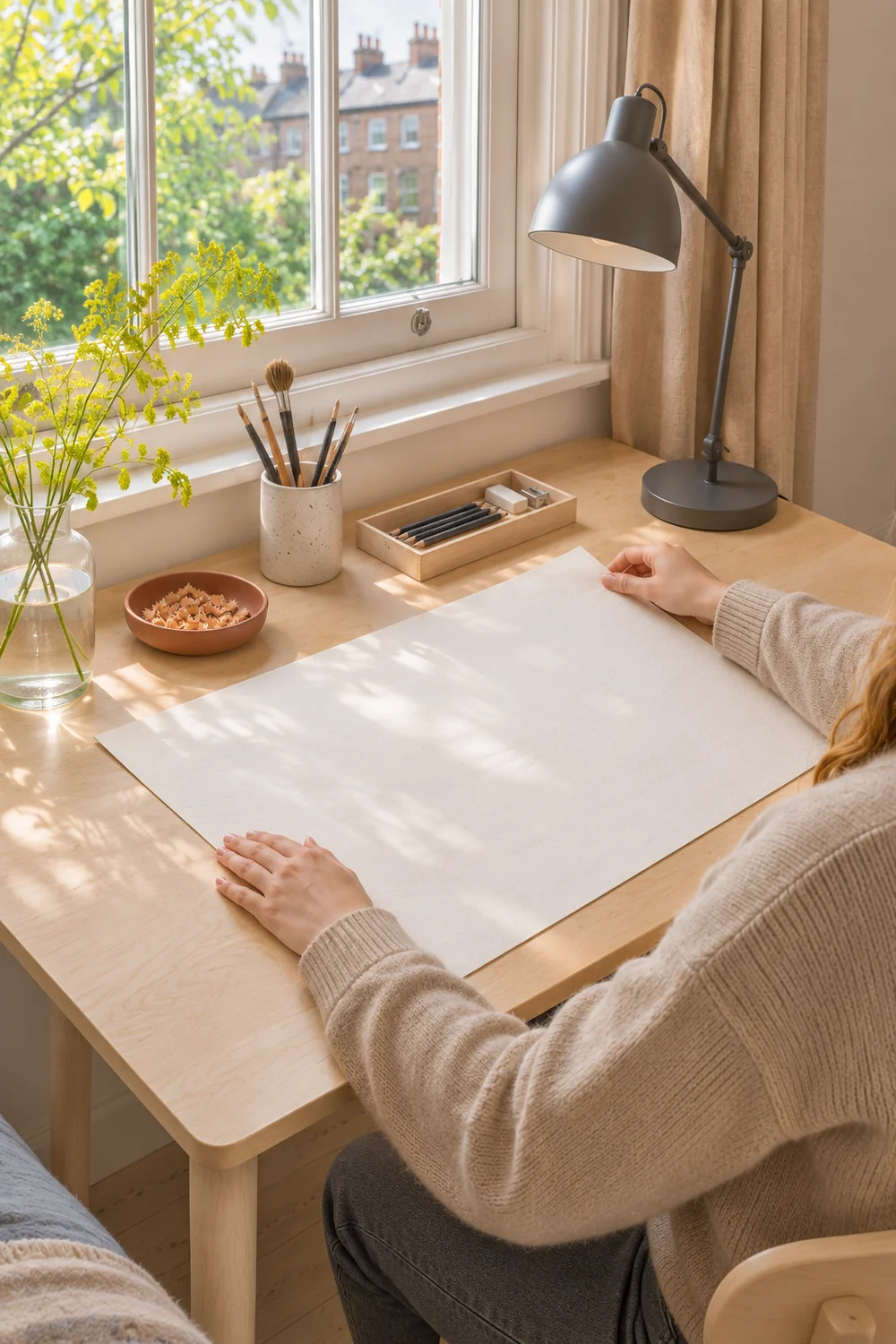
Start with one drawing session. Ask the teen to put out the sketchbook or loose sheet they’ll use, along with the tools they reach for during the first ten minutes. Add the lamp and any reference they keep open. Look at what needs to stay within easy reach while they’re seated, what can stay closed and what needs to move when they’re finished. I would do this with an ordinary drawing rather than taking an inventory of every pencil in the room.
Give the things on the desk three separate jobs. The everyday tools need a place within reach. The drawing that’s still in progress needs a clear, flat place where it can wait. Finished work and spare supplies can live farther away. Put a scrap of paper under each group to mark its place. This makes it easier for the teen to spot when they’re building a large store for the one ruler and handful of pencils they use every day.
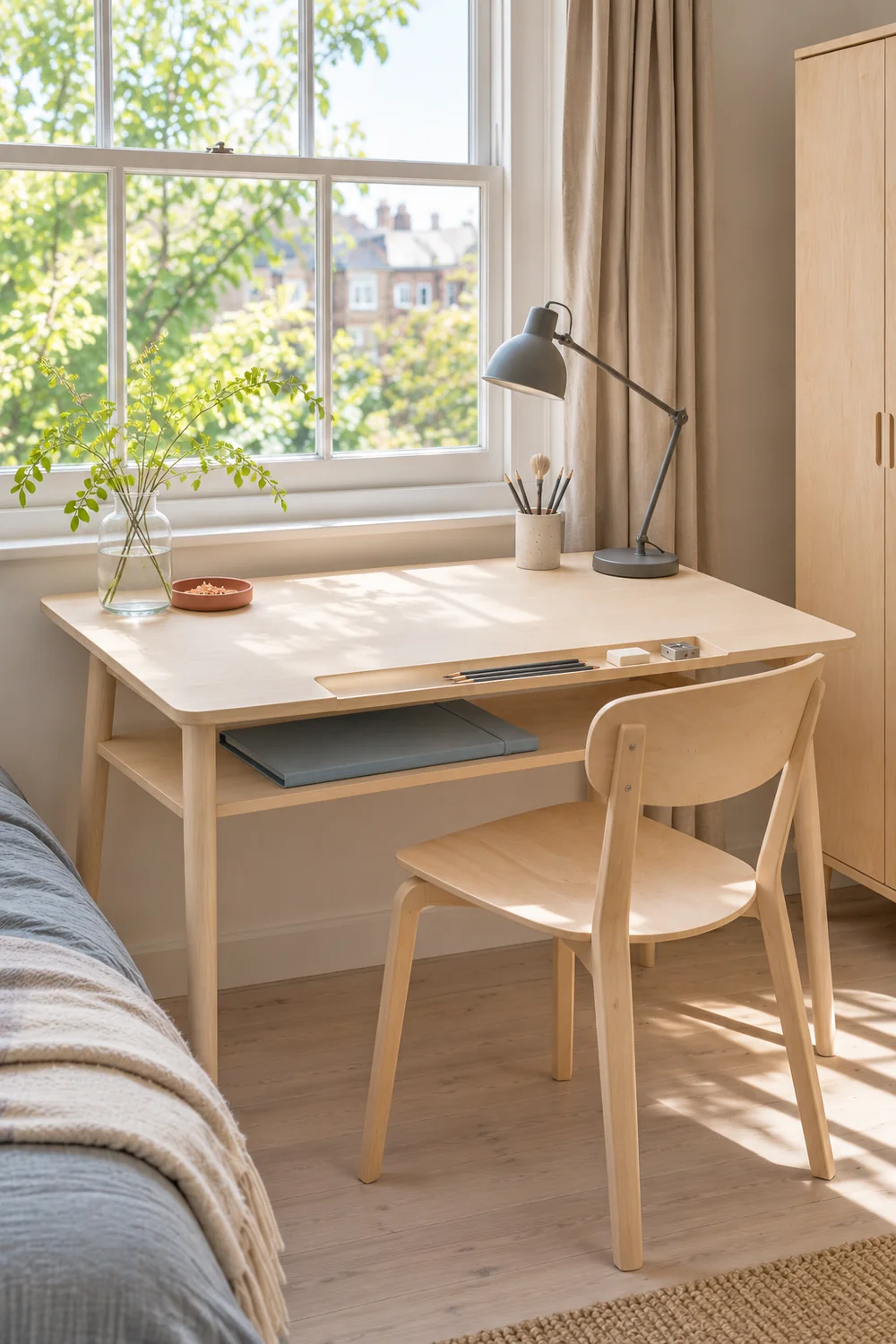
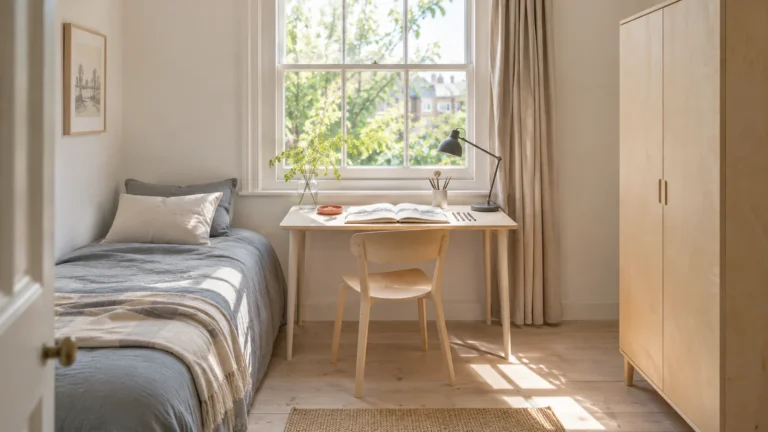
In the worked bedroom, the birch desk is 105 centimetres wide and 55 deep. The largest loose sheet is 42 by 30 centimetres. I would measure the sheet, the stiff folder that will protect it and anything attached to the drawing board before deciding what can hold it. Say the folder measures 44 by 32 centimetres. That’s now the useful measurement. The place that holds it also needs room for fingers to get underneath, especially if the folder will lie on a low shelf.
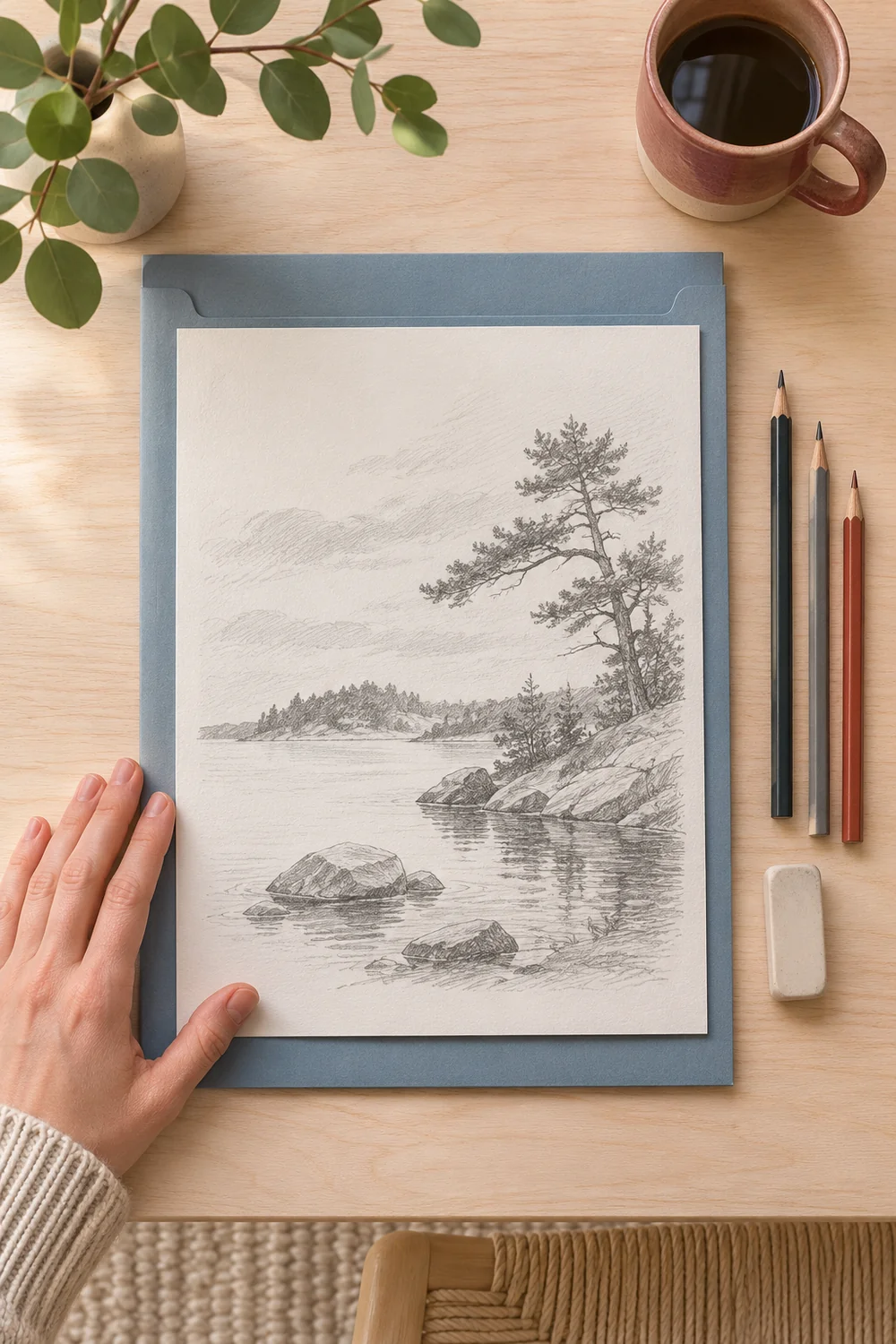
Measure closed and open sketchbooks separately. A closed book can sit upright on a shelf if it has support. A book that needs to stay open for a drawing to resume can take more space than the loose work. If the book can close, leave a note of where you stopped. If the drawing surface needs protection or the page has loose pieces, keep it supported in its own place. Ask the teenager which of these situations actually happens, then choose enough room for it.
Decide which school supplies also need the desk. A ruler or pencil case that serves both uses may earn a spot in the everyday tray. If schoolwork already happens in another room, keep a separate kit there. My homework station storage guide shows how I’d make that kit portable when it lives near a shared table. In the bedroom, I’d leave a page sized space available for the thing the teen came to draw.
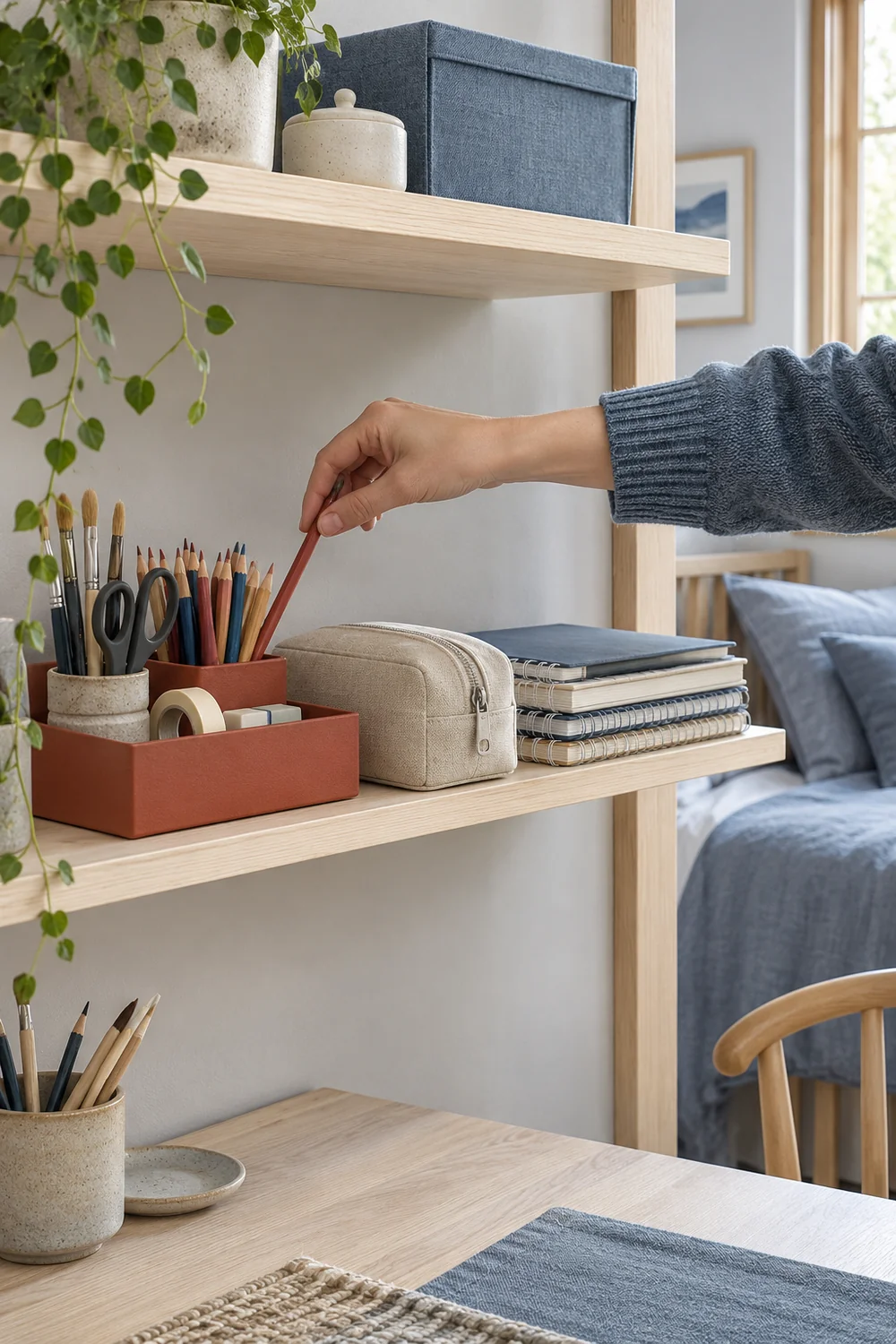
Choose a low tray if there are only a few tools to move at the end of a session. Gather what the teen uses most often and check that the longest pencil, ruler or brush fits with enough room to pick it up. A small inner dish can hold an eraser or sharpener so it’s easy to find the two things that tend to disappear. Put it wherever the tray can be lifted with one hand without grazing the open book. Try a box lid or kitchen tray for several evenings before choosing something to buy.
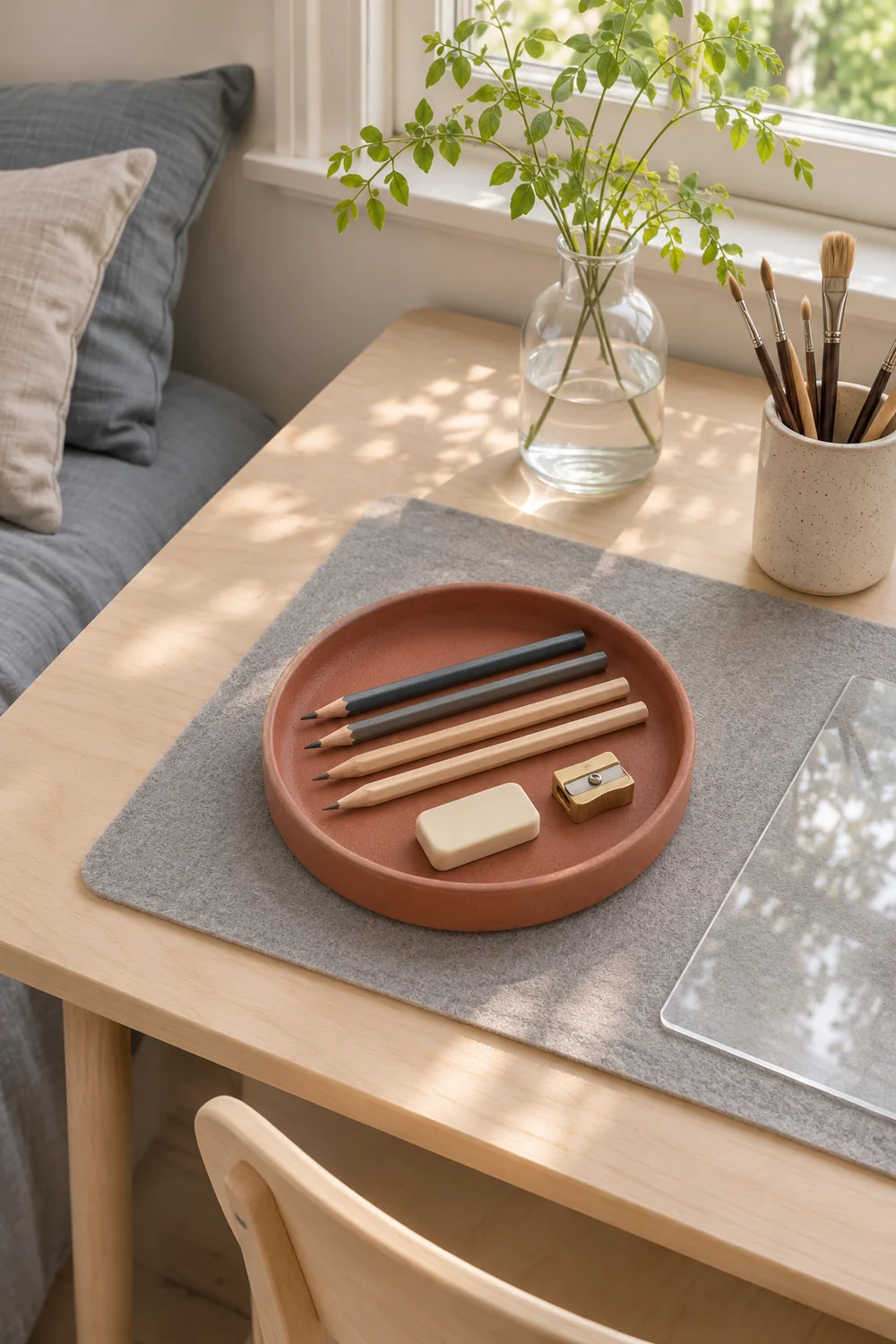
I’d choose a shallow drawer or flat file if unfinished loose sheets accumulate. Measure the inside width, depth and height, then the opening while the drawer is out. A folder may fit inside a drawer when placed at an angle but scrape the frame every time it’s withdrawn. Compare those measurements with the widest part of the folder, including tabs or a handle. Try the motion with blank paper first so you can see whether the teenager could slide the work in and out while seated or standing.
In the example, a 44 by 32 centimetre folder fits inside a flat drawer with 47 by 35 centimetres of clear space. I’d still test the front opening and check that the teen can lift it out without bending a corner. A tray advertised as 45 by 33 centimetres might be measuring the outside rim. If the flat base inside measures 42 by 30 centimetres, it can hold the bare example sheet edge to edge but leaves no space for the folder. Look for the usable dimension where the work actually rests.
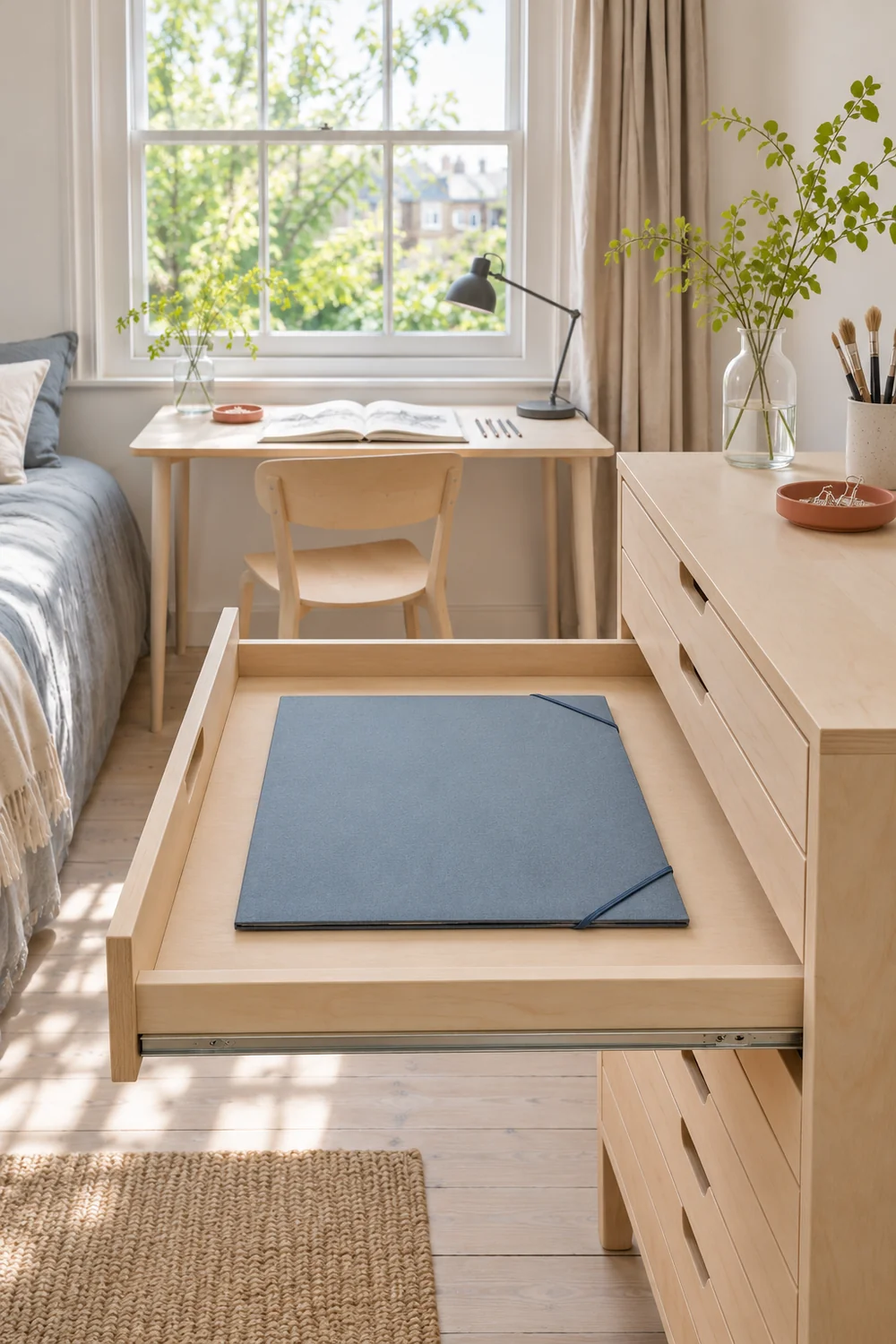
Choose a slim trolley if the teen uses several sets of tools and can roll them to the desk when needed. Measure the whole trolley at the wheels and handle, then measure inside each basket. Imagine one with a 31 by 42 centimetre footprint but baskets that are only 28 by 36 inside. It could carry pencils and spare pads that fit. The example drawing still needs a separate flat place. Mark where the trolley will park. With it there, check that the chair can pull back and the wardrobe can open fully.
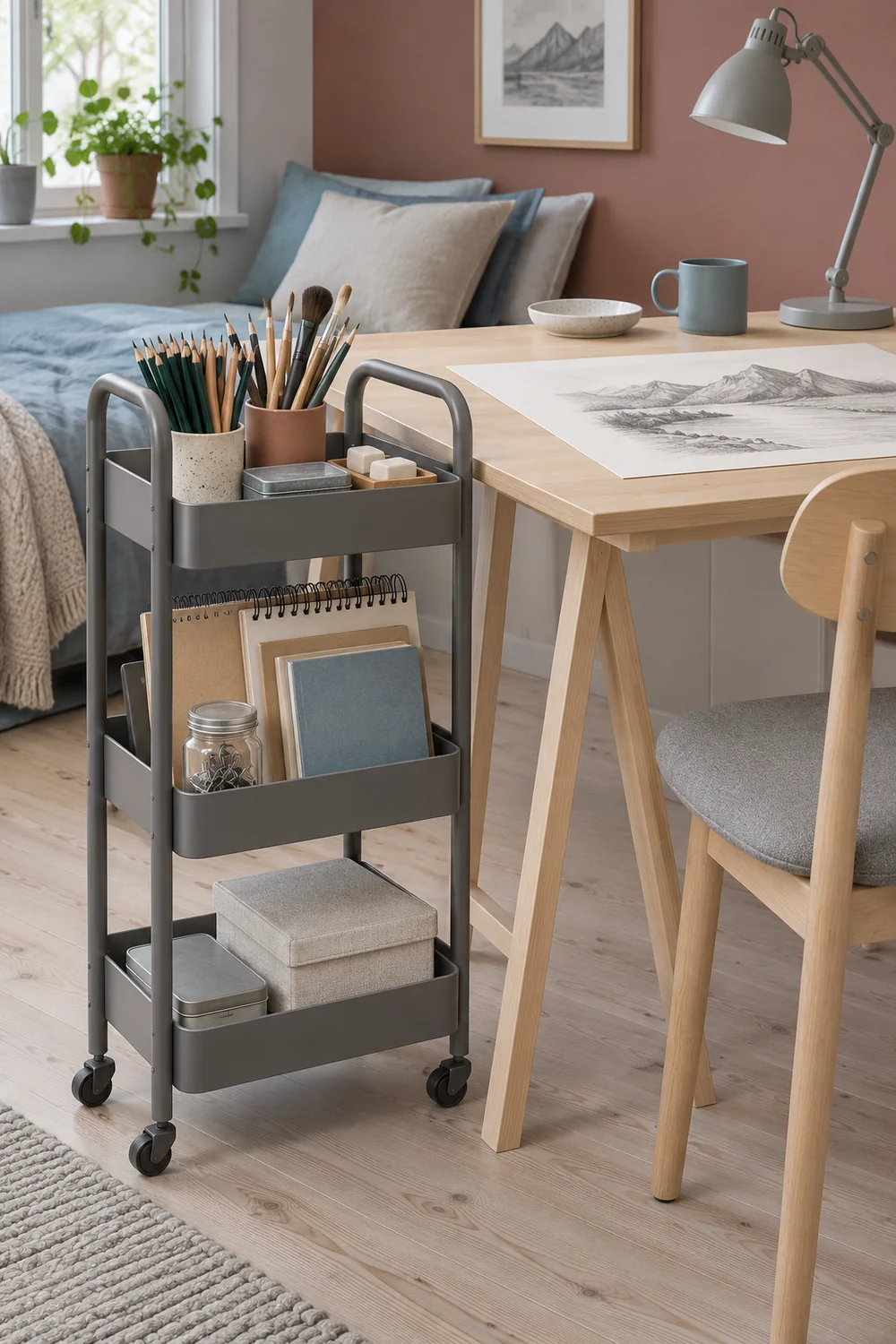
I’d start with a small tray and an existing shelf if the room can do those two jobs already. The Scandinavian bedroom storage ideas use simple furniture with concealed storage to keep surfaces open. In this room, a clear shelf inside a wardrobe may hold the drawings, provided folders can be lifted out without taking clothes off the shelf first. A trolley makes sense when being able to bring tools over and take them away solves a problem the shelf cannot.
Set the open drawing or sketchbook down first. Leave enough space at the near edge for the teen to rest a hand or forearm while drawing. Ask them to turn the sheet the way they usually would to make a long stroke. Notice where its corners travel before you put a tray or a lamp there. I would give the paper priority in that arc, then choose a spot at the other side for the tools you need every few minutes.
Try the lamp on the side opposite the drawing hand. Turn it until the pencil tip and the far edge of the page are easy to see. A lamp that looks small from across the room may have a base that uses much of the depth behind the paper. In the worked room, 8 centimetres for the wrist, 30 for the page and 16 for the lamp base take up 54 of the desk’s 55 centimetres. That leaves a centimetre when everything sits square. If a turn of the page uses up that space, try the lamp alongside the paper or on a stable adjacent surface.
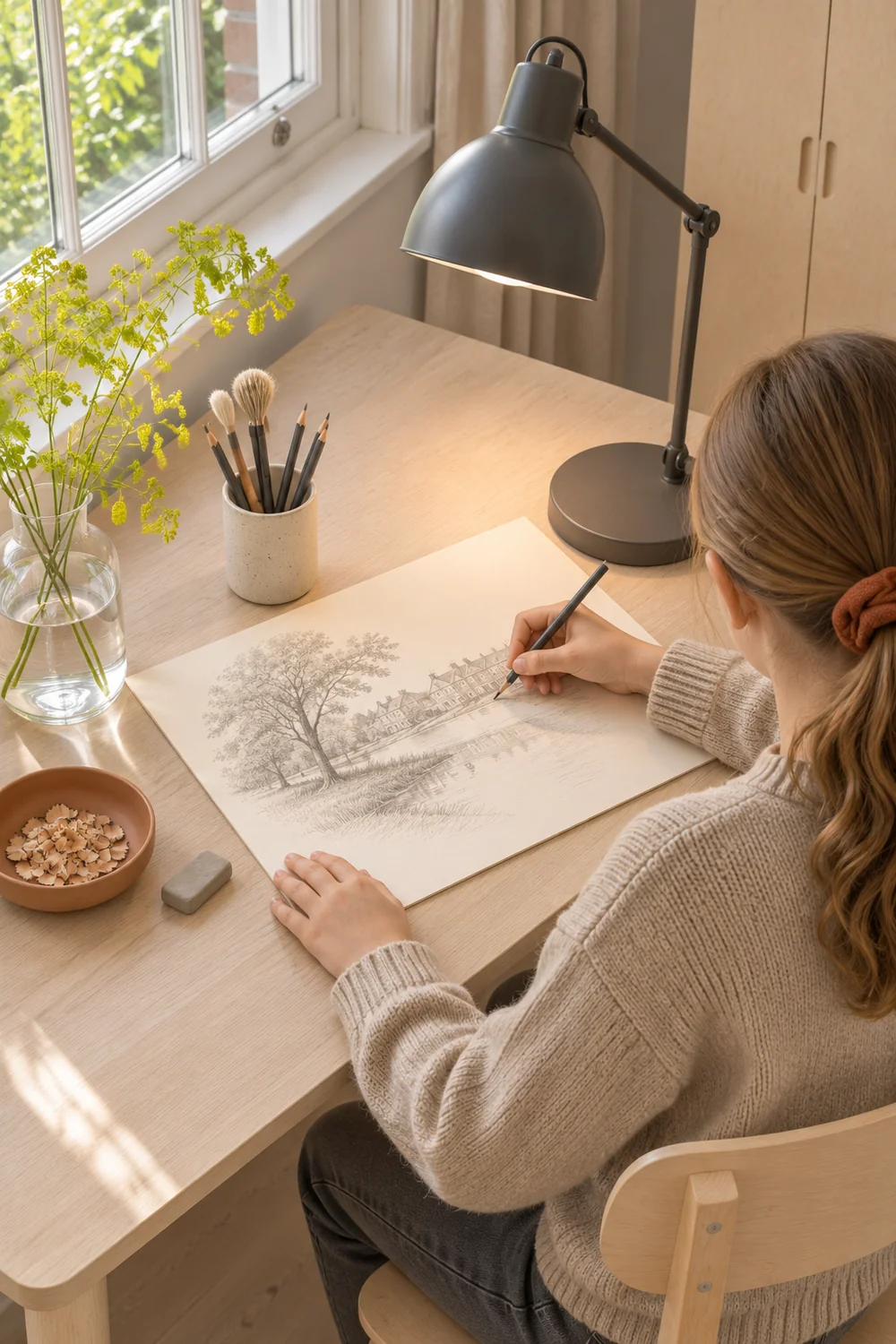
Keep cords out of the drawer motion and the route by the bed. Check that the teen can move the lamp without pulling a lead into the chair space. I like to give the two ends of the room their own light. The Scandinavian home lighting guide shows the wider arrangement. At the desk I’d aim the light at the page. At the bed I’d keep a separate switch and a light that serves that spot when the drawing session is over.
Before choosing an organiser to stay on the desk, test the setup with the teen seated. Have them reach for a pencil without lifting the page, swap their reference and stand up with the drawing still on the desk. If they need to remove the tool tray to turn the paper, try putting it in a shallow drawer or just off the desk at chair height. If they reach across the drawing every time they need the eraser, move the everyday kit to the other edge. The best spot usually becomes obvious after the same motion twice.
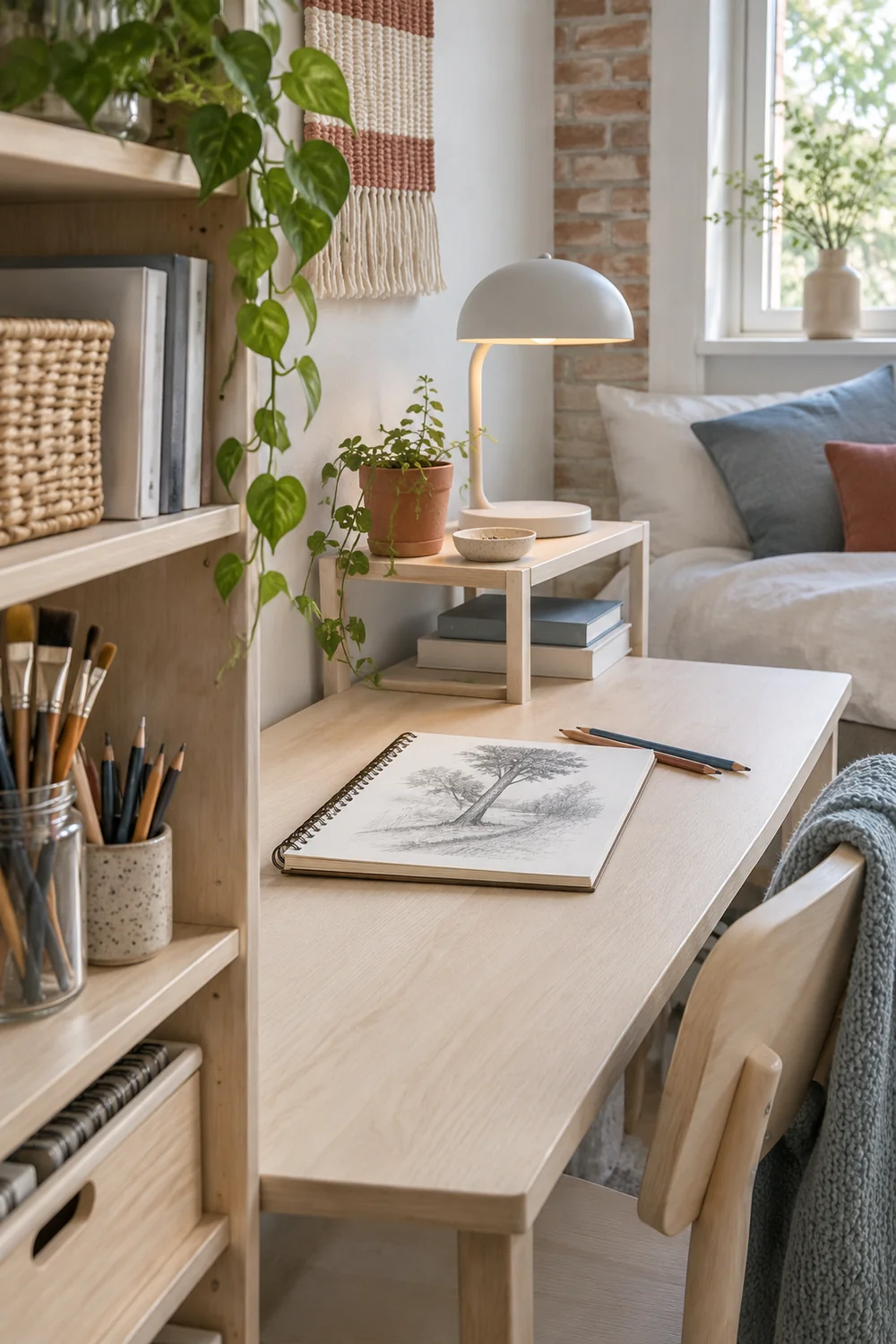
Choose one place for the drawing that’s currently underway, close enough that putting it away takes one easy movement. Put a stiff folder in a shallow drawer or on a clear shelf and try sliding a blank sheet inside with both hands. If you can get the paper out only by pulling a corner, give it a little more room or put the folder where it can lift out first. Keep heavier sketchbooks and little containers on a different shelf so the folder can come straight back out next time.
If the folder has to come off the shelf to open, give it a landing spot the size of the whole folder. In the example, clearing 44 by 32 centimetres on the desk makes it easier to open the cover and support the drawing with both hands. Try the complete move with the lamp and tray in place. If the only clear landing spot is the bed, see whether a drawer that opens farther would make the transfer easier.
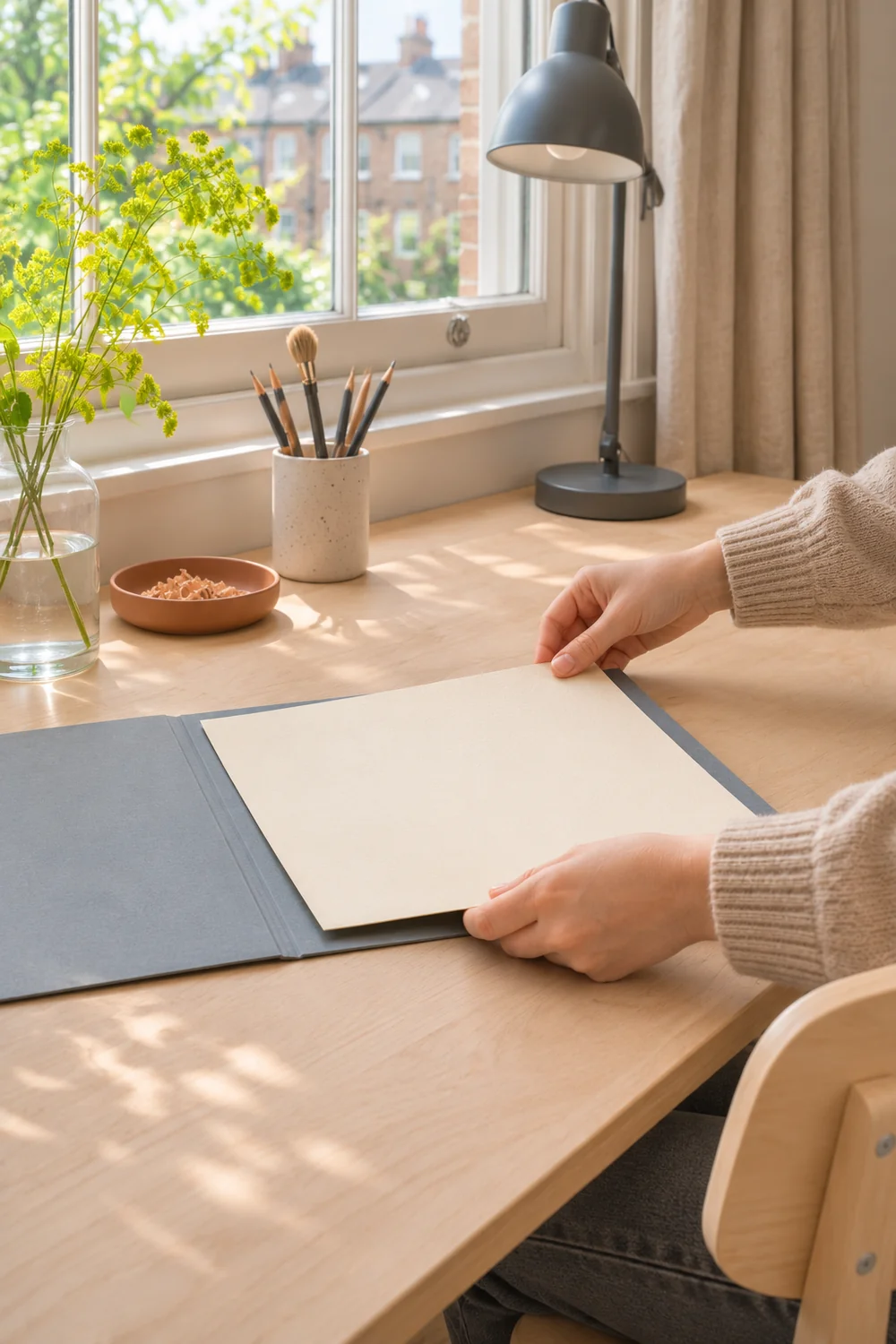
I’d put completed drawings in a second folder or a shallow box with a lid. For pieces you want to keep, use a folder or box made for storing artwork on paper and let the work lie flat. Try to pick up loose sheets by supporting them from beneath. Give anything with a powdery surface, such as charcoal or soft pastel, its own protection so a stack of other drawings cannot rub against it. Open the active folder for the next session and the finished folder when you want to look back at a drawing.
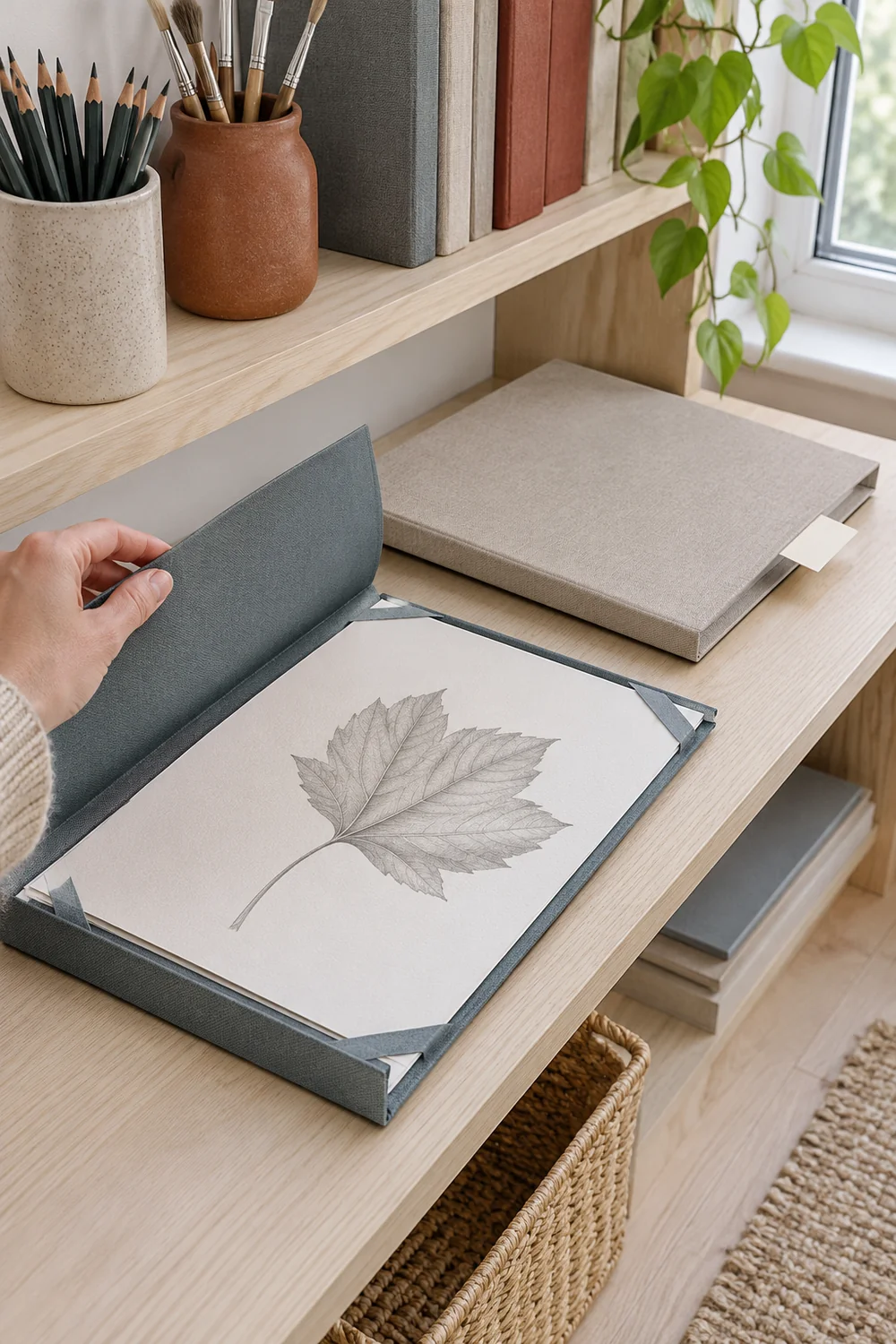
Let the teen choose what stays visible. A small display beside the desk can hold one or two pieces they’re happy to see for a while. Keep the remainder in the finished folder. The changeable display in my purple teen bedrooms example shows how to leave room for their taste to shift.
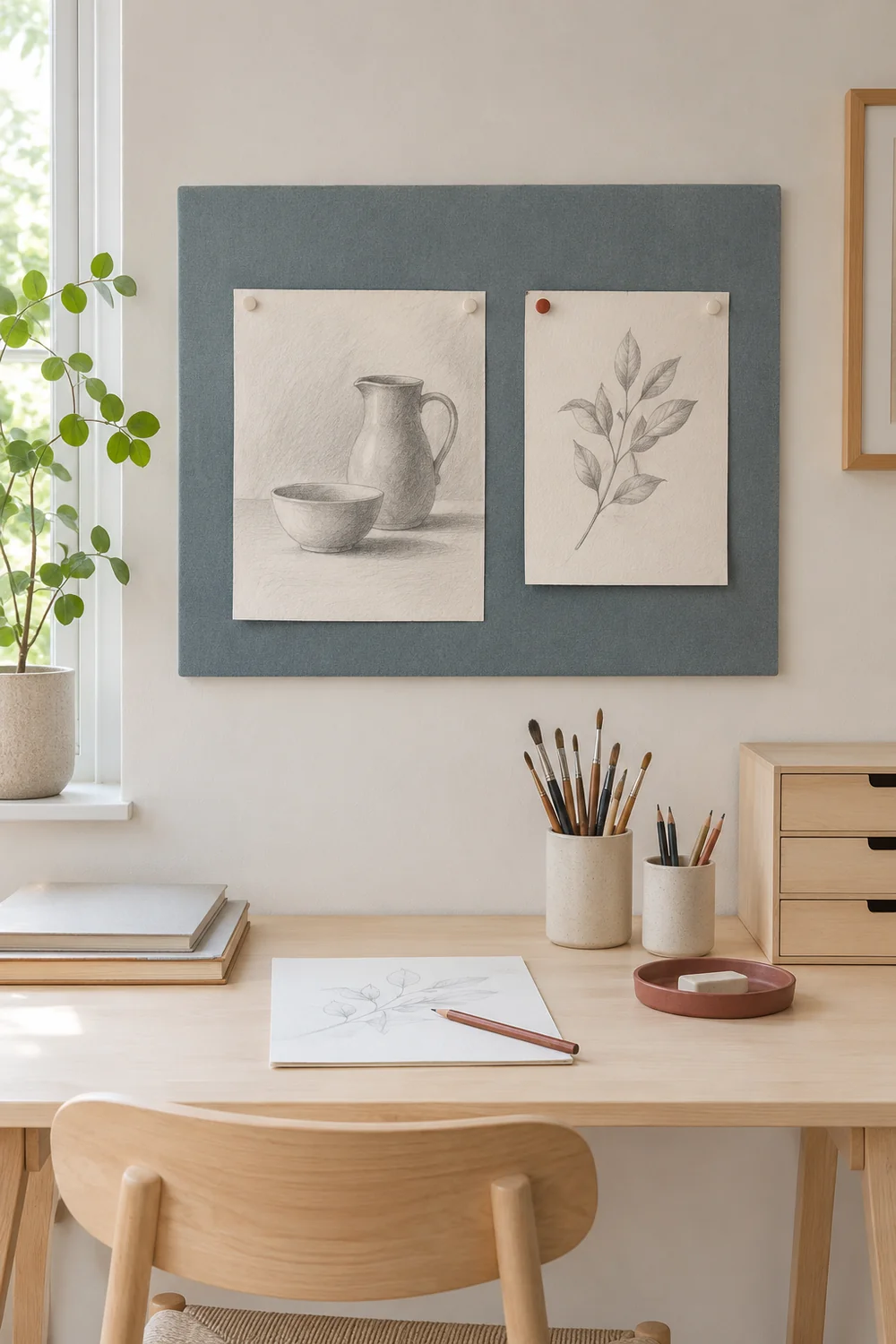
In this room I’d try a muted blue backing and a brick red detail, then let the drawings supply the rest. For a favourite original that the teen wants to keep, display a copy in a bright spot and leave the original filed away.
At the end of one ordinary evening, try the reset in the order that feels natural. Put the working drawing into its flat spot with any reference it needs. Put the used tools in the everyday tray, return extras to the shelf and clear the centre of the desk. If the teen usually wants to draw again the next day, make the active work the easiest thing to reach. Returning should be as simple as taking out that folder and switching on the lamp.
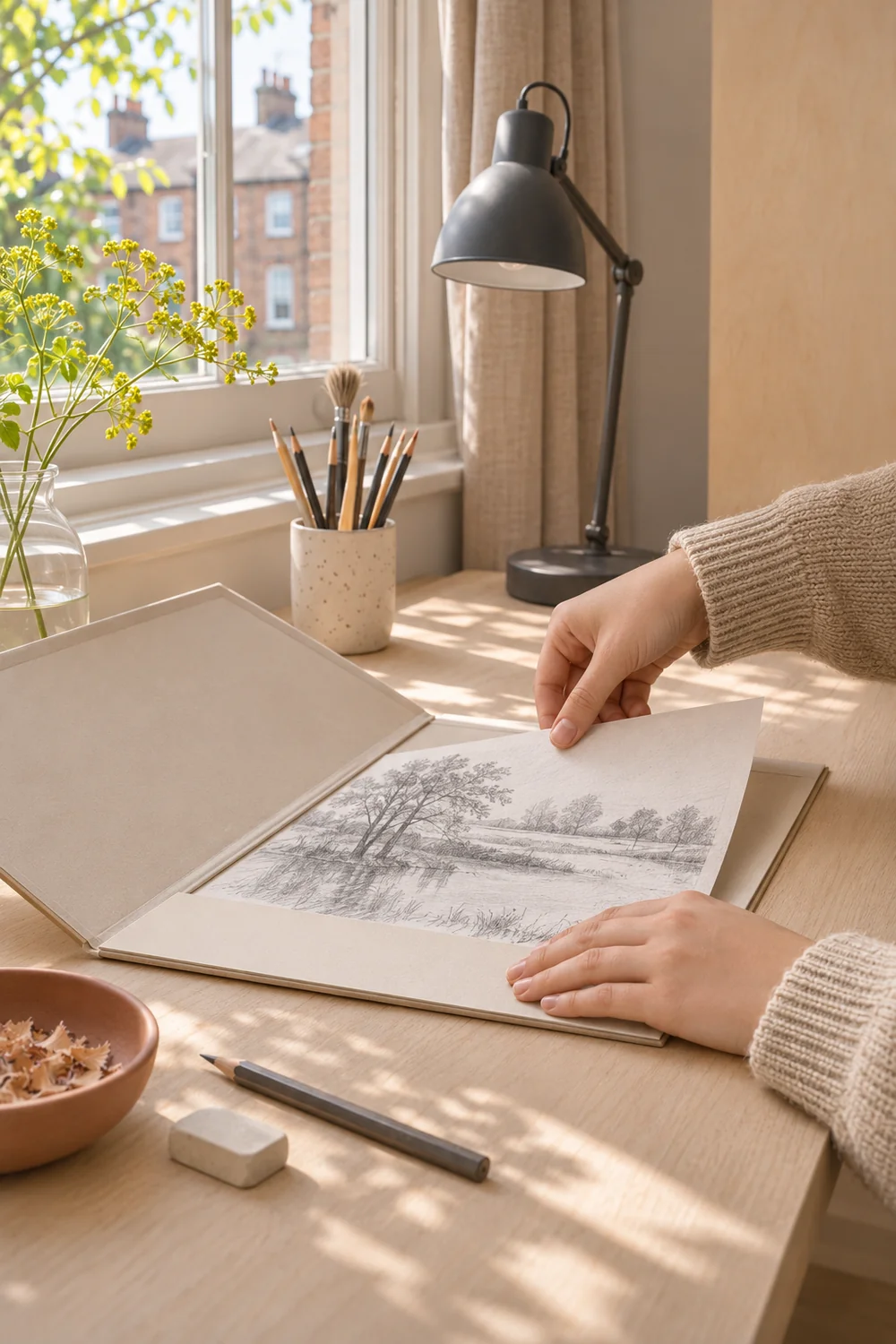
I would wait a week before buying extra storage. On the last day, see where unfinished work actually ended up. If it keeps landing on the bed, try moving the folder nearer or making the opening easier to use. If extra pencils scatter across the page, keep the daily selection together and store duplicates farther away. If the lamp keeps migrating to the bed or the chair needs to be moved to open the drawer, go back to the bedroom desk layout and try the occupied clearance and light checks again. Those problems come from where the desk sits or how it works in the room.
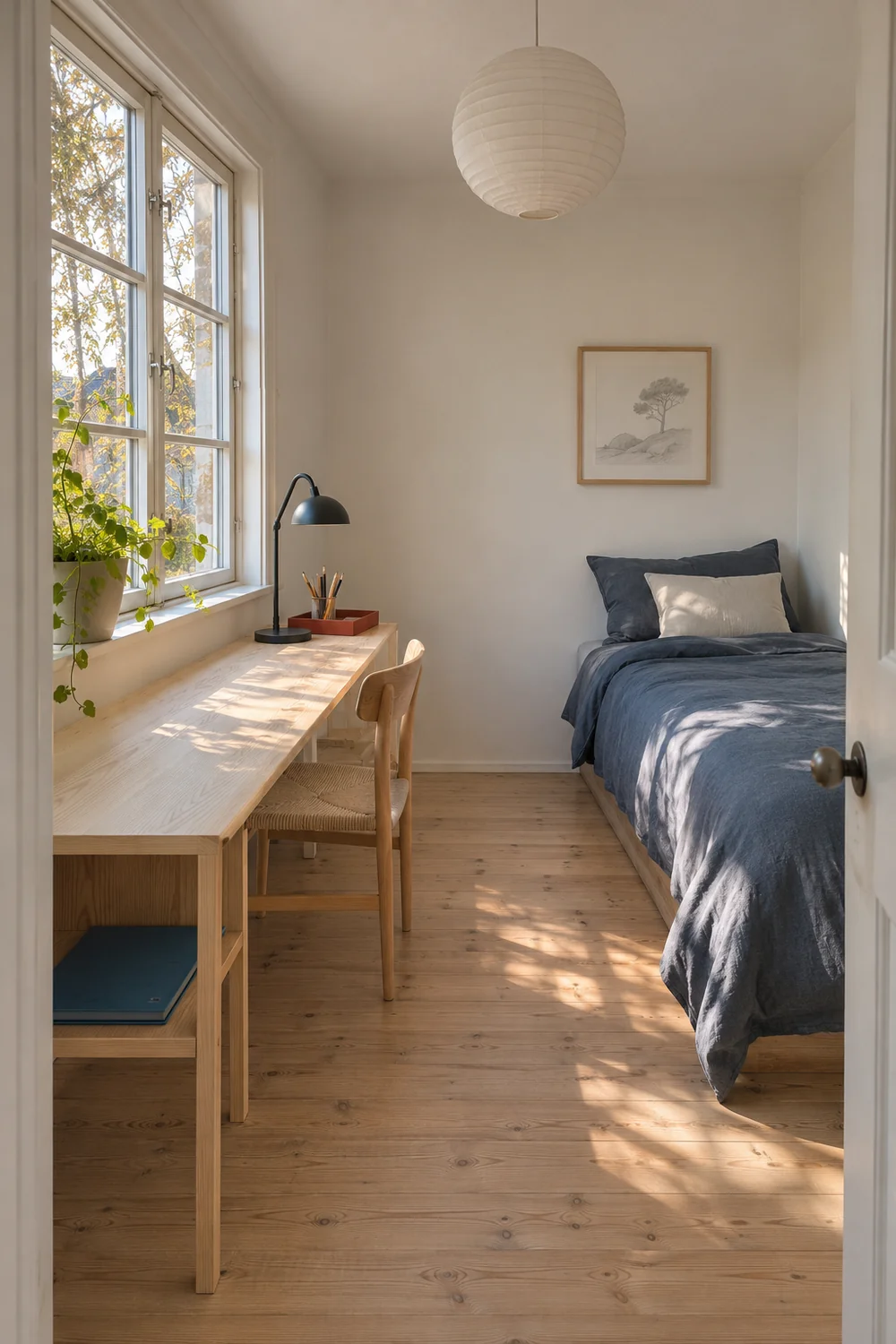
Leave a small amount of room for the next new interest. A growing collection of sketchbooks can move to a shelf that can take their weight. The small tray can change contents with the current drawing. If the largest page gets bigger, measure the new folder and clear a flat spot before buying a larger trolley. I’d ask the teen which step they skip when they’re tired. Make that step easier first. A reset that works on a busy evening is a better guide than a freshly arranged room.
For the worked room I would use a low tray for the pencils the teen reaches for and a flat drawer for the 44 by 32 centimetre folder. The lamp sits to the side of the page and the bed route stays open.
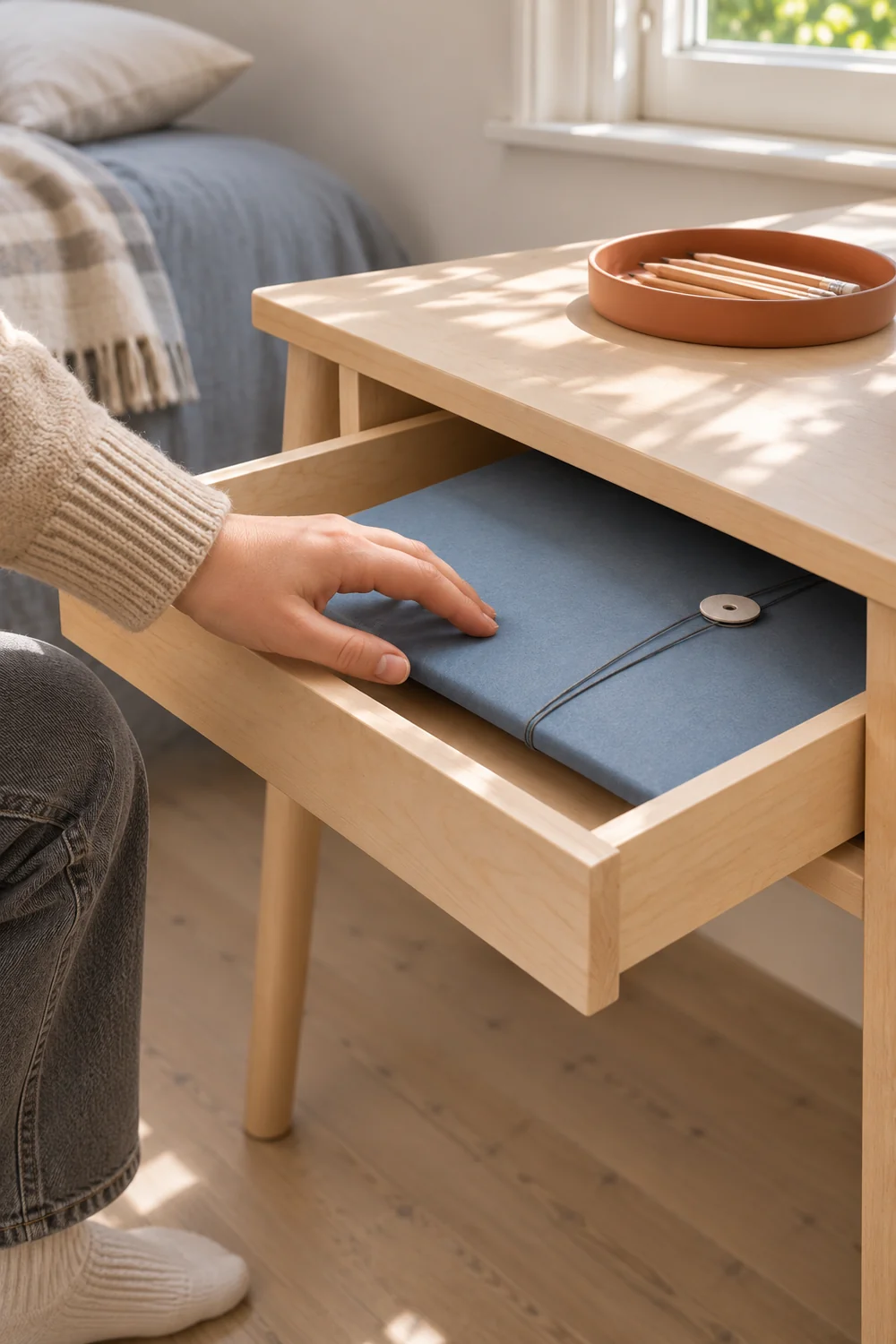
Start with what the room already has and test the setup with the largest drawing from an ordinary week. If that drawing can be set down flat, picked up again without bending and resumed with the tools already to hand, the storage is doing its job. Add a separate trolley when supplies need to travel between uses. Leave enough space clear for the next drawing to start.