Newsletter Subscribe
Enter your email address below and subscribe to our newsletter


Hotel room improvements should begin with what guests struggle to use or enjoy. For an independent luxury or boutique hotel, that may mean sleep, lighting or a service detail before a decorative scheme. I would use comments to choose the next investigation, then confirm what needs changing in the room.

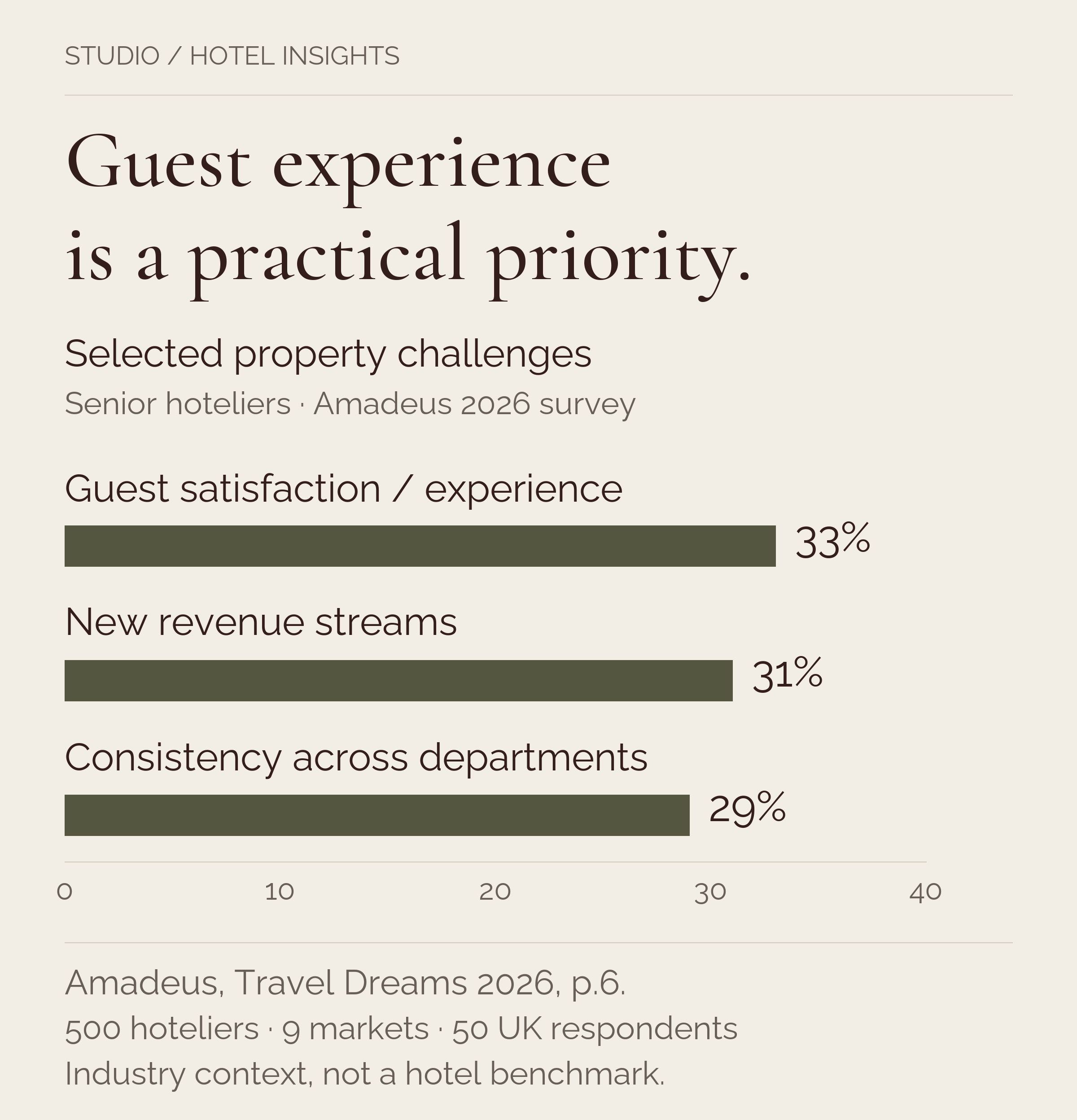
In Amadeus’ Travel Dreams 2026 survey, guest satisfaction was a property challenge for 33% of the 500 senior hoteliers questioned. The chart gives wider industry context. It is a multi-market sample, not a benchmark for your hotel or proof that a particular improvement will increase bookings.
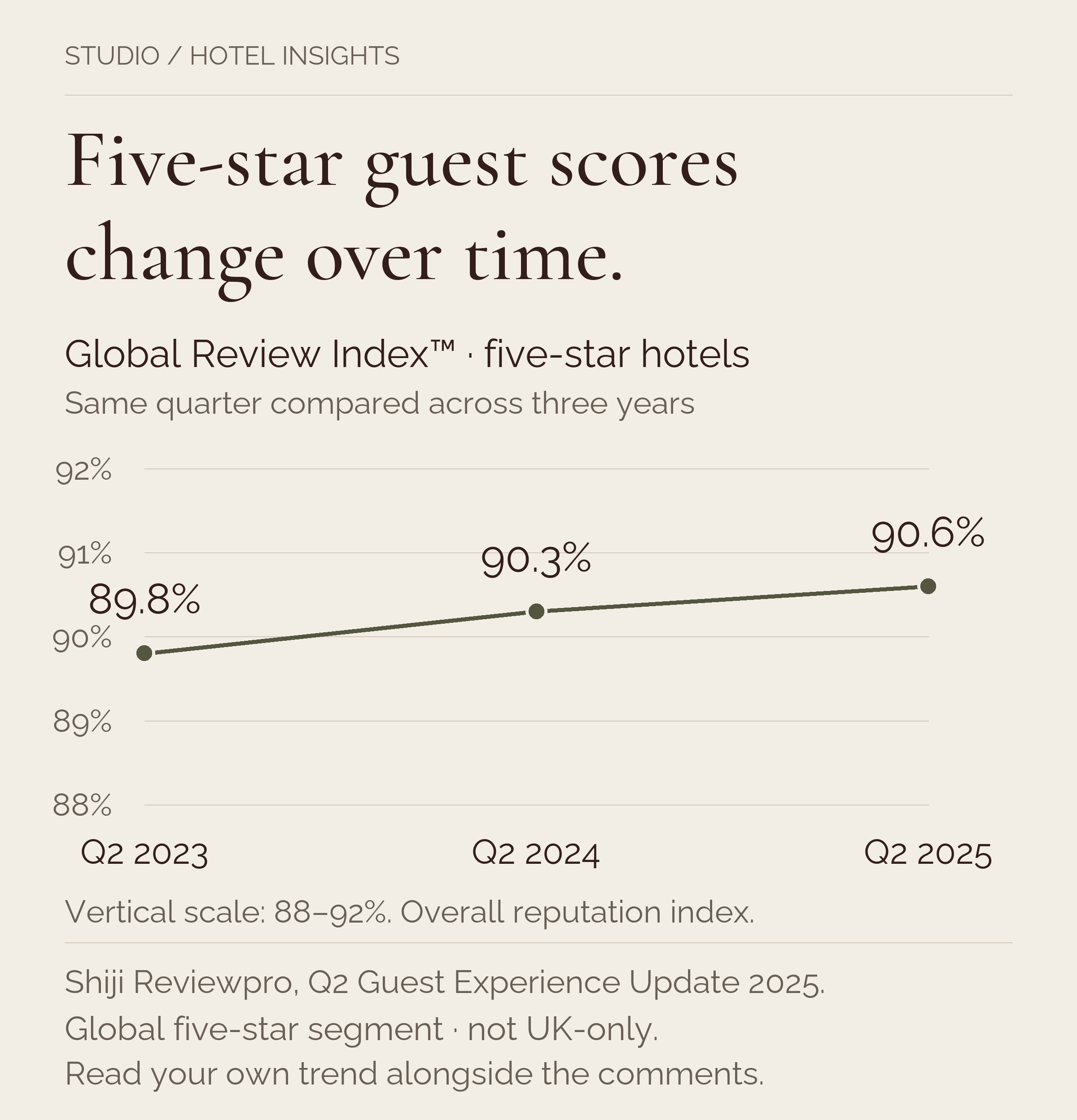
Shiji Reviewpro’s global five-star index rose from 89.8% in Q2 2023 to 90.6% in Q2 2025. This historical comparison covers overall online reputation, not room quality alone. For your own review, compare equivalent periods and keep the underlying guest comments beside the score.
Choose a recent, defined review period and include the channels your guests actually use. Note the room category and stay date where known. Look for separate stays describing the same friction; a duplicate review posted on two platforms is one account.

Keep praise beside complaints. A room may be loved for its proportions while guests repeatedly struggle with its bedside lighting. Check recurring comments with reception, housekeeping and maintenance. Reviews suggest questions; they do not establish the cause.

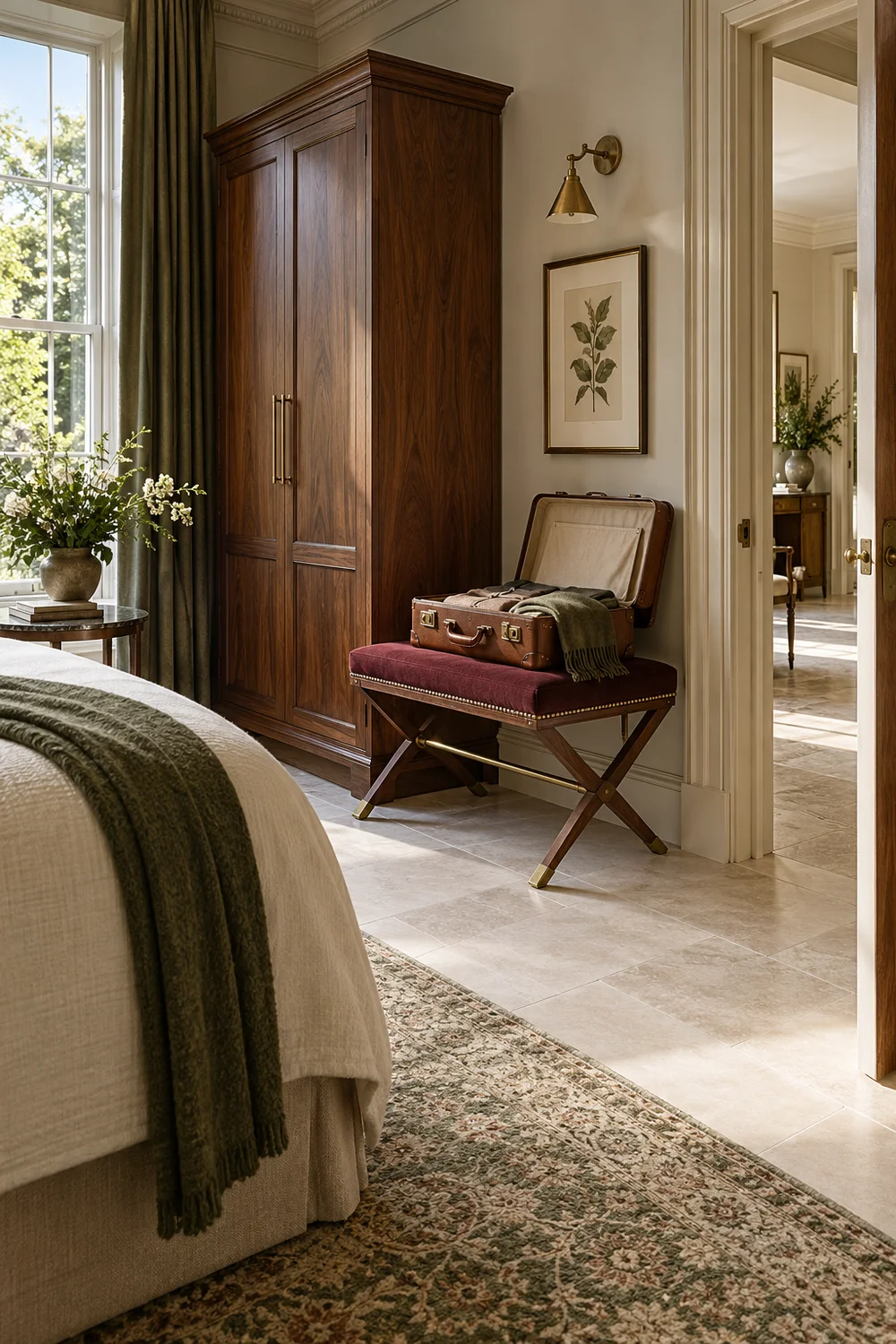
Begin at the door with a suitcase. Find the luggage space, hang a coat, reach a bedside surface and use the bathroom. Check whether opening a wardrobe, moving a chair or unpacking blocks a route. Inspect the room category mentioned in the feedback.
Sit where a guest reads and lie at the normal sleeping position. Can they reach the controls and understand them? Check light exclusion, temperature controls and the condition of touch points. Some checks need an evening visit; daylight photographs alone cannot establish sleep comfort.

Classify the issue before choosing a purchase. The same comment can have different causes:
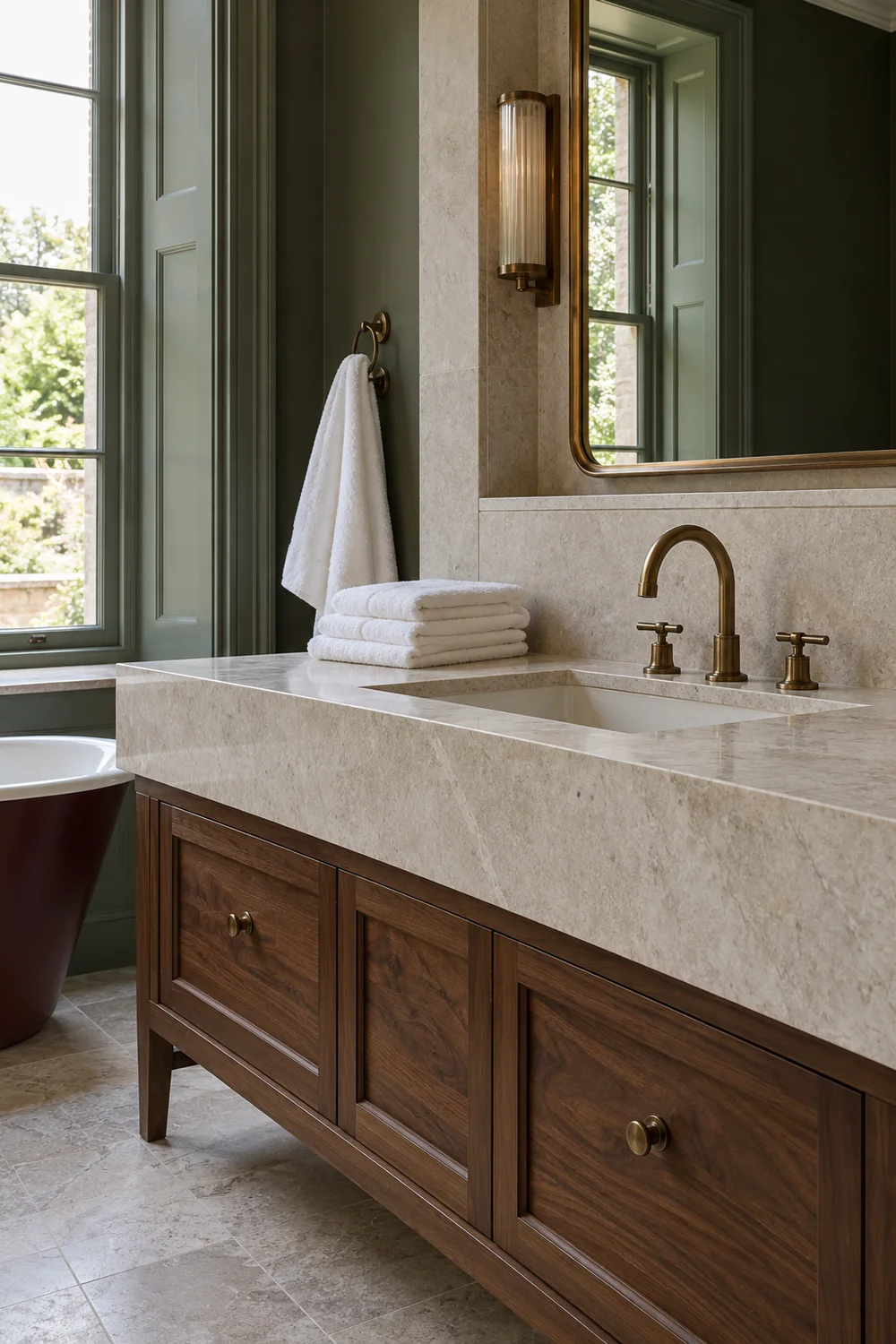
Confirm the cause with the relevant team. A luxury finish is useful only when the guest can comfortably use what it surrounds. Keep essential comfort and consistent service in view when considering an attractive decorative addition.
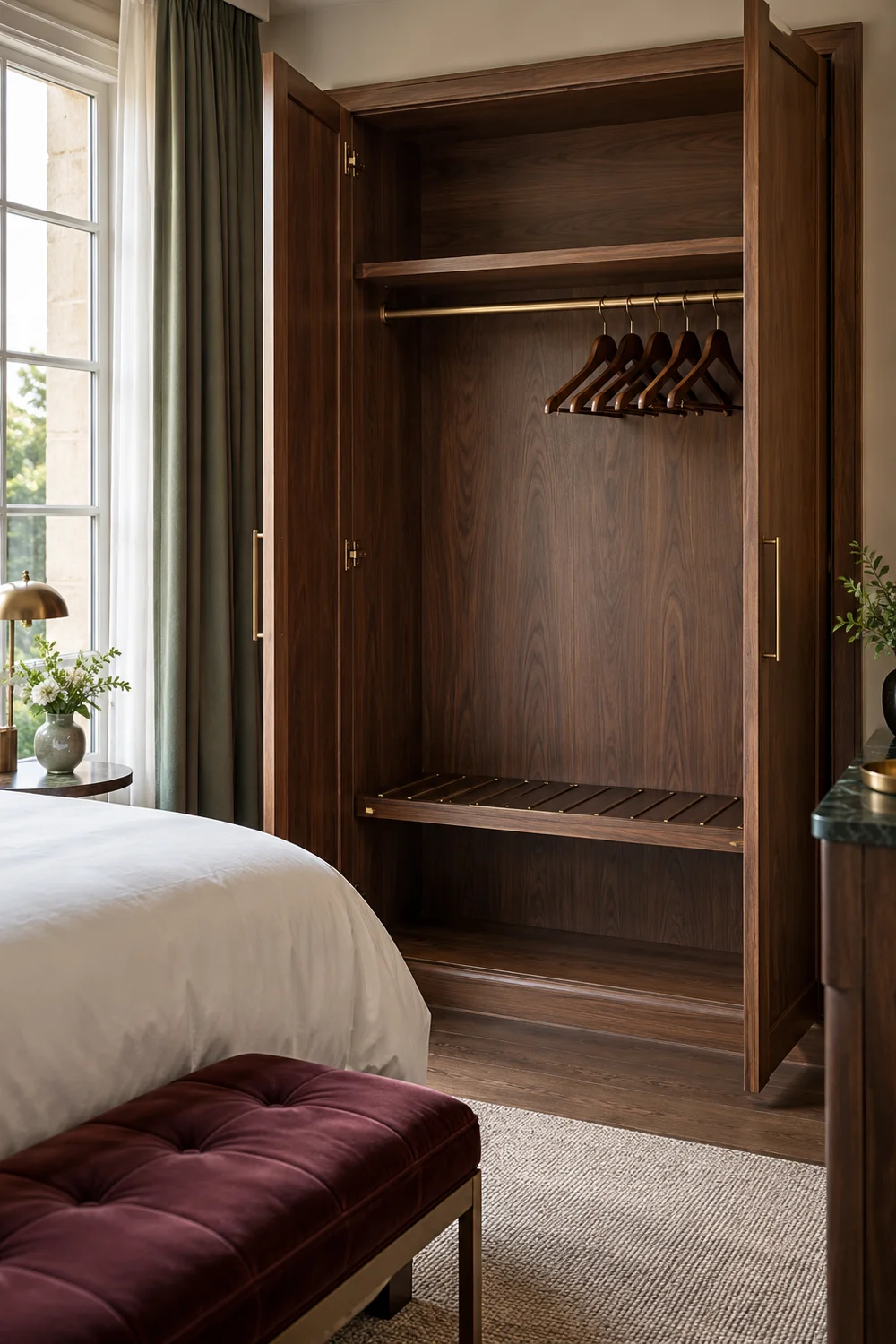
Take urgent safety or maintenance concerns to the responsible team immediately. For planned improvements, compare severity, recurrence, the rooms affected and confidence in the cause. Then consider the cost, delivery time and disruption of the proposed response.
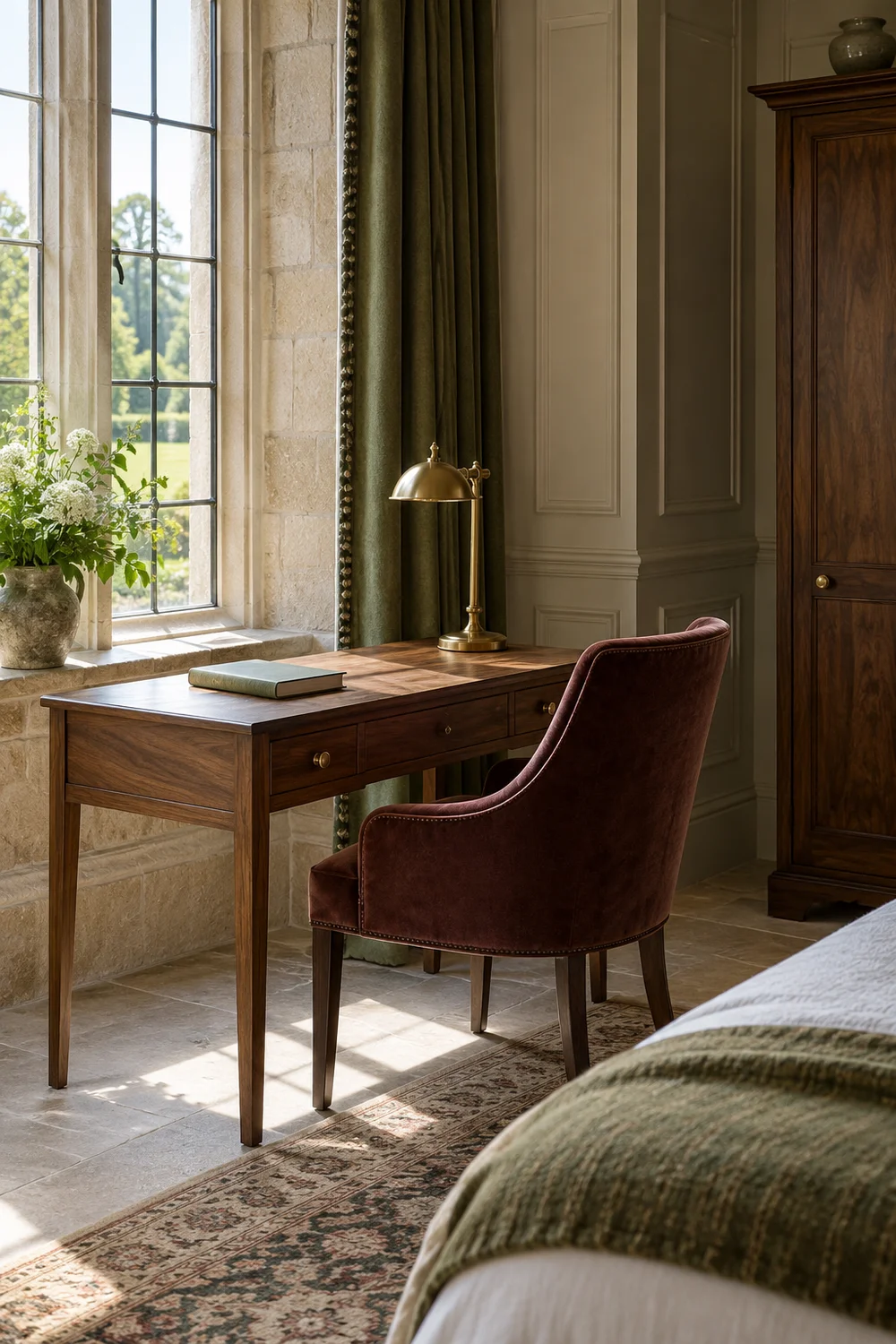
Choose up to three actions the team can realistically complete and review. A confirmed inconvenience with a straightforward remedy may deserve attention before a larger styling project. Keep uncertain causes on an investigation list, rather than turning every complaint into a refurbishment instruction.

Imagine a fictional boutique hotel where several separate stays mention difficulty reading in bed. Its headboard and linen are otherwise praised. I would check the actual reading position, lamp reach and controls before deciding that the room needs new lighting.

If the inspection confirms the problem, write a precise trial:

Give each selected change a short brief. Describe the problem and intended use before naming a product or finish. This helps an owner, department lead and supplier work from the same confirmed requirement.

For a luxury property, include the finish and service standard the team must preserve. A useful change should feel considered in the room, with its practical purpose easy to understand.
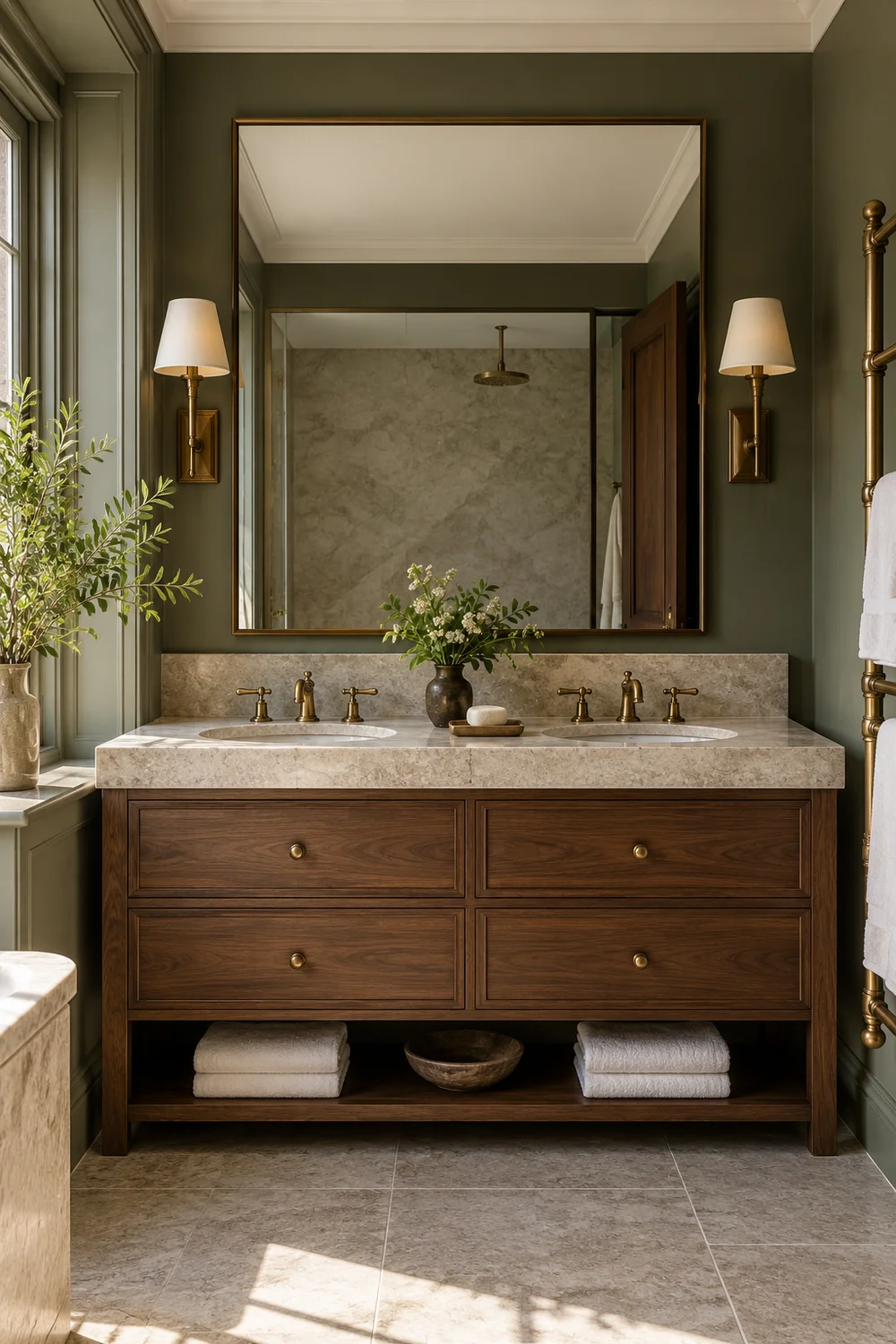
Completion of a task is not proof that its cause has gone away. Repeat the room check and review later comments over a sensible comparable period. Note changes in guest mix or room allocation. A small review sample cannot establish a booking or revenue effect.

When the room or service actually changes, update the information and photographs affected. If a film also needs a new direction, the hotel video ideas guide can help with that separate presentation decision. Keep the improvement brief and its review together so the next manager can see what was tried.