Newsletter Subscribe
Enter your email address below and subscribe to our newsletter

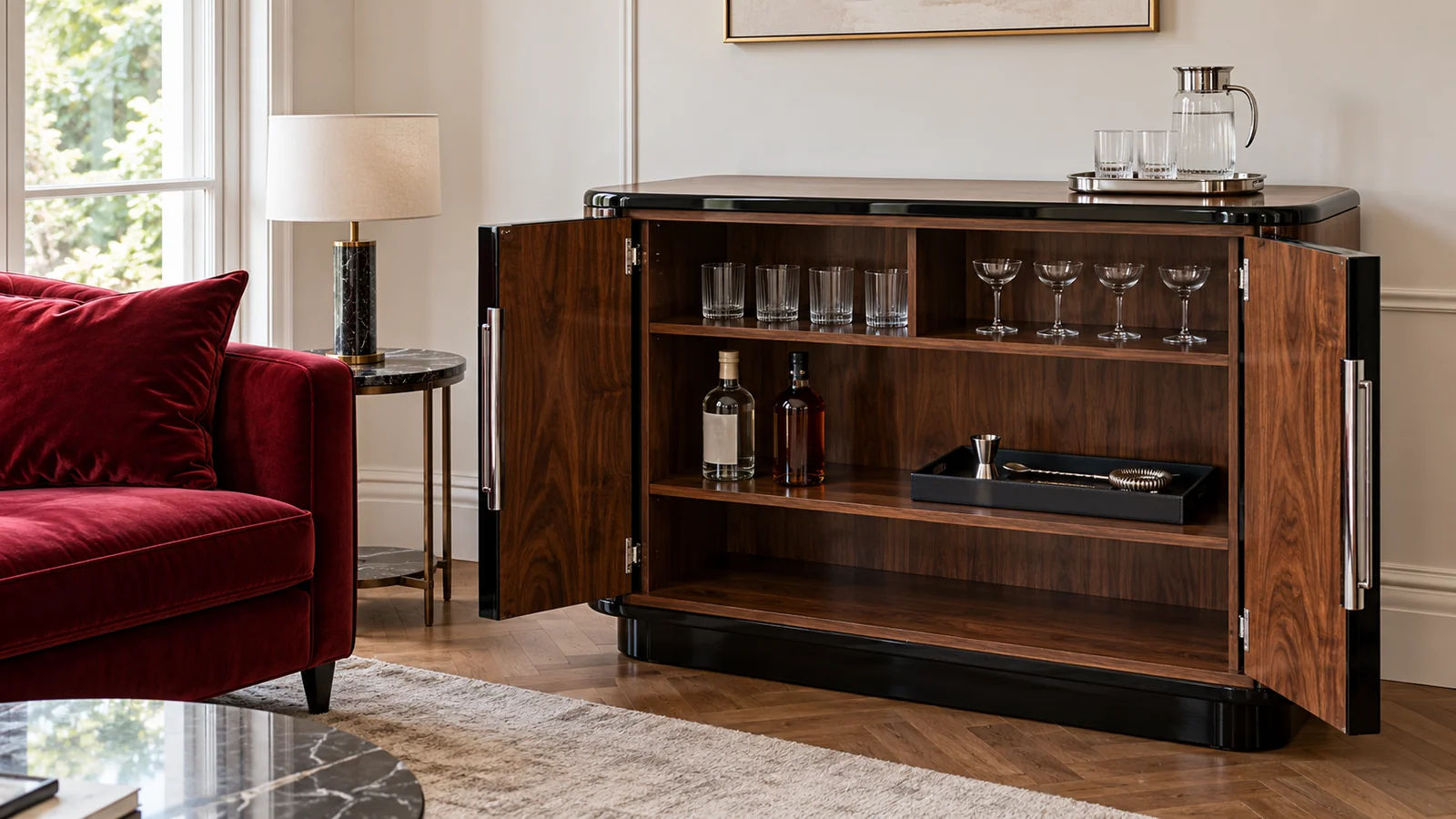
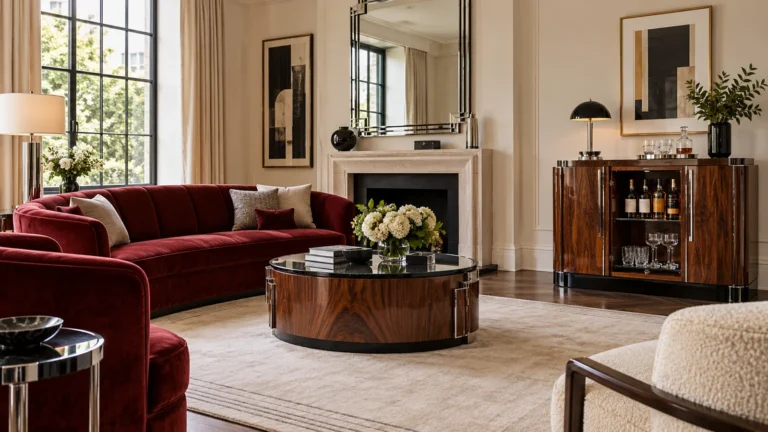
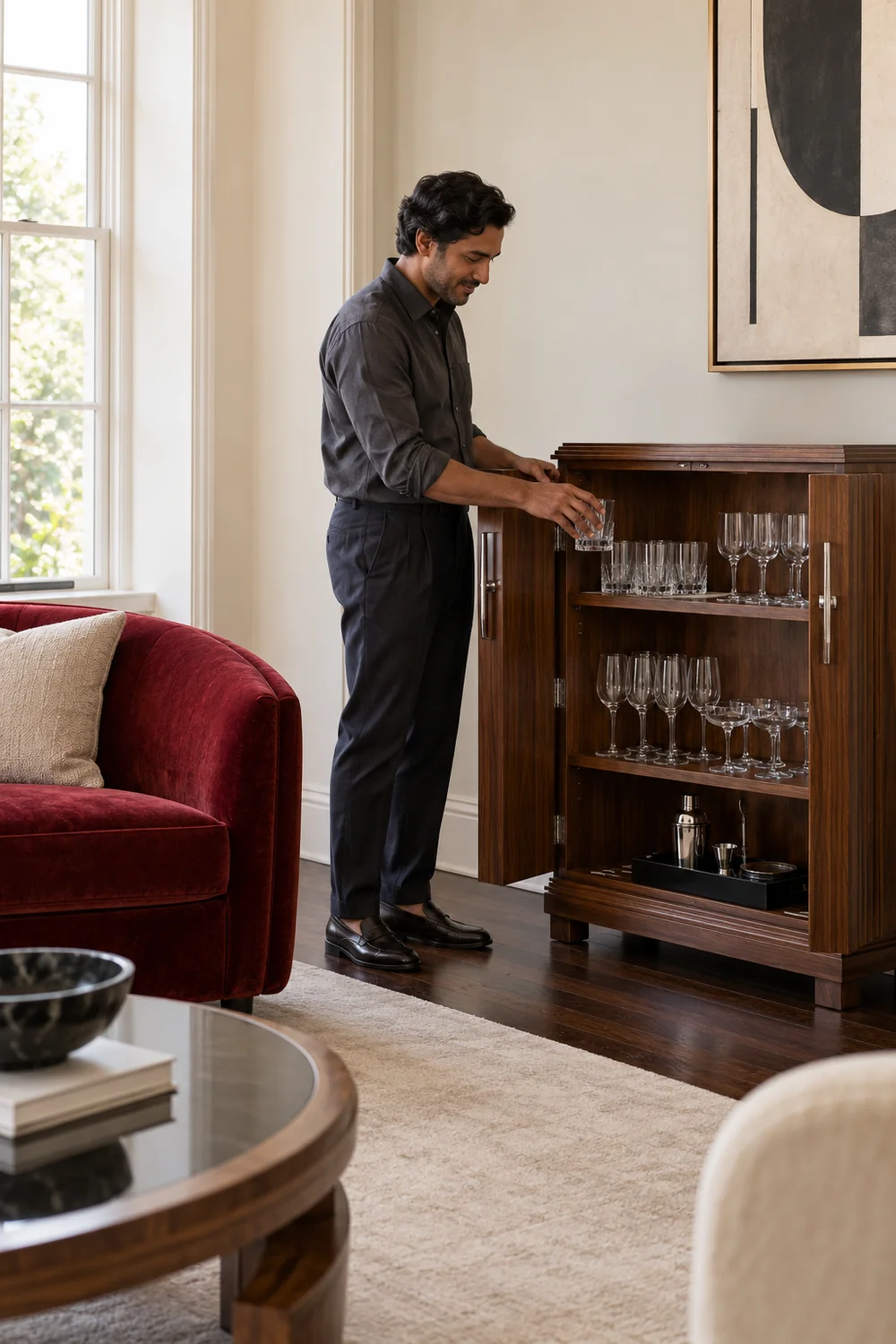
Before friends arrive, I would set up an Art Deco bar cabinet by walking through the drinks you actually intend to offer. A cabinet full of attractive glasses can still leave you searching for the water jug, moving a vase to pour, or carrying used glasses through the clean serving area. I would give the working objects their places first, then add the small amount of decoration that helps the cabinet belong to the living room. This setup follows an agreed room plan, so its job is specific: choose the serving set, allocate glasses and tools, protect the working area and rehearse the return journey. I use walnut, black lacquer and chrome against an oyster wall, with deep red seating nearby. Those materials keep the Art Deco character visible while clear glass and an edited surface make the actions easy to understand. You can prepare a generous welcome without turning every shelf into a display.
I would begin with the people and the drinks for this visit, rather than a list of everything a home bar could own. As a worked example, imagine six adults including you, with water, one prepared alcohol free choice and one drink that you will pour individually. Write down the glasses, jug, tools and small accessories that those choices require, then set them out together away from the cabinet.
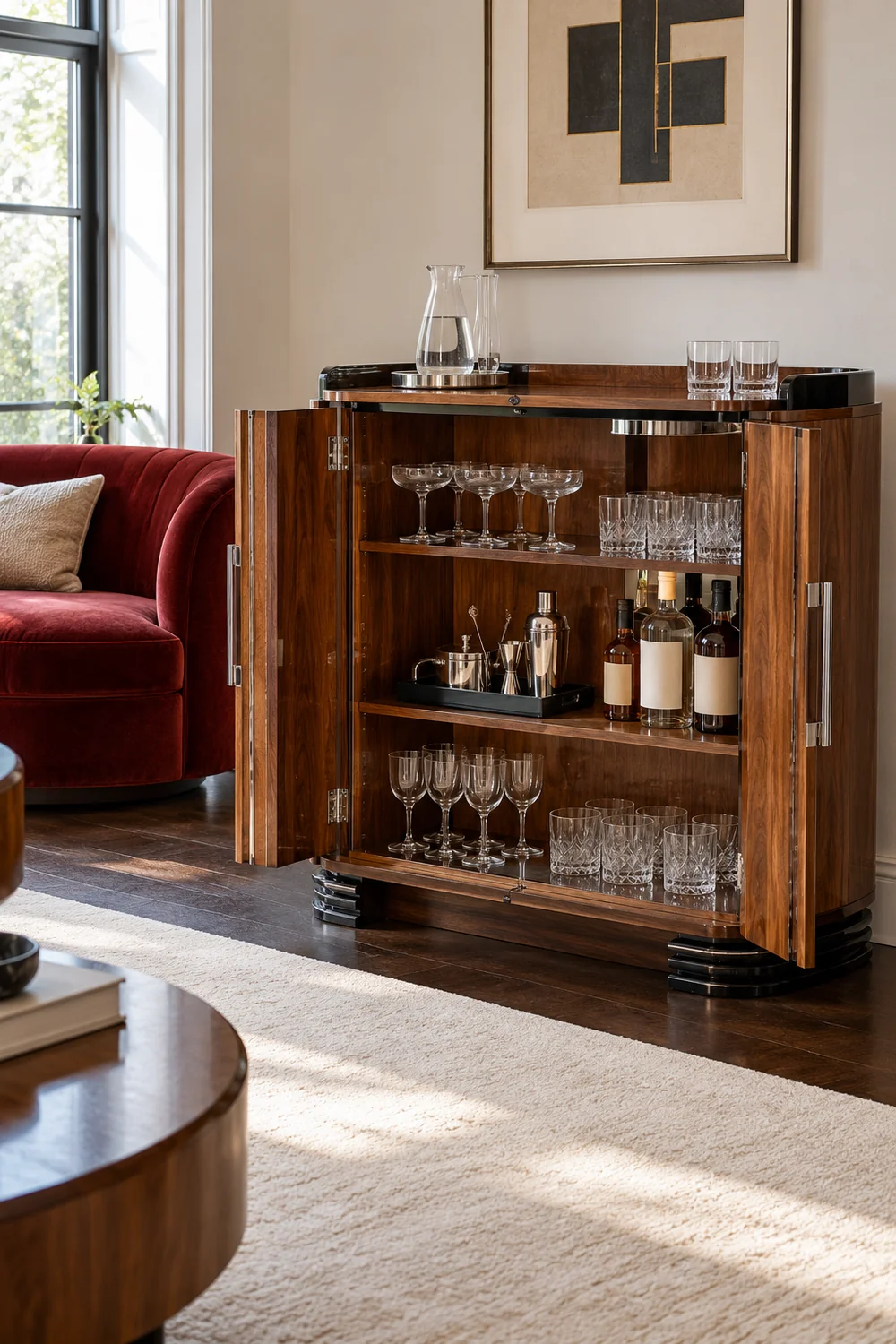
Count glasses according to how you intend to serve. If each person will keep a water glass while having another drink, six people need twelve glasses for those two simultaneous jobs. If you will wash and replace a smaller set, make that kitchen task part of the evening instead of assuming it happens invisibly. I would choose between those arrangements deliberately. The cabinet may hold the working set while spare glasses remain in their usual kitchen storage until needed.
I would also check whether the chosen glasses can serve more than one offered drink comfortably. A small coherent set is easier to position, clear and put away than an assortment selected only for its silhouette. If drinks follow dinner, the Art Deco dining room inspiration can help you connect the glass and tabletop details, while the actual serving requirements still decide which pieces you use.
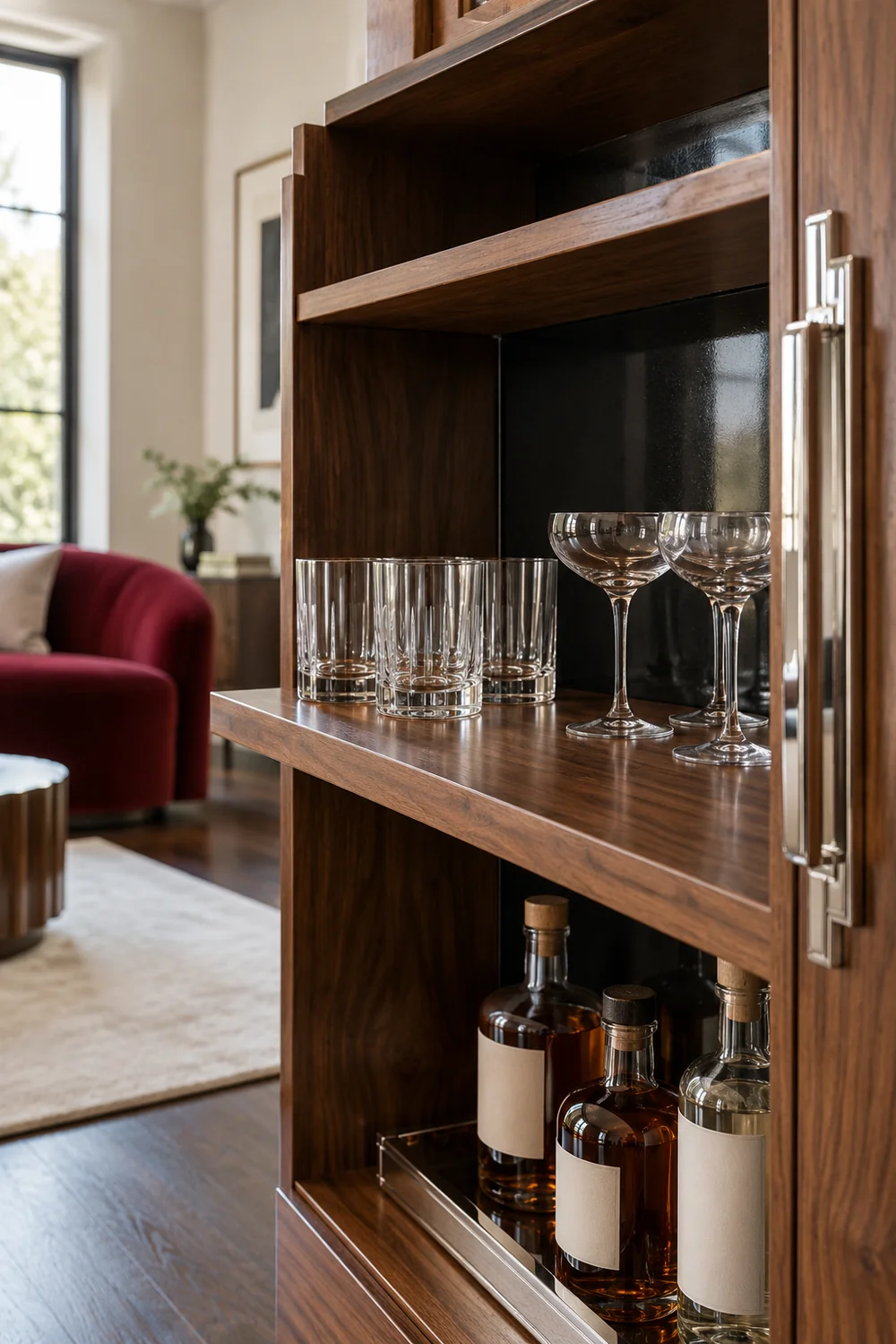
Keep food contact suitability separate from appearance. I would use drinkware and tools whose maker identifies them for the intended use, and keep an uncertain decorative antique as decoration. I would not assume a vintage decanter, metallic finish or etched glass is suitable simply because it looks right. It is a reason to choose the useful pieces carefully and avoid letting the decorative cabinet dictate the entire drinks menu.
With the serving set in front of you, I would arrange it in the order your hands need it. Clean glasses come first, followed by the items used to make or pour the drink, then the place where the finished glass leaves the working area. Bottles that are not being offered do not need the most accessible position. I would store them separately if the furniture is suitable, or leave them in their established home rather than make the cabinet carry everything.
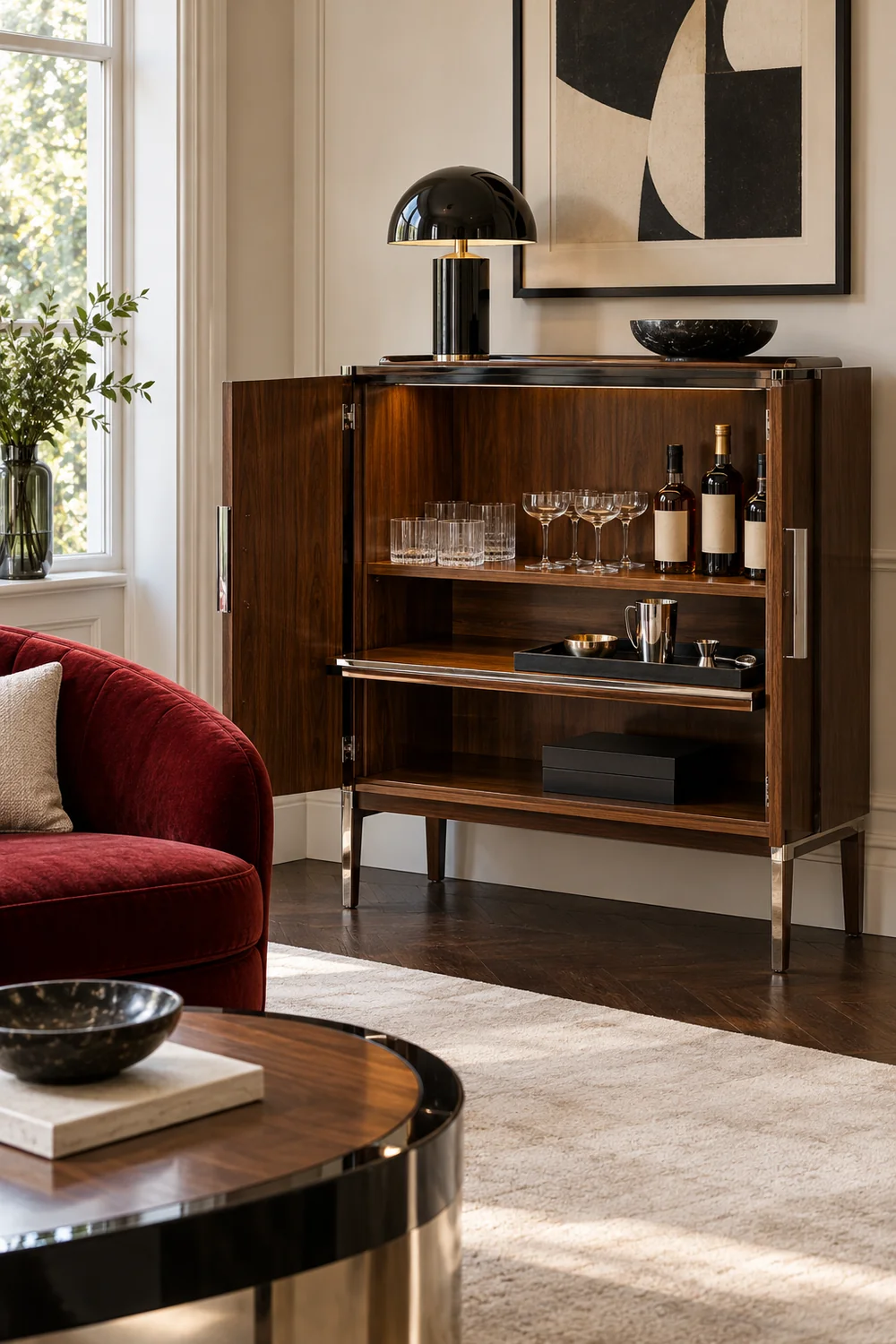
For the example gathering, I would group the water glasses together and keep the second serving shape beside them. The jug and the prepared choice should be recognisable without a guest lifting three other objects. The host's tools can sit together in a removable container or tray if that suits the cabinet. Test the actual handles and heights. A tall glass that clears the shelf while upright may still be awkward to remove when another row stands in front of it.
I would measure the usable openings with the intended contents, including any tray or liner. Check the inside width, depth and height, and allow for the movement needed to lift an object out. Those are checks for your actual cabinet, not universal dimensions. If the serving groups cannot be reached without dismantling the display, revisit the Art Deco home bar plan. A different serving arrangement or location may solve more than squeezing another shelf into the furniture.
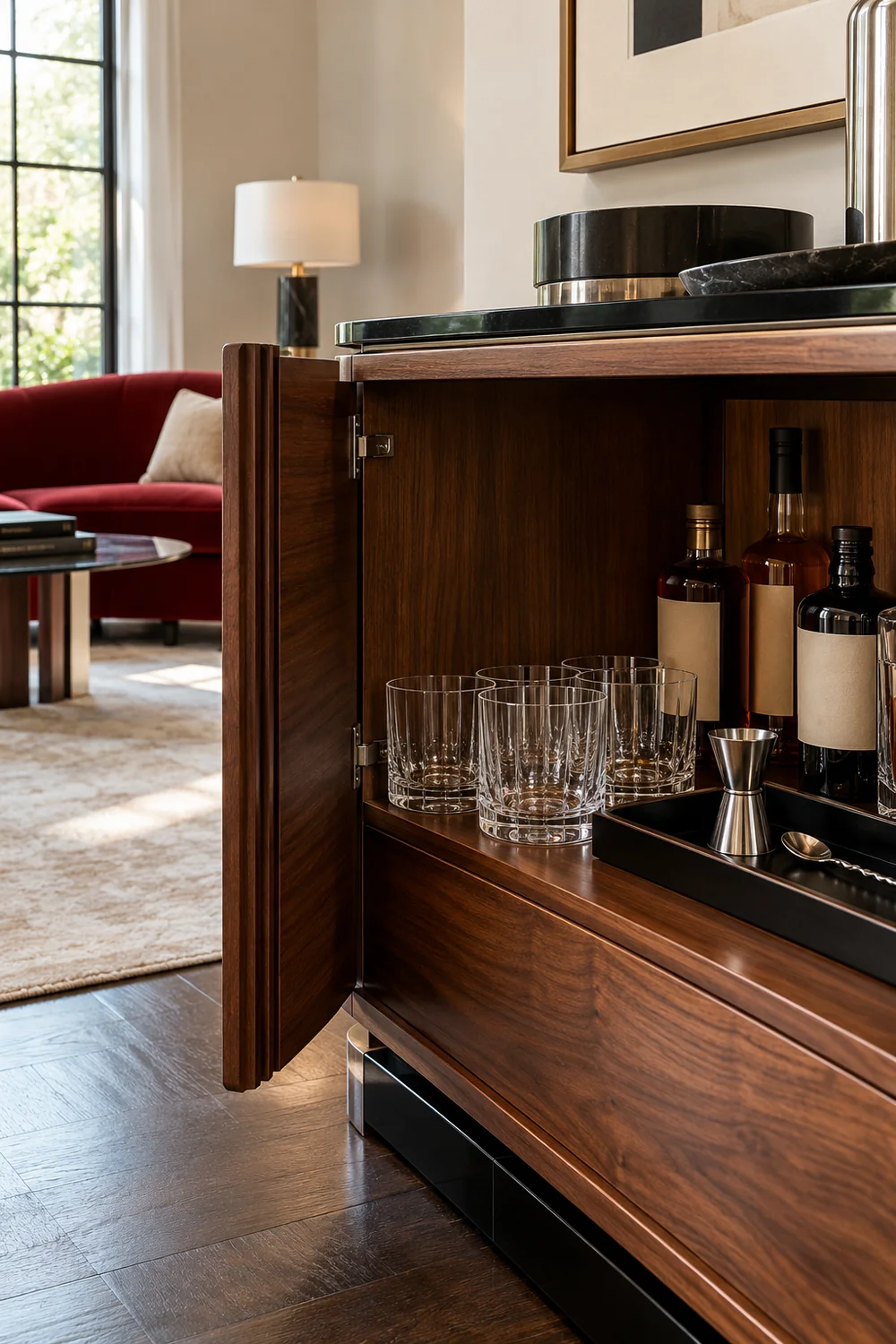
The order should make sense to the person using it. I would put the most obvious guest items where their shape and grouping explain them. For hosted pouring, keep the working objects convenient to you without inviting guests to reach through them. The cabinet can support both roles when the boundaries are clear, rather than relying on constant verbal instructions.
I would check the cabinet's instructions before arranging a full serving set. Confirm assembly, shelf adjustment, intended loads and any specified fixing requirements. A glass shelf, a hinged serving leaf and the cabinet top may have different intended uses. Do not treat an opened door as a work surface because it happens to look level. If information is missing on a secondhand piece, resolve its suitability with the appropriate supplier or specialist before planning service around it.
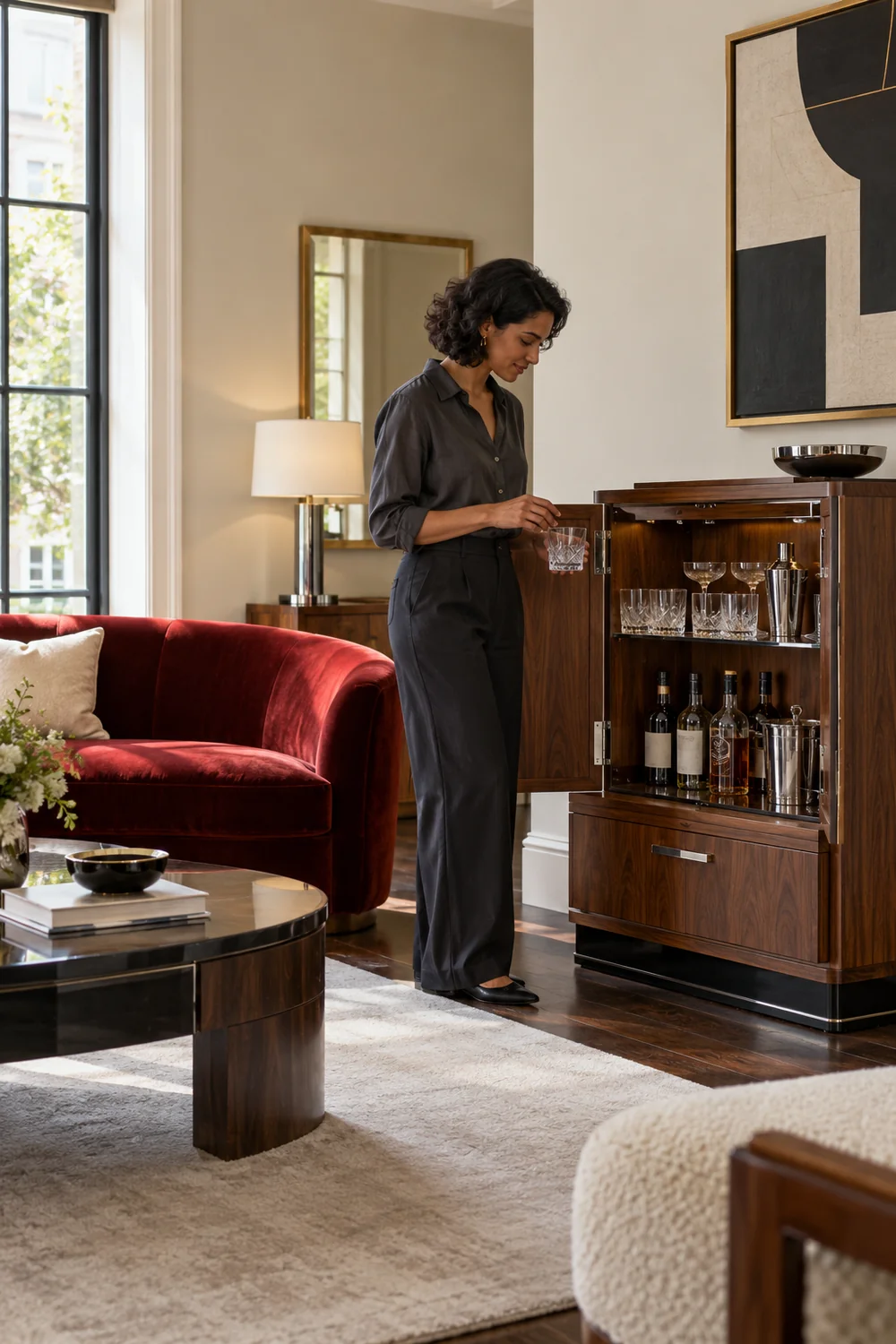
Then open everything you expect to use during the visit. Can you lift the glasses while the main door is in its usual position? Can a drawer open without pushing the host back into someone walking past? Does the furniture remain in its intended stable position? I would carry out the access rehearsal with empty objects first.
For a trolley, I would decide whether it stays parked. If it will move, the maker's instructions govern loading and operation; do not infer a safe load or a suitable threshold from a photograph. I would test the route before adding the serving set and keep the top useful once it is parked. The living room furniture guide helps if this check reveals a wider conflict with seating, scale or the room's ordinary storage functions.
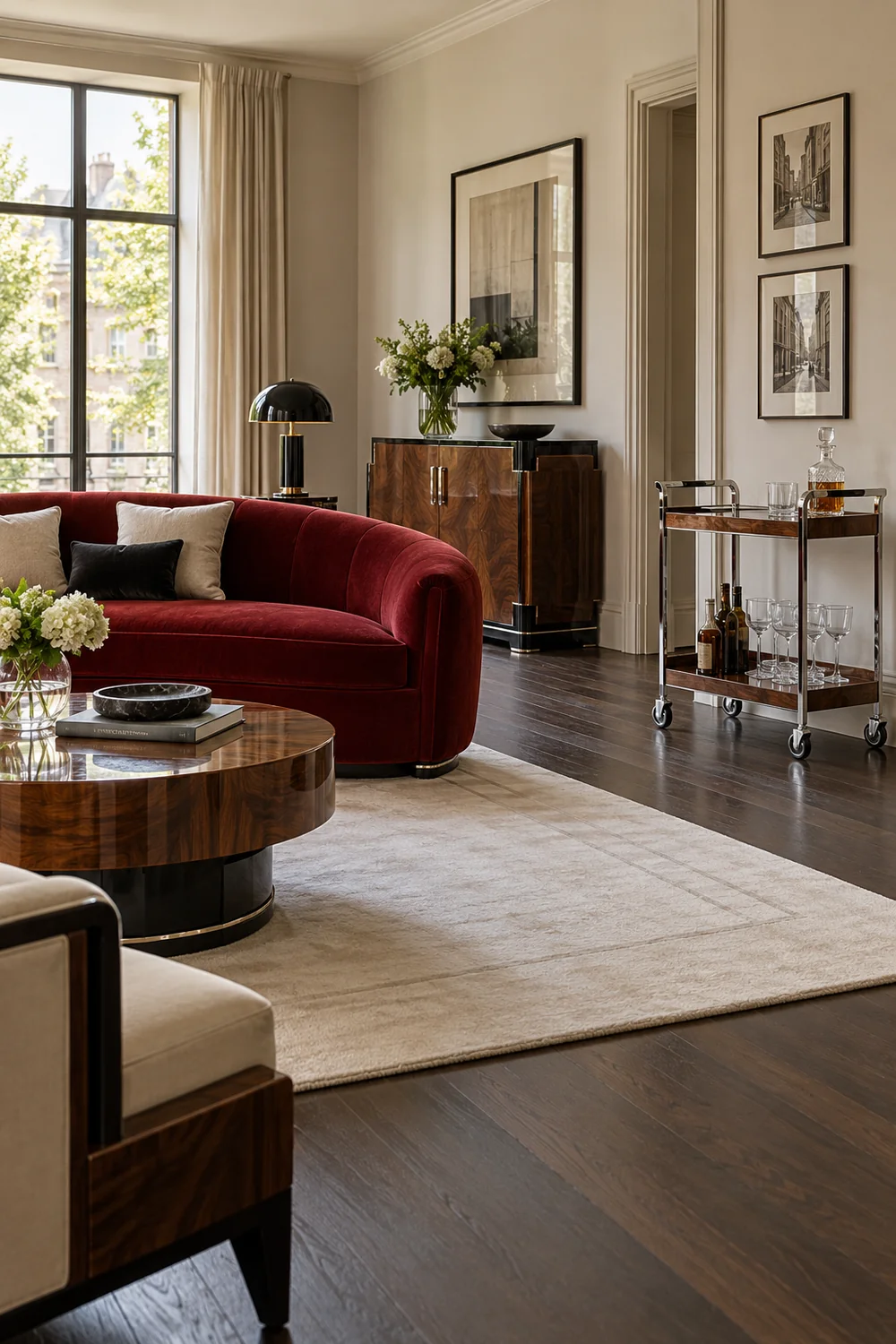
I would also test the cabinet from the seats. A friend needs a reachable place to put a finished drink, but that does not mean the cabinet itself must be within reach of every chair. Separate small tables may do that job better. Keep the working position and the sitting positions distinct enough that one person pouring does not displace another person relaxing. A cabinet is ready for its contents when its openings, intended surfaces and occupied surroundings all work together.
I would protect the intended working area with a suitable tray or protector chosen for both the furniture finish and the job. Walnut veneer, lacquer, stone and mirrored glass have different care requirements. Follow the furniture and accessory instructions rather than assuming that a protective object is harmless on every surface. I would keep the preparation simple and remove wet items promptly. An attractive surface is easier to enjoy when you do not spend the visit worrying about every drop.
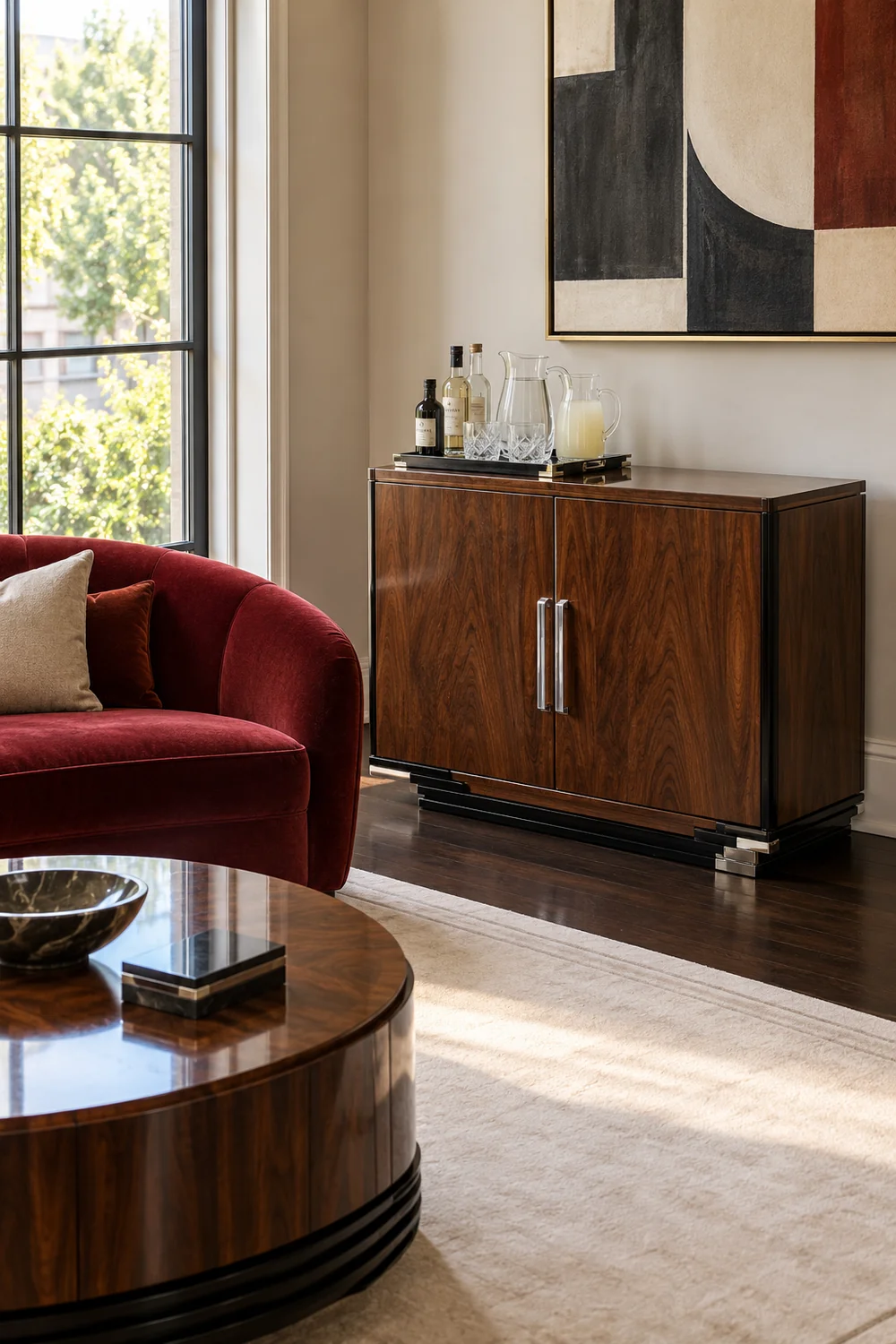
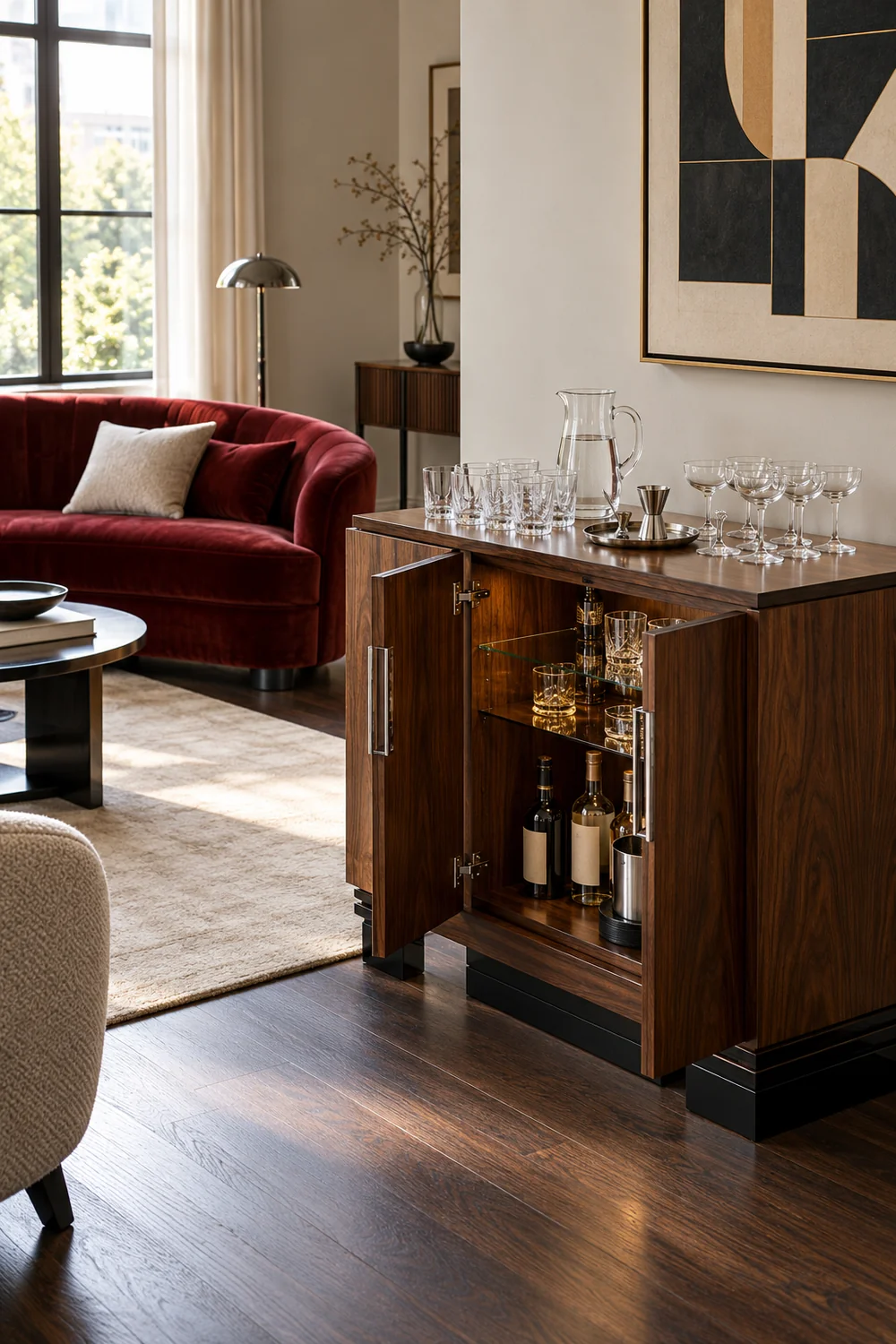
Give water a defined position before arranging the less frequently used pieces. In the example, I would put the jug and its glasses at the pickup end, where someone can use them without entering the host's working area. The alcohol free choice belongs among the offered drinks, with enough space to pour it in the same comfortable way. I would check that a guest can identify the correct glass and put the container back without moving the rest of the arrangement.
If ice is part of the visit, decide where it waits and how it reaches a glass. Use equipment intended for that task and follow the food and drink storage instructions for anything you prepare. I would avoid putting every cold item in the living room long before it is needed. Some things can arrive from the kitchen when service begins. The cabinet plan should describe that sequence so that the host is not improvising several separate journeys at the doorbell.
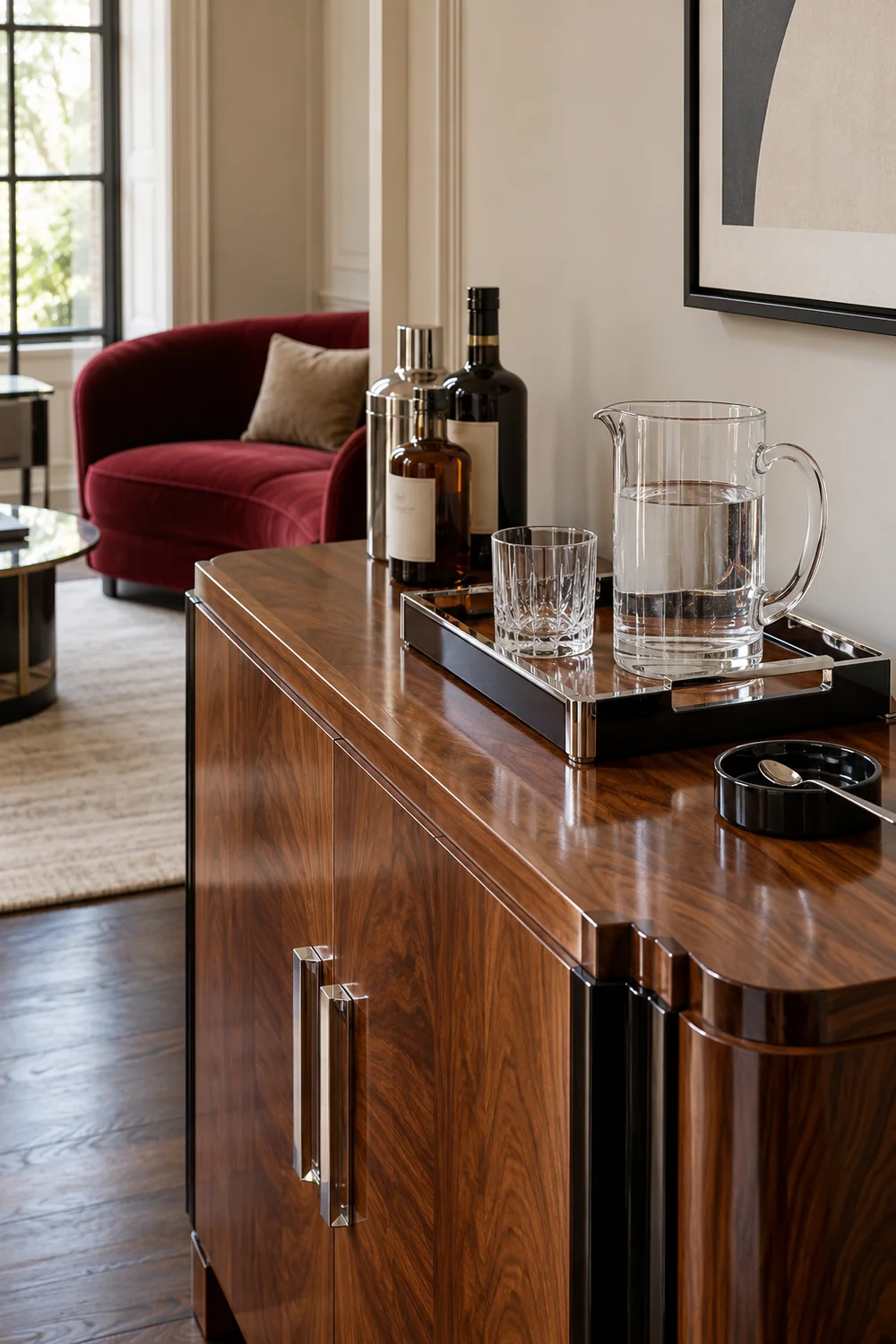
Keep a cloth ready in a sensible place, and give wet tools somewhere suitable to land. I would keep that spot apart from clean glasses and the guest pickup area. You can still leave the centre of the surface clear enough to work. The test is practical: put down a jug, pick up a glass and return the tool you used. If each action displaces something else, remove an unnecessary object or simplify the serving set before adding more accessories.
I would now add the decorative elements one at a time. A walnut cabinet with curved doors or a stepped edge may already provide enough Art Deco character. A single chrome object or a small framed work above it can complete the relationship with the room. I would resist using every empty shelf as a reason to add another ornament. The space left around the useful objects is part of what makes a cabinet feel considered before guests arrive.
Keep decoration away from the place where a glass has to stand while you pour. A large vase can sit on a nearby table, and artwork can hang rather than lean across the working area. If the cabinet has a mirrored back, a few clear shapes will usually be easier to distinguish than several overlapping rows. That is my visual preference for this room, not a rule that every reflective cabinet needs the same number of objects.
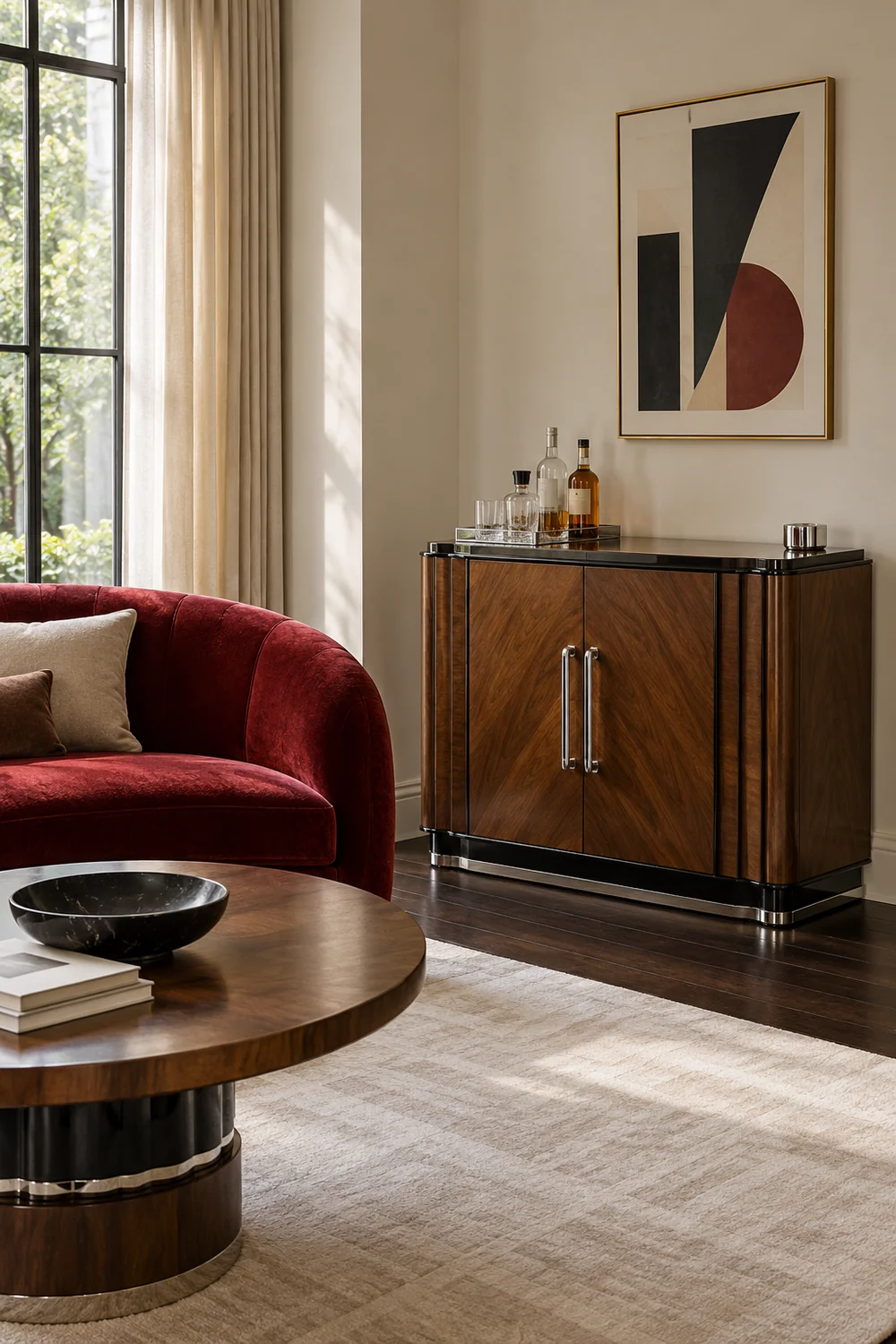
When the cabinet starts to look busy, I would compare it with the broader Art Deco home details and choose which feature should lead. It may be the furniture outline, the walnut grain or the glassware. Give that choice enough space to read. Repeating all three in several decorative objects rarely helps the serving job. You can keep a more expressive display elsewhere in the room if those objects matter to you.
Try the editing test with the full serving set present. Remove the decoration, perform the pouring sequence, then return only the pieces that do not interfere. I would keep bottles in their appropriate original containers and avoid styling that depends on disguising what they are. The best final arrangement may contain fewer objects than the photograph you saved, while feeling much more generous during an actual evening with friends.
For this cabinet, I would let clear glass sit against walnut and keep chrome as the repeated metal. Black lacquer can frame the outline, while the deep red upholstery remains visible in the room beyond. The contrast makes individual glasses legible without asking them to be brightly coloured. It also lets different useful shapes belong together. I would compare them in the cabinet rather than judge each piece against a white shop background.
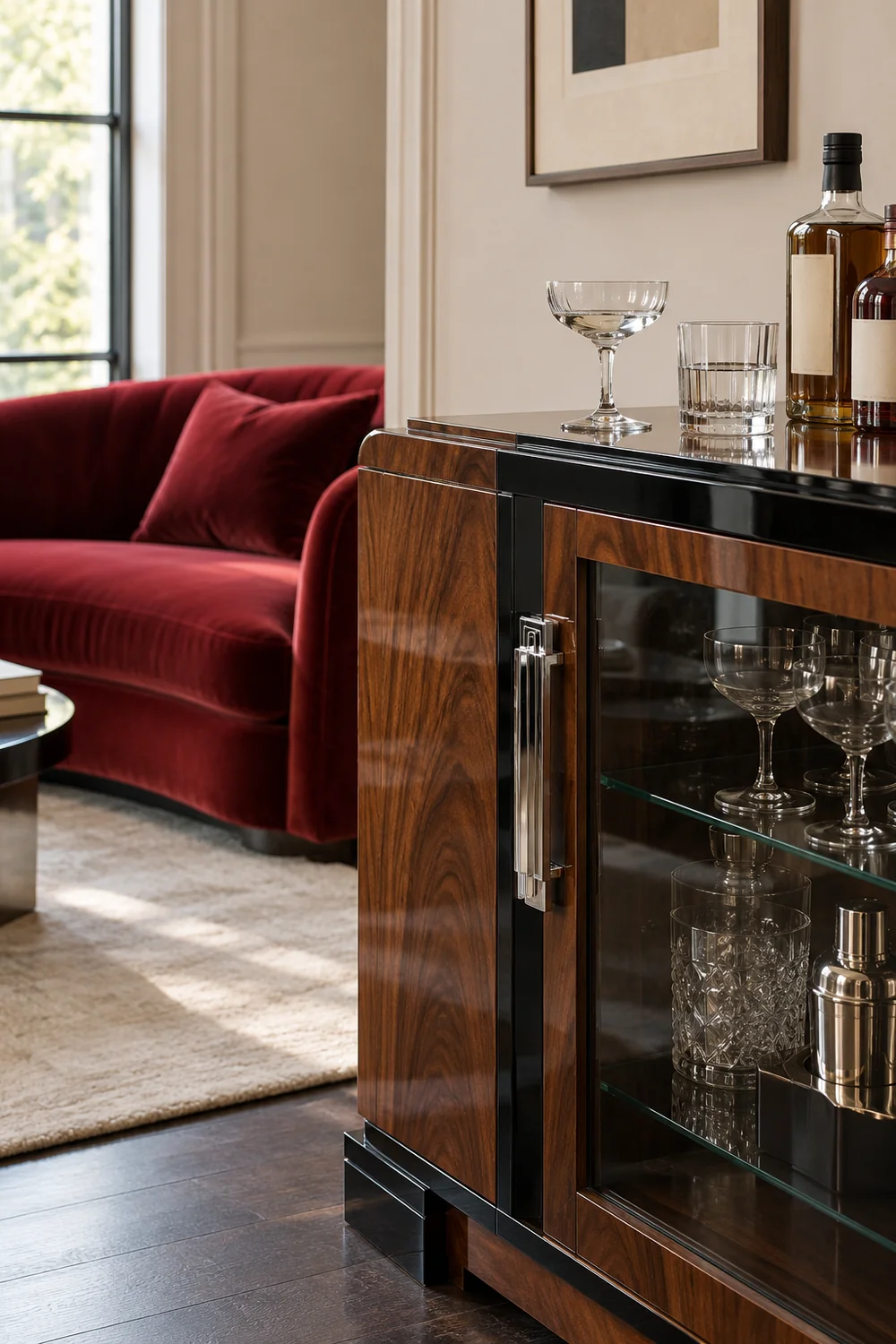
If you already own another metal finish, I would test the combination before replacing useful pieces. What matters here is whether the objects are easy to read and the cabinet still relates to the room. The Art Deco color palette offers alternatives if you are changing the wider scheme, but I would not repaint a satisfactory room simply to match a new shaker.
Reflections need a practical check. Look at the cabinet from the host's standing position, the nearest chair and the entrance. A lamp reflected several times may make the shelf appear more crowded than it is. Move the light or reduce the reflective objects before assuming that brighter glass will improve the view. I want the host to identify a glass quickly and the seated guest to enjoy the corner without looking into a concentrated bright spot.
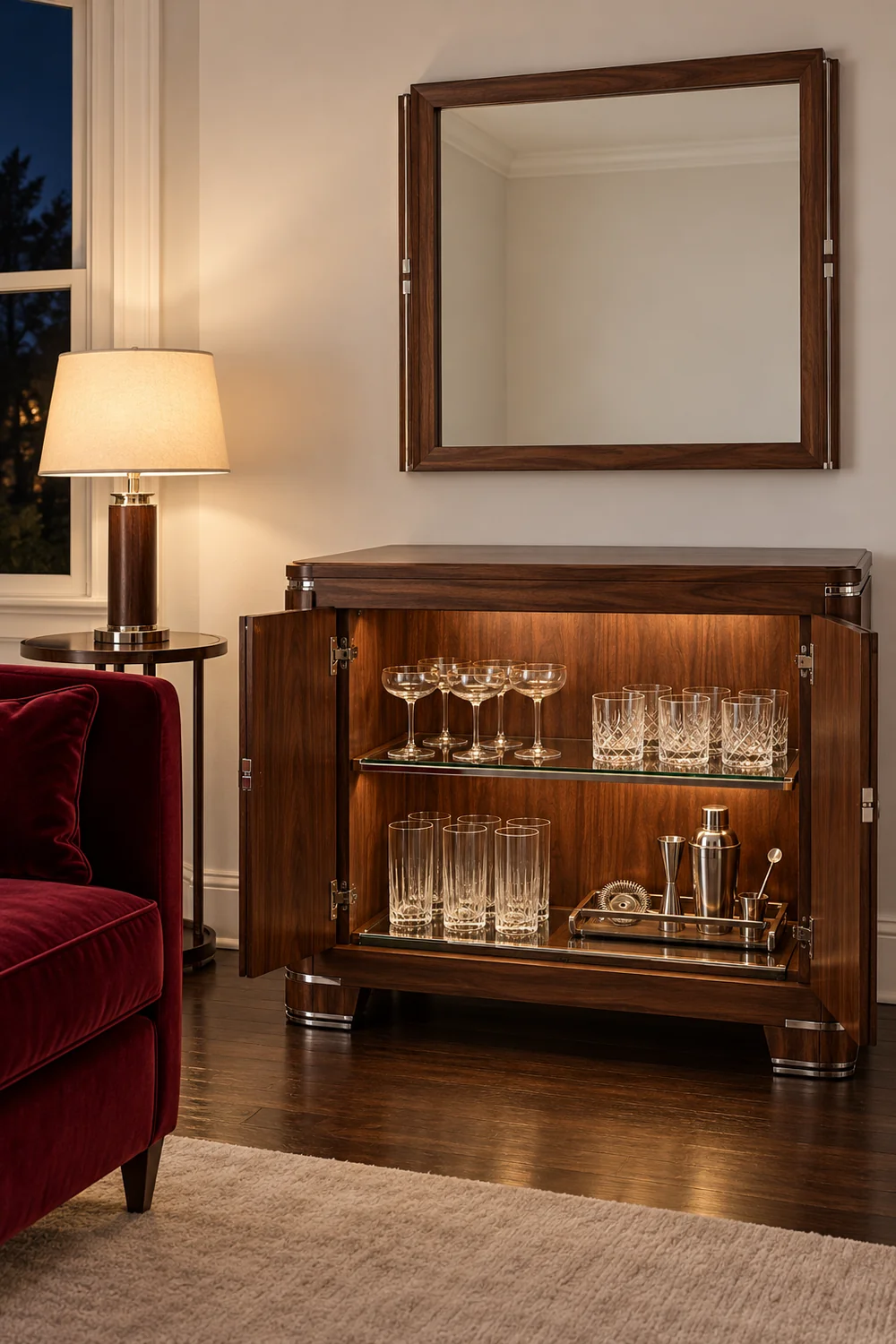
I would repeat the check during the evening conditions when you normally entertain. Keep useful light close enough to reveal the objects, with cables and fittings positioned according to their instructions. A lamp does not need to stand on the working surface to serve the cabinet. If you are introducing a new fitting, resolve its proper installation separately. The cabinet setup should not depend on an improvised electrical arrangement concealed behind an attractive photograph.
Before friends arrive, I would rehearse one complete service with empty glasses and the objects in their intended positions. Take the glass, reach the required item, use the working area and pass the finished glass towards the seating. Put everything back. The sequence should remain straightforward without holding an extra bottle in one hand while you search for somewhere to set it.
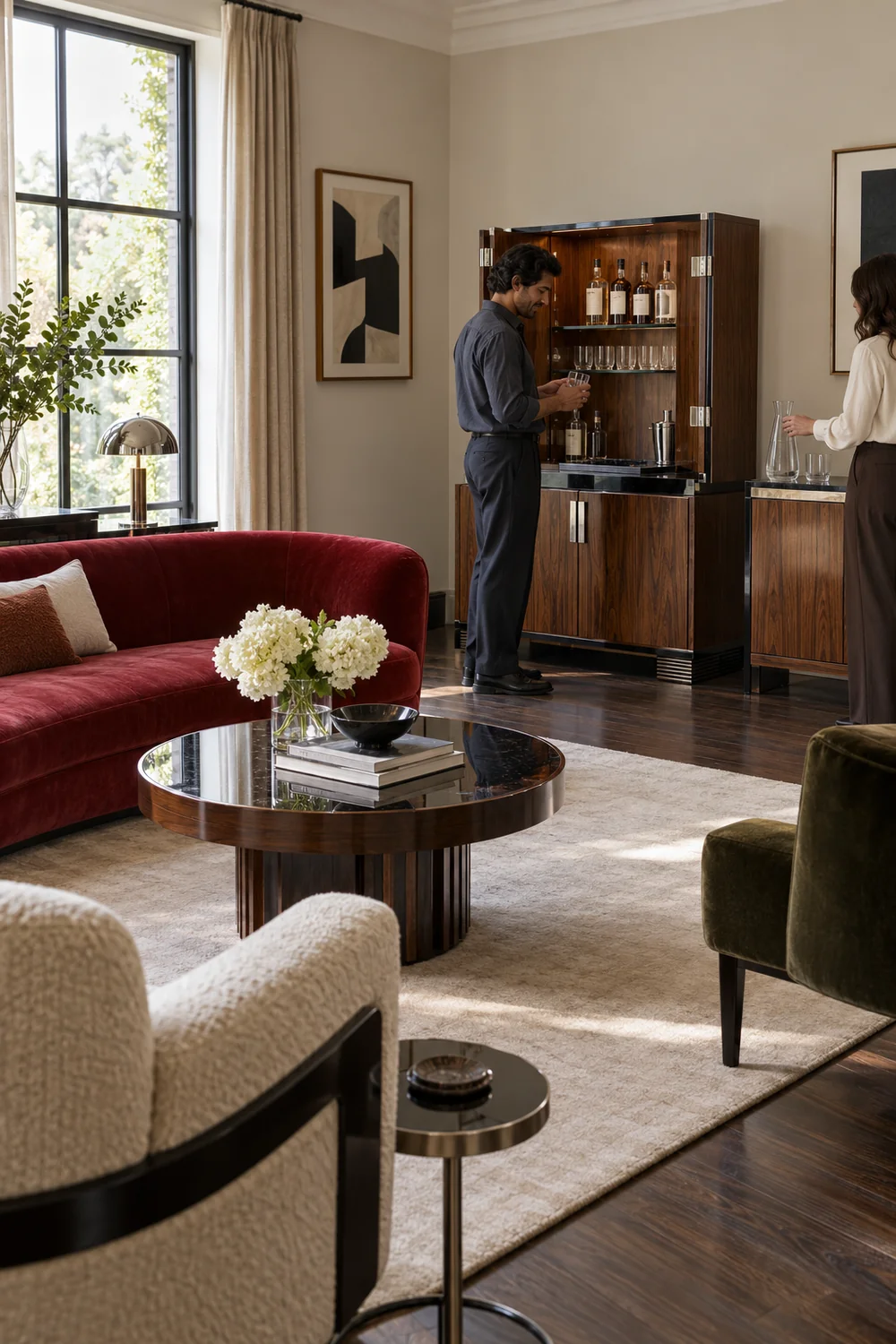
Next ask someone else to take water while you stand at the host's position. Watch which glass they choose and where they instinctively put the jug back. If they have to reach across your tools, change the grouping or move the water to another suitable surface. A small adjustment before the gathering is easier than guiding every refill while trying to join the conversation.
The return journey needs its own trial. Set an empty used glass on the intended return tray, then carry that tray towards the kitchen. Can you lift it without reaching across clean glasses? Can another person still walk towards a seat? Keep the tray within its intended use and carry only what you can manage comfortably. I would make more than one clearing trip when that is the practical choice rather than treat a full tray as the goal.
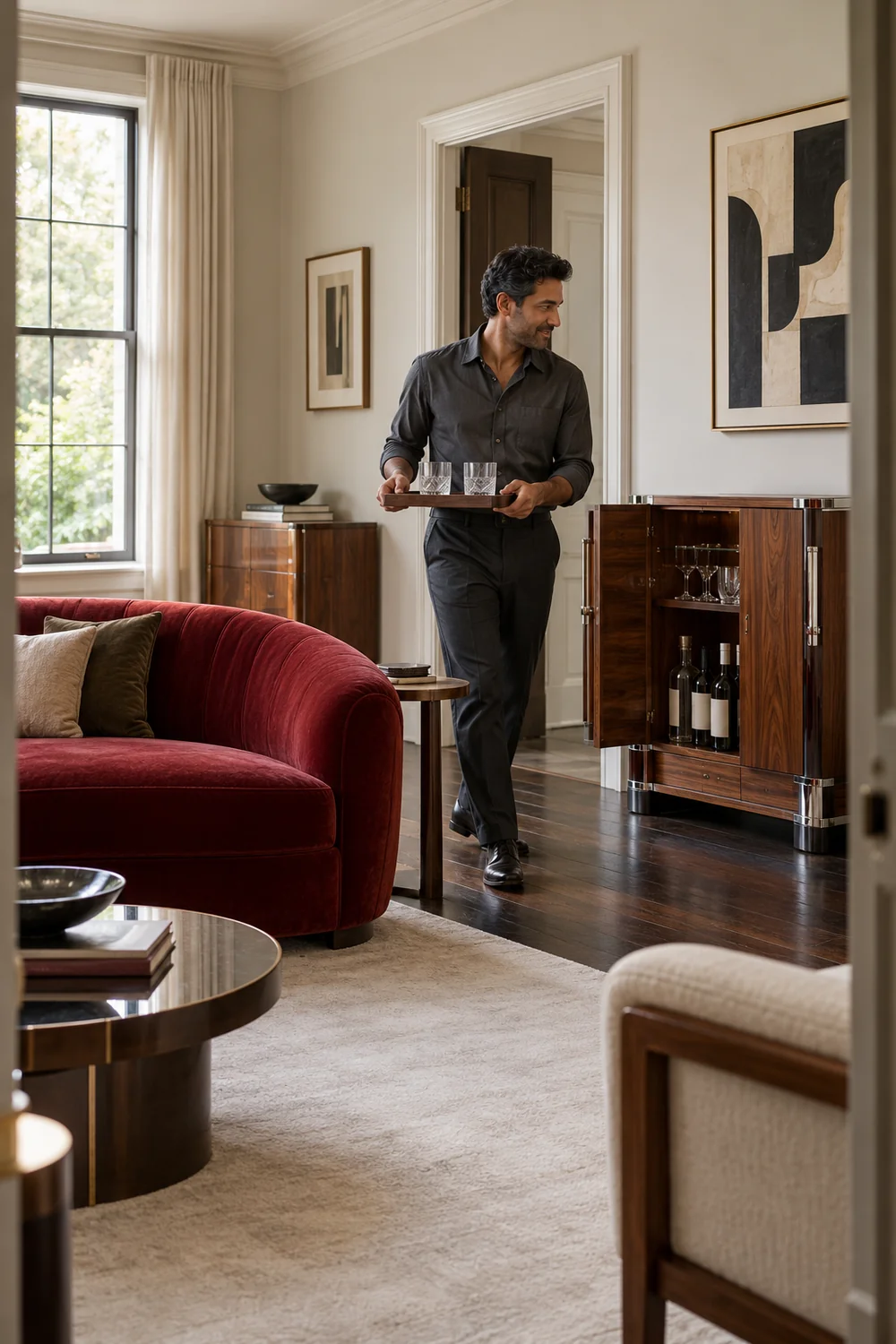
I would finish the rehearsal by looking at the cabinet from the doorway again. The practical arrangement should still feel part of the room: walnut visible, the working area clear, glasses in understandable groups and the red seating ready for people. If the setup only looks attractive when half the useful objects are hidden elsewhere, simplify the display. If it looks crowded because the menu needs too many objects, simplify the offer. The evening matters more than preserving the first styling attempt.
After the visit, I would return used items to the kitchen and follow each maker's cleaning instructions. Glassware care differs, so do not assume every delicate looking glass needs handwashing or that every sturdy looking one can go in the dishwasher. Riedel's guidance, for example, distinguishes items by their stated care requirements and warns against twisting the bowl against the base while polishing. I would check the instructions for your actual set rather than apply one method to the whole cabinet.
Let the cleaned pieces dry before putting them back, and clean the cabinet surface according to its finish instructions. Return tools to their group and remove the temporary used glass tray if it has another home between visits. The everyday arrangement can be quieter than the serving arrangement. You might leave the glass groups stored inside and the top mostly clear, allowing the cabinet's outline and walnut grain to carry the decorative work until friends come again.
After a few gatherings, I would review what actually happened. Which glass was always missing? Which tool never left its container? Did water remain easy to reach, and did used glasses return to the intended place? Adjust the contents when the problem is a missing object or an awkward group. If people repeatedly cross the working position or the cabinet doors still interrupt the room, return to the Art Deco home bar plan and reconsider its location or serving arrangement.
I would keep the setup that helps you welcome people and then releases the room back to ordinary life. Its success is visible in the small actions: a guest finds water, a glass has a landing place, the host sits down, and the cabinet resets without a complicated display to rebuild. Keep the useful objects, remove what gets in the way and let the Art Deco materials provide the character. Before the next visit, you should be preparing the evening you want, with a cabinet that already knows its job.