Newsletter Subscribe
Enter your email address below and subscribe to our newsletter

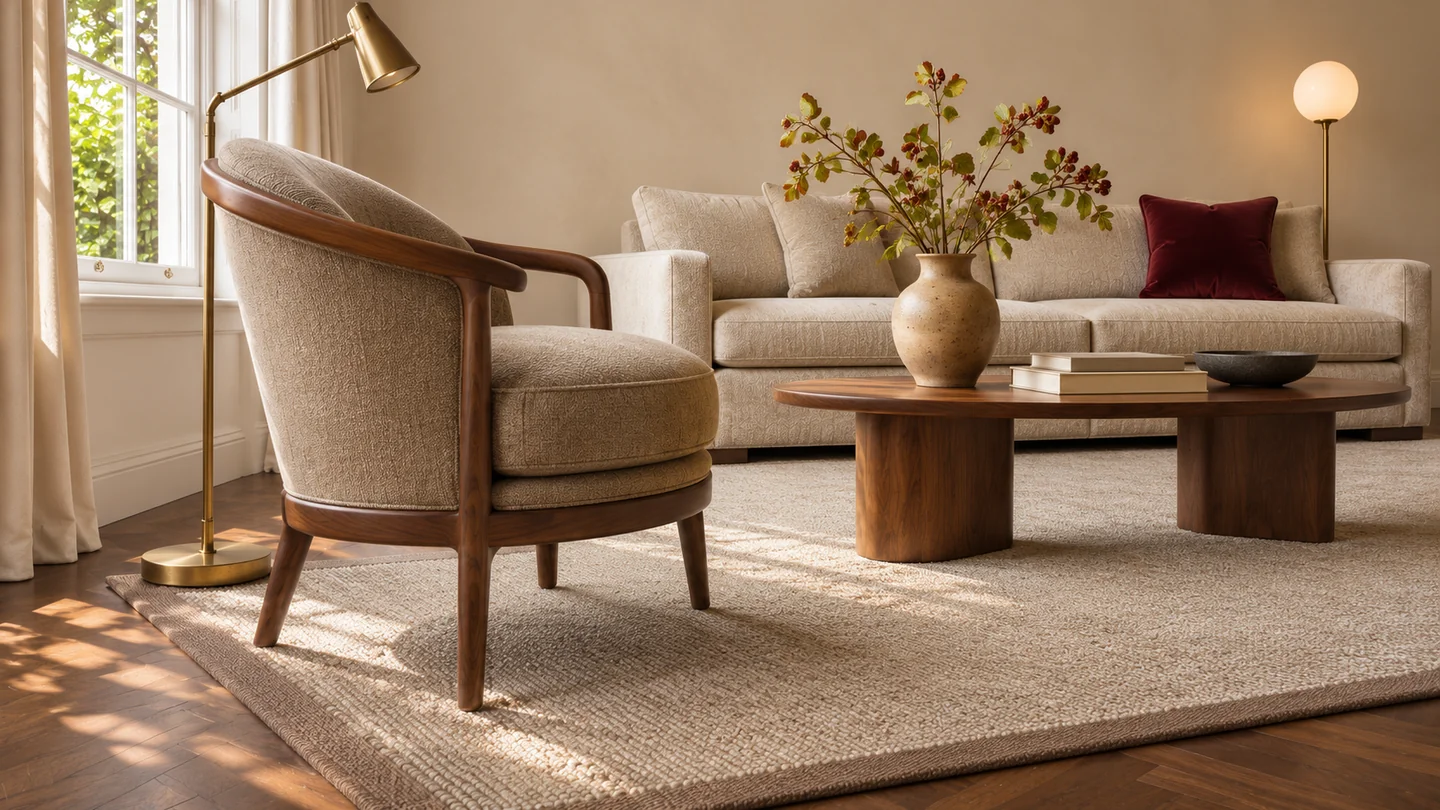
I would choose Art Deco living room decor by testing it beside the sofa you both want to keep. Start with two rug footprints, compare a quiet pattern with a stronger one, then check the light and finishes from both seats. You will finish with a shortlist you can measure, sample and agree on in the room.
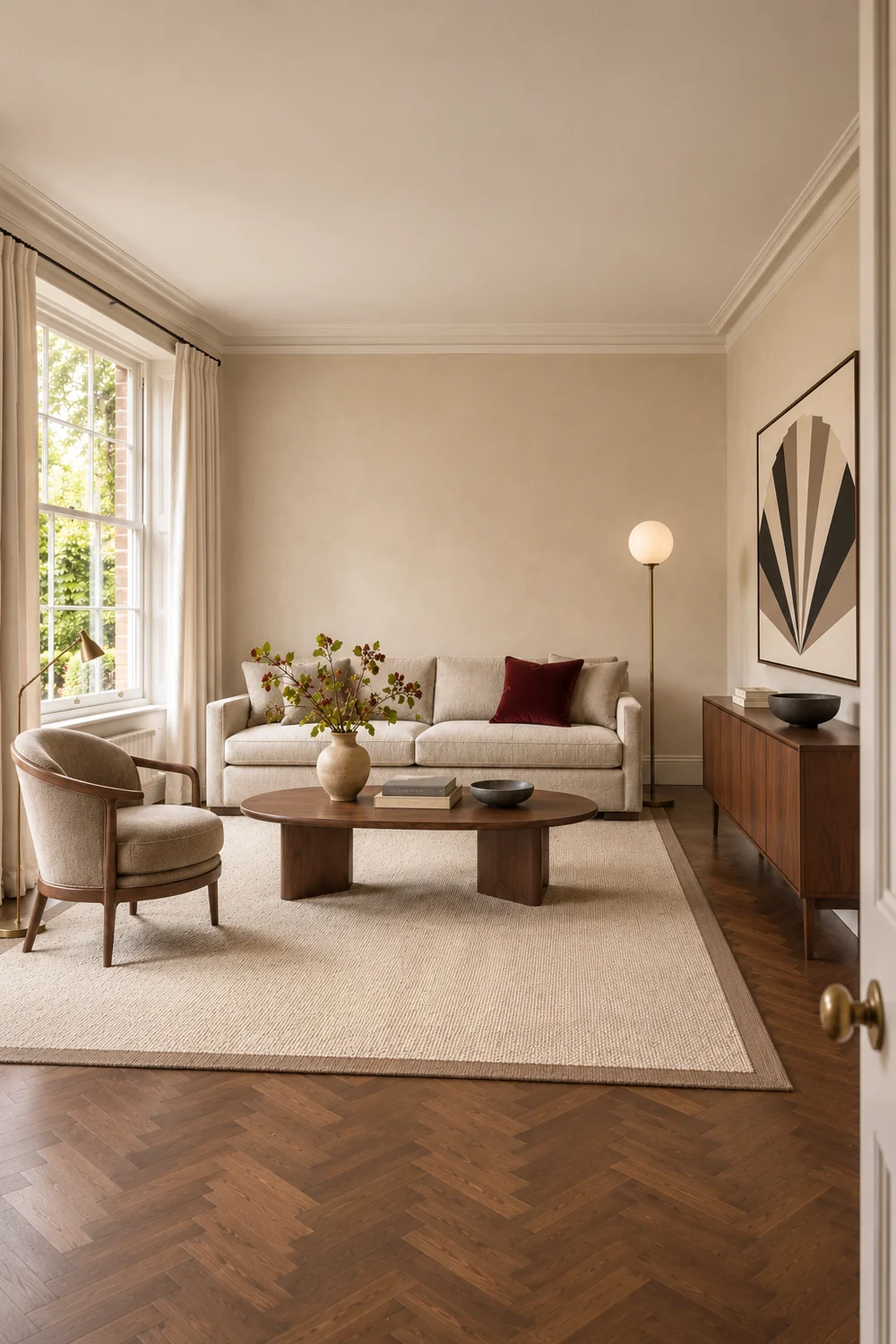
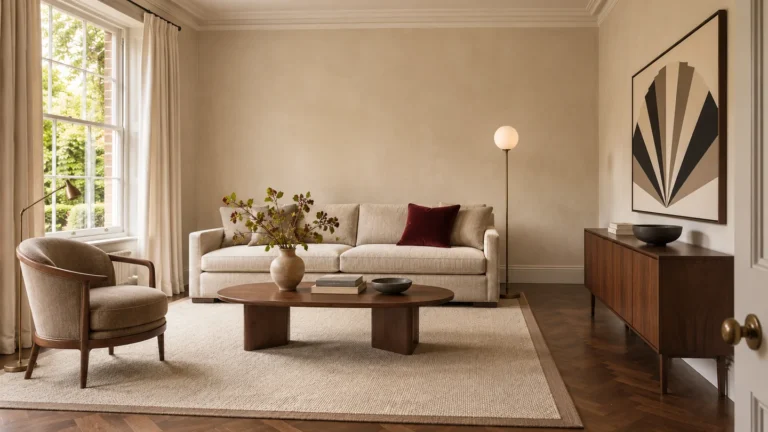
I would bring the approved room plan back into the room before looking at more rugs. In the example, the 218 centimetre oatmeal sofa stays against the long wall of a 420 by 360 centimetre room. The window chair angles into the seating group. A low walnut sideboard and fan artwork sit on the right hand wall. The door is just beyond the sideboard. The aim is to draw the seats together while keeping that route easy to use. Measure from the chair at its working angle and from the sofa with the table in its trial position.
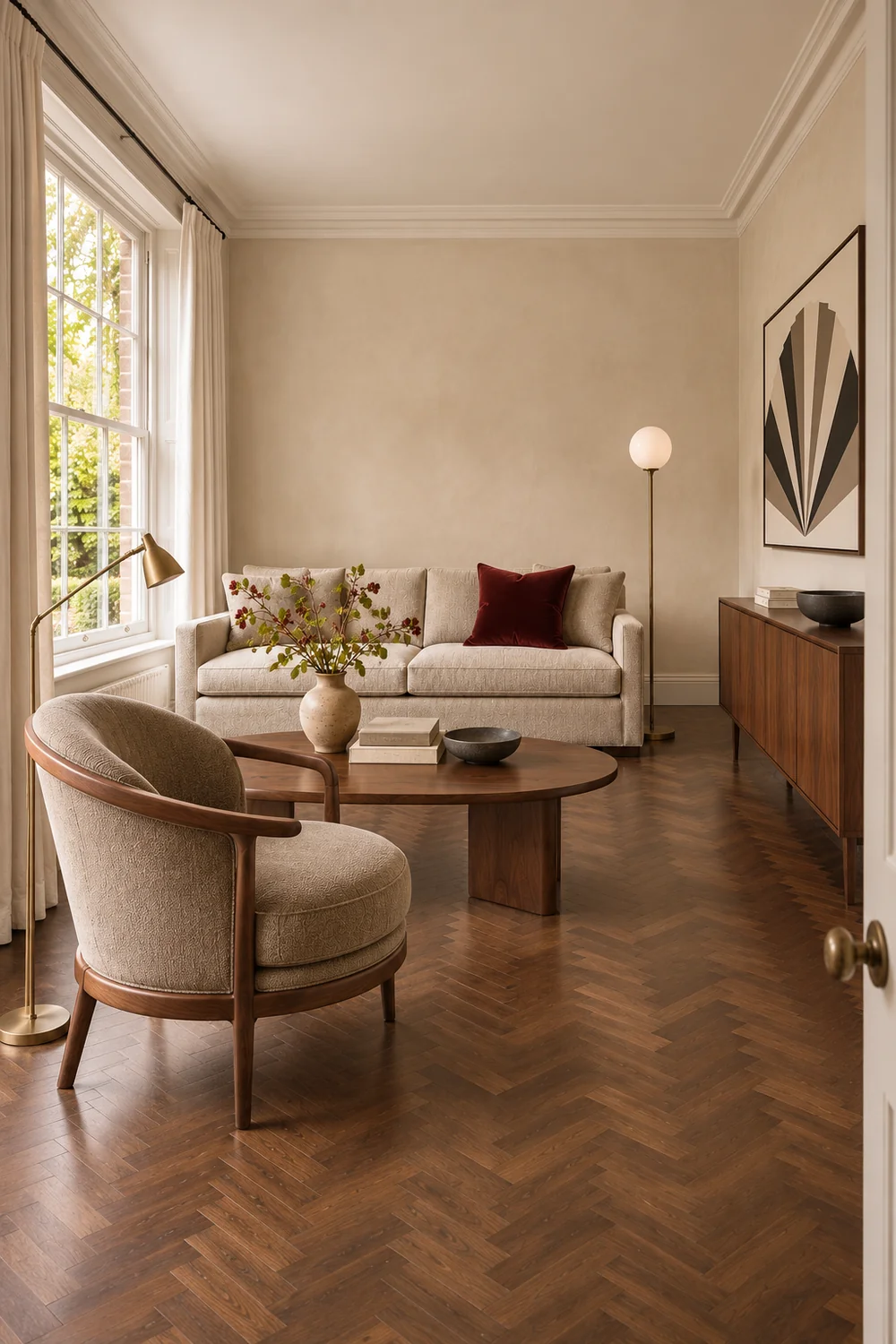
Mark the corners of a 180 by 270 centimetre rug, then mark the corners of a 200 by 300 centimetre rug, both with the long edge parallel to the sofa. Those are two samples to test in this room, and the actual clearance depends on your furniture and how you centre the rug. Use floor appropriate removable tape and test it first in a hidden spot. A few paper corner marks held securely in place will work on a sensitive floor. Keep the same sofa and table positions while comparing both outlines. Centred together, the smaller rectangle leaves 10 centimetres along each long side and 15 centimetres along each short side.
I would take notice of where the feet actually land. If one front foot of the window chair stays off the smaller rectangle, move the rectangle just enough to see whether the other edge then creeps into the walking route. Make that change with a person sitting in the chair. Try the entry with the door open and with everyday things in your hands. If one outline interrupts a turning space, use the sofa layout rehearsal to check the route around the occupied seats.
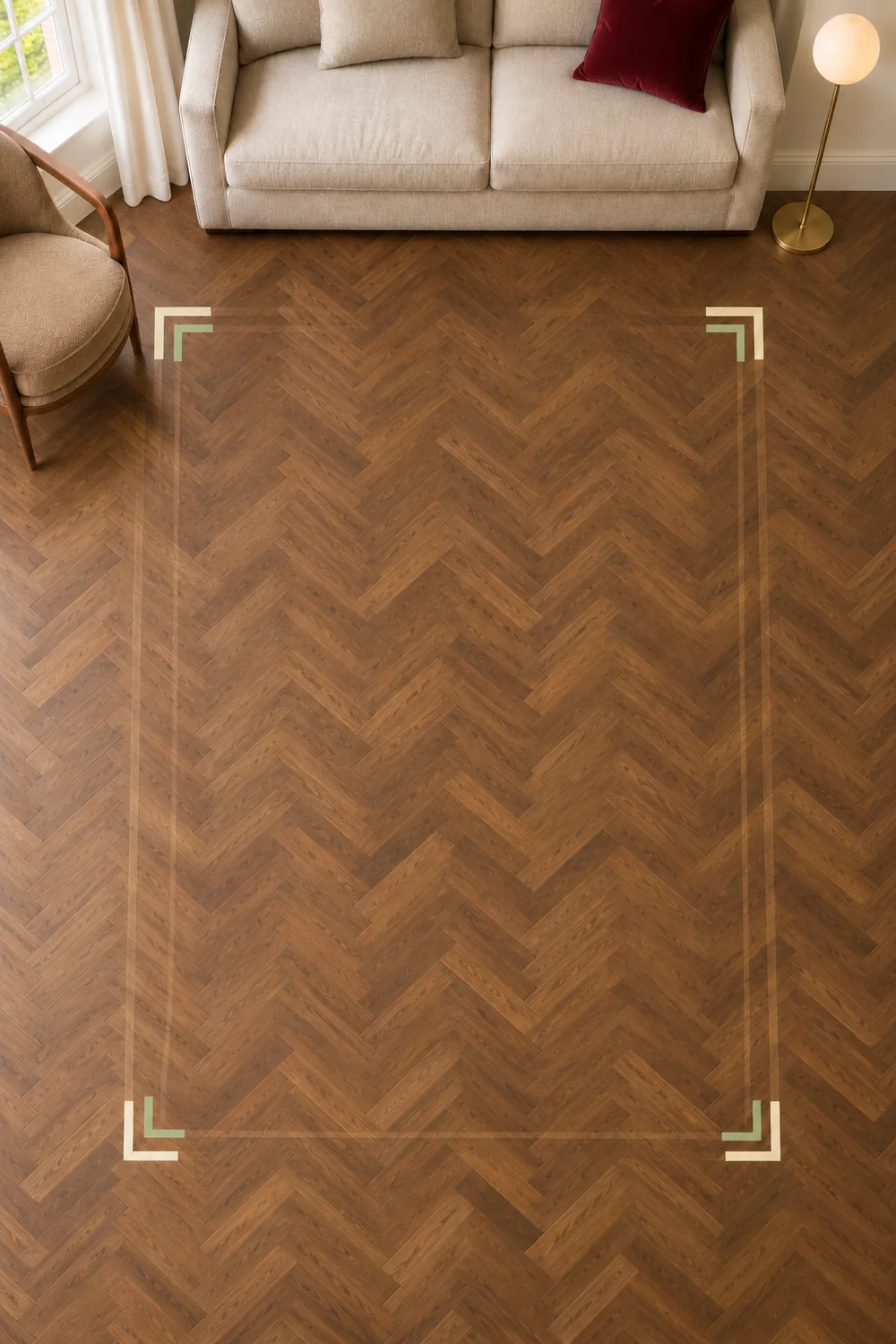
For this example I would start with the smaller footprint if it catches both front chair feet and leaves the chair steady. The larger size earns its place if the smaller one leaves an awkward edge under the chair and the larger one still clears the route and door. Use the actual thickness of the candidate rug and underlay when checking door clearance and chair stability. Write down the size that passed, the distance from its corner to the nearest door opening and the position of the front chair feet. That is the size and placement you can take to the shop.
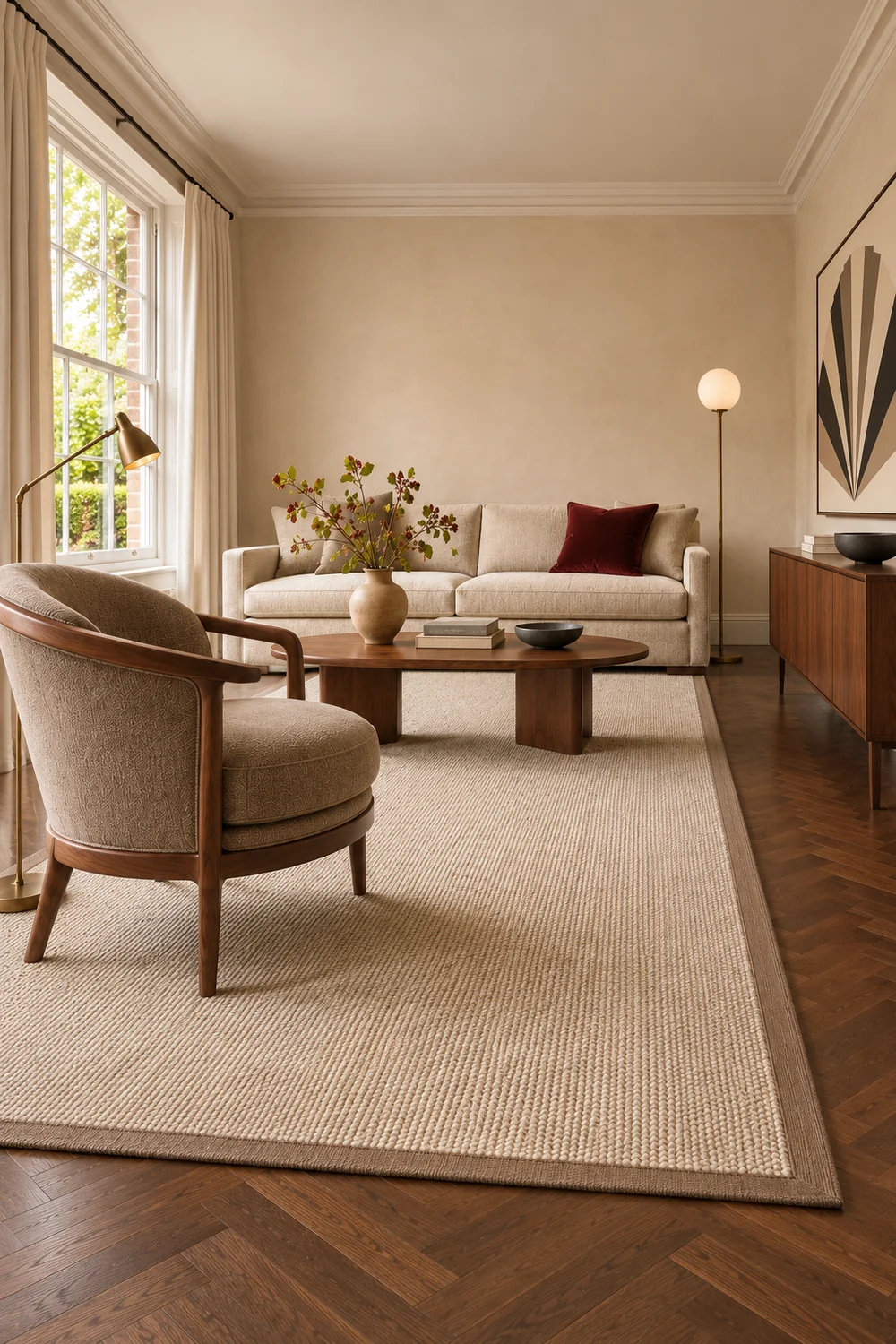
If both outlines fit the room, photograph each set of corner marks from the doorway and again from the window chair. Ask each person to point to the edge they expect to notice most when they walk through. In this example I would prioritise a clear arrival over the extra reach of the larger rug. If the choice is still close, compare how far the extra width would project past the table and where a thicker bound edge would sit relative to the door. Keep the photograph of the winner so you can restore the same position later.
I would compare two samples within the size that worked. Start with a low contrast border in oatmeal and taupe. Beside it try a stepped motif that introduces oxblood on the neutral ground. Choose samples large enough to show a full repeat or ask for a dimensioned picture of a full repeat with a physical swatch. The square you see online may show a very different proportion of the pattern from what appears under the walnut table.
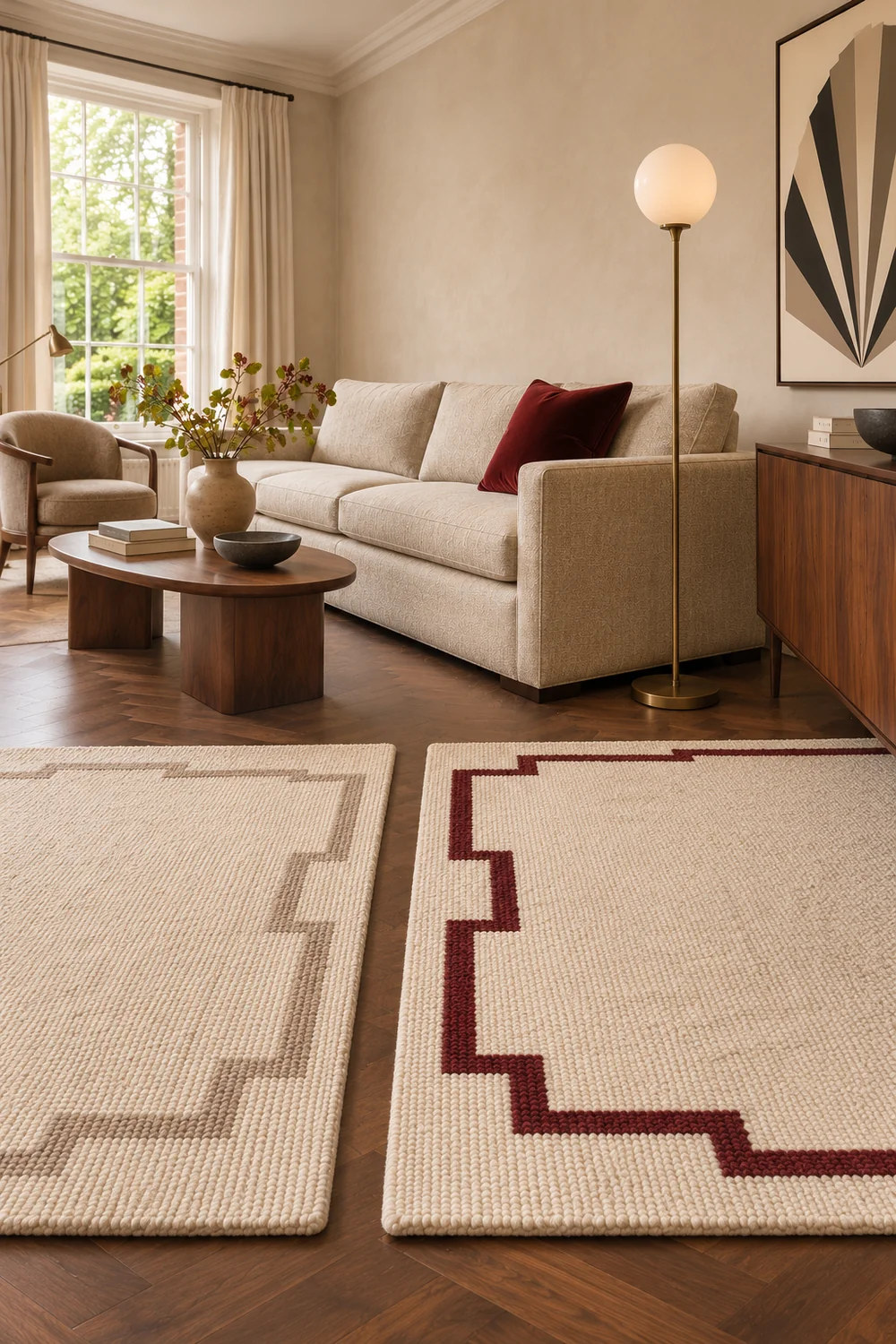
Place one full repeat where the open part of the rug would show beside the sofa and a second across the table line. Use a sheet of plain paper at the repeat size if the manufacturer lends a small sample. Draw a few broad lines in the correct position to judge scale, then put the actual swatch on top for colour and texture. A border that almost entirely disappears under the sofa and table contributes very little. For a stepped pattern I want at least one recognisable shape in the exposed area. In a narrow stripe of visible floor, a simpler border can read more clearly.
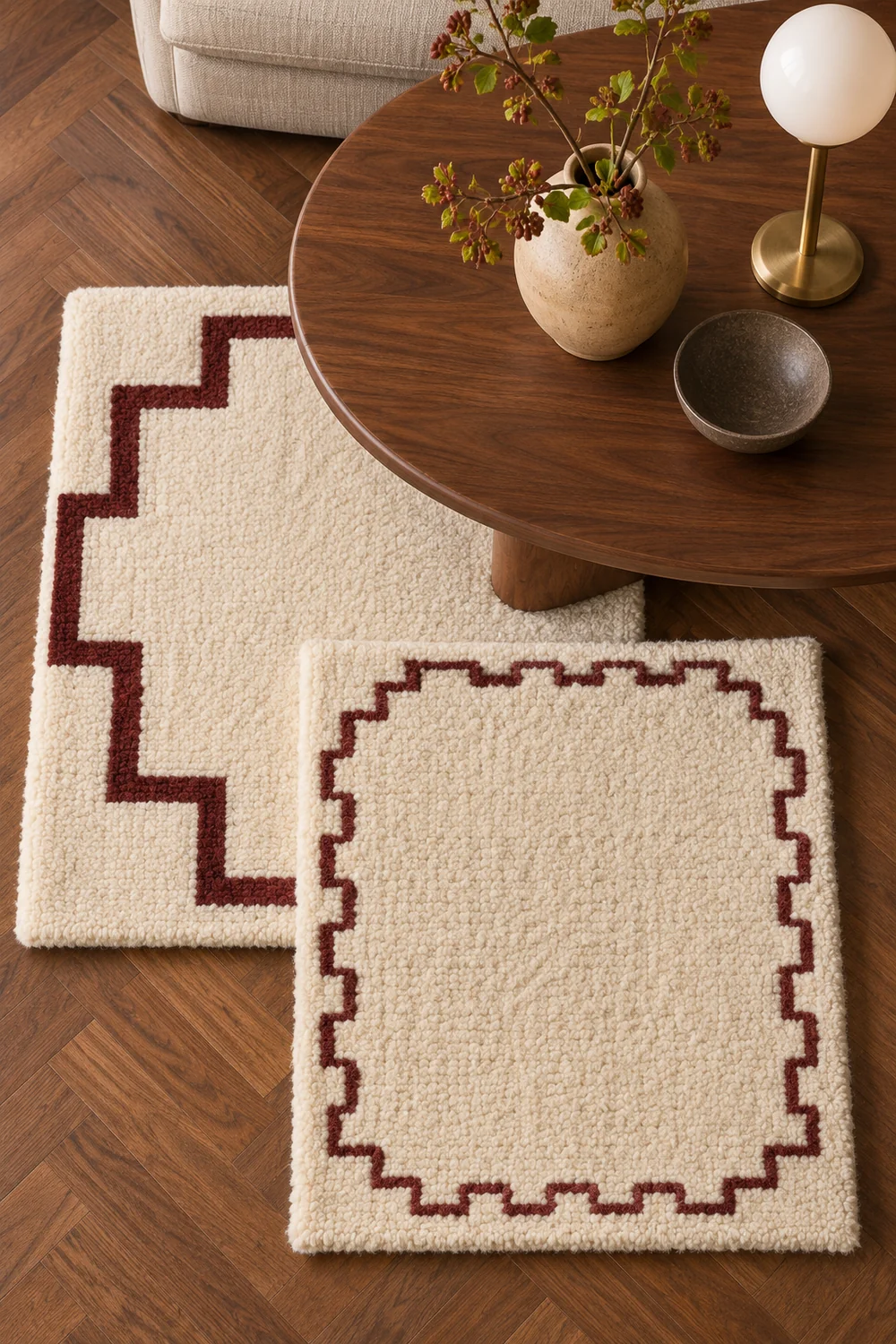
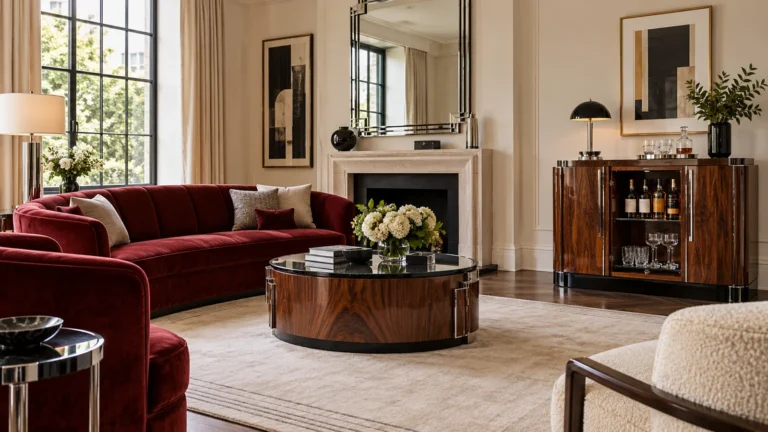
Compare the floor from the entrance and from each seat using the same light and distance. When one person likes a stronger pattern and the other finds it busy, keep the shape and try two levels of contrast at the same scale. Then keep the contrast steady and try a larger or smaller repeat. If both partners like the outline of a fan or a step but react differently to oxblood across the floor, try the same geometry in warm taupe. The Art Deco living room motifs can help you identify the shapes you like well enough to carry across from the gallery.
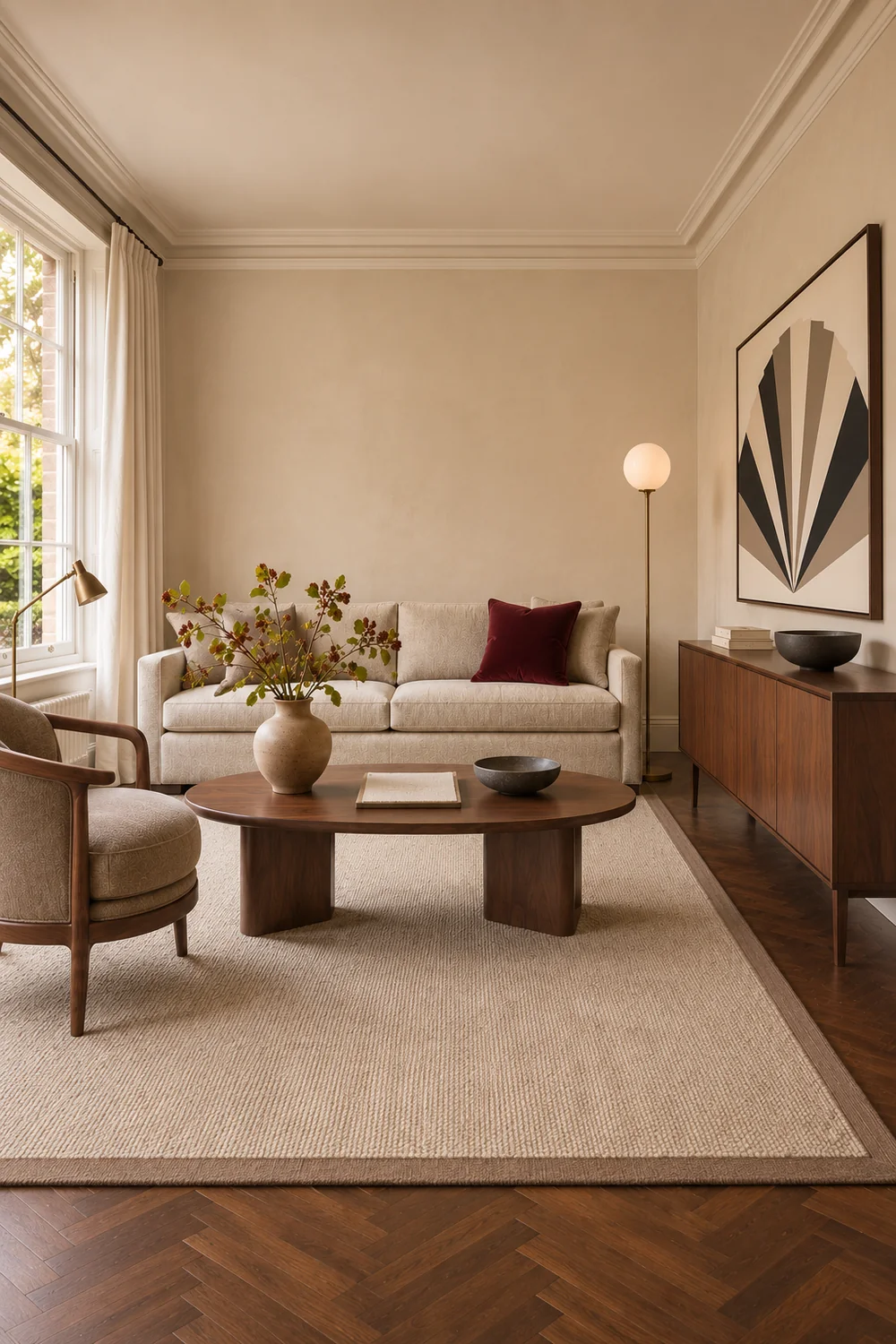
I would put the preferred swatch beneath the fan artwork from your room plan and see which catches the eye first. In the worked room I would choose the quiet border with the stronger fan on the wall. If the two of you prefer the oxblood stepped rug, I would swap to calmer artwork so the rug has room to read. Rub a sleeve or sock lightly against the swatch and look at the pile from both directions. Ask about the backing and cleaning before judging comfort from a sample that will never see the wear of an entrance route.
I would test a brass stem lamp with an opal shade near the right end of the sofa, using the socket shown on the plan. In the worked room its curve echoes the large fan shape and its lighter shade sits against the cream wall. The window chair keeps a separate task light, which means the sofa lamp can be chosen for its useful glow and its relationship to the room. Start by placing a light you already have in the planned position or by holding an unpowered shade at the proposed height while the other person sits.
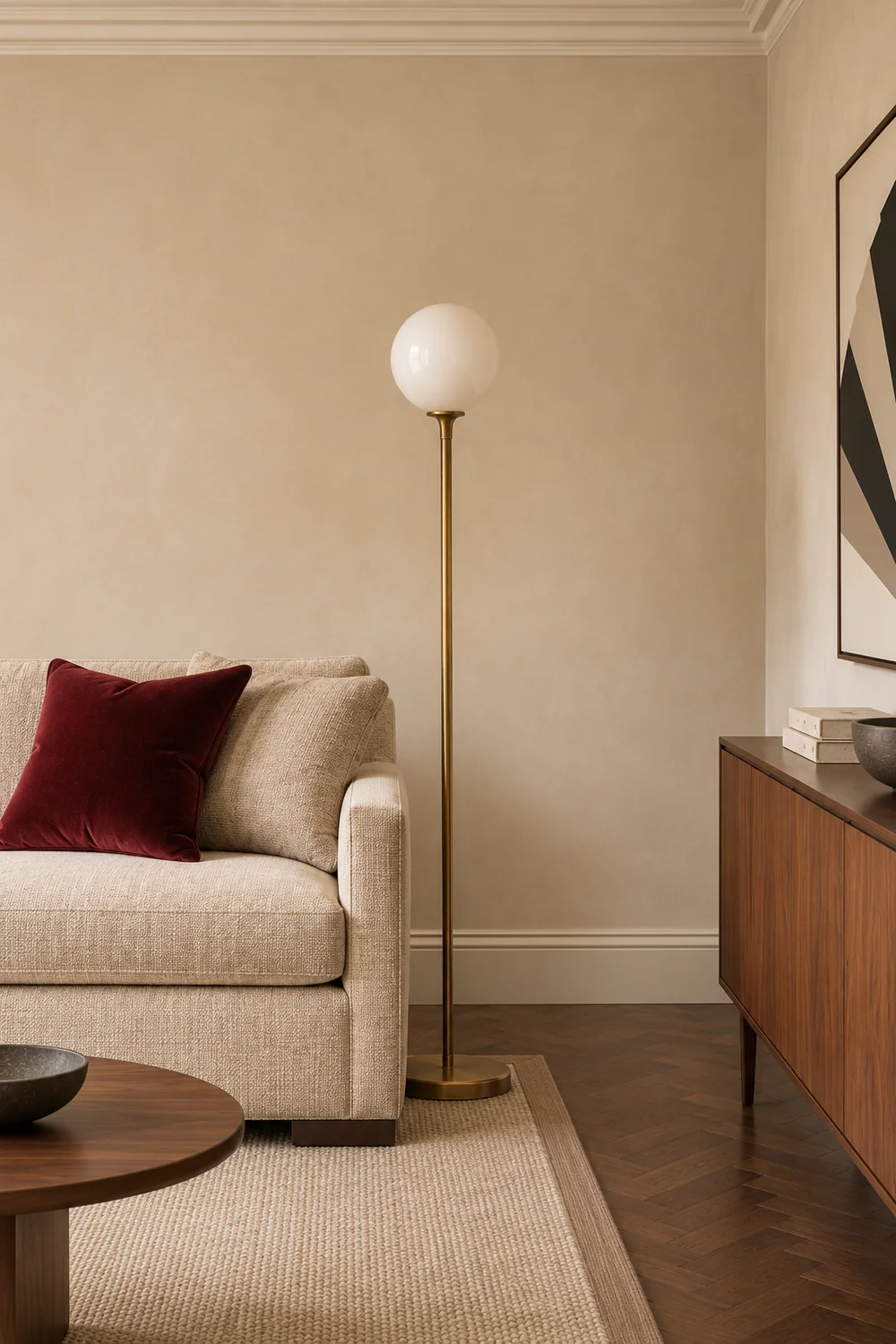
Sit where you usually lean, since a shade that hides the bulb from the centre of the room can expose it from one sofa end. Look toward the lamp with the room in its ordinary evening lighting. Check the amount of light on a book, whether the switch is easy to reach, and how much of the shade or bulb reflects in the picture glass or a television screen. Turn the light off and repeat from the window chair, then turn on the chair light too. Each of you can take a quick photograph of the two views at the same exposure and see where the strongest reflections change.
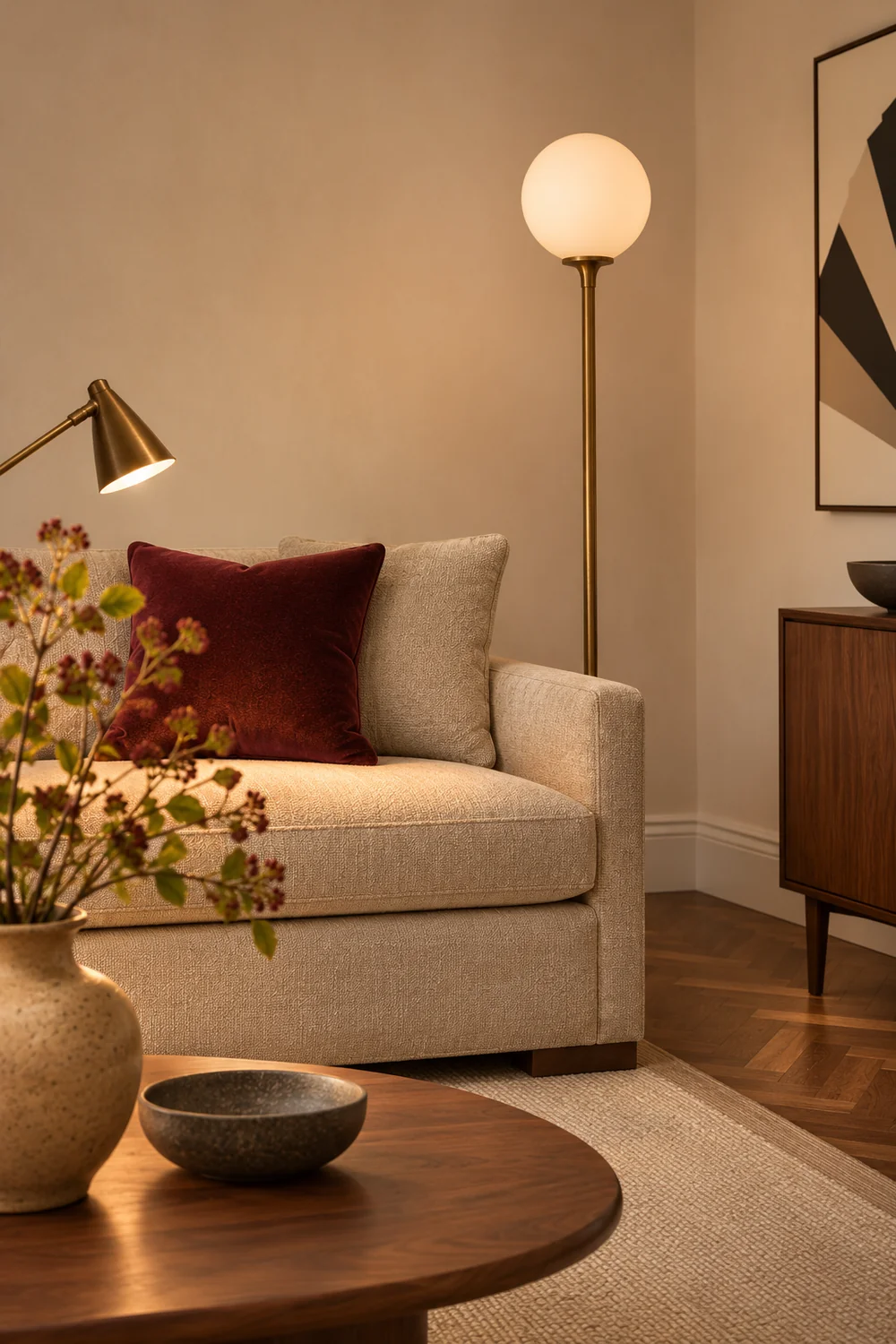
I would move the lamp a little farther back beside the arm if the seated view exposes a bright spot. A larger diffusing shade or a place a little farther from the artwork may suit that room better. Check that the base fits behind the seat line and the cord follows the perimeter without crossing the door, the chair approach or the rug. If the socket sits on the wrong wall, review these floor and table lighting ideas for another approach using existing sockets. Keep a lamp that each person can live with during the evening, even if another model looks more dramatic in the photograph.
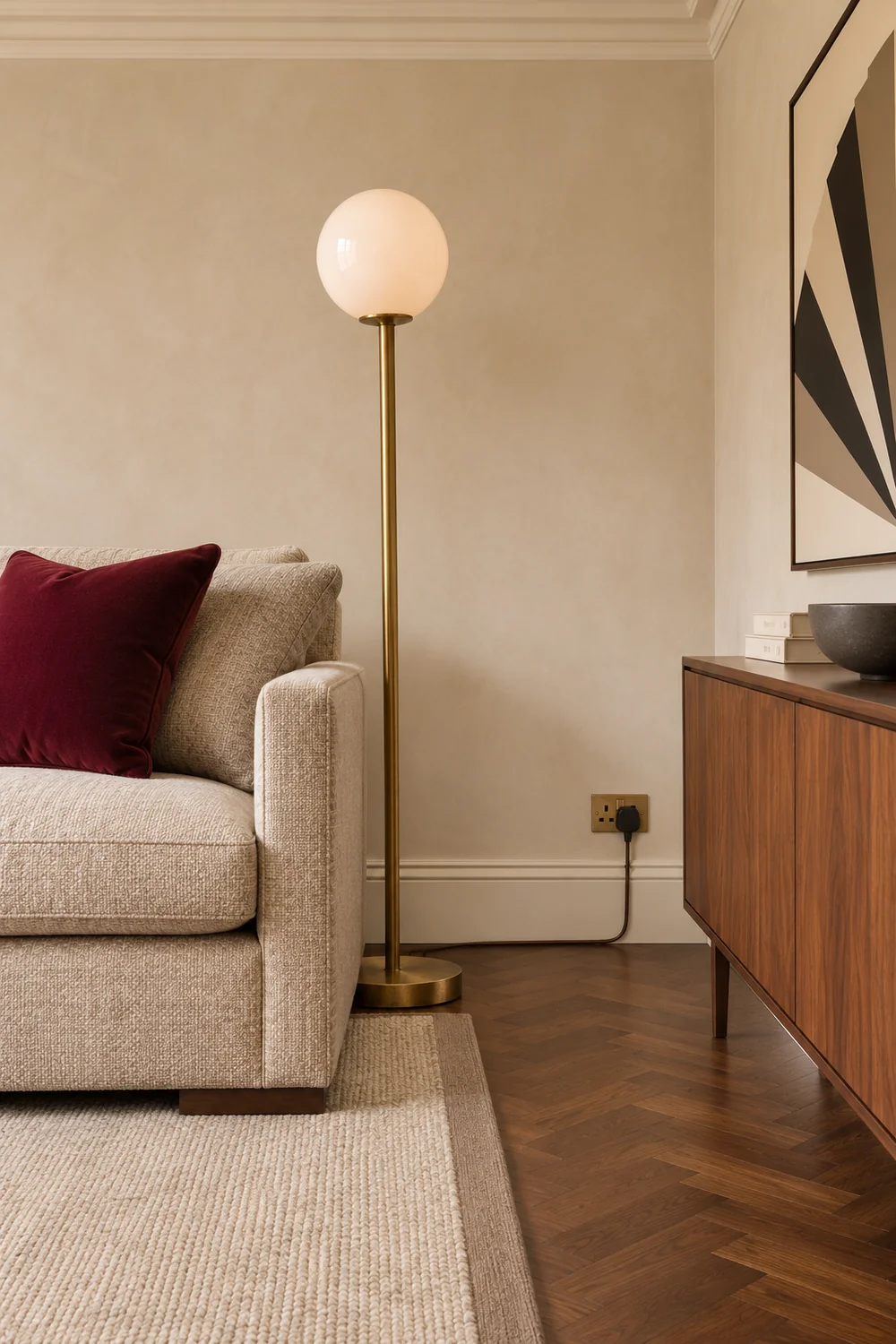
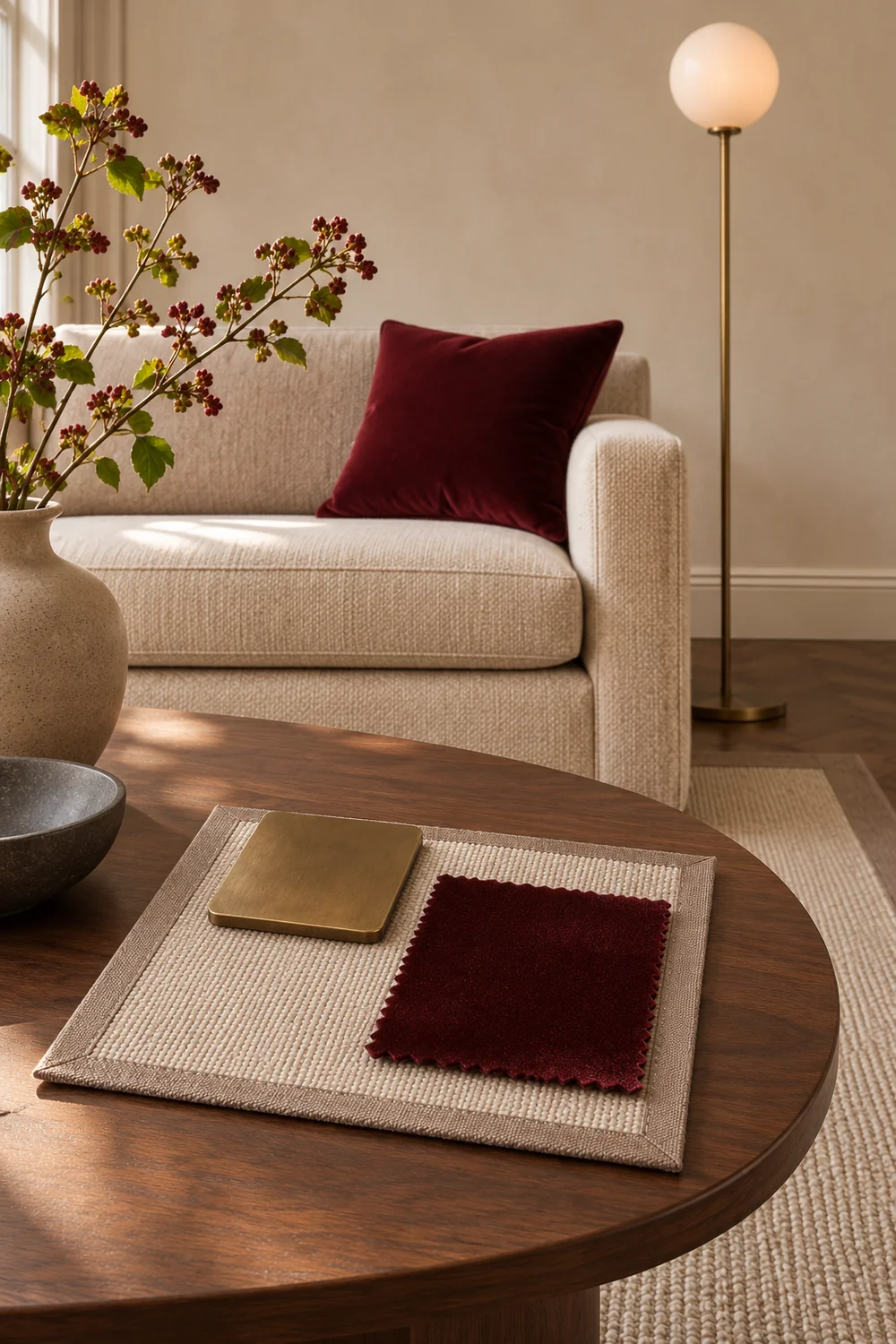
I would gather the rug swatch, upholstery sample or a photograph of the sofa in daylight, a piece of walnut, the brass and one oxblood sample. Set them beside one another at the height they will actually sit. Hold the brass vertically if it belongs to an upright stem. Put the rug sample on the floor to see how shadow changes it. Put warm cream beside the oxblood and see whether the colour seems nearer to brown, purple or red against the actual sofa. Mark the comparison that makes the shade easiest for both people to describe.
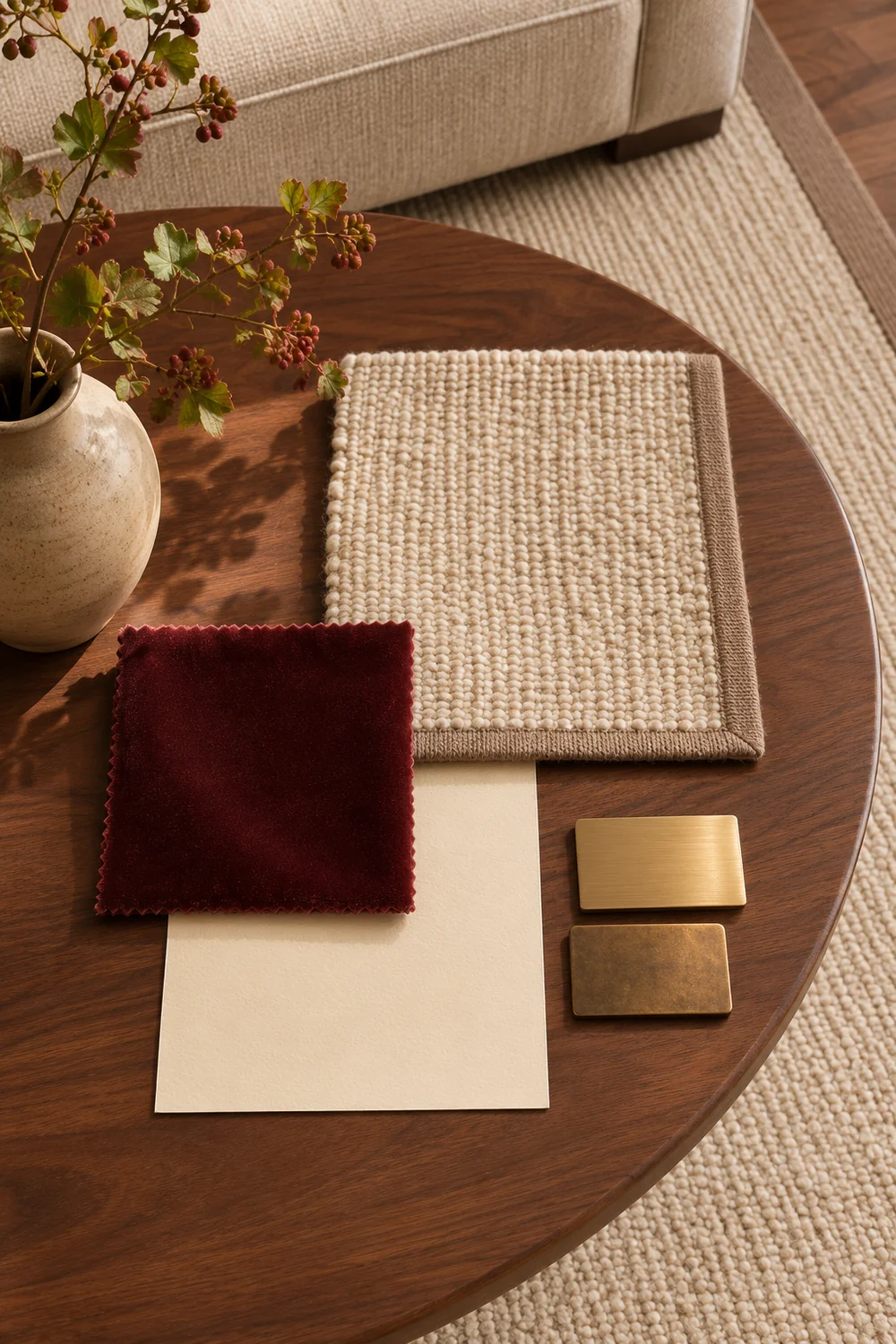
Check the same group near the window and under both lamps. A bright brass surface carries more sparkle across a room than a brushed or aged finish. I would choose aged brass on the main lamp in this example so the strong shape of the shade stays visible without competing with a reflective surface. If the room already has another metal, compare it next to the new finish before deciding whether it needs to recur. Photograph the sample stack in daylight and under your usual lamp, then make the final comparison with the real samples in your hand.
Try the oxblood velvet by the arm of the sofa and again beside the walnut sideboard. I would use a single cushion or small upholstered item first in a room where the rug has a quiet boundary. If the bold rug makes the colour easier to agree on, let the cushion return to cream or a quieter woven tone. The Art Deco colour palette gives you a wider set of relationships to compare if the first accent remains hard to place. Change one component at a time so both people can see what made the final combination settle.
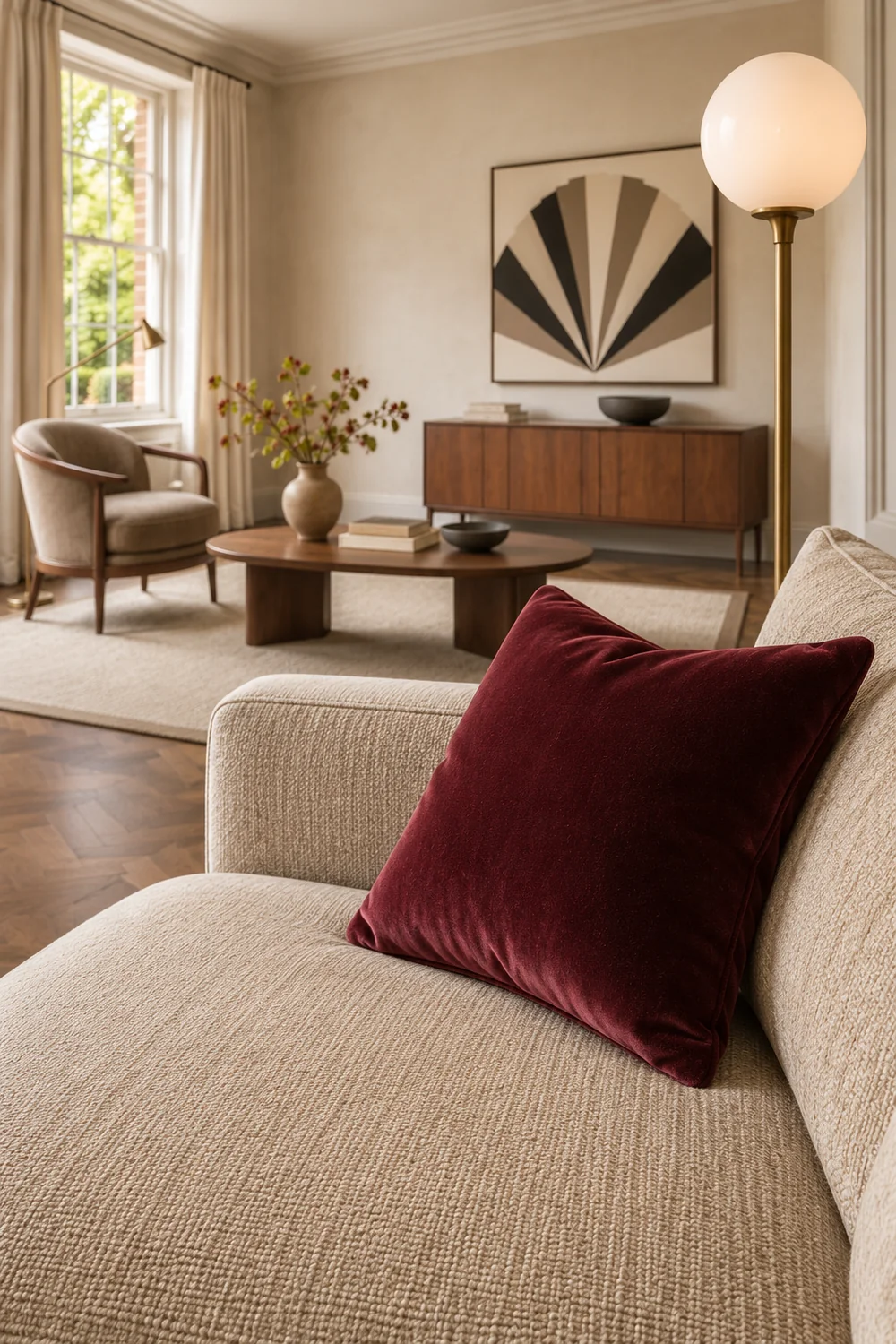
I would make the final list on one sheet. Record the finished room in the same order you will assemble it so each decision can still be checked. Start with the rug size, front chair foot placement and route clearance. Next record the actual repeat and the colour in the largest visible part. Add the lamp base footprint, outlet, shade position and a mark for the seat from which each of you tested it. Finish with one metal tone, an accent textile and the item that repeats it if you genuinely need another detail. Take one picture of the approved samples against the sofa.
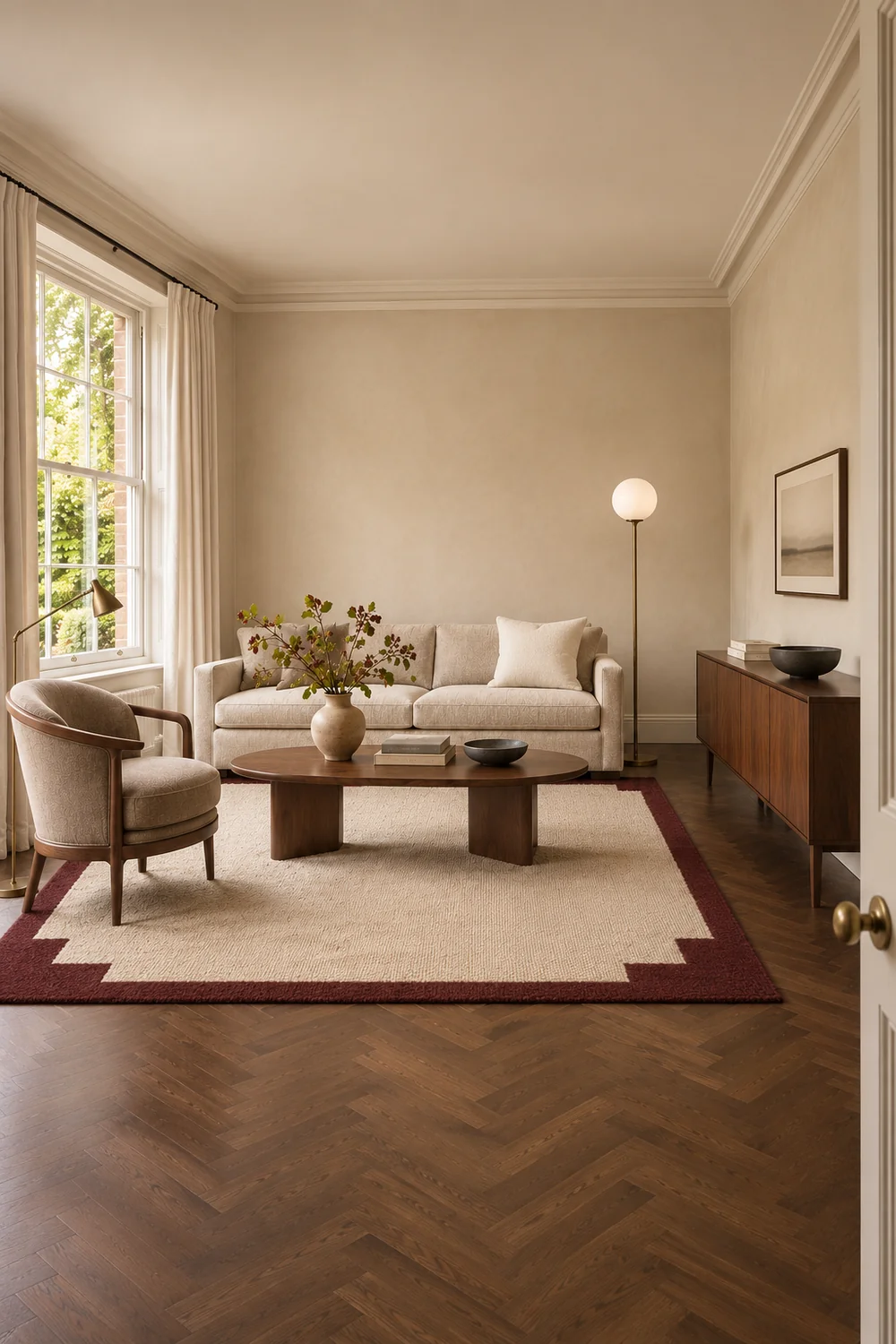
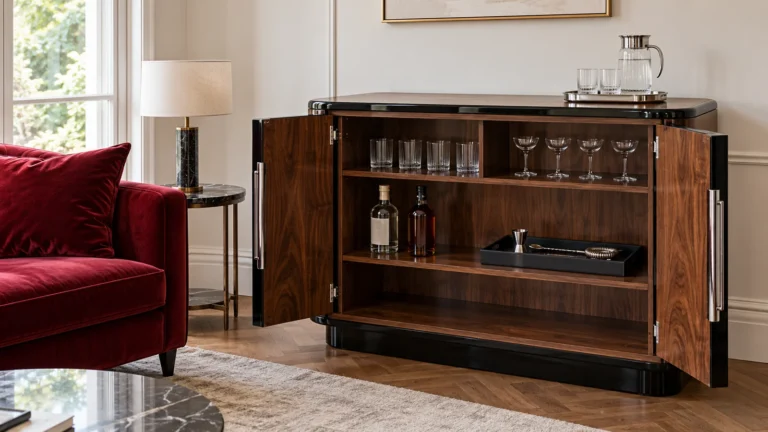
For the example my first set would be the smaller rug footprint with a low contrast taupe border, an opal globe floor lamp on aged brass, the existing walnut sideboard and one oxblood cushion. It works with the wall carrying the main fan motif. My alternative would keep the same measured rug footprint, use an oatmeal and oxblood stepped rug, and hang quieter artwork. I would double check that both plans leave the sofa and chair working as tested. Either gives you a concrete set of choices. Pick one as a complete scheme, since the most expressive piece from each can be stronger together than either person wanted.
I would rank each choice as approved, sample again or remove. Give each person a chance to name one condition that would change their choice, such as a scratchy surface or glare from the chair. Test that condition before changing another item. If the exact lamp is unavailable, take its acceptable height range, shade style and base measurement to the next option. If the rug choice changes, hold the order long enough to compare the new repeat and pile with the same taped outline.
I would set a date to look at the room after a week of normal use. Each person can make a note from their usual seat. Is the lamp comfortable during the activity it was chosen for? Does the rug still lie in the position you marked? Does the room feel restful or lively enough from across the doorway when somebody else is using it? Look at the notes together and make one small adjustment first. Move the cushion, shift the lamp or try the quieter sample on the floor for another evening.
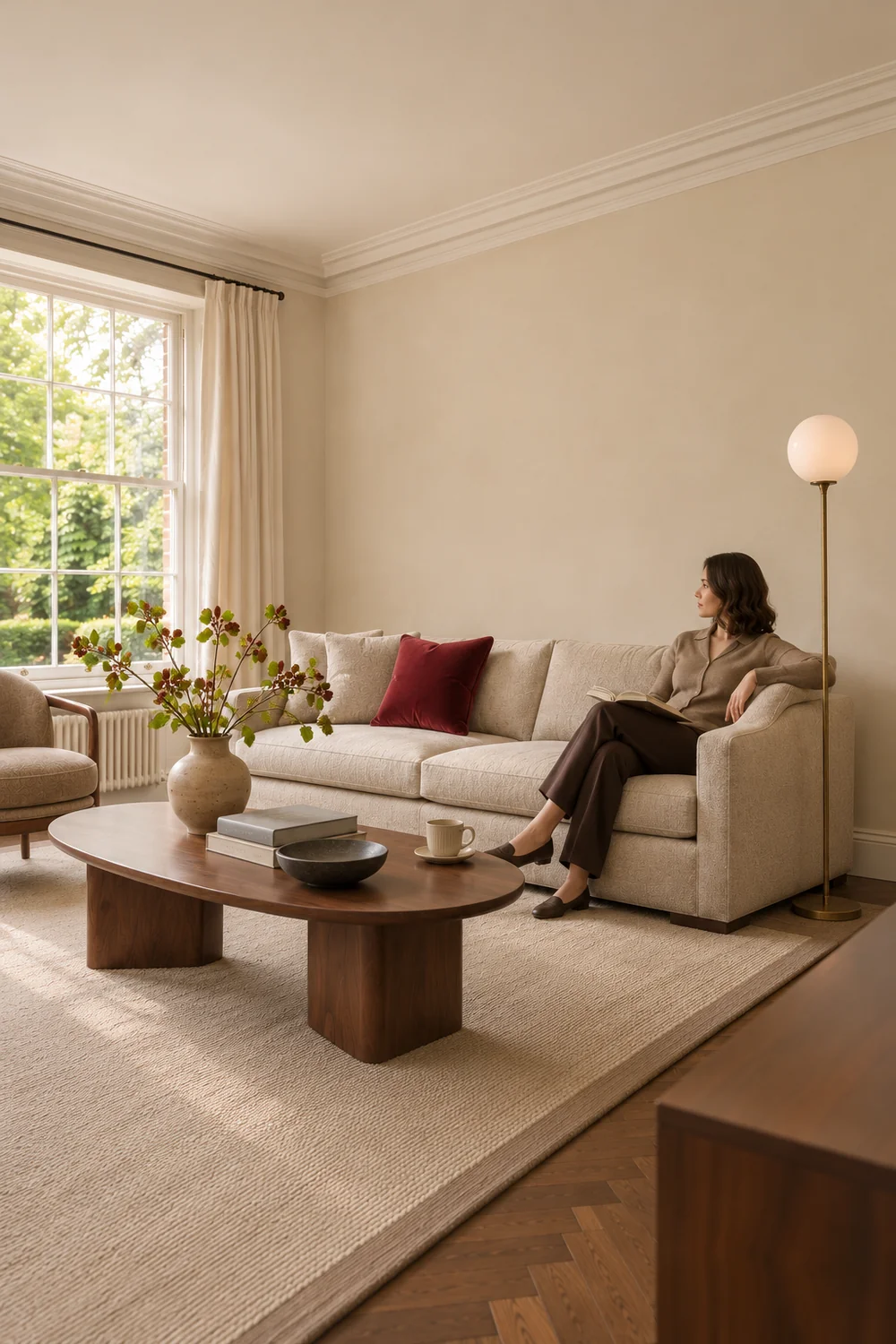
Keep the sample photograph, rug outline and lamp notes together so the next purchase starts with what you actually learned. If either seat is still hard to get to or the room draws attention to the wrong surface, reopen the modern Art Deco living room plan and check the placement decision before replacing anything. I would keep the changes that serve both seats and revisit only the piece of the plan your notes point to. That is how a room you agree on stays easy to adjust as you use it.