I’ve always thought brown and orange is the colour pairing that feels most like home, the kind of room that wraps around you the moment you walk in. What I love about these shades together is how many directions you can take them, whether that’s a terracotta accent wall, a buttery tan leather sofa, or a crackling log burner anchoring the whole space. Every look here is one you can genuinely steal for your own living room.
Why Burnt Orange Walls Make a Living Room Feel Instantly Alive
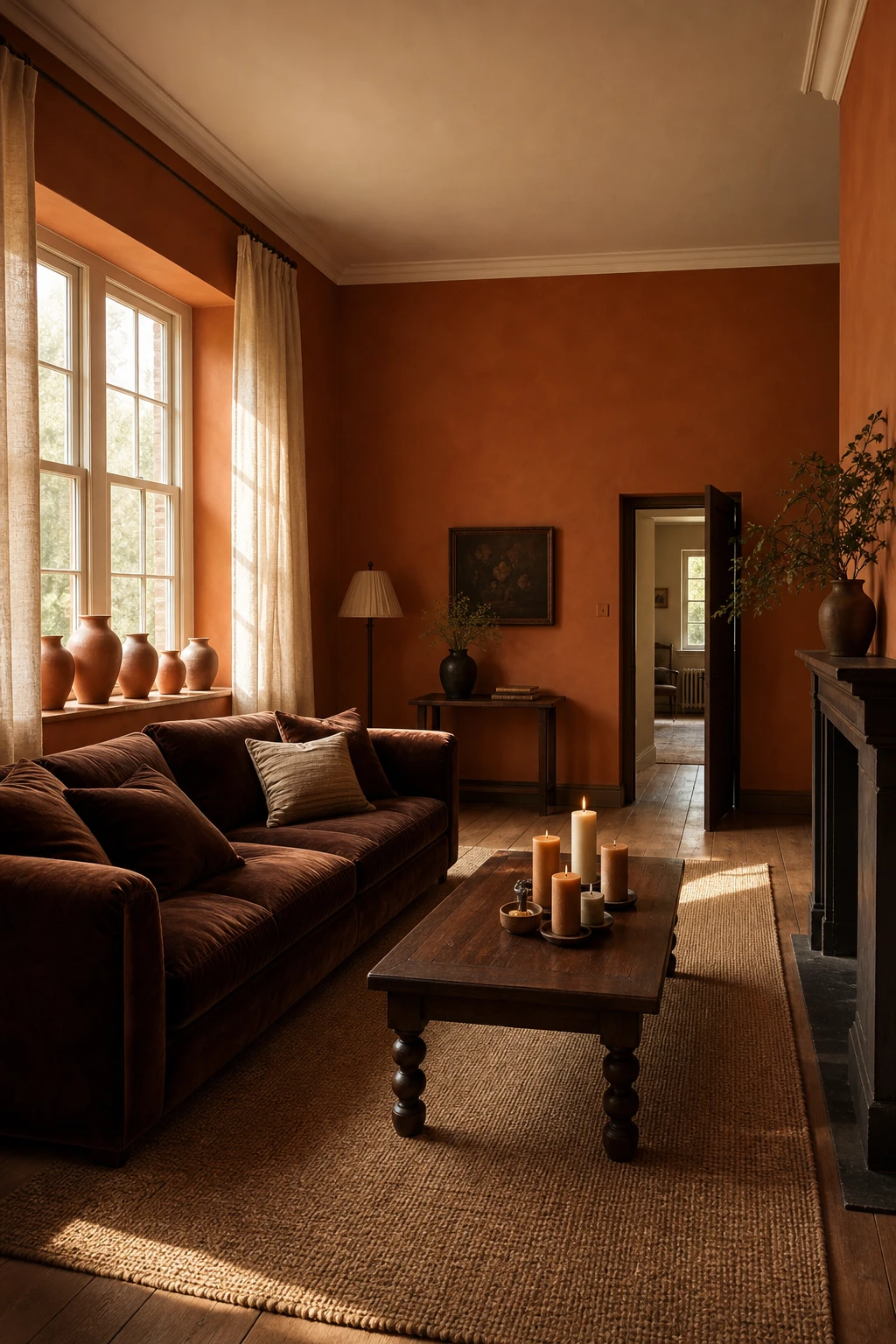
Wrapping all four walls in burnt orange is one of my favourite moves in a living room because the colour closes the space around you in the best possible way. You get that cocooning warmth no single accent wall can deliver, and watch how the brown velvet and walnut read richer, almost glowing, once the orange is behind them. The terracotta vessels stop looking decorative and start looking intentional.
The Key Details
Chestnut brown velvet sofa
Turned leg walnut coffee table
Jute area rug
Linen curtained sash windows
Arched terracotta ceramic vessels
Pro TipChoose an eggshell or soft sheen finish rather than flat matt, as it lets the pigment breathe and gives the walls a gentle depth that keeps the colour looking expensive through the day.
AvoidPulling the shade too red or too bright strips out the earthy, almost smoky quality that makes burnt orange feel grounded rather than overwhelming.
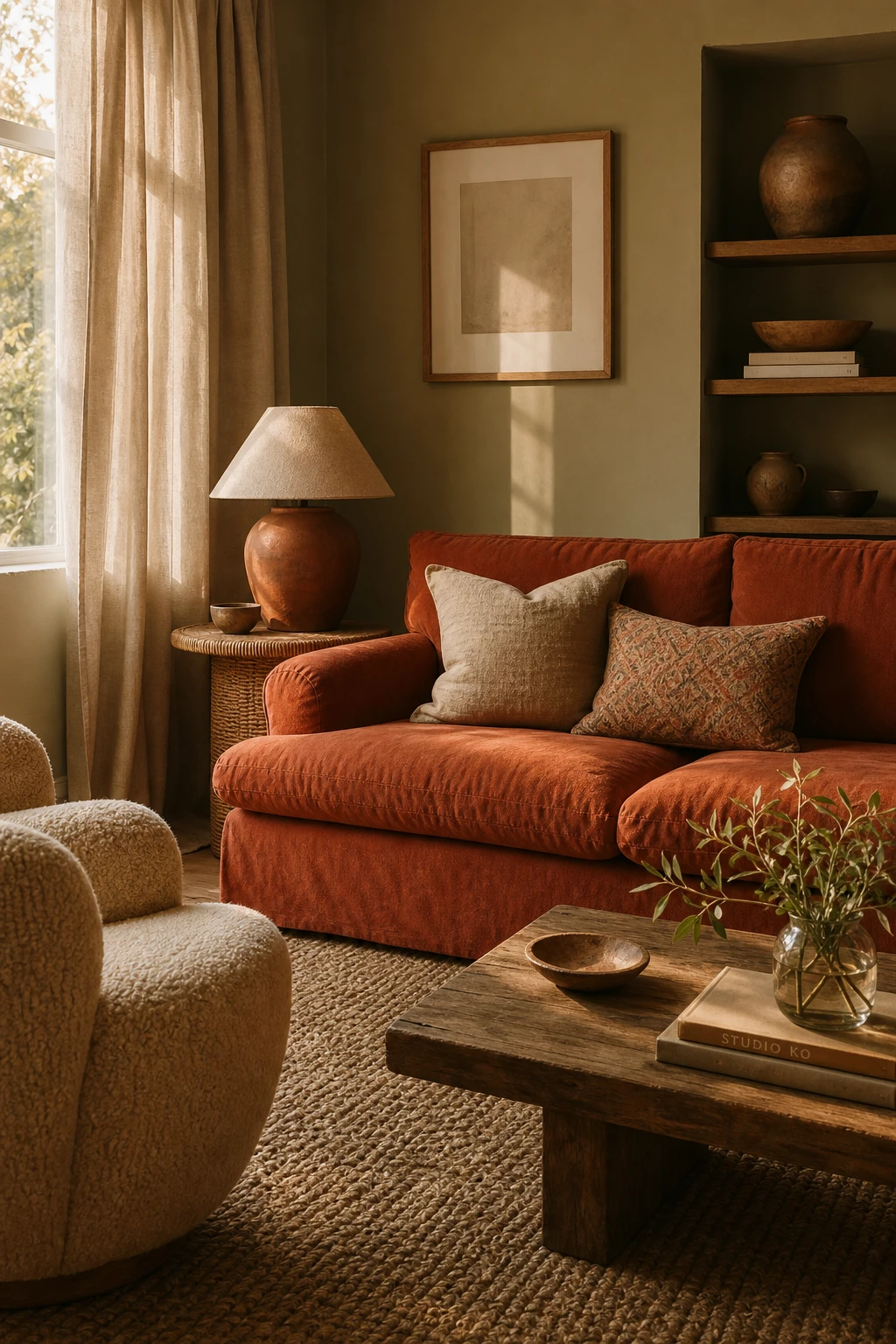
Rust Wall Colour Is the Quieter Orange That Serious Rooms Choose
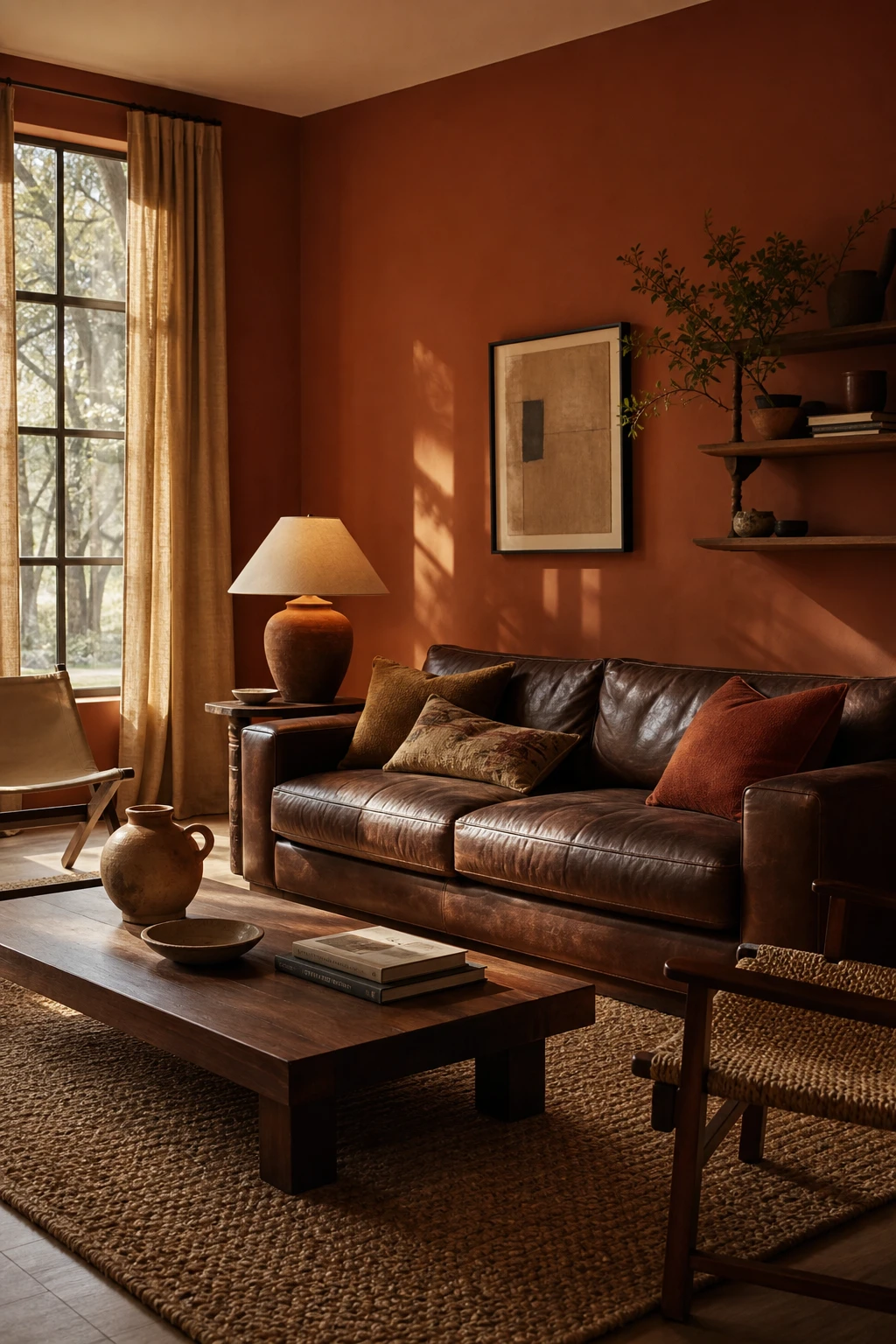
Rust pulls orange back from the edge, giving you that warm glow without the shout. What I love about it is the way furniture suddenly gets room to breathe: the deep brown leather sofa reads richer, the jute rug looks more considered, and the sand curtains feel genuinely light against it. You get a room that feels edited rather than decorated.
The Key Details
Deep brown leather sofa
Terracotta ceramic table lamp
Hand knotted jute rug
Sand linen floor to ceiling curtains
Walnut side table
Pro TipPaint your ceiling and trim two shades lighter than the rust so the walls anchor the room without closing it in.
AvoidPiling rust toned accessories onto rust walls flattens everything into one muddy mid tone and the room loses all its depth.
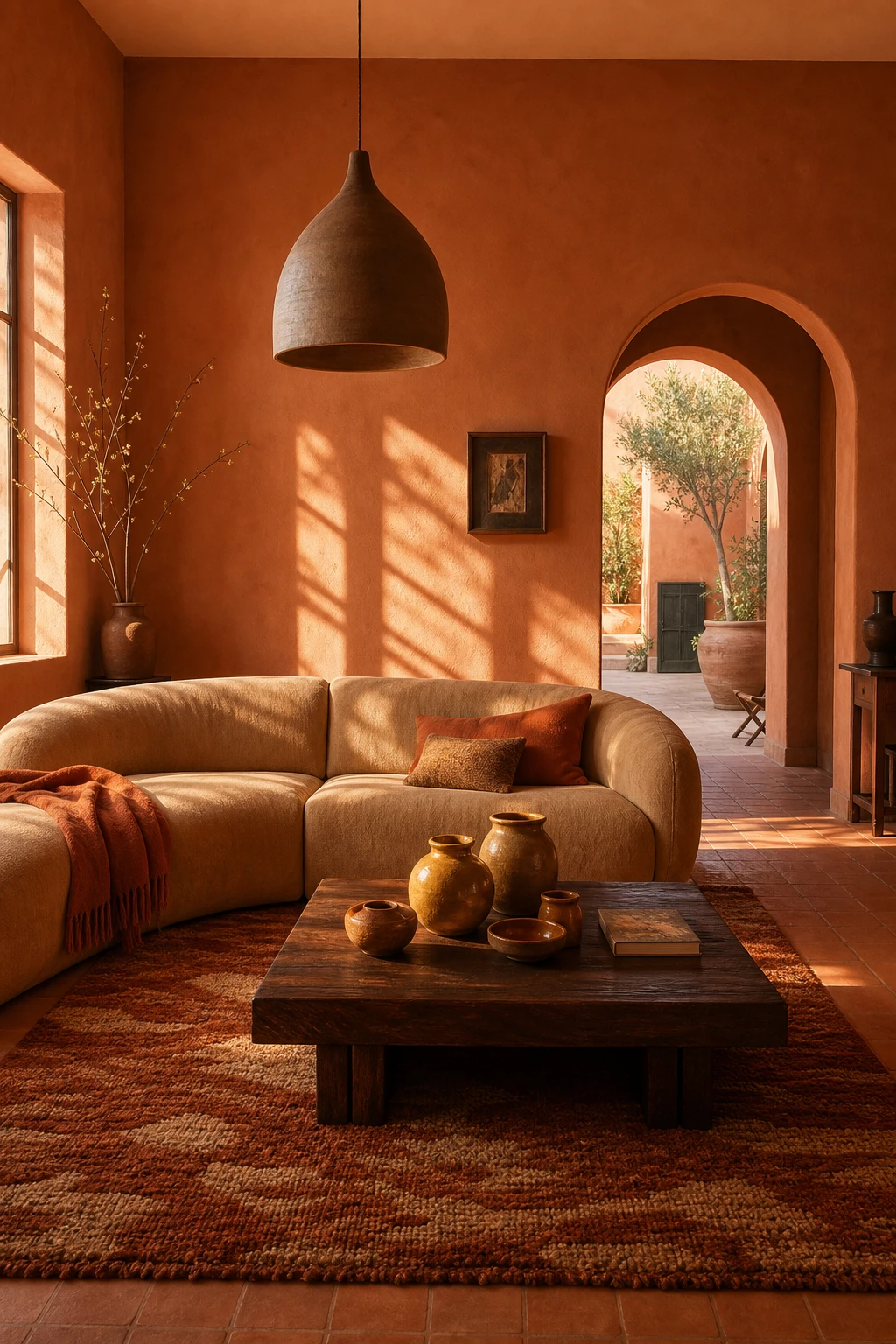
How Terracotta Paint Turns a Plain Living Room Into Something Mediterranean
Terracotta is the colour I reach for when a room needs brown and orange to feel like one decision rather than two. It sits right between them on the spectrum, so you get warmth from the orange and groundedness from the brown without any awkward negotiation between the two. Watch how it pulls the camel sofa and the burnt sienna rug into the same family. The whole room reads as intentional rather than assembled.
The Key Details
Curved camel linen sofa
Hand thrown ceramic pendant light
Burnt sienna hand knotted wool rug
Terracotta floor tiles
Shallow arched doorway
Pro TipHold your tester pot swatches against the wall in both morning sun and lamplight before you commit, because terracotta shifts more than almost any other shade across the day.
AvoidA terracotta that looks perfect in the tin can turn distinctly pink under warm artificial light, which pulls the whole room away from its earthy roots and closer to blush.
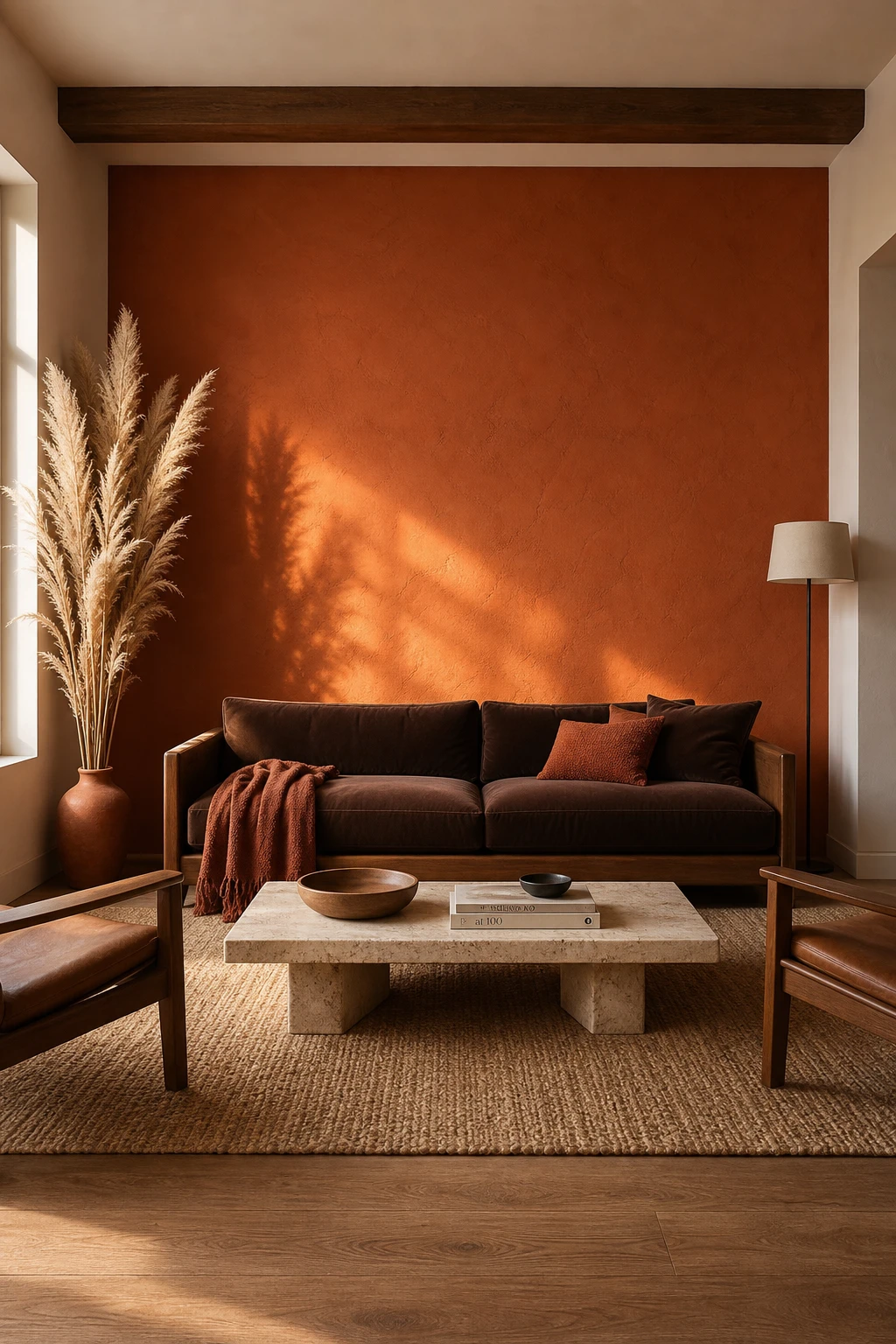
One Burnt Orange Accent Wall Is All This Look Really Needs
A single burnt orange wall does something quiet but powerful: it anchors the whole room without asking everything else to fight for attention. What I love about this move is that the brown furnishings, the walnut sofa, the velvet cushions, the travertine table, suddenly look intentional rather than accidental, because the wall gives them something to lean on. You get the warmth of orange without the room ever feeling heavy, and that balance is exactly what wins me over every time.
The Key Details
Low profile walnut sofa
Chocolate velvet cushions
Travertine coffee table
Terracotta floor pot with dried pampas
Rough cast plaster accent wall texture
Pro TipPaint the wall that faces you as you walk through the door so the colour lands as the first thing your eye finds, which makes the room feel considered from the very first step inside.
AvoidPainting a side wall in a narrow room pulls the two long walls closer together visually, making the space feel tighter and shorter rather than giving it the lift you were hoping for.
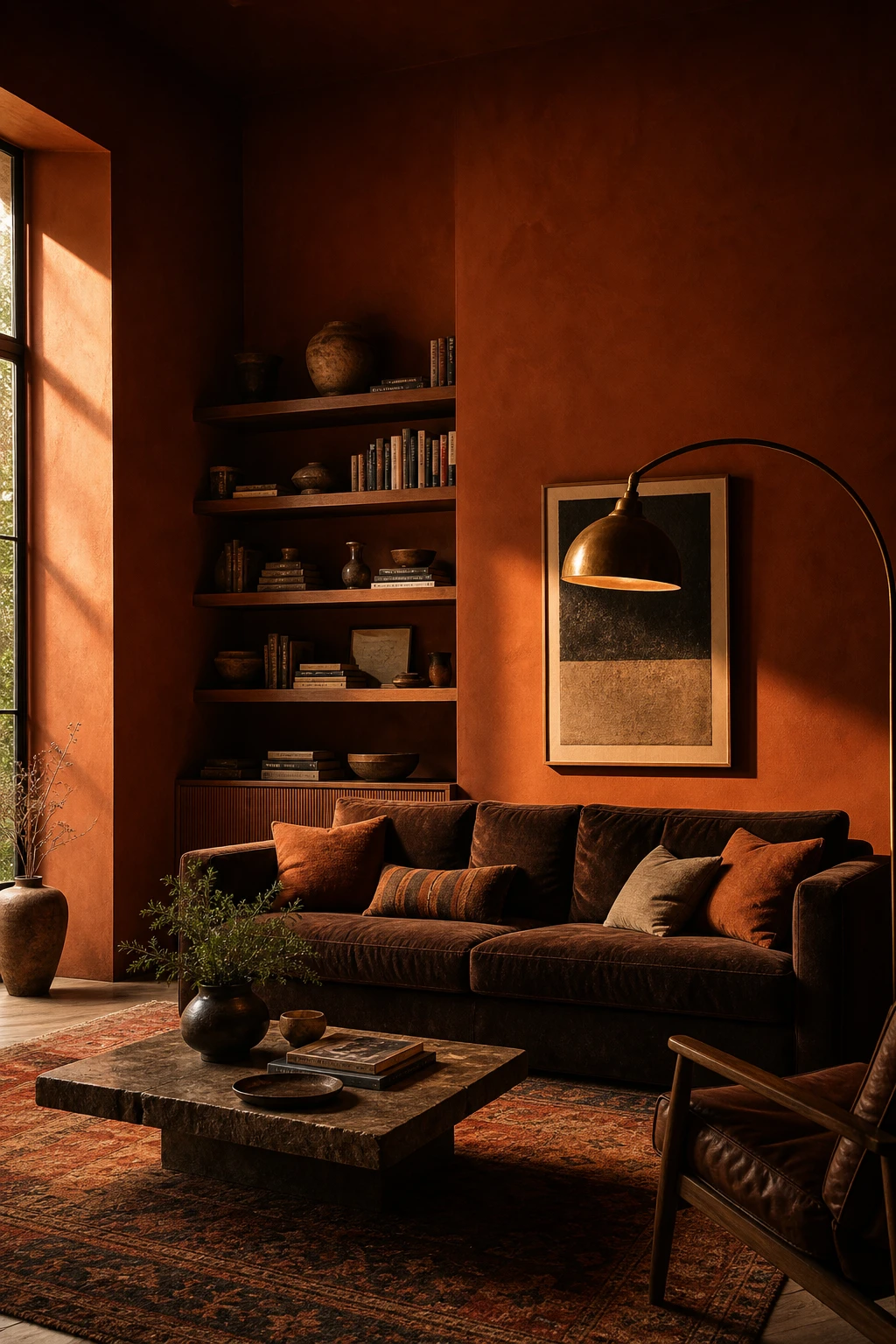
Dark Orange Rooms Have a Depth That Lighter Palettes Simply Cannot Touch
Dark orange is one of those colours that genuinely surprises people once they live with it. In bright afternoon light you get that warm, spiced richness, and then as the evening draws in, the same wall deepens into something that reads almost like a brown. You get two moods for the price of one decision, and that depth is simply not something a pale palette can offer you.
The Key Details
Chocolate velvet sofa
Burnished brass arc floor lamp
Hand knotted terracotta wool rug
Oiled oak open shelving
Rough cast textured plaster walls
Pro TipFit your lamps with 2700K bulbs rather than anything cooler, because that amber warmth keeps dark orange glowing rather than pulling it into a flat, muddy tone.
AvoidFlooding a dark orange room with bright overhead lighting strips away every shadow and with it all the drama you painted the room to achieve.
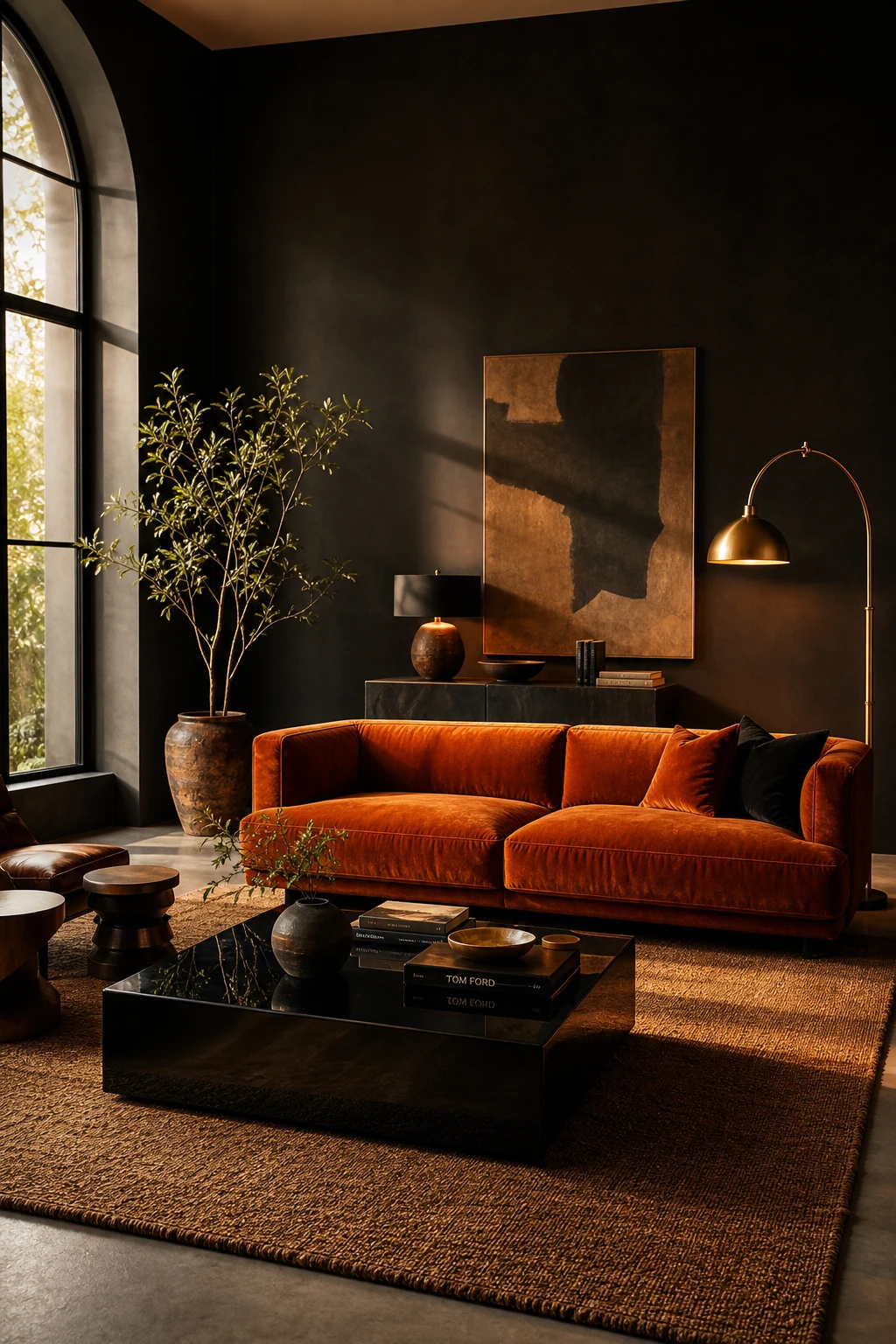
Orange and Black Walls Together Pull Off a Boldness Most Rooms Never Try
Orange and black together is a pairing most people shy away from, and I think that is exactly what makes it so compelling when you get the balance right. What I love here is how the black acts like a sharp pencil line, giving the orange something to push against so the warmth reads as confident rather than loud. You get graphic contrast and strong personality without a single piece of pattern in the room.
The Key Details
Burnt orange velvet sofa
Black lacquered coffee table
Arched brass floor lamp
Tobacco sisal area rug
Black steel framed windows
Pro TipKeep orange on at least two thirds of the wall area and save black for skirting boards, window frames, and door architraves so the room stays anchored in warmth.
AvoidSplitting the two colours roughly fifty fifty turns a bold idea into a Halloween cliché that drains every ounce of warmth from the space.
Geometric Wall Paint Adds Pattern Without a Single Piece of Wallpaper
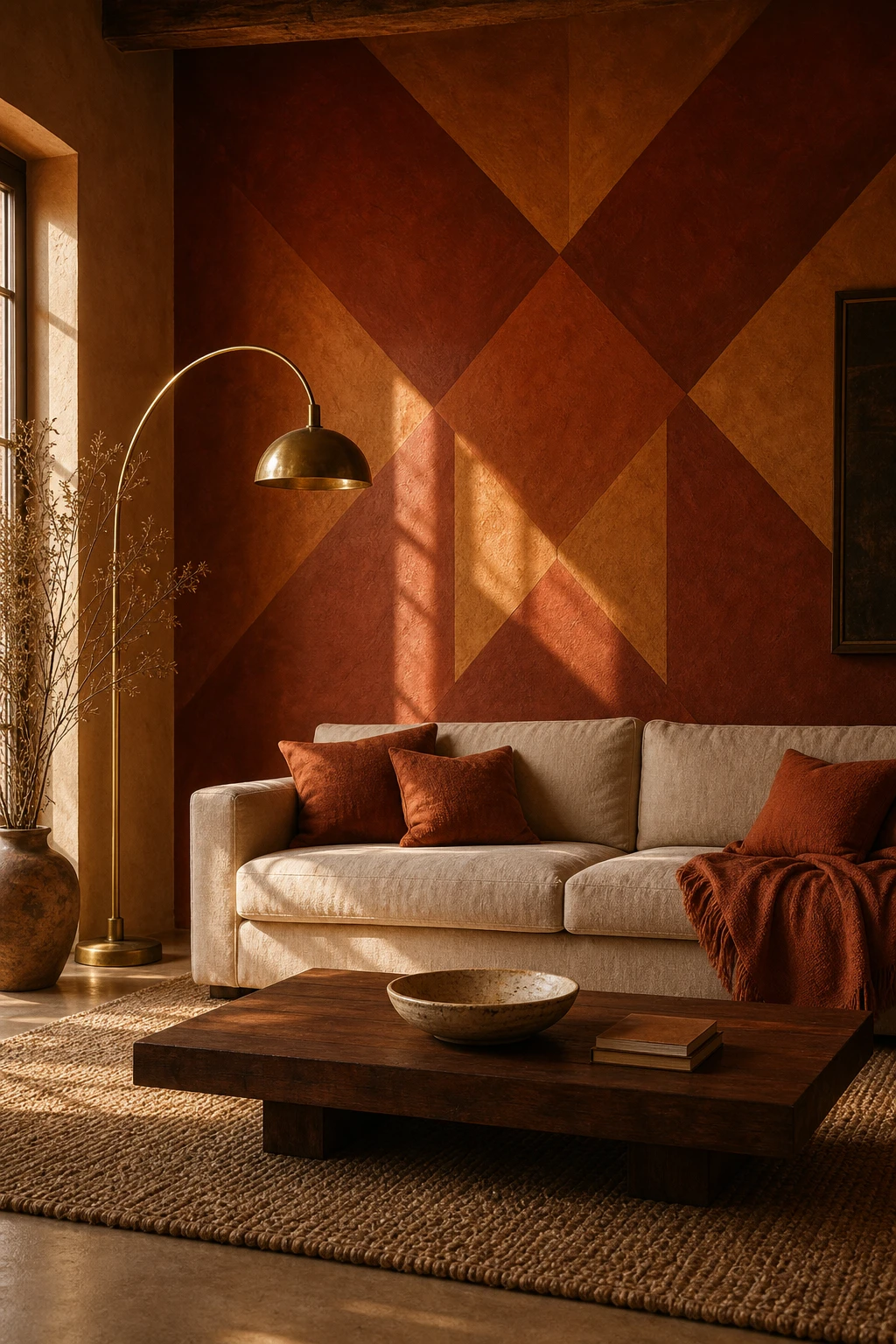
Painted geometry is one of my favourite moves when a room needs pattern but the budget or the architecture rules out wallpaper. Two close shades of brown or ochre broken into diamonds or chevrons give the wall a quiet rhythm that you feel before you consciously notice it. The surface stops reading as flat and starts feeling like something considered and crafted. Watch how the warm tones bounce between the shapes and pull the rust and linen in the room together without a single seam or paste table in sight.
The Key Details
Hand painted diamond and chevron wall geometry
Raw linen sofa with rust and ochre cushions
Aged brass arc floor lamp
Chunky woven jute rug
Low walnut coffee table with ceramic bowl
Pro TipMap your shapes large, at least 30 cm across, so the geometry reads as a bold statement from across the room rather than a restless repeat.
AvoidChoosing shapes that are too small crowds the wall with competing lines and the whole effect collapses into visual noise rather than the calm, intentional pattern you were after.
A Painted Arch on the Wall Gives Brown and Orange Rooms a Sculptural Moment
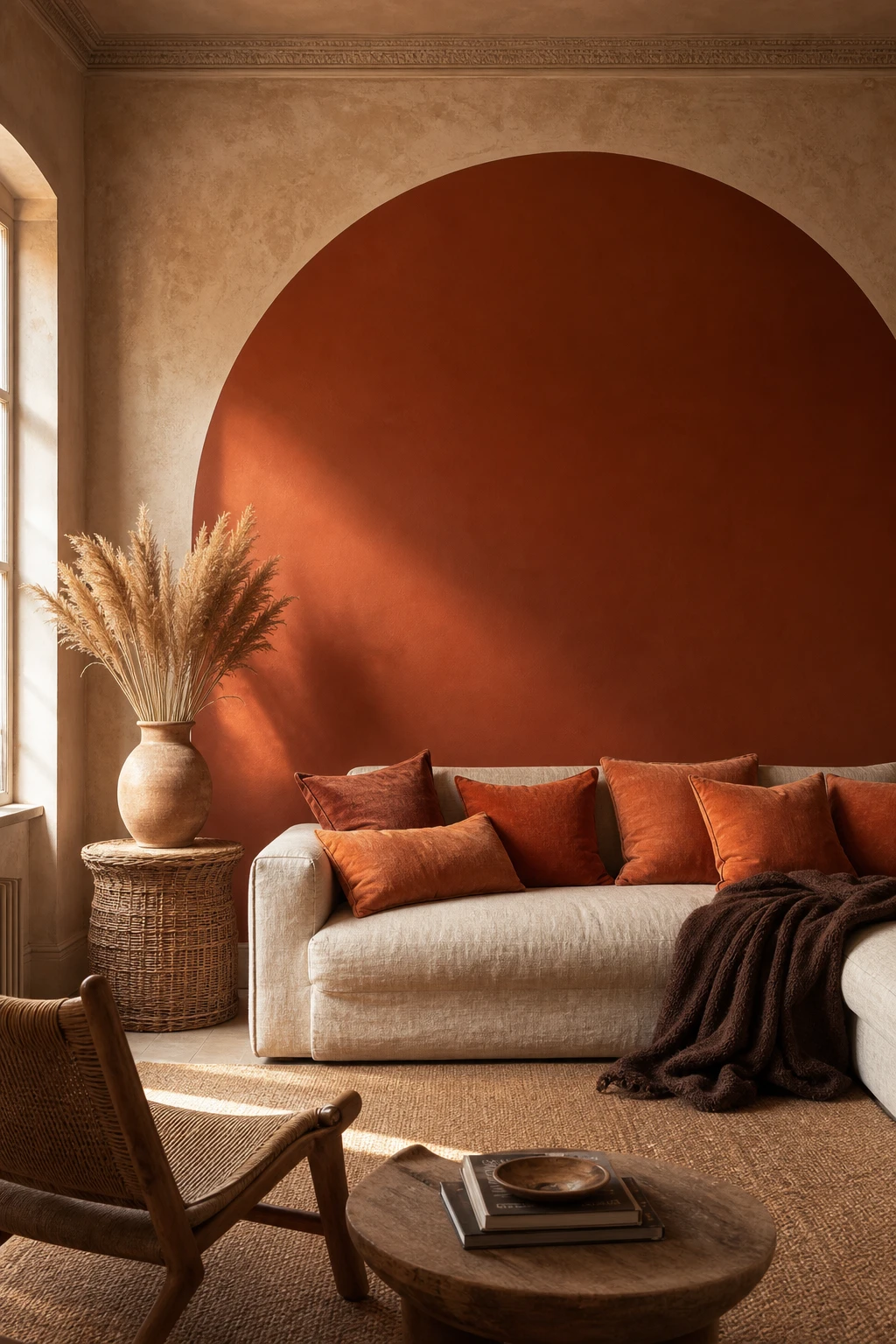
A painted arch on a flat wall is one of my favourite tricks for adding architectural weight to a room without touching a single brick. You get the feeling of a recessed alcove or vaulted detail, and the warm brown and orange palette makes the shape feel grounded rather than fussy. What wins me over every time is how the arch frames whatever sits in front of it, a sofa, a fireplace, a single lamp, and suddenly that corner feels considered and deliberate.
The Key Details
Semicircular painted arch on plaster wall
Low profile linen sofa
Woven rattan side table
Dried pampas stems in ceramic vase
Chunky wool throw in chocolate brown
Pro TipTie a pencil to a length of string, pin the other end at the centre point of your arch base, and sweep the pencil around to draw a clean, even curve before you pick up a brush.
AvoidPainting the arch too small turns it into a decorative doodle rather than a proper architectural statement, and the whole effect falls flat.
A Terracotta Couch Gives You the Colour Without Touching the Walls
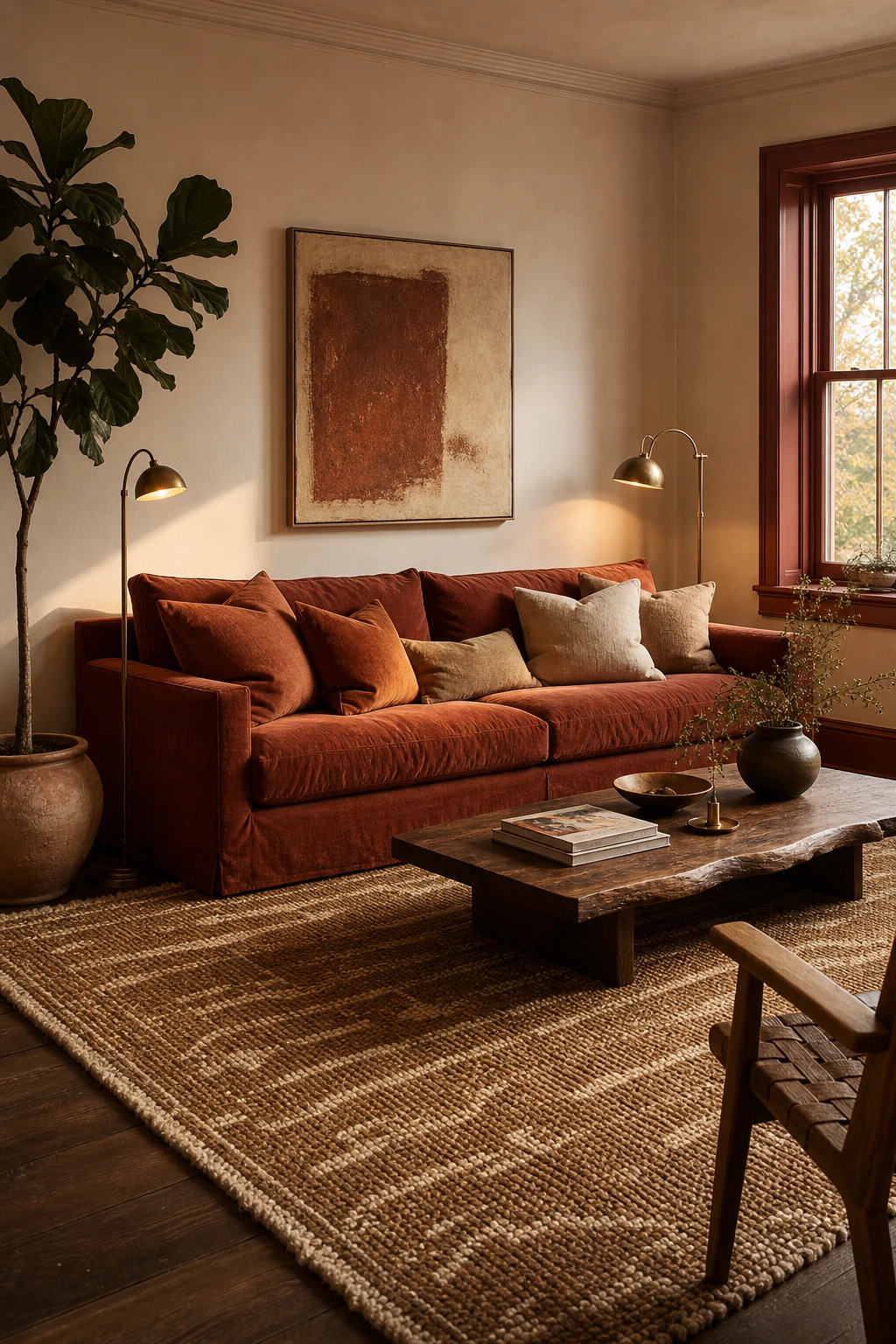
Putting all that warmth into the sofa rather than the walls is a move I suggest to clients who want colour but are not ready to commit a roller to plaster. The terracotta sits right at eye level, bold and generous, while the neutral backdrop quietly steps back and lets it breathe. Swapping the room out later is simple too: change the cushions, change the rug, and the whole mood shifts without a single pot of paint being opened.
The Key Details
Terracotta velvet sofa
Live edge walnut coffee table
Jute and wool tobacco toned rug
Aged brass floor lamps
Matte clay plant pot
Pro TipPull a warm greige or soft linen shade for the walls so the terracotta sofa reads as a deliberate statement rather than a clash.
AvoidChoosing a wall colour that sits too close to the sofa tone flattens the whole room, because the two surfaces bleed into each other and you lose the contrast that makes the sofa a focal point.
Burnt Orange Sofas Are the Piece That Anchors the Whole Warm Room
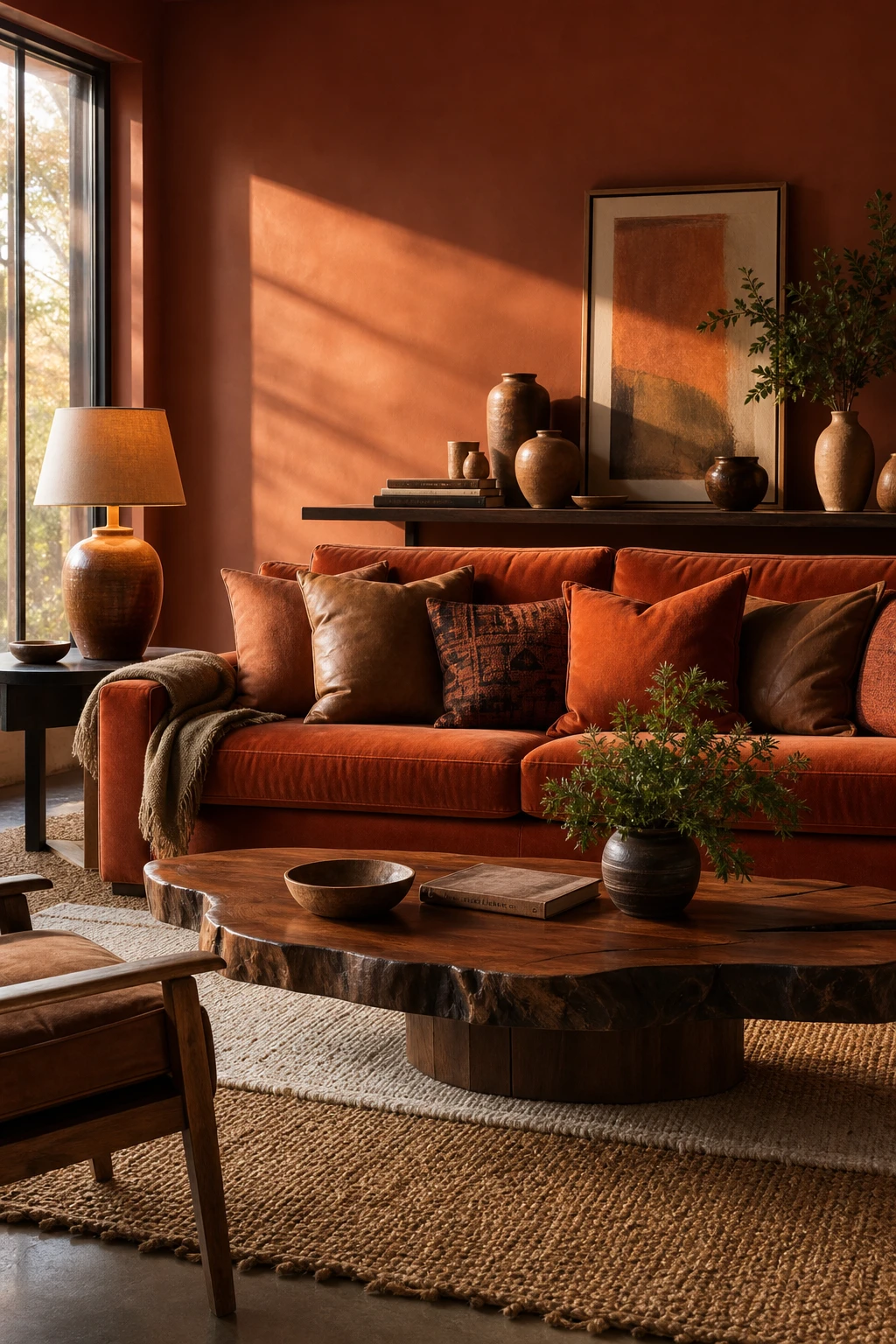
One confident sofa sets the temperature for an entire room, and a burnt orange piece does that better than almost any other colour. Everything else, the side tables, the rugs, the throws, finds its position by orbiting this one warm anchor, so nothing feels random or accidental. You will notice how a velvet or bouclé weave deepens the colour further still, the pile catches the light at different angles and the orange almost glows rather than sitting flat against the floor.
The Key Details
Burnt orange velvet sofa
Live edge walnut coffee table
Layered jute and wool area rug
Amber glaze ceramic table lamp
Cognac leather and rust linen cushions
Pro TipChoose velvet or bouclé upholstery over plain weaves, because the textured pile catches light at different angles and gives burnt orange its deepest, most jewel like tone.
AvoidPiling rust cushions, orange throws, and terracotta pots around a statement sofa splits the eye across too many competing focal points and the room loses the calm confidence the sofa was meant to create.
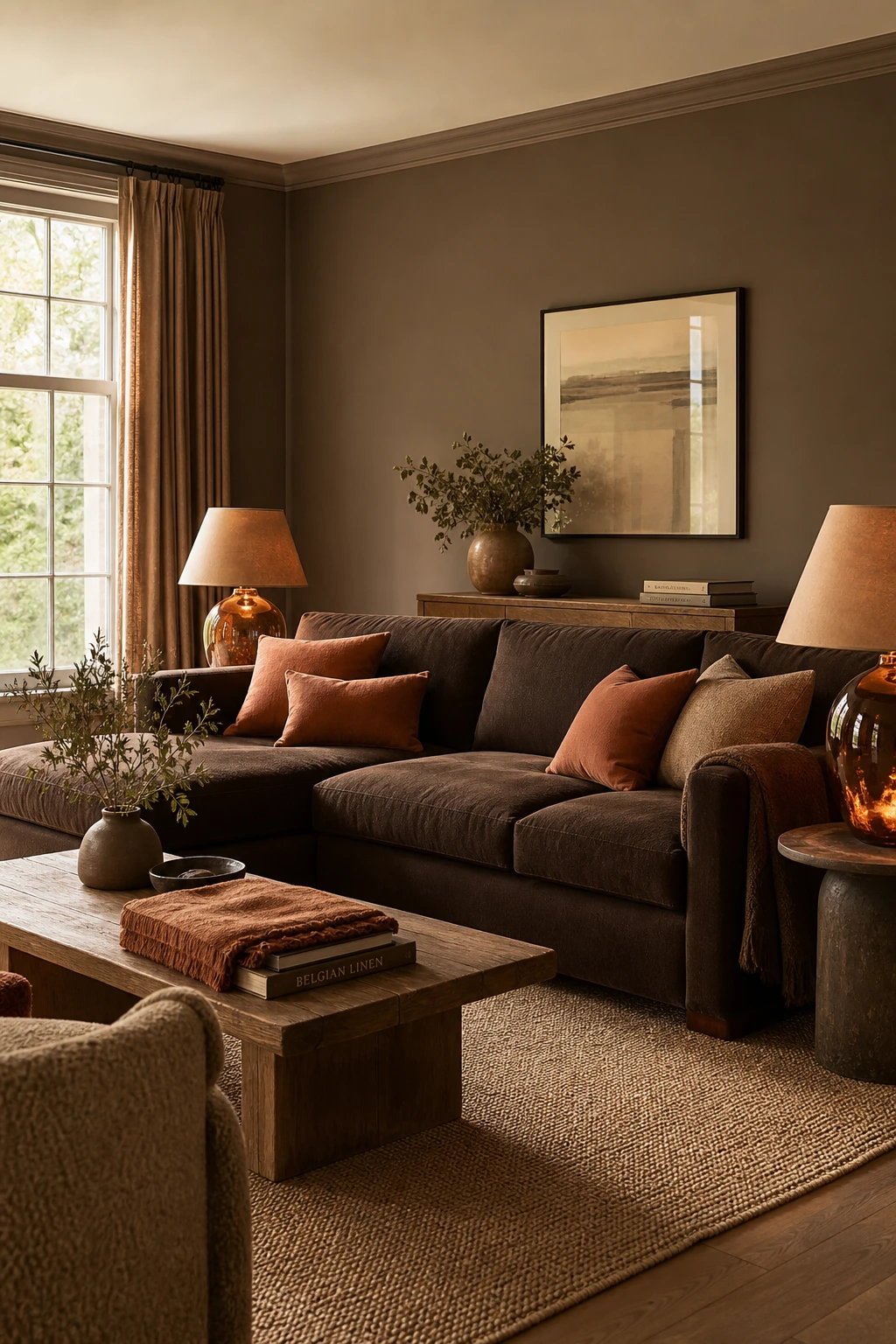
A Brown L Shape Sofa Is the Grounding Piece an Orange Room Needs
Bending a large sofa into an L shape is one of my favourite moves in a warm room, because the scale does the work for you. What I love here is how the chocolate brown pulls the palette toward earth rather than fire, so all that orange and rust around it settles instead of shouts. You get a room that feels rich and grounded, not overwrought.
The Key Details
Deep chocolate L shape sofa
Terracotta and rust linen cushions
Low solid oak coffee table
Sisal area rug
Amber glass table lamps
Pro TipPoint the long arm of the L toward the room’s focal point, a fireplace or a media wall, so the sofa naturally draws people into a tight, sociable cluster rather than leaving an open plan space feeling adrift.
AvoidPicking a sofa in a very dark espresso brown against a deep rust or burnt orange wall means the two colours swallow each other and the sofa loses all its presence in the room.
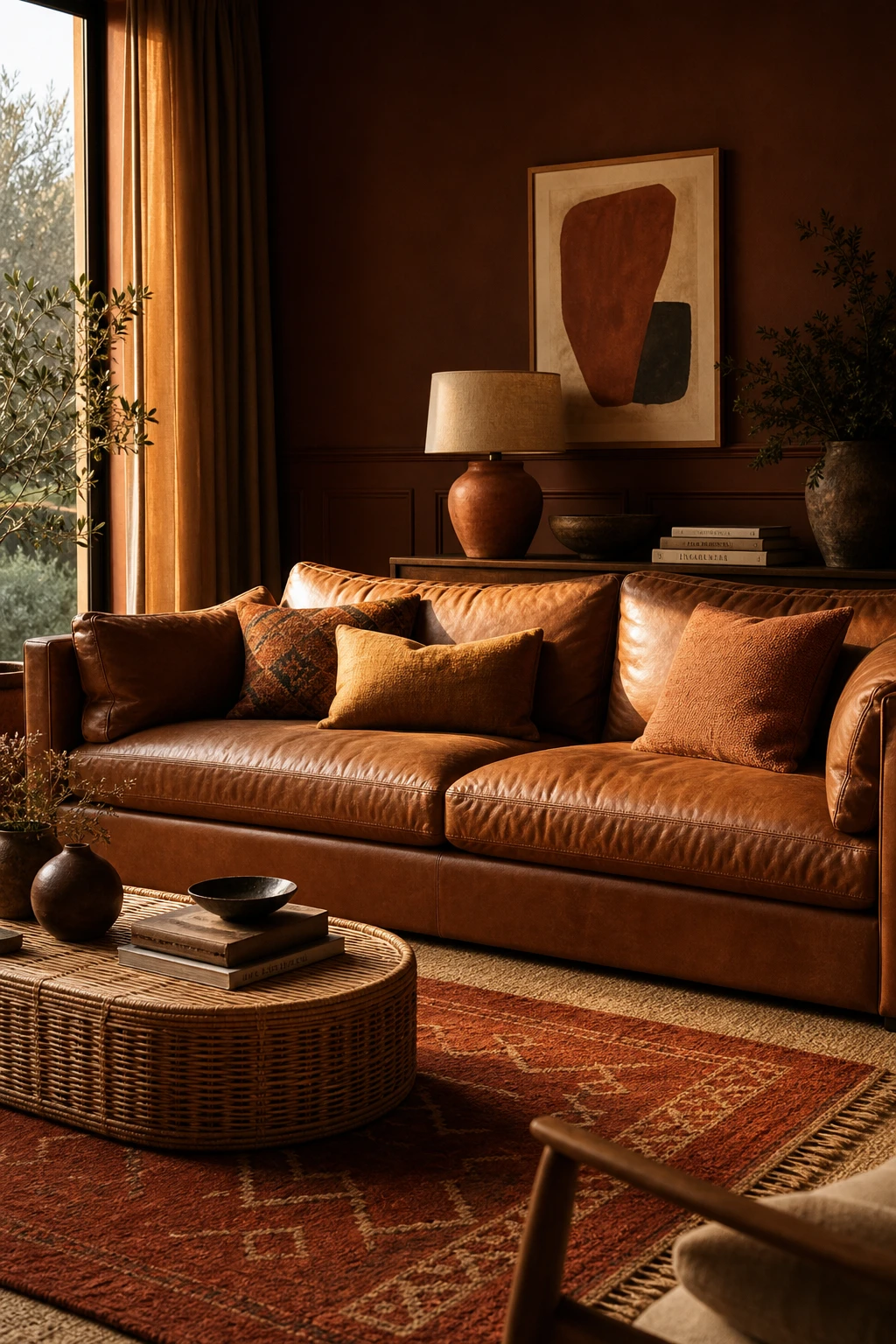
Tan Leather Softens an Orange Room in the Best Possible Way
Tan leather is one of those materials that sits right at the crossroads of warm and neutral, and that quality is exactly what makes it so useful here. You get the richness that orange walls want as a companion, without the room tipping into something loud. What I love most is that lived in softness tan leather brings from day one, something a bold fabric sofa rarely manages quite as naturally. Watch how the hide deepens over time and the whole room just settles.
The Key Details
Tan leather sofa
Low rattan coffee table
Layered wool rugs in rust and cream
Terracotta ceramic table lamp
Ochre linen cushions
Pro TipCondition your tan leather sofa every few months with a good natural conditioner and the hide will deepen to a richer caramel that makes orange tones around it look even more considered.
AvoidChoosing orange walls at the same warm saturation level as the tan leather pulls both into one muddy middle ground where neither one reads clearly.
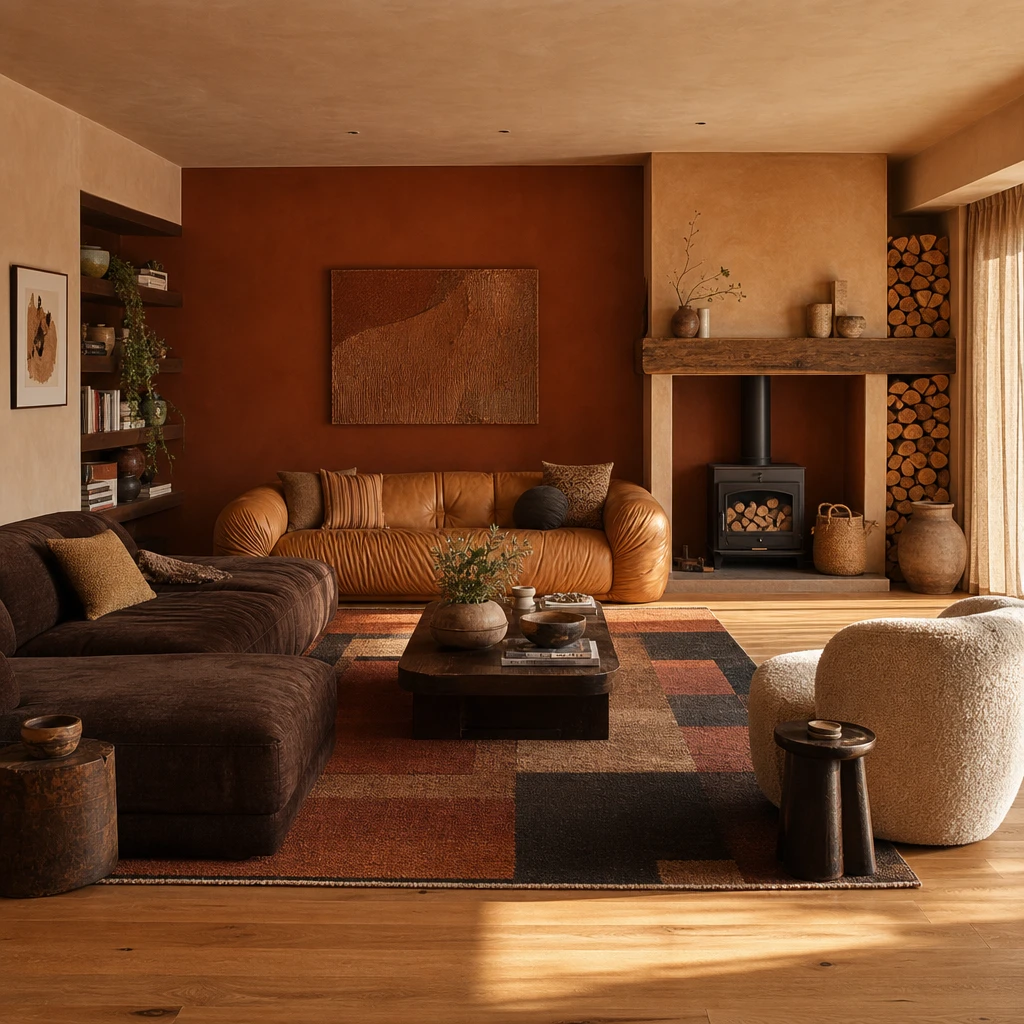
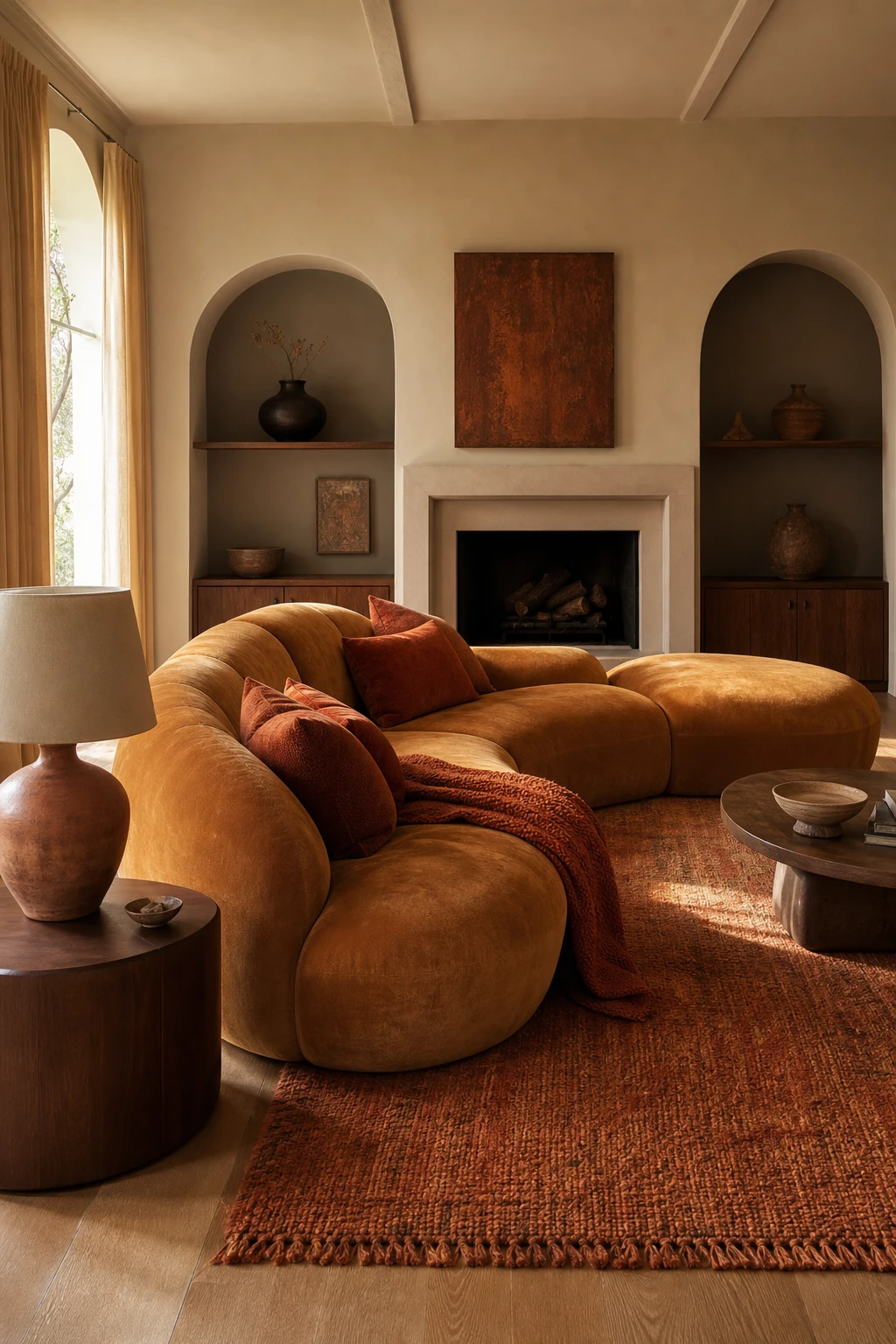
Rounded Sofas Turn a Brown and Orange Room Into Something Wonderfully Sculptural
A rounded sofa in a warm brown and orange room does something no straight lined piece can: it pulls the eye around the space rather than stopping it dead. What I love is how the curve dissolves that heaviness you sometimes get when a room leans hard into deep, saturated tones. You get flow instead of weight, and the whole space feels like somewhere you want to sink into rather than stand at the edge of.
The Key Details
Curved caramel velvet sectional sofa
Hand knotted rust and sienna wool rug
Terracotta ceramic table lamp with linen shade
Low walnut side table
Arched alcoves flanking the fireplace
Pro TipPull the sofa at least 30 centimetres from the wall so you can read its full silhouette from the doorway, because that curve is doing the decorative work and it needs breathing room to show itself.
AvoidLoading a rounded sofa with stiff square cushions cancels the very curves you paid for, leaving the whole thing looking blocky and defeating the point of choosing that shape in the first place.
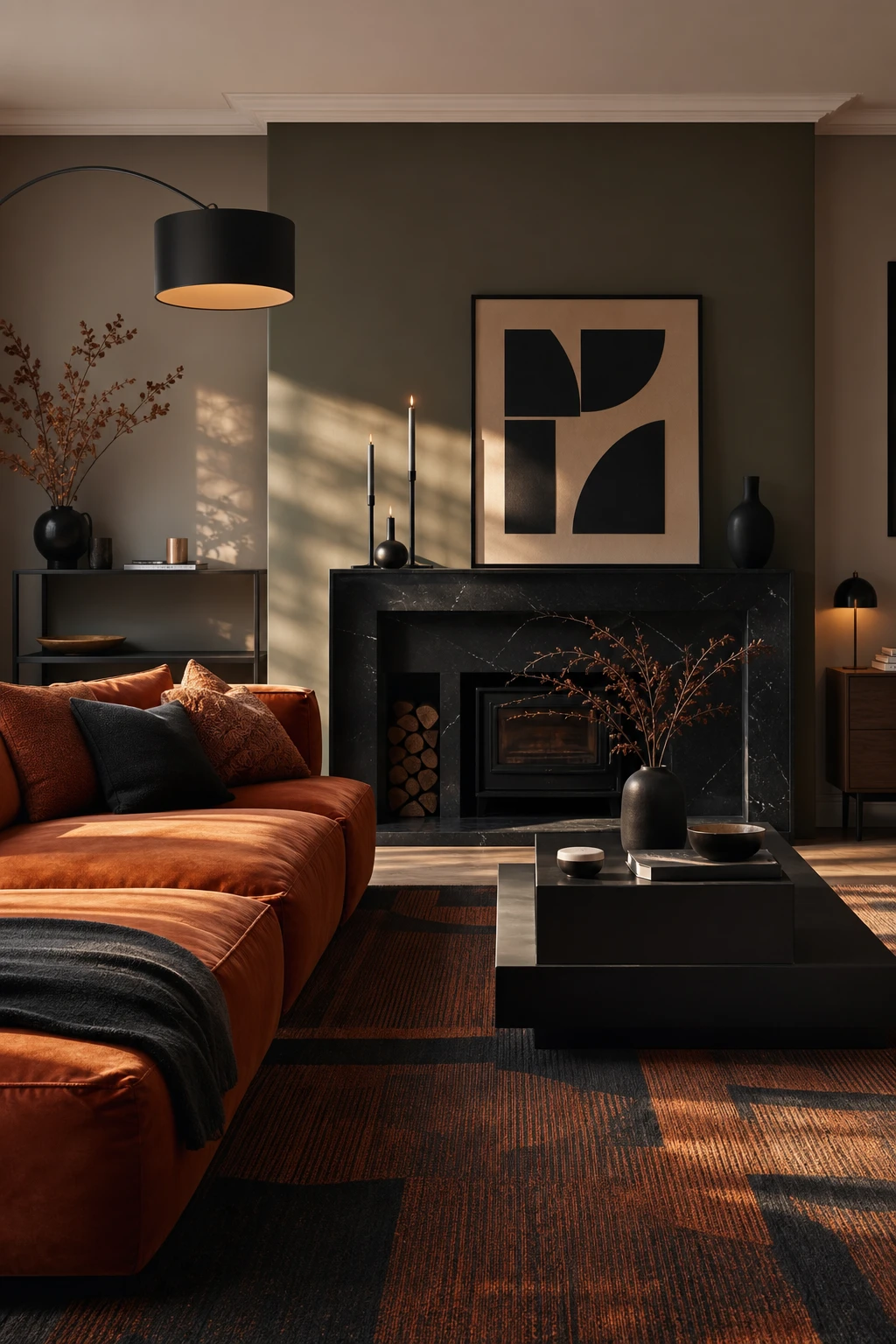
Black Furniture in a Burnt Orange Room Creates a Look That Feels Properly Grown Up
Swapping wood for black furniture in a burnt orange room is a move that wins me over every time, because it sharpens the whole palette without cooling it down. You get that same warmth from the orange, but the black pulls it into something more structured and grown up. What I love is how the contrast stops the room feeling heavy, the way a wood tone sometimes can when it sits too close in warmth to the orange itself.
The Key Details
Burnt orange velvet sofa
Matte black angular steel coffee table
Black marble fireplace surround
Arc floor lamp with black stem
Geometric burnt orange and charcoal rug
Pro TipMix matte black pieces with one gloss black surface, a lacquered side table or a glazed pot, so the black reads as layered rather than flat.
AvoidTipping the balance so black takes over the room strips out the warmth that made the orange palette worth choosing in the first place.
Burnt Orange and Beige Together Make the Most Effortlessly Liveable Palette
Burnt orange and beige is a pairing I reach for when a client wants warmth without drama. The beige does the quiet work, holding the walls and floor steady, while the orange steps forward in cushions, throws, and a sofa without ever tipping into loud. What I love is how liveable it feels day to day. You get a room that reads rich and considered at nine in the morning just as easily as it does by lamplight.
The Key Details
Burnt orange brushed cotton sofa
Oatmeal linen curtains
Chunky jute rug
Low rattan side table
Beige boucle armchair
Pro TipLet beige take the walls and orange earn its place through textiles only, and the balance almost looks after itself.
AvoidReaching for a beige with cool or grey undertones will pull against the warmth in burnt orange and leave the whole room feeling slightly off, even if you cannot immediately name why.
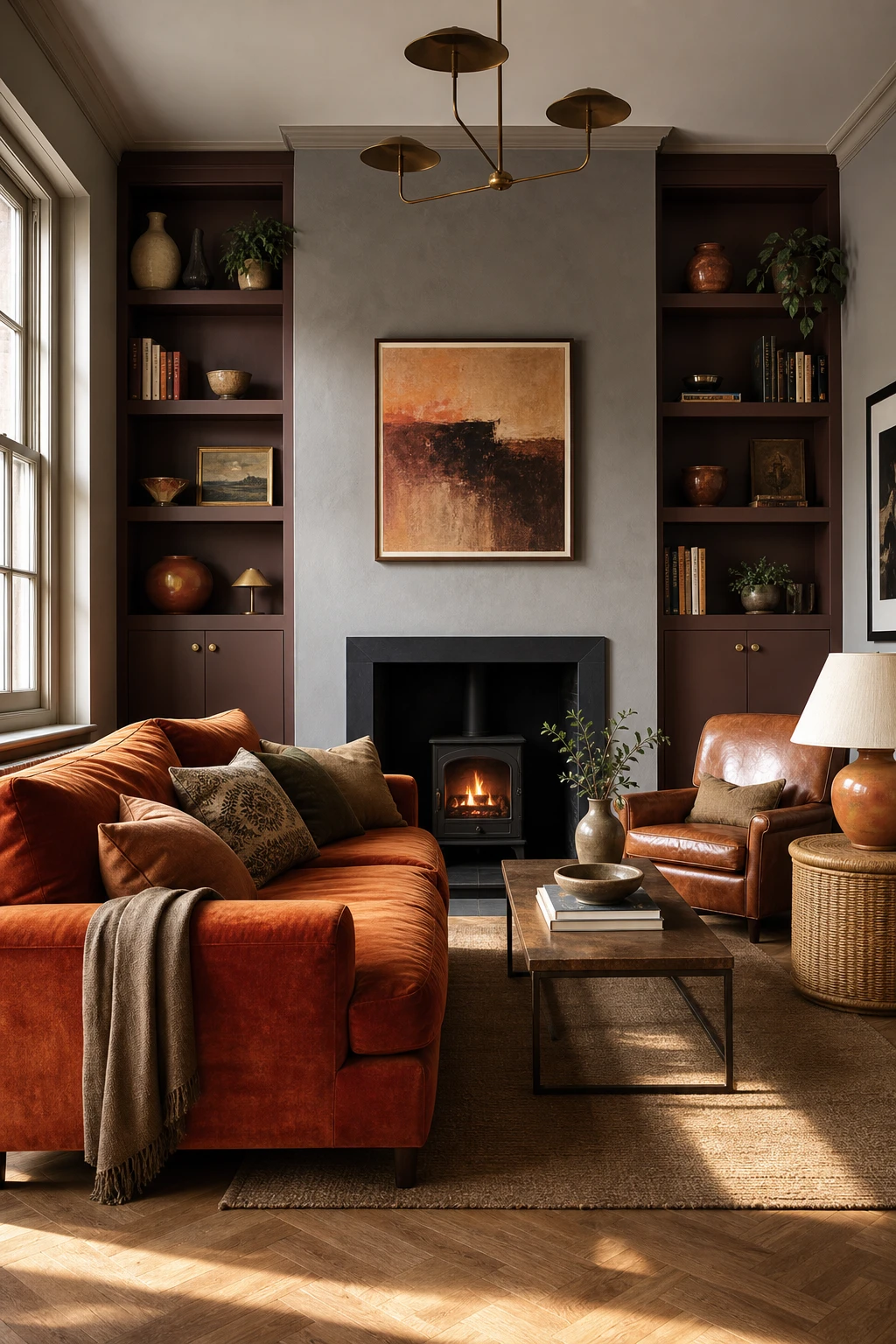
Grey Is the Surprise Ingredient That Makes Brown and Orange Rooms Pop
Grey is the quiet peacemaker I reach for when a brown and orange room starts to feel too rich. Laid against burnt orange velvet and cognac leather, it cools the palette just enough so those warm tones stop competing and start glowing. You will notice how the built in alcoves and herringbone oak floor anchor the whole room, and the grey simply gives everything space to settle without going cold or flat.
The Key Details
Burnt orange velvet sofa
Cognac leather armchair
Built in shelving alcoves
Rattan side table with terracotta ceramic lamp
Herringbone oak floor
Pro TipPull a warm grey with a brown or pink undertone, something like Farrow and Ball Mole’s Breath, and it will read as a true neutral rather than a chilly intruder beside your orange tones.
AvoidReaching for a blue based grey is a common mistake that quietly drains every drop of warmth from the orange beside it, leaving the room feeling flat and slightly sad.
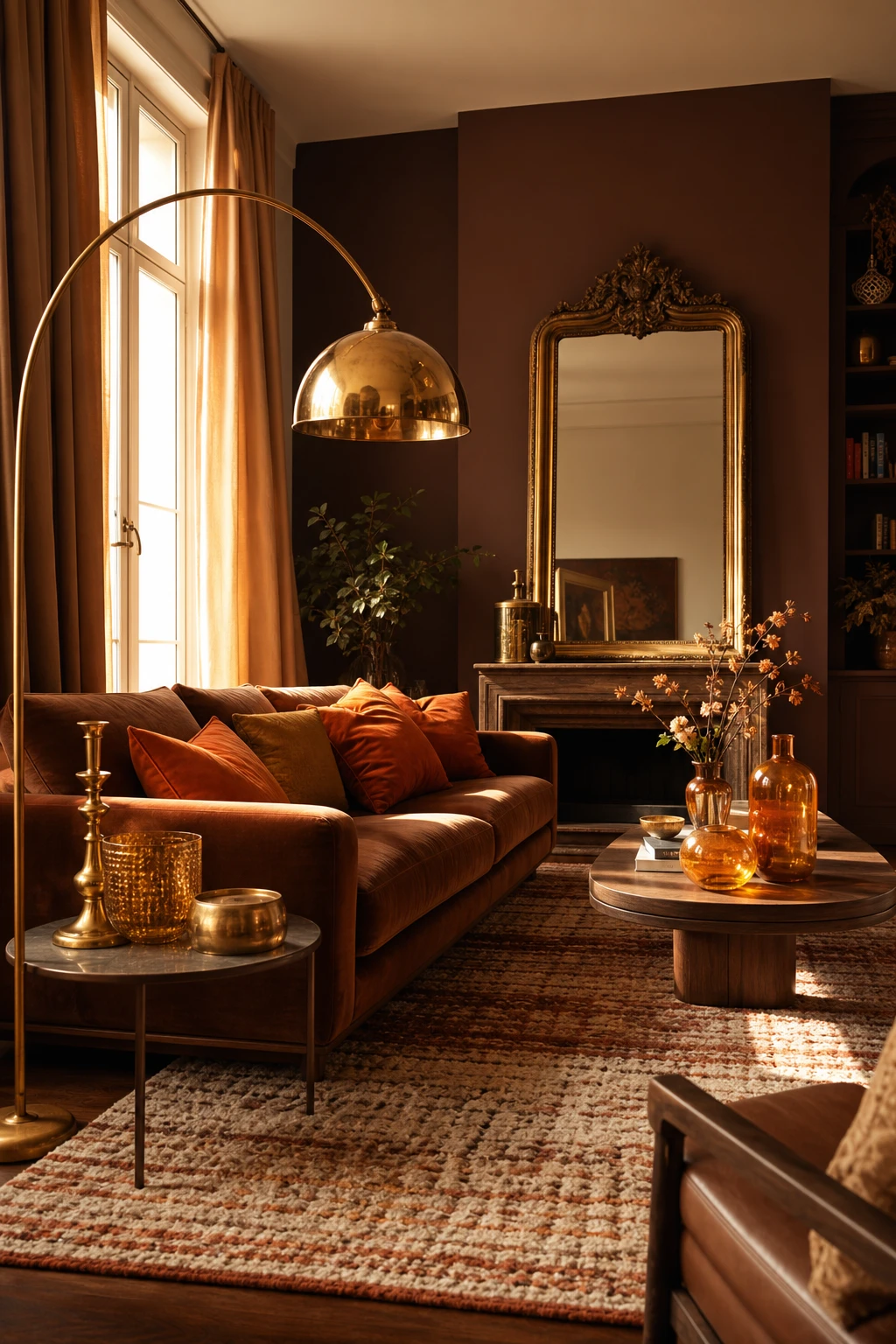
Gold Accents Lift Orange and Brown Rooms Into Something That Feels Almost Glamorous
Gold sits inside the same warm frequency as orange and brown, so when you bring it into this palette it never feels like an outsider trying to compete. What wins me over every time is how a gilded mirror or a brass lamp just deepens the whole room rather than interrupting it. You get richness without any visual argument going on, and that quiet harmony is exactly what tips the space from cosy into genuinely glamorous.
The Key Details
Cognac velvet sofa
Domed brass floor lamp
Gilded carved mirror
Hand knotted cinnamon wool rug
Amber glass vessels on walnut coffee table
Pro TipKeep gold to smaller decorative pieces like lamps, mirrors, and vessels so each one lands as a considered luxury detail rather than turning the room into a showroom.
AvoidBringing silver or chrome into the same space pulls the eye in two conflicting directions and quietly unravels all the warmth you built with the orange and brown.
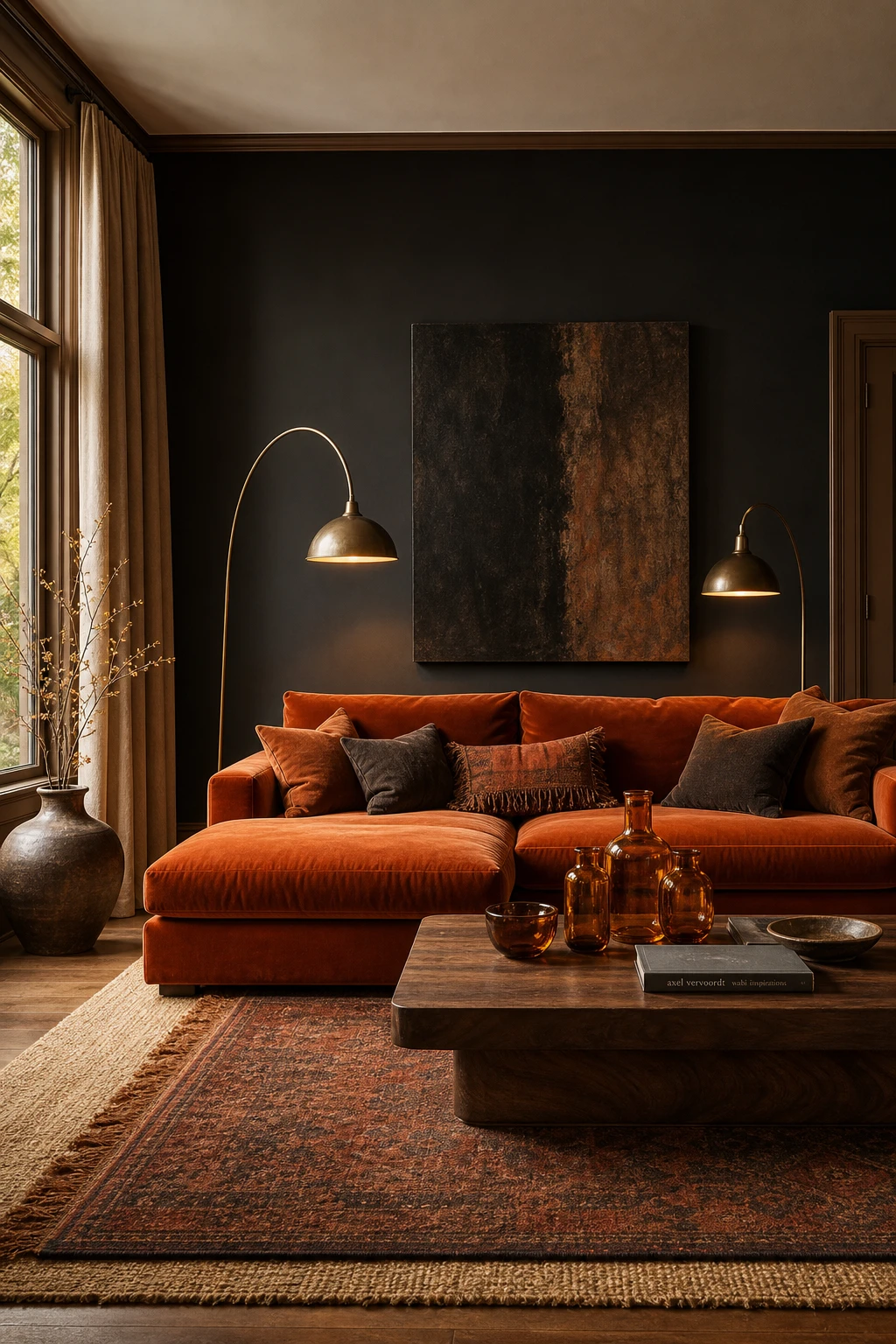
Charcoal and Orange Is the Pairing That Gives a Brown Room Real Drama
Charcoal and orange is a pairing that genuinely surprises people, and I think that is exactly why it works so well. The charcoal acts as a deep, almost theatrical base and the orange reads warmer and more alive against it than it ever would against plain brown. What I love is how the room stops feeling flat and starts feeling like somewhere you actually want to spend an evening.
The Key Details
Burnt orange velvet sofa
Charcoal feature wall
Layered jute and wool rug in tobacco and rust
Arched floor lamps with aged brass stems
Amber glass vessels on walnut coffee table
Pro TipRun charcoal only to dado height so the upper wall stays lighter, which keeps the ceiling feeling high while you still get that moody, grounded base.
AvoidTaking charcoal all the way up to the ceiling in an already dim room kills every last trace of height and leaves the space feeling like a box.
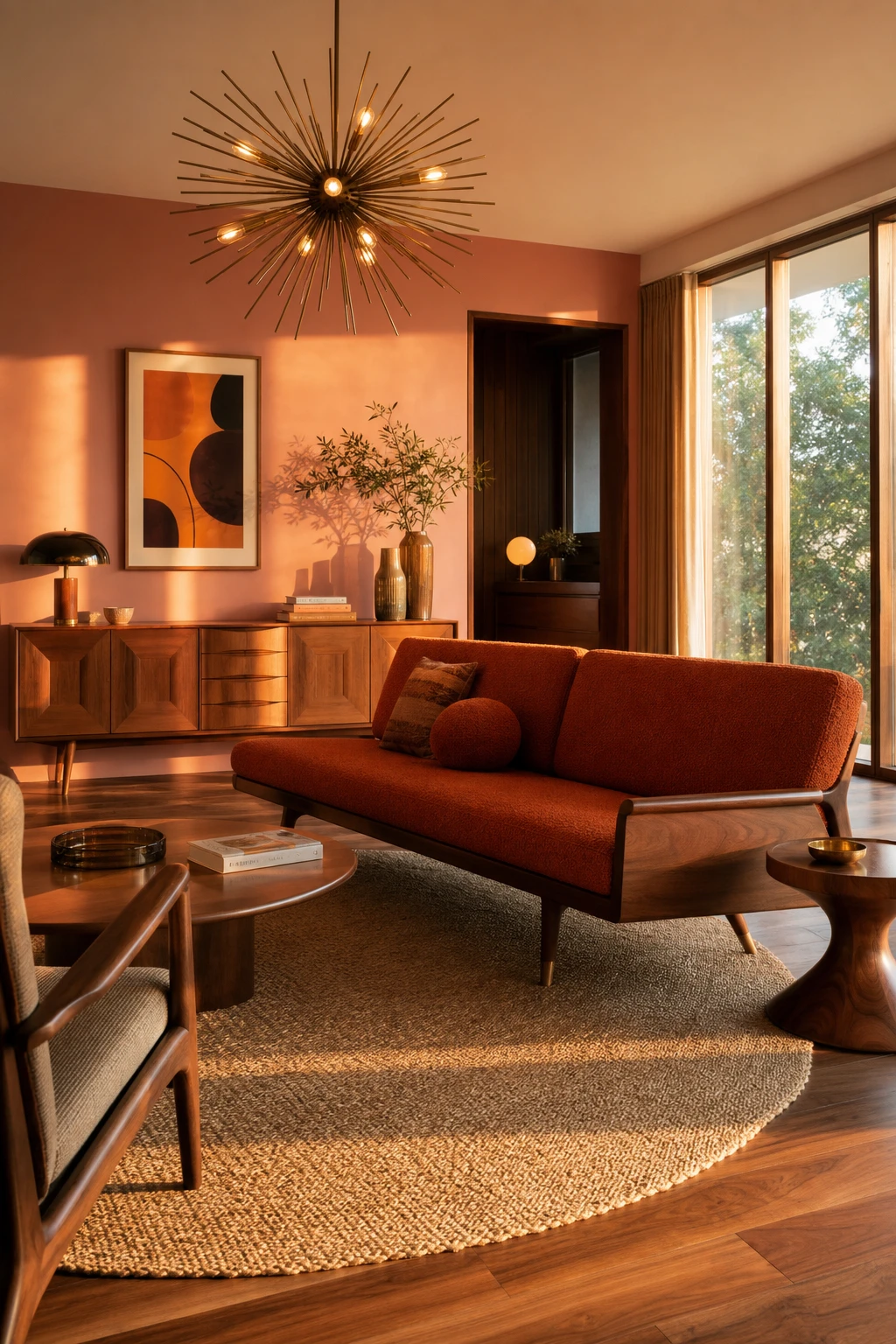
Mid Century Modern Shapes Are Made for Brown and Orange Living Rooms
Mid century modern furniture and a brown and orange palette feel like they were drawn up together, because in many ways they were. The warm walnut tones, the low slung silhouettes, the tapered legs pulling the eye down to the floor: you get an instant visual rhythm that needs almost nothing added to feel complete. What wins me over every time is that restraint. The room looks finished the moment the sofa lands.
The Key Details
Low slung walnut sofa on tapered legs
Sculptural teak credenza
Sunburst brass pendant light
Round sisal area rug
Floor to ceiling mid century windows
Pro TipHunt estate sales and auction houses for genuine mid century pieces, because the proportions on originals, especially the seat height and leg rake, are noticeably more refined than most modern reproductions.
AvoidLayering in too many current trends, such as boucle, arched mirrors, and statement vases all at once, strips the quiet confidence right out of a mid century room and leaves it looking confused rather than curated.
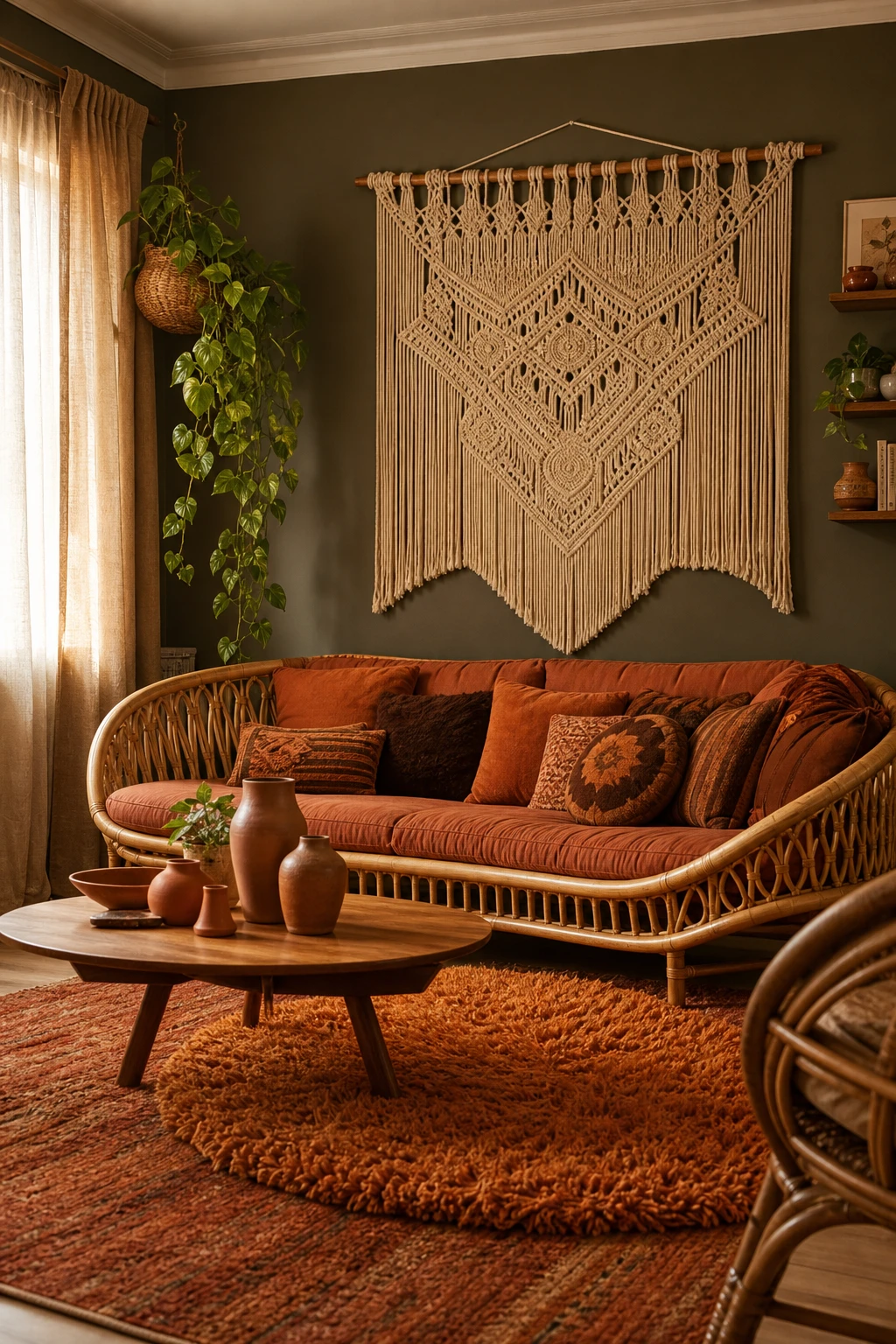
Seventies Boho Decor Gives Brown and Orange the Layered Soul They Deserve
Seventies boho is a reference I reach for when a brown and orange room needs soul rather than just colour. Layering macramé, rattan, and woven textiles at different heights gives the eye so much to settle on that you never get that flat, one note feeling. The rough warmth of jute against a curved rattan frame and a shaggy rug actually makes the orange sing louder, not softer, and I find that pairing of texture and pattern is exactly what keeps this palette feeling alive and generous rather than overdone.
The Key Details
Macrame wall hanging
Curved rattan sofa
Layered shaggy and flatweave rugs
Low oiled teak coffee table
Terracotta vessel cluster
Pro TipHang your macramé at a different height from any shelving or artwork nearby so each layer sits at its own level and the room feels genuinely built up rather than just busy.
AvoidKeeping everything at the same height, wall hangings level with shelves, cushions stacked the same way on every seat, flattens the layered quality that makes seventies boho feel genuinely built up rather than styled in a single afternoon.
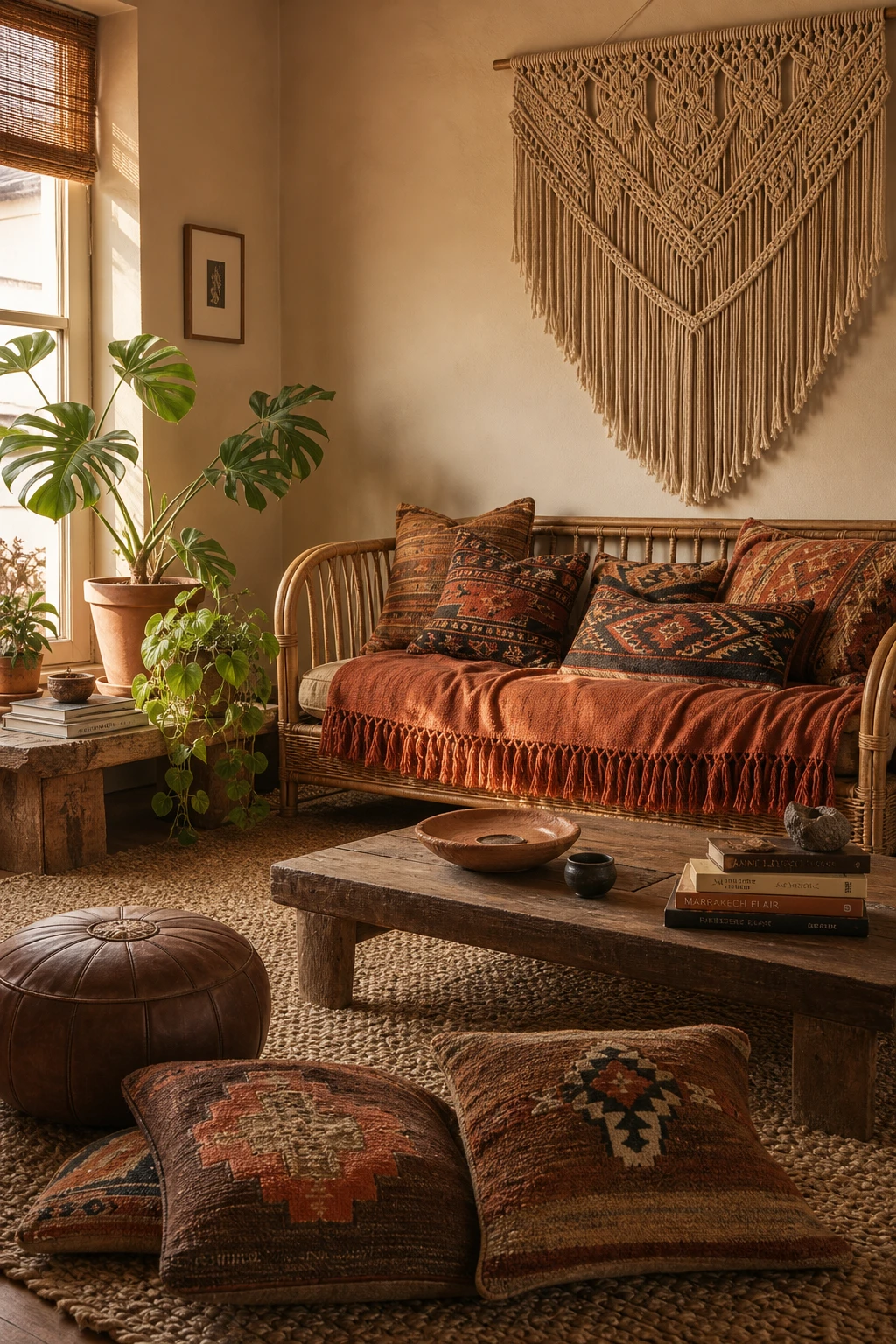
Boho Living Room Styling Is Where Brown and Orange Finally Feel Completely at Home
Boho styling is the one framework where abundance is the whole point, and that makes it a natural home for brown and orange. Every layer you add, another kilim cushion, a woven throw, a piece of reclaimed wood, deepens the palette rather than cluttering it. I always tell clients to start with the rug and let each new piece respond to what is already there, because that patient, one thing at a time approach is what separates a boho room that feels lived in from one that just looks assembled.
The Key Details
Low slung rattan sofa
Layered kilim cushions
Handwoven macrame wall hanging
Chunky jute floor rug
Reclaimed wood side table
Pro TipBuild the room one found piece at a time, starting with a good rug, then letting each new addition respond to what is already there.
AvoidBuying a ready bundled boho set all at once tends to produce a room that looks like a mood board rather than a home anyone actually lives in.
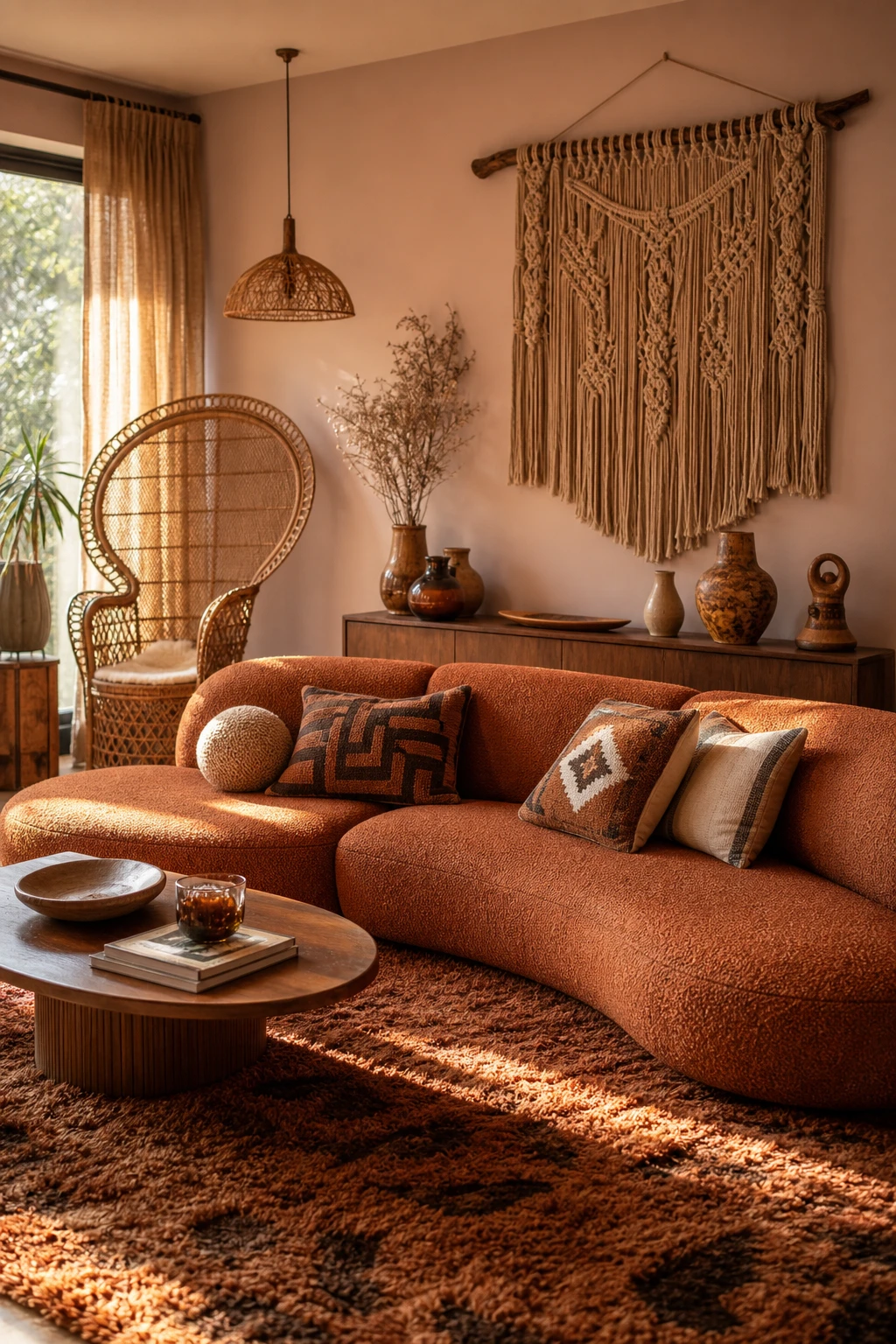
Retro Boho Brings the Happiest Kind of Nostalgia to a Brown and Orange Room
Retro boho wins me over every time because it gives brown and orange something to say. The curved boucle sofa, the peacock chair, the macrame on the wall: each one points to the same decade, and that shared reference is what stops the room feeling like a jumble. You get warmth from the palette and personality from the shapes, and the two things together feel genuinely joyful rather than just earthy.
The Key Details
Low curved 1970s boucle sofa
Knotted macrame wall hanging
Rattan peacock chair
Shag pile terracotta rug
Vintage ceramic vessels on teak sideboard
Pro TipHunt down one real statement piece, a genuine vintage sofa or a proper peacock chair, then let simpler, quieter modern pieces carry the rest of the room around it.
AvoidPulling from too many different eras at once turns a curated retro look into a confused one, where nothing quite holds together.
African Inspired Rooms Show How Brown and Orange Can Feel Deeply Rooted and Rich
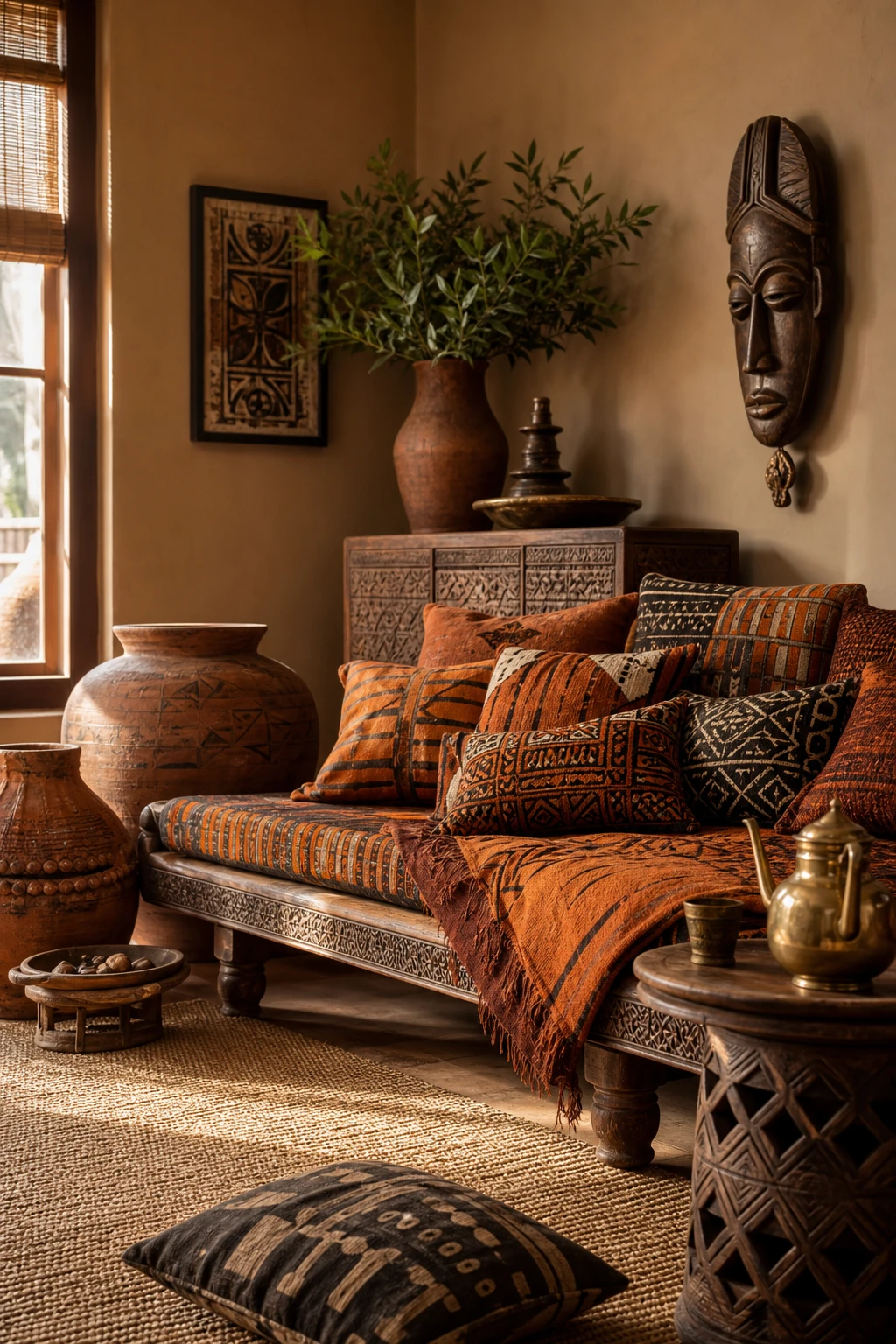
African craft traditions and a brown and orange palette share the same tonal language, and that natural overlap is what makes the combination feel so rooted. The earthy reds, warm ochres, and deep browns already living in kente cloth and mudcloth are the same tones I reach for on walls and upholstery, so bringing the two together feels like recognition rather than decoration. You get genuine warmth here because the pattern and texture carry real making behind them, not just a printed likeness of it.
The Key Details
Carved hardwood daybed
Kente and mudcloth cushions
Terracotta floor vessels
Woven raffia grass mat
Hand carved wall mask
Pro TipSeek out pieces sold directly by African craft cooperatives or specialist importers, because the irregularities in hand loomed cloth and carved wood are exactly what give the room its soul.
AvoidLeaning on a single safari print cushion to carry the whole reference leaves the room feeling like a costume rather than a considered space, and the richness of the inspiration simply does not come through.
A Geometric Rug Pulls Every Warm Tone in the Room Down to the Floor
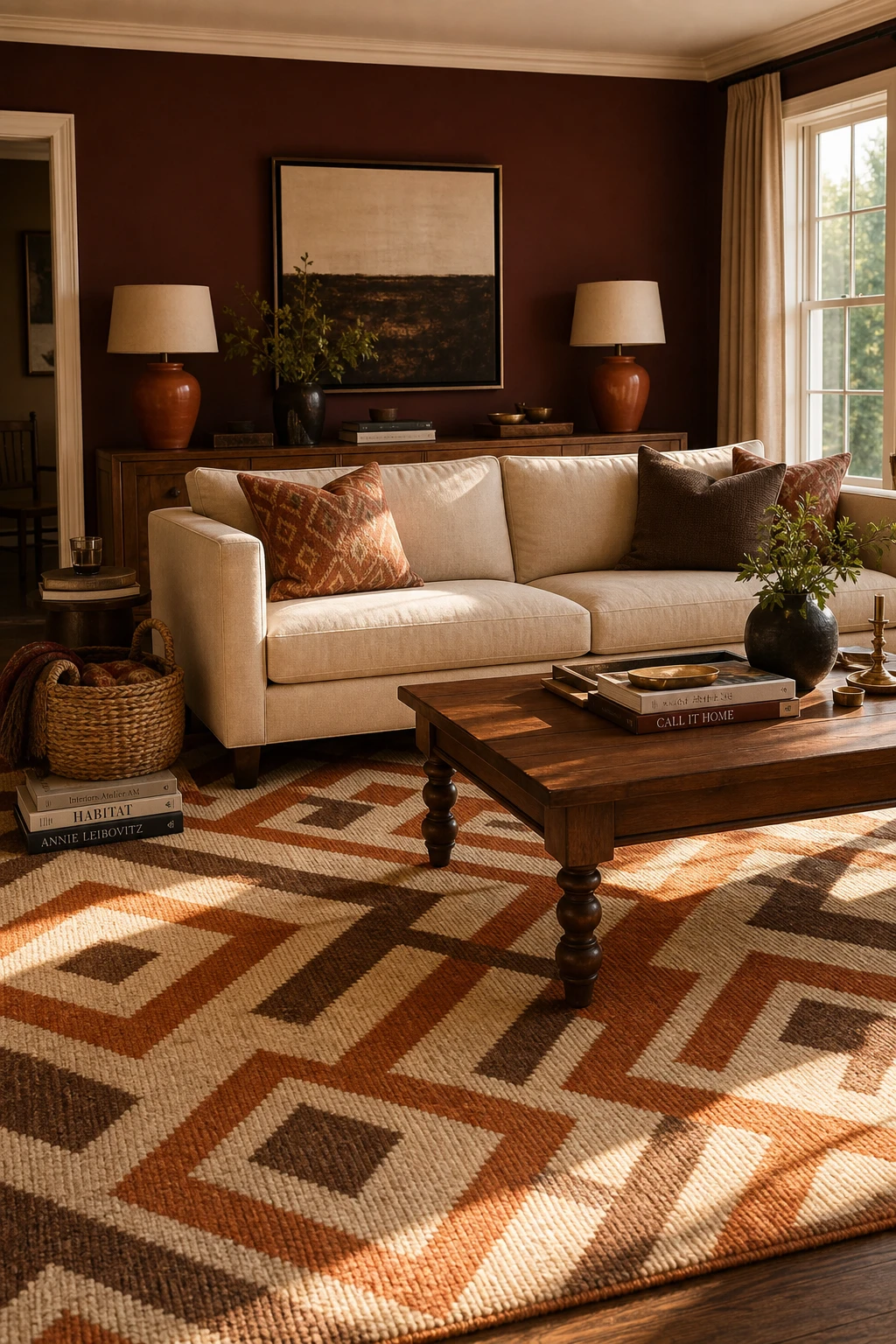
A geometric rug in orange, brown, and cream acts like a colour key for the whole room. Every tone you have chosen for your walls, sofa, and accessories already lives inside the pattern, so everything reads as one considered decision rather than a collection of separate purchases. What I love about this approach is that the floor does the coordinating for you, and you get that settled, pulled together feeling from the moment the rug goes down.
The Key Details
Hand knotted wool geometric area rug in burnt orange, brown, and cream
Cream linen sofa
Turned leg solid walnut coffee table
Terracotta ceramic table lamps
Woven jute storage basket
Pro TipSize up and make sure the front legs of every sofa sit on the rug, because that single move visually anchors the whole seating group and stops the rug looking like it is floating in the middle of the room.
AvoidPicking a geometric rug that introduces colours not already present in the room pulls the eye in too many directions and unravels the very harmony the rug was meant to create.
Layering Two Rugs on Your Living Room Floor Adds the Depth a Single Rug Never Quite Manages
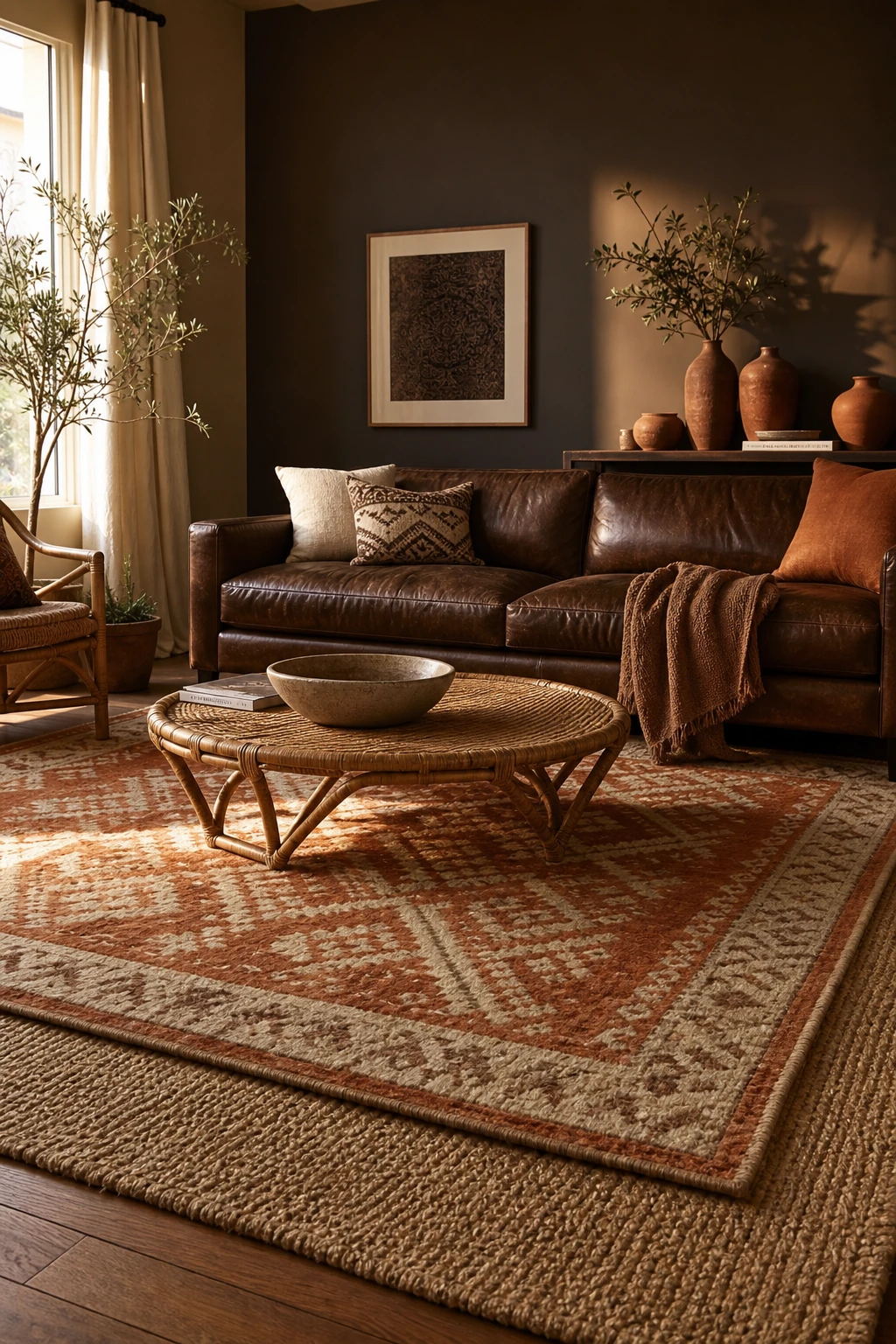
Two rugs do something one rug simply cannot: they give the floor its own sense of layers, the way you might build up cushions or throws on a sofa. What wins me over here is how the diamond wool accent rug sits on top of the jute, pulling your eye down into the seating area and making it feel like a room within a room. You get warmth, pattern, and texture all at once without touching a single wall.
The Key Details
Diamond patterned wool accent rug
Natural jute foundation rug
Deep brown leather sofa
Low rattan coffee table
Terracotta ceramic vessels
Pro TipAngle the top rug about fifteen degrees off centre so the corner of the jute base peeks out on two sides, letting both layers read clearly from the doorway.
AvoidStacking two rugs of the same pile height means the top one shifts every time someone walks across it, which quickly makes the whole arrangement look messy rather than considered.
An Orange Toned Wooden Floor Is the Foundation a Brown and Orange Room Builds From
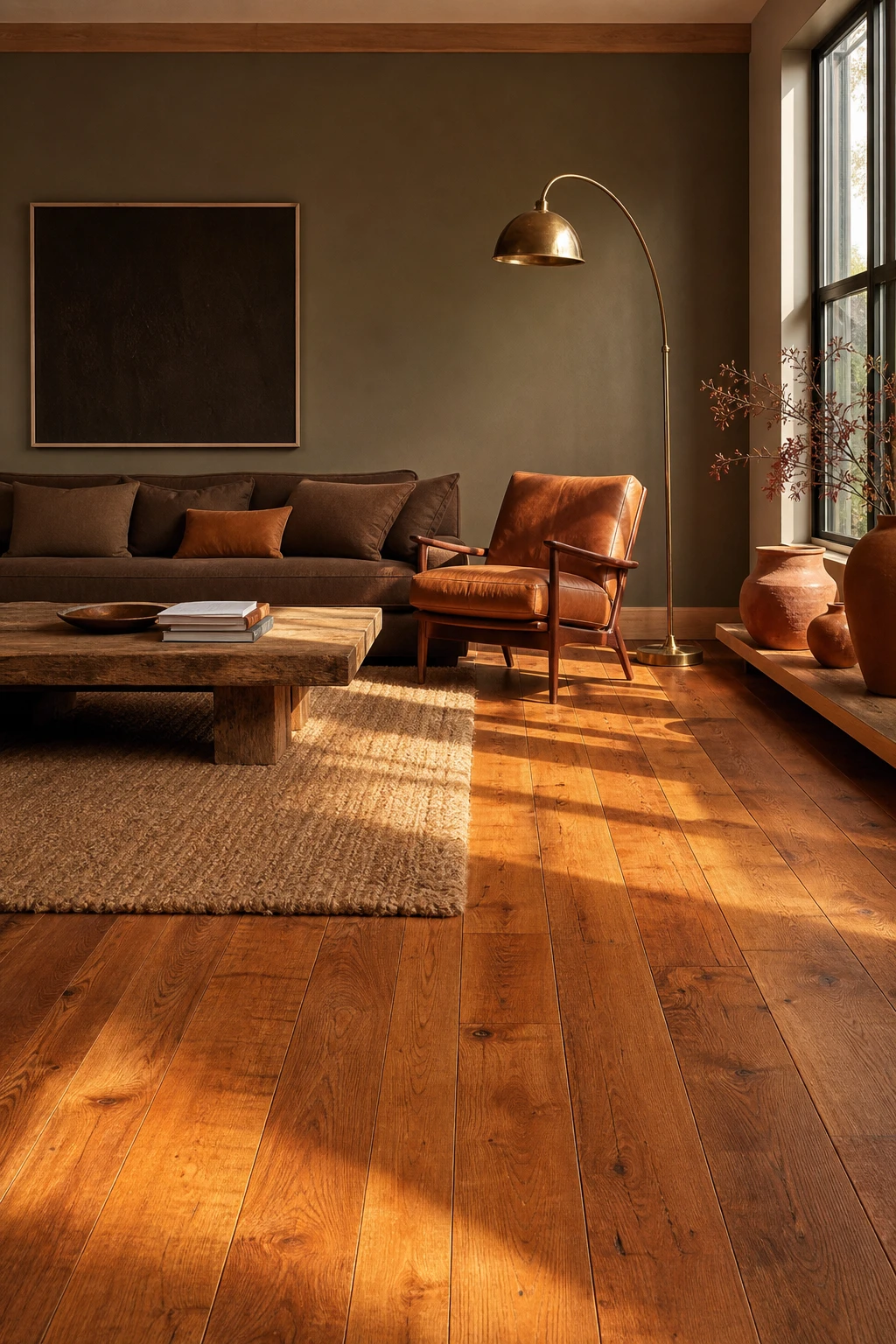
An orange toned wood floor does the heavy lifting so everything above it can breathe. What I love about this approach is that the warmth is already built into the room before a single piece of furniture arrives, so you never have to force it. You get walls and sofas sitting quietly in cooler neutrals and the floor pulls them together into something that feels genuinely warm and considered.
The Key Details
Wide plank amber hardwood floor
Low profile brown linen sofa
Chunky jute area rug
Aged brass arc floor lamp
Terracotta ceramic vessels
Pro TipChoose a satin finish rather than matte or high gloss, because it picks up natural light and gives the floor a gentle glow that travels across the whole room through the day.
AvoidLaying a very dark rug over a warm wood floor swallows the feature you paid for and leaves the room relying on furniture alone to carry the warmth.
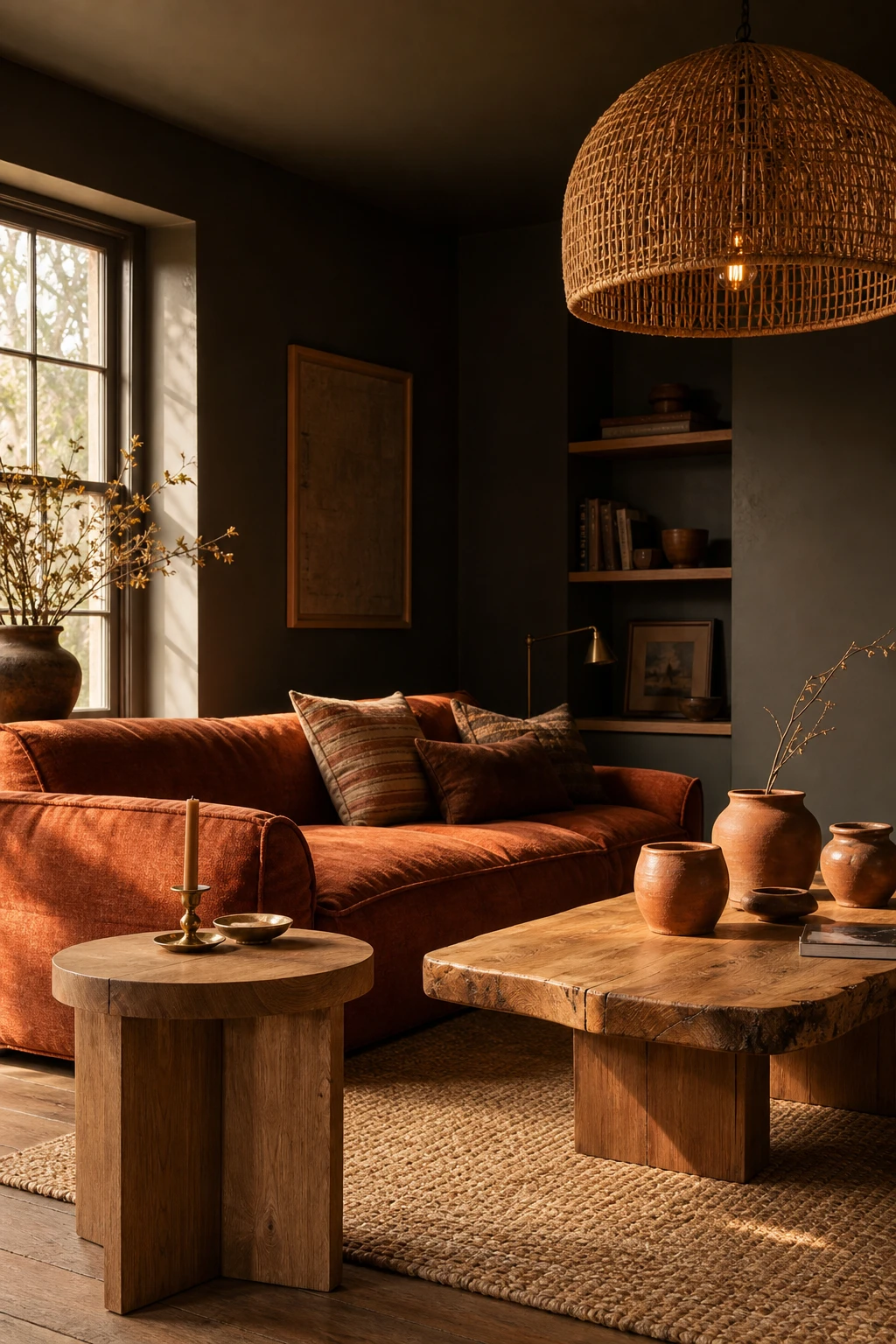
Natural Wood and Orange Together Create the Most Honest Kind of Warmth
Pairing orange with raw or oiled wood is one of my favourite moves because both colours come from the same honest place in nature, so they settle together without any effort. You get a warmth that feels earned rather than applied, and that is the difference between a room that relaxes you and one that just looks decorated. What I love most is how the grain and texture of the wood gives the eye something real to rest on, keeping the orange from ever tipping into synthetic.
The Key Details
Live edge wood coffee table
Burnt sienna linen sofa
Woven rattan pendant light
Terracotta ceramic vessels
Jute area rug
Pro TipMix a lighter oak or ash piece with a darker walnut or teak alongside it, because the contrast between the two tones adds far more visual interest than matching every wood in the room.
AvoidFinishing wood furniture with a heavy high gloss varnish strips away the grain and texture that make it feel natural, and once that quality is gone the whole pairing with orange starts to look plastic rather than warm.
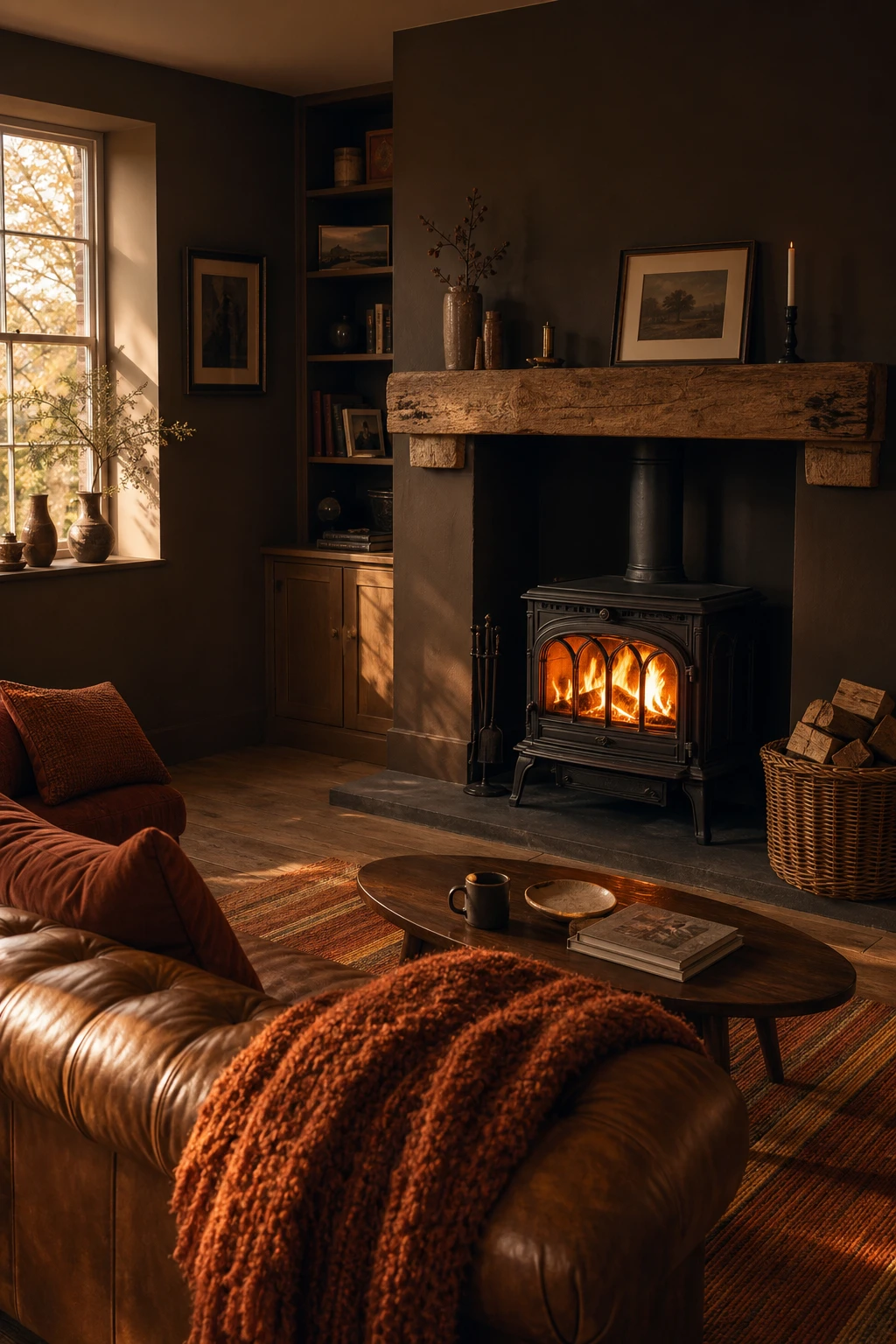
A Log Burner Turns a Brown and Orange Living Room Into the Cosiest Place You Know
A real flame does something no lamp or candle can quite replicate, and in a brown and orange room it becomes the beating heart the whole palette revolves around. What I love here is how the amber glow picks up every warm tone at once: the cognac leather deepens, the terracotta in the rug glows, and the reclaimed timber mantel looks like it has always belonged. You get a room that feels genuinely alive rather than simply decorated.
The Key Details
Cast iron log burner with visible amber flame
Reclaimed timber mantel shelf
Cognac tufted leather sofa
Woven rattan log basket with stacked split logs
Terracotta and ochre striped flatweave wool rug
Pro TipBox the burner into a simple plastered or brick recess so it reads as a built in feature rather than an appliance sitting in front of the wall.
AvoidTucking the log burner into a corner cuts both the heat distribution and the visual drama in half, leaving the room feeling unanchored.
Alan launched Edward George London in 2017. Since completing his masters in Town & Regional Planning (MPlan) he has combined the skills he learned at the University of Sheffield with his passion for design, to help create a foundation for those looking to create a beautiful home.